


The interior design world has witnessed a remarkable transformation as two seemingly opposite aesthetics merge into something extraordinary. The Scandi-Boho fusion represents more than just a trend; it’s a lifestyle choice that celebrates both minimalism and maximalism. This innovative approach creates spaces that feel simultaneously serene and vibrant, structured yet spontaneous.
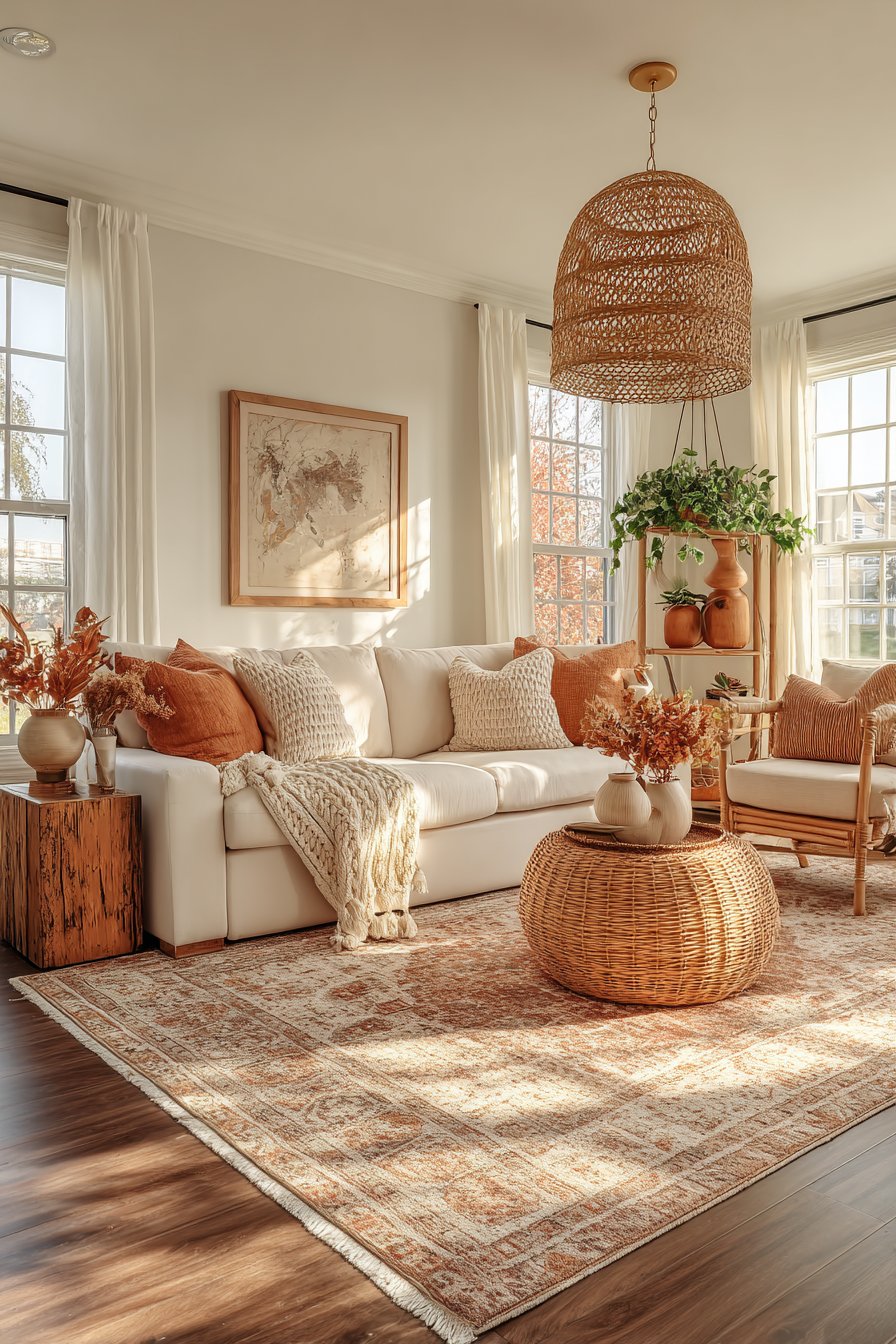
Thoughtful interior design transforms houses into homes by reflecting personal values and enhancing daily life. The fusion of Scandinavian simplicity and bohemian warmth caters to modern homeowners seeking balance. This hybrid style appeals to those who appreciate clean lines but crave textural richness and personality. It’s perfect for individuals wanting peaceful environments without sacrificing creative expression. Our the art deco revival in modern homes has more inspiration along these same lines.
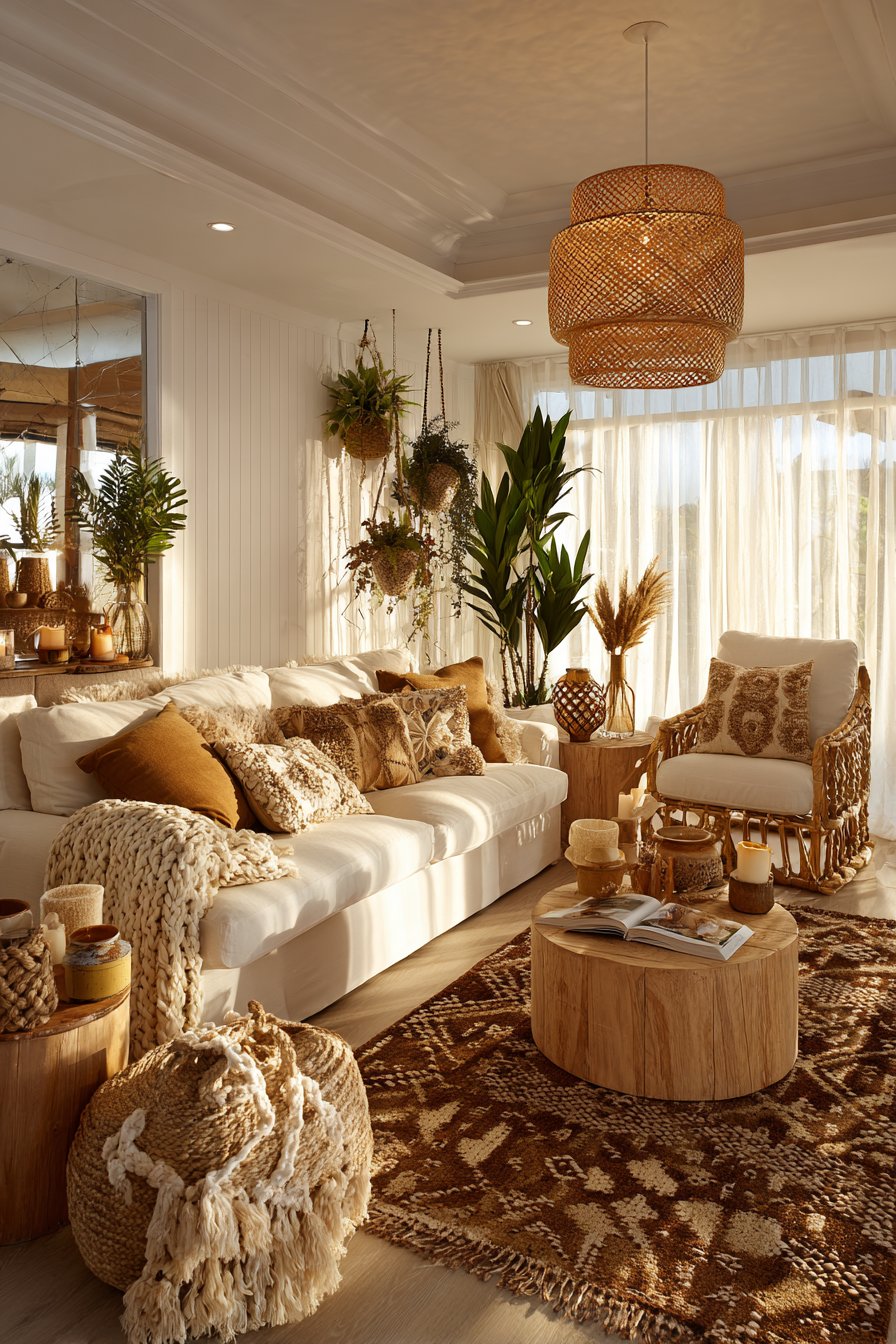
This article explores the essential elements that define the Scandi-Boho aesthetic and make it uniquely appealing. From color palettes to furniture selection, each component contributes to spaces that feel both intentional and lived-in. We’ll examine how to successfully blend these distinct design philosophies into cohesive, beautiful interiors.
1. Understanding the Foundation: Where Minimalism Meets Eclecticism
The Scandi-Boho fusion works because both styles prioritize natural materials and functional beauty. Scandinavian design brings order, light, and efficiency to living spaces. Bohemian elements introduce warmth, texture, and global influences. Together, they create environments that feel both calming and inspiring.
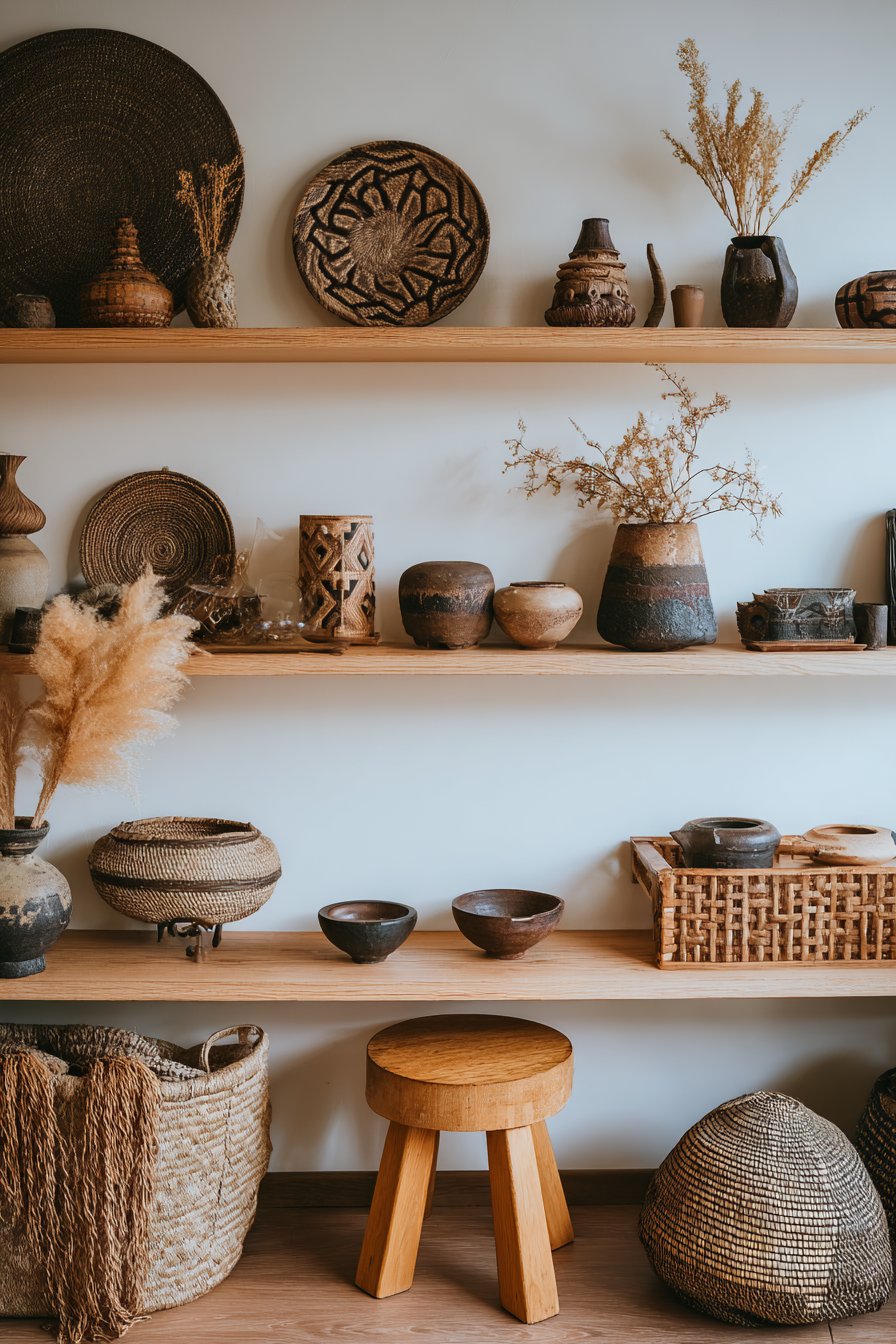
This combination addresses the modern desire for homes that support wellness while expressing individuality. The neutral base from Scandinavian design prevents visual chaos. Meanwhile, layered textiles and artisan pieces from bohemian style add depth and character. The result is spaces that photograph beautifully yet remain comfortable for everyday living.
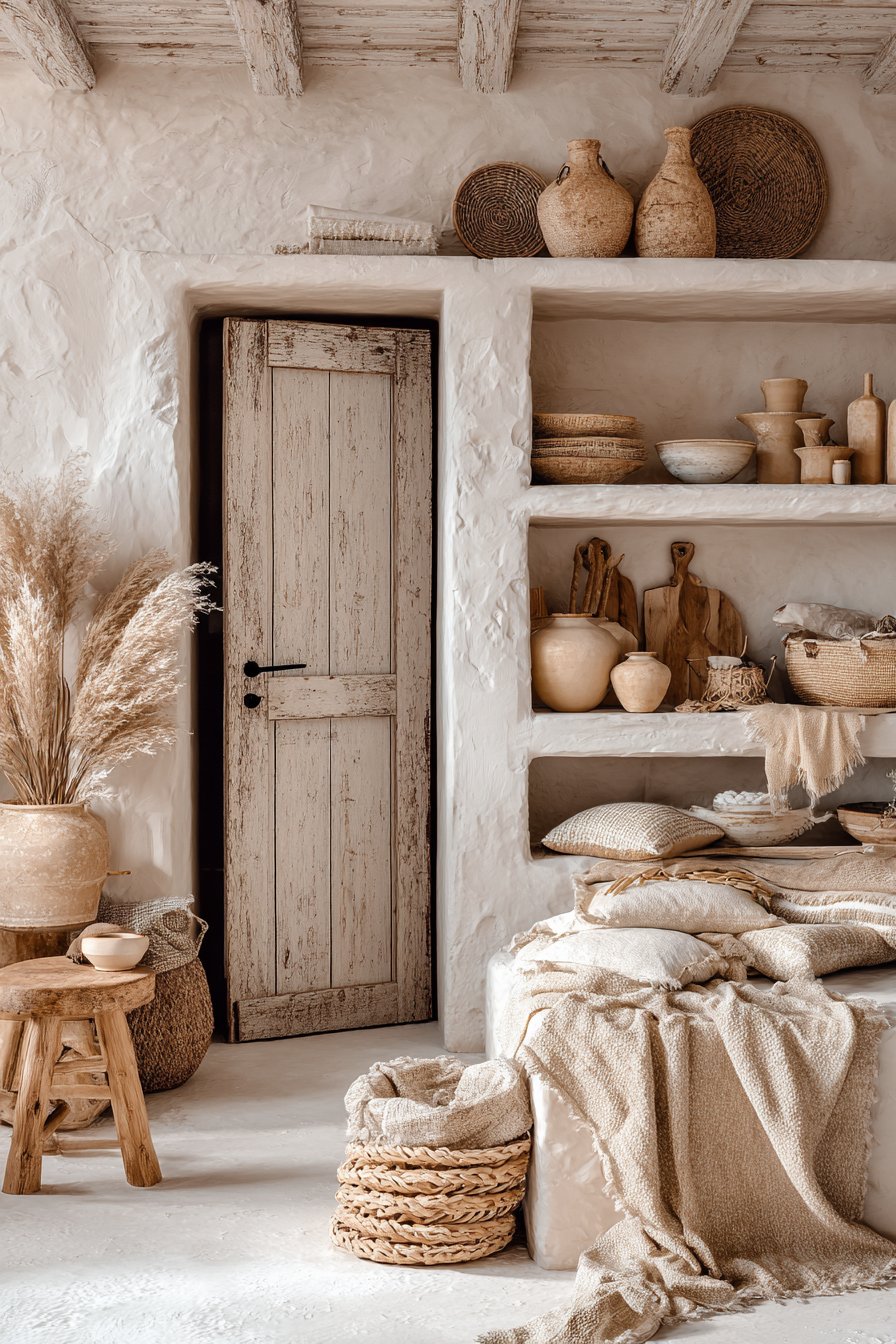
The key lies in maintaining balance between restraint and abundance. Neither style should dominate completely. Instead, they should complement each other like rhythm and melody in music. This equilibrium creates interiors that feel thoughtfully curated rather than accidentally assembled.
- Start with a Scandinavian neutral palette as your foundation
- Introduce bohemian elements gradually through textiles and accessories
- Maintain open floor plans characteristic of Nordic design
- Add warmth through natural wood tones and woven materials
- Keep surfaces mostly clear while displaying meaningful treasures
- Ensure every decorative item serves a purpose or tells a story
2. Color Palettes: Bridging Cool and Warm Tones
The color strategy in Scandi-Boho interiors relies on sophisticated layering rather than bold statements. Begin with crisp whites, soft grays, and warm beiges typical of Scandinavian spaces. These hues maximize natural light and create an airy foundation. They also provide a versatile backdrop for introducing bohemian warmth.
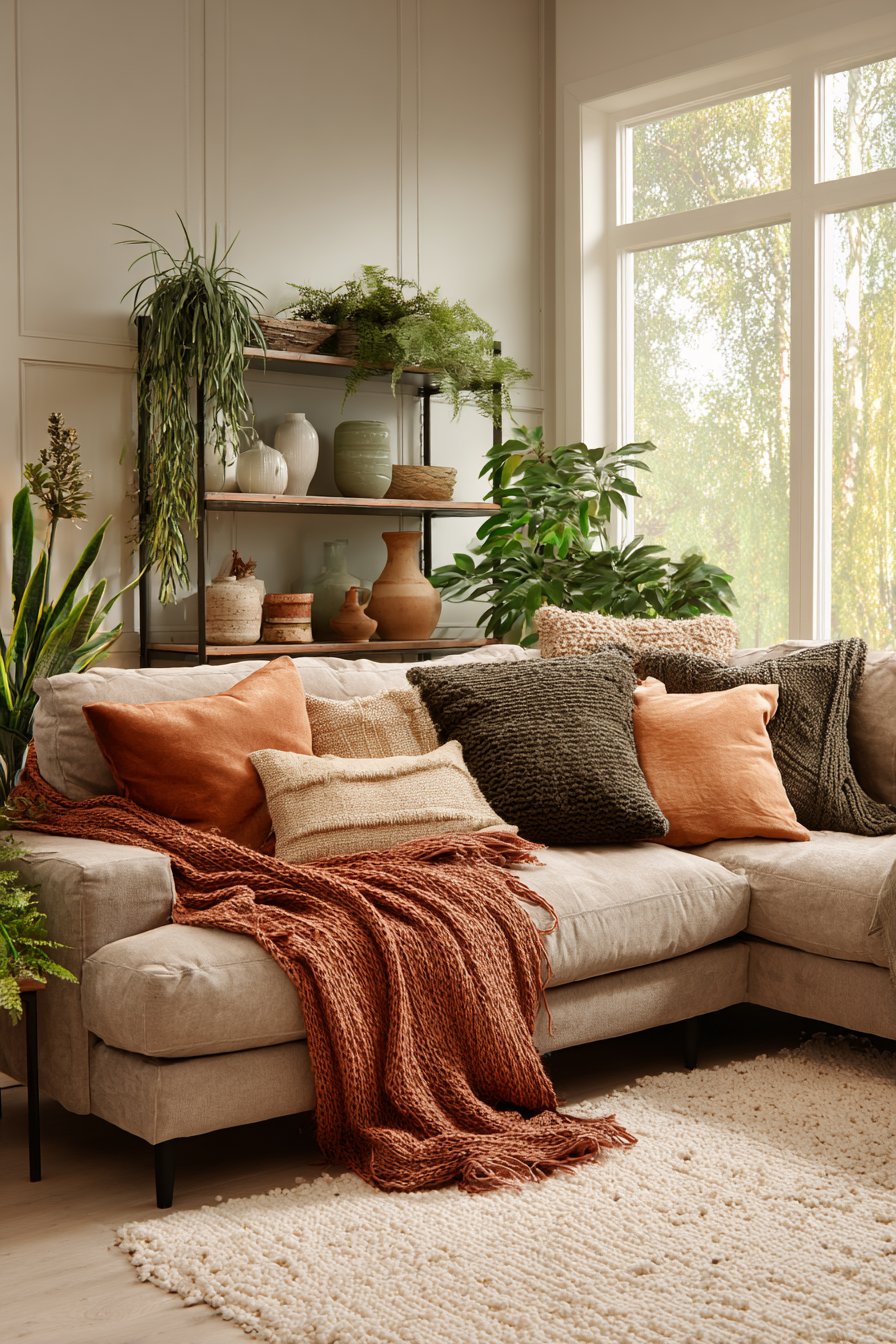
Incorporate earthy tones like terracotta, ochre, and sage through accent pieces and textiles . These colors reference nature and global textiles without overwhelming the space. Muted versions work better than saturated shades. They maintain the calm aesthetic while adding depth and visual interest to neutral rooms. If you’re also weighing the open concept vs closed living rooms, that’s worth deciding early too.
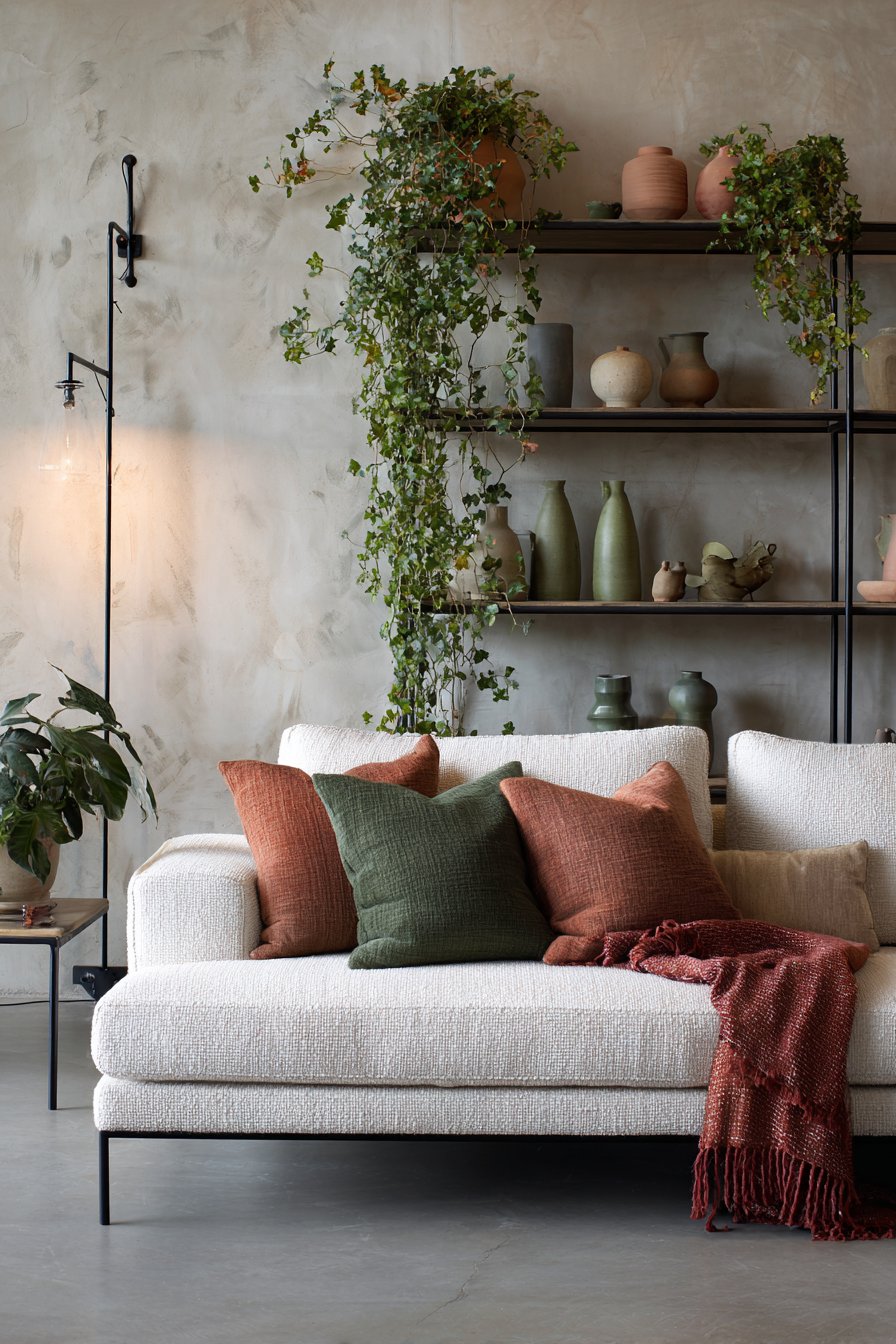
Black accents provide definition and contrast essential to both design philosophies. Use them sparingly in light fixtures, frames, or furniture legs. This grounds the lighter palette and adds architectural interest. The strategic placement creates focal points without disrupting the overall flow.
- Use white or light gray as your primary wall color
- Layer warm neutrals through rugs, throws, and cushions
- Add terracotta or rust tones in pottery and textile accents
- Include sage green through plants and occasional fabric choices
- Incorporate black details in hardware, frames, and slim furniture pieces
- Avoid more than three accent colors to maintain cohesion
3. Furniture Selection: Clean Lines with Character
Furniture in Scandi-Boho spaces must serve dual purposes of functionality and aesthetic appeal. Choose pieces with the simple silhouettes characteristic of Scandinavian design. Mid-century modern furniture works particularly well. Look for exposed wooden legs, clean profiles, and quality craftsmanship.
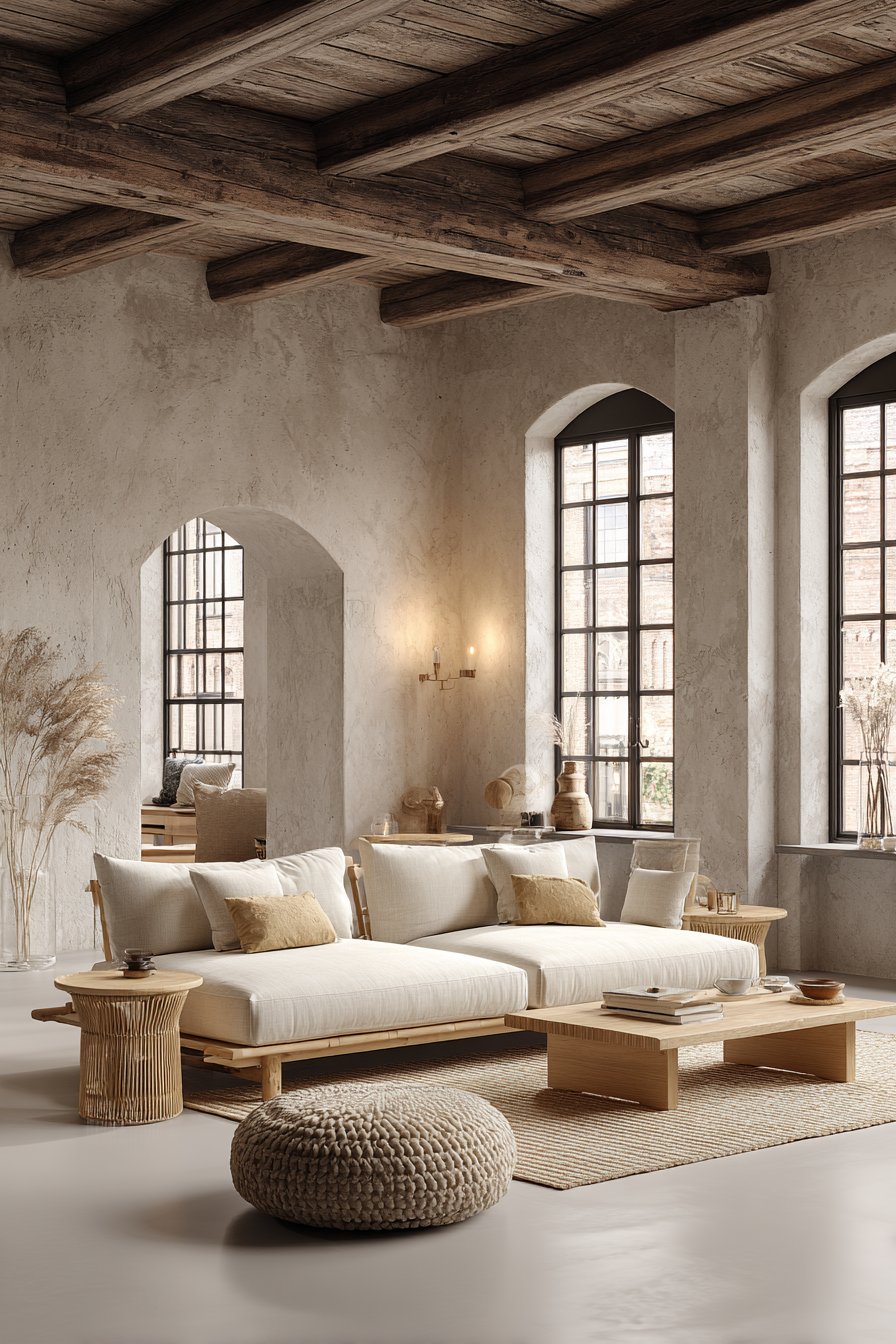
Mix in bohemian elements through vintage or artisan pieces that add personality. A rattan chair, carved wooden stool, or Moroccan pouf introduces texture. These items should complement rather than clash with streamlined furnishings. The contrast creates visual interest while maintaining overall harmony.
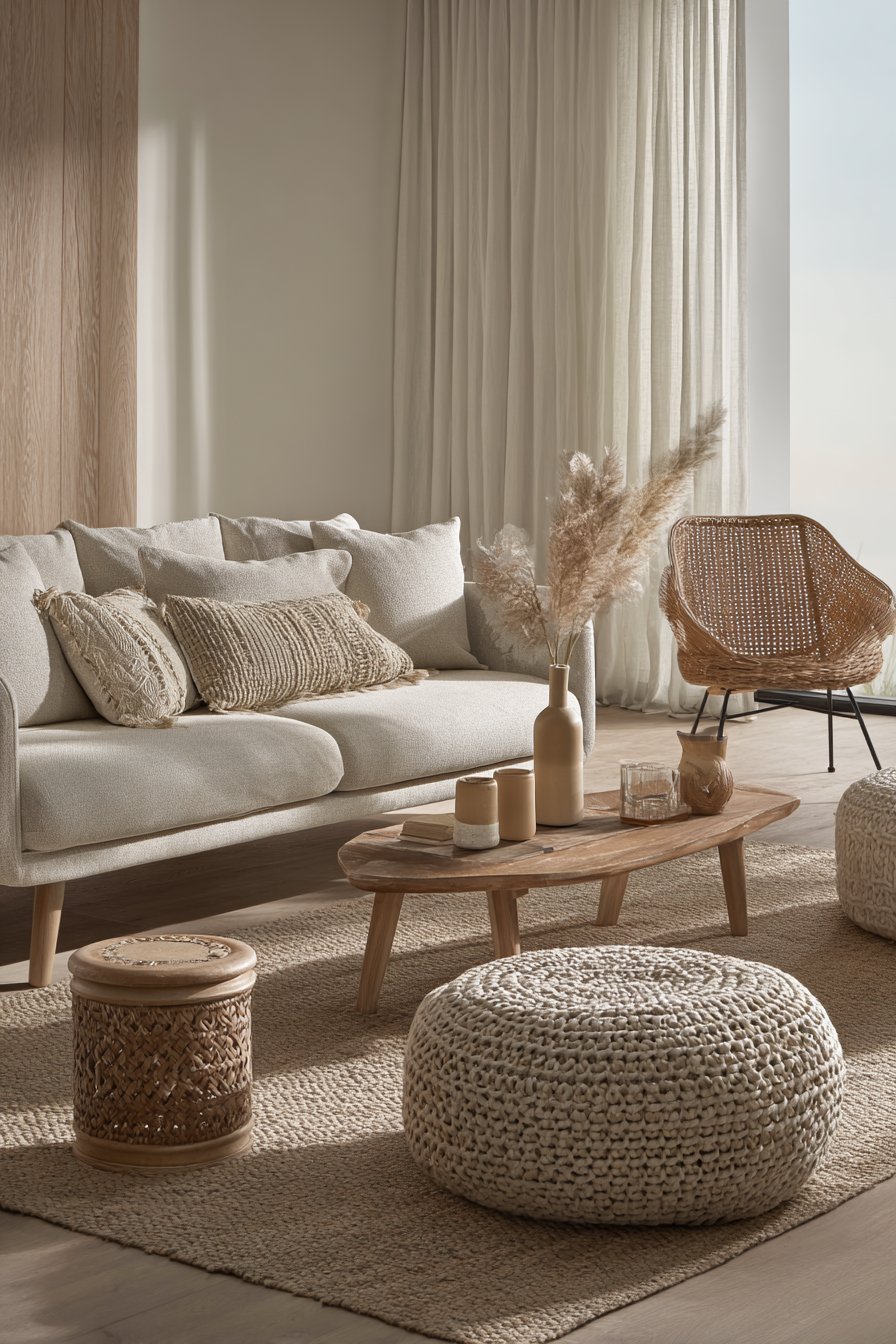
Quality over quantity remains paramount in furniture selection for this style. Invest in fewer, better-made pieces that will last decades. Each item should earn its place through beauty or utility. This approach aligns with both Scandinavian sustainability values and bohemian appreciation for craftsmanship.
- Invest in a simple, quality sofa in neutral upholstery
- Add a rattan or wicker accent chair for textural contrast
- Choose wooden furniture with visible grain and minimal ornamentation
- Include low-profile pieces that don’t obstruct sightlines
- Incorporate vintage finds that add history and character
- Ensure seating arrangements promote conversation and comfort
4. Textural Layering: Creating Depth and Warmth
Texture is the secret ingredient that prevents Scandi-Boho spaces from feeling cold or sterile. Layer multiple textiles to create cozy, inviting environments. Start with a neutral base rug, preferably jute or wool. Add smaller vintage or patterned rugs on top for bohemian flair.
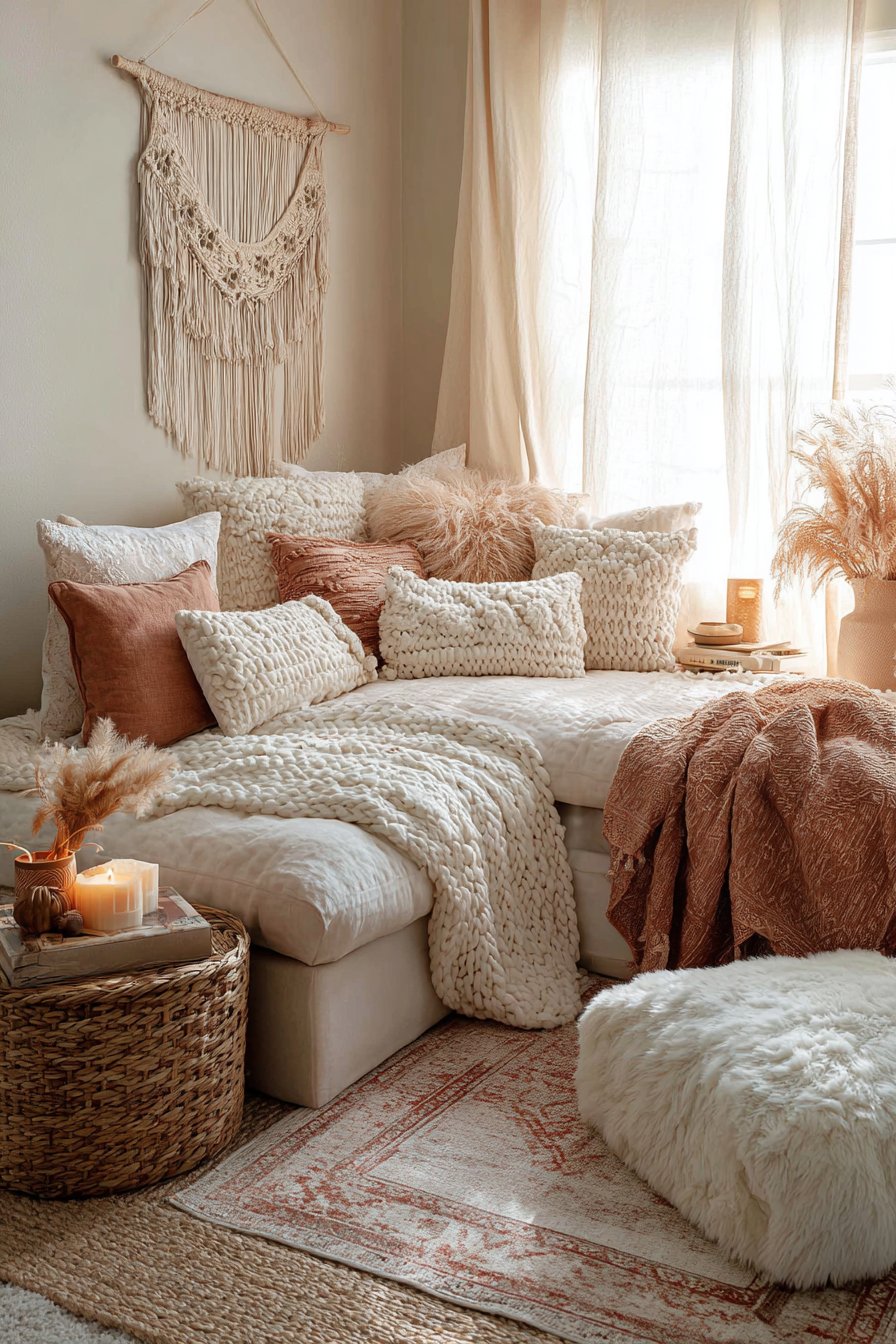
Pile throws and cushions in varying materials on sofas and beds. Mix linen, cotton, wool, and macramé for dimensional interest. Different weaves catch light differently throughout the day. This creates subtle visual movement without busy patterns. Stick to your established color palette for cohesion.
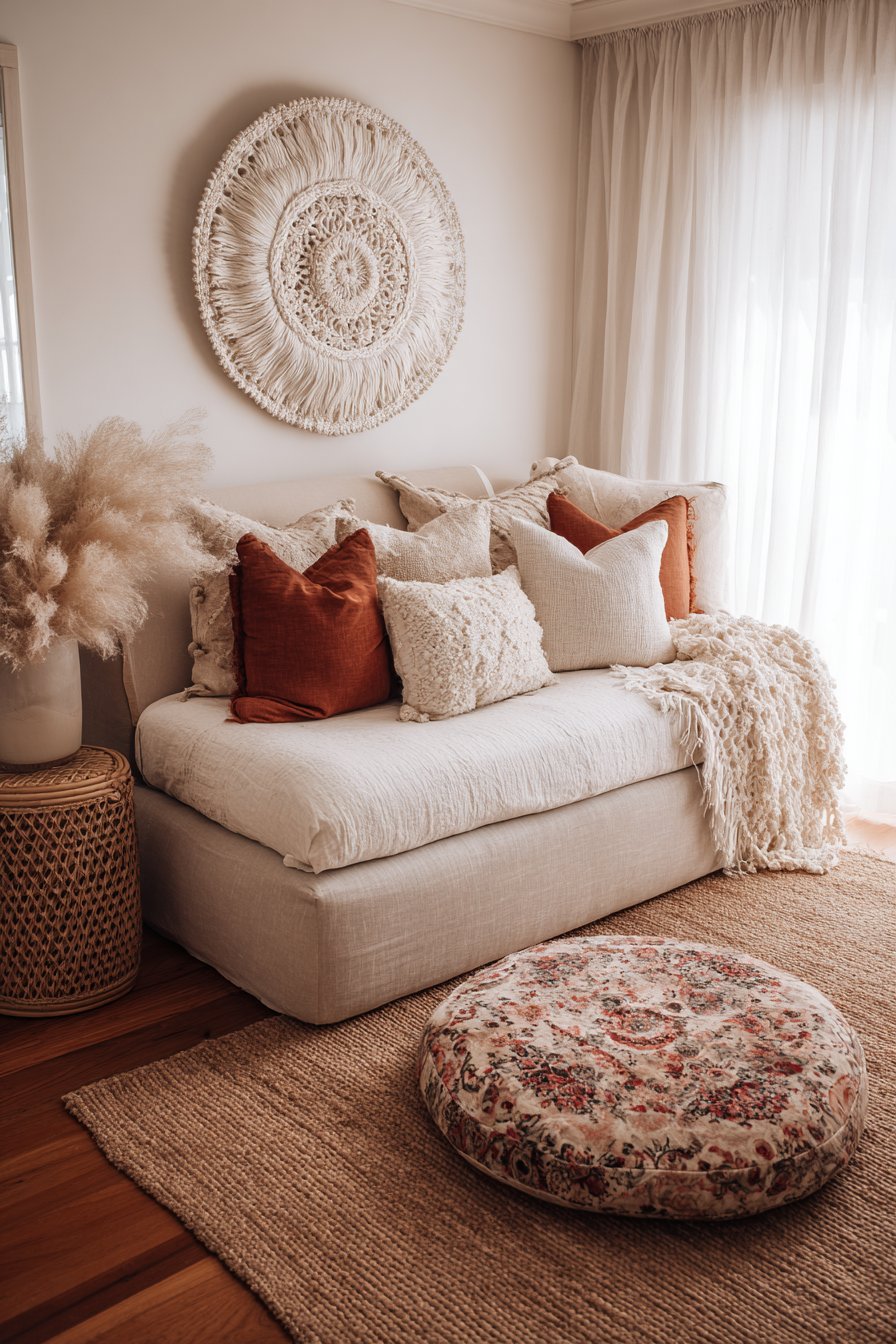
Wall hangings and tapestries introduce vertical texture while serving as focal points. Woven pieces, macramé, or natural fiber art add warmth. They also improve acoustics in minimalist spaces with hard surfaces. Choose designs that feel handmade rather than mass-produced. See our these art deco living room ideas for more direction in this style.
- Layer at least two rugs in living areas for depth
- Mix smooth and chunky knit textures in throw pillows
- Drape lightweight throws over furniture arms and backs
- Hang woven wall art or macramé as statement pieces
- Include nubby linen curtains for soft light filtration
- Rotate textiles seasonally to refresh the space affordably
5. Natural Elements: Bringing the Outdoors Inside
Both Scandinavian and bohemian design celebrate connection to nature through organic materials. Wood should appear prominently but in varied forms. Light woods like birch, ash, or oak provide Nordic simplicity. Darker, carved woods add bohemian richness. Mix finishes for depth without discord.
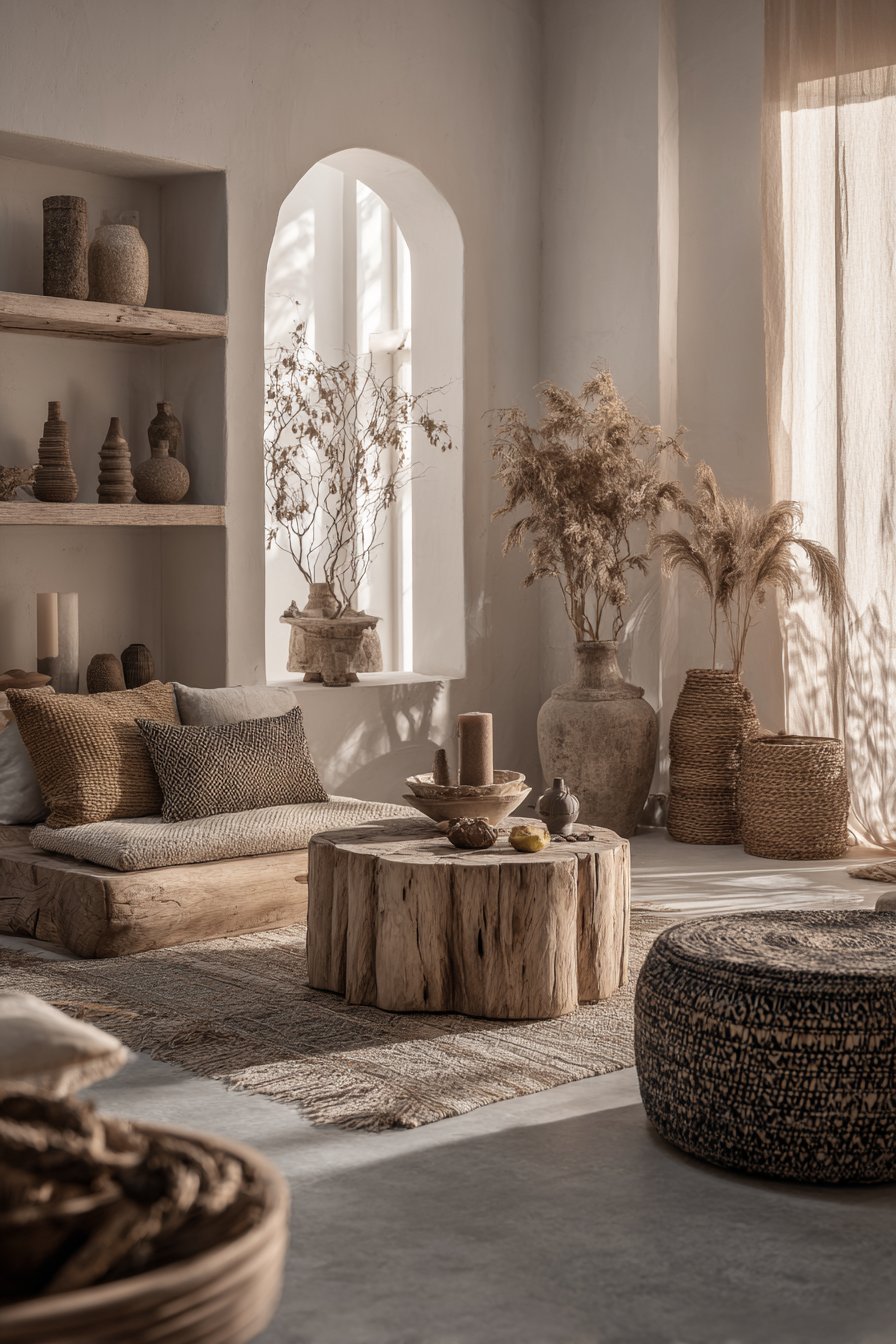
Plants are non-negotiable in Scandi-Boho interiors. They purify air, add color, and introduce living energy to spaces. Choose varieties with interesting leaf shapes and textures. Group plants at different heights for visual interest. Use simple ceramic or woven basket planters aligned with your aesthetic.
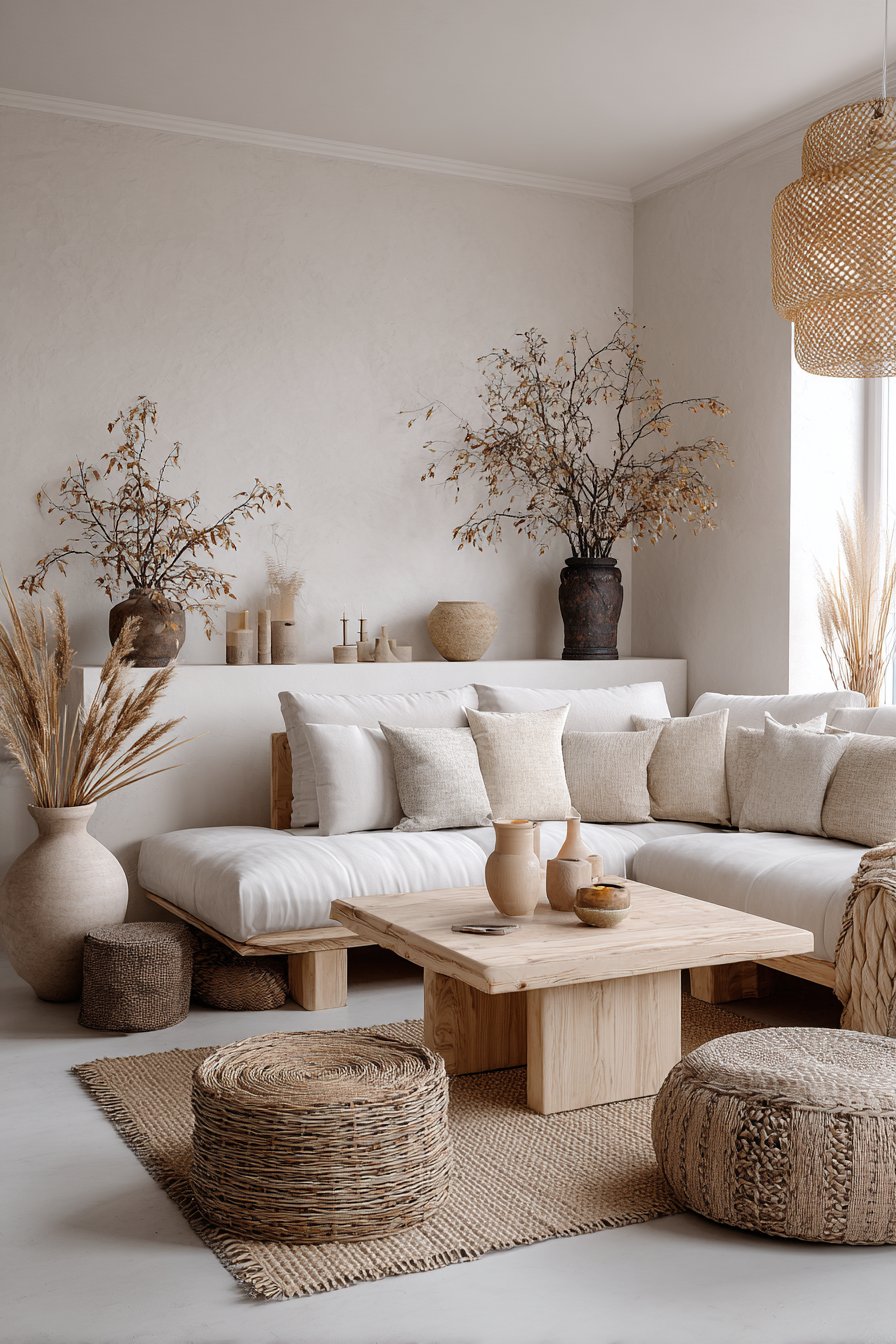
Natural stone, ceramics, and unfinished materials further strengthen the nature connection. Display handmade pottery on open shelving. Choose stone accessories over synthetic alternatives. These elements age beautifully and develop patina over time, adding character to your home.
- Display plants in clusters of varying heights and sizes
- Choose light wooden furniture as your primary pieces
- Add darker wood accents through vintage finds or carvings
- Use stone or ceramic vessels for storage and decoration
- Incorporate dried flowers, grasses, or branches seasonally
- Select natural fiber baskets for both storage and display
6. Lighting: Maximizing Natural and Ambient Glow
Scandinavian design prioritizes natural light as a fundamental element rather than afterthought. Keep windows minimally dressed or use sheer linen curtains. This maximizes daylight crucial for Nordic-inspired spaces. Light-colored walls and strategic mirror placement amplify available sunshine throughout rooms.
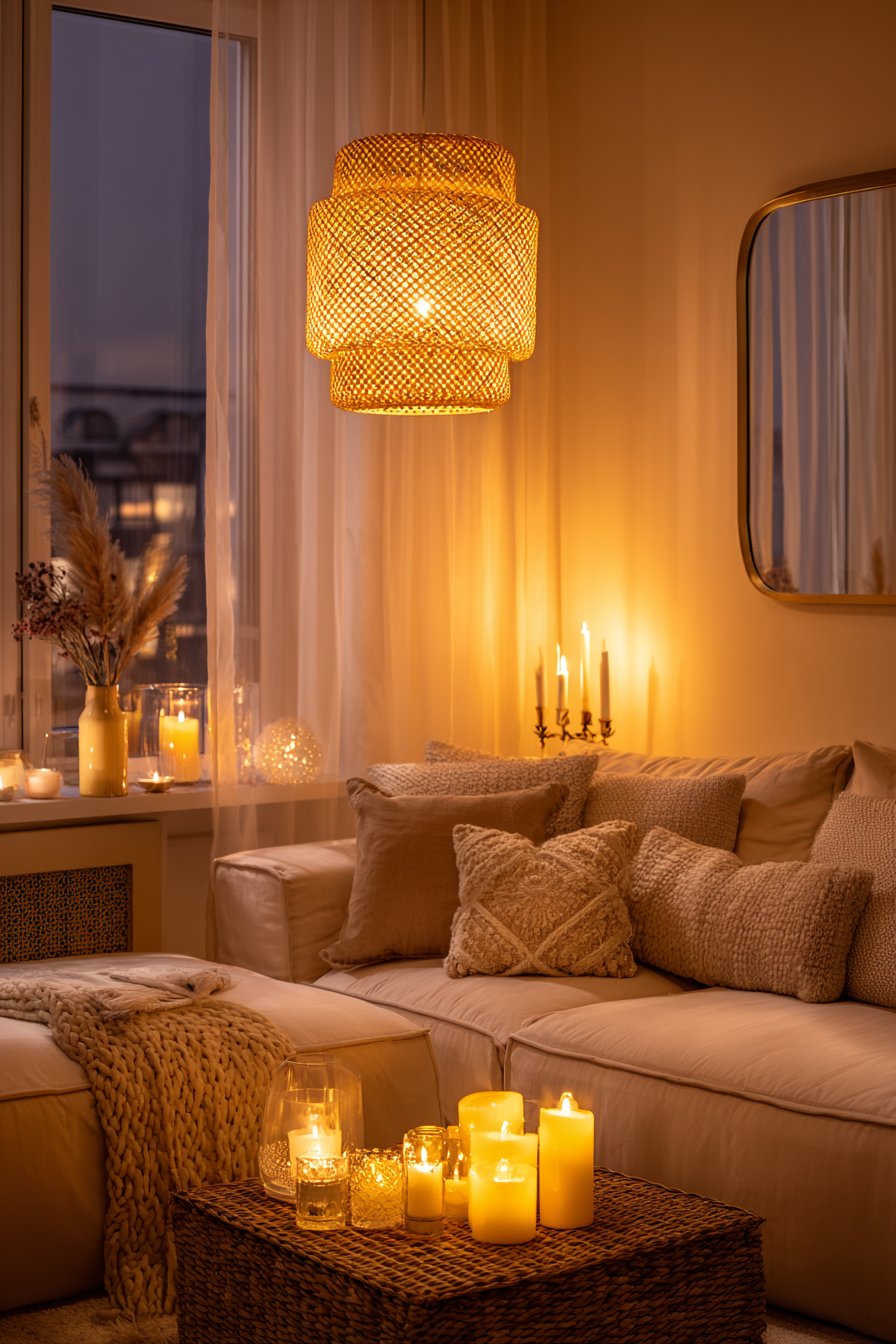
Layer artificial lighting to create warm, inviting ambiance after dark. Combine overhead fixtures with table and floor lamps. Choose warm-toned bulbs that mimic candlelight rather than harsh white light. Bohemian elements appear through woven pendant lights, brass fixtures, or vintage finds.
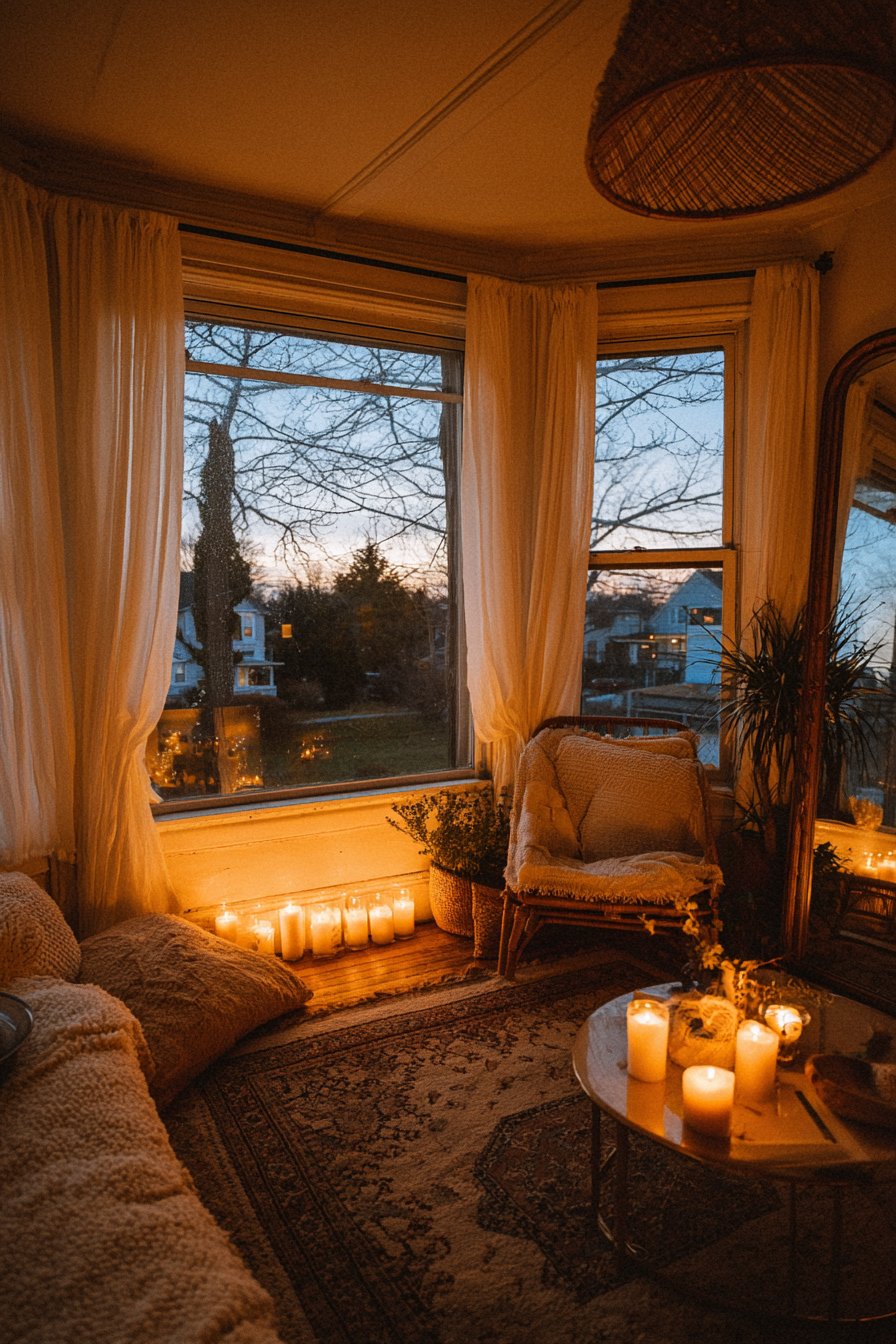
Candles bridge both aesthetics perfectly by providing soft, flickering light and cozy atmosphere. Group them on trays or in clusters for impact. Choose unscented varieties or natural beeswax for clean burning. This simple addition transforms spaces from daytime bright to evening sanctuary.
- Install dimmer switches on overhead lights for flexibility
- Use warm white LED bulbs (2700-3000K) throughout
- Add floor lamps in reading areas with adjustable arms
- Hang woven or rattan pendant lights as statement pieces
- Group candles in varying heights on coffee tables or mantels
- Position mirrors opposite windows to reflect natural light deeper into rooms
Conclusion
The Scandi-Boho fusion movement offers a refreshing approach to modern living spaces that honors both simplicity and self-expression. By thoughtfully combining minimalist foundations with layered textures and natural elements, you create homes that nurture both body and spirit. This style proves that seemingly opposite aesthetics can coexist beautifully when guided by intention and balance.
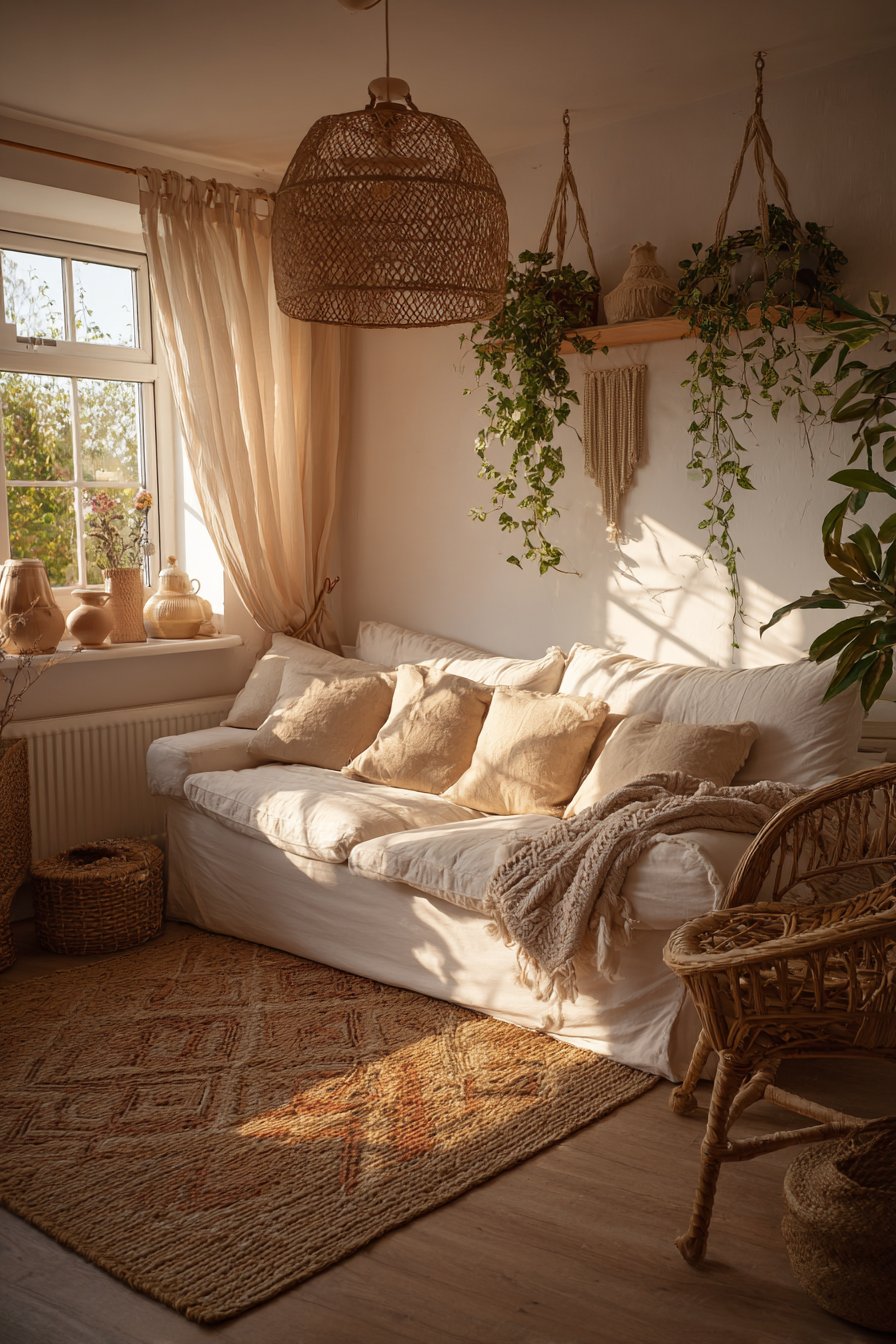
Start with one room and experiment with these principles before expanding throughout your home. Remember that the best interiors evolve gradually as you discover what resonates with your lifestyle. Trust your instincts, embrace imperfection, and let your space tell your unique story through this harmonious blend of Scandinavian serenity and bohemian soul.
