


Small green bathrooms present a unique design challenge that combines color psychology with spatial optimization. The color green brings nature indoors, creating a calming sanctuary where you can unwind after long days. However, working with limited square footage requires thoughtful planning to prevent the space from feeling cramped or overwhelming.
Thoughtful interior design transforms even the tiniest bathroom into a functional oasis that reflects your personal style. Green, in its many shades from sage to emerald, offers versatility that few other colors can match. Whether you prefer modern minimalism or vintage charm, green adapts beautifully to various design aesthetics while maintaining its refreshing character.
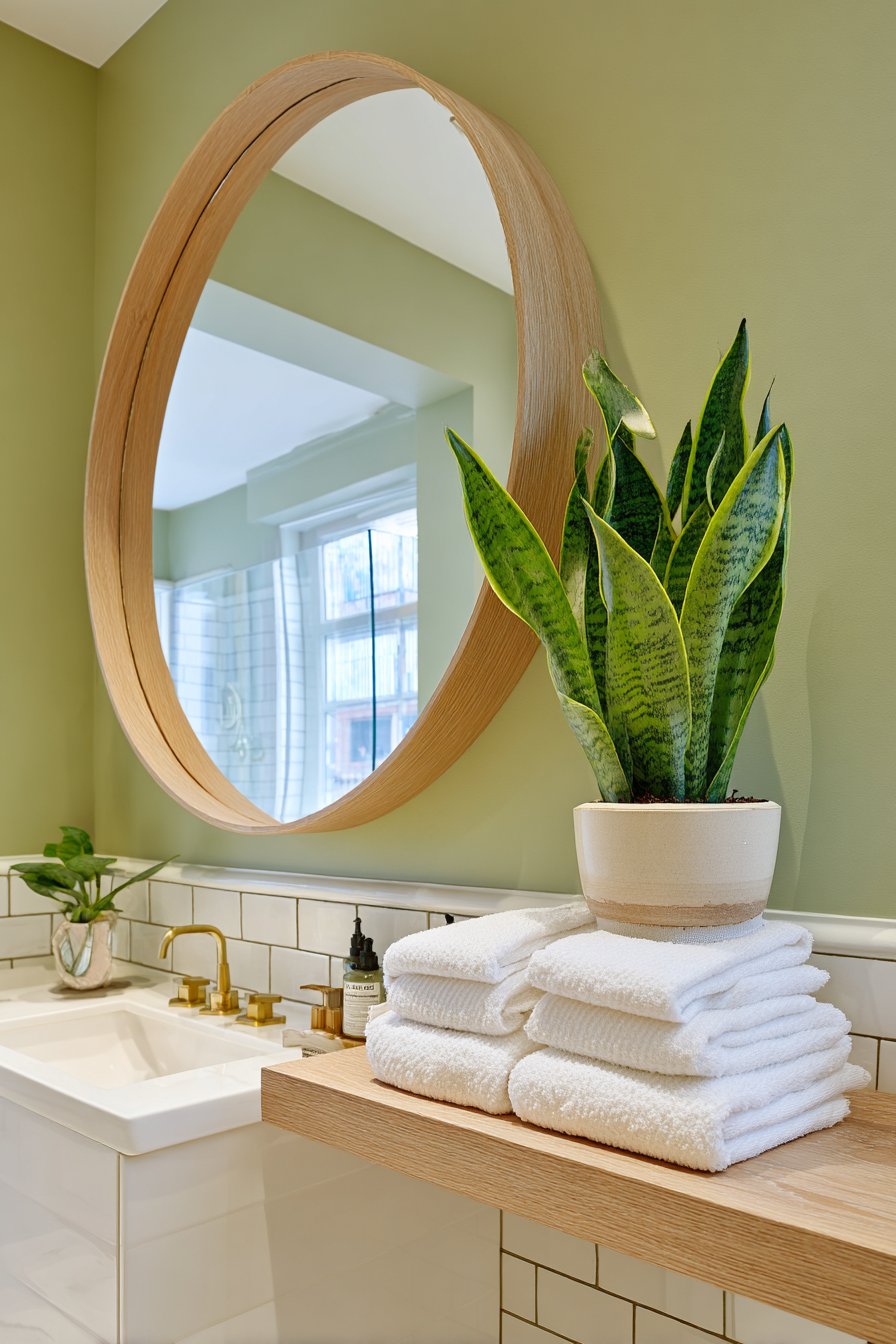
This comprehensive guide explores six proven strategies for styling small green bathrooms effectively. Each approach considers practical functionality alongside aesthetic appeal, ensuring your bathroom serves both purposes. From leveraging natural light to selecting appropriate fixtures, these techniques will help you maximize every inch while creating a cohesive, inspiring space. Our small green bathroom ideas has more inspiration along these same lines.
1. Choose the Right Shade of Green
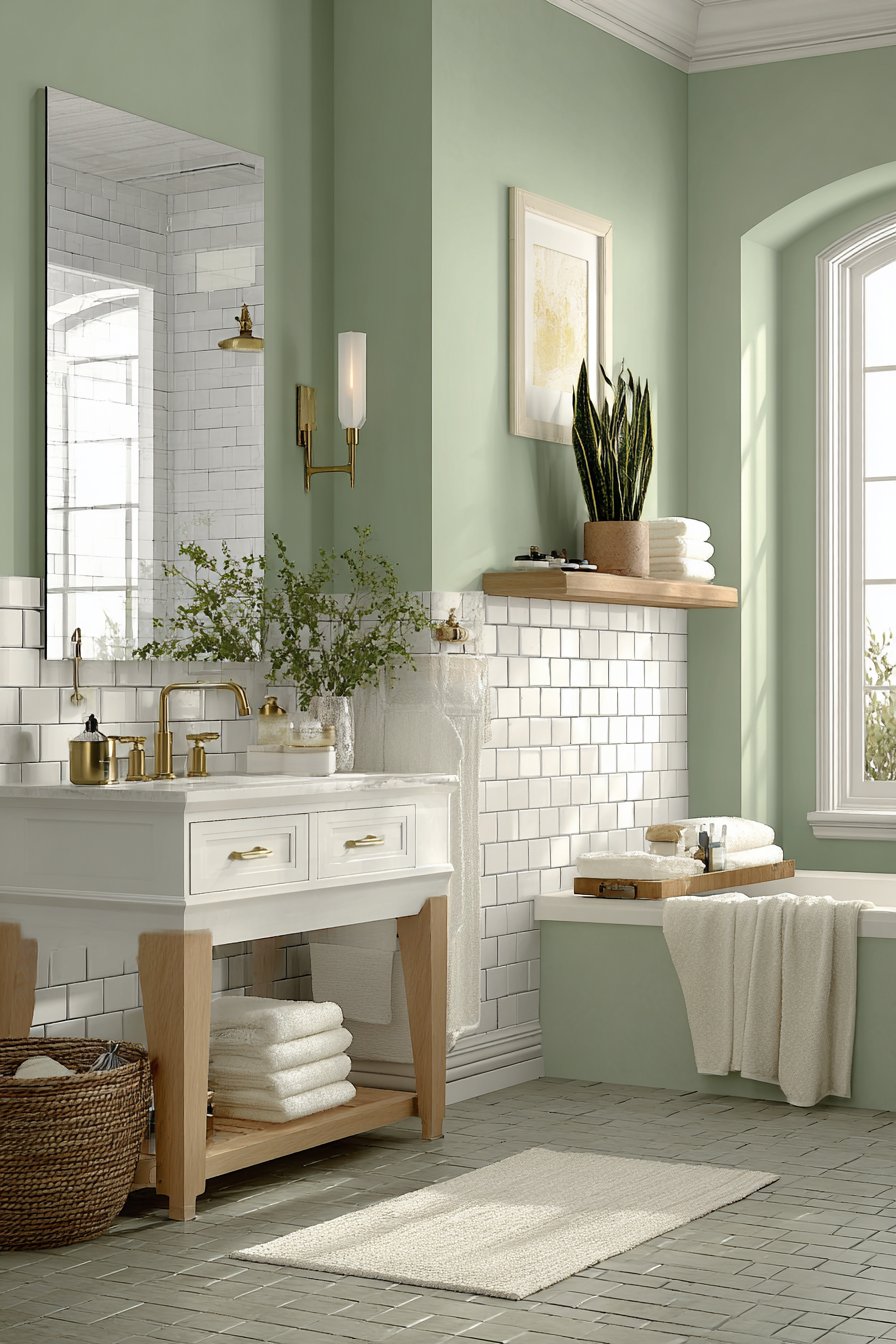
Selecting the appropriate green tone determines whether your small bathroom feels spacious or confined. Lighter shades like mint, sage, and seafoam reflect more light, making walls appear to recede and creating an illusion of expanded space. These softer hues work exceptionally well in bathrooms with limited natural light or smaller dimensions.
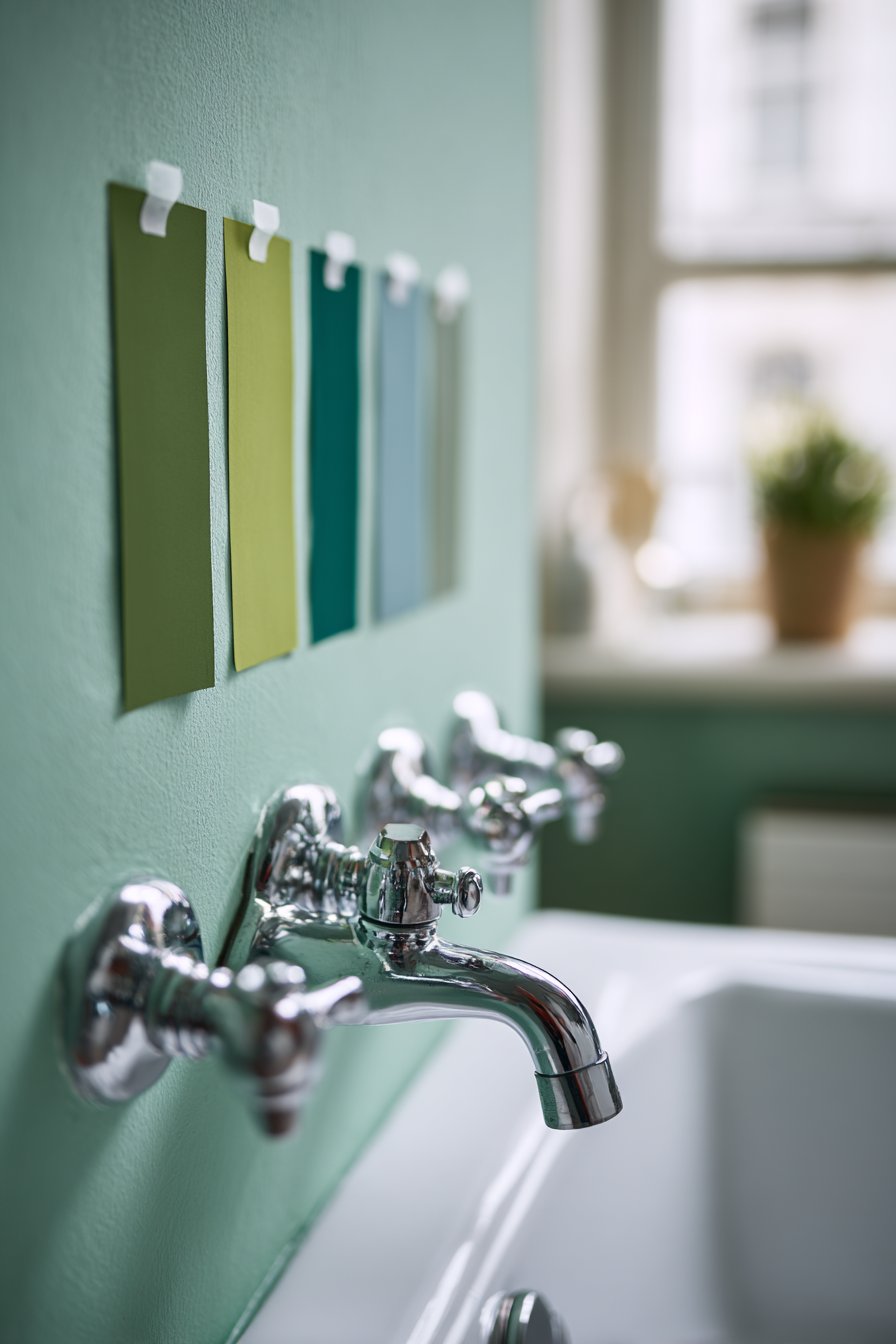
Darker greens like forest or hunter green can work in small bathrooms when used strategically as accent walls rather than covering all surfaces. Consider the room’s natural lighting before committing to any shade. Test paint samples on different walls throughout the day to observe how lighting conditions affect color perception. See our small kitchen ideas guide for more direction in this style.
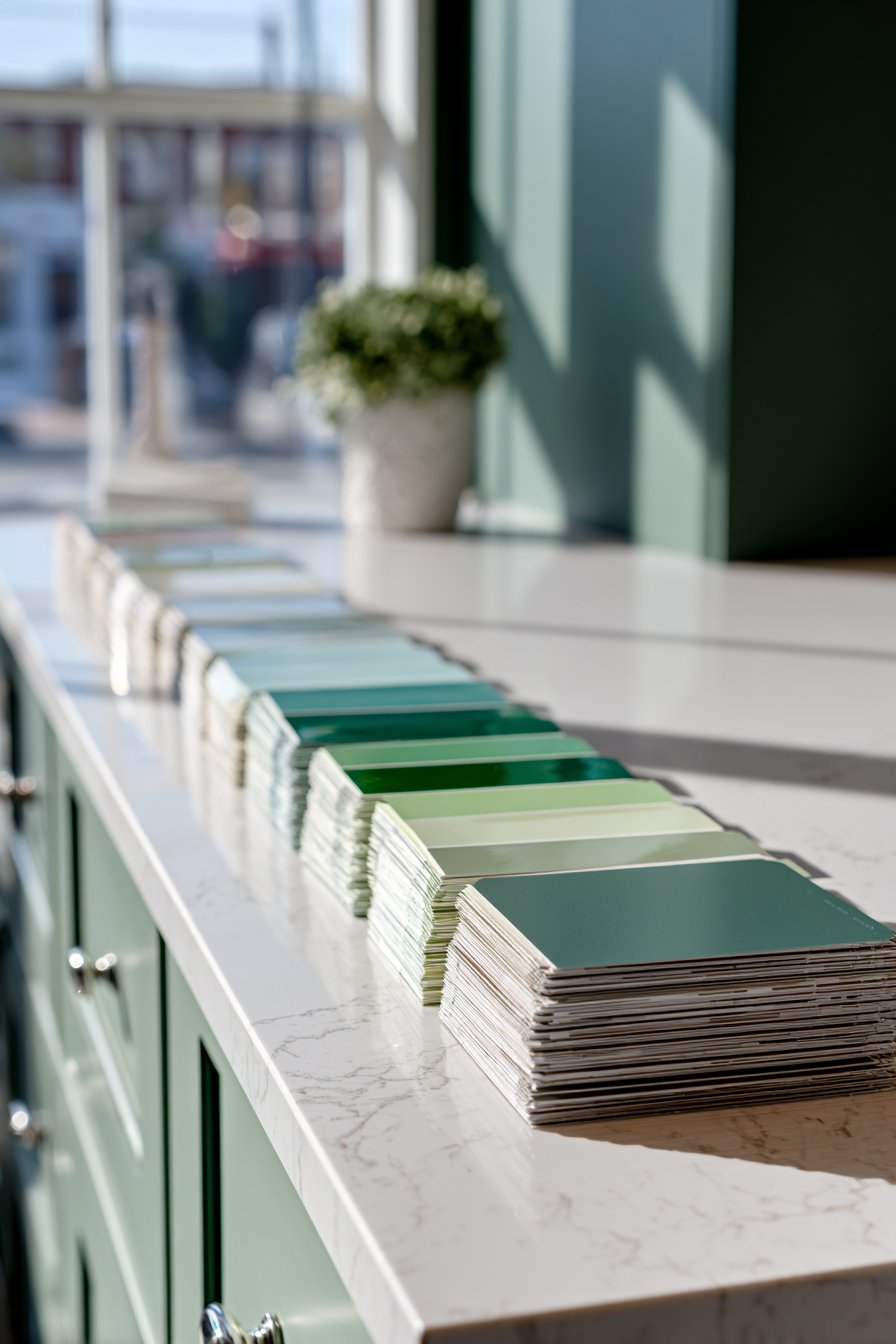
The undertones in your chosen green significantly impact the overall atmosphere. Cool-toned greens with blue undertones feel fresh and contemporary, while warm greens with yellow bases create cozy, inviting spaces. Match your green’s undertone to existing fixtures and flooring for seamless coordination.
- Test multiple green samples on walls for 3-5 days before deciding
- Use lighter greens on three walls and darker green as an accent
- Consider your bathroom’s natural light exposure when selecting shades
- Match green undertones to existing tile, fixtures, and hardware
- Pair sage or mint greens with white trim for enhanced brightness
- Reserve bold emerald or teal for accessories rather than wall color
2. Maximize Natural and Artificial Lighting
Proper lighting prevents green from appearing muddy or overwhelming in confined spaces. Natural light is your greatest asset, so avoid blocking windows with heavy treatments or excessive decor. Sheer curtains or frosted window film provide privacy while allowing maximum daylight penetration throughout the day.
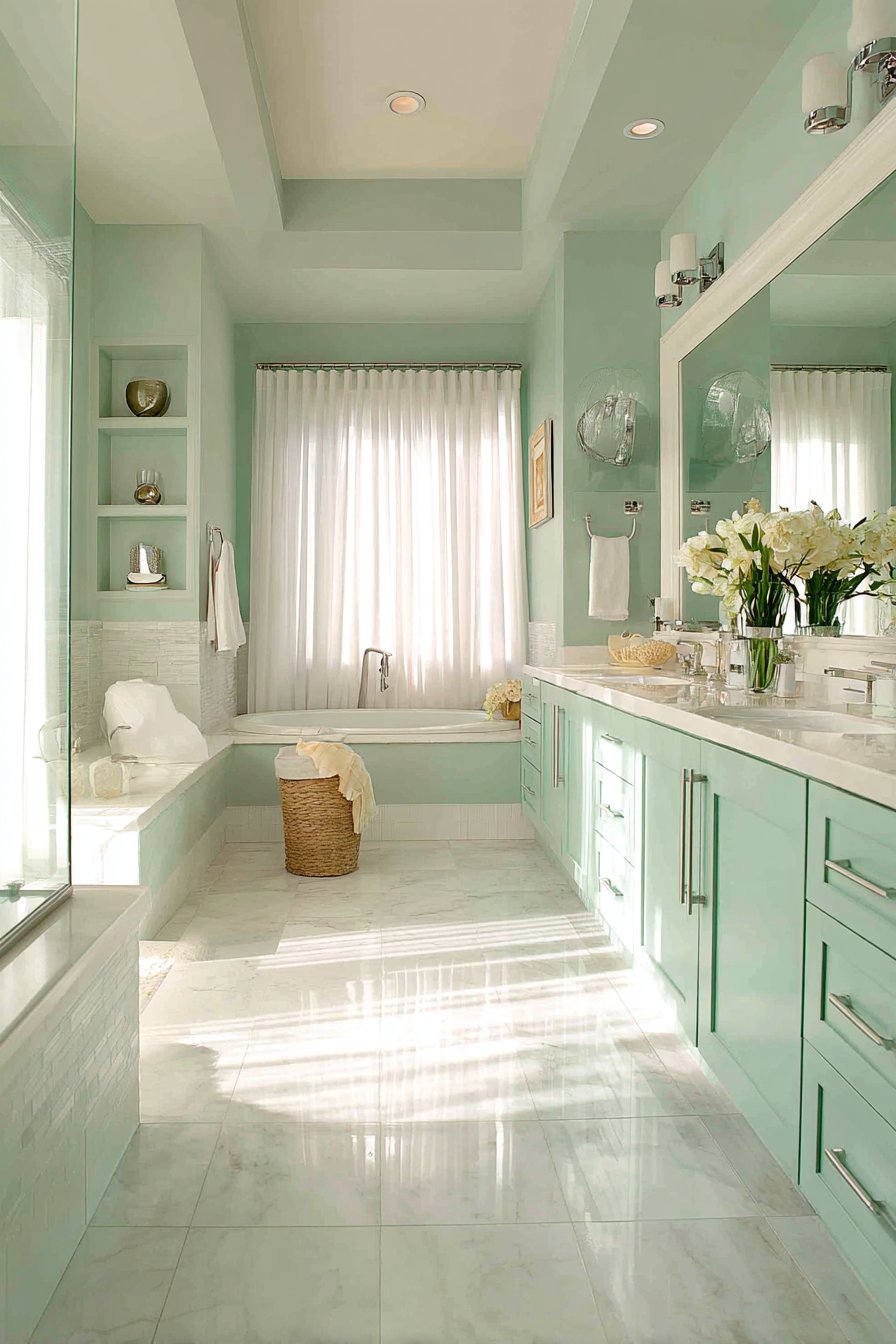
Layer your lighting scheme with multiple sources at different heights to eliminate shadows and dark corners. Overhead lighting alone creates harsh shadows that make green appear darker than intended. Install sconces flanking mirrors, under-cabinet strips, or recessed ceiling lights for comprehensive illumination that showcases your green palette beautifully.
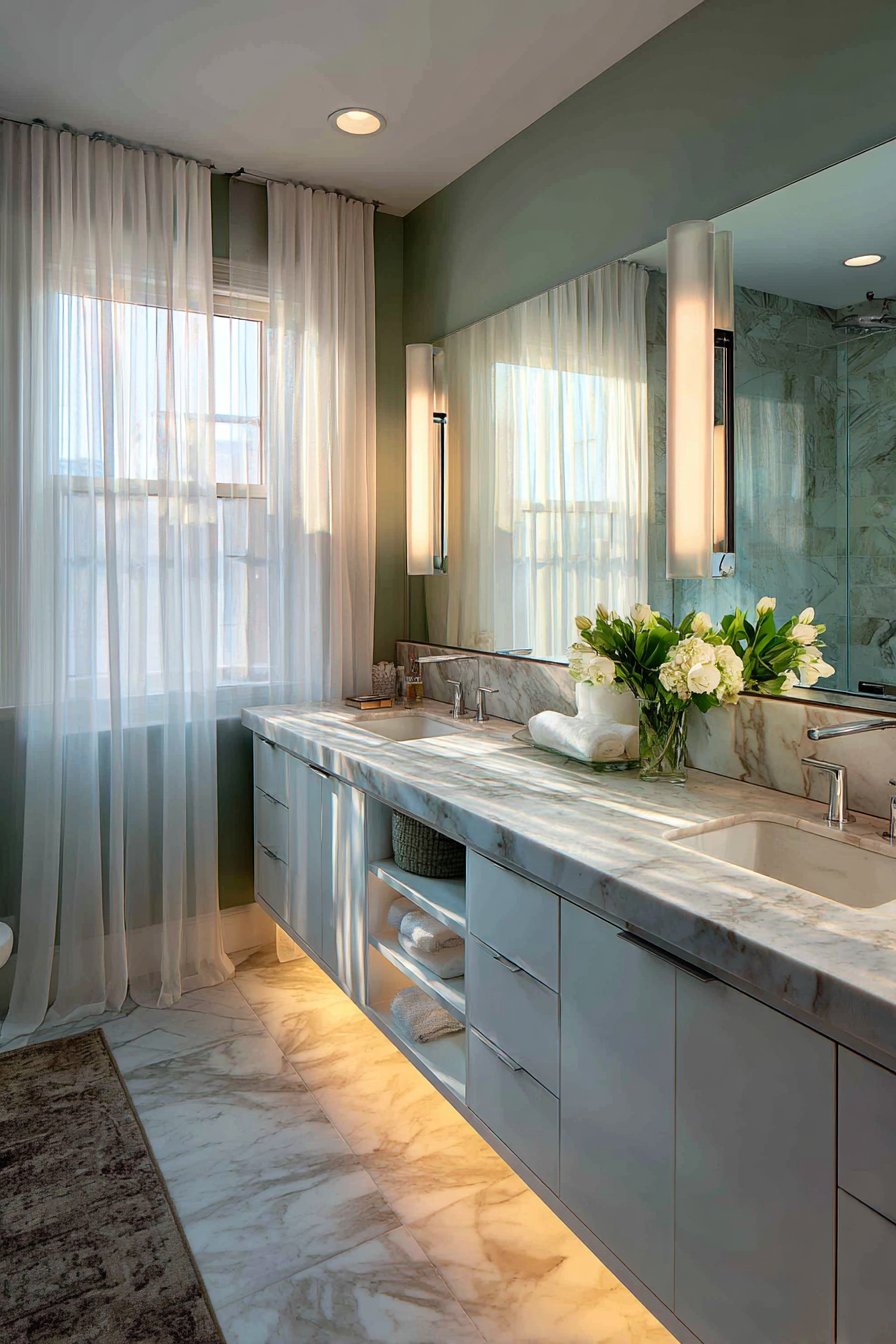
Color temperature matters significantly when lighting green bathrooms. Warm white bulbs (2700-3000K) complement yellow-based greens, while cool white bulbs (4000-5000K) enhance blue-toned greens. Dimmer switches offer flexibility to adjust lighting intensity based on time of day and specific activities.
- Install three-way switches for layered lighting control options
- Use LED bulbs rated 800-1000 lumens for small bathroom spaces. Our these bathroom paint colors for small spaces has more inspiration along these same lines.
- Position lights on both sides of mirrors to reduce shadows
- Add motion-sensor nightlights for safety and convenience after dark
- Choose frosted glass fixtures to diffuse light evenly throughout space
- Consider a skylight or solar tube if bathroom lacks windows
3. Incorporate Reflective Surfaces Strategically
Mirrors and glossy finishes are essential tools for making small green bathrooms feel larger and brighter. A generously sized mirror above the vanity reflects both natural and artificial light while creating visual depth. Consider extending mirrors from countertop to ceiling for maximum spatial expansion effect.
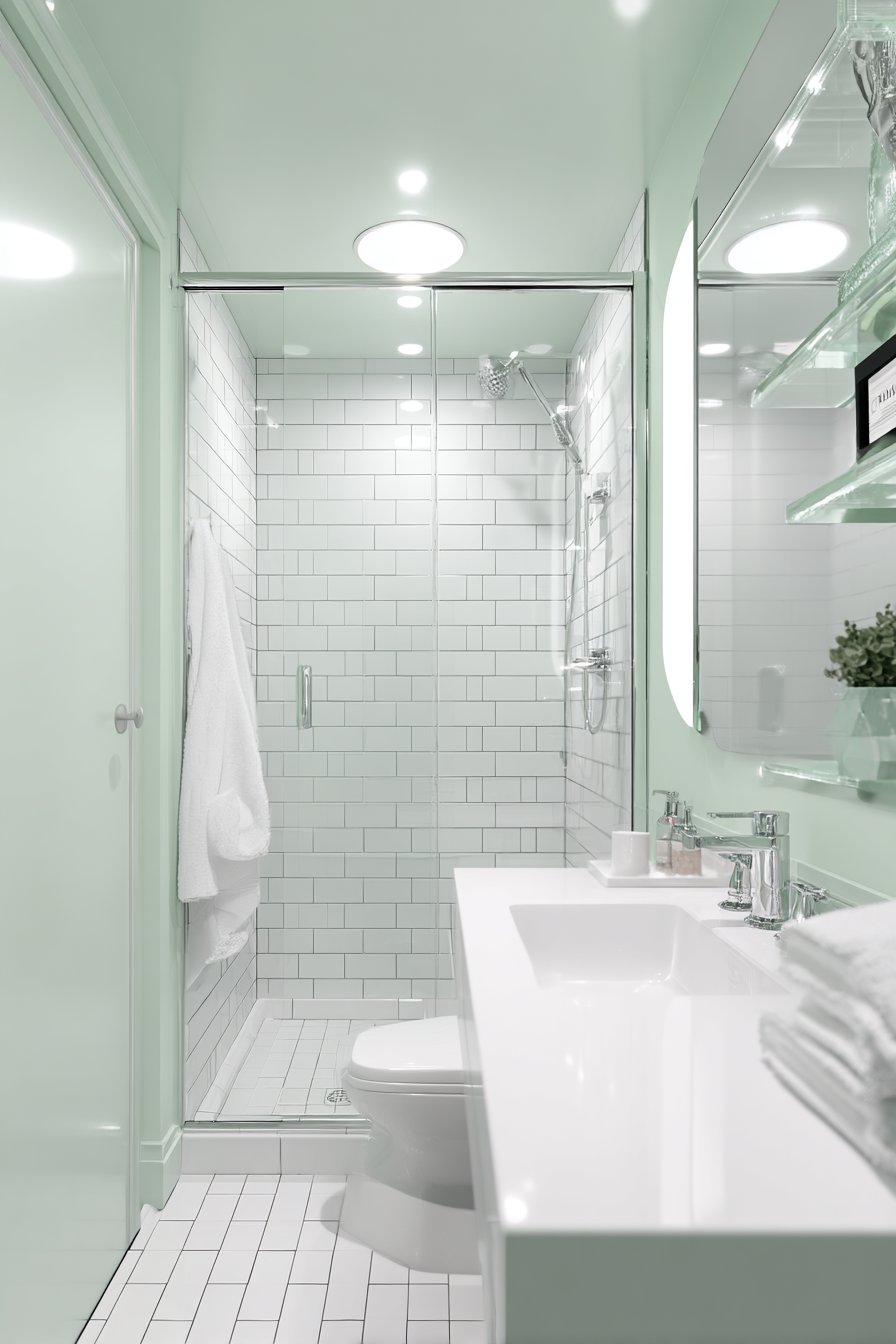
Glossy tiles and polished fixtures bounce light around the room, counteracting any darkness that green might introduce. Chrome, brushed nickel, and polished brass all work beautifully with green tones while adding reflective properties. Avoid matte black fixtures in small green bathrooms as they absorb rather than reflect precious light.
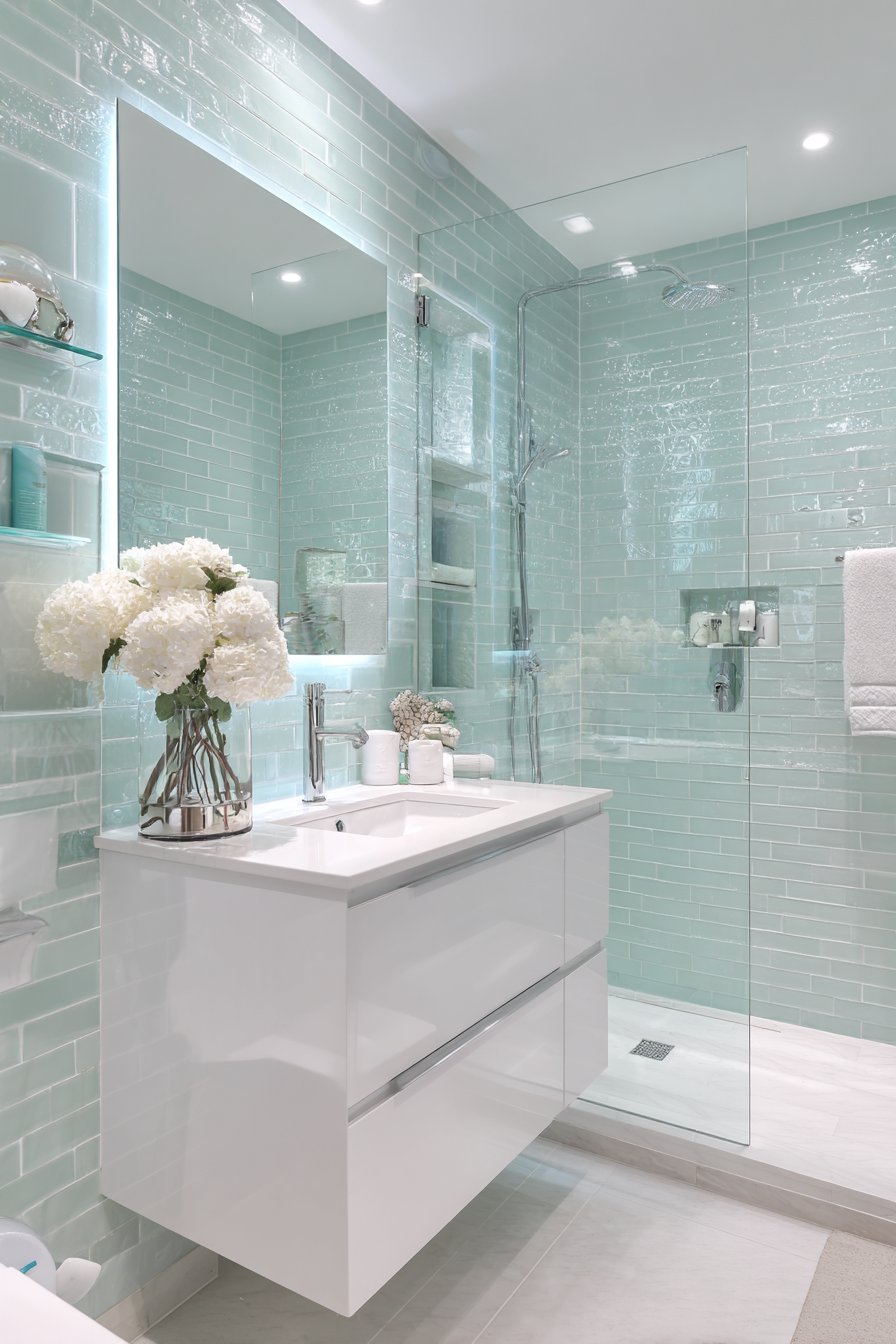
Glass shower enclosures maintain visual continuity instead of chopping the room into smaller segments with shower curtains. Frameless or semi-frameless options create the most seamless look, allowing your eye to travel uninterrupted through the entire space.
- Install a mirror spanning the full width of your vanity wall
- Choose glossy subway tiles over matte finishes for better light reflection
- Use glass shelving instead of solid wood or metal options
- Select polished chrome or nickel fixtures for maximum reflectivity
- Consider a mirrored medicine cabinet for dual functionality and light
- Add metallic accessories like soap dispensers and towel bars strategically
4. Select Space-Saving Fixtures and Storage
Compact fixtures designed for small bathrooms prevent your green space from feeling cluttered or cramped. Wall-mounted vanities create the illusion of more floor space by exposing flooring beneath, making the room appear larger. Pedestal or console sinks work beautifully when storage isn’t critical or can be achieved through alternative means.
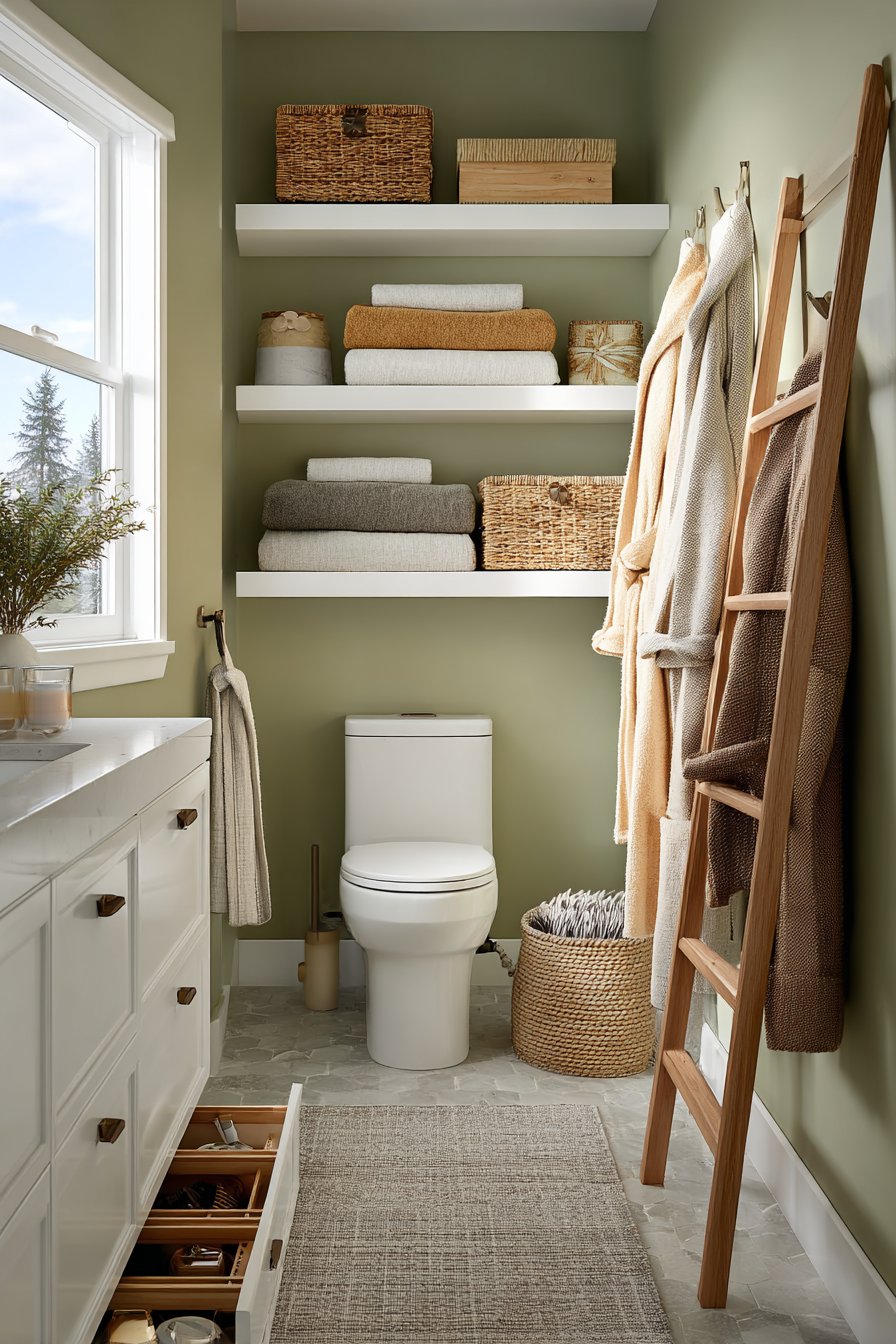
Corner sinks and toilets utilize underutilized space efficiently while leaving more room for movement. Floating shelves mounted above the toilet or in empty corners provide storage without consuming valuable floor space. Choose fixtures with clean lines and simple profiles rather than ornate, bulky designs.
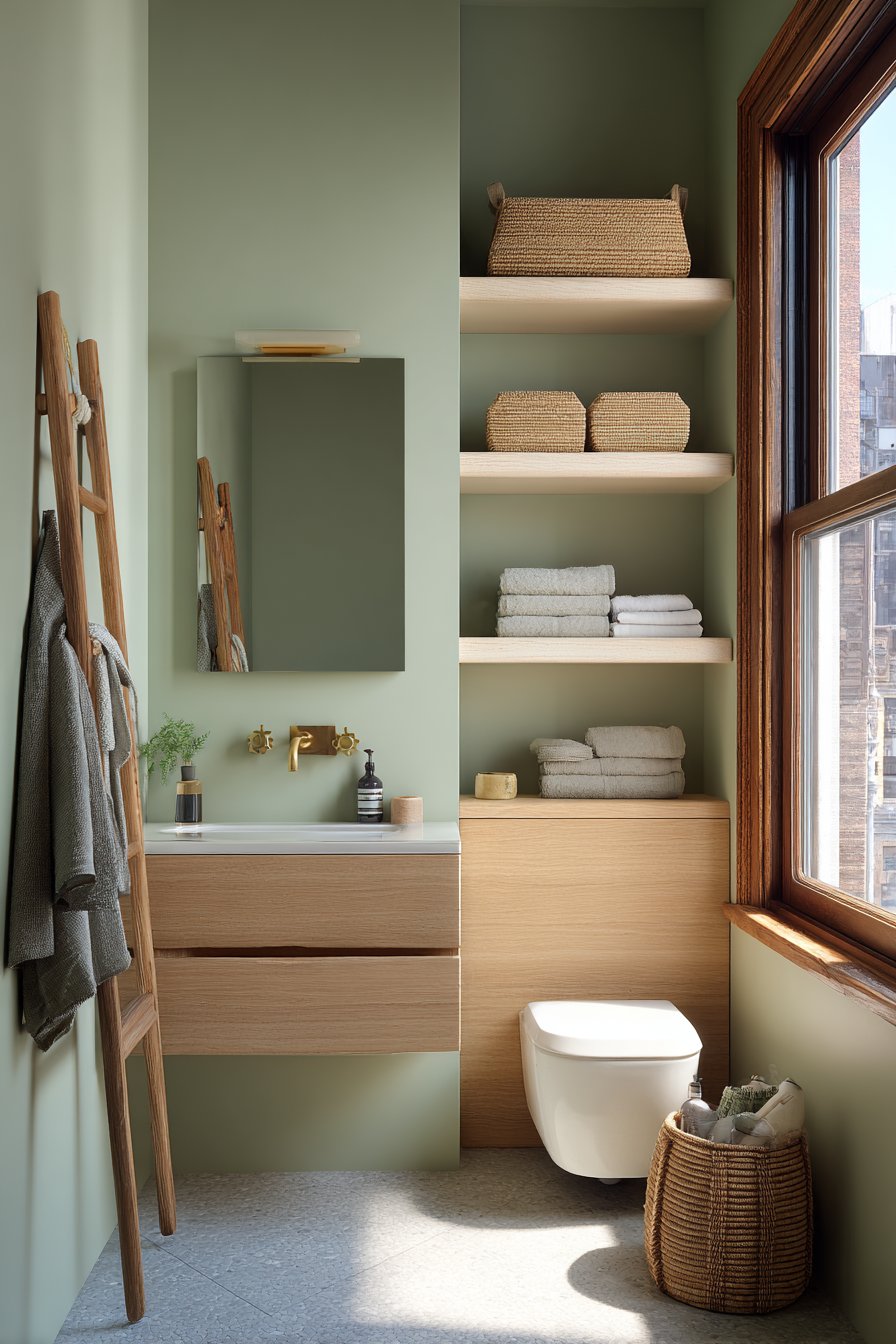
Medicine cabinets recessed into walls offer hidden storage that doesn’t protrude into the room. Over-toilet storage units, ladder shelves, and narrow rolling carts maximize vertical space while keeping essentials organized and accessible.
- Measure your space carefully before purchasing any fixtures or furniture
- Choose a vanity 24 inches or less in width for truly compact bathrooms
- Install floating shelves 12-18 inches above the toilet for towel storage
- Use drawer organizers to maximize every inch of vanity storage
- Mount hooks on the back of the door for robes and towels
- Consider a combination washer-dryer unit if space allows for multi-functionality
5. Balance Green with Neutral Accents
Preventing color overload requires balancing your green palette with complementary neutral tones. White remains the most popular choice, offering crisp contrast that makes green appear more vibrant while maintaining an airy, open feeling. Cream or beige creates softer, warmer combinations ideal for traditional or farmhouse aesthetics.
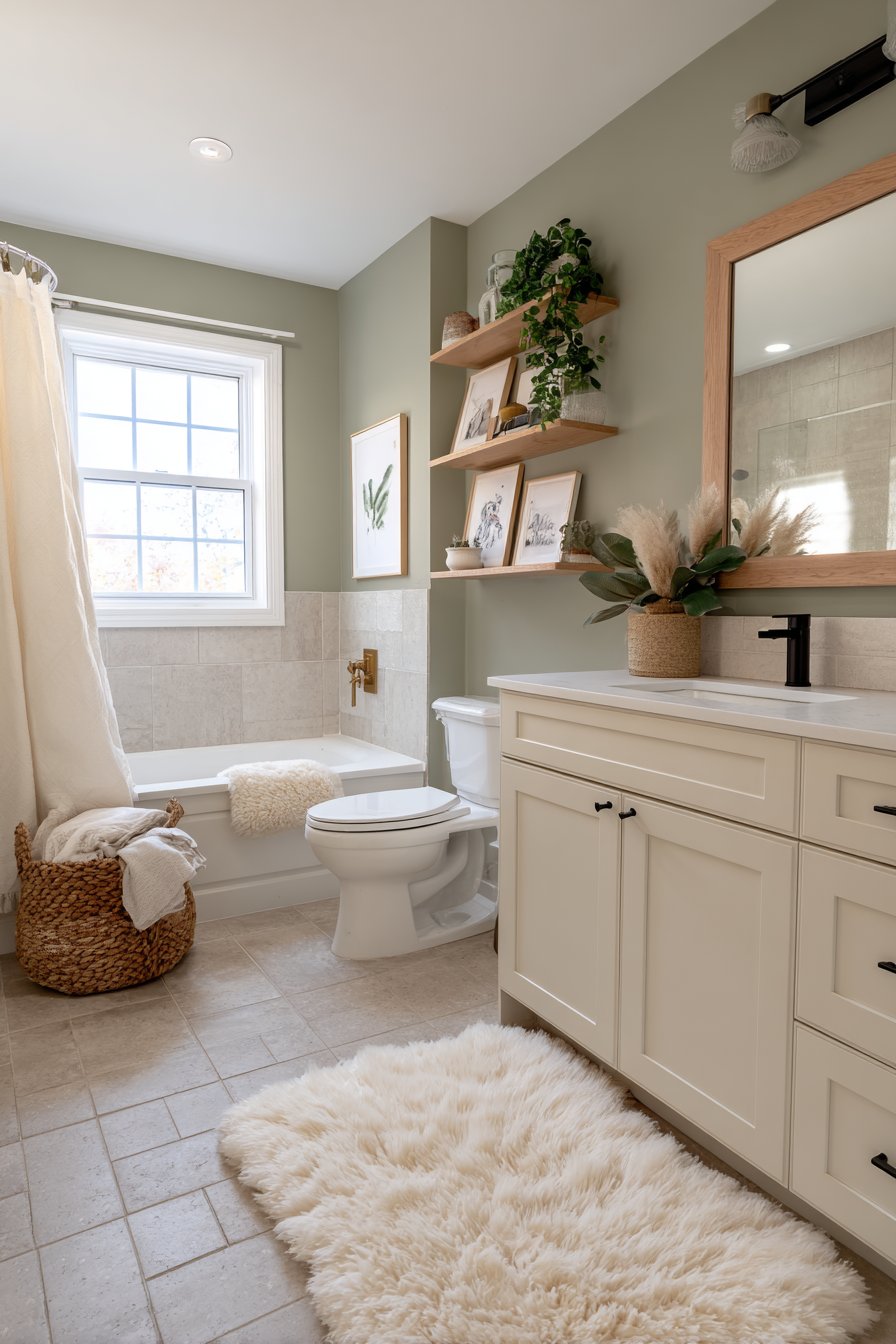
Gray pairs beautifully with cooler greens, particularly sage and seafoam, creating sophisticated modern schemes. Natural wood tones add warmth and texture, connecting your green bathroom to nature through organic materials. Limit bold accent colors to prevent visual chaos in limited square footage.
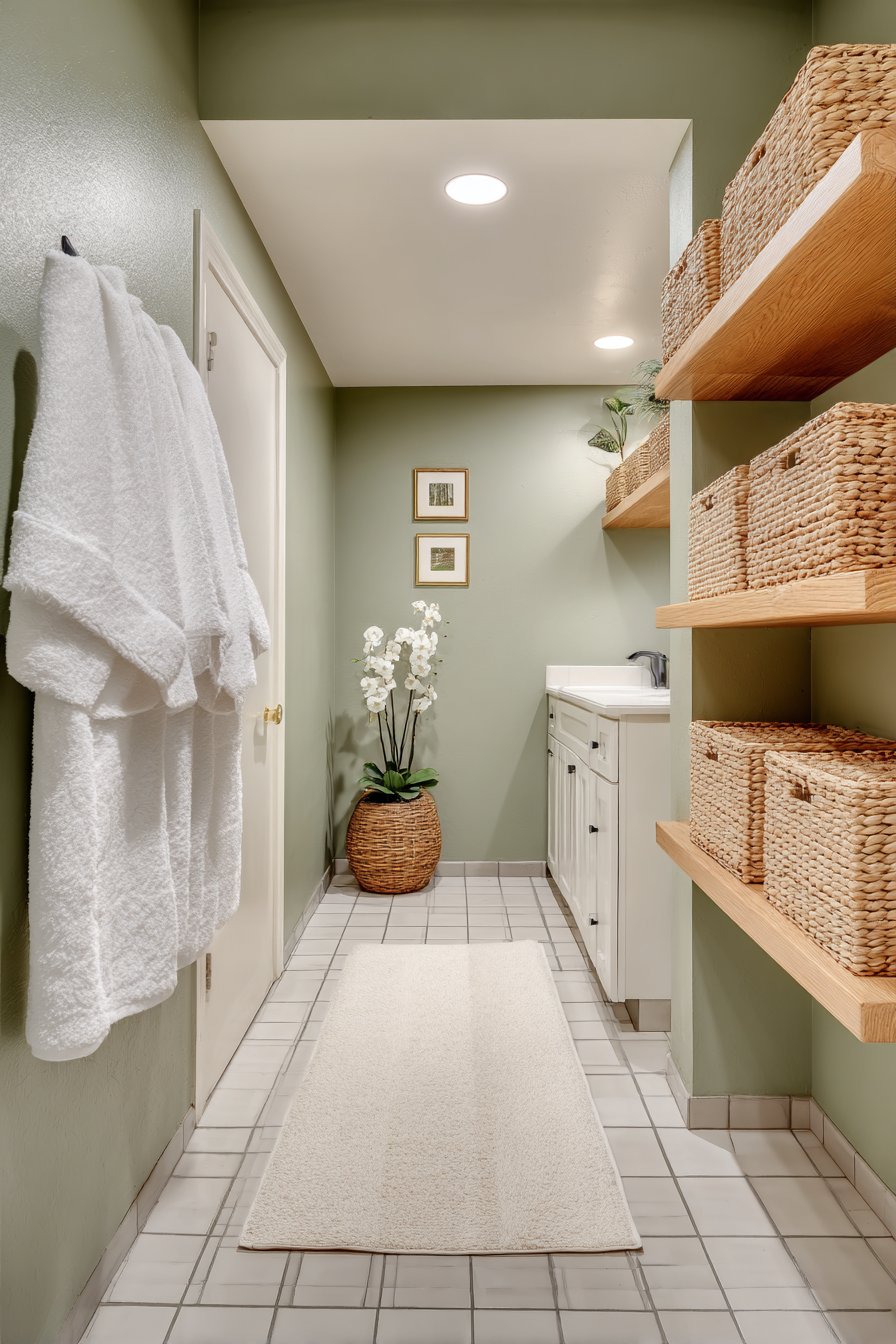
The 60-30-10 rule works perfectly in small green bathrooms: 60% dominant color (green), 30% secondary neutral (white), and 10% accent color (brass, natural wood, or black). This proportion creates visual harmony without overwhelming the senses in a confined area.
- Paint trim, ceiling, and door white to maximize brightness
- Choose white or cream towels, bath mats, and shower curtains
- Add natural wood through shelving, frames, or storage accessories
- Use brass or gold hardware as warm metallic accents against green
- Limit patterns to one or two elements like tiles or curtains
- Incorporate black sparingly through light fixtures or cabinet hardware
6. Add Natural Elements and Textures
Connecting your green bathroom to nature through organic materials creates cohesive, calming environments. Plants thrive in bathroom humidity, adding living texture while reinforcing the green color scheme. Pothos, snake plants, and ferns tolerate low light conditions common in small bathrooms.
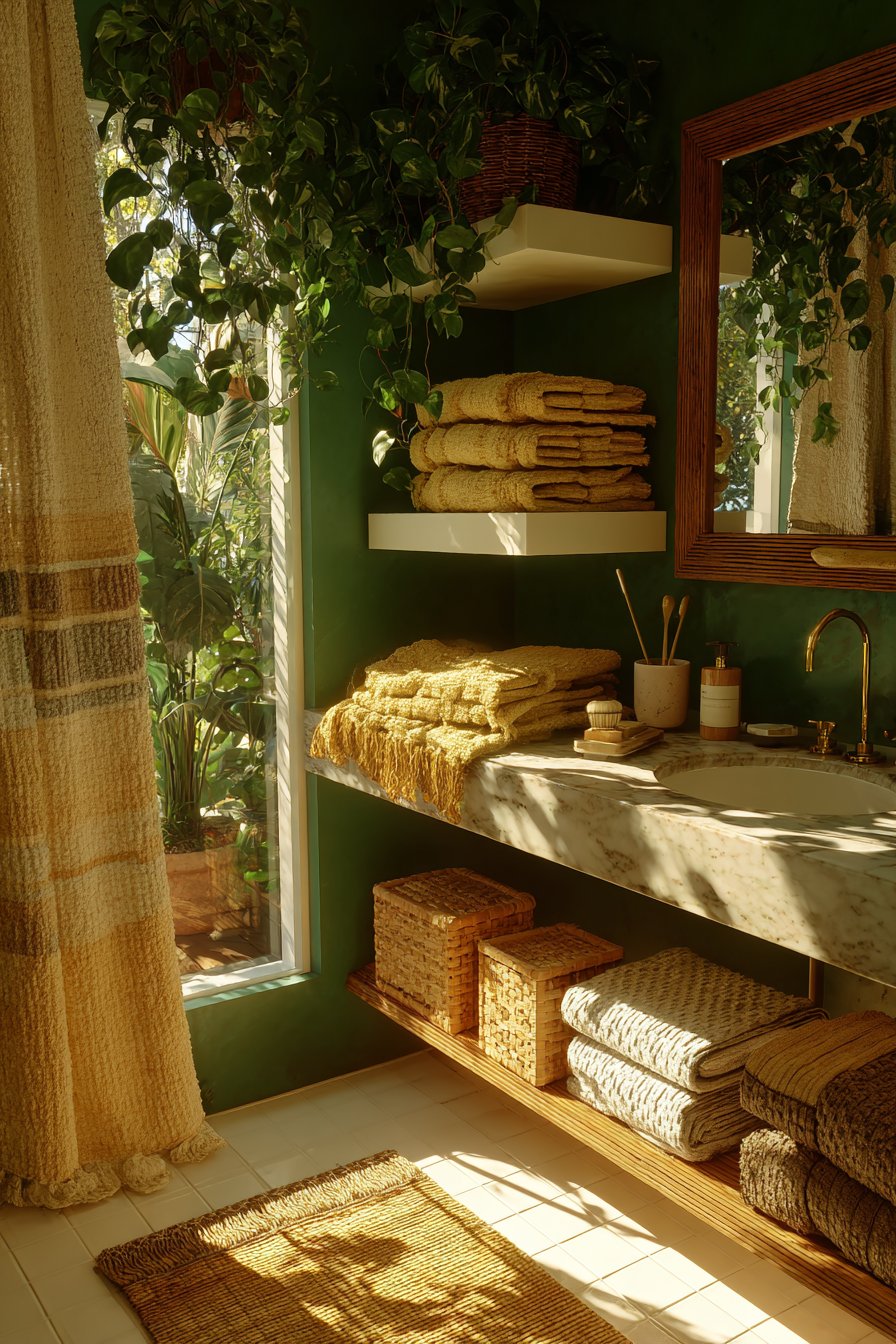
Natural materials like bamboo, rattan, and teak introduce tactile variety that prevents monotony in single-color schemes. Woven baskets provide attractive storage solutions while adding warmth through natural fibers. Stone or marble elements in countertops or accessories bring sophisticated, earthy elegance.
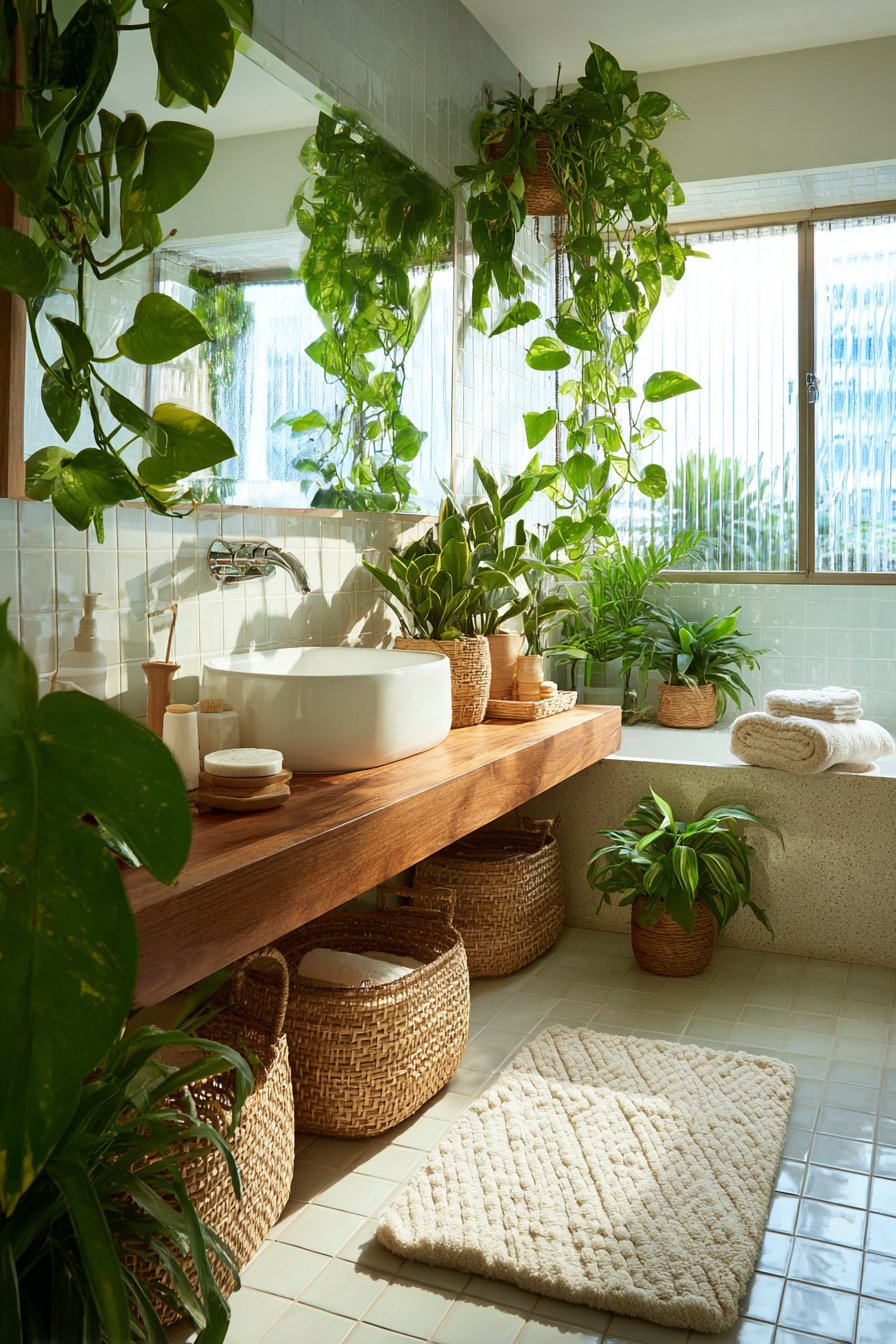
Texture layering through textiles creates visual interest without requiring additional space. Waffle-weave towels, ribbed bath mats, and quilted shower curtains add dimension that flat surfaces lack. Mix smooth and rough textures for dynamic contrast that engages the senses.
- Place 2-3 humidity-loving plants on floating shelves or windowsills
- Choose bamboo or teak bath accessories for sustainable style
- Use woven baskets under the sink or on shelves for hidden storage
- Add a natural fiber bath mat instead of synthetic options
- Incorporate stone soap dishes or toothbrush holders as accents
- Layer different towel textures for visual and tactile interest
Conclusion
Styling small green bathrooms effectively combines strategic color selection with smart spatial planning. By choosing the right shade, maximizing lighting, incorporating reflective surfaces, and selecting appropriate fixtures, you create functional spaces that feel larger than their actual dimensions. Remember that balance is crucial—pair your green with neutrals and natural elements to prevent overwhelming your limited square footage.
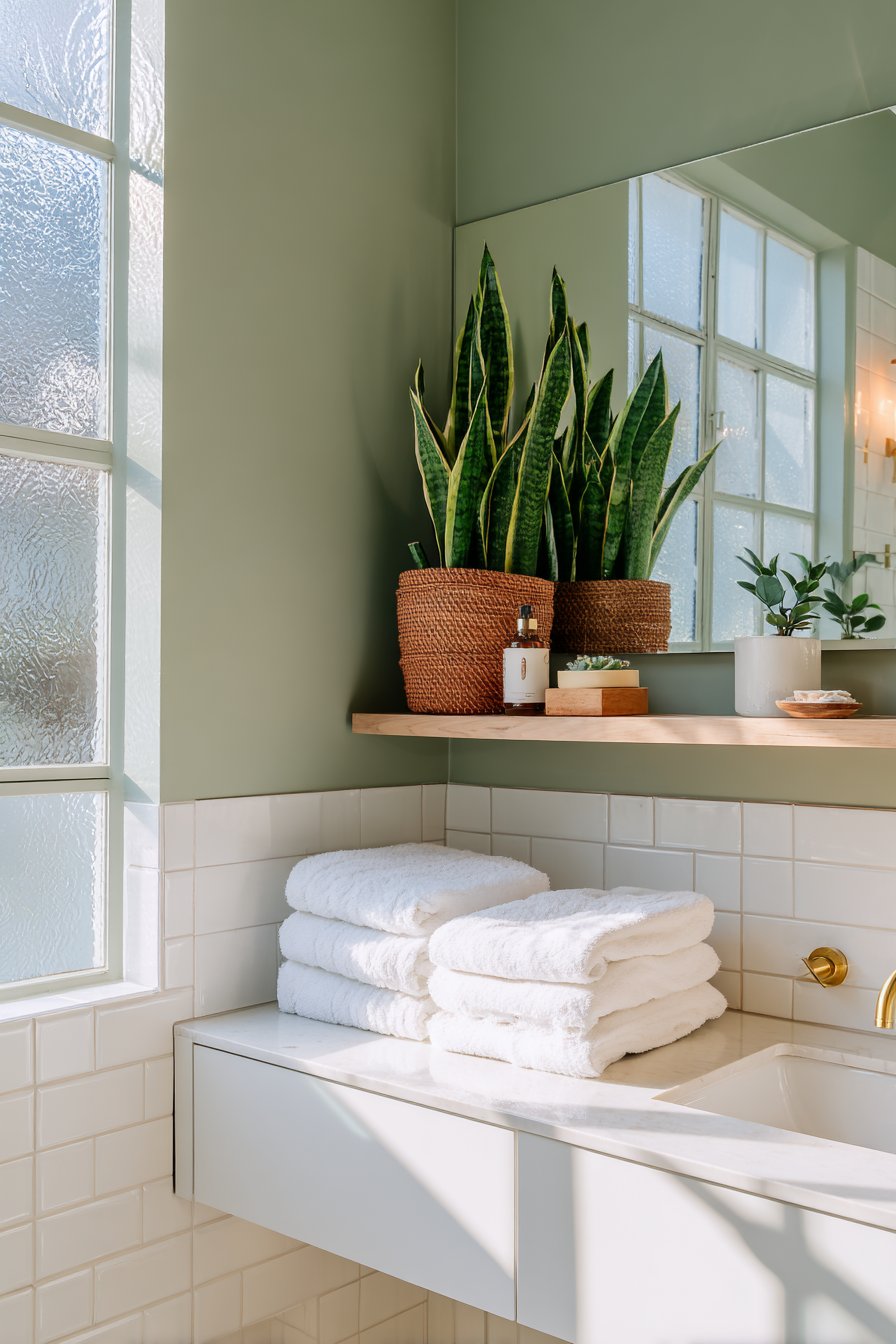
These six strategies provide a solid foundation for transforming any compact green bathroom into a refreshing sanctuary. Experiment with different shades, textures, and accessories to discover what resonates with your personal style. With thoughtful planning and attention to detail, your small green bathroom can become one of the most inviting spaces in your home.
