


A fence is often the first thing that frames how a backyard feels before anyone even steps into the space. It sets the tone, establishes privacy, and quietly signals the personality of the home behind it — whether that’s rustic warmth, sleek modern minimalism, or romantic cottage charm. Thoughtful fence design does far more than mark a property line; it becomes an architectural extension of the house itself, tying together landscaping, patios, and outdoor living areas into one cohesive visual story.
Choosing the right fence style involves balancing function with aesthetics. Privacy, security, and durability matter just as much as color, texture, and material choice. The good news is that today’s homeowners have an incredible range of options, from natural wood and bamboo to metal, stone, and composite hybrids, each offering a completely different mood and maintenance profile. Whether you’re drawn to industrial edge, organic softness, or timeless classic charm, there’s a fence style suited to your taste and your climate.
In this guide, we’ll walk through fifteen distinct backyard fence concepts, each with its own material palette, texture, and character. From charred shou sugi ban wood to wrought iron scrollwork, these ideas are meant to inspire homeowners, landscapers, and design enthusiasts alike to see the humble fence as a genuine design opportunity rather than an afterthought.
1. Horizontal Cedar Plank Fence with Rhythmic Board Spacing
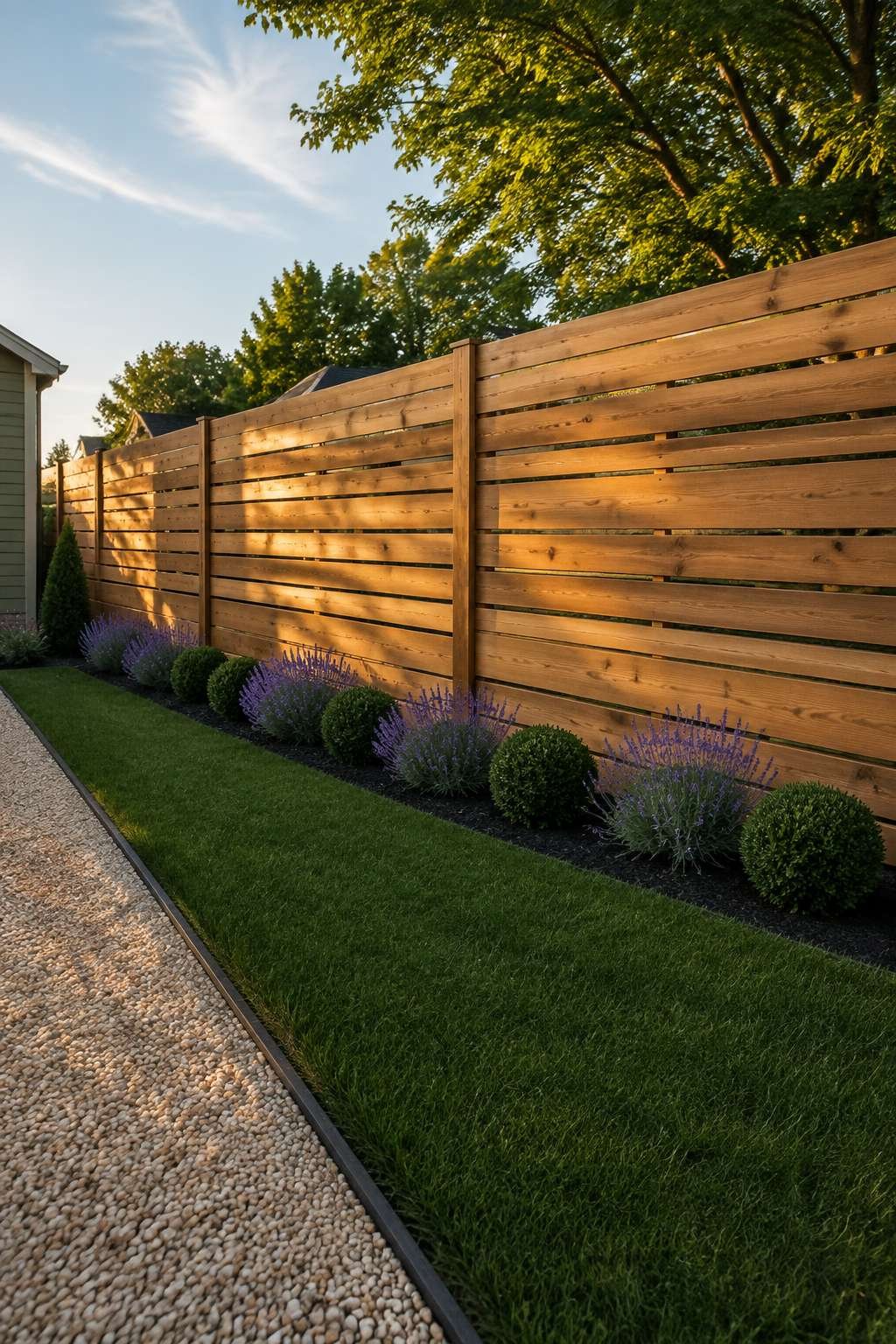
There’s something deeply calming about a horizontal cedar plank fence, especially one designed with alternating wide and narrow boards that create a subtle visual rhythm along the yard’s edge. The honey-toned wood grain glows warmly in natural light, giving the fence a handcrafted, almost furniture-like quality rather than a purely functional barrier. Paired with a trimmed lawn and a gravel pathway, this fence style bridges the gap between rustic and refined, suiting suburban homes that want warmth without looking overly traditional.
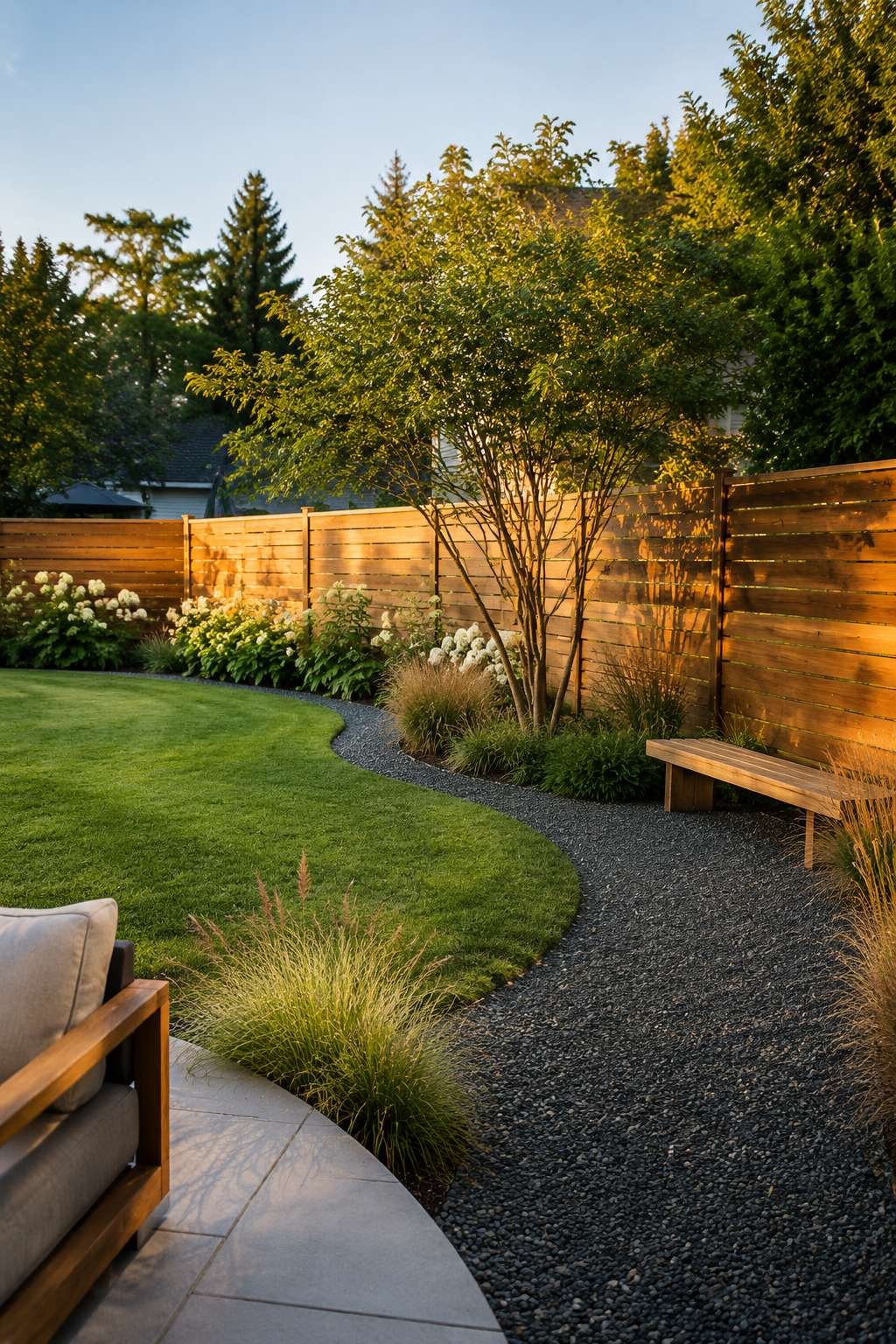
Golden hour light is this fence’s best friend, raking across the surface to reveal every ripple in the wood grain and casting long, soft shadows that add depth and dimension. The alternating board widths keep the eye moving along the fence line, preventing the flat, monotonous look that a uniform picket fence can sometimes create. Cedar’s natural oils also make it naturally resistant to rot and insects, which means this beautiful texture holds up well over time with minimal intervention.

This style works exceptionally well in yards that already lean toward natural materials — think stone pavers, wooden decking, or greenery-heavy landscaping. The cedar tone can be left to weather into a soft silvery grey over the years or maintained with an annual oil finish to preserve that rich honey color. Either way, the fence becomes a living, evolving feature of the landscape rather than a static structure.
Key Design Tips:
- Choose alternating board widths to add visual movement without extra cost
- Apply a UV-protective wood oil annually to preserve the golden tone
- Pair with gravel or stone pathways for a cohesive natural palette
- Let horizontal lines visually widen a narrow backyard
- Use matching cedar accents on planters or seating for continuity
2. Modern Black Metal Fence with Slim Steel Pickets
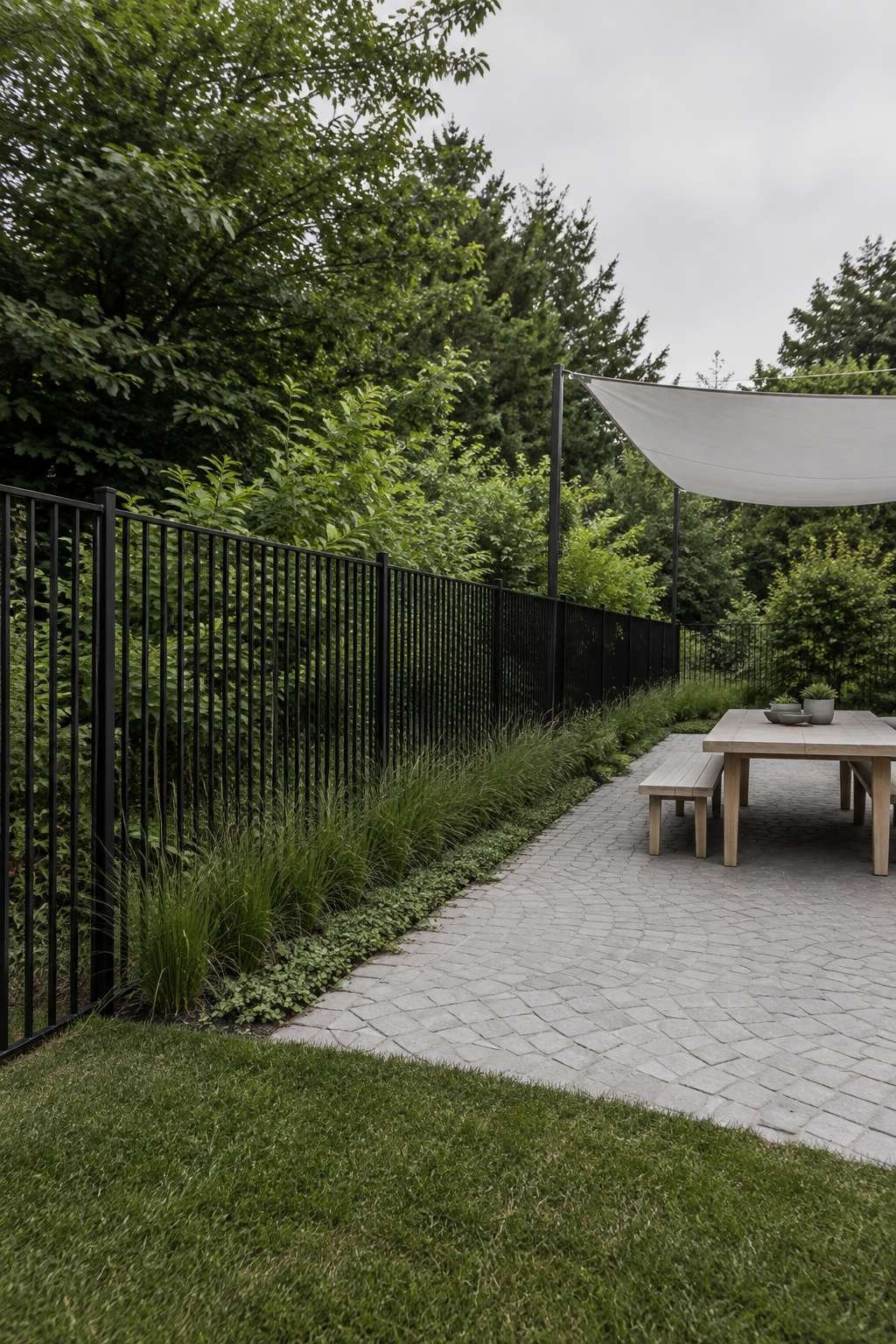
For homeowners chasing a minimalist, architectural aesthetic, the modern black metal fence delivers striking impact with very little visual clutter. Built from slim vertical steel pickets finished in a matte powder-coated black, this fence design reads as clean, confident, and unapologetically contemporary. It’s particularly effective bordering a backyard with a paved patio and low ornamental grasses, where its geometric precision contrasts beautifully against the softness of greenery.
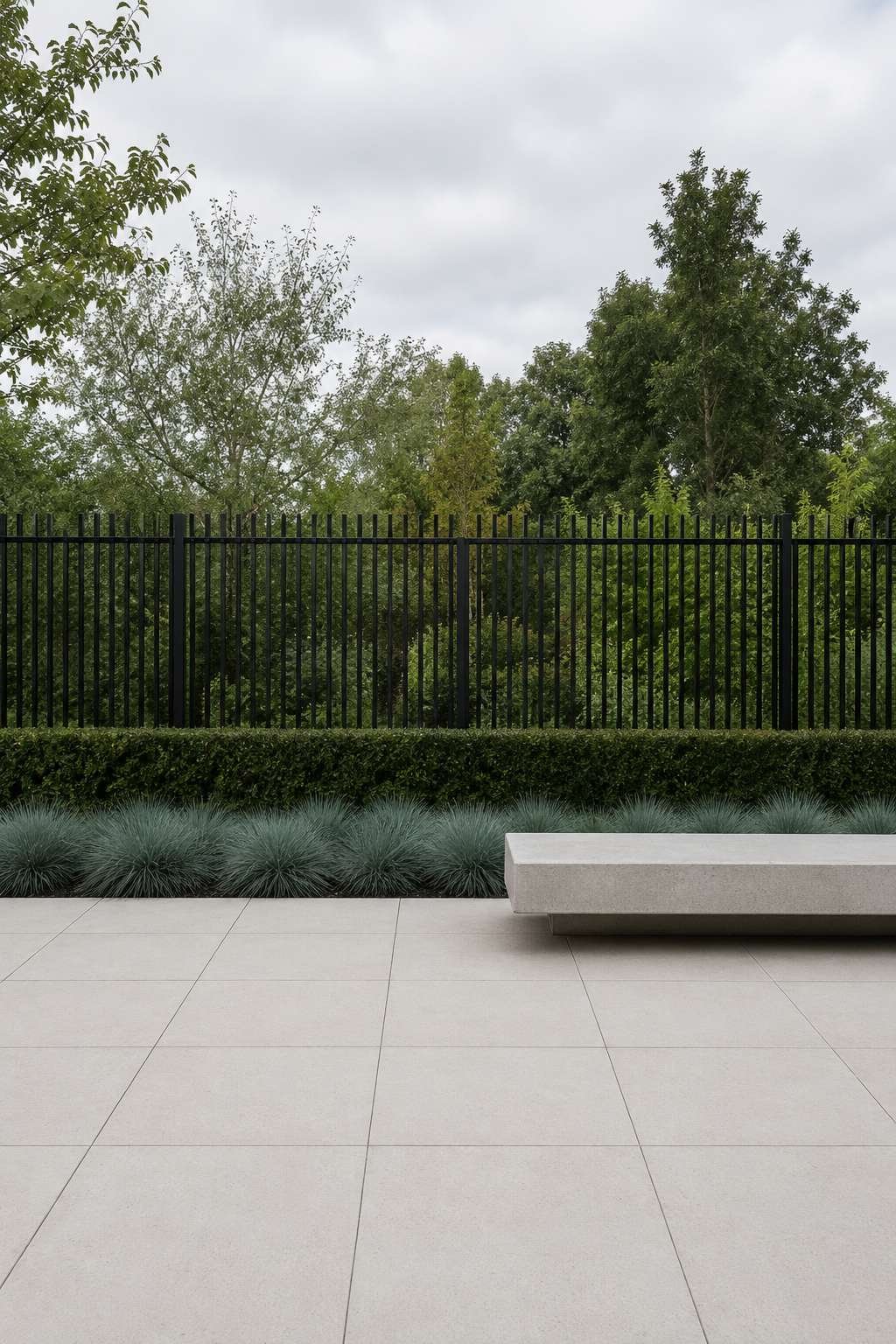
The matte finish is key here — a glossy black would feel showy, but the powder-coated matte surface absorbs light rather than reflecting it, giving the fence a grounded, understated presence. Under soft overcast daylight, the metal reads evenly across its entire length, with no harsh glare disrupting the clean geometric lines. This makes it a forgiving choice for yards that don’t always get direct sun.
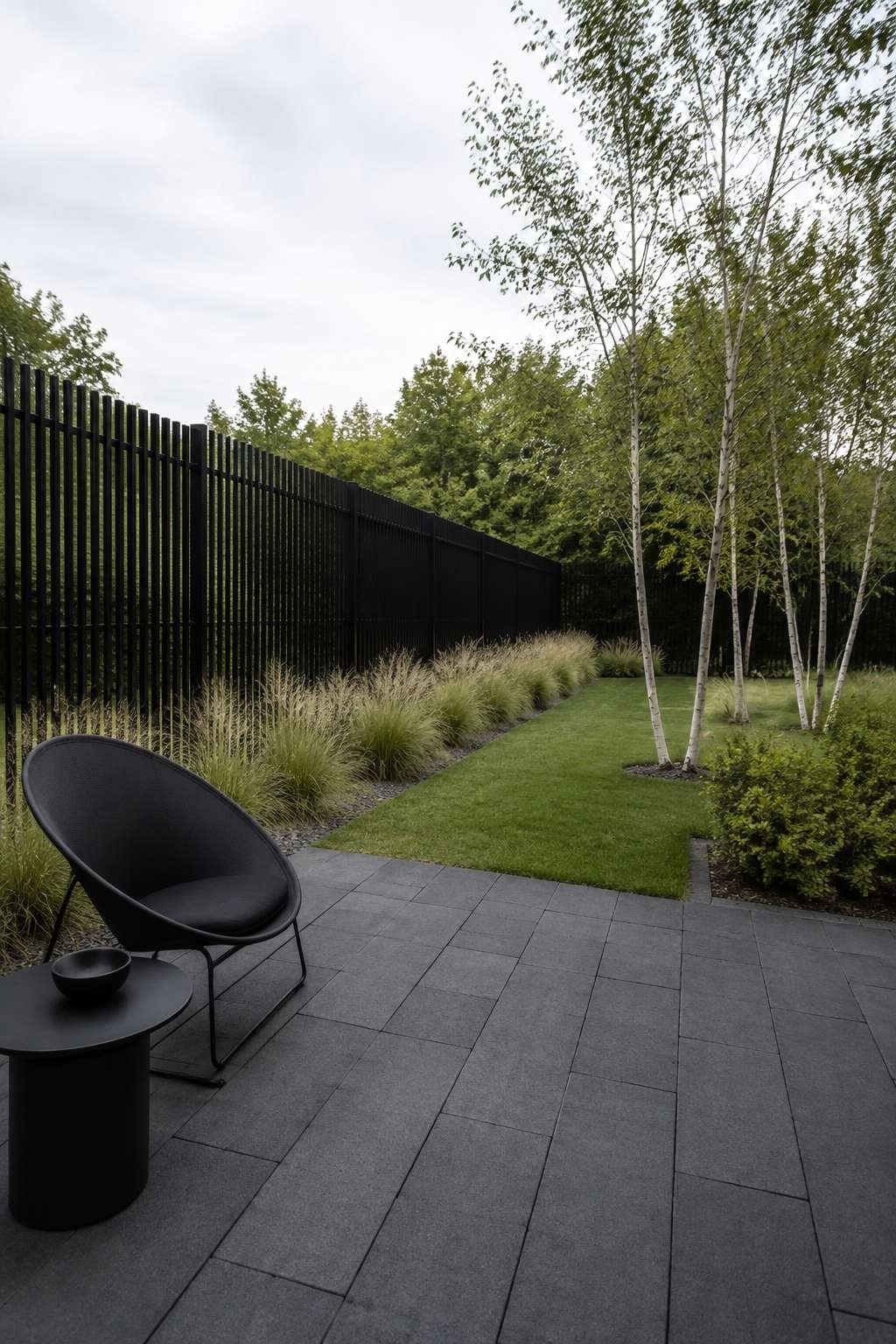
Durability is another major draw. Powder-coated steel resists rust, chipping, and fading far better than traditional painted metal, making it a long-term investment rather than a recurring maintenance chore. The slim picket profile also allows for airflow and visibility while still providing a defined boundary, striking a smart balance between openness and enclosure — ideal for modern homes that want security without feeling walled in.
Key Design Tips:
- Stick to slim picket spacing for a refined, airy modern look
- Choose a matte powder-coated finish to avoid glare and reduce maintenance
- Pair with low ornamental grasses to soften the fence’s geometric lines
- Use black metal to visually anchor a minimalist patio design
- Combine with concrete or paver flooring for a cohesive contemporary palette
3. Rustic Reclaimed Wood Privacy Fence
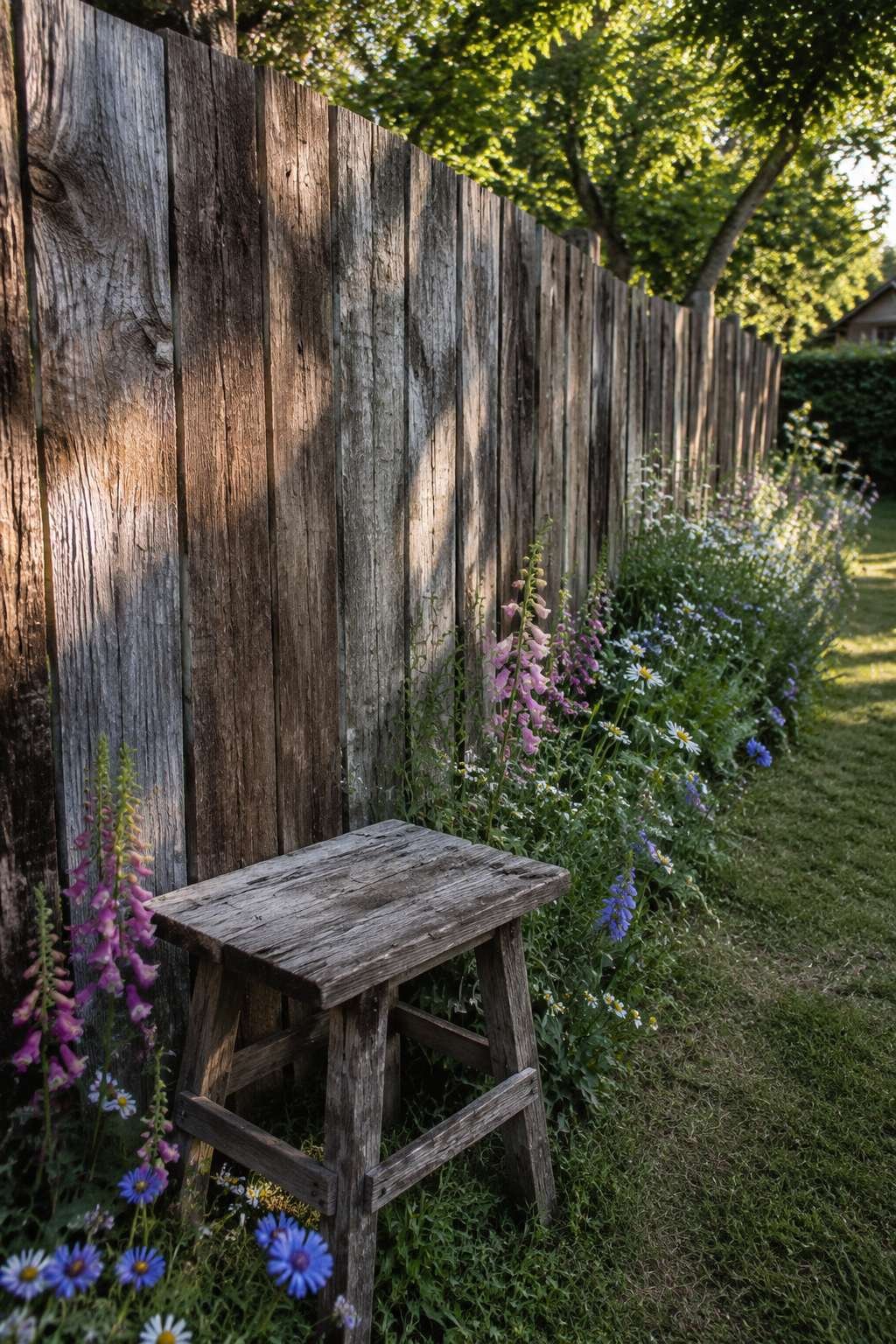
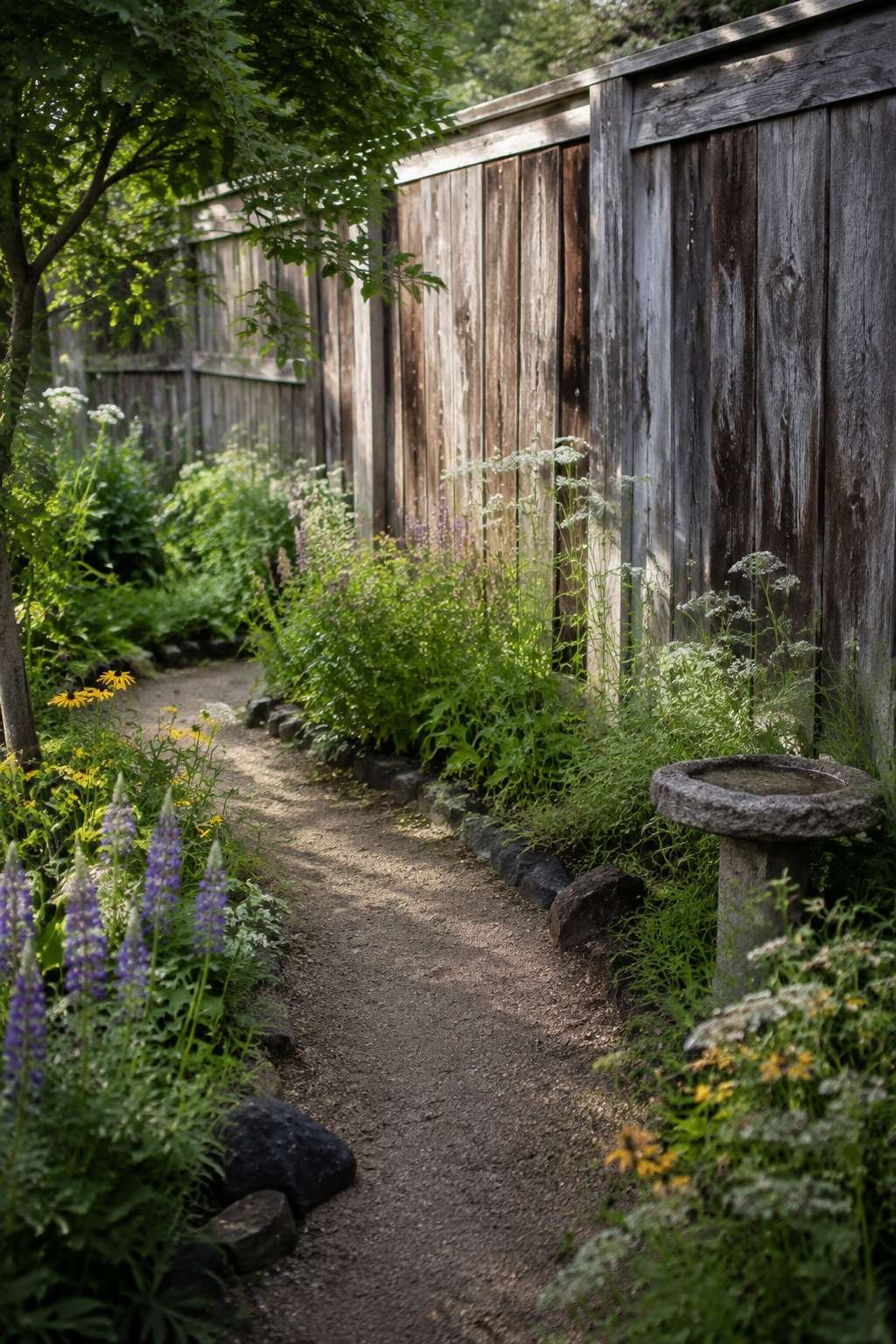
There’s undeniable character in a rustic reclaimed wood fence, where mismatched plank widths and visible natural wear tell a story that new lumber simply can’t replicate. The weathered grey-brown patina feels authentic and lived-in, making it a perfect match for cottage-style backyards bordered by wildflower gardens and untamed greenery. Every board carries its own history — knots, cracks, and subtle color variation that give the fence genuine soul.

Under late afternoon sun, the reclaimed wood takes on a warm, dappled glow, with shadows pooling in the texture’s natural grooves and cracks. This lighting emphasizes the organic imperfections that make reclaimed wood so appealing — no two boards look alike, and that inconsistency is precisely the point. It’s a fence style that celebrates age and authenticity rather than pursuing pristine uniformity.
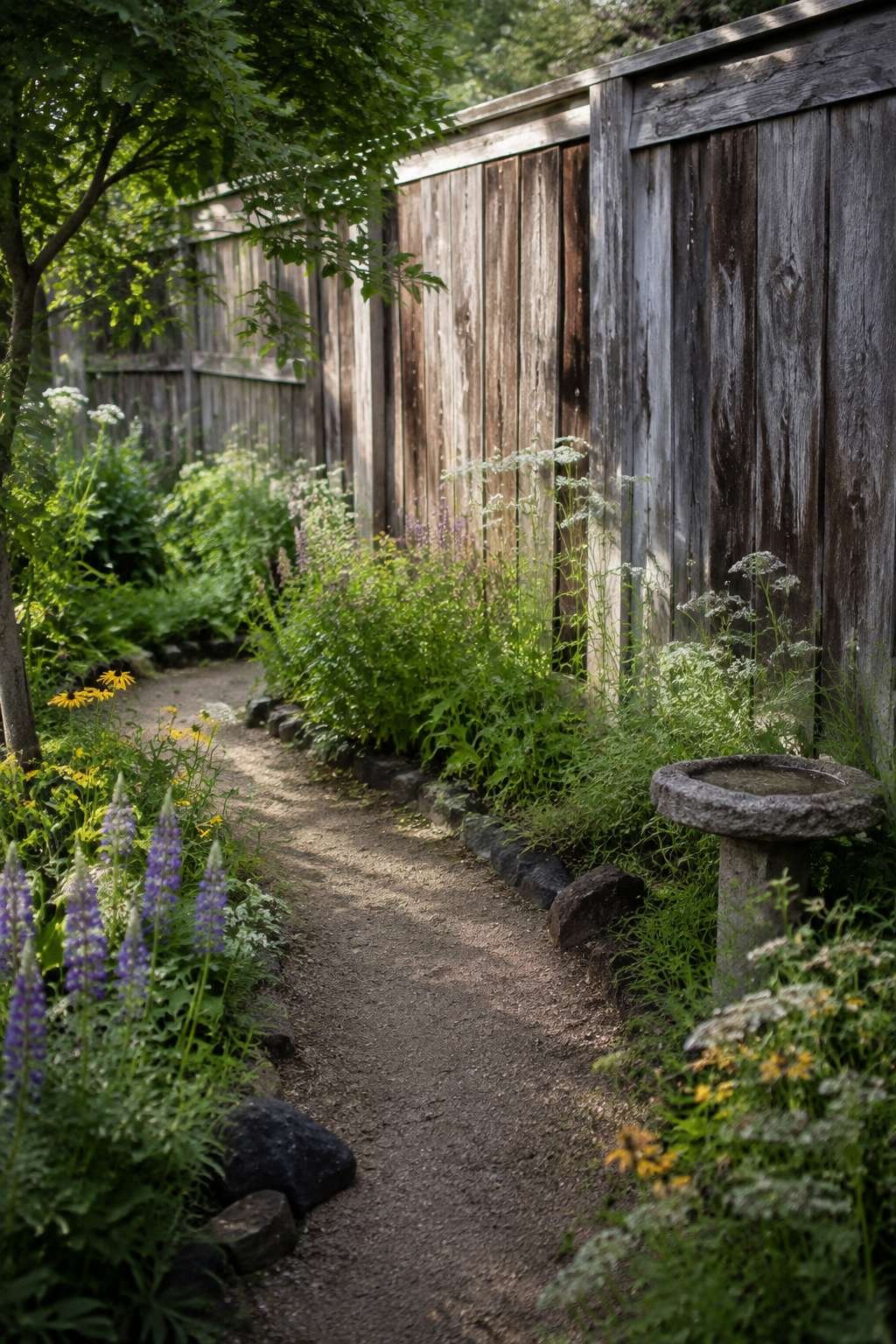
Beyond aesthetics, reclaimed wood is also an environmentally conscious choice, repurposing lumber that might otherwise go to waste. It pairs beautifully with wildflower borders, climbing vines, and informal garden beds, reinforcing a relaxed, romantic backyard atmosphere. This fence style tends to suit homes that favor a lived-in, collected-over-time aesthetic over sleek modern polish.
Key Design Tips:
- Embrace mismatched plank widths for authentic rustic charm
- Highlight natural wood knots and grain with warm afternoon lighting
- Pair with wildflower borders for a cottage-garden feel
- Choose reclaimed wood for a more sustainable fencing option
- Avoid over-sanding boards — imperfections are part of the appeal
4. Classic White Vinyl Picket Fence
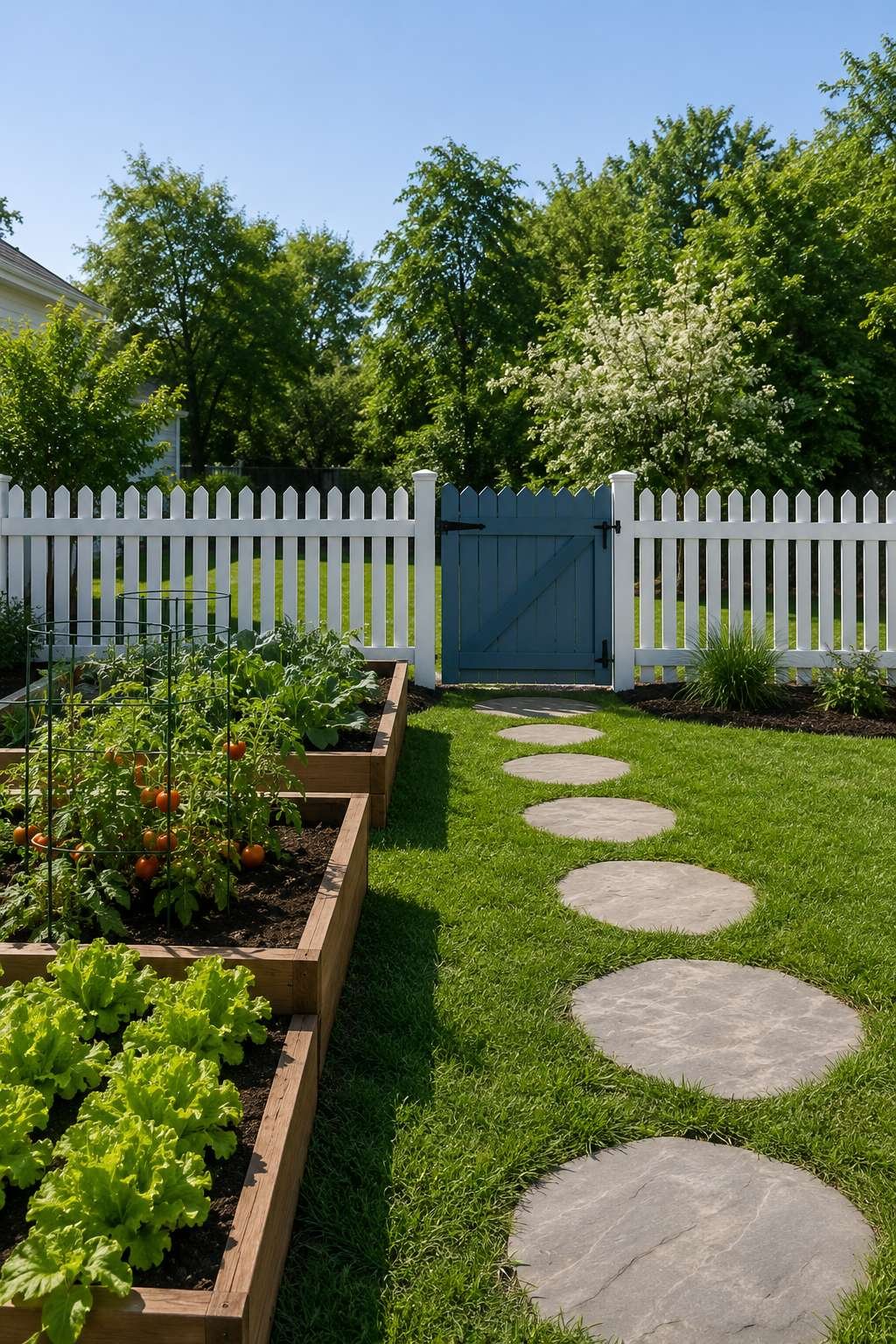
Few fence styles feel as timelessly charming as the white vinyl picket fence, with its classic rounded picket tops and crisp, clean lines. This is the quintessential family backyard fence, often bordering a small vegetable garden or a stepping stone path, evoking a sense of nostalgic Americana without sacrificing modern practicality. The vinyl material’s subtle surface sheen keeps it looking fresh and bright year-round.

One of vinyl’s biggest advantages is its low-maintenance durability — unlike painted wood, it never needs repainting, resists warping, and cleans easily with just soap and water. Under bright natural daylight, the crisp white surface creates soft, gentle shadows that enhance the picket silhouette without overwhelming the yard visually. It’s a fence that photographs beautifully in almost any lighting condition, which is part of why it remains such a popular choice.
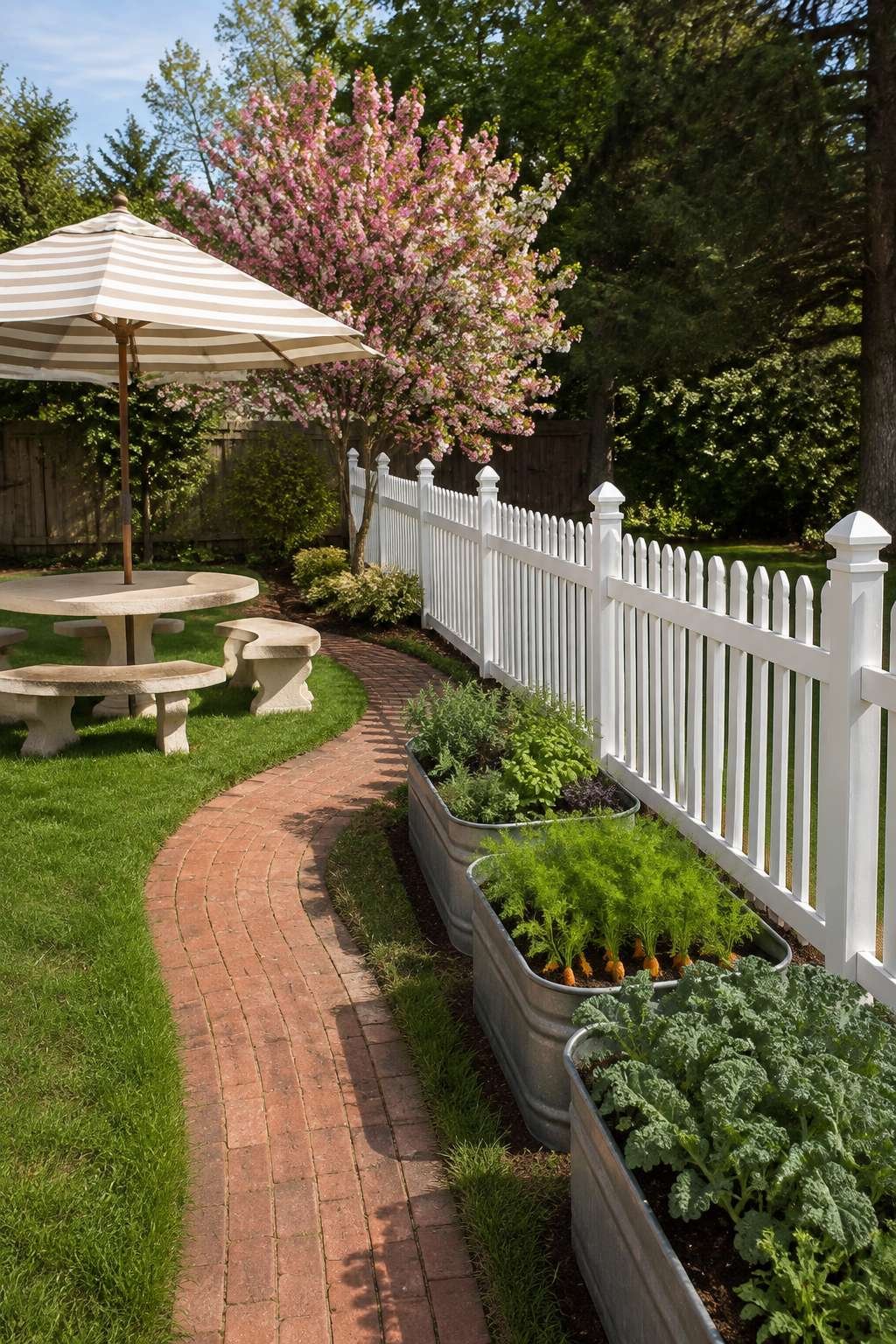
This style suits family-oriented backyards that prioritize both function and charm — think children’s play areas, garden beds, and casual outdoor gatherings. The picket height can be adjusted for either decorative garden borders or slightly taller options offering more defined boundaries, all while maintaining that signature classic silhouette that never really goes out of style.
Key Design Tips:
- Choose rounded picket tops for the most classic silhouette
- Pair with a stepping stone path to reinforce a cottage feel
- Select vinyl for low-maintenance, long-term durability
- Use white fencing to visually brighten shaded garden areas
- Combine with a small vegetable or herb garden for a homestead vibe
5. Bamboo Privacy Fence with Jute Rope Accents
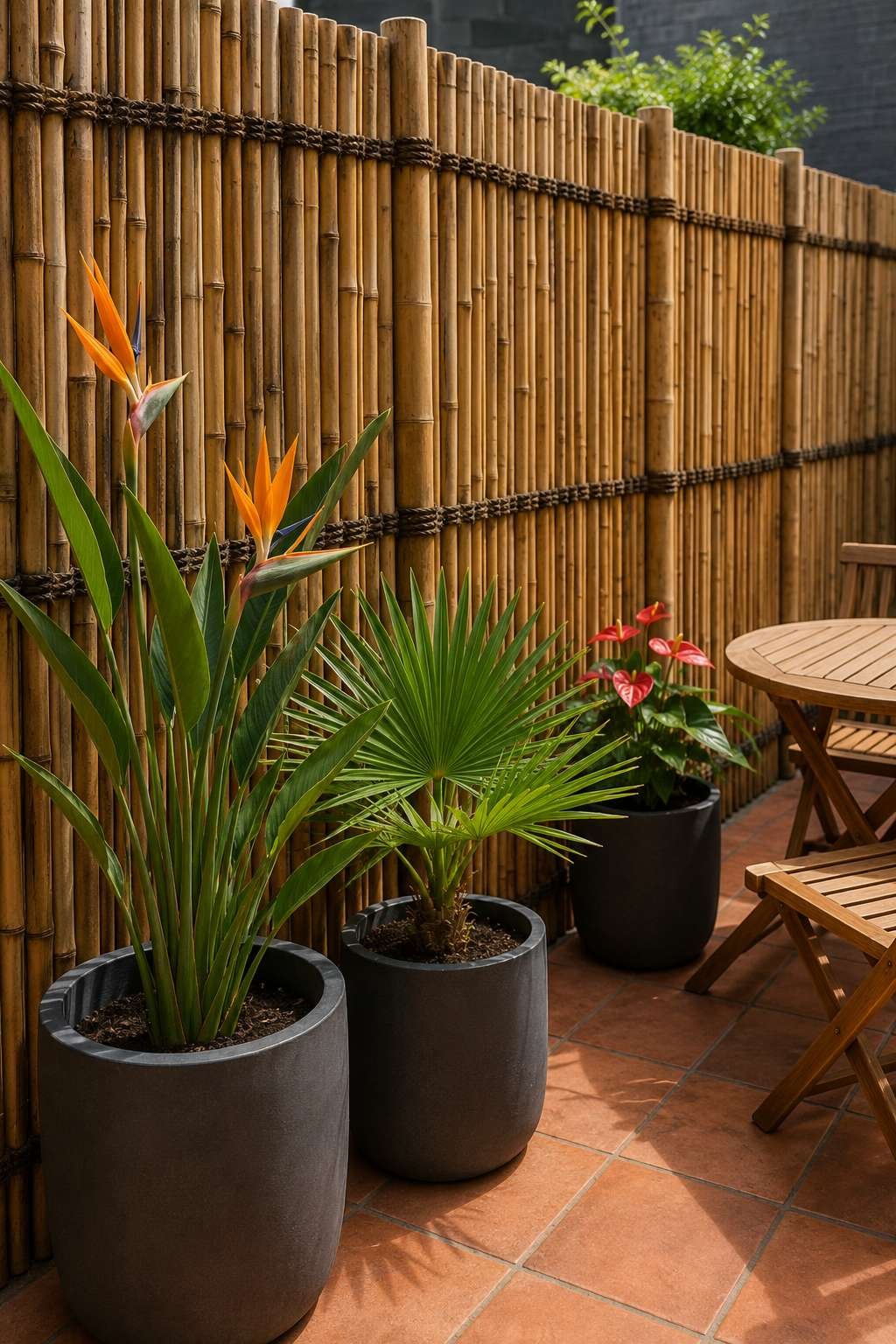
For a fence that feels instantly transportive, the bamboo privacy fence brings warm, organic texture and a touch of tropical serenity to even the smallest urban backyard. Tightly bundled natural bamboo poles, bound together with dark jute rope accents, create a tactile, handcrafted surface that feels worlds away from typical suburban fencing. It’s especially effective enclosing compact patios filled with potted tropical plants.
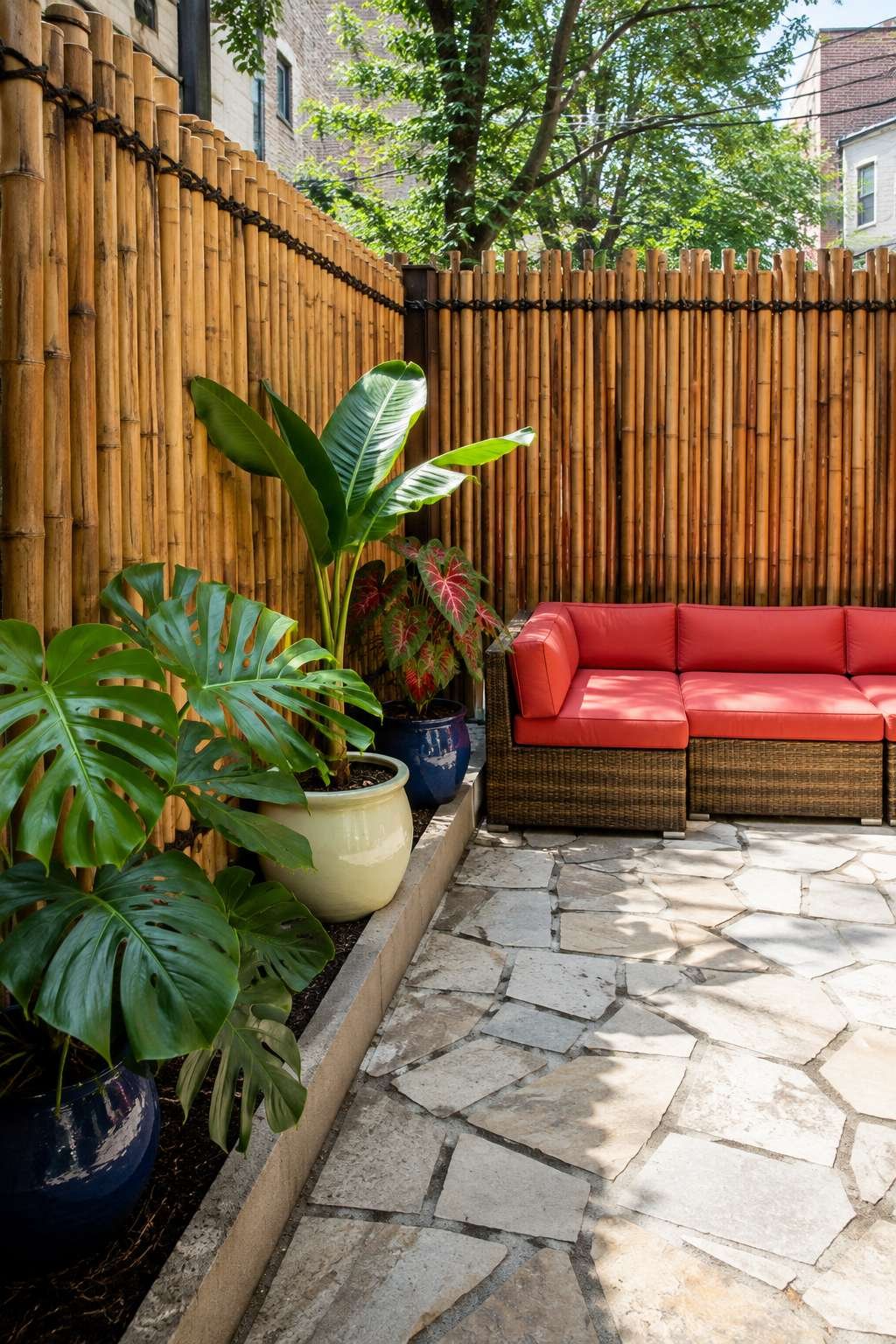
Under warm midday sun, the bamboo’s natural texture and subtle color variation become the star of the show — every pole carries slightly different striations and tonal shifts, avoiding the flat uniformity of manufactured materials. The jute rope binding adds an artisanal, almost nautical detail that ties the whole design together, reinforcing the sense that this fence was assembled by hand rather than mass-produced.

Bamboo is also a fast-growing, renewable material, making it an appealing eco-conscious choice for sustainability-minded homeowners. It performs particularly well in small urban spaces where a heavier wood or metal fence might feel visually overwhelming — the light, airy quality of bamboo keeps compact patios feeling open rather than boxed in.
Key Design Tips:
- Use jute rope binding for an authentic handcrafted texture
- Pair bamboo fencing with potted tropical plants for cohesion
- Choose bamboo for fast-growing, renewable sustainability
- Ideal for small urban patios needing lightweight privacy
- Seal bamboo poles to extend lifespan in humid climates
6. Board-on-Board Wood Fence with Natural Stain
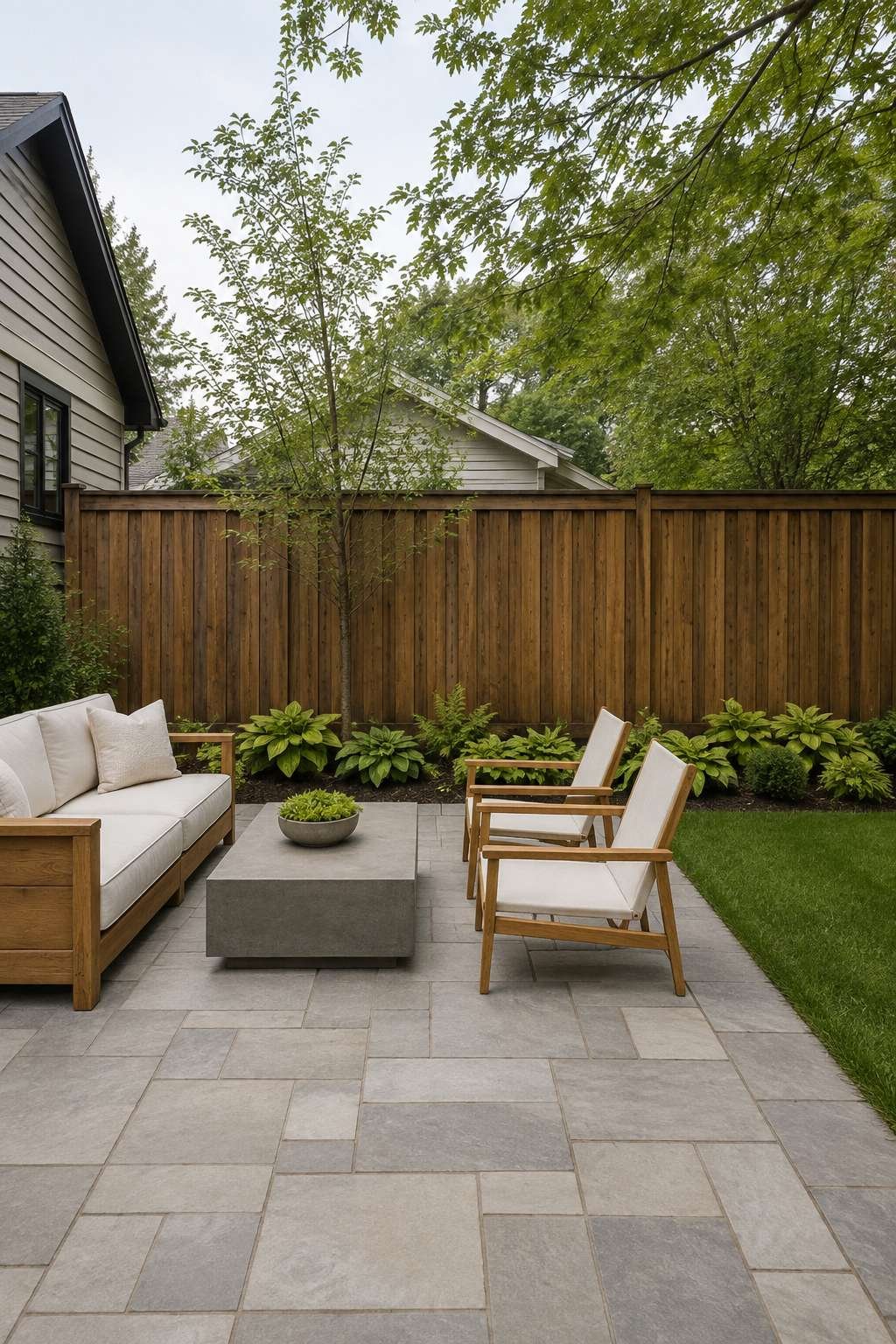
The board-on-board fence design solves a common privacy fence problem — visible gaps — by overlapping planks so no sightlines exist from either side. Finished in a natural stain, this style highlights the wood’s inherent grain and warmth rather than masking it, creating a fence that feels substantial and refined. It suits suburban yards anchored by stone paver patios and defined outdoor seating areas.
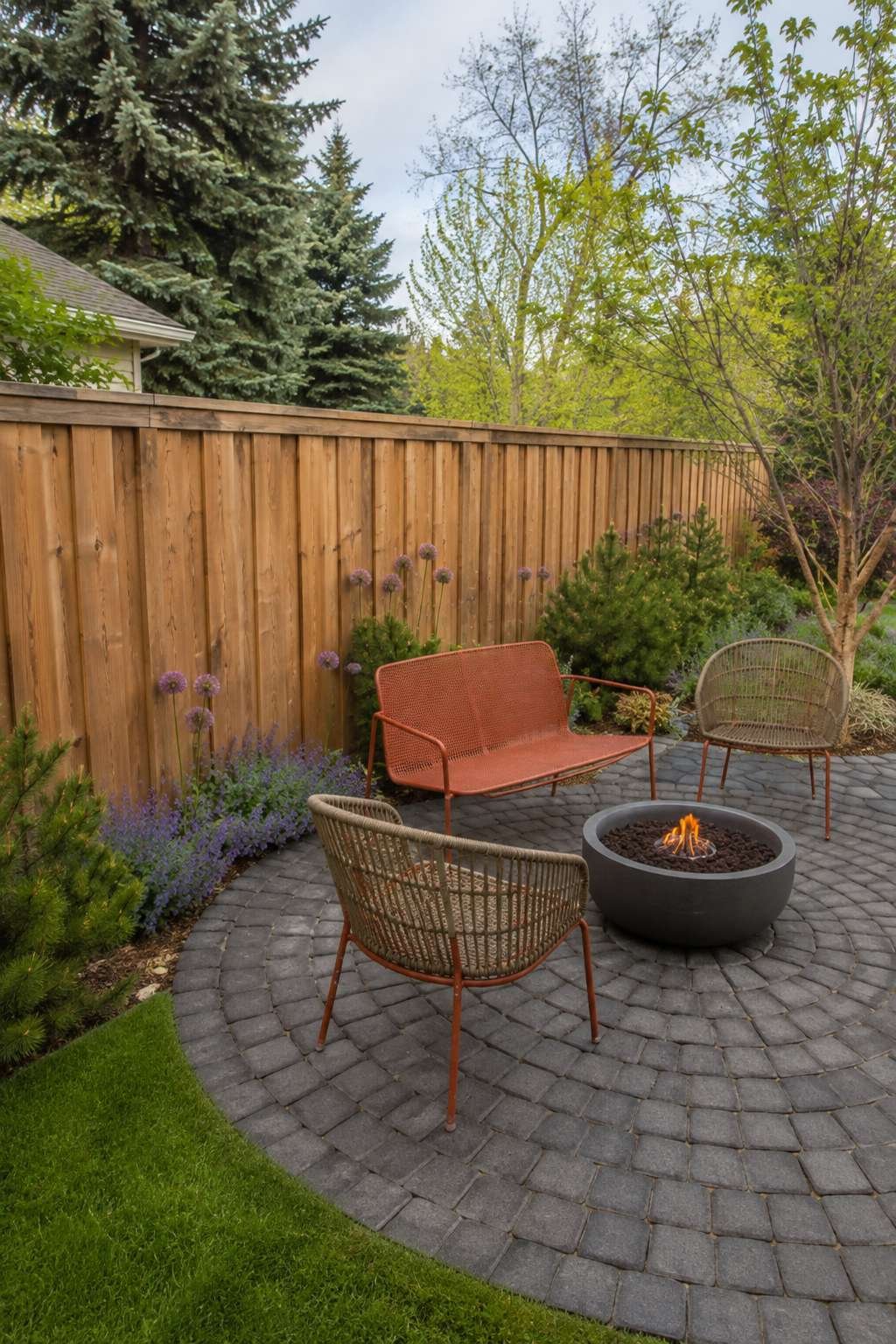
Soft diffused daylight is particularly flattering to this fence style, illuminating the layered plank texture evenly without harsh contrast. The overlapping boards create a subtle striped shadow pattern that adds architectural interest to what might otherwise be a plain privacy fence. This layered construction also improves the fence’s structural strength and wind resistance compared to single-board designs.
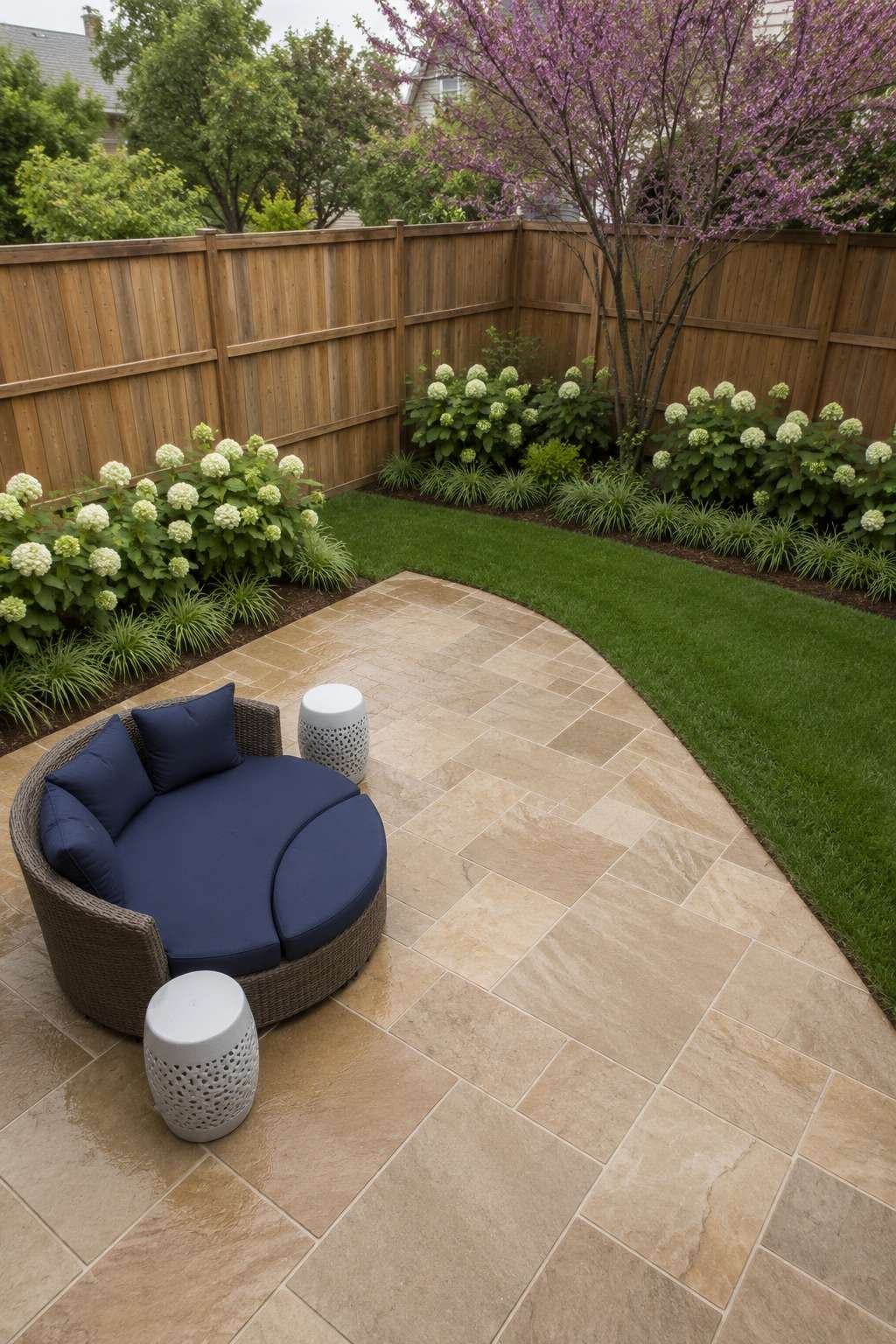
Because both sides of a board-on-board fence look virtually identical, it’s considered a “good neighbor” fence style — ideal for shared property lines where both households want an attractive finished appearance. The natural stain can be customized to match existing deck or patio wood tones, making this an easy style to integrate into an already-established backyard palette.
Key Design Tips:
- Choose board-on-board construction for complete privacy with no gaps
- Match the natural stain tone to existing deck or patio wood
- Ideal as a “good neighbor” fence with a finished look on both sides
- Pair with stone paver patios for a cohesive material story
- Reapply stain every 2-3 years to maintain color depth
7. Corrugated Metal and Wood Hybrid Fence
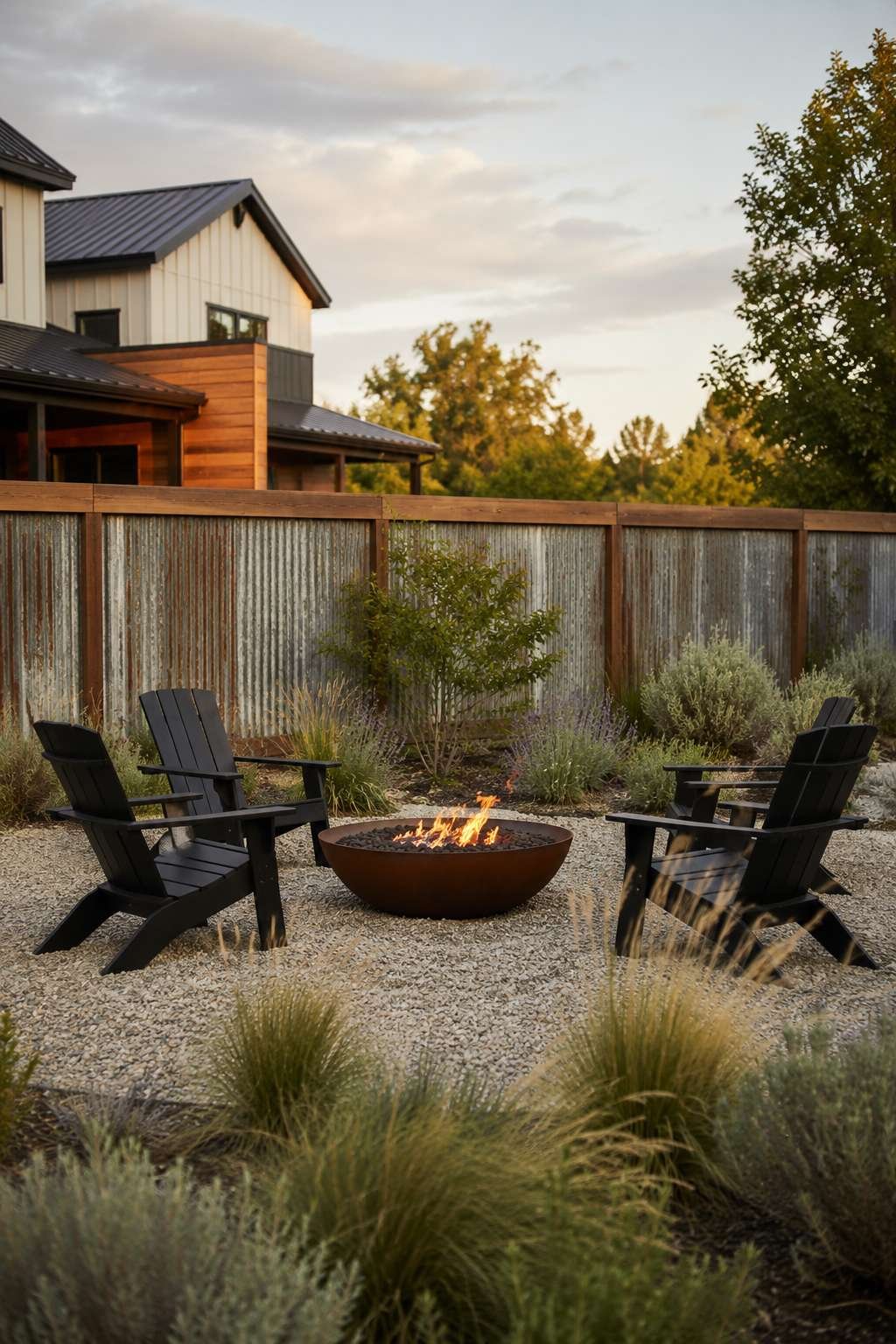
Blending industrial edge with farmhouse warmth, the corrugated metal and wood hybrid fence pairs rusted galvanized steel panels with a horizontal wood cap rail for a design that feels both rugged and refined. This style has become a favorite in modern farmhouse backyards, especially those centered around a gravel fire pit area, where its raw materiality echoes the surrounding rustic-industrial aesthetic.

Under golden hour light, the metal’s natural patina takes on warm amber and rust tones that complement rather than clash with the wood grain above it. This lighting condition is when the fence truly comes alive, with soft shadows highlighting the corrugation’s ridges and the wood cap’s smooth grain in equal measure. The contrast between rough metal and warm wood creates a layered, textural richness that flat materials alone can’t achieve.
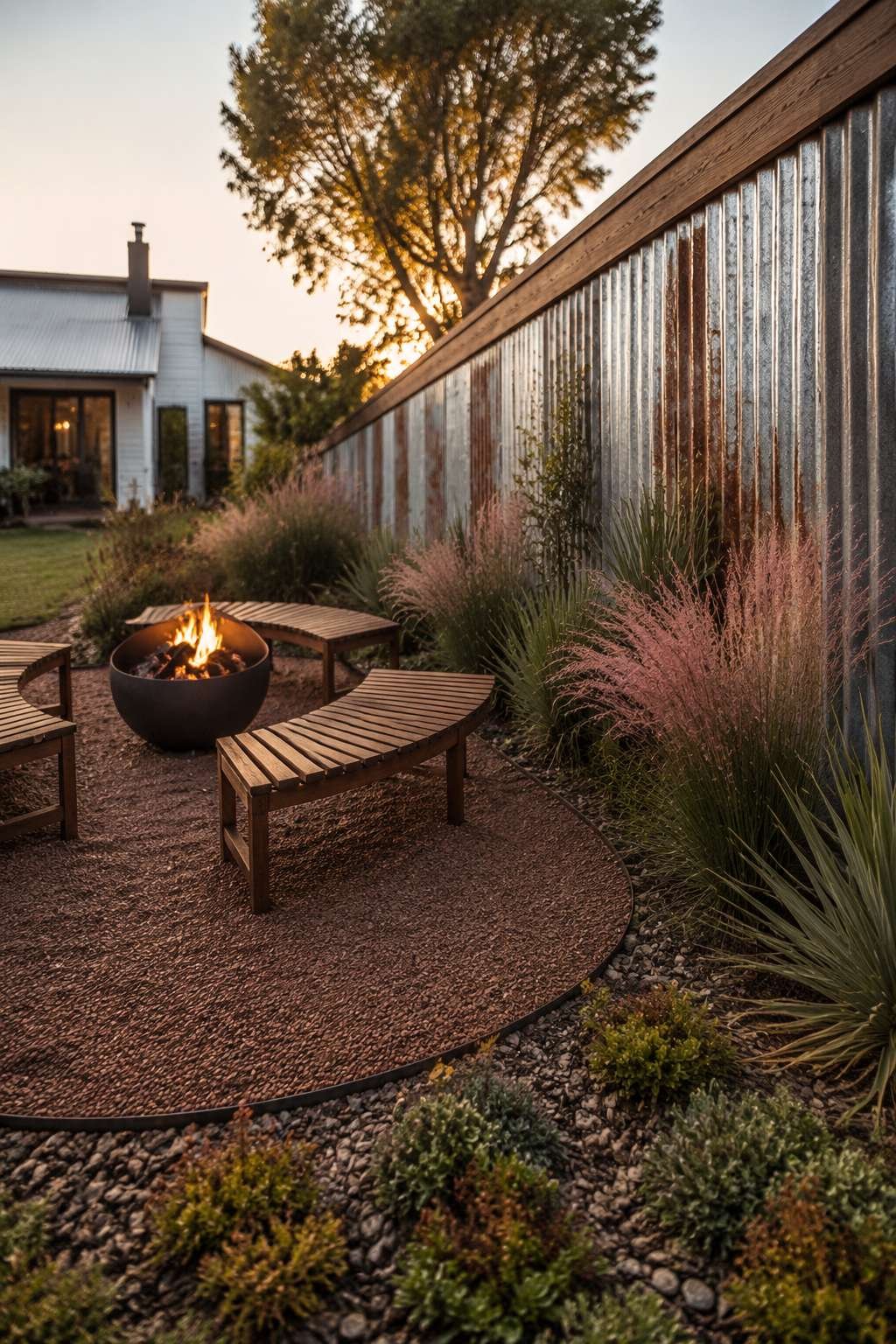
This hybrid approach also offers practical benefits — galvanized steel is extremely durable and weather-resistant, while the wood cap rail softens the industrial edge and provides a comfortable visual transition at eye level. It’s a fence style that photographs beautifully for design blogs and social media, making it a popular choice among homeowners who want their backyard to feel editorial and intentional.
Key Design Tips:
- Combine galvanized steel panels with a wood cap rail for textural contrast
- Let the metal develop a natural rust patina over time for character
- Pair with a gravel fire pit area for cohesive farmhouse styling
- Use golden hour lighting to highlight material contrast in photos
- Choose corrugated metal for superior weather resistance
8. Lattice-Top Wood Fence with Climbing Jasmine
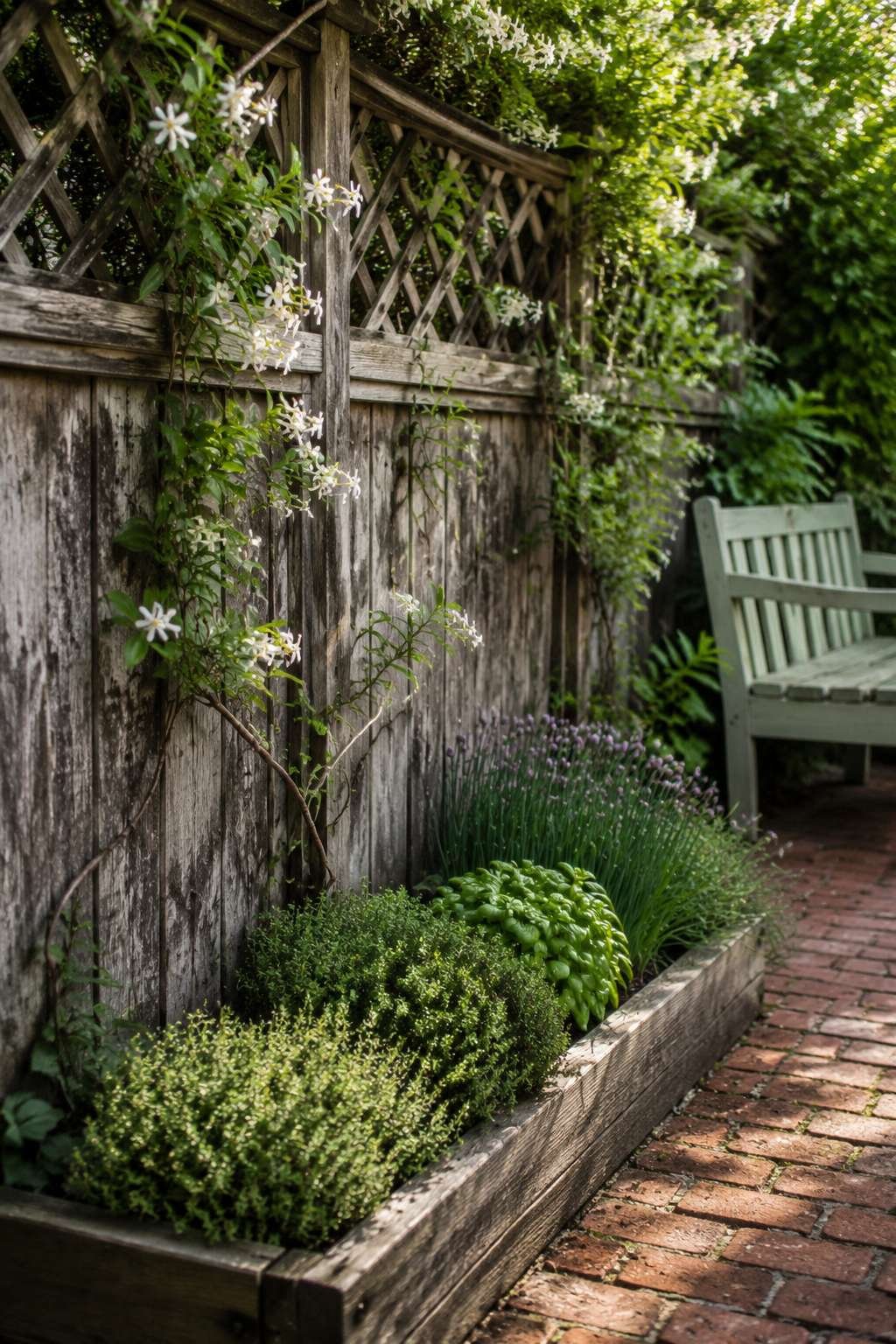
A lattice-top wood fence softened by climbing jasmine vines turns a simple privacy boundary into a fragrant, living garden feature. The upper lattice section allows vines to weave naturally through the openwork pattern, creating a gradual transition from solid weathered wood at the base to delicate greenery above. This design is especially charming bordering a cottage garden with a nearby herb bed.
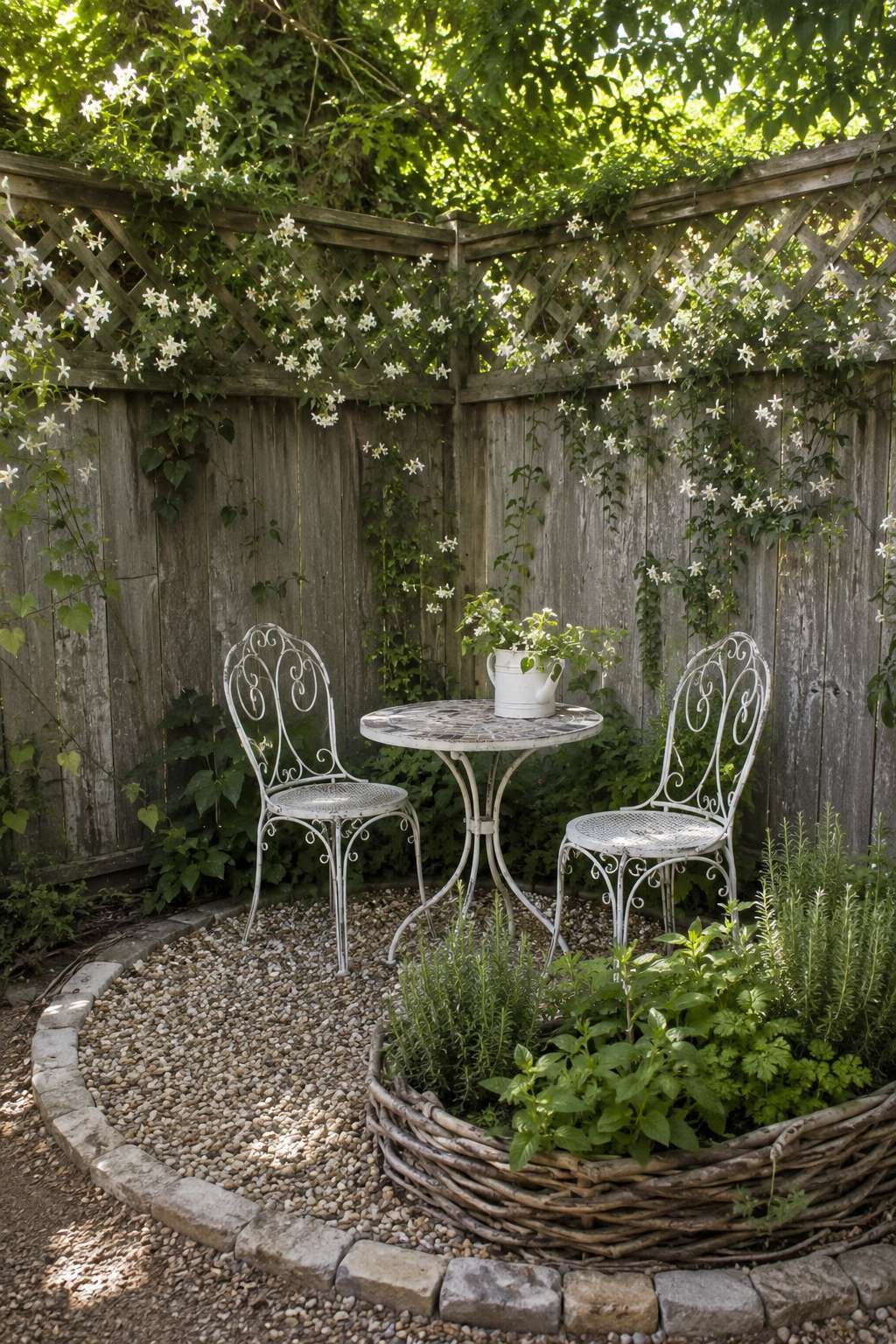
Soft natural morning light filtering through the jasmine leaves casts delicate, lace-like shadows across the fence surface, adding a romantic, almost painterly quality to the space. As the vines mature and fill in, the fence becomes increasingly organic in appearance, blurring the line between built structure and living landscape. The fragrance of blooming jasmine is an added sensory bonus that few other fence styles can offer.
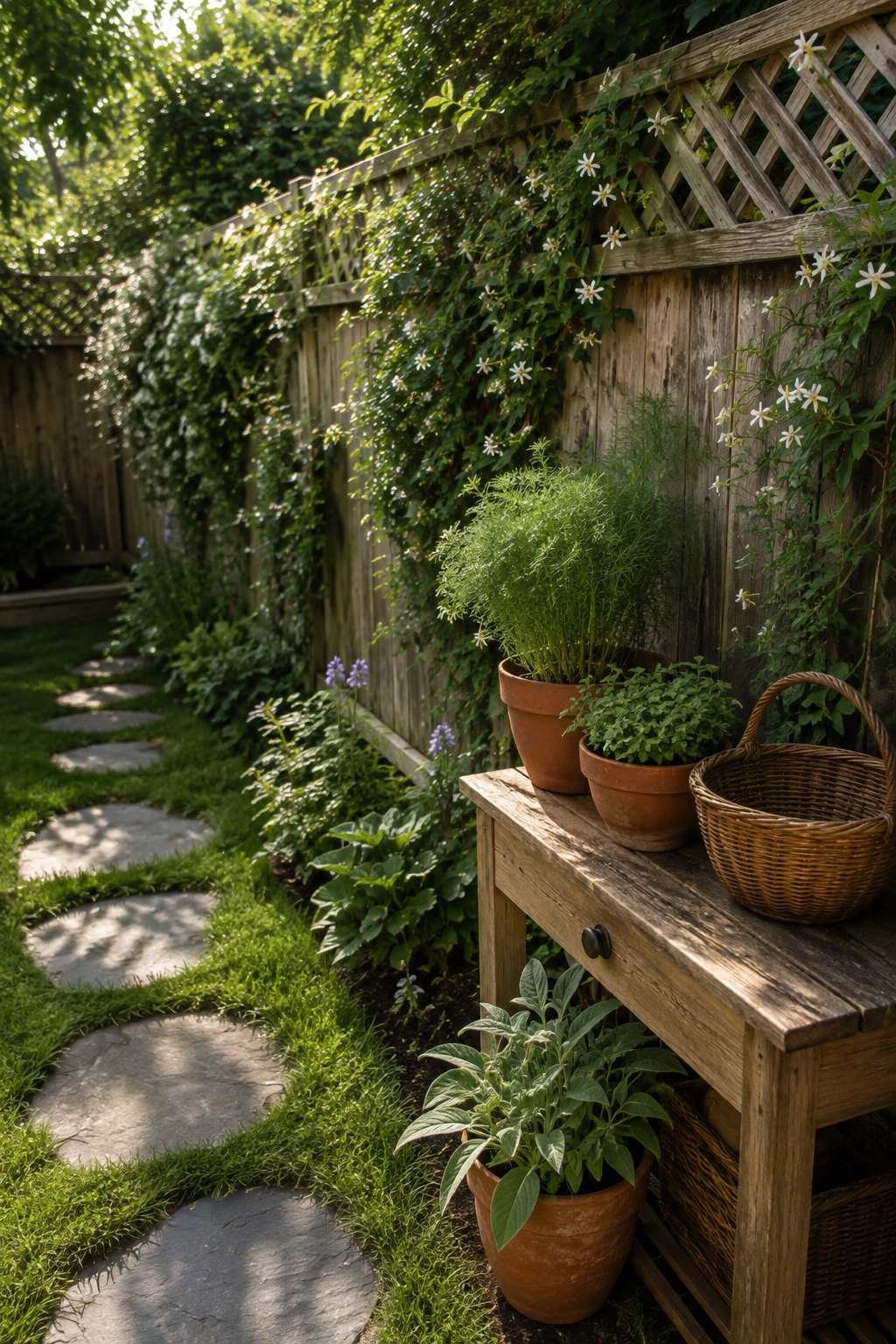
This style requires a bit more patience and maintenance than static fencing, since the vines need periodic pruning and training to keep the lattice from becoming overly dense or heavy. However, the payoff is a fence that genuinely improves with age, developing character and softness that a purely structural fence never could.
Key Design Tips:
- Train climbing jasmine through the lattice gradually for even coverage
- Prune vines seasonally to prevent overloading the lattice structure
- Pair with a cottage-style herb bed for a cohesive garden feel
- Use morning light to capture delicate vine shadow patterns
- Choose lattice-top design for a living, evolving fence feature
9. Sleek Horizontal Slat Fence in Thermally Modified Ash

For a refined, contemporary statement, the horizontal slat fence crafted from thermally modified ash wood delivers a deep espresso tone with remarkably smooth, even grain. This modification process enhances the wood’s natural durability and color consistency, resulting in a fence that looks intentionally designed rather than simply installed. It’s a natural fit for contemporary backyards featuring minimalist concrete patios and built-in planter boxes.
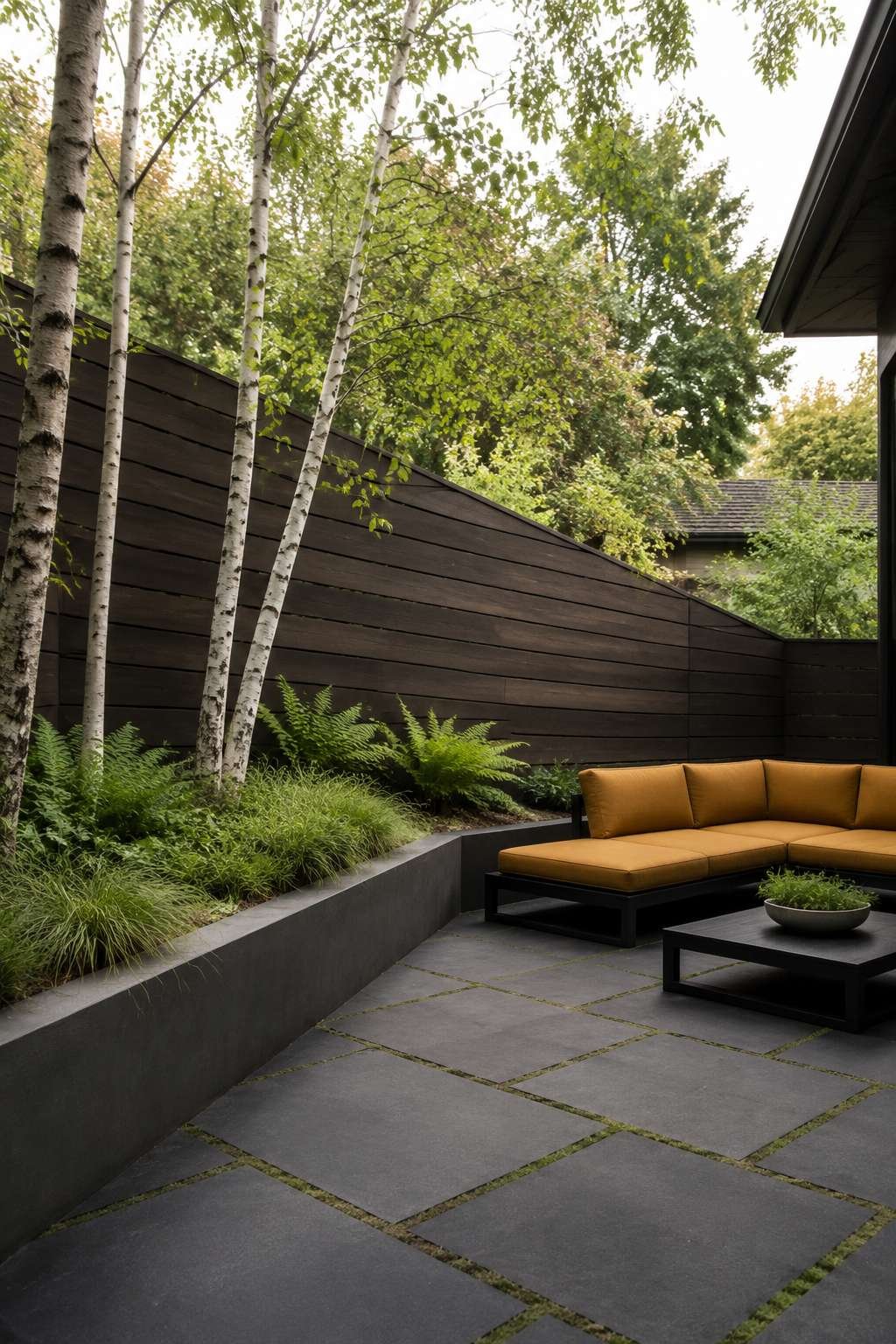
Under soft diffused daylight, the espresso-toned slats read as rich and saturated without appearing dark or heavy, thanks to the wood’s smooth, consistent surface. The horizontal slat orientation elongates the sightline of the yard, making even modest-sized backyards feel more expansive. This fence style pairs particularly well with equally clean-lined hardscaping, reinforcing a cohesive, architect-designed aesthetic.
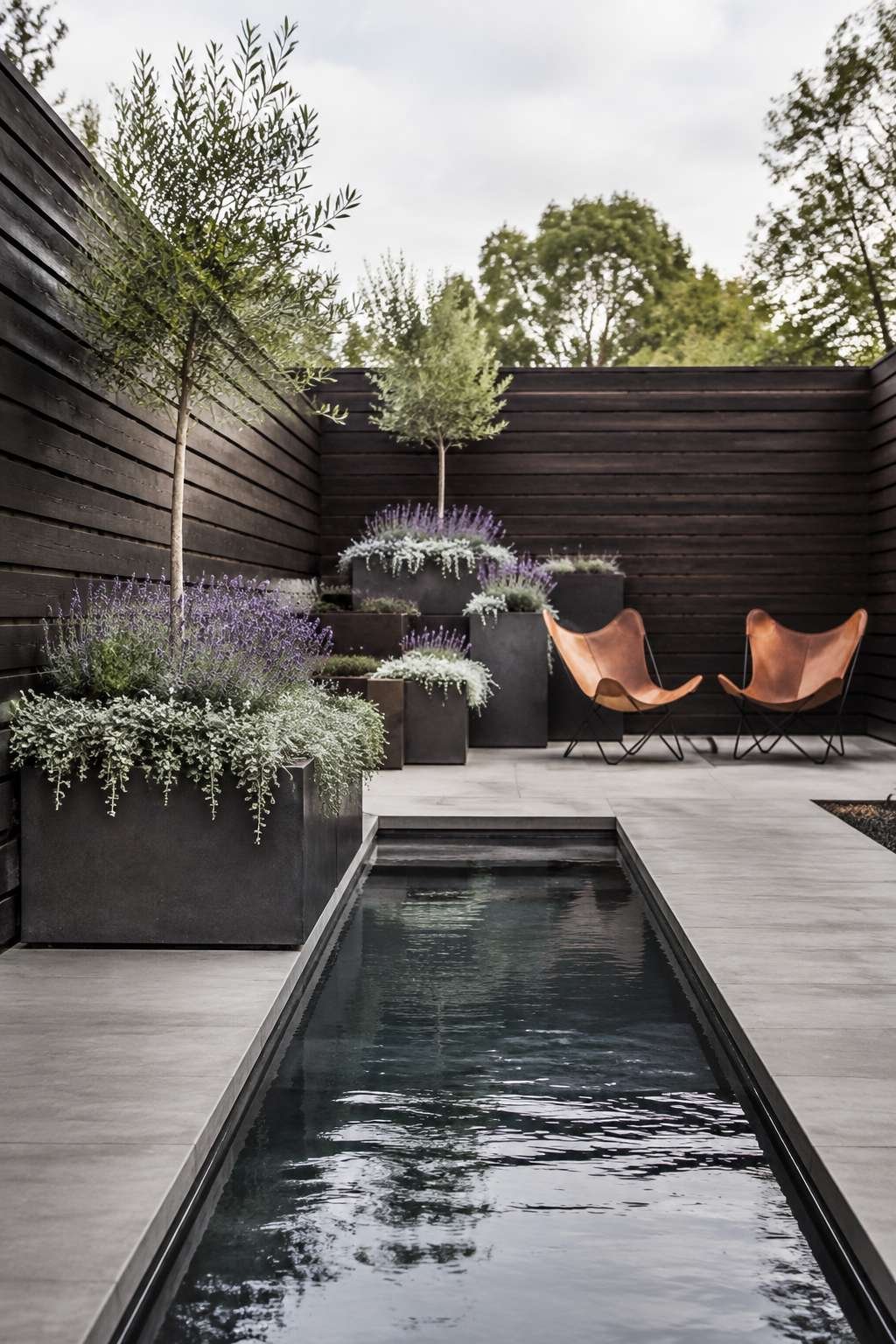
Thermal modification also makes the wood significantly more resistant to rot, warping, and insect damage compared to untreated lumber, without relying on chemical treatments. This makes it an appealing option for homeowners who want the warmth of natural wood with the performance benefits typically associated with engineered materials.
Key Design Tips:
- Choose thermally modified wood for enhanced durability without chemicals
- Use horizontal slats to visually widen a narrow backyard
- Pair with built-in concrete planter boxes for a modern cohesive look
- Maintain the espresso tone with occasional protective oil treatments
- Combine with minimalist patio furniture for an architectural feel
10. Chain-Link Fence with Woodgrain Privacy Slats

Practical and budget-conscious without sacrificing style, the chain-link fence woven with artificial privacy slats offers a smart solution for homeowners who need affordable security without an entirely bare, industrial look. The slats, designed in a natural woodgrain pattern, mimic the appearance of wood fencing at a fraction of the cost, making this style especially popular for children’s play areas and family-friendly grassy lawns.
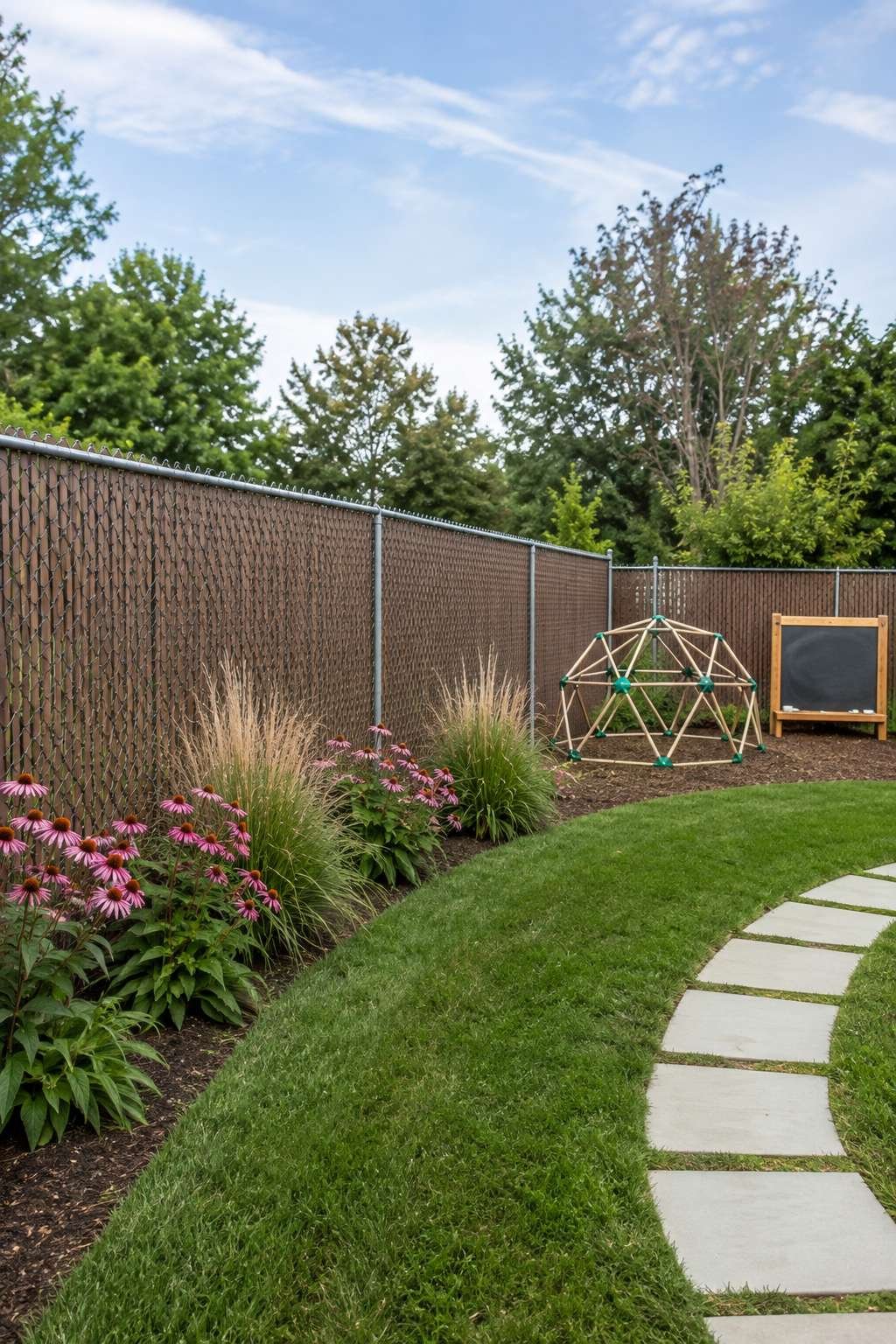
Under bright, even daylight, the woodgrain-patterned slats read surprisingly convincingly, softening the utilitarian chain-link structure beneath. This approach delivers meaningful privacy and visual interest while retaining chain-link’s core advantages: durability, affordability, and minimal maintenance. It’s an especially smart choice for larger properties where fencing an entire perimeter in premium wood or metal would be cost-prohibitive.
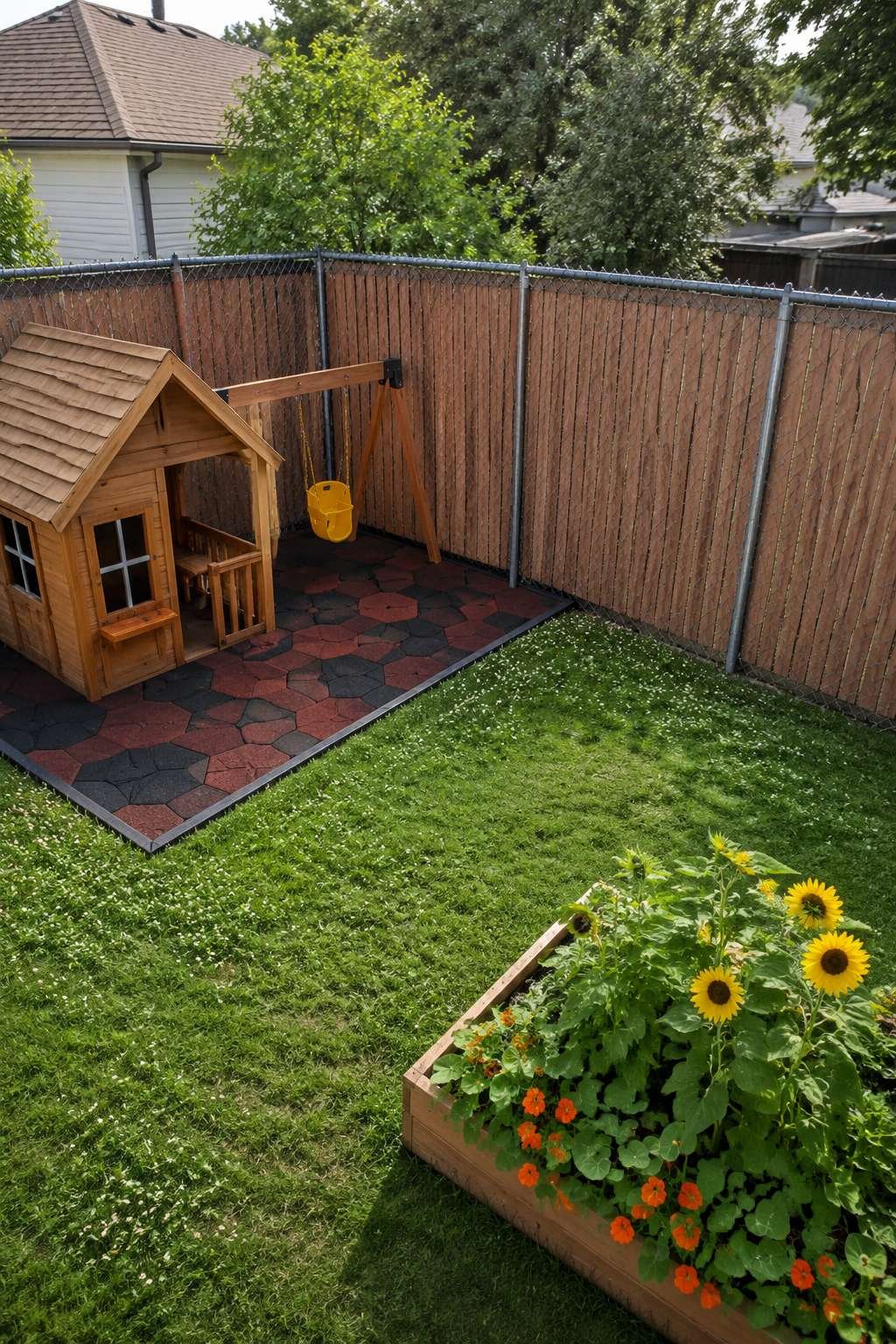
While this style may not carry the same prestige as custom wood or wrought iron fencing, its practicality makes it a genuinely valuable option for growing families. The slats can be swapped or upgraded over time as budgets allow, offering flexibility that more permanent fence materials simply don’t provide.
Key Design Tips:
- Choose woodgrain-patterned slats to soften chain-link’s industrial look
- Ideal for budget-friendly fencing across large properties
- Great for enclosing children’s play areas with added privacy
- Combine with grassy lawn zones for a family-friendly layout
- Upgrade slats over time as budget and style preferences evolve
11. Stone and Wood Combination Fence

Marrying two of nature’s most enduring materials, the stone and wood combination fence pairs a low fieldstone base with natural cedar pickets rising above it. This layered approach creates a fence with real substance and permanence, ideal for rustic backyards featuring gravel paths and mature, established landscaping. The material contrast alone gives this fence a sense of craftsmanship rarely found in single-material designs.
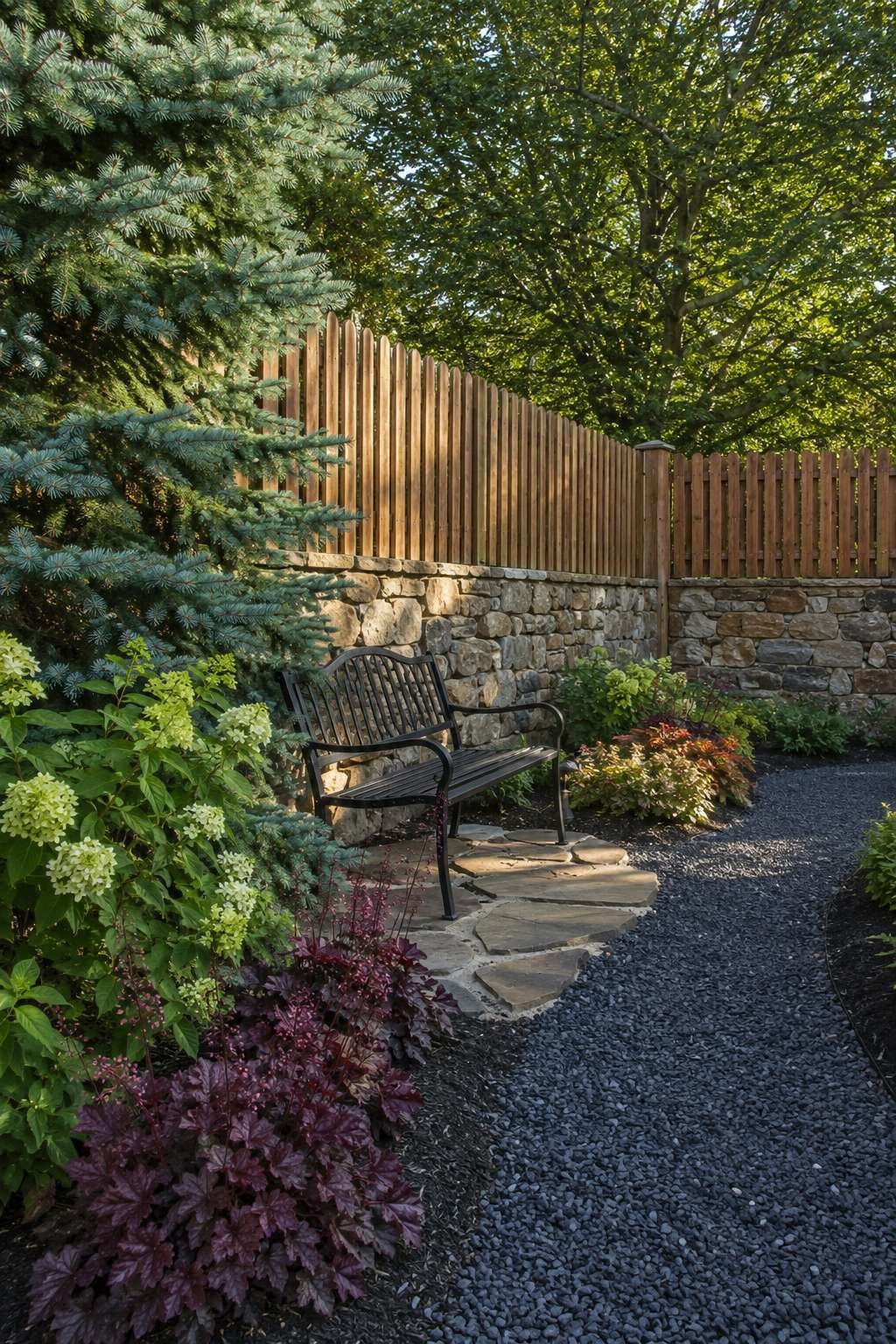
Under afternoon sun, the rough, irregular texture of the fieldstone plays beautifully against the smoother, warmer tones of the cedar pickets above. This juxtaposition — rugged stone grounding refined wood — creates visual weight at the base while keeping the upper portion feeling lighter and more open. It’s a fence style that feels like it belongs to an established, mature landscape rather than a newly built one.
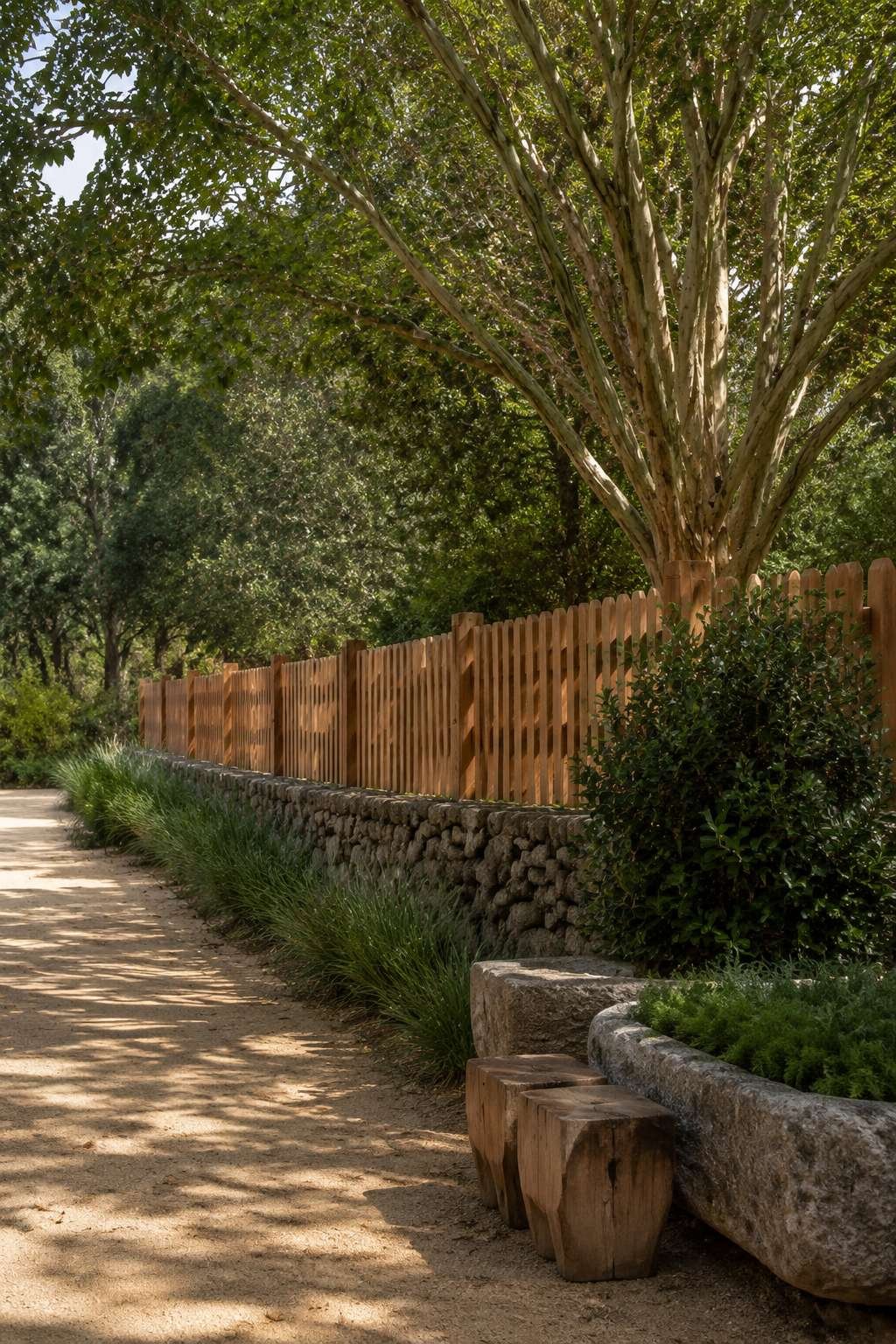
The stone base also offers practical durability benefits, resisting moisture damage and ground-level wear far better than wood alone would. This combination approach essentially gives homeowners the best of both worlds: the longevity of stone where it matters most, paired with the natural warmth of wood where it enhances the view.
Key Design Tips:
- Use a fieldstone base to protect against ground-level moisture damage
- Pair rough stone texture with smooth cedar pickets for contrast
- Best suited to mature, established landscaping
- Let the stone-wood combination anchor a rustic backyard aesthetic
- Choose local stone varieties for better regional material cohesion
12. Shou Sugi Ban Charred Wood Fence

Rooted in traditional Japanese wood preservation techniques, the shou sugi ban charred wood fence delivers a striking, deep black finish with subtle silvery grain highlights emerging where the char meets the natural wood beneath. This technique, which involves controlled burning of the wood surface, creates a fence that is as much a design statement as it is a functional boundary — perfectly suited to modern Japanese-inspired backyards with raked gravel gardens.
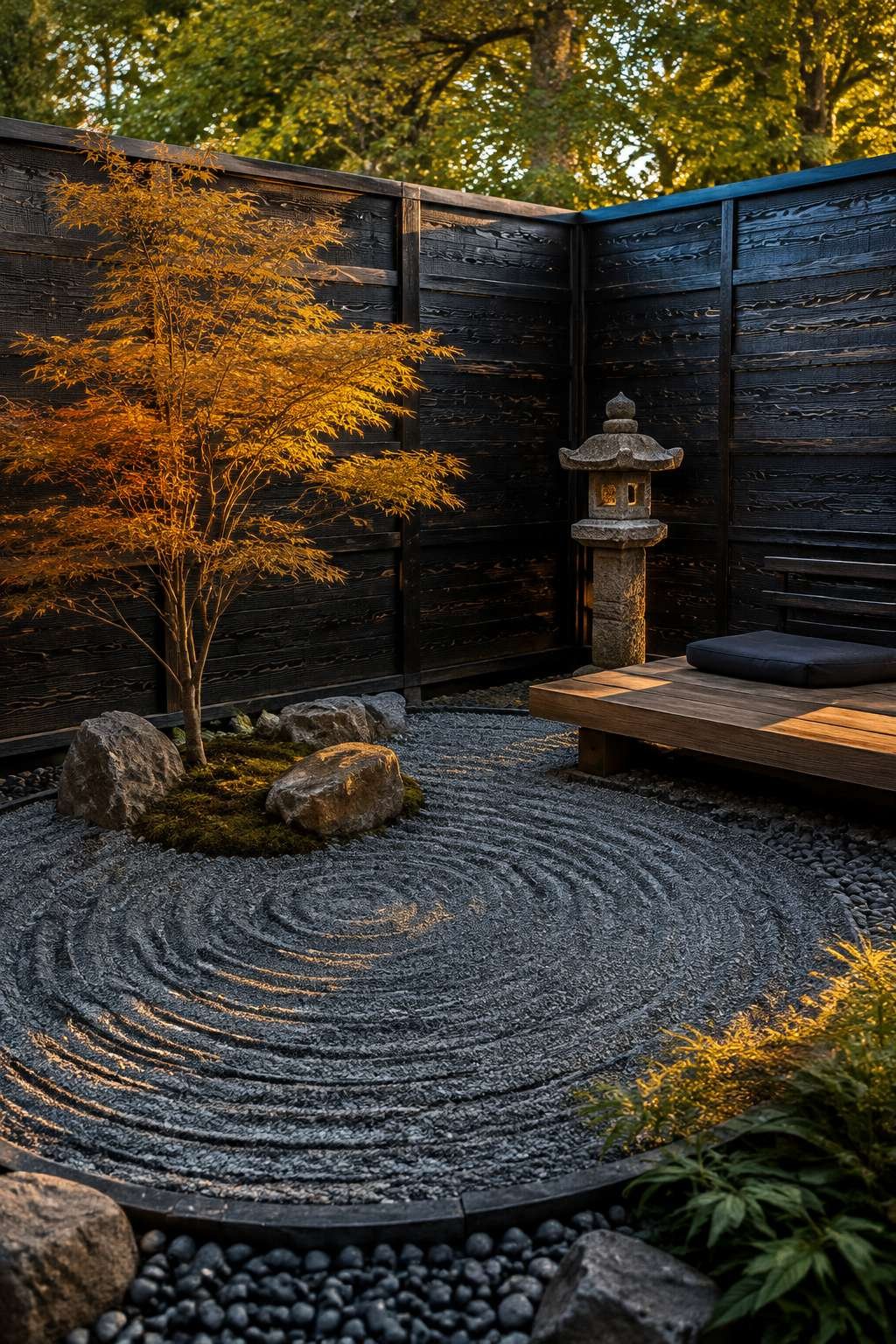
Golden hour light dramatically transforms this fence, catching on the charred texture’s subtle ridges and revealing the silvery grain patterns hidden within the blackened surface. The interplay of deep matte black and glimmering grain creates a fence with genuine visual depth, changing character throughout the day as the light shifts. Paired with a small maple tree and carefully raked gravel, this fence becomes part of a larger meditative landscape composition.

Beyond its striking appearance, shou sugi ban wood is remarkably durable — the charring process naturally protects the wood from rot, insects, and fire, extending its lifespan significantly compared to untreated lumber. This makes the technique both a beautiful and highly practical choice, blending ancient craftsmanship with genuine long-term performance.
Key Design Tips:
- Choose shou sugi ban charring for natural rot and insect resistance
- Highlight silvery grain patterns with strategic golden hour lighting
- Pair with a raked gravel garden for authentic Japanese-inspired styling
- Add a small maple tree to complete the meditative aesthetic
- Avoid glossy sealants that mute the charred texture’s matte depth
13. Decorative Wrought Iron Fence with Scrollwork
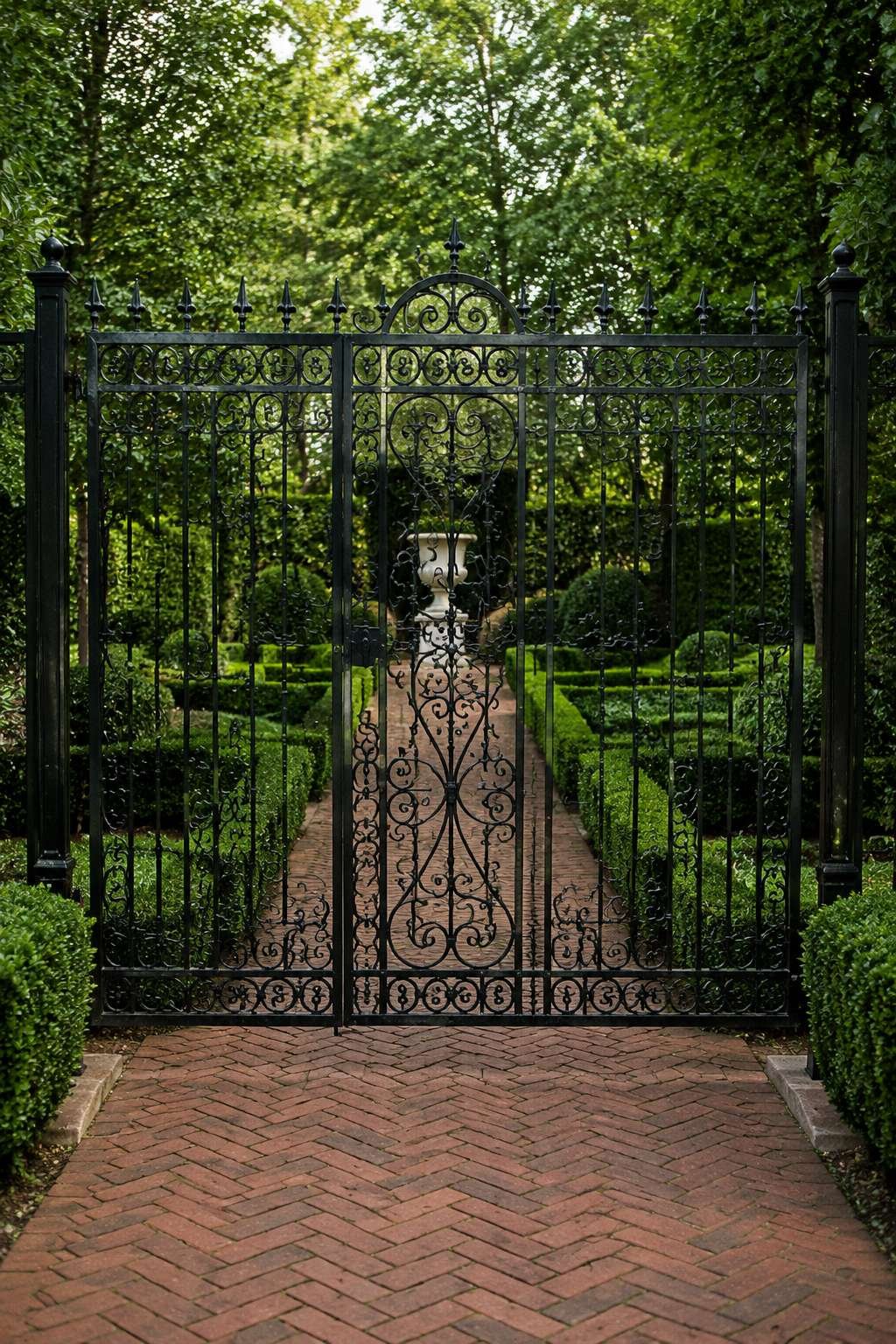
For homeowners drawn to timeless elegance, the wrought iron fence with intricate scrollwork panels and a black matte finish offers unmatched sophistication and old-world charm. Enclosing a traditional backyard garden lined with manicured hedges and a brick pathway, this fence style feels less like a boundary and more like an architectural heirloom, the kind of detail found in historic estates and formal European gardens.
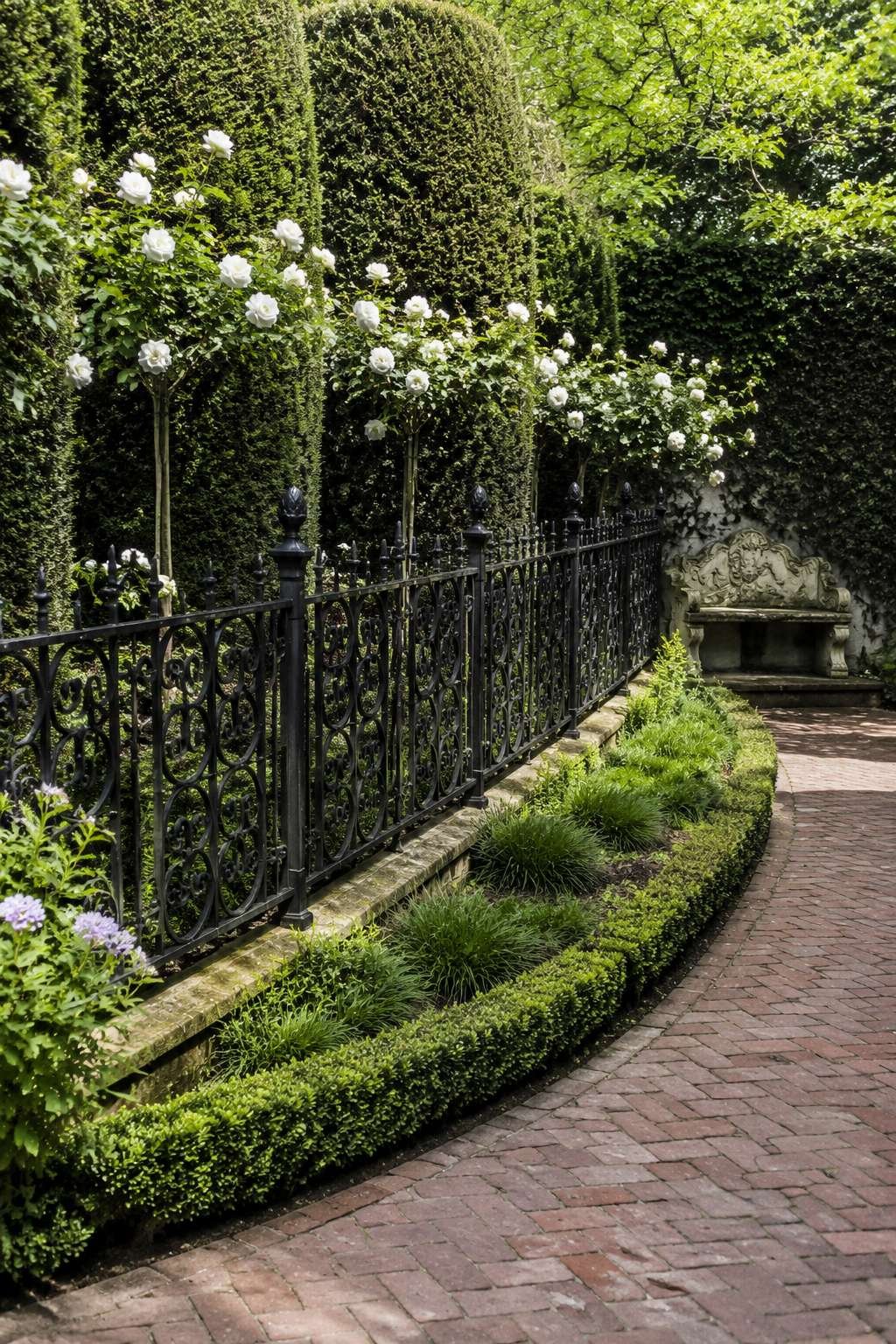
Soft natural daylight brings out the intricate metalwork’s fine detail, illuminating the curves and flourishes of the scrollwork without harsh glare thanks to the matte finish. Every scroll and curve catches light differently throughout the day, giving the fence a dynamic, almost sculptural quality that flat panel fencing simply cannot replicate. This level of craftsmanship signals permanence and investment, elevating the entire garden’s perceived formality.
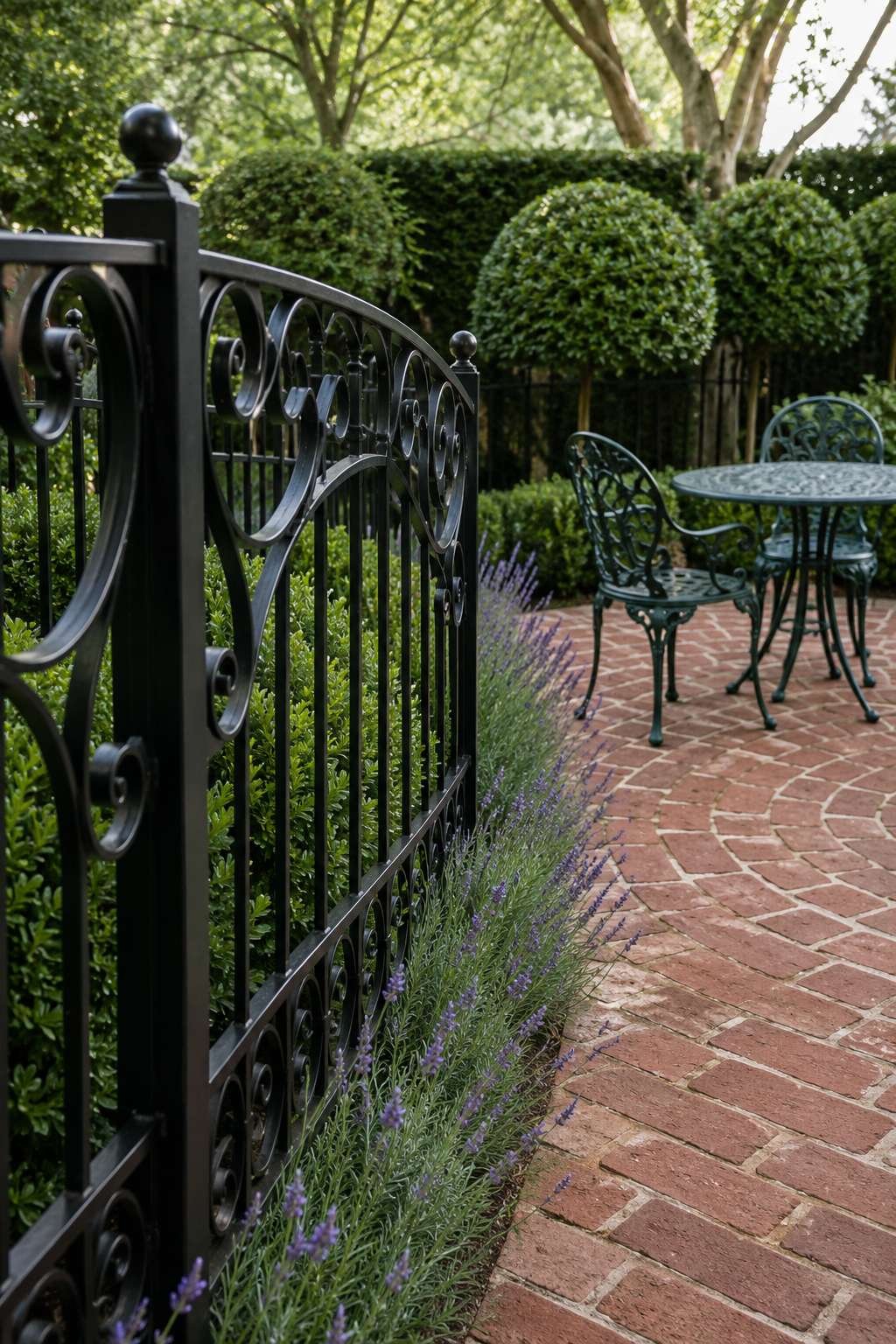
Wrought iron is also exceptionally durable when properly finished, standing up to decades of weather exposure with only minimal touch-up maintenance required. Its open, airy scrollwork pattern provides security and definition without fully blocking views, making it ideal for homeowners who want an elegant boundary that still allows the garden to be seen and admired from the street.
Key Design Tips:
- Choose intricate scrollwork panels for a formal, heirloom-quality look
- Pair with manicured hedges and brick pathways for classic garden styling
- Select a matte black finish to reduce glare and highlight detail
- Wrought iron offers long-term durability with minimal upkeep
- Use open ironwork to maintain visibility while still defining boundaries
14. Natural Woven Willow Fence Panels
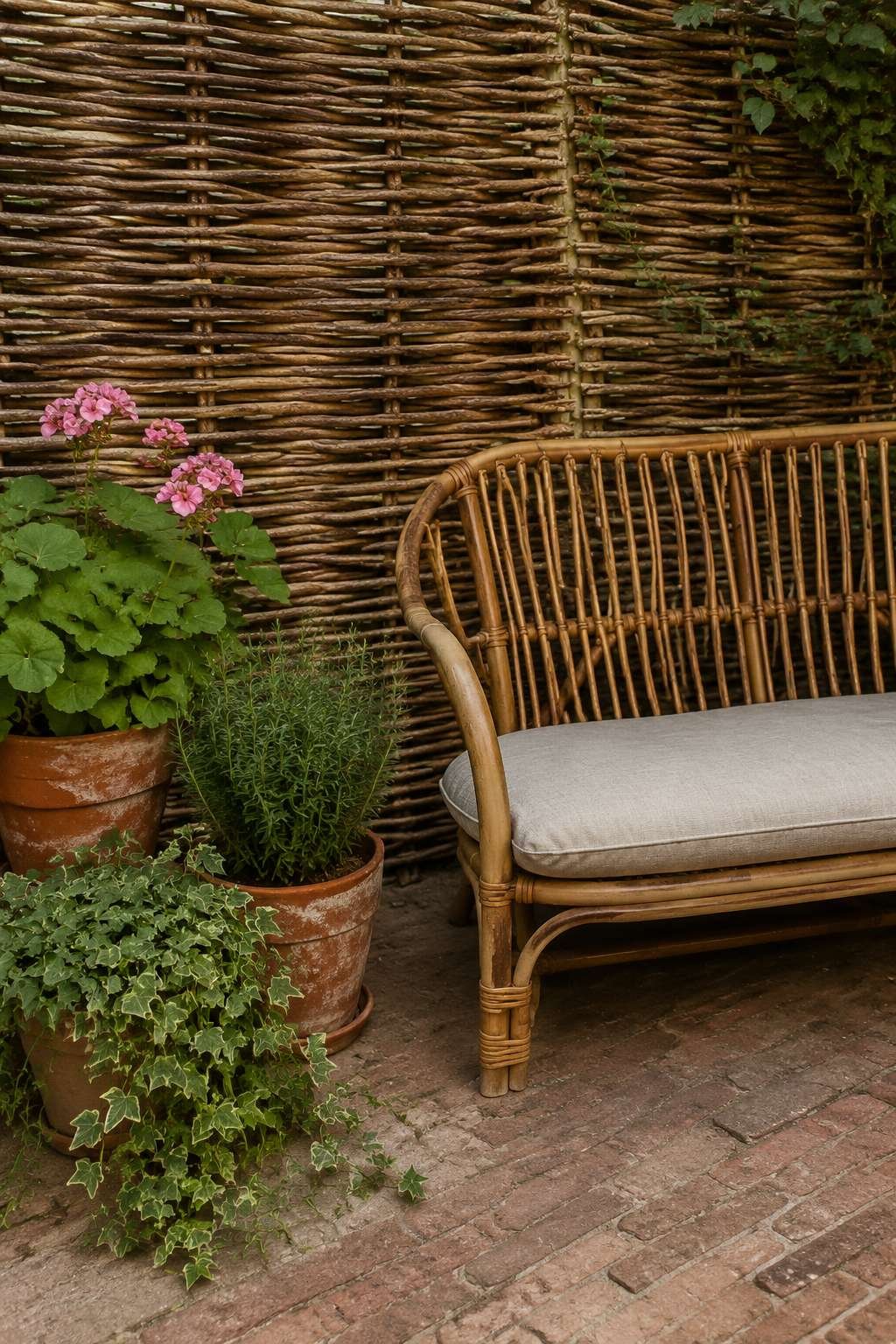
There’s a gentle, storybook quality to the woven willow fence, its warm tan tones and organic hand-woven texture bringing genuine rustic authenticity to any backyard. Best suited to cozy cottage settings, this fence style pairs naturally with a small seating nook and terracotta planters, reinforcing an intimate, garden-cottage atmosphere that feels worlds away from manufactured fencing materials.
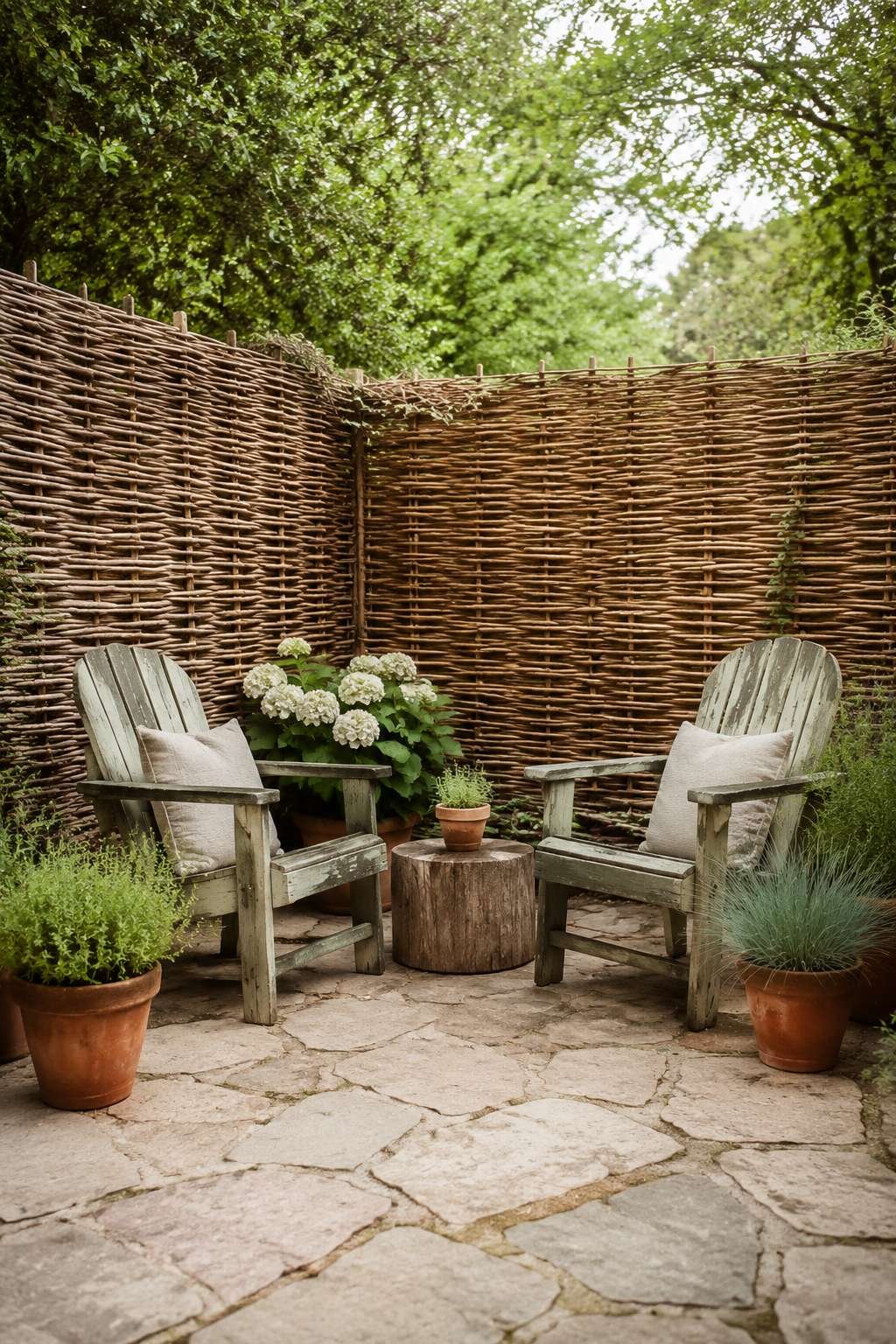
Soft diffused morning light is especially flattering to willow’s woven texture, gently highlighting the slight irregularities and natural color variation that give this material its distinctive charm. No two woven panels look quite the same, and that inherent imperfection is central to the material’s appeal — it feels handmade because it genuinely is, often crafted using traditional basket-weaving techniques passed down through generations.

While willow fencing typically has a shorter lifespan than wood or metal alternatives, its low cost and easy replaceability make it an appealing option for gardens that embrace a more temporary, seasonal design philosophy. It’s particularly well suited to defining garden beds or creating cozy enclosed nooks rather than serving as a primary security boundary.
Key Design Tips:
- Embrace natural irregularities in woven willow for authentic texture
- Pair with terracotta planters for a cohesive cottage garden look
- Best used for garden beds or cozy nooks, not primary security
- Replace panels every few seasons to maintain fresh appearance
- Combine with a small seating nook for an intimate outdoor retreat
15. Two-Tone Horizontal Fence with Composite and Wood Cap
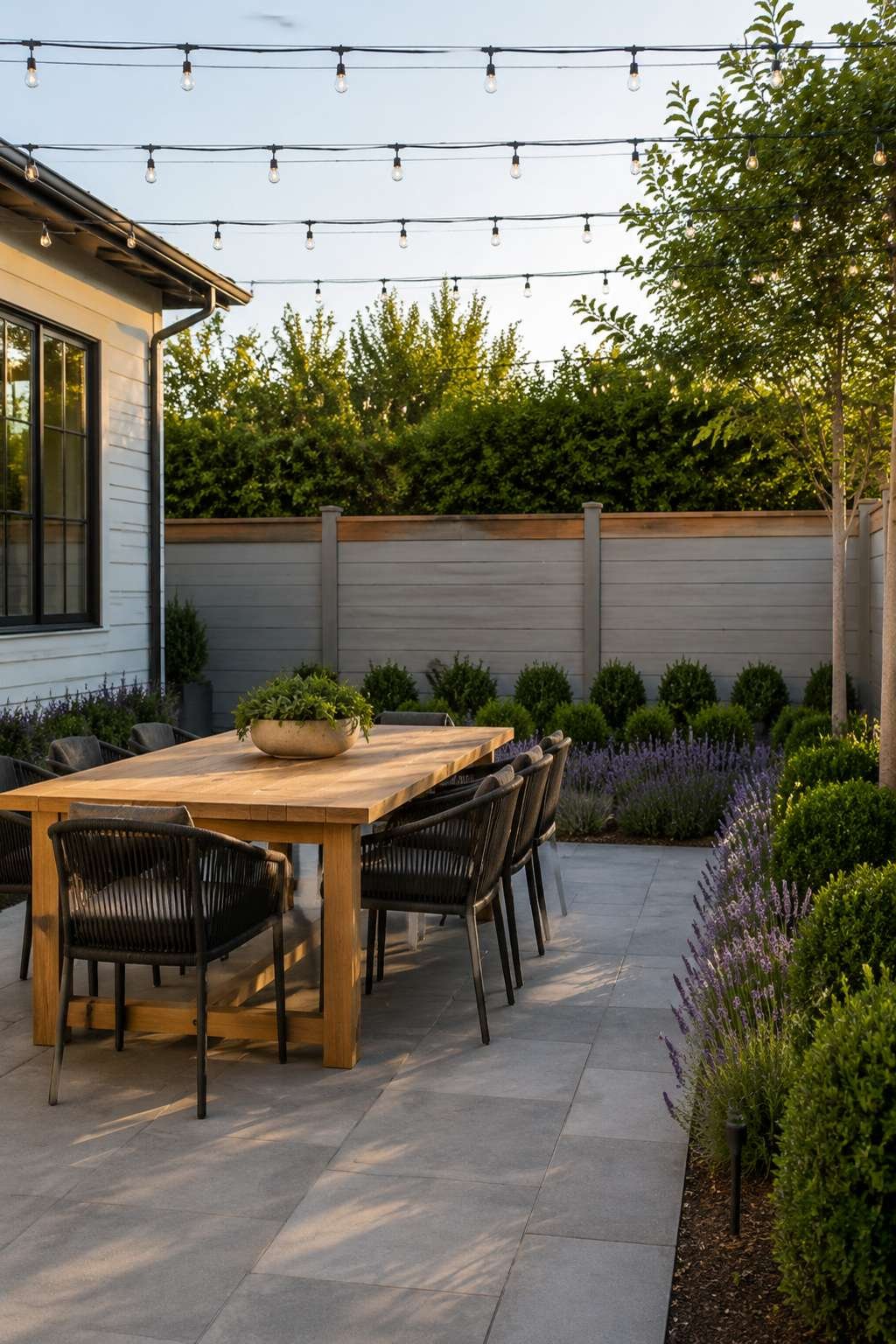
Modern and low-maintenance, the two-tone horizontal fence combines sleek light grey composite panels with a natural wood cap rail, delivering contemporary style with reduced upkeep demands. This design suits modern suburban backyards anchored by outdoor dining areas and overhead string lights, striking a balance between refined material innovation and inviting warmth.
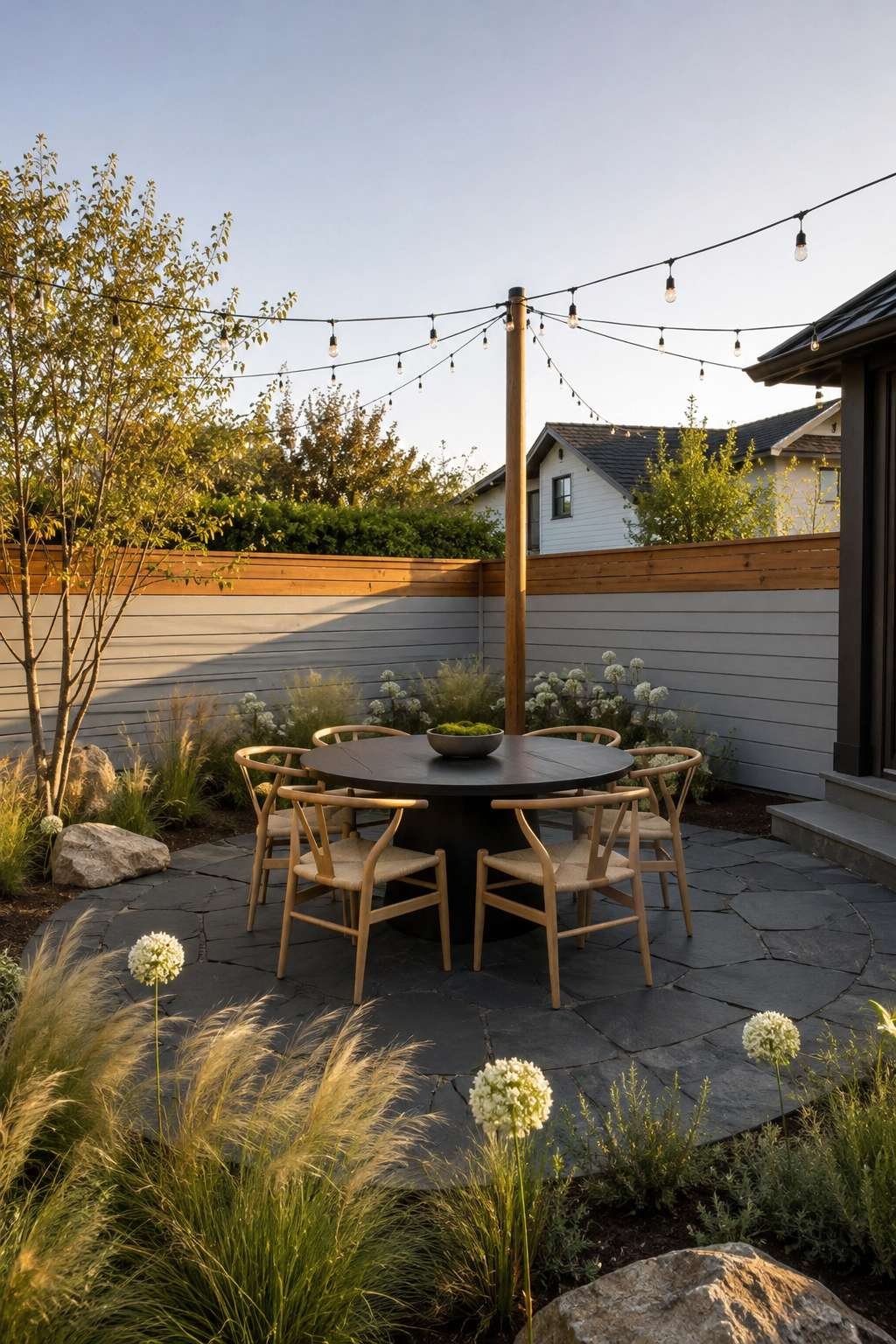
Under late afternoon golden light, the mixed materials create a beautiful tonal contrast — the composite panels reading cool and matte while the wood cap rail glows warm and golden above. Soft shadows fall gently across the horizontal panel lines, adding subtle texture without visual clutter. This two-tone approach gives homeowners the durability benefits of composite material while retaining a natural wood accent that keeps the design from feeling overly synthetic.
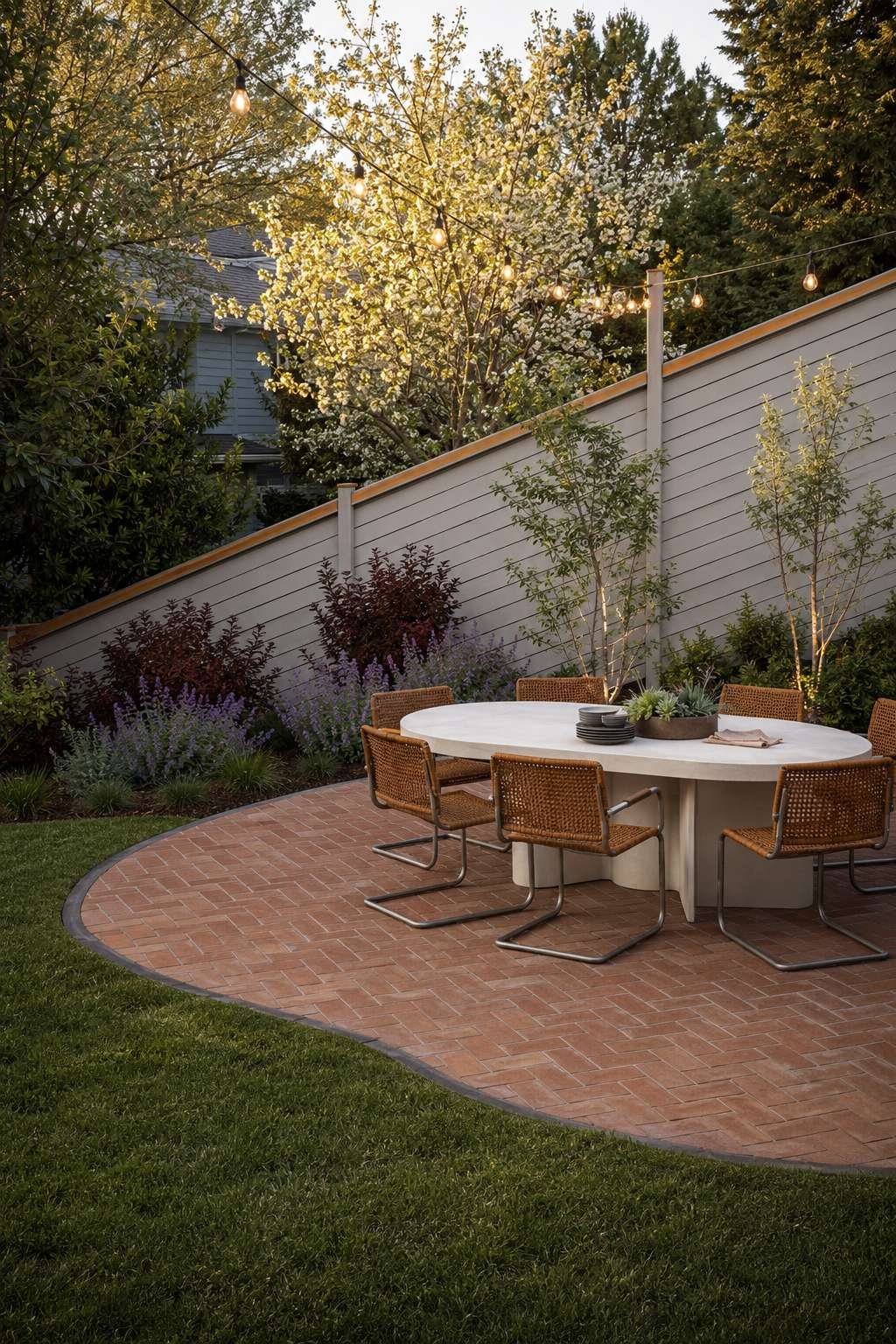
Composite fencing resists fading, warping, and insect damage far better than solid wood, making it an increasingly popular choice for homeowners seeking a long-term, low-maintenance solution. Paired with string lights and a defined outdoor dining space, this fence style becomes part of a broader entertaining-focused backyard design, proving that practicality and style can coexist beautifully.
Key Design Tips:
- Combine composite panels with a wood cap rail for style and durability
- Use string lights overhead to enhance the outdoor dining atmosphere
- Choose composite material for fade and warp resistance
- Let late afternoon light highlight the two-tone material contrast
- Ideal for modern suburban backyards focused on entertaining
Choosing the right backyard fence ultimately comes down to balancing personal style, budget, and the practical demands of your climate and lifestyle. Whether you’re drawn to the organic warmth of cedar and bamboo, the industrial edge of corrugated metal, the timeless elegance of wrought iron, or the low-maintenance appeal of composite hybrids, each of these fifteen fence styles offers a distinct way to define your outdoor space while reflecting your home’s unique character. A fence is far more than a boundary line — it’s an opportunity to extend your design vision beyond the walls of your house and into the landscape itself. Take these ideas as a starting point, mix and match materials and textures that resonate with your own backyard’s mood, and don’t be afraid to let your fence become a genuine architectural feature rather than an afterthought.
