


The glamorous sophistication of Art Deco is making a stunning comeback in contemporary interior design. This iconic style, which first emerged in the 1920s and 1930s, continues to captivate homeowners with its bold geometric patterns, luxurious materials, and timeless elegance. Today’s designers are reimagining Art Deco elements for modern living spaces, creating homes that celebrate both heritage and innovation.
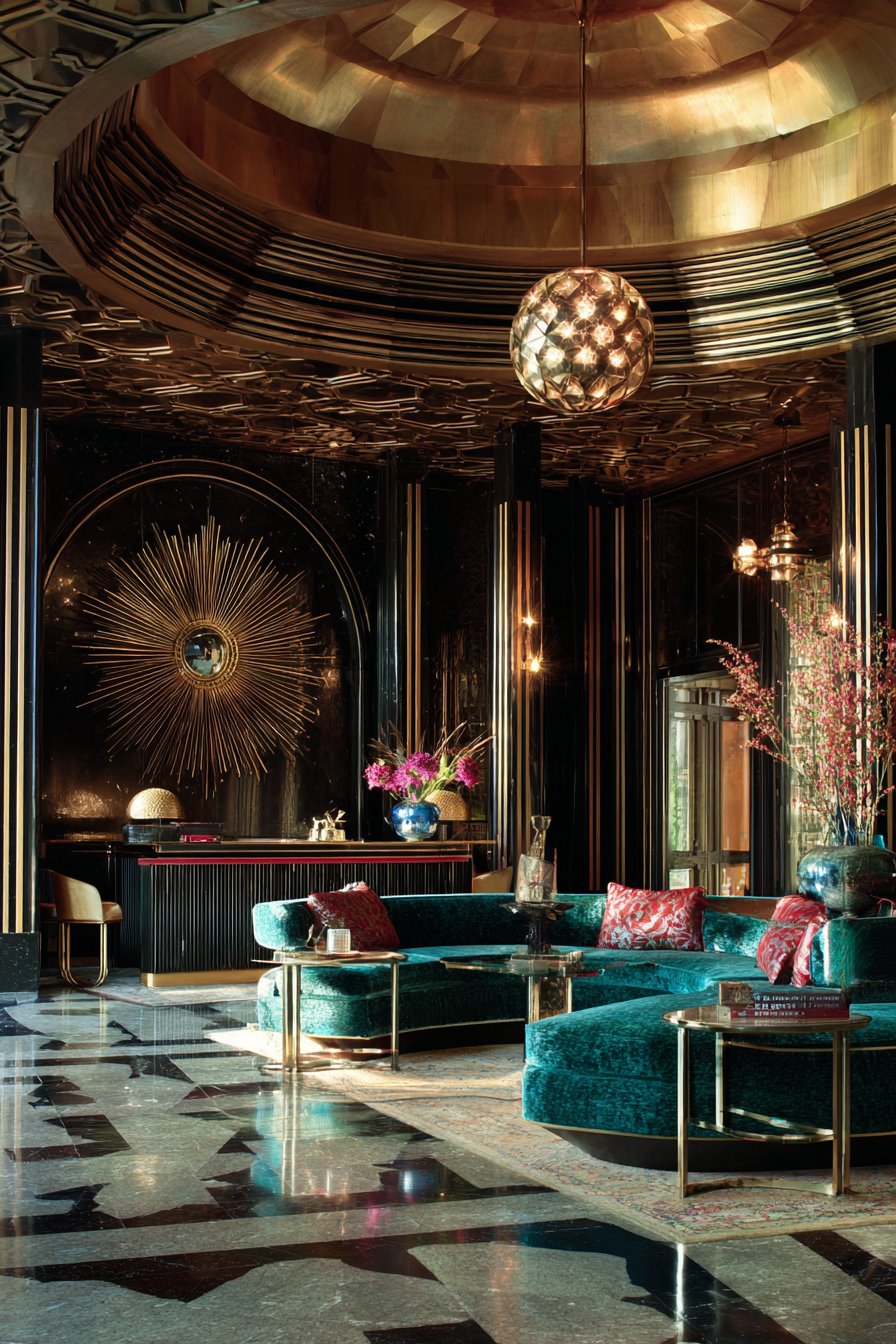
Thoughtful interior design transforms houses into personal sanctuaries that reflect individual style while maintaining functionality. The Art Deco revival demonstrates how historical aesthetics can seamlessly blend with contemporary needs. This movement caters to those who appreciate opulence without excess, geometric precision alongside organic comfort, and vintage charm enhanced by modern technology. See our this art deco living room ideas for more direction in this style.
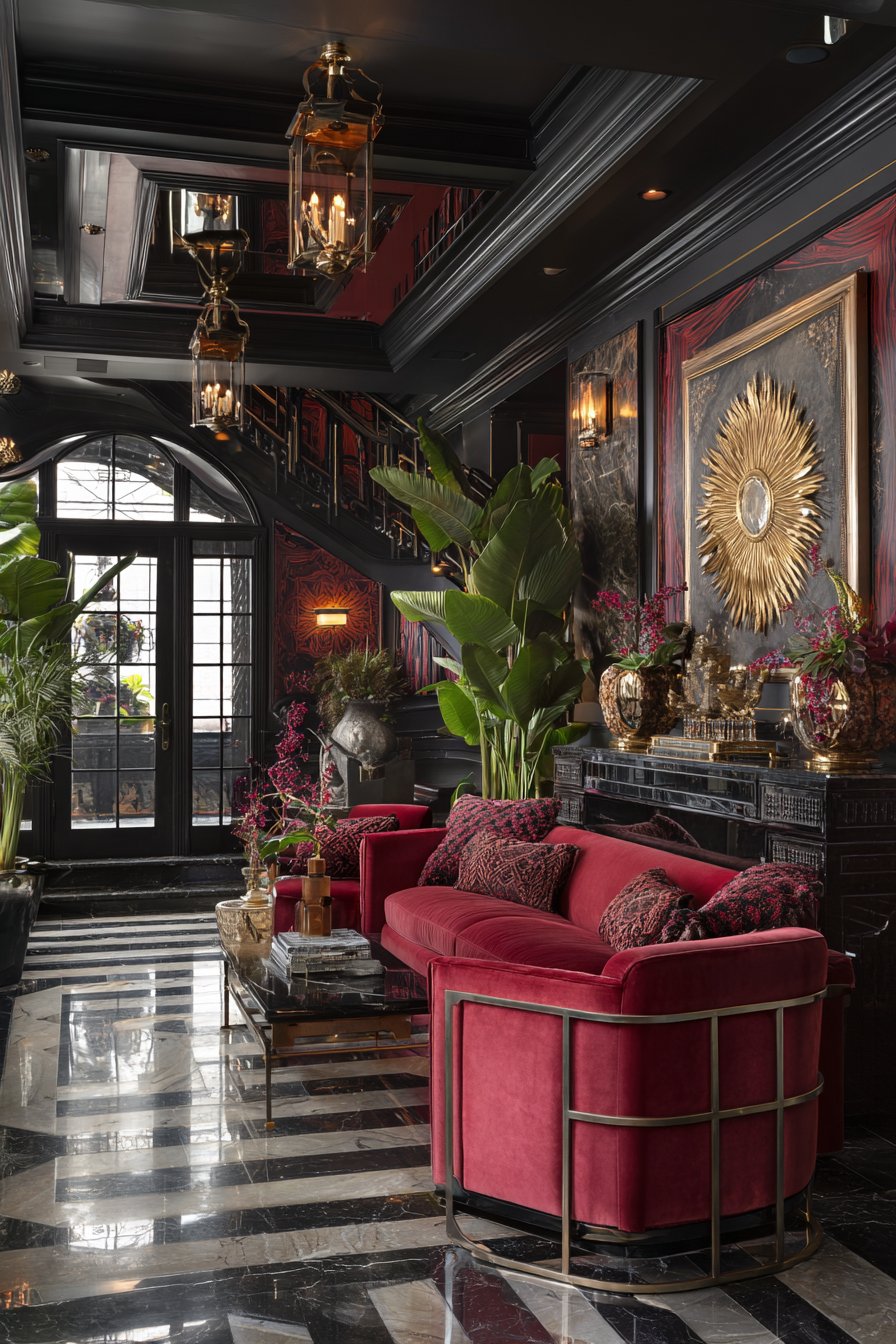
This article explores six essential aspects of incorporating Art Deco elements into modern homes. From selecting the right color palettes to choosing statement furniture pieces, we’ll examine how this timeless design movement continues to inspire today’s most sophisticated interiors. Each section provides actionable insights for transforming your space into an Art Deco-inspired haven.
1. Understanding Art Deco’s Core Design Principles
Art Deco represents luxury and modernity combined into a cohesive visual language. The style emerged during the interwar period, celebrating technological progress and artistic innovation. Its defining characteristics include symmetrical compositions, geometric shapes, and rich decorative details that create spaces with undeniable presence and visual impact.
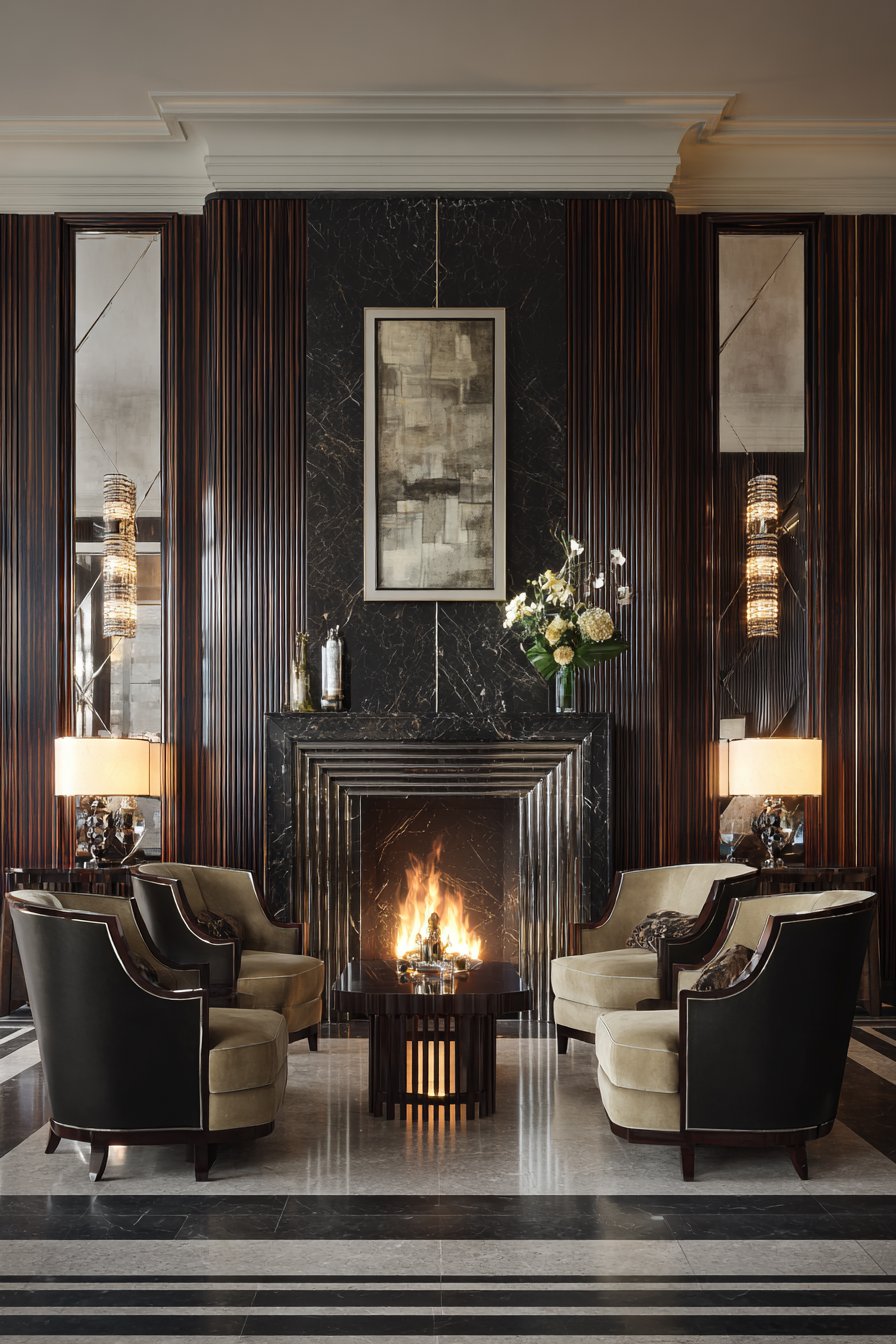
The foundation of Art Deco design rests on bold contrasts and dramatic statements. This aesthetic embraces lavish materials like chrome, glass, and exotic woods alongside streamlined forms. Unlike minimalism, Art Deco celebrates ornamentation while maintaining structural clarity. The style’s enduring appeal lies in its ability to make spaces feel both grand and intimate.
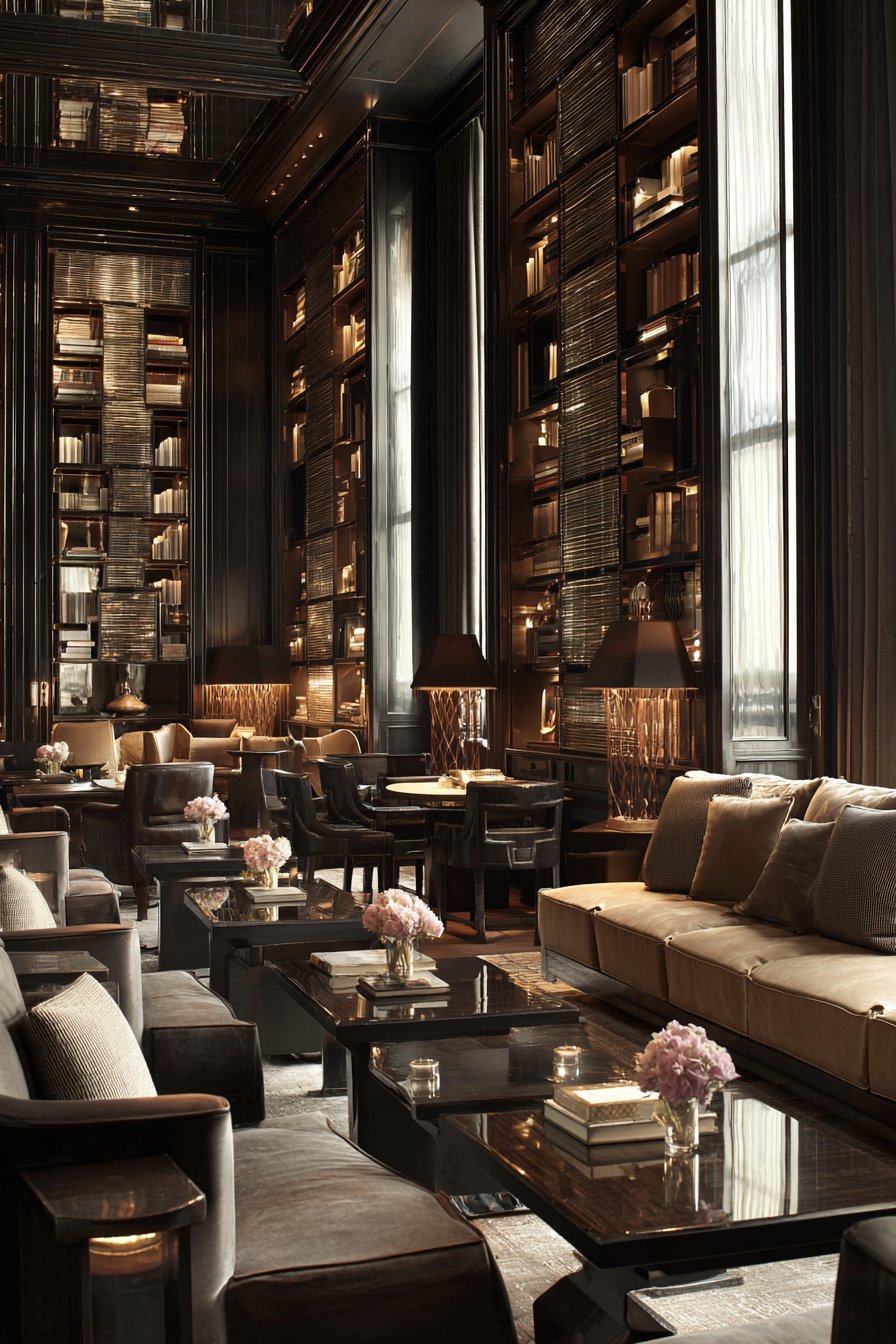
Modern interpretations honor these principles while adapting them for contemporary lifestyles. Today’s Art Deco-inspired rooms balance ornamental richness with functional simplicity. Understanding these core elements helps homeowners make informed choices about which aspects to emphasize in their own spaces. If you’re also weighing our open concept vs closed living rooms, that’s worth deciding early too.
- Study iconic Art Deco buildings for architectural inspiration and proportional guidance
- Focus on creating symmetrical arrangements in furniture placement and decor displays
- Embrace geometric patterns through wallpaper, textiles, and architectural details
- Incorporate stepped forms and ziggurat motifs in shelving and cabinetry design
- Balance ornate elements with clean lines to avoid overwhelming the space
- Research the historical context to appreciate authentic design choices
2. Mastering the Art Deco Color Palette
The Art Deco color scheme centers on dramatic contrasts and sophisticated tones. Classic combinations include black and gold, navy and cream, or emerald green with brass accents. These pairings create depth and visual interest while maintaining the style’s inherent elegance. Modern applications often soften these contrasts slightly for everyday livability.
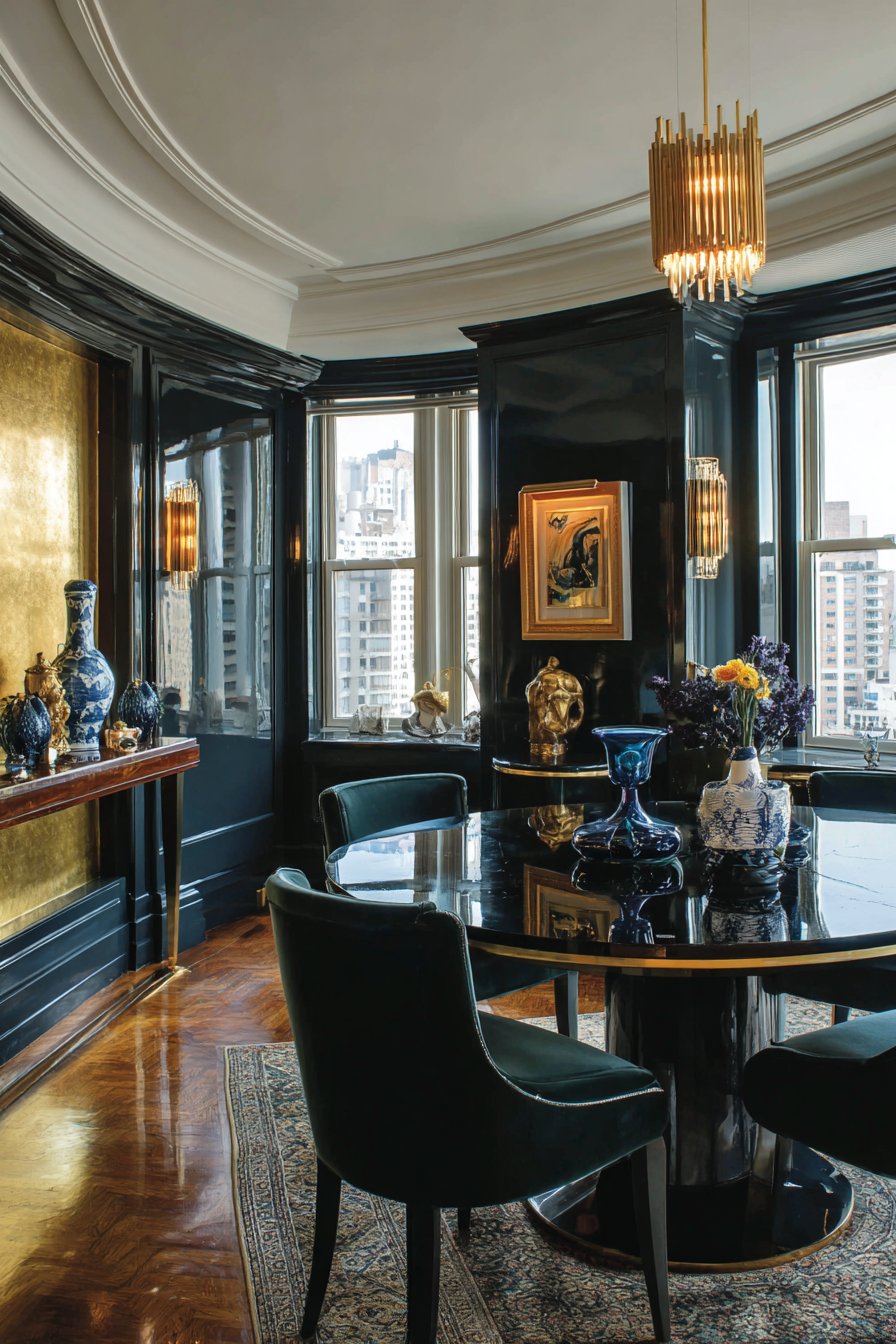
Metallic finishes play a crucial role in achieving an authentic Art Deco atmosphere. Gold, brass, and chrome add reflective surfaces that enhance lighting and create luxurious focal points. These metallics work beautifully against deep jewel tones like sapphire, ruby red, or amethyst. The interplay between matte and reflective surfaces generates dynamic visual experiences throughout the day.
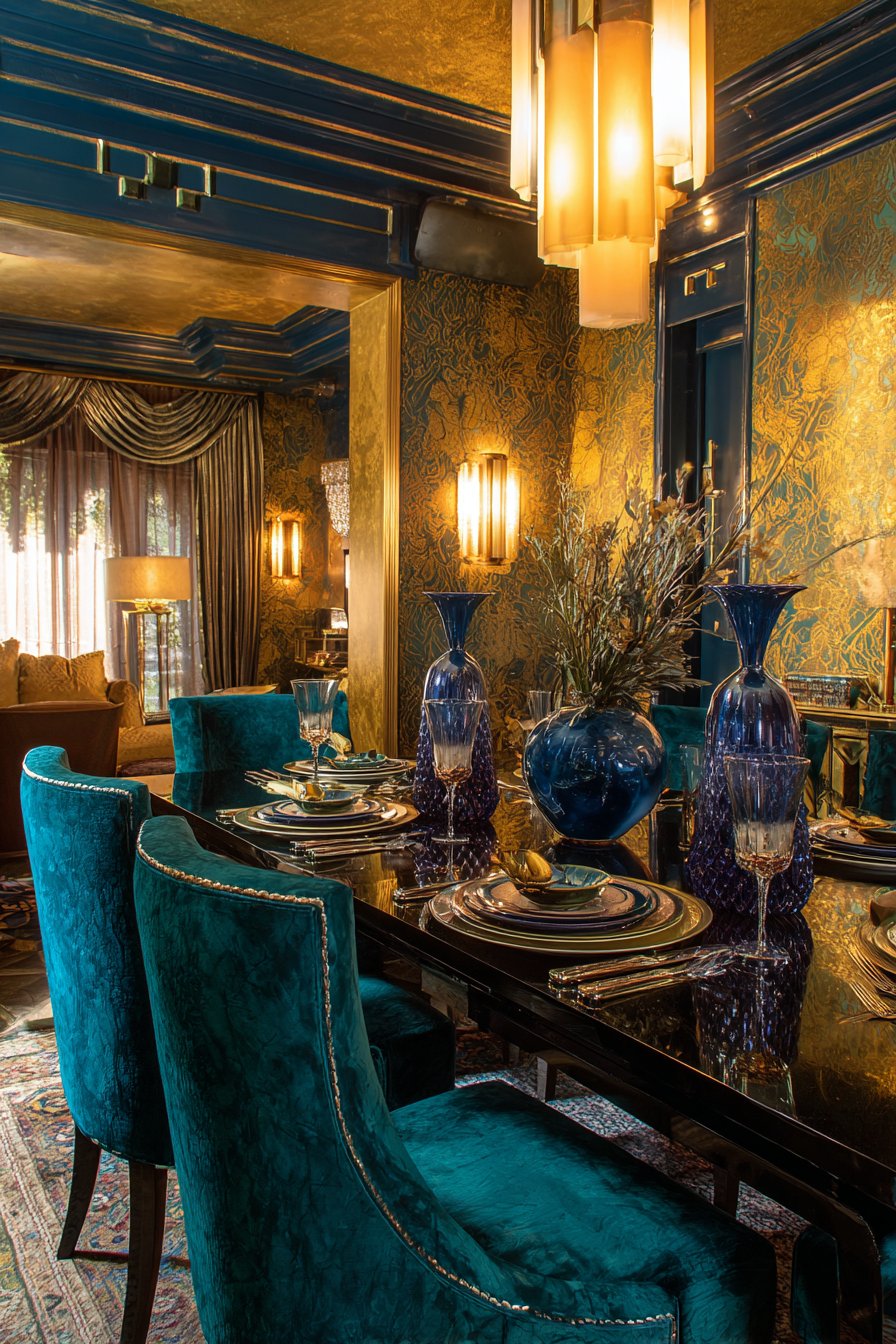
Contemporary Art Deco spaces often incorporate neutral backgrounds to let statement pieces shine. Cream, beige, or soft gray walls provide canvases for bold accent colors. This approach makes the style more accessible for those hesitant about committing to darker walls. Strategic color placement through furniture and accessories offers flexibility and easier updates.
- Use black as an anchoring color through furniture frames and architectural details
- Introduce metallic accents through light fixtures, hardware, and decorative objects
- Select one jewel tone as your primary accent color for cohesion
- Keep larger surfaces neutral to prevent visual overwhelm
- Layer different shades of the same color family for sophisticated depth
- Test color combinations in small areas before committing to entire rooms
3. Selecting Iconic Art Deco Furniture Pieces
Art Deco furniture combines sculptural beauty with functional design. Characteristic pieces feature curved silhouettes, exotic wood veneers, and geometric inlays that serve as artistic statements. Streamlined sofas with rounded arms, lacquered cabinets, and mirrored console tables exemplify the style’s dedication to craftsmanship and glamour.
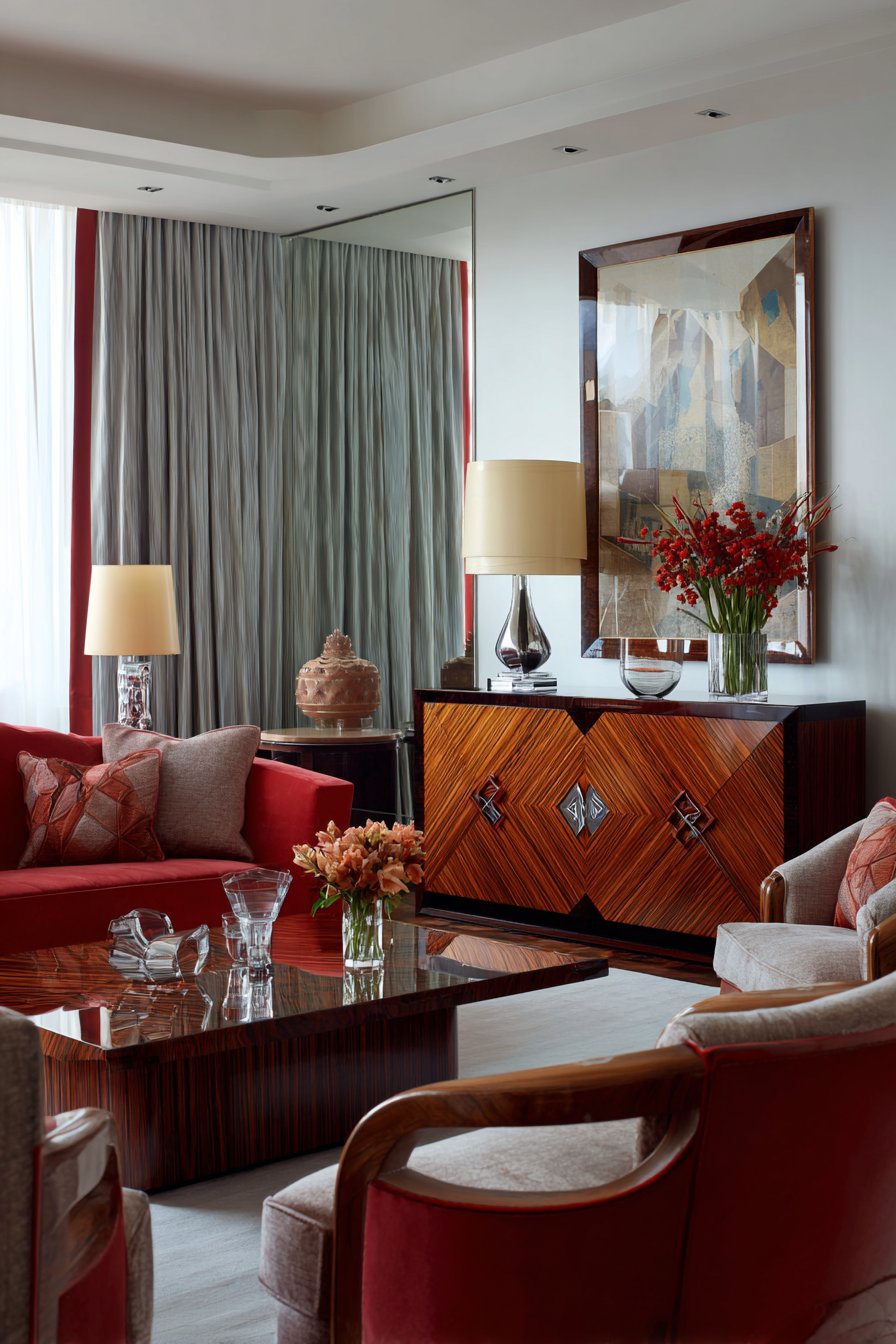
The era’s furniture makers embraced innovative materials and construction techniques. Exotic woods like ebony, zebrawood, and macassar create striking visual interest through natural patterns. Chrome accents, glass surfaces, and leather upholstery add textural variety. Modern reproductions often use sustainable alternatives while maintaining the authentic aesthetic appeal.
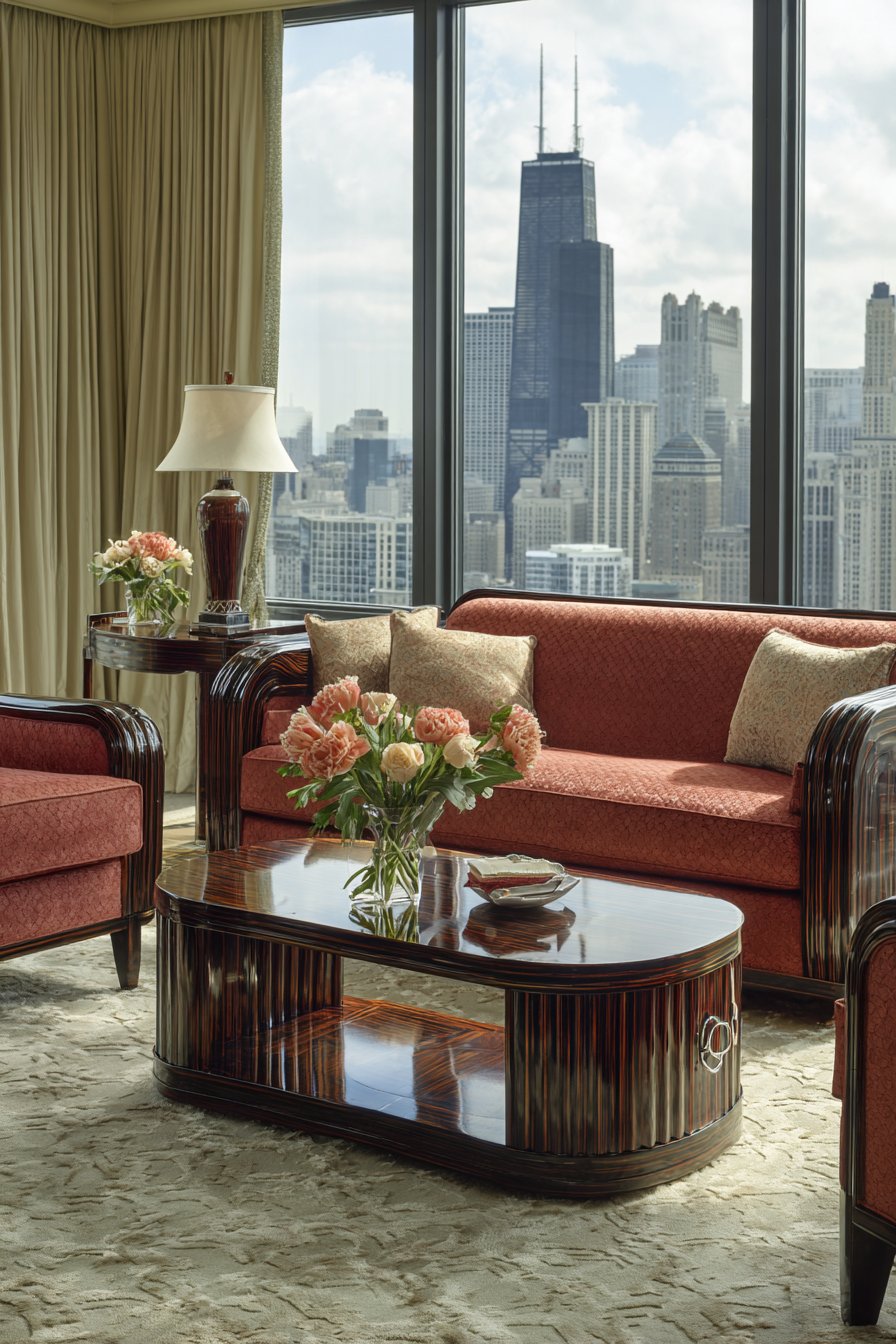
When selecting Art Deco furniture for contemporary homes, prioritize pieces with clean geometric forms. A statement credenza or waterfall-edge coffee table can anchor an entire room. Mix vintage finds with modern interpretations to create spaces that feel collected rather than themed. Focus on quality over quantity, selecting fewer impactful pieces rather than cluttering spaces. Our vintage kitchen decor ideas guide has more inspiration along these same lines.
- Invest in one signature Art Deco piece as your room’s focal point
- Look for furniture with geometric inlays or sunburst motifs
- Choose velvet or leather upholstery in rich jewel tones
- Incorporate mirrored or lacquered surfaces for reflective glamour
- Select pieces with tapered legs and streamlined silhouettes
- Balance ornate furniture with simpler contemporary pieces for cohesion
4. Incorporating Geometric Patterns and Textures
Geometric patterns define Art Deco’s visual vocabulary more than any other element. Chevrons, zigzags, sunbursts, and stepped patterns appear throughout authentic spaces. These motifs work beautifully on wallpaper, rugs, textiles, and architectural details. Strategic pattern placement prevents overwhelming while maintaining the style’s distinctive character.
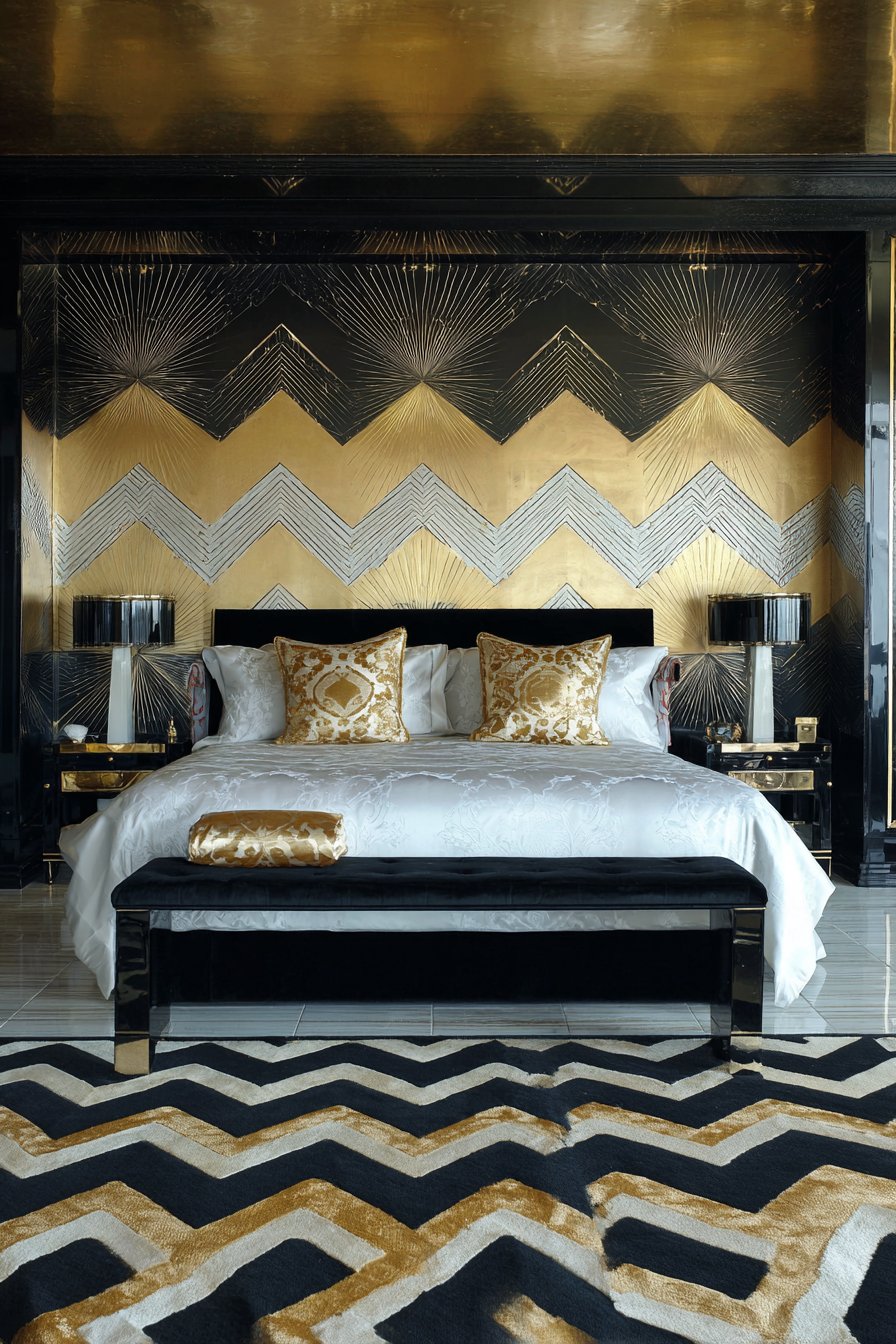
Layering different textures creates the tactile richness essential to Art Deco interiors. Combine smooth lacquered surfaces with plush velvet upholstery and woven textiles. Add visual interest through contrasting finishes like matte walls against glossy furniture. This textural diversity makes spaces feel luxurious and inviting rather than sterile or flat.
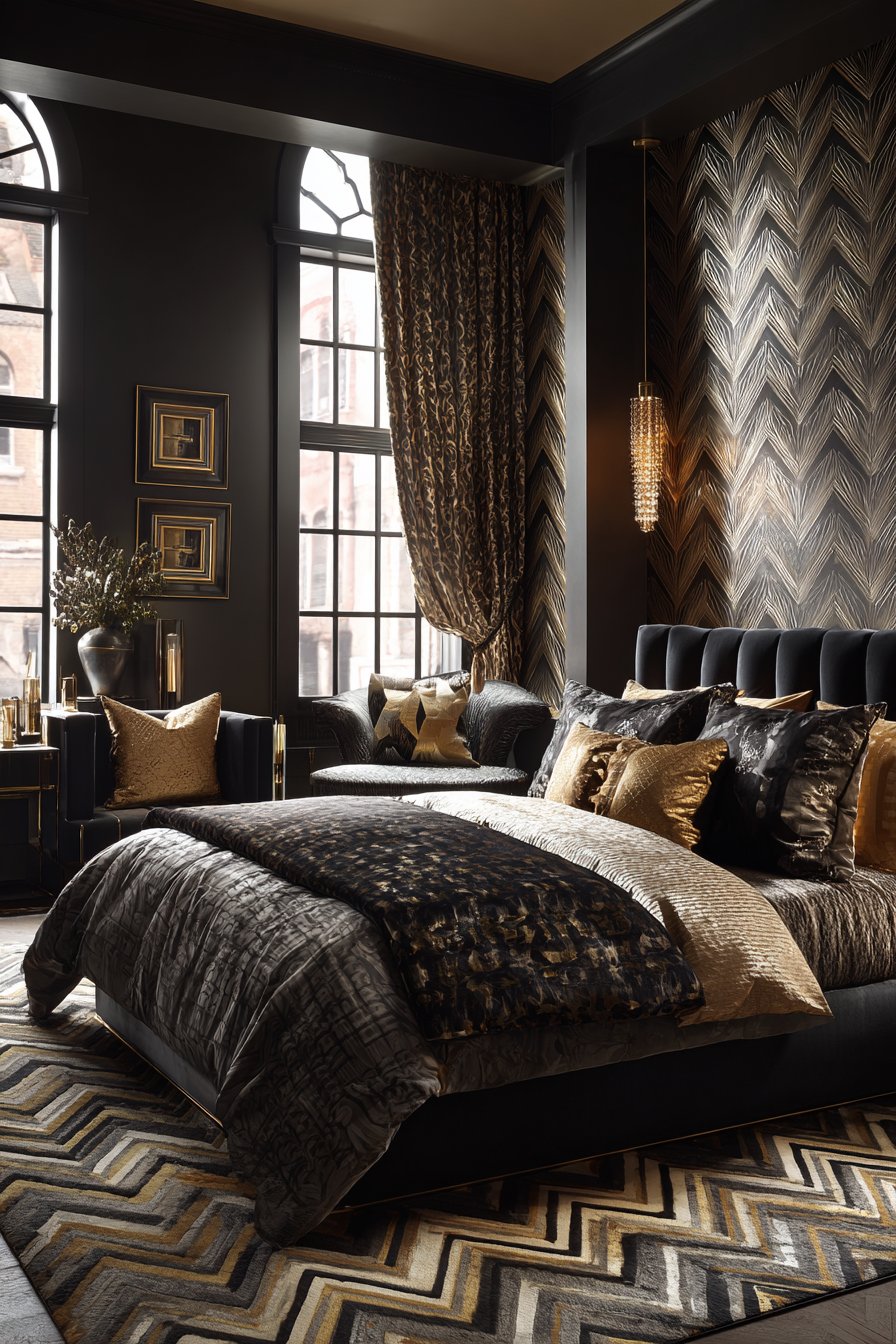
Modern applications often limit bold patterns to accent walls or area rugs. A geometric wallpaper in the dining room or powder room makes dramatic impact without overwhelming. Alternatively, introduce patterns through smaller elements like throw pillows, artwork, or window treatments. This restrained approach suits contemporary lifestyles while honoring Art Deco traditions.
- Select one large-scale geometric pattern as your primary design element
- Use smaller coordinating patterns in complementary spaces for visual flow
- Mix geometric patterns with organic textures for balance
- Incorporate pattern through area rugs to define conversation zones
- Choose wallpaper with metallic elements for added dimension
- Limit bold patterns to prevent visual competition between elements
5. Lighting Design for Art Deco Ambiance
Lighting fixtures serve as sculptural centerpieces in Art Deco interiors. Chandeliers with geometric crystal arrangements, stepped pendant lights, and chrome sconces exemplify the era’s innovative approach. These fixtures combine functionality with artistic expression, often featuring frosted glass and metallic finishes that diffuse light beautifully.
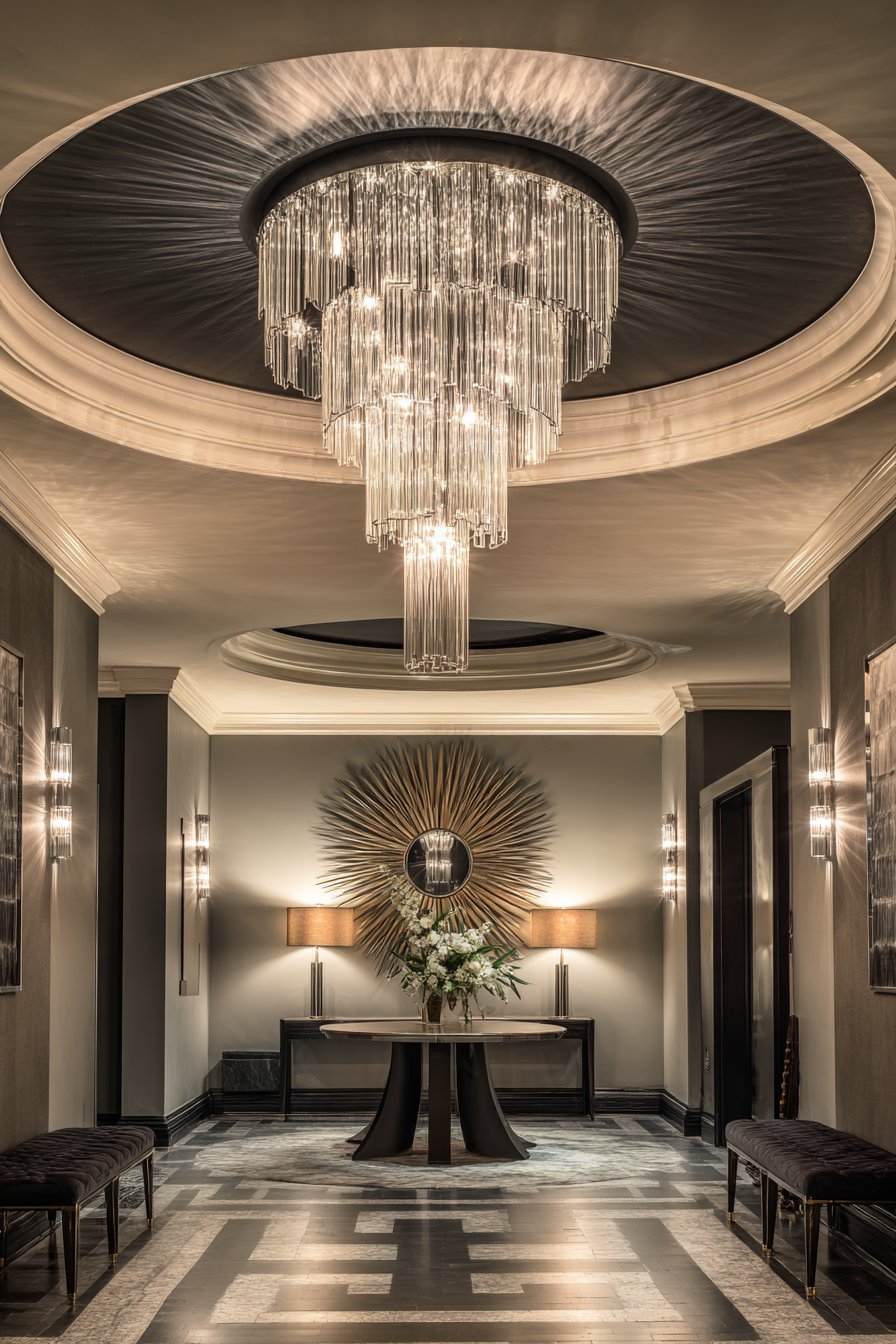
The strategic use of ambient, task, and accent lighting creates the layered illumination characteristic of sophisticated Art Deco spaces. Wall sconces flanking mirrors provide symmetrical visual anchors while adding practical light. Table lamps with geometric bases and fabric shades introduce warmth. This multi-source approach generates depth and atmosphere throughout different times of day.
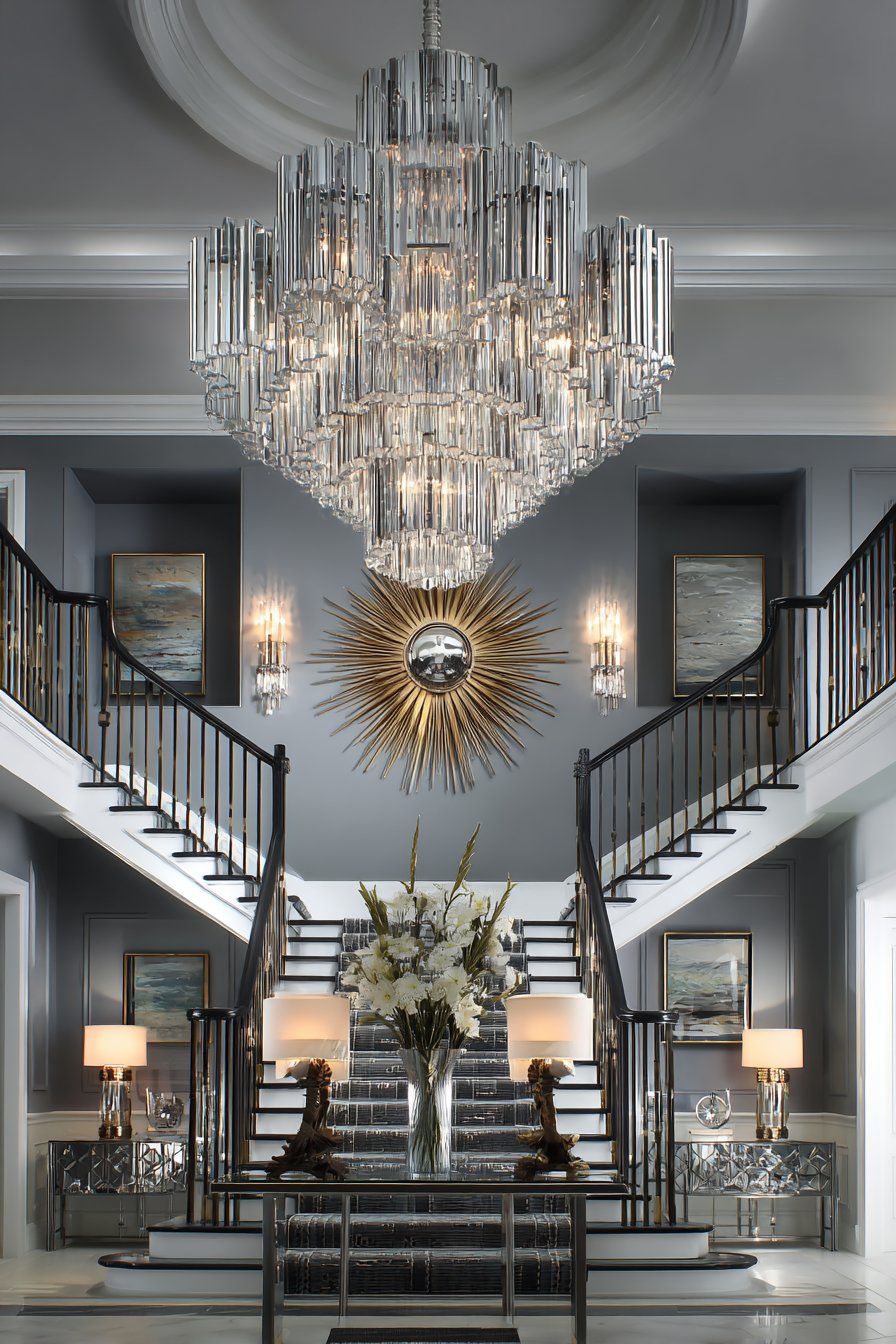
Modern lighting technology allows authentic aesthetics with contemporary efficiency. LED bulbs in vintage-style fixtures offer energy savings without compromising design integrity. Dimmer switches enable mood adjustment for various occasions. Consider how lighting interacts with reflective surfaces like mirrors and metallic accents to maximize visual impact.
- Install a statement chandelier as your room’s crown jewel
- Use symmetrical pairs of sconces or table lamps for balanced illumination
- Choose fixtures with geometric shapes like stepped designs or sunburst patterns
- Incorporate uplighting to highlight architectural details and create drama
- Select warm-toned bulbs to enhance metallic finishes and jewel colors
- Add dimmer controls for versatility in creating different atmospheres
6. Accessorizing with Art Deco Accents
Decorative accessories complete the Art Deco vision through carefully curated details. Sculptural objects, geometric vases, vintage cocktail sets, and framed architectural prints reinforce the style’s aesthetic. These finishing touches should feel intentional rather than cluttered, with each piece contributing to the overall composition.
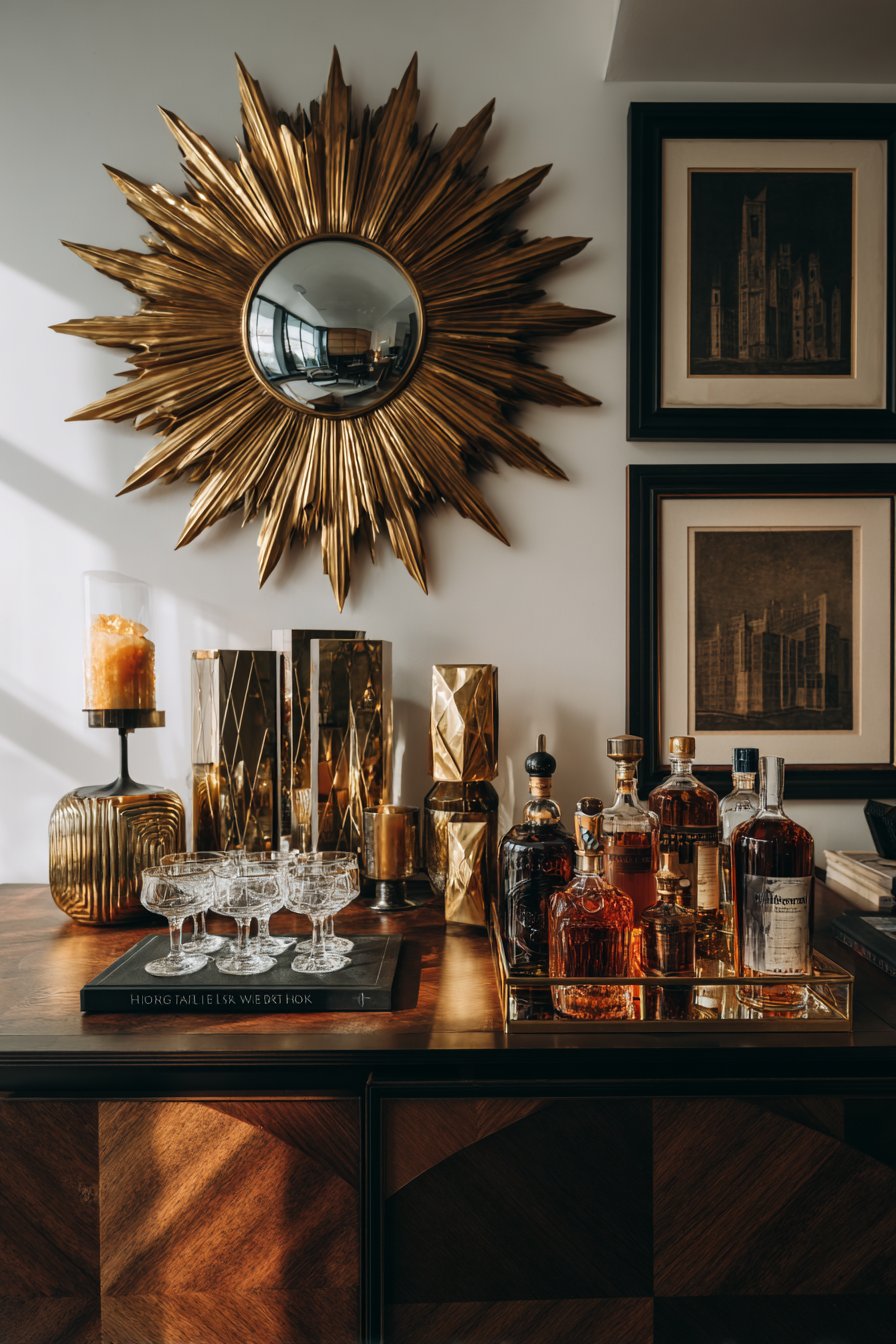
Mirrors play an essential role in Art Deco interiors, both functionally and decoratively. Sunburst mirrors, geometric-framed mirrors, and beveled glass pieces reflect light while serving as artistic statements. Strategic mirror placement amplifies natural light and creates the illusion of expanded space. Choose frames with metallic finishes or stepped designs for authentic character.
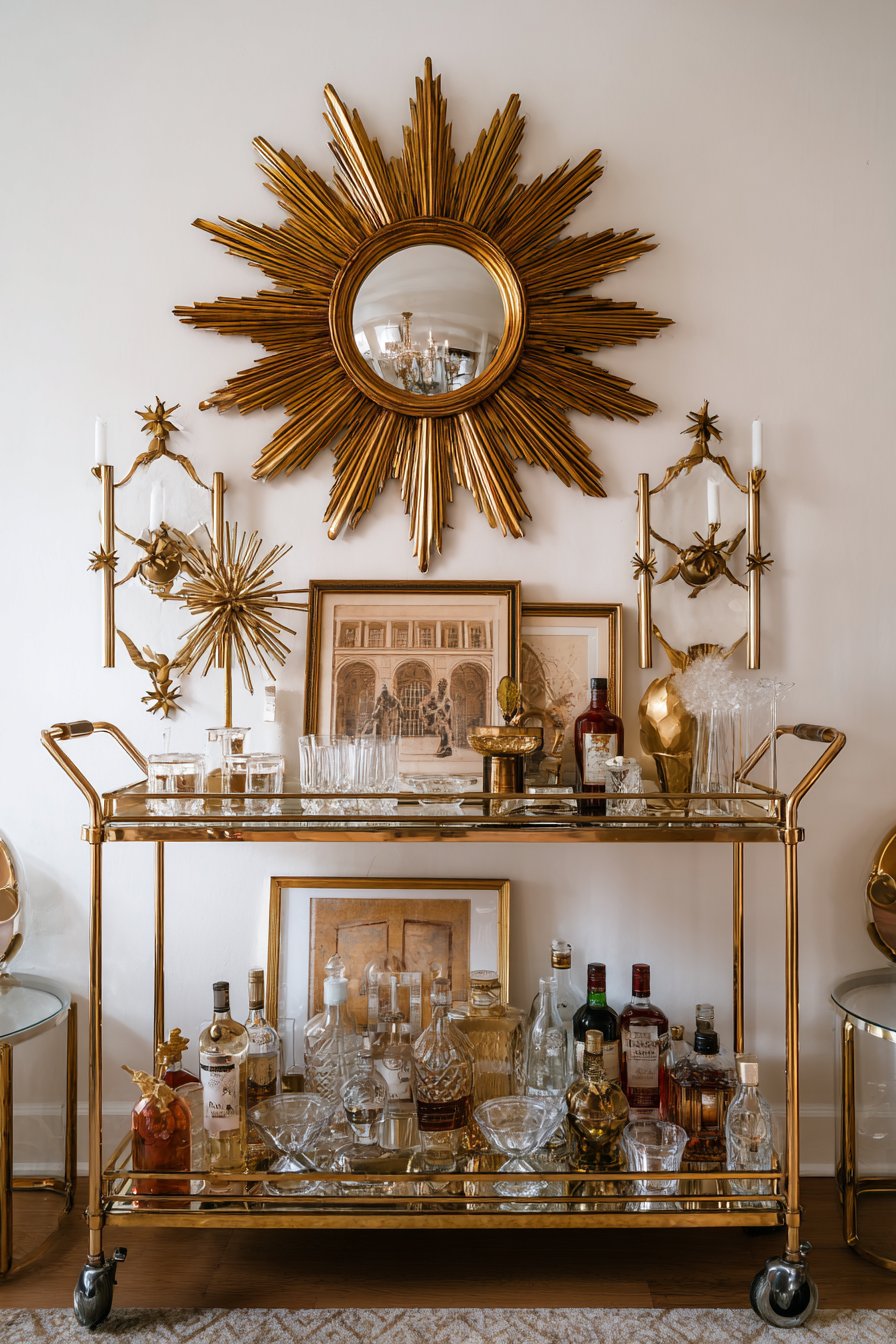
Artwork selection should emphasize the era’s graphic sensibility and celebration of modernity. Vintage travel posters, geometric abstractions, and photographs of 1920s architecture work beautifully. Frame selections matter tremendously—choose gold or chrome frames with clean lines. Group artworks symmetrically for maximum Art Deco impact and visual coherence.
- Display decorative objects in symmetrical arrangements on mantels or shelves
- Invest in authentic vintage accessories from antique markets and estate sales
- Use bar carts and cocktail accessories to evoke the era’s social glamour
- Incorporate sculptural bookends, geometric candleholders, and crystal decanters
- Choose metallic picture frames that complement your room’s finish palette
- Edit your accessory collection regularly to maintain sophisticated restraint
Conclusion
The Art Deco revival offers homeowners an opportunity to embrace timeless glamour while creating functional modern spaces. By understanding the style’s core principles and adapting them thoughtfully, you can achieve interiors that feel both historically grounded and contemporary. The key lies in balancing bold statements with restraint, honoring the past while living comfortably in the present.
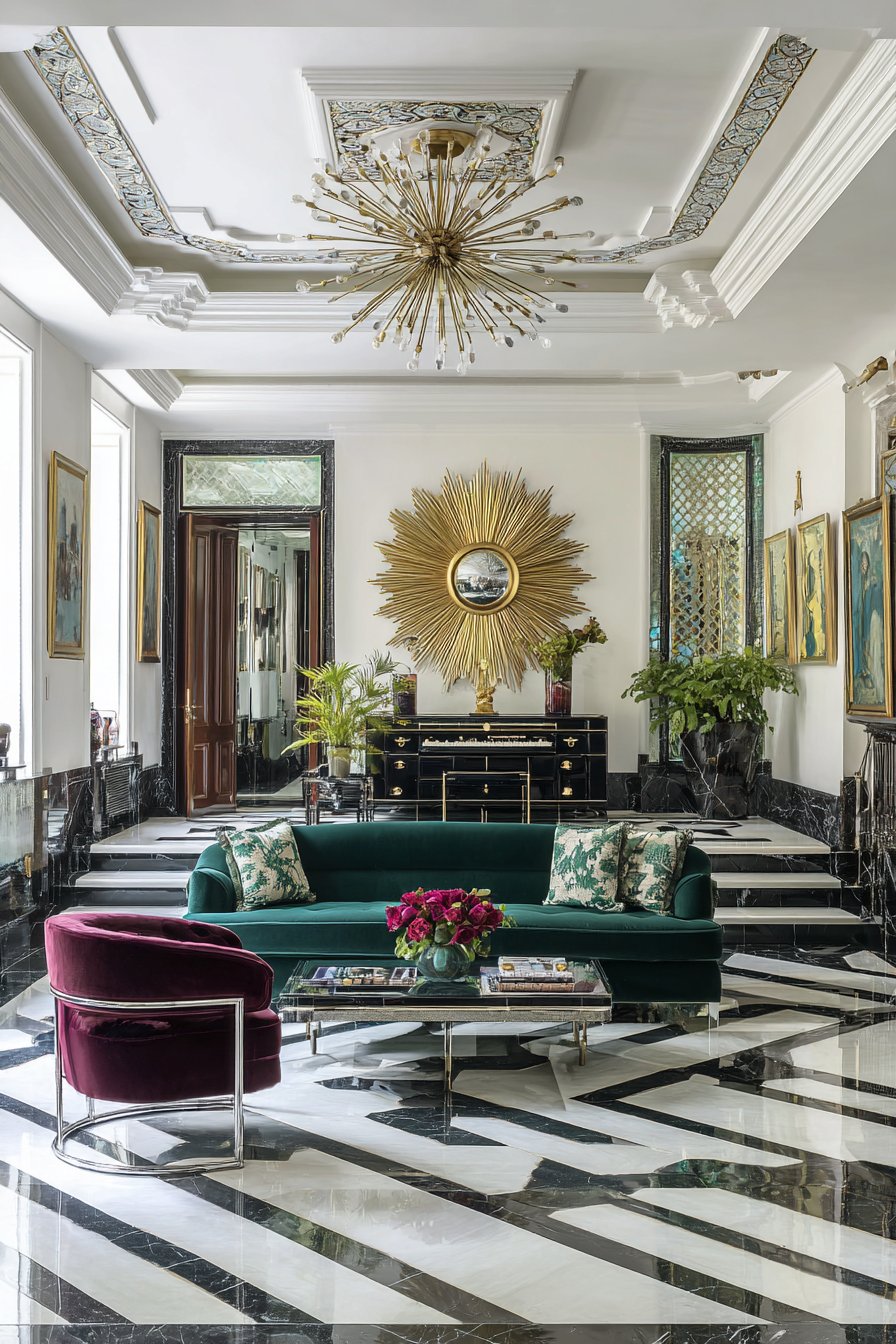
Start with one room or even one signature piece to begin your Art Deco journey. Experiment with color combinations, geometric patterns, and luxurious materials that speak to your personal style. Remember that successful interior design reflects your unique personality while creating spaces that inspire and rejuvenate. Let the enduring elegance of Art Deco guide your creative vision.
