


The world of interior design is experiencing a remarkable shift away from sharp angles and rigid geometries. Curved furniture has emerged as the defining trend of contemporary living spaces, bringing a refreshing softness that transforms the entire atmosphere of a room. This design movement isn’t just about aesthetics; it represents a fundamental change in how we approach comfort, flow, and spatial harmony.
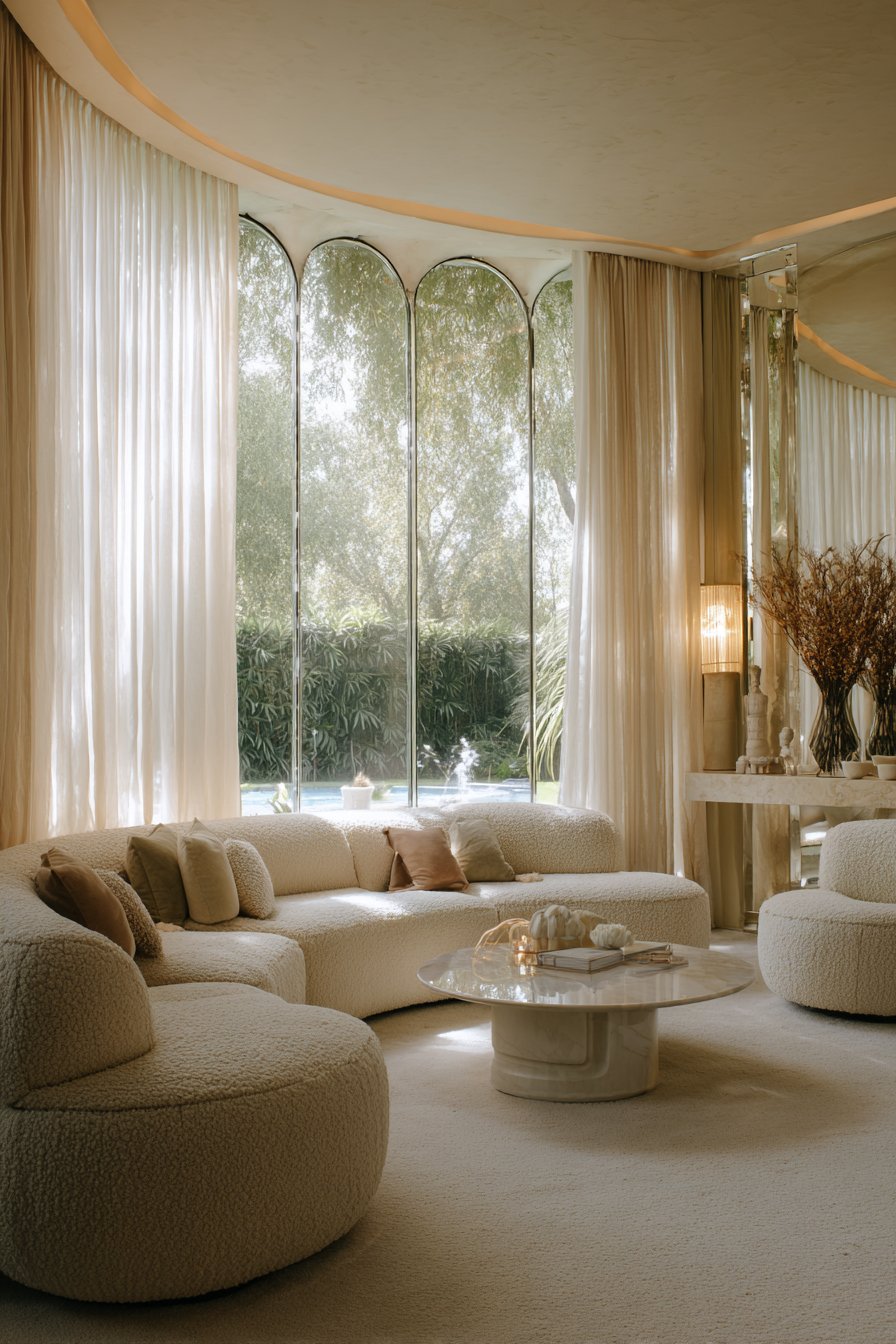
Thoughtful interior design goes beyond selecting beautiful pieces—it creates environments that nurture our well-being and reflect our evolving lifestyles. As we spend more time in our homes, the desire for spaces that feel welcoming and organic has never been stronger. Curved furniture answers this call by replacing the harsh lines of traditional design with flowing, sculptural forms that invite relaxation and conversation. Our art deco revival in modern homes has more inspiration along these same lines.
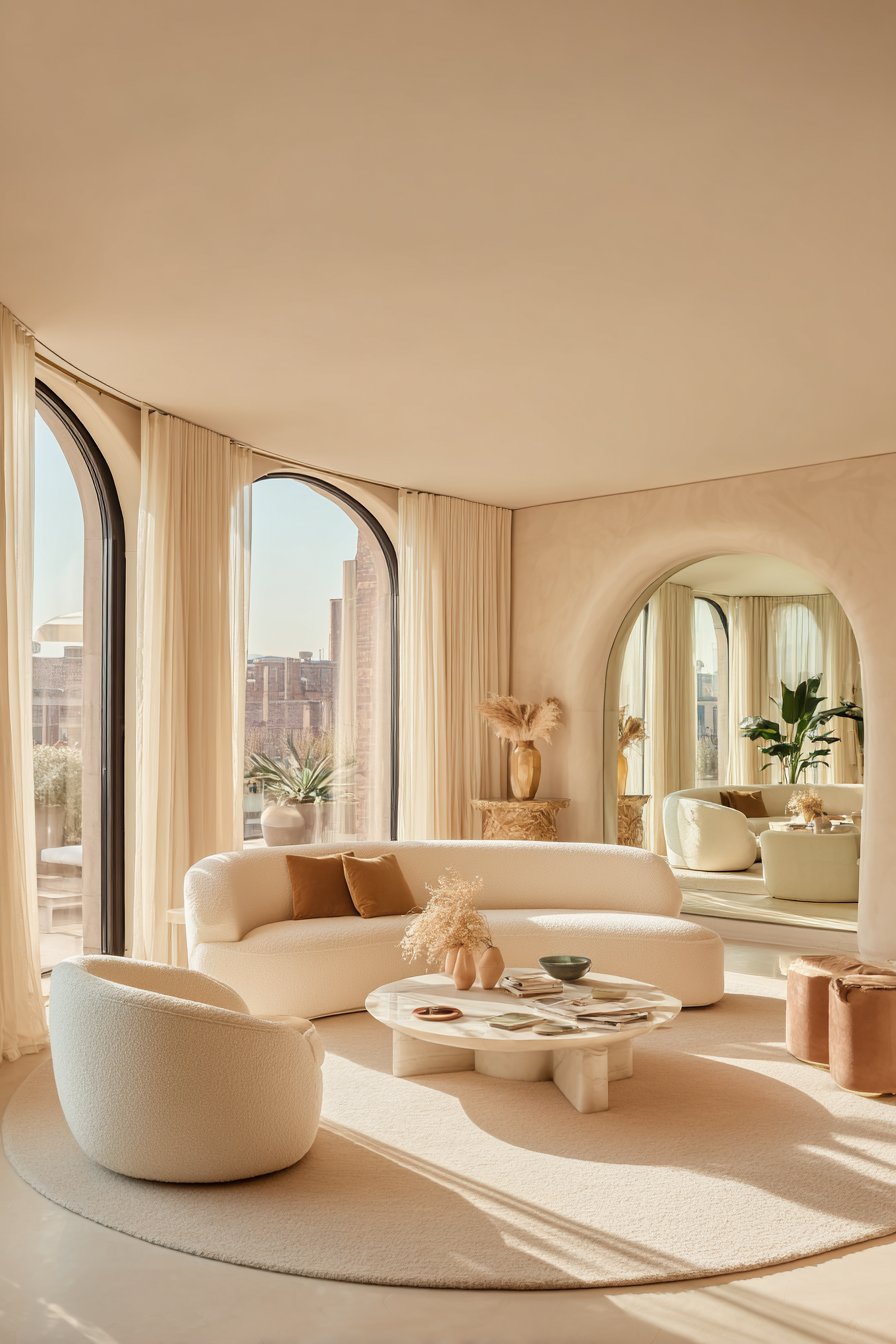
This comprehensive guide explores why curved furniture has captured the imagination of designers and homeowners alike. From arc-shaped sofas to rounded coffee tables, we’ll examine the multifaceted benefits of this trend and provide actionable strategies for incorporating these organic shapes into your living room. Whether you’re planning a complete redesign or simply refreshing your space, these insights will help you embrace this transformative aesthetic.
1. The Psychology Behind Curved Design
Curved furniture creates an immediate psychological impact that straight-edged pieces simply cannot match. Research in environmental psychology reveals that rounded forms reduce stress and promote feelings of safety and comfort. Our brains are naturally drawn to organic shapes found in nature, making curved furniture feel inherently more inviting than angular alternatives.
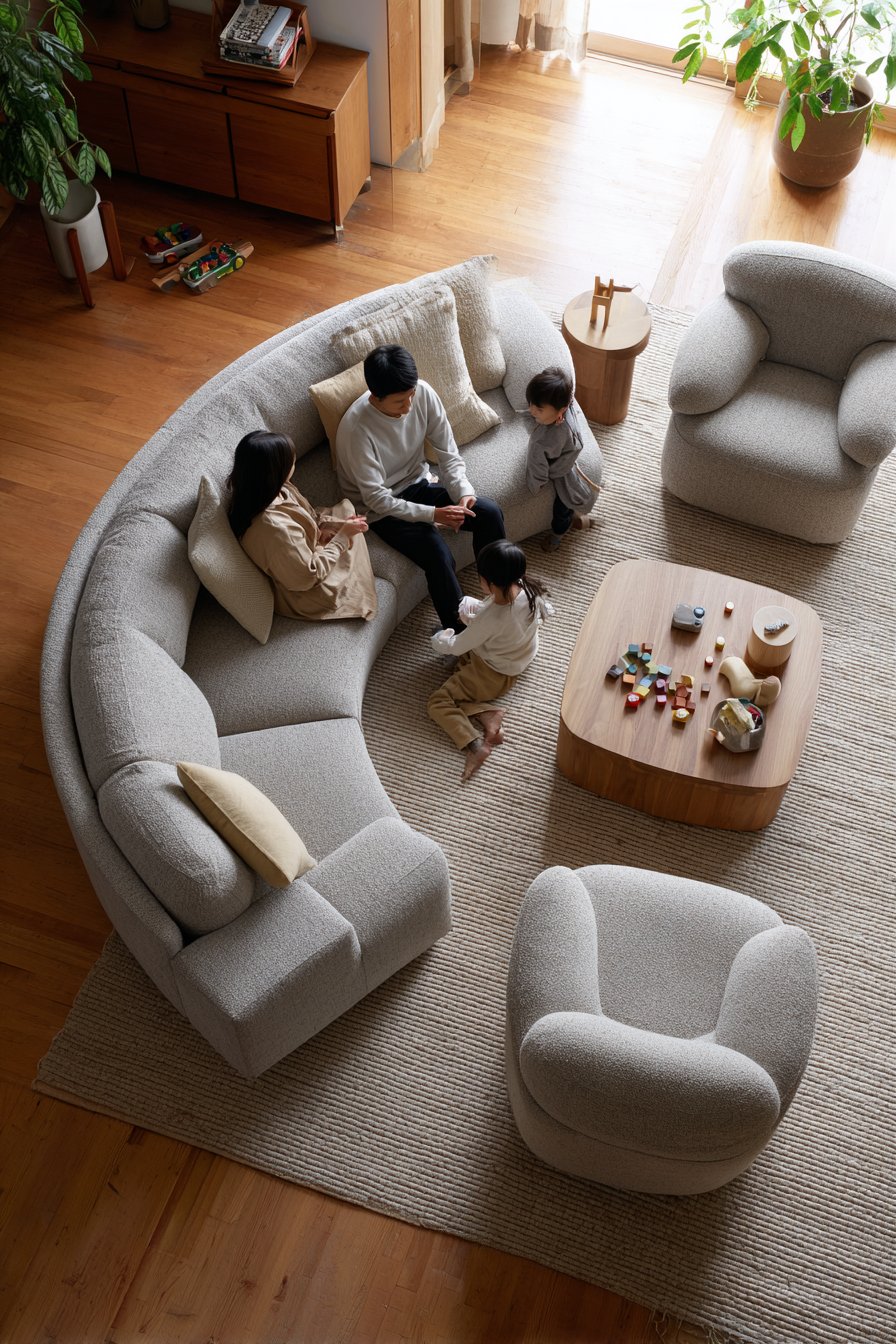
The absence of sharp corners creates a subconscious sense of security, particularly important in homes with children or in spaces designed for relaxation. Curved pieces soften the visual landscape of a room, creating gentle transitions that allow the eye to flow naturally from one element to another. This seamless movement encourages a meditative quality that enhances the overall ambiance.
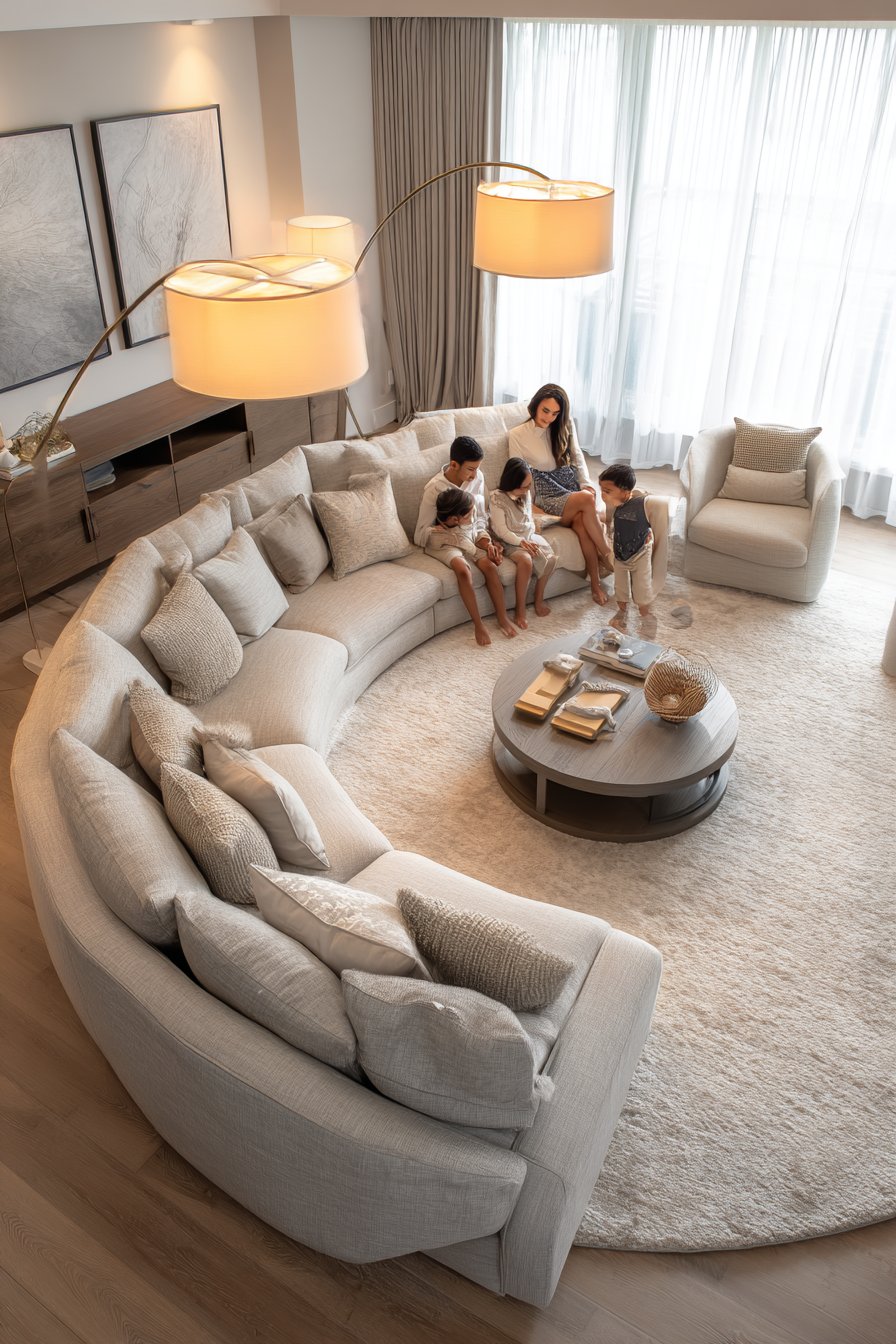
Beyond safety considerations, curved furniture fosters social interaction in remarkable ways. Arc-shaped sofas and rounded seating arrangements naturally draw people together, creating intimate conversation zones. Unlike linear sofas that position people side-by-side, curved pieces allow for face-to-face engagement, strengthening the social dynamics of your living space.
- Position curved sofas to create natural conversation circles in your living room
- Choose rounded armchairs that invite people to lean in and connect
- Consider the flow of movement when placing curved pieces to maximize accessibility
- Use curved furniture to soften architectural features like sharp corners or columns
- Experiment with different radii—tighter curves create intimacy while gentle arcs open spaces
- Combine curves with one or two angular pieces for dynamic visual contrast
2. Statement Curved Sofas as Room Anchors
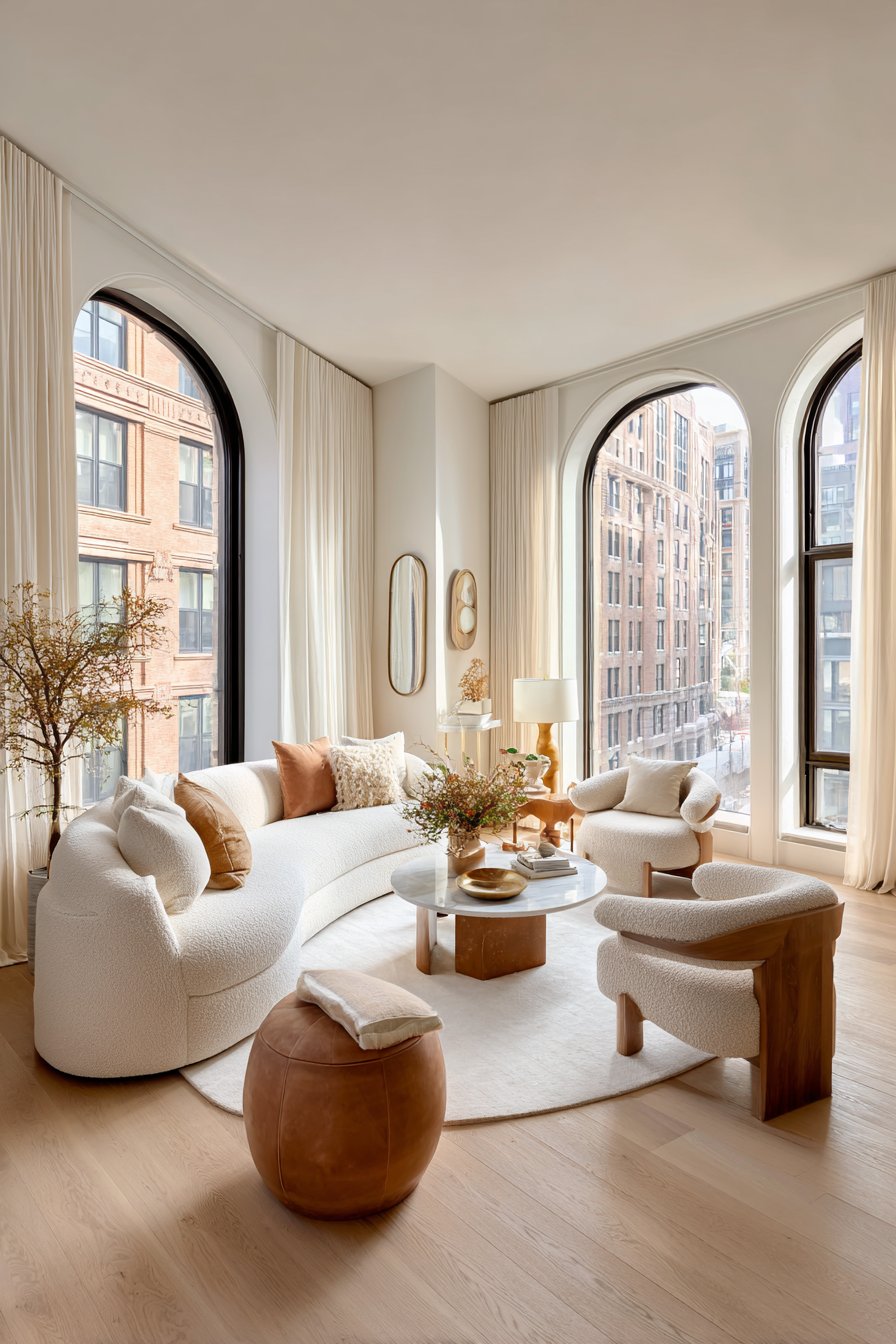
The curved sofa stands as the crown jewel of this design movement, commanding attention while providing unparalleled comfort. These sculptural pieces serve as functional art, instantly elevating your living room from ordinary to extraordinary. Unlike traditional three-seater sofas, curved designs can accommodate more people while using space more efficiently through their unique geometry.
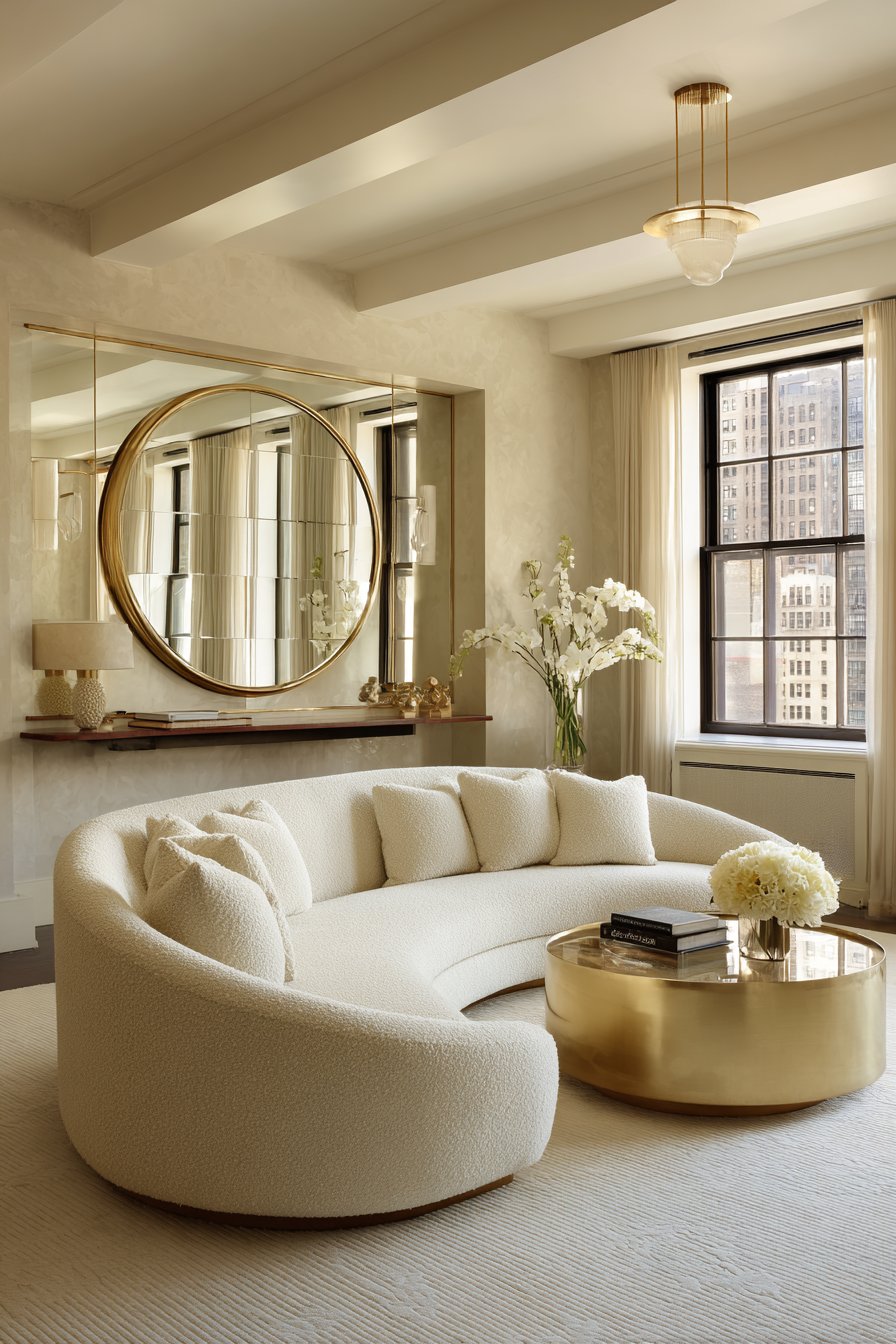
When selecting a curved sofa, consider the arc degree carefully—a gentle curve suits larger rooms, while a more pronounced semicircle works beautifully in compact spaces. The upholstery material significantly impacts the overall effect; bouclé fabric has become particularly popular for its textural richness and ability to emphasize curved lines. Velvet and performance fabrics offer equally luxurious alternatives with practical benefits. If you’re also weighing open concept vs closed living rooms guide, that’s worth deciding early too.
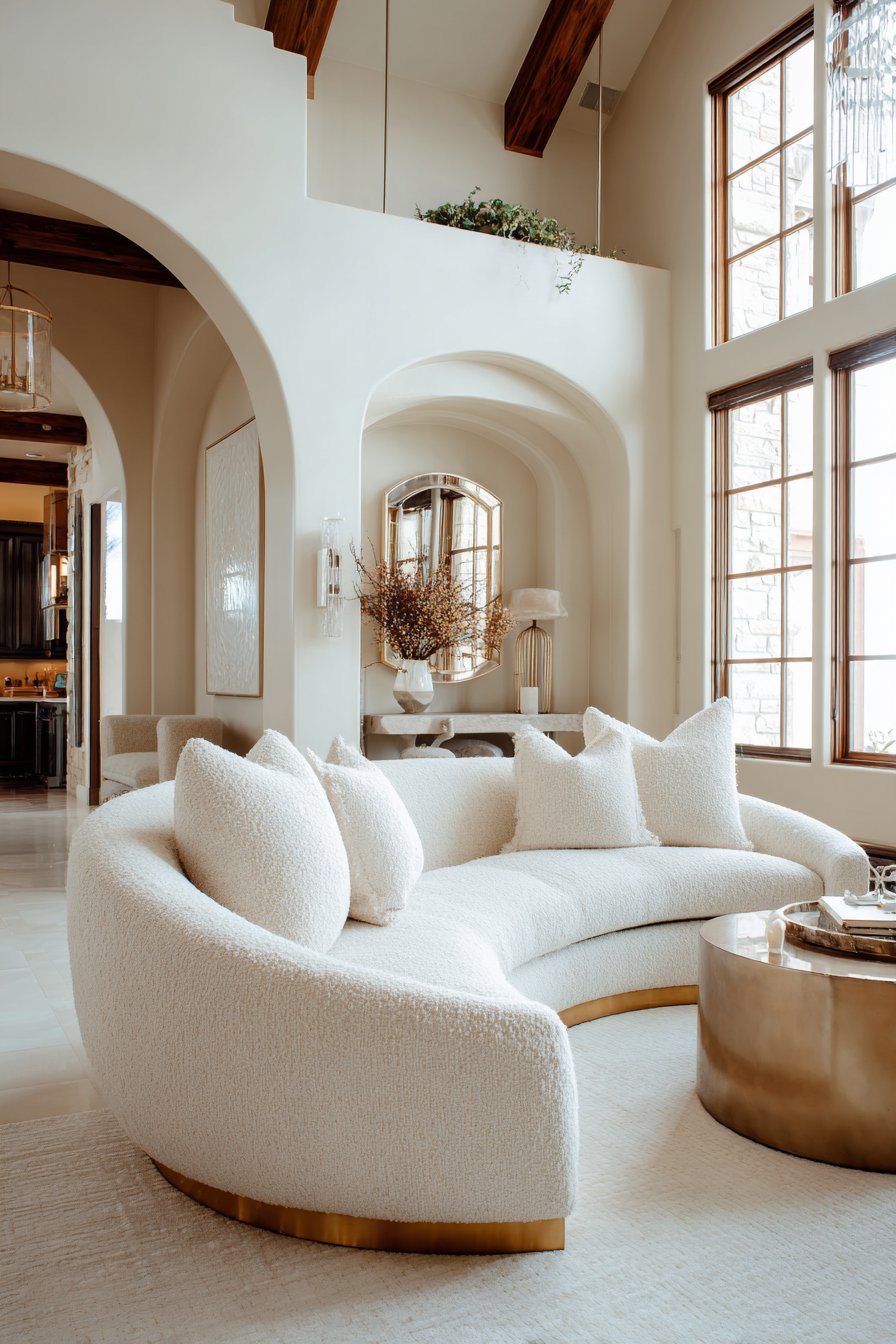
Placement is crucial for maximizing the impact of your statement sofa. Position it to anchor your seating area while maintaining clear pathways around the room. Consider floating the sofa away from walls to showcase its sculptural silhouette from all angles. This arrangement also creates additional space behind the piece for console tables or decorative elements.
- Measure your room carefully before purchasing—curved sofas require more floor space than they appear
- Choose neutral colors like cream, gray, or camel for timeless versatility
- Add curved back cushions that complement the sofa’s natural flow
- Consider modular curved sectionals for flexibility in arrangement and future moves
- Place a rounded coffee table in front to echo and enhance the curved aesthetic
- Ensure adequate lighting highlights the sofa’s sculptural qualities from multiple angles
3. Rounded Coffee Tables and Side Tables
Circular coffee tables represent the perfect complement to curved seating, creating cohesive visual harmony throughout your living space. These pieces eliminate the hazard of sharp corners while offering superior functionality—everyone seated around a curved sofa enjoys equal access to the table surface. The continuous edge promotes democratic interaction, making these tables ideal for entertaining.
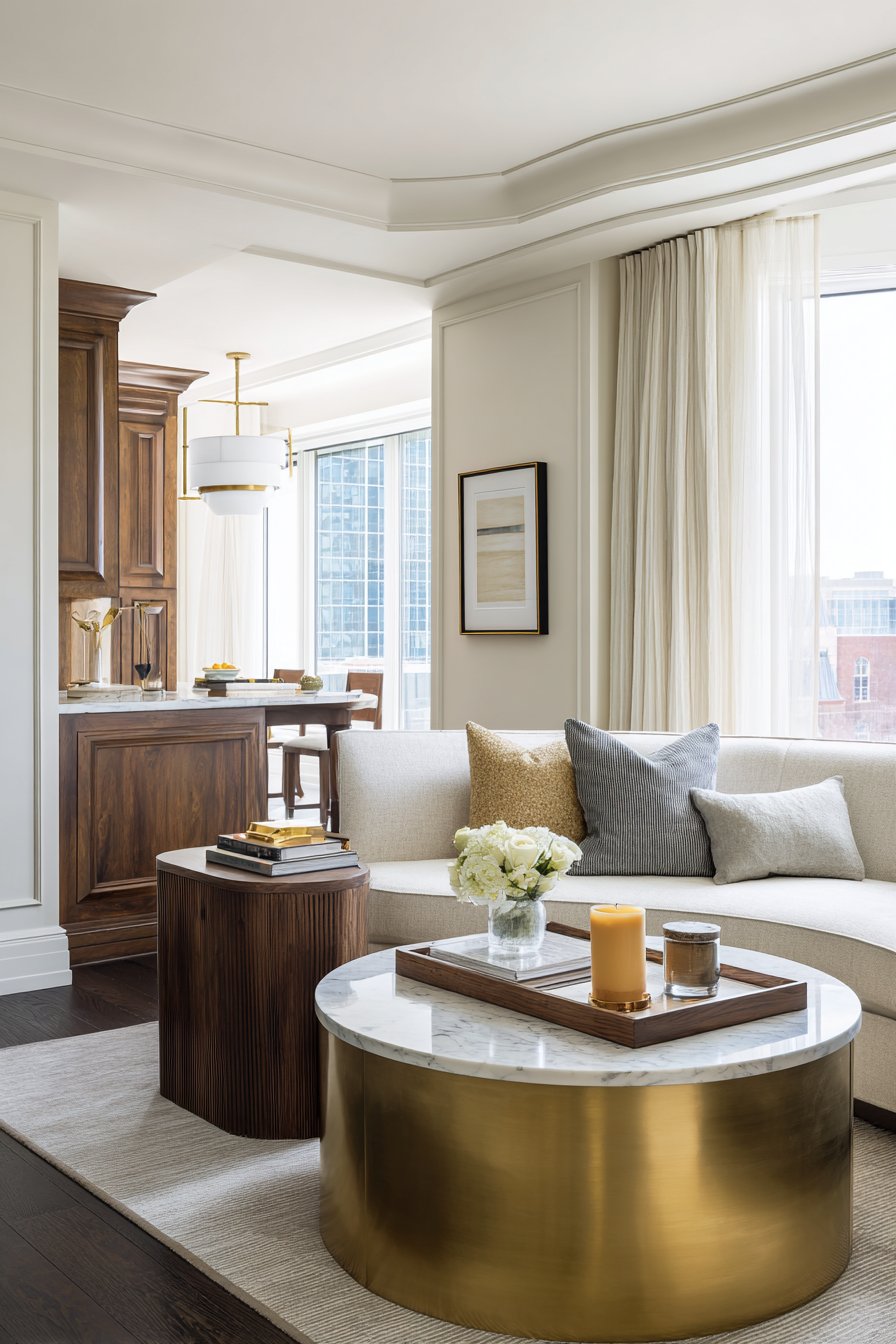
Material selection transforms the character of rounded tables dramatically. A marble-topped circular table exudes luxury and permanence, while wood brings warmth and organic texture to the room. Glass options create lightness and transparency, particularly valuable in smaller spaces where visual weight matters. Metal frames in brass or chrome add contemporary sophistication and geometric interest.
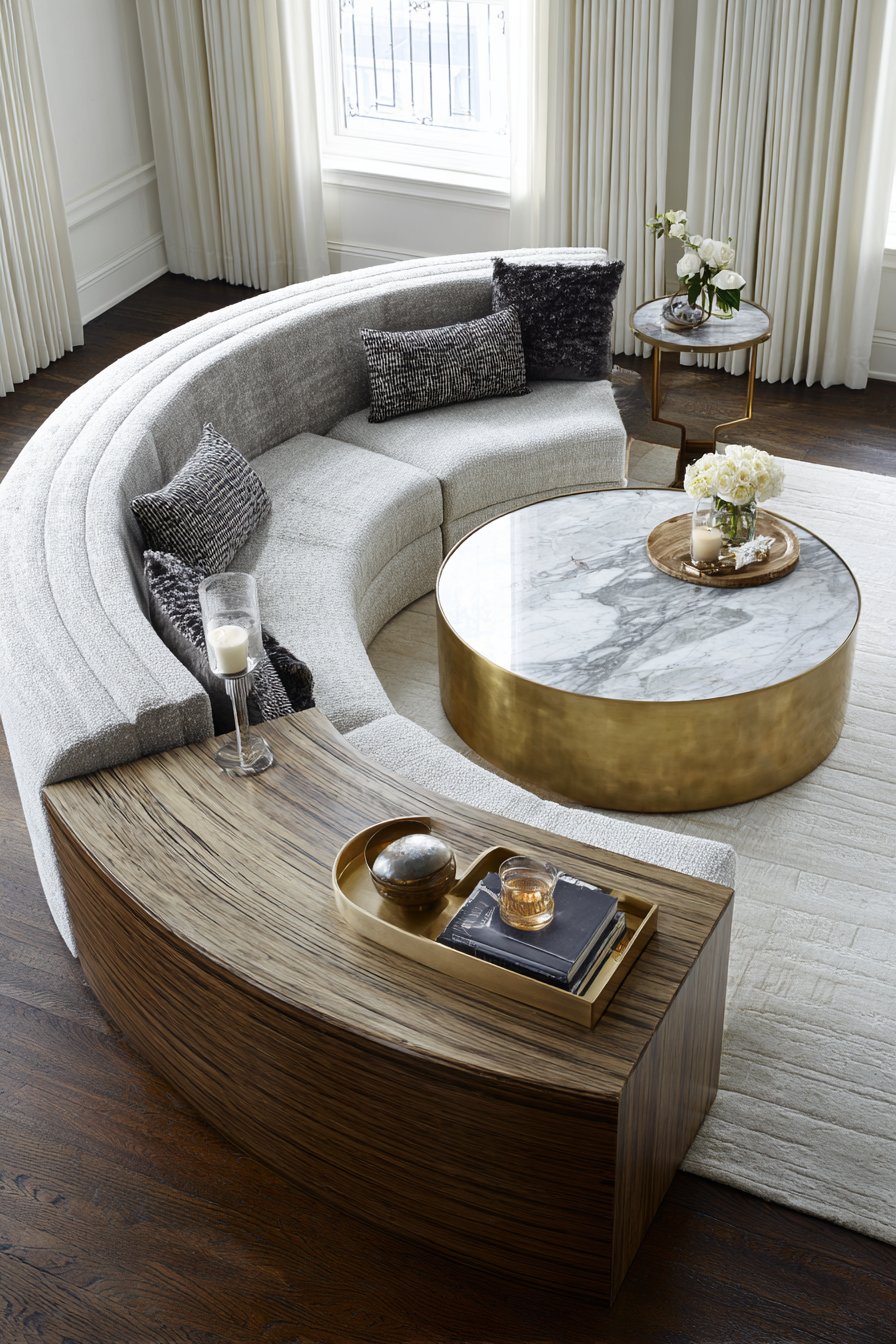
Size considerations become especially important with rounded tables in curved furniture arrangements. The table should be proportional to your seating configuration, typically two-thirds the sofa’s length for optimal balance. Height matters equally—coffee tables should sit approximately level with or slightly lower than the seat cushions for comfortable reach and clean sight lines across the space.
- Select tables with smooth, finished edges that feel pleasant to the touch
- Layer multiple rounded tables at different heights for added functionality
- Choose nesting tables when you need flexibility for entertaining or daily use
- Consider oval tables as alternatives when pure circles feel too formal or space-limited
- Add decorative trays with curved edges to organize smaller items stylishly
- Ensure legroom beneath the table allows comfortable seating for all guests
4. Sculptural Curved Chairs and Accent Seating
Barrel chairs and other curved accent seating introduce architectural interest while providing comfortable perches for reading or conversation. These pieces function as functional sculpture , bridging the gap between art and utility. Their enveloping forms create personal sanctuaries within larger living spaces, offering both physical comfort and visual intrigue. See our art deco living room ideas for more direction in this style.
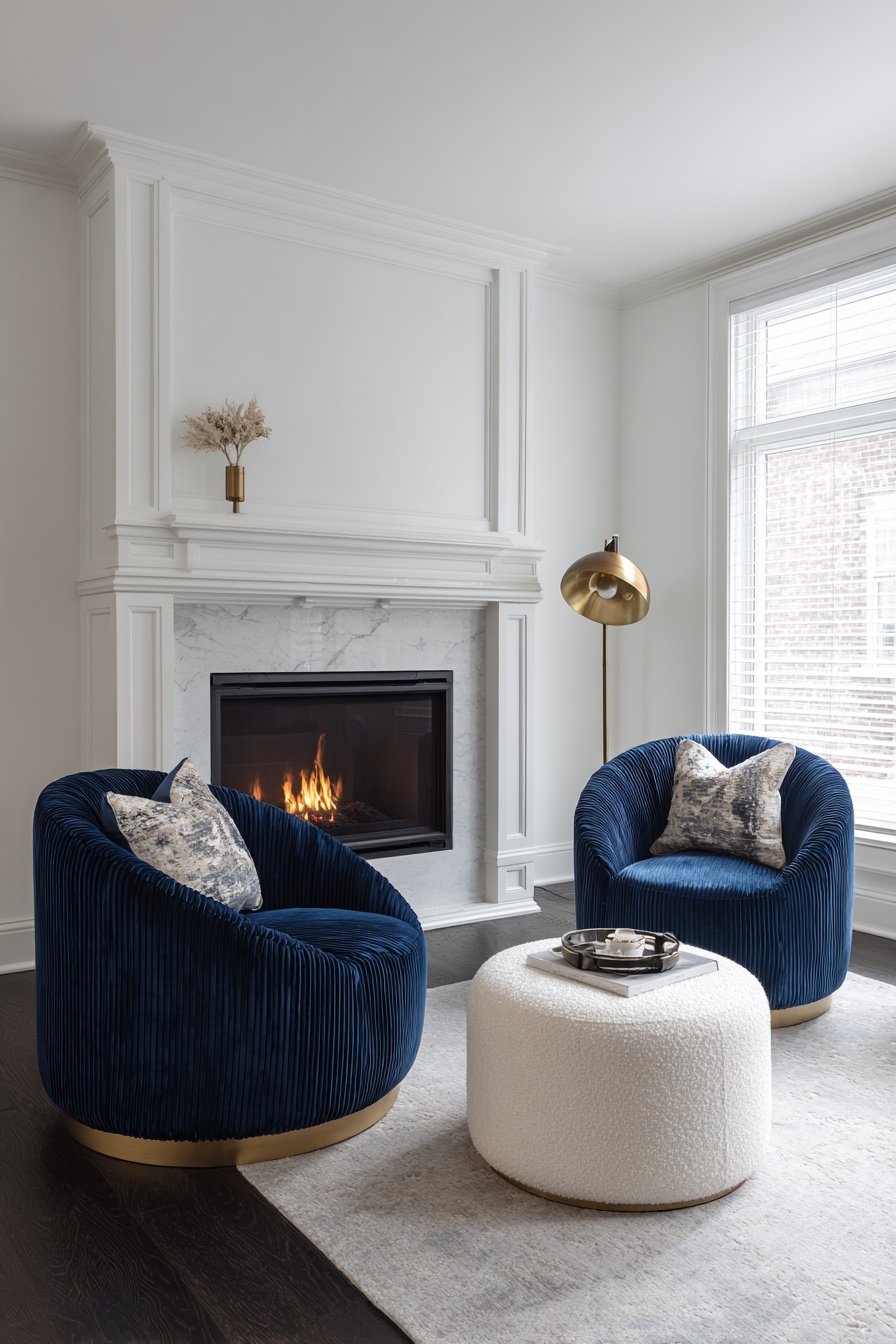
The versatility of curved accent chairs allows them to serve multiple purposes throughout your home. A pair of swivel barrel chairs flanking a fireplace creates a symmetrical focal point while maintaining flexibility for different activities. Single sculptural pieces can anchor empty corners, transforming dead space into inviting nooks. Their compact footprints make them ideal for smaller living rooms where every piece must earn its place.
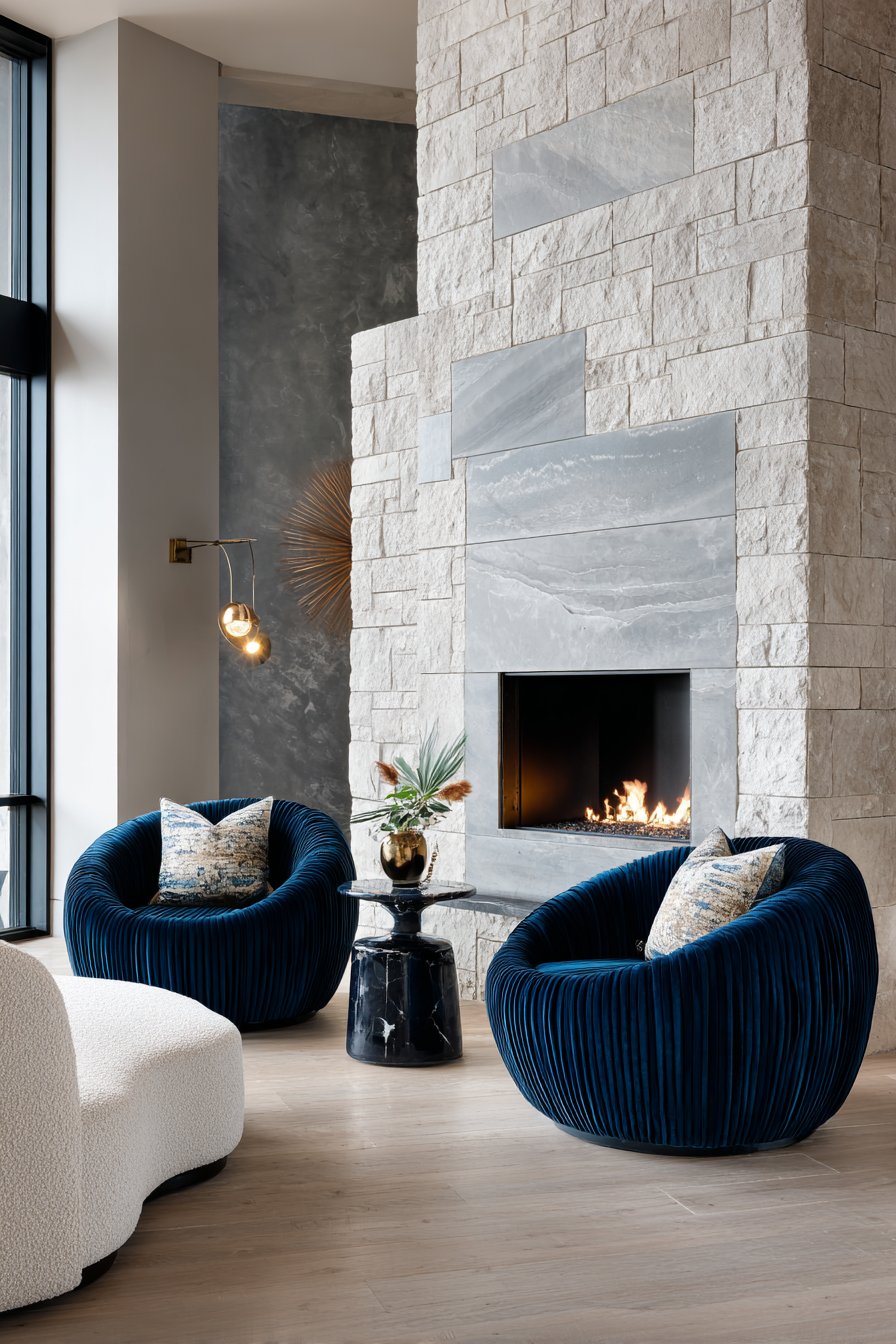
Upholstery choices significantly impact the character of curved chairs. Channeled velvet emphasizes the curves through linear quilting patterns that guide the eye around the form. Smooth leather creates sleek, modern statements, while textured fabrics like bouclé add tactile warmth. Consider contrasting your curved chair upholstery with your sofa for added visual dynamism without overwhelming the space.
- Mix curved and straight-lined chairs for balanced, interesting seating arrangements
- Choose swivel bases for maximum functionality and conversation flexibility
- Select chairs with lower backs to maintain open sight lines across rooms
- Incorporate curved chaises for luxurious lounging and dramatic visual impact
- Consider scale carefully—oversized chairs can overwhelm while petite pieces may disappear
- Add throw pillows that echo the curved lines for cohesive styling
5. Organic Shelving and Storage Solutions
Curved shelving units bring the flowing aesthetic to vertical surfaces, transforming functional storage into artistic displays. Unlike traditional rectangular bookcases, these pieces add movement and grace to walls while showcasing your collections. Arched shelving creates frame-like vignettes for your favorite objects, drawing attention to each carefully curated item.
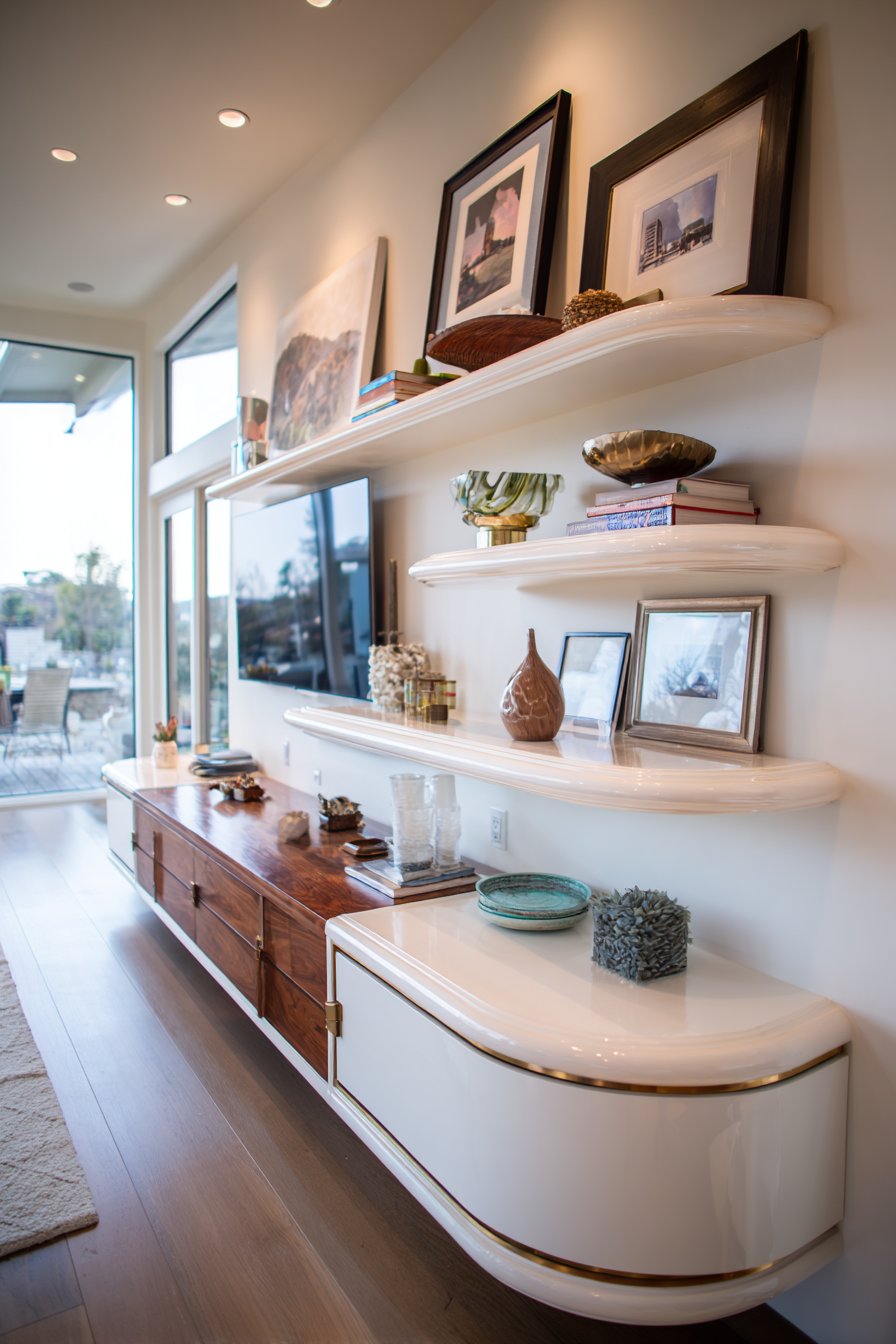
The beauty of curved storage lies in its ability to soften architectural elements while providing necessary organization. Kidney-shaped consoles and rounded credenzas offer substantial storage capacity without the visual bulk of rectangular alternatives. These pieces feel lighter and less imposing, making them excellent choices for smaller living rooms or spaces where you want to maintain an airy atmosphere.
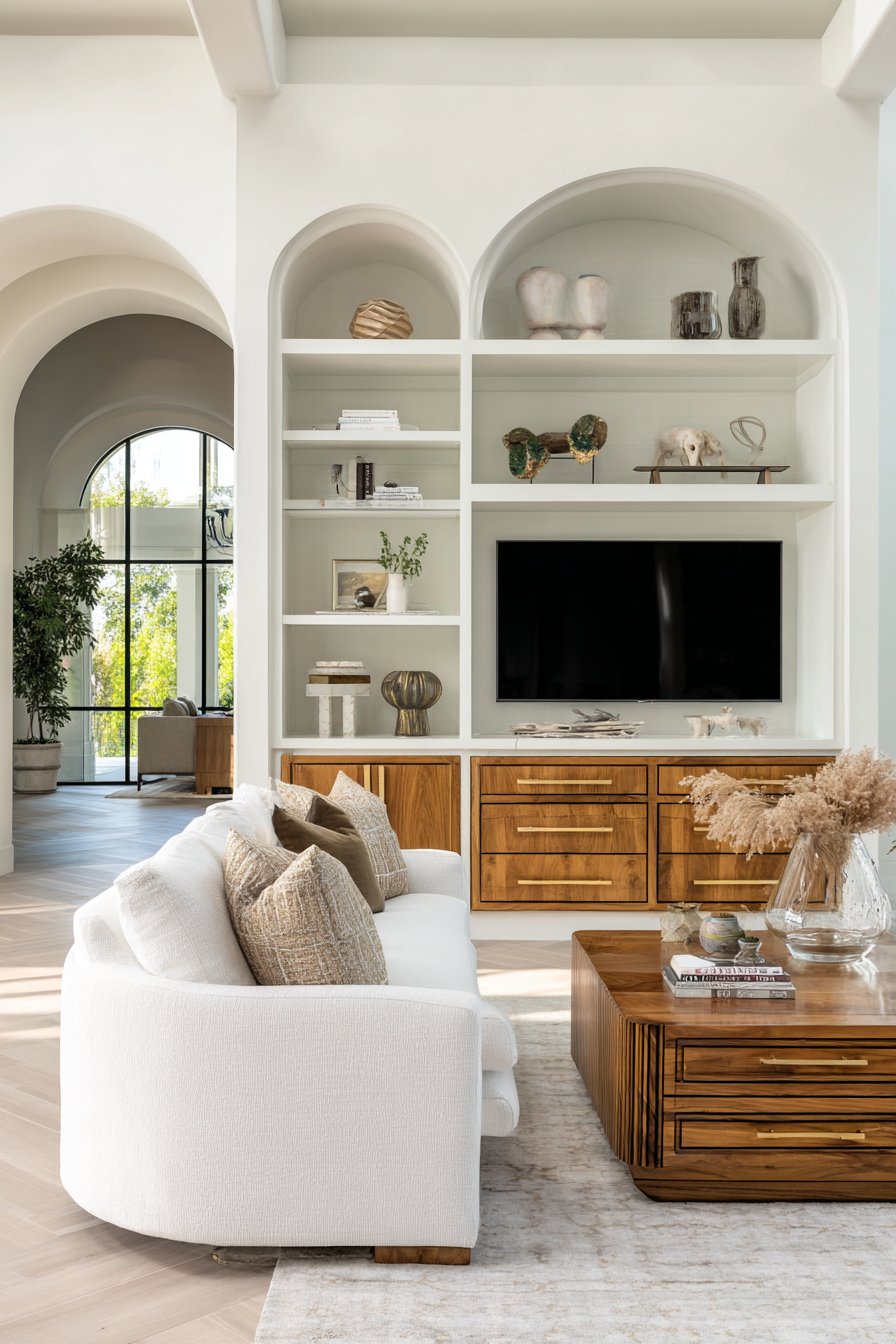
Integration with existing architecture enhances the impact of curved storage pieces. Position arched shelving to echo doorways, windows, or other architectural curves in your space. This creates visual rhythm and demonstrates thoughtful design consideration. Curved cabinets work beautifully beneath wall-mounted televisions, their soft lines providing welcome contrast to the screen’s rigid rectangle.
- Float curved shelves at varying heights to create dynamic wall compositions
- Choose open shelving to maintain visual lightness while displaying treasured items
- Consider wave-pattern shelving for bold, contemporary statements
- Pair curved cabinets with rounded hardware for cohesive detailing
- Use curved corner units to maximize awkward spaces efficiently
- Style shelves with objects of varying heights and shapes for visual interest
6. Completing the Look with Curved Accessories
Rounded mirrors serve as powerful finishing touches that amplify light while reinforcing your curved furniture aesthetic. Large circular mirrors create stunning focal points above sofas or consoles, while clusters of smaller rounds add playful energy to gallery walls. The reflective quality multiplies the softening effect of curves throughout the space, creating depth and luminosity.
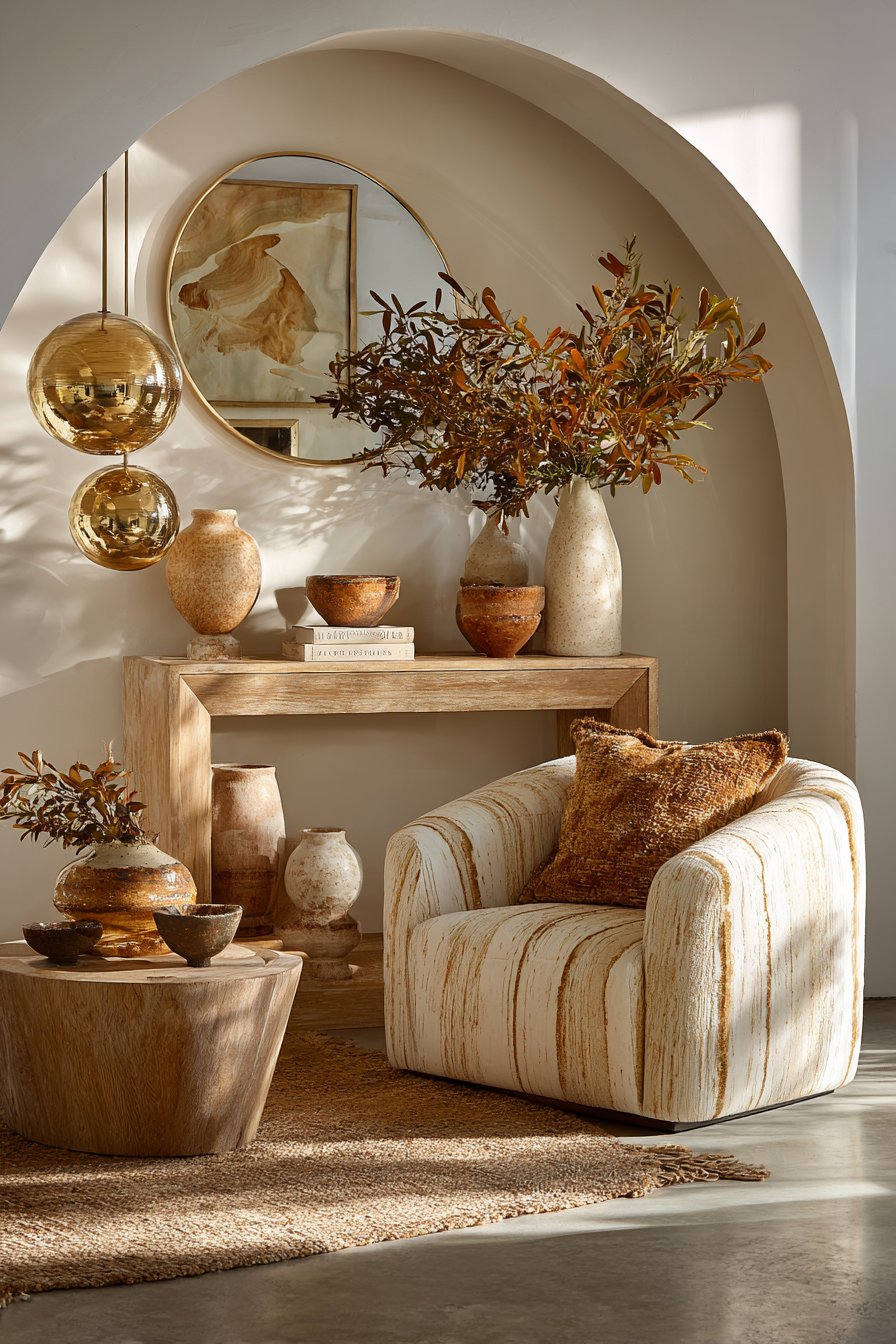
Lighting fixtures with curved elements tie together your design scheme while providing essential illumination. Arc floor lamps sweep gracefully over seating areas, their curved stems becoming sculptural elements in their own right. Spherical pendant lights or dome-shaped table lamps echo the rounded forms in your furniture, creating cohesive visual connections across multiple planes.
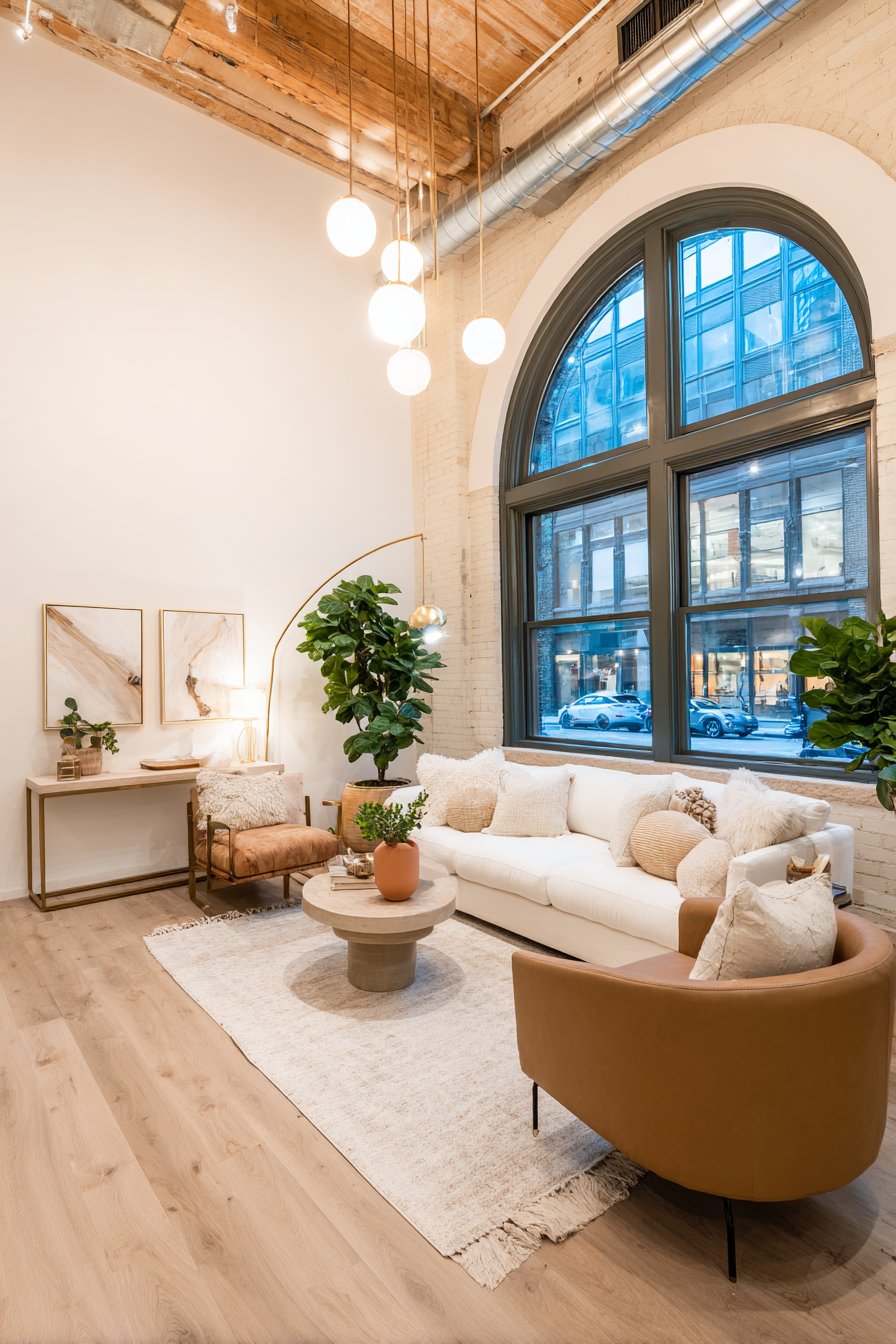
Decorative accessories complete the curved narrative without overwhelming the space. Organic-shaped vases, rounded bowls, and sculptural objects with flowing lines reinforce your design intent. Even textiles can participate—circular pillows, curved-edge rugs, and throws with wave patterns add layers of textural softness that enhance the overall comfort and visual appeal of your living room.
- Limit yourself to one large mirror per wall to avoid visual confusion
- Choose warm-toned metals for lighting fixtures to complement curved furniture
- Layer curved accessories in odd numbers for pleasing visual compositions
- Select artwork with organic shapes or soft abstract forms over geometric prints
- Use curved-edge area rugs to define seating zones and soften hard flooring
- Introduce live plants with rounded leaves to bring natural curves into the space
Embracing curved furniture represents more than following a trend—it’s about creating living spaces that prioritize comfort, connection, and visual harmony. The flowing lines and organic forms transform rooms into sanctuaries where stress dissolves and genuine relaxation becomes possible. From statement sofas to carefully selected accessories, each curved element contributes to an environment that feels both contemporary and timeless.
The beauty of this design movement lies in its accessibility and flexibility. You don’t need to replace every piece of furniture to participate in this aesthetic shift. Start with one curved statement piece and build gradually, allowing your space to evolve naturally over time. Trust your instincts, experiment with different combinations, and most importantly, create a living room that truly feels like home—one beautiful curve at a time.
