


A backyard doesn’t have to whisper in muted neutrals to feel sophisticated — sometimes the most memorable outdoor spaces are the ones that embrace color boldly and unapologetically. Thoughtful use of vibrant hues, from sun-baked terracotta to electric turquoise, can turn an ordinary patch of lawn or concrete slab into a joyful, energizing retreat that reflects genuine personality. Where minimalist landscaping leans on restraint, a colorful backyard leans into abundance — layered textiles, hand-painted surfaces, and flowering plants chosen as much for their saturated pigment as their form.
This kind of design isn’t just about aesthetics; it’s about mood. A backyard awash in coral, turquoise, and mustard yellow invites a different kind of gathering than a monochrome patio ever could — it feels playful, welcoming, and distinctly personal. Whether your taste runs bohemian, Mediterranean, or whimsically eclectic, color gives a small outdoor space enormous visual impact without requiring a large footprint or an expensive renovation.
In this guide, we explore fifteen distinct approaches to colorful backyard design, from mosaic-tiled dining tables to painted deck boards in ombre gradients. Each concept below includes a vivid description of the space along with practical tips for recreating the look at home. Read on to find the palette and layout that speaks to your own outdoor vision.
1. Mosaic Dining Patio with Mismatched Vintage Chairs

There’s something irresistible about a mosaic-tiled outdoor dining table surrounded by chairs that clearly don’t match on purpose. This design embraces a collected-over-time feel, pairing a richly patterned tabletop with vintage chairs painted in vibrant teal, coral, and mustard yellow — each one slightly different in shape, yet united by a cohesive color story. The effect is playful rather than chaotic, like a well-curated flea-market find rather than a mismatched accident.
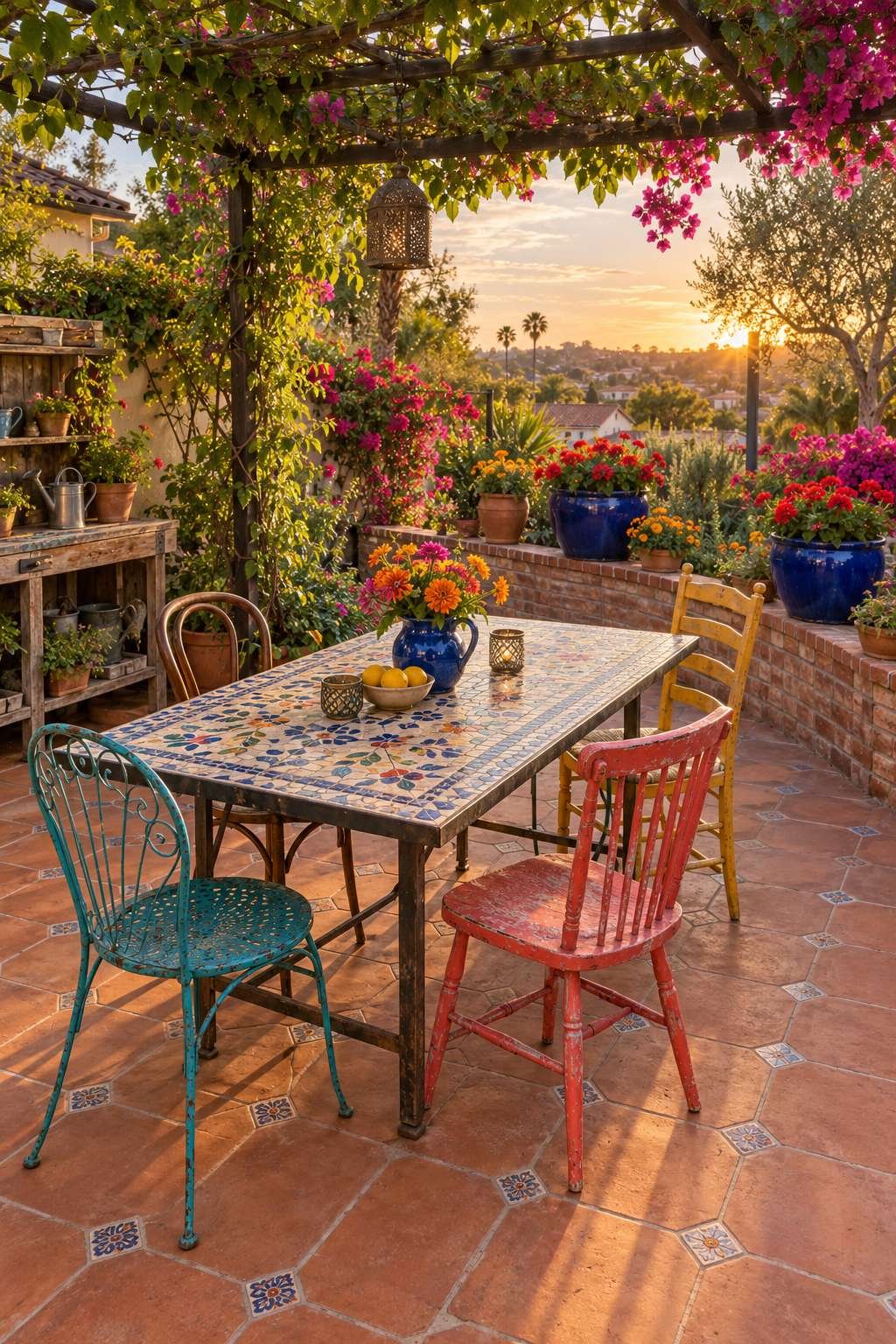
Framing the seating area, terracotta planters spill over with bright bougainvillea and marigolds, their saturated pinks and oranges echoing the chair palette and softening the hard edges of the brick wall behind them. Reclaimed wood accents throughout the patio add a weathered, lived-in texture that keeps the space from feeling overly polished. As golden hour light rakes across the pavers, it deepens every hue and throws long, warm shadows that make the whole scene feel cinematic.
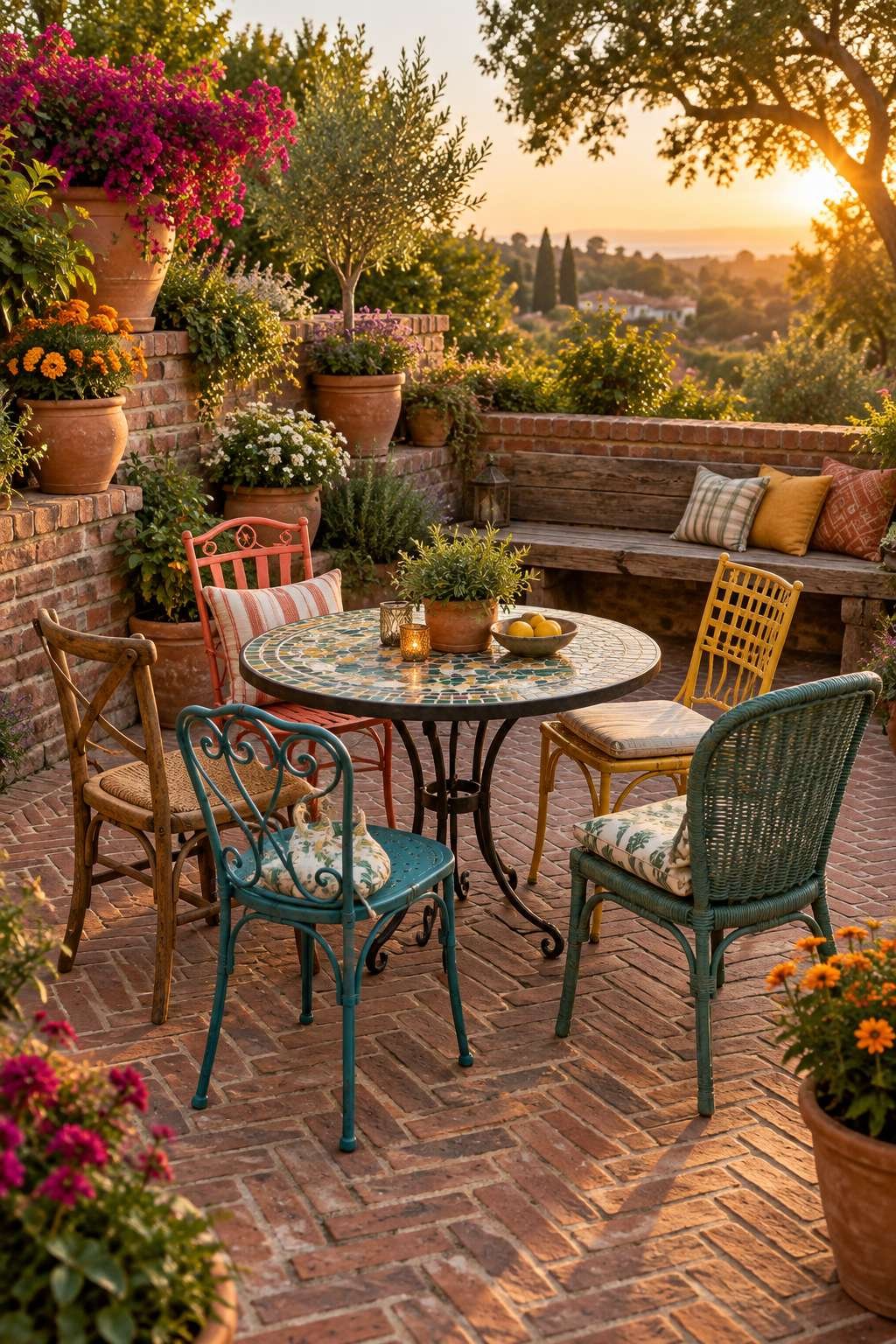
This layout is especially rewarding for anyone who enjoys thrifting and slow curation — the mismatched chairs can be collected over months or years, each addition bringing new character to the table. It’s a design that actively resists sterility, favoring warmth, texture, and personality over uniformity.
Key Design Tips:
- Paint mismatched chairs in a shared color family for cohesion despite different shapes
- Choose a mosaic tile pattern that echoes the planter and bloom colors nearby
- Layer terracotta pots at varying heights for a fuller, garden-like feel
- Use reclaimed wood accents to balance the boldness of painted furniture
- Position the table to catch golden-hour light for warm evening dining
2. Hand-Painted Geometric Patio Floor

For homeowners with a plain concrete patio and an appetite for transformation, a hand-painted geometric pattern in turquoise, pink, and sunflower yellow can completely reinvent the space without a single structural change. The painted floor becomes the star of the show, its crisp geometric lines adding rhythm and energy underfoot, while everything else in the space is chosen to complement rather than compete with it.
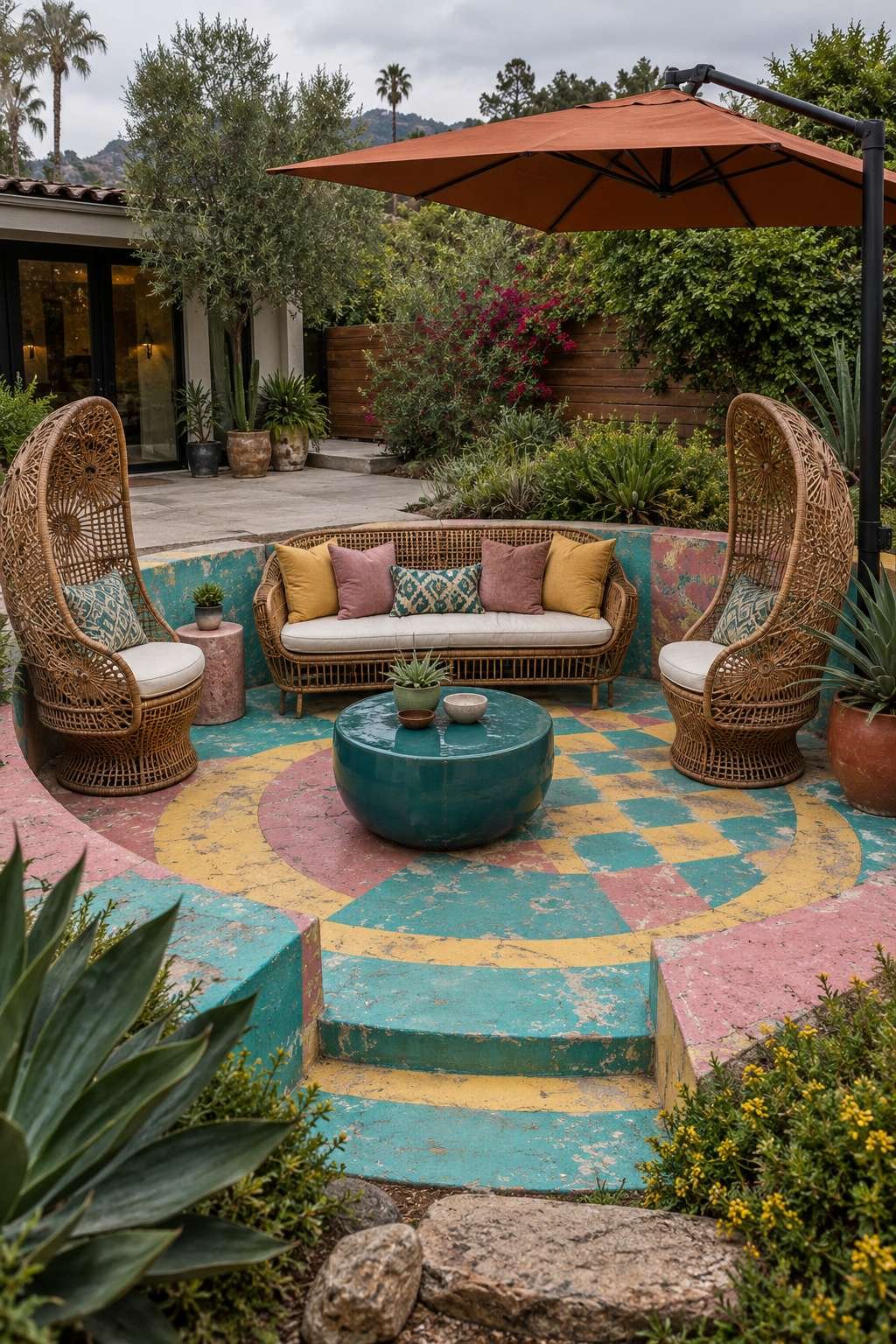
Atop this vibrant canvas, rattan lounge chairs with striped cushions offer textural contrast — their natural woven fibers grounding the boldness of the painted surface. A canvas umbrella in rust-orange provides shade while adding a fourth complementary tone to the palette, proving that a well-chosen accent color can tie a whole scheme together. Natural daylight streams evenly across the space, highlighting both the subtle wear of the outdoor paint and the intricate weave of the rattan furniture.

This concept is ideal for renters or budget-conscious homeowners, since a painted patio floor is one of the most dramatic transformations achievable without hardscaping or construction. It’s also endlessly customizable — the geometric pattern can be adjusted in scale, color, or complexity to suit personal taste.
Key Design Tips:
- Use exterior-grade porch and floor paint rated for foot traffic and weather
- Tape off geometric patterns carefully for crisp, professional-looking lines
- Choose furniture in natural materials like rattan to balance a bold painted floor
- Select an umbrella color that complements rather than duplicates the floor palette
- Reseal painted concrete annually to protect against fading and wear
3. Vertical Living Wall Courtyard
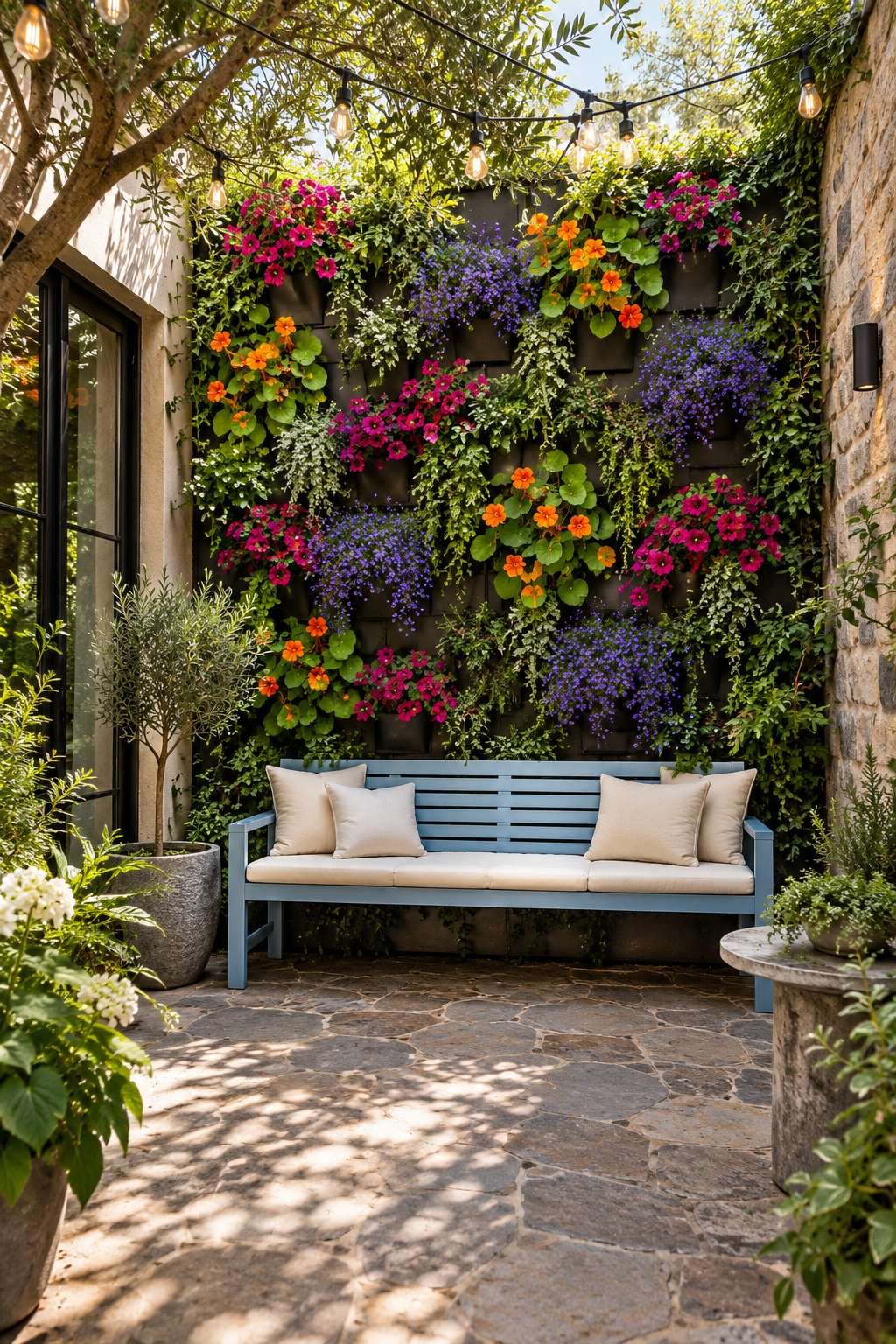
Small urban courtyards often struggle with limited planting space, but a vertical living wall solves that problem while delivering maximum color impact. Planted densely with vibrant fuchsia petunias, orange nasturtiums, and trailing purple lobelia, the wall becomes a living tapestry of color that transforms a blank vertical surface into the courtyard’s focal point. The layered blooms create depth and movement, especially as the trailing lobelia cascades downward over time.
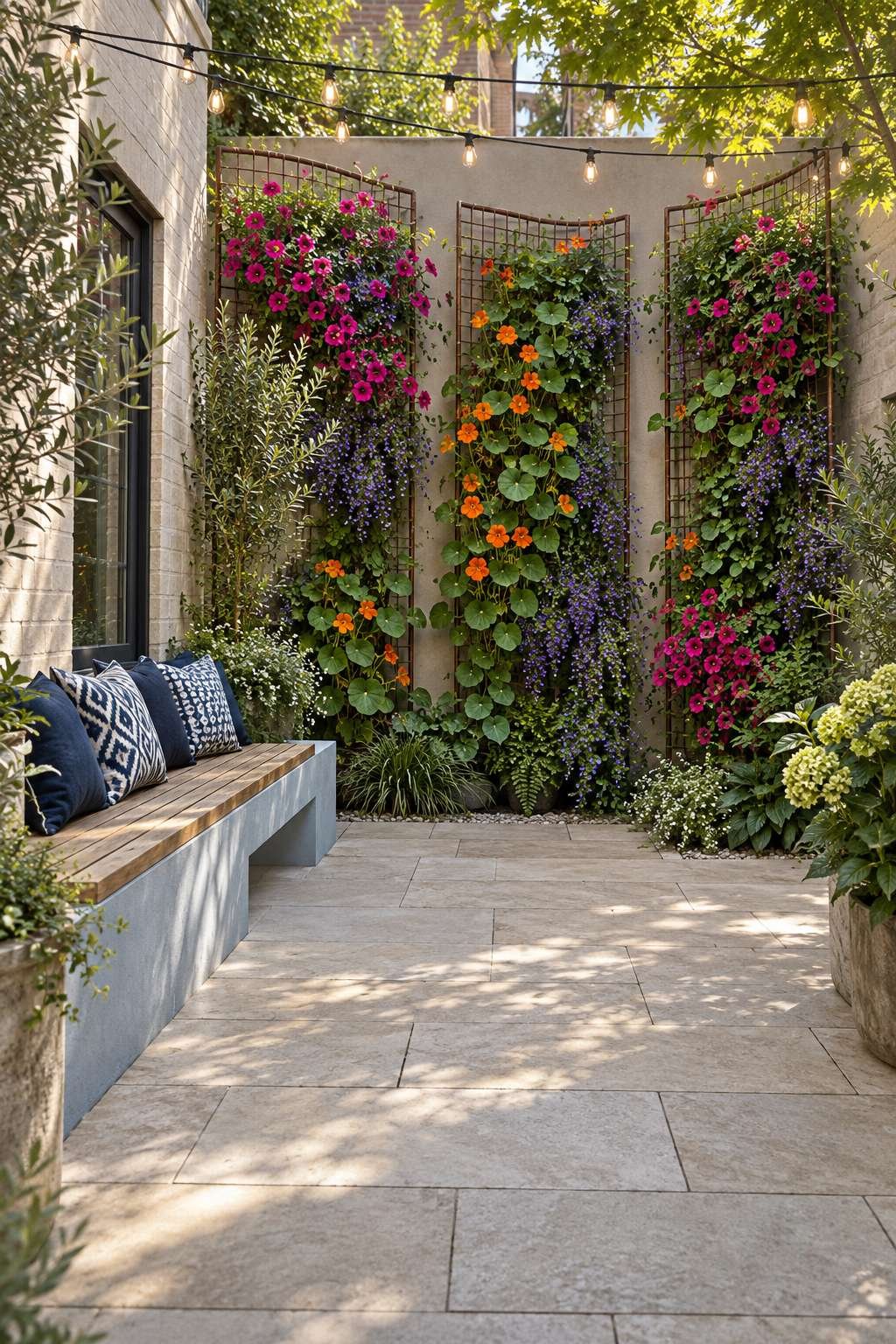
Beneath this floral display, a simple powder-blue bench with weatherproof cushions offers a place to sit and take in the view, its soft pastel hue providing a gentle counterpoint to the saturated wall above. Overhead, string lights stretch across the courtyard, promising a magical transformation once evening falls. Dappled afternoon light filtering through nearby trees casts soft, moving shadows across the textured stone flooring, adding another layer of visual interest to an already rich composition.

This design is a smart solution for compact spaces where ground-level planting real estate is scarce. By building color vertically rather than horizontally, even the smallest courtyard can feel lush, layered, and genuinely immersive.
Key Design Tips:
- Choose a vertical planting system with reliable drainage to prevent root rot
- Mix trailing and upright blooms for depth and movement on the living wall
- Select a bench color that complements without competing with the floral display
- Install string lights on adjustable hooks for flexible evening ambiance
- Group plants with similar watering needs to simplify vertical wall maintenance
4. Pergola Lounge with Woven Hammock Chairs
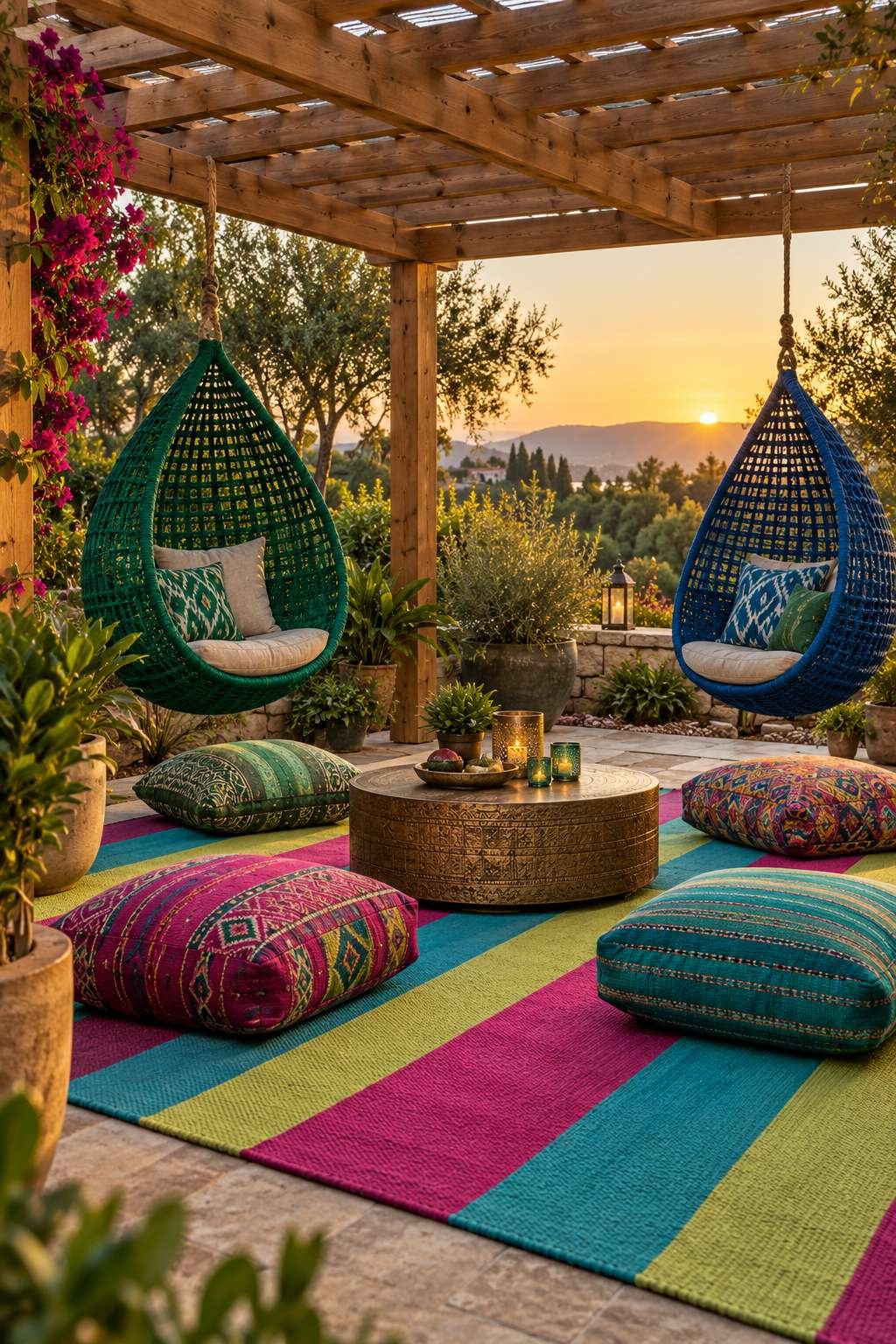
Few backyard features feel as inviting as a shaded pergola strung with woven hammock chairs in coordinating jewel tones. This design layers color from the ground up, starting with a bold striped outdoor rug in magenta, turquoise, and lime green that anchors the whole seating area beneath the wooden structure above. The rug’s energetic pattern sets a playful, maximalist tone from the very first glance.
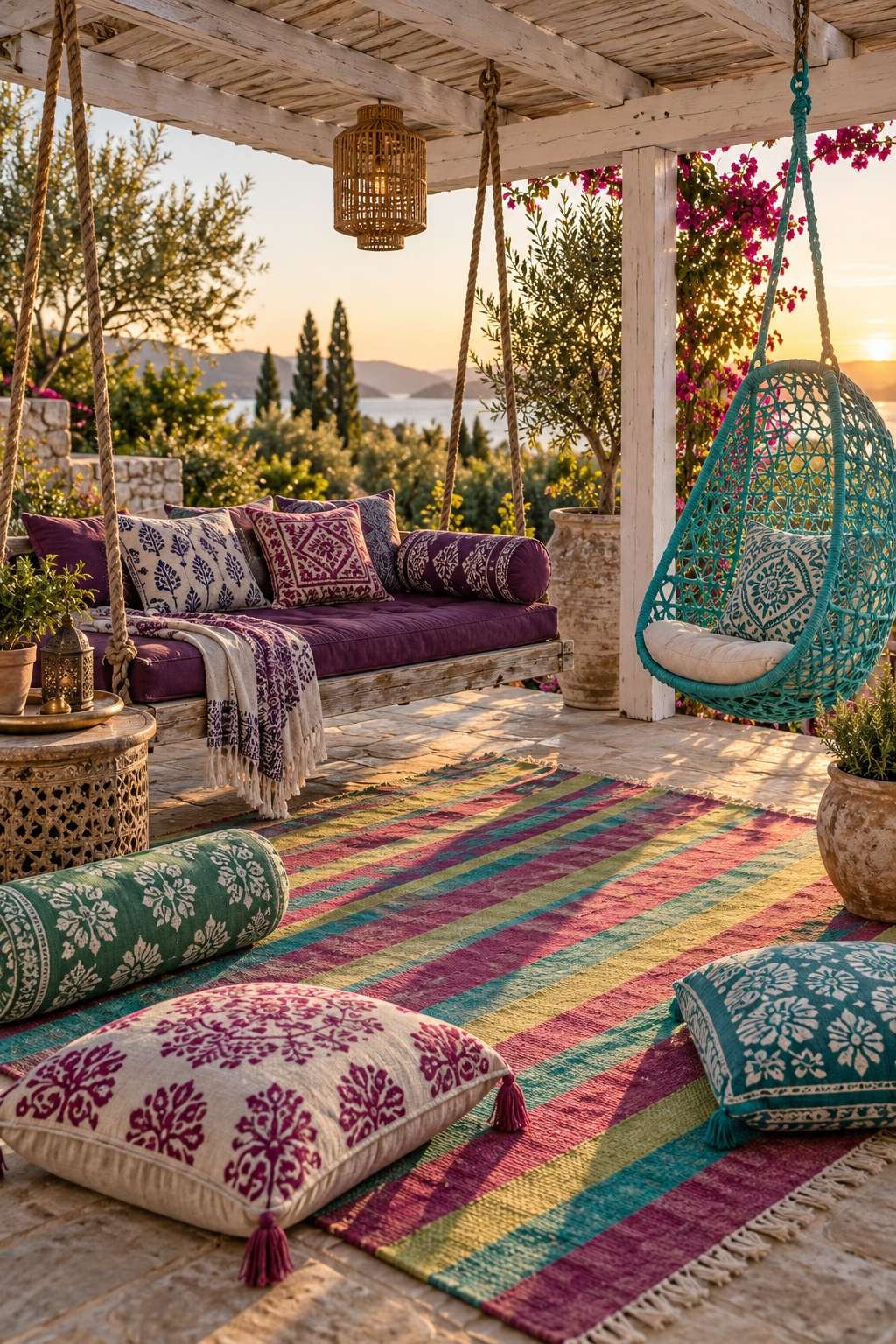
Suspended from the pergola beams, the hammock chairs sway gently, their rich jewel-toned fabrics — deep emerald, sapphire, and amethyst — adding a sense of relaxed luxury to the space. Scattered floor cushions in patterned fabrics complete the seating arrangement, offering flexible, low-to-the-ground lounging options for additional guests. Golden hour lighting highlights the natural wood grain of the pergola overhead while catching every thread and weave in the textiles below.
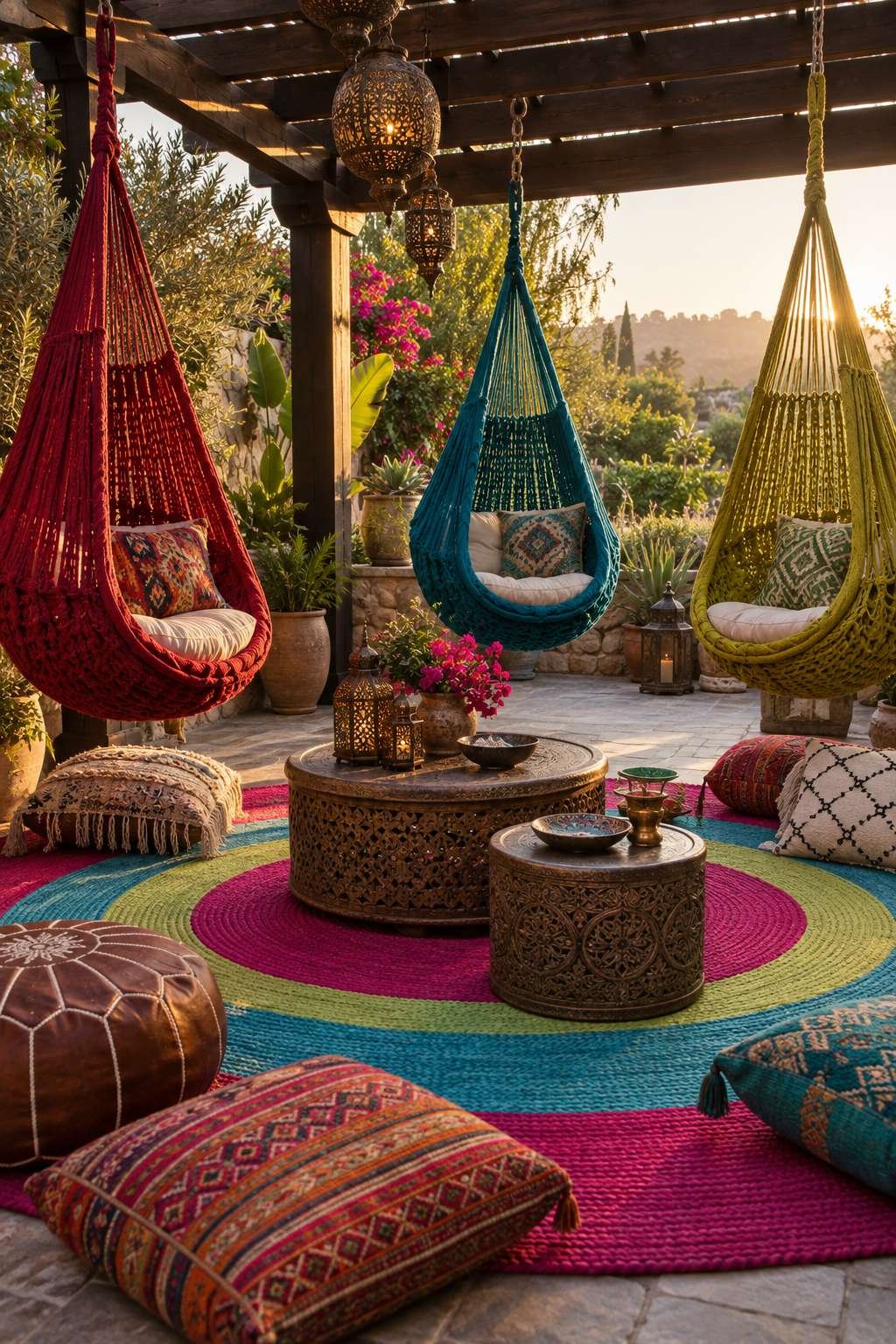
This layout suits homeowners who want their backyard to feel like an extension of a bohemian living room — relaxed, textural, and unmistakably colorful. It’s a design built for lingering, whether that means an afternoon nap in a hammock chair or a long evening of conversation among the floor cushions.
Key Design Tips:
- Choose weather-resistant fabric for hammock chairs exposed to sun and moisture
- Layer a bold striped rug as the visual foundation for the whole seating area
- Mix jewel-toned textiles with patterned floor cushions for maximalist texture
- Reinforce pergola beams properly before hanging hammock chair hardware
- Rotate cushion covers seasonally to refresh the palette without new furniture
5. Glazed Ceramic Planter Garden Path

A gravel garden path becomes an art installation with the addition of hand-glazed ceramic planters in cobalt blue, emerald green, and burnt orange. Arranged in a loose, rhythmic sequence along the path, these vessels do more than hold plants — their glossy, richly pigmented surfaces become the design statement in their own right, catching and reflecting light in a way that flat garden beds simply can’t.
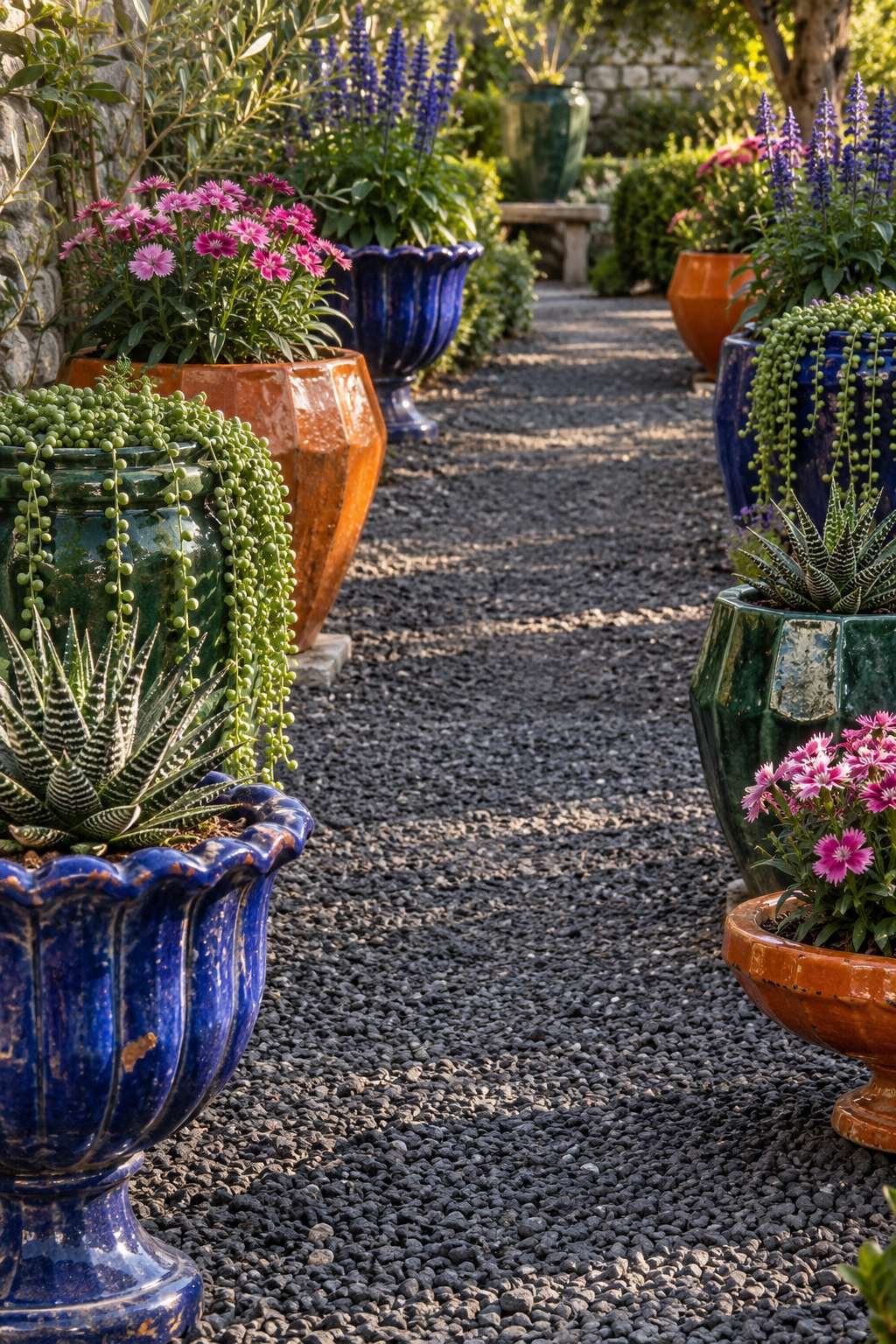
Each planter holds a curated mix of succulents and flowering annuals, chosen to create layered visual rhythm as visitors move along the path — low, spreading textures near the ground giving way to taller blooms at eye level. Natural side lighting during the late afternoon plays beautifully across the glossy glaze, emphasizing the subtle imperfections and handmade quality of each pot, a reminder that these are crafted objects rather than mass-produced containers.
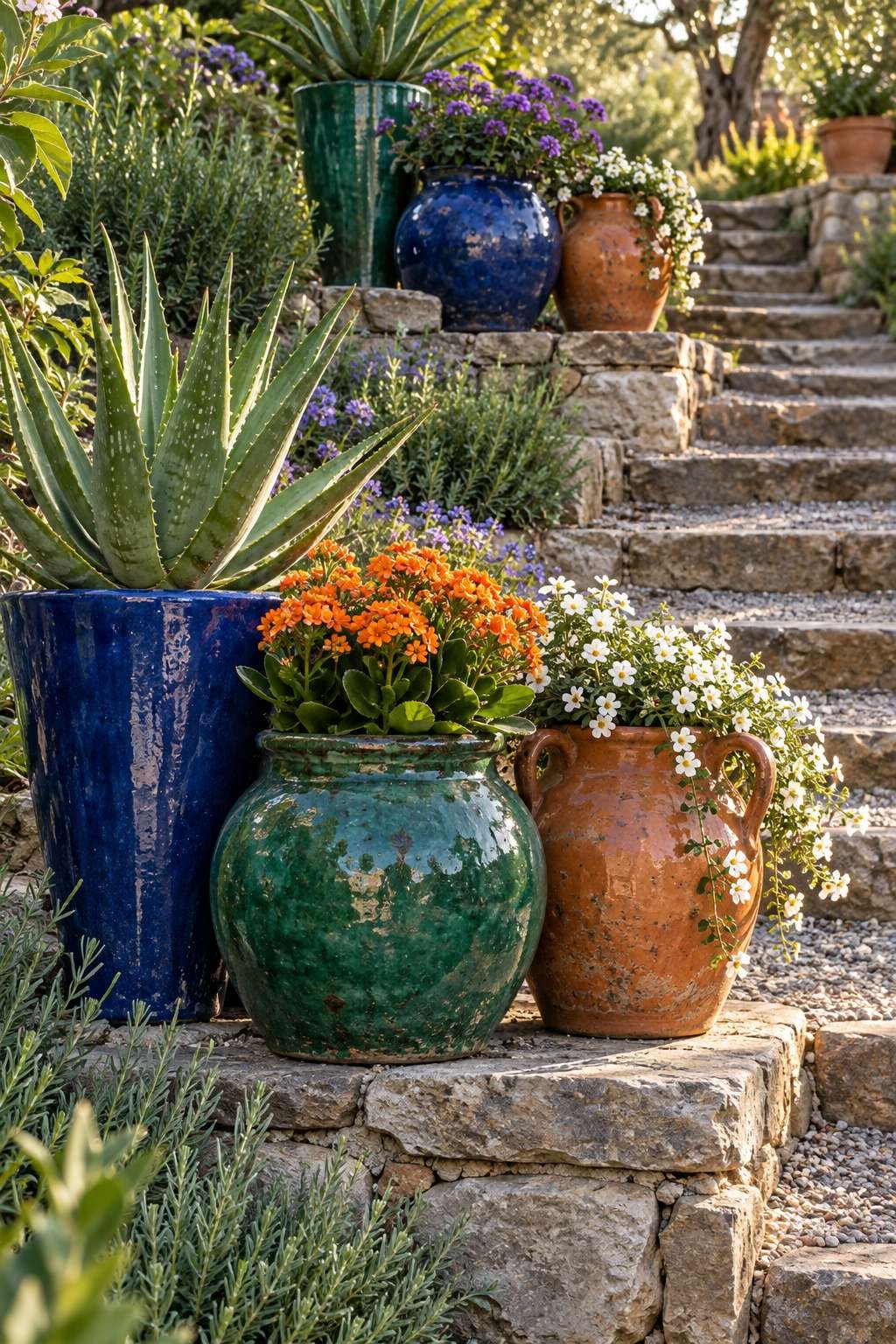
This concept works wonderfully for gardeners who appreciate craftsmanship and want their hardscaping elements to feel as intentional as their plantings. It’s also a highly flexible design — planters can be added, rearranged, or swapped seasonally without disturbing the underlying garden structure.
Key Design Tips:
- Vary planter sizes and heights along the path for rhythmic visual interest
- Choose glaze colors that contrast richly against gravel and greenery
- Group succulents with flowering annuals for varied texture within each pot
- Position planters to catch late-afternoon side lighting for maximum glaze shine
- Use frost-resistant ceramic in colder climates to prevent cracking
6. Sunset Gradient Fire Pit Lounge
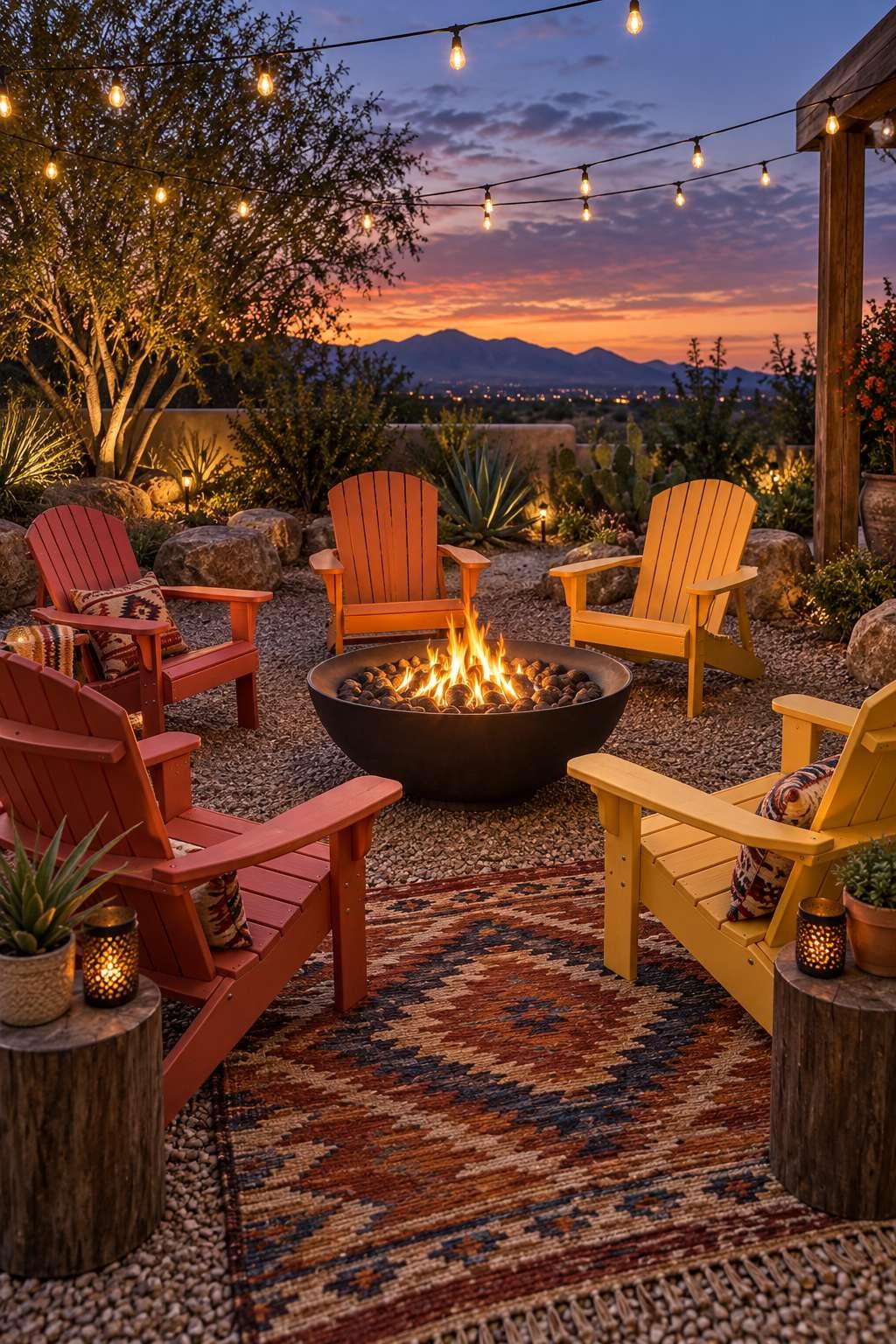
A backyard fire pit area becomes a showstopper when the surrounding Adirondack chairs are painted in a gradient of sunset colors — deep coral fading into golden yellow across the seating circle. This ombre effect mimics the natural progression of a sunset itself, making the space feel connected to the sky above even in broad daylight, and especially magical as evening approaches.
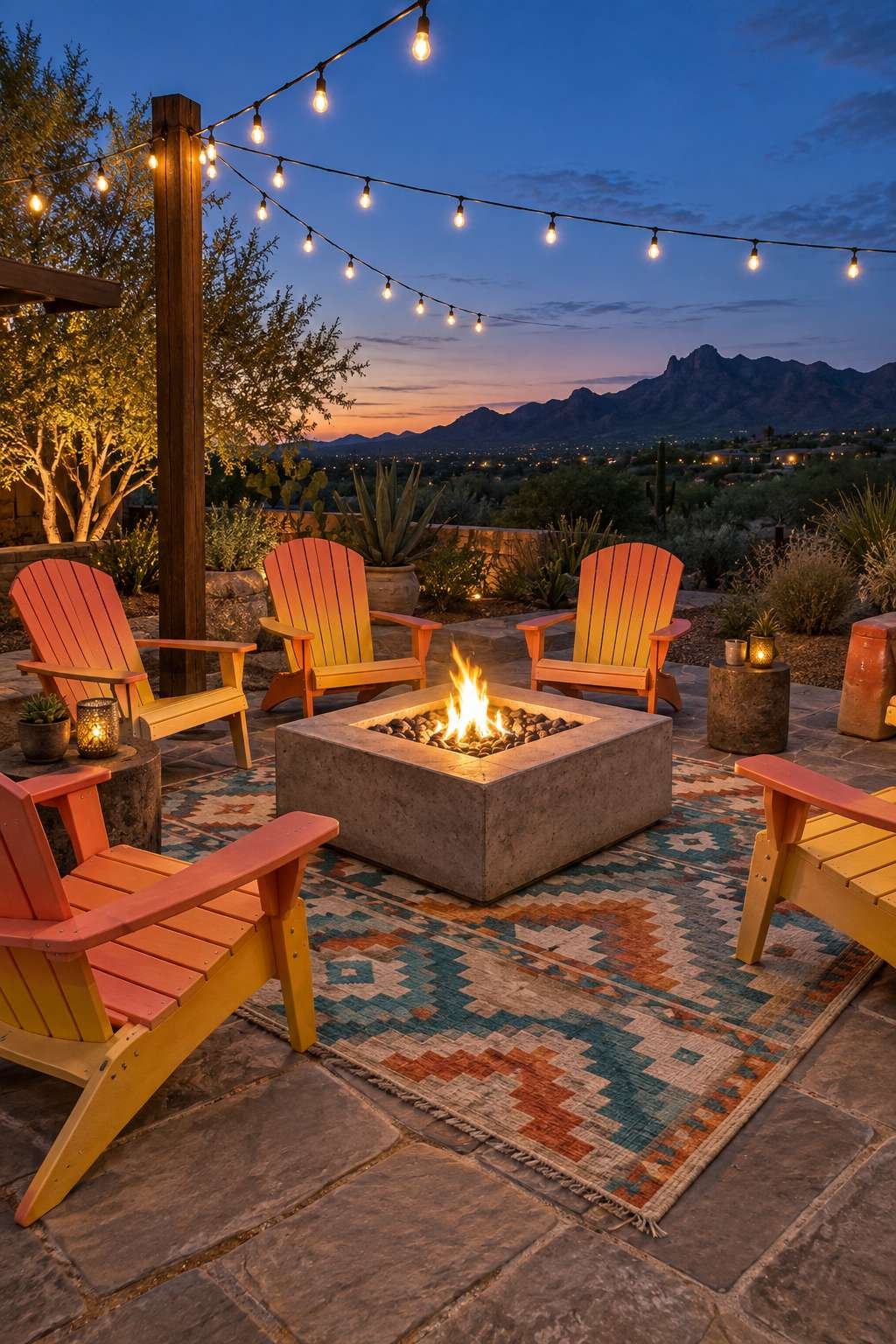
Anchoring the circle, a patterned outdoor rug in a Southwestern motif grounds the seating arrangement with geometric detail that complements rather than competes with the gradient chairs. Overhead, string lights crisscross the space, ready to cast a warm glow once the sun goes down. As twilight settles in, the fire pit’s glow reflects off the painted wood surfaces, intensifying the sunset palette and creating an almost theatrical warmth across the entire lounge area.
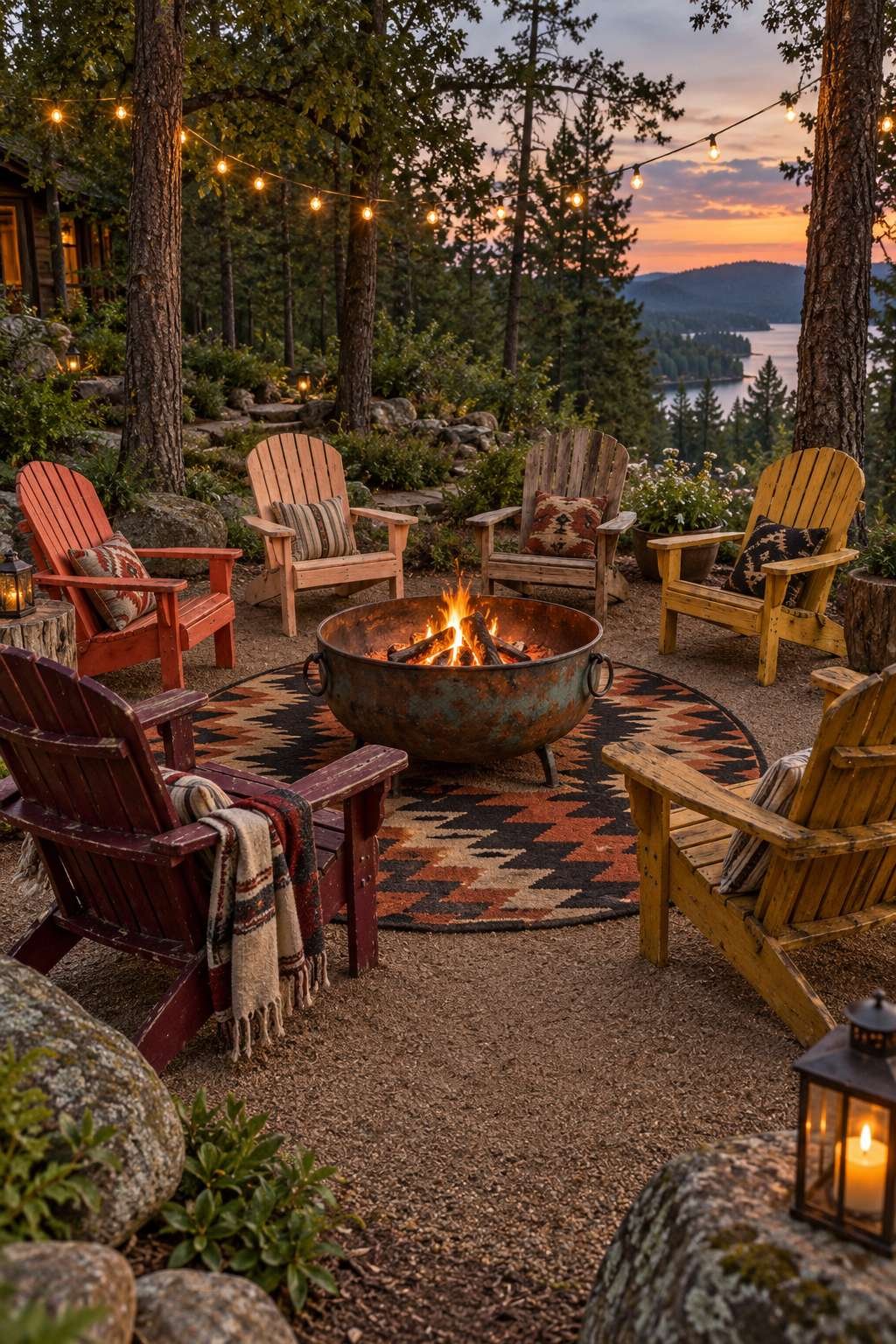
This design is particularly striking for evening entertaining, since the gradient effect and string lighting are built specifically to shine after dark. It’s a bold, memorable choice for homeowners who want their fire pit area to feel like a destination rather than an afterthought.
Key Design Tips:
- Use exterior wood paint in a true gradient sequence for a seamless sunset effect
- Choose a Southwestern or geometric rug to ground the colorful seating circle
- Position string lights to enhance the fire pit’s glow rather than overpower it
- Seal painted Adirondack chairs against weather to preserve gradient vibrancy
- Arrange chairs in a full circle to maximize the visual impact of the gradient
7. Painted Raised Garden Beds with Rainbow Chard
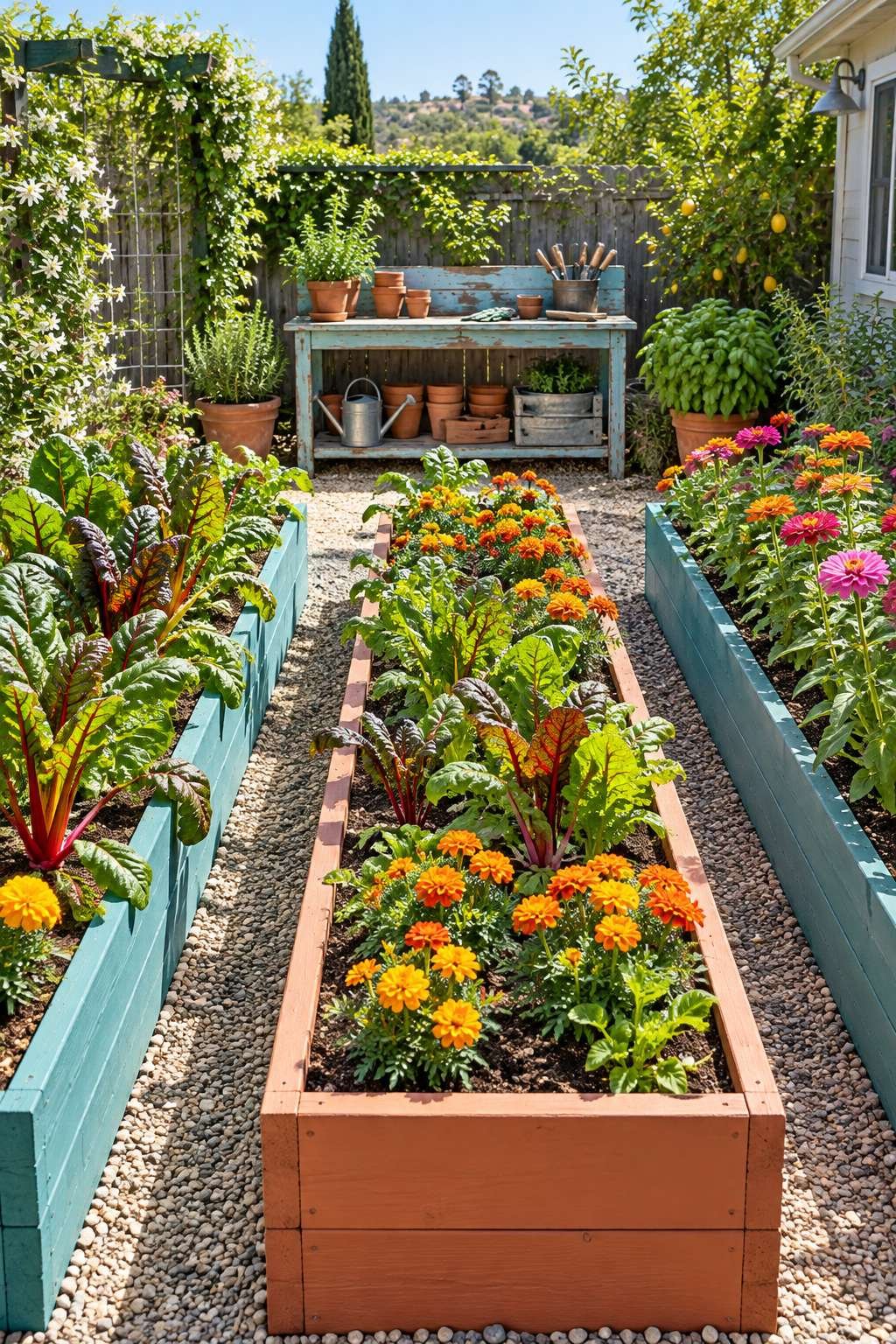
Vegetable gardening gets a colorful upgrade with raised garden beds framed in painted wooden borders, alternating between teal and terracotta panels that turn a functional growing space into a genuine design feature. Inside, a mix of rainbow chard, marigolds, and zinnias provides its own natural color show — chard stems in ruby red and golden yellow contrasting beautifully against the painted frames.
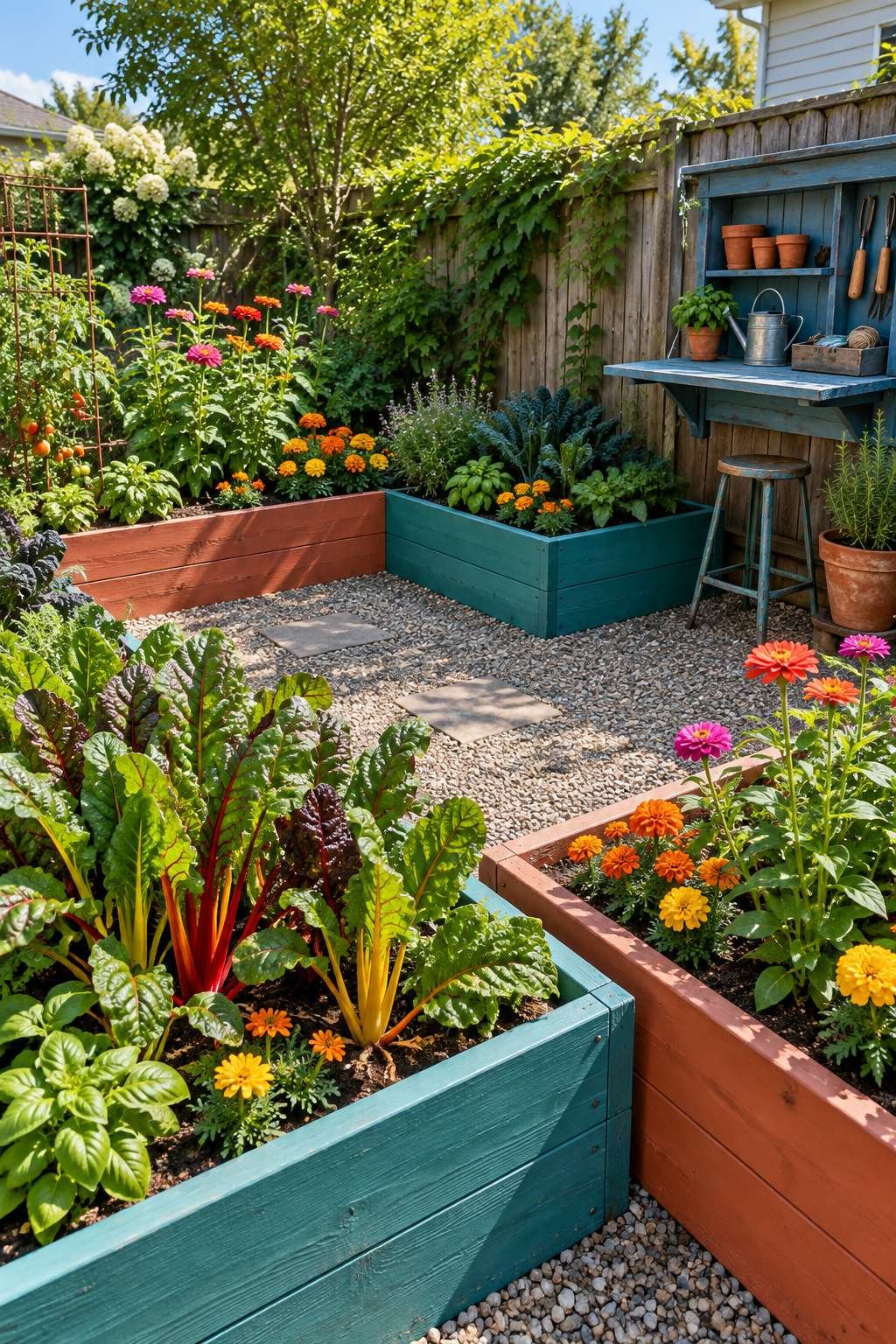
Nearby, a small potting bench with weathered blue paint holds gardening tools and clay pots, its distressed finish suggesting a space that’s genuinely used and loved rather than merely decorative. Bright midday sunlight illuminates the scene fully, highlighting the natural texture variation between soil, foliage, and painted wood — a study in contrasts between the organic and the crafted.
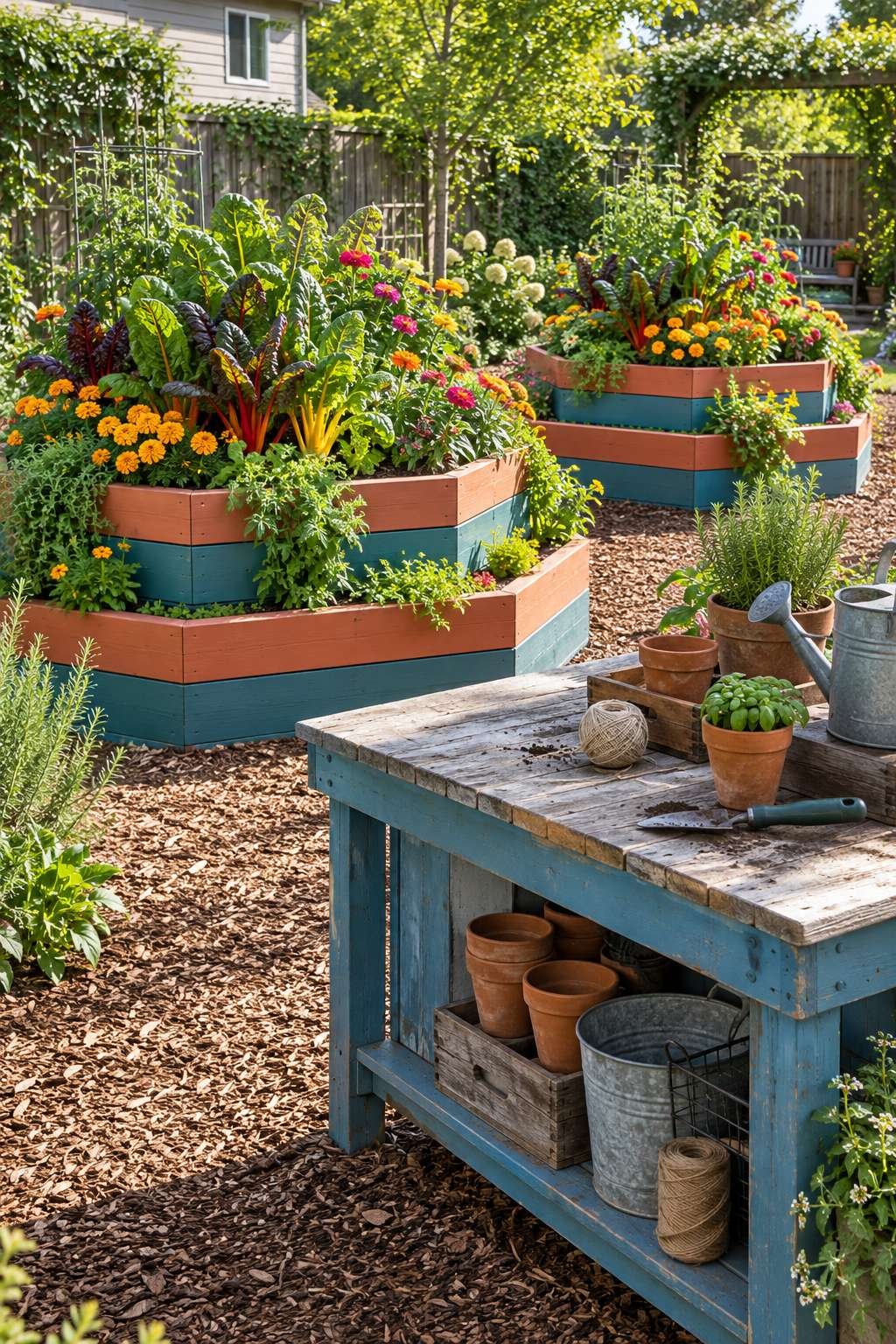
This design appeals to gardeners who want their vegetable patch to double as a visual centerpiece rather than a hidden utility area. By painting the bed borders in bold, alternating colors, even a practical growing space becomes something worth showing off.
Key Design Tips:
- Alternate two complementary paint colors across raised bed panels for rhythm
- Choose vegetables like rainbow chard that offer built-in color variation
- Interplant marigolds and zinnias among vegetables for pest control and beauty
- Distress a potting bench finish intentionally for authentic garden character
- Seal painted wood borders to withstand soil moisture and weather exposure
8. Bohemian Reading Nook with Papasan Chair

Tucked beneath a leafy canopy, this bohemian outdoor reading nook centers on a woven papasan chair piled high with cushions in patterned pink, orange, and indigo fabrics. The chair’s rounded, cocoon-like shape invites total relaxation, while the layered textiles bring in a rich mix of pattern and color that feels curated rather than accidental.

Above the seating area, macrame plant hangers suspend trailing pothos, their cascading green vines softening the space and adding a living, textural counterpoint to the woven furniture below. A small side table painted turquoise sits within easy reach, ready to hold a book or a cold drink. Dappled natural light filters through the tree canopy overhead, softly illuminating both the fabric patterns and the rattan weave of the chair in an ever-shifting play of light and shadow.

This concept is perfect for anyone craving a personal retreat within their own backyard — a single, intentional seating area rather than a large entertaining zone. The combination of natural materials, trailing greenery, and rich pattern creates an atmosphere that feels both cozy and worldly.
Key Design Tips:
- Choose a papasan chair with weather-resistant rattan or resin wicker framing
- Layer cushions in complementary patterns rather than matching sets
- Hang macrame planters at varying heights for a fuller vertical display
- Paint a small side table in a bold accent color to tie the palette together
- Position the nook beneath natural shade to protect fabrics from fading
9. Tropical Bar Cart and Citrus Grove Corner
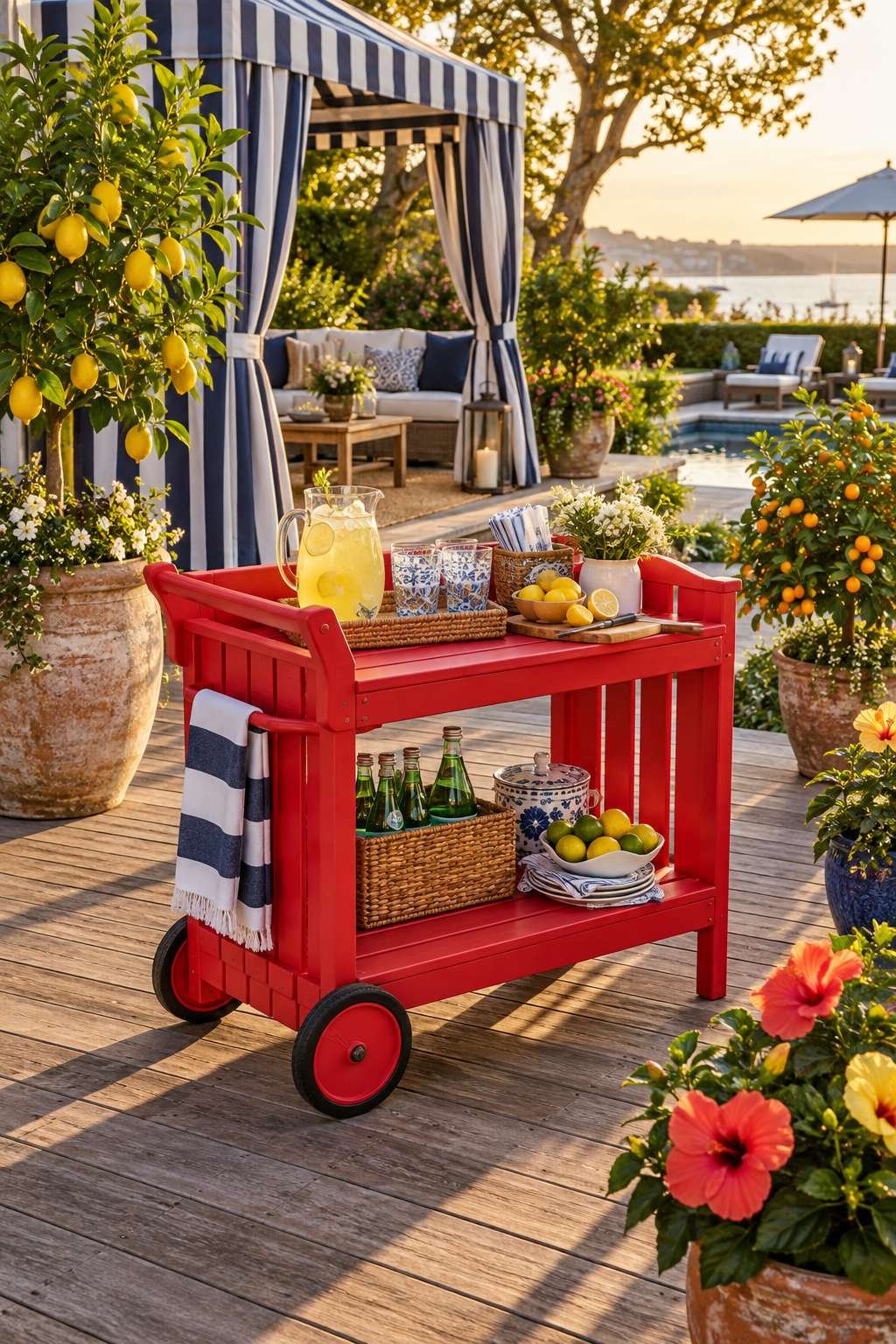
Bringing resort-style energy to a backyard deck, this design pairs a painted Adirondack-style outdoor bar cart in bright cherry red with a striped canvas cabana for a scene that feels instantly festive. The bar cart’s bold color makes it the unmistakable focal point of the corner, whether stocked with fresh lemonade or evening cocktails.
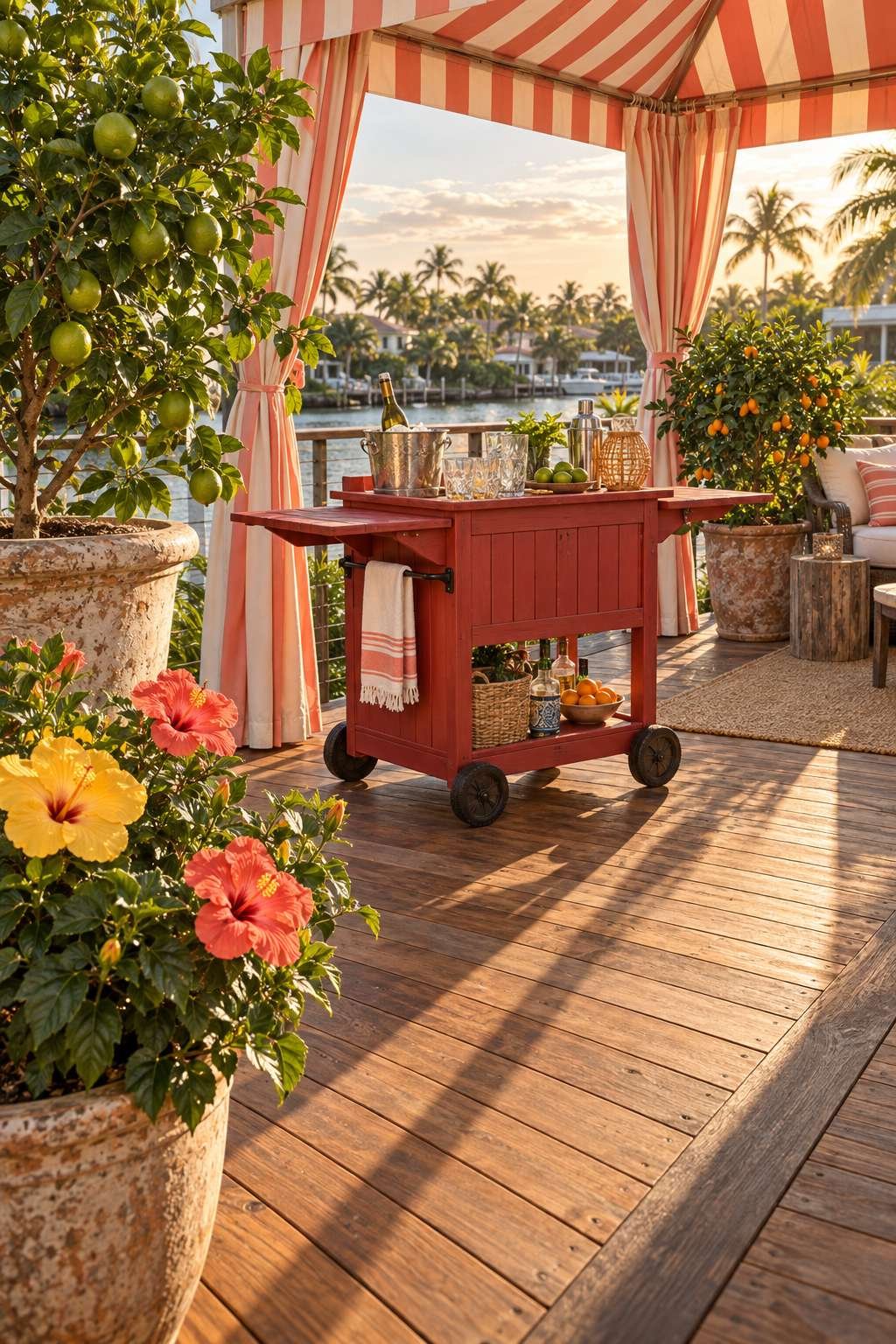
Surrounding the cart, potted citrus trees and hibiscus blooms in coral and yellow add tropical vibrancy and a hint of fragrance to the air, reinforcing the vacation-like mood of the space. Golden afternoon light casts long shadows across the wooden deck boards, highlighting the natural grain beneath the cart’s painted surface and giving the whole scene a warm, sun-soaked quality.
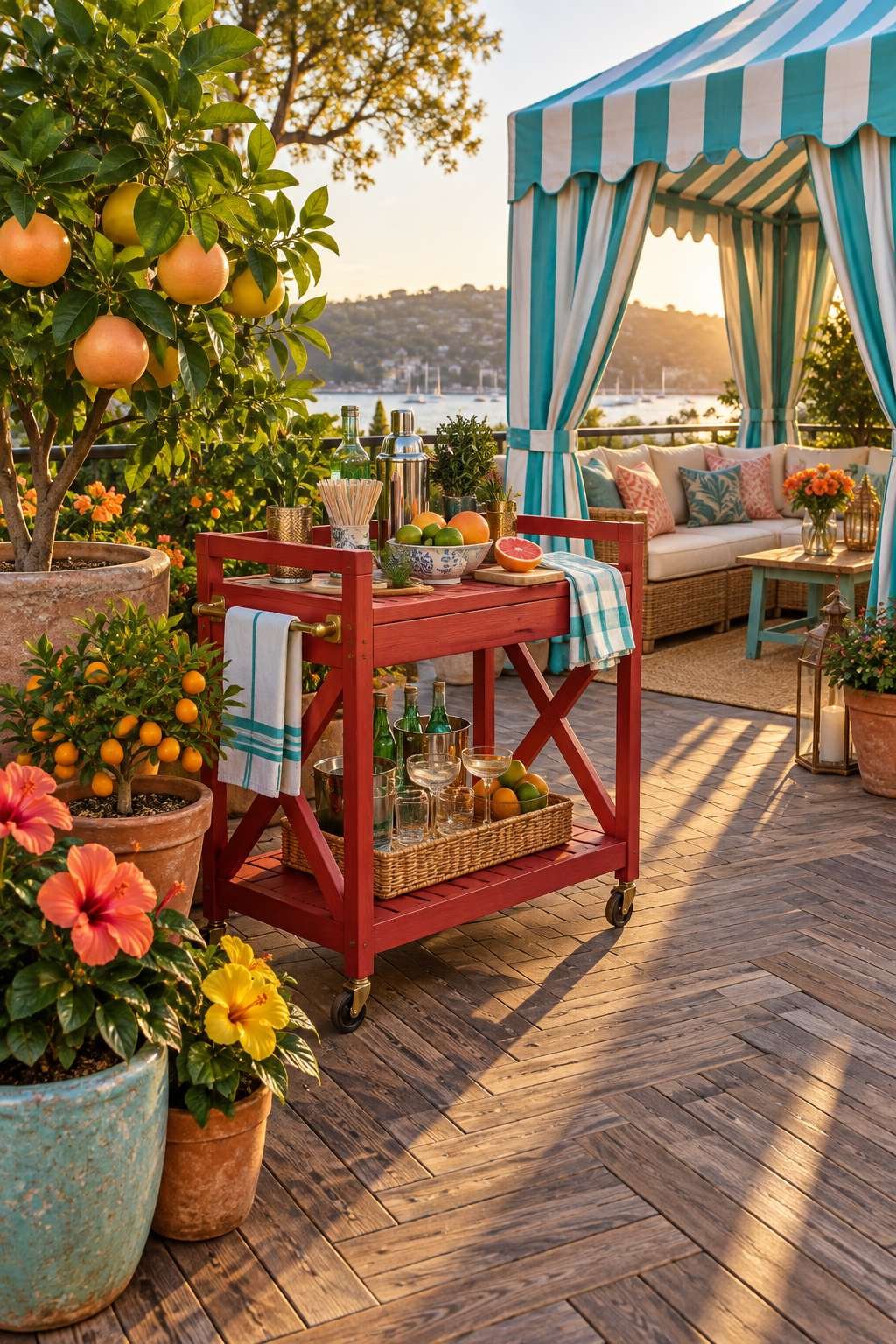
This layout is a natural fit for homeowners who love to entertain and want a dedicated corner that signals “relax and stay awhile” the moment guests step outside. The tropical plantings and bold red cart work together to create a mini getaway without requiring a full backyard renovation.
Key Design Tips:
- Choose a saturated, high-contrast color like cherry red for a bar cart focal point
- Select dwarf citrus varieties suited to container growing in your climate
- Pair coral and yellow hibiscus for continuous tropical color through summer
- Position the cabana to provide shade over the bar cart during peak sun hours
- Protect painted wood furniture with an exterior sealant against sun fading
10. Cheerful Children’s Play Corner

Designed specifically with young children in mind, this play corner centers on a small wooden playhouse painted in cheerful shades of sky blue, sunshine yellow, and grass green — a palette that feels instantly joyful and easy to spot from anywhere in the yard. The multicolor paint job turns a simple structure into a genuine landmark within the garden.
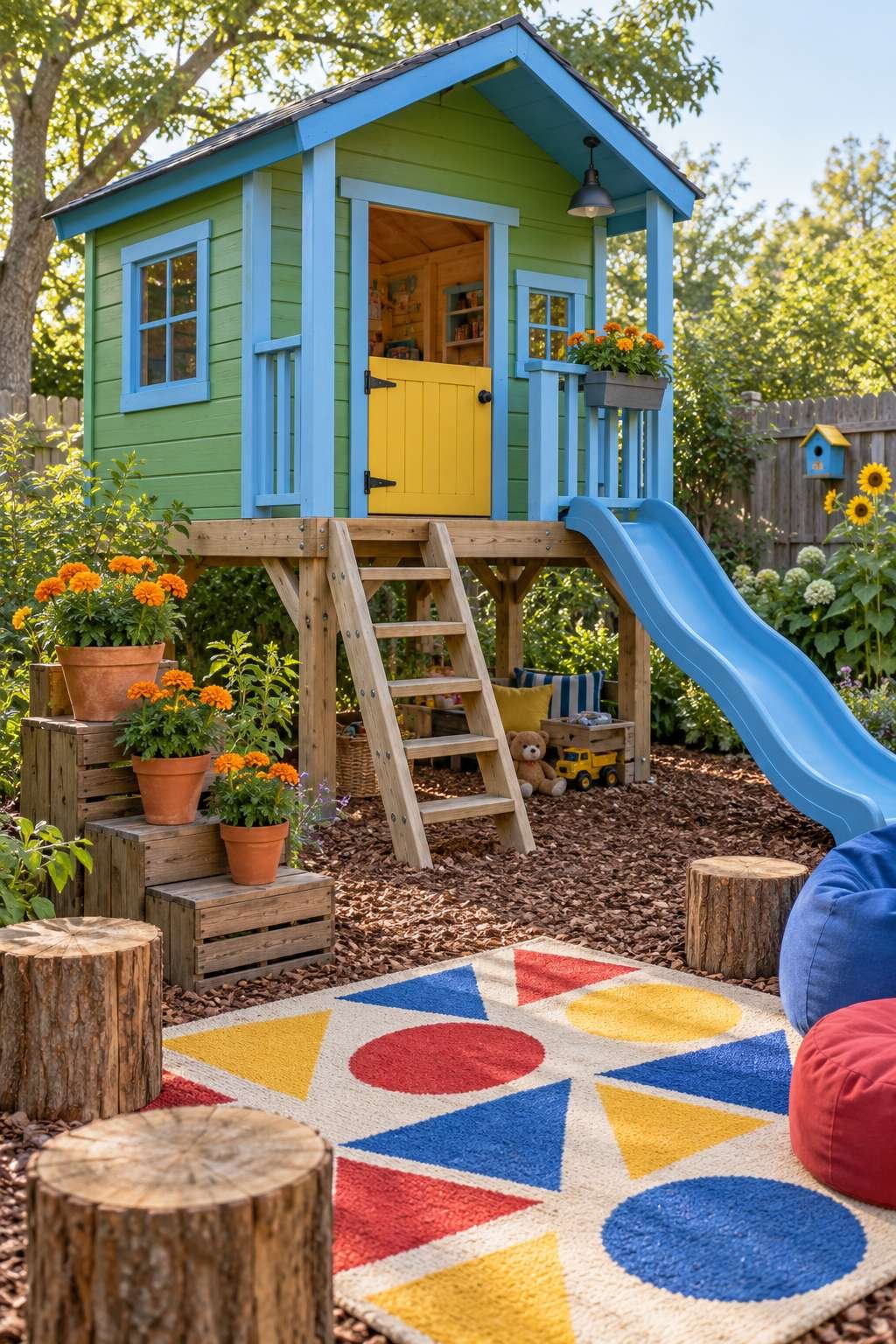
Surrounding the playhouse, potted marigolds add low-maintenance color at a child’s eye level, while a patchwork outdoor rug in primary colors defines a soft play surface just outside the structure’s door. Soft morning light illuminates the textured wood siding, revealing the subtle brush strokes and hand-painted quality of the playhouse finish — a detail that adds warmth and personality beyond a factory-painted alternative.
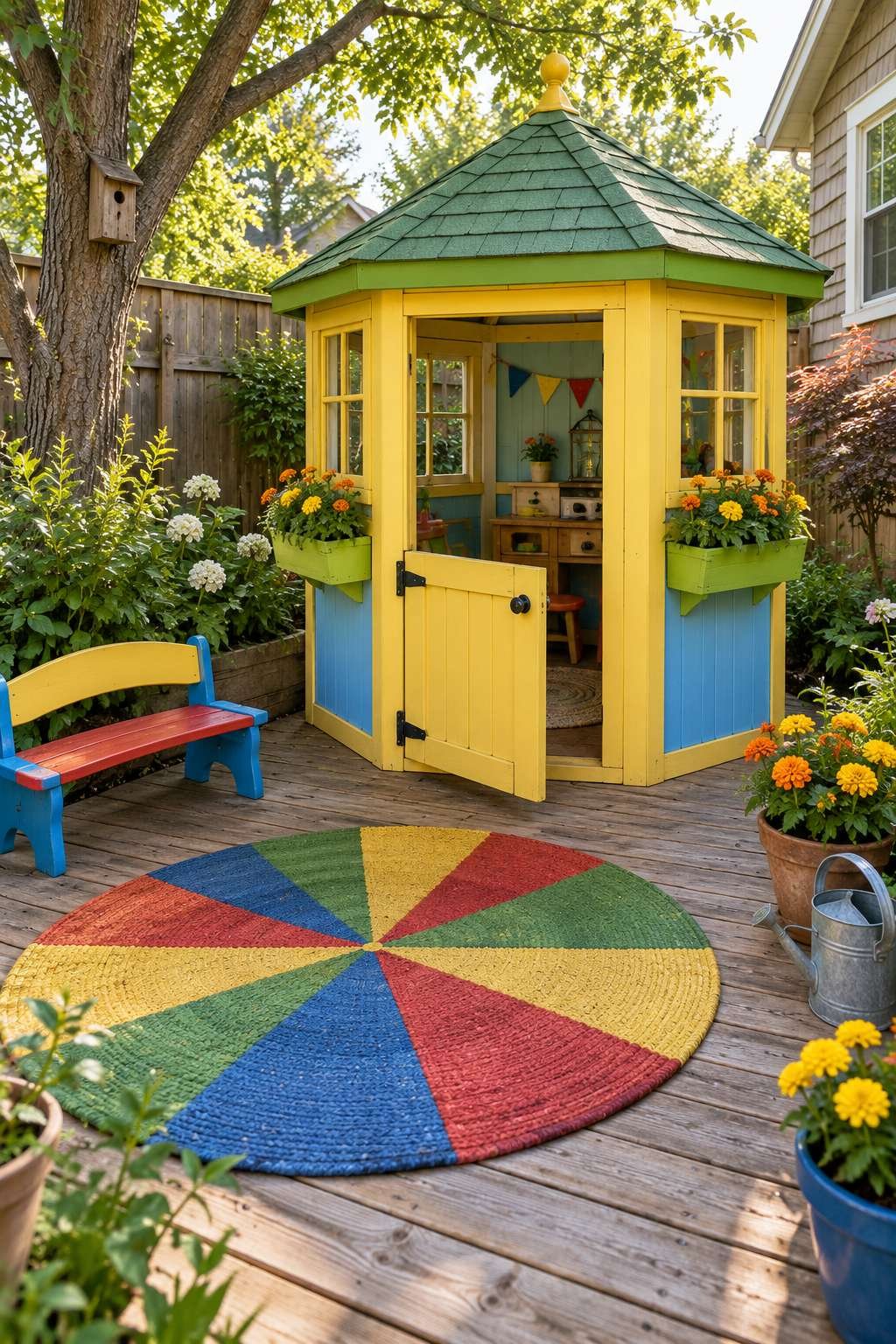
This design works beautifully for families who want their yard’s play area to feel like a genuine part of the overall landscape design, rather than a plastic structure dropped onto the lawn. The bright, primary-adjacent palette is also easy to coordinate with existing children’s outdoor toys and furniture.
Key Design Tips:
- Use non-toxic, child-safe exterior paint for any structure kids will touch
- Choose a primary color palette that’s easy to coordinate with toys and furniture
- Add a soft patchwork rug just outside the playhouse door for barefoot play
- Plant low-maintenance marigolds at a height children can see and enjoy
- Repaint high-touch areas periodically as play structures show wear
11. Mosaic Stepping Stone Cottage Path
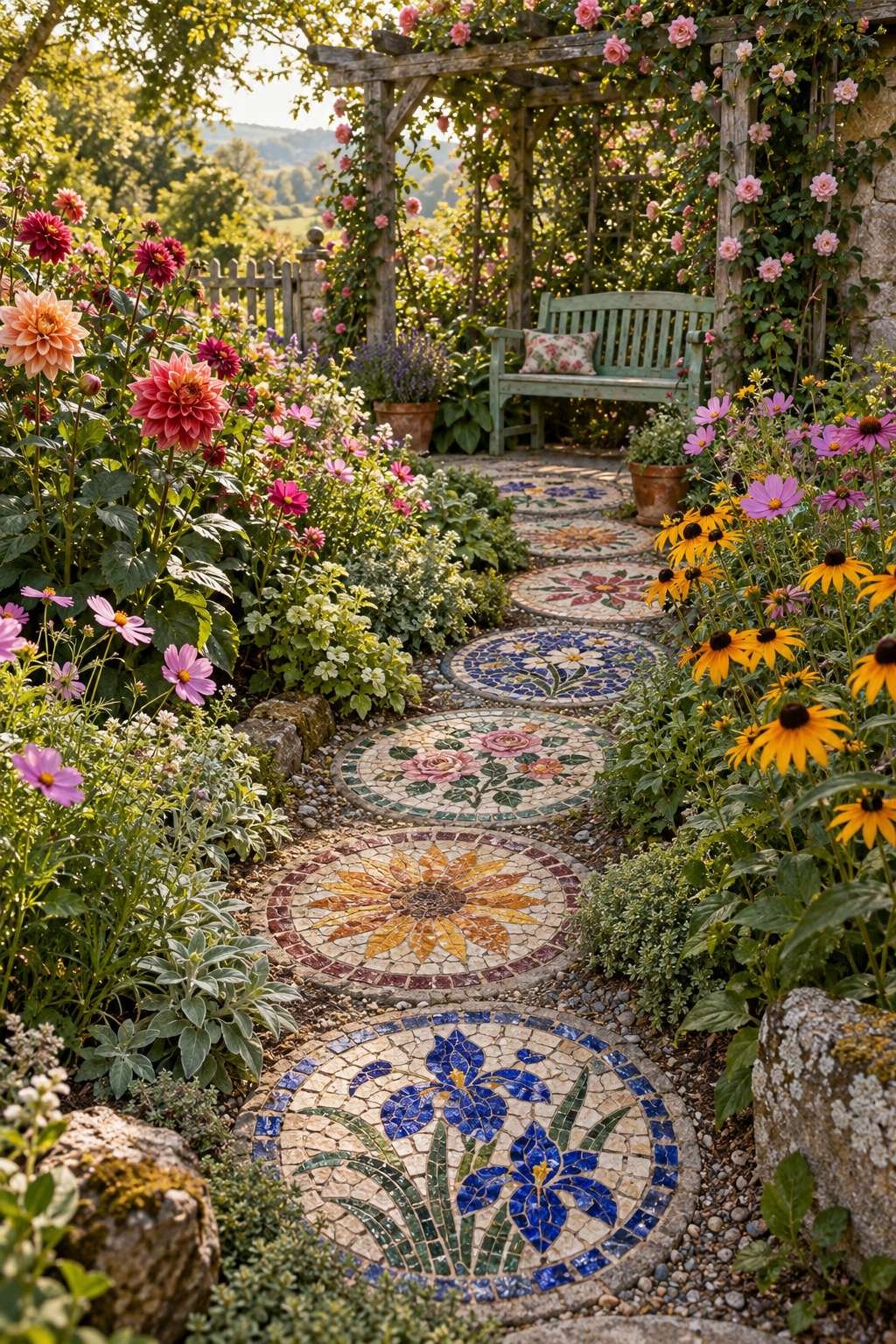
Winding through a cottage-style garden, a path of vibrant mosaic stepping stones in cobalt, amber, and rose turns a simple walkway into a piece of functional art. Each stone offers its own small burst of color and pattern, creating a sense of discovery as visitors move from one to the next through beds filled with dahlias, cosmos, and black-eyed Susans.
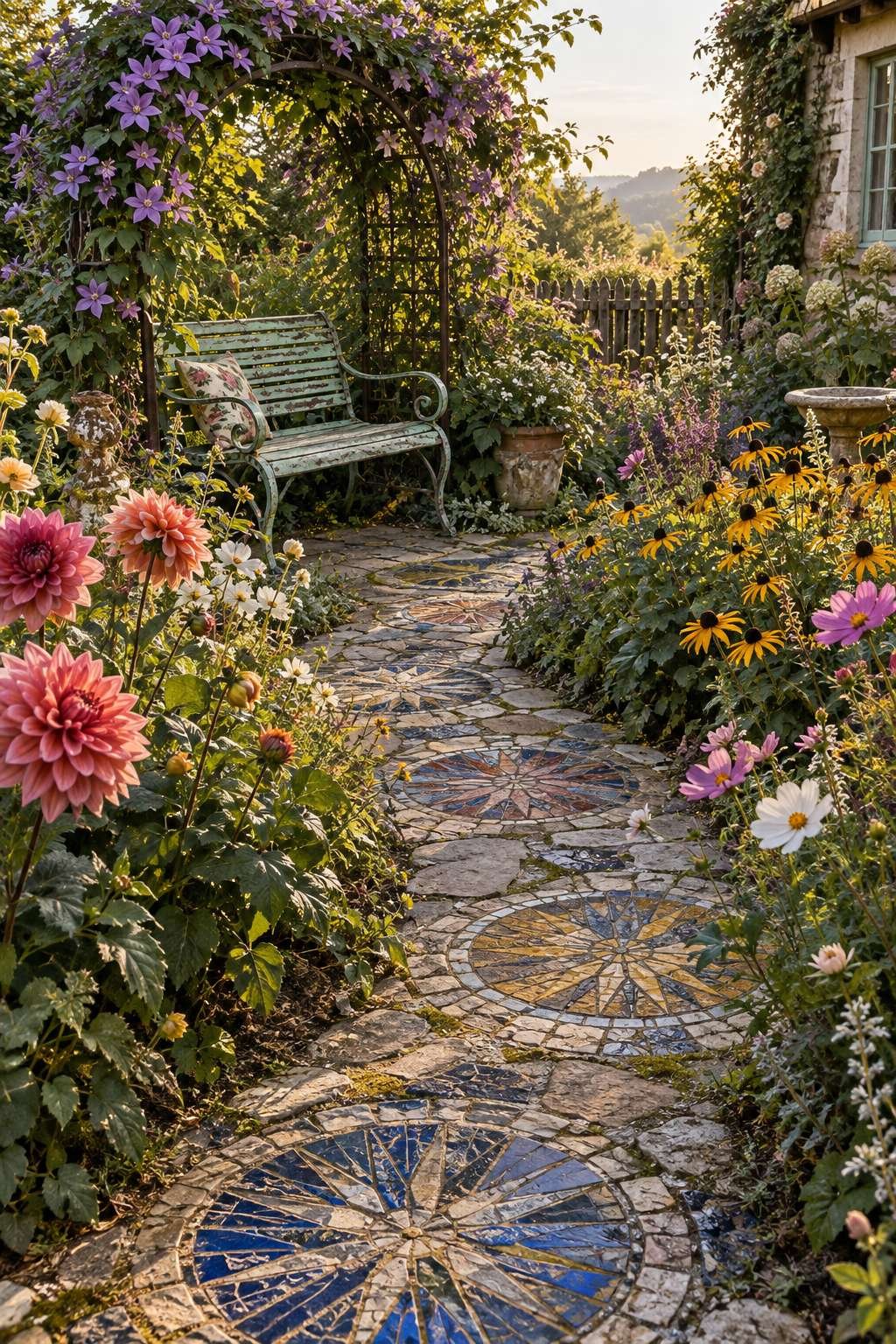
At the path’s end, a weathered wooden bench painted mint green offers a place to pause, tucked beneath a flowering trellis that frames the seat like a natural doorway. Late-afternoon light highlights the textured grout lines between each mosaic stone, while also bringing out the organic, slightly imperfect forms of the surrounding blooms — a combination of crafted and wild that defines the cottage aesthetic.
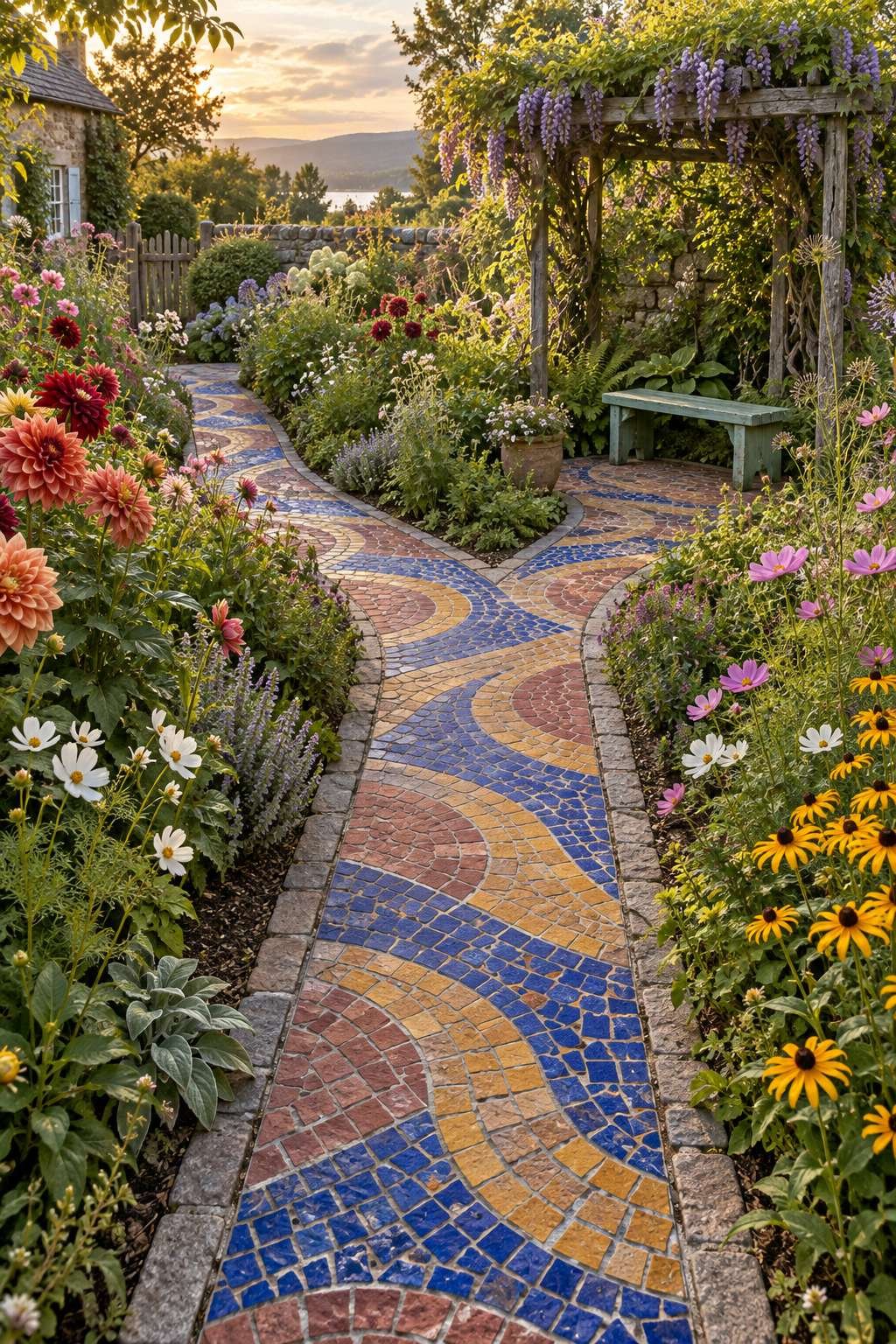
This design is especially rewarding for gardeners who enjoy handcraft and detail, since mosaic stepping stones can be a DIY project built over time. The result is a path that feels personally made rather than purchased, adding meaning to every step through the garden.
Key Design Tips:
- Space mosaic stepping stones evenly for comfortable, natural walking rhythm
- Choose grout colors that contrast with tile pieces for defined pattern lines
- Plant tall blooms like dahlias and cosmos along the path’s outer edges
- Paint a bench in a soft complementary tone like mint green for contrast
- Train flowering vines over a trellis to frame the path’s final destination
12. Mediterranean Tiled Outdoor Kitchen
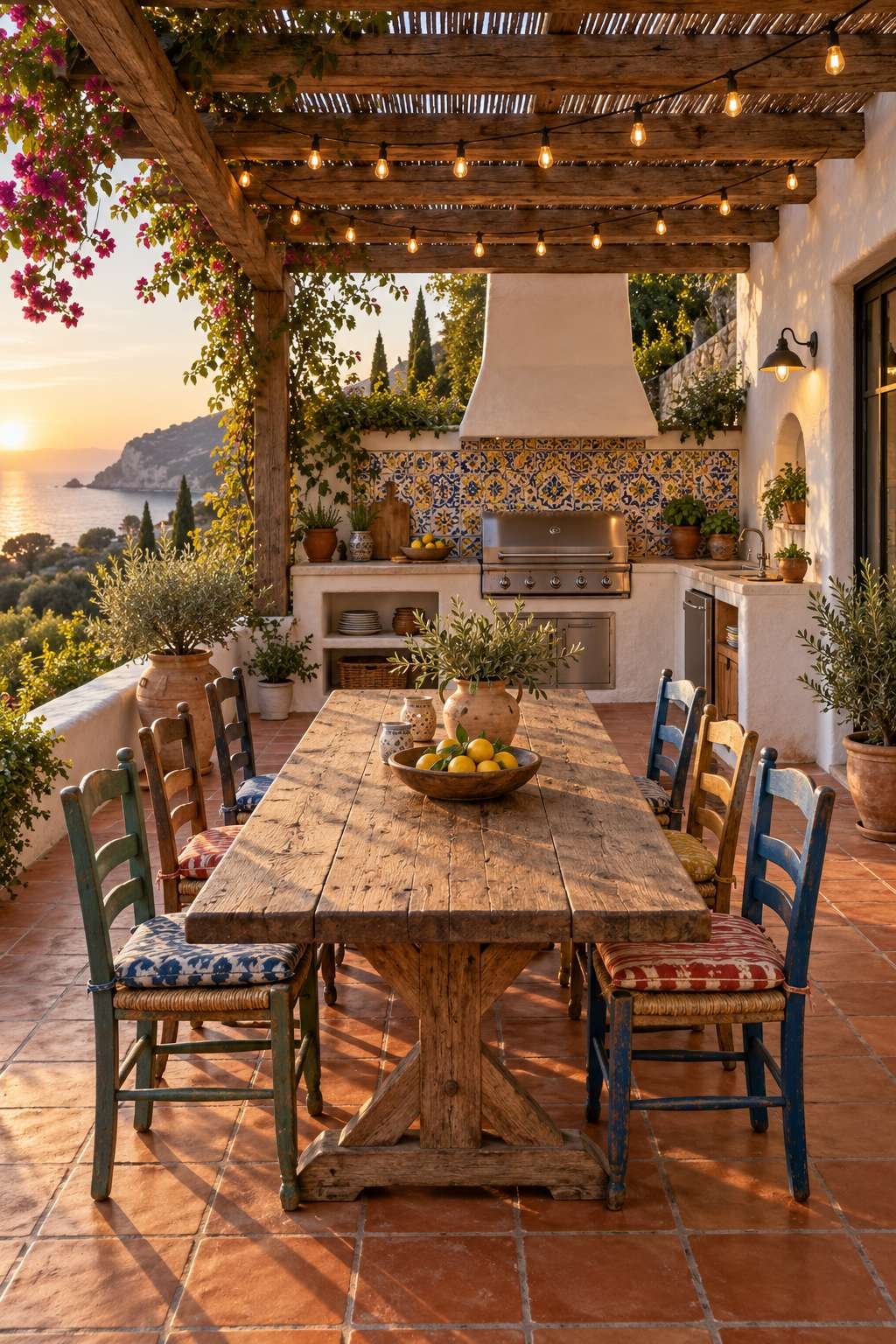
Bringing color into the heart of outdoor entertaining, this outdoor kitchen and dining nook features a tiled backsplash in a Mediterranean-inspired pattern of blue, yellow, and white — an eye-catching backdrop for any cooking or gathering activity. The tile pattern immediately signals warmth and craftsmanship, elevating what might otherwise be a purely functional cooking zone.
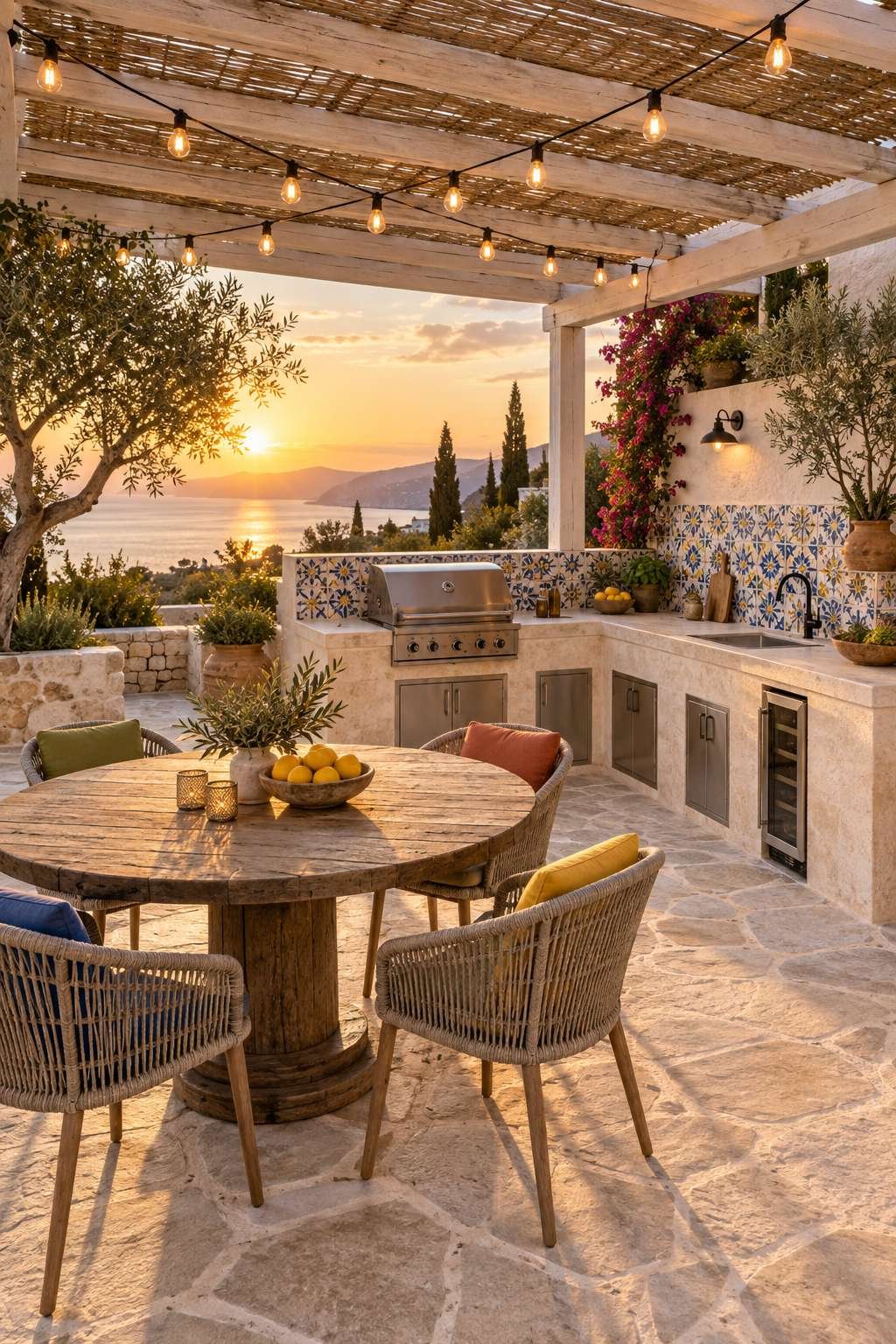
Beneath a pergola draped in string lights, a reclaimed wood dining table is surrounded by chairs fitted with colorful woven seat cushions, adding comfort and additional pattern to the space. Warm golden hour lighting emphasizes both the glazed texture of the tile and the natural grain running through the wood table, creating a rich material contrast between crafted surface and organic form.
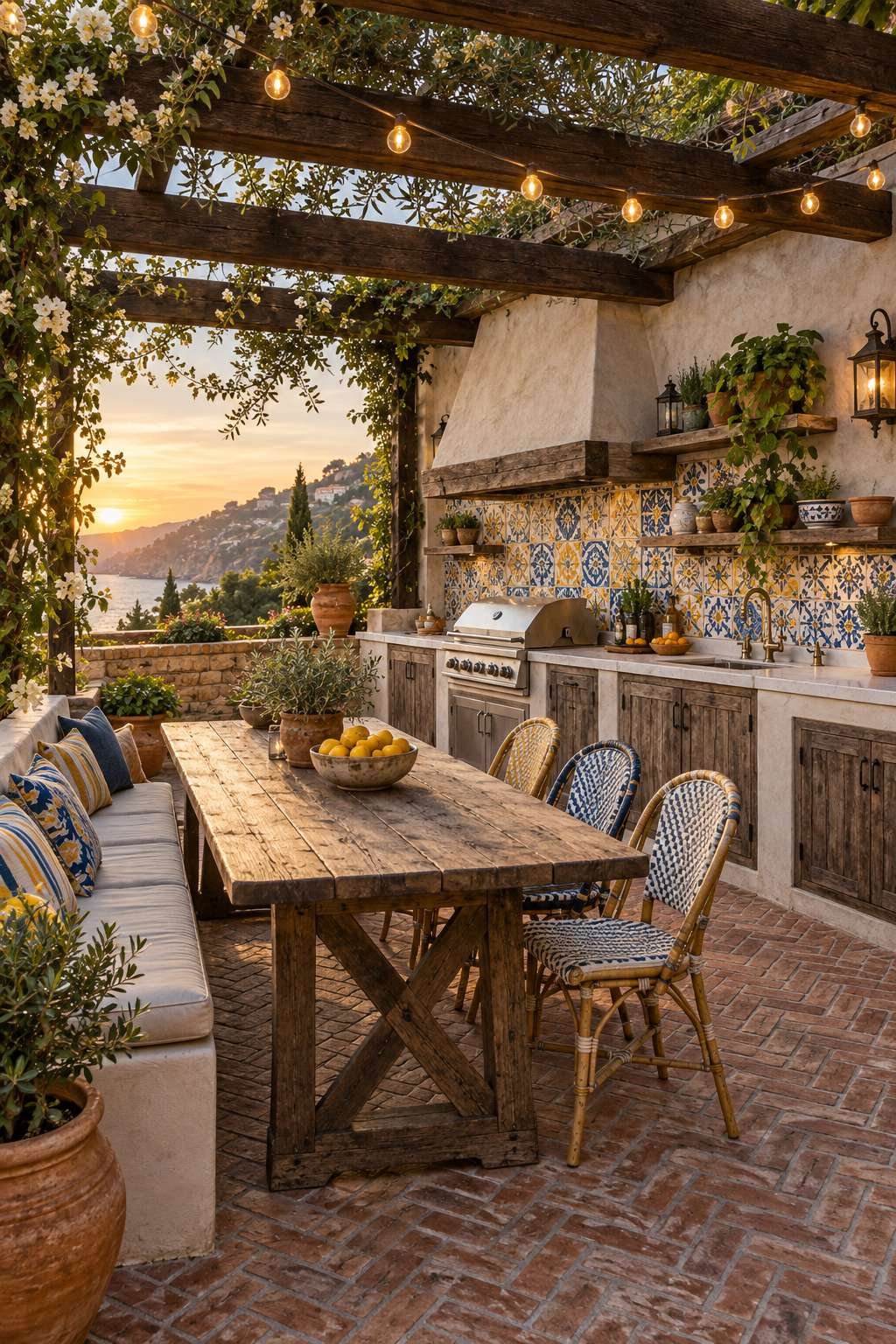
This concept suits homeowners who love to cook and entertain outdoors and want their kitchen space to feel as designed and colorful as their indoor rooms. The Mediterranean tile pattern in particular lends a sense of destination-worthy style to everyday outdoor meals.
Key Design Tips:
- Choose weather-rated tile specifically designed for outdoor backsplash use
- Select a blue, yellow, and white palette for a classic Mediterranean feel
- Pair reclaimed wood furniture with tile for a rich material contrast
- Add colorful woven cushions to soften hard dining chair surfaces
- Install string lighting over the dining area for extended evening use
13. Stacked Crate Herb and Flower Garden

Small-space gardening gets a colorful boost with stacked colorful crates used as planters, painted in a mix of teal, coral, and mustard and filled with a lively combination of basil, nasturtiums, and geraniums. The stacked arrangement adds height and visual interest while keeping the footprint compact — ideal for patios where ground space is limited.
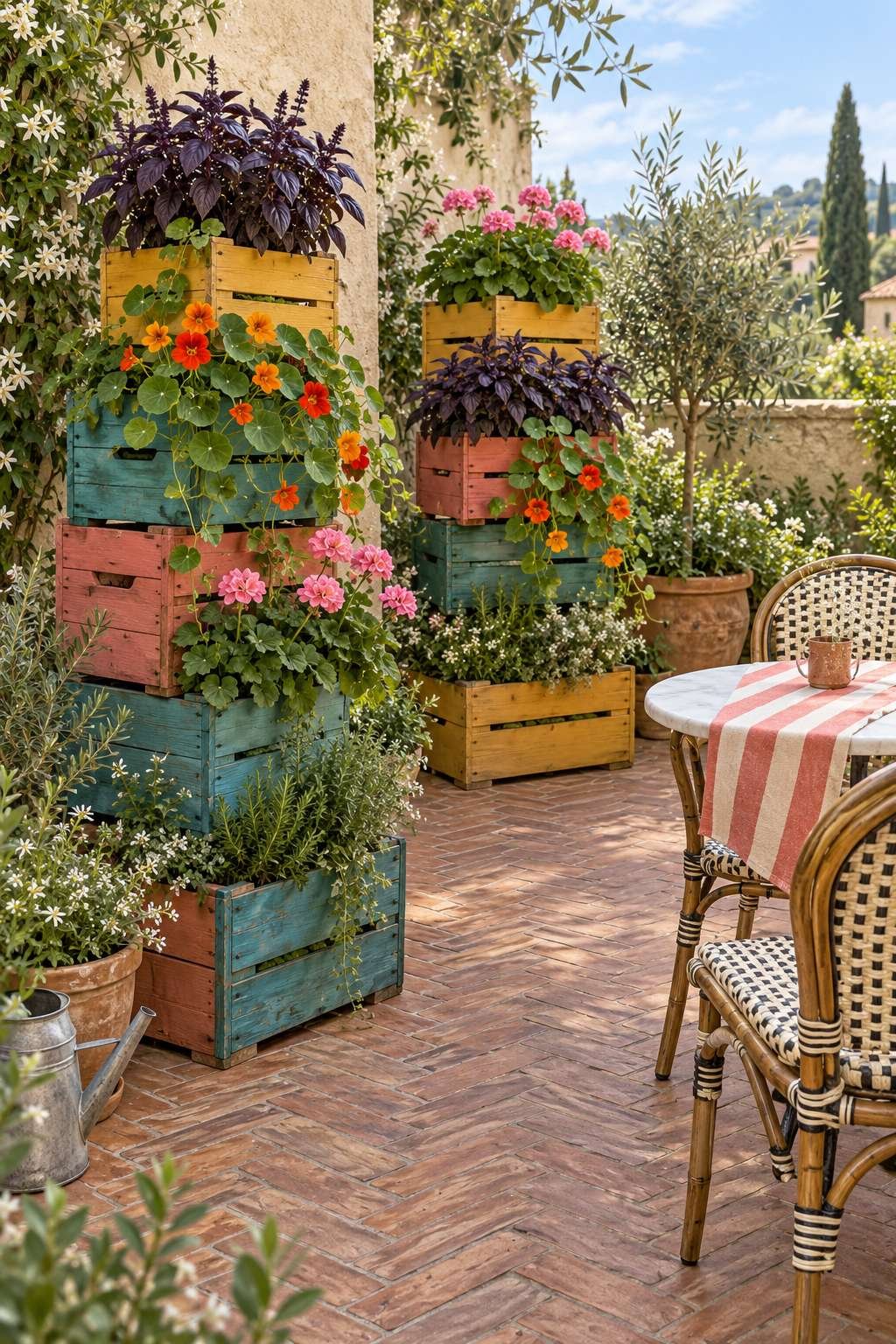
Nearby, a round bistro table with a striped tablecloth offers a casual spot to enjoy the garden’s bounty, set atop textured pavers that ground the whole scene. Soft natural daylight highlights the weathered texture of the painted wood crates alongside the vibrant colors of the foliage and blooms, creating a scene that feels both productive and decorative in equal measure.
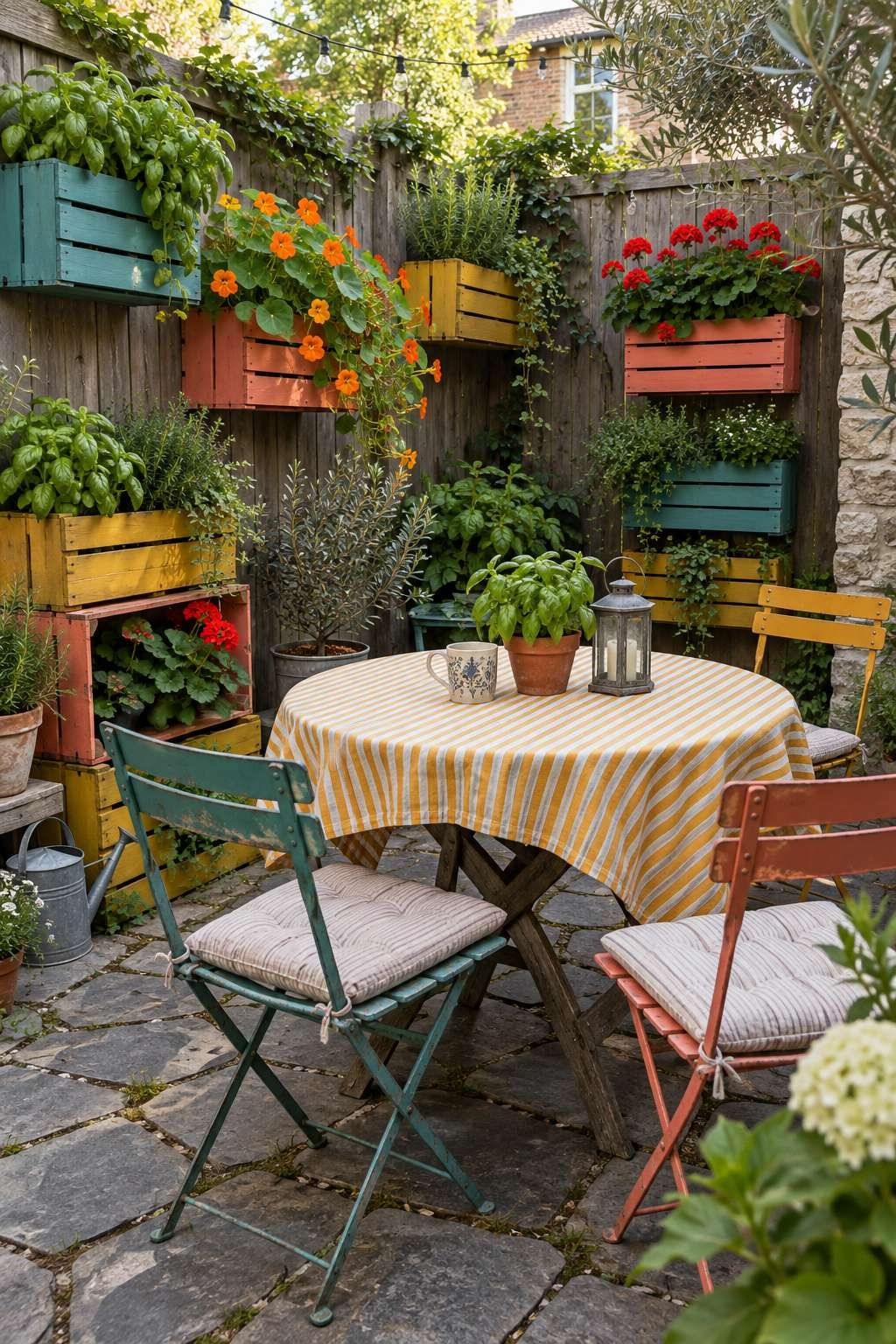
This design is particularly well-suited to renters or those working with a small patio, since crates can be arranged, rearranged, or relocated without any permanent installation. It proves that even the smallest growing space can be a genuine color feature in the backyard.
Key Design Tips:
- Paint stacked crates in varied but coordinated colors for playful rhythm
- Combine edible herbs like basil with ornamental blooms for dual-purpose planting
- Ensure crates have adequate drainage before filling with soil
- Choose a striped tablecloth that echoes the crate color palette
- Rearrange crate stacks seasonally to refresh the patio’s layout
14. Vibrant Hammock Corner Between Trees

Strung between two mature trees, this hammock corner uses a woven hammock in alternating stripes of turquoise and coral rope to bring bold color to a naturally shaded spot in the yard. The hammock’s construction itself becomes a design feature, its rhythmic striping visible from across the garden even before anyone settles in.
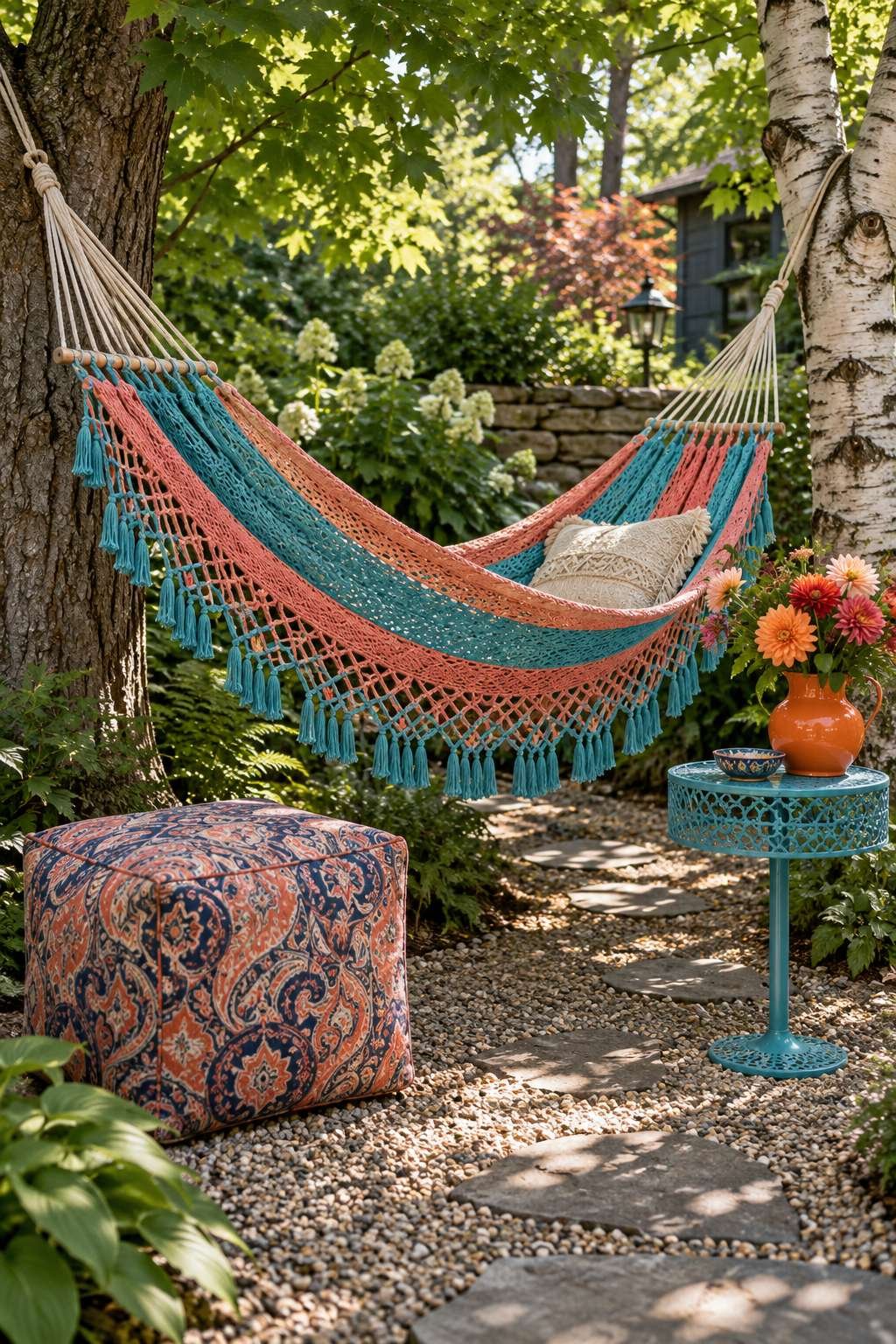
Below the hammock, a patterned outdoor pouf and a small side table hold a citrus-colored ceramic vase filled with fresh-cut flowers, adding a final layer of color at ground level. Dappled sunlight filters through the leaves overhead, casting soft, moving shadows across the woven rope texture and creating a constantly shifting play of light throughout the day.
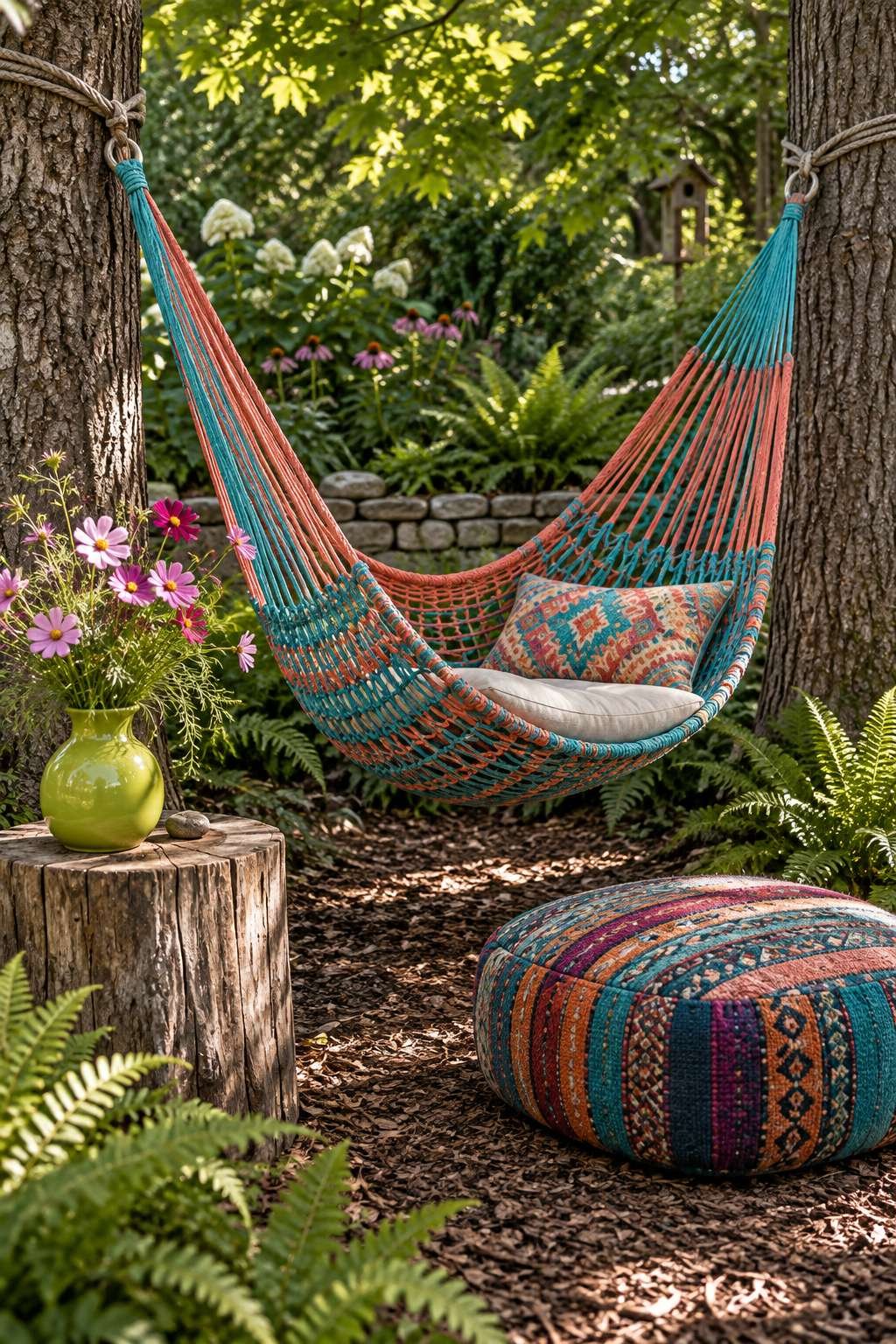
This design is ideal for yards with established trees and a desire for a simple, low-cost colorful retreat. Unlike many backyard features, a hammock corner requires minimal construction — just two anchor points and a beautifully chosen piece of woven furniture.
Key Design Tips:
- Choose a hammock with UV-resistant rope to prevent color fading over time
- Select tree anchor points with adequate spacing and structural strength
- Add a low pouf and side table to complete the seating area at ground level
- Keep fresh flowers in a bold ceramic vase for a rotating pop of color
- Position the hammock to take advantage of natural dappled shade
15. Ombre Deck with Rattan and Floral Accents

A tired wooden deck gets an entirely new life with painted deck boards in a subtle ombre pattern, transitioning gradually from deep teal to soft aqua across the surface. This gradient effect adds sophistication and visual flow to what might otherwise be a flat, uniform deck floor, guiding the eye naturally across the space.
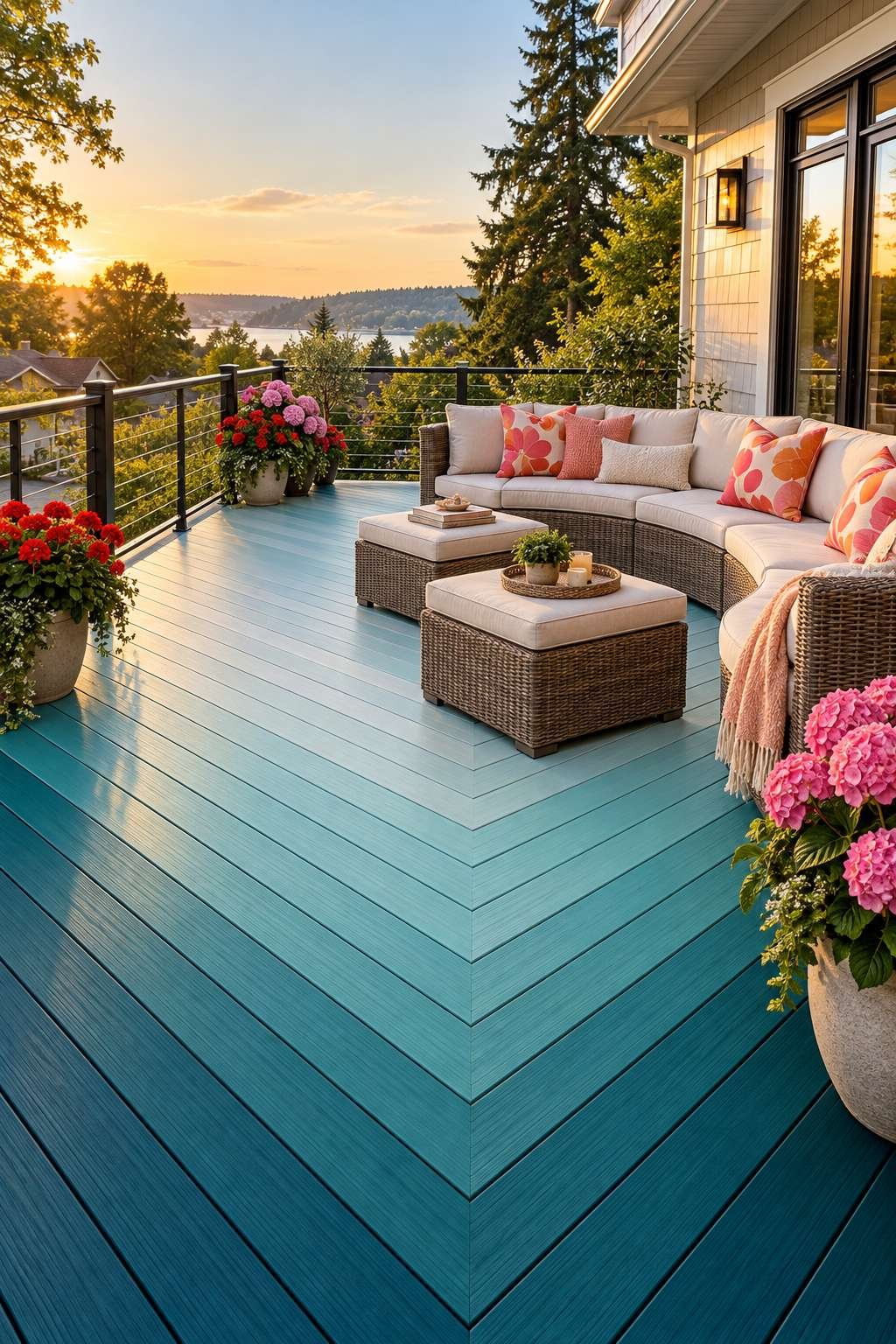
Atop the ombre boards, rattan furniture accented by bold floral throw pillows in pink and orange brings warmth and pattern, while potted hydrangeas and geraniums line the deck railing, catching the late afternoon light and reinforcing the colorful theme from a different angle. The combination of painted wood, natural rattan, and layered textiles creates a deck that feels curated rather than simply furnished.
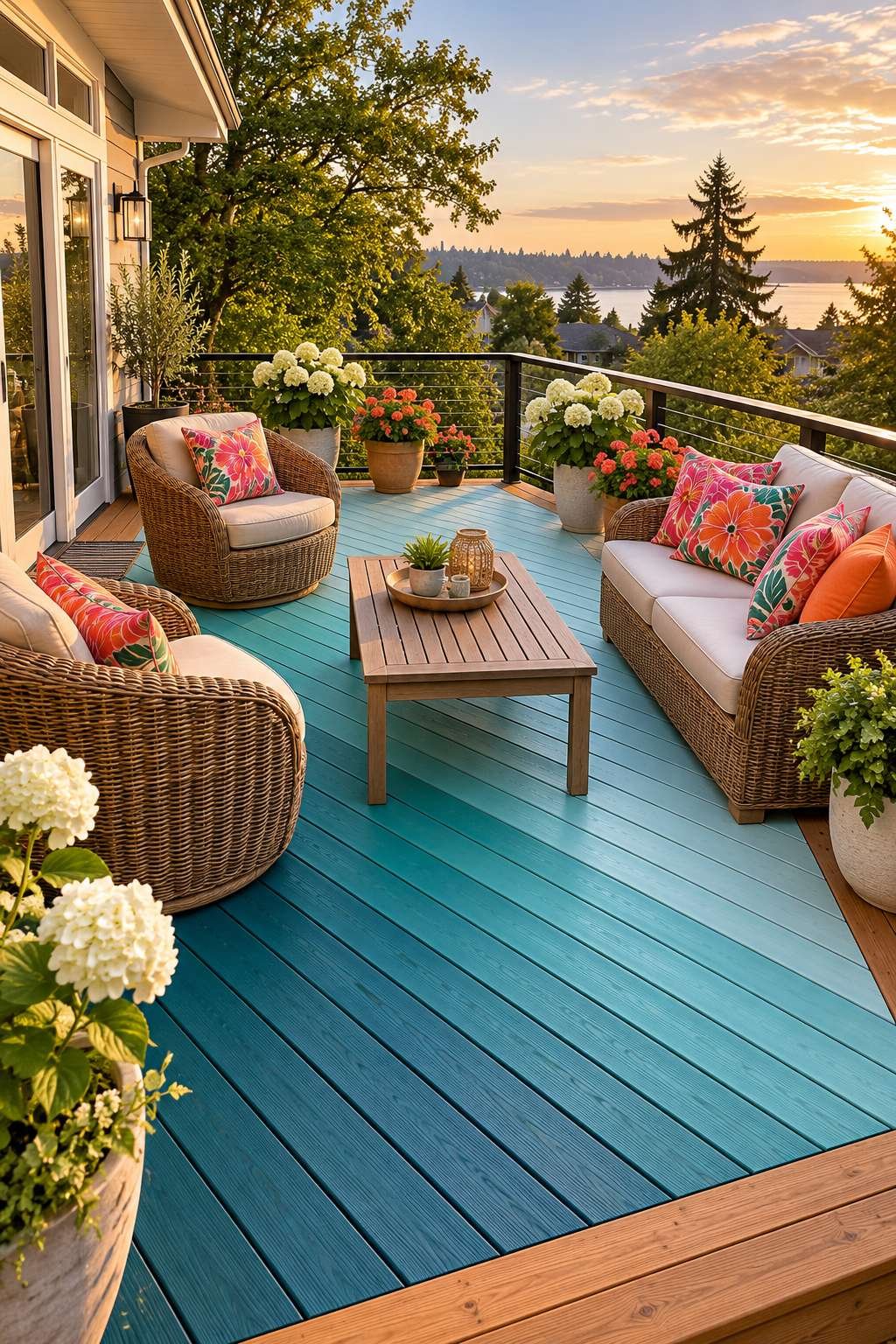
This design is an excellent choice for homeowners looking to refresh an existing deck without a full rebuild. The ombre paint treatment alone can dramatically change the character of the space, while the furniture and plantings layer in additional color and texture at a lower cost than structural renovation.
Key Design Tips:
- Use exterior deck paint rated for foot traffic when creating an ombre effect
- Blend gradient colors gradually across boards for a seamless transition
- Choose floral throw pillows that echo the railing plantings’ color palette
- Select rattan furniture with removable, washable cushion covers
- Line the railing with flowering potted plants to frame the ombre deck below
Bringing color into a backyard is one of the most rewarding ways to make an outdoor space feel genuinely yours. From the mosaic-tiled dining patio to the ombre-painted deck, each concept in this guide demonstrates that bold color and thoughtful design aren’t mutually exclusive — in fact, they amplify one another when paired with quality materials, considered lighting, and a cohesive palette. Whether your instinct leans toward the bohemian layering of a papasan reading nook or the crisp geometry of a hand-painted patio floor, there’s a colorful direction here suited to nearly any yard size, climate, or budget.
The common thread running through all fifteen designs is intentionality: every painted surface, every planter color, and every textile pattern was chosen to work in harmony with its neighbors rather than compete for attention. As you consider your own backyard transformation, don’t be afraid to mix ideas from multiple concepts — a stacked crate herb garden might pair beautifully with a sunset gradient fire pit lounge, or a mosaic stepping stone path might lead directly to your own tropical bar cart corner. Start with a palette that genuinely excites you, choose materials built to withstand your climate, and let your outdoor space become as vibrant and personal as the rest of your home.
