


A small backyard is never a limitation—it’s an invitation to design with intention. When every square foot counts, thoughtful choices in materials, layout, and lighting transform a modest patch of outdoor space into a retreat that feels far larger than its actual footprint. Urban homeowners and small-lot dwellers alike are discovering that compact yards, when approached with creativity, can deliver the same sense of comfort, beauty, and function as their sprawling counterparts.
The best small backyard designs share a common thread: they balance practicality with atmosphere. Whether it’s a cozy dining nook shaded by a canvas awning, a vertical garden that turns a bare fence into a living tapestry, or a zen corner built around the gentle sound of trickling water, each concept proves that scale has little to do with impact. Texture, layered lighting, and smart furniture choices do the heavy lifting, creating spaces that feel curated rather than cramped.
In this guide, we explore fifteen distinct backyard concepts, each suited to different lifestyles, climates, and personal aesthetics. From rustic cedar planters to sleek corten steel garden beds, from golden hour fire pits to minimalist zen retreats, these ideas offer a roadmap for reimagining your own outdoor space—no matter how small.
1. Cozy Bistro Patio with String Lights and Raised Planters
A compact patio doesn’t need to sacrifice charm for practicality, and this design proves it beautifully. At the heart of the space sits a bistro table with two chairs, perfectly scaled for a small footprint, resting atop textured grey pavers that add subtle visual interest underfoot without overwhelming the area. Surrounding this intimate seating nook are raised cedar planter boxes, brimming with fragrant herbs and trailing vines that soften every hard edge and bring the garden right up to the table’s surface.
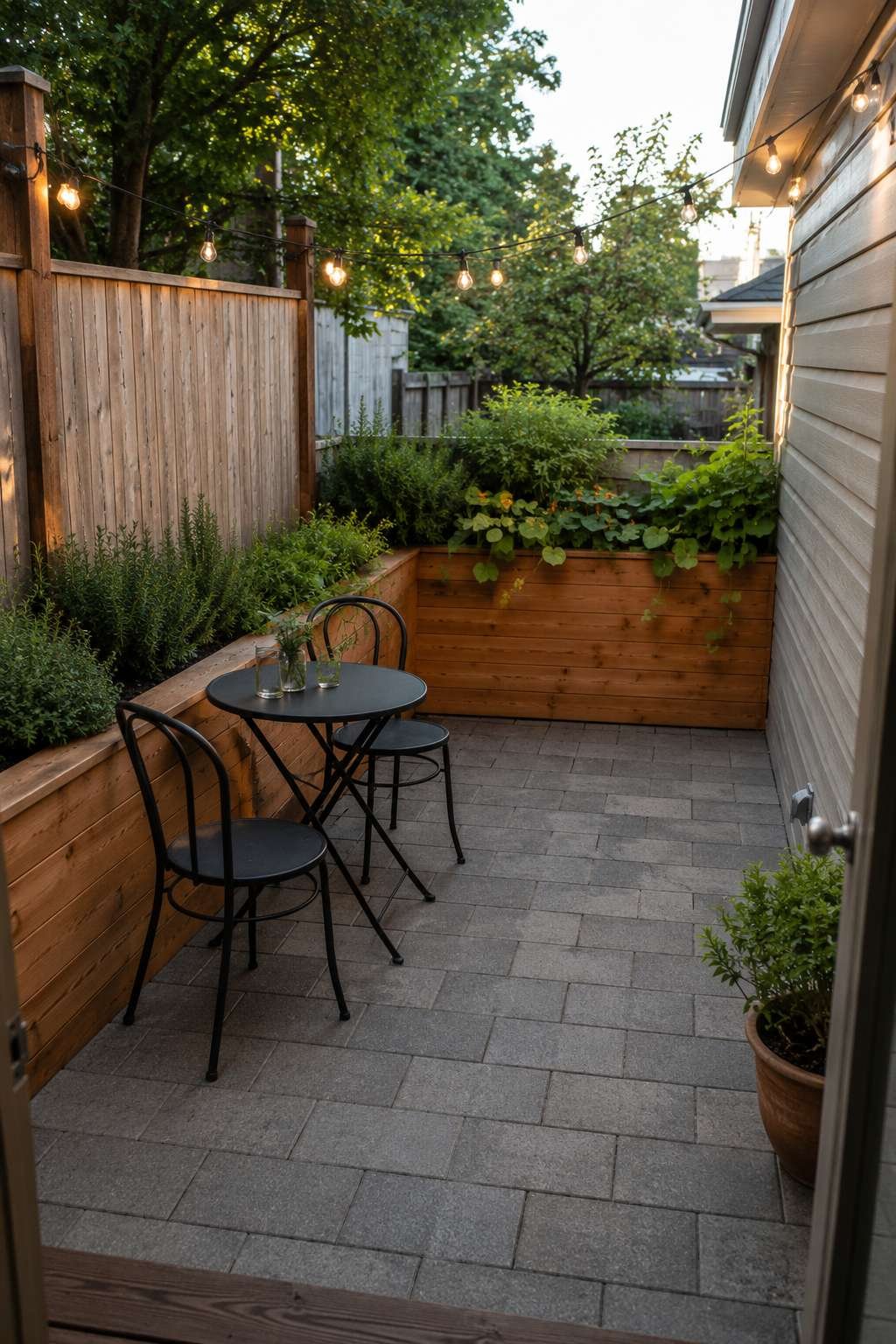
Overhead, string lights stretch between a fence post and the house eave, creating a canopy of warm illumination that transforms the patio from a daytime seating spot into an evening destination. The late-afternoon sunlight filtering through this setup casts soft, elongated shadows across the pavers, giving the whole scene a golden, inviting glow. This layered approach to lighting—natural by day, string-lit by night—ensures the space remains functional and beautiful around the clock.
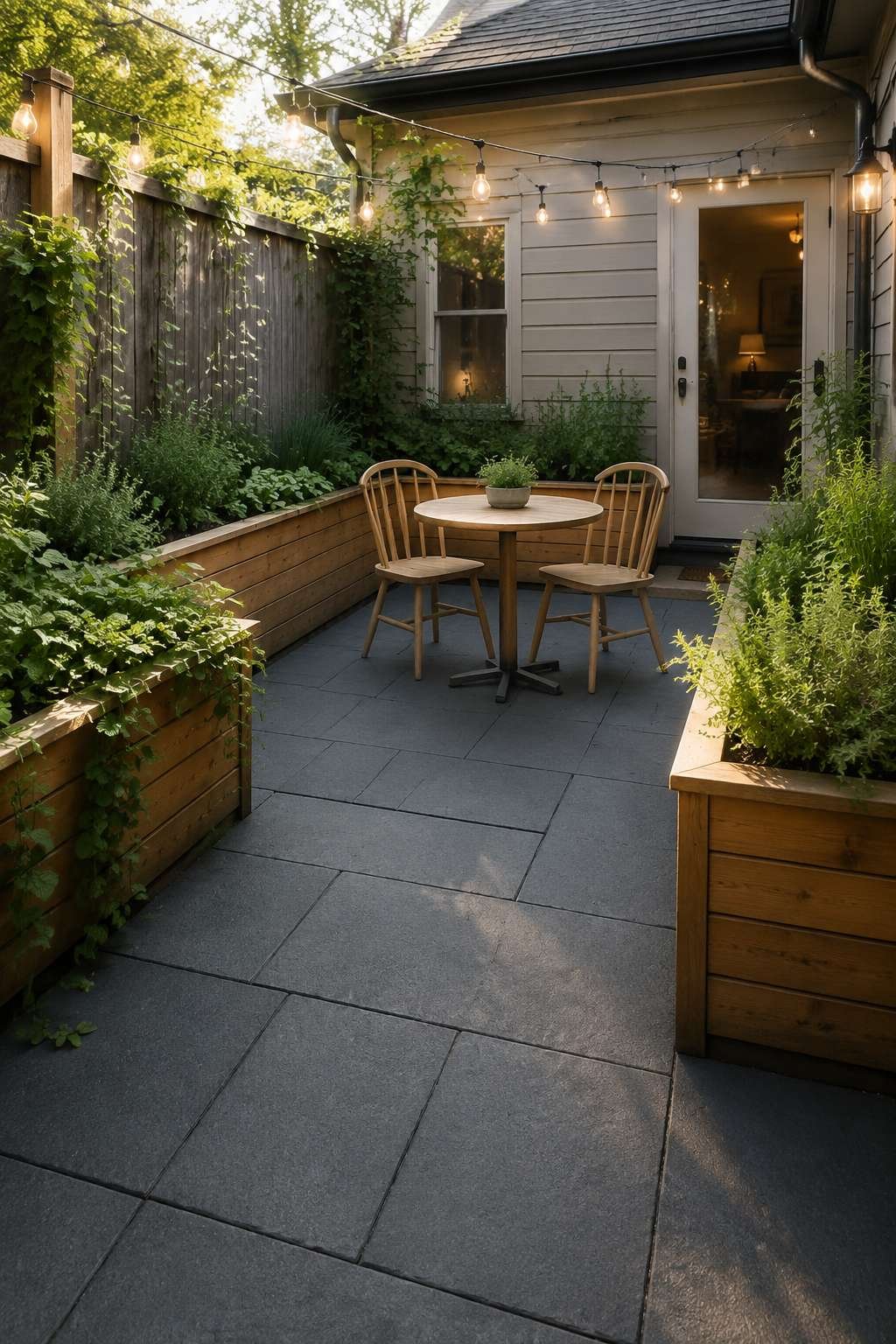
What makes this design especially effective for small yards is its vertical use of space. Rather than spreading plantings horizontally, the raised cedar boxes stack greenery upward, freeing up precious ground-level real estate for the patio itself. The combination of herb gardens and ornamental trailing plants also means the space smells as good as it looks, with fresh rosemary, thyme, and basil scenting the air during outdoor meals.
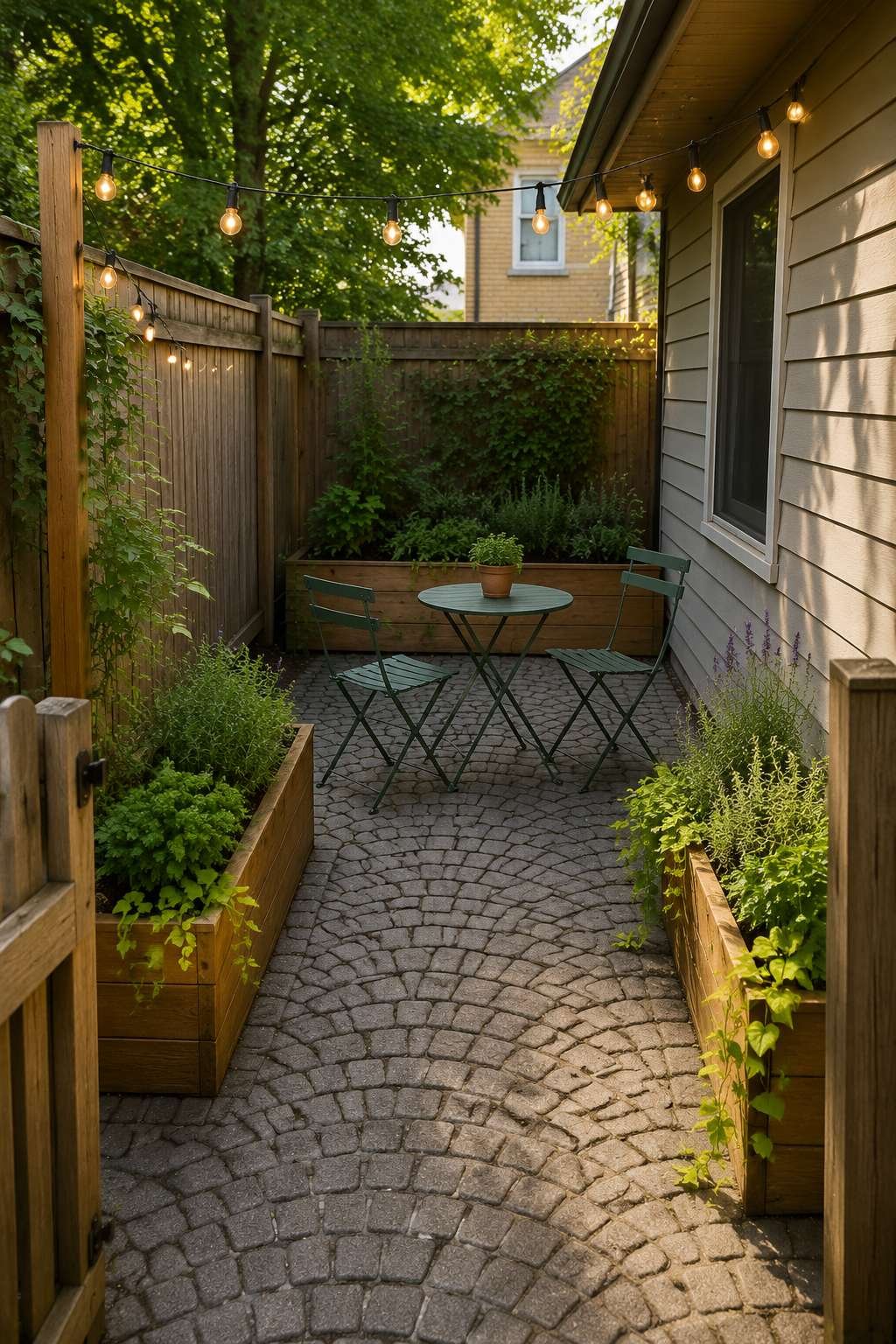
This concept works particularly well for urban backyards where privacy fencing already exists, since the planter boxes can be positioned to soften and green up an otherwise plain fence line. The result is a patio that feels enclosed, private, and lush despite its modest dimensions.
Key Design Tips:
- Choose weather-resistant grey pavers with subtle texture to add depth without competing with the greenery
- Position raised cedar planters at varying heights to maximize vertical growing space
- Use warm white string lights rather than cool-toned bulbs for a cozier evening ambiance
- Select trailing vines like ivy or sweet potato vine to naturally soften planter edges
- Keep furniture scaled appropriately—a two-person bistro set prevents overcrowding
2. Vertical Garden Wall with a Quiet Reading Nook
For yards where floor space is at an absolute premium, a vertical garden wall mounted directly onto a wooden privacy fence offers a stunning solution. This design relies on modular planters arranged in a grid pattern, each filled with a curated mix of succulents, lush ferns, and colorful flowering annuals. The result is a living mural that turns a plain fence into the yard’s focal point, all without consuming a single inch of ground space.
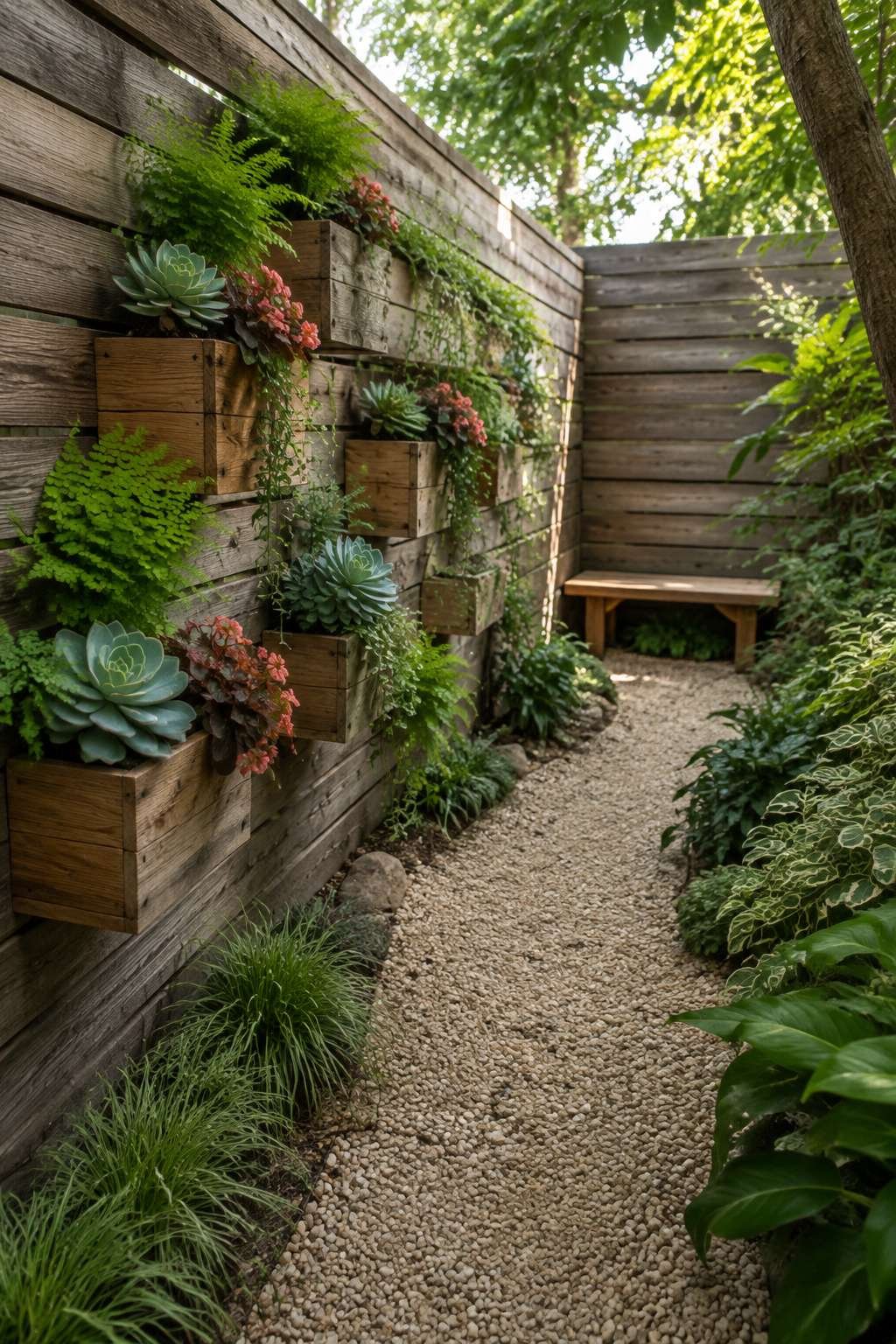
A narrow gravel path winds through the small yard, leading visitors toward a tucked-away bench nook in the corner—a quiet spot perfect for morning coffee or an evening of reading. The reclaimed wood used for the planters adds a rustic, lived-in character to the space, its natural grain and weathering telling a story of sustainability and craftsmanship. This material choice also ties beautifully into eco-conscious garden design trends that prioritize repurposed materials over new lumber.
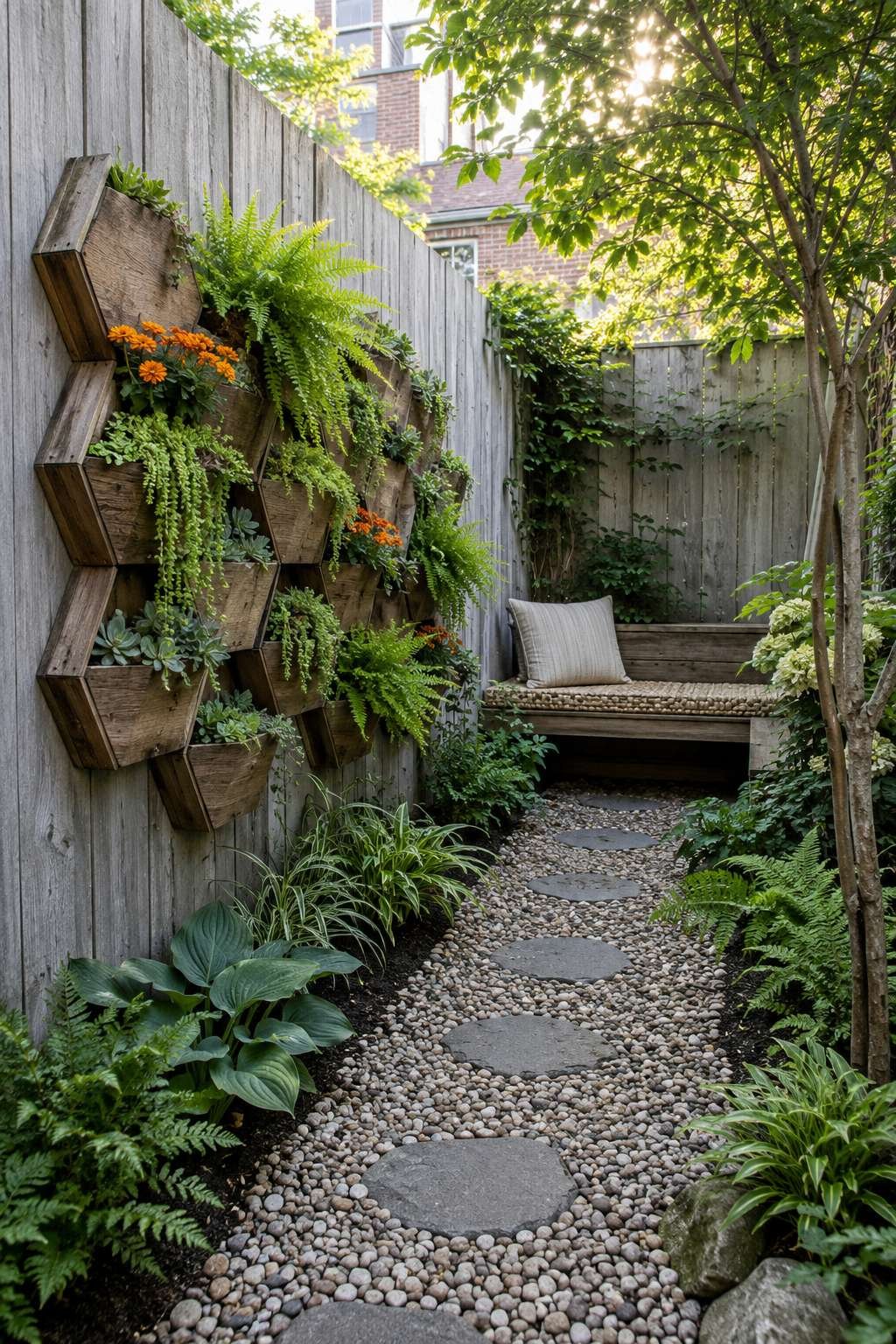
Soft morning light filtering through nearby trees plays a starring role in this design, dappling the vertical garden with shifting patterns of sun and shade throughout the day. This natural lighting emphasizes the textural contrast between the rough wood planters, smooth succulent leaves, and delicate flower petals, creating a multi-sensory experience that rewards close observation.

The beauty of vertical gardening in small-yard contexts cannot be overstated—it allows for an abundance of plant variety and color without demanding the square footage that traditional garden beds require. This is an ideal solution for renters or homeowners hesitant to commit to permanent ground landscaping.
Key Design Tips:
- Mix plant textures—pair spiky succulents with soft ferns for visual contrast
- Use reclaimed wood planters for an authentic, eco-friendly aesthetic
- Install a simple drip irrigation system to keep vertical plantings healthy with minimal effort
- Choose a gravel path material that complements the fence tone for cohesion
- Position the bench nook to catch morning light for a peaceful start to the day
3. Multifunctional Deck with Built-In Storage Seating
When square footage is limited, furniture that serves double duty becomes essential, and this multifunctional deck design exemplifies that principle perfectly. The centerpiece is built-in bench seating that cleverly doubles as hidden storage—ideal for tucking away cushions, garden tools, or outdoor games when not in use. Topped with weather-resistant cushions in a soothing muted olive tone, the benches invite lounging while keeping clutter completely out of sight.
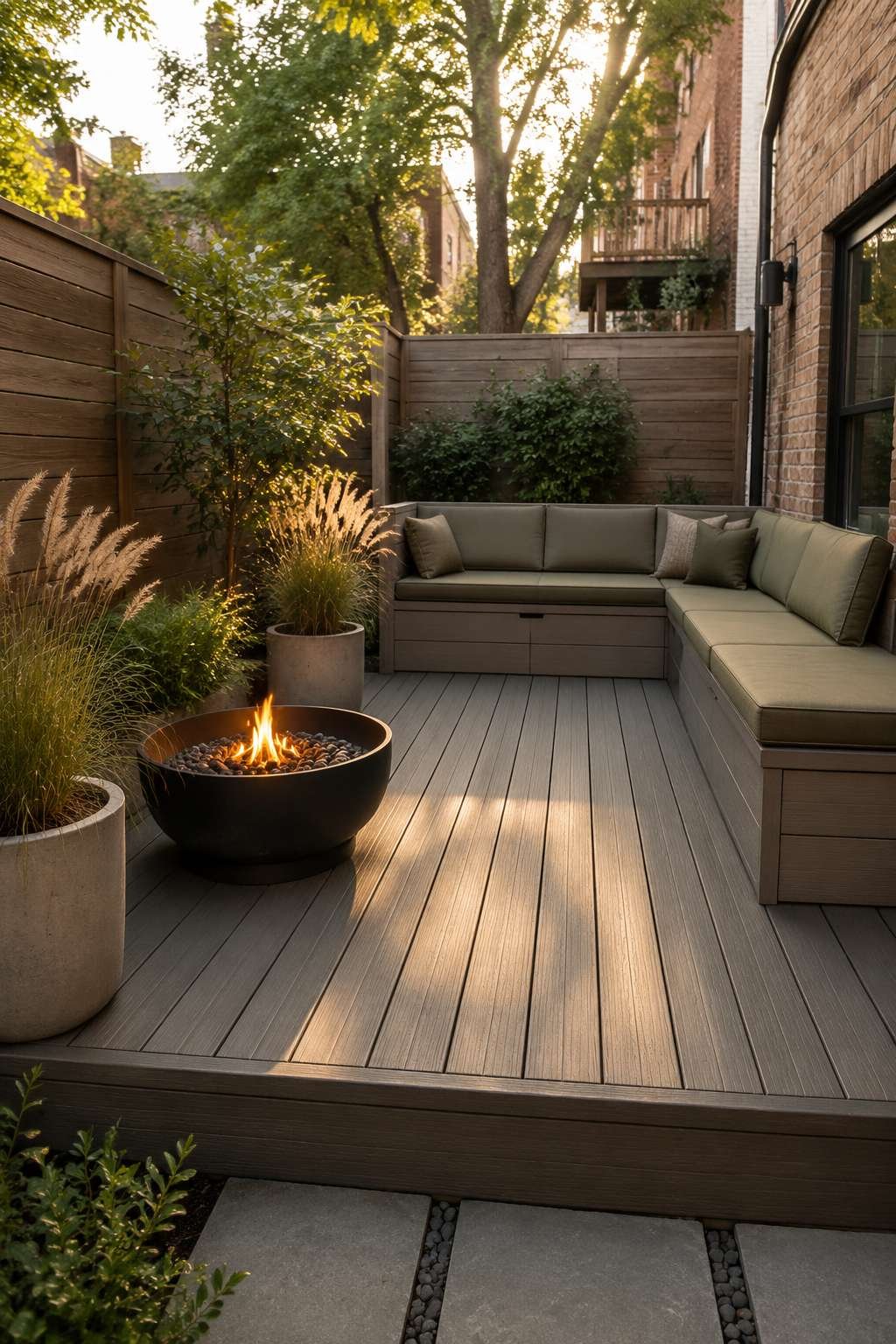
At the deck’s edge, a small round fire pit creates a natural gathering point, its warm glow extending the usability of the space well into cooler evenings. Surrounding the fire pit, potted grasses add movement and softness, their feathery tips catching the breeze and contrasting nicely with the clean lines of the composite decking boards beneath.
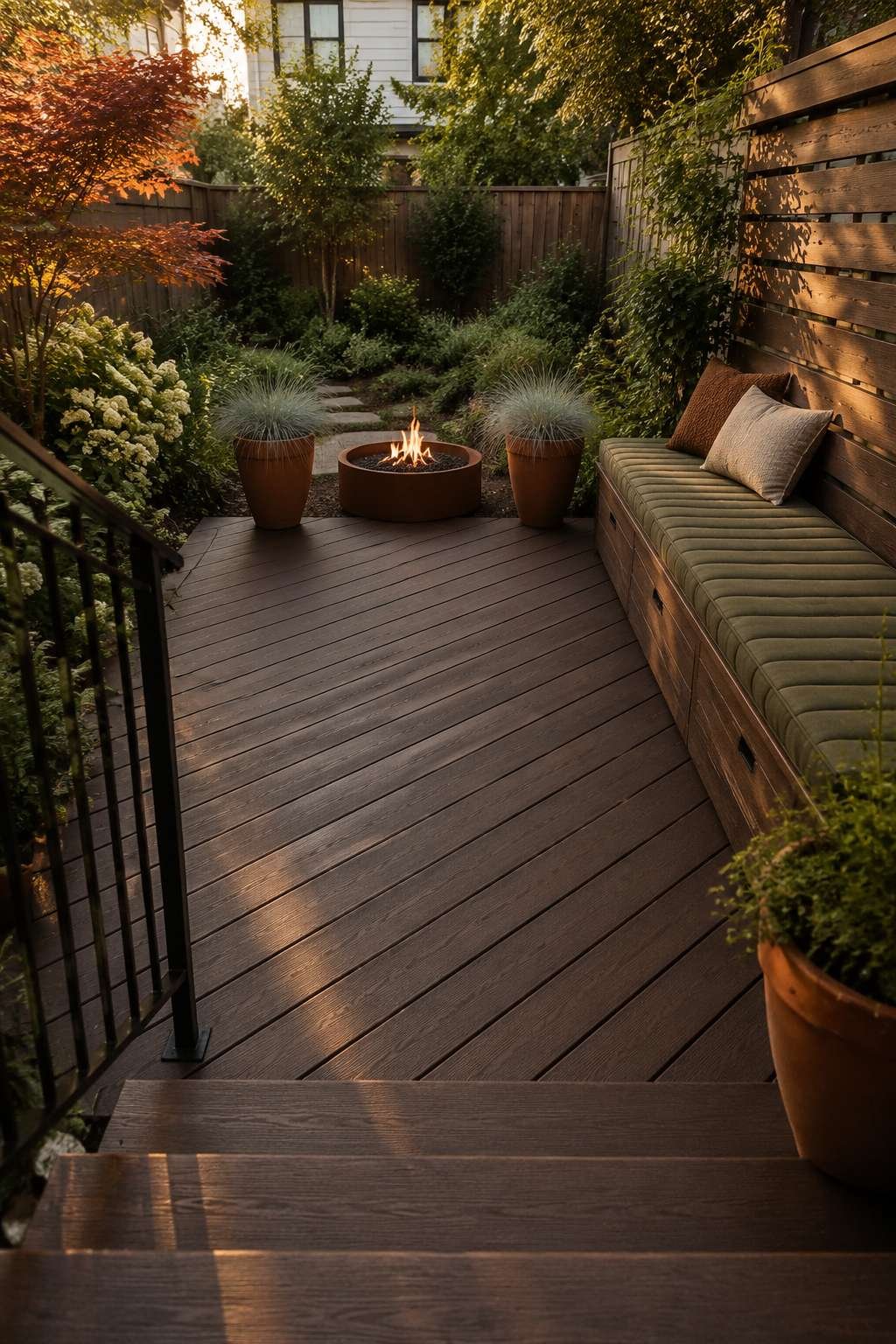
The golden hour lighting in this scene does remarkable work, casting long, soft shadows across the deck surface and highlighting the subtle grain pattern of the composite decking material. This time of day lighting is particularly flattering for outdoor spaces, lending a warm, cinematic quality that makes the deck feel like an extension of the home’s living area rather than a separate outdoor afterthought.
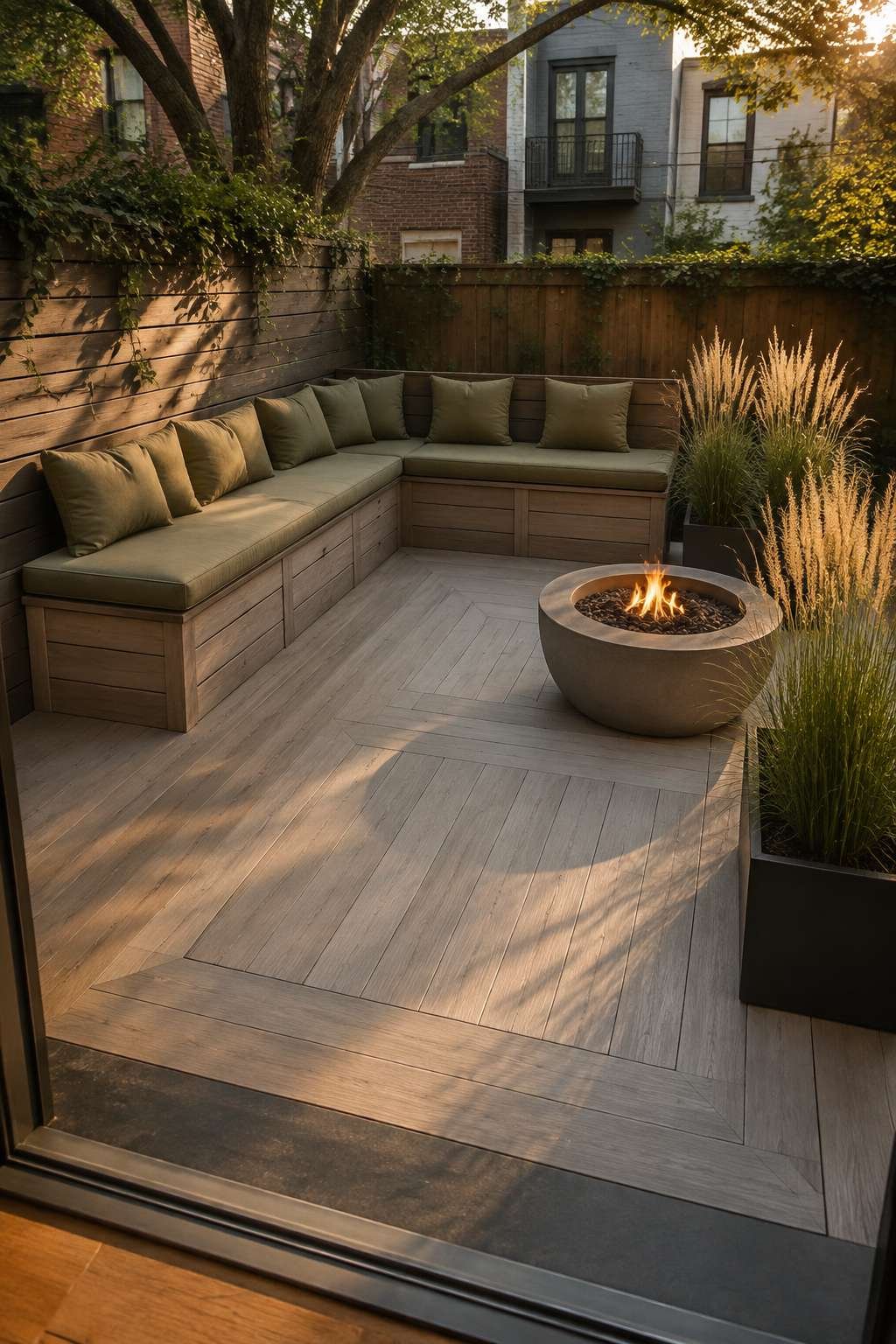
This design philosophy—maximizing every element’s function—is the cornerstone of successful small-space outdoor living. By choosing decking material that resists weathering and furniture that stores as much as it seats, homeowners can maintain a clean, organized look without sacrificing comfort or style.
Key Design Tips:
- Opt for composite decking for durability and low maintenance in variable climates
- Build bench seating with lift-top lids for accessible, hidden storage
- Choose cushion fabrics rated for outdoor use to withstand sun and moisture
- Keep the fire pit compact and portable-style for flexible placement
- Layer potted grasses of varying heights around the fire pit for dimension
4. Shaded Outdoor Dining Nook with Retractable Awning
Small-yard dining doesn’t require sacrificing shade or style, as this elegant nook demonstrates. A foldable teak table paired with matching chairs sits atop a small paved patio, offering a dedicated dining area that can be tucked away when not in use—a crucial feature for space-conscious backyards. Above, a retractable canvas awning in a soft natural beige tone provides adjustable shade, allowing homeowners to control sun exposure throughout the day.
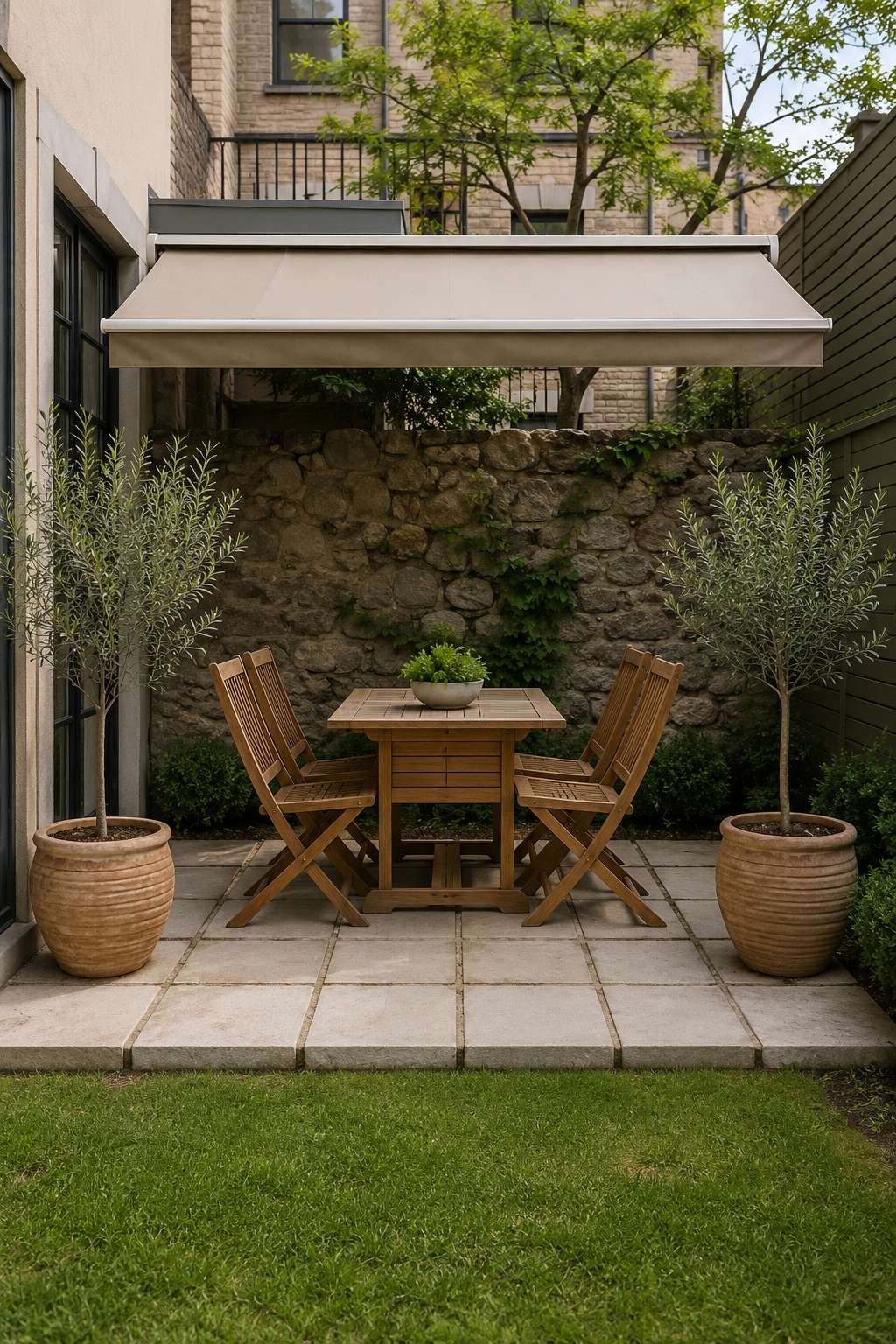
Flanking the seating area, potted olive trees introduce a touch of Mediterranean elegance, their silvery-green foliage complementing the warm tones of the teak furniture and paved surface. A low stone wall defines the perimeter of this dining zone, creating a subtle sense of enclosure without the visual weight of a full fence or hedge. This boundary-setting technique is particularly effective in small yards, where clear zoning helps different areas feel intentional rather than accidental.
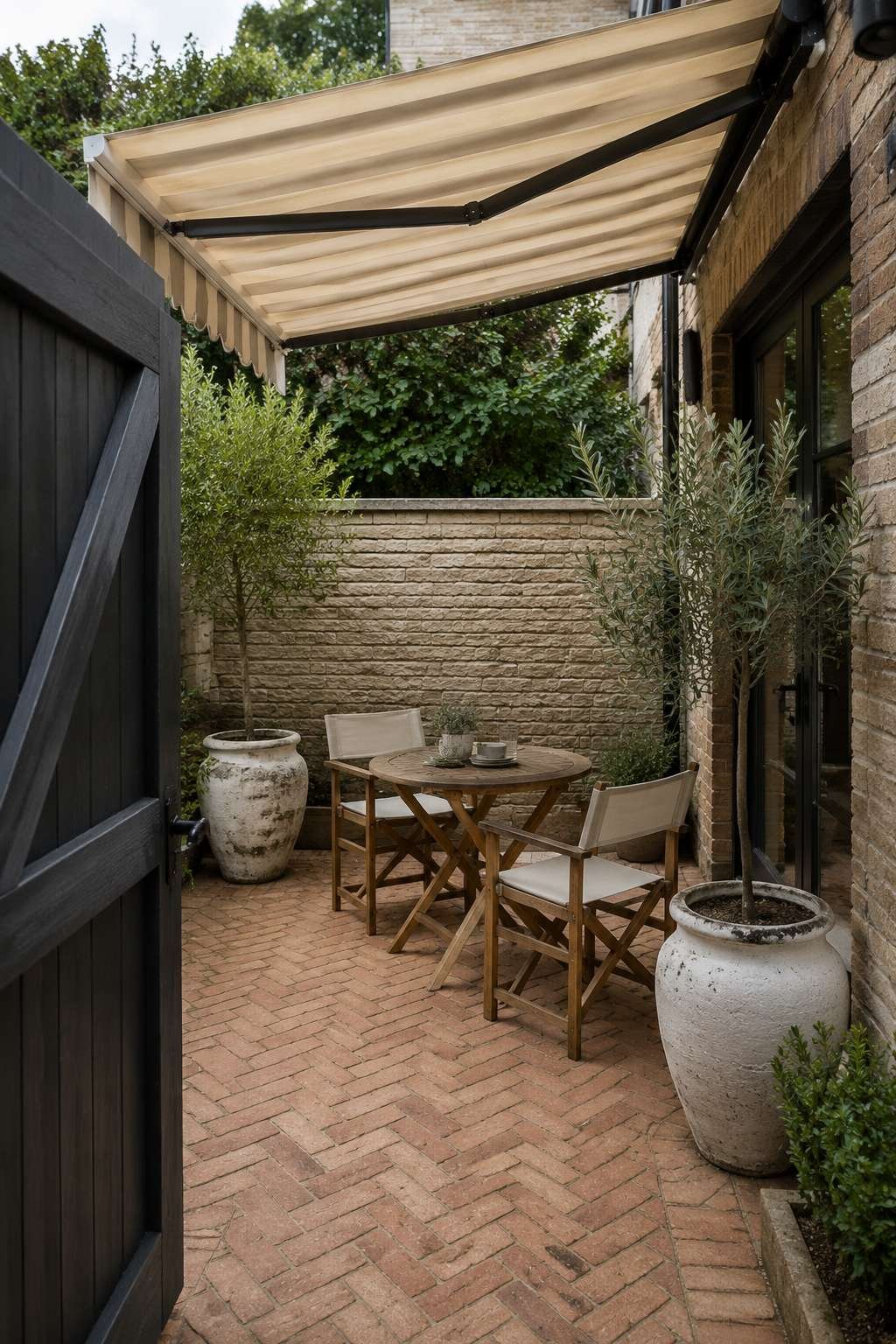
The natural daylight in this space is soft and diffused, thanks in part to the awning’s filtering effect, resulting in gentle shadows that add depth without harshness. This balanced lighting makes the dining nook comfortable for extended use throughout the day, whether for a leisurely breakfast or an evening dinner party.
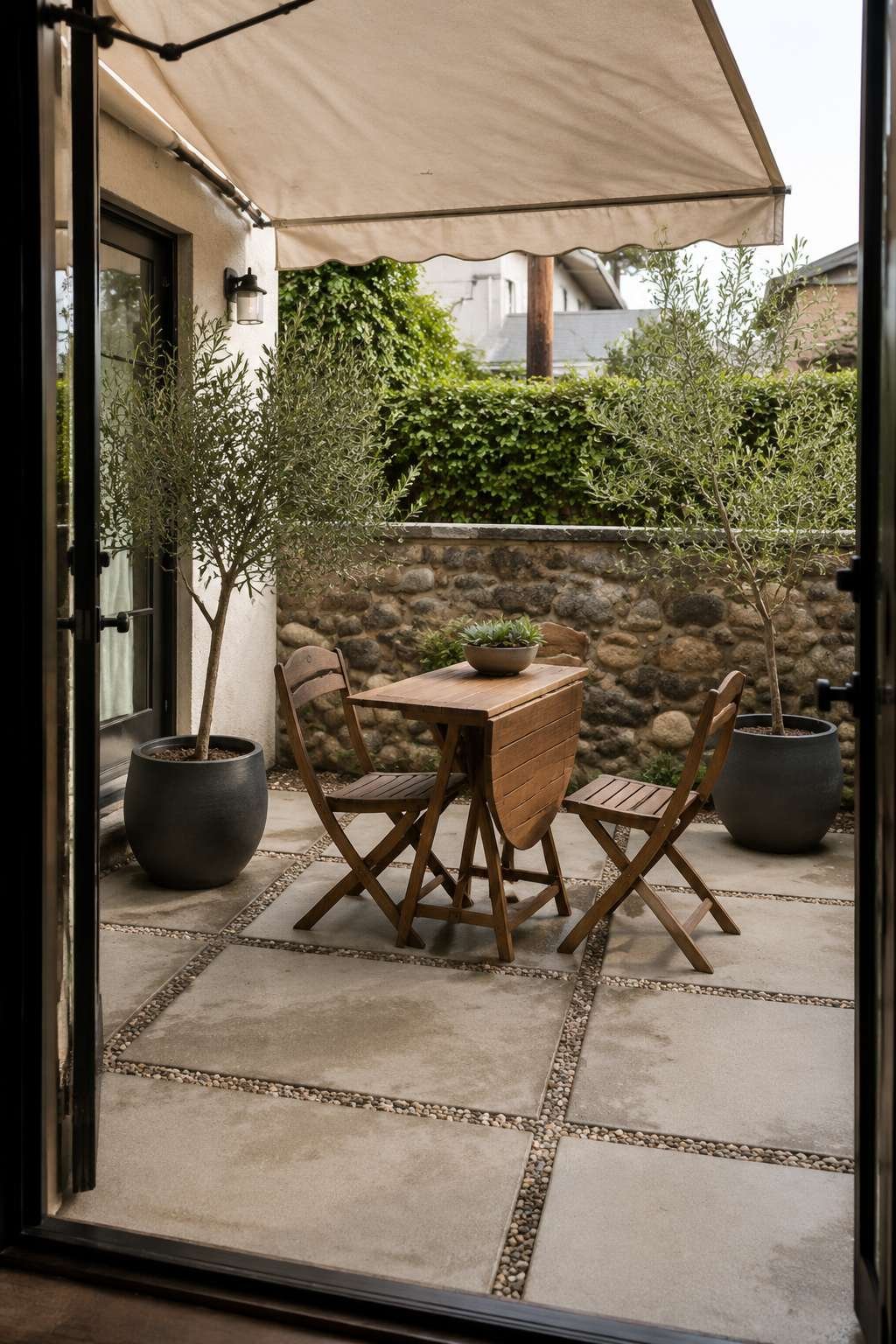
Teak furniture remains a favorite among outdoor design professionals for its exceptional durability and natural resistance to moisture and pests, making it a wise long-term investment for any small-yard dining setup. Combined with the flexibility of a retractable awning, this design adapts beautifully to changing weather and seasons.
Key Design Tips:
- Invest in teak furniture for longevity and minimal maintenance requirements
- Install a retractable awning to control sunlight and shade seasonally
- Use potted olive trees or similar evergreens to add height without heavy pruning
- Build a low stone wall to define zones without blocking sightlines
- Choose neutral paving tones that reflect light and keep the space feeling open
5. Relaxing Hammock Retreat with Ambient Lighting
Sometimes the best small-yard design is the simplest, and this hammock retreat proves that a single comfortable feature can define an entire outdoor space. A cozy hammock strung between two sturdy wooden posts hovers above a small patch of artificial turf, offering a low-maintenance yet inviting spot to unwind. Beside it, a low rattan side table holds a citronella candle, blending function with ambiance while keeping pests at bay during warm evenings.
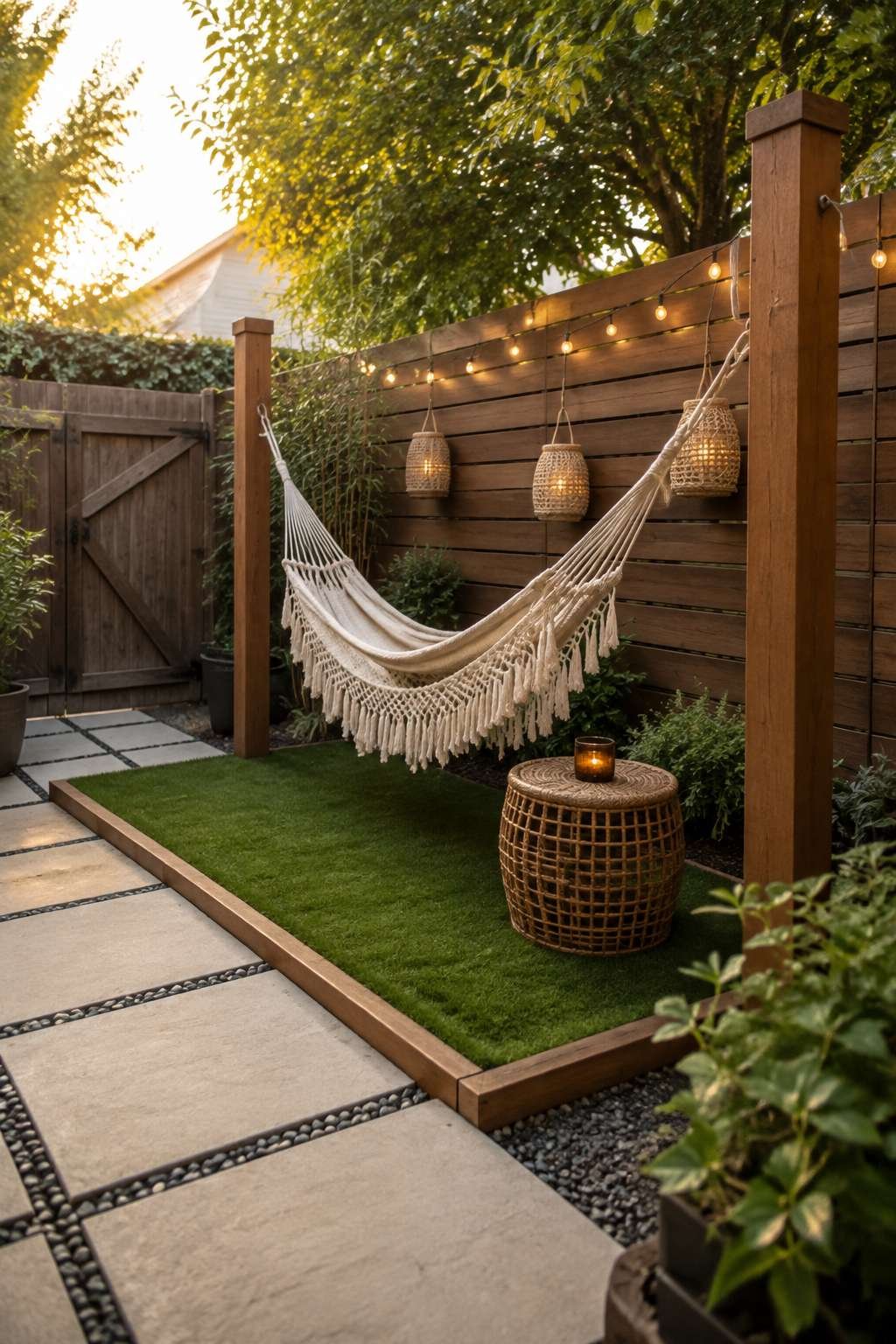
String lights and hanging lanterns add textural richness to the fence backdrop, their varied shapes and warm-toned bulbs creating visual interest even before dusk falls. As late afternoon golden light filters through the space, it casts warm, honeyed tones across the turf and wood, enhancing the overall sense of relaxation this design is built to deliver.

The choice of artificial turf here is particularly strategic for small yards, as it eliminates the maintenance demands of natural grass while providing a soft, consistent surface underfoot—ideal for bare feet beneath a swaying hammock. This low-upkeep approach frees homeowners to spend their time actually enjoying the space rather than maintaining it.
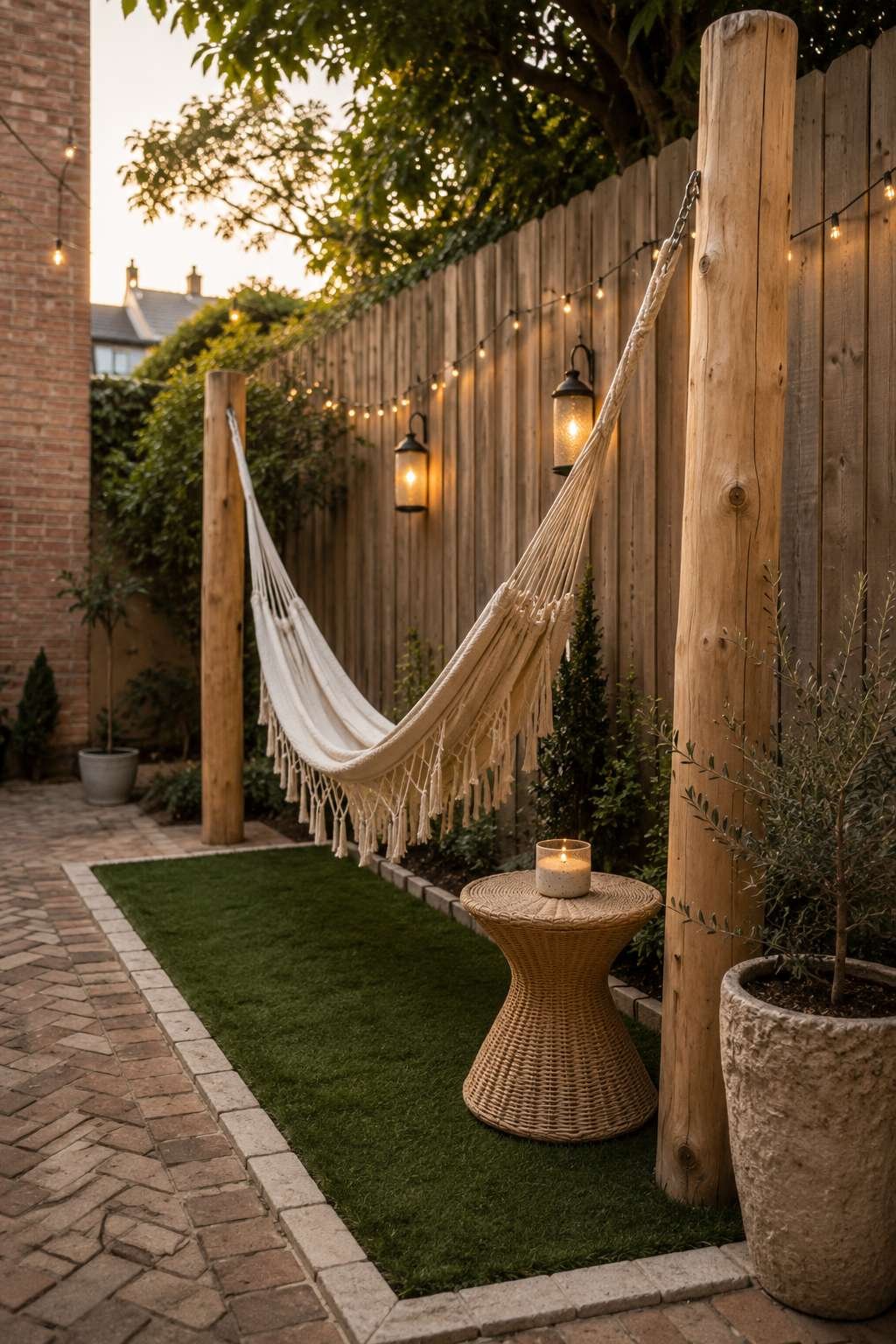
Natural material textures, from the woven rattan table to the rope construction of the hammock itself, ground this design in an organic, tactile aesthetic that feels both relaxed and considered. This is a backyard concept built entirely around slowing down and savoring small moments outdoors.
Key Design Tips:
- Anchor hammock posts securely into concrete footings for safety and stability
- Choose high-quality artificial turf with realistic blade texture for comfort
- Layer string lights and lanterns at different heights for dimensional lighting
- Use citronella candles in decorative holders to combine function and style
- Select a rattan or wicker side table for natural texture that weathers well
6. Tiered Garden Beds for Sloped Small Yards
Sloped yards present unique challenges, but this tiered garden bed design turns that challenge into an opportunity for dynamic visual interest. Built into a sloped corner, the system uses weathered cedar boxes set at varying heights, each level planted with a mix of vegetables and flowers that create a cascading effect as the eye moves down the slope. This tiered approach maximizes planting area on terrain that would otherwise be difficult to use.
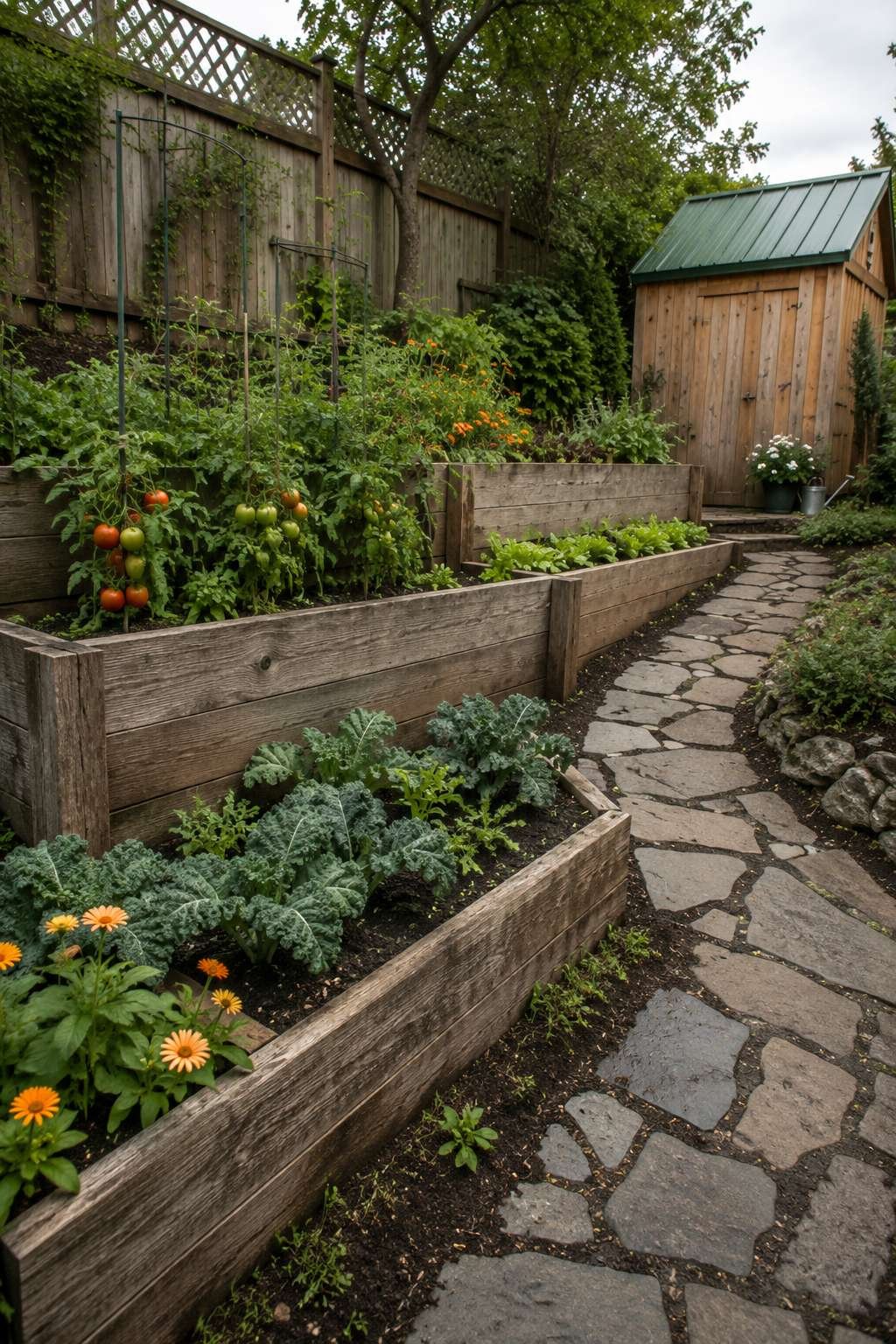
A narrow flagstone path winds gracefully between the beds, guiding visitors toward a small toolshed topped with a distinctive green metal roof. This path not only provides practical access for garden maintenance but also adds a meandering, exploratory quality to an otherwise compact space, making the yard feel larger than its actual dimensions suggest.
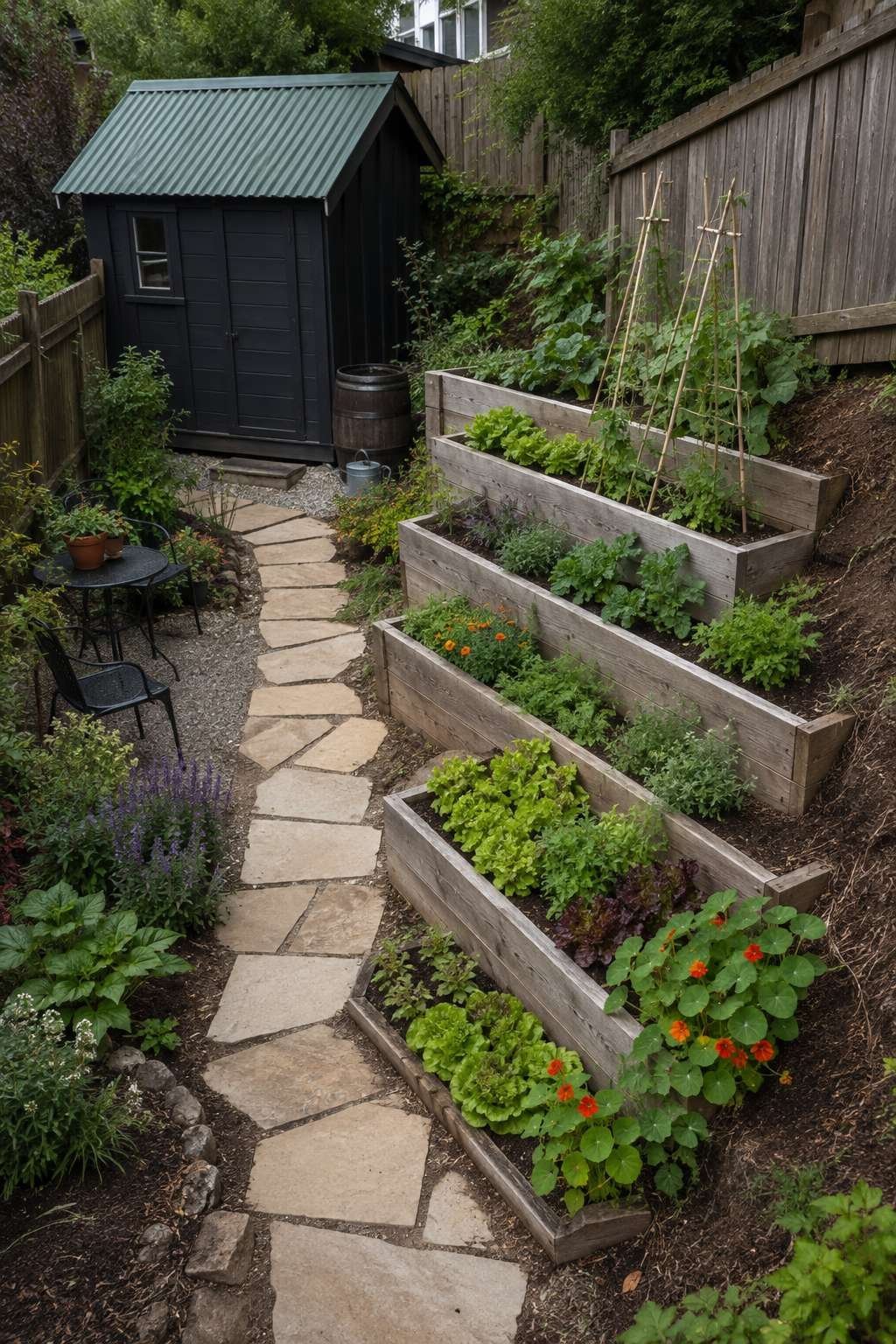
Soft overcast lighting plays a key role in this design’s photographic and real-world appeal, evenly illuminating the varied textures of soil, weathered wood, and foliage without harsh shadows or blown-out highlights. This even lighting is especially flattering for vegetable gardens, where the goal is to showcase the natural bounty of the plantings themselves.

Tiered cedar bed systems are among the most practical solutions for small, sloped yards, as they prevent soil erosion while dramatically increasing usable planting space. The combination of edible and ornamental plantings also means this design serves both aesthetic and functional purposes—a hallmark of successful small-space gardening.
Key Design Tips:
- Use weathered cedar for natural rot resistance and rustic visual appeal
- Terrace beds according to the yard’s natural slope to prevent soil erosion
- Mix vegetables and flowers within tiers for both beauty and productivity
- Install flagstone paths with adequate width for wheelbarrow access
- Choose a toolshed roof color that complements the garden’s natural palette
7. Sunny Vertical Herb Garden with Bistro Seating
Culinary enthusiasts with limited outdoor space will find inspiration in this vertical herb garden design, which mounts a collection of terracotta pots onto a modular wooden rack affixed to a sunny exterior wall. This arrangement puts fresh herbs within arm’s reach of the kitchen while requiring virtually no ground-level footprint—a perfect solution for apartment patios and small urban yards alike.

Below the herb wall, a small bistro set rests on classic brick pavers, grounded by a woven jute rug that adds warmth and softness underfoot. This layering of textures—rough terracotta, smooth brick, and natural fiber rug—creates a rich sensory experience that elevates a simple seating arrangement into a designed vignette.
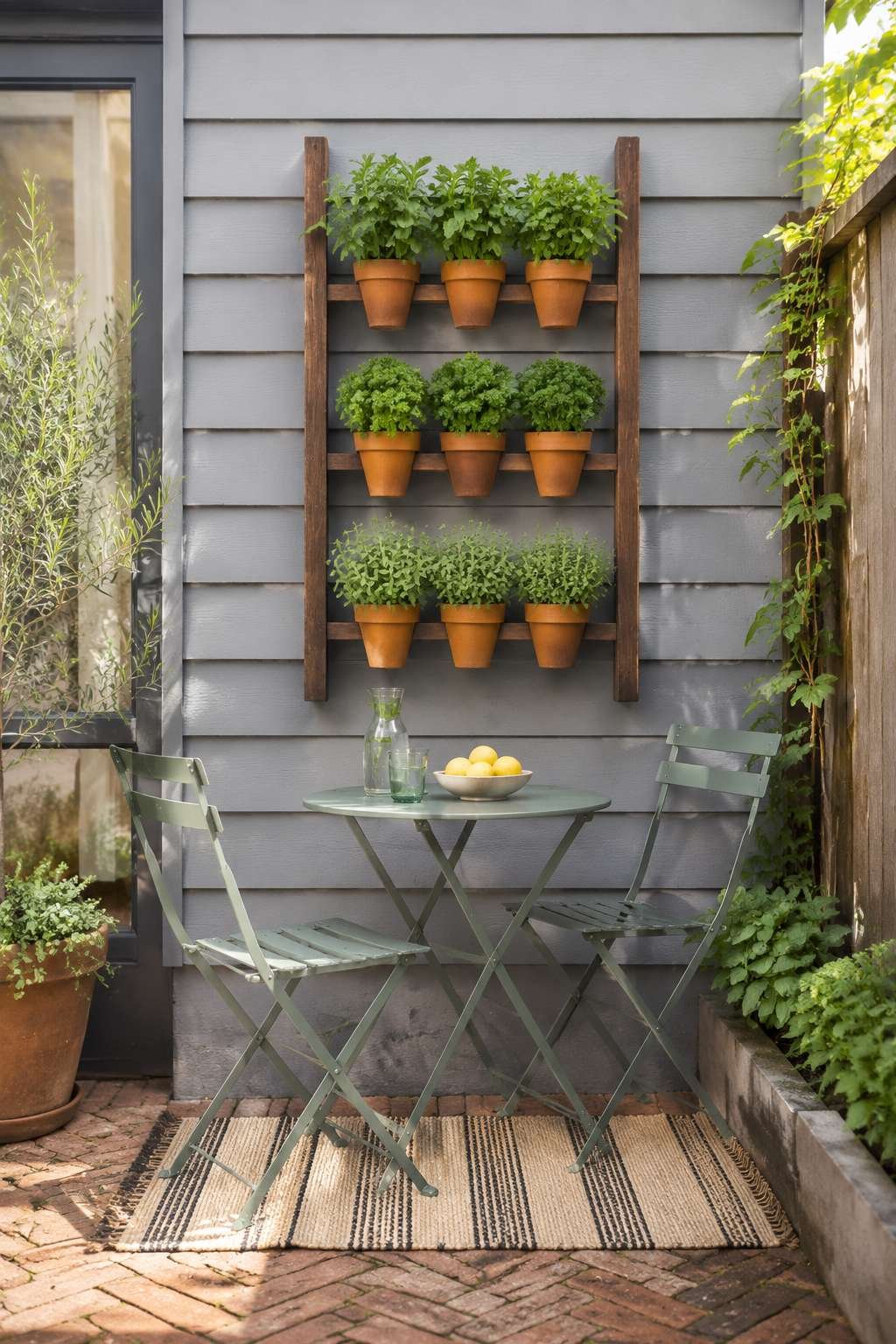
Bright midday natural light is essential to this design’s success, both practically and aesthetically. The abundant sunlight ensures healthy herb growth while also highlighting the warm, earthy tones of the terracotta pots against the greenery they contain. This lighting condition brings out the authentic material quality that defines the entire space.
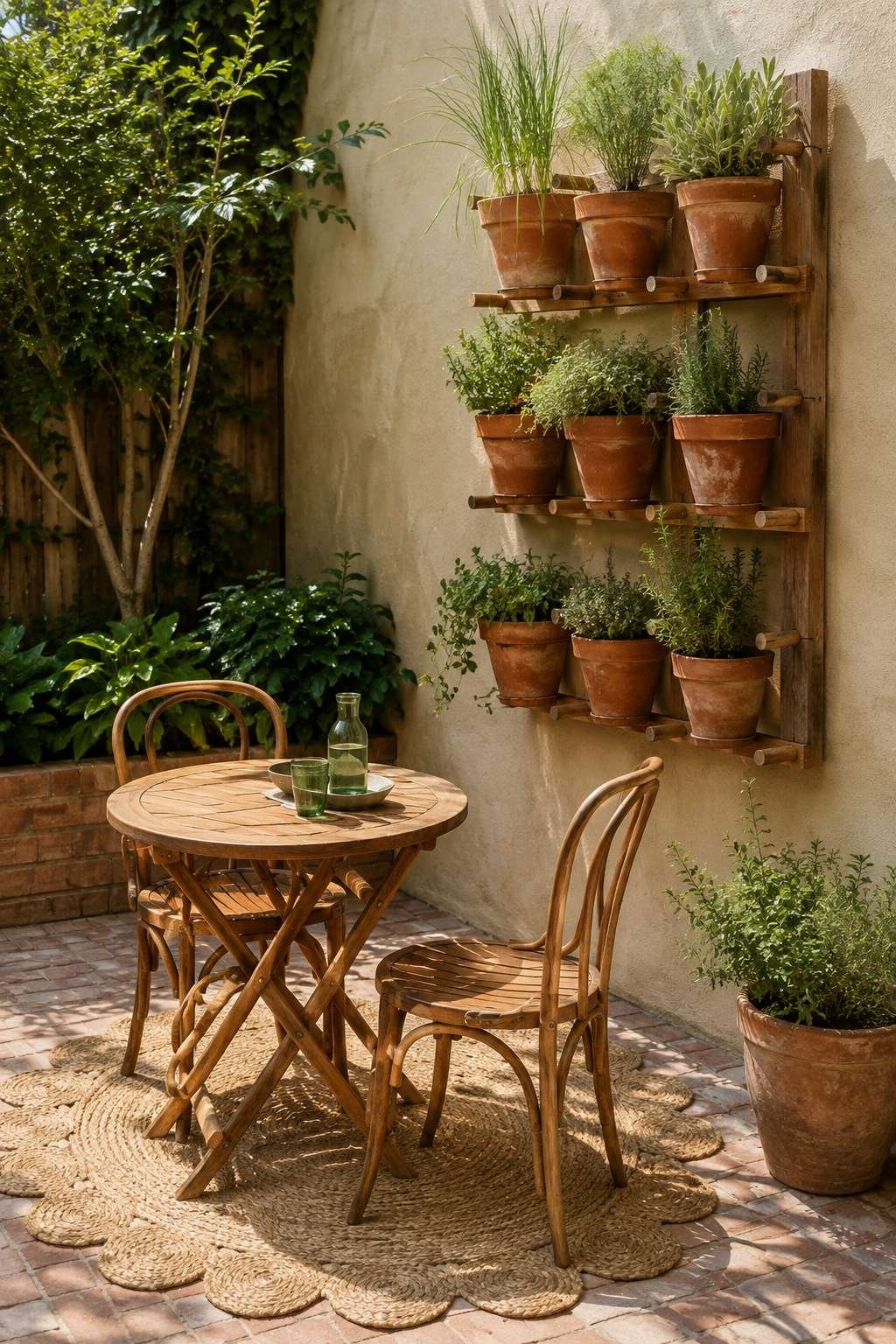
Vertical herb gardens represent one of the most efficient uses of small-yard real estate, combining culinary function with genuine visual charm. The modular nature of the wooden rack system also means this setup can be easily expanded or reconfigured as plant collections grow.
Key Design Tips:
- Mount herb racks on south-facing walls for maximum sun exposure
- Use terracotta pots for their natural moisture-regulating properties
- Add a jute or sisal rug to soften brick paver seating areas
- Group herbs by water needs to simplify maintenance routines
- Choose a modular rack system that allows for easy pot rotation and expansion
8. Minimalist Zen Corner with Stacked Stone Water Feature
For homeowners seeking tranquility over entertainment space, this minimalist zen corner offers a meditative escape within even the smallest yard. The centerpiece is a small water feature crafted from stacked natural stones, its gentle trickling sound creating an auditory backdrop that masks urban noise and promotes relaxation. Surrounding the feature, raked gravel patterns add a meditative, Japanese-inspired texture underfoot.

A single Japanese maple, planted in an elegant ceramic planter, serves as the corner’s living sculpture, its delicate leaves providing seasonal color changes that keep the space visually engaging year-round. A low wooden bench offers a simple, unadorned place to sit and reflect, its minimal design ensuring the plantings and water feature remain the visual focus.
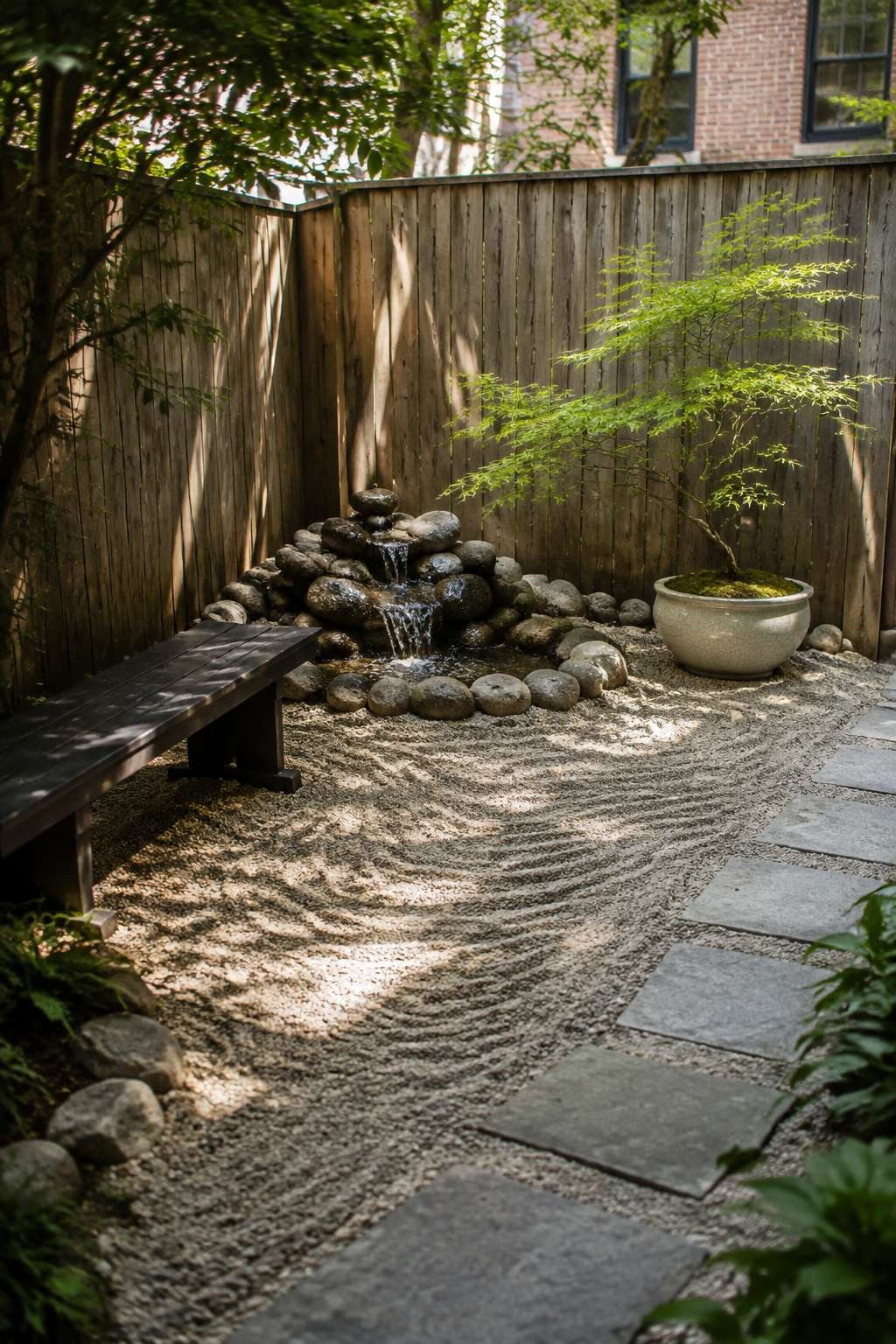
Dappled sunlight filtering through nearby foliage creates gentle, shifting shadows across the raked gravel, adding a subtle sense of movement to an otherwise still and quiet composition. This soft, organic lighting pattern enhances the zen atmosphere the design is meant to evoke, avoiding harsh contrasts in favor of gentle transitions.
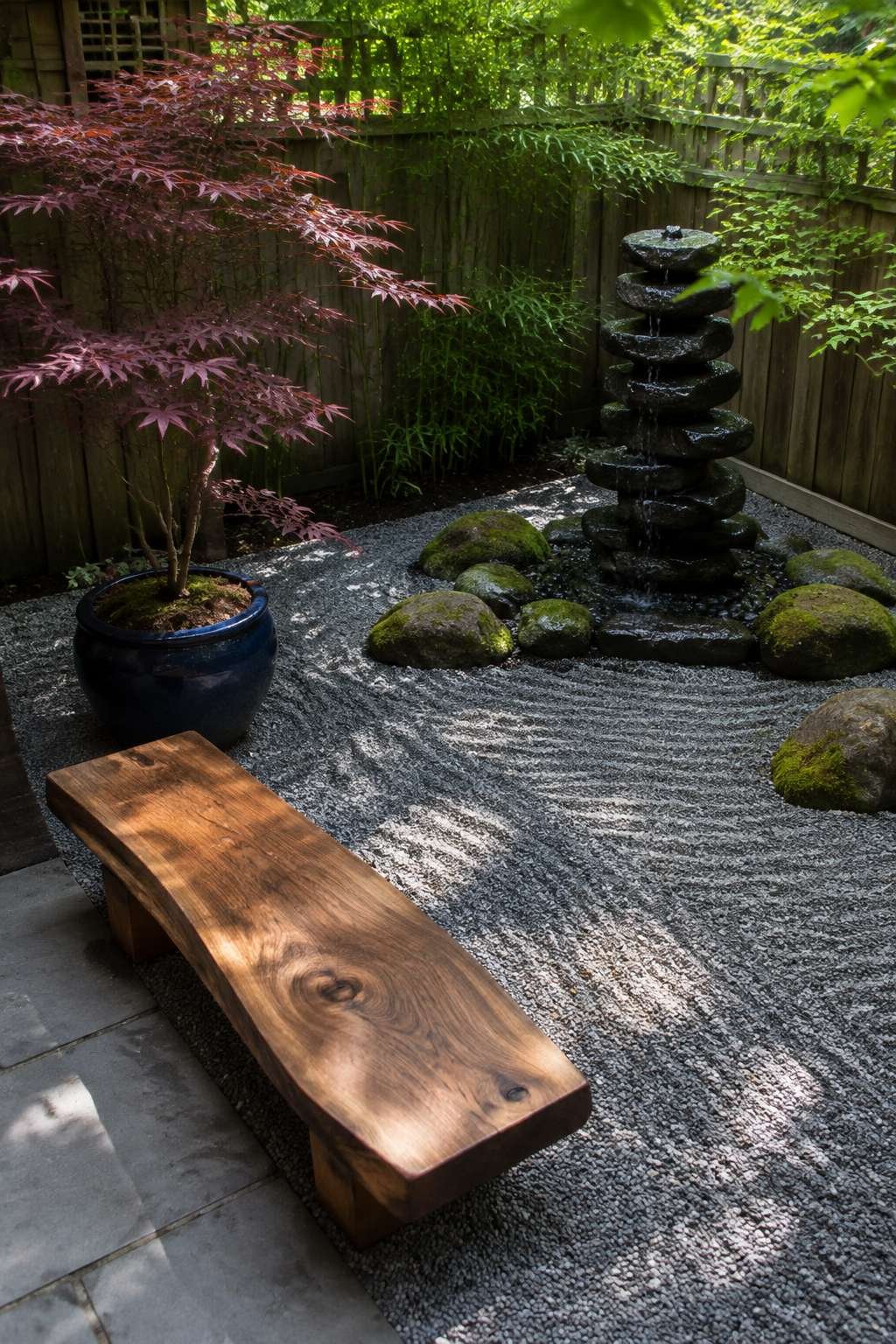
Zen-inspired garden corners prove that small yards can accommodate genuine sanctuary spaces without requiring extensive square footage. The intentional restraint in plant selection and hardscaping—just stone, gravel, one tree, and one bench—demonstrates how less can indeed be more in thoughtful outdoor design.
Key Design Tips:
- Select a compact Japanese maple variety suited to container growing
- Use natural, irregular stones for water features to avoid a manufactured look
- Rake gravel in simple linear or circular patterns for authentic zen aesthetics
- Keep the plant palette restrained to maintain the space’s calming simplicity
- Position the water feature where its sound can be heard from indoor living areas
9. Golden Hour Fire Pit Lounge with Wicker Seating
Evening entertaining reaches new heights with this fire pit lounge design, built around a circular gravel base that anchors four weather-resistant wicker chairs upholstered in soft cream cushions. At the center, a copper fire bowl serves as both heat source and sculptural focal point, its warm metallic tones catching and reflecting the surrounding firelight beautifully.

Low boxwood hedges frame the seating area’s perimeter, creating a subtle green boundary against the backdrop of a classic wooden fence. This landscaping choice adds structure and formality to the casual gathering space without requiring significant maintenance, as boxwood is well known for its resilience and manageable growth habit.
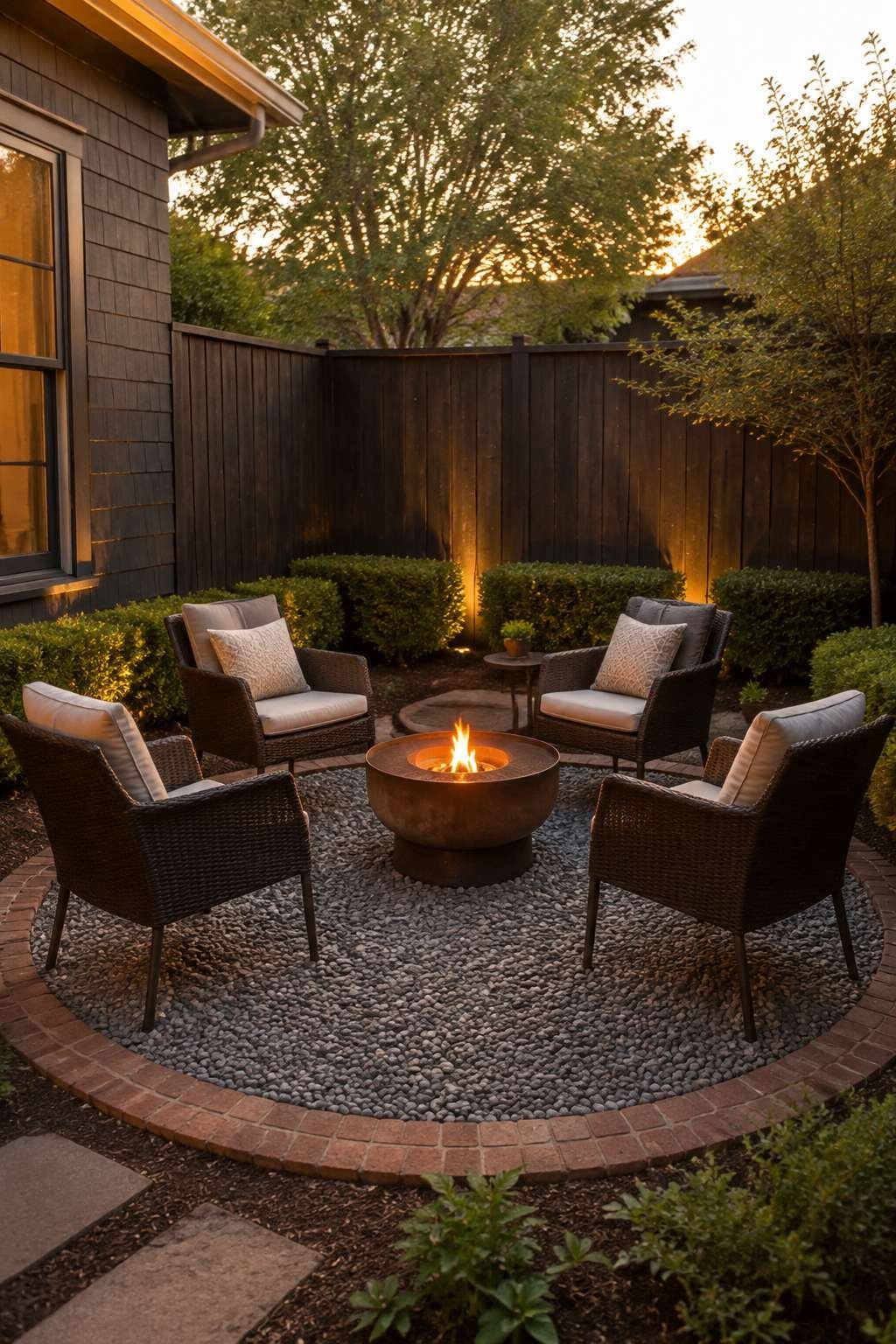
The evening golden hour lighting in this design is transformative, casting warm, glowing tones across every textured surface—the coarse gravel, the woven wicker, the polished copper. This lighting condition is precisely why fire pit areas are often considered the most atmospheric feature a small backyard can offer, extending usable outdoor hours well past sunset.

Circular seating arrangements around a central fire feature naturally encourage conversation and connection, making this design ideal for small gatherings with friends or family. The combination of gravel flooring, wicker furniture, and copper accents creates a layered material palette that feels both cohesive and visually rich.
Key Design Tips:
- Choose a copper fire bowl for its beautiful patina development over time
- Use weather-resistant wicker with removable, washable cushion covers
- Maintain boxwood hedges at a low height to preserve sightlines and openness
- Select gravel in a neutral tone that complements both wicker and copper finishes
- Position seating to face both the fire and any scenic yard features
10. Functional Potting Station for Garden Enthusiasts
Every avid gardener benefits from a dedicated workspace, and this potting station design delivers exactly that within a compact footprint. Built against an existing fence line, the station features a reclaimed wood workbench topped with hanging tool storage, keeping frequently used implements organized and within easy reach. Below the bench, stacked terracotta pots wait ready for the next planting project.
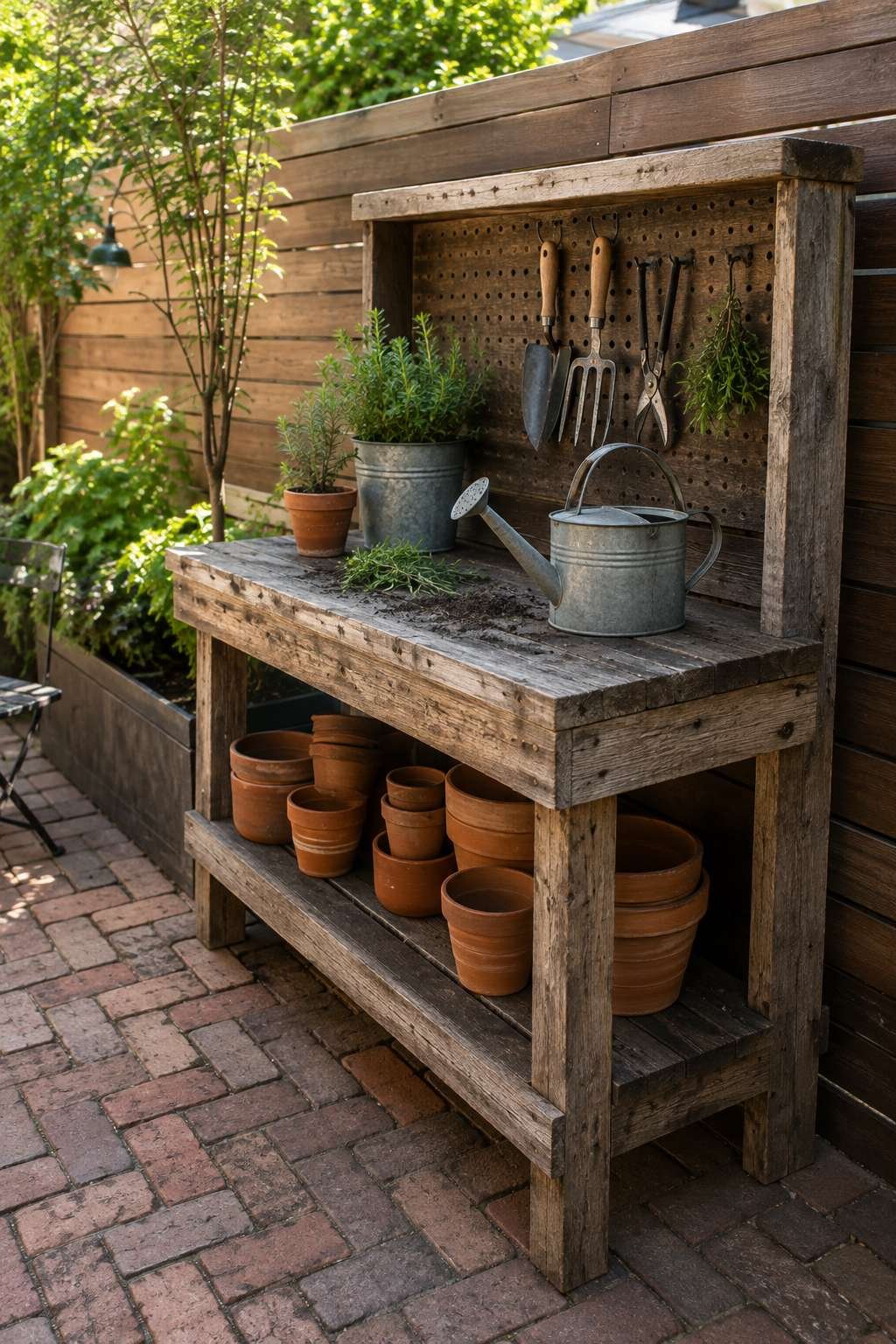
A galvanized watering can rests casually on the work surface, surrounded by scattered soil and fresh herb clippings—small details that lend authenticity and lived-in charm to the scene. This isn’t a showpiece garden feature but a genuinely functional workspace, and that practicality is precisely its appeal for serious small-yard gardeners.

Natural side lighting in this design does exceptional work highlighting material textures, particularly the rich wood grain of the reclaimed workbench and the metal patina developing on well-used tools and containers. This directional lighting creates depth and dimension that flat, overhead light simply cannot achieve.
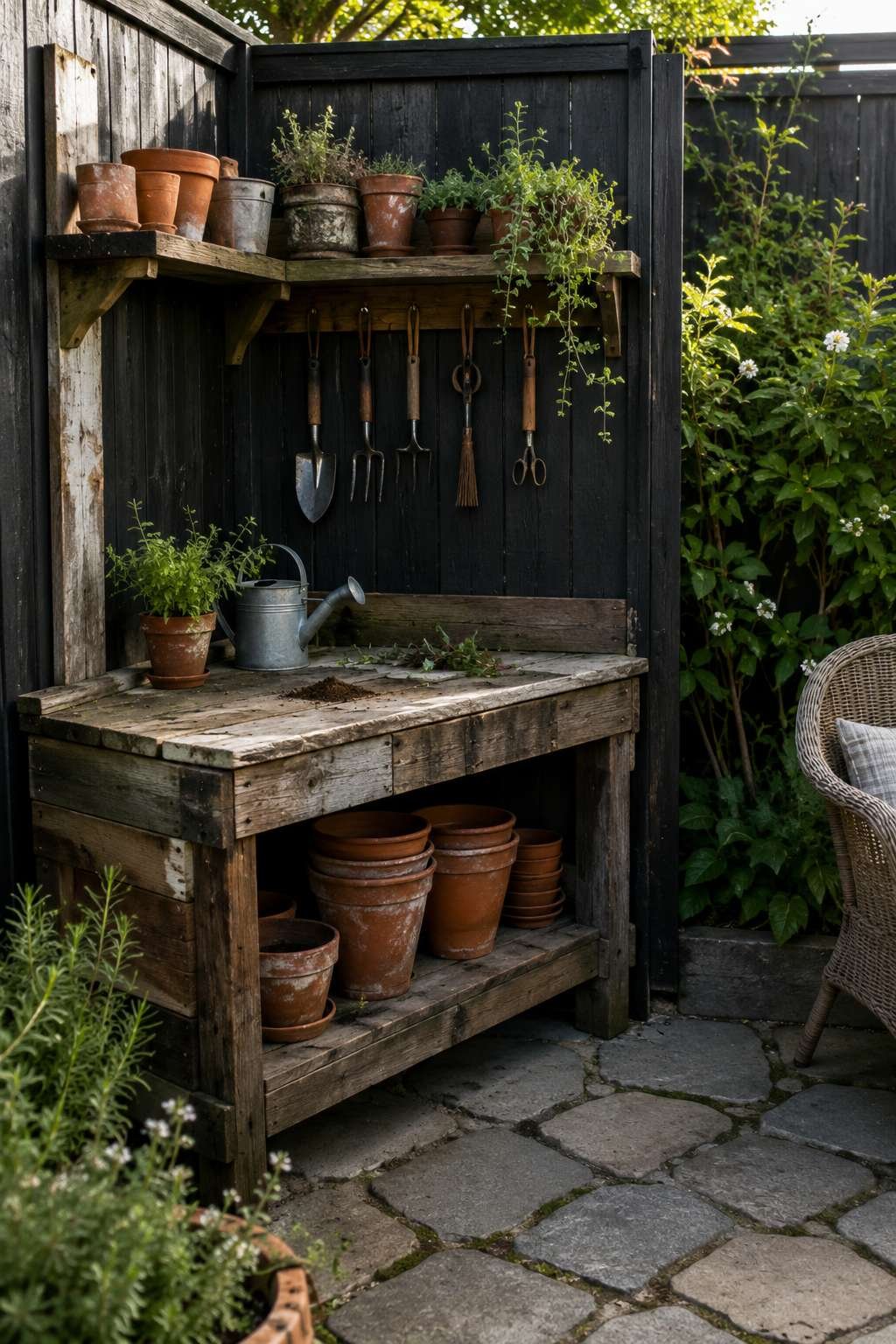
Dedicated potting stations solve one of the most common small-yard dilemmas: where to actually do the messy work of gardening without disrupting more polished entertaining or relaxation areas. By tucking this functional zone against a fence, homeowners preserve the rest of their yard for leisure while still supporting an active gardening hobby.
Key Design Tips:
- Build workbenches from reclaimed wood for character and sustainability
- Install hanging storage racks to keep tools organized and accessible
- Stack terracotta pots by size for efficient space use and easy selection
- Choose a galvanized watering can for durability and classic garden style
- Position the station in a partially shaded spot to keep soil from drying too quickly
11. Narrow Side-Yard Walkway Transformation
Side yards are frequently overlooked, but this design proves that even the narrowest passage can become a genuine design feature. The transformation centers on a functional walkway lined with crushed gravel, illuminated after dark by solar path lights that require no wiring or electrical work. Potted ferns line the route against a whitewashed fence, softening the corridor with lush greenery.
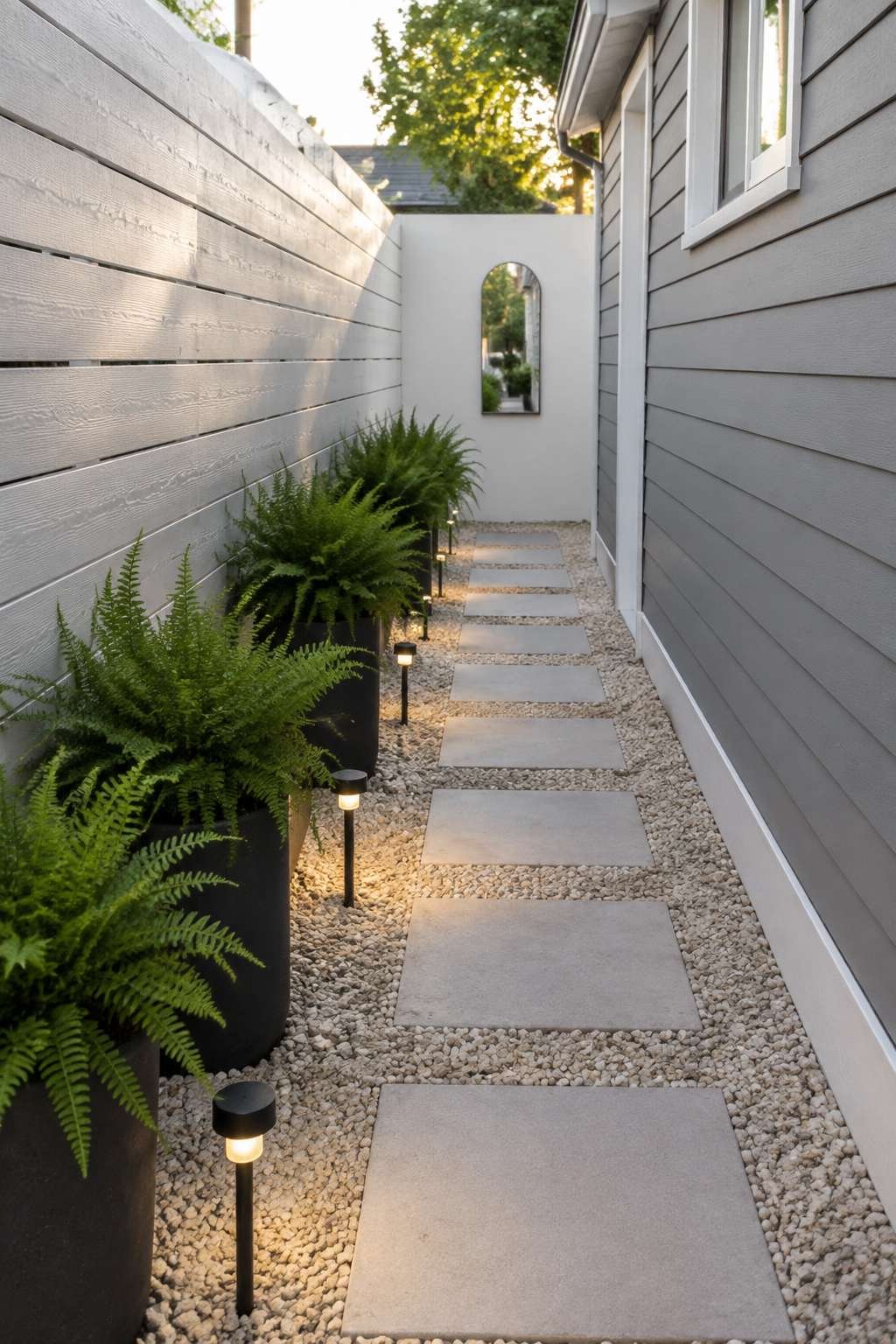
At the walkway’s end, a small wall-mounted mirror performs visual magic, reflecting light and greenery to create the illusion of a much deeper, more expansive space. This technique—long favored by interior designers for small rooms—translates beautifully to outdoor side-yard applications, effectively doubling the perceived length of the passage.
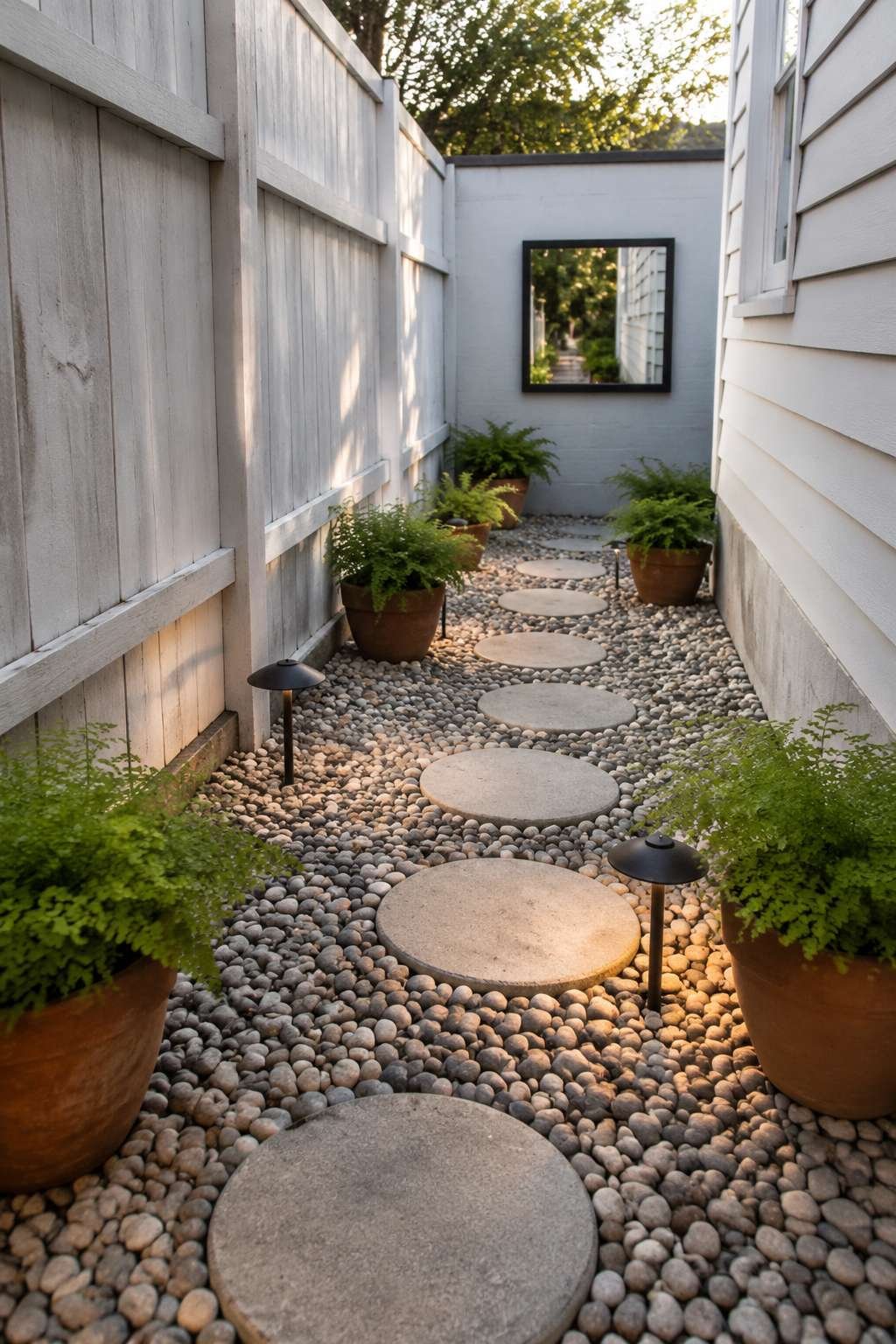
Soft late-day light creates gentle shadows along the gravel’s textured surface, adding subtle visual interest to what might otherwise be a purely utilitarian passageway. This attention to lighting quality demonstrates that even transitional, functional spaces deserve thoughtful design consideration.

Side-yard makeovers represent some of the highest-value transformations available to small-lot homeowners, converting wasted or neglected space into a genuinely enjoyable part of the property. The combination of solar lighting, potted greenery, and a whitewashed fence creates a bright, cohesive look that feels intentional rather than incidental.
Key Design Tips:
- Install solar path lights for maintenance-free evening illumination
- Whitewash existing fencing to brighten narrow, shaded side yards
- Use a wall-mounted mirror strategically to visually extend the space
- Choose shade-tolerant ferns suited to narrow, low-light corridors
- Keep gravel pathways at least two feet wide for comfortable passage
12. Built-In Banquette Seating Under a Jasmine-Covered Pergola
This design brings restaurant-style comfort to a residential backyard through a built-in corner banquette crafted from weatherproof wood and upholstered in rich navy outdoor fabric. Paired with a small round metal table, the seating arrangement maximizes comfort while minimizing the footprint typically required for traditional patio furniture sets.
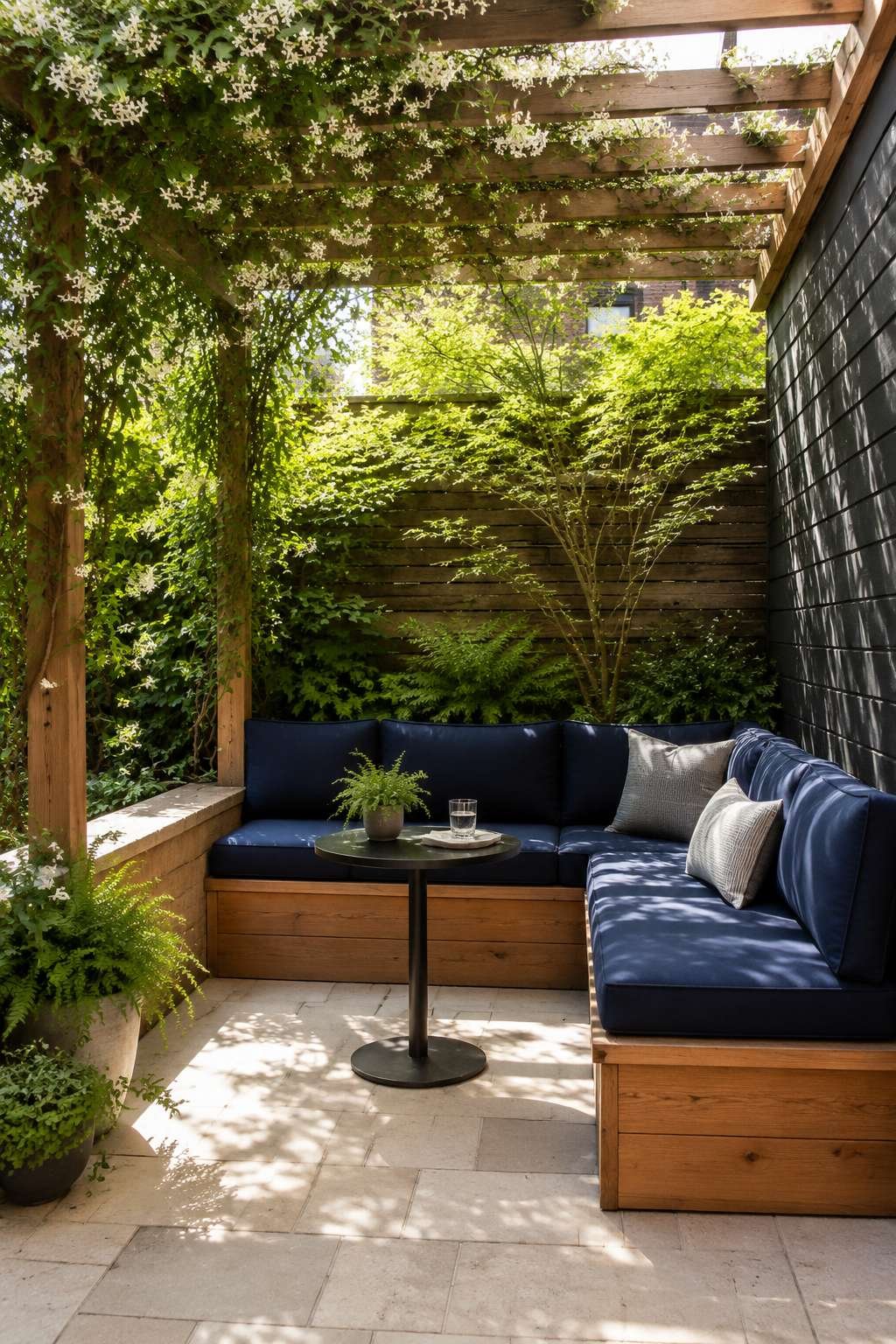
Overhead, a simple pergola structure provides architectural definition to the space, its beams gradually being claimed by climbing jasmine, which offers both fragrant blooms and welcome dappled shade during warmer months. This combination of hardscaping and living plant material creates a ceiling for the outdoor room without the permanence or cost of a solid roof structure.

Bright natural daylight filtering through the developing jasmine canopy creates a dappled, ever-changing pattern across the seating area, keeping the space visually dynamic throughout the day. As the jasmine matures, this dappling effect will only deepen, making the pergola a design element that genuinely improves with time.
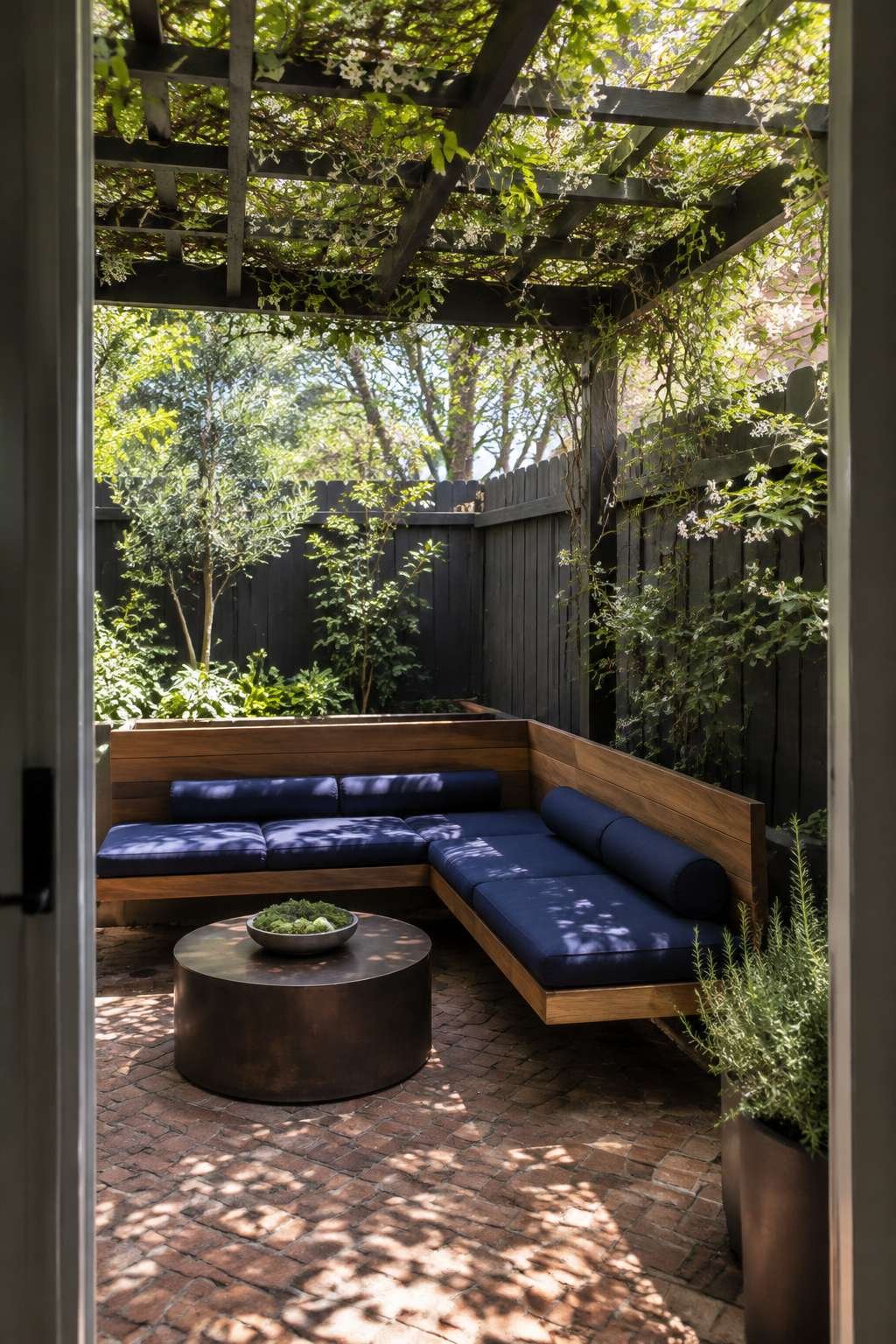
Built-in banquette seating is particularly well suited to small yards because it eliminates the need for movable chairs, instead creating a fixed, space-efficient seating solution that can accommodate multiple guests within a compact corner. The navy fabric choice adds a sophisticated, tailored quality that elevates the entire space beyond typical patio furniture aesthetics.
Key Design Tips:
- Build banquette seating into unused corners to maximize spatial efficiency
- Choose navy or other deep-toned outdoor fabrics for sophisticated durability
- Train climbing jasmine along pergola beams for fragrant, natural shade
- Select weatherproof wood construction rated for your specific climate
- Add outdoor throw pillows to soften the banquette’s built-in structure
13. Corten Steel Raised Garden with Rustic Seating Nook
Modern and rustic aesthetics merge beautifully in this design, which features raised vegetable garden boxes crafted from corten steel, arranged in a practical L-shape along the property’s fence line. This weathering steel material develops a distinctive rust-toned patina over time, creating a warm, earthy surface that contrasts strikingly against fresh green foliage.
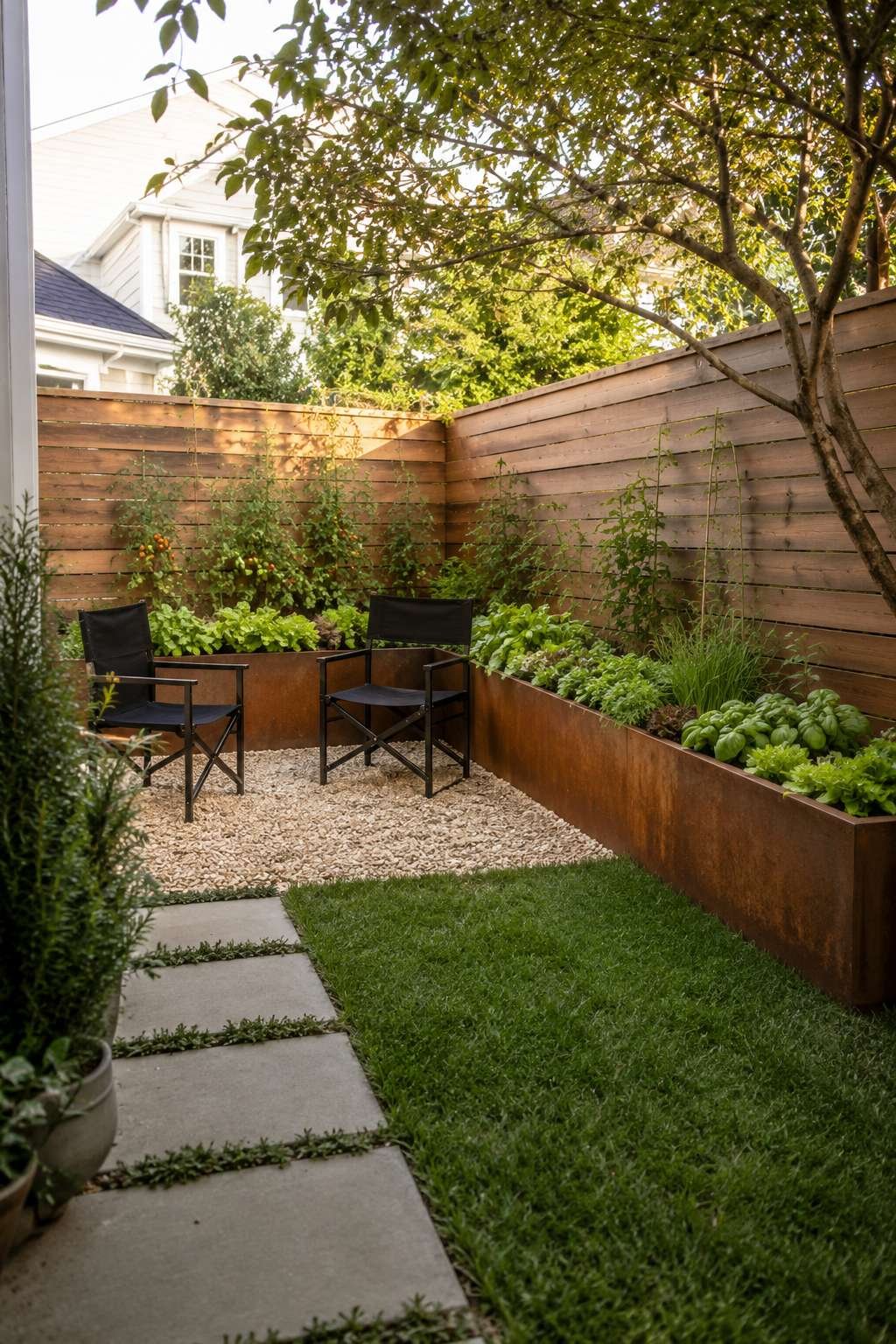
Adjacent to the garden beds, a small gravel seating nook offers a place to pause and admire the growing vegetables, furnished simply with two folding chairs that can be stored away when not needed—an essential space-saving feature for compact yards. This minimal seating approach keeps the focus firmly on the garden itself rather than competing furniture elements.
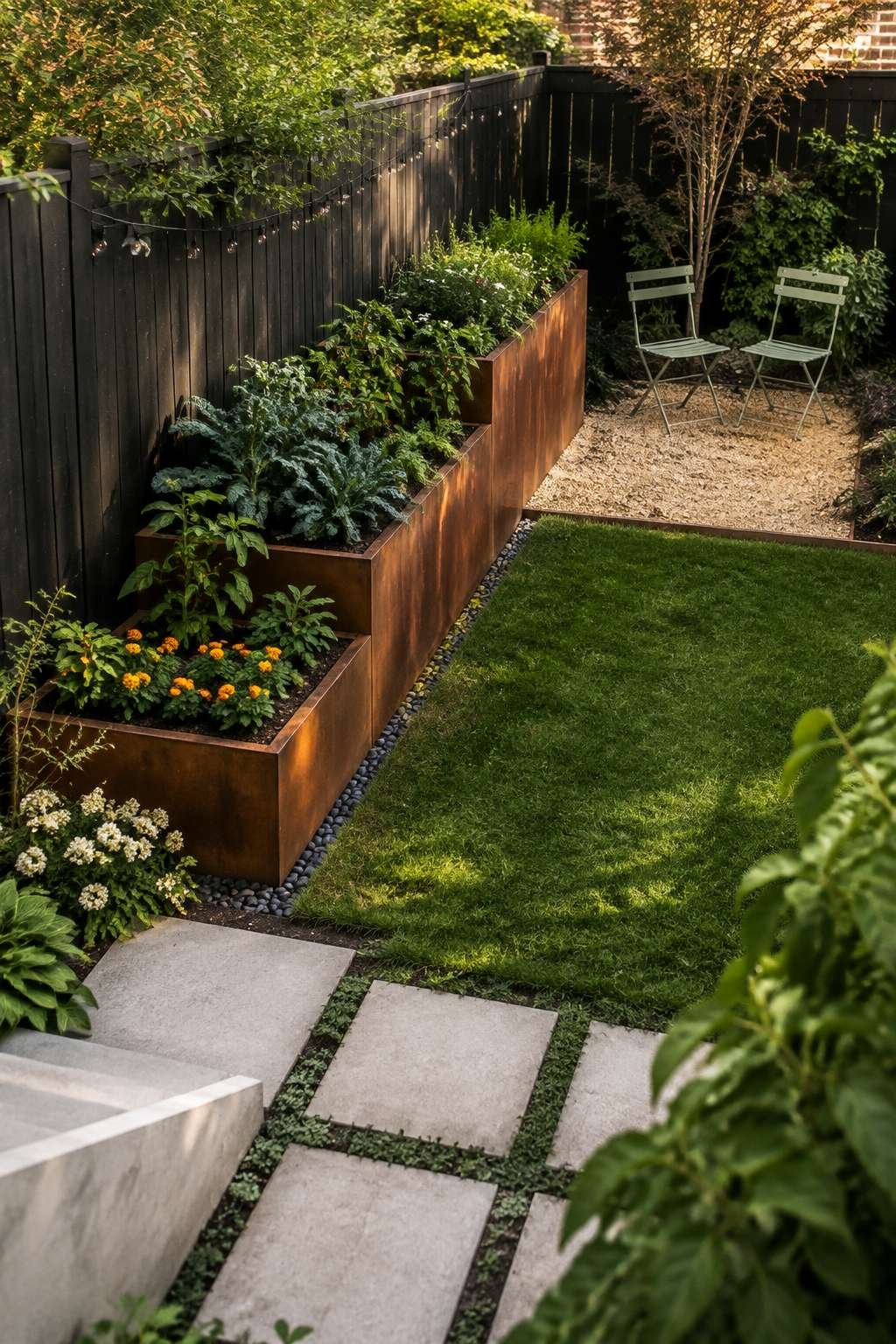
Warm afternoon sunlight plays beautifully across the rusted steel texture, emphasizing the material’s rich color variations and rough surface quality. This lighting condition is particularly flattering for corten steel installations, as the low angle sunlight accentuates every subtle color shift within the oxidized surface.

Corten steel has become increasingly popular among landscape designers for raised bed construction due to its exceptional durability and low-maintenance nature—unlike wood, it won’t rot, and unlike untreated metal, it won’t corrode destructively. This makes it an excellent long-term investment for small-yard vegetable gardening.
Key Design Tips:
- Choose corten steel raised beds for a modern, low-maintenance garden edge
- Arrange beds in an L-shape to maximize planting area along fence lines
- Use folding chairs in the seating nook to preserve flexible space usage
- Allow corten steel to weather naturally rather than sealing its surface
- Pair rusted steel tones with vibrant green plantings for maximum contrast
14. Rattan Conversation Area Under a Simple Shade Sail
Casual conversation finds its ideal setting in this design, anchored by a small outdoor rug that defines the seating area beneath a shade sail stretched efficiently between the fence and house. Two comfortable rattan armchairs flank a low wooden side table, creating an intimate arrangement perfect for morning coffee or evening cocktails with a close friend.
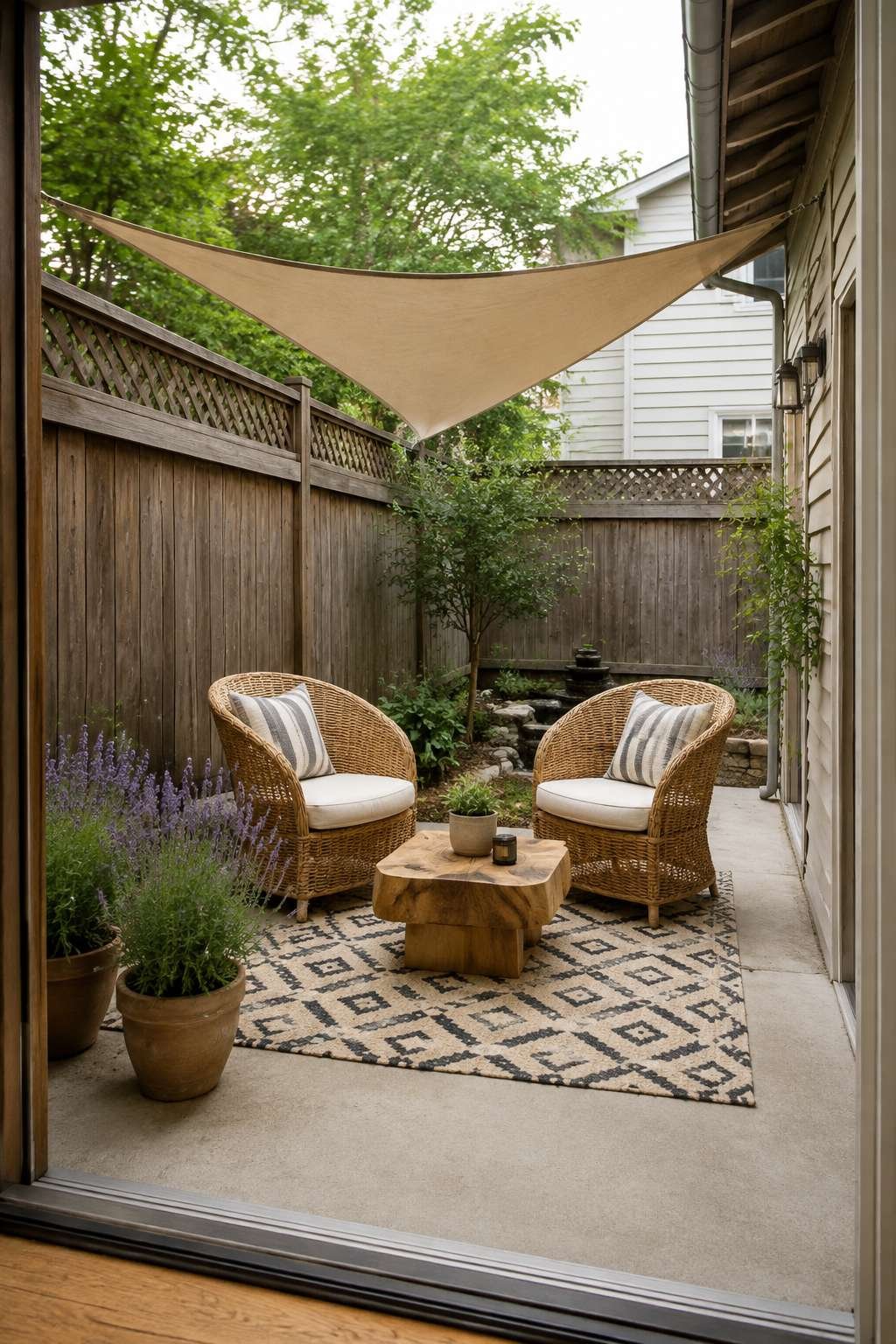
Potted lavender placed at the seating area’s edge introduces both color and fragrance, its silvery-purple blooms and aromatic scent enhancing the sensory experience of relaxing in this corner. This plant choice also attracts beneficial pollinators, adding an ecological benefit alongside the aesthetic and olfactory appeal.
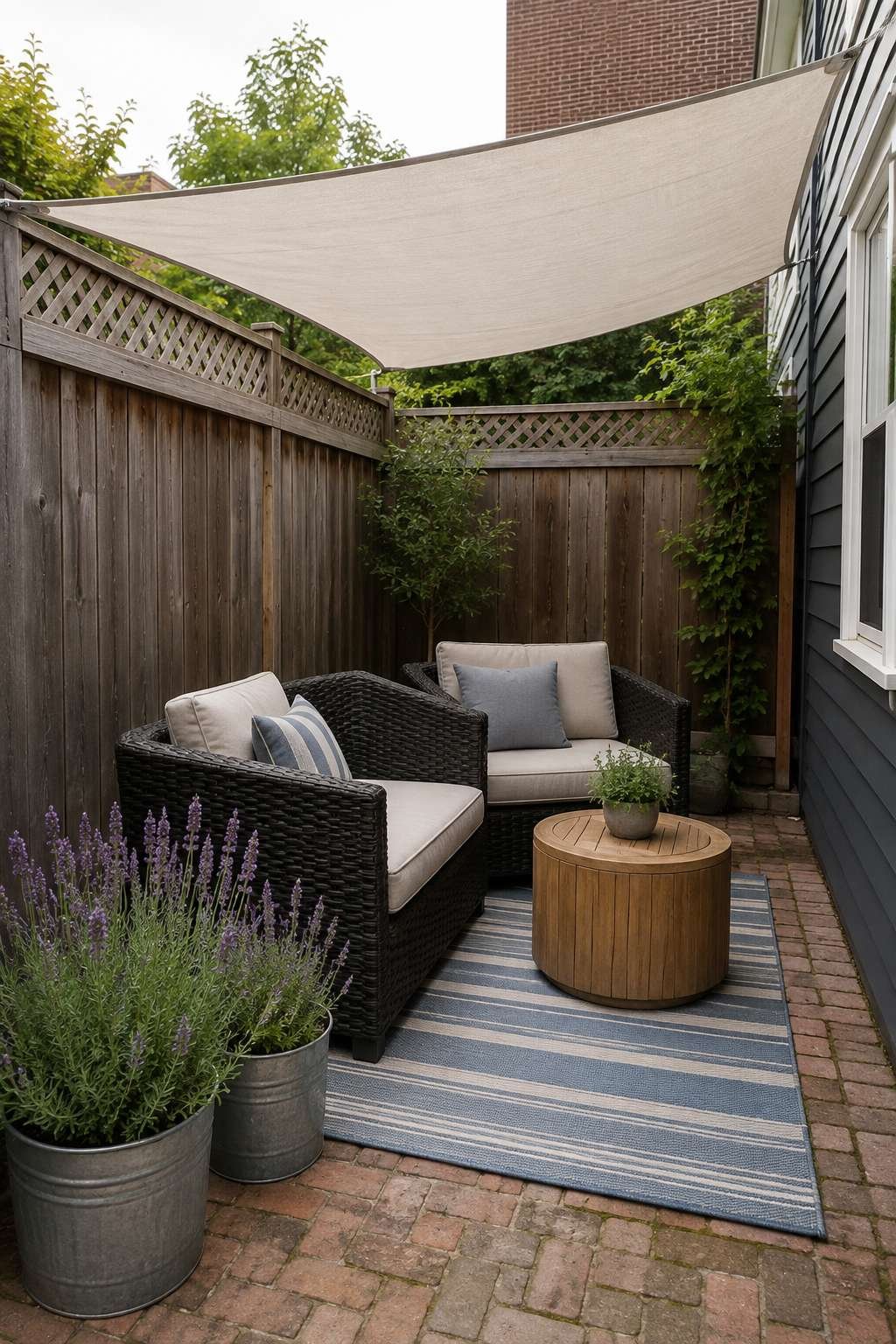
The soft diffused daylight created by the shade sail ensures even, comfortable lighting throughout the day, eliminating harsh glare while still allowing the space to feel bright and open. This even lighting quality particularly showcases the contrast between the woven rattan texture and the smooth wood of the side table.

Shade sails offer one of the most cost-effective and visually appealing solutions for small-yard sun protection, requiring minimal structural support while providing substantial coverage. Combined with an outdoor rug that grounds the furniture arrangement, this design creates a defined “room” within the yard despite having no walls or roof in the traditional sense.
Key Design Tips:
- Install shade sails at an angle to maximize coverage during peak sun hours
- Use an outdoor rug to visually anchor and define the seating zone
- Choose rattan furniture for lightweight, natural-textured comfort
- Plant lavender nearby for fragrance and pollinator-friendly landscaping
- Select rug patterns that complement rather than compete with furniture texture
15. Cedar Sandbox Play Corner with Adjacent Seating Nook
Families with young children will appreciate this thoughtfully zoned design, which carves out a dedicated children’s play corner without sacrificing the yard’s overall appeal. A sandbox built from natural cedar planks serves as the play area’s centerpiece, bordered by a soft mulch path that provides a safe, cushioned surface for little feet.
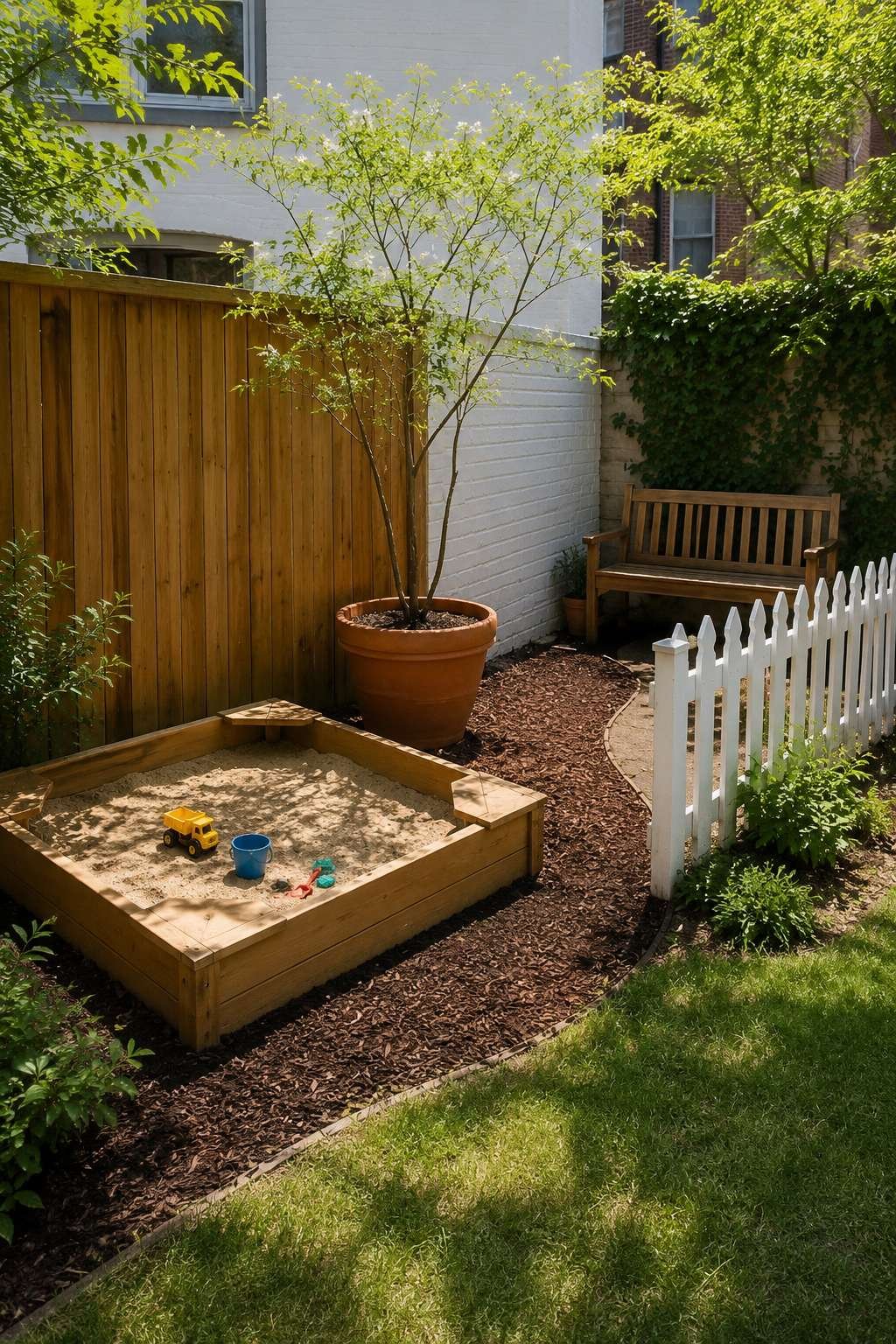
A single potted tree offers essential shade for the play area, protecting children from direct sun during outdoor play sessions. A low picket fence thoughtfully separates this active zone from an adjacent seating nook, where a simple wooden bench allows parents to supervise comfortably while maintaining a visual and physical boundary between play and relaxation spaces.
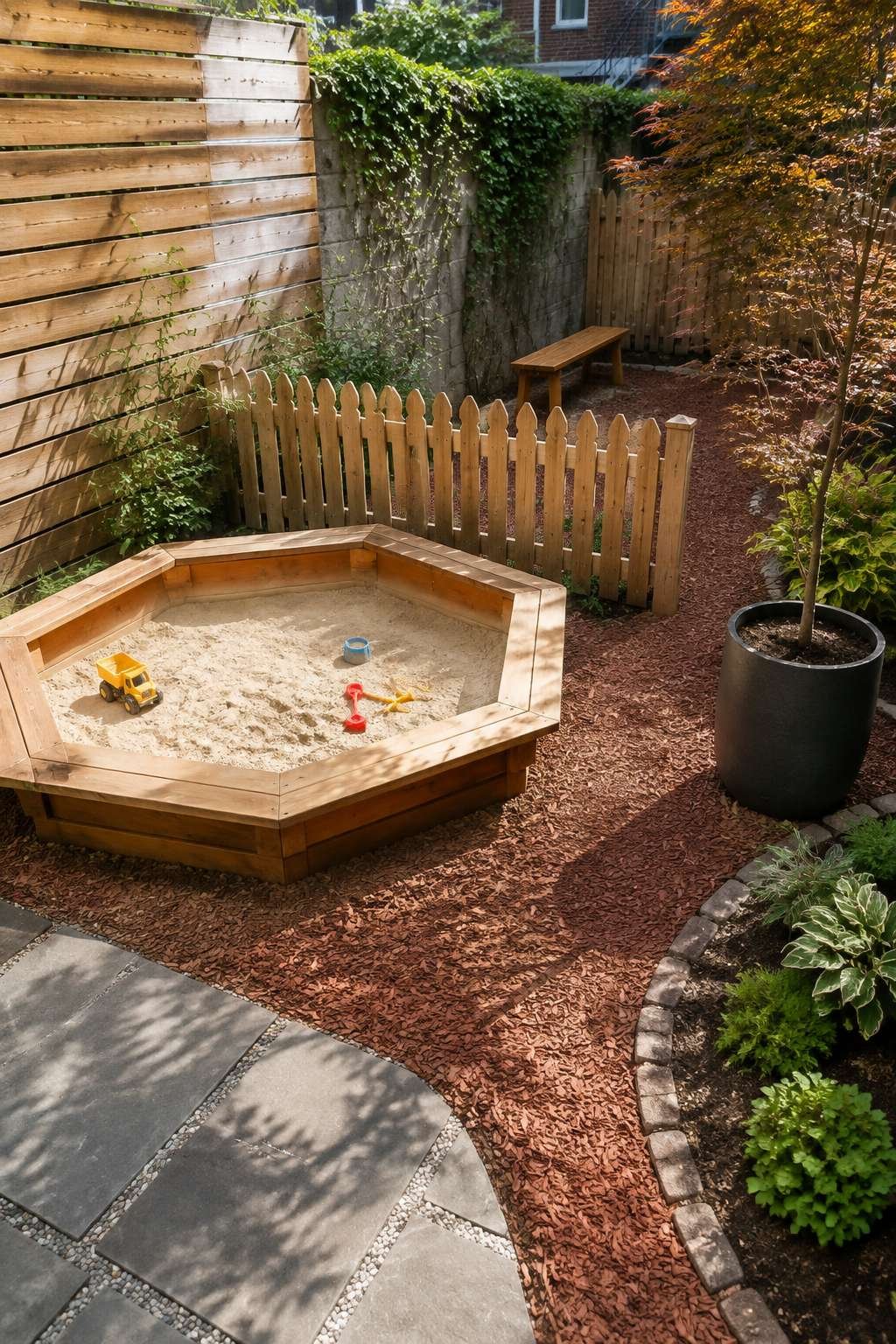
Bright natural midday light in this design highlights the warm wood grain of both the cedar sandbox and the picket fence, while also bringing out the rich, earthy tone of the mulch pathway. This clear, abundant lighting is fitting for a space designed around active daytime use and supervision.
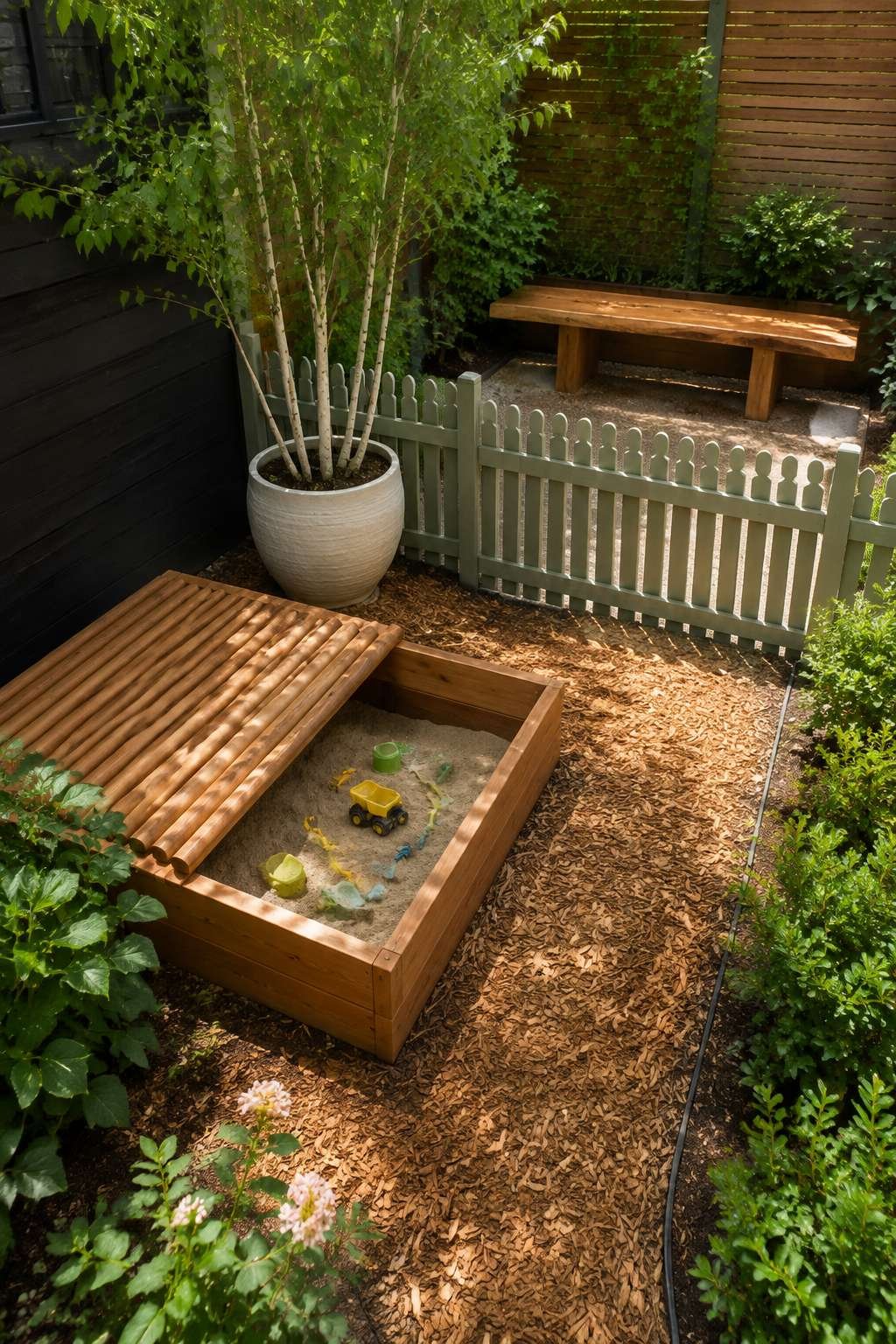
Thoughtful zoning is essential in small family yards, where play areas and adult relaxation spaces must coexist within limited square footage. The picket fence divider used here demonstrates how even a low, permeable boundary can successfully separate functions without making the yard feel fragmented or overly segmented.
Key Design Tips:
- Build sandboxes from untreated cedar to ensure material safety for children
- Use soft mulch pathways to cushion play areas and reduce injury risk
- Position a shade tree or umbrella directly over active play zones
- Install a low picket fence to visually separate play and relaxation areas
- Choose bench seating within clear sightline of the play area for easy supervision
Bringing It All Together
Small backyards hold more design potential than they’re often given credit for. As these fifteen concepts demonstrate, the key to success lies not in the size of the space but in the thoughtfulness of its execution—choosing the right materials, layering lighting effectively, and ensuring every element serves a genuine purpose. Whether you’re drawn to the tranquility of a zen water feature, the warmth of a fire pit lounge, or the productivity of a tiered vegetable garden, there’s a design approach here suited to nearly any small-yard scenario.
The common thread running through every successful small-space design is intentionality. Multifunctional furniture, vertical gardening techniques, strategic lighting, and clear zoning all work together to make compact outdoor areas feel spacious, purposeful, and genuinely enjoyable. Rather than viewing a small yard as a constraint, consider it a creative framework—one that rewards careful planning with a space that feels far more expansive than its actual dimensions suggest.
As you plan your own backyard transformation, take inspiration from the materials, textures, and layouts explored throughout this guide, but don’t be afraid to adapt and combine elements to suit your unique lifestyle and climate. A small yard, thoughtfully designed, can become one of the most cherished parts of your home—a place for quiet mornings, lively gatherings, and everything in between.
