


A well-designed patio does more than fill empty space behind your home — it becomes the heart of outdoor living, a place where morning coffee turns into quiet reflection and casual dinners stretch into starlit conversations. The most successful patio designs balance comfort, durability, and aesthetic intention, using thoughtfully chosen materials, furniture, and lighting to create an atmosphere that feels both inviting and enduring. Whether your outdoor space is expansive or modest, urban or rural, there’s a patio concept that can transform it into a genuine extension of your home.
This guide explores fifteen distinct patio designs, each built around a unique combination of materials, furnishings, and mood. From sprawling stone terraces anchored by fire pits to intimate reading nooks tucked beneath canvas awnings, these concepts span a wide spectrum of styles — coastal, bohemian, Scandinavian, rustic farmhouse, and sleek modern minimalism among them. Every design considers not just how a space looks, but how it feels to actually live in.
Read on to discover fifteen patio transformations that prove outdoor design deserves the same care and creativity as any room inside your home.
1. Bluestone Patio with Teak Sectional and Fire Pit Table
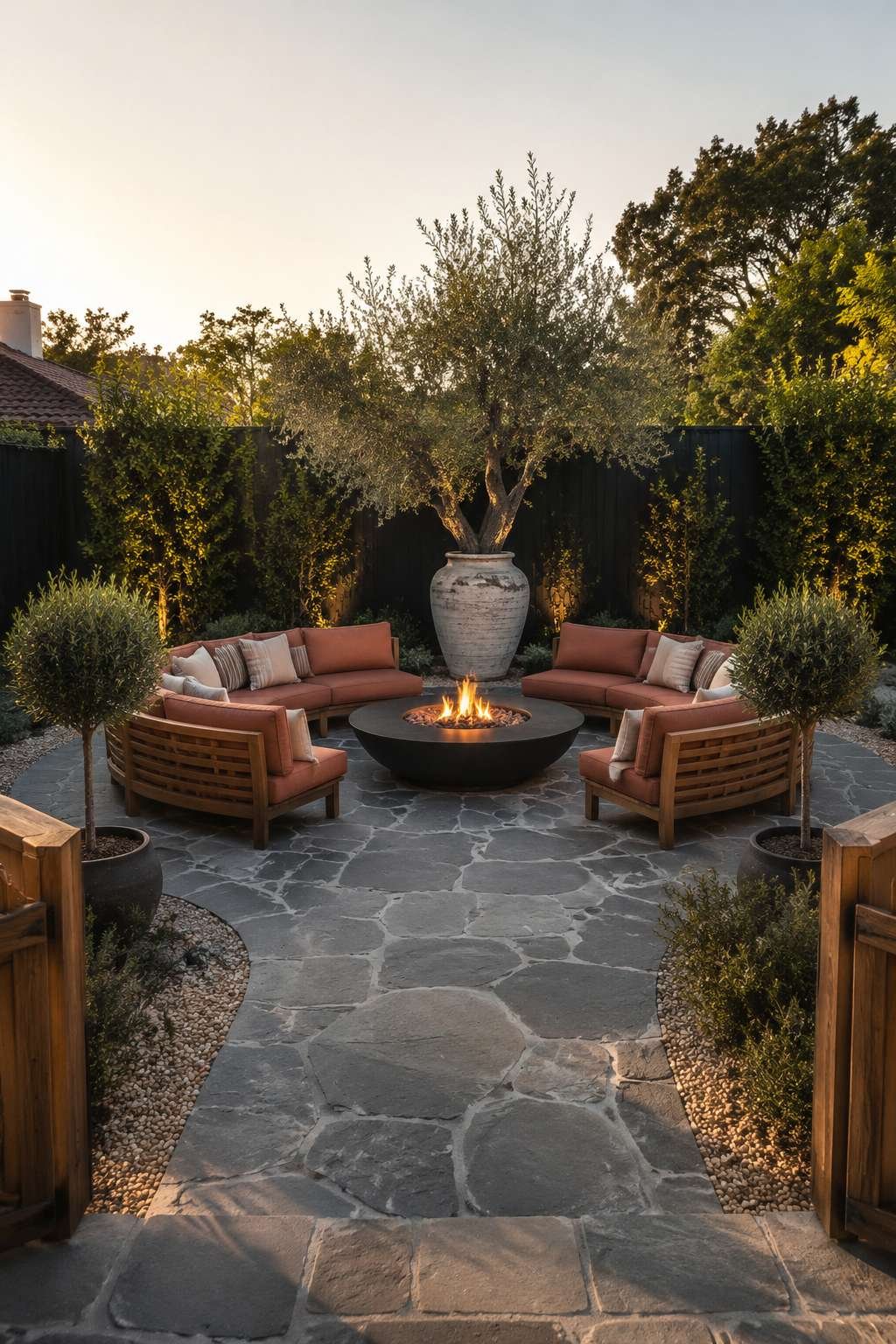
This design centers on a spacious paved stone patio finished in natural bluestone, its surface shifting through varied grey tones that catch light differently throughout the day. A generous teak sectional sofa anchors the seating area, dressed in weather-resistant cushions in warm terracotta hues that bring immediate visual warmth against the cool stone underfoot. The pairing of natural wood and rich textile color creates a grounded, sophisticated palette that never feels sterile.
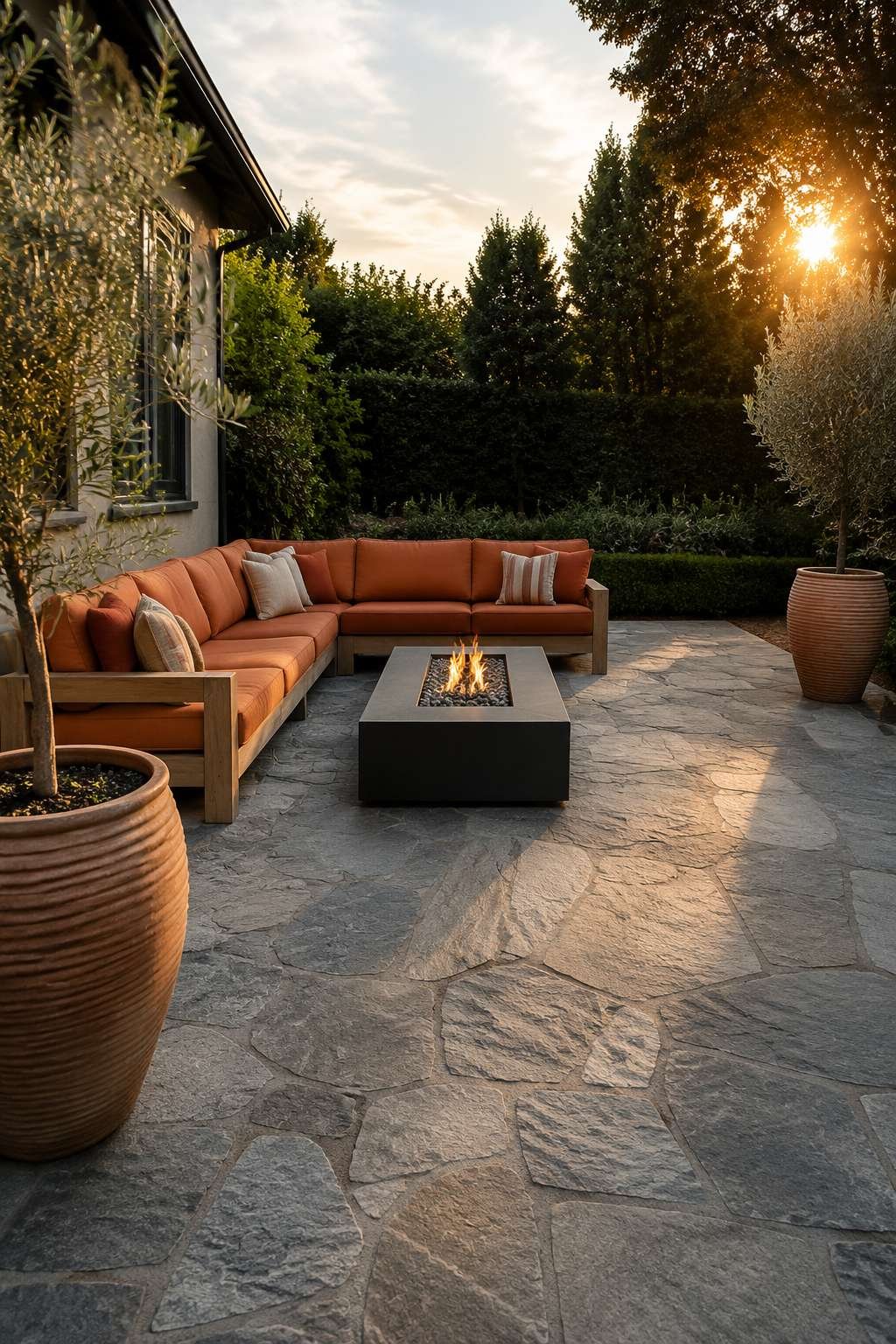
At the center of it all sits a low fire pit table, drawing the seating arrangement inward and giving the whole space a natural focal point for both daytime lounging and evening gatherings. Surrounding the seating zone, potted olive trees provide dappled natural shade, their silvery-green foliage softening the hard lines of the stone and furniture. As golden hour arrives, long shadows stretch across the bluestone’s textured surface, highlighting every subtle color variation in the material.
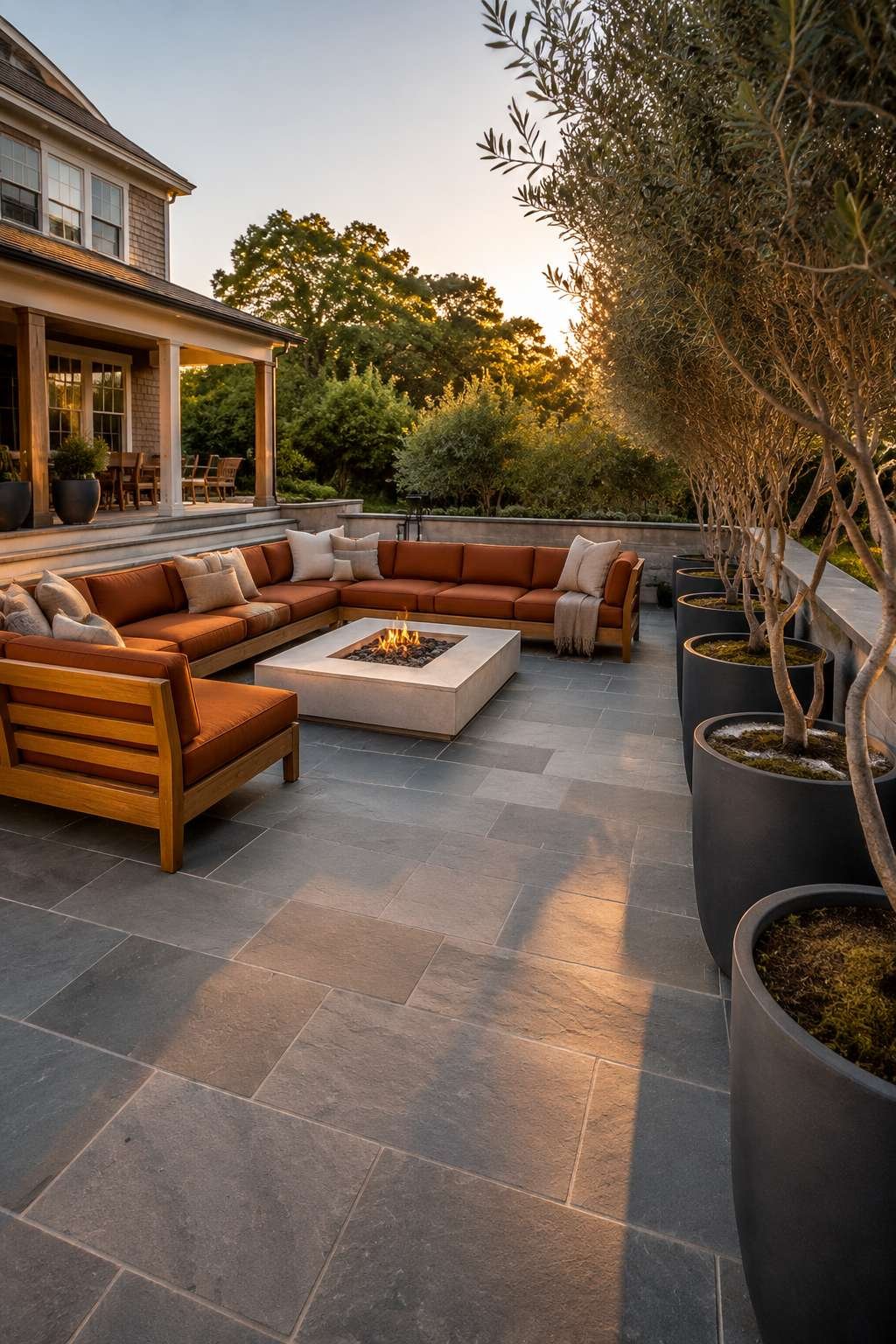
This layout suits homeowners who want a patio that functions as a true outdoor living room — spacious enough for entertaining, yet cozy enough for solo evenings by the fire. The combination of natural stone, teak furniture, and terracotta accents creates a timeless aesthetic that won’t feel dated as trends shift.
Key Design Tips:
- Choose bluestone with varied tonal ranges to add depth underfoot
- Select a fire pit table sized to match the sectional’s scale
- Use terracotta and warm neutral cushions to balance cool stone tones
- Position olive trees to create natural shade during peak sun hours
- Seal natural stone regularly to preserve its color and texture
2. Suburban Pergola Patio with Jasmine and Herringbone Brick
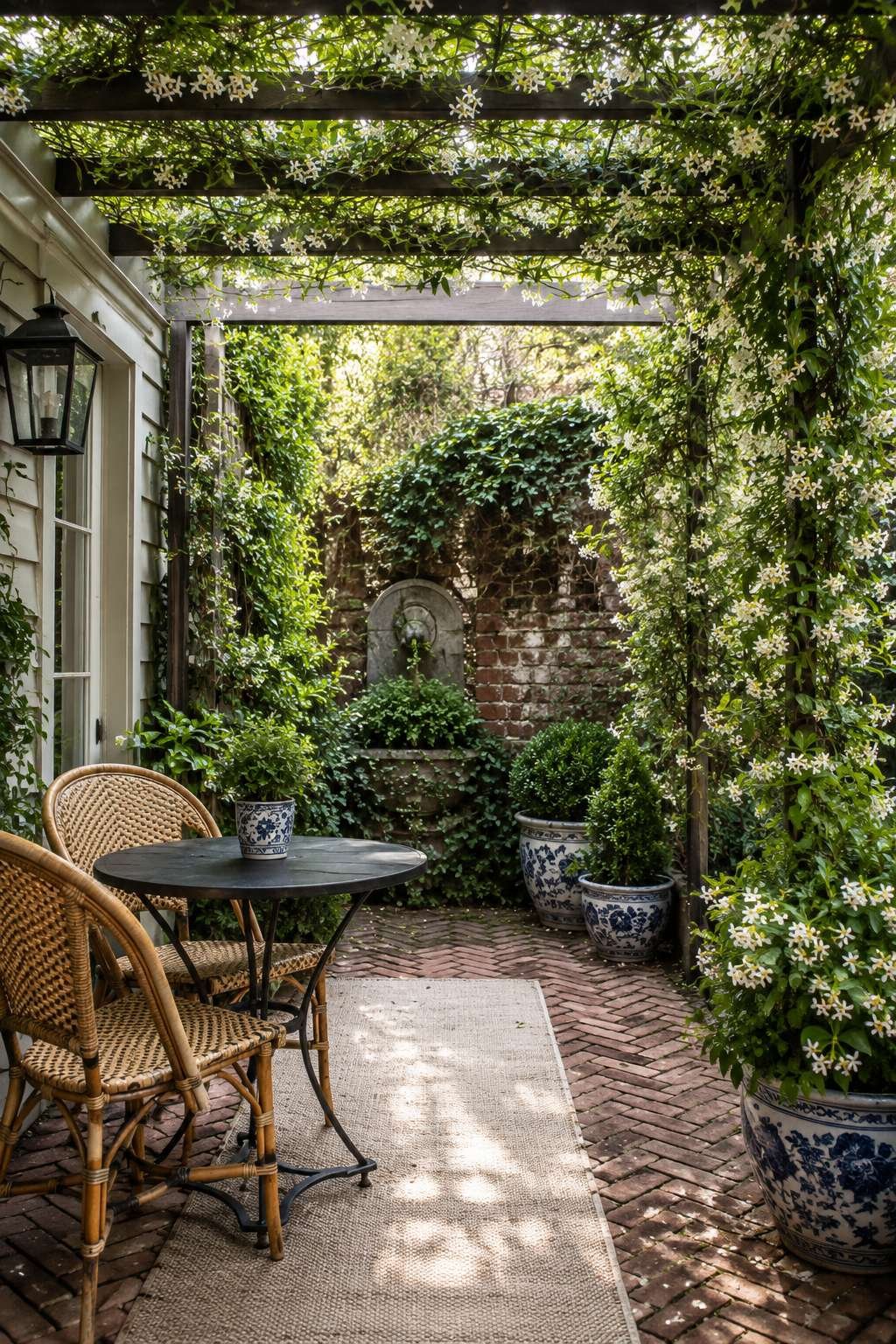
Perfectly scaled for a modest backyard, this design proves that suburban patios don’t need to be large to feel special. A pergola overhead is draped in climbing jasmine vines, creating dappled natural light that dances across a herringbone brick paver floor below. The interplay of pattern — the geometric brickwork against the organic curl of vines — gives the space visual richness without requiring excess square footage.
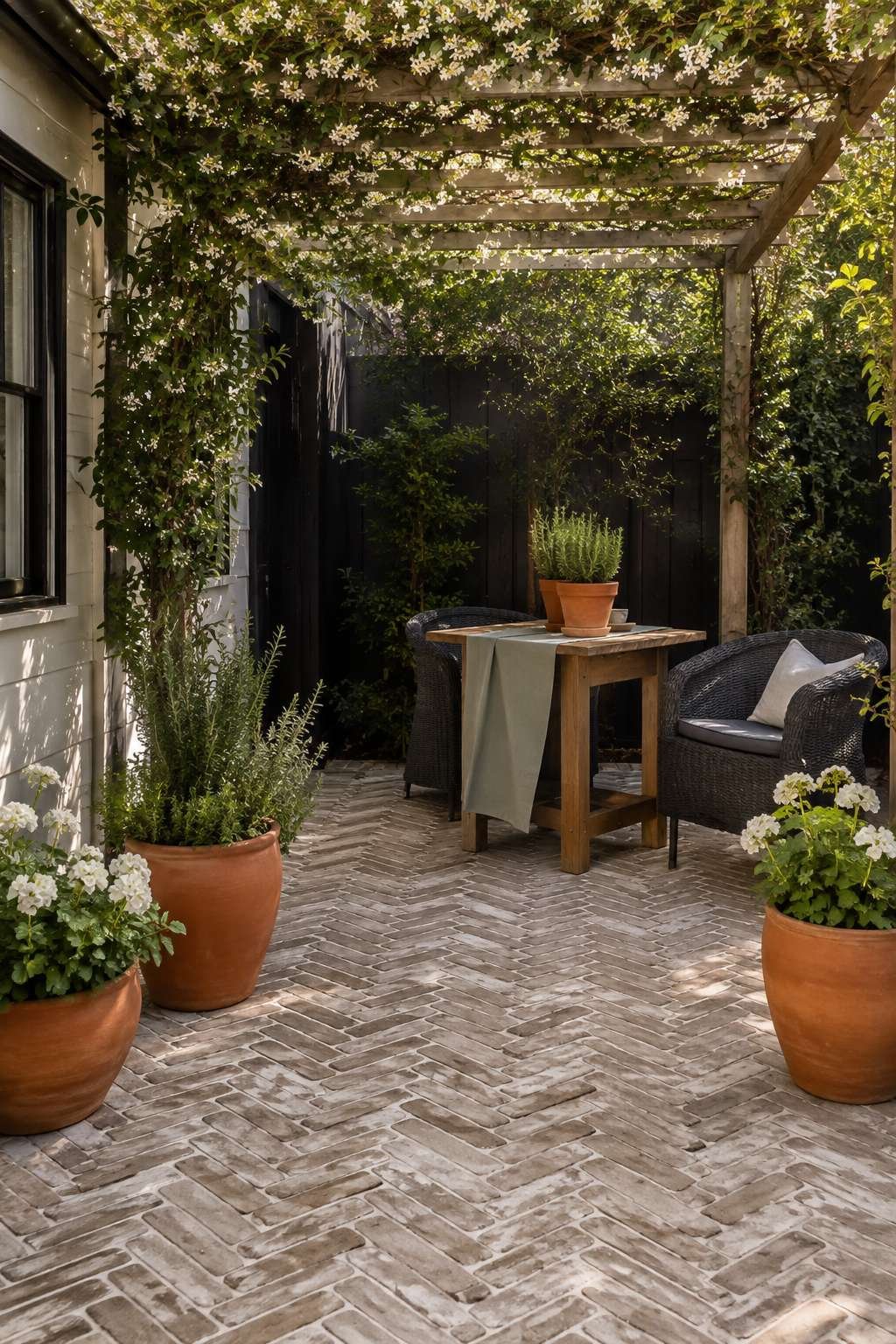
A small bistro table paired with two wicker chairs sits near the patio’s edge, styled simply with a linen table runner and a scattering of ceramic planters. This understated furniture arrangement keeps the focus on the architectural bones of the space rather than on bulky furnishings. Soft diffused afternoon lighting highlights the texture of the aged brick, giving the whole patio a warm, lived-in character even if newly installed.
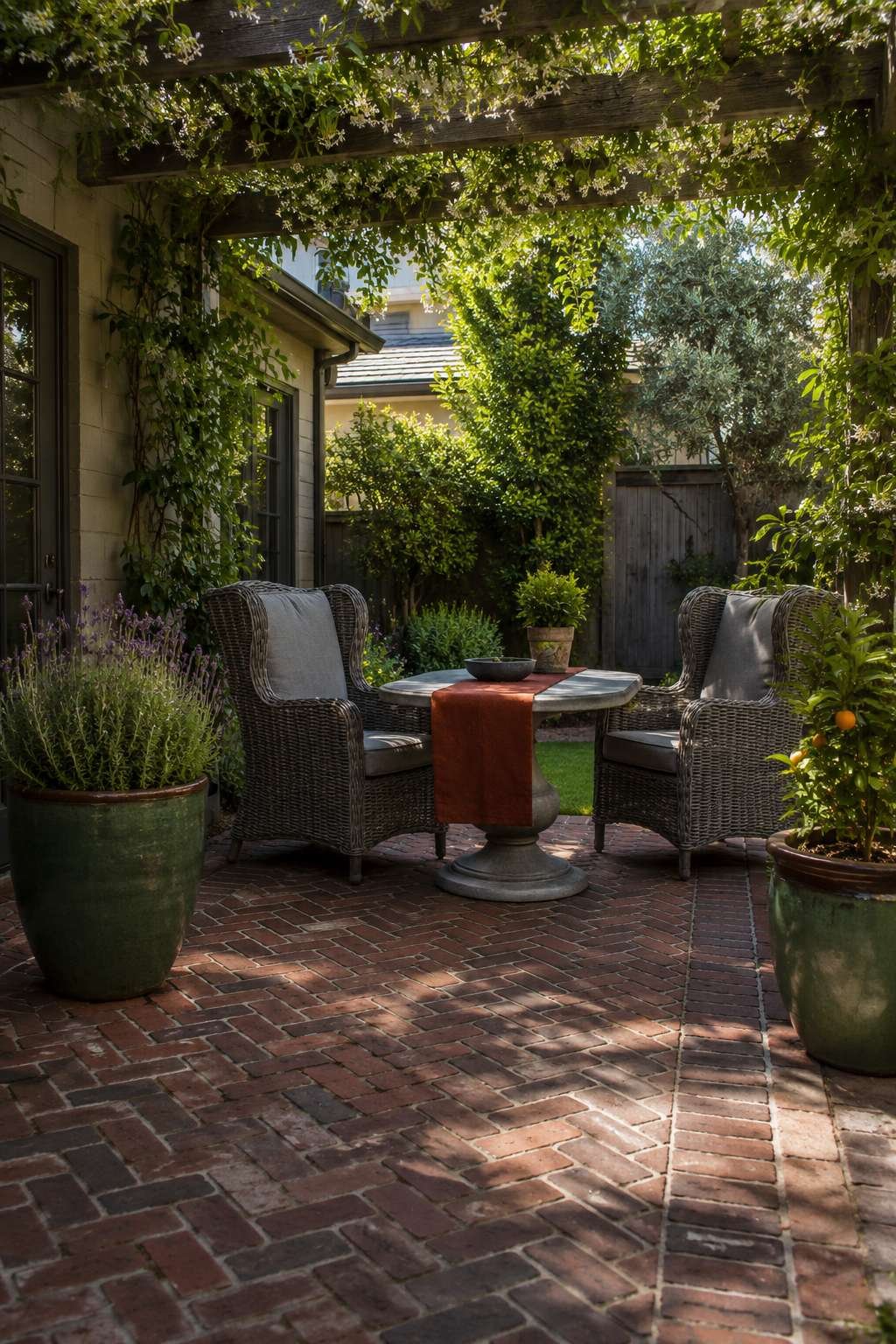
This concept is ideal for homeowners with limited outdoor square footage who still want a patio that feels intentional and romantic. The herringbone brick pattern alone elevates a simple flooring choice into a design statement, while the jasmine-covered pergola adds fragrance and shade without the cost of a permanent structure.
Key Design Tips:
- Lay brick in a herringbone pattern to maximize visual interest in small spaces
- Train jasmine vines along pergola beams early for full seasonal coverage
- Keep furniture scaled down — a bistro set suits compact patios best
- Use ceramic planters in varying heights for layered greenery
- Choose a linen runner in a neutral tone to soften the brick’s warmth
3. Modern Concrete Patio with Board-Formed Wall and Sage Cushions
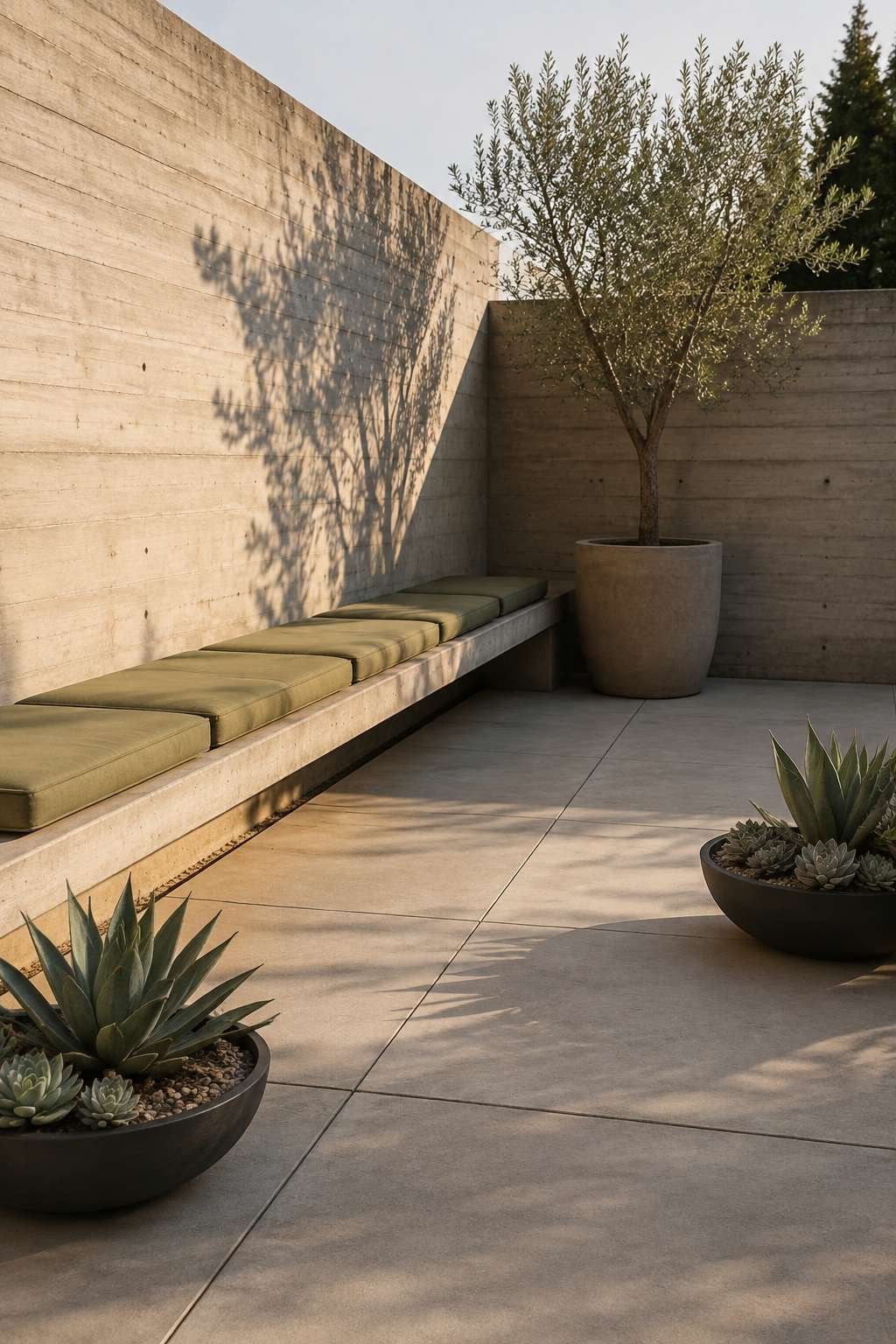
Clean and architectural, this modern concrete patio trades ornamentation for material honesty. A minimalist built-in bench runs along a board-formed concrete wall, its subtle wood-grain imprint adding texture to an otherwise smooth surface. Softening the concrete’s inherent coolness, outdoor floor cushions in muted sage green invite lounging directly at ground level, echoing a relaxed, low-slung seating style.
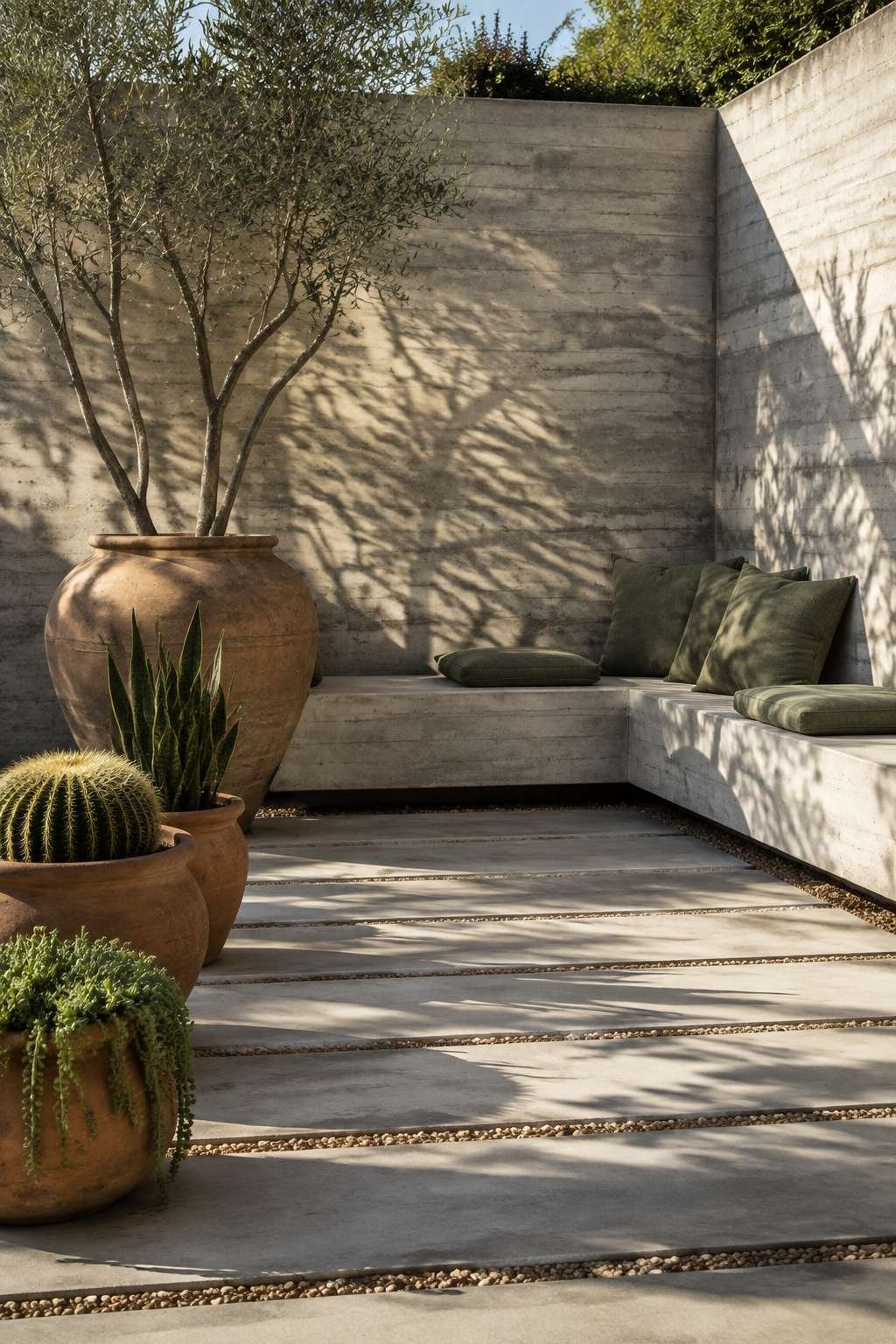
A corner of the patio is anchored by a cluster of potted succulents alongside a striking olive tree planted in a raw clay pot, its unglazed surface complementing the concrete’s industrial character. This pairing of hard architectural material with soft, sculptural greenery keeps the space from feeling cold or overly austere. Late afternoon sunlight rakes across the textured concrete, casting crisp shadows that emphasize the wall’s board-formed pattern.
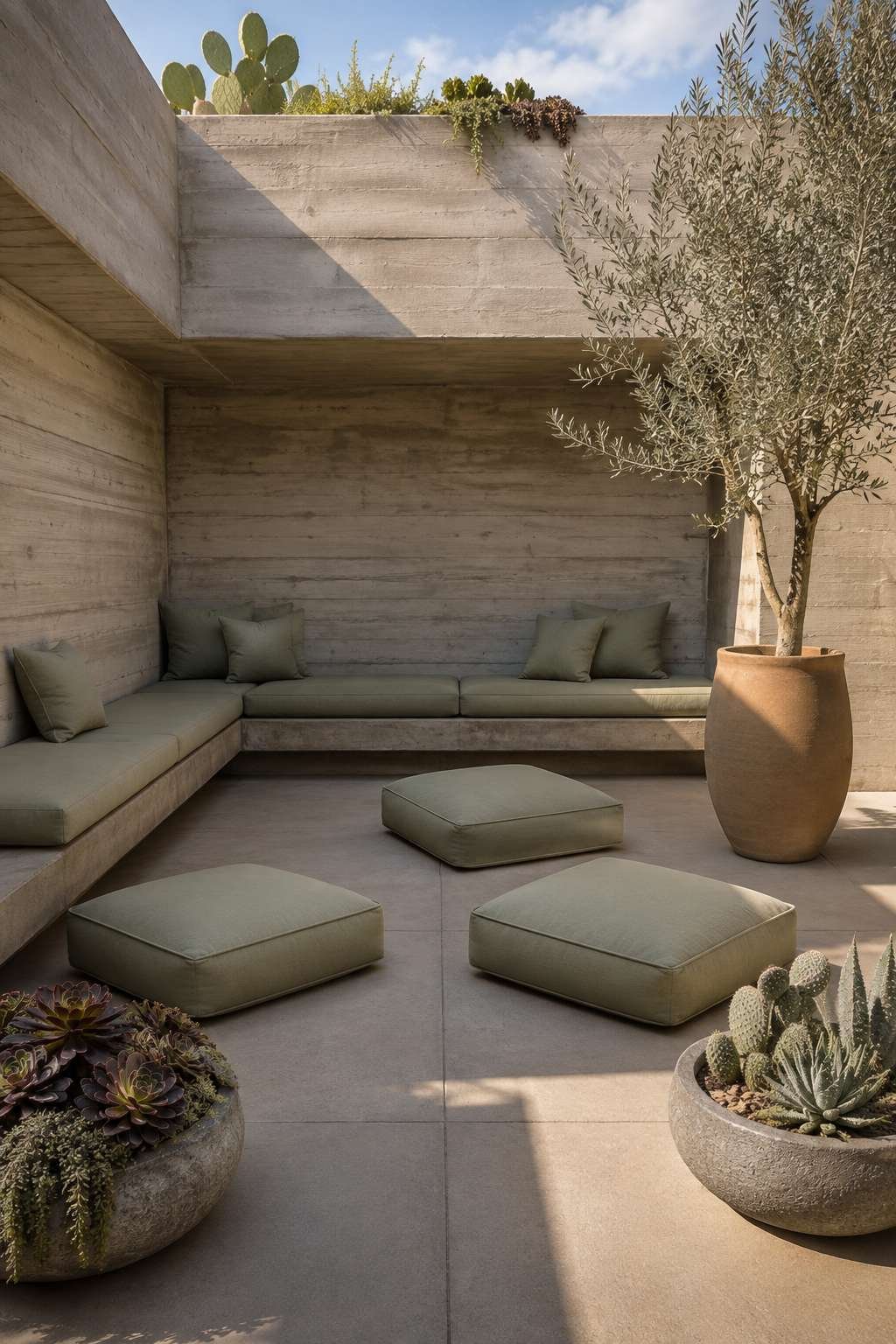
This design appeals strongly to homeowners drawn to architectural minimalism — spaces where every material choice feels deliberate and restrained. It’s a patio that photographs beautifully in natural light and ages gracefully, as concrete and clay both develop subtle patina over time.
Key Design Tips:
- Choose board-formed concrete for subtle texture without added ornamentation
- Use sage or muted green cushions to soften a monochrome material palette
- Select a raw clay pot to echo concrete’s unfinished, tactile quality
- Group succulents by size for a layered, sculptural corner arrangement
- Keep the built-in bench low-profile to maintain clean sightlines
4. Cozy Reading Nook Beneath a Retractable Canvas Awning
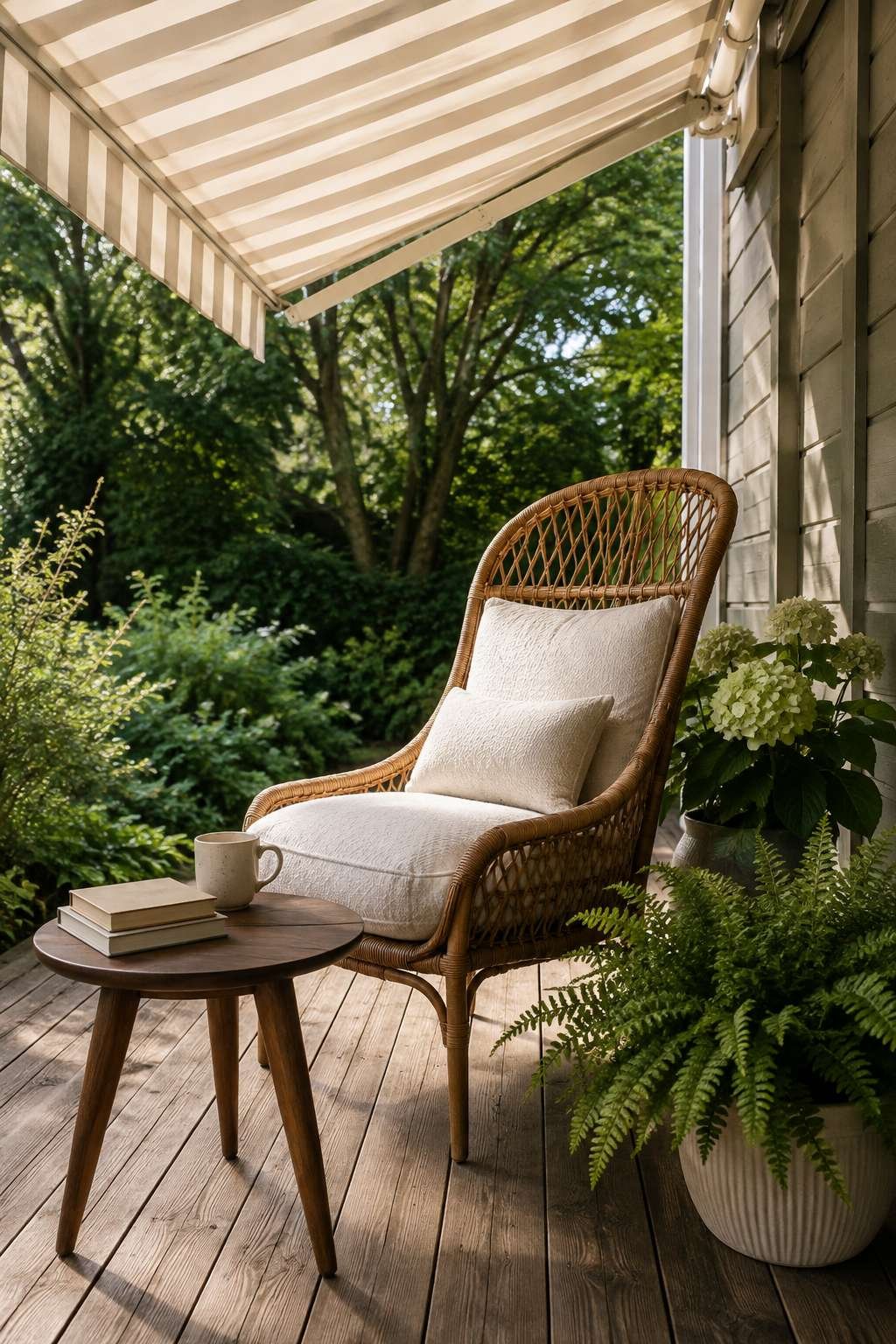
Designed purely for comfort, this cozy reading nook carves out a dedicated retreat beneath a retractable canvas awning. A rattan lounge chair cushioned in cream bouclé fabric offers plush, textural comfort, while a small wooden side table nearby holds a stack of books and a ceramic mug — small details that suggest genuine daily use rather than staged perfection.

Underfoot, natural wood decking with visible grain texture extends throughout the space, its warmth reinforcing the nook’s relaxed, homey feel. Gentle morning light filters through the awning fabric, casting soft, diffused warm tones across the seating area — an ideal ambiance for early reading sessions before the day gets busy. The awning itself offers flexibility, retracting for full sun exposure or extending for shade and light rain protection.
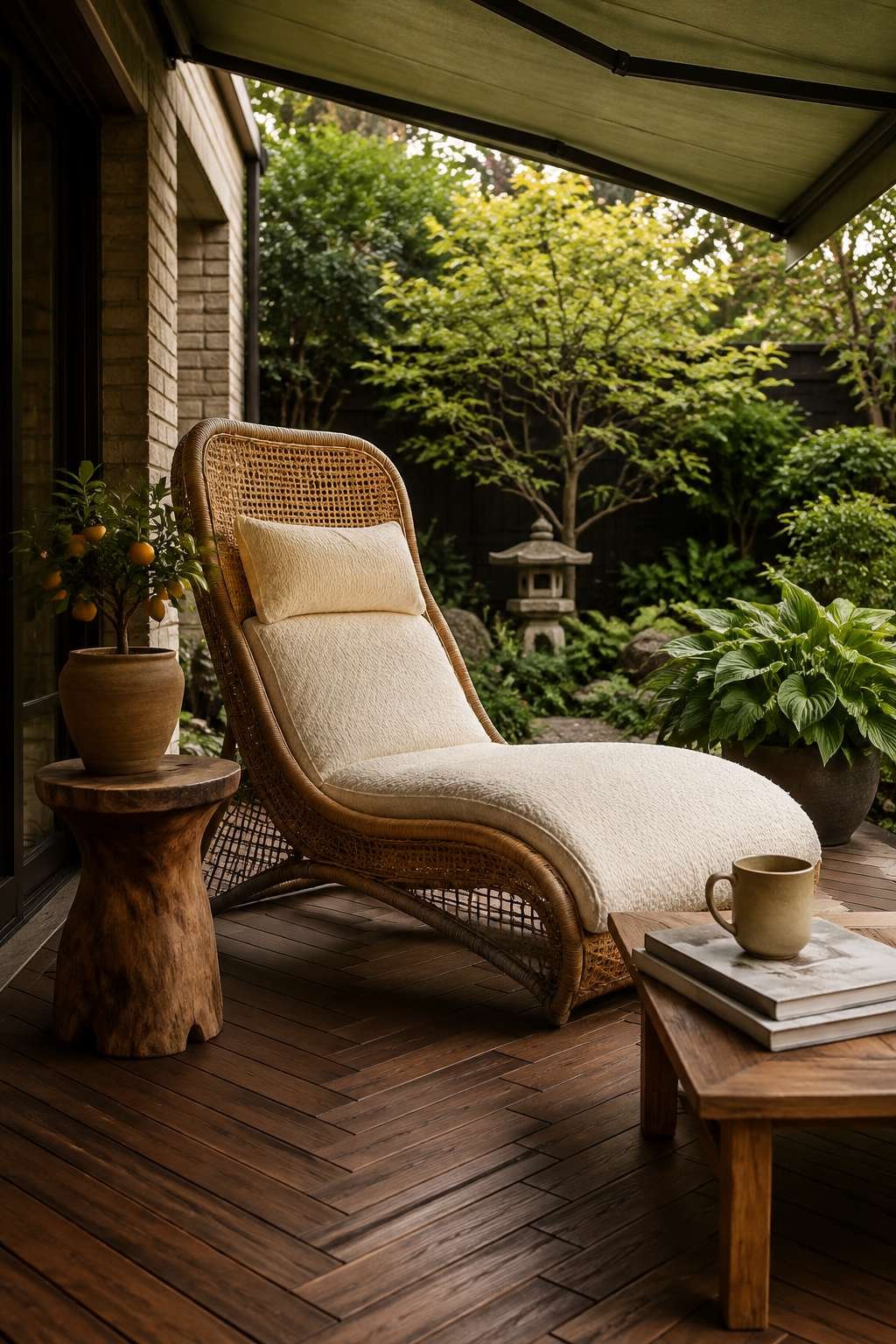
This design suits homeowners seeking a small, personal escape rather than a large entertaining zone. Its emphasis on texture — bouclé fabric, woven rattan, natural wood grain — creates a tactile richness that makes the space feel curated and intimate, even within a compact footprint.
Key Design Tips:
- Choose a retractable awning for flexible sun and shade control
- Select bouclé or other textured fabrics for tactile seating comfort
- Keep the nook’s footprint small to preserve its intimate character
- Add a side table sized for books, drinks, and daily essentials
- Orient the chair to capture soft morning light for reading
5. Farmhouse Dining Patio with Reclaimed Wood and String Lights
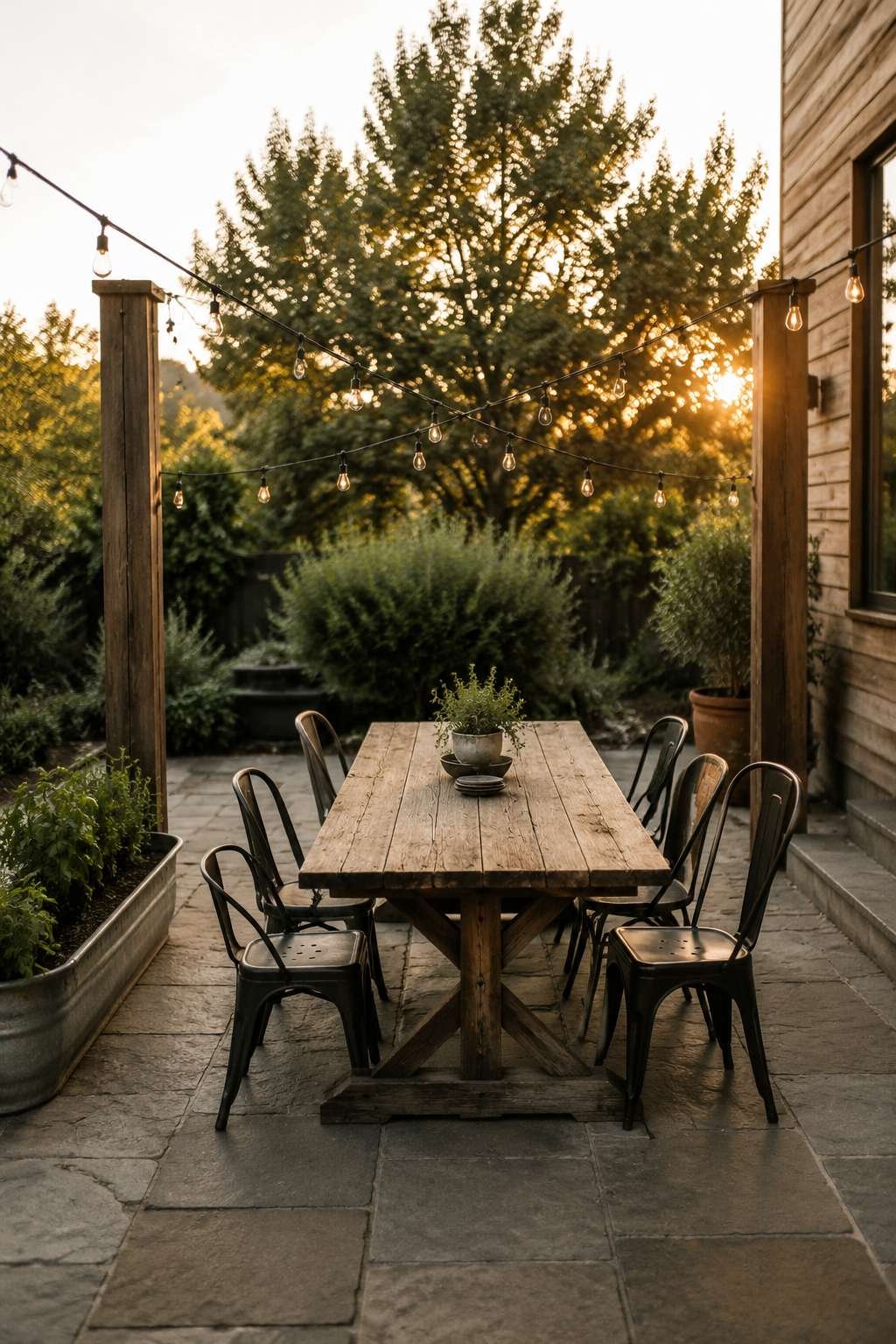
Built for gathering, this outdoor dining setup centers on a reclaimed wood farmhouse table with seating for six, its weathered surface carrying the character of reused timber. Paired with mismatched vintage-style metal chairs in muted black, the arrangement feels collected over time rather than purchased as a matching set — a hallmark of genuine farmhouse style.
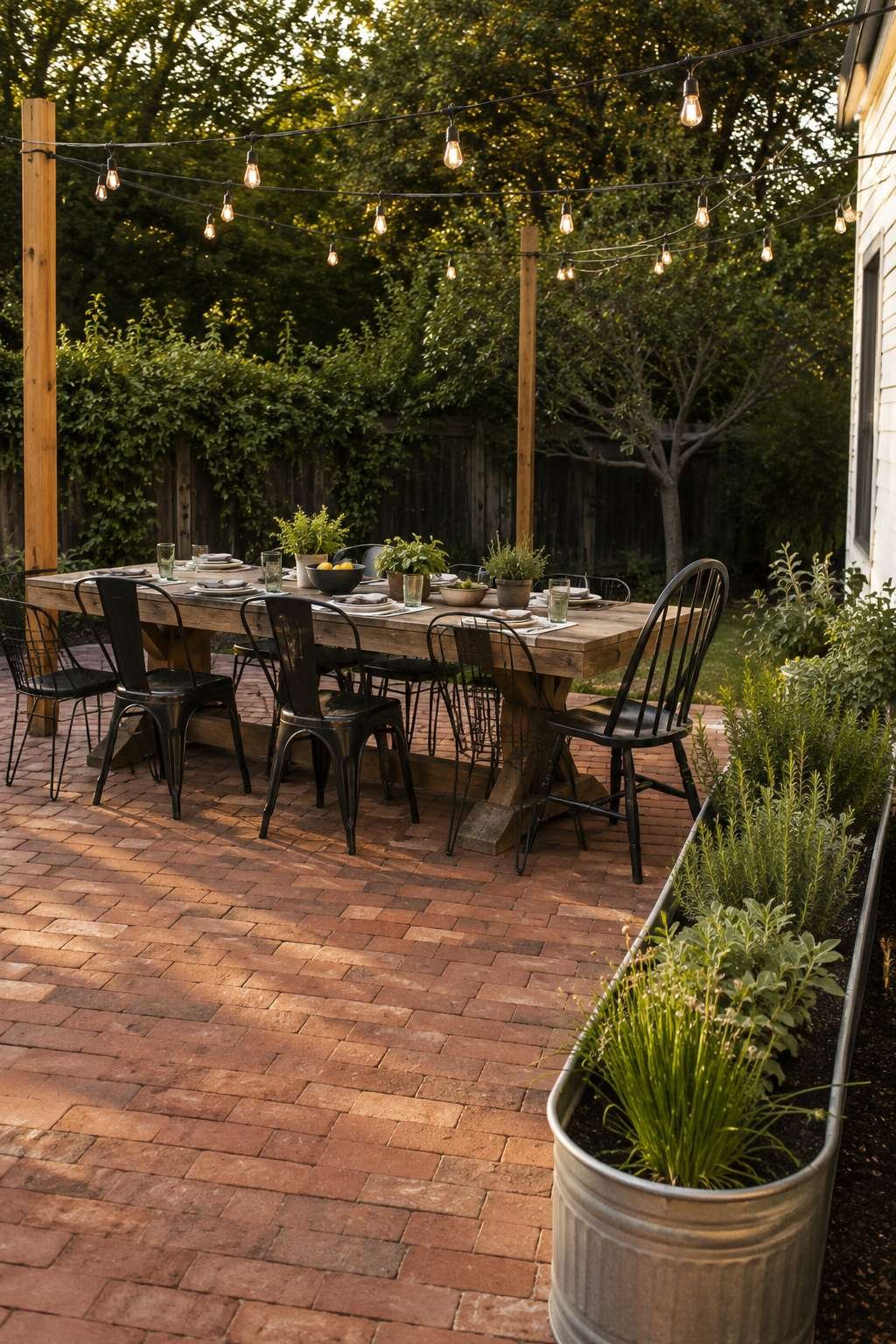
Overhead, string lights crisscross between two wooden posts, casting a warm, festive glow that transforms the space from a daytime dining spot into an evening entertaining destination. Along the patio’s edge, a galvanized planter box lined with fresh herbs adds both greenery and function, allowing cooks to snip ingredients steps away from the table. Golden hour ambiance bathes the entire scene in soft natural shadows, enhancing the reclaimed wood’s rich grain and texture.
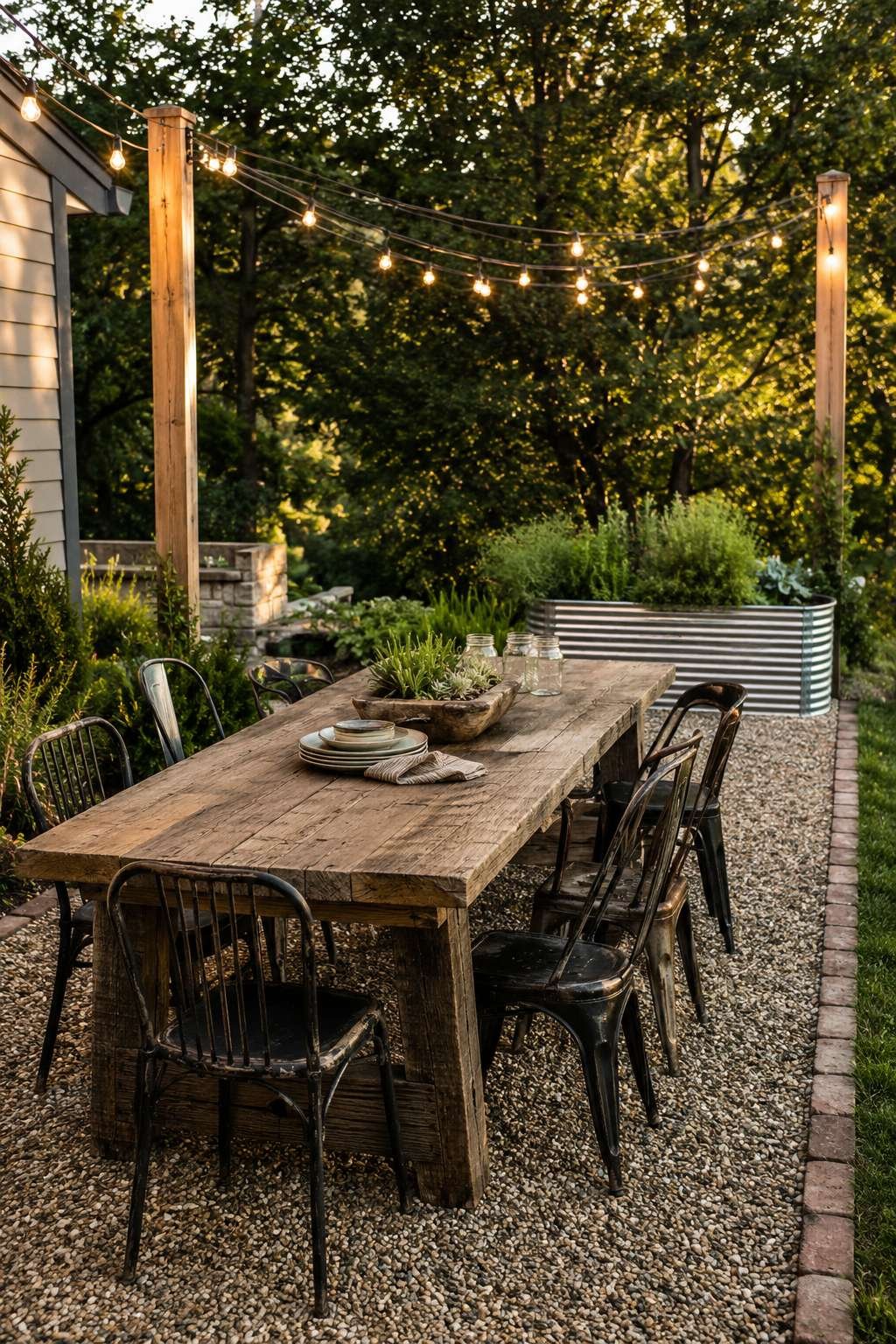
This concept is best suited to households that frequently host family dinners or gatherings, where a large communal table becomes the natural centerpiece. The mismatched chairs and reclaimed materials give the space an authentic, welcoming character that feels far removed from formal outdoor dining sets.
Key Design Tips:
- Choose reclaimed or salvaged wood for an authentic farmhouse table surface
- Mix vintage-style chairs rather than matching sets for collected charm
- String overhead lights between sturdy posts for reliable evening ambiance
- Plant herbs in a galvanized box for function within arm’s reach
- Seal reclaimed wood surfaces to protect against outdoor weathering
6. Urban Courtyard with Vertical Cedar Planter Walls
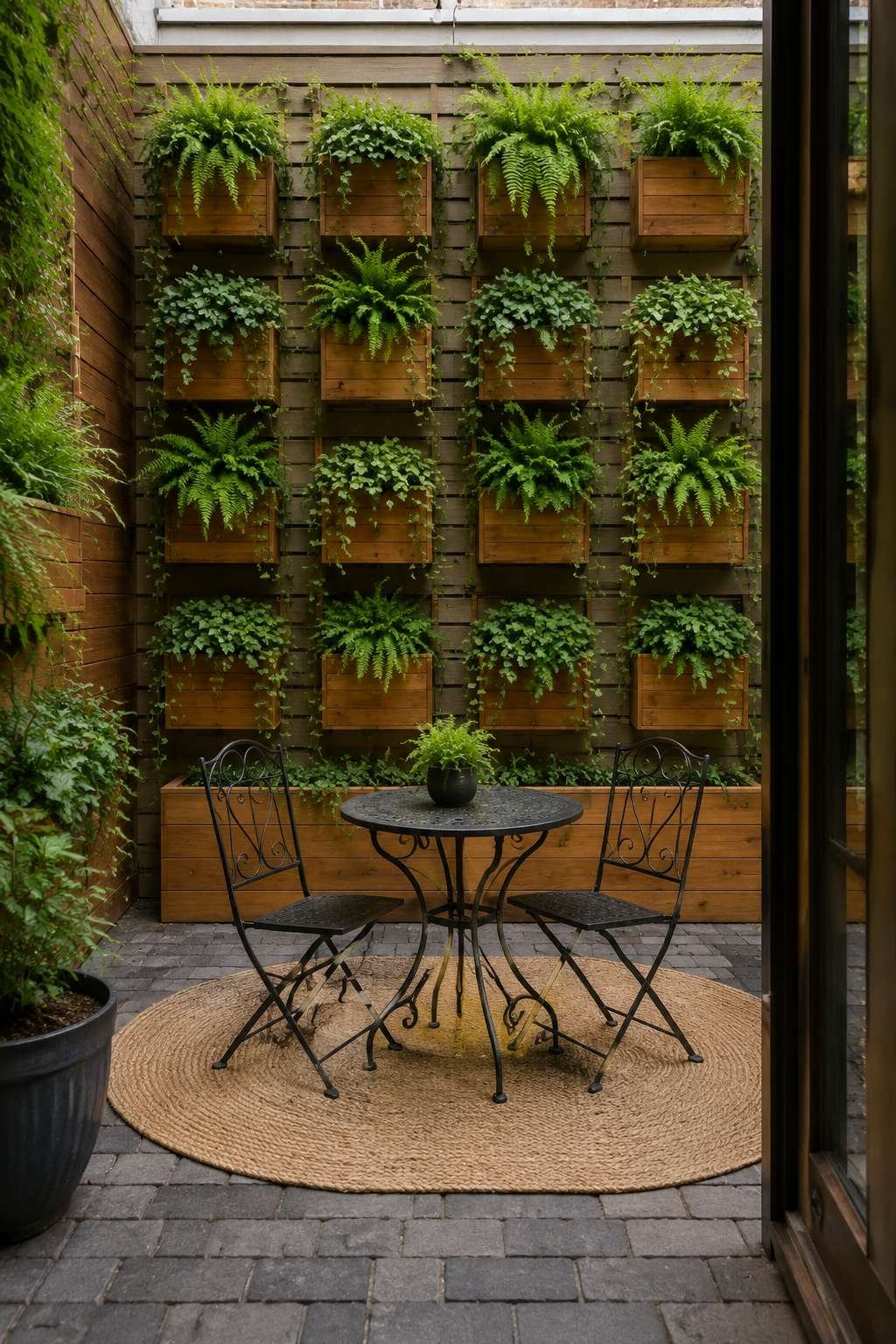
Compact and layered, this urban courtyard patio solves the challenge of small-space greenery through vertical design. Cedar planter boxes mounted as living walls hold trailing ivy and ferns, turning unused vertical surfaces into a lush, textured backdrop. This approach maximizes greenery without sacrificing precious floor space — a critical consideration in tight courtyard settings.
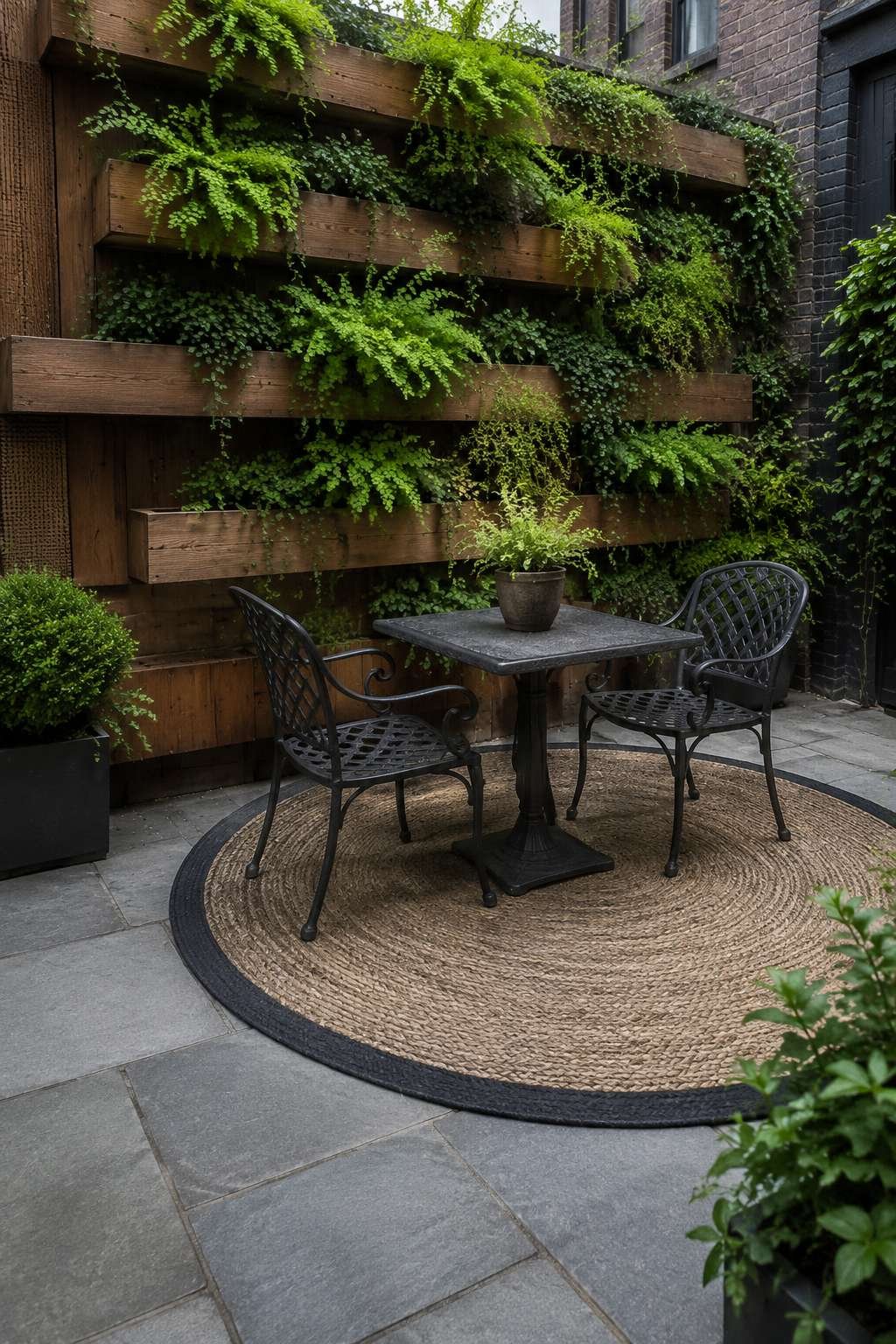
Atop weathered grey pavers, a compact two-seat wrought iron bistro set provides just enough seating for a quiet coffee or evening drink. A jute outdoor rug layered beneath the furniture adds warmth and texture underfoot, softening the pavers’ cool tone. Soft overcast daylight creates even, diffused lighting across the whole space, allowing the layered greenery to read clearly without harsh shadow or glare.
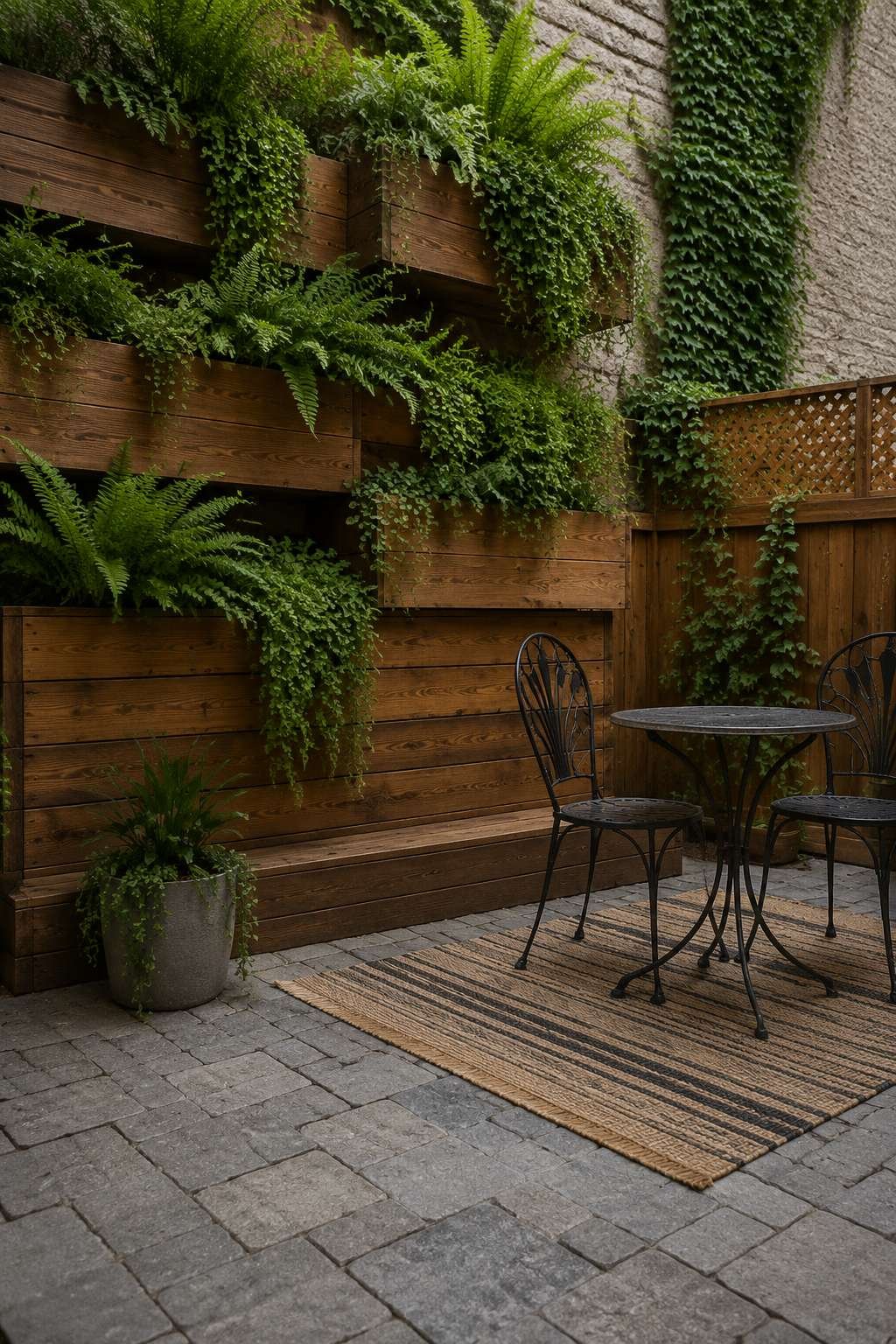
This design is particularly well-suited to city dwellers and small-lot homeowners working with limited courtyard space. By building vertically with cedar planter walls, the space achieves a sense of abundance and privacy that would be impossible to replicate with traditional ground-level planting alone.
Key Design Tips:
- Build vertical cedar planters to maximize greenery in tight courtyards
- Choose trailing plants like ivy and ferns for cascading vertical texture
- Layer a jute rug over pavers to soften hard surfaces underfoot
- Scale furniture down to a two-seat bistro set for compact spaces
- Water vertical planters consistently, as they dry faster than ground beds
7. Covered Patio with Rattan Egg Chair and Stone Slate Flooring
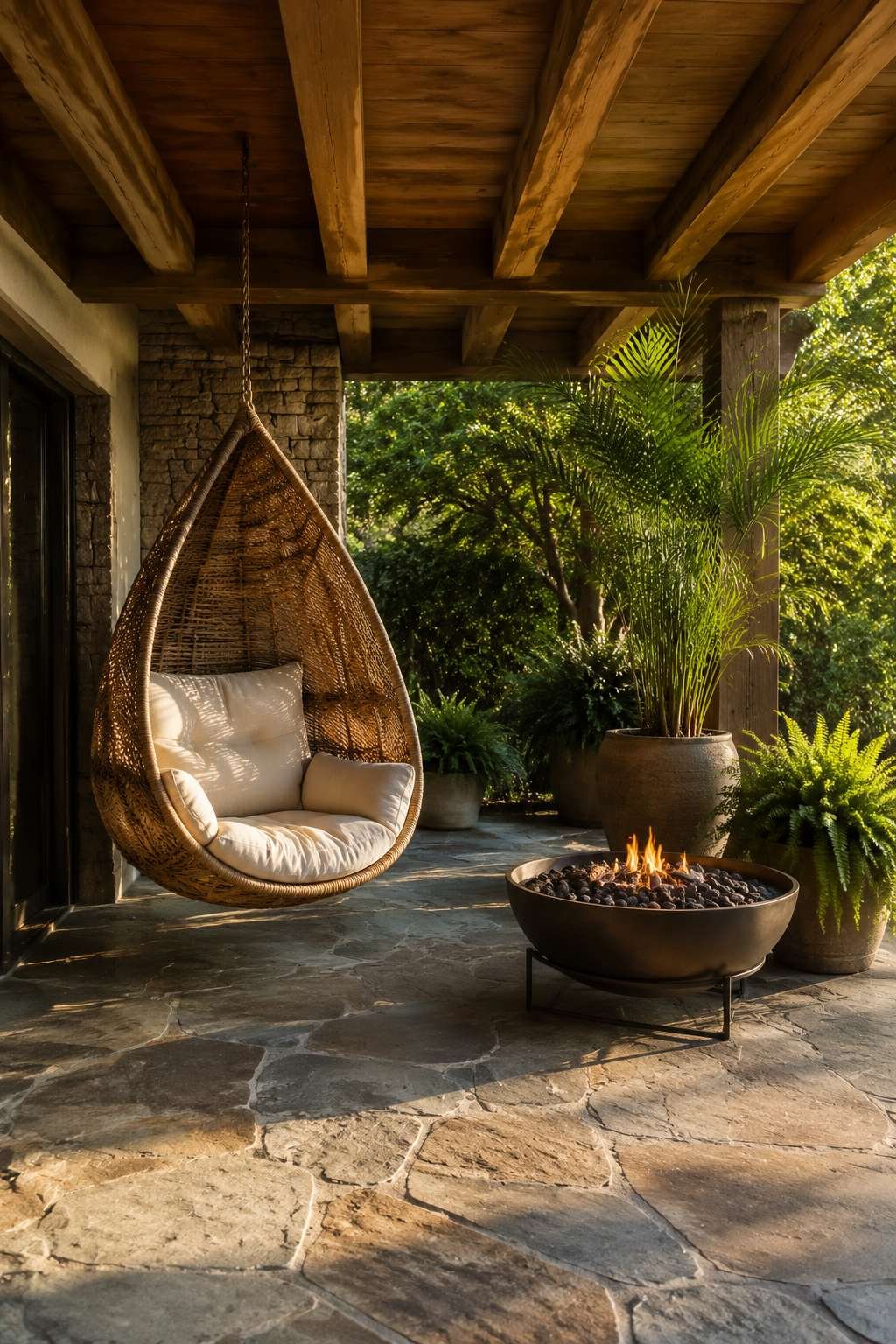
Striking a balance between architectural warmth and relaxed comfort, this covered patio features a wood-beamed ceiling overhead that frames the space with natural material honesty. In the corner, a hanging rattan egg chair cushioned in natural cream fabric offers a cocoon-like seat that instantly becomes the space’s most inviting feature — equal parts sculptural and comfortable.
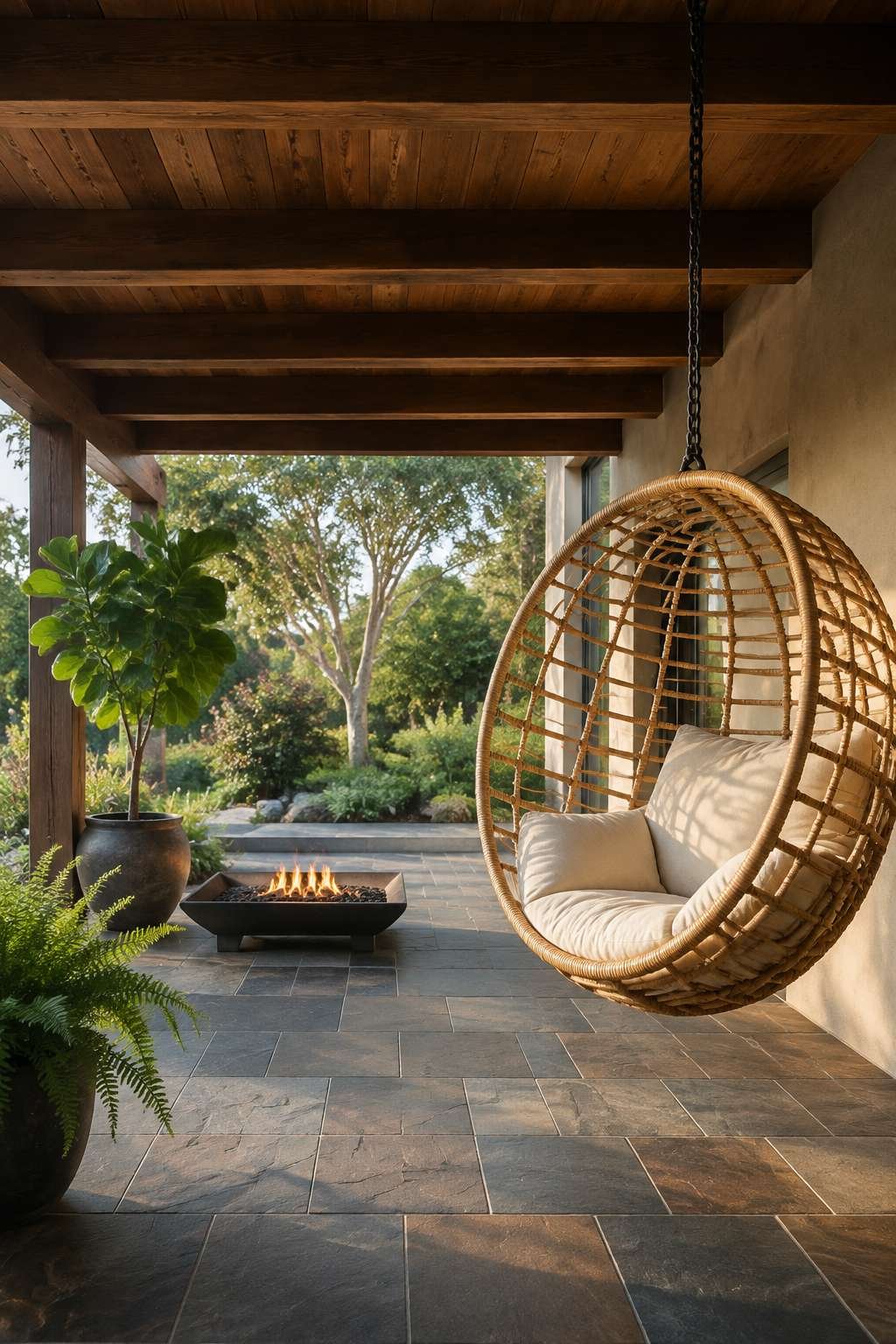
The flooring throughout is natural stone slate with subtle color variation, grounding the space in earthy, organic tones that complement the wood beams above. Nearby, a low fire bowl rests on a simple metal stand, offering warmth and ambiance without requiring a full fire pit installation. Warm late-day sunlight streams in at an angle, highlighting the rich grain of the wood beams and casting soft light across the slate flooring.
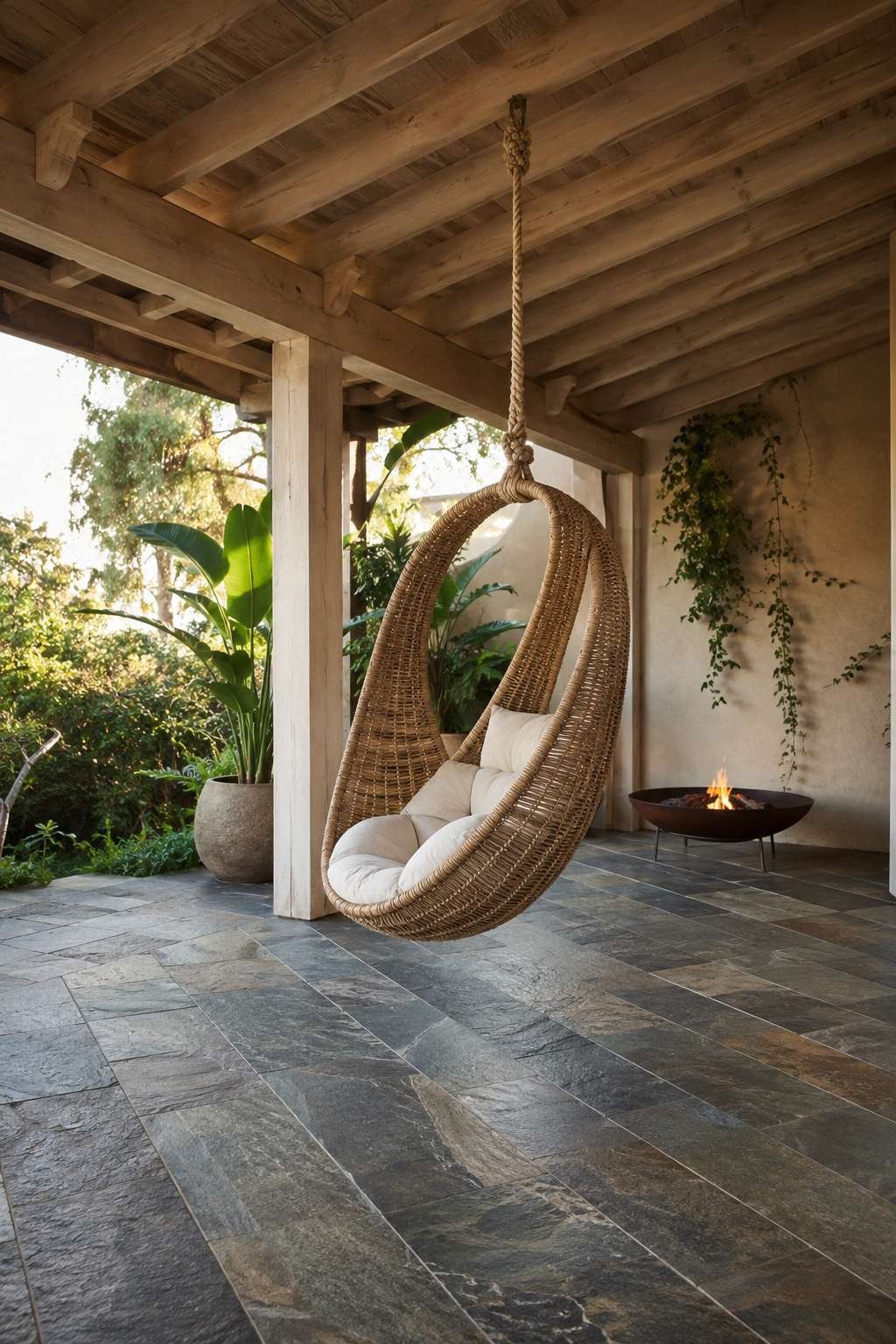
This design suits homeowners who want a patio that feels architecturally substantial — a genuine outdoor room rather than a simple furnished slab. The rattan egg chair in particular has become a signature piece for contemporary outdoor spaces, offering both striking visual form and genuine lounging comfort.
Key Design Tips:
- Choose wood beams with visible grain for architectural warmth overhead
- Select a hanging egg chair as a sculptural focal point for the corner
- Use natural stone slate for grounded, earthy flooring texture
- Add a low fire bowl for ambiance without a full fire pit footprint
- Orient the covered structure to capture warm late-day sunlight
8. Rustic Farmhouse Patio with Stacked Stone and Outdoor Kitchen
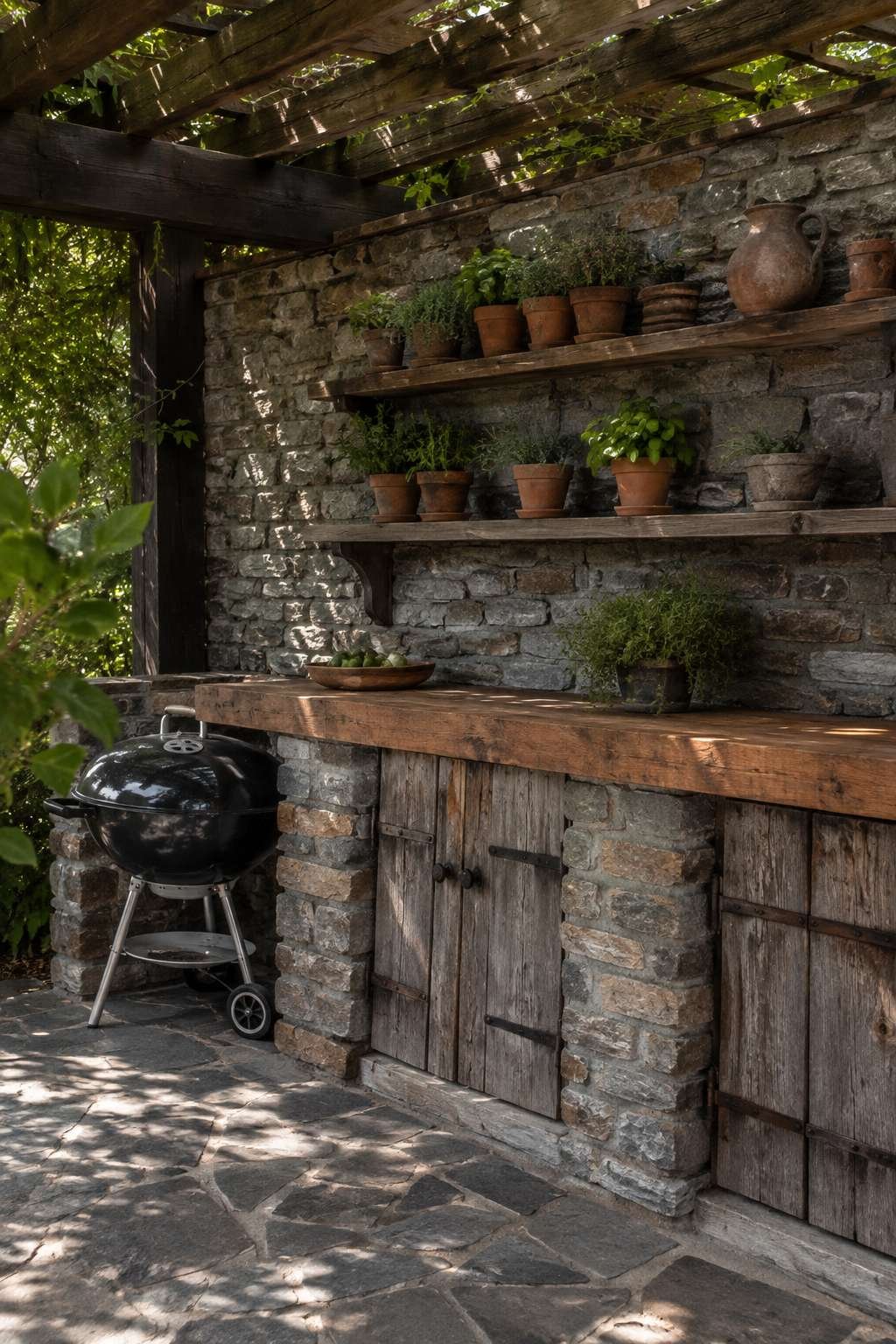
Built for both cooking and gathering, this rustic farmhouse patio features a stacked stone half-wall that anchors a functional built-in outdoor kitchen counter topped with weathered butcher block. This combination of natural stone and reclaimed-feeling wood creates a space that feels both sturdy and genuinely lived-in, ready for regular use rather than occasional display.
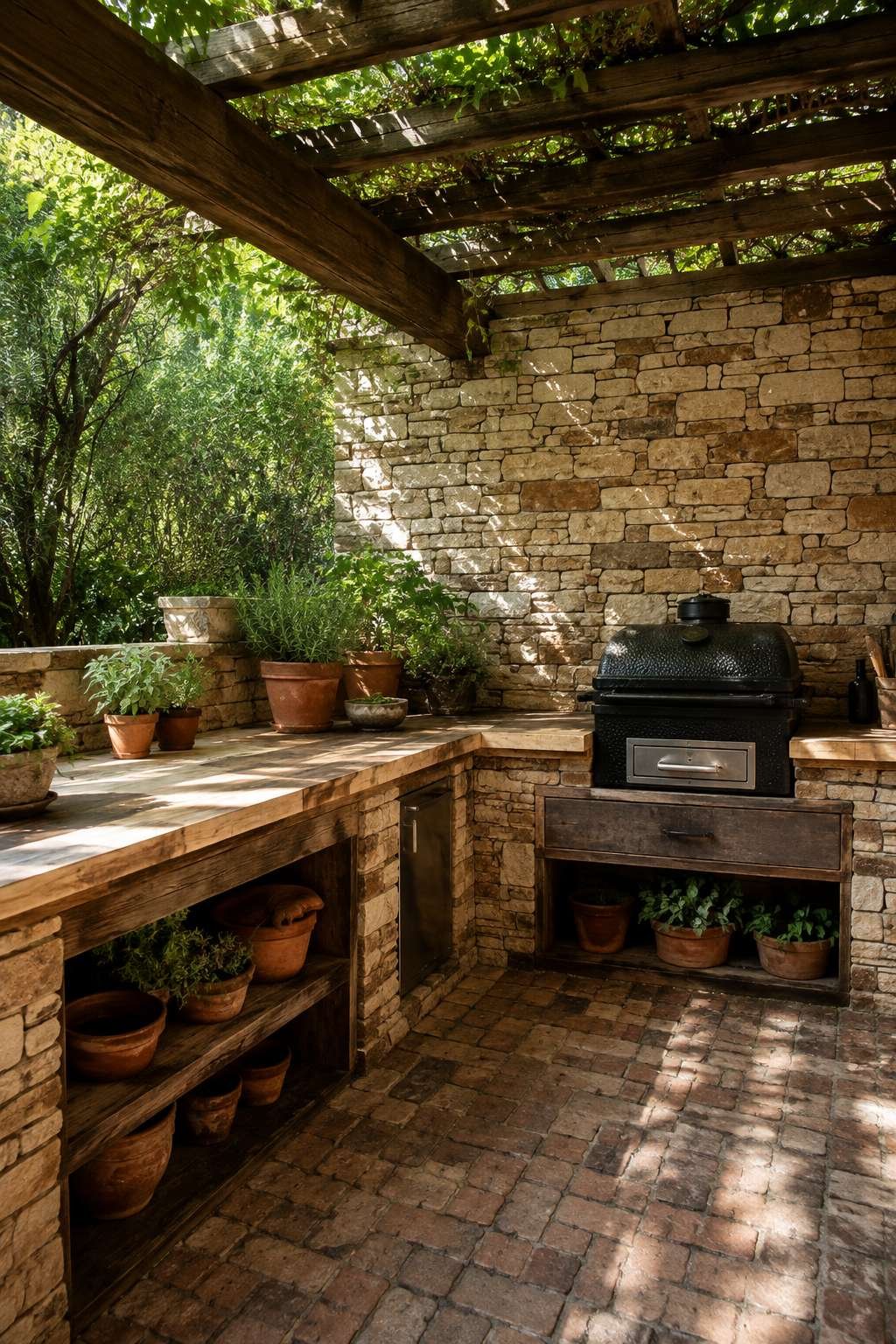
A charcoal grill paired with open shelving holding terracotta pots completes the cooking area, keeping essential tools and decorative greenery within easy reach. Overhead, natural aged wood pergola beams cast dappled shade across the whole space, softening direct sun without blocking airflow. Soft natural daylight highlights the texture of both stone and wood throughout the day, reinforcing the design’s focus on material authenticity.

This concept is ideal for homeowners who love outdoor cooking and entertaining in equal measure. The built-in kitchen counter transforms the patio into a genuine functional workspace, while the stacked stone and aged wood keep the aesthetic firmly rooted in rustic, farmhouse tradition.
Key Design Tips:
- Use stacked stone for a durable, textured outdoor kitchen backdrop
- Top counters with butcher block for warmth and functional workspace
- Install open shelving to keep grilling tools and pots easily accessible
- Choose aged or reclaimed wood pergola beams for rustic authenticity
- Position the grill for airflow while remaining under partial pergola shade
9. Coastal Daybed Patio with Whitewashed Wood and Linen Stripes
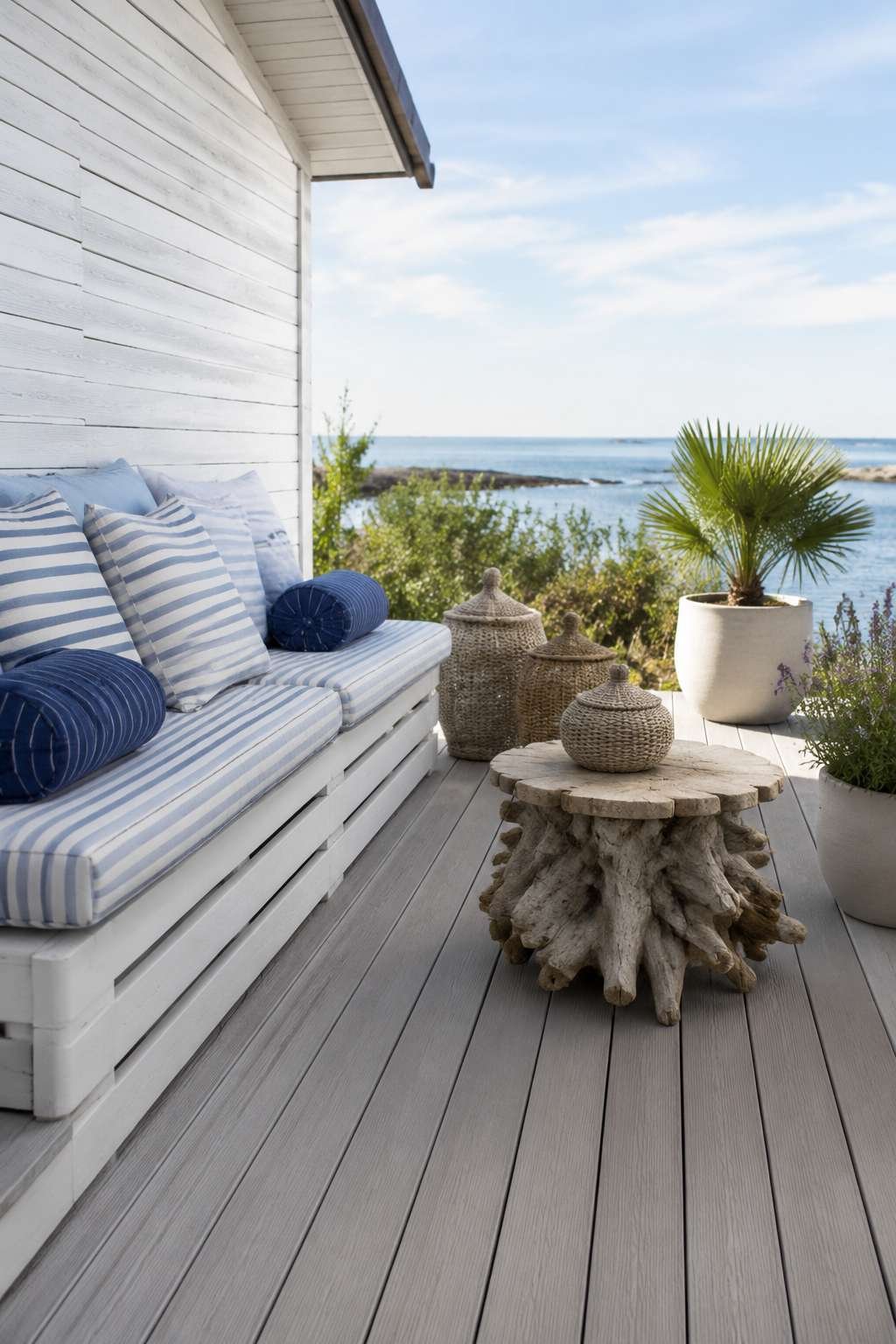
Evoking breezy seaside living, this coastal-inspired seating area centers on a whitewashed wood daybed layered with striped linen cushions in soft blue and white tones — an instantly recognizable coastal palette that feels crisp and relaxed. The daybed’s generous size makes it as suited to solitary lounging as it is to shared afternoon naps in the sun.
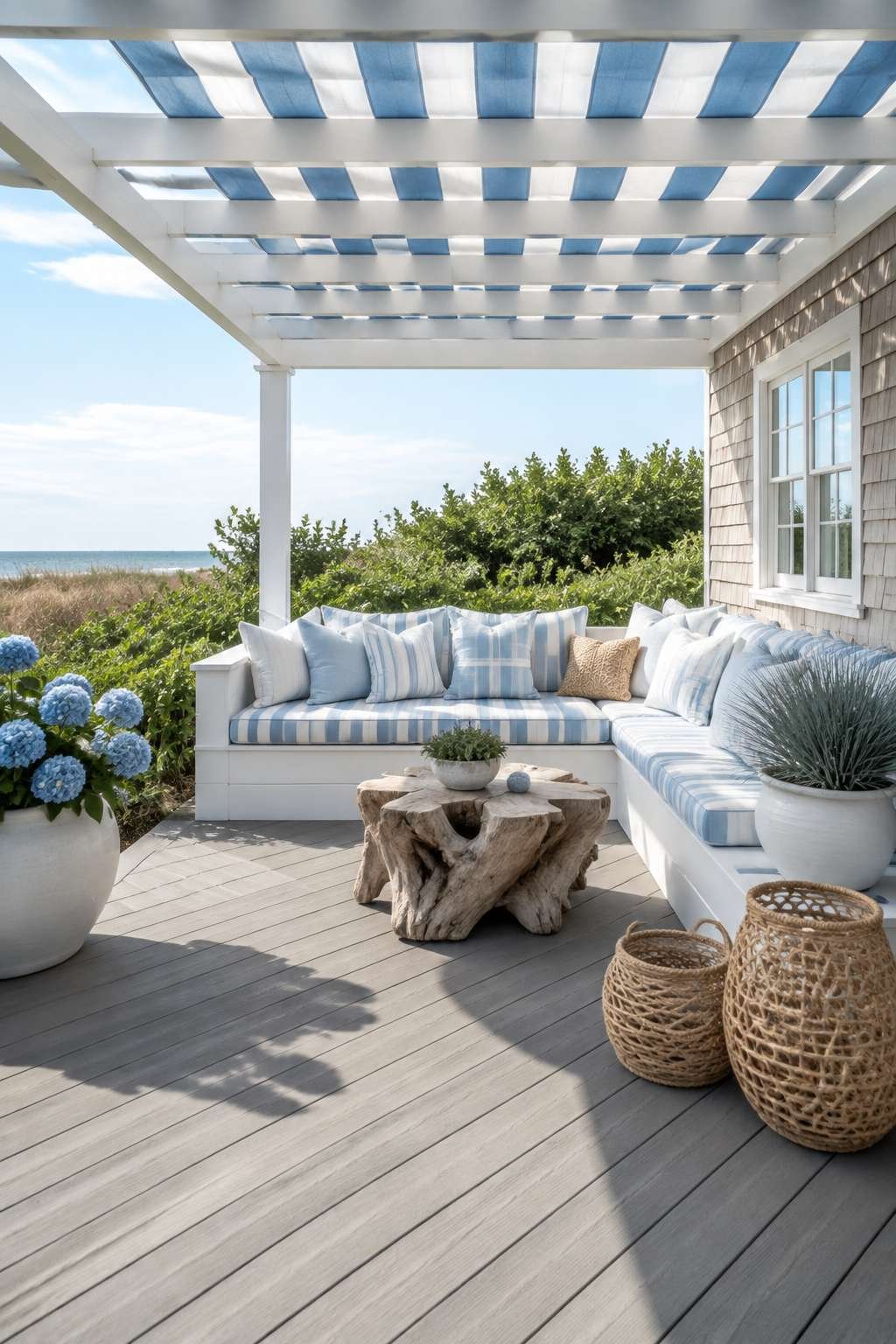
Completing the vignette, woven seagrass baskets and a driftwood side table add natural texture that echoes the coastal theme without leaning into cliché. The whole arrangement sits atop light grey composite decking, a practical, low-maintenance material choice that mimics natural wood while resisting the wear of sun and salt air. Bright natural daylight with soft shadows evokes an airy, breezy seaside feel throughout the space.
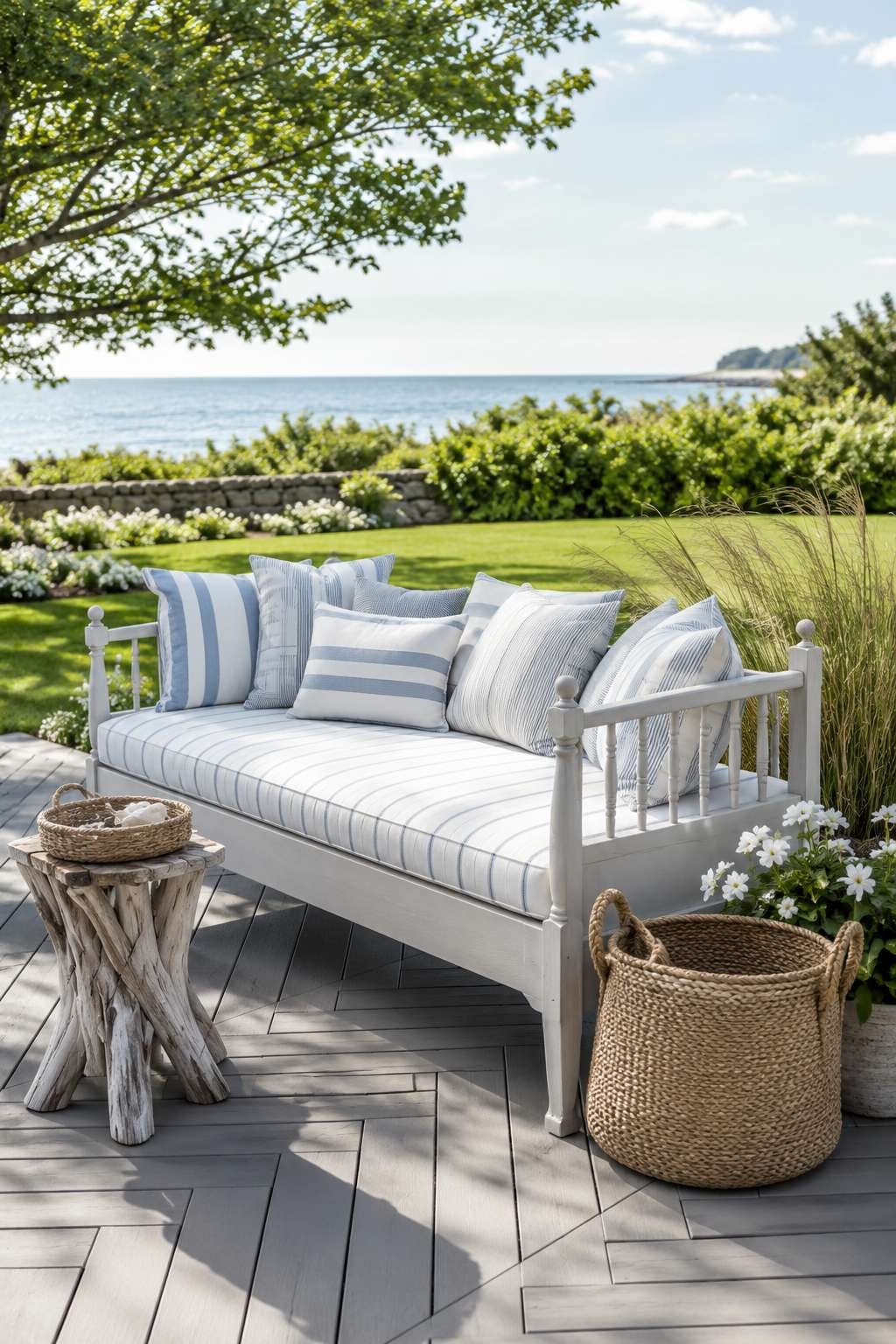
This design is particularly well-suited to homeowners near the coast or anyone drawn to a relaxed, vacation-inspired aesthetic. The whitewashed finishes and striped textiles create a palette that feels perpetually fresh, bright, and inviting regardless of the season.
Key Design Tips:
- Choose whitewashed wood finishes for an authentic coastal daybed look
- Layer striped linen cushions in blue and white for classic coastal color
- Add driftwood or weathered wood accents for natural coastal texture
- Select composite decking for low-maintenance durability near coastal air
- Use seagrass baskets for storage that reinforces the natural palette
10. Modern Fire Pit Lounge with Porcelain Pavers
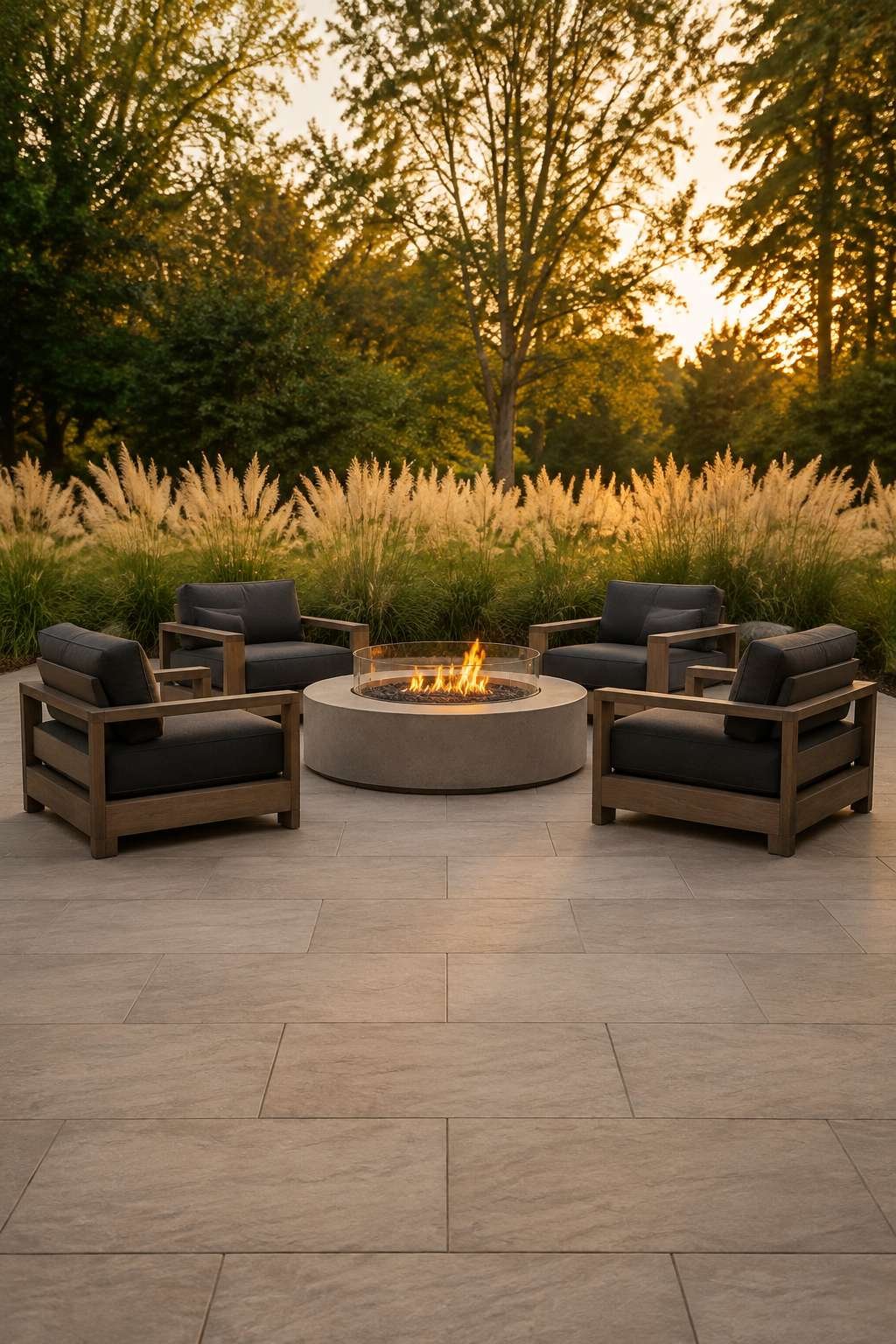
Sleek and contemporary, this modern fire pit lounge area centers on a circular gas fire pit surrounded by four low-profile outdoor armchairs upholstered in charcoal grey weatherproof fabric. The circular seating arrangement draws attention naturally inward, creating an intimate gathering point regardless of the surrounding yard’s overall size.
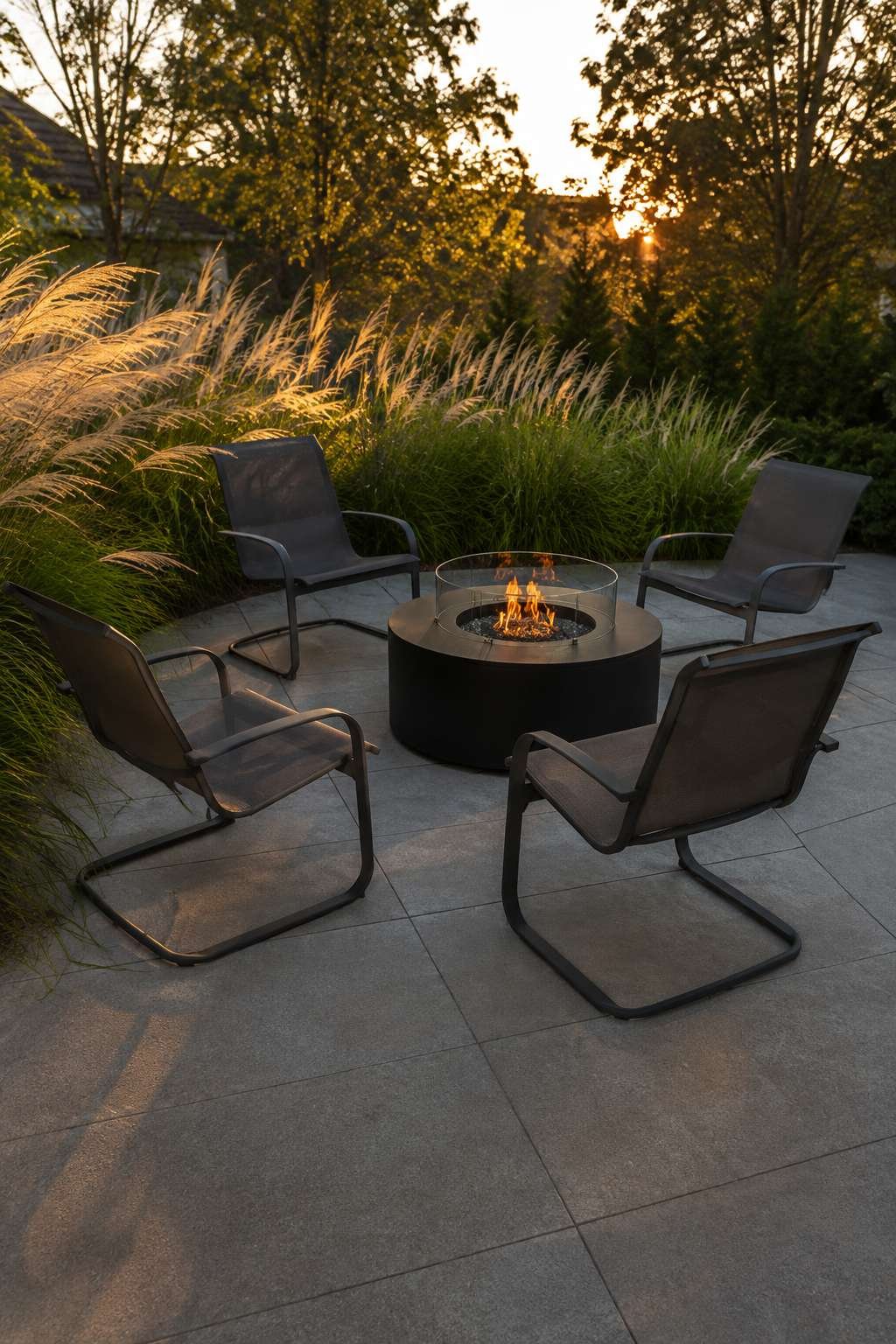
The patio surface itself is finished in large-format porcelain pavers in a warm taupe tone, offering a clean, durable base that resists staining and weathering far better than traditional stone. Bordering the seating area, ornamental grasses add soft, organic movement against the pavers’ hard geometric lines. As golden hour arrives, warm light creates a glowing reflection off the fire pit’s glass surround, adding a striking visual effect that intensifies as evening approaches.

This concept suits homeowners drawn to a polished, contemporary aesthetic without sacrificing warmth or comfort. The gas fire pit offers convenience over wood-burning alternatives, while the porcelain paver surface ensures the space stays looking pristine with minimal maintenance year after year.
Key Design Tips:
- Choose large-format porcelain pavers for a durable, low-maintenance surface
- Arrange armchairs in a circle around the fire pit for intimate gathering
- Select a gas fire pit with a glass surround for added visual impact
- Border the seating area with ornamental grasses for organic softness
- Choose charcoal or neutral upholstery to keep the palette cohesive
11. Small-Space Café Patio with Vertical Herb Wall
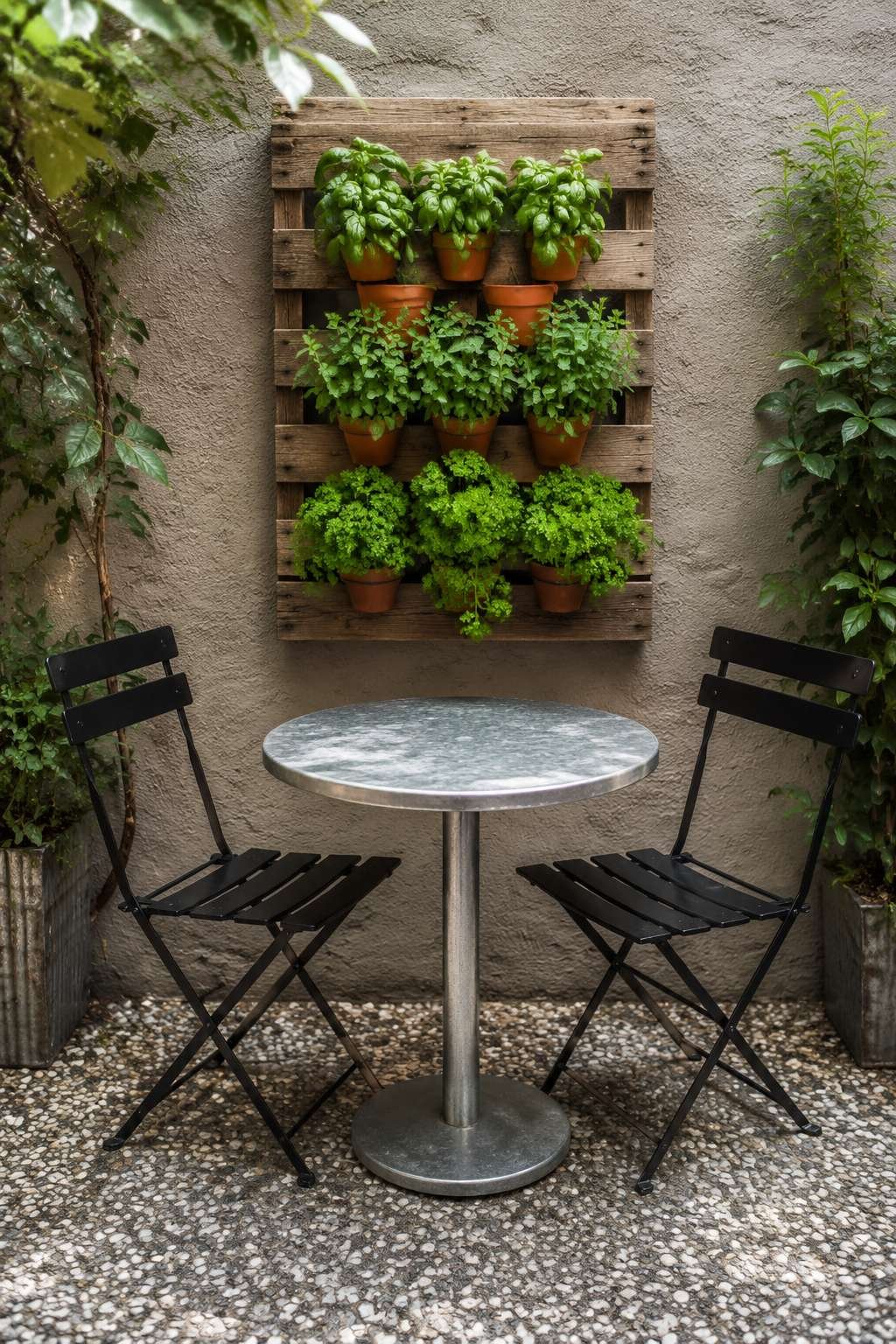
Compact yet productive, this design proves that even the smallest patios can incorporate genuine greenery and function. A vertical herb garden mounted on a reclaimed wood pallet wall sits above a compact two-person café table topped with galvanized steel, creating a growing space that requires no additional floor footprint.

The patio floor itself is finished in textured grey exposed aggregate concrete, a durable and slip-resistant surface well-suited to small, high-traffic outdoor spaces. Soft morning light filters through nearby foliage, highlighting the natural variation in leaf color across the herb wall — a detail that gives the space an ever-changing, organic quality throughout the growing season.
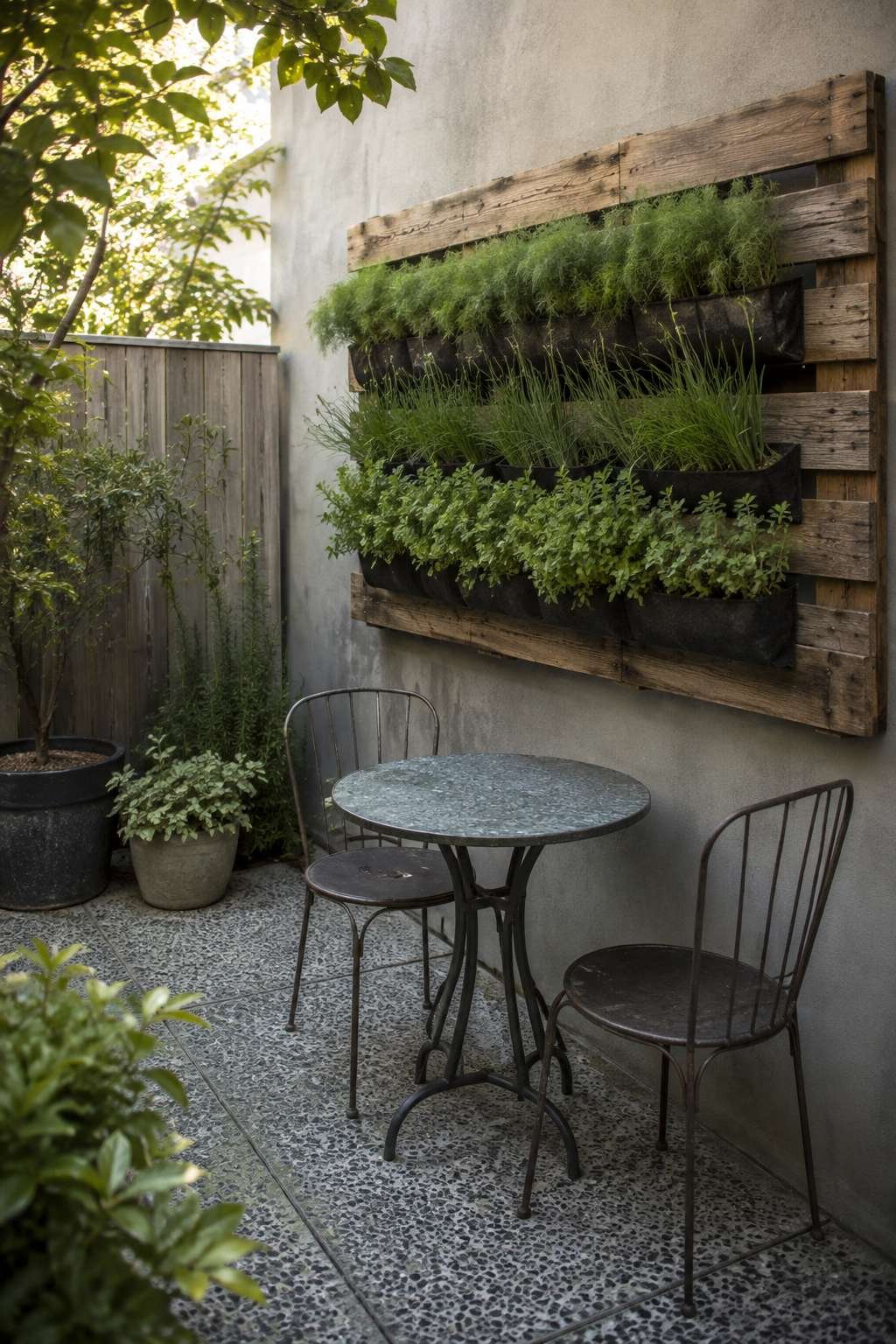
This concept is especially practical for apartment patios, balconies, or tight urban backyards where every square foot must serve a purpose. The combination of a vertical growing wall and a compact café table proves that small-space gardening and outdoor dining can coexist beautifully within a limited footprint.
Key Design Tips:
- Mount herb gardens vertically to save floor space in compact patios
- Use reclaimed wood pallets as an affordable, textured planting backdrop
- Choose a galvanized steel table top for durability in small spaces
- Select exposed aggregate concrete for a slip-resistant patio surface
- Position herb walls to capture morning light for optimal growth
12. Scandinavian Minimalist Patio with Sheer Curtains
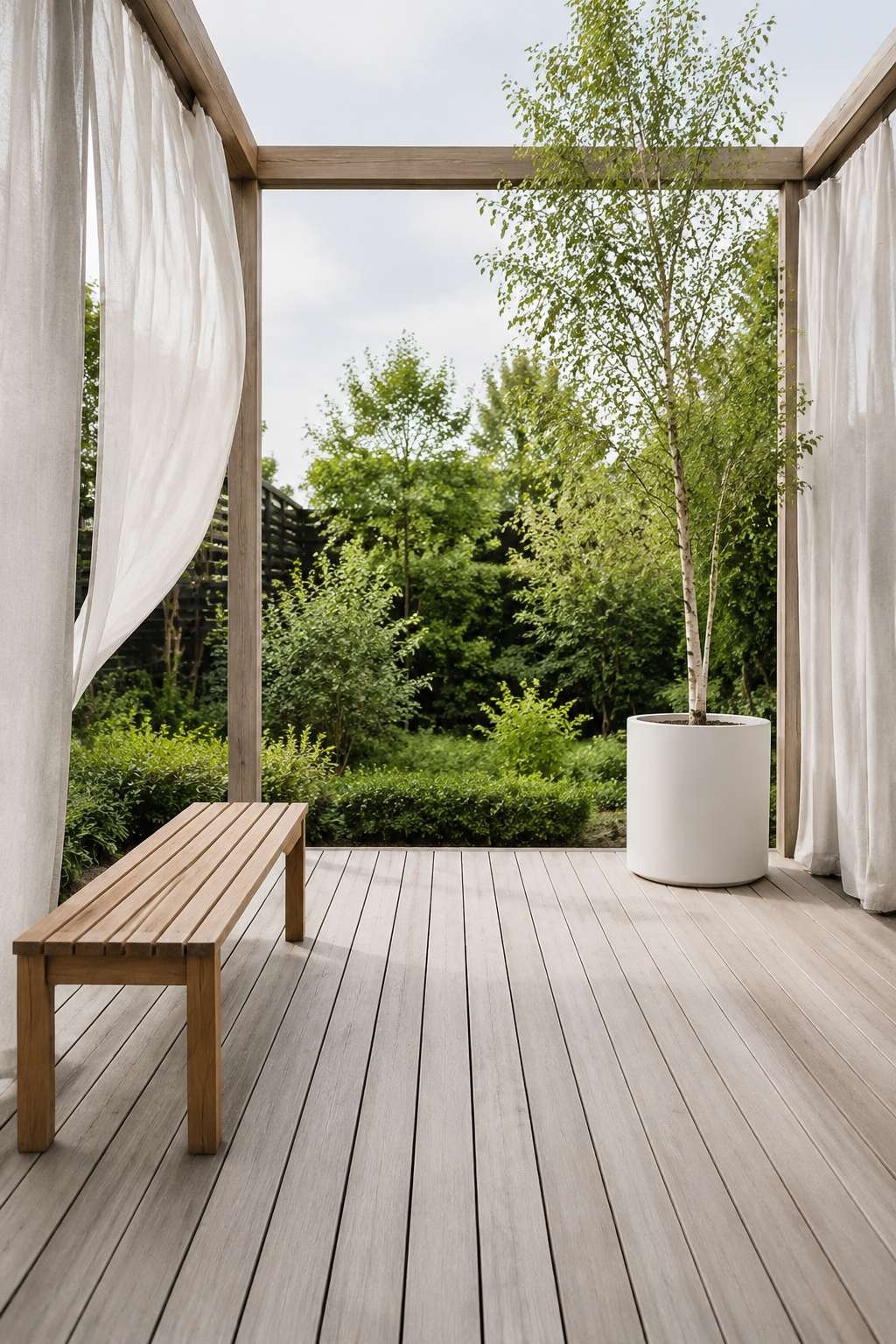
Calm and restrained, this Scandinavian-inspired minimalist patio embraces simplicity as its guiding principle. A light natural wood deck provides a warm, neutral base, paired with a simple slatted teak bench that offers seating without visual clutter. A single sculptural potted birch tree, planted in a white ceramic planter, serves as the space’s sole decorative focal point — a deliberate choice that reinforces the design’s pared-back philosophy.
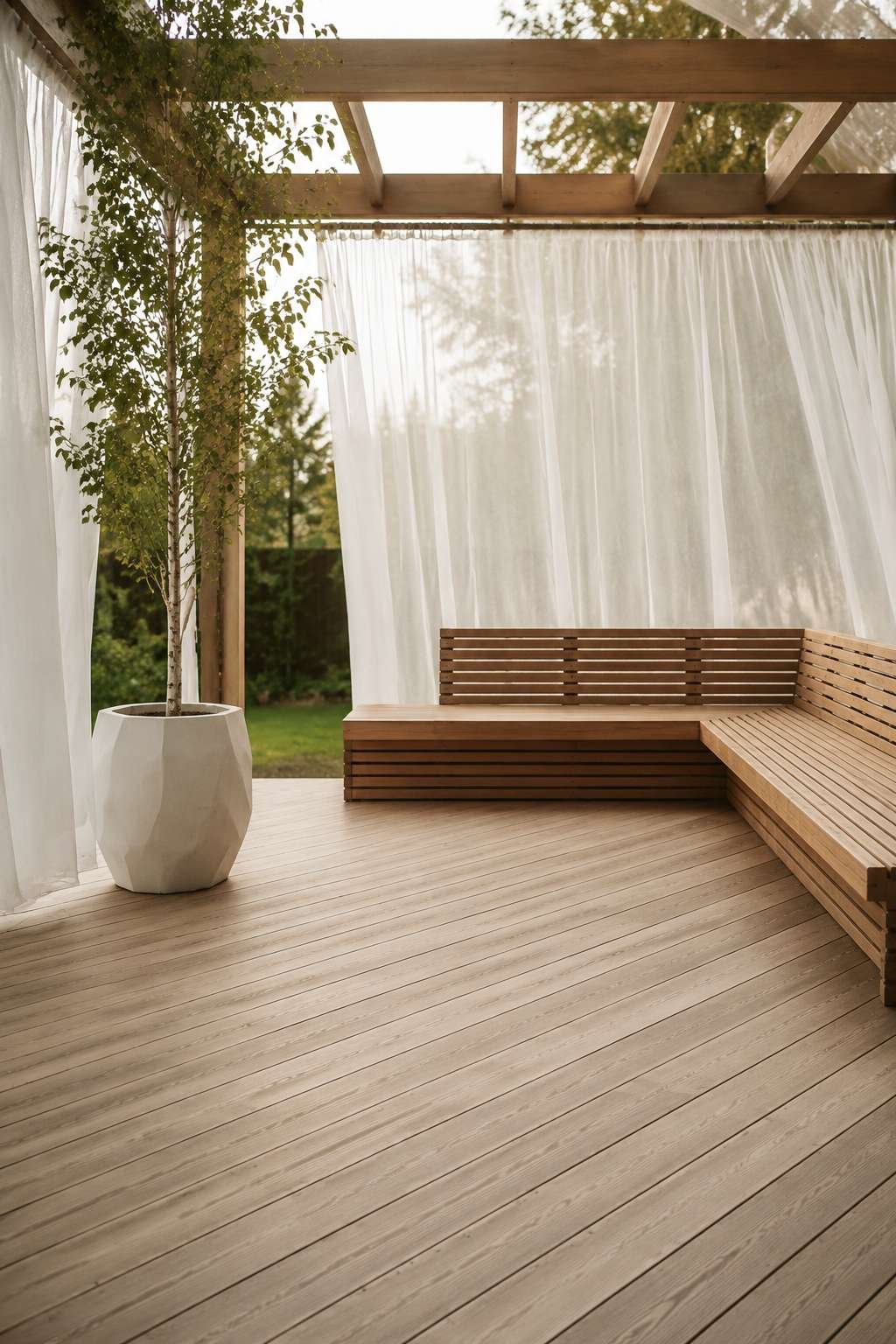
Sheer outdoor curtains hang from a simple pergola frame, moving gently in the breeze and adding a soft, ethereal quality to the otherwise clean-lined space. This subtle movement introduces visual interest without requiring additional furniture or ornamentation. Soft diffused daylight creates a calm, airy atmosphere throughout, reinforcing the sense of quiet restraint that defines Scandinavian design.
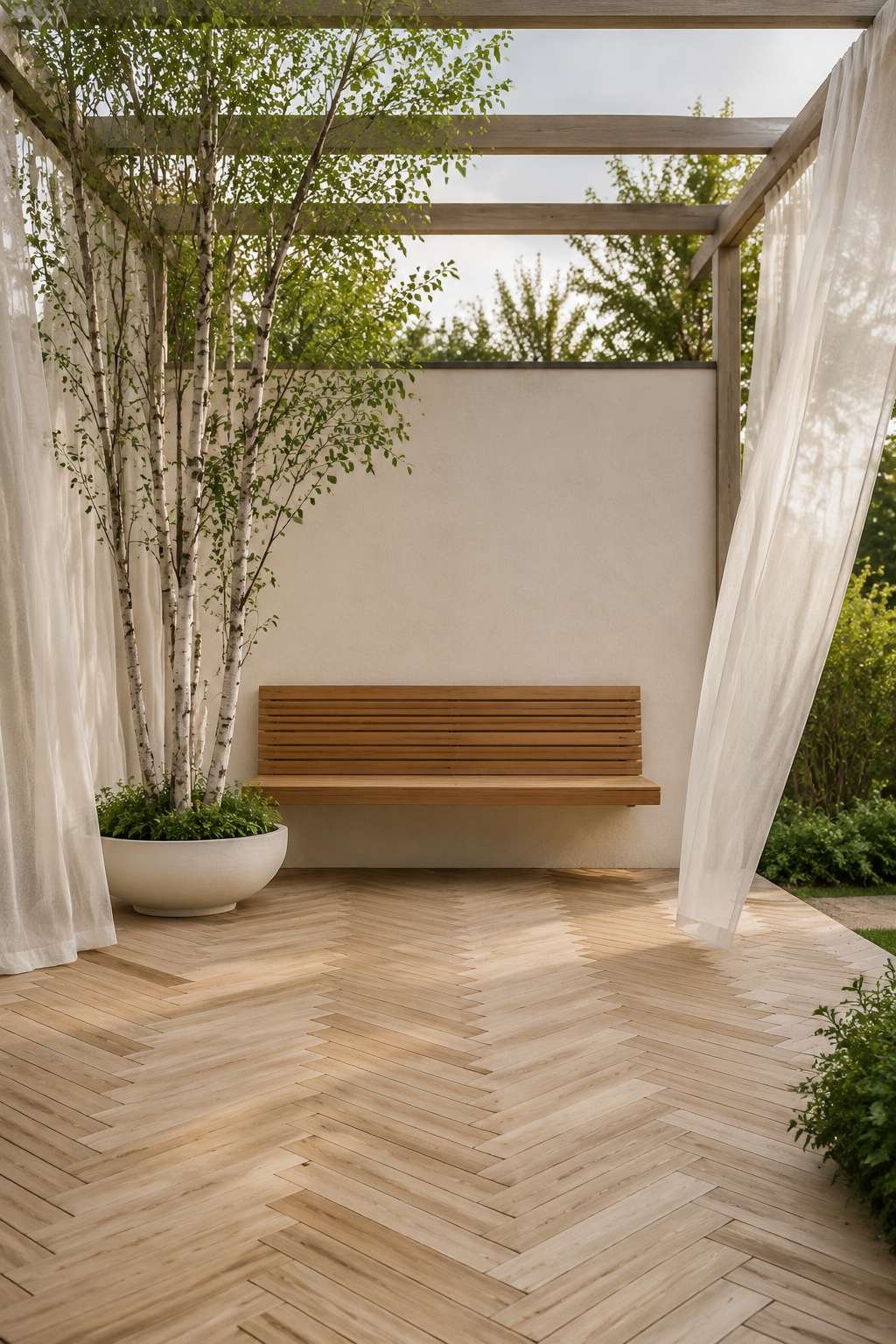
This concept appeals to homeowners who value minimalism and functional simplicity over abundance. Every element here — from the single birch tree to the sheer curtains — is chosen with intention, creating a patio that feels serene rather than sparse.
Key Design Tips:
- Choose light natural wood tones for a warm, minimalist deck base
- Limit greenery to a single sculptural specimen for maximum impact
- Hang sheer curtains from a pergola for soft, moving texture
- Select slatted teak furniture to keep sightlines open and uncluttered
- Stick to a neutral, restrained color palette throughout the space
13. Bohemian Patio with Macramé Hammock and Layered Textiles
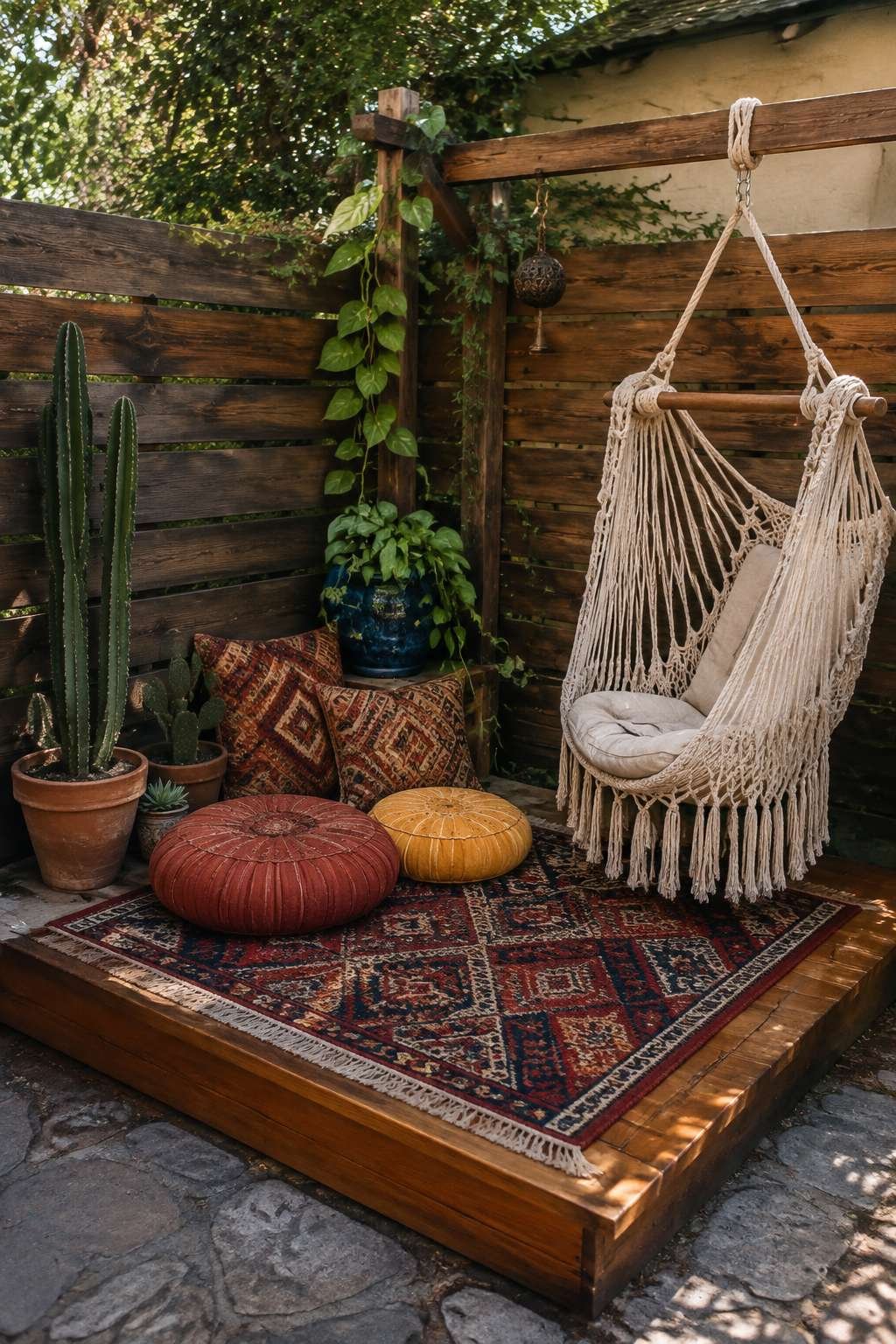
Rich in color and texture, this bohemian-style seating nook layers pattern upon pattern for a space that feels warm, eclectic, and deeply personal. A low wooden platform serves as the foundation, topped with a Moroccan-style patterned outdoor rug in rich, saturated tones. Scattered floor cushions in rust and mustard hues invite casual, ground-level lounging in true bohemian fashion.
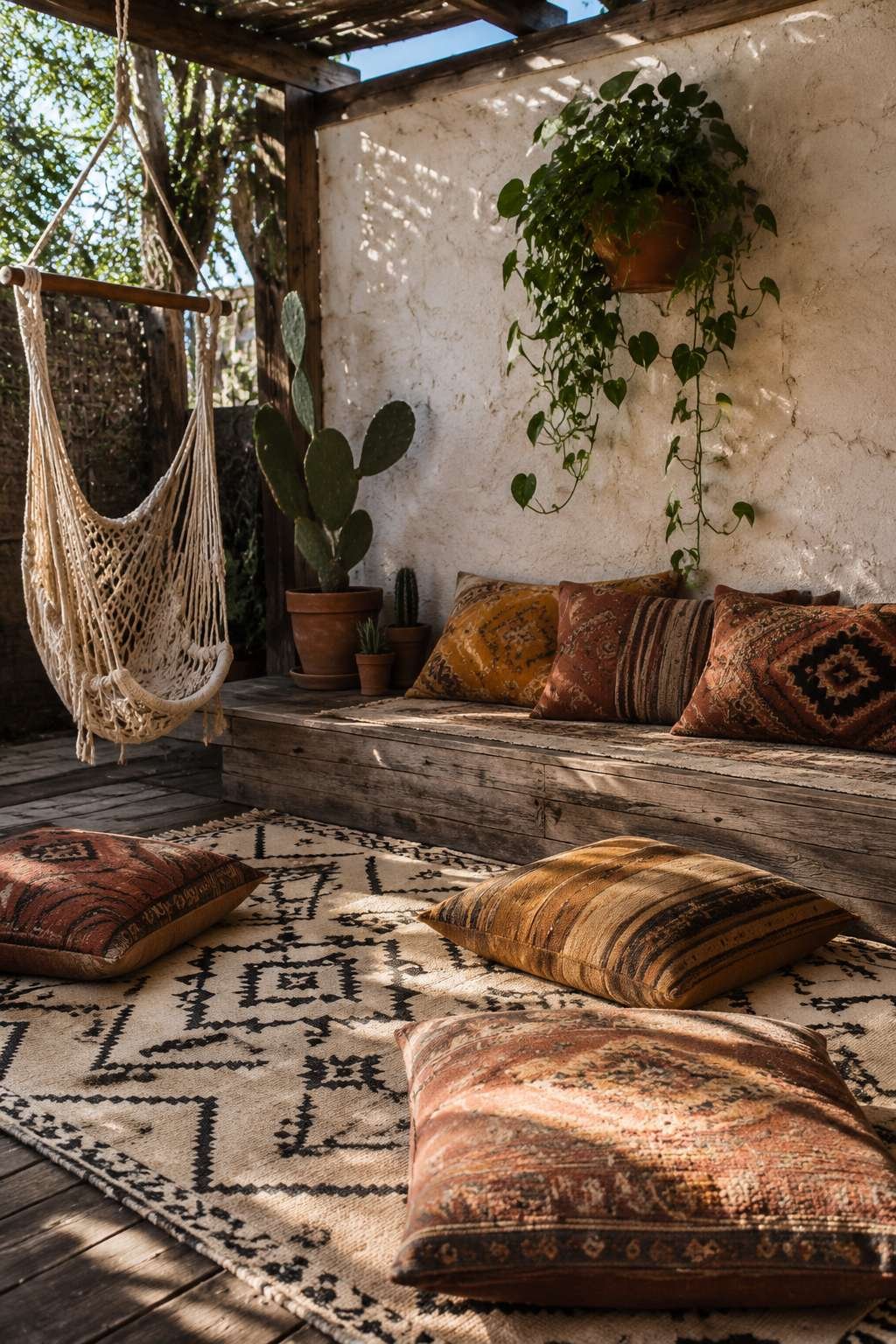
Overhead, a macramé hammock chair hangs from a sturdy wooden beam, its intricate knotwork adding handcrafted texture that anchors the space’s artisanal character. Rounding out the greenery, potted cacti and trailing pothos vines introduce organic shape and movement against the layered textiles. Warm late-afternoon sunlight casts soft shadows across the textured fabrics, deepening the richness of the rust and mustard color palette.
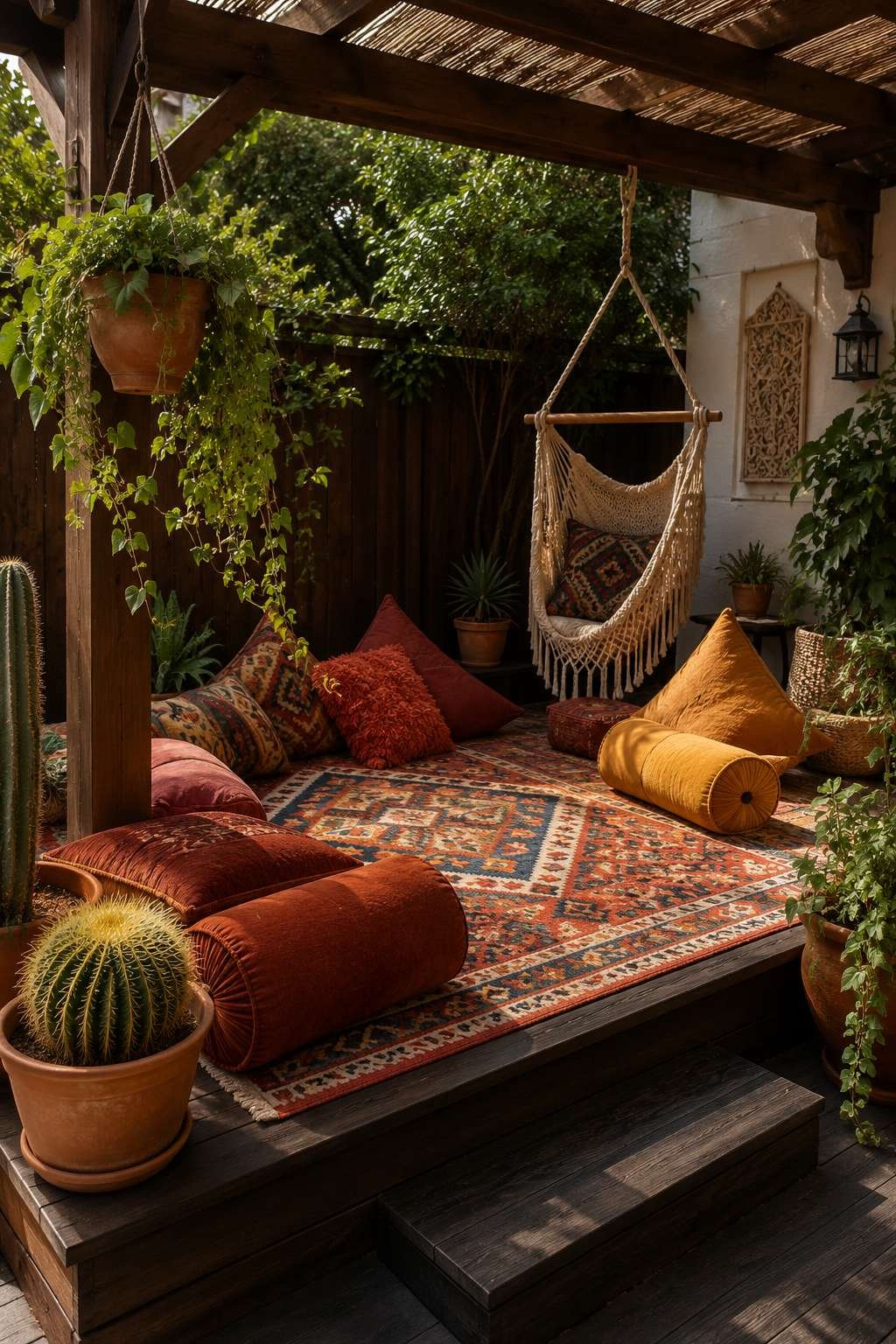
This design suits homeowners drawn to maximalist, pattern-rich aesthetics rather than minimalist restraint. The combination of macramé, Moroccan textiles, and varied greenery creates a space that feels collected, personal, and full of character.
Key Design Tips:
- Layer patterned rugs and cushions for rich bohemian texture
- Choose a macramé hammock chair as a handcrafted focal point
- Mix rust and mustard tones for a warm, cohesive color story
- Pair structural cacti with trailing pothos for varied plant texture
- Keep seating low to the ground to reinforce relaxed bohemian style
14. Entertainment Patio with Navy Sectional and Shade Sail
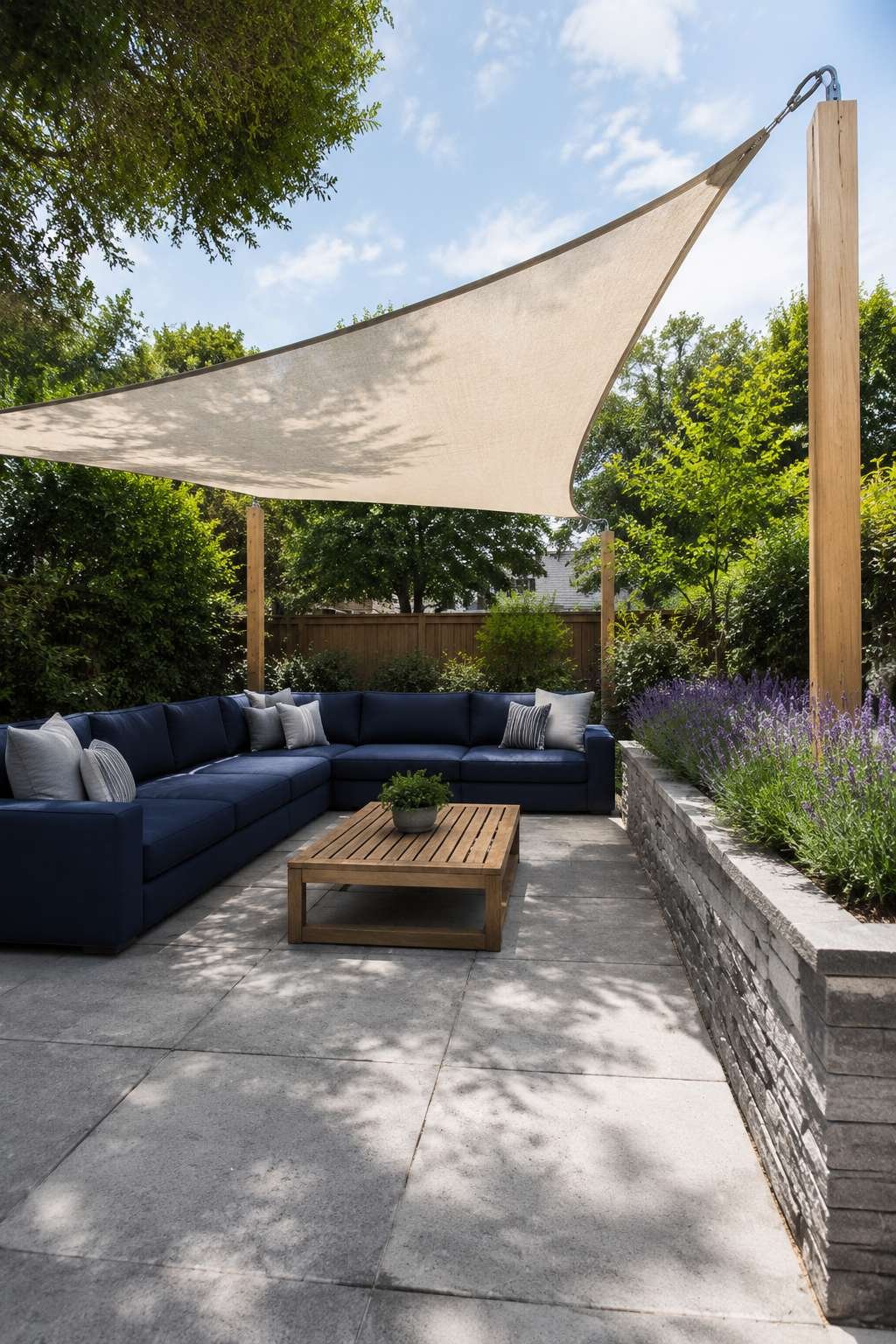
Designed for both comfort and function, this outdoor entertainment area features a weatherproof sectional sofa in deep navy fabric, arranged around a low teak coffee table that anchors the seating zone. This rich, saturated navy tone brings sophistication to the outdoor setting, distinguishing it from more common neutral outdoor furniture palettes.
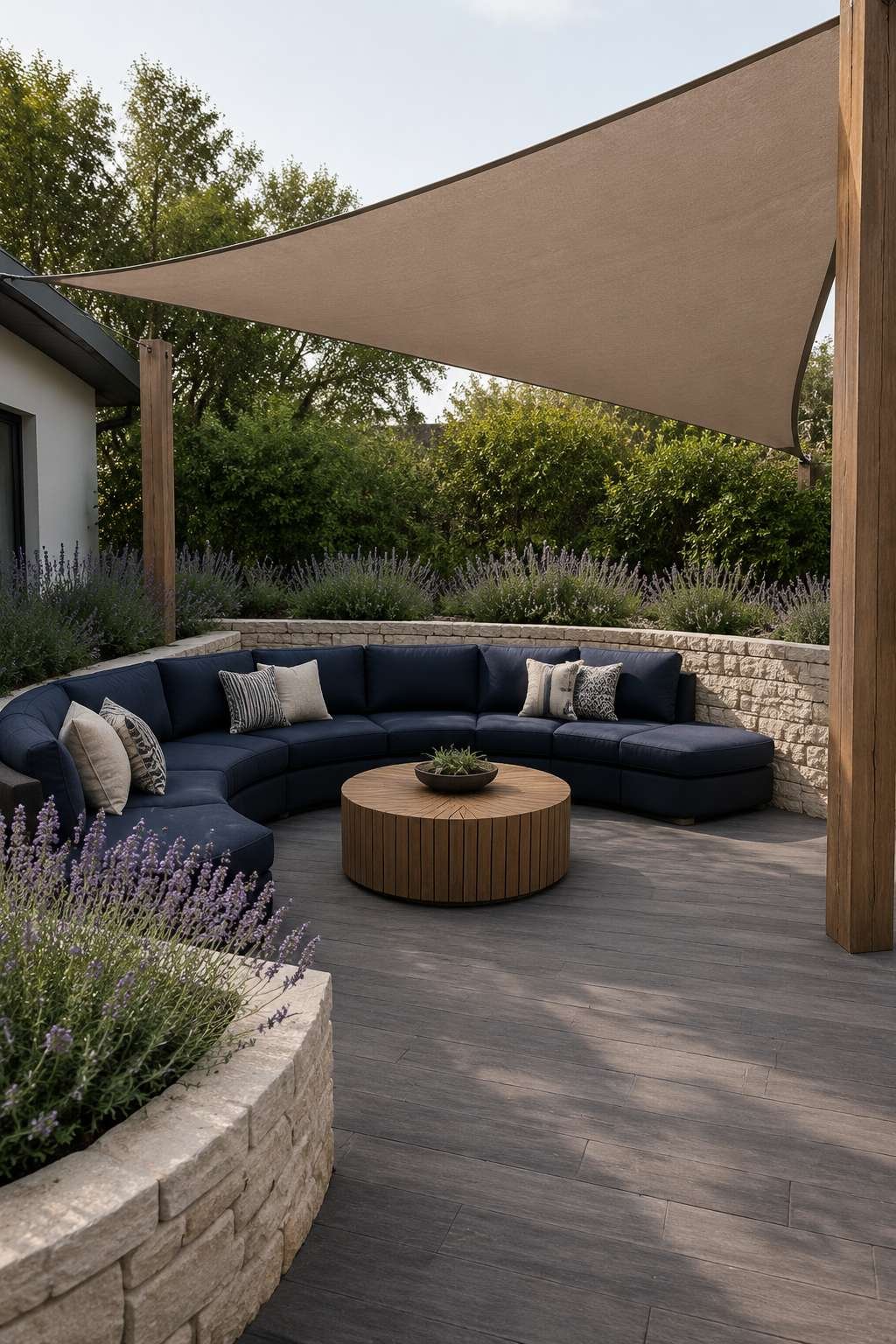
Overhead, a shade sail stretches between wooden posts, offering modern, angular sun protection without the visual bulk of a full pergola structure. A built-in stone planter bordered with fragrant lavender lines the edge of the seating zone, introducing color, scent, and texture in a single element. Soft natural daylight with gentle shadows highlights both the sectional’s fabric texture and the planter’s stone surface throughout the day.
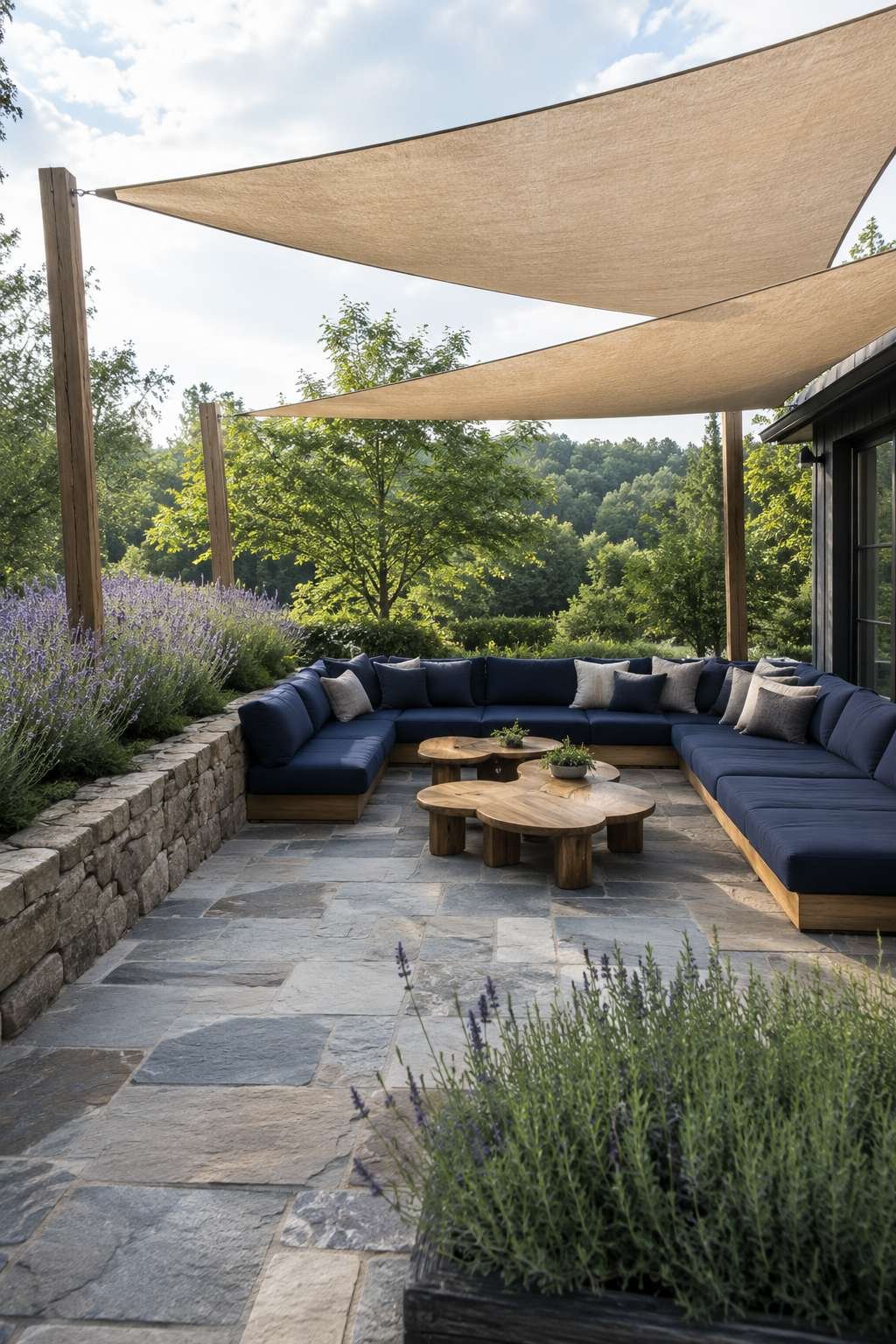
This concept is well-suited to homeowners who prioritize outdoor entertaining and want a patio that functions like a true living room extension. The shade sail’s modern geometry pairs particularly well with contemporary architecture, while the lavender planter softens the space’s more angular elements.
Key Design Tips:
- Choose a shade sail for modern, space-efficient sun protection
- Select navy or other rich tones for a sophisticated sectional palette
- Build in a stone planter to add fragrance and color at seating height
- Plant lavender for both visual softness and natural pest deterrence
- Keep the coffee table low-profile for easy conversation across seating
15. Narrow Side-Yard Dining Nook with String Lights
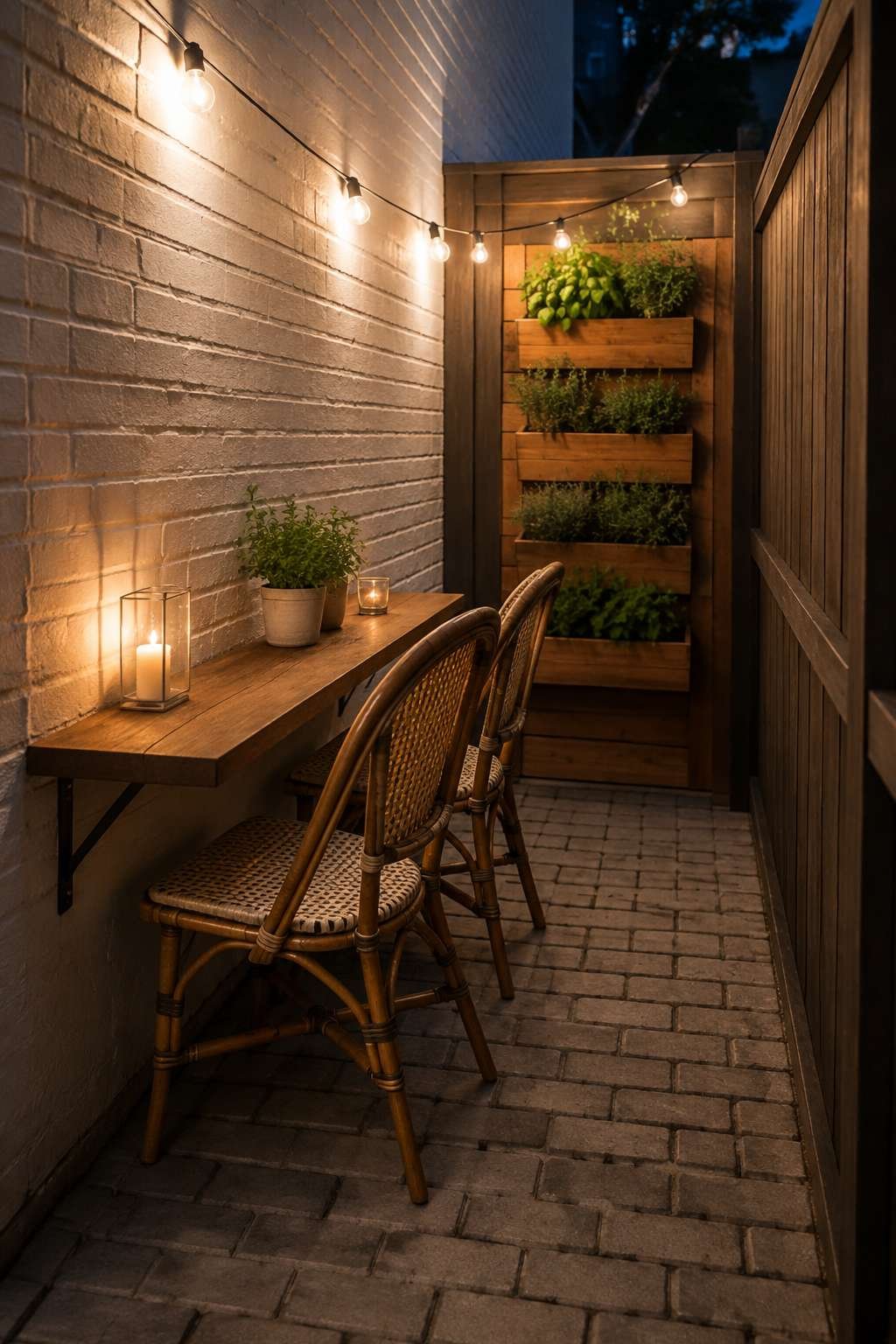
Proving that even overlooked spaces can become genuine design features, this narrow side-yard patio transforms a forgotten strip of land into a functional dining nook. A slim reclaimed wood table sits against a whitewashed brick wall, paired with two woven bistro chairs that fit comfortably within the tight footprint without feeling cramped.
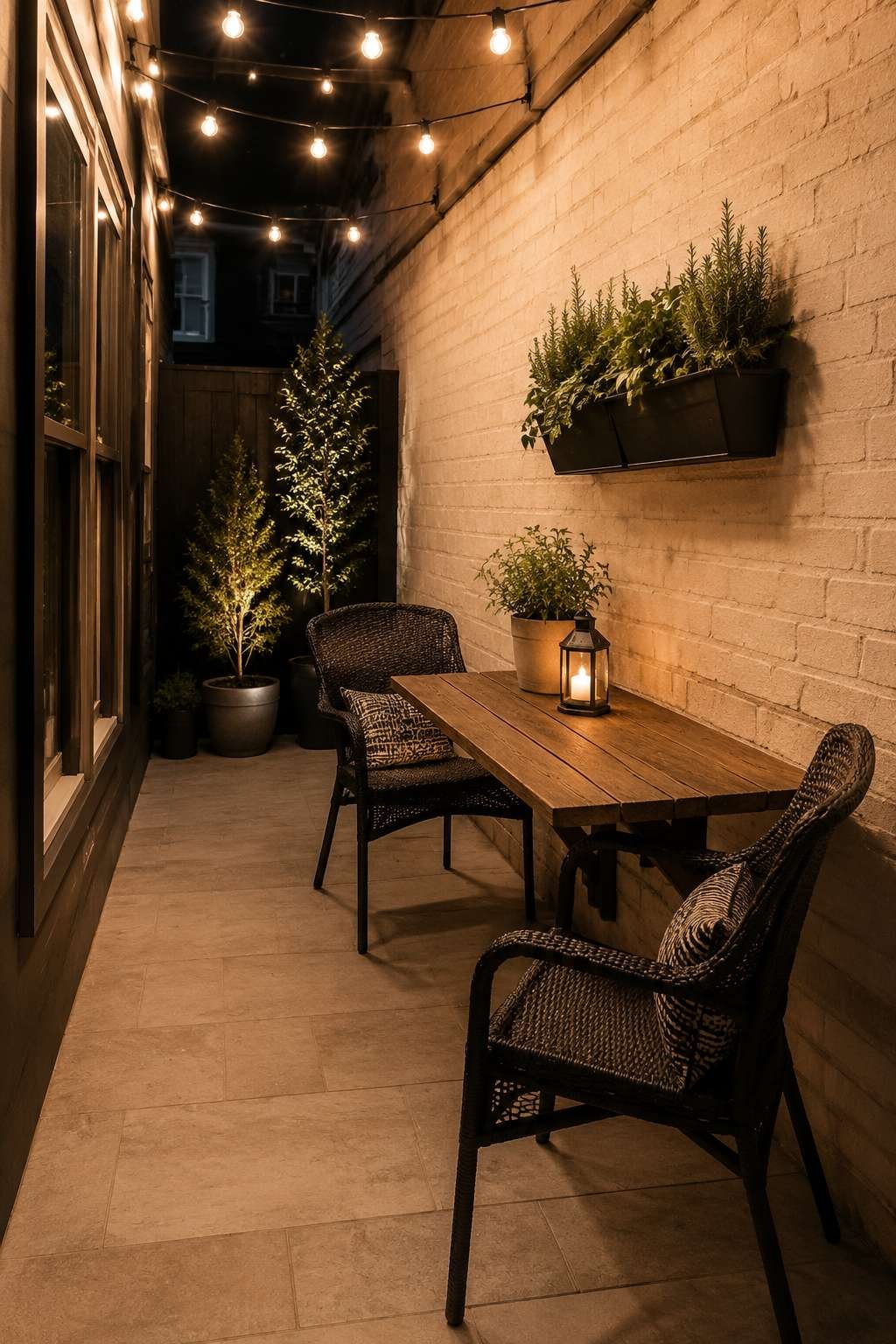
String lights hung overhead extend the space’s usability into the evening, while a vertical herb planter box adds greenery without consuming precious floor space — a critical consideration in narrow layouts. Soft evening ambiance, created through warm artificial lighting, gives the whole nook a cozy, intimate quality despite its modest size.
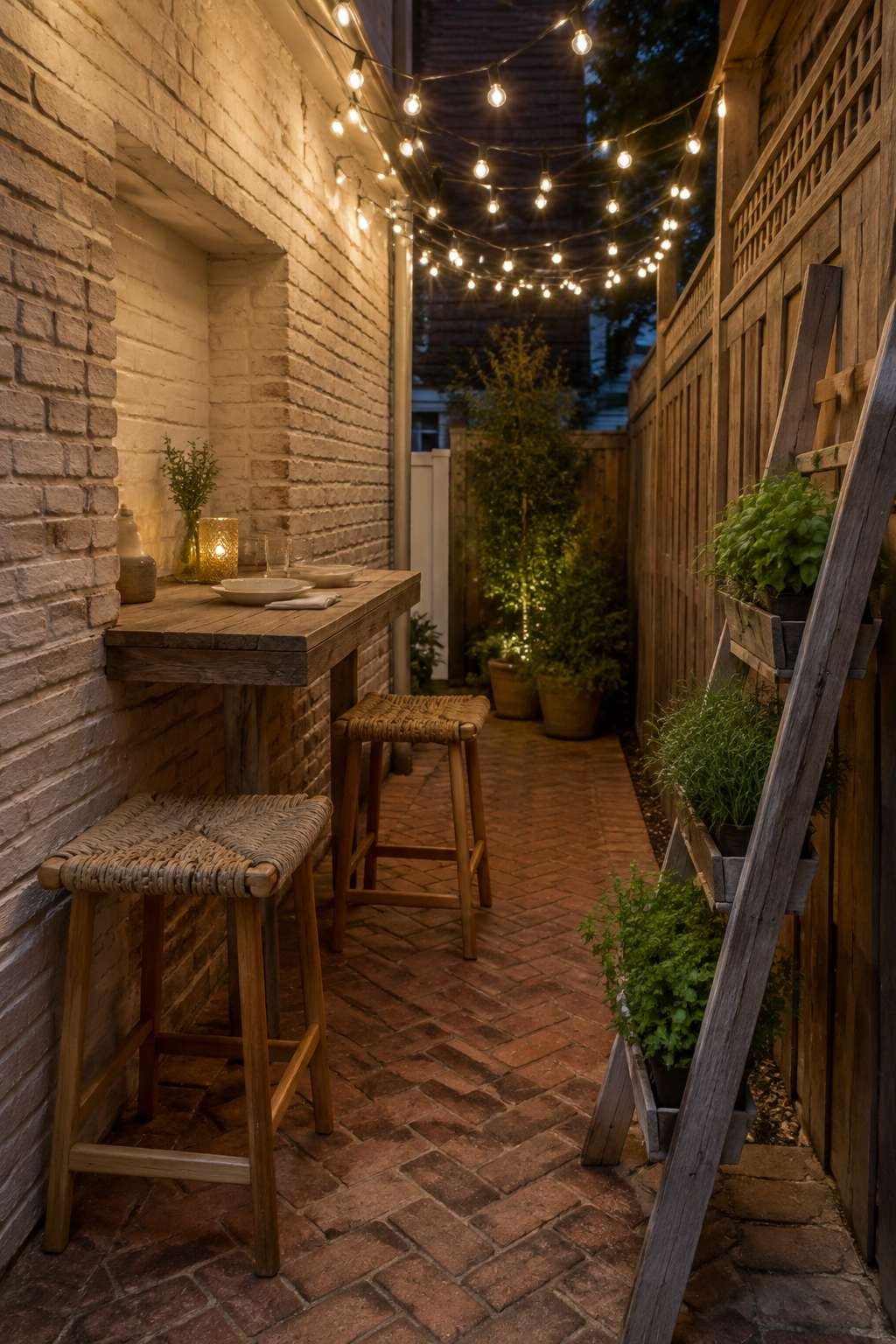
This design is a smart solution for homeowners with narrow side yards or awkward transitional spaces between structures. By prioritizing vertical greenery and slim furniture profiles, the space achieves genuine function and charm within dimensions that might otherwise go entirely unused.
Key Design Tips:
- Choose slim furniture profiles to fit comfortably in narrow spaces
- Use vertical planters instead of ground beds to save floor space
- Whitewash brick walls to brighten narrow, shaded side yards
- String overhead lighting for evening ambiance in compact nooks
- Select woven or lightweight chairs that don’t overwhelm tight footprints
Across these fifteen concepts, a few themes emerge again and again: the power of natural materials like stone, teak, and reclaimed wood; the importance of layered lighting that shifts a space’s mood from morning to evening; and the value of scaling furniture and greenery to genuinely fit the space available, whether that’s a sprawling bluestone terrace or a narrow side-yard nook. Every one of these designs, regardless of size or style, succeeds because it treats the patio as a true extension of the home — a space worthy of the same material honesty, comfort, and intention found indoors.
As you consider your own backyard, don’t feel confined to choosing just one aesthetic wholesale. A fire pit lounge might borrow its seating arrangement from the modern porcelain paver design while adopting the warm lighting of the farmhouse dining concept; a small urban courtyard might combine vertical herb walls with the relaxed textiles of bohemian style. The best patios are personal, evolving spaces — start with the ideas that resonate most, adapt them to your climate and footprint, and let your outdoor space grow into a place you genuinely want to spend time.
