


Galley kitchens present unique challenges for homeowners seeking efficient storage solutions. These narrow, corridor-style spaces demand creative thinking and strategic planning to maximize every available inch. While they may seem limiting at first glance, galley kitchens offer surprising potential when approached with the right design mindset.
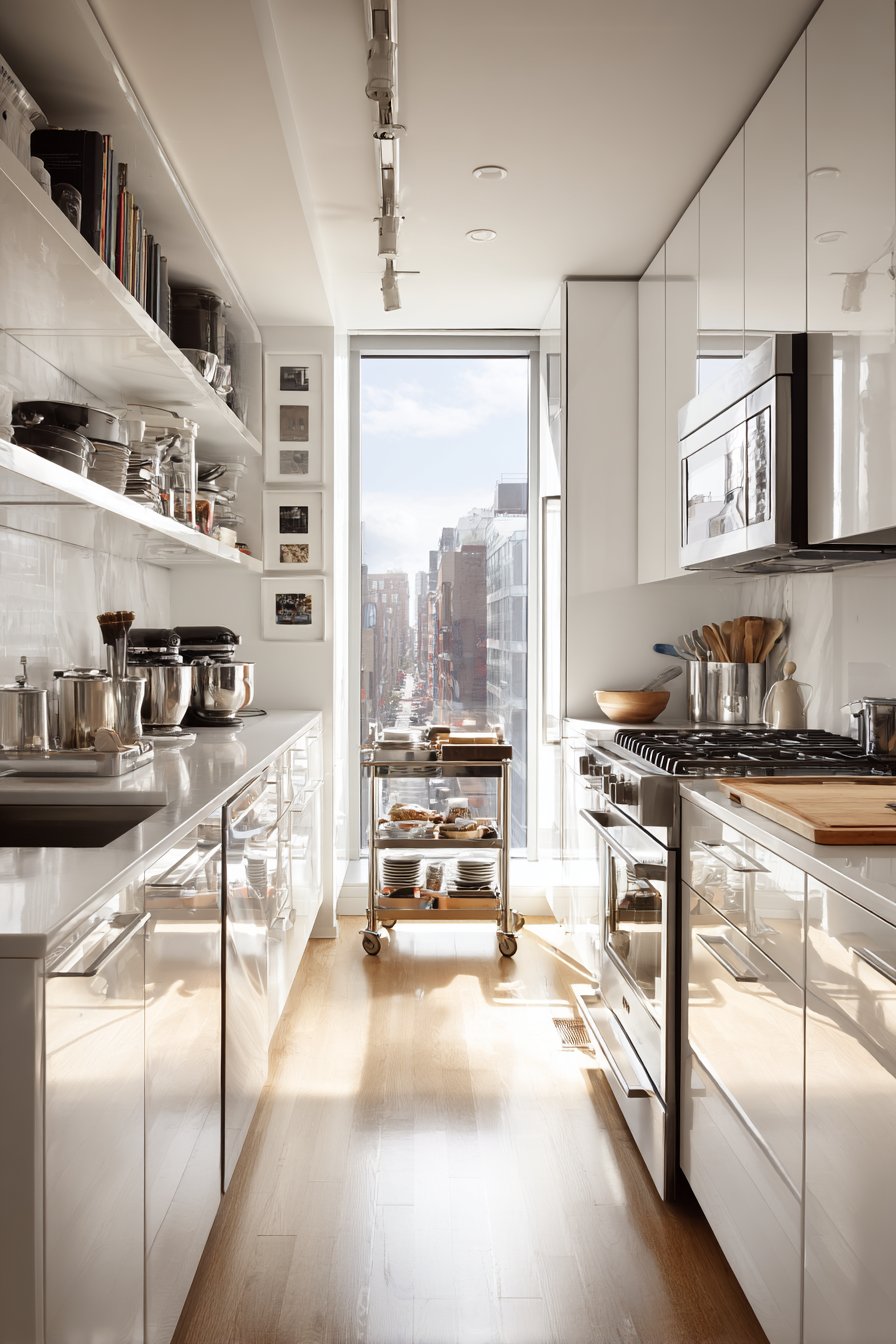
The beauty of a well-organized galley kitchen lies in its workflow efficiency and accessibility. Professional designers understand that thoughtful storage systems transform these compact spaces into highly functional cooking areas. From vertical solutions to clever cabinet innovations, the possibilities extend far beyond traditional storage methods. This article explores six proven strategies that help you create abundant storage while maintaining a sleek, uncluttered appearance. Ourclever kitchen storage ideas has more inspiration along these same lines.
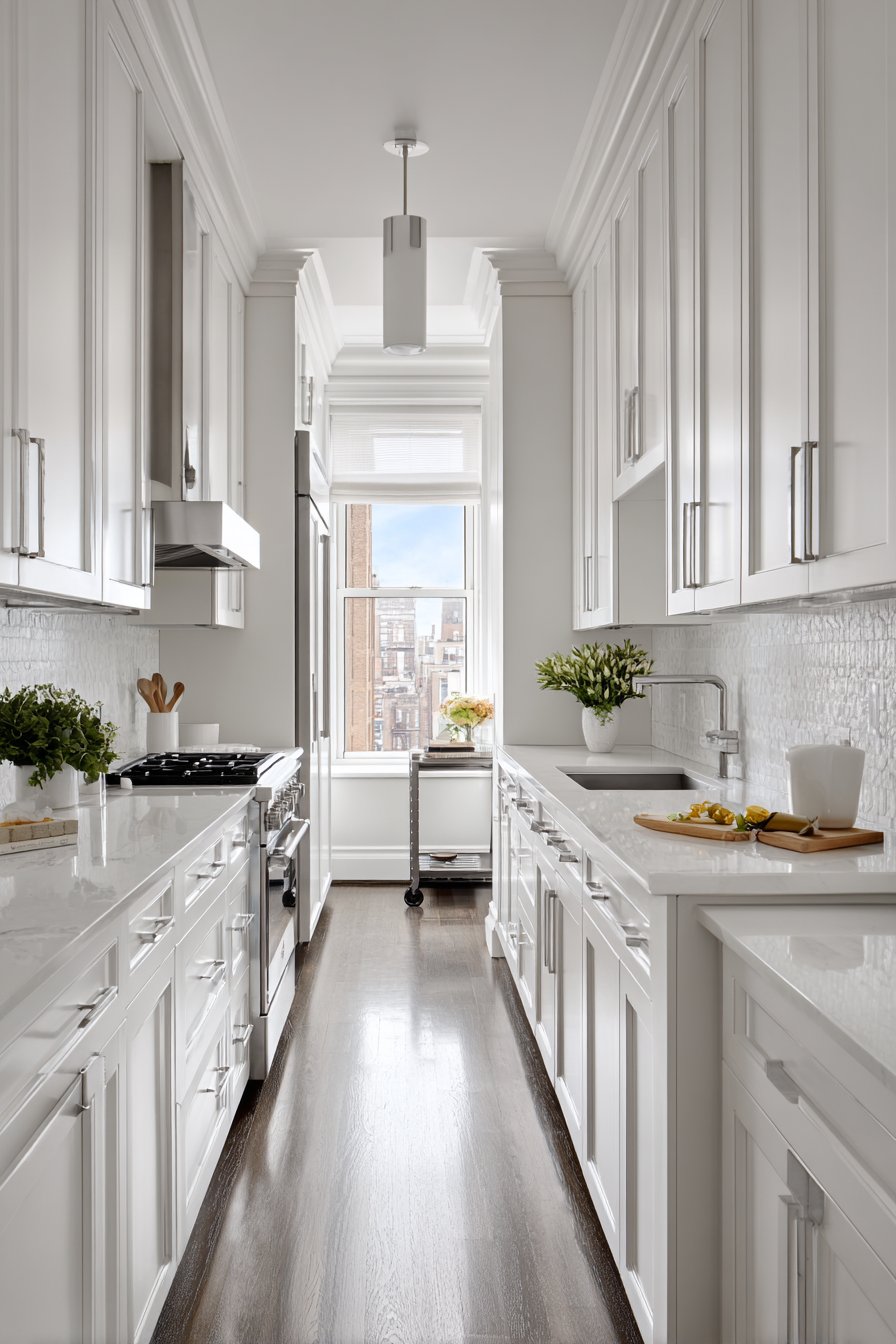
Whether you’re renovating an existing galley kitchen or working with a new space, these storage-focused solutions cater to various budgets and skill levels. Each approach emphasizes practicality without sacrificing style, ensuring your kitchen remains both beautiful and hardworking. Let’s dive into the specific techniques that make the most of your galley kitchen’s unique layout.
1. Maximize Vertical Wall Space
Vertical storage represents the most underutilized resource in galley kitchens, offering exponential increases in storage capacity. By extending storage upward to the ceiling, you create additional space for items used less frequently. This approach keeps countertops clear while making every square foot count in your narrow kitchen corridor.
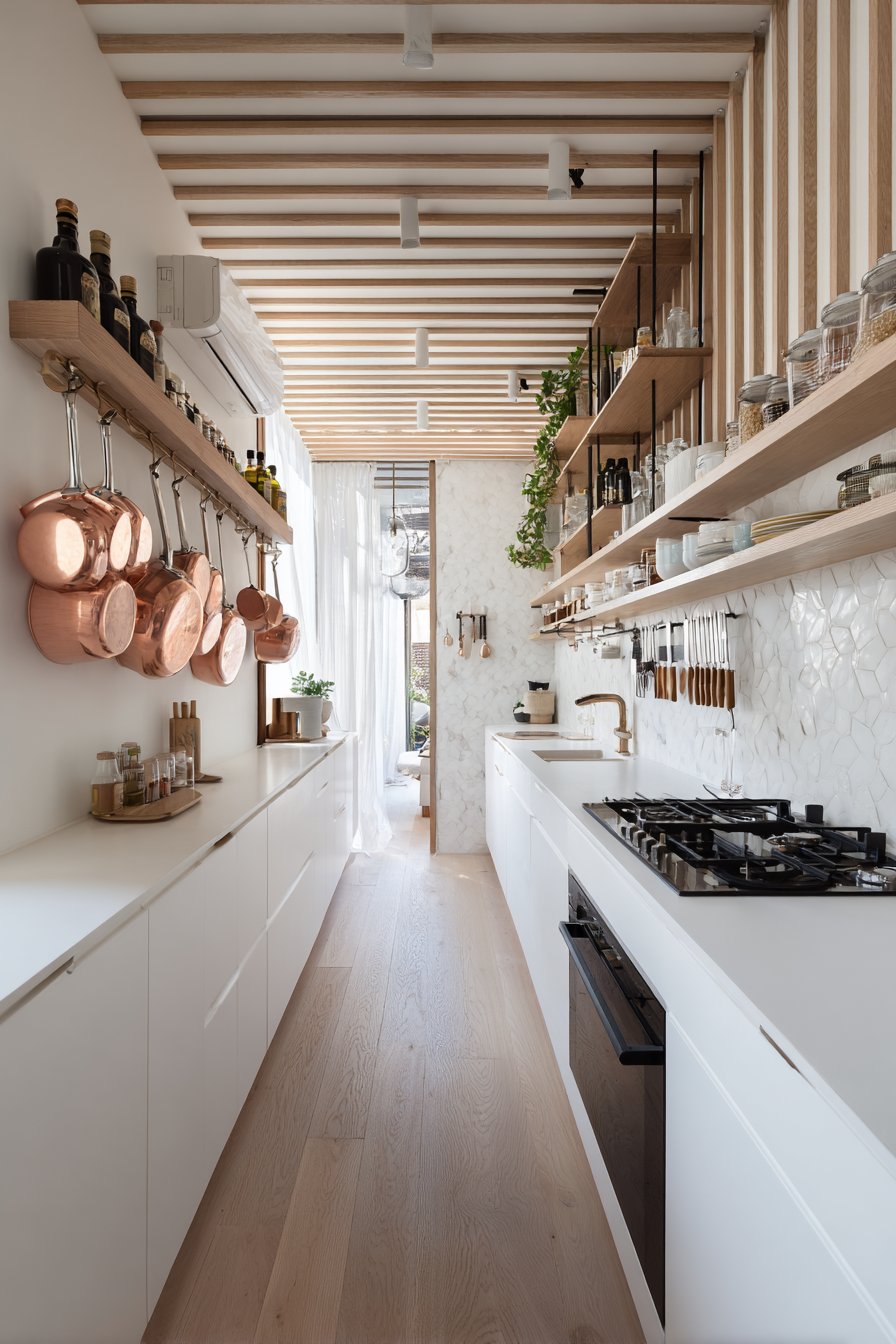
Installing floor-to-ceiling cabinetry transforms wasted wall space into valuable storage real estate. The upper cabinets house seasonal items, special occasion dishes, and rarely-used appliances. This vertical strategy works particularly well because it draws the eye upward, creating an illusion of height and spaciousness in compact areas.
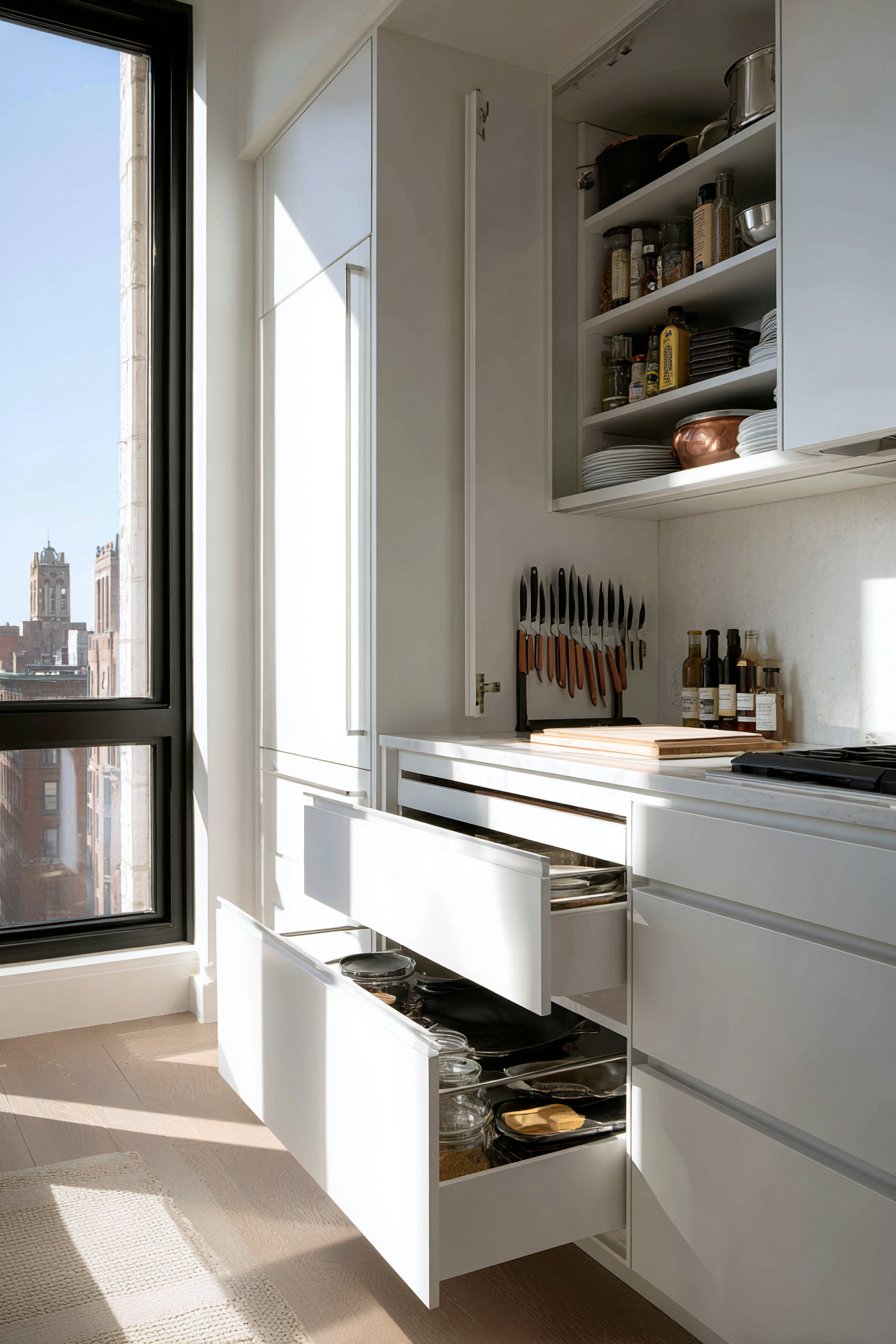
Consider adding open shelving between upper and lower cabinets for frequently accessed items like spices and cooking oils. This middle zone provides easy reach without requiring step stools or straining. Wall-mounted magnetic strips, pegboards, and rail systems add customizable storage that adapts to your changing needs over time.
- Install cabinets that reach the ceiling to eliminate dust-collecting gaps
- Use pull-down shelving systems for upper cabinets to access high storage easily
- Mount magnetic knife strips and utensil rails on bare wall sections
- Add floating shelves at eye level for attractive displays and daily essentials
- Install vertical dividers inside cabinets for baking sheets and cutting boards
- Use wall-mounted pot racks to free up valuable cabinet space
2. Implement Corner Solutions
Corner spaces in galley kitchens often become dead zones where items disappear into darkness. These awkward areas require specialized storage solutions that bring hidden contents into view. Smart corner systems can actually provide some of the most accessible storage in your entire kitchen layout.
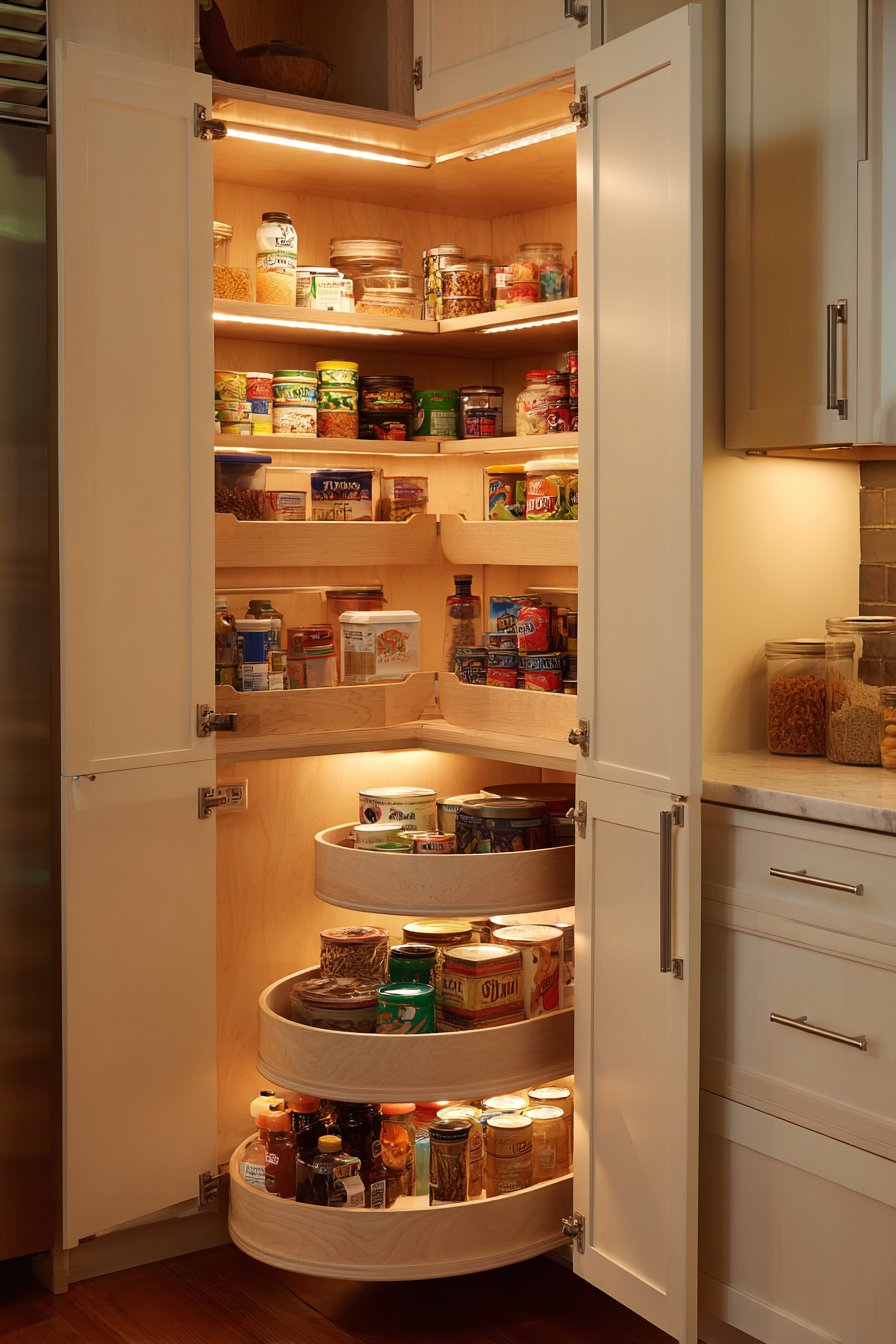
Lazy Susan turntables revolutionize corner cabinet functionality by bringing every item within easy reach. These rotating platforms work exceptionally well for dry goods, canned items, and small appliances. Pull-out corner drawers offer another excellent option, extending fully to reveal contents that would otherwise remain inaccessible.
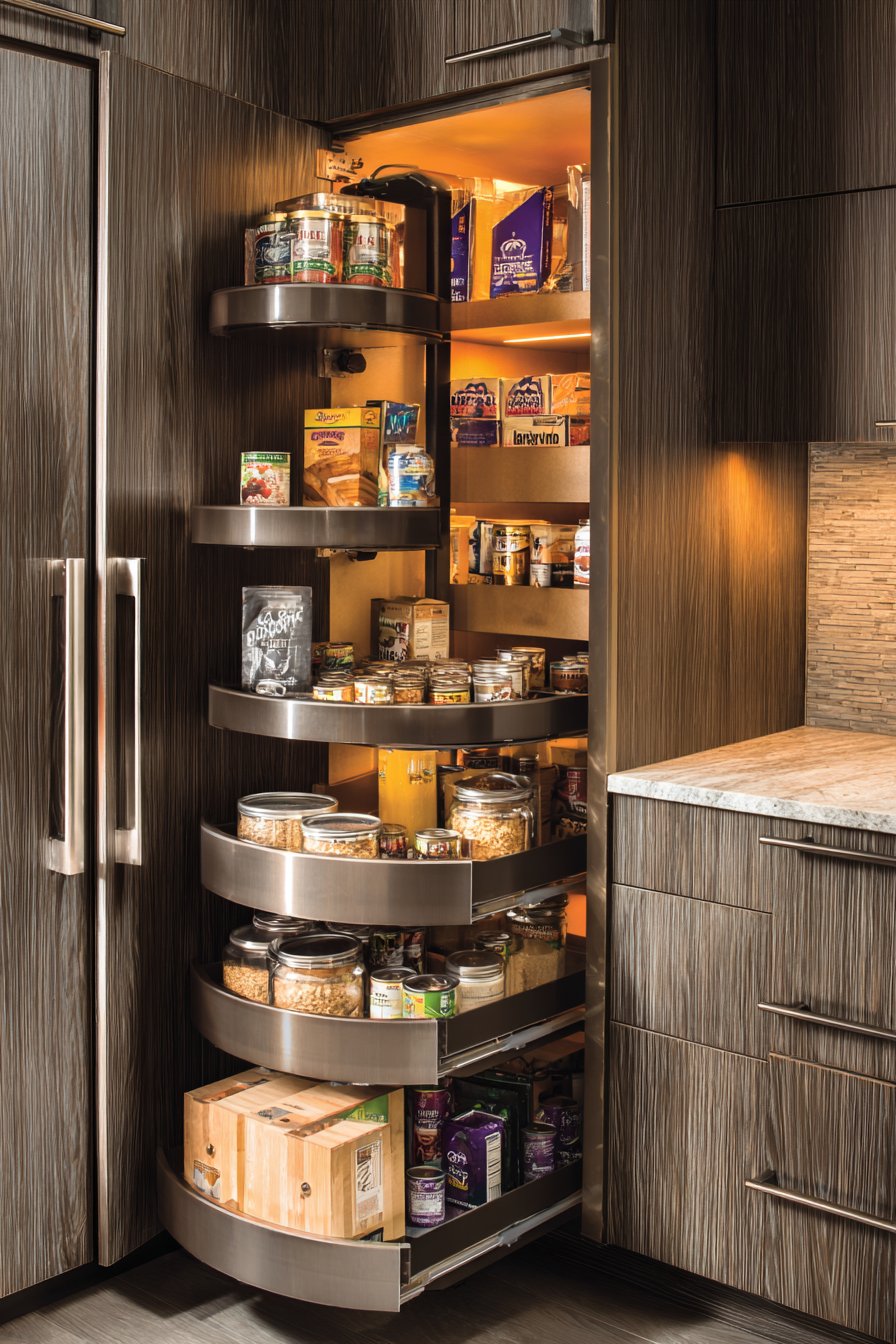
For upper corner cabinets, consider diagonal cabinet doors or swing-out shelving systems that pivot outward. These mechanisms eliminate the frustration of reaching into dark recesses while maximizing usable space. The investment in quality corner hardware pays dividends through improved organization and reduced food waste from forgotten items. See our this kitchen cabinet organization for more direction in this style.
- Install Lazy Susan systems in lower corner cabinets for maximum accessibility
- Use pull-out corner drawer units that extend completely from the cabinet
- Add LED lighting inside corner cabinets to illuminate dark spaces
- Choose corner appliance garages for coffee makers and toasters
- Install swing-out shelving in upper corners for easy viewing
- Consider corner sink placement to optimize the entire layout
3. Utilize Cabinet Door Interiors
The inside surfaces of cabinet doors offer valuable real estate that most homeowners overlook entirely. These flat panels can support various storage accessories without consuming any additional floor space. Door-mounted organizers keep small items visible and prevent them from getting lost in deep cabinets.
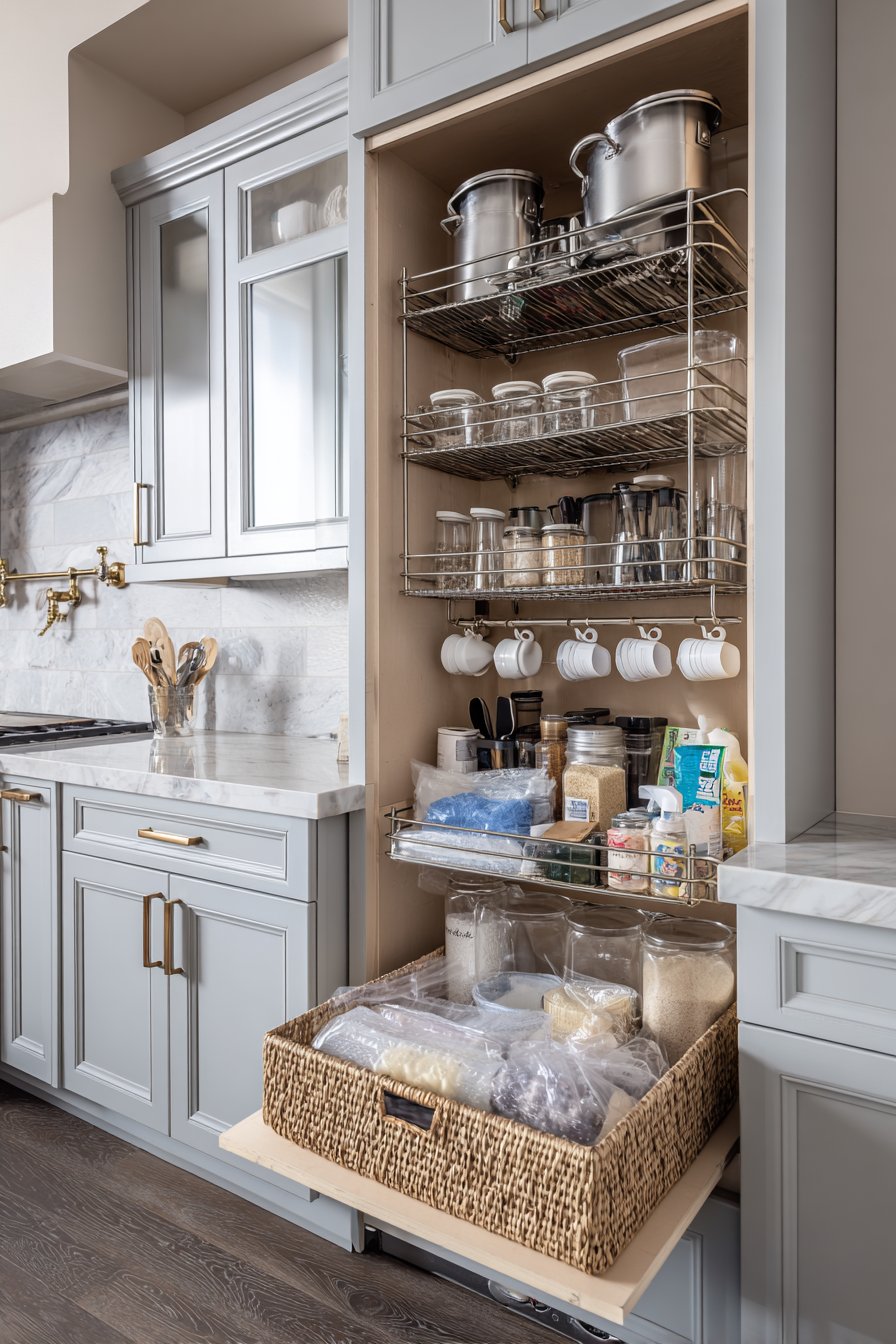
Adhesive hooks, wire racks, and specialized door-mounted systems transform cabinet interiors into organized command centers. Store measuring cups, pot lids, cutting boards, and cleaning supplies on door backs. This strategy works particularly well for items you use daily, keeping them immediately accessible when you open the cabinet.
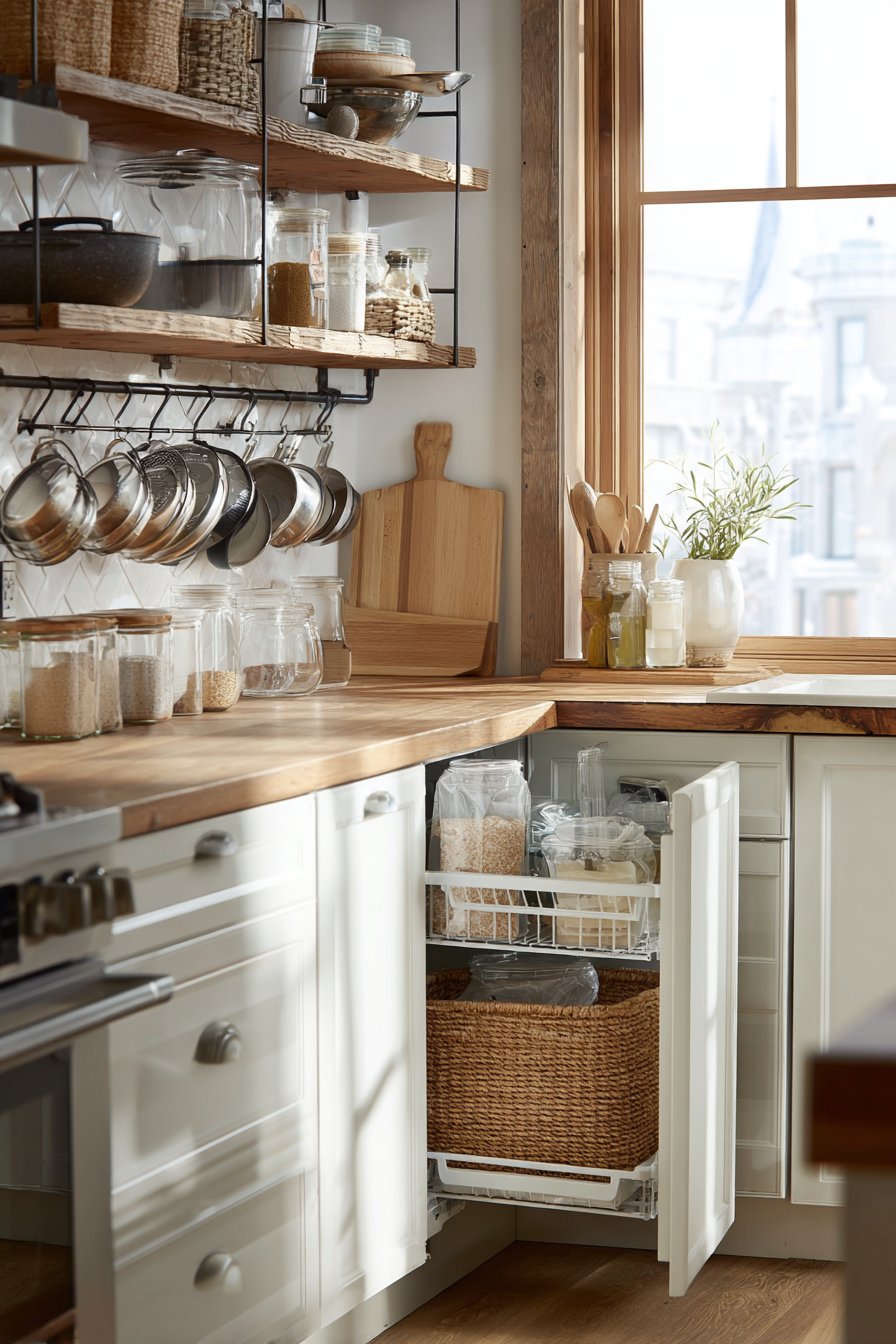
Choose adjustable door-mounted systems that accommodate containers of varying sizes and shapes. Over-the-door organizers for spices, foil, and plastic wrap eliminate drawer clutter while improving visibility. The key is selecting slim-profile accessories that don’t interfere with cabinet shelving or prevent doors from closing properly.
- Mount wire racks inside cabinet doors for pot lids and small containers
- Install adhesive hooks for measuring cups and kitchen utensils
- Add door-mounted spice racks to free up shelf space
- Use clear plastic organizers for cleaning supplies under the sink
- Attach cork boards or magnetic panels for recipe cards and notes
- Install shallow baskets for plastic wrap, foil, and sandwich bags
4. Incorporate Drawer Dividers and Organizers
Drawers without organization systems become chaotic junk collectors that waste precious space. Custom dividers and specialized inserts transform drawers into efficient storage zones where every item has a designated home. This organizational approach reduces search time and maximizes the usable capacity of each drawer. Our this kitchen organization mistakes has more inspiration along these same lines.
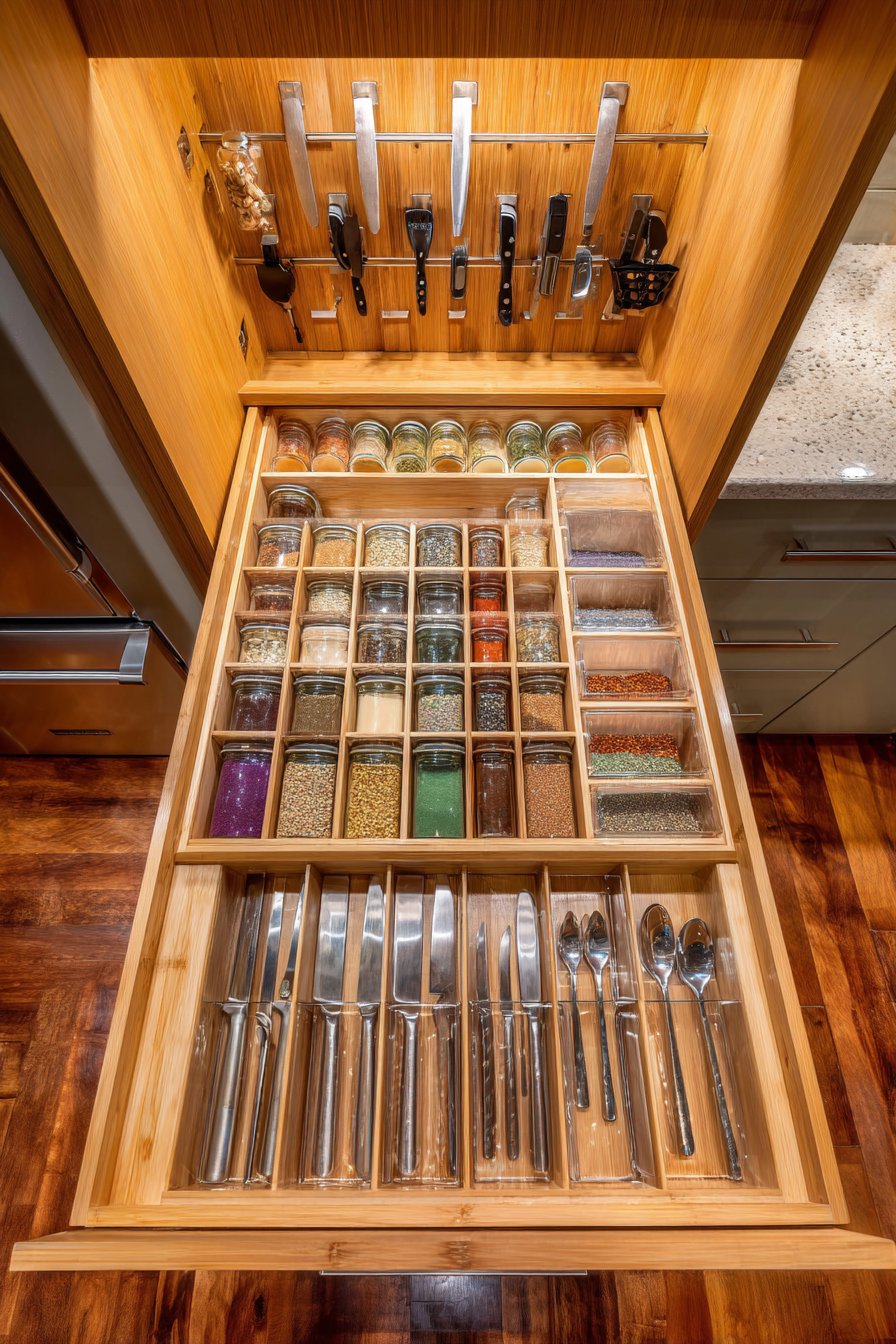
Adjustable drawer dividers create customized compartments for utensils, gadgets, and cooking tools. These systems adapt as your storage needs evolve, preventing the need for complete reorganizations. Deep drawers benefit from tiered inserts that create multiple levels of storage within a single drawer space.
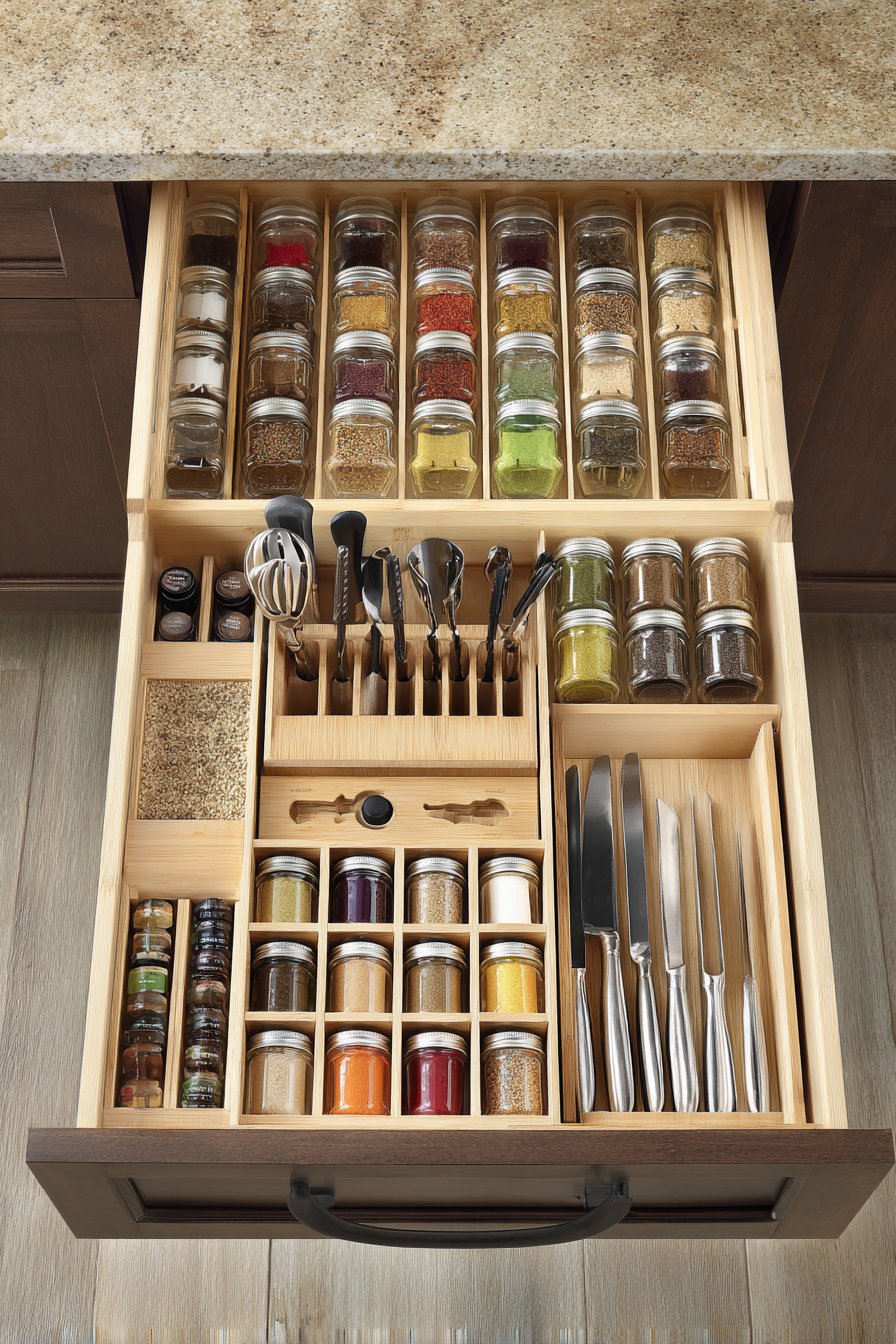
Consider specialized organizers for knives, spices, and dish storage that utilize vertical drawer space effectively. Drawer peg systems allow you to create custom configurations that fit your specific items. The investment in quality organizers prevents the frustrating jumble that makes cooking preparation inefficient and stressful.
- Install expandable drawer dividers to create custom compartments
- Use tiered spice drawer inserts for better visibility and access
- Add knife blocks designed specifically for drawer storage
- Implement peg board systems for customizable drawer configurations
- Install vertical plate holders to maximize deep drawer capacity
- Use clear acrylic dividers to see contents at a glance
5. Add Slim Rolling Carts and Islands
Mobile storage units provide flexible solutions that adapt to your changing kitchen needs. Slim rolling carts fit into narrow gaps between appliances and walls, creating bonus storage in otherwise wasted spaces. These versatile pieces can be pulled out when needed and tucked away when not in use.
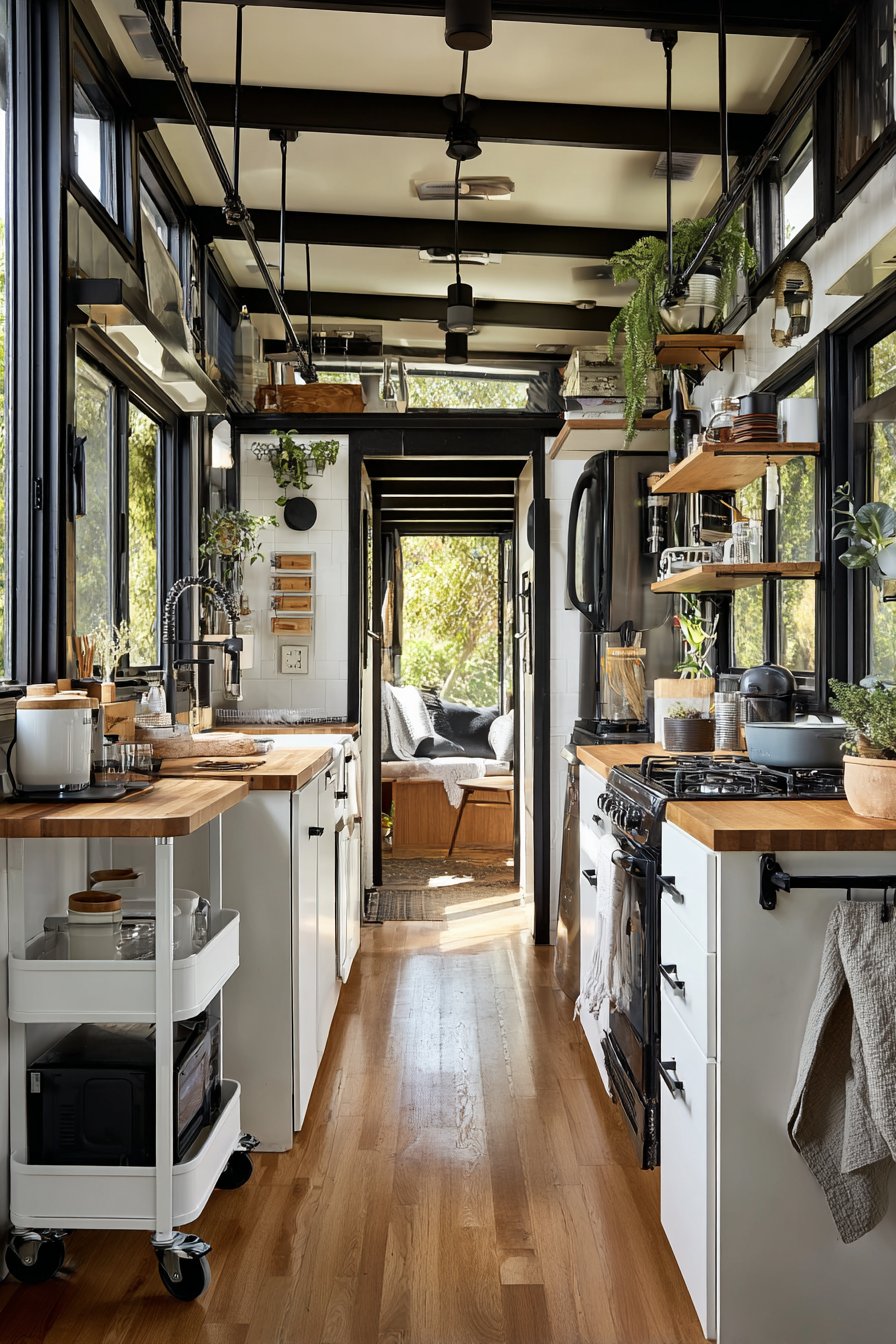
Choose carts with multiple shelves or drawers to maximize their storage potential while maintaining a small footprint. The mobility allows you to reposition storage as needed for different cooking tasks. Look for units that are 18 inches wide or less to fit comfortably in galley kitchen pathways without obstructing movement.
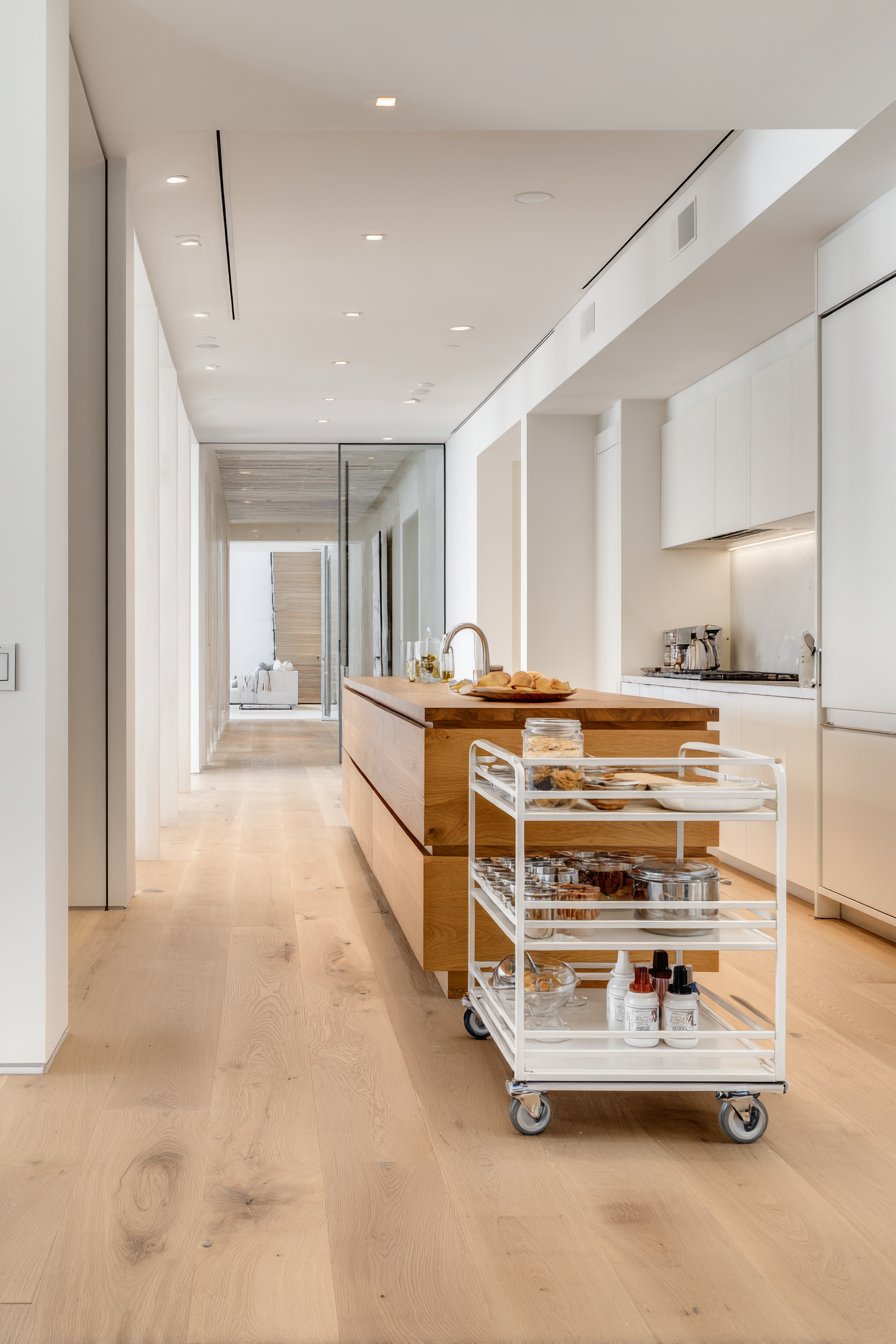
Narrow islands with built-in storage serve double duty as prep space and storage solutions. Select models with shelving, cabinets, or drawers that keep cooking essentials close at hand. The addition of locking wheels ensures the island stays put during use but moves easily for cleaning or reconfiguration.
- Select rolling carts that fit in gaps of 6-12 inches between appliances
- Choose models with locking wheels for stability during use
- Look for carts with adjustable shelves to accommodate various item heights
- Add narrow islands with butcher block tops for extra prep space
- Use cart tops to house frequently-used small appliances
- Select units with built-in towel bars or hooks for added functionality
6. Install Under-Cabinet and Toe-Kick Storage
The space beneath cabinets and appliances represents untapped potential for creative storage solutions. Under-cabinet accessories keep countertops clear while maintaining easy access to essential items. Toe-kick drawers utilize the typically wasted 4-inch space at cabinet bases for flat item storage.
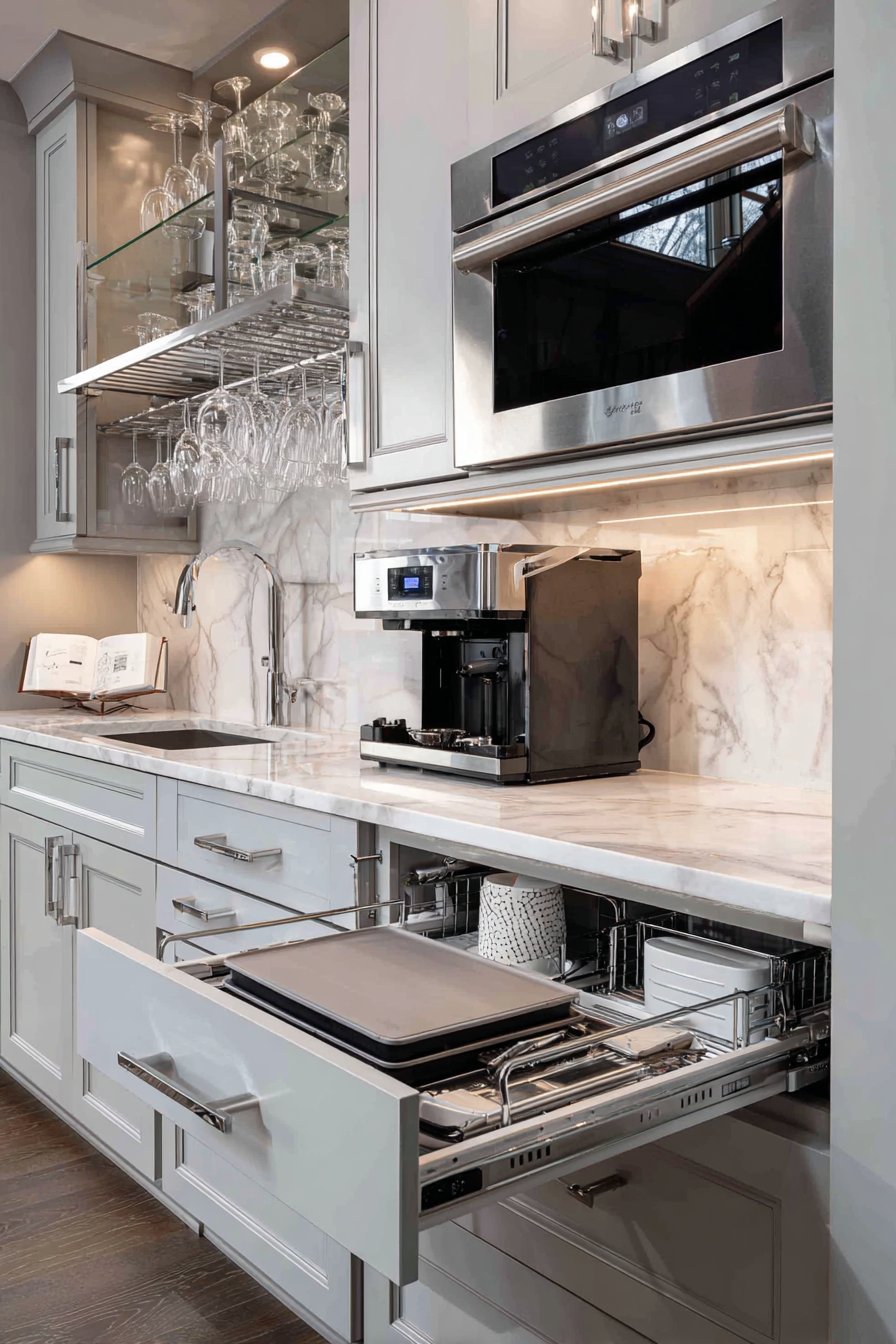
Mount under-cabinet systems for paper towels, wine glasses, and coffee mugs that free up valuable shelf space. These installations keep daily-use items within arm’s reach without creating visual clutter. LED lighting combined with storage rails illuminates workspaces while providing hanging storage for utensils and cups.
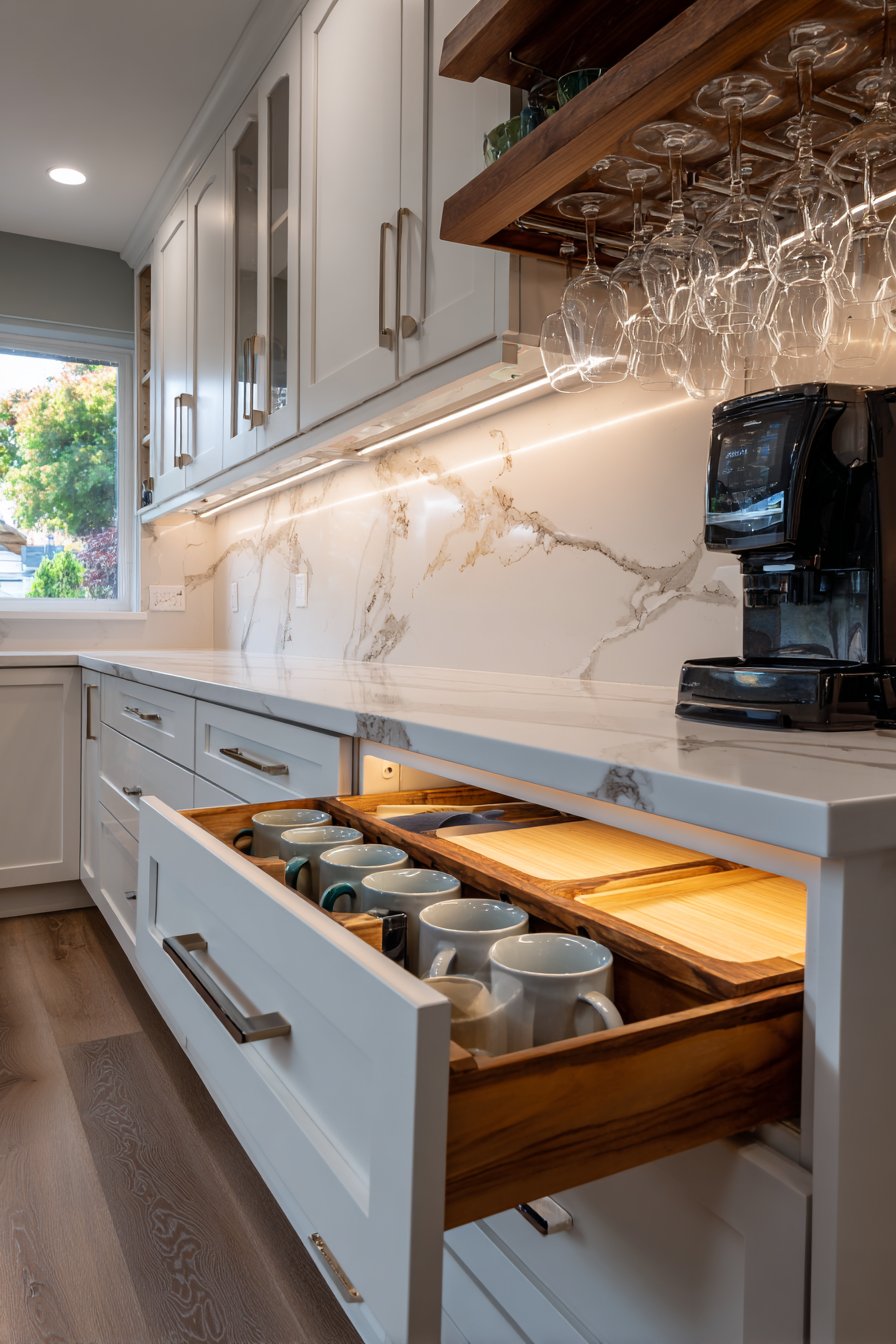
Toe-kick drawers offer surprising storage capacity for flat items like baking sheets, placemats, and cutting boards. These shallow drawers slide out smoothly and make use of space that would otherwise serve no purpose. The installation requires minimal modification to existing cabinetry, making it an accessible upgrade for most kitchens.
- Install under-cabinet wine glass racks to free up cabinet space
- Add pull-out paper towel holders beneath upper cabinets
- Mount coffee mug hooks on under-cabinet rails
- Install toe-kick drawers for storing baking sheets and cutting boards
- Add under-cabinet lighting with integrated storage bars
- Use adhesive under-shelf baskets for additional vertical storage
Conclusion
Creating effective storage in galley kitchens requires strategic thinking and willingness to explore unconventional solutions. The six approaches outlined above work together to transform limited square footage into highly organized, functional spaces. By maximizing vertical areas, optimizing corners, and utilizing every available surface, you can achieve remarkable storage capacity without expanding your kitchen’s footprint.
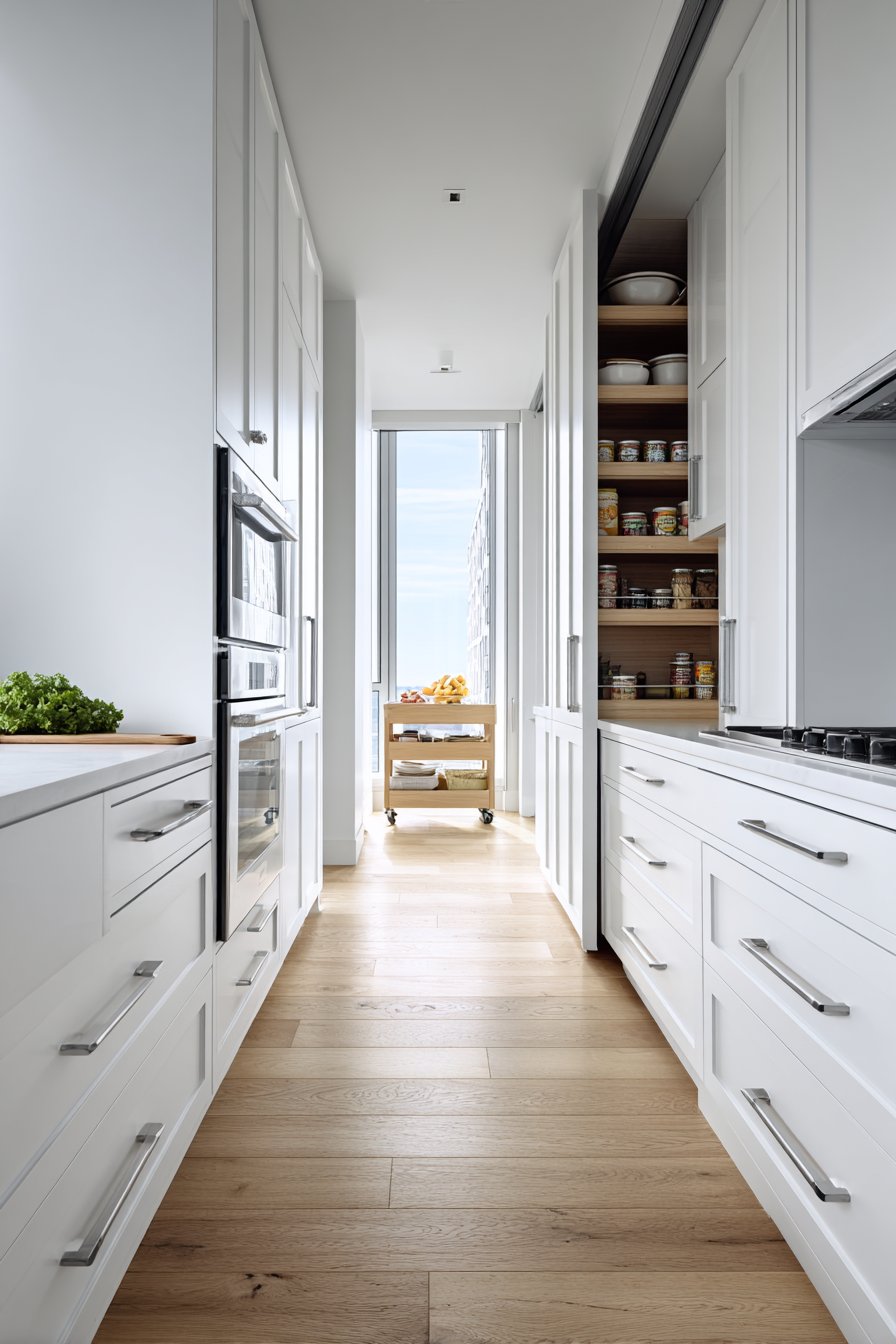
Remember that successful galley kitchen storage evolves with your needs and lifestyle changes. Start with the solutions that address your most pressing challenges, then gradually implement additional strategies as time and budget allow. Your galley kitchen can become a model of efficiency and organization that proves small spaces can accomplish big things when designed thoughtfully.
