


Designing a children’s bedroom is one of the most rewarding challenges in interior design, requiring a delicate balance between whimsy and practicality, creativity and functionality. Unlike adult spaces that prioritize sophistication and permanence, kids’ bedrooms must evolve with their occupants, serving as sanctuaries for sleep, play areas for imagination, study zones for learning, and safe havens for emotional development. The best children’s bedroom designs acknowledge that these spaces are more than just rooms—they’re foundational environments where young minds grow, creativity flourishes, and independence develops. From the selection of durable materials to the implementation of clever storage solutions, every design decision impacts how children interact with and feel about their personal space.
The importance of thoughtful interior design in children’s bedrooms cannot be overstated. Research consistently shows that well-designed environments positively influence children’s mood, behavior, and cognitive development. A bedroom that feels too chaotic may overstimulate, while one that’s too sterile might stifle creativity. The ideal children’s bedroom strikes a harmonious balance—incorporating playful elements that spark imagination while maintaining organizational systems that teach responsibility and order. Colors affect energy levels and emotional states, lighting influences sleep patterns and study habits, and spatial organization impacts independence and safety. Professional interior designers specializing in children’s spaces understand these psychological and developmental factors, creating rooms that support healthy growth while reflecting each child’s unique personality.
This comprehensive guide explores ten distinct approaches to kids’ bedroom decor, each offering unique solutions to common design challenges while celebrating different aesthetic sensibilities and functional requirements. From vibrant reading nooks that foster a love of literature to space-saving loft configurations perfect for compact urban homes, these designs demonstrate how creativity and practicality can coexist beautifully. You’ll discover Scandinavian minimalism that promotes calm and focus, nature-inspired biophilic designs that connect children with the natural world, and clever shared bedroom solutions that accommodate siblings fairly and comfortably. Whether you’re designing a nursery, updating a toddler’s room, or creating a pre-teen sanctuary, these carefully curated concepts provide actionable inspiration and professional insights that will help you create a bedroom your child will love for years to come.
1. Vibrant Reading Nook Haven with Playful Learning Spaces
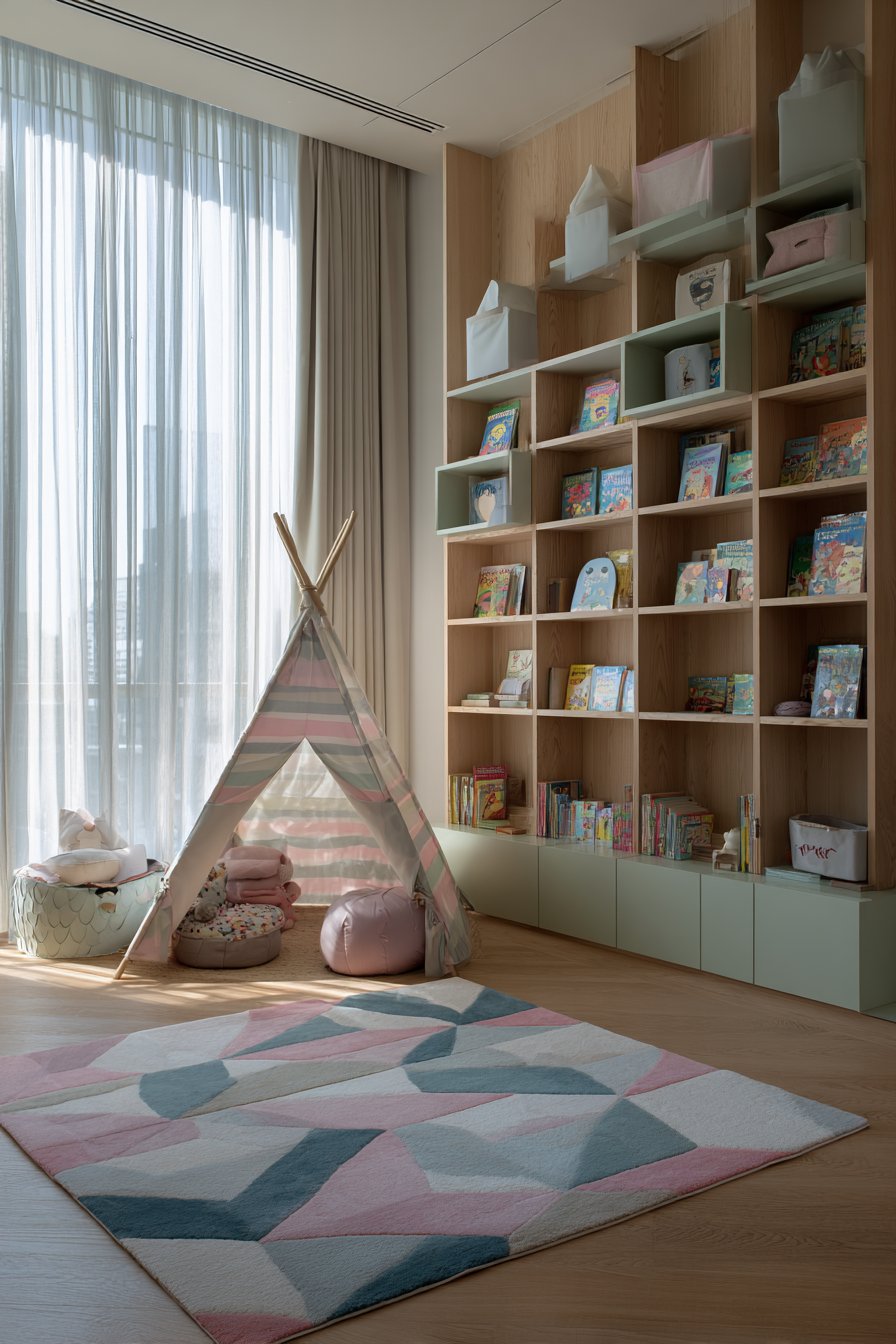
The foundation of this enchanting bedroom design centers around cultivating a genuine love for reading through environmental design. Positioned strategically near a large window, a teepee tent in soft pastel stripes creates an intimate reading sanctuary that feels both adventurous and secure—a private haven where children can escape into storybook worlds.
The tent’s vertical lines draw the eye upward, making the ceiling feel higher while the gentle pastel palette prevents visual overwhelm. Natural daylight streaming through sheer curtains bathes the reading area in soft, eye-friendly illumination that changes throughout the day, creating different moods and atmospheres. This connection to natural light cycles supports healthy circadian rhythms and reduces eye strain during extended reading sessions.
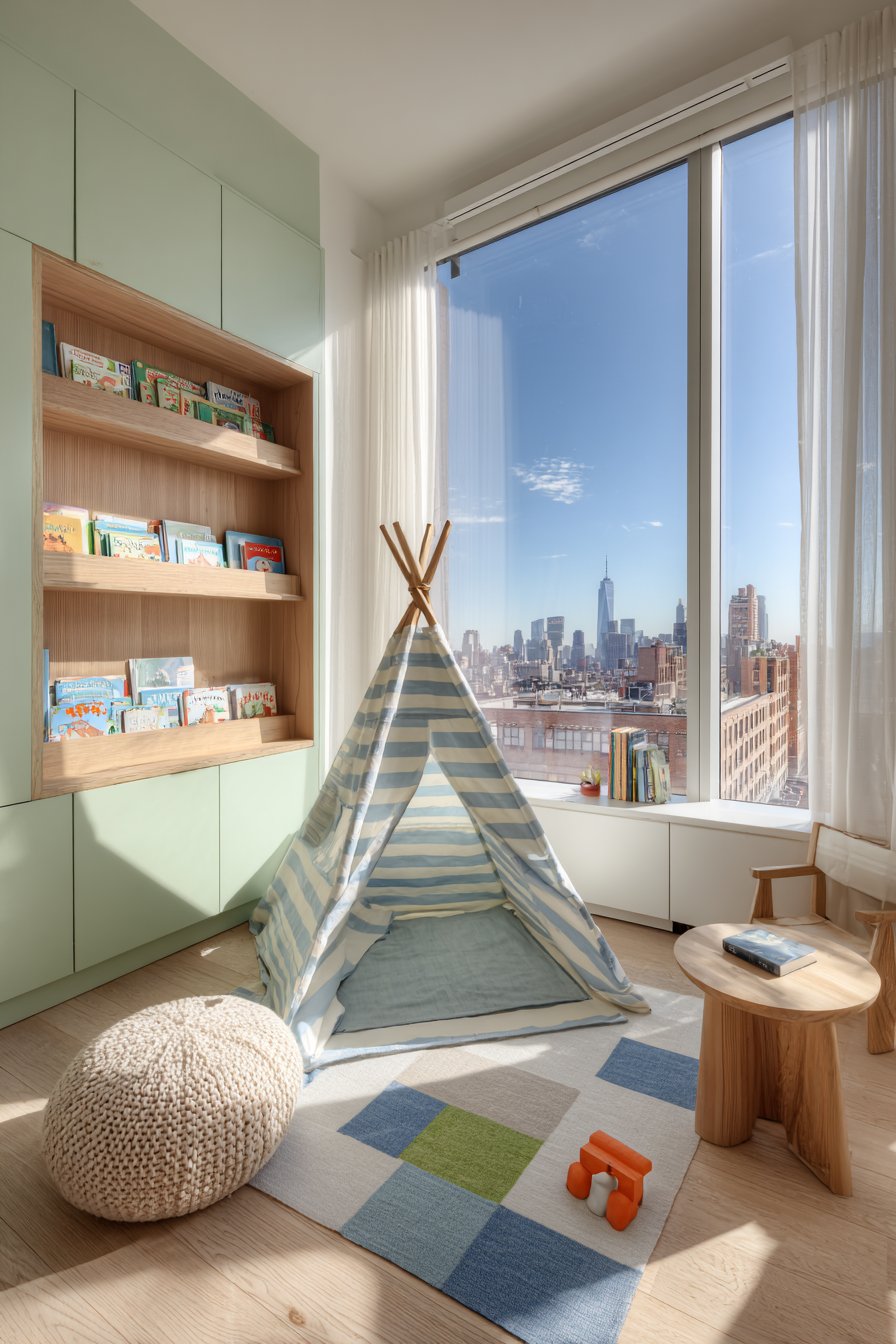
Low wooden bookshelves painted in cheerful mint green line the walls at child height, embodying the Montessori principle of accessibility and independence. By positioning books within easy reach, children develop autonomy in selecting their reading material and learn organizational skills through maintaining their library.
The mint green color choice is psychologically significant—it’s energizing without being overstimulating, promotes creativity and fresh thinking, and pairs beautifully with virtually any accent color scheme. These shelves display picture books face-forward, using the colorful cover illustrations as decorative elements that continuously refresh the room’s visual interest as books rotate in and out.
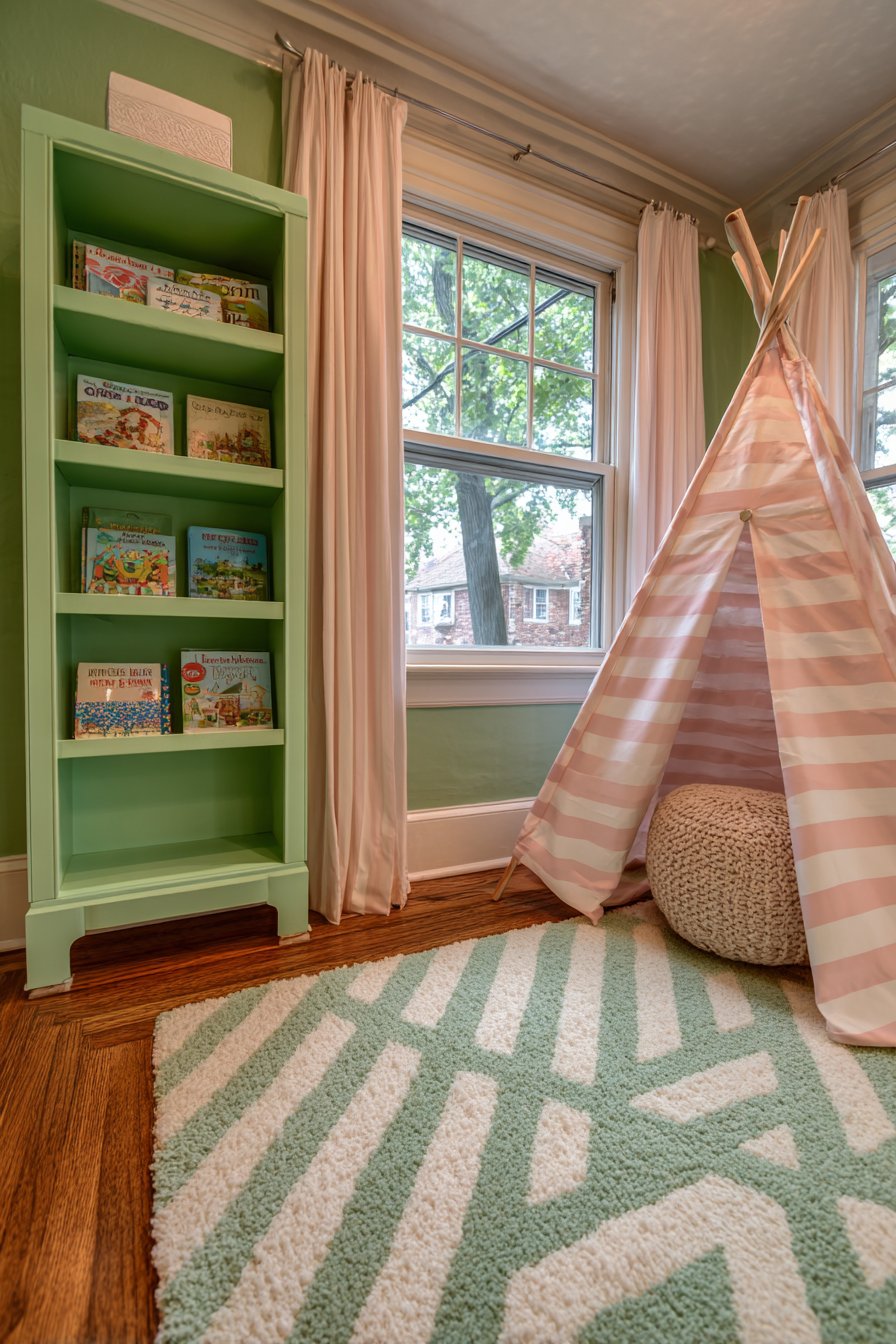
The plush area rug featuring playful geometric patterns serves multiple functions beyond its obvious aesthetic appeal. Texturally, it provides a soft landing for inevitable tumbles and a comfortable surface for floor play. The geometric patterns stimulate visual development and pattern recognition skills in young children while remaining sophisticated enough to grow with the child.
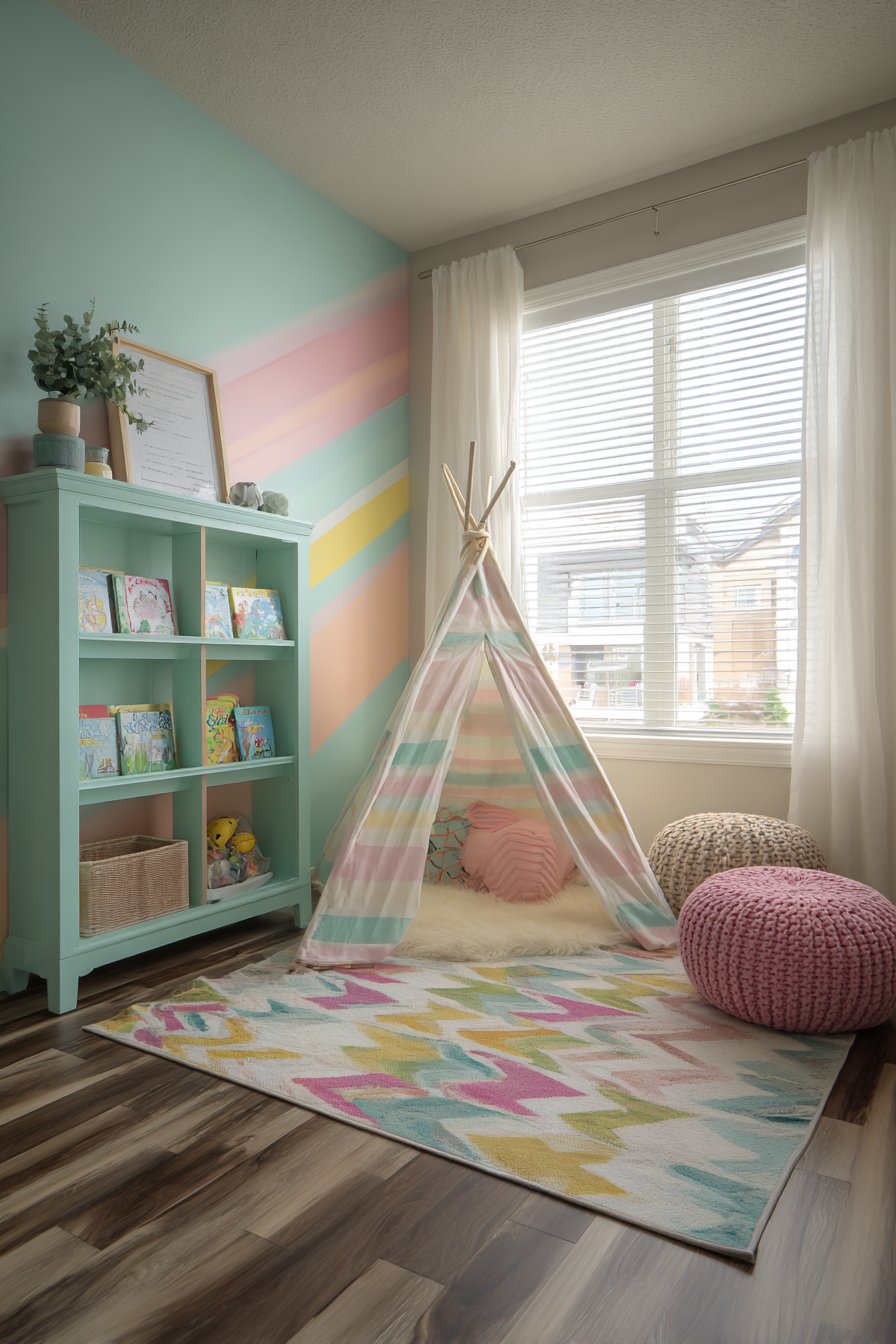
Color-wise, the rug should incorporate the mint green of the shelves along with complementary tones found in the teepee stripes, creating visual cohesion. The rug also defines the reading zone spatially, helping children understand different areas have different purposes—a crucial concept in developing focus and appropriate behavior in various settings.
Key Design Tips:
- Position reading areas near natural light sources to reduce eye strain and create connection with outdoor environment, promoting healthy circadian rhythms
- Use child-height furniture to encourage independence and make the space feel appropriately scaled to young occupants
- Incorporate tent or canopy structures to create defined zones that feel secure and special, satisfying children’s natural desire for cozy enclosed spaces
- Choose washable, durable fabrics in soft textures that invite touch and withstand frequent use and inevitable spills
- Display books face-forward on accessible shelves to make selection easier and use book covers as rotating artwork
2. Smart Storage Solutions for Organized Living
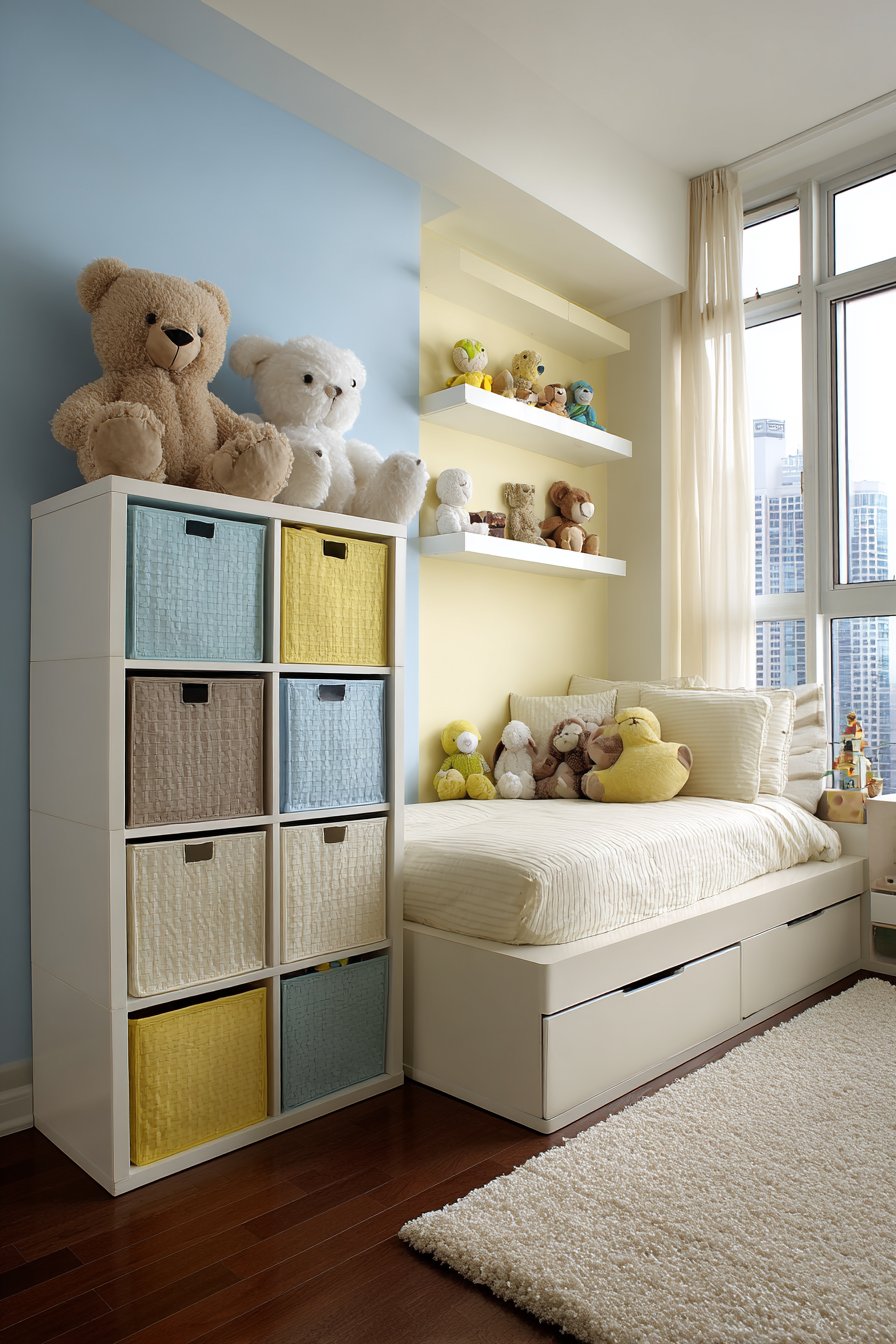
This practical bedroom design addresses one of the most persistent challenges in children’s spaces: maintaining order amidst the inevitable accumulation of toys, books, clothes, and creative projects. The centerpiece of this organizational strategy is a modular cube organizer system in crisp white, offering flexibility that adapts as the child grows and their storage needs evolve.
Each cube accommodates colorful fabric bins that transform mundane storage into playful design elements—perhaps sunshine yellow for art supplies, ocean blue for building blocks, coral pink for dress-up clothes, and forest green for stuffed animals. This color-coding system not only adds visual interest but teaches organizational skills and categorization concepts that support cognitive development.
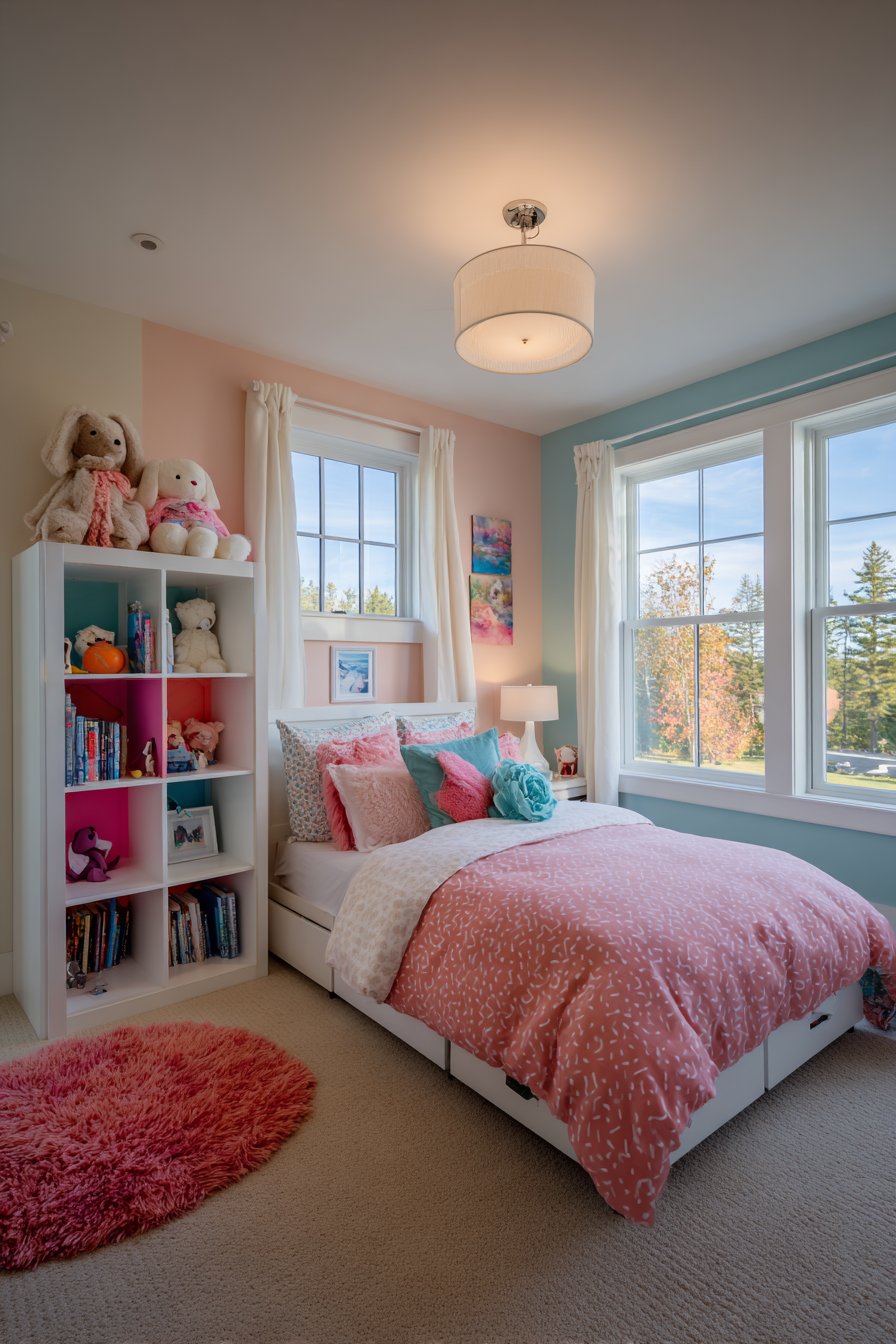
The low-profile twin bed with built-in drawers underneath represents intelligent space utilization that’s especially valuable in smaller bedrooms or urban apartments where every square foot matters. These drawers provide generous storage for out-of-season clothing, extra bedding, or toys that aren’t in daily rotation, keeping them accessible yet out of sight. The low profile of the bed frame makes it less intimidating for young children transitioning from cribs and reduces injury risk from nighttime falls. The bed’s clean lines and simple construction allow it to serve as a neutral backdrop that won’t compete with other design elements as the child’s tastes evolve through different developmental stages.
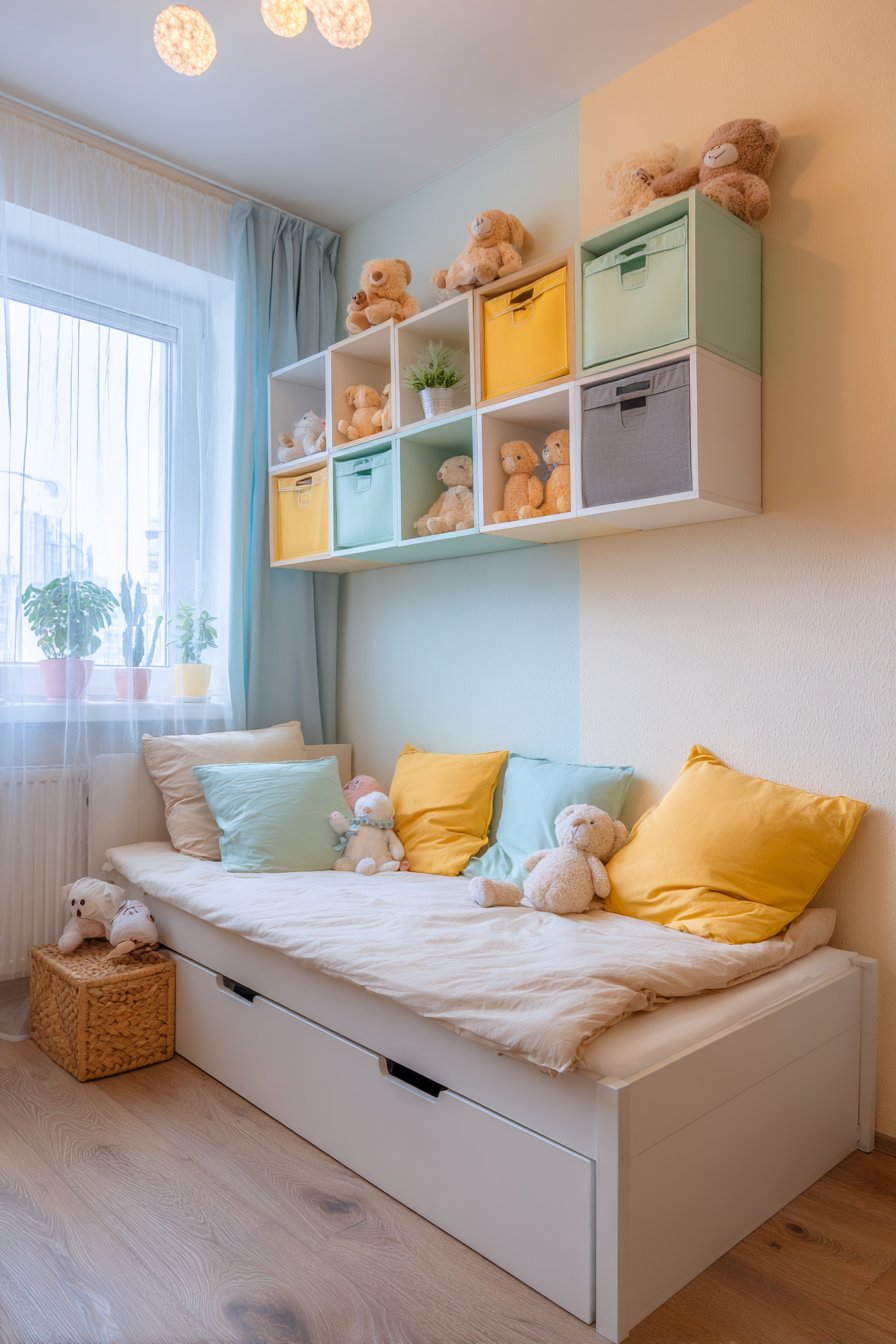
Wall-mounted floating shelves create vertical storage opportunities that keep floor space open for play and movement. Positioned at heights the child can reach independently, these shelves display stuffed animals and small decorative items that personalize the space while remaining organized. The floating design creates visual lightness, making the room feel less cluttered even when shelves are full.
Soft cream walls provide a calming neutral foundation that reflects light and makes the room feel larger, while the accent wall in gentle sky blue introduces color interest without overwhelming the senses. Sky blue is particularly effective in children’s bedrooms—it’s been shown to promote relaxation, reduce anxiety, and support better sleep quality.
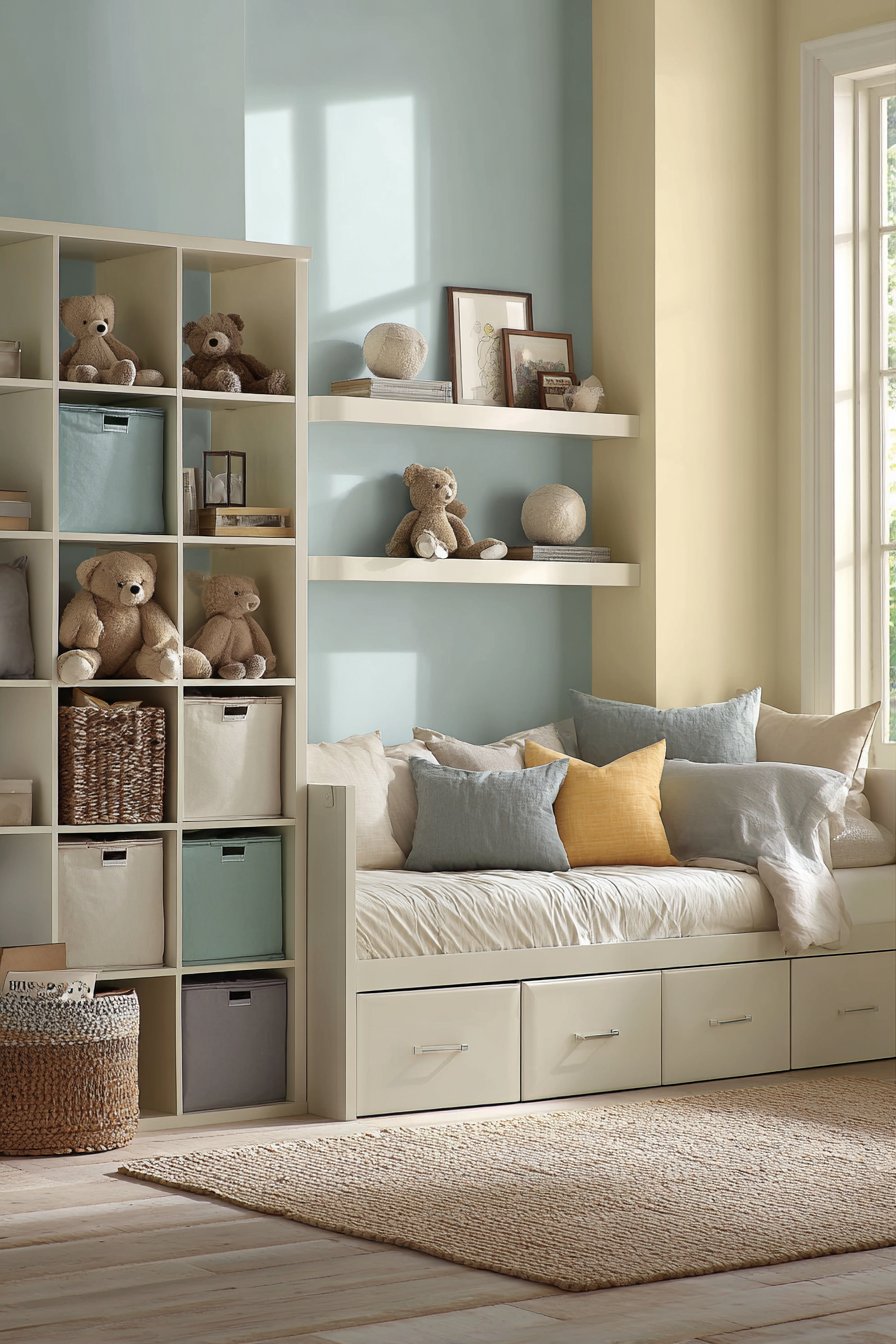
The room’s color scheme demonstrates restraint and sophistication, proving that children’s spaces need not sacrifice design integrity to be functional and age-appropriate. The soft cream and sky blue palette creates a serene backdrop that allows colorful toys and books to become the room’s visual focal points. This approach offers practical longevity—as the child outgrows certain toys or develops new interests, the room’s foundation remains appropriate, requiring only accessory updates rather than complete redesigns.
Key Design Tips:
- Implement modular storage systems that can be reconfigured as children grow and their needs change over time
- Use color-coded bins and containers to make cleanup intuitive and teach organizational skills through visual association
- Select beds with integrated storage to maximize space efficiency without requiring additional furniture pieces
- Install floating shelves at multiple heights to accommodate current accessibility needs while growing with the child
- Choose neutral wall colors as a foundation and introduce color through easily changeable accessories and storage solutions
- Prioritize furniture with rounded edges and stable construction to ensure safety during active play
3. Creative Art Studio Bedroom for Young Artists
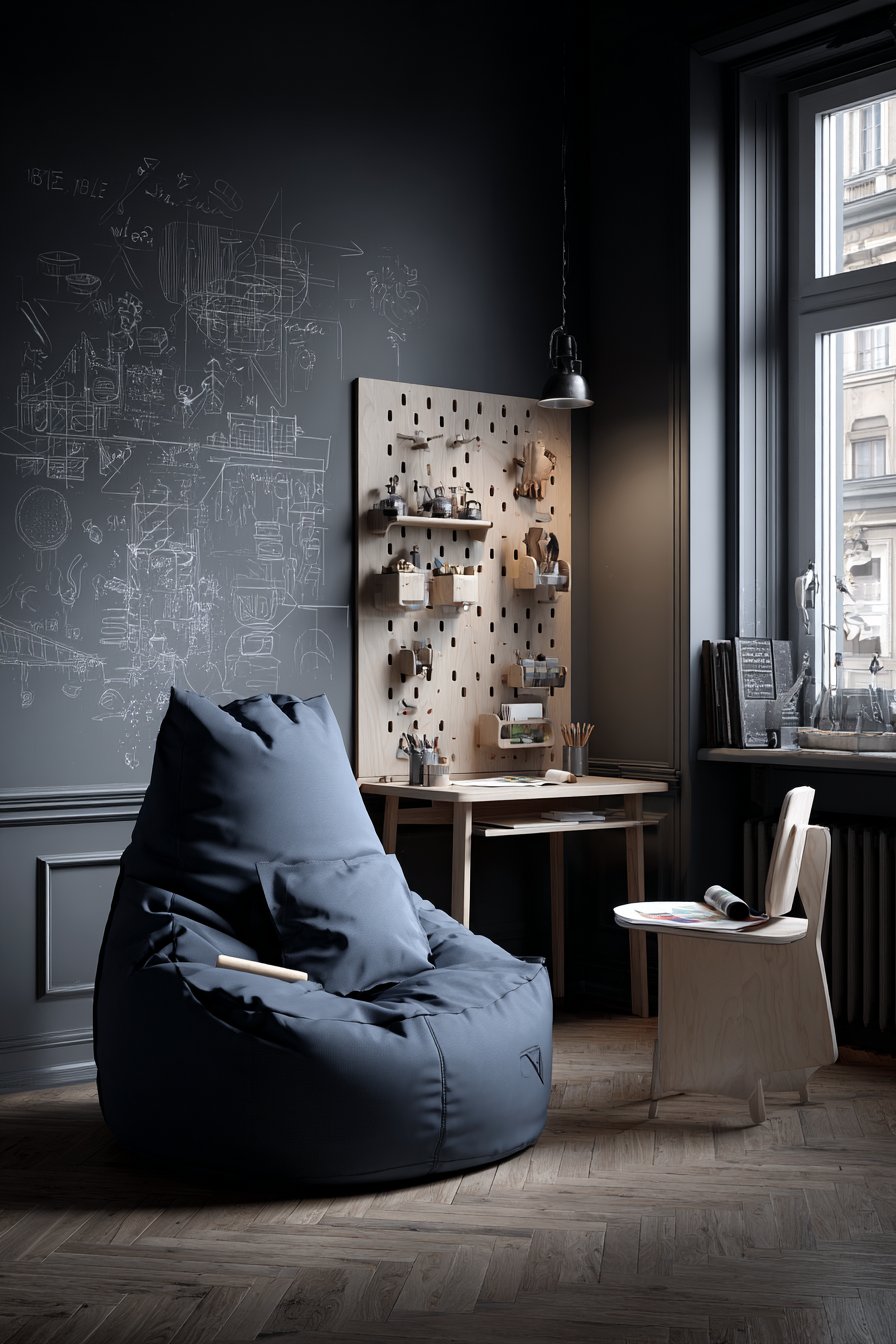
This bedroom design celebrates and nurtures artistic expression by transforming an entire wall into an interactive chalkboard surface painted in dark slate grey. This bold design choice immediately establishes the room’s creative purpose while offering endless opportunities for drawing, writing, practicing letters and numbers, or leaving encouraging messages.
The chalkboard wall serves as an ever-changing art installation created by the room’s young occupant, providing a sense of ownership and creative freedom that’s rare in children’s spaces where adults typically maintain control over wall decoration. The dark slate grey creates dramatic contrast that makes the room feel gallery-like and sophisticated, elevating children’s artwork to the status it deserves.
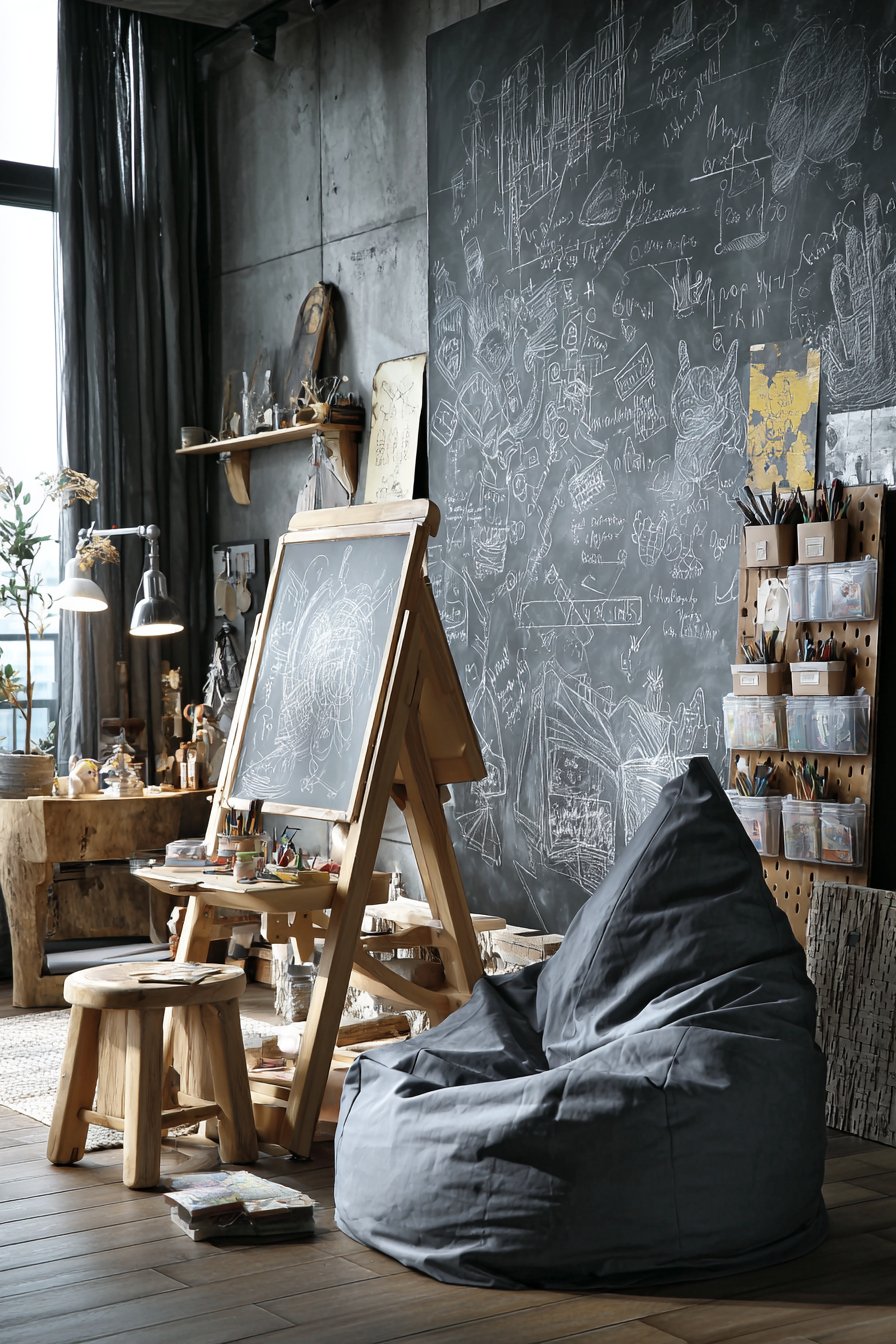
Positioned near the chalkboard, a small wooden art station with an integrated paper roll holder provides a dedicated space for two-dimensional art projects. The paper roll holder—similar to those found in professional art studios—allows children to pull down fresh paper for each creation, making the artistic process feel special and ceremonious.
The wooden construction adds warmth that balances the industrial edge of the chalkboard wall, while its compact size ensures it doesn’t overwhelm the space. Storage drawers within the art station keep supplies organized and teach children to care for their materials properly, instilling respect for creative tools.
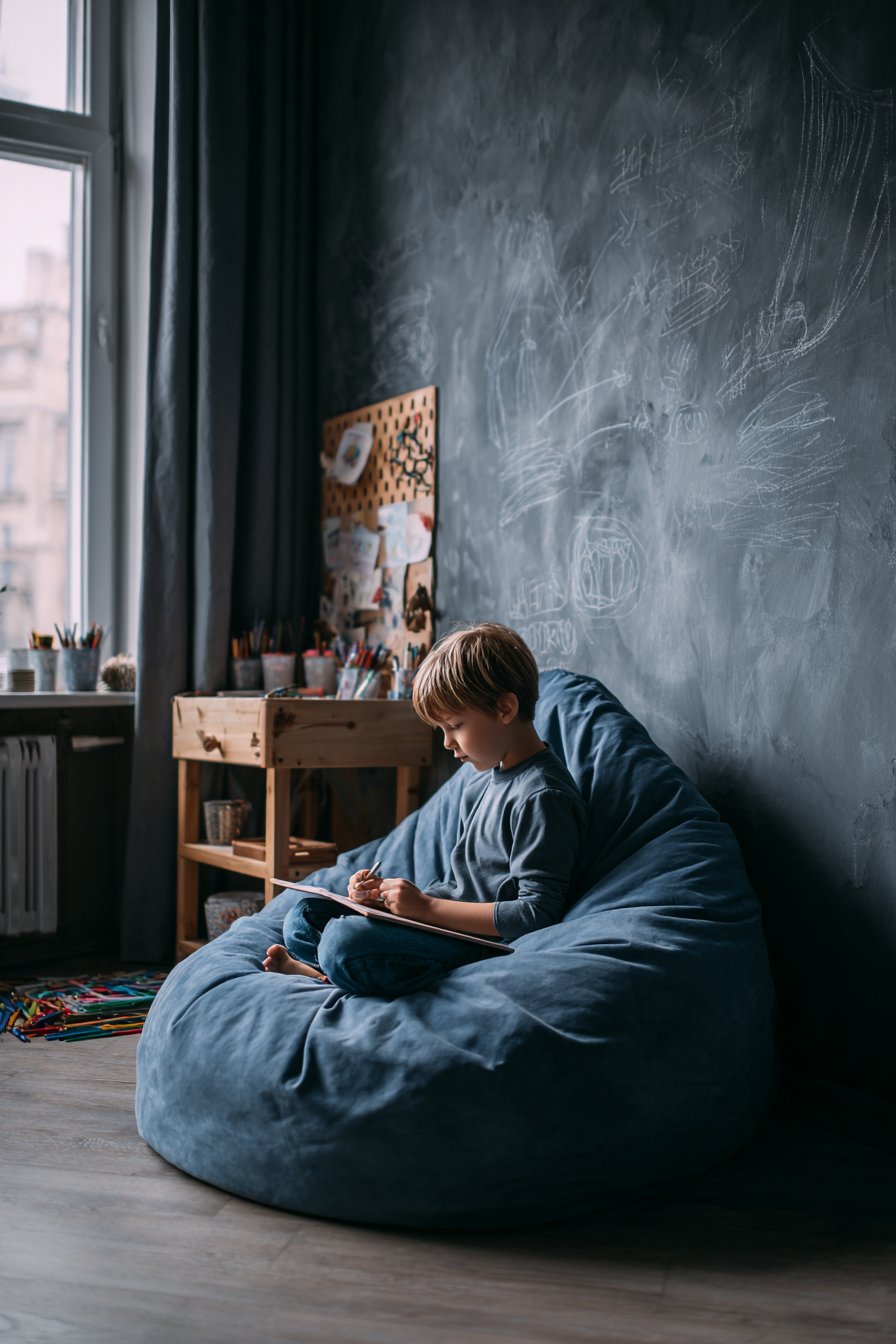
The opposite wall features a pegboard organizer in natural wood, offering flexible storage that adapts as art supply collections grow and change. Transparent containers hang from the pegboard hooks, displaying colored pencils, markers, paintbrushes, and other supplies in an organized, visually appealing manner.
This transparency serves dual purposes—it allows children to quickly locate needed supplies, reducing frustration and supporting independent creativity, while the colorful contents create an attractive rainbow display that functions as artwork itself. The pegboard’s natural wood finish introduces organic warmth and texture, preventing the room from feeling too industrial or institutional.
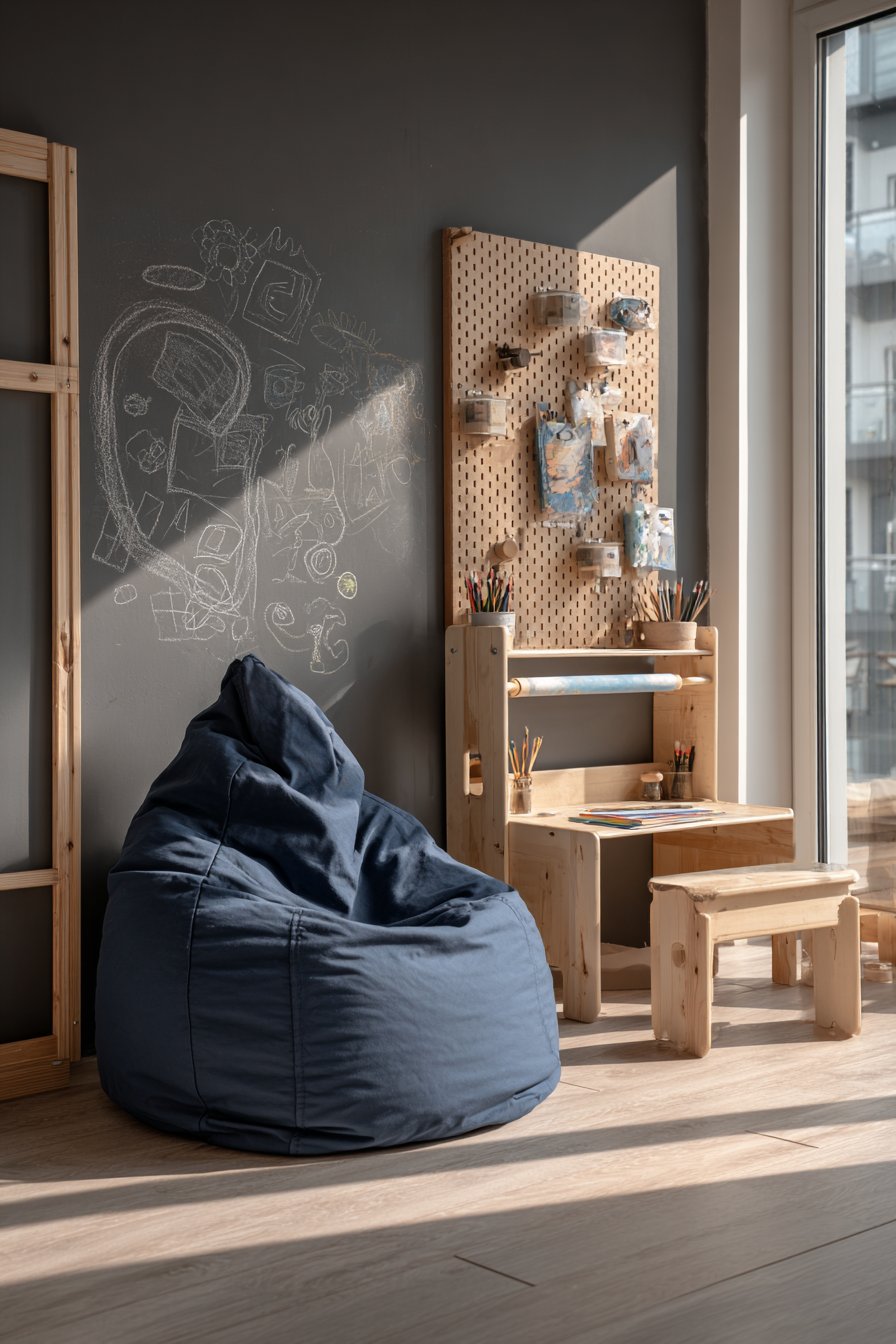
A comfortable bean bag chair in durable navy fabric provides a relaxed seating option for reading art books, sketching, or simply contemplating the next creative project. Navy is an excellent choice for high-use children’s furniture—it hides stains effectively while remaining sophisticated and gender-neutral. The bean bag’s flexible form supports various sitting positions and can be easily moved around the room as needed. Soft afternoon light from a side window illuminates the creative zone without creating harsh glare on work surfaces, while the angled light reveals texture and dimension in artwork displayed on walls.
Key Design Tips:
- Create designated creative zones using chalkboard paint, magnetic paint, or washable wall coverings that encourage artistic expression
- Install pegboard systems that offer flexible, reconfigurable storage as art supply collections evolve and interests change
- Use transparent storage containers to make supplies visible and easily accessible, promoting independence during creative time
- Provide multiple seating options including floor space, traditional chairs, and casual seating like bean bags for different creative activities
- Ensure adequate natural and artificial lighting in art areas to reduce eye strain and accurately represent colors
- Choose furniture and finishes in darker colors or patterns that disguise inevitable paint splatters and creative accidents
4. Cozy Canopy Bed Retreat for Peaceful Sleep
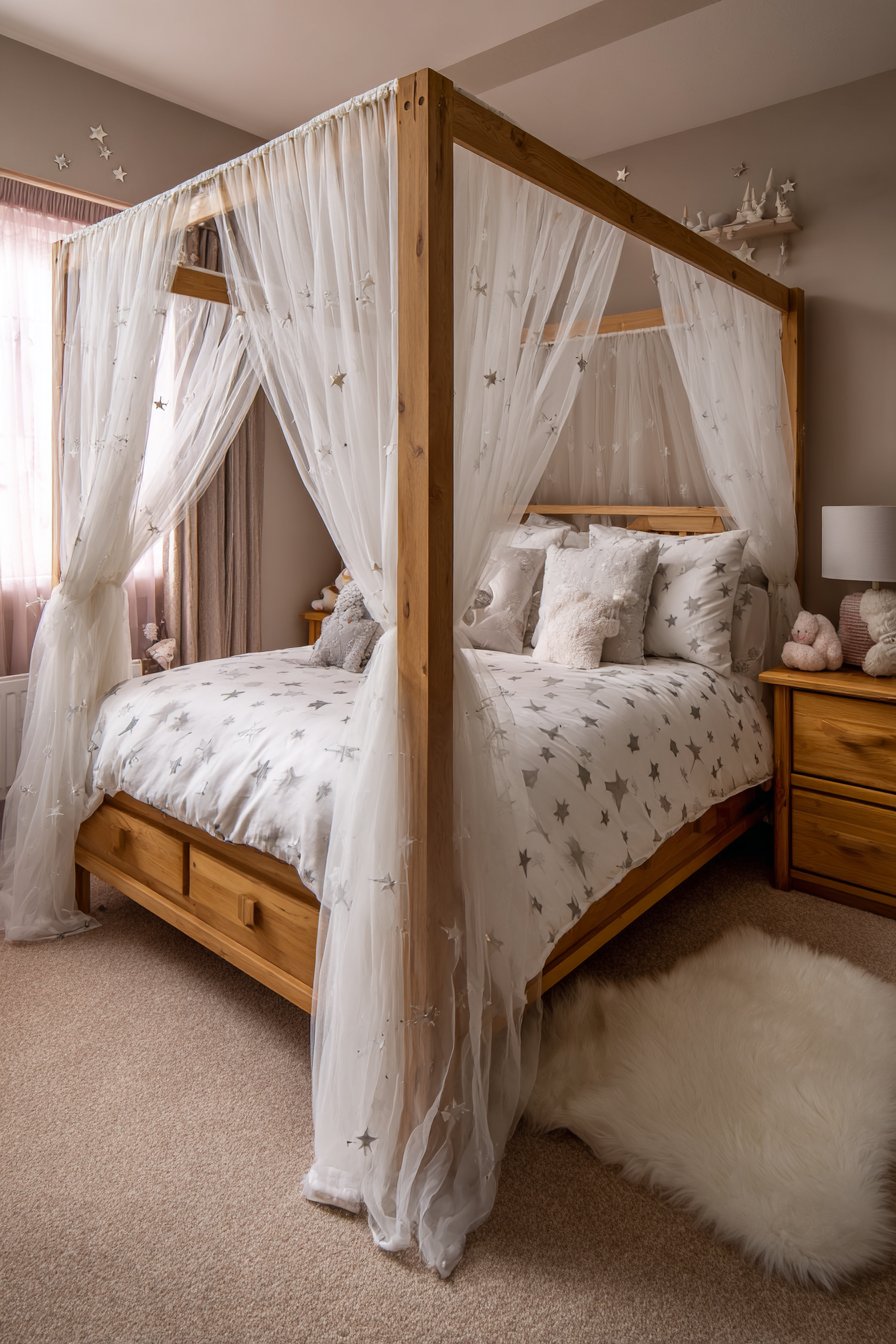
This bedroom design prioritizes rest and tranquility, creating a sleep sanctuary that helps children wind down from busy days and develop healthy sleep habits. The centerpiece is a canopy bed with sheer white fabric draping that transforms an ordinary bed into a magical sleeping space.
The canopy creates a room within a room—a cocoon-like environment that provides psychological security and physical coziness. Sheer white fabric allows air circulation and maintains sight lines for safety while diffusing ambient light, creating the gentle dimness that supports melatonin production and quality sleep. The canopy’s romantic, dreamy quality appeals to children’s imaginations without relying on character-themed bedding that quickly becomes dated.
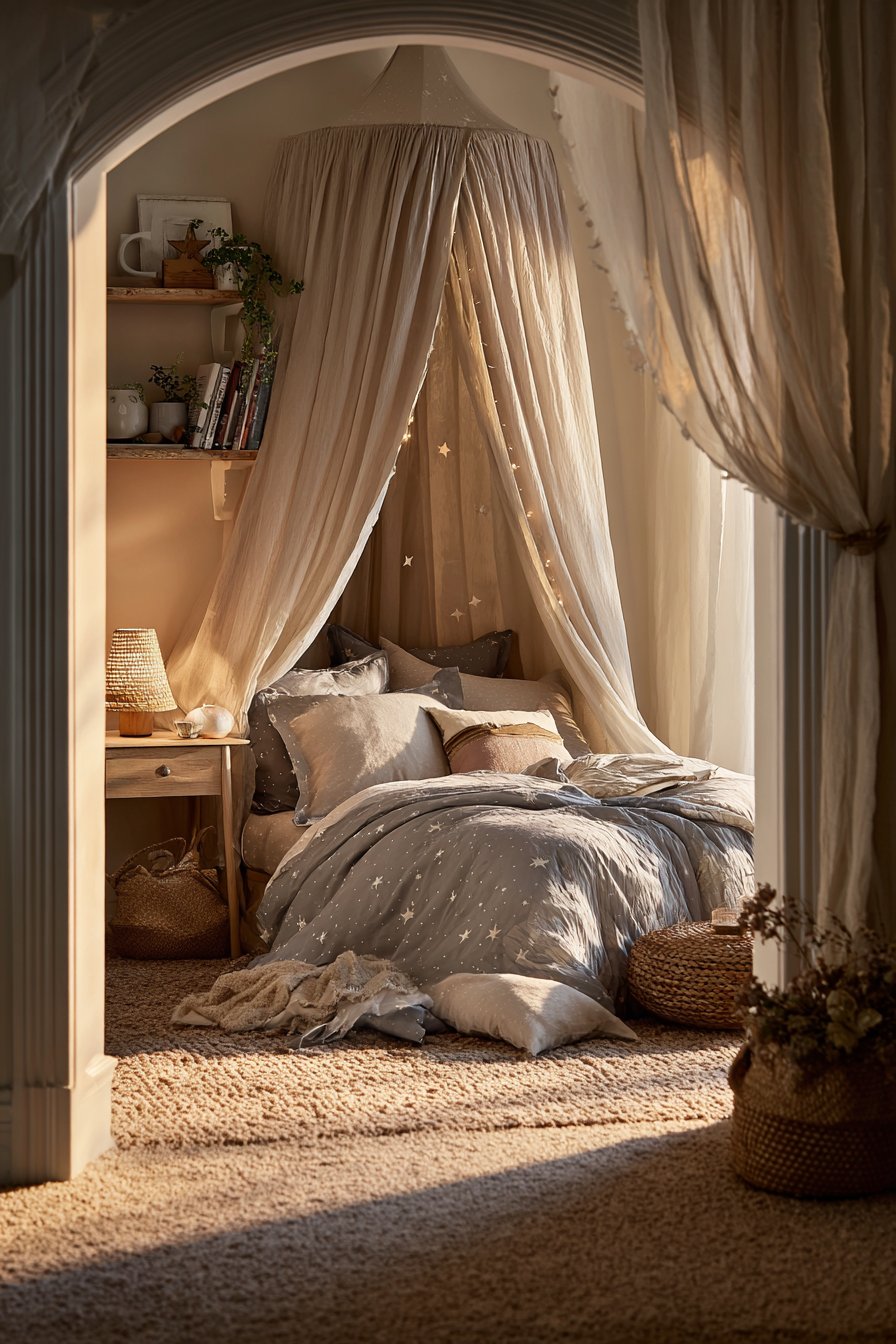
The bed dressing demonstrates thoughtful restraint with soft cotton bedding featuring subtle star patterns in muted grey and white tones. This sophisticated approach to children’s bedding proves that rooms can feel special and age-appropriate without resorting to bright primary colors or licensed characters. Cotton bedding offers breathability essential for temperature regulation during sleep, while the star pattern provides just enough visual interest to feel playful without becoming visually stimulating. The muted grey and white color scheme promotes calm and relaxation, signaling to the brain that this space is designed for rest rather than active play.
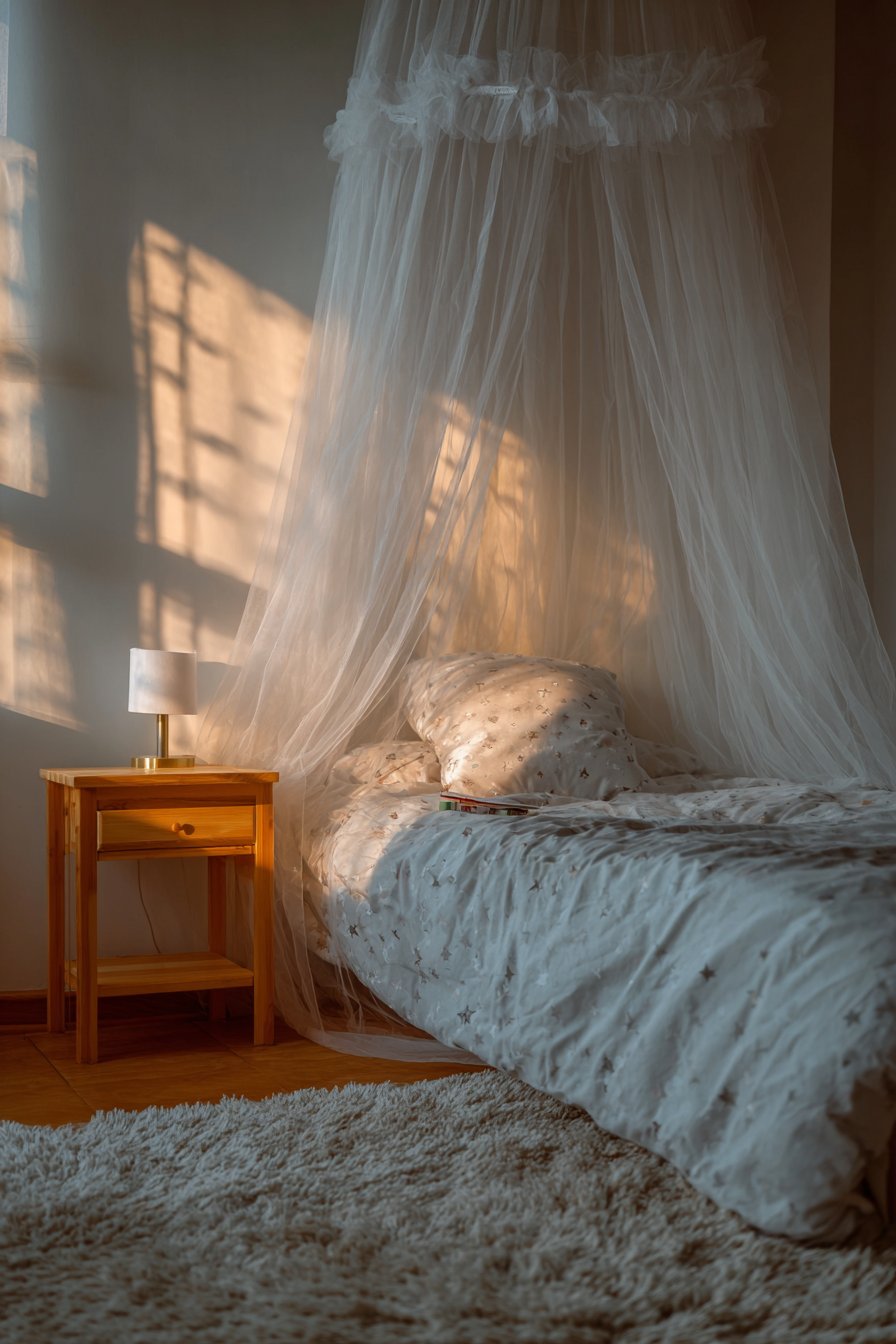
A small nightstand in natural oak positioned beside the bed provides essential bedside functionality while introducing the warmth and organic beauty of real wood. The nightstand holds a touch-activated lamp perfect for bedtime stories—a thoughtful detail that eliminates the need for children to fumble with switches or knobs in the dark.
The touch activation empowers even young children to control their lighting independently, supporting autonomy and reducing nighttime fears. Natural oak’s honey-colored grain brings warmth that balances the cool tones of the grey and white bedding, creating visual harmony that feels neither too warm nor too cool.
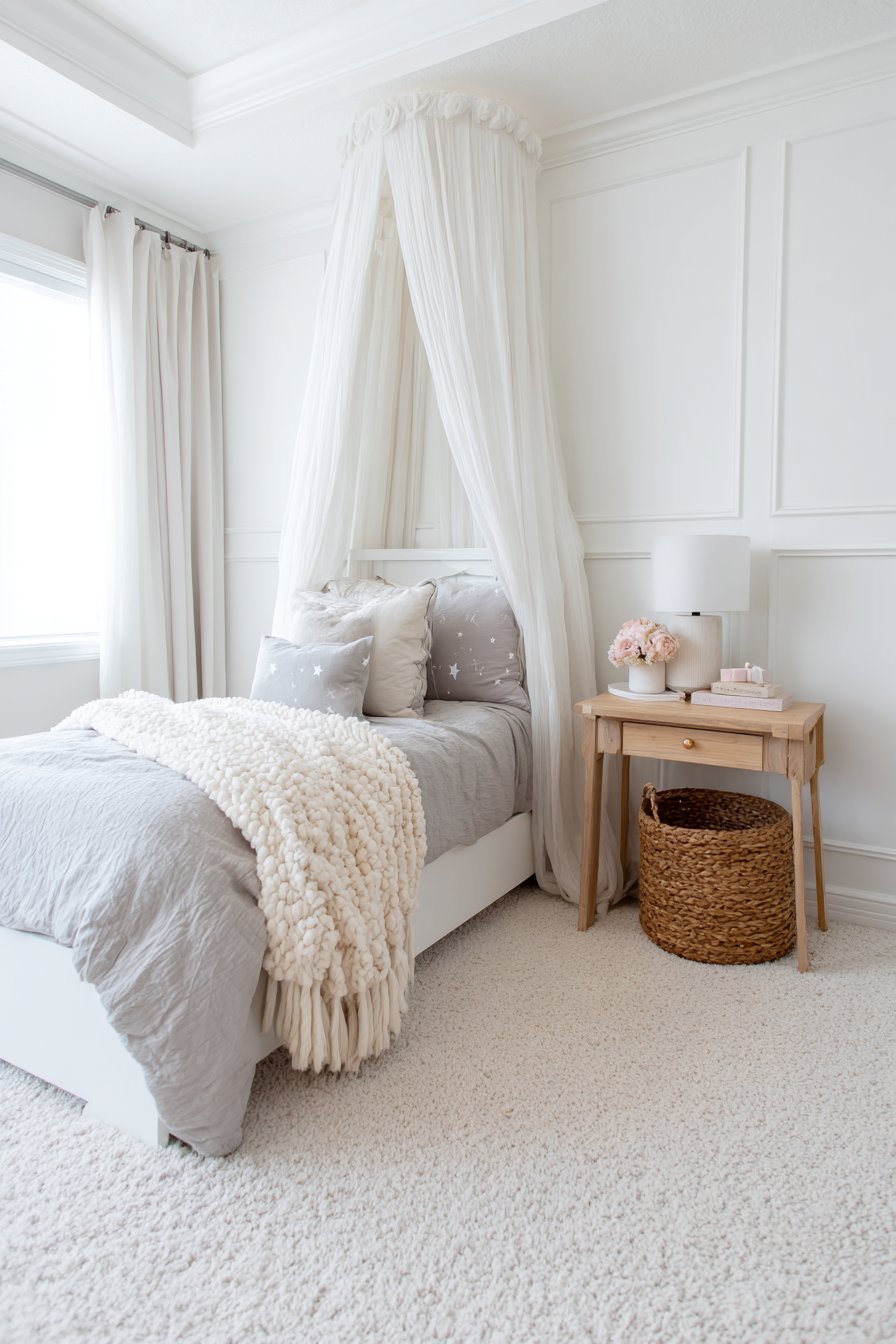
Plush carpet in warm beige covers the floor, providing comfort underfoot for nighttime trips to the bathroom and morning wakeups. The carpet’s sound-absorbing properties create acoustic softness that contributes to the room’s peaceful atmosphere, while its warmth makes the floor comfortable for morning stretches or bedtime yoga. Beige is an ideal choice for bedroom carpeting—it’s neutral enough to work with evolving design schemes, warm enough to feel cozy, and practical enough to disguise minor stains while still showing when cleaning is needed.
Key Design Tips:
- Install bed canopies using sheer, breathable fabrics that create coziness while maintaining air circulation and visibility for safety
- Select bedding in muted, sophisticated colors that promote relaxation rather than stimulation to support quality sleep
- Provide touch-activated or dimmer-controlled lighting that children can operate independently, supporting autonomy and reducing nighttime fears
- Choose soft flooring materials like carpet or large area rugs to provide comfort and warmth, especially in cooler climates
- Position beds away from windows and doors to create a sense of security and reduce temperature fluctuations that disrupt sleep
- Keep bedroom decor calm and minimal to signal that this space is primarily for rest rather than active play
5. Scandinavian Minimalist Serenity for Calm and Focus
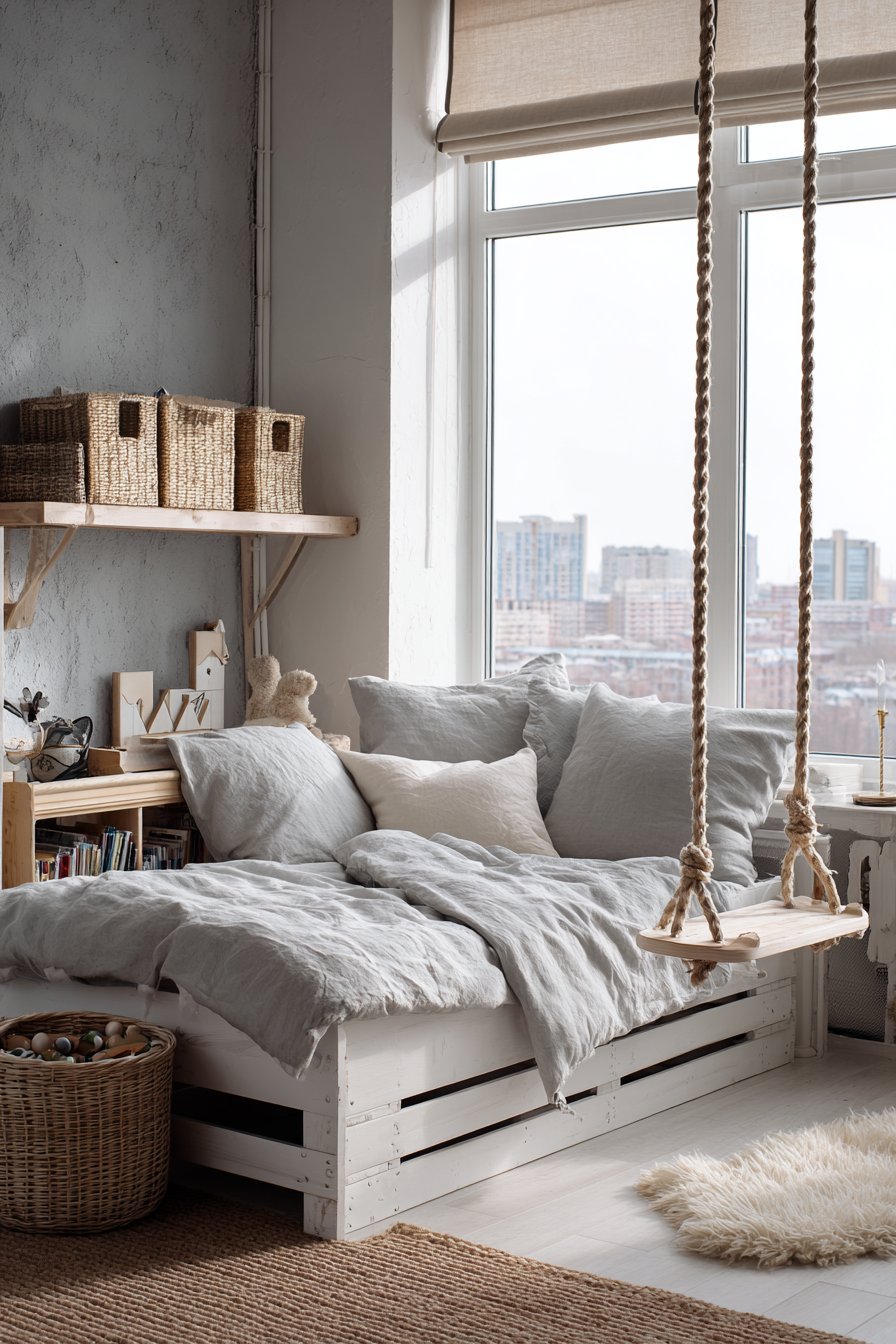
This bedroom embraces Scandinavian design principles—functionality, simplicity, natural materials, and connection to light—creating a serene environment that supports concentration, creativity, and emotional regulation. The minimalist white wooden bed frame with natural linen bedding in soft grey tones establishes the room’s aesthetic foundation.
White painted wood brightens the space while allowing the natural wood grain to subtly show through, adding organic texture that prevents the minimalism from feeling cold or sterile. Natural linen bedding brings tactile richness and breathability while its soft grey color adds visual warmth that balances the white furniture. Linen’s slight texture and natural wrinkles contribute to the room’s relaxed, unpretentious character.
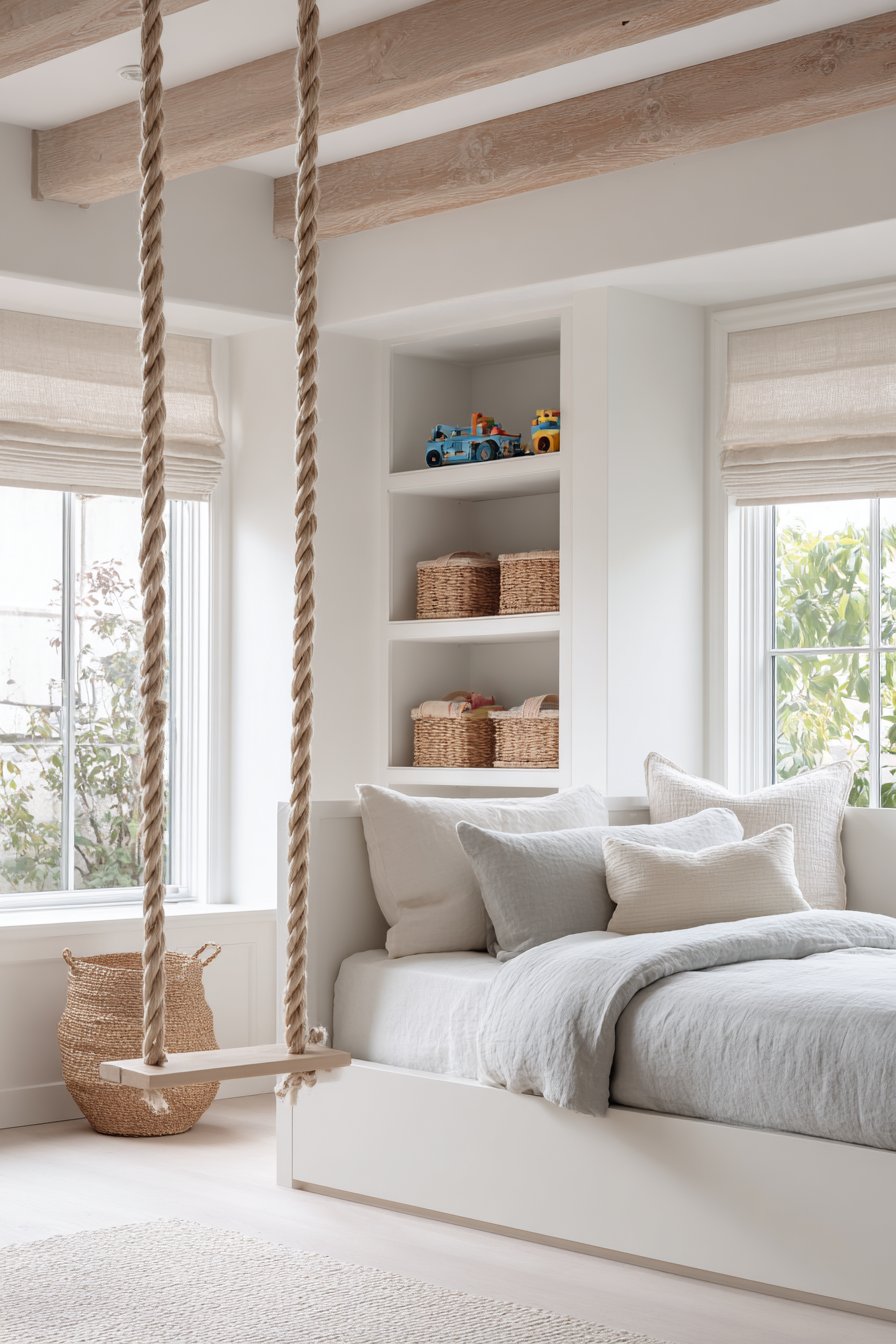
The simple rope swing hanging from a reinforced ceiling beam introduces playful functionality that perfectly embodies Scandinavian design philosophy—beauty through utility, joy through simplicity. This isn’t merely decorative; it’s a functional play element that provides vestibular stimulation important for physical development and sensory regulation.
The rope’s natural fiber introduces another organic texture, while the swing’s simple construction feels timeless rather than trendy. The ceiling beam must be properly reinforced to ensure safety, but the exposed beam itself becomes an architectural feature that adds character and visual interest to the ceiling plane often neglected in children’s room design.
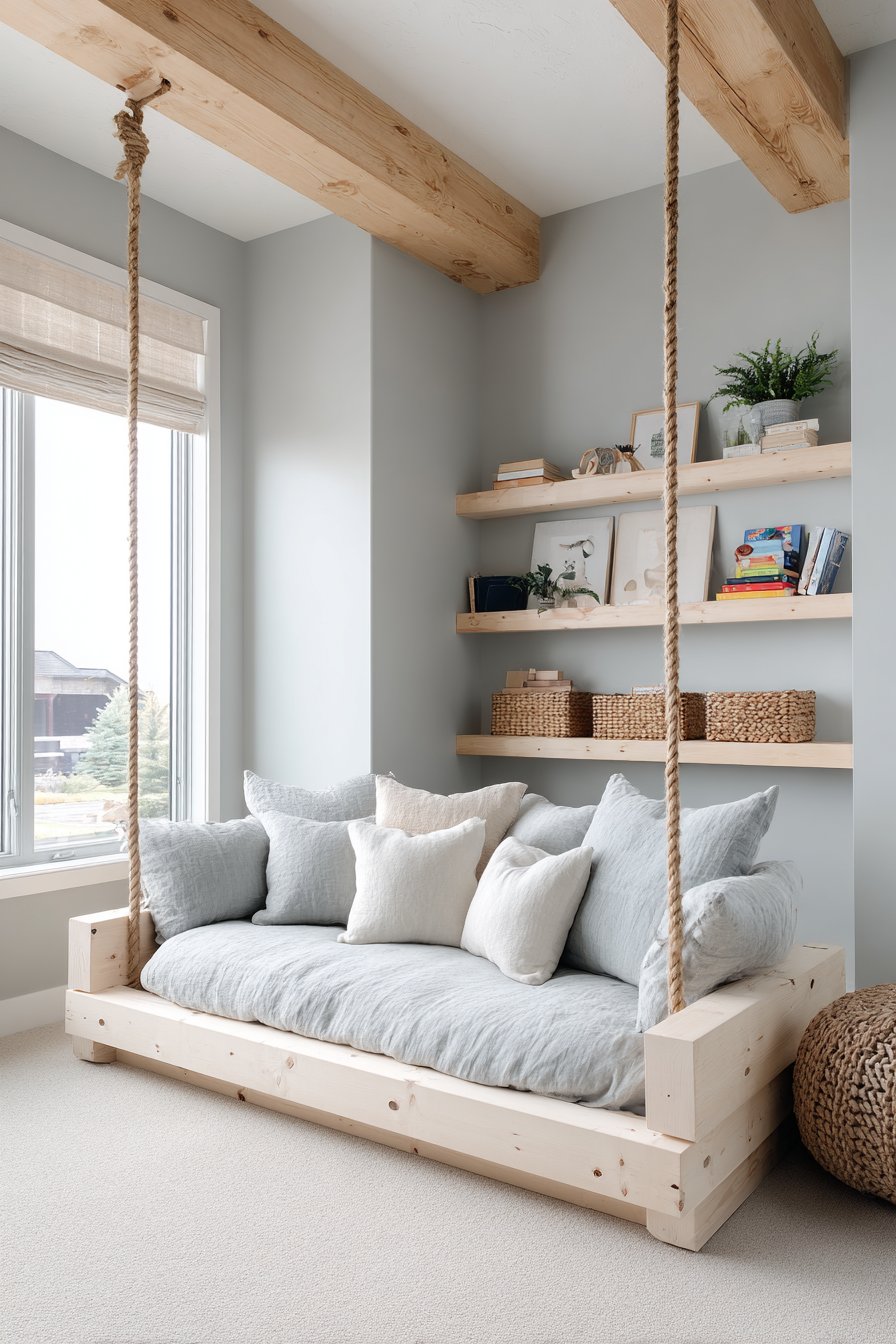
Open shelving in light birch wood displays toys in woven baskets, maintaining the clean aesthetic while providing accessible storage. Birch is quintessentially Scandinavian—light, strong, sustainable, and beautiful with its characteristic subtle grain.
The open shelving keeps frequently used items accessible while the woven baskets conceal visual clutter, creating an organized appearance that’s easy to maintain. Natural woven baskets add yet another organic texture to the room’s material palette while their neutral tones maintain color restraint. This approach teaches children that organization can be beautiful and that caring for one’s space is a form of self-respect.
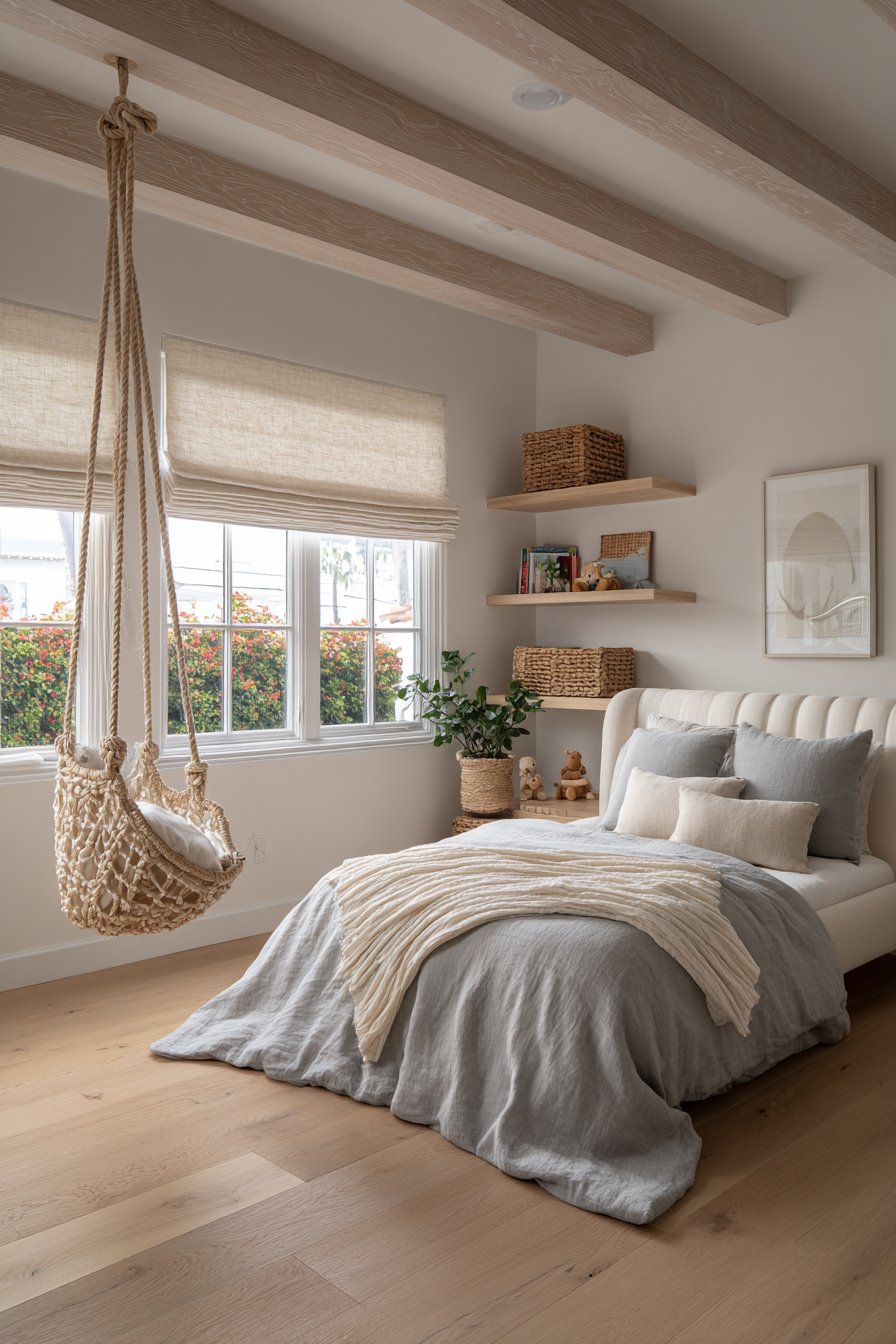
Large windows with Roman shades in natural fabric flood the space with diffused daylight, essential to Scandinavian design’s emphasis on maximizing precious natural light. The Roman shades provide privacy and light control when needed while their natural fabric maintains the room’s organic material story. When raised, the shades disappear into neat folds that don’t obstruct the windows’ clean lines. The abundance of natural light supports healthy vitamin D production, regulates circadian rhythms, and creates a cheerful atmosphere that combats the low mood and energy associated with inadequate lighting.
Key Design Tips:
- Embrace a restrained color palette dominated by whites, greys, and natural wood tones to create calming visual simplicity
- Incorporate natural materials like wood, linen, wool, and cotton that bring warmth and texture to minimal spaces
- Maximize natural light through large windows and light-colored surfaces that reflect and distribute daylight throughout the room
- Choose multifunctional furniture and playful elements that serve practical purposes beyond mere decoration
- Use open shelving with concealed storage solutions like baskets to balance accessibility with visual order
- Select sustainable, high-quality materials that improve with age rather than cheap alternatives that quickly deteriorate
6. Space Exploration Theme with Educational Elements
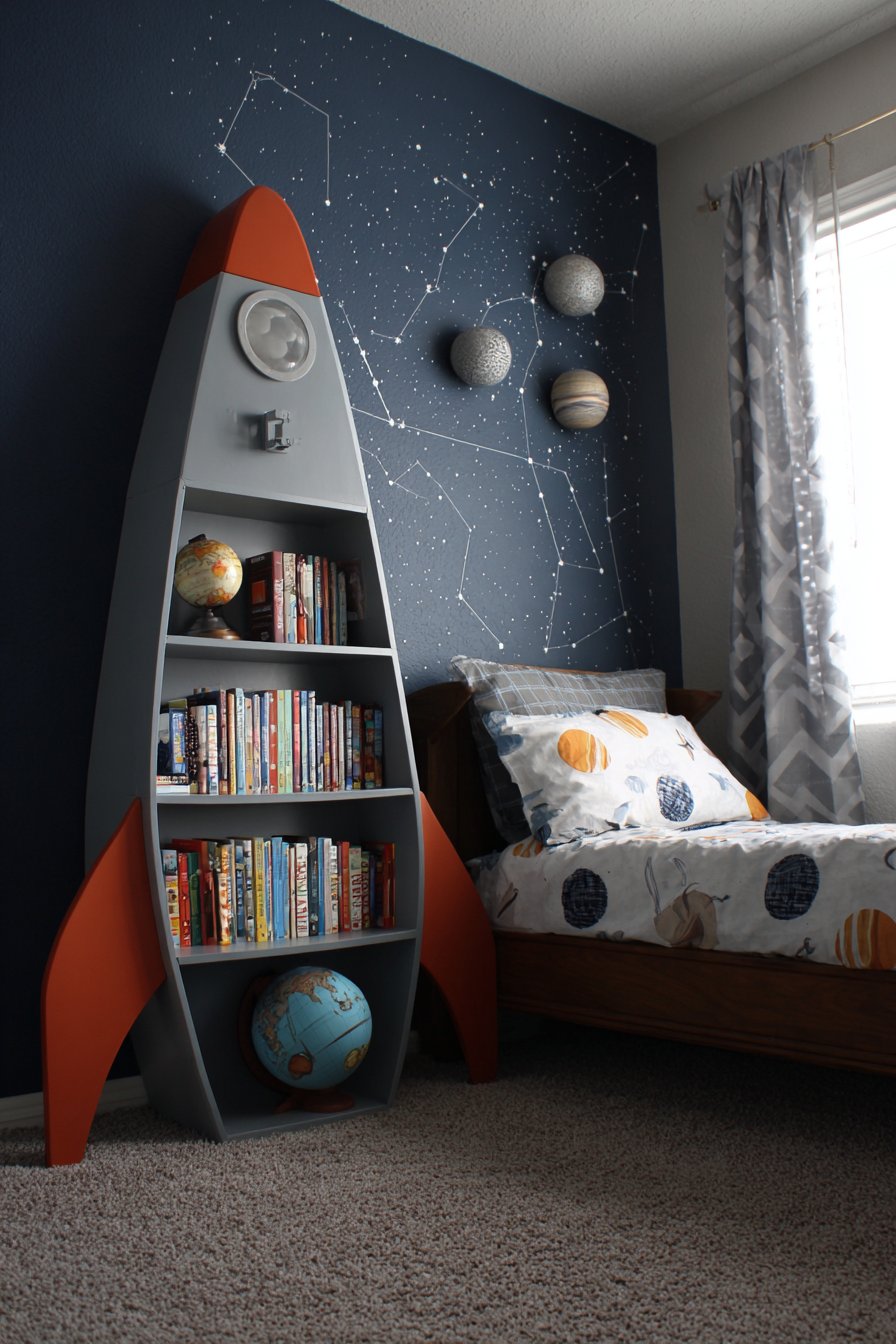
This bedroom design demonstrates how themed rooms can be executed with sophistication and longevity, avoiding the cartoonish approaches that children quickly outgrow. The navy blue accent wall displaying a subtle constellation pattern created with glow-in-the-dark decals sets the cosmic scene without overwhelming the space.
Navy blue is psychologically calming and conducive to sleep while providing dramatic contrast that makes the room feel intentional and designed. The constellation pattern introduces educational content—children can identify actual star formations, learning astronomy fundamentals through daily exposure. The glow-in-the-dark quality adds magical functionality, creating a gentle nightlight effect that eases bedtime fears while maintaining the theme’s integrity.
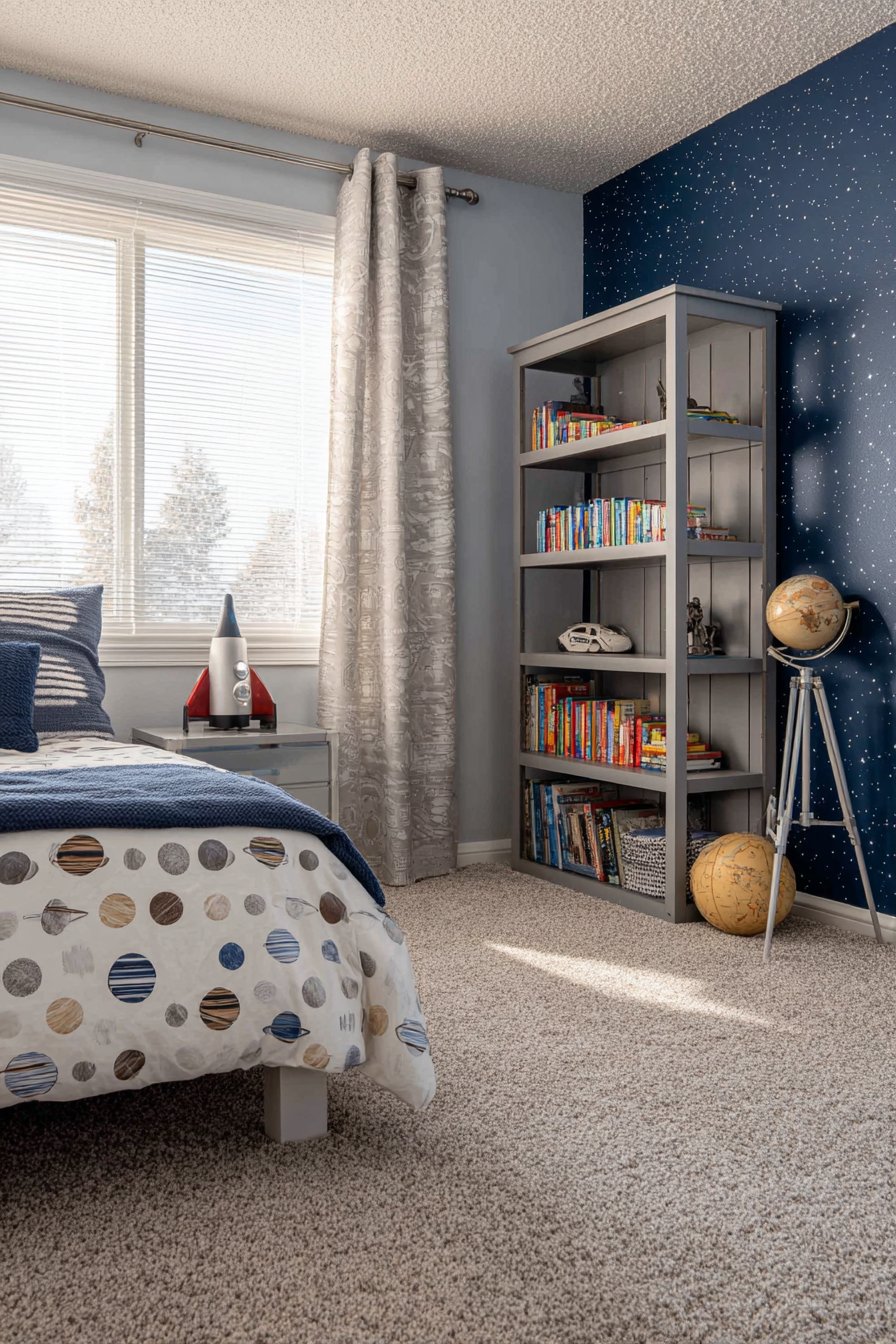
A rocket ship-shaped bookshelf in grey and white serves dual purposes as both storage and sculptural decor. This custom piece becomes the room’s focal point and conversation starter while providing practical book storage. The grey and white color scheme keeps the piece sophisticated rather than toy-like, ensuring it remains appropriate as the child matures.
The rocket’s compartments organize books by size or subject, teaching categorization skills. Positioning this statement piece against a neutral wall allows it to shine without competing with the constellation accent wall, demonstrating the importance of balancing bold elements with restful areas.
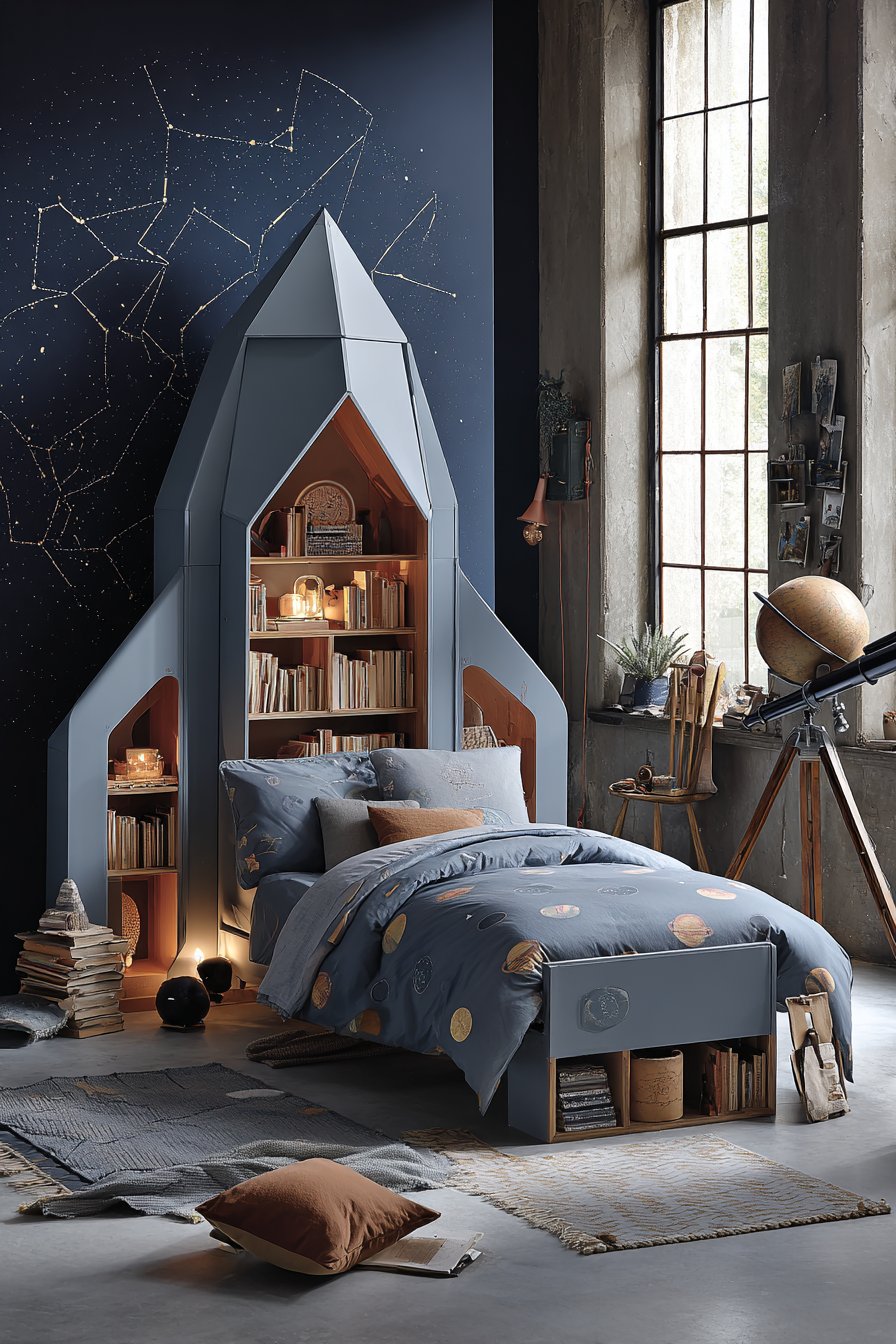
The bedding incorporates planetary prints in muted colors, extending the space theme while maintaining sophistication through color restraint. Rather than bright cartoon planets, this bedding features realistic astronomical imagery in subdued tones—deep blues, charcoal greys, rust oranges, and cream whites that reference actual planetary colors.
This approach respects children’s intelligence and curiosity about real science rather than dumbing down the theme into pure fantasy. High-quality bedding in these colors remains appropriate through elementary school and beyond, providing excellent value and reducing waste from frequent redecoration.
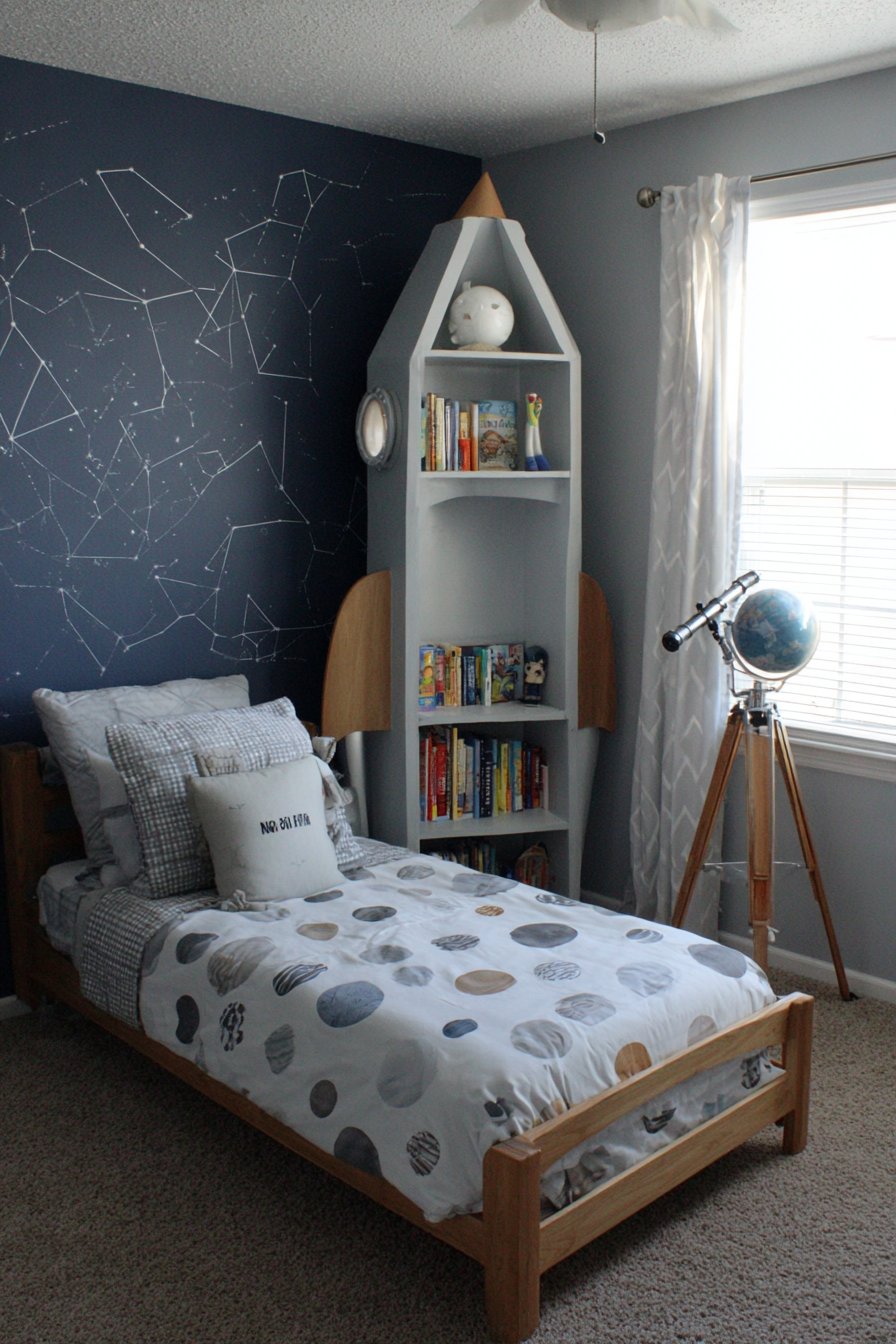
A globe nightlight and telescope positioned near the window add authentic educational elements that transform the room into a learning environment. The globe nightlight provides functional illumination while encouraging geographic literacy—children can spin the globe to find countries, trace travel routes, or plan imaginary adventures. The telescope invites genuine astronomical observation, connecting the room’s decorative theme with real scientific exploration. Positioning it near the window allows actual stargazing, transforming bedroom decor into educational opportunity and fostering genuine interest in space science.
Key Design Tips:
- Choose theme colors in muted, sophisticated tones rather than primary colors to create longevity and visual calm
- Incorporate authentic educational elements like telescopes, globes, or scientific posters that encourage real learning
- Use glow-in-the-dark elements strategically to add magical functionality without relying on electric nightlights
- Balance themed statement pieces with neutral backgrounds to prevent visual overwhelm and allow flexibility for changing interests
- Select realistic imagery over cartoonish representations to respect children’s intelligence and create age-appropriate sophistication
- Ensure themed furniture pieces offer practical functionality beyond their decorative appeal
7. Shared Bedroom Solution with Fair Space Division
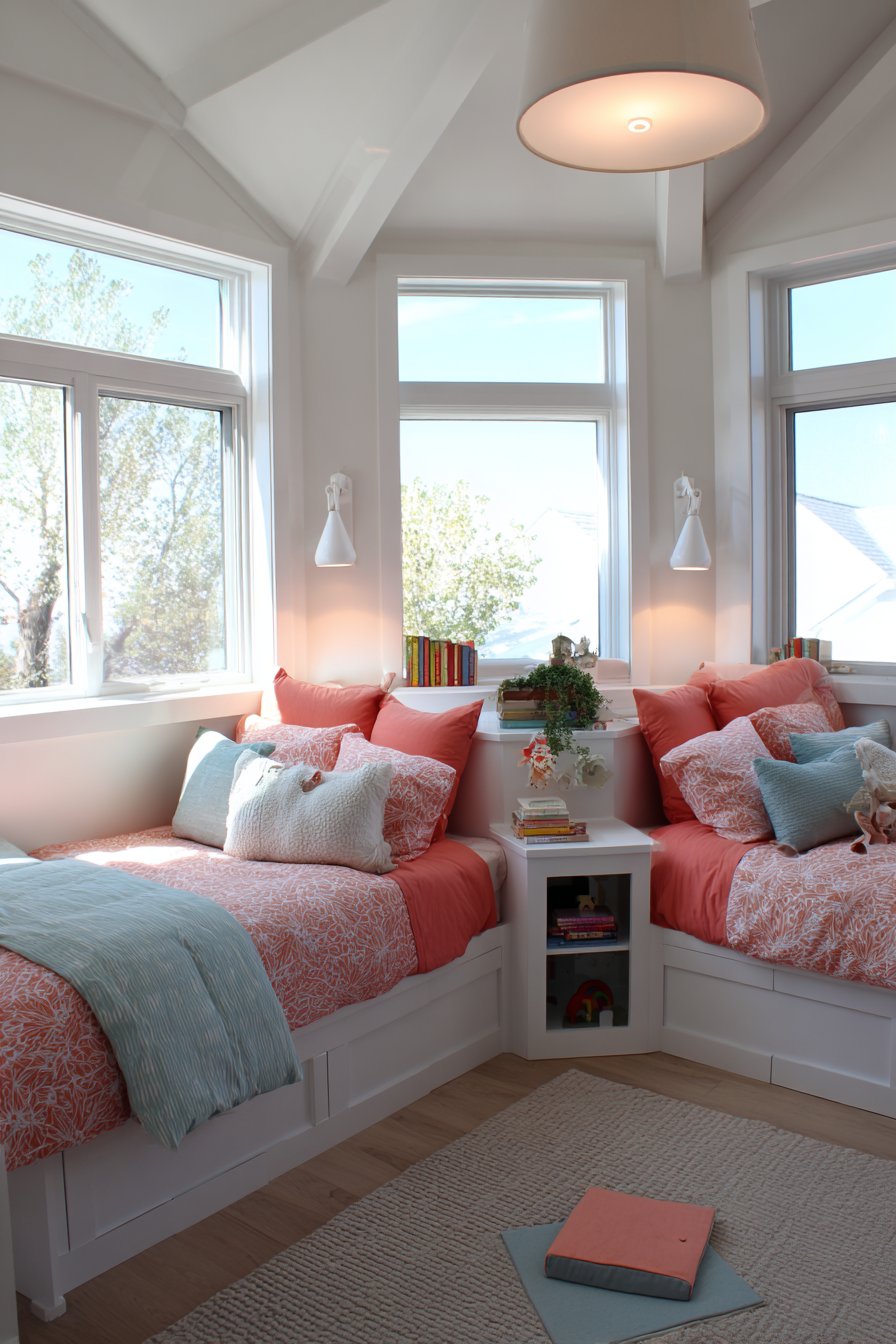
This bedroom design tackles the complex challenge of creating a shared space that feels fair, functional, and harmonious for two children with different personalities, needs, and ages. Twin beds arranged in an L-configuration maximize floor space for shared activities while providing each child with their own defined territory.
This perpendicular arrangement feels more equitable than traditional side-by-side placement, as neither child’s bed is in a more desirable location. Each bed features individualized bedding in coordinating colors of coral and turquoise—warm and cool tones that complement each other while allowing personality expression. The coordinating rather than matching approach acknowledges each child’s individuality while maintaining visual cohesion.
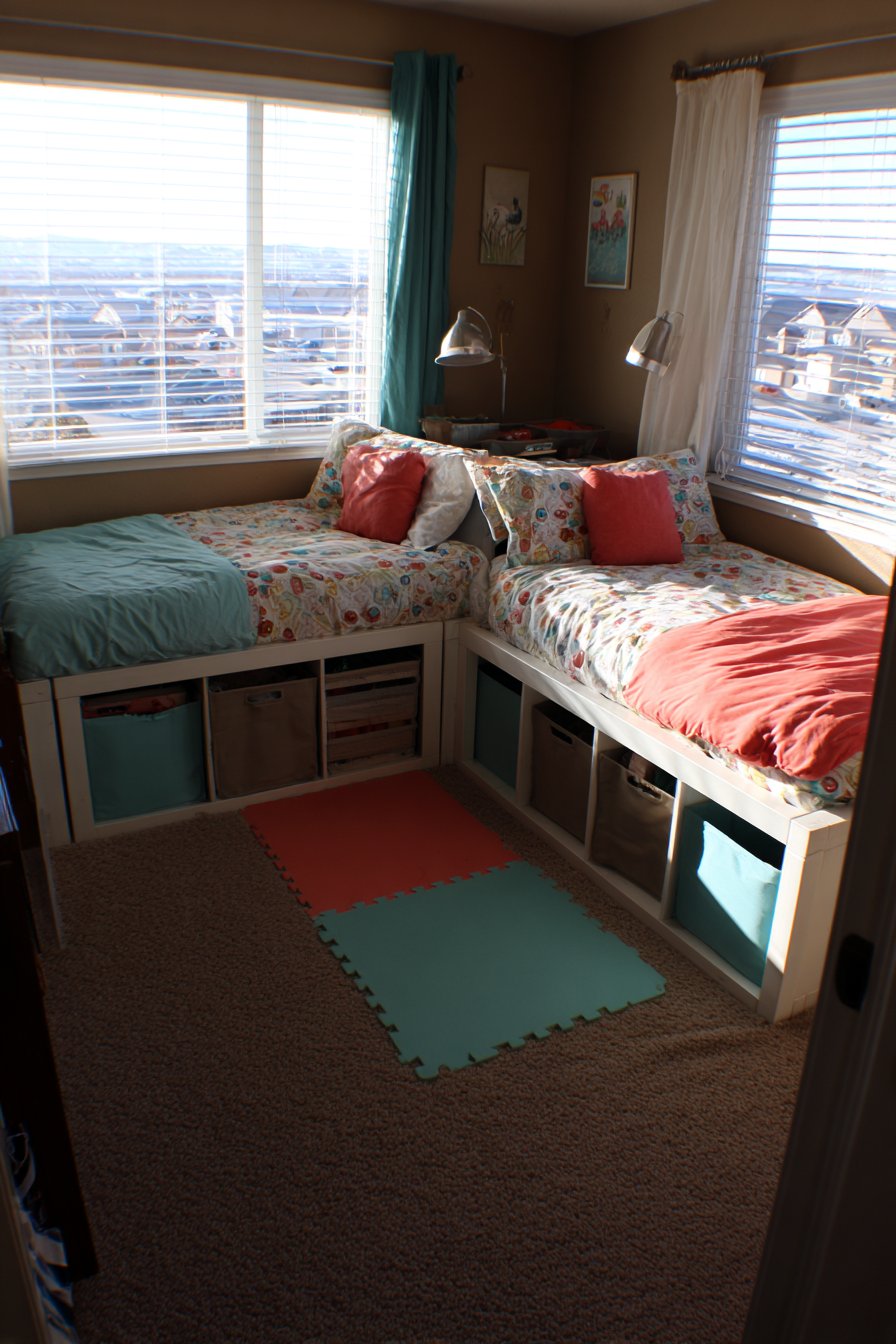
A central storage unit with cubbies positioned between the beds creates a natural divider that delineates personal spaces while providing shared organization. This placement is psychologically significant—it’s a physical boundary that offers privacy and territorial definition without creating complete separation that might breed resentment or isolation.
The cubbies offer both individual and shared storage, with some designated for each child’s personal belongings and others for shared toys, books, or games. This mixed approach teaches important lessons about personal property, sharing, and communal living that serve children well beyond childhood.
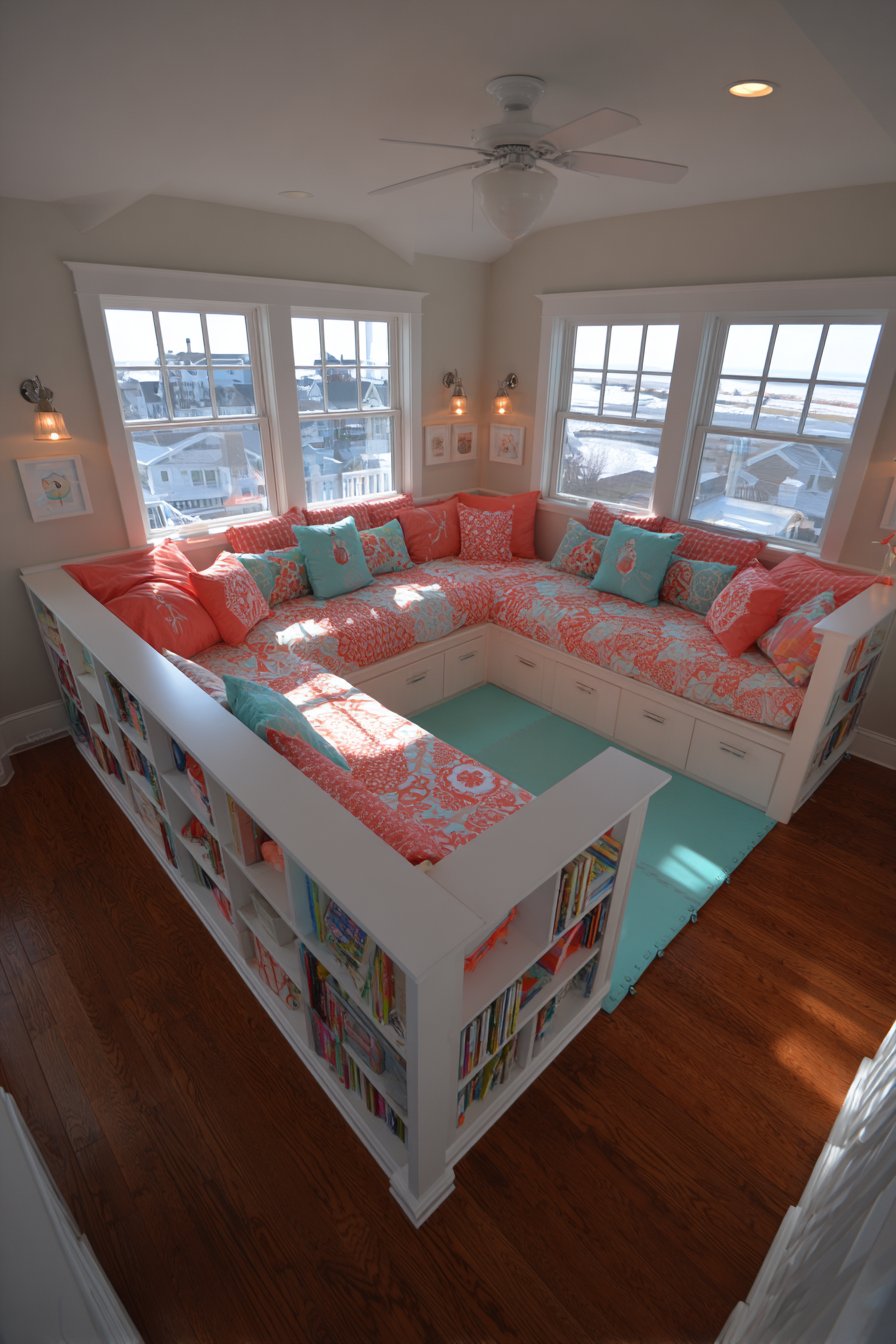
Wall-mounted reading lights above each bed offer independent task lighting, crucial for respecting different sleep schedules and bedtime routines. This feature prevents the common shared-room conflict where one child wants to read while the other wants to sleep.
The directed light from reading lamps illuminates only the reader’s area, maintaining darkness for the sleeping sibling. This autonomy reduces parental intervention and teaches children to be considerate of others’ needs while respecting their own—essential life skills that extend far beyond bedroom organization.
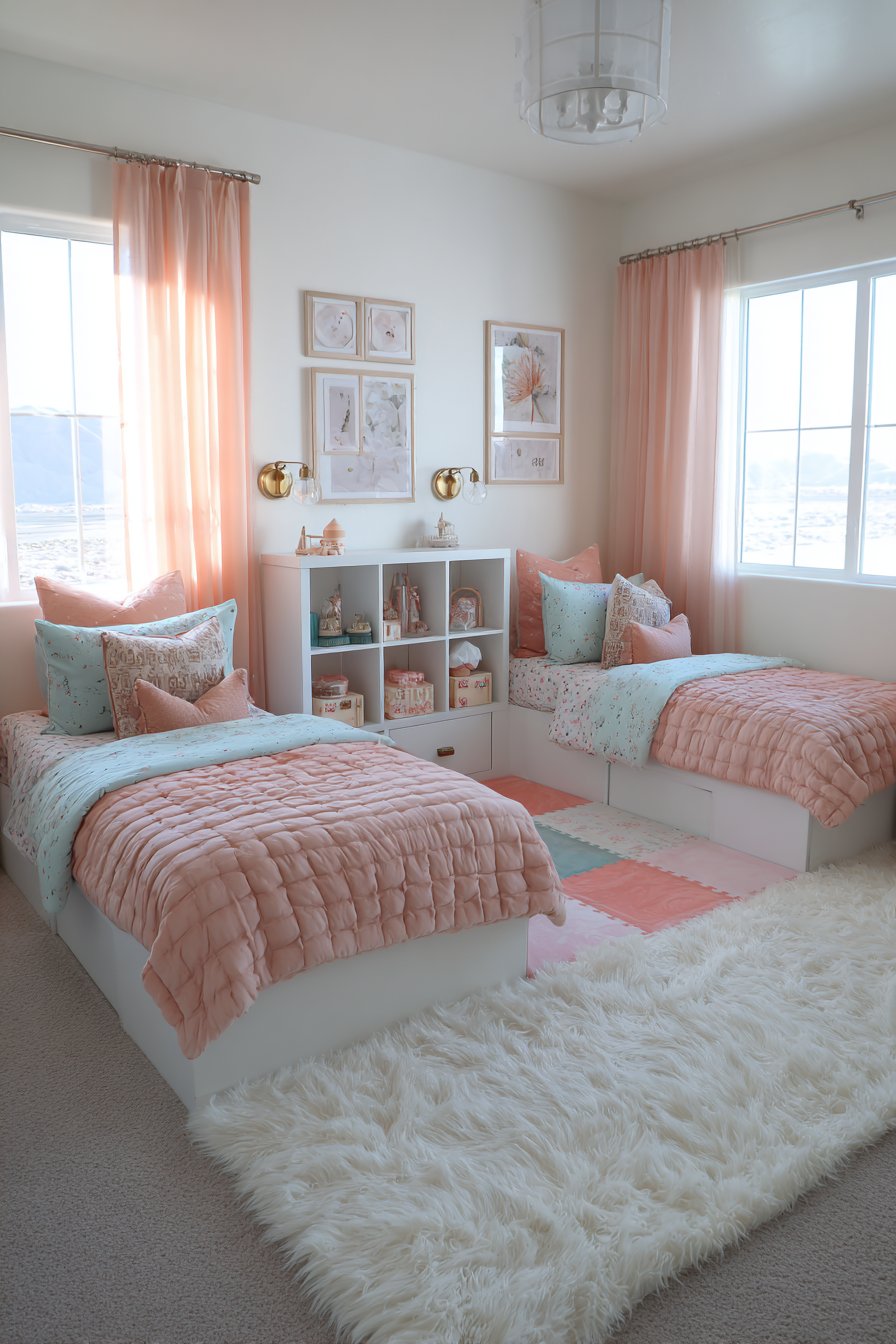
A shared play area with a soft foam mat occupies the center of the room, creating a communal zone distinct from personal sleeping areas. This designated play space encourages cooperation, sharing, and joint creative play while keeping toys contained to one area rather than spreading throughout the room. The soft foam mat provides safe flooring for active play, protecting against injury during tumbles while defining the play zone spatially. Multiple windows create an airy environment with ample natural light, preventing the room from feeling cramped despite housing two children.
Key Design Tips:
- Arrange beds in non-hierarchical configurations like L-shapes or parallel placement to ensure fairness and prevent territorial disputes
- Provide individualized storage and personalization opportunities within a coordinated overall design scheme
- Install separate task lighting for each child to accommodate different schedules and activities without conflict
- Create distinct zones for sleeping, studying, and shared play to organize activities and teach spatial purpose
- Use color coordination rather than identical matching to respect individuality while maintaining visual harmony
- Ensure adequate natural light and air circulation to prevent shared spaces from feeling cramped or stuffy
8. Nature-Inspired Biophilic Design for Environmental Connection
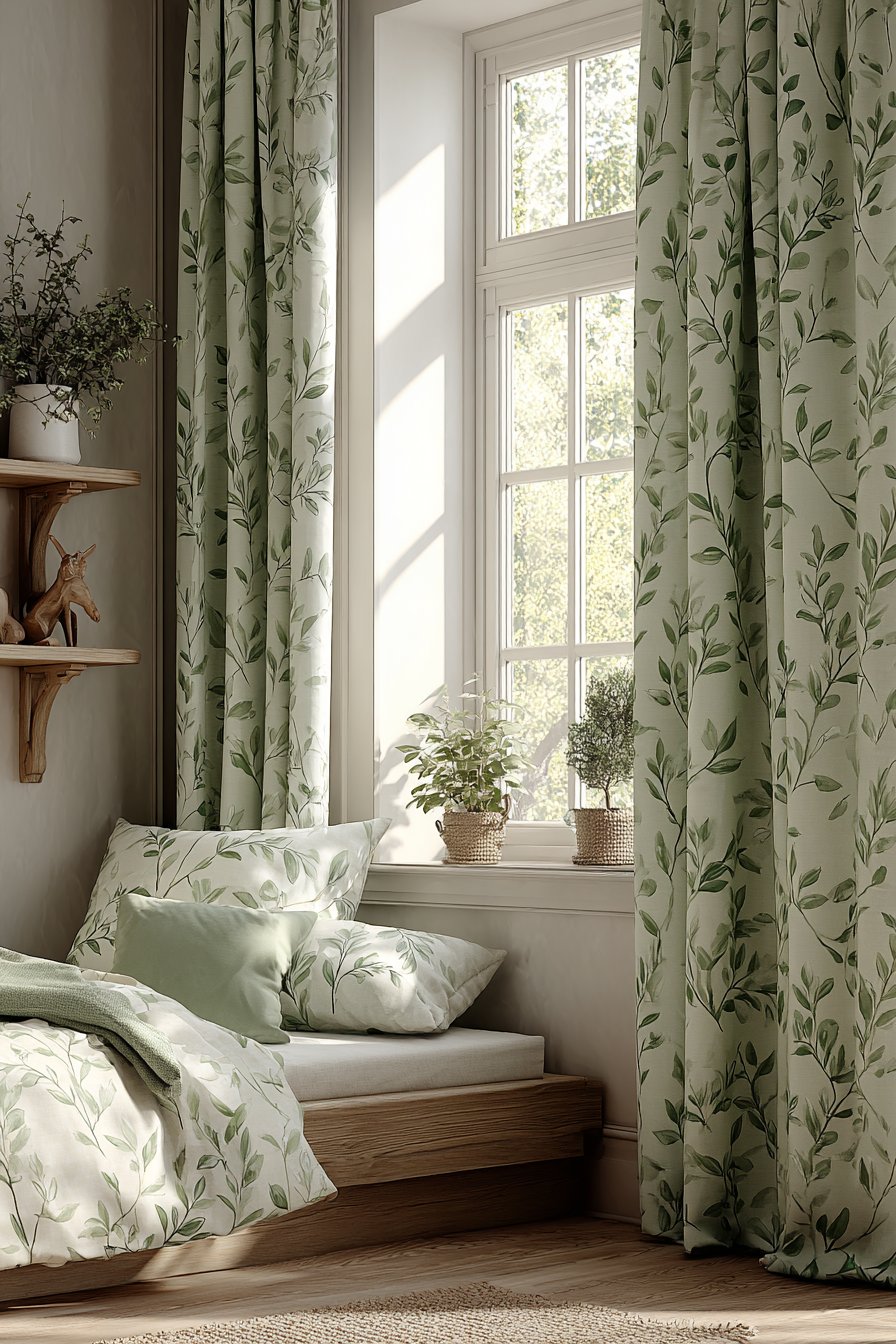
This bedroom design embraces biophilic principles—incorporating nature into built environments to support psychological wellbeing, reduce stress, and foster environmental stewardship. The tree branch curtain rod with leaf-patterned curtains in soft sage green immediately establishes the nature connection.
Using an actual branch as a curtain rod brings organic form and texture that manufactured rods cannot replicate—each branch is unique with characteristic curves, bark texture, and natural variations that add visual interest. The leaf-patterned curtains extend the botanical theme while soft sage green provides color that’s simultaneously energizing and calming, promoting both creativity and relaxation.
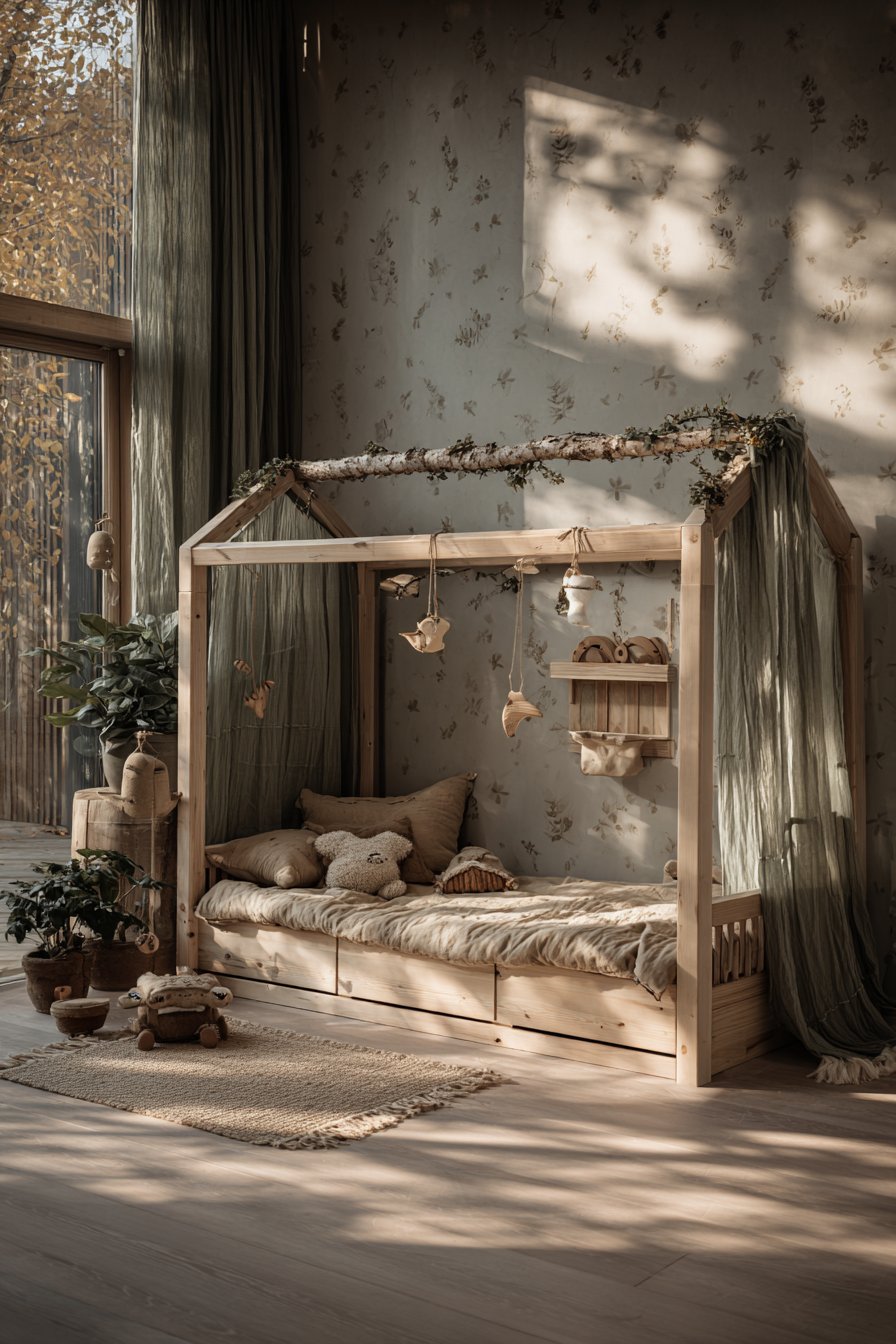
A low platform bed in natural wood with organic cotton bedding creates an earthy foundation that grounds the room literally and figuratively. Platform beds sit lower to the ground, creating connection with the earth plane that feels instinctively secure. Natural wood in its unfinished or minimally finished state showcases authentic grain patterns and color variations—imperfections that celebrate nature’s diversity rather than industrial uniformity. Organic cotton bedding free from synthetic chemicals protects children’s health while supporting sustainable agriculture. The bedding’s natural color—undyed cream or soft earth tones—maintains the nature-inspired palette while being inherently practical and timeless.
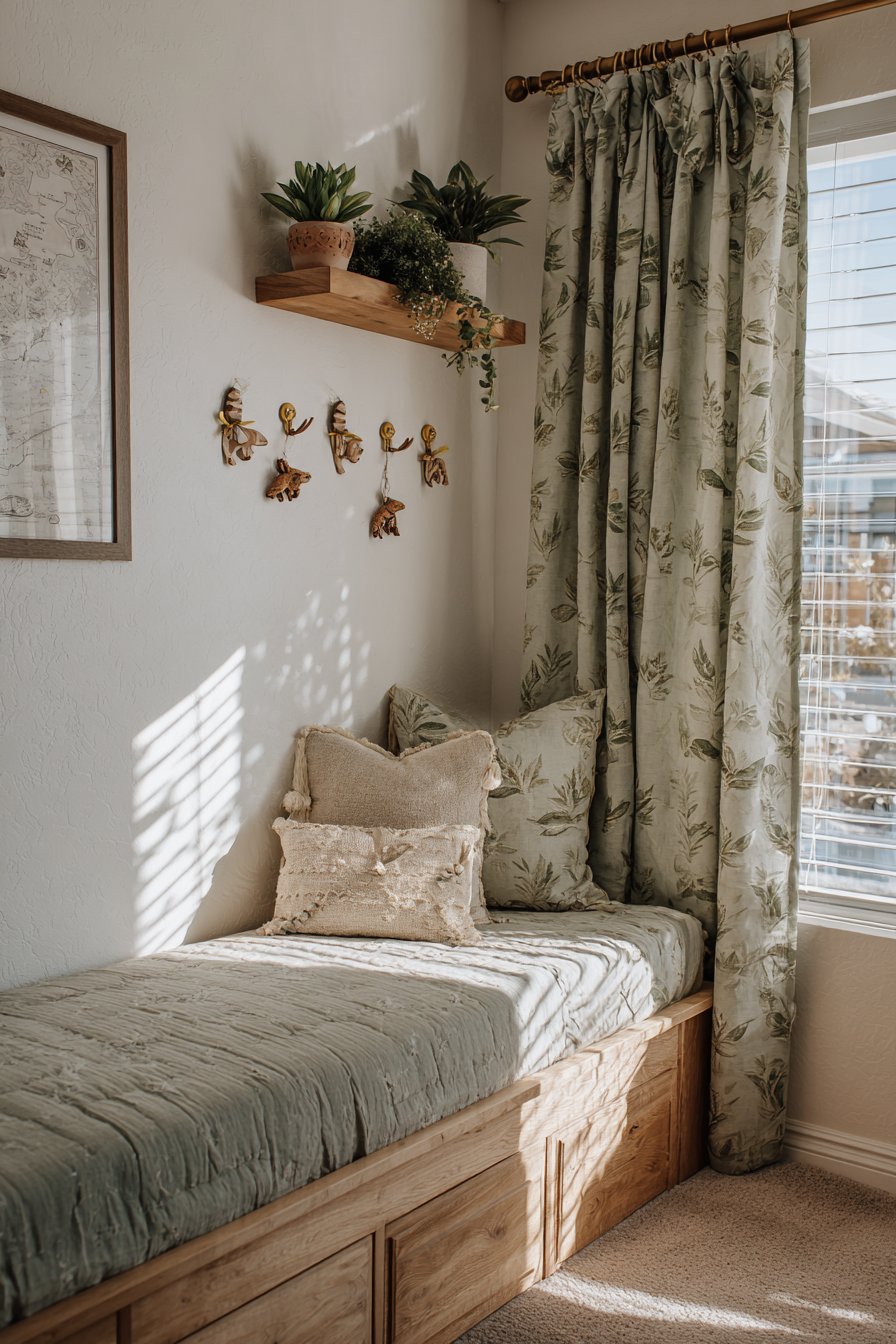
Wooden wall pegs shaped like forest animals provide functional hooks for clothing and bags while adding whimsical charm. These might include owl pegs, fox pegs, bear pegs, or rabbit pegs carved from solid wood or created through thoughtful die-cut designs.
The functional art approach teaches children that practical objects can be beautiful and that caring for belongings can be joyful rather than burdensome. The forest animal theme reinforces environmental awareness, potentially sparking interest in wildlife and conservation. Positioning pegs at child height promotes independence in hanging up clothing and organizing belongings.
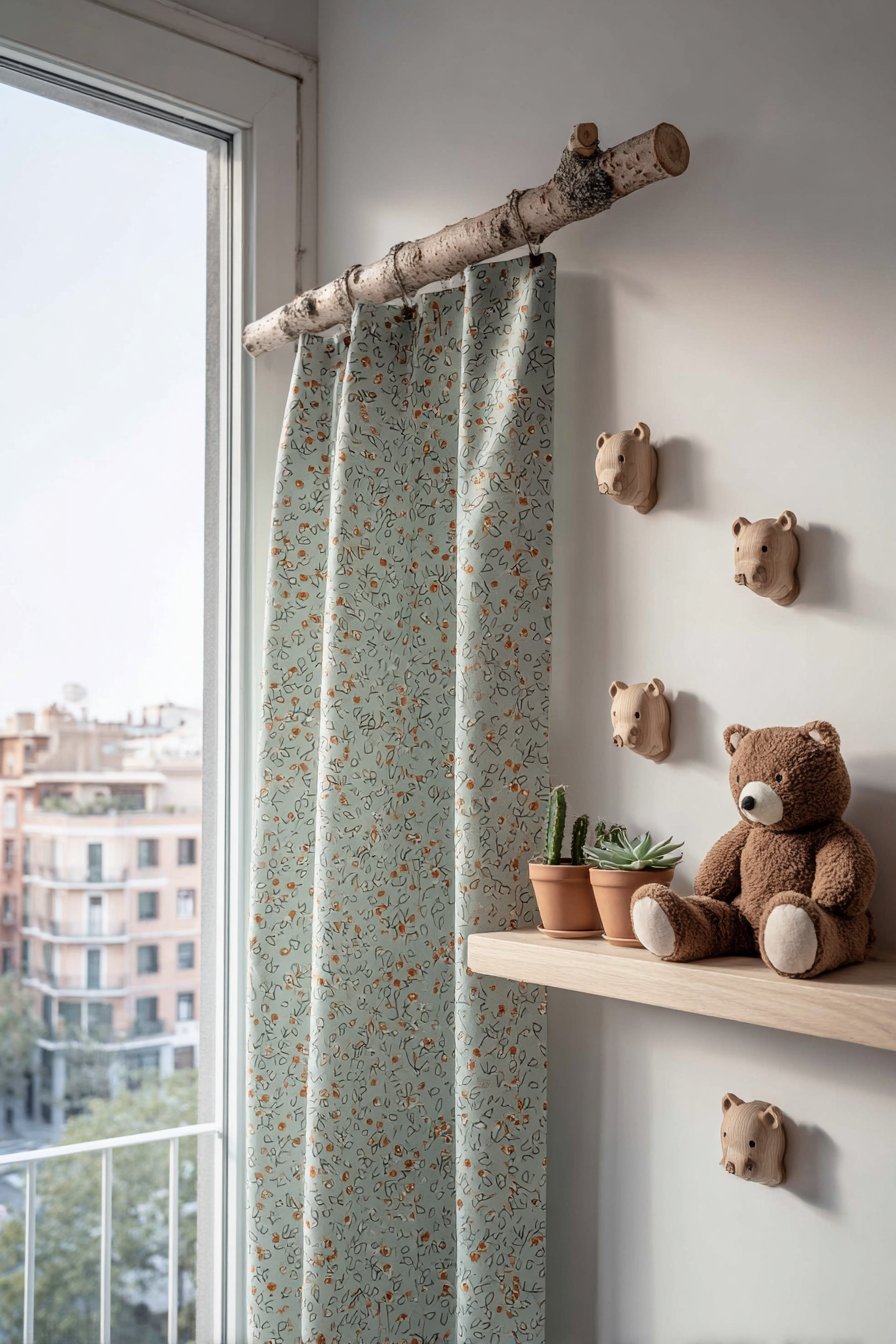
A small indoor plant on a child-safe shelf adds genuine natural elements, teaching responsibility through plant care while improving air quality. Child-safe plants might include spider plants, pothos, or peperomia—species that are non-toxic if touched or tasted and tolerant of occasional neglect. Potted succulents on the windowsill add additional greenery while requiring minimal maintenance. Morning natural light filtering through creates dappled shadows that change throughout the day, bringing dynamic visual interest and maintaining circadian rhythm connection. These shifting shadow patterns mimic the outdoor experience of light filtering through forest canopy.
Key Design Tips:
- Incorporate living plants to improve air quality, teach responsibility, and create a genuine nature connection
- Use natural materials in their authentic state rather than synthetic imitations to celebrate organic beauty and texture
- Choose nature-inspired colors like sage green, sky blue, earth brown, and stone grey that psychologically connect with outdoor environments
- Bring in organic shapes and forms through branches, stones, shells, or other natural objects that contrast with manufactured geometry
- Maximize natural light and views to outdoor spaces to maintain circadian rhythms and reduce disconnect from natural world
- Select non-toxic, sustainable materials like organic cotton and untreated wood to protect children’s health and the environment
9. Space-Saving Loft Bed for Compact Rooms
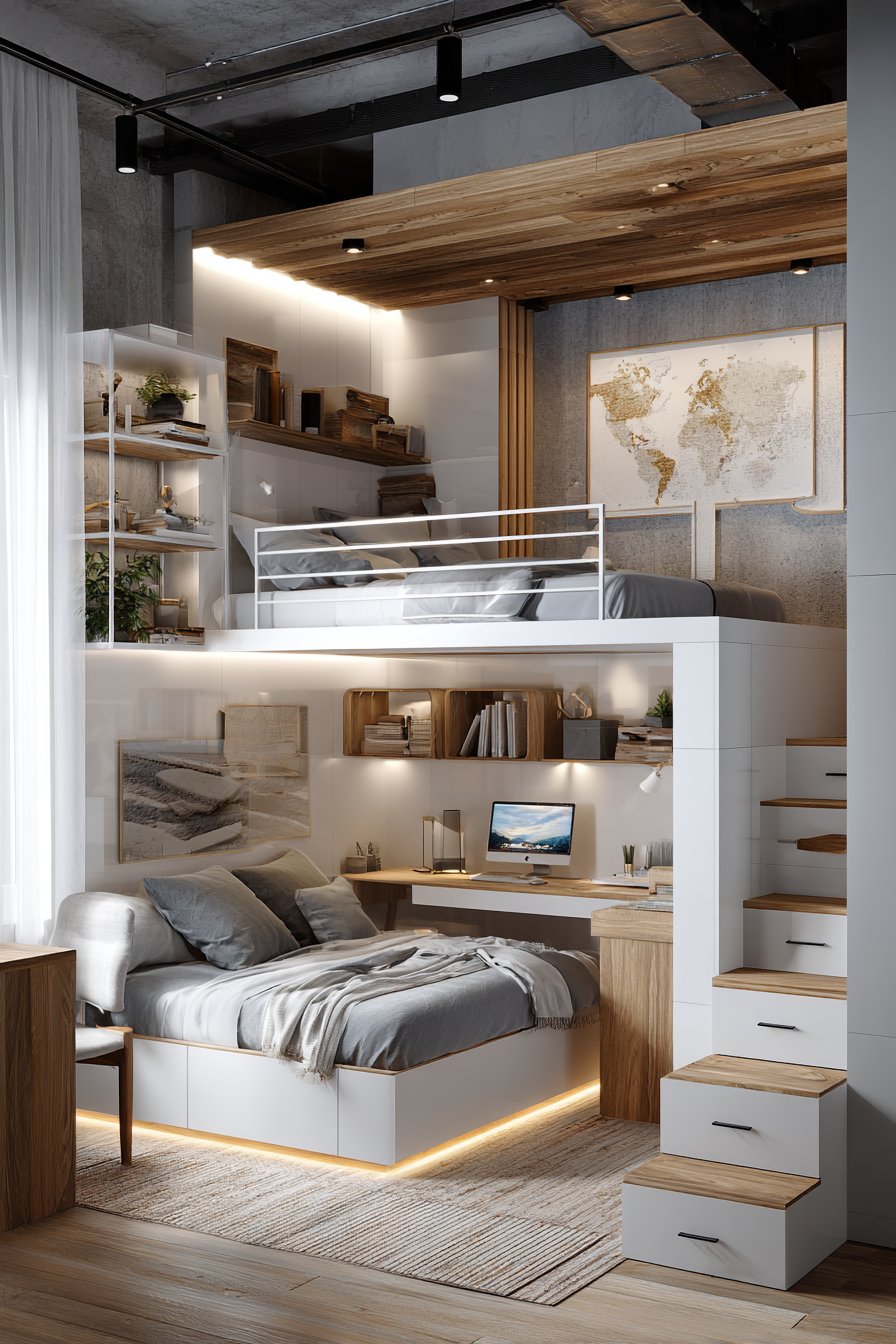
This bedroom design brilliantly addresses the reality of small-space living, particularly relevant in urban apartments where square footage comes at a premium. The loft bed featuring an integrated desk underneath and built-in ladder with storage steps represents the pinnacle of multifunctional furniture design.
By elevating the sleeping area, valuable floor space is liberated for other essential functions—studying, playing, or storage—effectively doubling the room’s usable area. The elevated sleeping area uses safety rails in white metal with wood accents, combining industrial durability with organic warmth. These rails are essential for preventing falls while their open design maintains sight lines and prevents claustrophobic feelings.
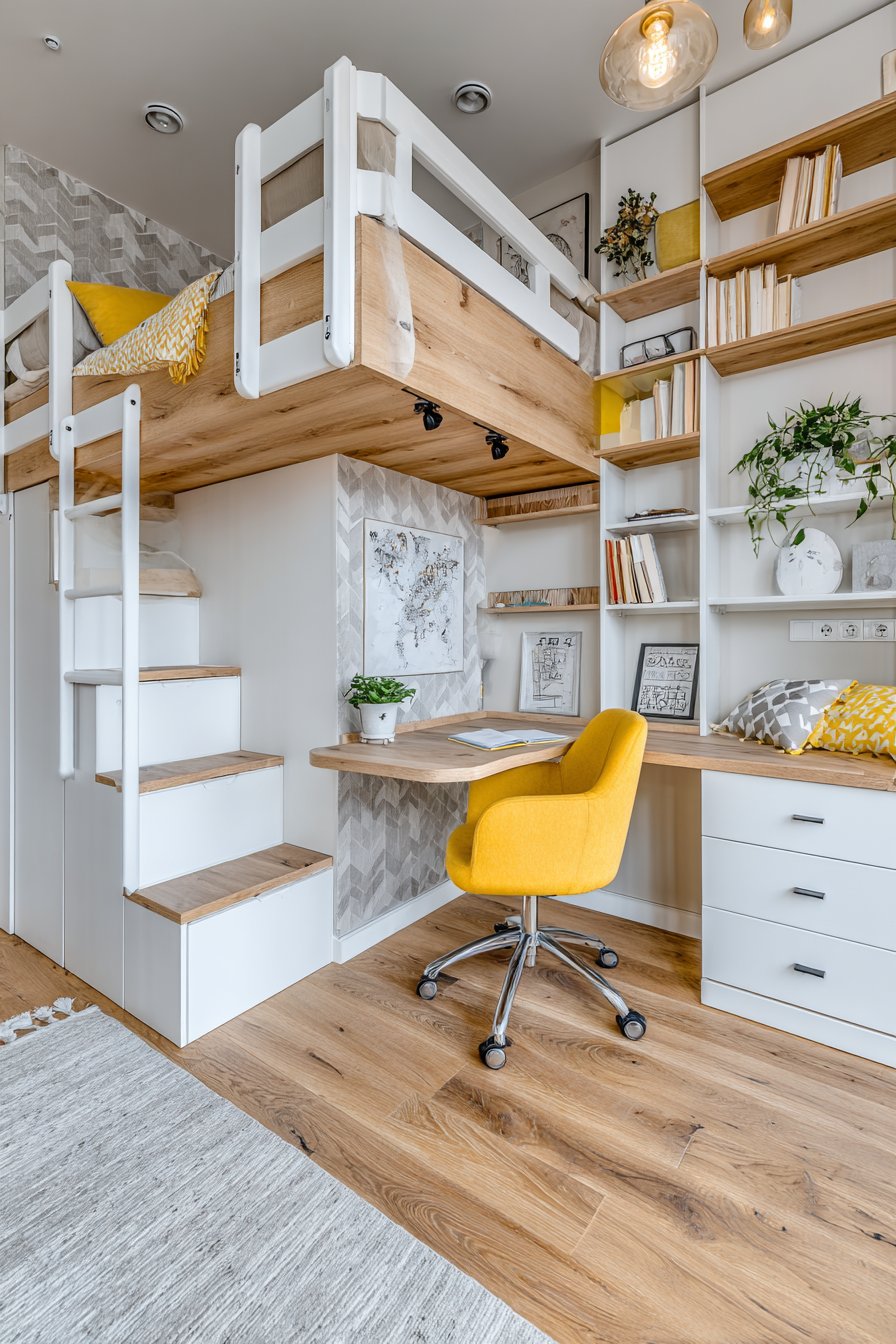
Below the loft, a functional study zone includes wall-mounted shelving and a fold-down desk in light oak. The fold-down desk is particularly ingenious—when homework time ends, the desk folds up against the wall, instantly converting the study zone into open play space or practice area. Light oak brings warmth and approachability to what could otherwise feel like an industrial or institutional setup.
Wall-mounted shelving keeps school supplies, books, and study materials organized and accessible without requiring floor-standing bookcases that would consume precious square footage. This vertical storage approach is essential in compact rooms where every horizontal surface must earn its place.
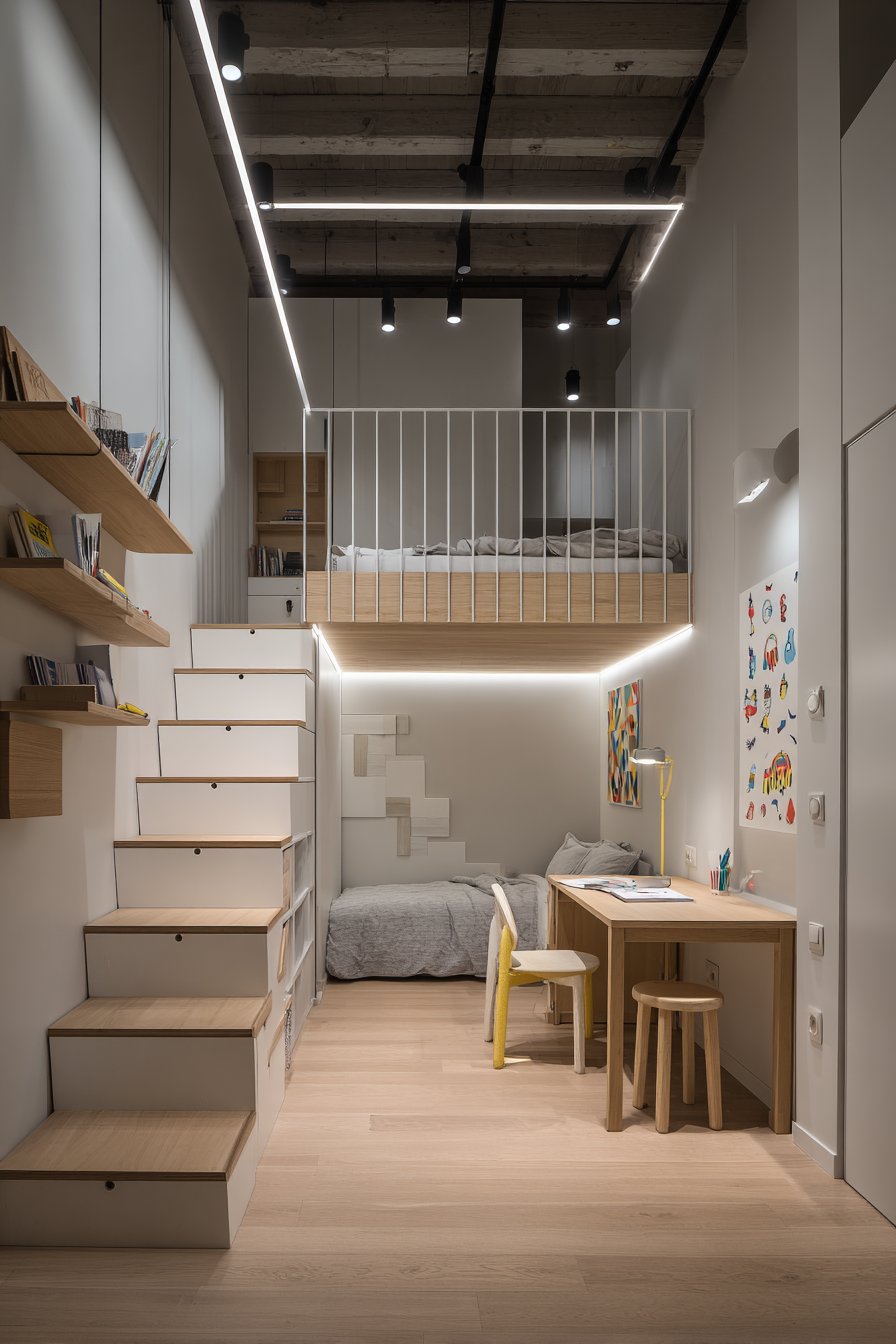
The built-in ladder with storage steps represents thoughtful design that extracts multiple functions from every element. Rather than a simple ladder that serves only for climbing, each step contains a drawer or open cubby for storing books, toys, shoes, or clothing.
This transforms necessary circulation space into valuable storage, demonstrating how constraints can inspire creative solutions. The ladder’s integration into the bed structure ensures stability and safety while its position can be optimized based on room layout and door swing patterns.
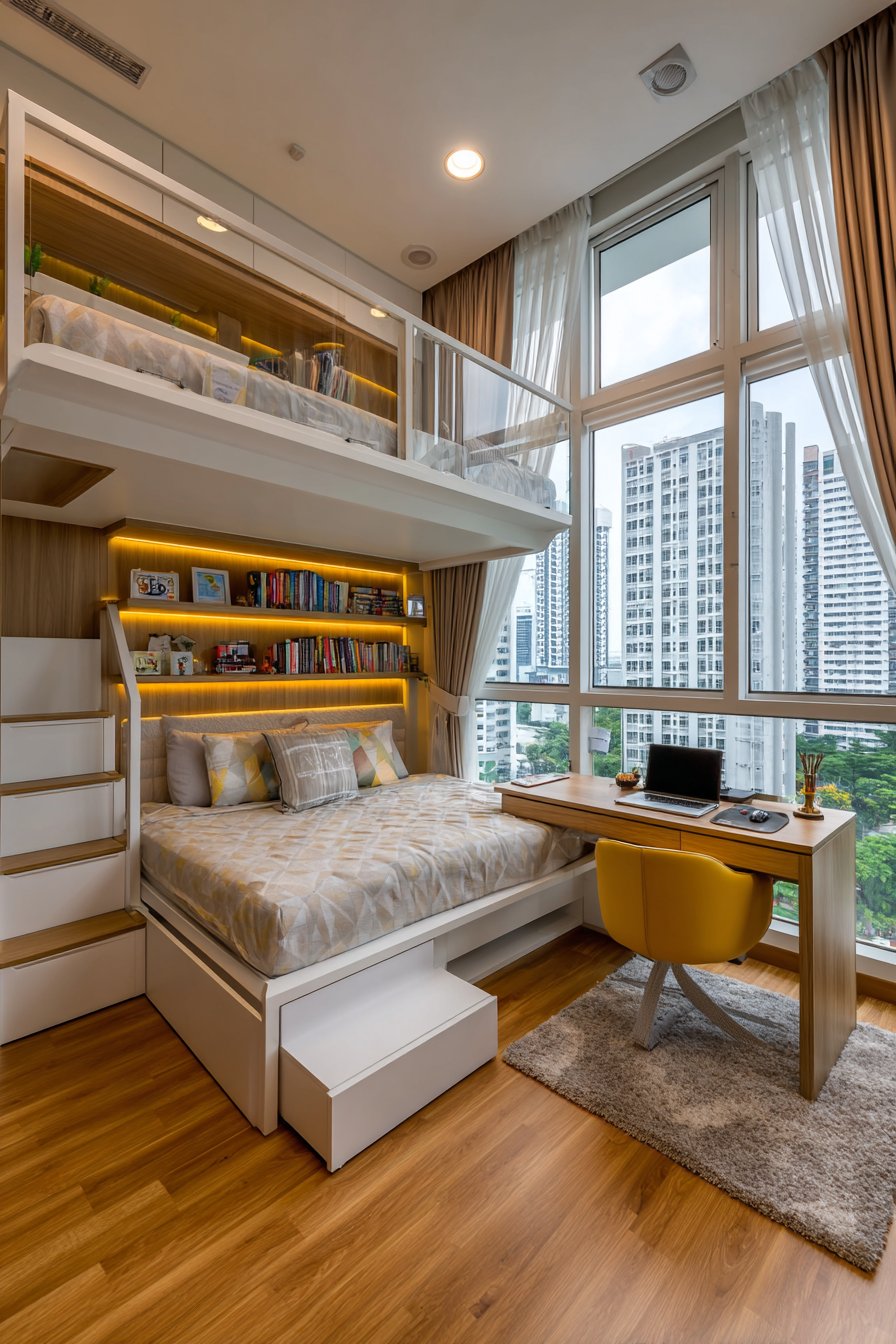
LED strip lighting under the loft provides task illumination for the desk area while creating an ambient glow that makes the elevated sleeping area less dark and enclosed. LED strips are ideal for children’s furniture—they remain cool to the touch, consume minimal electricity, offer adjustable brightness, and can be controlled independently from overhead lighting. This lighting solution eliminates the need for desk lamps that occupy workspace, while the under-loft illumination creates a cozy, cave-like sleeping atmosphere above.
Key Design Tips:
- Utilize vertical space through loft beds, wall-mounted storage, and hanging organizers to maximize limited square footage
- Choose multifunctional furniture where every piece serves multiple purposes to reduce overall furniture quantity
- Implement fold-down or fold-away elements like desks or murphy beds that can be stowed when not in use
- Use LED strip lighting to provide task illumination without consuming surface space with traditional lamps
- Select furniture with integrated storage solutions rather than pieces that require separate storage units
- Maintain clear circulation paths and avoid over-furnishing to prevent small rooms from feeling cramped or chaotic
10. Gender-Neutral Timeless Design for Growing Children
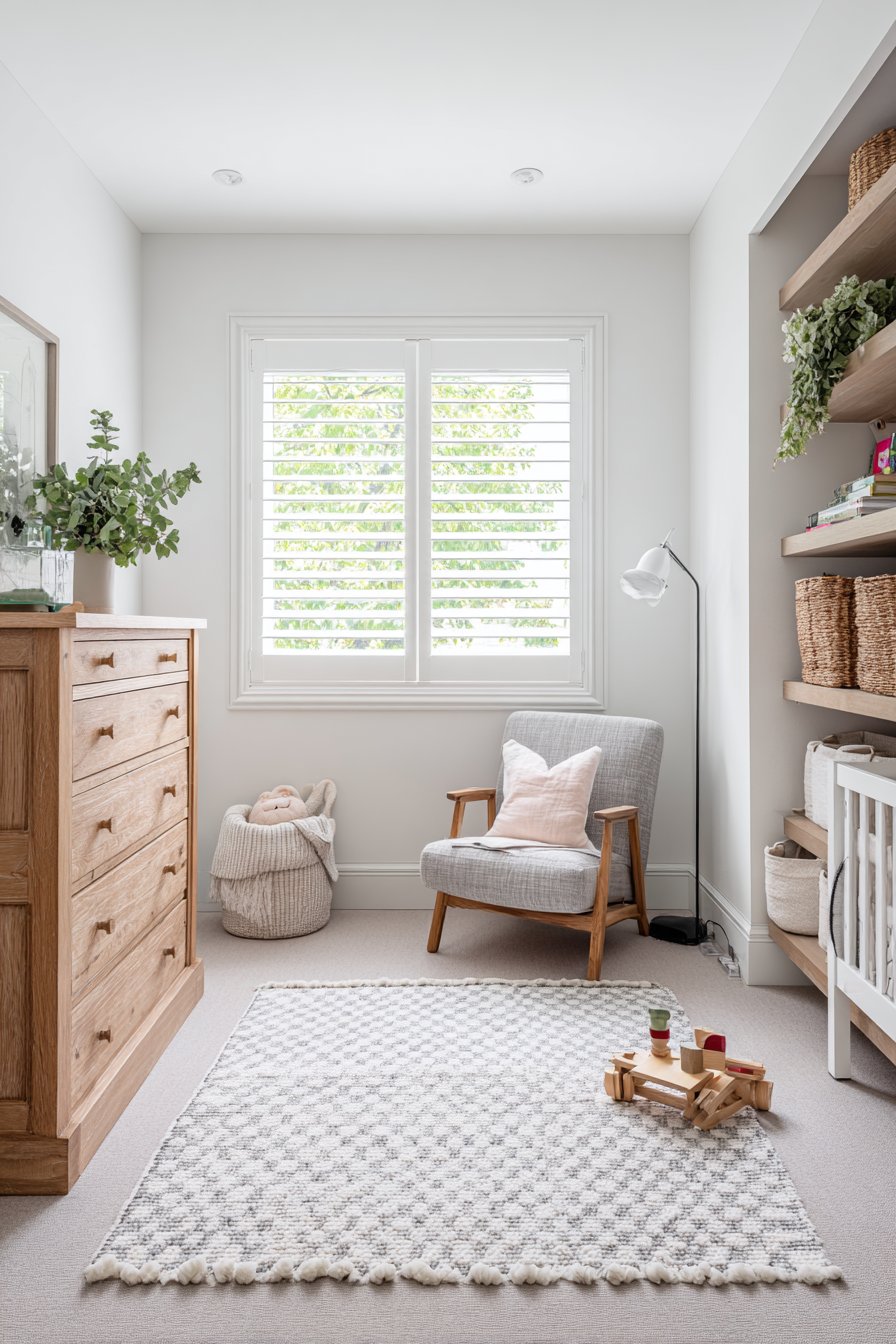
This bedroom design embraces neutrality and timelessness, creating a space that accommodates changing tastes, serves children of any gender, and maintains appropriateness from toddlerhood through teenage years. The soft color palette of warm grey walls provides a sophisticated backdrop that neither skews feminine nor masculine, traditional nor trendy.
Warm grey—grey with subtle brown or beige undertones—offers more psychological warmth than cool grey while remaining perfectly neutral. This wall color provides an ideal foundation for layering personality through accessories, artwork, and textiles that can change as the child grows without requiring a complete room renovation.
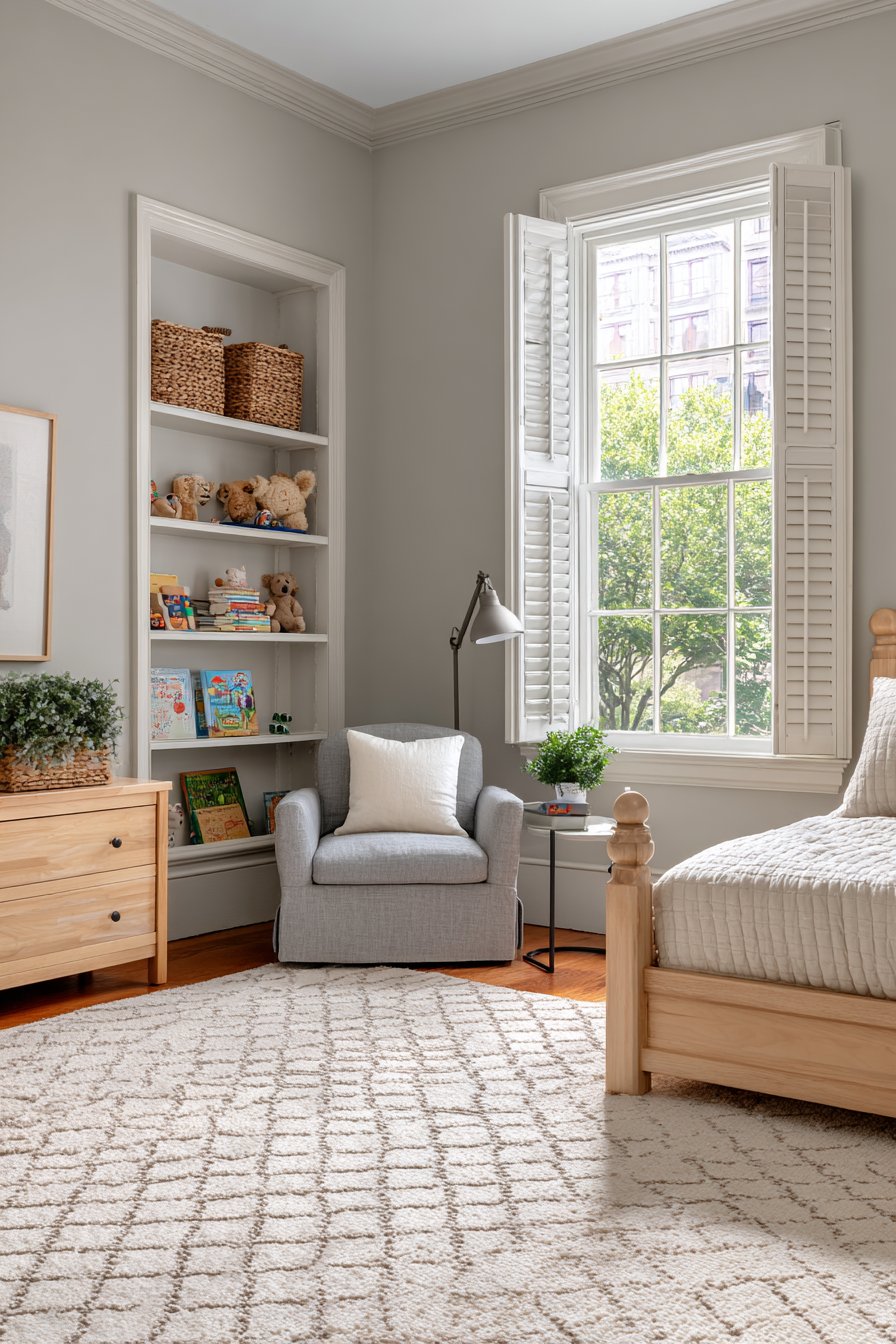
Natural wood furniture including a classic dresser and simple bed frame introduces organic warmth and timeless style that transcends temporary trends. Quality wood furniture represents an investment in pieces that last for decades rather than trendy alternatives that deteriorate quickly or become stylistically dated.
The classic dresser with generous drawer space provides clothing storage from infancy through adolescence, while its simple silhouette remains appropriate regardless of current design trends. The simple bed frame—free from character themes or elaborate decorative elements—serves toddlers transitioning from cribs and teenagers preparing for independence with equal appropriateness.
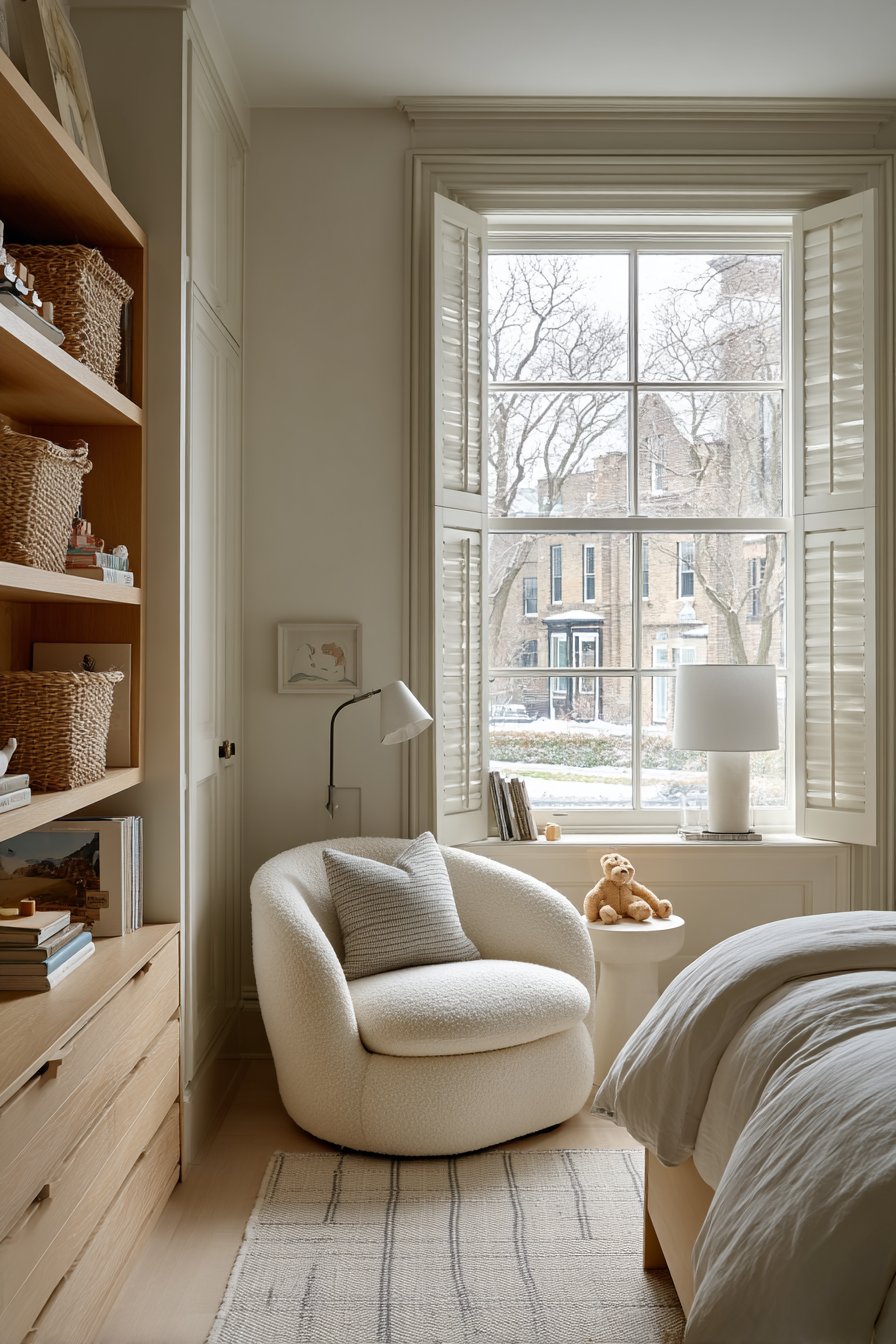
Open shelving displays books and toys organized in matching woven baskets, maintaining visual order while providing accessible storage. The matching baskets create cohesion and calm through repetition, while their neutral woven texture adds warmth without introducing color that might limit flexibility. Open shelving allows children to see and access their belongings independently, supporting autonomy and organizational skill development. The shelf height can be optimized as children grow—lower shelves for young children transitioning to higher shelves for teens displaying awards, photos, or collections.
A comfortable reading chair in durable grey linen sits beside a small side table and adjustable floor lamp, creating a reading nook that evolves with the child. In early years, parents use this chair for bedtime stories, but as children grow, it becomes their personal reading spot for independent enjoyment. Grey linen offers durability, a sophisticated appearance, and neutral character that works for any age or gender. The adjustable floor lamp provides proper task lighting for reading while its adjustability accommodates changing heights and preferred reading positions from childhood through adolescence.
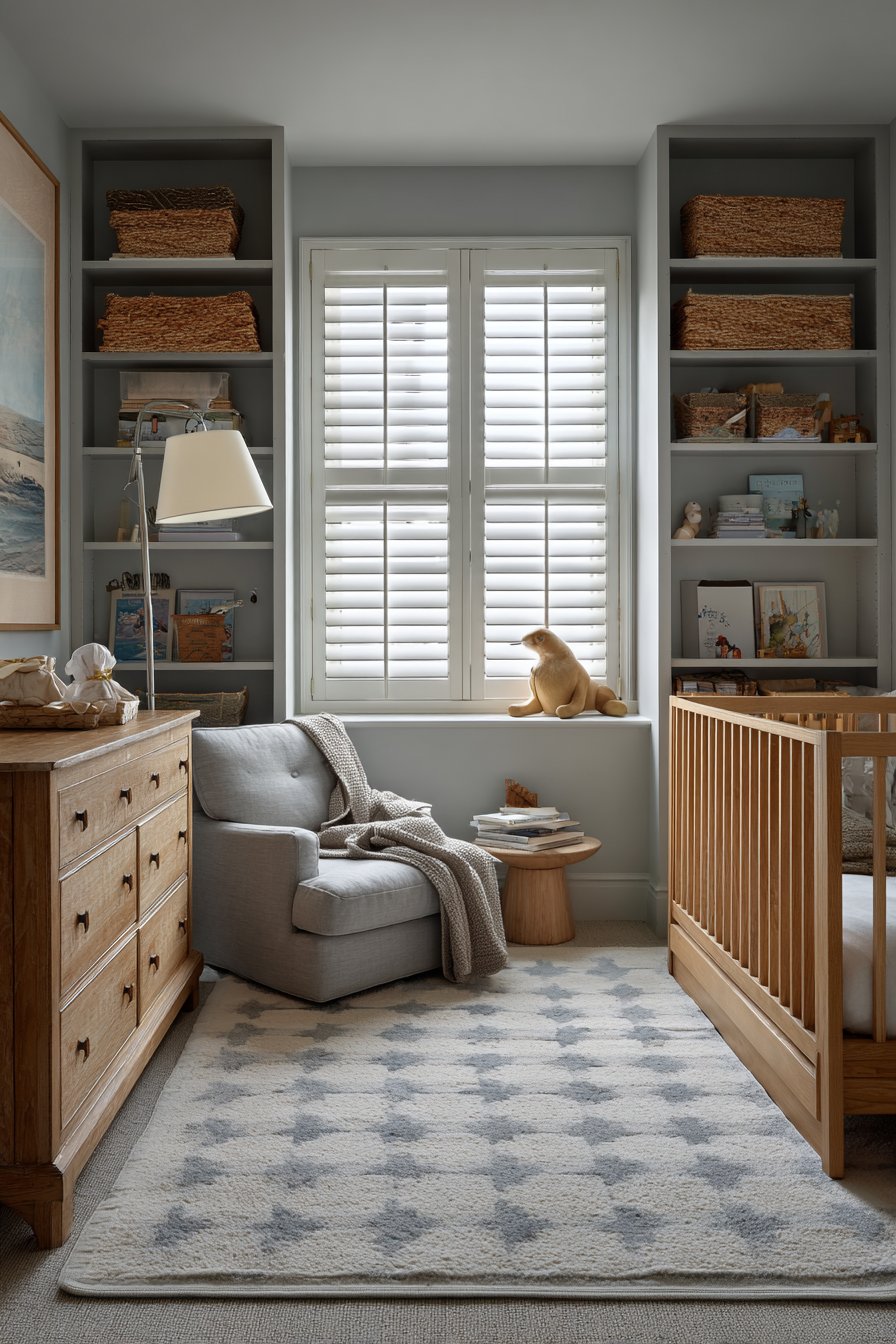
An area rug in geometric patterns adds visual interest without overwhelming the neutral palette. Geometric patterns offer timeless appeal that feels contemporary without being trendy, masculine without excluding feminine sensibilities, and sophisticated without being overly adult. The rug defines the central floor area while its pattern hides minor stains and wear better than solid colors. Large windows with white plantation shutters control natural light while adding architectural detail and classic charm. Plantation shutters offer superior light control compared to curtains, while their clean lines maintain the room’s timeless aesthetic.
Key Design Tips:
- Select neutral color palettes with warm undertones that provide flexibility and longevity across different ages and tastes
- Invest in quality, classic furniture pieces that physically and stylistically serve children from toddlers through teenagers
- Use geometric patterns rather than character themes or gendered motifs to add visual interest while maintaining broad appeal
- Provide comfortable seating for parents and children that evolves from story time to an independent reading space
- Choose durable, performance fabrics in neutral colors that withstand heavy use while maintaining sophisticated appearance
- Layer personality through easily changed accessories like throw pillows, artwork, and decorative objects rather than permanent finishes
Why These Kids Bedroom Designs Represent the Best in Children’s Interior Design
The ten bedroom concepts presented in this comprehensive guide represent the pinnacle of children’s interior design because they successfully balance numerous competing priorities—aesthetics and functionality, playfulness and sophistication, current needs and future growth, individual expression and timeless appeal. Each design demonstrates professional understanding of child development, spatial planning, material selection, color psychology, and sustainable design principles that distinguish exceptional children’s spaces from merely adequate ones.
The vibrant reading nook design excels because it intentionally cultivates literacy and learning through environmental design rather than relying on parental enforcement. By making reading physically comfortable, visually appealing, and emotionally satisfying through the cozy teepee and accessible book display, this design naturally encourages reading habits that serve children throughout life. The integration of natural light and child-scaled furniture demonstrates understanding of developmental psychology and Montessori principles that promote independence and confidence. This design succeeds because form follows function—every aesthetic choice serves the ultimate purpose of creating a lifelong reader.
The smart storage solution design addresses the perennial challenge of bedroom organization through systems thinking rather than quick fixes. Modular storage, integrated bed drawers, and color-coded bins create a comprehensive organizational ecosystem that grows and adapts with the child rather than requiring replacement as needs change. This design philosophy—investing in flexible, long-term solutions rather than temporary measures—represents fiscally and environmentally responsible design. The neutral color palette with sky blue accent demonstrates restraint and sophistication, proving that children’s rooms can be both age-appropriate and design-forward, a balance many designers struggle to achieve.
The creative art studio bedroom stands out for validating and encouraging artistic expression through dedicated space and proper materials. Many children’s bedrooms relegate creative activities to afterthoughts, but this design centers them, signaling that creativity is valuable and worthy of space, investment, and respect. The chalkboard wall, art station, and pegboard organization create a genuine, creative environment comparable to professional artist studios, treating children’s artistic endeavors with appropriate seriousness. This approach cultivates creative confidence and skill development that extends far beyond childhood art projects, potentially shaping career paths and lifelong hobbies.
The cozy canopy bed retreat excels in prioritizing sleep quality through environmental design—a crucial consideration given the well-documented sleep deficits affecting modern children. The canopy creates psychological security, the muted color palette reduces visual stimulation, the touch-activated lamp supports independence, and the soft textures promote relaxation. This design understands that quality sleep impacts every aspect of child development—emotional regulation, academic performance, physical growth, and immune function. By creating an environment specifically optimized for rest, this design supports children’s overall wellbeing more effectively than more stimulating bedroom concepts.
The Scandinavian minimalist design represents the growing movement toward intentional simplicity in children’s spaces, countering the overwhelming visual noise and material excess that characterizes many kids’ rooms. This design demonstrates that children not only tolerate but thrive in calm, uncluttered environments with quality over quantity, natural materials over synthetic alternatives, and purposeful design over arbitrary decoration. The rope swing exemplifies the Scandinavian philosophy of functional beauty—it’s playful, practical, beautiful, and developmentally beneficial all at once. This design’s emphasis on natural light and sustainable materials also models environmental values that shape children’s relationship with consumption and nature.
The space exploration themed bedroom achieves the difficult balance between themed design and longevity by executing the theme with sophistication and incorporating genuine educational elements. Many themed rooms quickly become dated or embarrassing as children mature, but this design’s muted colors, realistic imagery, and functional astronomy tools maintain relevance from early childhood through adolescence. The integration of actual scientific instruments like telescopes transforms a decorative theme into an educational opportunity, potentially sparking genuine interest in STEM fields. This approach respects children’s intelligence and curiosity rather than dumbing down science into pure fantasy, setting a higher standard for themed design.
The shared bedroom solution addresses the complex social and spatial dynamics of sibling rooms with exceptional thoughtfulness. The L-configuration beds, individualized bedding, central storage divider, and separate task lighting demonstrate deep understanding of fairness psychology, territorial needs, and the social skills children must develop when sharing space. This design teaches cooperation, consideration, personal responsibility, and conflict resolution—essential life skills often overlooked in bedroom design. The shared play zone balances personal territory with communal space, modeling healthy relationship patterns that serve children in roommate situations, dormitories, and eventually family homes of their own.
The nature-inspired biophilic design responds to the growing body of research demonstrating that nature connection supports psychological wellbeing, reduces stress, and enhances cognitive function. As children spend increasing time in built environments and digital spaces, intentionally reconnecting them with natural materials, living plants, and organic forms becomes more critical. This design’s authentic branches, living plants, natural wood, and organic cotton create a genuine rather than superficial nature connection. The biophilic approach also models environmental stewardship and sustainability values, shaping children’s relationship with the natural world during formative years.
The space-saving loft bed design represents brilliant problem-solving for the growing number of families living in compact urban spaces where traditional bedroom layouts are impractical or impossible. This design demonstrates that spatial constraints need not compromise functionality, comfort, or style—in fact, limitations often inspire the most innovative solutions. The multifunctional furniture, vertical storage strategies, and fold-down elements extract maximum utility from minimum square footage, proving that small bedrooms can accommodate sleeping, studying, playing, and storage without feeling cramped. This design also teaches children valuable lessons about resourcefulness, organization, and living intentionally within one’s means—increasingly relevant skills in an urbanizing world where housing costs continue rising.
The gender-neutral timeless design represents perhaps the most sustainable and economical approach to children’s bedroom design by creating spaces that transcend gender stereotypes, accommodate evolving tastes, and maintain appropriateness across developmental stages from toddlerhood through adolescence. The warm grey palette, natural wood furniture, geometric patterns, and quality materials create a sophisticated foundation that requires only accessory updates rather than complete renovations as children grow. This design philosophy reduces waste, saves money, and avoids the psychological limitations imposed by heavily gendered spaces that may not reflect children’s authentic identities or interests. The investment in classic, quality pieces rather than trendy, disposable alternatives also models conscious consumption and environmental responsibility.
Collectively, these designs excel because they share fundamental principles that distinguish exceptional children’s bedroom design: they prioritize child development over adult aesthetics, incorporating features that support independence, learning, creativity, and healthy habits; they balance playfulness with sophistication, creating spaces that feel special and age-appropriate without being childish or quickly outgrown; they implement intelligent storage solutions that make organization intuitive and sustainable rather than requiring constant parental intervention; they utilize quality, natural materials that are healthier, more sustainable, and more beautiful than synthetic alternatives while aging gracefully rather than deteriorating quickly; they maximize natural light to support circadian rhythms, mood, and connection with the outside world; they create distinct functional zones for sleeping, studying, playing, and storage that teach spatial purpose and appropriate behavior; they accommodate growth and change through flexible systems, neutral foundations, and adaptable furniture that evolves with children rather than requiring replacement; and they respect children’s intelligence and agency through accessible storage, appropriate scale, and design choices that validate their interests and capabilities.
From an interior design perspective, these bedrooms demonstrate mastery of fundamental design principles including scale and proportion (child-sized furniture that feels appropriately sized), color theory (psychologically informed palettes that support intended room functions), texture and material mixing (layering natural materials for visual and tactile interest), lighting design (combining natural, ambient, and task lighting for functionality and atmosphere), spatial planning (creating circulation paths and functional zones), and visual balance (distributing visual weight to create harmonious compositions). The designs avoid common mistakes like over-theming, excessive color, inadequate storage, improper scale, poor lighting, and trend-chasing that quickly dates spaces.
From a child development perspective, these designs support various developmental needs across age ranges. For toddlers and preschoolers, the accessible storage, child-height furniture, and safe materials promote independence and autonomy as they learn self-care skills. For school-age children, the dedicated study areas, organizational systems, and creative spaces support academic success and skill development. For pre-teens and teenagers, the sophisticated aesthetics, privacy features, and adaptable spaces accommodate increasing needs for personal expression and independence. The designs also address sensory needs through careful attention to lighting (avoiding overstimulation while providing adequate illumination), sound (incorporating soft materials that absorb noise), and visual complexity (balancing interest with calm).
From a practical parenting perspective, these designs make daily life easier through intuitive organization systems, durable materials, and layouts that facilitate supervision while promoting independence. The storage solutions reduce daily cleanup battles, the durable finishes withstand inevitable wear, and the thoughtful lighting supports bedtime routines. The designs also offer excellent value by prioritizing quality over quantity, investing in pieces that last rather than frequently replacing cheaper alternatives, and creating flexible foundations that adapt to changing needs without requiring expensive renovations.
From a sustainability perspective, these designs model environmental responsibility through natural material selection, quality construction that extends product lifespan, flexible systems that reduce replacement needs, and biophilic elements that connect children with nature. By choosing organic textiles, sustainably harvested wood, low-VOC finishes, and energy-efficient lighting, these designs protect children’s health while reducing environmental impact. The emphasis on timeless design over trend-following also counters the disposable culture that creates enormous waste in children’s products.
The color palettes across these designs demonstrate a sophisticated understanding of color psychology and practical application. The mint greens promote creativity and freshness, the sky blues support relaxation and focus, the warm greys provide neutral sophistication, the sage greens create nature connection, the navy blues offer calming sophistication, and the coral-turquoise combinations balance energy and calm. These carefully considered color choices avoid the primary color overload common in children’s spaces while remaining appropriately playful and appealing. The consistent emphasis on muted tones over saturated brights reflects current understanding that overstimulating environments can negatively impact behavior, sleep, and emotional regulation.
The storage strategies implemented across these designs represent best practices in children’s organization: open shelving with contained clutter (baskets, bins), vertical storage maximizing wall space, integrated furniture storage (bed drawers, storage steps), modular systems that reconfigure as needs change, transparent containers making contents visible, color-coding for intuitive organization, accessible heights promoting independence, and designated homes for specific item categories. These strategies work because they reduce cognitive load (making decisions about where things belong), minimize physical effort (everything has an accessible home), and create visual order (concealing clutter while maintaining accessibility).
The furniture selections across these designs prioritize safety, durability, adaptability, and appropriate scale. Rounded edges reduce injury risk, sturdy construction withstands active use, adjustable elements accommodate growth, and child-scaled pieces support independence and confidence. The emphasis on real wood over particleboard, natural fibers over synthetics, and classic silhouettes over trendy shapes ensures these pieces serve children for many years, potentially passing to younger siblings or subsequent generations. This investment approach proves more economical and environmentally sound than frequently replacing cheaper, poorly constructed alternatives.
The lighting designs demonstrate sophisticated understanding of how illumination affects children’s wellbeing, development, and daily routines. The prioritization of natural light supports vitamin D production, circadian rhythm regulation, and mood stability. The layered artificial lighting (ambient overhead, task lighting for homework, accent lighting for atmosphere) provides appropriate illumination for different activities and times of day. The incorporation of dimmers, touch controls, and specialized reading lights empowers children to control their environment while supporting healthy sleep-wake cycles. The thoughtful placement of lighting fixtures considers safety (keeping cords away from play areas), functionality (illuminating work surfaces adequately), and atmosphere (creating cozy environments that feel secure).
The textile selections across these designs balance aesthetics, functionality, and sensory experience. Natural materials like cotton, linen, and wool offer breathability, durability, and tactile pleasure while avoiding the synthetic chemicals and static electricity of polyester alternatives. The emphasis on washable, durable fabrics acknowledges the reality of childhood messes while maintaining design integrity. The texture mixing—plush rugs, crisp cotton bedding, soft canvas bins, smooth wood finishes—creates sensory richness that supports healthy sensory development while adding visual depth and interest.
These ten designs represent the best in children’s bedroom decor because they understand that children’s spaces are not merely smaller versions of adult rooms but fundamentally different environments serving different purposes. They acknowledge that children experience space differently—they play on floors, they need to reach their belongings independently, they’re developing organizational skills, they’re forming relationships with their environment, and they’re growing rapidly through multiple developmental stages. By addressing these unique needs with creativity, expertise, and genuine respect for children’s experiences, these designs create bedrooms that truly serve their young occupants while delighting parents who appreciate thoughtful, beautiful design.
Whether you’re designing a room for a curious toddler, an artistic elementary student, or an independent pre-teen, these concepts provide professionally-informed inspiration that balances aesthetics with functionality, playfulness with sophistication, and current needs with future growth. The key is selecting approaches that align with your child’s unique personality, your family’s practical needs, your spatial constraints, and your design preferences while remaining open to adaptation as your child develops and their needs evolve. The best children’s bedrooms grow with their occupants, supporting development, expressing personality, and creating positive associations with home that influence wellbeing throughout life.
Conclusion
Creating exceptional children’s bedroom spaces requires balancing numerous considerations—developmental appropriateness, safety, functionality, aesthetics, budget, and future adaptability. The ten designs explored in this comprehensive guide demonstrate that these seemingly competing priorities can coexist beautifully when approached with expertise, creativity, and a genuine understanding of children’s needs. From vibrant reading nooks that cultivate literacy to space-saving loft beds that maximize compact spaces, from calming Scandinavian minimalism to exciting space-themed adventures, these concepts prove that children’s bedrooms can be simultaneously practical and magical, sophisticated and playful, current and timeless.
The common threads running through these successful designs include respect for children’s intelligence and agency, commitment to quality materials and construction, emphasis on flexibility and adaptability, integration of developmental support, and dedication to creating environments that nurture rather than overwhelm. These principles transcend specific design styles, working equally well in traditional or contemporary homes, large or small spaces, modest or generous budgets. What matters most is thoughtful consideration of how design decisions impact daily life, child development, and long-term satisfaction.
As you embark on creating or refreshing your child’s bedroom, remember that the most successful spaces reflect the unique personality and needs of their occupant while providing the structure, organization, and beauty that support healthy development. Don’t be afraid to involve your child in design decisions appropriate to their age—this participation fosters ownership, teaches decision-making, and ensures the space truly feels like their own. Start with a strong foundation of neutral colors and quality furniture, then layer personality through accessories, artwork, and textiles that can evolve as your child grows. Prioritize natural light, adequate storage, and distinct functional zones while maintaining flexibility for changing interests and needs.
Most importantly, approach children’s bedroom design as an investment in your child’s wellbeing, development, and daily happiness. The spaces where children sleep, play, study, and grow profoundly impact their mood, behavior, creativity, and sense of self. By creating thoughtful, beautiful, functional environments that support rather than hinder their journey from infancy through adolescence, you provide a foundation for healthy development that extends far beyond bedroom walls. Use these concepts as inspiration, adapt them to your specific circumstances, and create a space where your child will thrive, grow, and create cherished memories that last a lifetime.
