


A backyard is far more than the patch of grass behind your house — it’s an extension of your living space, a canvas for relaxation, entertainment, and connection with nature. Thoughtful landscape design transforms an ordinary yard into a sanctuary that reflects your lifestyle, whether that means quiet mornings with coffee among the plants, lively evenings around a fire pit, or a safe, functional space for children and pets to play. The best backyard designs balance beauty with practicality, using natural materials, layered plantings, and smart spatial planning to create outdoor rooms that feel as intentional as any interior space.
In this guide, we explore fifteen distinct backyard landscape concepts, each suited to different terrains, climates, and personal styles. From tiered gardens carved into hillsides to minimalist courtyards defined by poured concrete and sculptural greenery, these ideas span a wide range of aesthetics — cottage charm, Mediterranean warmth, rustic farmhouse character, and clean modern minimalism among them. Whatever your yard’s size or shape, there’s a design direction here that can be adapted to your space.
Each concept below includes a vivid description of the design along with practical, actionable tips to help you bring the look to life. Read on to discover which backyard transformation speaks to you.
1. Tiered Garden with Natural Stone Retaining Walls

For yards with subtle grade changes, a tiered garden design offers both visual drama and practical soil management. Natural stone retaining walls separate a lush green lawn from a raised vegetable bed, creating distinct zones without the need for a full regrade. The stonework carries a weathered, textured quality that feels as though it has always belonged to the landscape, its irregular surfaces catching light and shadow throughout the day.

Complementing the stone, weathered cedar planter boxes house a rotating cast of seasonal herbs — basil, thyme, rosemary — bringing fragrance and function to the space. A gravel pathway winds gently from the lawn toward a small patio seating area, inviting exploration rather than a direct march across the yard. During golden hour, the low sun rakes across the tiered stonework, casting long, soft shadows that emphasize every crevice and texture in the natural stone.

This layout is especially well-suited to gardeners who want a productive space that still reads as beautifully composed. The raised bed keeps soil quality controlled and drainage efficient, while the tiering itself prevents erosion on sloped ground. It’s a design that rewards patience, growing more textured and layered as the herbs and surrounding plantings mature season after season.
Key Design Tips:
- Use irregular, locally-sourced stone for a more authentic, weathered look
- Stagger planter box heights to create visual rhythm along the tiers
- Choose gravel in a warm tone to complement cedar and stone materials
- Position the patio seating area to catch late-afternoon light
- Rotate herb plantings seasonally to keep the raised bed productive year-round
2. Cozy Fire Pit Gathering Space
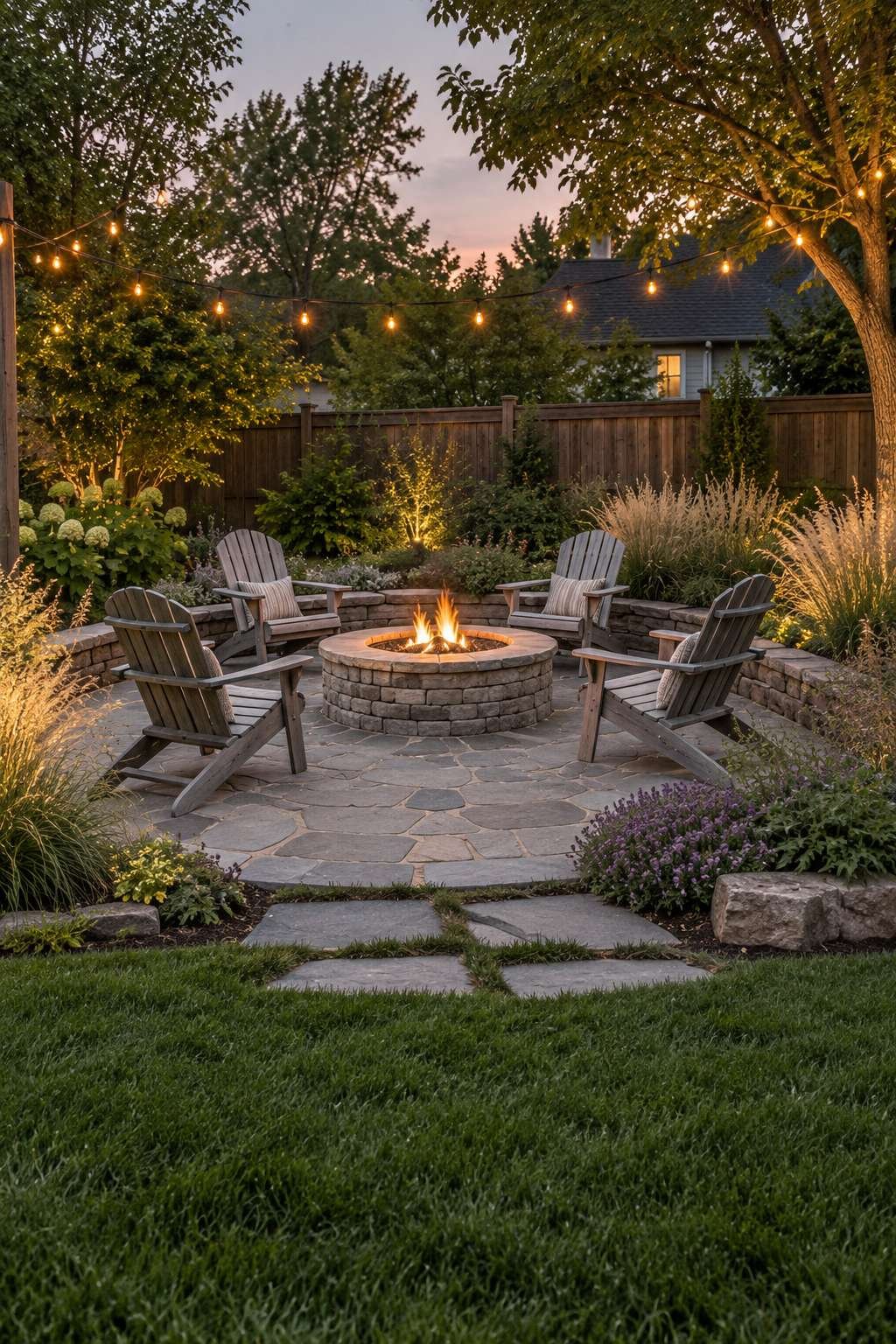
A fire pit area remains one of the most popular backyard features, and for good reason — it turns any evening into an occasion. This design centers on weathered Adirondack chairs arranged around a circular flagstone patio, their worn wooden surfaces suggesting many seasons of use. The circular layout naturally draws people inward, fostering conversation around the central flame.

Surrounding the seating zone, native ornamental grasses and low perennial shrubs soften the hardscape’s edges, swaying gently and adding movement to an otherwise still composition. A low stacked-stone border clearly delineates the fire pit zone from the surrounding lawn, giving the space a sense of intentional enclosure without fully separating it from the rest of the yard. As dusk settles in, warm string lights strung overhead cast a golden glow across the stone and wood, extending the space’s usability well past sunset.
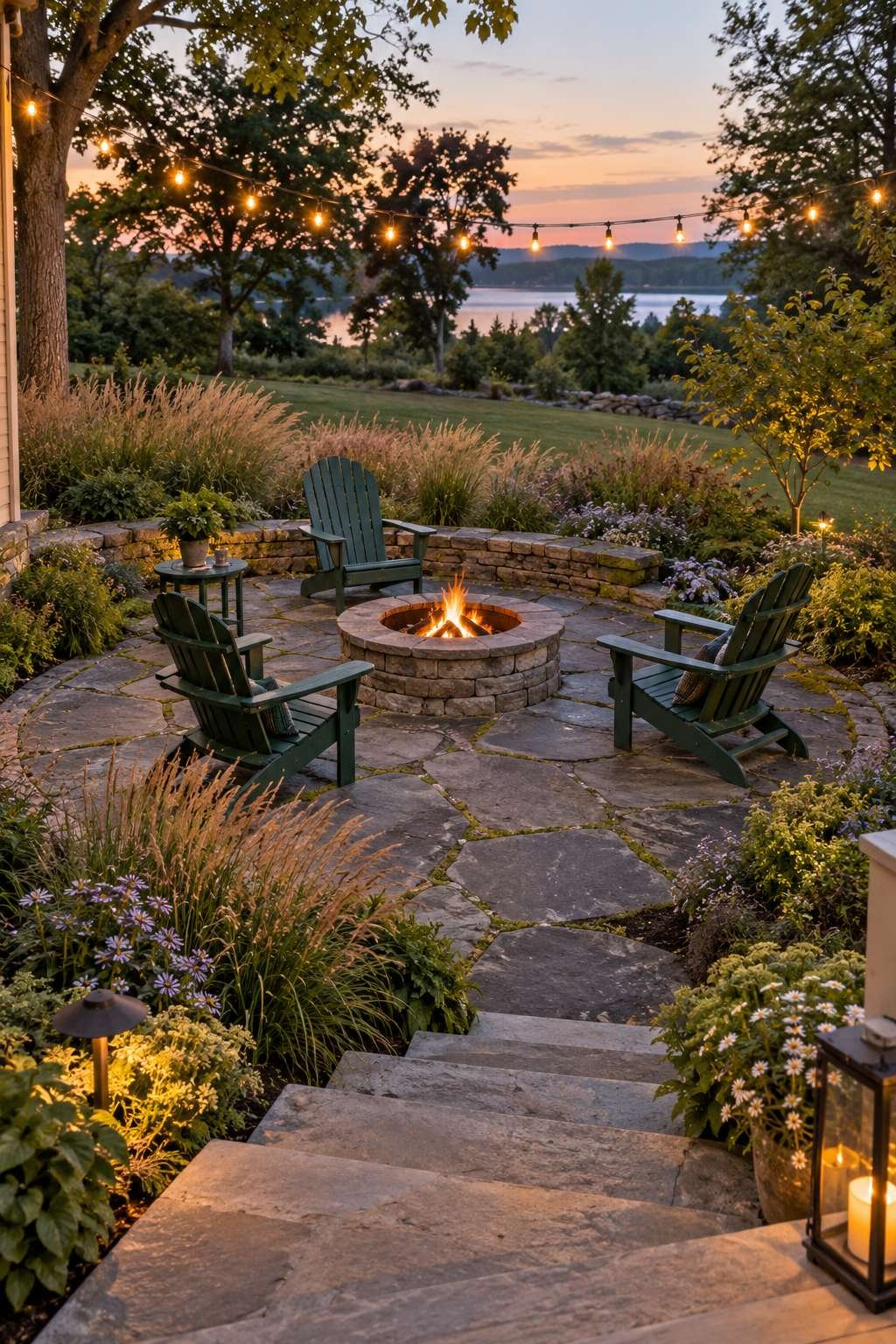
This concept works beautifully for anyone who envisions their backyard as an entertaining hub. The combination of durable flagstone, natural plantings, and layered lighting creates an atmosphere that feels both rustic and refined — equally suited to a quiet solo evening or a gathering of friends.
Key Design Tips:
- Choose a circular or curved patio shape to encourage natural conversation flow
- Select fire-resistant native grasses that won’t pose a hazard near open flame
- Install string lights on a dimmer for adjustable evening ambiance
- Use a low stacked-stone border to visually separate the zone without blocking sightlines
- Weatherproof wood furniture with a protective sealant to extend its lifespan
3. Narrow Side-Yard Succulent Path

Often overlooked, the side yard is one of the most underutilized spaces in residential landscaping — and this design proves it can be transformed into something genuinely lovely. A narrow gravel path runs the length of the space, flanked by drought-tolerant succulents and ornamental grasses planted in staggered clay pots of varying heights. This staggered arrangement keeps the eye moving and adds dimension to an otherwise linear corridor.
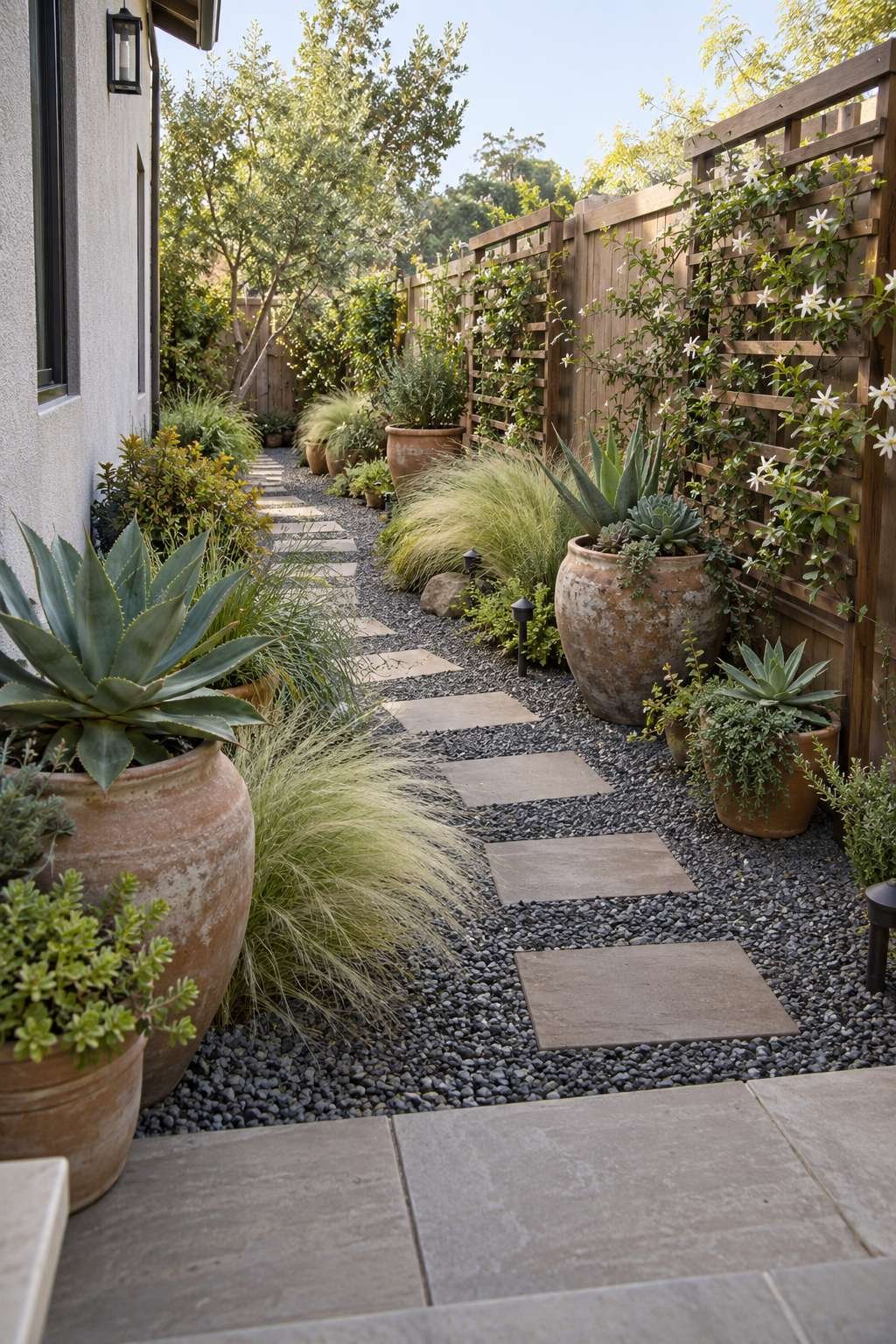
Vertical interest comes from a simple wooden trellis mounted against the wood privacy fence, where climbing jasmine slowly fills in to soften the boundary line with fragrant greenery. Soft, diffused morning daylight filters through this narrow passage, highlighting the varied textures of the succulents — from spiky agave rosettes to trailing sedum — without harsh contrast or glare.
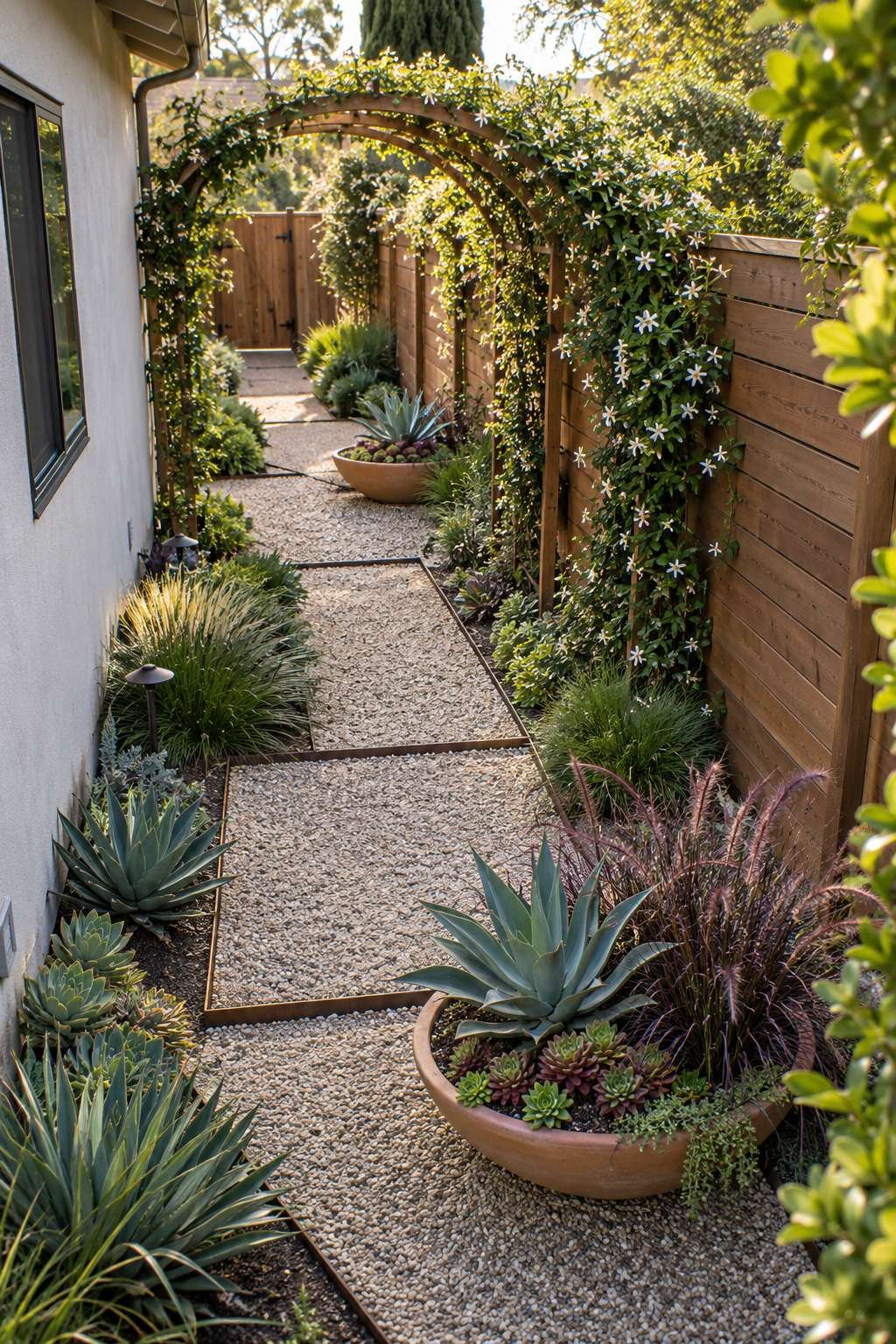
This is an ideal solution for homeowners with tight side-yard spaces who want maximum visual impact with minimal water and maintenance demands. Because succulents and drought-tolerant plants require little upkeep, this design suits busy households or regions with water restrictions, proving that even a narrow, forgotten strip of land can become a genuine design feature.
Key Design Tips:
- Use varying pot heights to create visual rhythm along a narrow path
- Choose a mix of succulent textures — spiky, trailing, and rosette forms — for contrast
- Install a simple trellis early so climbing jasmine has time to establish
- Opt for permeable gravel to support proper drainage in tight spaces
- Add low-voltage path lighting for safe nighttime navigation
4. Raised Deck with Pergola and Wisteria
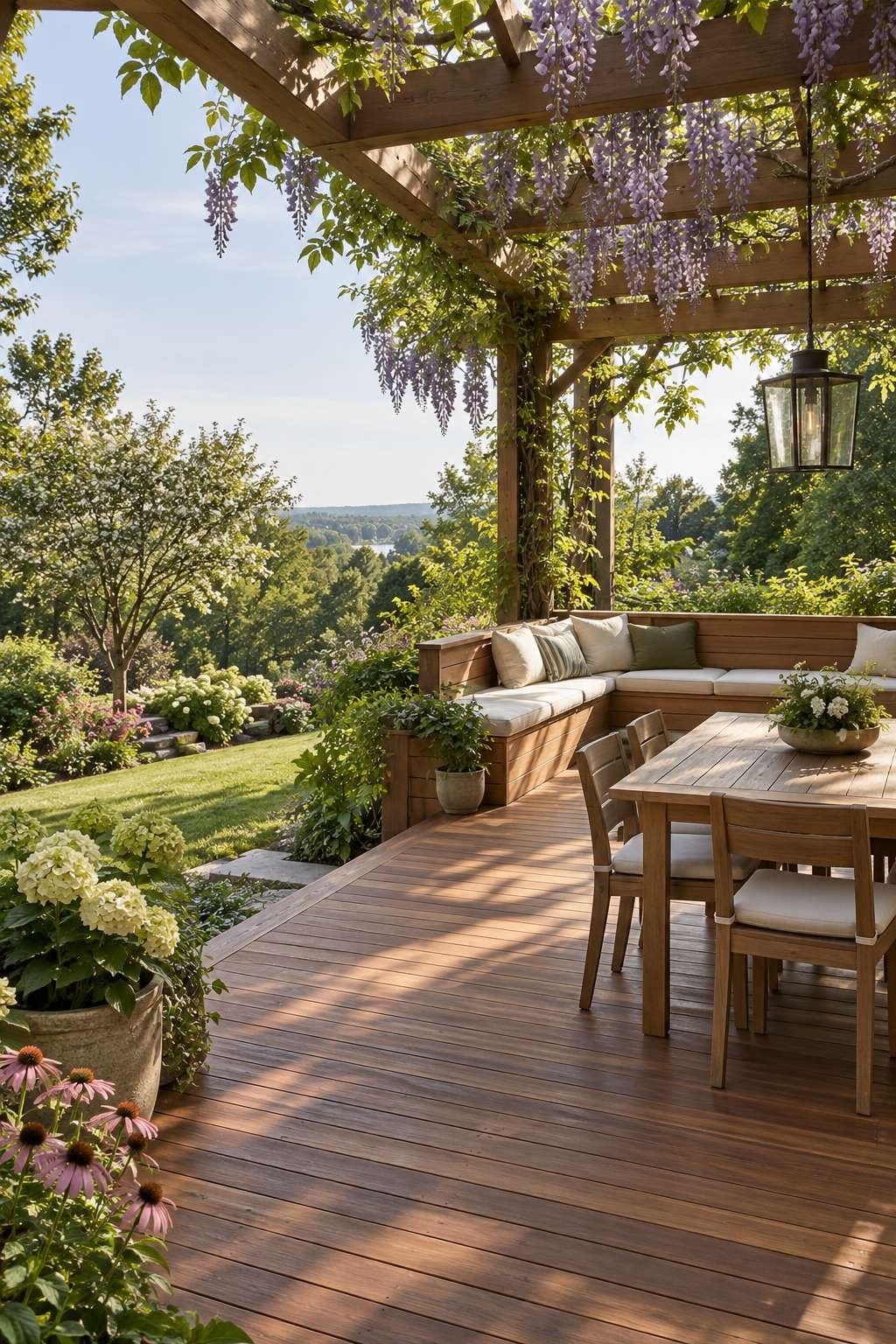
A raised deck offers an elevated vantage point over a sloped lawn, and this design pairs it with built-in wooden bench seating that maximizes usable space without cluttering the deck with freestanding furniture. The bench wraps naturally along the deck’s edge, its clean lines echoing the structure’s overall geometry while framing views of the flowering shrubs below.

Overhead, a pergola draped in climbing wisteria provides dappled shade over a small outdoor dining table, creating a canopy that shifts and changes with the seasons — bare branches in winter, cascading purple blooms in spring, and full leafy coverage through summer. Natural afternoon light filters through the leaves, casting soft, moving shadows across the deck boards, animating the space throughout the day.
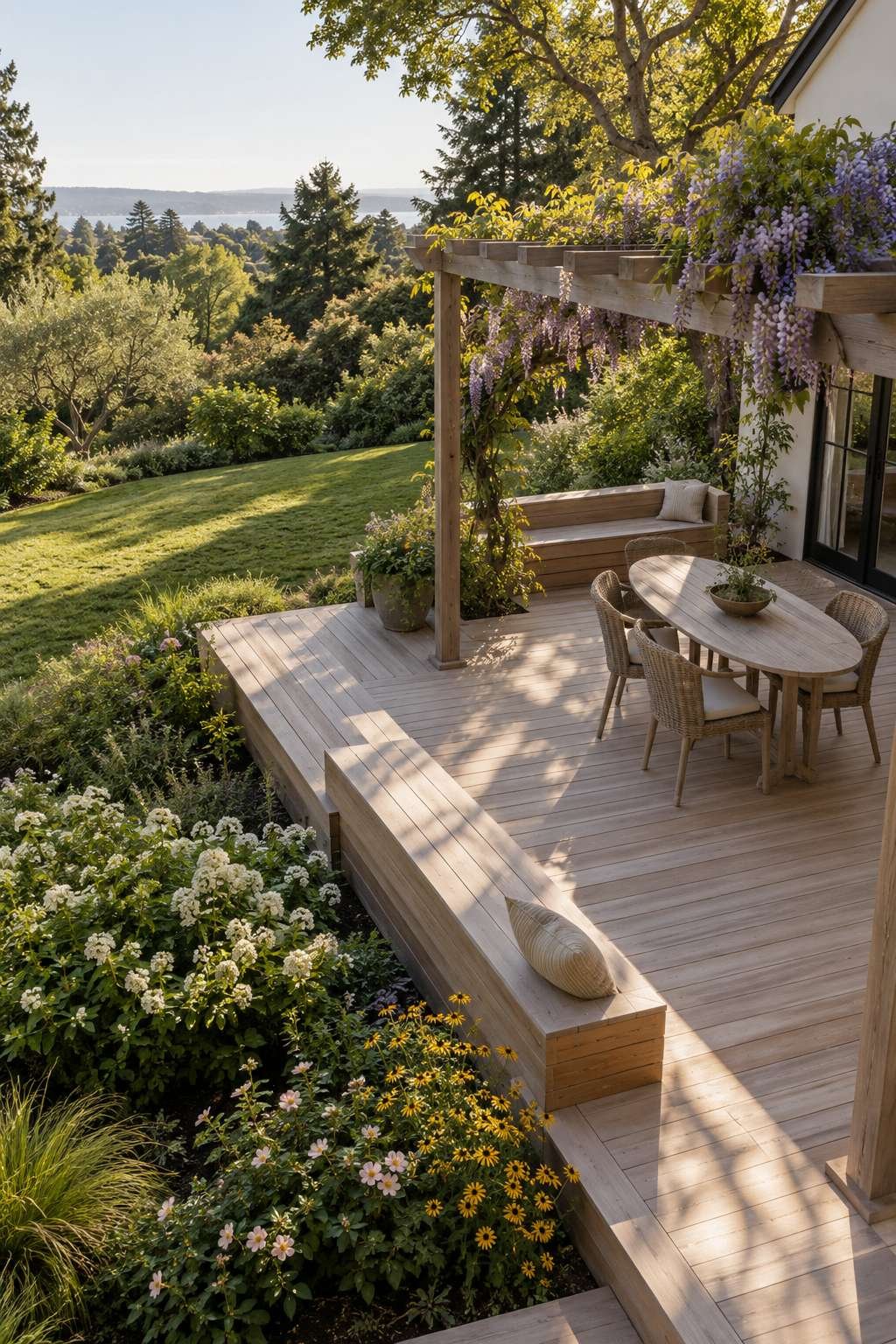
This layout suits homeowners who want a dedicated outdoor dining and lounging area elevated above the main lawn, offering both a practical vantage point and a sense of separation from the yard’s more active zones. The built-in seating maximizes deck real estate, while the wisteria-covered pergola delivers natural shade without the cost of a permanent roof structure.
Key Design Tips:
- Train wisteria vines along sturdy cross-beams early to establish good coverage
- Choose a durable hardwood or composite decking to withstand weather exposure
- Position the dining table to take advantage of dappled afternoon shade
- Use built-in bench seating to save space in smaller deck footprints
- Add cushions in weather-resistant fabric for comfort without upkeep hassle
5. Family-Friendly Layout with Play Area and Patio
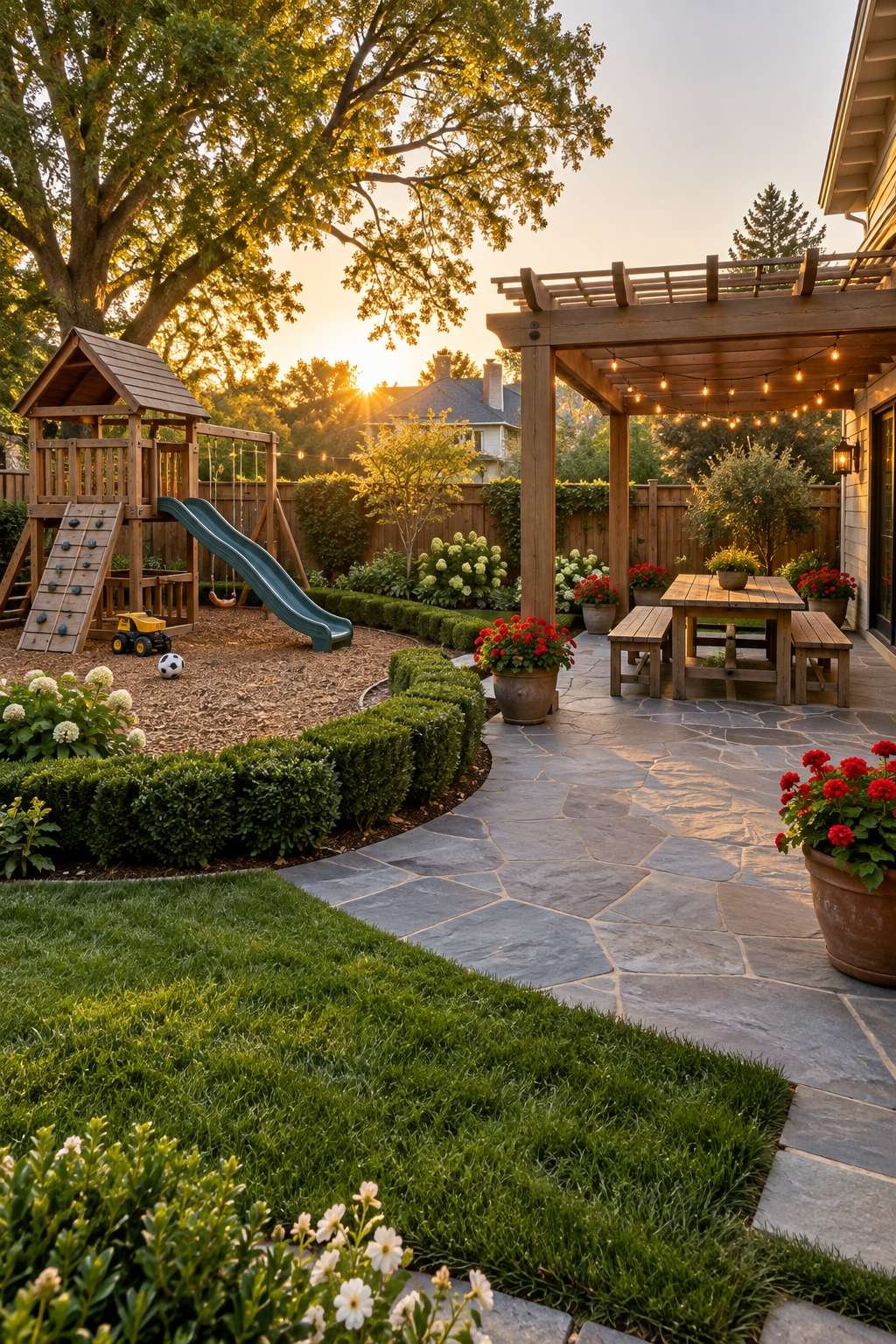
Designed with growing families in mind, this backyard concept balances active play space with relaxed outdoor living. A mulched play area bordered by neatly trimmed boxwood hedges gives children a soft, safe surface for games and activity, while clearly defining the zone from the more polished patio area nearby. This separation keeps the yard organized without feeling rigidly divided.
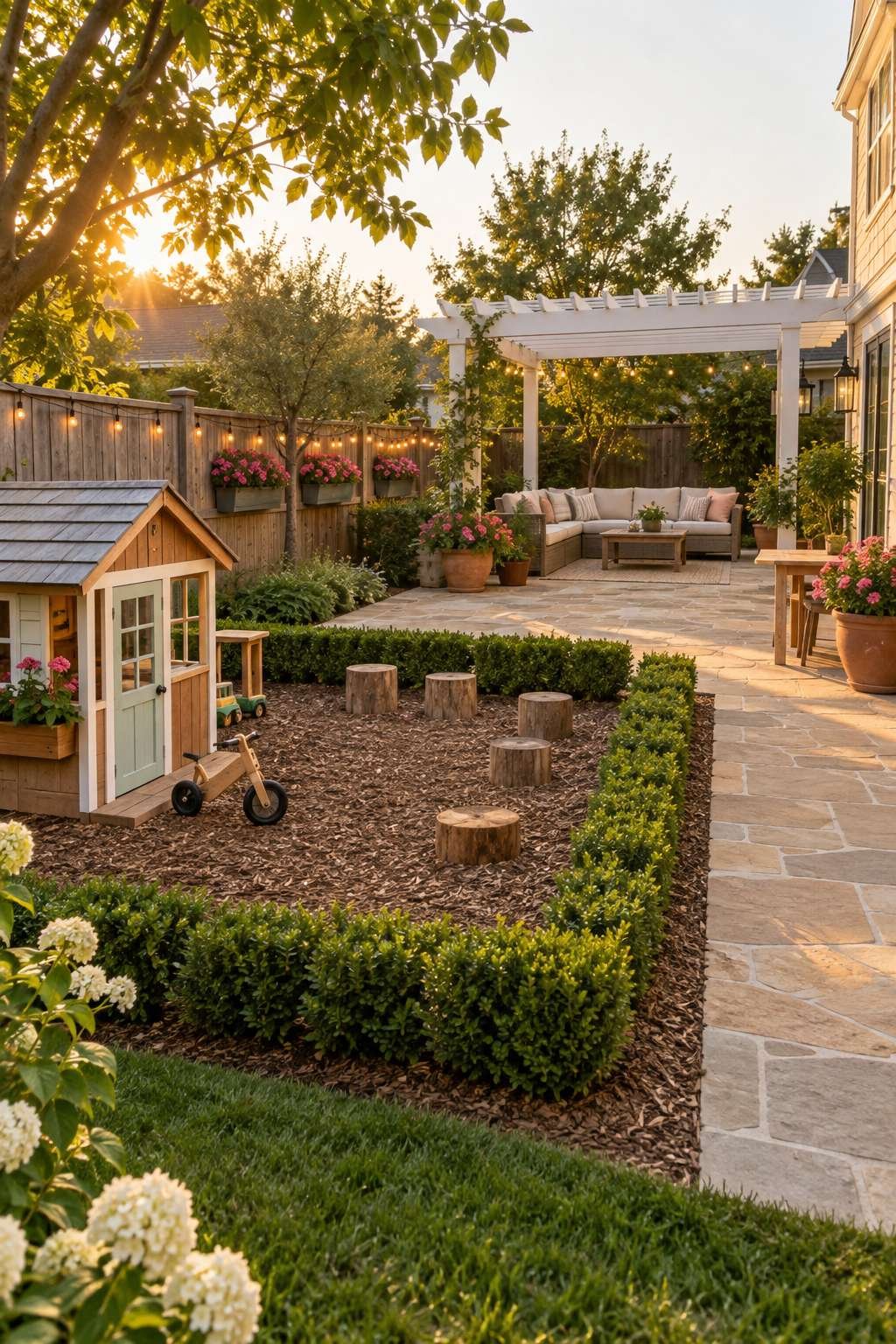
The mulched zone transitions smoothly into a flagstone patio topped with a simple pergola, creating a shaded spot for parents to relax while keeping an eye on play. String lights strung along the fence line, paired with potted geraniums adding pops of color, bring warmth and personality to the space without requiring elaborate landscaping. During golden hour, warm sunlight bathes the whole yard in an inviting glow that makes the space feel welcoming at any time of day.
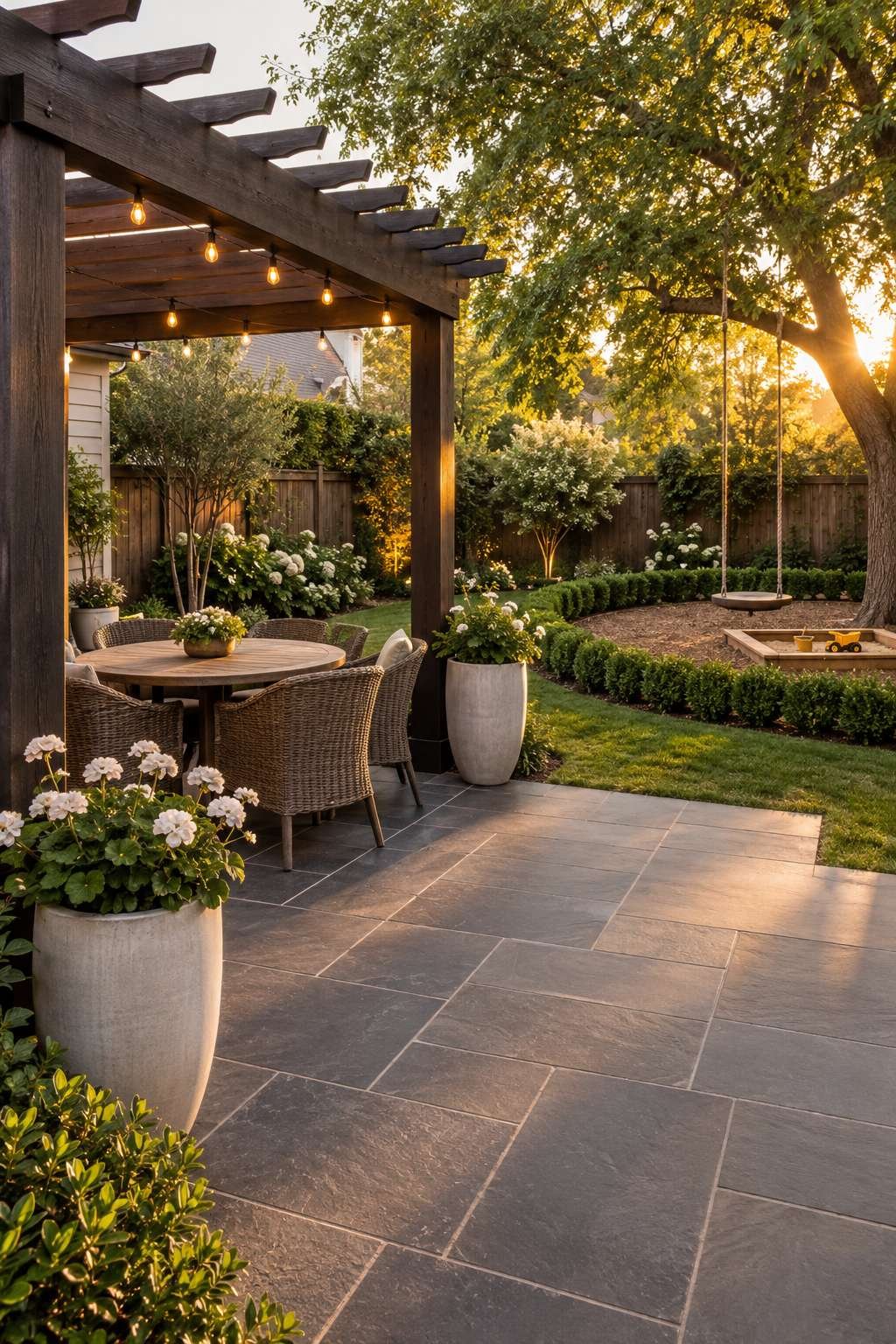
This design is particularly practical for households that need a yard to serve multiple functions simultaneously — safe play space, casual entertaining area, and everyday outdoor living room all in one footprint. Its straightforward materials and layout also make it one of the more budget-friendly and achievable transformations on this list.
Key Design Tips:
- Use mulch or rubber play surfacing for safe, low-maintenance play zones
- Keep boxwood hedges trimmed low so sightlines remain open for supervision
- Add potted color near the patio for visual warmth without heavy landscaping
- Choose a pergola size that shades seating without overwhelming the yard
- Install string lighting on a timer for effortless evening ambiance
6. Modern Minimalist Concrete Courtyard

For those drawn to clean lines and architectural simplicity, this modern minimalist courtyard trades sprawling lawns for a composed, sculptural landscape. Poured concrete pavers are set within a bed of fine gravel, their geometric precision creating a striking contrast against the organic forms of the surrounding plantings. This interplay between hard and soft, structured and natural, defines the entire space.
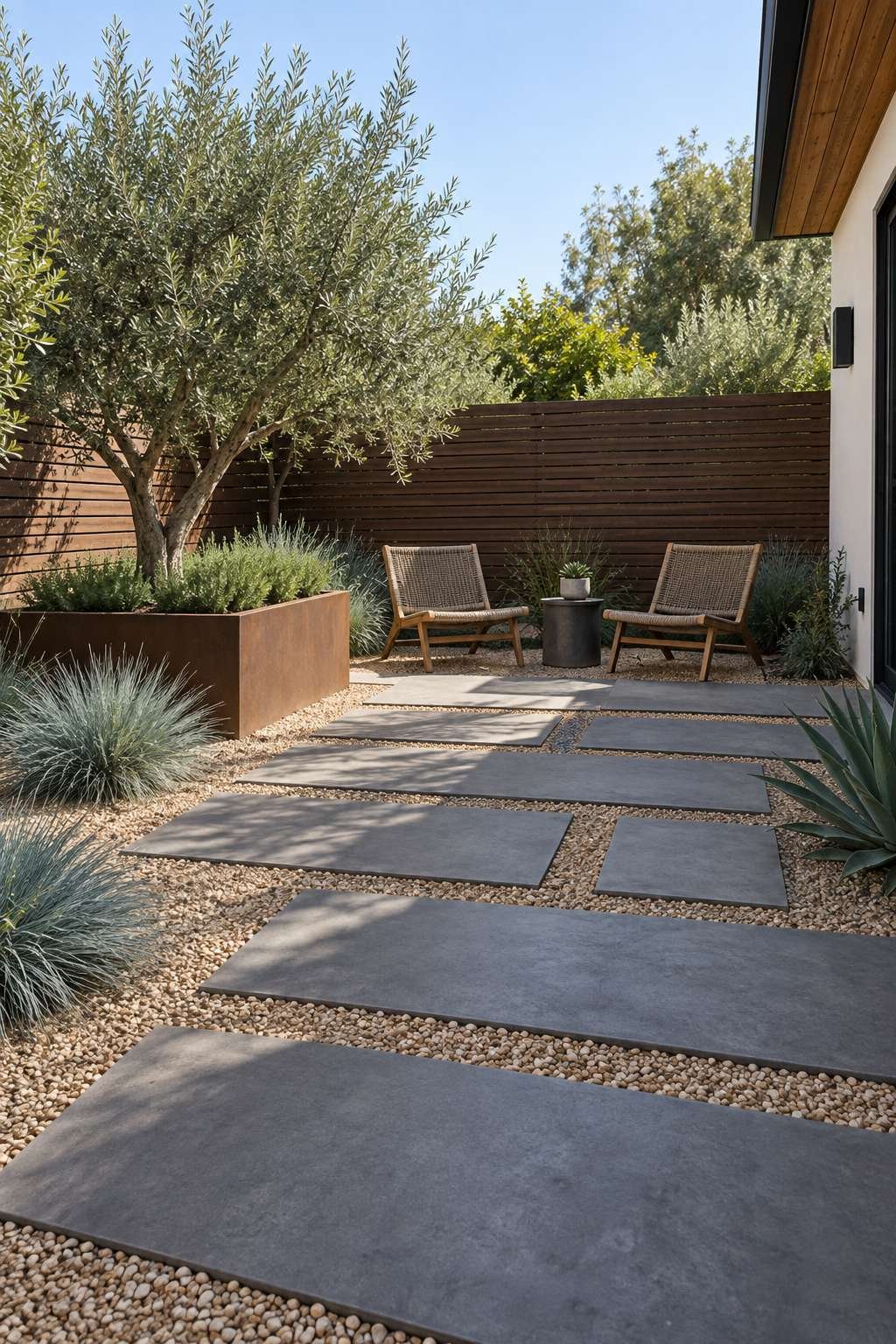
Clusters of ornamental grasses punctuate the gravel at deliberate intervals, while a single sculptural olive tree serves as the courtyard’s focal point — its gnarled trunk and silvery foliage adding texture and a sense of age to an otherwise pared-back palette. A low horizontal wood-slat privacy screen lines the back boundary, reinforcing the design’s geometric language while providing seclusion. Soft midday light enhances the subtle shadows cast by the pavers and slats, highlighting the material contrast between concrete, gravel, and greenery.
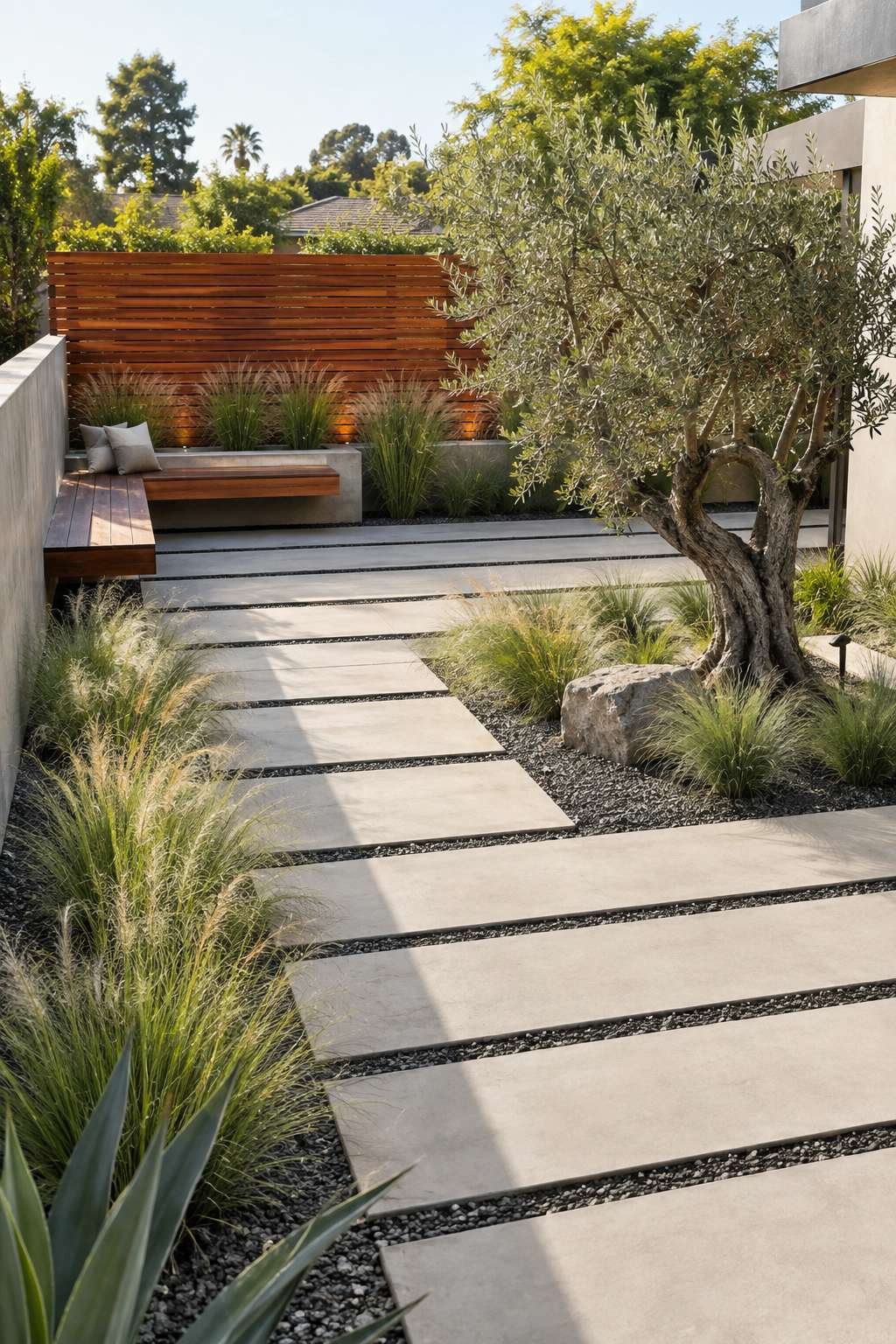
This concept appeals to homeowners who prefer restraint over abundance — a landscape where every element is deliberate and nothing feels superfluous. It’s also remarkably low-maintenance, as gravel and drought-tolerant grasses require far less upkeep than a traditional lawn, making it both a design statement and a practical choice.
Key Design Tips:
- Choose a single specimen tree as a focal point rather than multiple plantings
- Use consistent paver spacing for a clean, architectural gravel bed
- Select ornamental grasses that move with the wind for subtle animation
- Install a horizontal-slat screen to add privacy without blocking light
- Keep the plant palette limited to two or three species for cohesion
7. Cottage Garden Path with Reclaimed Brick

Few styles evoke warmth and romance quite like a cottage garden, and this design leans fully into that charm. A path of reclaimed brick pavers, worn smooth and irregular with age, winds through overflowing beds bursting with lavender, coneflowers, and climbing roses. The plantings spill informally over the path’s edges, giving the whole space a sense of joyful abundance rather than rigid order.
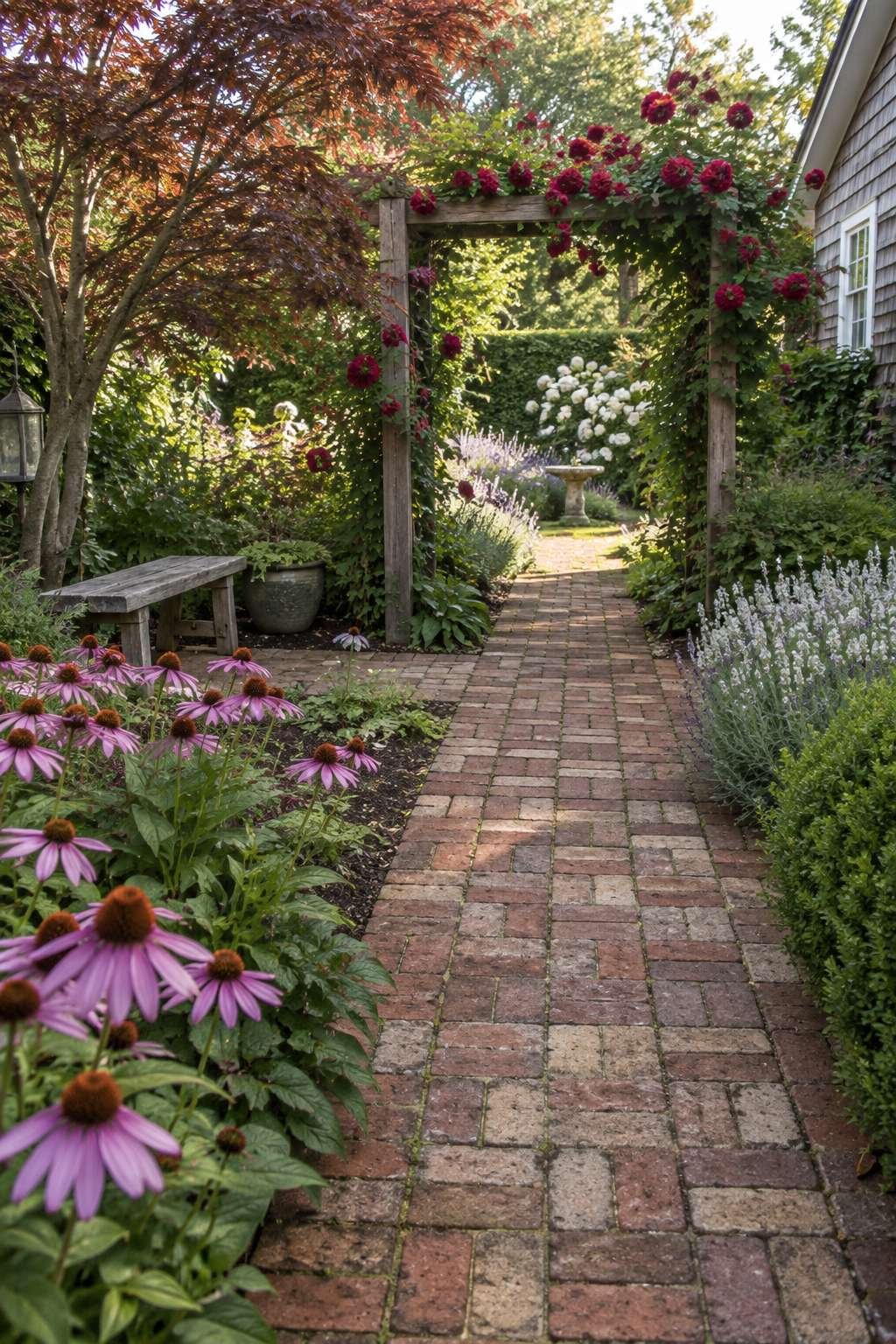
A rustic wooden arbor, weathered to a soft gray, supports the climbing roses as they arch overhead, creating a natural gateway partway along the path. Tucked beneath a small shade tree, a weathered wooden bench offers a quiet spot to pause among the fragrant blooms. Soft natural daylight brings out the textured wear patterns in the brick underfoot, while illuminating the layered, painterly quality of the surrounding foliage.
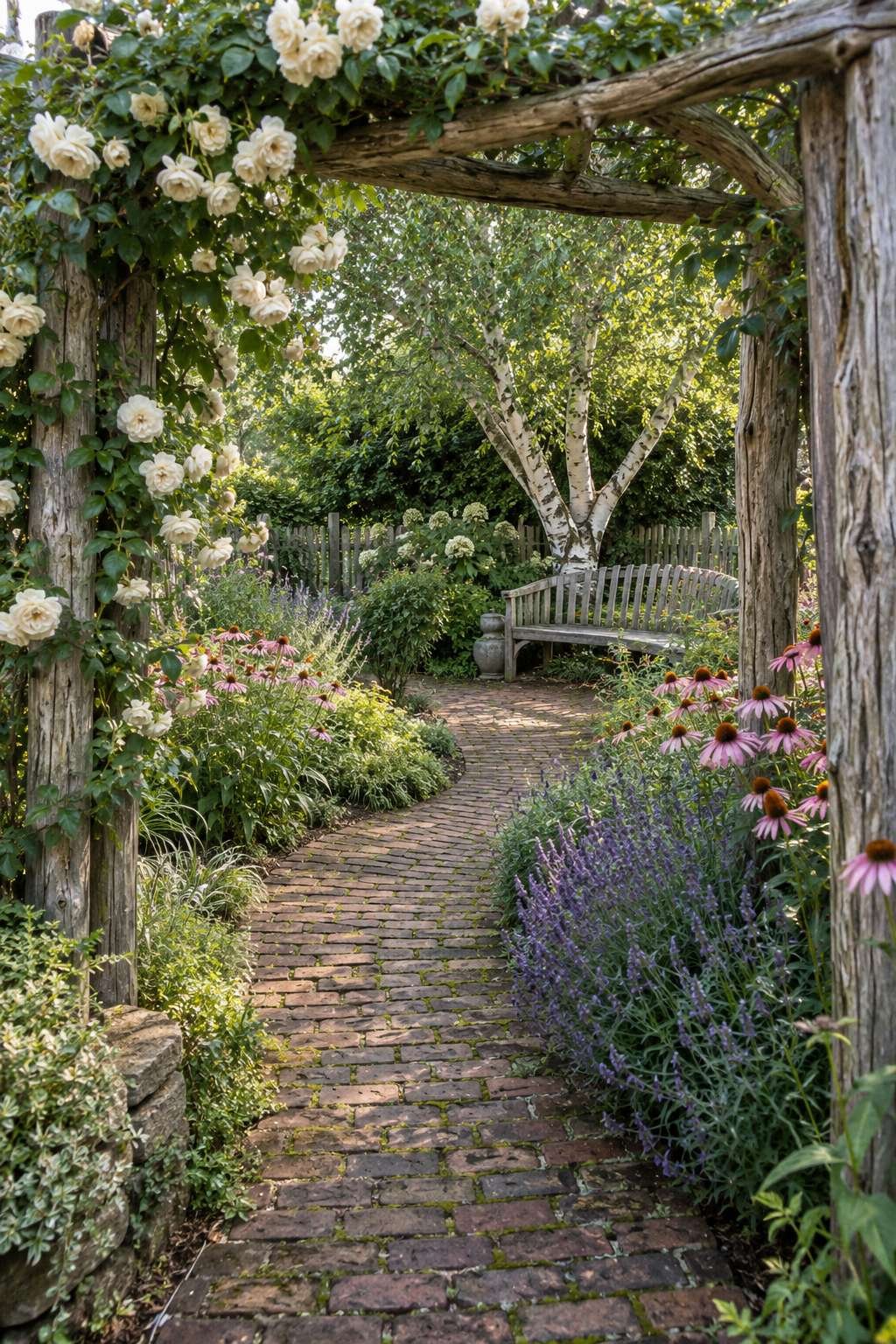
This design is best suited to gardeners who love a hands-on, ever-evolving landscape — one that changes with the seasons and rewards regular tending. The romantic, slightly wild aesthetic of a cottage garden pairs beautifully with older homes and anyone drawn to a softer, more nostalgic take on outdoor design.
Key Design Tips:
- Source reclaimed or antique brick for authentic texture and patina
- Let plantings spill slightly over path edges for a relaxed, informal look
- Choose a mix of blooming perennials for continuous color through the season
- Train climbing roses along the arbor structure early for full coverage
- Place a bench in a shaded spot to encourage lingering in the garden
8. Terraced Hillside with Stone Staircase
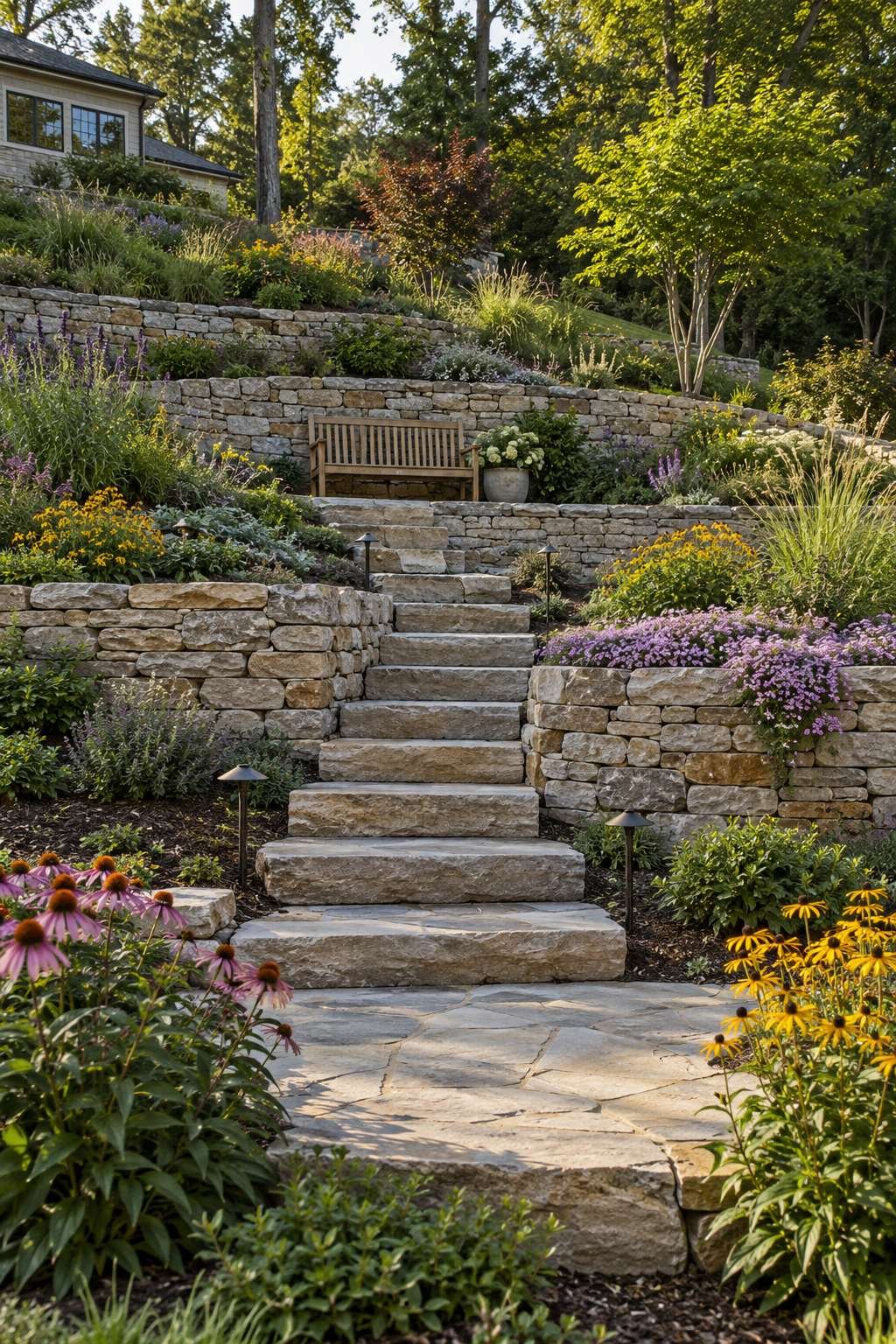
Sloped yards present a unique landscaping challenge, and this design turns that challenge into an asset. Terraced stone garden beds, connected by a shallow-step stone staircase, transform an uneven hillside into a series of usable, beautifully planted levels. Each tier is planted with a mix of native perennials and low ground cover, creating layered bands of color and texture that follow the natural contour of the land.
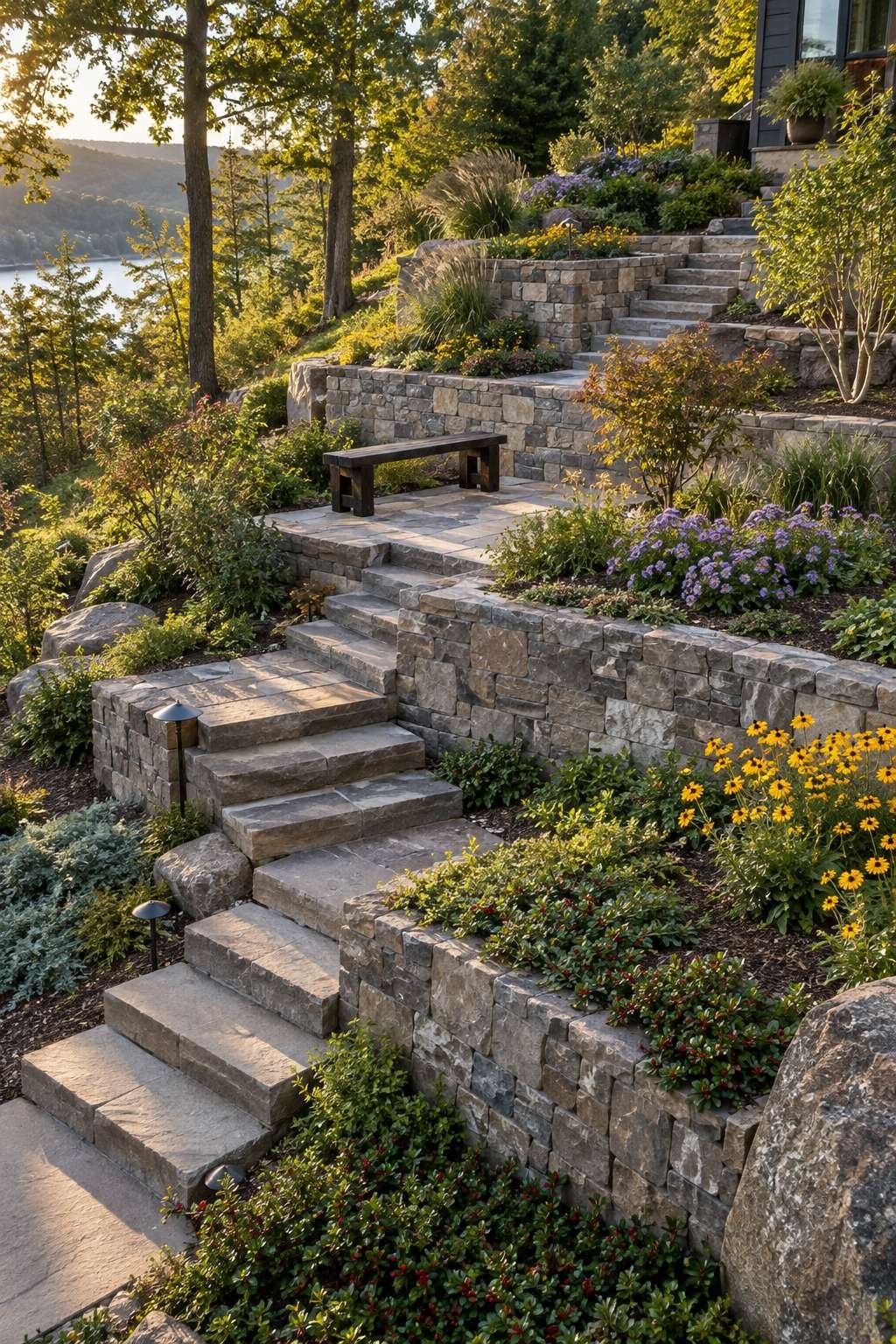
Midway up the slope, a small seating landing offers a place to pause, furnished with a simple wooden bench where one can take in the surrounding garden from a new vantage point. Late-afternoon sunlight rakes across the terraced stonework at a low angle, throwing crisp, defined shadows that emphasize the structure’s geometry and the texture of each stone tier.
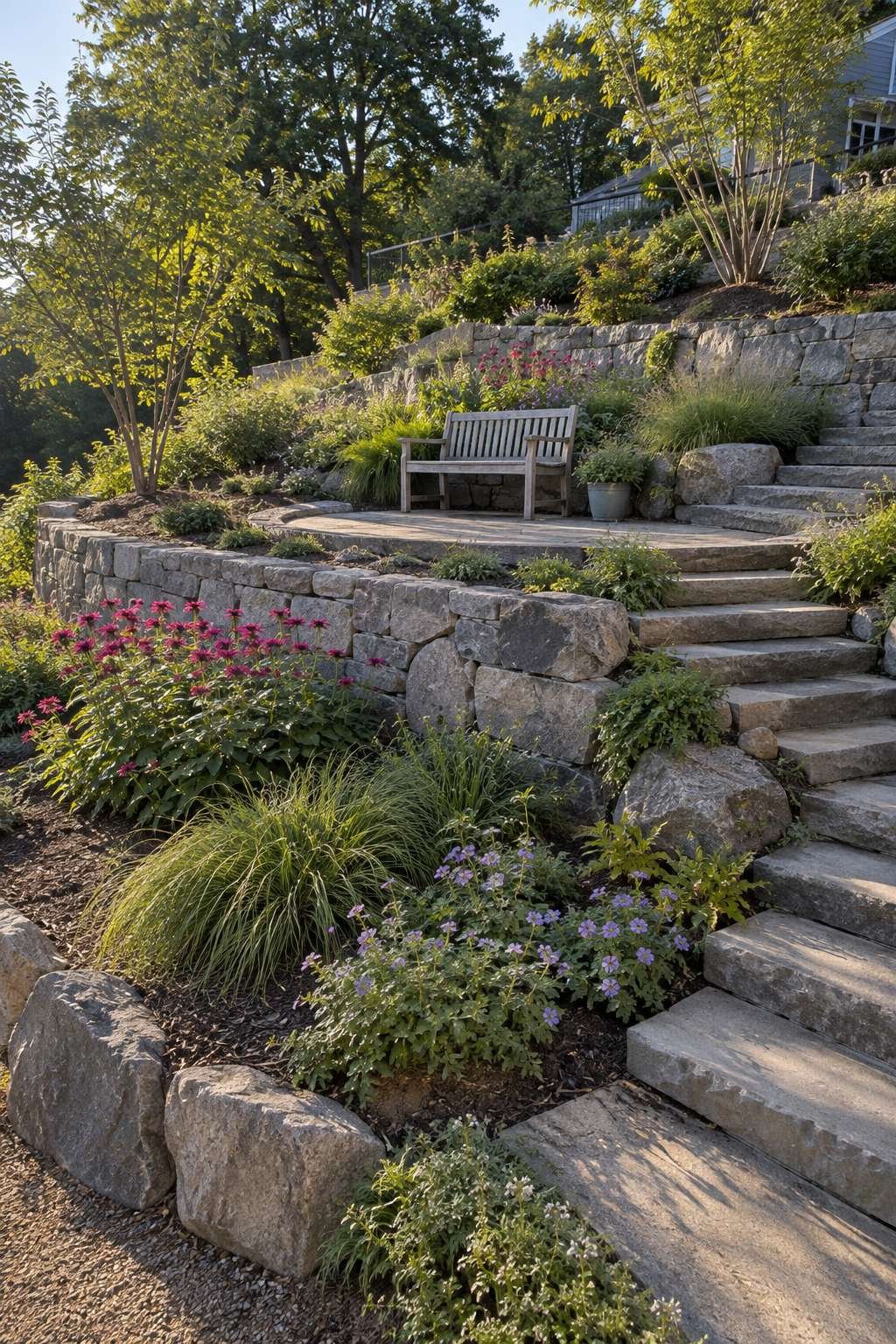
This approach is a practical solution for homeowners dealing with erosion-prone or otherwise unusable sloped terrain. Rather than fighting the grade, the terraced design works with it, turning what might have been a landscaping liability into one of the yard’s most distinctive and photogenic features.
Key Design Tips:
- Use terracing to prevent erosion on sloped or uneven terrain
- Choose native perennials suited to your region’s rainfall and soil
- Keep stair risers shallow and consistent for safe, comfortable movement
- Add a mid-slope landing as a rest point and secondary seating area
- Select stone that complements your home’s existing exterior materials
9. Compact Urban Backyard with Vertical Herb Garden

Urban and small-lot living demands efficient design, and this backyard concept proves that limited square footage doesn’t mean limited style. A raised cedar planter bed runs along the fence line, maximizing growing space without encroaching on the yard’s central area. Nearby, a small bistro table sits atop textured concrete pavers, offering an intimate spot for morning coffee or an evening drink.
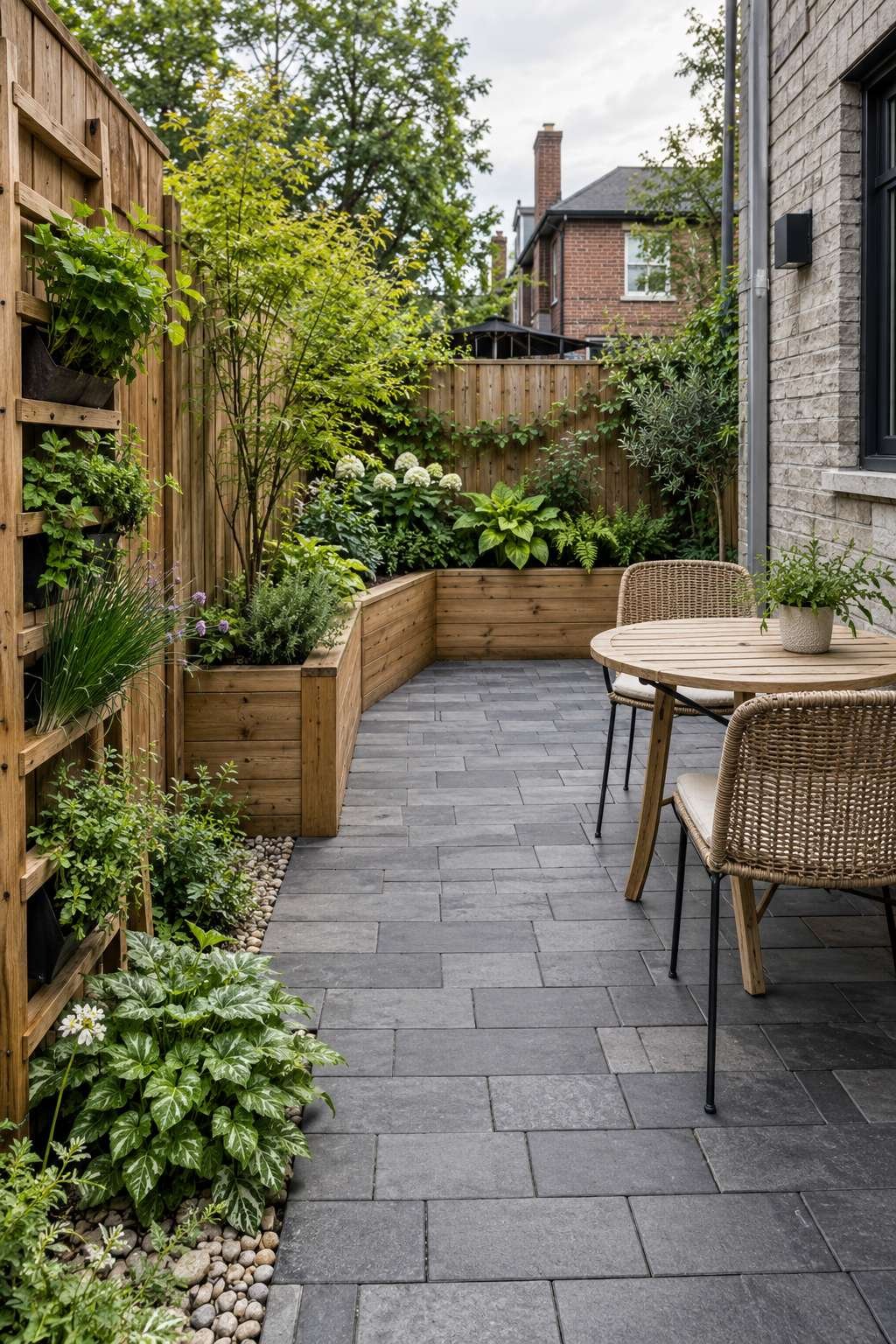
The standout feature here is a vertical herb garden, mounted on a reclaimed wood trellis that turns unused wall space into productive growing area — a clever solution for yards where ground space is at a premium. Soft overcast daylight evenly illuminates the whole space, bringing out the rich textures of cedar, concrete, and greenery without harsh shadows or glare.
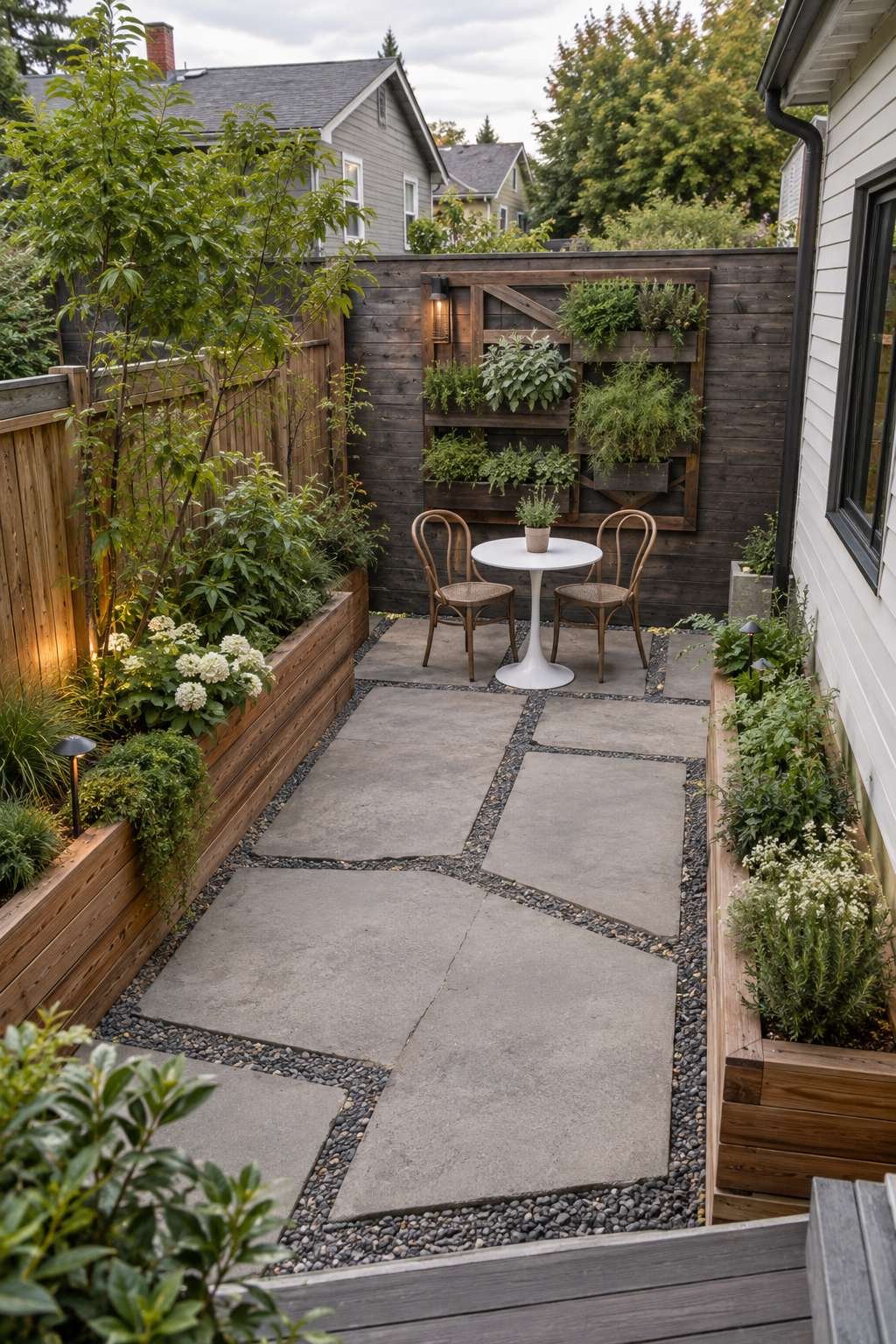
This design is ideal for city dwellers and small-lot homeowners who want a functional, green outdoor space without sacrificing precious square footage. By building upward with vertical planting and keeping furniture minimal, this layout proves that even the most compact urban backyard can feel lush and purposeful.
Key Design Tips:
- Build vertical planters to maximize growing space in tight yards
- Use raised cedar beds for better drainage and soil control
- Choose a small-footprint bistro set scaled appropriately to the space
- Select textured concrete pavers to add visual interest underfoot
- Group herbs by water needs for easier vertical garden maintenance
10. Mediterranean-Inspired Terracotta Patio
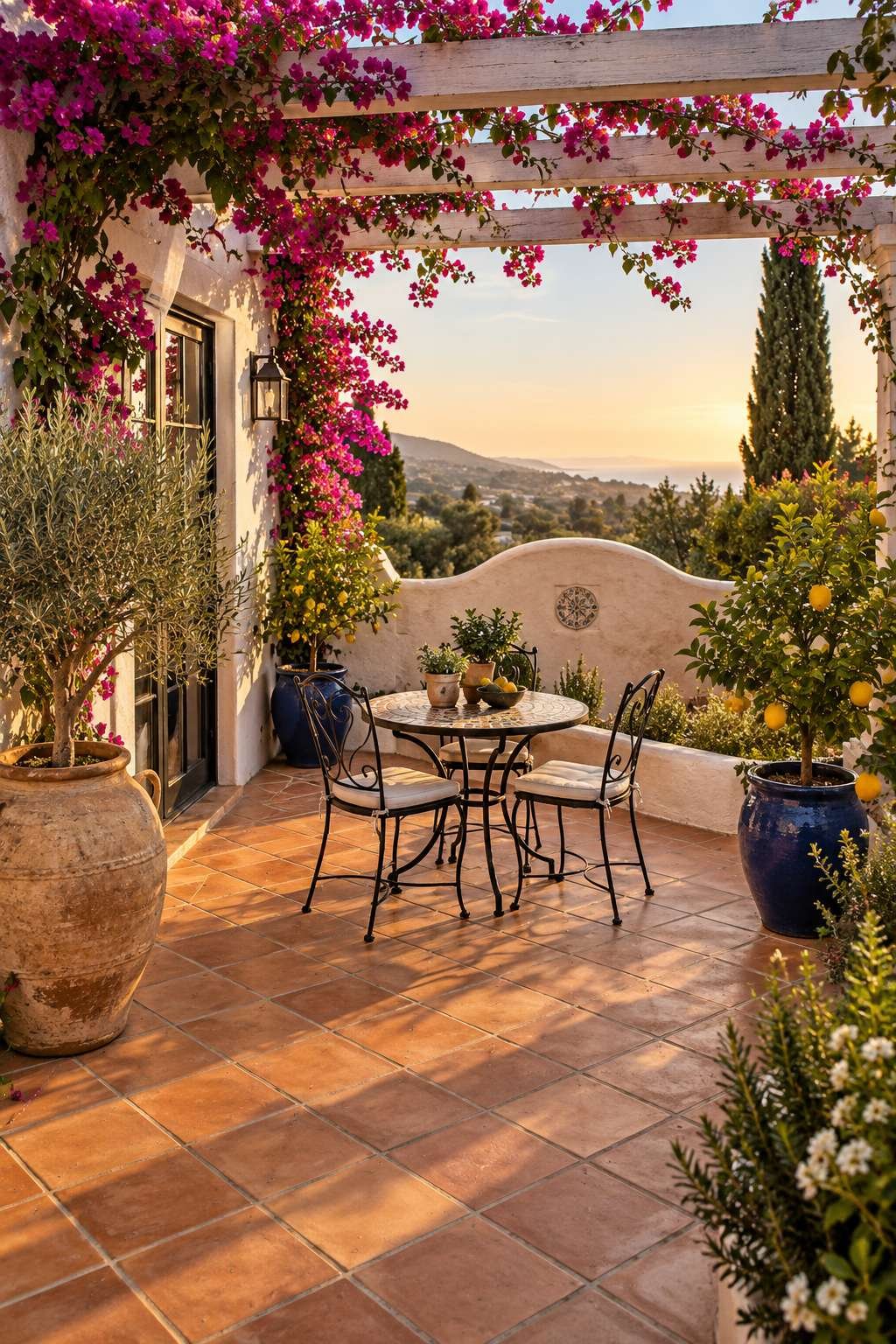
Evoking sun-drenched coastal villas, this Mediterranean-inspired patio brings warmth and old-world charm to any backyard. Terracotta tile flooring anchors the space with its rich, earthy tone, while a low stucco wall bordering the yard reinforces the style’s characteristic texture and color palette. Potted olive and citrus trees, arranged around a wrought-iron bistro set, add both greenery and an authentic sense of place.

Climbing bougainvillea, with its vibrant magenta blooms, trails along a whitewashed pergola, softening the structure’s clean lines with organic color and movement. Warm golden-hour lighting intensifies the terracotta’s natural tones and highlights the subtle texture of the stucco walls, creating a scene that feels transportive — as if lifted directly from a Tuscan or Spanish courtyard.

This design suits homeowners drawn to warm, textured aesthetics and outdoor living inspired by Mediterranean and coastal European traditions. The combination of terracotta, stucco, and citrus greenery creates a patio that feels both elegant and relaxed, perfect for long, sun-soaked afternoons.
Key Design Tips:
- Use terracotta tile for authentic warmth and Mediterranean character
- Choose dwarf citrus varieties for potted trees in cooler climates
- Train bougainvillea along pergola beams for vibrant seasonal color
- Select wrought-iron furniture for period-appropriate detail
- Whitewash pergola wood to reflect light and enhance the coastal feel
11. Naturalistic Pond-Side Seating Area
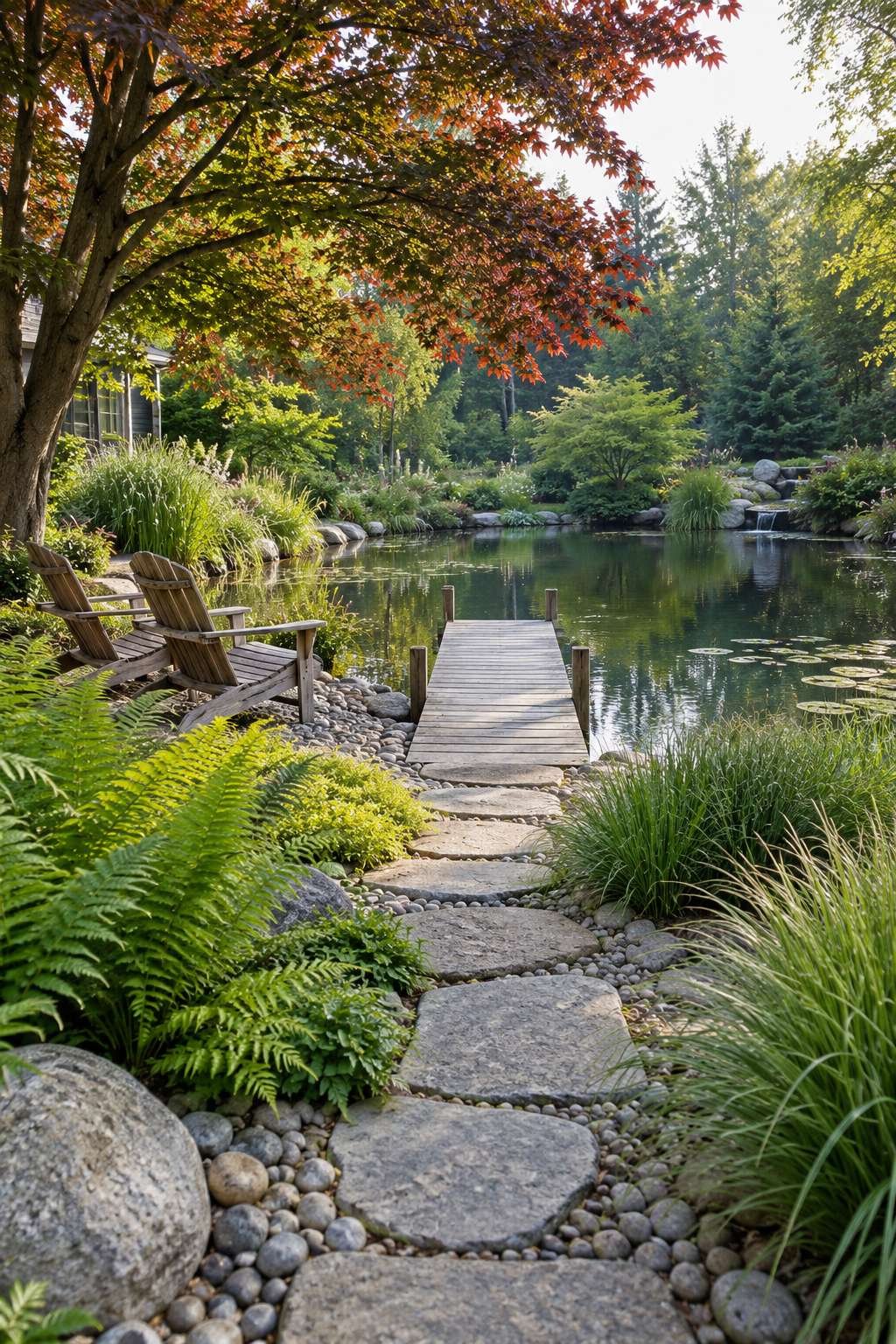
For yards fortunate enough to include or accommodate a water feature, this pond-adjacent seating area creates a tranquil retreat centered on a small wooden dock. Surrounding the water, ornamental grasses, ferns, and river rock ground cover create a naturalistic transition between land and water, mimicking the look of a wild, undisturbed shoreline rather than a manicured garden bed.
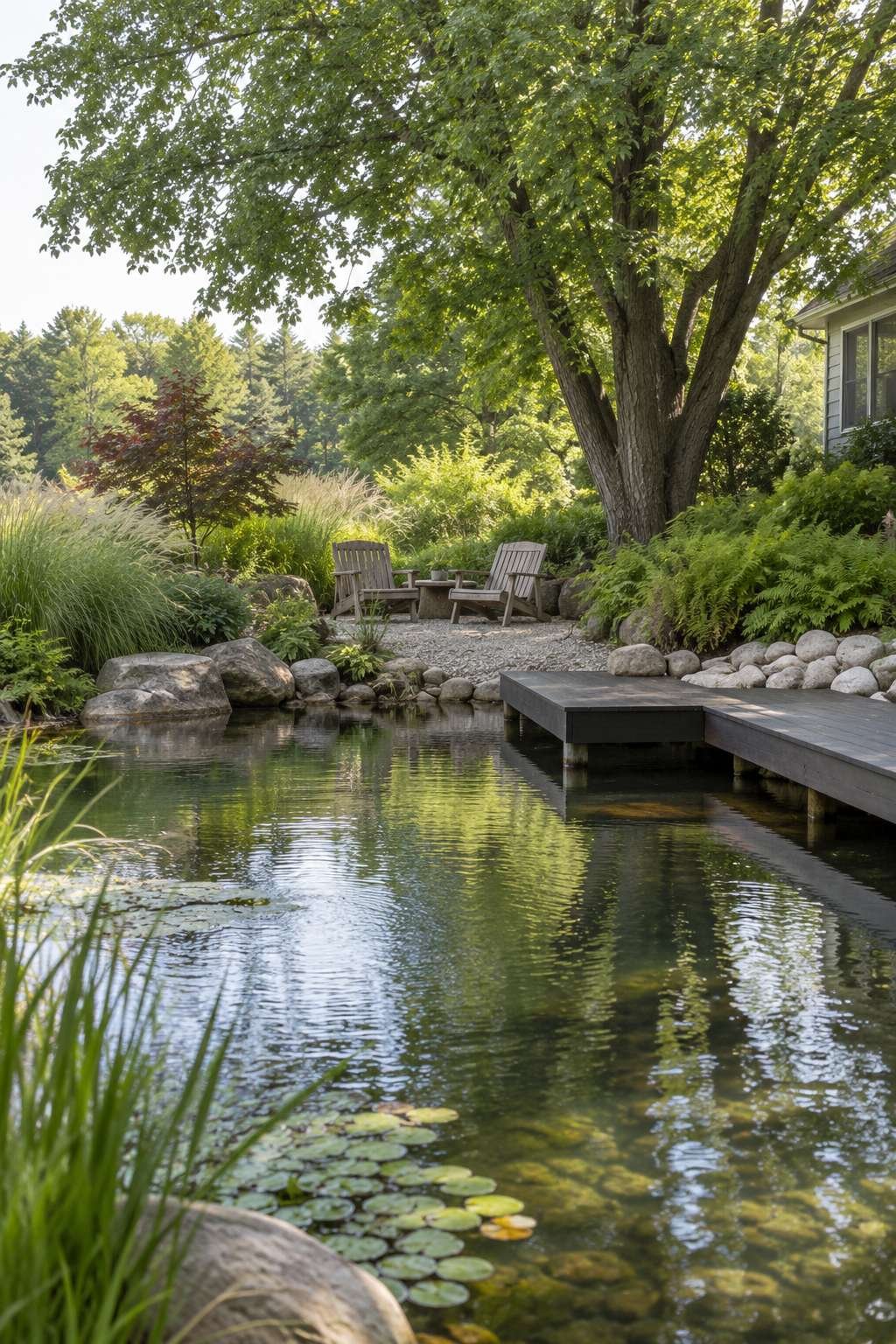
A pair of weathered teak chairs sits near the water’s edge, positioned beneath the shade of a mature maple tree to offer a quiet, shaded vantage point for watching the water. Soft diffused morning light reflects gently off the pond’s surface, creating a calm, almost meditative atmosphere that’s especially striking in the early hours of the day.

This design is best suited to larger properties or those with natural water features already in place, offering a serene alternative to the more active, entertaining-focused backyard styles. It’s a space designed for stillness — for reading, reflecting, or simply enjoying the quiet sounds of water and rustling grasses.
Key Design Tips:
- Use river rock and native grasses to create a naturalistic shoreline
- Choose teak or other weather-resistant wood for waterside furniture
- Position seating to take advantage of morning light reflections
- Plant shade trees nearby to keep the seating area cool in summer
- Keep plantings low near the water’s edge to preserve sightlines
12. Rustic Farmhouse Fire Pit and Meadow
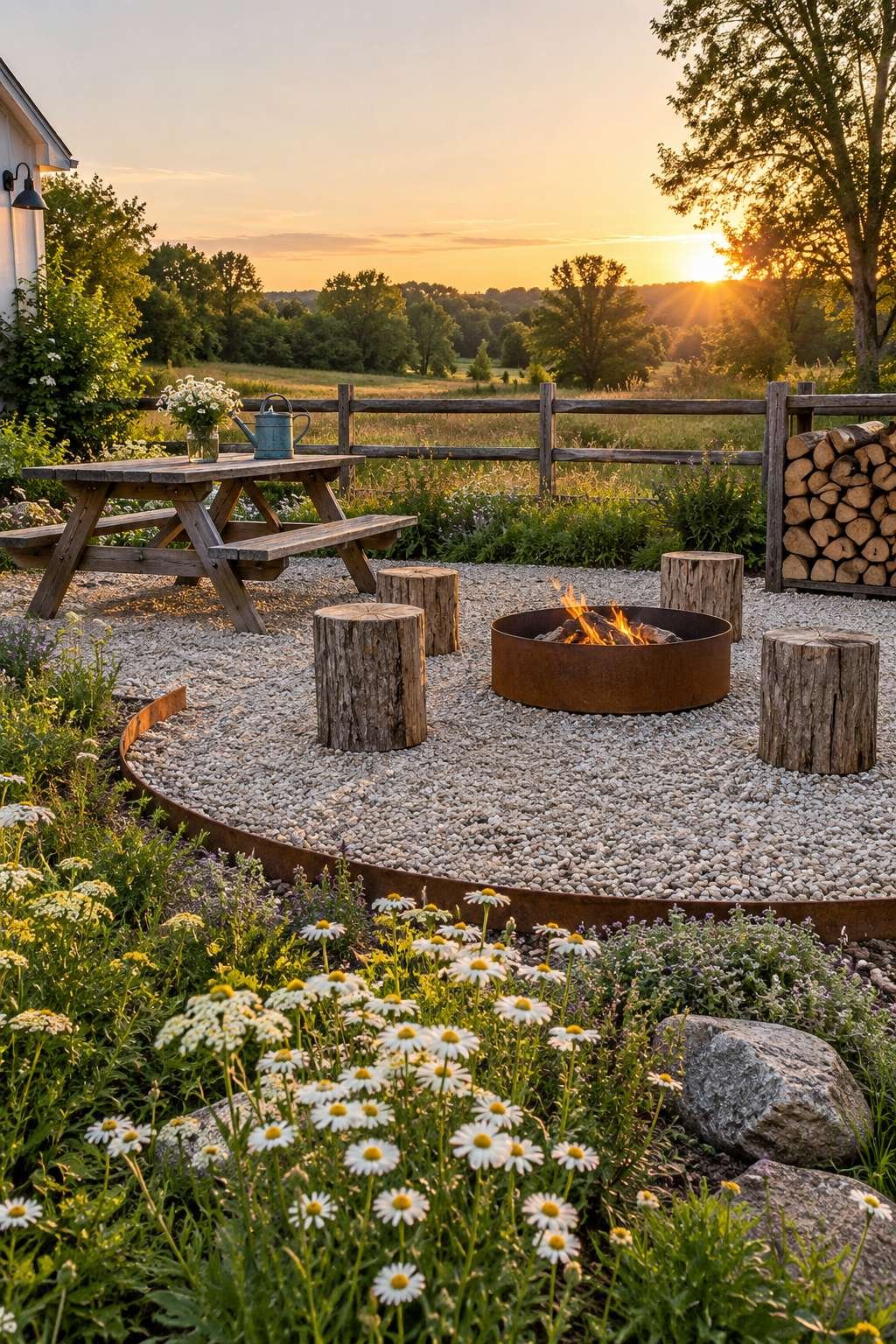
Channeling the relaxed charm of country living, this rustic farmhouse backyard centers on a gravel fire pit area bordered by clean galvanized steel edging — a small industrial touch that contrasts nicely with the surrounding softness. That softness comes from sprawling wildflower meadow plantings and a simple wood-post fence, both of which give the space an easy, unmanicured quality.
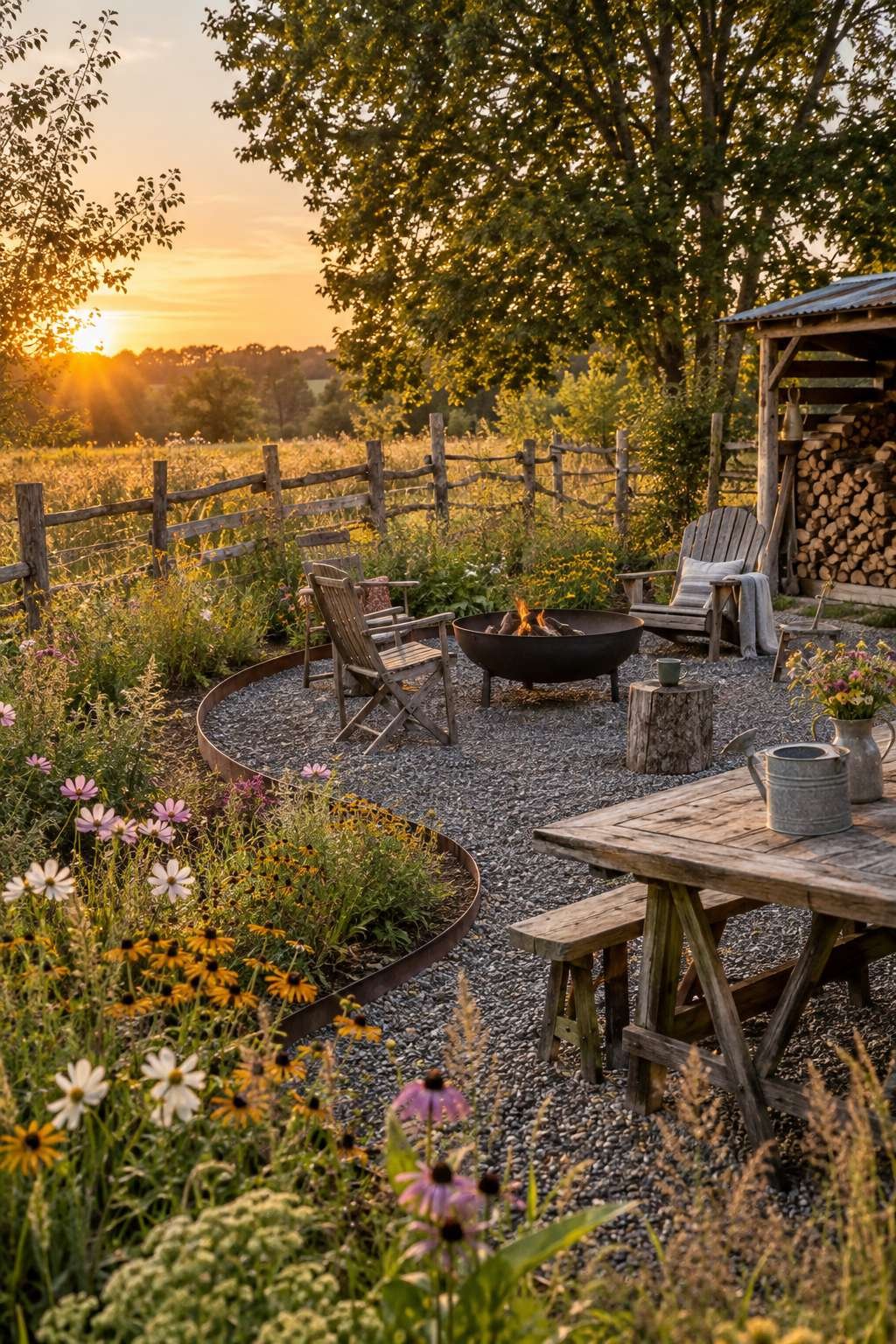
Authentic details bring the farmhouse aesthetic to life: a vintage metal watering can, neatly stacked firewood, and a weathered picnic table all suggest a space that’s genuinely lived-in and used, not merely staged. Golden-hour sunlight bathes the entire scene in warm, nostalgic tones, emphasizing the natural textures of wood, steel, and wildflower blooms.

This concept resonates with homeowners who want their backyard to feel rooted in tradition and craft rather than polish. It’s an especially good fit for rural or semi-rural properties, where the meadow plantings and rustic materials can extend seamlessly into the surrounding landscape rather than reading as a manicured anomaly.
Key Design Tips:
- Let wildflower meadows grow naturally rather than over-manicuring them
- Use galvanized steel edging for a clean, low-maintenance fire pit border
- Incorporate vintage or weathered accessories for authentic character
- Choose a simple wood-post fence to keep the rustic aesthetic consistent
- Stack firewood neatly nearby for both function and visual charm
13. Shaded Reading Nook Beneath a Mature Tree

Sometimes the best backyard feature is simply a quiet place to sit, and this shaded reading nook delivers exactly that. Tucked beneath a mature oak tree, the space centers on a woven outdoor hammock chair — an inviting, cocoon-like seat perfect for an afternoon with a book. A small round side table sits within easy reach, just large enough for a cup of tea and a stack of paperbacks.
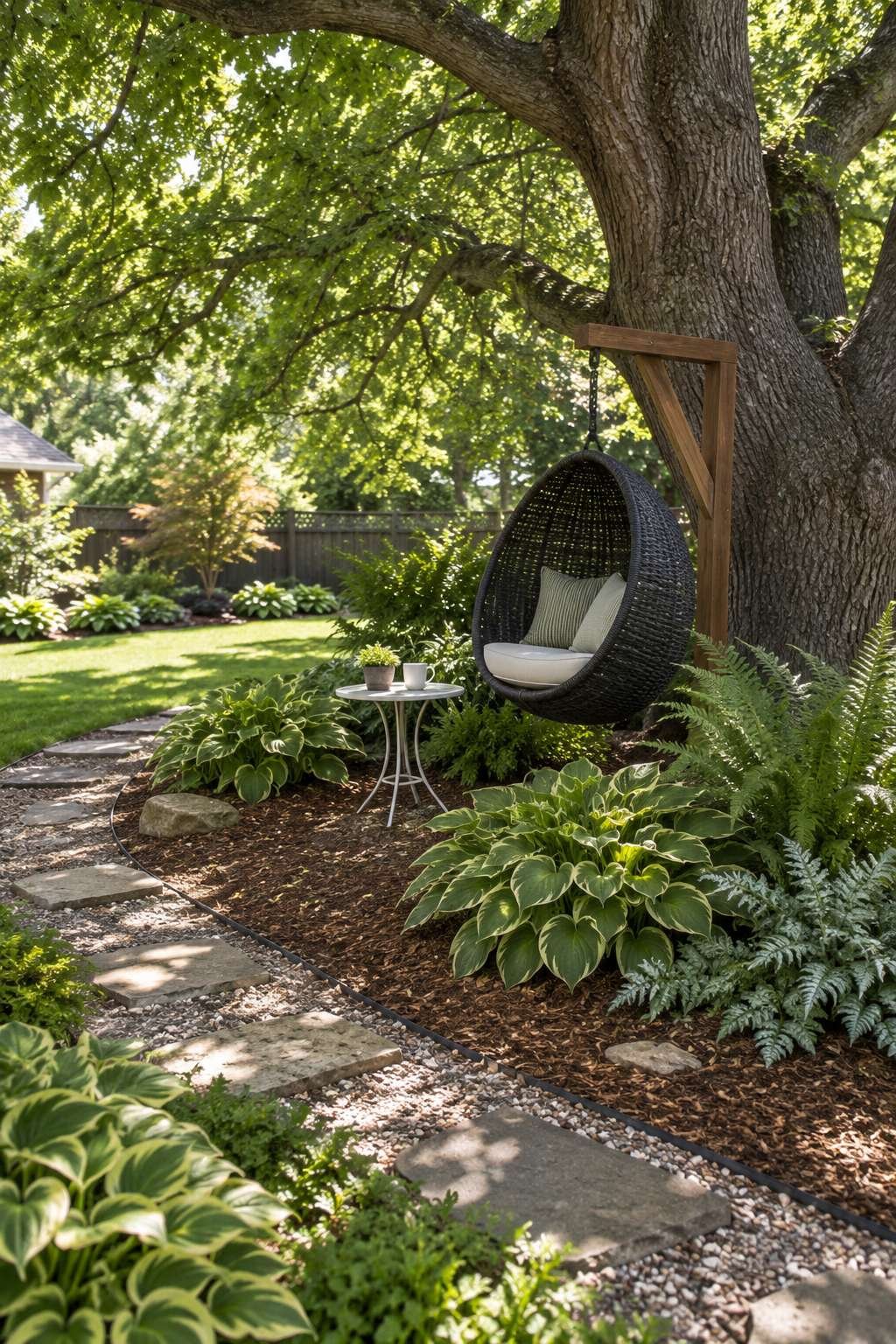
Surrounding the nook, a bed of hostas and ferns follows a mulched border, their broad, shade-loving leaves thriving in the tree’s dappled canopy. That canopy filters sunlight into soft, ever-shifting patterns across the ground, creating a naturally animated, calming backdrop. The overall effect is intimate and unhurried — a small pocket of the yard set apart for rest.

This design is ideal for homeowners with at least one established shade tree and a desire for a low-key, personal retreat rather than a large entertaining space. It requires minimal construction or investment, proving that some of the most restorative backyard spaces are also the simplest.
Key Design Tips:
- Choose shade-loving plants like hostas and ferns for tree-covered areas
- Select a hammock chair with weather-resistant materials and hardware
- Keep the footprint small and intimate rather than over-furnishing
- Use mulch borders to define planting beds without hard edging
- Position seating to follow the tree’s natural dappled light patterns
14. Practical Dog-Friendly Yard Design
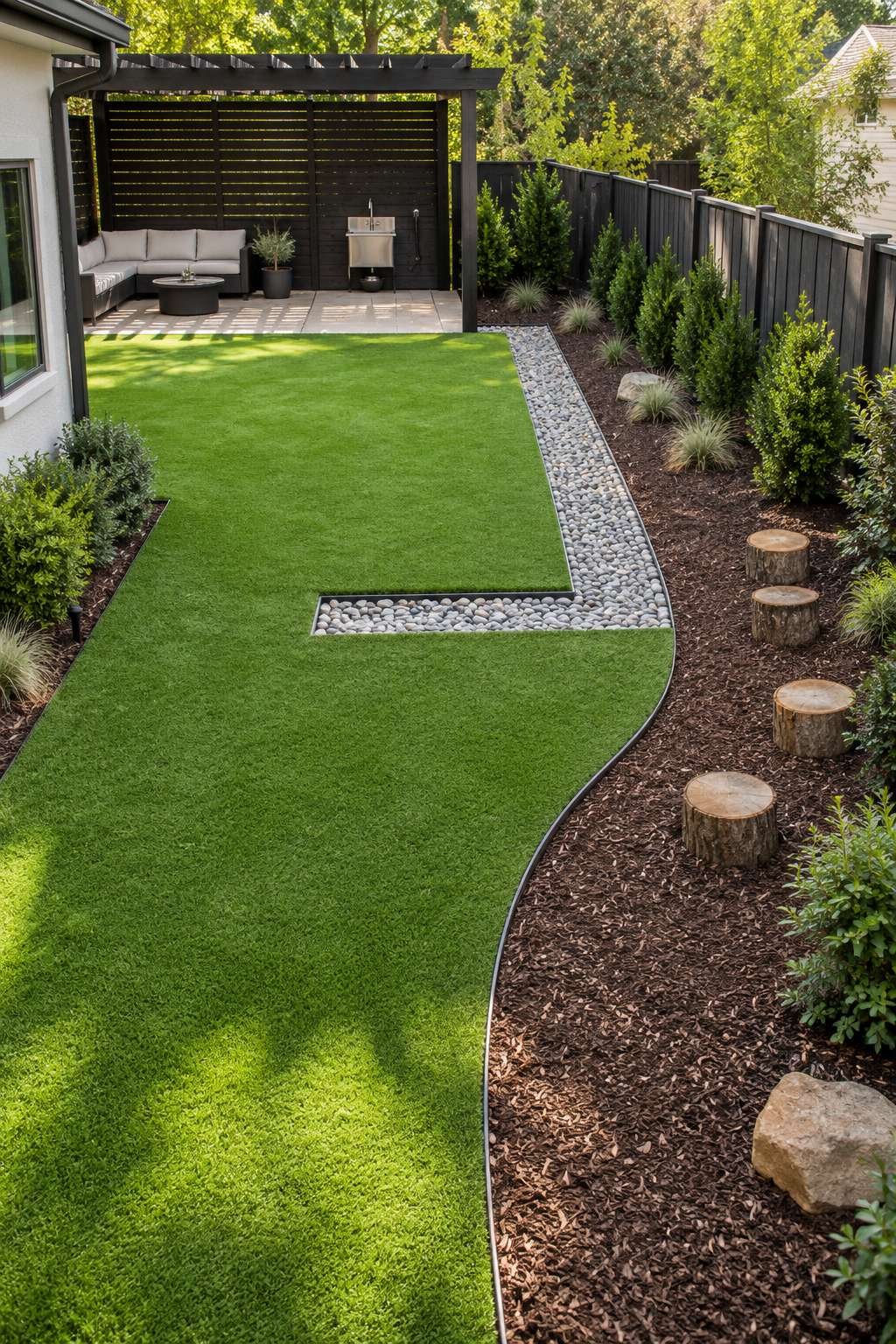
Designed with four-legged family members in mind, this dog-friendly yard balances durability with genuine visual appeal. A synthetic turf play area provides a resilient, mud-free surface for running and play, bordered by a dedicated mulched dog run that gives pets their own defined space separate from the main lawn. This zoning keeps high-traffic pet areas from wearing down the rest of the yard.

A shaded pergola houses a water station, ensuring pets stay cool and hydrated during active play, while low hardy shrubs planted safely along the fence perimeter add greenery without introducing toxic or fragile plantings. Bright natural daylight evenly illuminates the space, keeping sightlines open for supervision and giving the whole yard a clean, functional clarity.
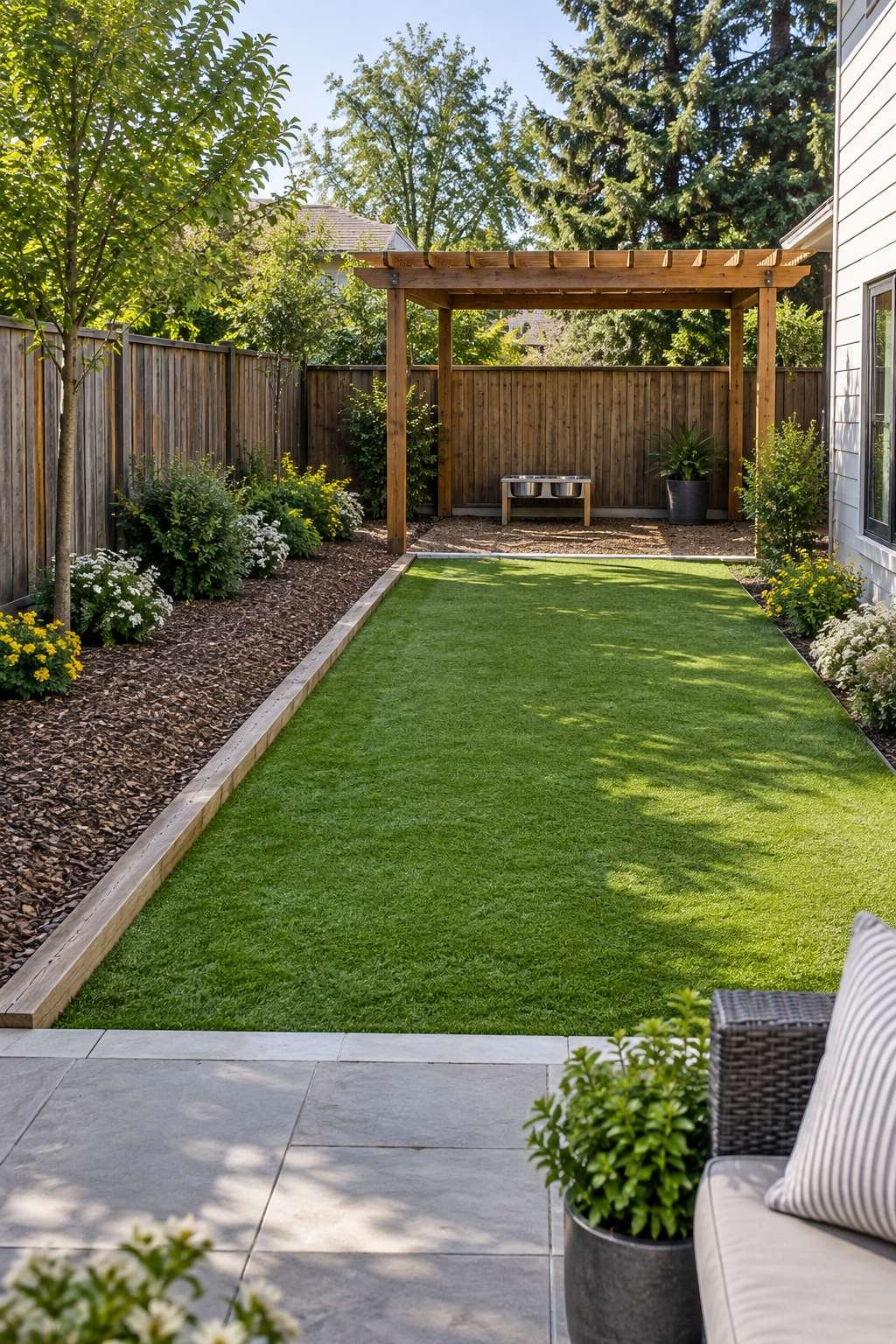
This design is a smart choice for pet owners who want a yard that looks good and holds up to daily wear. By separating play zones and selecting pet-safe materials and plants throughout, the space remains both attractive and genuinely practical for everyday family life with animals.
Key Design Tips:
- Choose synthetic turf for durability and easy cleanup in high-traffic zones
- Research pet-safe plants before adding shrubs near dog play areas
- Include a shaded water station to keep pets cool during active play
- Separate a dedicated dog run from ornamental garden beds
- Use mulch rather than gravel in dog runs to protect paws
15. Xeriscape Dry Garden with Desert Textures
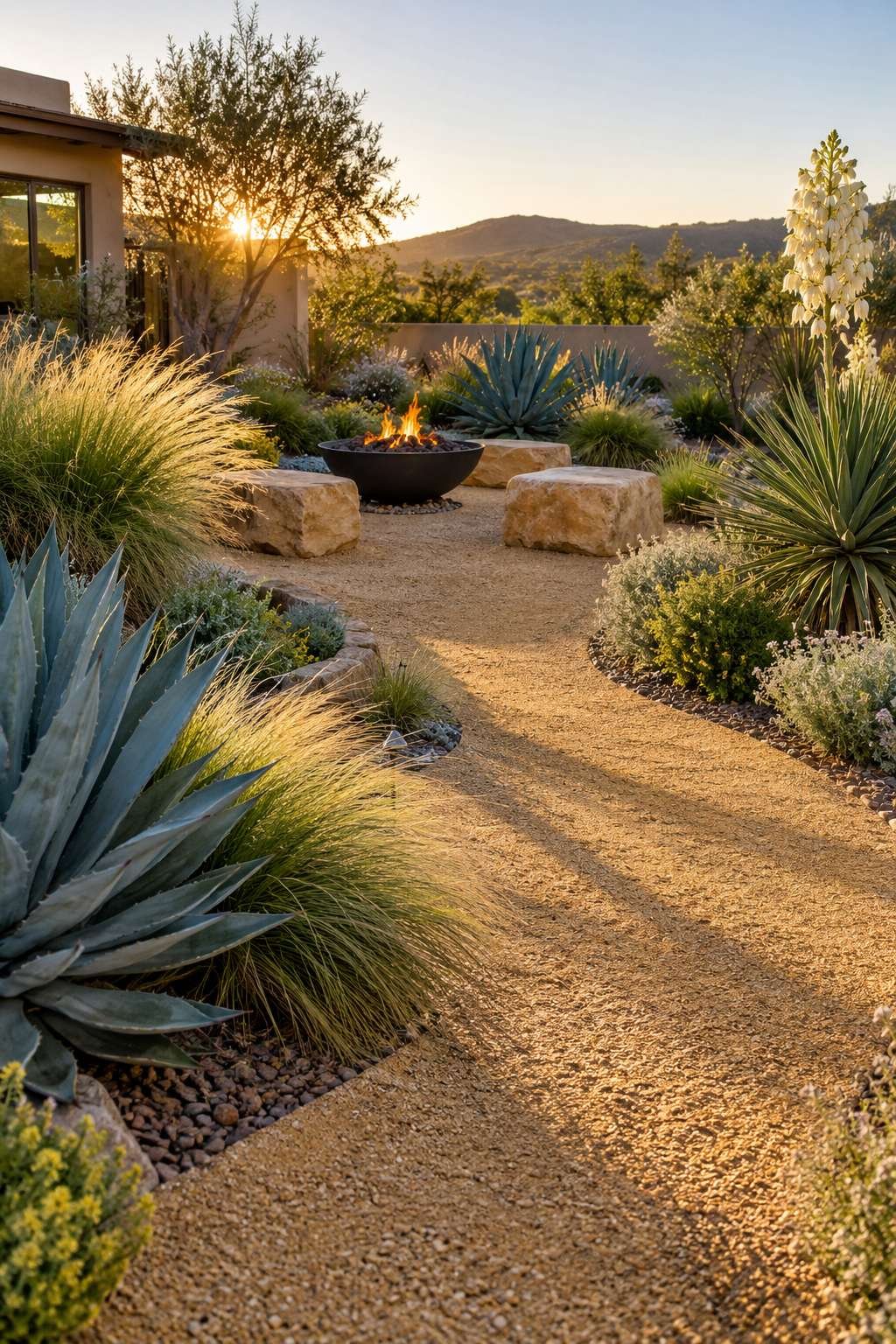
For dry climates or water-conscious homeowners, this xeriscape-inspired dry garden turns drought tolerance into a design strength rather than a compromise. Decomposed granite pathways wind between striking clusters of agave, ornamental grasses, and flowering yucca, their sculptural forms creating a landscape that feels both wild and deliberately composed.
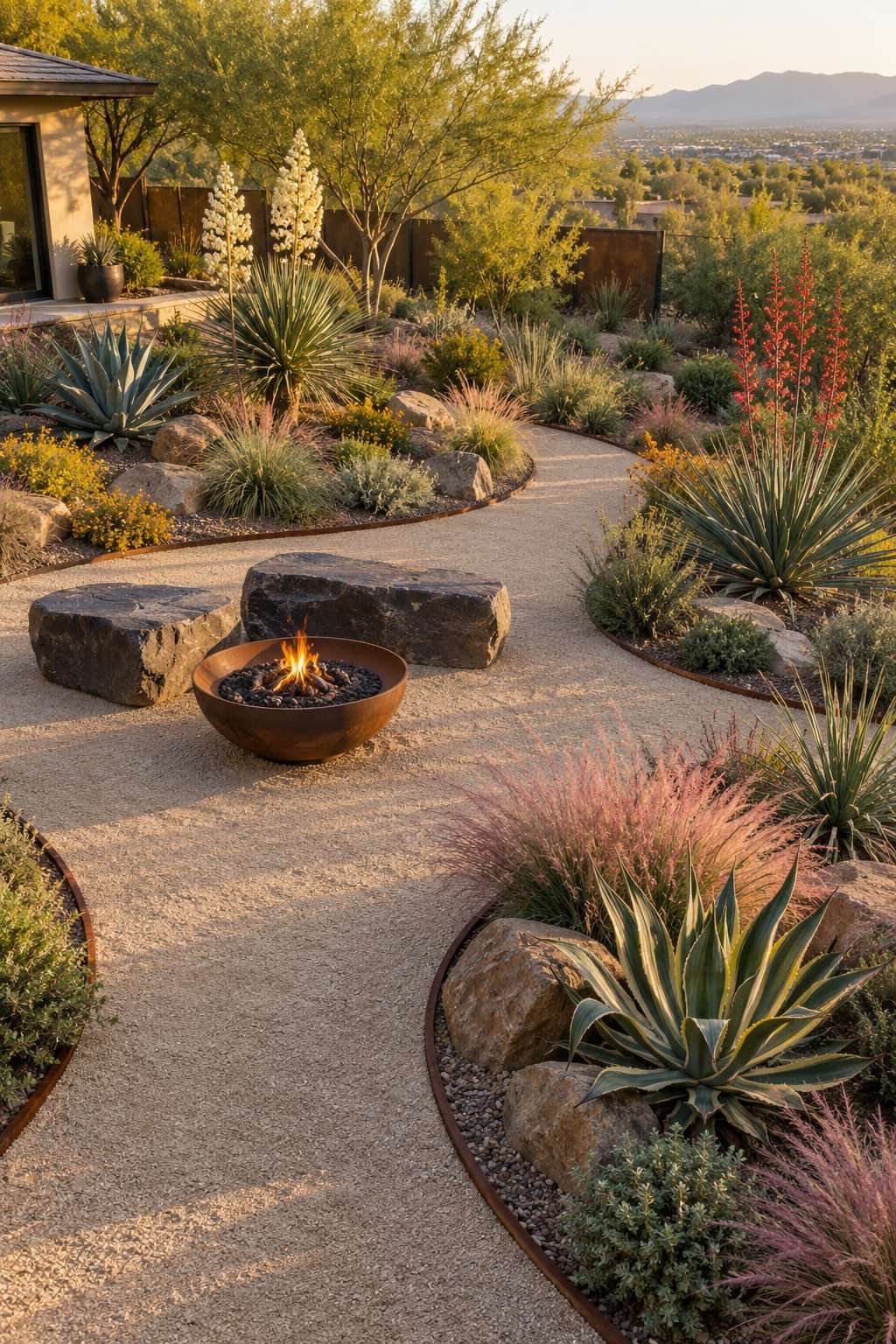
Large flat boulders are arranged as informal seating near a small steel fire bowl, offering a low-maintenance gathering spot that requires no cushions or upkeep — just sturdy, sun-warmed stone. Warm late-afternoon light casts long shadows across the textured granite surface, emphasizing the sculptural silhouettes of the desert plantings and the rugged character of the boulders.
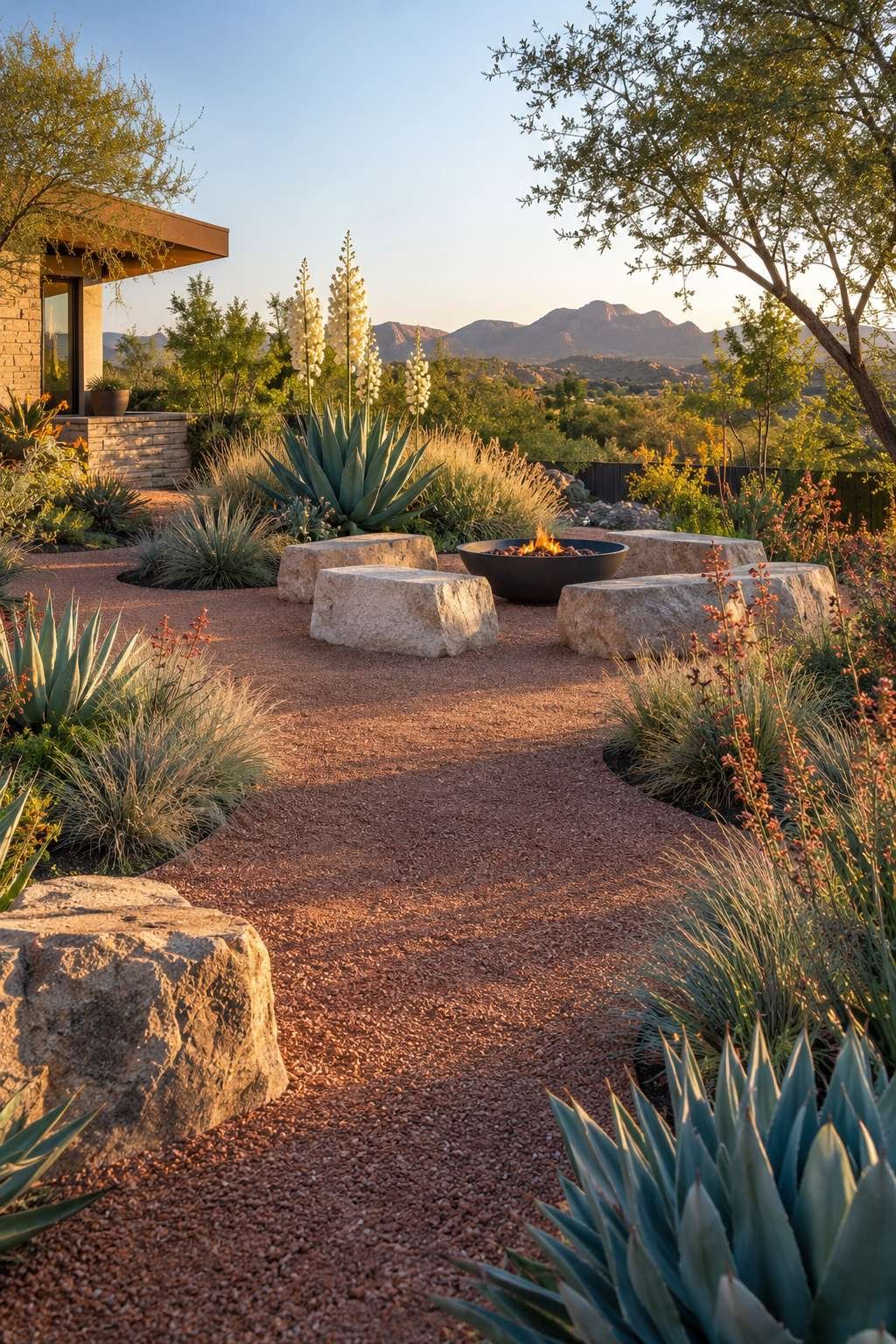
This design is especially well-suited to arid and semi-arid climates, where traditional lawns are impractical or unsustainable. Beyond its practicality, the xeriscape approach delivers striking year-round visual interest through plant form and texture alone, proving that water-wise landscaping can be every bit as beautiful as a lush, irrigated garden.
Key Design Tips:
- Choose drought-tolerant natives like agave and yucca for water efficiency
- Use decomposed granite for permeable, low-maintenance pathways
- Position boulders as functional, informal seating near fire features
- Group plants by sculptural form for maximum visual impact
- Add a steel fire bowl for a low-upkeep evening gathering spot
Transforming a backyard doesn’t require choosing just one of these directions — many homeowners find inspiration in blending elements from several styles to suit their climate, budget, and personal taste. Whether you’re drawn to the structured elegance of a Mediterranean terracotta patio, the low-maintenance practicality of a xeriscape dry garden, or the simple joy of a shaded reading nook, the common thread across every design here is intentionality: thoughtful material choices, layered plantings, and lighting that brings the whole space to life at different times of day.
The best backyard is one that reflects how you actually want to live outdoors — whether that means quiet solitude, lively gatherings, productive gardening, or safe space for children and pets. Use these fifteen concepts as a starting point, adapt them to your own yard’s size and climate, and don’t be afraid to mix materials and moods until the space feels distinctly yours. With the right combination of stone, wood, greenery, and light, even the simplest backyard can become one of the most cherished rooms in your home.
