


There’s something undeniably enchanting about cottage kitchens that captures our hearts and imaginations. These cozy culinary spaces evoke feelings of warmth, simplicity, and timeless beauty that modern designs sometimes lack. Whether nestled in a countryside retreat or recreated in an urban home, cottage kitchen aesthetics transport us to a gentler, more relaxed way of living.
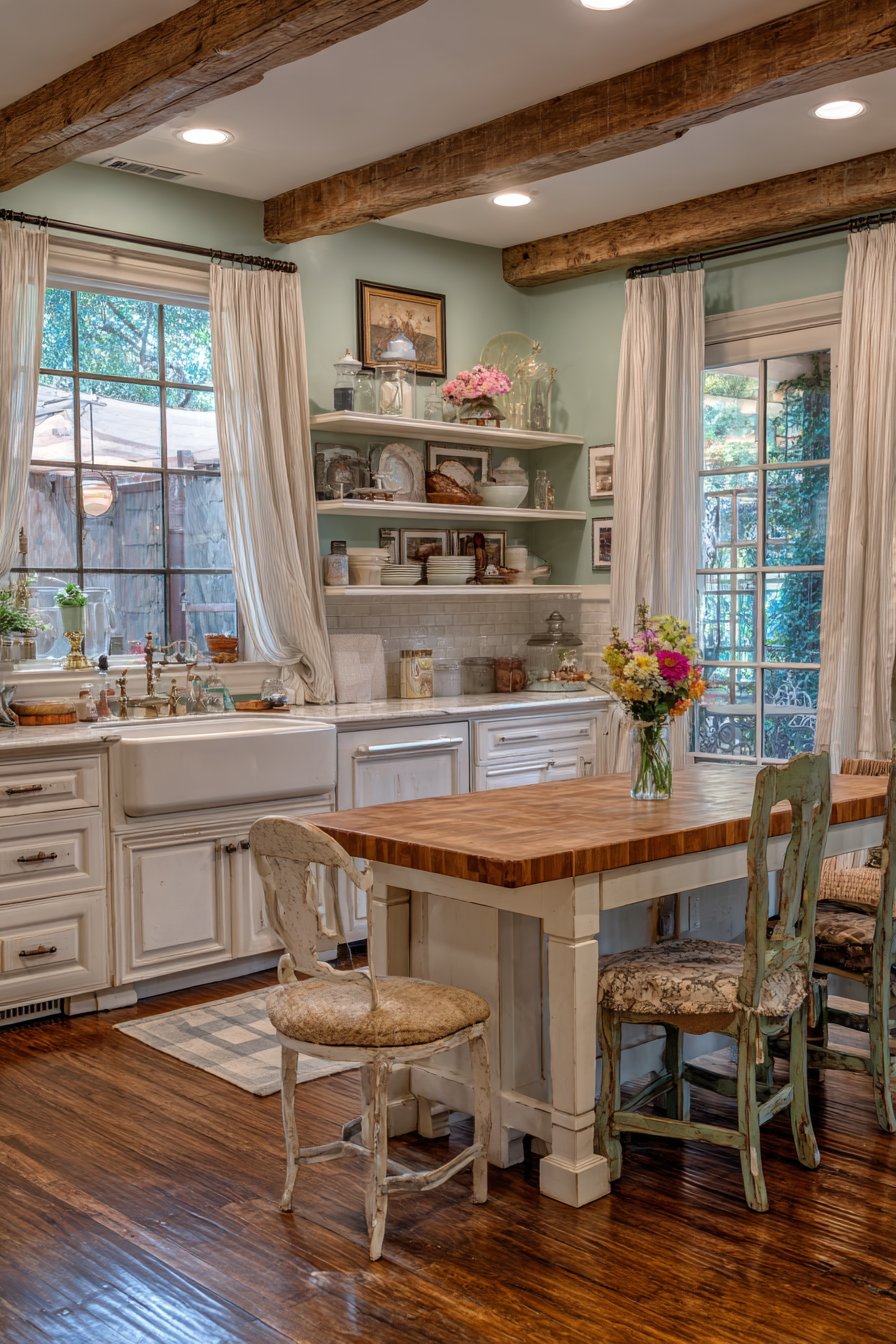
Thoughtful interior design transforms ordinary kitchens into extraordinary gathering spaces where families create memories and traditions flourish. The cottage style particularly excels at balancing functionality with charm, creating environments that feel both lived-in and lovingly maintained. This design approach caters to those who value authenticity, craftsmanship, and the beauty found in imperfection.
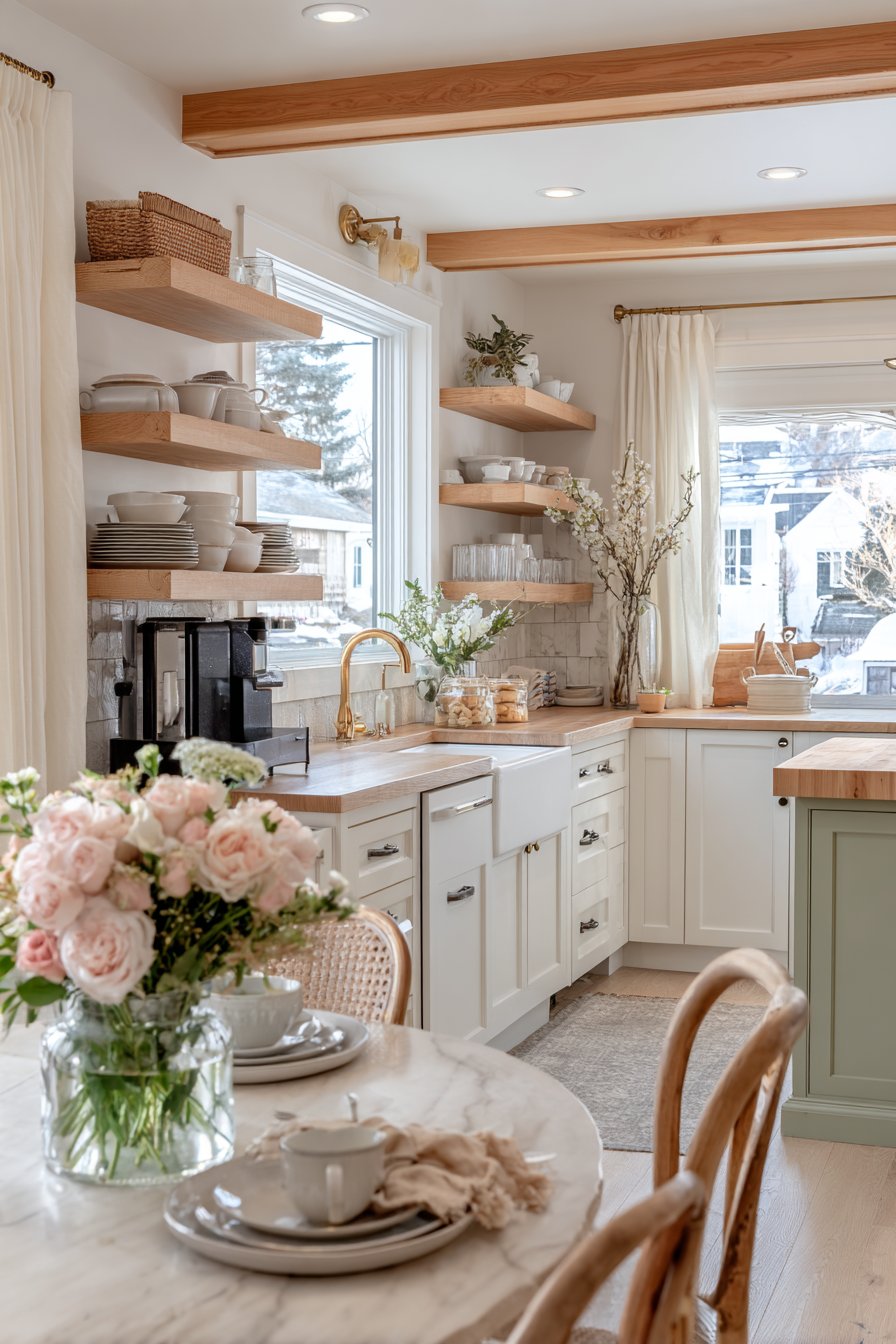
Throughout this article, we’ll explore the distinctive elements that make cottage kitchens irresistibly appealing. From architectural details to color palettes, these characteristics work together to create spaces that feel welcoming, practical, and deeply personal. Each element contributes to an overall atmosphere of unpretentious elegance that defines the cottage aesthetic.
1. Vintage-Inspired Color Palettes
Cottage kitchens embrace soft, soothing colors that create a sense of tranquility and timeless appeal. Whites, creams, sage greens, and powder blues dominate these spaces, often complemented by natural wood tones. These gentle hues reflect light beautifully, making even compact kitchens feel airy and spacious.
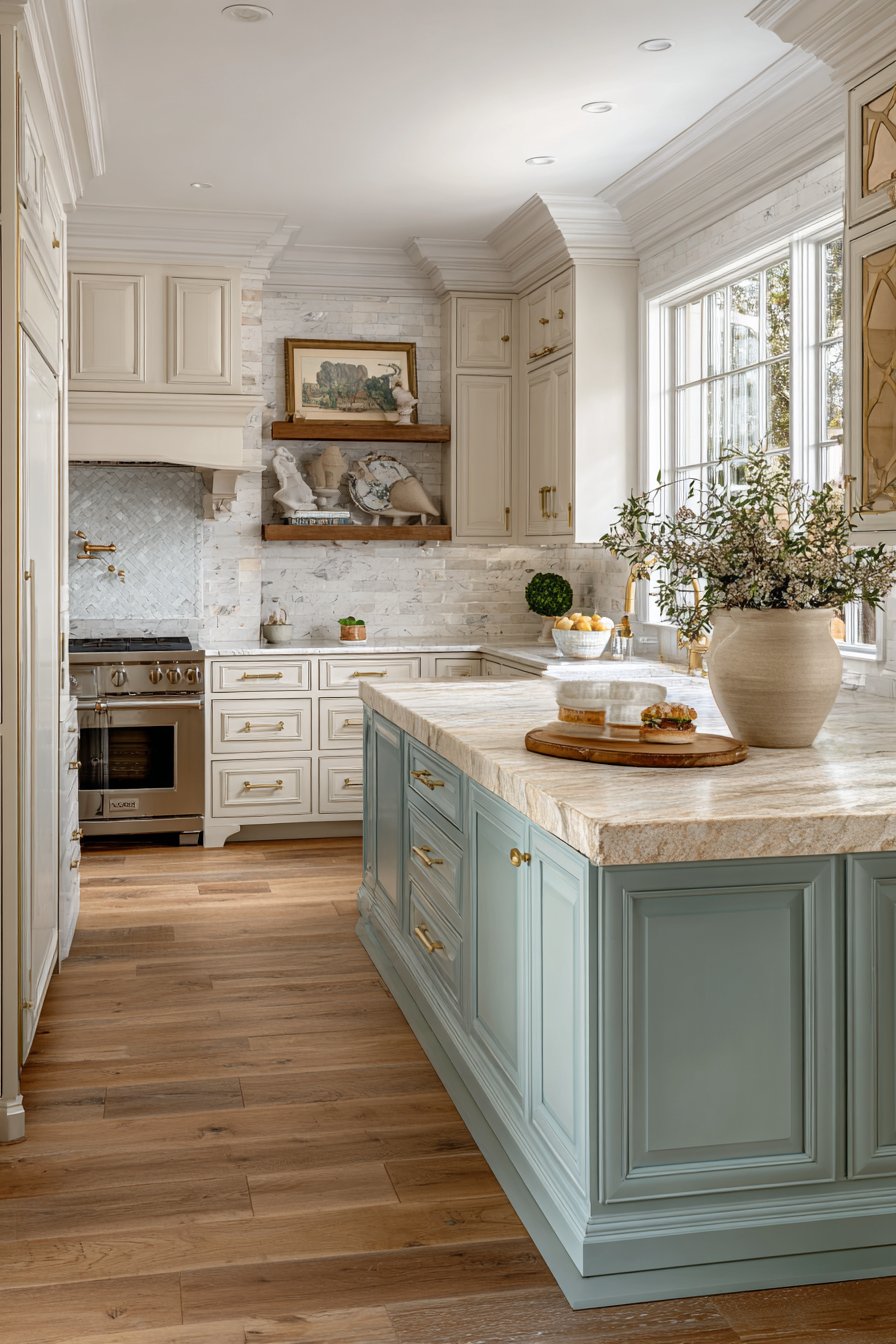
The color choices in cottage kitchens aren’t arbitrary—they’re rooted in historical authenticity and practical considerations. Lighter shades were traditionally used because they made spaces feel cleaner and more hygienic during an era before modern lighting. Today, these colors continue to provide a backdrop that allows other design elements to shine while maintaining visual coherence.
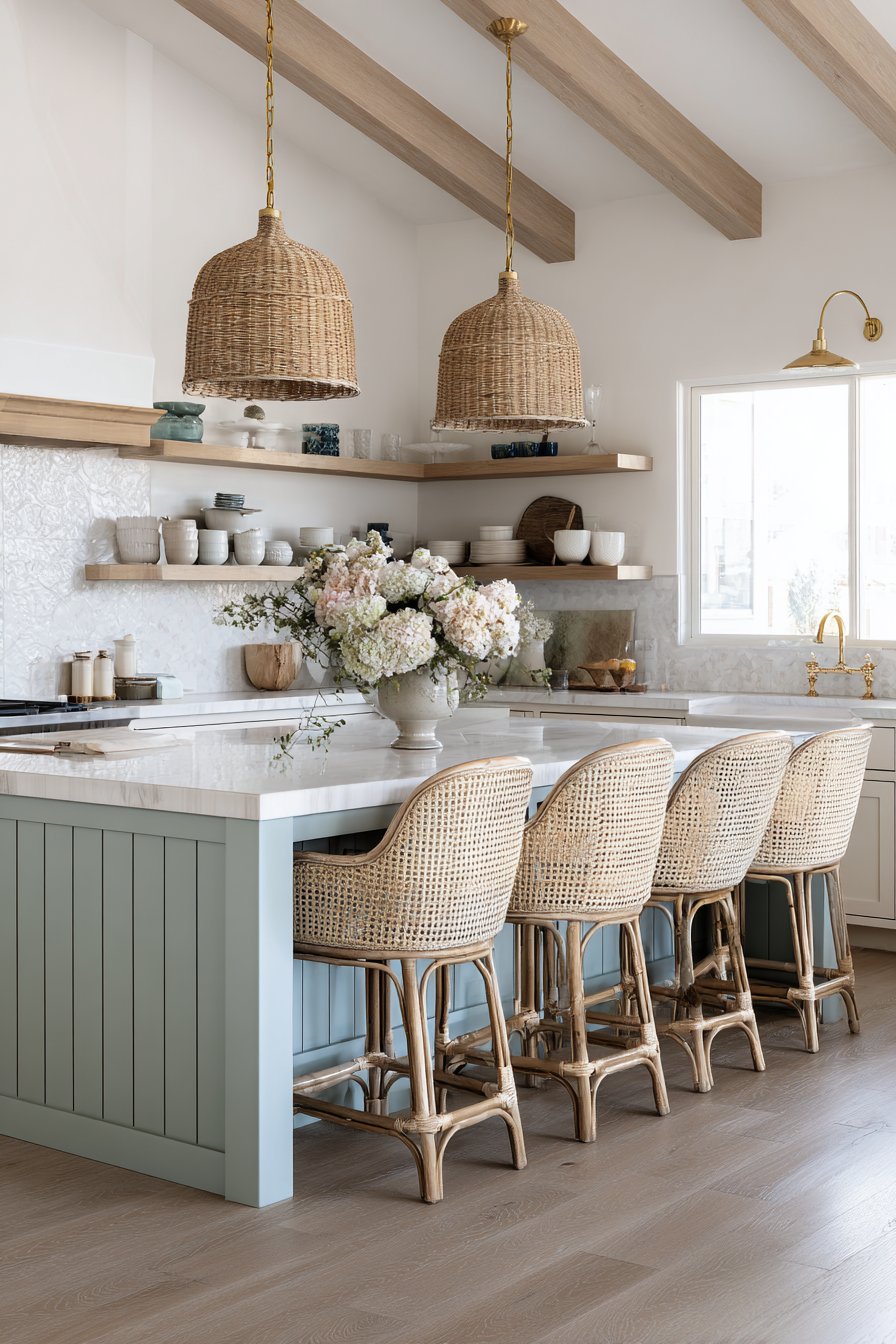
Strategic color placement enhances the cottage charm further. Painted beadboard wainscoting in soft white contrasts beautifully with sage cabinet uppers, while distressed finishes add character and depth. The key is layering various shades within the same color family to create subtle visual interest without overwhelming the space.
- Choose muted, nature-inspired colors like buttercream, seafoam, or lavender
- Paint cabinets in classic white or cream for maximum versatility
- Add depth with slightly darker island bases or accent walls
- Consider soft pastels for a cheerful, vintage farmhouse feel
- Use chalk paint for an authentic, slightly worn appearance
- Test colors in different lighting conditions before committing
2. Open Shelving and Display Storage
Open shelving embodies the cottage kitchen philosophy of accessibility and display-worthy organization. Unlike closed cabinets that hide everything away, open shelves invite you to showcase beautiful dishware, vintage collections, and everyday essentials. This approach makes the kitchen feel more personal and lived-in rather than sterile or overly formal.
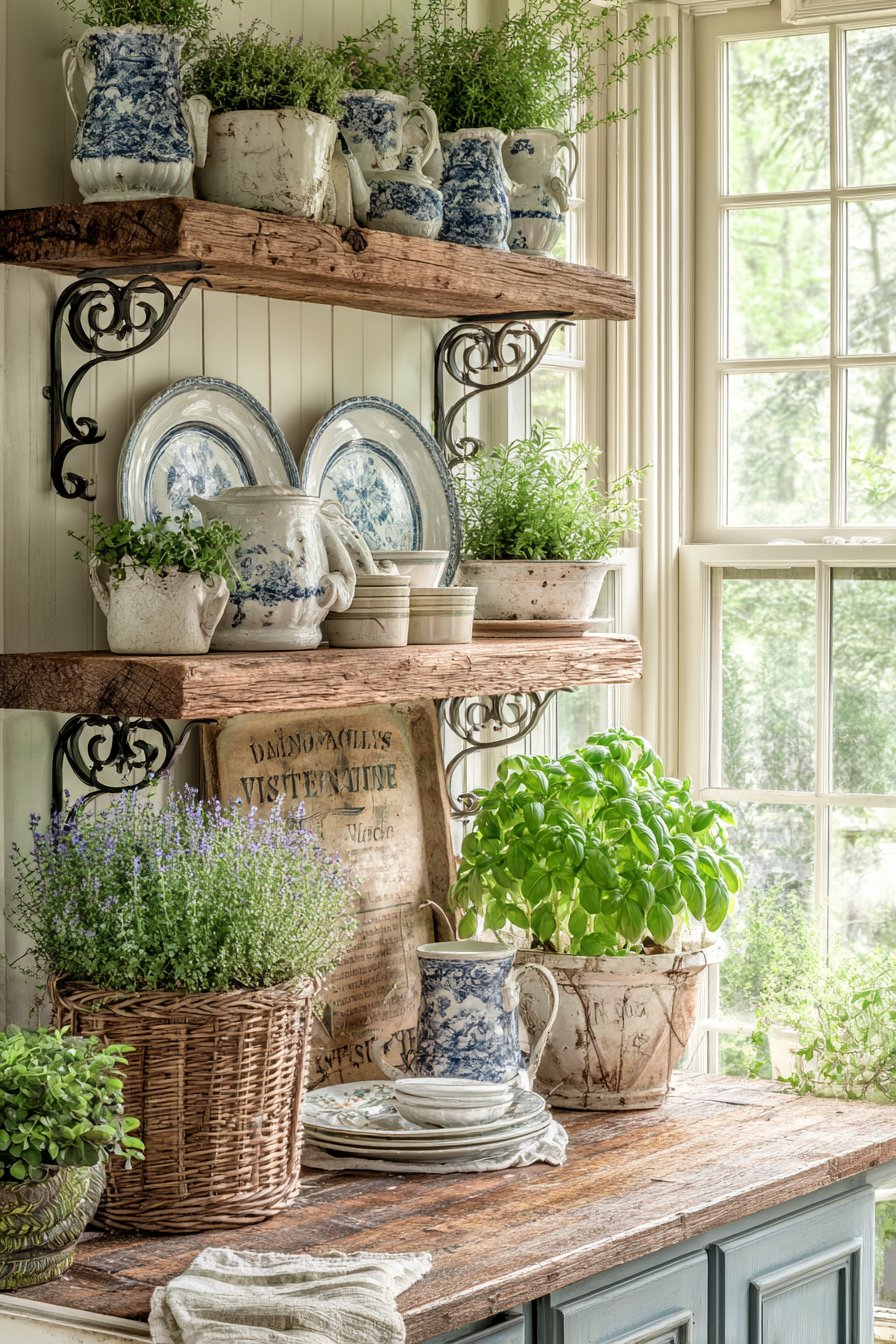
The practical benefits extend beyond aesthetics. Open shelving encourages you to keep only what you truly love and use, promoting a more curated, clutter-free environment. Items remain easily accessible for daily cooking activities, and the visual openness prevents the kitchen from feeling cramped or closed-in.
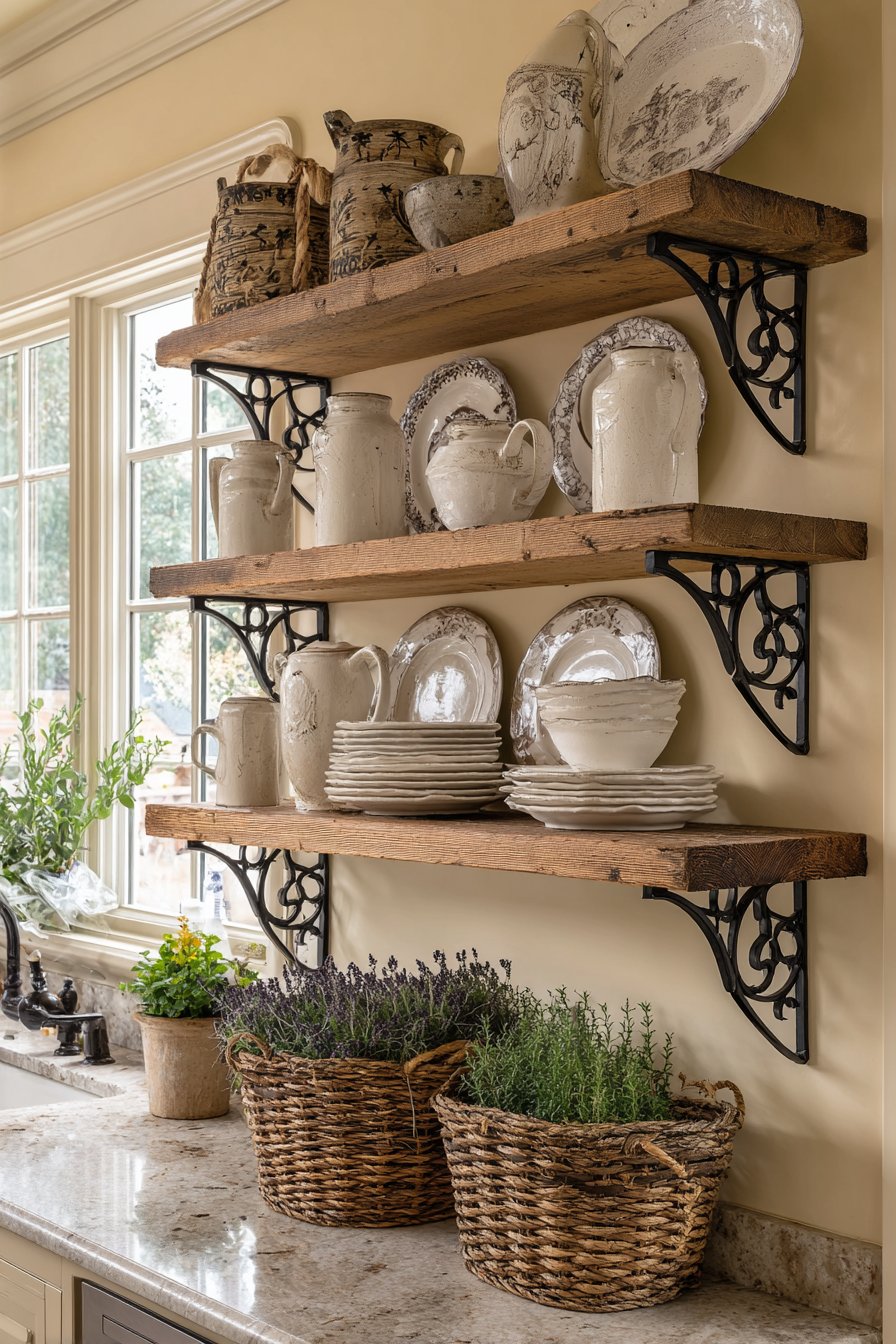
Installing open shelves requires thoughtful planning and honest assessment of your organizational habits. Rustic wooden shelves with decorative brackets or simple floating shelves both work beautifully in cottage settings. The key is maintaining an artful arrangement that looks intentional rather than chaotic, grouping items by color, size, or function.
- Display white ironstone, transferware, or vintage ceramic collections
- Use woven baskets on shelves for concealing less attractive items
- Arrange items with varying heights to create visual interest
- Keep daily-use items within easy reach on lower shelves
- Incorporate small plants or herbs for freshness and color
- Rotate seasonal displays to keep the look dynamic and engaging
3. Farmhouse Sink Installations
The apron-front farmhouse sink stands as an iconic centerpiece in cottage kitchens, commanding attention with its deep basin and exposed front panel. These sinks originated from practical necessity—their depth accommodated large pots and washing tasks before modern conveniences. Today, they serve as both functional workhorses and stunning design statements.
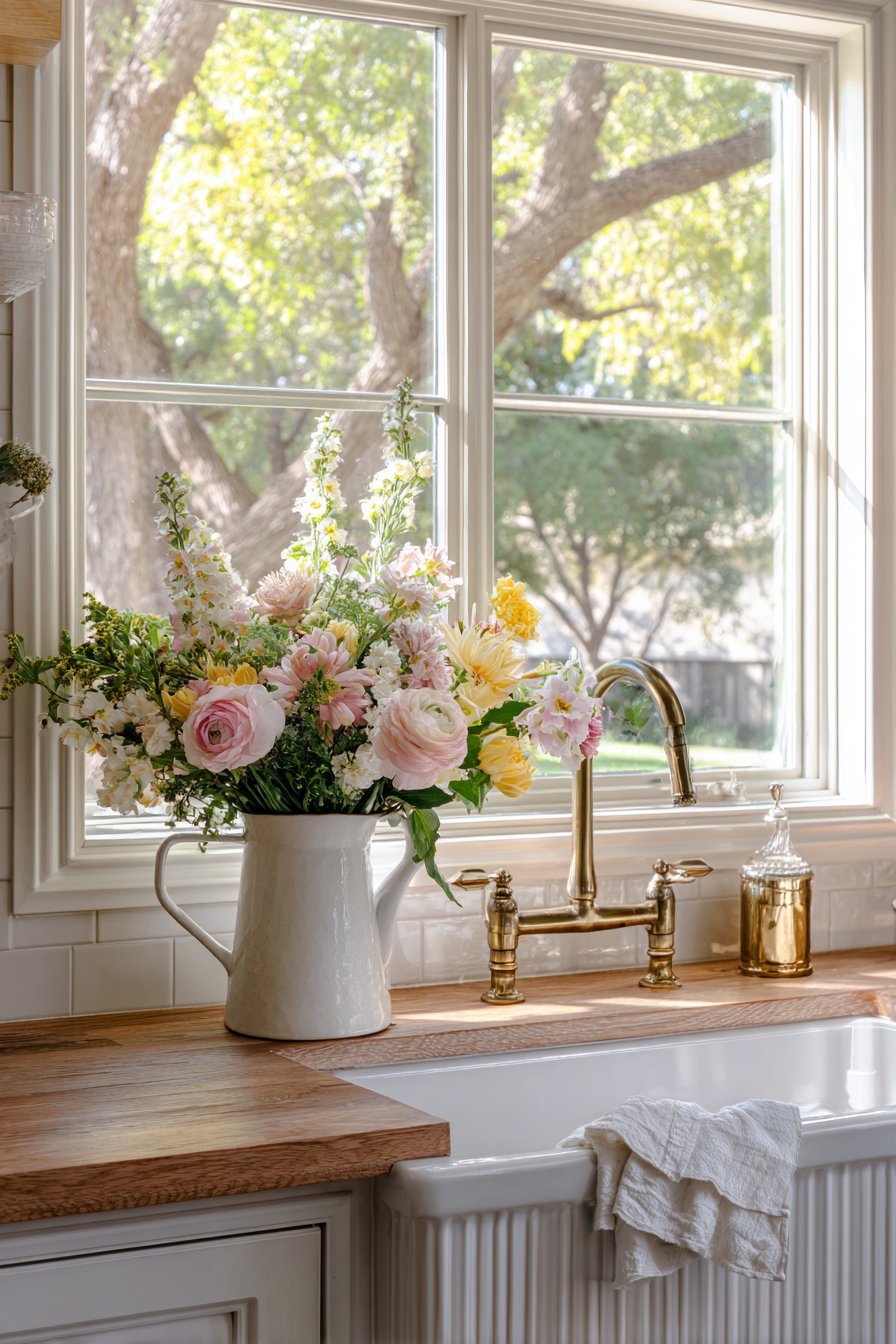
Beyond their visual appeal, farmhouse sinks offer genuine practical advantages. The extra-deep basin easily handles oversized cookware, baking sheets, and stockpots that struggle in standard sinks. The forward positioning reduces back strain during extended washing sessions, while the exposed front eliminates the cabinet face that typically blocks close access.
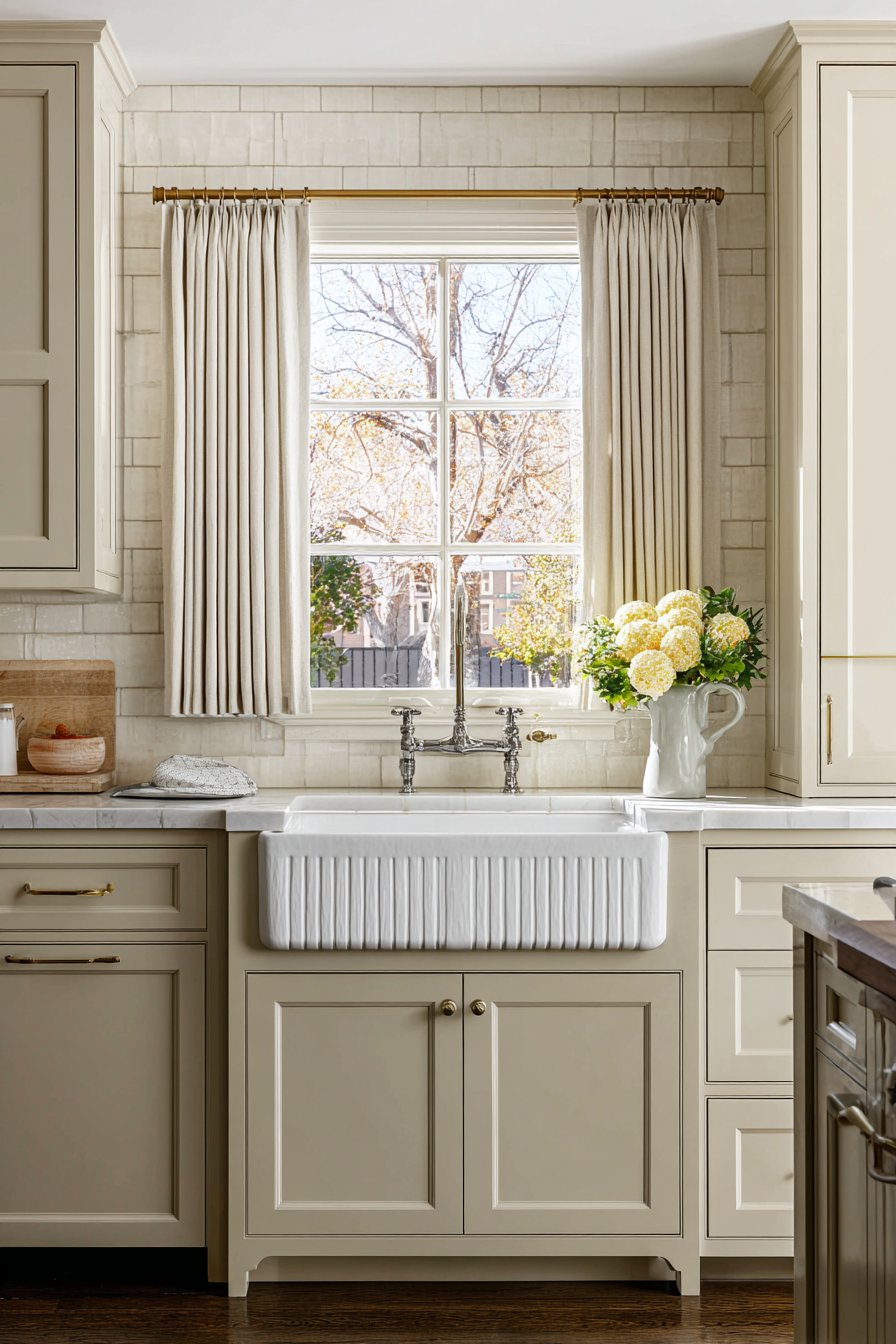
Material choices significantly impact both appearance and maintenance requirements. Classic white fireclay offers timeless beauty and exceptional durability, developing a lovely patina over time. Stainless steel versions provide contemporary contrast while maintaining cottage charm, and copper options add warmth and antimicrobial properties to the space.
- Choose fireclay for authentic vintage appeal and chip resistance
- Ensure proper cabinet support for the sink’s considerable weight
- Consider a single basin for maximum flexibility and space
- Install the sink slightly forward to reduce splash on the floor
- Pair with bridge-style or wall-mounted faucets for period accuracy
- Plan for 36-inch minimum base cabinet width for comfortable installation
4. Natural Wood Elements and Exposed Beams
Exposed wooden beams and natural wood accents infuse cottage kitchens with organic warmth and architectural interest. These elements create visual texture while connecting the space to nature and traditional building methods. Whether original to the structure or added for aesthetic purposes, beams draw the eye upward and add dimension.
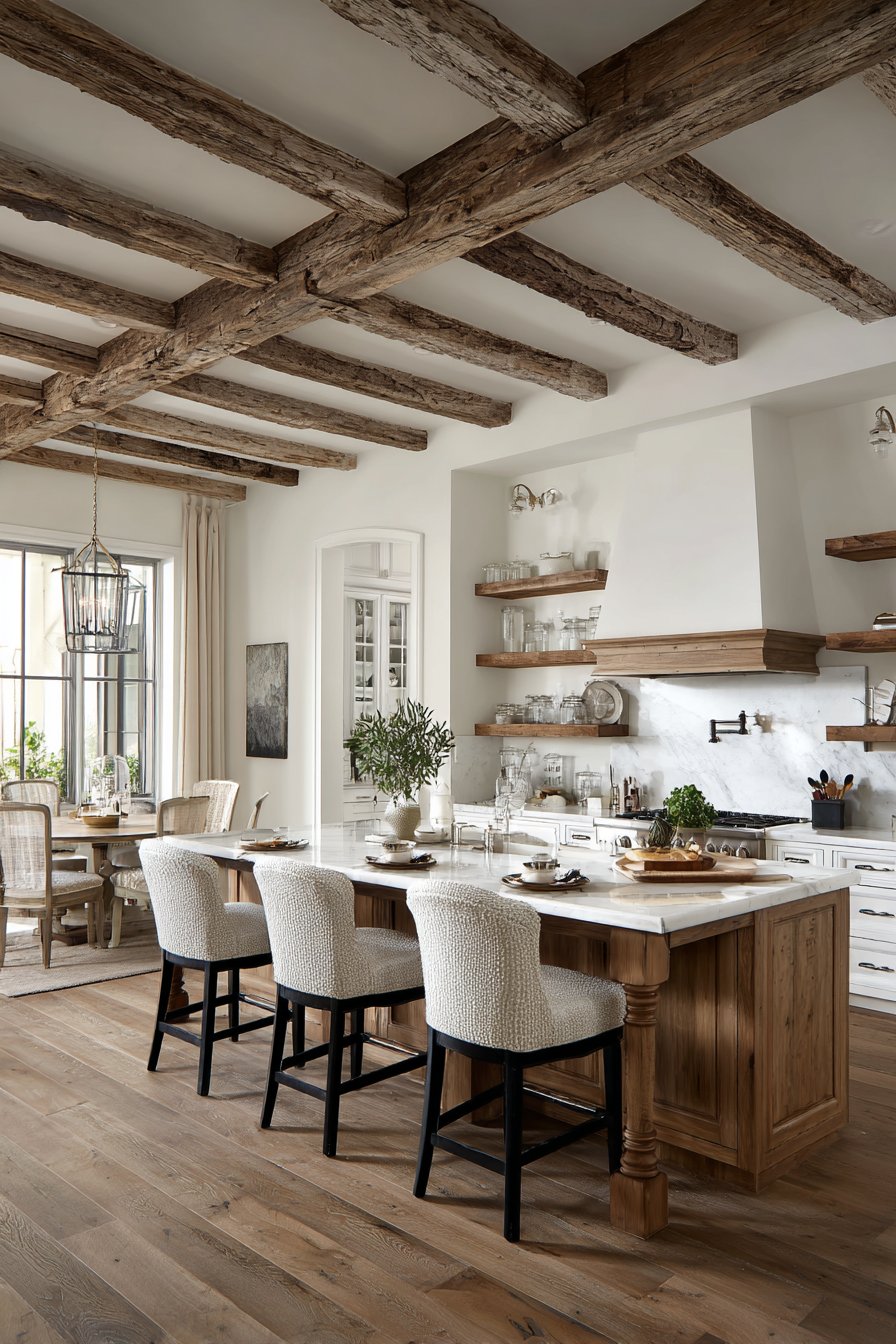
Wood species selection dramatically influences the overall atmosphere. Reclaimed barn wood brings authentic character with visible nail holes, weathering, and varied patina. Lighter woods like pine or birch maintain an airy feel, while darker oak or walnut adds richness and grounding weight to the design.
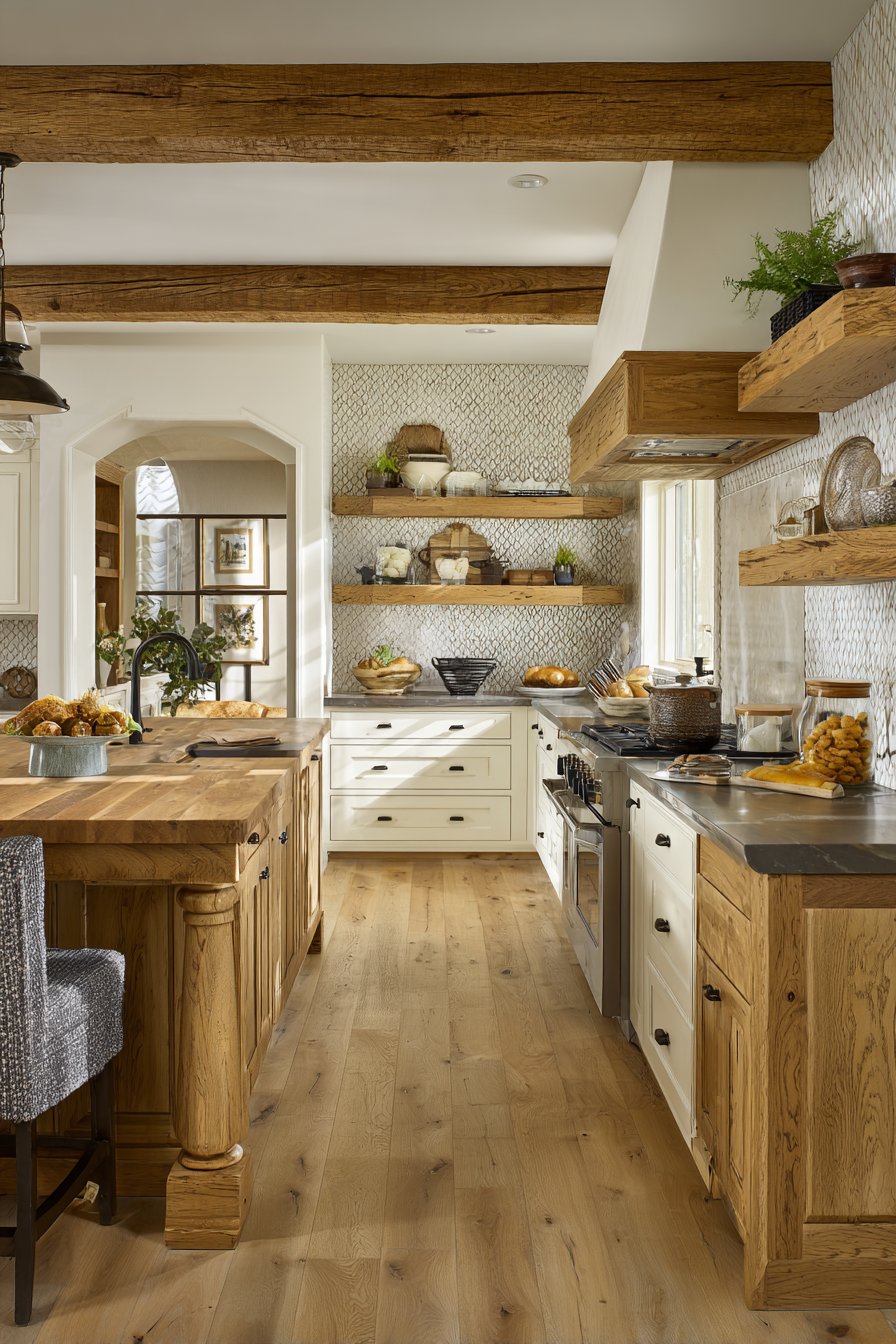
Incorporating wood extends beyond structural beams to butcher block countertops, floating shelves, furniture-style islands, and wood-planked ceilings. The key is balancing wooden elements with other materials to prevent the space from feeling too heavy or monotone. Strategic placement ensures wood enhances rather than overwhelms the cottage aesthetic.
- Use reclaimed wood for authentic character and sustainability
- Apply natural oils or clear finishes to enhance grain patterns
- Mix wood tones thoughtfully, limiting to two or three varieties
- Consider shiplap or tongue-and-groove paneling for walls or ceilings
- Add wooden corbels or brackets under shelves for architectural detail
- Balance dark wood elements with lighter painted surfaces for contrast
5. Vintage Lighting Fixtures
Period-appropriate lighting completes the cottage kitchen atmosphere while providing essential task and ambient illumination. Pendant lights with metal shades, glass globe fixtures, and candle-style chandeliers all evoke nostalgic charm. These fixtures serve as functional art pieces that anchor the space and reinforce the overall design narrative.
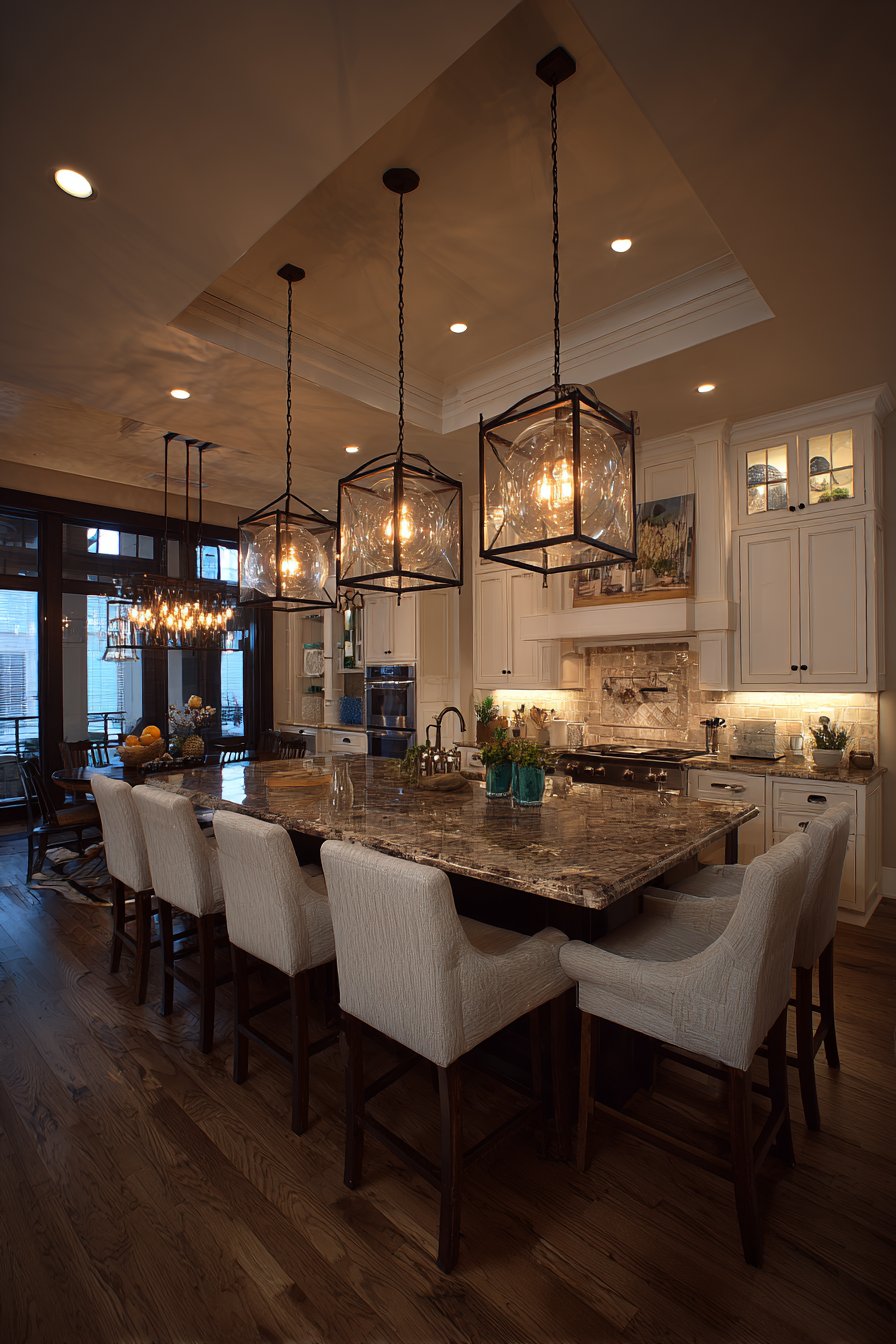
The magic lies in selecting lights that feel authentic rather than costume-like. Brushed nickel, oil-rubbed bronze, or aged brass finishes work beautifully in cottage settings, offering subtle sophistication without excessive shine. Glass elements—whether clear, seeded, or milk glass—add translucency and vintage character that enhances the welcoming atmosphere.
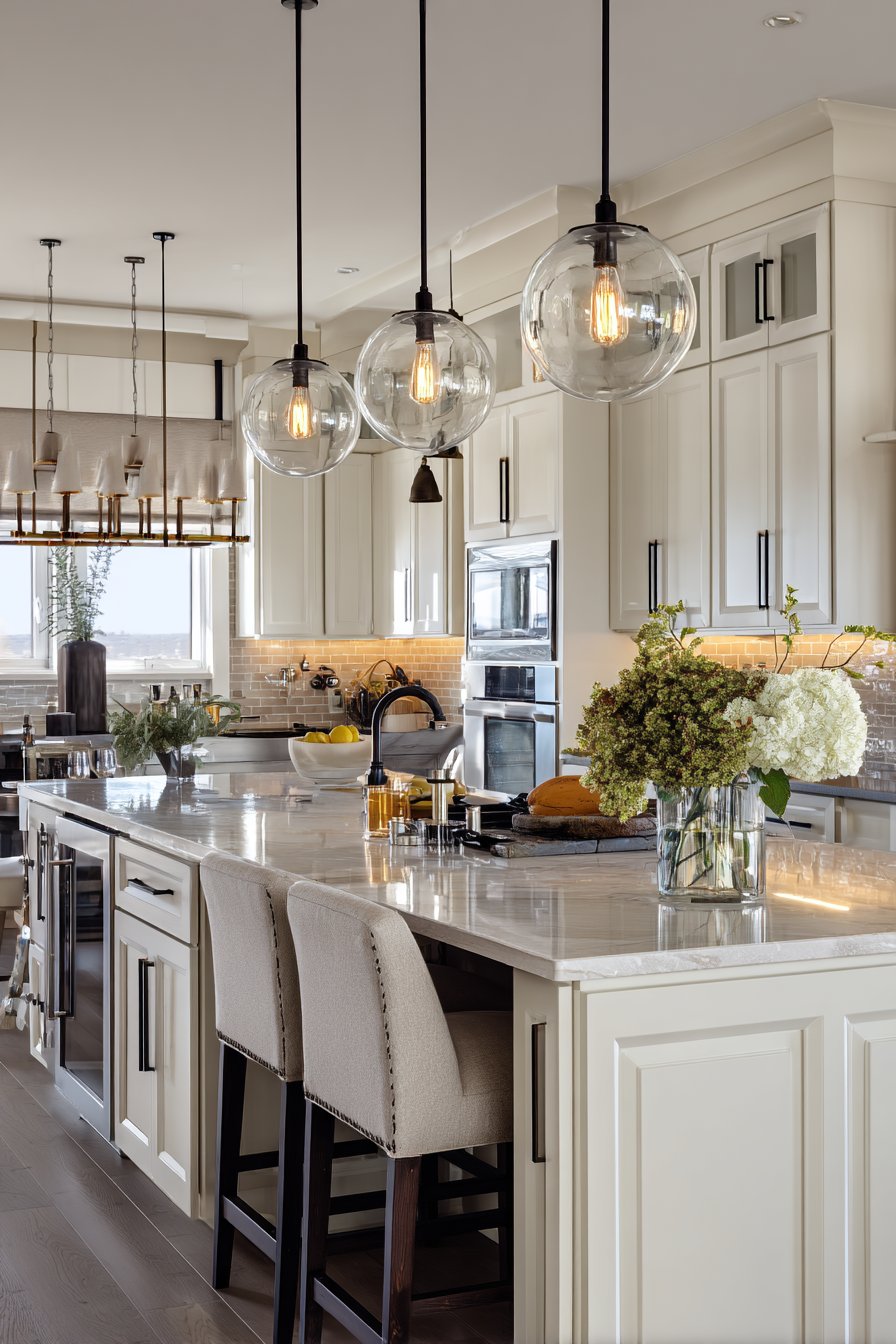
Layered lighting proves essential in cottage kitchens where functionality meets beauty. Combine overhead fixtures with under-cabinet lighting, sconces flanking windows or open shelving, and pendant lights above islands or dining areas. This approach creates warmth and flexibility while accommodating various tasks and moods throughout the day.
- Install schoolhouse pendants above islands for classic cottage appeal
- Choose fixtures with Edison bulbs for authentic vintage glow
- Add dimmer switches to adjust the ambiance for different occasions
- Consider lantern-style fixtures for entryway or breakfast nook areas
- Use sconces beside windows instead of traditional over-sink lighting
- Match metal finishes throughout the kitchen for cohesive design
6. Decorative Details and Personal Touches
The true charm of cottage kitchens emerges through thoughtful decorative details that reflect personality and history. Vintage signs, botanical prints, antique utensils, and collected treasures transform generic spaces into deeply personal environments. These elements tell stories and create connections that purely functional kitchens cannot achieve.
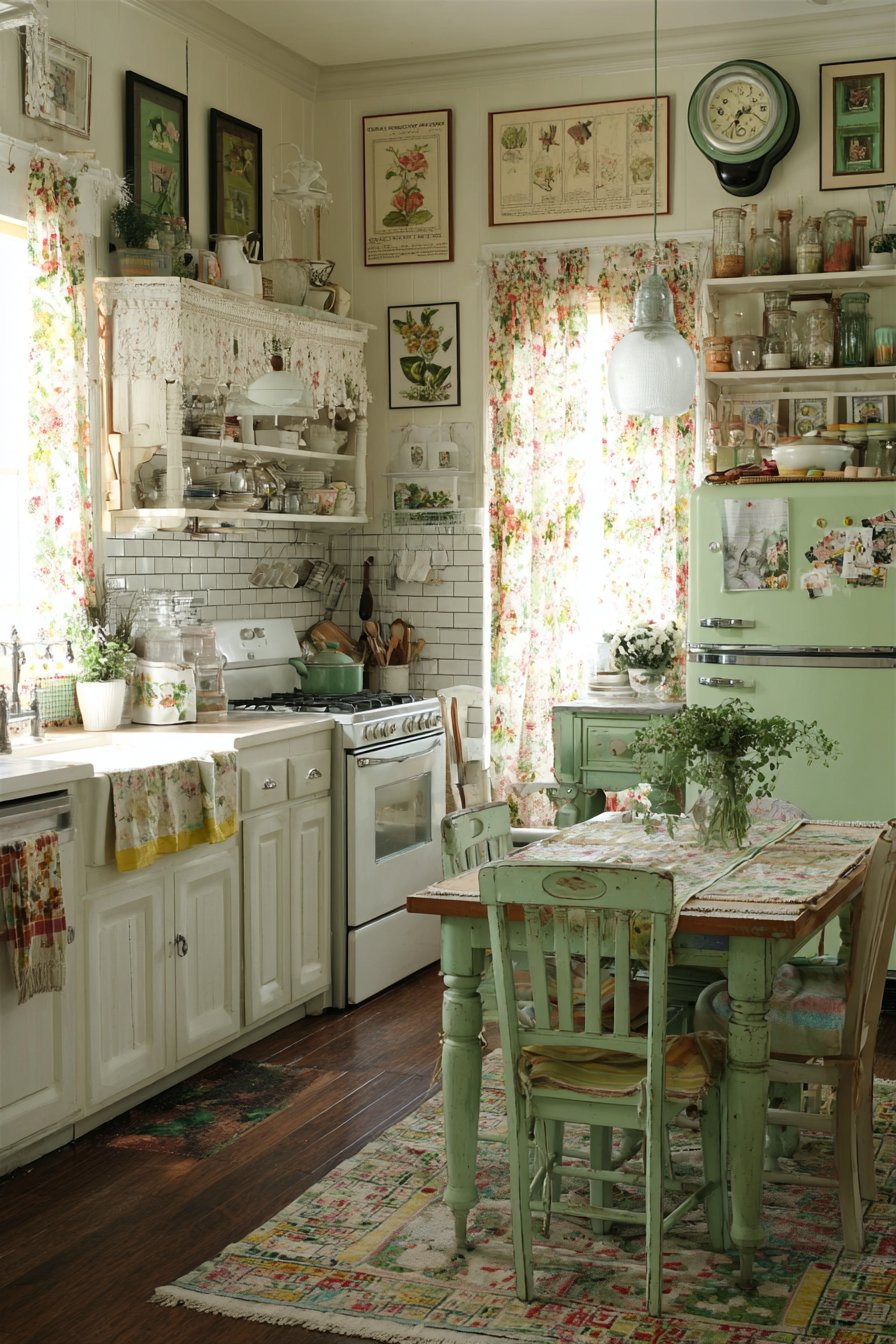
Textiles play a crucial role in softening the kitchen’s harder surfaces while introducing pattern and color. Café curtains, vintage tea towels, patterned seat cushions, and rag rugs all contribute layers of comfort and visual interest. These fabric elements are easily changed seasonally, allowing the space to evolve without major renovations.
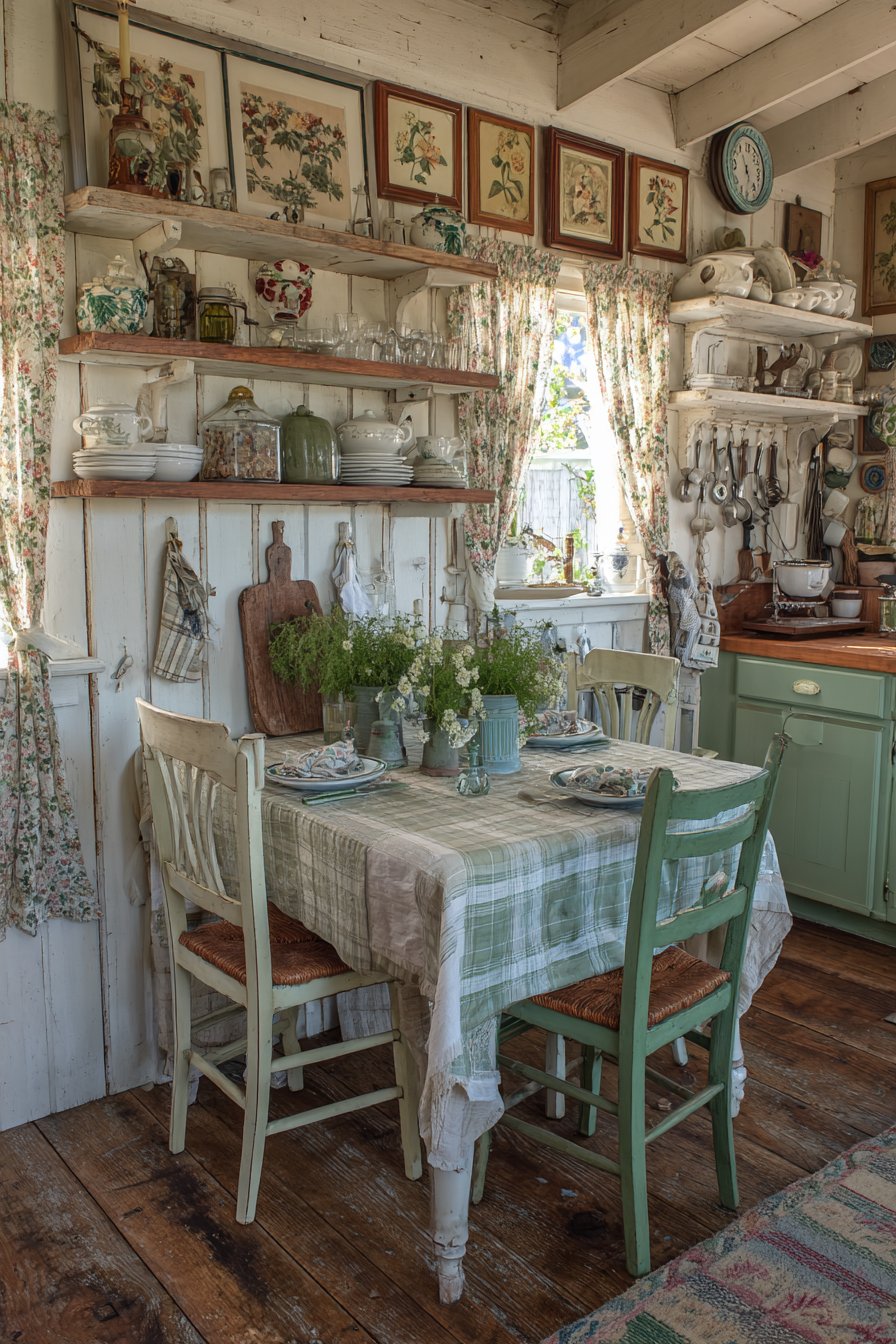
The cottage aesthetic celebrates imperfection and accumulated character rather than showroom perfection. Mismatched chairs around a farmhouse table, chipped enamelware displayed on shelves, and worn wooden cutting boards create authentic lived-in appeal. This approach gives you permission to mix high and low, old and new, creating spaces that feel genuine and welcoming.
- Display vintage kitchen tools as wall art or shelf decor
- Incorporate fresh flowers or herb bouquets in mason jars
- Add patterned dish towels in coordinating cottage colors
- Hang a vintage clock or chalkboard for functional decoration
- Use open shelving to showcase cookbook collections and pottery
- Include family heirlooms or flea market finds for personal history
Cottage kitchens captivate us because they prioritize comfort, authenticity, and human connection over sterile perfection. These spaces remind us that kitchens are for living, not just looking at in magazines. By incorporating vintage-inspired colors, open shelving, farmhouse sinks, natural wood, period lighting, and personal touches, you create an environment that welcomes family and friends while supporting daily life.
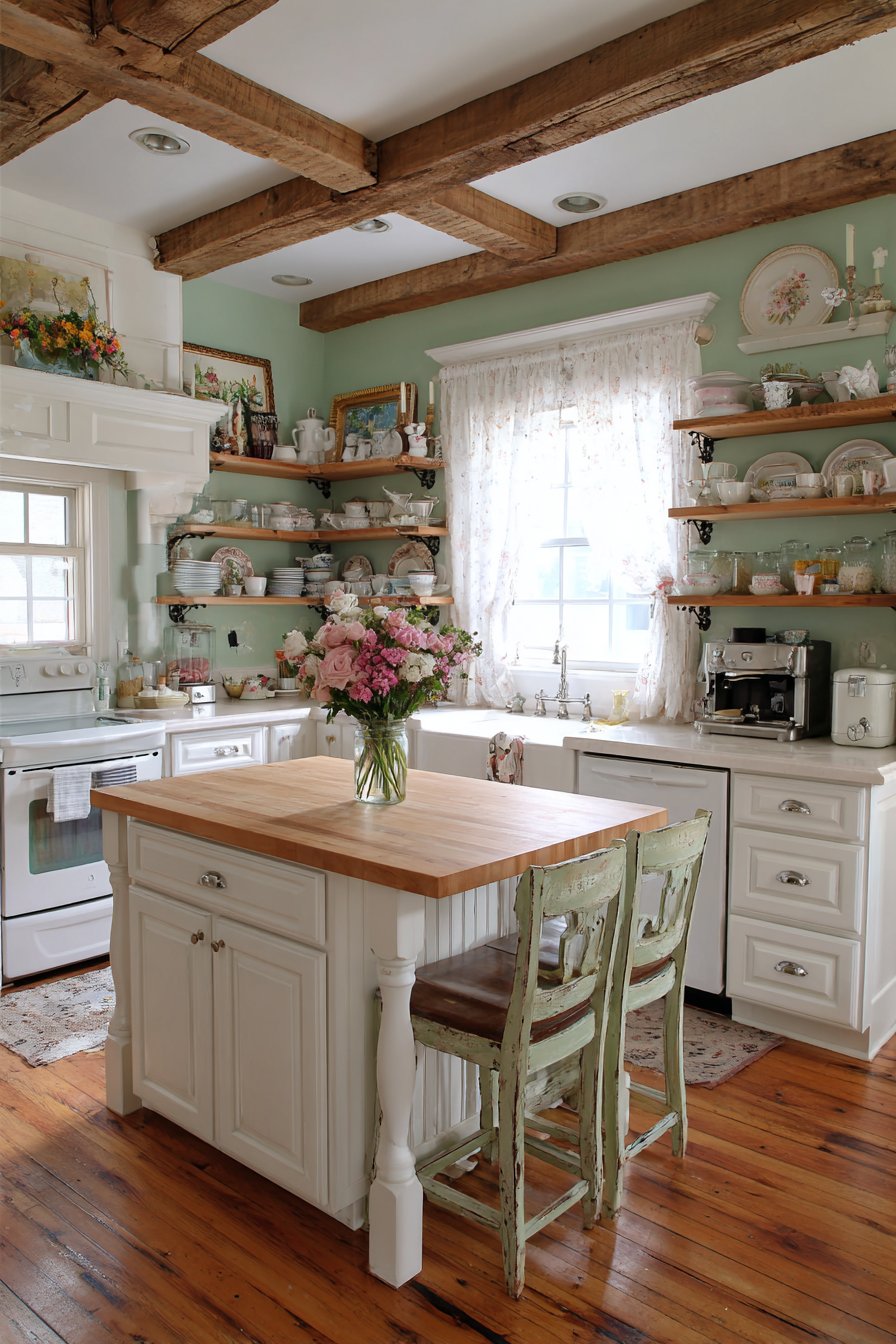
Don’t feel pressured to implement every element at once—cottage charm develops gradually through thoughtful additions and discovered treasures. Start with one or two changes that resonate most deeply, whether that’s painting cabinets a softer shade or installing open shelving. The beauty of cottage design lies in its forgiving nature and celebration of imperfection, making it accessible regardless of budget or skill level. Let your kitchen tell your story while embracing the timeless appeal that makes cottage spaces so enduringly charming.
