


The heart of every home deserves a design that reflects personality, culture, and warmth. When it comes to creating spaces that blend functionality with artistic expression, few design styles rival the authentic charm of Mexican kitchen aesthetics. Rooted in centuries of craftsmanship and cultural heritage, Mexican kitchen design celebrates the beauty of handmade artisanship, vibrant color palettes, and natural materials that create spaces filled with character and soul. From the iconic hand-painted Talavera tiles to the rustic warmth of reclaimed wood and terracotta, every element tells a story of tradition, family, and the joy of gathering.
Mexican kitchen design represents more than just a decorative choice—it embodies a lifestyle that values authenticity, warmth, and the celebration of everyday moments. These spaces seamlessly combine practical functionality with artistic beauty, creating environments where cooking becomes an experience and gathering feels like coming home. The use of natural materials, handcrafted details, and bold color combinations transforms ordinary kitchens into extraordinary spaces that engage all the senses.
This comprehensive guide explores ten distinctive Mexican kitchen designs, each showcasing unique elements that capture the essence of this beloved style. From vibrant Talavera tile installations to rustic wooden beam ceilings, from copper farmhouse sinks to hand-carved furniture, we’ll delve into the details that make Mexican kitchens so captivating. Whether you’re planning a complete kitchen renovation or simply looking to infuse your space with authentic Mexican character, these design concepts offer inspiration and practical guidance for creating a kitchen that radiates warmth, personality, and timeless appeal. Our transitional design so timeless has more inspiration along these same lines.
1. Vibrant Talavera Tile Backsplash with Rustic Wood Cabinetry
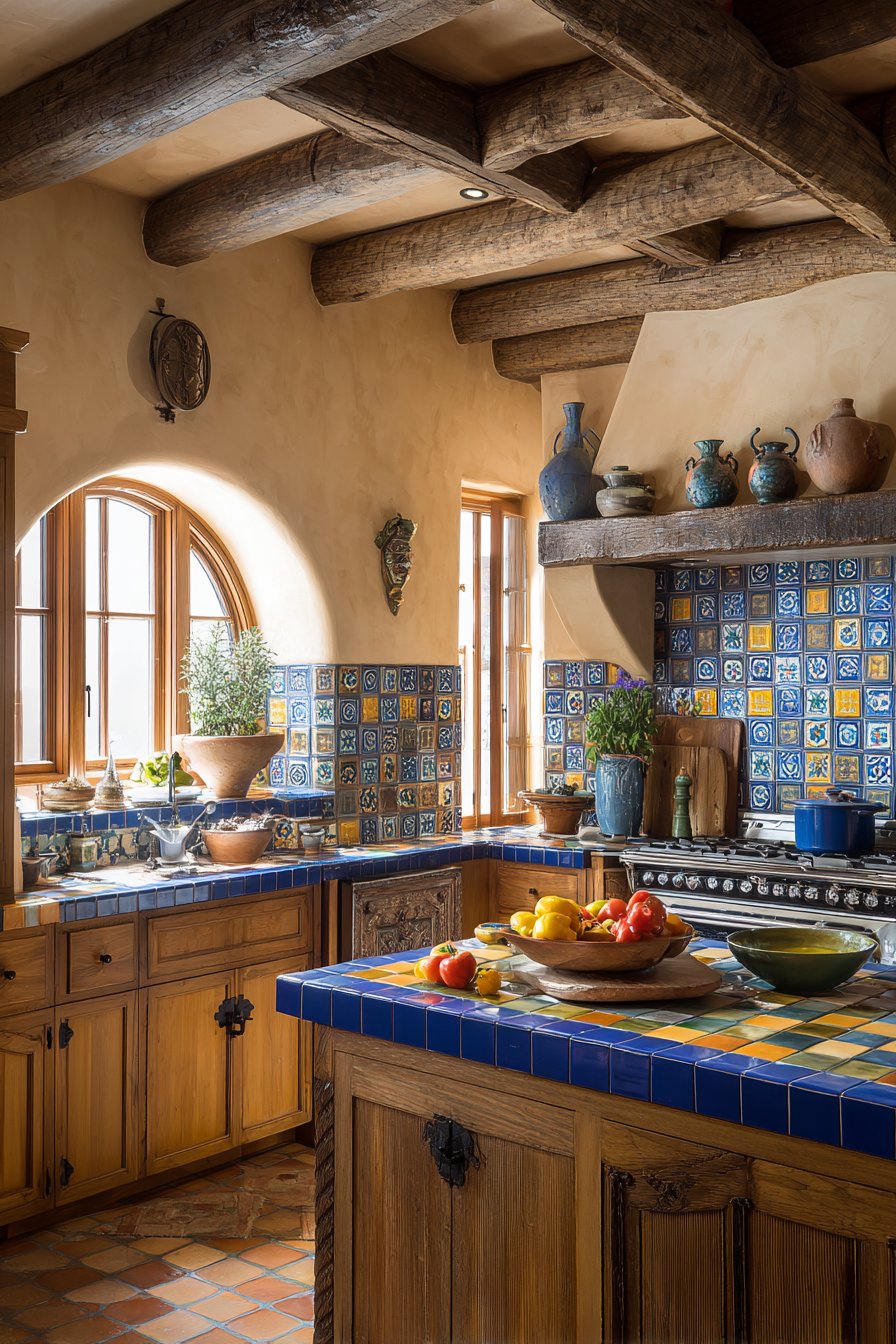
Step into a kitchen where color and craftsmanship create an unforgettable first impression. The centerpiece of this design is a stunning backsplash featuring hand-painted Talavera tiles in rich cobalt blue, sunny yellow, and warm terracotta patterns. Each tile is a work of art, showcasing the centuries-old tradition of Mexican ceramic craftsmanship.
The intricate patterns dance across the wall behind the rustic stove, creating a focal point that draws the eye and celebrates the beauty of handmade artistry. The glazed surfaces catch and reflect natural light, making the colors appear to shift and shimmer throughout the day. Our this blue french country kitchen ideas has more inspiration along these same lines.
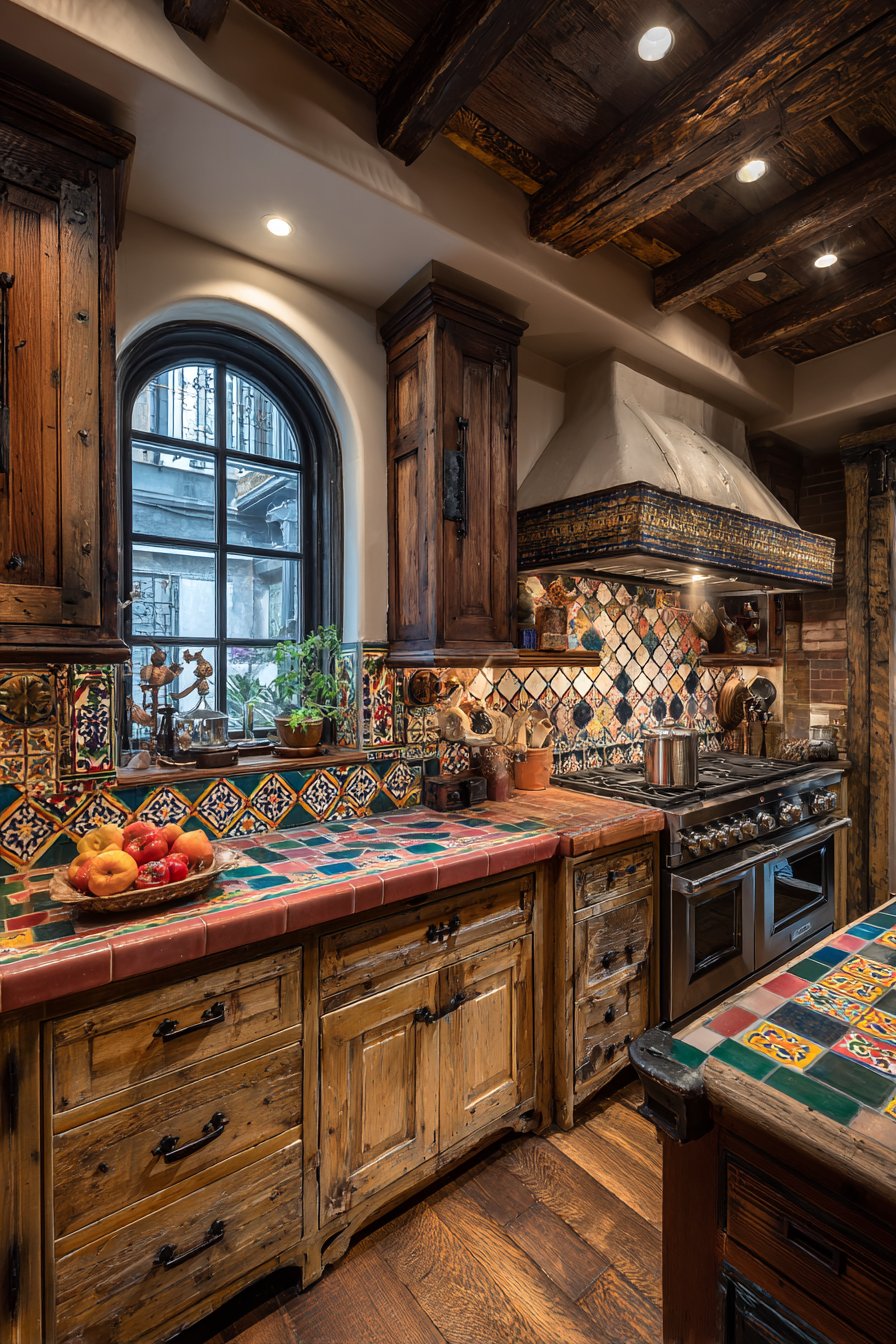
The distressed wooden cabinetry in warm honey tones provides the perfect complement to the vibrant tile work. The wood shows character through its natural grain patterns and deliberately aged finish, which adds depth and authenticity to the space. Wrought iron hardware—handles and hinges with hand-forged details—punctuates the cabinetry, introducing an element of old-world charm that ties the design together. Above, exposed wooden beams span the ceiling, their rough-hewn texture and natural color adding architectural interest while maintaining the rustic aesthetic that defines authentic Mexican design.
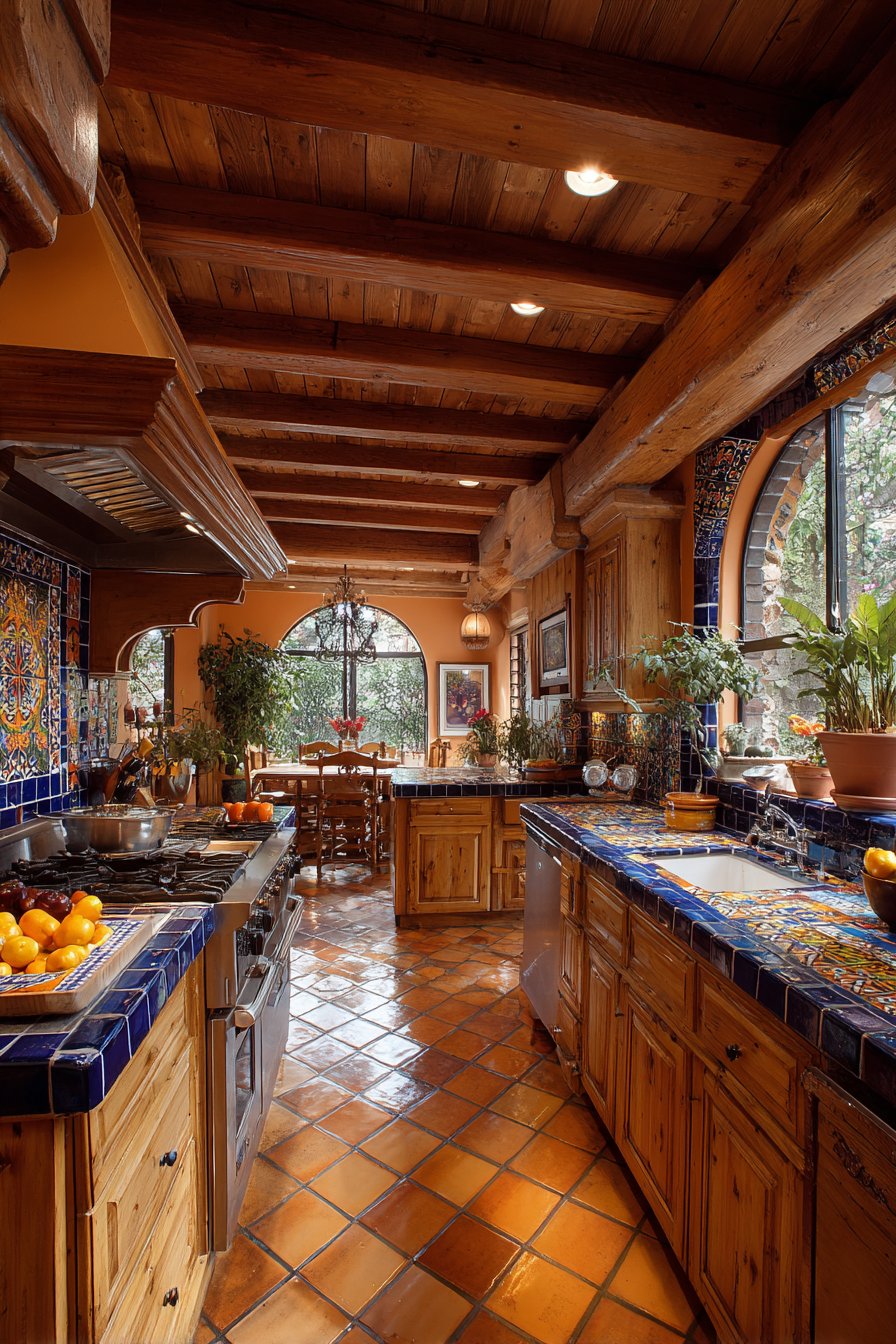
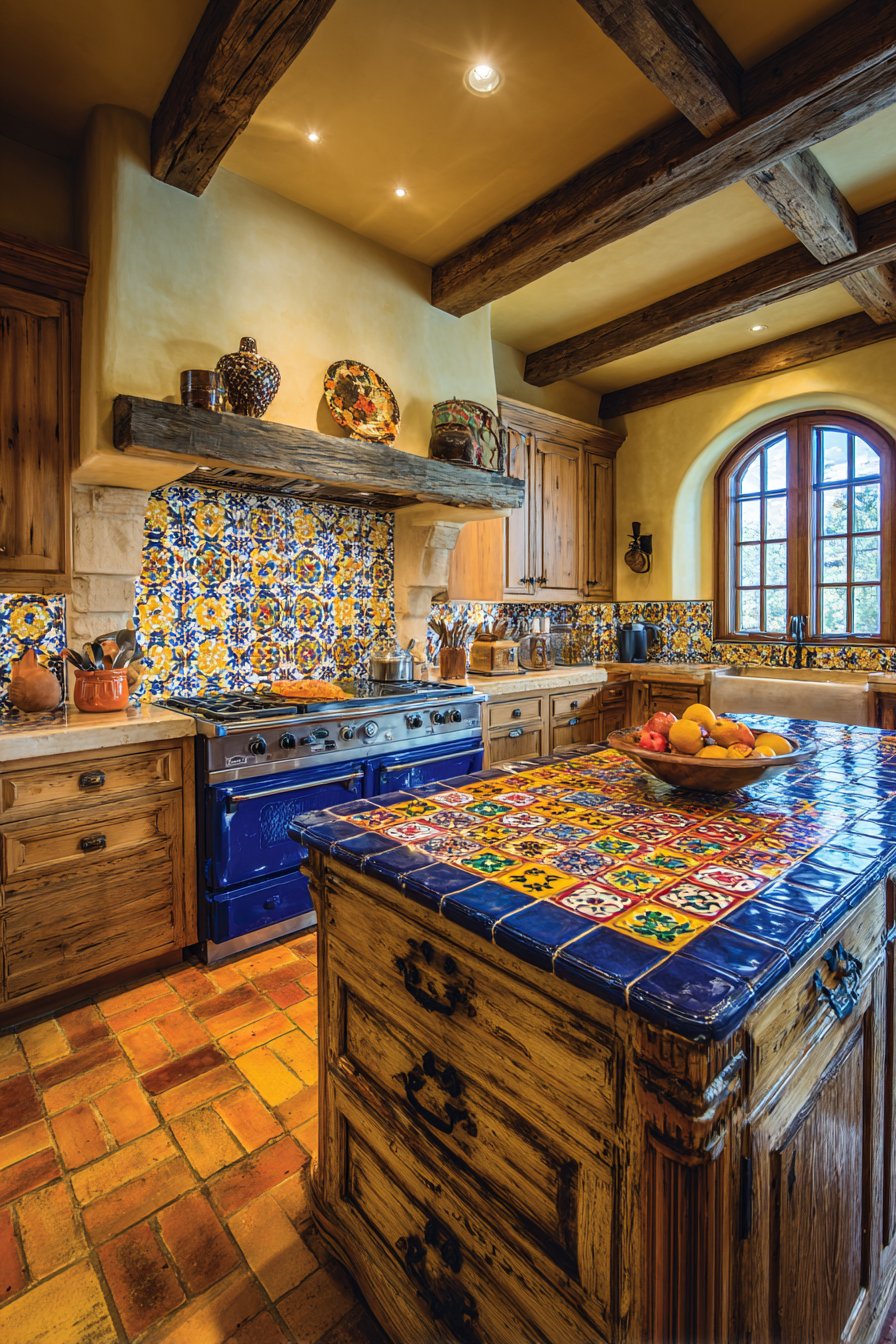
The central island serves as both a functional workspace and an artistic statement. Its countertop features a colorful ceramic tile inlay that echoes the backsplash patterns while introducing new geometric designs. This creates visual continuity throughout the space while preventing monotony. An arched window—a signature element of Mexican architecture—frames views of the outdoors while flooding the kitchen with natural sunlight. The gentle curves of the arch soften the space and provide a romantic counterpoint to the angular cabinetry and tile work.
Key Design Tips:
- Select hand-painted Talavera tiles with complementary but varied patterns to create visual interest without overwhelming the space
- Choose distressed wood cabinetry in warm honey or amber tones to provide a neutral backdrop that allows colorful tiles to shine
- Install wrought iron hardware with hand-forged details to add authentic period character
- Incorporate exposed ceiling beams in natural wood finishes to enhance the rustic atmosphere
- Position your stove beneath the tile backsplash to create a natural focal point
- Use arched architectural elements like windows or doorways to soften angular spaces and add authentic Mexican character
2. Traditional Open Shelving Display with Terracotta Flooring
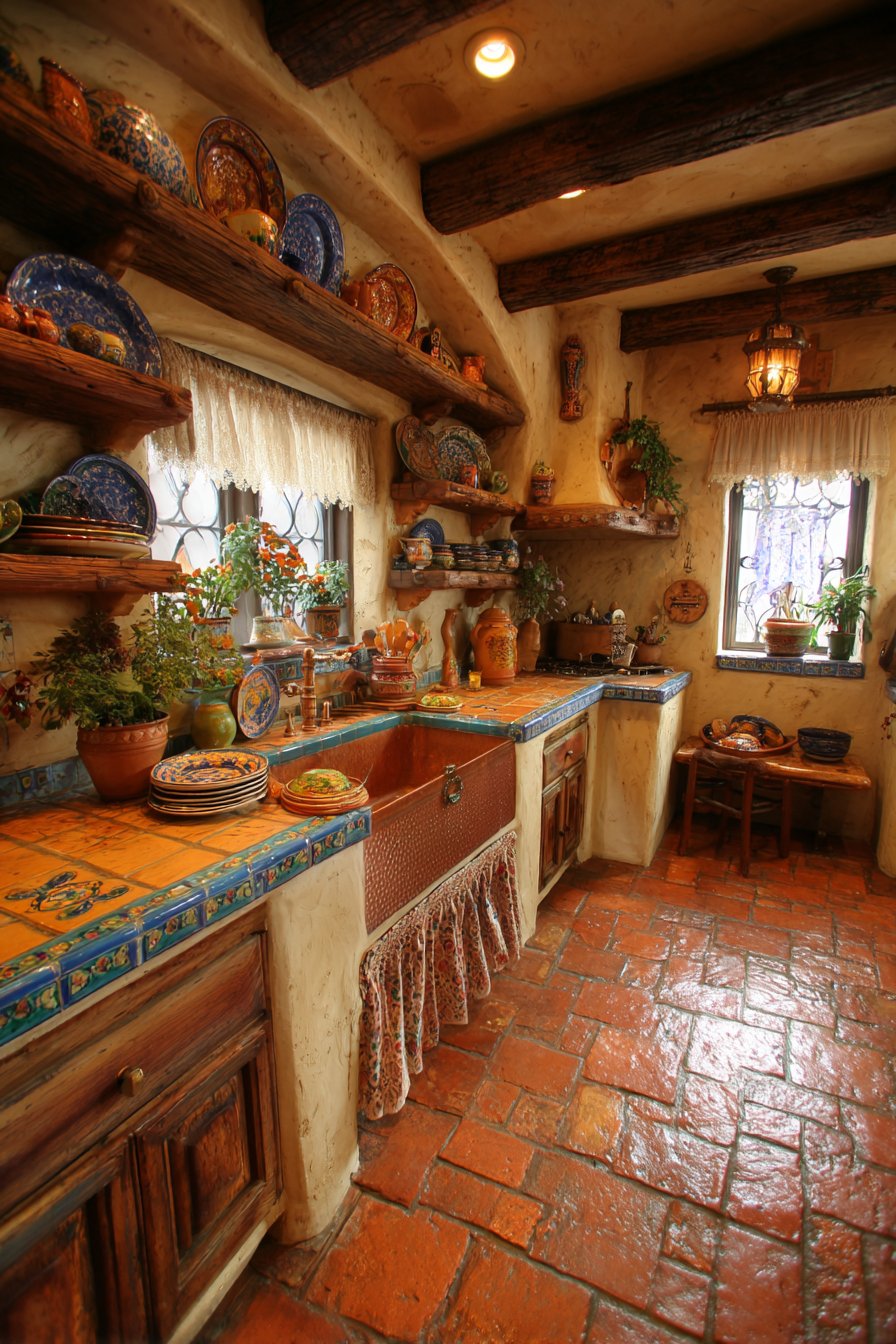
This traditional Mexican kitchen embraces the beauty of displaying rather than concealing. Open shelving takes center stage, showcasing an impressive collection of hand-crafted pottery and colorful ceramic dishes in vibrant blues, lively greens, and energetic oranges. Each piece tells its own story, collected over time and arranged with care to create both functional storage and visual artistry. The open shelving concept not only makes everyday items easily accessible but also transforms functional kitchenware into a living gallery that celebrates Mexican ceramic traditions.
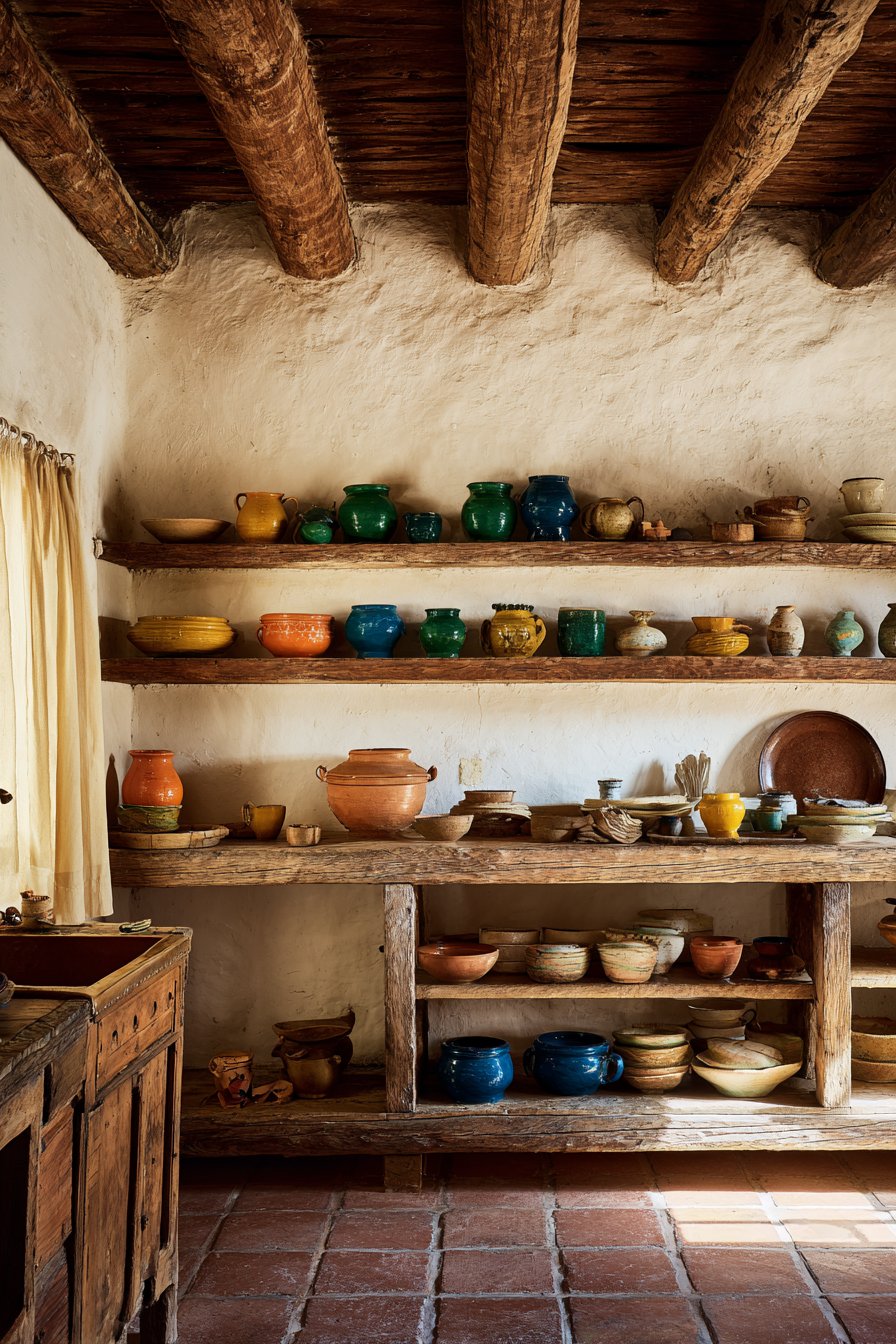
The terracotta floor tiles provide an earthy foundation that grounds the entire design. Unlike uniform modern flooring, these tiles embrace natural color variations—some pieces show deeper rust tones while others lean toward softer clay hues. Subtle wear patterns add character, suggesting the passage of time and the countless meals prepared in this beloved space. This flooring choice connects the kitchen to traditional Mexican homes where clay tiles have been used for centuries, valued for their durability, natural cooling properties, and timeless beauty.
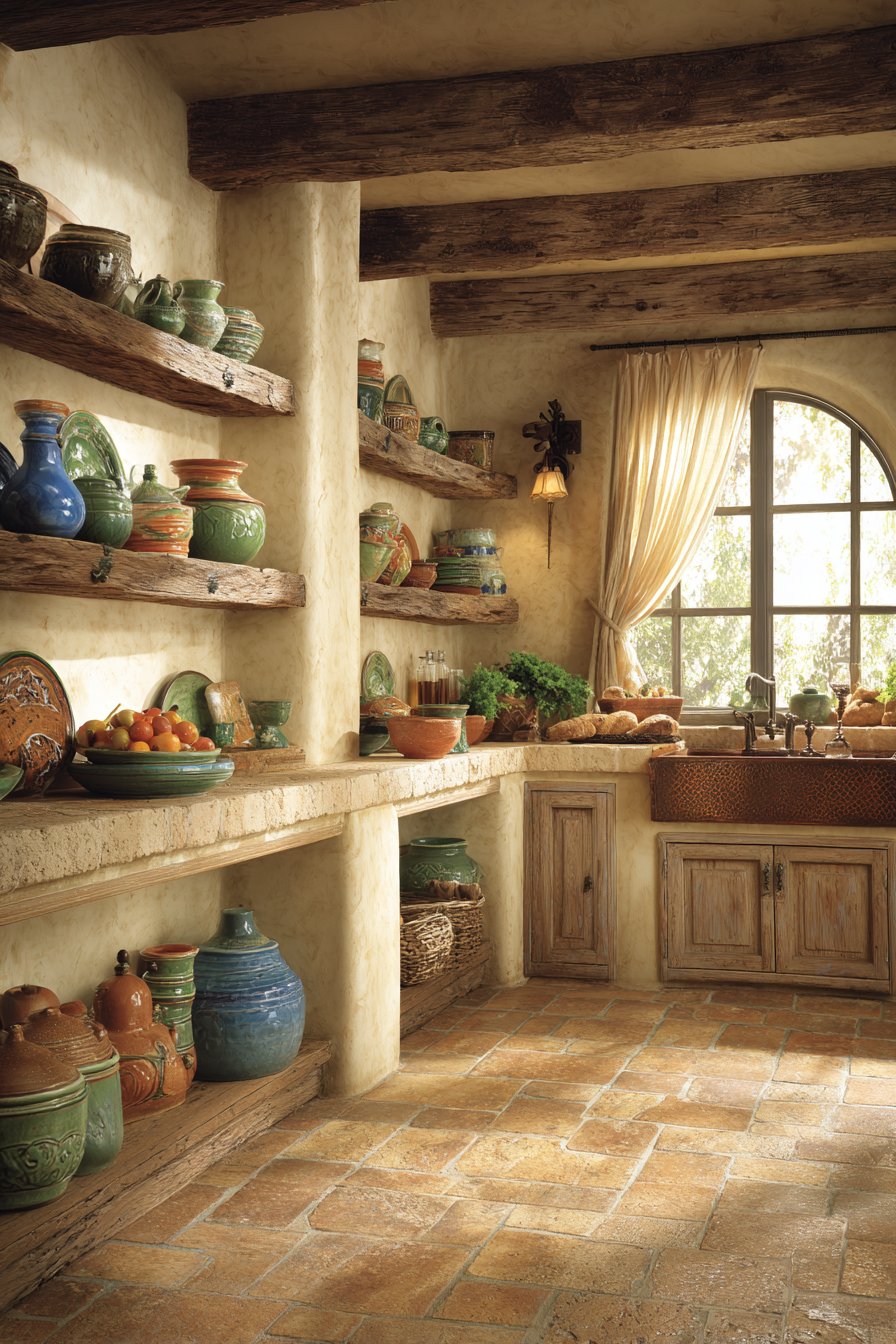
A copper farmhouse sink commands attention with its hammered texture catching and reflecting light throughout the day. The warm metallic finish develops a natural patina over time, becoming more beautiful with age and use. Positioned beneath a window dressed with simple cotton curtains, the sink area benefits from natural light and fresh air while maintaining privacy and softness. The rough-hewn wooden beams spanning the ceiling introduce organic texture overhead, their substantial presence suggesting strength and permanence. Stucco walls in warm cream tones create authentic texture that plays beautifully with light, showing subtle shadows and dimensional variation that flat-painted walls simply cannot achieve.
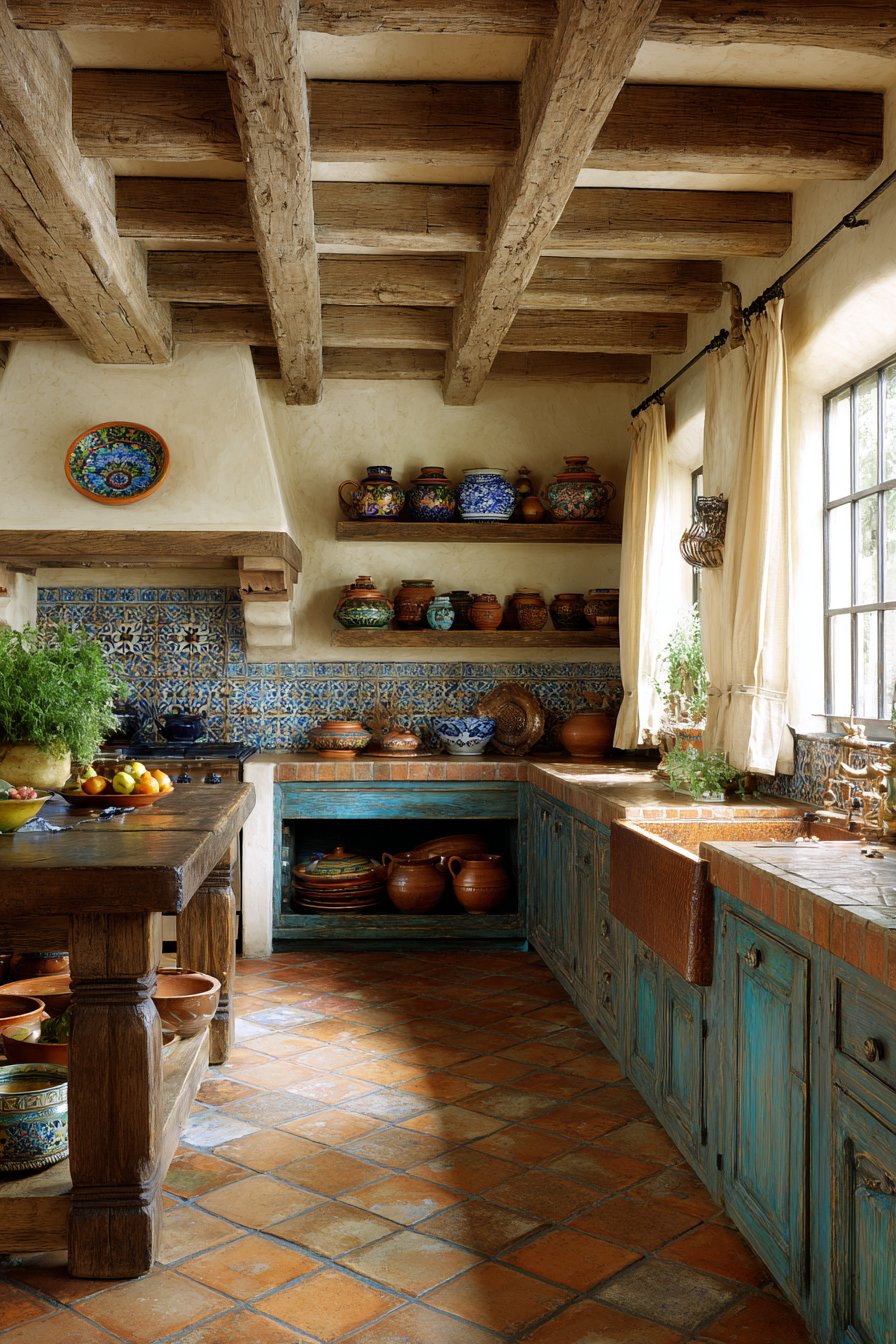
The magic of this design lies in its celebration of imperfection and handcrafted quality. Nothing appears mass-produced or artificially uniform. Instead, every element shows the marks of human hands and traditional techniques, creating a space that feels genuinely lived-in and loved.
Key Design Tips:
- Install sturdy open shelving in dark wood or wrought iron to display colorful pottery and ceramics
- Choose terracotta floor tiles with natural color variation rather than a uniform appearance for authentic character
- Invest in a hammered copper farmhouse sink that will develop beautiful patina over time
- Use simple cotton or linen curtains in natural colors to frame windows without competing with other design elements
- Expose ceiling beams in their natural wood finish to add architectural interest and rustic charm
- Apply authentic stucco or textured plaster to walls in warm cream tones for dimensional surface interest
- Group pottery and dishes by color families to create cohesive visual impact on open shelves
3. Dramatic Tiled Range Hood with Dark Wood Contrast
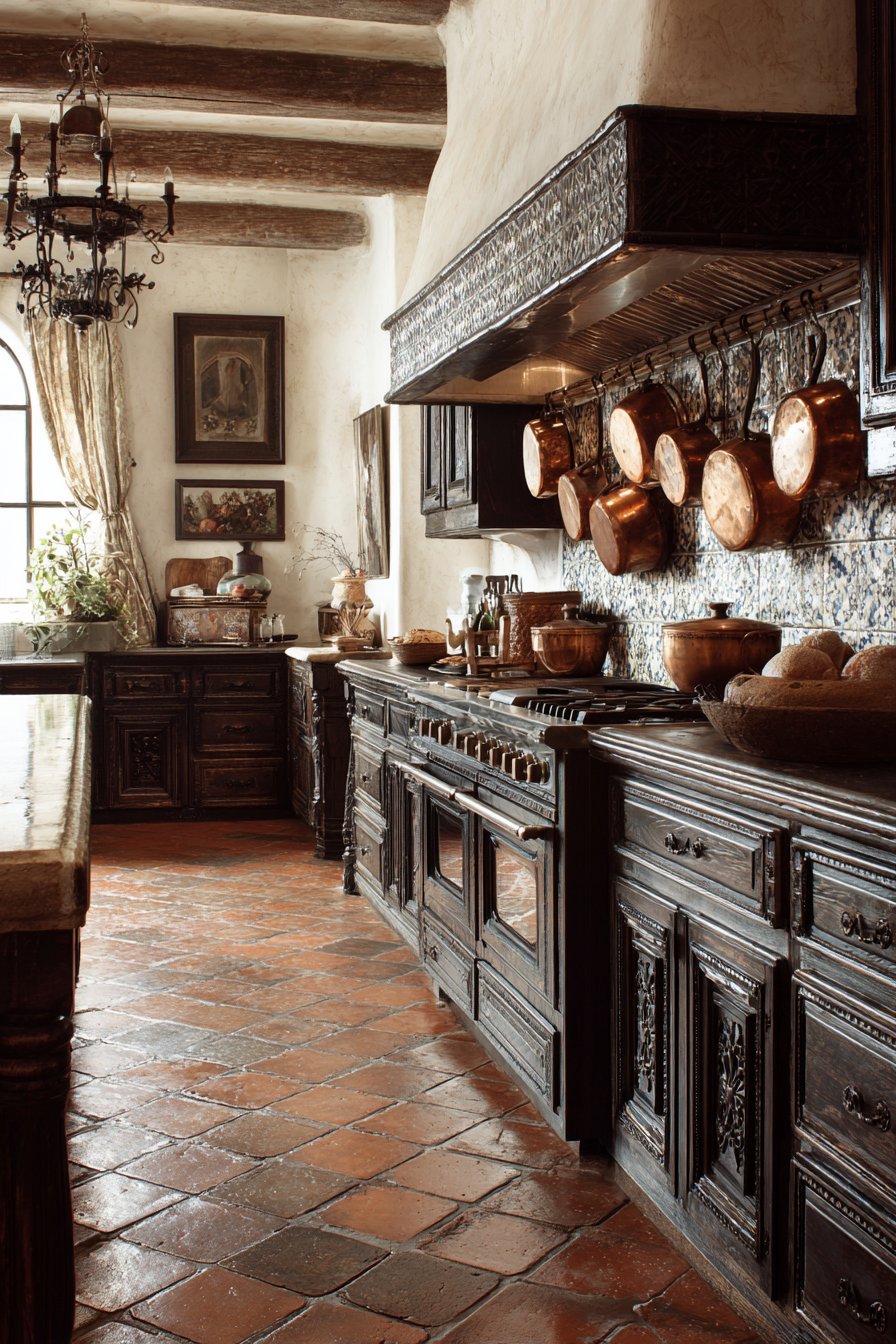
In this sophisticated Mexican kitchen, the range hood becomes the undisputed star of the show. Covered completely in decorative Talavera tiles, this architectural feature rises dramatically above a professional-style stove, commanding attention and establishing the room’s character. The tiles create intricate patterns that combine traditional Mexican motifs—florals, geometric designs, and scrollwork—in a rich palette of blues, yellows, whites, and greens. The three-dimensional quality of the range hood, combined with the reflective glazed tile surfaces, creates constantly changing visual interest as natural and artificial light play across its surface throughout the day. Our white and gold kitchen ideas guide has more inspiration along these same lines.
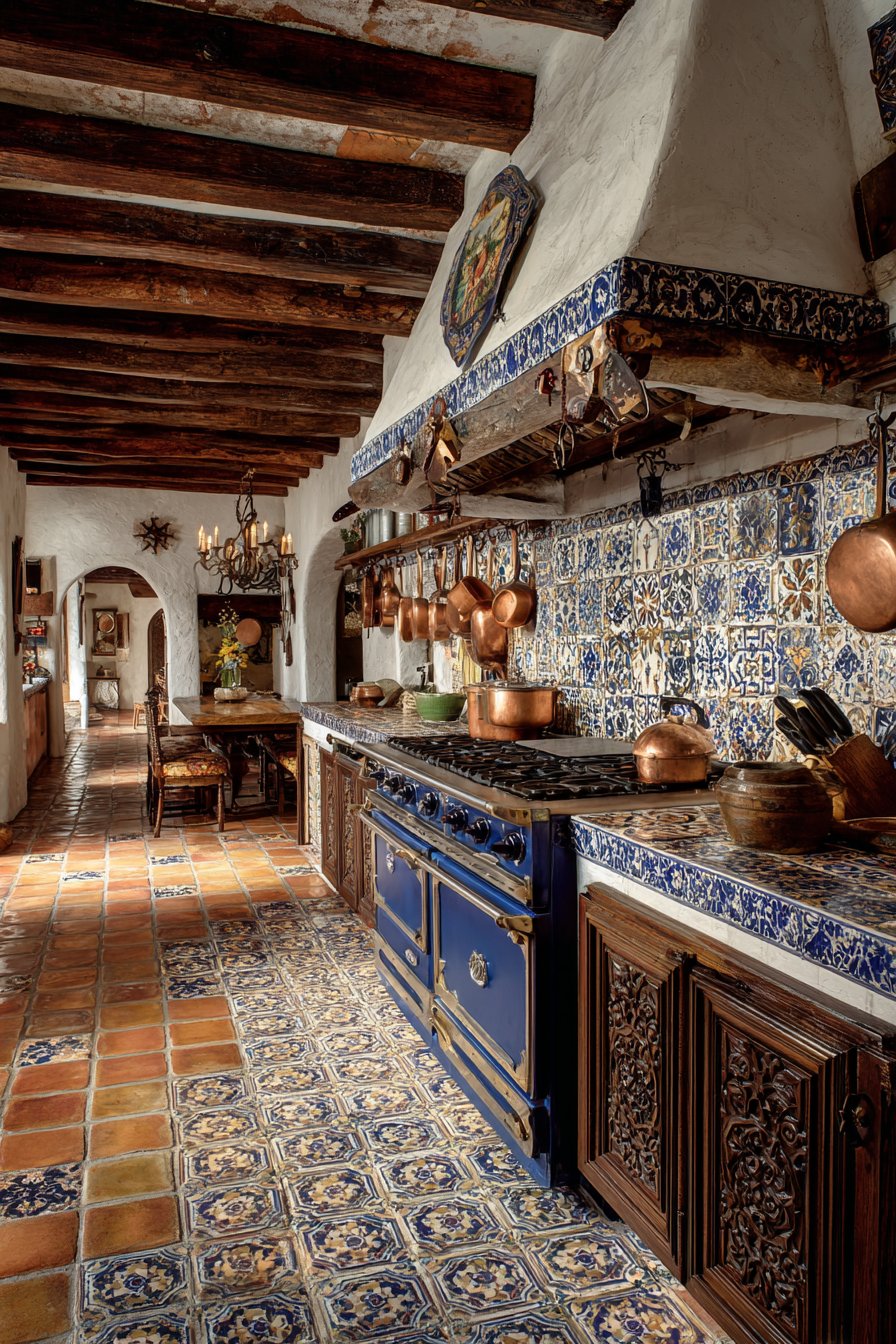
Dark wood cabinetry with ornate carved details provides striking contrast against whitewashed stucco walls. The deep, rich wood tones—ranging from chocolate to espresso—add sophistication and gravitas to the space while showcasing intricate craftsmanship. Cabinet doors feature hand-carved details: scrollwork, floral motifs, and geometric patterns that reward close examination. This level of detail transforms functional storage into furniture-quality artistry. The whitewashed stucco walls serve as a neutral canvas that allows the dark cabinetry and colorful tile work to take center stage while contributing authentic textural interest.
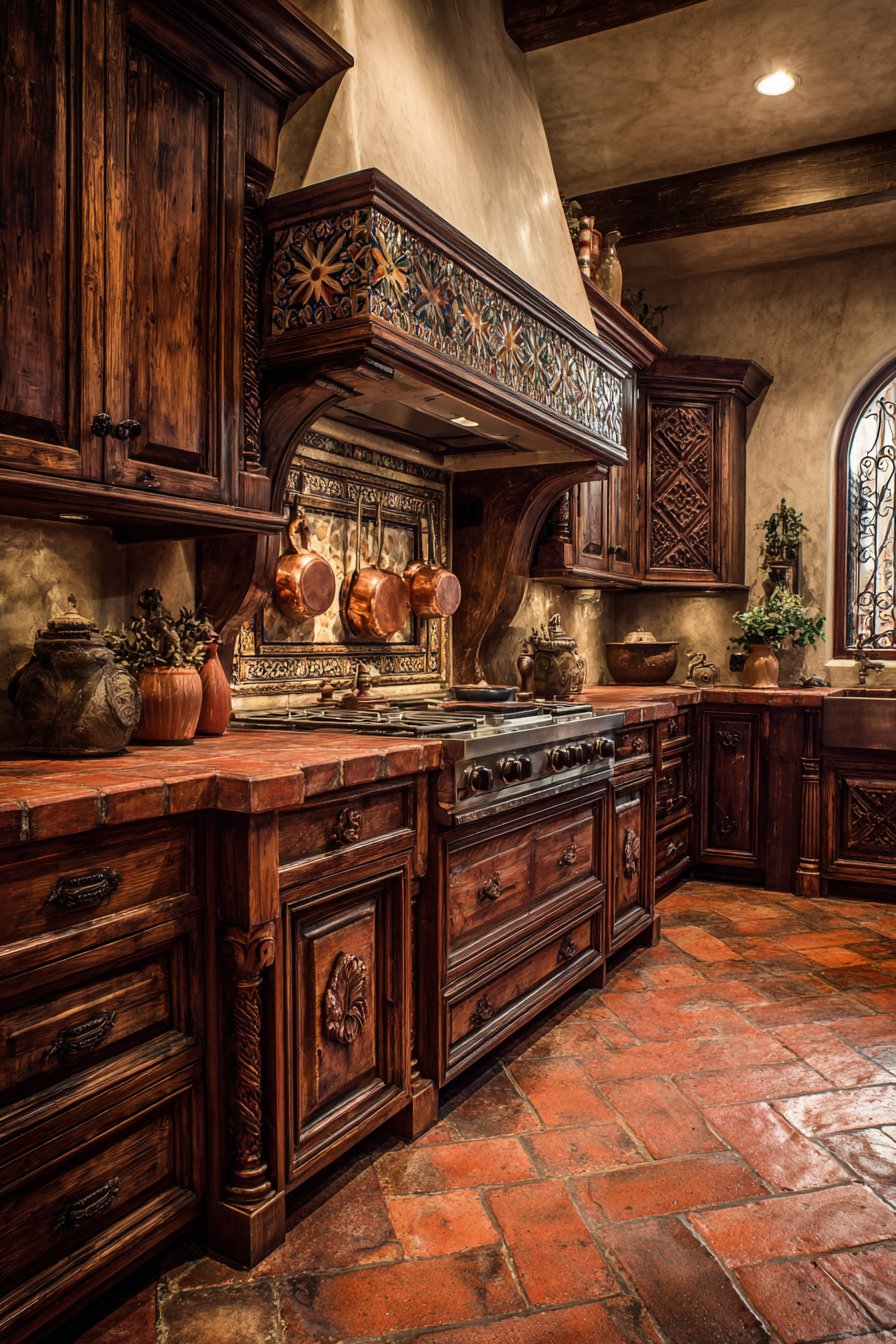
A hanging pot rack suspended from the ceiling displays copper cookware that serves both functional and aesthetic purposes. The burnished copper catches natural light streaming through windows, creating warm glints and reflections that add life to the space. Pots and pans of varying sizes create visual rhythm while remaining easily accessible for daily cooking. Saltillo tile flooring in warm terracotta tones anchors the design with earthy authenticity. These larger-format tiles show natural variation in color and surface texture, with some displaying darker patches and others showing lighter hues. Over time, the tiles develop a natural patina that enhances their character and beauty.
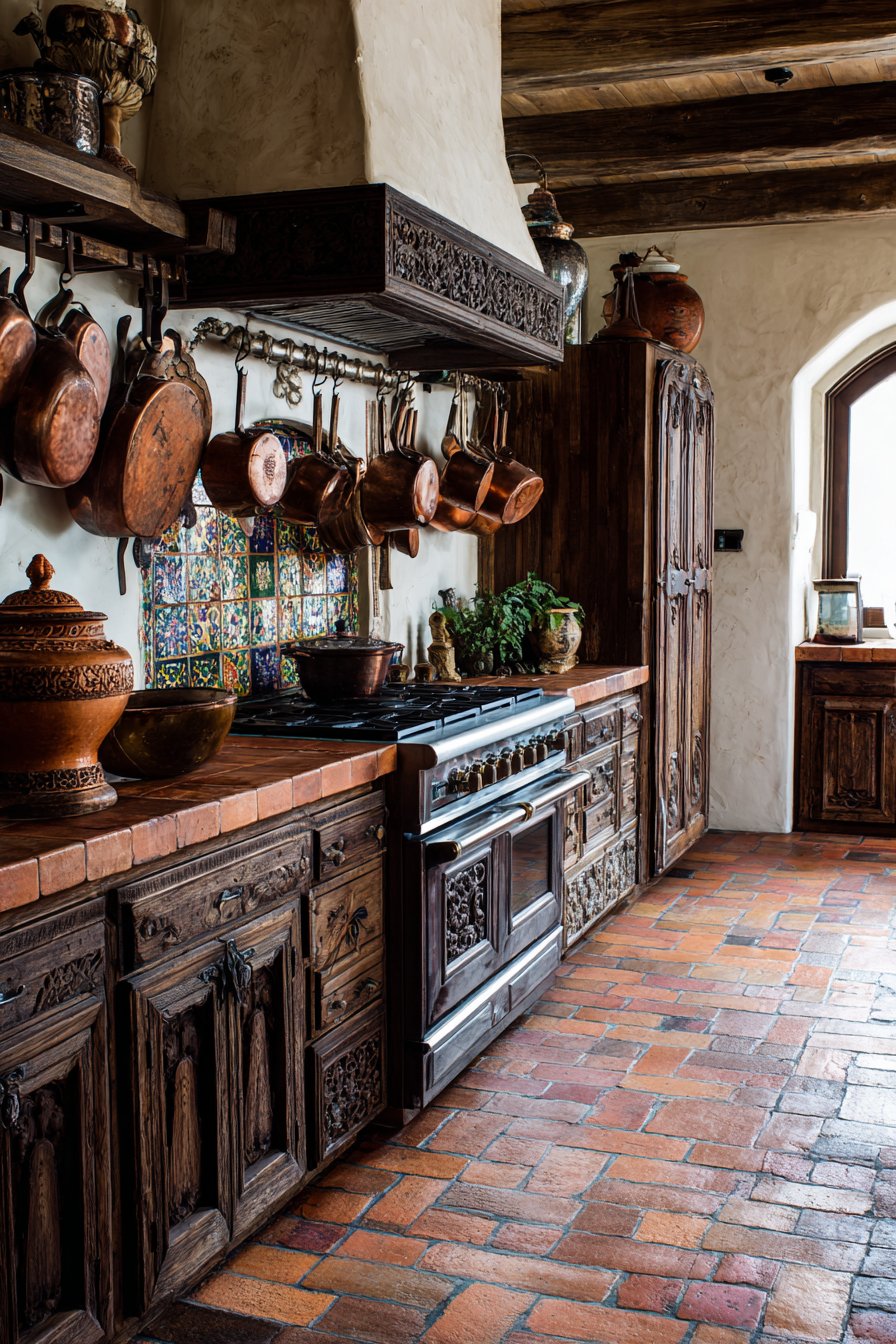
This kitchen demonstrates how bold contrasts—light against dark, smooth against textured, ornate against simple—can create dramatic impact while maintaining warmth and approachability.
Key Design Tips:
- Make your range hood a focal point by covering it entirely with decorative Talavera tiles in coordinating patterns
- Choose dark wood cabinetry with hand-carved details to add sophistication and showcase craftsmanship
- Paint walls in whitewashed or light stucco finish to provide contrast and allow darker elements to stand out
- Install a ceiling-mounted pot rack to display copper cookware as functional decoration
- Select Saltillo floor tiles in large format for authentic Mexican flooring with natural color variation
- Balance ornate elements like carved cabinetry with simpler components to prevent visual overwhelm
- Ensure adequate lighting to highlight carved details and tile patterns throughout the day and evening
4. Compact Turquoise Kitchen with Mosaic Tile Countertops
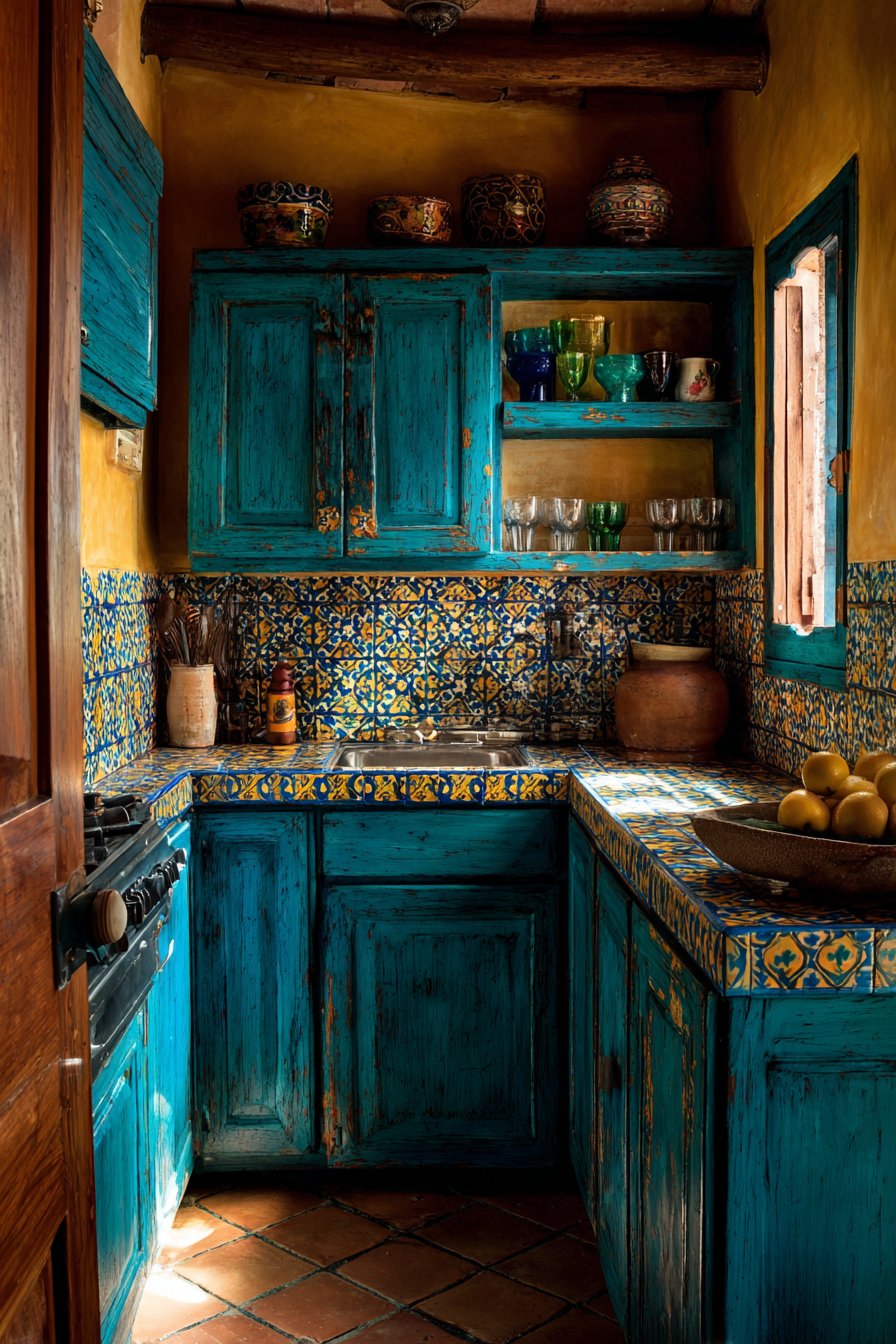
Proof that Mexican kitchen style works beautifully in smaller spaces, this compact design maximizes every square inch while delivering maximum visual impact. The painted wooden cabinets in deep turquoise immediately establish the room’s bold personality. The distressed finish reveals tantalizing hints of underlying color—perhaps yellow or cream—that peek through at edges and high-wear areas. This layered appearance suggests history and authenticity, as if the kitchen has evolved over generations, with each inhabitant adding their own touch. See our these small kitchen ideas for more direction in this style.
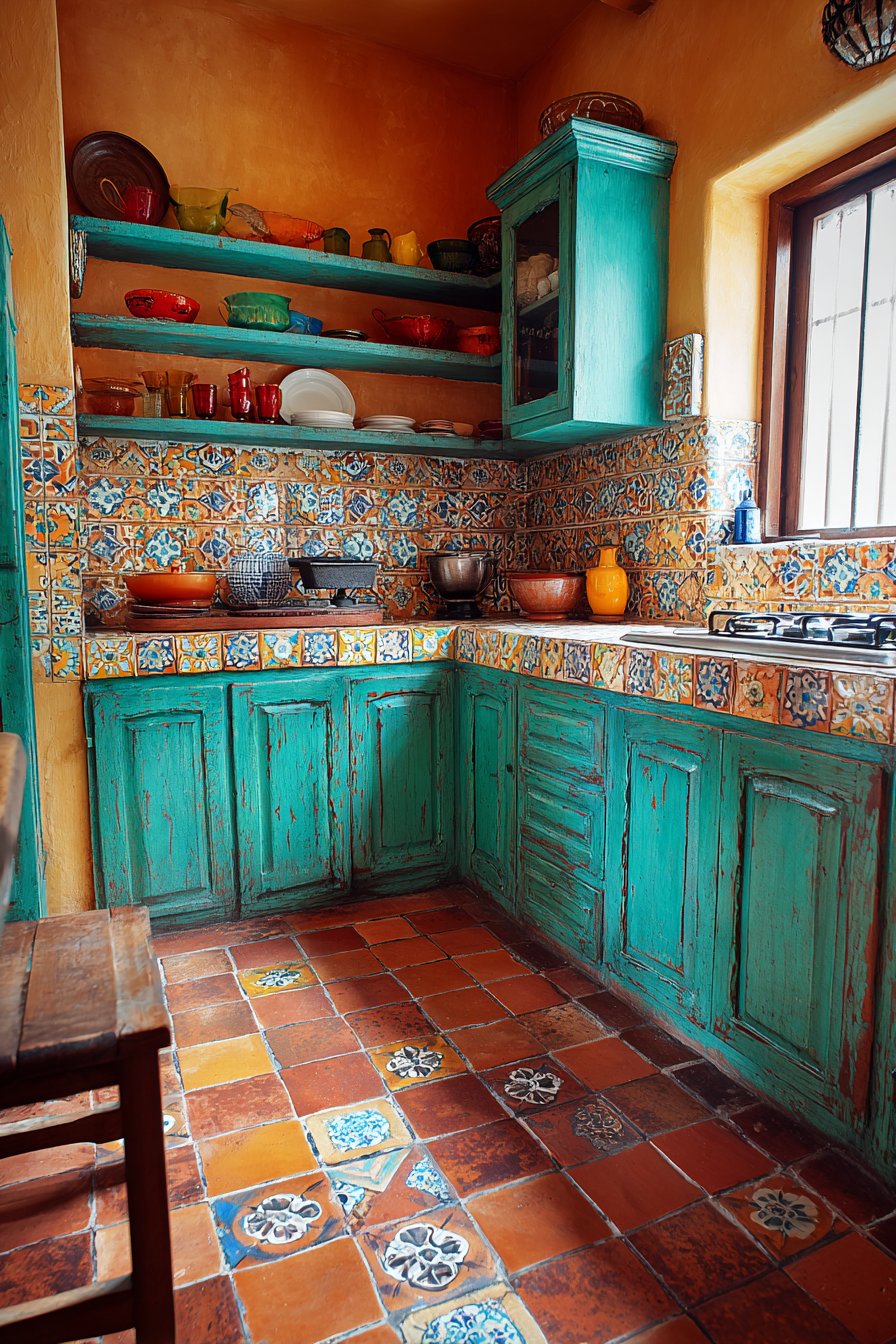
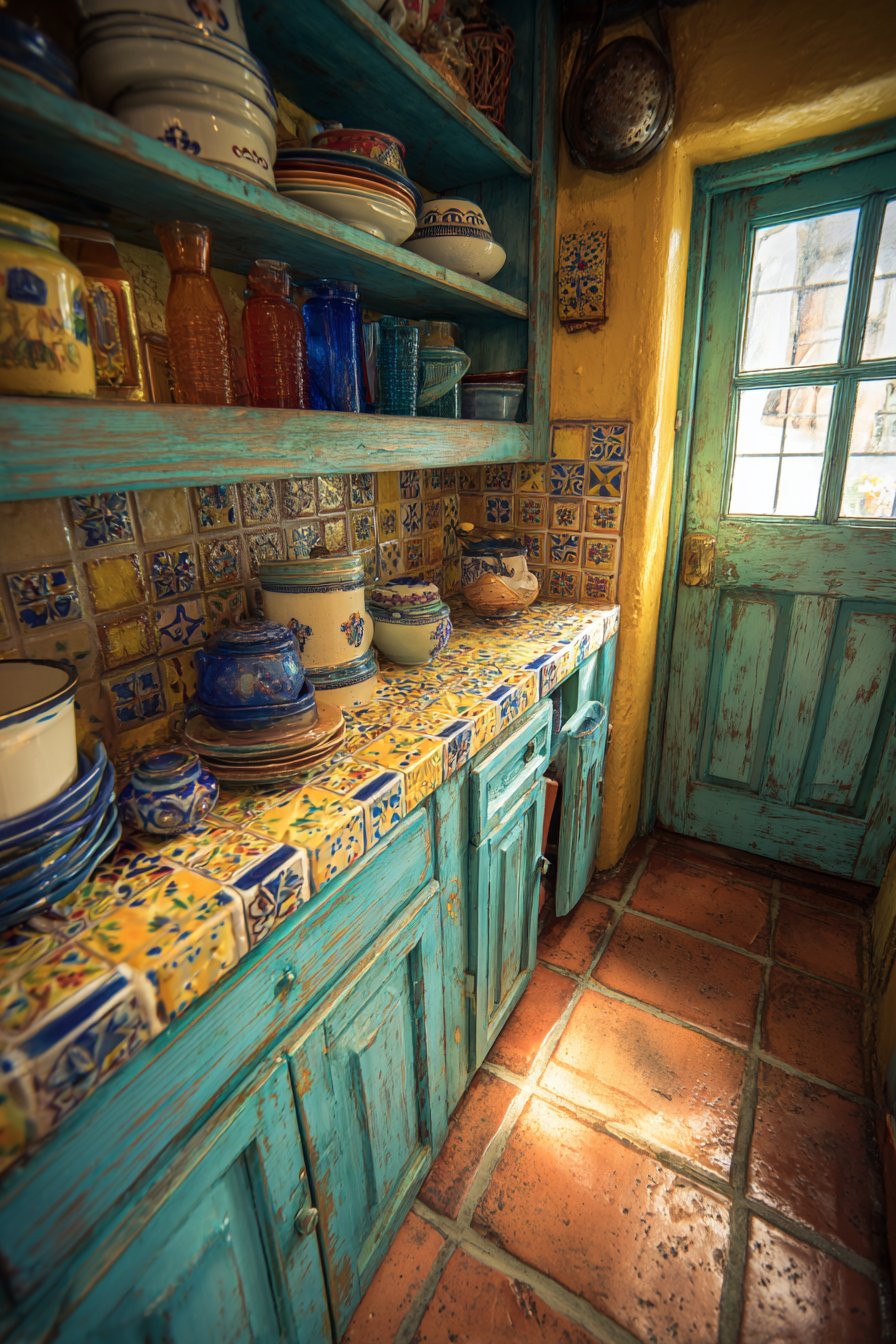
The mosaic tile countertop represents patient artistry and attention to detail. Small Talavera tiles in yellow, blue, and white create intricate patterns that transform a functional work surface into a decorative masterpiece. Unlike solid countertops, this tiled surface shows dimensional variation and handcrafted character. Each tile placement required careful consideration, and the finished result rewards close examination. The countertop becomes a conversation piece, inviting guests to admire the pattern complexity and color combinations. Grouted joints between tiles add subtle texture and emphasize the handmade quality.
Open corner shelving makes intelligent use of space that might otherwise go unused. These shelves display traditional Mexican cookware—perhaps clay pots for cooking beans, colorful mixing bowls, and painted serving pieces—alongside colorful glassware in jewel tones. The display creates visual interest while keeping frequently used items within easy reach. Clay tile flooring in natural terracotta provides warm, earthy foundation that complements the turquoise cabinetry without competing for attention.
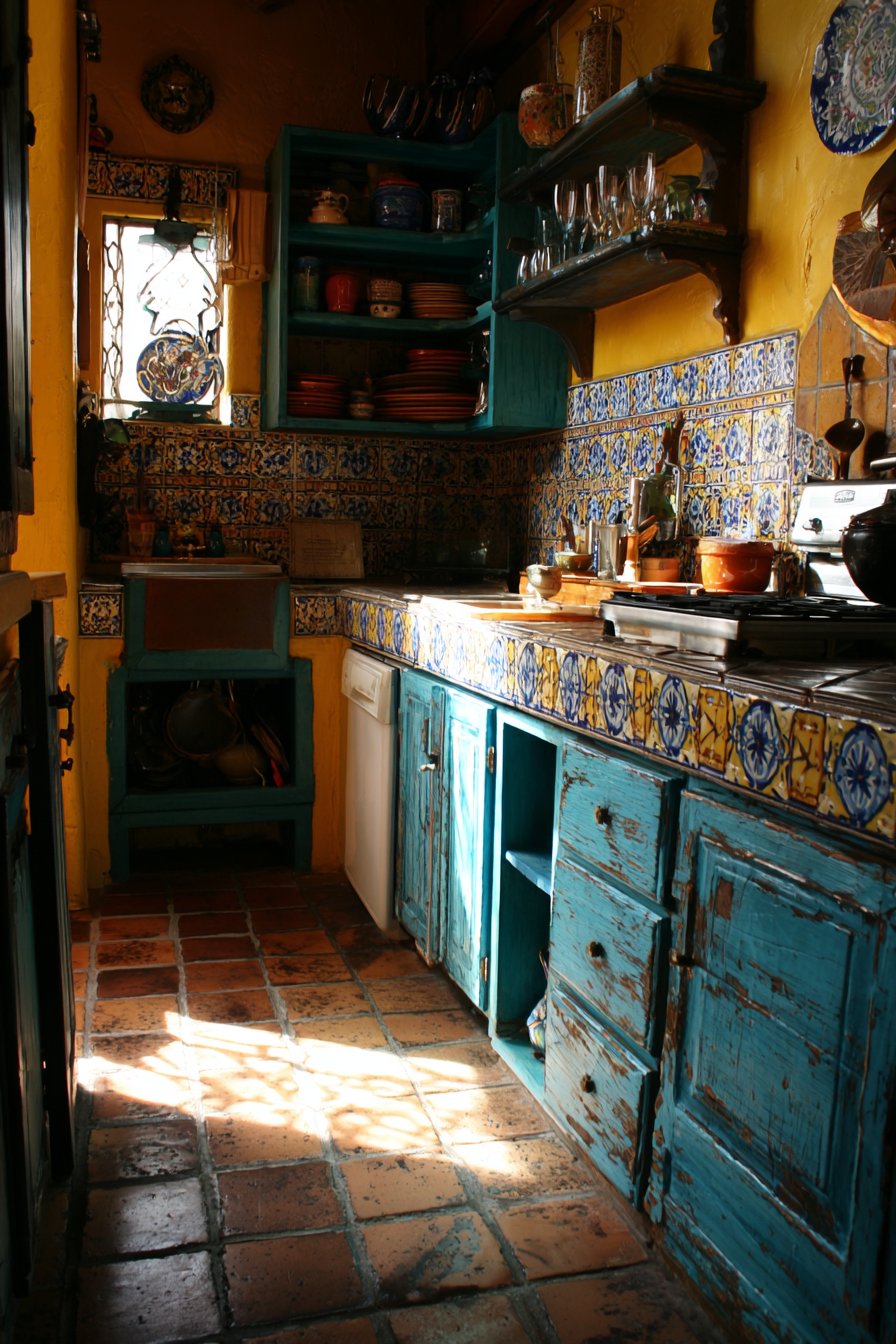
Natural golden hour lighting streaming through a small window transforms this space during late afternoon, casting warm glows across the turquoise cabinets and making the mosaic countertop sparkle with reflected light. Even in compact dimensions, this kitchen feels spacious and welcoming thanks to thoughtful color choices, strategic lighting, and the authentic character that Mexican design inherently possesses.
Key Design Tips:
- Paint cabinets in bold colors like turquoise, cobalt blue, or deep green, then distress the finish to reveal underlying layers
- Create custom mosaic tile countertops using small Talavera tiles in coordinating color schemes
- Install open corner shelving to maximize storage in compact spaces while displaying decorative items
- Choose clay or terracotta floor tiles to add warmth and authenticity without overwhelming small spaces
- Position your kitchen to take advantage of natural light, especially golden hour sun for warm ambiance
- Use consistent color families throughout to create cohesion in smaller spaces
- Balance bold cabinet colors with neutral elements like natural wood or cream walls
5. Colorful Island Centerpiece with Serape-Striped Seating
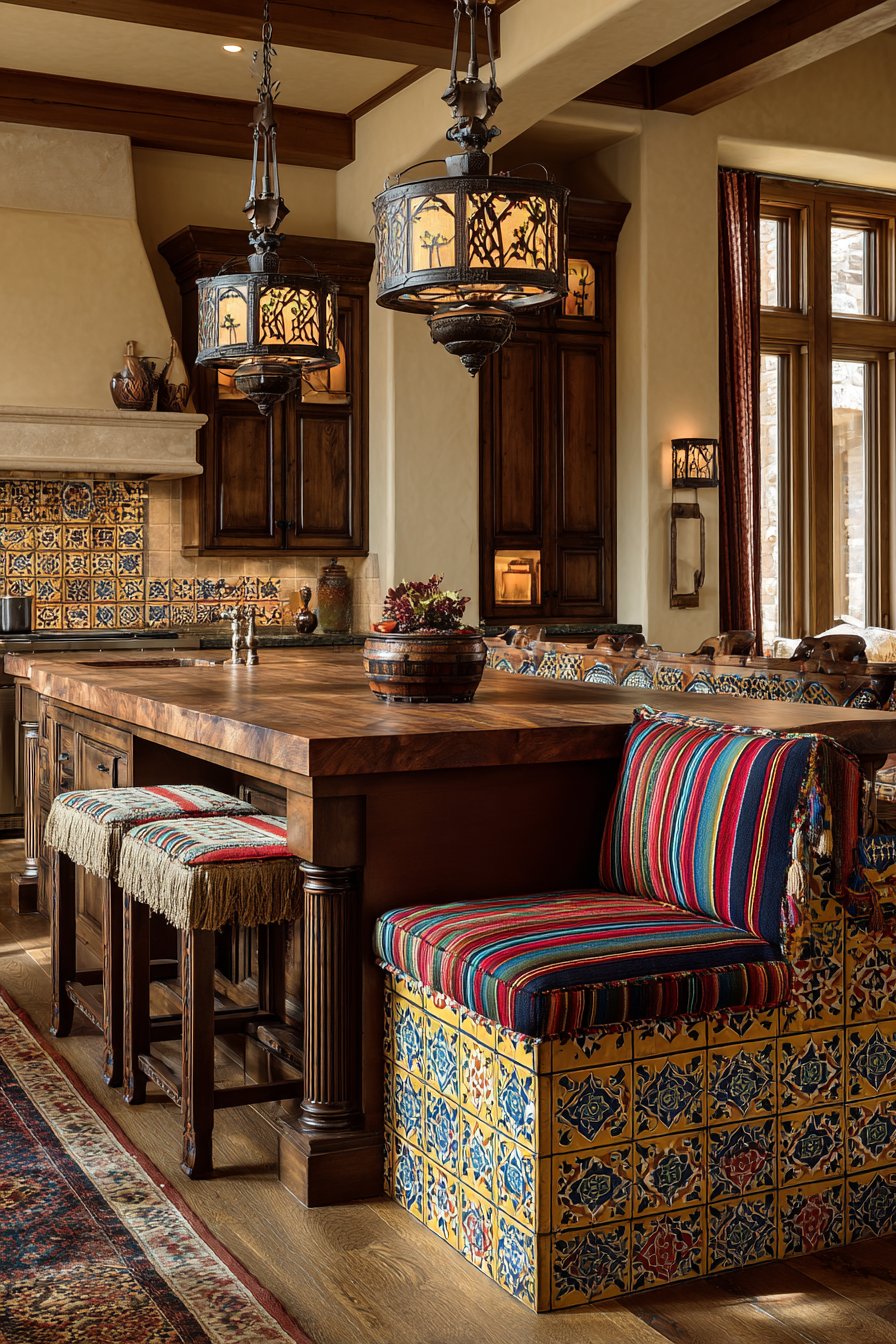
The kitchen island has evolved from simple workspace to central gathering spot, and this Mexican-inspired design celebrates that transformation beautifully. The island itself is a work of art, its base showcasing extensive hand-painted tile work in traditional Mexican geometric patterns. Cobalt blue, sunflower yellow, and clay red create vibrant energy, with patterns including diamonds, crosses, zigzags, and stylized florals arranged in horizontal bands. The precision required for this tile work is evident in the crisp pattern alignments and consistent color saturation. This isn’t merely functional furniture—it’s a functional sculpture that commands attention.
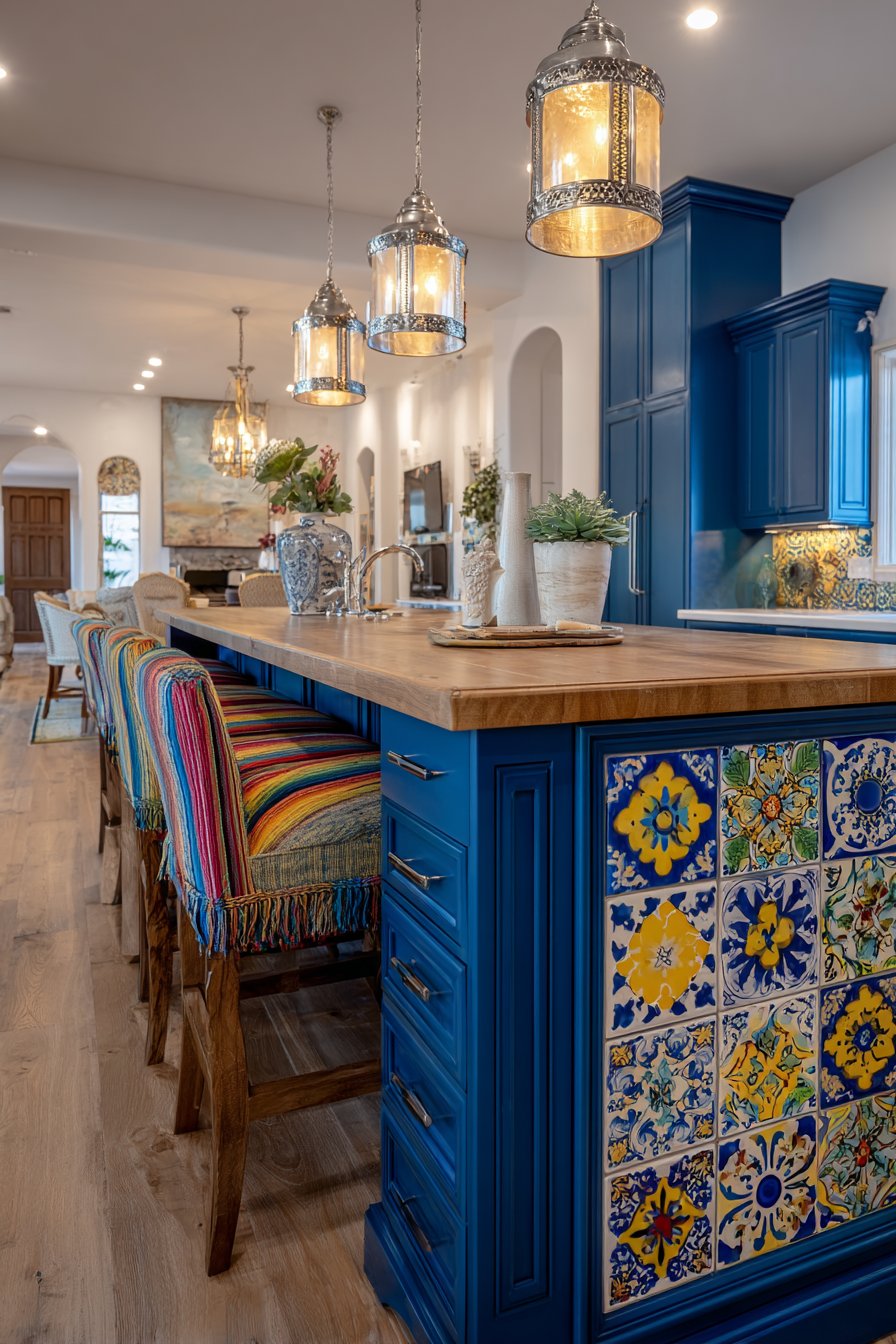
Built-in seating transforms the island from workspace to social hub. Colorful upholstered stools feature authentic serape-striped fabric with fringe details that cascade toward the floor. The striped patterns echo the horizontal tile bands on the island base, creating visual harmony while introducing soft textile texture to balance the hard surfaces of tile and wood. The fringe adds playful movement, swaying gently when people sit or stand. These stools invite lingering, encouraging family members and guests to pull up a seat while meals are prepared.
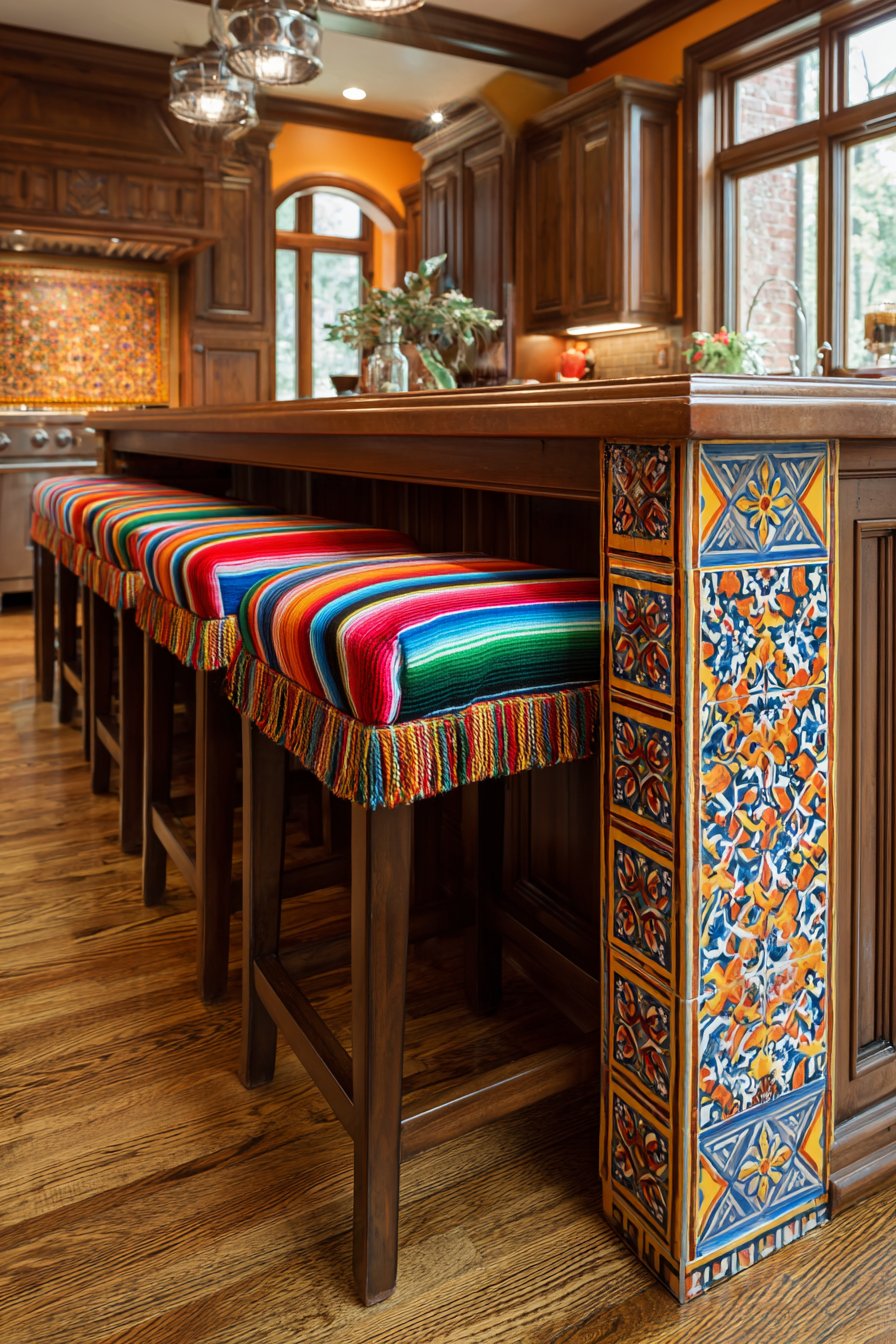
The butcher block countertop provides beautiful contrast to the vibrant tile base. Its warm wood tones and visible grain patterns offer visual relief from the intense colors below while providing a practical, durable work surface ideal for food preparation. The natural wood develops character over time, showing knife marks and occasional stains that tell the story of meals prepared and shared. Overhead, pendant lights with punched tin shades hang at varying heights, their perforated metal casting intricate patterned shadows across the island surface. As light filters through the punched designs, it creates ever-changing patterns that add another layer of visual interest.
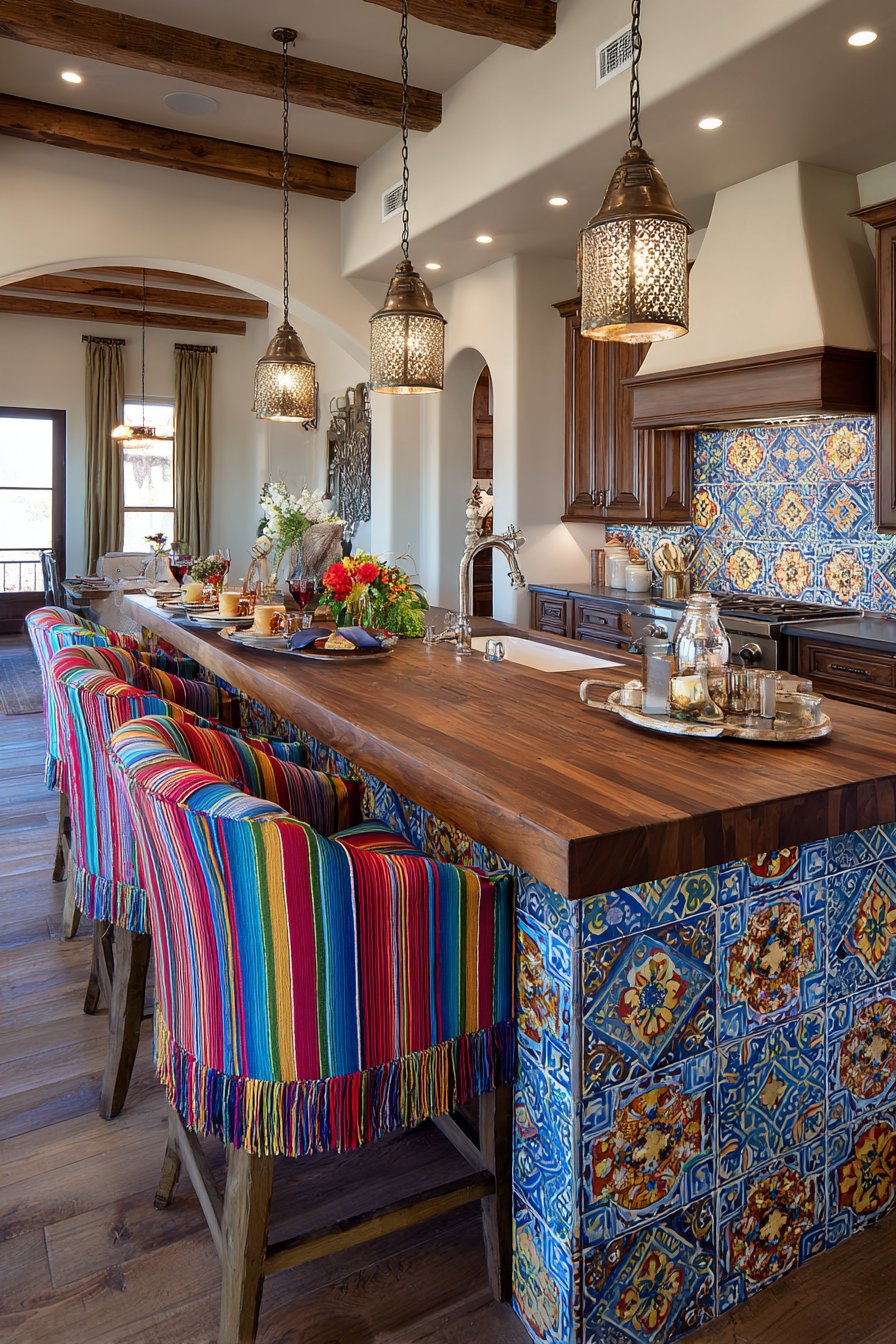
This island design proves that functional elements can be spectacularly beautiful, serving as both practical workspace and stunning focal point that defines the kitchen’s character.
Key Design Tips:
- Cover island bases with hand-painted tiles in geometric patterns and bold primary colors for maximum impact
- Select butcher block or natural wood countertops to provide warm contrast against colorful tile work
- Choose upholstered stools with serape-striped or other traditional Mexican textile patterns
- Hang punched tin pendant lights at varied heights above the island for ambient lighting and decorative shadow play
- Ensure island seating is comfortable enough to encourage lingering and conversation during meal preparation
- Balance bold lower patterns with simpler countertop materials to prevent visual overwhelm
- Consider built-in seating rather than movable stools to create cohesive, integrated design
6. Adobe-Style Fireplace Kitchen with Wrought Iron Accents
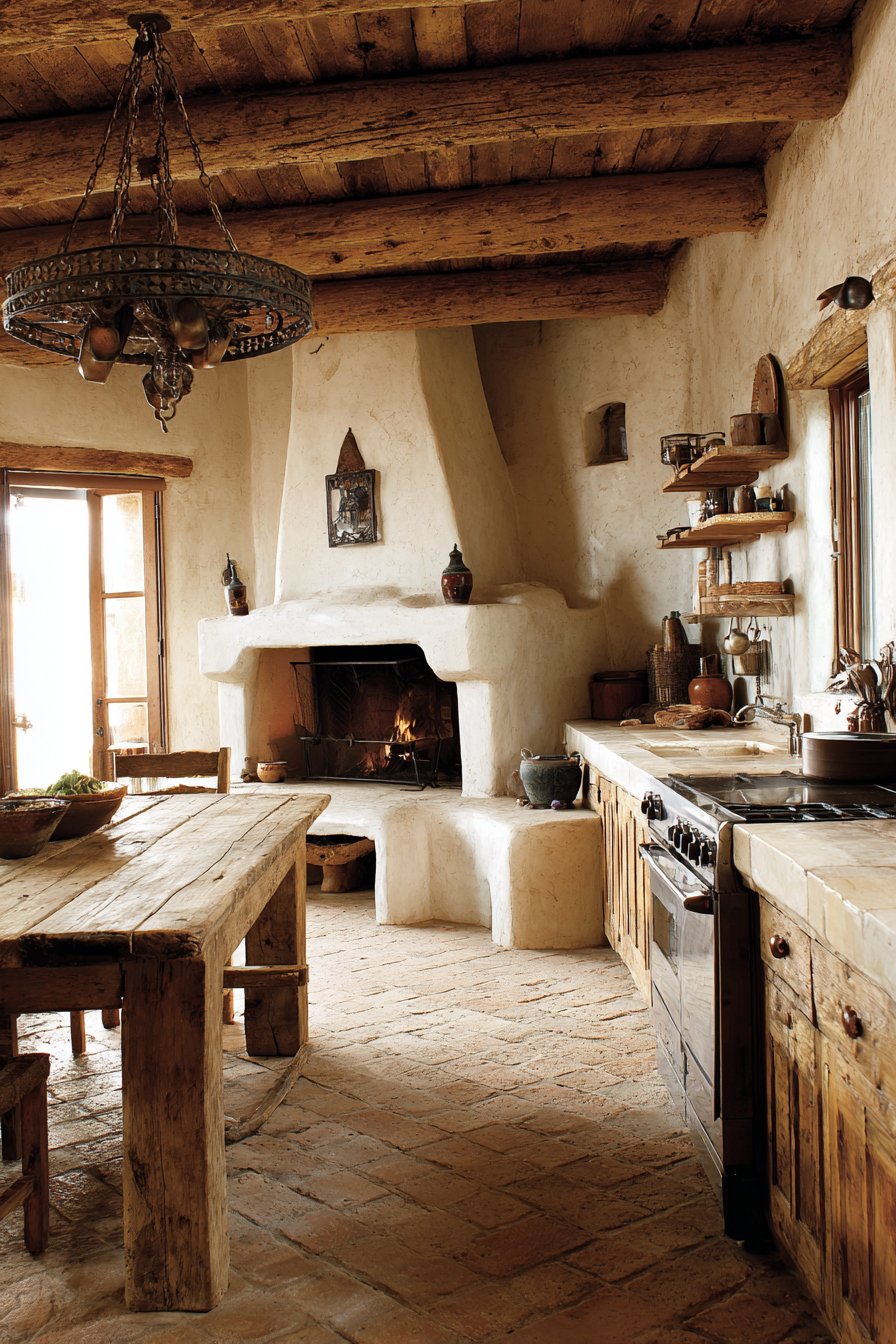
This kitchen design embraces the architectural heritage of Mexican adobe construction, creating a space that feels both ancient and timeless. The authentic adobe-style corner fireplace becomes an unexpected but thoroughly charming focal point. Its smooth stucco finish in warm ochre tones suggests traditional construction methods where mud and straw were shaped by hand into thick, insulating walls. The fireplace’s organic curves and soft edges contrast beautifully with the angular kitchen elements, introducing sculptural interest while providing practical warmth during cooler months. The surrounding area might feature decorative tile work or simple niches for displaying pottery.
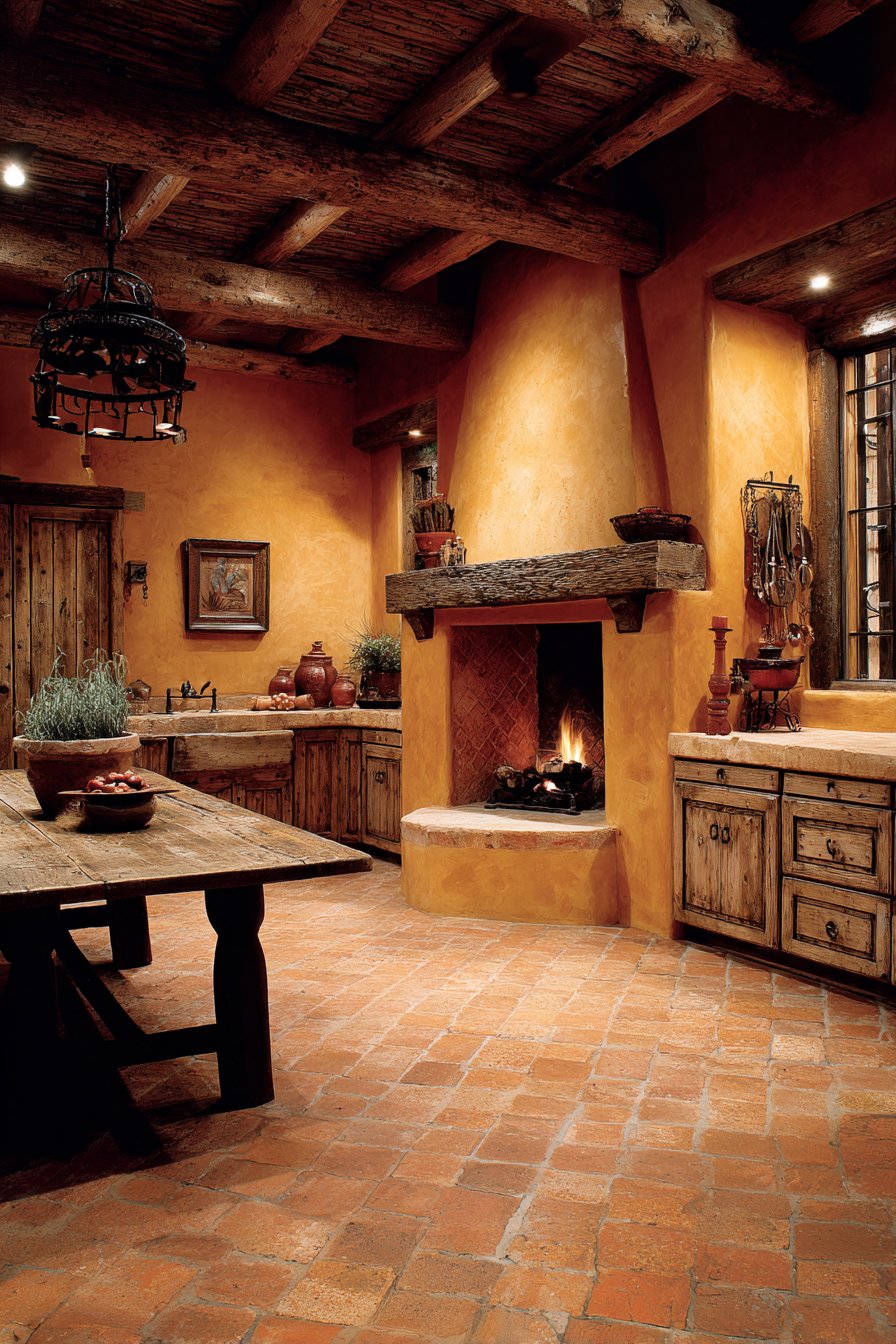
Wrought iron accents throughout the space reinforce the old-world Mexican aesthetic. A decorative pot rack, suspended from rough wooden ceiling beams by iron chains or rods, displays frequently used cookware while adding vertical visual interest. The hand-forged quality of wrought iron—with its slight irregularities and hammer marks—contrasts with the mass-produced uniformity of modern fixtures, lending authenticity and artisanal character. Additional iron elements might include cabinet hardware, light fixtures, or decorative wall brackets.
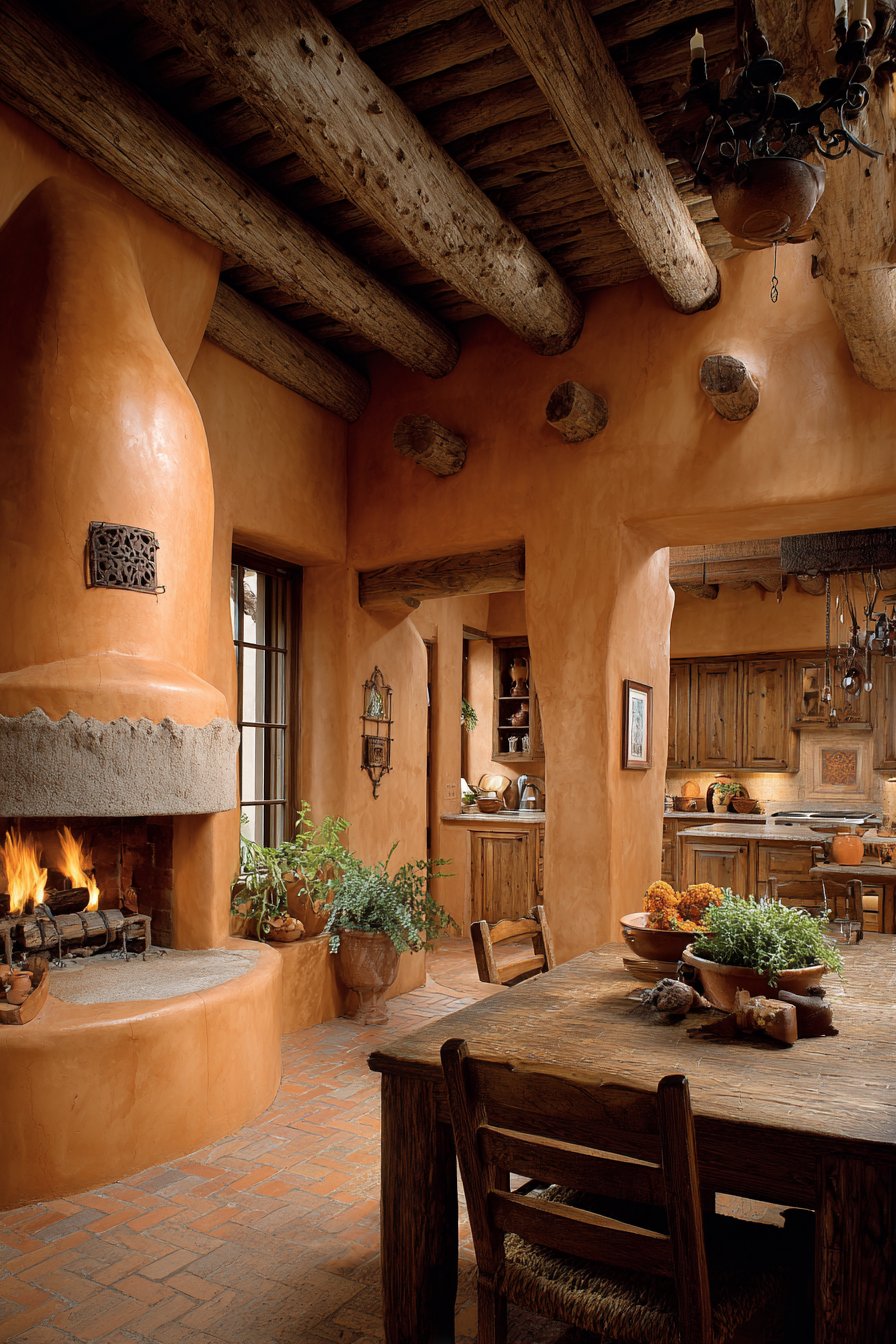
Rustic wooden cabinetry shows off beautiful grain patterns and natural color variations. Rather than smooth, painted surfaces, these cabinets celebrate wood’s organic qualities. Iron strap hinges—wide, decorative bands of hammered metal—secure cabinet doors while adding Medieval Spanish influence that connects to Mexico’s colonial history. Terra cotta floor tiles display natural imperfections: slight size variations, color shifts, and surface irregularities that machine-made tiles deliberately avoid. These “flaws” are actually features that prove authenticity and handcrafted origins.
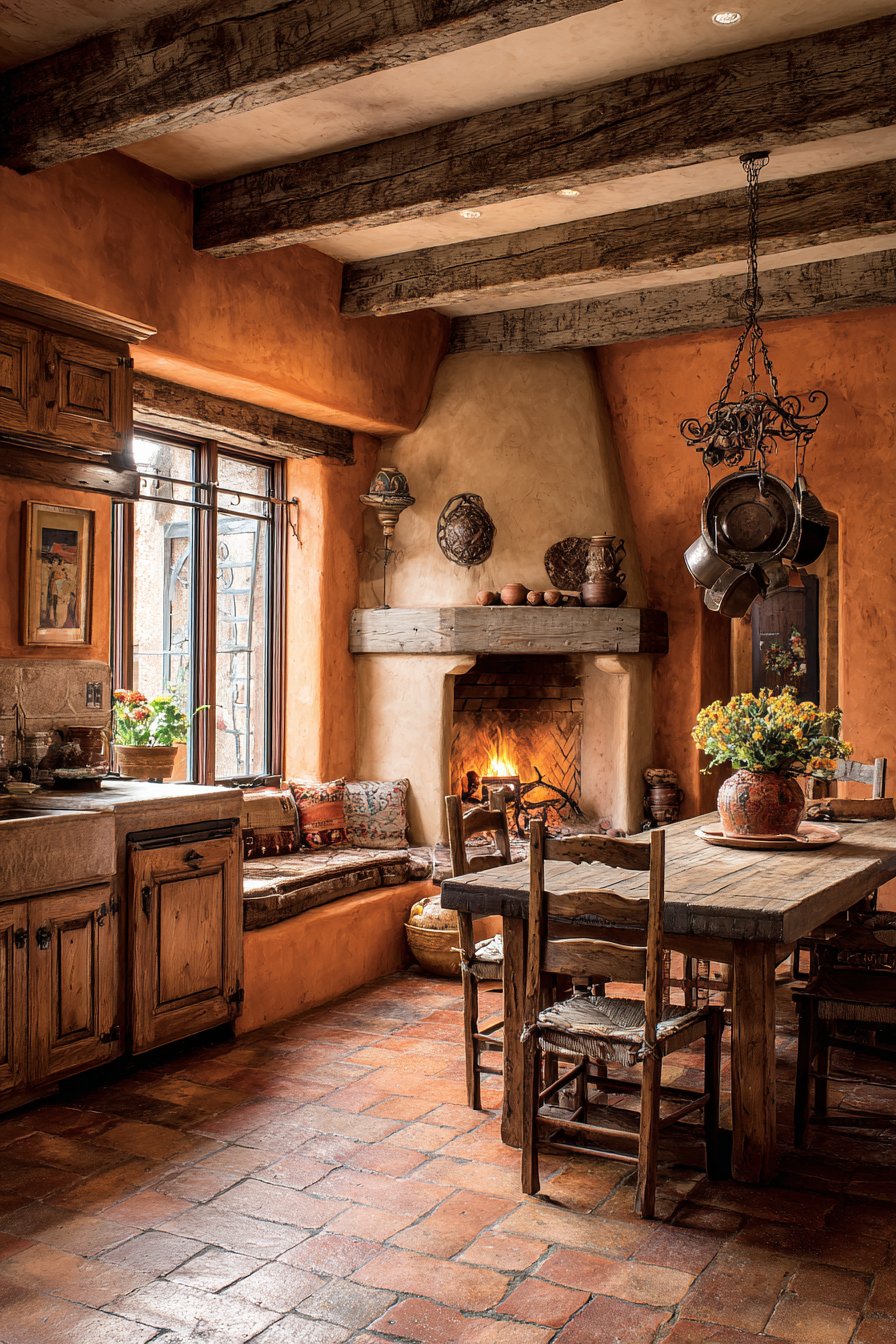
A farm-style wooden dining table occupies the center space, creating a true gathering area within the kitchen itself. This layout reflects traditional Mexican homes where the kitchen served as primary family living space, not just a place for food preparation. The table’s substantial construction and visible wood character suggest it could withstand generations of daily use.
Key Design Tips:
- Install a corner fireplace with adobe-style smooth stucco finish for authentic architectural character
- Suspend pot racks from ceiling beams using wrought iron chains or decorative iron hardware
- Choose rustic wooden cabinetry that showcases natural grain patterns rather than hiding wood character
- Use iron strap hinges on cabinet doors for period-appropriate hardware with visual impact
- Select terra cotta floor tiles with natural imperfections and color variations for an authentic appearance
- Position a substantial farm-style dining table in the kitchen to create an integrated dining and cooking space
- Paint or finish fireplace surrounds in warm earth tones like ochre, sienna, or clay for an authentic adobe appearance
7. Stunning Talavera Tile Backsplash Detail Work
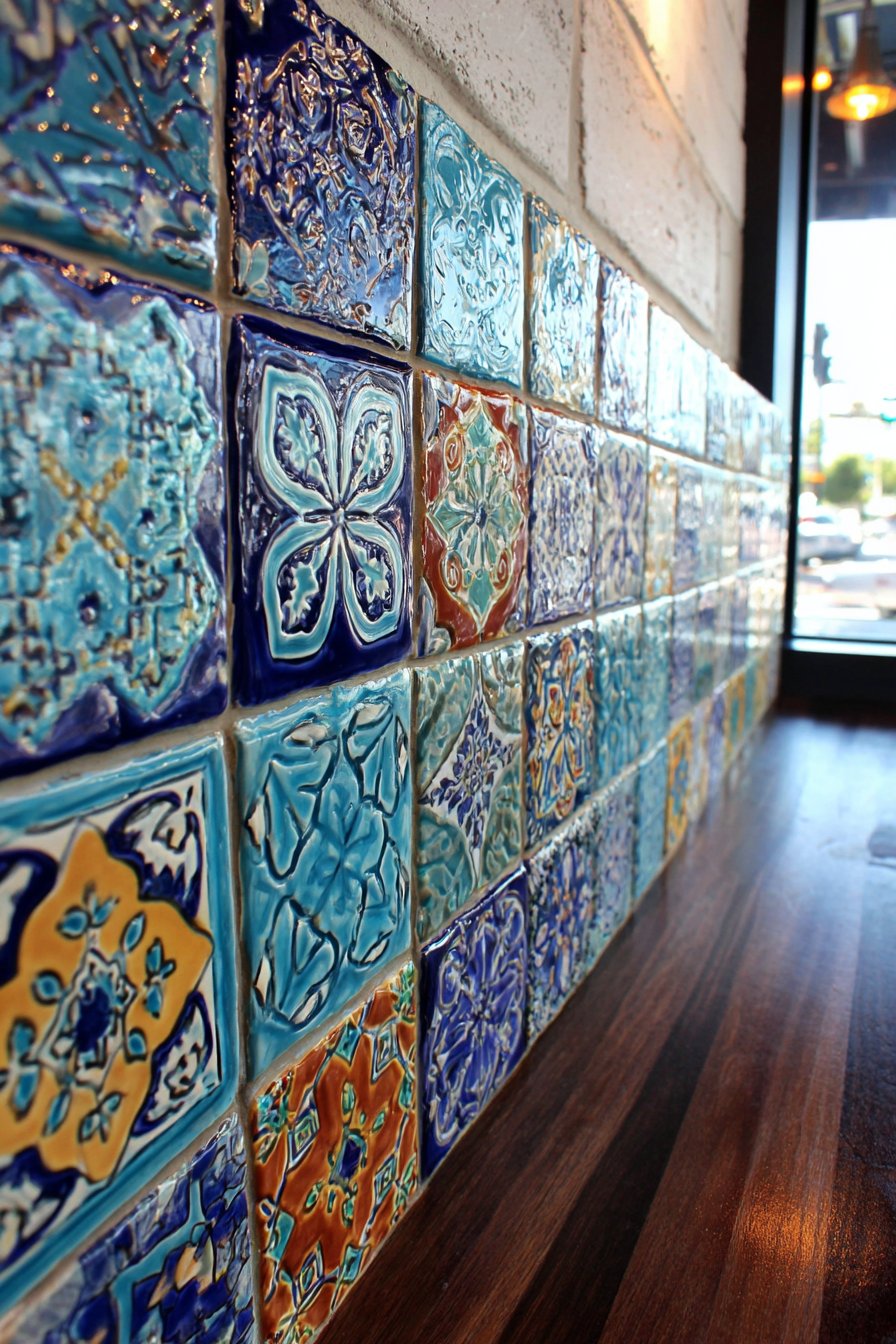
Sometimes the most powerful design impact comes from focusing intensely on a single element executed with extraordinary skill. This kitchen concept centers entirely on a backsplash featuring a stunning array of hand-painted Talavera tiles in traditional patterns. What makes this installation special is its celebration of artisan craftsmanship—each tile is slightly unique, showing subtle variations in color intensity, pattern precision, and glaze application that prove human hands created each piece. This variability, far from being a defect, represents the soul of the installation.
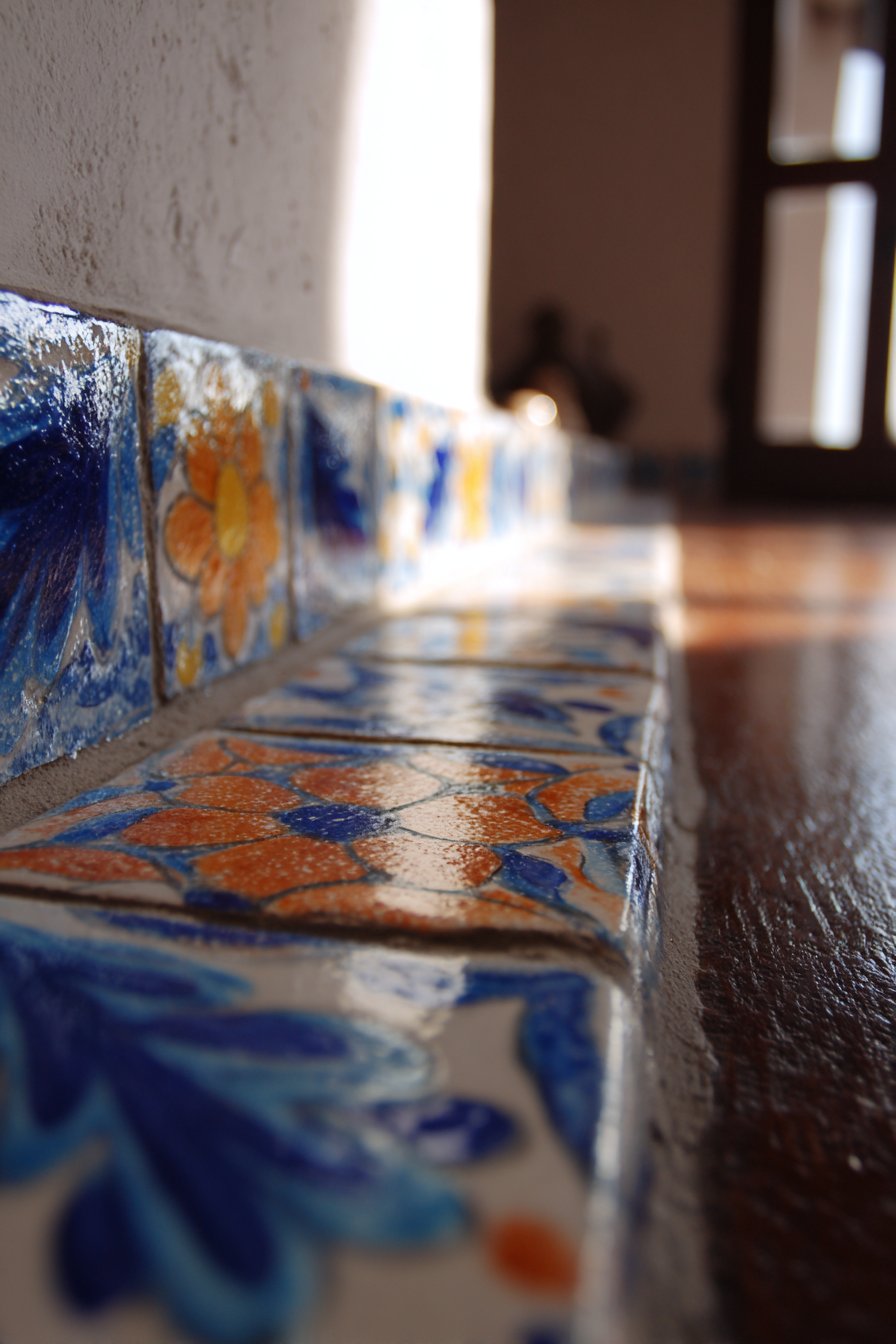
The color palette ranges dramatically from deep cobalt and turquoise blues to sunny yellows and warm terracotta tones, creating a vibrant mosaic effect that energizes the entire space. Individual tiles might feature floral medallions, geometric borders, scrolling vines, or abstract patterns, all unified by the consistent color scheme. The placement and arrangement of tiles can follow strict geometric grids or more organic, asymmetrical compositions, depending on the desired aesthetic. Some tiles might be solid-colored field tiles that provide visual rest between more ornate patterned pieces.
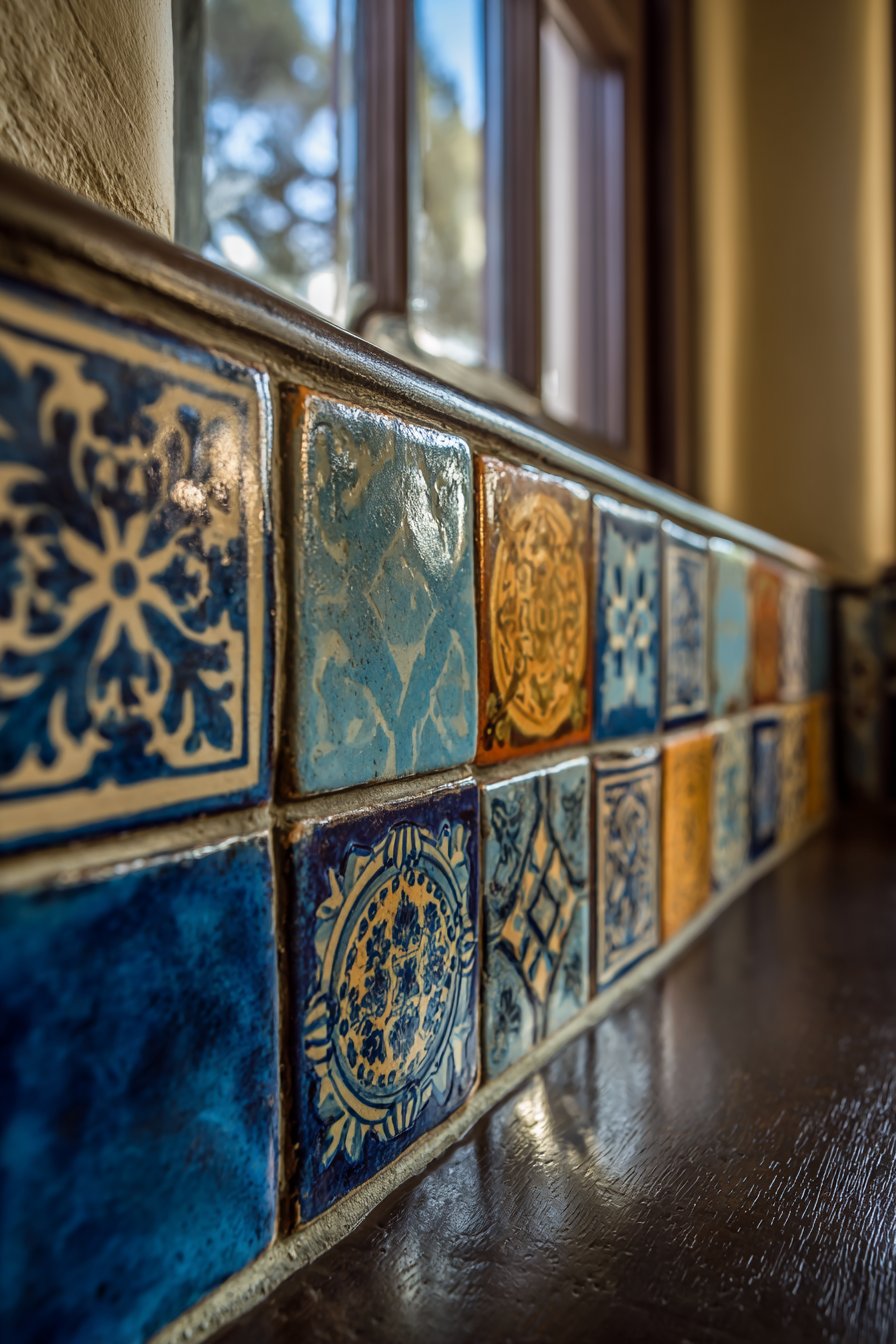
Natural light from a nearby window plays a crucial role in bringing this backsplash to life. The glazed tile surfaces reflect and refract light, making colors appear more saturated and vibrant during bright midday sun, then shifting to warmer, mellower tones during golden hour. The slight texture variations between individual tiles create subtle shadows and highlights that change as light angles shift throughout the day. This dynamic quality means the backsplash never looks exactly the same twice, remaining endlessly interesting.
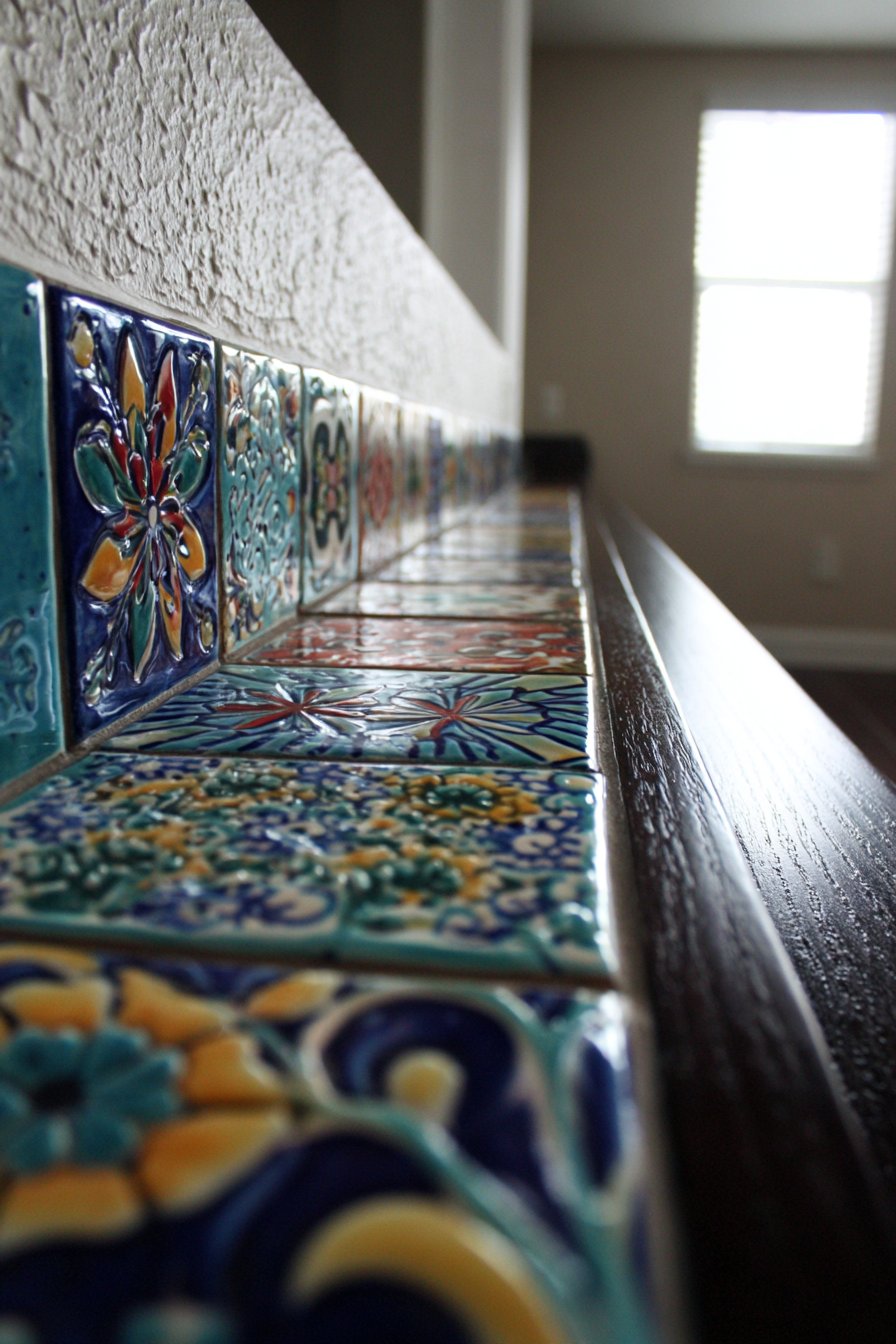
The integration with surrounding elements demonstrates thoughtful design restraint. Simple plastered walls in neutral cream or white allow the tile work to command full attention. Dark wood countertops—perhaps in walnut or mahogany—provide rich contrast without competing for visual dominance. By keeping other elements relatively simple and understated, the Talavera tile installation achieves its full magnificent impact.
Key Design Tips:
- Source authentic hand-painted Talavera tiles that show slight variations, proving artisan creation
- Create color schemes using three to five coordinating colors for cohesive but varied appearance
- Mix patterned tiles with solid field tiles to prevent visual overwhelm and provide rest areas
- Position backsplash areas to receive natural light that will enhance glazed tile surfaces
- Keep surrounding elements like walls and countertops relatively simple to let the tile work shine
- Consider the overall composition when arranging tiles—strict grids versus organic placement
- Install tiles with consistent grout lines to emphasize handcrafted individual character
- Seal grout properly to maintain a clean appearance and prevent staining in the kitchen environment
8. Farmhouse Dining Integration with Wrought Iron Chandelier
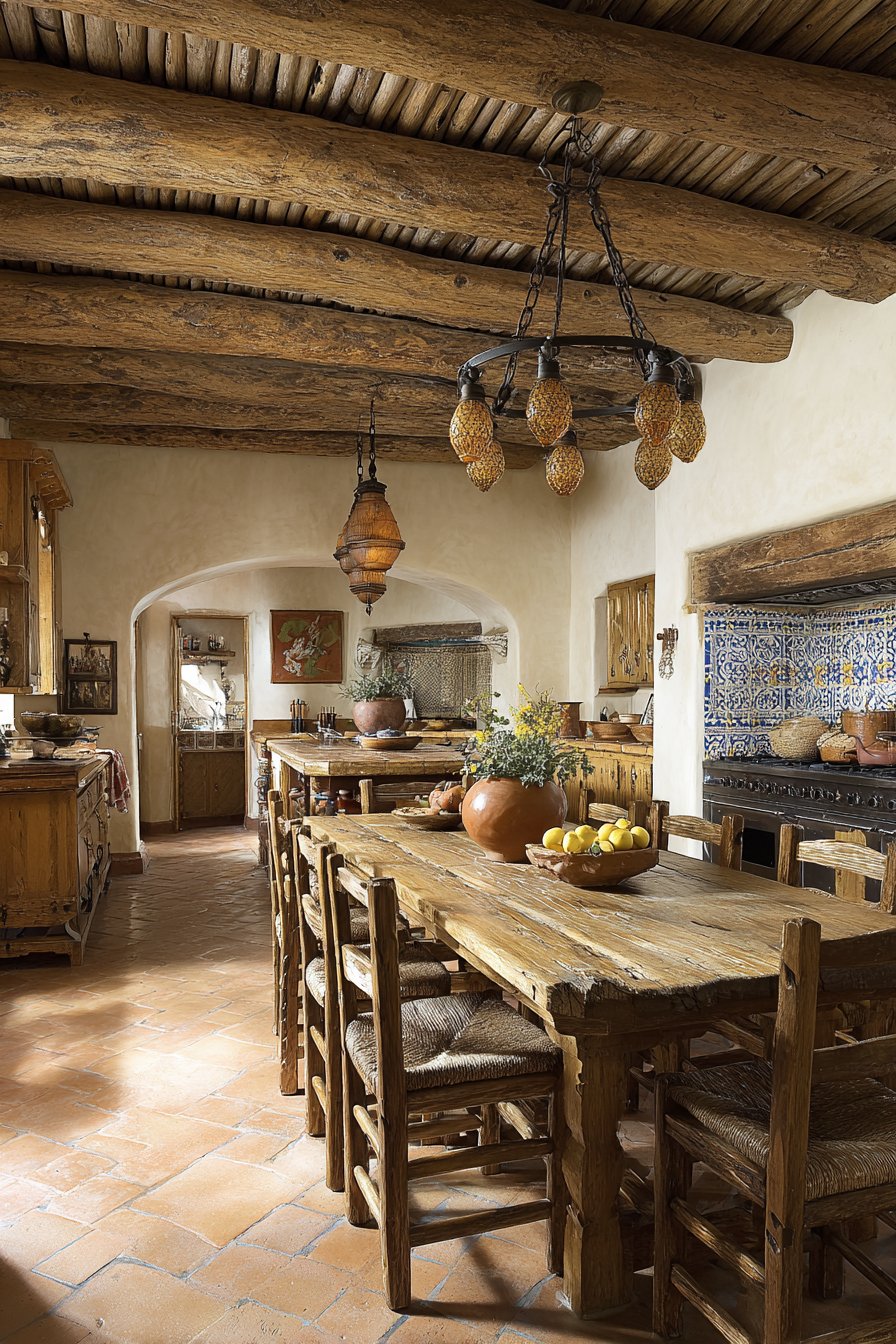
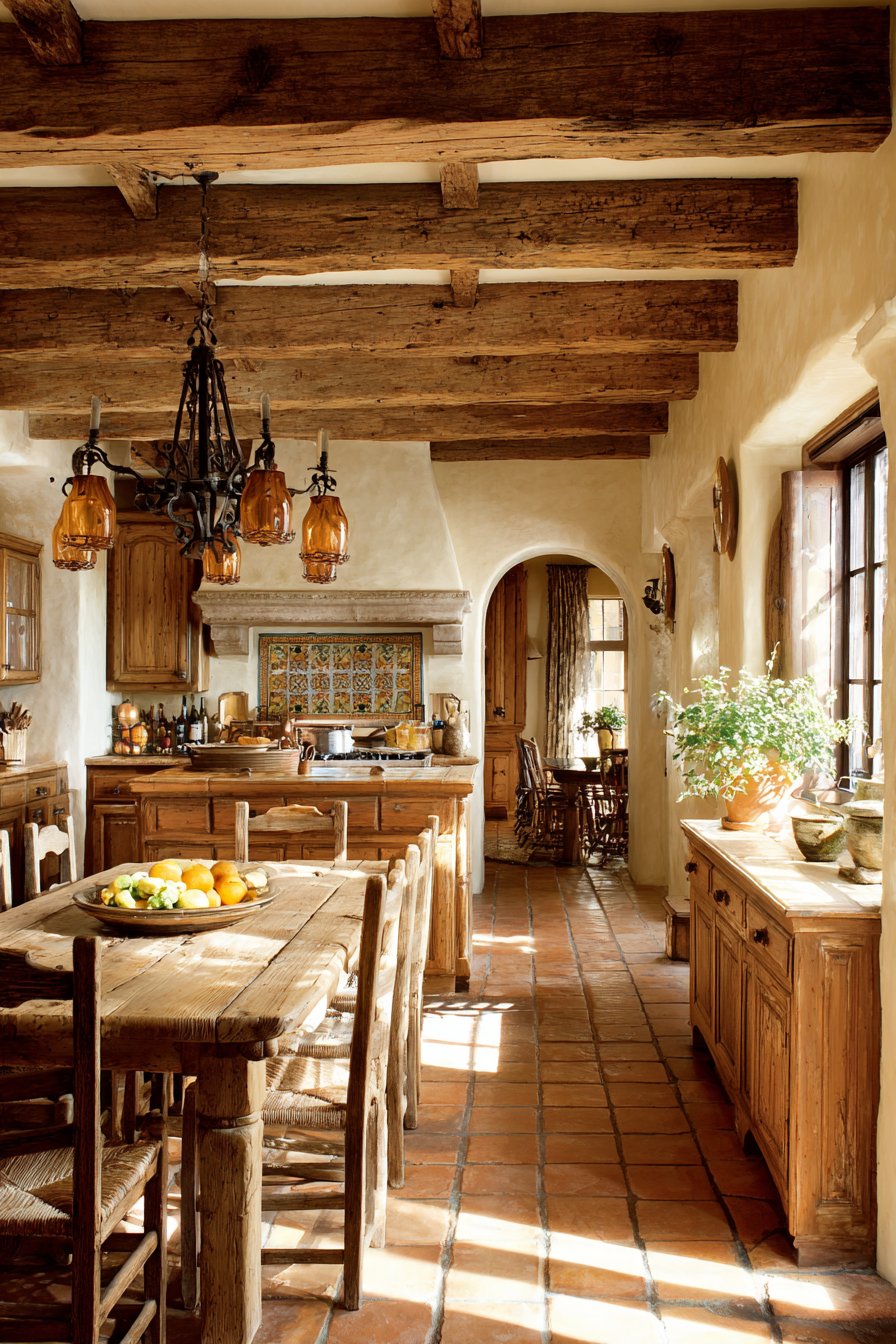
This Mexican kitchen design embraces the concept of kitchen-as-living-space by fully integrating a substantial dining area within the cooking environment. The farmhouse-style wooden dining table anchors the space with its massive presence. Constructed from pine, the table showcases visible knots that add character and grain patterns that swirl and flow across the surface. This isn’t furniture designed to appear perfect and untouched—it’s meant to show wood’s natural beauty while withstanding the rigors of daily family life. The table’s substantial dimensions accommodate large gatherings, reflecting Mexican culture’s emphasis on extended family and communal meals.
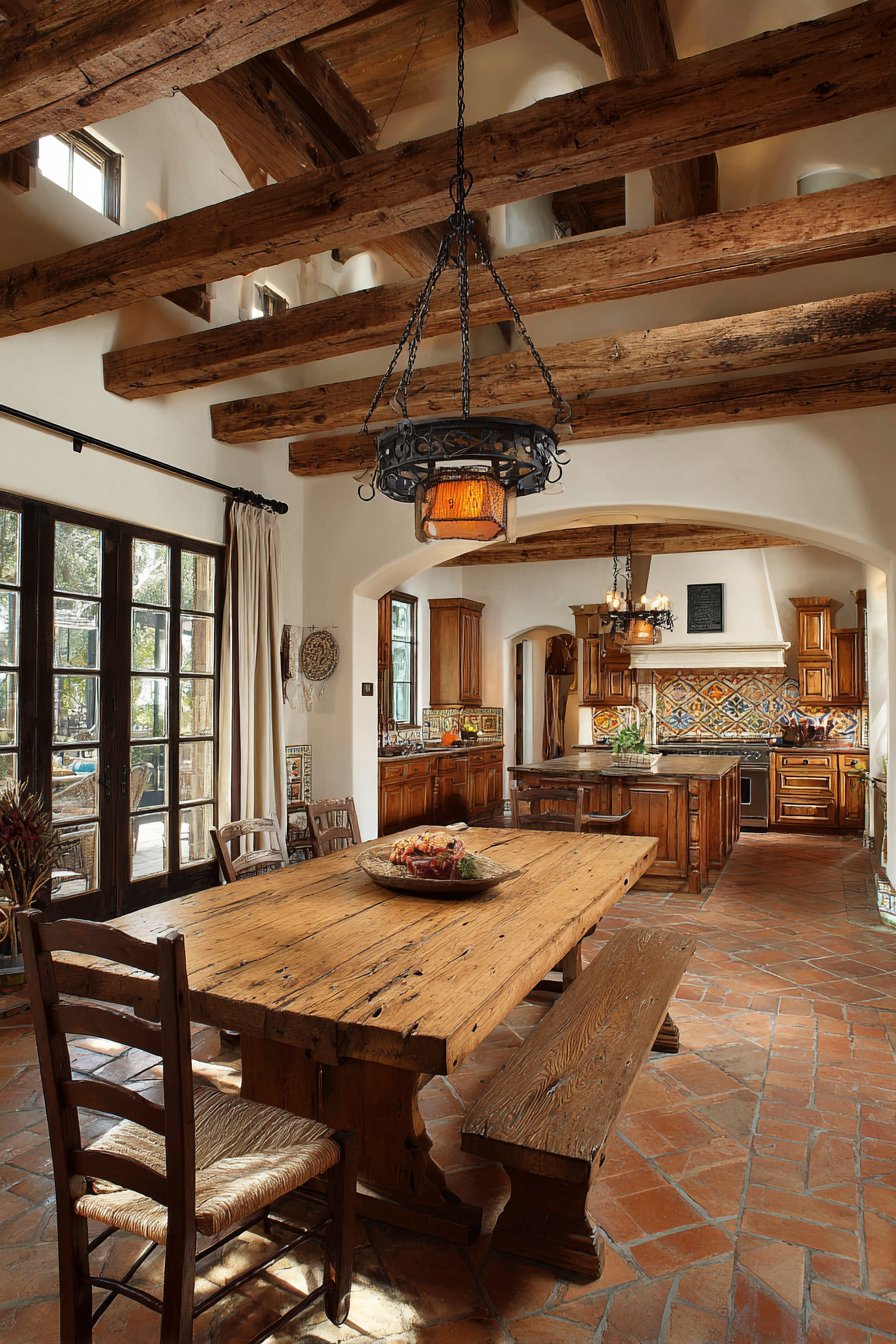
Surrounding the table, ladder-back chairs with woven rush seats provide comfortable seating while maintaining the rustic aesthetic. The rush seats—hand-woven natural fiber creating diagonal patterns—add textural interest and traditional craftsmanship. These chairs are lighter and more delicate than the massive table, creating pleasing visual contrast while remaining sturdy enough for daily use. The ladder-back design, with multiple horizontal slats, shows its Spanish colonial heritage, connecting to centuries of furniture-making tradition.
Overhead, a wrought iron chandelier provides ambient lighting with undeniable presence. The hand-forged iron framework might feature scrolling arms, twisted details, or hammered texture that catches light. Amber glass shades soften the light output, creating warm, golden illumination perfect for dining. The chandelier’s substantial size and visual weight balance the large table below, creating vertical visual completeness. The adjacent cooking area shows colorful tile work and rustic cabinetry that echo the dining area’s aesthetic, creating seamless integration between cooking and gathering spaces.
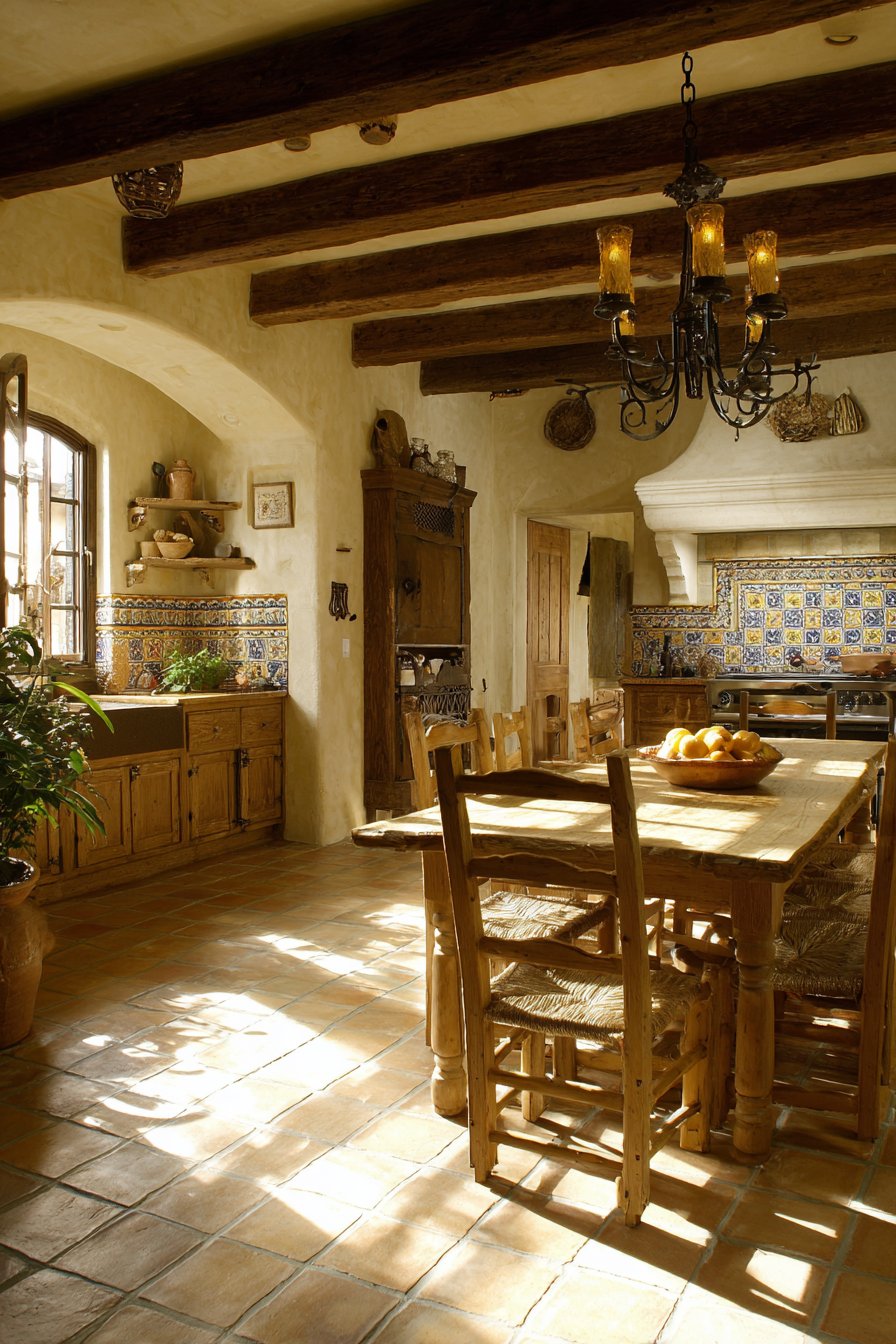
Terra cotta floor tiles extend throughout both dining and cooking areas, unifying the spaces while providing durable, beautiful flooring that improves with age. Natural daylight streaming through windows creates soft shadows that emphasize authentic textures—the wood grain on table and chairs, the woven pattern of rush seats, the hammered texture of iron work—creating an atmosphere that feels comfortable, authentic, and welcoming.
Key Design Tips:
- Choose a substantial pine or other solid wood dining table with visible knots and grain for authentic character
- Select ladder-back chairs with woven rush seats to add traditional craftsmanship and textural interest
- Install a wrought iron chandelier with amber glass shades for warm, flattering ambient lighting
- Extend floor tiles from the cooking area throughout the dining space to create visual unity
- Position dining area to receive natural daylight that will enhance wood and iron textures
- Ensure adequate space around the table for comfortable seating and circulation
- Coordinate tile colors and cabinetry finishes between the cooking and dining areas for cohesive design
- Embrace the kitchen-as-living-space concept by making dining area equally important to cooking zones
9. Functional Pantry with Carved Doors and Iron Hardware
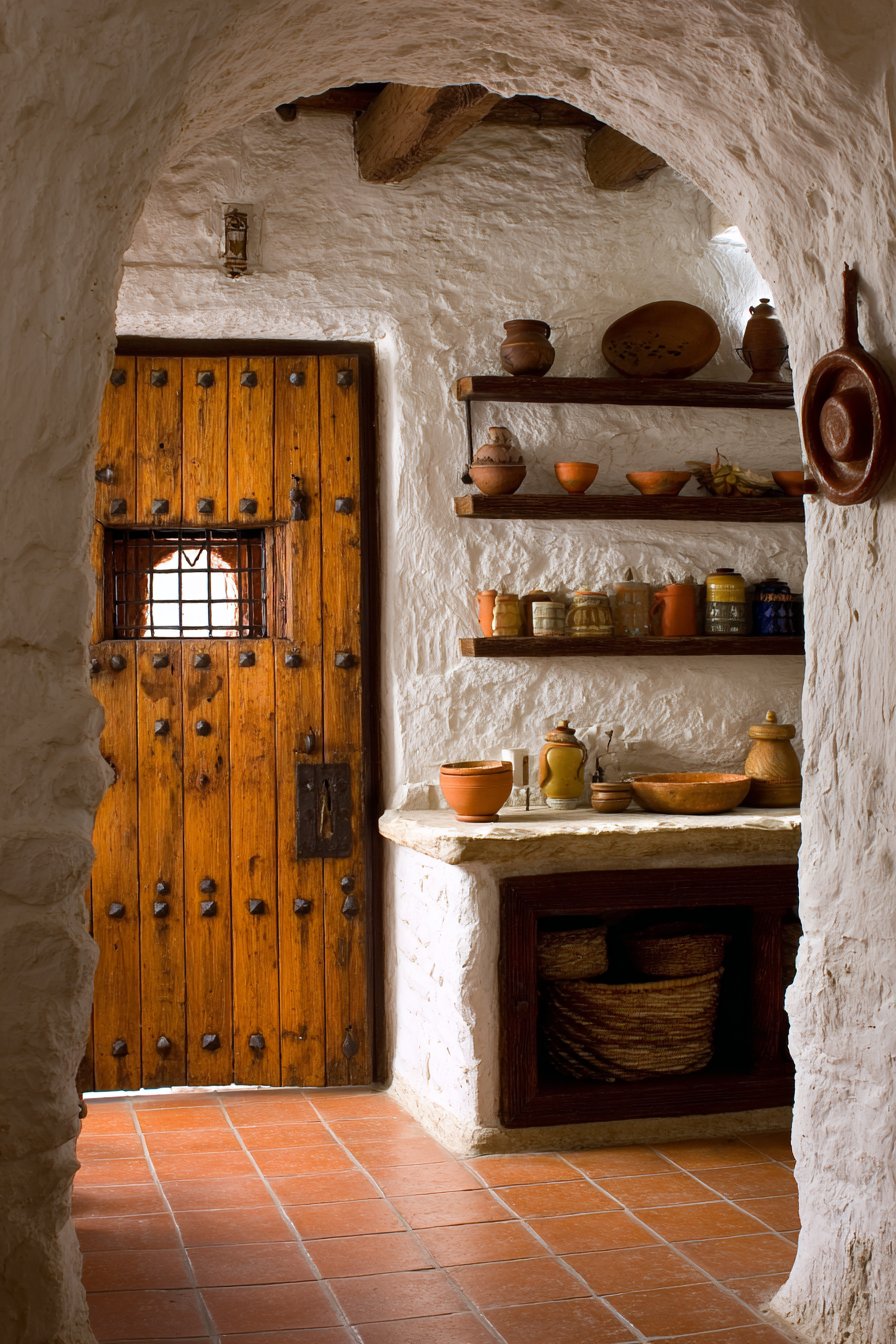
The pantry area often receives minimal design attention, but this Mexican kitchen concept demonstrates how even utilitarian spaces can showcase authentic style and craftsmanship. The arched doorway immediately announces the pantry’s presence with architectural elegance. Carved wooden doors feature iron studs and substantial hardware that add Medieval Spanish influence. The door carving might include geometric patterns, stylized florals, or simple relief details that create texture and visual interest. Iron studs—either decorative or historically functional—punctuate the door surface in regular patterns, their dark metal contrasting beautifully against lighter wood tones.
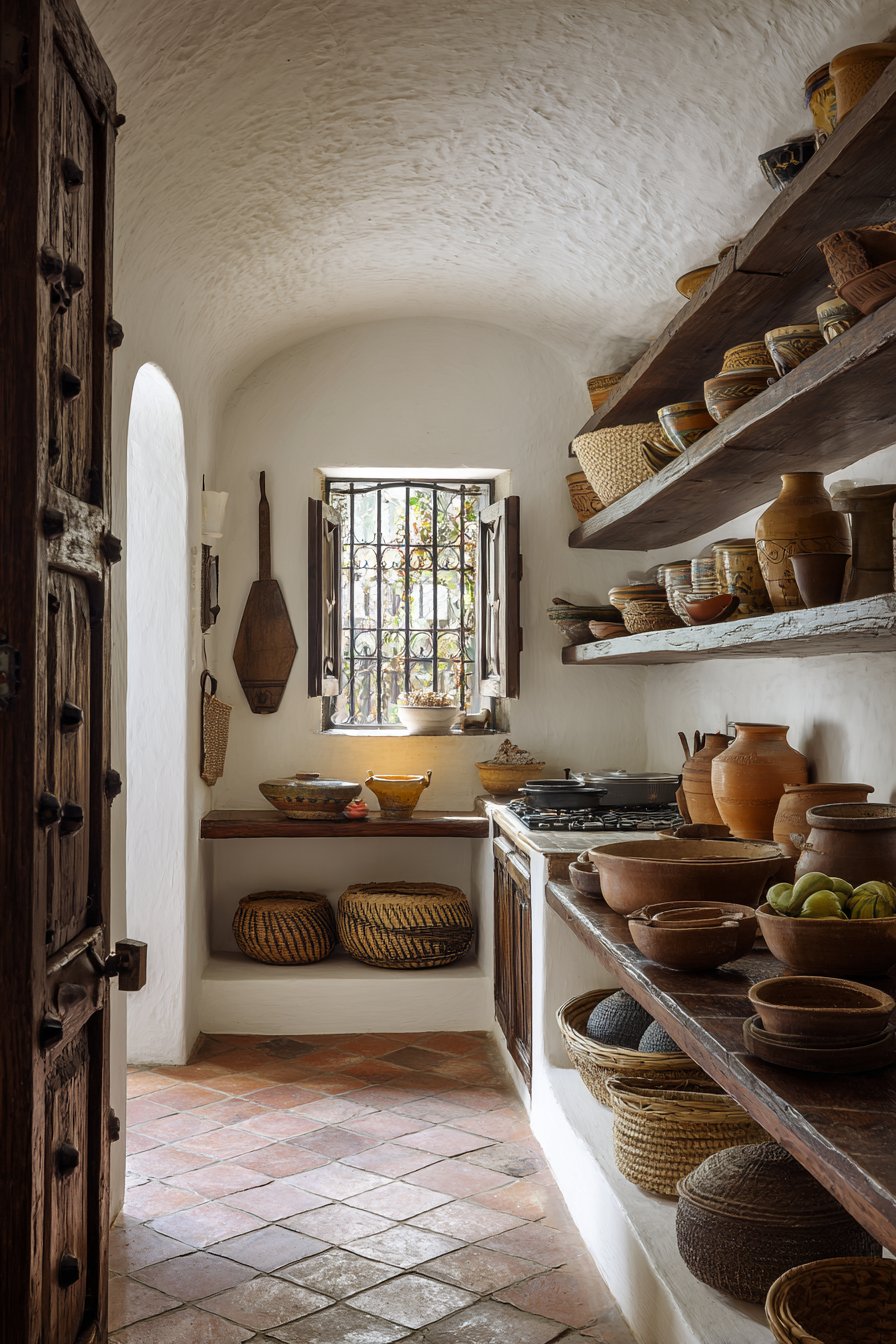
Interior shelving displays the practical organization that makes any pantry functional while maintaining aesthetic consistency with the broader kitchen design. Dark wood shelving—perhaps in the same wood species as kitchen cabinetry—holds traditional Mexican cookware including clay pots in various sizes, colorful pottery serving pieces, and painted ceramic containers. Woven baskets provide flexible storage for dry goods, vegetables, and kitchen linens while introducing natural texture and organic shapes that soften the angular shelving.
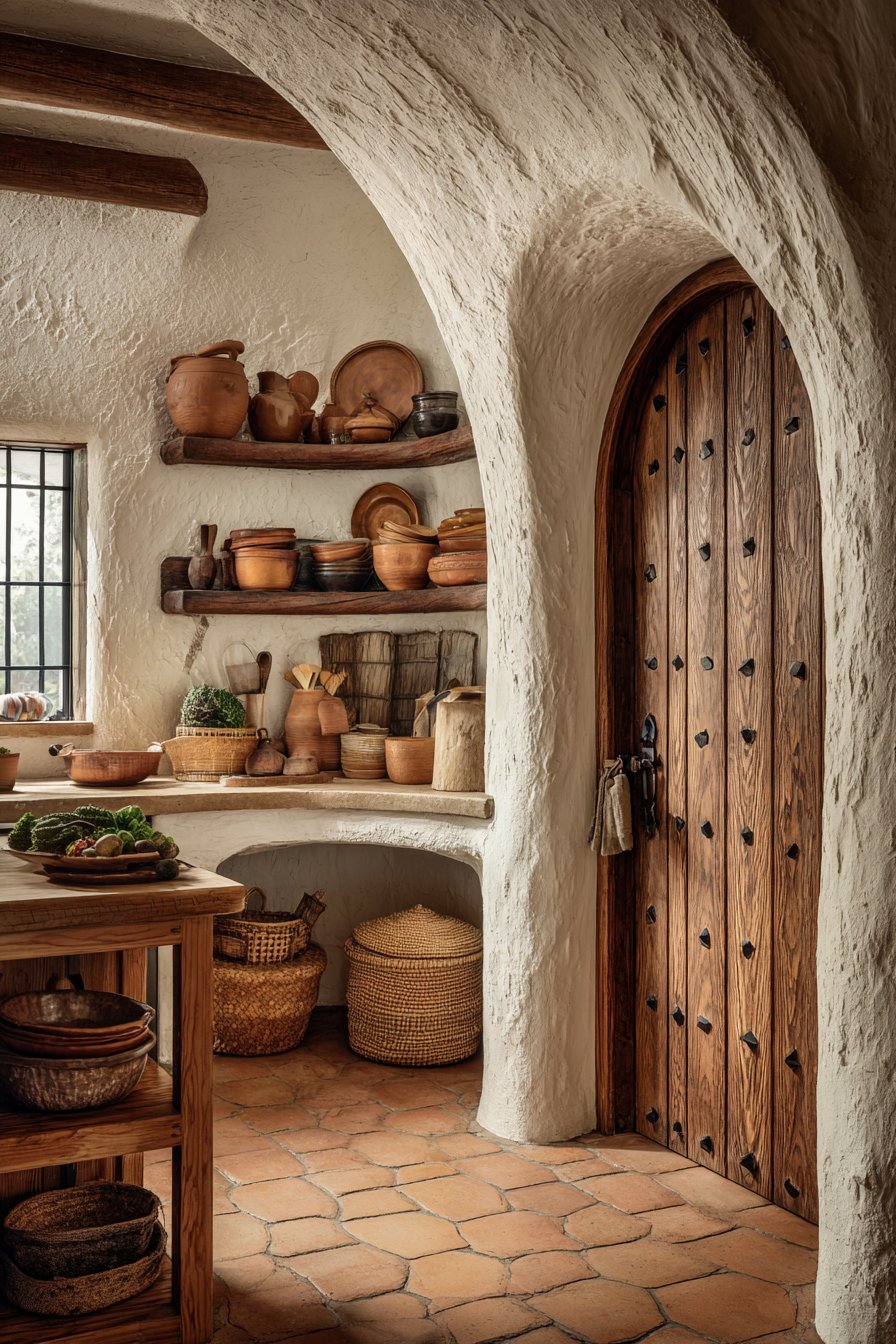
Whitewashed walls with visible texture create authentic atmosphere even in this functional space. The textured plaster suggests traditional construction methods and catches light beautifully, showing dimensional variation impossible with smooth painted surfaces. Dark wood shelving creates strong visual contrast against light walls, making the displayed items pop while emphasizing the craftsmanship of the shelving itself. Terracotta floor tiles extend from the main kitchen into the pantry, providing visual continuity and practical durability.
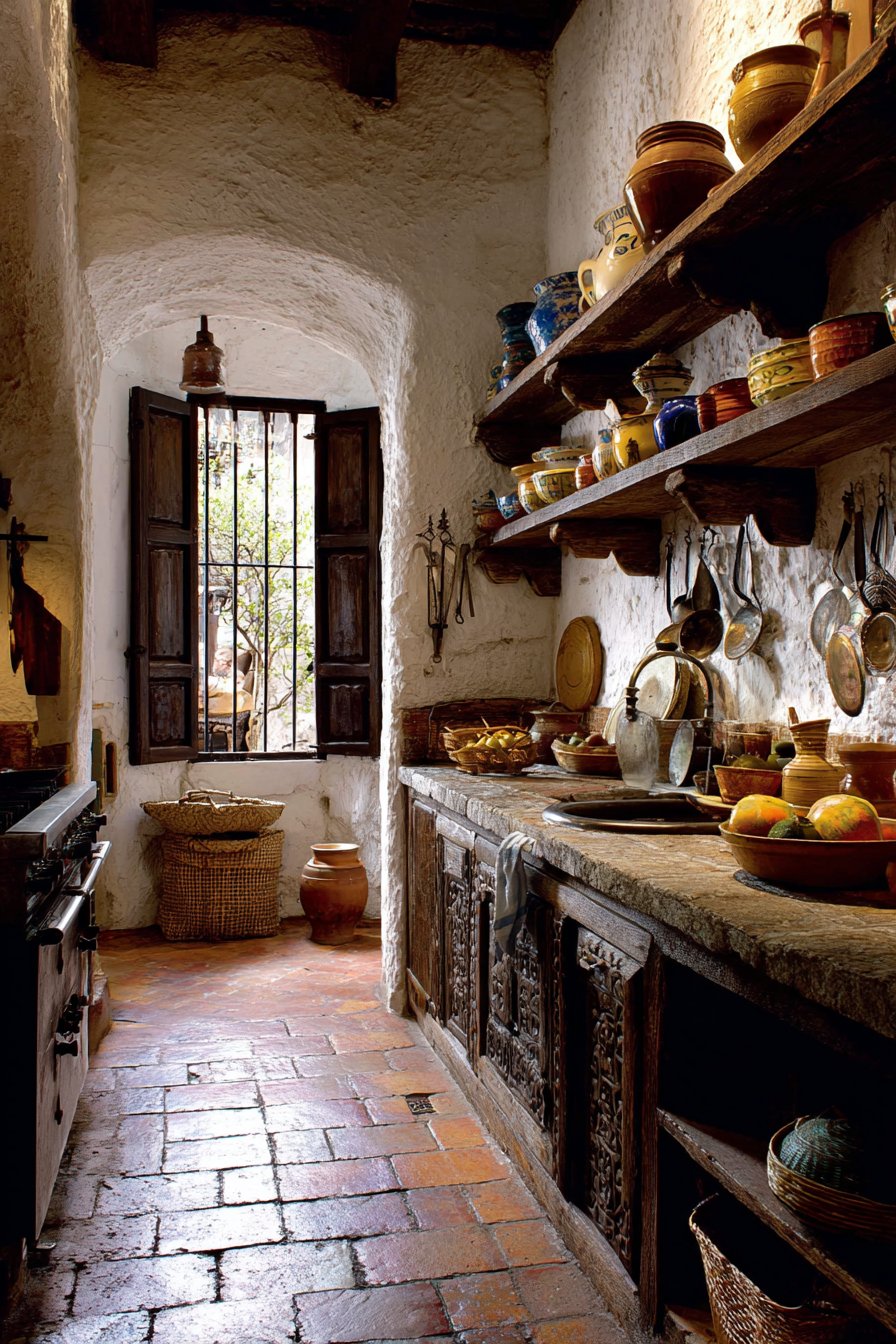
A small window with iron grillwork provides natural ventilation critical for food storage while maintaining security. The decorative iron grillwork might feature scrolling patterns or geometric designs that filter sunlight into interesting shadow patterns. This attention to detail—making even a pantry window beautiful and functional—exemplifies the Mexican design philosophy that every element deserves thoughtfulness and craft.
Key Design Tips:
- Frame pantry entrances with arched doorways to add architectural elegance and authentic character
- Install carved wooden doors with iron studs and substantial hardware for old-world charm
- Use dark wood shelving against whitewashed walls to create strong visual contrast
- Display traditional Mexican cookware and pottery as part of the pantry organization
- Include woven baskets for flexible storage that adds natural texture
- Extend main kitchen floor tiles into pantry for visual continuity
- Add small windows with decorative iron grillwork for ventilation and filtered natural light
- Apply textured plaster or whitewash to pantry walls for authentic surface treatment
- Organize displayed items by color and type for both function and visual appeal
10. Hand-Carved Prep Table Workspace with Copper Display
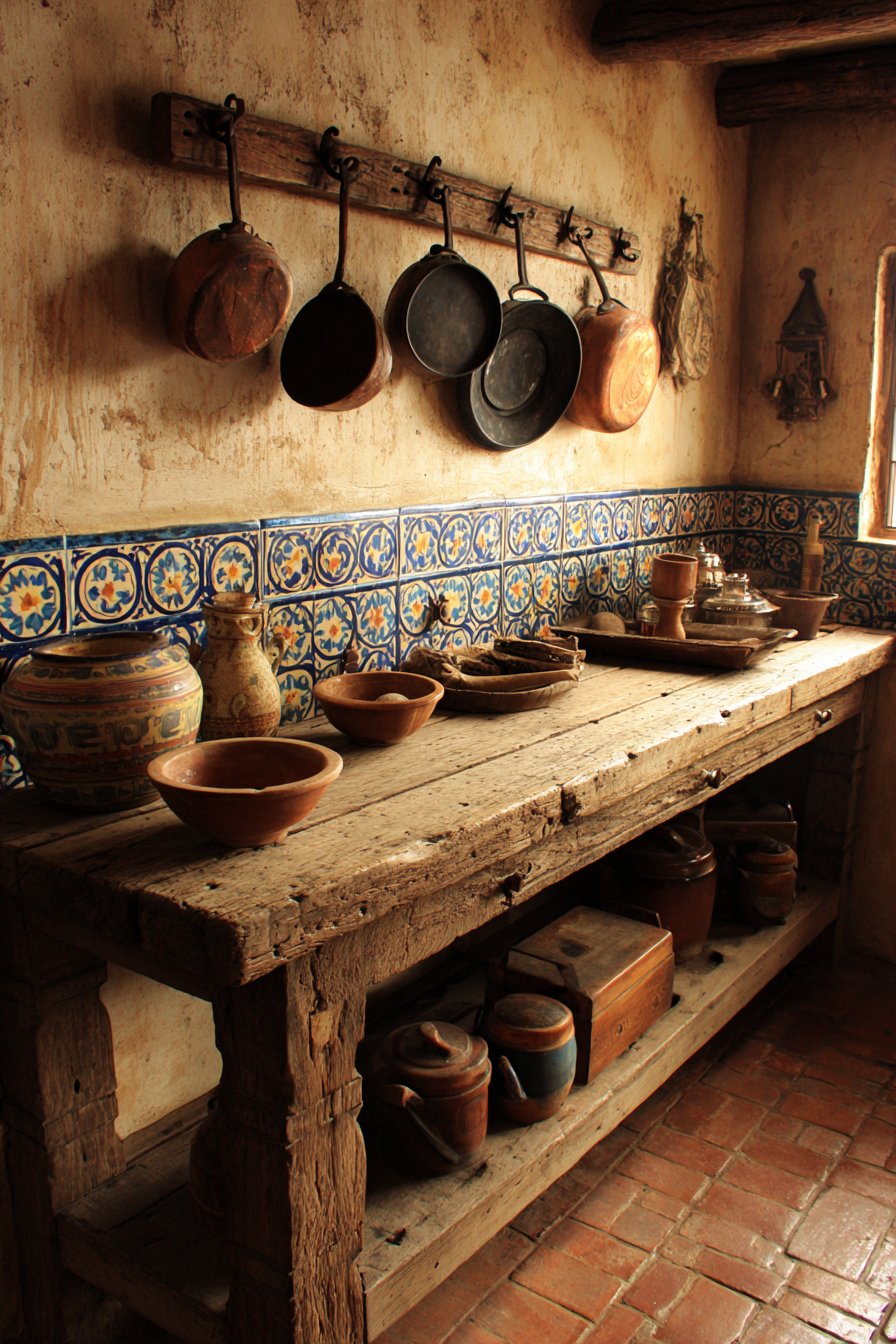
The final design concept celebrates the intersection of functionality and artistry through a magnificent hand-carved wooden prep table that serves as the kitchen’s centerpiece. This isn’t modern furniture mass-produced in factories—it’s a unique piece showing visible tool marks where chisels, planes, and carving implements shaped the wood. The natural aging of the wood tells its own story through subtle color variations, slight checking in the grain, and the patina developed through years of use. The prep table’s substantial construction suggests generations of service, built to withstand constant use while growing more beautiful over time.
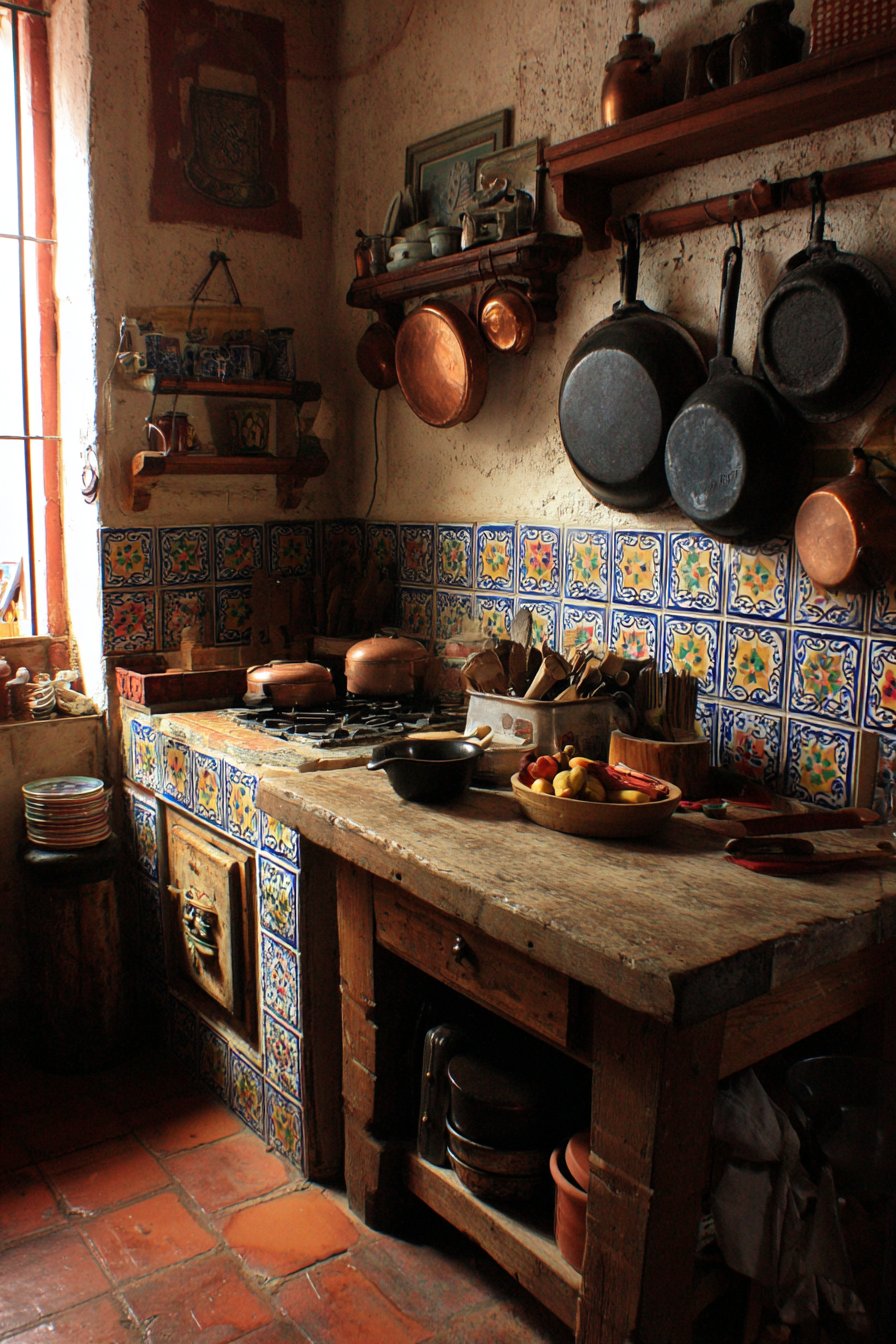
Colorful Talavera tile accents border the work surface edges in traditional floral patterns, creating a decorative frame that elevates the table from purely functional furniture to artistic statement. These tile borders might feature repeating floral motifs, geometric designs, or abstract patterns in classic Talavera colors—blues, yellows, greens, and terracotta. The tiles protect the wood edges from wear while adding visual interest that draws the eye and celebrates Mexican ceramic traditions. The integration of tile and wood demonstrates how different materials and techniques can combine harmoniously.
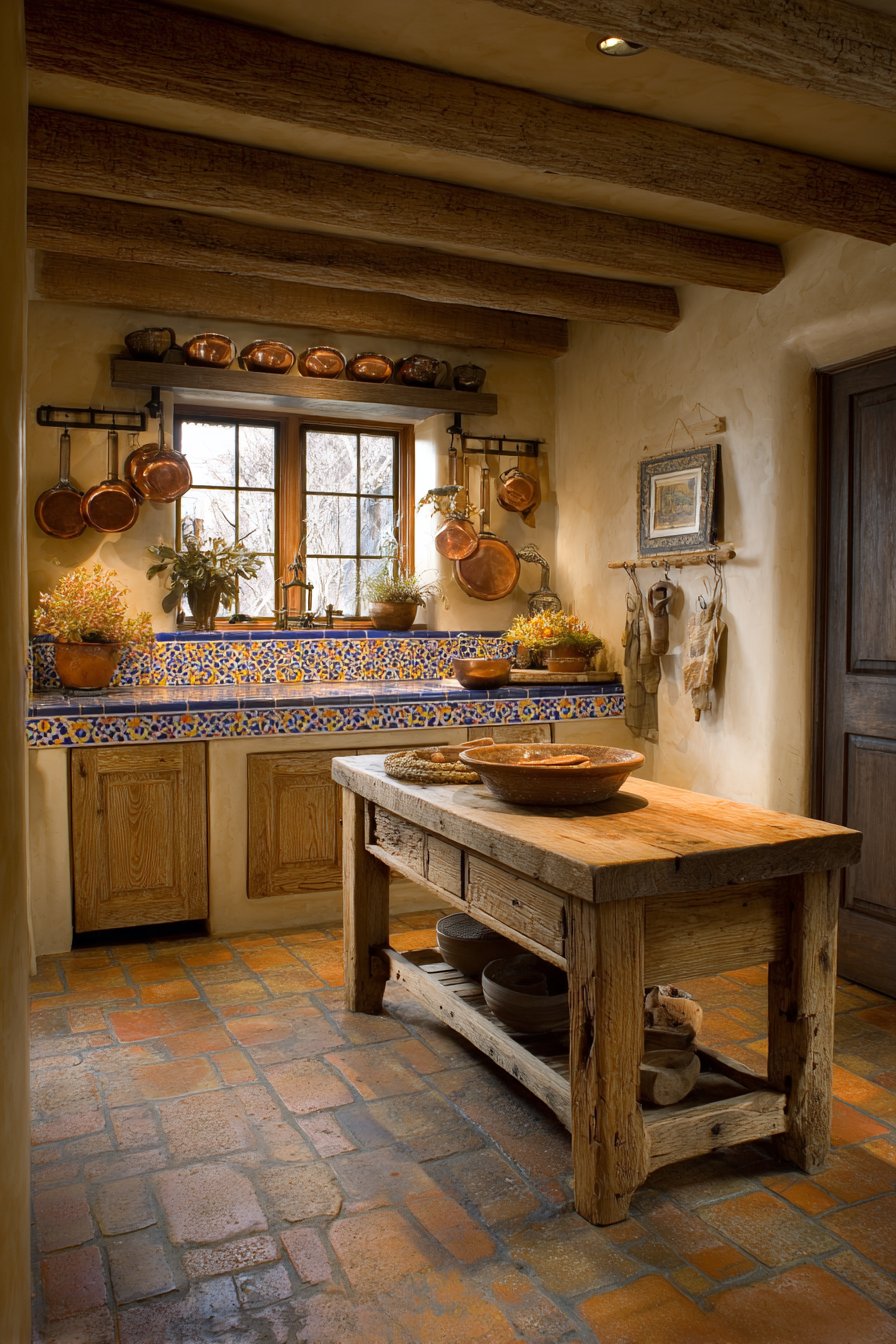
Above the prep table, hanging copper pots and cast iron skillets create a functional display that showcases essential cooking tools while adding visual interest at eye level and above. The copper catches and reflects light, creating warm glints throughout the space. Cast iron’s matte black surface provides dramatic contrast to copper’s shine, creating visual variety while demonstrating the practical reality of serious cooking. Hooks or racks holding this cookware must be substantial enough to support considerable weight while contributing to the overall aesthetic.
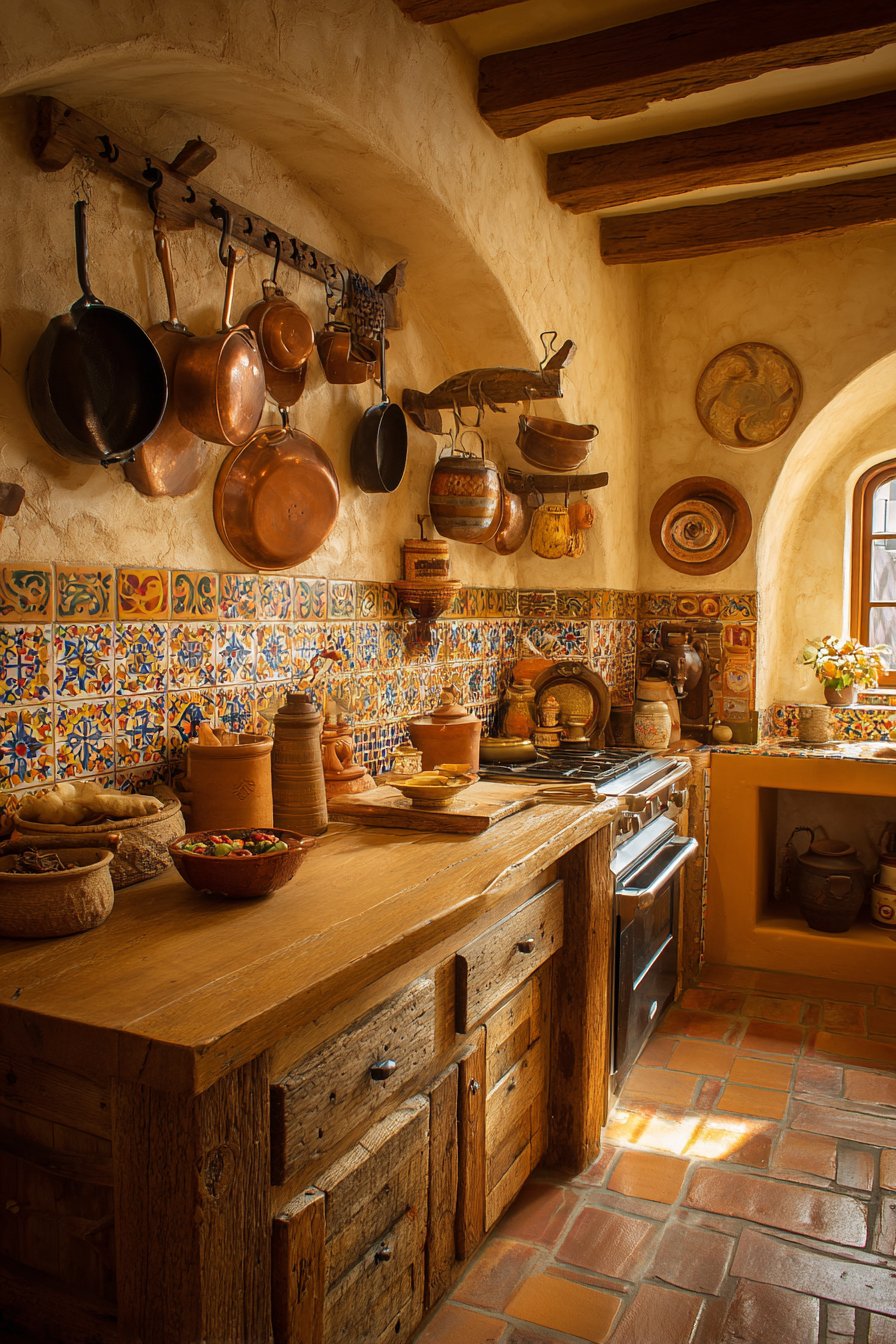
Rough plaster walls in warm cream show authentic texture that plays beautifully with light streaming from a side window. The textured surfaces create subtle shadows and highlights impossible with smooth walls, adding depth and dimensional interest. Terra cotta flooring provides an earthy foundation that grounds the design while offering practical durability. The overall composition—from floor to ceiling, from rough plaster to glazed tile to natural wood—creates a harmonious environment where cooking becomes pleasure and everyday tasks feel special.
Key Design Tips:
- Source or commission hand-carved wooden prep tables showing visible tool marks and natural aging
- Add Talavera tile borders around work surfaces to protect edges while adding decorative detail
- Install substantial overhead racks or hooks to display copper pots and cast iron cookware
- Choose rough plaster walls in warm earth tones for authentic texture and light play
- Position prep tables near windows to take advantage of natural side lighting
- Select terra cotta flooring that extends throughout the kitchen for visual continuity
- Allow wood surfaces to develop natural patina rather than maintaining “new” appearance
- Balance substantial furniture pieces with lighter elements to prevent overwhelming the space
- Combine materials thoughtfully—wood, tile, copper, iron, and plaster—for rich textural variety
Why These Mexican Kitchen Designs Represent the Best in Authentic Style
These ten Mexican kitchen designs represent the pinnacle of authentic style for numerous compelling reasons that extend far beyond mere aesthetics. Each concept demonstrates core principles that make Mexican kitchen design enduringly popular, practical, and beautiful. Understanding why these designs work so well helps homeowners and designers make informed decisions when creating their own Mexican-inspired spaces.
Celebration of Handcrafted Artisanship: Every design prominently features elements created by human hands rather than machines. Hand-painted Talavera tiles, carved wooden furniture, hammered copper sinks, and wrought iron hardware all show the marks of their makers. This artisanal quality creates visual interest impossible to achieve with mass-produced items. The slight irregularities and variations prove authenticity while adding character that improves with age. In an era of digital precision and automated manufacturing, handcrafted elements provide soul and warmth that people instinctively respond to. Mexican kitchen design celebrates rather than hides these human touches, creating spaces that feel welcoming and lived-in from day one.
Intelligent Use of Natural Materials: Wood, clay, copper, iron, and stone appear throughout these designs, selected for both practical performance and aesthetic beauty. Terracotta floor tiles provide cool walking surfaces in warm climates while developing beautiful patina over decades. Copper sinks offer natural antimicrobial properties while aging gorgeously. Wood cabinetry brings warmth and can be repaired rather than replaced. These natural materials connect kitchens to earth and tradition, creating environmentally sustainable designs that improve rather than deteriorate over time. The material palette feels cohesive because everything shares organic origins and honest expression.
Bold Yet Harmonious Color Palettes: Mexican kitchen design fearlessly embraces vibrant color—cobalt blues, sunny yellows, rich terracottas, turquoise, and clay reds—in combinations that energize spaces without overwhelming them. The secret lies in grounding bold colors with neutral elements like cream walls, natural wood tones, and earthy terracotta floors. This creates balance where bright colors provide excitement while neutral elements offer visual rest. The color combinations draw from Mexican landscapes, architecture, and textile traditions, creating palettes that feel authentic rather than arbitrary. These colors also withstand changing trends, remaining beautiful decade after decade.
Functional Beauty: Every design prioritizes practical functionality alongside aesthetic appeal. Open shelving displays beautiful pottery while keeping dishes accessible. Copper pot racks store cookware while creating visual interest. Tile backsplashes protect walls while adding artistic expression. Central islands provide workspace while serving as gathering spots. This integration of form and function reflects Mexican cultural values where beauty and utility shouldn’t compete but rather complement each other. The result is kitchens that work exceptionally well for daily cooking while looking spectacular—no compromise necessary.
Architectural Interest: From arched doorways and windows to exposed ceiling beams, corner fireplaces, and textured plaster walls, these designs incorporate architectural elements that create spatial interest and authentic character. These features aren’t mere decoration—they reference centuries of Mexican architectural tradition while providing practical benefits like improved air circulation, structural support, and enhanced acoustics. The dimensional quality of architectural elements creates shadow play and visual complexity impossible in completely flat, modern spaces.
Textural Richness: Smooth glazed tiles contrast with rough hewn wood. Hammered copper plays against woven textiles. Plastered walls show texture near polished cabinetry hardware. This textural variety creates spaces that engage multiple senses, inviting touch as well as sight. The textural richness prevents monotony while adding dimensional depth that makes spaces feel larger and more interesting. Light plays differently across various textures throughout the day, ensuring the kitchen never looks exactly the same twice.
Cultural Authenticity: These designs don’t superficially appropriate Mexican aesthetics but rather deeply engage with cultural traditions, craftsmanship methods, and design principles developed over centuries. Talavera tile patterns follow traditional motifs. Furniture styles reference Spanish colonial heritage. Material choices reflect climate adaptation and local resource availability. This cultural authenticity creates designs with integrity and depth, avoiding the hollow feeling of style-without-substance that plagues many design trends.
Timeless Appeal: Unlike trendy designs that appear dated within years, authentic Mexican kitchen style has remained beautiful for centuries and will continue doing so. The emphasis on quality materials, traditional craftsmanship, and honest expression creates designs that transcend temporary fashions. A well-executed Mexican kitchen installed today will look equally appropriate in fifty years, aging gracefully as materials develop patina and character rather than simply deteriorating.
Flexibility Across Kitchen Sizes: As demonstrated by the compact turquoise kitchen design, Mexican style works beautifully in spaces of any size. The principles of bold color, natural materials, handcrafted details, and cultural authenticity apply equally well to small urban kitchens and expansive rural spaces. The style’s flexibility allows homeowners with different space constraints and budgets to create authentic Mexican atmosphere.
Enhancement of Daily Life: Perhaps most importantly, these kitchens make daily life more beautiful and enjoyable. Cooking in spaces filled with color, craftsmanship, and authentic character transforms routine tasks into pleasurable experiences. The emphasis on gathering spaces—whether islands with seating or integrated dining areas—recognizes that kitchens serve as family hubs where relationships develop and memories form. Mexican kitchen design creates environments that support and enhance the important activities that happen there, making every day feel a bit more special.
Integration of Indoor-Outdoor Living: Many designs feature elements like arched windows, corner fireplaces, and extensive natural lighting that blur boundaries between interior and exterior spaces. This reflects Mexican architectural traditions developed in pleasant climates where indoor-outdoor flow enhances livability. Even in less temperate regions, these design elements create connections to nature and surrounding landscape that make spaces feel more expansive and alive.
Emphasis on Durability: The materials and construction methods featured in these designs—solid wood cabinetry, terracotta tiles, copper fixtures, iron hardware—are chosen for exceptional longevity. With proper care, these elements can last generations rather than requiring replacement every decade. This durability represents both economic wisdom and environmental responsibility, creating kitchens that become more valuable over time rather than disposable spaces requiring constant updates.
Celebration of Imperfection: Unlike modern design aesthetics that prize machine-like precision, Mexican kitchen style embraces natural irregularities and handmade variations. Tiles show slight size differences. Wood displays knots and grain variation. Plaster walls reveal texture. This acceptance of imperfection creates spaces that feel relaxed and human-scaled, where life can be lived without constant worry about maintaining pristine perfection.
The combination of these qualities explains why Mexican kitchen design has captivated homeowners, designers, and architects worldwide. These kitchens offer something increasingly rare in modern life—spaces with soul, character, and authentic connection to craft traditions and cultural heritage. They prove that functional spaces can be spectacularly beautiful, that bold color can coexist with sophisticated design, and that handcrafted quality creates value that mass production cannot match.
Conclusion
Creating an authentic Mexican kitchen involves much more than simply selecting colorful tiles and rustic furniture. As these ten diverse designs demonstrate, successful Mexican kitchen style results from thoughtful integration of handcrafted elements, natural materials, bold color palettes, and architectural features that honor centuries of cultural tradition and practical wisdom. Whether you’re drawn to the vibrant Talavera tile work, the warmth of natural wood and terracotta, the character of hand-forged iron details, or the functionality of integrated dining spaces, Mexican kitchen design offers endless possibilities for creating spaces that are both beautiful and deeply livable.
The key takeaways for anyone considering Mexican kitchen design include embracing authentic handcrafted elements over mass-produced alternatives, investing in quality natural materials that improve with age, fearlessly incorporating bold colors grounded by neutral elements, prioritizing both functionality and aesthetics, and respecting the cultural traditions that inform authentic design choices. Remember that successful Mexican kitchens aren’t created through superficial decoration but through meaningful engagement with materials, craftsmanship, and design principles that have proven their worth over generations.
We encourage you to experiment with these ideas in your own home, whether through a complete kitchen renovation or smaller updates like adding Talavera tile accents, installing open shelving to display colorful pottery, or incorporating hand-forged iron hardware. Start with elements that resonate most strongly with your personal aesthetic and lifestyle needs, then build gradually toward your vision of the perfect Mexican kitchen. The beauty of this design style lies in its flexibility and forgiving nature—there’s no single “correct” way to create an authentic Mexican kitchen, only infinite variations that celebrate craftsmanship, color, and cultural heritage. Let these designs inspire your own creative journey toward a kitchen that brings joy, warmth, and authentic character to your daily life.
