


The bedroom serves as our most intimate retreat, a personal sanctuary where we begin and end each day. The design choices we make in this space profoundly impact our mood, sleep quality, and overall well-being. White bedroom has emerged as one of the most enduring and versatile approaches to creating these essential havens, offering a canvas that can adapt to countless styles, from minimalist modern to romantic French country, from coastal casual to sophisticated urban chic.
White possesses a unique transformative power in interior design. It amplifies natural light, creates the illusion of spaciousness even in compact rooms, and provides a serene backdrop that promotes relaxation and restful sleep. Yet white is far from monotonous—it encompasses an entire spectrum of shades, from warm ivories and creams to cool brilliant whites, each creating distinctly different atmospheres. The true artistry lies in layering various white tones, textures, and materials to create depth, interest, and personality without sacrificing the calming monochromatic aesthetic.
This comprehensive guide explores twenty distinctive white bedroom design concepts, each showcasing different approaches to this timeless color palette. Whether you’re working with a sprawling master suite or a modest apartment bedroom, seeking budget-friendly solutions or luxurious indulgence, drawn to traditional elegance or contemporary minimalism, you’ll discover inspiring ideas that demonstrate the remarkable versatility and enduring appeal of white bedroom. Our this white and gold kitchen ideas has more inspiration along these same lines.
1. Crisp Platform Bed with Natural Texture Layers

Imagine waking up in a bedroom where crisp white linen bedding adorns a sleek platform bed, the natural fabric weave creating subtle texture variations that catch the morning light. This design showcases the beauty of simplicity elevated through careful attention to material quality and texture.
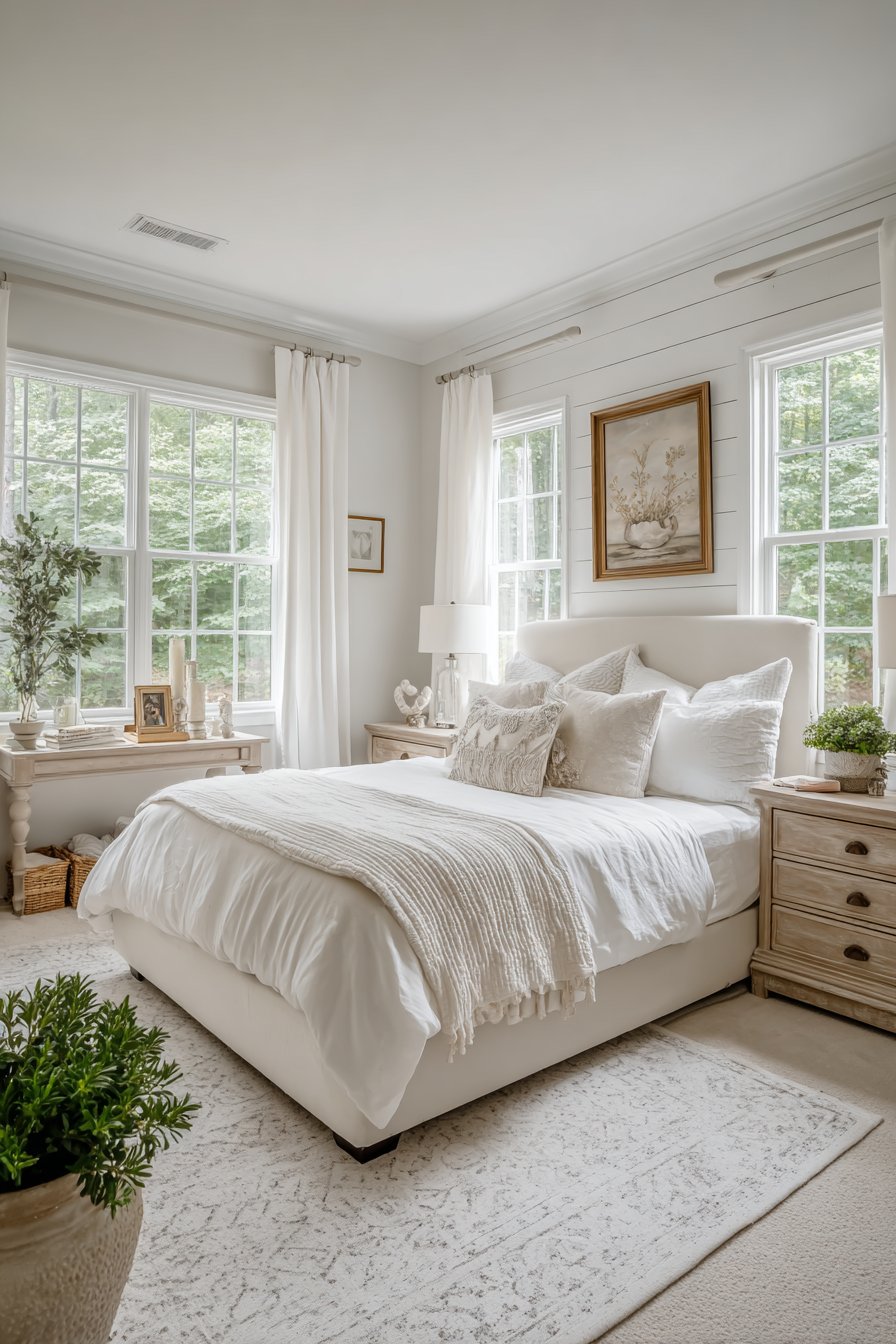
The white shiplap accent wall behind the headboard introduces architectural interest with its soft grey undertones, creating depth within the monochromatic scheme without disrupting the serene atmosphere. Natural oak nightstands provide essential warmth against the predominantly white palette, their honey-toned wood grain offering visual relief and organic contrast. Our black and grey bedroom ideas has more inspiration along these same lines.
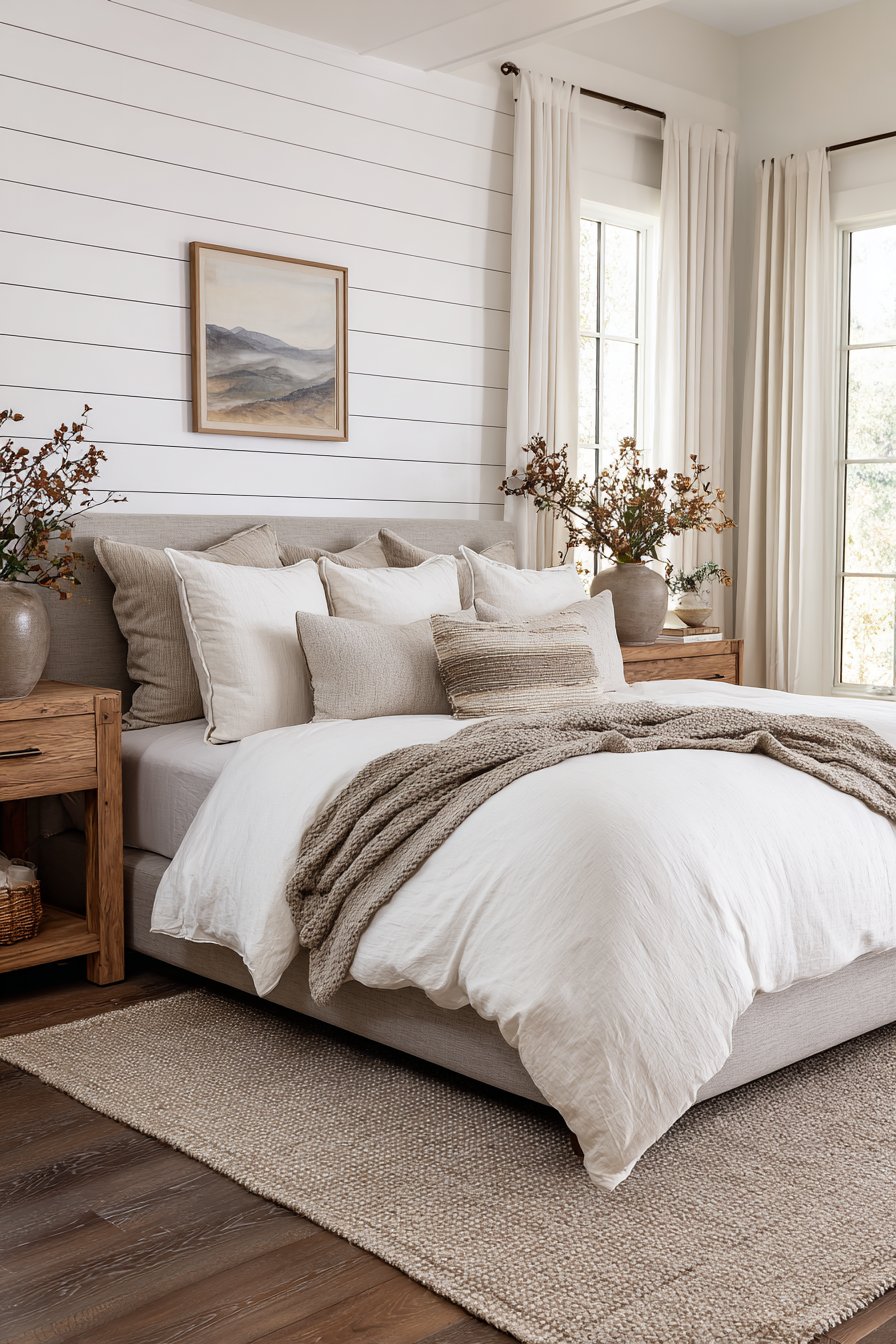
Large windows dressed with flowing white curtains become a focal point in this space, allowing soft morning light to filter through and illuminate the room with a gentle, ethereal glow. The curtains’ movement adds life to the static elements, while their translucent quality ensures privacy without sacrificing natural illumination.
The interplay between the various white surfaces—from the matte linen bedding to the slightly reflective shiplap panels—creates a sophisticated layering effect that prevents the space from feeling flat or sterile.
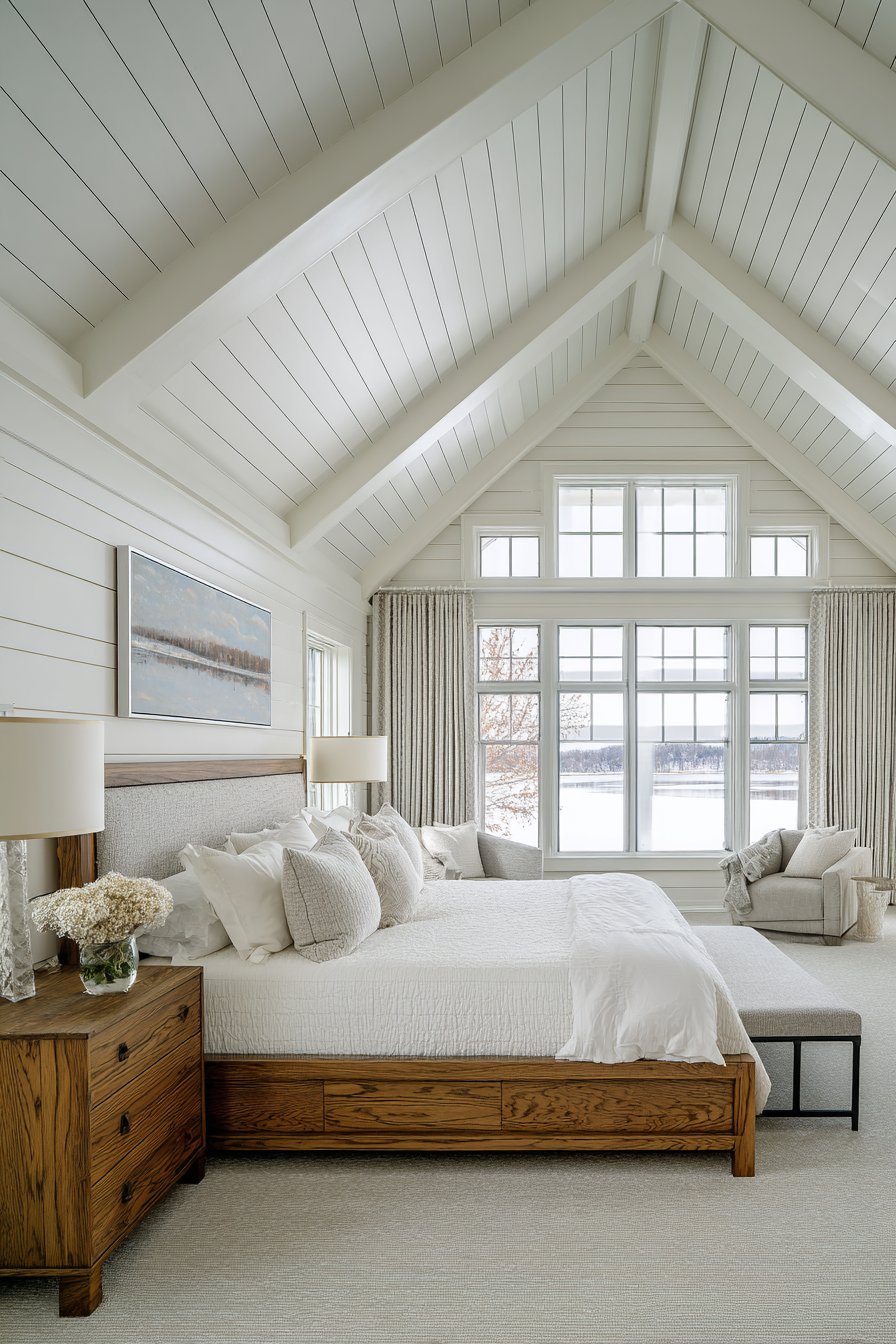
The beauty of this design lies in its professional execution of the monochromatic approach, where balanced exposure highlights fabric textures and natural shadows become part of the decorative scheme. Every element serves both aesthetic and functional purposes, from the platform bed’s clean lines that visually expand the floor space to the nightstands’ practical storage solutions that maintain the uncluttered appearance.
Key Design Tips:
- Choose high-quality linen bedding with visible natural weave for authentic texture
- Install shiplap horizontally to visually widen narrow rooms
- Select nightstands in natural wood tones to anchor an all-white palette
- Layer window treatments to control light while maintaining airiness
- Use wide-angle perspectives when arranging furniture to maximize spatial flow
2. Minimalist Floating Elements and Ivory Bouclé Elegance
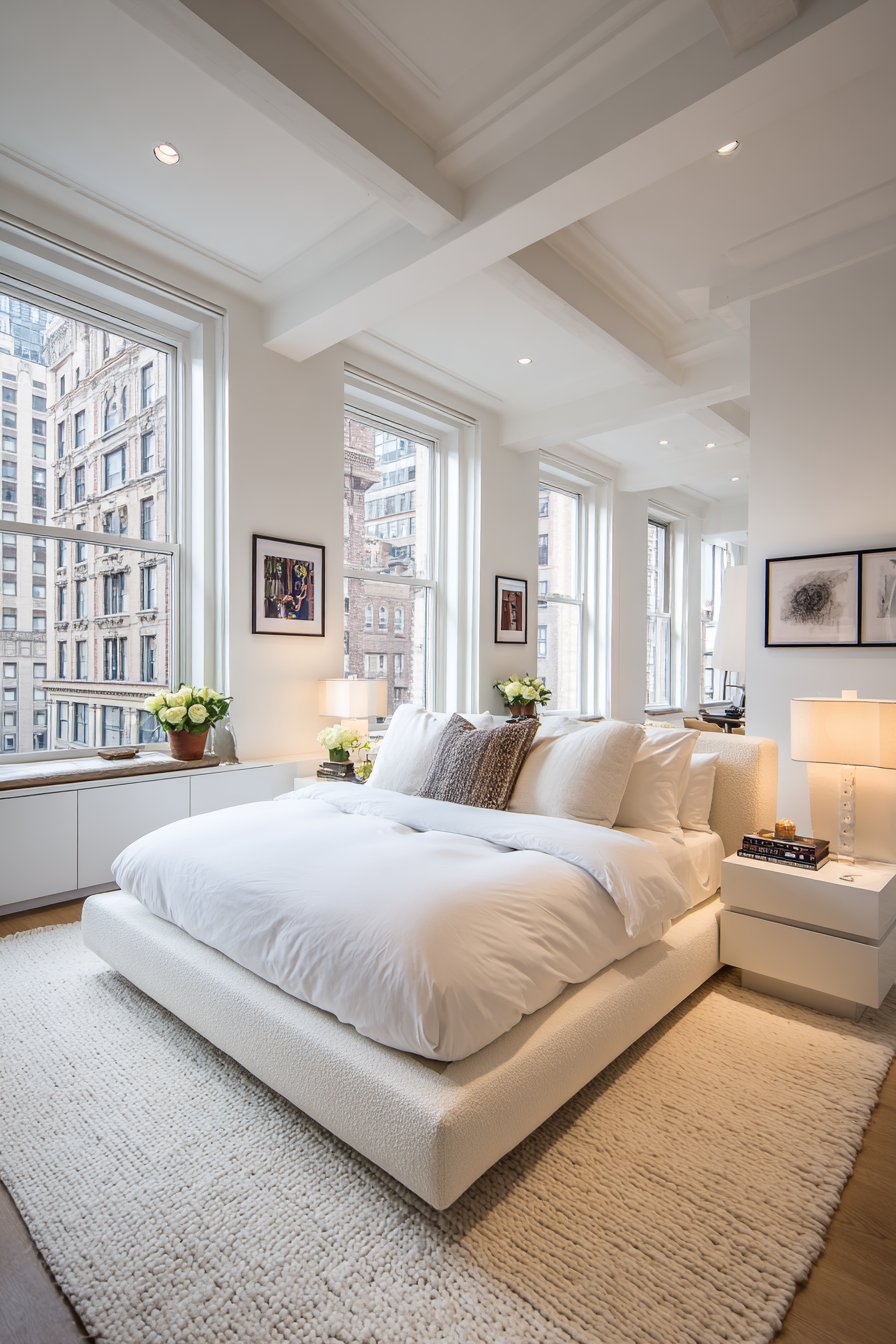
This minimalist white bedroom design exemplifies the principle that less truly can be more when executed with precision and quality materials. Floating white lacquer nightstands appear to defy gravity, their sleek surfaces reflecting ambient light while creating a sense of openness beneath them.
The low-profile upholstered bed covered in ivory bouclé fabric introduces tactile luxury through its nubby, textured surface that invites touch and adds visual warmth to the cool white environment. The walls, painted in warm white with a matte finish, create subtle depth through their light-absorbing quality, proving that different white paint finishes can dramatically affect a room’s atmosphere.
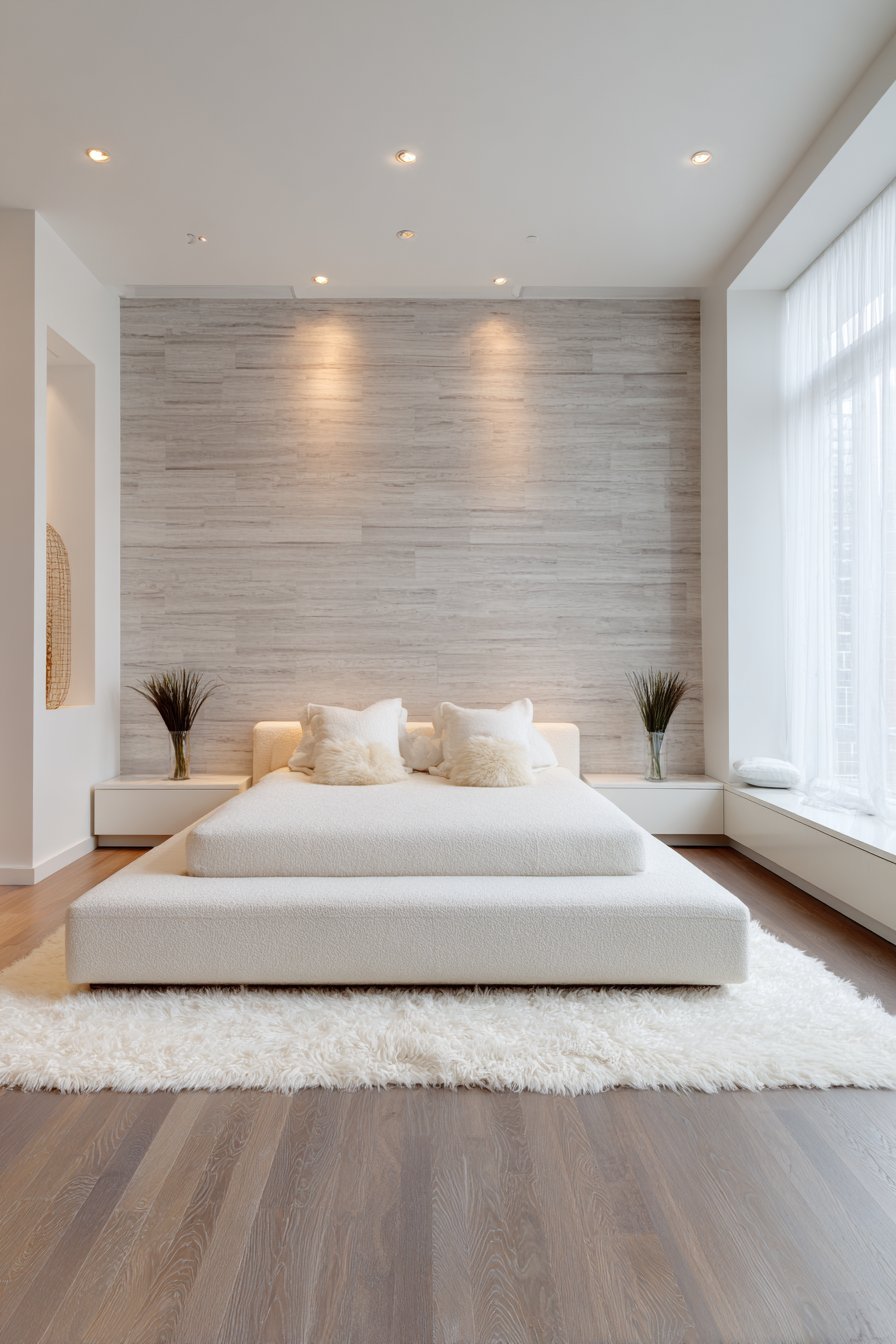
A textured white wool area rug anchors the sleeping area, its plush pile providing sensory comfort underfoot while defining the bed zone within the larger space. The rug’s slight variations in wool fiber create organic patterns that add life to the floor plane without introducing color. Recessed lighting provides gentle ambient illumination that washes the walls evenly, while natural daylight streams through sheer white panels, creating a soft, diffused quality that changes throughout the day.
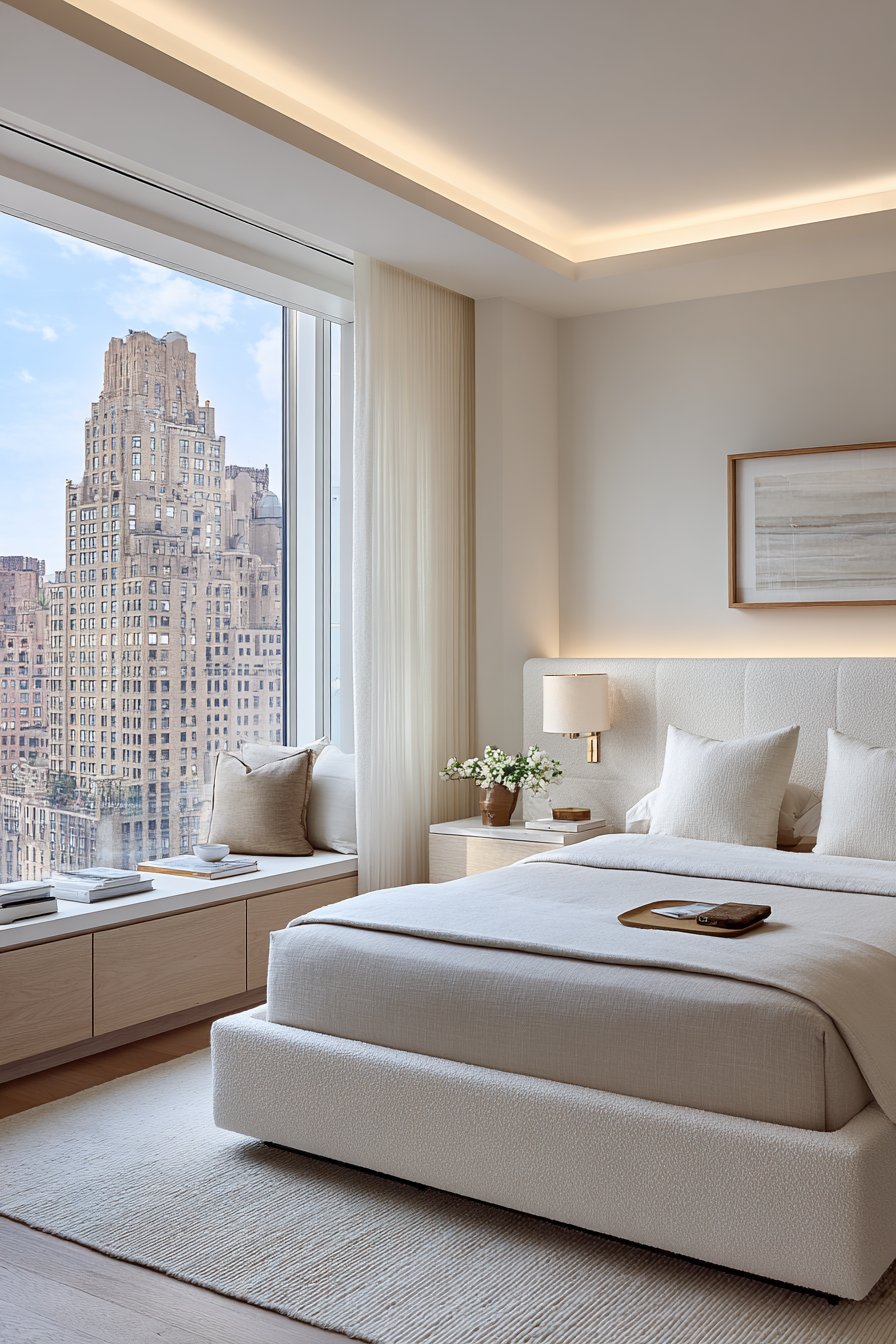
This design demonstrates sophisticated restraint, where every piece is carefully considered and nothing extraneous disturbs the peaceful composition. The emphasis on clean lines and layered white textures creates a zen-like environment that promotes relaxation and mental clarity. The careful attention to material detail—from the bouclé’s distinctive texture to the wool rug’s natural variations—ensures the space feels rich and intentional rather than sparse or cold.
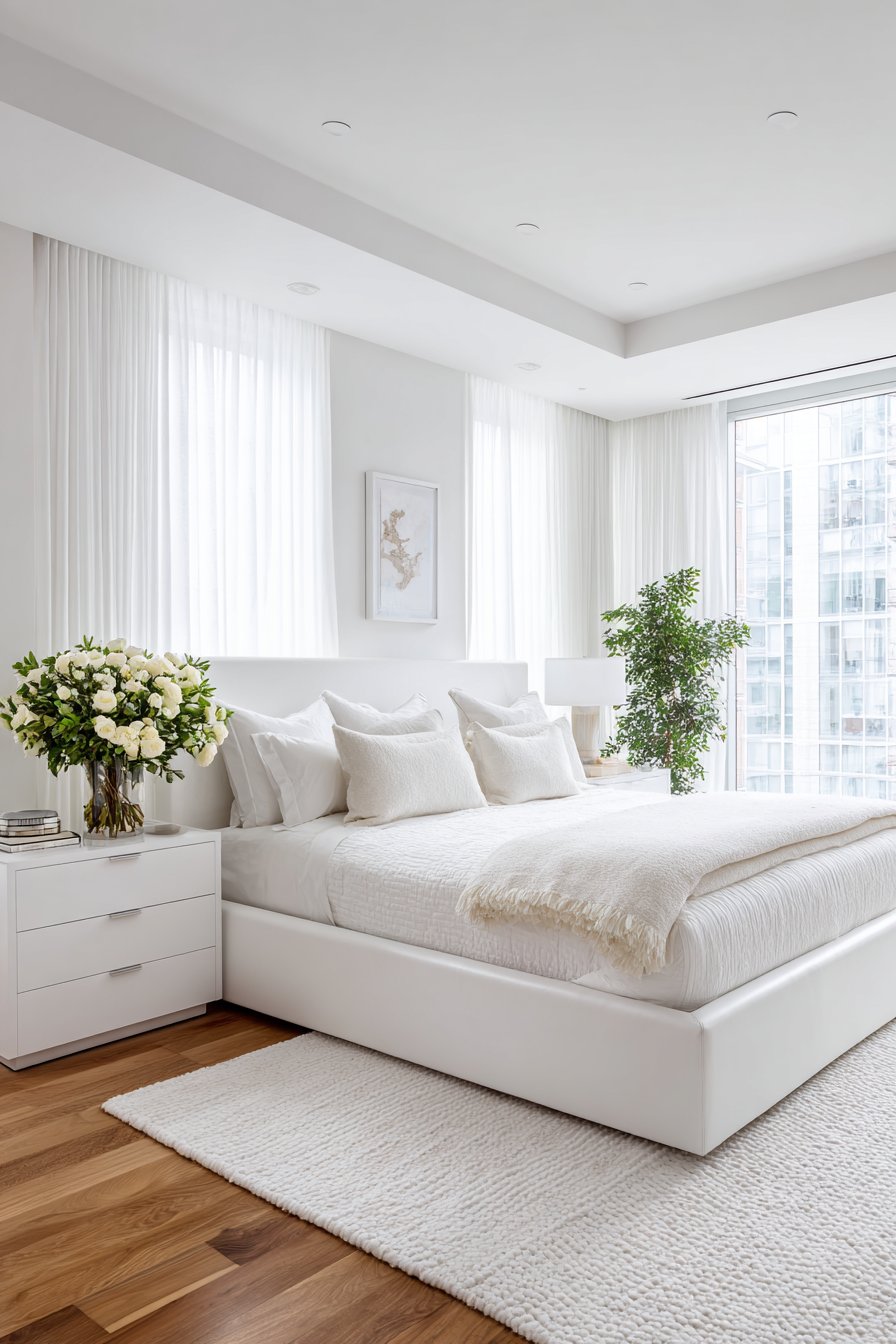
Key Design Tips:
- Install floating nightstands to create visual lightness and ease floor cleaning
- Choose upholstery with an interesting texture like bouclé to add tactile interest
- Layer different white paint finishes—matte walls with glossy trim—for subtle contrast
- Use recessed lighting for clean ceilings and even illumination
- Select area rugs in natural materials for warmth and texture variation
3. Smart Storage Solutions for Compact White Sanctuaries
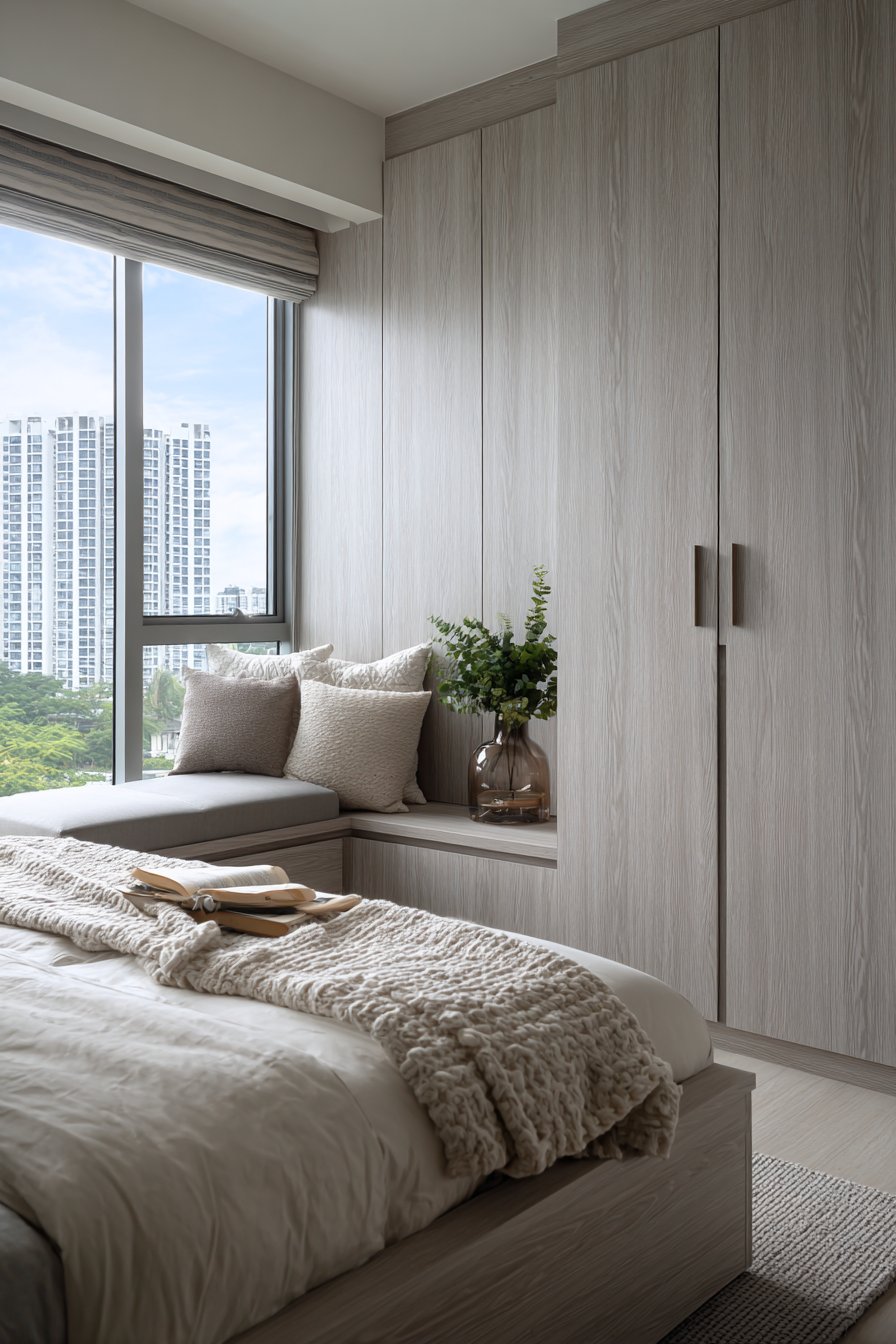
Small apartment living demands creative solutions, and this white bedroom design proves that spatial constraints need not compromise style or functionality. Built-in white wardrobes flanking the bed maximize vertical storage while maintaining a cohesive aesthetic that makes the room feel larger rather than crowded.
These floor-to-ceiling units eliminate the visual clutter of freestanding furniture, their white finish allowing them to recede into the walls and preserve the room’s airy quality. The white painted wood bed frame reveals beautiful grain texture that adds organic interest, while cream-colored bedding with slight, authentic wrinkles brings lived-in comfort to the pristine setting. See our cream bedroom ideas for more direction in this style.
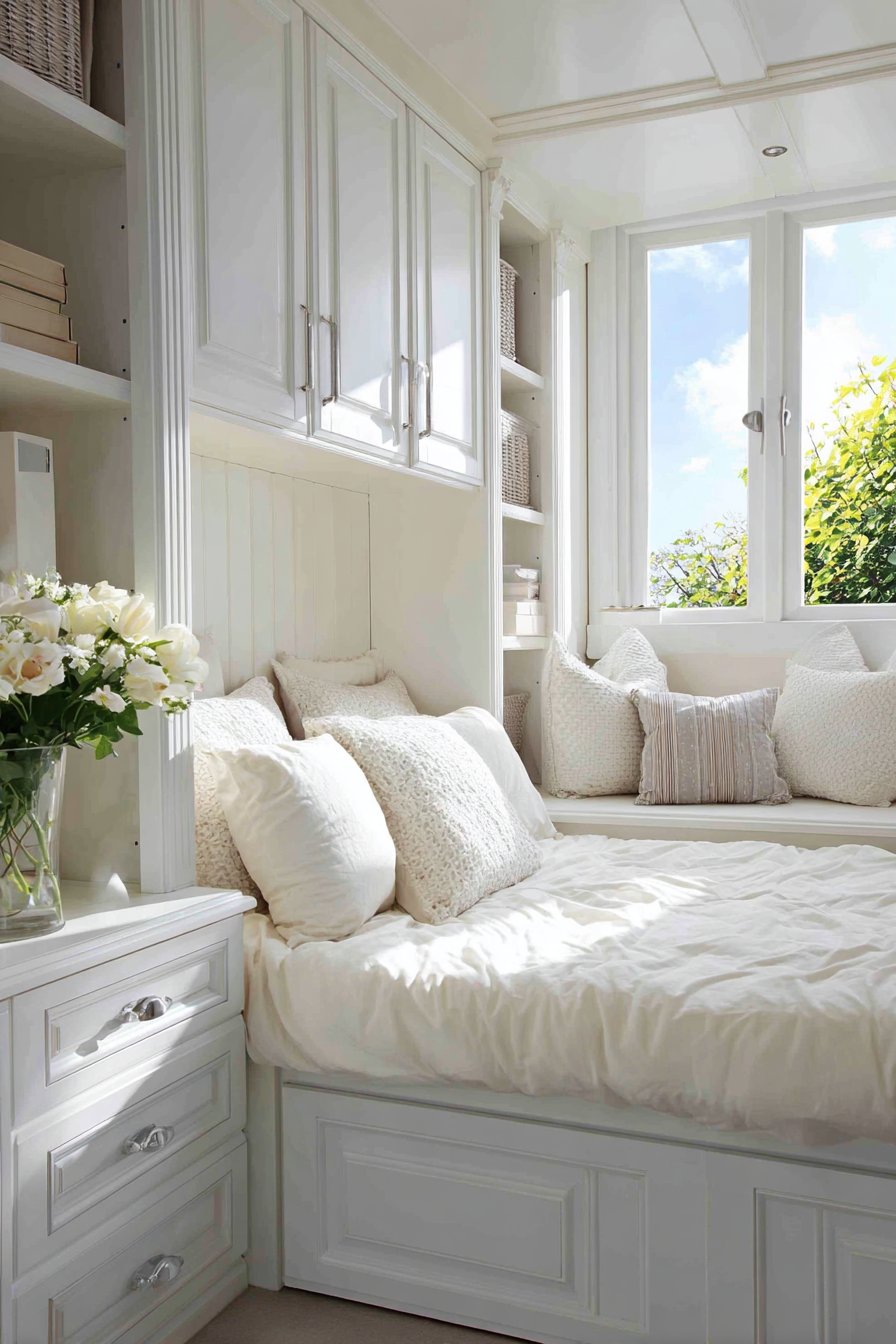
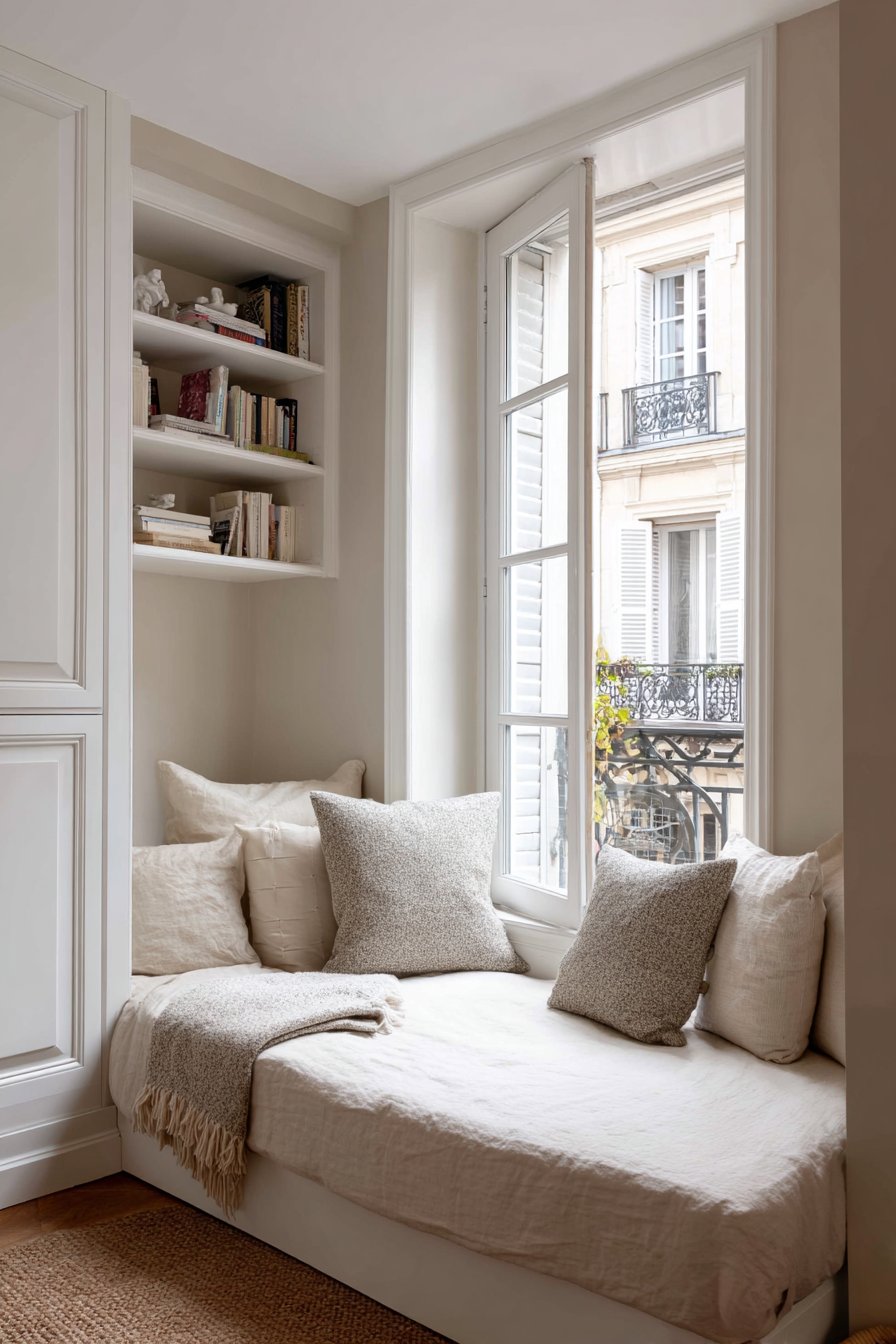
A compact reading nook positioned strategically near the window capitalizes on natural light, transforming what might otherwise be wasted space into a functional retreat within the bedroom. This clever use of every square inch demonstrates that thoughtful planning can create multiple zones even in limited square footage. The efficient arrangement allows for clear pathways and breathing room around each piece, preventing the claustrophobic feeling that can plague small bedrooms.

The design’s success lies in its honest approach to scale and proportion—nothing oversized or undersized, just perfectly calibrated pieces that work harmoniously within the available space. The white palette plays a crucial role in this visual expansion, reflecting light to create an illusion of greater square footage while the built-in storage keeps personal items hidden, maintaining the uncluttered aesthetic essential for peaceful rest.
Key Design Tips:
- Design built-in storage to ceiling height for maximum capacity and visual continuity
- Choose bed frames with visible wood grain for natural character within white palette
- Position reading nooks or desk areas near windows for natural task lighting
- Use cream and off-white tones to add warmth without breaking the monochromatic scheme
- Select furniture scaled appropriately for the room dimensions to avoid overwhelming the space
4. Scandinavian Simplicity with Nordic White Warmth
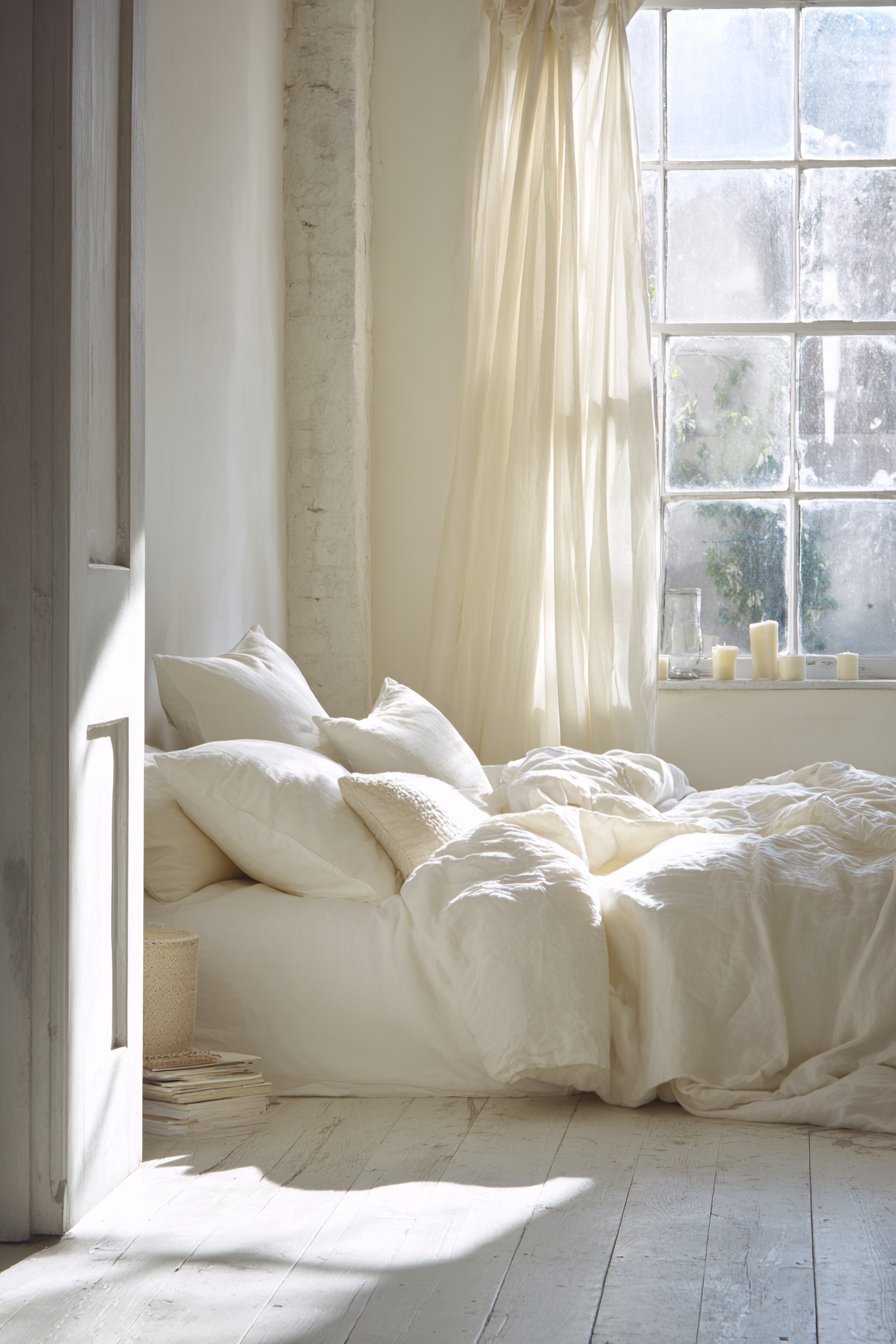
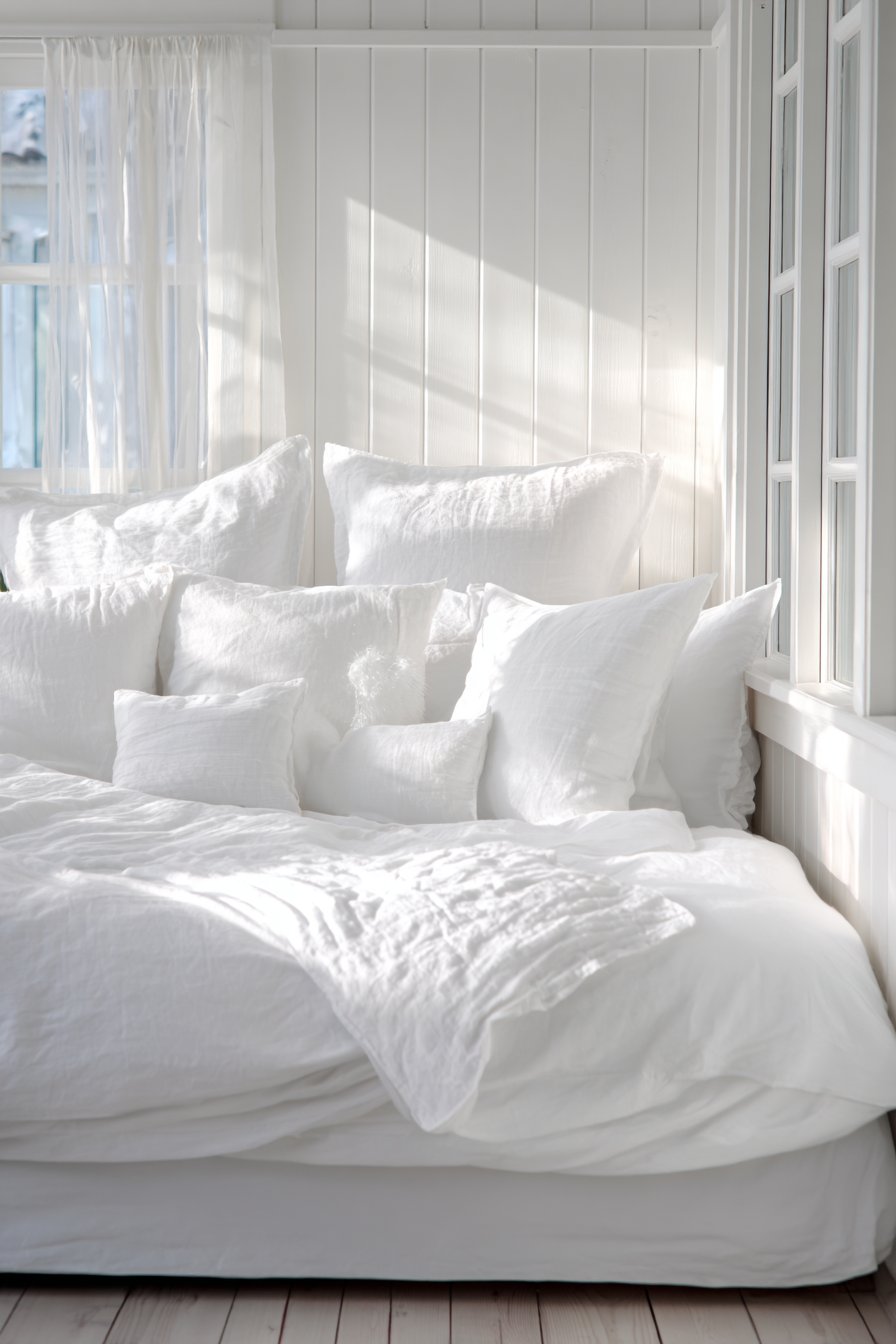
The Scandinavian approach to white bedroom design embraces hygge—that uniquely Nordic concept of cozy contentment—through carefully balanced minimalism and warmth. White-painted pine furniture showcases the beloved Scandinavian practice of honoring natural materials while unifying the color palette, the wood grain visible beneath the white paint adding subtle texture and organic appeal. The bed features white cotton duvet with gentle folds and layered pillows in varying shades of off-white, creating dimensional interest through tonal variation rather than contrasting colors.

Light wooden flooring in whitewash finish maintains the airy aesthetic while introducing essential warmth underfoot, its pale tone reflecting light upward to brighten the entire room. This floor treatment perfectly exemplifies Scandinavian design philosophy: practical, beautiful, and rooted in natural materials. Soft diffused daylight becomes a key design element, creating natural shadows that emphasize architectural details and add depth to the otherwise light-filled space.

Natural textile elements play a starring role in this design, from linen curtains to wool throws, each contributing its unique texture while maintaining the cohesive white scheme. The room feels neither stark nor fussy, achieving that perfect Scandinavian balance between simplicity and comfort.
Every element serves a purpose, nothing is merely decorative, yet the overall effect is one of serene beauty that makes you want to curl up with a good book and a cup of coffee.
Key Design Tips:
- Paint pine furniture white while allowing wood grain to show through for character
- Layer multiple shades of white and off-white for subtle depth
- Choose whitewashed or light-stained floors for Scandinavian warmth
- Embrace natural shadows as design elements rather than eliminating them
- Incorporate natural textiles like cotton, linen, and wool for an authentic Nordic feel
5. Luxurious Tufted Velvet and Marble Sophistication
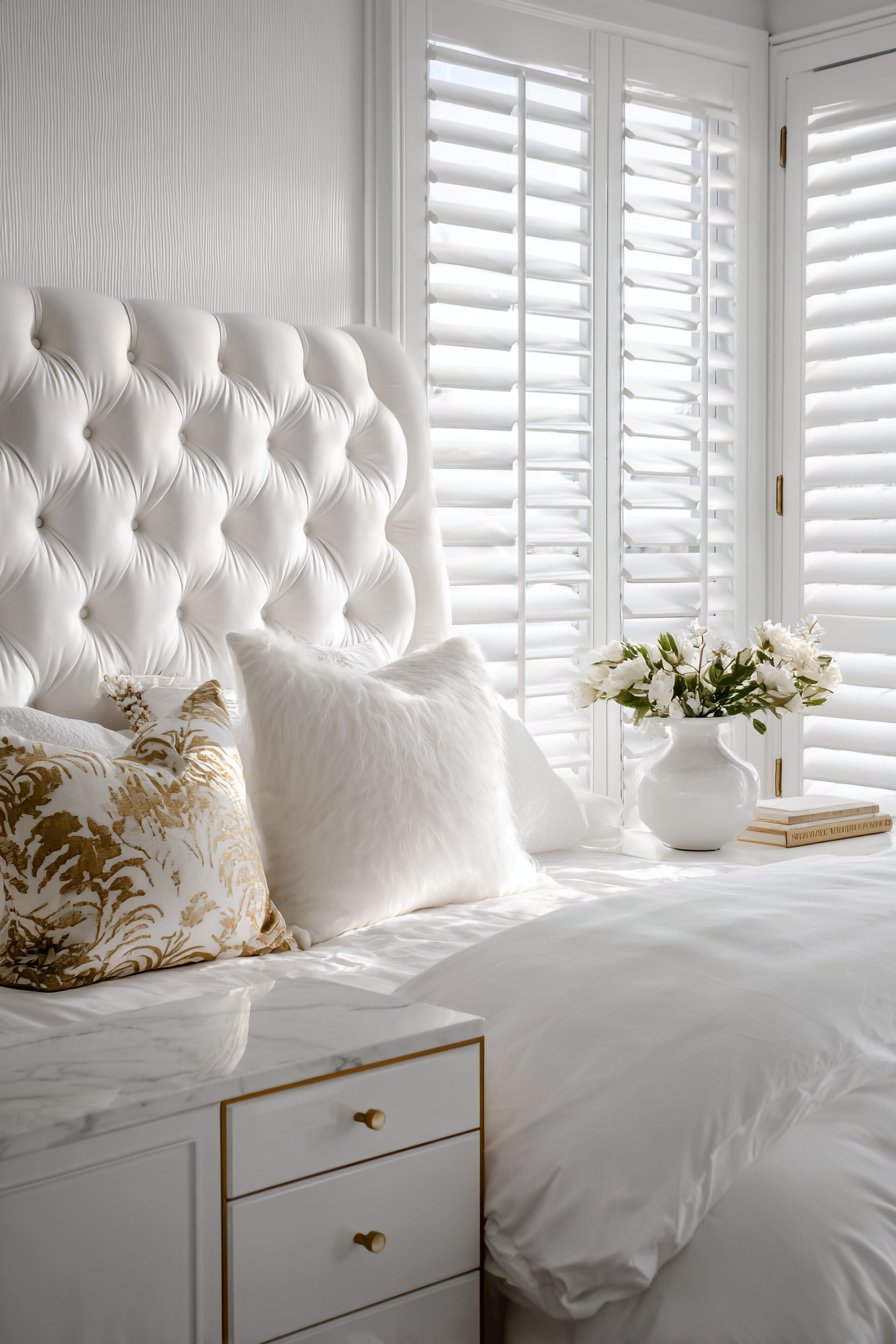
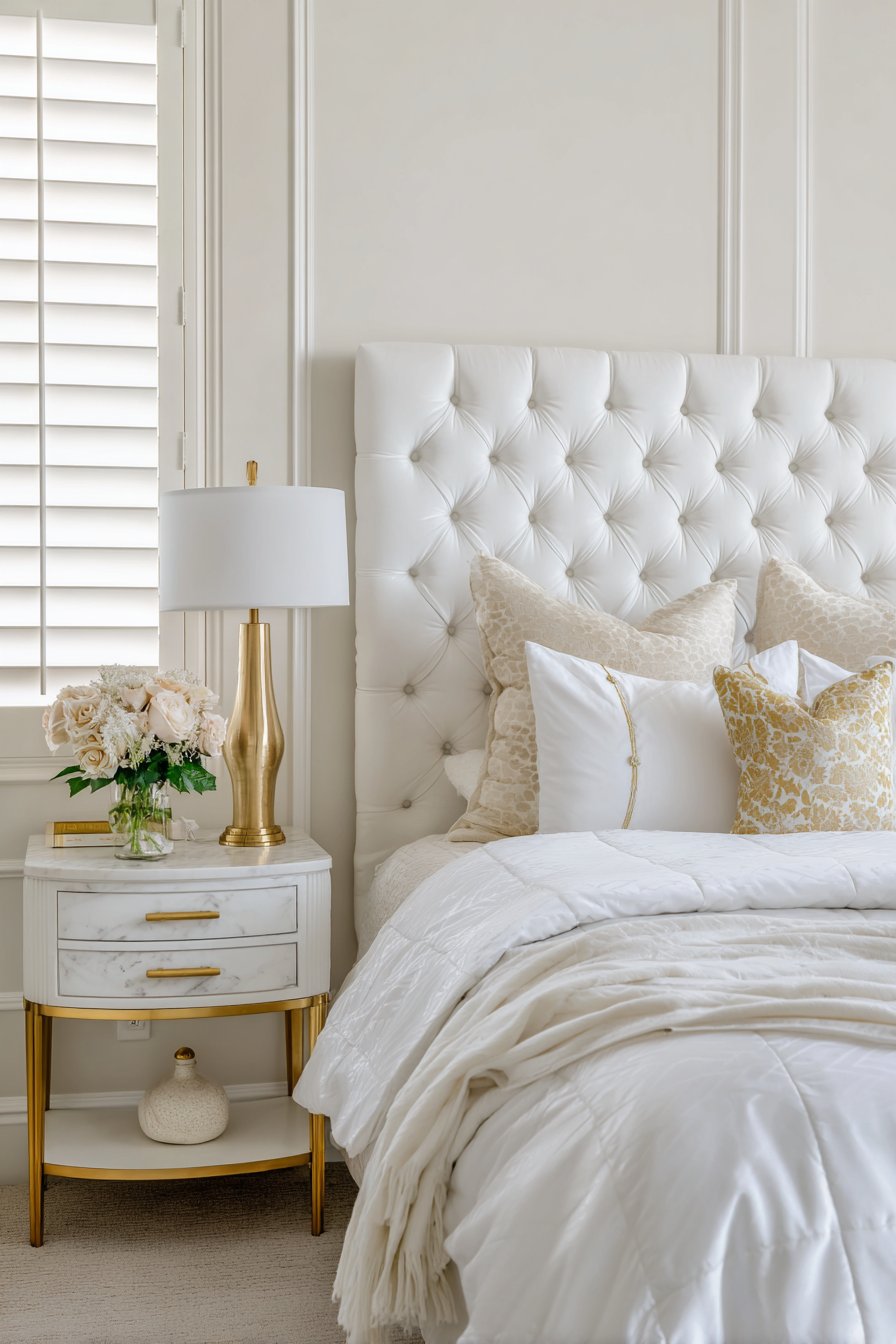
This white bedroom design elevates the monochromatic scheme to luxurious heights through sumptuous materials and refined details. A tufted headboard in white velvet commands attention, its surface creating subtle sheen variations as natural light plays across the plush fabric, the deep button tufting adding dimensional texture and Old Hollywood glamour.
White marble-topped nightstands introduce cool elegance with their naturally veined surfaces, while delicate gold hardware accents provide just enough metallic warmth without disrupting the predominantly white palette.
The walls covered in white grasscloth wallpaper bring organic texture to the monochromatic scheme, the natural fibers creating subtle variations that catch light differently throughout the day. This material choice adds depth and interest to vertical surfaces while maintaining the room’s sophisticated restraint.
Golden hour lighting filtering through white plantation shutters creates a warm ambient glow that transforms the cool whites into honey-toned ivory, demonstrating how lighting can dramatically alter color perception.
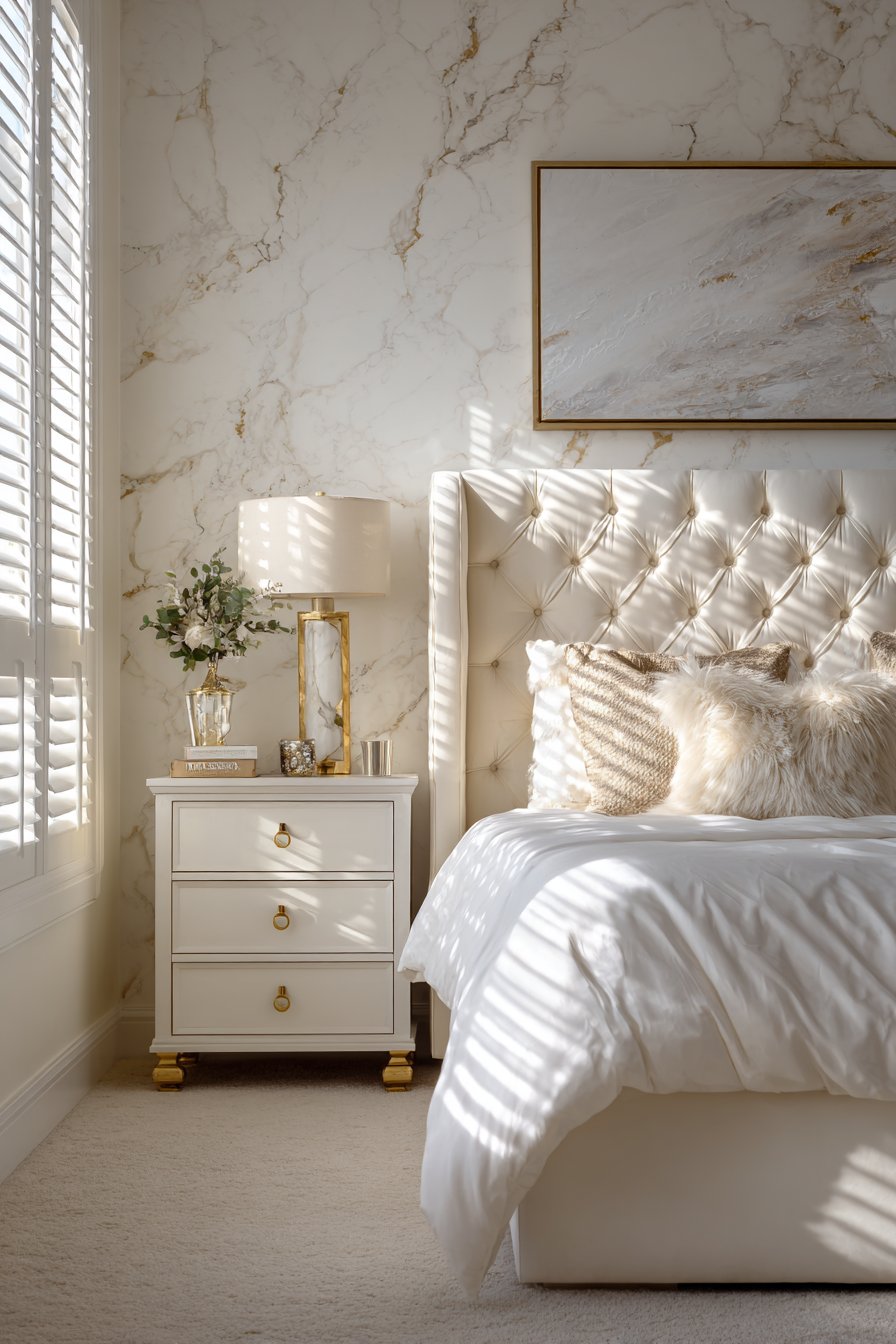
The sophisticated layering of white textures and materials demands attention to light interaction—how each surface absorbs, reflects, or diffuses illumination becomes crucial to the design’s success. The velvet’s soft sheen, marble’s crystalline gleam, and grasscloth’s matte texture create a rich tapestry of visual interest without introducing a single additional color. This approach proves that luxury lies not in abundance but in quality, careful selection, and masterful execution.
Key Design Tips:
- Choose velvet upholstery in high-traffic areas only, as it shows wear and requires maintenance
- Use marble surfaces for nightstands to add natural pattern within white scheme
- Install grasscloth wallpaper for organic texture and sound-dampening qualities
- Select plantation shutters for ight control and architectural detail
- Limit metallic accents to hardware and small accessories for subtle warmth
6. Bohemian White with Handcrafted Texture Layers
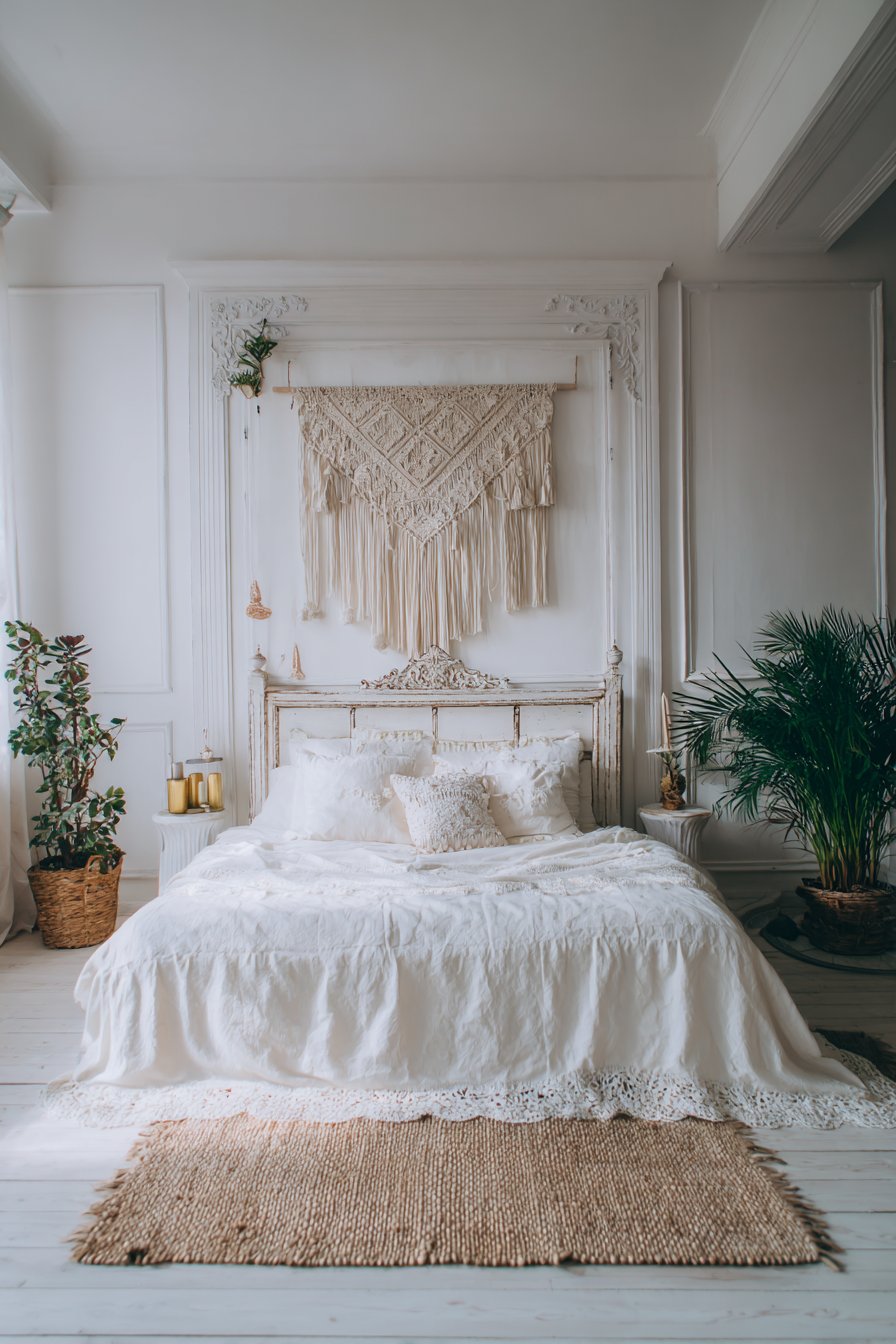
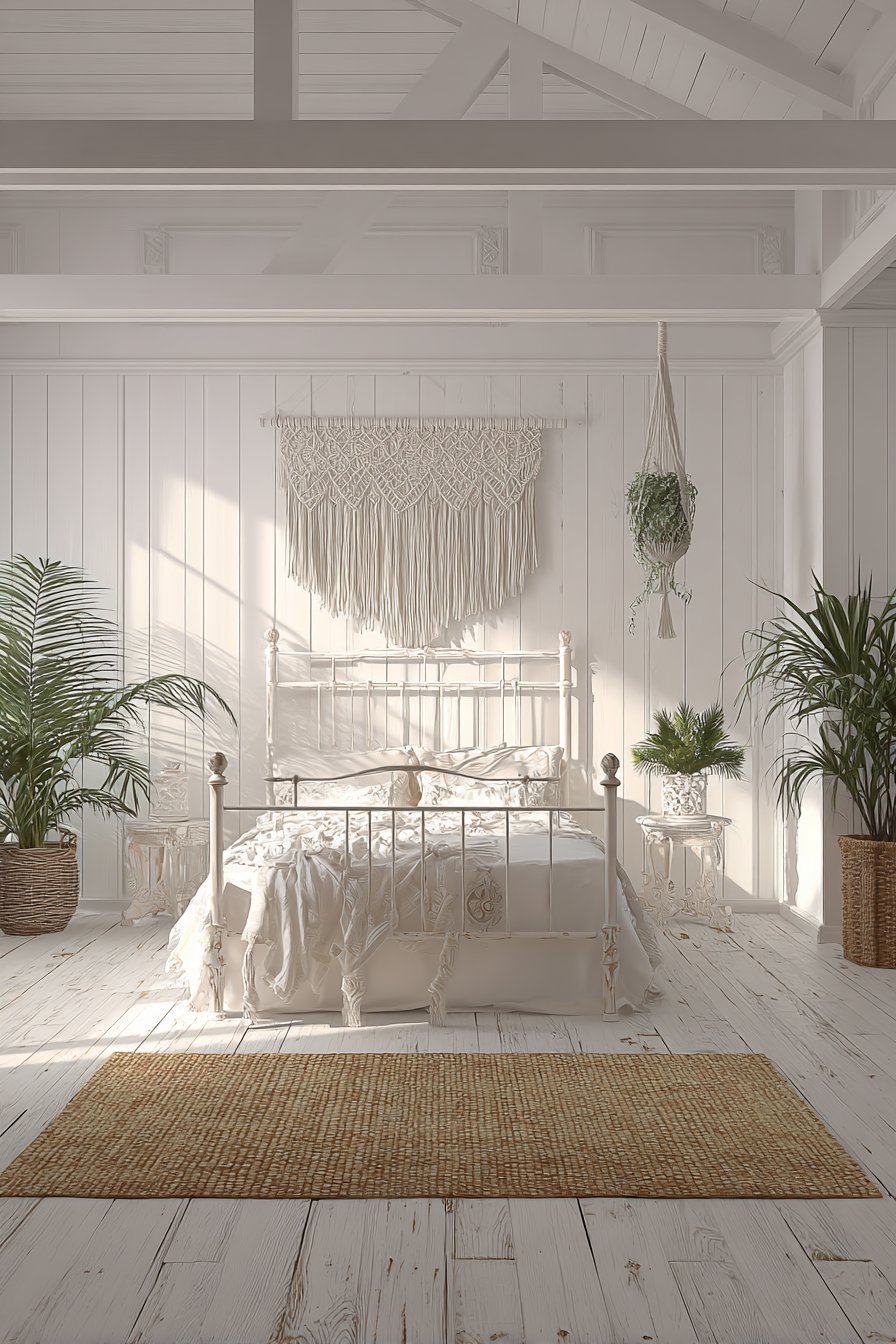
This bohemian white bedroom design celebrates artisanal craftsmanship and natural materials while maintaining a cohesive monochromatic palette. A white macramé wall hanging above an iron bed frame painted in a distressed white finish serves as the room’s artistic focal point, its intricate knotwork adding handmade charm and textural complexity. The distressed finish on the bed frame introduces age and character, suggesting a piece with history rather than something mass-produced and generic.

Natural jute rug grounds the space both literally and figuratively, its earthy texture and neutral tone providing essential contrast against white painted floors while remaining true to the natural aesthetic. White cotton bedding features subtle embroidered details—perhaps delicate florals or geometric patterns worked in white thread—that add visual interest discoverable upon closer inspection. Potted plants in white ceramic vessels bring life and organic movement to the room, their green foliage providing the only true color accent while the white containers maintain palette cohesion.
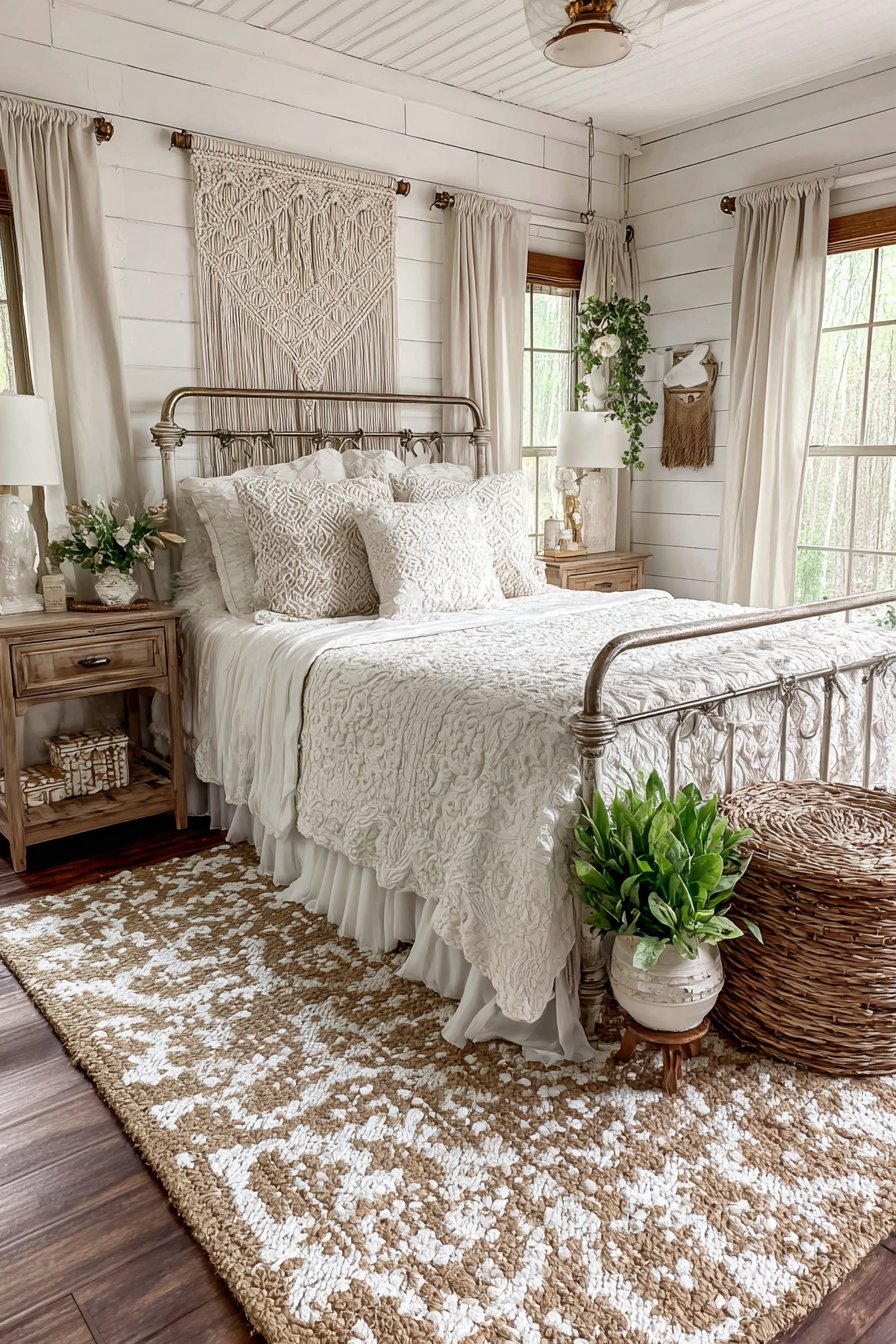
Soft natural lighting from a nearby window highlights the varied textures and handcrafted elements, creating shadows that emphasize the macramé’s dimensional quality and the bedding’s delicate embroidery. This eclectic yet cohesive approach to white-on-white design proves that bohemian style need not be colorful or chaotic—it can be serene, unified, and deeply personal while celebrating handmade artistry and natural materials.
Key Design Tips:
- Display large-scale macramé or textile art as a dramatic focal point
- Choose distressed or vintage-painted furniture for an authentic bohemian character
- Layer natural fiber rugs like jute or sisal for earthy texture
- Look for bedding with tonal embroidery or subtle pattern for hidden detail
- Use plants in white containers to add life without breaking the color scheme
7. Modern Farmhouse with Rustic White Elegance
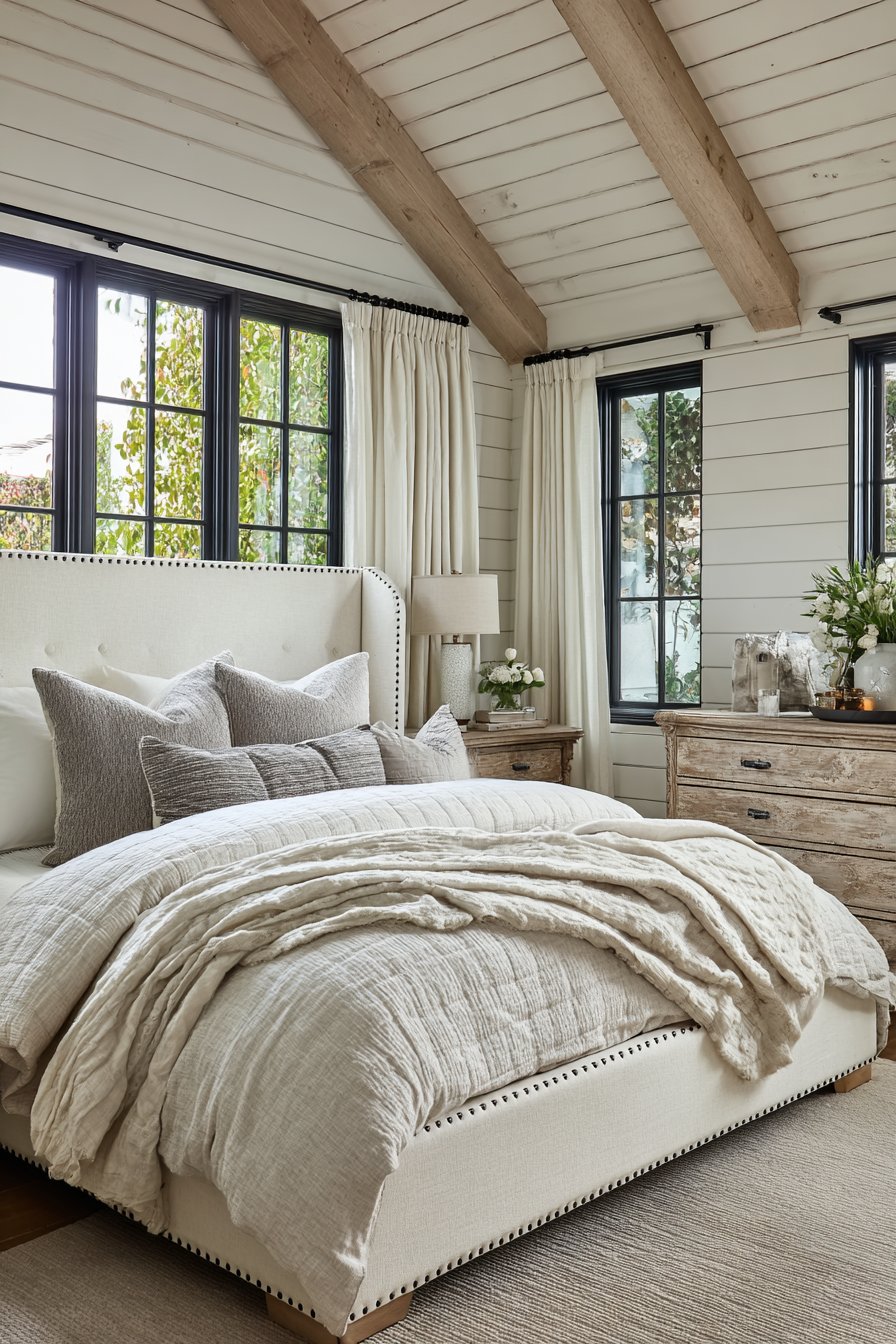
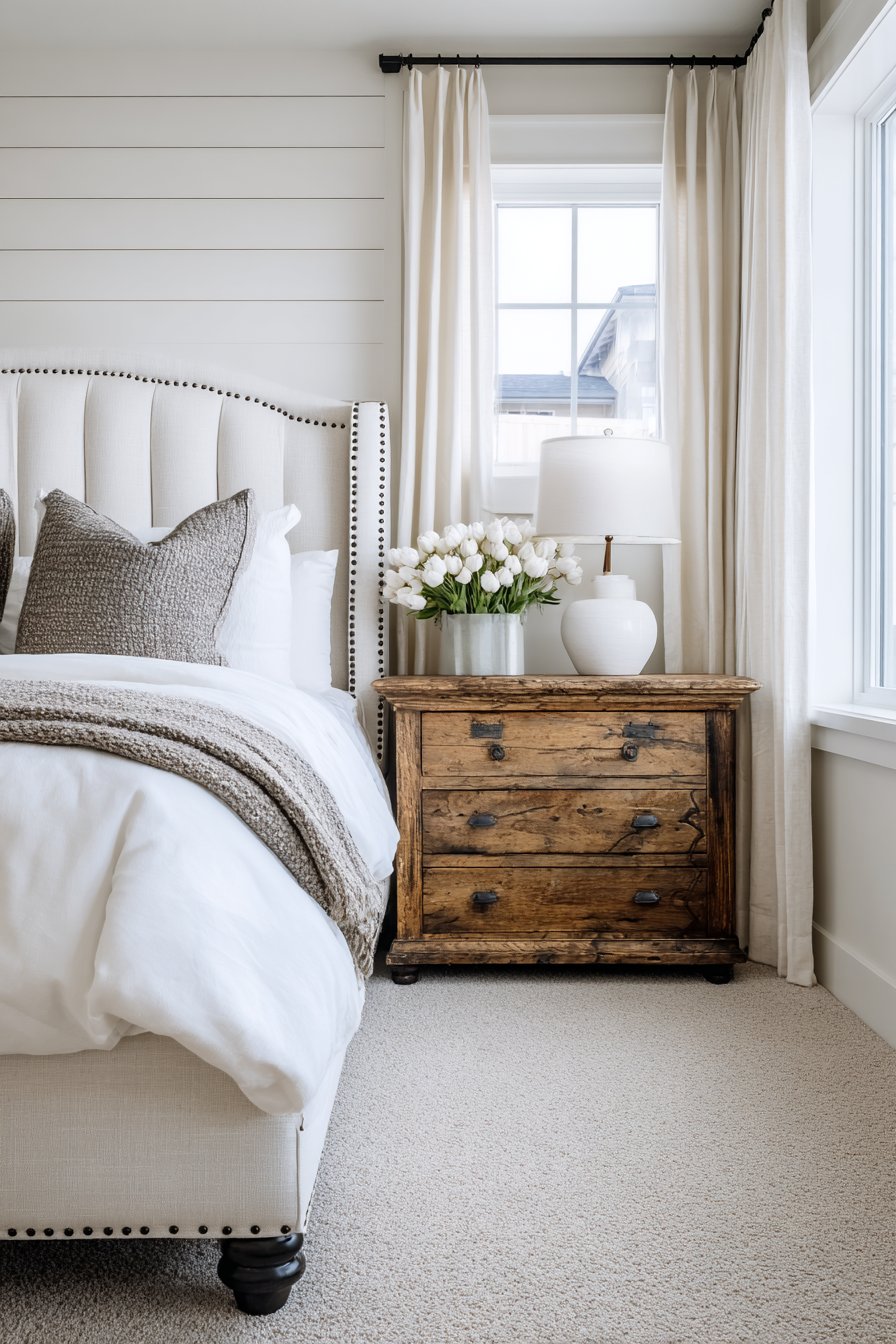
The modern farmhouse aesthetic finds perfect expression in this white bedroom design that balances rustic charm with contemporary comfort. White shiplap walls provide the quintessential farmhouse backdrop, their horizontal lines creating visual width while their texture adds architectural interest to otherwise plain surfaces. A white upholstered bed with nailhead trim detail combines the softness of padded comfort with the traditional detailing that references classic American design heritage.
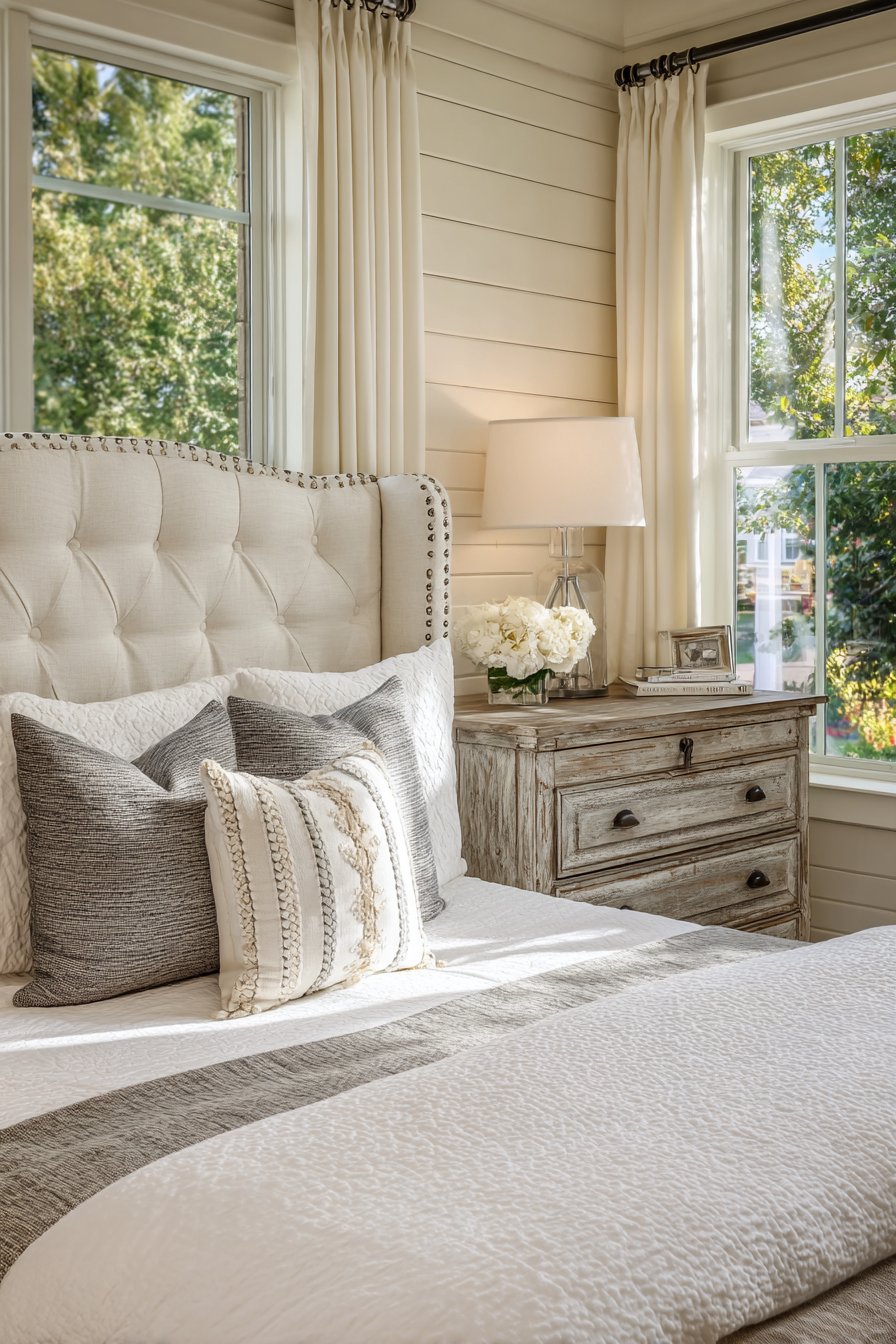
An antique white dresser with visible distressing provides character and storage, its weathered finish telling stories of age and use while maintaining the light color scheme essential to the room’s airy feel. The distressing technique—perhaps revealing darker wood undertones at edges and corners—adds authenticity that new furniture simply cannot replicate. White linen curtains with natural wrinkles frame large windows, their relaxed, unpressed appearance contributing to the farmhouse’s approachable, lived-in aesthetic while allowing abundant daylight to flood the space.

The rustic elegance of this design lies in its honest materials and authentic textures—real wood grain visible through paint, genuine linen that wrinkles naturally, and handcrafted details like nailhead trim that show human touch.
The space feels both polished and comfortable, sophisticated yet welcoming, proving that farmhouse style can be elevated beyond country kitsch into something timelessly beautiful and genuinely restful.
Key Design Tips:
- Install shiplap walls for an authentic farmhouse texture and architectural detail
- Choose upholstered beds with traditional details like nailhead trim
- Select antique or distressed furniture for genuine character and patina
- Use natural linen curtains and embrace their wrinkled texture
- Layer different white wood finishes—painted, whitewashed, and distressed—for depth
8. Grand Master Suite with Four-Poster Romance
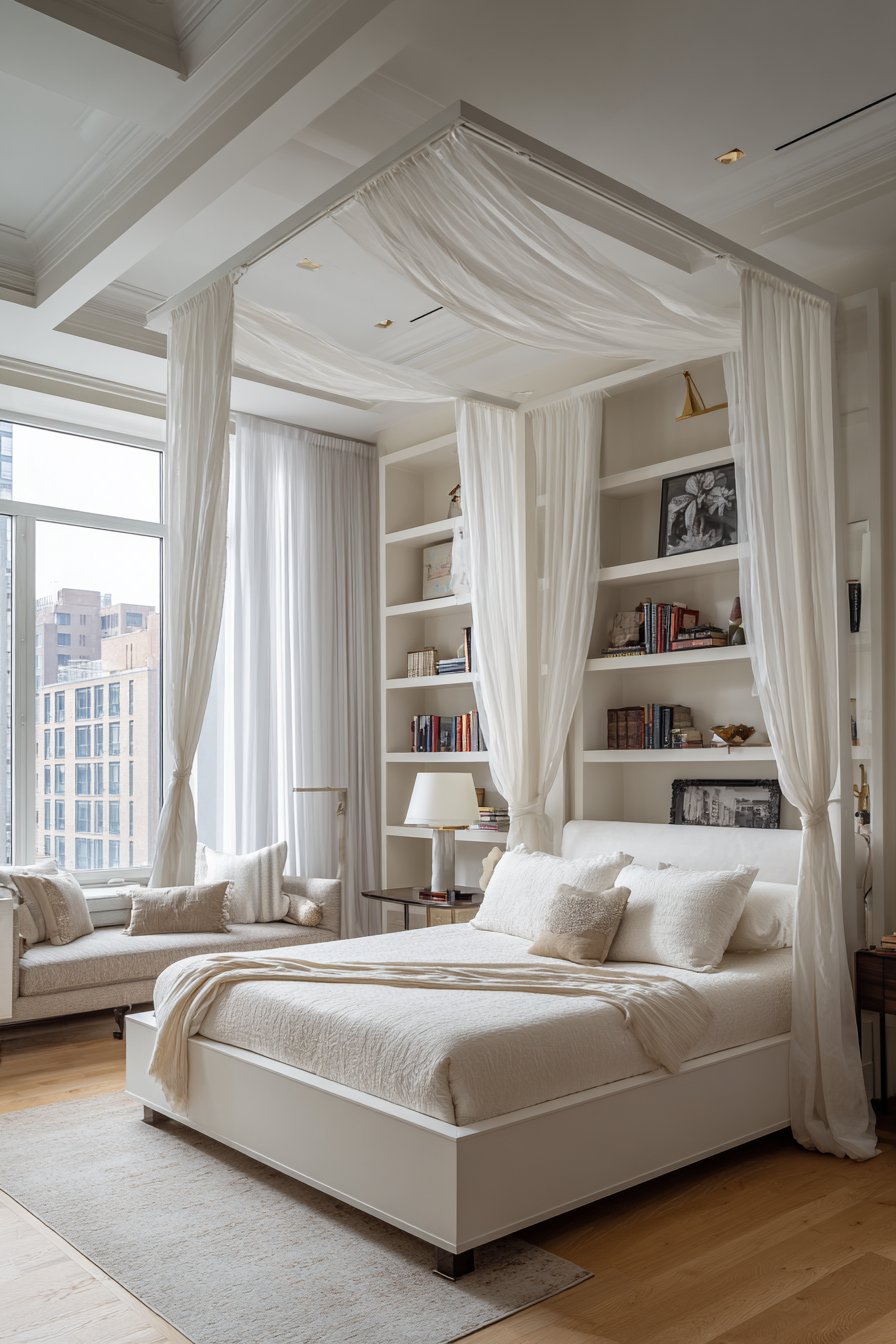
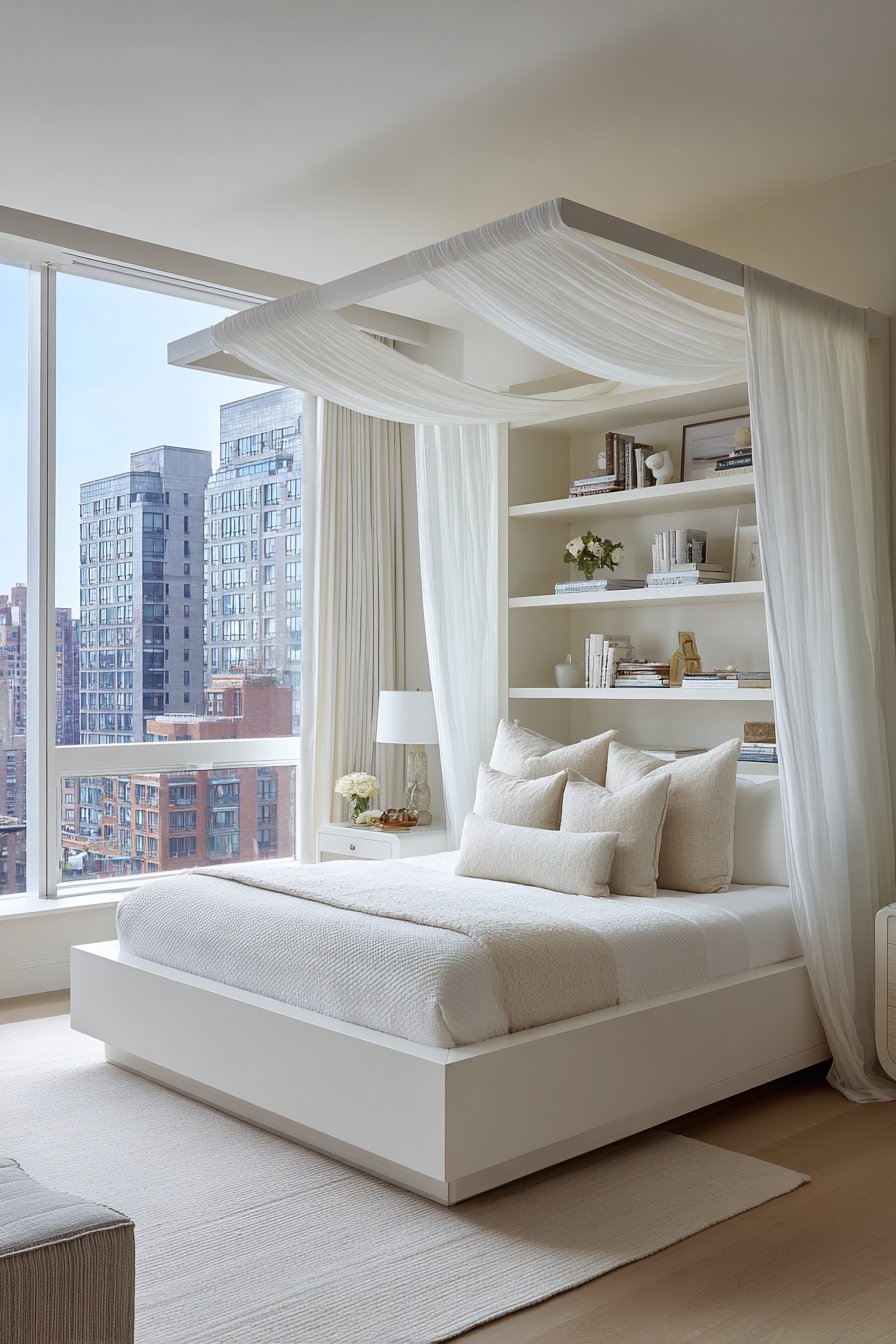
This master suite white bedroom embraces classical proportions and romantic elements through a magnificent four-poster bed with white-painted wood frame and flowing white canopy drapes.
The canopy fabric, perhaps sheer cotton or lightweight linen, creates an intimate cocoon within the larger room while maintaining the airy quality essential to successful white design. The drapes can be drawn for privacy and coziness or tied back to reveal the bed’s architectural frame, offering versatility in both function and appearance.
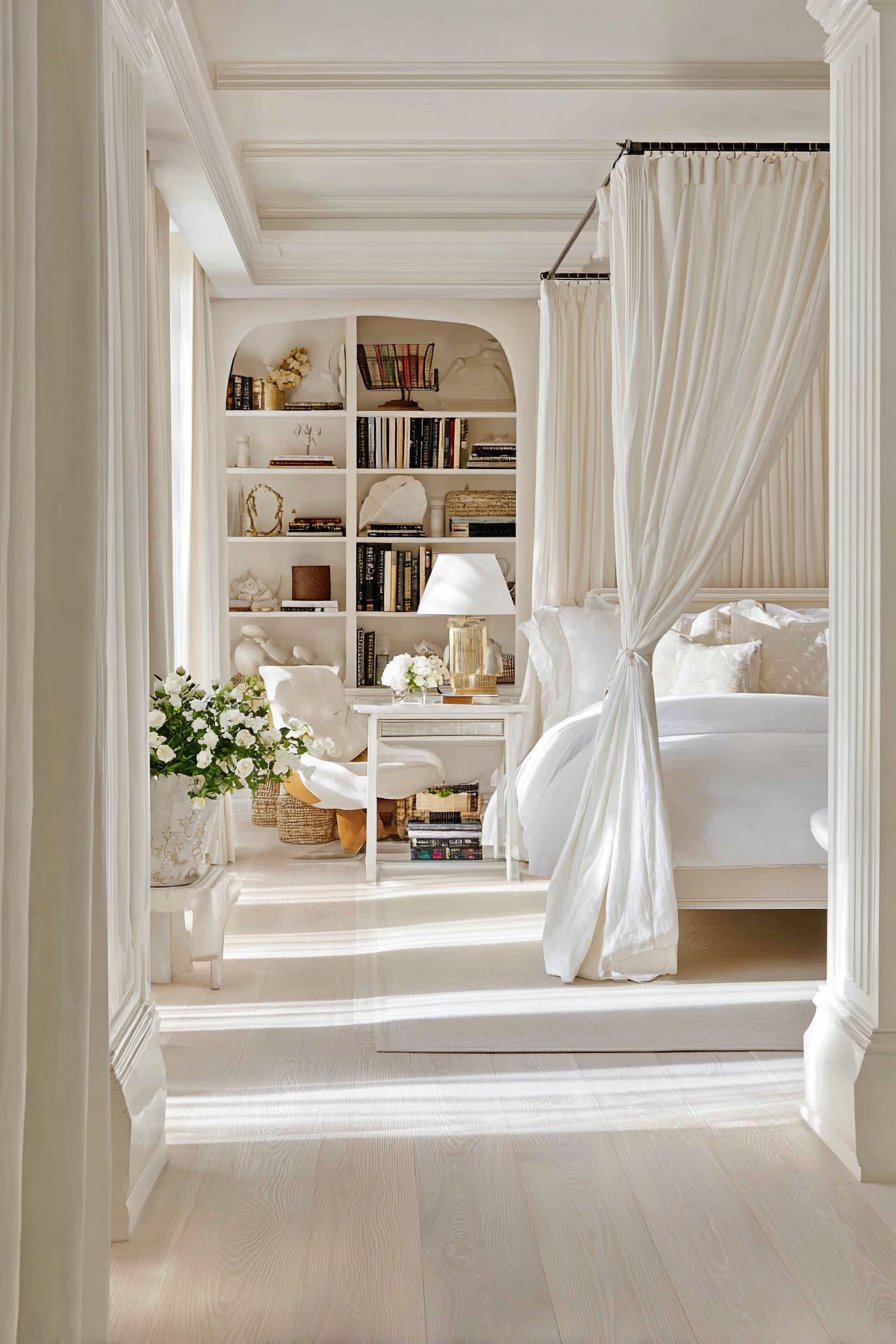
White built-in shelving displaying minimal decor in complementary neutral tones provides storage and display without visual clutter, the shelves’ crisp lines and consistent finish creating order and calm. These built-ins might showcase a carefully curated collection of white ceramics, cream-colored books, or natural objects like shells and driftwood that maintain the monochromatic scheme. Hardwood floors in light whitewash stain add subtle warmth beneath, their pale tone reflecting light upward while their wood grain provides essential organic texture. Our calm bedroom ideas has more inspiration along these same lines.
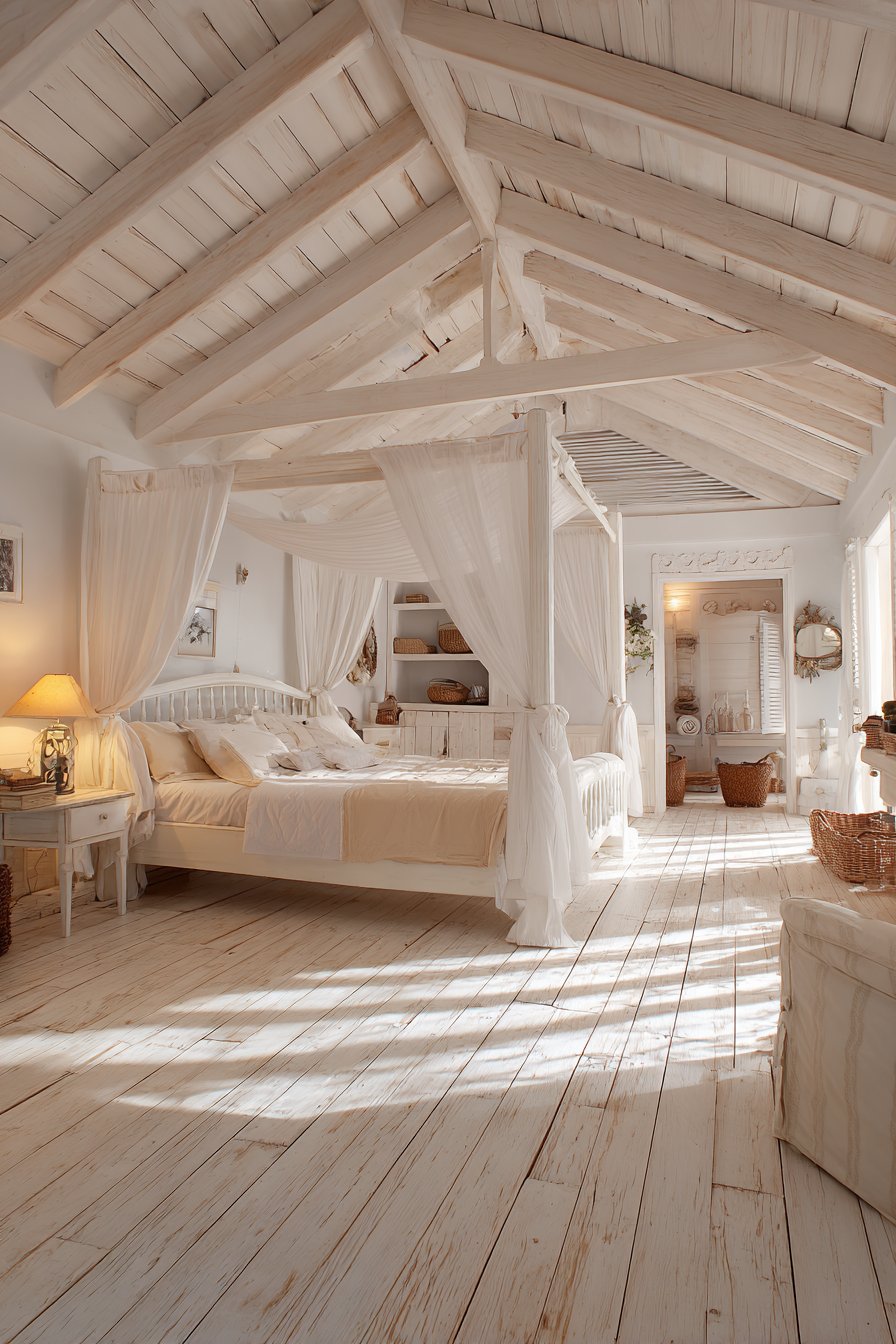
Balanced natural and artificial lighting creates depth through gentle shadows, preventing the all-white space from appearing flat or two-dimensional. Morning sunlight might stream through east-facing windows while bedside sconces provide warm evening illumination, each lighting scenario transforming the room’s character throughout the day.
The room’s generous proportions allow for the interplay of different white shades and textures without overwhelming the space, each element having room to breathe and be appreciated.
Key Design Tips:
- Choose four-poster beds with simple lines for drama without heaviness
- Use sheer canopy fabrics to create intimacy while maintaining light flow
- Install built-in shelving painted to match walls for seamless storage
- Select whitewashed hardwood floors for warmth within light palette
- Layer lighting sources—natural, ambient, and task—for dimensional illumination
9. Coastal Breeze with Beadboard and Wicker Charm
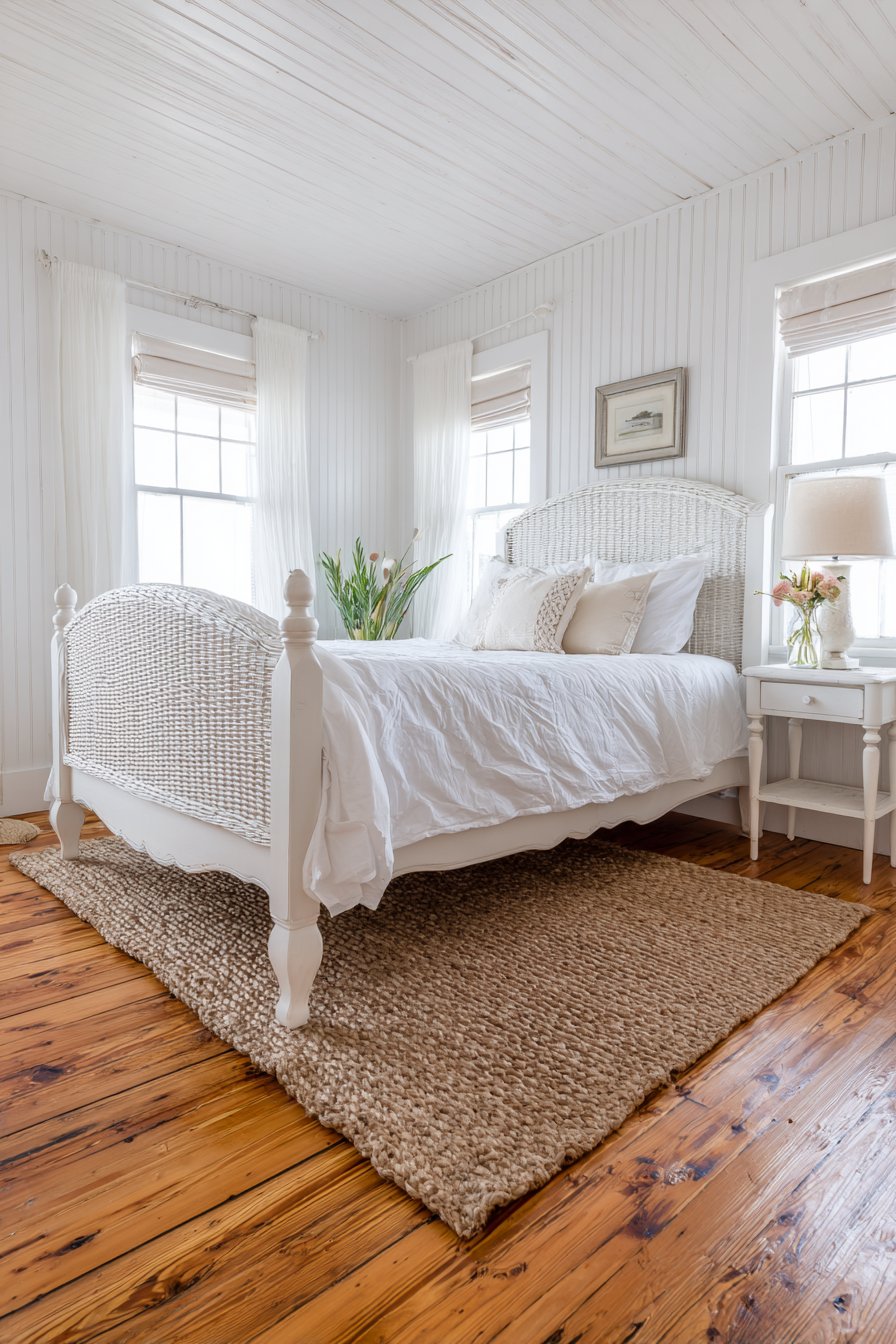
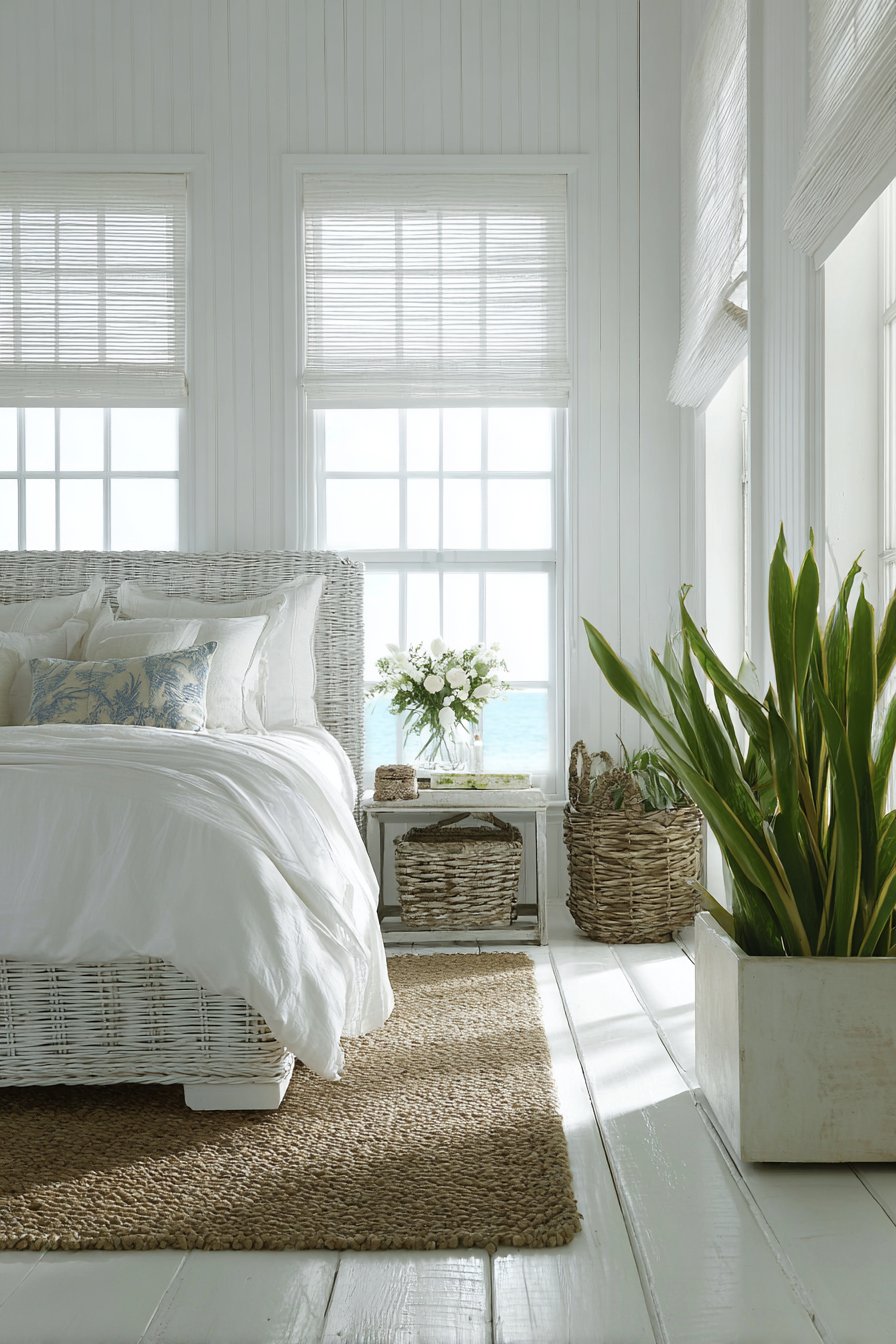
This coastal-influenced white bedroom design captures the relaxed, breezy atmosphere of seaside living through architectural details and natural materials. White beadboard paneling on walls and ceiling creates vertical lines that add cottage character and textural interest to every surface, the subtle grooves catching light and creating gentle shadow patterns. A white wicker bed frame with casual white cotton bedding establishes the laid-back aesthetic, the woven material bringing organic texture and vacation-home comfort.

Sisal rug in natural tone provides essential textural contrast against white painted wood floors, its coarse weave and neutral coloring evoking sandy beaches and dune grasses. This natural fiber anchors the space while maintaining the light, airy quality crucial to coastal design. Large windows with simple white Roman shades filter soft daylight, their clean lines and functional simplicity perfectly suited to the unpretentious coastal aesthetic.
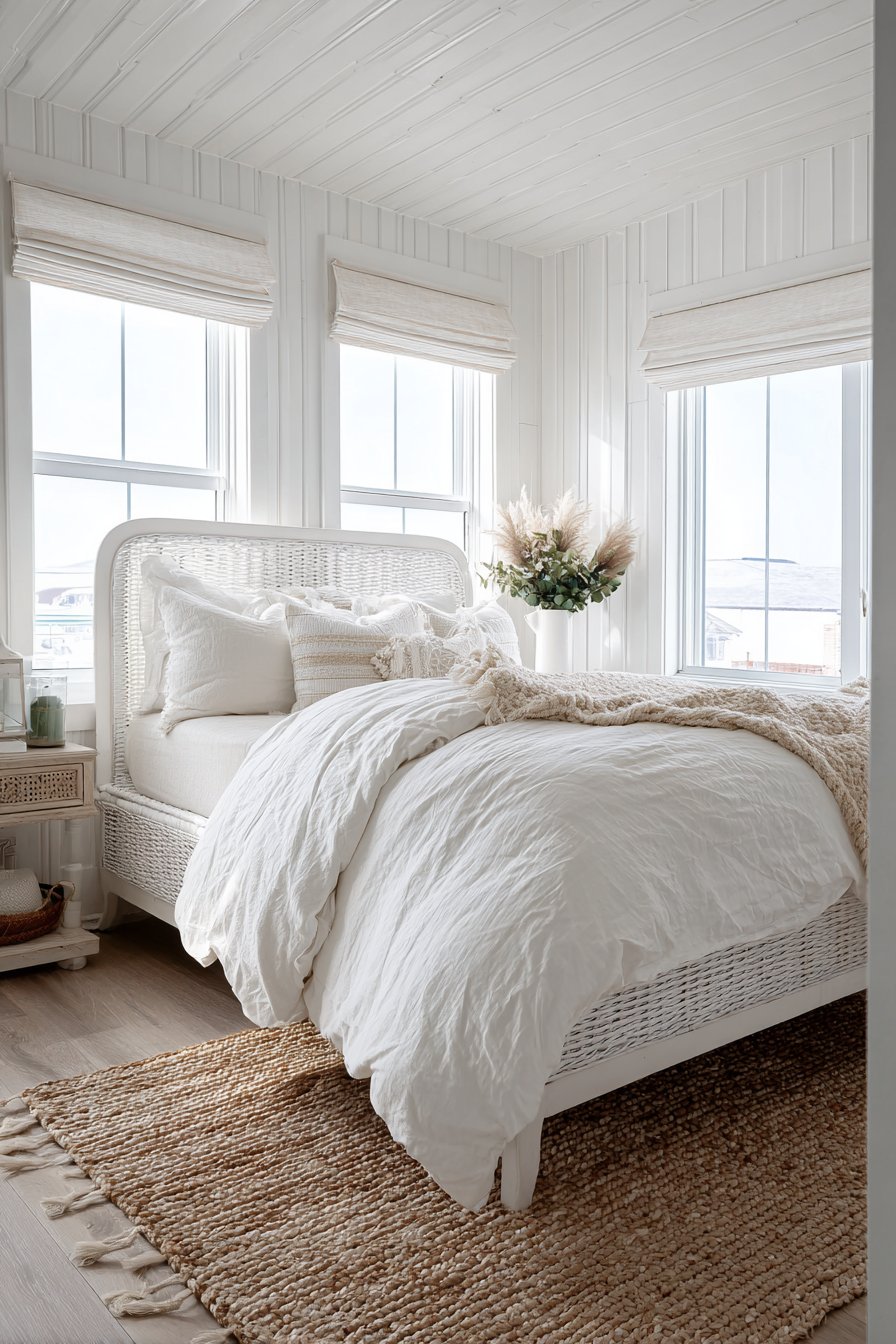
The room captures that coveted lived-in feel of a favorite beach house—comfortable, unfussy, and perpetually inviting. Natural material details like wicker and sisal bring the outdoors in while realistic lighting conditions—perhaps harsh midday sun diffused through shades or golden afternoon light warming the white surfaces—create authentic coastal ambiance. This design proves that coastal style need not include navy stripes or nautical accessories; it can be achieved through texture, materials, and that intangible sense of breezy relaxation.
Key Design Tips:
- Install beadboard paneling for authentic coastal cottage character
- Choose wicker or rattan furniture for natural texture and beach-house vibe
- Layer sisal or seagrass rugs for an earthy contrast against white floors
- Use simple Roman shades for clean, functional window treatments
- Embrace natural, unfiltered light and the shadows it creates
10. Practical Luxury with Integrated Storage Solutions
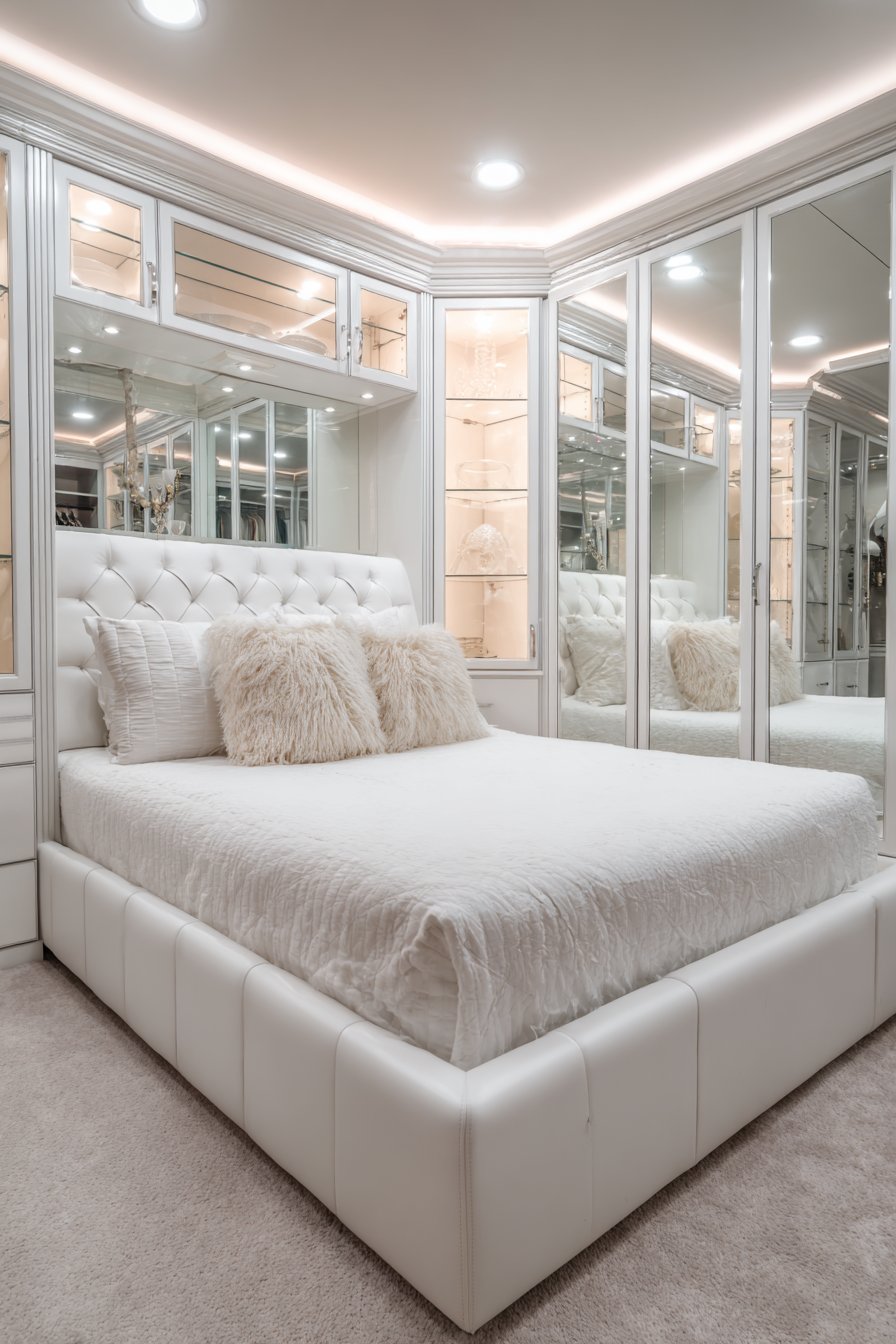
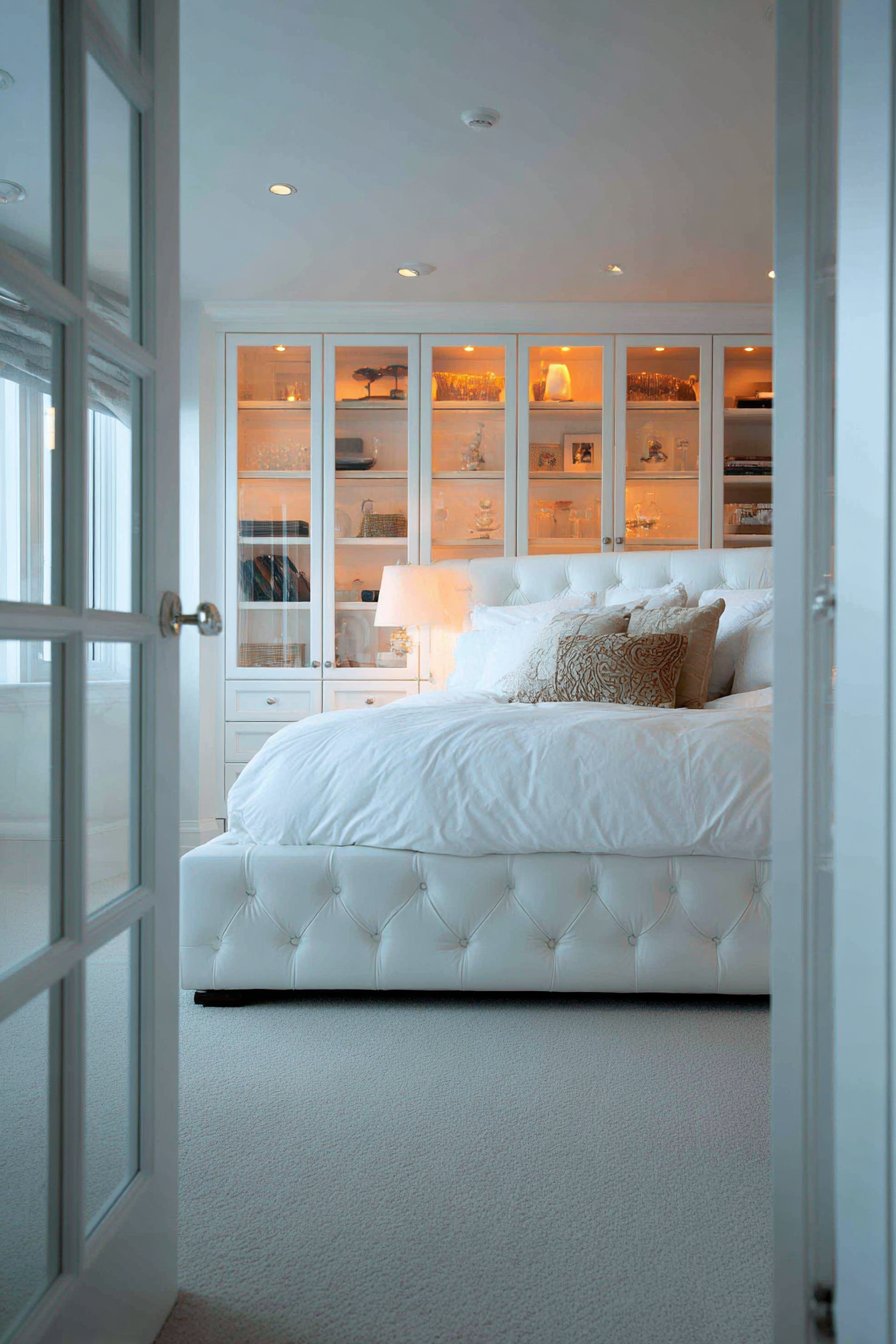
This white bedroom design demonstrates that practical storage integration and aesthetic beauty need not be mutually exclusive. Floor-to-ceiling white custom closets featuring glass-front cabinets provide abundant storage while maintaining visual openness through their transparent sections, allowing glimpses of neatly organized contents without clutter.
The sleeping area centers around a white leather upholstered bed with tufted details and slight patina, the leather’s natural aging process adding character and warmth to the otherwise pristine surfaces.
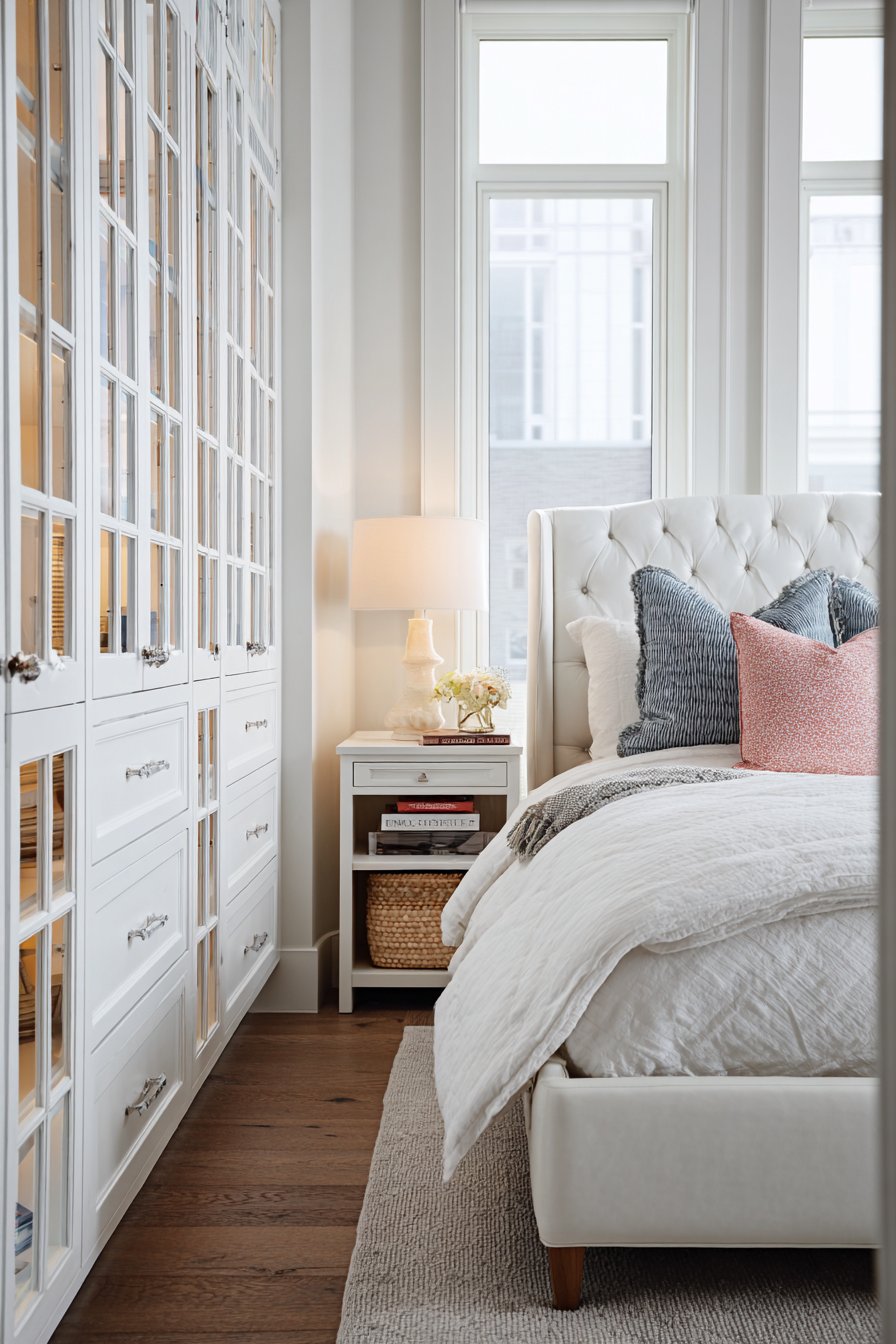
Walls in soft white with subtle warm undertones create a cocoon-like atmosphere, their barely-there cream tones wrapping the room in gentle warmth rather than stark coolness. Task lighting integrated into closets combines with natural window light, ensuring functionality where needed while maintaining the room’s serene ambiance. These integrated lights eliminate the need for additional floor or table lamps, keeping surfaces clear and the aesthetic clean.
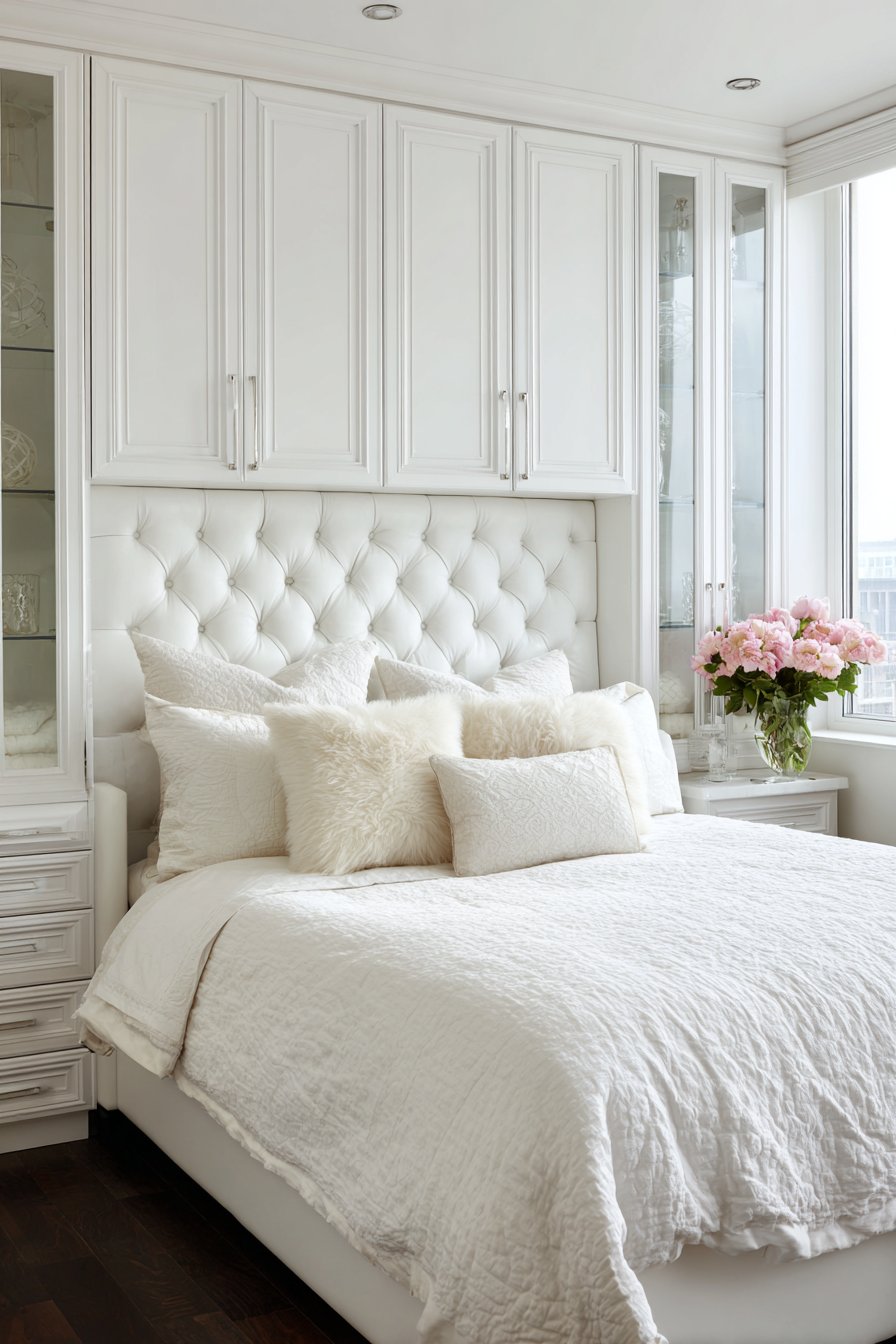
The functional elegance of this design lies in its efficient space planning—every inch serves a purpose, yet nothing feels cramped or utilitarian. The white leather bed serves as a luxurious focal point that balances the practical storage solutions, proving that organization and indulgence can coexist harmoniously.
This approach particularly appeals to those who value both order and comfort, creating a bedroom that functions as efficiently as a well-designed office while feeling as relaxing as a luxury hotel suite.
Key Design Tips:
- Design floor-to-ceiling storage to maximize capacity without sacrificing style
- Use glass-front cabinets to maintain openness while displaying organized items
- Choose leather upholstery for natural patina that improves with age
- Paint walls in warm whites to prevent sterile, cold feeling
- Integrate task lighting into storage systems for function without clutter
11. Industrial-Modern with Urban White Sophistication
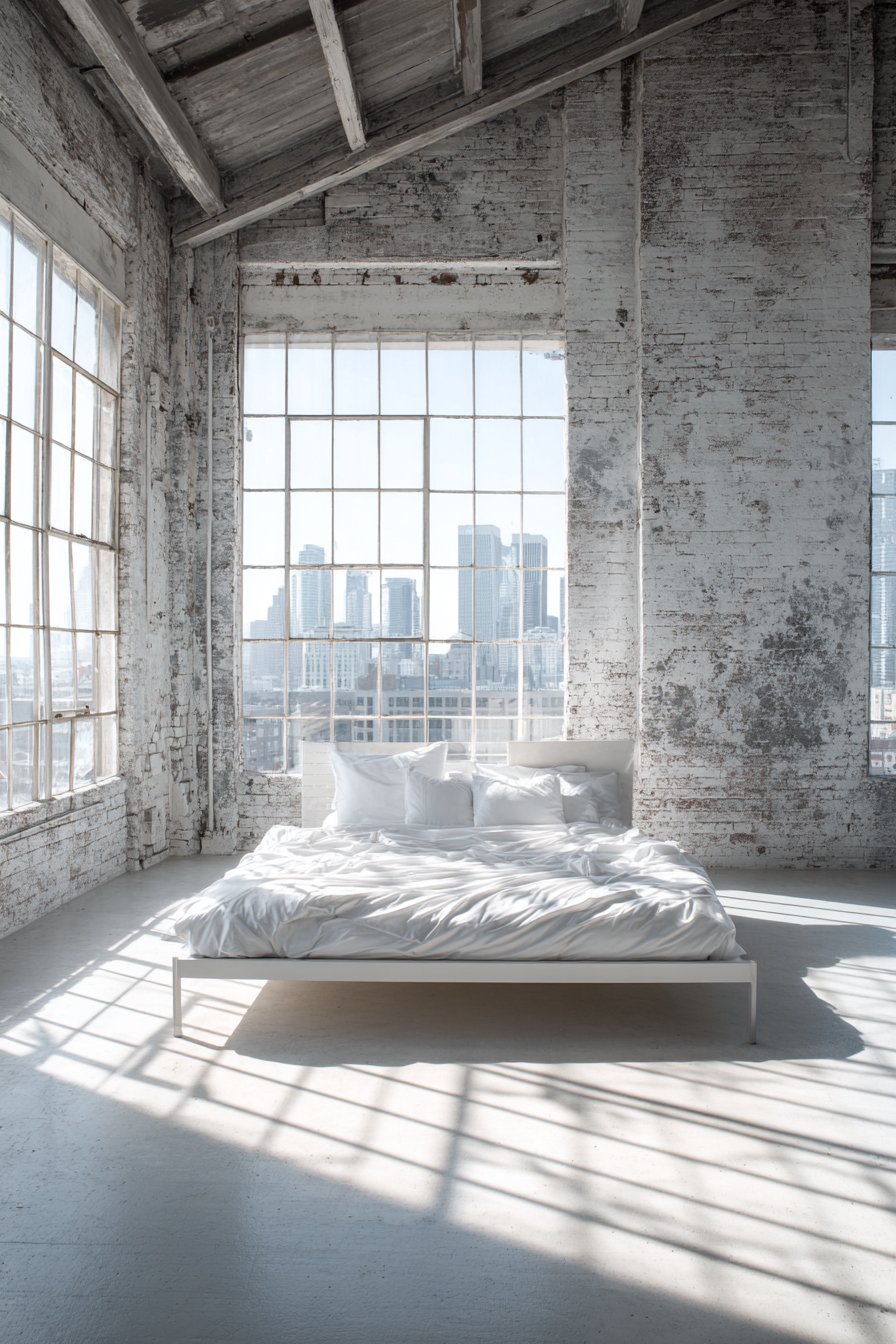
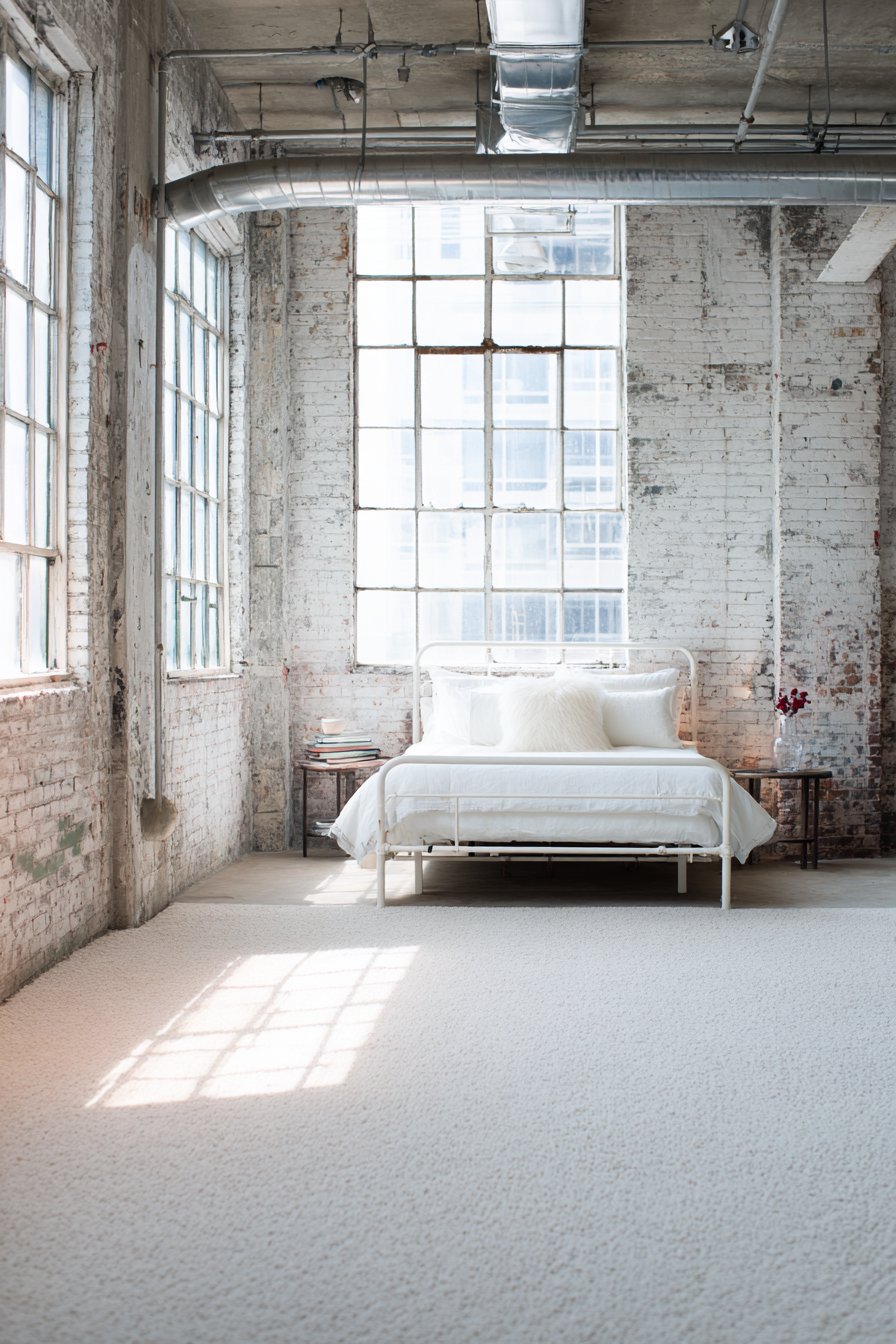
This industrial-modern white bedroom design challenges the assumption that white spaces must feel soft or traditional, instead embracing urban edge and architectural honesty. A white brick accent wall shows authentic texture and subtle color variation, each brick’s individual character contributing to the overall tactile quality while the white paint unifies the surface. Metal bed frame in white powder-coat finish paired with white linen bedding creates compelling soft-hard contrast, the industrial material softened by color while the linens provide essential comfort.
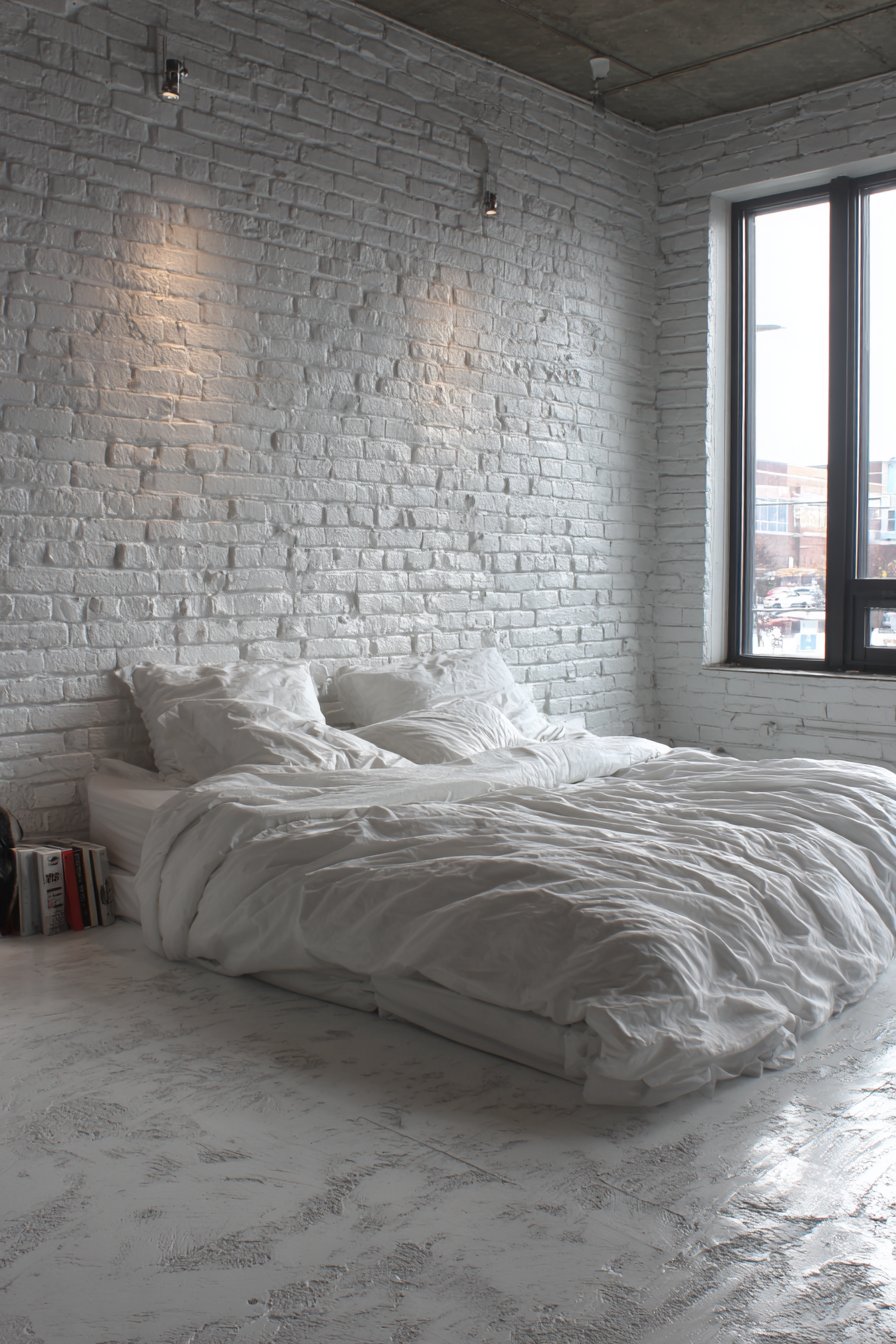
Concrete floors painted white add unexpected edge while maintaining the monochromatic palette, their smooth, slightly reflective surface contributing to industrial authenticity, while the white treatment keeps them from feeling harsh or cold. Large factory-style windows flood the space with natural light, creating dramatic shadows that change throughout the day and emphasize the room’s architectural bones. The generous window proportions typical of converted industrial spaces become a major asset, their abundance of natural light essential to preventing the white-on-white scheme from feeling cave-like.
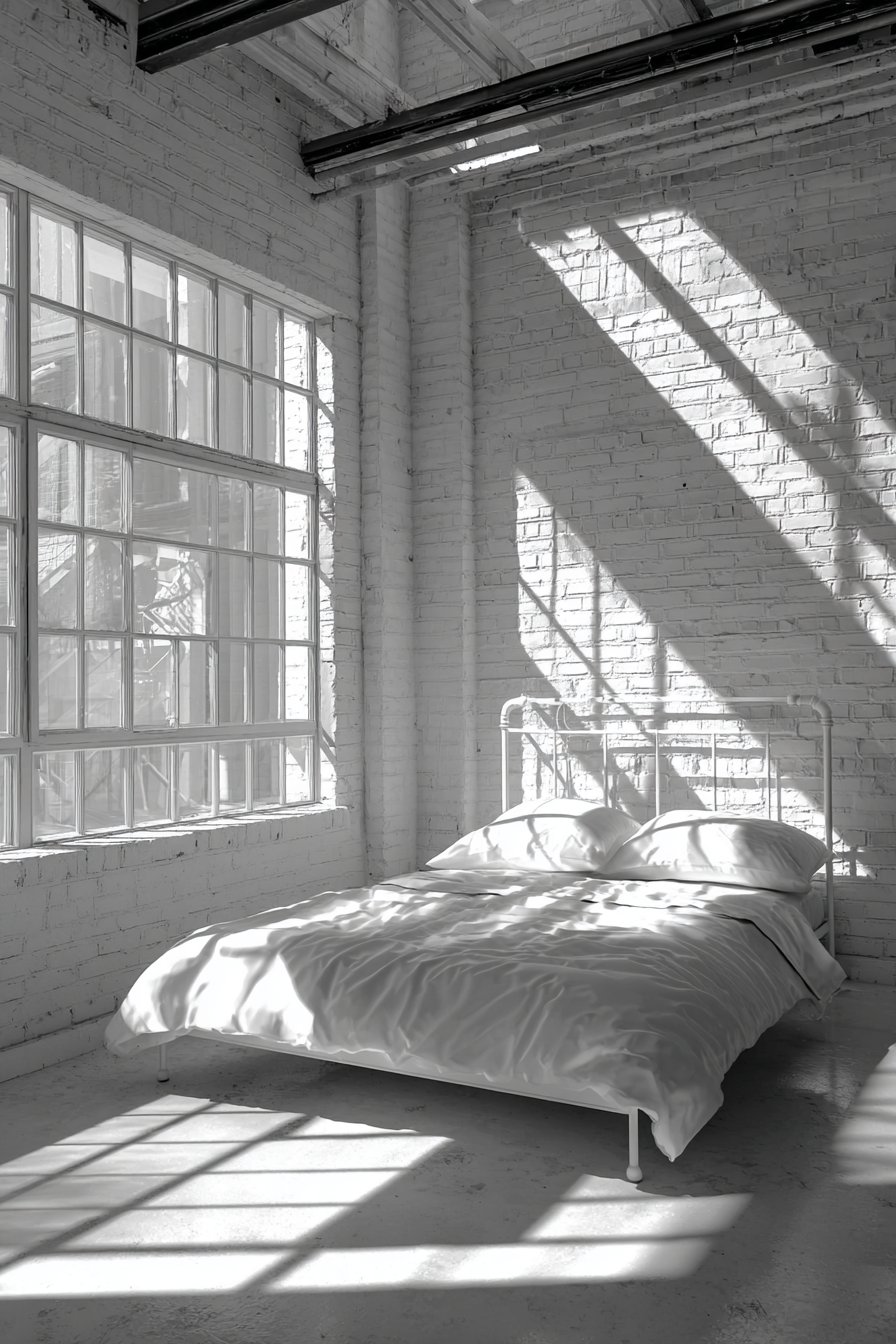
The urban sophistication of this design celebrates material authenticity—real brick, actual metal, genuine concrete—rather than hiding structural elements behind drywall and decoration. This honest approach resonates with modern sensibilities that value transparency and truth in materials. The dramatic shadows created by strong directional light become part of the decoration, adding free, ever-changing art to the walls and floor.
Key Design Tips:
- Expose and paint brick walls white for texture within monochromatic scheme
- Choose metal bed frames for industrial edge softened by white finish
- Paint concrete floors white for unexpected contrast and edge
- Maximize natural light through large windows to prevent cave-like feeling
- Embrace dramatic shadows as decorative elements that add depth
12. Serene Nursery with Whimsical White Touches
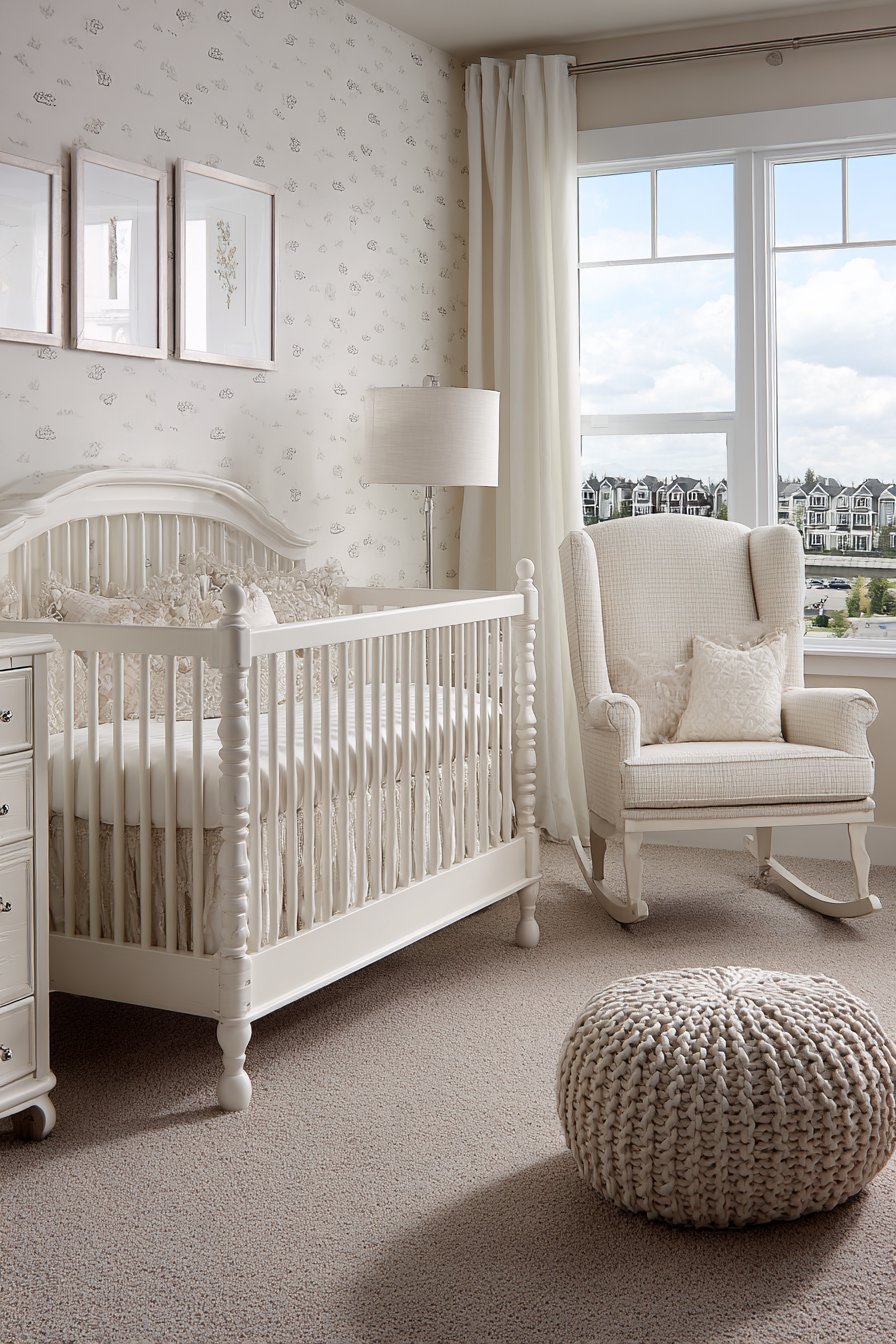
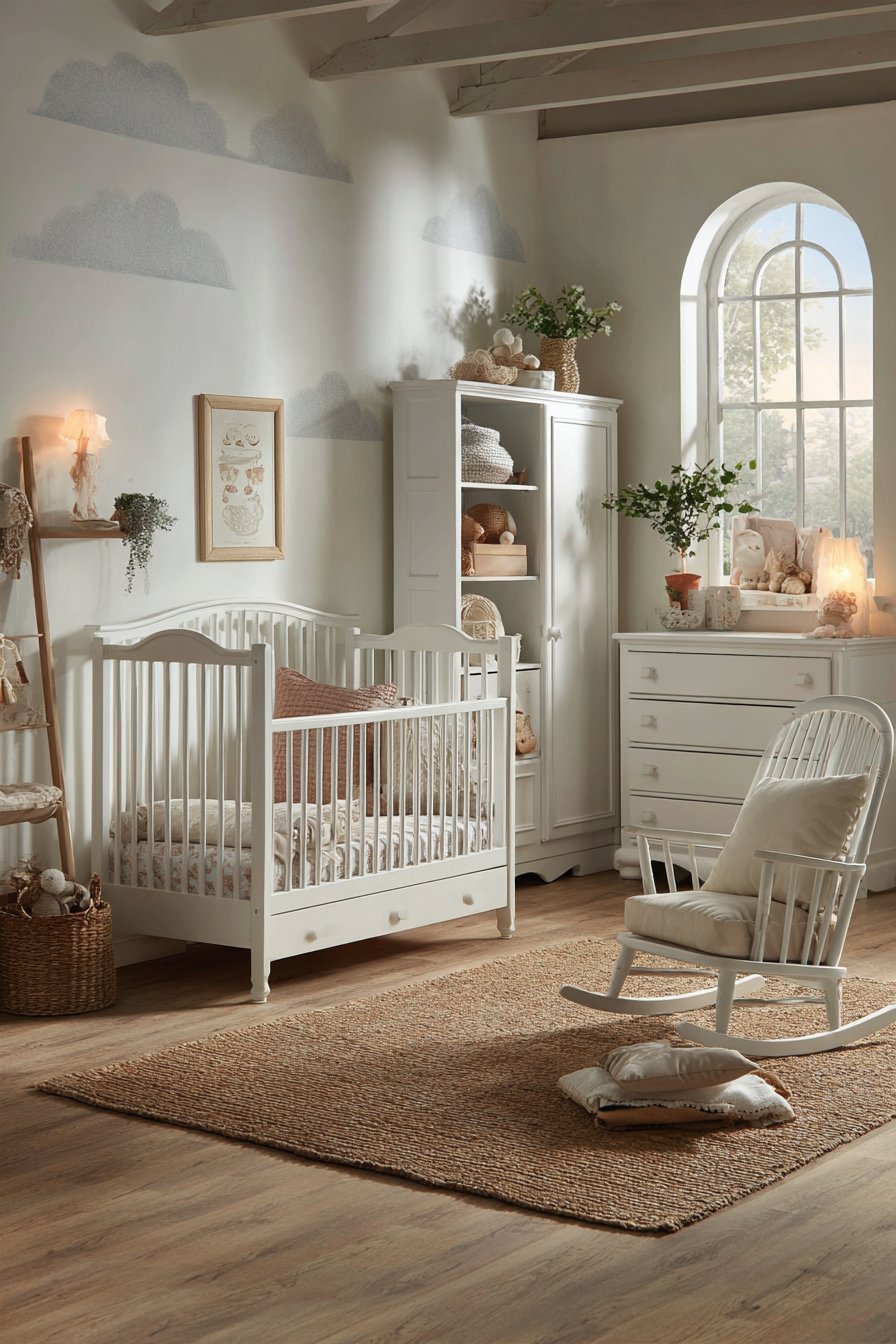
Designing a nursery in white creates a serene, calming environment perfect for both baby’s rest and parent’s peace of mind. This white nursery design features a white crib with classic spindle details and matching white changing table with practical storage drawers, both pieces combining safety, functionality, and timeless beauty. The walls painted in warm white provide a gentle backdrop, while hand-painted subtle cloud motifs add whimsy without overwhelming the space or stimulating baby excessively before sleep.
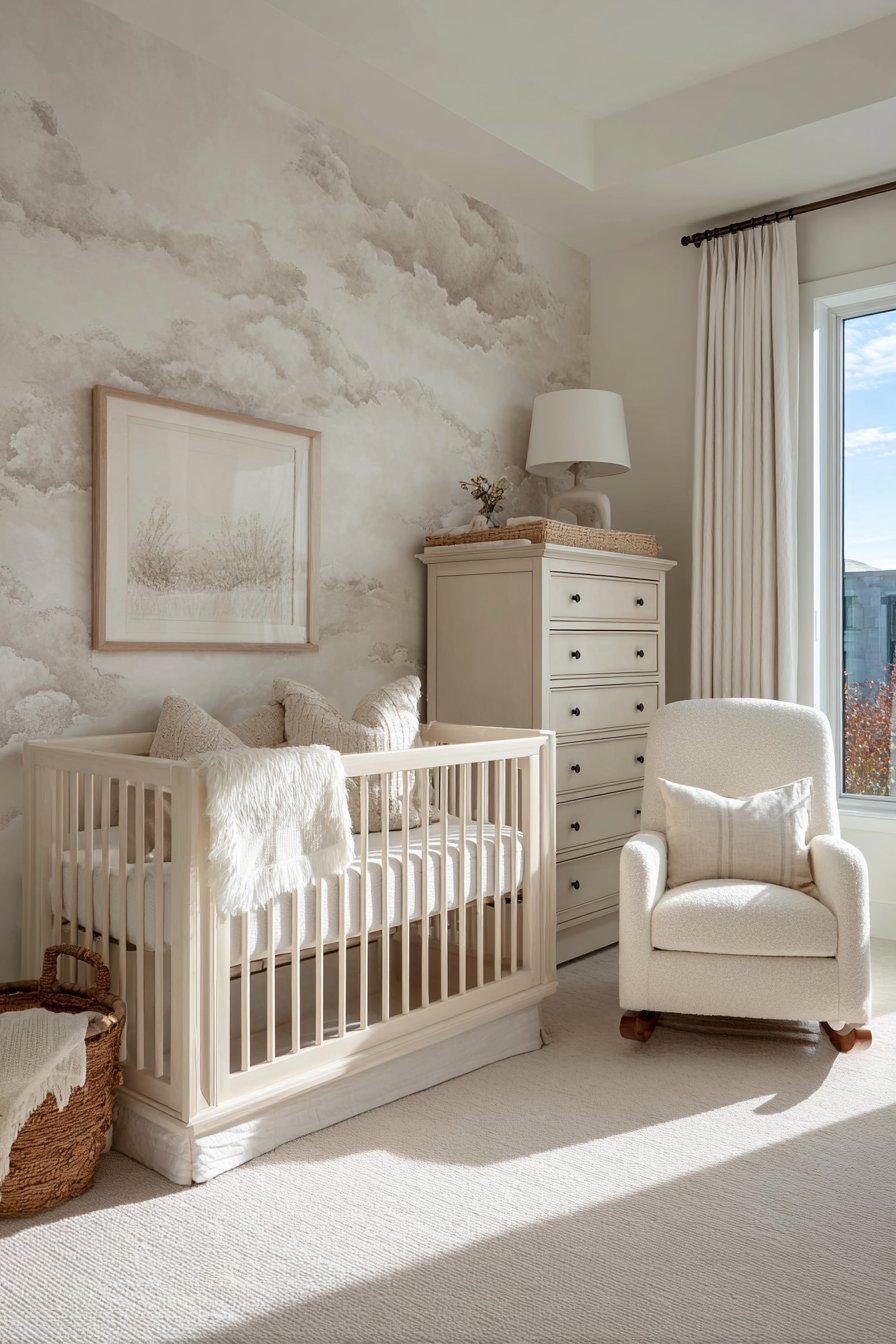
A white rocking chair with cream cushion positioned near the window captures natural light for daytime feedings while creating a peaceful spot for those quiet bonding moments. The cushion’s cream tone adds just enough warmth to prevent the space from feeling clinical while maintaining the soothing monochromatic scheme. Soft ambient lighting creates gentle shadows perfect for nighttime routines, and the ability to dim lights gradually helping establish healthy sleep associations.
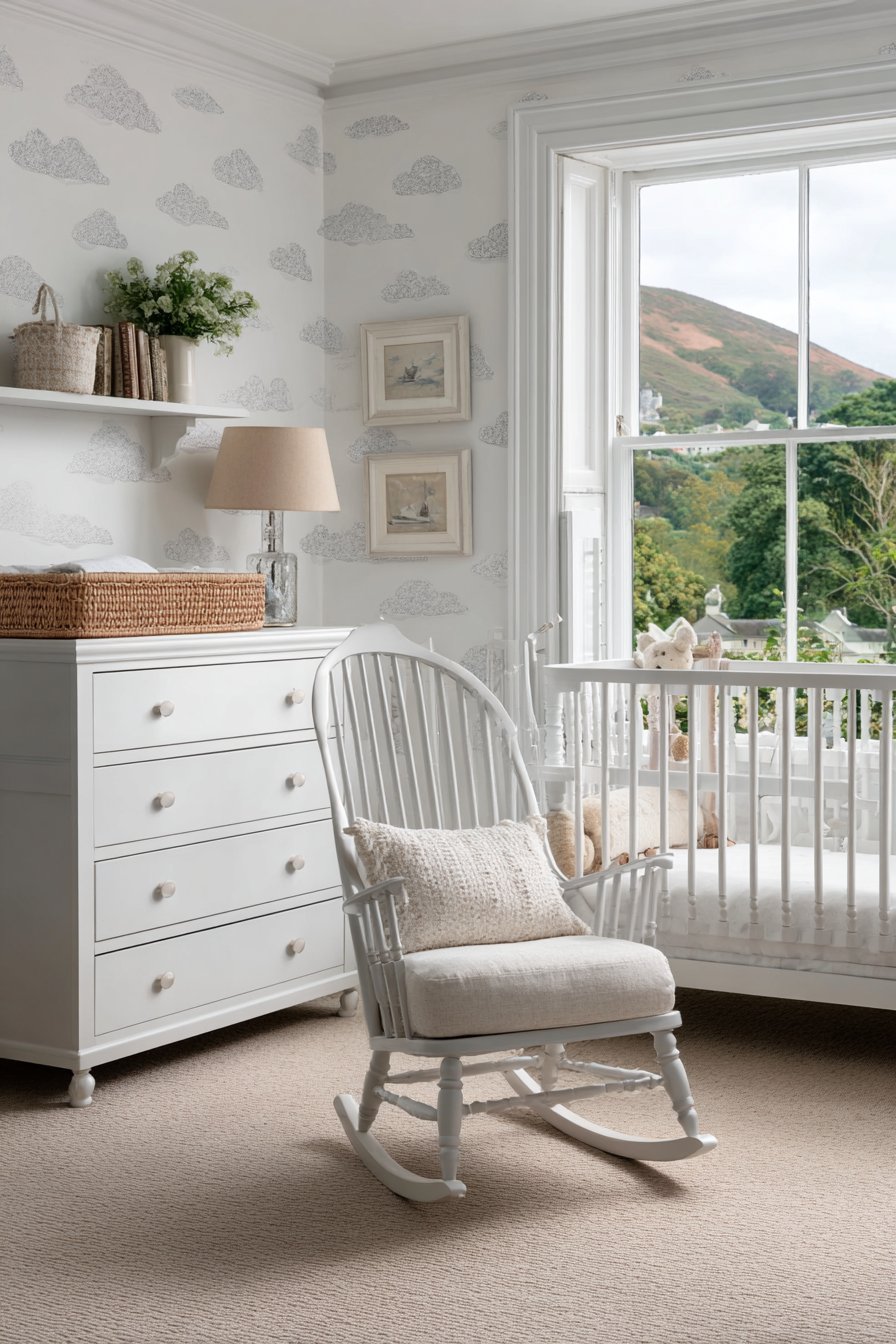
The functional layout considers both caregiver needs and baby’s development, with everything positioned for easy access during those exhausted middle-of-the-night changes and feedings. The soothing monochromatic environment supports infant visual development—babies see high contrast best initially—while avoiding overstimulation. This design proves that nurseries need not be explosion of primary colors; the most restful, developmentally appropriate spaces often embrace simplicity and calm.
Key Design Tips:
- Choose cribs and furniture with safety certifications as top priority
- Use warm white paint tones to create gentle, non-clinical atmosphere
- Add subtle hand-painted details for whimsy within white scheme
- Position nursing chair near natural light for daytime comfort
- Install dimmable lighting for flexible ambiance during nighttime care
13. French Country Elegance with Carved White Romance
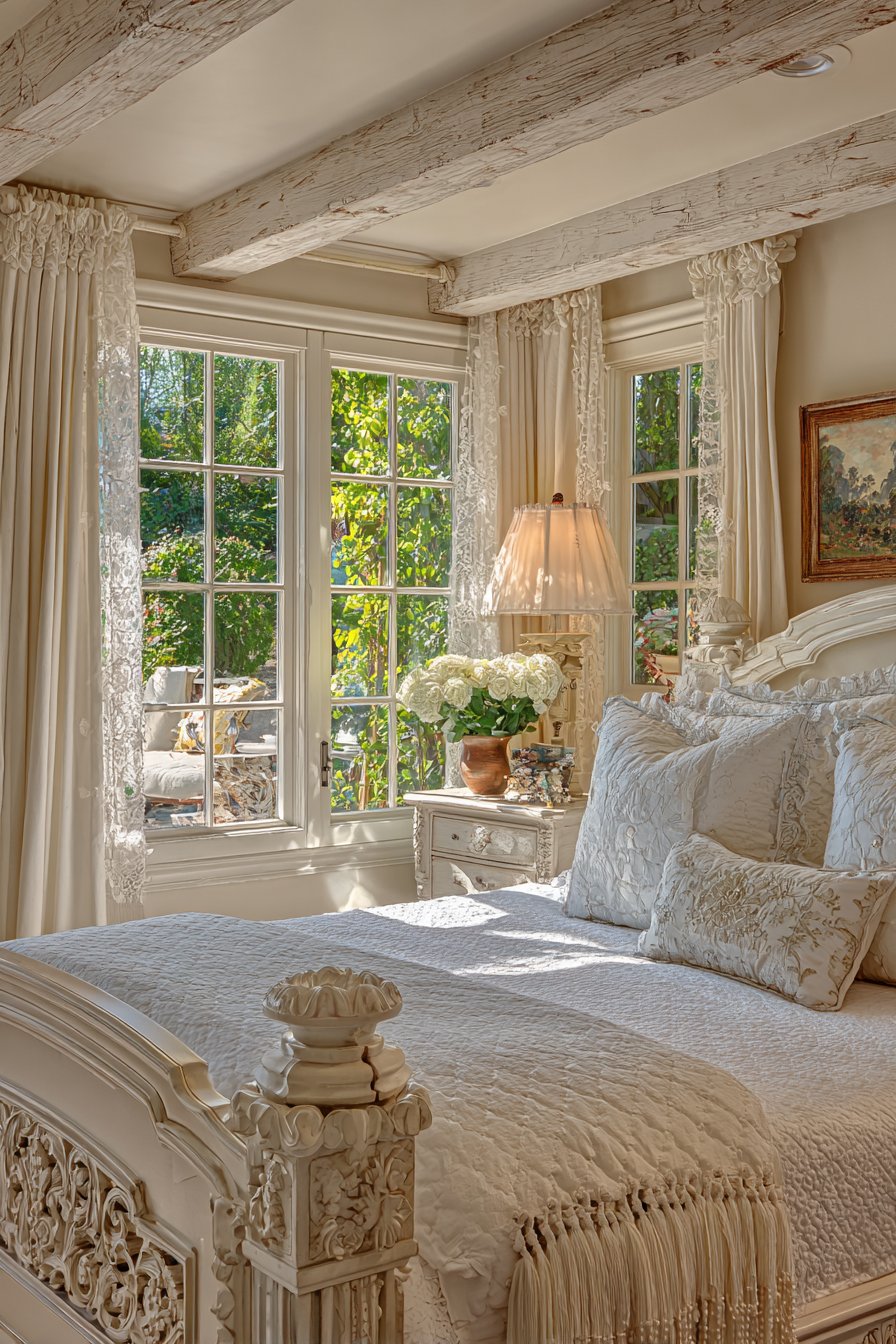
This French country white bedroom design transports you to a Provençal château through ornate white-painted wood furniture and romantic architectural details. An intricately carved bed frame and vintage armoire showcase the craftsmanship central to French country style, their elaborate details standing out beautifully against the room’s simple backdrop. The white paint allows appreciation of the carved elements—perhaps acanthus leaves, scrollwork, or floral motifs—without the distraction of wood grain or color variation.
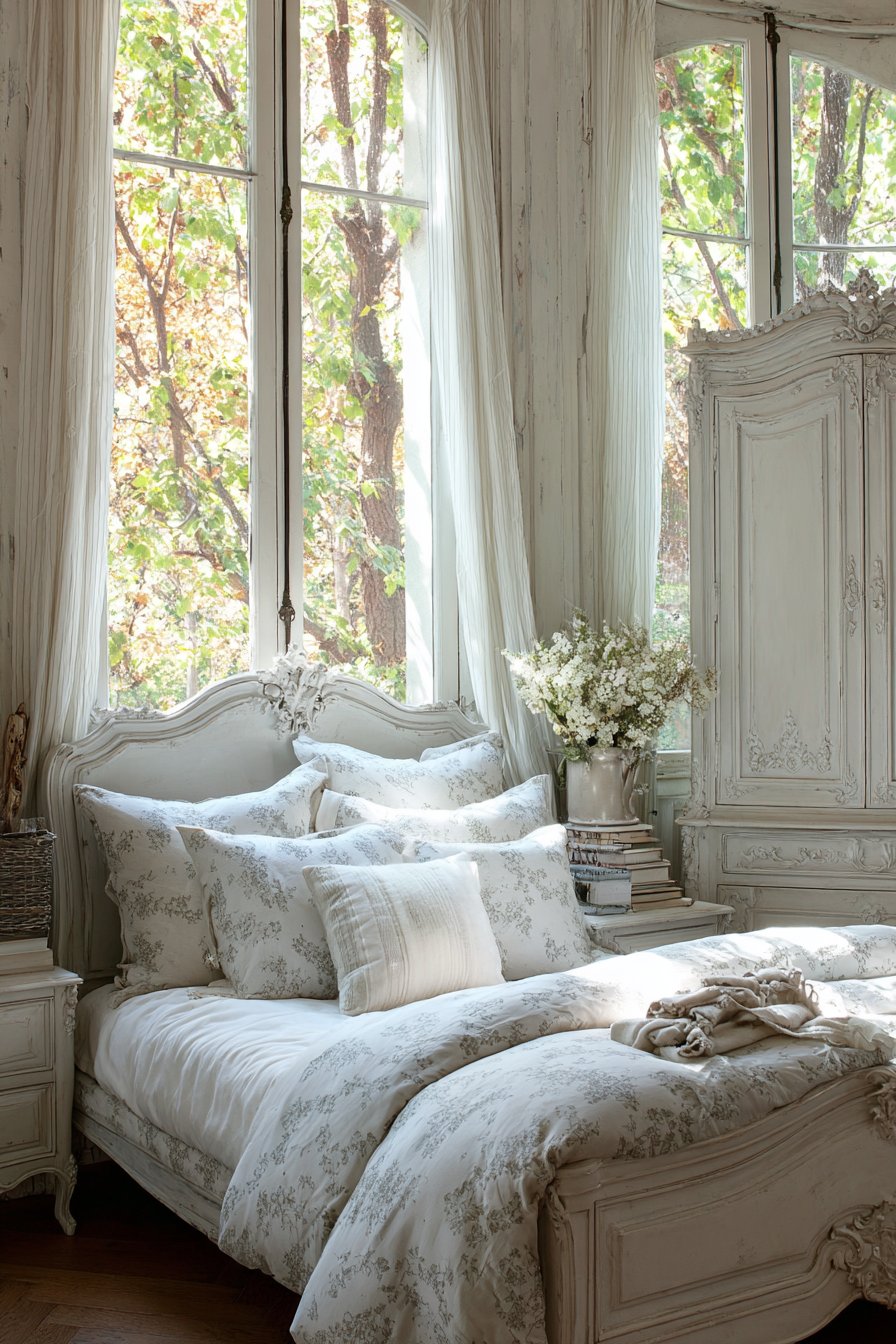
Walls feature white plaster with subtle texture variations and authentic imperfections that add character, the hand-applied finish creating organic irregularities that machine-perfect drywall cannot replicate. These slight inconsistencies tell stories of age and craftsmanship, essential to authentic French country aesthetic. White toile bedding with delicate pattern provides visual interest within the white scheme, the traditional scenic motifs offering just enough detail to engage the eye without overwhelming the serene palette.
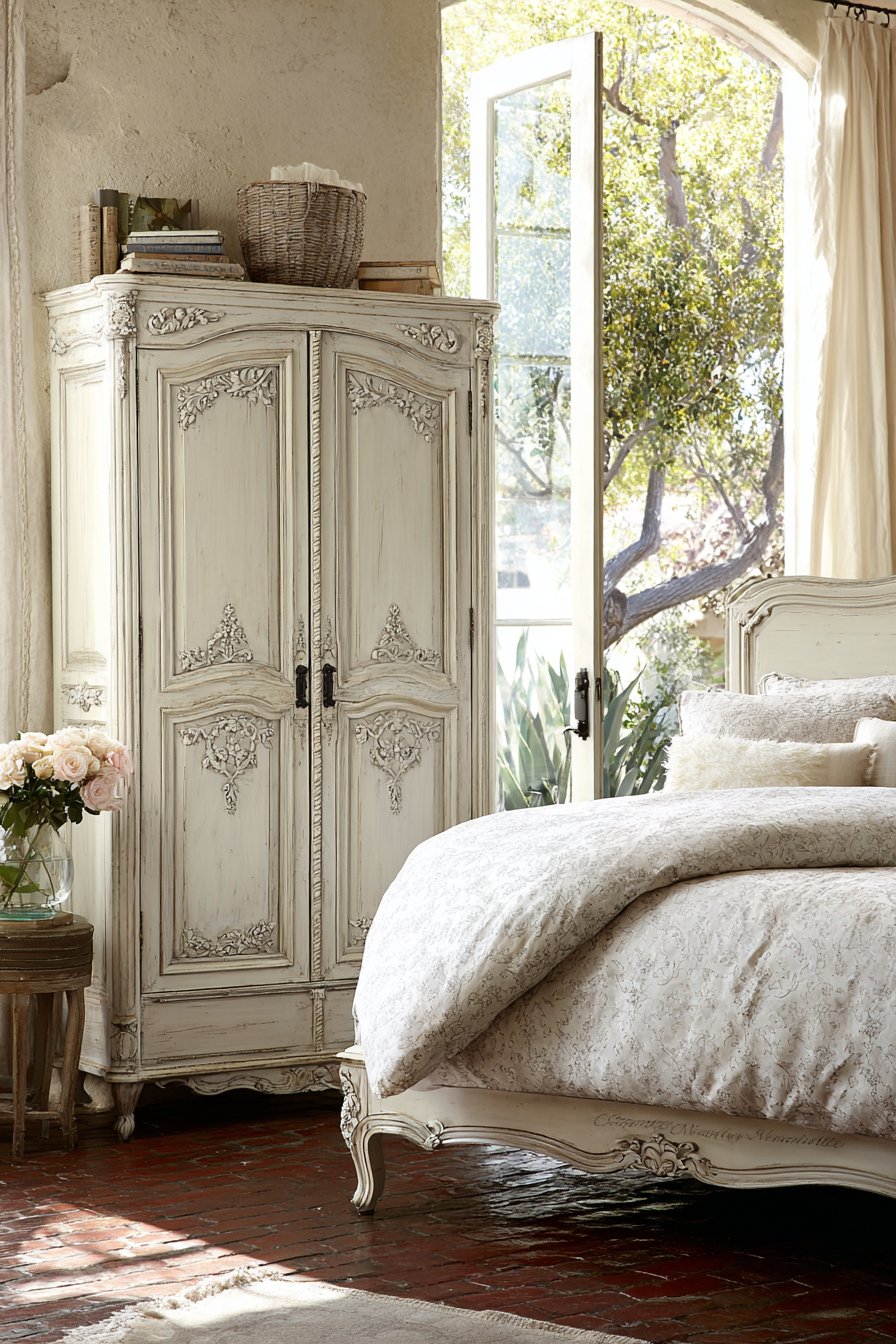
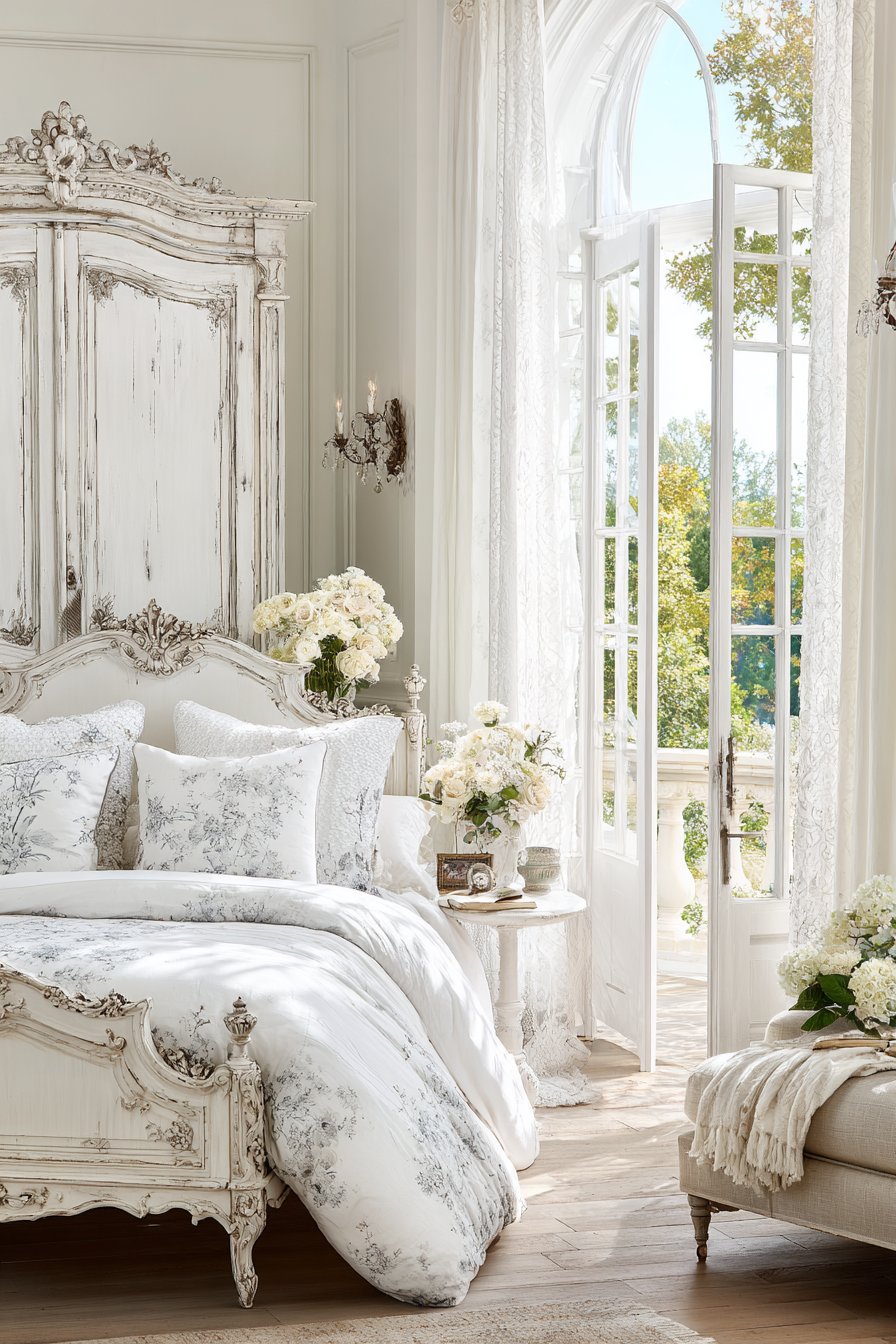
Natural daylight through tall windows with white lace curtains creates romantic ambiance, the filtered light casting delicate shadow patterns across the room throughout the day. The lace’s intricate patterns add another layer of handcrafted detail while maintaining privacy and light diffusion. This design celebrates Old World charm and elegant details, proving that ornate need not mean colorful—restraint in palette allows focus on form, craftsmanship, and the beauty of well-executed details.
Key Design Tips:
- Invest in quality carved furniture as focal points worth the investment
- Choose hand-applied plaster finishes for authentic French country texture
- Use white-on-white toile for pattern within monochromatic scheme
- Hang lace curtains for romantic light filtration and privacy
- Embrace imperfections and irregularities as character, not flaws
14. Contemporary Minimalism with Sleek White Precision
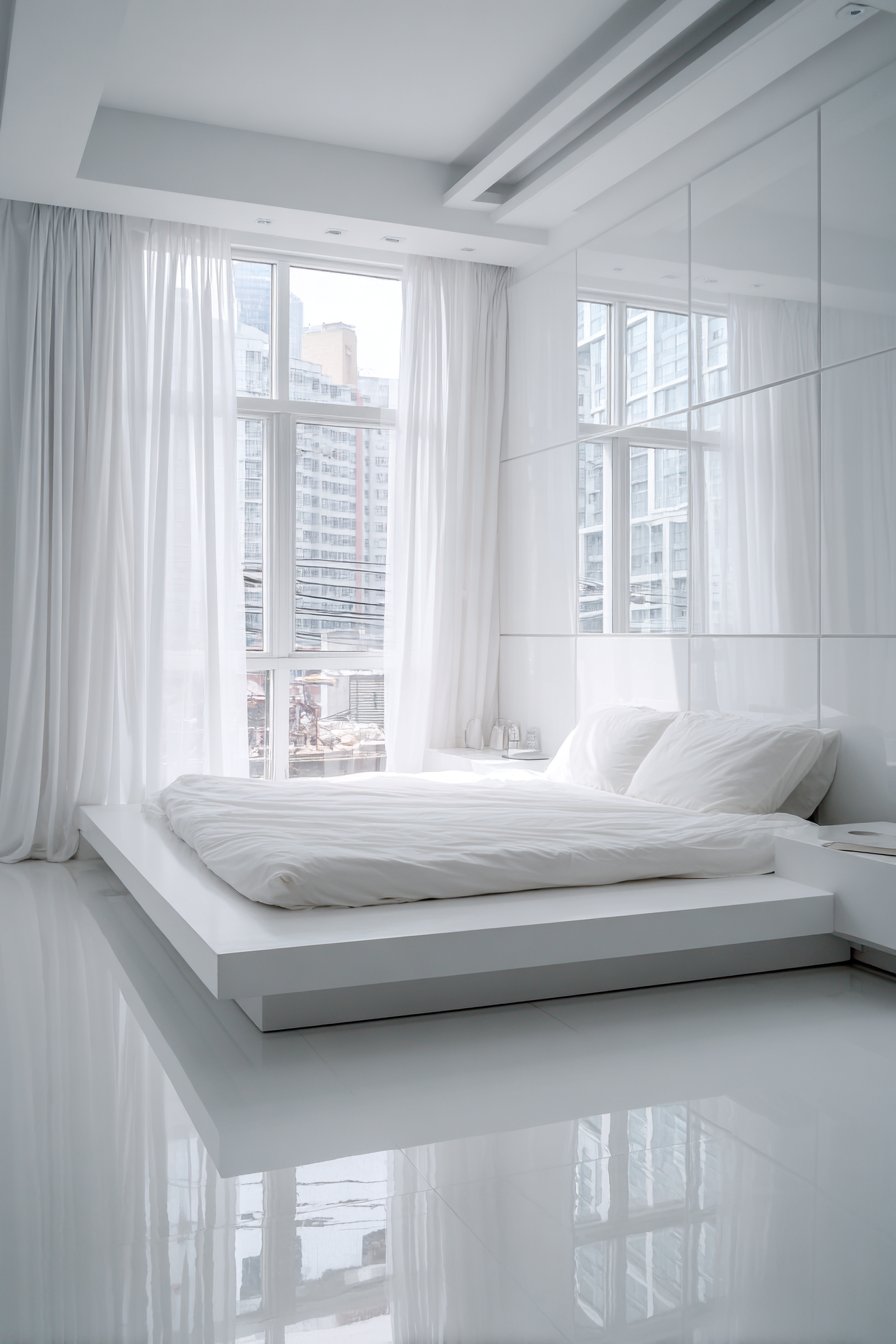
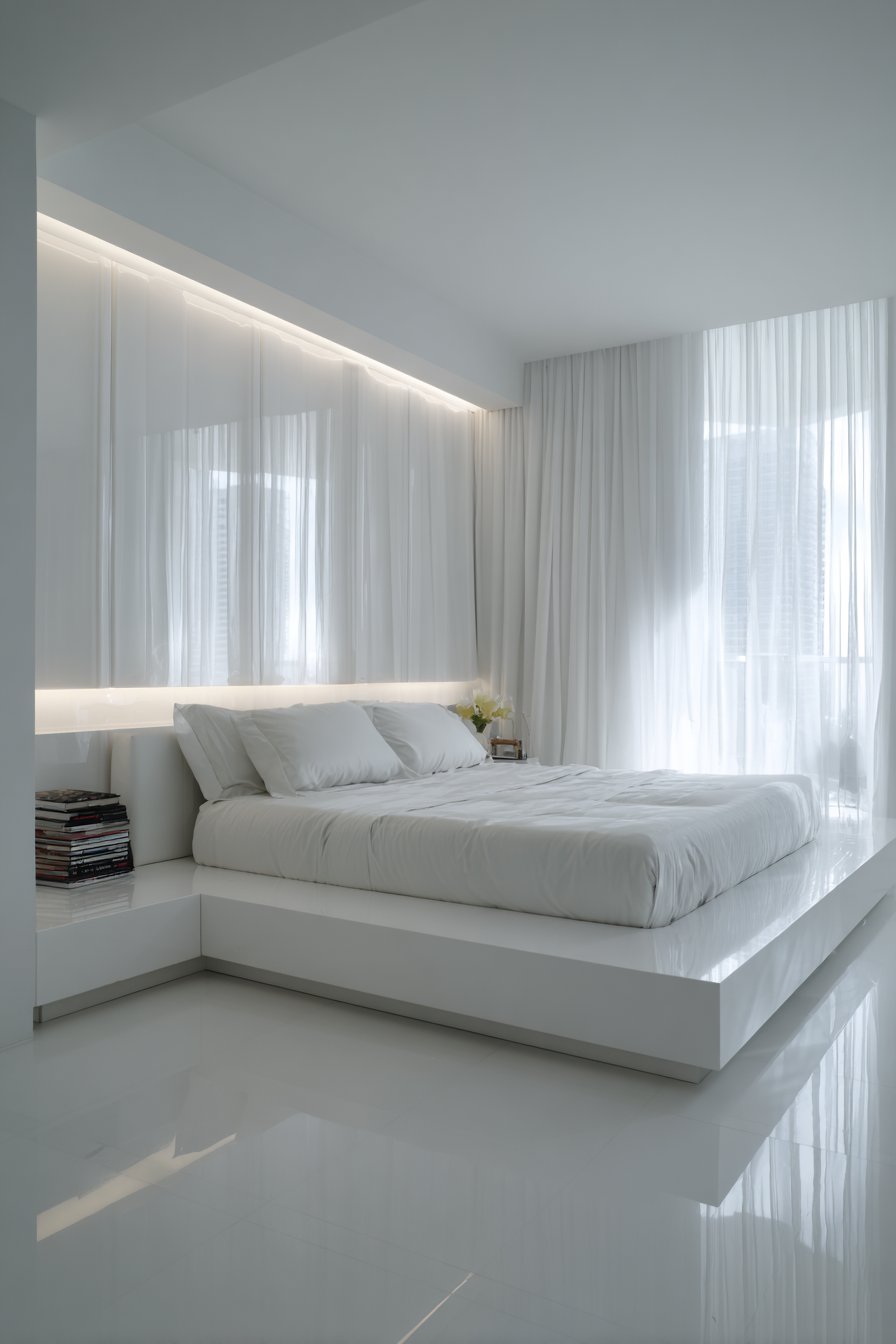
This contemporary minimalist white bedroom design represents the apex of refined restraint, where every element serves multiple purposes and nothing extraneous disturbs the composition. A sleek white lacquer platform bed with integrated floating nightstands eliminates the need for separate furniture pieces, the continuous design creating seamless flow and visual calm. White acoustic panels on one wall add both sound-dampening function and subtle geometric texture, their dimensional surface catching light to create ever-changing shadow patterns.
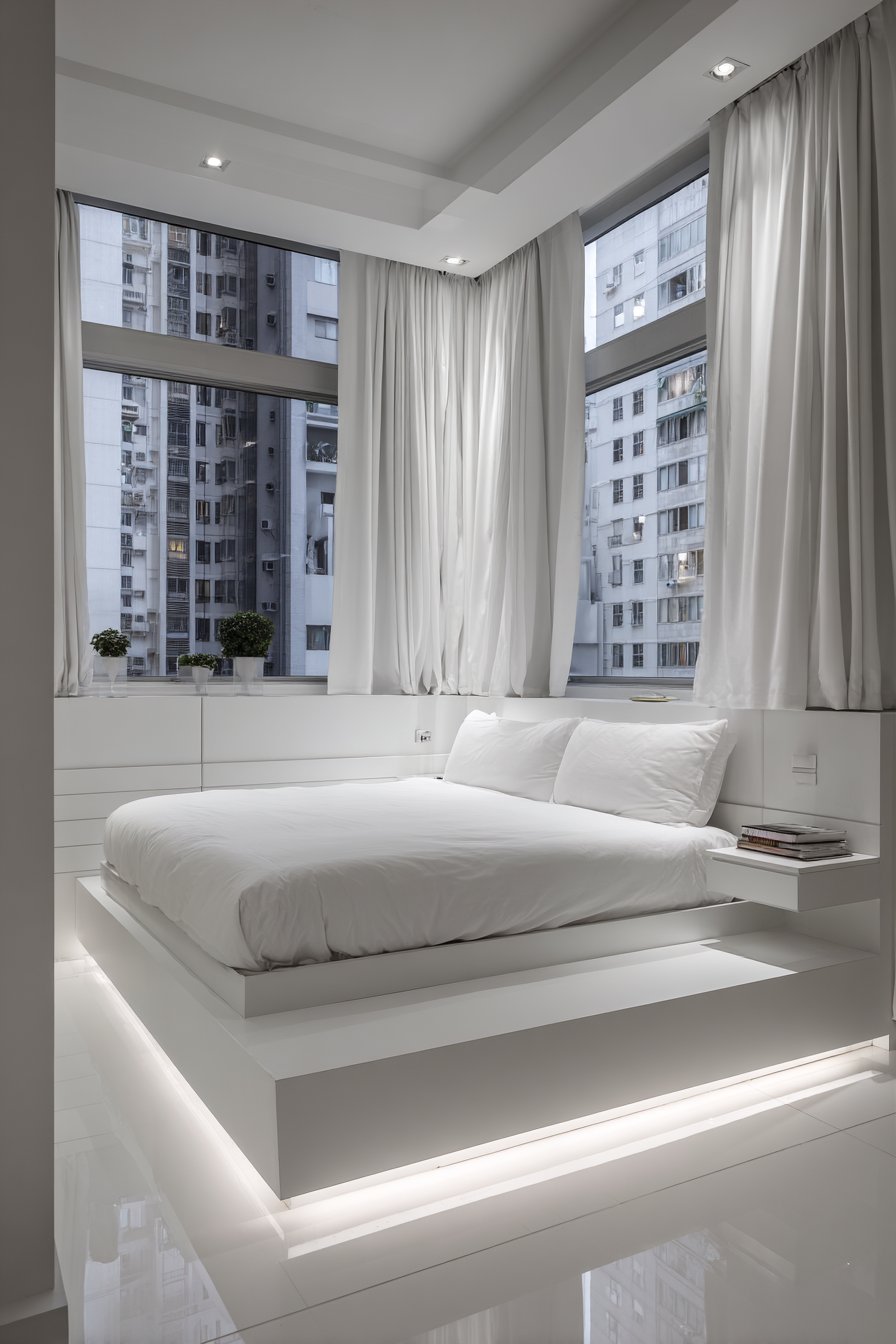
Polished white resin floors reflect soft ambient lighting from hidden LED strips, their glossy surface amplifying light while creating a sophisticated, almost futuristic atmosphere. The reflective quality adds perceived height and depth to the space, the floor becoming another light source rather than just a surface. Floor-to-ceiling white curtains frame the window wall, allowing complete control over natural light—fully open for maximum daylight, partially closed for diffusion, or completely drawn for total darkness and privacy.
The clean lines and sophisticated use of varied white materials and finishes demonstrate that minimalism at its best is about intentional choices rather than absence. Each material—matte acoustic panels, glossy resin floors, semi-transparent curtains—contributes its unique quality to the overall composition. This design appeals to those who find peace in order, beauty in simplicity, and luxury in space itself rather than abundance of objects.
Key Design Tips:
- Choose platform beds with integrated nightstands for seamless design
- Install acoustic panels for sound control and subtle textural interest
- Use reflective flooring to amplify light and create spaciousness
- Implement hidden LED lighting for modern, sourceless ambient glow
- Select floor-to-ceiling curtains for maximum light control and height emphasis
15. Innovative Loft Living with Dual-Purpose Design

Small loft living demands innovation, and this white bedroom design rises to the challenge with clever dual-purpose solutions. White-painted exposed brick walls maintain industrial character while the white treatment lightens their visual weight and brightens the space significantly. The space-saving Murphy bed in white with clean hardware folds seamlessly to reveal a white desk surface, transforming the bedroom into a home office within seconds—essential for modern loft living where every square foot must work harder.
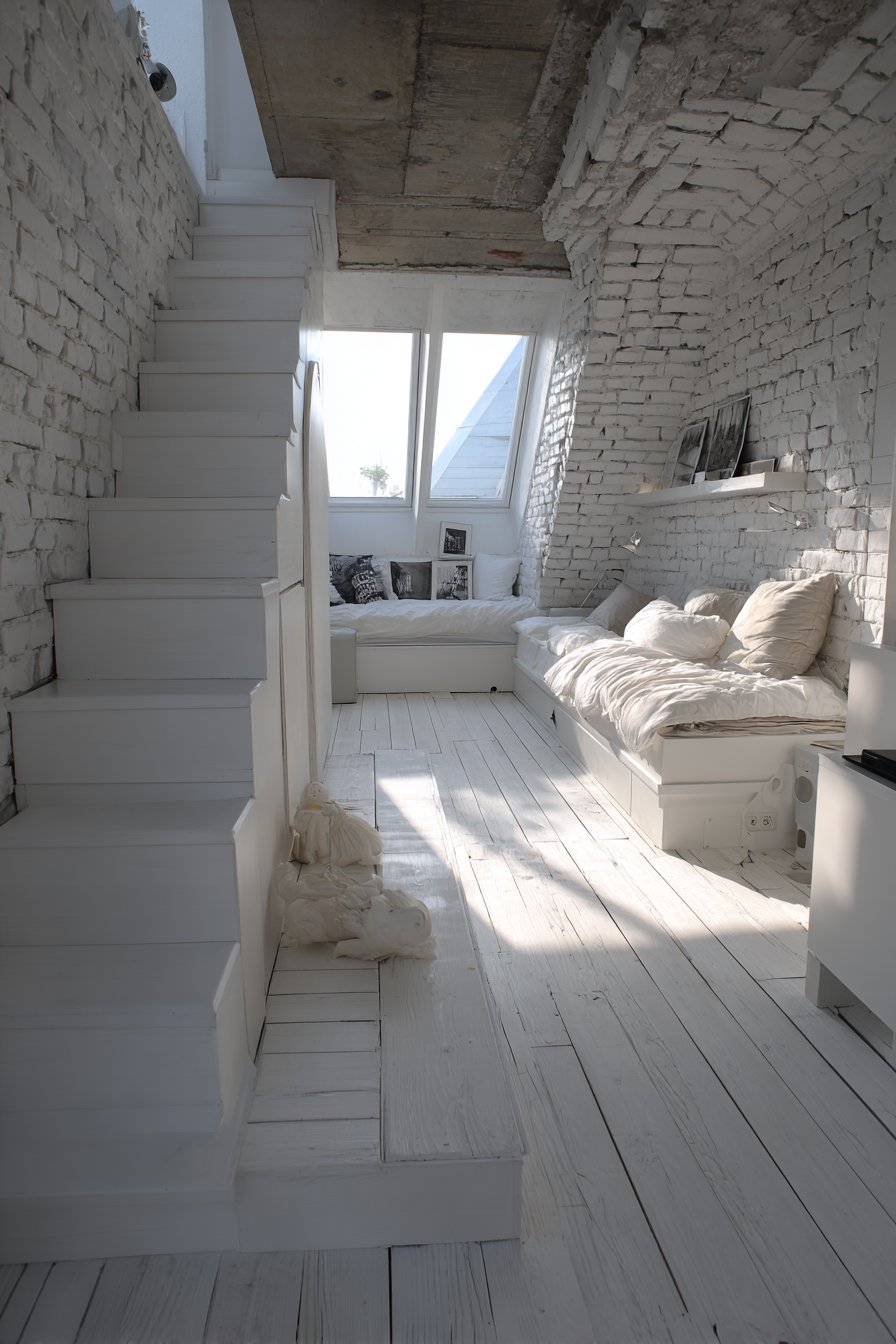
The area is defined by white painted wood floors that contrast beautifully with the original concrete ceiling left exposed above, this juxtaposition of finished and raw surfaces creating visual interest and honest acknowledgment of the building’s industrial heritage. Skylights provide abundant natural illumination from above, highlighting the clever dual-purpose design while eliminating the need for precious wall space to be devoted to windows. This overhead lighting creates dramatic vertical shadows and fills the space with natural light throughout the day.
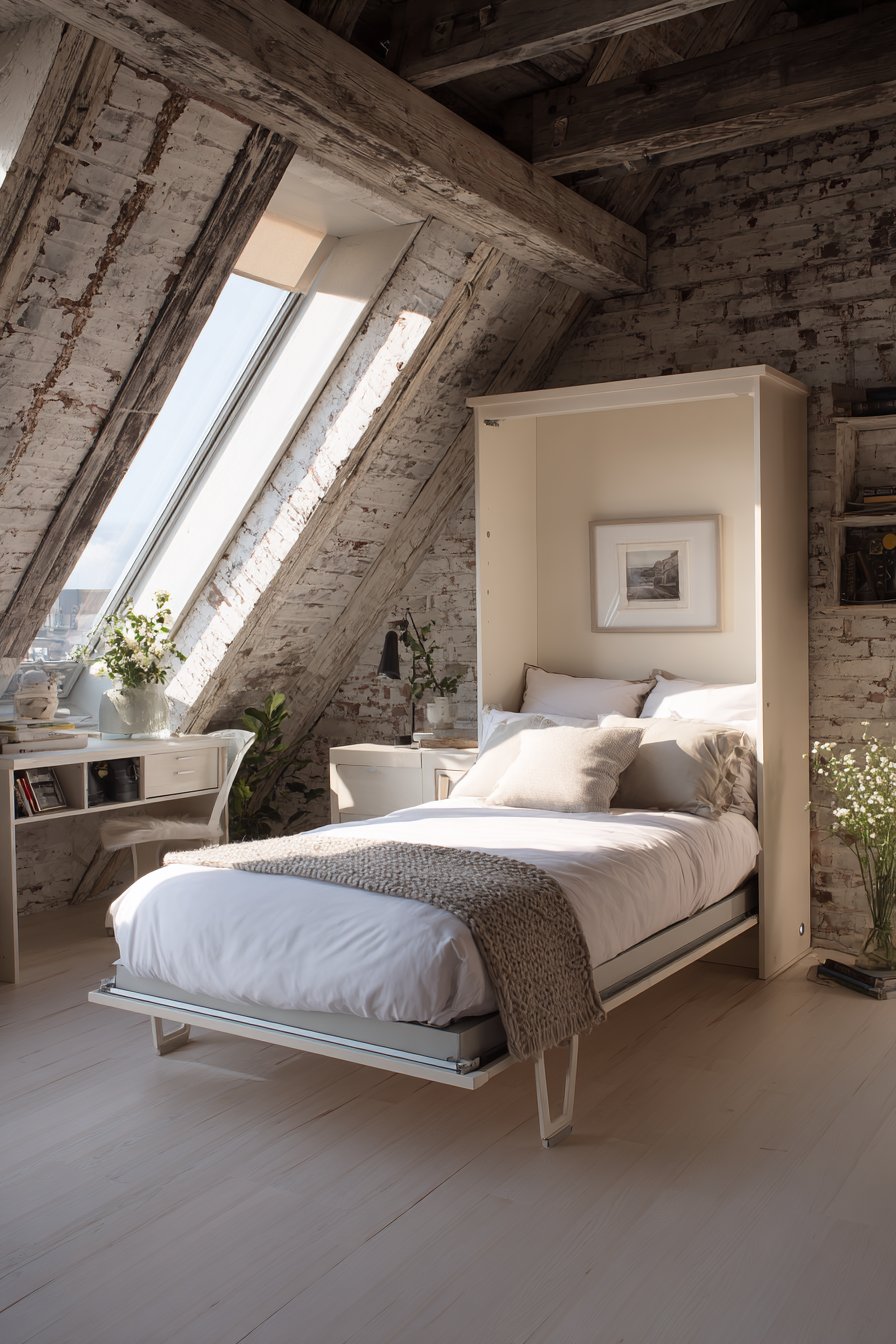
The innovative space solution demonstrates that limitations breed creativity—the Murphy bed’s necessity becomes the room’s defining feature and conversation piece. The wide-angle perspective captures both the compact efficiency when closed and the comfortable sleeping quarters when deployed, proving that small-space living need not sacrifice style or comfort when approached with intelligence and quality materials.

Key Design Tips:
- Paint exposed brick white to lighten while maintaining texture
- Invest in quality Murphy bed systems with smooth operation and durability
- Contrast painted floors with raw ceilings for industrial authenticity
- Utilize skylights in top-floor spaces for natural light without wall space
- Design for dual purposes—sleeping by night, working or living by day
16. Traditional Wainscoting with Classic White Refinement
This traditional white bedroom design embraces architectural details and classic elegance through carefully executed millwork and refined furnishings. White panel molding creates a wainscoting effect on walls, the raised panels adding three-dimensional interest and traditional character while maintaining the clean white palette. An upholstered sleigh bed in white linen with subtle stitching detail serves as the room’s focal point, its curved silhouette softening the linear wall treatments and providing visual contrast.
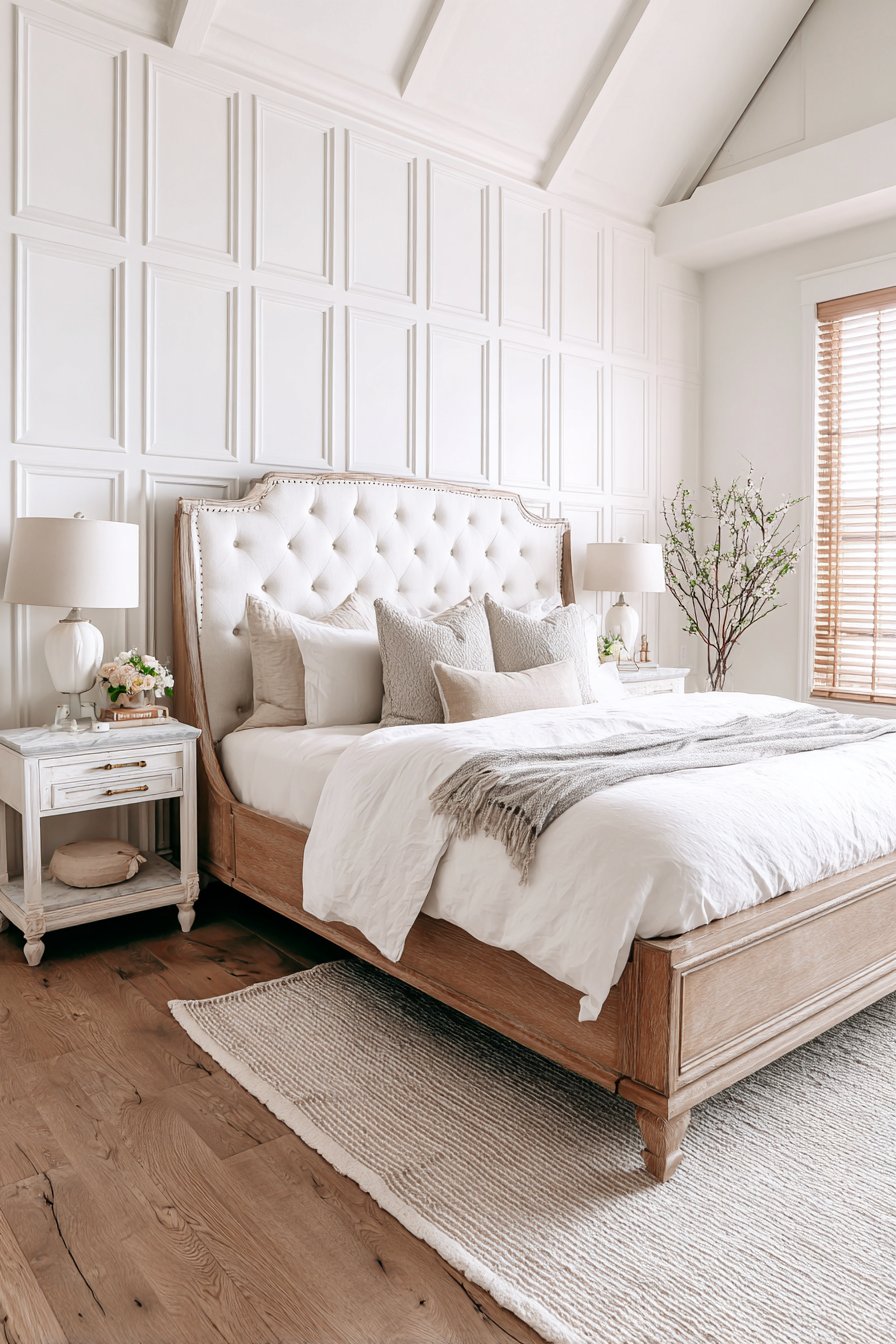
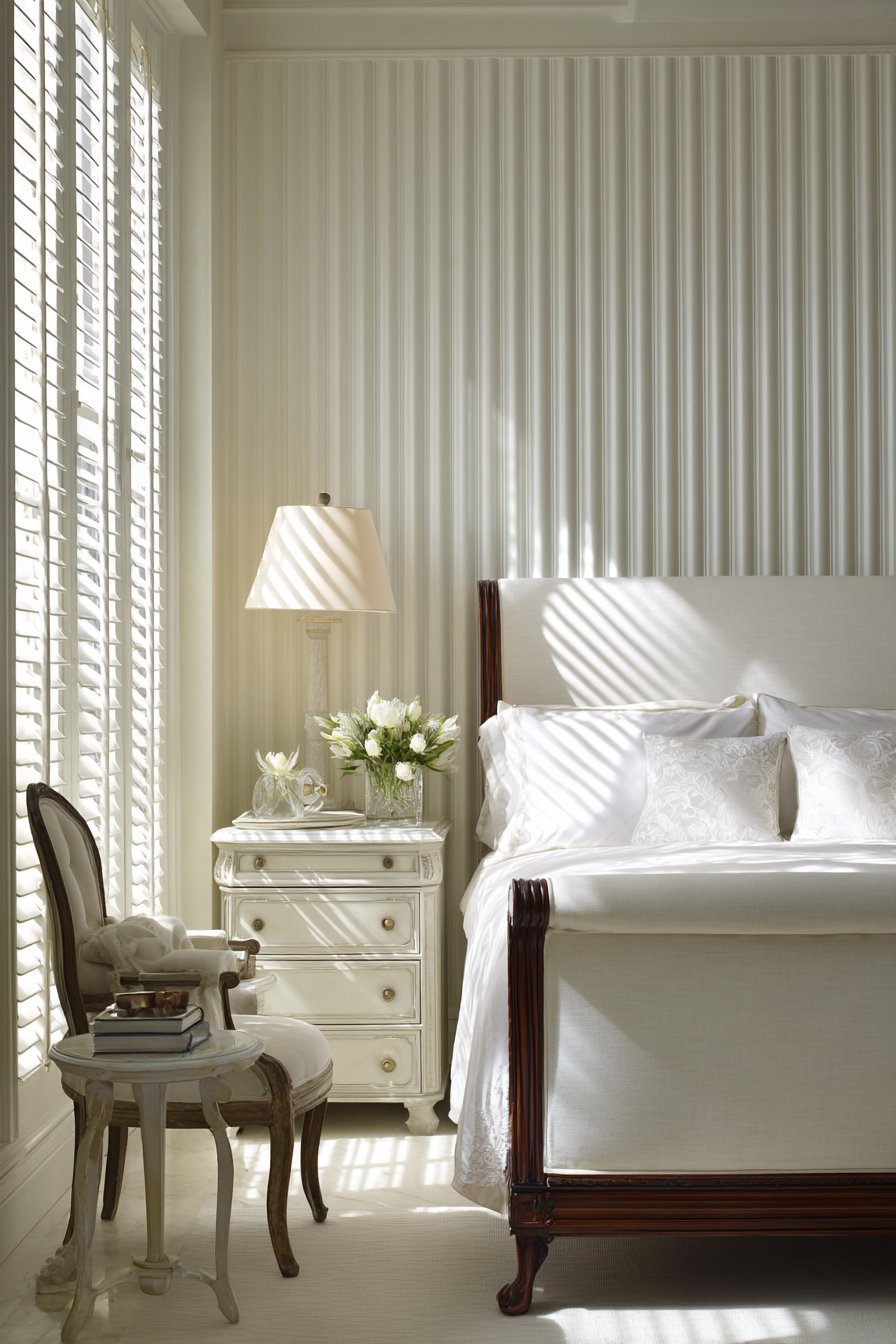
Antique white nightstands with marble tops add sophistication through their material combination—the painted wood providing traditional form while the natural stone introduces cool elegance and subtle veining. White table lamps with fabric shades provide warm lighting, their soft glow creating intimate pools of light perfect for bedtime reading while their traditional forms complement the room’s classic aesthetic. Natural light filters through white wooden blinds, creating striped shadow patterns that dance across walls and floor throughout the day.
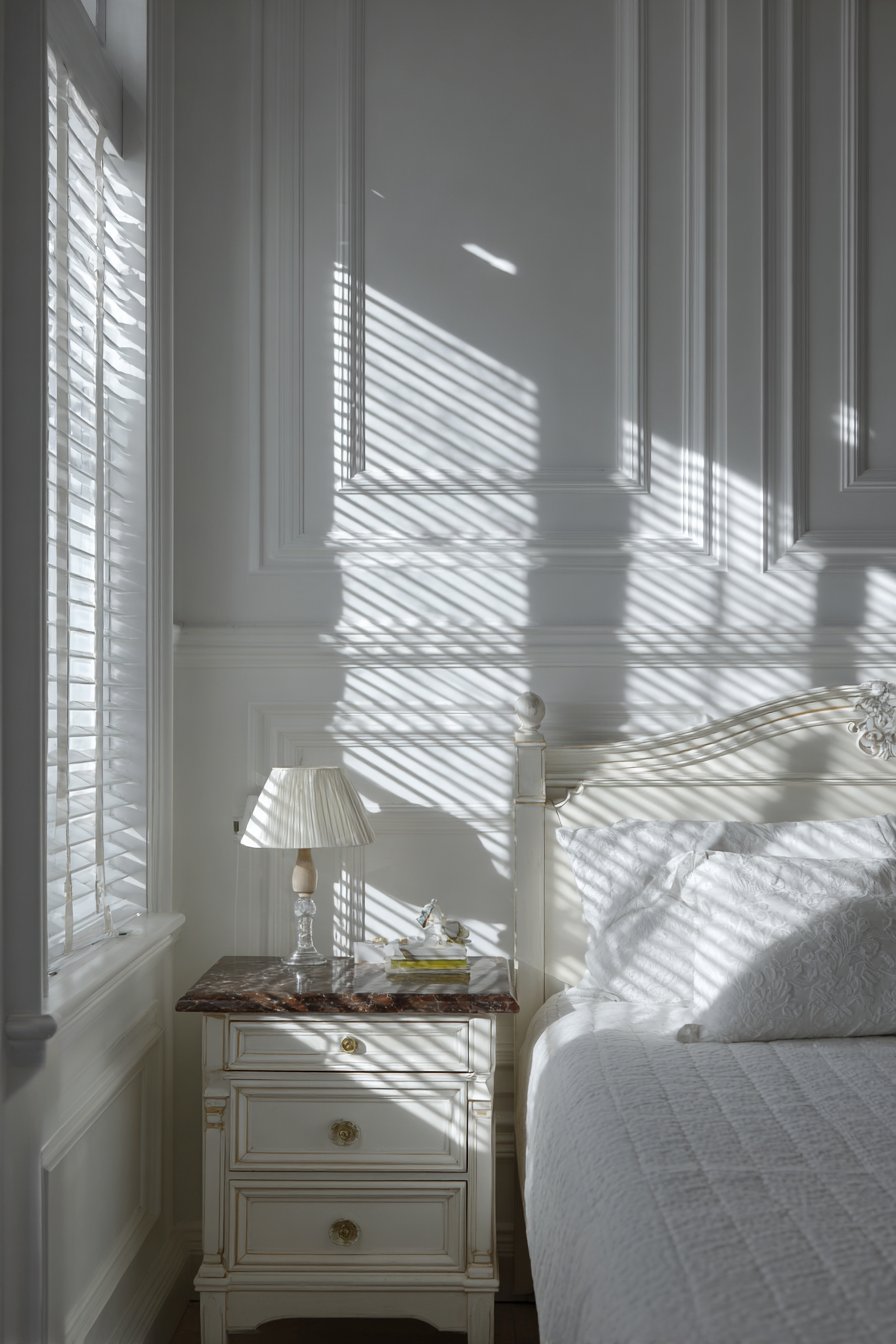
The classic refined aesthetic celebrates architectural details that have stood the test of time—wainscoting, crown molding, quality upholstery, and thoughtful proportions. This design proves that traditional need not mean dated; when executed in a cohesive white palette with attention to quality and detail, classical elements feel fresh, peaceful, and timelessly beautiful. The room’s formality is tempered by comfortable fabrics and warm lighting, creating a space that feels both elegant and genuinely restful.
Key Design Tips:
- Install wainscoting or panel molding for architectural interest and traditional character
- Choose sleigh beds for classic curves that soften linear room elements
- Combine painted furniture with marble tops for material variety within white scheme
- Use table lamps with fabric shades for warm, traditional lighting
- Incorporate wooden blinds for light control with classic texture
17. Budget-Conscious Style with IKEA Smart Solutions
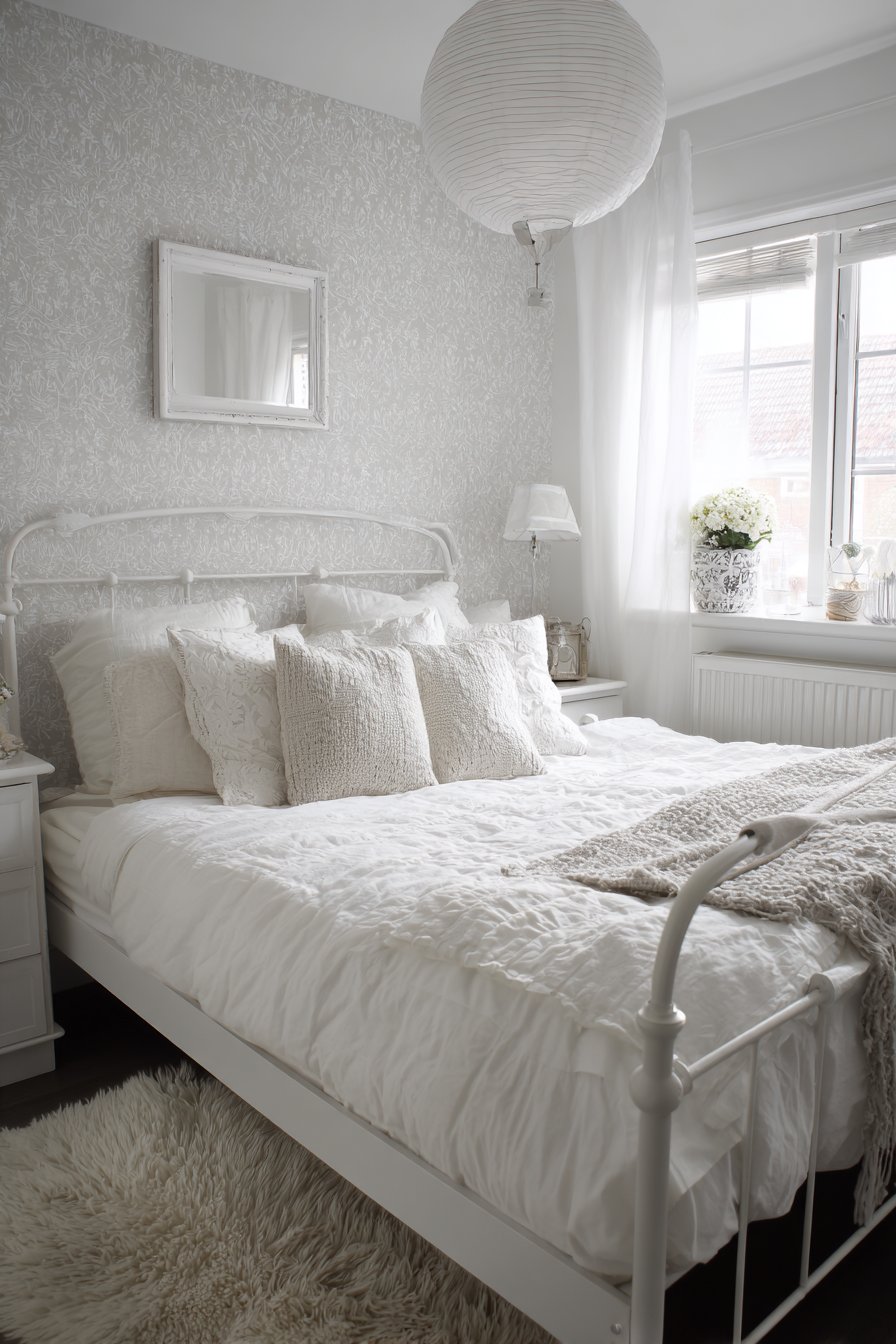
Proving that effective white bedroom design is achievable at various price points, this approach showcases budget-friendly furniture arranged thoughtfully for maximum impact. White-painted IKEA furniture—perhaps the MALM series or HEMNES collection—provides the foundation, their clean Scandinavian design and affordable price points making stylish white bedrooms accessible to all budgets. A simple white metal bed frame paired with affordable white cotton bedding shows realistic fabric draping, the honest presentation acknowledging that budget bedding need not look cheap when styled well.
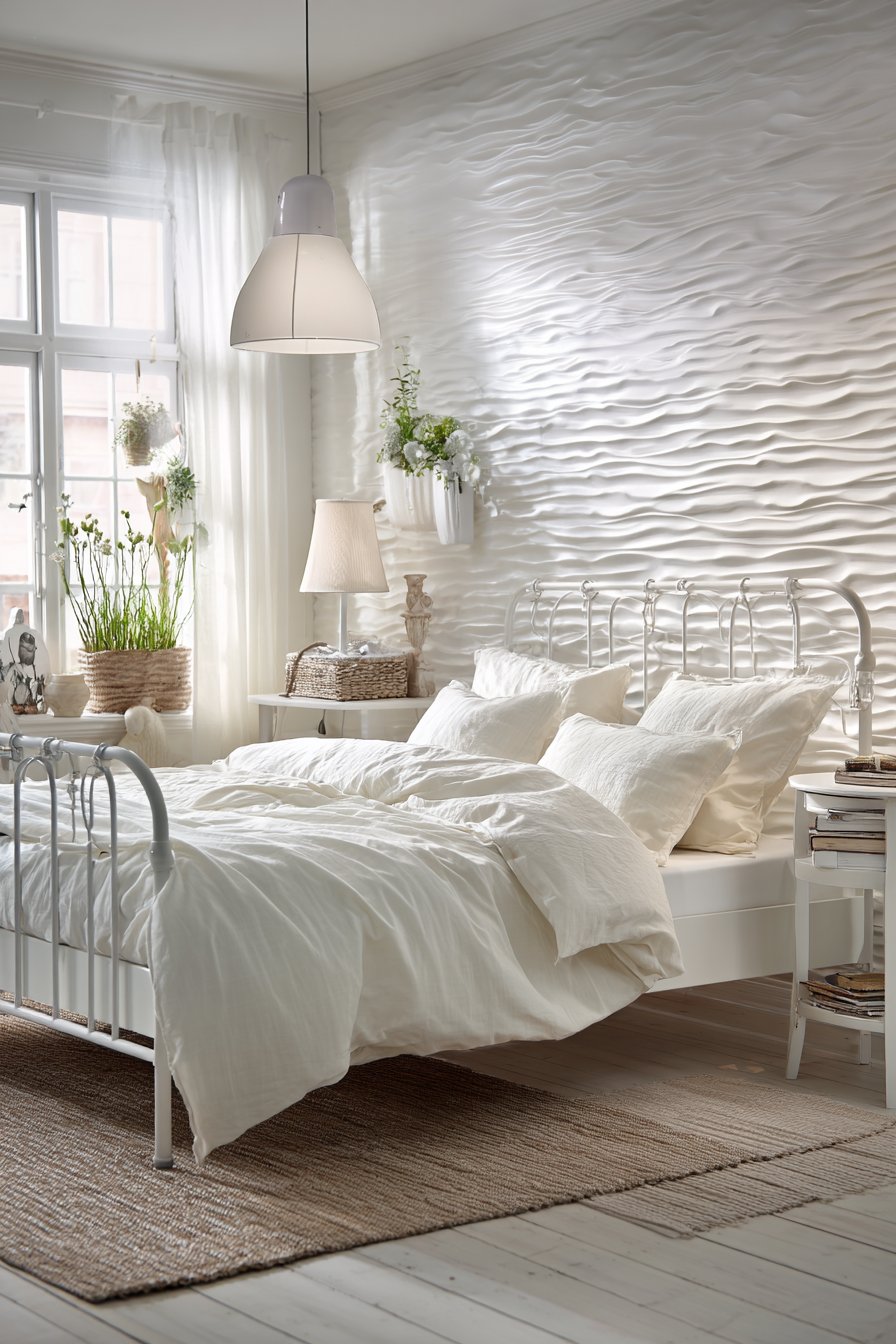
Walls in basic white paint provide the backdrop, while one accent wall features white textured wallpaper—perhaps a subtle grasscloth or paintable wallpaper—adding interest without significant expense. This strategic accent wall approach allows investment in one special feature while keeping overall costs manageable. Natural window light supplemented by a simple white pendant fixture provides all necessary illumination, the pendant’s clean design and single-source approach keeping electrical costs low during both installation and operation.
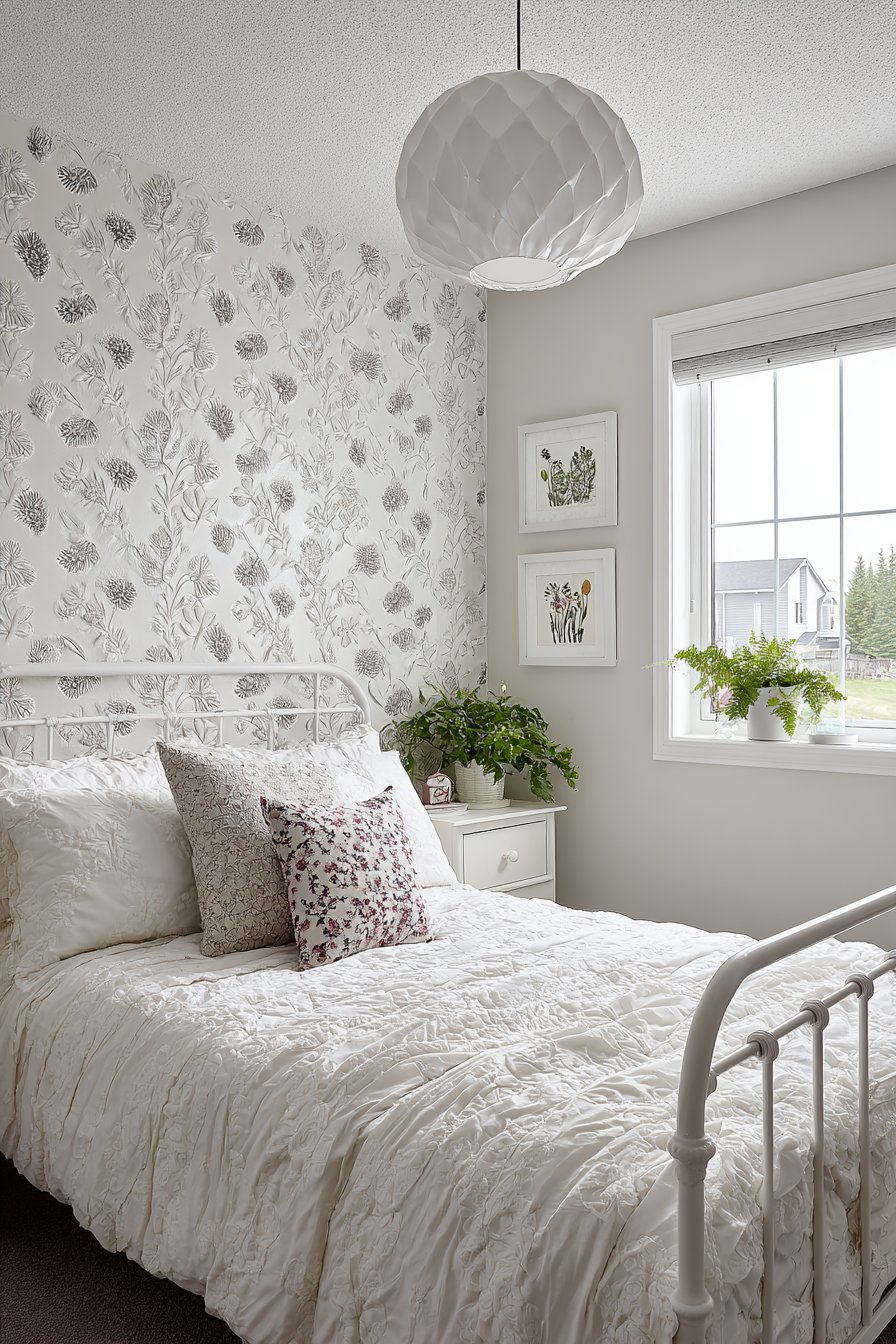
This design demonstrates that style, functionality, and the calming benefits of white bedroom design are not reserved for luxury budgets. Smart shopping, thoughtful arrangement, and focus on the essentials—comfortable bed, adequate storage, good lighting—create a space that functions beautifully while looking intentionally designed rather than accidentally assembled. The key lies in editing, choosing quality basics over trendy extras, and letting the white palette create cohesion among varied pieces.
Key Design Tips:
- Research affordable furniture lines with clean, timeless designs
- Invest in decent quality bedding—the bed is where you spend most time
- Use one accent wall with textured wallpaper for impact without major expense
- Maximize natural light to reduce dependence on multiple artificial sources
- Edit ruthlessly—fewer quality pieces look better than many cheap ones
18. Sustainable Sanctuary with Eco-Conscious White Materials
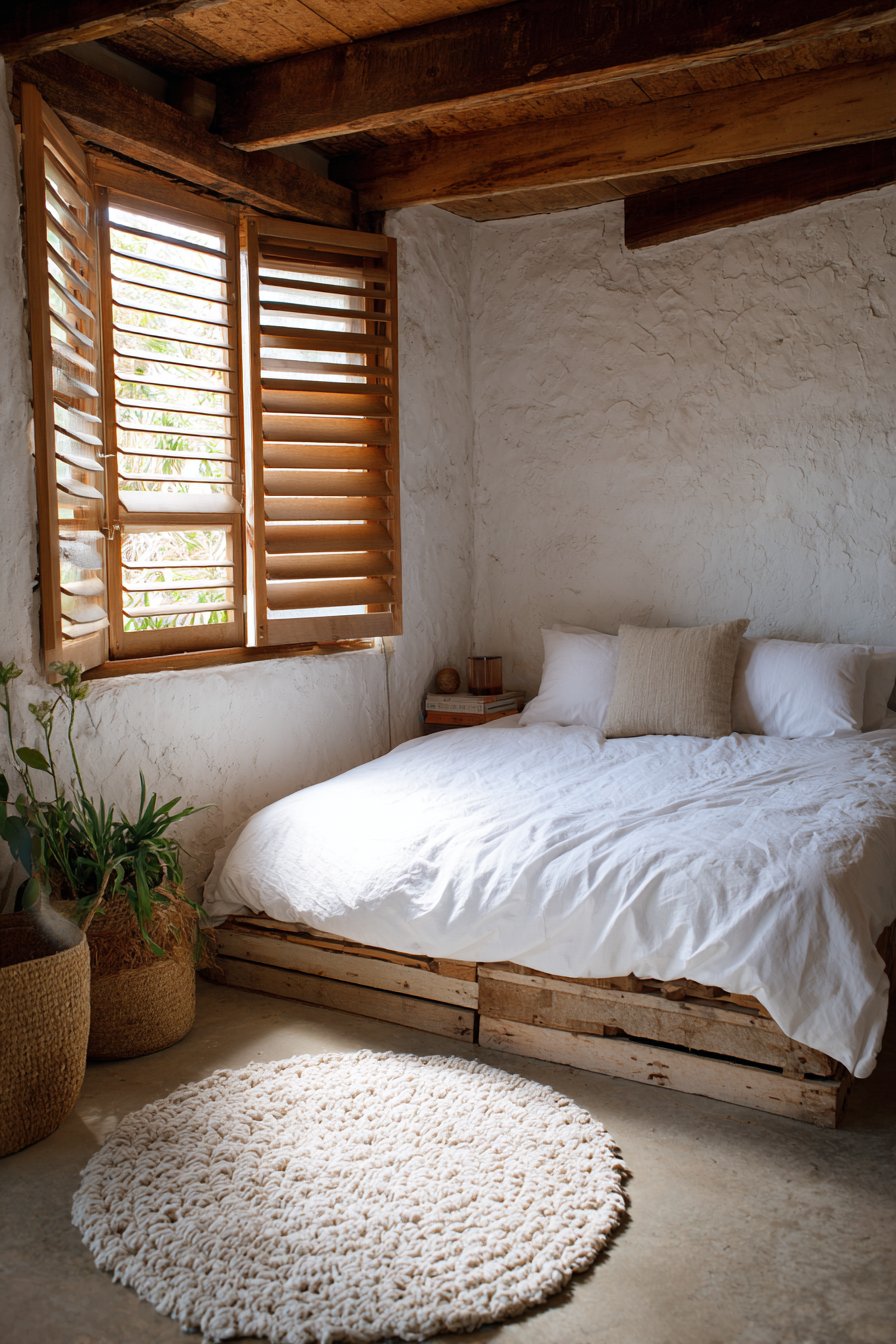
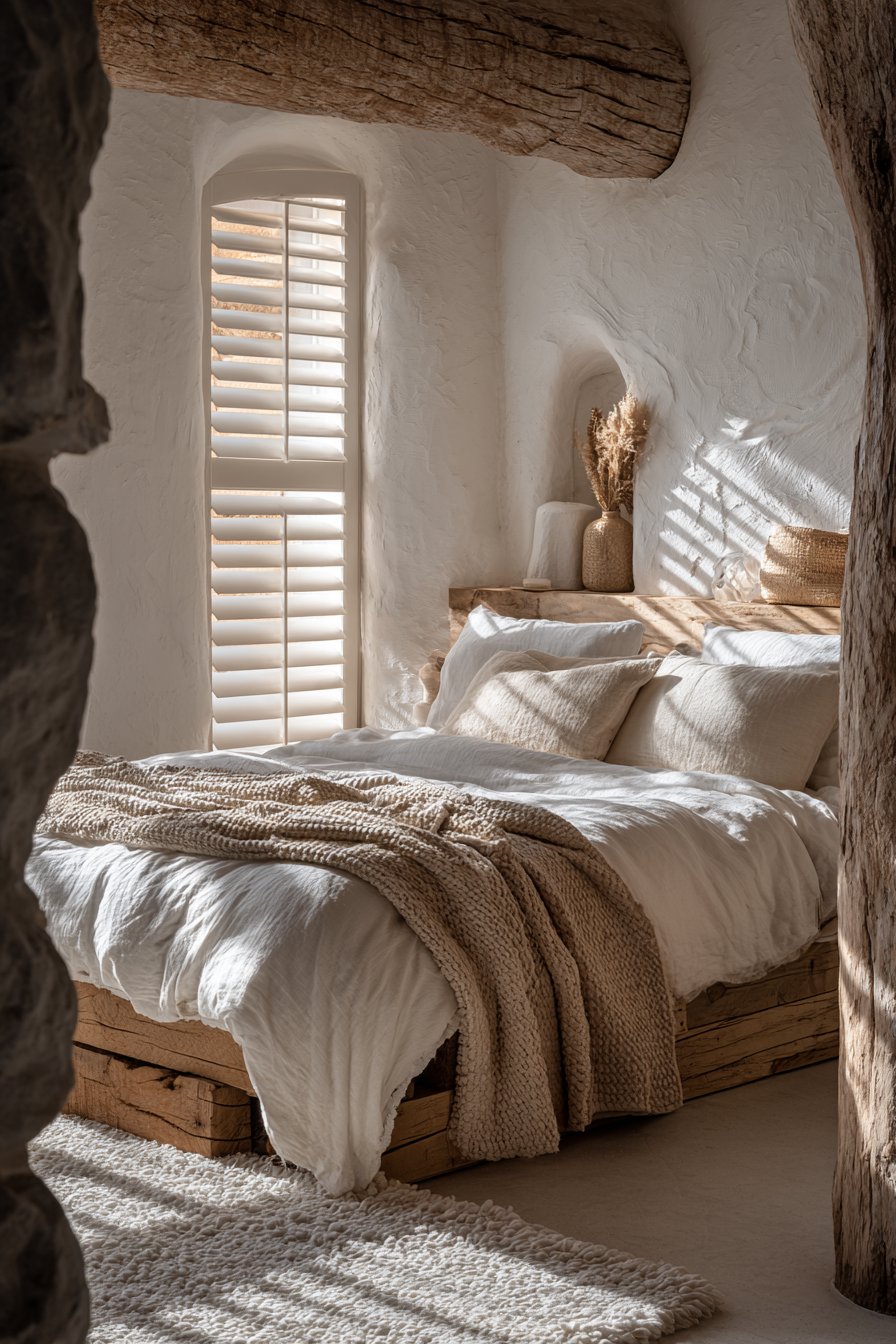
This sustainable white bedroom design proves that environmental consciousness and beautiful design are not mutually exclusive. White organic cotton bedding on a reclaimed white-painted wood bed frame combines comfort with conscience, the organic textiles free from harmful pesticides while the reclaimed wood gives new life to materials that might otherwise be discarded. Walls finished in natural white clay plaster show subtle hand-applied texture variations, this ancient material offering superior breathability, humidity regulation, and zero VOC emissions compared to conventional paint.
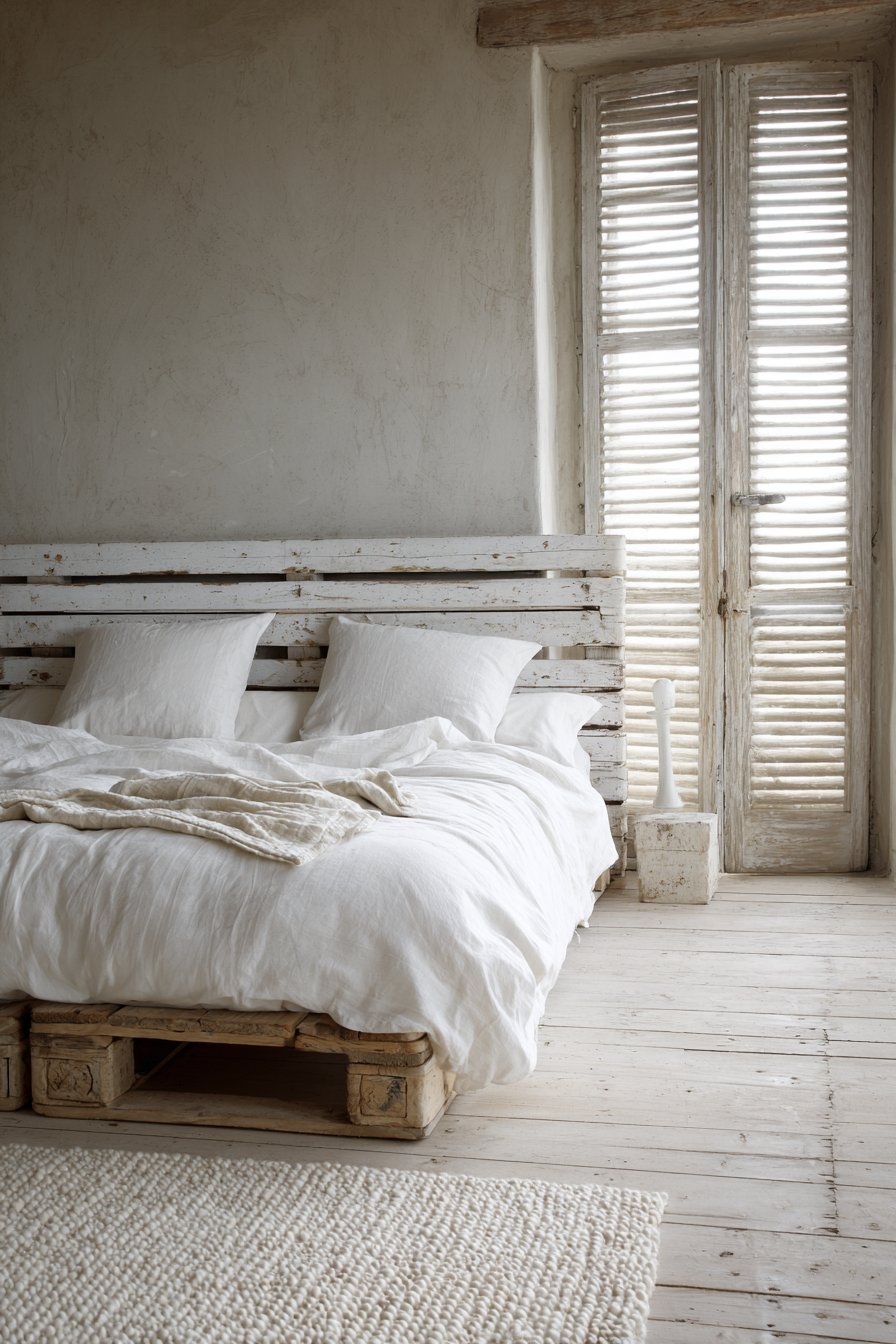
An eco-friendly white wool rug provides softness underfoot while being fully biodegradable, renewable, and naturally stain-resistant without chemical treatments. The wool’s natural crimp creates cushioning while its fibers wick moisture, contributing to the room’s healthy indoor environment. Bamboo plantation shutters in white finish control natural light while maintaining environmental consciousness—bamboo being one of the fastest-growing, most renewable materials available for interior applications.
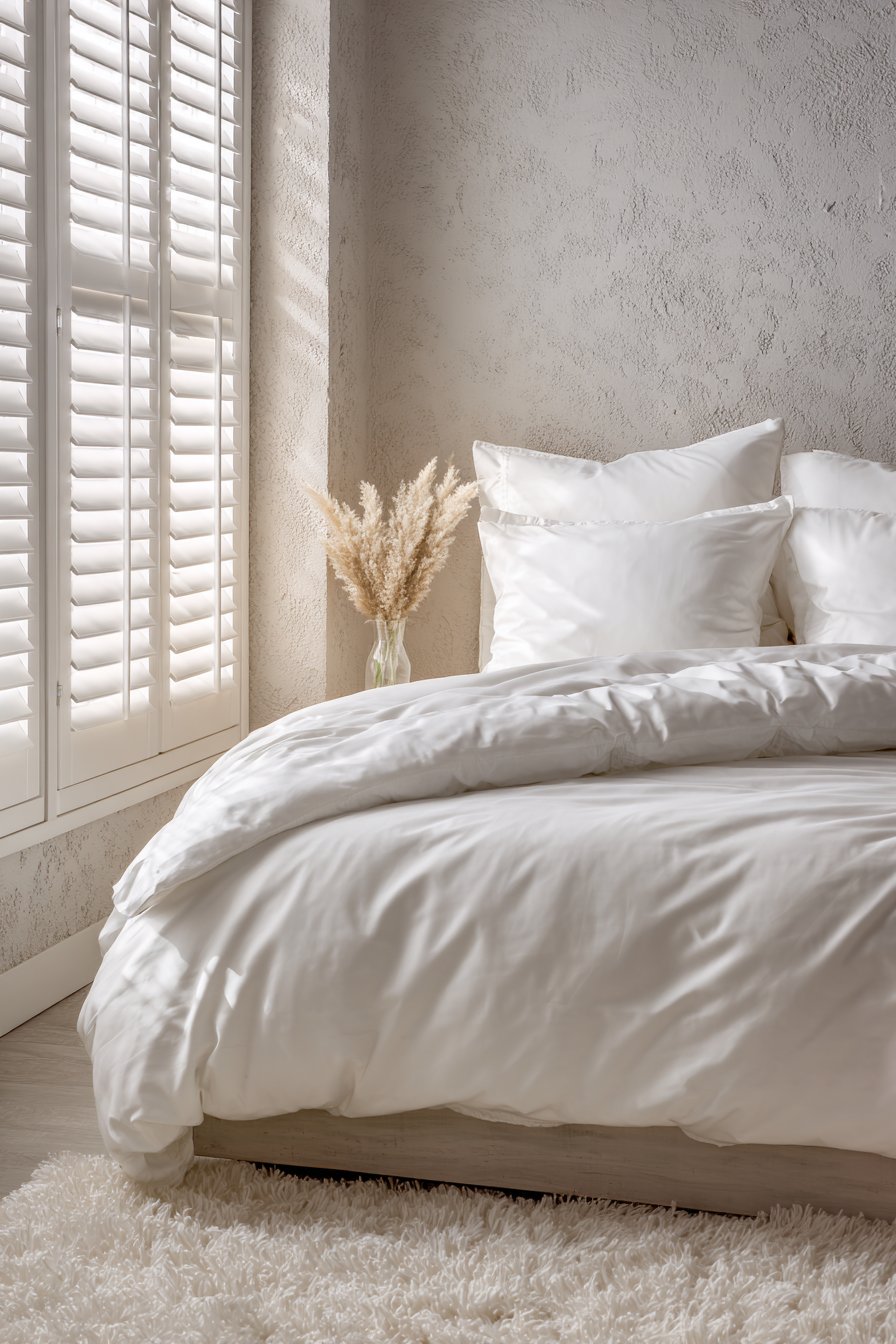
The ethical material choices and their authentic textures create a room that feels as good morally as it does physically. Natural imperfections and character in these materials—slight color variations in clay plaster, organic irregularities in wool fibers, bamboo’s natural nodes—add to rather than detract from the design. This approach appeals to those who understand that true luxury lies not in perfection but in quality, sustainability, and harmony with natural processes.
Key Design Tips:
- Choose organic cotton bedding certified by GOTS or similar standards
- Source reclaimed wood furniture to reduce environmental impact
- Use natural clay plasters for healthy indoor air quality and beautiful texture
- Select wool rugs for renewable, biodegradable softness
- Install bamboo window treatments for sustainable light control
19. Teen-Friendly White with Youthful Sophistication
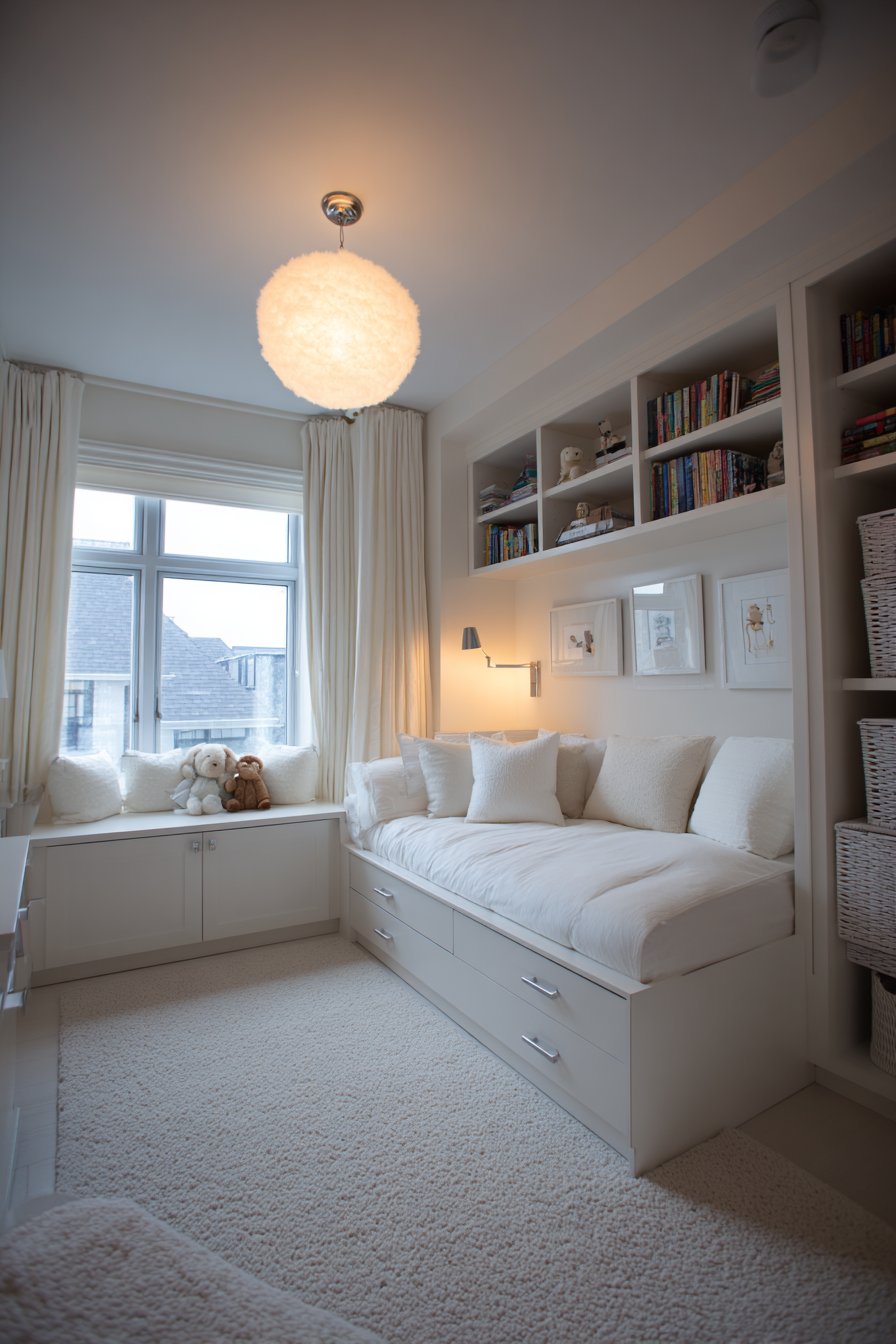
Designing a teen’s room requires balancing their need for self-expression with parents’ desire for longevity and style. This white bedroom design combines white furniture with practical organization systems including white floating shelves and white mesh storage cubes, providing abundant storage for the accumulation that comes with teenage life while maintaining visual order. A white upholstered daybed functions as both sleeping and lounging space, perfect for studying, gaming, or hanging out with friends during the day before transforming into a comfortable bed at night.
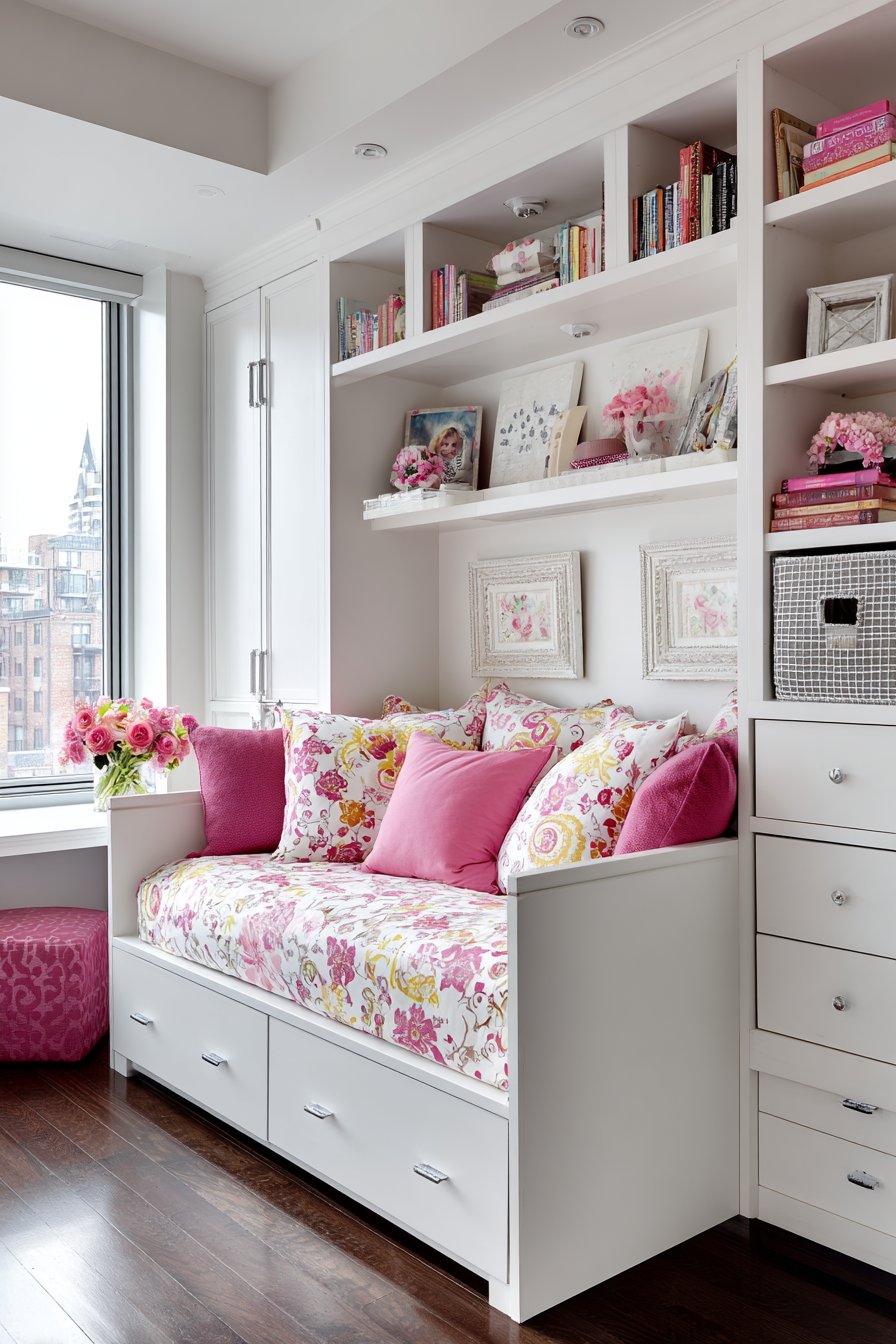
One wall painted with white magnetic paint allows for personalization while maintaining the cohesive palette—posters, photos, and artwork can be displayed and changed without damaging walls with tape or tacks. This smart solution acknowledges that teen tastes evolve rapidly while protecting the room’s fundamental design. Natural and LED lighting create versatile atmosphere, allowing adjustment from bright task lighting for homework to softer ambient glow for relaxation.
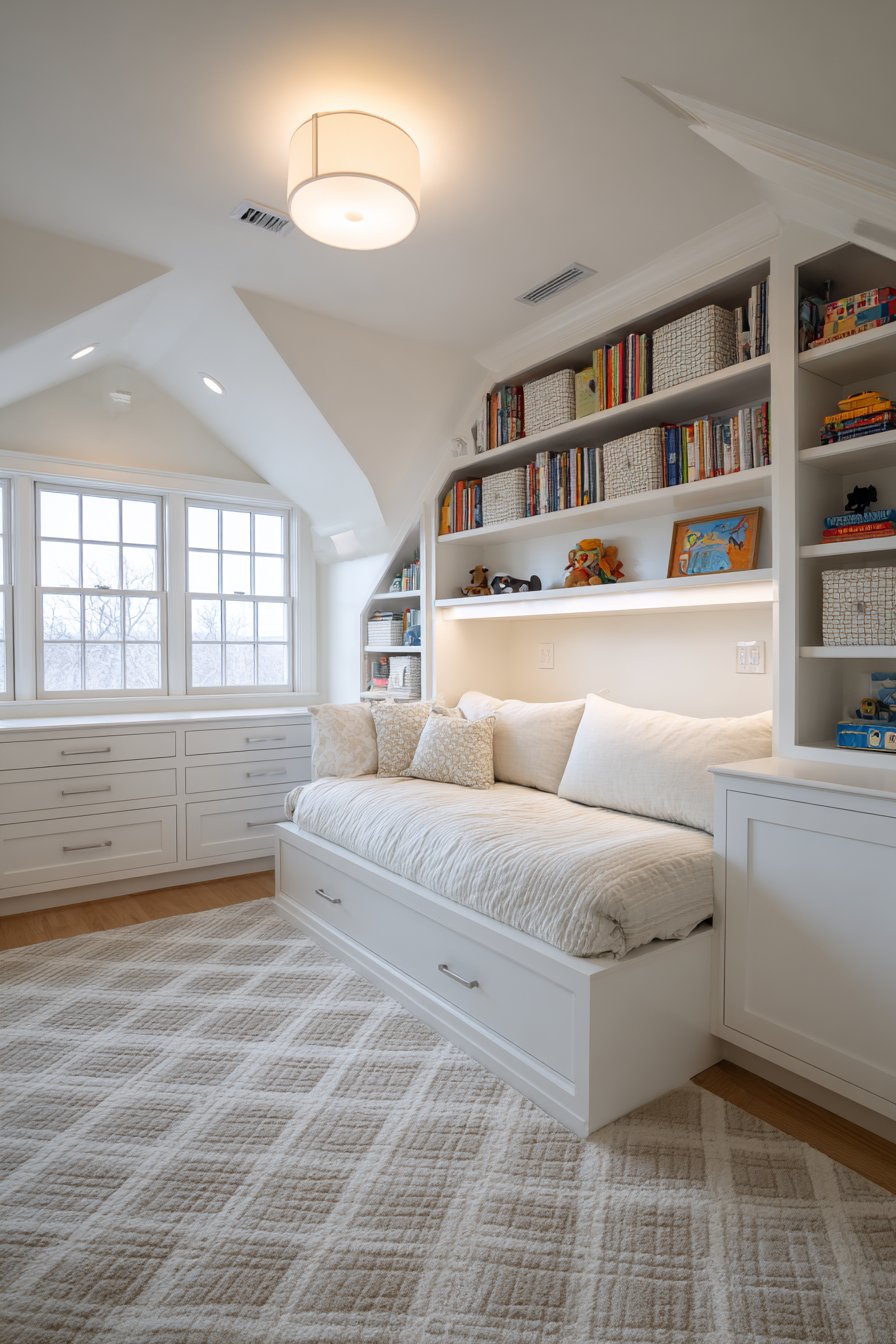
The youthful yet sophisticated approach respects the teen’s maturity while providing structure and organization. The all-white background allows their personality to shine through accessories, artwork, and personal items without overwhelming the space. This design grows with the teen, remaining appropriate from middle school through college years and beyond, the neutral foundation adapting to changing interests and evolving taste.
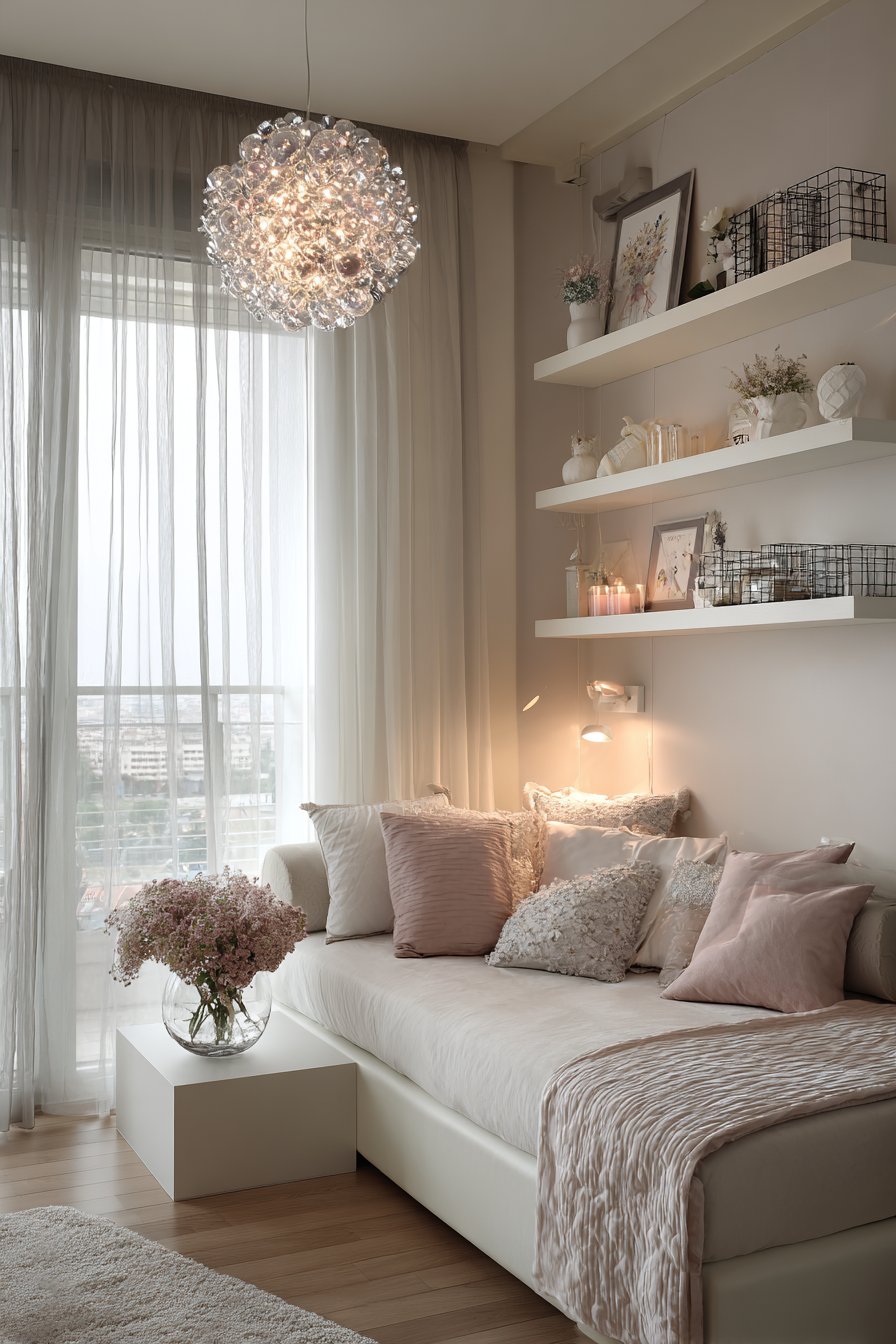
Key Design Tips:
- Install abundant organizational systems—teens accumulate stuff
- Choose daybeds for dual sleeping and lounging functionality
- Use magnetic or cork paint for damage-free personalization
- Provide layered lighting for studying, relaxing, and sleeping
- Keep furniture neutral and timeless to accommodate changing tastes
20. Maximalist Monochrome with Textural Drama
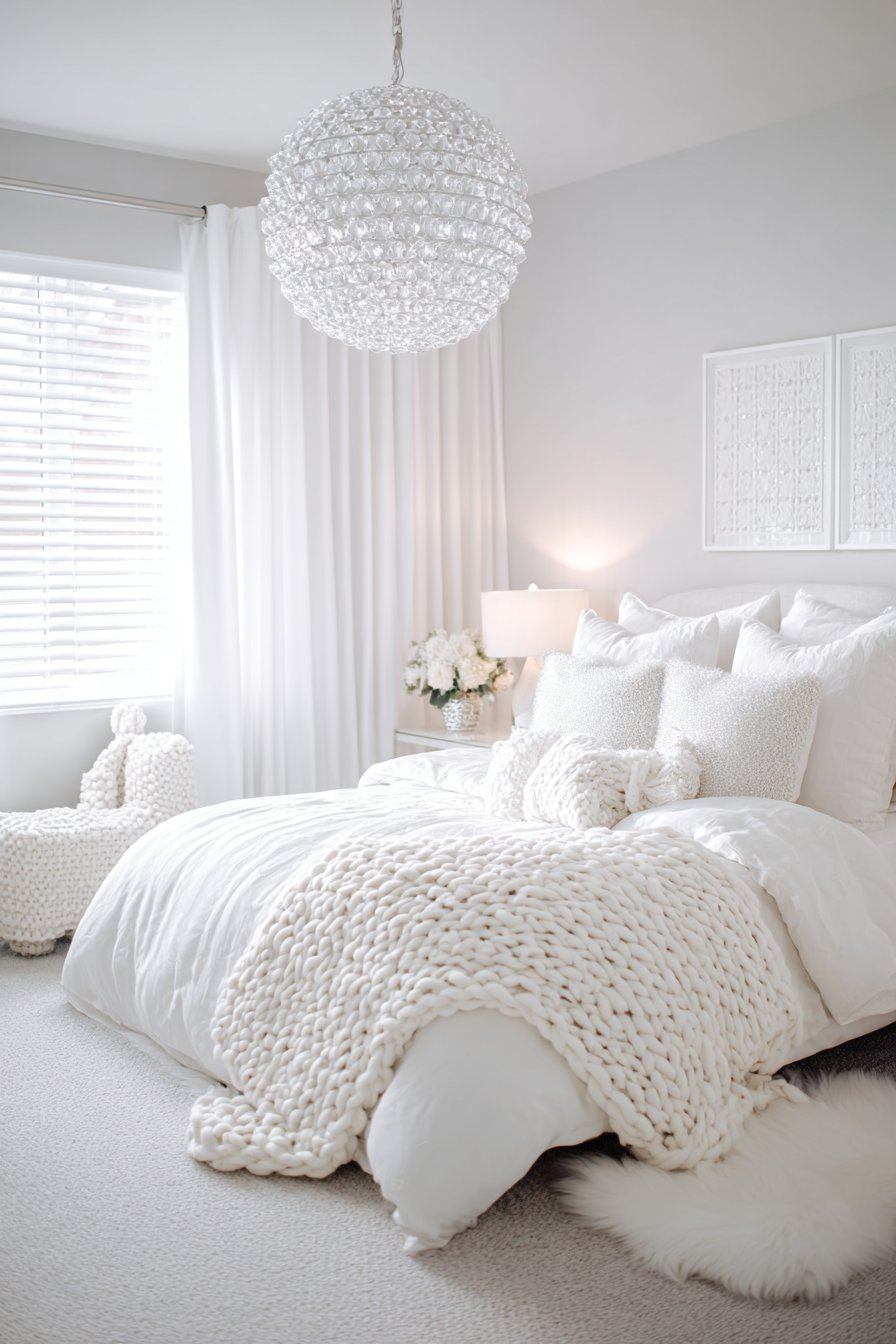
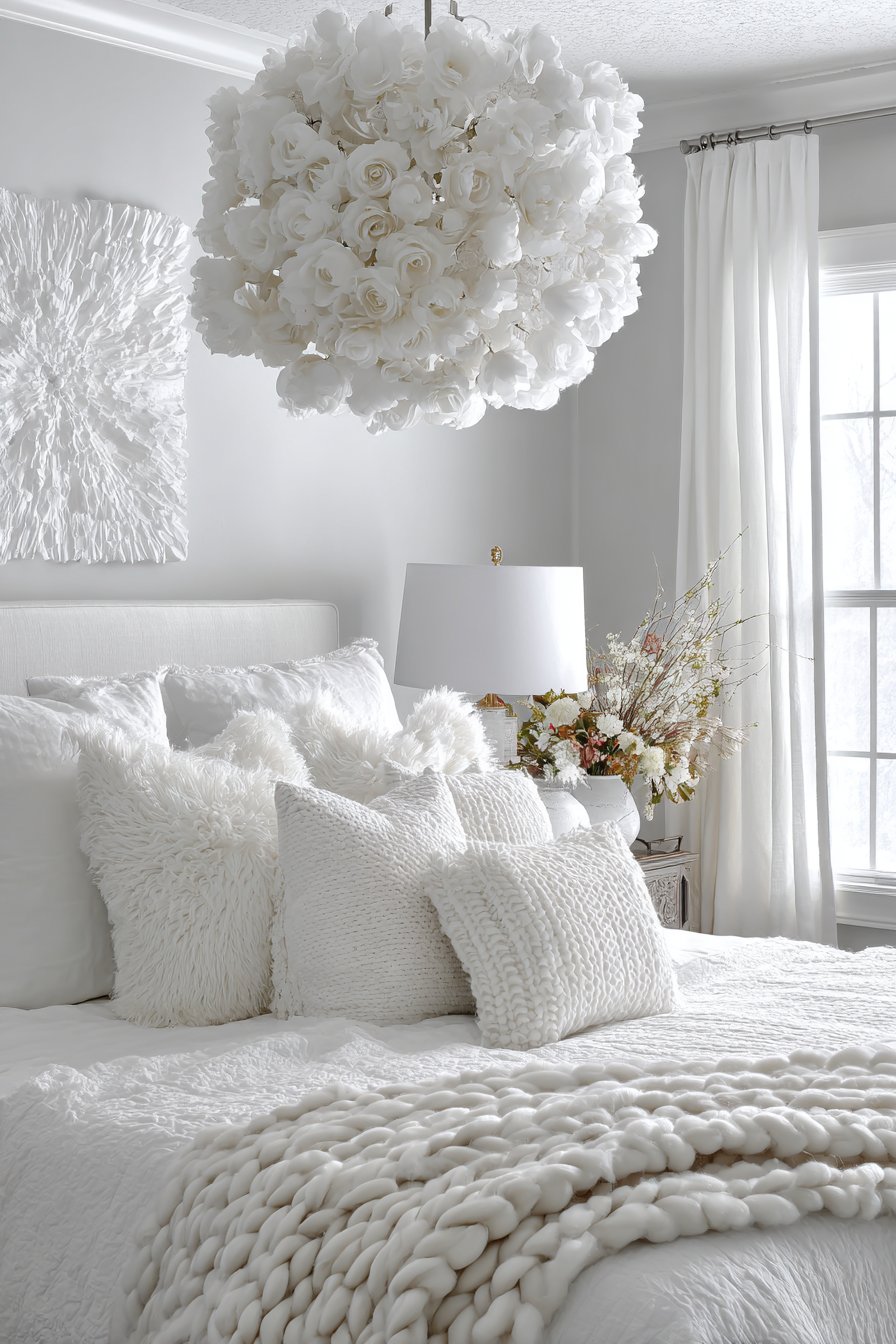
This maximalist white bedroom design challenges the minimalist trend by embracing abundance within strict monochromatic constraints. Layered white bedding with multiple pillows in varied white textures—from smooth silk to chunky knit, from crisp percale to soft velvet—creates a luxurious, hotel-worthy bed that invites immediate collapse. A white gallery wall with different white frames creates visual interest through dimension rather than color, the varied frame styles and depths creating sculptural wall art that plays with light and shadow.
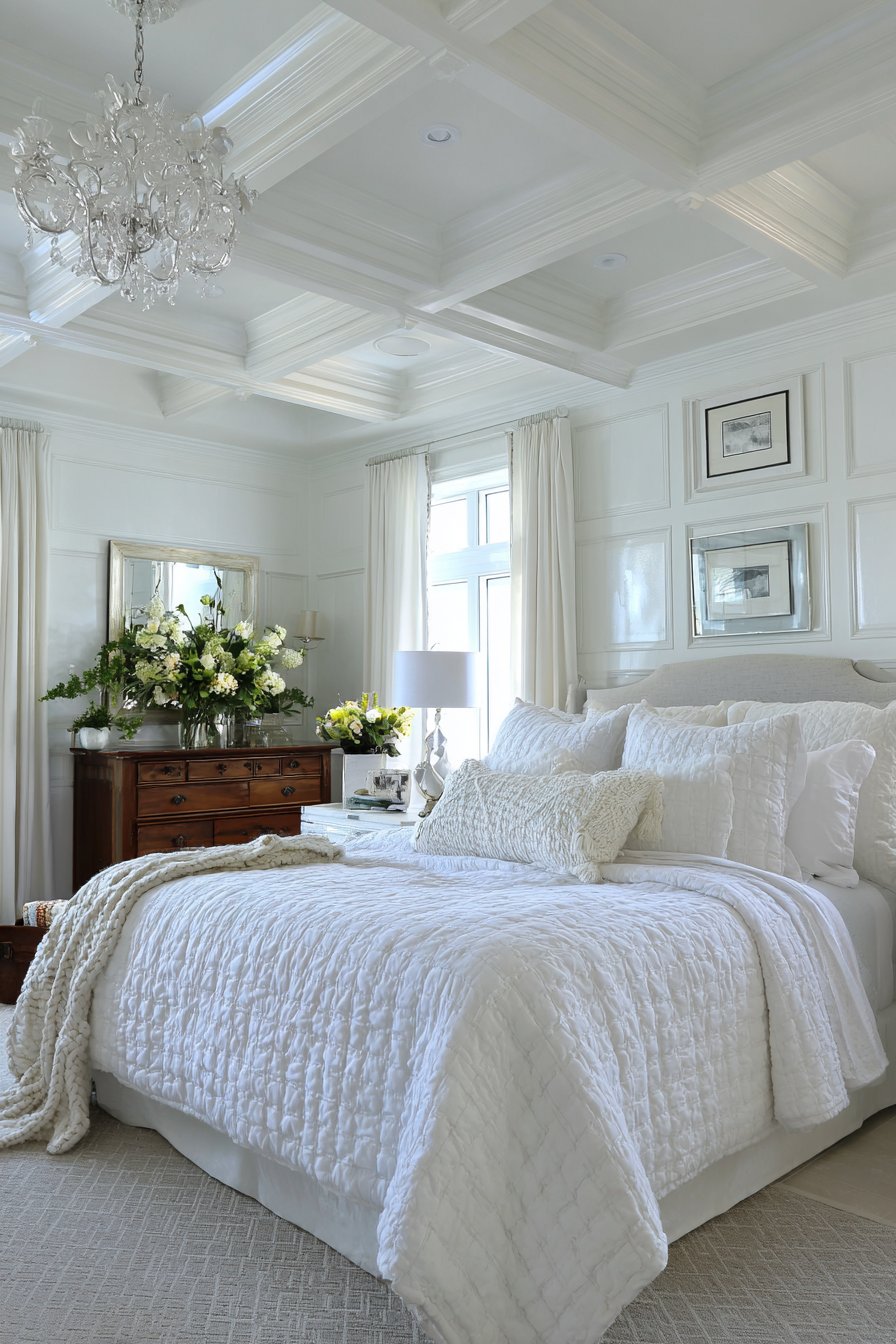
The mix of white furniture styles from modern to vintage creates a collected look that suggests the room evolved over time rather than being purchased all at once. This eclectic approach—perhaps a sleek modern dresser paired with an ornate vintage mirror and contemporary nightstands—creates personality and interest while the unified white palette prevents visual chaos. A dramatic chandelier in white provides statement lighting, its presence impossible to ignore yet its color allowing it to integrate seamlessly into the scheme.
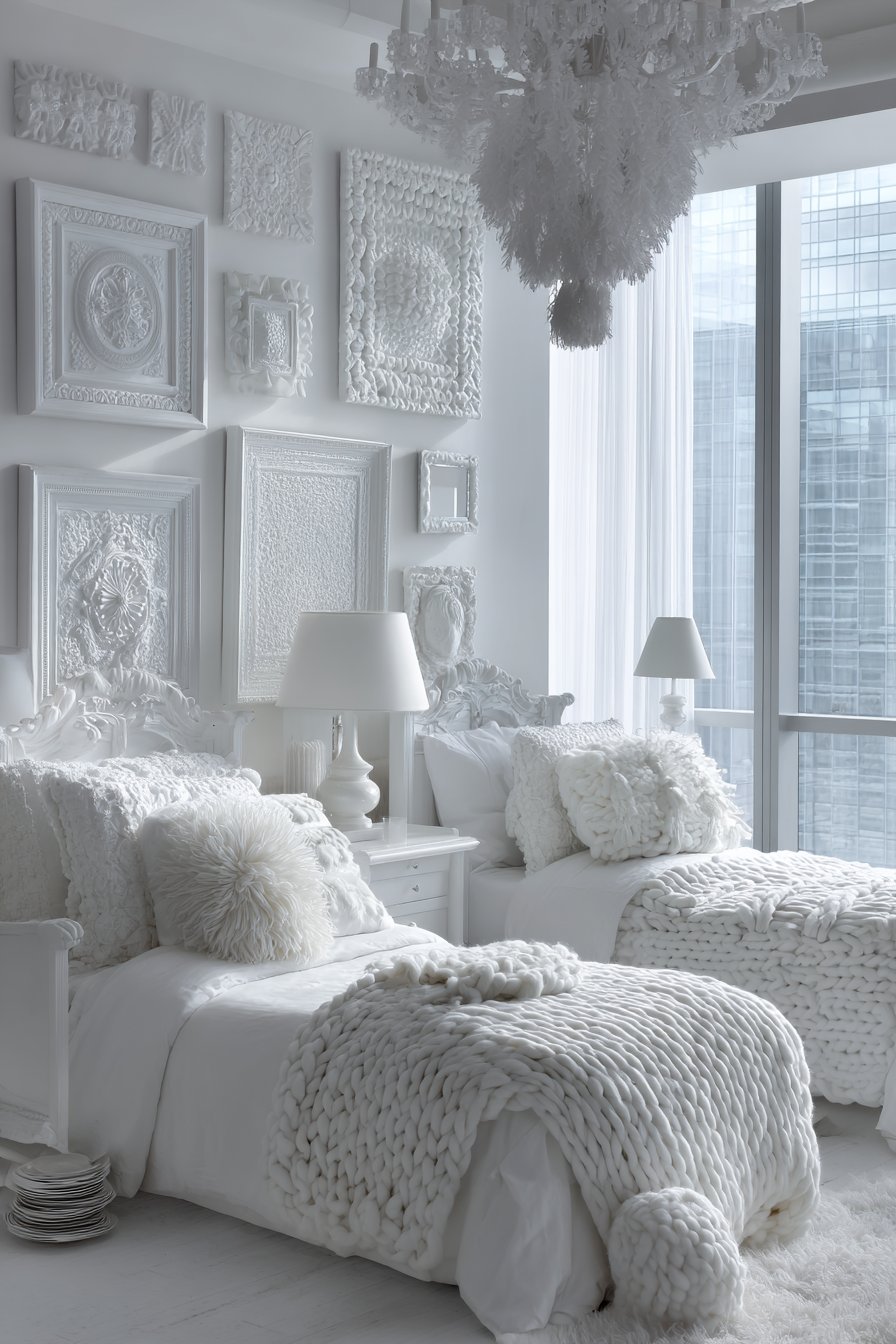
Natural light through white curtains combines with multiple white table lamps to create flexible, layered illumination suitable for any mood or activity. The bold use of texture, pattern, and form all within a sophisticated white palette demonstrates that maximalism can be restrained, that abundance can be disciplined, and that more can indeed be more when executed with professional attention to depth and detail. This design celebrates the idea that white need not be minimalist—it can be rich, complex, and deeply layered.
Key Design Tips:
- Layer multiple pillow textures for tactile richness and visual interest
- Create gallery walls using varied white frames for sculptural dimension
- Mix furniture periods and styles, unifying through consistent white color
- Choose dramatic lighting fixtures that make statements within white palette
- Layer multiple light sources for flexible ambiance and functionality
Why These White Bedroom Designs Represent the Best in Interior Excellence
These twenty white bedroom designs represent the pinnacle of contemporary interior design thinking, each demonstrating why white remains the most versatile, timeless, and psychologically beneficial color choice for personal sleeping spaces. The white bedroom aesthetic transcends fleeting trends, offering a foundation that adapts to evolving tastes while maintaining its essential character. From minimalist white bedrooms to maximalist white sanctuaries, from coastal white retreats to industrial white lofts, these designs showcase the remarkable range possible within a monochromatic palette.
The best white bedroom designs understand that white is not a single color but a spectrum of shades, each with distinct undertones and psychological effects. Warm whites with yellow or pink undertones create cozy, enveloping spaces perfect for relaxation, while cool whites with blue or grey undertones offer crisp, refreshing environments that energize and clarify. The sophisticated white bedroom designer knows how to layer these variations, creating depth and interest without introducing additional colors. These designs excel at white on white layering, using texture rather than color to build visual complexity.
Modern white bedroom design increasingly emphasizes sustainability and wellness, recognizing that our sleeping environments profoundly impact our physical and mental health. The best contemporary white bedrooms incorporate eco-friendly materials, prioritize air quality through natural finishes, and maximize natural light—all factors proven to improve sleep quality and overall wellbeing. White’s light-reflective properties reduce the need for artificial lighting, lowering energy consumption while creating spaces that feel connected to natural circadian rhythms.
Small white bedroom designs demonstrate particular genius in their space-maximizing strategies. White’s ability to visually expand spaces makes it ideal for compact urban apartments, converted lofts, and modest homes where every square foot matters. The best small white bedrooms use built-in storage, multi-functional furniture, and strategic lighting to create rooms that feel spacious and serene despite limited square footage. These designs prove that luxury lies not in size but in thoughtful execution and quality materials.
Luxury white bedroom designs showcase how restraint and refinement create true elegance. Rather than relying on bold colors or excessive ornamentation, these spaces achieve sophistication through superior materials, impeccable craftsmanship, and attention to detail. Premium white bedding, hand-applied wall finishes, custom millwork, and architectural lighting elevate the white bedroom from simple to sublime. The best luxury white bedrooms understand that true opulence whispers rather than shouts.
Scandinavian white bedroom design continues to influence global interior trends, its emphasis on functionality, natural materials, and hygge perfectly suited to modern life’s demands. These designs balance minimalism with warmth, creating spaces that feel both organized and inviting. The Scandinavian approach to white—layering cream, ivory, and pure white while incorporating natural wood and textile textures—offers a template for livable, beautiful bedroom design that works across cultures and climates.
Coastal white bedroom inspiration draws from seaside living’s relaxed, breezy aesthetic, using natural materials like wicker, rattan, and sisal to ground white palettes. These designs capture vacation-home ease while remaining sophisticated enough for permanent residences. The best coastal white bedrooms feel effortlessly casual yet intentionally designed, proving that relaxed need not mean careless.
Industrial white bedroom concepts challenge traditional notions of white spaces by incorporating raw materials—exposed brick, concrete, metal—painted white to maintain monochromatic schemes while preserving edgy character. These urban-inspired designs appeal to those who appreciate honest materials and architectural authenticity, proving white can be bold, dramatic, and decidedly un-precious.
Traditional white bedroom elegance celebrates classical architectural details and time-honored furniture forms, demonstrating that white enhances rather than diminishes ornate millwork, carved furniture, and formal arrangements. These designs connect us to design history while feeling fresh and contemporary through their cohesive white palettes and quality execution.
Budget white bedroom solutions prove that financial constraints need not limit design ambitions. Smart shopping, DIY techniques, and focus on essentials create beautiful white bedrooms at accessible price points. These designs democratize good design, showing that anyone can create a serene, stylish white bedroom regardless of budget.
The best white bedroom designs share common characteristics: they layer multiple shades of white for depth, incorporate varied textures to prevent flatness, maximize natural light while providing flexible artificial lighting, include natural elements for warmth and life, and maintain careful editing to preserve the serenity that makes white bedrooms so psychologically beneficial. They understand that successful white bedroom interior design requires confidence—the courage to embrace restraint, to let materials and textures speak, and to trust that white’s simplicity is its strength rather than limitation.
White bedroom decor ideas featured in these designs emphasize the importance of personal expression within monochromatic constraints. Whether through artwork, textiles, plants, or carefully chosen accessories, each design allows for individuality while maintaining cohesive aesthetics. The best white bedrooms feel personal rather than generic, reflecting their inhabitants’ personalities through texture choices, furniture styles, and subtle details rather than through color.
These white bedroom styles—from farmhouse to French country, from bohemian to contemporary—demonstrate white’s chameleon-like ability to adapt to any aesthetic direction. White serves as both the ultimate neutral and the perfect backdrop, allowing other elements to shine while contributing its own qualities of freshness, purity, and calm. The versatility of white bedroom design ensures its continued relevance across changing design trends and personal style evolutions.
Conclusion
Creating the perfect white bedroom requires understanding that white is not the absence of color but rather a presence unto itself—complex, nuanced, and endlessly variable. The twenty designs explored in this comprehensive guide demonstrate that white bedroom design encompasses infinite possibilities, from minimal to maximal, from traditional to contemporary, from budget-conscious to luxuriously appointed. Each approach offers its own path to creating personal sanctuaries that promote rest, reflection, and renewal.
The enduring appeal of white bedrooms lies in their psychological benefits—the sense of calm and clarity they provide, their ability to create peaceful retreats from our overstimulated world, and their adaptability to our changing needs and tastes. Whether you’re drawn to the cozy simplicity of Scandinavian design, the romantic elegance of French country style, the breezy casualness of coastal aesthetics, or the sleek sophistication of contemporary minimalism, white provides the perfect foundation.
As you embark on your own white bedroom design journey, remember that the best spaces emerge from thoughtful consideration of how you live, what brings you peace, and which materials and textures resonate with your personal aesthetic. Don’t fear the monochromatic palette—embrace it as an opportunity to explore texture, light, and form in ways that colorful rooms never allow. Layer your whites, mix your materials, and trust that simplicity, when executed with care and quality, creates the most profound beauty. Your white bedroom awaits—a blank canvas ready to become your most personal, peaceful retreat.
