


There’s something irresistibly captivating about vintage kitchen decor that transcends mere nostalgia. These carefully curated spaces represent more than just design choices – they embody a connection to simpler times when kitchens served as the true heart of the home. Vintage kitchen decor ideas offer homeowners the opportunity to create spaces that feel both lived-in and lovingly maintained, where every piece tells a story and contributes to an atmosphere of warmth and authenticity.
The beauty of vintage kitchen design lies in its ability to blend functionality with timeless aesthetic appeal. From restored farmhouse sinks to colorful Pyrex collections, these design elements create kitchens that are both practical and deeply personal. The following vintage kitchen decor ideas showcase twenty distinct approaches to incorporating retro charm into your culinary space, each offering unique insights into how thoughtful design choices can transform an ordinary kitchen into a nostalgic haven that celebrates the craftsmanship and style of bygone eras.
1. Classic Farmhouse Sink Foundation

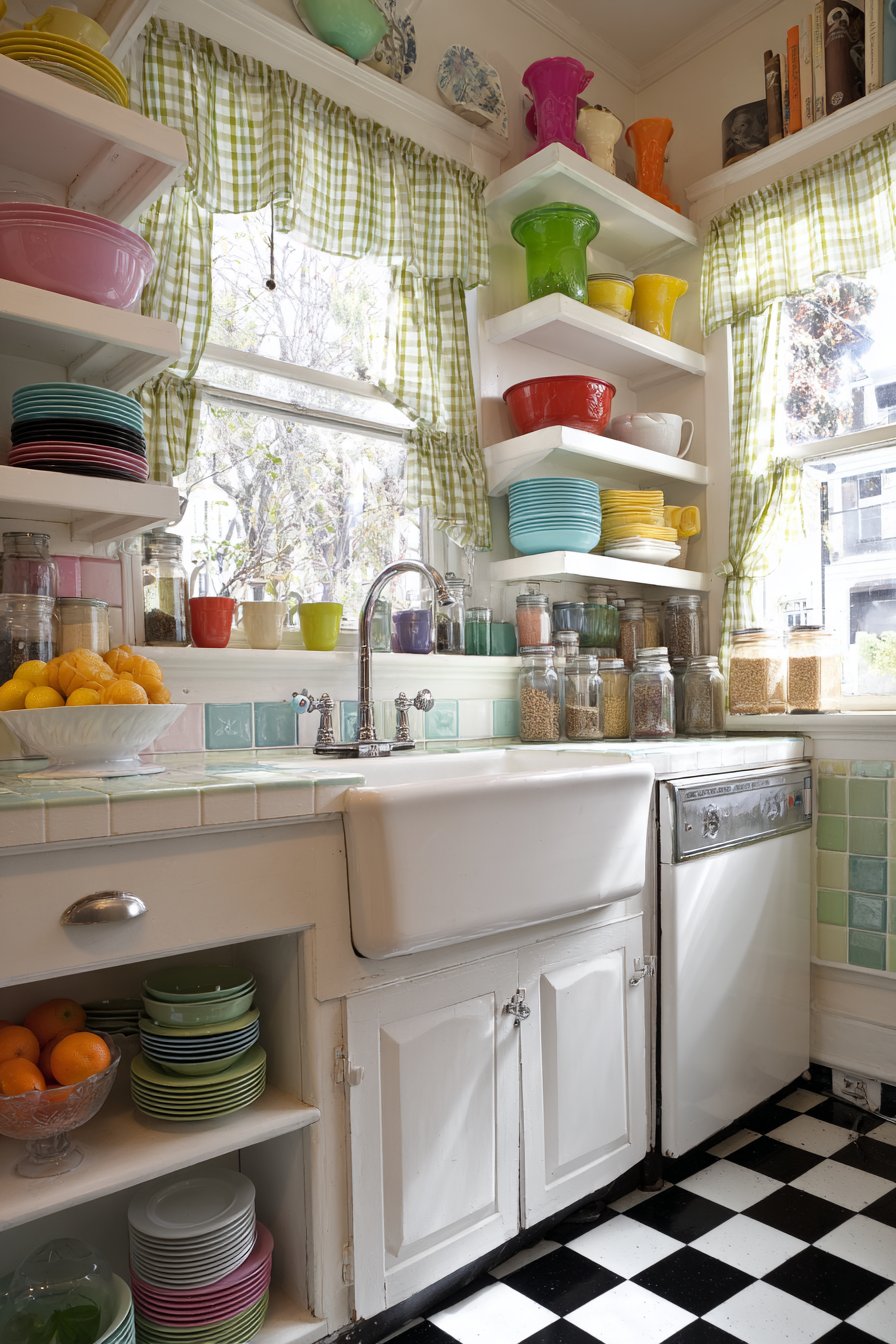
The restored 1940s white enamel farmhouse sink stands as the cornerstone of authentic vintage kitchen design, offering both practical functionality and undeniable period charm. Positioned strategically beneath a window dressed with cheerful gingham curtains, this centerpiece creates an immediate focal point that anchors the entire vintage aesthetic. The chrome gooseneck faucet adds industrial authenticity while maintaining the clean lines that define mid-century kitchen design.

Above and around this focal point, open shelving displays a carefully curated collection of colorful vintage Pyrex bowls and mason jars filled with dried herbs, creating both storage solutions and visual interest. The interplay between the pristine white enamel and the vibrant colors of vintage glassware establishes a palette that feels both cohesive and lively. The natural morning light streaming through the window illuminates these nostalgic details, casting gentle shadows that emphasize the textures and patina that make vintage pieces so appealing.
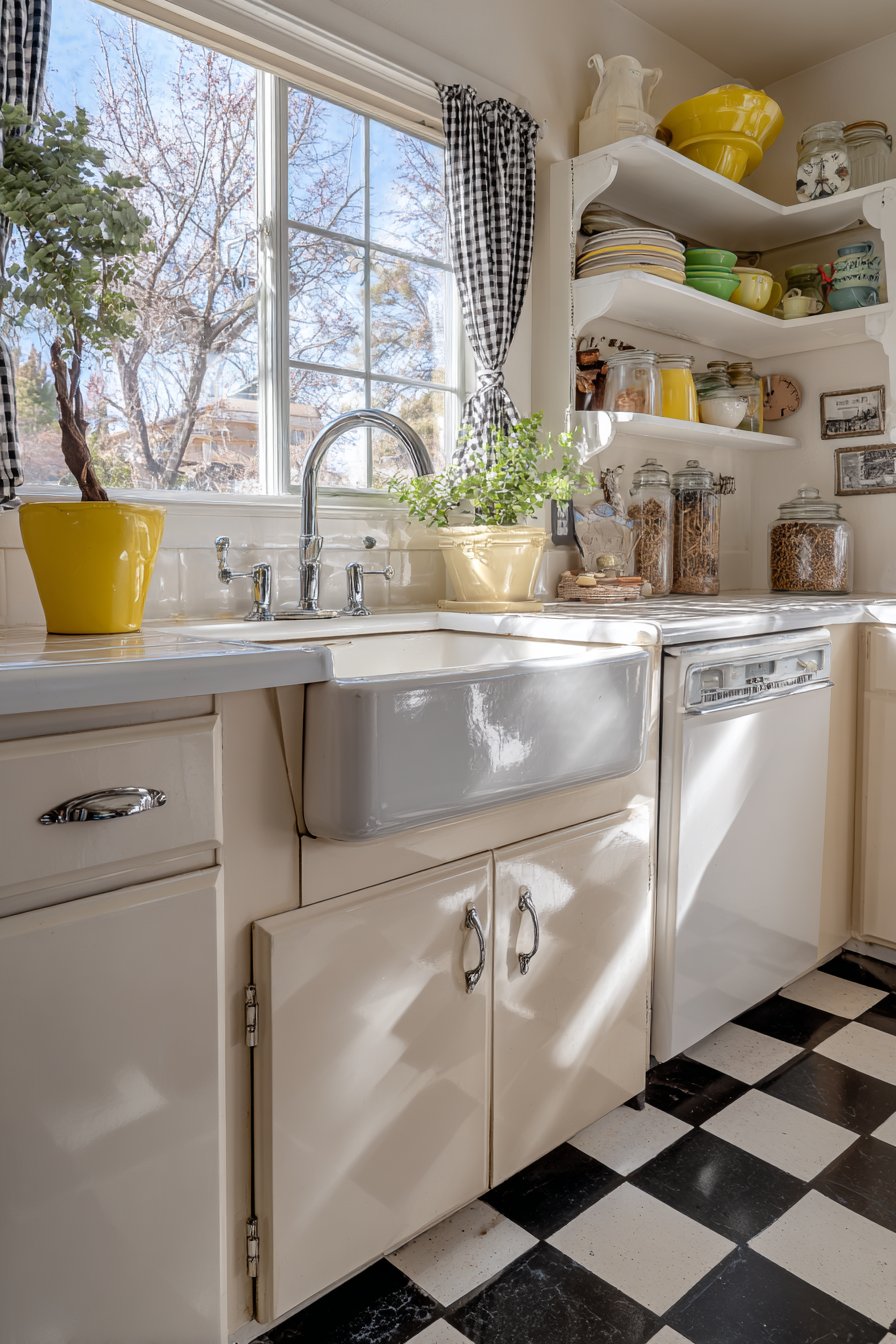
The classic black and white checkerboard linoleum flooring provides the perfect foundation for this vintage ensemble, adding geometric interest while maintaining the authentic period atmosphere. This flooring choice represents one of the most iconic elements of mid-century kitchen design, offering durability and easy maintenance while contributing significantly to the overall nostalgic ambiance.
Key Design Tips:
- Install a deep farmhouse sink as your primary focal point to establish authentic vintage character
- Use open shelving to display colorful vintage collections while maintaining functionality
- Choose period-appropriate window treatments like gingham to enhance the nostalgic atmosphere
- Incorporate classic checkerboard flooring patterns to ground the vintage aesthetic
2. Retro Dining Integration
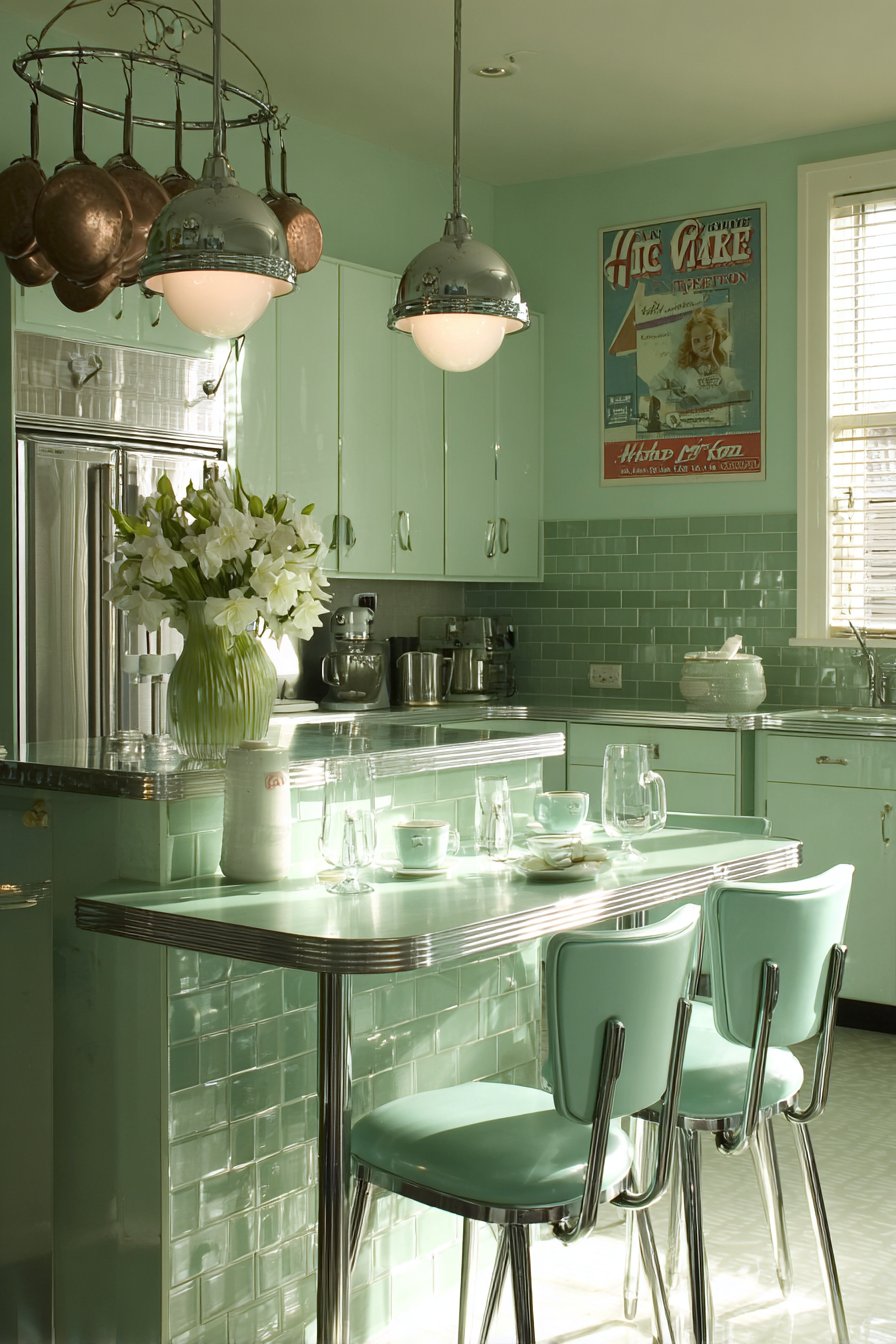
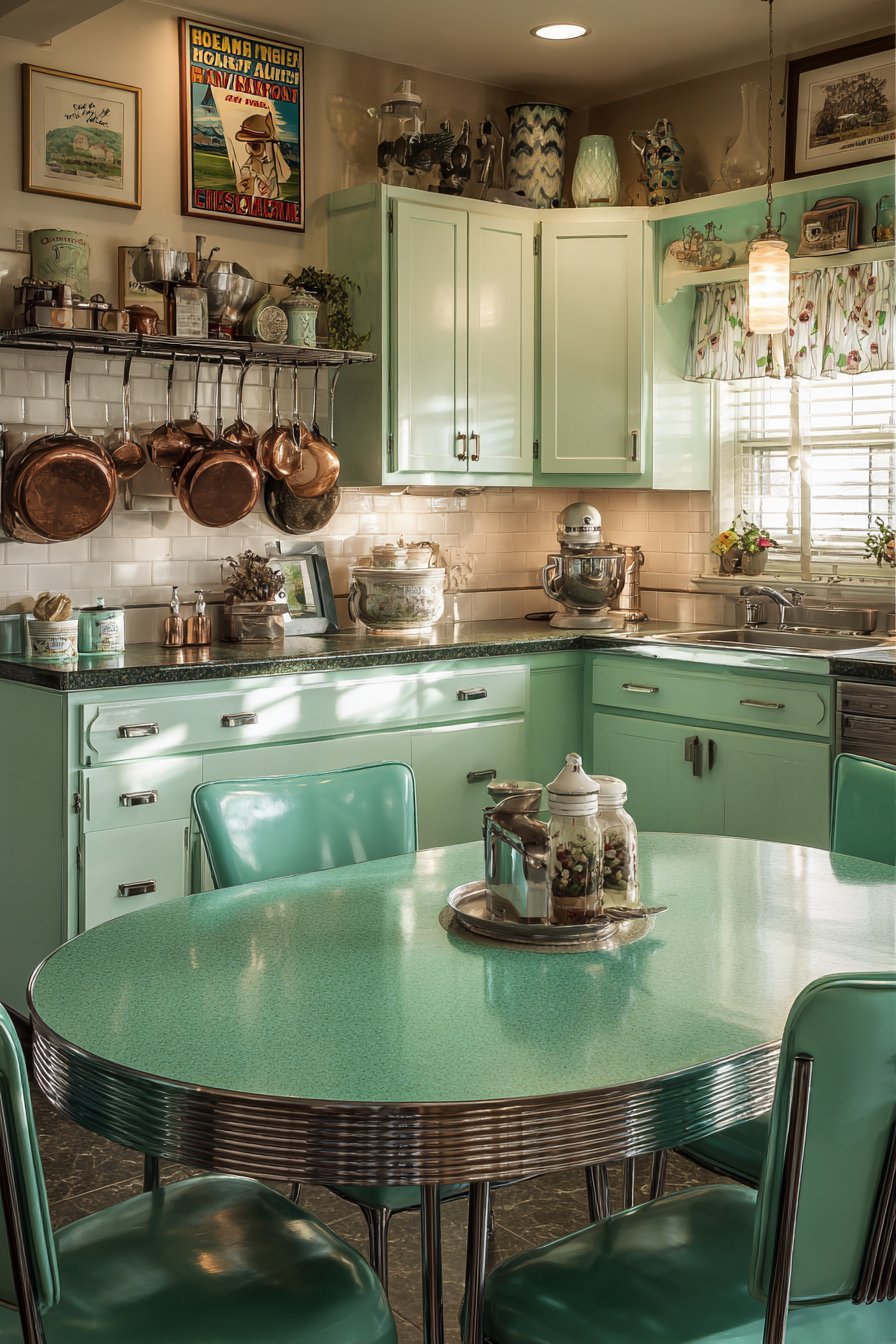
The restored 1950s Formica dining table in refreshing mint green with gleaming chrome legs represents the perfect marriage of form and function that defined mid-century design philosophy. Surrounded by matching vinyl chairs that echo the era’s embrace of new materials and bold colors, this dining setup creates an inviting space that seamlessly integrates with the kitchen’s vintage aesthetic. The mint green color palette brings a sense of freshness and optimism that was characteristic of post-war design sensibilities.
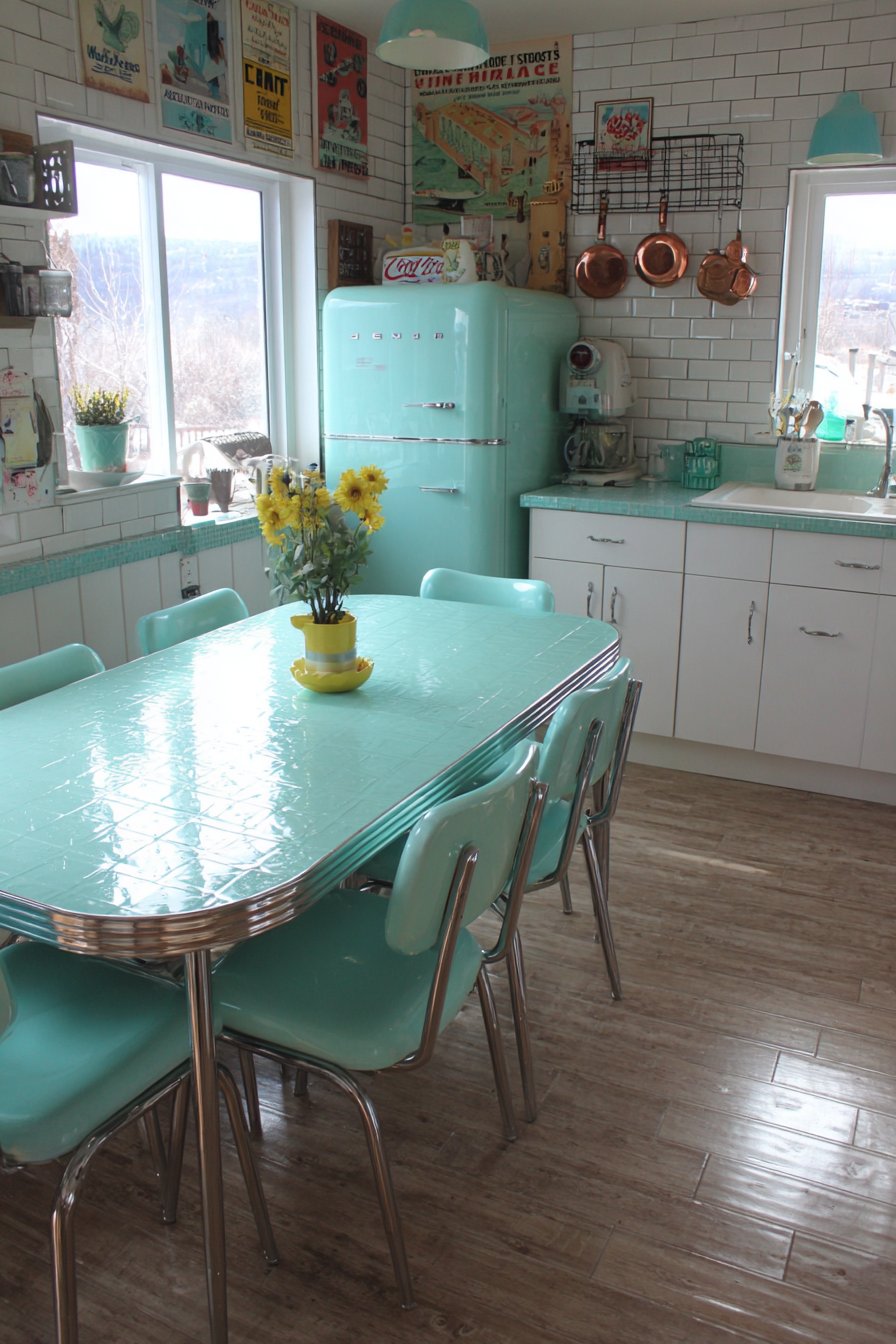
The backsplash featuring original subway tiles with dark grout provides a classic backdrop that allows the colorful furniture to take center stage while maintaining visual balance. Copper pots hanging from a sturdy wrought iron pot rack add both functional storage and warm metallic accents that complement the chrome elements throughout the space. These suspended cooking vessels create visual interest at varying heights while keeping essential tools within easy reach.
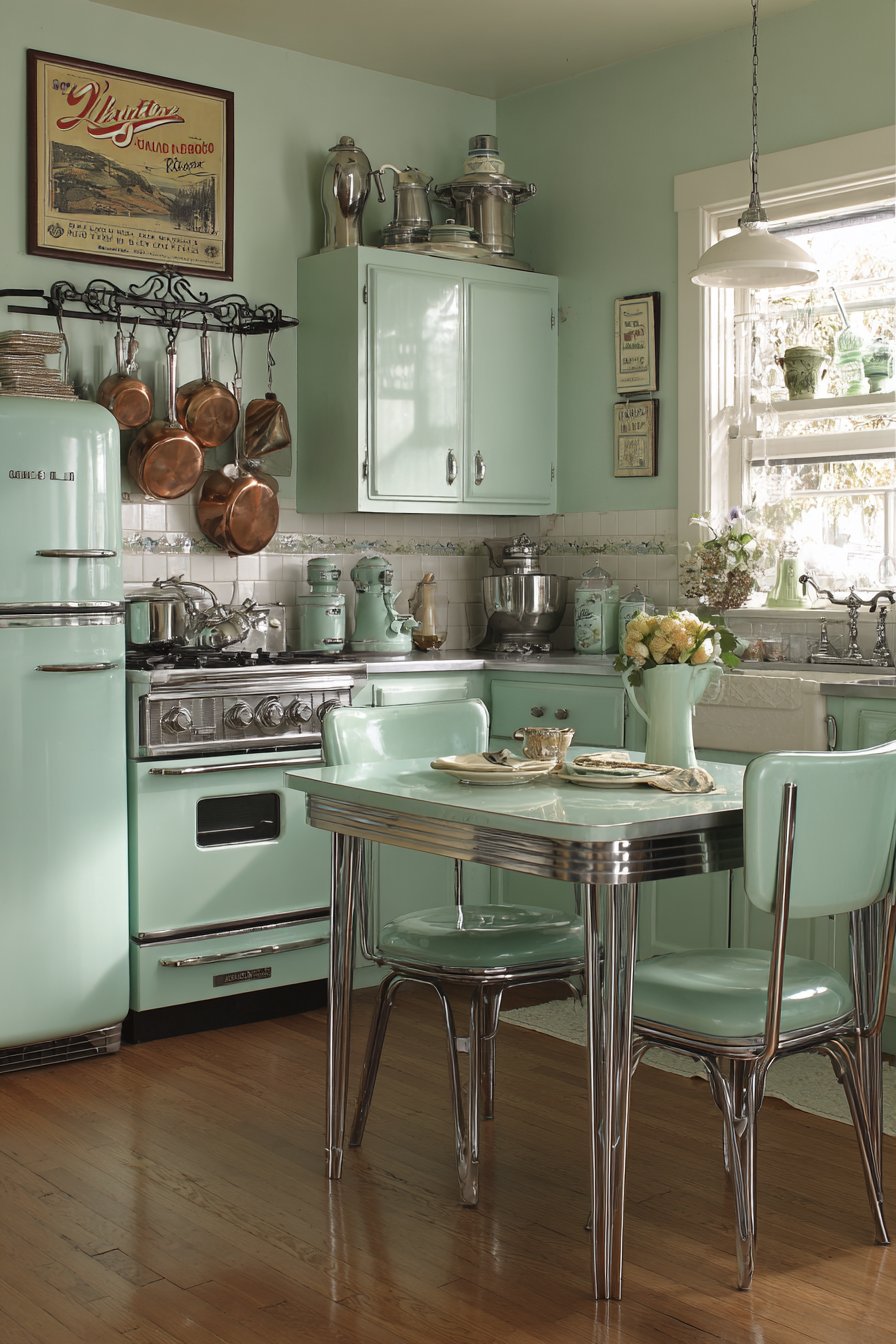
Vintage advertisements carefully framed and strategically placed on the walls contribute authentic period character that transforms the kitchen into a genuine time capsule. The soft, diffused lighting throughout the space creates gentle shadows that emphasize the smooth textures of the Formica surfaces and the warm patina of the copper cookware, enhancing the overall retro atmosphere.
Key Design Tips:
- Choose furniture pieces in authentic 1950s colors like mint green or coral to establish period authenticity
- Display copper cookware prominently to add warmth and functional beauty
- Frame vintage advertisements or product packaging to create affordable and authentic wall art
- Use subway tile backsplashes with dark grout for classic mid-century appeal
3. Glass-Front Cabinet Charm
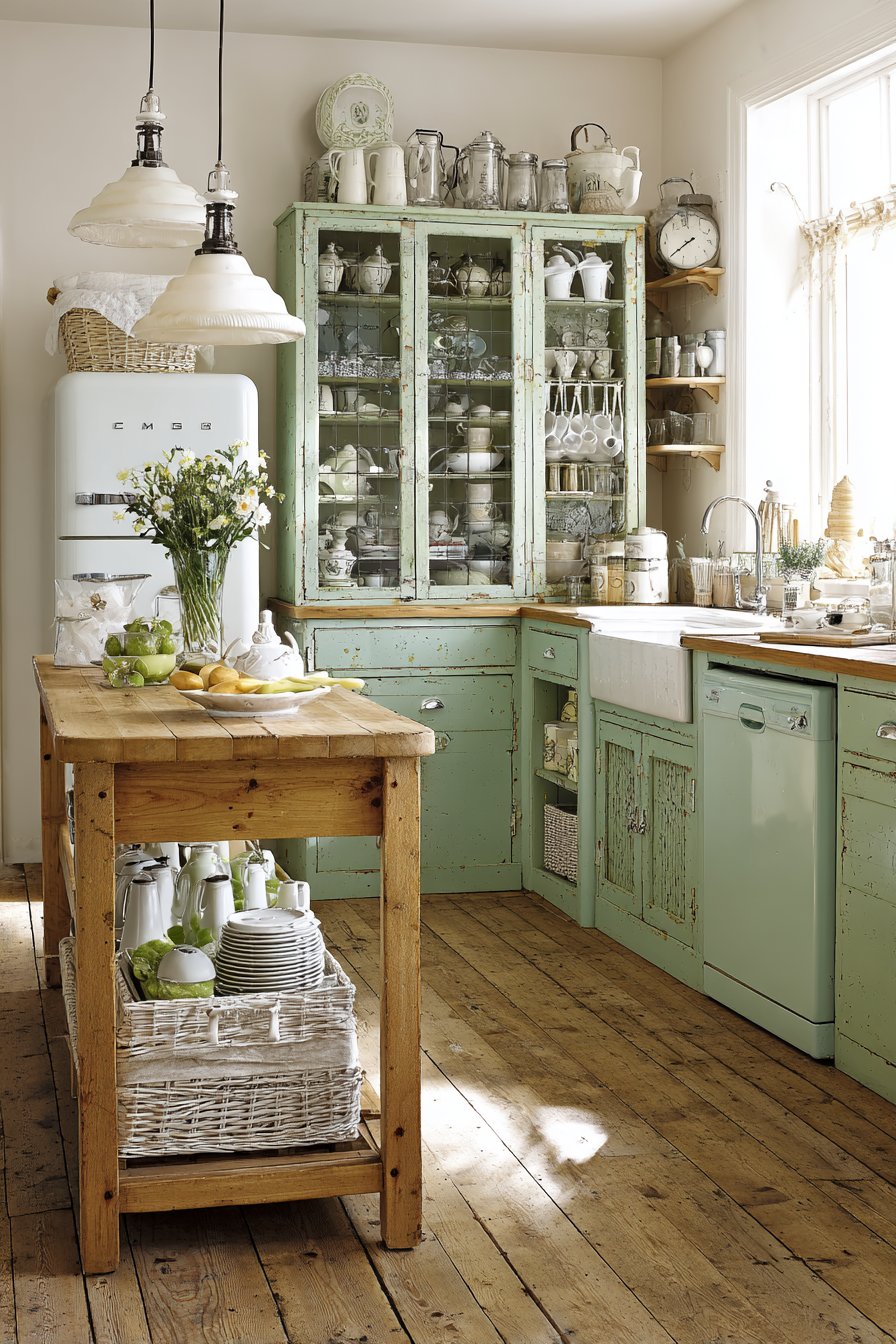
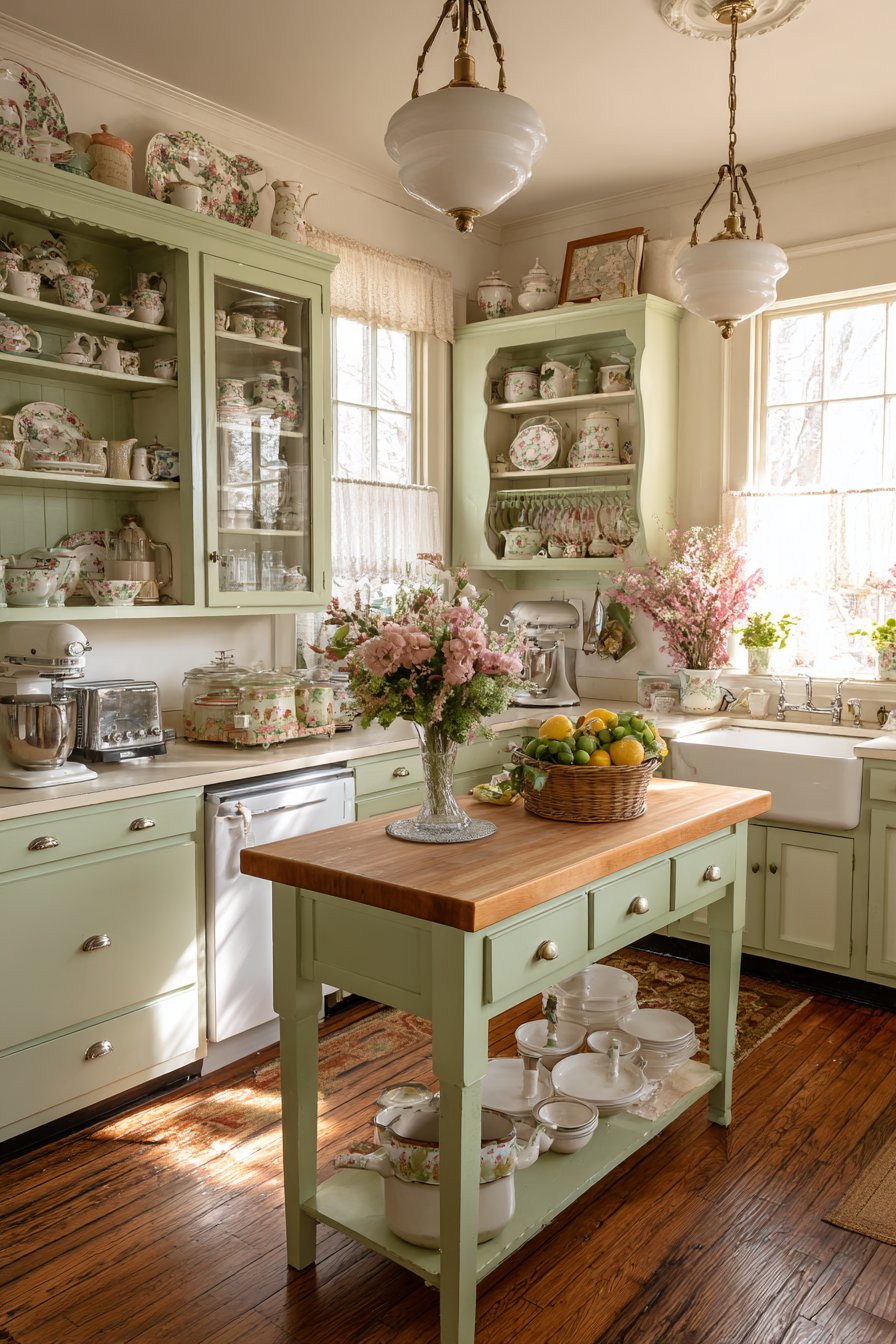
Glass-front cabinets painted in sophisticated sage green create an elegant display system that showcases vintage dishware collections while maintaining the organized appearance essential to functional kitchen design. These cabinets serve dual purposes, providing necessary storage while creating opportunities to display beautiful vintage pieces like milk glass accessories and colorful ceramic collections. The sage green color choice offers a timeless appeal that complements both warm and cool accent colors throughout the space.
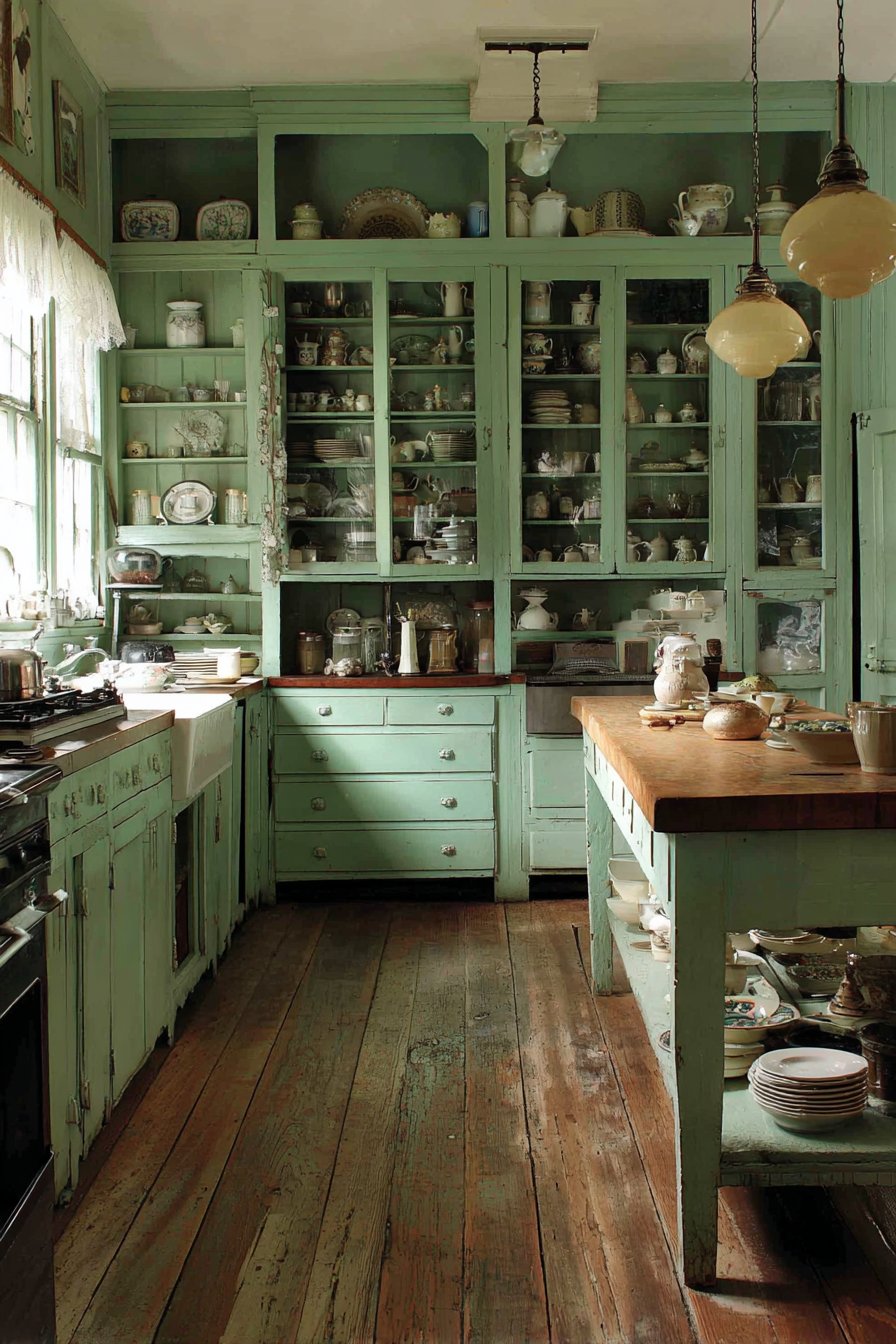
The butcher block island centerpiece provides essential workspace while maintaining the rustic charm that defines vintage kitchen aesthetics. This natural wood element introduces warmth and texture that balances the painted cabinetry, creating visual interest through material contrast. The island’s substantial presence anchors the kitchen layout while offering additional storage and food preparation space that modern families require.
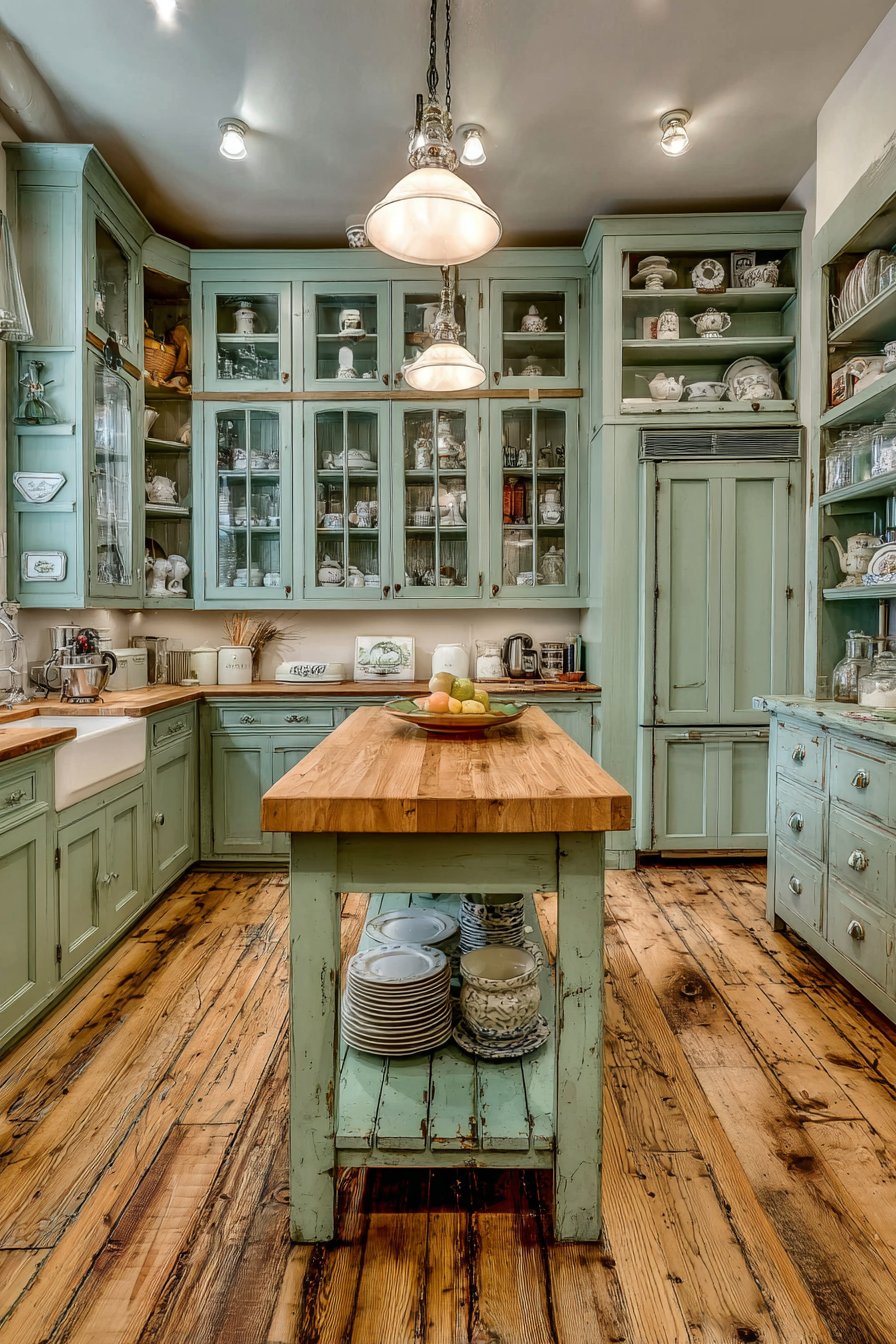
Pendant lights featuring milk glass shades illuminate the space with warm, inviting light that enhances the vintage atmosphere while providing practical task lighting. The milky white glass diffuses light beautifully, creating a soft glow that flatters both the displayed collections and the natural wood surfaces. The wooden floors display natural wear patterns that enhance the authentic vintage aesthetic, suggesting years of loving use and family gatherings.
Key Design Tips:
- Paint cabinets in muted vintage colors like sage green or cream for timeless appeal
- Install glass fronts to showcase vintage collections while maintaining organization
- Incorporate butcher block surfaces for warmth and authentic texture
- Choose milk glass light fixtures for soft, flattering illumination
4. Collectible Display Systems
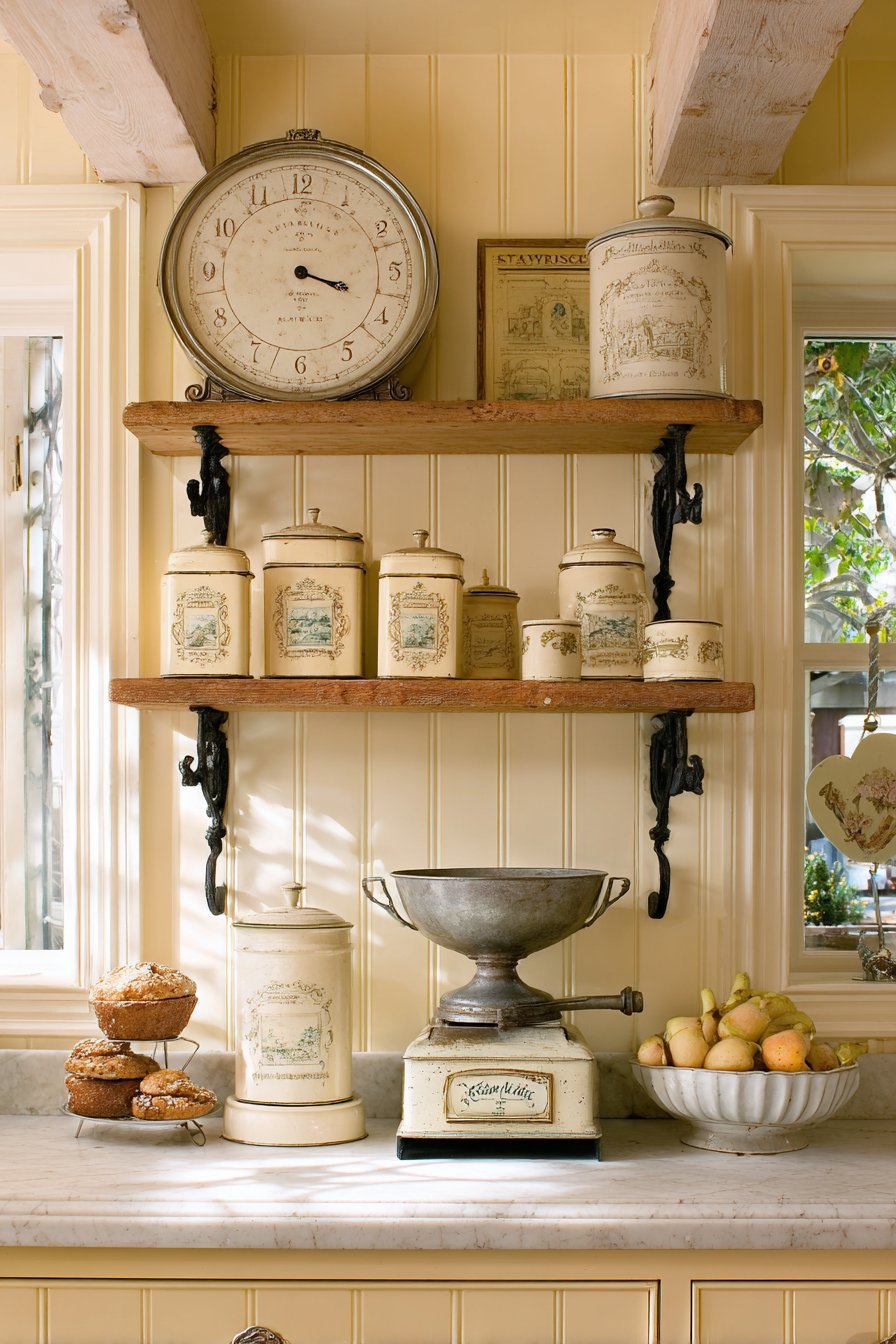
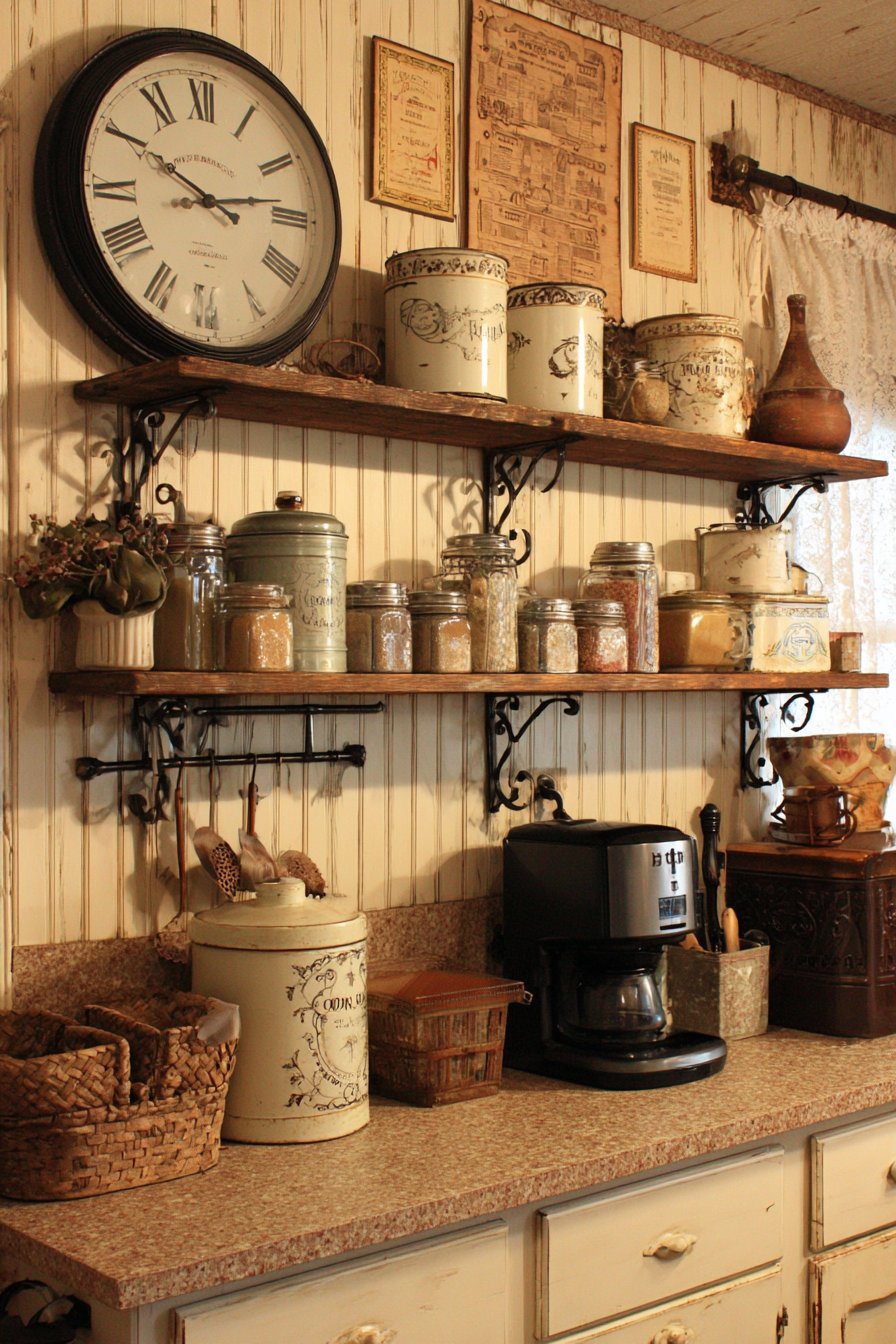
Open wooden shelves supported by sturdy wrought iron brackets create the perfect framework for displaying collections of antique kitchen scales, vintage canisters, and colorful enamelware that tell the story of culinary history. These shelving systems offer flexibility in arrangement while providing easy access to frequently used items. The combination of natural wood and black iron creates a pleasing contrast that enhances the vintage aesthetic without overwhelming the space.
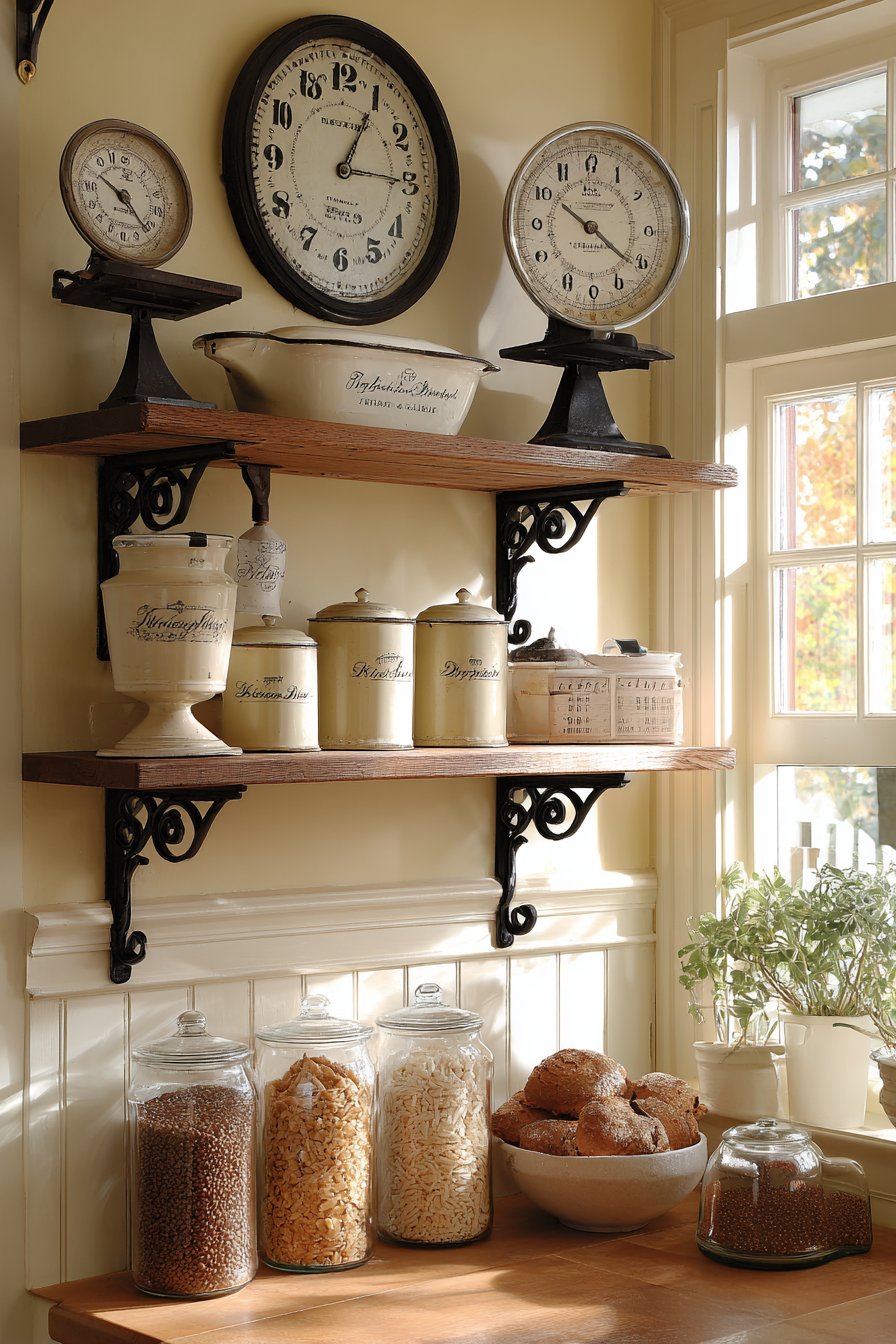
The walls painted in warm cream with traditional wainscoting below establish a cozy cottage atmosphere that serves as the perfect backdrop for vintage collections. This paint treatment adds architectural interest while creating defined zones that help organize the visual elements throughout the kitchen. The wainscoting provides practical protection for lower wall areas while contributing to the authentic period character.

A vintage clock serves as both a functional timepiece and a decorative focal point, while old-fashioned recipe cards displayed in vintage holders add personal touches that suggest generations of family cooking traditions. These smaller accessories contribute to the lived-in feeling that makes vintage kitchens so appealing, creating layers of interest that reward closer examination.
Key Design Tips:
- Use open shelving to create flexible display opportunities for vintage collections
- Combine warm paint colors with wainscoting to establish cottage-style charm
- Display functional vintage items like scales and clocks to maintain authenticity
- Incorporate personal touches like old recipe cards to add family history
5. Cast Iron Centerpiece Design
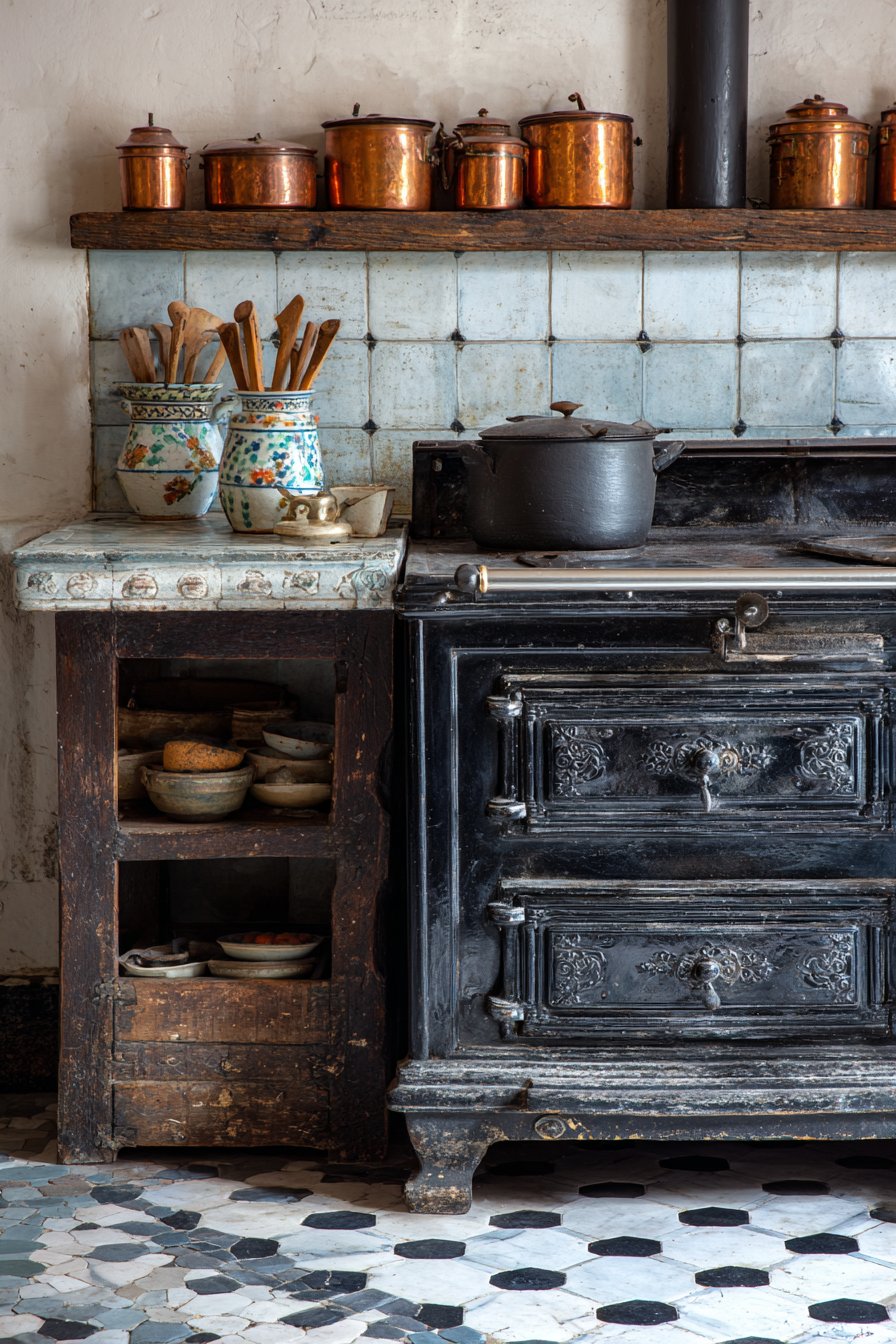
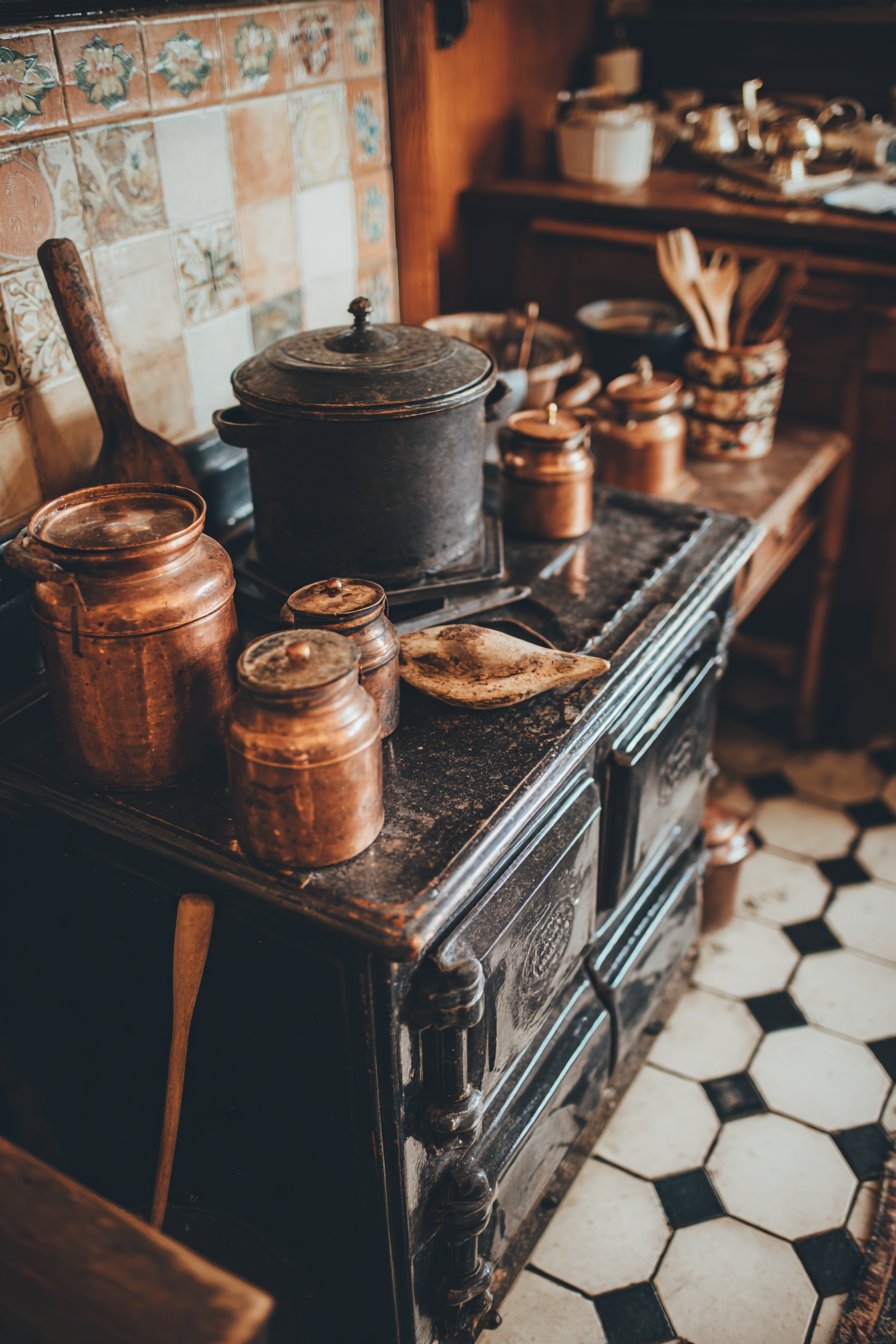
A beautifully restored cast iron stove commands attention as the dramatic centerpiece of this vintage kitchen, surrounded by carefully selected period-appropriate accessories that enhance its authentic appeal. Copper kettles and wooden spoons displayed in ceramic crocks create a functional vignette that suggests active cooking while maintaining the aesthetic integrity of the design. The substantial presence of the cast iron stove anchors the kitchen layout while serving as a conversation piece that celebrates the craftsmanship of earlier eras.

The hexagonal floor tiles in classic white with black borders maintain authentic vintage appeal while providing a durable and practical flooring solution. This geometric pattern adds visual interest without competing with the stove for attention, creating a sophisticated foundation that enhances the overall design scheme. The contrast between the white tiles and black borders creates definition and helps delineate different areas within the kitchen space.
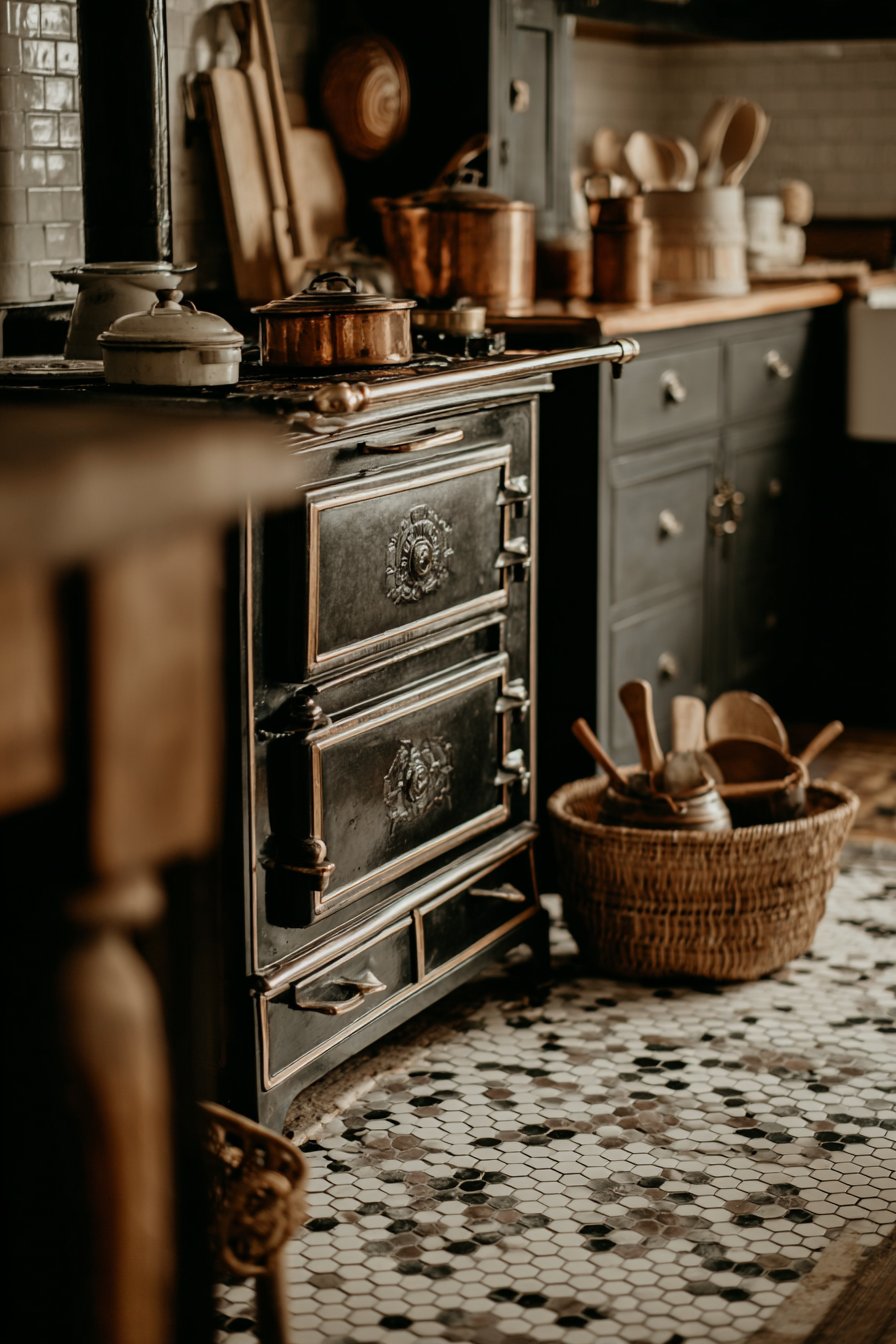
The careful composition of accessories around the stove creates layers of visual interest while maintaining the functional beauty that makes vintage kitchens so appealing. Each piece serves a purpose while contributing to the overall aesthetic, demonstrating how thoughtful curation can create spaces that are both beautiful and practical for modern family life.
Key Design Tips:
- Feature a restored vintage appliance as your kitchen’s dramatic focal point
- Surround key pieces with period-appropriate accessories to enhance authenticity
- Choose geometric floor patterns that complement rather than compete with major elements
- Group functional items in attractive displays to maintain both beauty and practicality
6. Farmhouse Shiplap Style
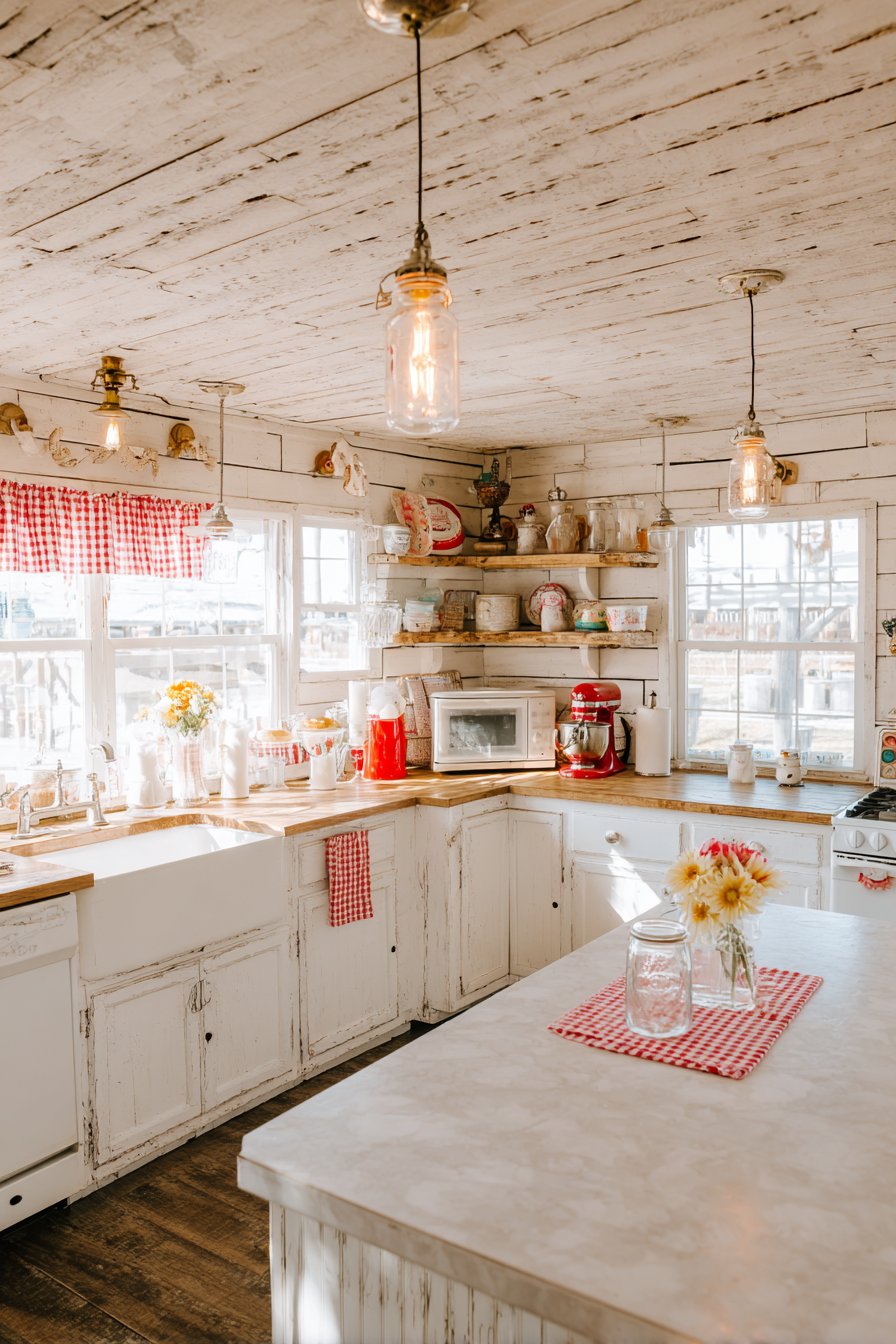
Shiplap walls painted in soft white create a clean, farmhouse-inspired backdrop that allows vintage accessories and furniture pieces to take center stage. This wall treatment adds textural interest while maintaining the bright, airy feeling that makes kitchens feel welcoming and spacious. The horizontal lines created by the shiplap boards add visual movement while contributing to the authentic farmhouse aesthetic that defines this design approach.
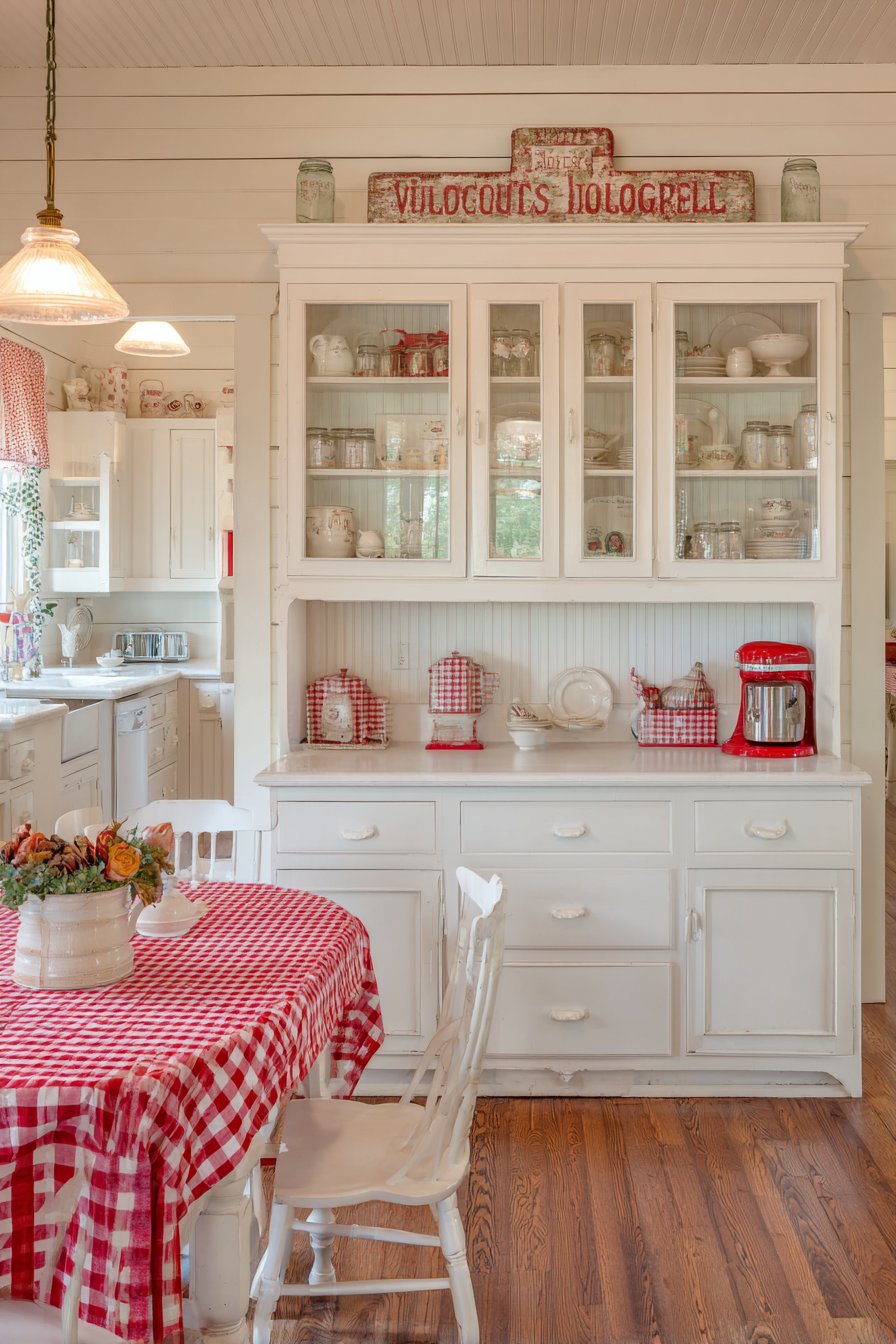
A vintage hoosier cabinet serves as both storage and display, showcasing period glassware and serving pieces that demonstrate the practical beauty of vintage kitchen design. These multi-functional pieces represent the ingenuity of earlier generations, combining storage, workspace, and display areas in compact, well-designed furniture. The cabinet’s various compartments and surfaces provide opportunities to display collections while maintaining organization and functionality.
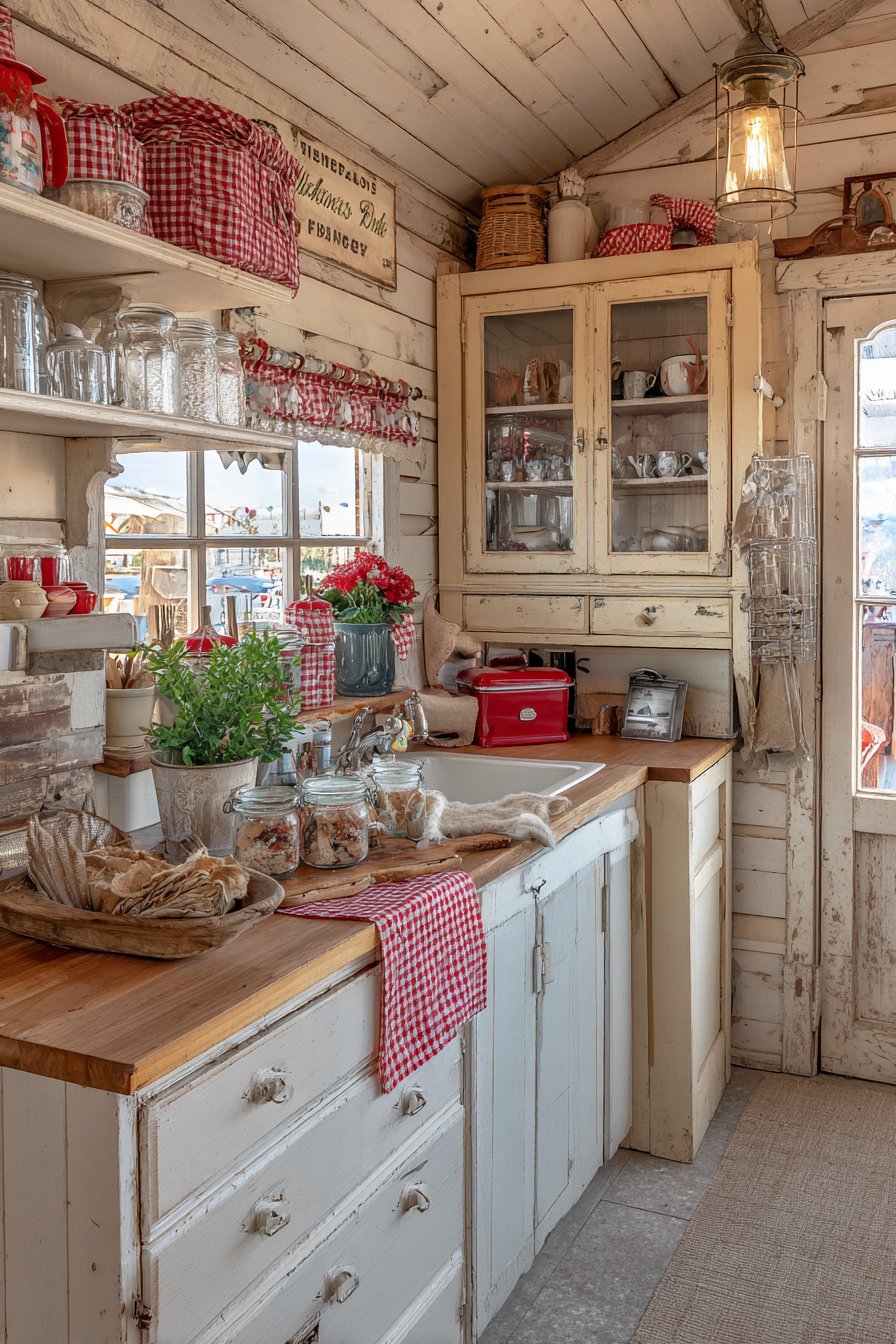
Red and white gingham textiles introduce cheerful color patterns that enhance the farmhouse theme while maintaining period authenticity. These classic patterns appear in window treatments, table linens, and decorative accents, creating visual continuity throughout the space. Mason jar pendant lights provide warm ambient lighting while reinforcing the rustic, handmade aesthetic that makes farmhouse kitchens so appealing.
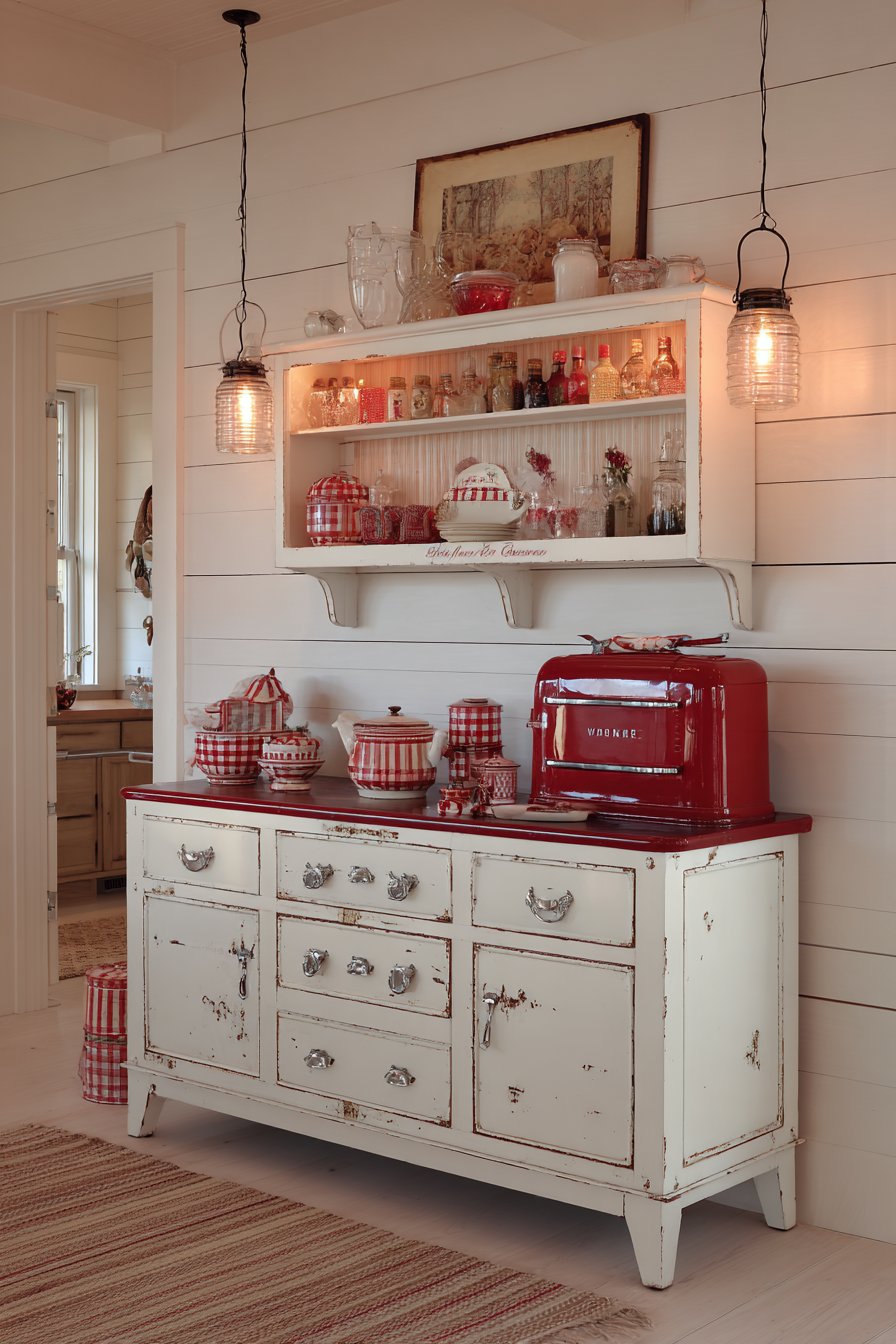
Key Design Tips:
- Install shiplap walls to create authentic farmhouse texture and visual interest
- Feature multi-functional vintage furniture pieces like hoosier cabinets for storage and display
- Incorporate classic gingham patterns in textiles for traditional farmhouse appeal
- Use mason jar lighting fixtures to enhance the rustic, handmade aesthetic
7. Cozy Breakfast Nook Creation
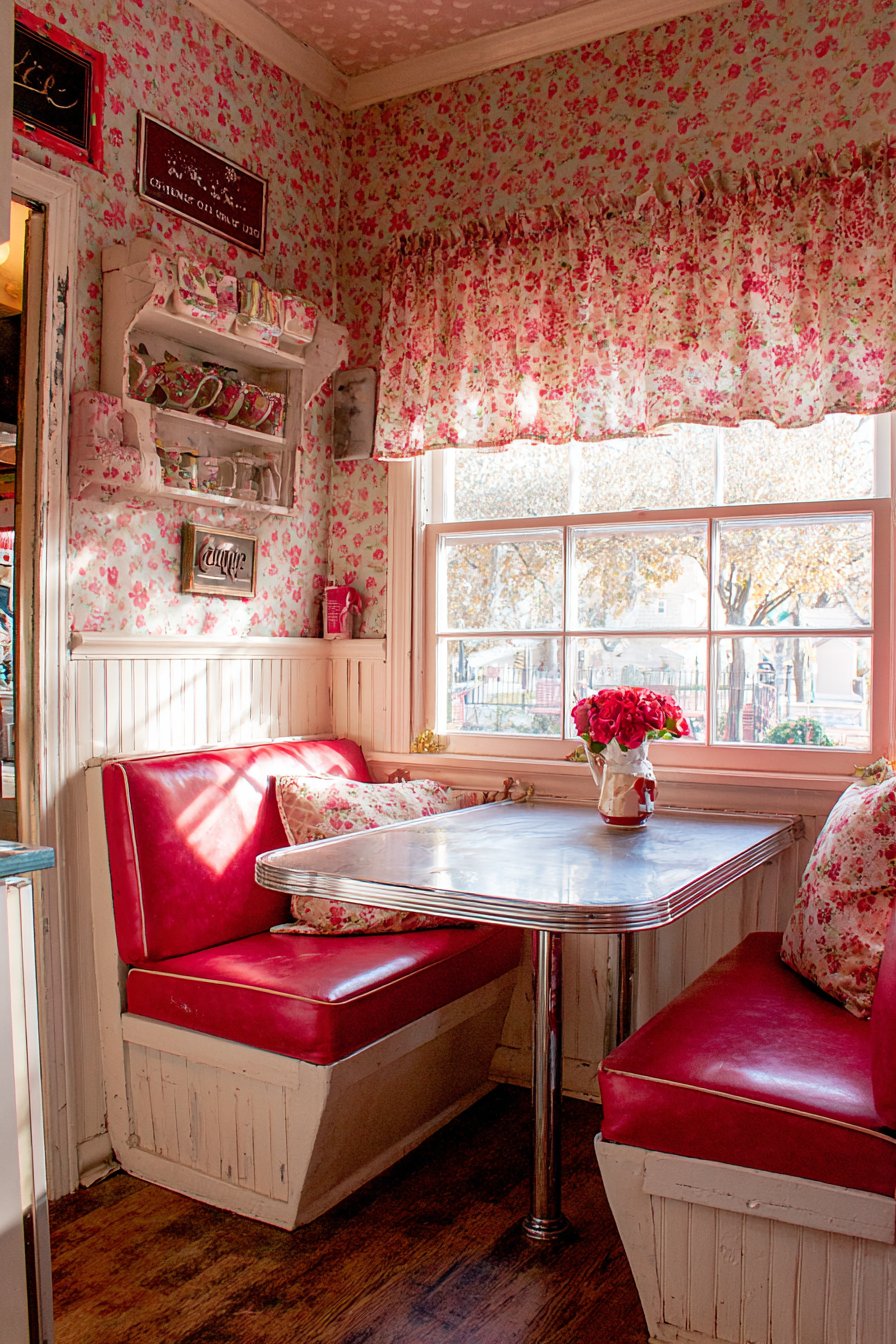
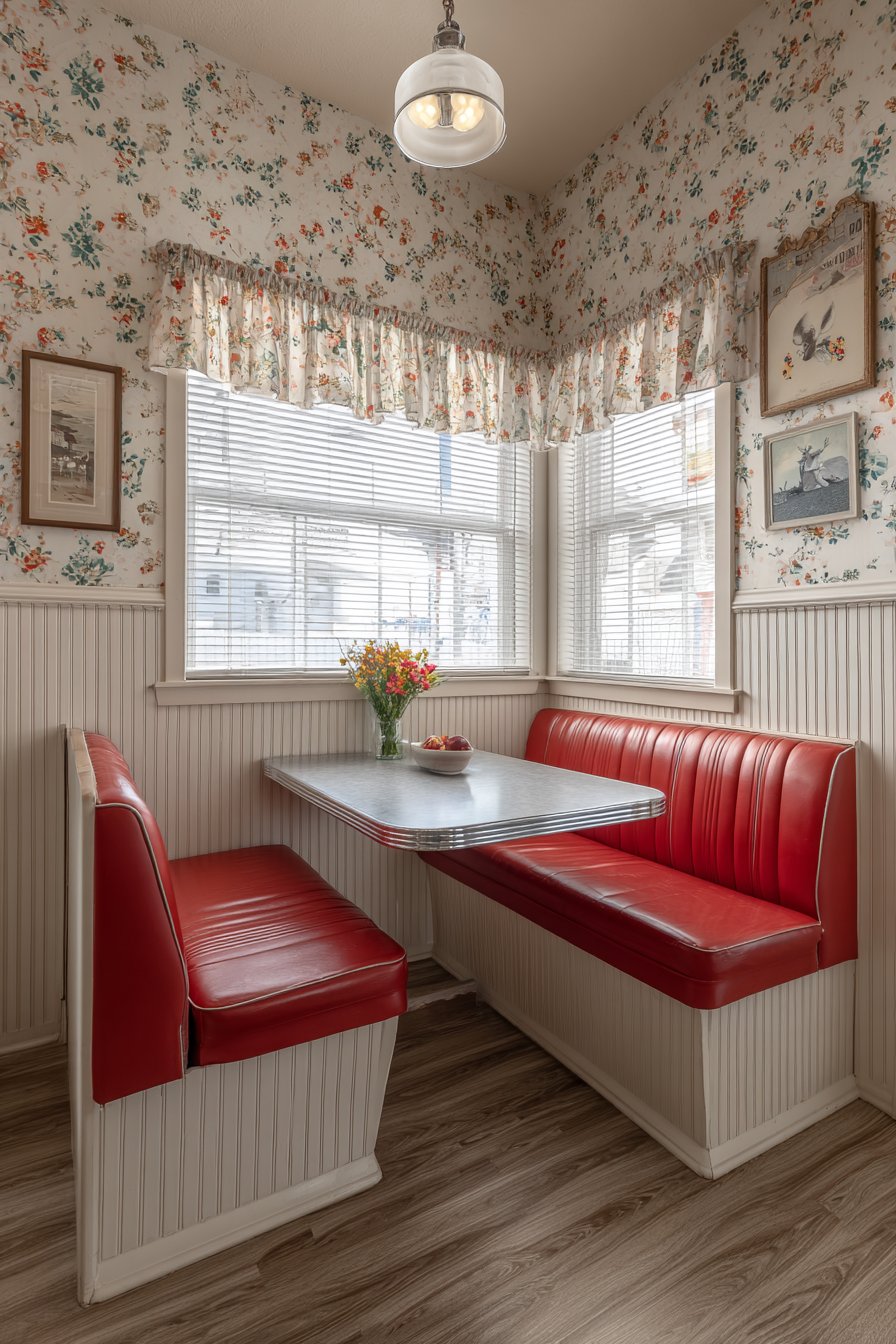
A built-in banquette upholstered in cheerful red vinyl creates an inviting breakfast nook that captures the optimistic spirit of mid-century design while providing comfortable family seating. Paired with a vintage chrome table featuring the sleek lines characteristic of the era, this seating arrangement transforms a simple corner into a dedicated dining space that encourages family gatherings and casual meals.
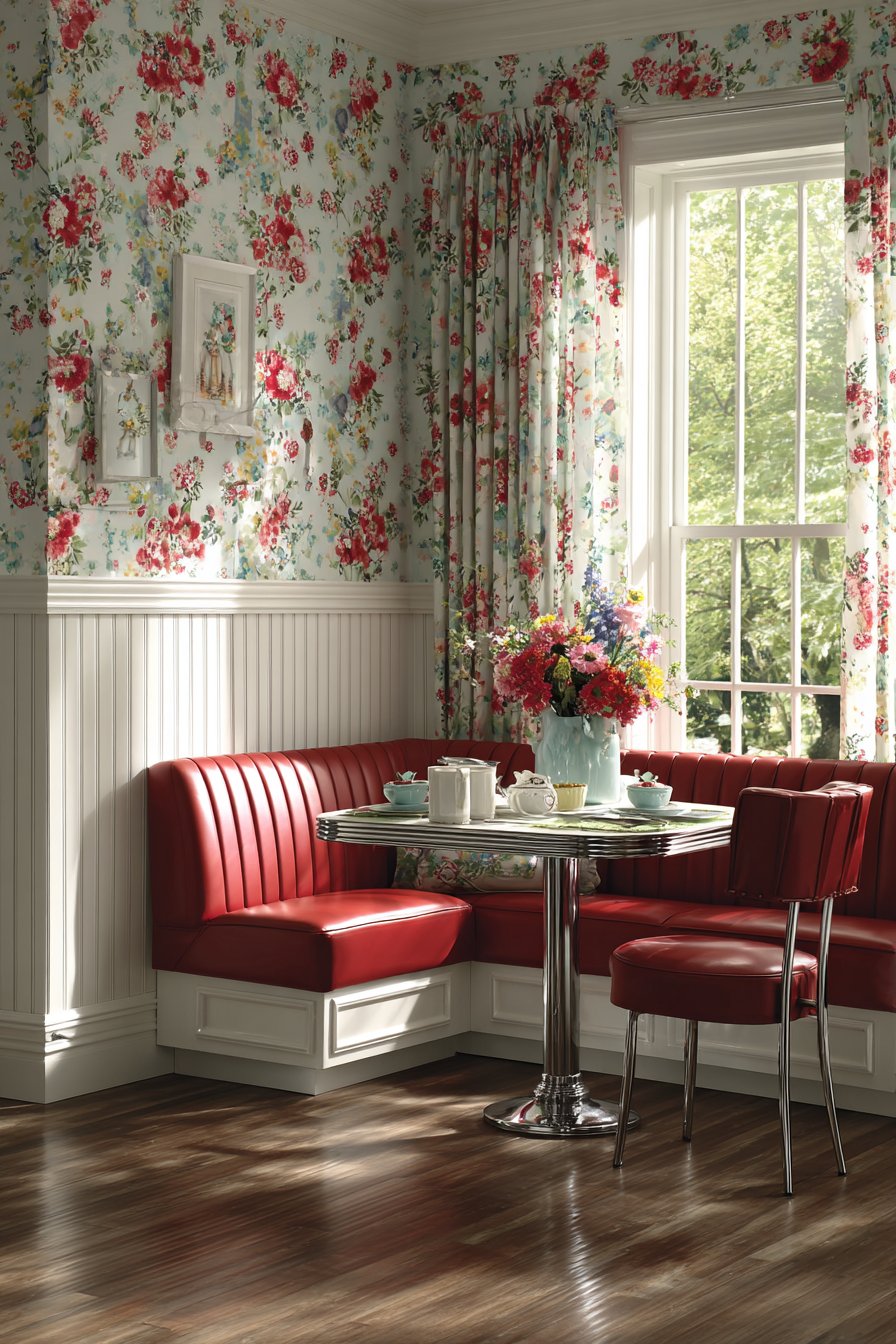
Wallpaper featuring small floral patterns covers the upper walls, adding pattern and color while maintaining the intimate scale appropriate for a breakfast nook. The beadboard wainscoting below provides textural contrast and practical protection while contributing to the authentic vintage character. This combination of wallpaper and wainscoting creates visual zones that help define the breakfast area within the larger kitchen space.

Window treatments in coordinating fabrics filter natural light beautifully while providing privacy and enhancing the cozy atmosphere. The careful coordination of patterns and colors throughout the nook creates a cohesive design that feels intentional and well-planned, demonstrating how attention to detail can transform utilitarian spaces into charming family gathering areas.
Key Design Tips:
- Create dedicated seating areas with built-in banquettes for space efficiency and comfort
- Use vintage vinyl upholstery for authentic mid-century appeal and easy maintenance
- Combine wallpaper and wainscoting to add pattern and texture while defining spaces
- Coordinate window treatments with other textiles for visual continuity
8. Organized Spice Display
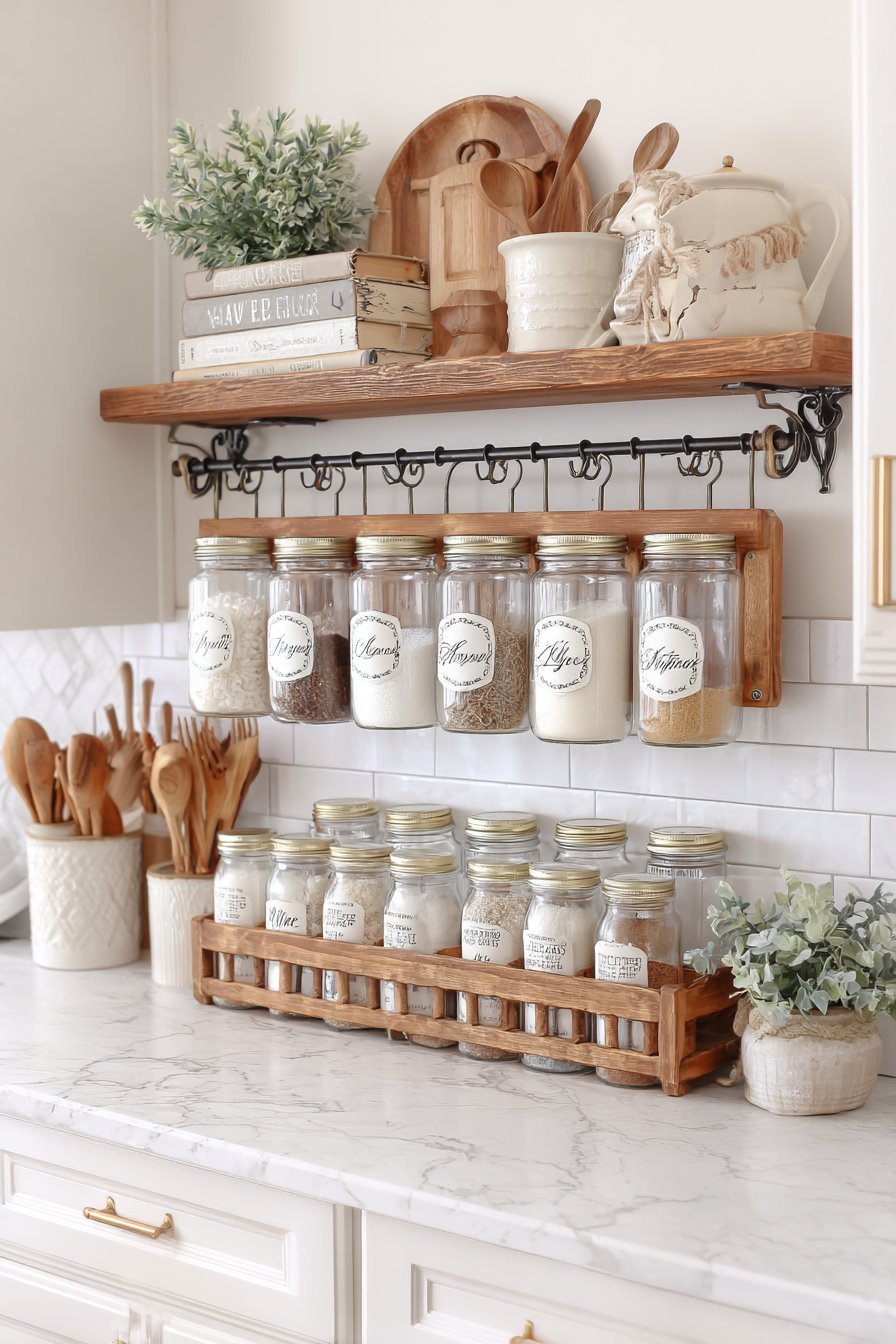
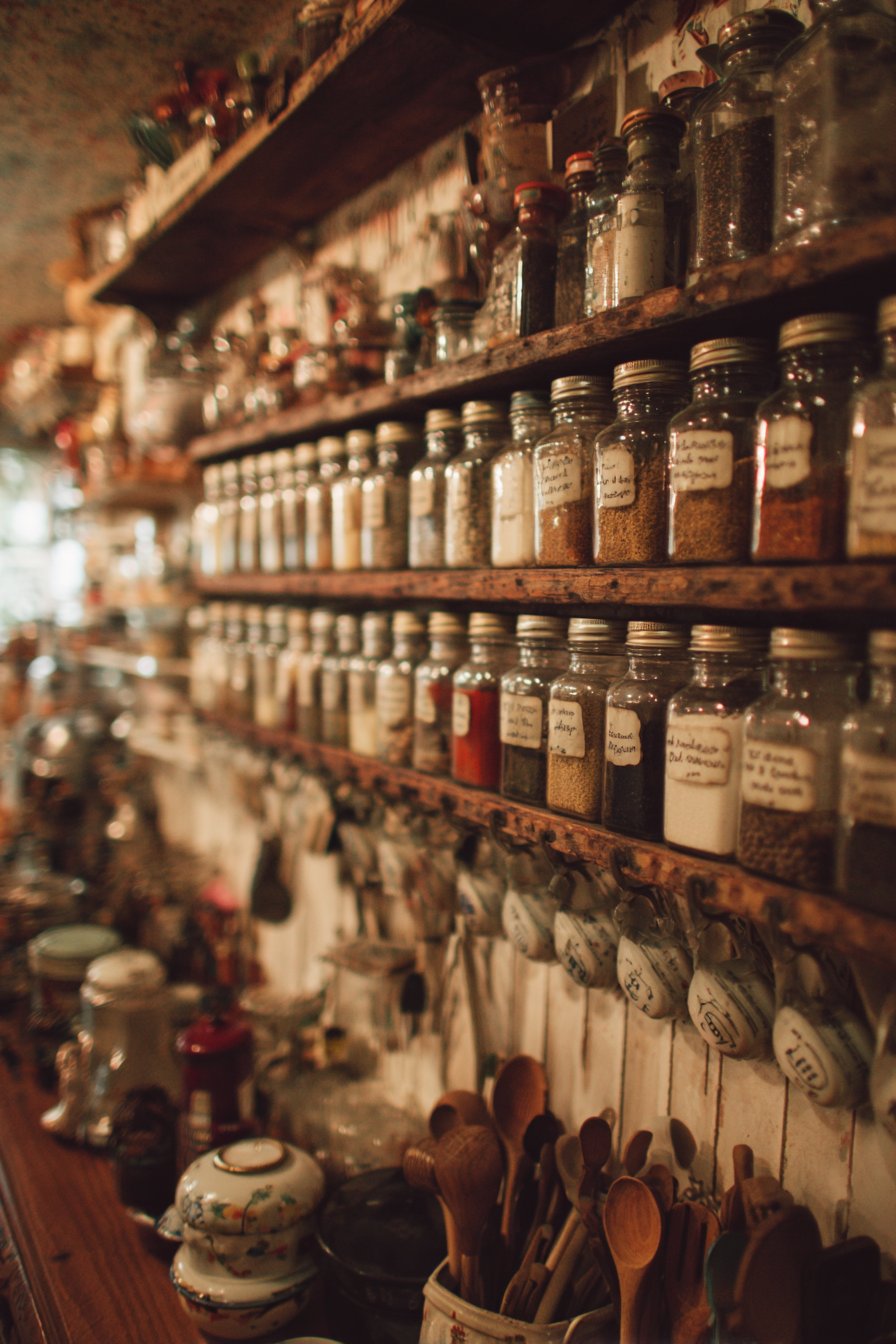
A carefully curated spice rack system using vintage glass jars with handwritten labels demonstrates how organization can become decoration when approached with vintage sensibilities. Mounted on a painted wooden rack, these jars create both functional storage and visual appeal while maintaining the authentic character that makes vintage kitchens so charming. The handwritten labels add personal touches that suggest careful attention to culinary details.

The surrounding area features vintage measuring cups, wooden spoons in ceramic holders, and old cookbooks arranged on floating shelves, creating a comprehensive cooking zone that celebrates the tools and resources of traditional cooking. These collections of functional items demonstrate how practical necessities can become beautiful displays when chosen and arranged with care and attention to period authenticity.
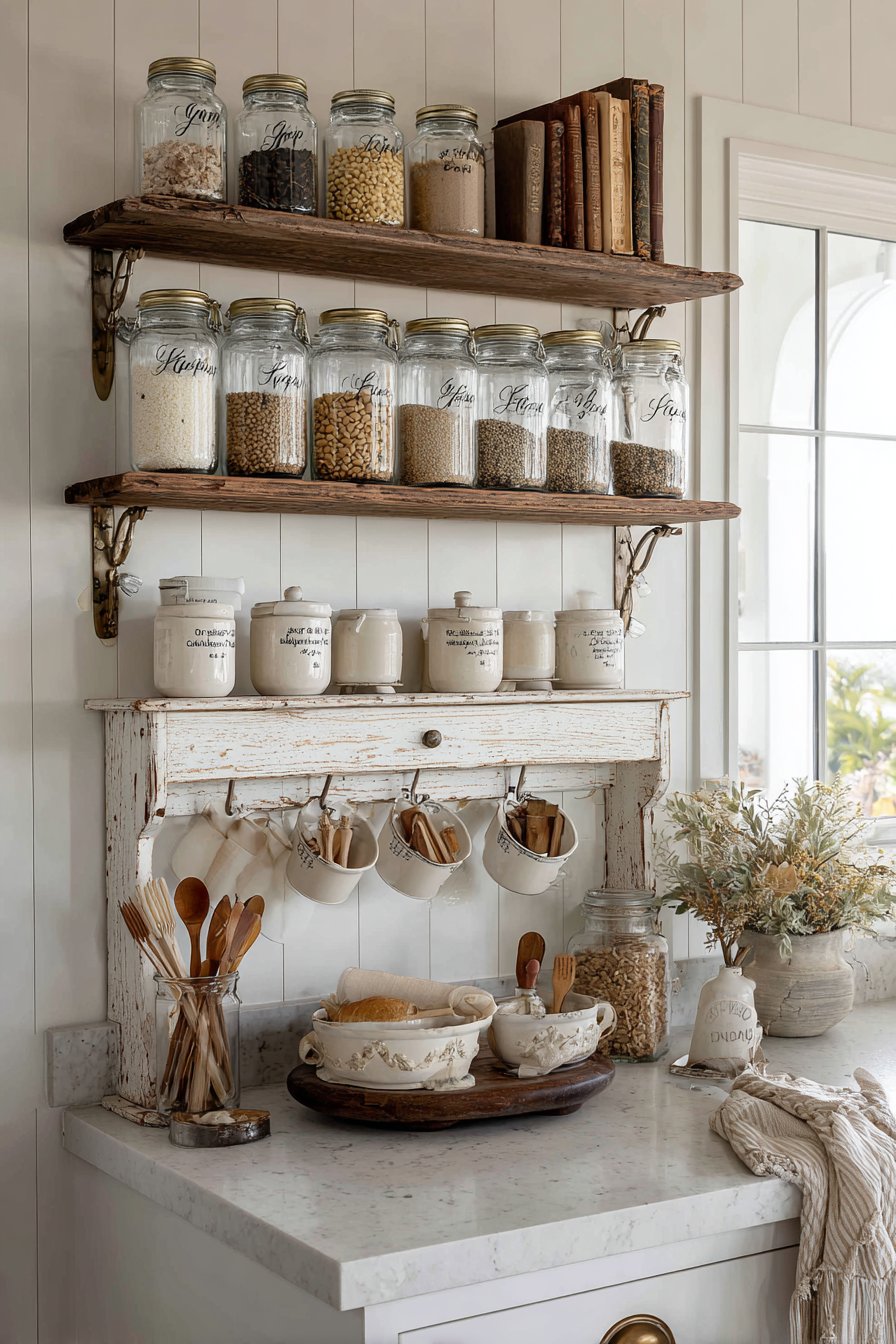
Warm task lighting highlights the practical organization while emphasizing the nostalgic charm of these vintage kitchen elements. The lighting creates gentle shadows that emphasize the textures of glass, wood, and ceramic, enhancing the visual appeal of these functional displays while providing adequate illumination for cooking tasks.
Key Design Tips:
- Use vintage glass jars with handwritten labels for both storage and decoration
- Create dedicated zones for cooking tools and resources to enhance functionality
- Display vintage cookbooks as both reference materials and decorative elements
- Install warm task lighting to highlight functional displays while creating ambiance
9. Pie Safe Sophistication
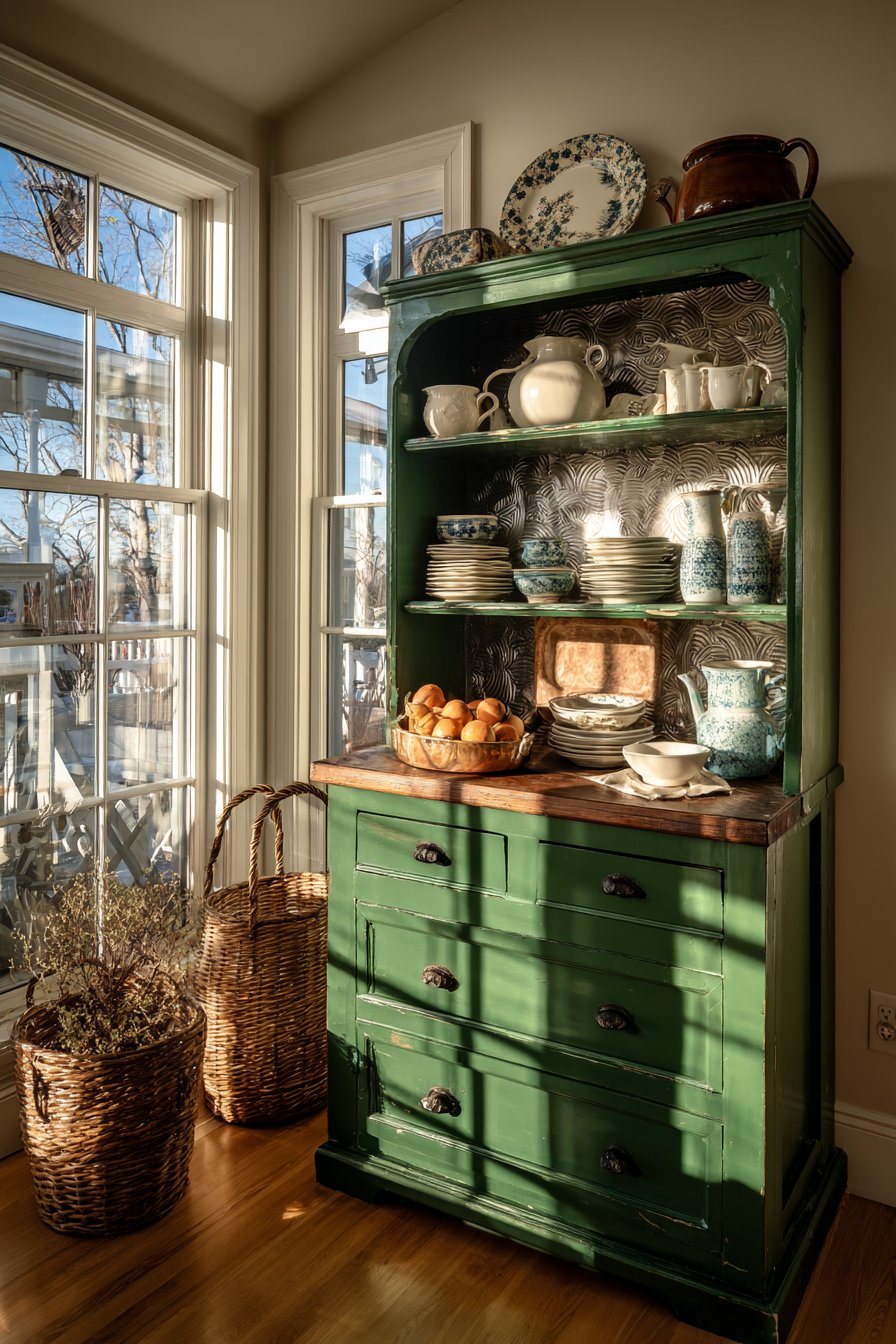
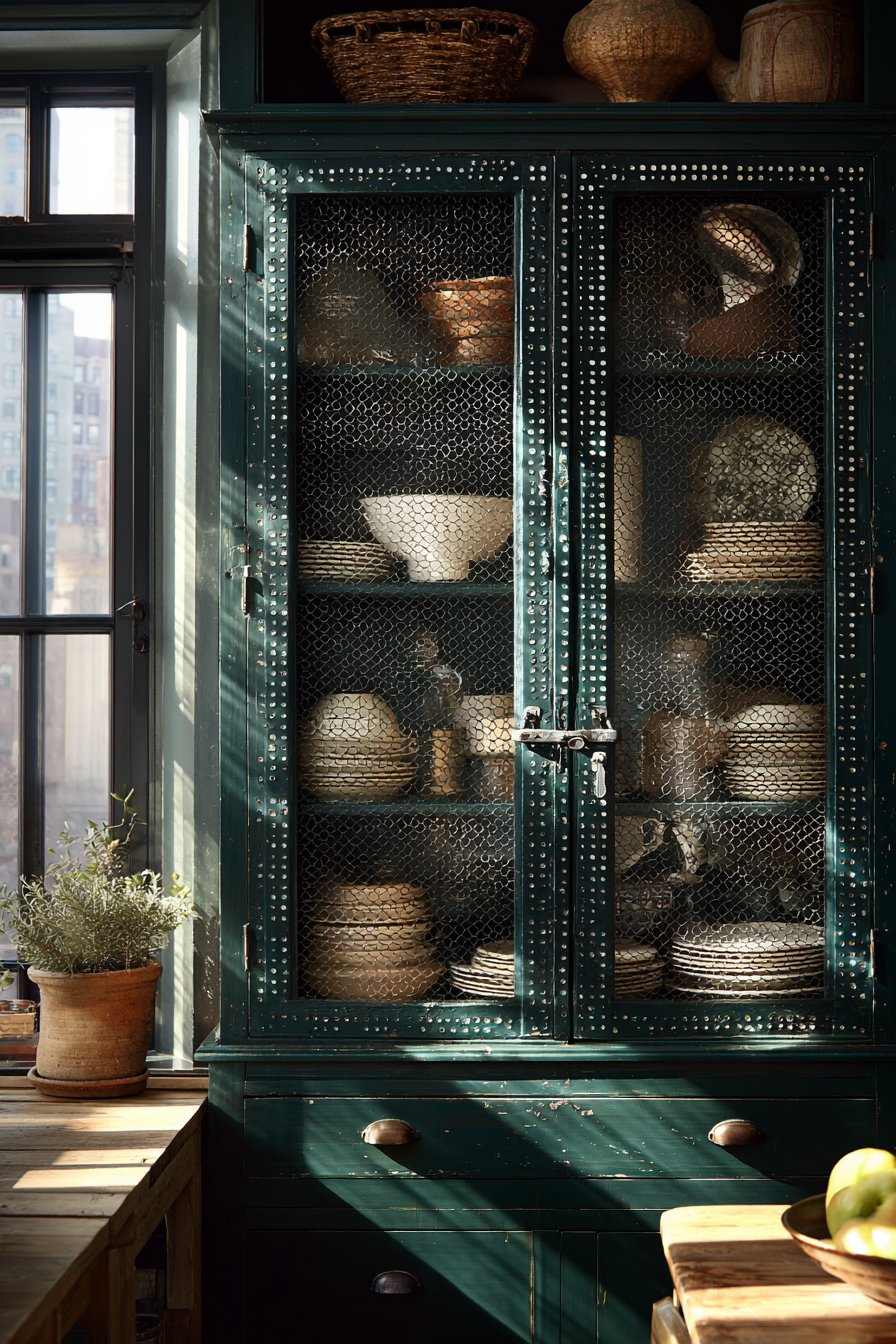
A vintage pie safe with decorative punched tin panels serves as both storage and display for collections of vintage bakeware and serving pieces, demonstrating how traditional furniture can enhance modern kitchen functionality. The punched tin panels allow air circulation while creating interesting visual patterns that add textural interest to the kitchen design. This piece represents the ingenuity of traditional craftsmanship while providing practical storage solutions.
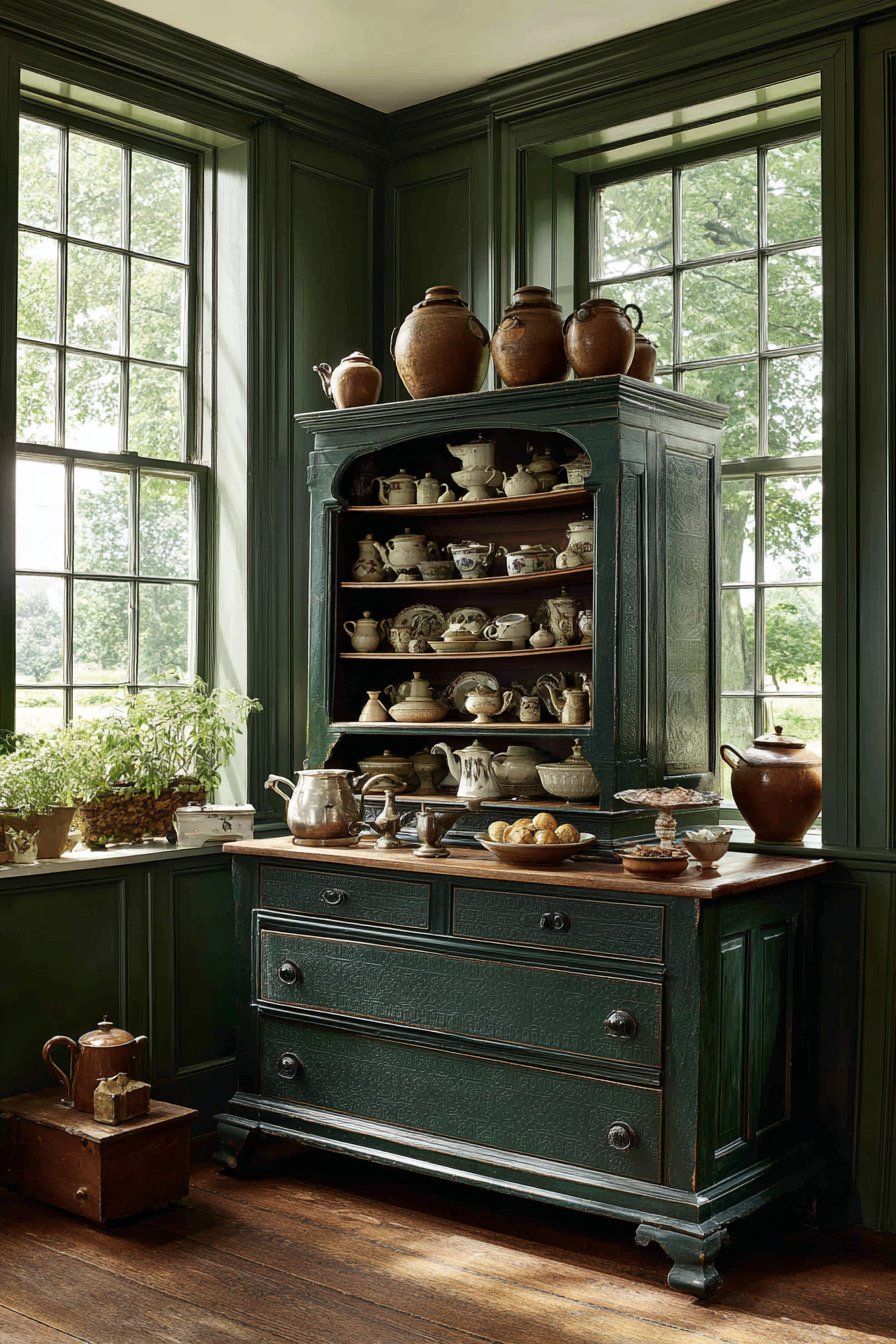
The surrounding cabinetry painted in deep forest green with period-appropriate hardware creates a sophisticated color palette that enhances the vintage aesthetic while providing modern storage capacity. This rich color choice adds depth and elegance to the space while serving as an effective backdrop for vintage collections and accessories. The period-appropriate hardware reinforces the authentic character while ensuring smooth functionality.
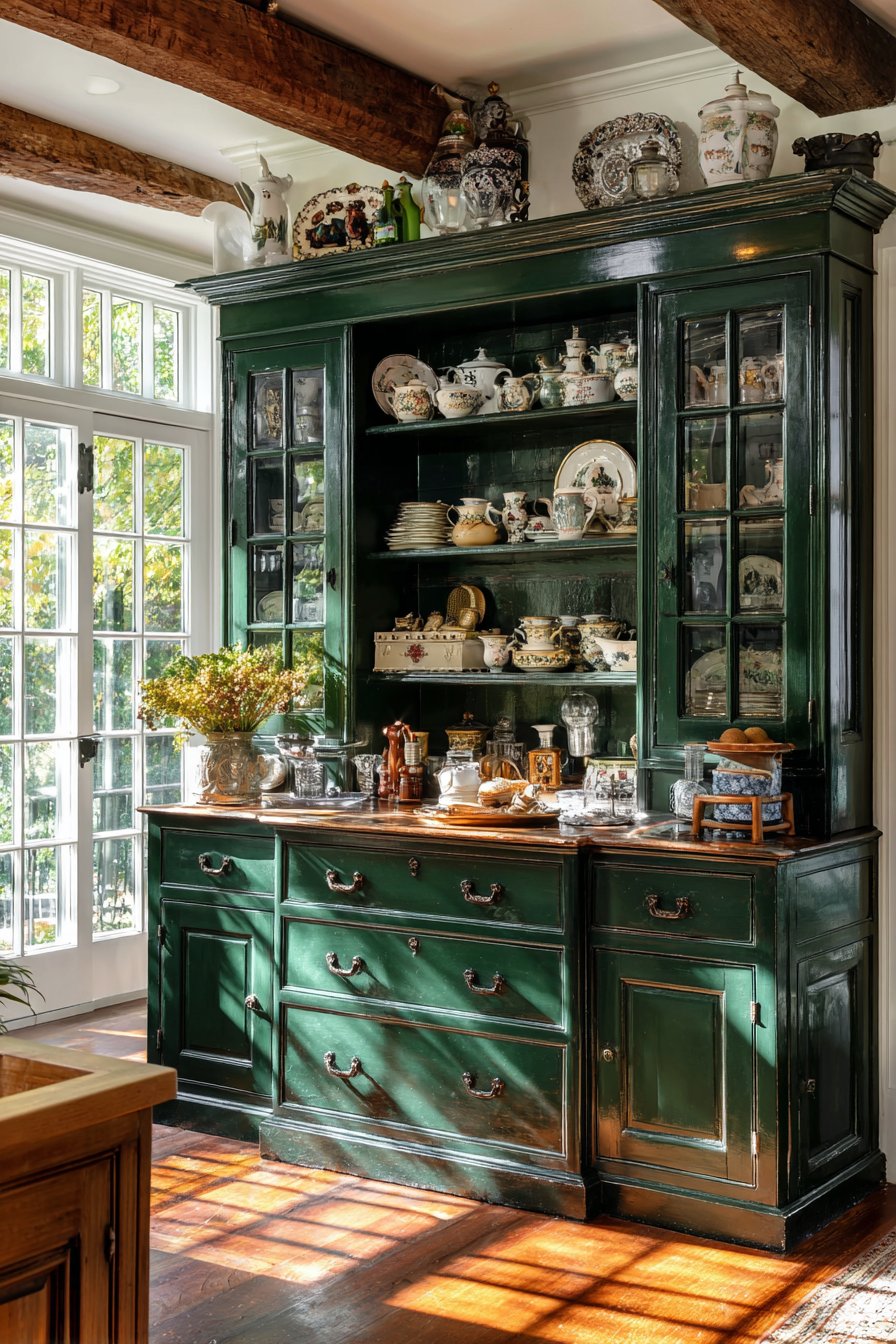
Natural light from mullioned windows creates interesting shadow patterns on the punched tin, highlighting the authentic craftsmanship while adding visual movement throughout the day. These changing light patterns bring life to the space while emphasizing the handmade quality that makes vintage pieces so special and valued.
Key Design Tips:
- Incorporate traditional furniture pieces like pie safes for unique storage and character
- Use rich, deep colors on cabinetry to create sophisticated vintage appeal
- Choose period-appropriate hardware to maintain authentic details
- Position vintage pieces to take advantage of natural light and shadow patterns
10. Colorful Appliance Coordination
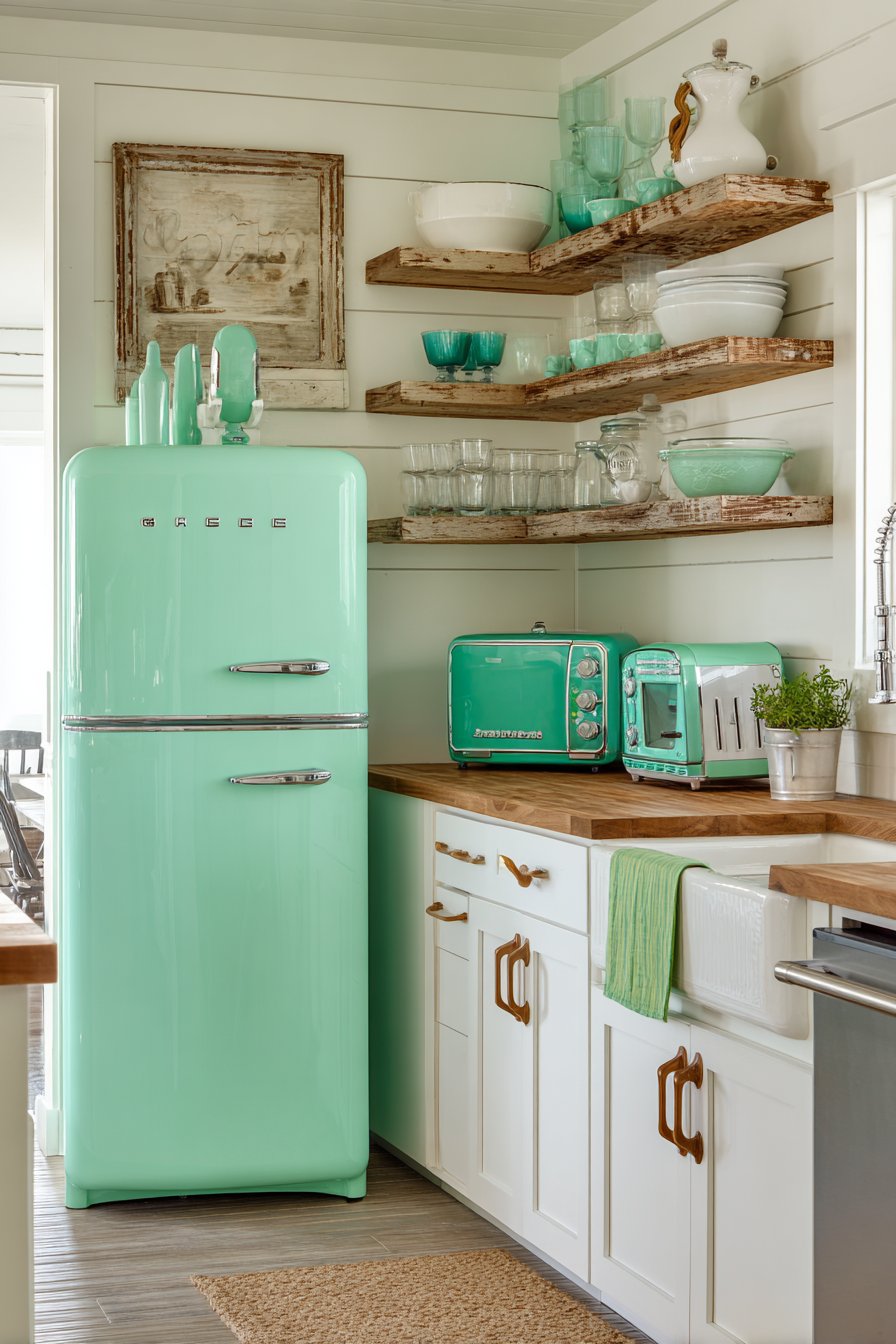
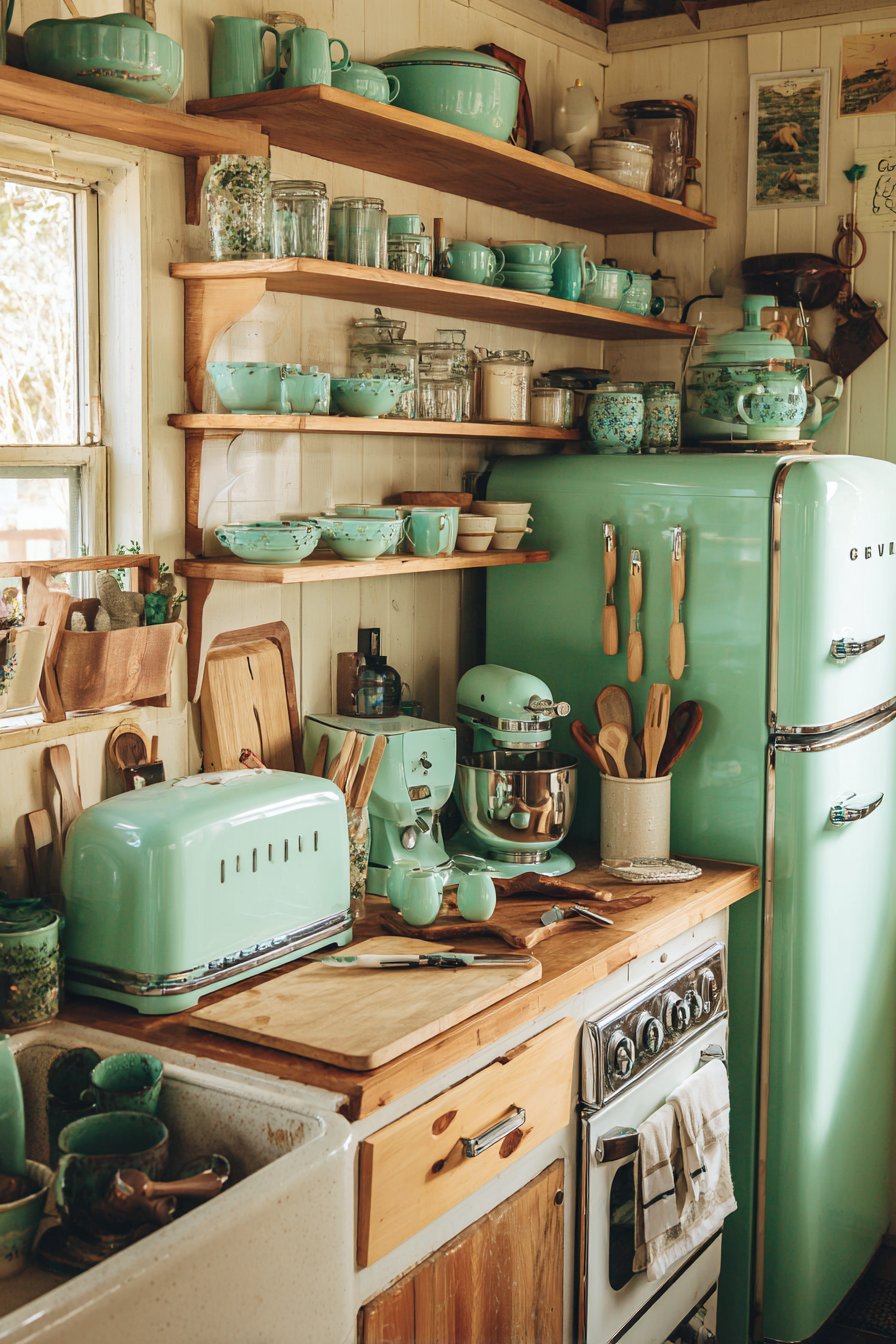
A restored vintage refrigerator in cheerful mint green serves as the anchor for a carefully coordinated color scheme that includes matching small appliances arranged on warm butcher block countertops. This approach to vintage kitchen design demonstrates how color coordination can create visual cohesion while maintaining the playful spirit that characterizes mid-century design. The mint green color brings freshness and optimism to the space while serving as a unifying element.
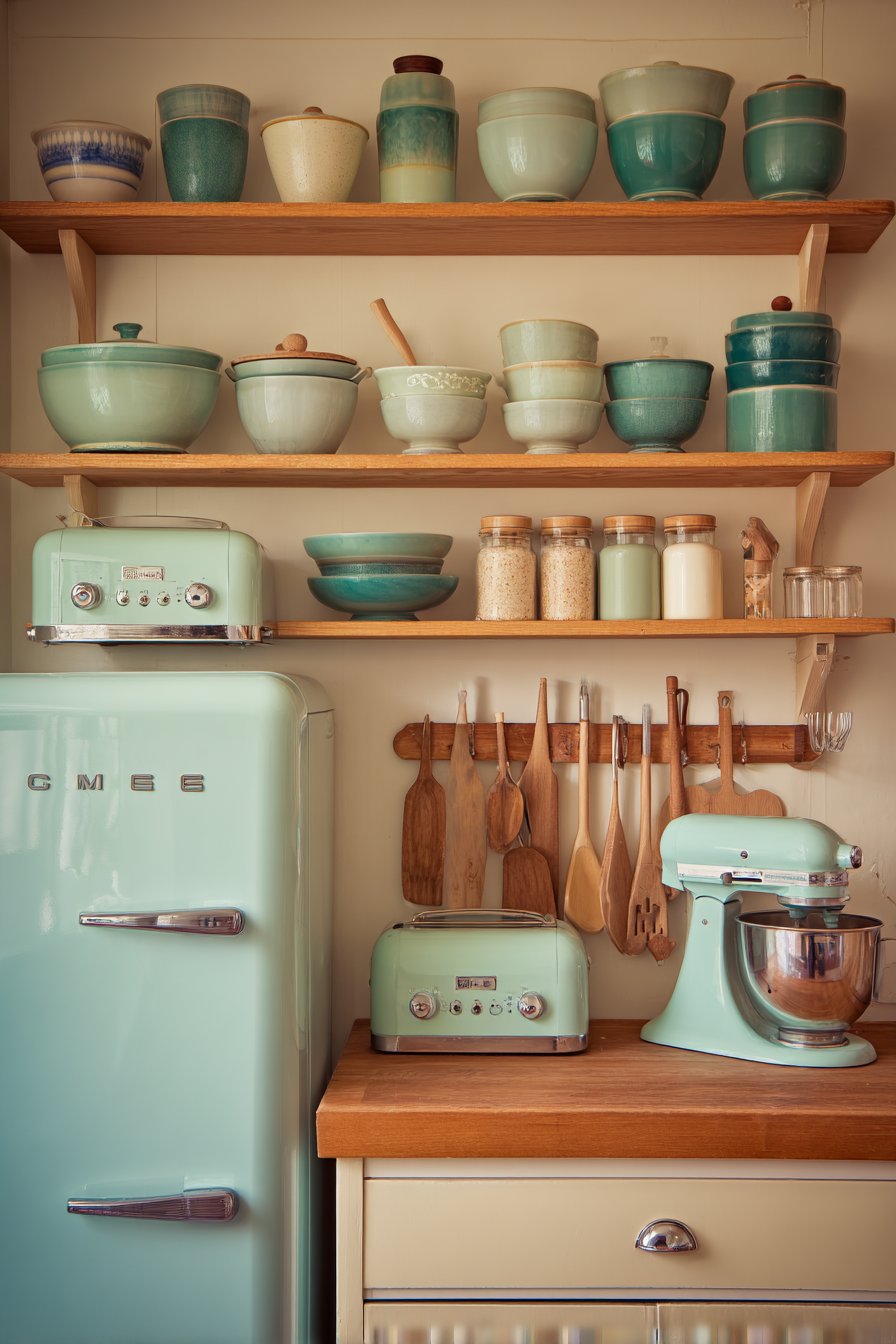
Open shelving displays vintage mixing bowls and kitchen tools with wooden handles, creating both storage and visual interest while maintaining easy access to frequently used items. The natural wood handles add warmth and texture while reinforcing the authentic vintage character. These displays demonstrate how functional items can become decorative elements when chosen and arranged with attention to period details.
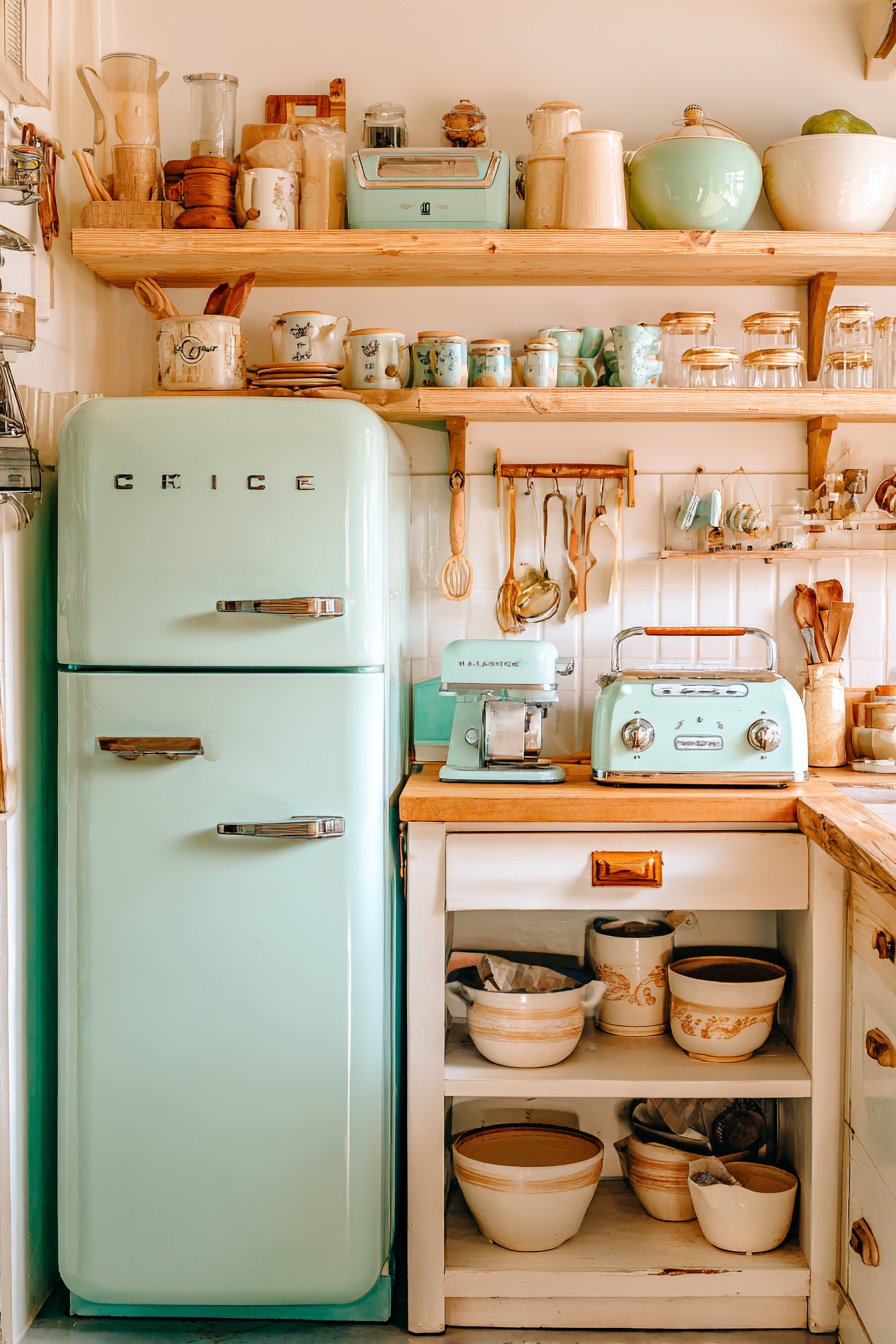
The color palette remains cohesive throughout the space with cream walls and natural wood accents that provide neutral backgrounds for the colorful vintage pieces. This balanced approach allows the mint green appliances to take center stage while creating a harmonious overall design that feels both vintage and fresh.
Key Design Tips:
- Choose a signature color for major appliances and coordinate smaller pieces accordingly
- Display vintage tools and equipment as functional decoration
- Use neutral backgrounds to highlight colorful vintage pieces
- Combine painted surfaces with natural wood for textural and color balance
11. Dedicated Baking Station
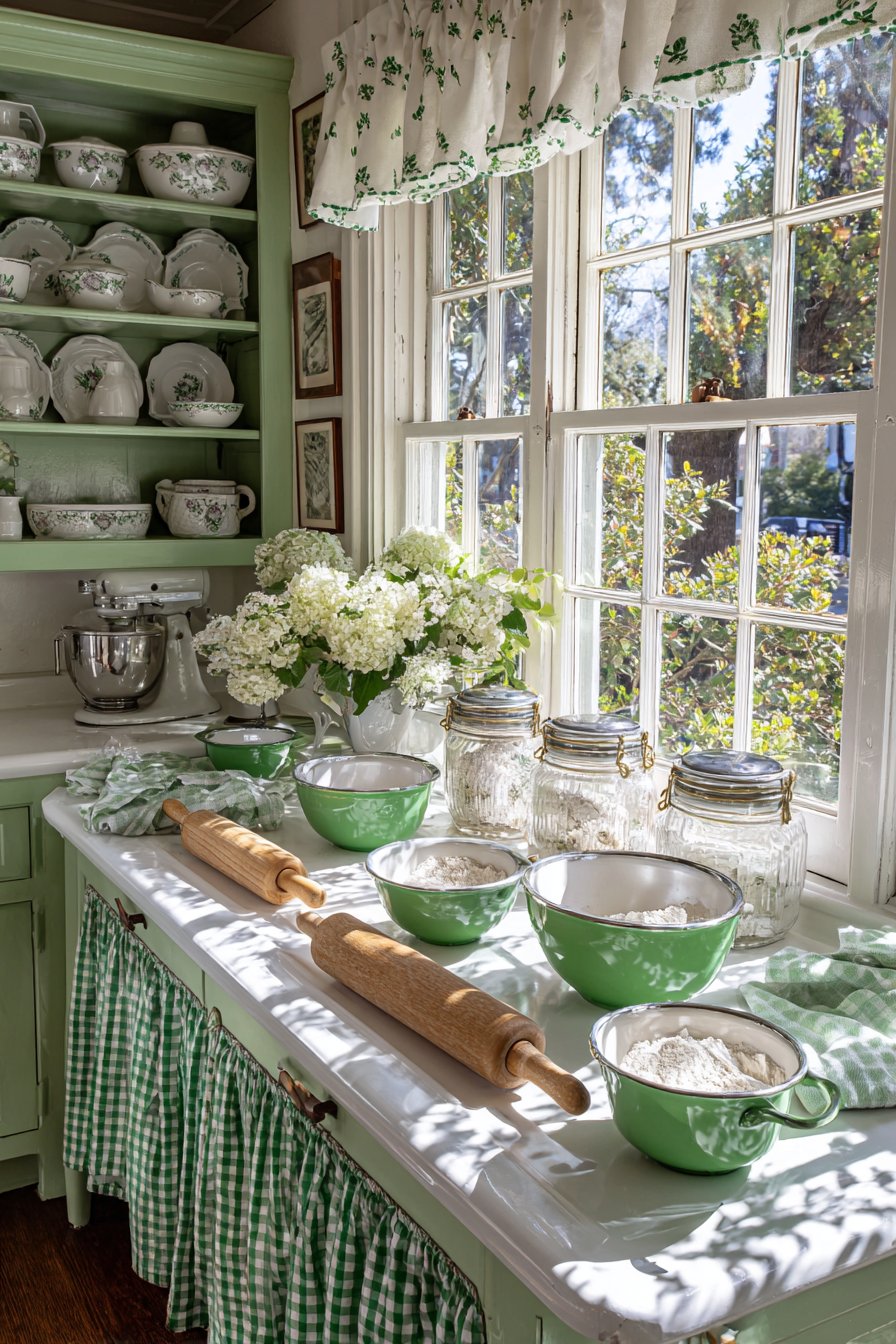
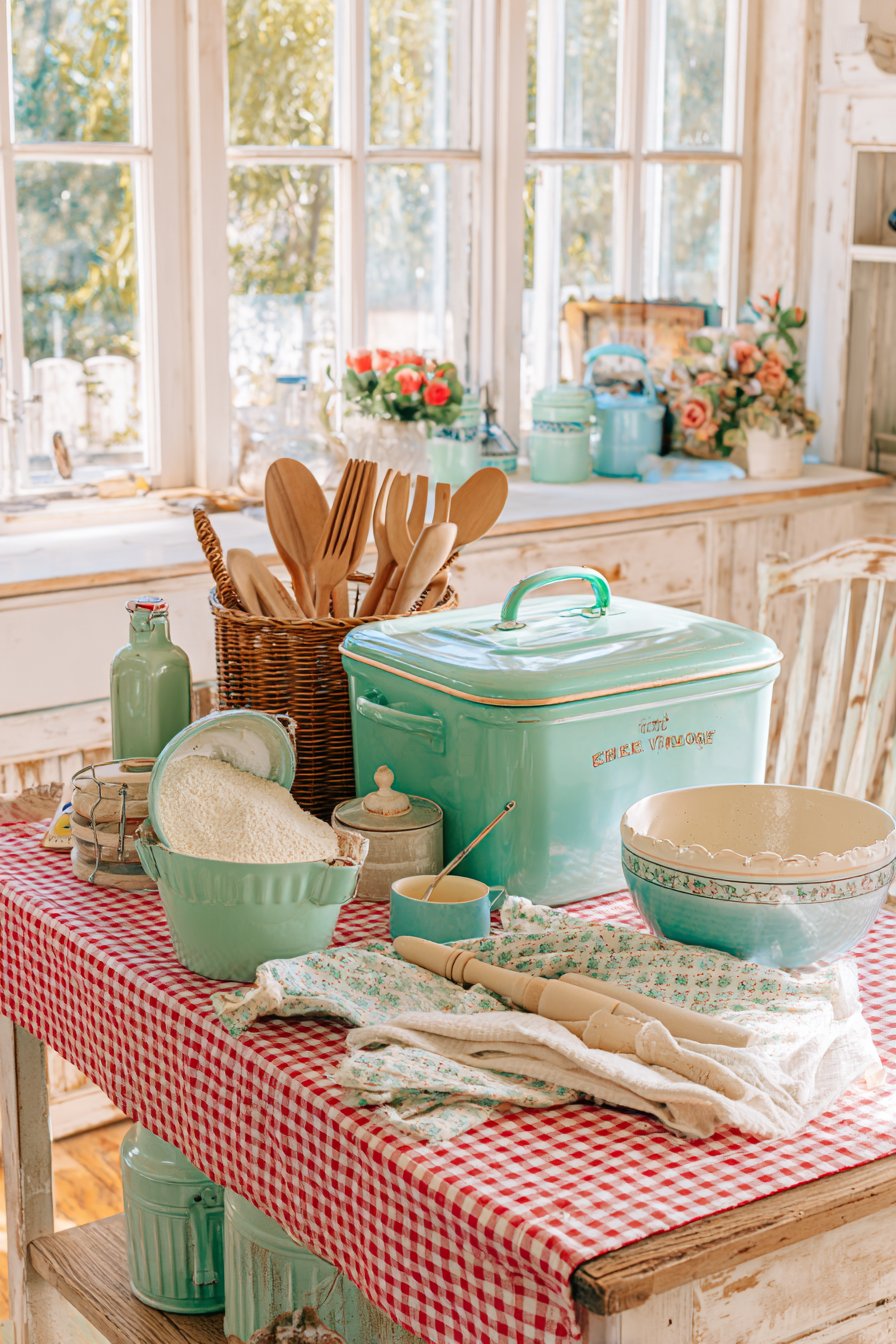
A vintage enamel-top table serves as a dedicated baking station, complete with rolling pins, vintage mixing bowls, and flour sifters arranged for active use rather than mere display. This functional approach to vintage kitchen design demonstrates how authentic pieces can serve modern needs while maintaining their historical character. The enamel surface provides an ideal workspace for baking tasks while contributing to the authentic vintage aesthetic.
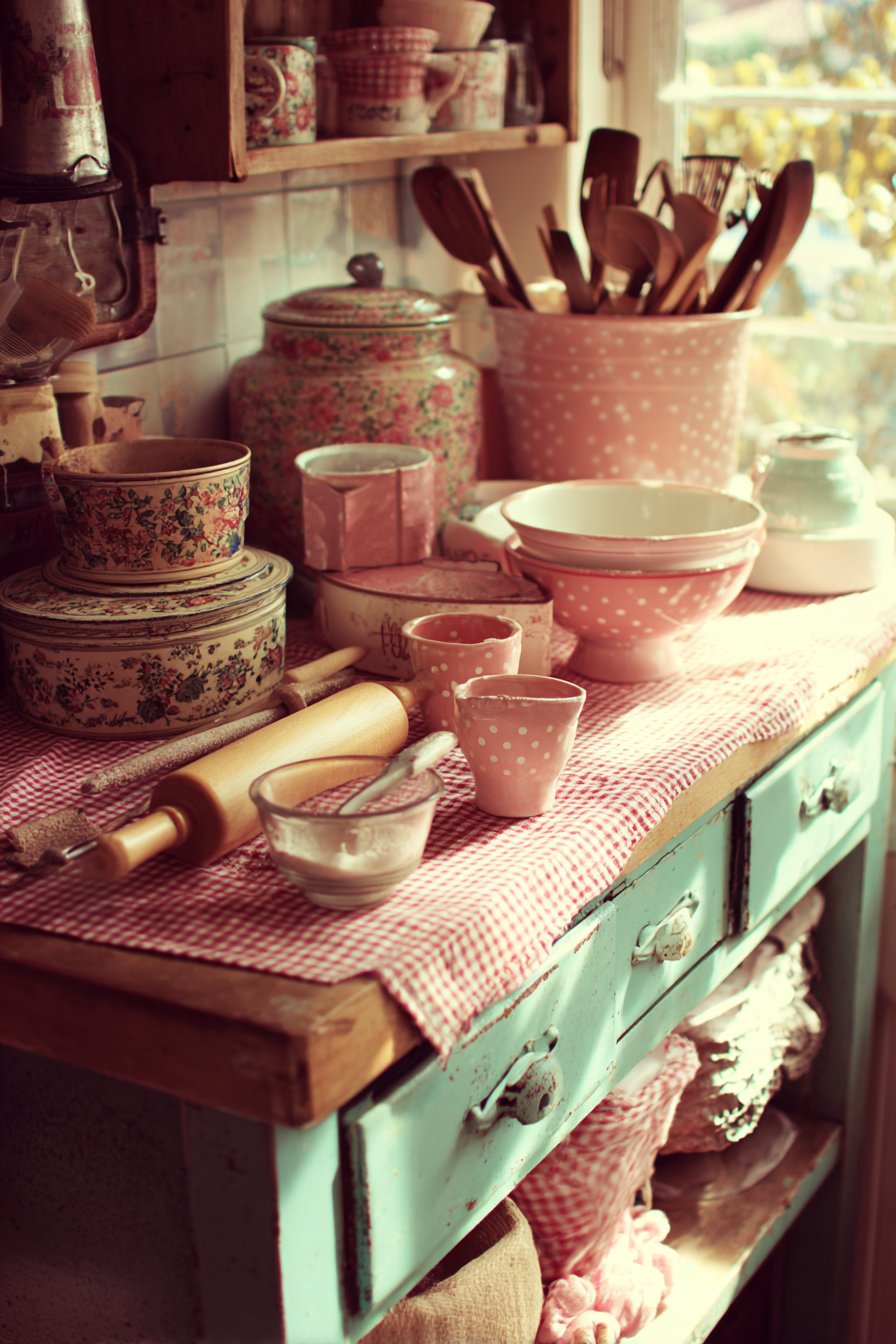
Gingham tablecloths and vintage kitchen towels add softness and pattern while maintaining period authenticity and providing practical functionality. These textile elements introduce color and texture while serving important functional purposes in food preparation and cleanup. The classic gingham pattern reinforces the vintage theme while adding visual warmth to the workspace.
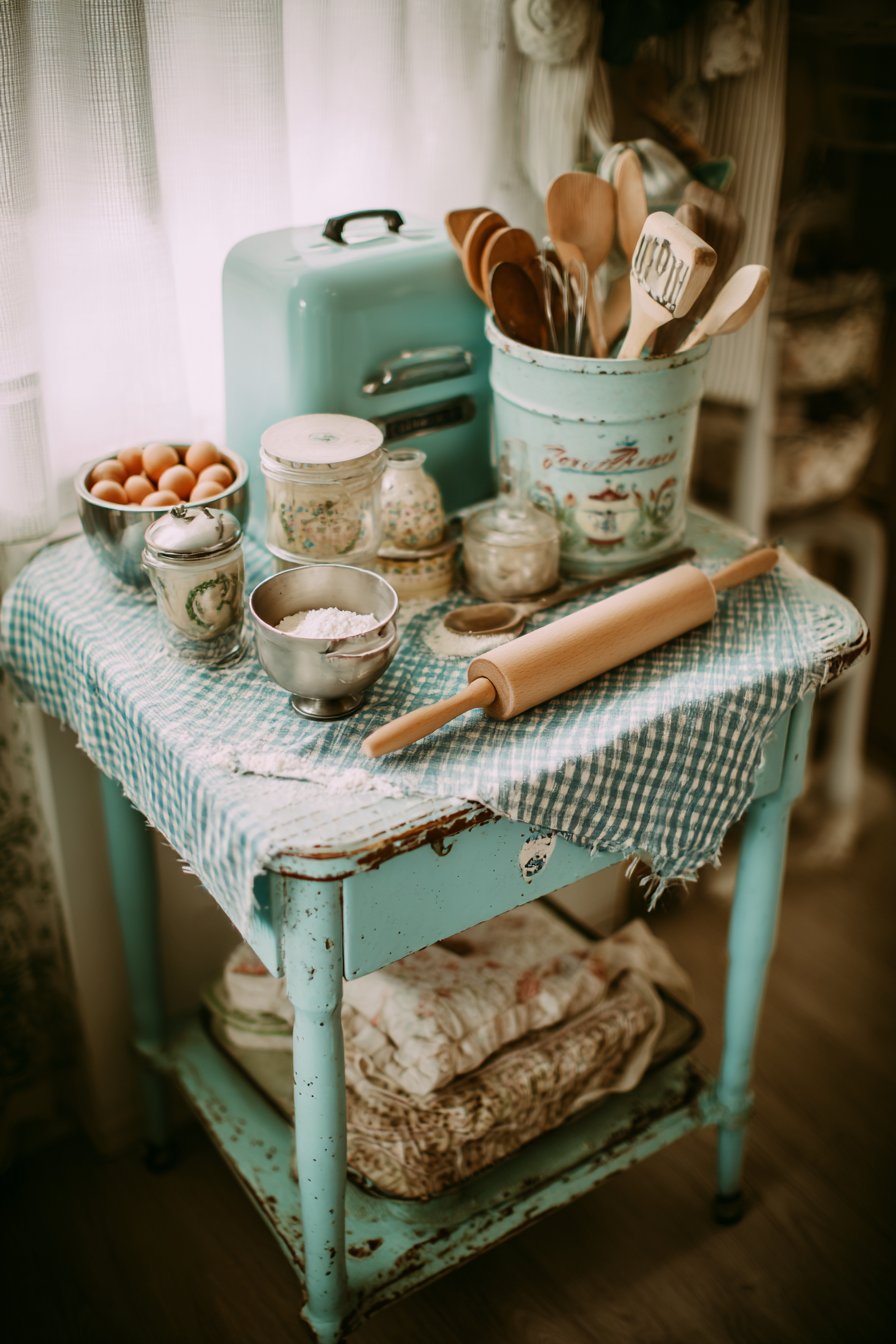
Window light creates natural highlights on the enamel surfaces, emphasizing the functional beauty of these vintage pieces while providing excellent illumination for detailed baking tasks. The interplay between natural light and reflective surfaces creates visual interest while demonstrating how thoughtful placement can enhance both functionality and aesthetic appeal.
Key Design Tips:
- Create dedicated work stations using vintage tables and equipment
- Combine functional and decorative elements for authentic vintage appeal
- Use classic textile patterns like gingham to add color and softness
- Position work areas to take advantage of natural light for both beauty and functionality
12. Pantry Organization Systems
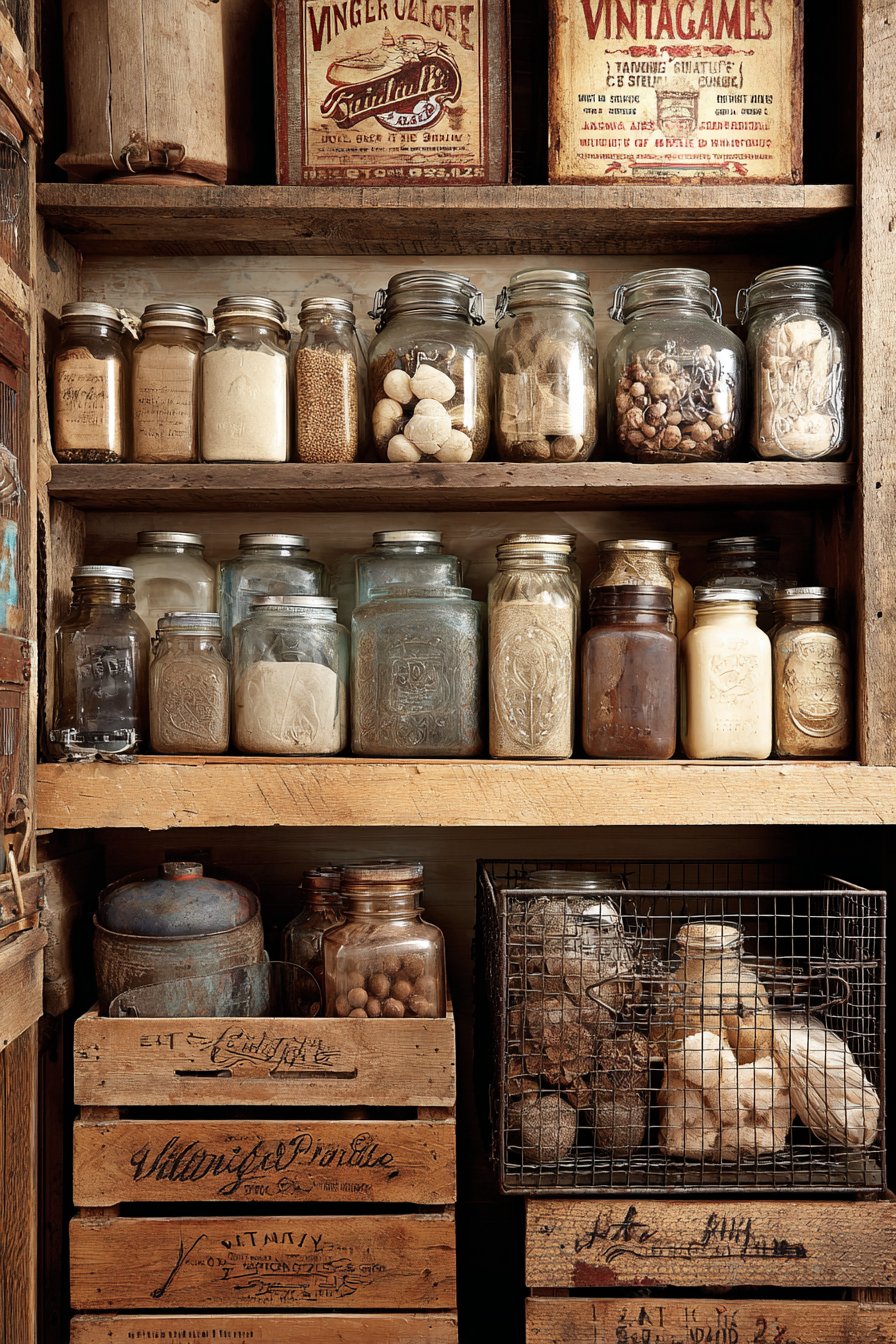
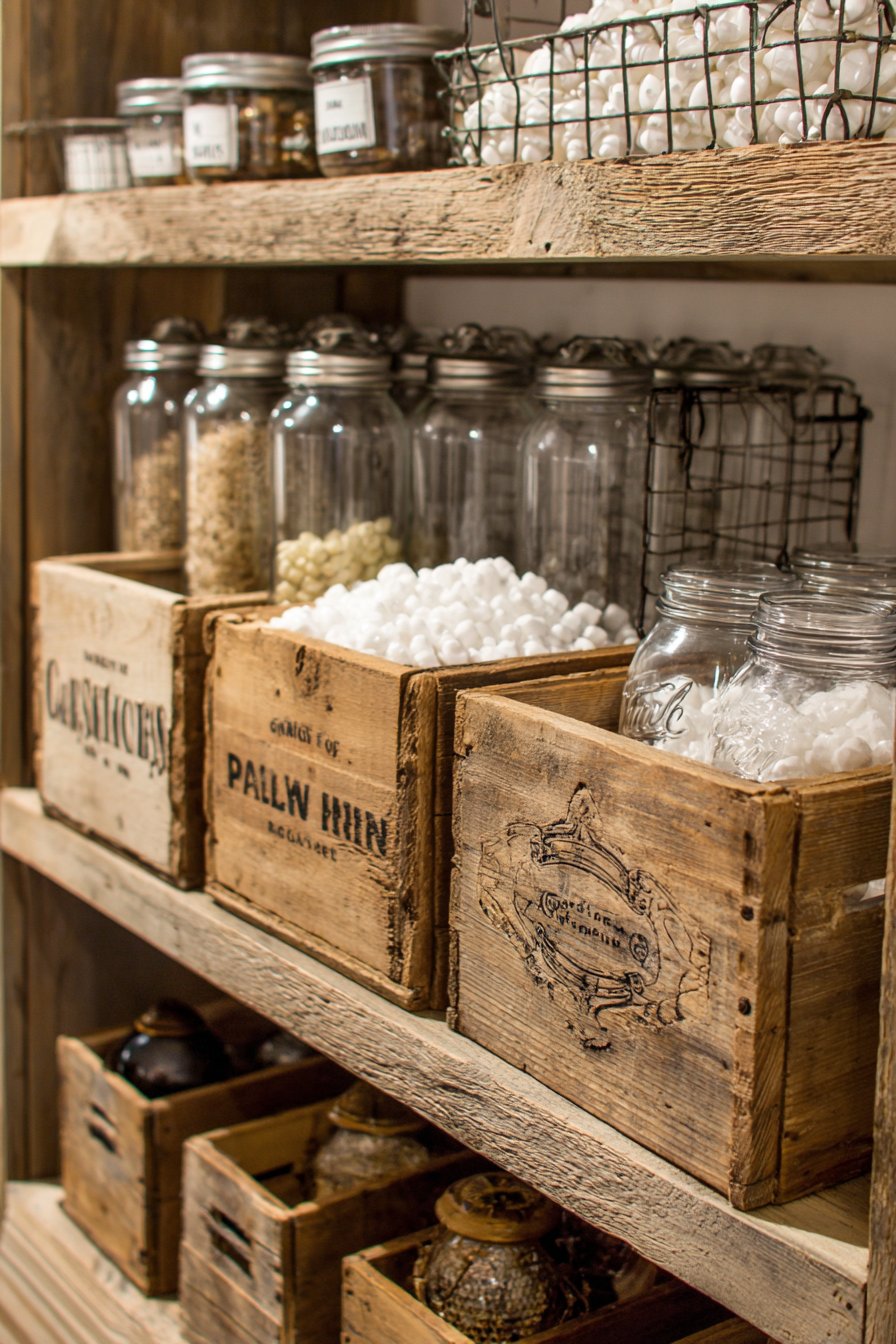
Vintage mason jars, wooden crates, and wire baskets create an organized pantry system that demonstrates how storage can become decoration when approached with vintage sensibilities. Hand-lettered labels and vintage advertising signs add authentic period details while providing necessary organization information. This approach to pantry organization celebrates the materials and methods of earlier generations while meeting modern storage needs.

The wooden shelving shows natural aging that enhances the overall aesthetic while providing sturdy support for stored items. This weathered appearance adds character and authenticity while demonstrating how time can enhance rather than detract from well-made pieces. The natural variations in wood grain and color create visual interest while maintaining the rustic charm essential to vintage kitchen design.
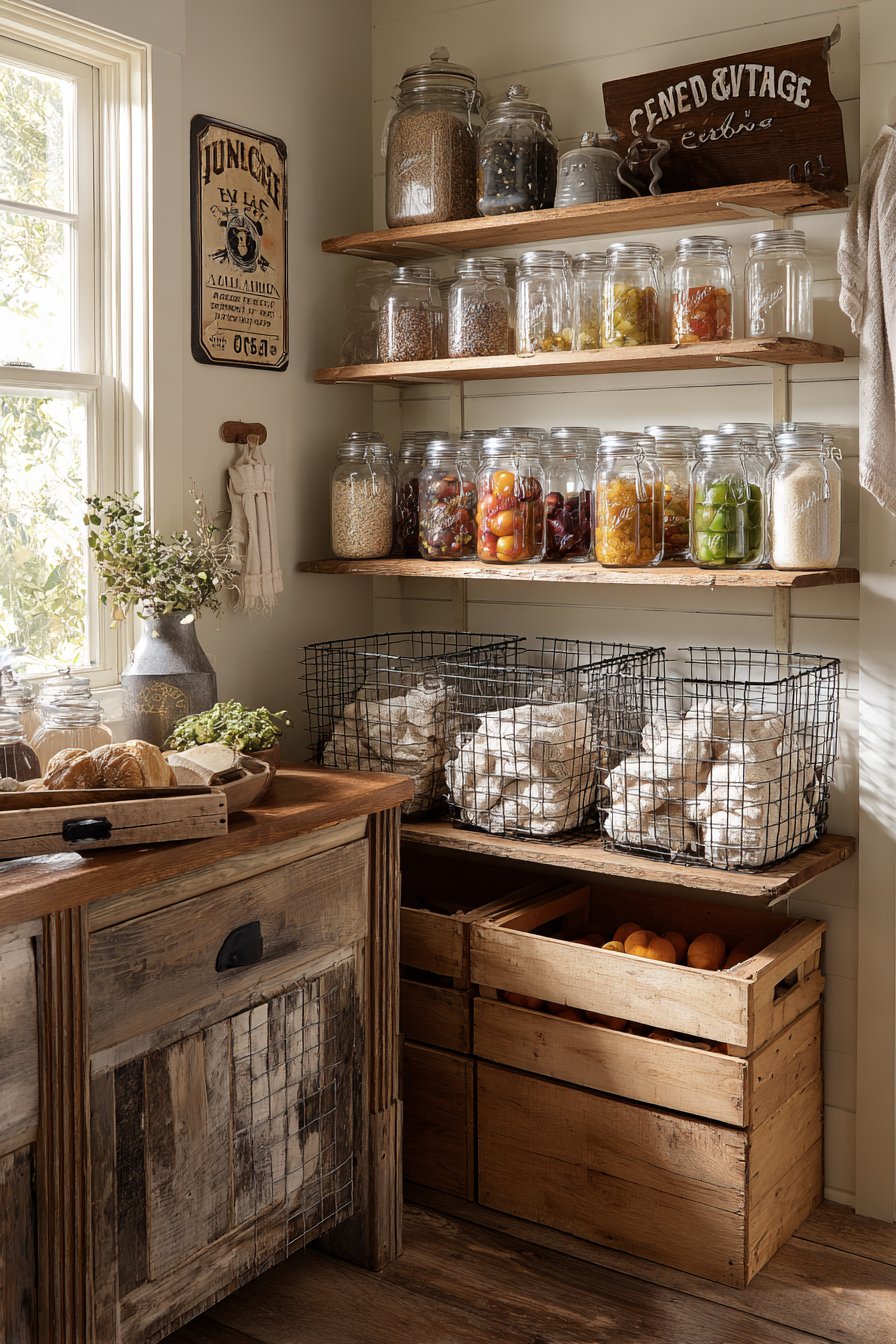
Soft natural lighting filters through the space to highlight the textures and organizational beauty of these practical vintage solutions. The gentle illumination creates an inviting atmosphere while ensuring easy identification of stored items, demonstrating how functional spaces can maintain beauty and charm through thoughtful design choices.
Key Design Tips:
- Use vintage containers like mason jars and wooden crates for attractive storage solutions
- Create hand-lettered labels to add personal touches and maintain organization
- Allow natural aging on wooden elements to enhance authentic character
- Ensure adequate lighting in storage areas for both functionality and visual appeal
13. Hutch Display Excellence
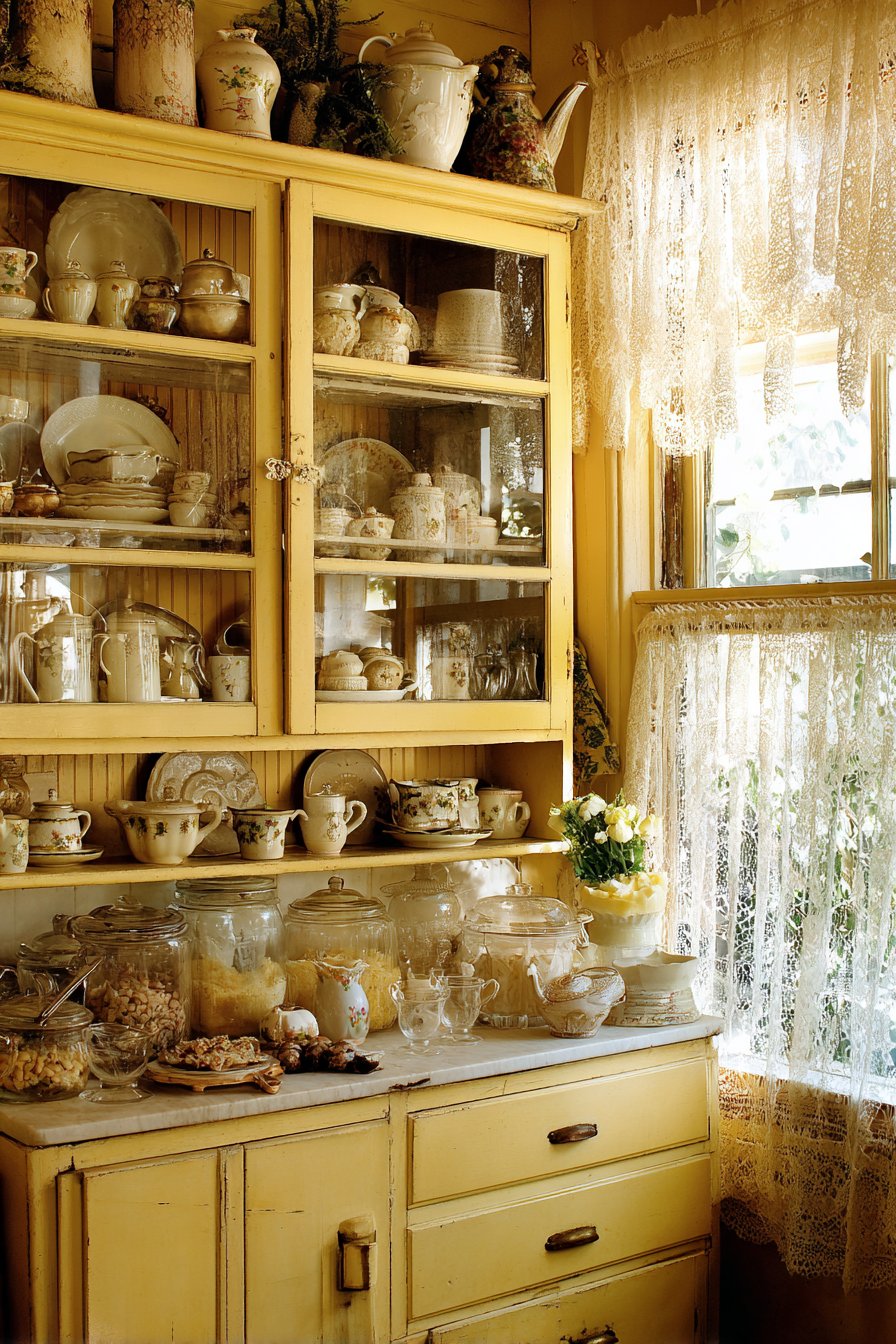
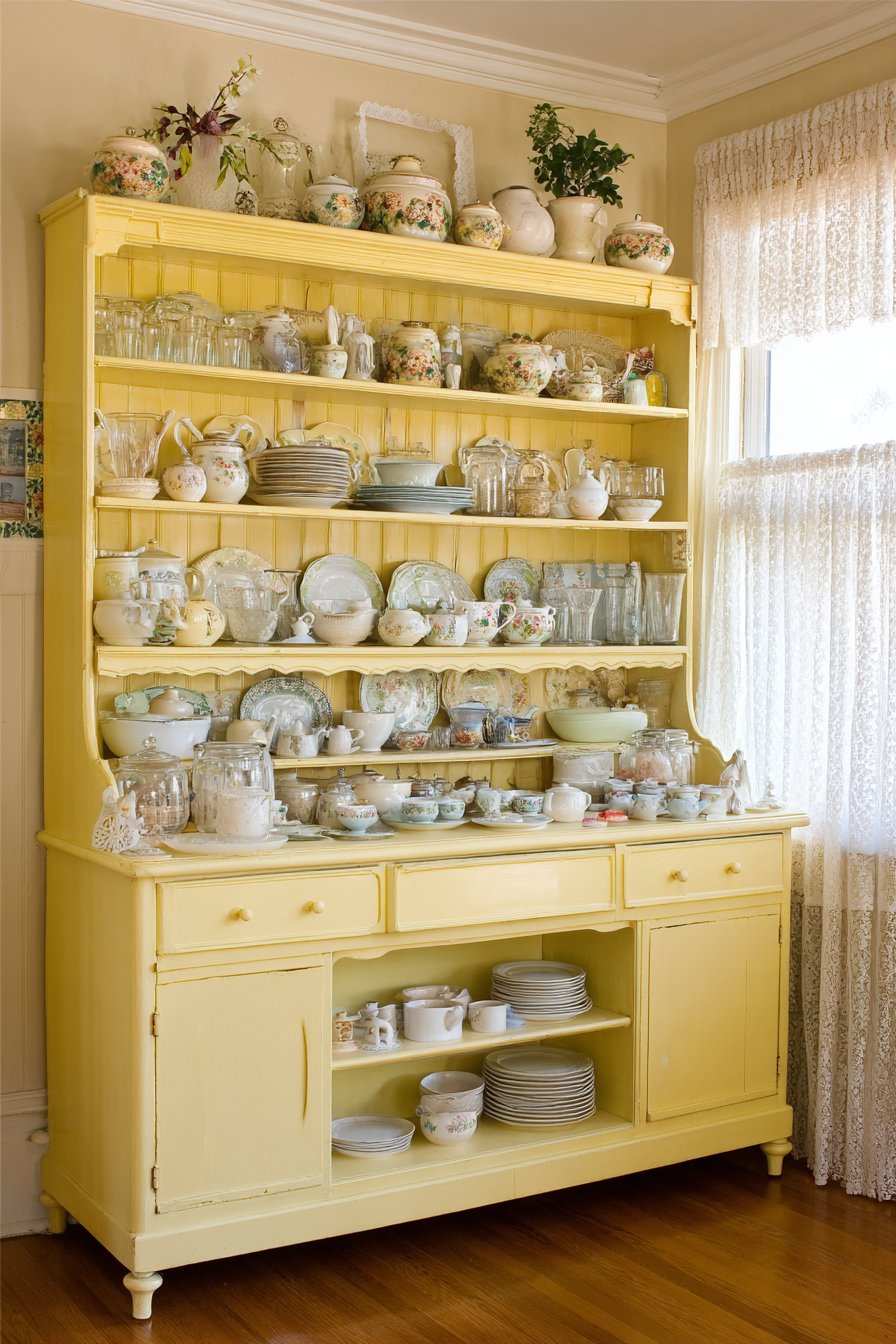
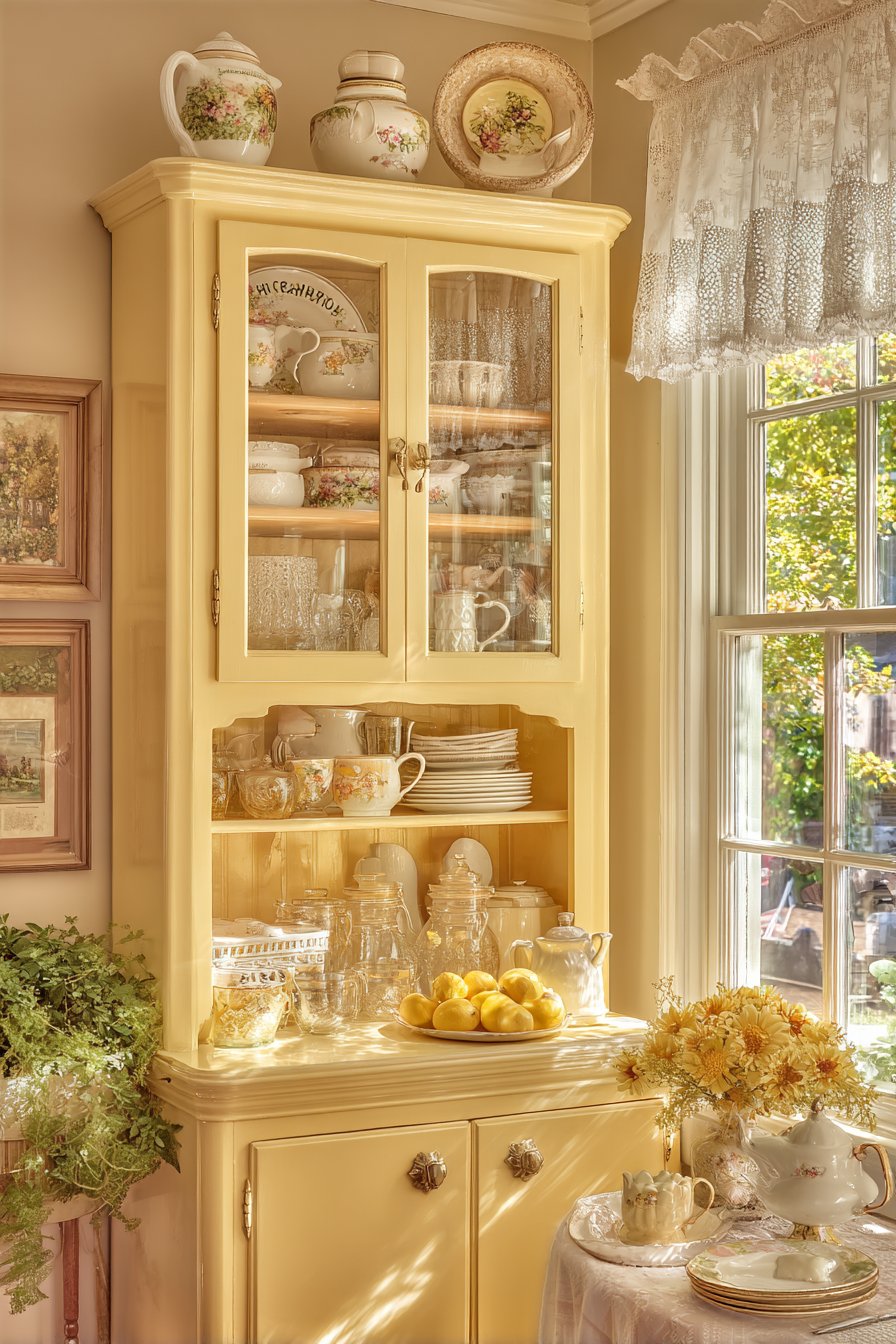
A vintage kitchen hutch painted in sunny soft yellow serves as both storage and display centerpiece, filled with carefully arranged collections of vintage pottery, glassware, and serving pieces. This substantial piece of furniture demonstrates how a single vintage element can anchor an entire kitchen design while providing essential storage and display opportunities. The yellow color choice brings warmth and cheerfulness while creating a focal point that draws attention and admiration.
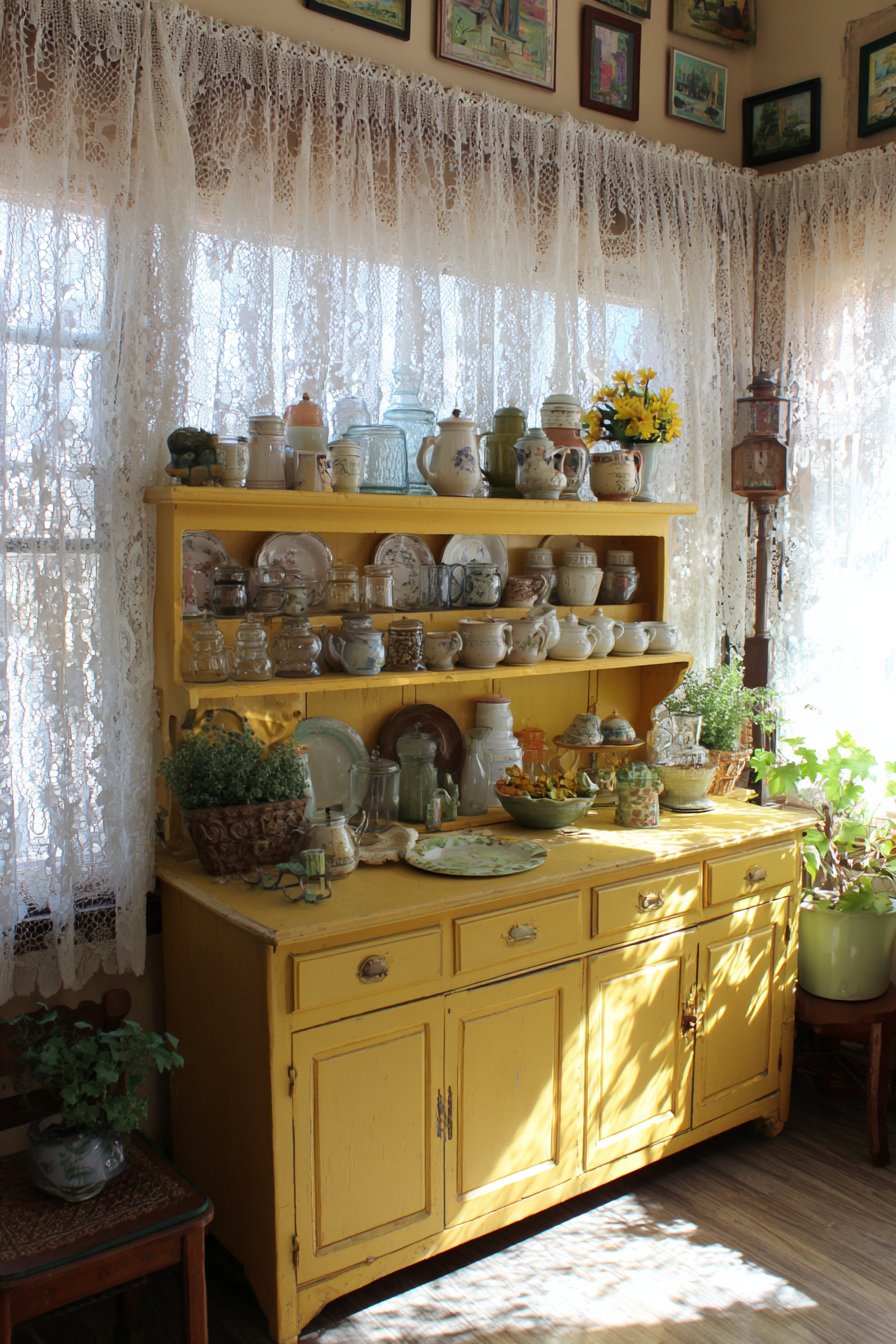
The hutch arrangement showcases the beautiful details of vintage pieces while maintaining organization and accessibility. Each shelf is thoughtfully arranged to highlight the best features of the displayed items while ensuring easy access for regular use. This balance between beauty and functionality represents the best of vintage kitchen design, where every element serves multiple purposes.
Lace curtains at nearby windows soften the natural light while creating a romantic, nostalgic atmosphere that perfectly complements the vintage aesthetic. These delicate window treatments filter harsh light while maintaining privacy and adding textural interest through their intricate patterns and soft, flowing lines.
Key Design Tips:
- Use substantial vintage furniture pieces as focal points and storage solutions
- Arrange displays to highlight the best features of vintage collections
- Choose cheerful colors like soft yellow to create warm, welcoming atmospheres
- Install lace curtains to soften natural light and enhance romantic vintage appeal
14. Coffee Station Dedication
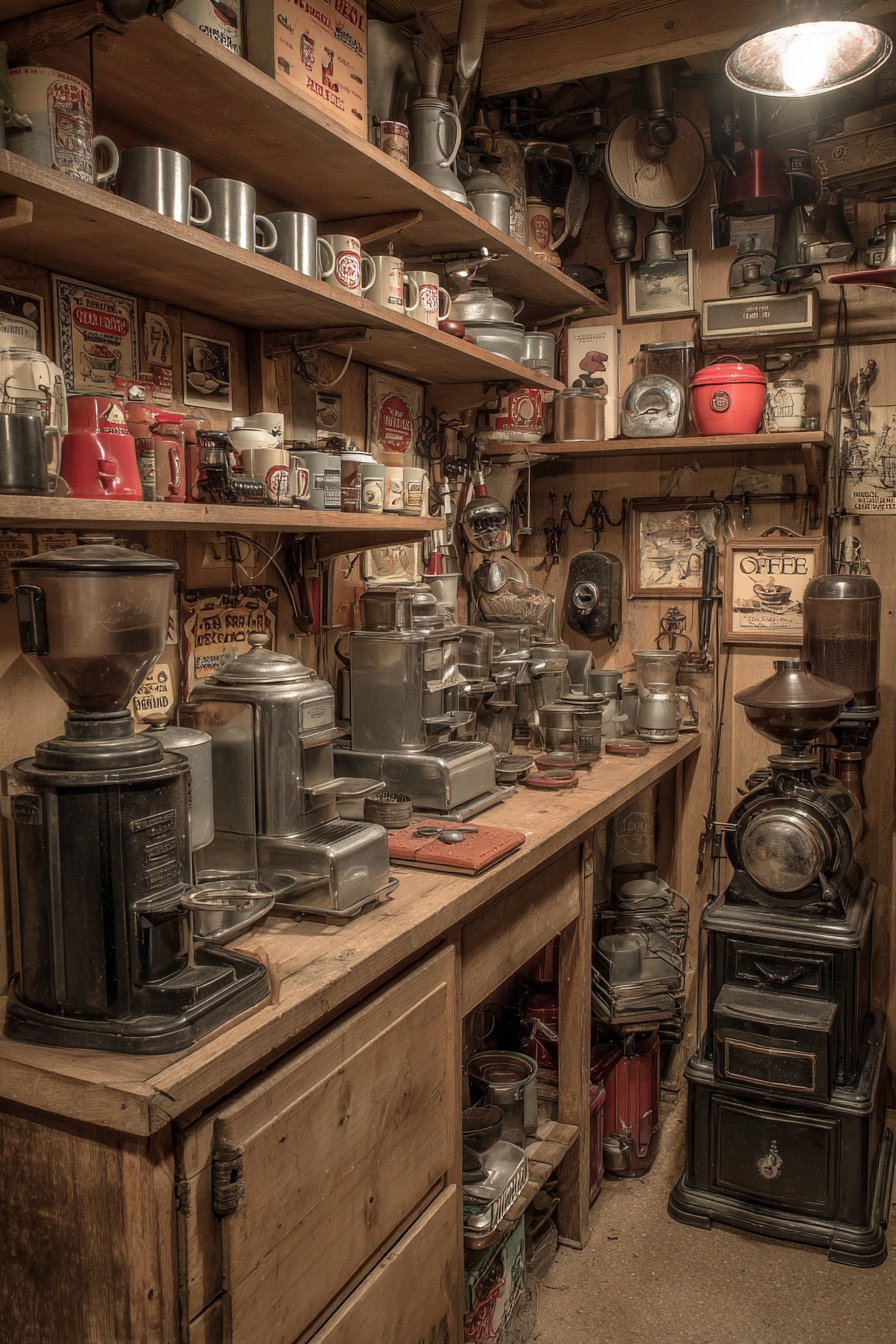
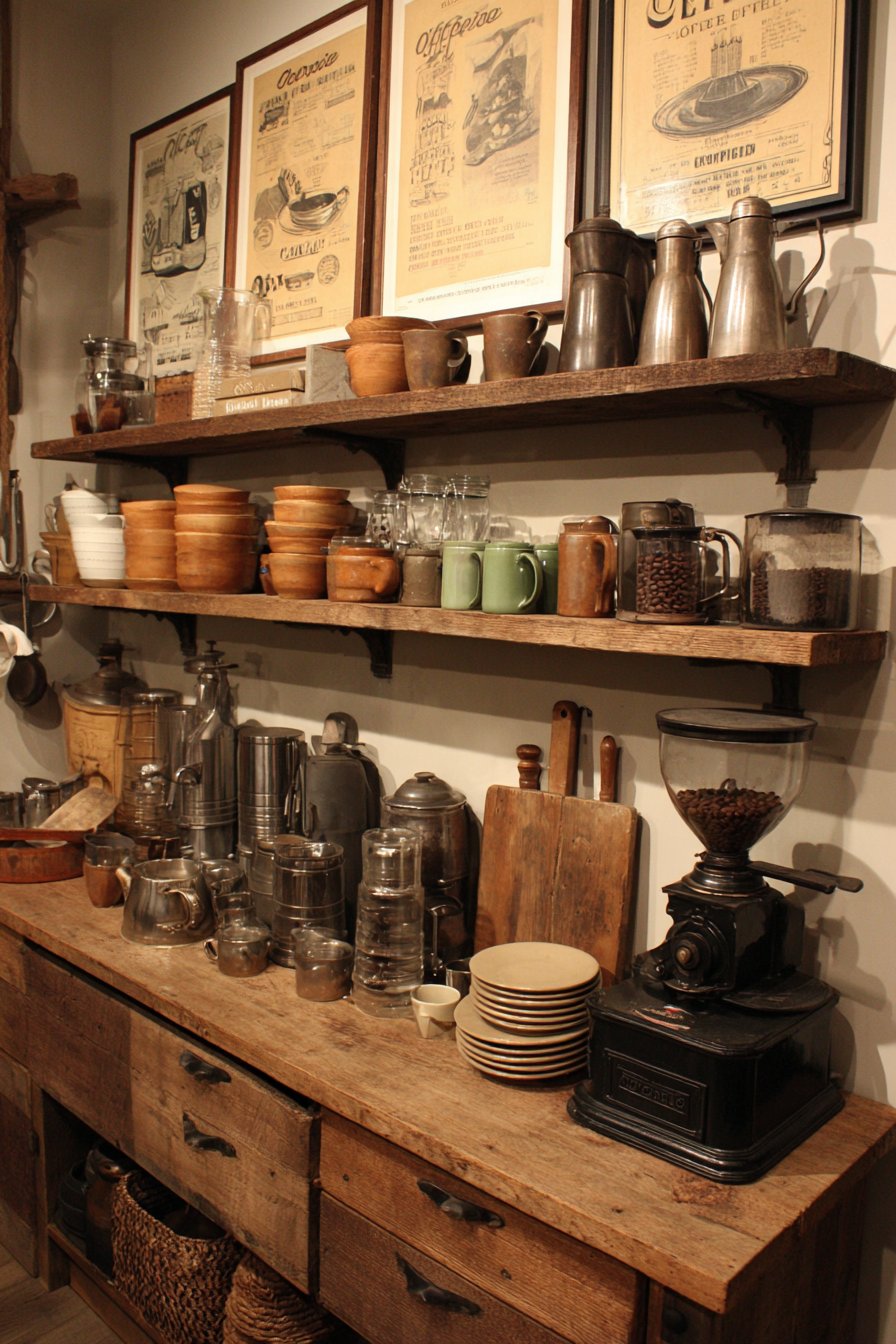
A thoughtfully arranged coffee station featuring vintage percolators, enamel mugs, and a restored vintage coffee grinder creates a dedicated area that celebrates the ritual of coffee preparation while maintaining authentic vintage character. This specialized zone demonstrates how modern conveniences can be integrated with vintage aesthetics to create functional spaces that honor traditional methods and materials.
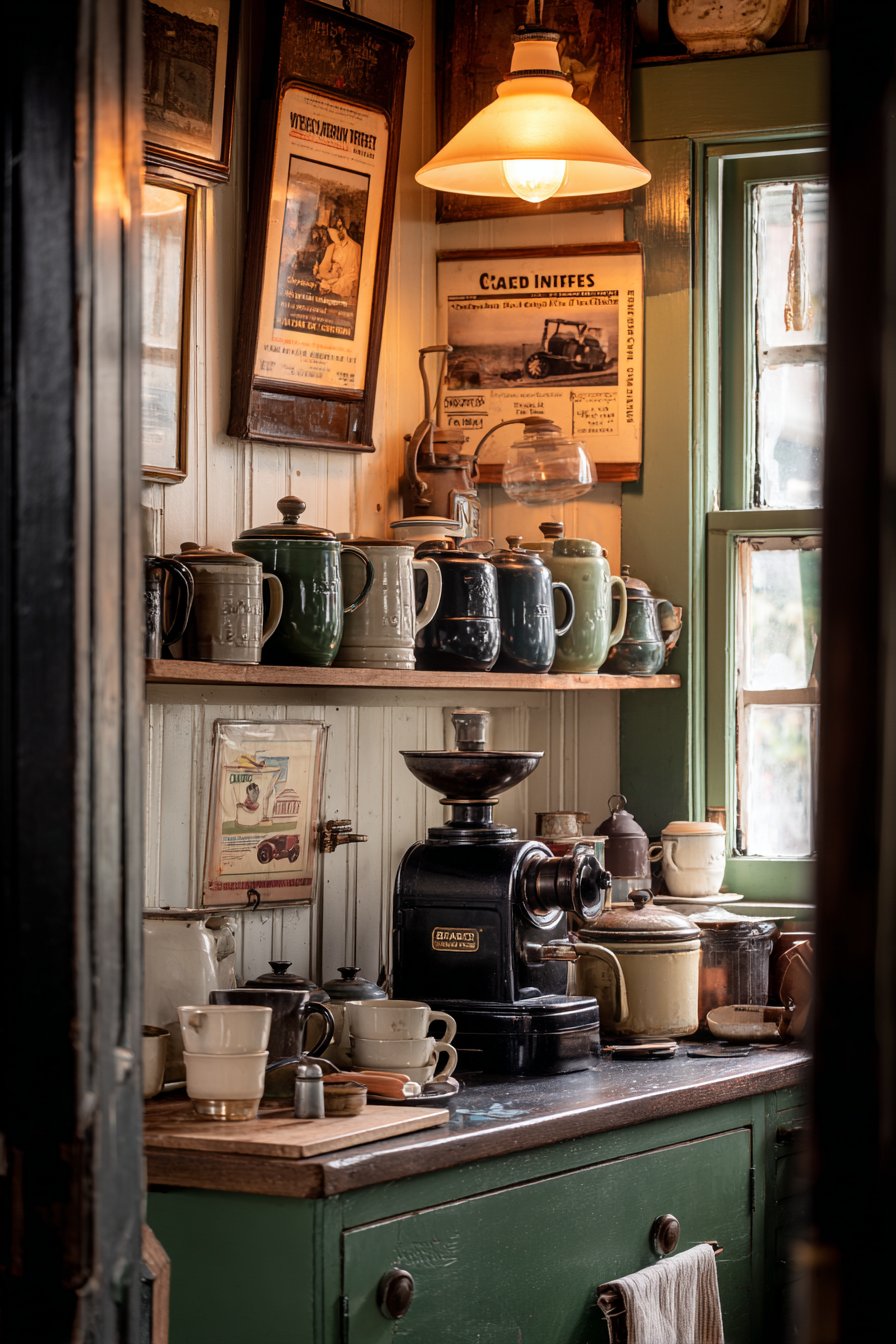
Open shelving displays vintage coffee advertisements and period accessories that reinforce the coffee theme while adding visual interest and authentic character. These paper ephemera and small accessories create layers of detail that reward closer examination while contributing to the overall vintage atmosphere. The rich patina on metal pieces adds authentic character while warm lighting emphasizes the functional charm.
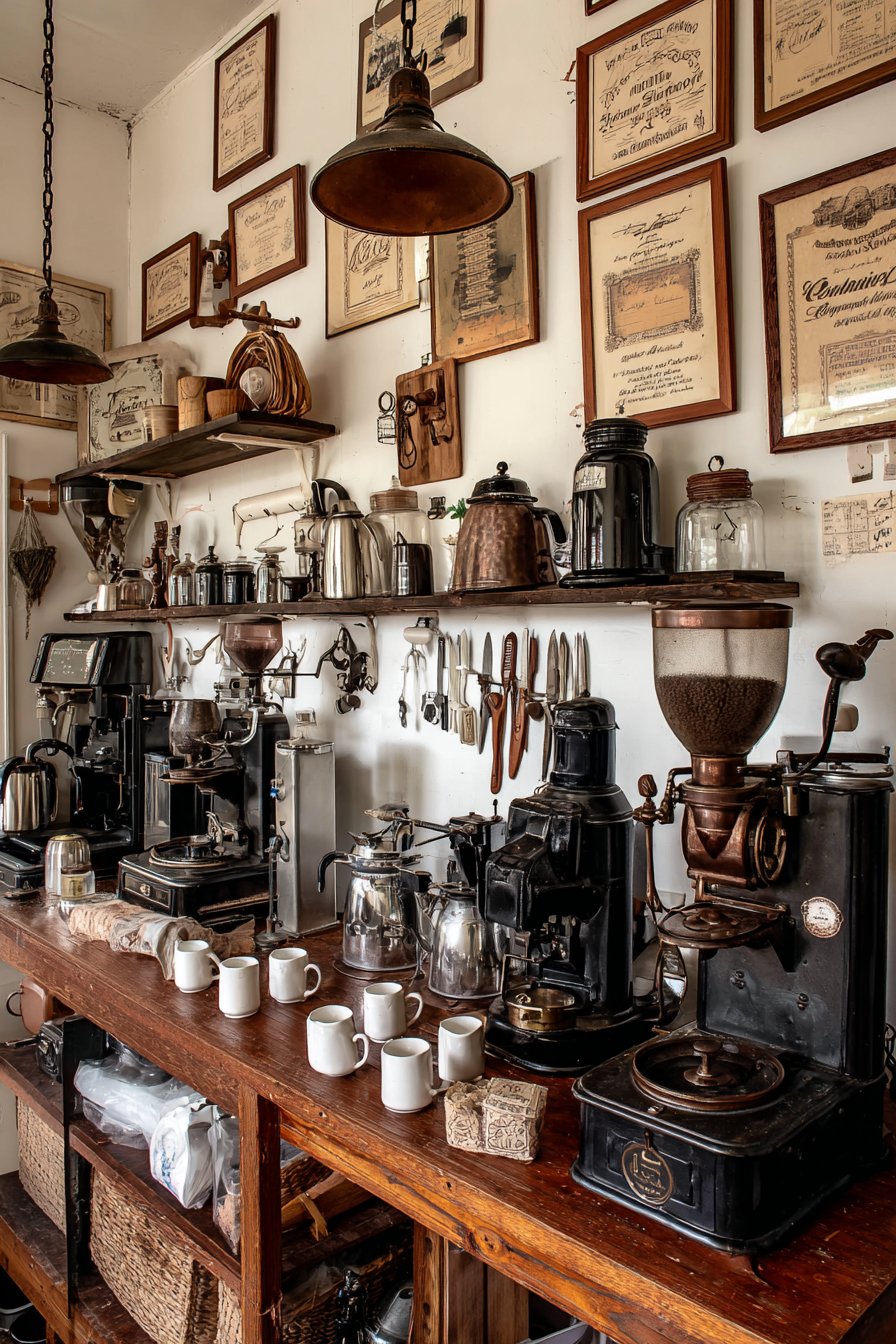
The dedicated counter space ensures that coffee preparation doesn’t interfere with other kitchen activities while creating a special area that can be enjoyed and appreciated throughout the day. This focused approach to space planning demonstrates how vintage elements can enhance both functionality and aesthetic appeal in modern kitchen design.
Key Design Tips:
- Create dedicated stations for specific activities like coffee preparation
- Display vintage advertisements and packaging for authentic period character
- Highlight the natural patina on vintage metal pieces as design elements
- Use warm lighting to emphasize functional areas and create inviting atmospheres
15. Island Pendant Lighting

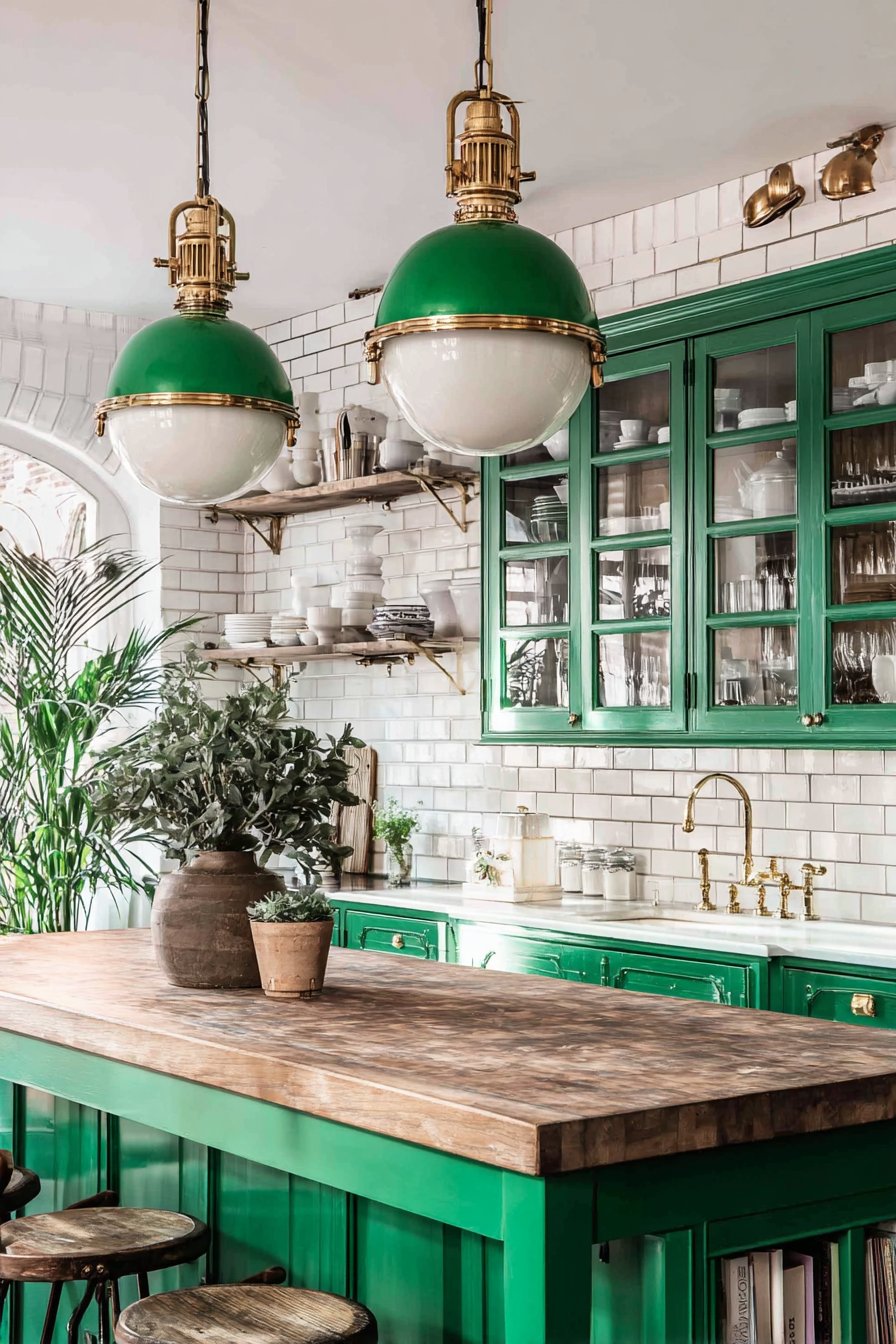
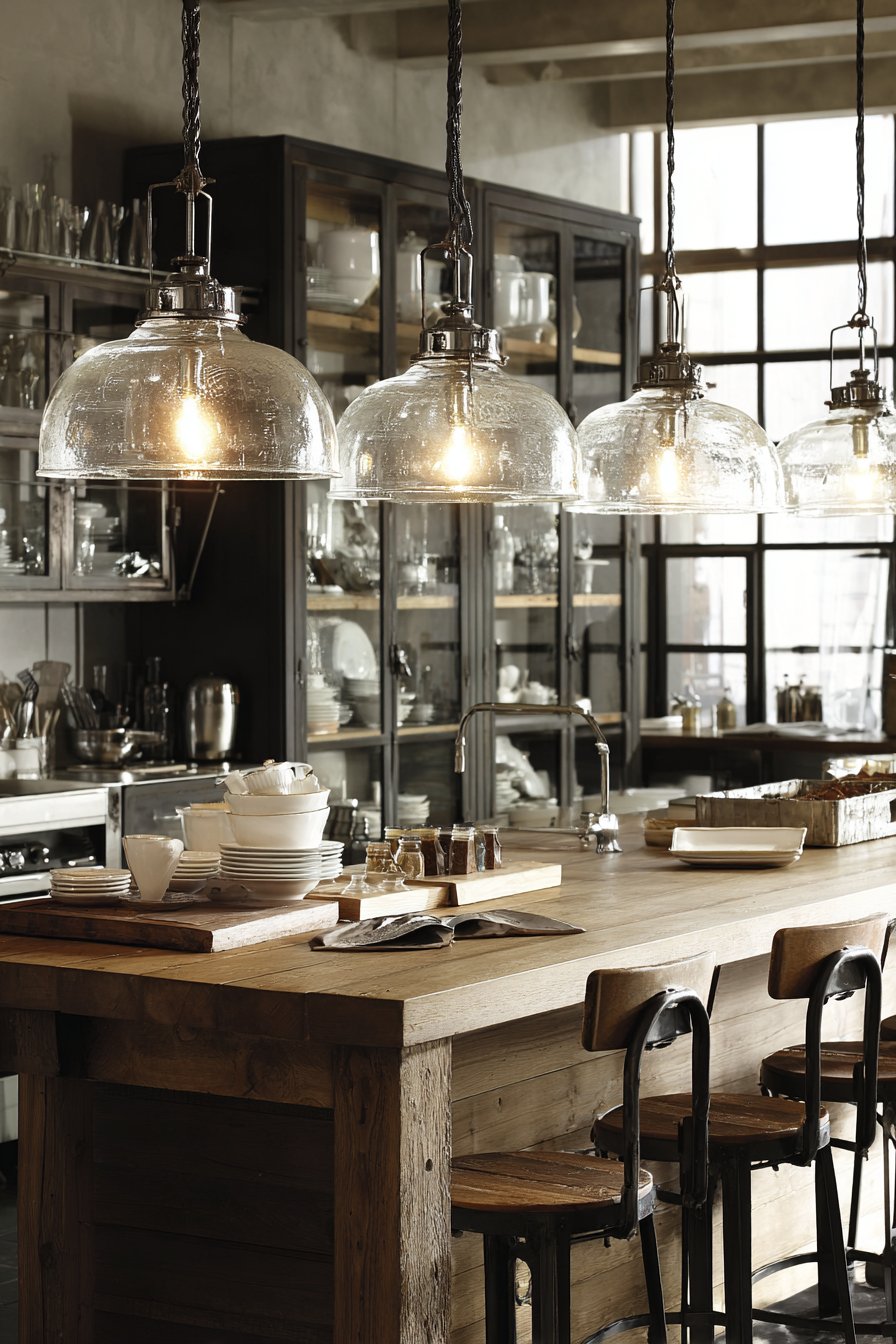
Vintage-style pendant lighting featuring classic schoolhouse glass shades provides both functional task lighting and authentic period character while illuminating a kitchen island topped with warm butcher block. These pendant lights create focused work areas while contributing to the overall vintage aesthetic through their clean lines and traditional materials. The schoolhouse style represents timeless design that transcends specific eras while maintaining vintage appeal.
Vintage stools with curved backs provide comfortable seating while maintaining period authenticity and visual lightness around the island. These seating options demonstrate how functional furniture can contribute to the vintage theme while providing necessary amenities for modern family life. The curved lines soften the overall design while adding visual interest and comfort.
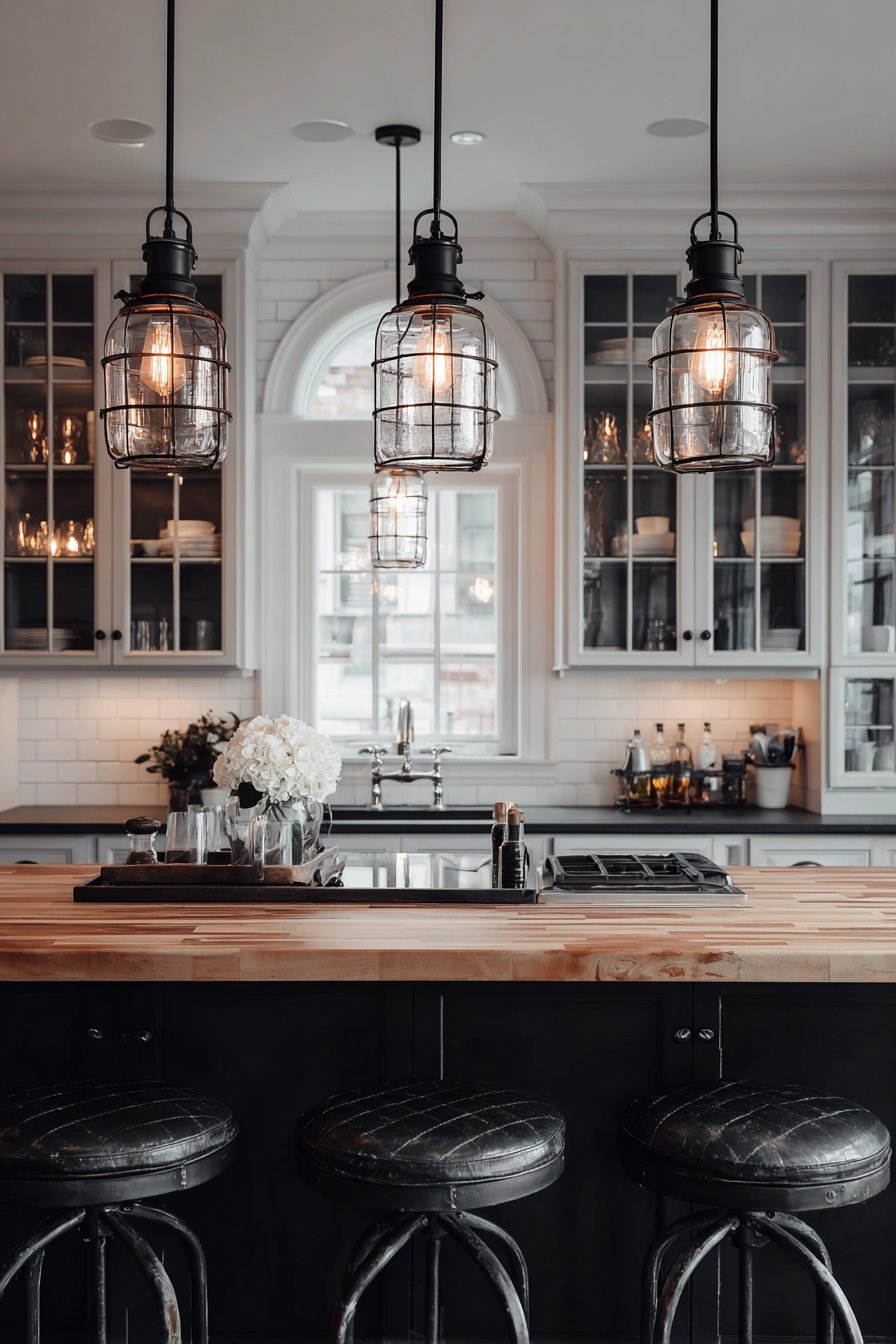
Glass-front cabinetry surrounding the island displays vintage dishware collections, creating opportunities for both storage and decoration while maintaining the cohesive vintage theme throughout the kitchen. This integration of display and storage demonstrates how thoughtful planning can maximize both functionality and visual appeal in vintage kitchen design.
Key Design Tips:
- Use schoolhouse-style pendant lights for timeless vintage appeal and excellent task lighting
- Choose seating with period-appropriate details to maintain authentic character
- Combine butcher block surfaces with vintage lighting for warm, functional work areas
- Integrate display opportunities throughout the kitchen to showcase vintage collections
16. Textile Integration Excellence
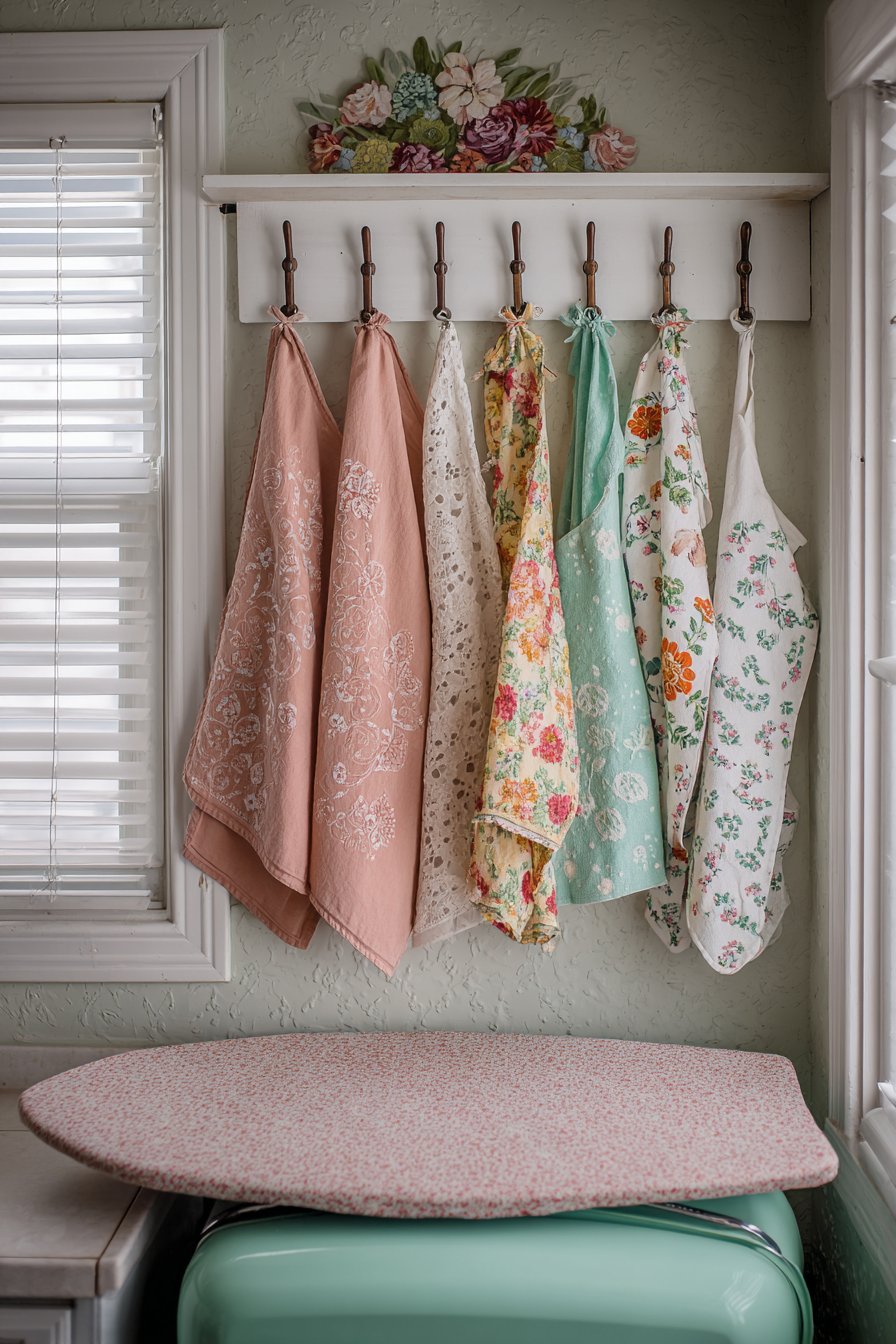
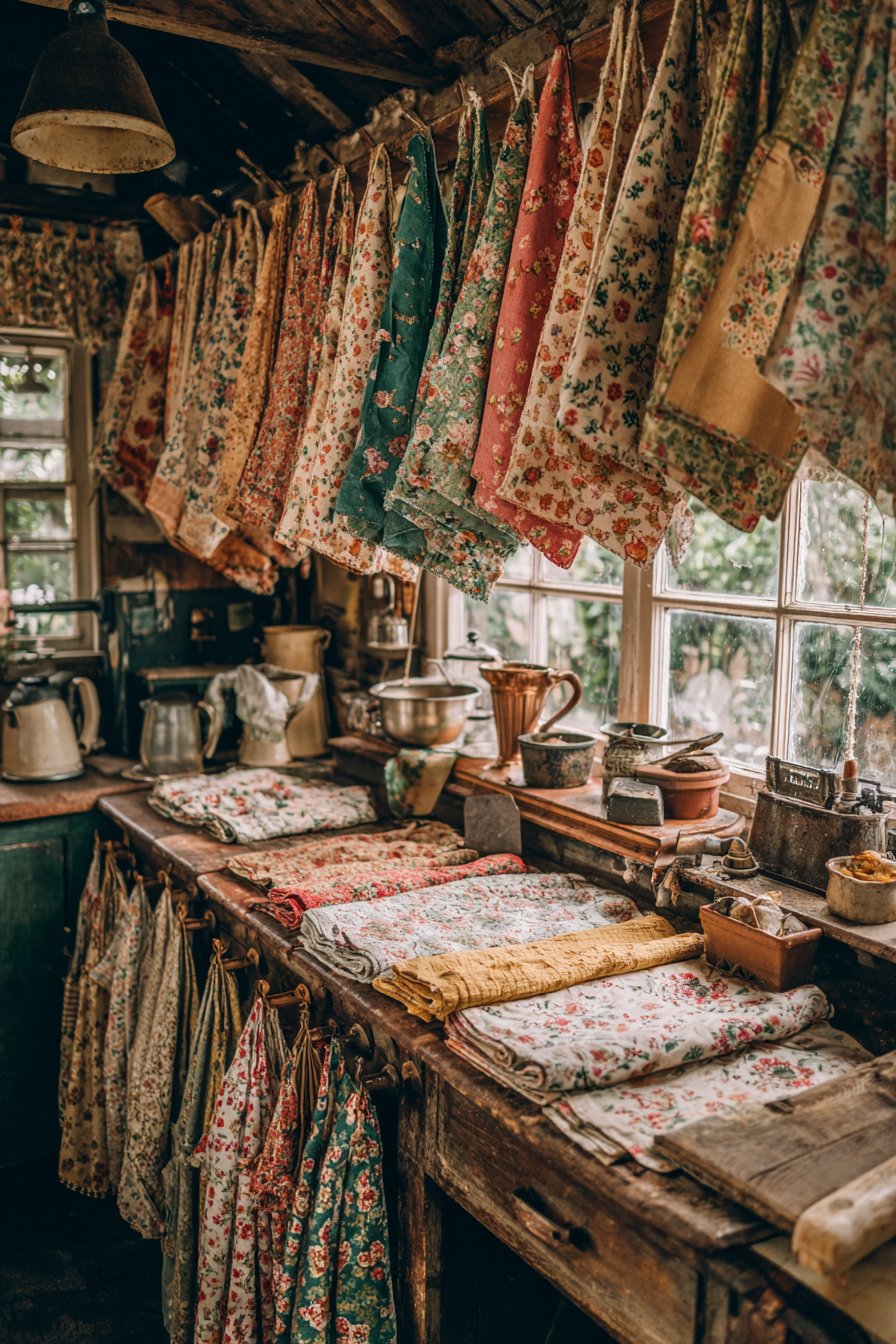
A carefully curated collection of vintage kitchen textiles including flour sack towels, embroidered pot holders, and vintage aprons creates both functional accessories and decorative elements when displayed on period-appropriate hooks. These textile elements introduce softness, color, and pattern while serving important practical purposes in daily kitchen activities. The handmade quality of vintage textiles adds personal character that cannot be replicated with modern mass-produced items.
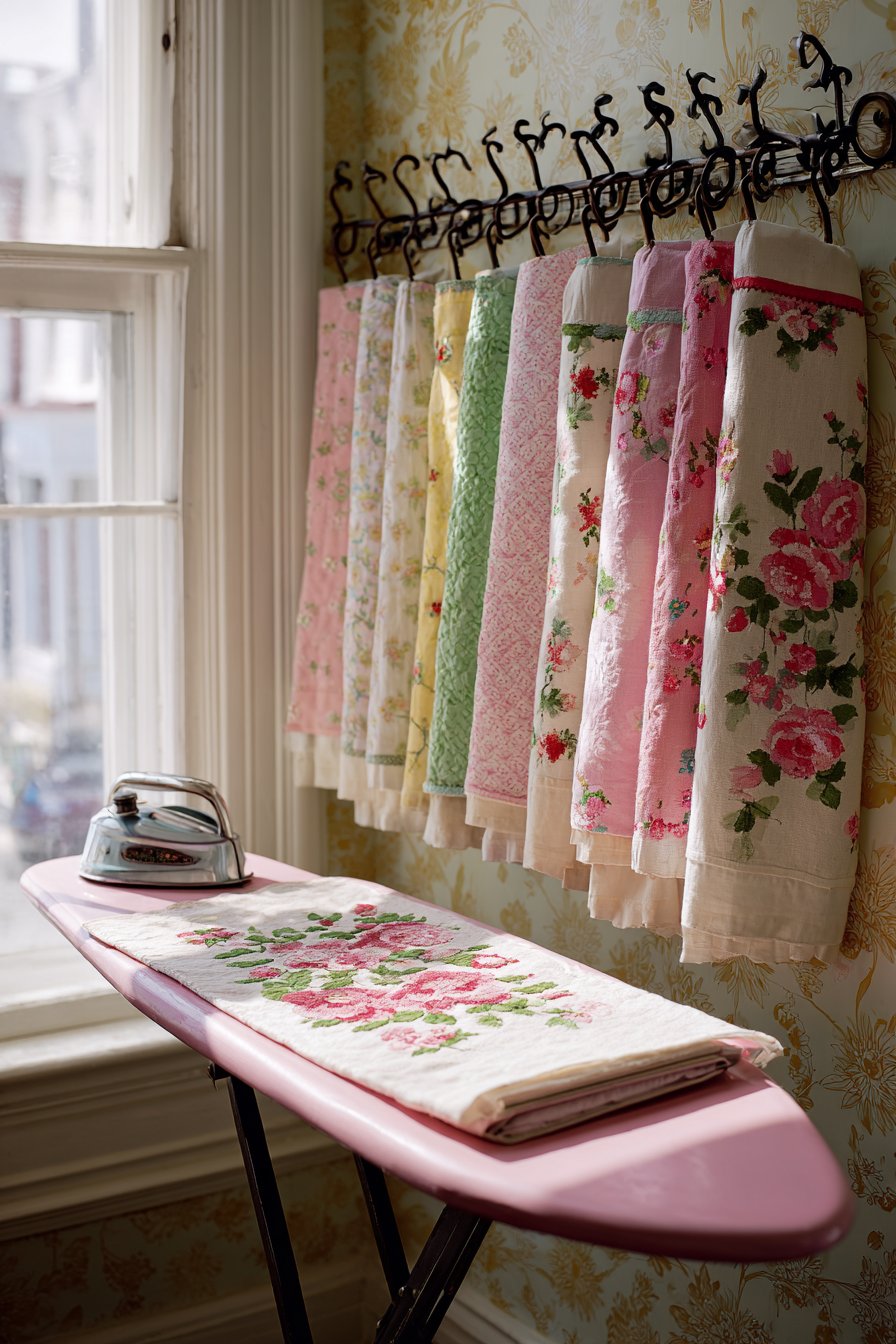
A vintage ironing board repurposed as additional counter space maintains the authentic aesthetic while providing valuable workspace in compact kitchens. This creative reuse of period items demonstrates how vintage pieces can serve new purposes while maintaining their historical character and visual appeal. The ironing board’s narrow profile makes it ideal for small spaces while adding unique character.
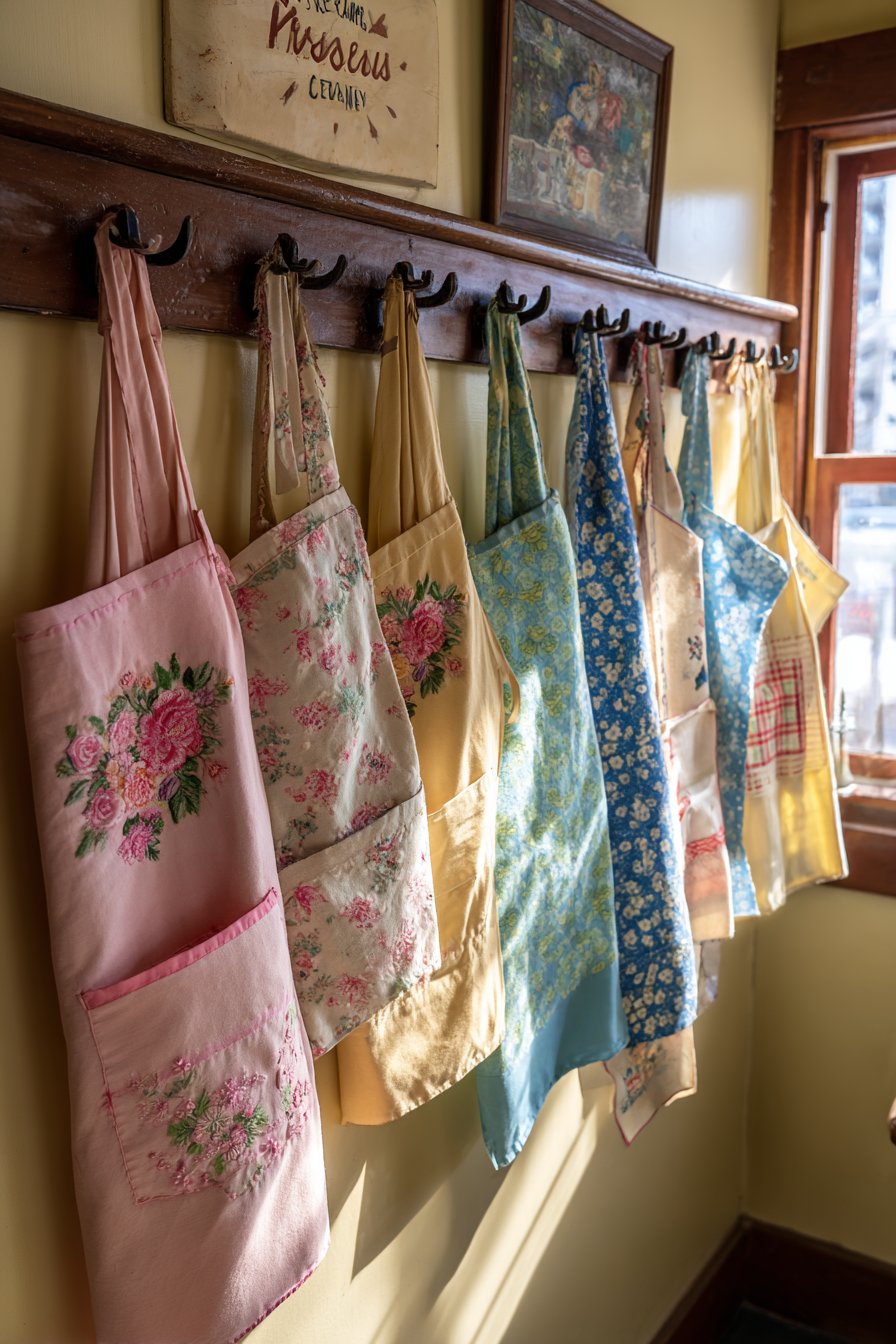
Natural window light highlights the fabric textures and intricate handwork details that make vintage textiles so special and personal. These details tell stories of careful craftsmanship and domestic pride while adding visual interest through their varied patterns, colors, and textures. The interplay of light and shadow emphasizes the dimensional qualities of embroidered and woven details.
Key Design Tips:
- Display vintage textiles as both functional accessories and decorative elements
- Repurpose vintage furniture pieces for modern functional needs
- Take advantage of natural light to highlight textile details and craftsmanship
- Choose textiles with handmade details to add personal character and authenticity
17. Mobile Vintage Solutions
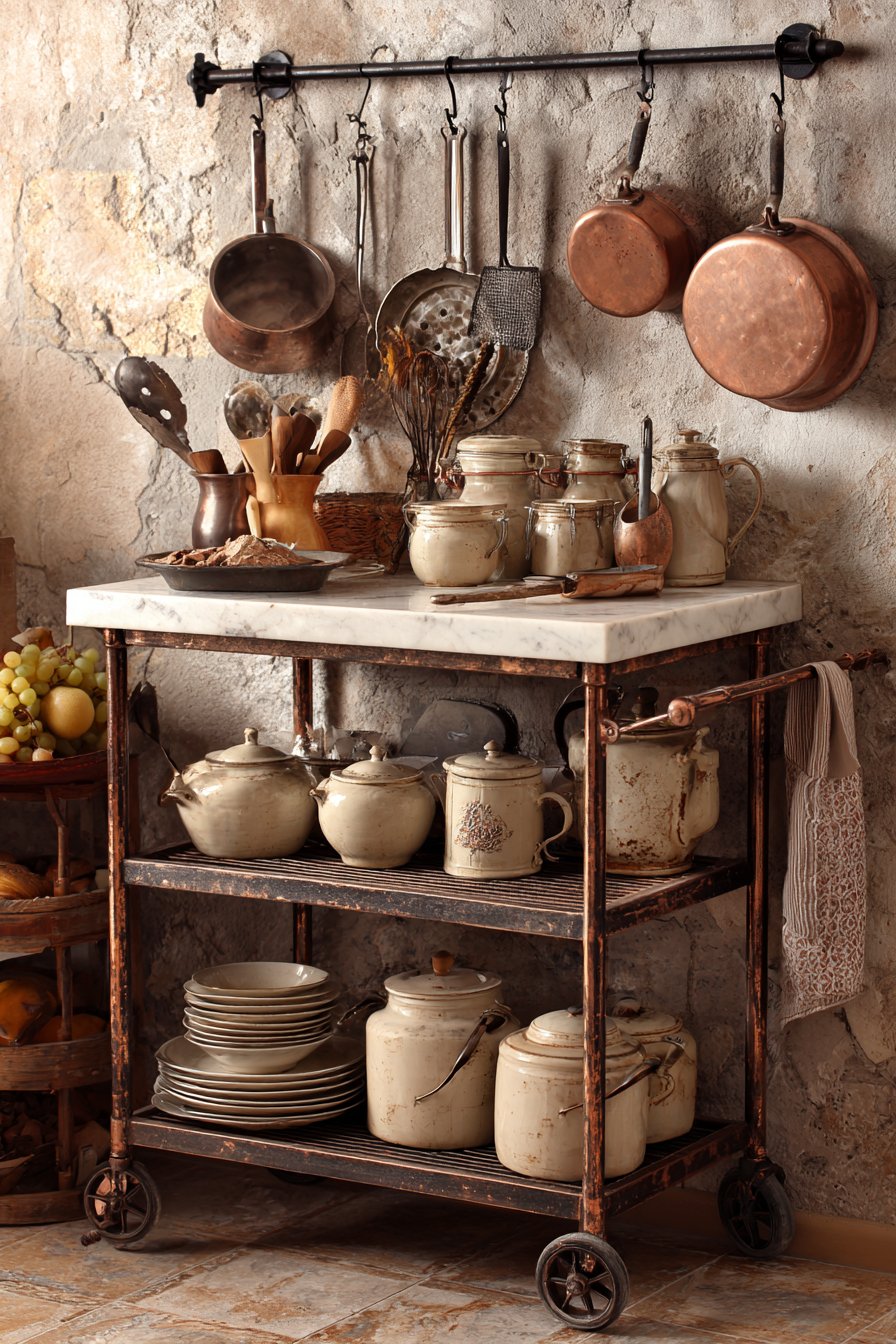
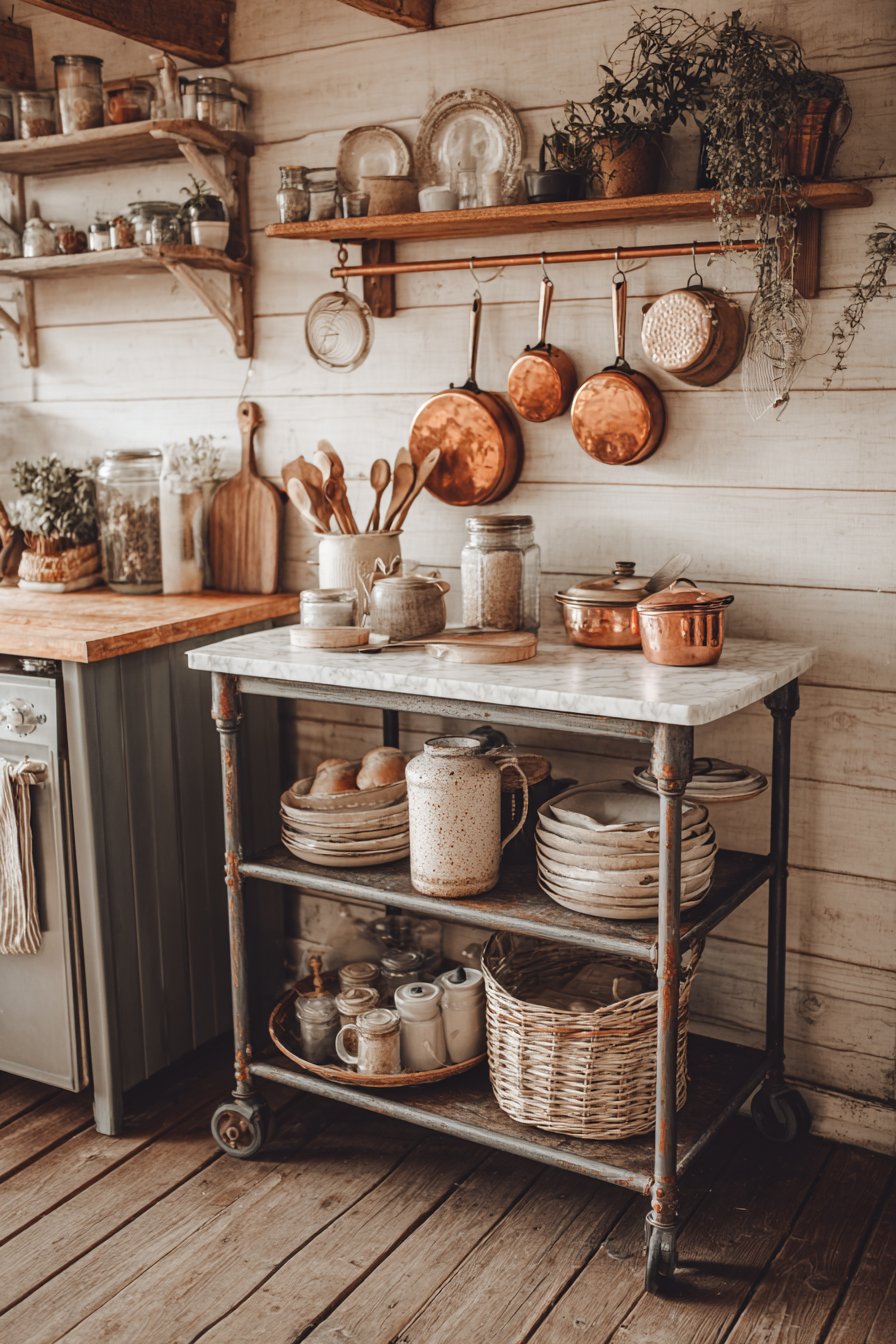
A vintage kitchen cart with a pristine marble top provides mobile food preparation space while showcasing the wheels and metal framework that demonstrate authentic aging and continued functionality. This mobile solution offers flexibility in kitchen layout while maintaining the vintage aesthetic through its materials and construction details. The marble top provides an ideal surface for pastry work while adding elegant contrast to the metal framework.
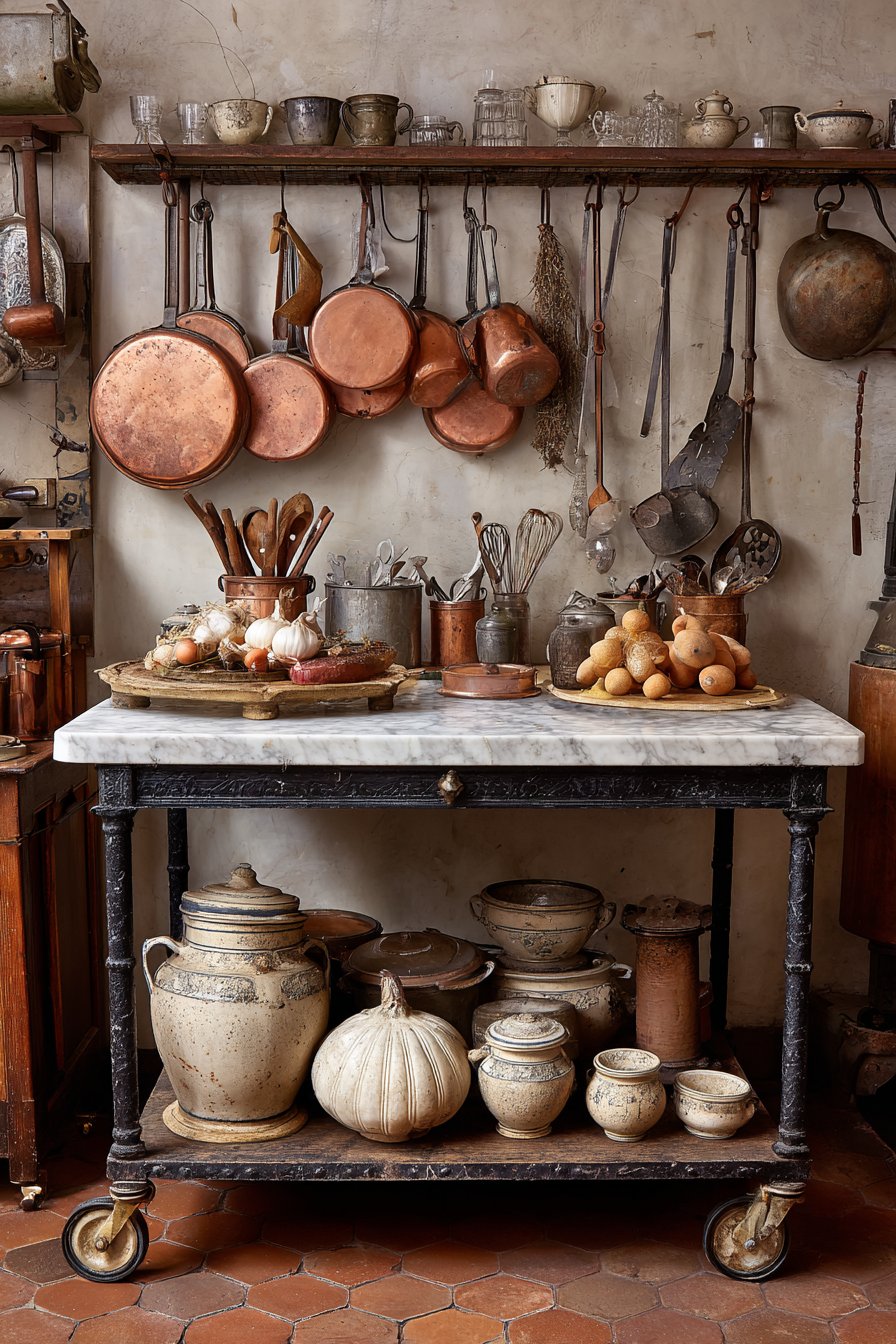
Surrounding the cart, vintage utensils displayed in ceramic crocks and copper pots hanging from convenient hooks create a comprehensive cooking station that can be moved as needed. This arrangement demonstrates how vintage pieces can work together to create functional zones while maintaining visual appeal and authentic character. The combination of materials and textures creates visual interest while serving practical purposes.
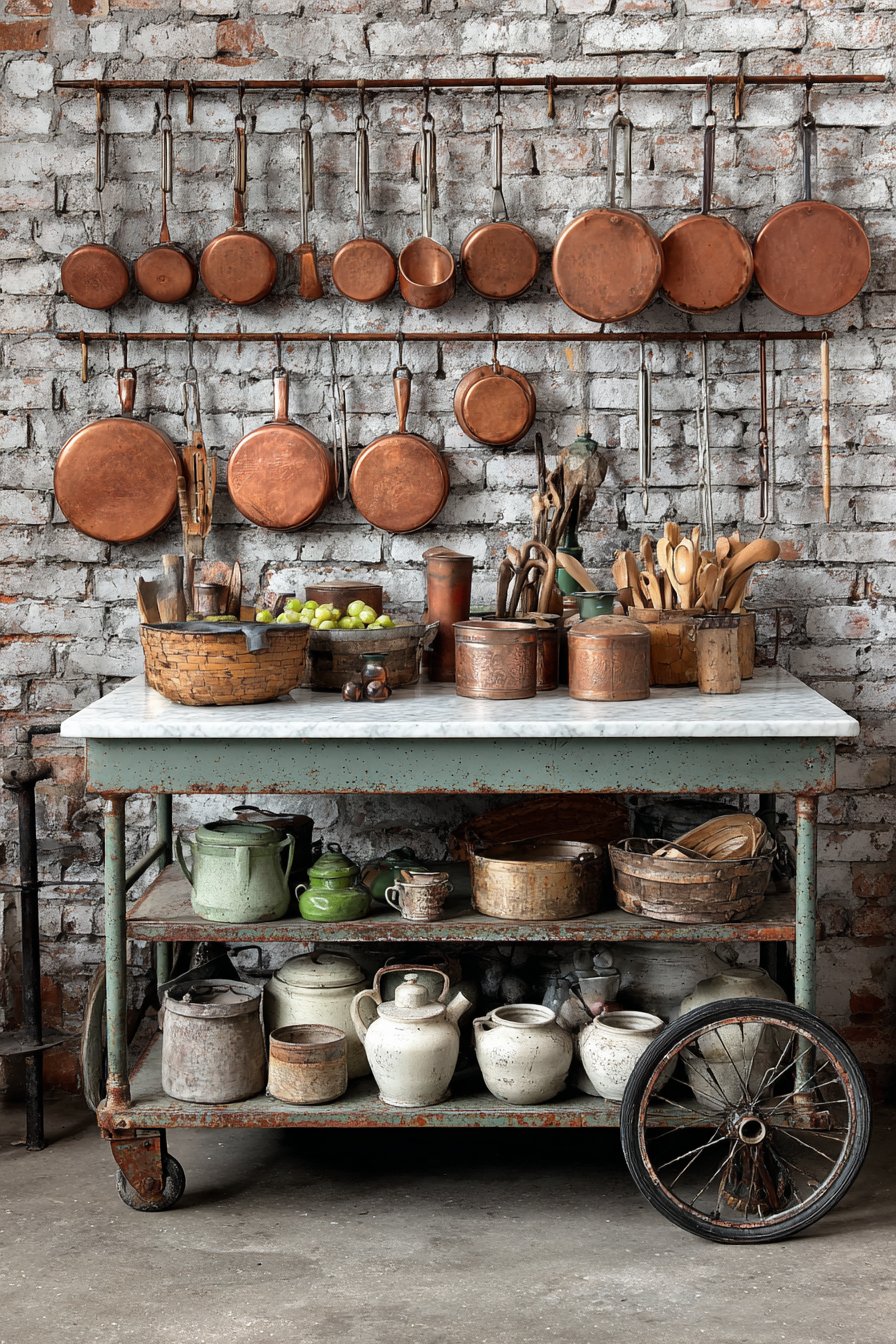
The cart’s wheels and metal frame show authentic aging that tells the story of years of practical use while maintaining structural integrity and functionality. This wear pattern adds character and authenticity while demonstrating the quality construction that allows vintage pieces to continue serving modern needs effectively.
Key Design Tips:
- Use mobile vintage furniture to add flexibility while maintaining period character
- Combine different materials like marble and metal for visual and functional contrast
- Display vintage tools in attractive containers for both storage and decoration
- Appreciate authentic aging as evidence of quality construction and historical use
18. Farmhouse Table Integration
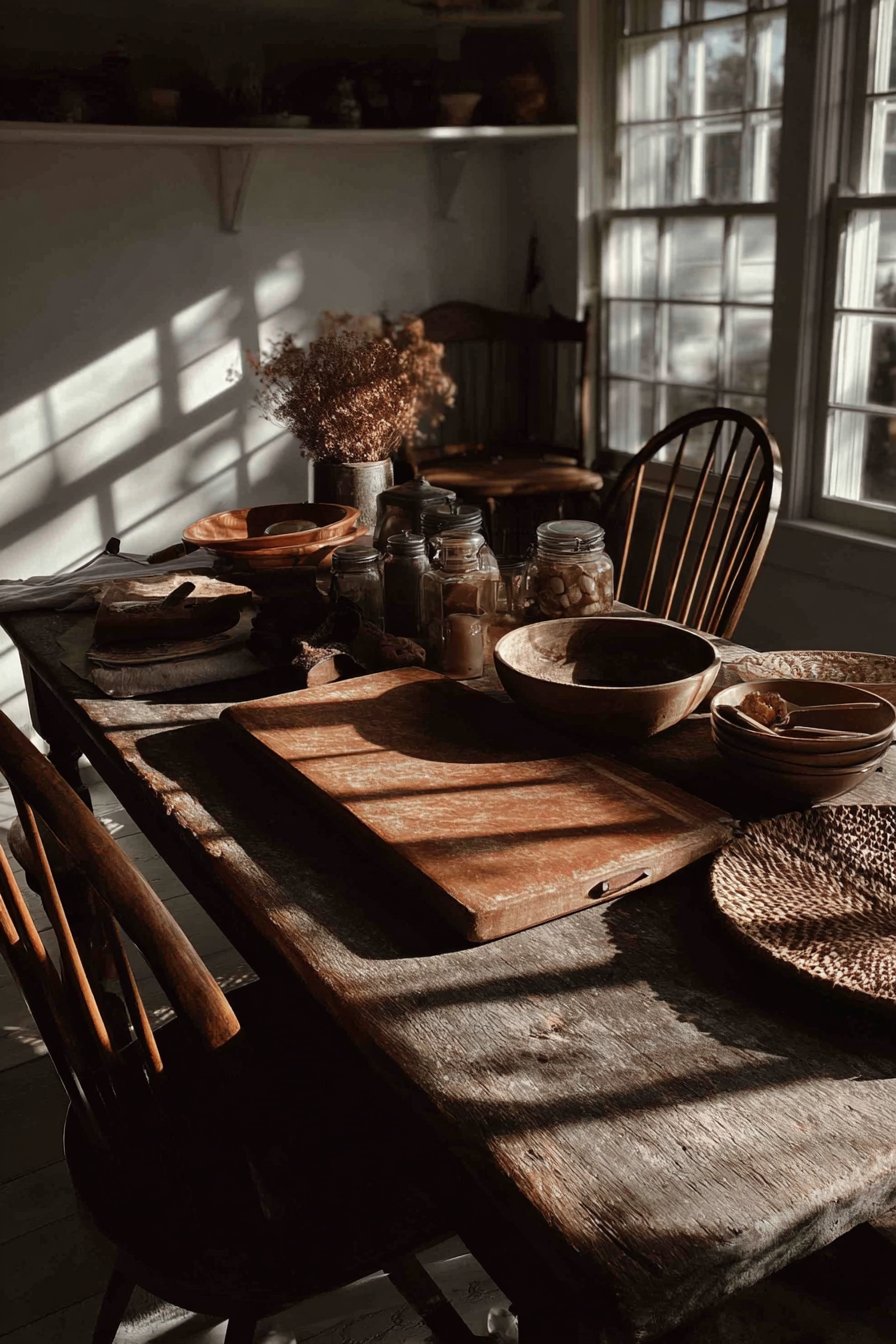
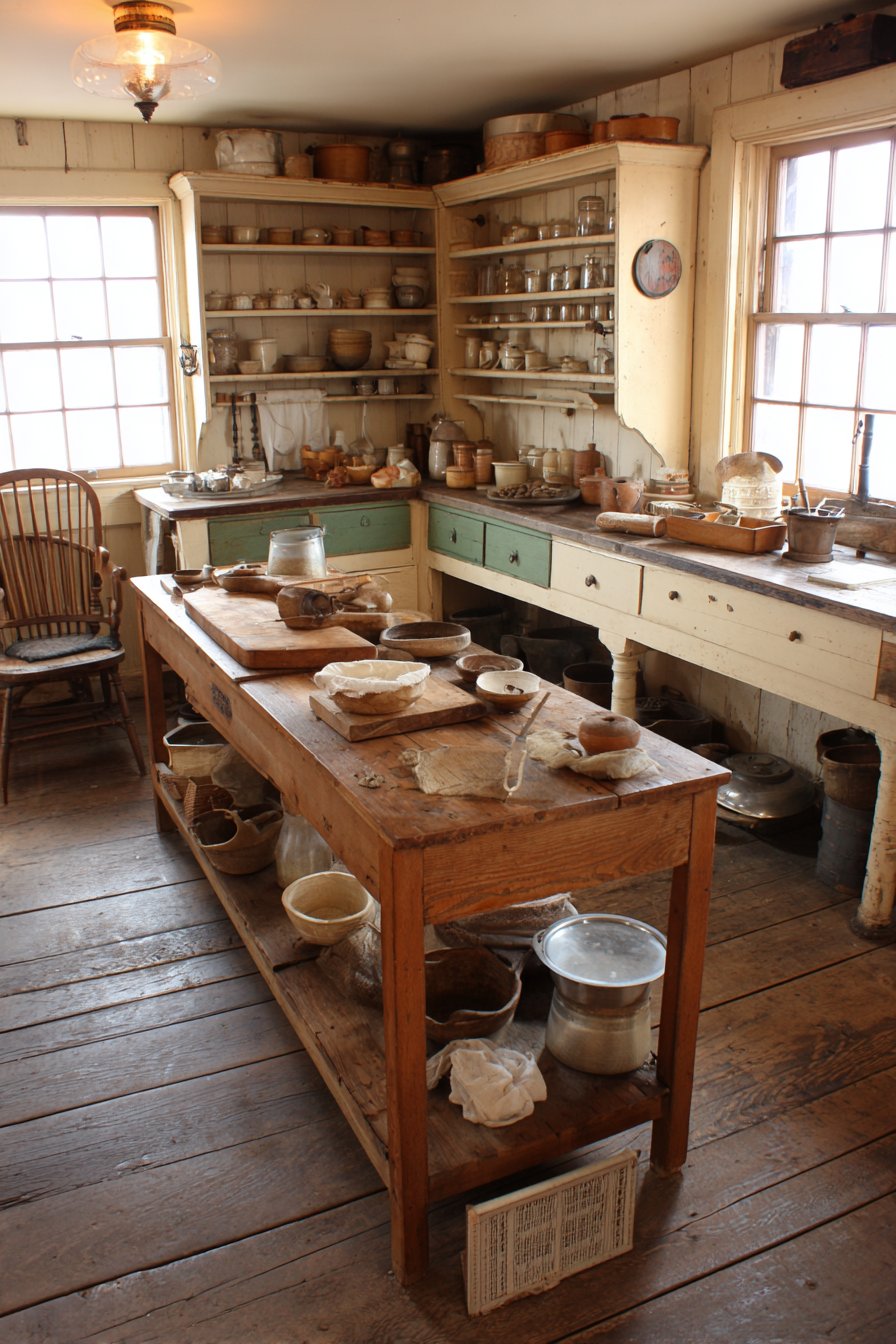
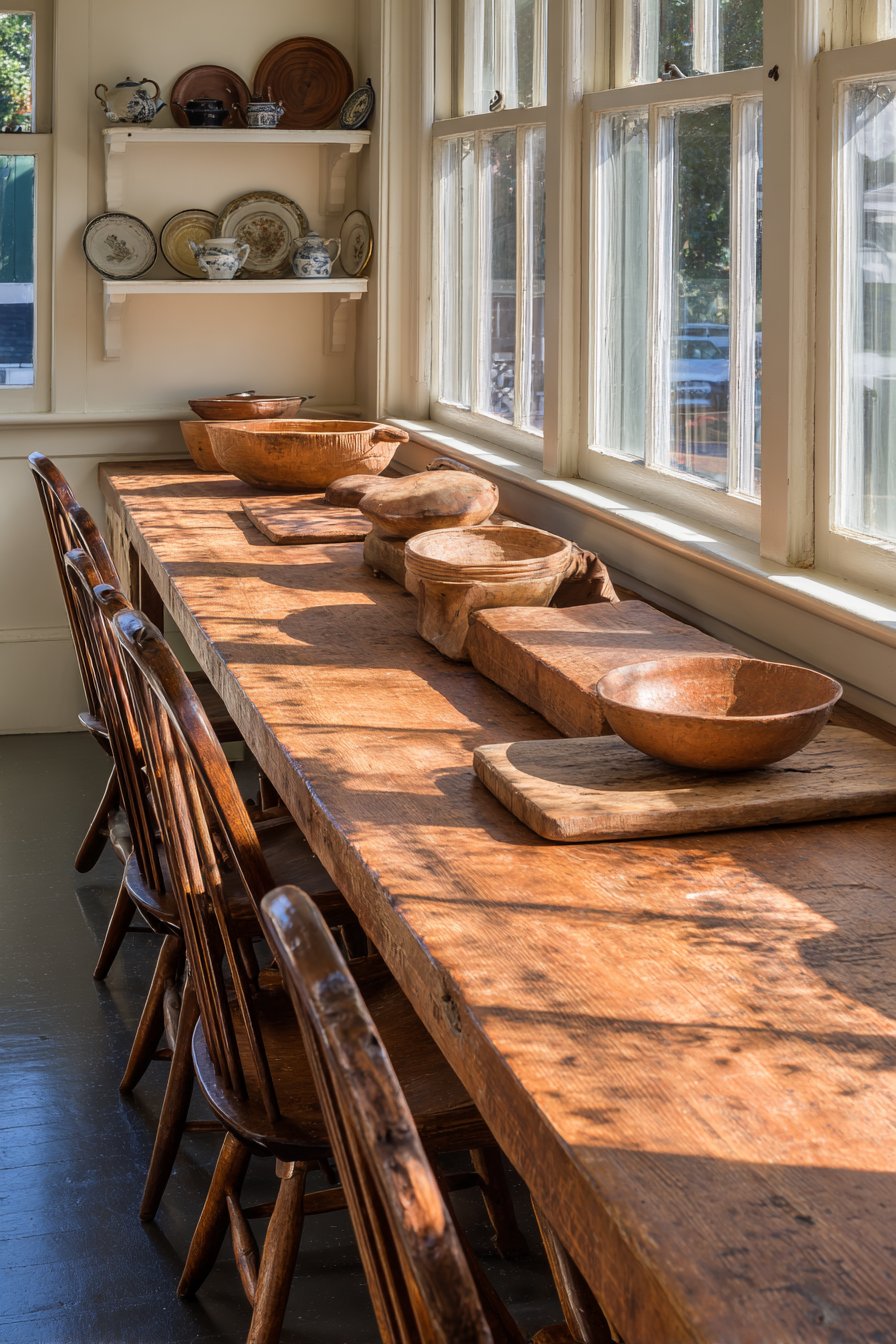
A substantial vintage farmhouse table serves as additional prep space while showcasing vintage cutting boards, wooden bowls, and period-appropriate kitchen accessories arranged for both use and display. This integration of furniture and accessories demonstrates how vintage pieces can serve multiple purposes while maintaining their authentic character and historical significance. The table’s generous proportions provide ample workspace while serving as a display platform.
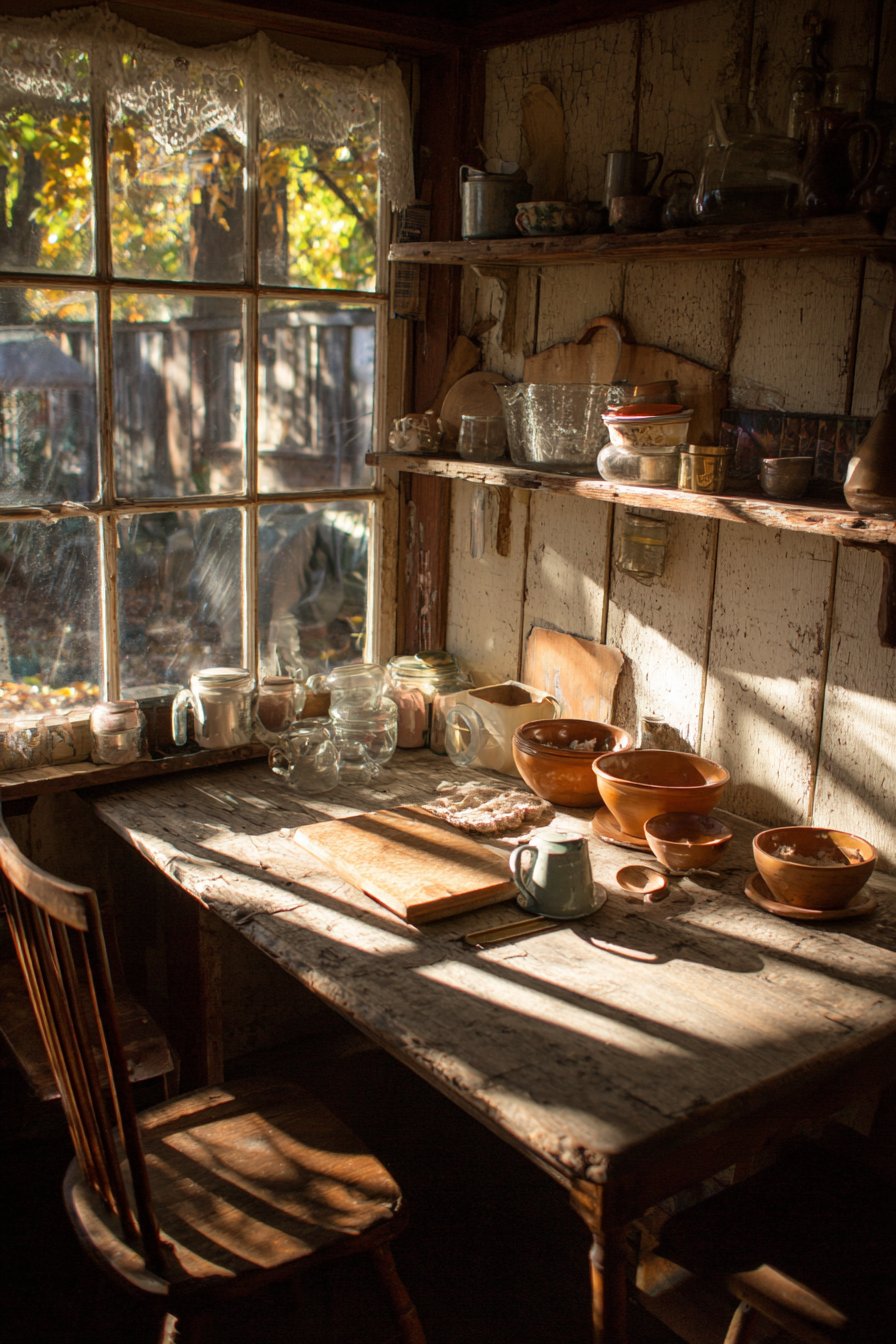
Windsor chairs provide seating that maintains the authentic farmhouse aesthetic while offering comfortable spots for family meals and kitchen visits. These traditional chair designs complement the table while reinforcing the farmhouse theme through their simple lines and honest construction. The relationship between table and chairs creates a cohesive seating group that anchors the kitchen’s social area.
Natural light from casement windows creates interesting shadows that highlight the wood grain and natural patina developed through years of use and care. These light patterns change throughout the day, creating visual interest while emphasizing the handcrafted quality and natural materials that make vintage farmhouse pieces so appealing and enduring.
Key Design Tips:
- Use substantial vintage tables as both workspace and display platforms
- Choose seating that reinforces your chosen vintage theme and period
- Arrange accessories to serve both functional and decorative purposes
- Position vintage furniture to take advantage of natural light patterns
19. Enamelware Collection Display
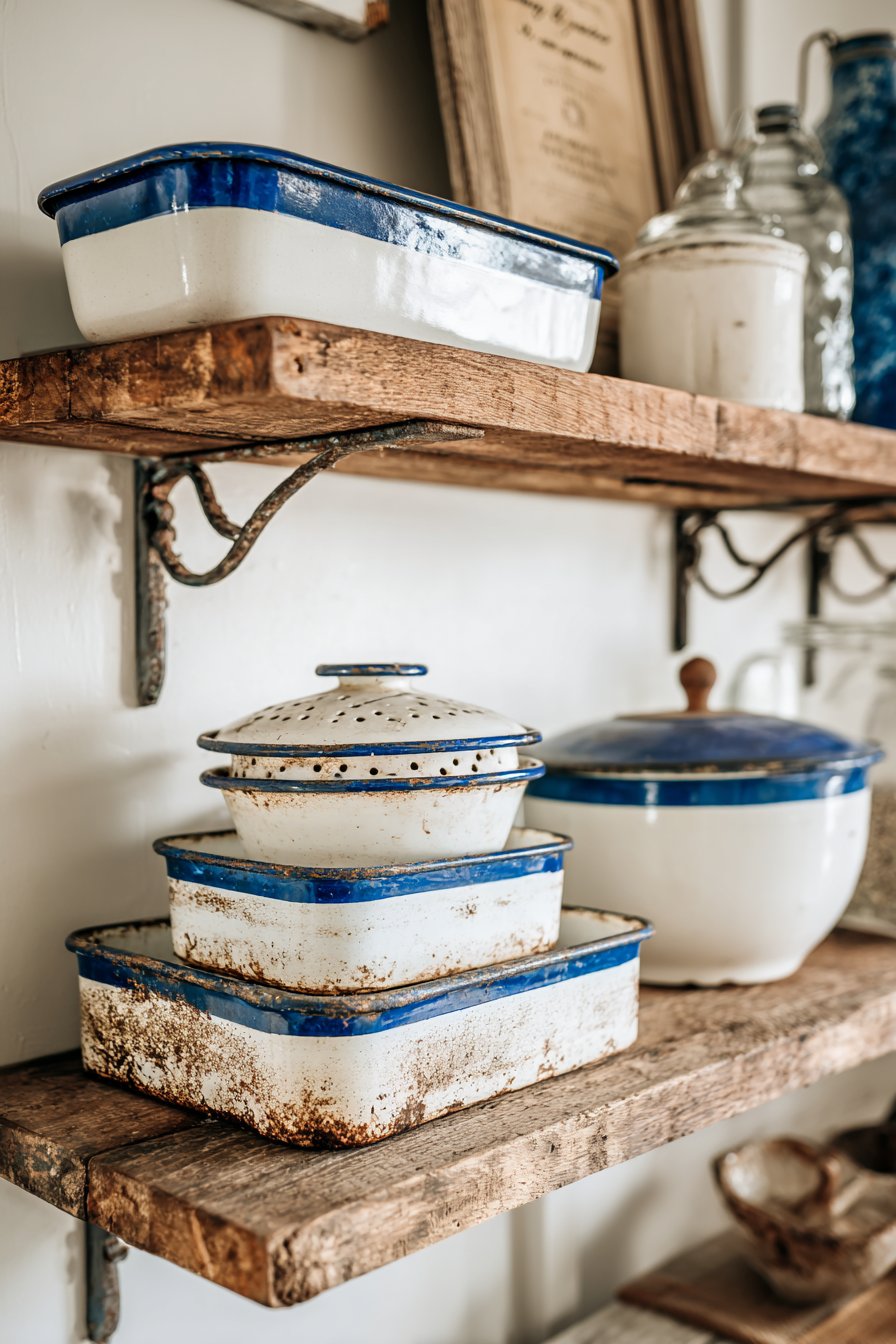
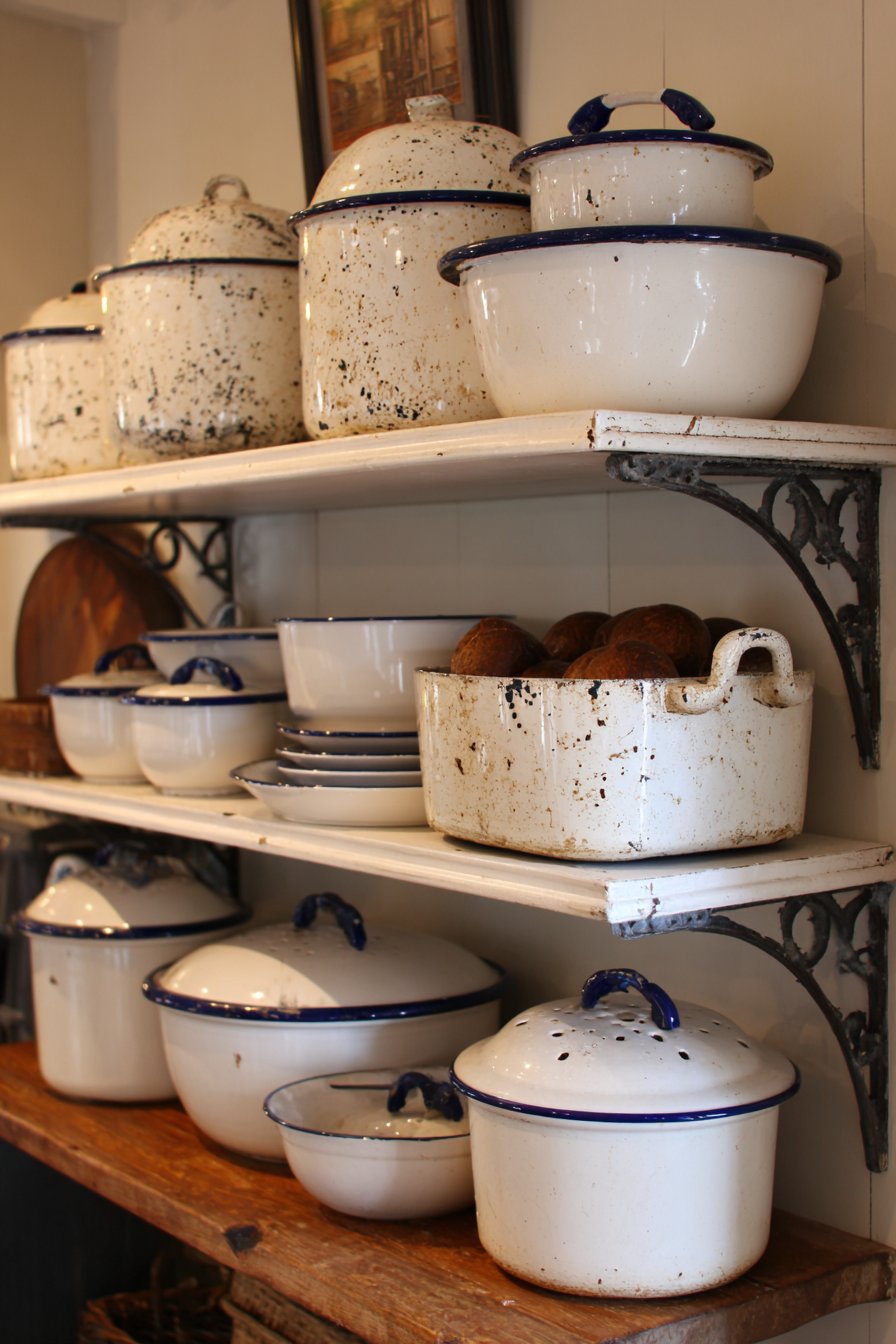
Vintage enamelware displayed on open shelving creates a cohesive collection that demonstrates the beauty of utilitarian objects when thoughtfully arranged and properly lit. Including colanders, cake pans, and serving bowls in classic white with traditional blue trim, this collection represents the practical beauty of vintage kitchen equipment. The characteristic chips and wear authenticate these pieces while telling stories of active kitchen use.
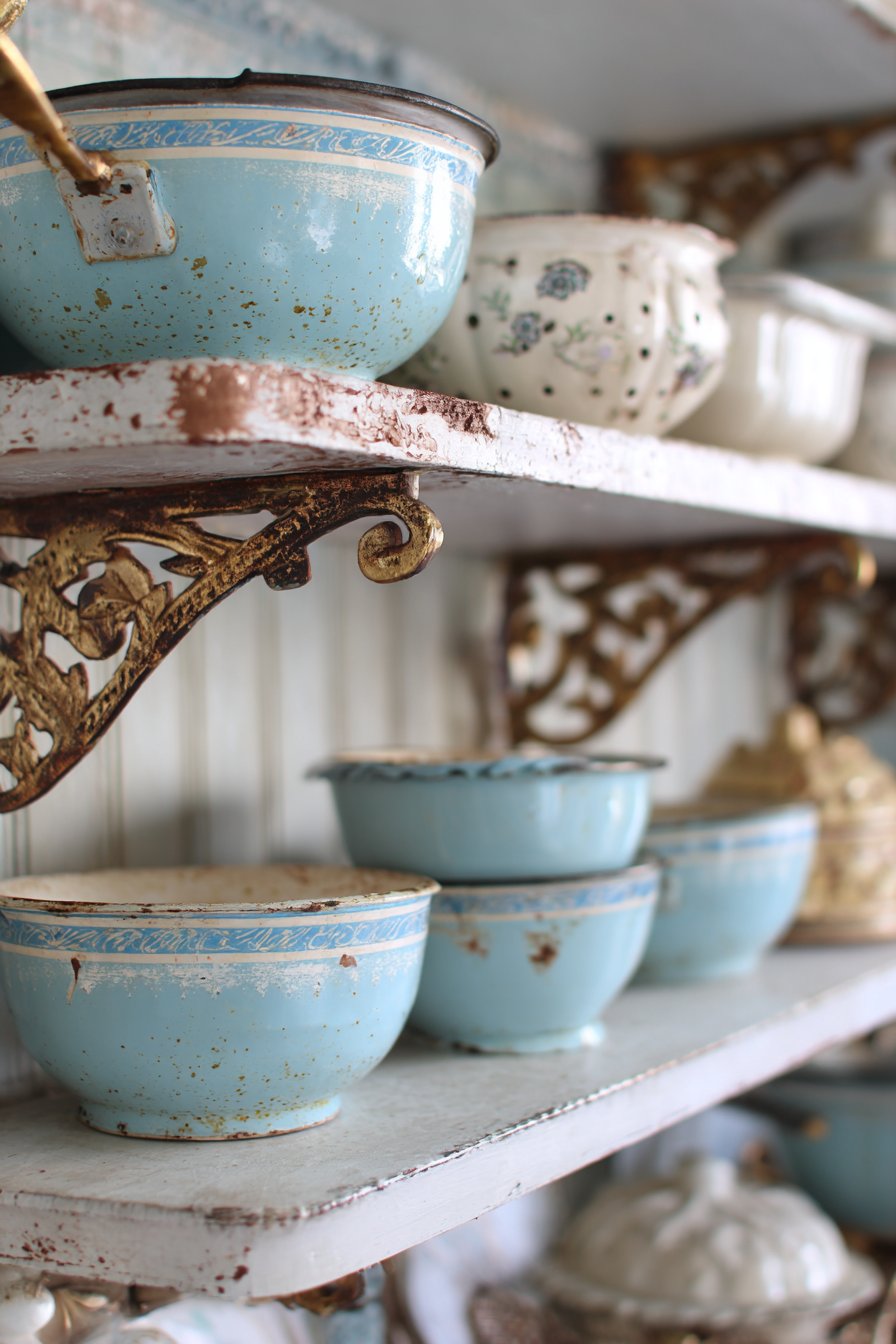
The open shelving supported by decorative brackets complements the overall aesthetic while providing stable display platforms that allow each piece to be appreciated individually and as part of the larger collection. The bracket details add visual interest while maintaining the practical function of supporting substantial cookware and serving pieces.
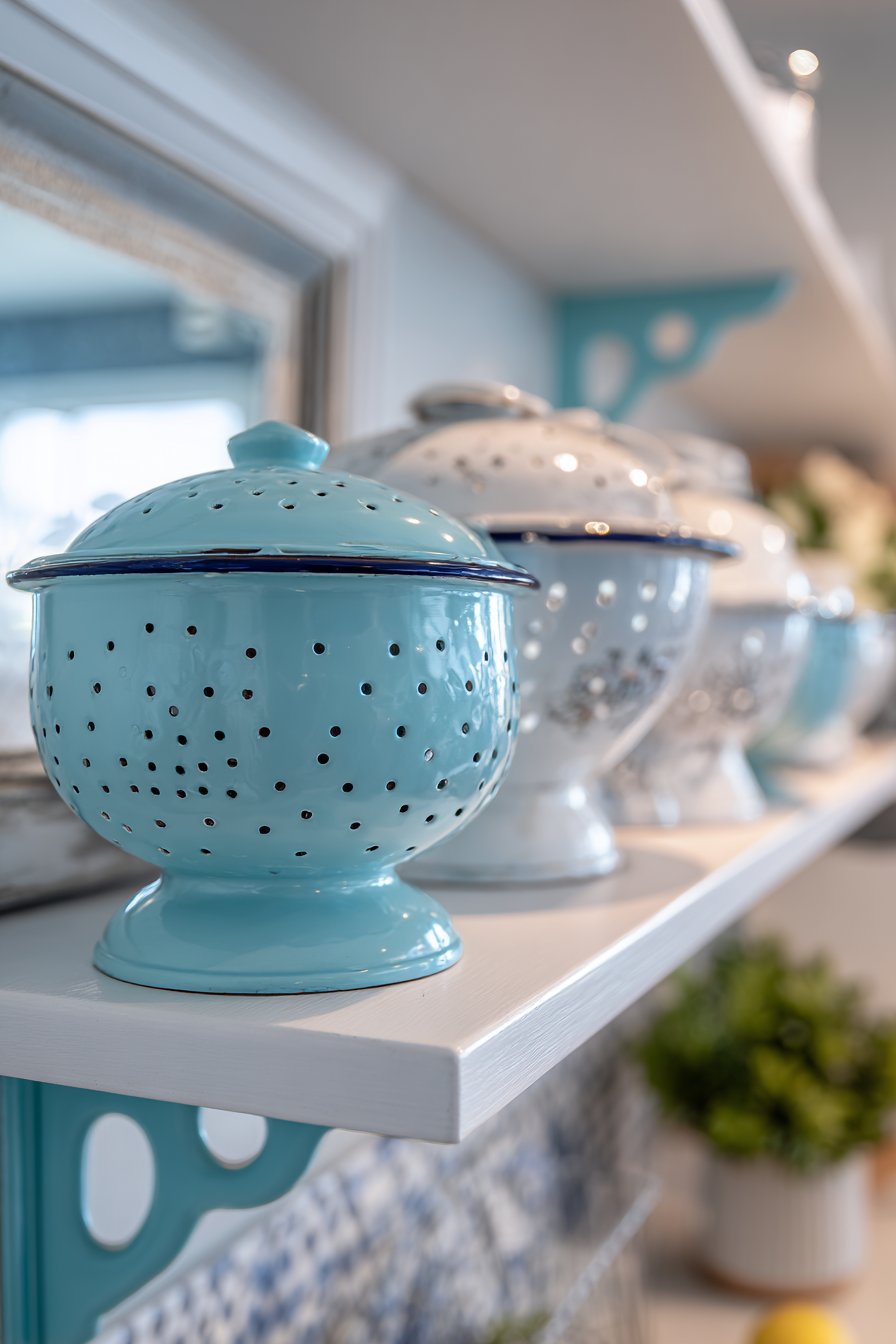
Soft diffused lighting emphasizes the enamel’s smooth surfaces while highlighting the characteristic chips and wear patterns that authenticate vintage pieces and add to their charm. This gentle illumination creates an inviting display while demonstrating how proper lighting can enhance both individual pieces and collections as unified design elements.
Key Design Tips:
- Display enamelware collections to showcase both individual pieces and group coherence
- Use decorative brackets that complement rather than compete with displayed items
- Embrace authentic wear and chips as evidence of genuine vintage character
- Install appropriate lighting to highlight surface qualities and create inviting displays
20. Living Herb Garden Integration
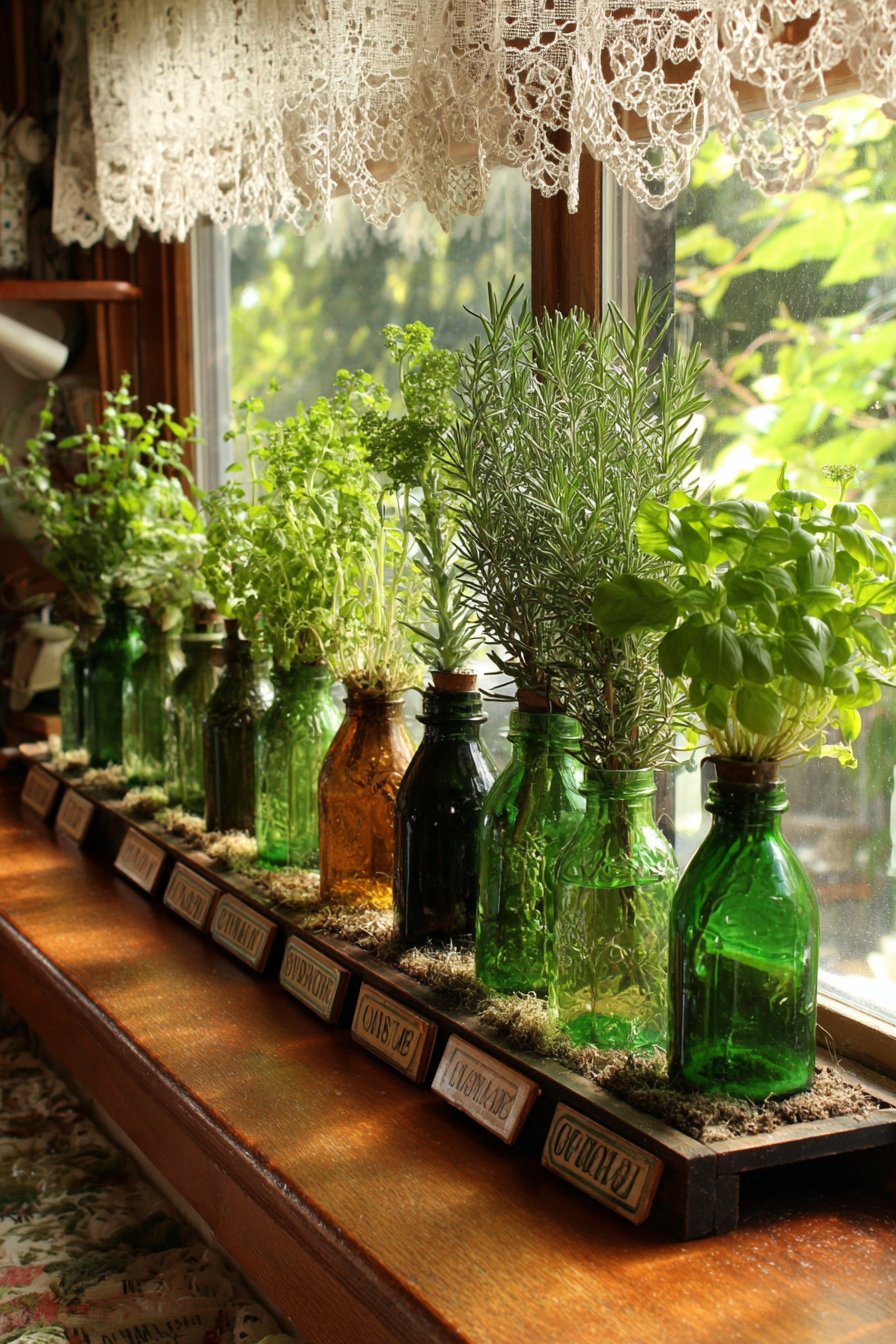
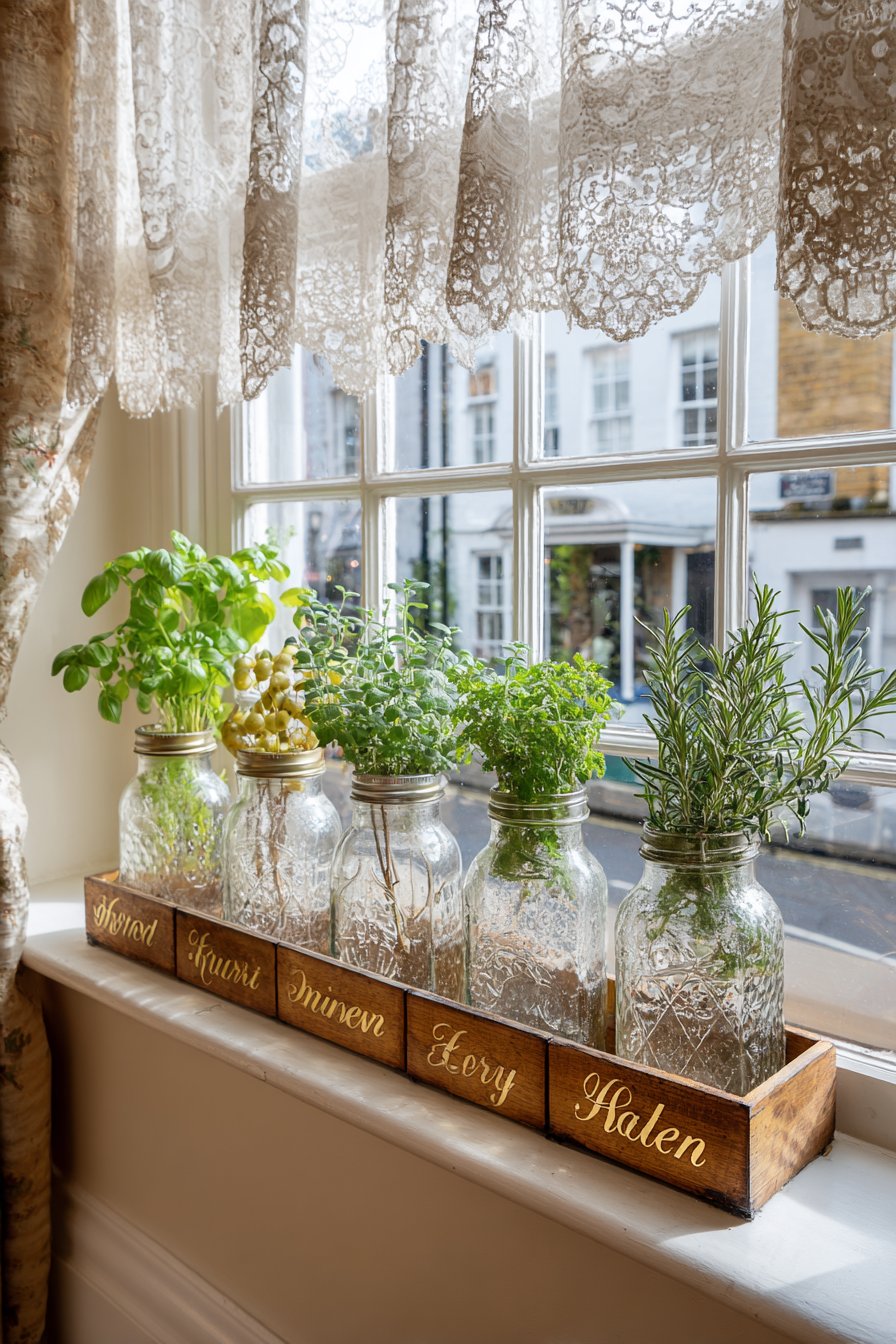
A charming herb garden window display using vintage glass bottles and mason jars as planters creates a living element that enhances the vintage kitchen aesthetic while providing fresh herbs for cooking. Arranged thoughtfully on a sunny windowsill with vintage plant markers, this display combines practical gardening with vintage style. The combination of living plants and vintage containers creates a dynamic focal point that changes with the seasons.
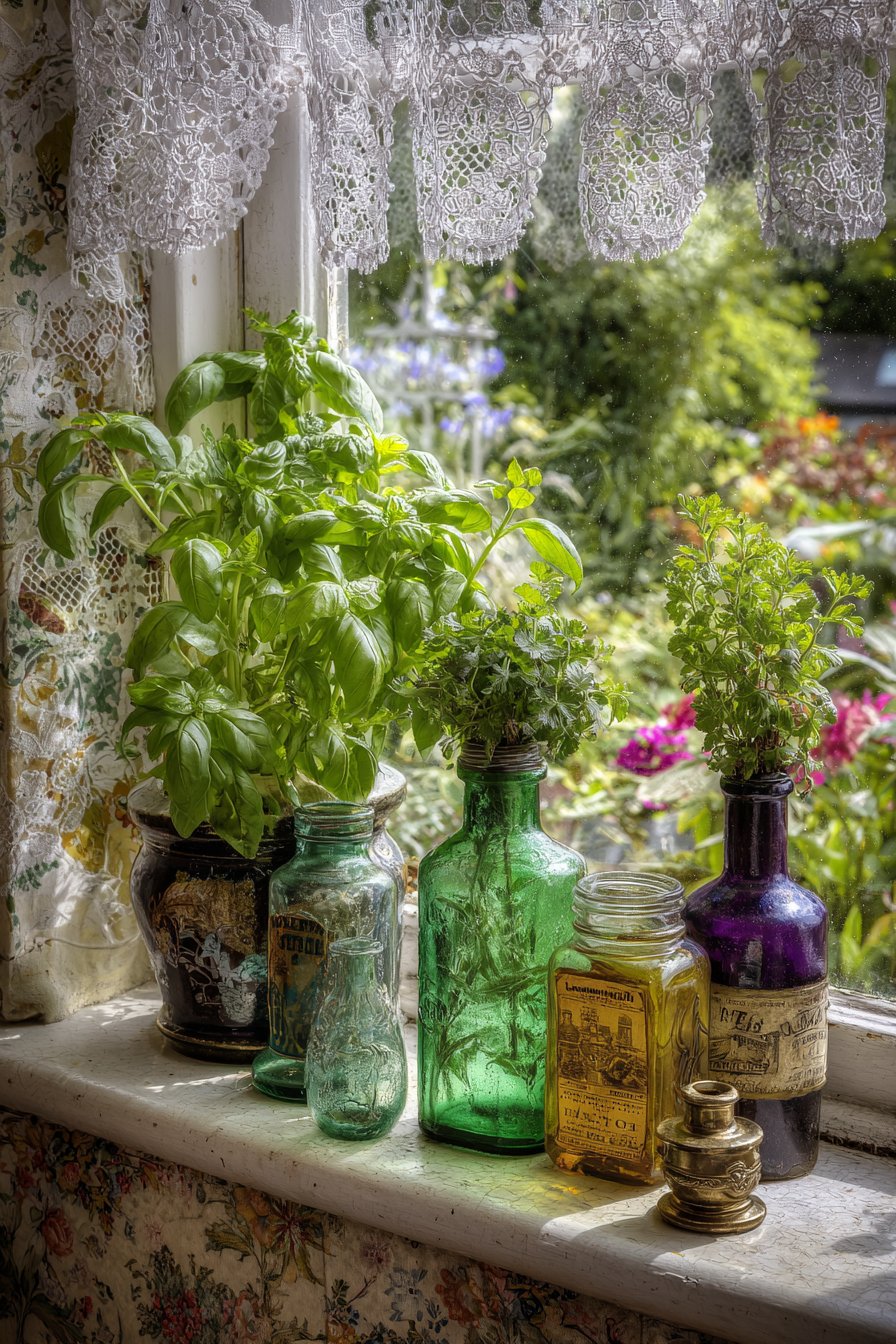
Lace curtains frame the window while allowing maximum light penetration for healthy plant growth, demonstrating how window treatments can serve multiple purposes while maintaining vintage character. These delicate curtains soften the window’s architectural lines while providing privacy and adding textural interest through their intricate patterns.
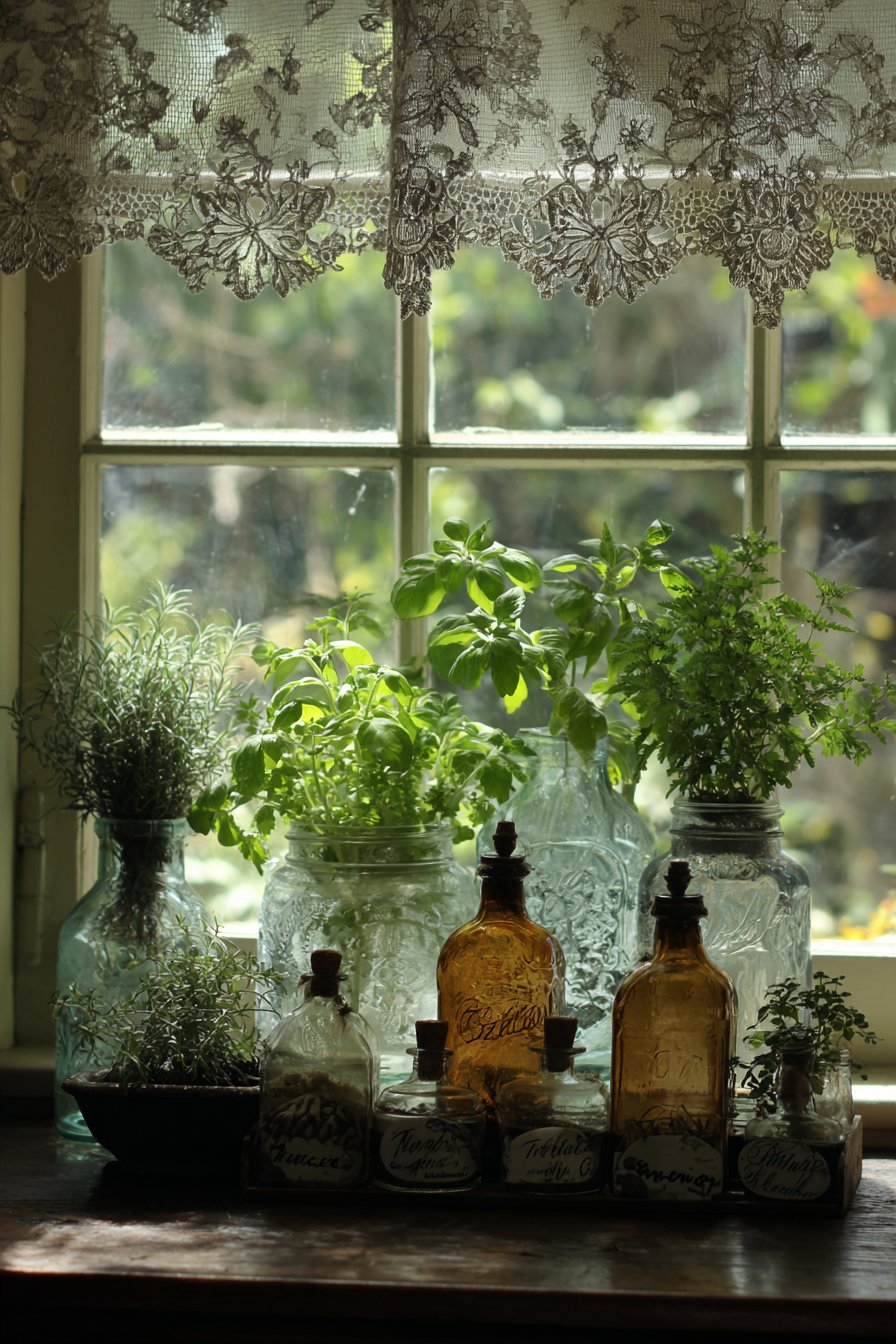
The integration of functional herb growing with vintage containers and accessories exemplifies the timeless appeal of vintage kitchen design, where beauty and practicality work together to create spaces that nourish both body and soul. This living display brings natural elements into the vintage kitchen while maintaining the authentic character that makes these spaces so enduringly appealing.
Key Design Tips:
- Combine vintage containers with living plants for dynamic, seasonal displays
- Use window locations to advantage for both plant health and visual impact
- Choose window treatments that balance privacy needs with light requirements
- Integrate practical elements like herb gardens with vintage aesthetic themes
Why These Vintage Kitchen Decor Ideas Excel
These twenty vintage kitchen decor ideas represent the finest examples of how authentic period elements can enhance modern kitchen functionality while creating spaces that celebrate the craftsmanship and aesthetic sensibilities of earlier eras. Each approach demonstrates unique strategies for incorporating vintage elements, from major appliances and furniture pieces to smaller accessories and organizational systems. The success of these designs lies in their ability to balance authenticity with practicality, creating kitchens that serve contemporary needs while honoring historical design traditions.
The farmhouse sink foundation approach establishes immediate vintage credibility through a single substantial element, while the retro dining integration demonstrates how furniture choices can transform kitchen atmosphere. Glass-front cabinet displays showcase the importance of storage solutions that serve dual decorative purposes, while collectible display systems prove that organization can become ornamentation when approached with vintage sensibilities. The cast iron centerpiece strategy shows how dramatic focal points can anchor entire design schemes.
These vintage kitchen decor concepts excel because they recognize that authentic vintage design requires attention to both major architectural elements and smaller decorative details. The shiplap farmhouse style creates textural backgrounds that enhance rather than compete with vintage accessories, while cozy breakfast nooks demonstrate how intimate spaces can be carved from larger kitchen areas. Organized spice displays and pantry systems prove that functionality and beauty can coexist seamlessly in well-planned vintage kitchens.
The success of pie safe sophistication and colorful appliance coordination lies in their demonstration of how substantial vintage pieces can serve as both storage solutions and design anchors. Dedicated baking stations and coffee preparation areas show how modern lifestyle needs can be met through vintage-inspired solutions, while island pendant lighting proves that contemporary conveniences can maintain period character through thoughtful fixture selection.
Conclusion
These vintage kitchen decor ideas offer homeowners countless opportunities to create spaces that celebrate the past while serving present needs. From substantial furniture pieces and major appliances to carefully curated collections and thoughtful textile choices, each element contributes to an overall aesthetic that honors the craftsmanship and design sensibilities of earlier generations. The beauty of vintage kitchen design lies not only in its visual appeal but also in its celebration of quality materials, honest construction, and timeless functionality.
Whether you choose to implement a single vintage element as a focal point or embrace a comprehensive vintage transformation, these ideas demonstrate that authentic period character can enhance rather than limit modern kitchen functionality. The key to successful vintage kitchen design lies in understanding how individual elements work together to create cohesive spaces that tell stories, celebrate history, and provide beautiful, functional environments for contemporary family life. Begin with the elements that speak most strongly to your personal style, and gradually build your vintage kitchen into a space that truly reflects your appreciation for timeless design and enduring quality.
