


Designing a bedroom for an 8-year-old girl is a delightful journey that balances childhood wonder with emerging independence. At this pivotal age, children are developing their unique personalities, discovering new interests, and beginning to express their individual style preferences. A thoughtfully designed bedroom becomes more than just a place to sleep—it transforms into a personal sanctuary where creativity flourishes, homework gets done, friendships are nurtured, and dreams take flight. The key to successful bedroom design for this age group lies in creating spaces that are both playful and practical, incorporating elements that inspire imagination while providing the organizational structure that growing children need.
The beauty of designing for 8-year-old girls is the incredible versatility in style options available. From whimsical canopy beds that spark fairy tale dreams to Scandinavian-inspired minimalist retreats that promote calm and focus, the possibilities are endless. Today’s parents and designers are moving away from overly themed, juvenile rooms toward sophisticated yet age-appropriate spaces that can evolve as children grow. This approach not only proves more economical in the long run but also respects the child’s developing sense of self and aesthetic appreciation.
In this comprehensive guide, we’ll explore twenty distinctive bedroom design concepts that cater to various personalities, interests, and spatial requirements. Whether your daughter is a budding artist, a devoted bookworm, an aspiring athlete, or simply a child who loves beautiful spaces, you’ll find inspiration to create a room that truly reflects who she is. Each design concept thoughtfully addresses the practical needs of an 8-year-old—adequate storage for toys and clothes, proper lighting for homework and reading, comfortable sleeping arrangements, and spaces for both solitary play and entertaining friends—while delivering visual appeal that will make her bedroom her favorite place to be.
1. Enchanting Window Seat Reading Retreat
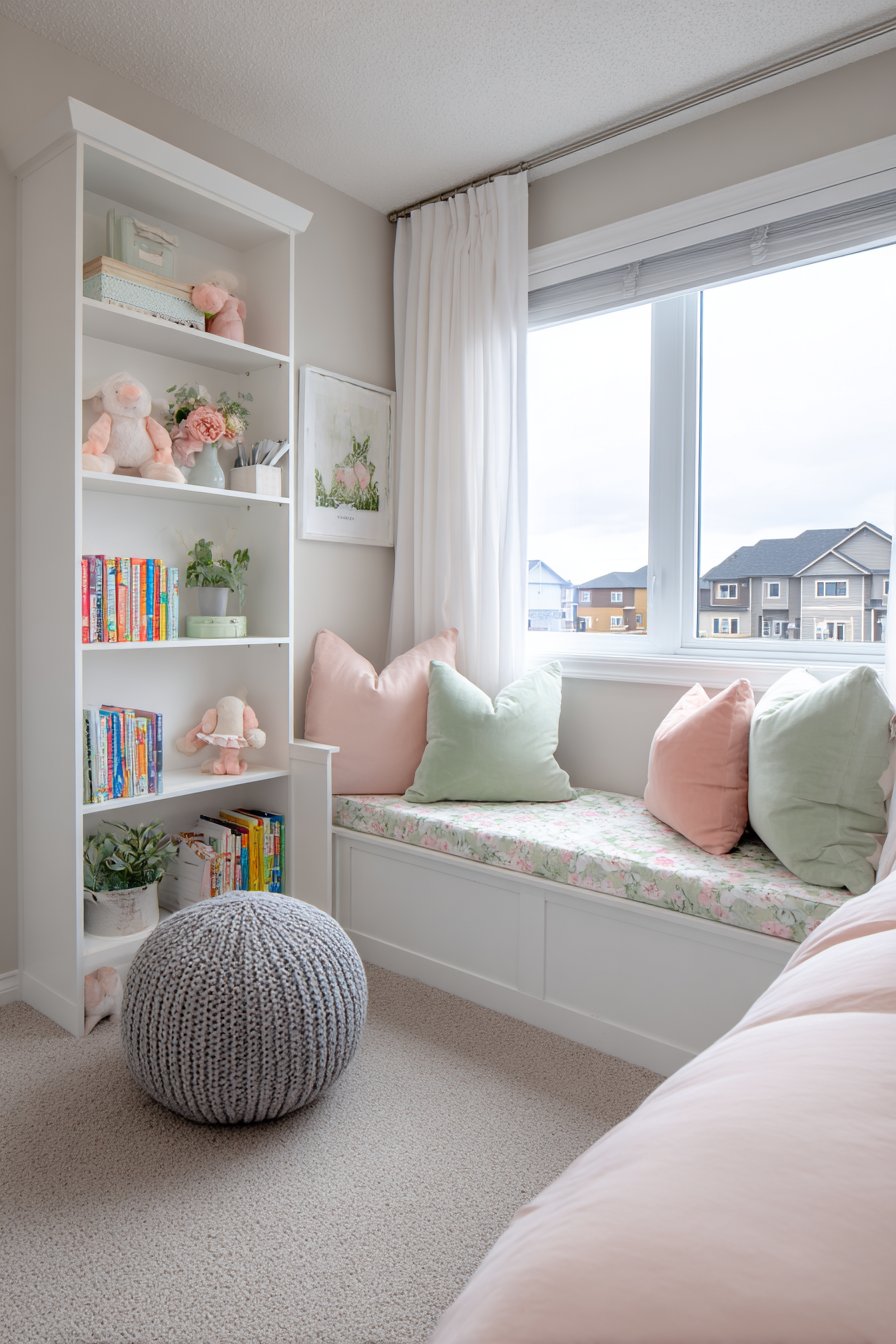
Creating a dedicated reading nook transforms a simple window into a magical portal for literary adventures. Picture a cushioned window seat bathed in natural daylight, adorned with an array of plush throw pillows in soft pastel pink and refreshing mint green.
These gentle colors create a soothing environment perfect for losing oneself in a good book. The custom cushioning provides the ideal perch for curling up with a favorite story, while the strategic placement takes full advantage of natural light—the healthiest and most pleasant illumination for reading.
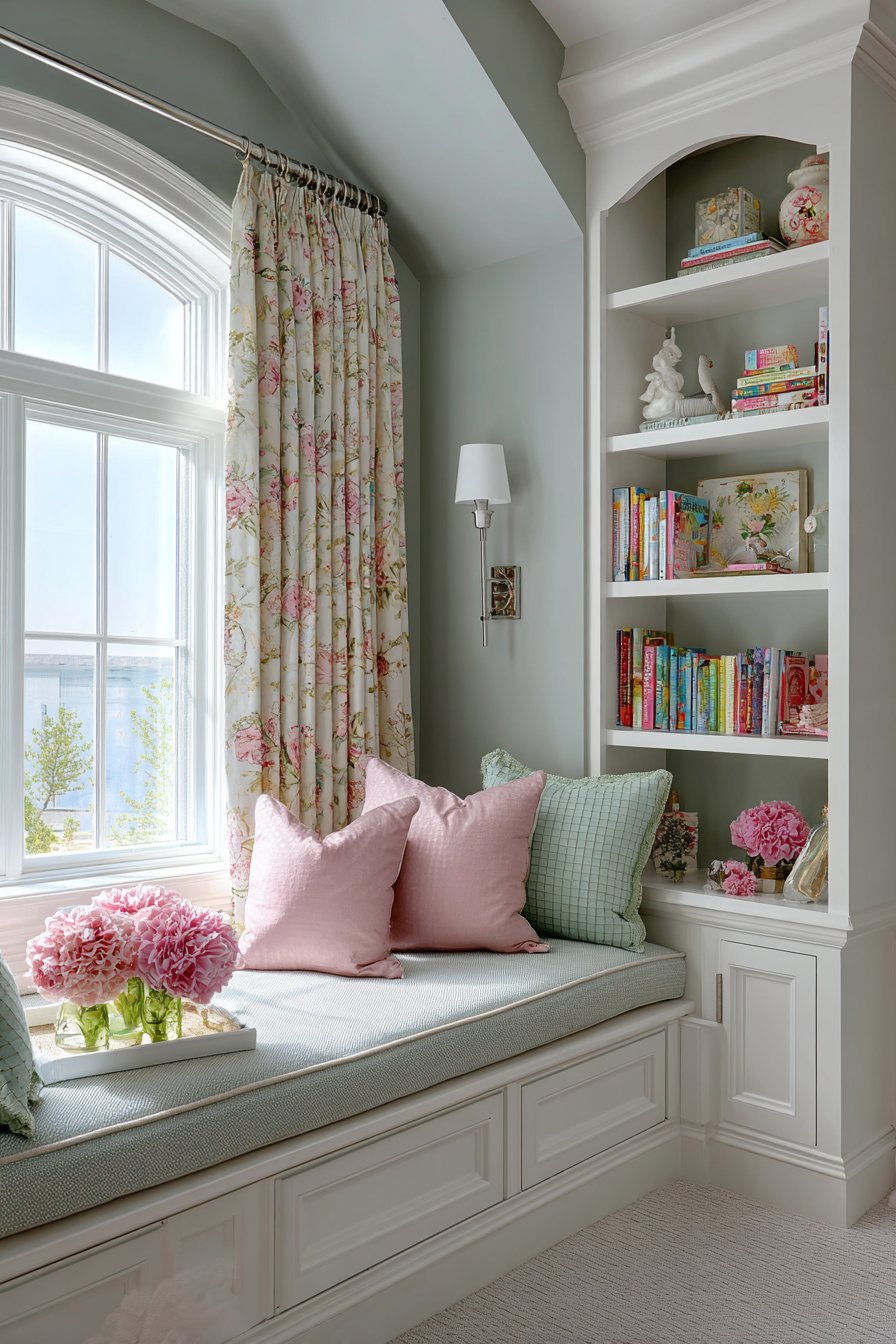
Flanking this cozy reading spot, white built-in bookshelves rise from floor to ceiling, offering both practical storage and decorative display opportunities. These shelves house an ever-growing collection of age-appropriate books, from chapter book series to illustrated encyclopedias, organized at heights easily accessible to young readers.
Interspersed among the books, small decorative items add personality—perhaps a ceramic unicorn, a collection of interesting rocks, or treasured trinkets from family trips. This blend of function and personal expression makes the space truly special.
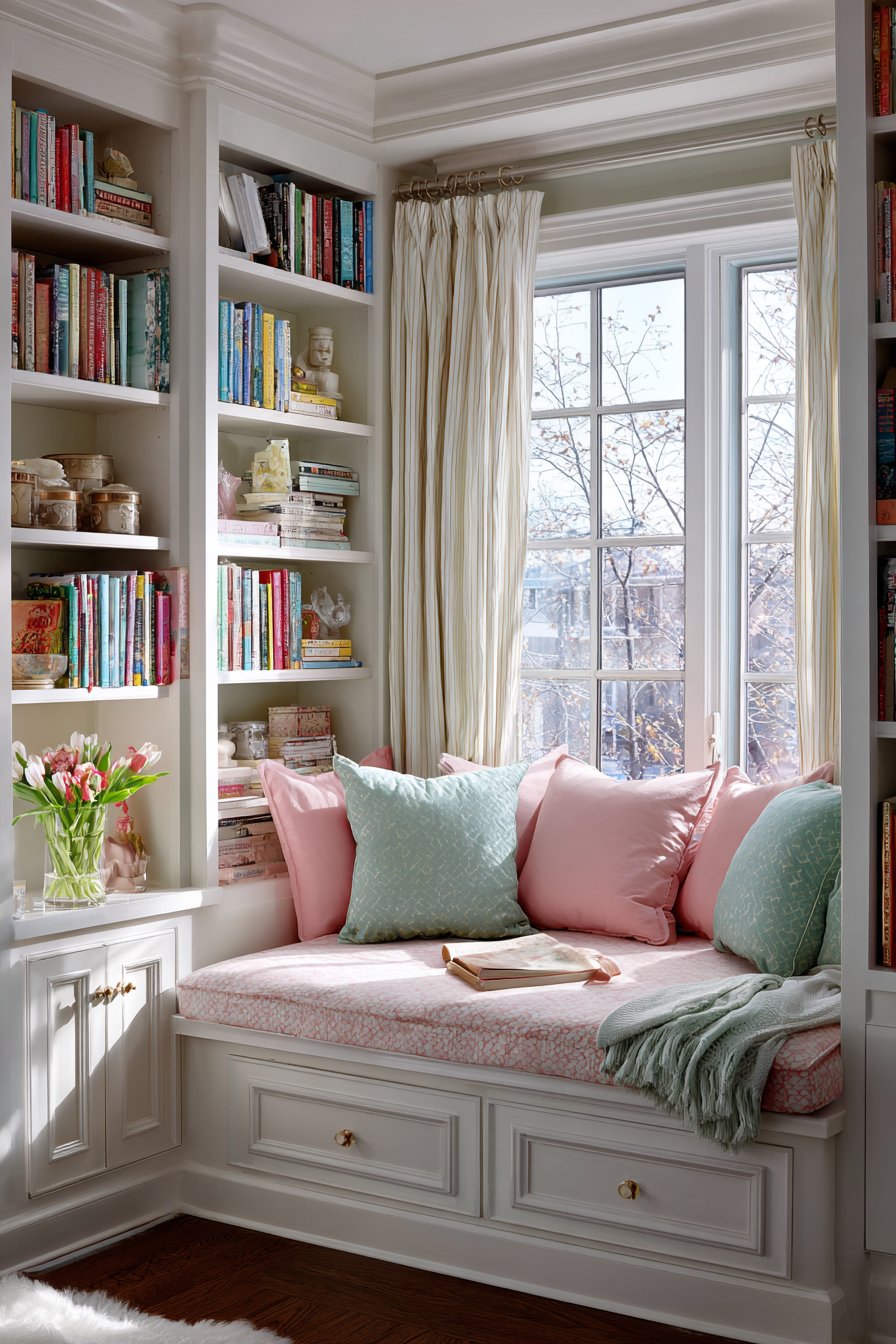
The window treatment plays a crucial role in this design’s success. Soft sheer curtains filter the natural daylight, preventing harsh glare while maintaining the bright, airy atmosphere essential for a comfortable reading experience.
These curtains can be drawn for privacy during evening hours while still allowing some ambient light to filter through. The overall effect is a warm, inviting study space where a young girl can develop her love of reading in comfort and style.
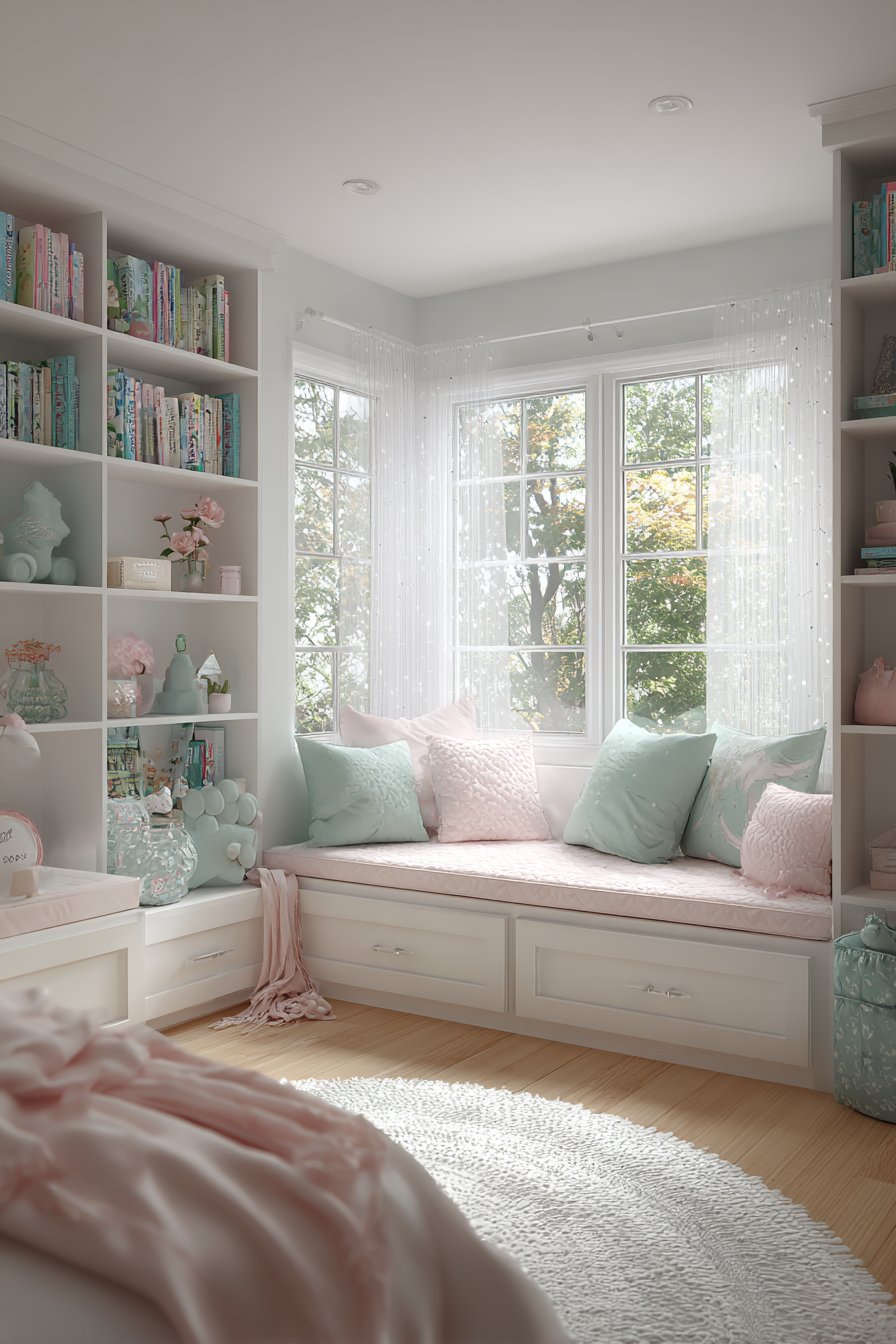
This reading nook design addresses multiple needs simultaneously. It provides a quiet retreat for focused activities, offers abundant storage for beloved books, and creates a visually appealing focal point in the bedroom. The soft color palette promotes relaxation and concentration, making it equally suitable for reading, daydreaming, or simply enjoying a peaceful moment.
Key Design Tips:
- Select window seat cushions with removable, washable covers in durable fabrics that can withstand daily use
- Install built-in shelving at varying heights to accommodate different book sizes and display items
- Choose sheer curtains in light, breathable fabrics that provide privacy without blocking natural light
- Add a small reading lamp for evening hours when natural light fades
- Include storage compartments within the window seat for extra blankets, pillows, or overflow book storage
2. Dreamy Lavender Sleep Sanctuary
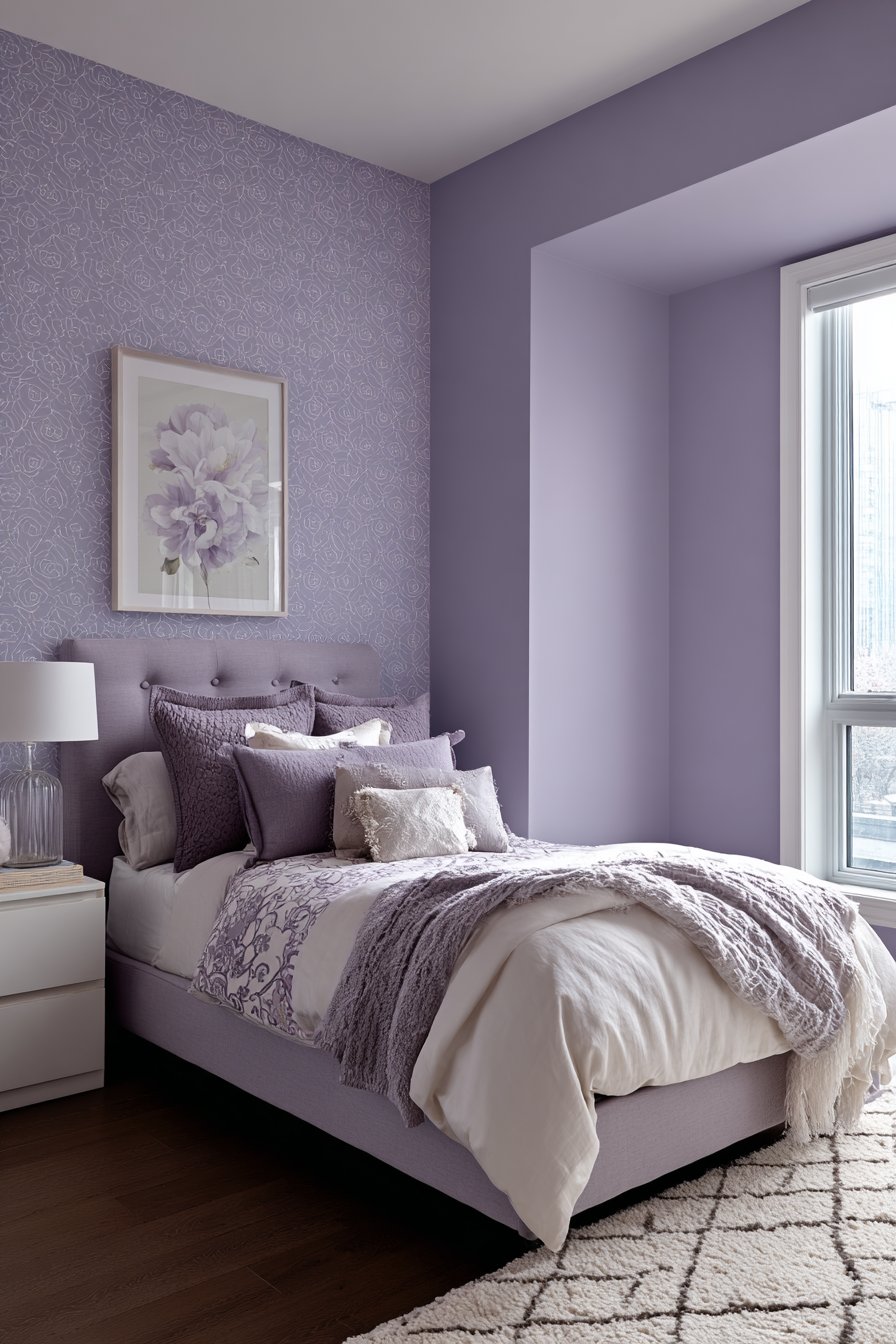
The bedroom’s sleeping area deserves special attention, and a twin-size bed with a sophisticated upholstered headboard sets the perfect foundation. Imagine soft lavender fabric—a color known for its calming properties—forming an elegant headboard that adds both comfort and visual interest. This isn’t just a pretty face; the upholstered surface provides a cushioned backrest for sitting up to read or chat with friends, combining functionality with aesthetic appeal.
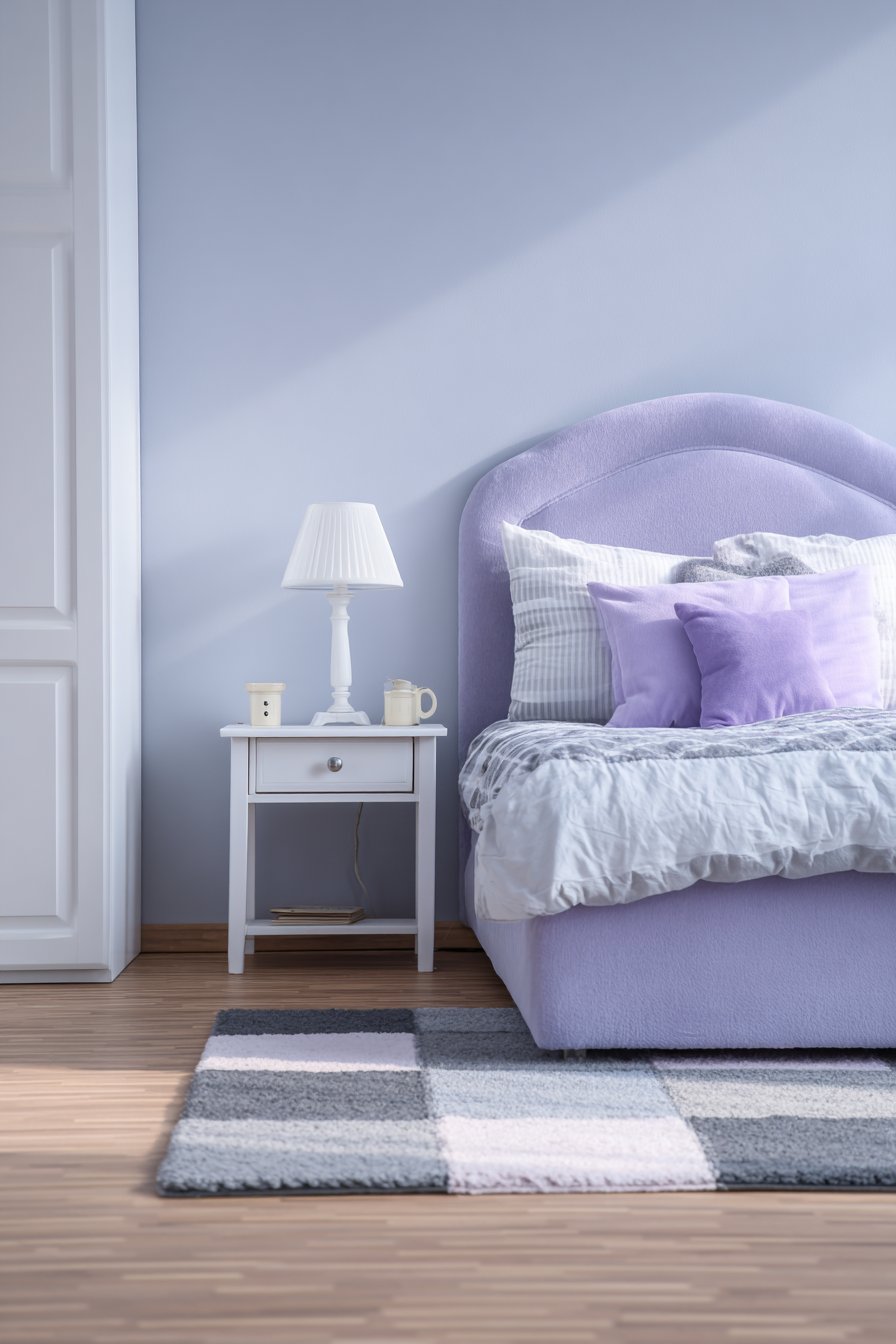
Layered bedding in complementary purple and white tones creates a luxurious sleeping environment that feels special without being overly fussy. Start with crisp white sheets as a fresh base, add a lavender duvet or comforter, then layer on decorative pillows in varying shades of purple, from pale lilac to deeper plum.
This monochromatic color scheme with tonal variations creates visual depth while maintaining a cohesive, sophisticated look that’s perfect for an 8-year-old girl beginning to develop her own style preferences.
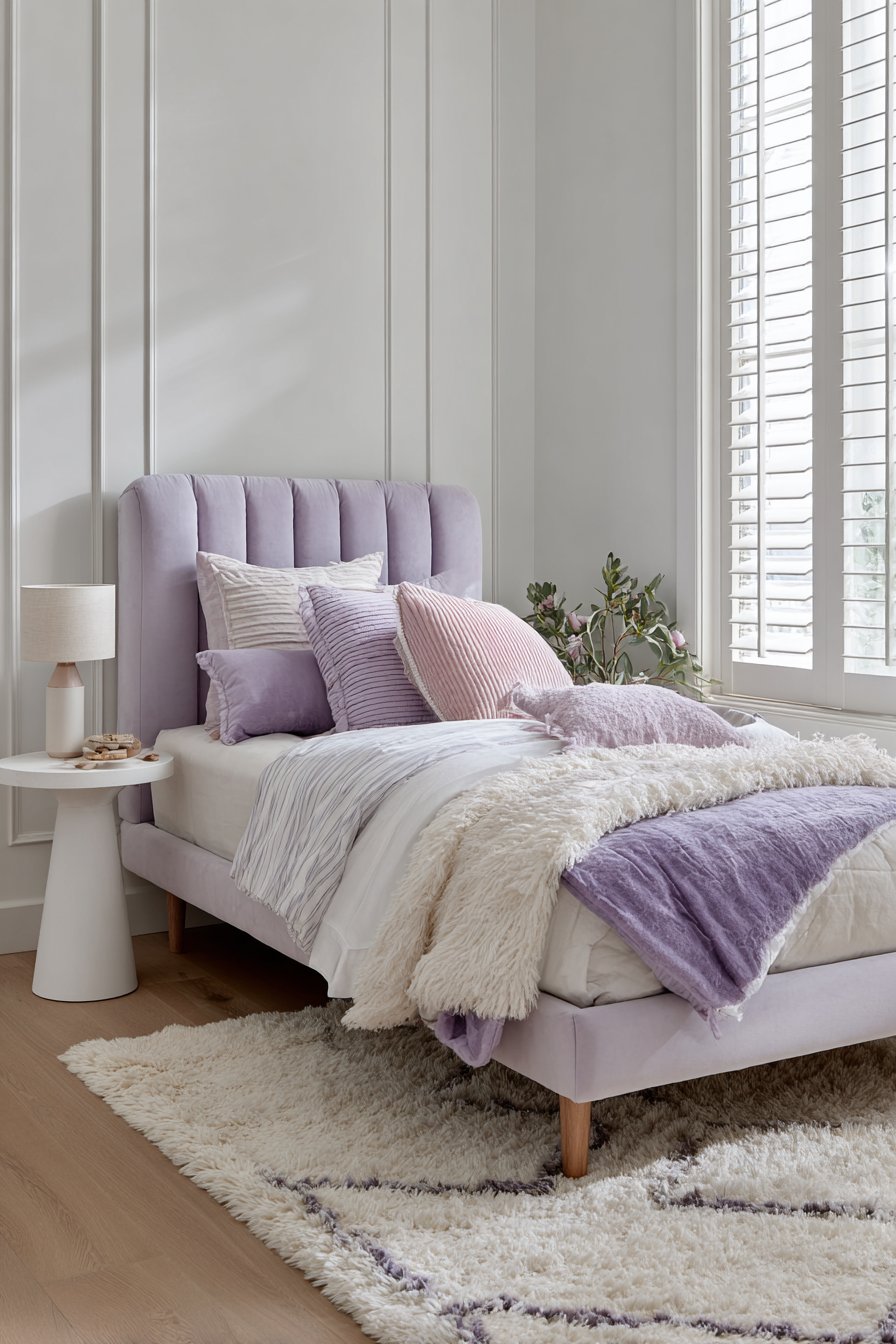
The bedside essentials complete this sleeping sanctuary. A small white nightstand provides the perfect perch for a simple table lamp, offering gentle illumination for bedtime stories or those last few pages that simply must be read before sleep.
The nightstand’s drawer keeps personal items, perhaps a journal or special treasures, safely stored but easily accessible. Light hardwood flooring grounds the space with natural warmth, while a plush area rug in geometric patterns adds softness underfoot and introduces subtle visual interest without overwhelming the serene color palette.
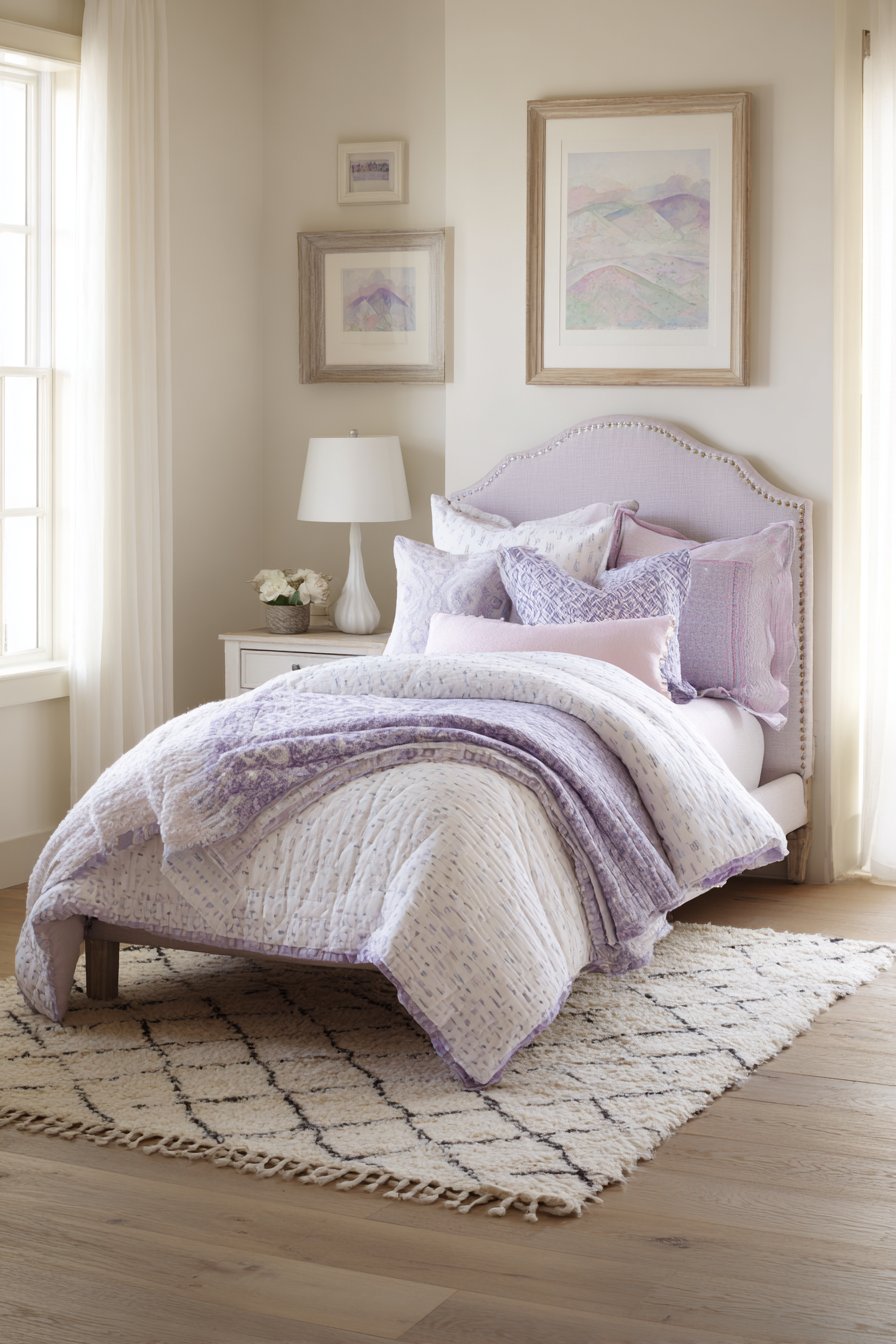
This sleeping area design prioritizes both comfort and age-appropriate sophistication. The lavender color palette promotes relaxation and restful sleep, while the quality furnishings and thoughtful layering demonstrate attention to detail that makes the space feel truly special. It’s a design that respects the child’s growing maturity while still maintaining the softness and comfort essential for a young girl’s bedroom.
Key Design Tips:
- Choose an upholstered headboard in a stain-resistant fabric that can be spot-cleaned easily
- Layer bedding in similar color families but varying textures for visual and tactile interest
- Select a nightstand with at least one drawer for storing personal items out of sight
- Position the bed to maximize natural light during the day while avoiding direct glare
- Use a plush area rug to define the sleeping zone and add warmth to hardwood floors
3. Bright and Focused Homework Haven
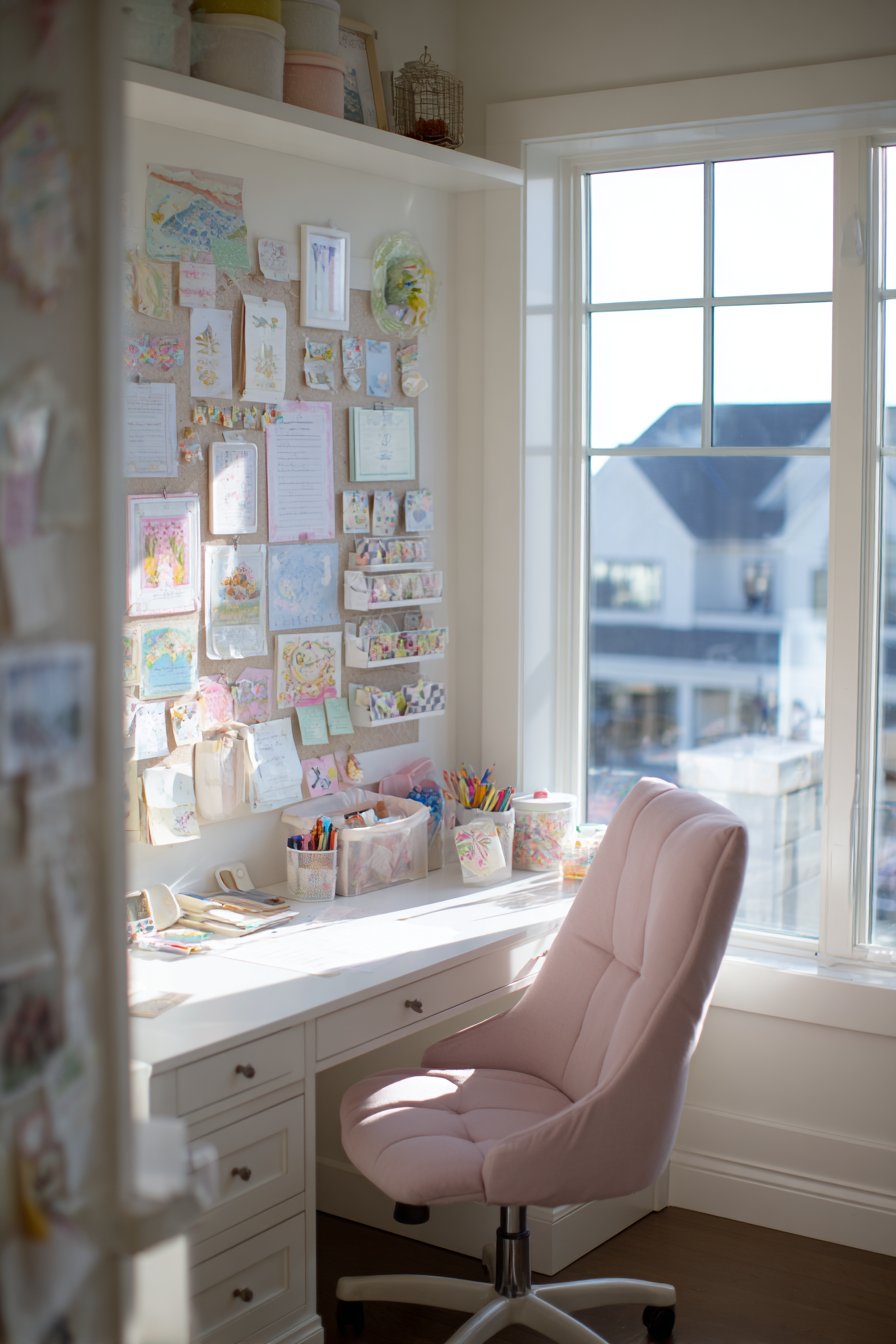
Every 8-year-old girl needs a dedicated workspace where she can tackle homework, pursue creative projects, and develop good study habits. A white desk positioned strategically near the window captures optimal natural light, reducing eye strain and creating a cheerful environment conducive to learning. This placement takes advantage of the healthiest light source available while providing a pleasant view that can offer brief mental breaks during longer study sessions.
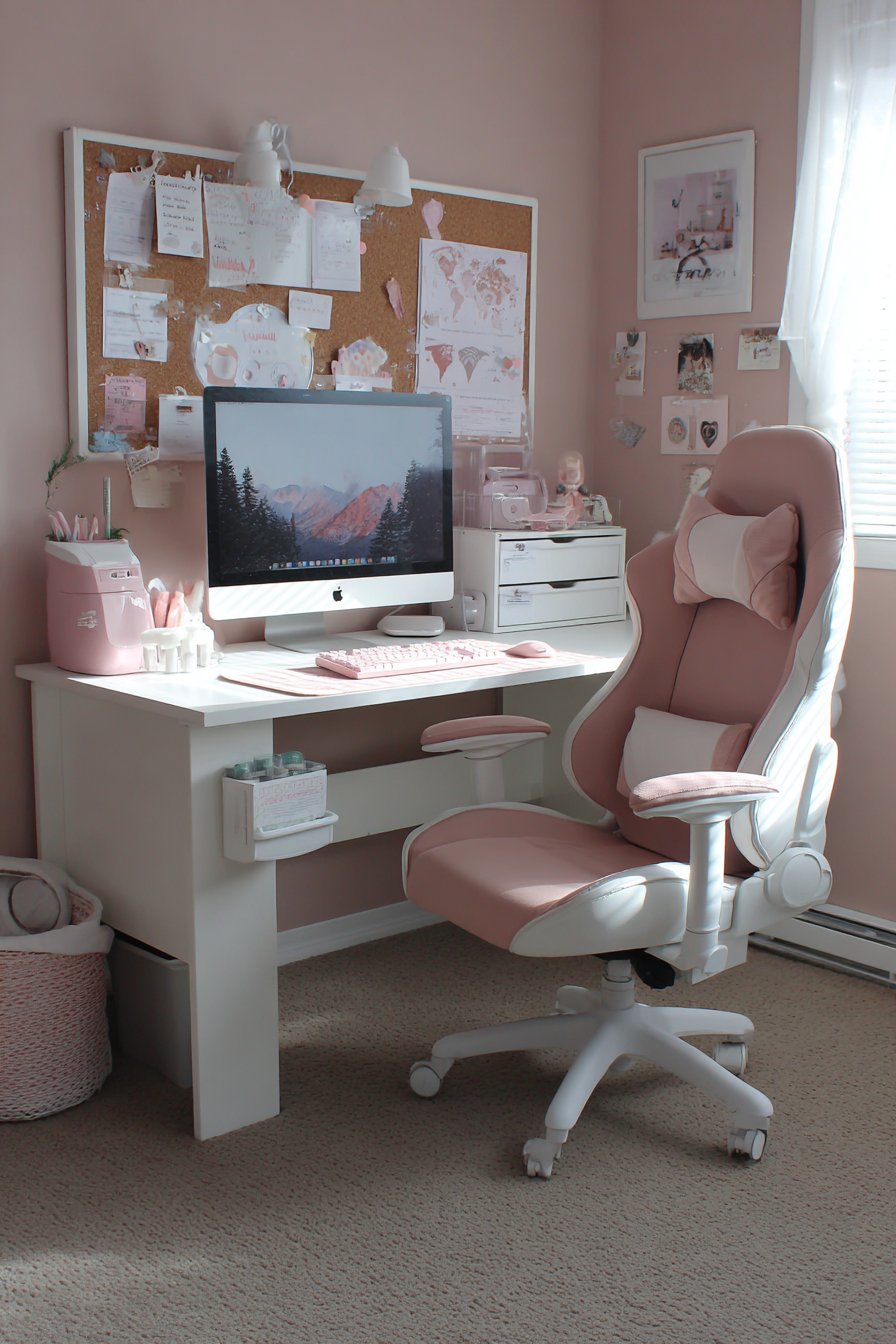
The ergonomic chair in blush pink brings both style and crucial support to this homework station. At this age, children are spending increasing amounts of time on schoolwork, making proper seating essential for developing good posture and preventing discomfort.
The soft pink color adds a feminine touch without being overly juvenile, striking that perfect balance between fun and functional. Adjustable height features ensure the chair can grow with the child, making it a wise long-term investment.
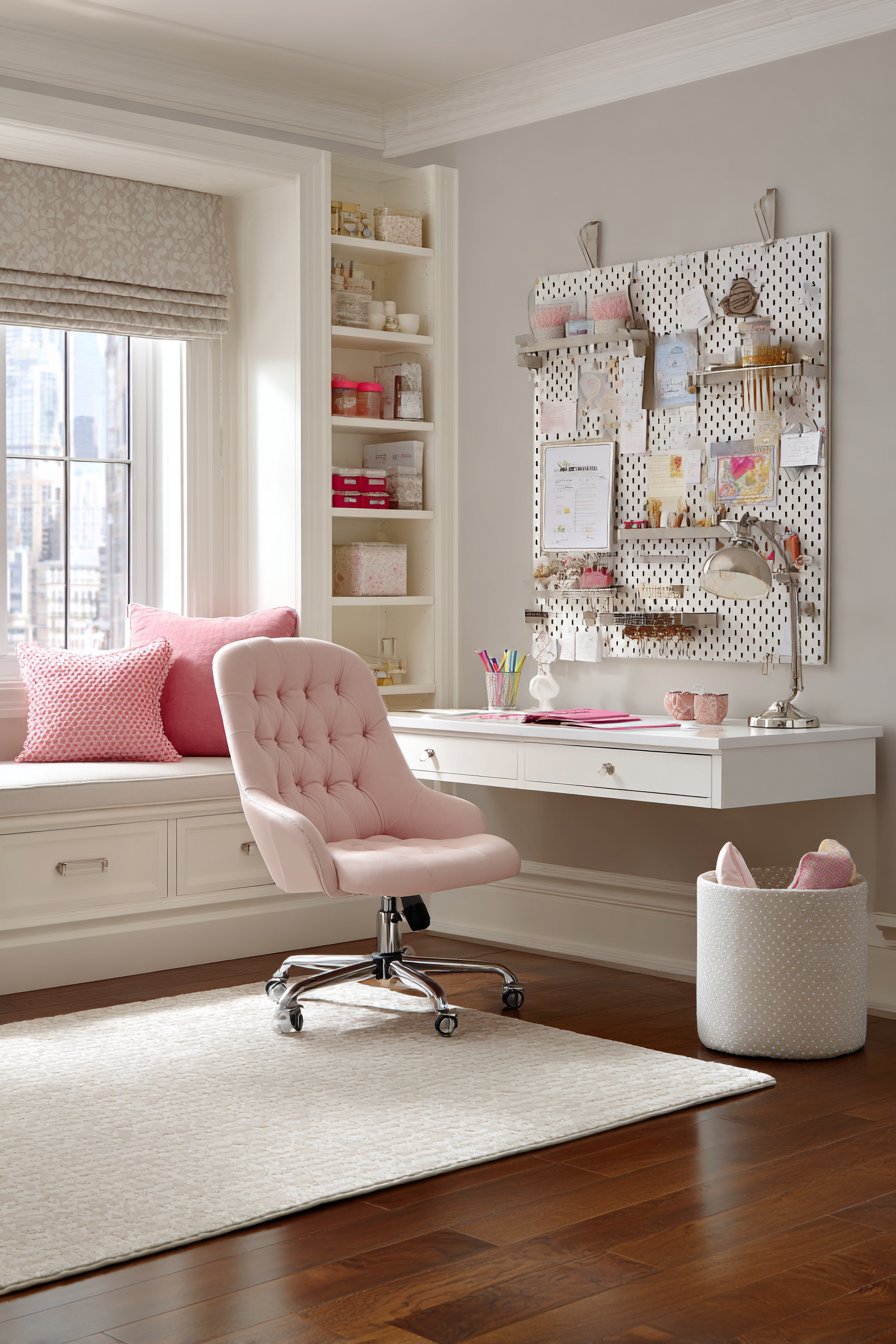
Organization is key to maintaining an effective study space. Wall-mounted shelving above the desk keeps school supplies within easy reach while freeing up valuable desk surface for working. Coordinating containers—perhaps in matching pastels or labeled bins—store pencils, markers, scissors, and other essentials in an orderly fashion.
A bulletin board mounted nearby provides a designated spot for displaying artwork, posting achievement certificates, pinning up homework reminders, and showcasing tests that earned gold stars. This visible celebration of accomplishments builds confidence and motivation.
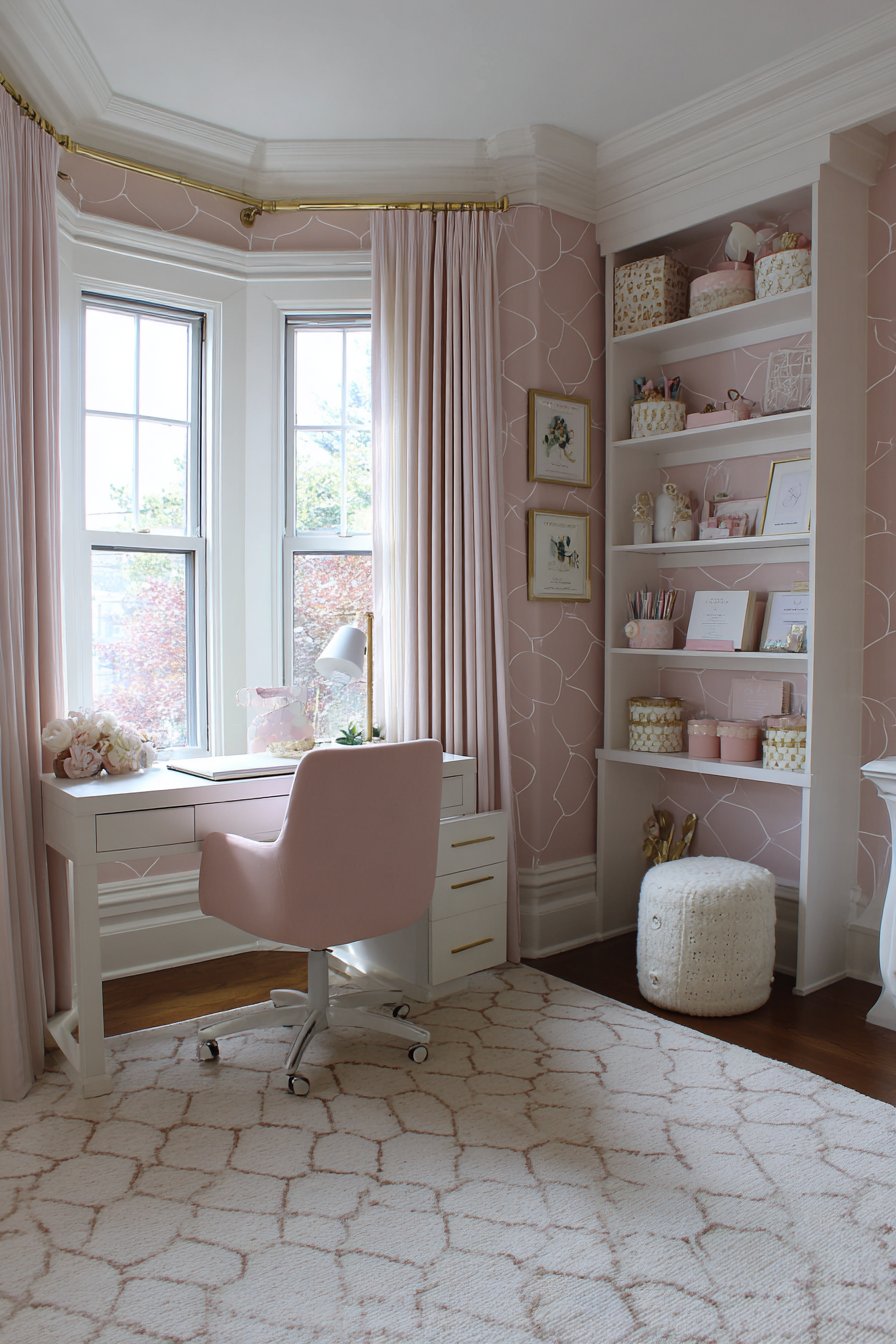
The overall design of this homework station emphasizes function without sacrificing style. Natural light, proper seating, organized storage, and personal touches combine to create a space where an 8-year-old girl can focus on her studies while feeling comfortable and inspired. It’s an investment in her education and a testament to the importance of having a proper place for academic pursuits.
Key Design Tips:
- Position the desk perpendicular to the window to maximize natural light while minimizing screen glare
- Invest in an adjustable ergonomic chair that provides proper back support for growing children
- Use wall-mounted storage to keep desk surfaces clear and clutter-free
- Include a bulletin board or magnetic board at child-appropriate height for easy access
- Ensure adequate task lighting for homework sessions that extend into evening hours
4. Personalized Gallery Wall of Inspiration
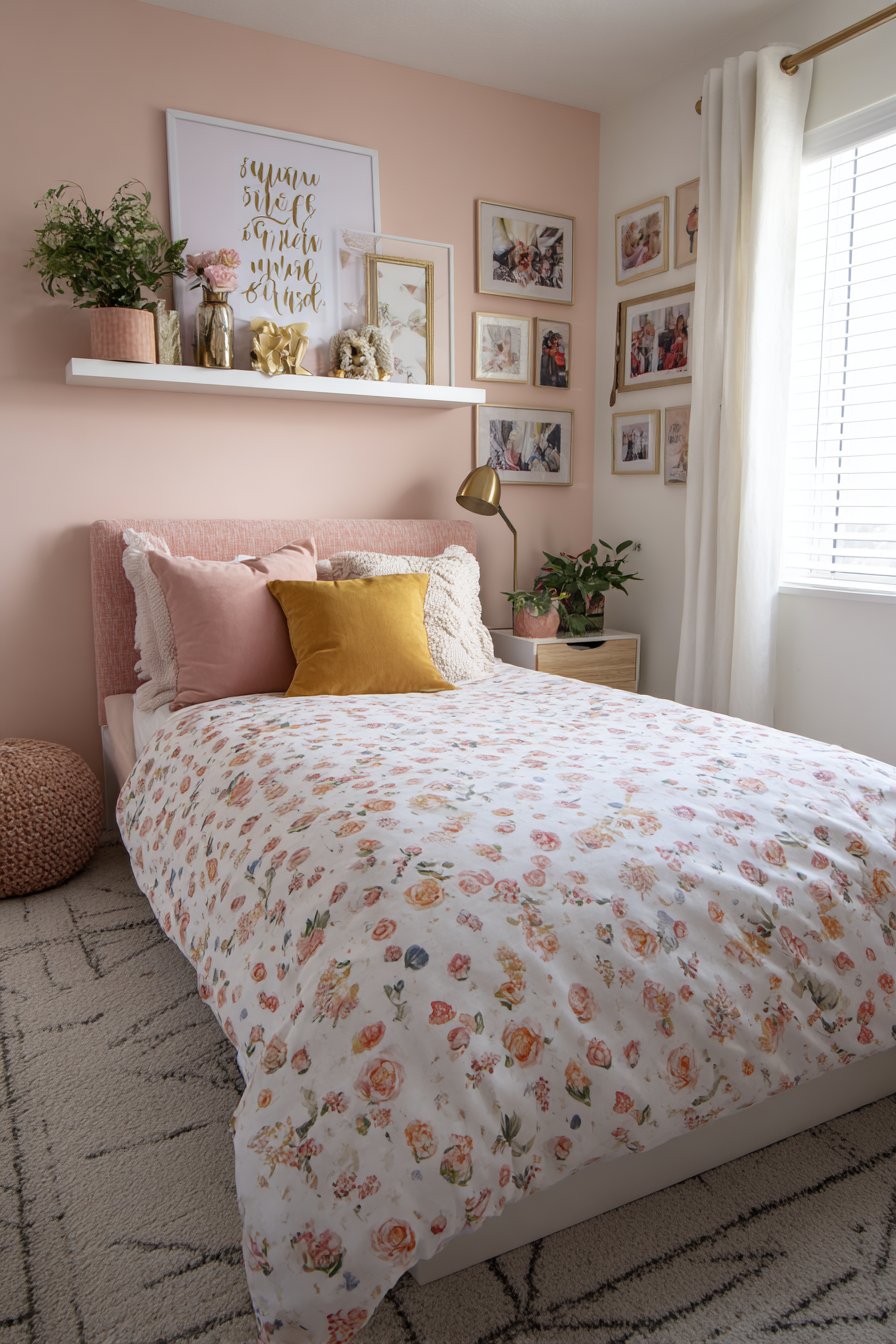
A thoughtfully curated gallery wall transforms a blank surface into a dynamic display of personality, achievement, and aspiration. Imagine a wall painted in soft peachy-pink—a warm, optimistic hue that serves as the perfect backdrop for a carefully arranged collection of framed items. This isn’t a random assortment; it’s a deliberate composition that tells the story of an 8-year-old girl’s interests, accomplishments, and dreams.
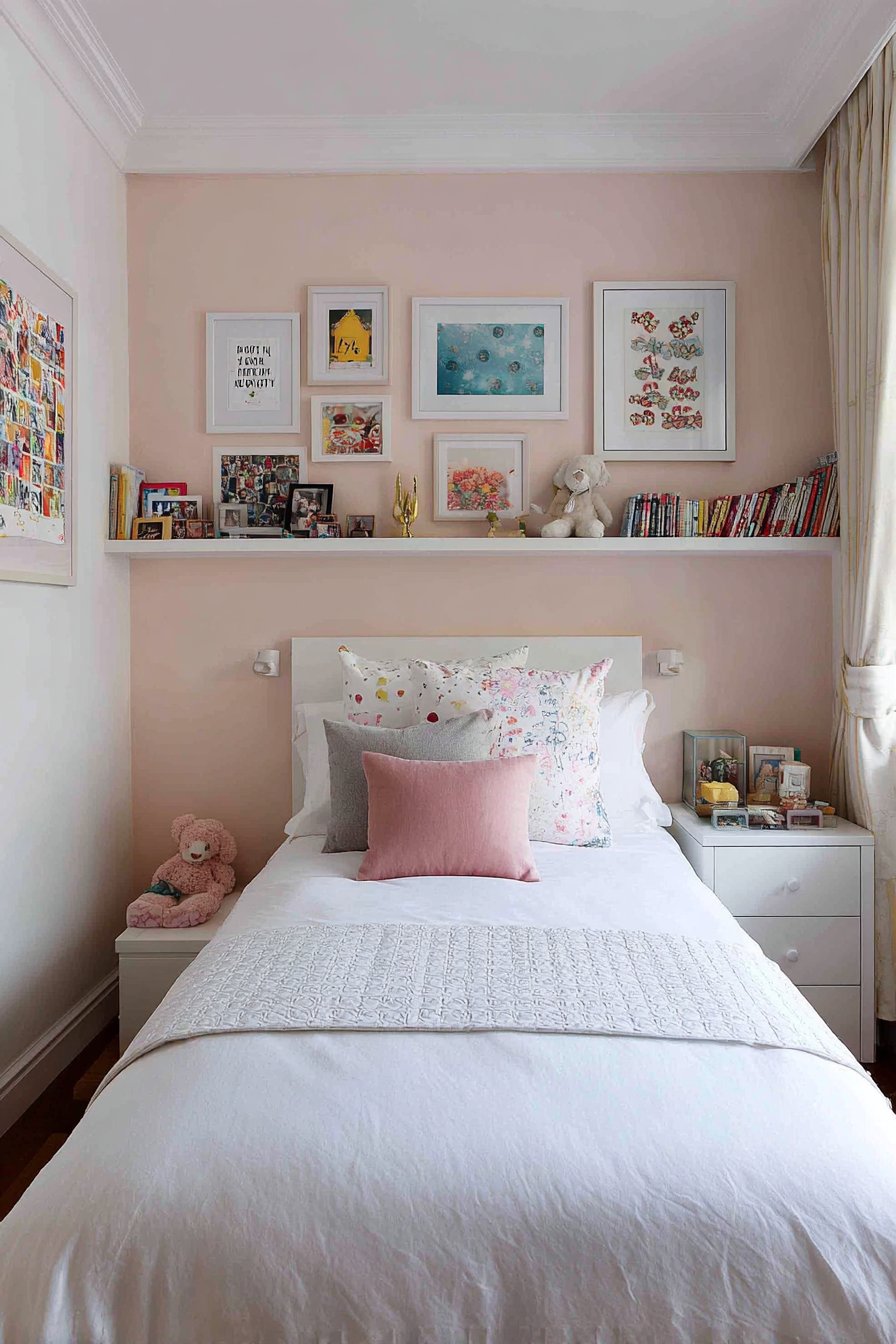
The gallery includes framed inspirational quotes chosen specifically to resonate with a child this age—messages about kindness, courage, creativity, or the importance of being yourself. These positive affirmations, displayed at child-appropriate height where they can be easily read, provide daily encouragement and reinforce important values.
Mixed among these motivational messages are pieces of colorful artwork—perhaps prints of favorite animals, abstract designs in coordinating colors, or even the child’s own creative work professionally framed to show it’s valued.
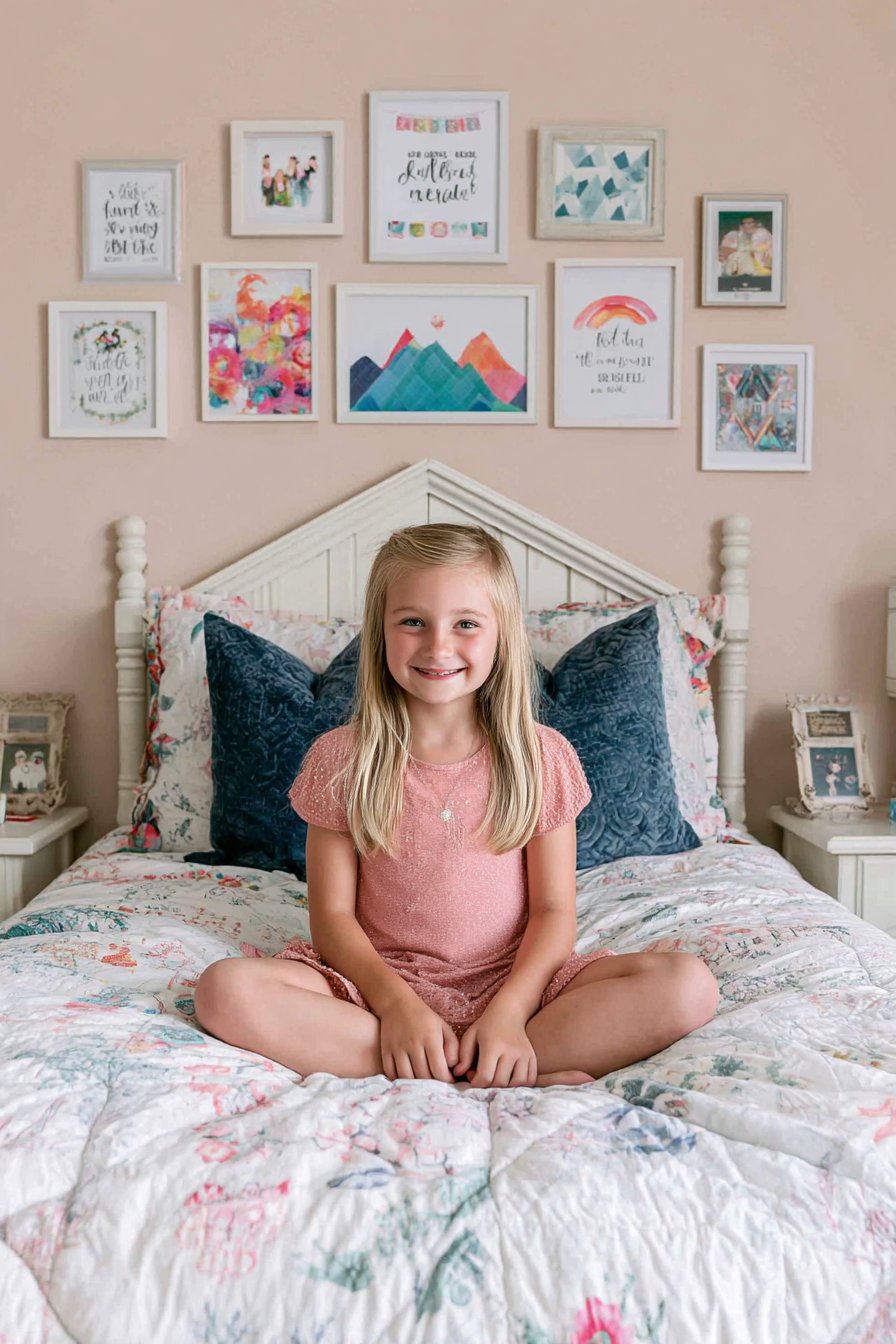
Personal photographs add an intimate touch to the gallery wall. Pictures with best friends, family vacation memories, or candid shots capturing joyful moments make the space uniquely personal. These aren’t just decorations; they’re visual reminders of love, connection, and happy experiences.
A small decorative shelf integrated into the gallery provides a three-dimensional element where favorite trinkets, small awards, or special mementos can be displayed, adding depth and variety to the overall composition.
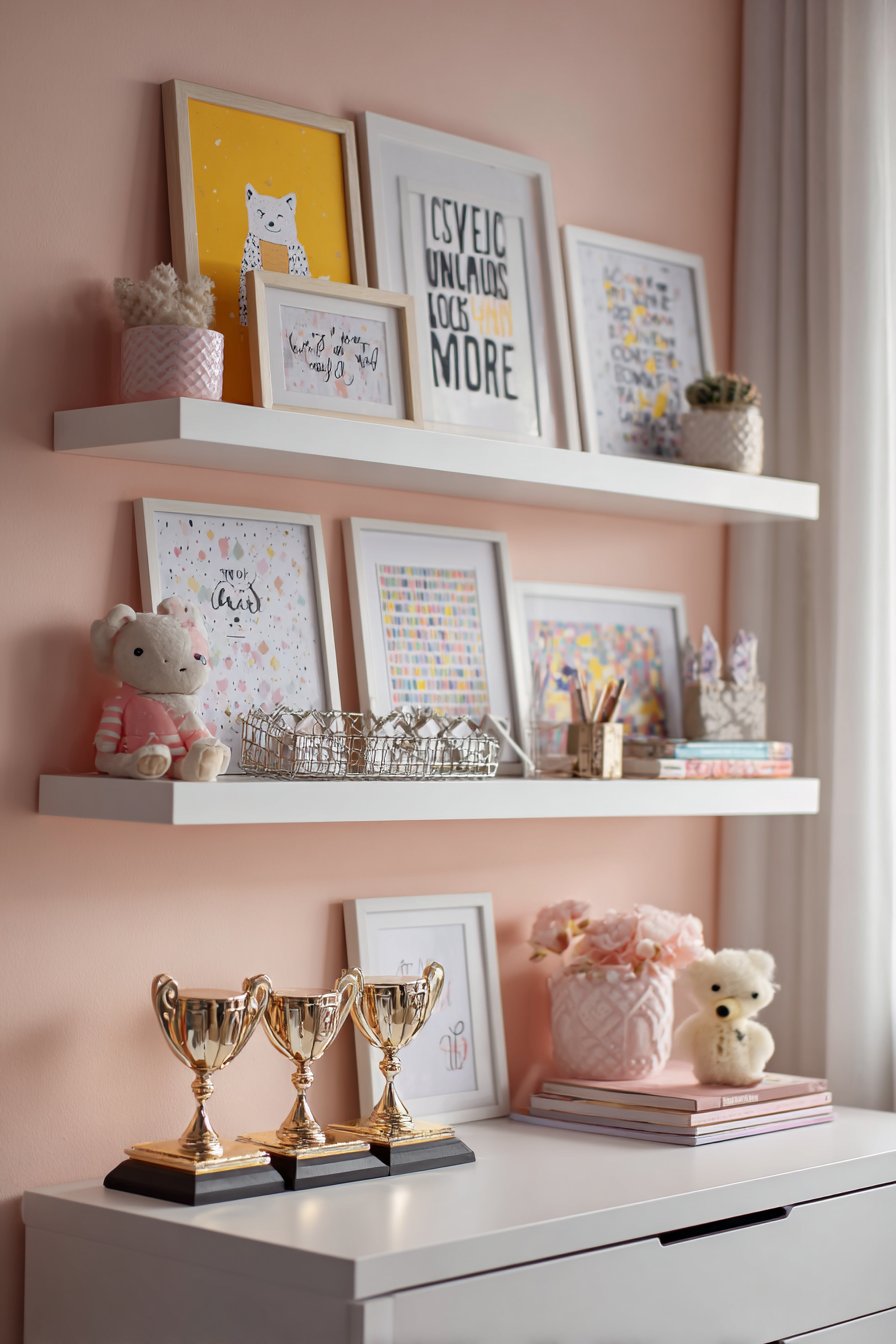
The beauty of a gallery wall lies in its flexibility. As interests evolve, new achievements are earned, or style preferences change, individual pieces can be easily swapped out without requiring a complete redesign. This adaptability makes it perfect for the dynamic nature of childhood, allowing the room to grow and change along with its inhabitant.
Key Design Tips:
- Plan the layout on the floor before hanging to ensure a balanced composition
- Mix frame styles and sizes for visual interest while maintaining a cohesive color scheme
- Hang items at child-appropriate heights so she can easily view and appreciate them
- Include empty frames that can be updated with new artwork or photos as interests change
- Use removable hanging strips for flexibility in rearranging as the child grows
5. Smart Storage Solutions for Organized Living
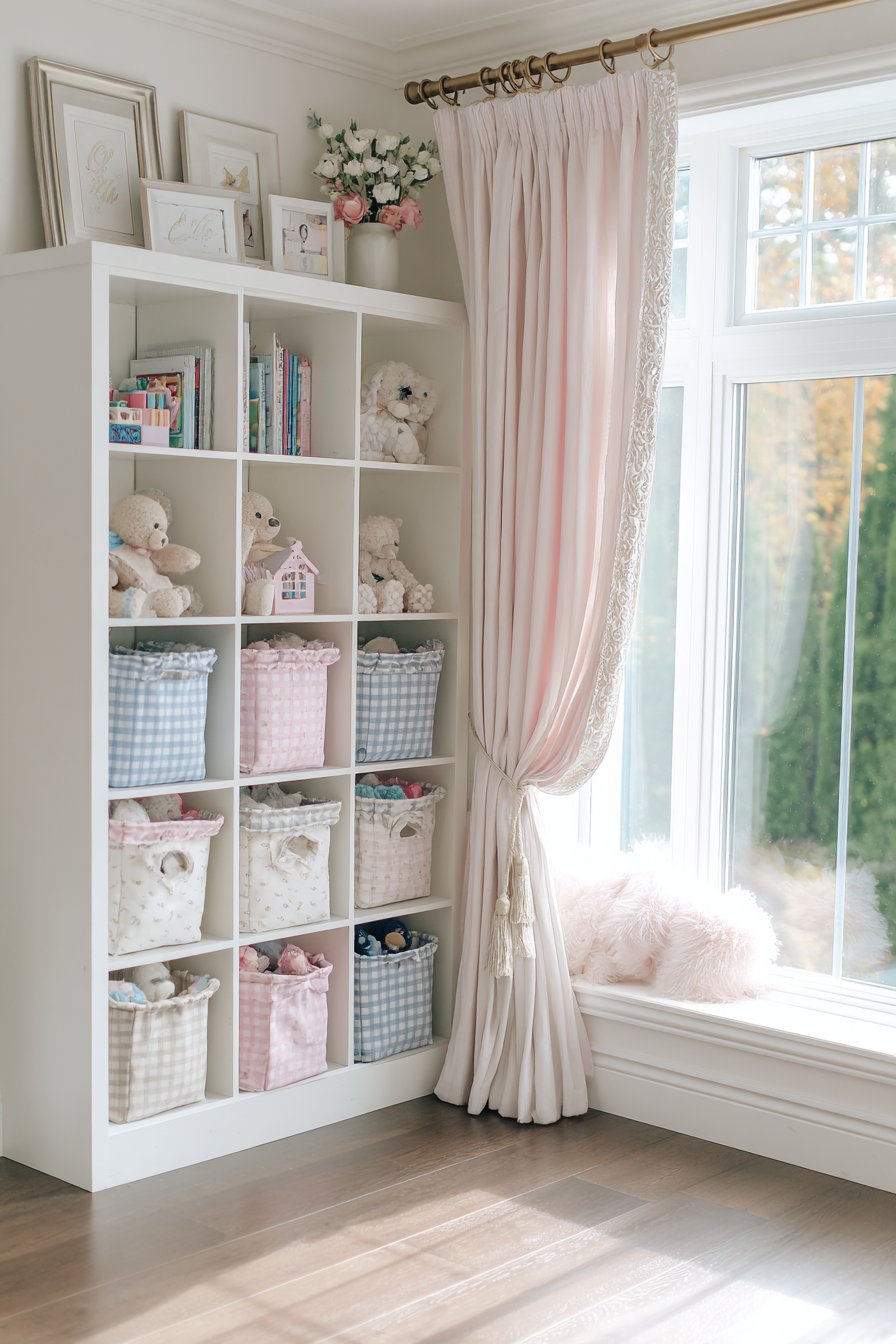
In any child’s bedroom, effective storage solutions make the difference between chaos and calm. A modular shelving unit in crisp white provides the perfect foundation for an organized space. Its versatile design accommodates various storage needs, from open shelves that display beloved books and decorative items to closed compartments that hide away toys and games, keeping clutter out of sight when not in use.
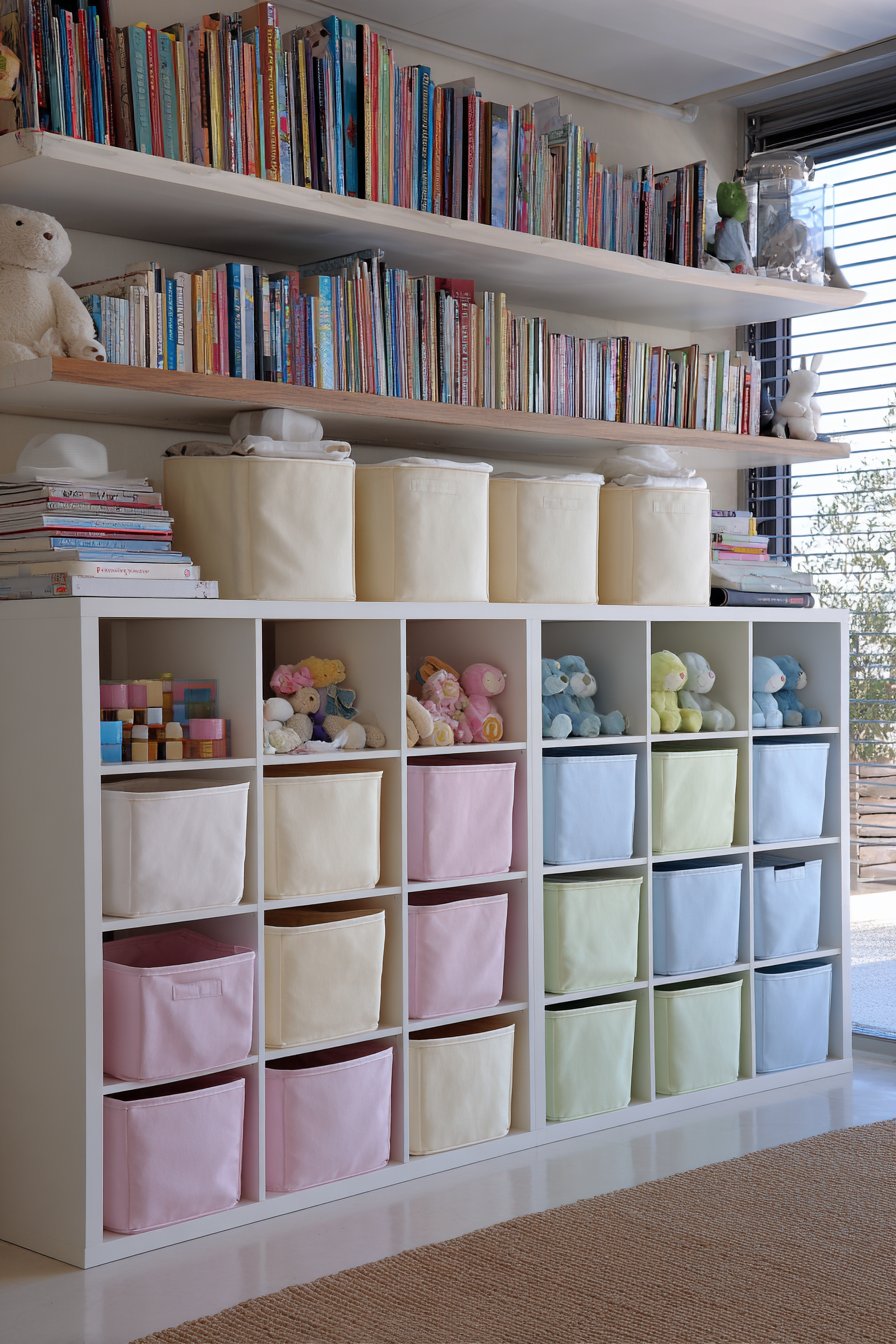
Fabric bins in coordinating pastel colors add both functionality and visual appeal to the shelving system. These soft-sided containers—perhaps in mint green, lavender, pale pink, and buttery yellow—make it easy for an 8-year-old to categorize and store toys.
One bin might hold art supplies, another stuffed animals, a third building blocks, and so on. The soft pastels create a cohesive, calming look while the variety of colors helps with organization, teaching the child to put things back in their designated spots.
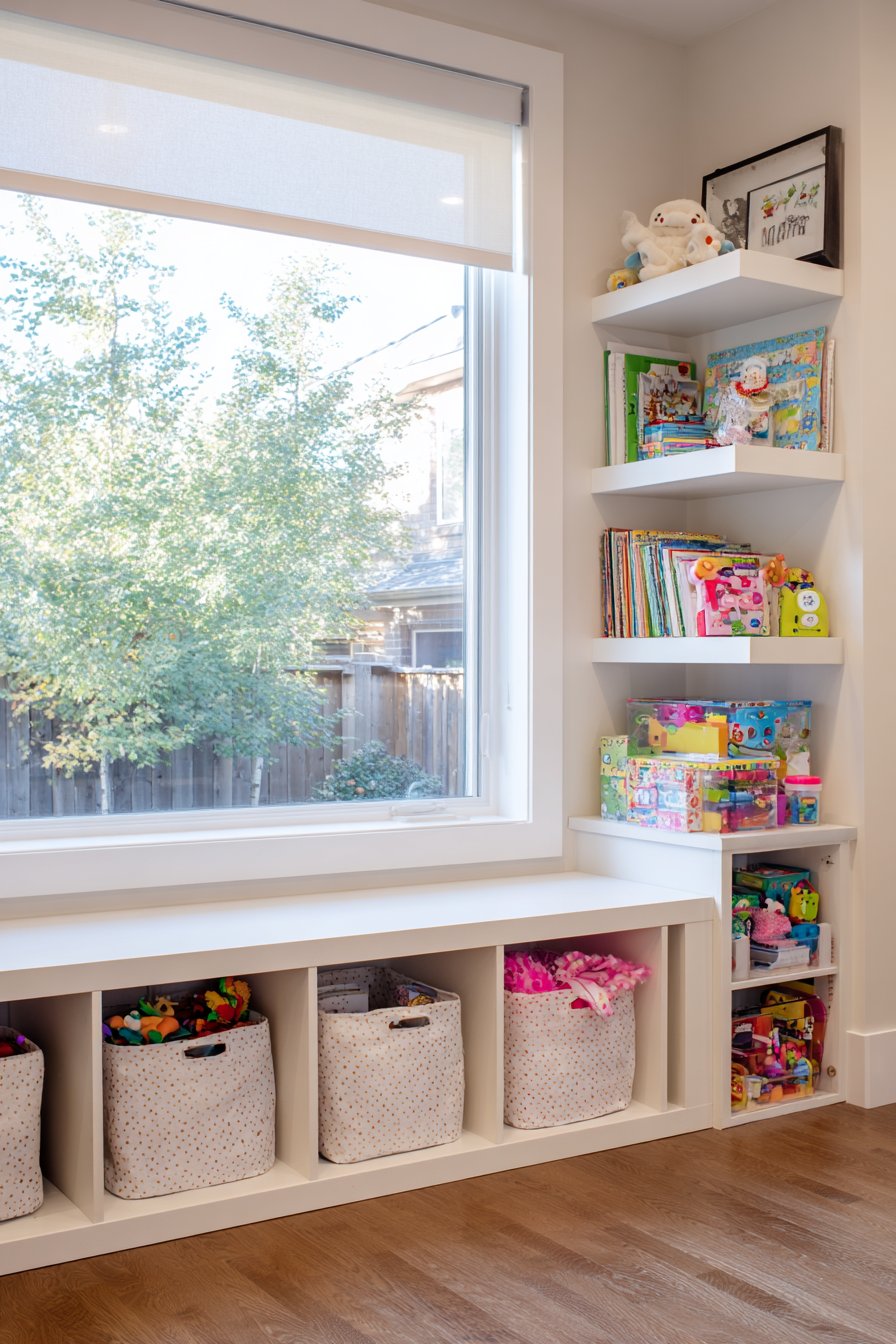
Natural lighting from a nearby window illuminates this organized space, making it easy to find items and maintaining the room’s bright, cheerful atmosphere. The combination of open and closed storage serves multiple purposes: open shelves allow for display of special items and easy access to frequently used books or toys, while closed storage conceals the visual clutter that can make a room feel chaotic. This balance is essential for maintaining both functionality and aesthetic appeal.
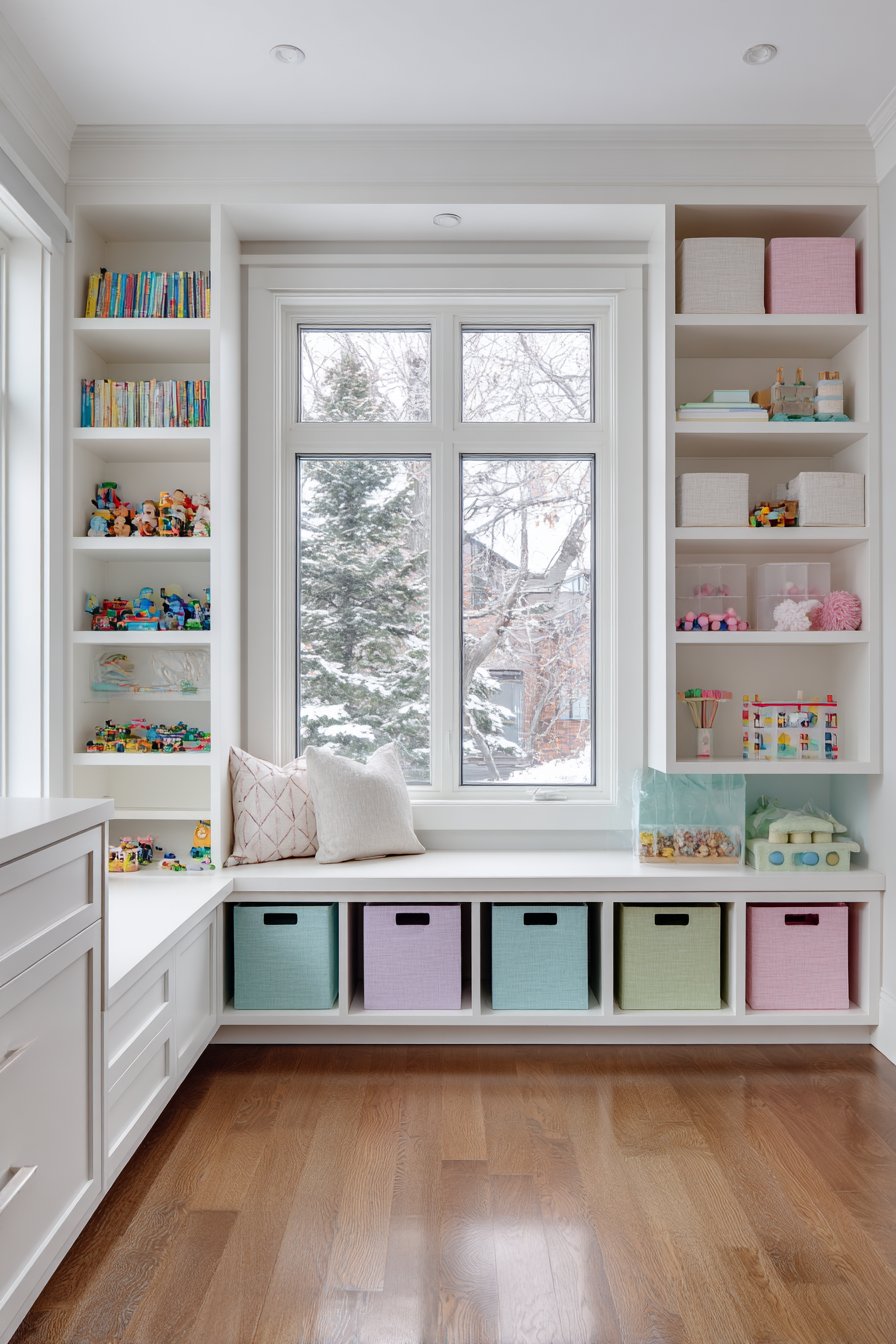
The true genius of this storage system lies in its accessibility. Everything is designed at heights and in formats that an 8-year-old can manage independently. Fabric bins are lightweight and easy to pull off shelves, while open storage means no struggling with difficult closures or mechanisms. This design fosters independence and responsibility, encouraging the child to take ownership of keeping her space organized.
Key Design Tips:
- Label each storage bin with both words and pictures for easy identification
- Choose modular systems that can be reconfigured as storage needs change
- Keep frequently used items on lower shelves within easy reach
- Implement a “one in, one out” rule to prevent the accumulation of unused toys
- Schedule regular decluttering sessions to maintain the organizational system
6. Whimsical Canopy Dreams
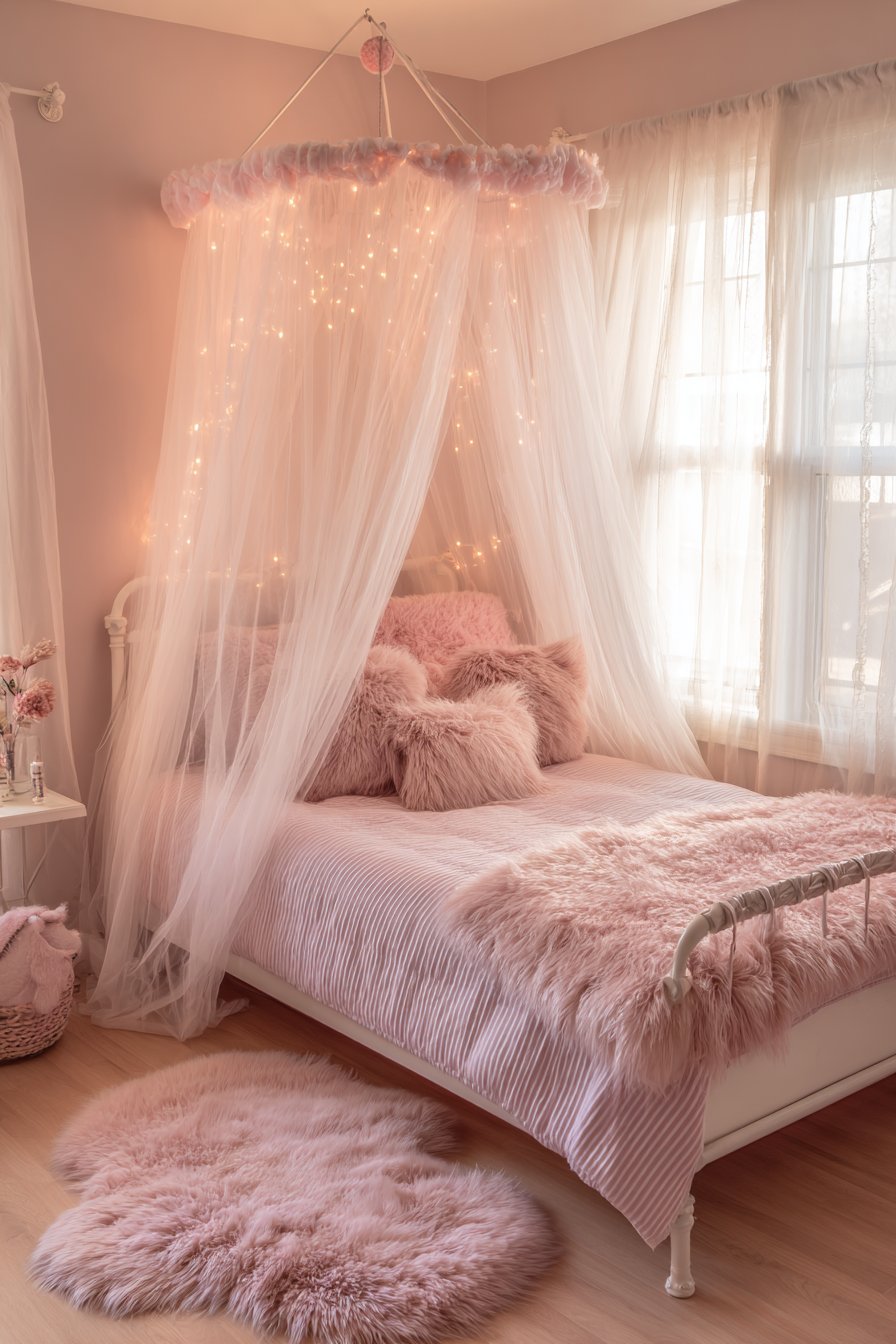
There’s something inherently magical about a canopy bed, and this design captures that enchantment while maintaining age-appropriate sophistication. Sheer white fabric drapes gracefully over a simple metal frame, creating a dreamy sleeping area that feels special without being overly juvenile. Unlike heavy, ornate canopies, this lightweight approach offers the fantasy element young girls love while keeping the look fresh and modern.
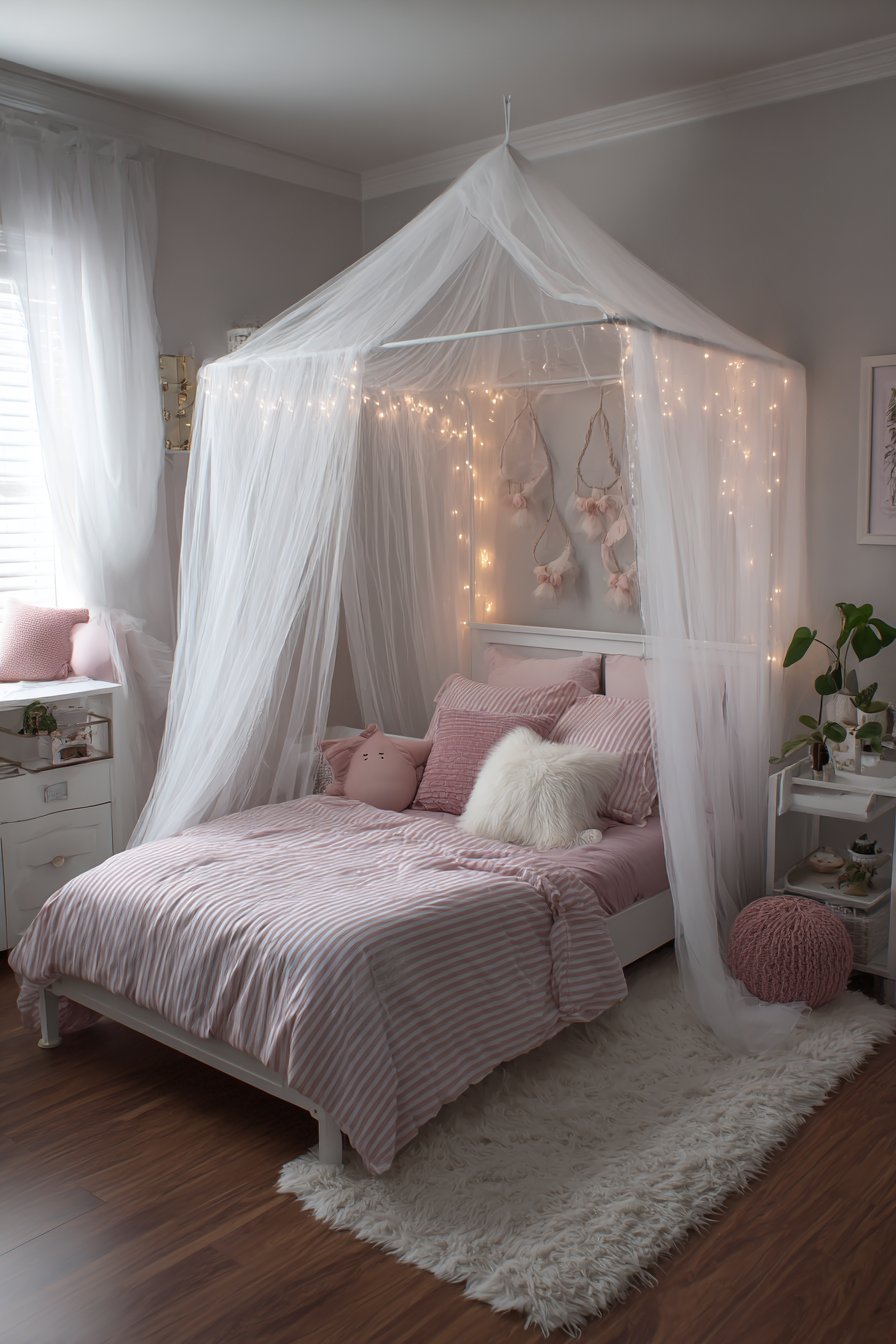
The bedding complements this ethereal canopy with soft pink and white stripes, a classic pattern that adds visual interest without overwhelming the delicate atmosphere. Fluffy pillows in coordinating shades invite comfort, turning the bed into an inviting retreat perfect for both sleep and daytime relaxation. The color palette remains soft and soothing, promoting the calm environment essential for quality rest.
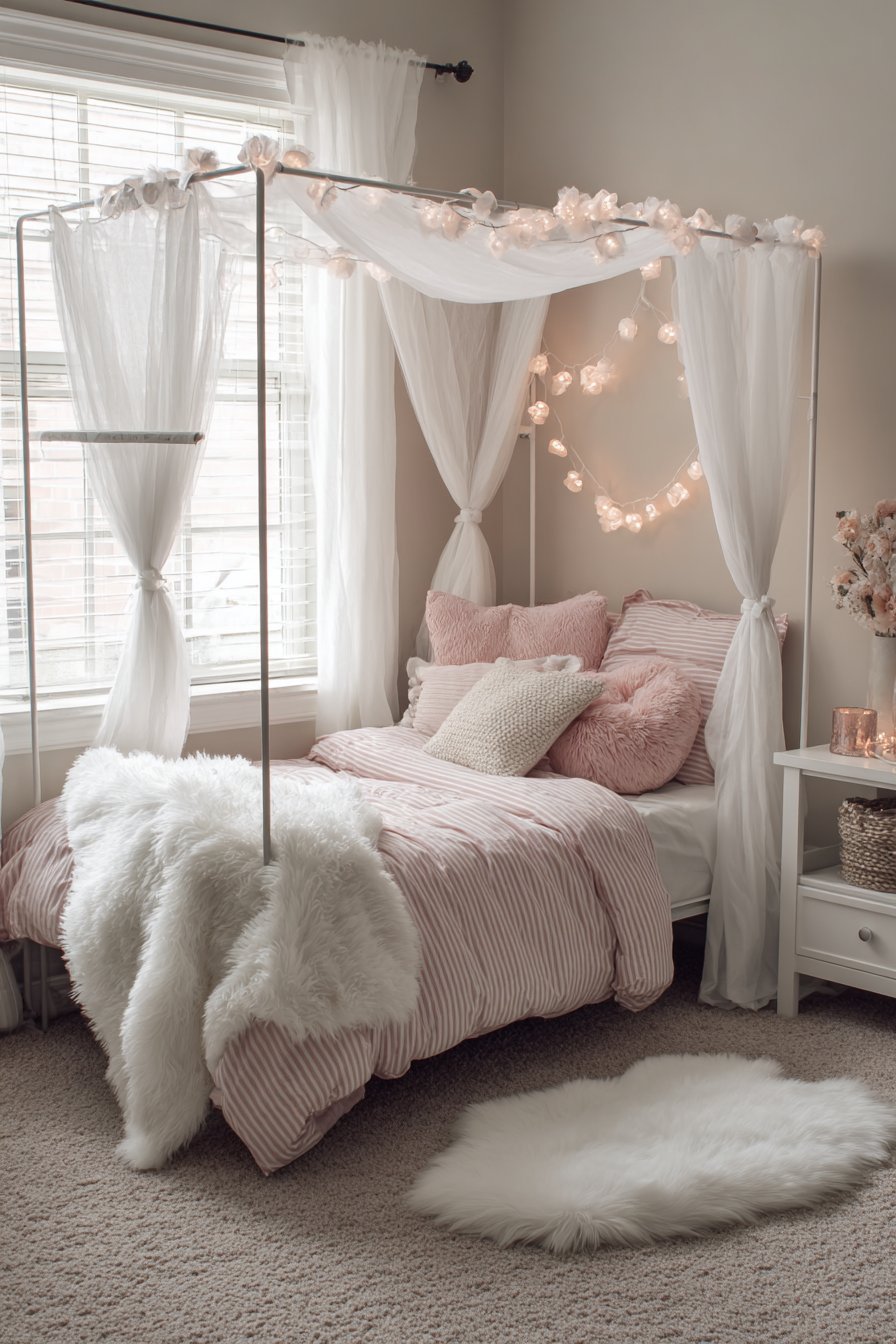
String lights woven through the canopy or draped along its edges add a magical touch that delights without appearing too childish. These gentle twinkling lights create a warm ambiance perfect for evening wind-down routines, bedtime stories, or simply gazing up at the ceiling while lost in thought. Unlike harsh overhead lighting, string lights offer soft, diffused illumination that’s both functional and atmospheric.
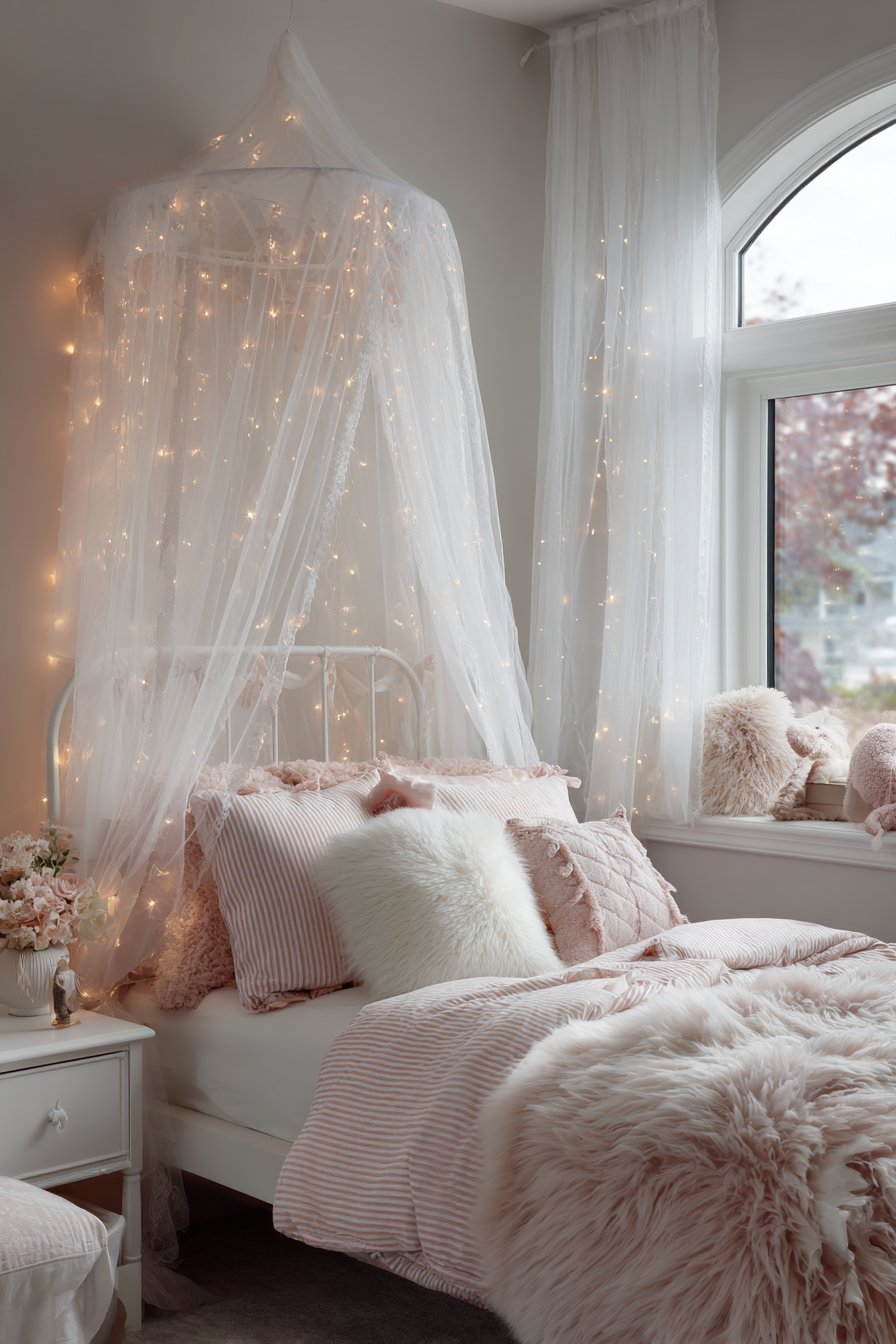
This canopy bed design successfully walks the fine line between maintaining childhood wonder and respecting a growing girl’s evolving tastes. It’s sophisticated enough that it won’t feel babyish in a year or two, yet special enough to make bedtime feel like a retreat to a personal sanctuary. The simple metal frame means the look can be easily updated by changing the fabric or removing the canopy entirely as the child grows.
Key Design Tips:
- Choose sheer, washable fabrics for the canopy that can be easily removed for cleaning
- Ensure the canopy frame is securely installed and meets safety standards
- Use battery-operated LED string lights to avoid electrical hazards
- Select bedding in colors that complement but don’t exactly match the canopy for visual depth
- Keep the canopy design simple and avoid overly elaborate treatments that may date quickly
7. Creative Art Corner for Young Artists
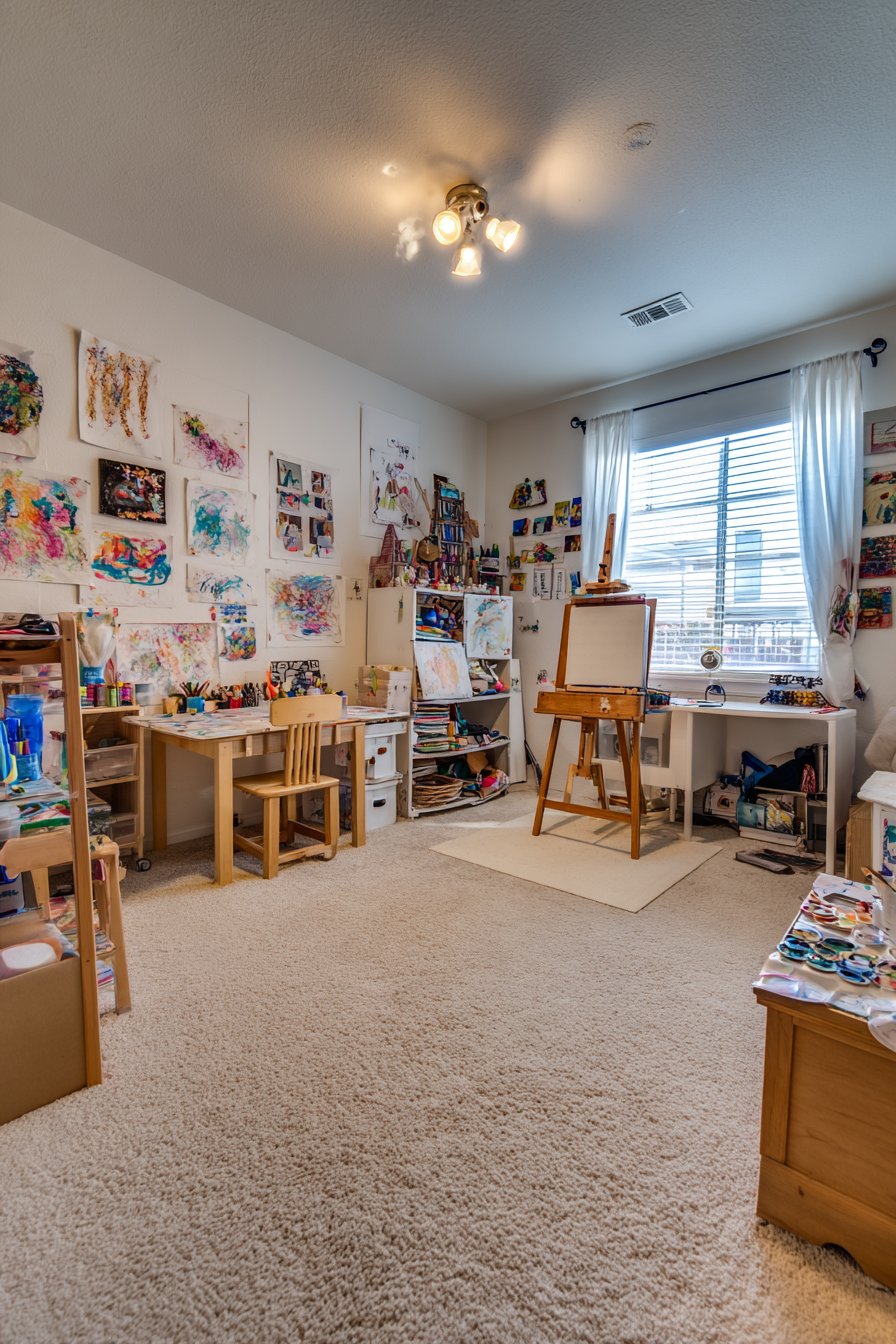
For the artistically inclined 8-year-old, a dedicated creative space can nurture talent and provide an outlet for self-expression. Imagine a corner of the bedroom transformed into an inspiring art studio, complete with a small easel positioned to catch natural light. This isn’t just a token gesture; it’s a fully functional space that respects and encourages the child’s artistic pursuits.
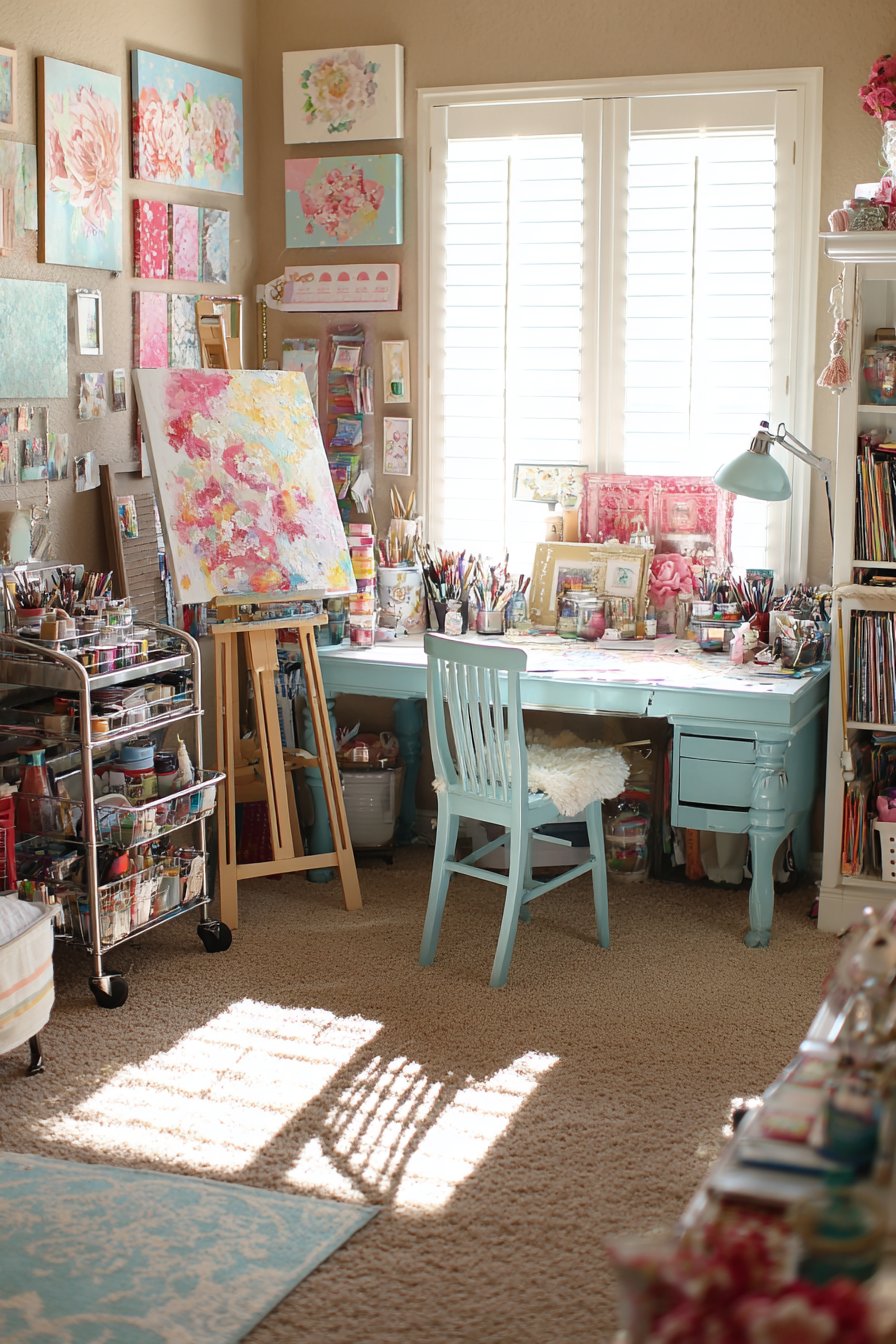
A rolling cart stocked with art supplies provides both storage and flexibility. This mobile unit can be wheeled to the easel for painting sessions or rolled to a table for crafting projects. Organized compartments hold colored pencils, markers, paint tubes, brushes, and other essentials, teaching the young artist to care for her tools while keeping supplies easily accessible. The cart’s mobility means the creative space can adapt to different projects without being constrained by fixed storage locations.
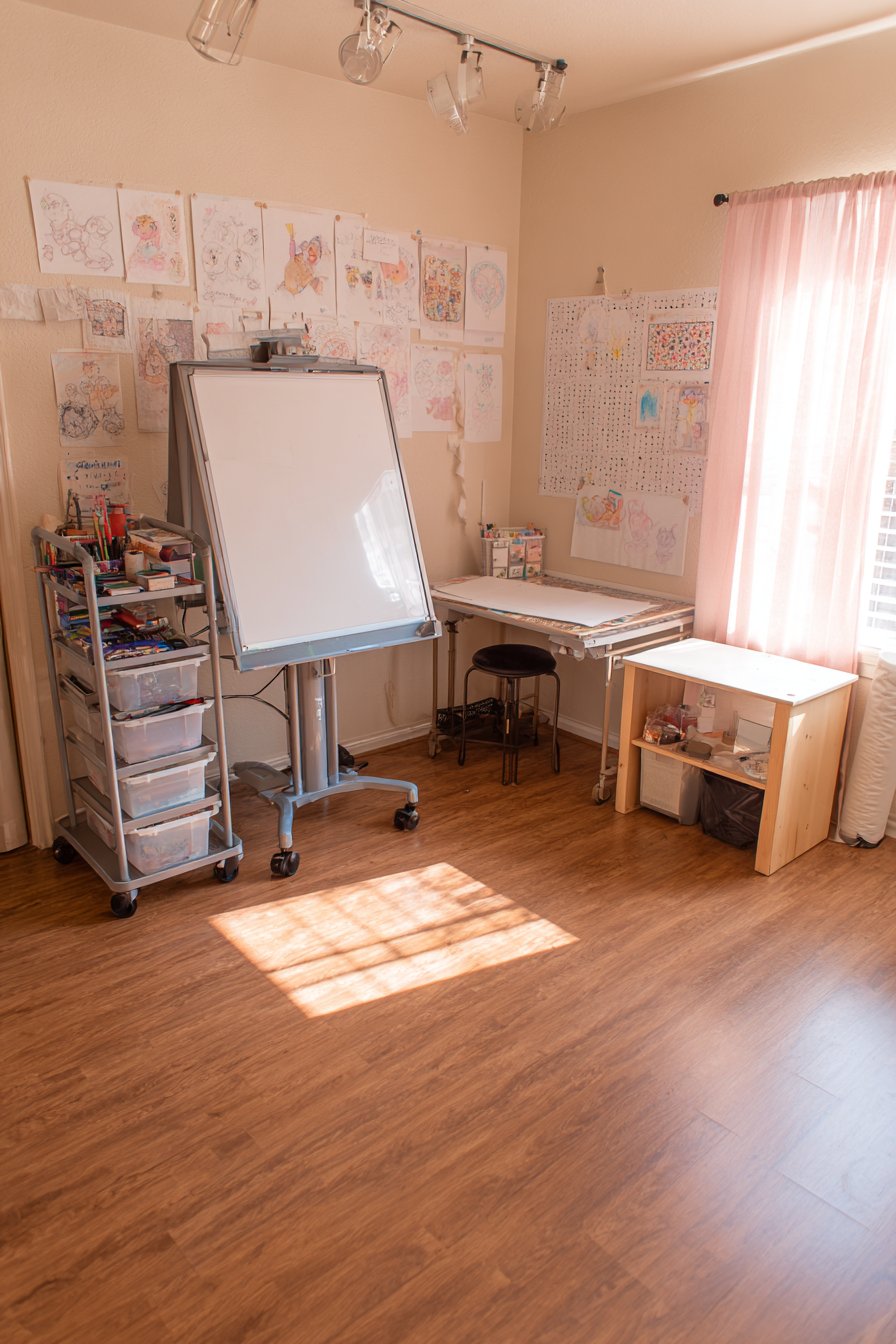
Practical considerations are essential in this design. Washable flooring protection—perhaps a vinyl mat or protective covering—guards against inevitable spills and splatters. Good task lighting supplements natural light for evening art sessions or detailed work requiring extra illumination.
A wall-mounted paper roll dispenser provides an endless canvas for sketches and paintings, while a simple display wire with clips creates a rotating gallery where completed artwork can be proudly showcased.
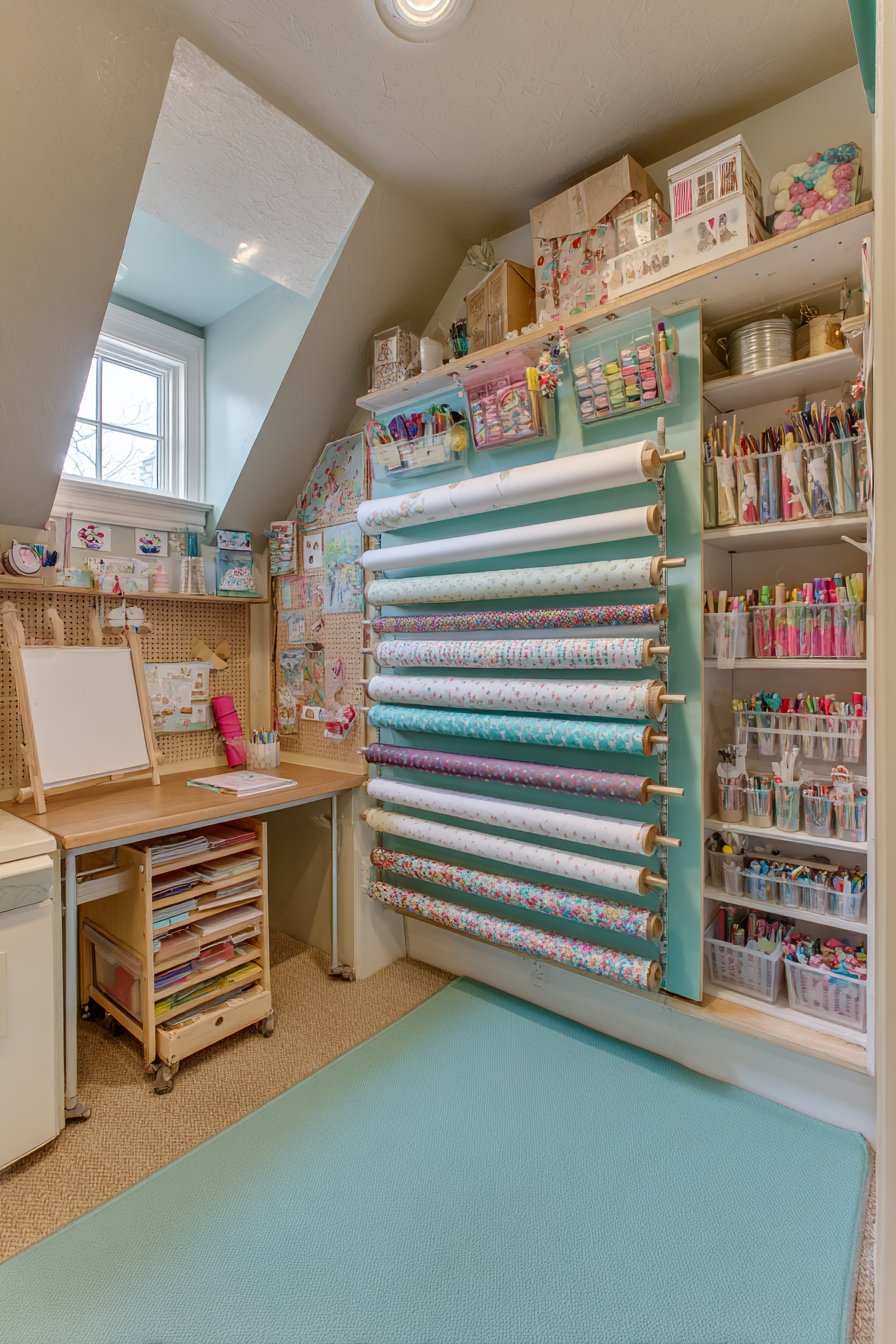
This art corner does more than provide space for creative activities; it sends a powerful message that artistic expression is valued and important. Having a designated area for art-making encourages regular creative practice and demonstrates respect for the child’s interests and talents. It’s an investment in her development that goes far beyond simple decoration.
Key Design Tips:
- Position the easel near natural light but away from direct sun, which could cause glare
- Stock the supply cart with washable, non-toxic art materials appropriate for the child’s age
- Use protective flooring that’s easy to clean and won’t stain from paint or markers
- Install the display system at a height where the child can easily hang and remove artwork
- Rotate displayed artwork regularly to keep the space fresh and celebrate new creations
8. Fresh Neutral Base with Vibrant Accents
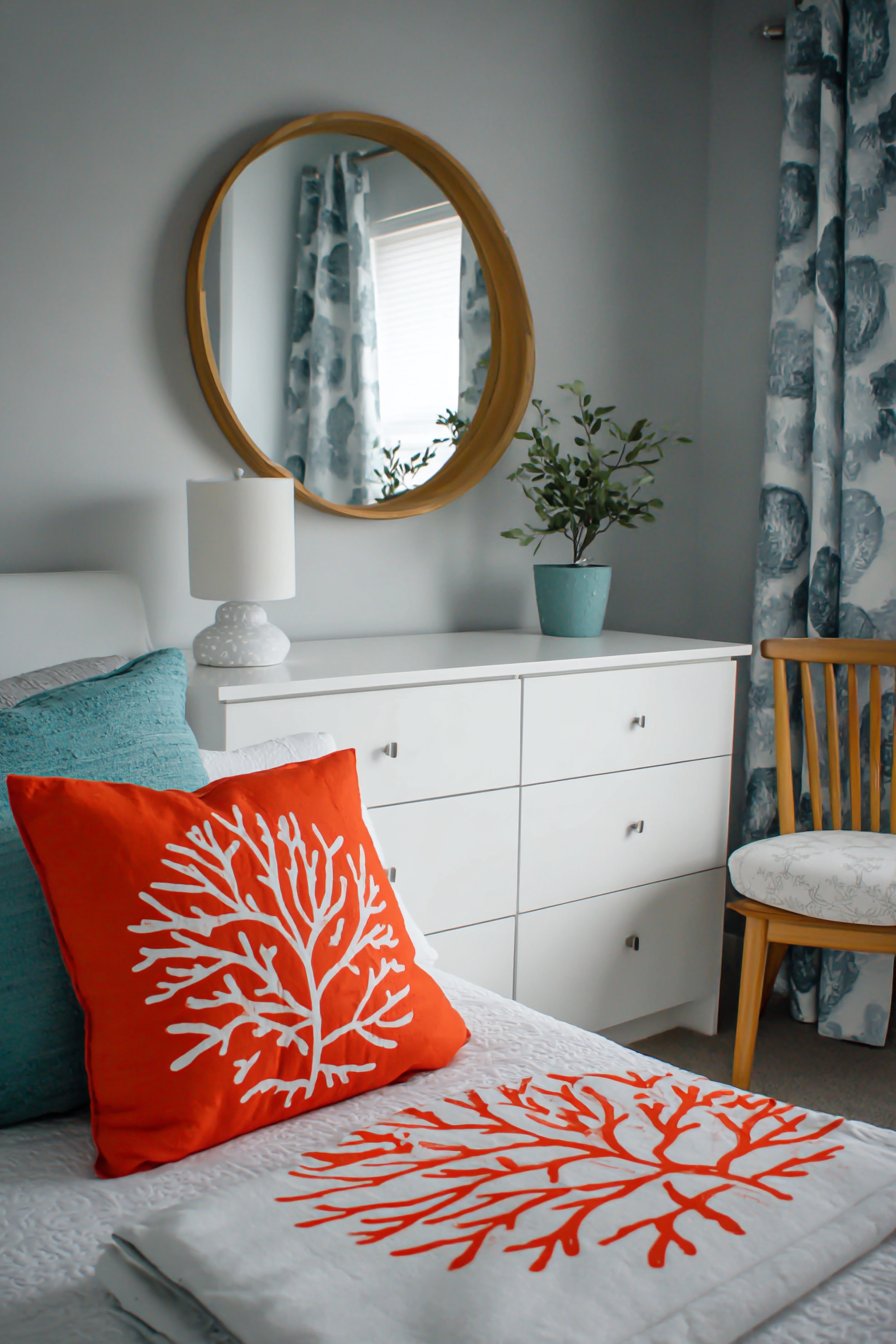
A neutral foundation creates versatility and longevity in bedroom design, especially when punctuated with lively accent colors. White walls and natural wood furniture form a clean, timeless backdrop that won’t quickly feel dated or overgrown. This approach proves both economical and practical, as the base elements can remain constant while accent pieces evolve with changing tastes and interests.

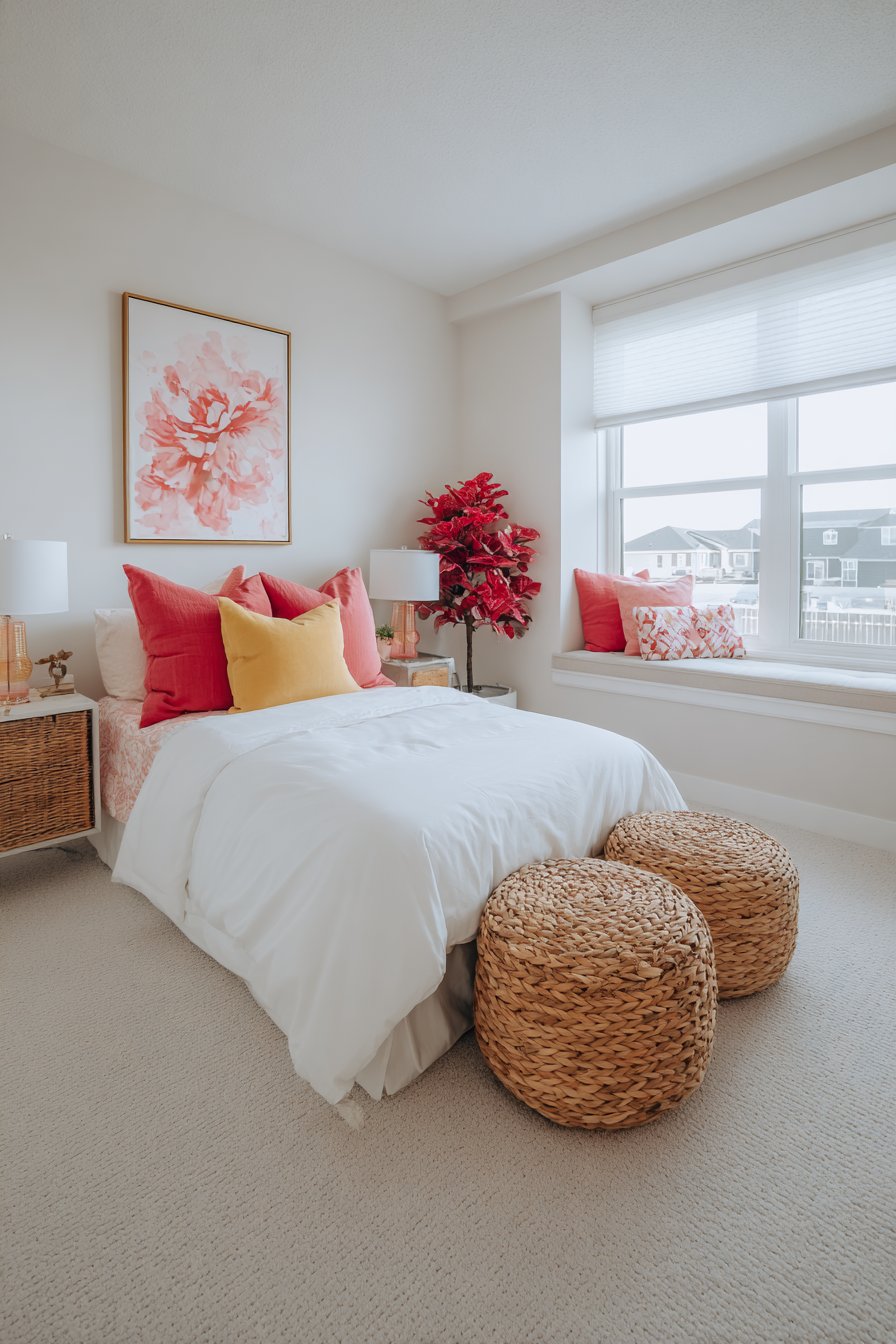
The magic happens in the carefully chosen pops of coral and turquoise. These fresh, vibrant colors bring energy and personality to the space without overwhelming it. Coral bedding with turquoise throw pillows creates an eye-catching focal point on the bed, while coordinating curtains frame the windows with color. Additional decorative pillows scattered around the room—perhaps on a reading chair or window seat—echo these hues, creating visual cohesion throughout the space.
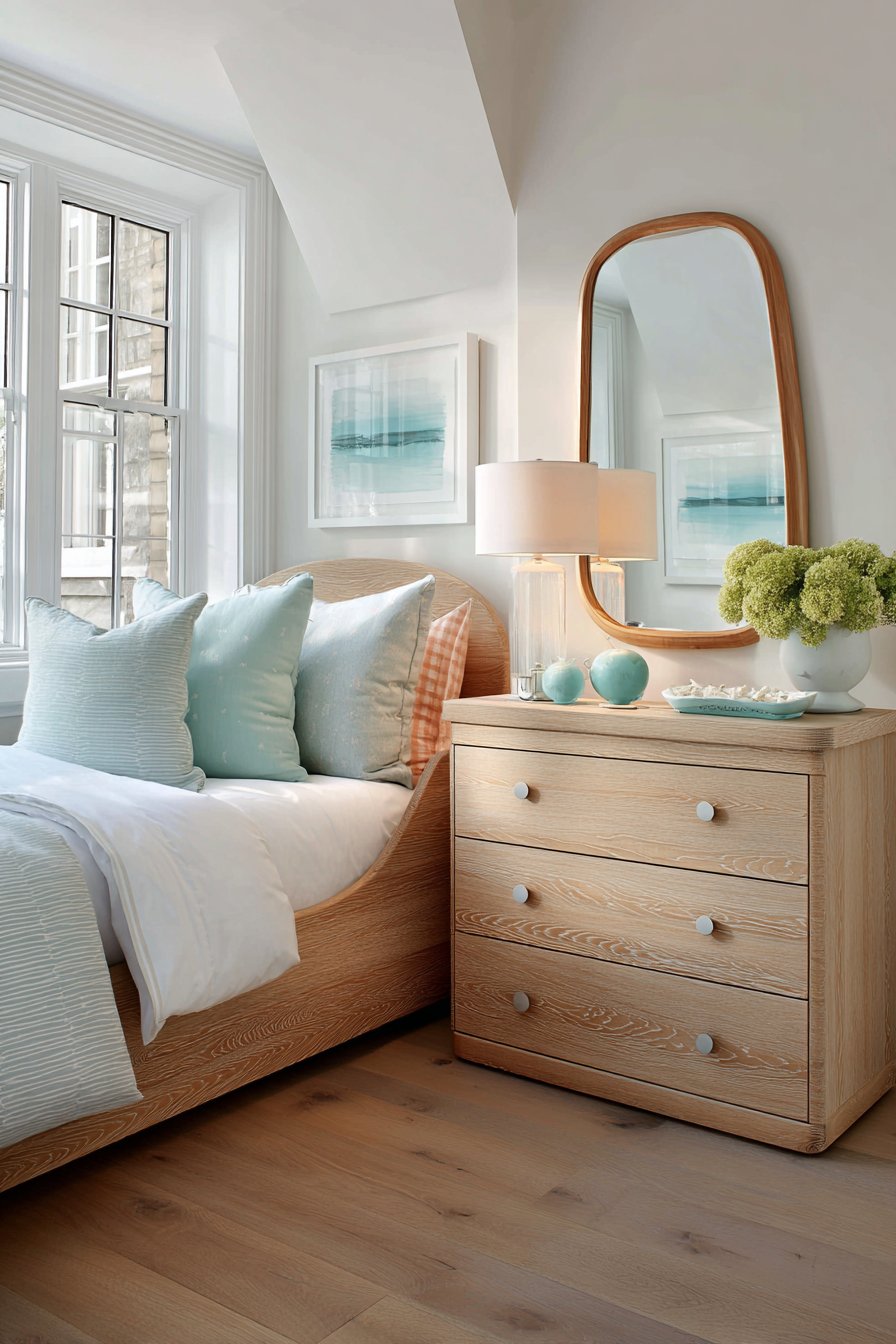
A simple dresser in natural wood with round pulls provides essential clothing storage while maintaining the clean, uncluttered aesthetic. The warm wood tones add organic texture and prevent the white walls from feeling too stark or clinical.
A full-length mirror leaning casually against the wall serves both practical and decorative purposes, useful for checking outfits while adding depth and light to the room through its reflective surface.
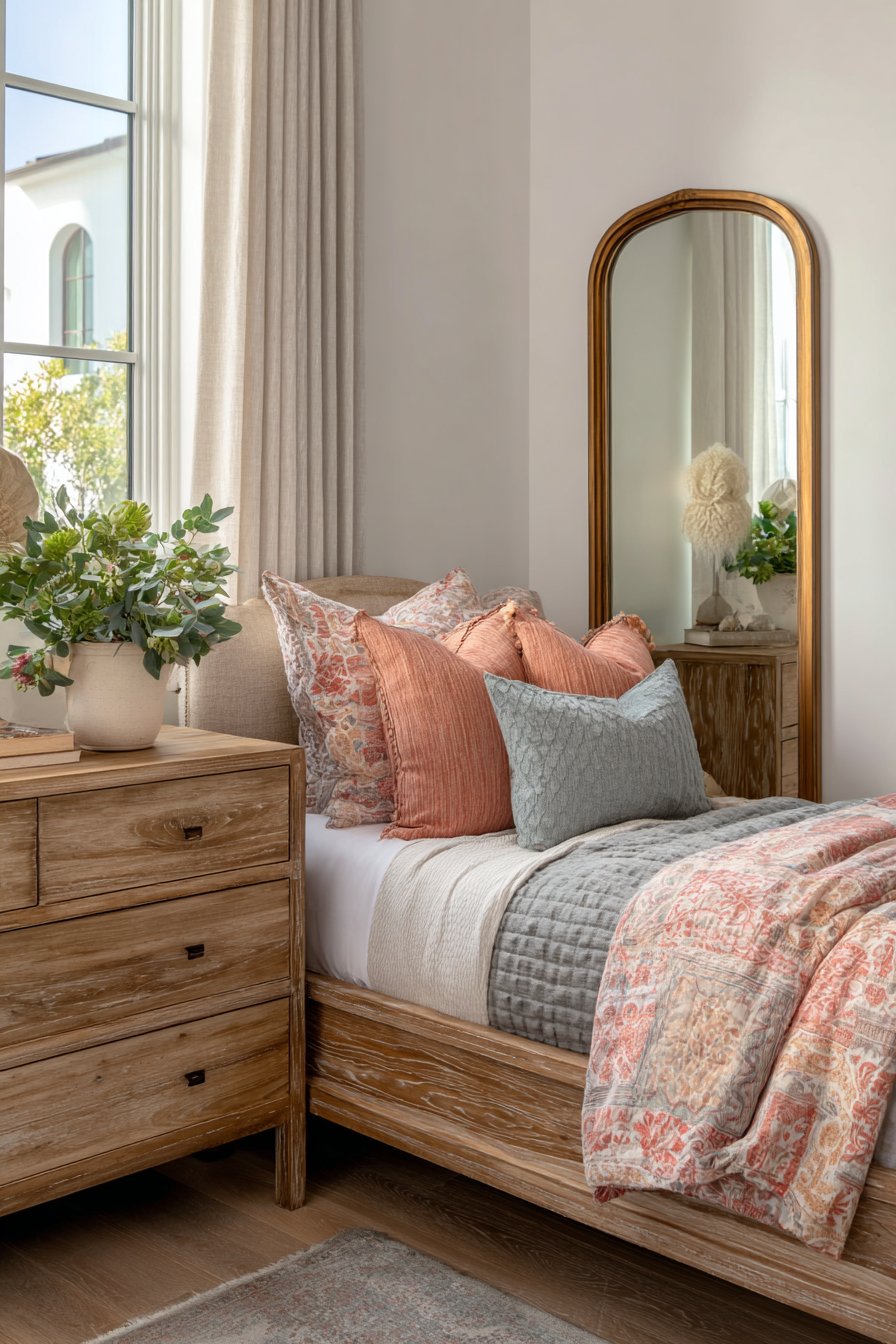
This design philosophy excels in its flexibility. When coral and turquoise eventually lose their appeal—as colors often do with growing children—new accent colors can be introduced simply by swapping out bedding, curtains, and decorative pillows. The neutral base remains relevant, making this approach both sustainable and adaptable to the child’s evolving preferences.
Key Design Tips:
- Invest in quality neutral furniture pieces that will last through multiple design updates
- Choose accent colors that complement each other and appear in multiple elements for cohesion
- Use removable and replaceable items like pillows and curtains for color rather than permanent fixtures
- Select natural wood tones that add warmth without competing with accent colors
- Keep walls neutral to maximize flexibility for future design changes
9. Playful Polka Dot Sophistication
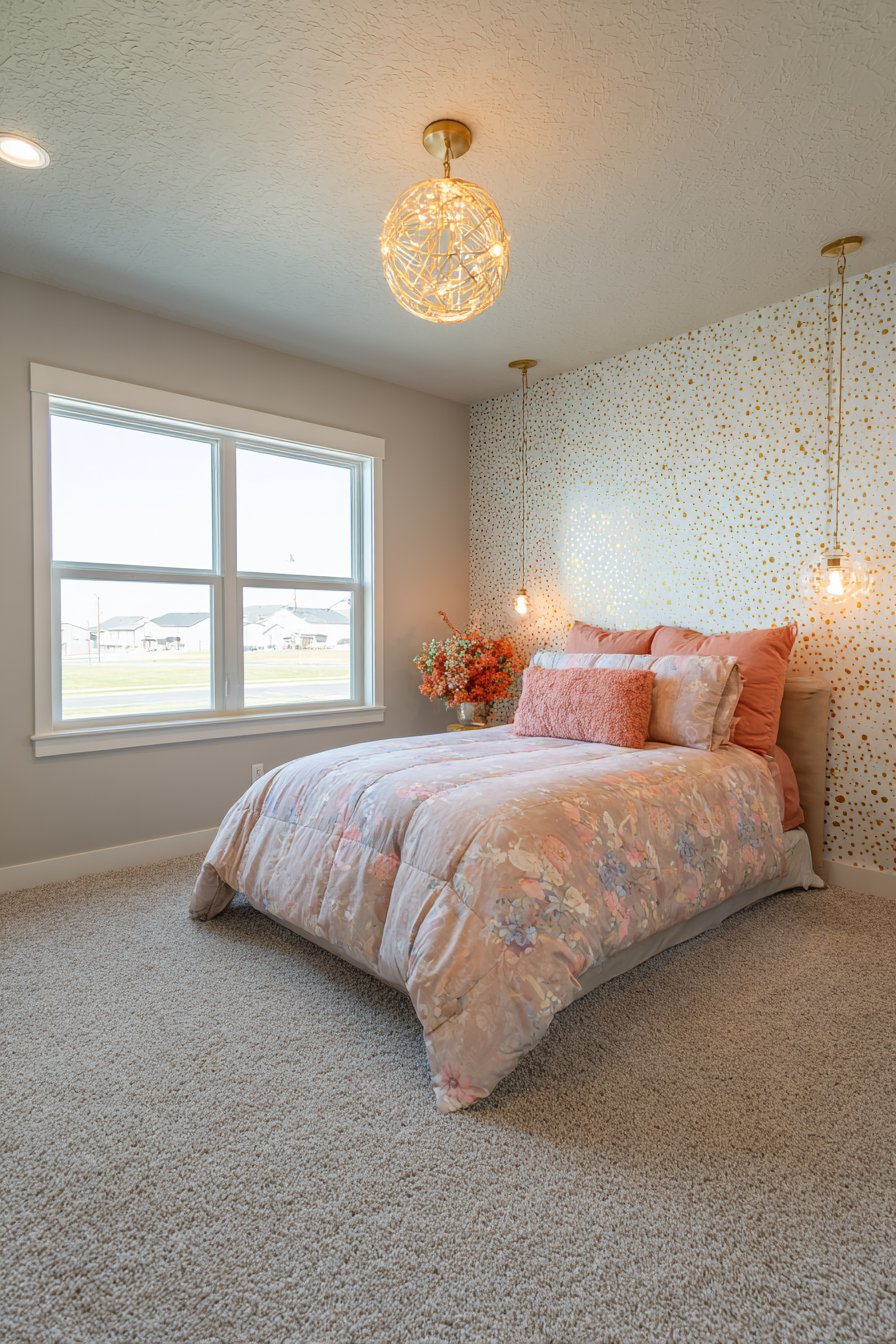
An accent wall can transform a room’s entire personality, and soft gold polka dots on a white background strike the perfect balance between playful and polished. This feature wall behind the bed creates an instant focal point that’s fun without being overly juvenile. The gold dots add a touch of glamour that elevates the design beyond typical children’s room territory, creating a space that feels special and sophisticated.
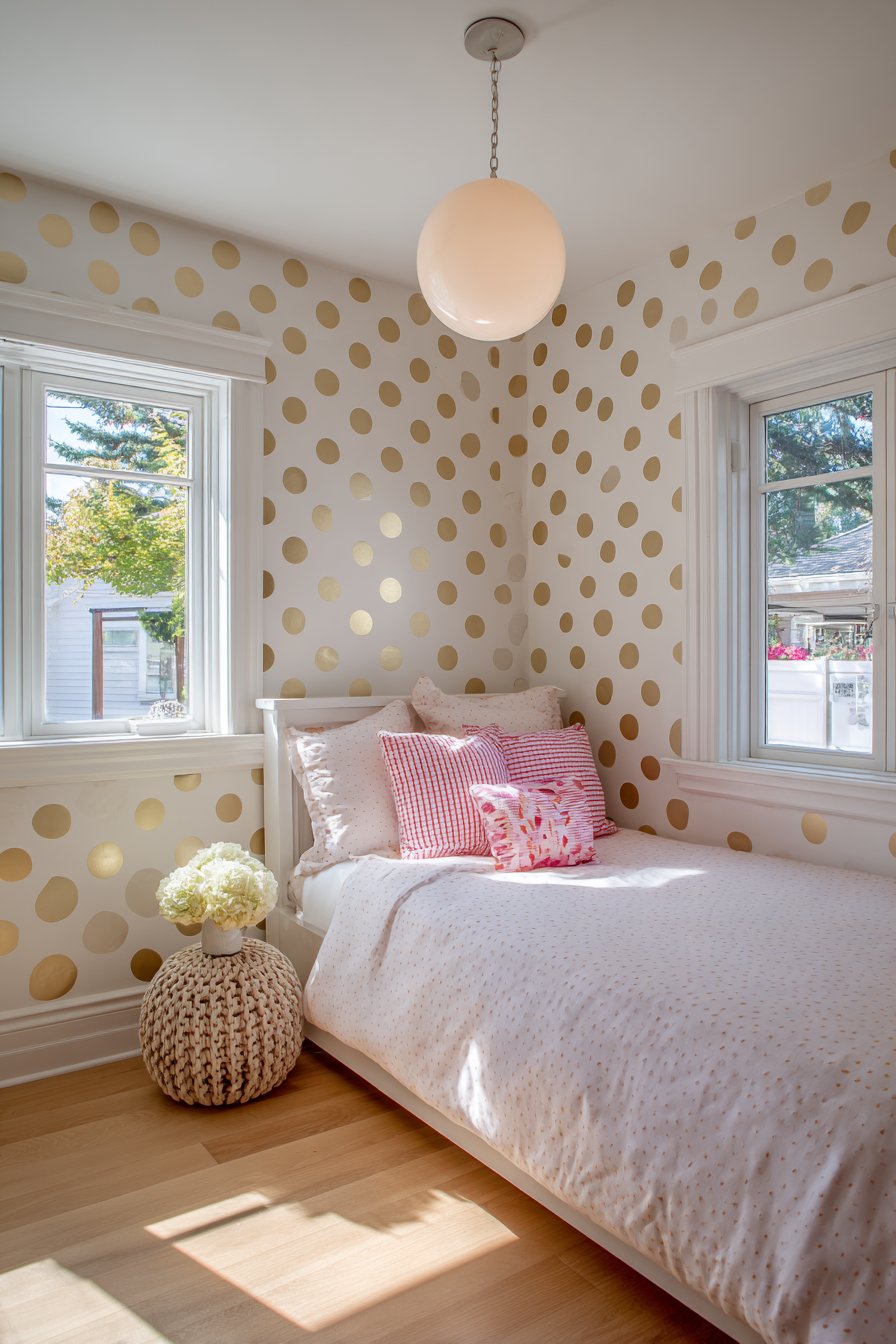
The bedding takes a thoughtfully restrained approach, featuring solid colors in coordinating blush tones that complement rather than compete with the patterned wall. This design restraint prevents visual overwhelm while allowing the polka dot accent to shine.
The monochromatic blush palette adds layers of soft pink—from pale barely-there tones to richer rose shades—creating depth and interest without introducing additional patterns or competing focal points.
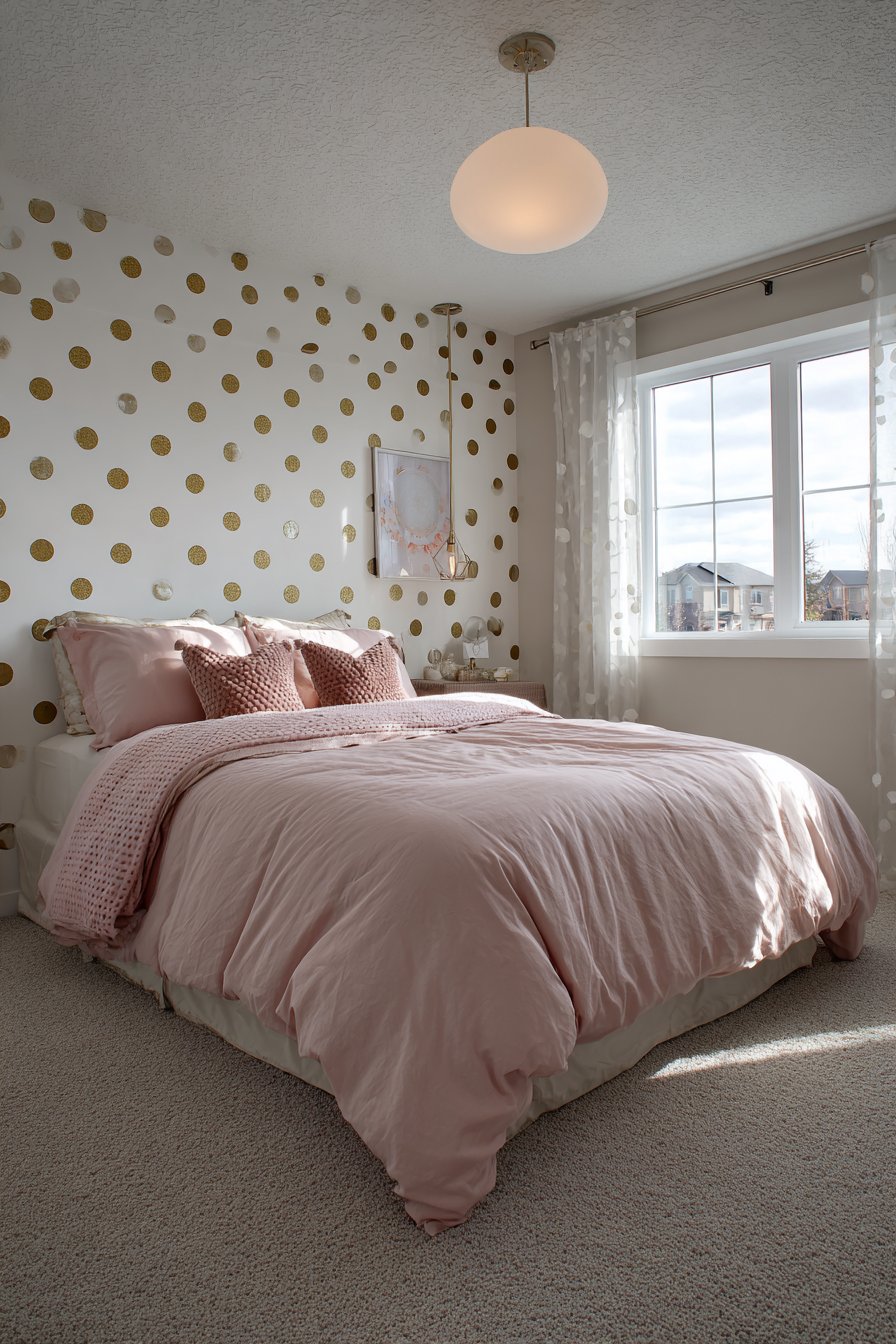
Simple pendant lighting suspended from the ceiling provides functional illumination while contributing to the room’s modern aesthetic. Unlike traditional table lamps or flush-mount fixtures, pendant lights add vertical interest and a contemporary touch. The clean lines of the fixture echo the simplicity of the solid-colored bedding, maintaining the balanced approach that makes this design work so effectively.
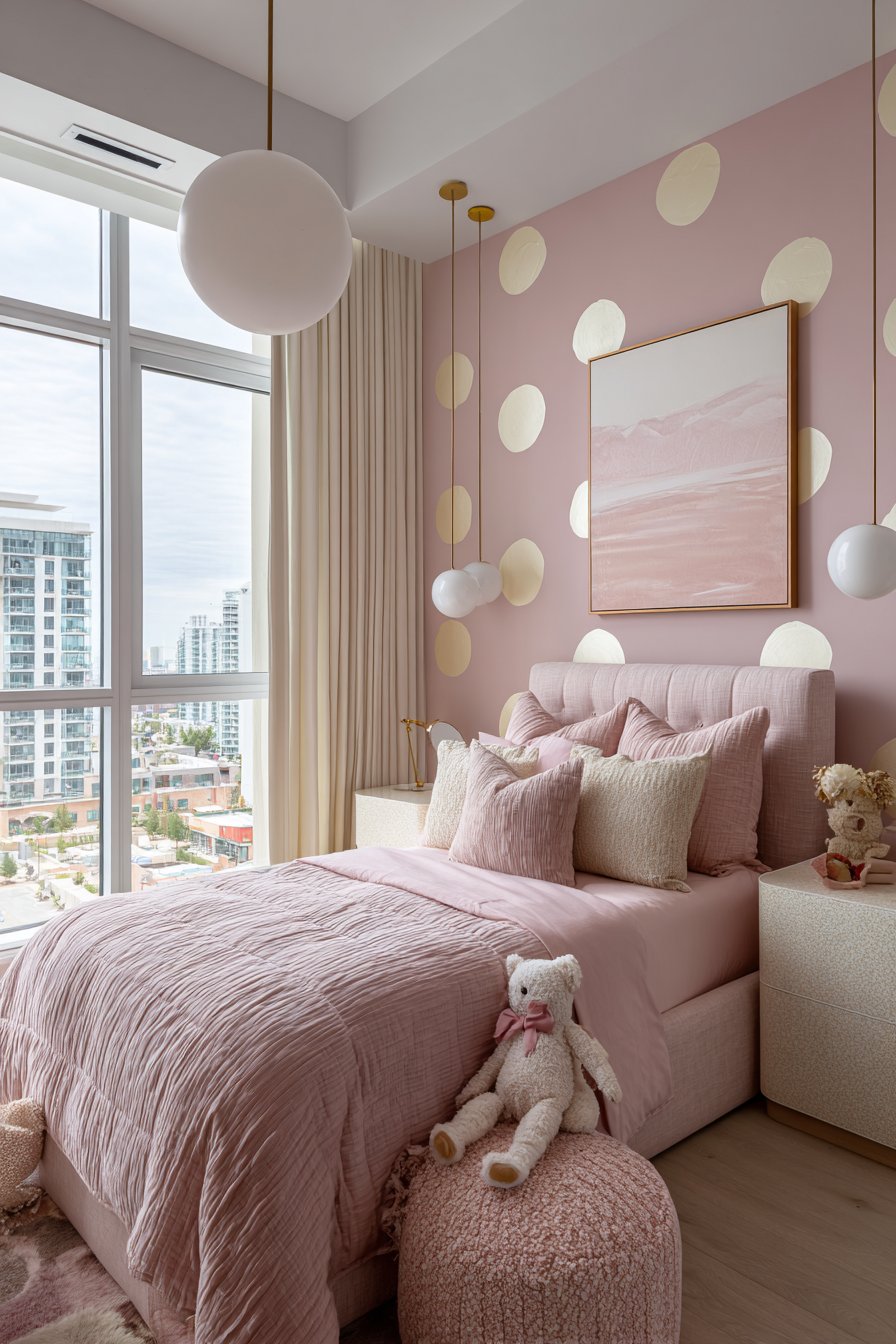
This room demonstrates how patterns can be used judiciously to create impact. Rather than covering every surface with dots, stripes, or florals, the design concentrates pattern in one strategic location while keeping other elements simple. The result is a space that feels cohesive, intentional, and perfectly suited to an 8-year-old girl who appreciates both fun and style.
Key Design Tips:
- Use stencils or decals for perfectly uniform polka dots that can be easily removed or painted over
- Limit patterns to one or two elements to avoid visual chaos
- Choose metallic accent colors like gold for a touch of sophistication
- Balance a busy accent wall with solid-colored bedding and simple accessories
- Ensure adequate lighting from multiple sources for both function and ambiance
10. Cozy Floor Seating Social Space
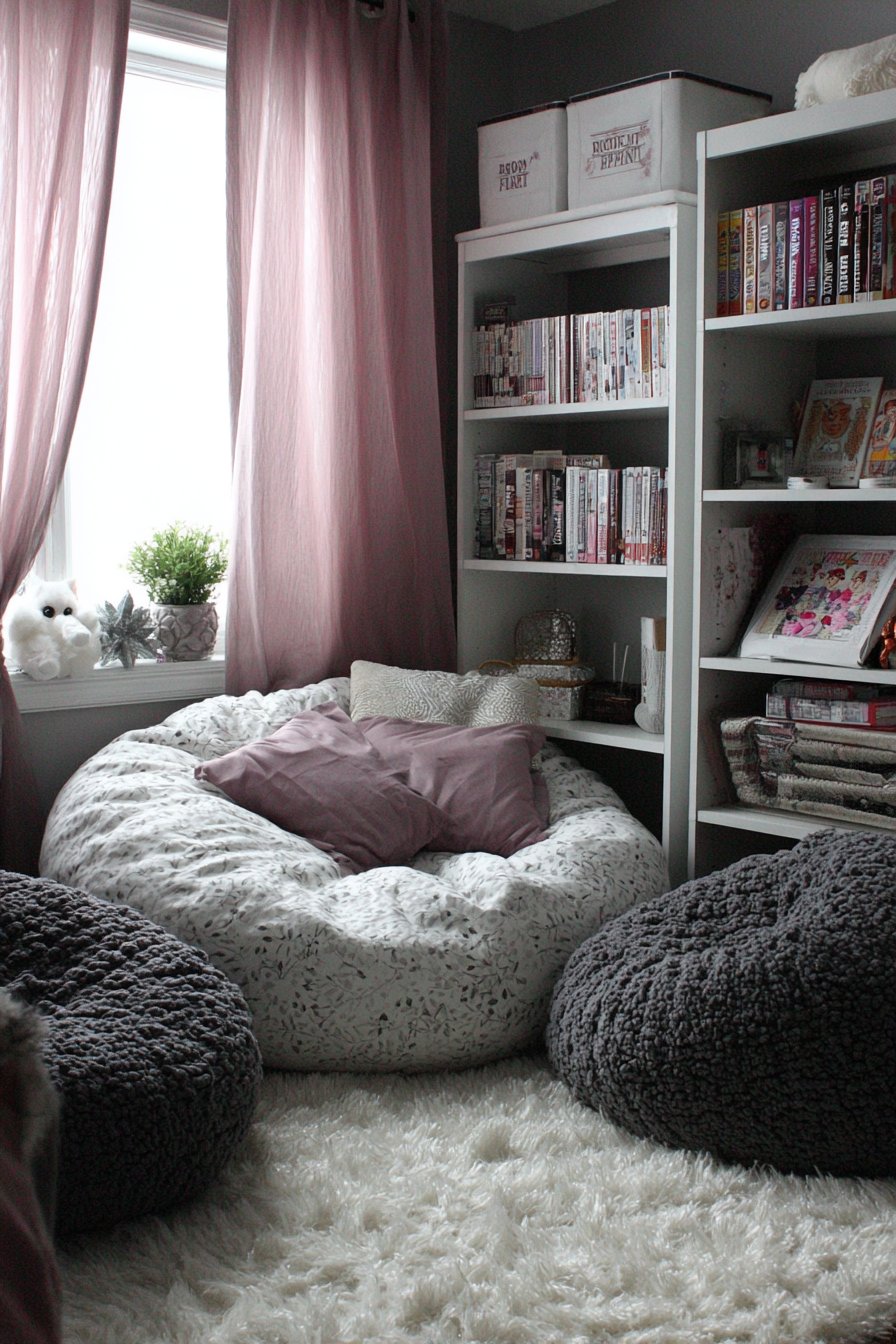
Creating a designated hangout area within the bedroom provides an 8-year-old girl with the perfect spot for reading, playing games, or chatting with visiting friends. Large floor cushions and bean bags in coordinating purple and grey tones form a comfortable, casual seating arrangement that’s far more appealing to children than formal furniture. This relaxed setup encourages the kind of sprawling, comfortable socializing that’s natural for this age group.
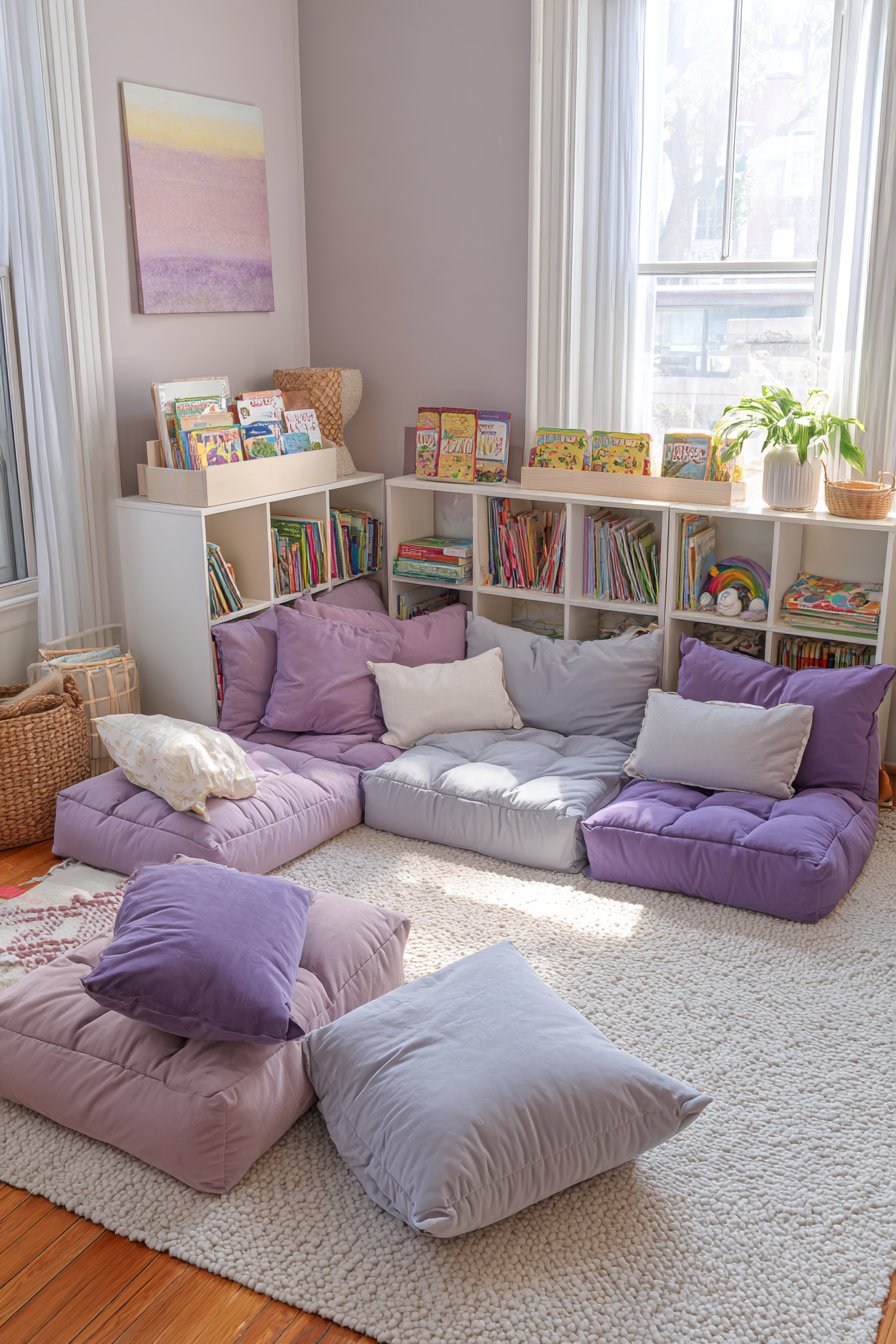
The color combination of purple and grey offers a sophisticated palette that moves beyond typical little-girl pastels without abandoning femininity entirely. Deep purple cushions paired with silvery grey bean bags create visual interest through contrast while maintaining a cohesive look. The variety in seating options—some cushions for sitting cross-legged, bean bags for lounging—accommodates different preferences and activities, from board games to casual conversation.
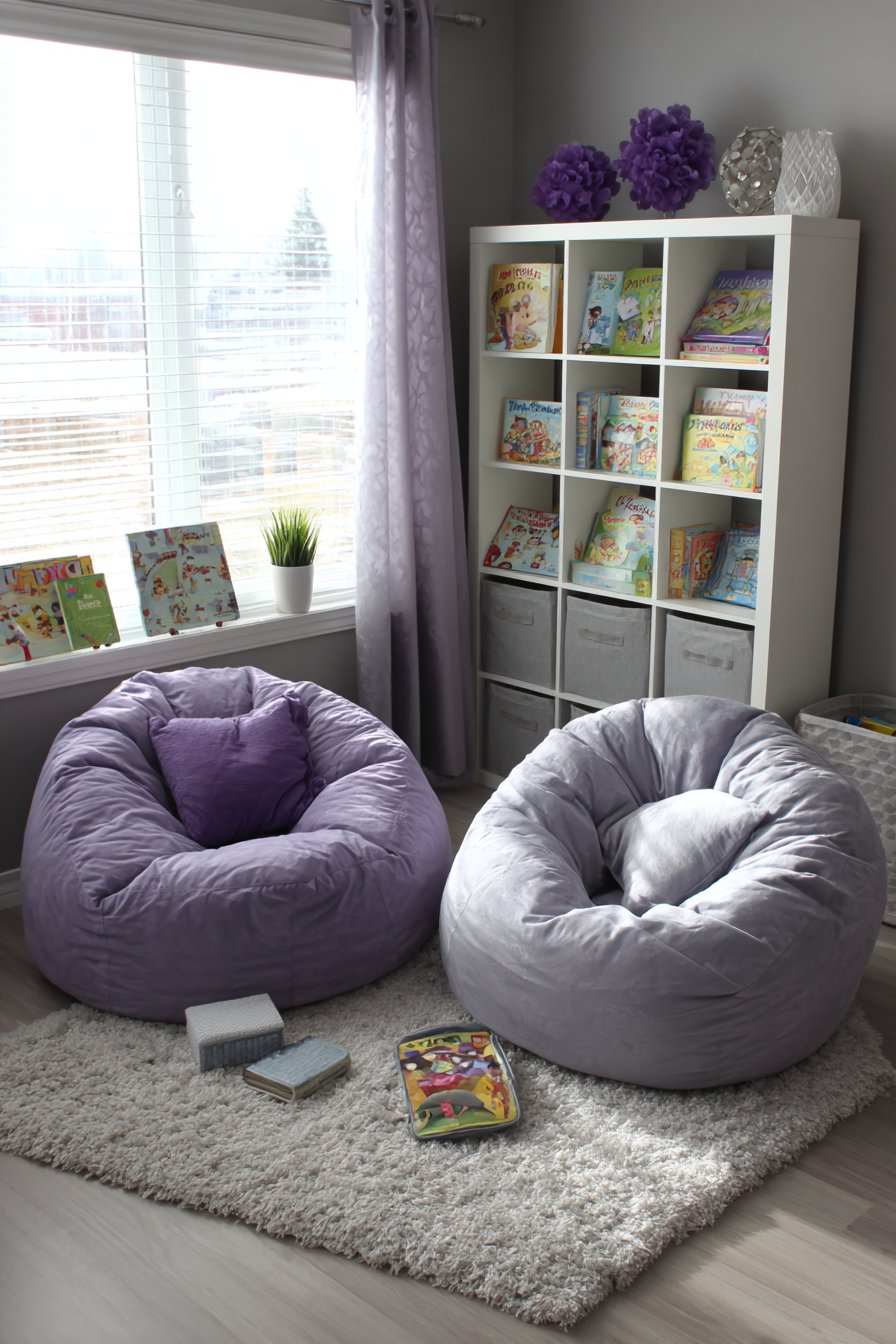
A low bookshelf positioned within easy reach serves double duty, storing favorite books that can be grabbed for solo reading sessions while also housing games perfect for friend visits. The accessible height means no adult assistance is needed, promoting independence and making it easy for children to both retrieve and return items. A soft area rug defines this casual hangout zone, providing both physical comfort and visual delineation from the rest of the room.
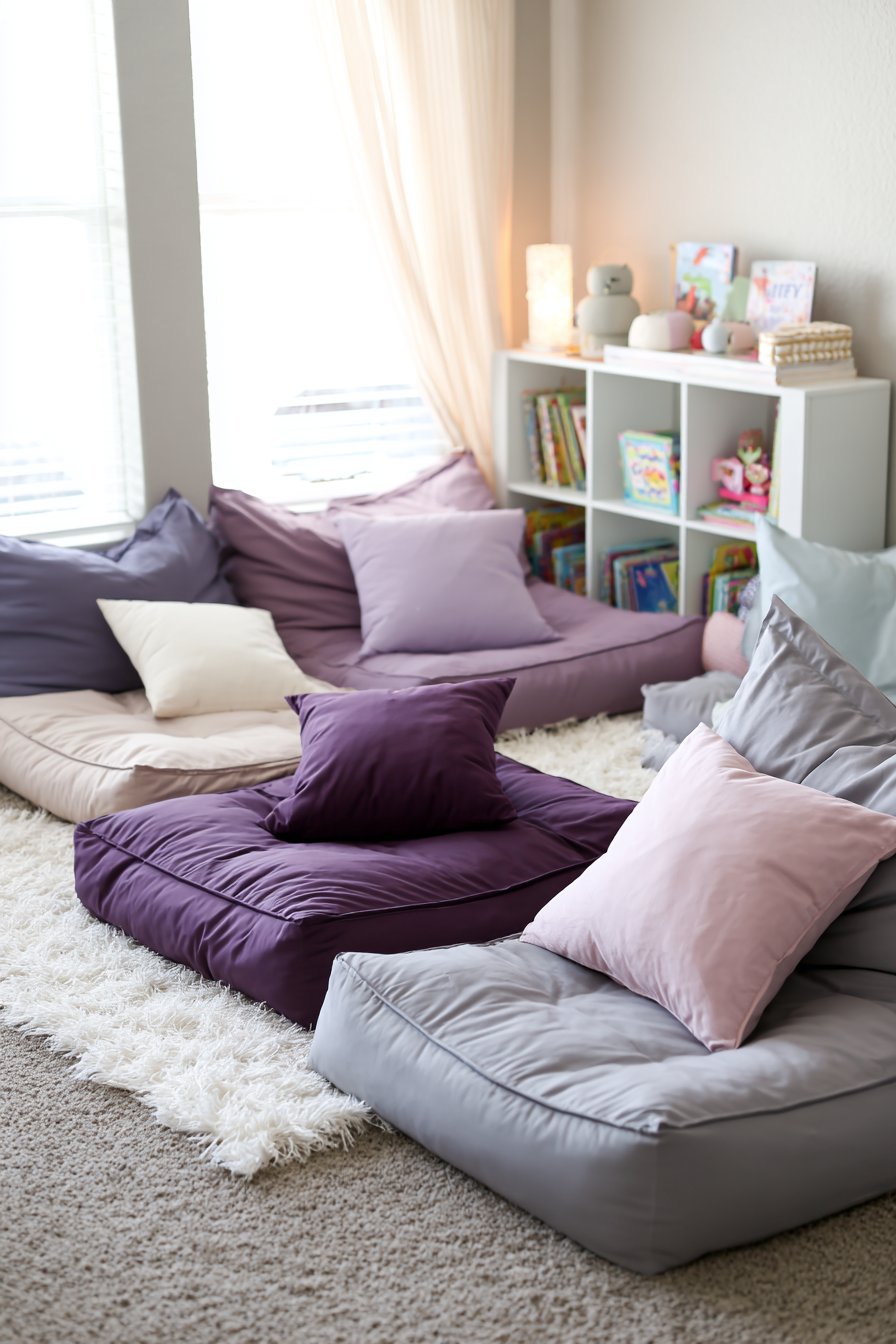
This floor seating area recognizes that bedrooms serve multiple purposes for children—they’re not just sleeping spaces but also playrooms, reading nooks, and social centers. By creating a designated area for these activities, the design ensures the bedroom meets all of the child’s needs while maintaining organization and functionality.
Key Design Tips:
- Choose washable cushion covers that can be easily cleaned after spills or accidents
- Provide a variety of seating options to accommodate different activities and preferences
- Define the space with an area rug to create visual boundaries within the larger room
- Keep storage low and accessible to encourage independence and easy cleanup
- Select durable, quality floor cushions that will withstand daily use and play
11. Serene Scandinavian Simplicity
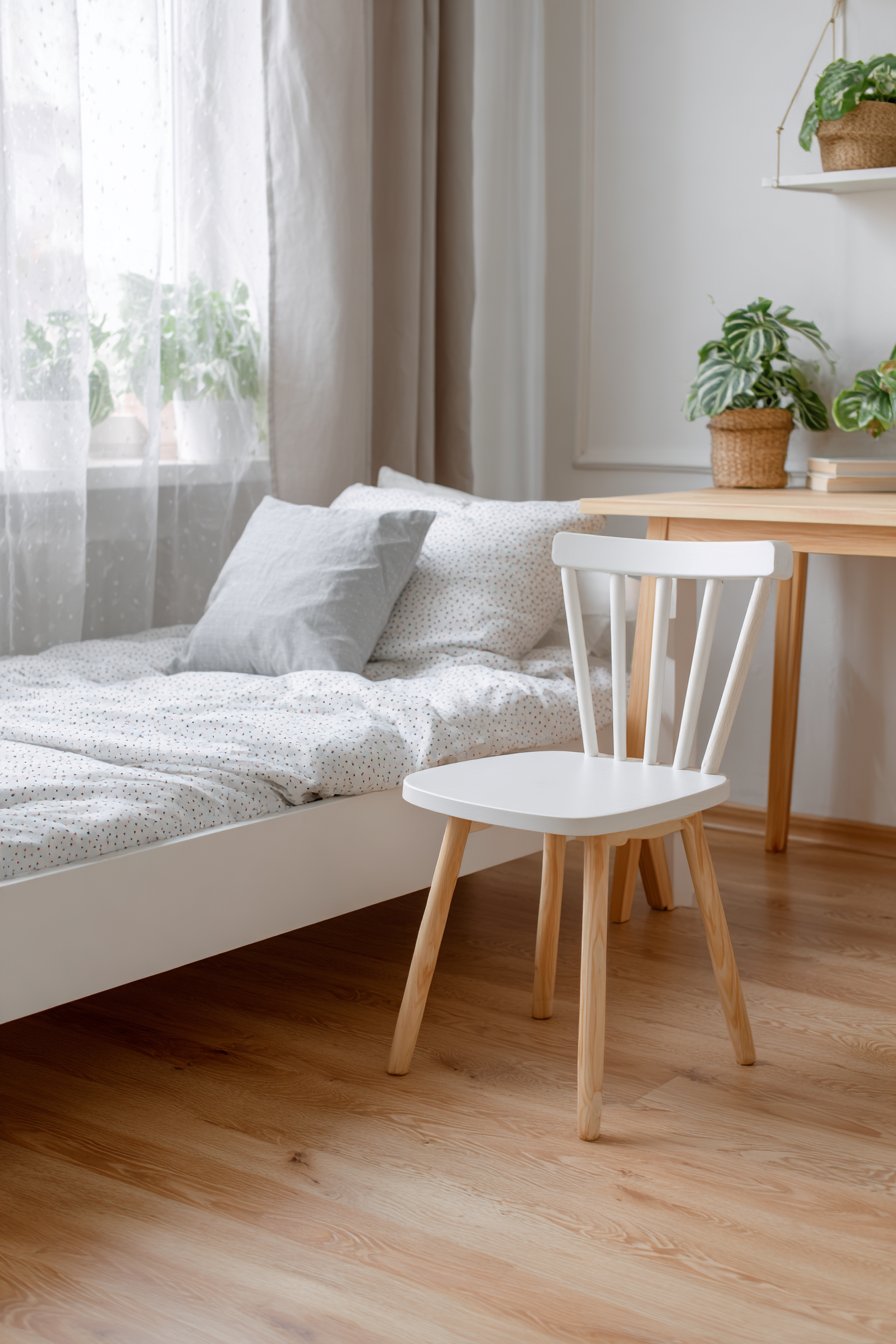
Scandinavian design principles translate beautifully to children’s bedrooms, creating calm, uncluttered spaces that promote focus and relaxation. A white platform bed with simple wooden legs exemplifies this aesthetic—clean lines, quality materials, and thoughtful minimalism. The bed’s low profile and straightforward design feel modern and sophisticated while remaining entirely appropriate for an 8-year-old girl.
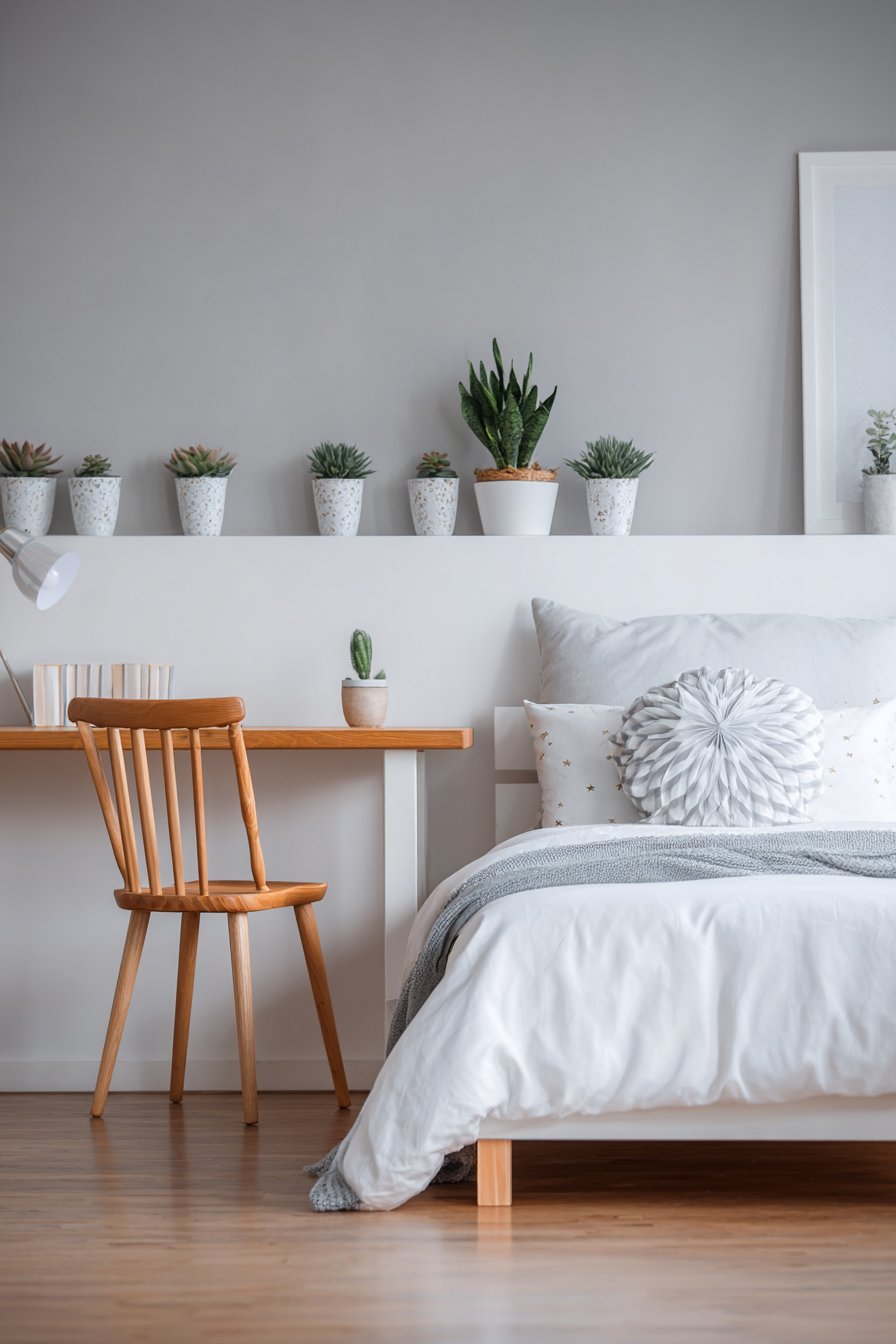
Crisp white and grey bedding reinforces the minimalist approach, proving that simple doesn’t mean boring. The monochromatic palette creates a restful environment free from visual overstimulation, while varying textures—perhaps a knit throw blanket or linen duvet—add subtle interest. This restrained color scheme also photographs beautifully and never feels dated, making it a timeless choice that will grow with the child.
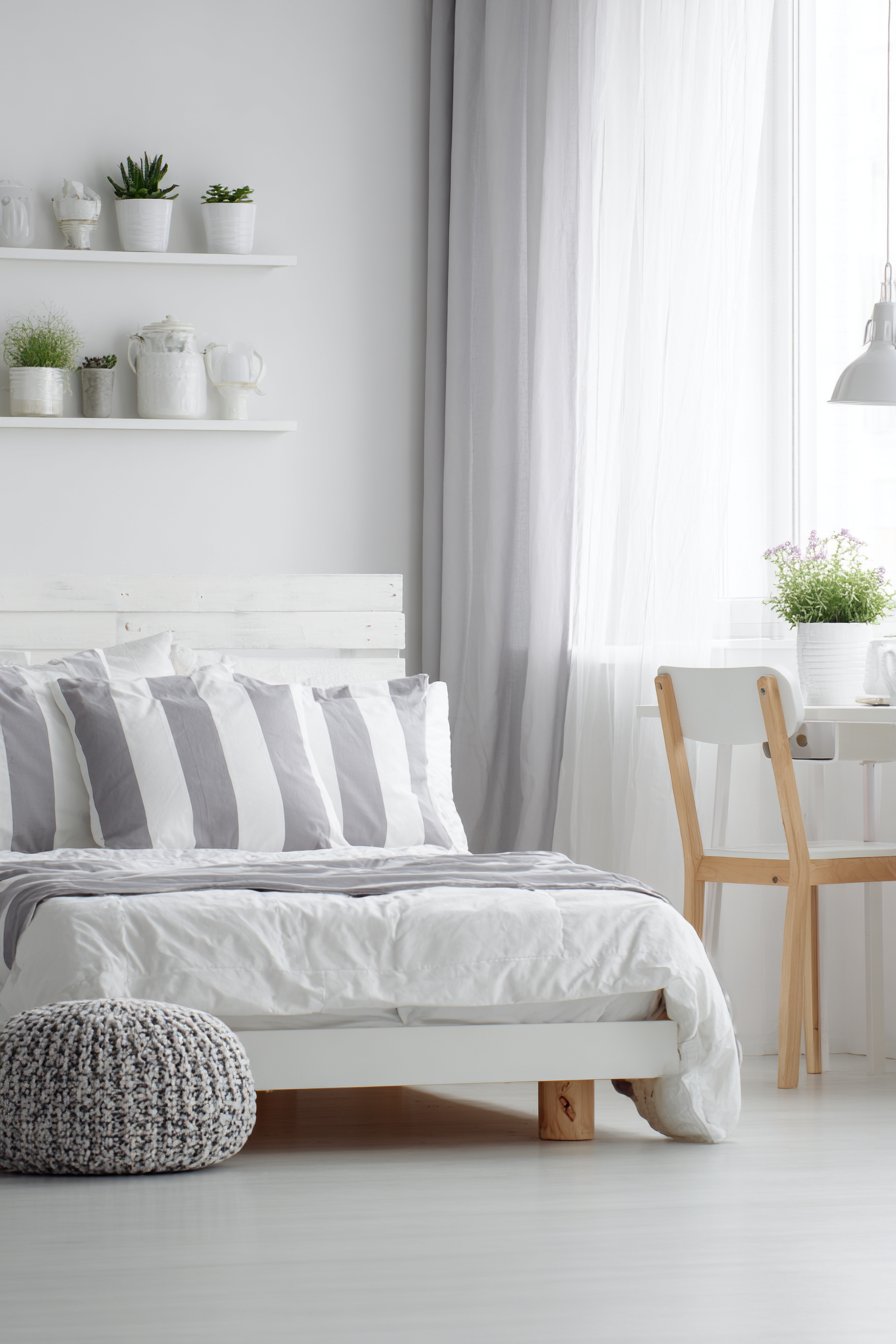
A minimal white desk paired with a natural wood chair provides a study area that embodies Scandinavian functionality. The desk’s simple form offers plenty of workspace without unnecessary embellishments, while the wooden chair brings warmth and organic texture to the predominantly white space.
Potted plants add life and color while maintaining the clean aesthetic—perhaps a small succulent on the desk or a trailing pothos on a shelf brings nature indoors without creating clutter.
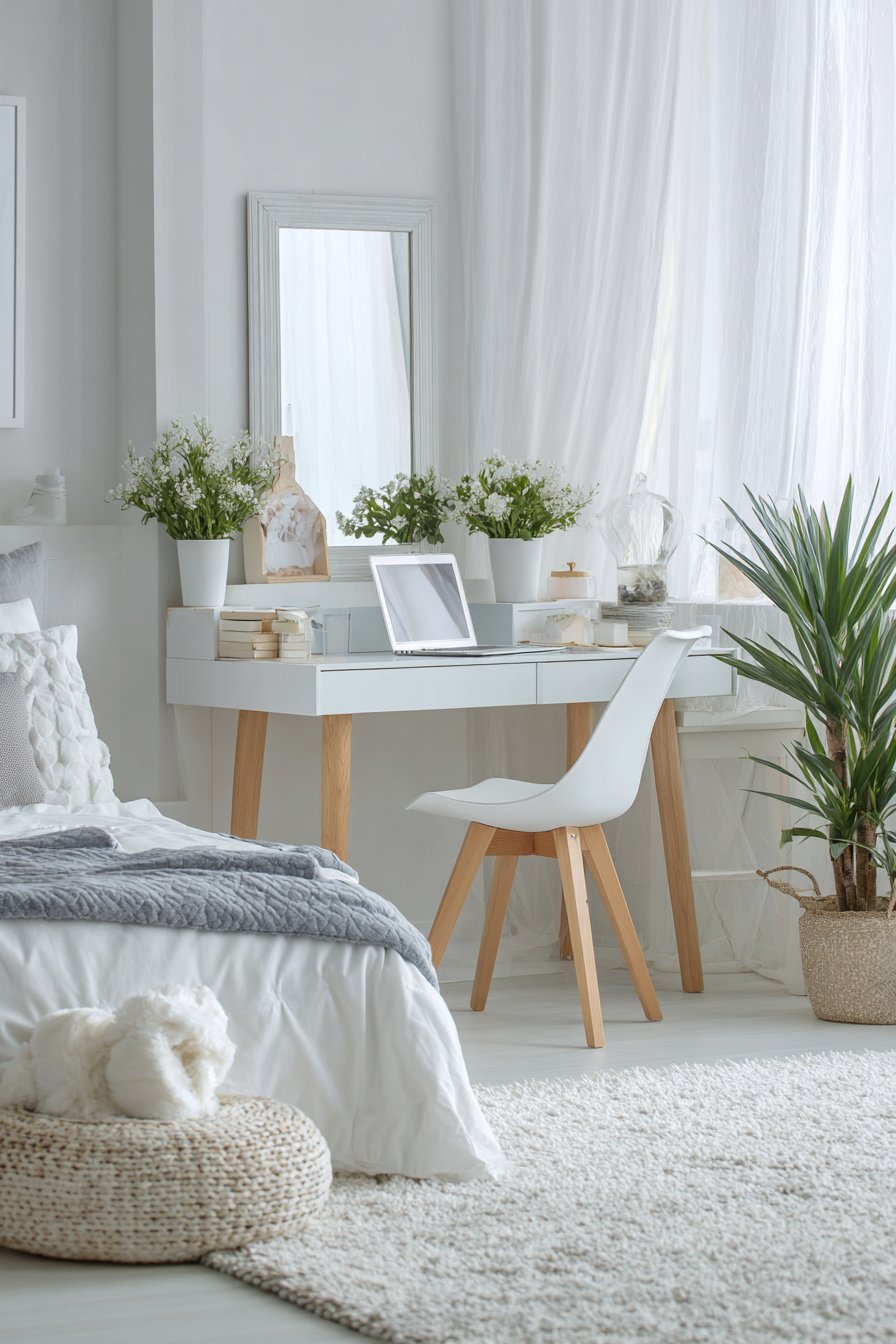
This Scandinavian-inspired room demonstrates that children’s spaces don’t need to be overly decorated or filled with bright colors to be welcoming and age-appropriate. The calm, uncluttered environment can actually help children feel more settled and focused, providing a peaceful retreat from the stimulation of daily life.
Key Design Tips:
- Embrace white and natural wood as primary materials for a cohesive Scandinavian look
- Add texture through materials rather than patterns to maintain visual calm
- Include plants to bring life and natural elements into the space
- Choose furniture with clean lines and functional design over ornate pieces
- Maintain open floor space to prevent the room from feeling cramped or cluttered
12. Joyful Rainbow Color Harmony
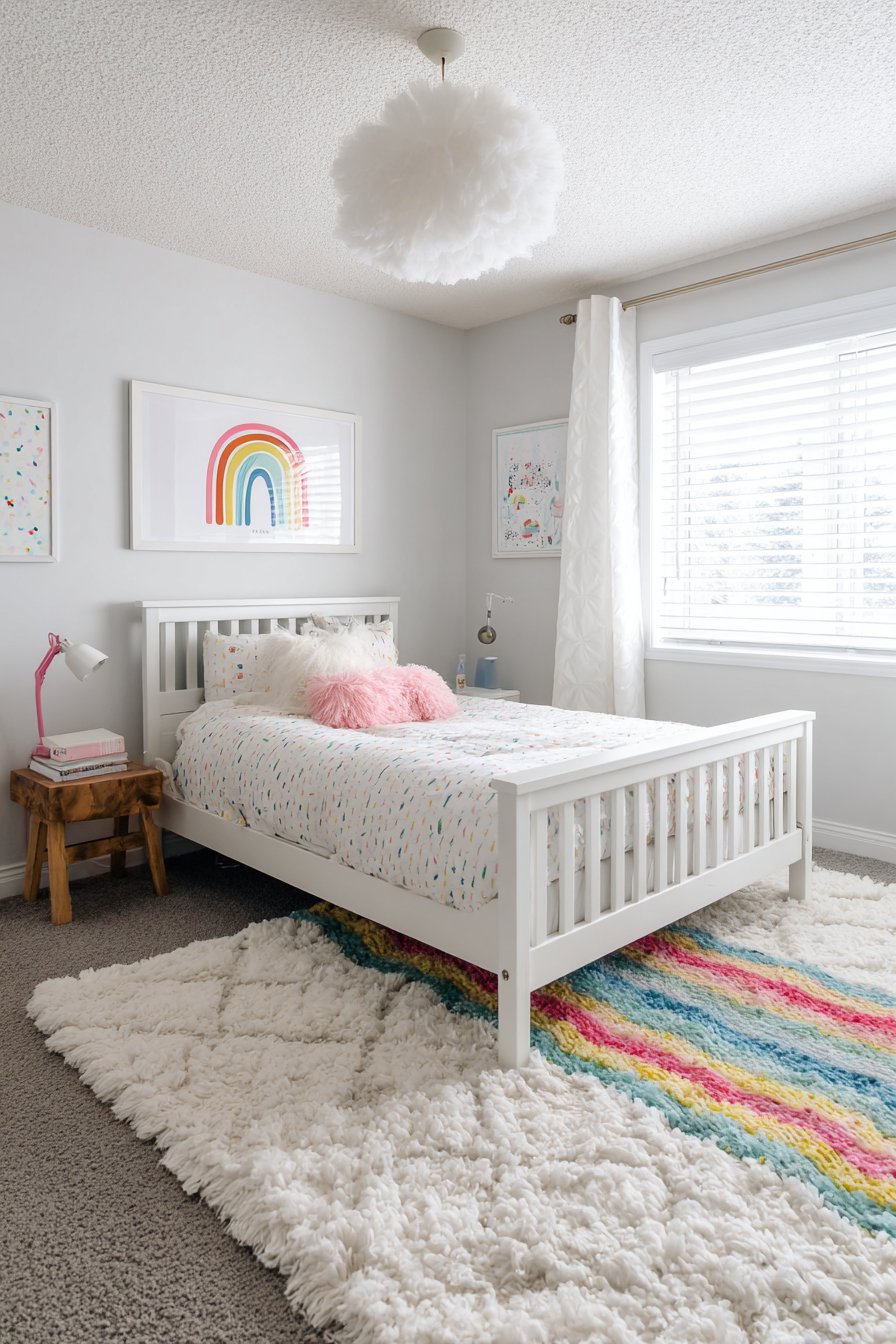
A rainbow-themed room can easily veer into overwhelming territory, but this design demonstrates how to incorporate multiple colors successfully. Starting with a white base—white walls, white furniture—provides a neutral canvas that prevents the rainbow elements from becoming visually chaotic. This foundational simplicity allows the colorful accents to shine without competing with busy backgrounds.
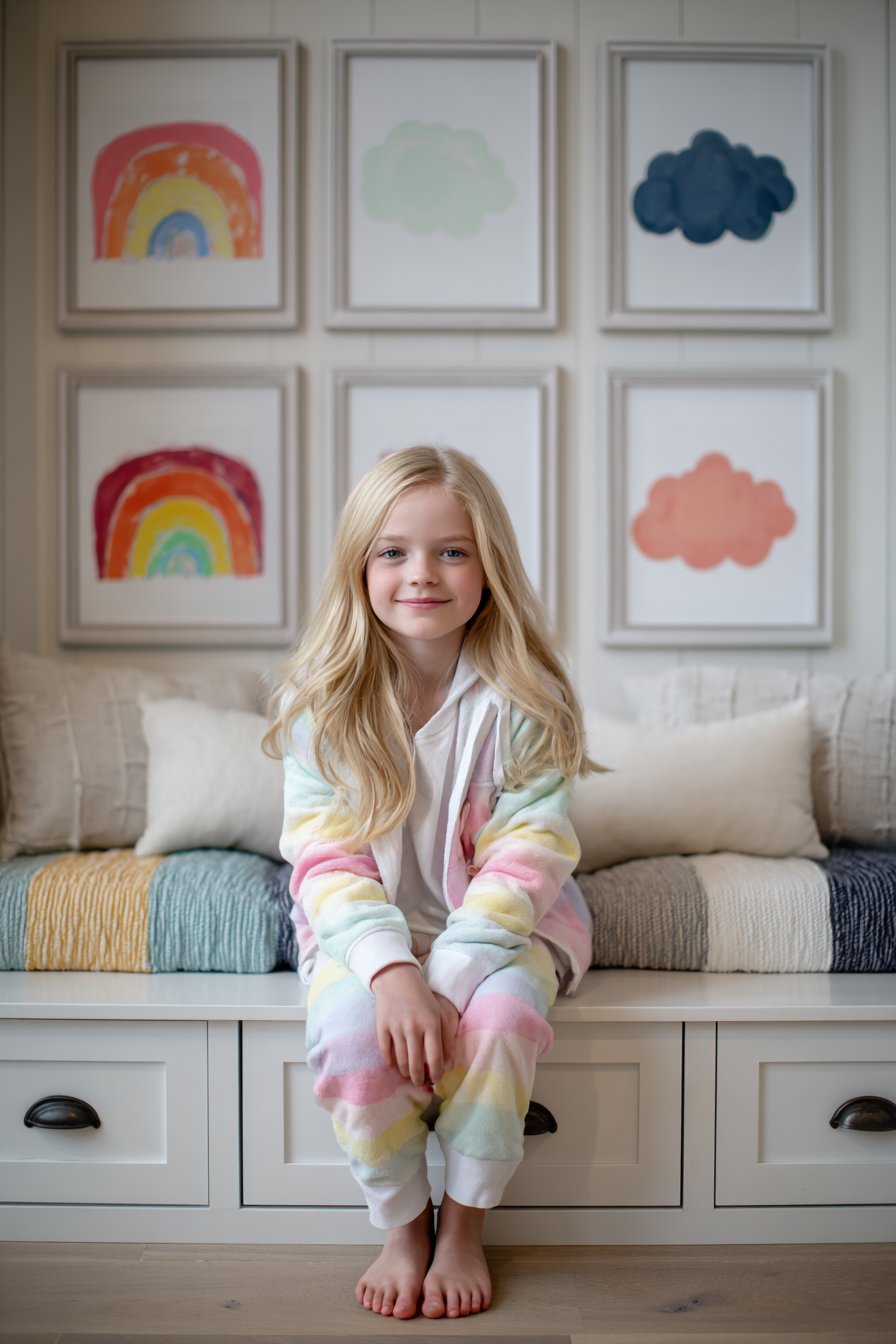
The rainbow appears in soft, muted versions of classic ROY G BIV—imagine bedding with subtle pastel stripes in pale red, orange, yellow, green, blue, and violet. Wall art picks up these same gentle hues, perhaps in abstract prints or simple graphic designs.
Storage bins in coordinating rainbow colors keep the theme consistent while providing practical organization. The key lies in using softer versions of primary colors rather than bright, saturated tones that might prove overwhelming.
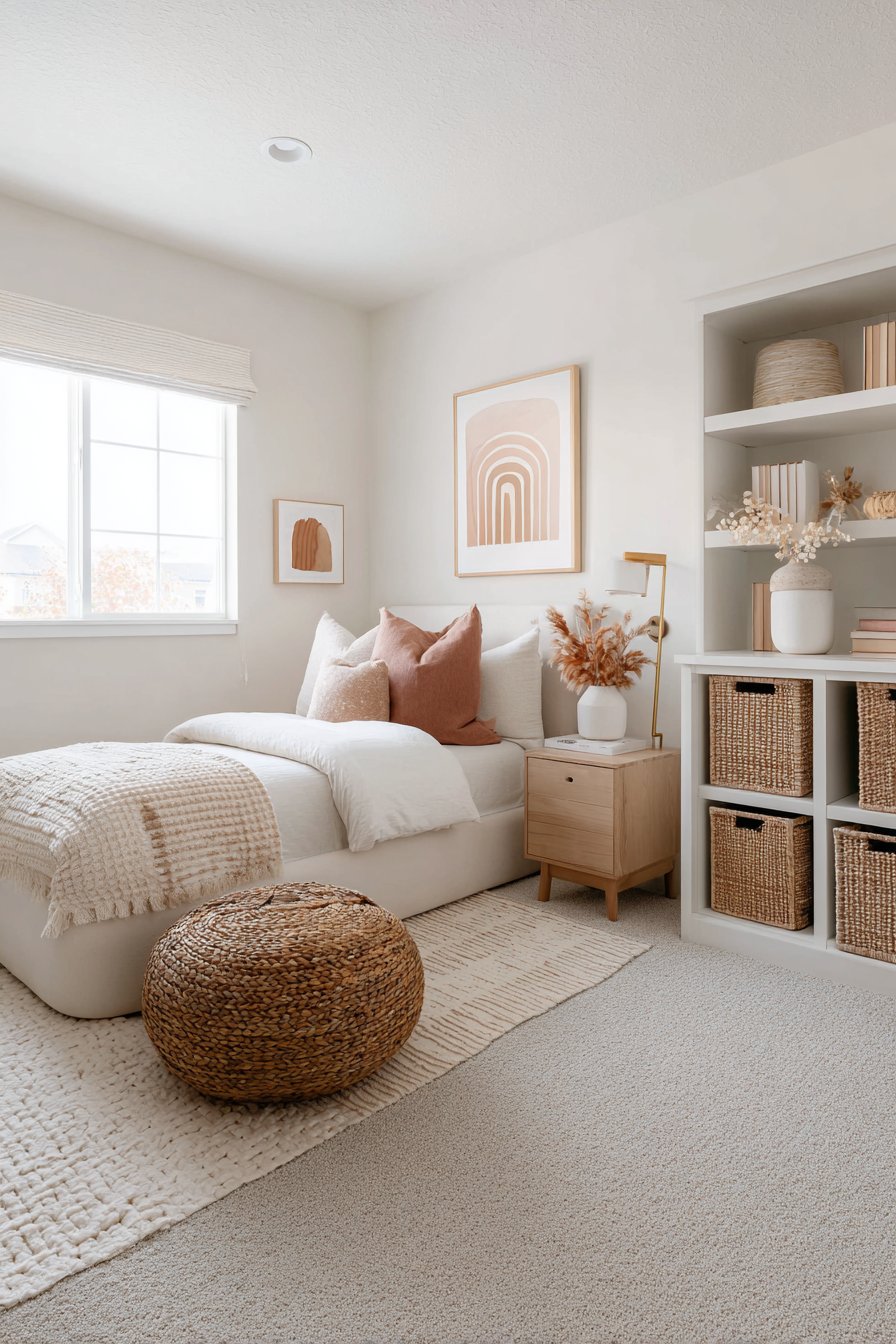
Natural wood elements throughout the room add essential grounding to the colorful scheme. A wooden bed frame, natural wood shelving, or bamboo accessories introduce organic texture and warmth that prevents the rainbow palette from feeling too artificial or candy-like. These neutral wood tones act as visual anchors, helping the eye rest between the various colors and creating overall harmony.
This design proves that multiple colors can coexist peacefully when approached thoughtfully. Rather than using equal amounts of each rainbow color, the design might emphasize two or three favorites while including others as minor accents. This creates hierarchy and prevents the “everything everywhere” feeling that can make colorful rooms feel chaotic.
Key Design Tips:
- Use white as a primary background color to provide visual breathing room between rainbow elements
- Choose soft, pastel versions of rainbow colors rather than bright, saturated tones
- Incorporate natural wood to ground the colorful palette and add warmth
- Limit rainbow elements to 3-4 key areas rather than applying the theme to every surface
- Vary the intensity and proportion of colors to create visual hierarchy and interest
13. Vertical Space Maximization with Loft Bed
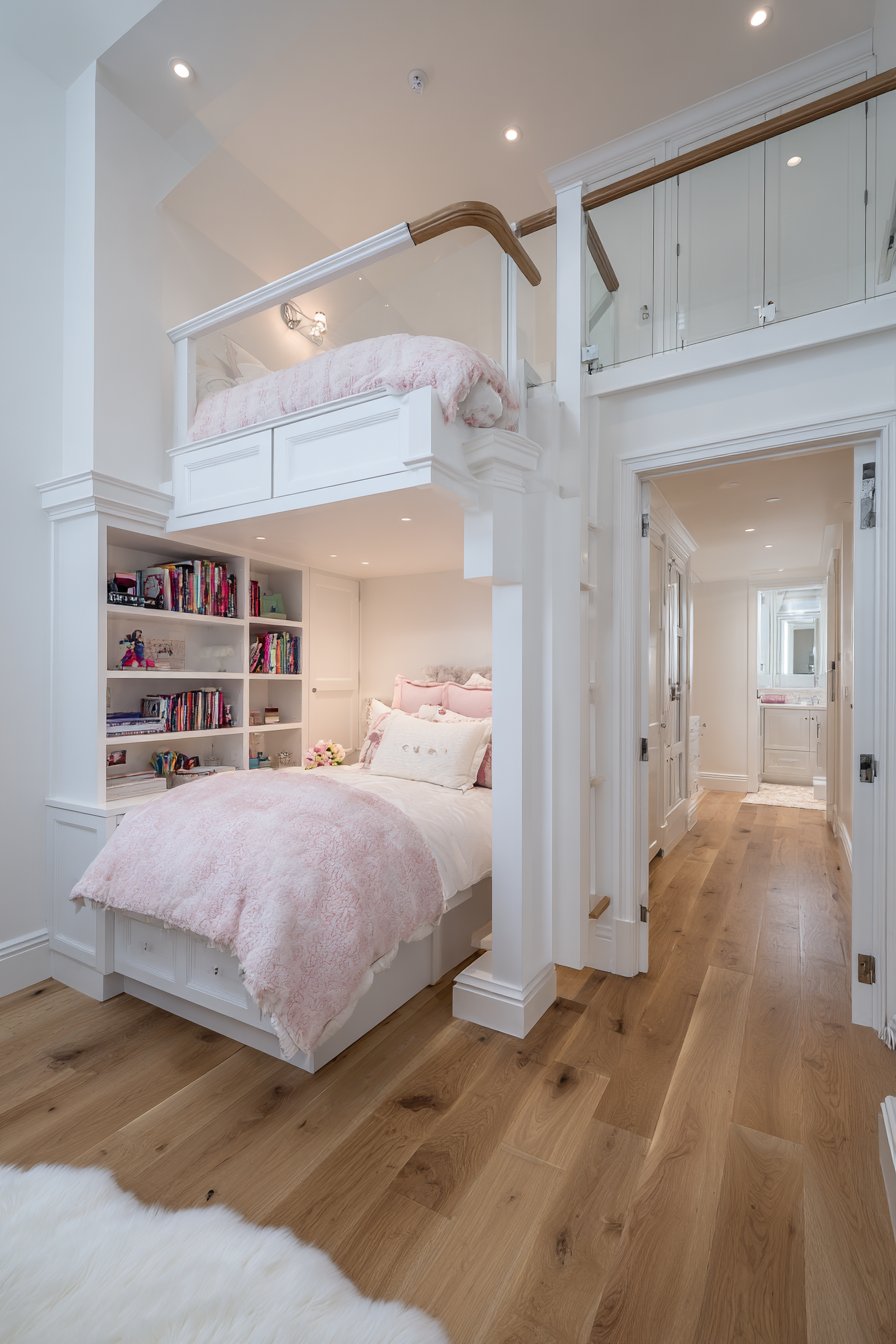
In smaller bedrooms, a loft bed configuration transforms limitations into opportunities. Imagine a white loft frame that elevates the sleeping area, creating valuable real estate underneath for a complete study station. This vertical thinking maximizes every square foot, proving that compact spaces can be just as functional and appealing as larger rooms.
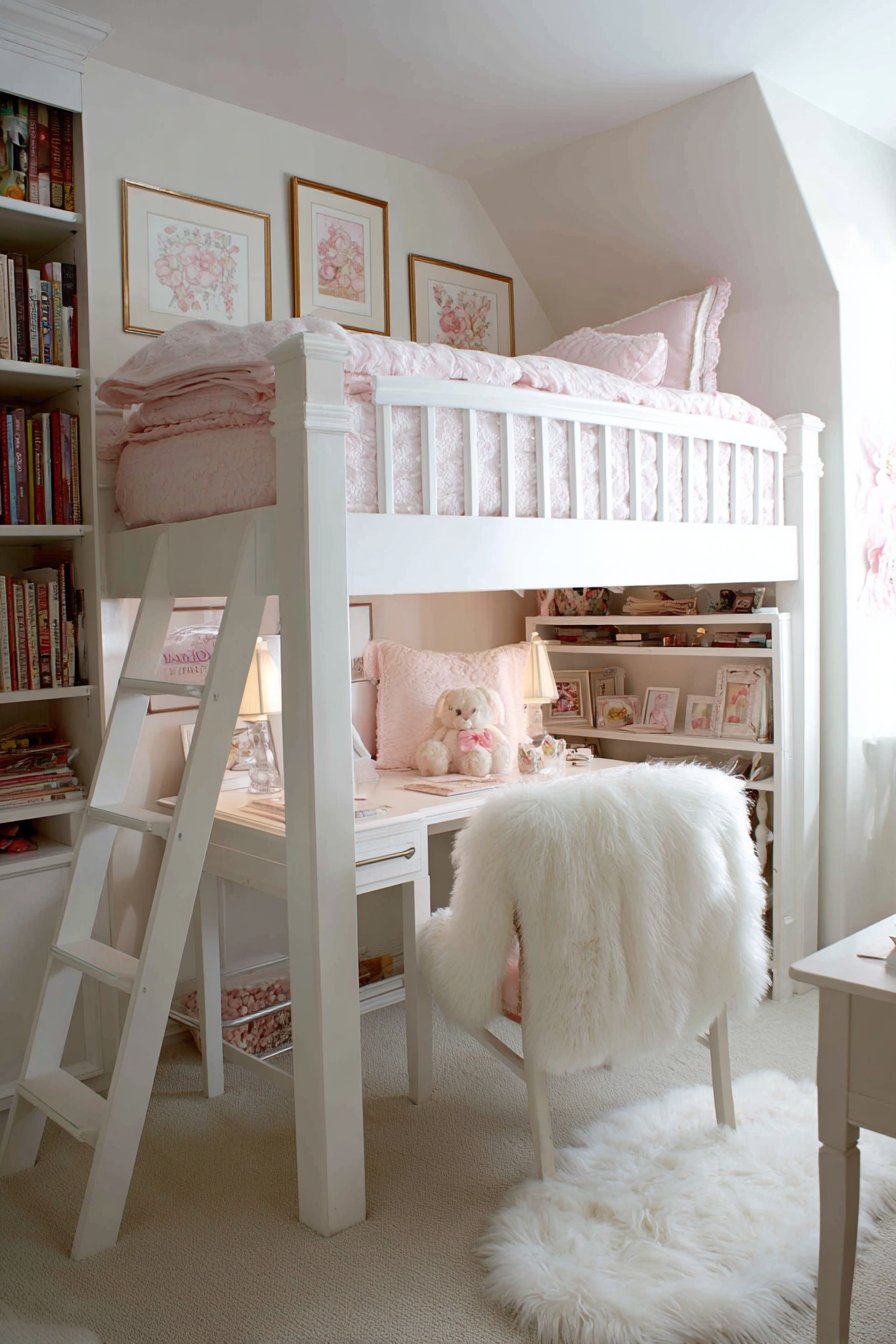
The built-in desk and shelving below the loft make excellent use of the vertical space. A young girl can complete homework at the desk, store school supplies on nearby shelves, and still have floor space for other activities—all without the cramped feeling that can plague small rooms.
The white frame keeps the structure from feeling heavy or overwhelming, while the open design ensures good air circulation and prevents any sense of being boxed in.
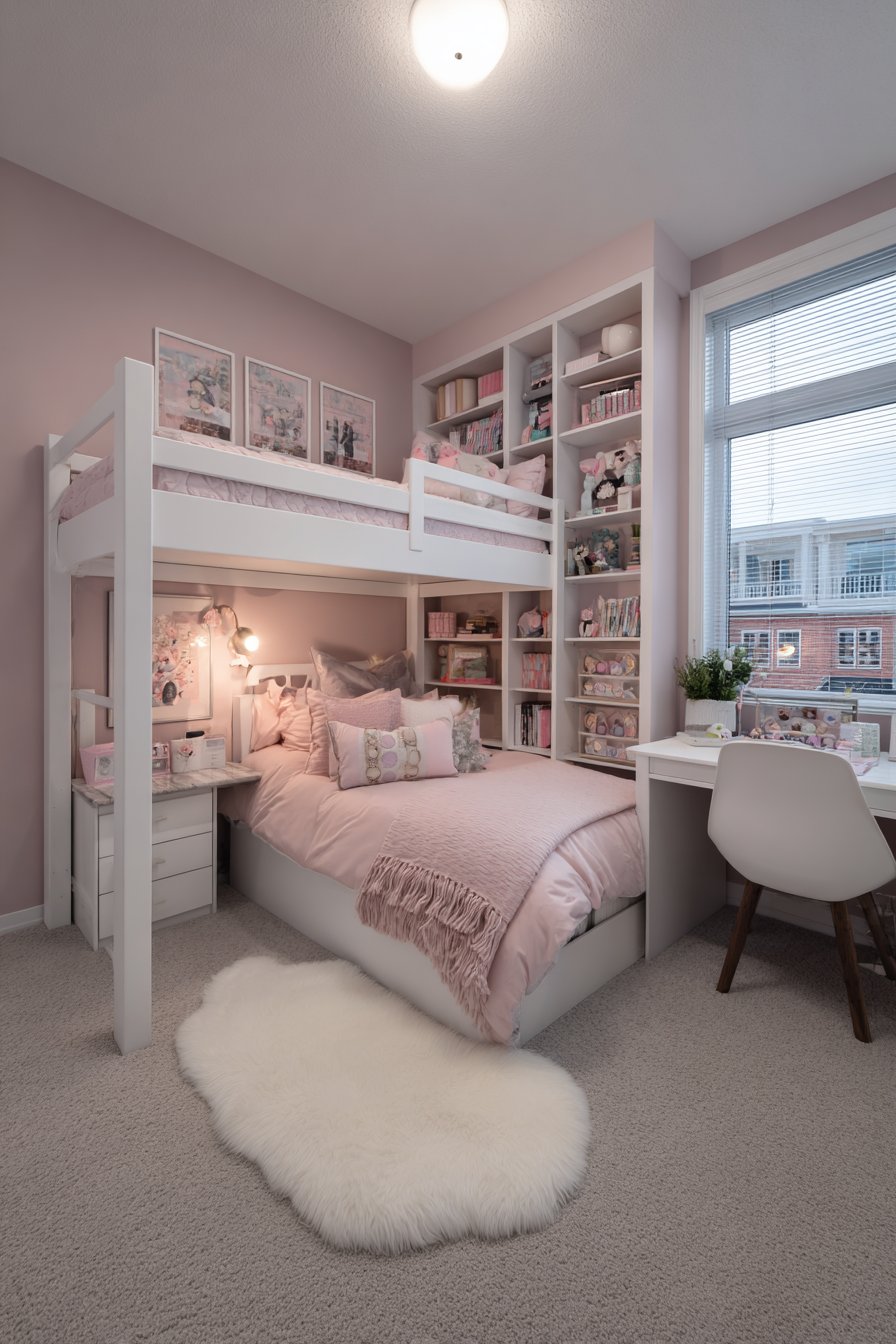
Safety features are paramount in loft bed design. Sturdy safety rails around the sleeping area above provide essential protection, while a secure ladder offers safe access. The sleeping area features cozy bedding in soft pink tones that make the elevated space feel like a special retreat rather than simply a space-saving solution. Proper lighting for the workspace below ensures the desk area remains functional and comfortable for homework and creative projects.
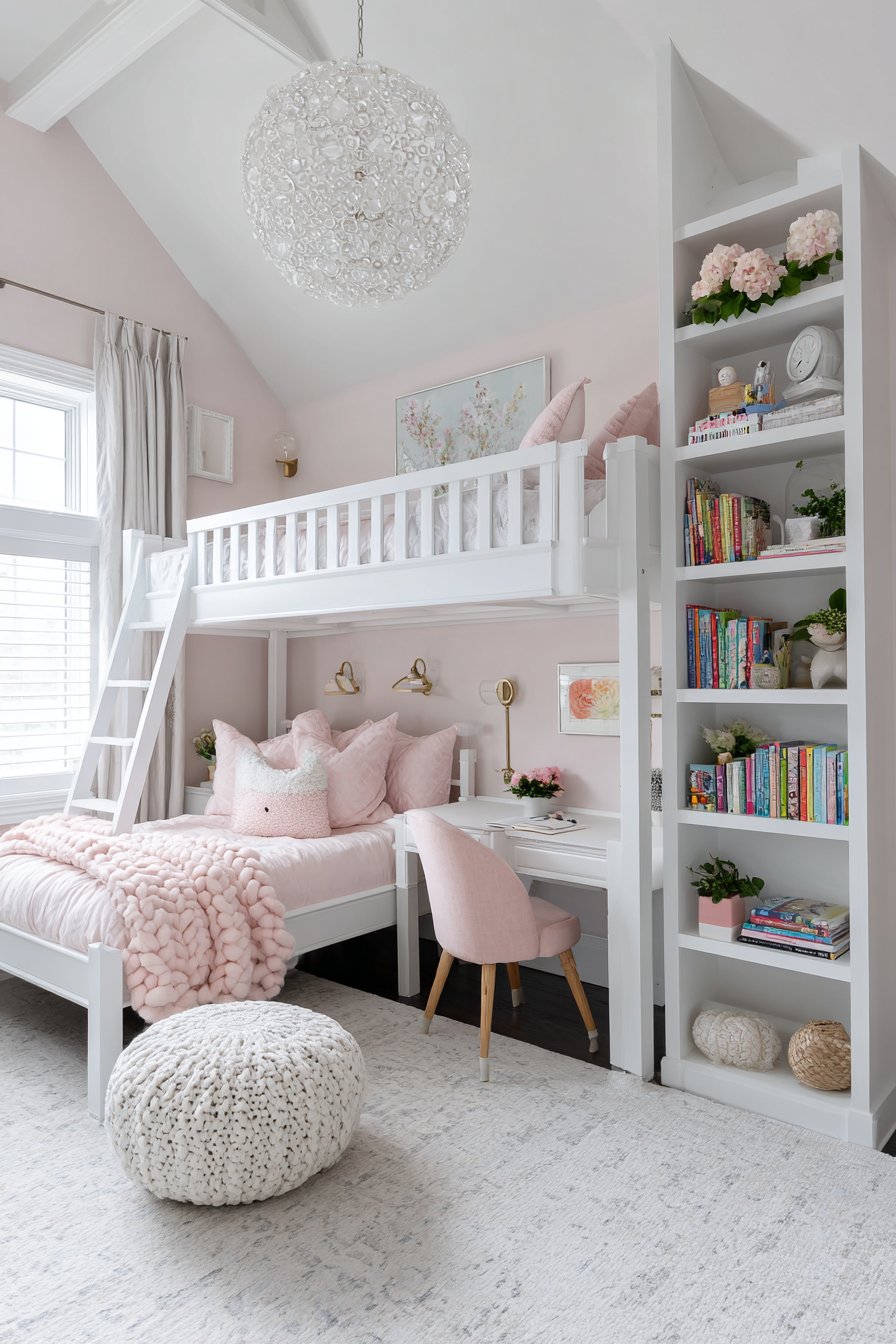
This design particularly appeals to 8-year-olds who love the adventure of sleeping in an elevated space—it feels special and fun while serving the practical purpose of maximizing room functionality. The built-in nature of the desk and storage also means furniture placement is predetermined, eliminating the puzzle of how to fit everything into a small room.
Key Design Tips:
- Ensure the loft structure meets safety standards and is properly secured to the wall
- Install adequate lighting beneath the loft for the workspace area
- Choose a loft height that provides comfortable headroom below while leaving ceiling clearance above
- Add safety rails that are appropriately spaced to prevent accidents
- Consider the ceiling height carefully before installing to ensure comfortable use of both levels
14. Nature-Inspired Botanical Retreat
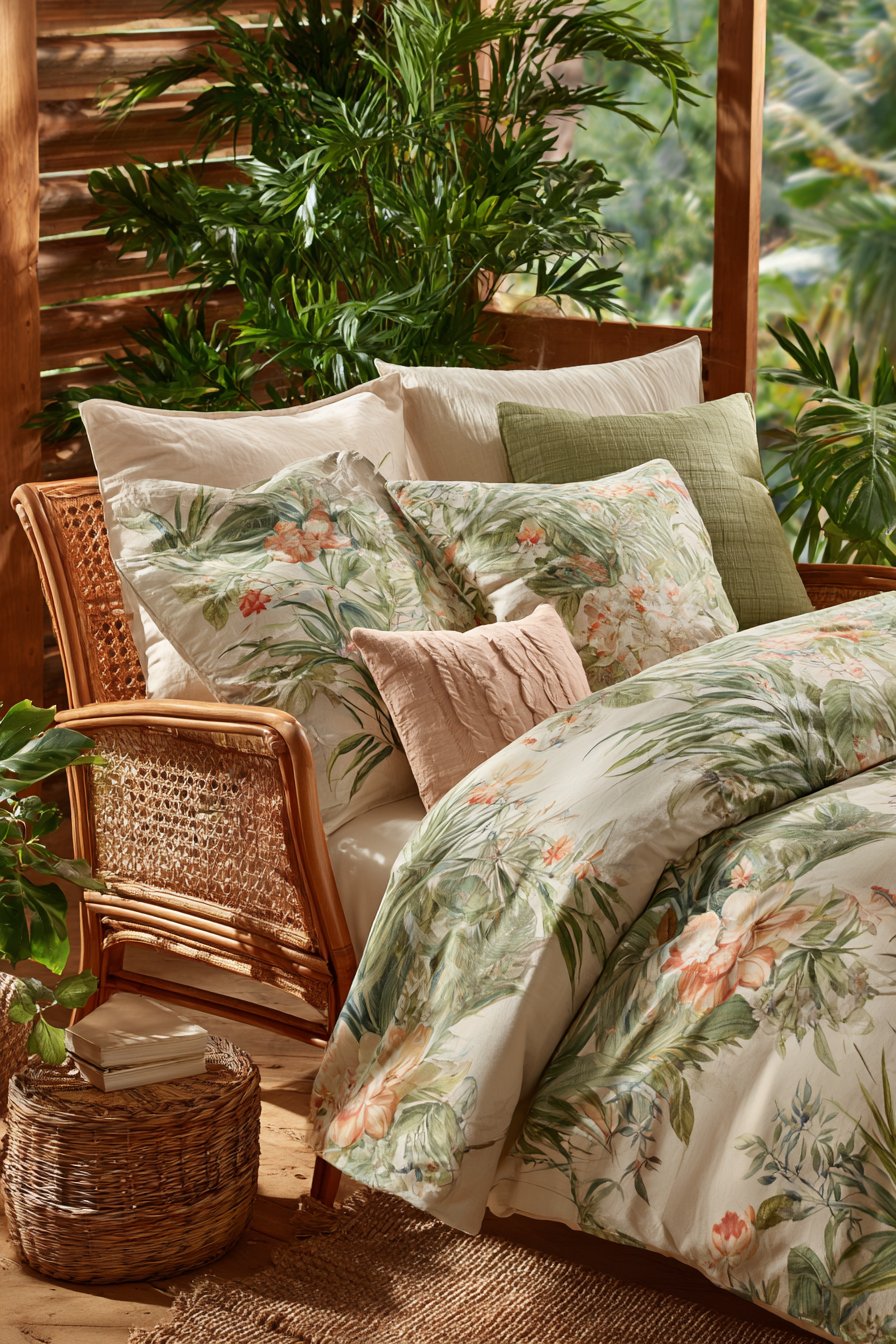
Bringing the outdoors inside creates a calming, organic atmosphere perfect for a child’s bedroom. Botanical prints featuring delicate ferns, leaves, or flowers adorn the walls, introducing natural patterns that feel sophisticated rather than juvenile.
These nature-inspired artworks—whether framed prints or canvas panels—celebrate the beauty of the natural world while providing visual interest and education about different plant species.
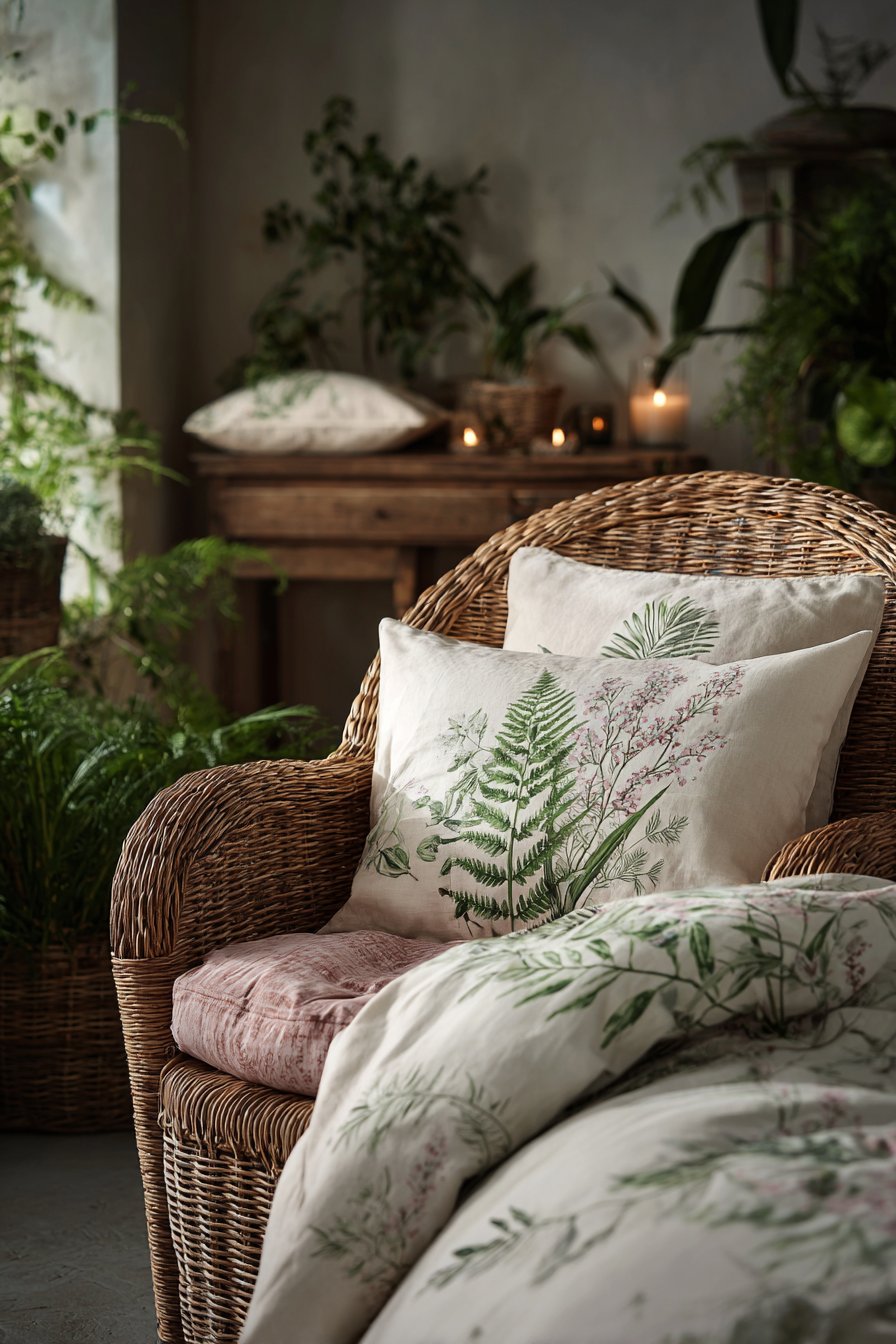
A woven rattan chair adds three-dimensional texture and reinforces the natural theme. This classic piece brings warmth and tactile interest to the space while providing a comfortable spot for reading or putting on shoes. The natural fibers and organic form of rattan furniture connect the room to the outdoors without requiring literal tree or garden motifs that might feel too young as the child grows.
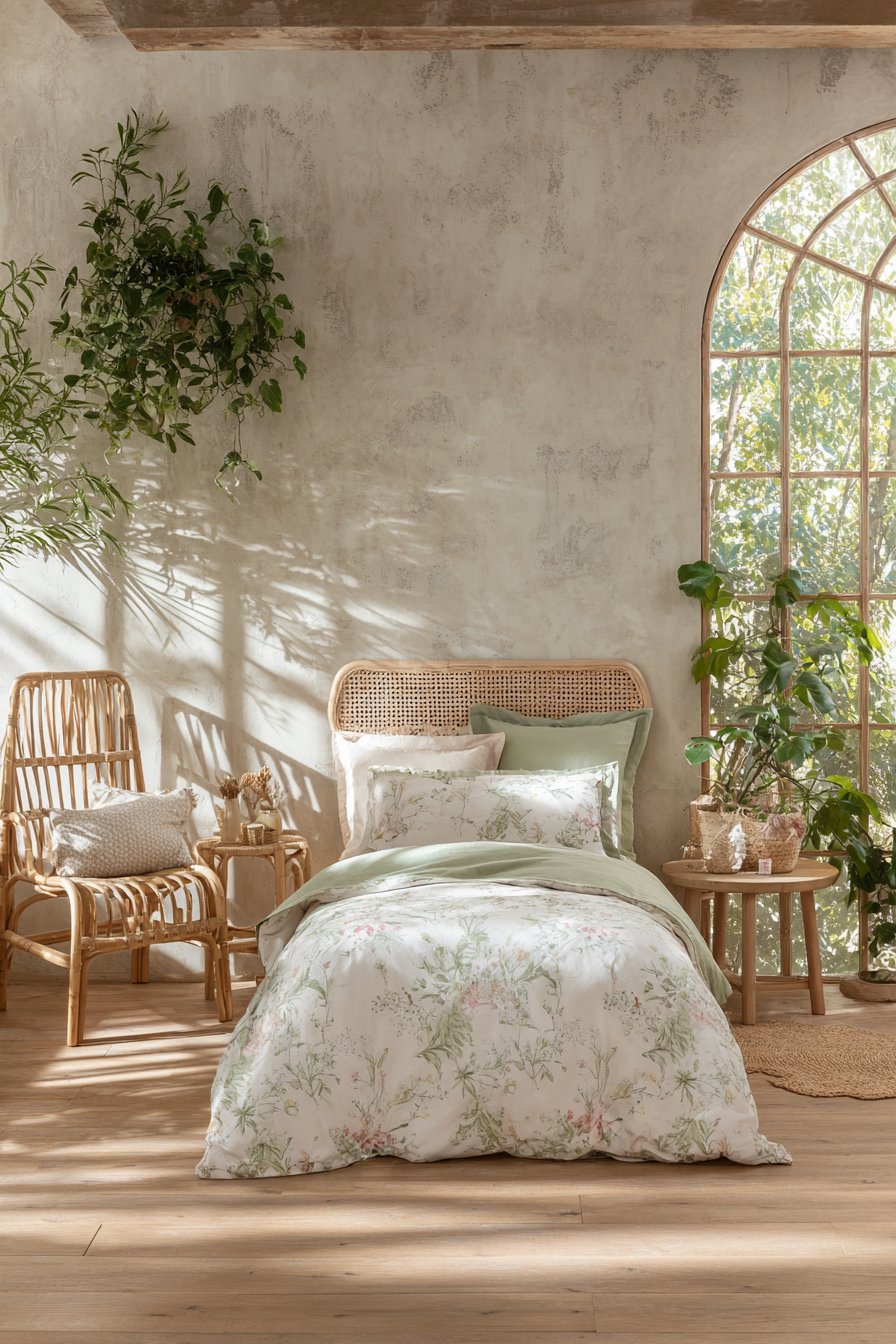
Bedding featuring delicate floral patterns in muted green and pink tones creates a cohesive botanical story. Rather than bright, cartoonish flowers, these patterns showcase realistic or stylized blooms in sophisticated colorways. The green tones reference foliage and growth, while soft pinks echo flower petals, creating a palette that’s both natural and feminine without being overtly girly.
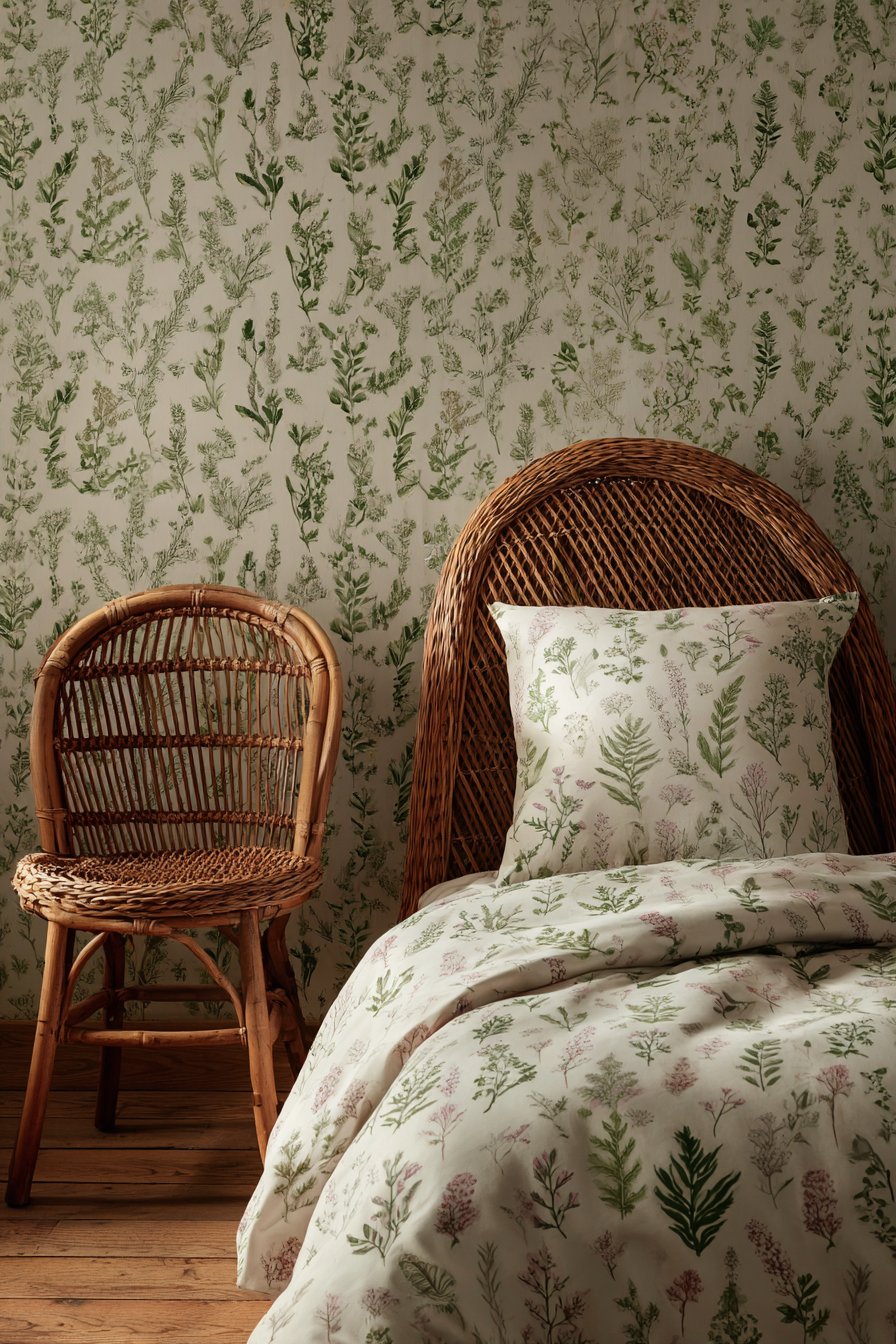
Natural materials throughout—wooden furniture, cotton textiles, perhaps a jute rug—enhance the organic, peaceful atmosphere. These materials not only look beautiful but also feel good, adding sensory richness to the space. The overall effect is a room that feels like a garden sanctuary, promoting calm and connection to nature even in an urban setting.
Key Design Tips:
- Choose botanical prints that depict real plants for educational value and timeless appeal
- Incorporate natural materials like wood, rattan, cotton, and jute throughout the space
- Select muted, nature-inspired colors rather than bright, artificial tones
- Mix pattern scales—larger floral bedding with smaller botanical prints on walls
- Add real plants if possible to reinforce the nature theme and improve air quality
15. Independence-Fostering Closet Organization
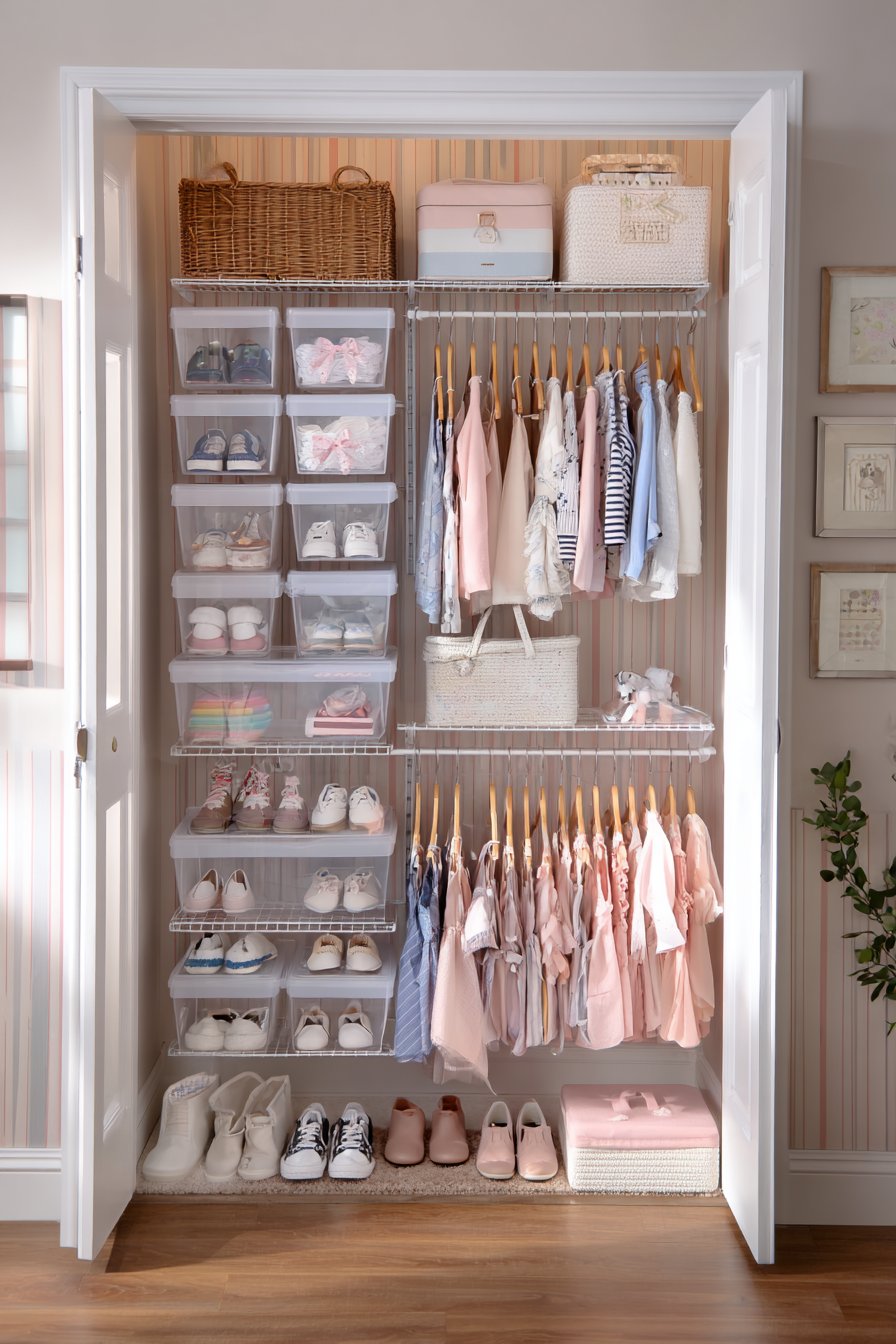
An organized closet system designed specifically for a child’s needs promotes independence and life skills while keeping the bedroom tidy. The hanging rod positioned at appropriate height allows an 8-year-old to reach her clothes independently, selecting outfits and hanging items back up without adult assistance. This accessibility is crucial for building confidence and responsibility in personal care and organization.
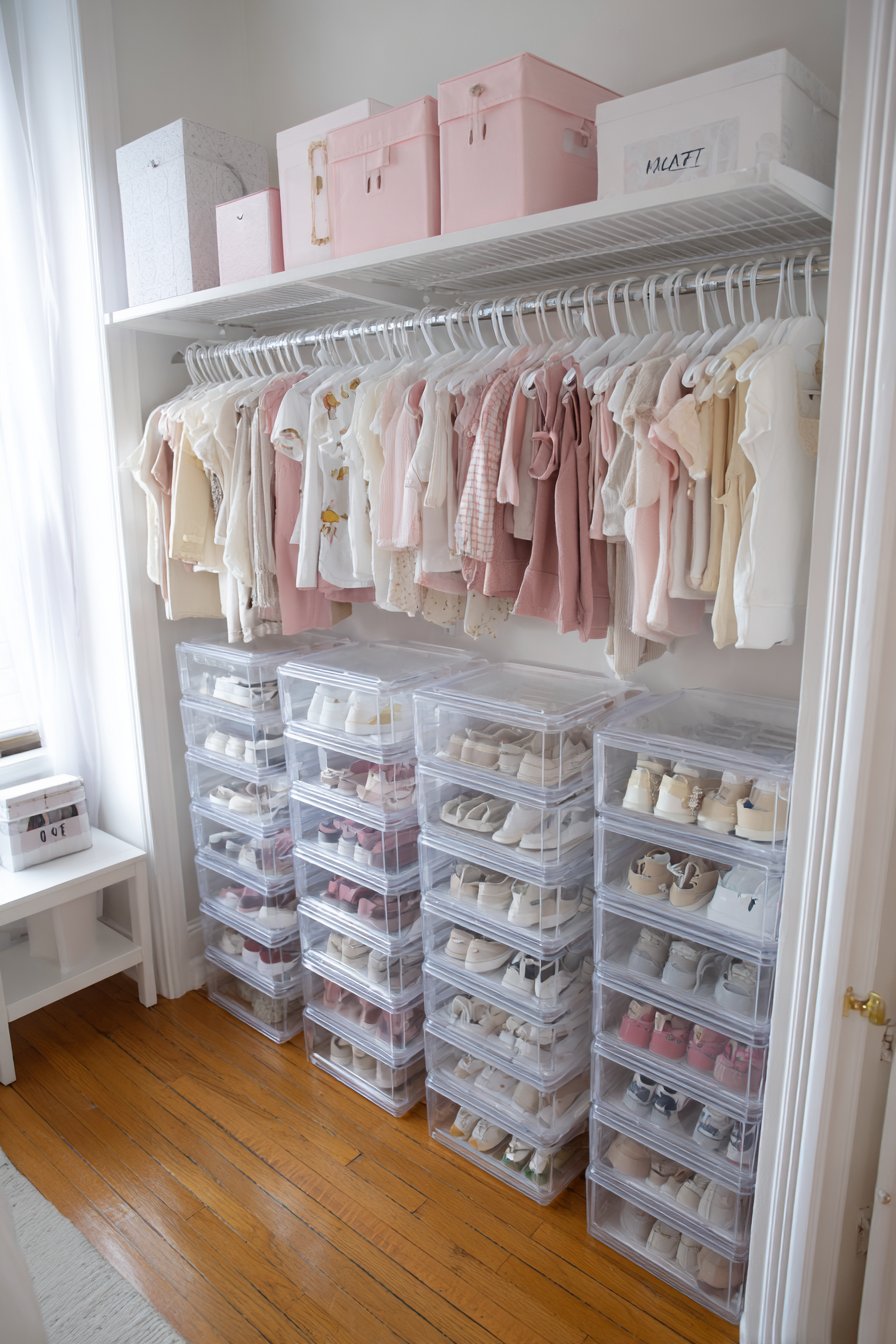
Clear shoe boxes stacked at the closet floor provide visible storage that makes finding the right pair easy while protecting footwear from dust and damage. The transparency eliminates the guessing game of what’s in each box, and the stackable design maximizes vertical space. Labeled bins for accessories—hair ties, belts, jewelry—teach categorization skills while keeping small items organized and findable.
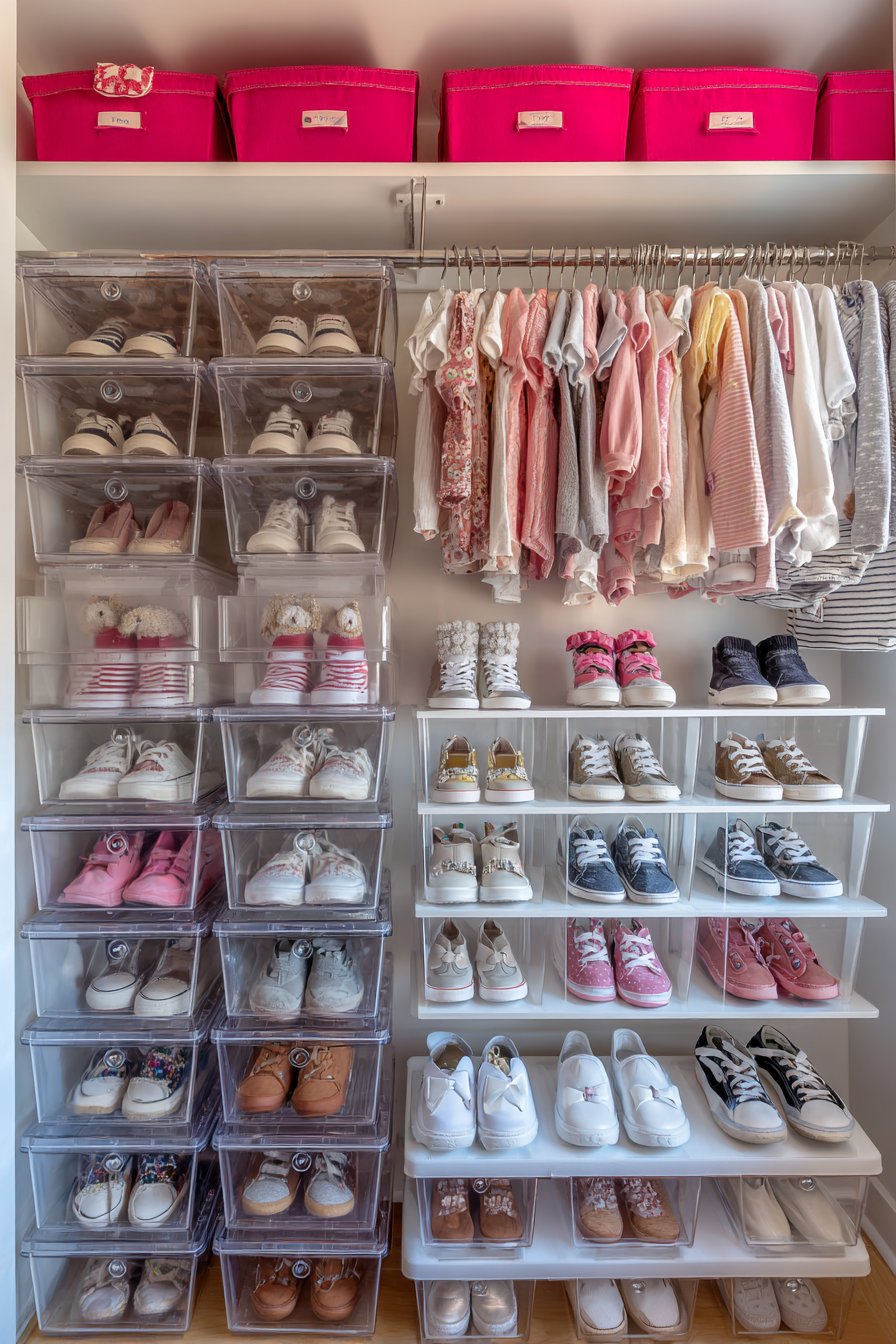
A small step stool serves as an essential tool for accessing higher shelves, extending the child’s reach while teaching safe practices for getting items stored above normal height. This might house out-of-season clothing, special occasion outfits, or items that don’t require daily access. The step stool itself can be stored within the closet when not needed, maintaining the organized appearance.
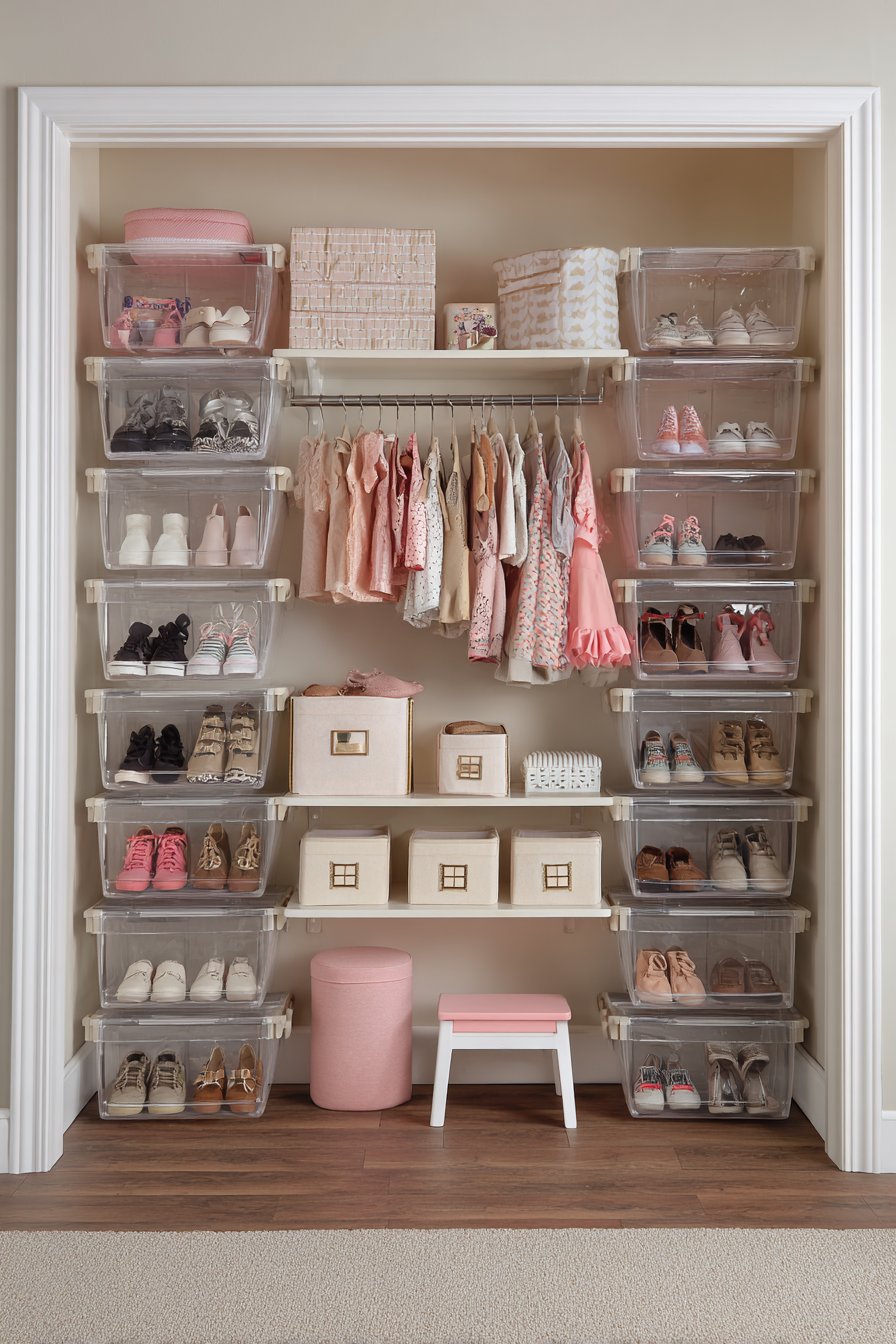
The genius of this system lies in how it encourages independence. When everything has a designated place at an accessible height, children can dress themselves, select their own outfits, and maintain organization without constant adult intervention. This builds confidence, decision-making skills, and a sense of pride in caring for their belongings.
Key Design Tips:
- Install double hanging rods at different heights to maximize vertical closet space
- Use clear containers for visibility and labeled bins for items that can’t be seen
- Ensure the primary hanging rod is low enough for the child to reach comfortably
- Implement a color-coding or category system that makes sense to the child
- Include a small step stool that can be safely used with supervision when needed
16. Modern Farmhouse Charm
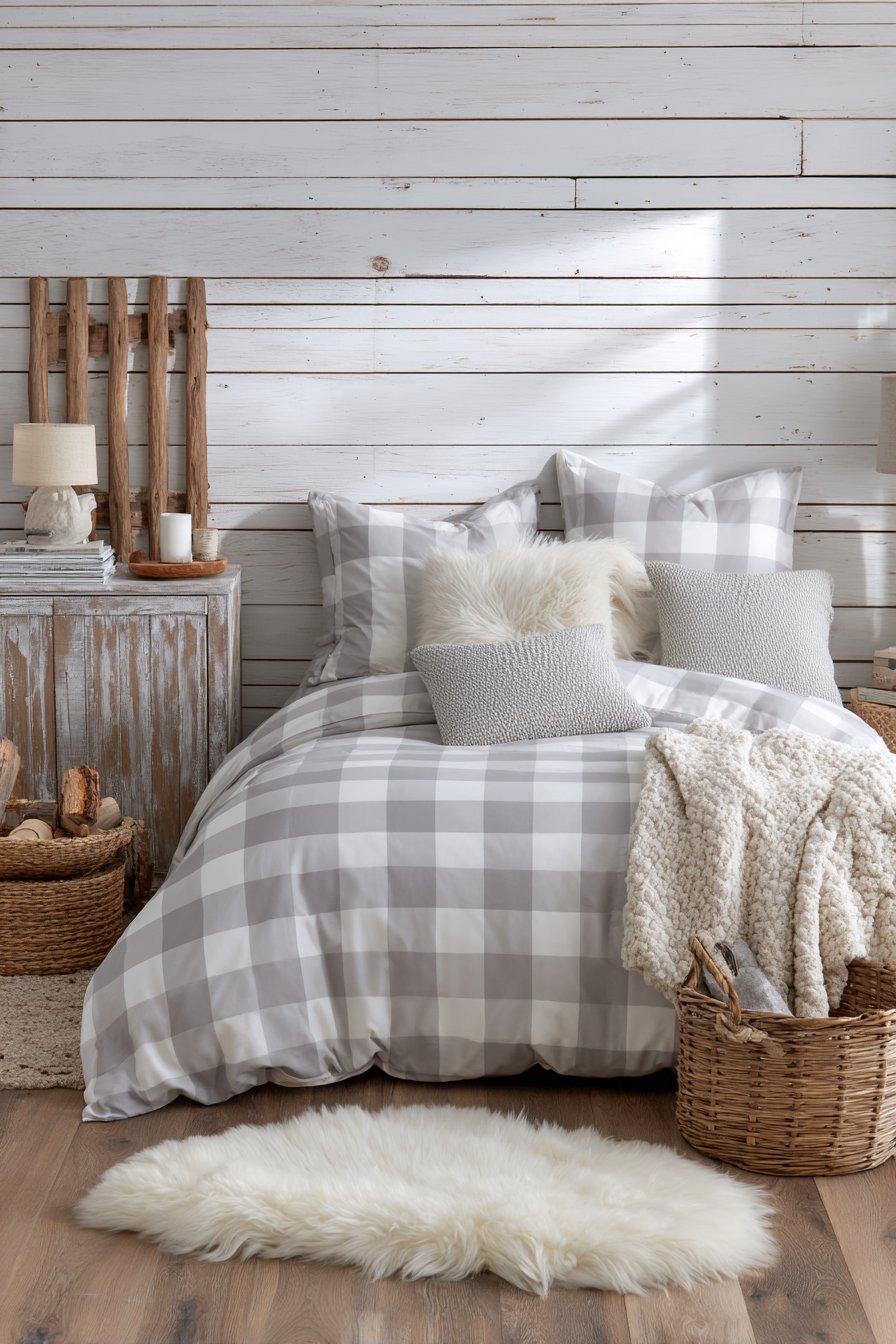
The modern farmhouse aesthetic brings rustic warmth and contemporary clean lines together in a design that feels both timeless and fresh. A white shiplap accent wall creates textural interest and country charm without overwhelming the space. This wall treatment adds architectural character while maintaining the light, bright feeling essential for a child’s bedroom.
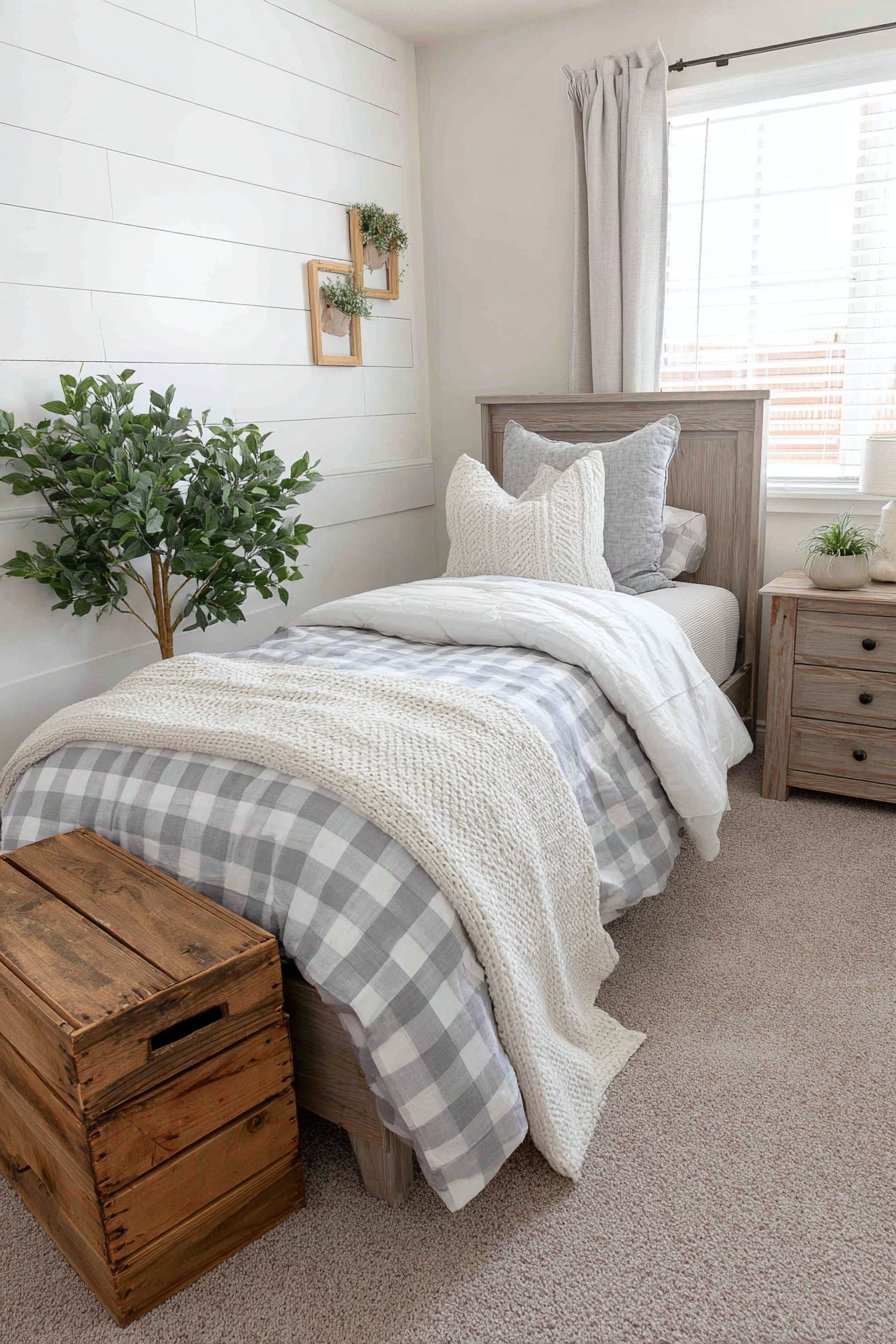
Distressed wood furniture pieces introduce authentic rustic elements that tell a story of craftsmanship and quality. A weathered dresser or nightstand with visible wood grain and slightly worn edges brings character and warmth, contrasting beautifully with the crisp white shiplap. These pieces feel collected rather than matching, creating a lived-in, welcoming atmosphere that’s more interesting than perfectly coordinated sets.
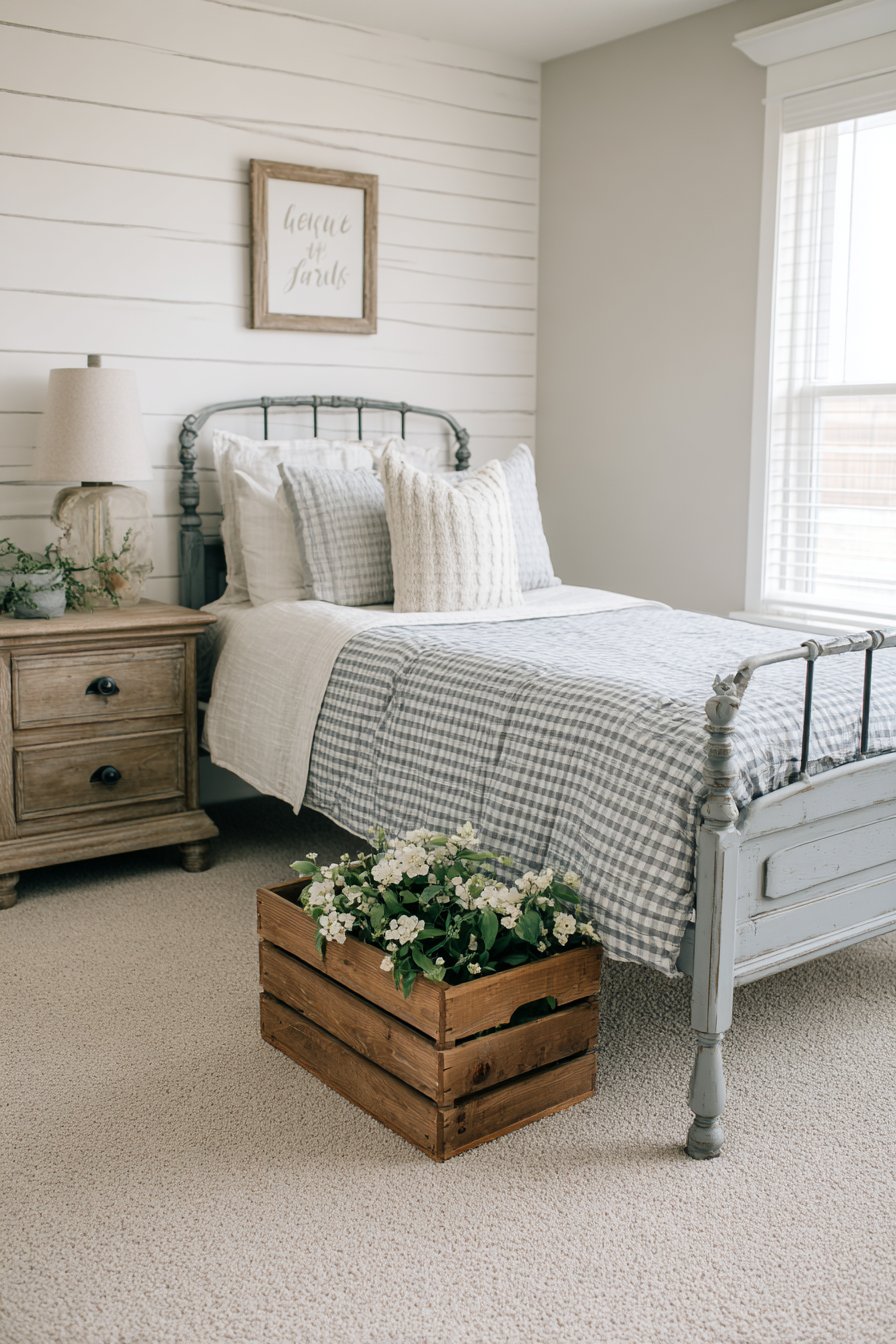
Bedding in soft grey and white gingham pattern bridges traditional and modern aesthetics. The classic check pattern has farmhouse roots but in these neutral, sophisticated colors, it feels current and age-appropriate. The subtle pattern adds visual interest without competing with the architectural details or furniture finishes, maintaining the balanced approach that makes modern farmhouse style so appealing.
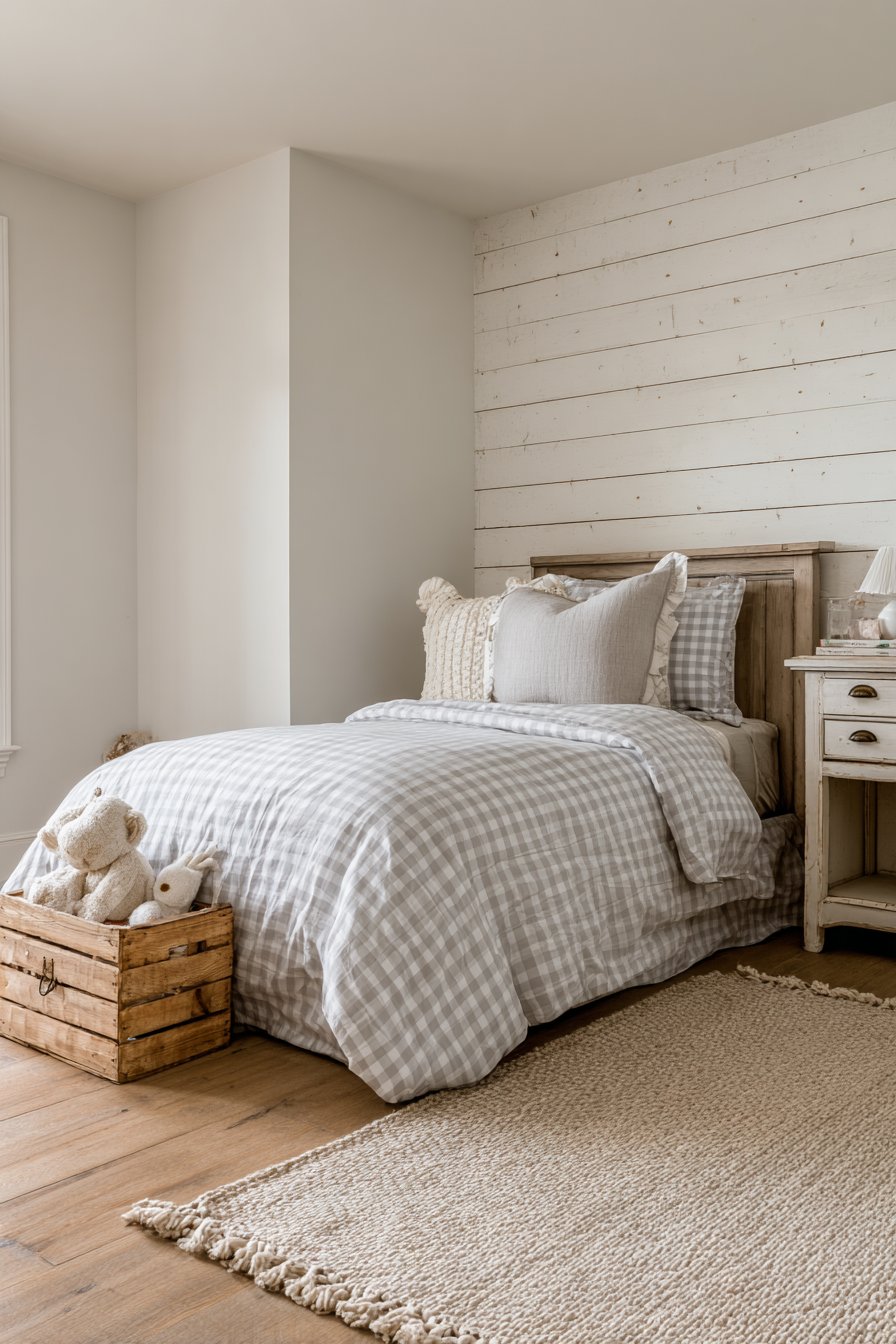
Vintage-inspired accessories complete the look with thoughtful touches that add character without clutter. A wooden crate repurposed as bedside storage, a vintage-style alarm clock, or antique-looking hooks for hanging bags and jackets bring authentic farmhouse charm. These elements create a room that feels curated and special, honoring tradition while remaining perfectly suited to modern childhood.
Key Design Tips:
- Use shiplap sparingly—one accent wall is often enough to make an impact
- Choose distressed wood furniture with visible grain for authentic farmhouse appeal
- Incorporate classic patterns like gingham, ticking stripes, or simple checks in neutral colors
- Add vintage-inspired accessories that serve functional purposes
- Balance rustic elements with clean, modern lines to keep the look fresh
17. Sports and Activity Celebration Space
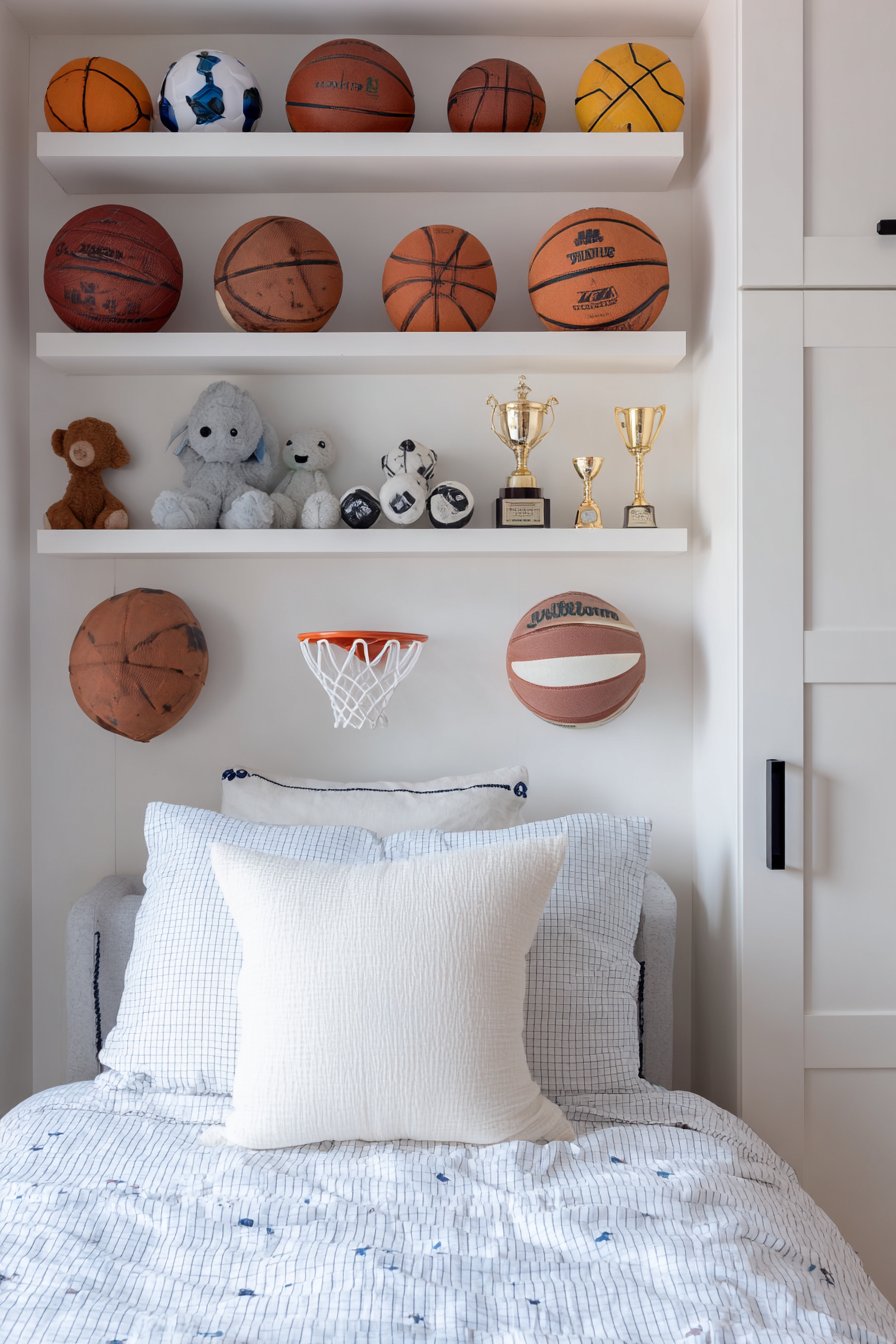
For the athletically inclined 8-year-old, a bedroom that celebrates her interests in sports and physical activities can be incredibly motivating. A basketball hoop mounted on the back of the door provides active fun without taking up floor space—perfect for shooting a few baskets during study breaks or before bed. This functional element acknowledges the child’s passion while serving as a physical outlet within the bedroom environment.
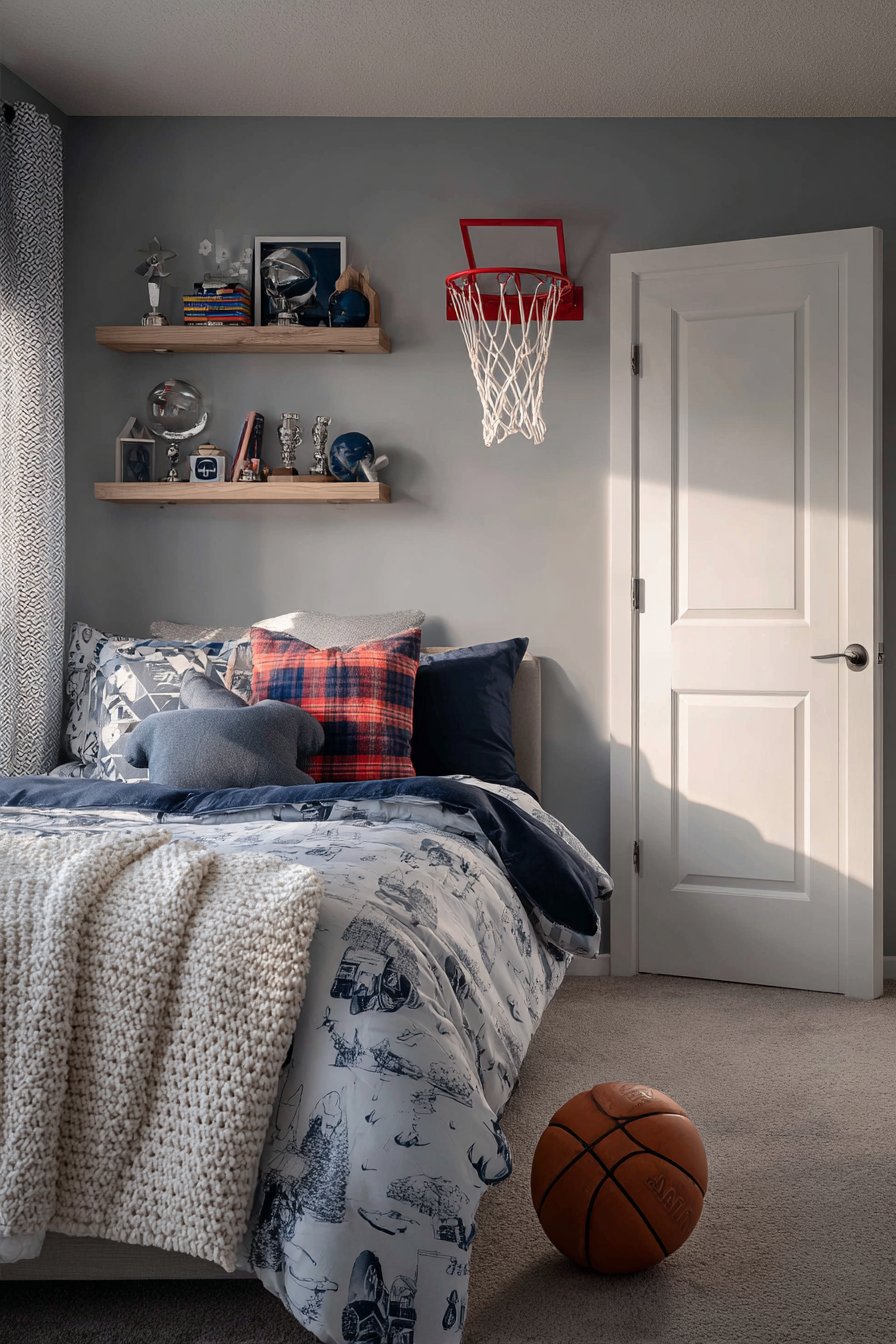
Display shelves thoughtfully arranged showcase trophies, medals, and ribbons earned through athletic pursuits. Rather than hiding these accomplishments in boxes, giving them a prominent display acknowledges the child’s hard work and achievements. These visual reminders of success build confidence and motivation, encouraging continued participation in sports and physical activities.
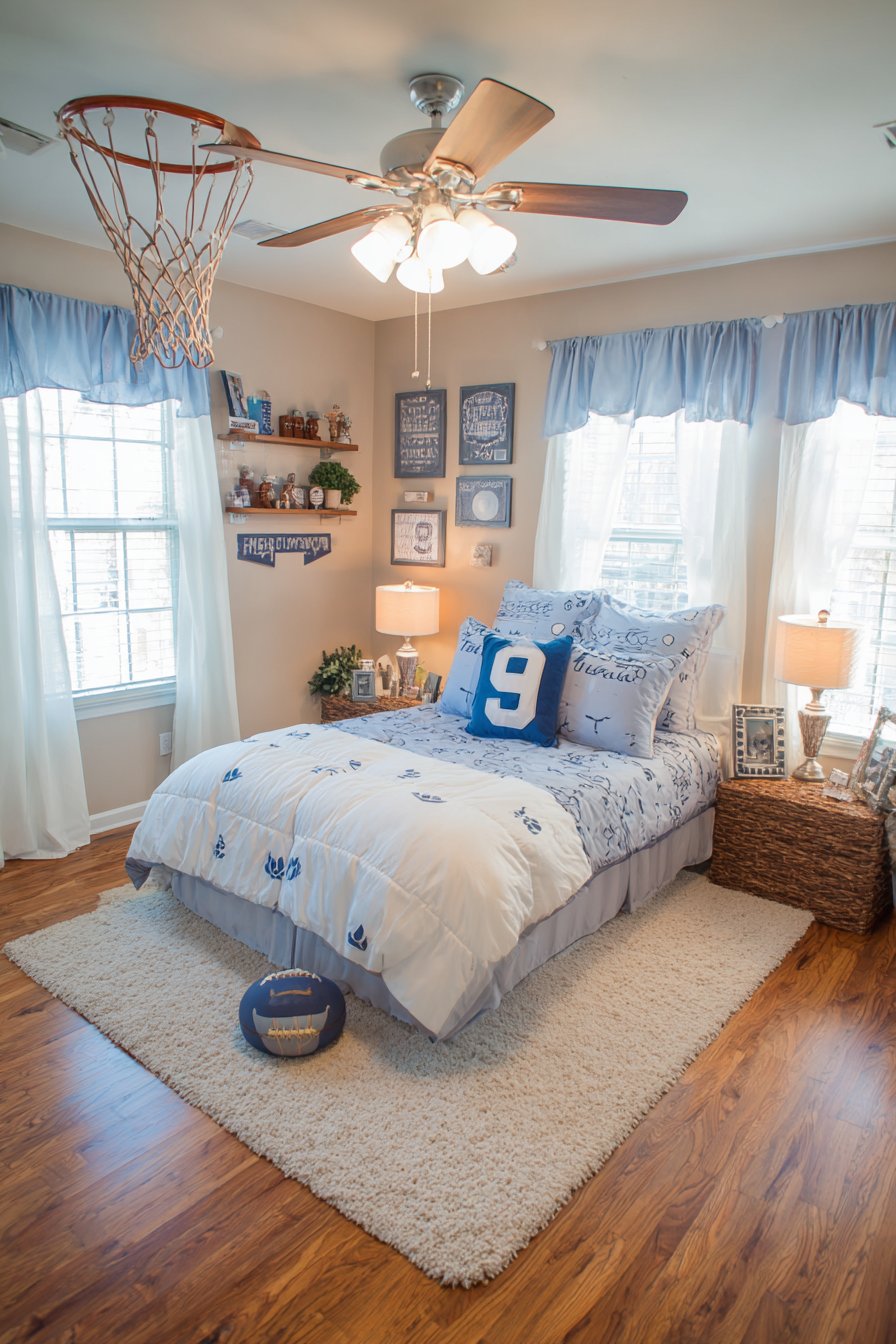
The bedding takes a sophisticated approach to the sports theme, featuring subtle athletic motifs in navy and white rather than obvious sports equipment prints. Perhaps subtle patterns inspired by athletic jerseys, geometric designs reminiscent of sports courts, or simple navy and white stripes create a cohesive look that supports the theme without being overly literal. This restraint ensures the room won’t feel too childish as interests potentially evolve.
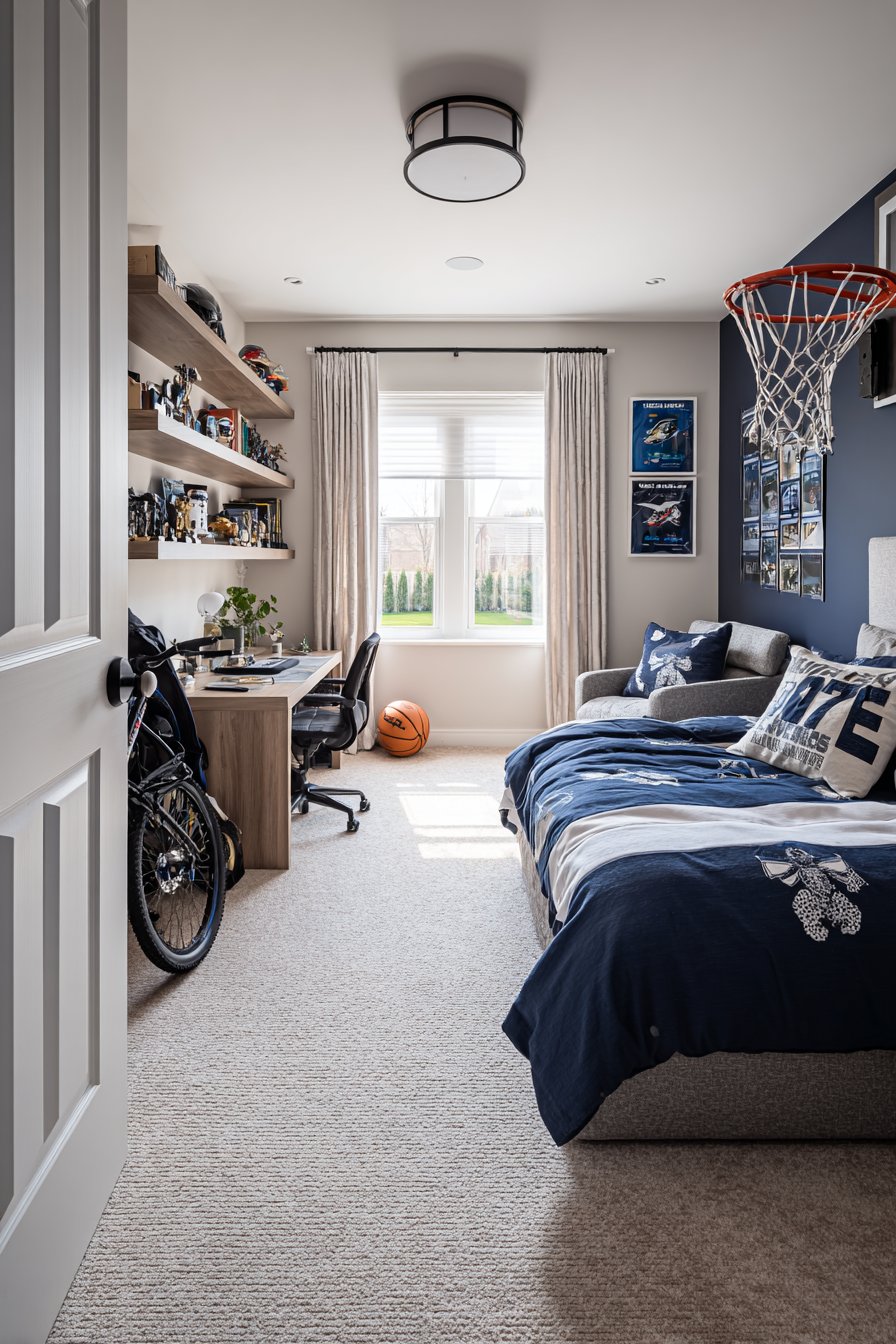
The design successfully supports active interests while maintaining bedroom functionality. This isn’t a gym or sports facility—it’s still a place for rest, study, and all the other activities bedrooms must accommodate. The sports elements are integrated thoughtfully, celebrating the child’s passion without overtaking the space entirely.
Key Design Tips:
- Choose over-the-door equipment that’s easy to install and remove without damage
- Display achievements prominently but organize them thoughtfully to avoid clutter
- Use subtle patterns and colors associated with sports rather than literal equipment imagery
- Ensure adequate storage for sports gear and equipment used outside the home
- Balance athletic elements with comfort and relaxation features for downtime
18. Musical Harmony and Creative Expression
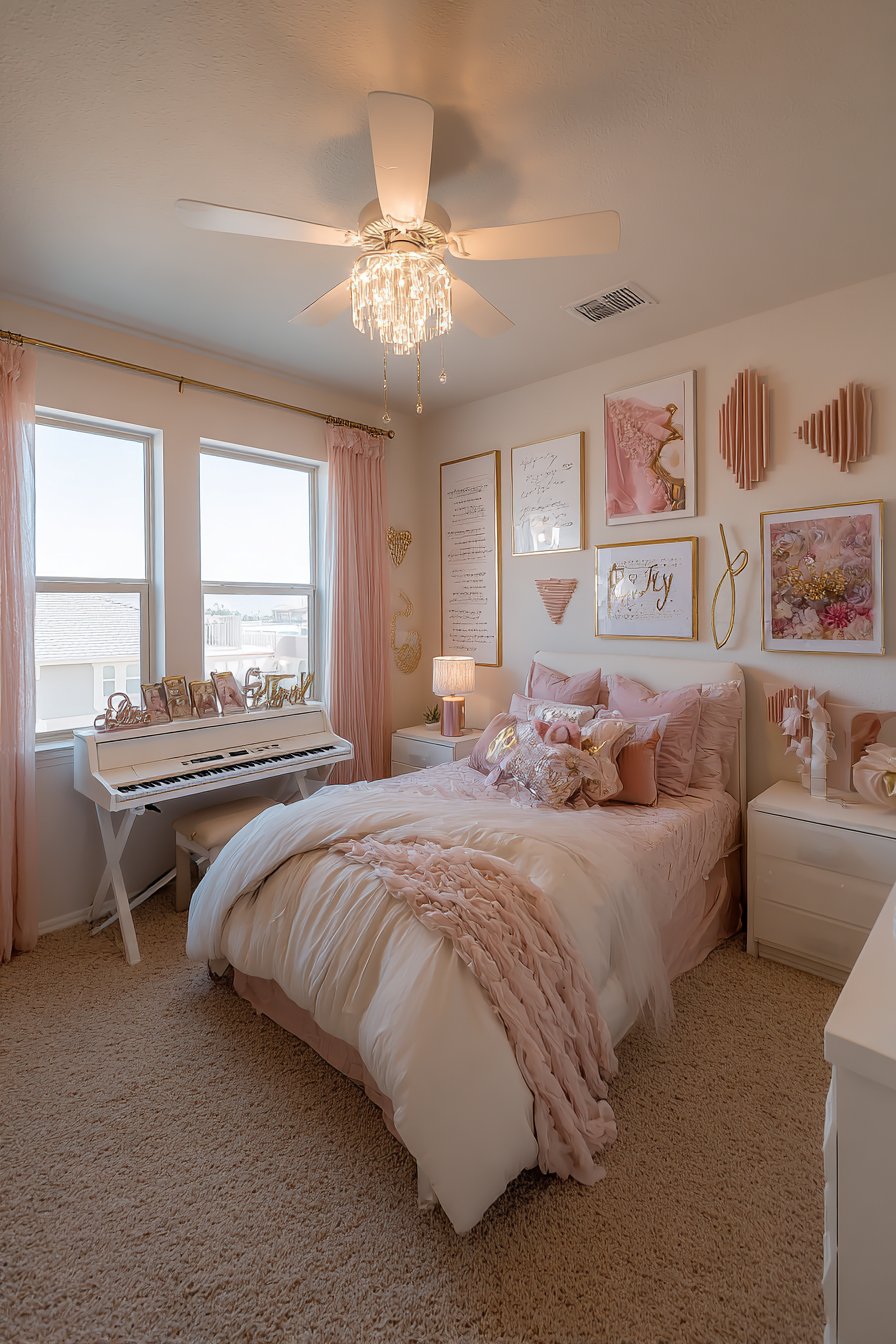
For a young musician, a bedroom that supports and celebrates musical interests creates an environment where creativity can flourish. A keyboard or small instrument positioned on a stand becomes both functional equipment and decorative element, immediately announcing the room’s inhabitant’s passion. Proper placement ensures the instrument is easily accessible for practice while not interfering with other bedroom activities.
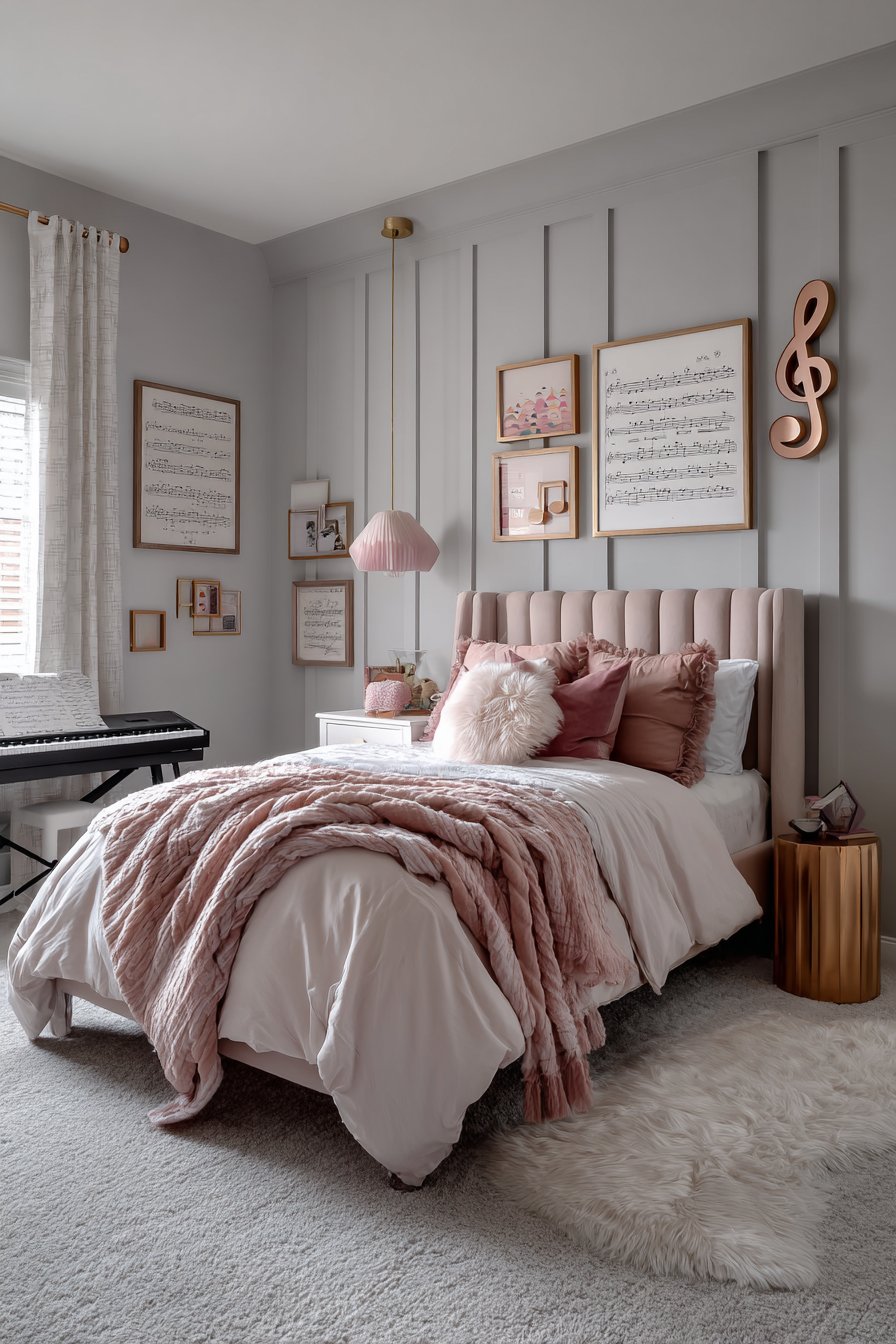
Wall-mounted displays designed for sheet music keep compositions organized and accessible, teaching the young musician to care for her materials while making practice preparation efficient. These displays might include simple shelves, decorative clips, or specialized music holders that protect pages while keeping favorite pieces within reach. The organized system builds good habits while celebrating the musical journey.
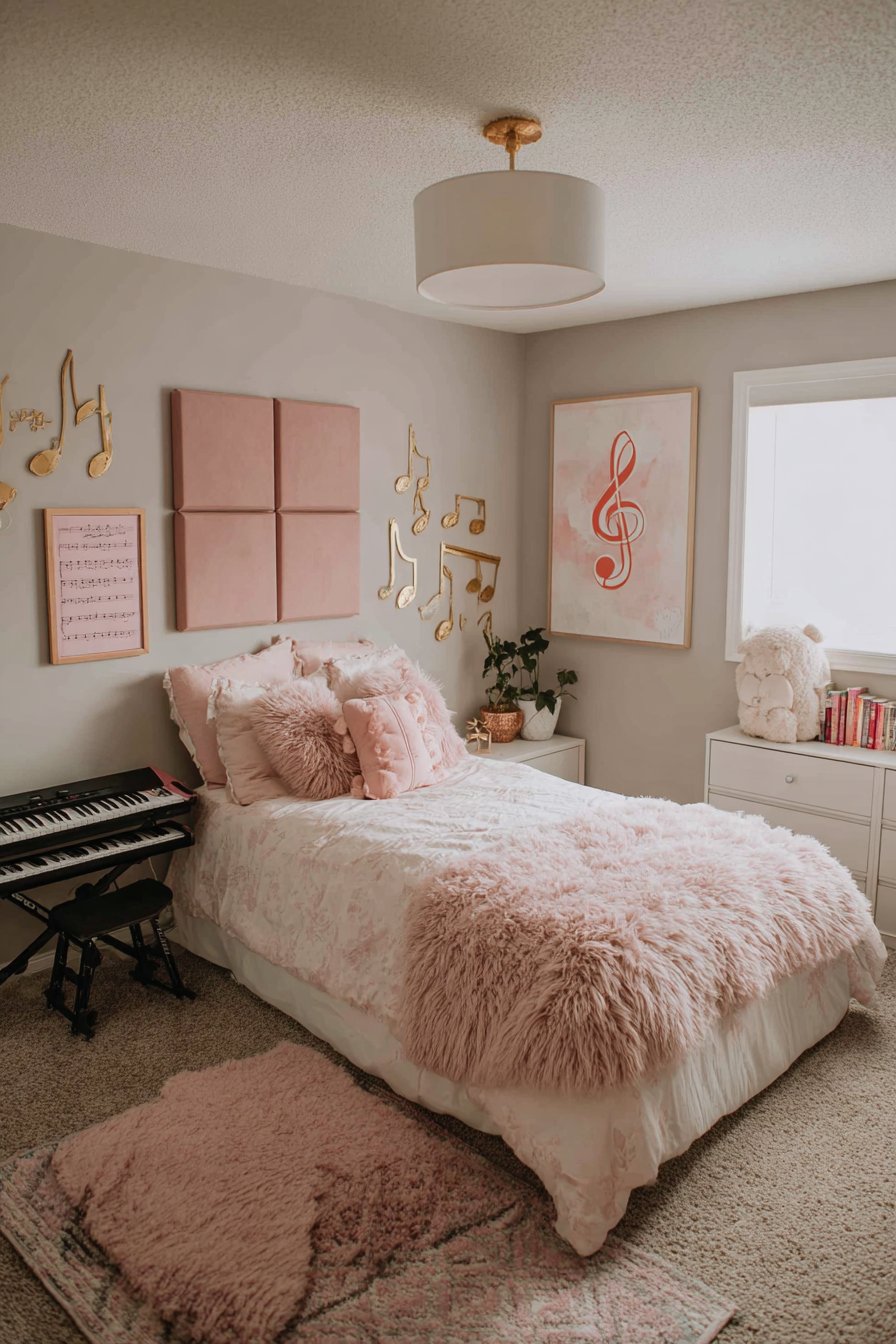
The decor incorporates musical themes through subtle touches rather than obvious music note patterns. Soft pink and gold tones create a sophisticated palette, with perhaps abstract artwork suggesting sound waves, framed vintage sheet music as wall art, or decorative elements inspired by musical instruments presented in refined ways. Acoustic panels serve both practical and decorative purposes—improving the room’s sound quality for practice while adding visual interest in coordinating colors.
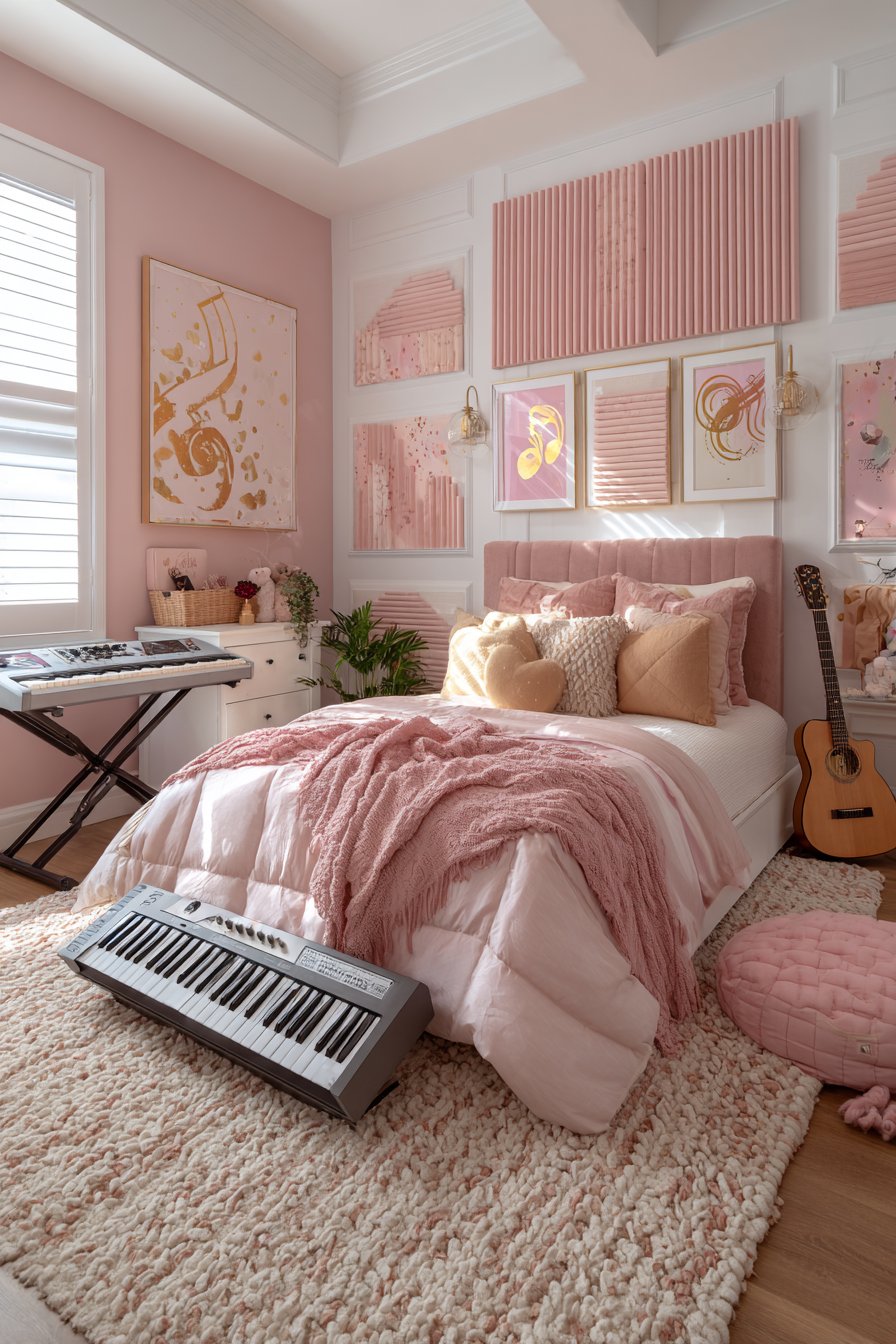
This design recognizes that supporting a child’s musical development requires more than just providing an instrument. The room’s layout, organization, and aesthetic all contribute to creating a space where a young musician feels inspired to practice, create, and grow in her musical abilities.
Key Design Tips:
- Position instruments where they’re easily accessible but not in the way of daily activities
- Install proper lighting near the music stand or keyboard for comfortable reading of sheet music
- Include storage solutions specifically designed for music books, sheet music, and accessories
- Consider acoustic treatments if practice happens frequently in the bedroom
- Display musical achievements like recital programs or certificates alongside other accomplishments
19. Coastal Breeze and Seaside Dreams
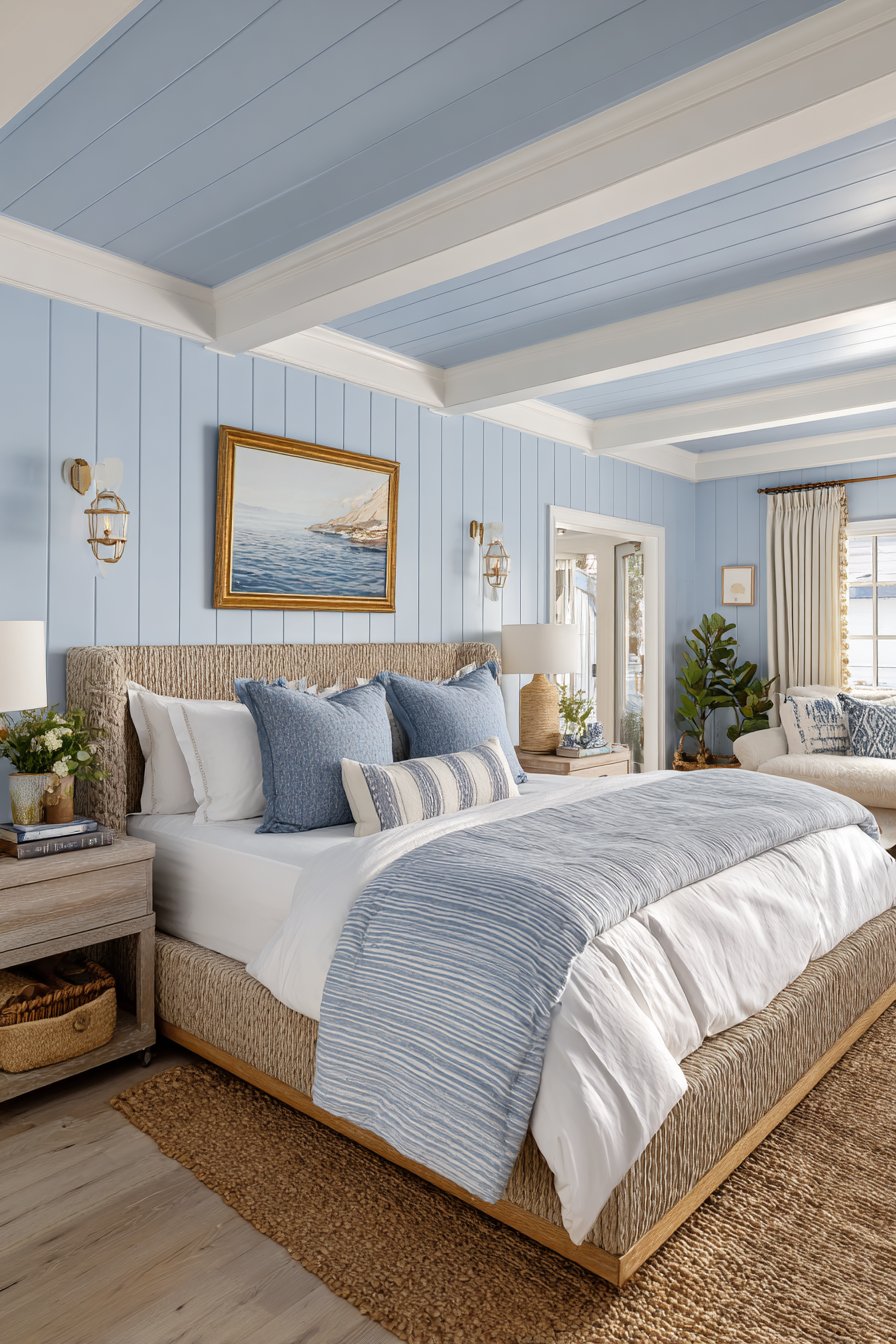
A coastal-inspired design brings the relaxing atmosphere of the beach indoors without resorting to juvenile nautical clichés. Soft blue and white striped bedding evokes classic beach cabanas and seaside style, creating a fresh, breezy foundation for the room. These timeless stripes feel sophisticated rather than childish, offering a pattern that will remain relevant as the child grows.
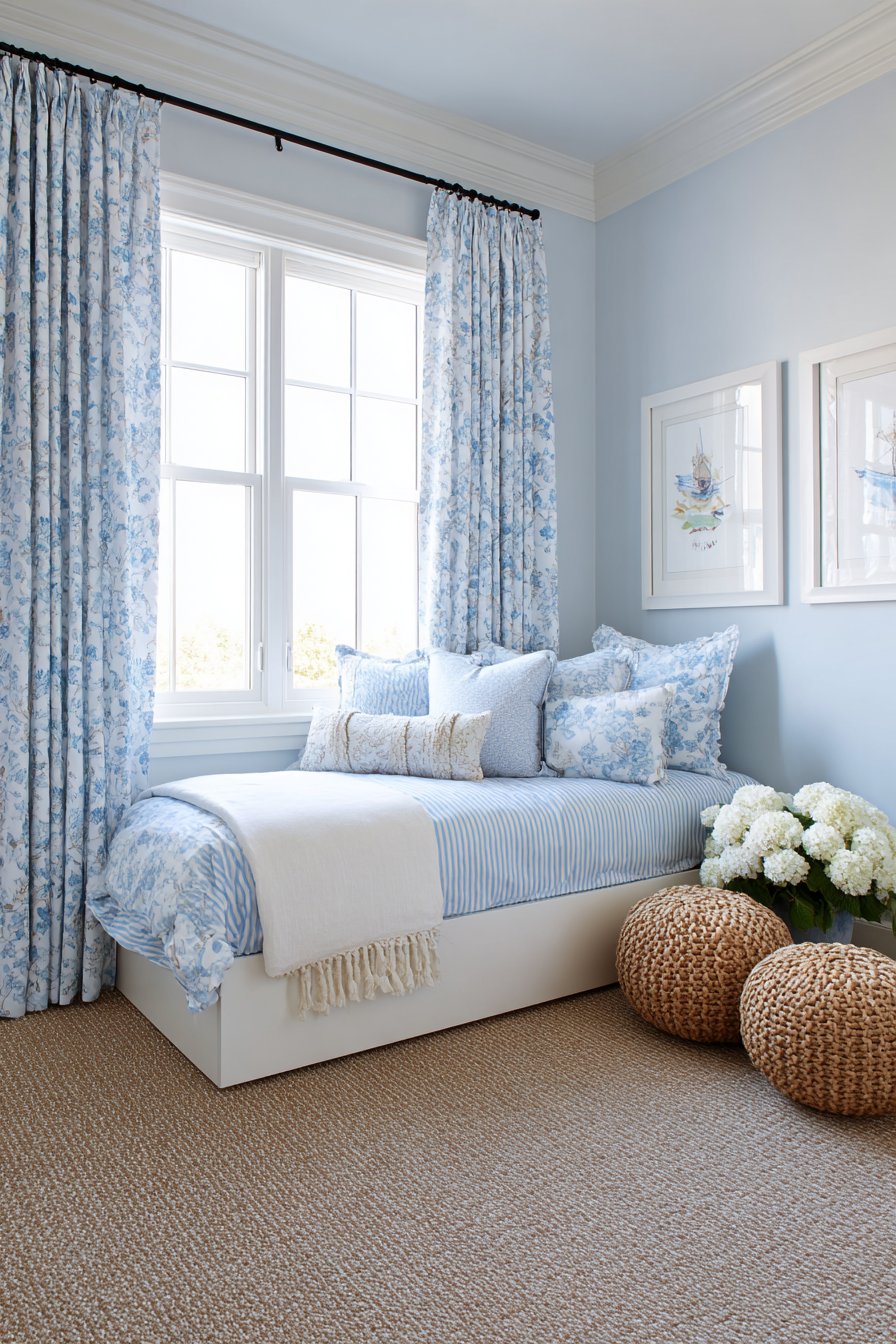
Rope-wrapped accessories introduce nautical elements with subtle sophistication. Perhaps a mirror frame wrapped in natural rope, a drawer pull embellished with rope detailing, or a lamp base featuring rope accents brings coastal texture without literal anchors or ship wheels. These refined touches reference nautical traditions while maintaining an age-appropriate, elegant aesthetic.
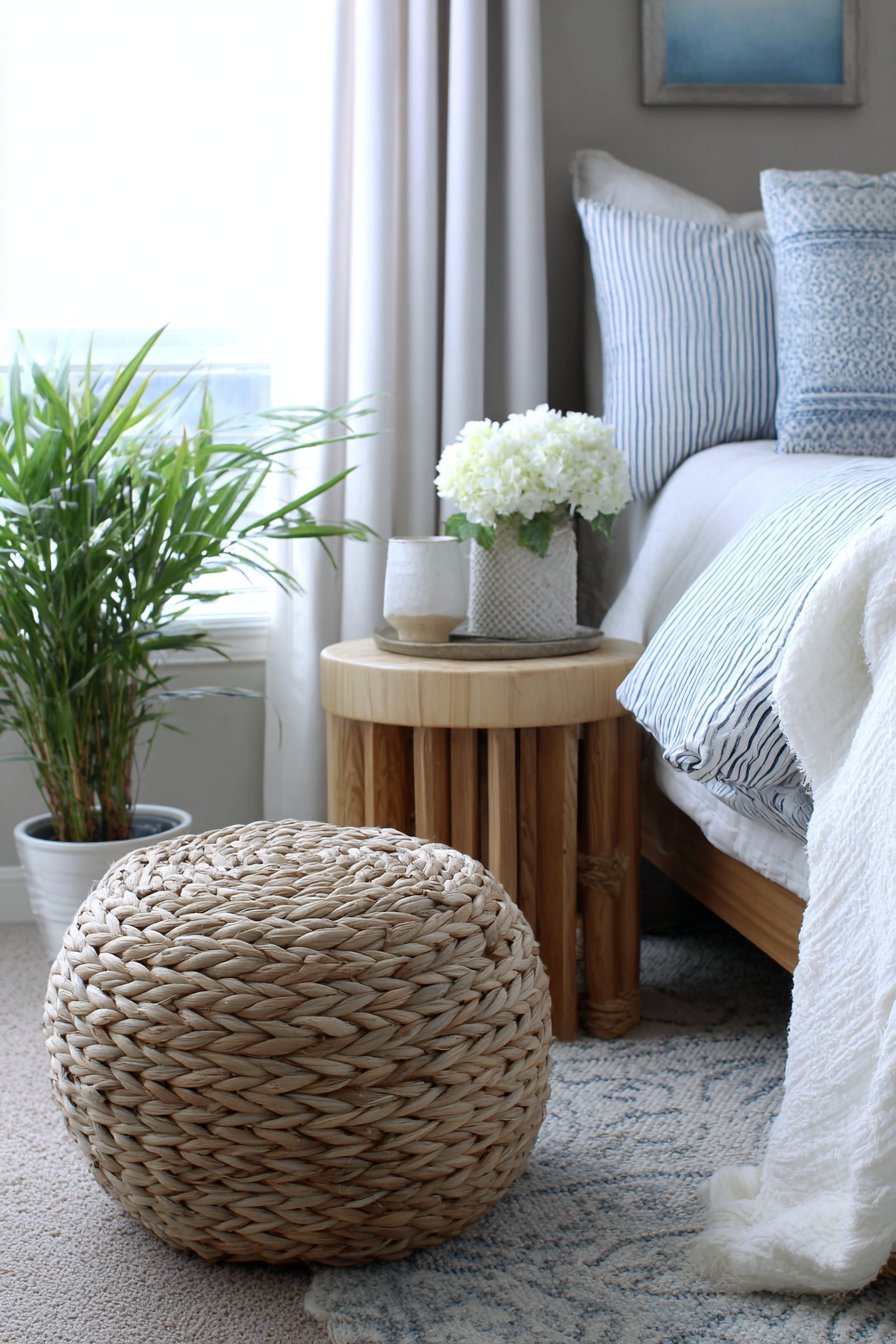
Natural fiber textures throughout the space enhance the coastal vibe while adding warmth and organic beauty. A jute area rug underfoot brings the sandy beach indoors, while linen curtains filter light like ocean breezes. Cotton bedding ensures comfort and breathability, continuing the natural materials theme. These textural elements create depth and interest while maintaining the breezy, relaxed feeling central to coastal design.
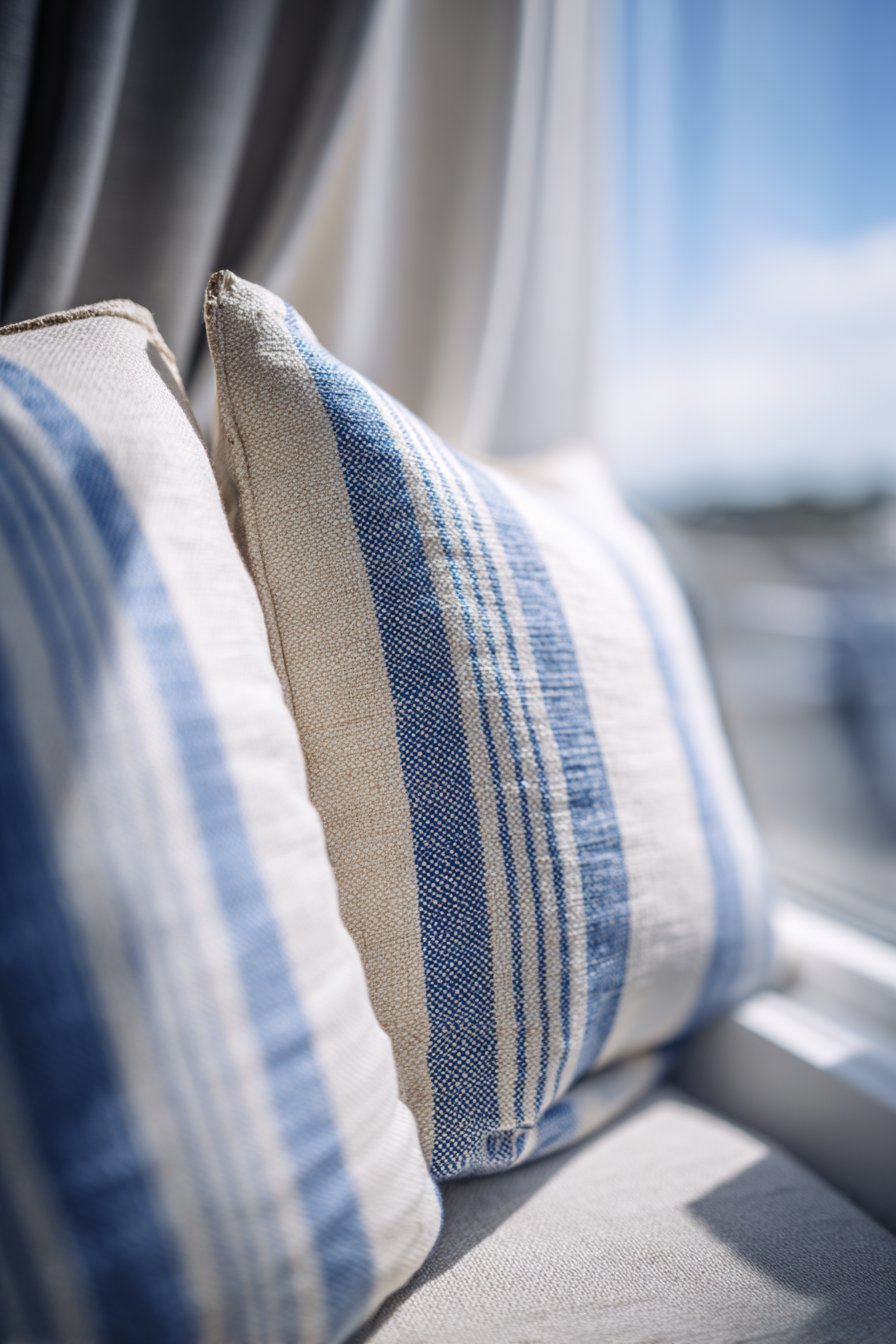
The beauty of this coastal interpretation lies in its sophistication. Rather than cartoon fish or obvious beach toys, the design captures the essence of seaside living—fresh air, natural materials, soothing colors, and relaxed elegance. It’s a room that feels like a perpetual vacation while remaining perfectly suitable for everyday life.
Key Design Tips:
- Choose soft, muted blues rather than bright primary blue for a sophisticated coastal palette
- Incorporate natural fibers like jute, linen, and cotton for an authentic coastal texture
- Use nautical elements sparingly and in refined ways rather than obvious symbols
- Add white as a primary color to keep the space feeling light and breezy
- Include organic elements like driftwood or shells displayed tastefully for subtle coastal references
20. Transitional Design for Growing Years
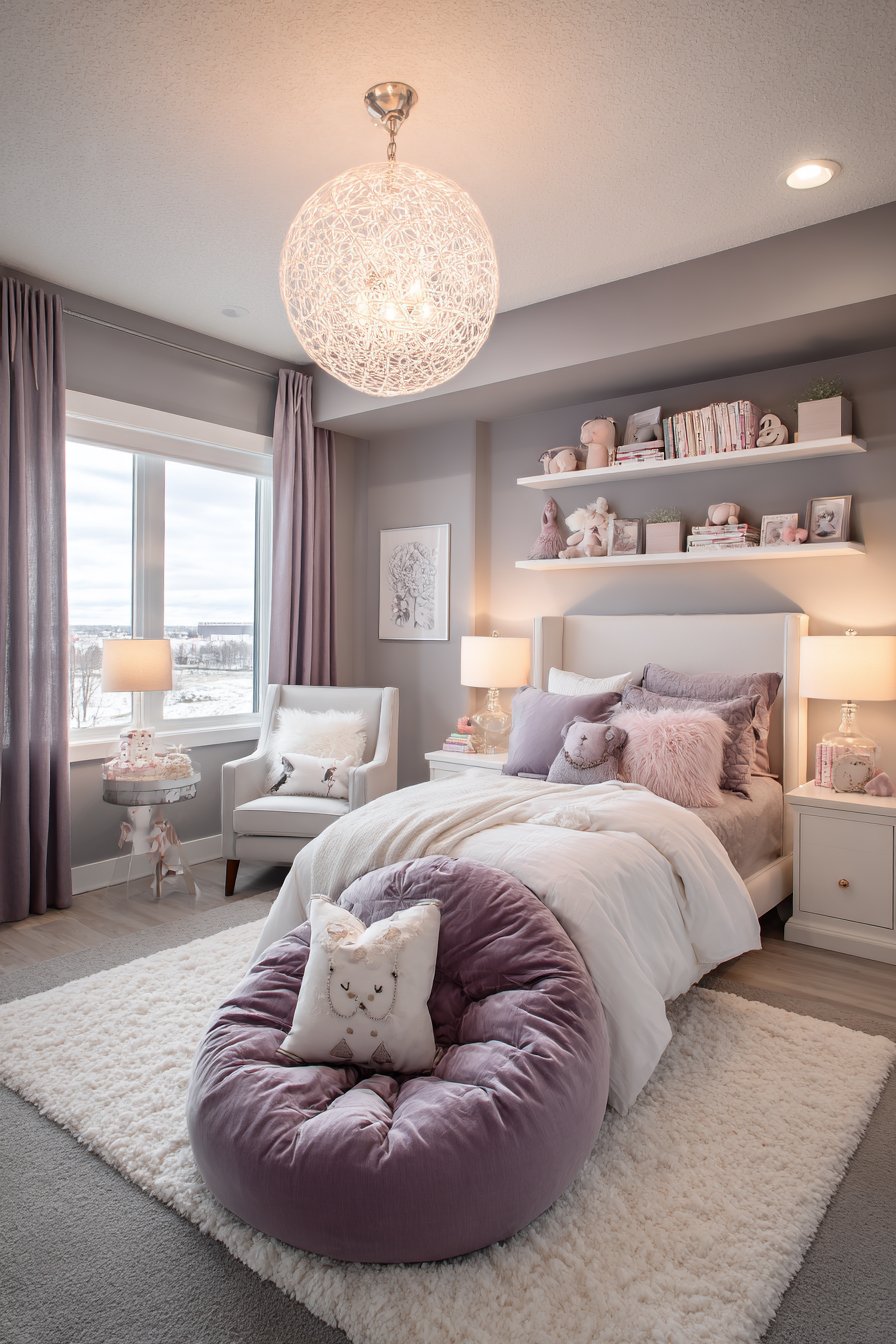
The most forward-thinking approach to an 8-year-old’s bedroom acknowledges that childhood is fleeting and tastes evolve rapidly. A transitional design using neutral grey walls creates a sophisticated foundation that won’t need repainting every few years. These versatile walls work with virtually any accent color or style, making them the perfect backdrop for a room designed to grow with its inhabitant.
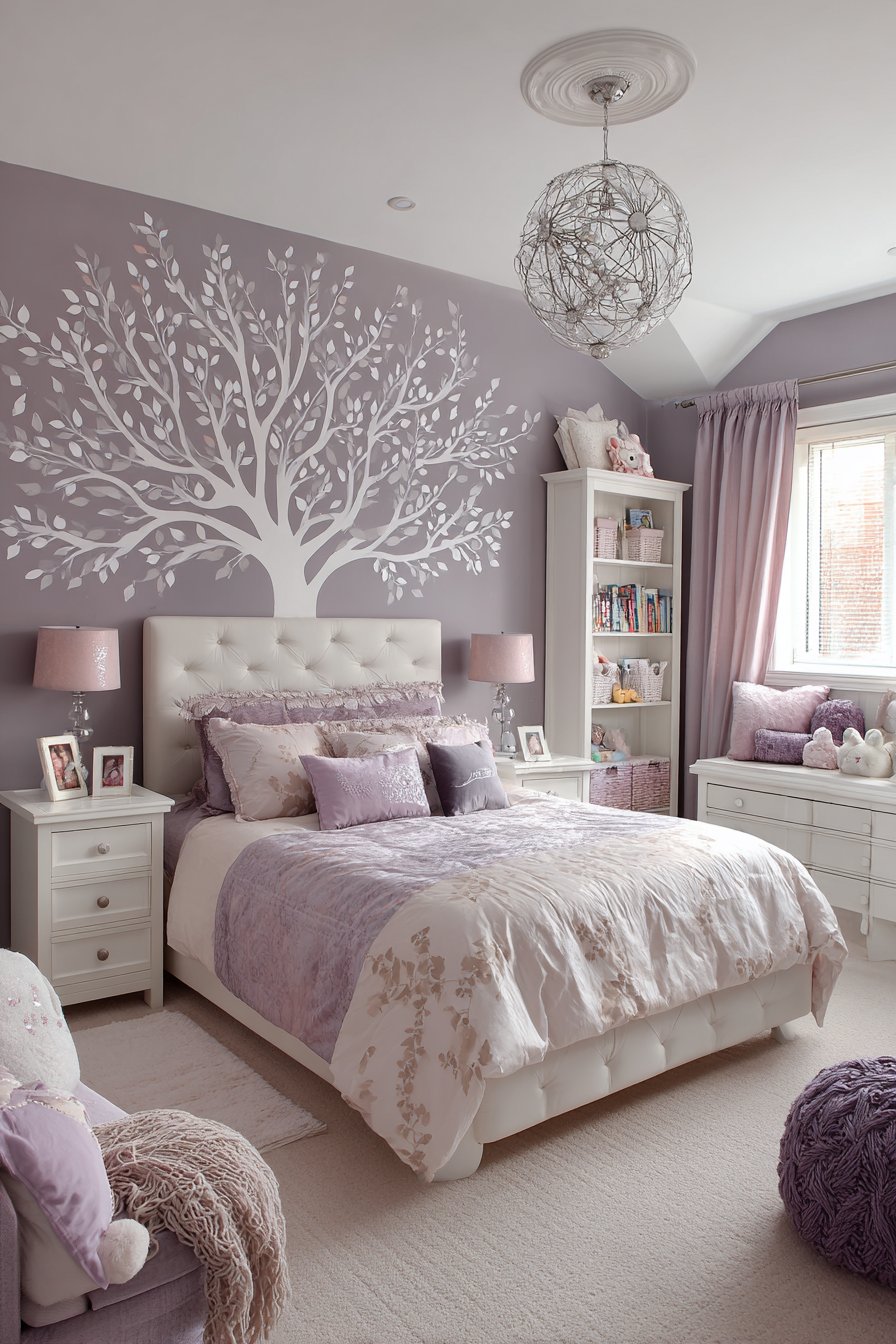
Removable wall decals add personality and age-appropriate decoration without permanent commitment. These might feature favorite motifs, inspirational words, or decorative patterns that can be changed as interests shift. The ability to easily update these elements means the room can transform from child-oriented to teen-appropriate without major renovation or expense. This flexibility proves both practical and economical.
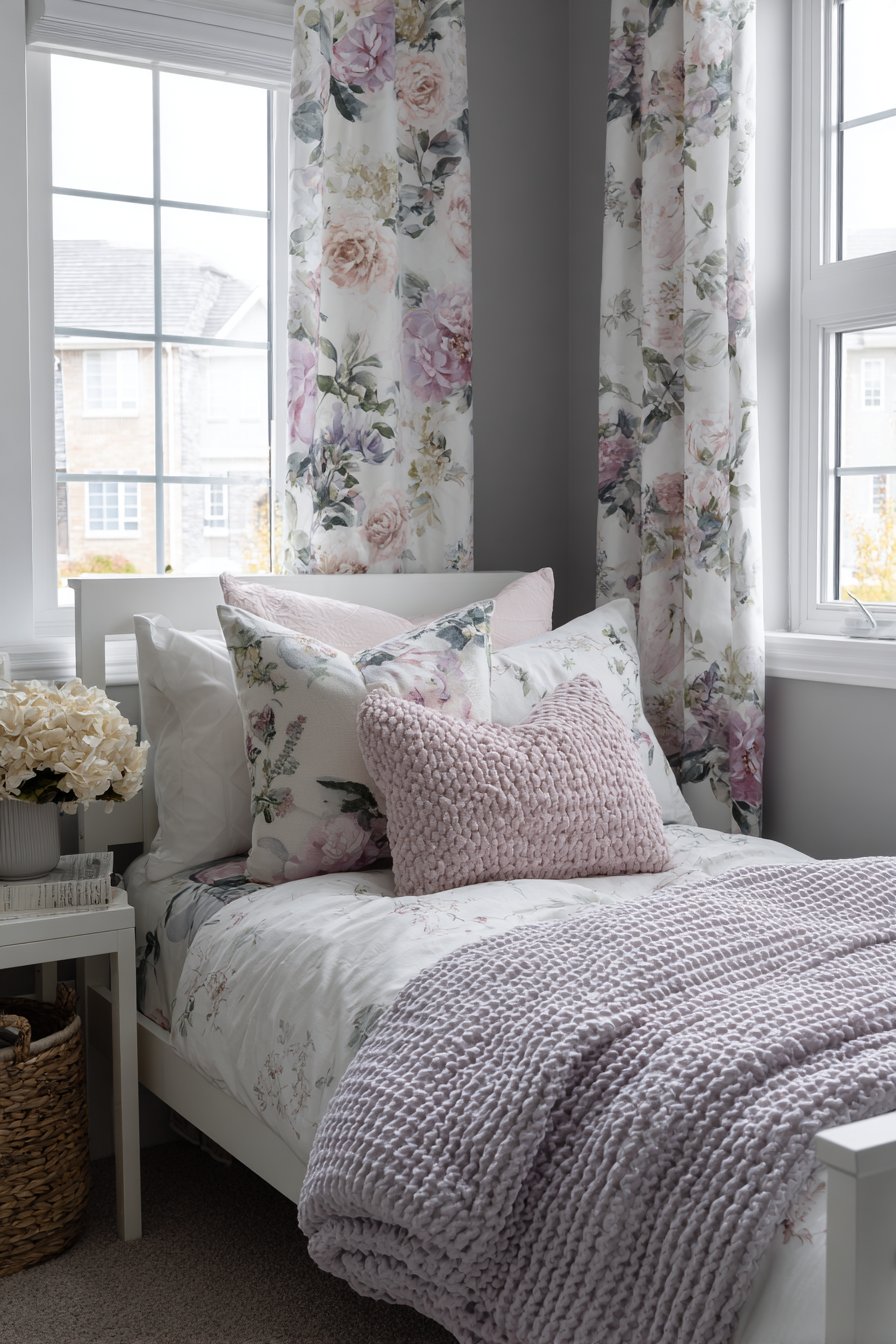
Classic white furniture forms another timeless element that transcends specific age ranges. Quality white pieces—a dresser, bed frame, desk—remain relevant from childhood through teenage years and beyond. Their neutral nature allows accent colors and decorative elements to take center stage while providing lasting functionality. The investment in good furniture pays dividends as it serves the child for many years.
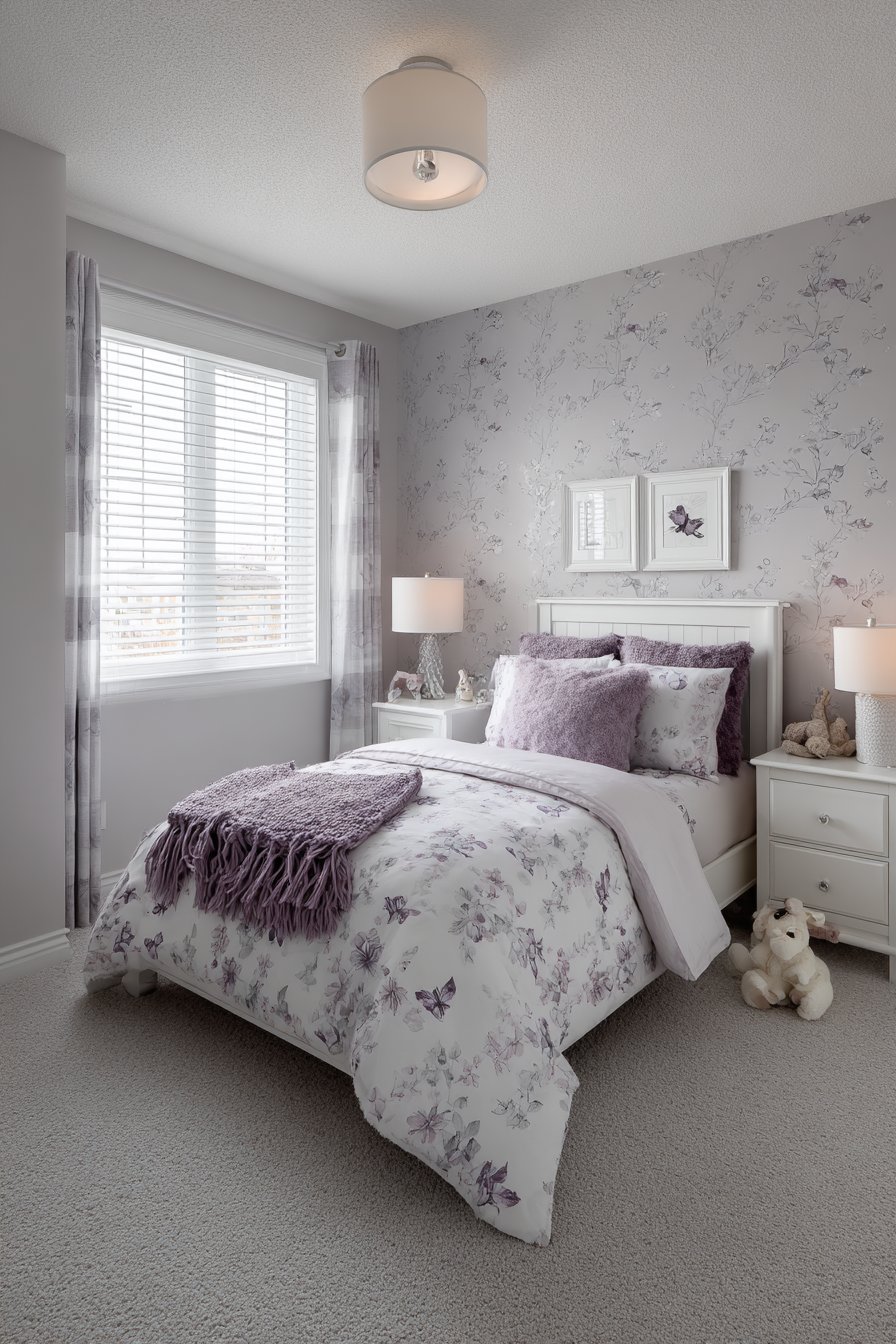
Currently dressed in soft lilac tones through bedding and accessories, the room demonstrates how easily changeable elements can personalize the neutral base. When lilac no longer appeals, swapping to teal, coral, navy, or any other preferred color requires only new bedding, pillows, curtains, and perhaps a few decorative items. The walls, furniture, and overall structure remain relevant regardless of these updates.
Key Design Tips:
- Choose neutral paint colors like grey, greige, or soft white for maximum versatility
- Invest in quality classic furniture pieces in neutral finishes
- Use removable decor elements like decals, temporary wallpaper, or easy-change artwork
- Implement accent colors through easily replaceable items like bedding and accessories
- Select window treatments in neutral colors that will work with multiple design updates
Why These Designs Represent the Best in 8-Year-Old Girl Bedroom Ideas
These twenty bedroom concepts represent the pinnacle of design thinking for 8-year-old girls because they address the unique developmental stage with sophistication and understanding. At eight, children are navigating the transition from early childhood to pre-adolescence, requiring spaces that honor their growing independence while still providing the comfort and security essential at this age. Each design carefully balances playfulness with maturity, ensuring the room feels special and fun without appearing babyish or quickly outgrown.
The emphasis on functionality throughout these designs reflects real understanding of how 8-year-olds use their bedrooms. These aren’t just sleeping spaces—they’re homework centers, creative studios, reading retreats, and social hubs. The best bedroom designs for this age incorporate dedicated zones for different activities: study areas with proper lighting and ergonomic seating, creative corners equipped for artistic or musical pursuits, organized storage systems that promote independence, and comfortable spaces for both solitary activities and entertaining friends. This multi-functional approach ensures the bedroom truly serves the child’s diverse needs.
Color psychology plays a crucial role in why these designs excel. The palettes featured—from calming lavenders and soft pinks to energizing corals and teals—were chosen not just for aesthetic appeal but for their psychological impact. Softer, more sophisticated color choices promote the calm focus needed for homework and restful sleep while still incorporating the energy and joy appropriate for childhood. The movement away from primary colors toward more nuanced palettes reflects the child’s developing aesthetic sensibilities and creates rooms that photograph beautifully while feeling comfortable to inhabit.
Storage and organization emerge as critical themes across all twenty designs, and for good reason. Eight-year-olds accumulate belongings—school papers, art projects, books, toys, clothes, sports equipment, collections—and effective storage solutions make the difference between chaos and calm. The best designs incorporate multiple storage types: open shelving for display and easy access, closed storage for concealing clutter, specialized organization for specific items, and systems designed at appropriate heights for independent use. This comprehensive approach to storage teaches organizational skills while maintaining the room’s visual appeal.
The incorporation of personal interests—whether sports, music, art, reading, or nature—demonstrates why these designs truly excel. Rather than generic, one-size-fits-all approaches, these rooms acknowledge that 8-year-old girls are individuals with unique passions and personalities. Celebrating these interests through thoughtful design elements creates spaces where children feel seen, understood, and supported in their pursuits. This personalization transforms a bedroom from simply a place to sleep into a true sanctuary that reflects and nurtures the child’s identity.
Flexibility and adaptability distinguish superior bedroom design, and these concepts excel in this regard. Whether through neutral bases with changeable accents, removable decorative elements, or classic furniture that transcends specific age ranges, these designs acknowledge that childhood is dynamic. The best rooms can evolve alongside the child, requiring only minor updates rather than complete overhauls every few years. This approach proves economical for families while ensuring the space remains relevant and appealing as the child grows.
The quality of materials and construction represented in these designs reflects an understanding that children’s furniture must withstand significant use. Washable fabrics, durable finishes, sturdy construction, and practical surfaces ensure the room remains beautiful despite daily wear. This focus on quality over mere appearance demonstrates sophisticated design thinking that considers real-world use rather than just photogenic moments.
Lighting receives appropriate attention throughout these designs, recognizing its crucial role in both functionality and ambiance. Natural light is maximized for its health benefits and pleasant quality, while task lighting supports homework and reading, and atmospheric lighting creates cozy environments for relaxation. This layered approach to illumination ensures the room works well for all activities throughout the day.
The scale and proportion evident in these designs prove essential for their success. Furniture sized appropriately for 8-year-olds ensures comfort and accessibility—not adult pieces that overwhelm the space or the child. Artwork hung at child-appropriate heights, storage systems within reach, and spaces designed for young bodies create rooms that feel made specifically for their inhabitants rather than miniature adult spaces.
Finally, these designs excel because they respect both childhood and growth. They celebrate the magic and wonder appropriate for 8-year-olds while laying foundations that will serve through the teenage years. This balance—honoring where the child is now while planning for where she’s heading—represents the highest achievement in children’s bedroom design. The rooms are neither too juvenile nor prematurely sophisticated, instead finding that perfect sweet spot that makes them ideal for this transitional age.
Conclusion
Creating the perfect bedroom for an 8-year-old girl requires thoughtful consideration of her current needs, emerging interests, and future growth. The twenty design concepts explored in this guide demonstrate that successful children’s bedroom design goes far beyond simply choosing a color scheme or theme. Instead, it encompasses functional planning for multiple activities, organizational systems that promote independence, personal touches that celebrate individuality, and adaptable elements that allow the space to evolve alongside its young inhabitants.
From whimsical canopy beds that spark bedtime imagination to practical homework stations that support academic success, from creative art corners that nurture artistic expression to organized storage systems that teach life skills, these designs provide comprehensive solutions for the diverse needs of 8-year-old girls. The emphasis on quality materials, appropriate scale, thoughtful color palettes, and personal expression creates spaces that children genuinely love spending time in—rooms that function as true sanctuaries tailored to their specific personalities and requirements.
The most successful approach to designing an 8-year-old’s bedroom involves collaboration with the child herself. While adults bring practical knowledge about functionality, safety, and longevity, children offer invaluable insight into their preferences, interests, and how they actually use their space. This partnership creates rooms that work on every level—meeting parental standards for practicality and longevity while delighting young occupants with spaces that feel uniquely their own.
As you embark on creating or refreshing a bedroom for the 8-year-old girl in your life, remember that the goal isn’t perfection or magazine-worthy staging. Instead, aim for a space that supports her growth, celebrates her individuality, accommodates her activities, and evolves with her changing needs. Whether you implement a complete design concept or cherry-pick elements that resonate, the thoughtful attention to her specific requirements will create a room she treasures—a personal haven where she can learn, play, create, dream, and grow into the remarkable person she’s becoming.
