


The bedroom serves as our personal sanctuary, a retreat from the world where we recharge and find peace. When summer arrives, our bedrooms should evolve to reflect the season’s vibrant energy and warmth. A well-designed summer bedroom embraces natural light, breathable materials, and airy aesthetics that create comfort during warmer months. The right design choices can transform an ordinary sleeping space into a refreshing oasis that promotes restful sleep and rejuvenation.
Summer bedroom design goes beyond simple decoration—it’s about creating an environment that responds to seasonal needs. Light fabrics replace heavy textiles, bright spaces replace dark corners, and natural materials bring the outdoors inside. Each design approach offers unique benefits, from coastal-inspired retreats to minimalist havens. The variety of summer bedroom styles ensures that every personality and lifestyle can find inspiration. Whether you prefer crisp whites and cool blues or warm yellows and natural woods, summer design celebrates versatility. Our this warm bedroom ideas has more inspiration along these same lines.
This comprehensive guide explores ten distinctive summer bedroom concepts that showcase the best of seasonal interior design. From practical storage solutions to dreamy canopy beds, each idea demonstrates how thoughtful design creates spaces that feel both beautiful and functional. These designs incorporate professional insights on materials, lighting, color theory, and spatial composition. Let these inspiring concepts guide you toward creating your perfect summer bedroom sanctuary.
1. Bright and Airy Natural Oak Retreat
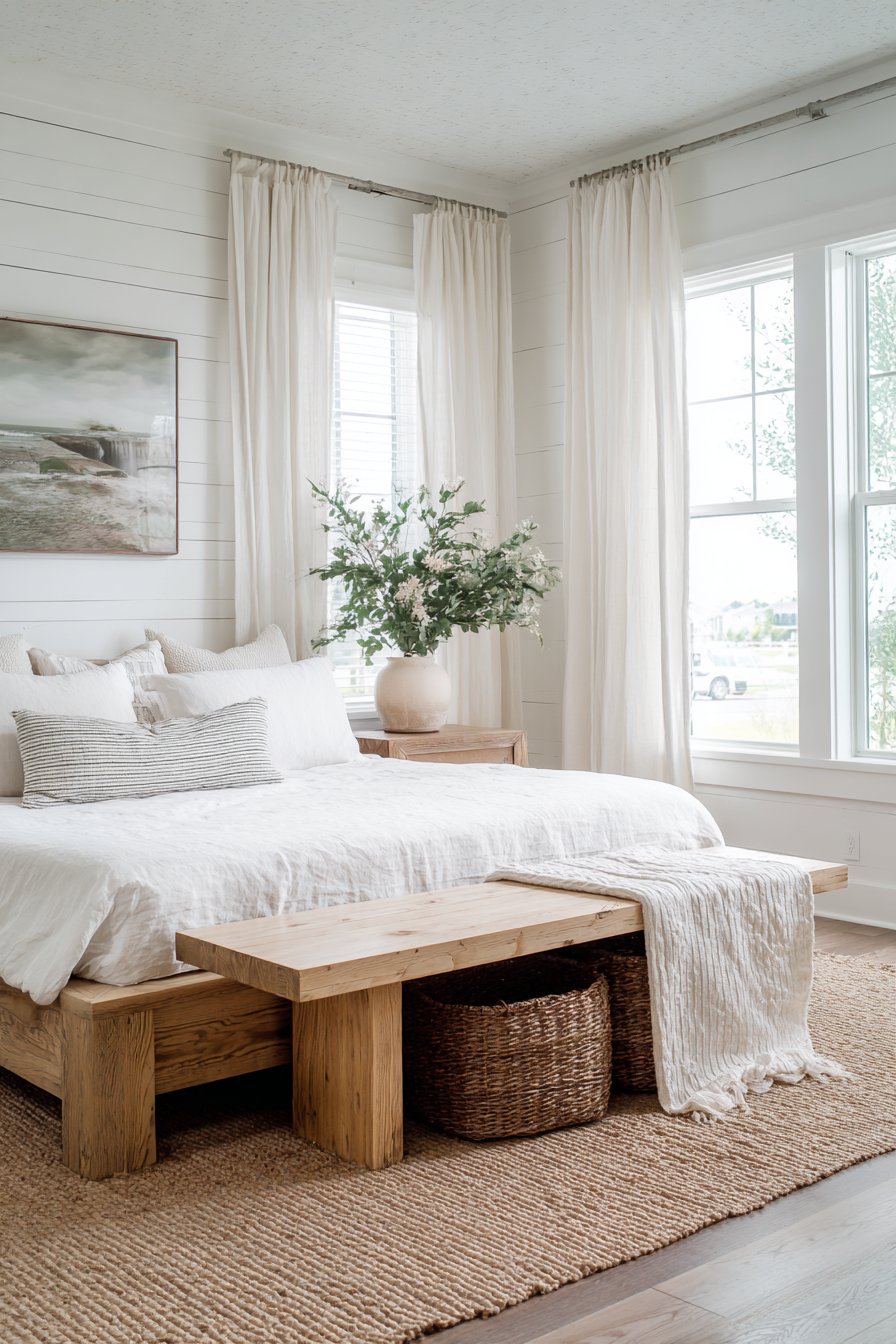
Picture a bedroom bathed in abundant natural light streaming through large windows dressed with sheer flowing curtains. The centerpiece is a natural oak platform bed adorned with crisp white linen bedding.
Soft blue striped accents add subtle color without overwhelming the serene palette. The natural oak’s warm honey tones create perfect contrast against the cool whites and blues. This combination evokes coastal mornings and fresh sea breezes even in landlocked locations.
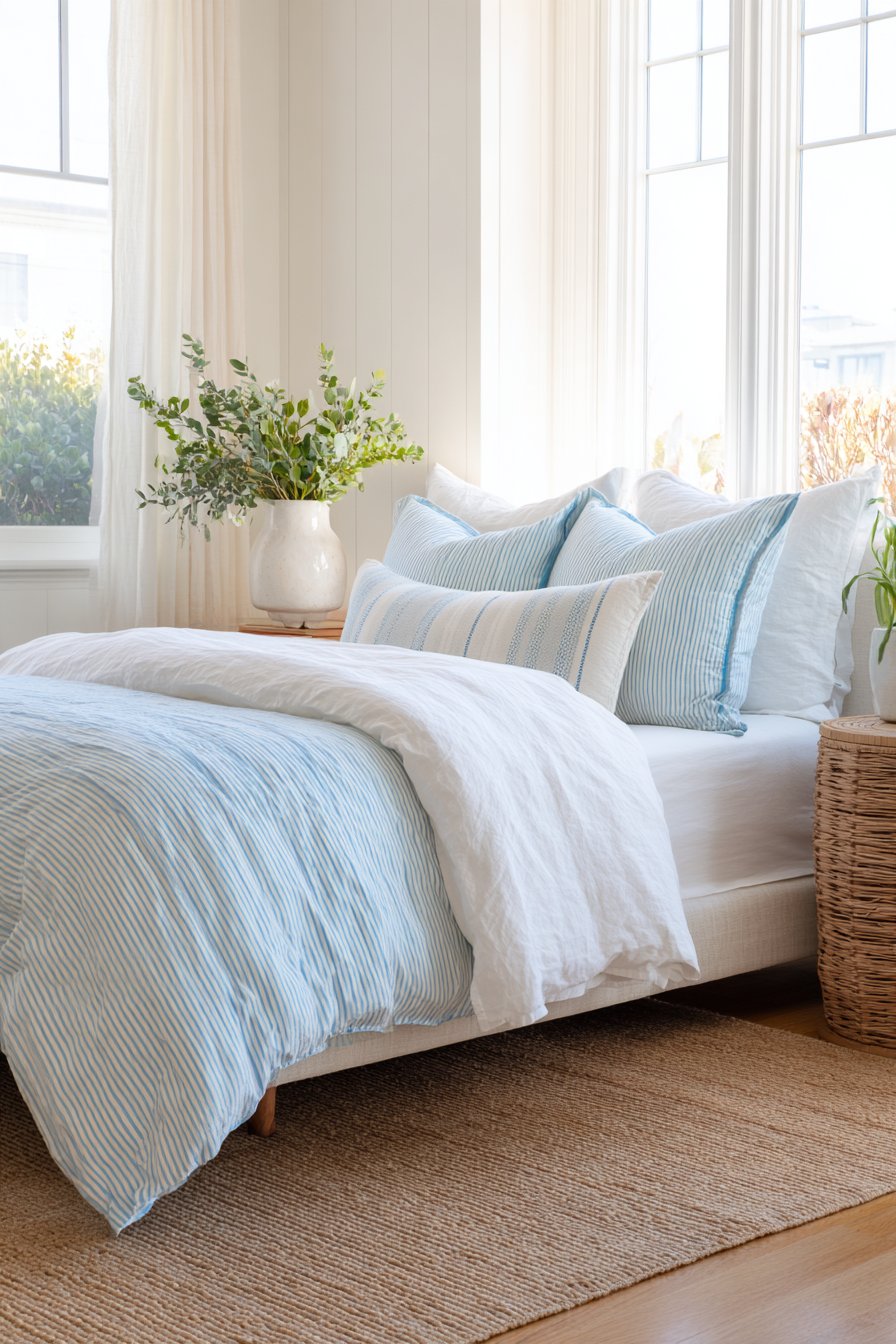
The foundation of this design lies in its textural elements. A jute area rug anchors the bed, providing natural fiber warmth underfoot. The rug’s woven texture adds depth while maintaining the light, breathable aesthetic.
White painted shiplap walls introduce architectural interest without darkening the space. The horizontal lines create visual width, making the room feel more expansive. Natural materials dominate every surface, from the oak bed frame to the rattan bedside table.
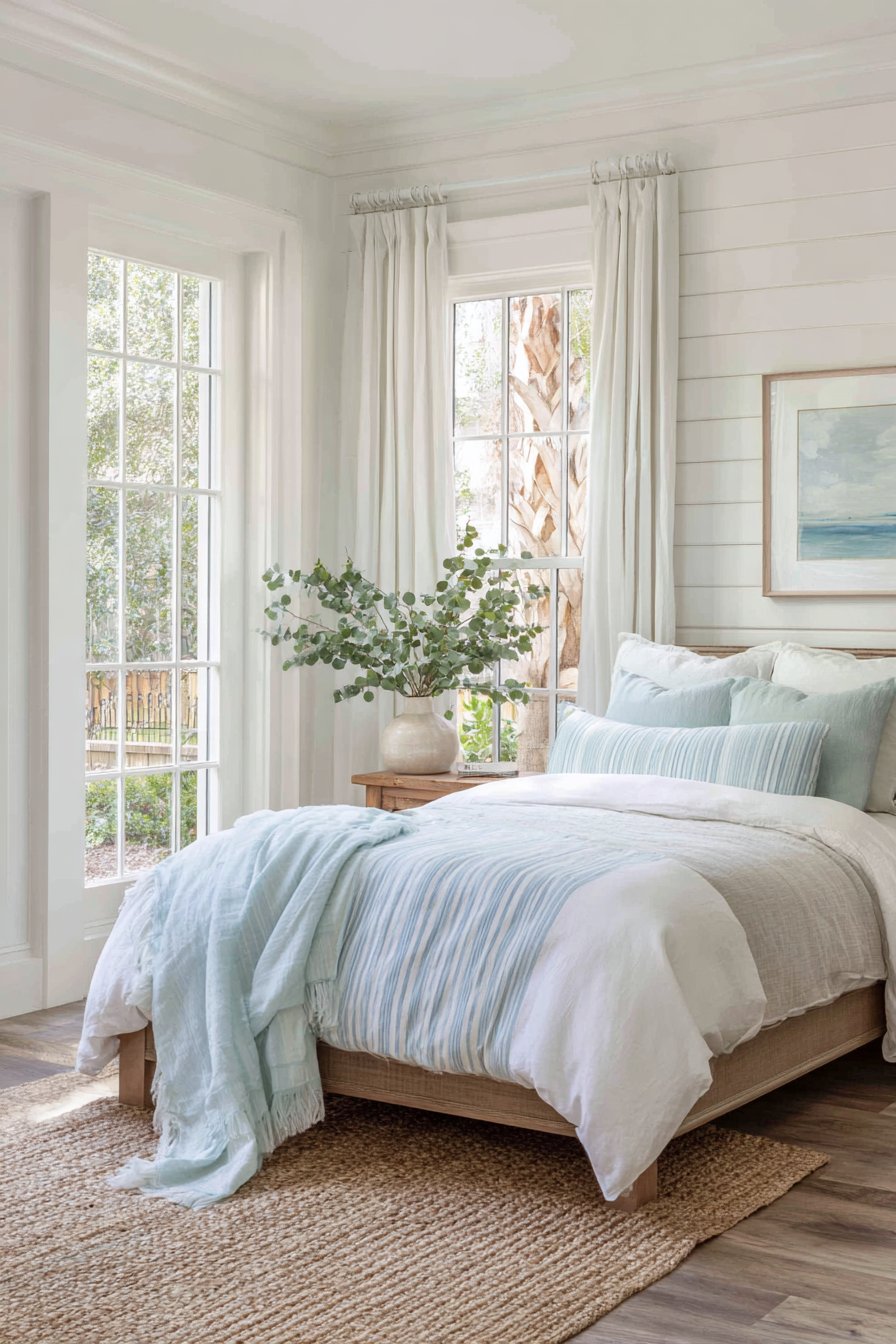
Styling details complete this summer sanctuary. A rattan bedside table holds a simple ceramic vase with fresh eucalyptus stems. The eucalyptus brings organic fragrance and silvery-green color into the space.
The ceramic’s smooth surface contrasts beautifully with the rattan’s woven texture. Wide-angle perspectives reveal how diffused daylight highlights breathable fabrics and natural materials. The entire composition celebrates summer’s essence through careful material selection.
Key Design Tips:
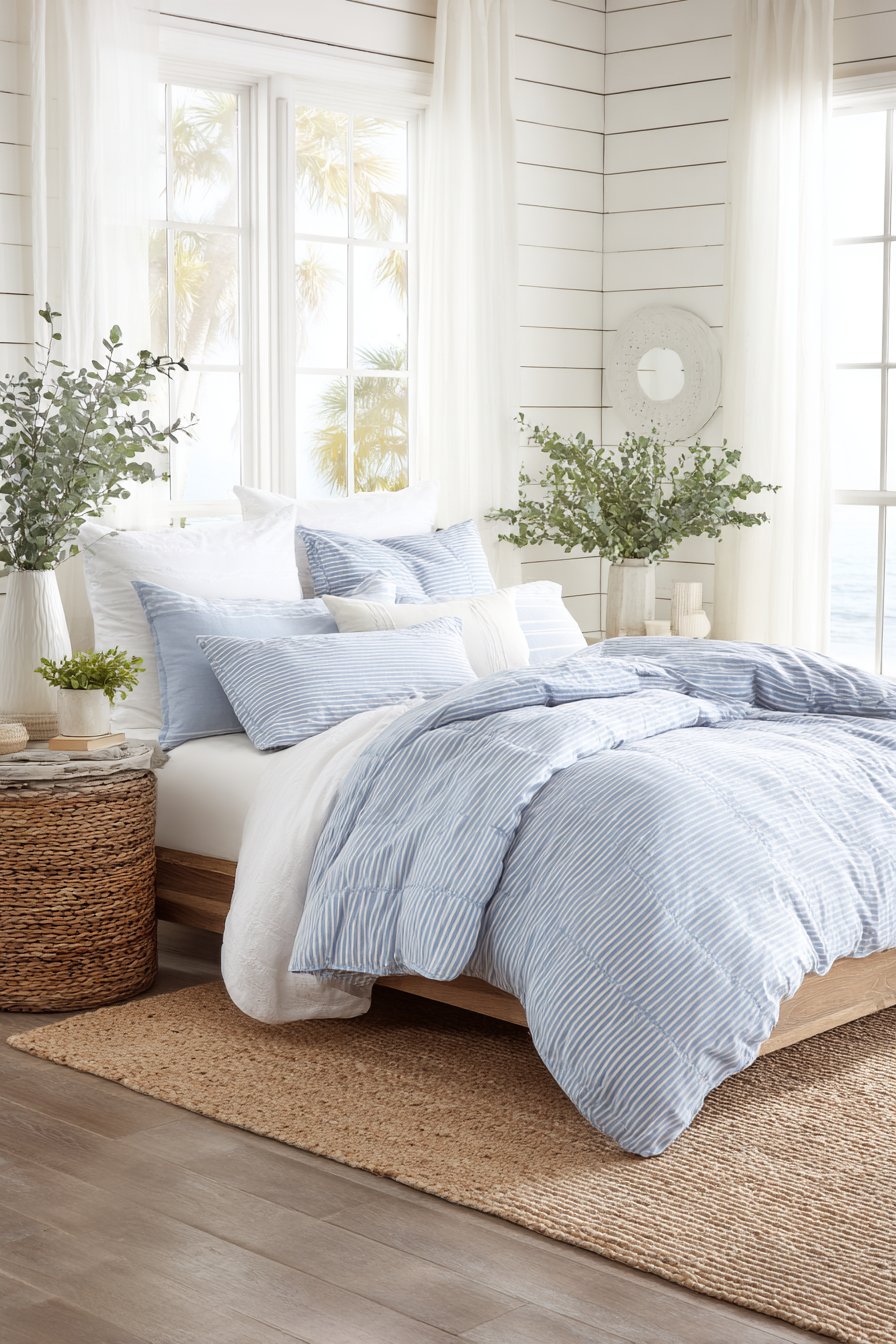
- Choose platform beds in natural oak for clean lines and organic warmth
- Layer white linens with blue accents to evoke coastal freshness
- Install sheer curtains to maximize natural light while maintaining privacy
- Incorporate jute or sisal rugs for texture without visual weight
- Select rattan furniture pieces for an authentic summer character
- Use eucalyptus or other aromatic greenery for natural fragrance
2. Coastal-Inspired Layered Bedding Paradise
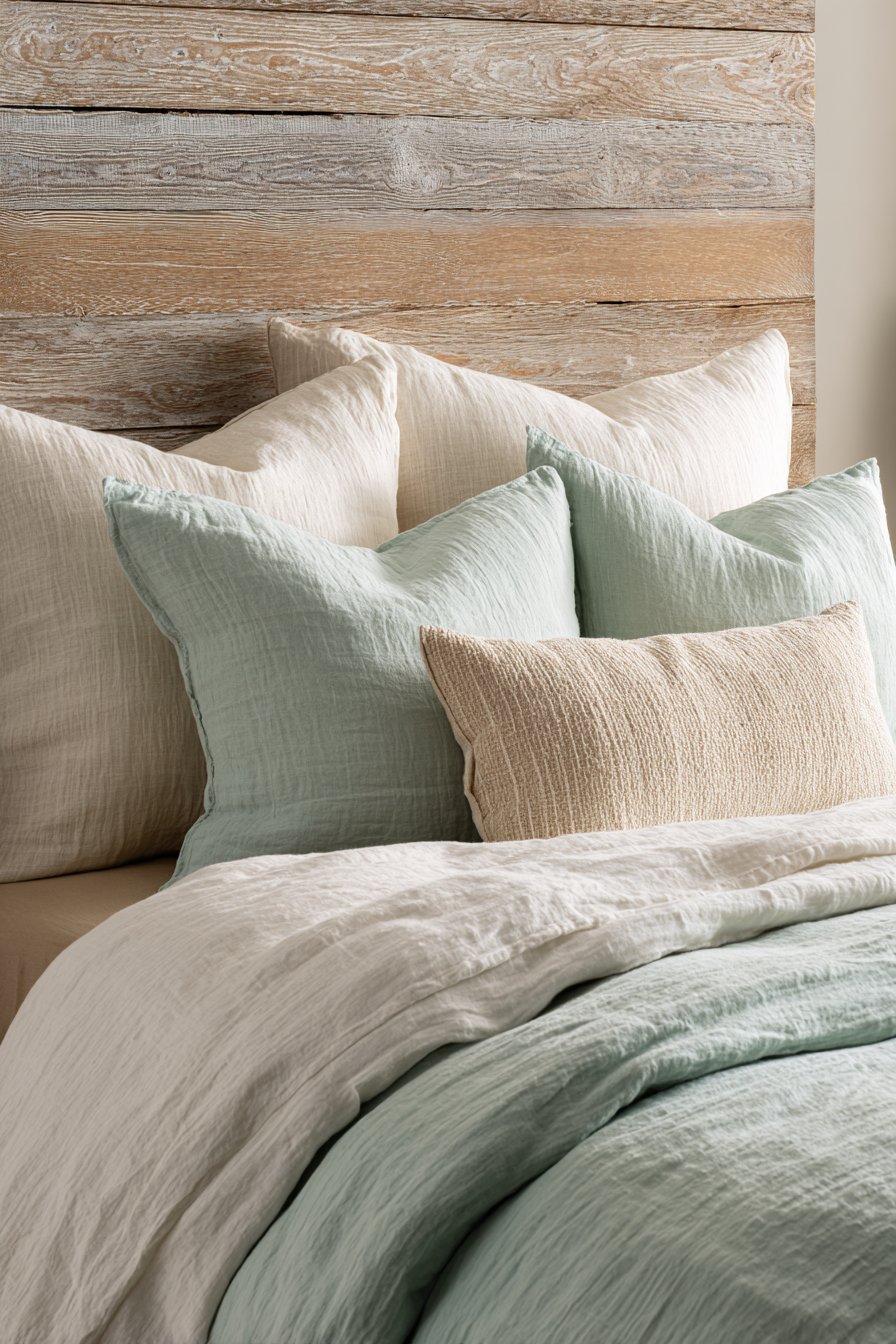
The magic of summer bedroom design often reveals itself in the details. Focus on the bed itself, where layered textiles create a tactile experience. Belgian linen duvets with visible weave texture pair perfectly with lightweight cotton percale sheets.
The combination offers breathability essential for warm summer nights. Soft aqua, white, and sand tones evoke beachside serenity. These coastal-inspired colors promote relaxation and peaceful sleep.
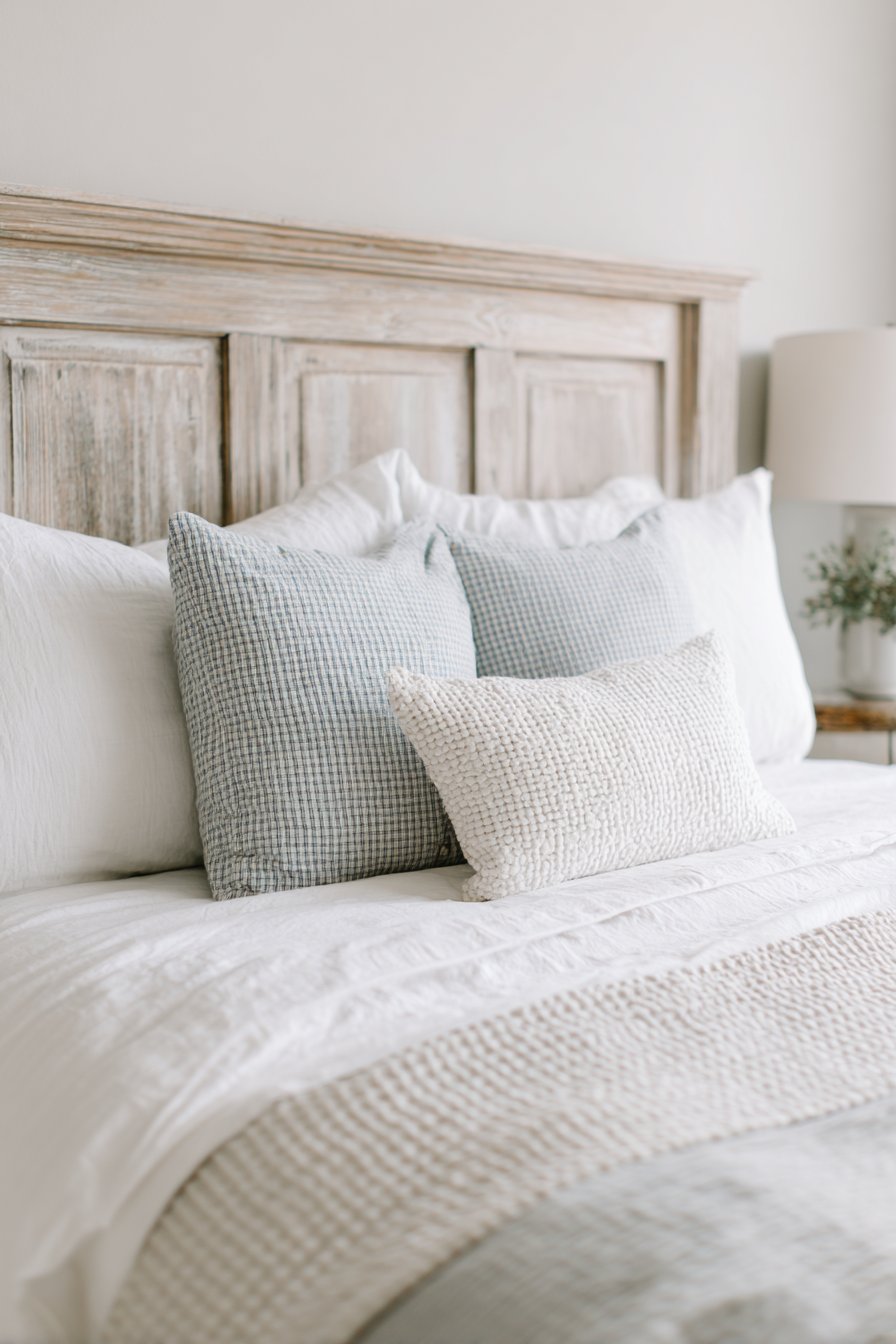
Textured throw pillows in natural fabrics add dimensional interest. Each pillow contributes unique tactile quality through different weaves and materials. The headboard features whitewashed reclaimed wood with subtle grain variations visible through the finish.
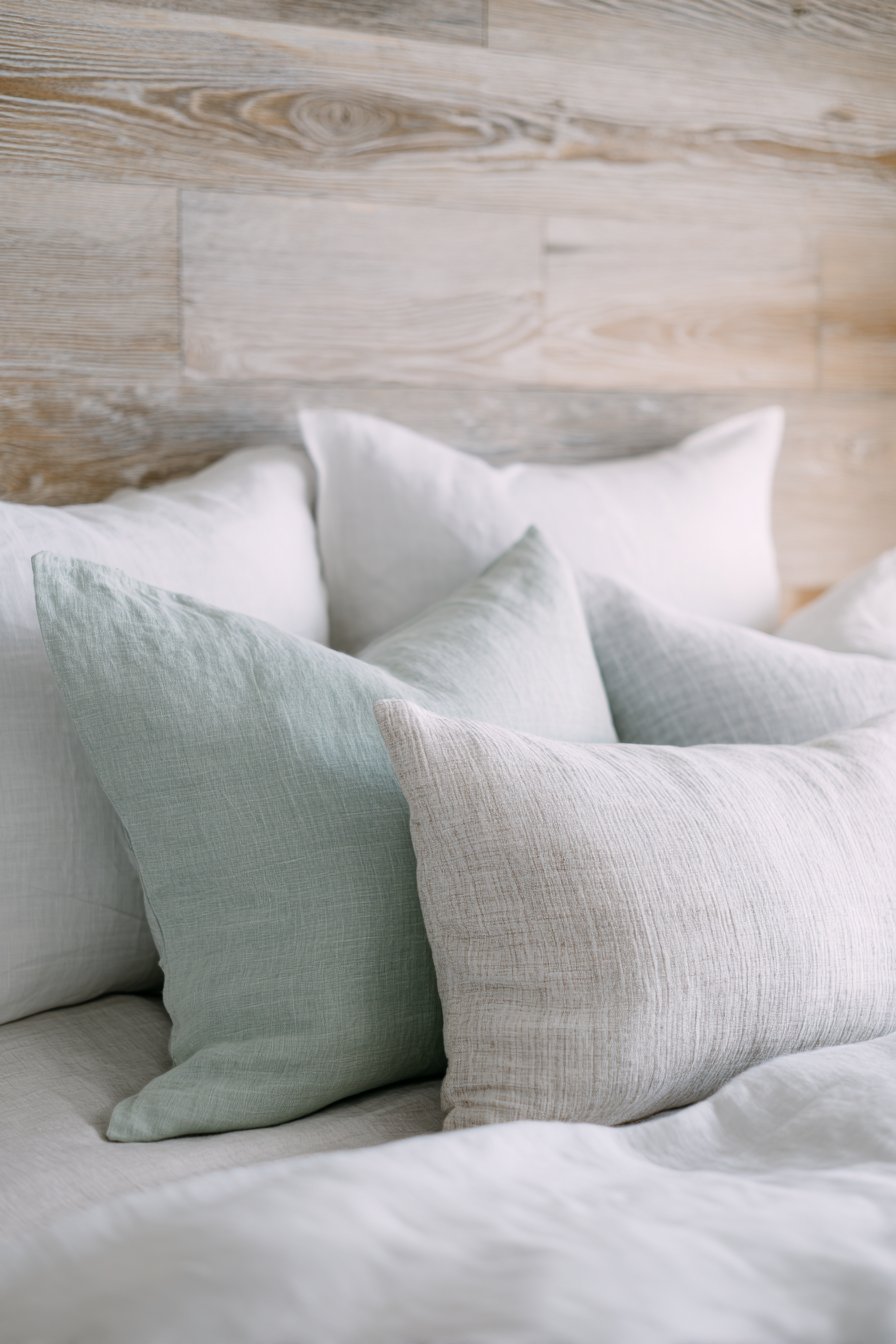
This weathered appearance suggests driftwood collected from beaches. The wood’s history and character become conversation pieces. Balanced natural lighting emphasizes every textile’s unique properties.
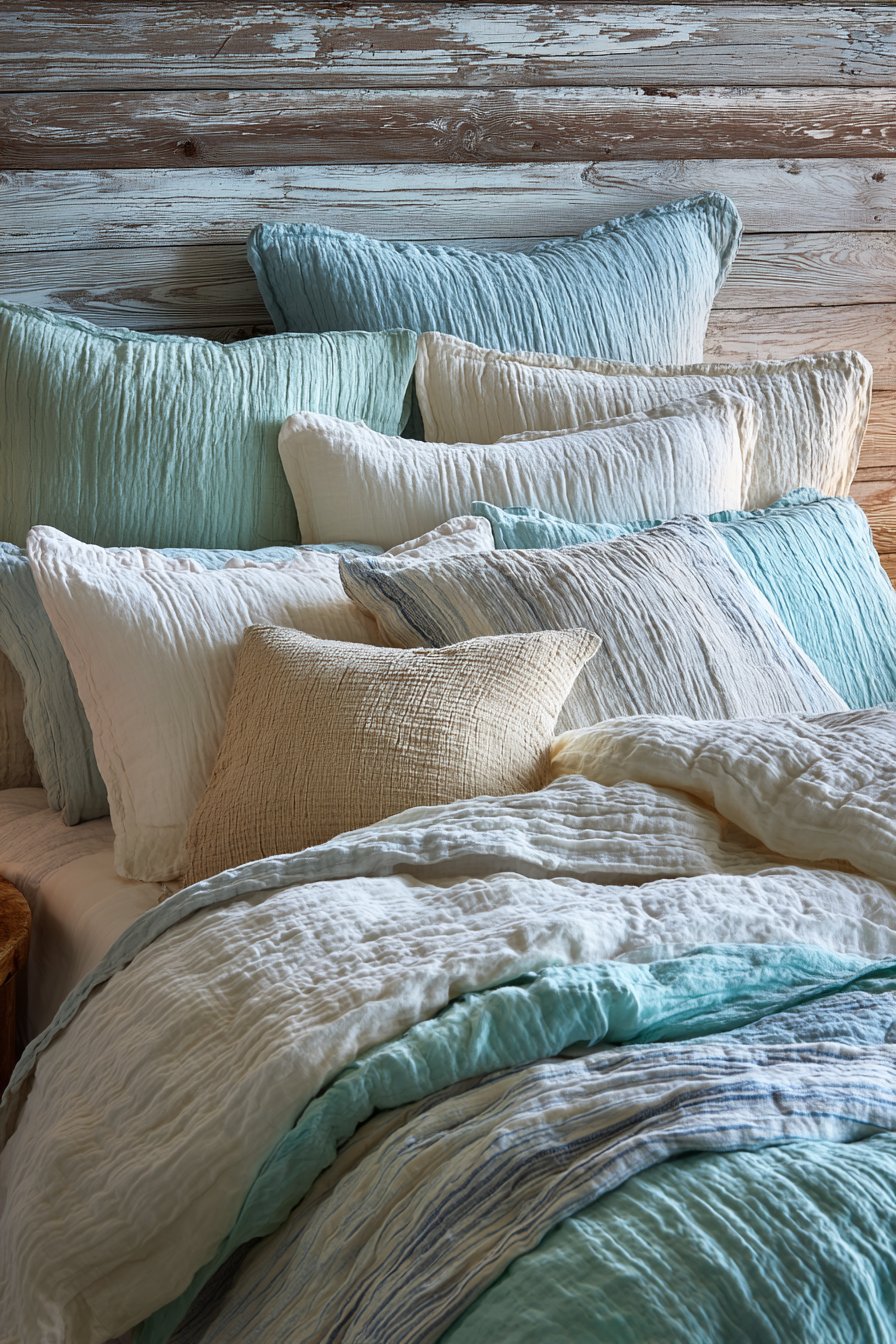
The interplay of complementary neutral tones creates sophisticated serenity. White anchors the palette while sand and aqua add warmth and coolness respectively. Gentle fabric wrinkles showcase the relaxed, lived-in quality appropriate for summer spaces.
Professional styling celebrates imperfection rather than hiding it. The visible weave texture in Belgian linen demonstrates material authenticity. This attention to textile quality elevates the entire bedroom experience.
Key Design Tips:
- Invest in Belgian linen for superior breathability and texture
- Layer different fabric weights for visual and tactile interest
- Choose cotton percale sheets for crisp, cool comfort
- Select whitewashed or driftwood-finish headboards for coastal character
- Embrace natural wrinkles in linen as part of the aesthetic
- Stick to three complementary neutral tones for cohesion
3. Window-Side Reading and Relaxation Nook
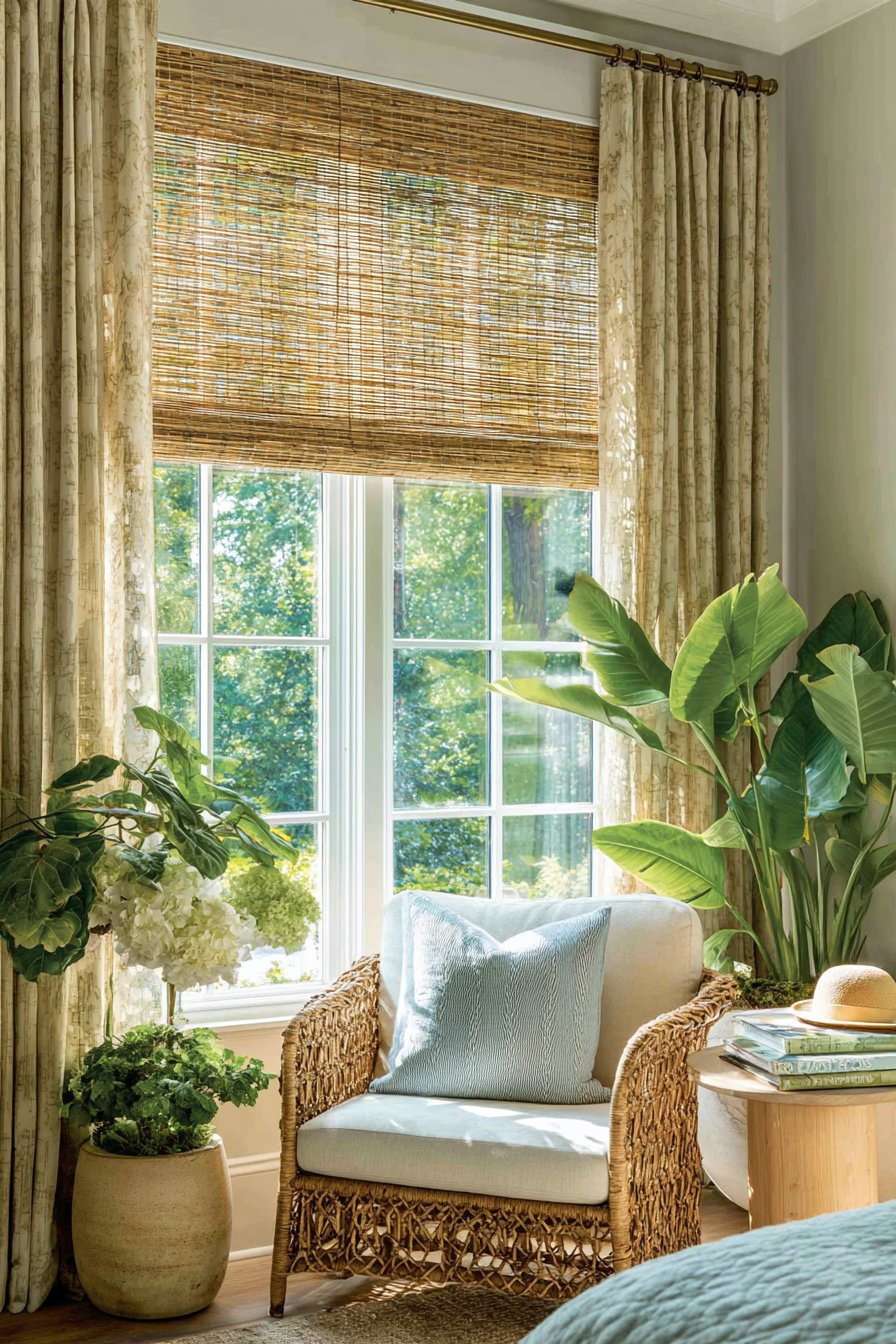
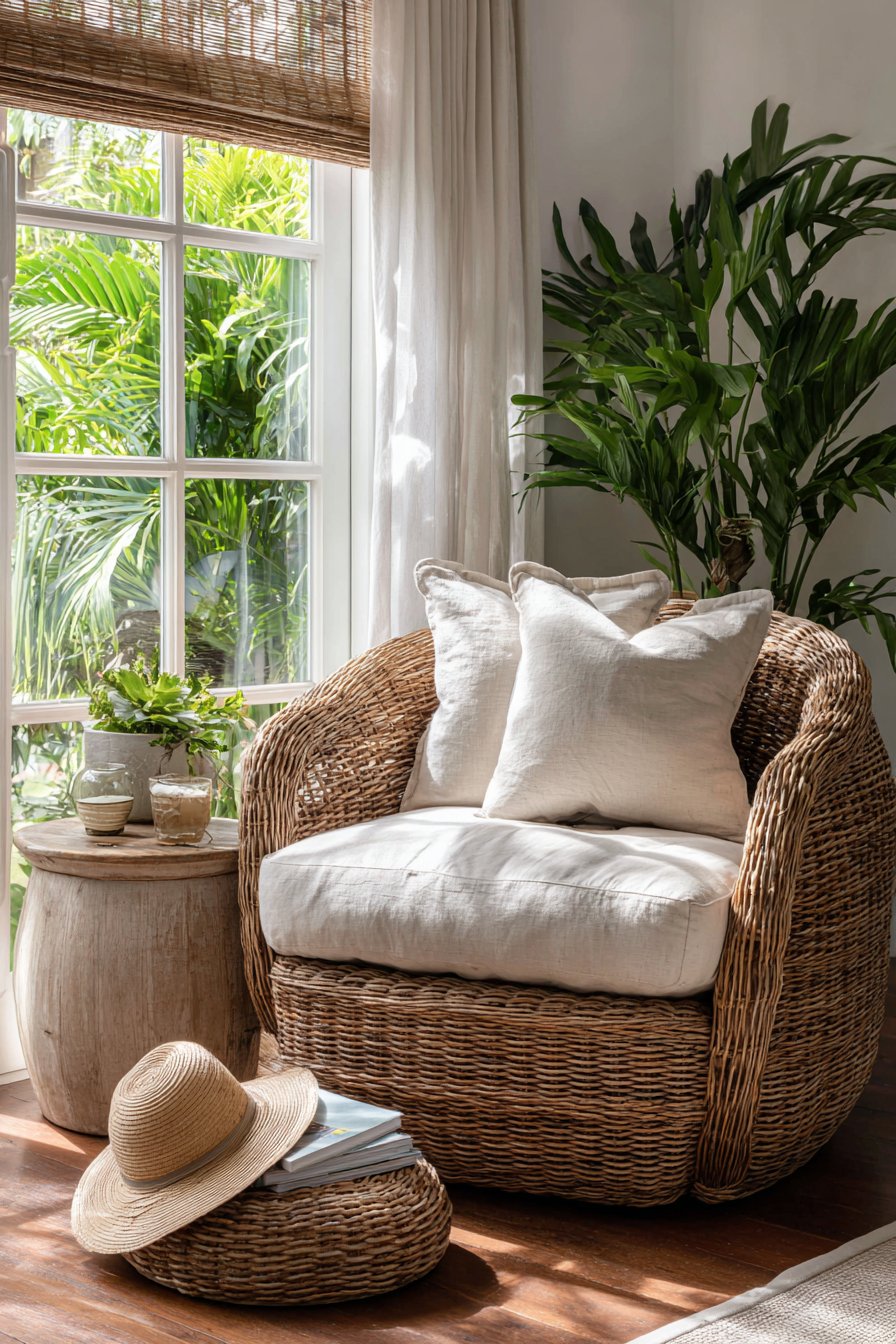
Every summer bedroom benefits from a dedicated relaxation space. Position a cozy sitting area near windows to maximize natural light and cross-ventilation. A cushioned wicker chair with cream linen upholstery creates the perfect reading spot.
The wicker’s woven texture adds visual interest while remaining lightweight. Cream linen upholstery ensures comfort without sacrificing the airy aesthetic. The chair becomes an invitation to slow down and savor quiet moments.
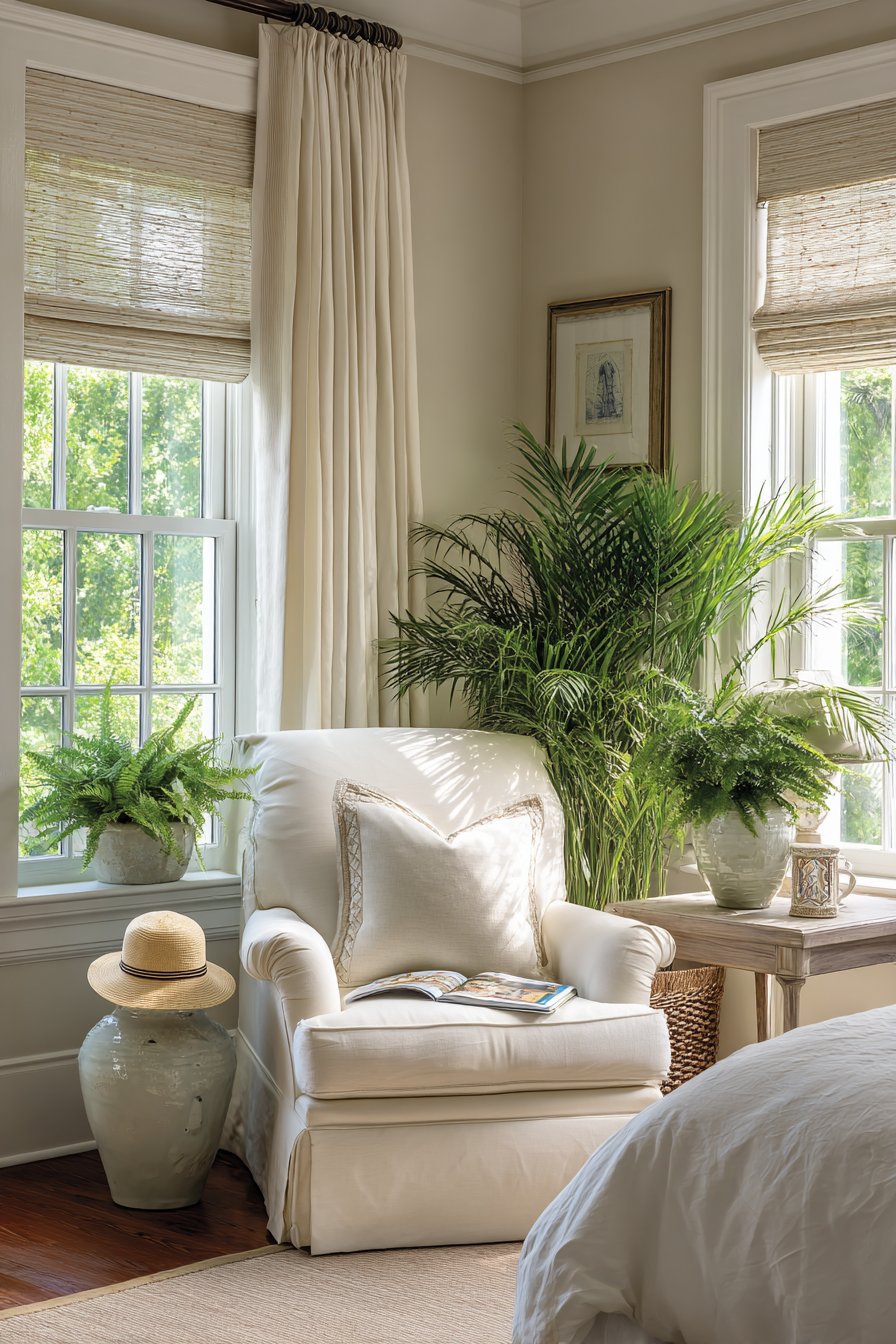
A light wood side table provides functional surface area without visual bulk. The table holds practical summer essentials: a straw sun hat and summer reading materials. These items become decorative elements that reinforce the season’s casual elegance.
Potted tropical plants in ceramic planters introduce organic elements and improve air quality. The plants’ lush green foliage creates a refreshing contrast against neutral backgrounds.
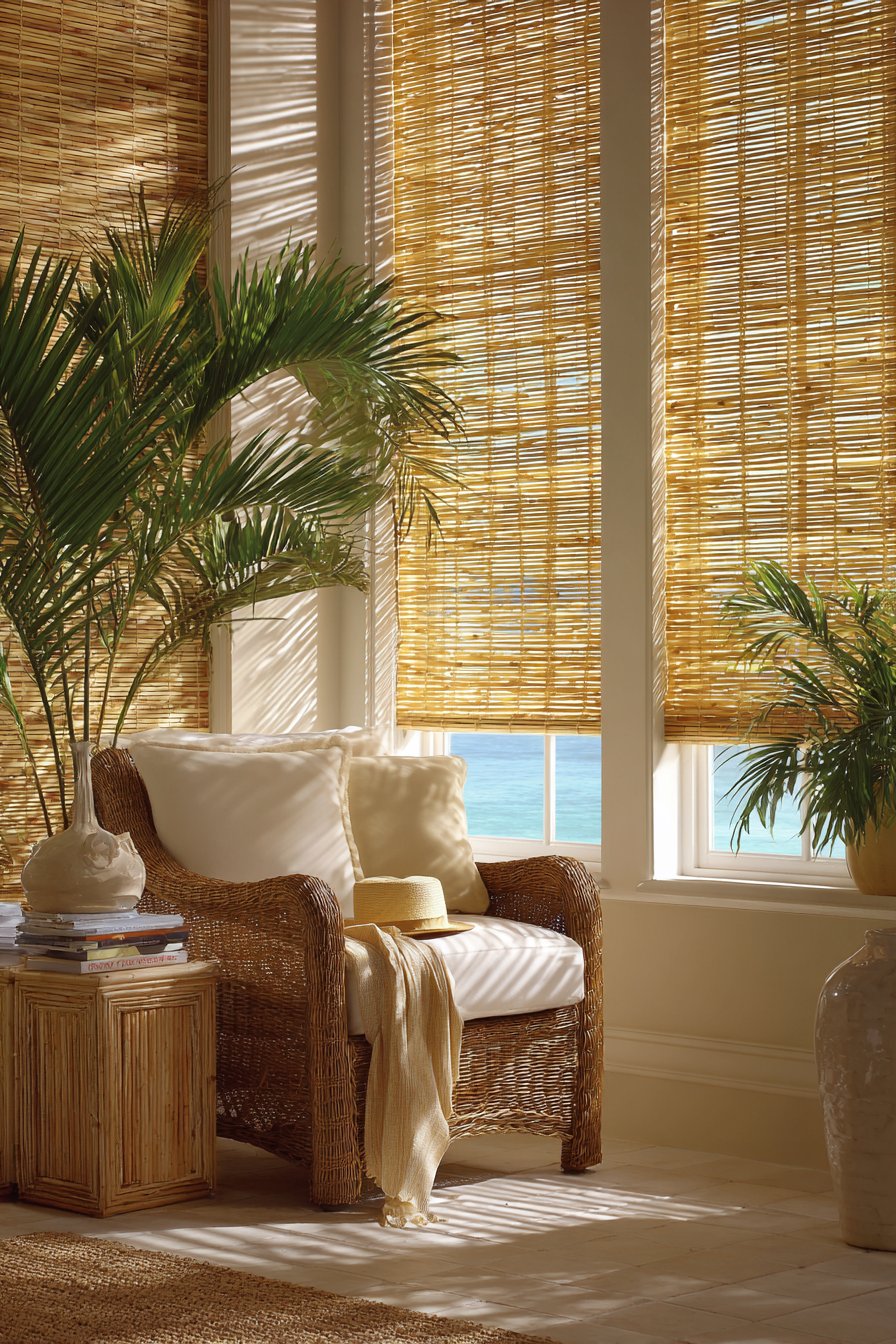
Soft morning light streams through bamboo roman shades, creating beautiful natural shadows. The bamboo material filters light while adding organic texture. Roman shades offer adjustable light control throughout the day.
This practical relaxation nook demonstrates how furniture placement maximizes natural ventilation. The strategic window positioning encourages air circulation, essential for summer comfort. Natural materials dominate every element, from wicker to bamboo to linen.
Key Design Tips:
- Position seating near windows for natural light and ventilation
- Choose wicker or rattan chairs for an authentic summer style
- Use light-colored upholstery to reflect rather than absorb heat
- Incorporate bamboo window treatments for organic light filtering
- Add tropical plants for fresh air and visual appeal
- Keep side tables light in both color and construction
4. Sun-Kissed Yellow Warmth and Botanical Charm
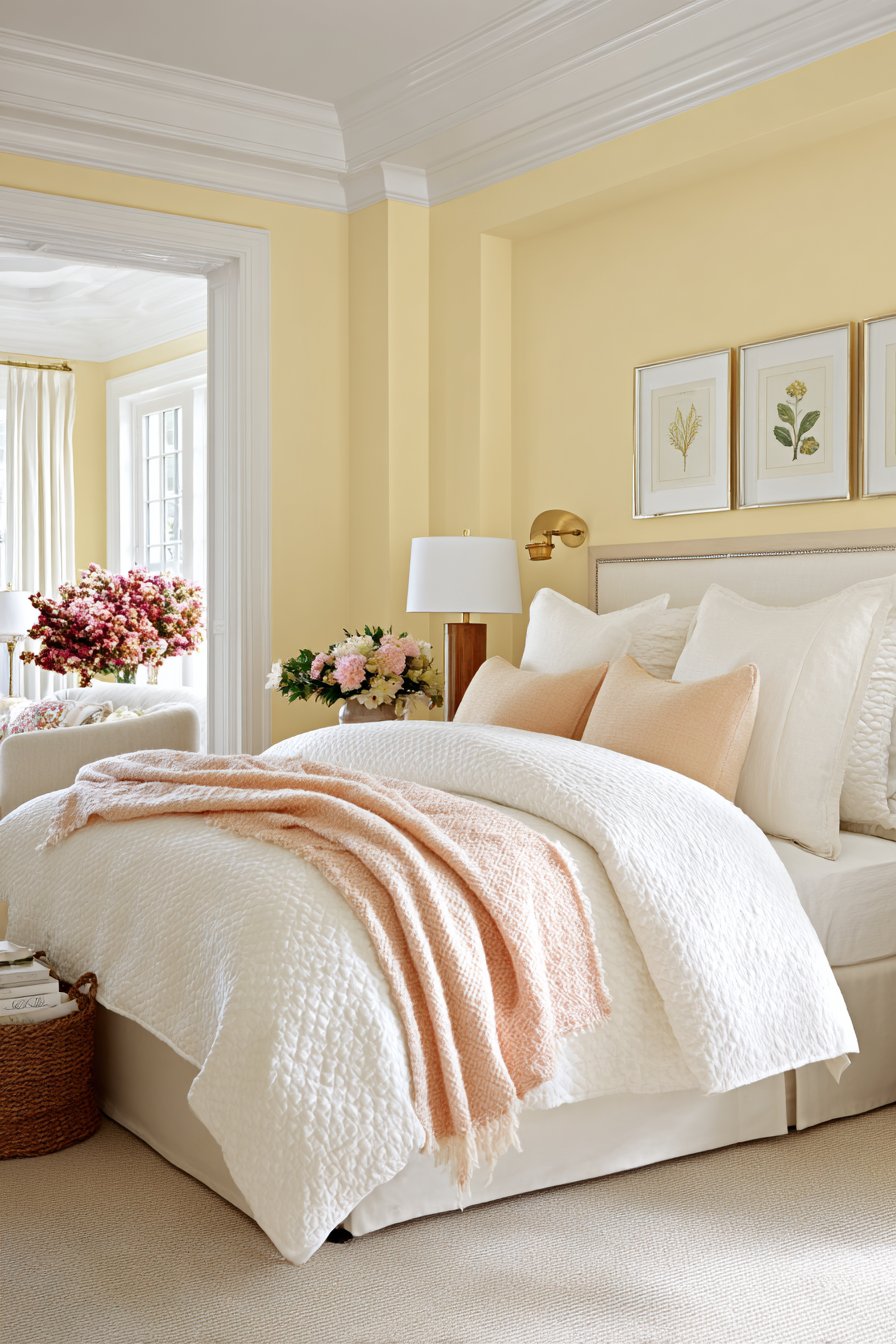
Soft butter yellow walls transform a bedroom into perpetual sunshine. This gentle hue captures warm sunlight throughout the day, maintaining brightness even during cloudy weather. The yellow creates psychological warmth without actual heat.
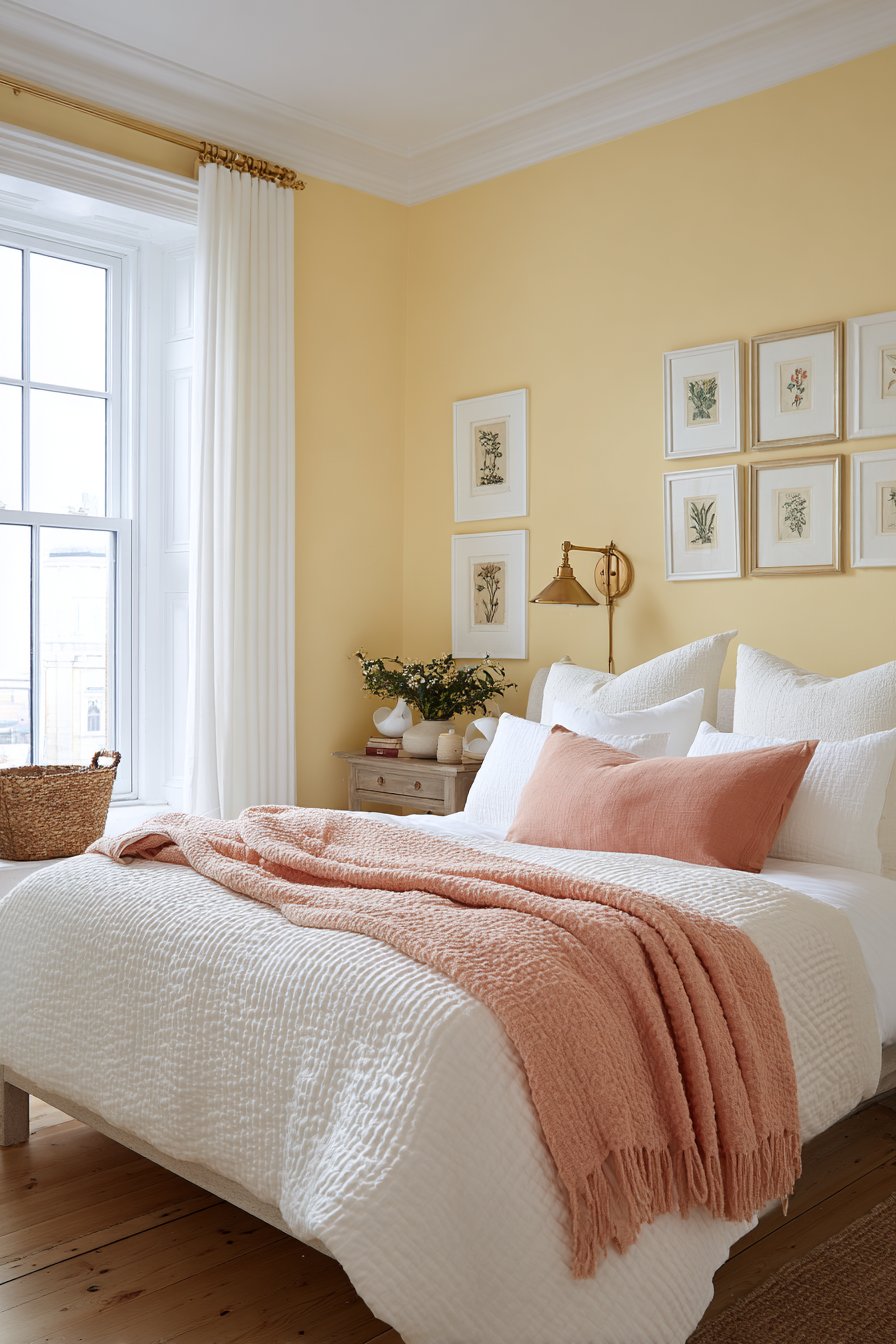
Against this backdrop, white matelassé coverlets provide textured contrast. The raised woven pattern adds sophisticated dimension to the bed. A textured cotton throw in pale coral drapes casually at the foot, introducing subtle color variation.
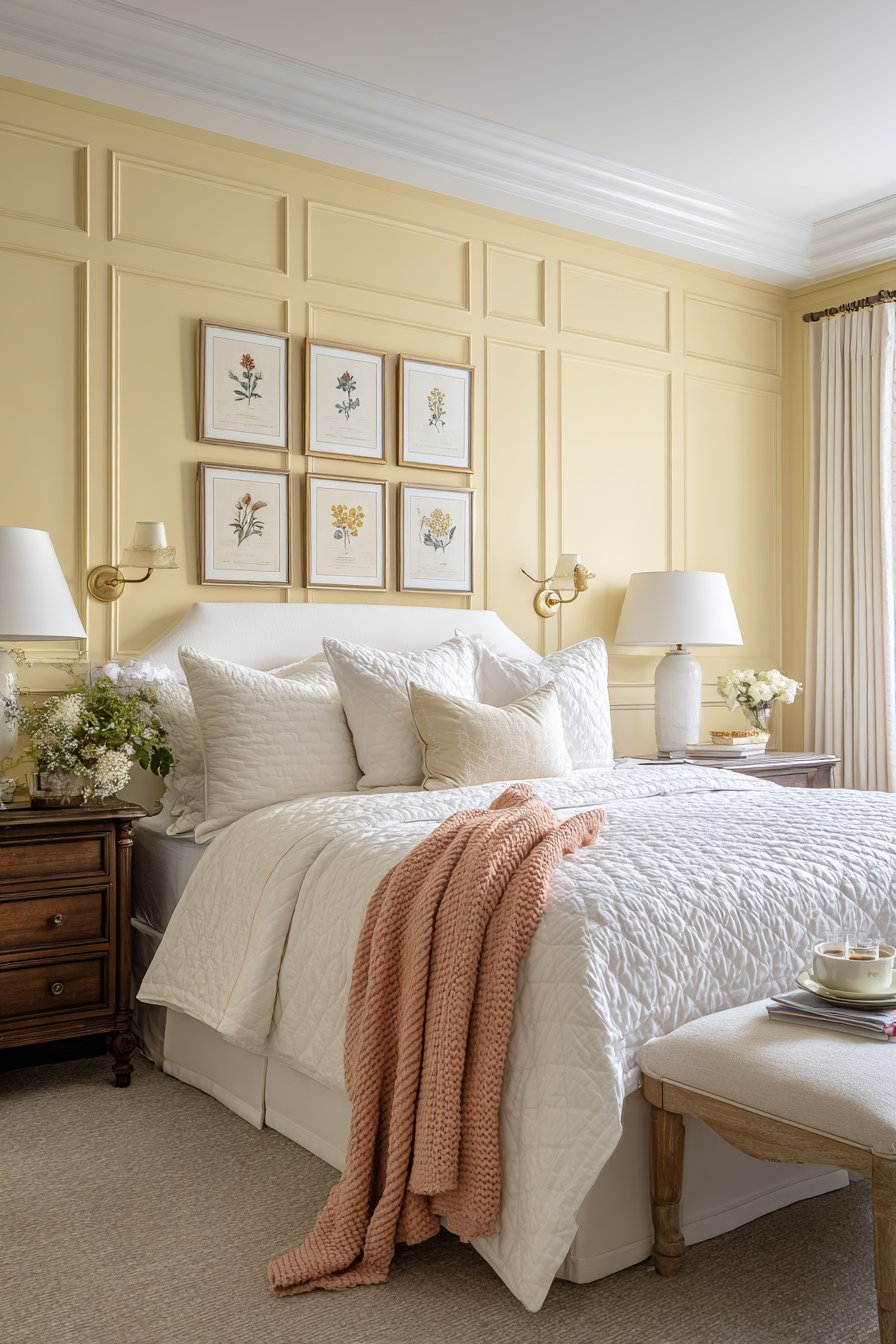
Vintage brass fixtures on bedside lamps provide understated metallic warmth. The brass develops natural patina over time, adding character and authenticity. These fixtures bridge traditional and contemporary aesthetics. The metallic accents catch and reflect light, enhancing the room’s luminous quality.
Above the bed, a gallery wall of botanical prints in simple white frames adds personality without visual clutter. The botanical subjects reinforce connections to nature and seasonal growth. If you’re also weighing these metal vs wood bed frames, that’s worth deciding early too.
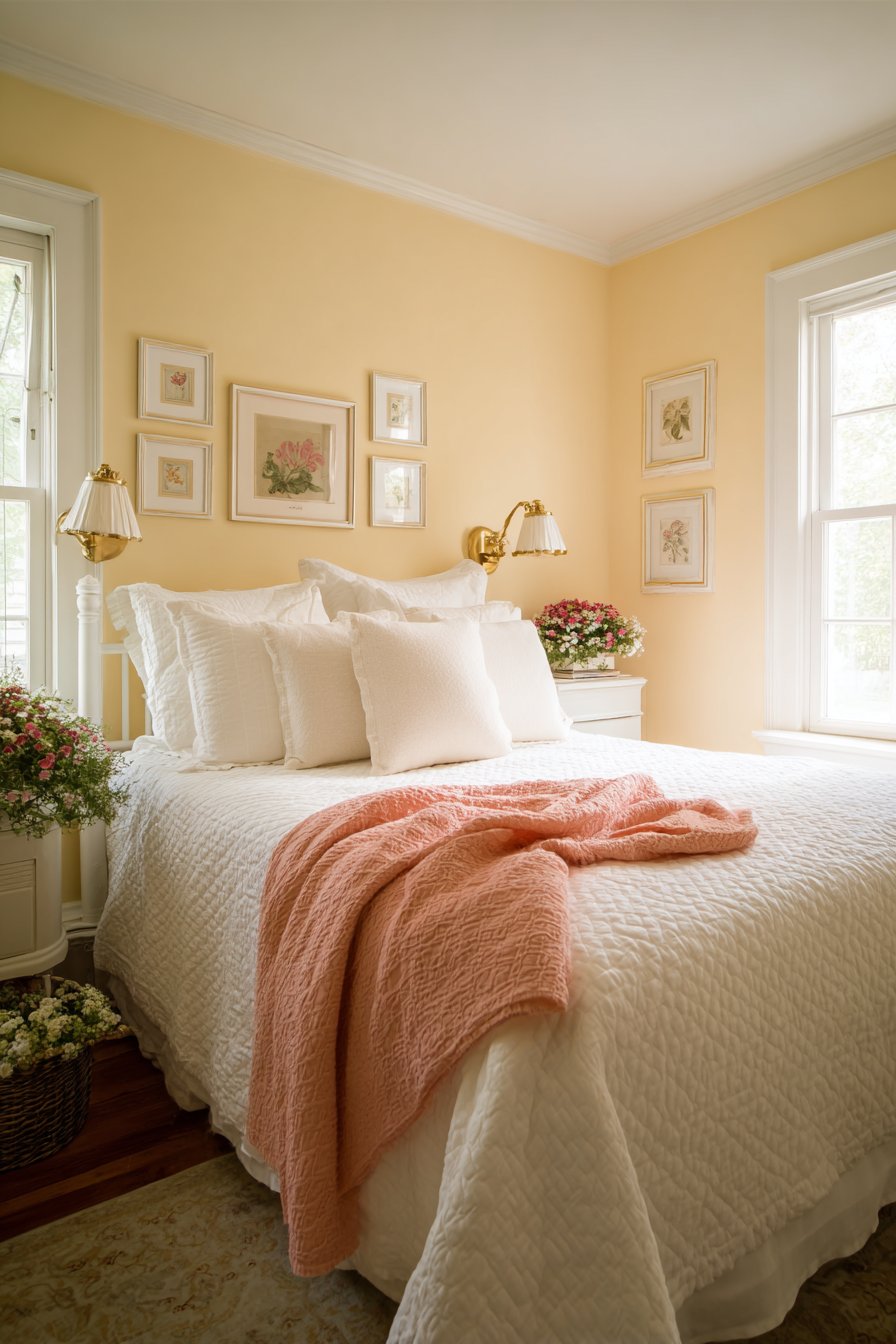
Wide-angle perspectives reveal balanced exposure across all surfaces. The gentle yellow walls create sun-filled atmosphere regardless of actual weather conditions. This design embodies summer’s essence through color psychology rather than literal interpretation.
The combination of warm yellow, crisp white, and soft coral creates a palette both energizing and soothing. Natural light multiplication through reflective surfaces maximizes the space’s inherent brightness.
Key Design Tips:
- Paint walls in soft butter yellow for year-round warmth. See our this 8 year girl bedroom ideas for more direction in this style.
- Use white matelassé for texture without pattern competition
- Introduce pale coral as an accent color for subtle vibrancy
- Select vintage brass fixtures for warmth and character
- Create gallery walls with botanical prints in uniform frames
- Choose simple white frames to maintain visual cohesion
5. Open Storage and Organic Organization
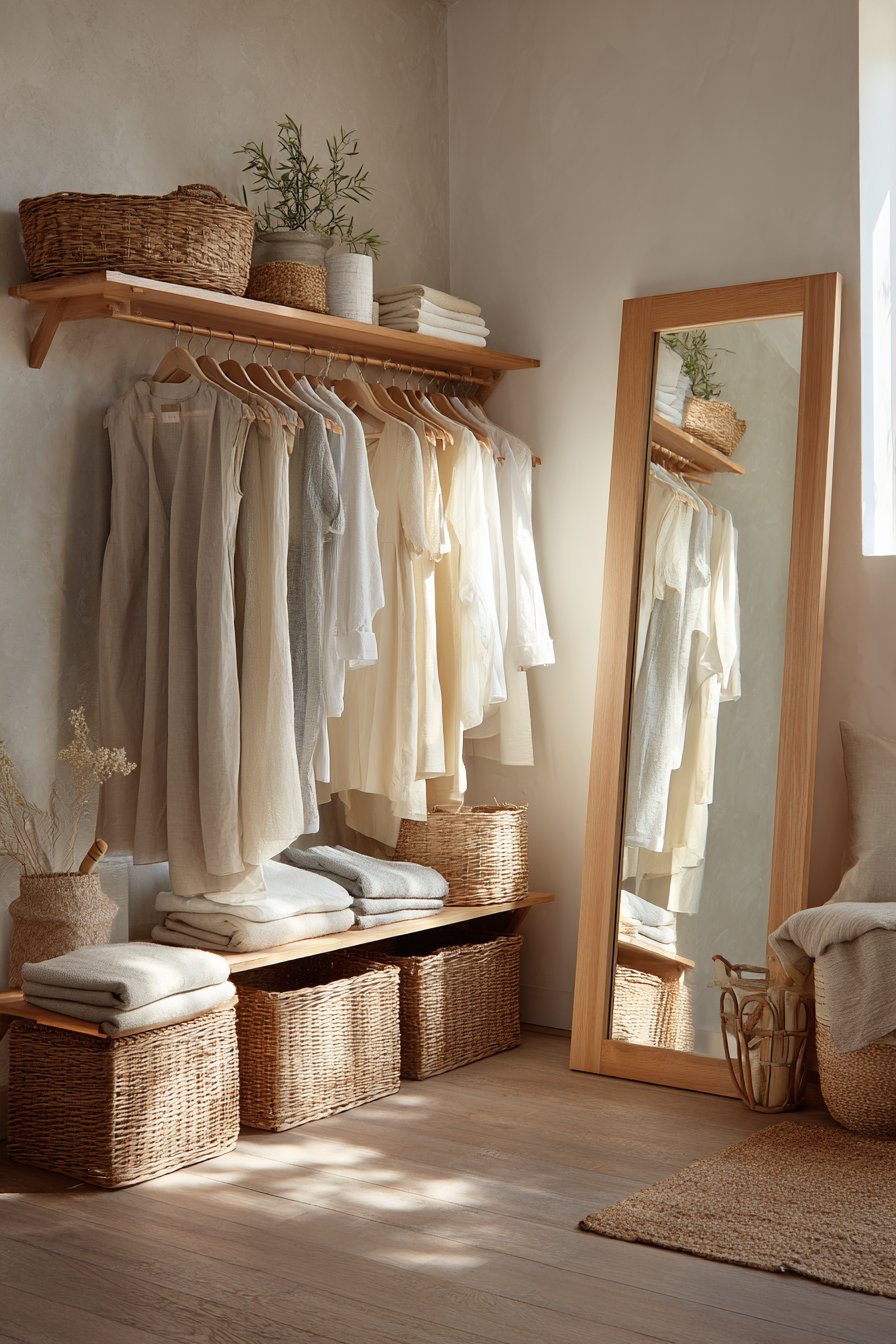
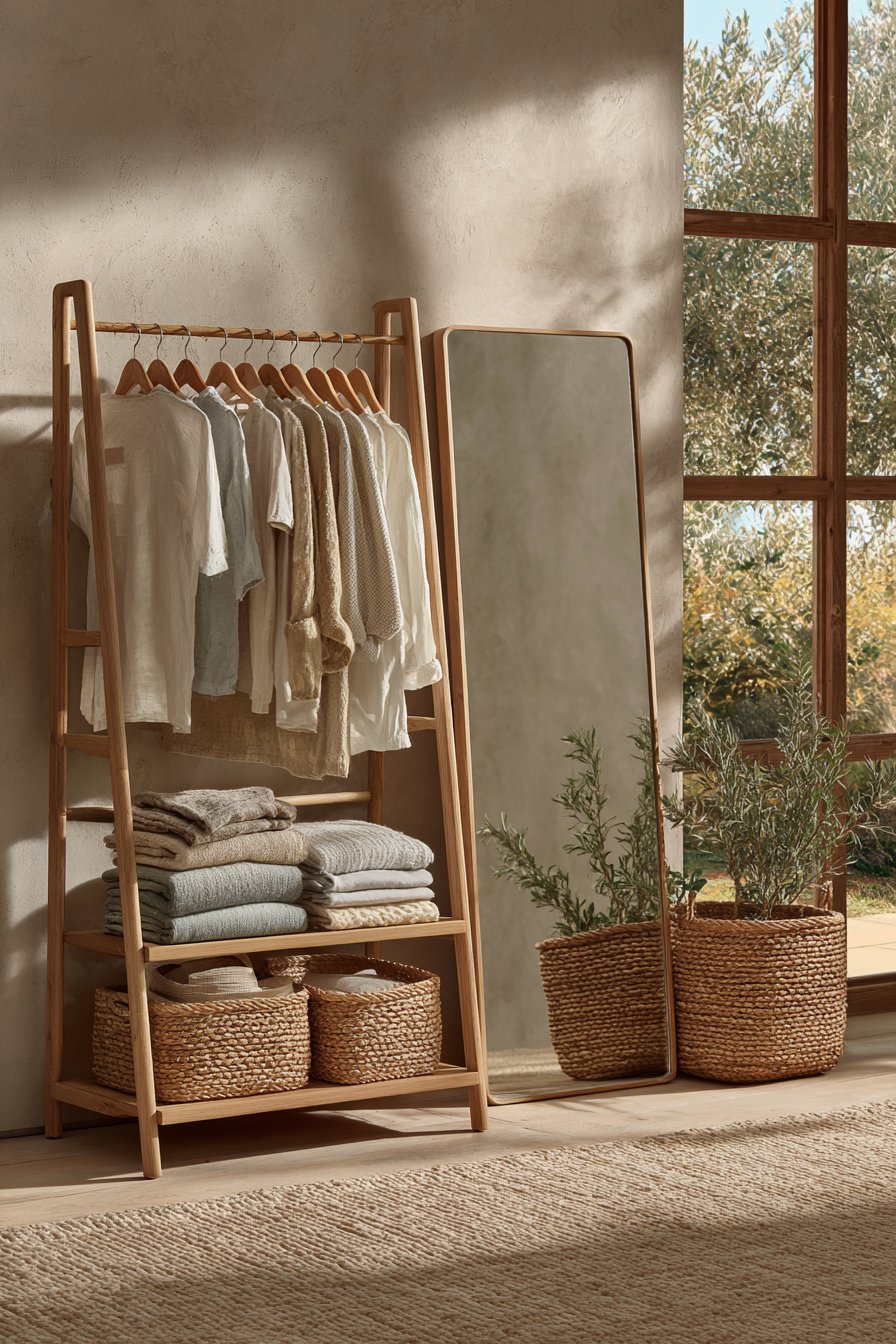
Summer living embraces simplicity and accessibility. An open clothing rack made from light maple wood and brass hardware displays summer wardrobes beautifully. The visible storage becomes decorative when curated thoughtfully. Airy linen garments and lightweight cotton pieces in whites and pastels create visual harmony. The open system encourages mindful seasonal dressing and reduces closet clutter.
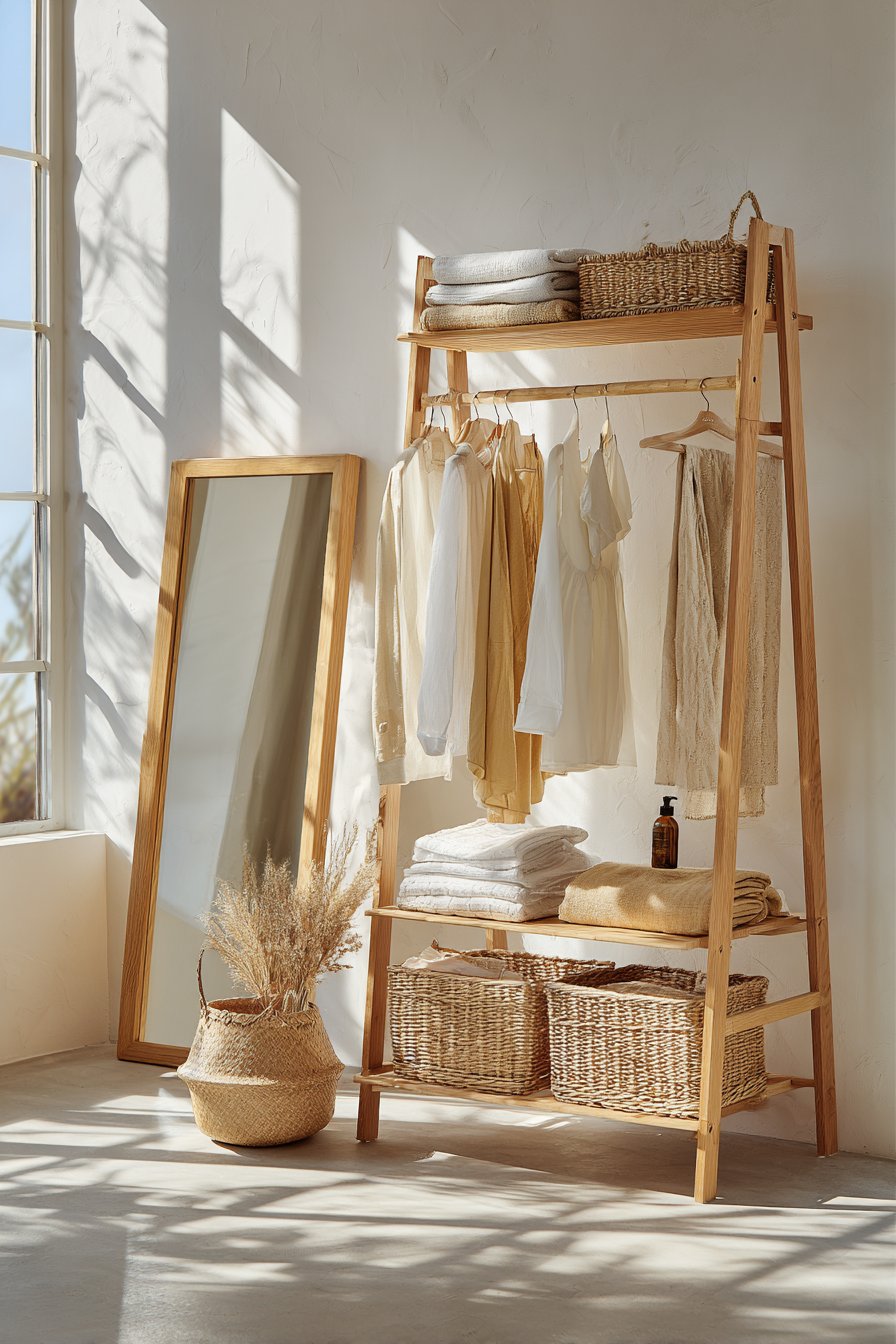
Woven seagrass baskets on floating shelves provide additional storage while maintaining an organic aesthetic. These baskets hold folded items discreetly while contributing natural texture. The seagrass material’s neutral tone coordinates with any color scheme.
Floating shelves create storage without floor space consumption. A full-length mirror with simple wooden frame leans casually against the wall. The mirror reflects natural window light, amplifying brightness throughout the space.
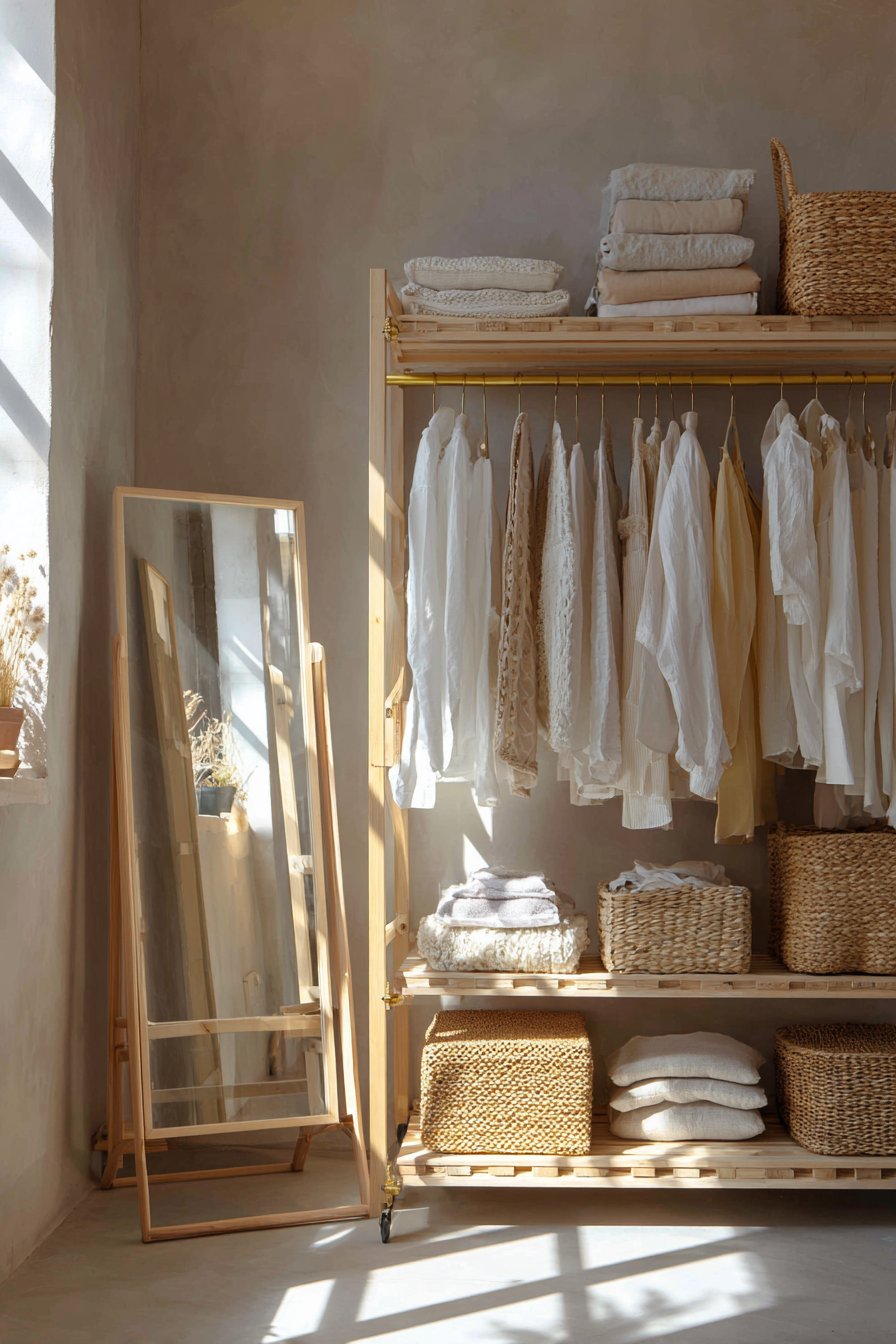
This organizational approach celebrates functional beauty. The intentional curation of summer-appropriate materials becomes part of the room’s design. Soft natural lighting emphasizes each element’s material quality.
The light maple wood offers warmth without darkness. Brass hardware adds refined detail to the utilitarian rack. This storage solution proves that practical elements can enhance rather than detract from bedroom aesthetics.
Key Design Tips:
- Install open clothing racks to display curated summer wardrobes
- Choose light woods like maple or ash for minimal visual weight
- Use woven baskets for concealed storage with an organic texture
- Position mirrors to reflect and multiply natural light
- Limit displayed clothing to seasonal, color-coordinated pieces
- Select brass hardware for warm metallic accents
6. Weathered Wood Coastal Sanctuary
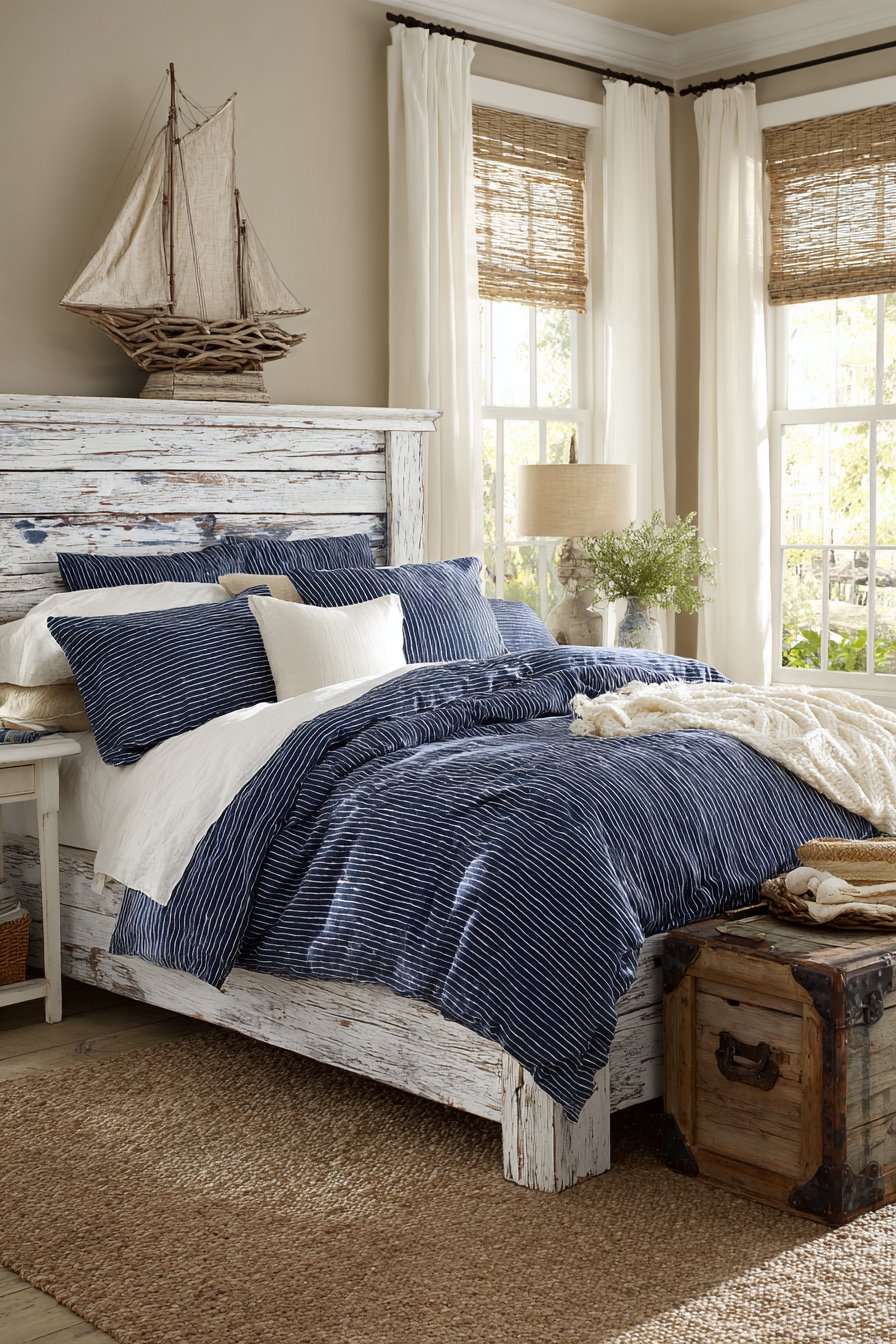
Coastal-inspired design brings beach vacation feelings into everyday life. A weathered white wood bed frame establishes the foundation with its sun-bleached appearance. Navy and white striped bedding in breathable cotton evokes classic nautical style.
The stripes create visual rhythm while remaining timeless and versatile. Driftwood-style wall art reinforces the beachy aesthetic through organic sculptural forms. Each piece suggests nature’s artistry through wind and water.
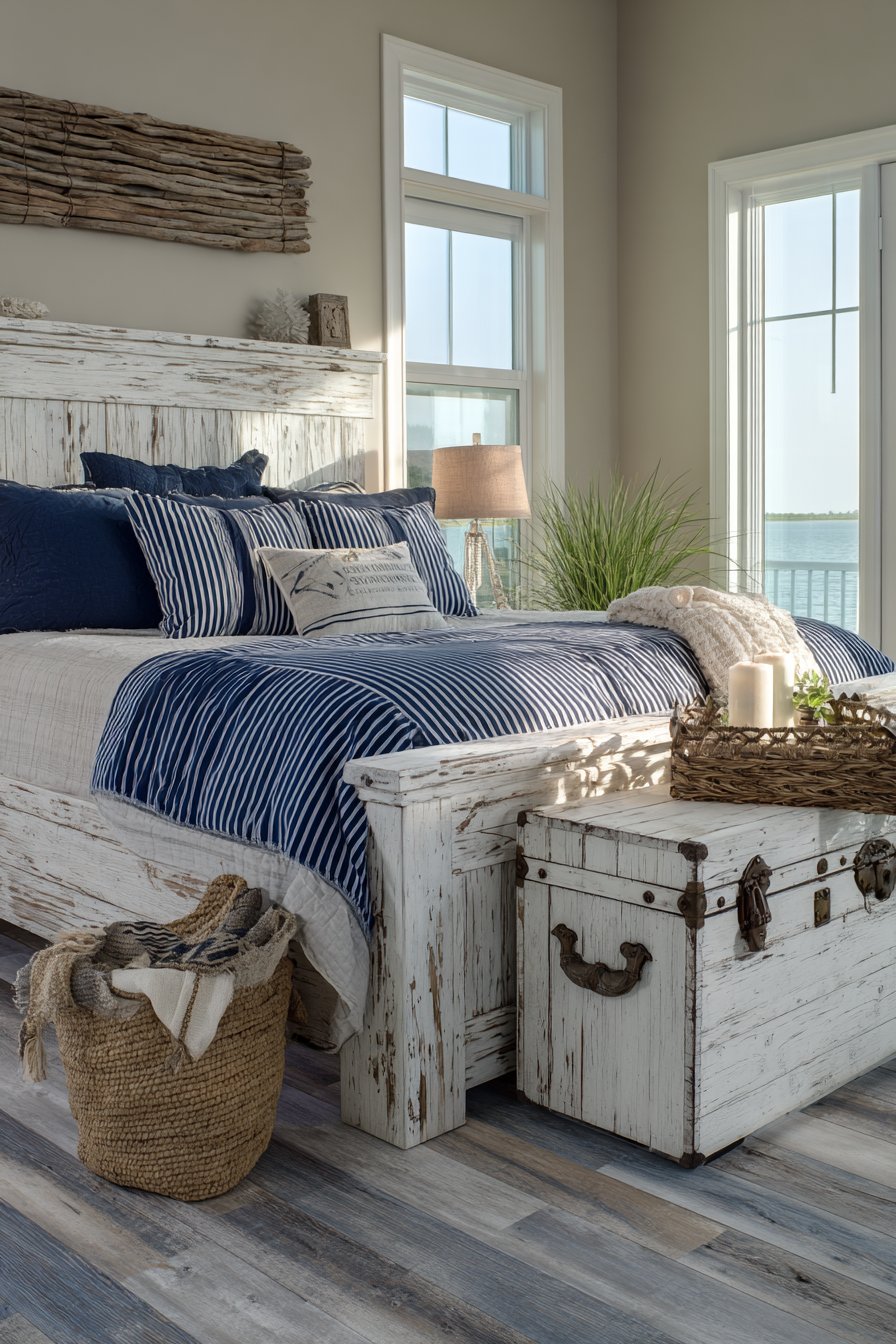
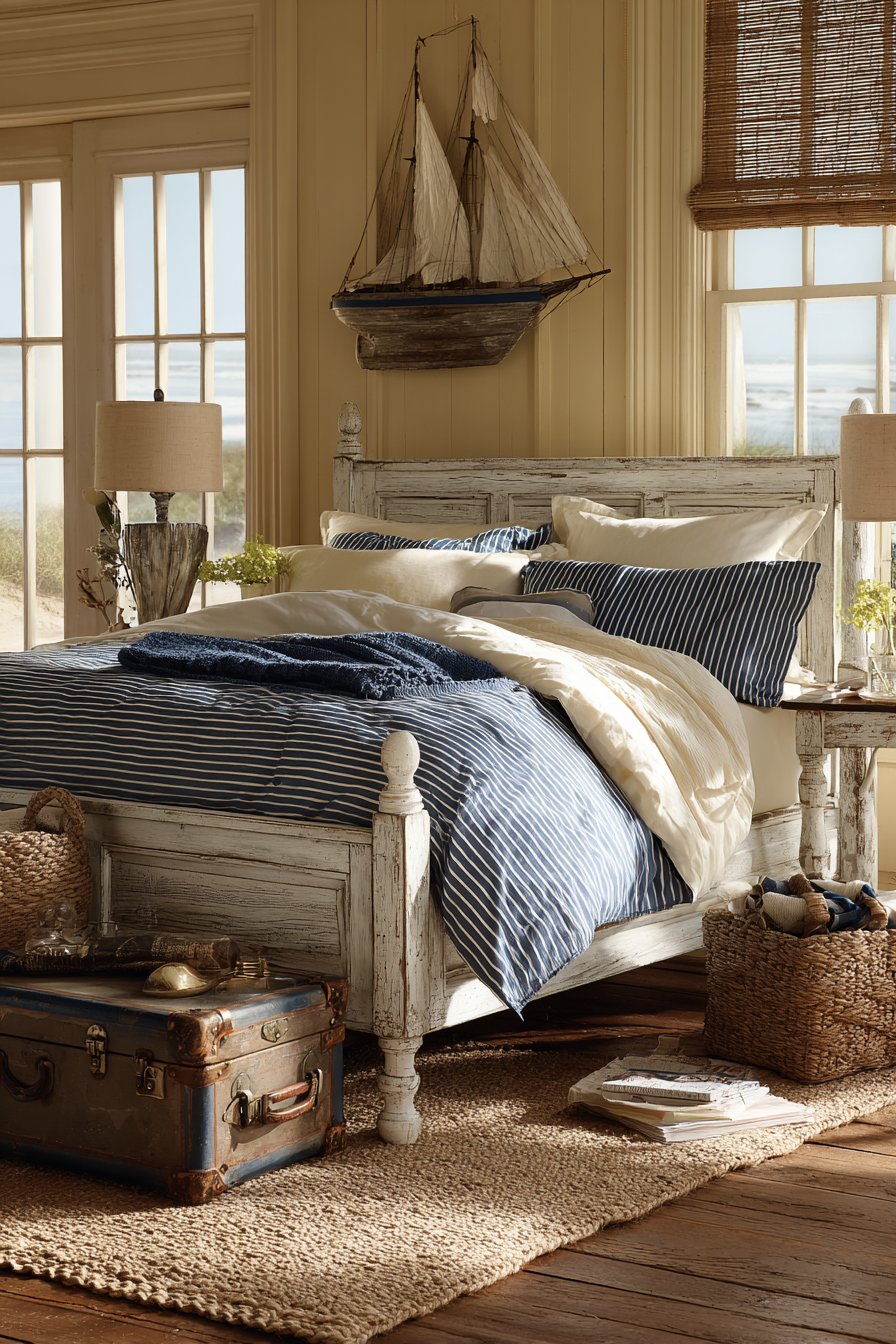
Rope-wrapped table lamps add authentic maritime detail. The rope wrapping provides textural interest and thematic consistency. Sandy beige walls complement natural jute window treatments perfectly. The jute filters bright sunlight while introducing woven texture.
These window treatments soften harsh light without blocking precious natural illumination. A vintage trunk at the bed’s foot provides practical storage while adding character and history.
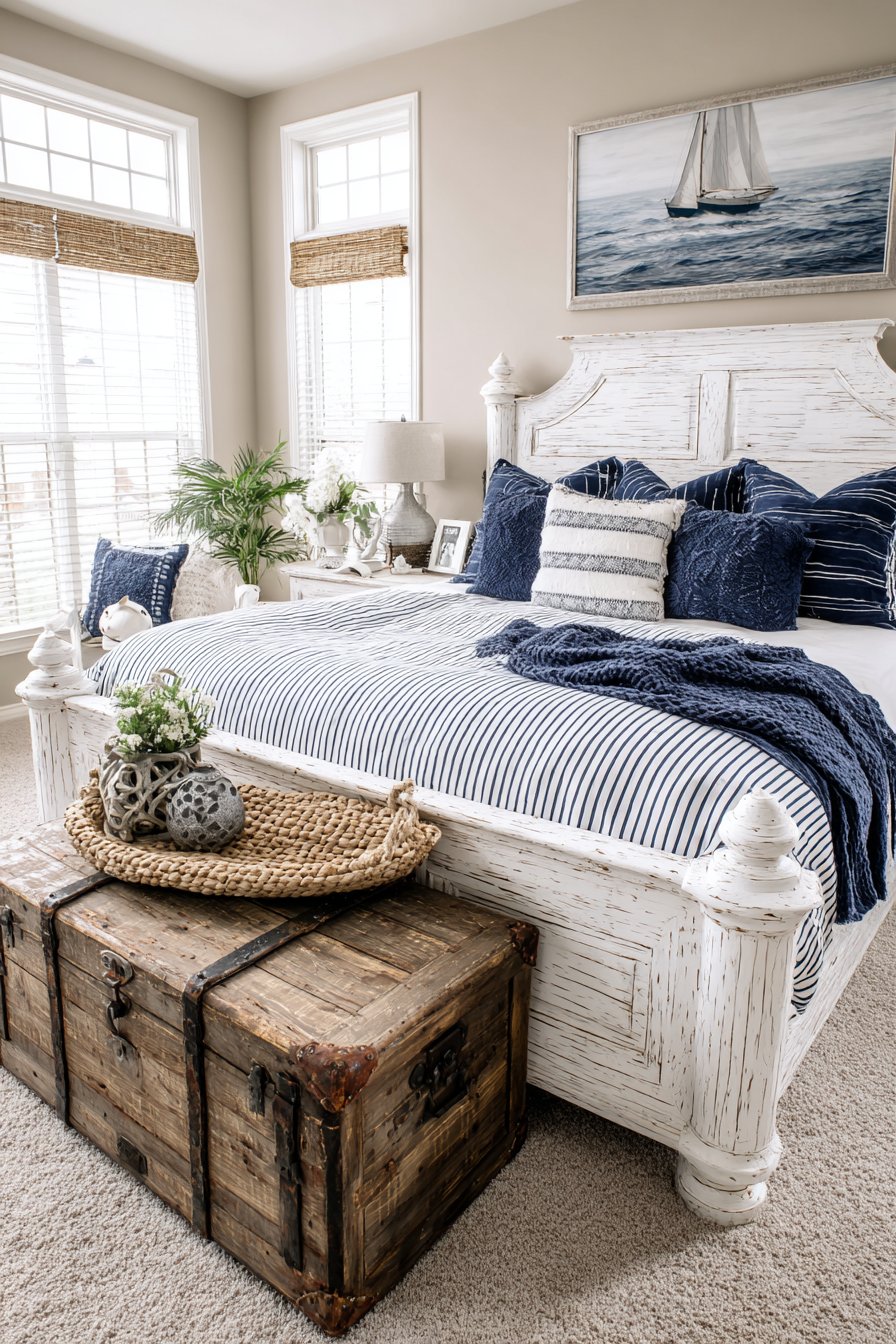
Professional wide-angle perspectives capture the cohesive coastal theme throughout the space. Natural daylight highlights varied textures: weathered wood, woven fibers, and crisp cotton fabrics. Each material contributes unique tactile quality to the overall composition. The color palette remains intentionally restrained, allowing textures to provide interest. This approach creates sophisticated coastal style without kitsch or excess.
Key Design Tips:
- Choose weathered or whitewashed wood furniture for coastal character
- Use navy and white stripes for classic nautical appeal
- Incorporate driftwood art pieces for organic sculptural interest
- Select rope-wrapped lamps for authentic maritime detail
- Paint walls in sandy beige for warmth and light reflection
- Add vintage trunks for storage with historical charm
7. Ethereal Window Wall with Flowing Curtains
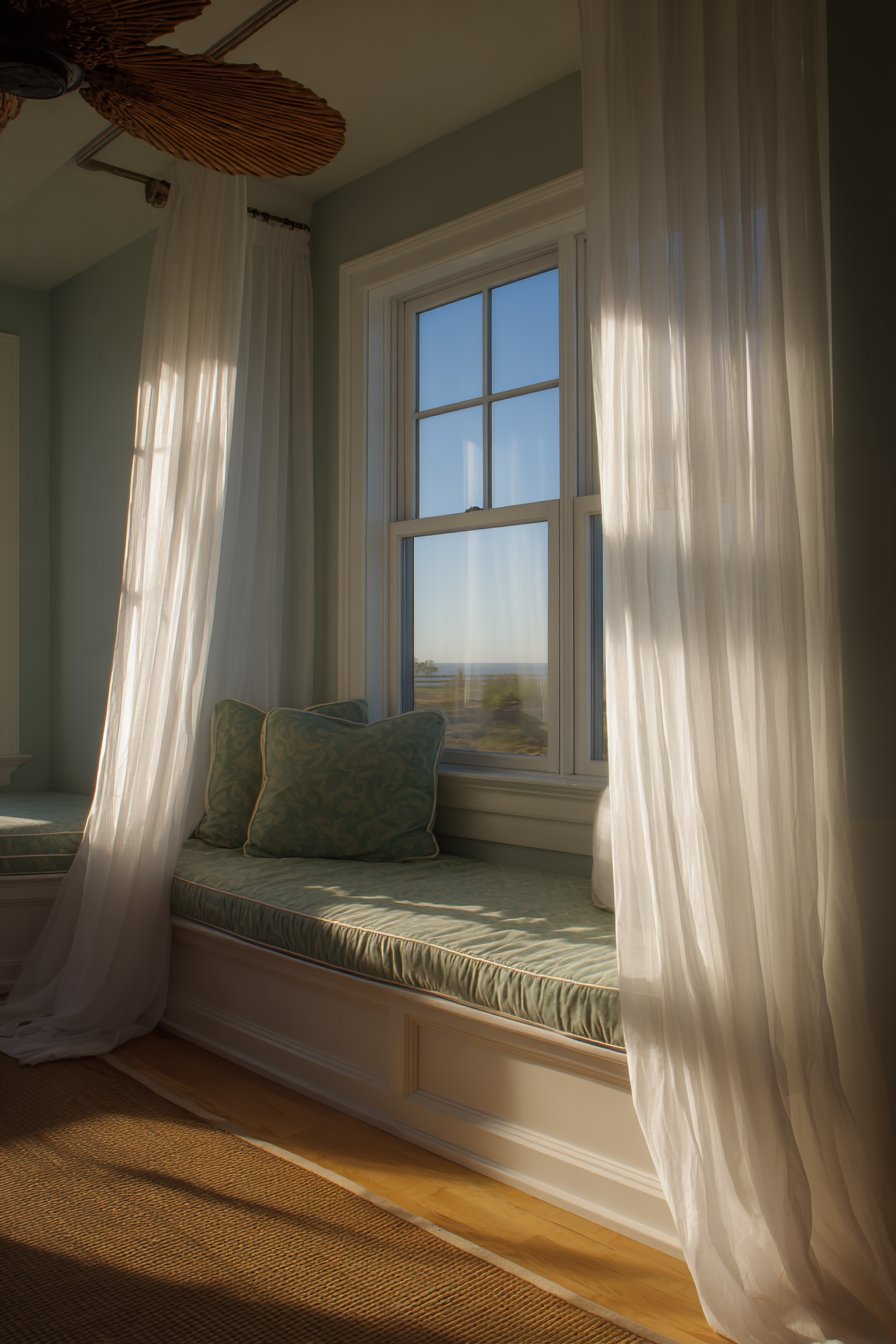
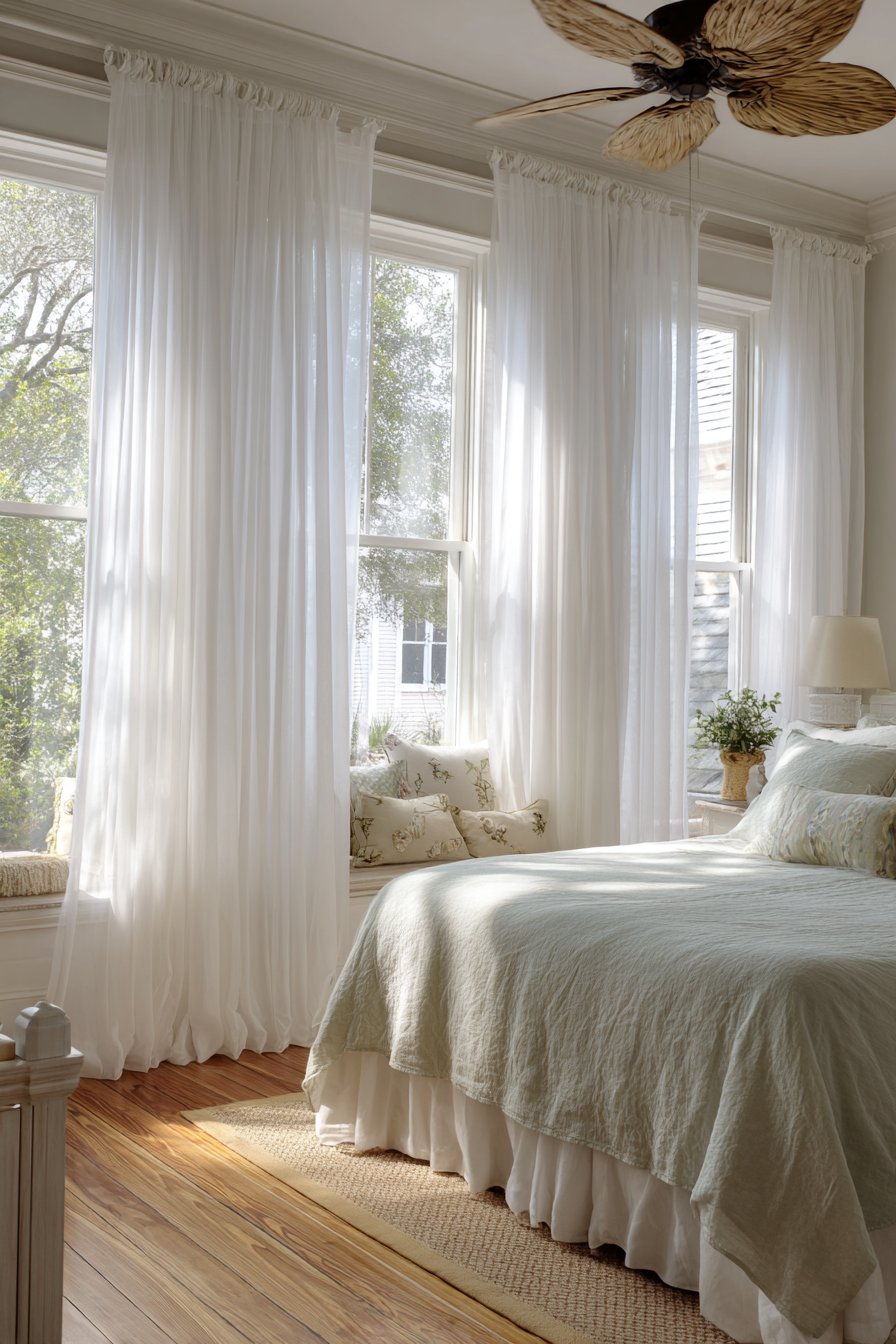
The window wall becomes the bedroom’s defining feature. Floor-to-ceiling sheer white curtains create dramatic vertical lines while maintaining transparency. The curtains billow gently, suggesting cross breezes and natural ventilation.
This movement adds life and dynamism to the static room. Below the windows, a built-in window seat offers comfortable lounging. Cushions covered in fade-resistant outdoor fabric ensure longevity and practicality.
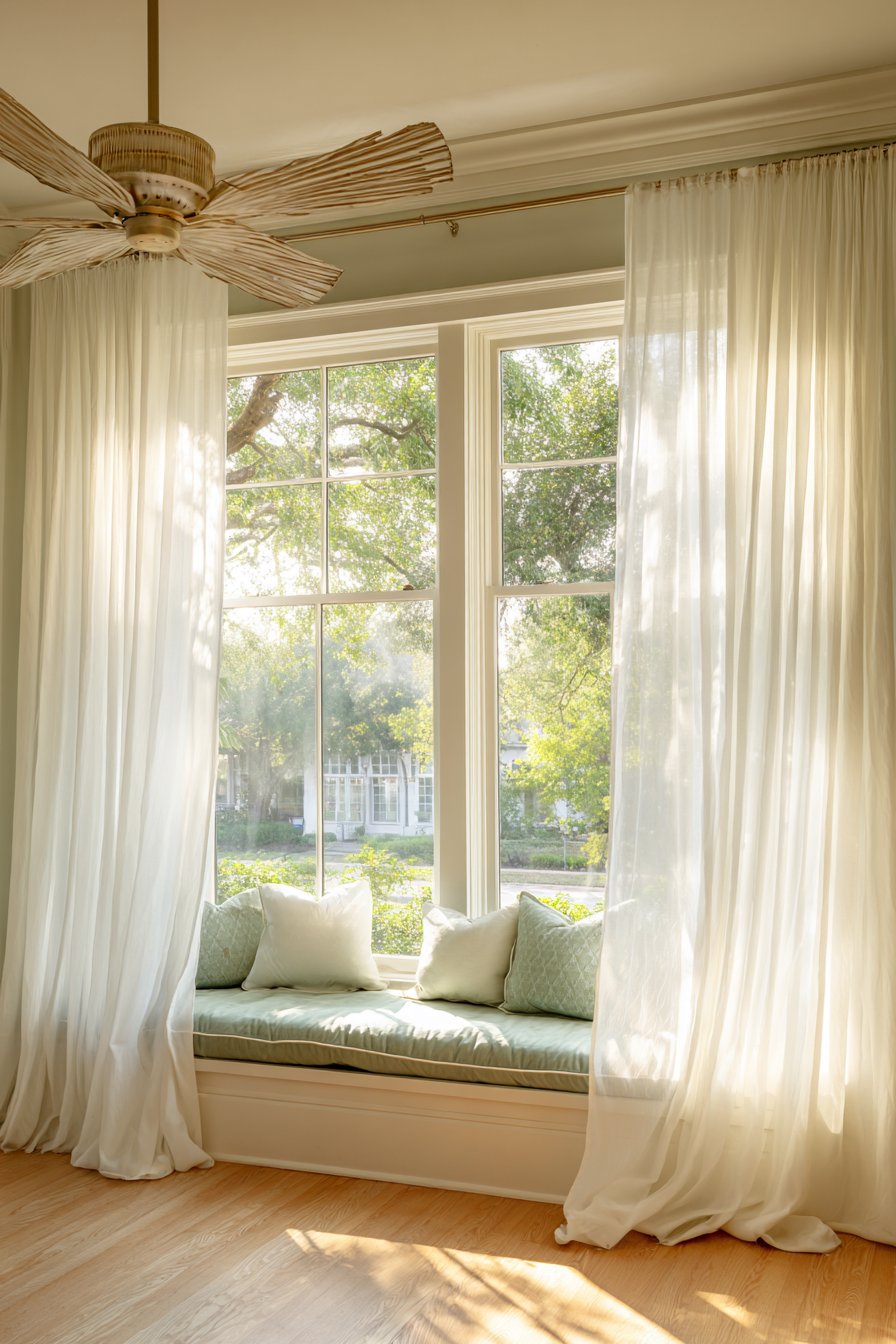
Soft sage green cushions with ivory piping introduce subtle color without overwhelming the space. The outdoor fabric withstands sun exposure while providing indoor comfort. Pale hardwood floors reflect natural light upward, bouncing illumination throughout the room.
The floors’ light tone prevents visual weight at ground level. A simple ceiling fan with woven rattan blades provides practical cooling while reinforcing summer aesthetics.
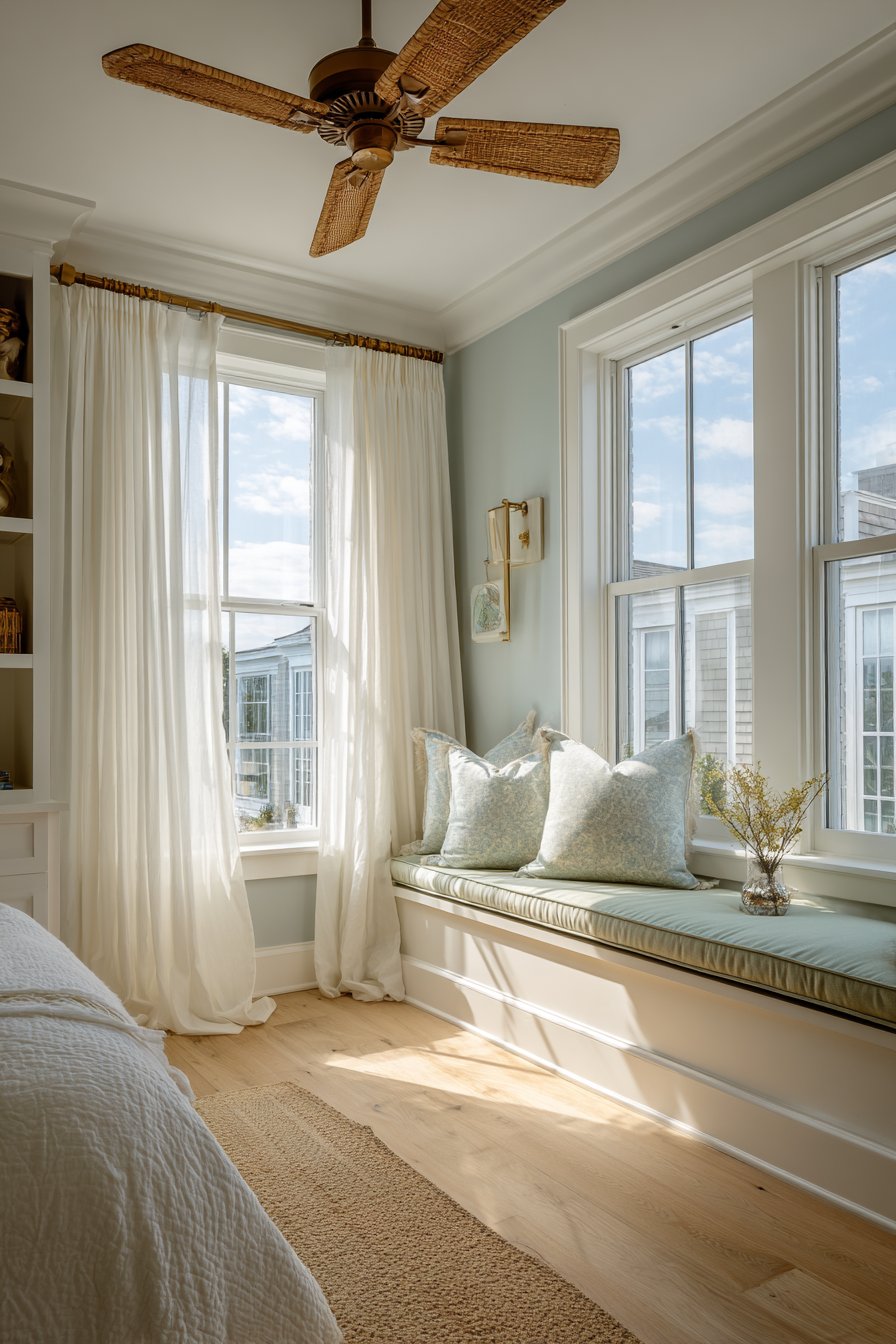
Golden hour photography captures the space’s ethereal quality. Late afternoon sun filters through flowing curtains, creating soft, diffused light. The interplay of light and fabric creates ever-changing shadow patterns.
This dynamic lighting quality makes the room feel alive and connected to natural cycles. The light-filled quality remains essential to successful summer bedroom design. Every element works together to maximize brightness and airiness.
Key Design Tips:
- Install floor-to-ceiling curtains for maximum visual impact
- Choose sheer white fabrics to maintain light while adding softness
- Use outdoor-grade fabrics for window seat cushions
- Select pale hardwood or light-washed floors for reflection
- Add ceiling fans with natural fiber blades for function and style
- Position seating to capture golden hour light
8. Romantic Canopy with Lightweight Muslin Draping
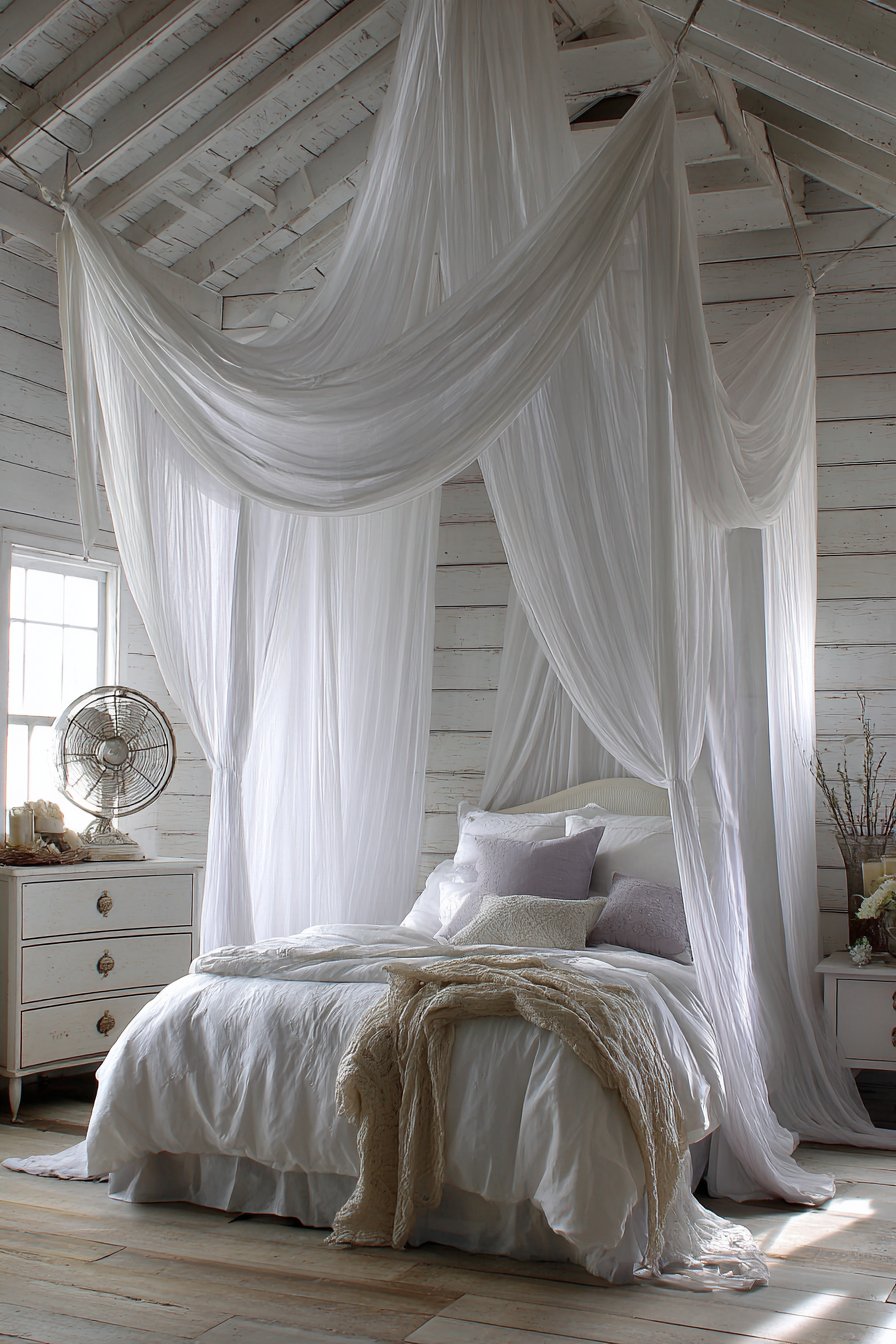
A canopy bed draped with lightweight white muslin fabric creates an airy, romantic focal point. The muslin’s gauzy quality adds drama without heaviness or visual weight. The fabric catches and diffuses natural light beautifully.
Gentle breezes cause subtle movement, adding organic life to the space. The bed is dressed in crisp white cotton with accent pillows in muted lavender and soft mint. These pastel accents introduce color without disrupting the serene atmosphere.
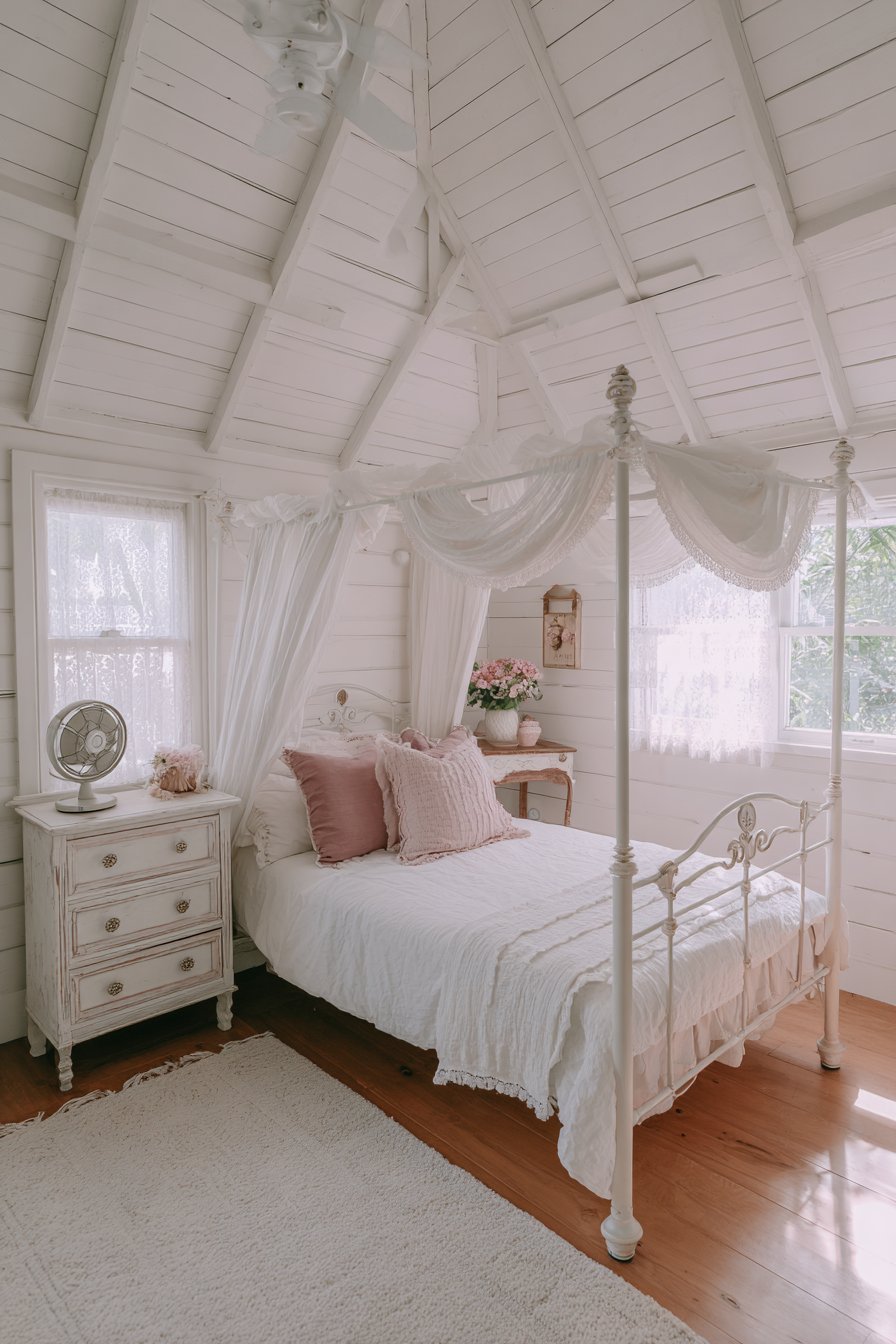
Pale oak flooring and whitewashed walls maximize light reflection throughout the room. Every surface works to amplify available natural light. A vintage white metal fan on the dresser adds both functional cooling and decorative summer elements. The fan’s retro styling evokes nostalgia for simpler times. Its white finish maintains color continuity across the space.
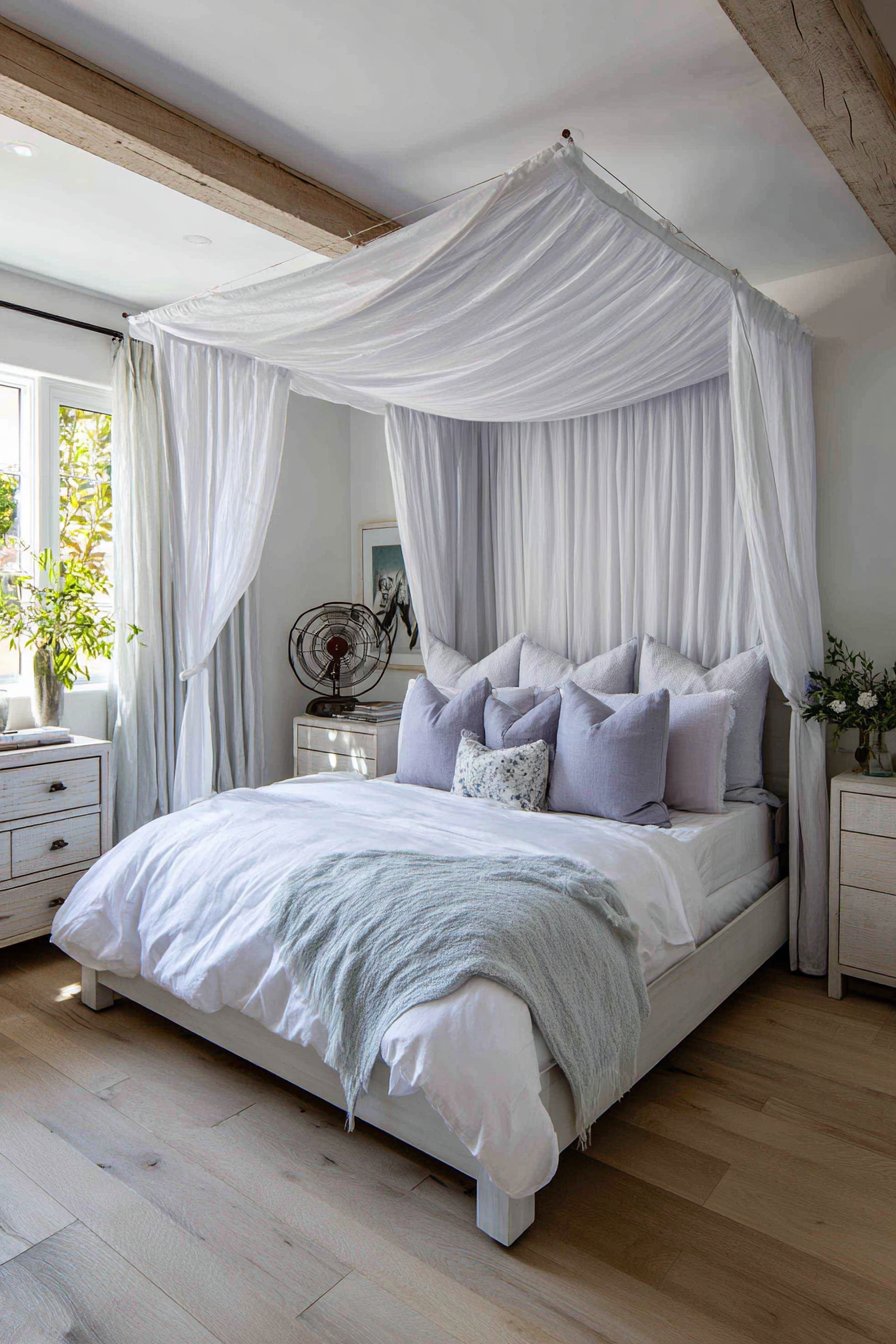
Wide-angle photography reveals how delicate canopy fabric creates gentle shadows while maintaining openness. The muslin’s transparency ensures the canopy feels ethereal rather than enclosed.
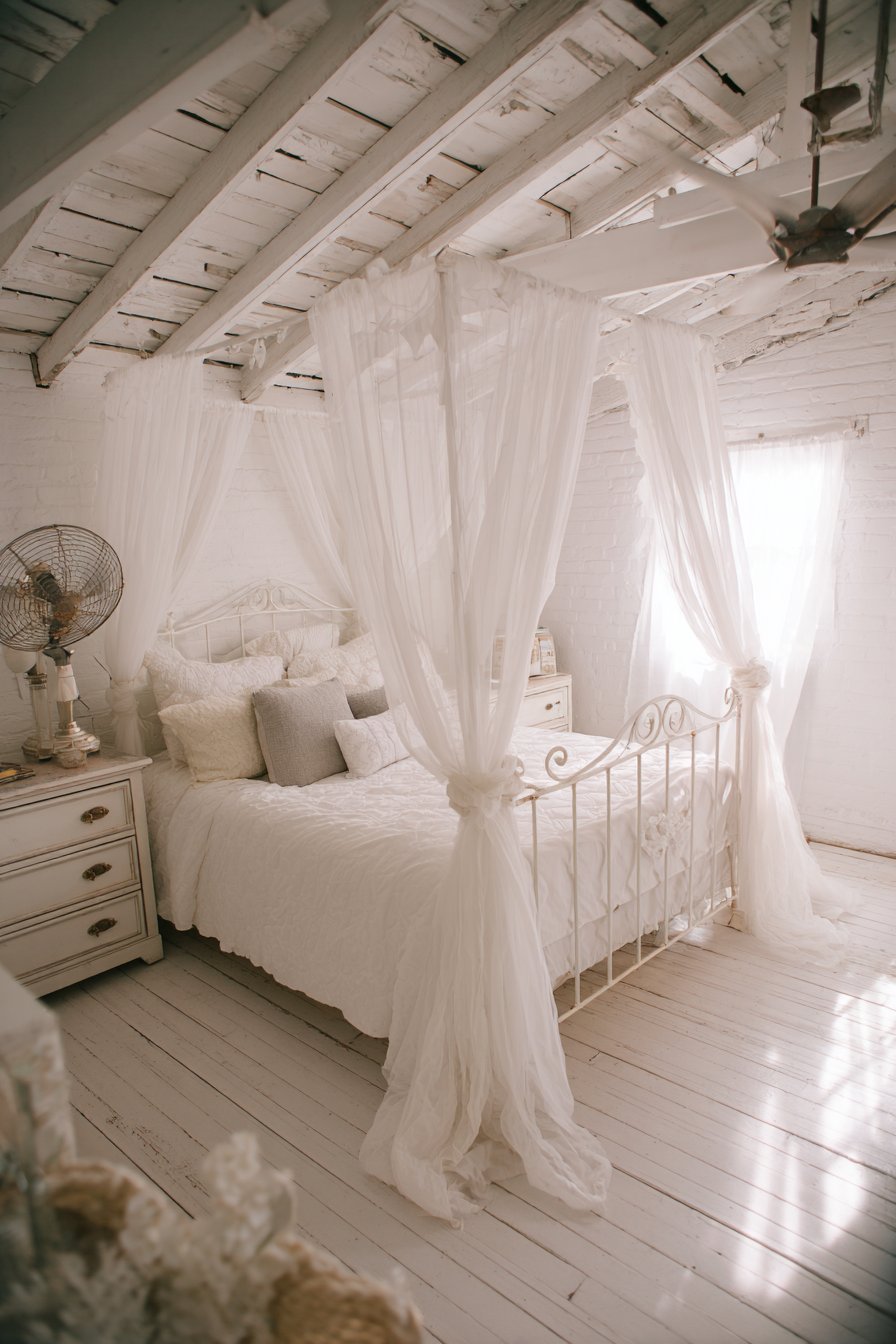
This design demonstrates how to add romantic elements while preserving the breathable feel essential to summer bedrooms. The combination of practical cooling elements and dreamy aesthetics creates balanced, livable beauty.
Key Design Tips:
- Choose lightweight muslin or voile for canopy draping
- Keep canopy fabric white or neutral for maximum light
- Add pastel accent pillows for subtle color variation
- Use pale oak flooring to reflect rather than absorb light
- Incorporate vintage fans as functional decorative elements
- Whitewash walls to maximize brightness and airiness
9. Minimalist Bedside Vignette with Organic Elements
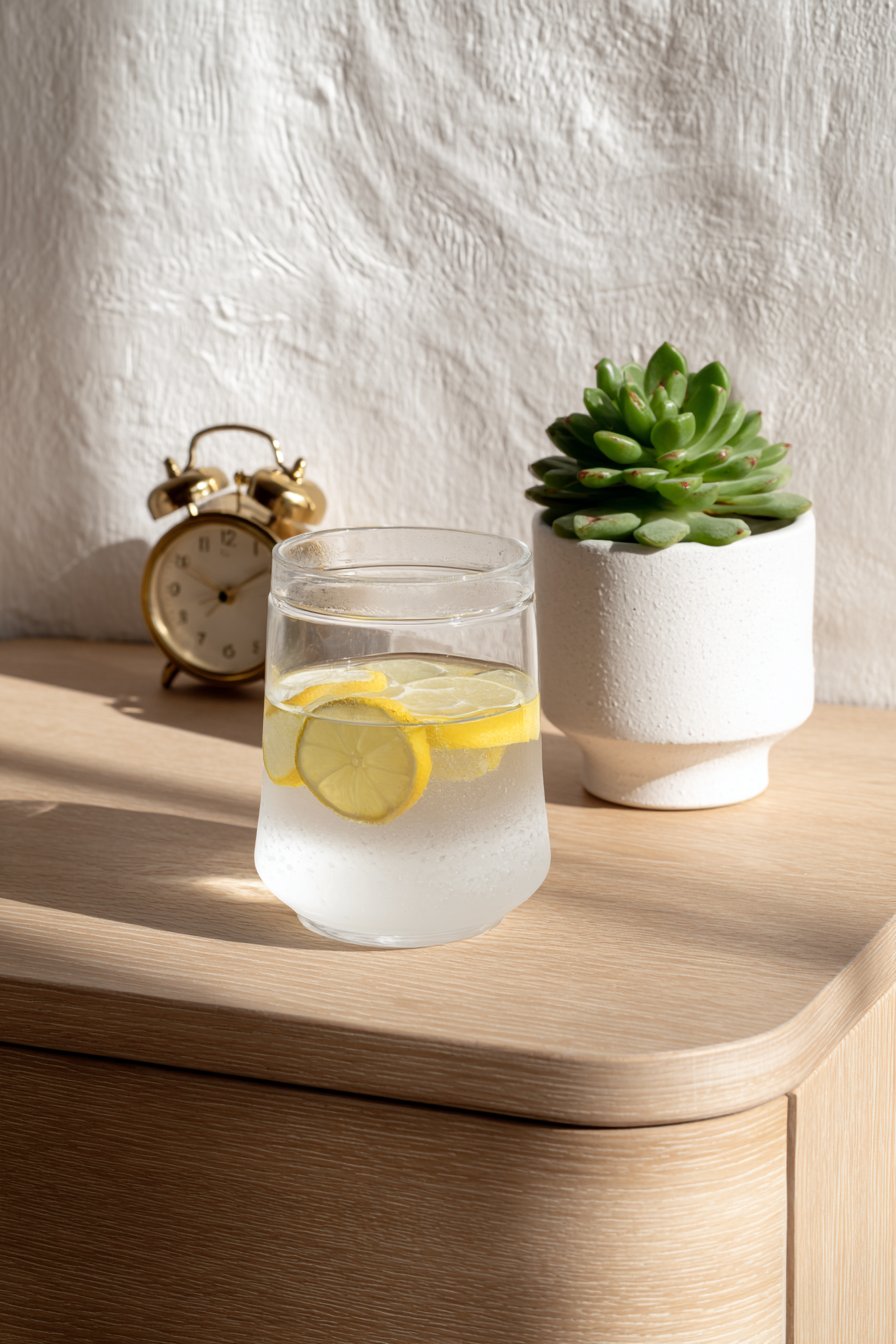
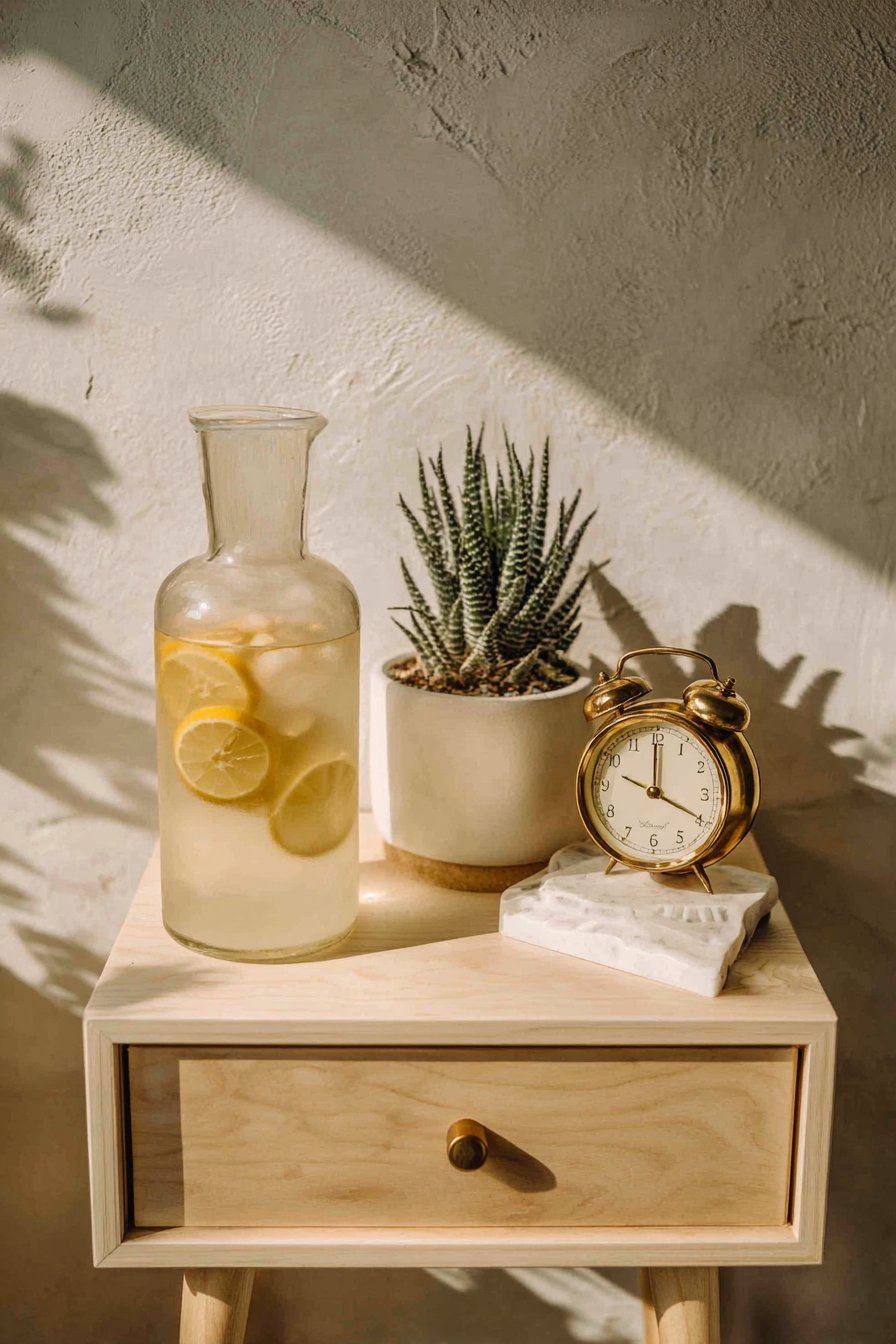
Sometimes the smallest details make the biggest impact. A minimalist nightstand vignette showcases summer’s essence through careful curation. A light ash wood bedside table provides the foundation with its pale, neutral tone.
The smooth wood grain adds subtle natural pattern. A frosted glass carafe filled with water and fresh lemon slices offers both hydration and visual appeal. The lemon slices suggest refreshment and cleanliness.
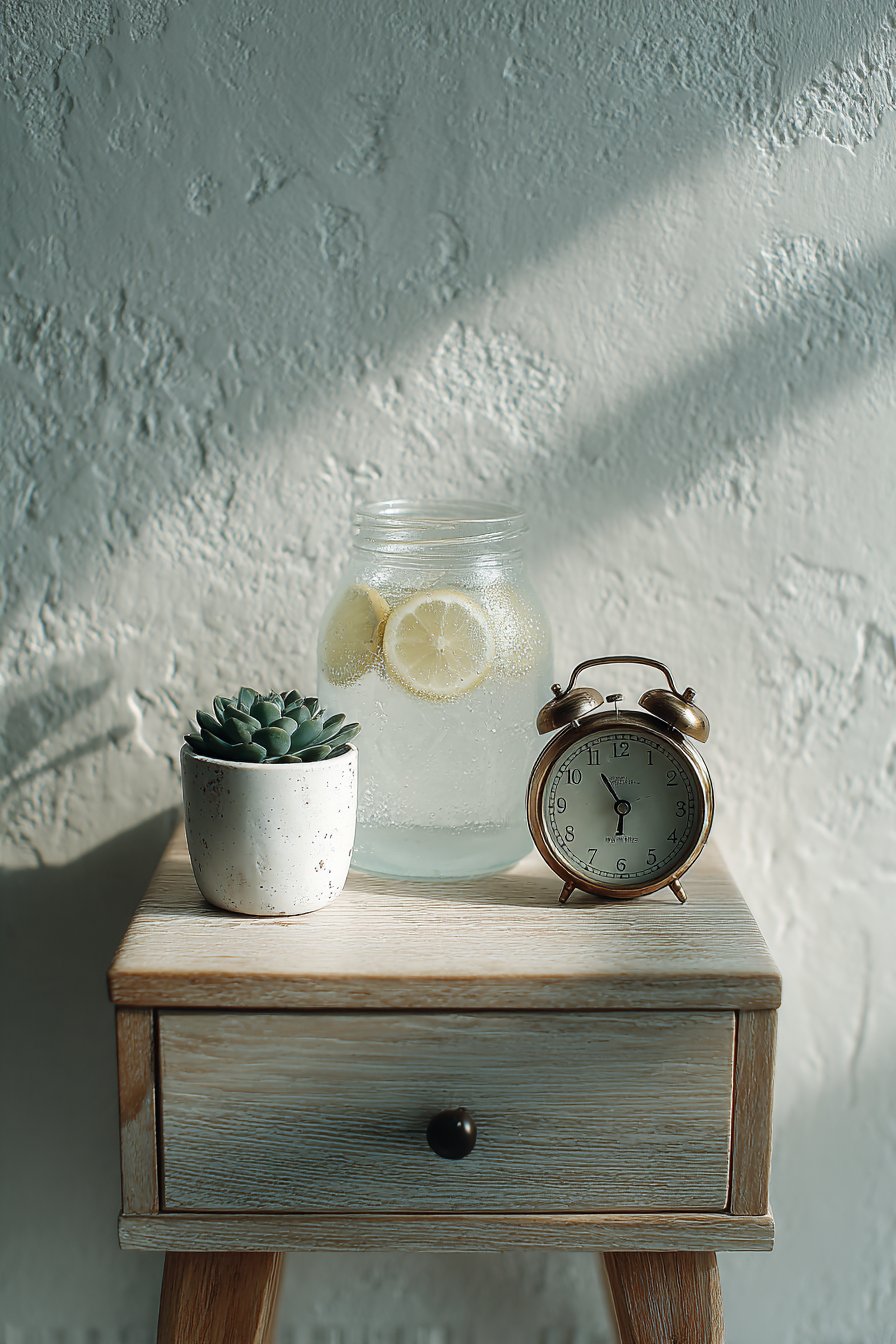
A small potted succulent in a white ceramic planter brings living greenery to the bedside. The succulent requires minimal care while providing organic interest.
A brass alarm clock adds functional beauty with its warm metallic finish. Behind these elements, textured white plaster walls show subtle irregularities that catch morning light. These imperfections add character and authenticity to the space.

Soft natural shadows fall across the arrangement, creating depth and dimension. Professional photography emphasizes material authenticity: smooth wood grain, condensation on glass, and the succulent’s organic quality. These practical elements enhance the fresh, rejuvenating atmosphere. The vignette proves that thoughtful styling elevates even the most functional bedroom elements.
Key Design Tips:
- Choose light ash or maple for bedside tables
- Add fresh lemon water in glass carafes for visual and practical appeal
- Include low-maintenance plants like succulents
- Use textured plaster walls for subtle visual interest
- Select brass accessories for warm metallic accents
- Embrace natural imperfections in materials and finishes
10. Daybed Reading Retreat with Garden Views
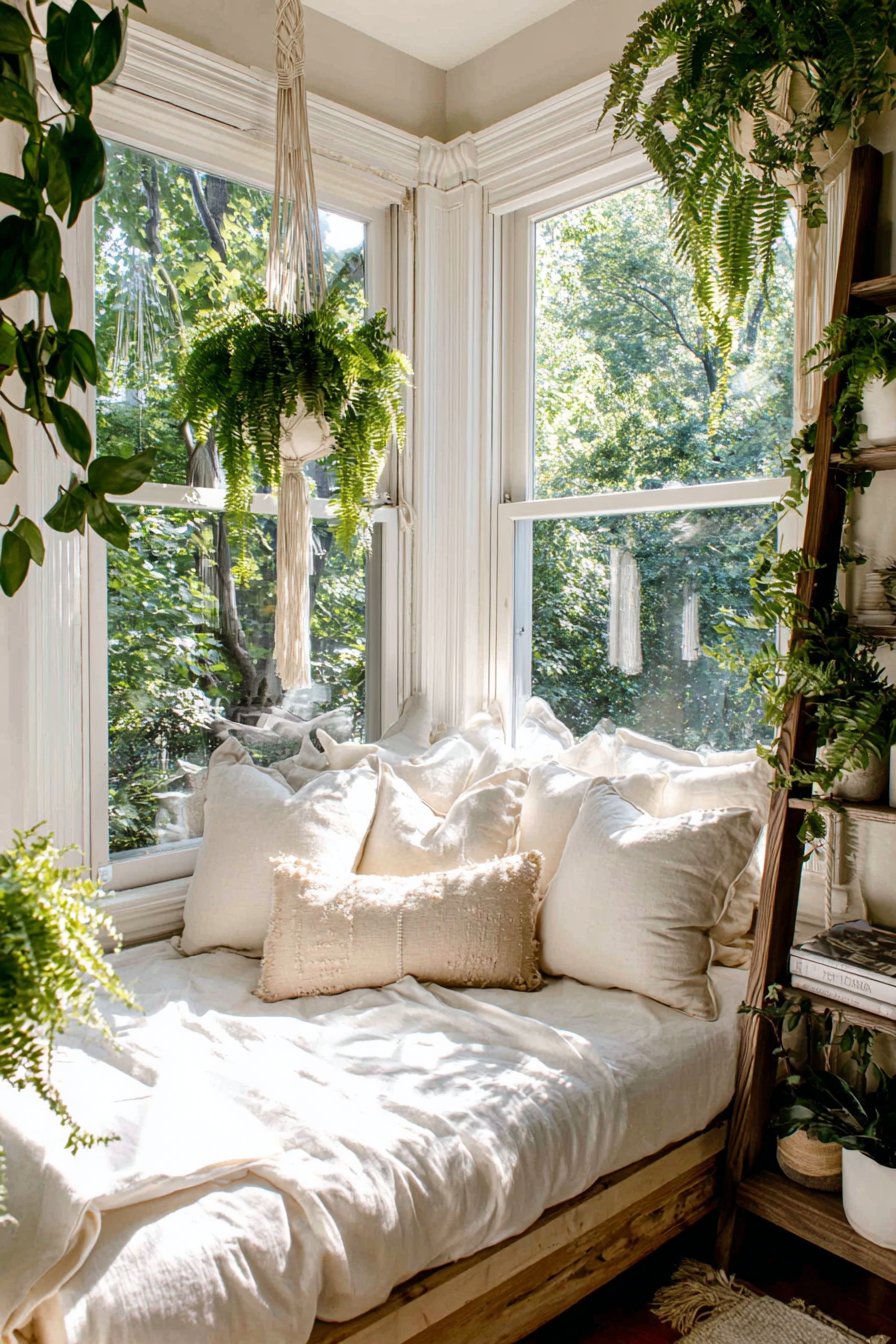
The ultimate summer bedroom includes a dedicated lounging space. A low-profile daybed upholstered in natural linen creates versatile seating positioned against windows overlooking greenery. The window placement connects the indoor space with outdoor nature.
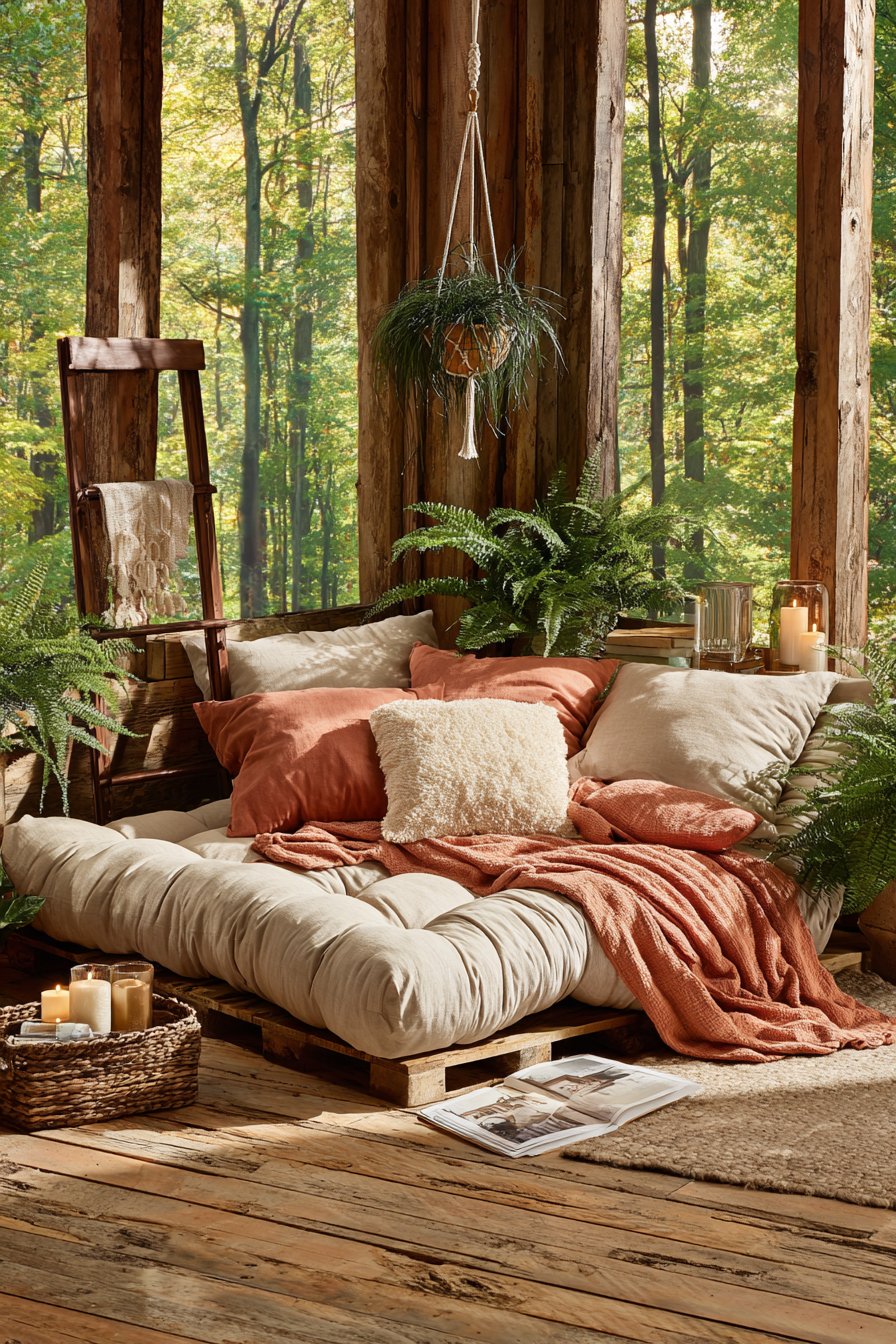
Oversized throw pillows in sun-bleached coral and cream provide comfortable support for extended reading sessions. The pillows’ generous size encourages complete relaxation and comfort.
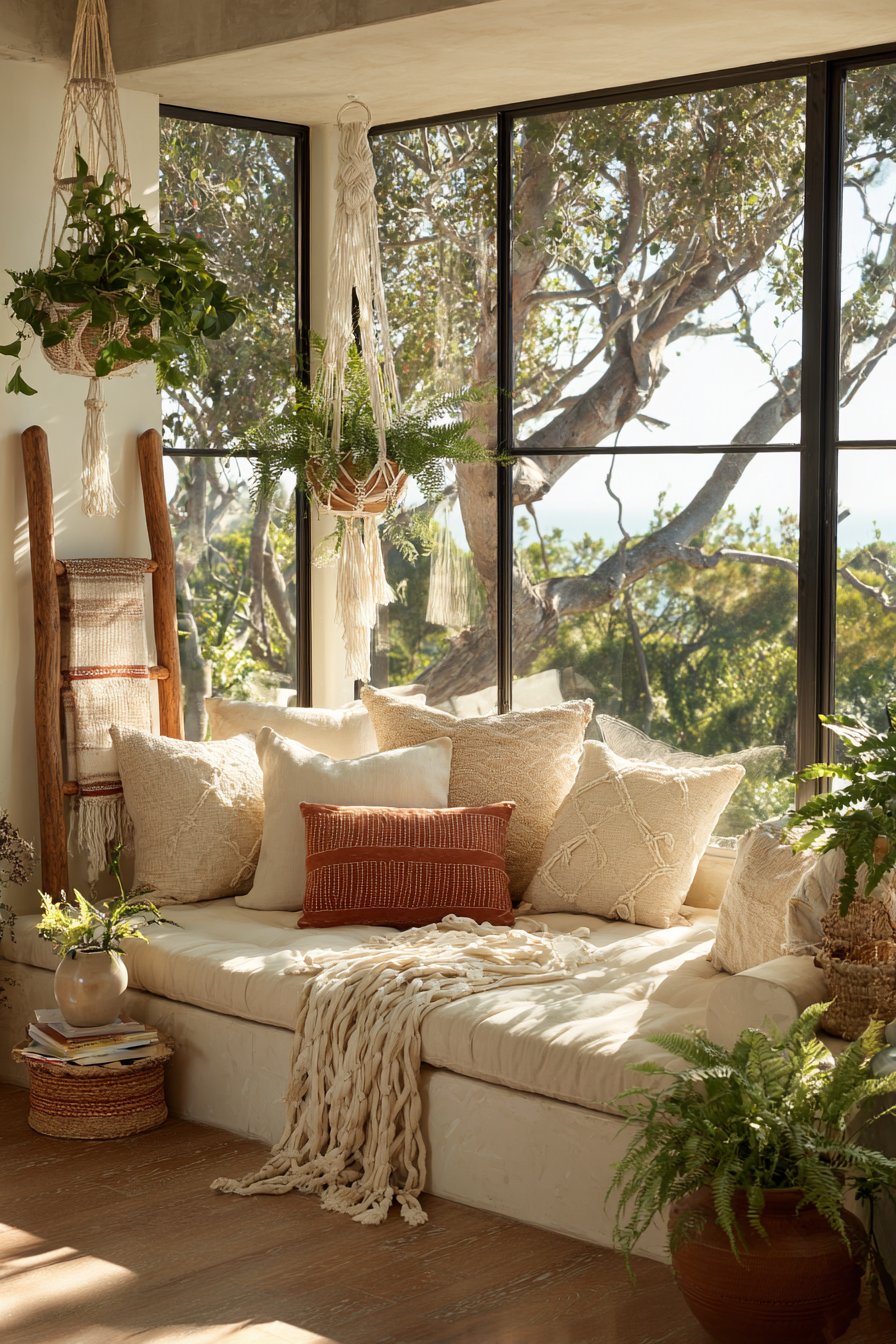
A rustic wooden ladder serves dual purposes as magazine rack and decorative element. The ladder brings vertical interest and organic texture to the space. Its rustic finish suggests aged wood and natural weathering. Potted ferns and a hanging macramé planter add lush green elements throughout. The ferns’ feathery fronds introduce soft, organic shapes. The macramé planter showcases handcrafted artistry while supporting plant life.
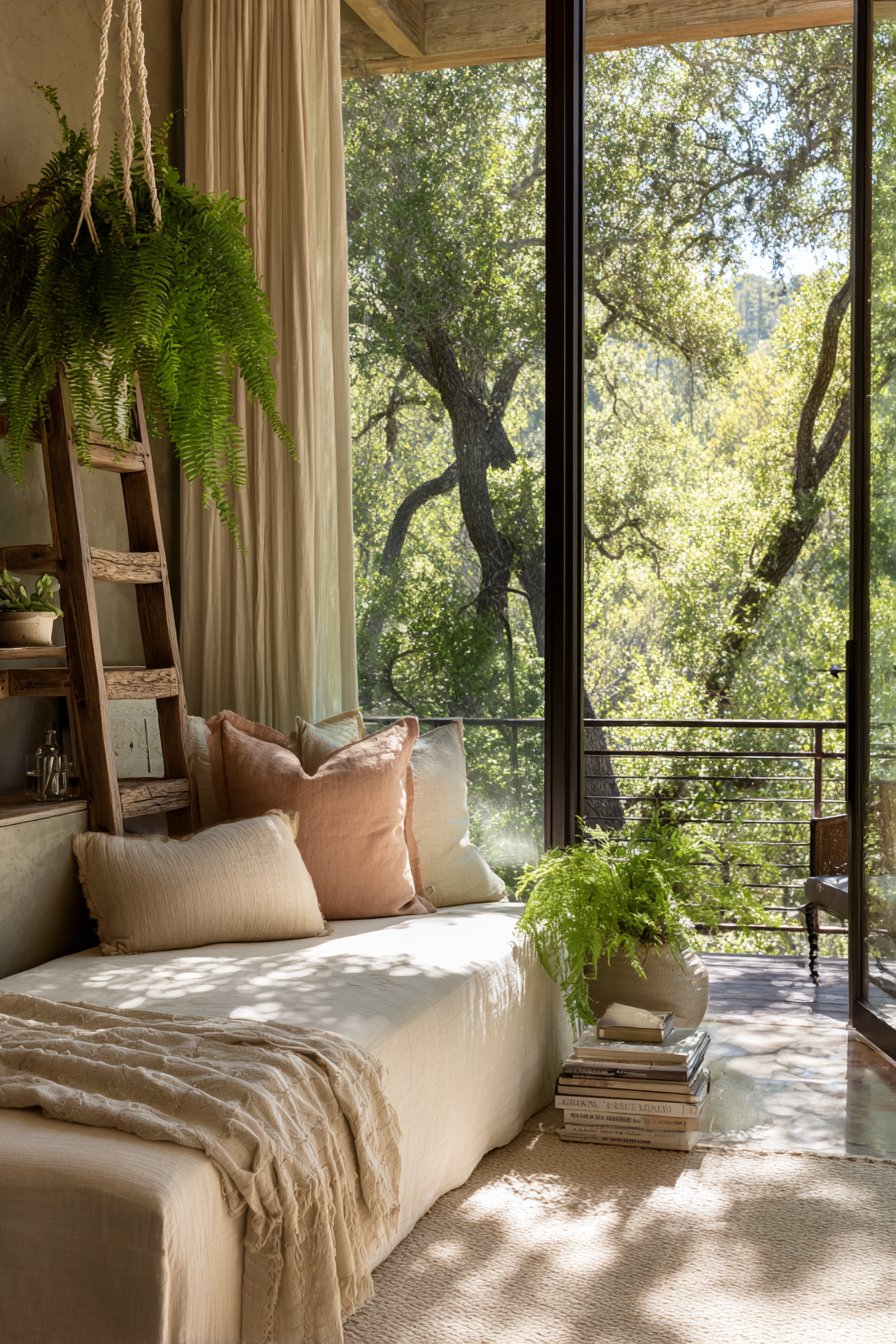
Natural afternoon light creates dappled patterns through nearby trees visible outside. These shifting light patterns connect the room to natural cycles and outdoor environments. The abundant natural light and organic materials create a vacation-like quality within the bedroom. This retreat-within-a-retreat offers escape without leaving home. The inviting space demonstrates how summer design prioritizes comfort, nature connection, and rejuvenation.
Key Design Tips:
- Position daybeds near windows with garden views
- Choose natural linen upholstery for breathability and texture
- Use oversized pillows for maximum lounging comfort
- Repurpose ladders as decorative storage solutions
- Add hanging plants to utilize vertical space
- Include ferns for lush, low-maintenance greenery
Why These Summer Bedroom Designs Excel
These ten summer bedroom concepts represent the pinnacle of seasonal interior design excellence. Each approach addresses the fundamental challenges of summer living: managing heat, maximizing natural light, and creating refreshing environments. The designs share common threads that define successful summer spaces: natural materials, breathable fabrics, light color palettes, and abundant natural light.
Natural materials dominate every concept, from oak and maple woods to jute, rattan, and bamboo. These organic materials regulate temperature better than synthetic alternatives. Wood breathes, allowing air circulation that prevents stuffiness. Woven fibers like jute and rattan add texture while remaining cool to the touch. Natural materials also improve indoor air quality and create psychological connections to outdoor environments. The emphasis on authenticity over artificial materials elevates these designs beyond temporary trends.
Breathable fabrics form another cornerstone of exceptional summer bedroom design. Belgian linen, cotton percale, and muslin allow air circulation through bedding. These natural fibers wick moisture away from skin, improving sleep quality during warm nights. The fabrics’ visible textures add visual interest without pattern competition. Lightweight throws and coverlets replace heavy quilts, reducing heat retention. The layered bedding approach allows adjustment based on temperature fluctuations throughout summer months.
Light color palettes maximize brightness while preventing heat absorption. Whites, creams, soft yellows, and pale blues reflect rather than absorb light and heat. These colors create psychological coolness even when temperatures rise. The restrained palettes provide calm backdrops for relaxation and sleep. Strategic color accents in coral, sage, aqua, and lavender introduce personality without overwhelming serenity. The sophisticated use of neutrals demonstrates mature design sensibility.
Natural light optimization distinguishes these concepts from ordinary bedrooms. Sheer curtains, large windows, and strategic mirror placement multiply available daylight. Light-colored floors and walls bounce illumination throughout spaces. The emphasis on transparency and openness creates a connection to outdoor environments. Window seats and daybeds positioned near windows maximize light exposure and ventilation. This approach reduces artificial lighting needs while improving circadian rhythm regulation.
Practical cooling solutions integrate seamlessly with aesthetic elements. Ceiling fans with natural fiber blades, vintage metal fans, and cross-ventilation strategies provide comfort without compromising style. The designs prioritize air movement through strategic window placement and fabric choices. Open storage reduces visual clutter while improving air circulation. These functional elements become decorative features rather than necessary evils.
Coastal and natural themes appear throughout because they fundamentally align with summer’s essence. Beach-inspired elements like driftwood, nautical stripes, and weathered finishes evoke vacation relaxation. Botanical elements through plants, prints, and natural materials bring outdoor freshness inside. These themes tap into universal associations between summer and nature, beaches, and outdoor living.
The versatility of these designs ensures broad appeal across different home styles. A farmhouse can embrace the shiplap and reclaimed wood concepts. A contemporary home adapts the minimalist vignette approach. Coastal homes naturally incorporate nautical elements. Urban apartments benefit from space-maximizing open storage and window-focused designs. This adaptability makes summer bedroom design accessible regardless of architectural style or budget.
Sustainability underlies many design choices presented here. Natural materials, quality textiles, and timeless aesthetics resist fast-fashion interior trends. Investing in Belgian linen, solid wood furniture, and well-made rattan pieces creates longevity. These items improve with age rather than deteriorating. The emphasis on natural light reduces energy consumption. Plants improve indoor air quality naturally. These sustainable choices benefit both occupants and environment.
The psychological benefits of well-designed summer bedrooms extend beyond physical comfort. Light-filled spaces improve mood and energy levels. Natural materials reduce stress and promote calm. The connection to outdoor elements through colors, textures, and views supports mental wellbeing. Creating dedicated relaxation spaces like reading nooks encourages healthy downtime habits. The vacation-like qualities of these designs provide daily escape from stress.
Texture plays an understated but crucial role in these successful designs. The combination of smooth linens, woven fibers, weathered woods, and textured plasters creates multisensory experiences. Visual interest comes from material variety rather than busy patterns. This sophisticated approach to texture adds depth without visual chaos. The tactile qualities encourage interaction and appreciation of material authenticity.
Storage solutions integrated throughout these concepts maintain visual clarity essential to summer aesthetics. Open clothing racks, floating shelves, woven baskets, and vintage trunks provide functionality while contributing to design narratives. The visible storage encourages seasonal wardrobe curation and mindful consumption. Eliminating visual clutter allows light to move freely through spaces. This organizational clarity supports the peaceful, uncluttered feeling central to summer bedroom success.
The photography perspectives mentioned in the original concepts matter significantly. Wide-angle views capture spatial relationships and light quality. Detail shots reveal material authenticity and styling nuance. Golden hour and morning light photography showcase how natural illumination transforms spaces throughout the day. This attention to light documentation emphasizes its central importance in summer design.
These designs avoid common summer bedroom mistakes. They don’t rely on literal beach kitsch or overwrought nautical themes. They resist the temptation toward bold, saturated colors that can feel harsh in bright light. They maintain sophistication while embracing casual comfort. The balance between refined and relaxed creates spaces that feel special without being precious.
Accessibility remains important across all concepts. Most elements can be sourced affordably through vintage shops, natural material suppliers, and mainstream retailers. DIY opportunities abound: painting shiplap, creating gallery walls, repurposing ladders, and styling with found driftwood. The designs encourage creativity within established frameworks. This accessibility democratizes quality summer bedroom design.
Seasonal flexibility allows these bedrooms to transition successfully beyond summer months. Natural materials and neutral palettes adapt easily to fall and winter styling. Simply adding warmer throws, heavier curtains, and different accent colors transforms summer spaces for cooler seasons. This year-round functionality maximizes investment in quality pieces. The foundational elements remain constant while accessories rotate seasonally.
The emphasis on natural ventilation and cooling aligns with contemporary wellness and sustainability priorities. Reducing air conditioning dependence through thoughtful design benefits health, the environment, and budgets. Cross-ventilation, ceiling fans, and breathable materials create comfort through passive strategies. This approach resonates with increasing awareness of environmental impact and energy consumption.
These summer bedroom designs ultimately succeed because they address fundamental human needs: comfort, beauty, connection to nature, and restorative rest. They demonstrate that seasonal design can be both aesthetically sophisticated and functionally superior. The careful consideration of materials, light, color, and texture creates spaces that nurture wellbeing. These aren’t just pretty rooms—they’re carefully crafted environments that enhance daily life and sleep quality throughout the summer months.
Conclusion
Creating the perfect summer bedroom requires thoughtful attention to materials, light, color, and texture. The ten design concepts explored here demonstrate diverse approaches to seasonal interior design. From crisp coastal aesthetics to warm butter-yellow retreats, each offers unique pathways to summer comfort. Natural materials like oak, linen, jute, and rattan provide authentic texture while regulating temperature. Light color palettes maximize brightness and create psychological coolness.
The key takeaways from these exceptional designs include prioritizing natural light through strategic window treatments and reflective surfaces. Invest in quality breathable fabrics like Belgian linen and cotton percale for superior comfort. Embrace natural materials that age beautifully and support sustainability. Create dedicated relaxation spaces that encourage downtime and reading. Integrate practical cooling elements that enhance rather than detract from aesthetics.
Remember that successful summer bedroom design balances beauty with functionality. Your bedroom should provide restorative rest while delighting your senses. Don’t fear experimenting with these ideas in your own space. Start with small changes: swap heavy bedding for lightweight linens, add sheer curtains, or introduce natural fiber rugs. Layer improvements over time based on your budget and preferences.
Summer bedrooms celebrate the season’s best qualities: abundant light, fresh air, connection to nature, and leisurely relaxation. These spaces remind us to slow down and savor simple pleasures. Whether you embrace full coastal transformations or subtle seasonal updates, let these concepts inspire your personal summer sanctuary. Your bedroom deserves the same care and creativity you bring to other areas of life. Transform your sleeping space into a summer retreat that rejuvenates and inspires throughout the warmest months and beyond.
