


The art of creating a bathroom sanctuary has evolved beyond mere functionality to become a profound statement of personal style and wellbeing. In today’s fast-paced world, the bathroom serves as a private retreat where we begin and end our days, making thoughtful interior design more crucial than ever. A well-designed bathroom doesn’t just serve practical needs—it nurtures the soul, calms the mind, and elevates daily routines into rituals of self-care. The fusion of design philosophies from different cultures has given birth to some of the most compelling interior aesthetics of our time.
Among these hybrid styles, Japandi has emerged as a dominant force in contemporary bathroom design. This harmonious blend of Japanese minimalism and Scandinavian functionality creates spaces that are both serene and livable. The Japandi aesthetic strips away excess while celebrating natural materials, honest craftsmanship, and the beauty of imperfection. It embraces the Japanese concept of “ma” (negative space) alongside the Scandinavian “hygge” (cozy contentment), resulting in bathrooms that feel simultaneously spacious and warm, minimal yet inviting.
This comprehensive guide explores ten distinct Japandi bathroom concepts, each showcasing unique applications of this beloved design philosophy. From deep soaking tubs positioned beneath bamboo-shaded windows to minimalist walk-in showers featuring natural stone and warm wood accents, these designs demonstrate the versatility and timeless appeal of Japandi principles. Whether you’re renovating a spacious master bathroom or optimizing a compact powder room, these thoughtfully curated examples will inspire you to create your own tranquil retreat. Our the minimalist kitchen ideas has more inspiration along these same lines.
1. Serene Soaking Sanctuary with Natural Stone Tub
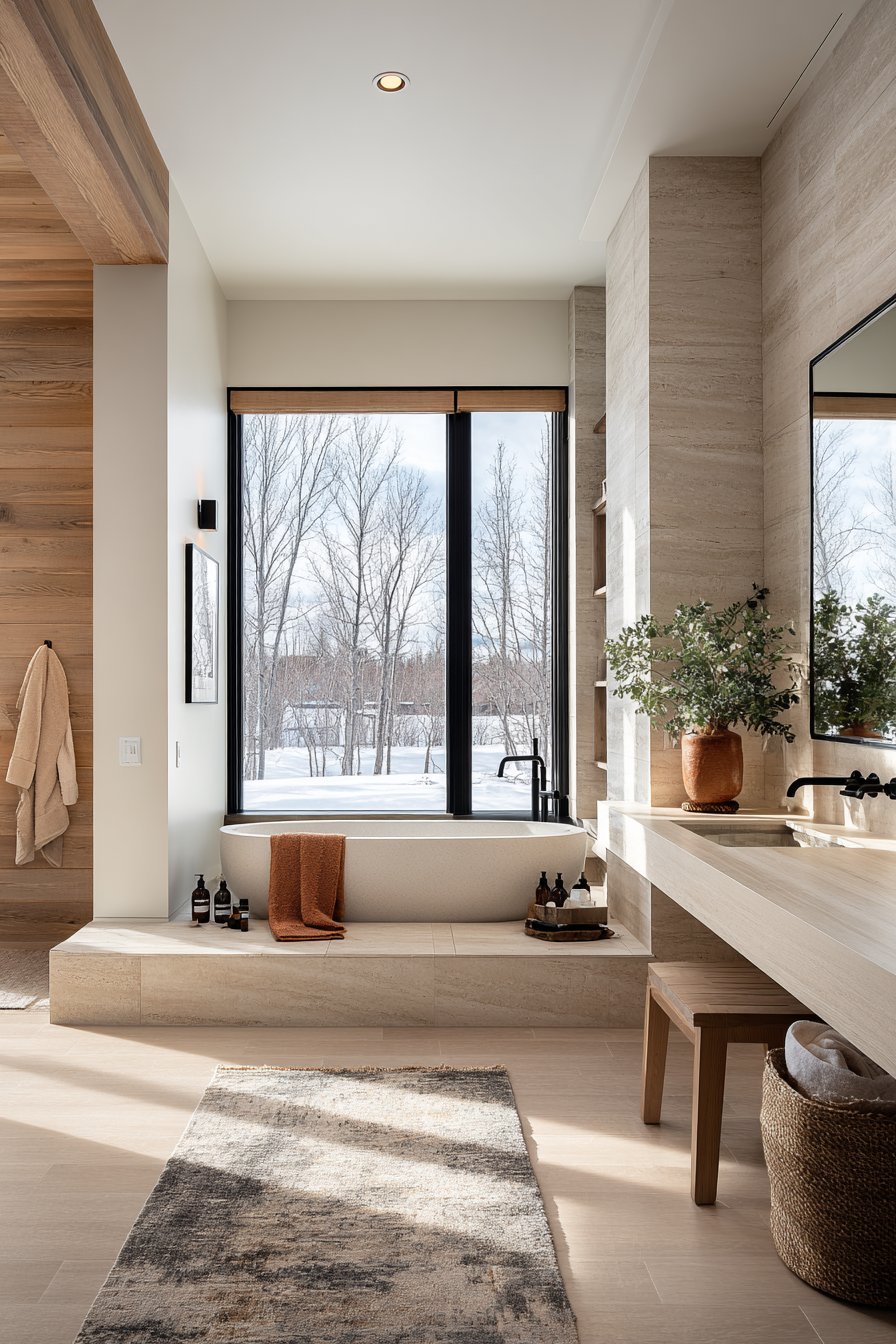
The centerpiece of this Japandi bathroom is an exquisite deep soaking tub crafted from natural stone, positioned strategically beneath a generously sized window. Bamboo blinds filter daylight into soft, diffused rays that dance across the tub’s organic surface.
The window placement isn’t merely aesthetic—it creates a connection with nature while bathing, transforming a routine activity into a meditative experience. Light oak wood paneling adorns one wall, introducing warmth that balances the cool stone elements.
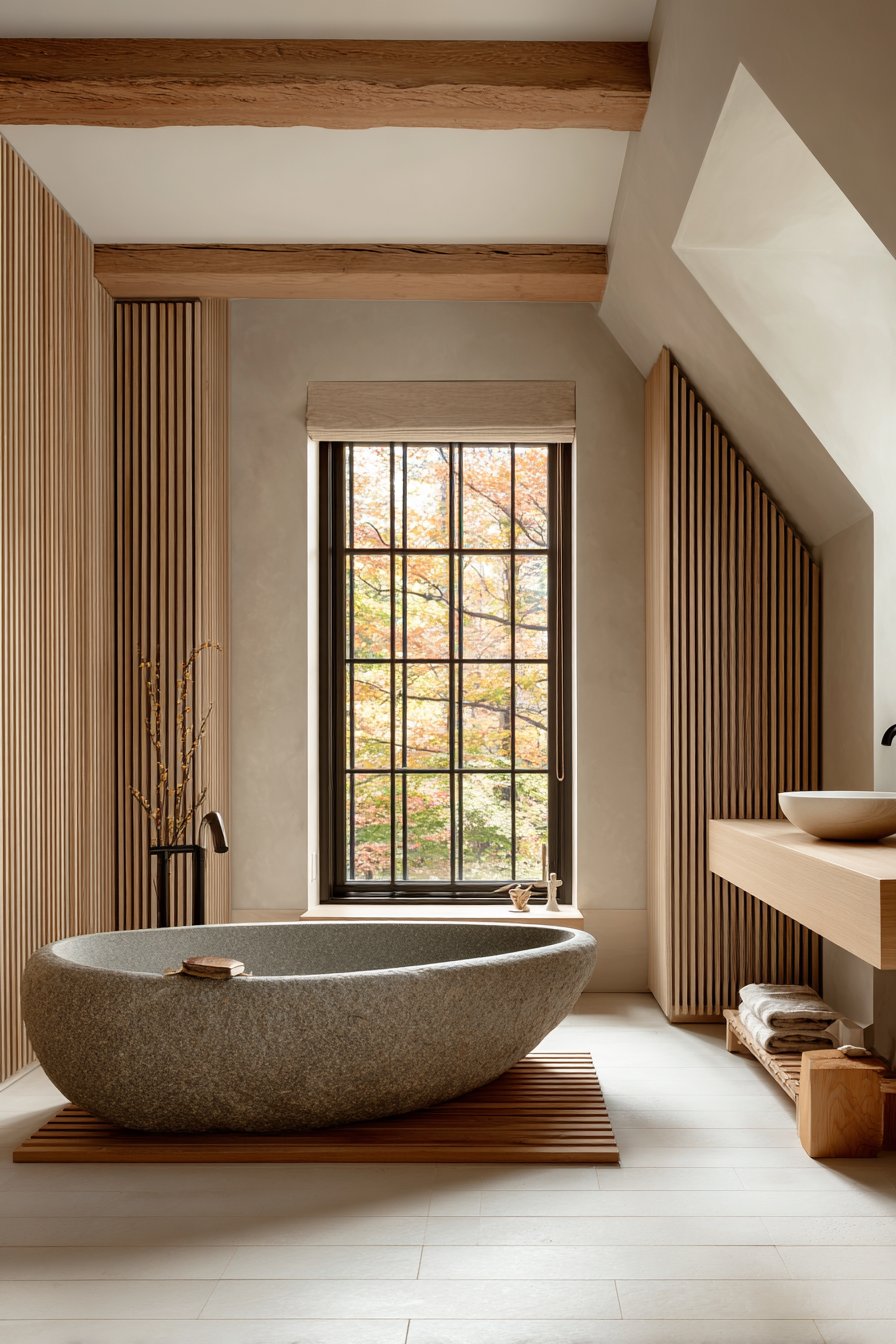
The remaining walls feature crisp white plaster, providing a clean canvas that amplifies the natural light throughout the space. A minimalist floating vanity in pale ash wood maintains visual continuity with the oak paneling. The integrated ceramic sink demonstrates the Japandi commitment to seamless, uncluttered design. Every element serves a purpose without calling unnecessary attention to itself.
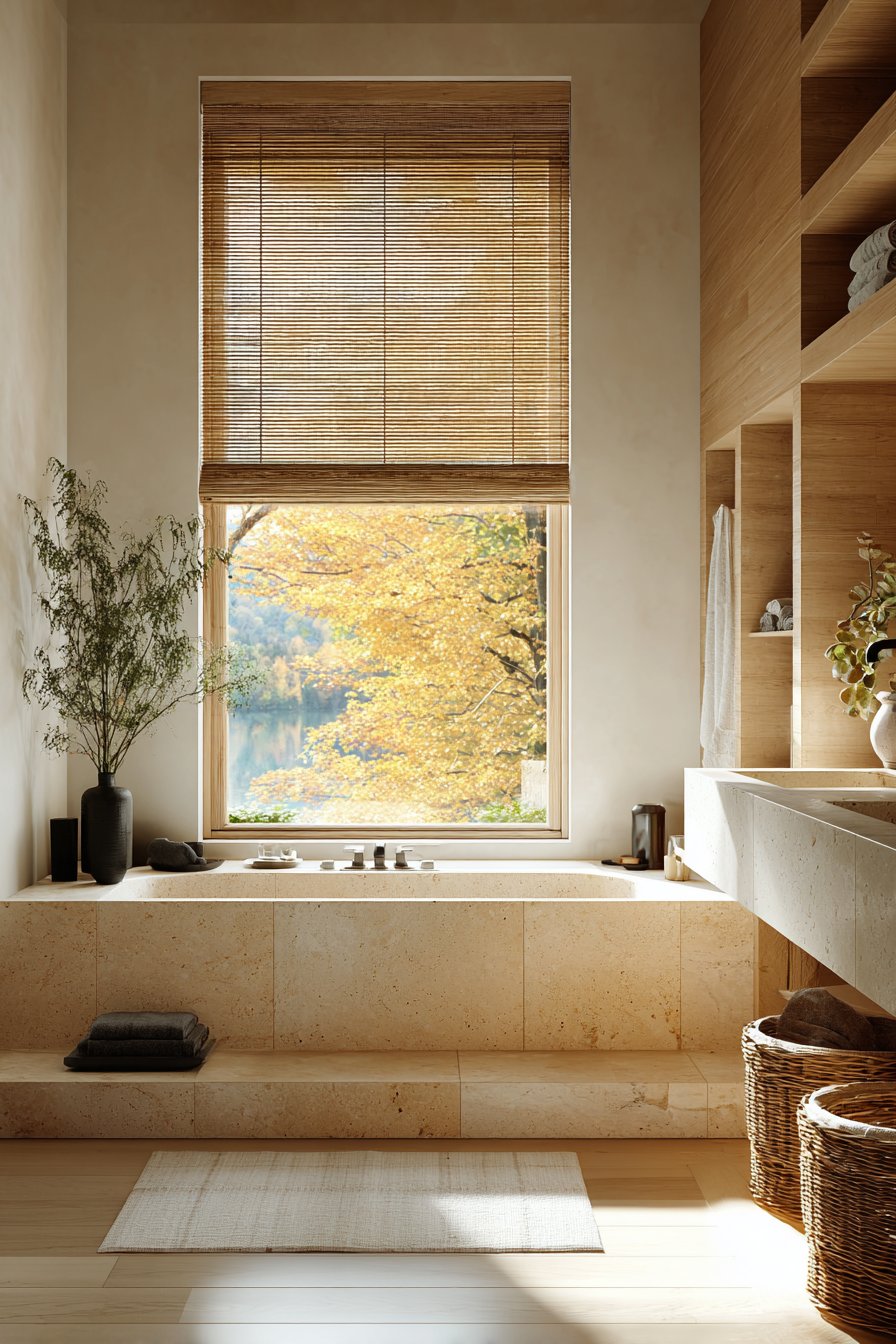
Natural diffused daylight plays a crucial role in this design, highlighting the organic textures and subtle material variations. The interplay between smooth plaster, rich wood grain, and rough-hewn stone creates visual interest without overwhelming the senses. Shadows shift throughout the day, ensuring the space never feels static or sterile.
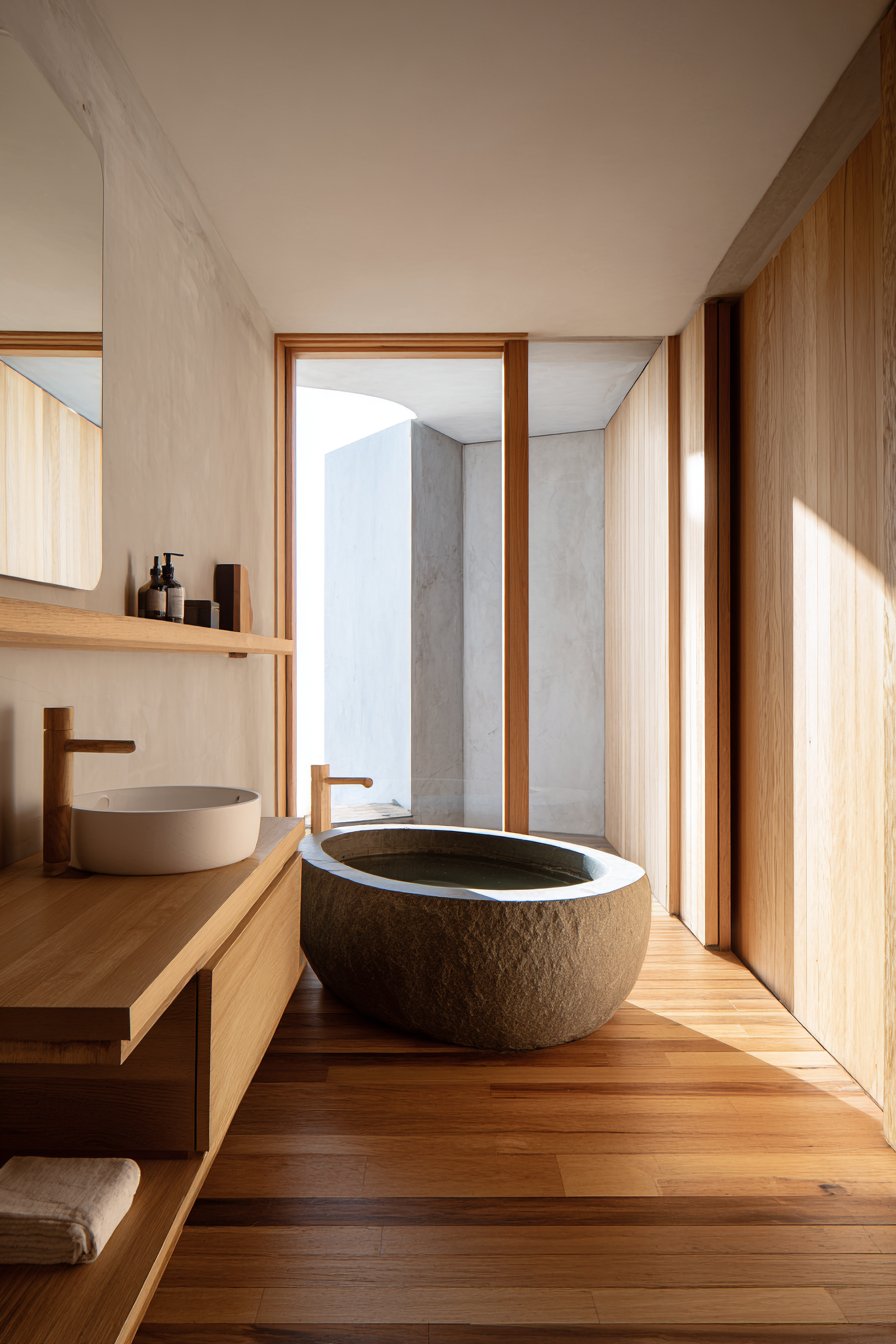
This bathroom exemplifies the balanced fusion of Japanese and Scandinavian principles. The deep soaking tub reflects Japanese bathing culture, while the pale woods and practical layout echo Scandinavian sensibilities. The result is a space that invites contemplation and relaxation in equal measure. Our scandinavian bathroom ideas has more inspiration along these same lines.
Key Design Tips:
- Position the bathtub near natural light sources for a spa-like atmosphere
- Select natural stone with visible texture and variation for authenticity
- Combine light oak and pale ash woods for subtle tonal layering
- Install bamboo blinds for privacy while maintaining soft, filtered illumination
- Keep surfaces minimal to emphasize the quality of individual materials
2. Minimalist Vanity with Seamless Functionality
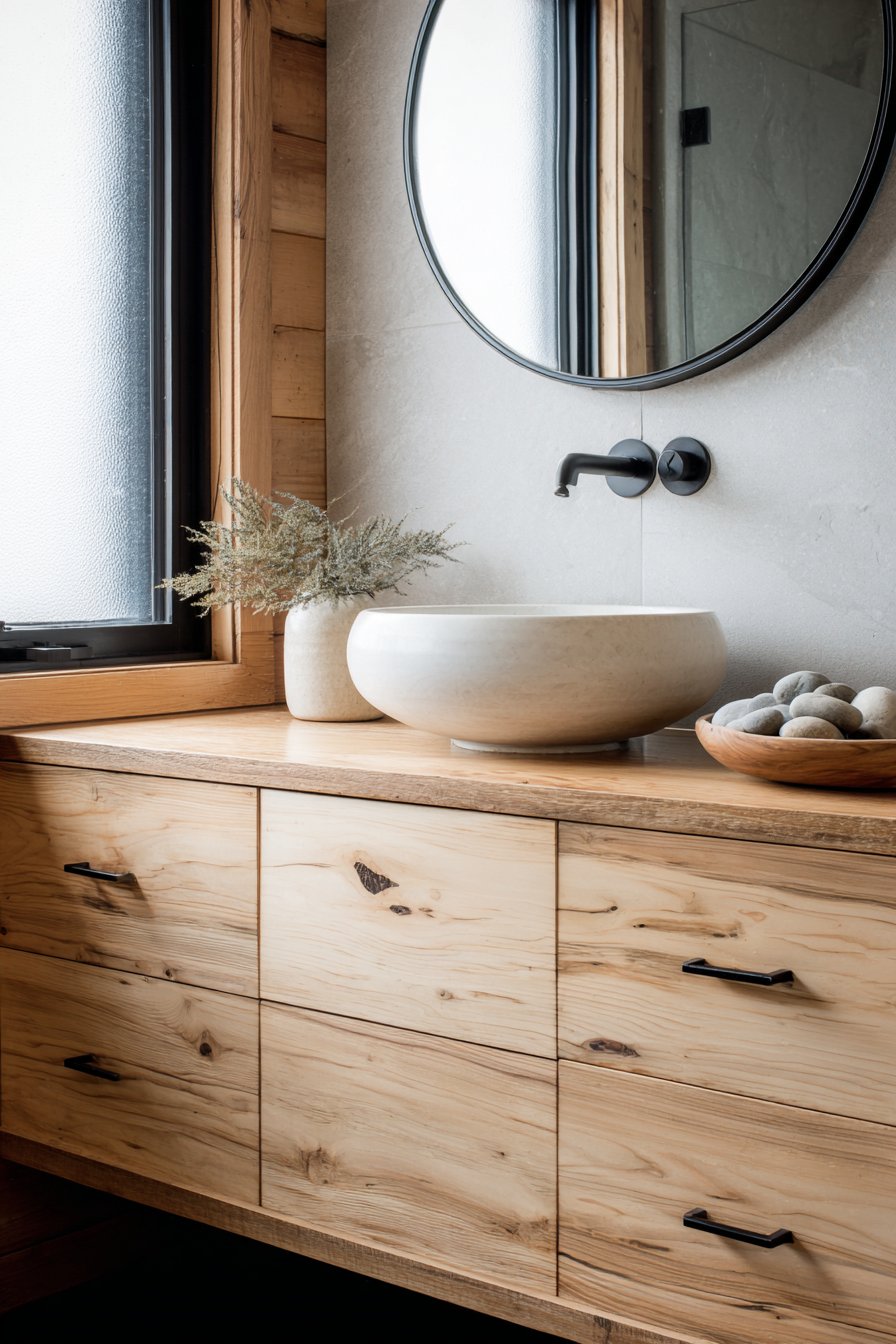
This Japandi bathroom vanity area showcases the philosophy of “less is more” through its wall-mounted wooden cabinet in light birch. The handleless push-to-open drawers exemplify seamless minimalism, eliminating visual clutter while maintaining full functionality.
Every design decision serves both aesthetic and practical purposes. The absence of hardware creates uninterrupted wood surfaces that highlight the material’s natural beauty.
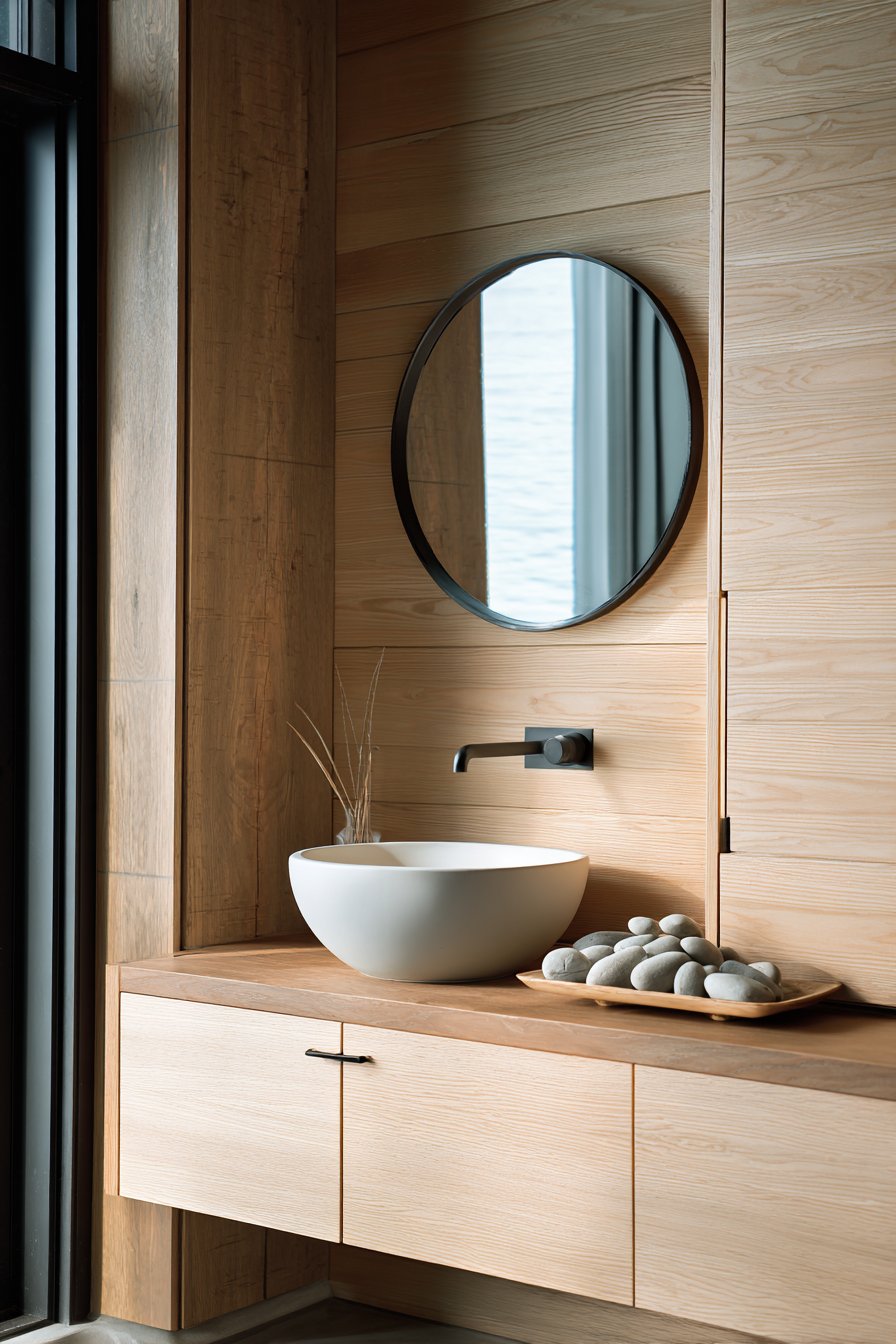
A round vessel sink in matte white ceramic sits gracefully atop the warm wood surface. The circular form introduces gentle curves to balance the rectangular cabinet geometry. Above, a simple round mirror with a thin black metal frame provides necessary reflection without dominating the wall space. The black frame creates subtle definition without harsh contrast.
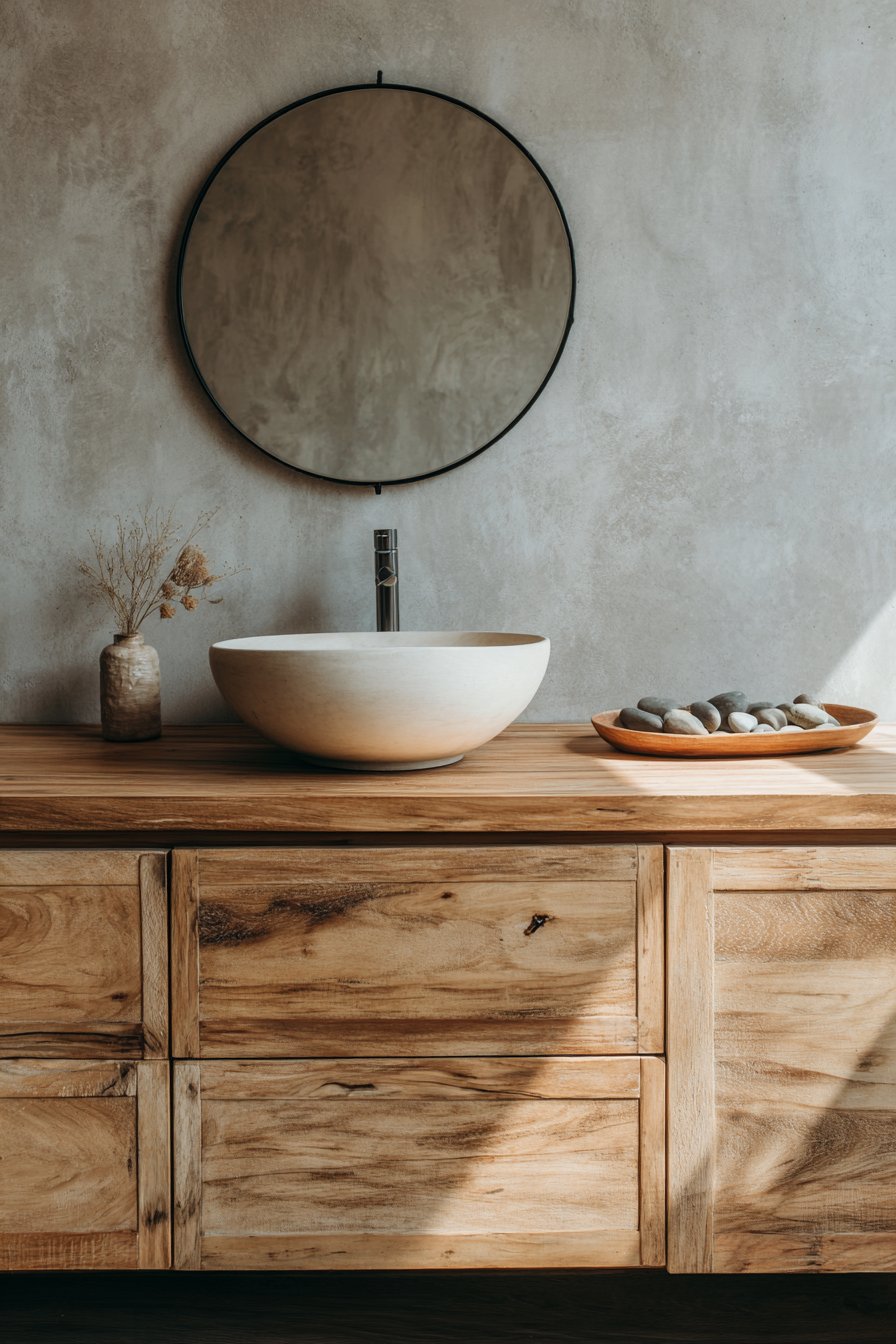
Natural river stones arranged in a shallow wooden tray bring organic decoration to the vanity counter. This small gesture connects the interior space to natural landscapes, embodying the Japanese principle of bringing nature indoors. The stones’ smooth surfaces and varied earth tones add tactile and visual interest.
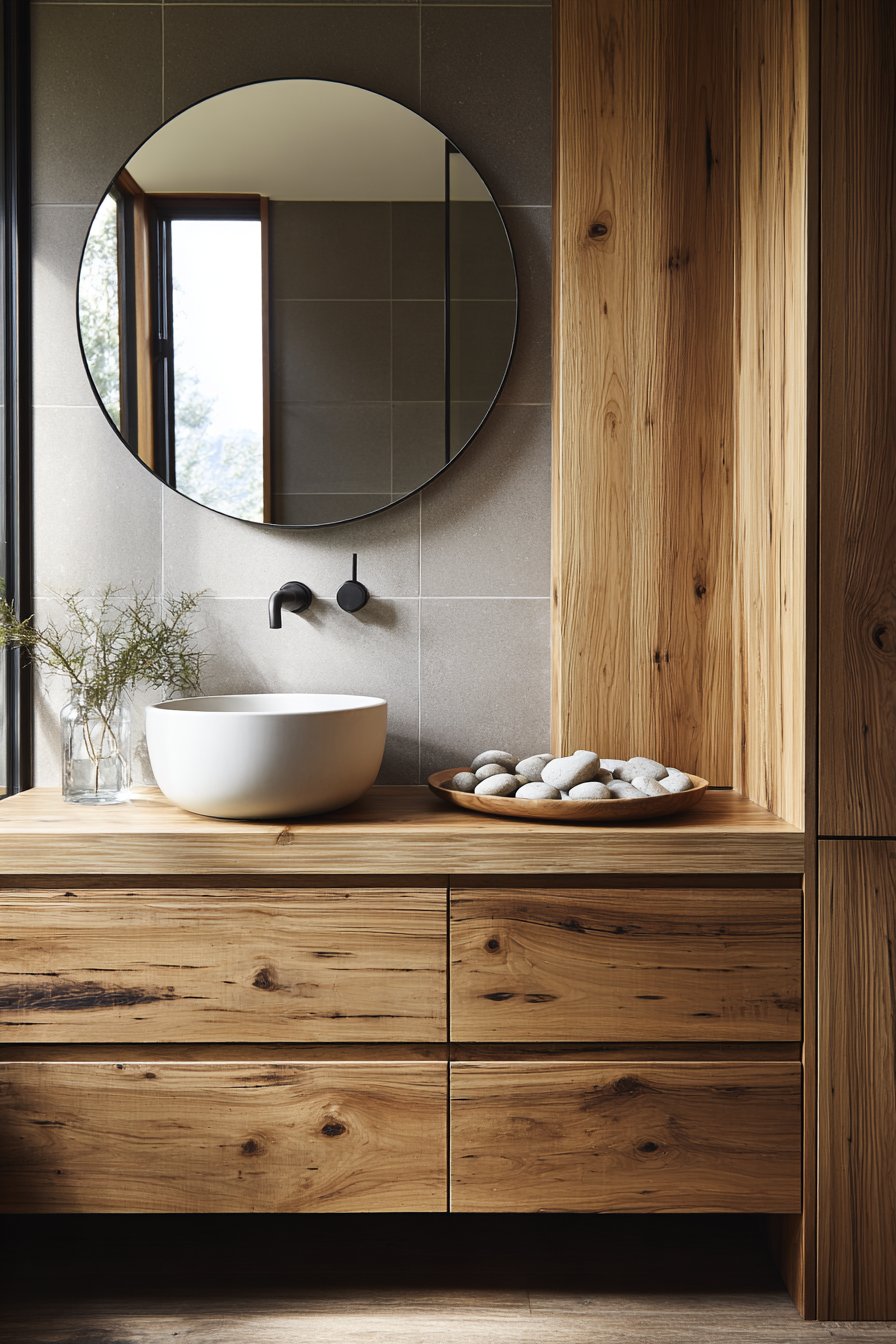
Soft natural window light creates gentle highlights across the wood grain texture, revealing the birch’s characteristic pale color and fine patterns. The lighting changes throughout the day, keeping the space dynamic. This design proves that minimalism doesn’t mean cold or austere—the warm wood tones and natural elements create an inviting atmosphere.
Key Design Tips:
- Choose handleless cabinetry for clean, uninterrupted surfaces
- Pair vessel sinks with wood countertops for material contrast
- Select round mirrors to soften angular bathroom layouts
- Incorporate natural elements like river stones for organic decoration
- Position vanities near windows to maximize natural illumination
3. Walk-In Shower with Stone and Wood Balance
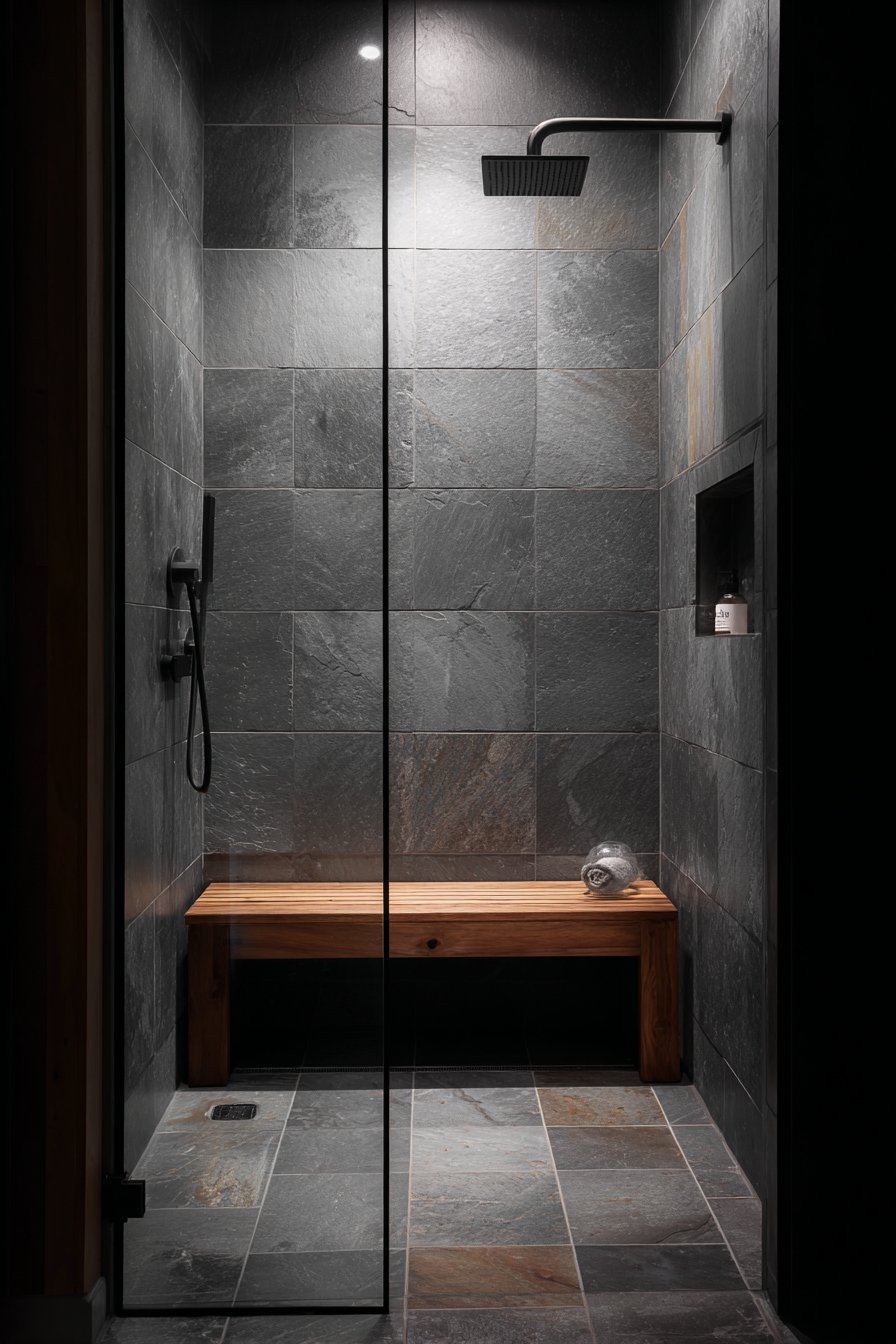
This practical Japandi bathroom features a walk-in shower that demonstrates masterful material selection. Floor-to-ceiling natural grey slate tiles showcase subtle tonal variations that prevent monotony. Each tile differs slightly from its neighbors, creating an organic pattern that machine-made uniformity cannot replicate. The grey slate provides a cool, sophisticated foundation for the entire shower space.
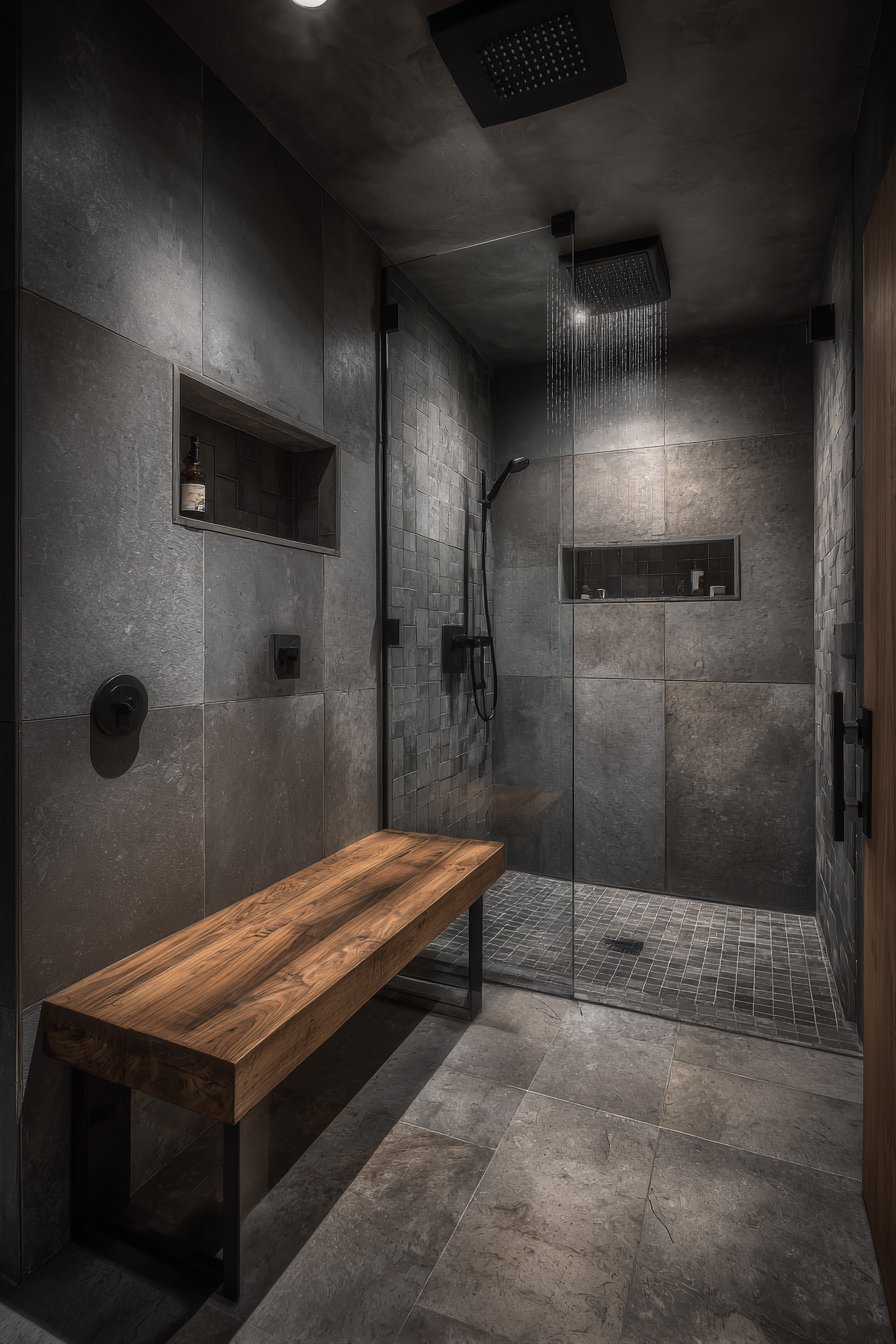
A frameless glass partition maintains the open, minimalist feel essential to Japandi design. The transparency allows the eye to travel through the space uninterrupted, making the bathroom feel larger.
A simple wooden bench in teak introduces warmth and provides both seating and storage functionality. The bench’s rich honey tones contrast beautifully with the cool grey slate.
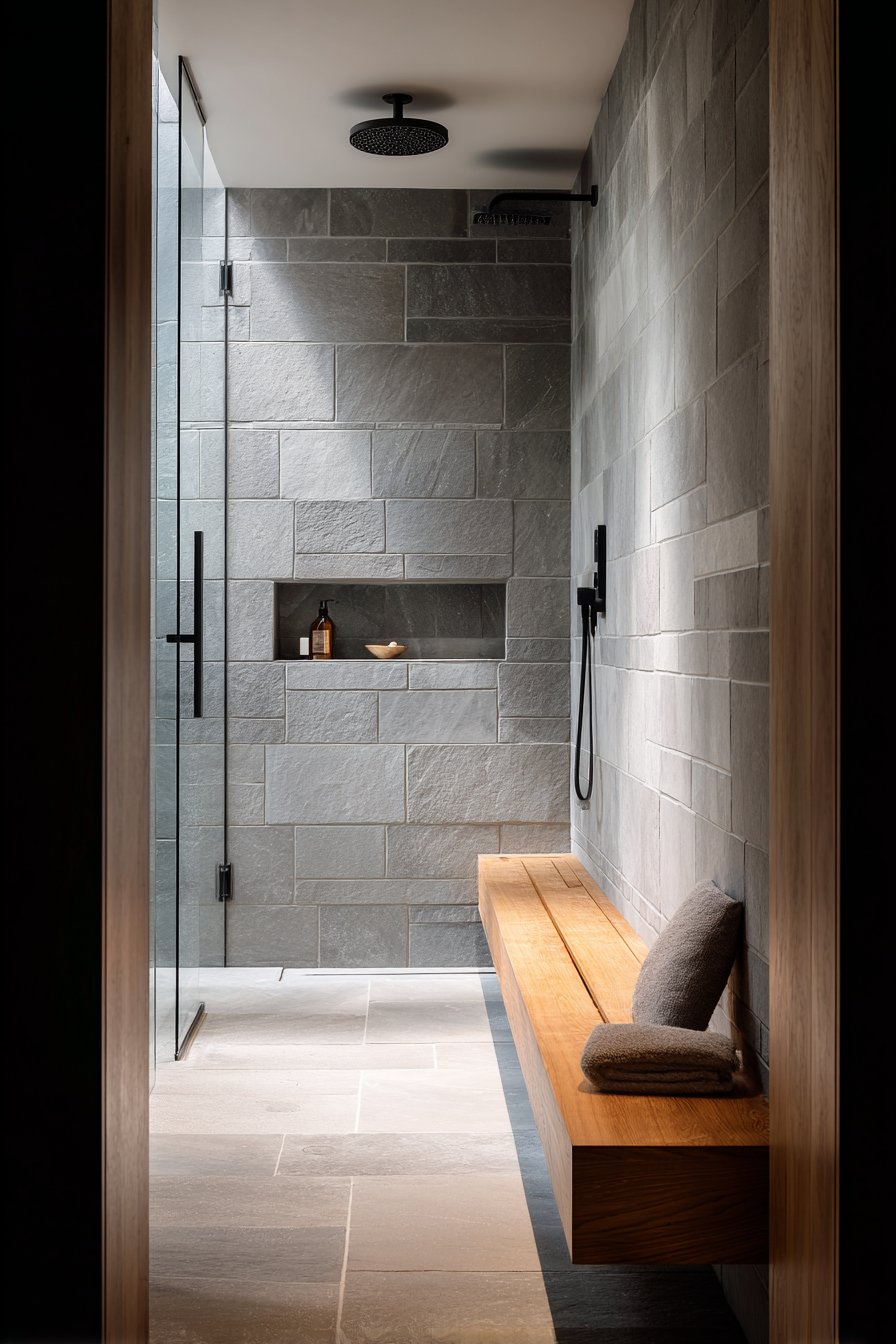
Matte black rainfall showerhead and fixtures offer understated contrast against the light-toned materials. The black elements ground the design without overwhelming it. A recessed niche with clean lines holds minimal toiletries, keeping surfaces clear and functional. The niche’s dimensions are carefully considered to be useful without appearing cavernous.
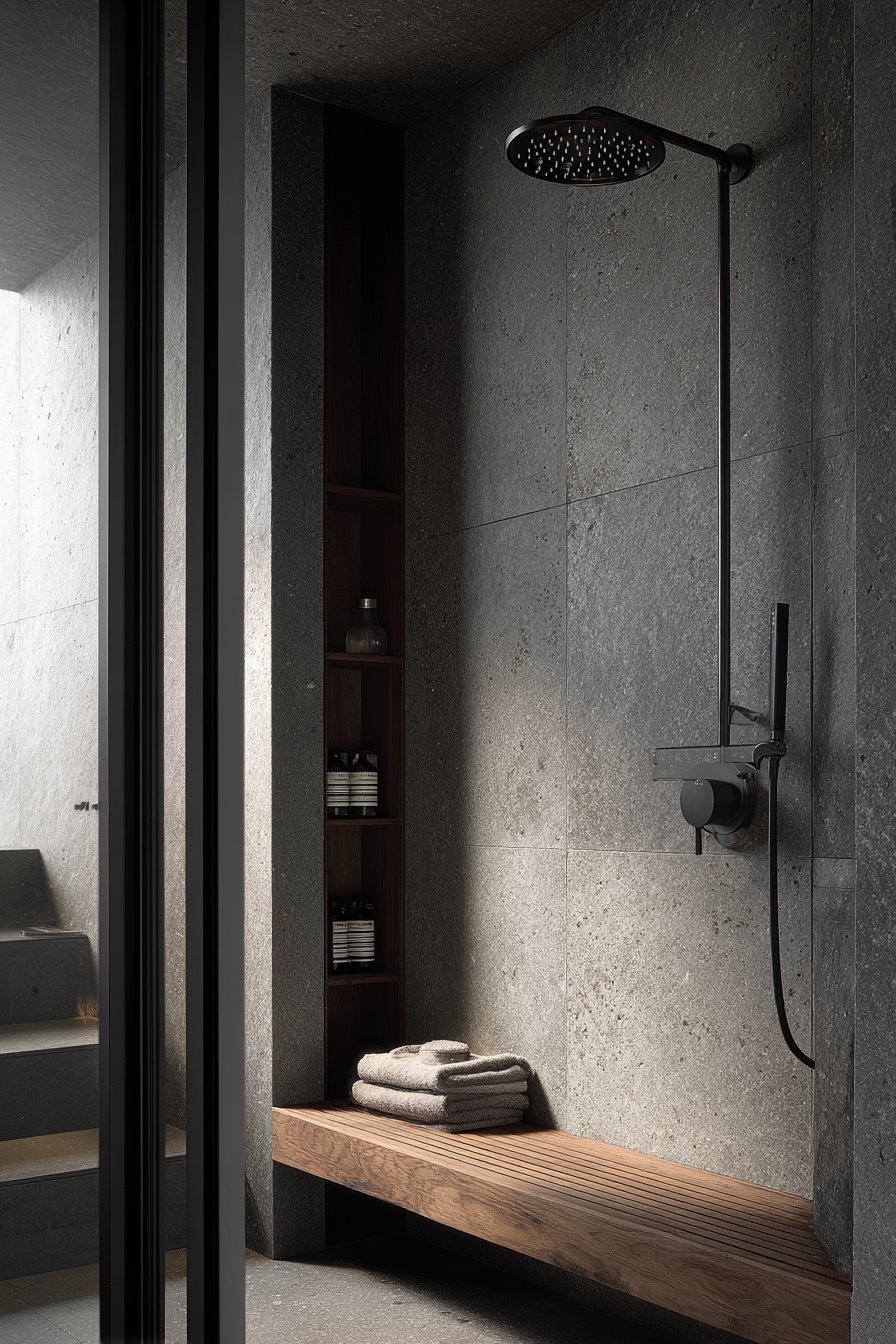
The interplay between cool stone and warm wood elements defines this shower design. Natural lighting emphasizes texture details—the slate’s natural cleaving, the teak’s tight grain, and the glass’s crystal clarity. This thoughtful material selection creates a shower experience that engages all the senses.
Key Design Tips:
- Use natural stone tiles with color variation for organic interest
- Install frameless glass partitions to maintain spatial openness
- Add wooden benches for warmth and practical functionality
- Choose matte black fixtures for subtle, modern contrast
- Create recessed niches to eliminate clutter from shower surfaces
4. Built-In Storage with Organic Texture
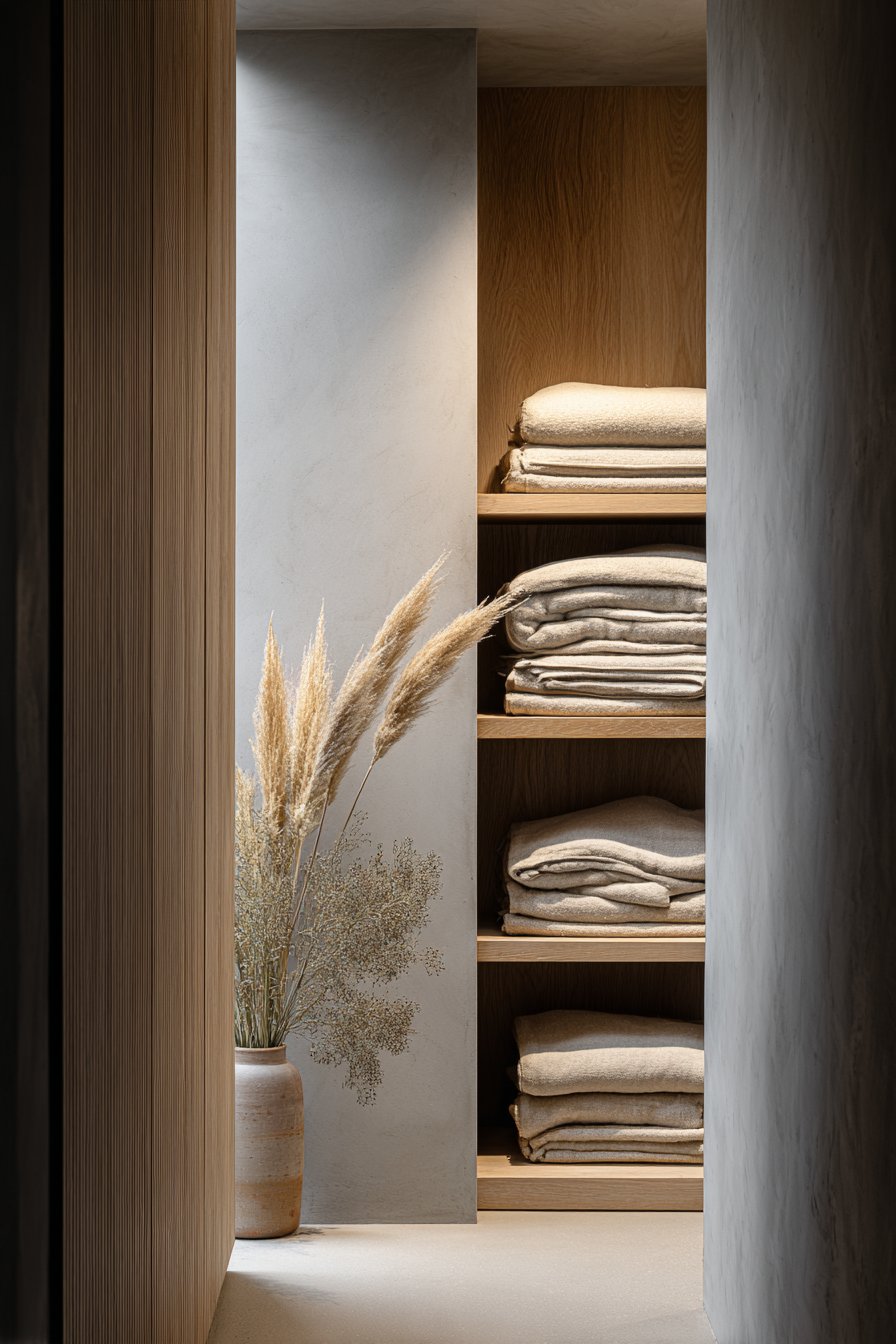
This Japandi bathroom storage solution demonstrates that organization can be beautiful. Built-in wall niches feature natural oak wood backing that transforms functional storage into architectural features.
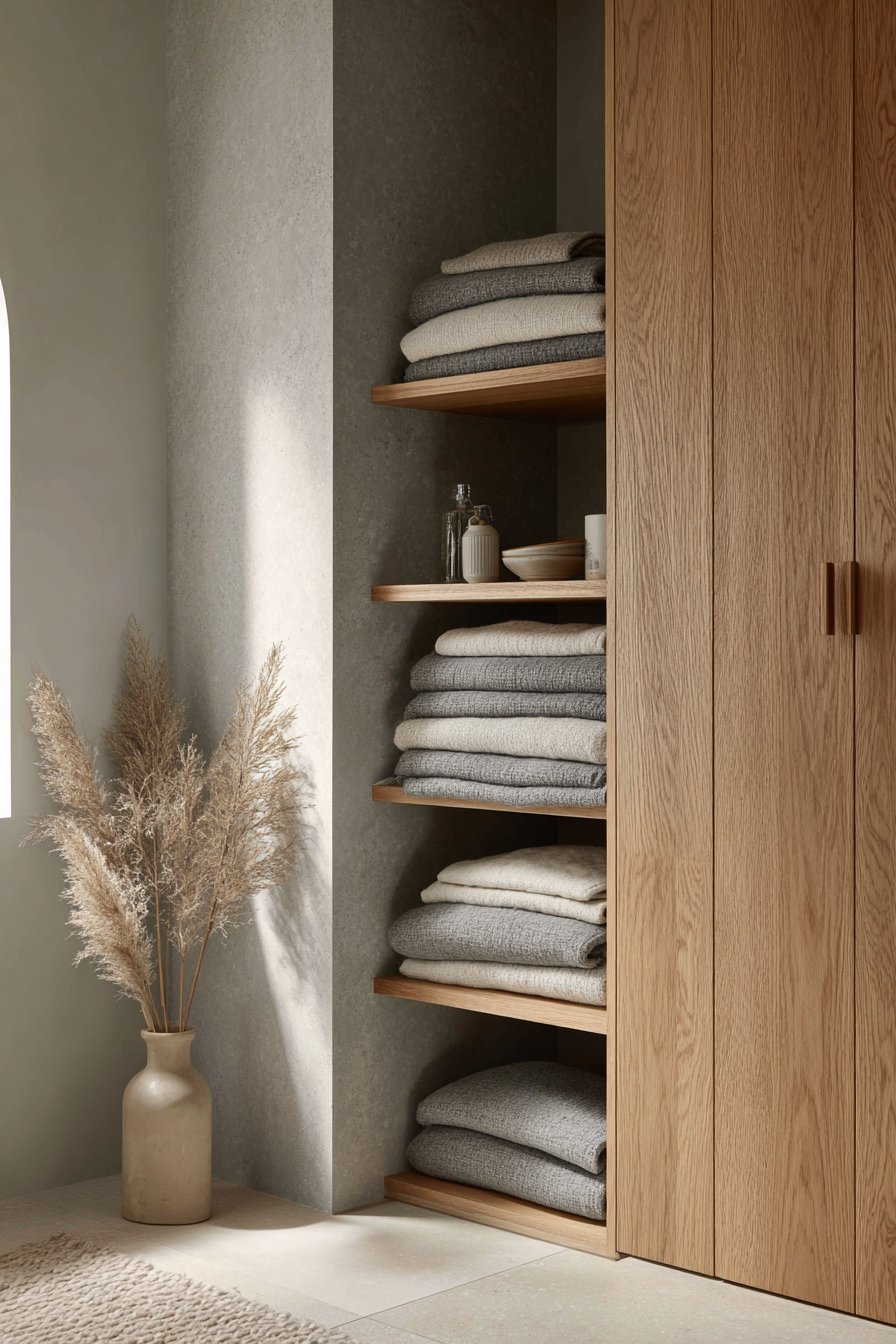
The wood’s warmth prevents the niches from appearing as cold voids in the wall. Simple open shelving displays neatly folded towels in natural linen and cotton, turning everyday necessities into decorative elements.
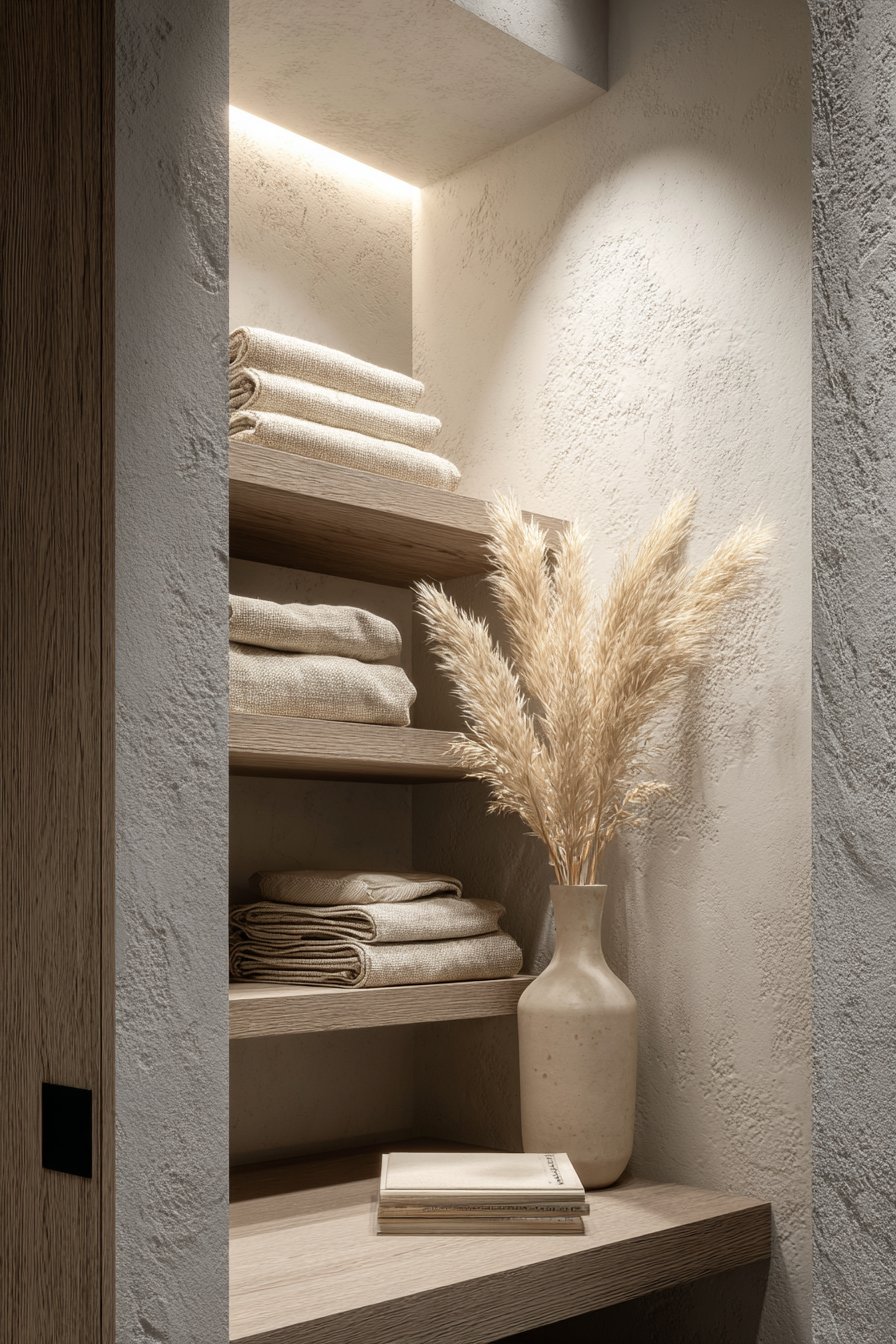
The surrounding walls showcase light grey textured plaster with a subtle organic finish. This textured surface adds depth and visual interest while maintaining the neutral color palette. The plaster’s slight irregularities catch light differently throughout the day, creating an ever-changing backdrop. Unlike perfectly smooth walls, this finish feels handcrafted and authentic.
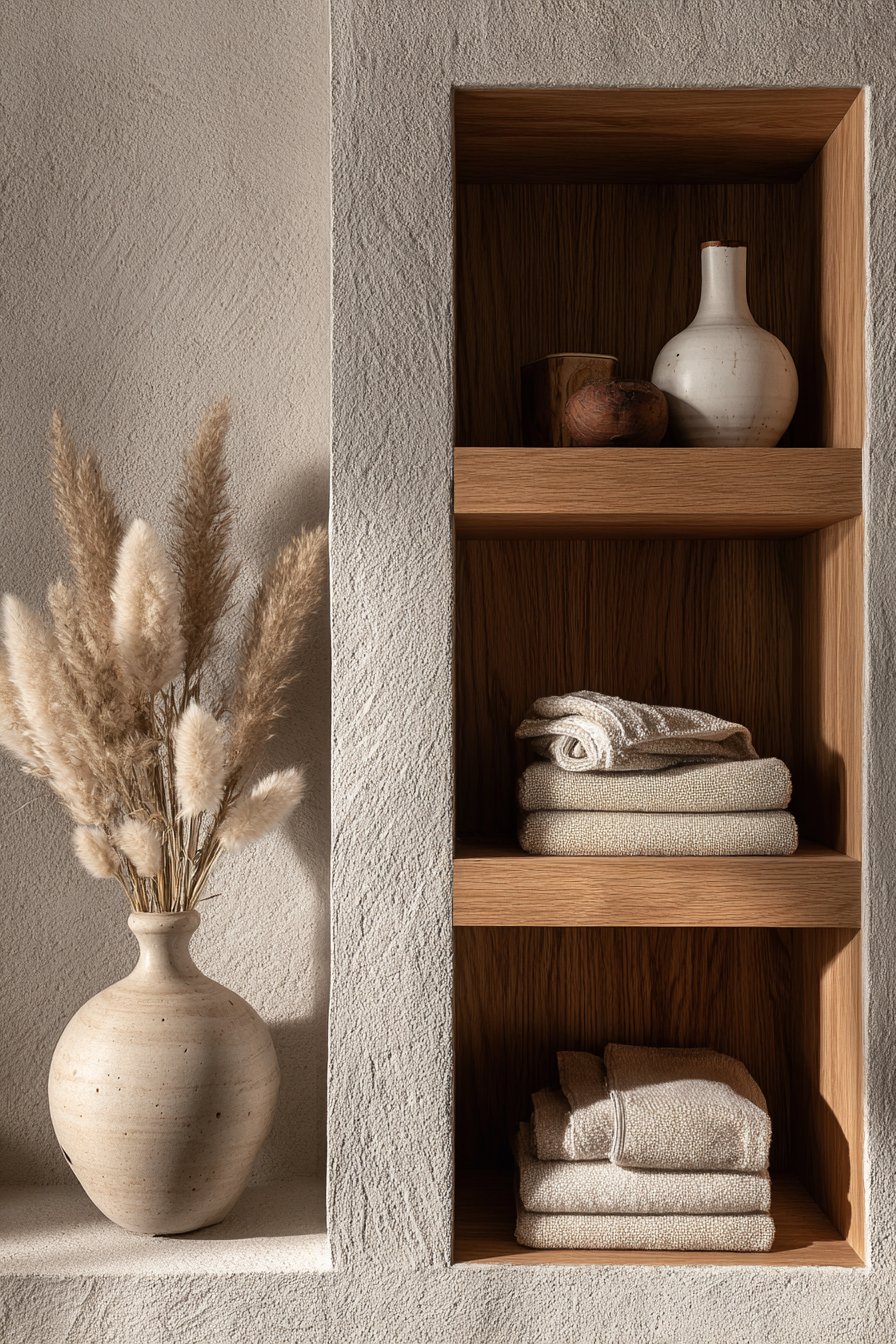
A small arrangement of dried pampas grass in a ceramic vase adds a natural element without requiring maintenance. The feathery plumes introduce gentle movement and organic shapes. The ceramic vase’s simple form and neutral glaze complement the overall aesthetic without competing for attention.
Soft diffused lighting from above creates depth and highlights the layered neutral tones. The lighting design ensures the niches become focal points while maintaining the bathroom’s serene ambiance. This approach to storage proves that Japandi design can be both beautiful and highly functional.
Key Design Tips:
- Install built-in niches with wood backing for warmth
- Display folded towels in neutral tones as decorative elements
- Choose textured plaster finishes for subtle visual depth
- Add dried natural elements like pampas grass for organic beauty
- Use recessed lighting to highlight storage areas effectively
5. Textural Details and Material Authenticity
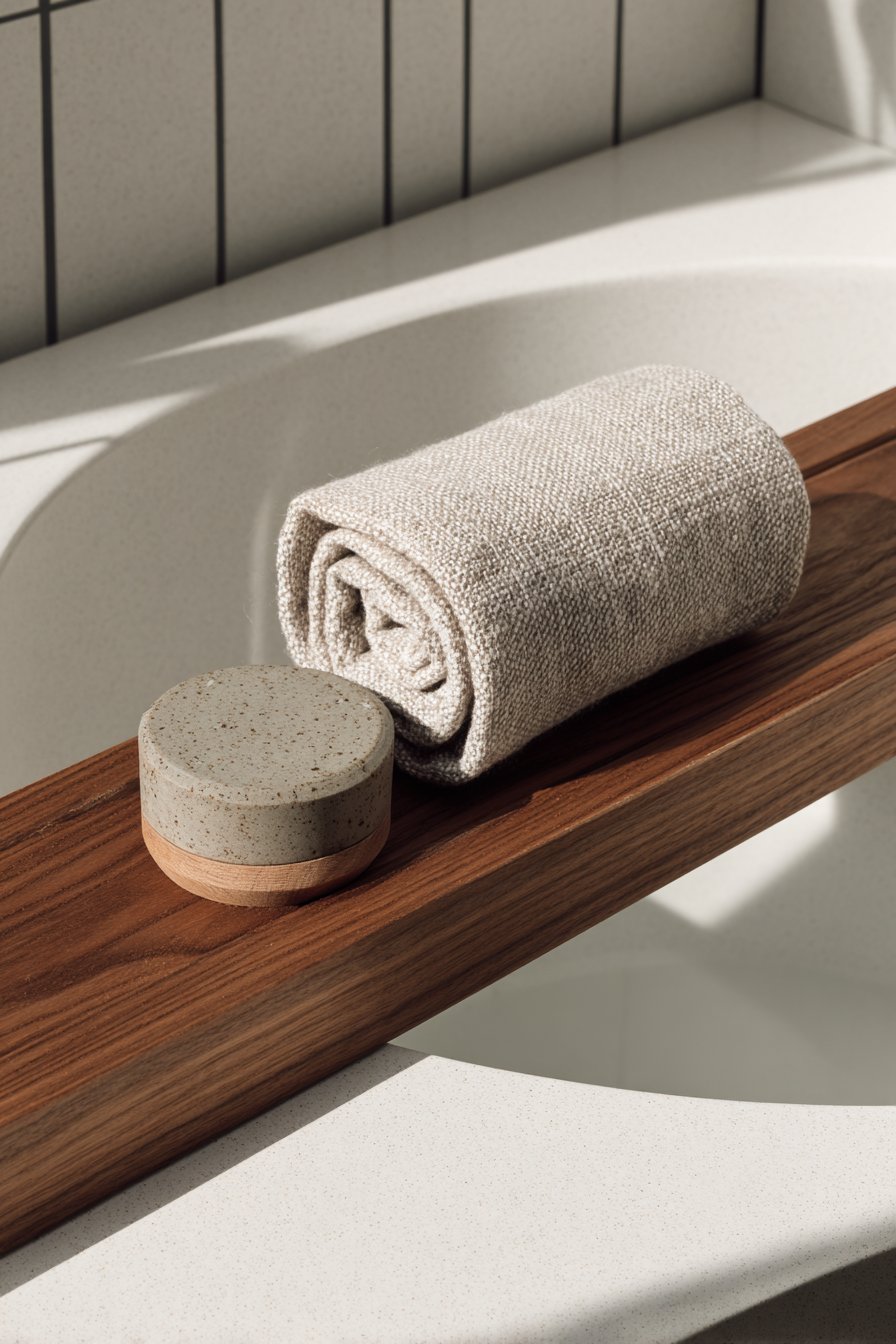
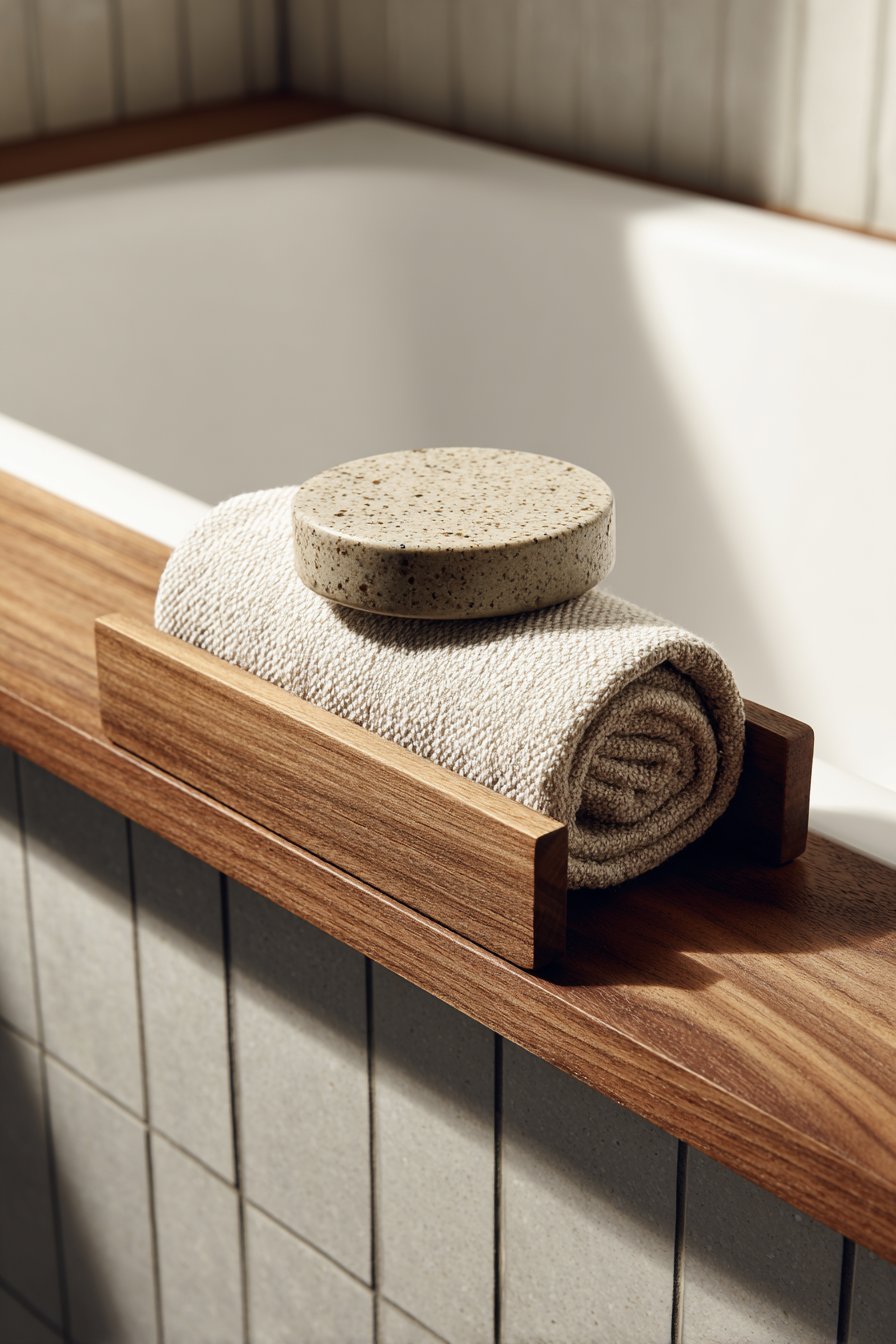
This detail-focused Japandi bathroom composition celebrates the beauty of everyday objects and natural materials. A wooden bath caddy in natural walnut rests across a white ceramic tub edge, demonstrating how functional items can be aesthetically pleasing. The caddy holds a simple stone soap dish and a rolled hand towel in oatmeal linen, creating a still-life worthy of contemplation.
The background reveals smooth white wall tiles with fine grey grout lines. The grout’s subtle presence adds definition without becoming a dominant design element. The tiles’ glossy surface reflects light differently than the matte walnut, creating material dialogue. This interplay of finishes—matte wood, smooth stone, textured linen, and glossy ceramic—engages multiple senses simultaneously.
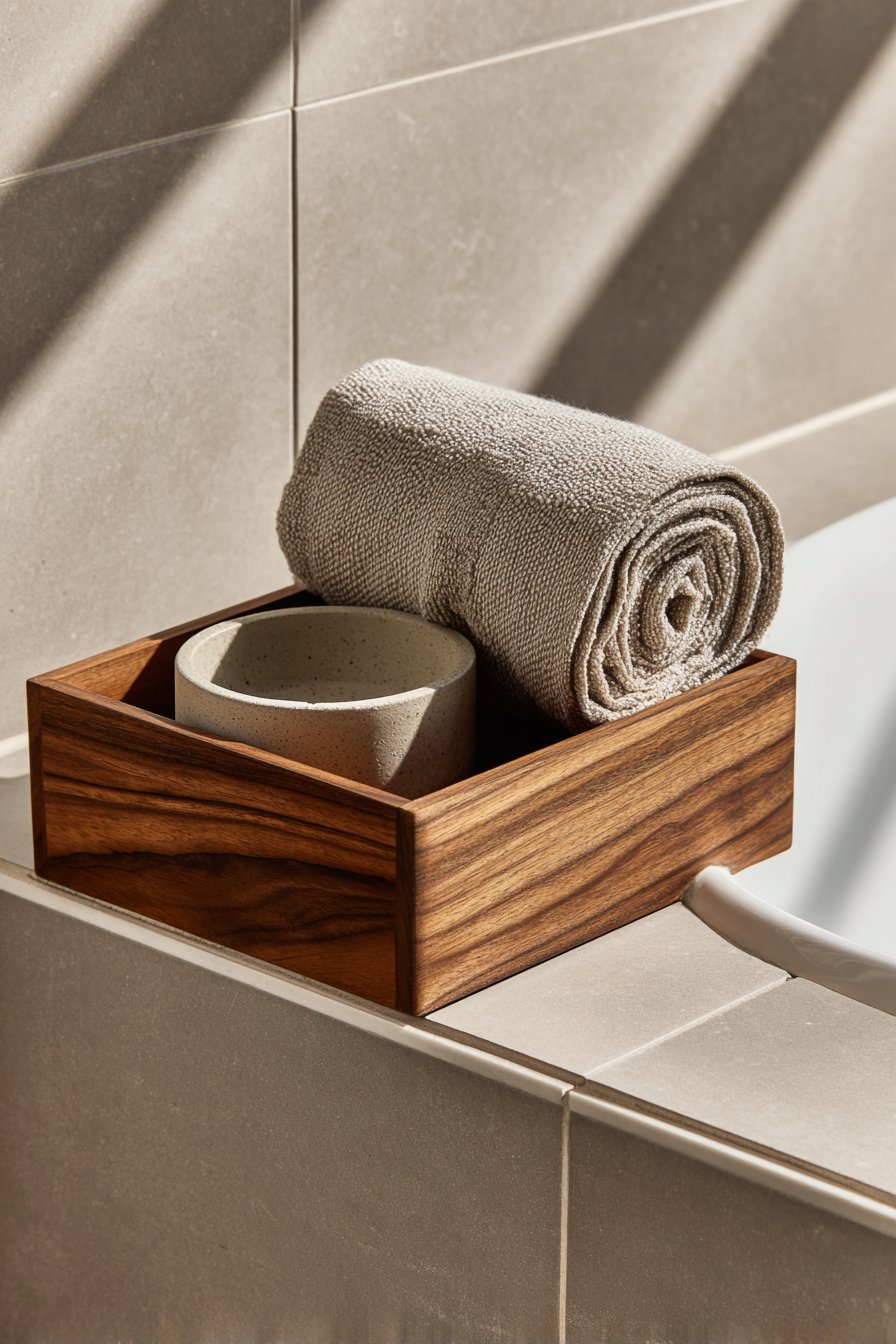
Natural daylight creates soft shadows that emphasize the walnut’s grain and the linen’s weave. These shadows reveal the materials’ three-dimensional qualities and natural imperfections. The wood grain’s organic patterns tell stories of growth and time. The linen’s loose weave shows its handcrafted origins.
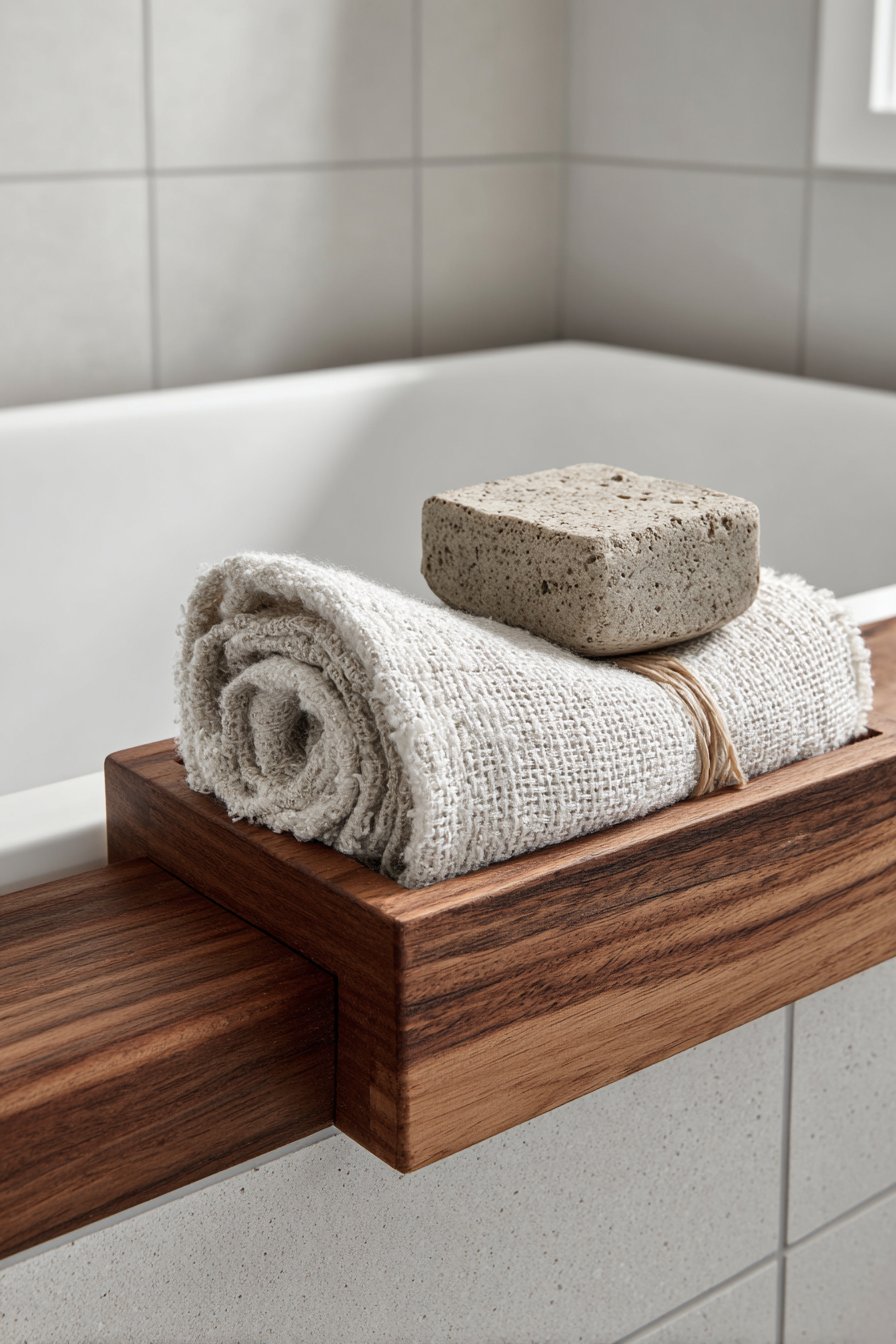
This vignette captures the tactile quality and natural imperfections that define authentic Japandi aesthetic. Rather than hiding material characteristics, this design celebrates them. The approach recognizes that perfection lies not in flawlessness but in honest expression of materials.
Key Design Tips:
- Select bath accessories in natural materials like walnut and stone
- Display towels in neutral, natural fiber fabrics
- Embrace visible wood grain and material imperfections
- Use natural daylight to highlight textural qualities
- Create thoughtful vignettes with everyday functional objects
6. Compact Efficiency Without Style Compromise
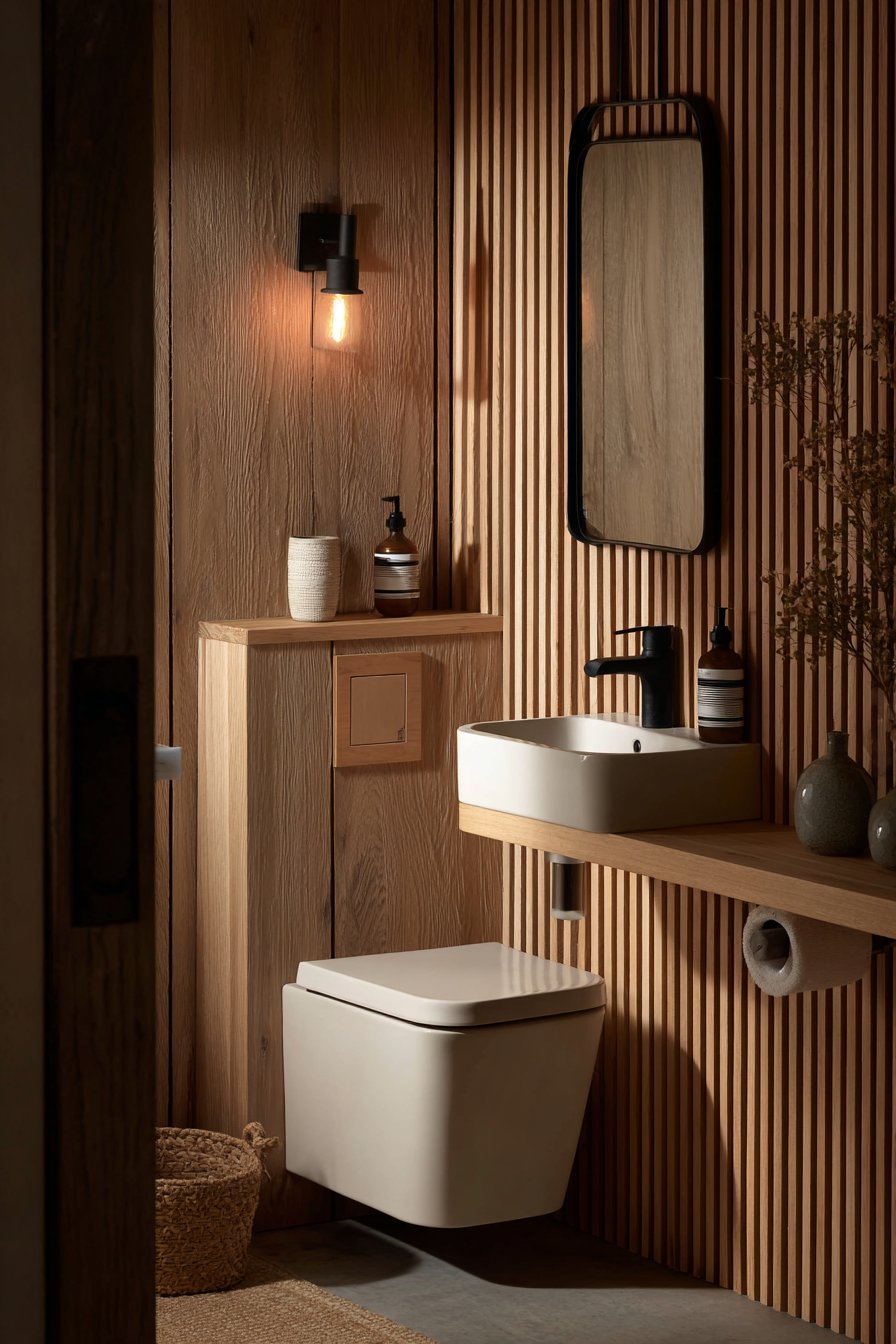
This compact Japandi bathroom proves that limited square footage doesn’t mean limited style. A corner-mounted floating toilet in matte white ceramic maximizes floor space while maintaining clean lines. The wall-hung configuration makes floor cleaning easier and creates an illusion of more space. A small wall-hung sink with light oak wood surround continues the space-saving approach.
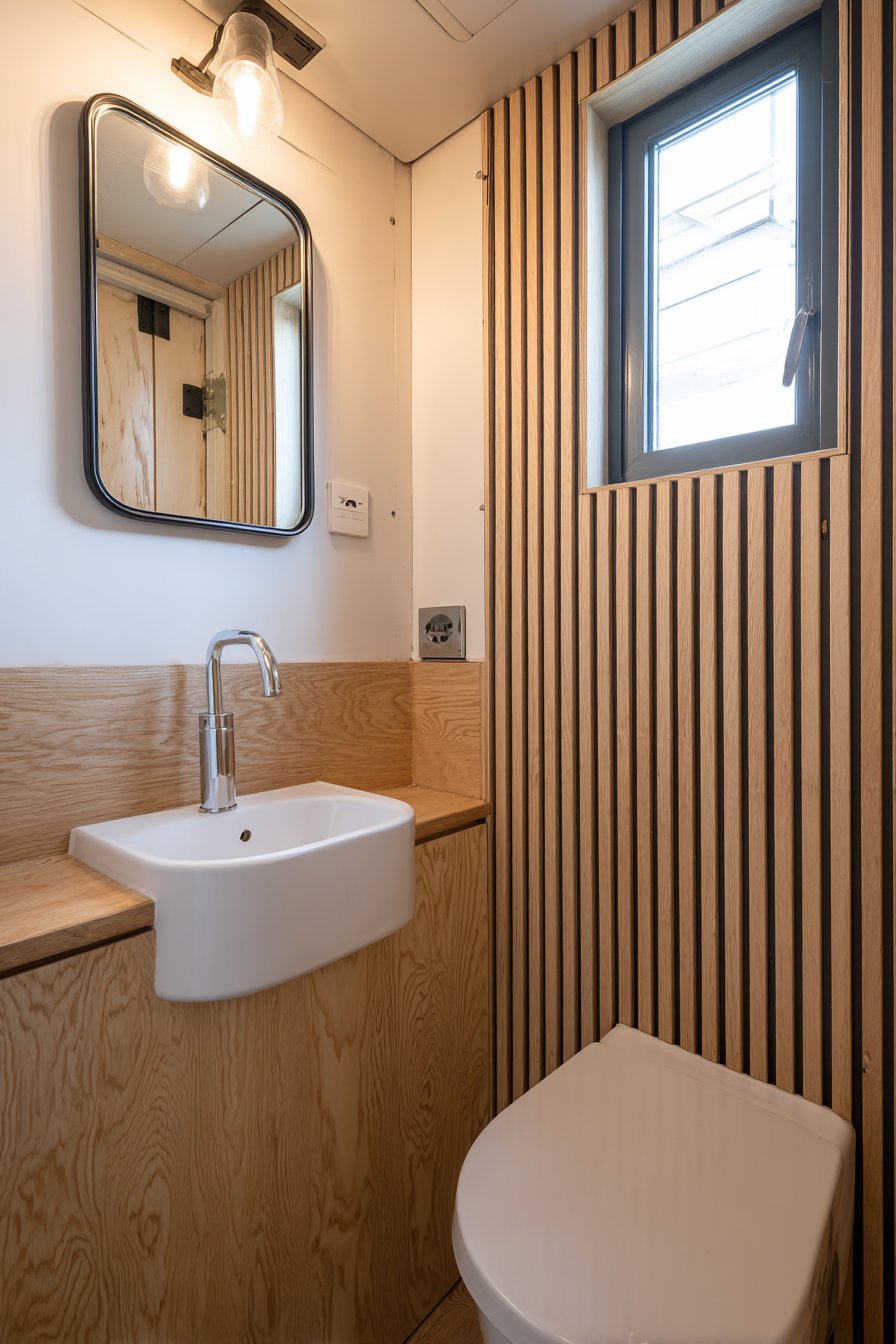
A vertical wood slat accent wall in natural pine adds warmth and visual interest to the narrow space. The vertical orientation draws the eye upward, making the ceiling feel higher. The slats’ rhythmic pattern creates depth and texture without overwhelming the small footprint. This design element transforms a potential limitation into a distinctive feature.
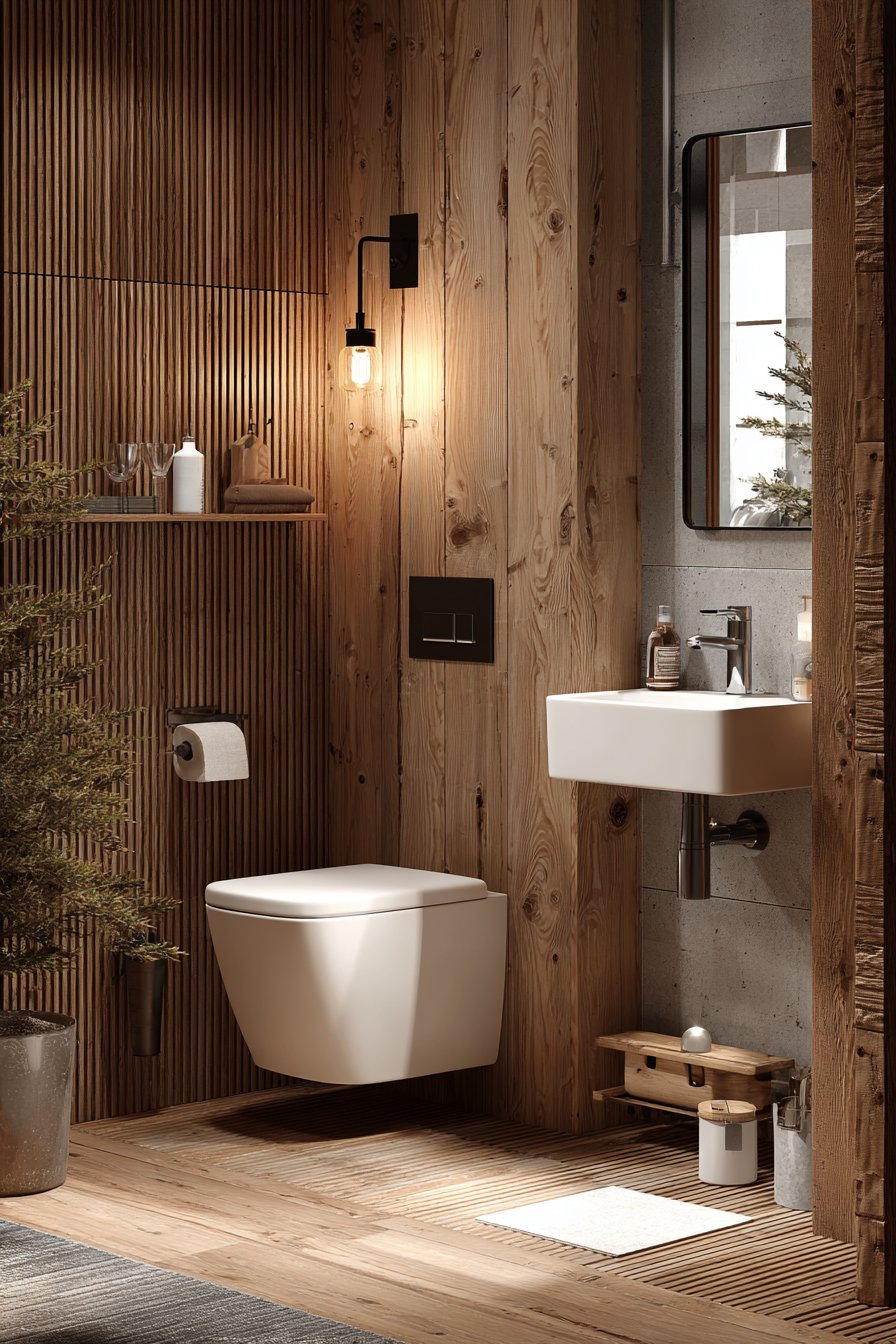
A small rectangular mirror with black metal frame and minimalist wall sconce provide functional lighting without occupying valuable counter space. The mirror’s proportions are carefully selected to serve its purpose without dominating the wall. The sconce’s simple geometry complements the overall minimalist aesthetic.
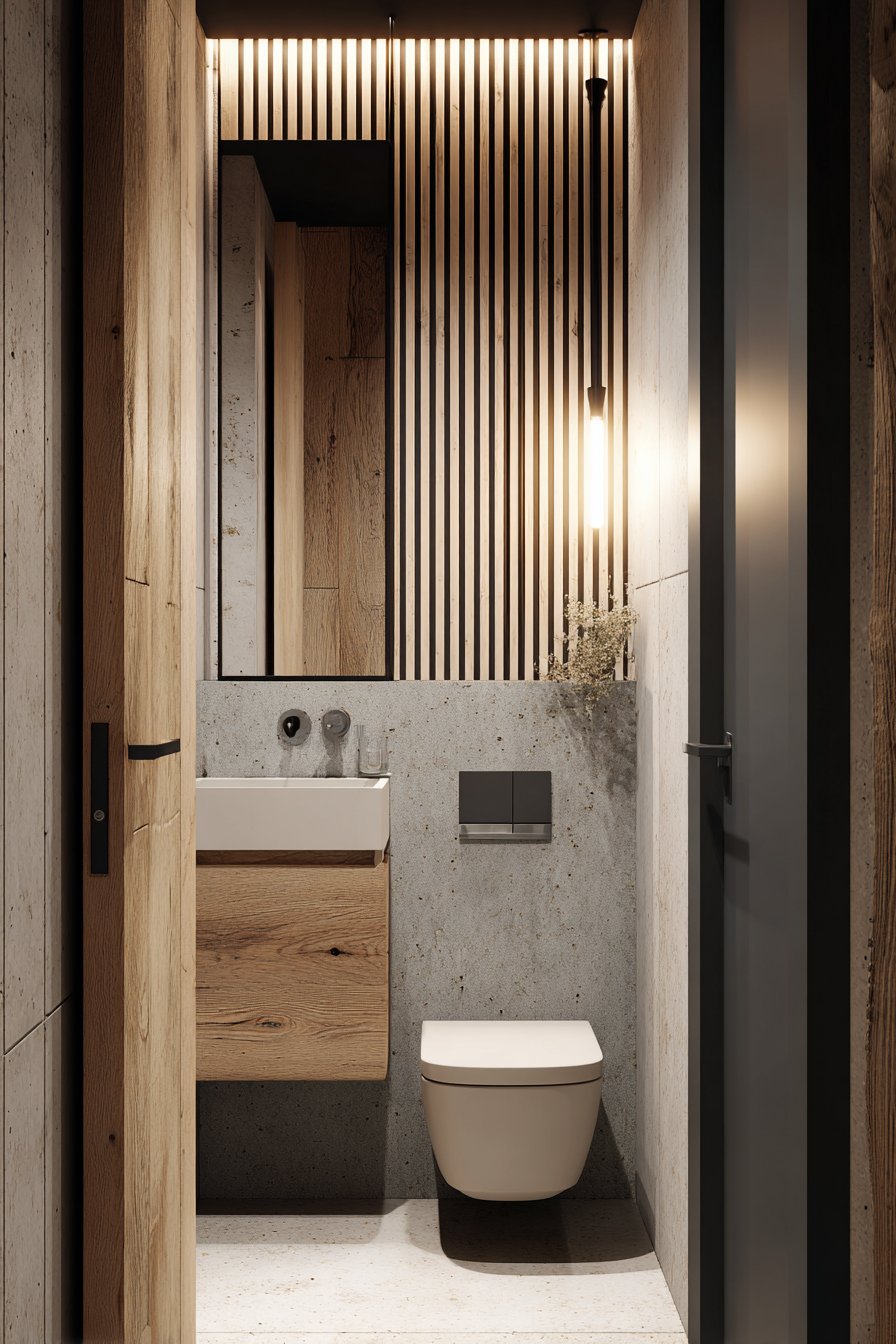
This design demonstrates how Japandi principles adapt to smaller spaces while maintaining essential characteristics. Natural materials remain paramount. Clean lines prevent visual clutter. Every element serves multiple purposes. The result is a compact bathroom that feels spacious and serene.
Key Design Tips:
- Use wall-mounted fixtures to maximize floor space
- Install vertical wood slat walls to add height perception
- Choose compact fixtures without sacrificing quality materials
- Select appropriately scaled mirrors for small bathrooms
- Use focused task lighting to eliminate unnecessary fixtures
7. Biophilic Design with Nature Integration
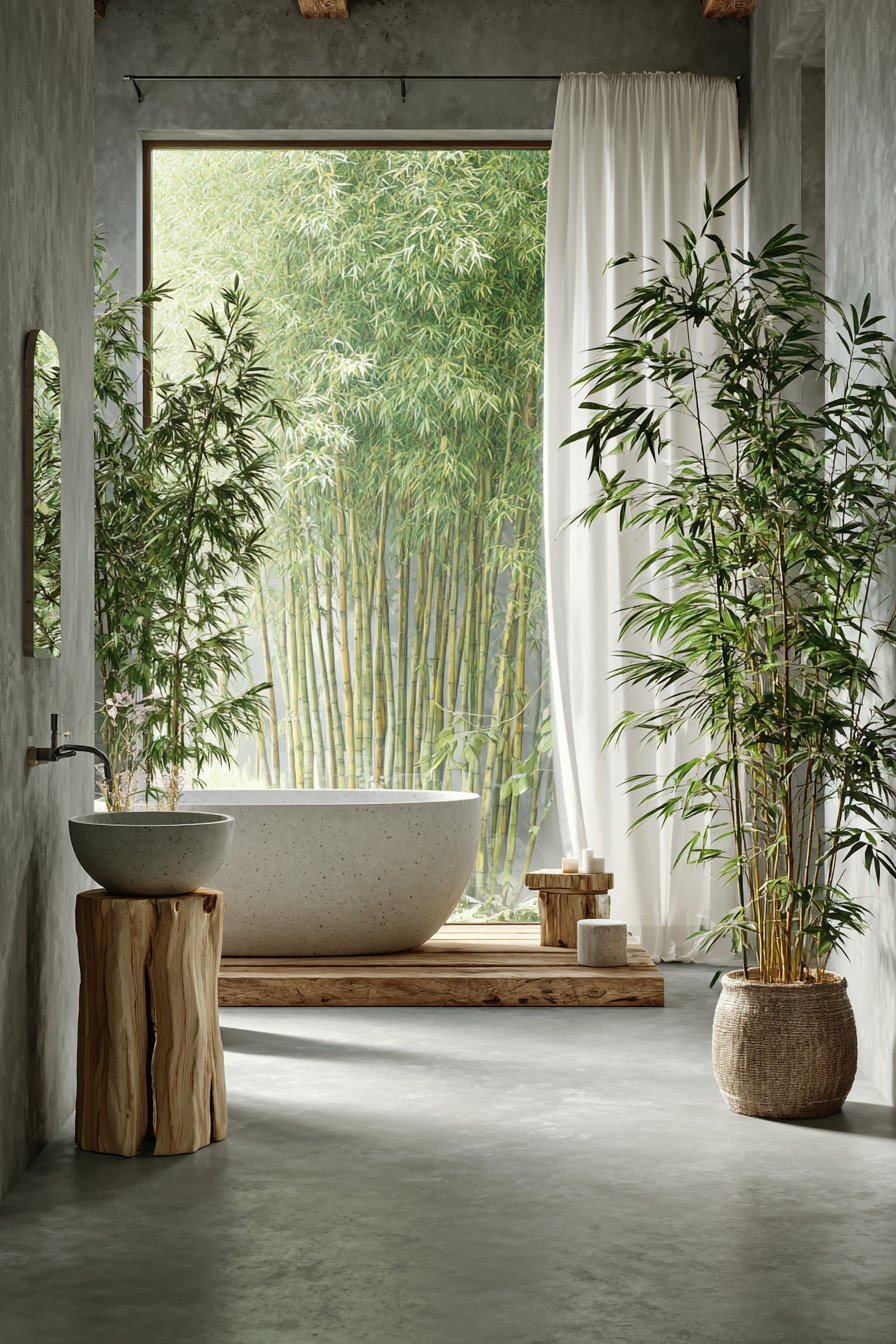
This Japandi bathroom emphasizes biophilic design by creating strong connections between interior and exterior spaces. A large picture window frames a view of bamboo plants outside, bringing nature into the daily bathing experience. The window becomes a living artwork that changes with seasons and weather. This visual connection to nature reduces stress and promotes wellbeing. Our biophilic design has more inspiration along these same lines.
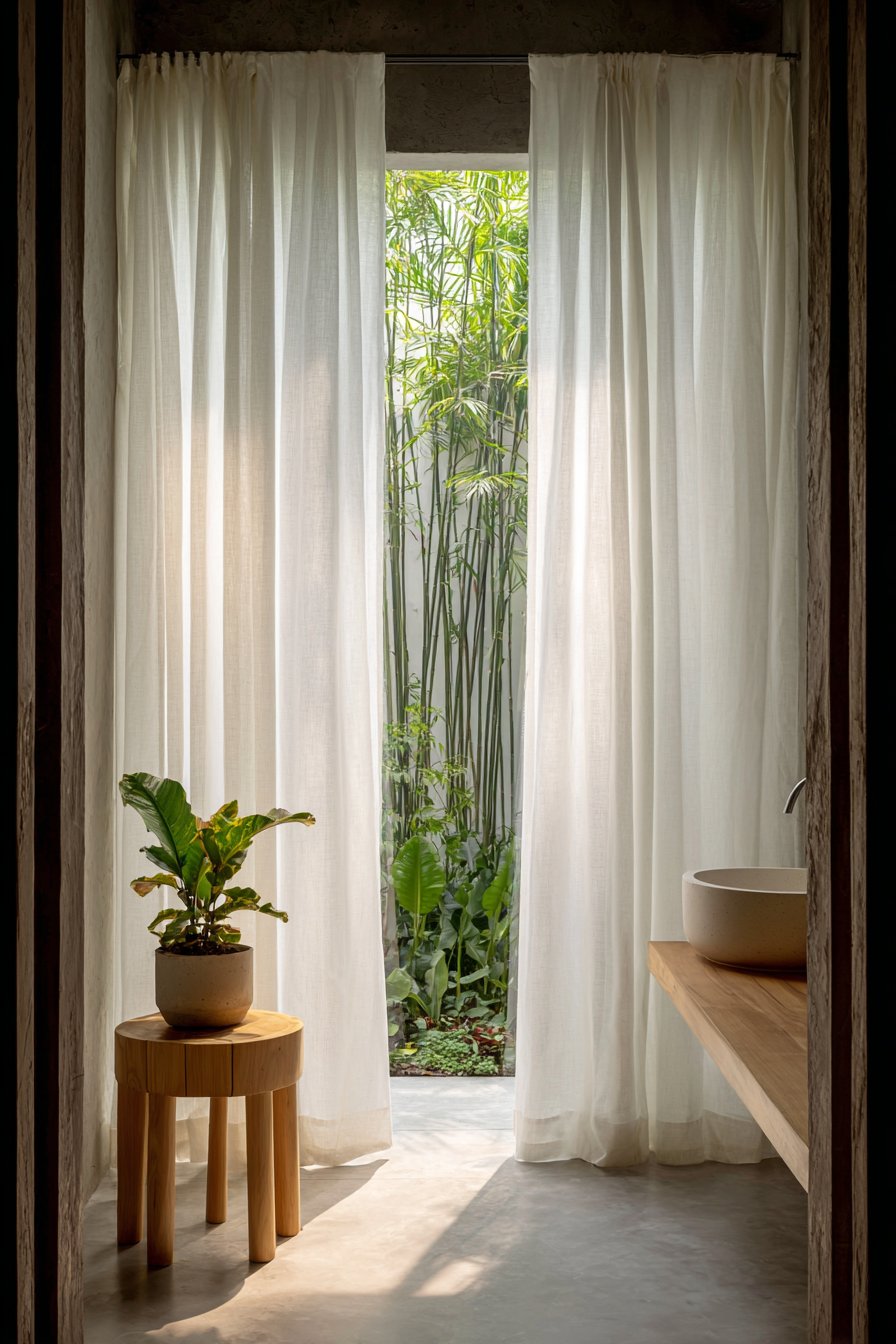
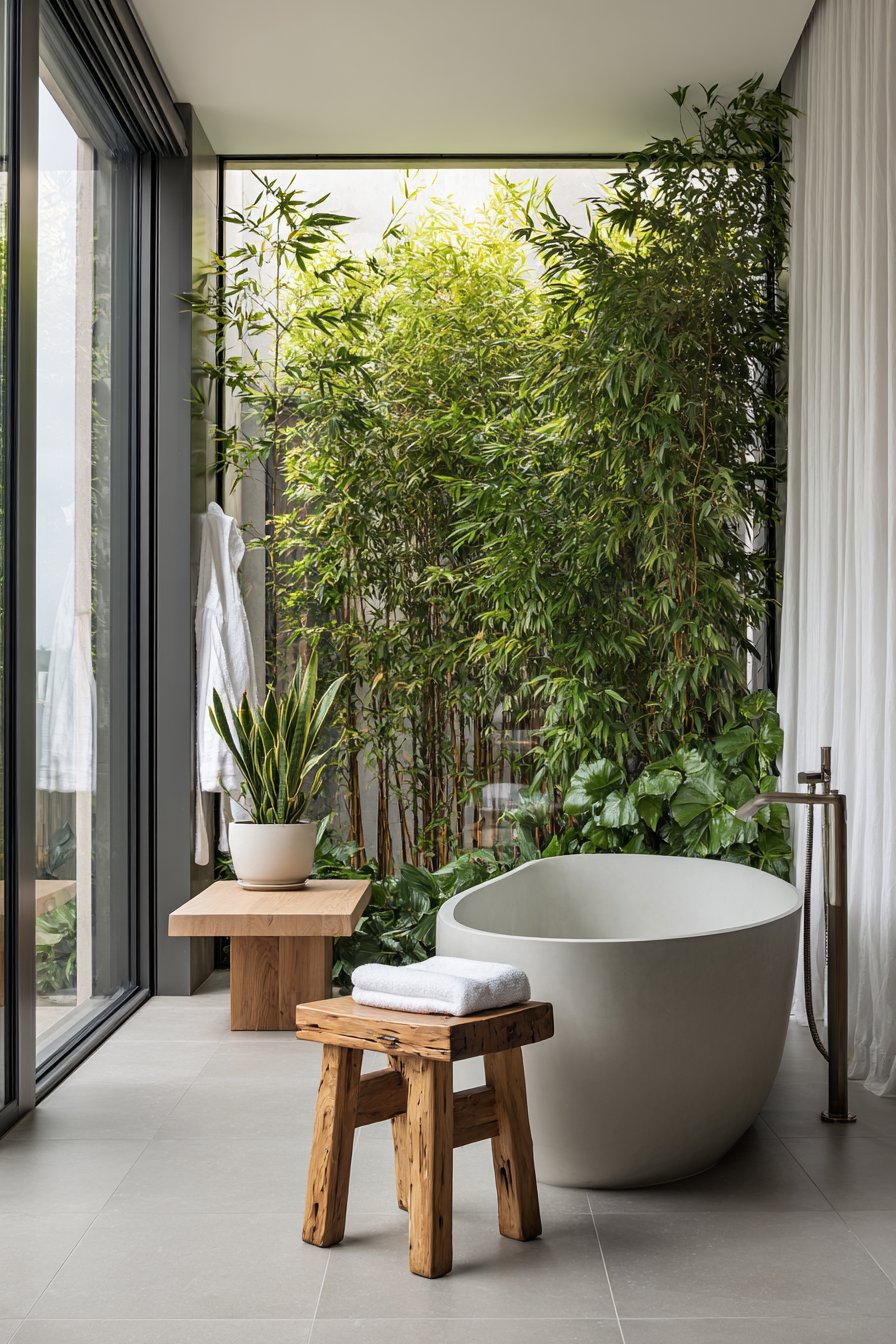
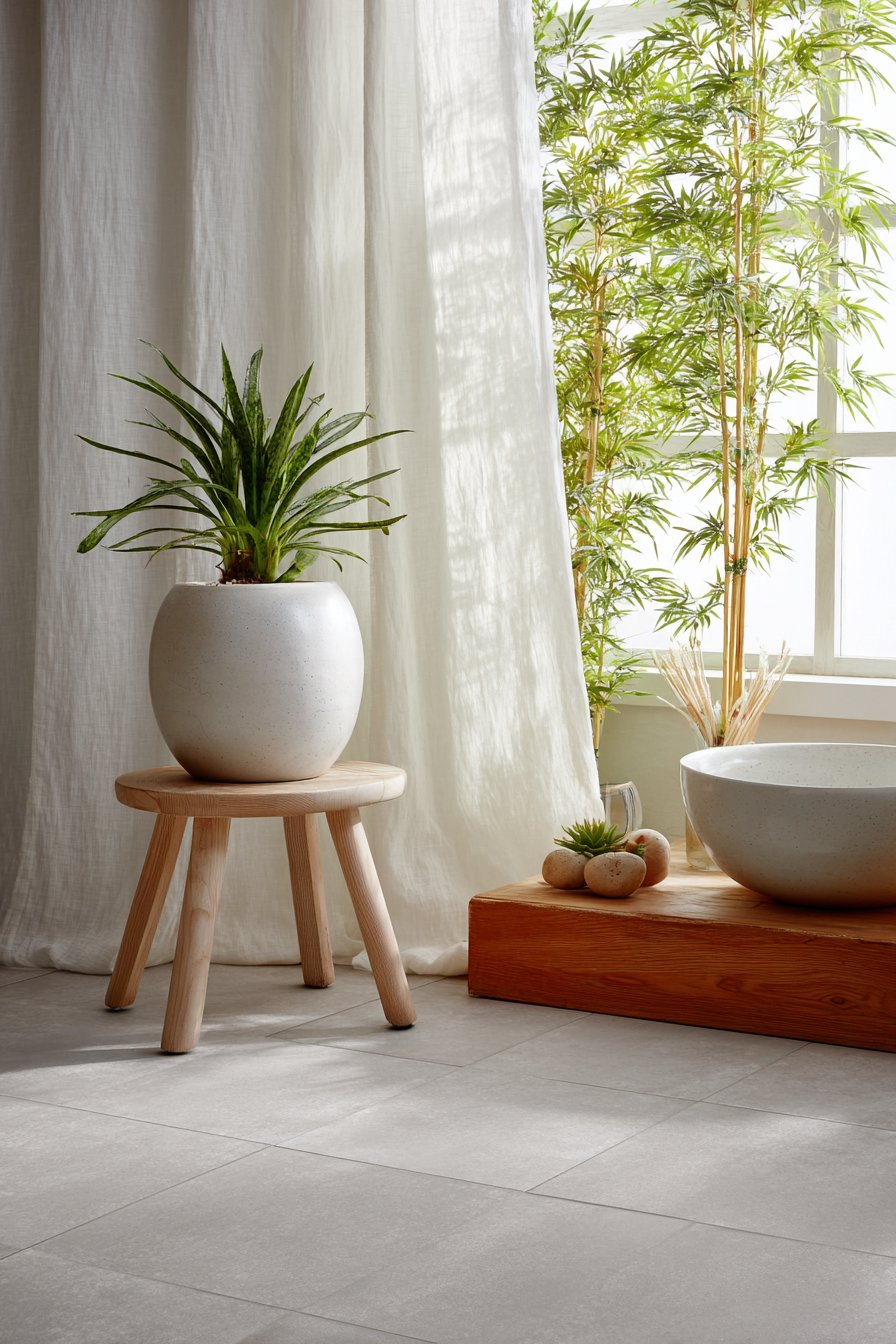
Interior features include smooth concrete-look porcelain floor tiles in soft grey. These tiles provide the industrial aesthetic of concrete without its maintenance challenges. A freestanding wooden stool in light ash holds a potted snake plant, introducing greenery that thrives in bathroom humidity. The stool’s simple form and pale wood complement the overall design. See our green bathroom ideas guide for more direction in this style.
A simple ceramic bowl sink sits on a floating platform of natural wood. The bowl’s organic form contrasts with the geometric platform, creating visual interest. Sheer white linen curtain allows filtered natural light while maintaining privacy when needed. The curtain’s soft folds add subtle texture and movement.
This design achieves seamless integration of nature with minimalist interior, characteristic of Japanese and Scandinavian harmony. The bamboo view, indoor plant, natural materials, and abundant daylight work together to create a peaceful sanctuary. The space feels less like a room and more like a garden pavilion.
Key Design Tips:
- Position windows to frame outdoor greenery views
- Use concrete-look tiles for industrial aesthetic with easy maintenance
- Include humidity-loving plants like snake plants
- Install sheer curtains for privacy with natural light
- Choose bowl sinks for organic, sculptural presence
8. Double Vanity with Functional Elegance
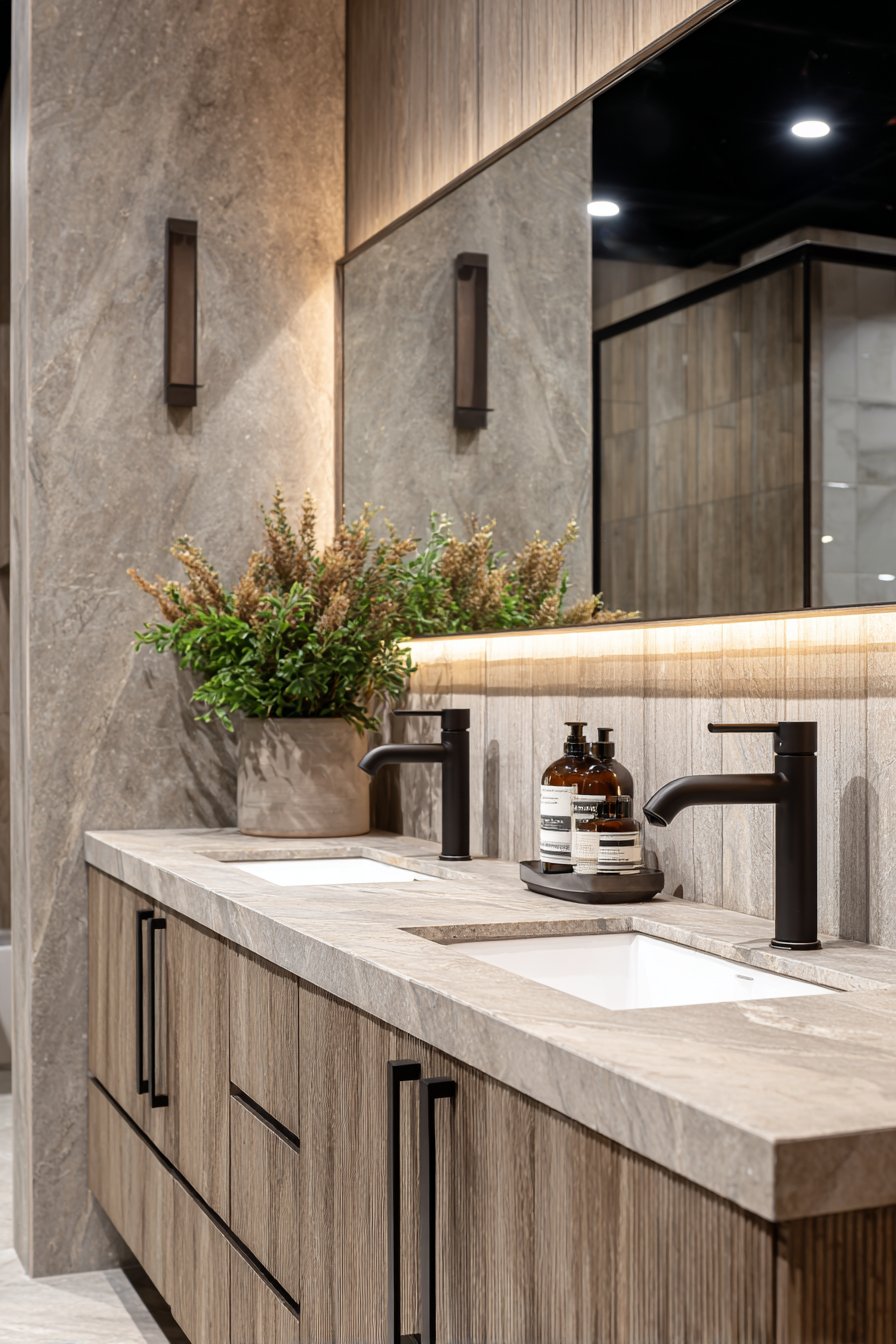
This Japandi bathroom showcases a double vanity with continuous light oak wood countertop supporting two white ceramic undermount sinks. The seamless countertop creates visual unity while serving two users. The undermount installation maintains clean counter surfaces and emphasizes the wood’s continuous grain pattern. The oak’s warm tones prevent the white sinks from appearing stark or clinical.
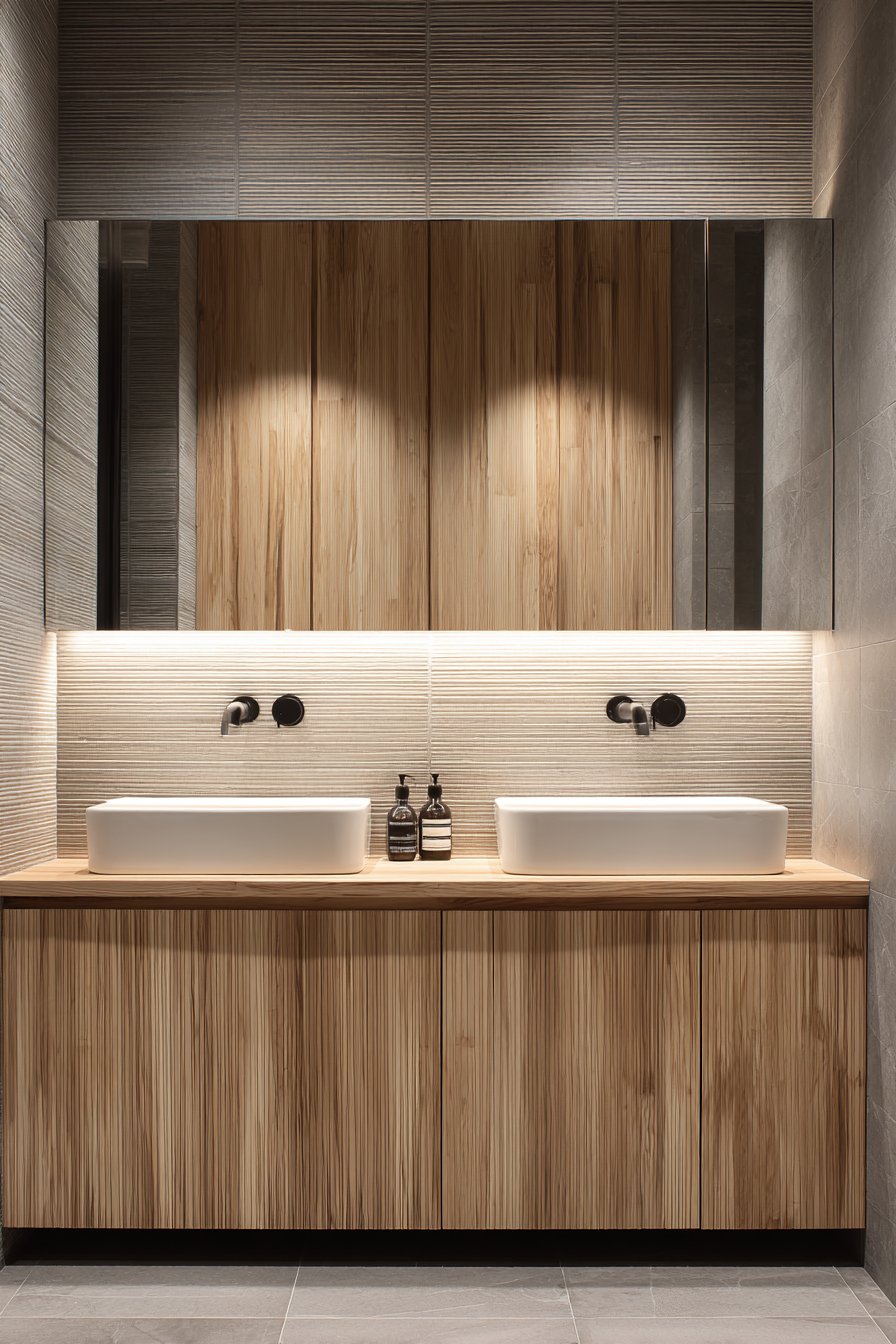
The base features handleless cabinet doors in the same warm wood with subtle vertical grain pattern. The grain’s natural direction adds visual movement without disrupting the calm aesthetic. The handleless design requires precise craftsmanship—doors must align perfectly for push-to-open mechanisms to function smoothly. This attention to detail exemplifies Japandi commitment to quality.
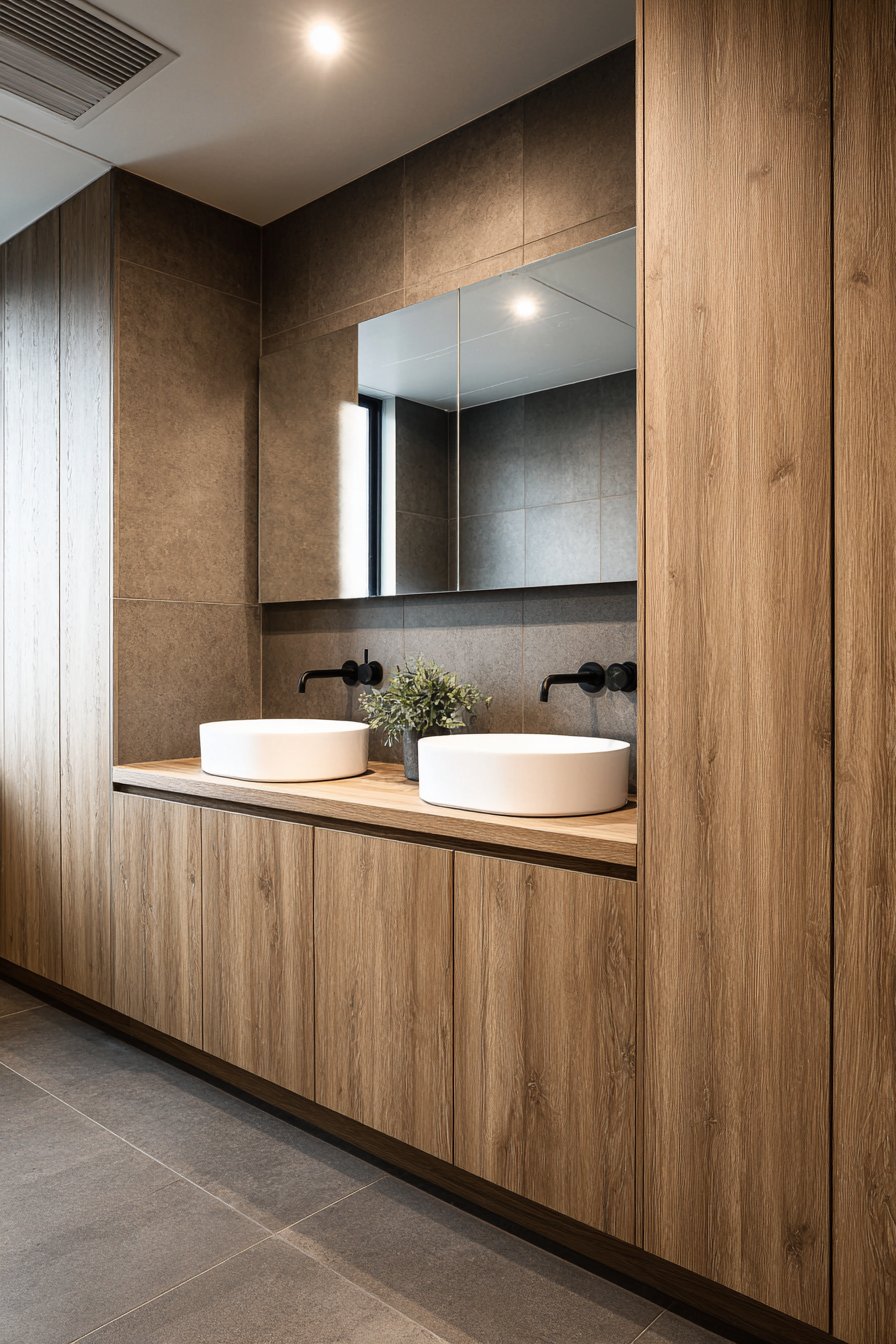
A large format rectangular mirror spans the wall above with integrated hidden LED lighting. The lighting provides soft, even illumination without visible fixtures, maintaining the minimal aesthetic. The mirror’s generous size serves practical needs while creating the illusion of expanded space. Matte black faucets offer minimal geometric contrast against the warm wood and white ceramic.
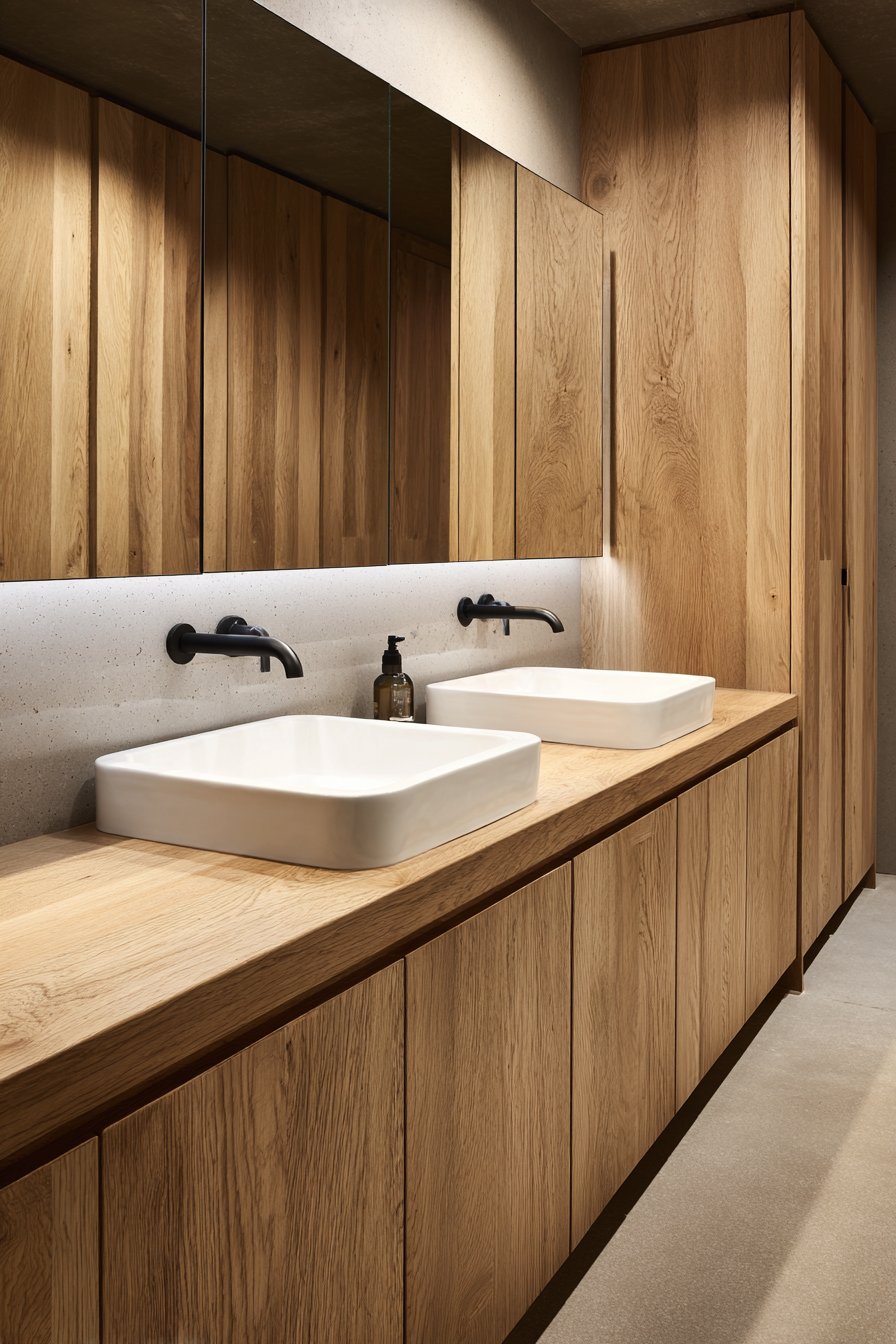
This design captures functional elegance and perfect balance between Japanese restraint and Scandinavian warmth. The double vanity accommodates modern family needs without sacrificing aesthetic principles. Every element works in harmony to create a cohesive, peaceful environment.
Key Design Tips:
- Use continuous countertops for double vanities to create unity
- Choose undermount sinks for clean, uninterrupted surfaces
- Install handleless cabinets for seamless minimalist appearance
- Integrate LED lighting into mirrors for invisible illumination
- Select matte black fixtures for subtle modern contrast
9. Layered Lighting Design for Twilight Ambiance
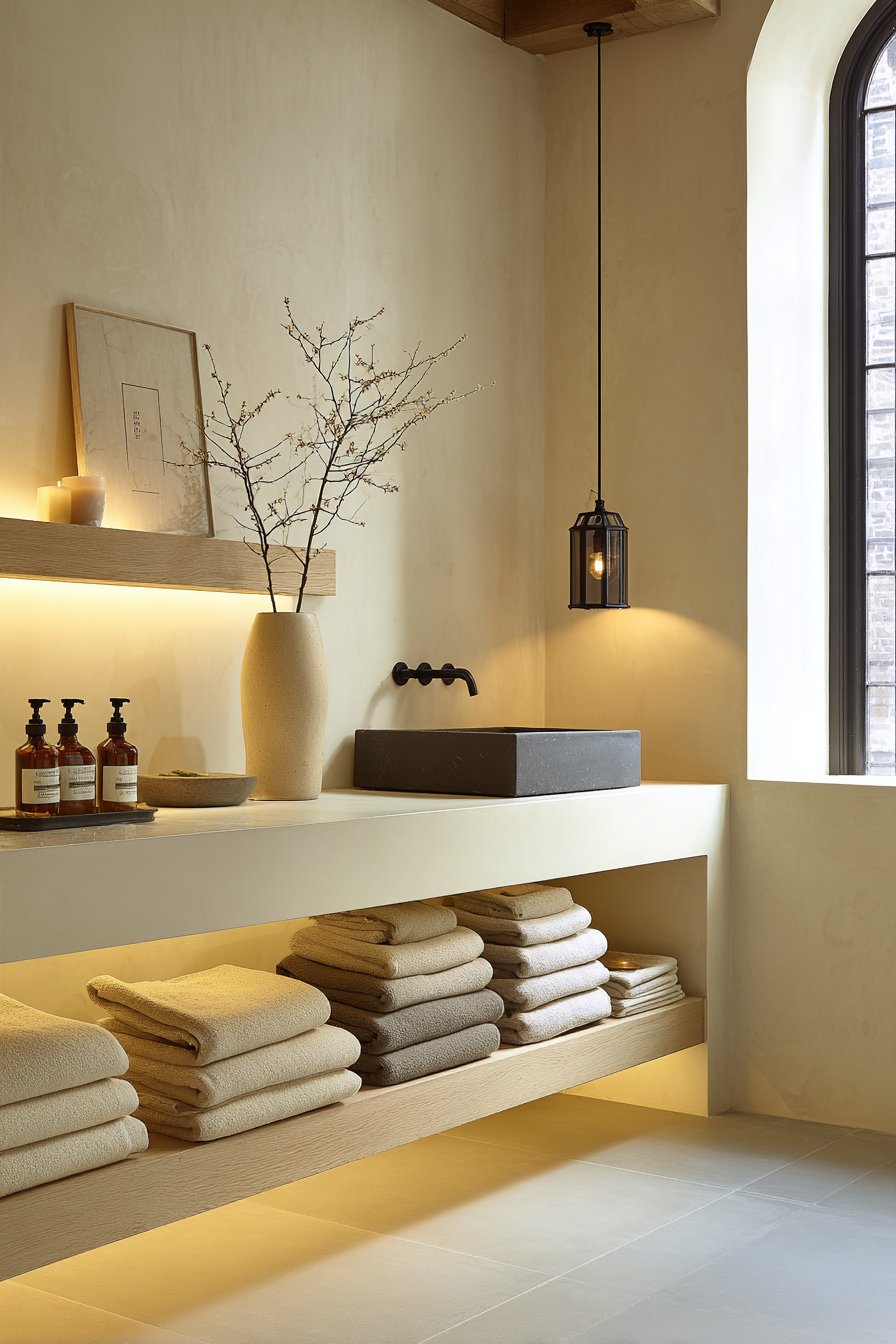
This Japandi bathroom twilight scene demonstrates sophisticated layered lighting design. Recessed ceiling lights provide ambient glow that fills the entire space evenly. A simple black metal pendant light illuminates the vanity area with focused task lighting. The combination ensures the bathroom functions well at any time while creating atmospheric depth during evening hours.
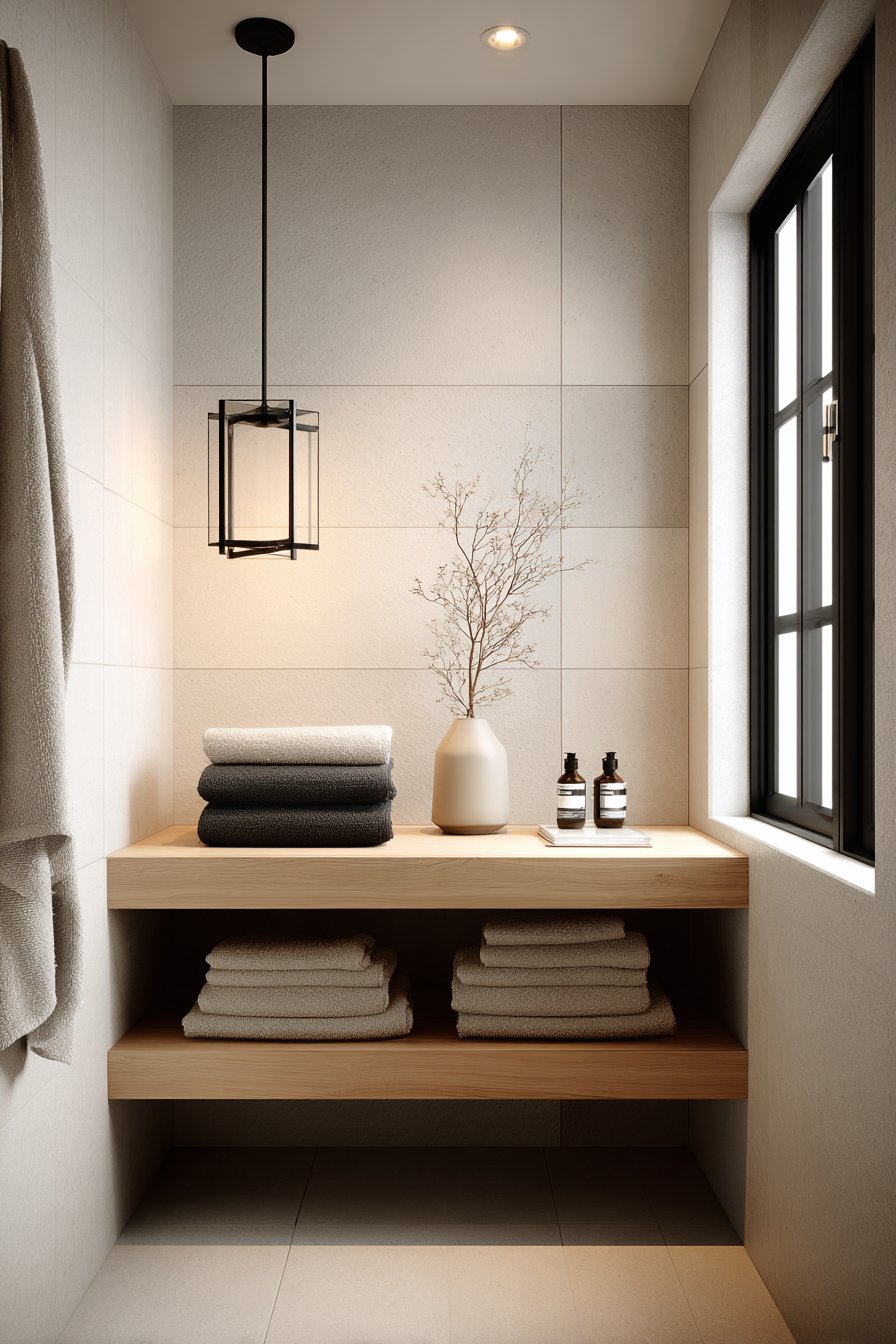
Natural wood floating shelves display minimal accessories including a ceramic vase with single branch. The branch’s organic form introduces natural curves and creates a connection to the outdoors.
Neatly stacked towels in neutral tones—cream, oatmeal, and grey—add soft texture while serving practical storage needs. The shelves’ floating design maintains visual lightness.
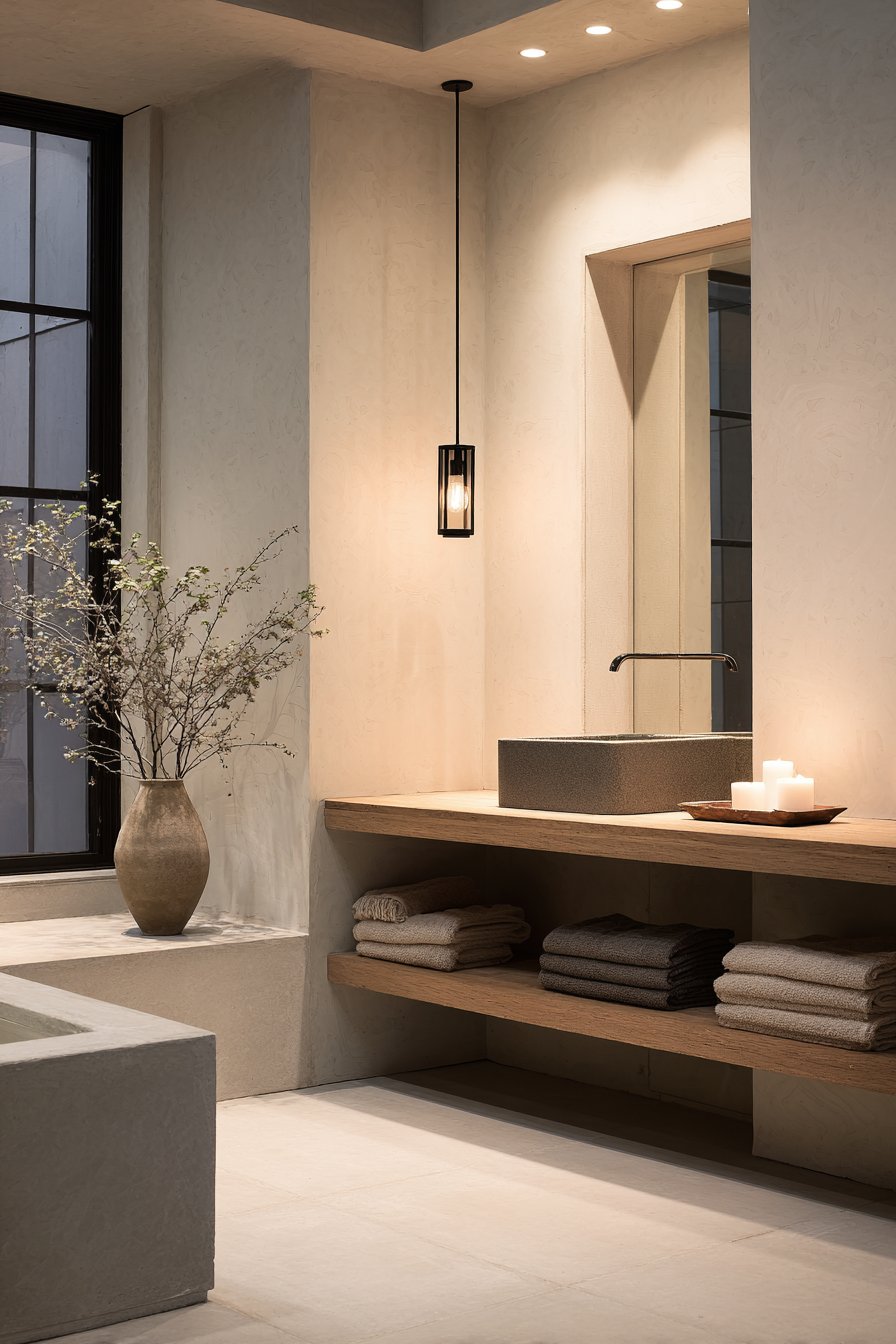
Textured white walls and pale grey floor tiles create a calm foundation that allows the lighting to take center stage. The wall texture catches light differently than smooth surfaces, adding subtle visual interest. Golden hour natural light from a high window mixes with artificial lighting, creating a warm, welcoming glow.
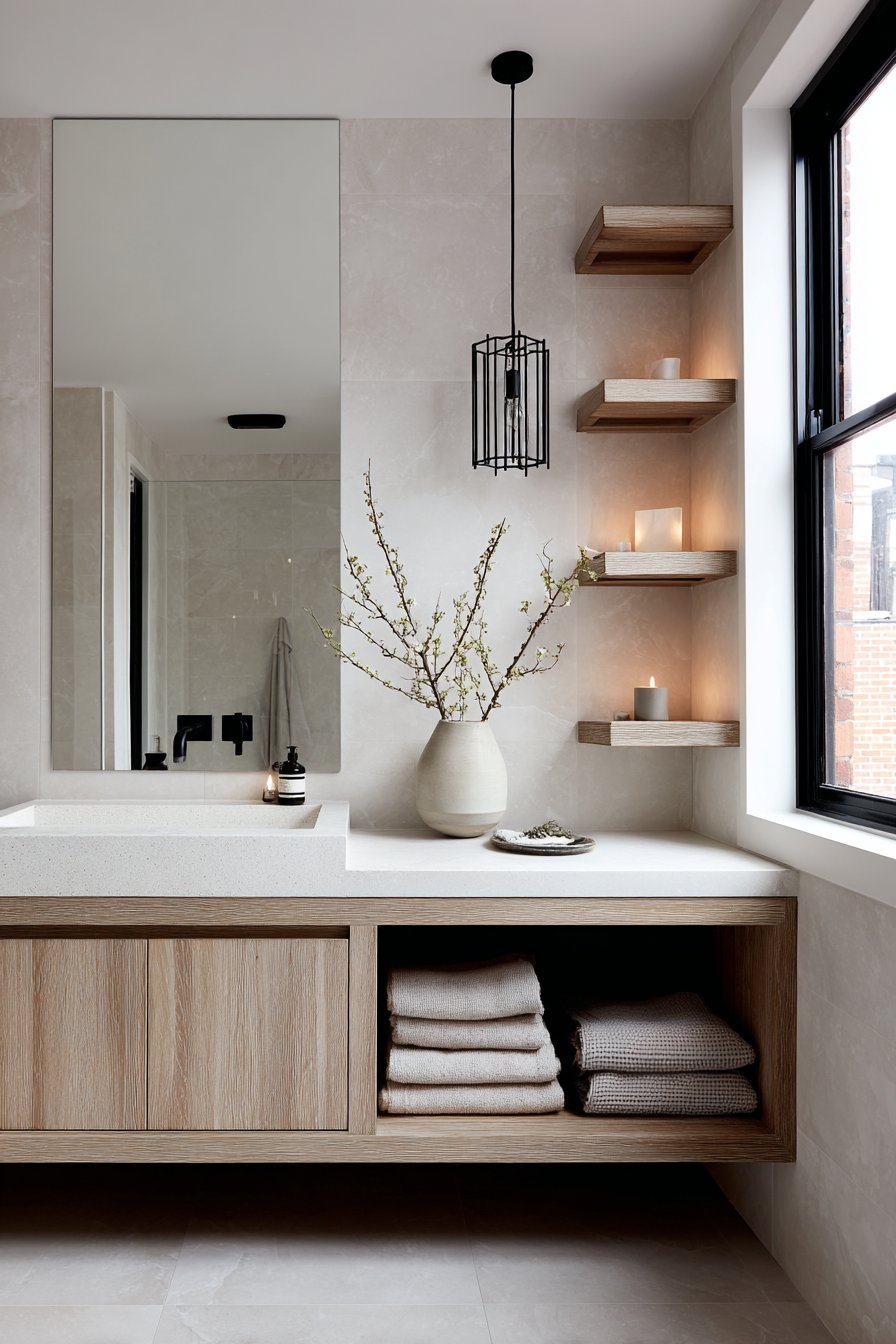
This thoughtful illumination design is essential to creating the serene Japandi bathroom atmosphere. The layering allows for different moods throughout the day—bright and energizing in morning, soft and relaxing in evening. Lighting becomes an active design element rather than an afterthought.
Key Design Tips:
- Layer ambient, task, and accent lighting for flexibility
- Use pendant lights for focused vanity illumination
- Display single branches in vases for minimalist organic decoration
- Choose high windows to allow natural light while maintaining privacy
- Select textured wall finishes to add depth under varied lighting
10. Seamless Wet Room with Material Continuity
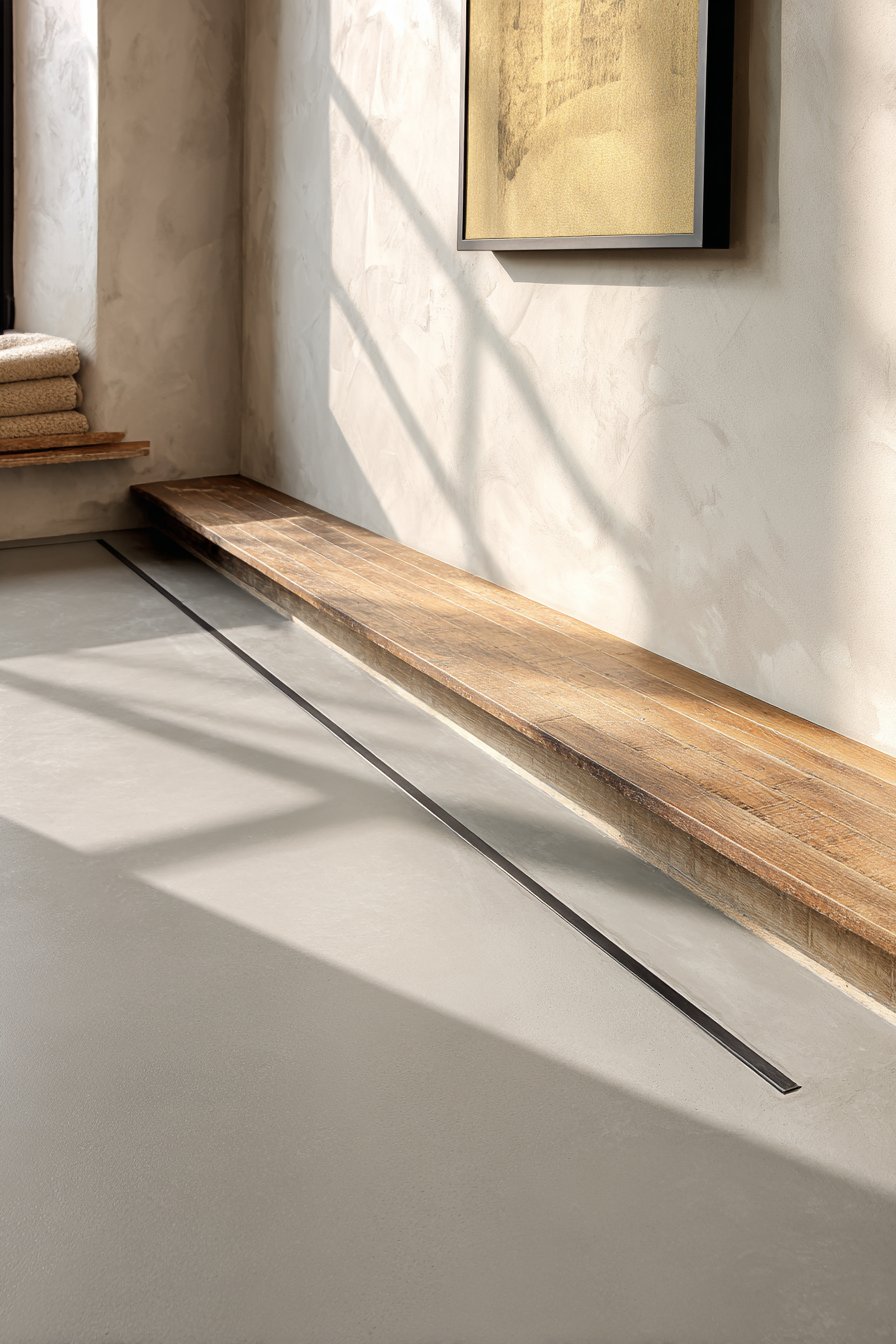
This Japandi bathroom architectural detail features a custom wet room design with seamless pale grey microcement flooring. The microcement extends from the shower area throughout the space, eliminating visual breaks and creating flow. This continuous surface makes the bathroom feel larger and more cohesive. The pale grey tone provides sophistication without coldness.
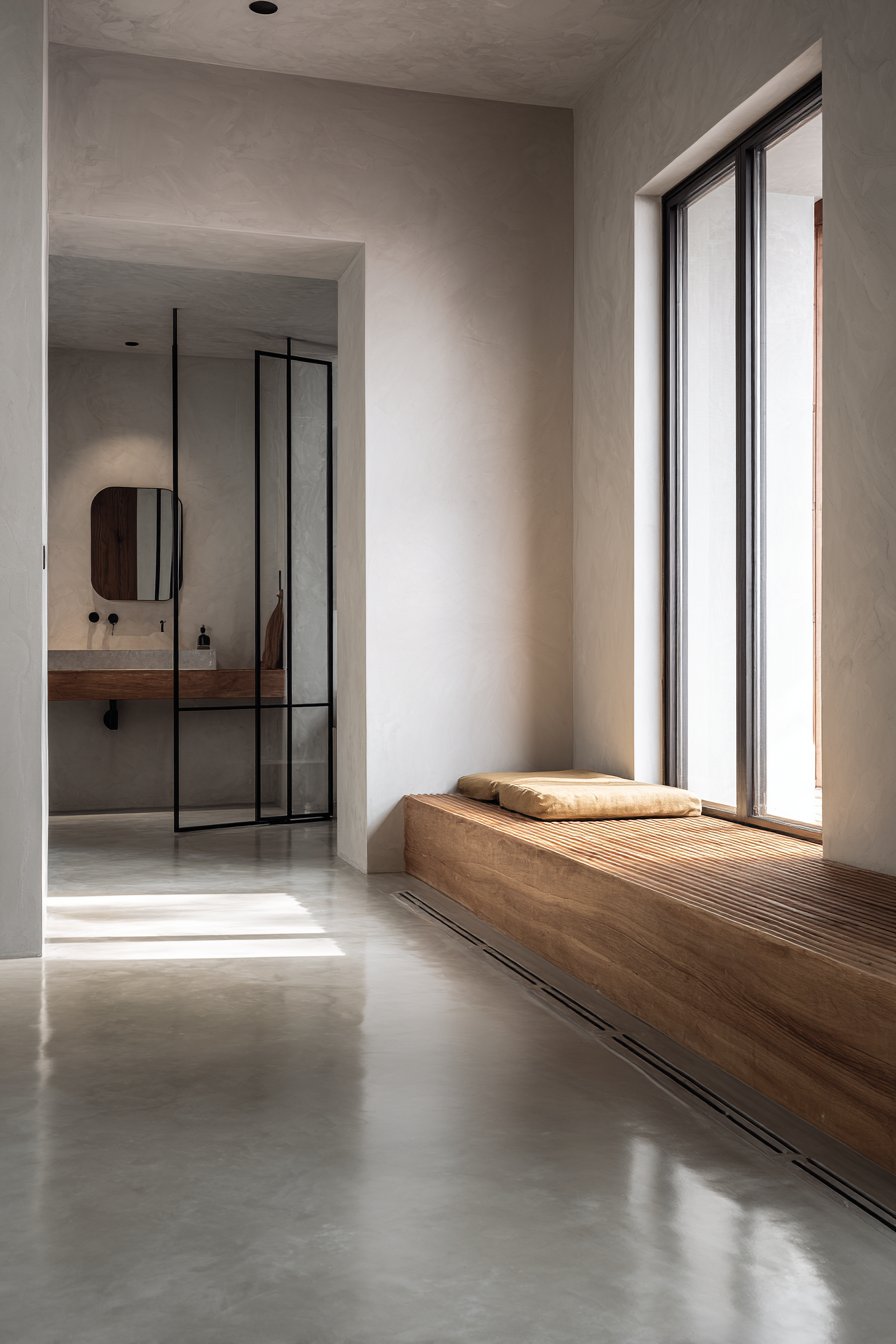
A low wooden platform bench in natural teak defines the bathing zone while maintaining the open floor plan. The platform’s elevation is subtle—just enough to suggest spatial definition without creating barriers.
The teak’s rich color and durability make it ideal for wet environments. A simple linear drain runs along one edge, handling water efficiently without dominating the design.
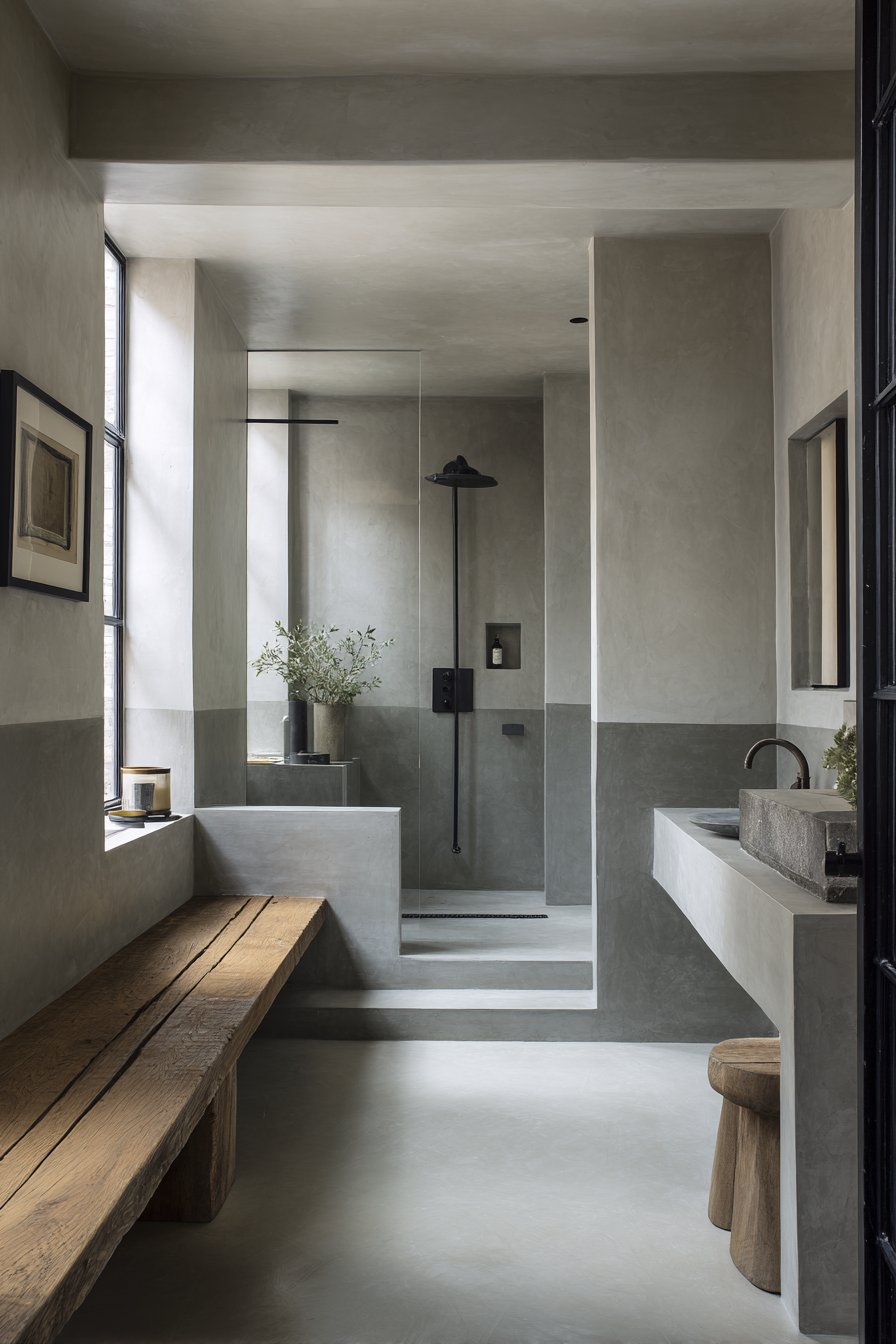
White plastered walls with subtle texture provide a neutral backdrop. A single statement piece of black-framed art maintains the minimalist aesthetic while adding personality. The artwork’s presence proves that minimalism doesn’t mean devoid of character. Natural side lighting creates dimensional shadows that emphasize the space’s architectural qualities.
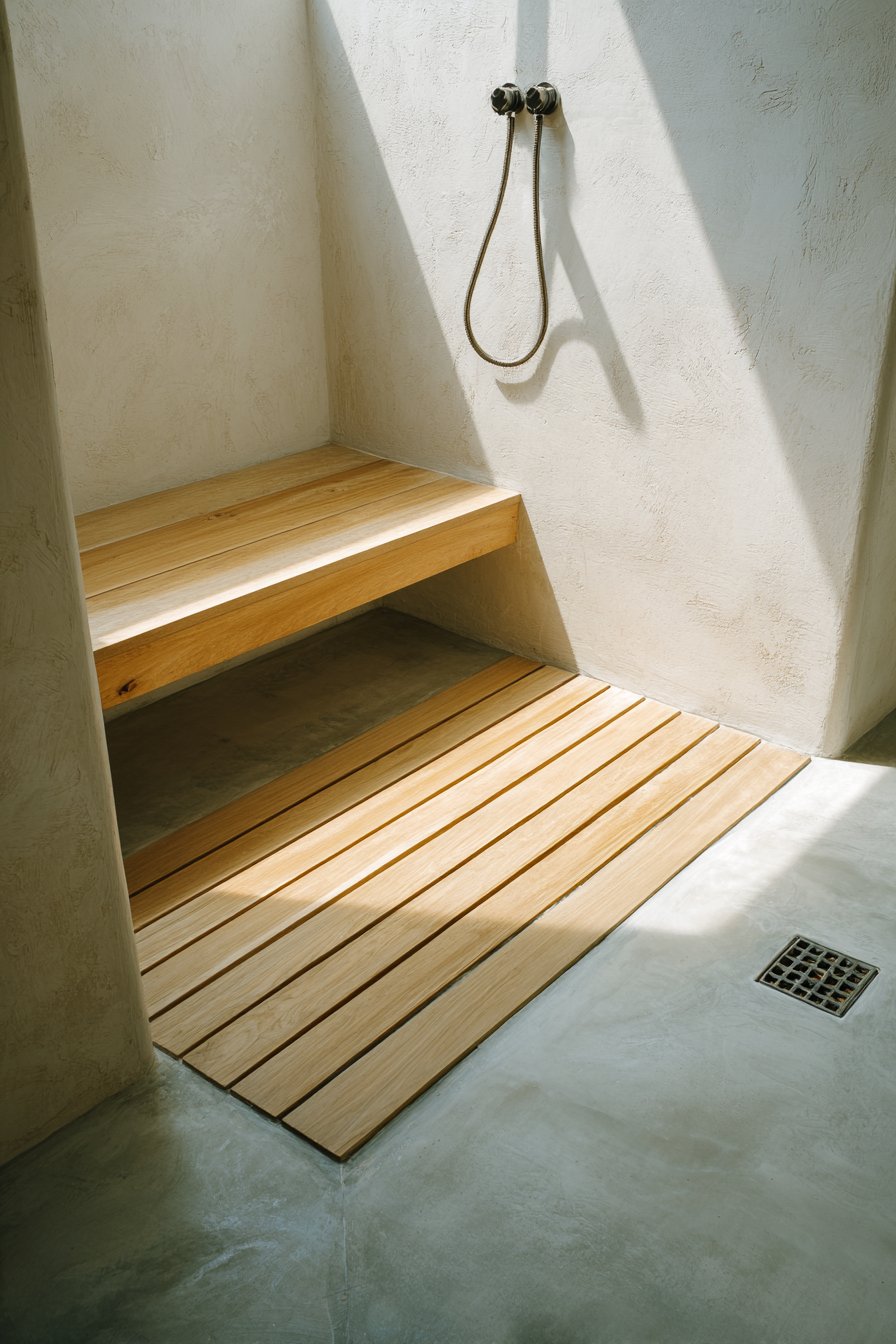
This design exemplifies refined Japandi bathroom sophistication through material continuity and spatial openness. The wet room concept reflects Japanese bathing traditions while the pale woods and grey tones echo Scandinavian restraint. Every detail serves the larger vision of creating a serene, spa-like sanctuary.
Key Design Tips:
- Use continuous flooring materials for a seamless wet room design
- Install low wooden platforms to define zones without walls
- Choose linear drains for minimal visual impact
- Limit artwork to single statement pieces
- Use side lighting to create dimensional shadows and depth
Why These Japandi Bathroom Designs Are the Best
Japandi bathroom design represents the pinnacle of contemporary interior aesthetics because it successfully merges two philosophies that, while culturally distinct, share fundamental values. Japanese design contributes principles of minimalism, mindfulness, and connection to nature through concepts like wabi-sabi (finding beauty in imperfection) and ma (the importance of negative space). Scandinavian design offers hygge (cozy contentment), lagom (just the right amount), and a practical approach to functionality. Together, these create bathrooms that are both soul-soothing and supremely livable.
The bathroom designs featured in this article excel because they prioritize natural materials over synthetic alternatives. Real wood, natural stone, ceramic, and linen create spaces with authenticity and warmth. These materials age gracefully, developing character over time rather than deteriorating. The tactile quality of wood grain, stone texture, and woven fabric engages our senses in ways that laminate and plastic cannot replicate. This material honesty creates bathrooms that feel grounded and real.
Another reason these Japandi bathrooms stand out is their expert use of neutral color palettes. Whites, greys, beiges, and warm wood tones create calming environments that reduce visual stress. These colors serve as a backdrop for daily life rather than demanding attention. The subtle variations within the neutral palette—cool greys against warm oaks, crisp whites beside textured plasters—provide sufficient visual interest without chaos. This approach ensures the bathrooms remain timeless rather than trendy.
The emphasis on natural lighting throughout these designs cannot be overstated. Large windows, skylights, and sheer curtains maximize daylight, reducing dependence on artificial illumination. Natural light changes throughout the day, keeping spaces dynamic and connected to natural rhythms. This biophilic design element improves mood, regulates circadian rhythms, and creates healthier indoor environments. The thoughtful layering of artificial lighting ensures functionality during all hours while maintaining atmospheric quality.
Functionality remains paramount in these Japandi bathroom designs. Despite their aesthetic appeal, every element serves practical purposes. Floating vanities simplify floor cleaning. Built-in storage eliminates clutter. Walk-in showers accommodate accessibility needs. Wet room designs prevent water damage. This marriage of beauty and utility means these bathrooms work as hard as they look good, making them suitable for real family life, not just magazine spreads.
The spatial openness achieved through minimalist principles makes these bathrooms feel larger than their actual square footage. By eliminating unnecessary elements and using seamless materials, the designs create visual flow and breathing room. Even the compact bathroom example demonstrates how Japandi principles adapt to small spaces without feeling cramped. This efficient use of space is increasingly valuable as urban living spaces shrink.
Finally, these Japandi bathrooms promote wellbeing through their serene aesthetics. The uncluttered surfaces, natural materials, and connection to nature create environments that support mental health and relaxation. In our overstimulated modern world, having a bathroom sanctuary that provides visual rest and sensory calm is invaluable. These spaces invite meditation, self-care, and mindful daily rituals that enhance overall quality of life.
Conclusion
The Japandi bathroom aesthetic offers a compelling vision for creating personal sanctuaries that balance beauty, functionality, and tranquility. By embracing natural materials, neutral palettes, clean lines, and thoughtful craftsmanship, these designs transcend passing trends to achieve timeless appeal. Whether incorporating a deep soaking tub beneath bamboo blinds, installing a seamless wet room with microcement flooring, or creating a compact powder room with vertical wood slats, the principles remain consistent: honor materials, eliminate excess, and create harmony.
As you embark on your own bathroom renovation or refresh, consider how these Japandi concepts can be adapted to your specific needs and space. Start with quality natural materials that will age beautifully. Prioritize natural light and develop a layered artificial lighting plan. Embrace neutral tones with subtle variations for depth. Most importantly, remove anything that doesn’t serve a clear purpose, allowing the essential elements to shine.
The bathroom designs explored in this article demonstrate that creating a spa-like retreat doesn’t require enormous budgets or vast square footage—it requires thoughtful design choices and commitment to authenticity. By blending Japanese mindfulness with Scandinavian coziness, you can transform your bathroom into a daily escape that nurtures both body and spirit. Let these ideas inspire you to create your own Japandi sanctuary where every morning begins and every evening ends in peace.
