


The bathroom has evolved from a purely functional space into a personal sanctuary where design meets daily ritual. Thoughtful interior design transforms these intimate spaces into environments that nurture wellbeing and reflect individual style. The materials we choose for our bathrooms speak volumes about our aesthetic preferences and lifestyle priorities. Natural stone, particularly travertine, has emerged as a timeless choice that bridges classical elegance with contemporary sensibilities.
Travertine brings an organic warmth and authentic character that synthetic materials simply cannot replicate. This sedimentary stone, formed over thousands of years through mineral deposits, carries unique patterns and textures in every piece. Its natural pitting, veining, and color variations ensure that no two travertine bathrooms are identical. From luxurious spa-like retreats to compact powder rooms, travertine adapts beautifully to diverse design visions while maintaining its inherent sophistication.
This comprehensive guide explores ten distinctive travertine bathroom designs, each showcasing different applications and styling approaches. Whether you’re drawn to Mediterranean rustic charm or sleek contemporary minimalism, you’ll discover how travertine’s versatility makes it suitable for any aesthetic direction. These carefully curated designs demonstrate practical installation techniques, complementary material pairings, and lighting strategies that maximize the natural beauty of this remarkable stone. Let these inspiring spaces guide your journey toward creating a bathroom that combines enduring elegance with personal expression.
1. Luxurious Floor-to-Ceiling Travertine Elegance
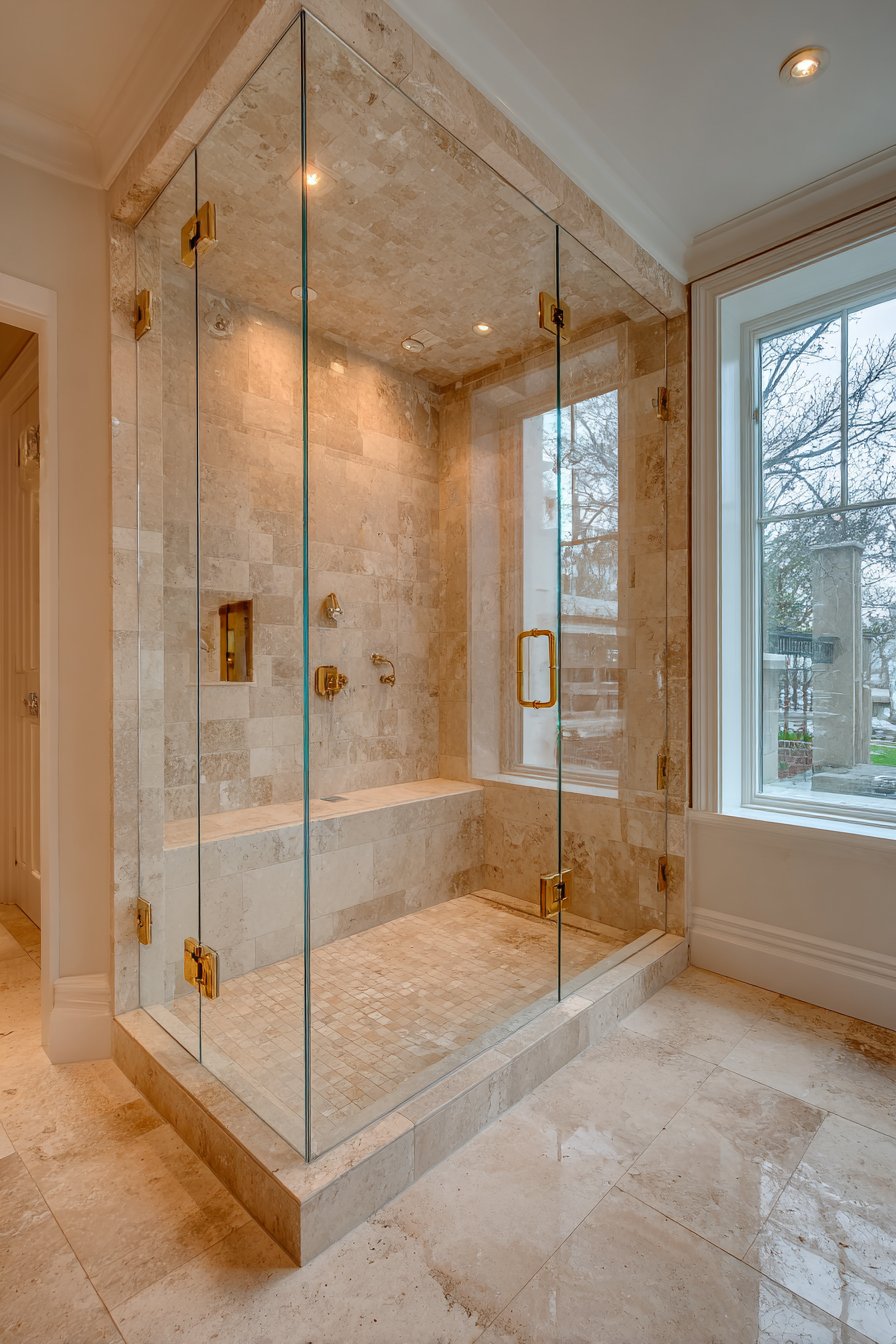
Imagine stepping into a bathroom where beige travertine envelops you from floor to ceiling, creating an immersive experience of natural luxury. The floor-to-ceiling application showcases the stone’s inherent beauty without interruption, allowing the eye to appreciate the continuous flow of natural patterns. Each tile displays characteristic pitting and veining that tells a geological story millions of years in the making. The warm neutral tones create a sophisticated backdrop that feels both timeless and contemporary.
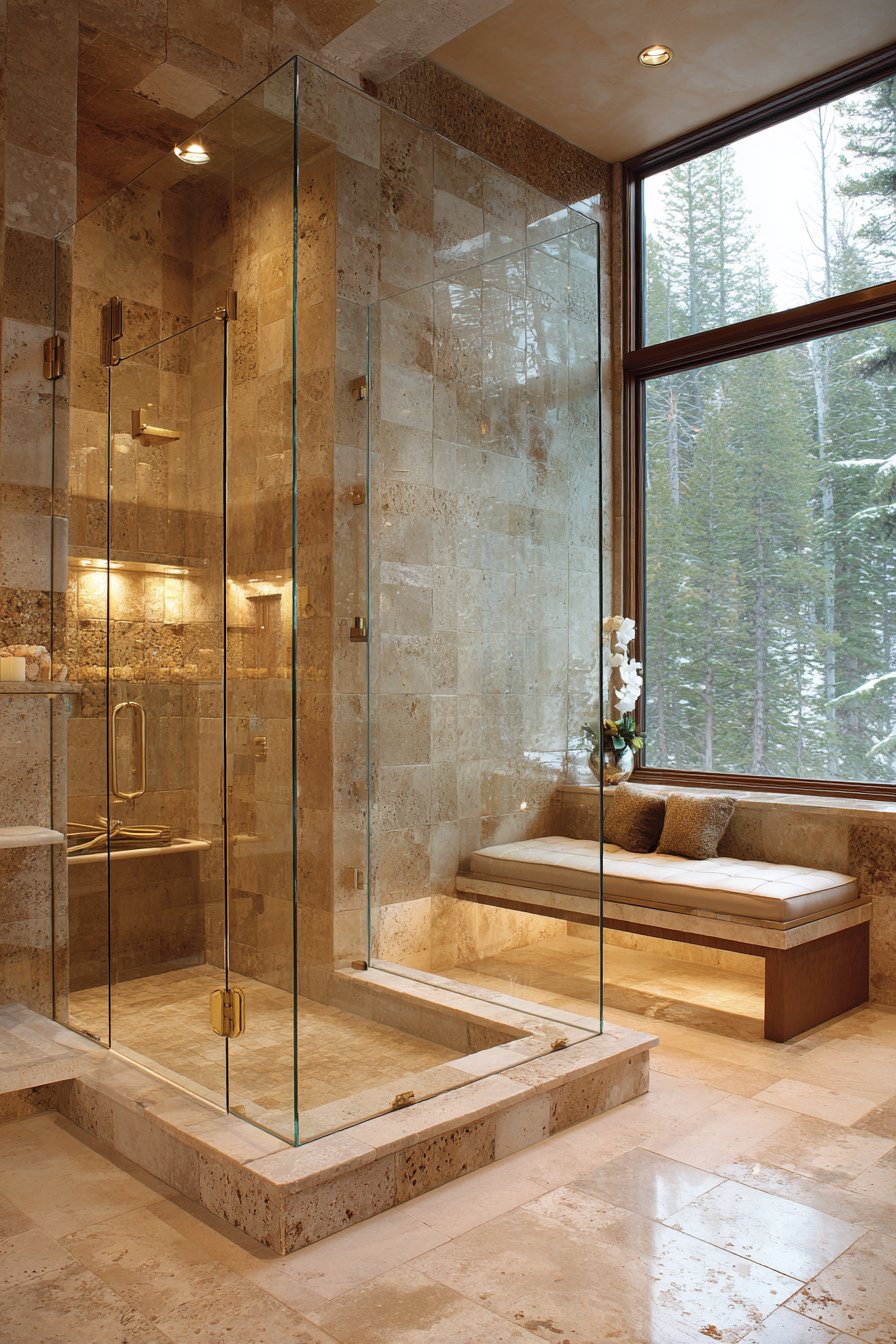
The walk-in shower becomes a showpiece with its frameless glass enclosure that maintains visual continuity. The travertine walls extend seamlessly into the shower space, eliminating visual breaks that could fragment the design. Brushed gold fixtures add a touch of opulence while complementing the warm undertones present in the natural stone. These metallic accents catch and reflect light, adding dimensional interest without overwhelming the organic beauty of the travertine.
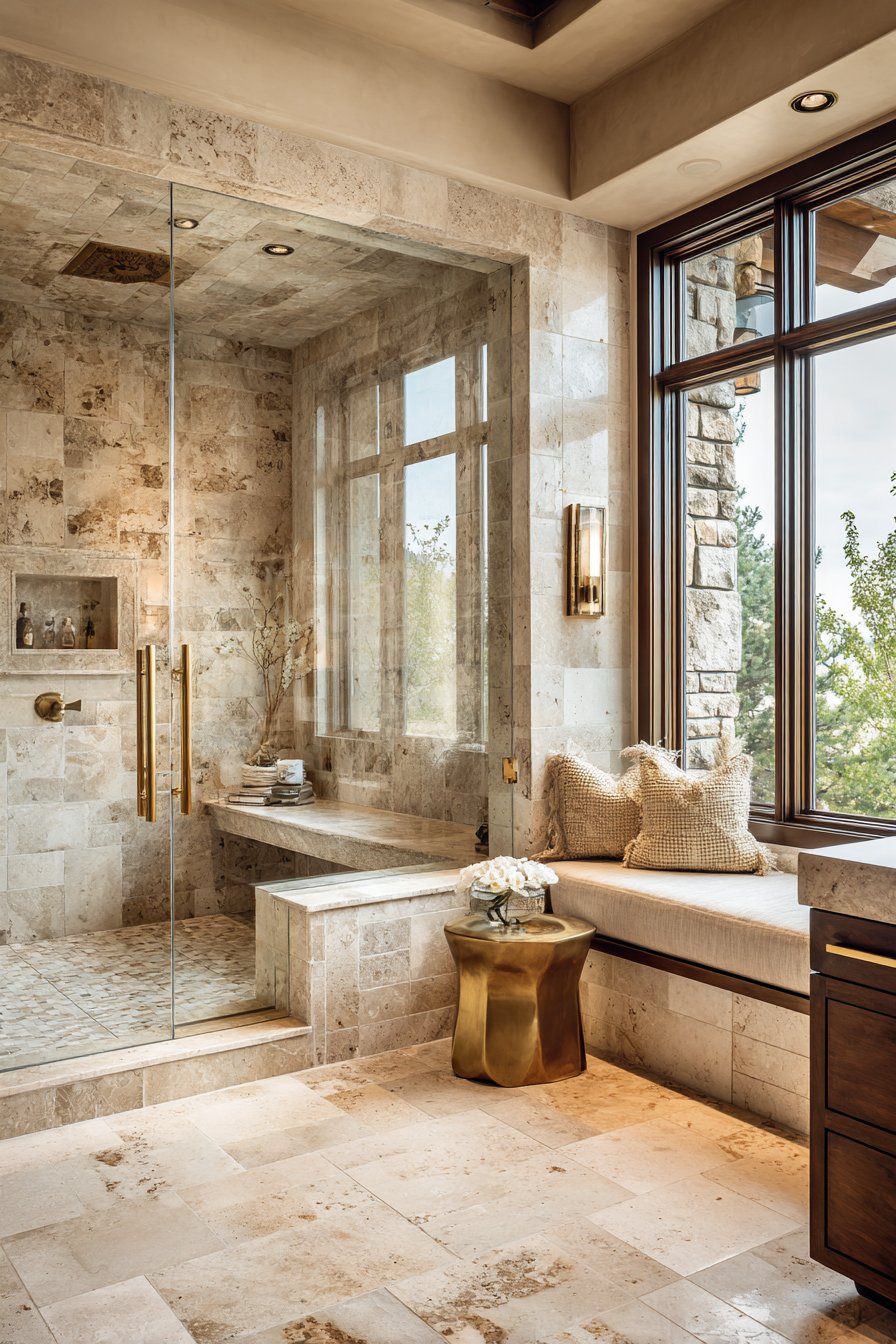
Natural light plays a crucial role in bringing this bathroom to life. A large window floods the space with daylight that dances across the textured surfaces throughout the day. The authentic texture and color variations inherent to travertine become more pronounced under changing light conditions. Morning sun reveals subtle honey tones, while afternoon light emphasizes the cooler beige hues within the stone. This dynamic quality ensures the space never feels static or boring.

The overall ambiance achieves sophisticated elegance through material restraint and expert execution. By allowing travertine to dominate the material palette, the design creates a cohesive visual experience. The natural variations within the stone provide sufficient visual interest without requiring additional decorative elements. This approach exemplifies how high-quality natural materials can stand alone as the primary design feature.
Key Design Tips:
- Select consistent tile batches to ensure color harmony across large installations
- Position the shower glass to maximize sightlines and showcase the travertine walls
- Choose brushed or satin metal finishes that complement rather than compete with stone textures
- Install adequate natural lighting to reveal the stone’s authentic character throughout the day
- Seal travertine properly to protect against moisture while maintaining its natural appearance
2. Spa-Inspired Travertine Sanctuary
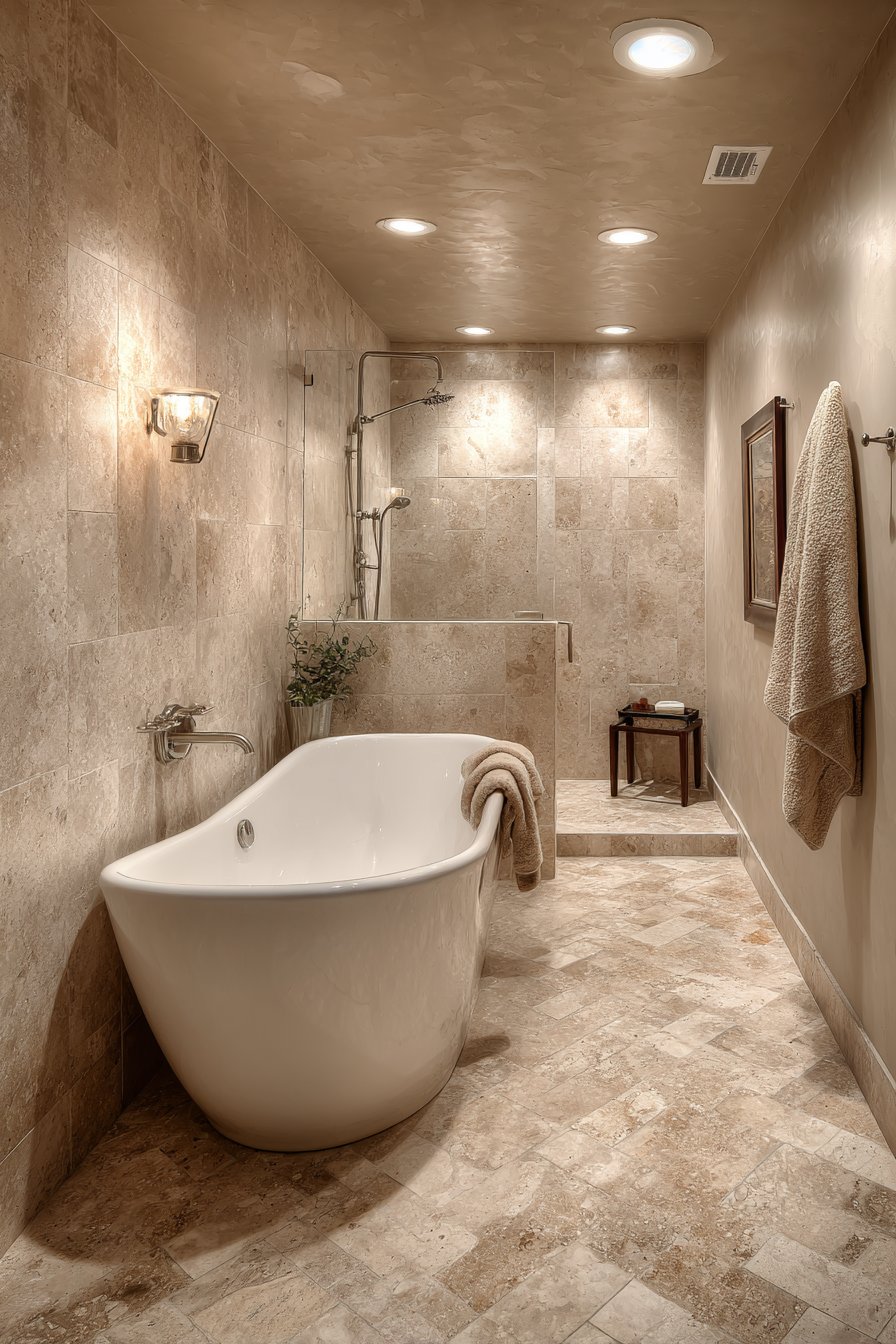
A spa-inspired bathroom transports you to a world of tranquility through thoughtful travertine application. Ivory travertine floor tiles laid in a classic Versailles pattern create immediate visual interest underfoot. This time-honored pattern combines tiles of varying sizes in a repeating arrangement that adds sophistication without overwhelming the senses. The pattern’s historical roots connect your bathroom to centuries of classical design tradition.
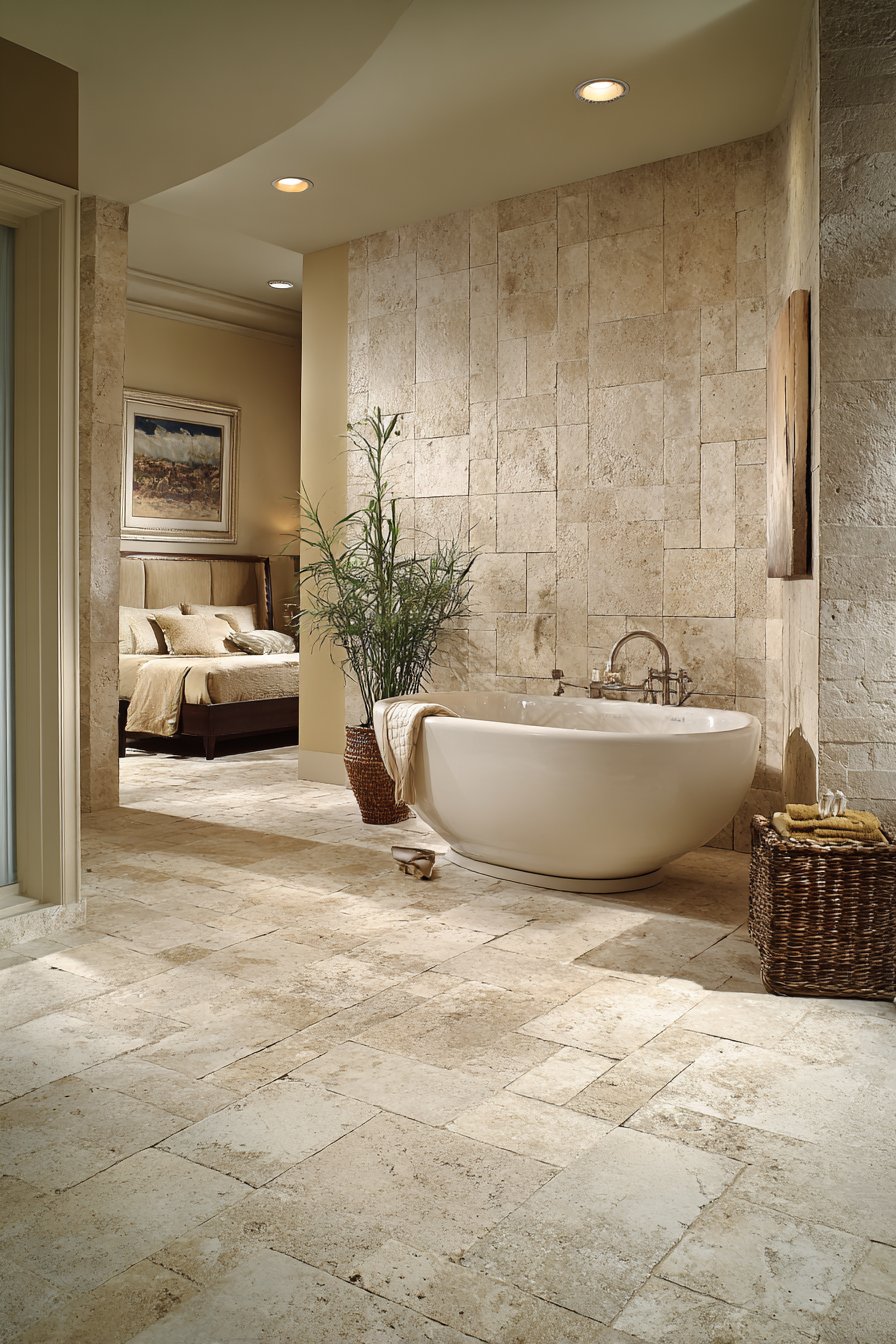
The stone’s characteristic porous texture and subtle color gradations become design features rather than flaws to conceal. Each tile displays unique fossil marks and mineral deposits that formed during the stone’s creation. These natural imperfections contribute to the authentic character that makes travertine so appealing. The ivory tones range from pure cream to warmer beige, creating gentle variation across the floor surface.
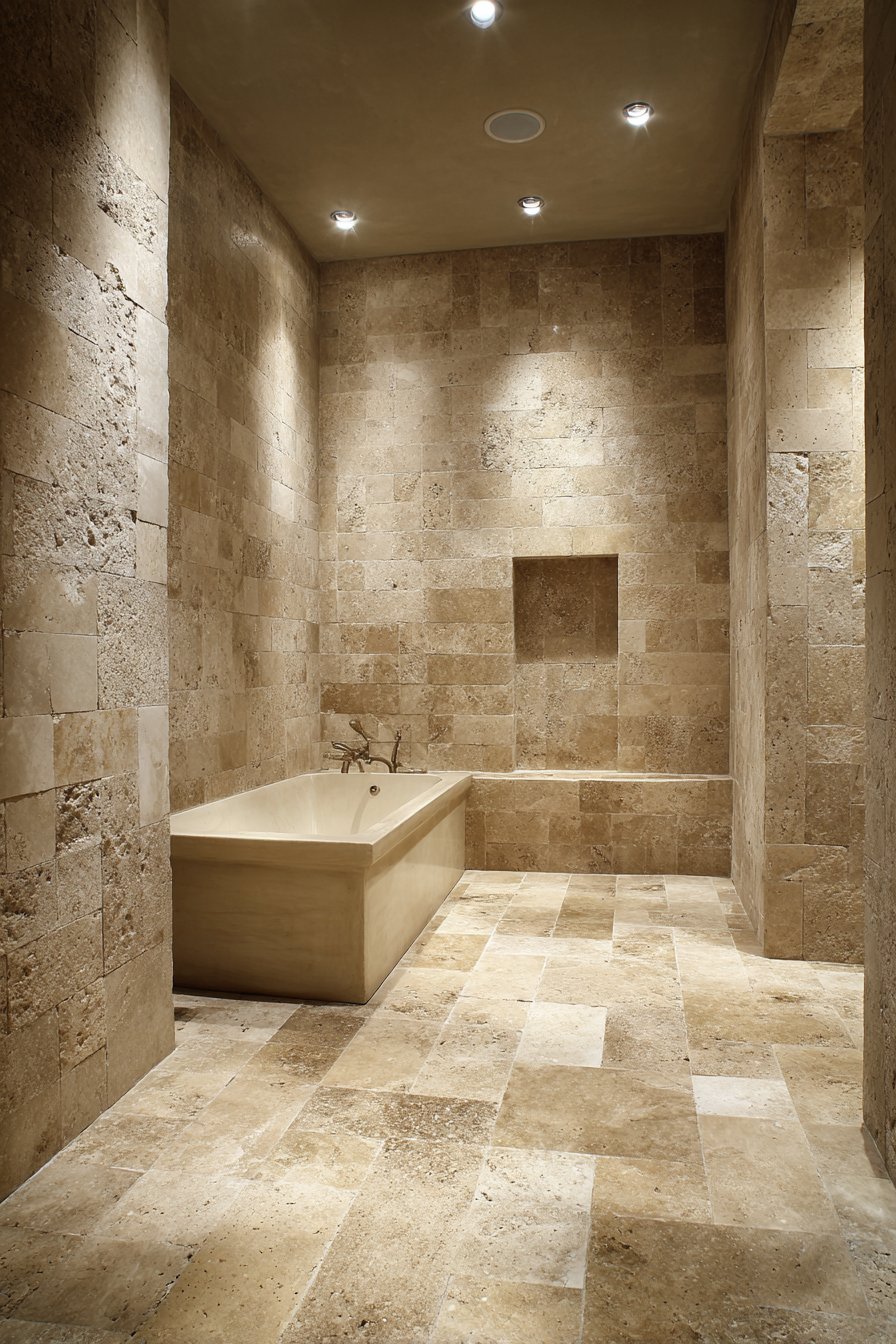
A freestanding soaking tub positioned against a travertine accent wall serves as the room’s sculptural focal point. The vertical travertine installation behind the tub draws the eye upward and emphasizes the ceiling height. This strategic placement creates a dramatic backdrop for the tub’s elegant silhouette. The accent wall demonstrates how travertine can be used selectively to create impact without covering every surface.
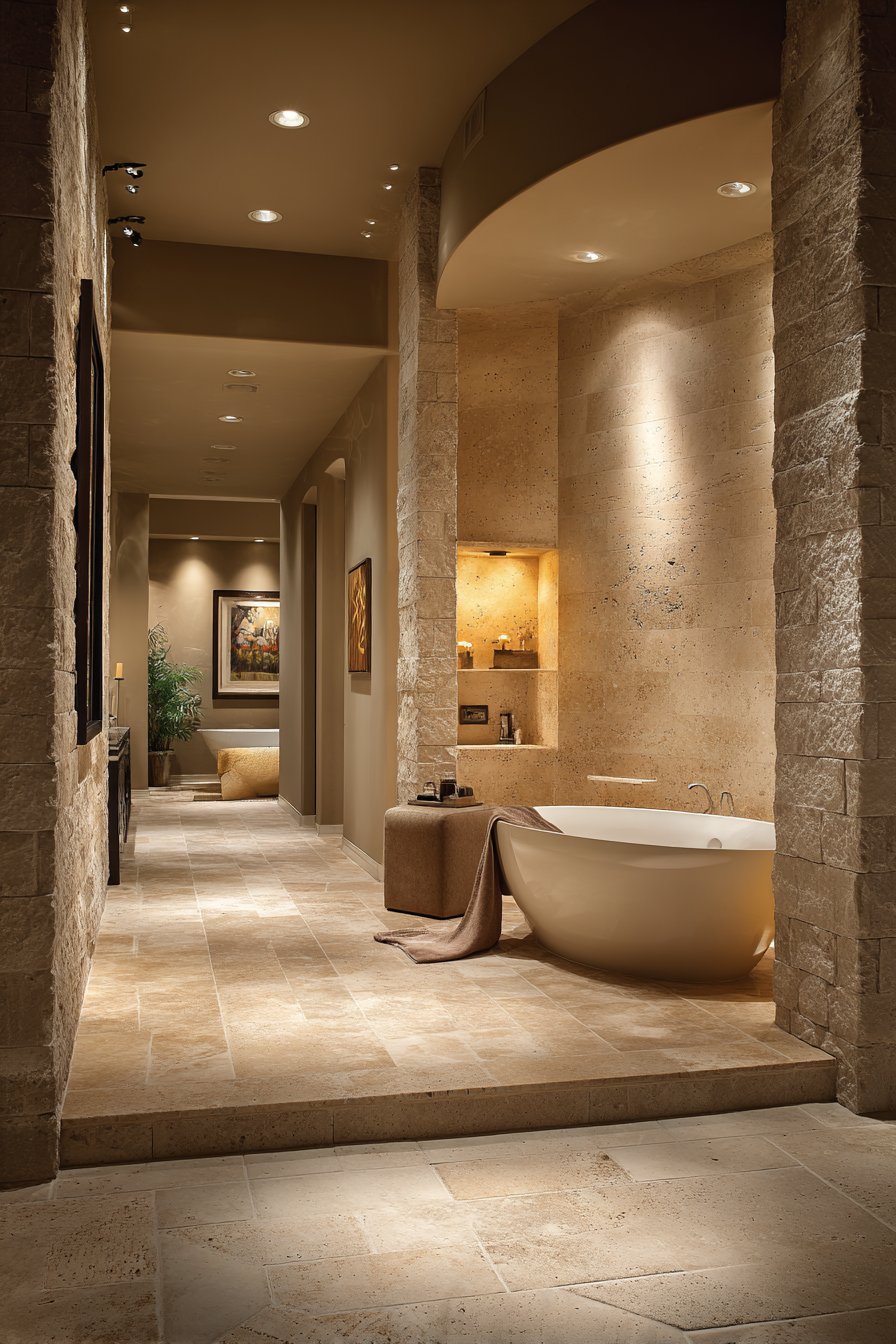
Recessed lighting has been carefully planned to cast gentle shadows that emphasize the three-dimensional surface texture. The lighting design reveals the tactile quality of the stone, making you want to reach out and touch it. Soft diffused illumination eliminates harsh shadows while still providing adequate task lighting. The overall effect evokes the earthy elegance and restorative atmosphere of a high-end spa retreat.
Key Design Tips:
- Study Versailles pattern layouts before installation to ensure proper tile placement and proportion
- Create accent walls rather than full-room coverage for budget-conscious spa aesthetics
- Layer multiple lighting sources at different heights to reveal surface texture variations
- Select ivory tones for their ability to brighten spaces while maintaining warmth
- Position the soaking tub to take advantage of the most dramatic stone backdrop
3. Modern Travertine Vanity Showcase
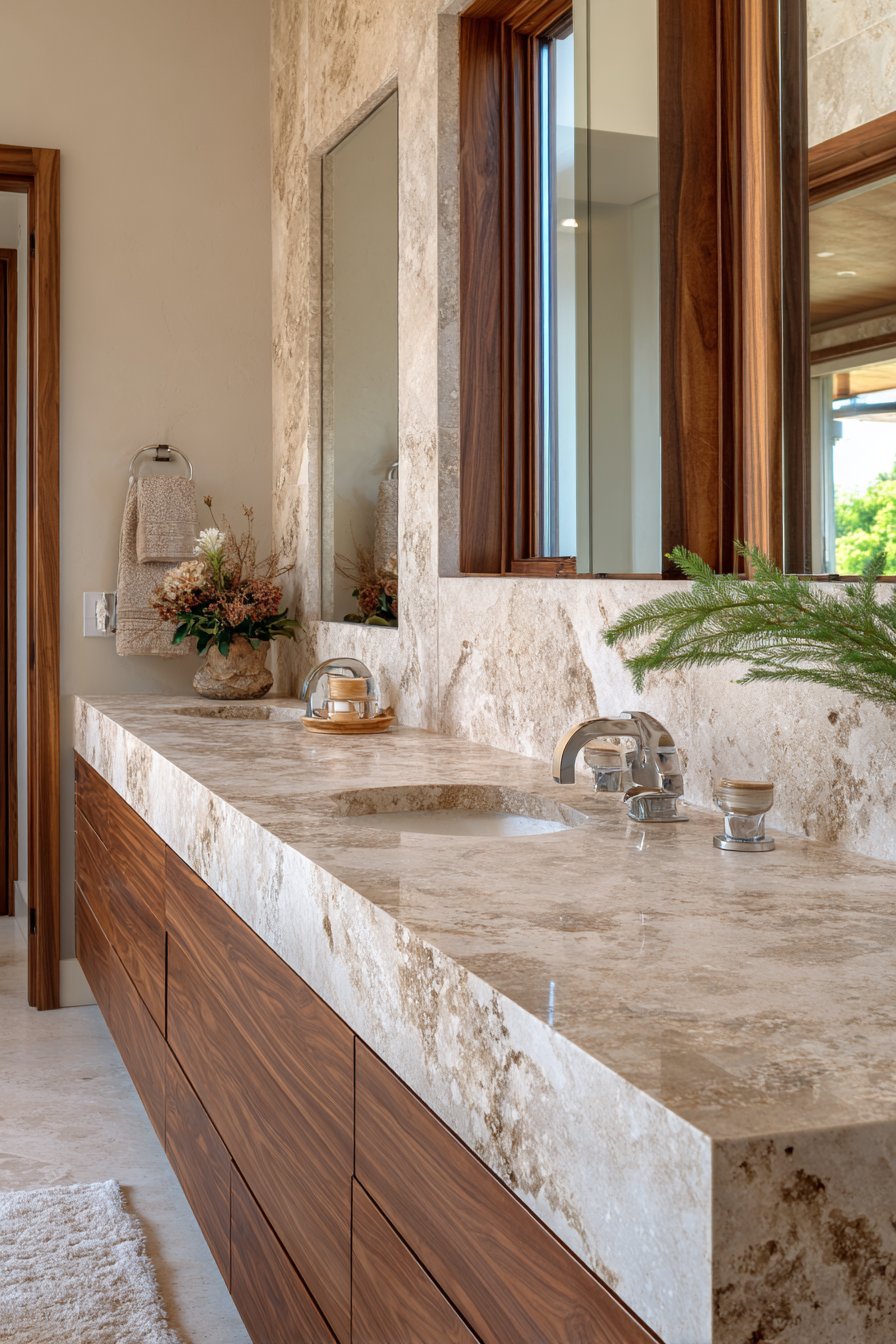
The vanity area serves as the bathroom’s functional heart and deserves special design consideration. A double sink setup with honed travertine countertop in warm tan tones provides both beauty and practicality. The honed finish offers a matte surface that resists water spots better than polished stone. Natural fossil marks and vein patterns visible in the countertop tell the stone’s ancient story with every glance.
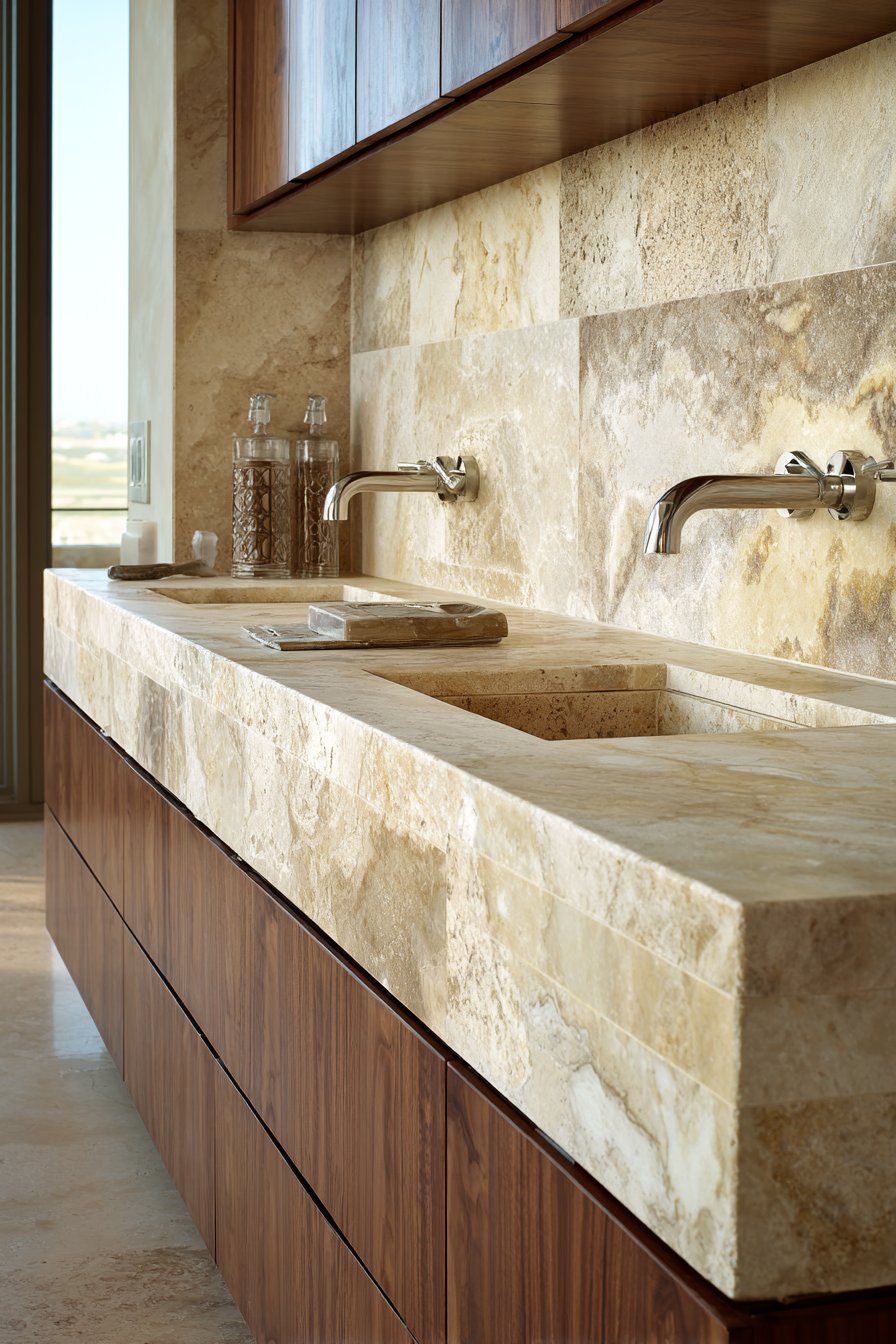
Custom cabinetry in rich walnut wood creates stunning contrast against the light-toned stone. The deep brown tones of the wood ground the design and prevent the space from feeling too ethereal. This material pairing demonstrates how natural materials complement each other when thoughtfully selected. The wood grain adds linear visual interest that contrasts beautifully with the organic patterns in the travertine.
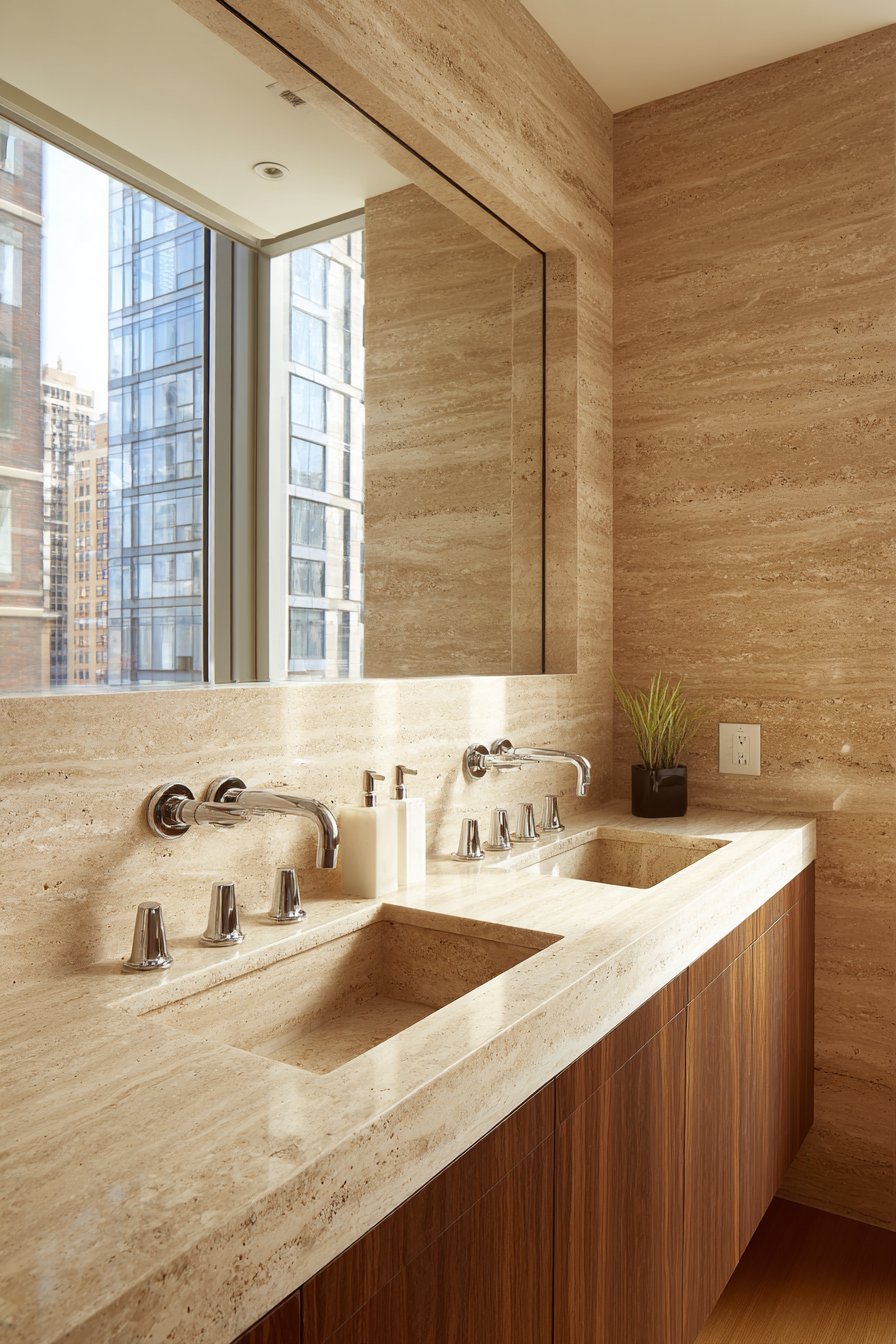
The backsplash extends the travertine material through book-matched slabs showing symmetrical veining patterns. Book-matching involves cutting consecutive slabs from the same block and opening them like pages in a book. This technique creates mirror-image patterns that add sophisticated visual symmetry to the vanity wall. The veining appears to radiate outward from a central axis, creating a butterfly-like effect that draws the eye.
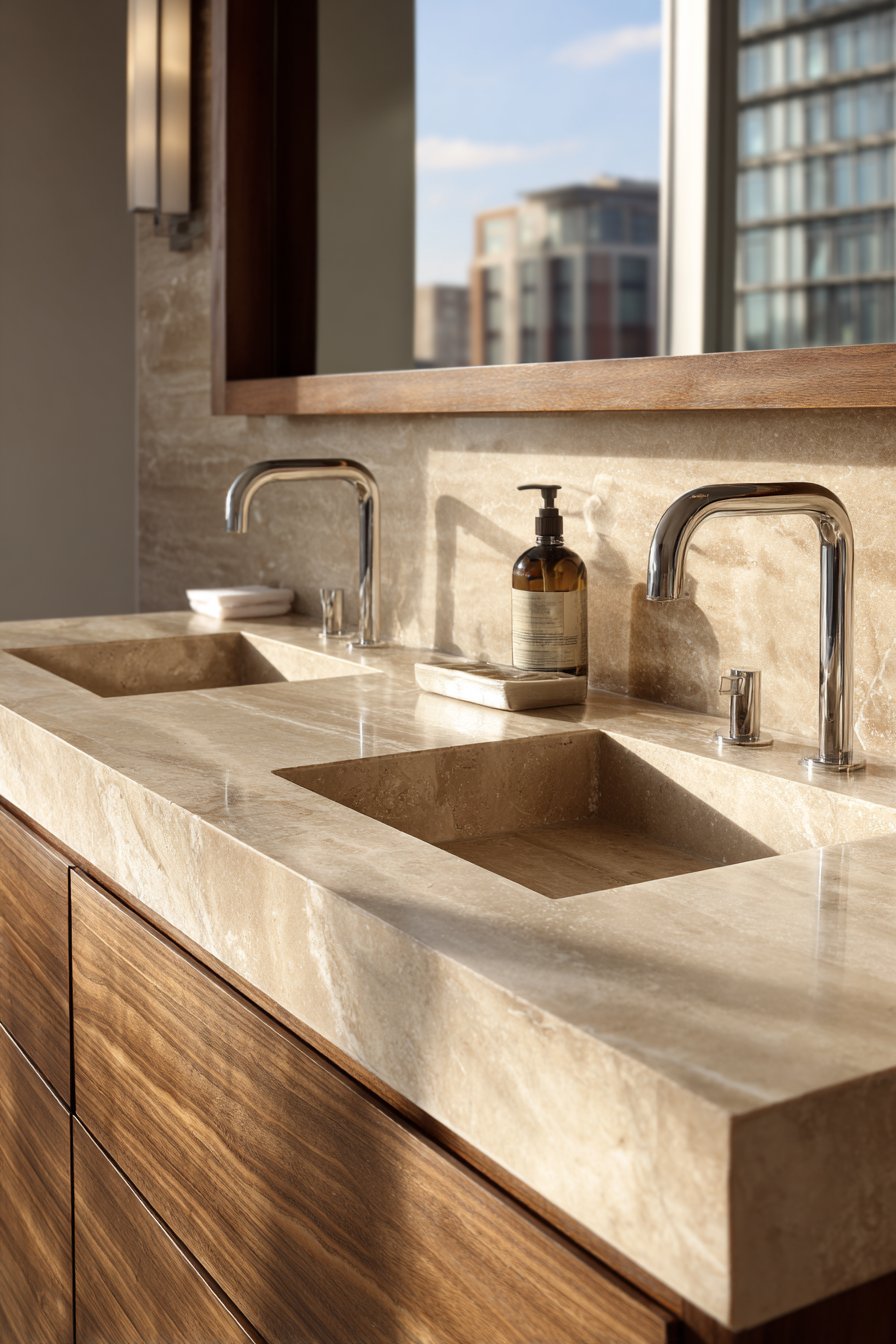
Natural lighting from a side window emphasizes the stone’s organic variations and luxurious texture throughout the day. The window placement prevents harsh overhead shadows while providing ideal illumination for grooming tasks. Side lighting reveals the depth and dimension within the stone that overhead lighting might flatten. This architectural detail demonstrates how window placement significantly impacts material appearance.
Key Design Tips:
- Choose honed finishes for countertops to reduce maintenance and improve slip resistance
- Pair light stone with dark wood for classic contrast that never goes out of style
- Request book-matched slabs when ordering to create symmetrical pattern effects
- Plan window placement to provide side lighting that enhances rather than washes out textures
- Seal countertops thoroughly to protect against staining from cosmetics and toiletries
4. Compact Travertine Efficiency

Small bathrooms benefit enormously from travertine’s ability to create visual cohesion through material consistency. Light beige tumbled travertine tiles create texture-rich walls within a compact shower enclosure. The tumbled finish softens the stone’s edges and enhances its natural character. This treatment gives the stone an aged, Old World appearance that adds instant charm to modest spaces.
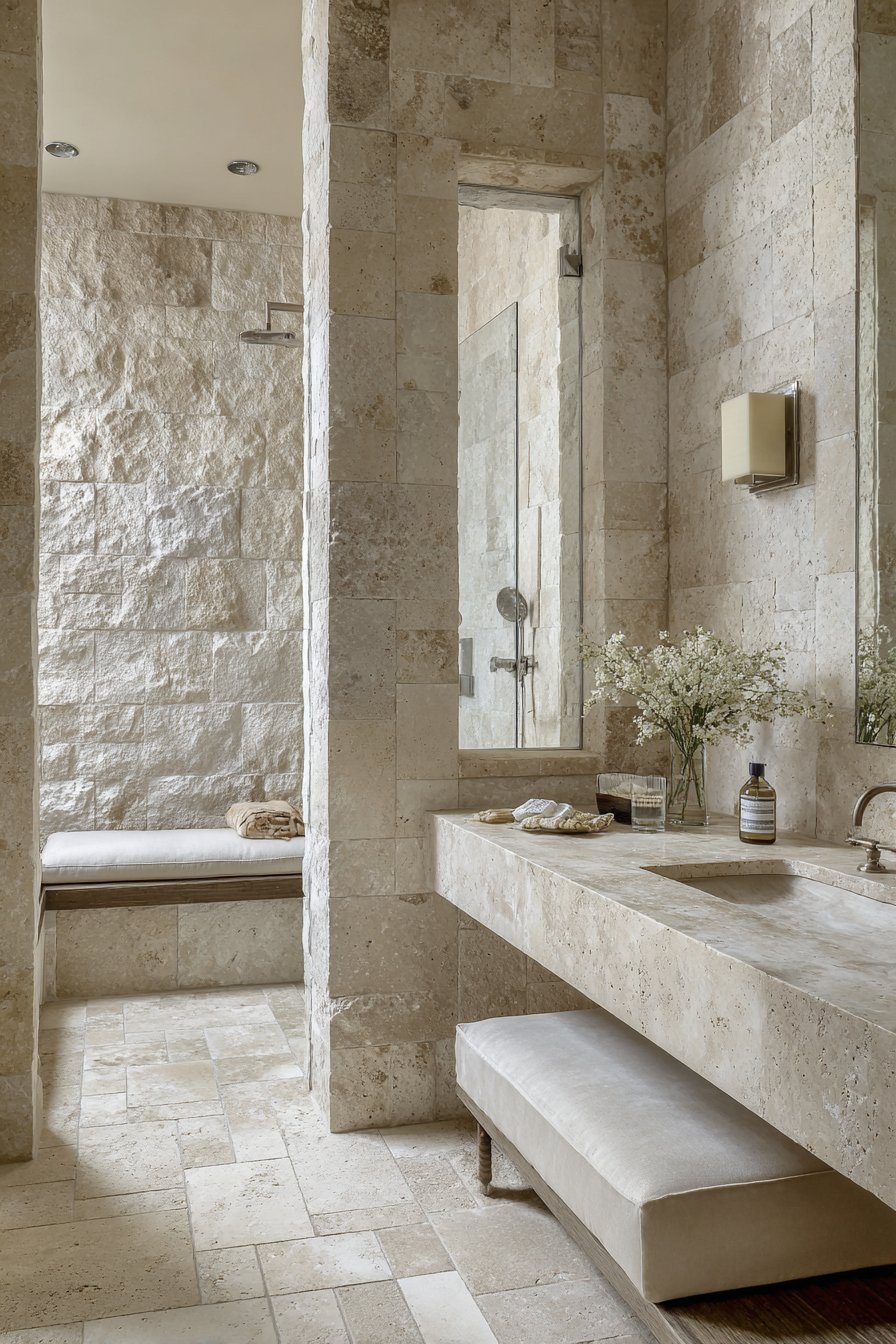
The same travertine material extends to the floor in a larger tile format for visual continuity. Using larger floor tiles reduces grout lines and makes the space feel more expansive. The consistent material palette eliminates visual fragmentation that could make the small bathroom feel choppy. Color and material continuity trick the eye into perceiving more space than actually exists.
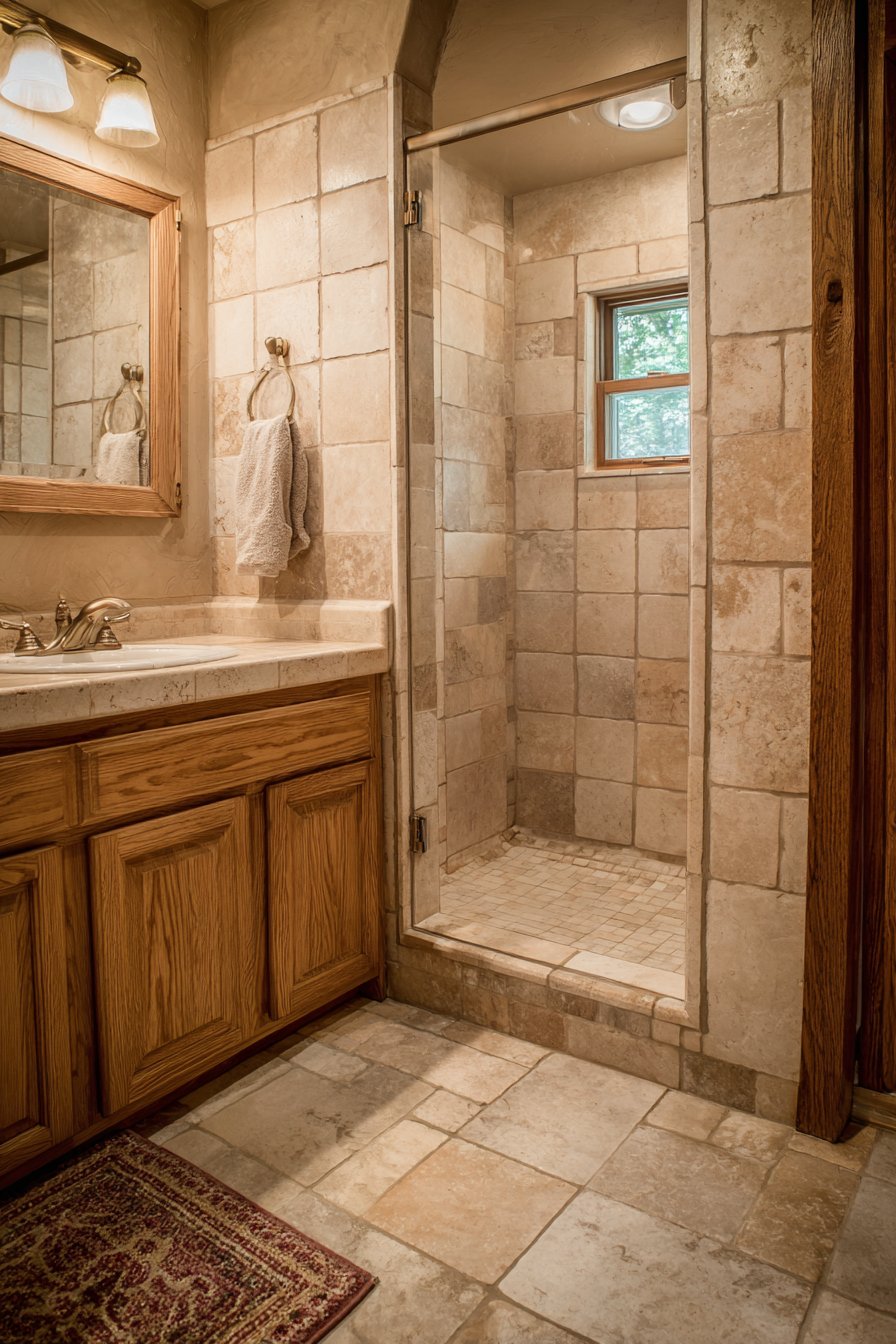
A floating vanity with travertine top maximizes space while showcasing the stone’s natural beauty. The wall-mounted configuration creates valuable floor space beneath the vanity, enhancing the sense of openness. Storage remains accessible while the floating design keeps sightlines clear. The travertine top ties the vanity to the surrounding surfaces for complete design integration.
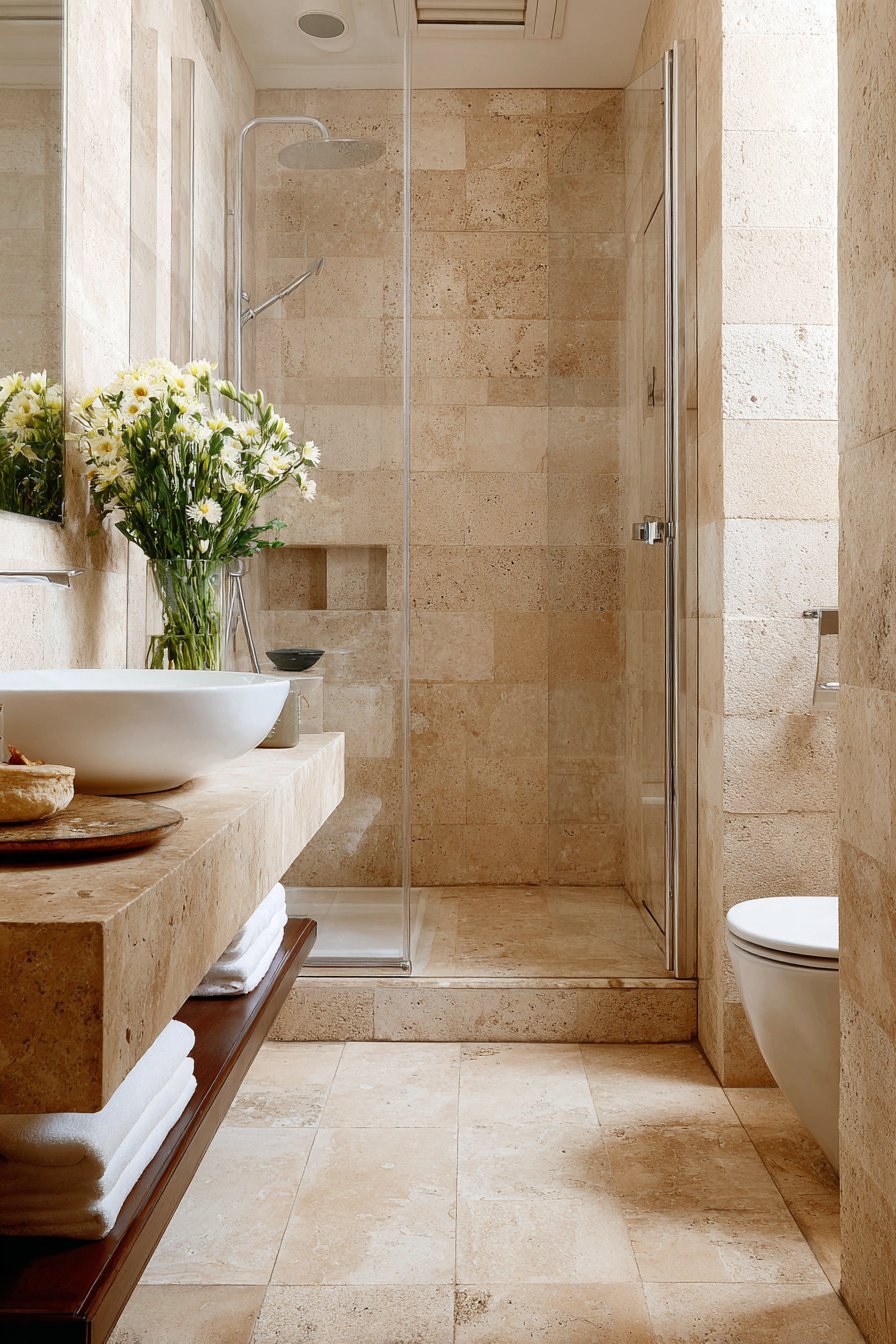
Wide-angle photography captures how balanced exposure reveals both practical elegance and warm ambiance in compact spaces. Natural daylight streaming through even a small window can dramatically impact how the travertine appears. The warm tones inherent in the stone reflect light and prevent the small space from feeling dark or cramped. This design proves that limited square footage doesn’t require compromising on luxury materials.
Key Design Tips:
- Use larger format tiles on floors to minimize grout lines and maximize perceived space
- Install floating vanities to preserve floor area and enhance visual openness
- Choose tumbled finishes for added texture and character in small installations
- Maintain material consistency throughout to create cohesive visual flow
- Maximize natural light sources regardless of window size for material depth
5. Transitional Travertine Shower Retreat

Transitional design bridges traditional and contemporary aesthetics, and travertine serves this style beautifully. A custom walk-in shower with cream-colored travertine tile walls installed in a vertical stacked pattern creates clean lines. The vertical installation emphasizes ceiling height and creates upward visual movement. This pattern choice feels more contemporary than traditional offset brick patterns while still honoring the stone’s classical heritage.
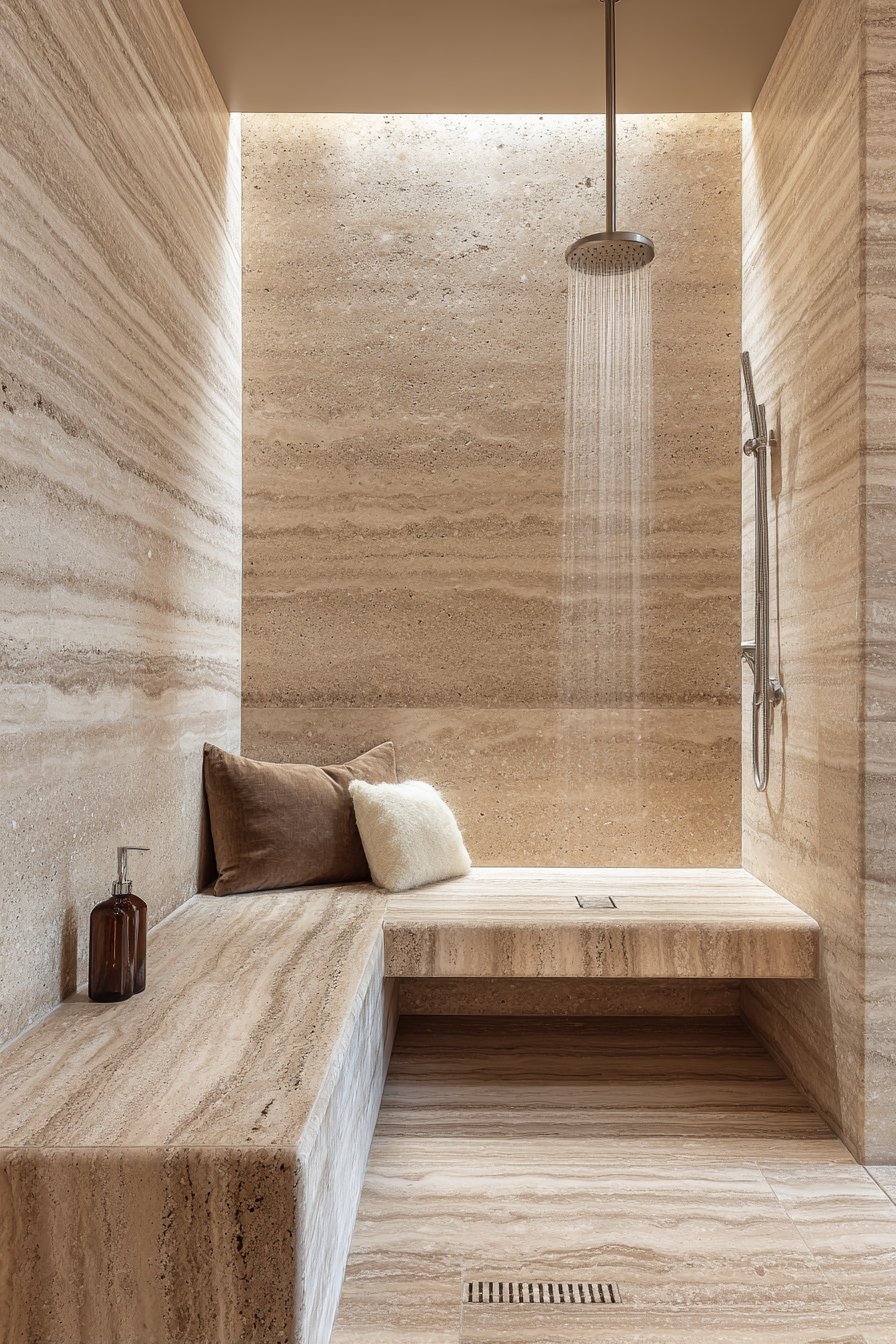
The stone’s natural striations and color variations range from pale ivory to soft caramel tones. These subtle shifts in hue occur naturally within each piece and across the installation. The color palette evokes warm neutrality that works with both cool and warm accent colors. This versatility makes the bathroom easy to refresh with new accessories or textiles over time.
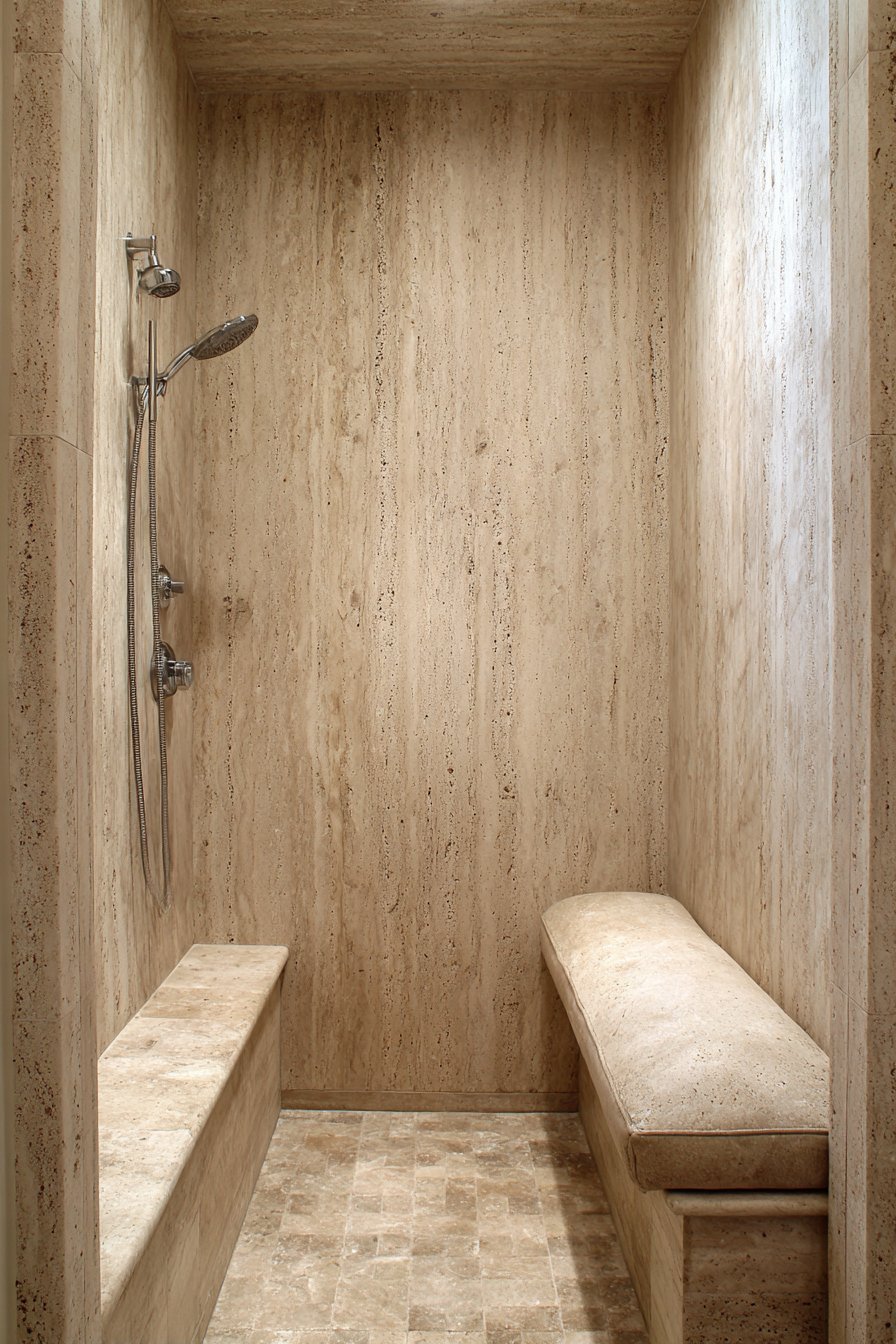
A built-in bench crafted from the same travertine provides functional seating while maintaining aesthetic consistency. The integrated bench demonstrates how travertine can serve structural and decorative purposes simultaneously. This thoughtful detail transforms the shower into a space for lingering rather than rushing through routines. The bench surface should be properly sloped to prevent water pooling.
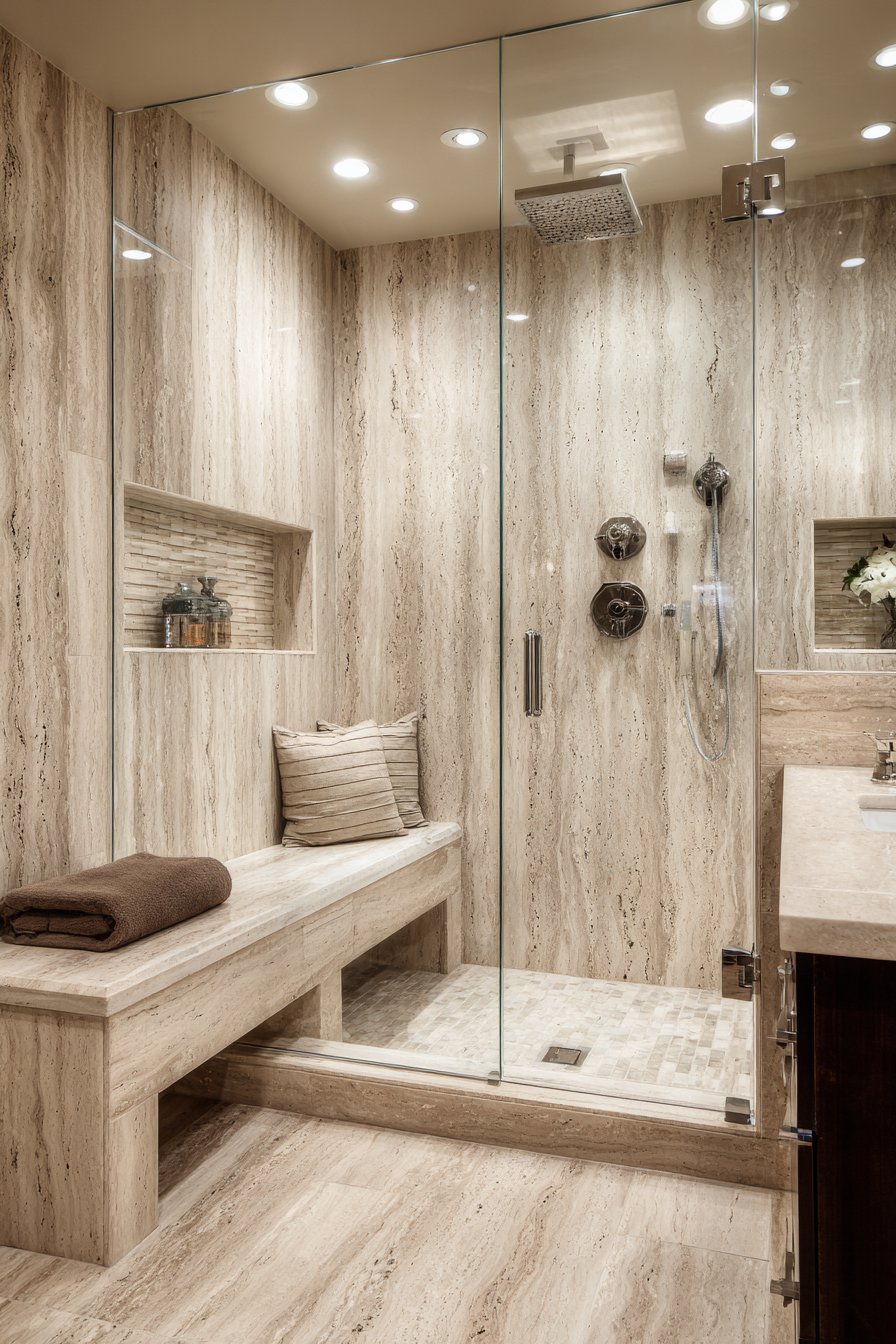
Brushed nickel rainfall showerhead and fixtures complement the neutral palette with understated elegance. The rainfall showerhead creates a spa-like bathing experience that matches the serene visual aesthetic. Brushed nickel offers durability and fingerprint resistance while providing subtle metallic contrast. The authentic texture and natural imperfections visible in the travertine surfaces complete the spa-like atmosphere.
Key Design Tips:
- Install tiles in vertical stacked patterns for contemporary transitional appeal
- Incorporate built-in seating using the same stone material for cohesive design
- Slope bench surfaces properly to ensure water drainage and user comfort
- Select brushed metal finishes that resist water spots and fingerprints
- Embrace natural stone imperfections as character-building design elements
6. Mediterranean-Inspired Travertine Romance
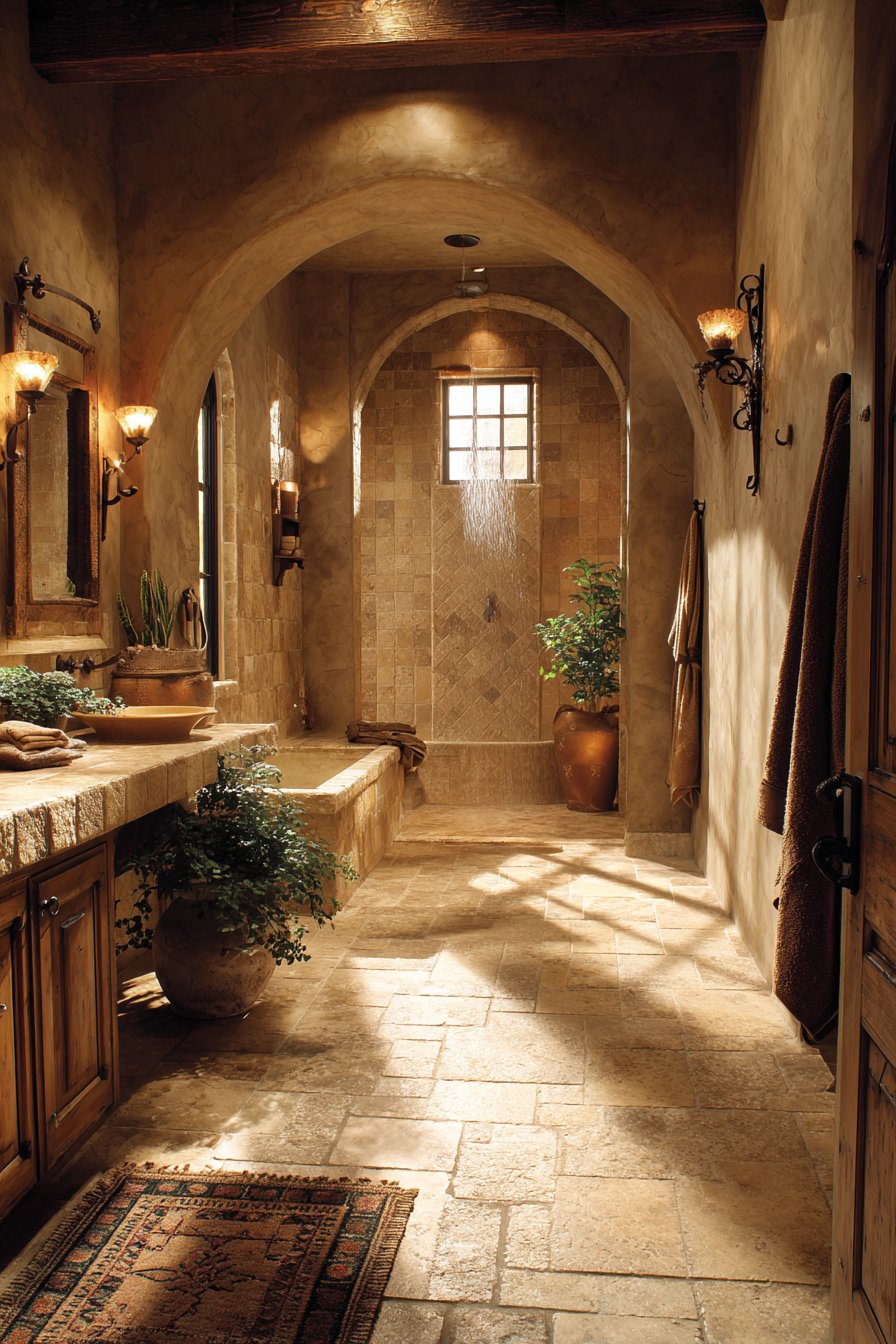
Mediterranean design celebrates rustic authenticity, and travertine delivers this aesthetic perfectly. Rustic tumbled travertine floor tiles in mixed beige and tan tones display characteristic pitted surface texture. The varied coloration creates a floor that appears to have aged naturally over decades. This weathered appearance connects the space to Mediterranean villas and coastal retreats.
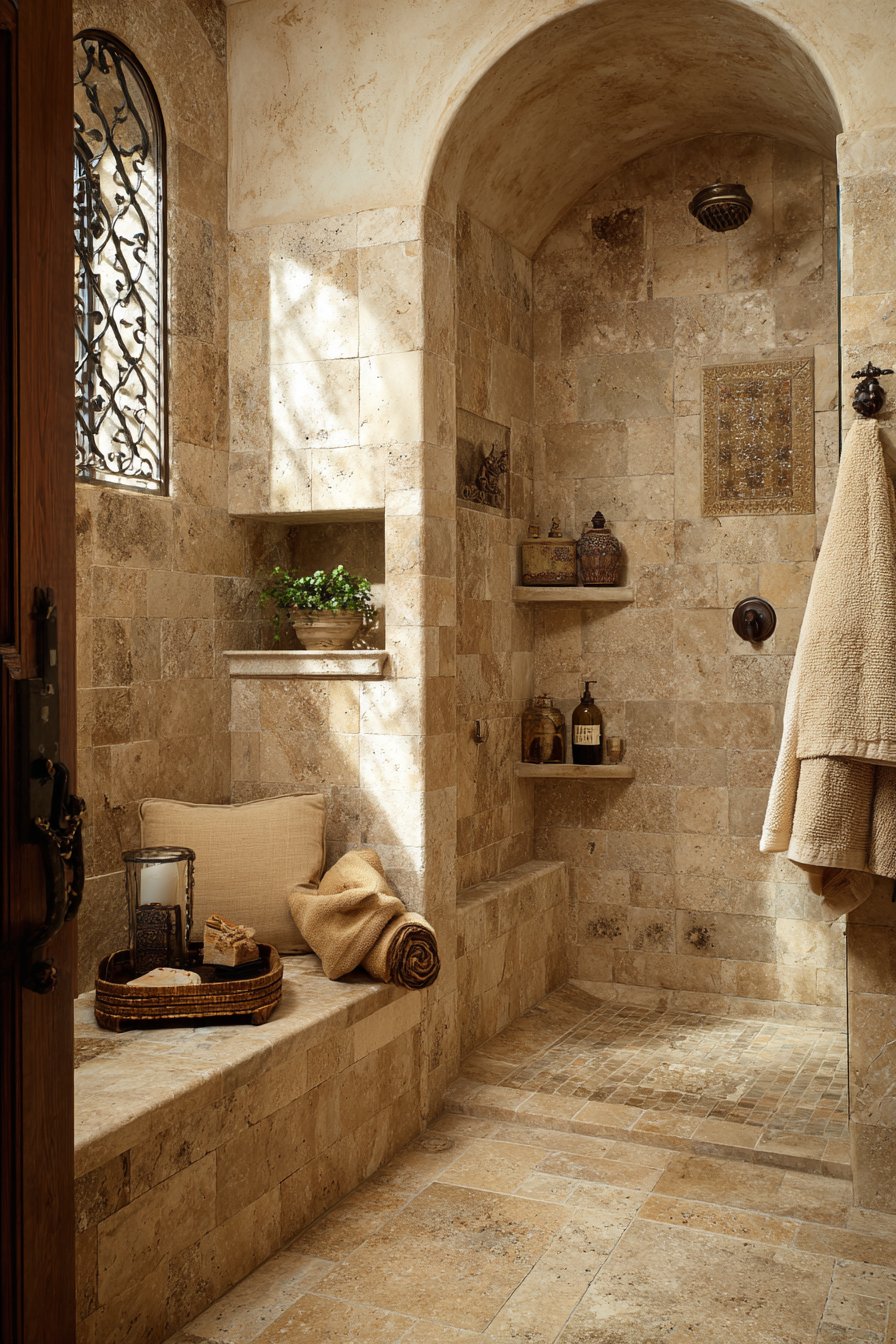
An arched shower niche lined with matching travertine provides practical storage while maintaining aesthetic continuity. The curved arch references classical architecture and adds soft geometry to the rectangular tile field. This architectural detail demonstrates how functional elements can enhance rather than detract from design vision. The niche provides a home for bathing essentials without requiring wall-mounted accessories.
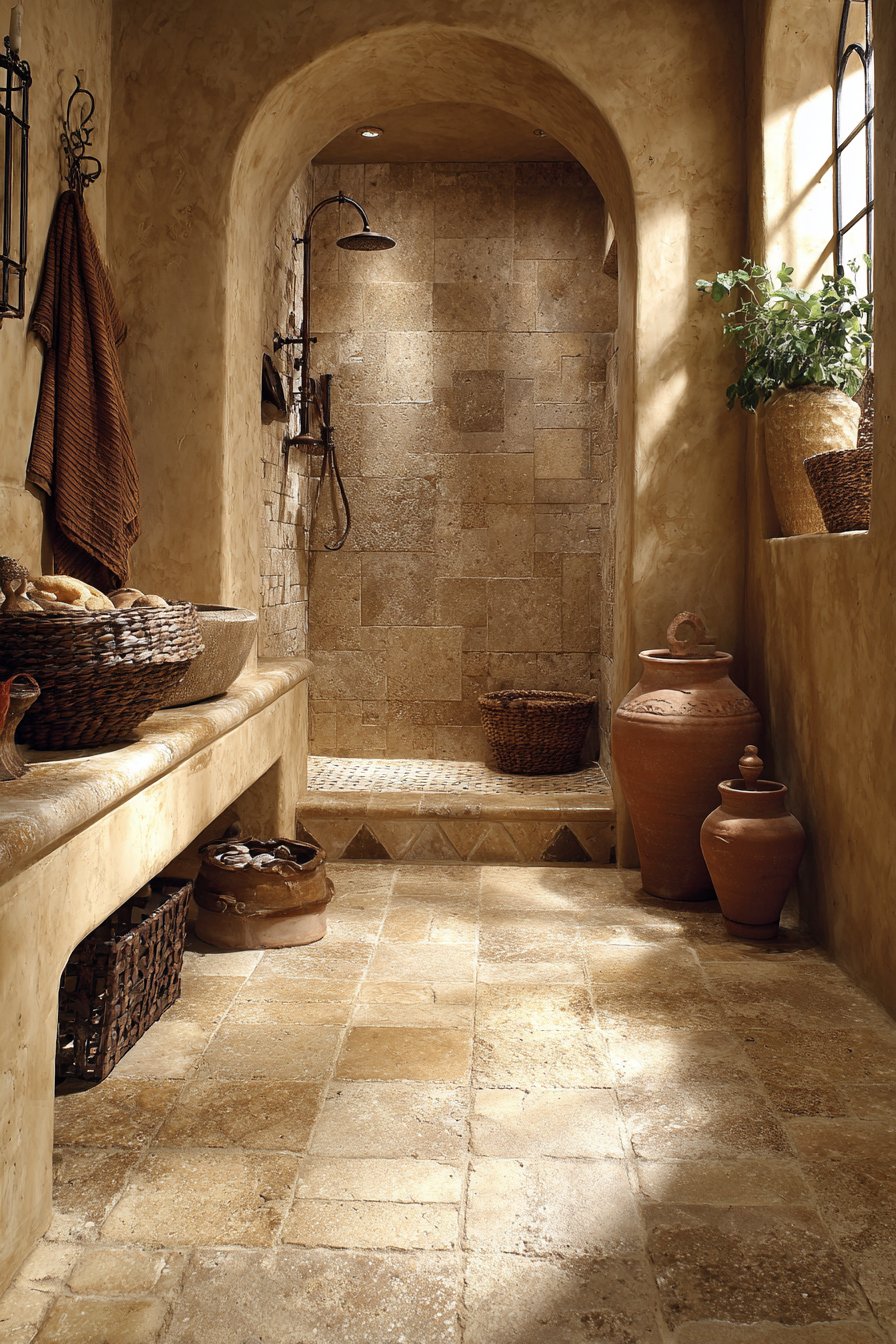
Wrought iron fixtures and terracotta accent pieces complement the Old World charm perfectly. The dark metal provides grounding contrast against the light stone surfaces. Terracotta accessories introduce warm earth tones that harmonize with the travertine’s natural palette. These Mediterranean-inspired elements work together to create a cohesive story about place and tradition.

Natural lighting through a small window creates dramatic shadows on the textured travertine surfaces throughout the day. The interplay of light and shadow emphasizes the stone’s three-dimensional surface quality. Even modest natural light sources can dramatically impact how textured surfaces appear. This design showcases the timeless beauty and authentic character that makes natural stone perpetually appealing.
Key Design Tips:
- Mix travertine tones for rustic Mediterranean authenticity rather than perfect color matching
- Incorporate arched architectural details to reference classical Mediterranean design
- Choose wrought iron fixtures for authentic Old World character and durability
- Add terracotta accessories to warm the neutral stone palette
- Position windows to create dramatic shadow play across textured surfaces
7. Contemporary Travertine Statement Wall

Contemporary design embraces clean lines and bold gestures, and a striking travertine feature wall delivers both. Floor-to-ceiling travertine tile behind a wall-mounted floating vanity creates a dramatic vertical element. The full-height installation draws attention upward and makes the ceiling feel higher. Natural beige color with subtle grey undertones and organic veining provides sophisticated neutrality.
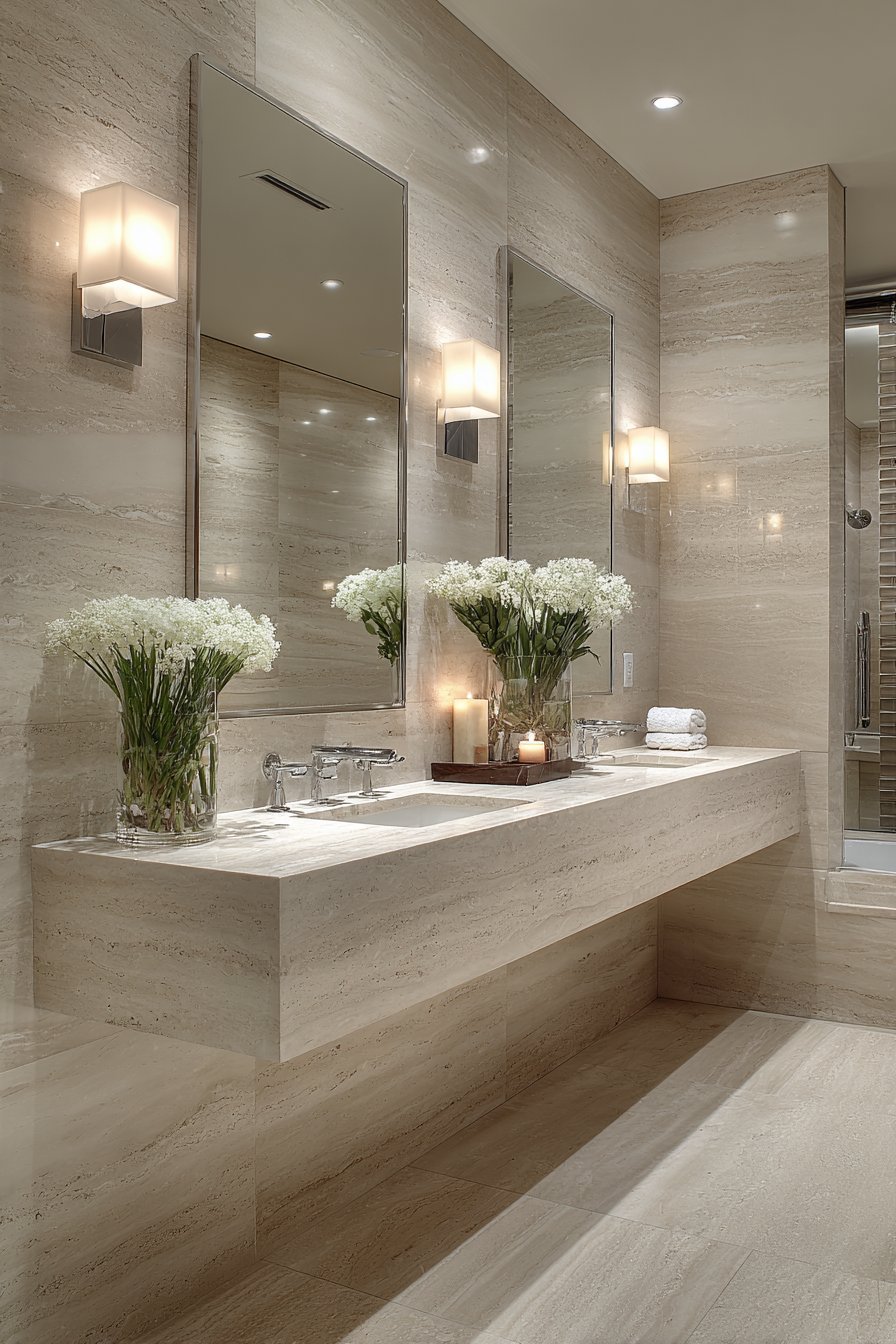
Polished chrome fixtures provide modern contrast against the matte stone surface. The reflective metal adds sparkle and contemporary edge to balance the stone’s organic warmth. Chrome’s cool tonality complements the grey undertones present in the travertine. This material pairing demonstrates how mixing warm and cool elements creates visual tension and interest.
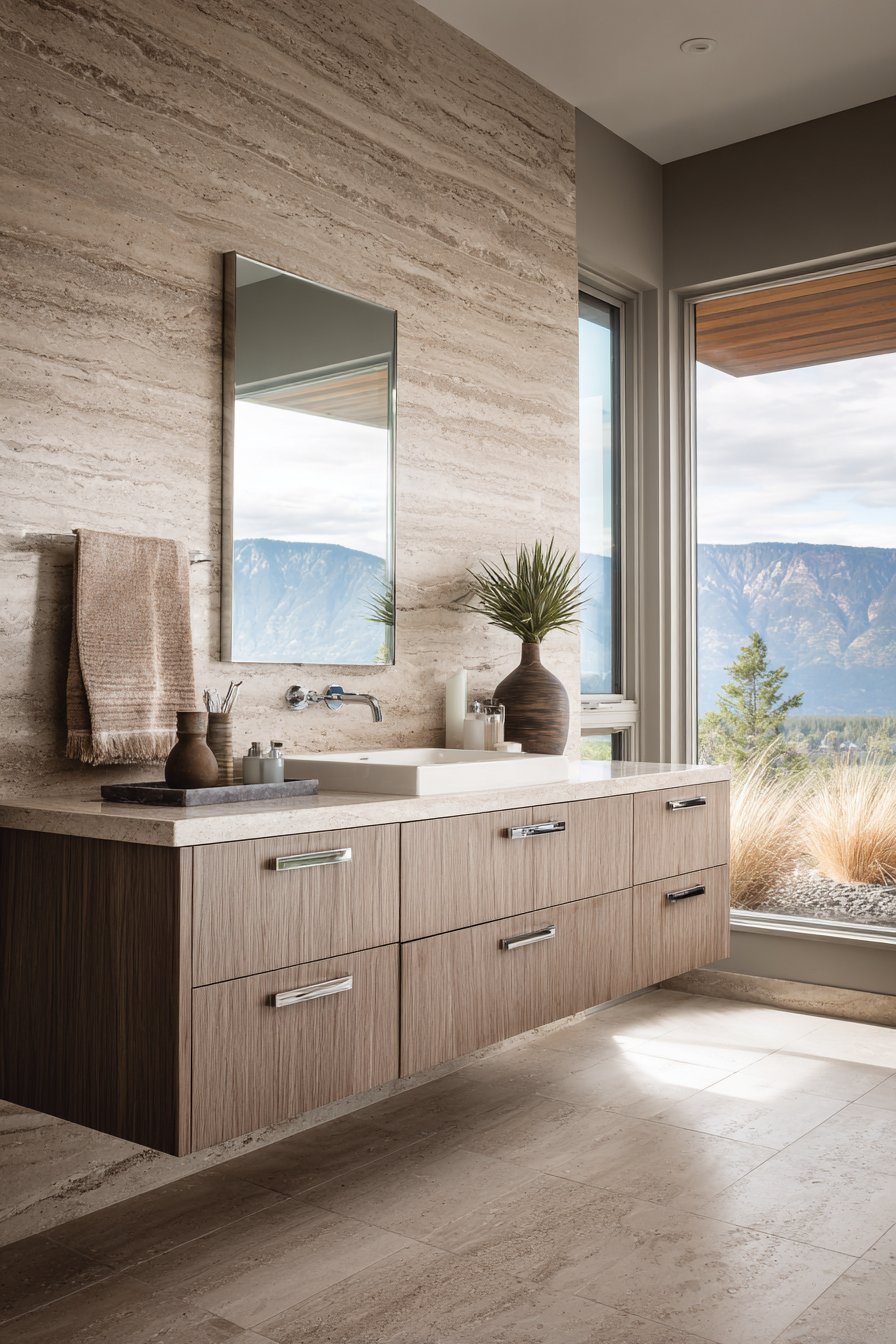
Large format travertine floor tiles with filled holes and honed finish create a sleek foundation. The filled travertine offers smoother surfaces while retaining visible evidence of the stone’s porous nature. Large format tiles minimize grout lines for a more contemporary, streamlined appearance. The honed finish provides subtle sheen without the high maintenance of polished surfaces.
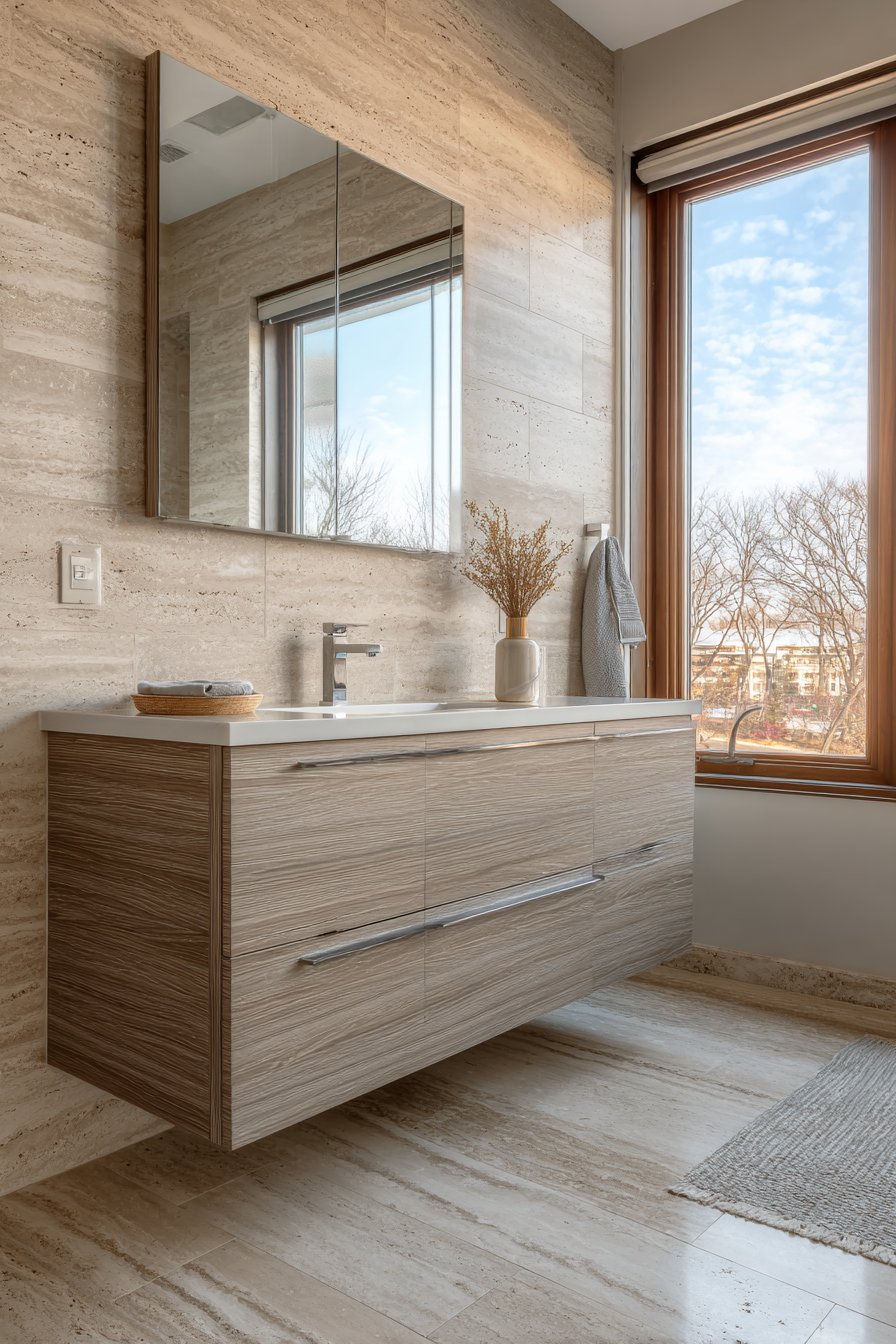
Soft natural lighting emphasizes material authenticity and balanced composition. The lighting strategy reveals the harmonious blend of modern design principles and natural stone elegance. Contemporary doesn’t mean cold or sterile when natural materials anchor the design. This bathroom proves that travertine adapts beautifully to even the most modern aesthetic visions.
Key Design Tips:
- Create feature walls rather than full-room coverage for contemporary dramatic impact
- Pair matte stone with polished metal for textural and reflective contrast
- Choose large format tiles to minimize grout lines and enhance sleek aesthetics
- Select filled travertine for smoother contemporary surfaces with character retention
- Balance warm stone tones with cool metal finishes for visual sophistication
8. Luxury Travertine Artistic Expression
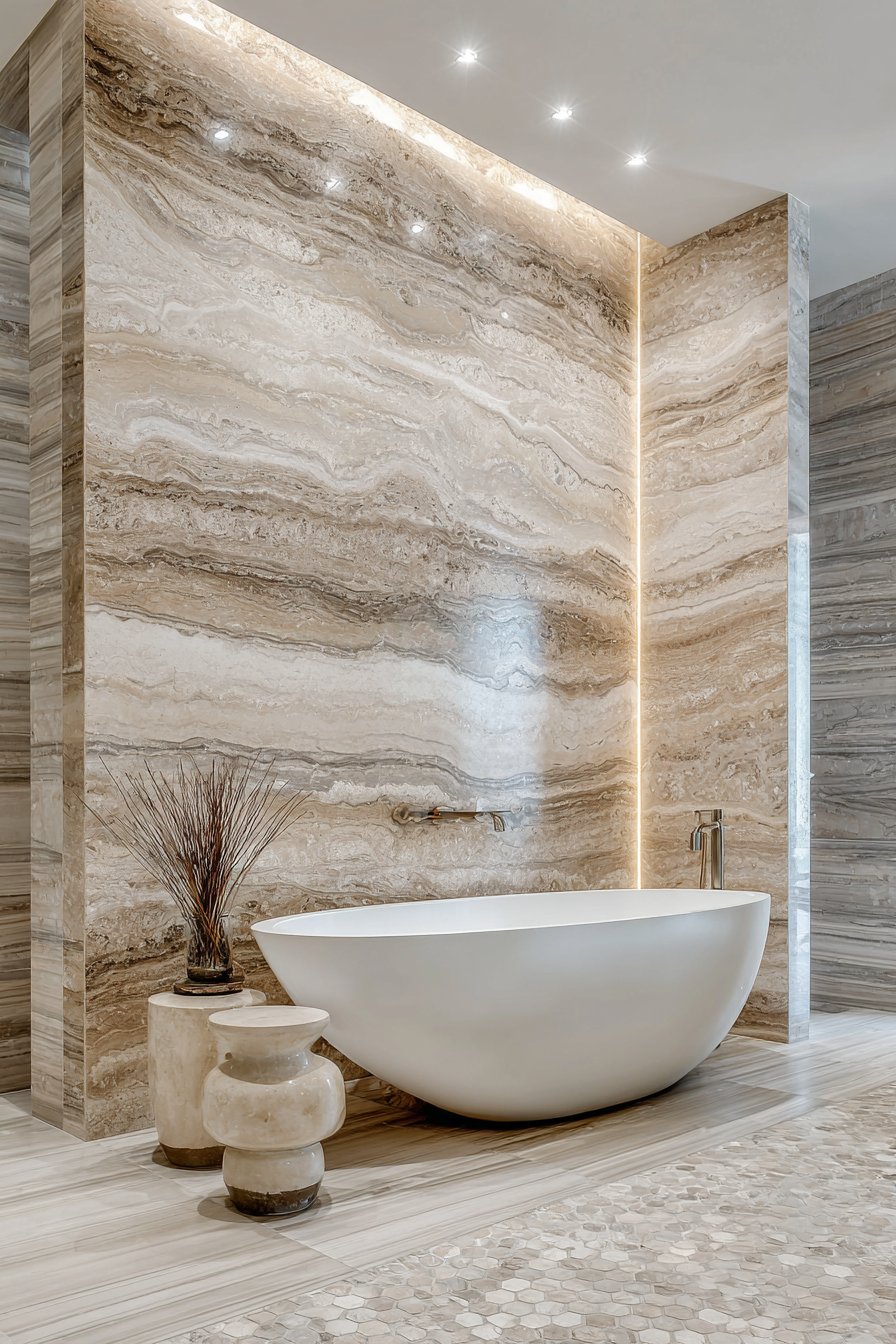
Vein-cut travertine offers dramatically different aesthetics than cross-cut stone, revealing linear striations and banding. A dramatic vein-cut travertine feature wall showcases linear patterns in shades of cream, beige, and light brown. The striations run horizontally or vertically depending on installation orientation, creating visual movement. This cutting method reveals the layers of sediment that formed over millennia, making geology visible.
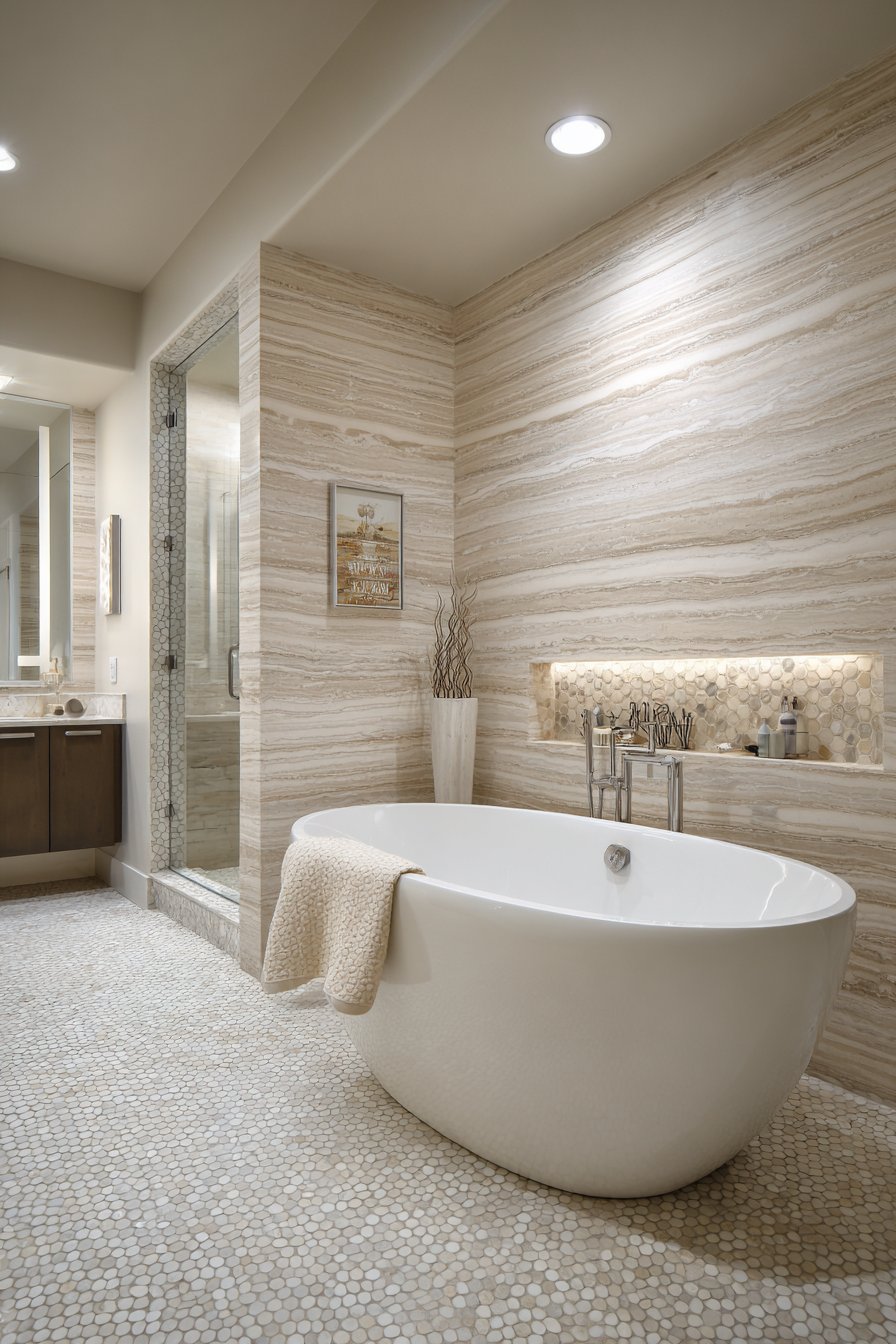
A modern freestanding bathtub positioned to highlight the natural stone backdrop becomes sculptural art. The simple white tub silhouette contrasts beautifully with the complex patterning behind it. This placement makes both elements stronger through juxtaposition. The tub serves as a foreground element that frames and emphasizes the dramatic wall treatment.
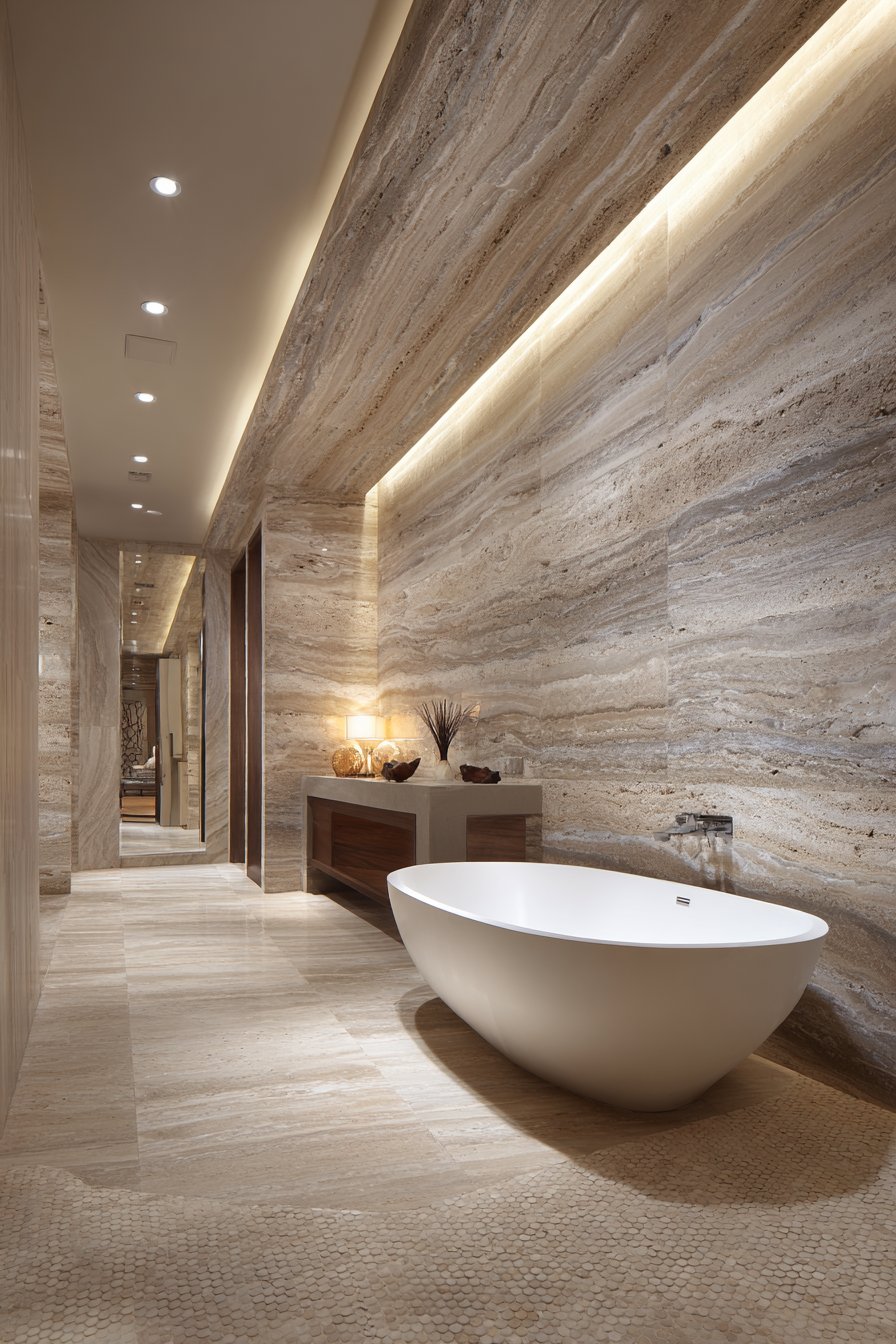
Coordinating travertine mosaic floor tiles in a hexagon pattern add visual interest while maintaining material consistency. The geometric floor pattern introduces a different scale and rhythm than the large wall tiles. Hexagons feel both contemporary and timeless, working across various design styles. The mosaic format allows for following floor contours and creating custom patterns.

Ambient lighting designed to accentuate the stone’s depth and texture transforms the space after dark. Carefully positioned lighting reveals the dimensional quality of the vein-cut patterns. The sophisticated layering of travertine applications demonstrates professional-grade material installation and design expertise. This bathroom represents travertine at its most artistic and expressive.
Key Design Tips:
- Specify vein-cut travertine for dramatic linear striations and unique visual impact
- Position freestanding tubs to frame and emphasize dramatic stone backdrops
- Introduce mosaic patterns in coordinating stone for scaled visual variety
- Design ambient lighting specifically to reveal stone depth and surface dimension
- Work with experienced installers for complex vein-cut pattern matching
9. Practical Travertine Daily Functionality
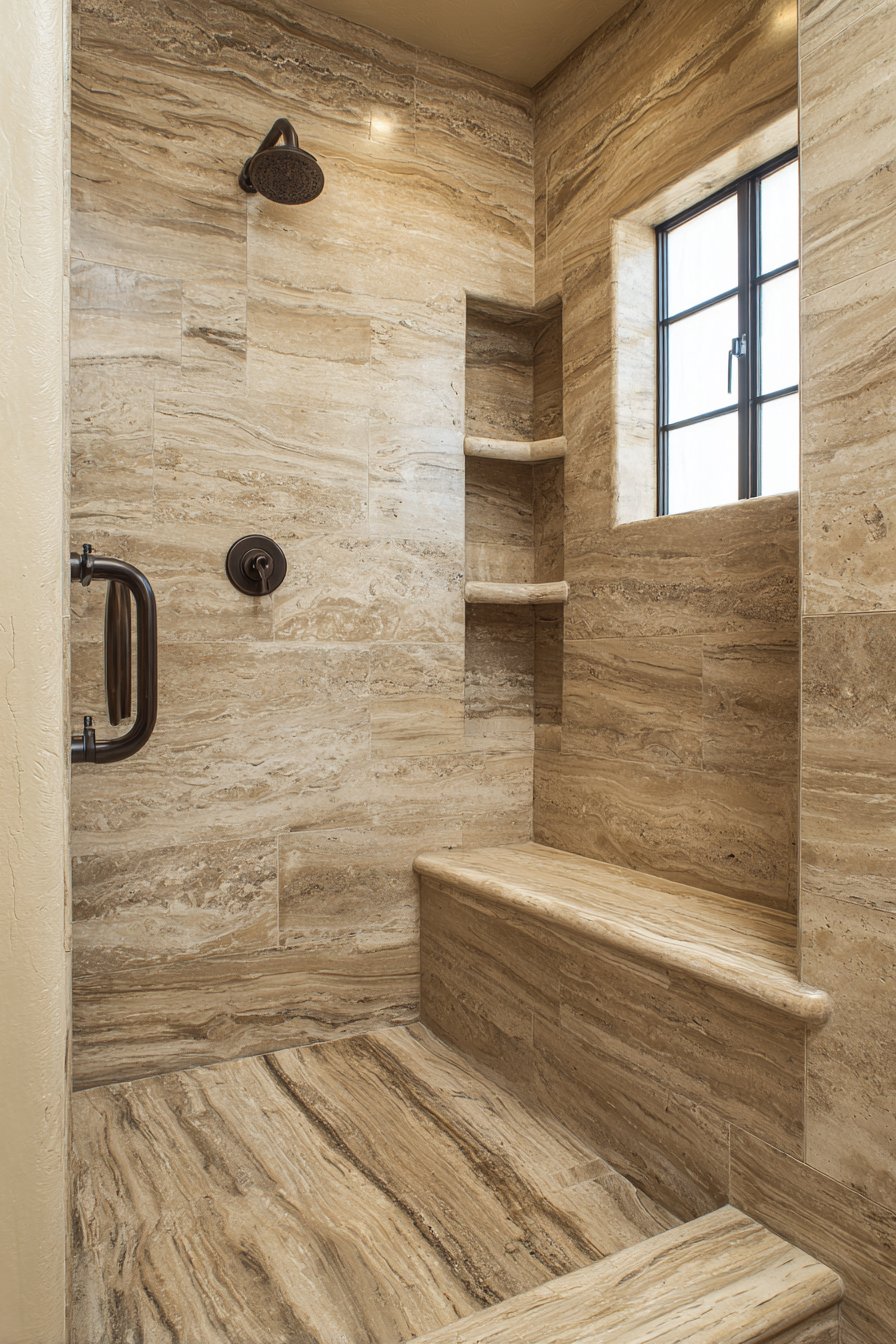
Practical design doesn’t require sacrificing beauty, as this travertine bathroom demonstrates. Cross-cut travertine tiles covering shower walls display the stone’s characteristic circular and swirling patterns. These organic patterns occur naturally where mineral-rich water deposited layers of calcite. The warm ivory tones create a neutral backdrop that works with various fixture finishes and accessories.
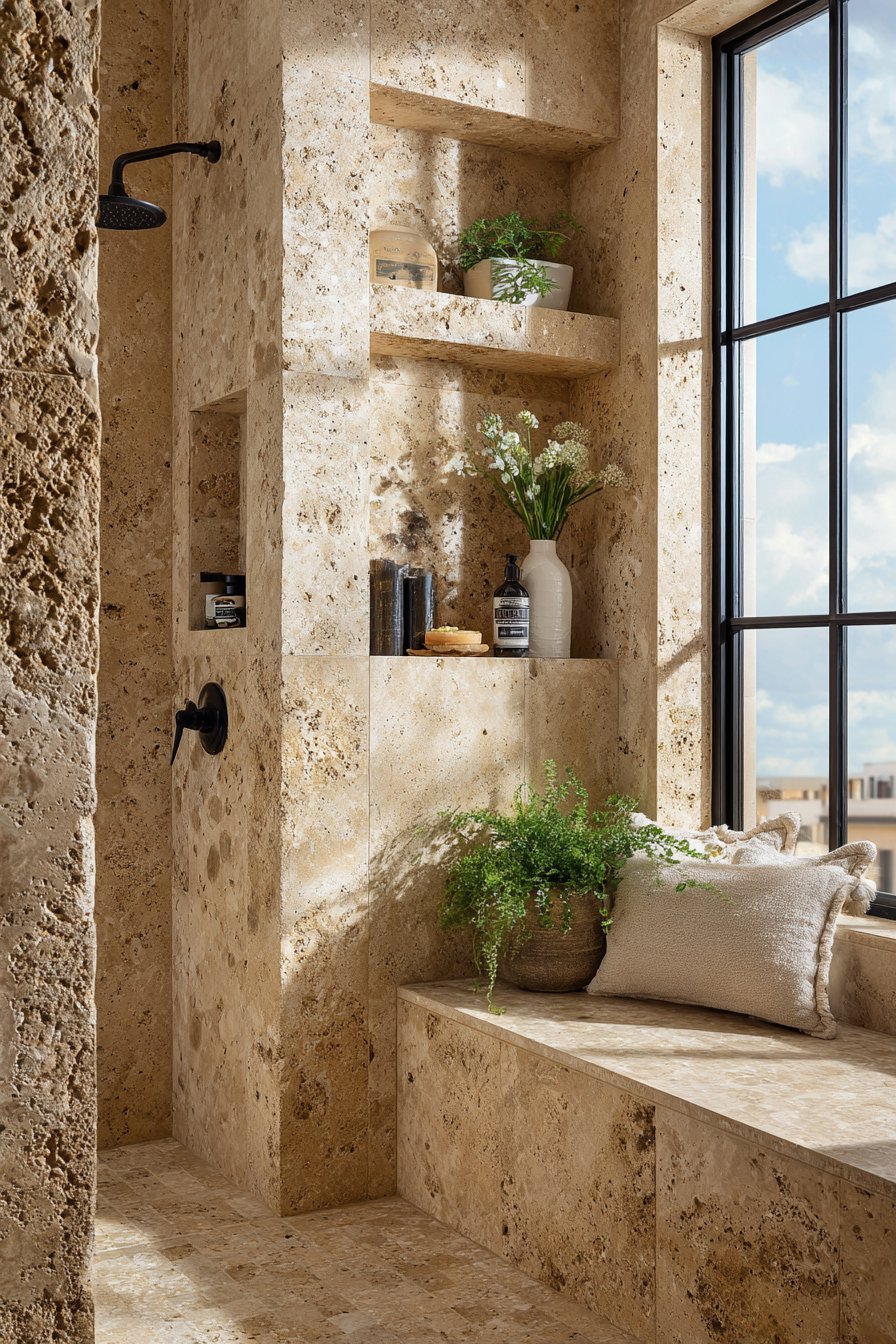
Built-in travertine shower shelves provide functional storage seamlessly integrated into the design. These shelves eliminate the need for hanging caddies or corner units that can look cluttered. Creating shelves from the same stone maintains visual continuity and demonstrates thoughtful planning. The shelves should be properly sealed and sloped to prevent water accumulation.
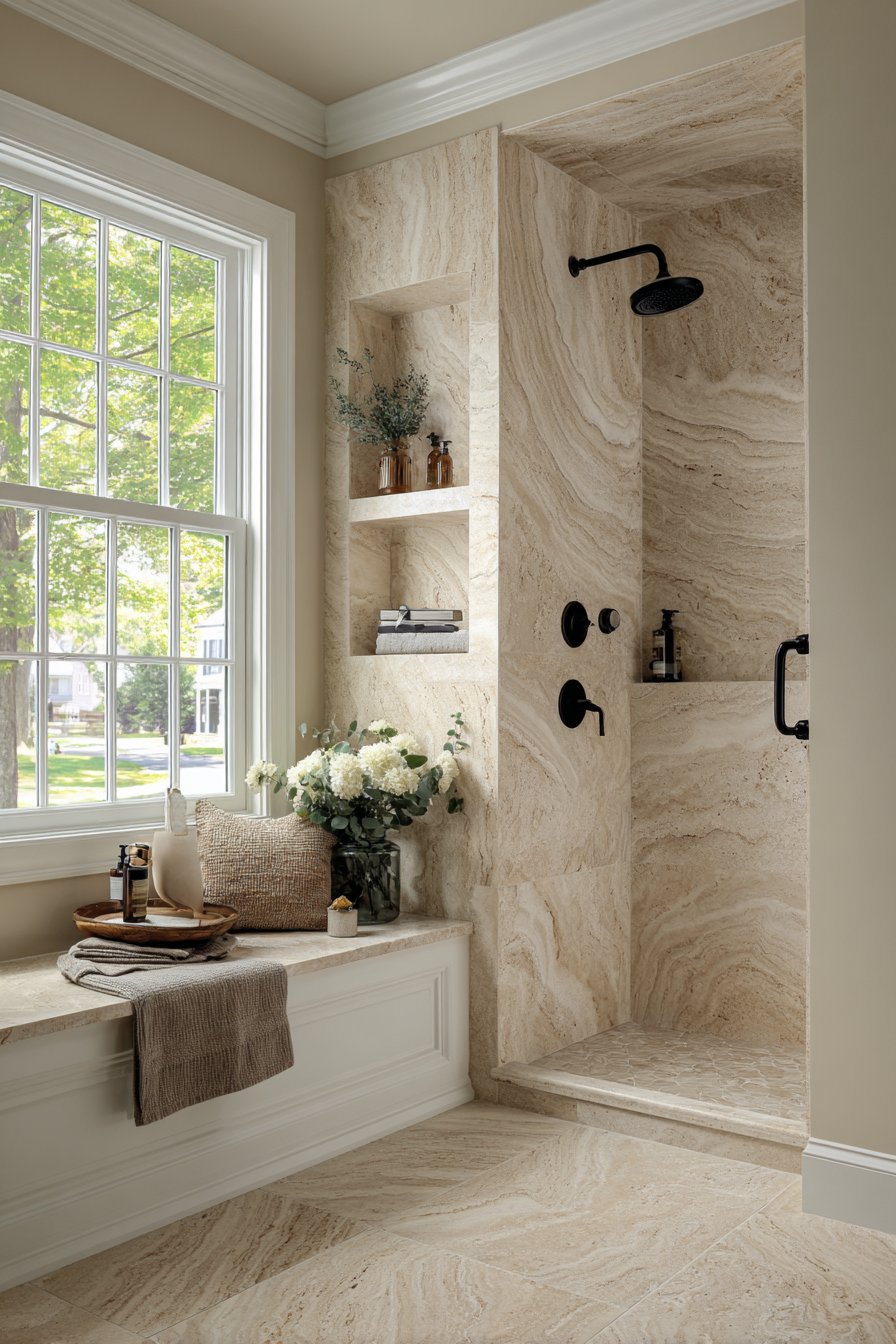
Matching travertine threshold and curb details complete the cohesive look from floor to ceiling. These transitional elements prevent visual breaks where different materials or rooms meet. Attention to these finishing details separates professional installations from amateur attempts. The consistency demonstrates commitment to design integrity throughout the entire space.

Matte black fixtures create contemporary contrast against the warm stone palette. The dark fixtures provide visual punctuation and modern edge. Black hardware and plumbing fixtures have become increasingly popular for their bold contemporary aesthetic. Natural window light and soft overhead lighting highlight the authentic texture variations and natural beauty inherent to the material.
Key Design Tips:
- Create built-in shelving from the same stone for integrated functional storage
- Detail thresholds and curbs in matching stone for complete visual continuity
- Choose cross-cut travertine for circular organic patterns and classic appearance
- Install matte black fixtures for contemporary contrast and design punctuation
- Combine natural and artificial lighting for optimal texture revelation
10. Serene Travertine Double Vanity Luxury
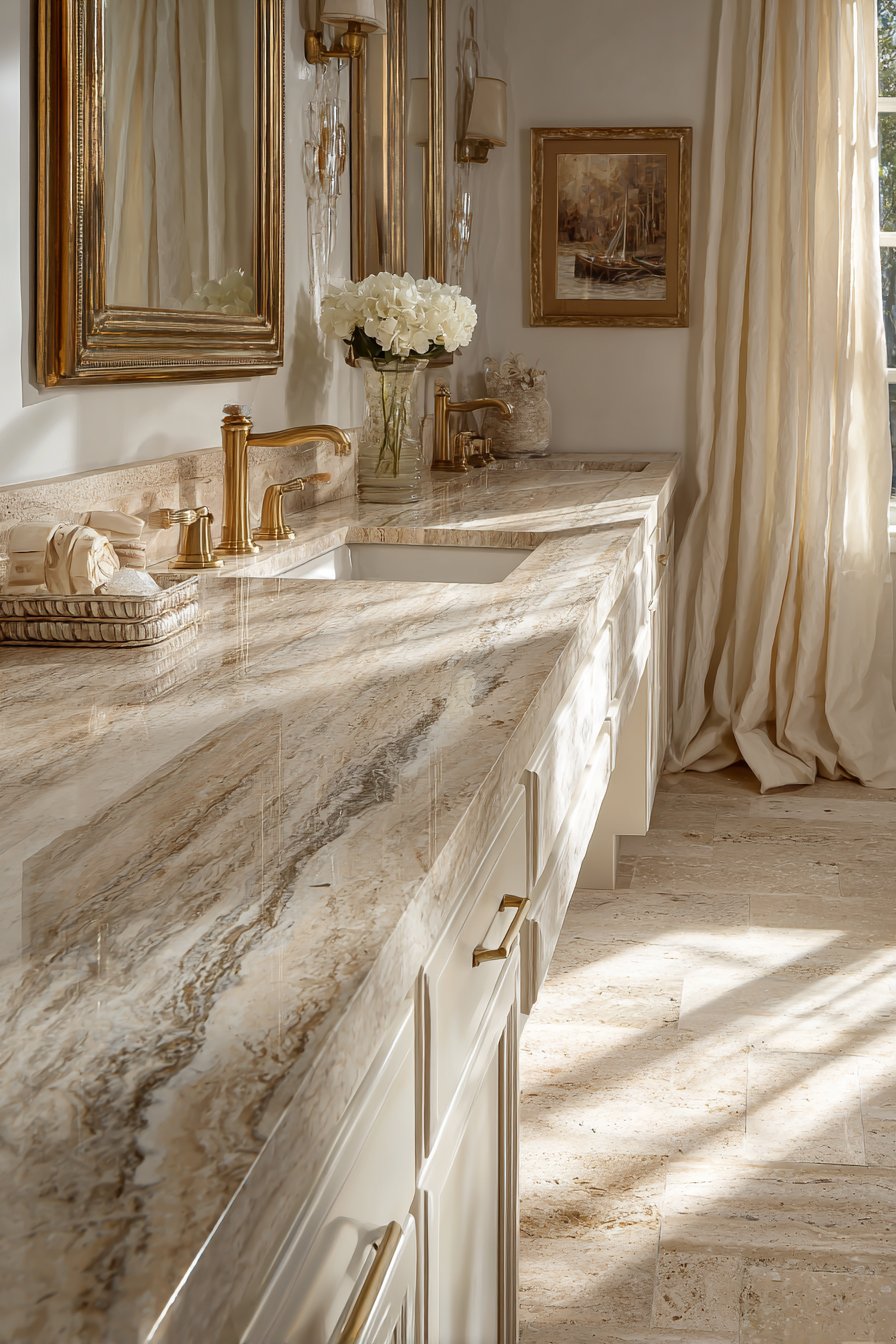
A double vanity configuration demands careful material planning to create visual balance and symmetry. Book-matched travertine countertop and backsplash show mirrored veining patterns in soft beige and cream. The symmetrical patterns create a sense of order and intentionality in the design. Subtle grey undertones add depth and prevent the light palette from appearing flat or one-dimensional.
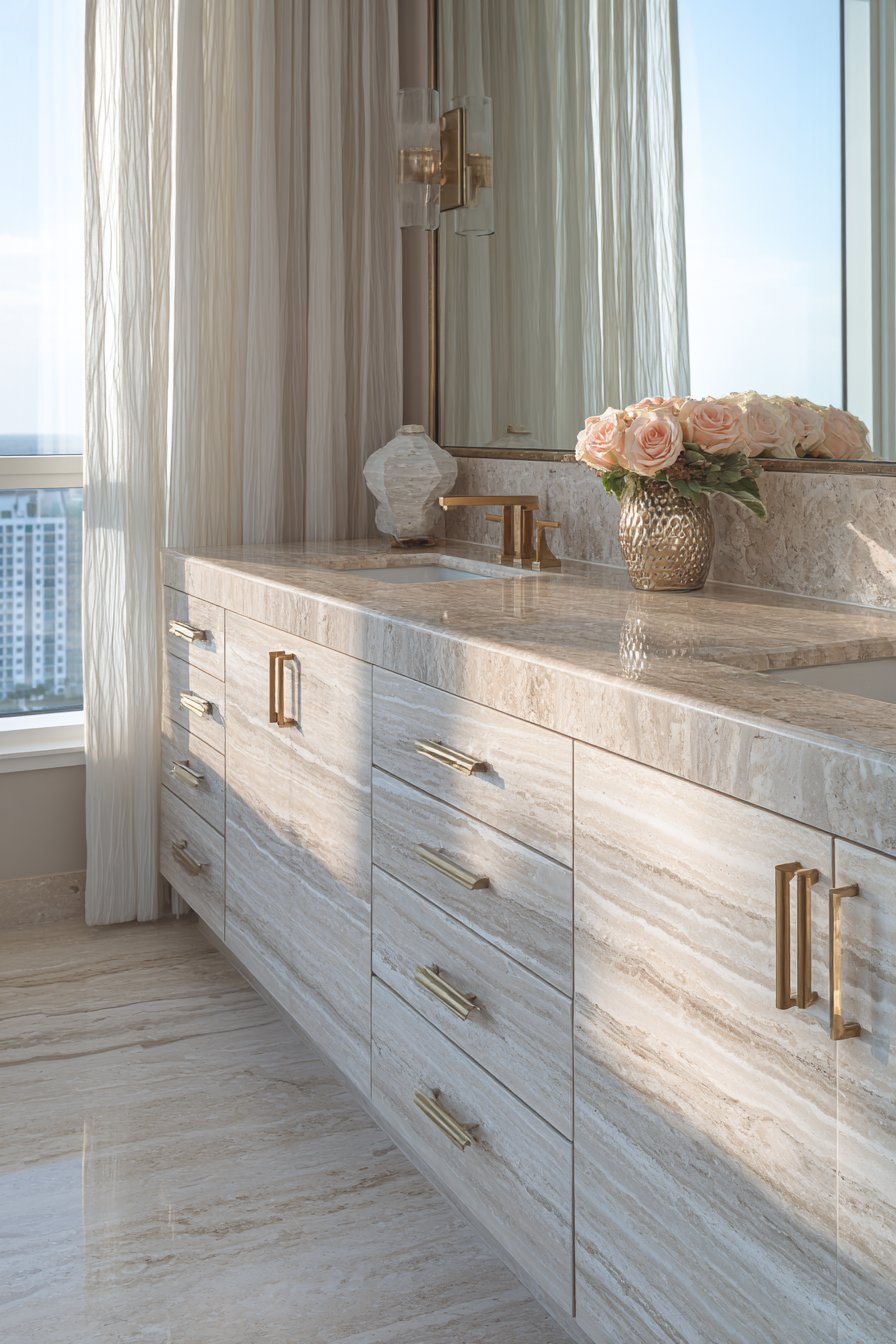
The floor utilizes large format honed travertine tiles with natural color variations and filled pores. The filled travertine provides smooth but textured finish that feels luxurious underfoot. Large format reduces grout lines while the honed finish offers subtle sophistication. The floor’s color variations echo those in the countertop, creating top-to-bottom material harmony.

Brushed brass hardware adds warmth to the neutral stone palette. The brass tones complement the warm beige and cream hues within the travertine. This metallic choice feels both traditional and contemporary depending on surrounding design elements. Brushed finishes resist fingerprints better than polished brass while offering similar warmth.

Professional photography captures golden hour natural lighting streaming through sheer curtains. The diffused light creates soft highlights on the travertine surfaces without harsh shadows. This lighting emphasizes the material’s organic elegance and timeless appeal. The serene atmosphere demonstrates how thoughtful material selection and lighting design work together to create spaces that nurture wellbeing.
Key Design Tips:
- Request book-matched slabs for double vanities to create symmetrical visual balance
- Choose large format floor tiles to reduce visual clutter from grout lines
- Select filled and honed travertine for smooth luxury with retained character
- Incorporate brushed brass for warm metallic tones that complement beige stone
- Control natural light with sheer treatments for soft diffused illumination
Why These Travertine Bathroom Designs Excel
These ten travertine bathroom designs represent the best in natural stone applications for several compelling reasons. Travertine bathroom ideas showcase incredible versatility across design styles from Mediterranean rustic to sleek contemporary. The natural stone adapts to various aesthetic visions while maintaining its inherent character and luxury appeal. Each design demonstrates different travertine installation techniques, proving this material works beautifully in showers, floors, walls, and countertops.
The travertine bathroom tile applications shown here emphasize authentic material character rather than attempting to hide natural variations. Modern consumers increasingly value authenticity and connection to natural materials in their homes. Travertine delivers this authenticity through visible fossil marks, natural pitting, and unique veining that synthetic materials cannot replicate. These bathroom remodel ideas using travertine create spaces with genuine character and timeless appeal that transcend passing trends.
Luxury bathroom design with travertine offers exceptional value compared to other natural stone options like marble or granite. Travertine provides sophisticated aesthetics at more accessible price points, making luxury achievable for broader audiences. The stone’s durability ensures these bathrooms will maintain their beauty for decades with proper care. This longevity makes travertine an intelligent investment in home value and daily living quality.
Natural stone bathroom designs create healthier indoor environments by avoiding synthetic materials and volatile organic compounds. Travertine is quarried from the earth, cut to size, and installed without chemical processing or treatments. This natural purity appeals to homeowners seeking sustainable, non-toxic building materials. The stone’s thermal mass also helps regulate bathroom temperatures, contributing to energy efficiency.
Spa bathroom aesthetics achieved through travertine installation transform daily routines into restorative experiences. The organic warmth and textural interest of natural stone create calming environments that reduce stress. These designs demonstrate how material choices directly impact how we feel in our spaces. Creating a personal spa retreat at home supports wellbeing and provides refuge from demanding modern life.
Contemporary travertine bathrooms prove this ancient material works beautifully in modern contexts. Designers pair travertine with sleek fixtures, minimalist cabinetry, and contemporary lighting for fresh interpretations. The stone’s neutral palette serves as an ideal backdrop for various fixture finishes from matte black to brushed brass. This adaptability ensures travertine remains relevant across changing design trends and personal style evolution.
Bathroom lighting design plays a crucial role in revealing travertine’s beauty, as demonstrated throughout these examples. Natural light showcases color variations and surface texture that artificial light alone cannot fully reveal. Layered lighting with ambient, task, and accent sources creates dimensional interest and practical functionality. Strategic lighting transforms travertine from simple wall covering into dynamic sculptural element.
Small bathroom design benefits enormously from travertine’s ability to create visual continuity through consistent material application. Using the same stone on multiple surfaces eliminates visual fragmentation that makes small spaces feel cluttered. The warm neutral tones reflect light rather than absorbing it, helping modest bathrooms feel more spacious. These design strategies prove that luxury and practicality can coexist even in compact floor plans.
Bathroom countertop ideas using travertine offer durability and beauty in equal measure. The honed finishes resist water spots while providing sophisticated matte aesthetics. Book-matched installations create stunning symmetry that elevates standard vanity configurations into artistic statements. Proper sealing ensures travertine countertops resist staining from cosmetics and toiletries while maintaining their natural appearance.
Walk-in shower designs with travertine demonstrate the stone’s moisture-resistant properties when properly installed and maintained. Modern waterproofing membranes and appropriate sealing products protect the installation while preserving natural stone character. Frameless glass enclosures showcase continuous travertine walls without visual interruption. Built-in benches and shelving carved from the same stone create cohesive, functional shower environments.
Conclusion
Travertine bathrooms represent the perfect marriage of timeless natural beauty and practical functionality. These ten design examples demonstrate the remarkable versatility of this ancient stone across diverse aesthetic visions and spatial constraints. Whether you’re drawn to Mediterranean rustic charm, contemporary minimalism, or spa-inspired luxury, travertine adapts beautifully while maintaining its authentic character. The natural variations in color, texture, and pattern ensure that your travertine bathroom will be truly unique.
The key takeaways from these designs emphasize thoughtful material application, proper installation techniques, and strategic lighting design. Book-matched slabs create stunning symmetry, while vein-cut and cross-cut options offer dramatically different visual effects. Pairing travertine with complementary materials like walnut wood, wrought iron, or polished chrome enhances the stone’s natural beauty. Proper sealing and maintenance ensure your travertine bathroom maintains its luxury appeal for decades to come.
We encourage you to experiment with these ideas in your own home, adapting them to suit your personal style and spatial requirements. Start by determining which travertine cutting method and finish best aligns with your aesthetic vision. Consider how natural light enters your bathroom and plan your stone placement to maximize its impact. Don’t hesitate to mix different travertine applications—combining wall tiles, floor tiles, and countertops creates rich layering and visual interest. Your bathroom deserves the timeless elegance and authentic character that only natural travertine can provide. Transform your daily rituals into moments of beauty and tranquility within a space that truly reflects your appreciation for enduring design excellence.
