


The transition to student life marks an exciting chapter filled with newfound independence, late-night study sessions, and countless memories with friends. Yet, one of the most significant challenges students face is creating a living space that balances functionality with personal style—all while adhering to a tight budget. The living room, often serving as the heart of a student’s home, must be a versatile sanctuary that accommodates studying, socializing, relaxing, and sometimes even sleeping. This multifunctional approach to interior design requires creativity, resourcefulness, and a keen understanding of spatial planning.
Designing a student living room goes far beyond simply filling a space with furniture. It’s about crafting an environment that supports academic success while providing comfort and reflecting individual personality. Whether you’re furnishing your first apartment, decorating a dorm common area, or setting up a shared house with roommates, the right design choices can transform even the most modest space into an inspiring haven. The key lies in selecting furniture that serves multiple purposes, maximizing vertical storage, and incorporating personal touches that make the space uniquely yours without requiring a substantial financial investment.
In this comprehensive guide, we’ll explore ten distinct approaches to student living room design, each offering unique solutions to common challenges faced by students. From space-saving furniture arrangements to budget-friendly DIY projects, these designs demonstrate how thoughtful planning and creative thinking can result in spaces that are both practical and aesthetically pleasing. Whether you’re drawn to minimalist simplicity, bohemian eclecticism, or modern functionality, you’ll find inspiration and actionable advice to help you create a living room that supports your academic journey while providing a welcoming space to call home. Our guide on our how to arrange furniture in a narrow living room walks through this step by step.
1. Maximizing Space with Compact L-Shaped Configurations
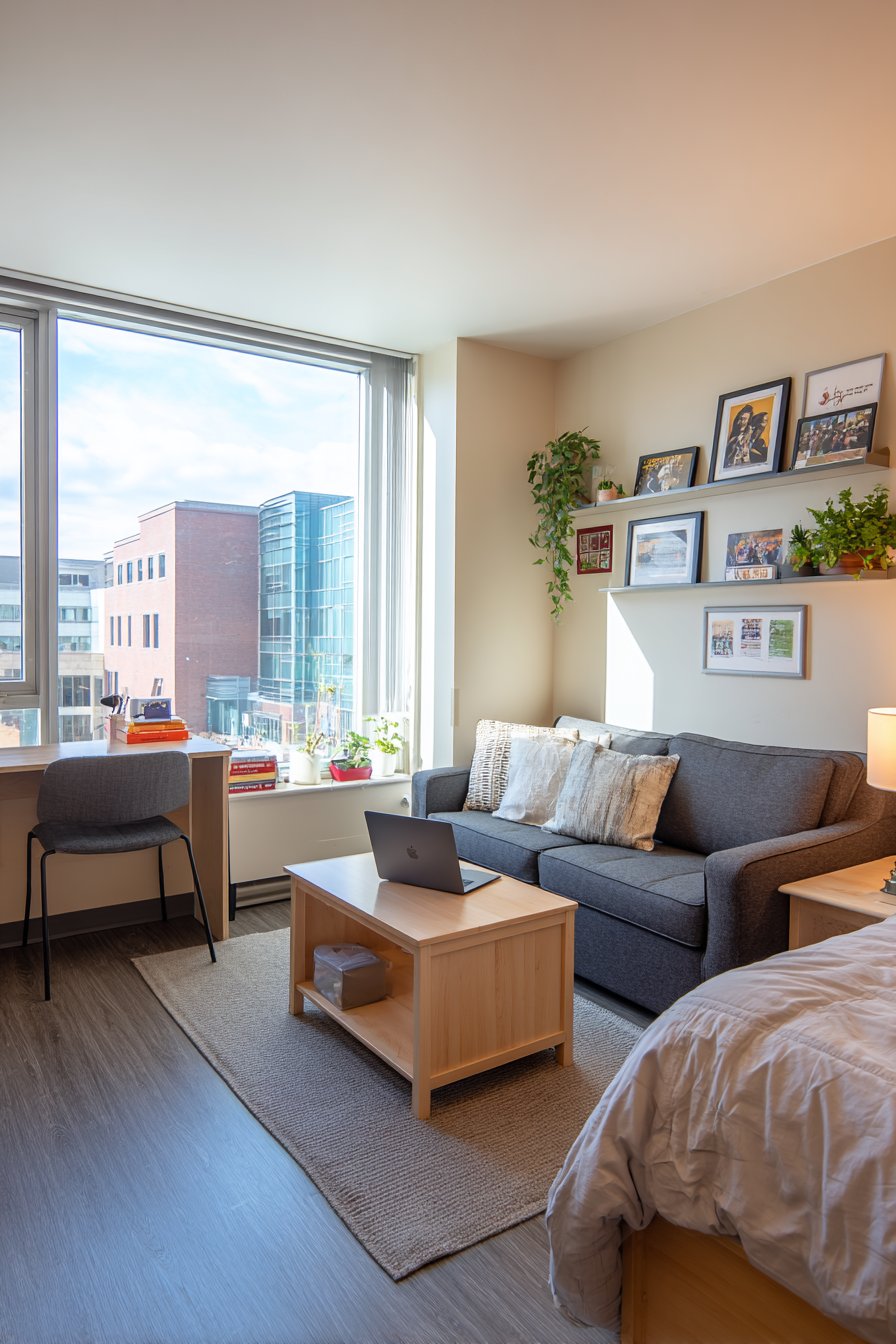
The foundation of effective student living room design begins with strategic furniture placement, and few solutions prove as practical as the L-shaped sofa configuration. This arrangement creates a defined seating area while leaving valuable floor space open for movement and additional activities.
A compact L-shaped sofa in durable charcoal grey fabric serves as both the visual anchor and functional centerpiece of the room, positioned strategically against the wall to maximize every precious square foot. The charcoal grey color choice demonstrates sophistication while offering practical benefits—it conceals minor stains and wear that inevitably occur in active student living spaces, reducing the need for frequent cleaning or replacement.
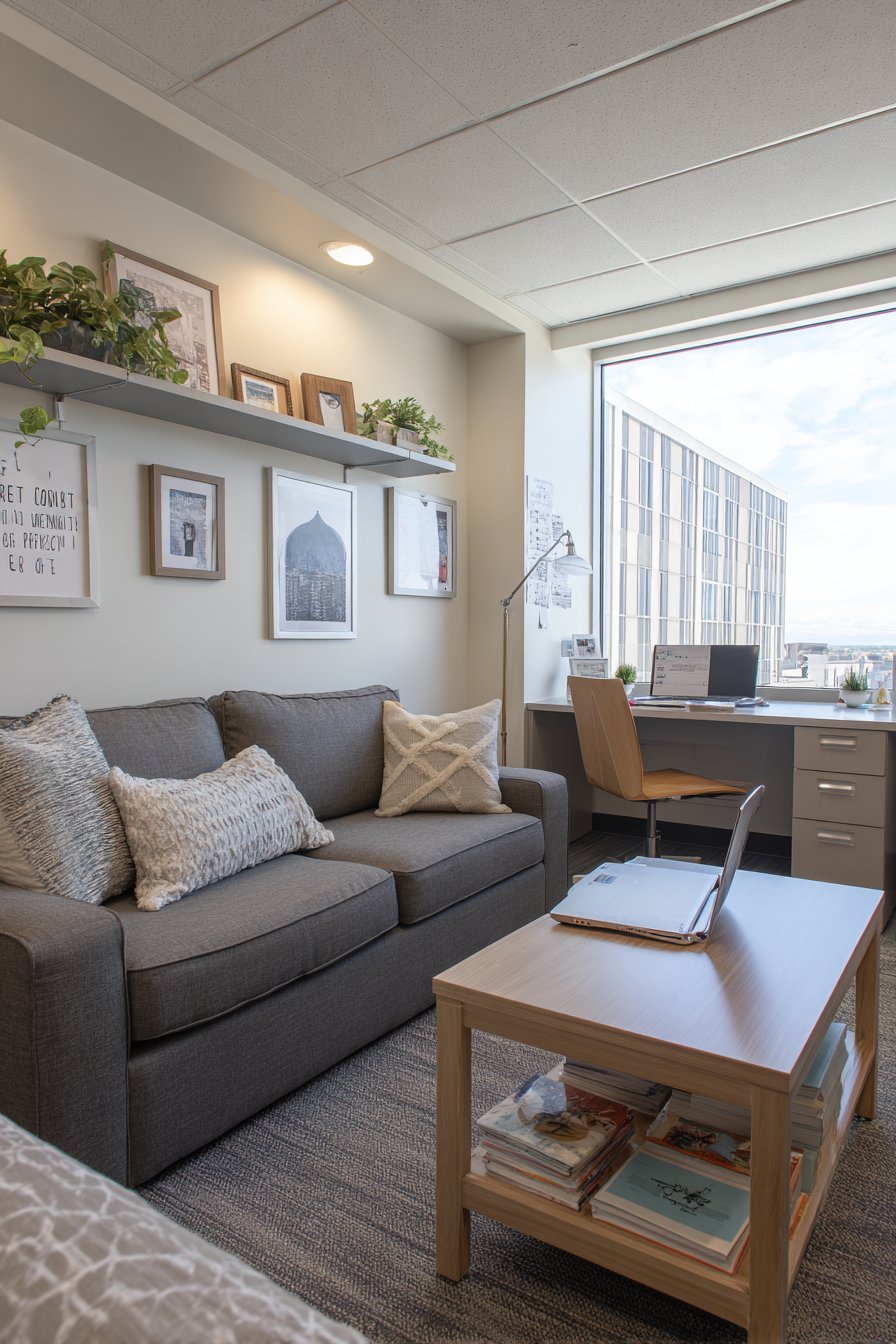
The multifunctional approach extends to every element within this design. A simple wooden coffee table with a lower shelf provides essential surface space for beverages, snacks, and study materials while offering additional storage underneath for textbooks, notebooks, and laptops. This dual-purpose furniture piece eliminates the need for separate storage units, keeping the space open and uncluttered.
Above the small desk area integrated into the layout, affordable floating shelves create vertical storage opportunities without consuming floor space. These shelves display a carefully curated collection of potted plants that purify the air and add natural vitality, alongside framed photographs that personalize the environment and create emotional connections to home and loved ones.
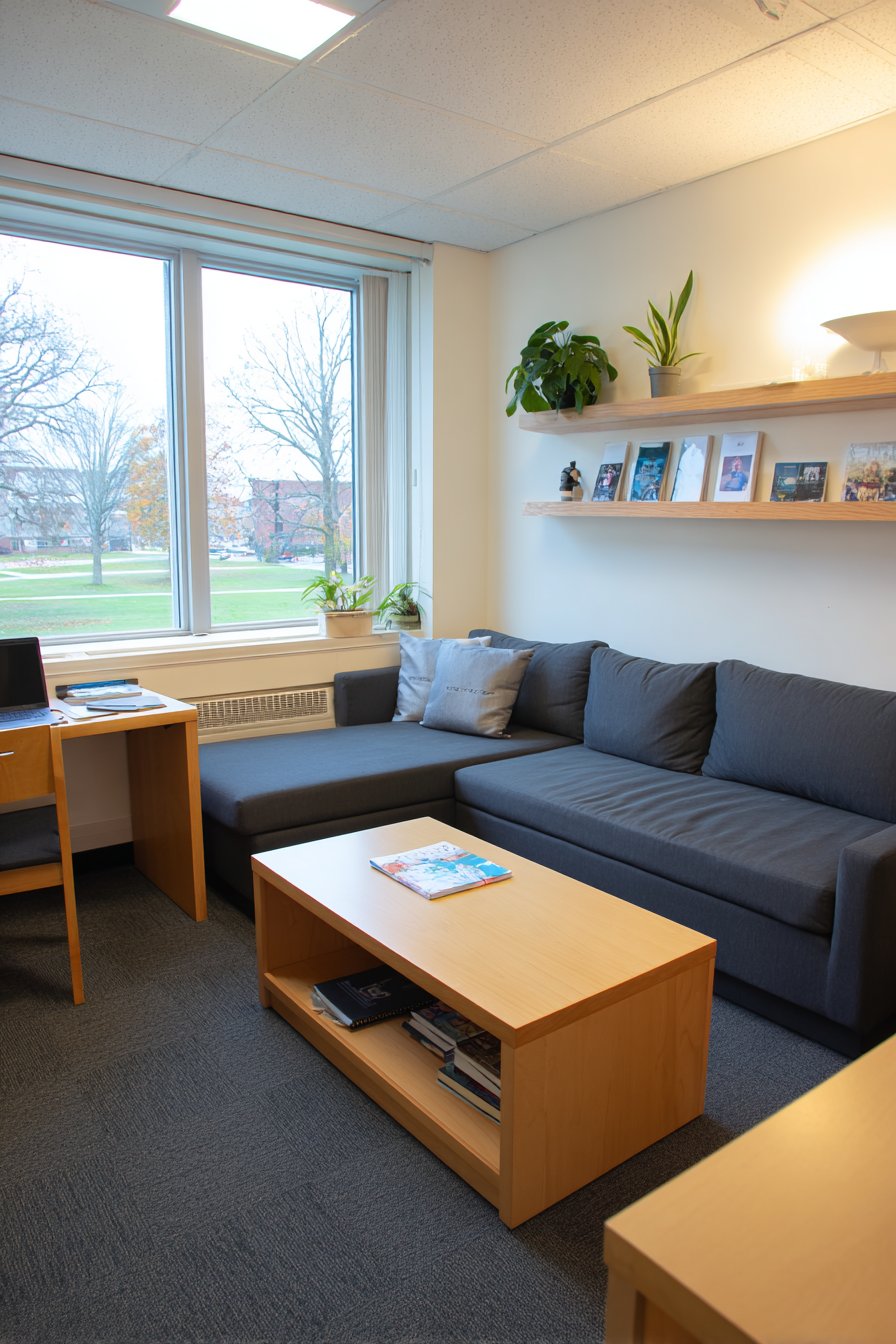
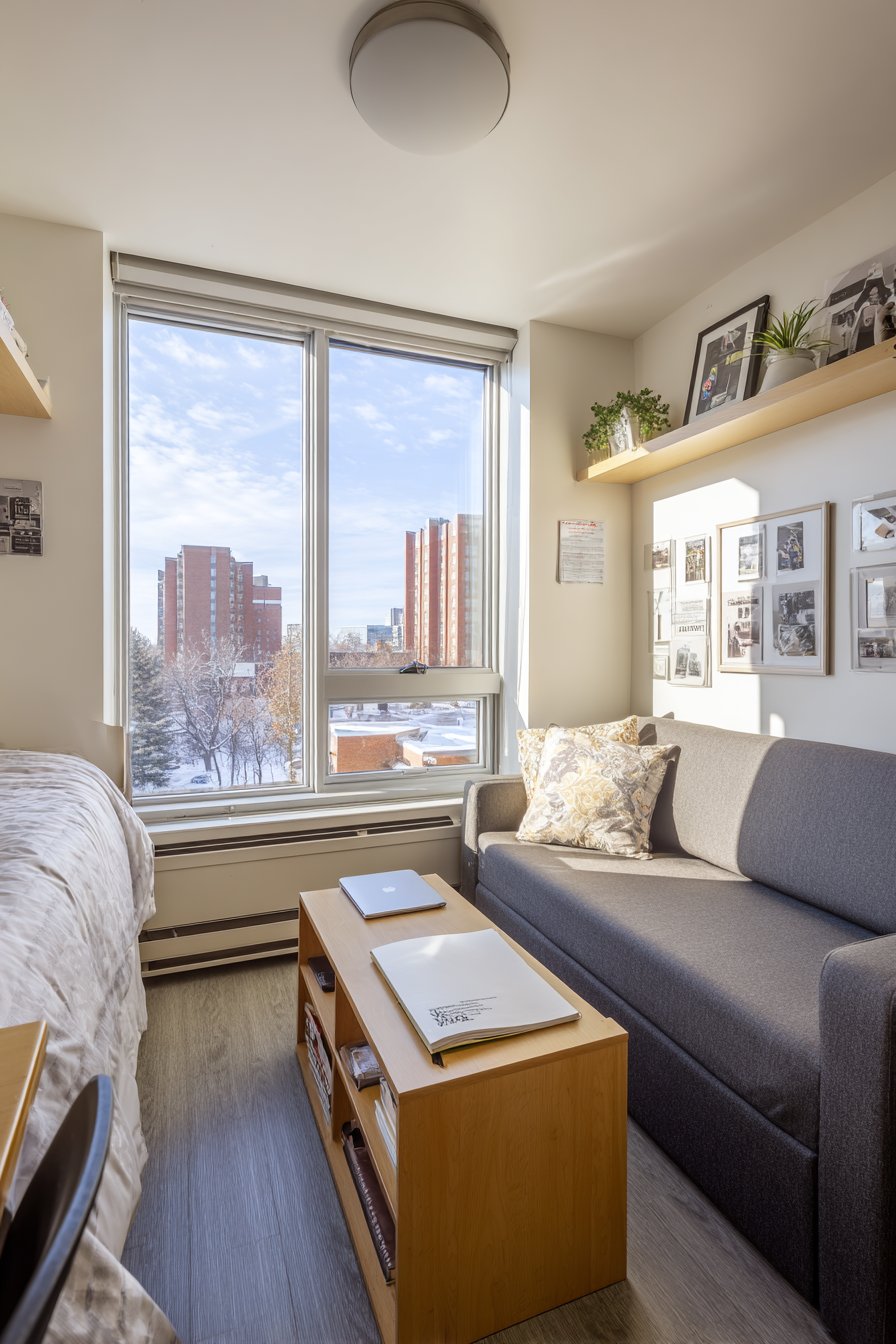
Natural lighting plays a transformative role in this design, with a large window serving as the room’s primary light source. The generous influx of daylight reduces reliance on artificial lighting during daytime hours, lowering electricity costs while creating a more pleasant, energizing atmosphere conducive to both studying and relaxation.
The wide-angle perspective of this layout demonstrates how thoughtful planning can make even modest square footage feel spacious and welcoming. The balanced exposure between natural window light and supplementary artificial lighting ensures the space remains functional throughout the day and evening, supporting the varied schedule of student life.
Key Design Tips:
- Position large furniture against walls to maintain open floor space for movement and flexibility in your daily activities
- Select multi-functional pieces like coffee tables with built-in storage to maximize utility without cluttering your living area
- Install floating shelves vertically to utilize wall space effectively, keeping floors clear while providing ample storage and display options
- Choose durable, stain-resistant fabrics in neutral colors that withstand heavy use and disguise inevitable wear from daily student life
- Maximize natural light by keeping window areas clear and using light-colored curtains or blinds to enhance brightness throughout the day
2. Dual-Purpose Design with Convertible Futon Solutions
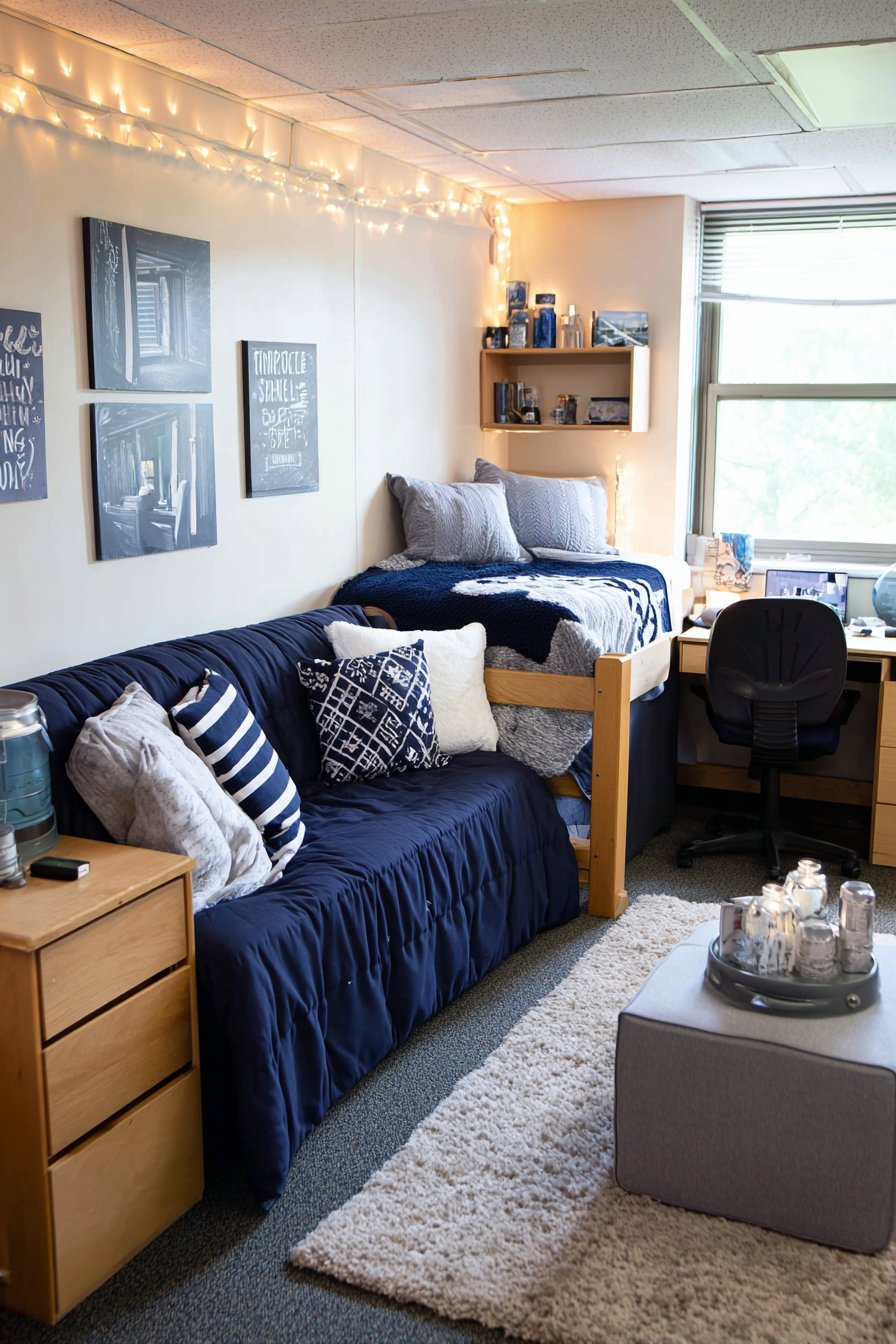
The genius of student living room design often lies in furniture that serves multiple functions, and the futon-style sofa bed exemplifies this principle perfectly. A navy blue futon anchors this cozy living space, providing comfortable daytime seating while seamlessly converting into a full sleeping surface for overnight guests or those inevitable all-night study sessions.
The rich navy color brings depth and sophistication to the room while maintaining the practical advantage of hiding minor spills and stains that are part and parcel of student life. This dual-purpose approach eliminates the need for a separate guest room, making it ideal for studio apartments or smaller living spaces where every square foot must earn its keep. Our how to create depth in small apartment living rooms guide covers this in more detail.
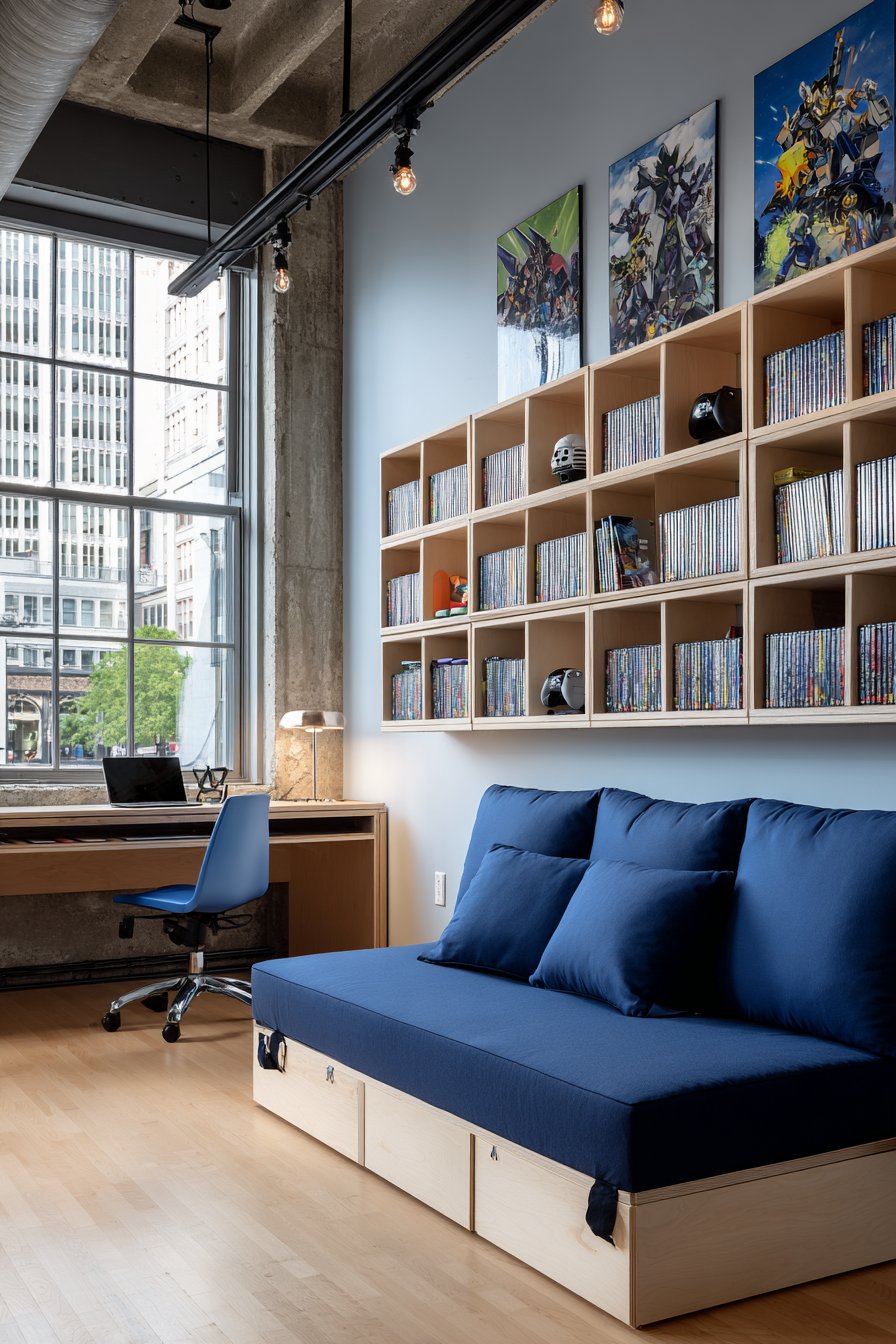
Modular cube storage units line one wall, creating an organizational system that adapts to changing needs throughout the academic year. These versatile cubes accommodate an impressive array of items—textbooks arranged by subject, gaming equipment for leisure time, personal belongings, and decorative objects that add personality to the space.
The modular nature allows for reconfiguration as storage needs evolve, whether that means dedicating more space to academic materials during exam periods or creating room for hobby supplies during breaks. Near the window, a folding study table provides a dedicated workspace that can be collapsed and stored when entertaining friends or hosting movie nights, demonstrating the flexibility essential to successful student living.
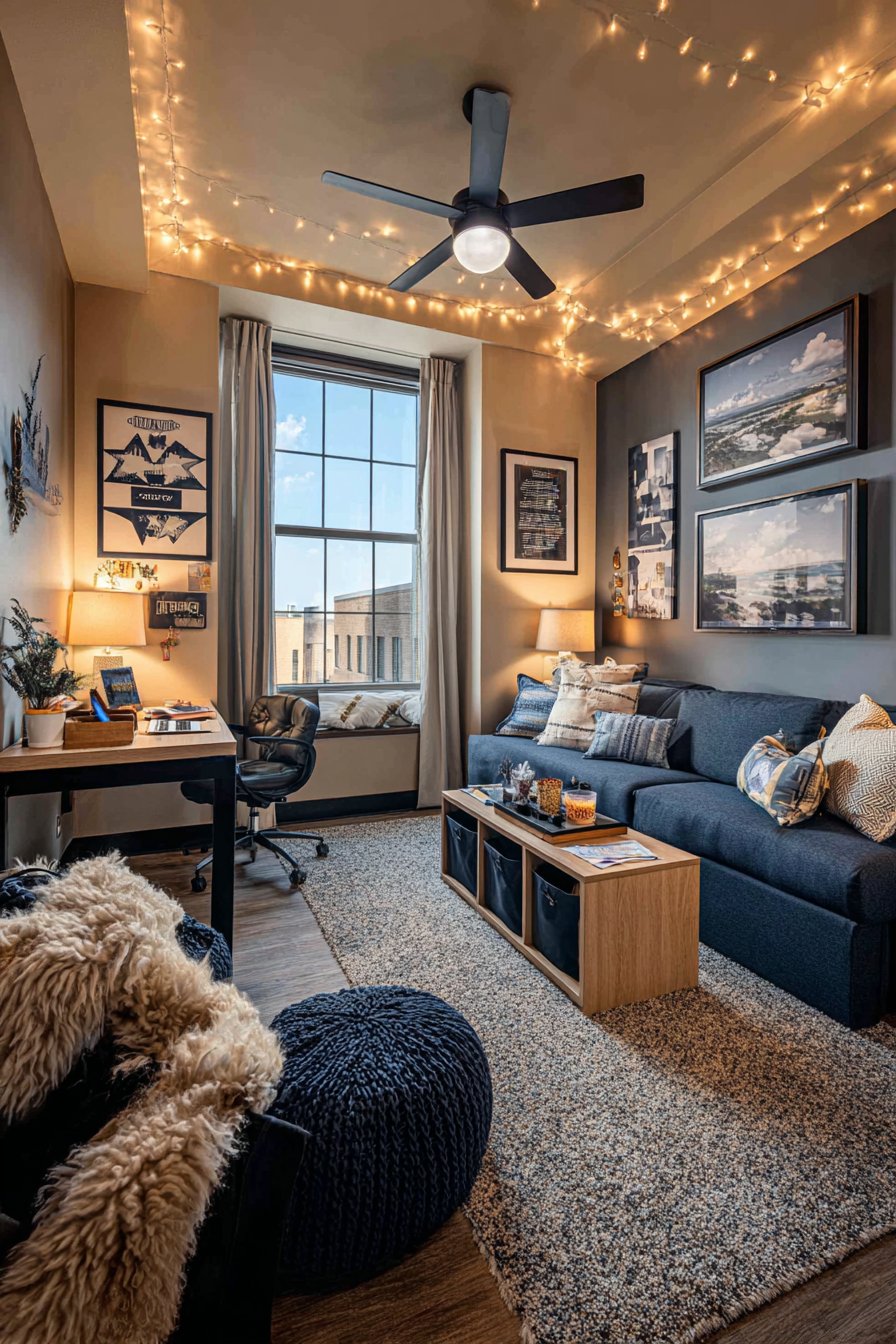
The ambiance of this living room transforms dramatically as daylight fades, thanks to carefully selected string lights that add ambient evening lighting. These affordable lighting solutions create a warm, inviting glow that softens the space for relaxation after long days of classes and studying.
The professional interior photography perspective reveals how natural daylight during the day emphasizes the functional aspects of the room, while the string lights create an entirely different mood in the evening—cozy, intimate, and conducive to unwinding. This lived-in, functional atmosphere represents the reality of student life, where spaces must adapt to various activities and moods throughout the day.
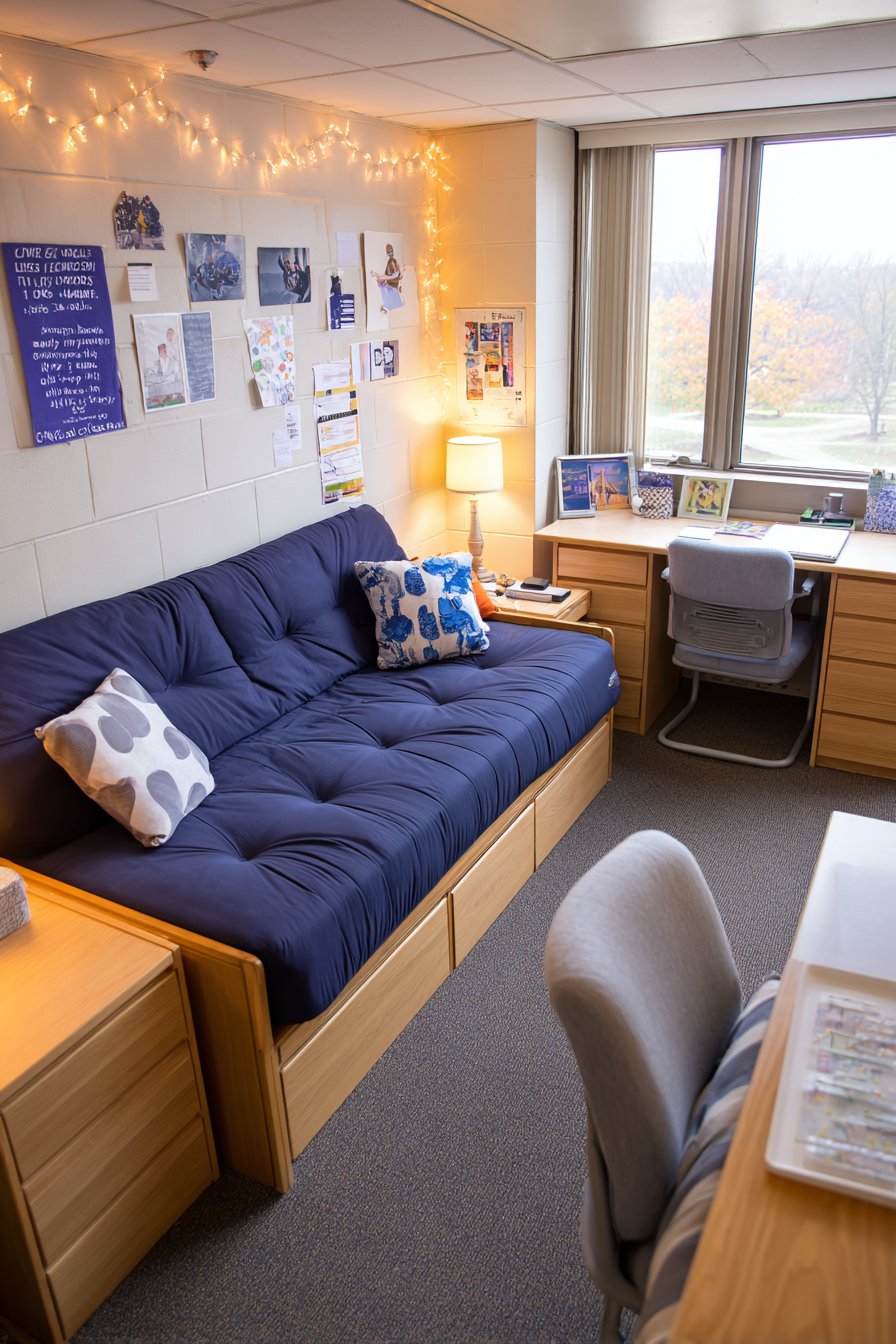
The integration of the ergonomic chair at the folding desk deserves special attention, as it represents an investment in long-term health and academic success. Student life involves countless hours of studying, writing papers, and attending online classes, making proper seating support crucial for preventing back pain and maintaining focus. The combination of natural daylight from the window position and task lighting ensures optimal conditions for reading and computer work, reducing eye strain during extended study sessions.
Key Design Tips:
- Invest in quality futon mechanisms that convert smoothly and provide adequate support for both sitting and sleeping positions
- Organize modular storage by category using labeled bins or color-coding to quickly locate items during busy schedules
- Position study areas near windows to take advantage of natural light for daytime work sessions
- Layer lighting sources including overhead, task, and ambient options to create appropriate atmospheres for different activities
- Choose ergonomic seating for study areas to prevent physical discomfort during extended periods of academic work
3. Vintage Charm Meets Student Creativity
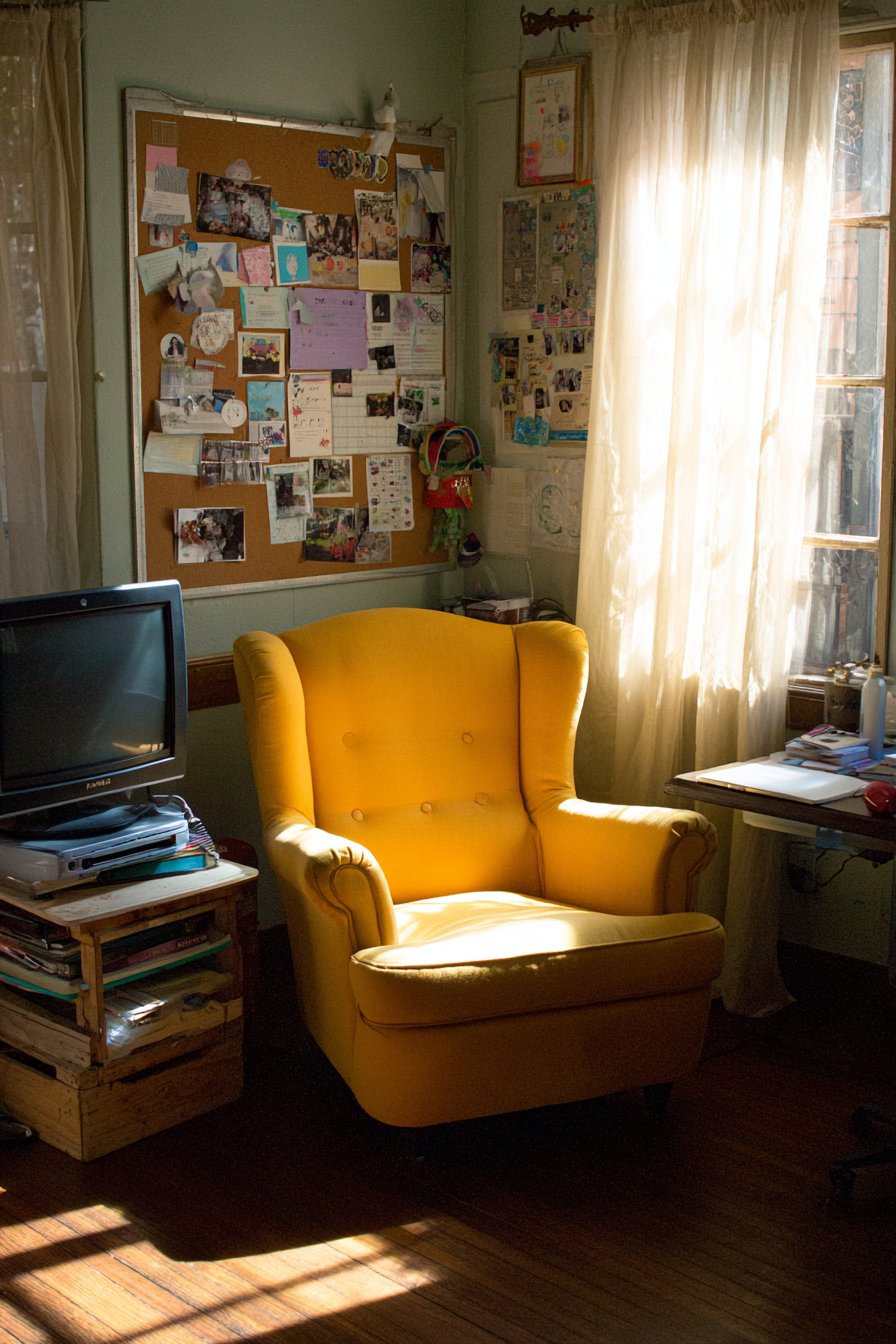
Thrift store finds and DIY projects combine to create a living room bursting with personality and creative energy in this entertainment and study-focused design. The star of the space is an unexpected hero—a vintage armchair discovered at a local thrift shop and given new life through reupholstering in bold mustard yellow fabric.
This statement piece demonstrates how students with limited budgets can create high-impact design elements through elbow grease and creativity. The vibrant yellow injects warmth and optimism into the room, serving as a focal point that draws the eye and sparks conversation. The chair’s curved lines and traditional silhouette provide visual interest and contrast against the more utilitarian elements throughout the space.
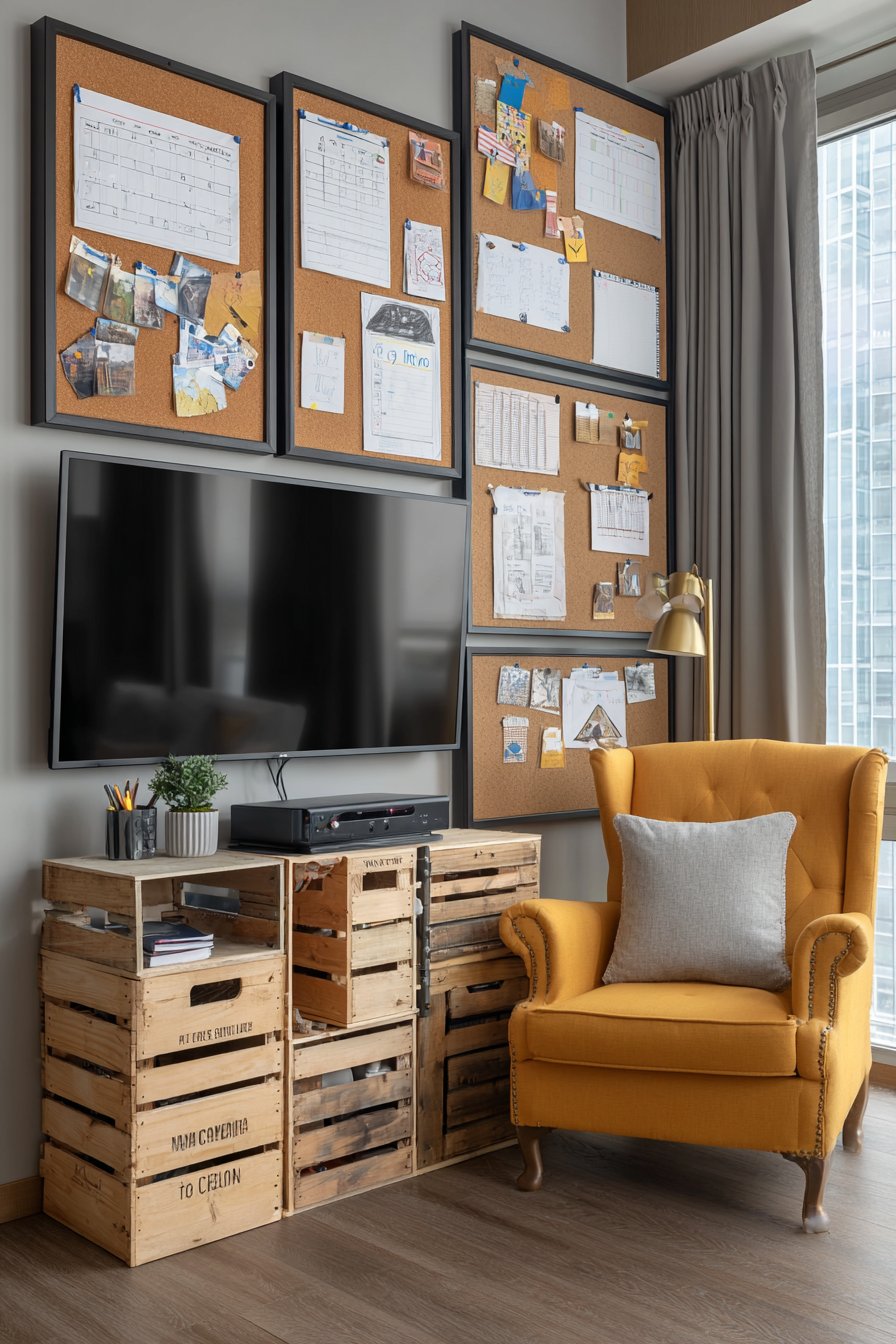
Resourcefulness continues with the simple TV stand constructed from stacked wooden crates, an ingenious solution that costs a fraction of conventional furniture while adding rustic charm and character. These crates, often available for free or minimal cost from local stores, provide open shelving for a modest television screen and gaming console while offering additional storage compartments for media collections, controllers, and accessories.
The raw wood texture introduces natural warmth and organic appeal, creating a foundation that feels both intentional and authentically student-appropriate. This DIY aesthetic celebrates the creative problem-solving that defines successful student living.
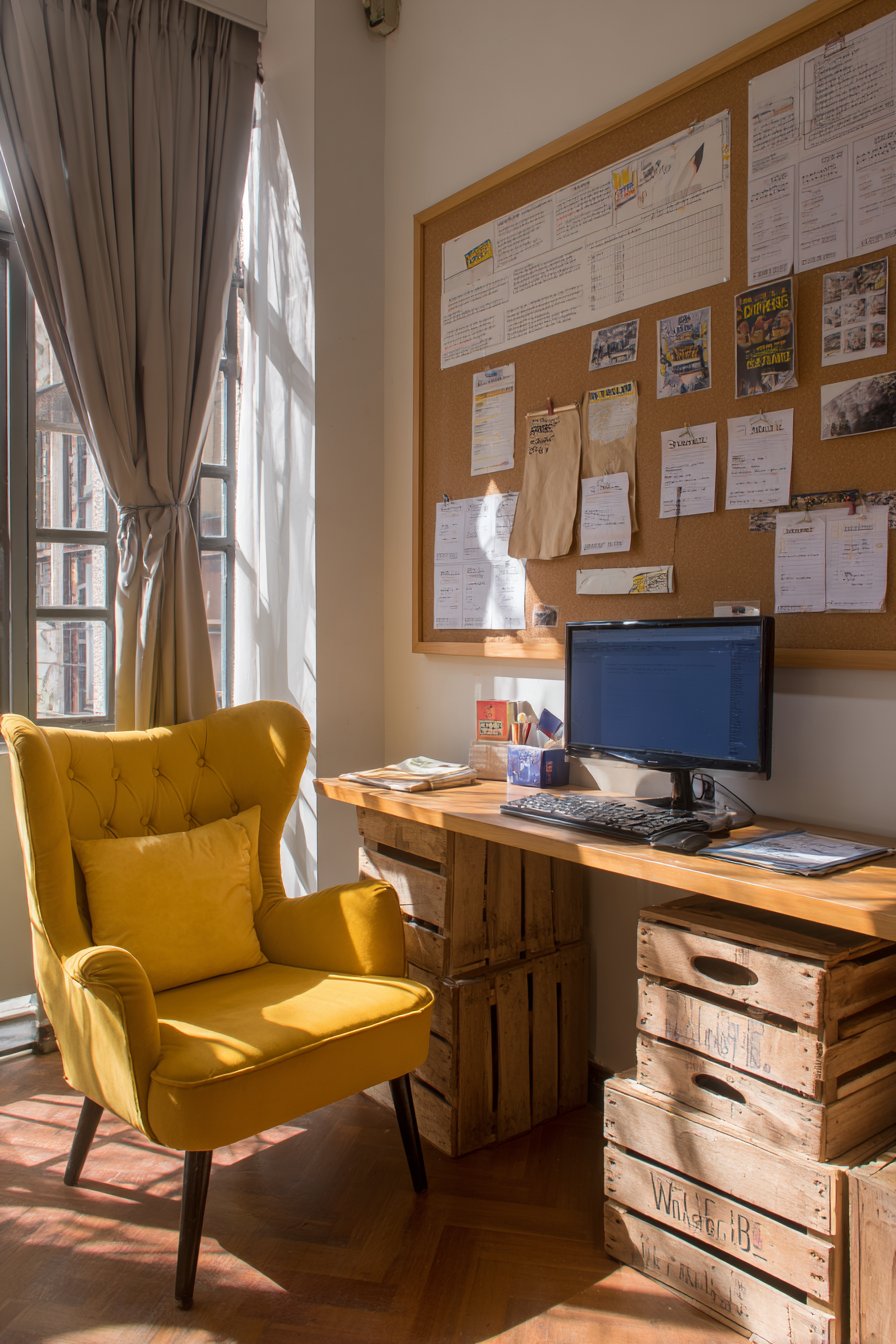
Wall-mounted cork boards serve multiple essential functions in this design, displaying schedules, assignment deadlines, inspirational photos, and cherished memories from home. These practical yet personal elements keep important information visible and organized while transforming blank walls into dynamic, ever-changing displays that reflect the student’s life and priorities.
The cork boards’ natural texture adds another layer of visual interest, complementing the wooden crates and creating cohesion throughout the space. As afternoon light streams through sheer curtains, it illuminates these personal touches, casting gentle shadows that add depth and dimension to the room’s creative DIY aesthetic.
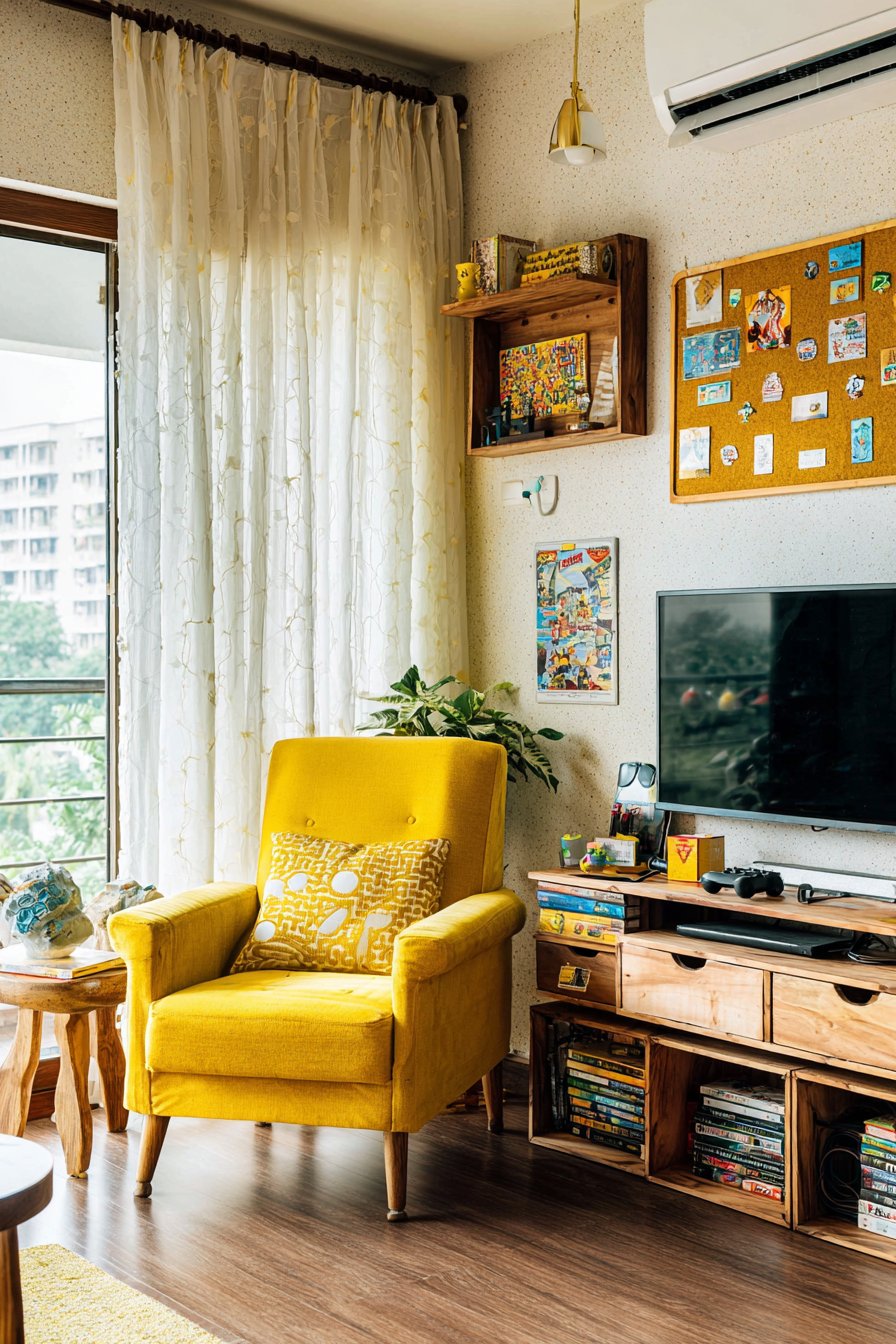
The interior design photography techniques employed to capture this space emphasize the natural afternoon light filtering through the sheer curtains, highlighting how budget constraints need not limit style or comfort. The soft, diffused light creates an inviting atmosphere that feels both energizing and calming—perfect for the dual demands of entertainment and study. This approach to student living room design proves that personality, creativity, and thoughtful curation matter far more than expensive furnishings.
Key Design Tips:
- Explore thrift stores, yard sales, and online marketplaces for unique furniture pieces with good bones that can be refreshed with new fabric or paint
- Learn basic reupholstering techniques through online tutorials to transform dated furniture into custom statement pieces
- Repurpose industrial or commercial items like wooden crates, pallets, or milk crates as affordable storage and display solutions
- Install cork boards or pegboards for flexible, changeable displays that keep important information visible and organized
- Use sheer curtains to soften harsh sunlight while maintaining privacy and creating a gentle, diffused lighting effect throughout the day
4. Minimalist Efficiency for Maximum Focus
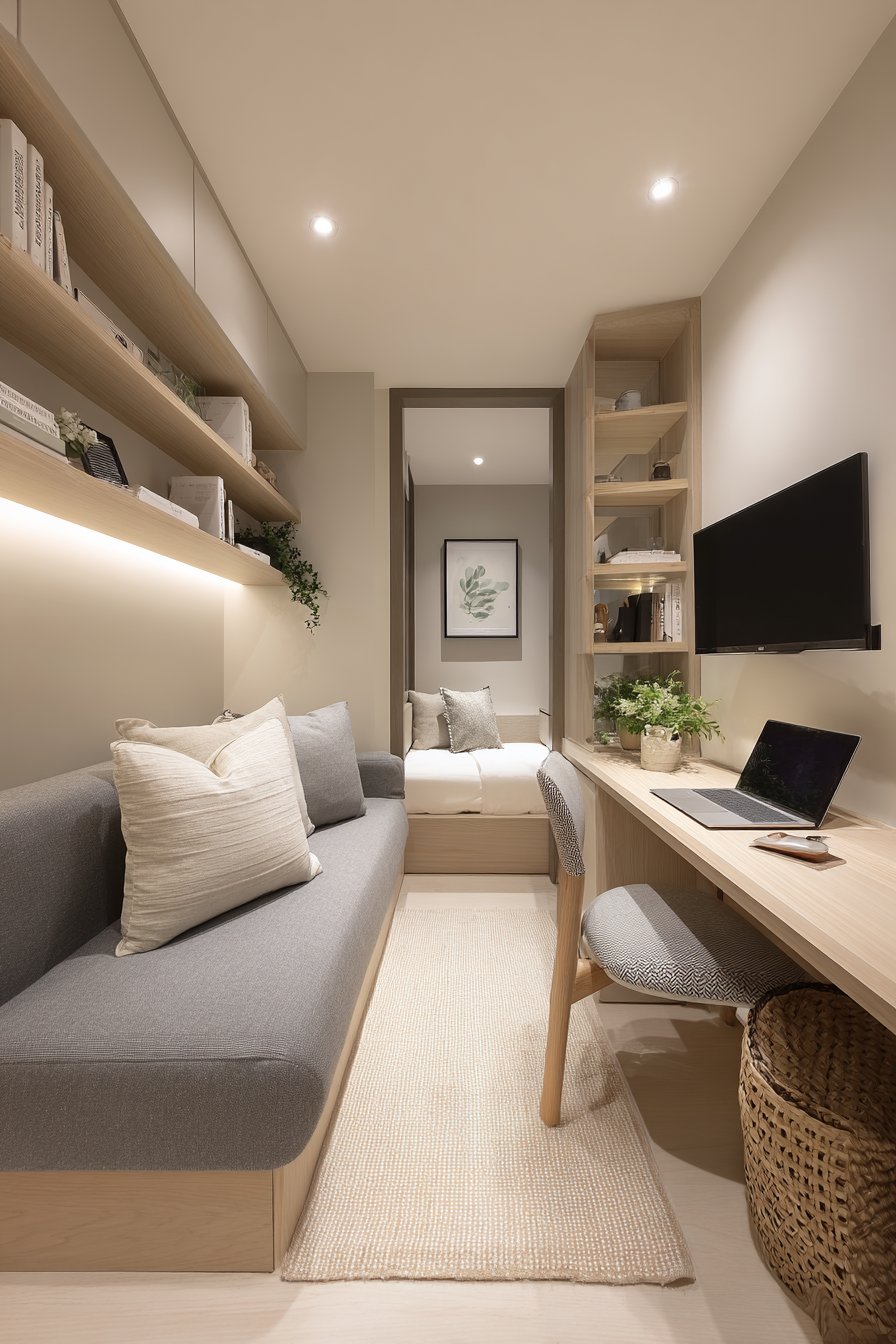
In an era of constant stimulation and digital distraction, the minimalist student living room offers a refreshing antidote—a calm, uncluttered environment designed to promote focus and mental clarity. This design philosophy centers on the principle that less truly is more, with each element carefully selected to serve a specific function without contributing to visual noise.
A low-profile grey sofa faces a wall-mounted television, an arrangement that saves valuable floor space while creating a clear sight line for entertainment. The sofa’s streamlined silhouette and neutral grey tone establish a foundation of calm sophistication that never overwhelms the senses.
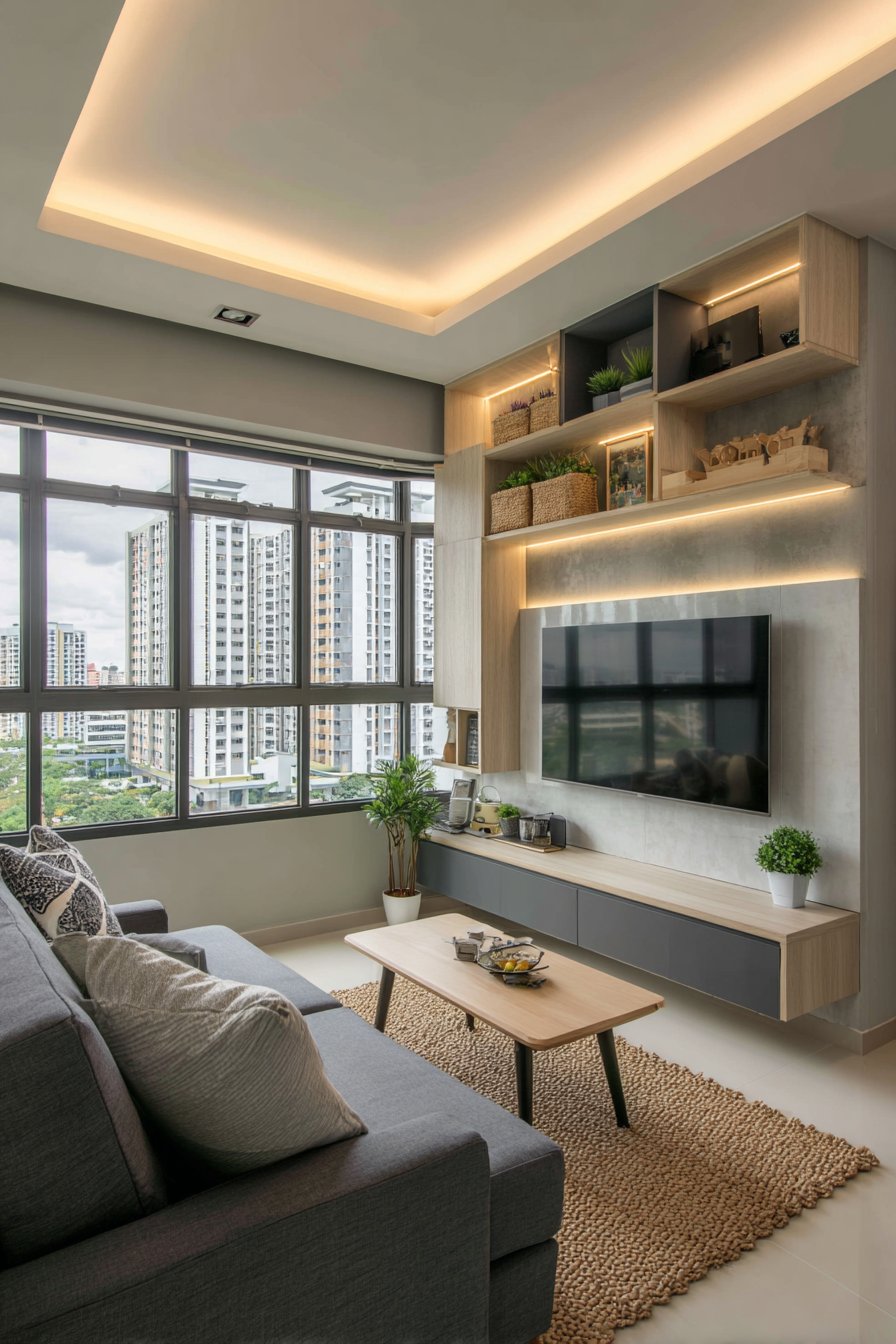
A simple rope rug defines the seating area, introducing subtle texture and warmth without the visual complexity of patterned textiles. This natural fiber choice brings organic appeal while remaining easy to clean and maintain—practical considerations that matter in student living environments. The rug’s neutral tones harmonize with the overall color palette, which intentionally avoids bold colors or busy patterns in favor of serene, cohesive simplicity. Our this living room layout mistakes to avoid breaks down the exact measurements to plan around.
Against one wall, a sleek laptop desk folds flat when not in use, disappearing into the background and preserving the room’s clean lines. This transformable furniture piece epitomizes the minimalist approach, providing functionality exactly when needed and vanishing when its purpose is served.
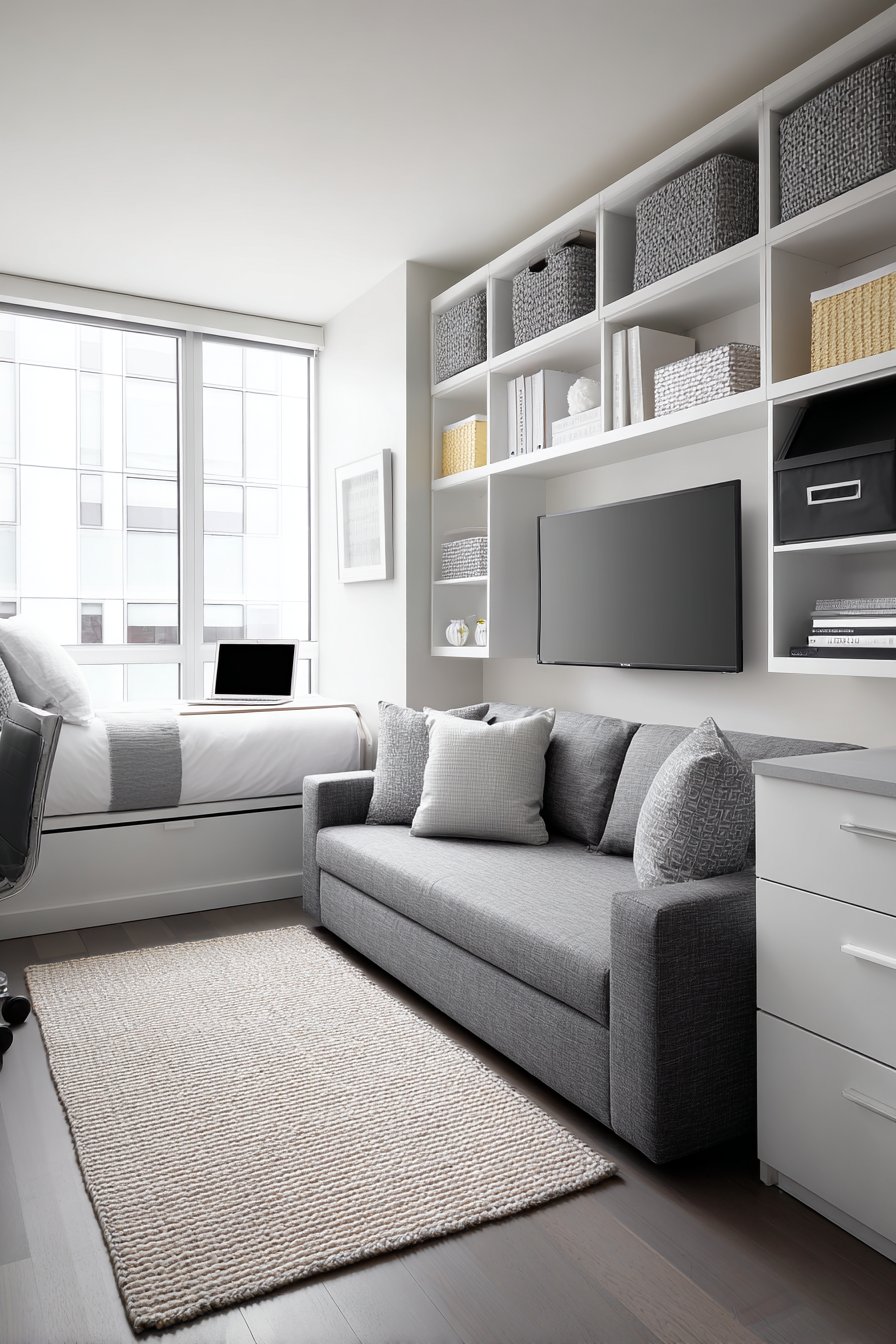
Open shelving with baskets provides organized storage for essentials while maintaining the aesthetic of uncluttered simplicity. The baskets conceal smaller items that might otherwise create visual chaos, presenting a uniform, orderly appearance that soothes rather than stimulates.
This approach to storage demonstrates that minimalism doesn’t mean deprivation—it means intentional curation and thoughtful organization. The wide-angle interior photography captures the full impact of this clean, uncluttered design, with soft diffused lighting that emphasizes the practical minimalism and efficient use of limited square footage.
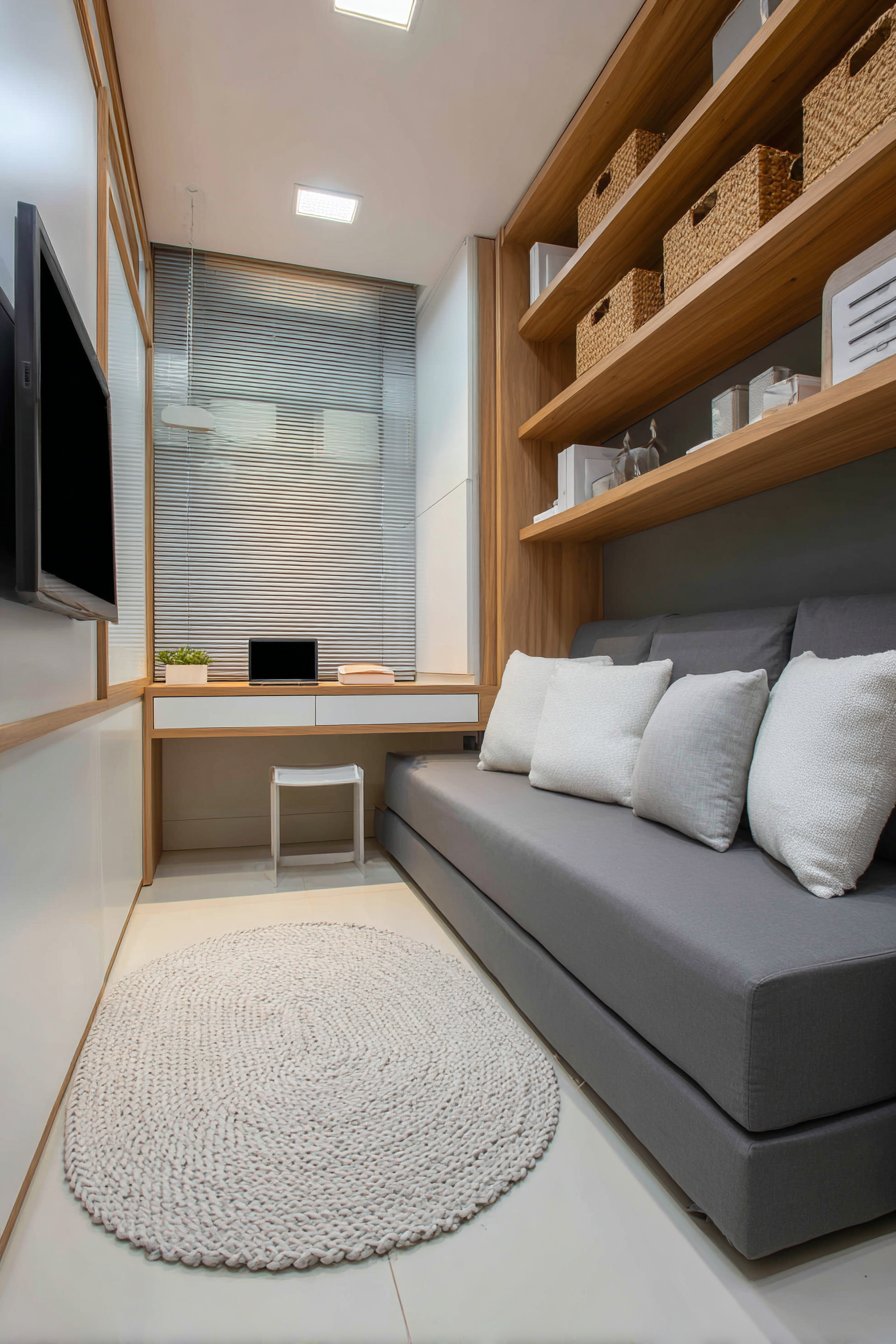
The wall-mounted television deserves special mention as a space-saving strategy that eliminates the need for bulky entertainment centers or TV stands. This mounting approach keeps floors clear, making the room feel larger and easier to clean while reducing visual clutter.
The minimalist philosophy extends to cable management, with wires concealed within walls or organized along baseboards to maintain the clean aesthetic. Every decision in this design serves the dual purpose of maximizing functionality while minimizing visual complexity, creating an environment where students can focus on what matters most—their academic success and personal well-being.
Key Design Tips:
- Limit your color palette to two or three neutral tones to create visual harmony and reduce sensory overstimulation
- Choose furniture with clean lines and simple silhouettes that avoid ornate details or excessive decoration
- Implement closed storage solutions like baskets or bins to hide everyday clutter while maintaining organized accessibility
- Mount televisions and install floating or fold-away furniture to maximize floor space and enhance the feeling of openness
- Regularly declutter and adopt a “one in, one out” policy to prevent accumulation of unnecessary items over time. Our adopt me living room ideas has more inspiration along these same lines.
5. Zoning Strategies for Multi-Functional Living
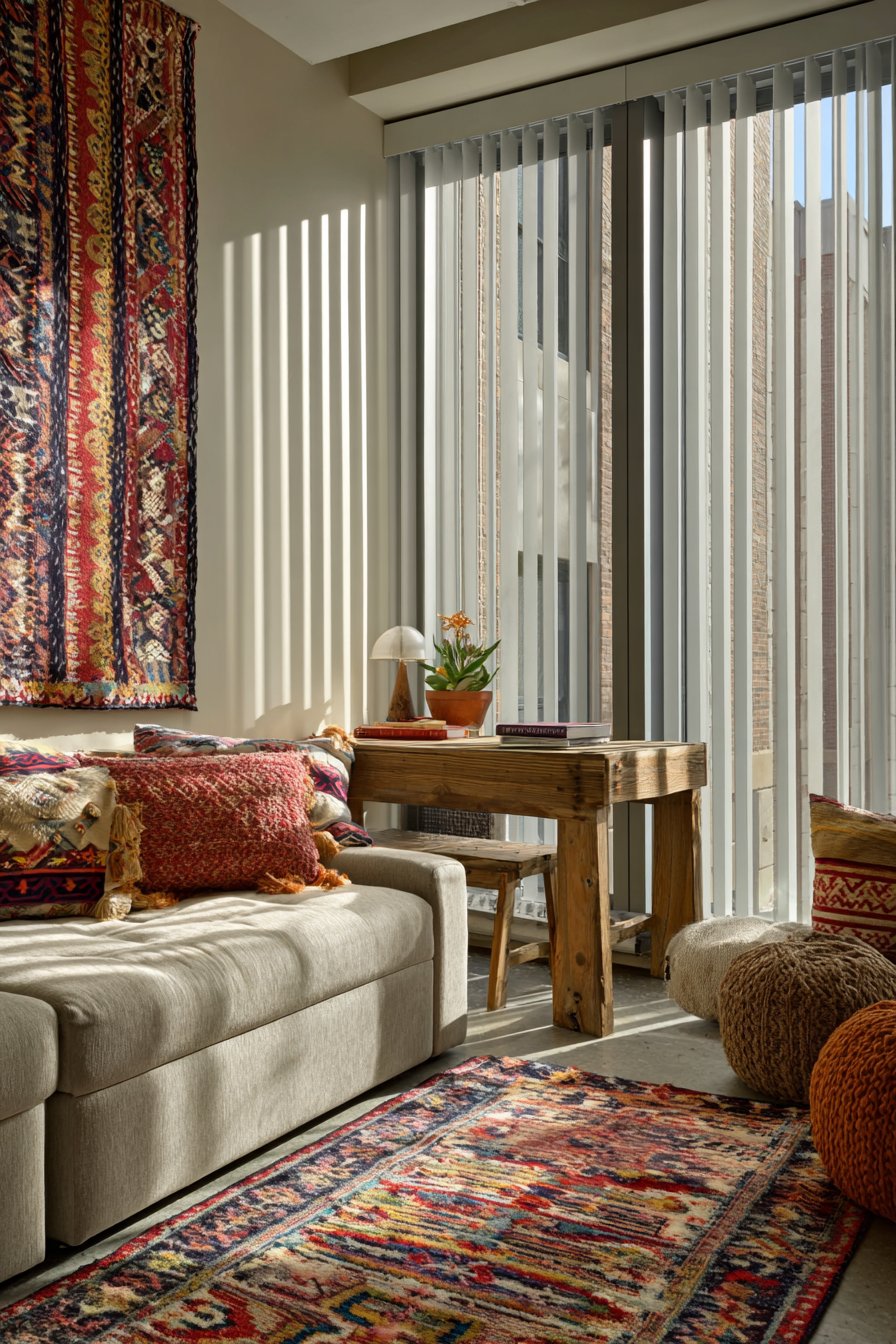
Creating distinct zones within a single room represents one of the most sophisticated approaches to student living room design, allowing different activities to coexist harmoniously without compromising functionality. An affordable sectional sofa in beige microfiber anchors this thoughtfully planned space, positioned to naturally divide the room into separate study and relaxation zones.
The beige color choice provides versatility and warmth while offering practical stain resistance—microfiber repels spills and cleans easily, making it ideal for the realities of student life. The sectional’s generous seating capacity accommodates study groups, movie nights, and casual gatherings with friends, demonstrating the social dimension of student living.
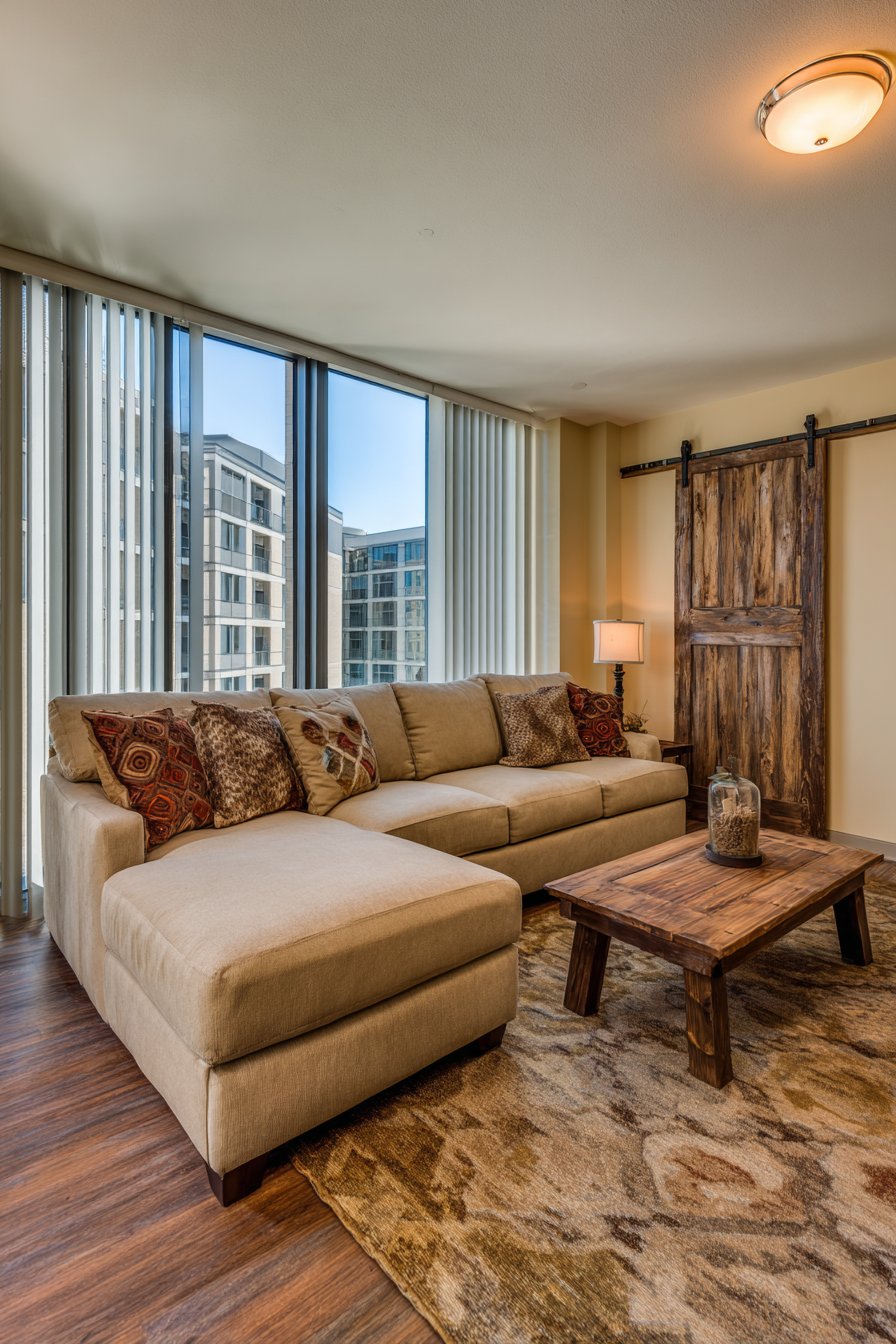
The desk area showcases remarkable creativity through the use of a repurposed wooden door mounted on simple trestle legs, creating a spacious work surface at a fraction of the cost of conventional desks. This substantial surface area provides ample room for spreading out textbooks, notes, laptops, and study materials—essential for effective learning and research.
The raw, industrial aesthetic of this DIY desk adds character and conversation-starting appeal while celebrating the resourcefulness that defines student life. The natural wood grain introduces organic texture and visual warmth, connecting with biophilic design principles that enhance well-being and concentration.
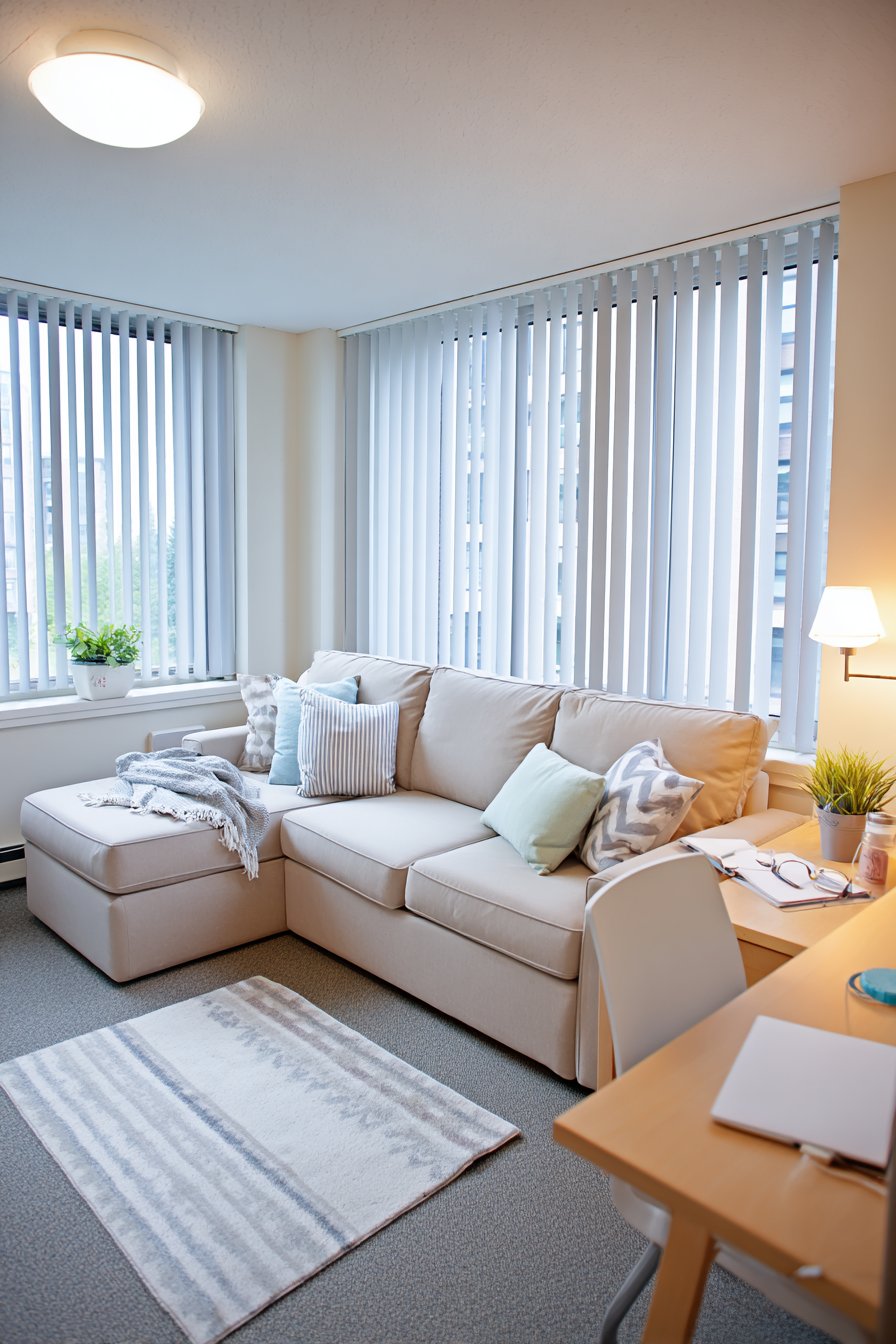
Colorful throw pillows scattered across the sectional and a patterned area rug from a discount store demonstrate how students can inject personality and visual interest into their spaces without significant financial investment. These affordable accessories transform the neutral foundation into something vibrant and personal, reflecting individual style and creating a welcoming atmosphere.
The throw pillows provide opportunities for seasonal updates or mood changes—simply swapping cushion covers can refresh the entire room’s appearance. The patterned rug grounds the seating area while introducing additional texture and color that energizes the space.
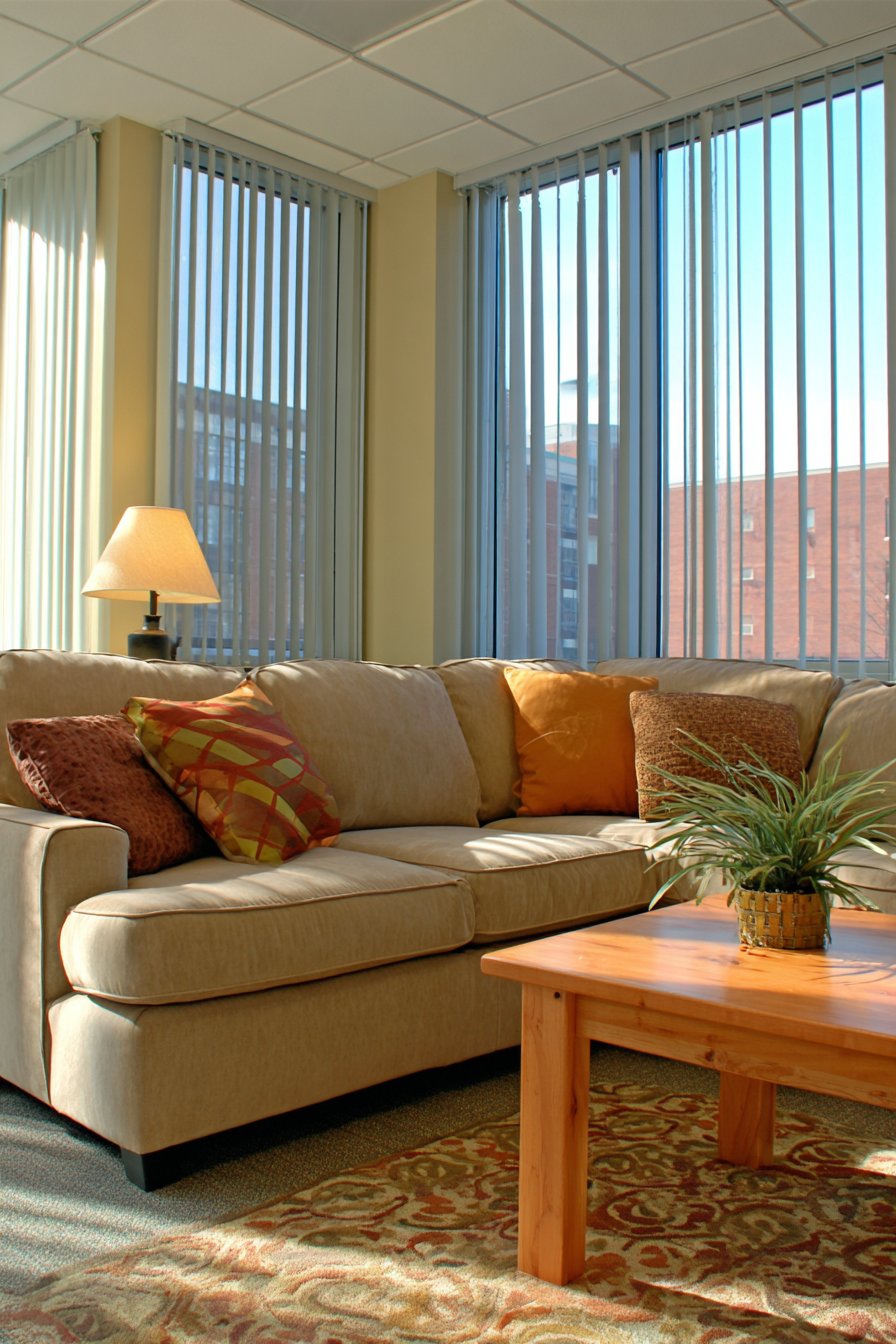
Natural lighting streams through vertical blinds, which offer precise control over light levels and privacy throughout the day. These window treatments can be adjusted to create bright, energizing conditions for daytime studying or dimmed for evening relaxation and entertainment.
The interior design photography style captures the resourceful decorating approach with balanced exposure, highlighting how the mix of functional and comfortable elements creates a space that truly supports the varied demands of student life. The zoning strategy proves particularly effective for students who need to maintain focus on academics while also requiring space for social interaction and personal downtime.
Key Design Tips:
- Use furniture placement to create implied boundaries between different functional zones without requiring physical dividers
- Repurpose unexpected items like doors, wooden planks, or desktop surfaces mounted on affordable leg systems to create custom furniture
- Add personality through easily changeable accessories like throw pillows, blankets, and rugs rather than permanent design commitments
- Select microfiber or performance fabrics that resist stains and clean easily for high-traffic seating areas
- Install adjustable window treatments that provide flexibility in controlling natural light levels for different activities and times of day
6. Collaborative Living for Shared Student Spaces
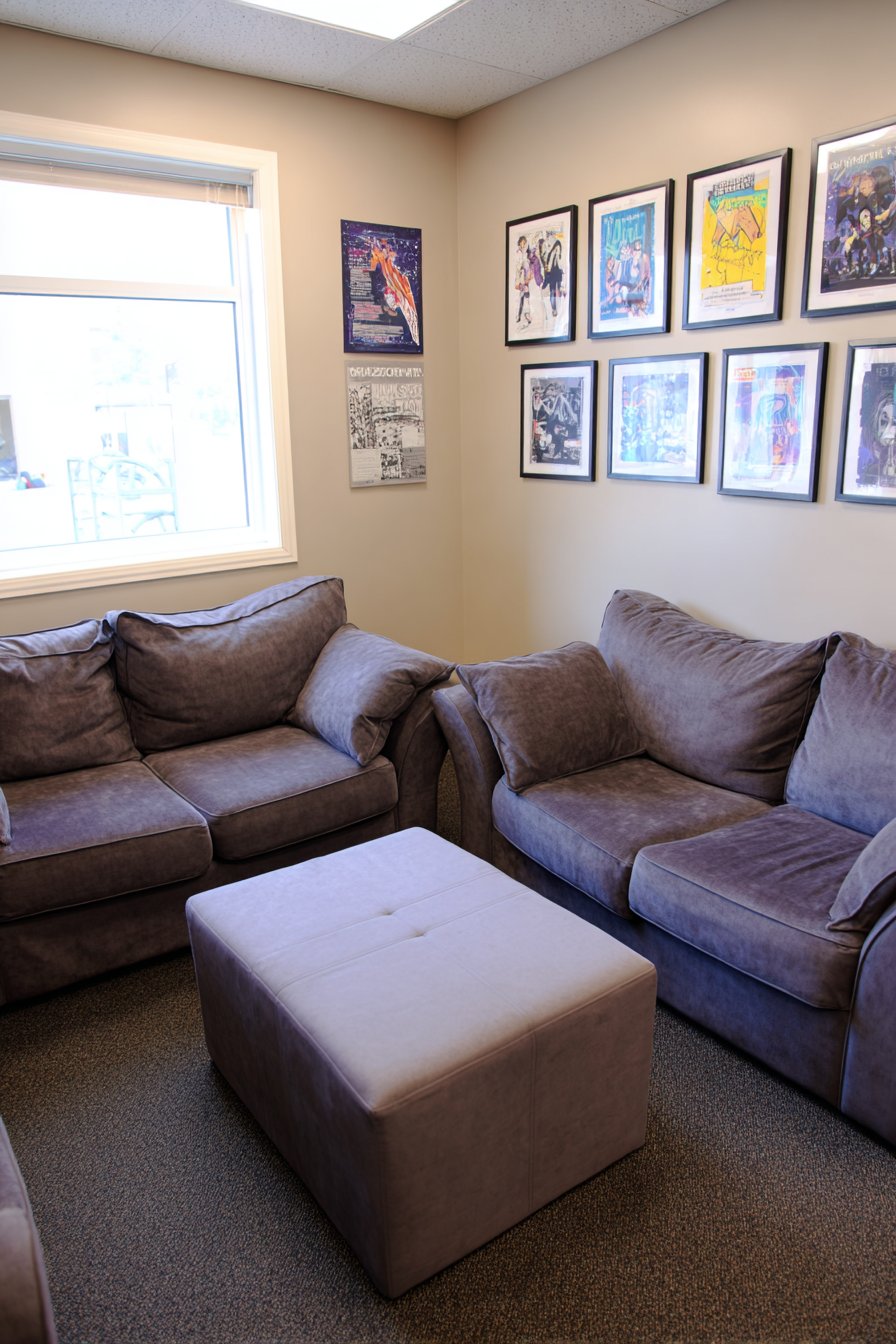
Shared student housing presents unique design challenges, requiring spaces that accommodate multiple personalities, schedules, and needs while fostering community and cooperation. This collaborative living room design features two small sofas positioned facing each other, an arrangement that naturally encourages conversation and face-to-face interaction among roommates.
This sociable configuration creates an inclusive environment where everyone has equal access to seating and views, avoiding the hierarchical implications of traditional layouts where one person claims the “best” seat. The facing sofas frame the central area of the room, establishing clear circulation paths while maintaining an open, welcoming atmosphere.
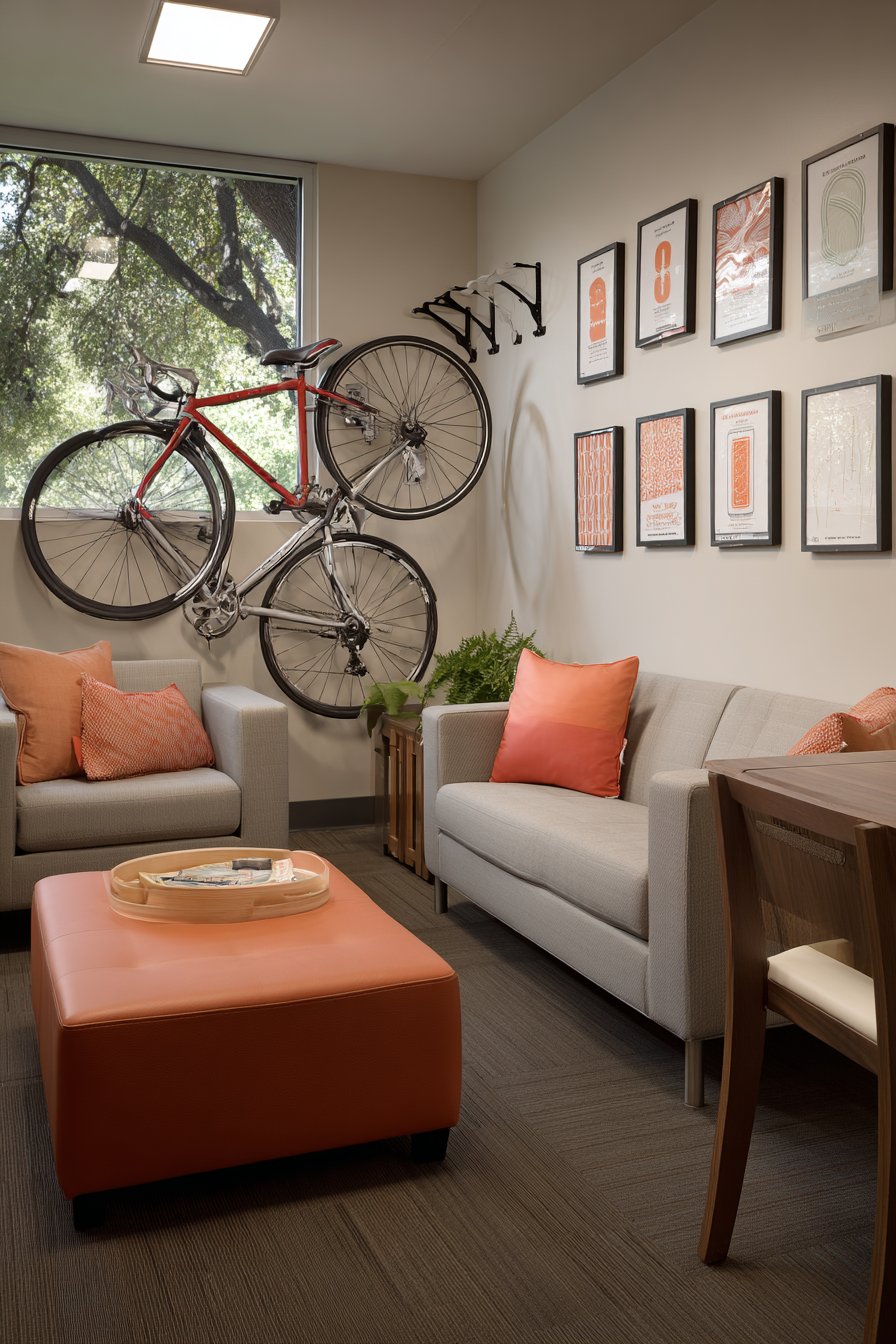
A central ottoman with hidden storage serves triple duty as a coffee table, extra seating, and concealed storage solution—the epitome of smart design for shared spaces. The hidden compartment provides valuable storage for communal items like board games, extra blankets, remote controls, and shared supplies, keeping these necessities accessible yet out of sight.
During social gatherings, the ottoman’s flat surface holds snacks and beverages, while its upholstered top offers additional seating when friend groups expand beyond the sofas’ capacity. This versatile furniture piece demonstrates how thoughtful selection can maximize utility in every square inch.
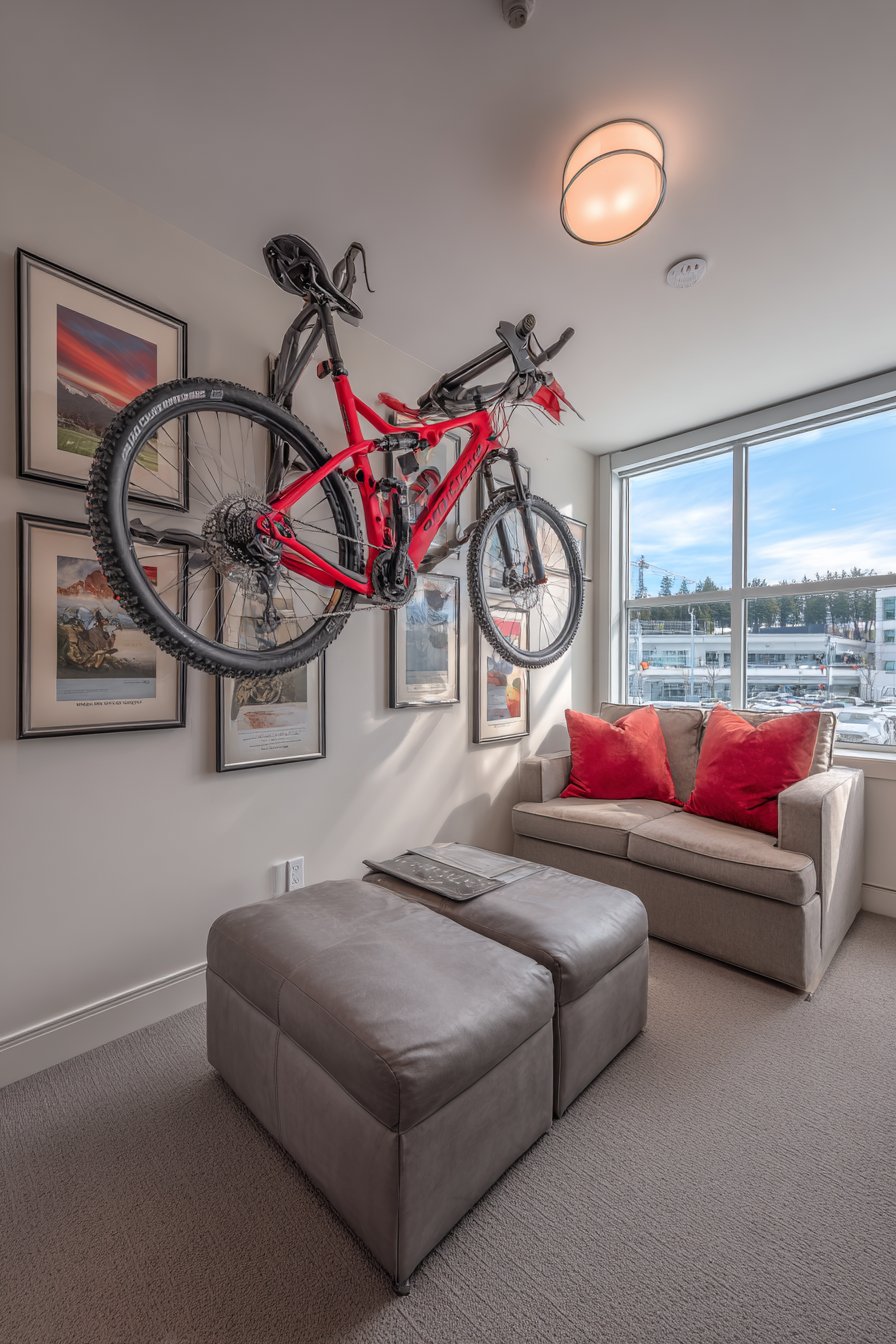
Wall-mounted bike racks represent a creative solution to one of shared housing’s most common challenges—how to store bulky recreational equipment without sacrificing living space. By utilizing vertical wall space, these racks keep bicycles organized, accessible, and safely stored while freeing up valuable floor area.
This approach extends to other shared equipment like skateboards, sports gear, or musical instruments, demonstrating how vertical storage solutions can maintain organization in multi-occupant spaces. Posters in simple frames add color and personality to neutral walls, allowing roommates to express individual interests while contributing to a collective aesthetic.
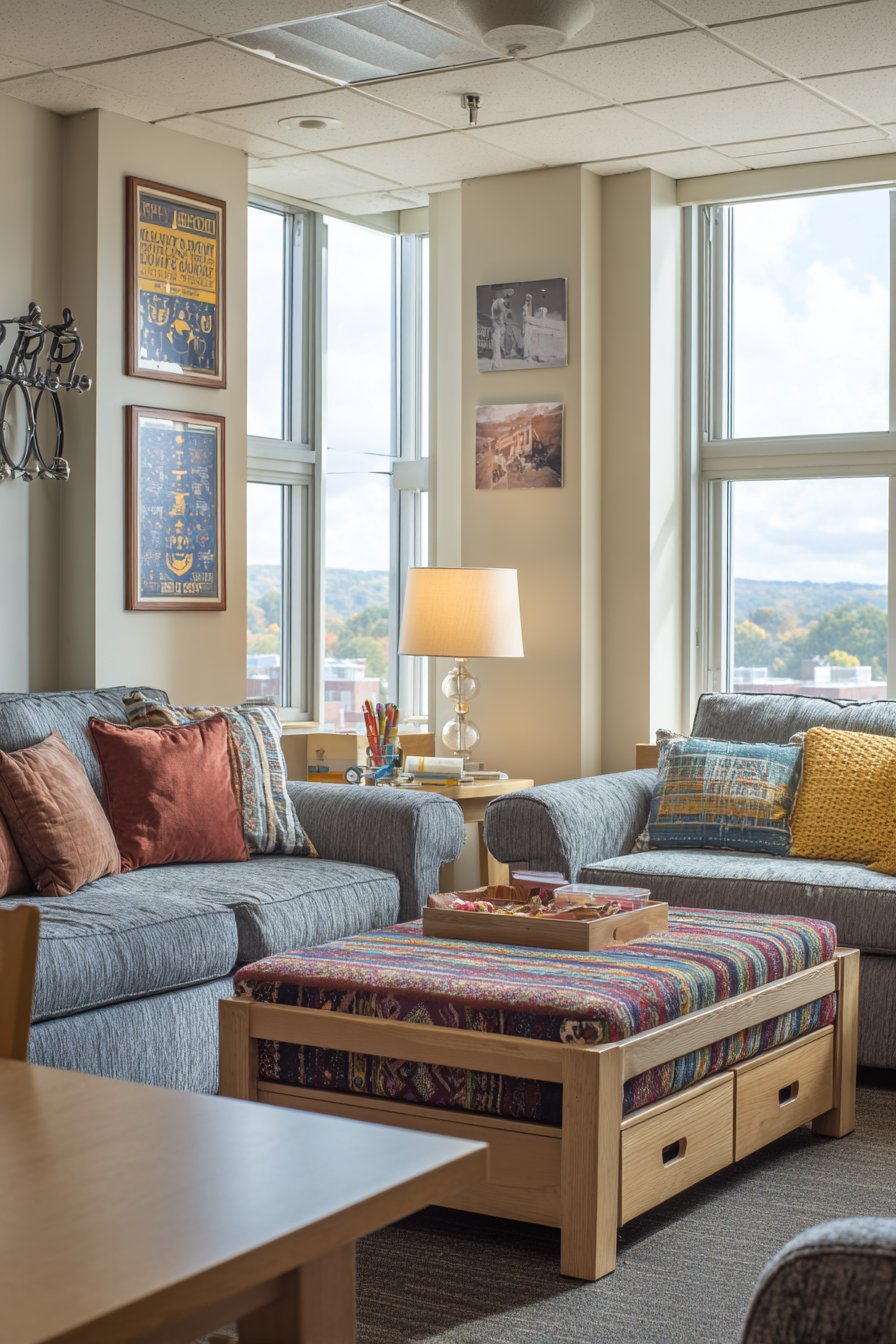
The professional interior photography perspective reveals how natural window light emphasizes the practical arrangements for communal student life, illuminating the thoughtful details that make shared living work smoothly. The neutral wall colors provide a diplomatic backdrop that accommodates various tastes and styles, while the straightforward furniture arrangements ensure that everyone’s needs receive equal consideration. This design philosophy recognizes that successful shared living requires compromise, communication, and spaces that actively facilitate positive interactions among roommates.
Key Design Tips:
- Arrange seating in conversational groupings that encourage interaction and avoid isolating individual roommates
- Select furniture with hidden storage to maximize organization while maintaining clean aesthetics in shared spaces
- Establish designated storage areas for each roommate’s belongings to prevent conflicts and maintain order
- Use wall-mounted solutions for bulky items like bicycles, sports equipment, or musical instruments to preserve floor space
- Choose neutral base colors for walls and major furniture pieces, allowing personality through changeable accessories and personal items
7. Bohemian Spirit on a Student Budget
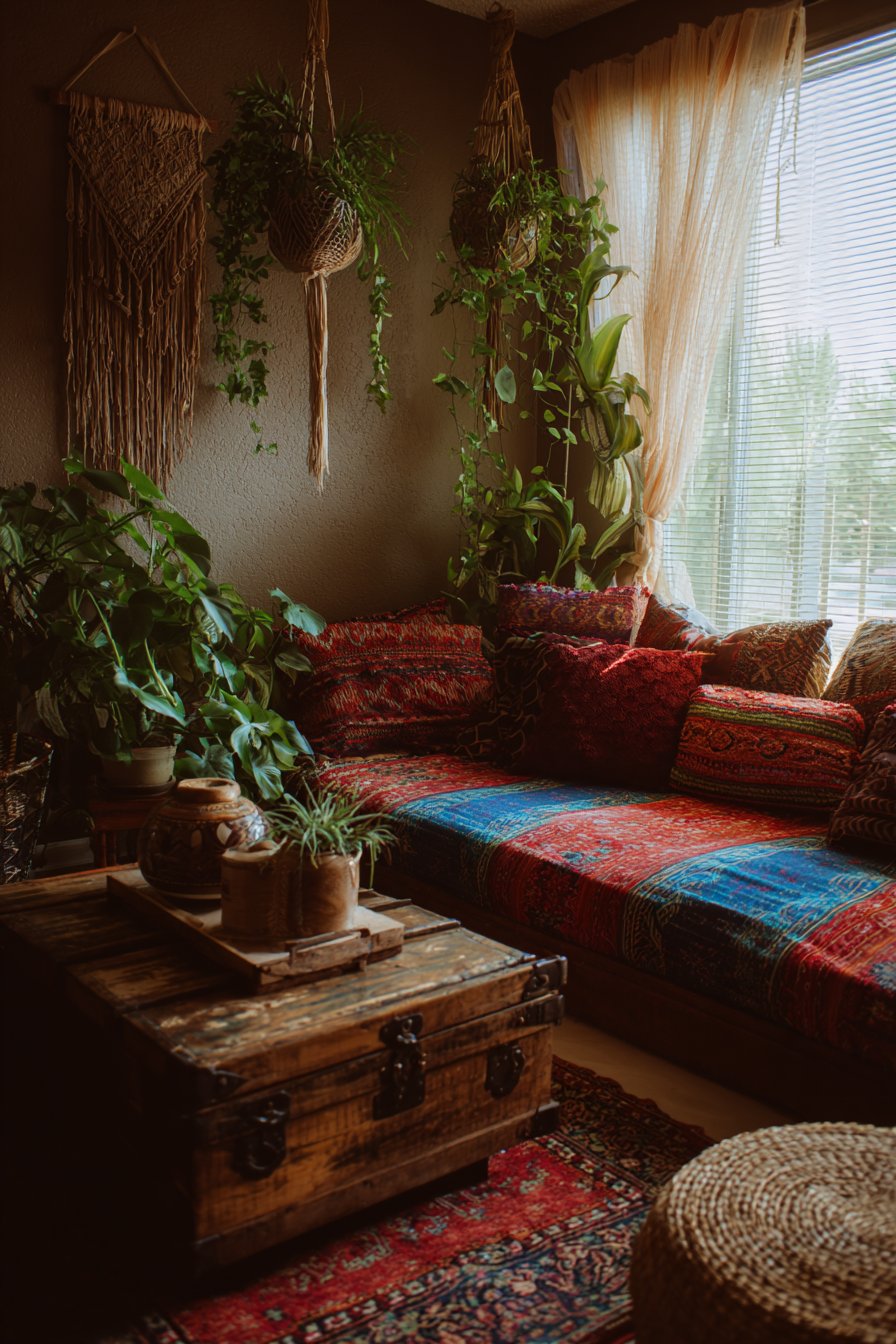
The bohemian aesthetic offers students an affordable, expressive design approach that celebrates individuality, global influences, and creative layering. This boho-style living room features a low daybed adorned with colorful ethnic print cushions positioned along one wall, serving as both comfortable seating and an additional sleeping surface for guests or afternoon naps.
The low profile of the daybed creates a relaxed, informal atmosphere while allowing sight lines to remain open across the room. The vibrant cushion fabrics introduce patterns and colors inspired by diverse cultural traditions, creating a globally influenced aesthetic that feels traveled and worldly—perfect for students exploring their identities and interests.
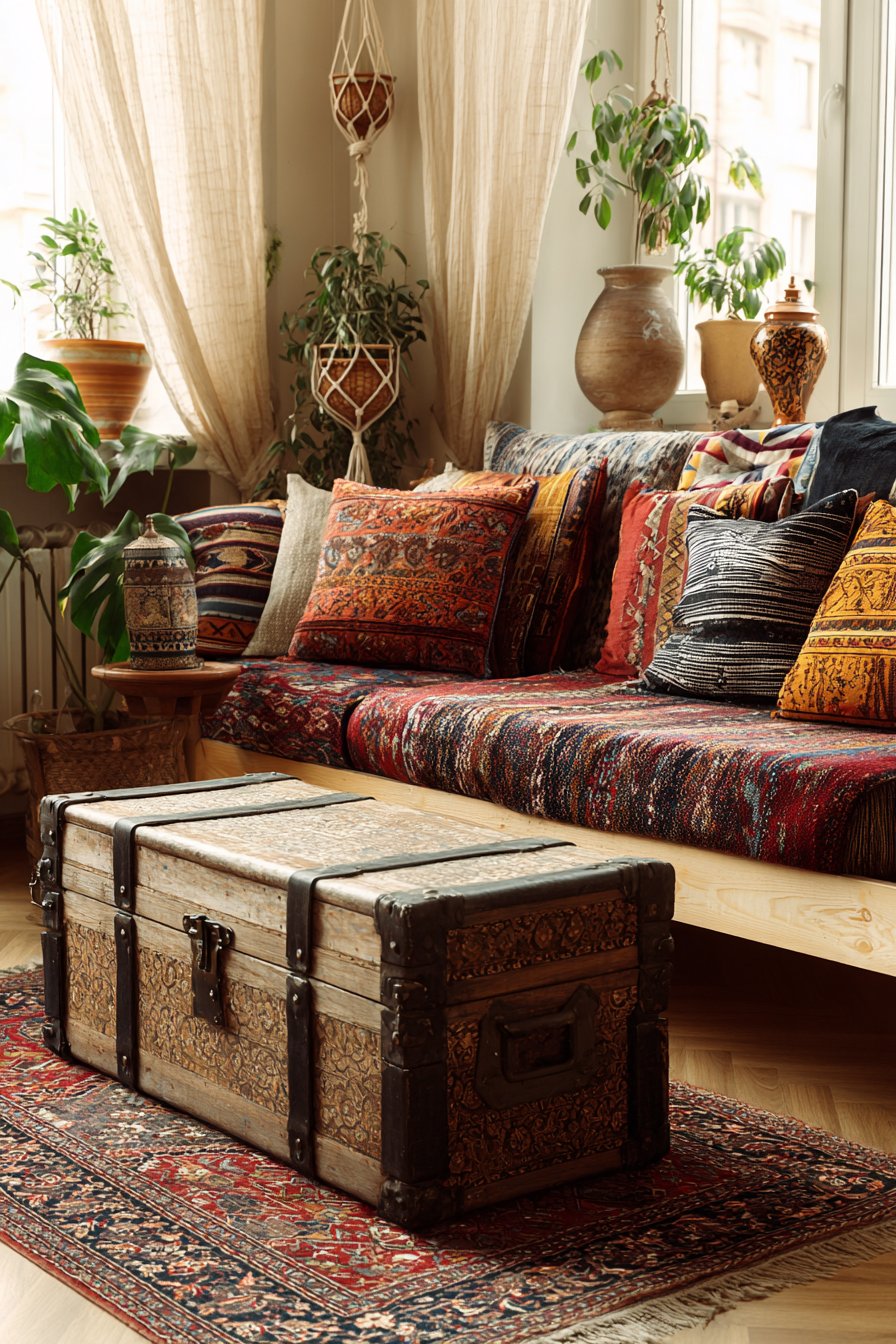
Macramé plant hangers suspend greenery near the window, adding vertical visual interest while bringing the benefits of indoor plants into the living space. These handcrafted textile pieces, which can be DIY projects or affordable purchases from craft markets, exemplify the boho commitment to handmade, artisanal elements. The hanging plants draw the eye upward, making ceilings feel higher and spaces more expansive—a valuable trick in modestly sized student apartments.
A vintage trunk serves as both coffee table and storage, its weathered surface and historic character adding layers of narrative and authenticity to the design. This repurposed piece might store extra linens, seasonal clothing, or cherished keepsakes, maximizing utility while contributing to the collected-over-time aesthetic.
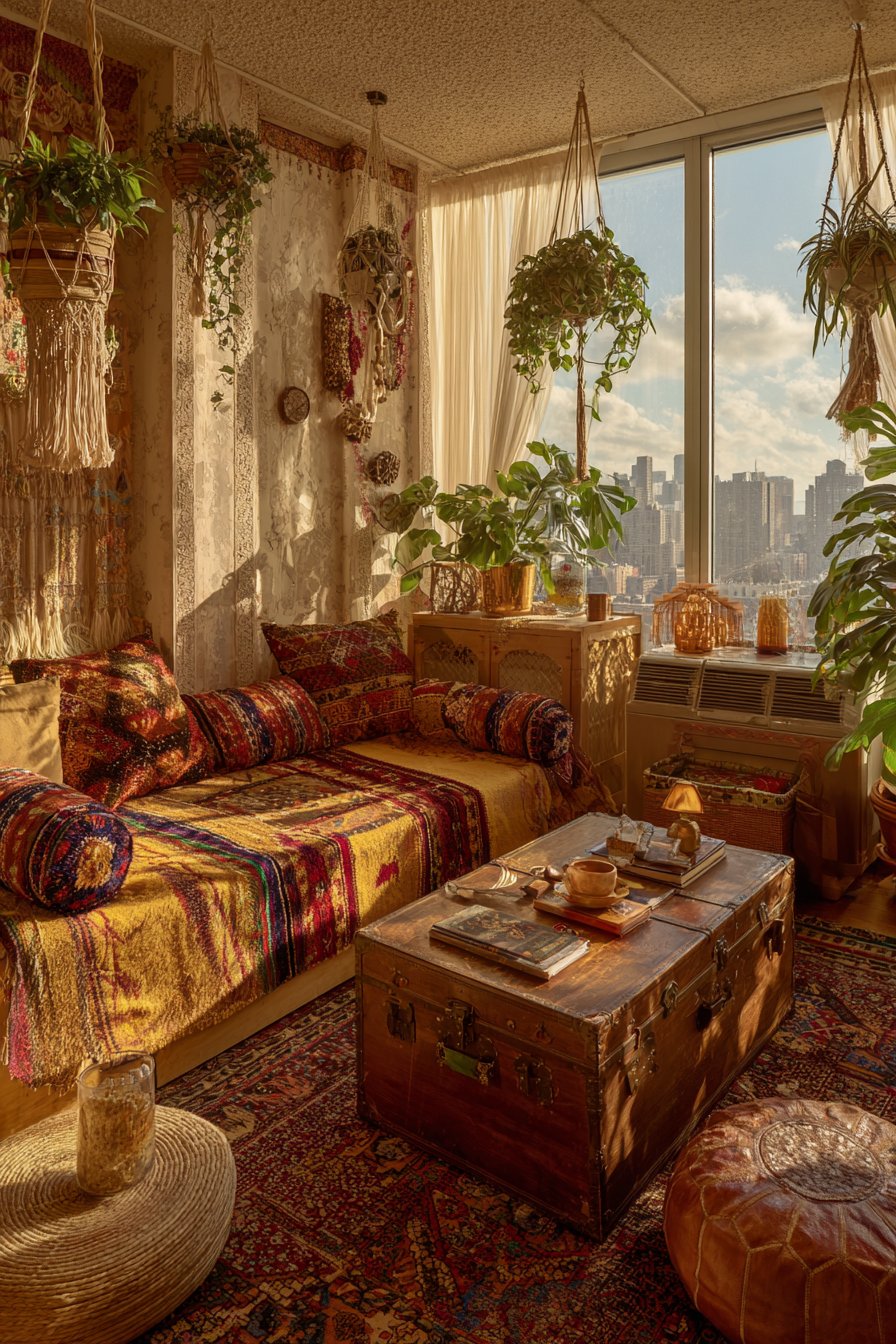
Layered textiles create the signature warmth and richness associated with bohemian design. A worn Persian-style rug anchors the seating area, its faded colors and intricate patterns adding visual complexity without overwhelming the space. Additional textiles might include throw blankets, tapestries, or fabric wall hangings that introduce texture, pattern, and softness throughout the room.
This approach to layering creates depth and coziness while allowing for affordable updates—textiles can be swapped seasonally or as tastes evolve without requiring major investments. The space captured during golden hour reveals how natural lighting enhances the bohemian aesthetic, with warm, amber light filtering through gauzy curtains and illuminating the eclectic mix of textures and natural materials.
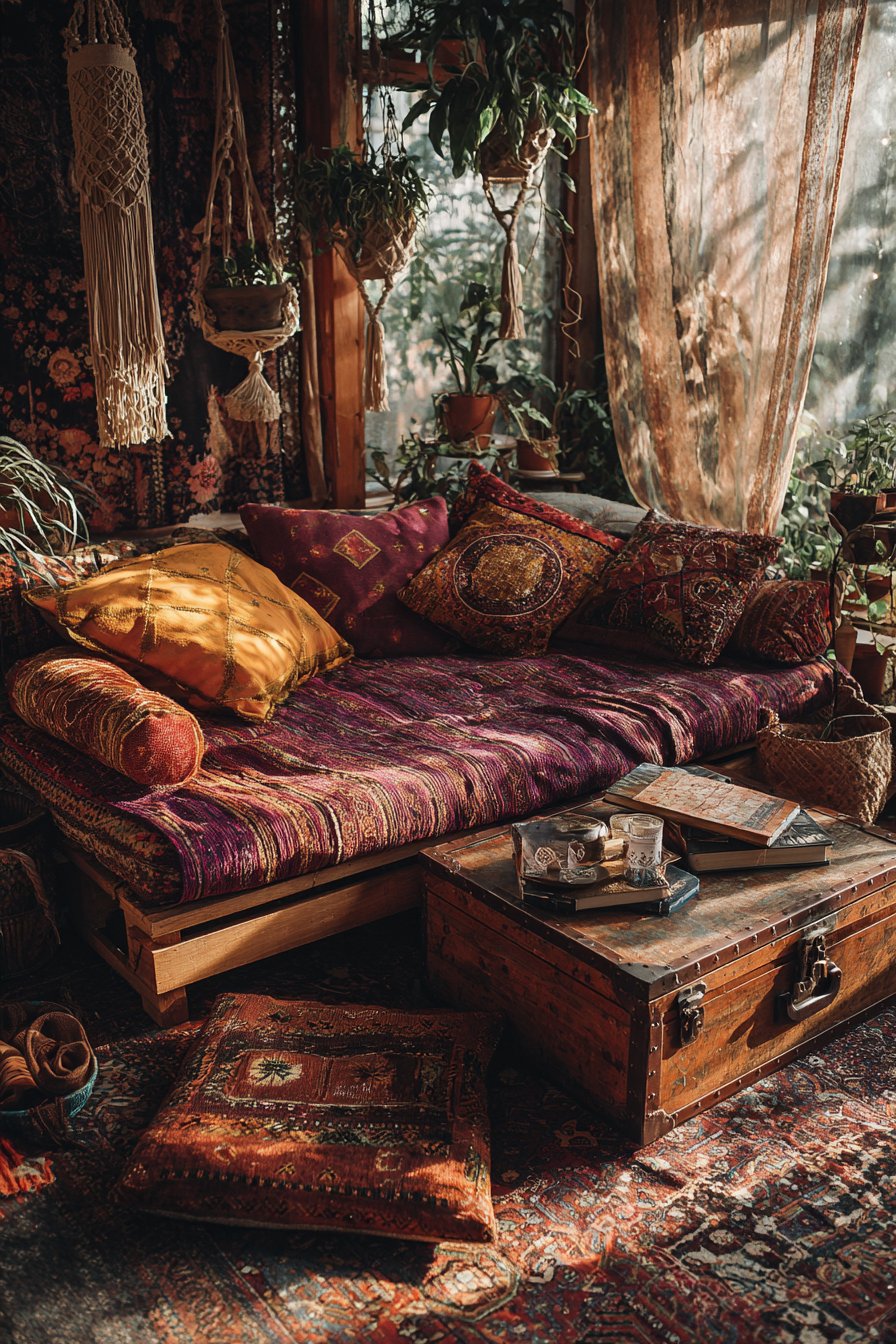
The bohemian philosophy embraces imperfection, mixing, and personal curation over matching sets or design rules. This liberating approach particularly appeals to students who may be assembling furniture from various sources—family hand-me-downs, thrift store finds, and budget purchases. Rather than viewing this hodgepodge as a limitation, the boho aesthetic celebrates it as authentic and intentional. The resulting space feels personal, lived-in, and rich with stories—qualities that transform a simple student living room into a meaningful, nurturing environment.
Key Design Tips:
- Mix patterns freely by varying scale—combine large florals with small geometrics or tribal prints with organic forms
- Incorporate live plants throughout the space using hanging planters, floor pots, and windowsill displays for natural vitality
- Layer textiles including rugs, throws, and cushions to create warmth, texture, and visual richness
- Shop secondhand for vintage trunks, baskets, and unique furniture pieces that add character and storage functionality
- Embrace imperfection and asymmetry as part of the aesthetic rather than striving for matchy-matchy uniformity
8. Academic Focus Through Purposeful Design
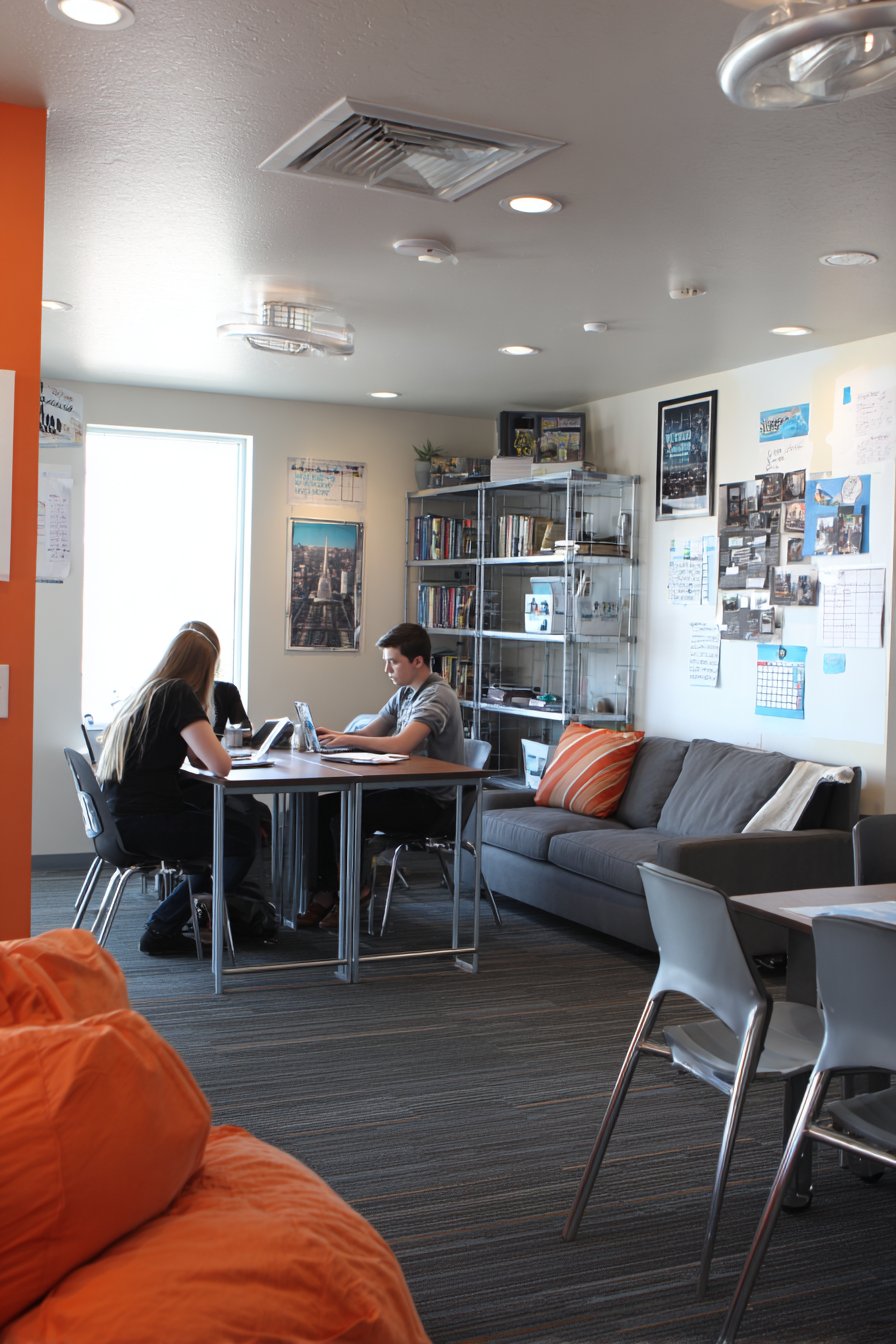
Some student living rooms prioritize academic function above all else, creating environments specifically optimized for productivity, collaboration, and scholarly success. This study-focused design features a large communal table positioned centrally in the room, surrounded by mismatched but functional chairs that accommodate study groups, group projects, and collaborative learning sessions.
The substantial table surface provides ample workspace for multiple students to spread out materials simultaneously, with enough room for laptops, textbooks, notebooks, and beverages without crowding. This arrangement transforms the living room into a dedicated academic workspace that rivals library study rooms in functionality.
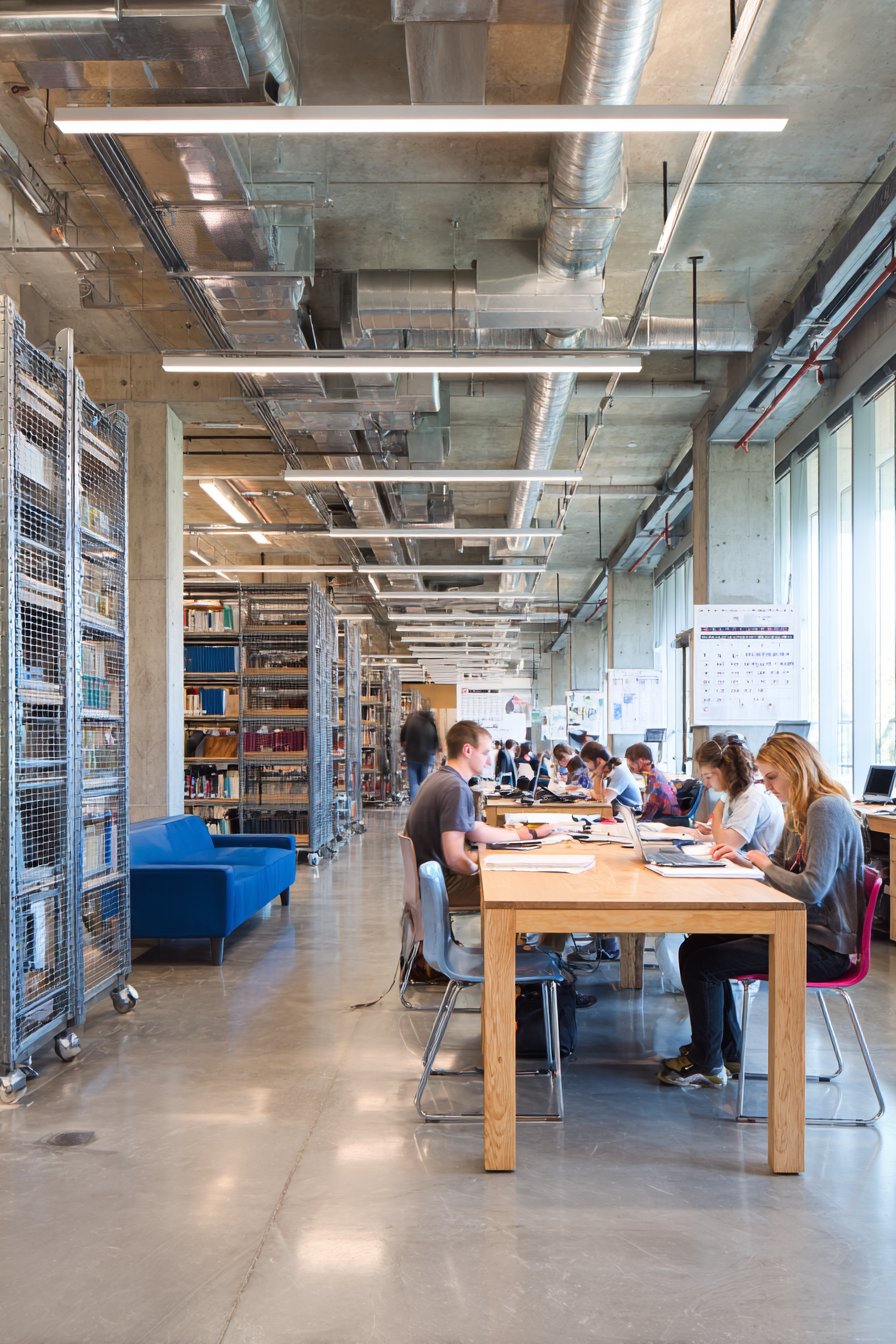
Industrial-style metal shelving units line the walls, holding textbooks and supplies organized in labeled bins. These open shelving systems provide immediate visual access to materials, making it easy to locate specific resources during study sessions.
The industrial aesthetic—characterized by exposed metal, simple construction, and utilitarian design—creates a serious, focused atmosphere appropriate for academic work. The labeled bins introduce an organizational system that maintains order despite the volume of materials students must manage throughout a semester. Color-coding or category-based organization helps multiple roommates share the shelving system without confusion.
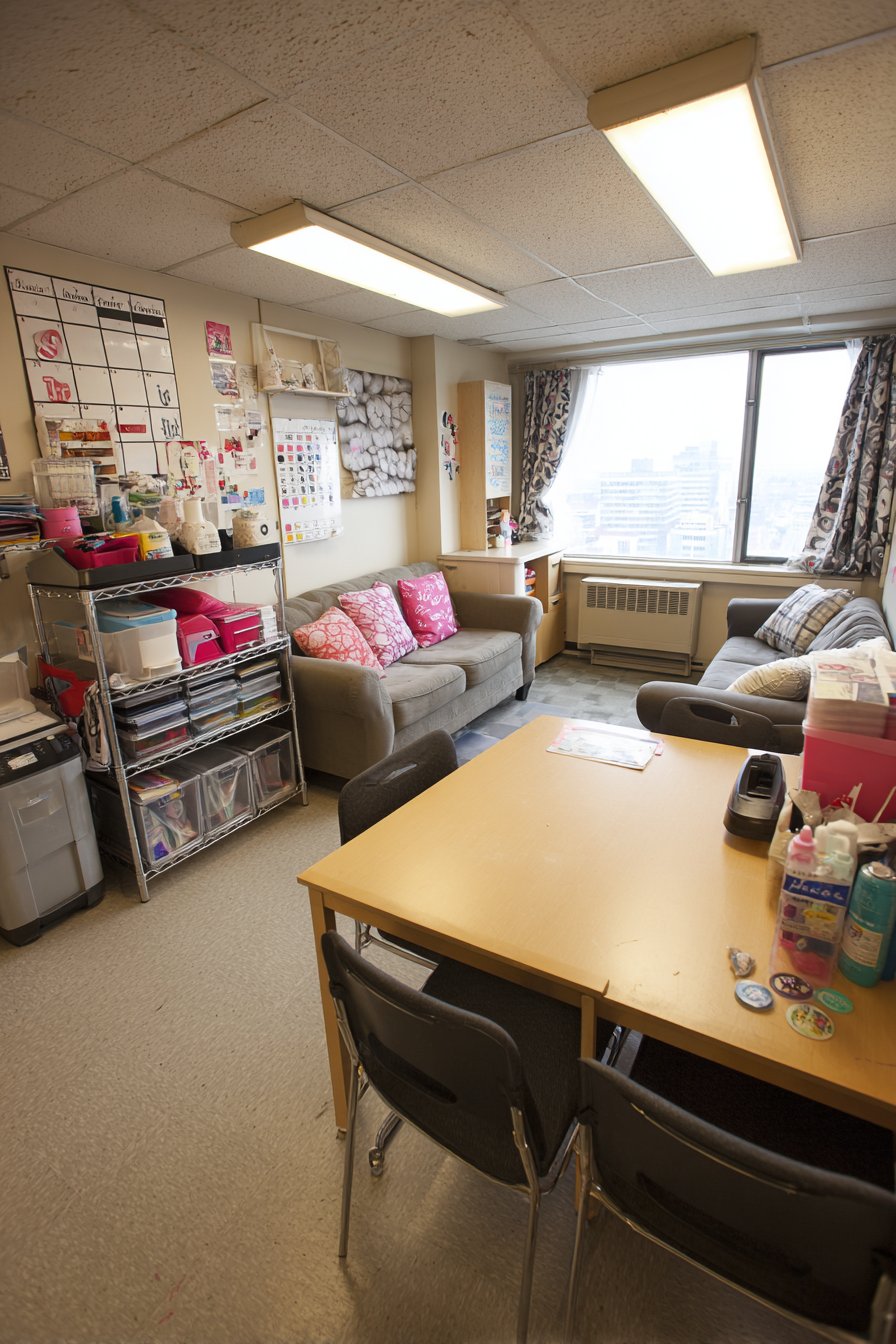
A compact loveseat tucked into one corner provides a crucial break area, acknowledging that sustained productivity requires periodic rest and relaxation. This designated relaxation zone allows students to step away from intense studying without leaving the room, offering a place for quick mental breaks, casual reading, or brief conversations with roommates. The contrast between the hard surfaces of the study table and the soft cushioning of the loveseat reinforces the distinction between work mode and rest mode, helping students mentally transition between states.
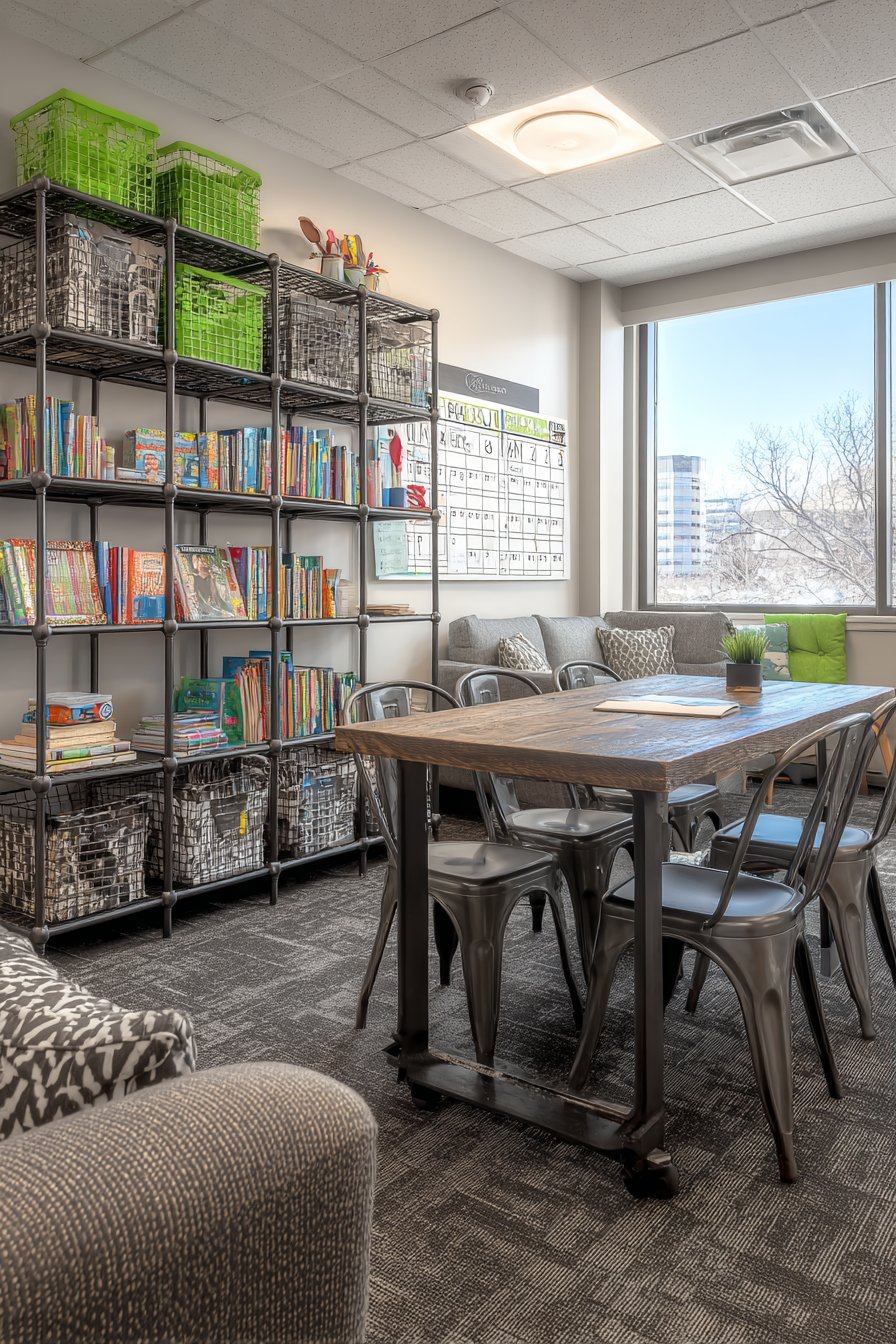
Task lighting ensures adequate illumination for reading, writing, and computer work regardless of natural light conditions, while a large wall calendar maintains visibility of deadlines, exam dates, and important events. The wide-angle interior photography captures the purposeful academic workspace with bright overhead lighting and natural window light, revealing an organized, productivity-focused environment designed to support scholarly achievement. This design approach recognizes that for some students, particularly those pursuing demanding majors or competitive programs, the living room must function primarily as an extension of the classroom and library rather than a traditional relaxation space.
Key Design Tips:
- Select a large, sturdy table as the central focus, prioritizing surface area and stability over decorative appeal
- Implement organizational systems using labeled bins, color-coding, or category divisions to maintain order among shared materials
- Provide adequate task lighting at work surfaces to prevent eye strain during extended study sessions
- Designate a separate break area with comfortable seating to encourage periodic rest and mental recovery
- Display a large calendar or planning board prominently to keep all occupants aware of important deadlines and commitments
9. Adaptable Modular Solutions for Dynamic Lifestyles
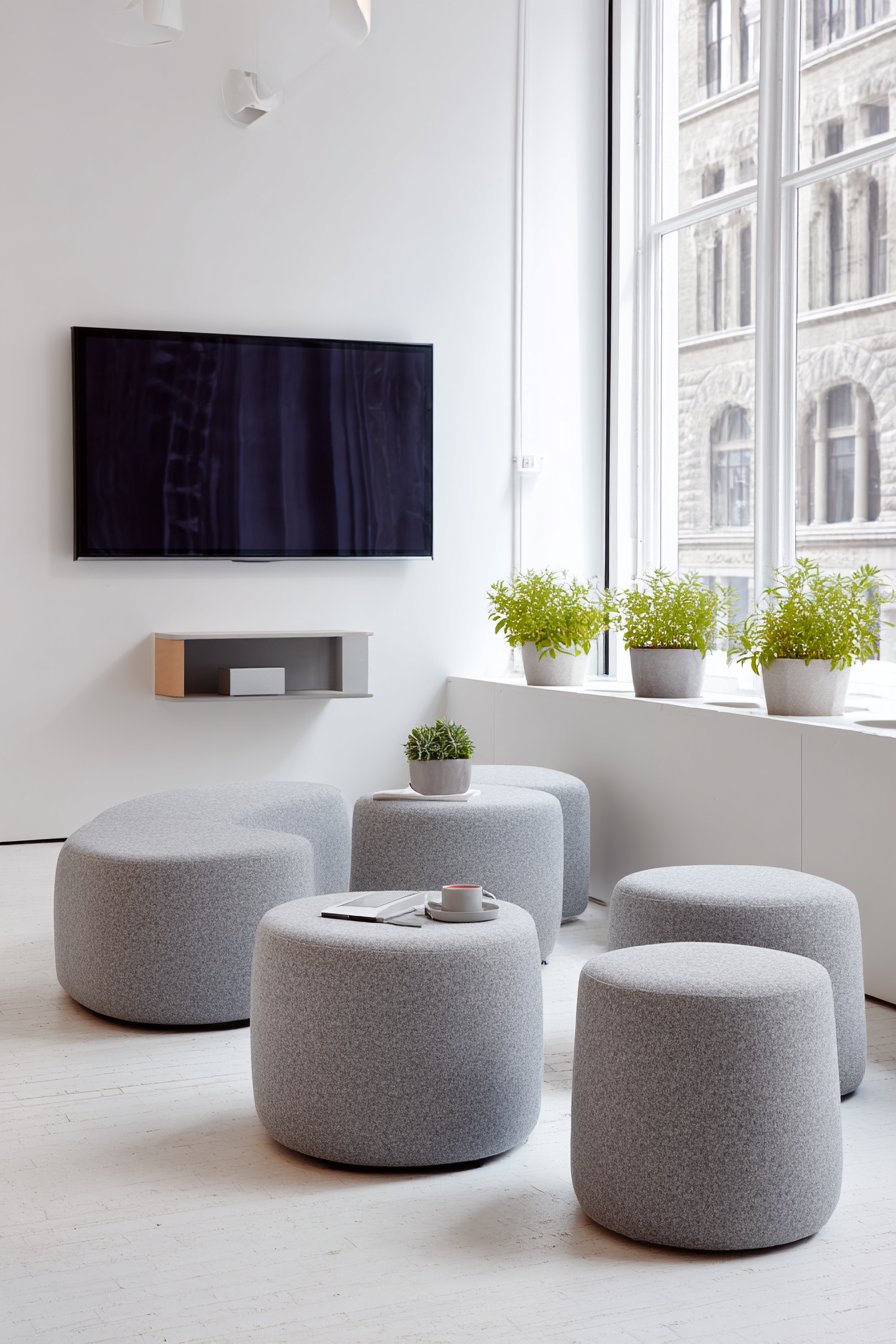
Modern student life demands flexibility, and modular furniture systems answer this call with adaptable pieces that reconfigure to meet changing needs. This contemporary living room features stackable poufs in grey fabric that serve multiple functions—individual seating, ottoman for propped-up feet, or arranged together to create additional sleeping surfaces for guests.
The stackable design allows for easy storage when not in use, addressing the perpetual storage challenges in student housing. The grey fabric selection maintains the sophisticated, modern aesthetic while providing the practical advantage of stain resistance and easy maintenance.
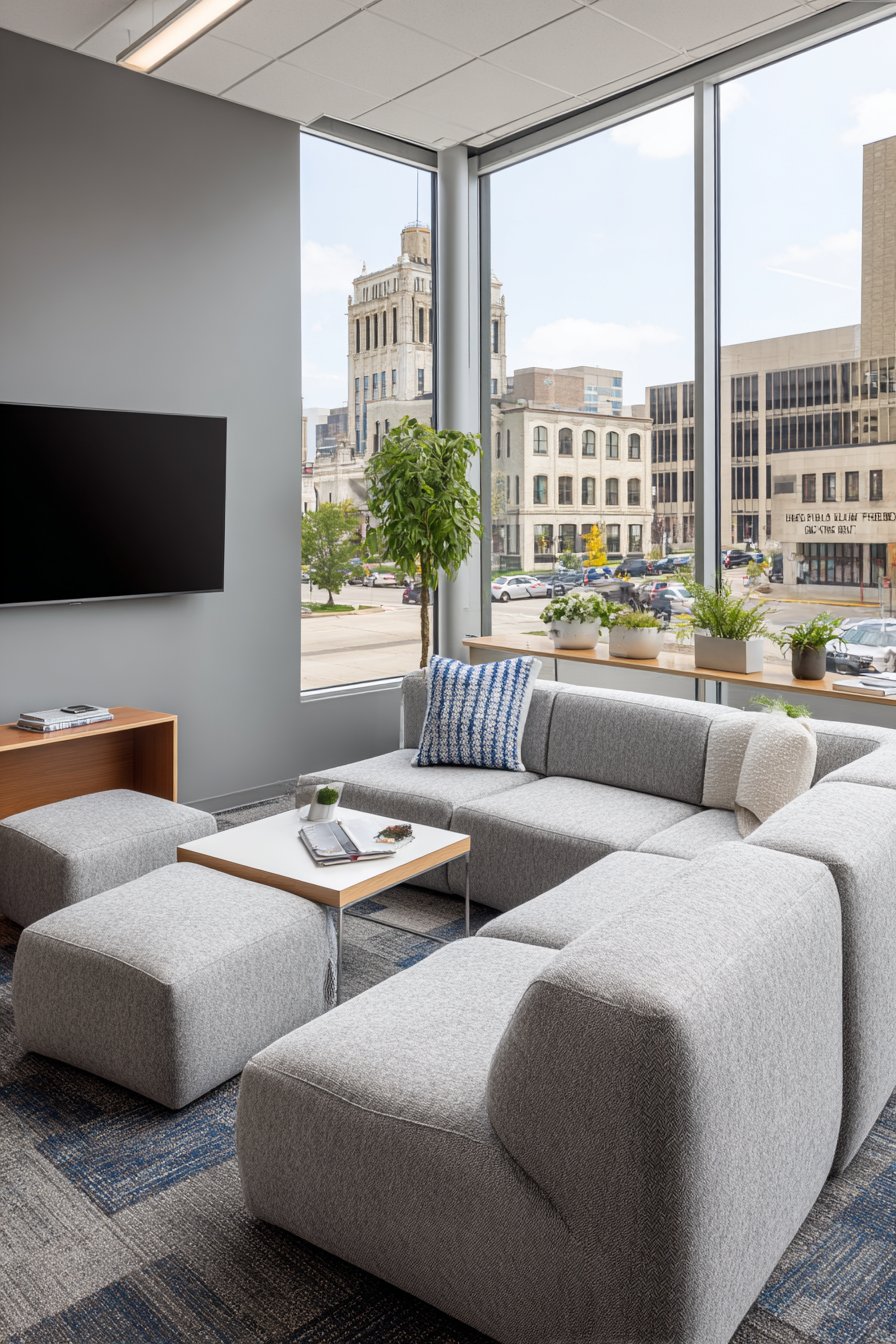
A convertible coffee table that lifts to desk height exemplifies the innovative thinking behind successful student furniture design. During casual relaxation or entertainment, the table remains at standard coffee table height, providing a surface for beverages and snacks. When academic work calls, a simple mechanism raises the table to a comfortable desk height, creating an ergonomic workspace without requiring dedicated desk furniture. This transformation happens quickly and easily, allowing students to transition seamlessly between different activities throughout the day. The table’s dual functionality eliminates the need for separate pieces, conserving both space and budget.
A floating media console with integrated cable management keeps technology organized and accessible while maintaining clean visual lines. The wall-mounted design frees floor space beneath the console, making the room easier to clean and visually lighter. The built-in cable management system addresses one of modern living’s most persistent aesthetic challenges—the tangle of cords and chargers that accompany our digital lives.
By concealing these necessary but unsightly elements, the console maintains the streamlined appearance essential to contemporary design. A small plant collection on the windowsill adds life, color, and natural air purification to the space, connecting occupants with nature despite urban or campus settings.
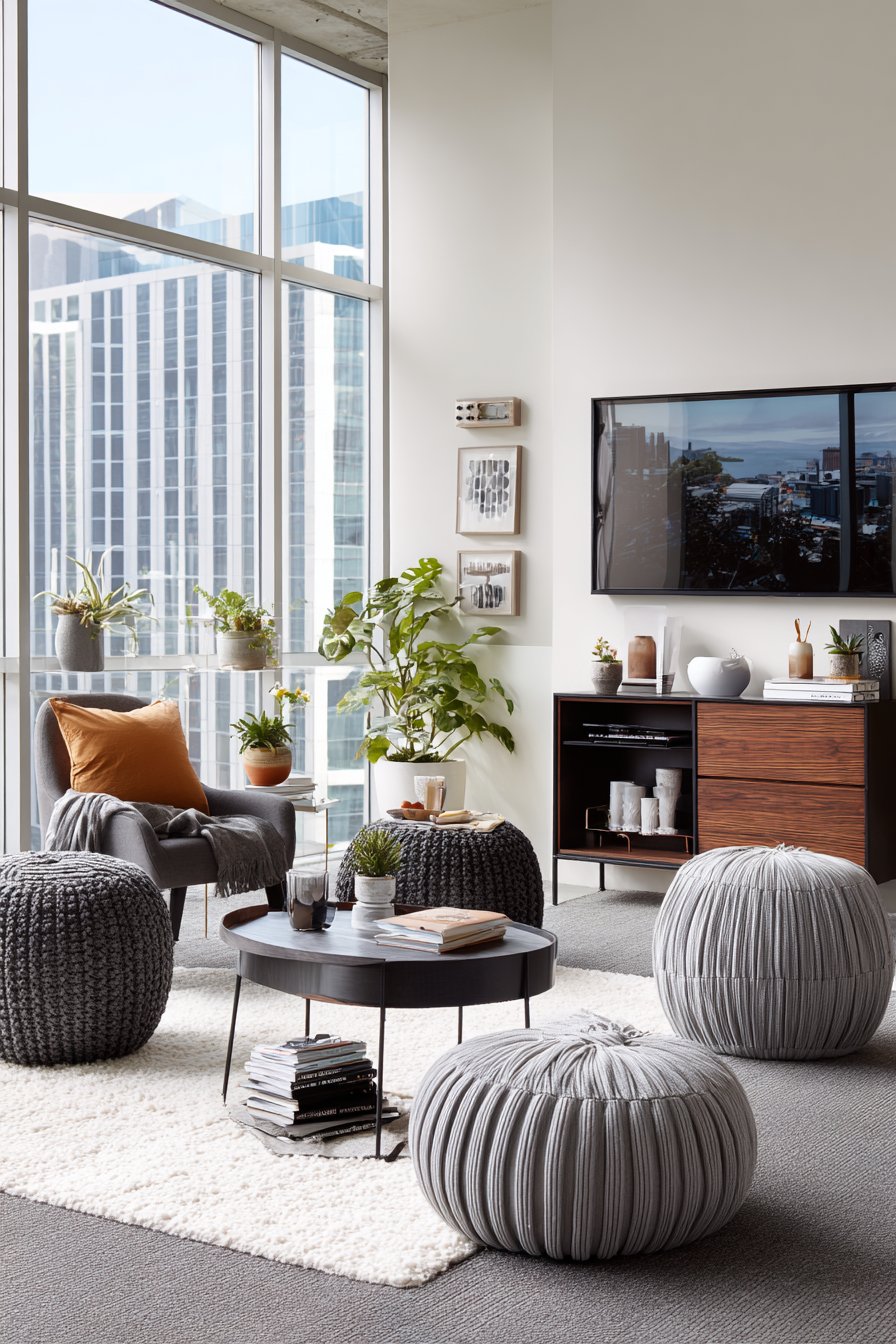
The professional interior photography with balanced exposure showcases the adaptable furniture solutions while natural lighting highlights the contemporary yet affordable design approach. Clean lines and practical versatility characterize every element, creating a living room that responds to the dynamic, ever-changing demands of student life. This modular approach recognizes that student needs vary dramatically—from intense study periods requiring dedicated workspace to social gatherings needing flexible seating arrangements to solo relaxation demanding comfort and ease.
Key Design Tips:
- Invest in modular furniture pieces that serve multiple functions and reconfigure to meet various needs throughout the day
- Select convertible tables that adjust in height or expand in size to accommodate different activities
- Implement effective cable management systems to maintain clean aesthetics in technology-heavy student environments
- Choose furniture with storage built into the design rather than requiring separate storage pieces
- Incorporate small plant collections to improve air quality and add natural elements without consuming valuable surface area
10. Scandinavian Simplicity for Calm and Clarity
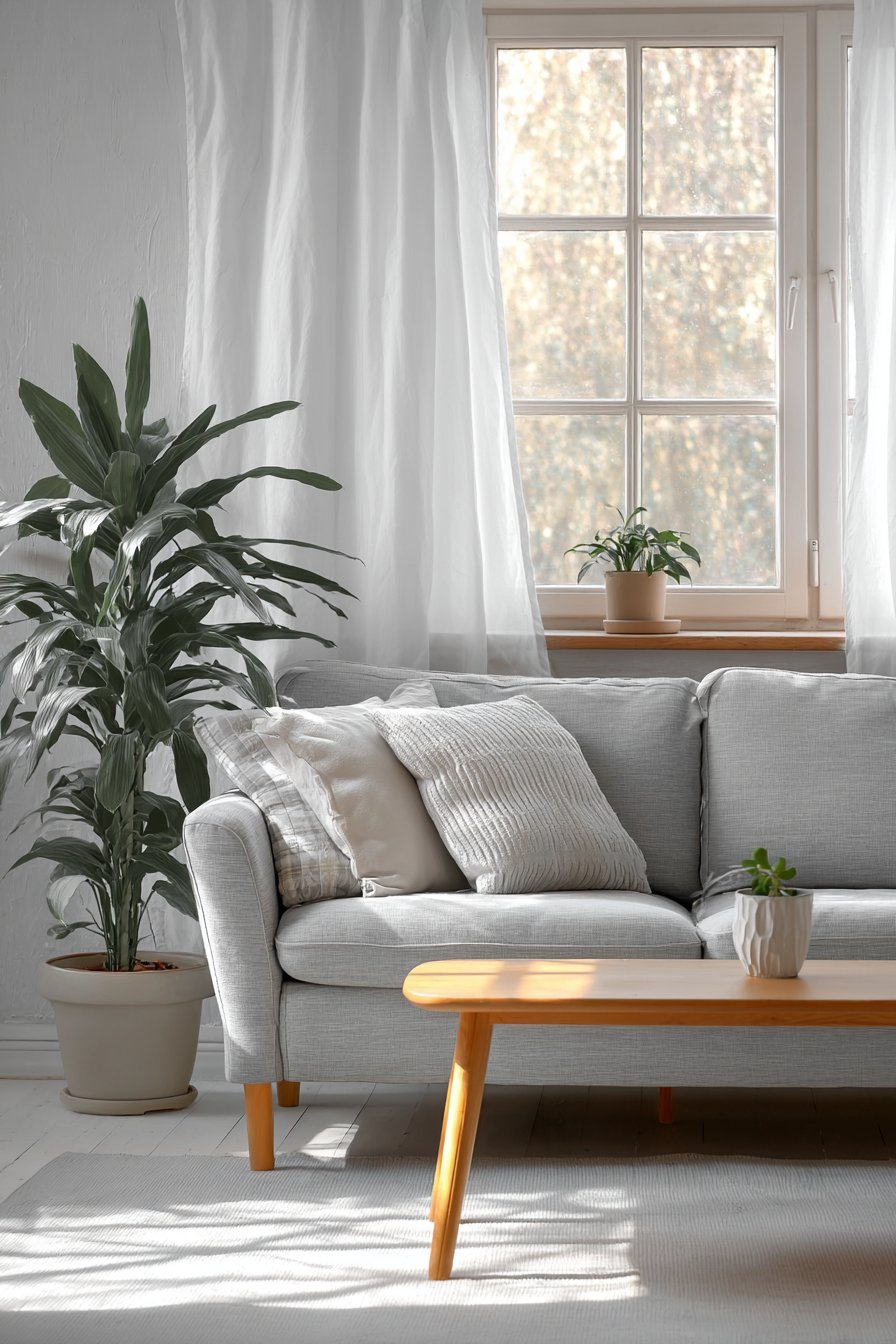
The Scandinavian design philosophy offers students a path to creating serene, functional living spaces that promote mental clarity and well-being. This Nordic-inspired living room features a compact two-seater sofa in light grey linen, its natural fiber fabric introducing subtle texture while maintaining the clean, unadorned aesthetic characteristic of Scandinavian style.
The light grey tone reflects natural light, making the room feel brighter and more spacious—a valuable effect in smaller student apartments or rooms with limited windows. The sofa’s compact scale leaves ample circulation space, ensuring the room never feels cramped despite its modest footprint.
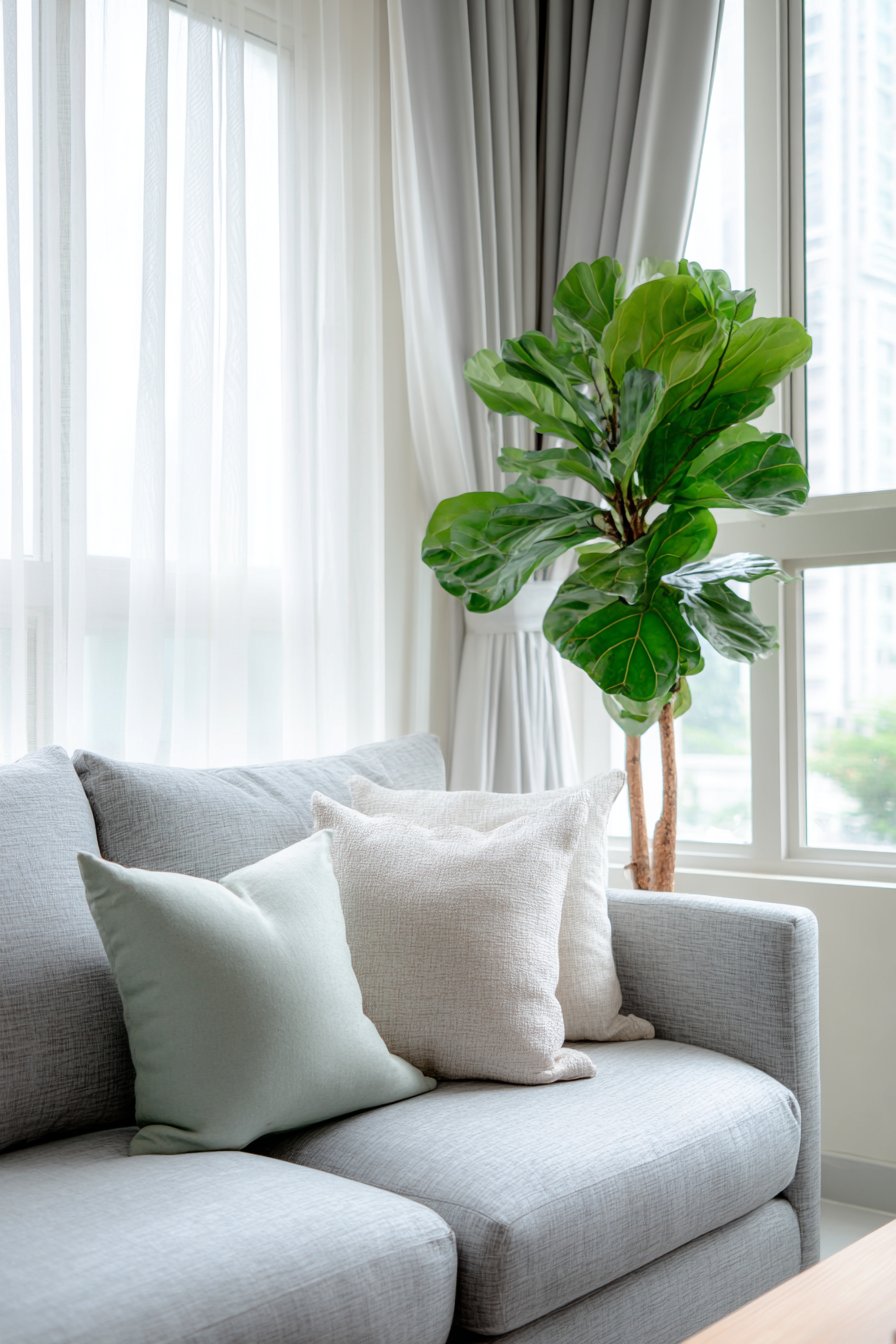
A simple birch wood coffee table exemplifies the Scandinavian appreciation for honest materials and functional beauty. The pale wood tone adds warmth without heaviness, while the straightforward construction celebrates craftsmanship over ornamentation. This piece demonstrates that furniture need not be elaborate or expensive to be beautiful—quality materials and thoughtful proportions create lasting appeal.
A wall-mounted floating desk saves precious floor space while maintaining study functionality, its minimal profile disappearing into the background when not in use. This space-saving approach aligns with Scandinavian values of efficiency and practicality.
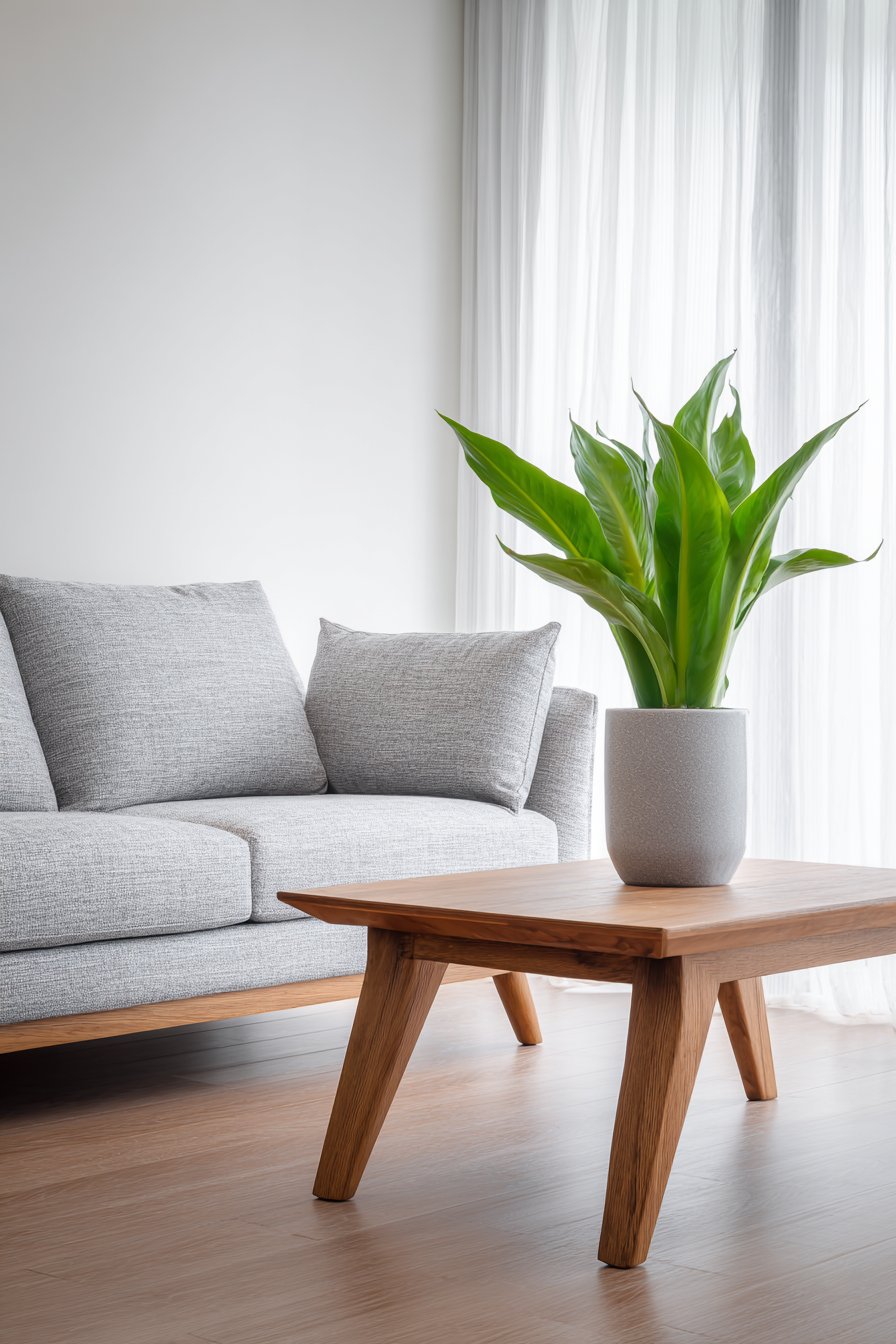
Minimal decor includes a single large potted plant that serves as a living sculpture, its organic form providing visual interest without clutter. The plant’s green foliage offers the only significant color in the otherwise neutral palette, drawing the eye and creating a focal point.
Neutral-toned textiles—perhaps a cream throw blanket or linen cushion covers—add softness and comfort without introducing pattern or visual complexity. This restrained approach to decoration creates a calming environment where the mind can rest, particularly valuable for students managing academic stress and busy schedules.
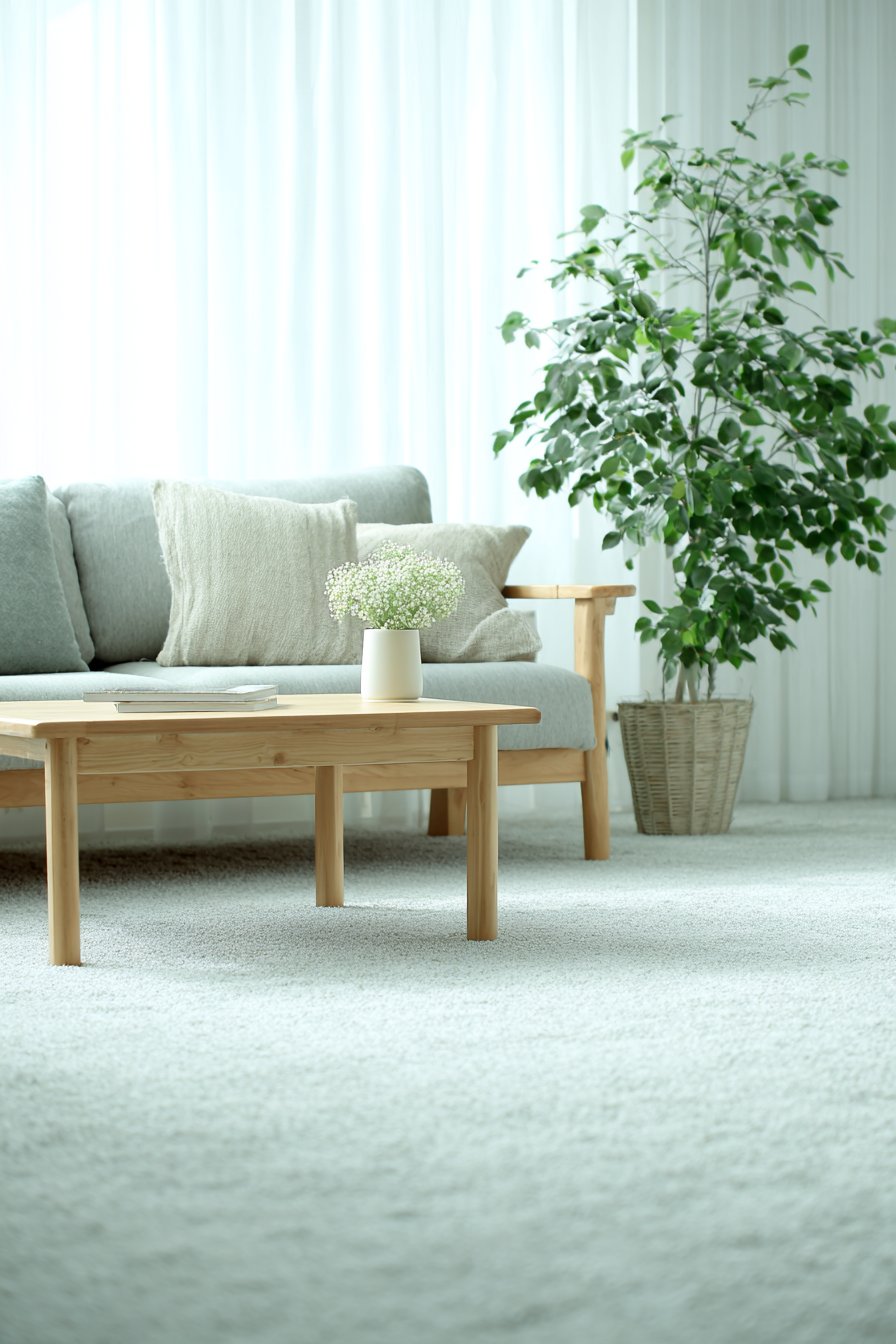
The interior design photography perspective captures the airy, uncluttered aesthetic with soft natural lighting through white curtains, emphasizing the calm, focused atmosphere ideal for student living. The attention to clean surfaces and functional simplicity creates an environment that actively supports concentration and productivity. The Scandinavian approach recognizes that our surroundings profoundly impact our mental state—cluttered, chaotic spaces generate stress and distraction, while clean, orderly environments promote peace and focus. For students seeking balance in demanding academic lives, this design philosophy offers both practical solutions and psychological benefits.
Key Design Tips:
- Embrace a neutral color palette dominated by whites, greys, and natural wood tones to create visual calm
- Select furniture made from quality natural materials like wood, linen, and wool rather than synthetic alternatives
- Limit decorative objects to a few meaningful pieces rather than filling surfaces with multiple small items
- Maximize natural light through white or light-colored curtains that filter rather than block sunlight
- Maintain clean, clutter-free surfaces by implementing storage systems that conceal everyday items when not in use
Why These Student Living Room Designs Excel
Each of these ten design approaches represents thoughtful solutions to the unique challenges facing students as they create functional, comfortable living spaces on limited budgets. The compact L-shaped configuration maximizes space efficiency, a critical consideration in small apartments or dorm rooms where every square foot matters. This layout demonstrates how strategic furniture placement can create the illusion of more space while maintaining clear circulation paths and distinct activity zones. Students living in studio apartments or shared spaces with limited square footage will find this approach particularly valuable.
The dual-purpose futon design addresses one of student housing’s most practical concerns—accommodating overnight guests without dedicating permanent space to a guest bedroom. This convertible approach means friends visiting from out of town, study partners working late into the night, or even personal use during illness have comfortable sleeping options. The modular storage solutions featured in this design speak to the organizational challenges students face as they accumulate textbooks, electronics, clothing, and personal items throughout their academic careers. The flexibility to reconfigure storage as needs change makes this system adaptable across different semesters and living situations.
The vintage and DIY aesthetic celebrates creativity and resourcefulness, qualities that define successful student living. This approach proves that limited budgets need not constrain personal style or design ambition. By embracing thrift store finds, repurposed materials, and hands-on projects, students can create distinctive spaces that reflect their personalities while developing valuable skills. The environmental sustainability of this approach deserves recognition—choosing secondhand furniture and repurposing existing materials reduces waste and environmental impact, aligning with the values many students hold regarding responsible consumption.
Minimalist designs offer psychological benefits alongside aesthetic appeal. Research consistently shows that cluttered environments increase stress levels and reduce cognitive function—particularly problematic for students managing demanding coursework and complex schedules. The minimalist approach creates mental breathing room, allowing focus to remain on academic priorities rather than dispersing attention across visual chaos. The space-saving strategies inherent in minimalism—wall-mounted televisions, folding furniture, concealed storage—make this style particularly appropriate for small student dwellings where efficient space utilization directly impacts quality of life.
The zoning strategy featured in the multi-functional design represents sophisticated spatial planning that allows single rooms to serve multiple purposes effectively. Students often lack the luxury of separate rooms for studying, entertaining, and relaxing, making the ability to create distinct zones within one space invaluable. This approach uses furniture placement, area rugs, and lighting to psychologically separate different activities, helping students mentally transition between work and leisure modes. The DIY desk solution demonstrates how creative problem-solving can yield custom furniture at a fraction of retail costs.
Collaborative living designs acknowledge the reality that many students share housing with roommates, requiring spaces that accommodate multiple personalities and schedules harmoniously. The facing sofa arrangement creates inclusive, democratic seating that avoids hierarchies and facilitates conversation. The hidden storage ottoman addresses shared belongings while the wall-mounted bike racks solve equipment storage challenges common in multi-occupant housing. This design philosophy recognizes that successful roommate relationships require physical spaces that actively support cooperation, communication, and mutual respect.
The bohemian aesthetic provides an emotionally nurturing design approach that celebrates individuality and global inspiration. For students exploring their identities, interests, and worldviews, the boho style offers permission to experiment, mix influences, and create highly personal spaces. The layered textiles, diverse patterns, and eclectic furniture combinations reflect the richness of human experience and cultural diversity. This approach accommodates budget constraints gracefully—the bohemian philosophy values authenticity and personal meaning over expensive purchases, making it accessible to students at any financial level.
Academic-focused designs serve students pursuing particularly demanding programs or those who thrive in structured, purposeful environments. The large communal table arrangement facilitates group study sessions, collaborative projects, and peer learning—increasingly important as education emphasizes teamwork and collective problem-solving. The industrial shelving and organizational systems create professional-grade workspace functionality, signaling to the mind that this environment is dedicated to serious academic work. The designated break area acknowledges that sustainable productivity requires rest, preventing burnout through built-in recovery space.
Modular and adaptable solutions address the dynamic nature of student life, where schedules, activities, and needs change daily or even hourly. Stackable poufs provide flexible seating that expands and contracts as needed, while convertible tables transform from coffee tables to desks in seconds. This adaptability proves essential for students juggling academic work, part-time jobs, social activities, and personal time—often all within the same small living space. The cable management solutions recognize that contemporary student life involves numerous electronic devices, each requiring power and connectivity. Organized, accessible technology infrastructure supports both academic success and personal entertainment.
The Scandinavian-inspired design offers perhaps the most psychologically supportive environment for students managing stress and maintaining mental health. The calming color palette, abundant natural light, and clutter-free surfaces create sanctuary-like spaces that actively reduce anxiety and promote well-being. The emphasis on quality over quantity encourages mindful consumption and reduces the acquisitiveness that can drain limited student budgets. The connection to nature through plants and natural materials satisfies biophilic needs even in urban or campus environments far from natural settings.
Across all ten designs, several common threads emerge that define successful student living room design. Budget consciousness appears consistently, with solutions ranging from DIY projects to thrift store finds to strategic investment in multi-functional pieces. Space efficiency drives many design decisions, utilizing vertical storage, wall-mounted furniture, and compact footprints that respect limited square footage. Flexibility and adaptability allow spaces to transform throughout the day, supporting various activities without requiring separate rooms. Personal expression ensures that spaces feel like homes rather than generic dormitories, supporting emotional well-being and sense of belonging.
These student living room designs succeed because they acknowledge reality—students have limited budgets, small spaces, demanding schedules, and the need for environments that support both academic achievement and personal growth. By addressing these practical concerns while maintaining attention to aesthetics and comfort, these designs demonstrate that thoughtful interior design remains accessible regardless of financial constraints or space limitations.
Conclusion
Creating a successful student living room requires balancing numerous competing demands—functionality and aesthetics, budget constraints and design aspirations, personal style and practical needs. The ten designs explored in this guide demonstrate that these competing demands need not be mutually exclusive. Through strategic planning, creative problem-solving, and thoughtful furniture selection, students can craft living spaces that support academic success while providing comfort, expressing personality, and fostering well-being.
The key takeaways from these diverse approaches include the importance of multi-functional furniture that serves several purposes simultaneously, maximizing value and minimizing space requirements. Vertical storage solutions utilize often-overlooked wall space, keeping floors clear and rooms feeling spacious. Budget-friendly strategies like DIY projects, thrift store shopping, and repurposing existing materials make stylish design accessible to all students regardless of financial resources. Adaptable layouts and modular furniture respond to the dynamic nature of student life, where needs and activities change frequently. Personal touches through accessories, plants, and meaningful objects transform generic spaces into nurturing homes that support emotional health alongside academic achievement.
As you embark on designing your own student living room, remember that the most successful spaces authentically reflect your personality, needs , and lifestyle while remaining flexible enough to evolve with you throughout your academic journey. Don’t feel pressured to implement every idea at once—student living room design is an iterative process that unfolds over time as you discover what works best for your unique situation. Start with the essentials: comfortable seating, adequate study space, and basic storage. From there, layer in personality through textiles, artwork, plants, and accessories that bring you joy and create a sense of home.
Consider your daily routines and how your living room can best support them. If you’re a morning person who studies best with natural light, prioritize window areas for your desk placement. If you frequently host study groups or social gatherings, invest in flexible seating arrangements that accommodate multiple people comfortably. If you need separation between work and relaxation, use furniture placement or area rugs to create distinct zones that help your mind transition between different modes. These personalized considerations will prove far more valuable than adhering to any prescribed design formula.
Don’t underestimate the impact of small changes and incremental improvements. Sometimes the difference between a space that feels generic and one that feels like home is as simple as adding a throw blanket in your favorite color, hanging a few framed photographs, or introducing a potted plant. These modest additions cost little but contribute significantly to emotional comfort and sense of belonging. Remember that your student living room serves as more than just a functional space—it’s the backdrop for important years of personal growth, academic achievement, late-night conversations with friends, and the countless small moments that collectively define your college experience.
Embrace the experimental nature of student living. This is the perfect time to try design ideas you’ve been curious about, test different furniture arrangements, and discover your authentic aesthetic preferences without long-term commitment. Unlike permanent homeownership, student housing offers freedom to take design risks, make mistakes, and learn from them. That bold paint color or unconventional furniture arrangement? Try it! The worst-case scenario involves a small investment of time and minimal money to course-correct, while the best-case scenario might reveal a style direction that resonates deeply with you.
Sustainability deserves consideration as you furnish your student living room. Choosing quality secondhand furniture over cheap new pieces often provides better value while reducing environmental impact. When you do purchase new items, select durable pieces that will survive moves between apartments and potentially transition with you beyond your student years. Consider the lifecycle of furniture and accessories—can they be repurposed, donated, or resold when your needs change? This mindful approach benefits both your budget and the planet while developing consumption habits that serve you well throughout life.
Finally, remember that your living space significantly influences your mental health, productivity, and overall quality of life during your academic years. Investing time and thought into creating a functional, comfortable, personalized living room isn’t frivolous or superficial—it’s an act of self-care that supports your success and well-being. A well-designed space reduces stress, facilitates focus, encourages healthy habits, and provides the emotional foundation necessary for thriving in demanding academic environments.
Whether you gravitate toward the clean simplicity of Scandinavian design, the creative expression of bohemian style, the focused functionality of academic-optimized layouts, or an eclectic combination that defies categorization, trust your instincts and create a space that feels authentically yours. Your student living room should be a place where you feel comfortable, productive, and genuinely at home—a launching pad for academic achievement and personal growth during these transformative years.
The designs presented in this guide offer starting points and inspiration rather than rigid templates. Mix elements from different approaches, adapt ideas to fit your specific circumstances, and never hesitate to break design “rules” in service of functionality and personal preference. The most successful student living rooms emerge from honest assessment of individual needs, creative problem-solving, and willingness to experiment. With thoughtful planning, resourcefulness, and attention to both practical and emotional needs, you can create a living space that not only meets the demands of student life but actively enhances your college experience. Your living room awaits transformation—embrace the challenge and enjoy the creative process of making it truly your own.
