


The color we choose for our living spaces profoundly impacts our mood, productivity, and overall sense of well-being. In the realm of interior design, mint green has emerged as a sophisticated yet soothing choice that bridges the gap between vibrant energy and calming tranquility. This versatile hue, reminiscent of fresh spring mornings and cool ocean breezes, brings a breath of fresh air into any living room, creating an environment that feels both rejuvenating and welcoming. Whether you’re drawn to contemporary minimalism, rustic farmhouse charm, or eclectic bohemian flair, mint green adapts beautifully to various design philosophies, making it an increasingly popular choice among homeowners and interior designers alike.
The beauty of a mint green living room lies in its remarkable versatility and timeless appeal. Unlike bolder color choices that may feel overwhelming or quickly dated, mint green offers a subtle yet impactful presence that complements a wide range of materials, textures, and accompanying colors. From soft, barely-there whispers of green to more saturated, statement-making shades, this color family provides endless possibilities for creating spaces that reflect your personal style while maintaining a sense of serenity and balance. The psychological benefits are equally compelling—mint green is known to reduce stress, promote clarity of thought, and create an atmosphere conducive to both relaxation and social interaction.
In this comprehensive guide, we’ll explore ten distinctive approaches to incorporating mint green into your living room design. Each concept showcases unique ways to work with this refreshing color, from bold accent walls and statement furniture pieces to subtle accessories and architectural details. Whether you’re planning a complete room makeover or simply looking to refresh your existing space, these carefully curated design ideas will inspire you to embrace the tranquil beauty of mint green while creating a living room that perfectly balances style, functionality, and comfort.
1. Luxurious Mint Velvet Centerpiece Living Room
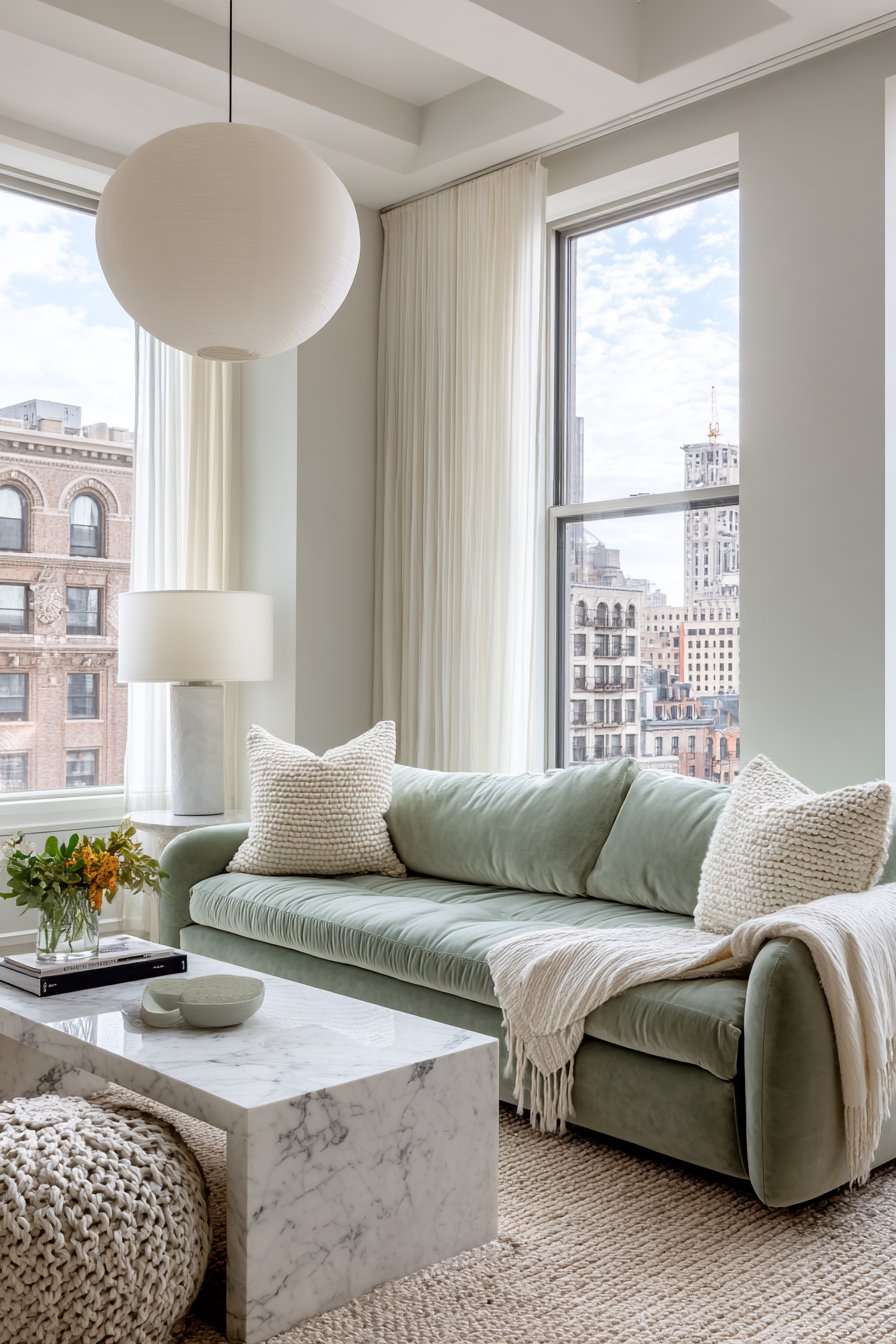
Picture a living room where luxury meets tranquility, anchored by a sumptuous plush velvet sofa in the most delicate shade of mint green. This centerpiece isn’t merely furniture—it’s a statement of refined taste and an invitation to sink into comfort. The velvet’s lustrous pile catches and reflects light throughout the day, creating a dynamic visual experience that shifts from soft morning glow to rich afternoon depth. Paired with a pristine white marble coffee table, the combination speaks to a sophisticated palette where cool tones harmonize beautifully, creating a space that feels both opulent and refreshingly serene.
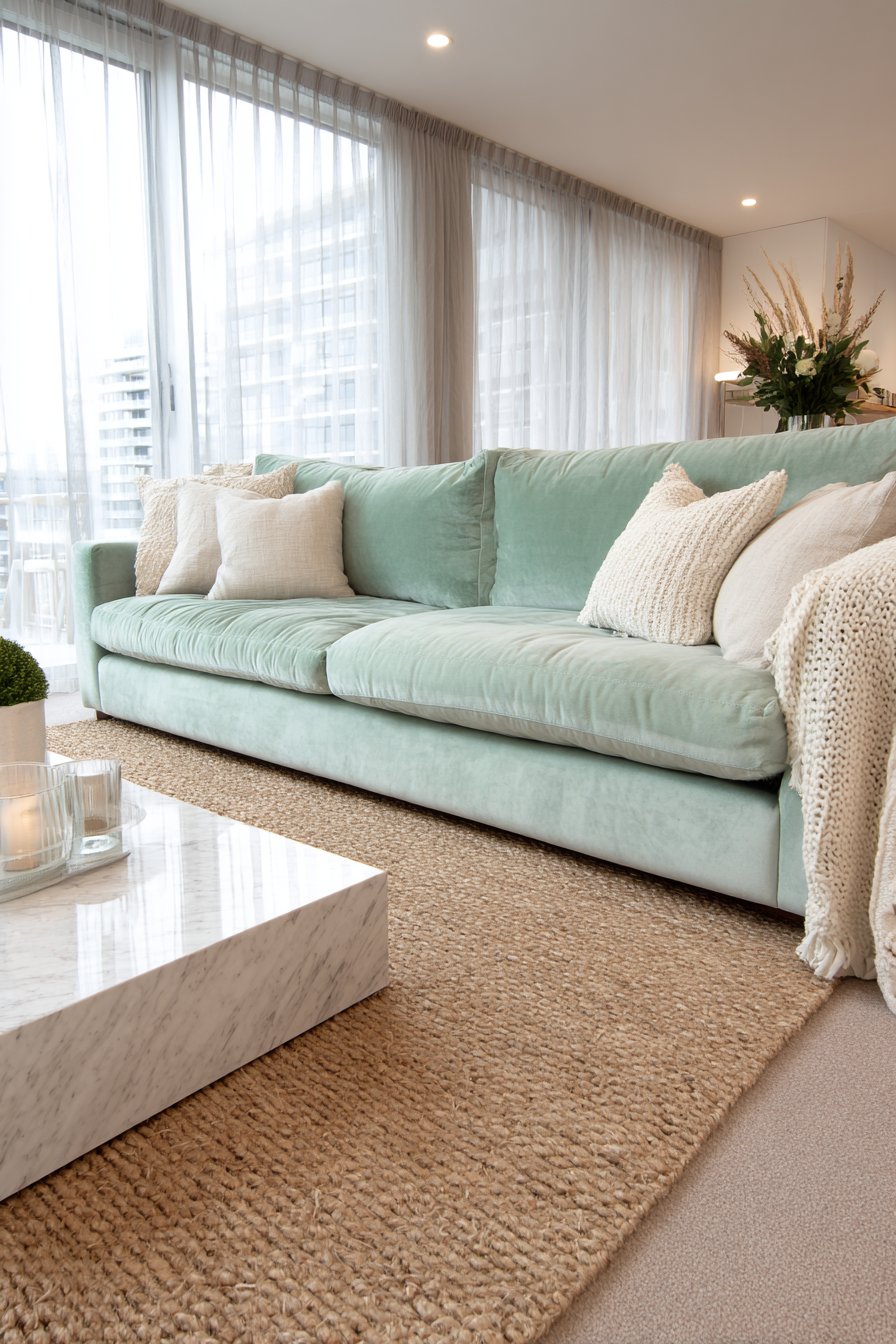
The natural jute area rug beneath introduces an essential textural contrast, grounding the more polished elements with organic earthiness. This thoughtful layering prevents the room from feeling too formal or untouchable, instead creating a welcoming balance between elegance and everyday livability.
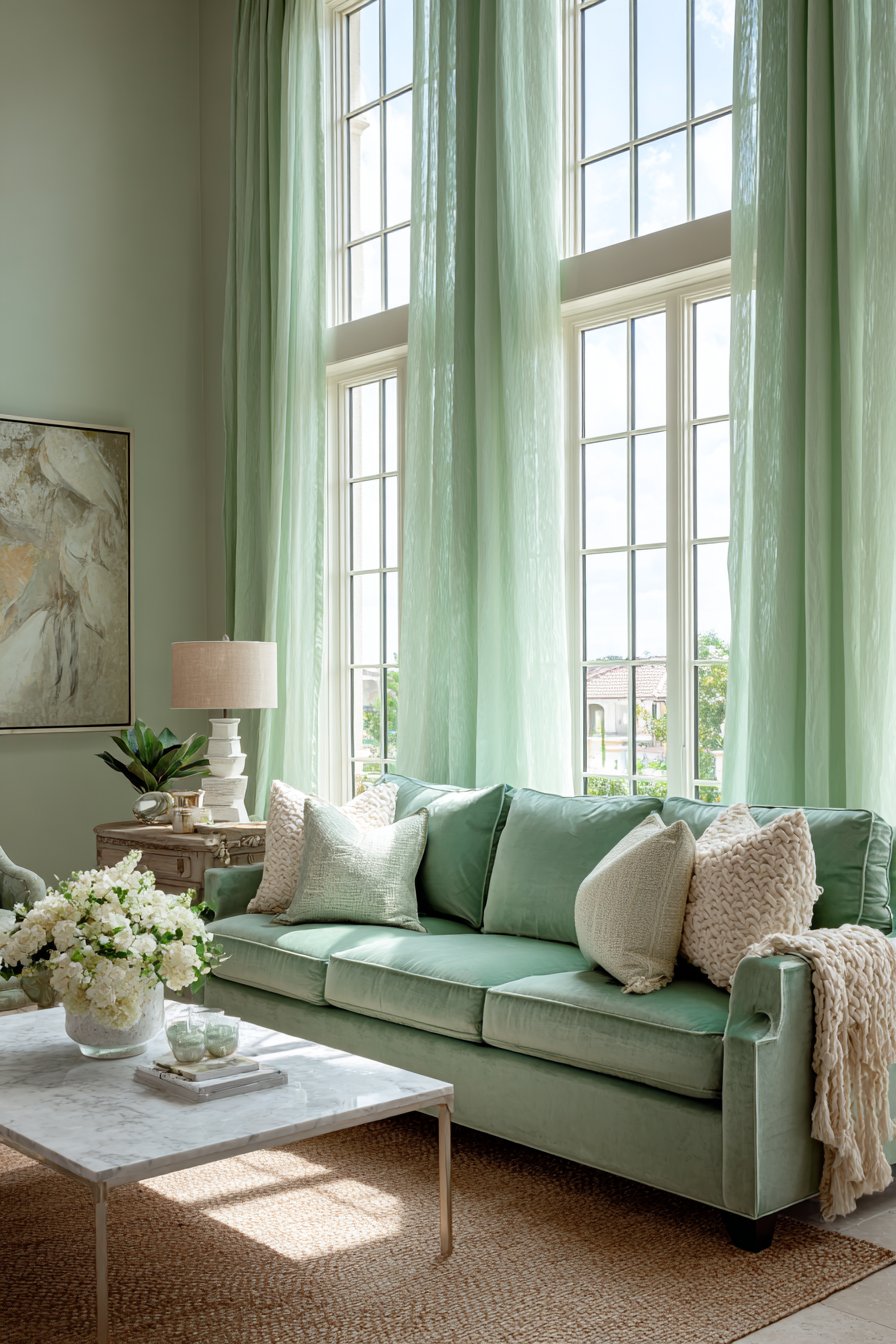
Large windows dressed with flowing sheer curtains become architectural features in their own right, filtering natural daylight into a soft, diffused glow that enhances the fresh mint green tones without overwhelming them. The sheers maintain privacy while ensuring the room remains bright and airy throughout the day, a crucial consideration for spaces centered around such light-sensitive colors.
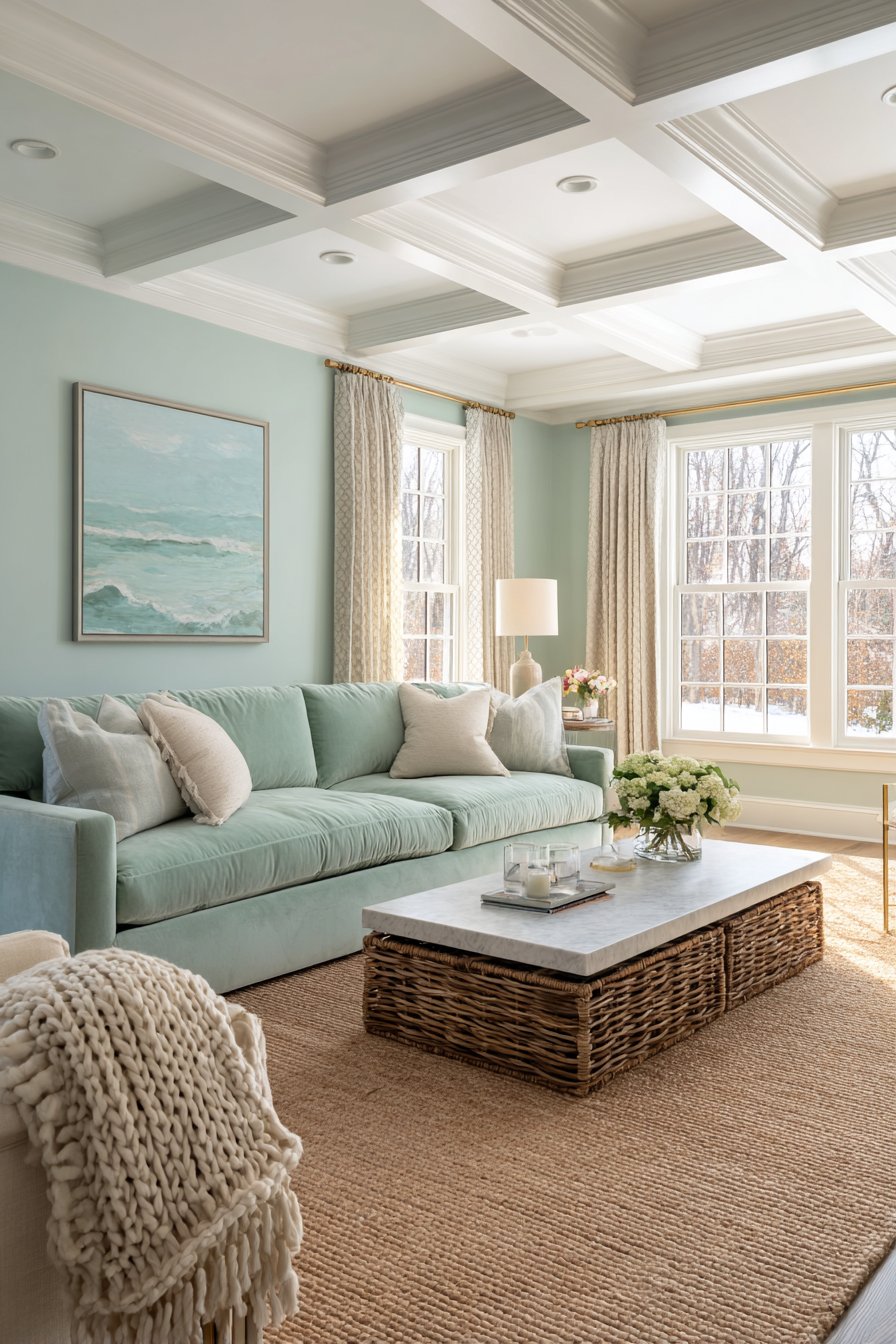
Cream-colored accent pillows and a knitted throw blanket add layers of warmth and texture that prevent the cool color palette from feeling distant or cold. The knitted throw, with its handcrafted appearance and tactile appeal, invites interaction and use, while the cream pillows create visual breathing room that allows the mint green to truly shine. This careful curation of accessories demonstrates how restraint in color choice can actually amplify impact—by limiting the palette to mint green, white, cream, and natural jute, each element gains prominence and purpose. The overall effect is a living room that feels like a sophisticated retreat, where every design decision serves both aesthetic beauty and functional comfort.
Key Design Tips:
- Select a high-quality velvet with dense pile for durability and visual richness that will maintain its luxurious appearance over time
- Position the mint green sofa to receive natural light, which will enhance the color’s subtle variations and depth throughout the day
- Layer textures intentionally, combining smooth marble, plush velvet, rough jute, and soft knits to create sensory interest
- Keep accompanying colors neutral and limited to allow the mint green centerpiece to command attention without competition
- Invest in quality sheer curtains that filter rather than block light, maintaining the fresh, airy atmosphere essential to this design
2. Contemporary Mint Accent Wall Design
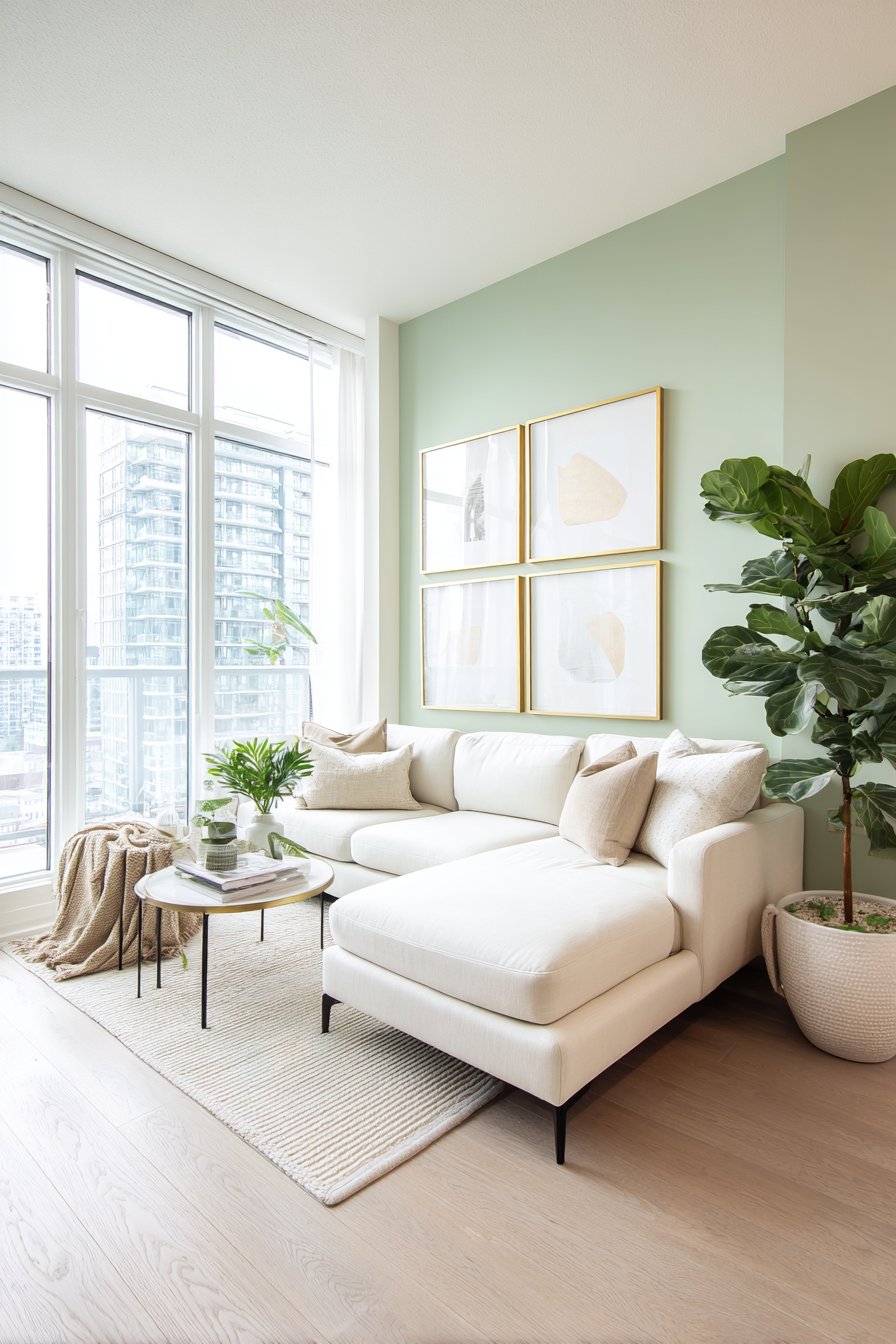
A contemporary living room gains instant personality and visual interest through a carefully executed mint green accent wall that transforms the entire spatial dynamic. This approach demonstrates the power of strategic color placement—by painting a single wall in soft mint green while maintaining neutral tones throughout the rest of the space, you create a focal point that draws the eye without overwhelming the senses.
The accent wall serves as both backdrop and statement piece, providing visual depth and dimension that a monochromatic room simply cannot achieve. Complemented by a neutral beige sectional sofa that offers generous seating and casual elegance, the room balances contemporary styling with comfortable, livable functionality.
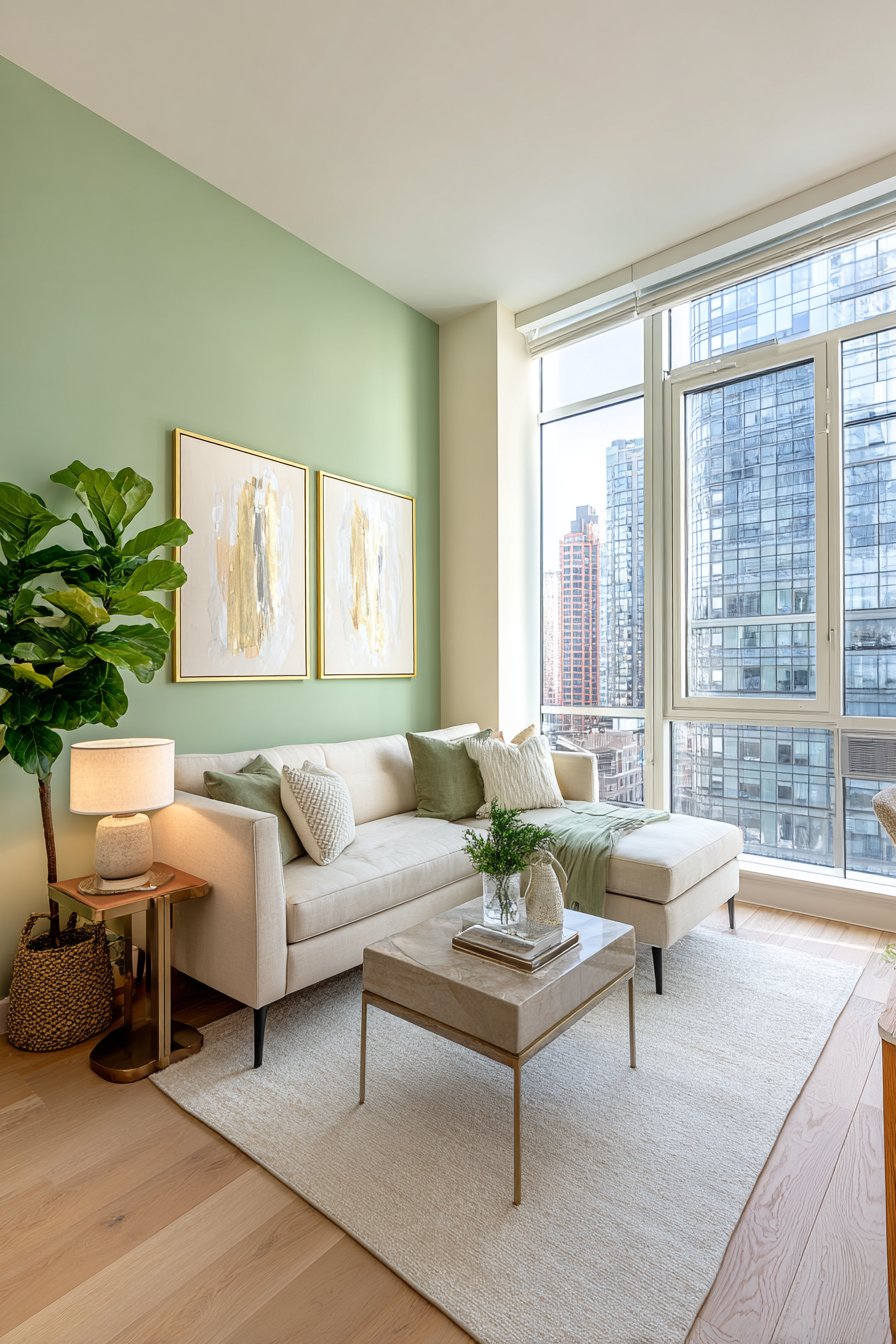
Light oak hardwood flooring with visible grain texture introduces natural beauty and warmth that grounds the cooler mint green tones. The wood’s organic patterns and honey-colored hues create a subtle but essential visual warmth that prevents the space from feeling too sterile or modern.
This interplay between cool and warm tones is fundamental to successful contemporary design—it’s the tension and harmony between these opposing qualities that creates rooms with genuine character and appeal. Gold-framed abstract artwork hanging above the sofa adds a layer of sophistication and personal expression, while the metallic gold finish introduces subtle glamour that elevates the entire color scheme.
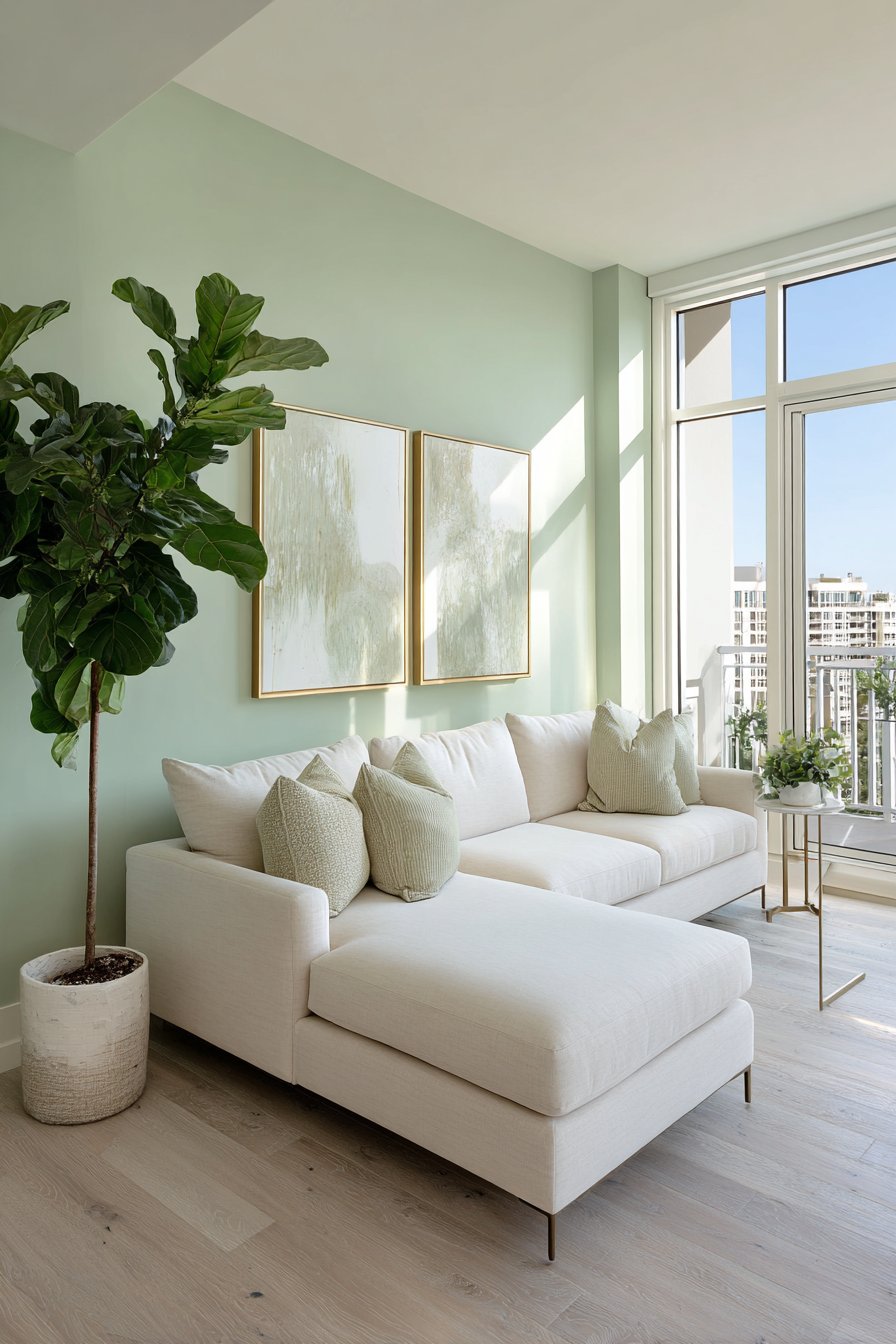
Potted fiddle leaf fig plants serve multiple design purposes in this space, adding vertical interest, organic shapes, and living green elements that complement the mint wall while providing contrast through their darker, richer green tones. These large-scale plants have become iconic in contemporary interior design for good reason—their dramatic leaves and sculptural forms create instant visual impact while improving air quality and connecting indoor spaces to nature.
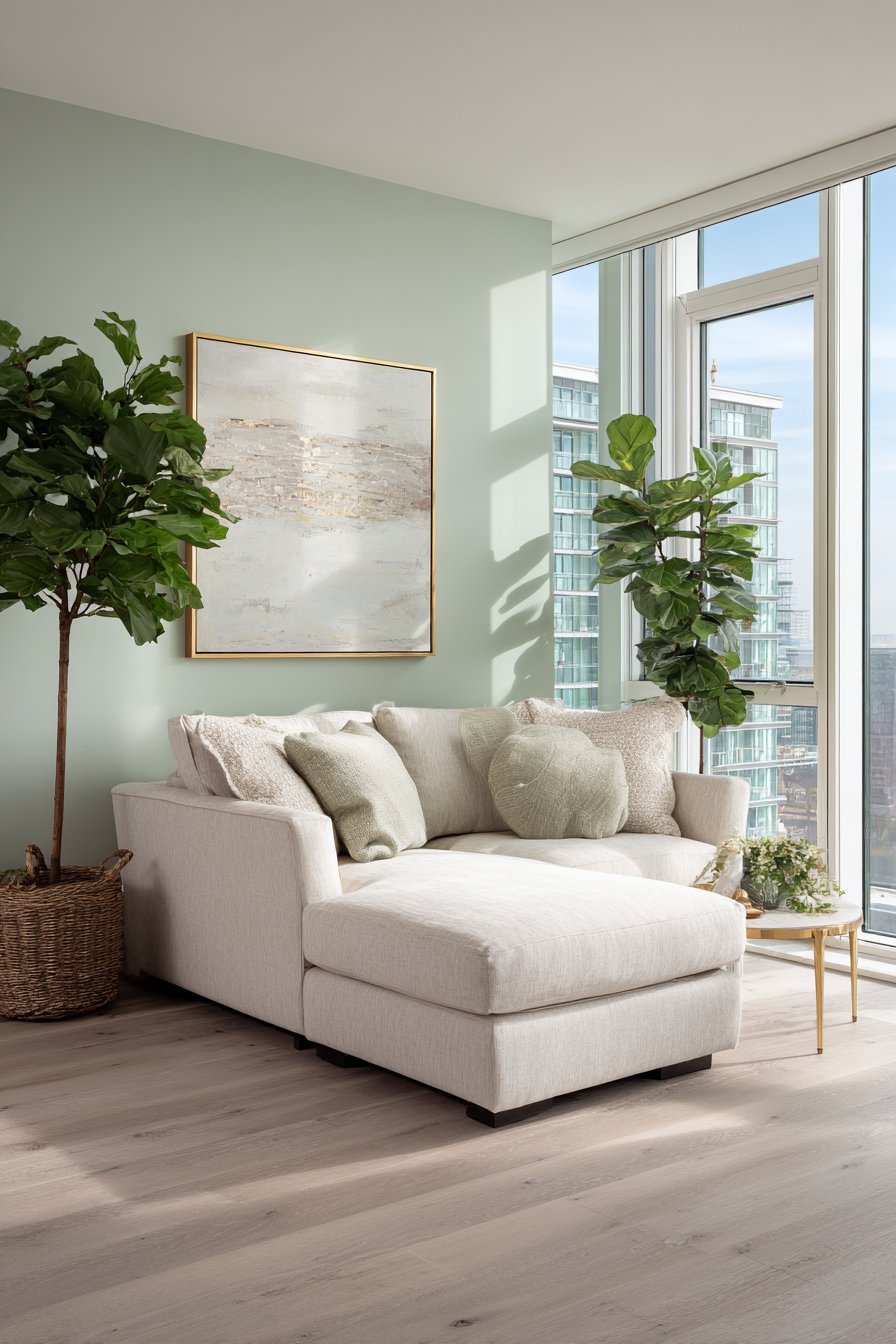
Floor-to-ceiling windows maximize natural light penetration, creating gentle highlights on the mint green wall that shift throughout the day, ensuring the space never feels static or one-dimensional. The abundant natural light also ensures the mint green reads true to its intended shade rather than appearing muddy or grey, which can occur in poorly lit spaces.
Key Design Tips:
- Choose the longest uninterrupted wall in your living room for the mint accent wall to maximize its impact and create clear visual hierarchy
- Test multiple mint green paint samples in different lighting conditions before committing, as this color can shift dramatically from morning to evening
- Select a beige or neutral sofa with substantial scale to balance the visual weight of the colored accent wall
- Incorporate metallic accents through artwork frames, light fixtures, or decorative objects to add dimension and contemporary sophistication
- Use large-scale plants strategically to bridge the connection between the mint green wall and the rest of your natural color palette
- Ensure your oak flooring has a clear protective finish that will reflect light and enhance the room’s overall brightness
3. Scandinavian-Inspired Mint Serenity
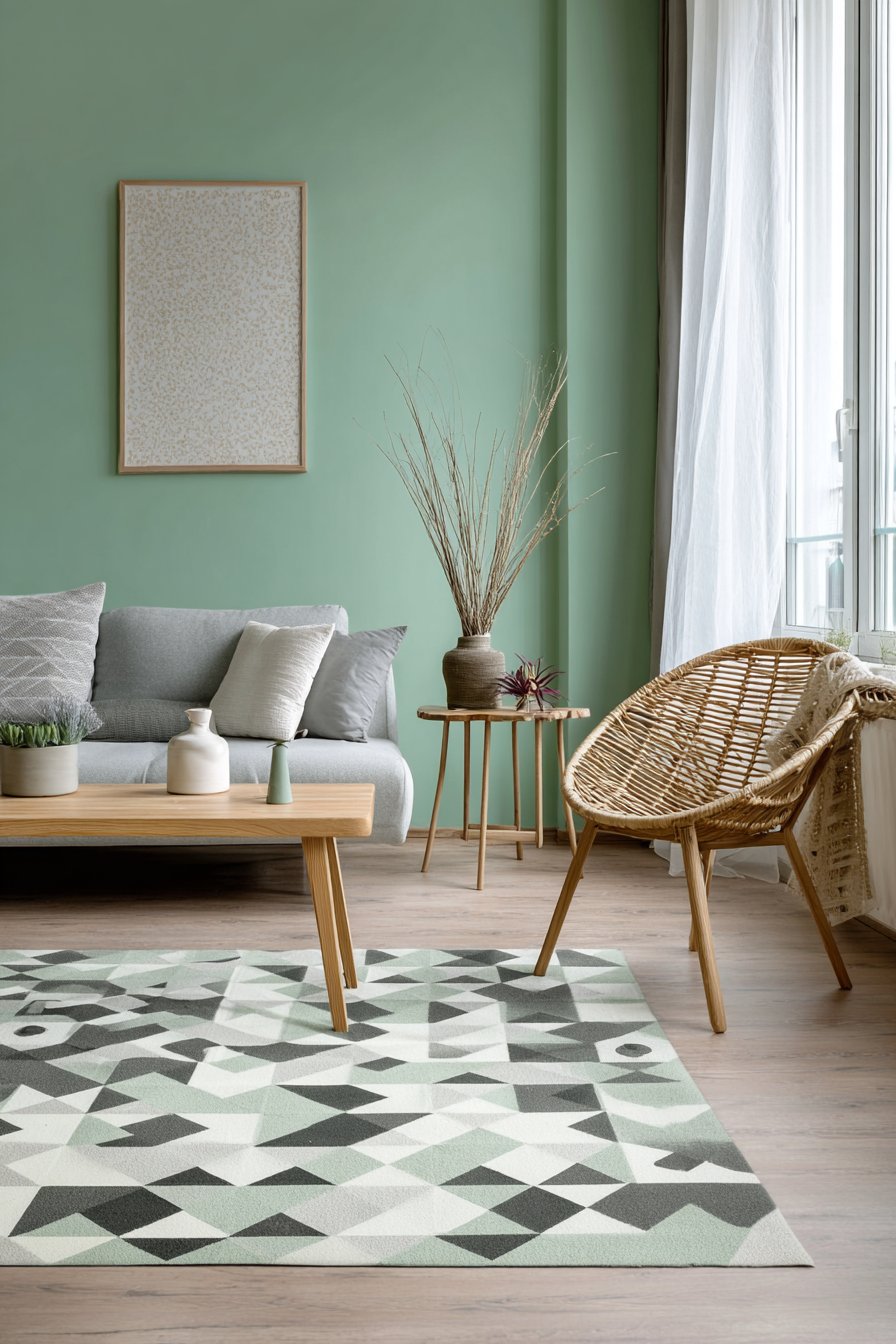
The Scandinavian design philosophy of creating beauty through simplicity finds perfect expression in a mint green living room where every element serves a purpose and nothing feels excessive or unnecessary. Mint green painted walls establish the foundation for this serene space, providing a gentle color envelope that feels both refreshing and calming.
Unlike accent wall approaches, this full-room color treatment creates an immersive environment that truly embodies the peaceful qualities of mint green. The light grey linen sofa introduces soft neutrality and natural texture, its relaxed silhouette and honest materiality exemplifying the Scandinavian commitment to comfort without ostentation.
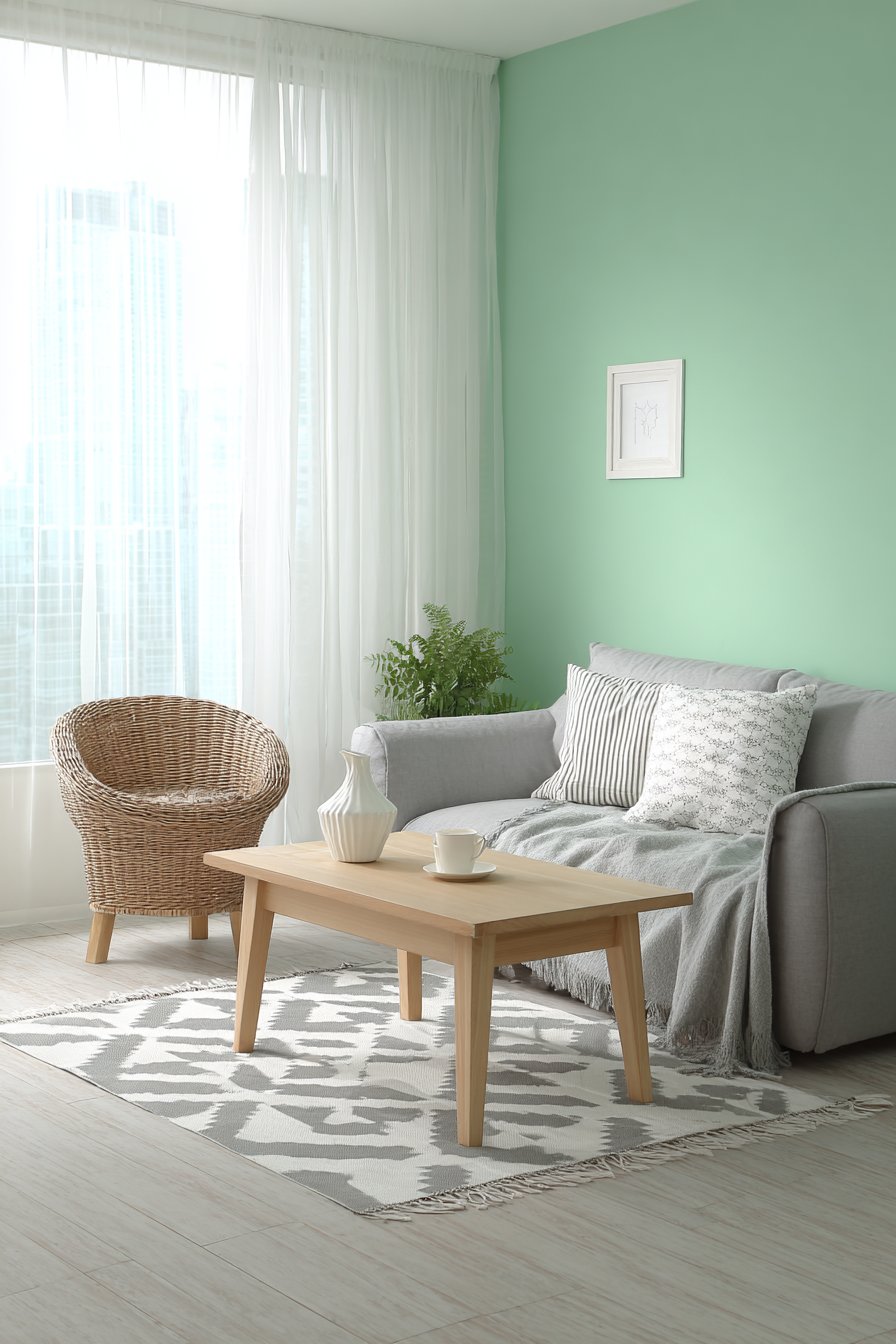
A white oak coffee table anchors the seating area with clean lines and pale wood tones that enhance rather than compete with the room’s minimalist aesthetic. White oak’s subtle grain patterns and light color make it ideal for Scandinavian interiors, providing visual interest through natural variation rather than applied decoration.
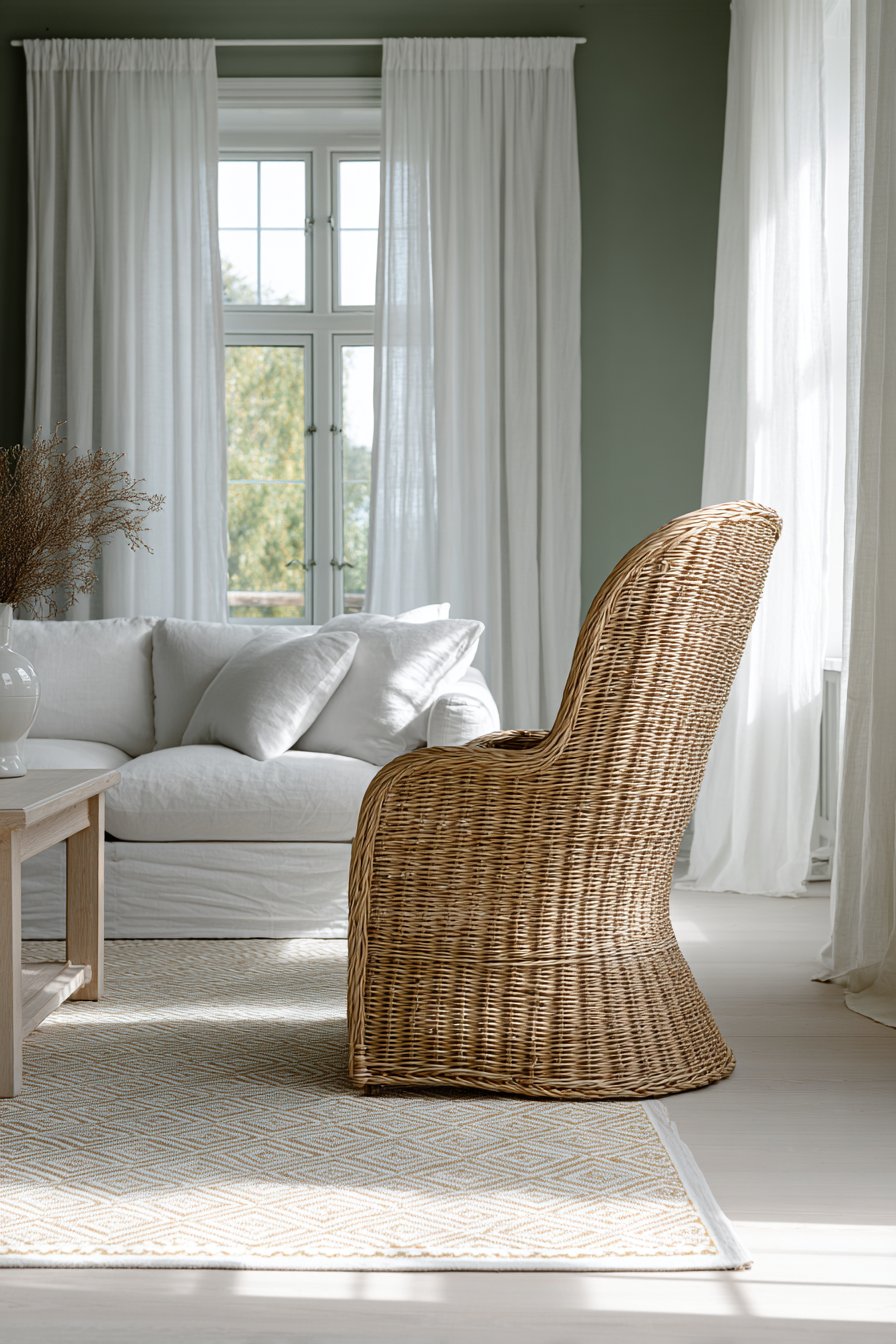
Near the window, a woven rattan accent chair adds organic texture and creates a dedicated spot for reading or contemplation, its natural material and handcrafted quality aligning perfectly with Scandinavian values of sustainability and craftsmanship. White sheer curtains filter soft daylight, creating the diffused, even illumination that is characteristic of Nordic design and essential for maintaining the room’s tranquil atmosphere.
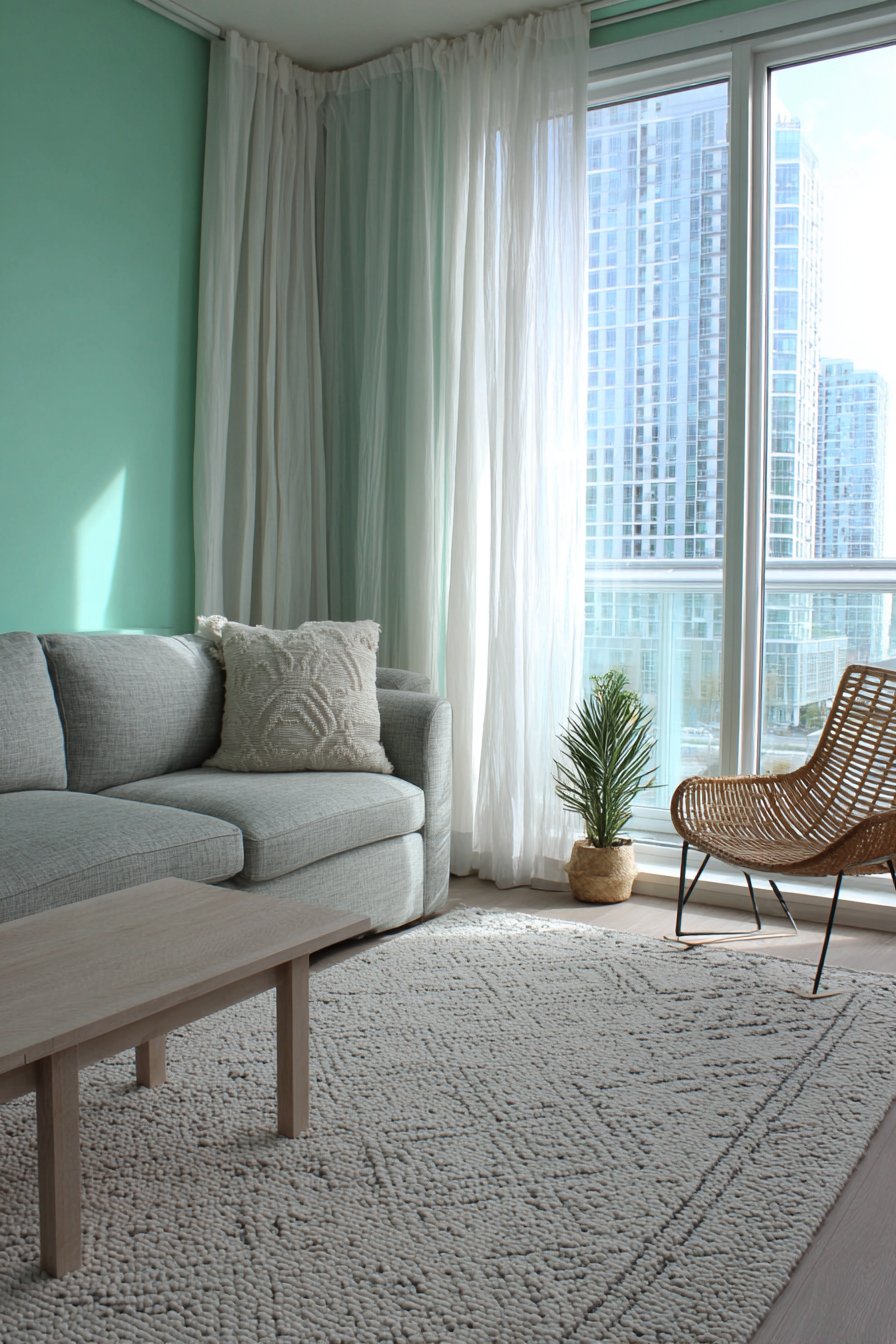
A geometric wool rug in cream and grey tones anchors the seating area while introducing pattern in a restrained, thoughtful manner. Scandinavian design embraces pattern when it’s geometric, purposeful, and limited in color—this rug demonstrates that principle perfectly, adding visual interest without disrupting the room’s essential calmness.
The interplay of textures throughout the space—smooth painted walls, nubby linen, grainy wood, woven rattan, and soft wool—creates sensory richness that prevents minimalism from feeling stark or cold. This attention to material quality and tactile experience is perhaps the most important lesson from Scandinavian design: simplicity in form doesn’t mean simplicity in experience.
Key Design Tips:
- Paint all walls in mint green for an immersive color experience rather than limiting it to one accent wall in Scandinavian-inspired spaces
- Choose furniture with clean lines and visible natural materials like linen, wool, and light-colored woods
- Embrace negative space and resist the urge to fill every corner—breathing room is essential to Scandinavian aesthetics
- Select a geometric rug with a limited color palette that coordinates with your walls and furnishings without introducing visual chaos
- Prioritize natural light and use sheer window treatments that filter rather than block daylight
- Limit decorative accessories to a few carefully chosen pieces that serve functional purposes or hold personal meaning
- Maintain a cohesive color story with whites, greys, natural wood tones, and mint green as your primary palette
4. Mint Green Built-In Shelving Showcase
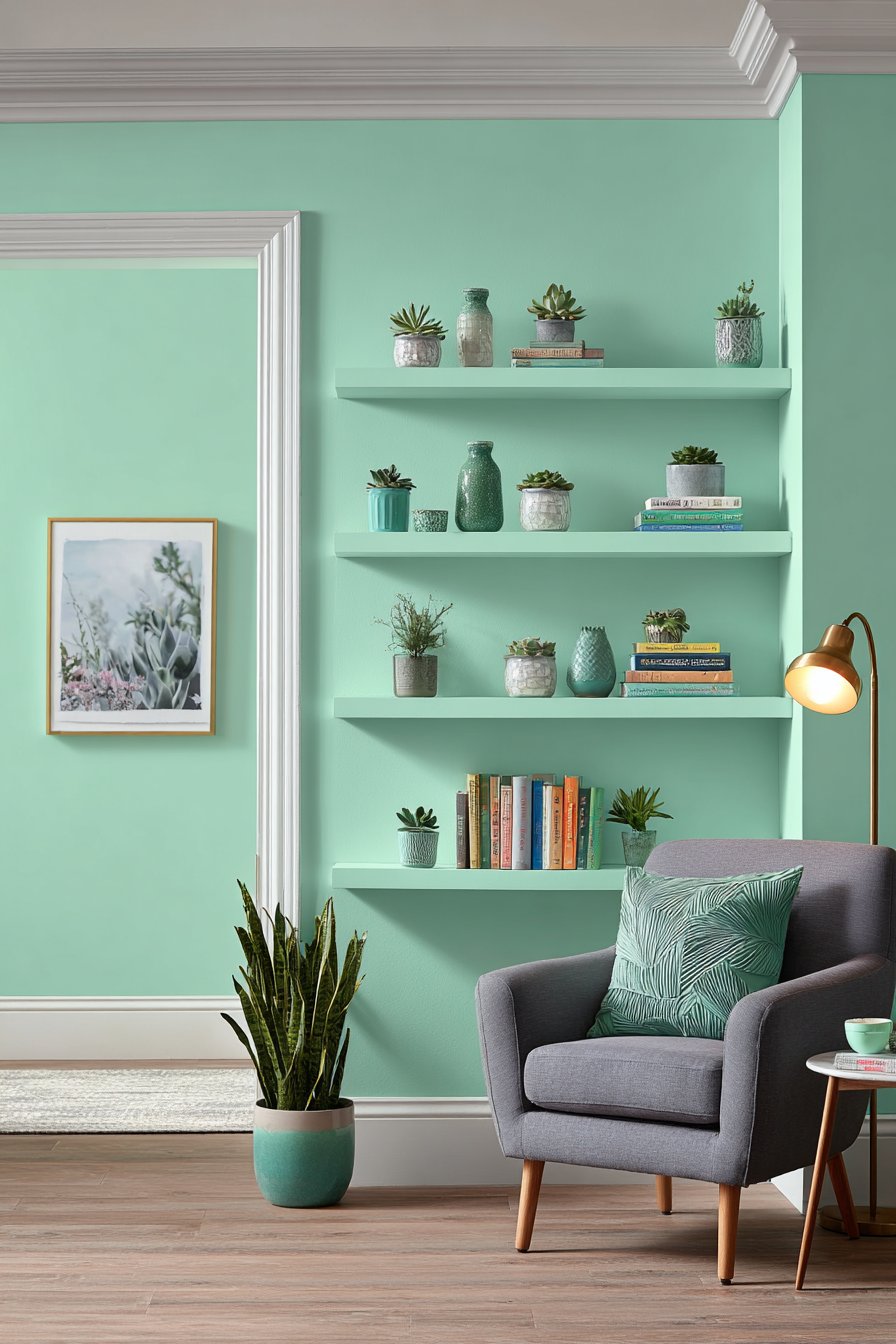
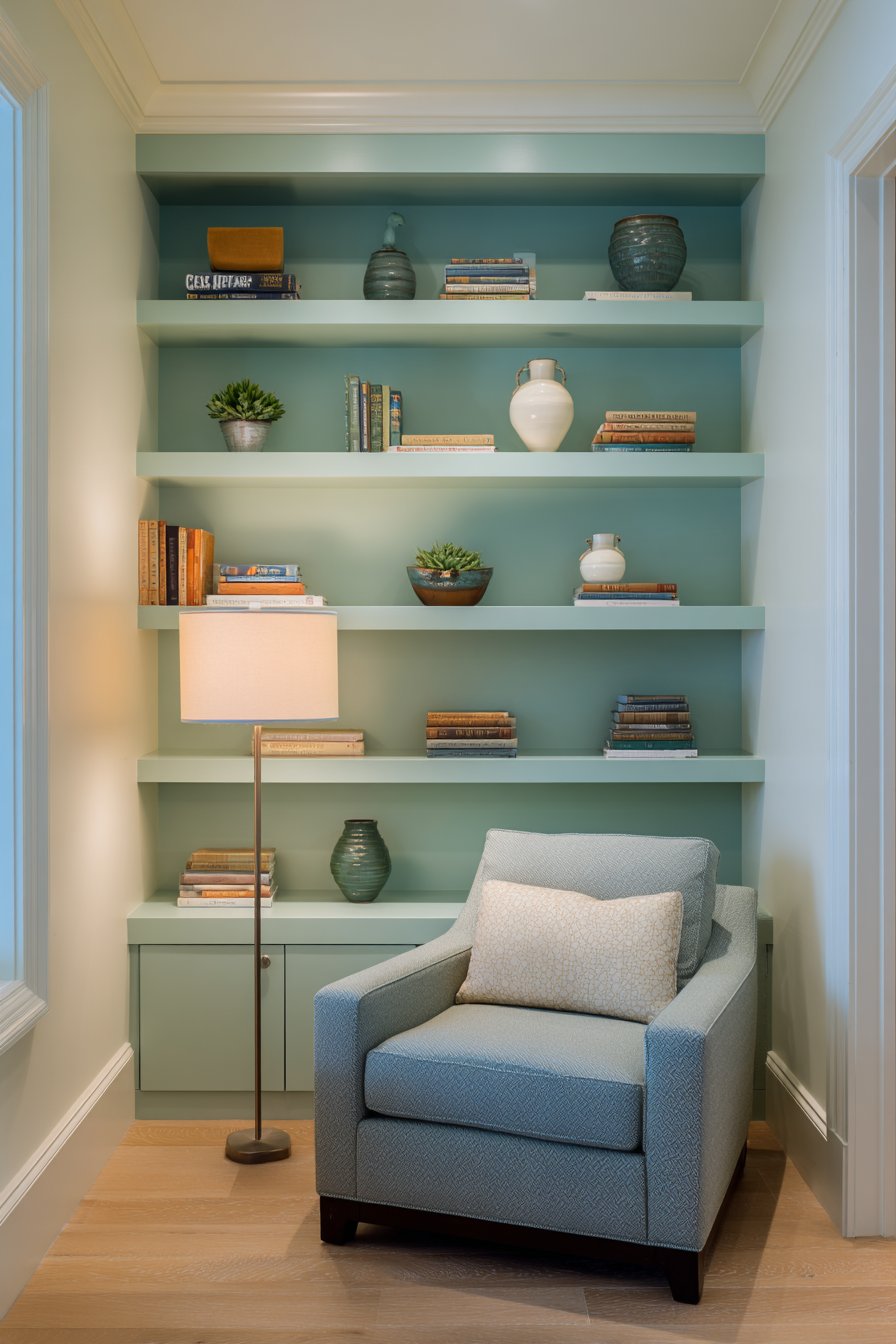
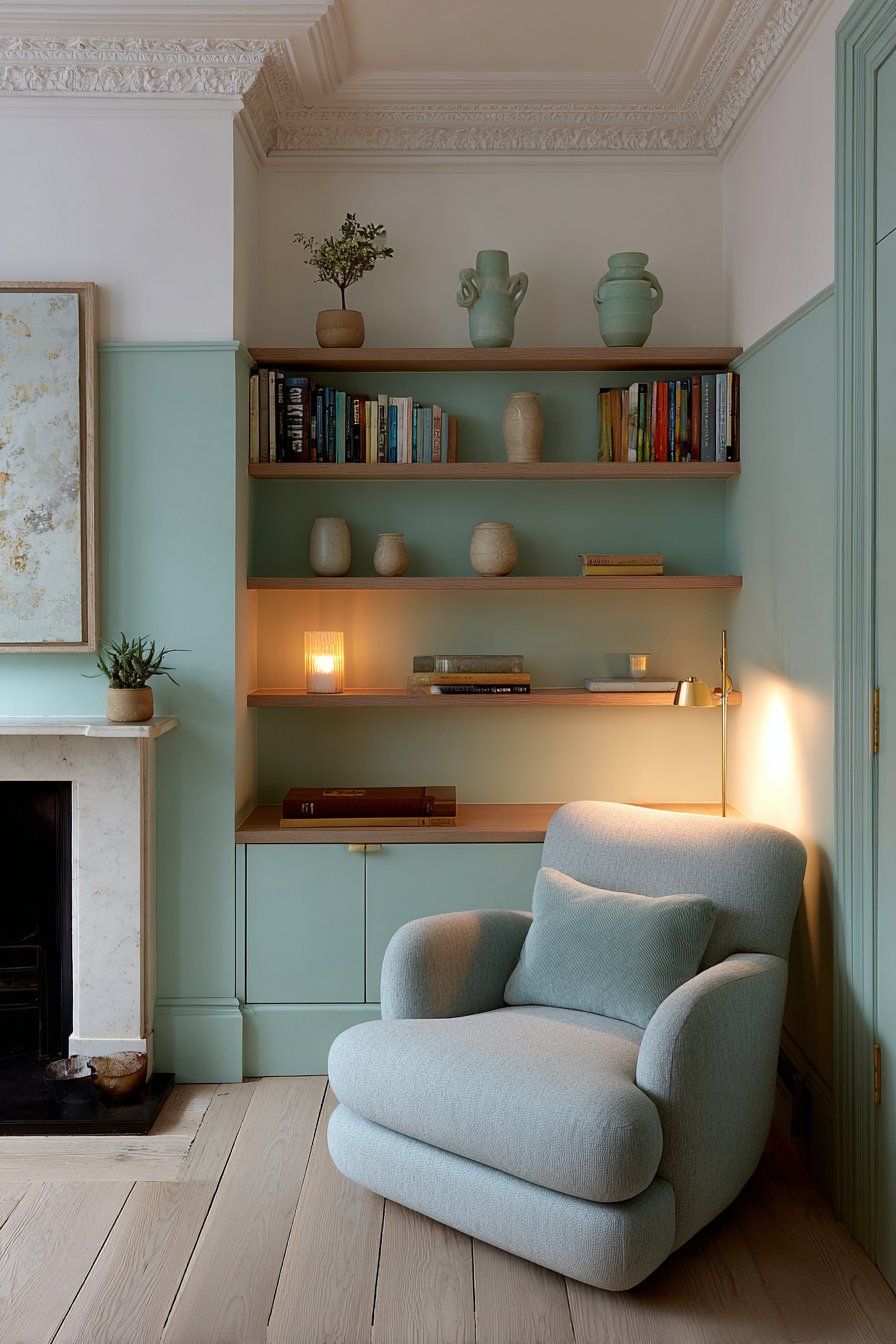
Built-in floating shelves painted in mint green transform ordinary storage into an architectural feature that combines functionality with visual appeal. This design approach demonstrates how color can activate utilitarian elements, turning necessary storage solutions into decorative focal points that enhance rather than detract from your living room’s overall aesthetic.
The shelves display curated books, ceramic vases, and small potted succulents in an artful arrangement that balances negative space with carefully chosen objects. This curated approach to styling reflects a more sophisticated understanding of display—it’s not about filling every inch of shelf space, but rather creating visual rhythm through thoughtful placement and meaningful selection.
The surrounding walls feature a lighter shade of mint, creating subtle tonal variation that adds depth and prevents the space from feeling flat or monotonous. This layered color approach—using different values of the same hue—is a professional design technique that creates sophistication through nuance rather than contrast.
White crown molding detail provides crisp definition where walls meet ceiling, introducing traditional architectural character that grounds the fresher, more contemporary mint green palette. This marriage of classic architectural detail with modern color choices creates timeless appeal that won’t feel dated as trends evolve.
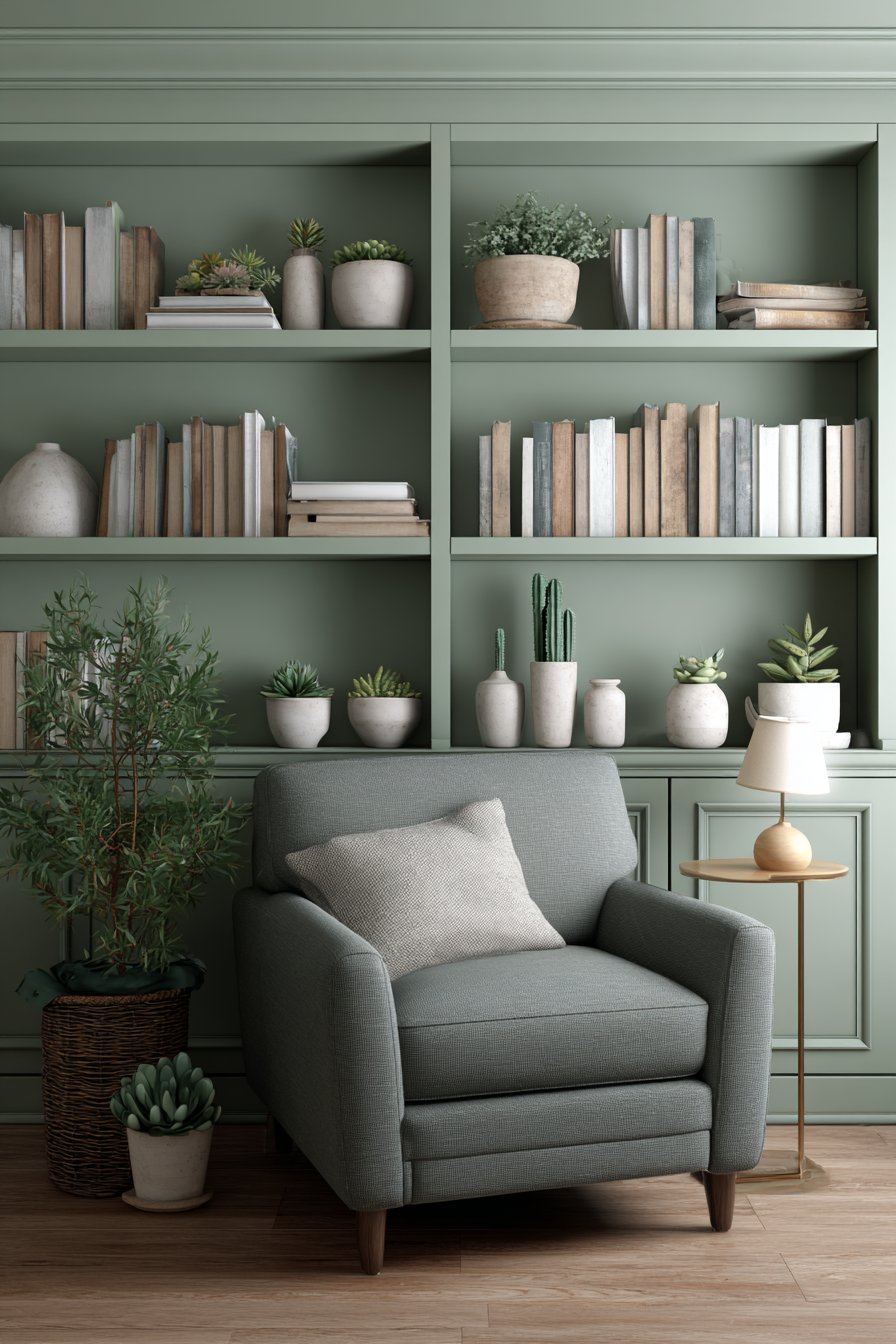
A comfortable grey upholstered armchair positioned below the shelving creates a dedicated reading zone or conversation spot, its neutral tone allowing the mint green shelving to remain the star of the composition. A floor lamp positioned beside the chair provides warm ambient lighting for evening reading or intimate conversations, its glow creating inviting pools of light that make the space feel cozy and inhabited. The natural wood flooring visible throughout adds warmth and organic beauty that balances the cooler mint tones, demonstrating once again how essential the interplay between warm and cool elements is in creating spaces that feel both interesting and comfortable.
Key Design Tips:
- Paint built-in shelving in your mint green while keeping surrounding walls a lighter shade of the same color to create sophisticated tonal layering
- Style shelves with the rule of thirds in mind, leaving approximately one-third of the space empty to prevent visual clutter
- Group objects in odd numbers (three or five items) for more dynamic, natural-looking arrangements
- Vary the height, texture, and scale of displayed objects to create visual interest and rhythm across the shelving
- Incorporate living plants like succulents that require minimal maintenance but provide organic beauty and air purification
- Position a comfortable seating piece near the shelving to create a functional zone for reading or enjoying the curated display
- Install adjustable shelving if possible, allowing you to modify the configuration as your storage and display needs evolve
- Use the shelving to display a mix of beautiful and functional items rather than purely decorative objects
5. Intimate Mint Velvet Reading Corner
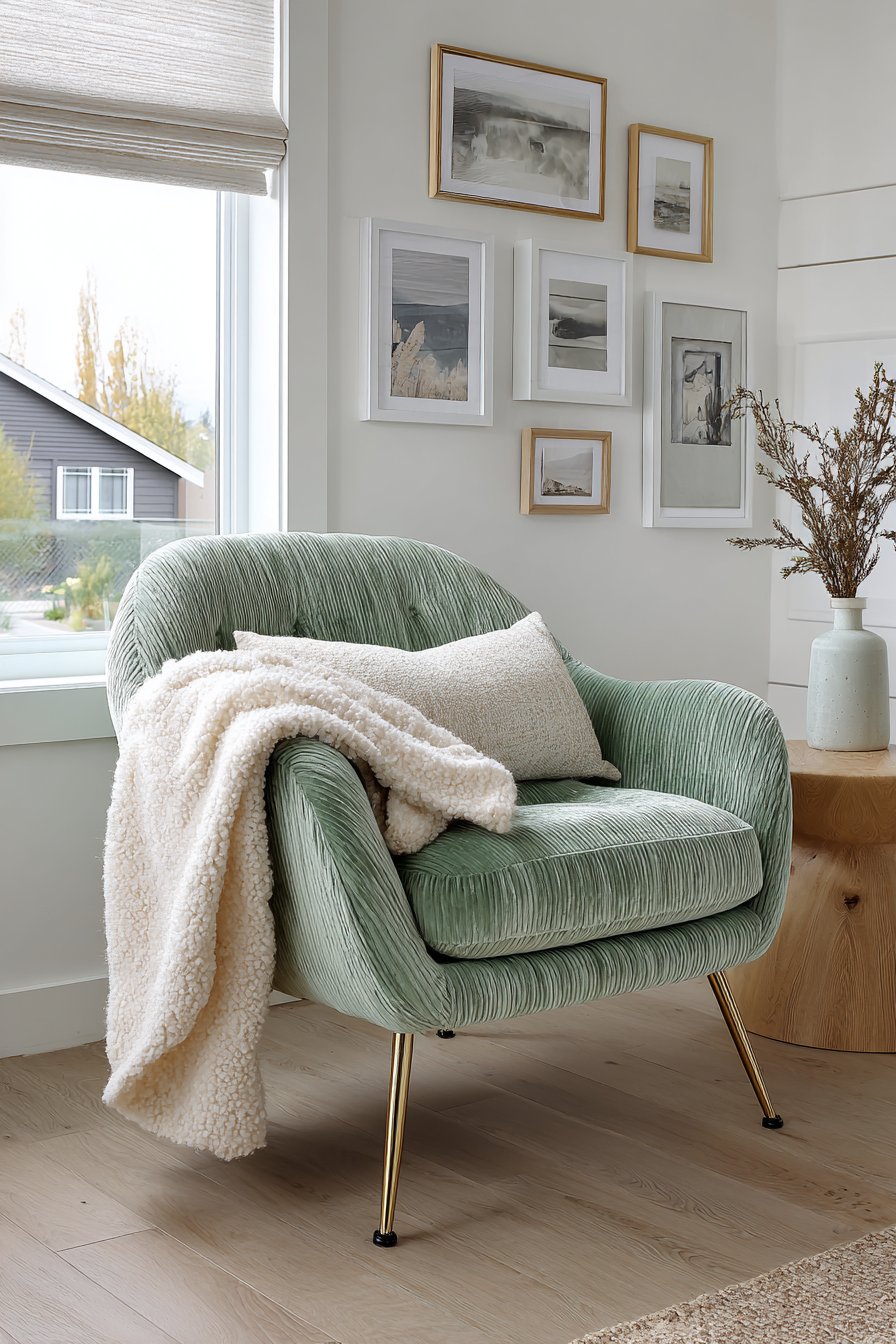
Creating an intimate reading corner within your living room demonstrates how mint green can define specific zones while maintaining overall design cohesion. A mint green velvet armchair with brass legs serves as the jewel of this cozy vignette, its rich texture and elegant brass detailing creating a piece that feels both luxurious and welcoming.
The velvet’s soft pile invites touch and use, while the brass legs add a hint of glamour and visual lightness that prevents the upholstered piece from feeling heavy or overwhelming in the space. This combination of materials—plush fabric and gleaming metal—creates the kind of sophisticated contrast that elevates casual comfort into something more refined.
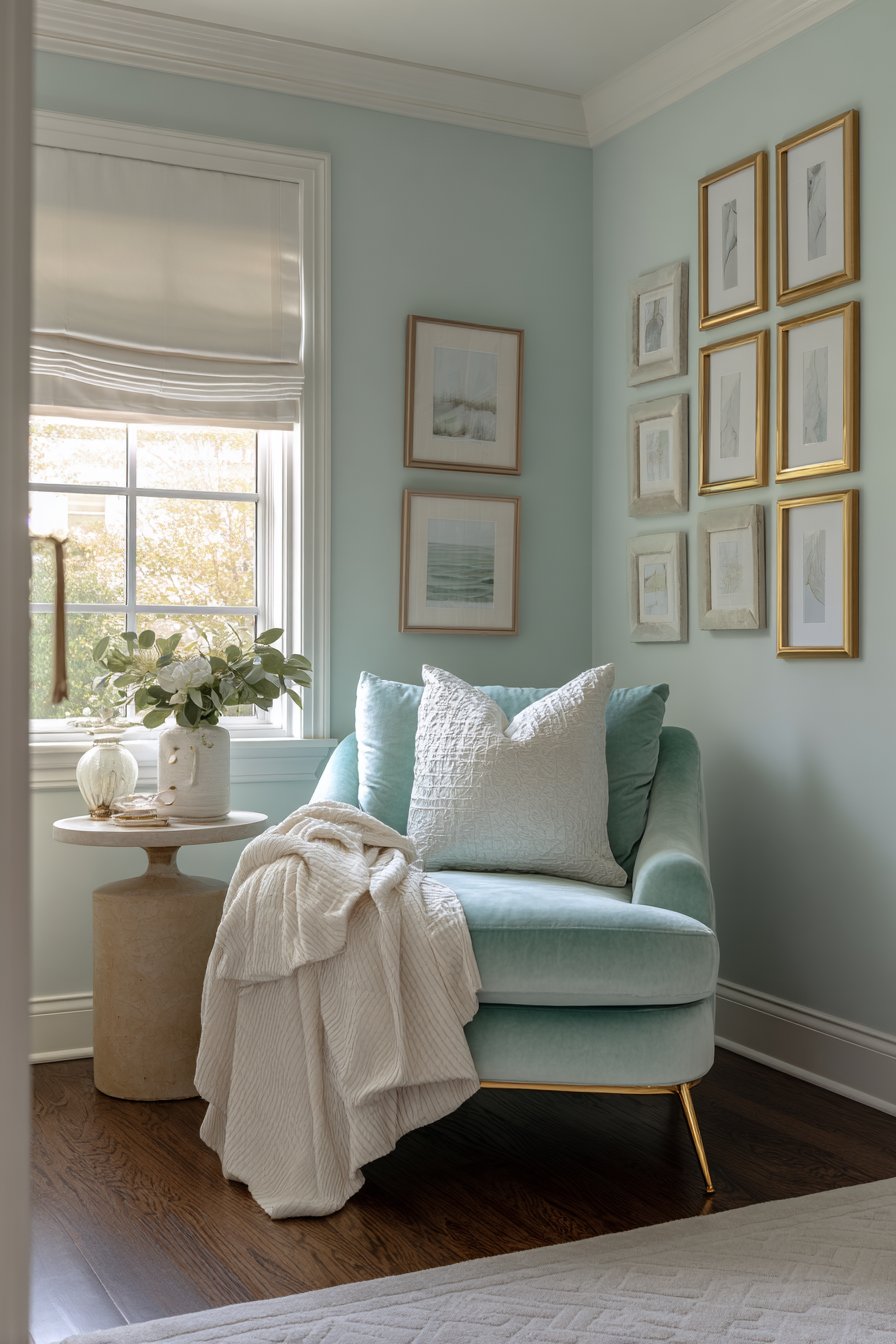
A natural wood side table positioned beside the chair provides practical surface space for coffee cups, reading glasses, or a small stack of current books, its organic material and simple form complementing rather than competing with the statement chair.
A soft cream throw blanket drapes casually over the chair arm, introducing layered texture and suggesting the space’s inviting, lived-in quality. This seemingly casual styling detail actually requires careful consideration—the throw should appear effortless rather than overly arranged, creating the impression of a space that’s genuinely used and loved rather than merely photographed.
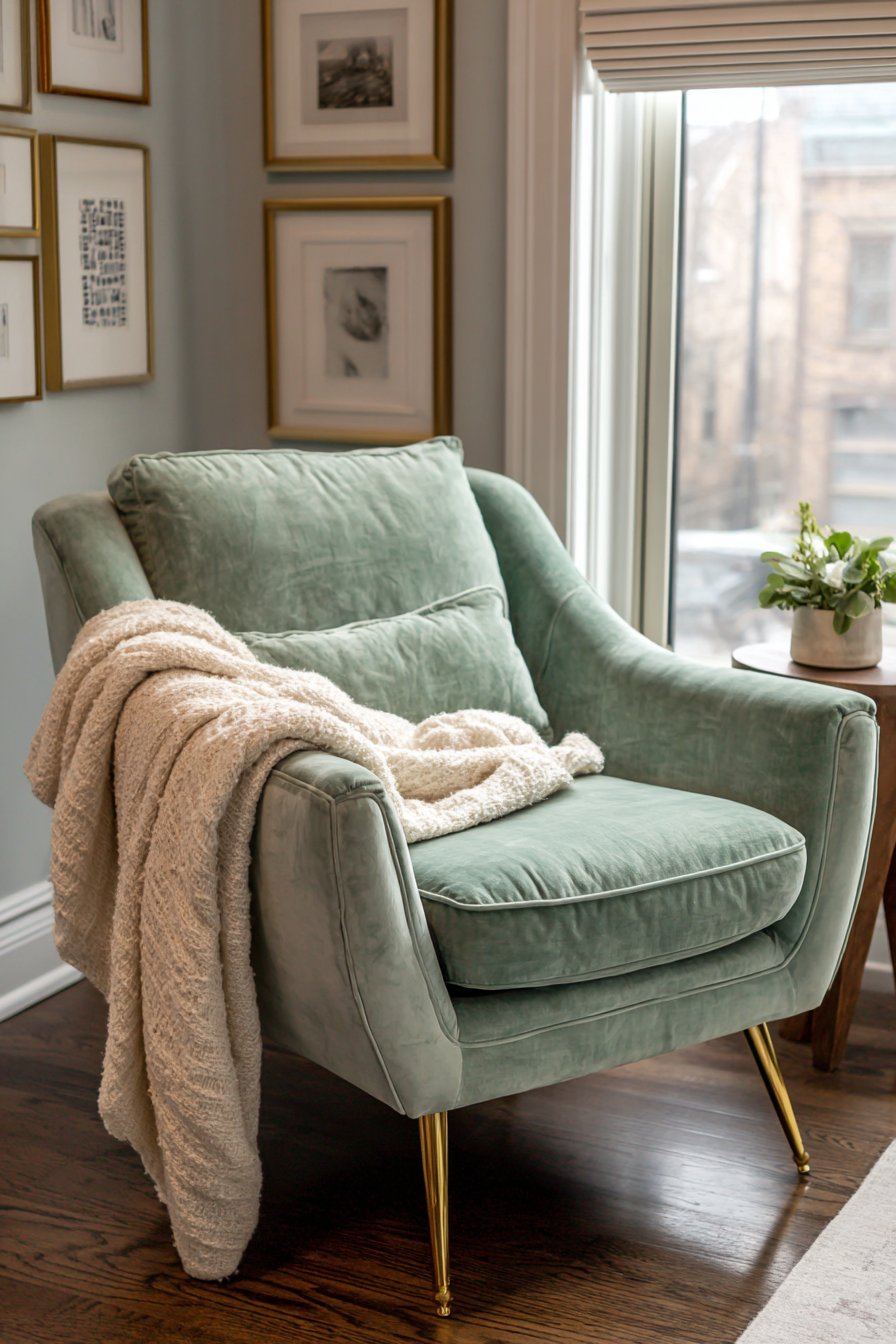
Behind the seating arrangement, a gallery wall with white and gold frames creates visual interest against the pale mint green wall, adding personality and personal history to the corner without overwhelming its intimate scale. The mix of white and gold frames introduces subtle metallic warmth that coordinates with the chair’s brass legs, creating visual cohesion through repeated material choices.
Natural light streaming through a nearby window with a minimal white Roman shade provides ideal reading illumination while maintaining privacy and light control. The Roman shade’s clean lines and simple functionality align with the corner’s overall aesthetic of refined simplicity, avoiding the fussiness of more elaborate window treatments.
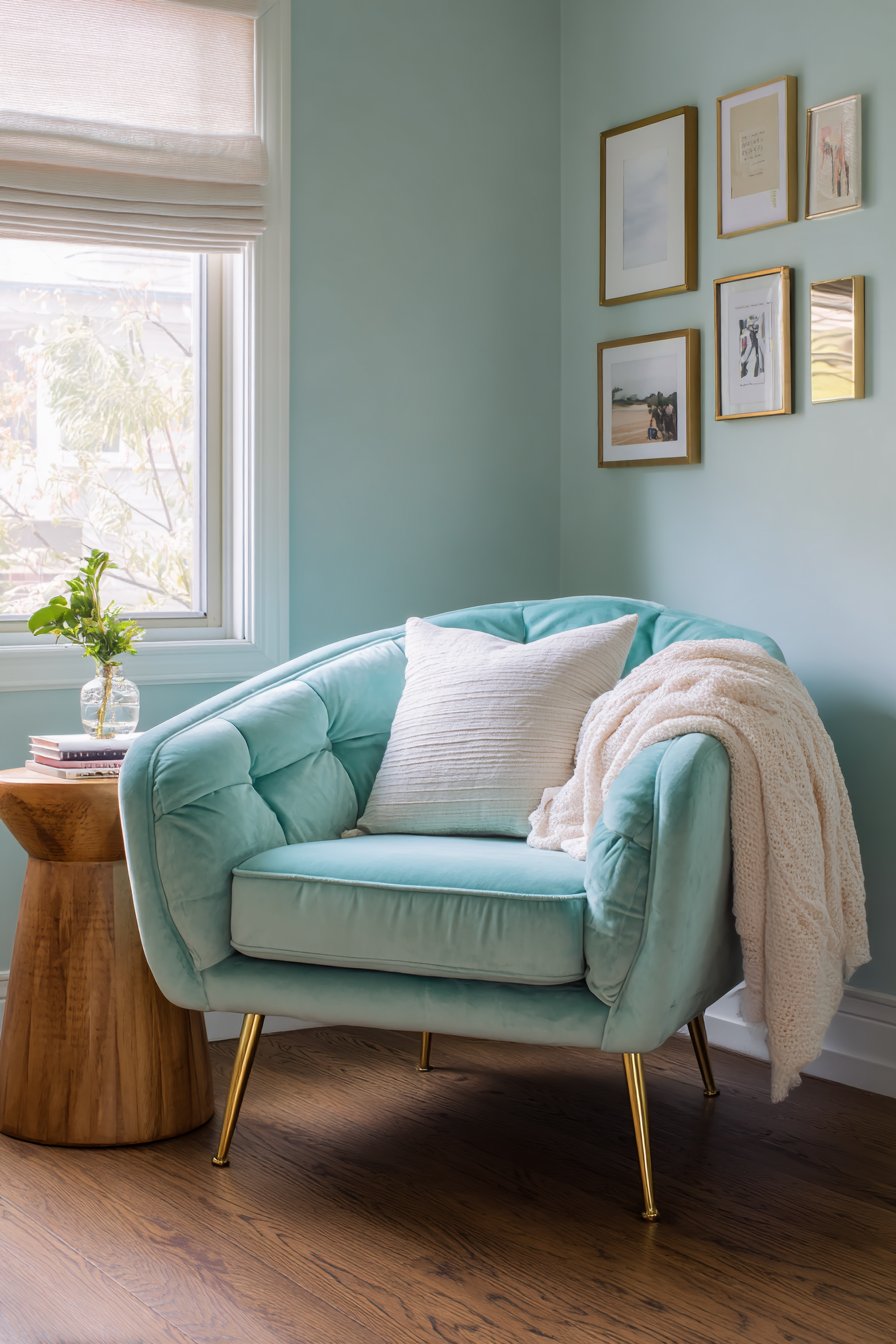
Key Design Tips:
- Position your mint green reading chair near a window to maximize natural light for daytime reading comfort
- Choose velvet upholstery in mint green for its luxurious texture and ability to add visual richness to small spaces
- Include a side table within easy reach for functional convenience and to ground the seating arrangement
- Drape a throw blanket casually to suggest warmth and accessibility rather than arranging it with excessive precision
- Create a gallery wall behind the chair using frames in no more than two finishes to maintain visual cohesion
- Select artwork or photographs with personal meaning to make the corner feel genuinely yours rather than styled for show
- Install a reading lamp with adjustable positioning if natural light isn’t sufficient for evening reading
- Keep the color palette limited to mint green, cream, white, natural wood, and metallic accents for sophisticated restraint
6. Modern Two-Tone Mint and White Living Space
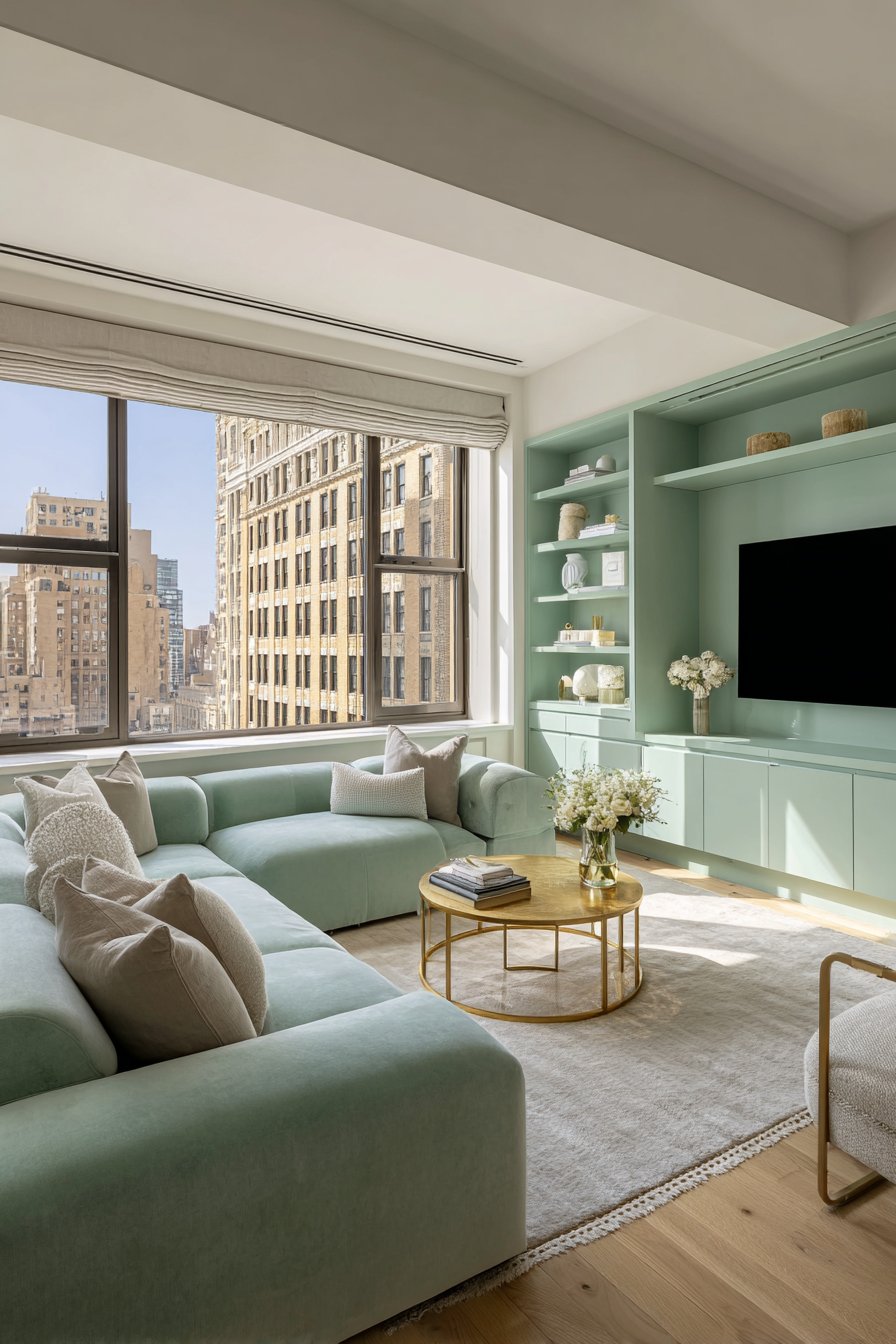
A spacious living room gains architectural interest and contemporary sophistication through a dramatic two-tone color scheme featuring mint green lower cabinets and built-in media console contrasting with white upper walls and ceiling. This horizontal color division creates the illusion of broader, more expansive space while adding visual interest that purely white walls cannot achieve.
The mint green cabinetry provides both practical storage and a bold design statement, demonstrating how functional elements can serve aesthetic purposes when treated with color and careful detailing. The built-in media console integrates technology seamlessly into the design, hiding wires and equipment while presenting a clean, streamlined appearance.
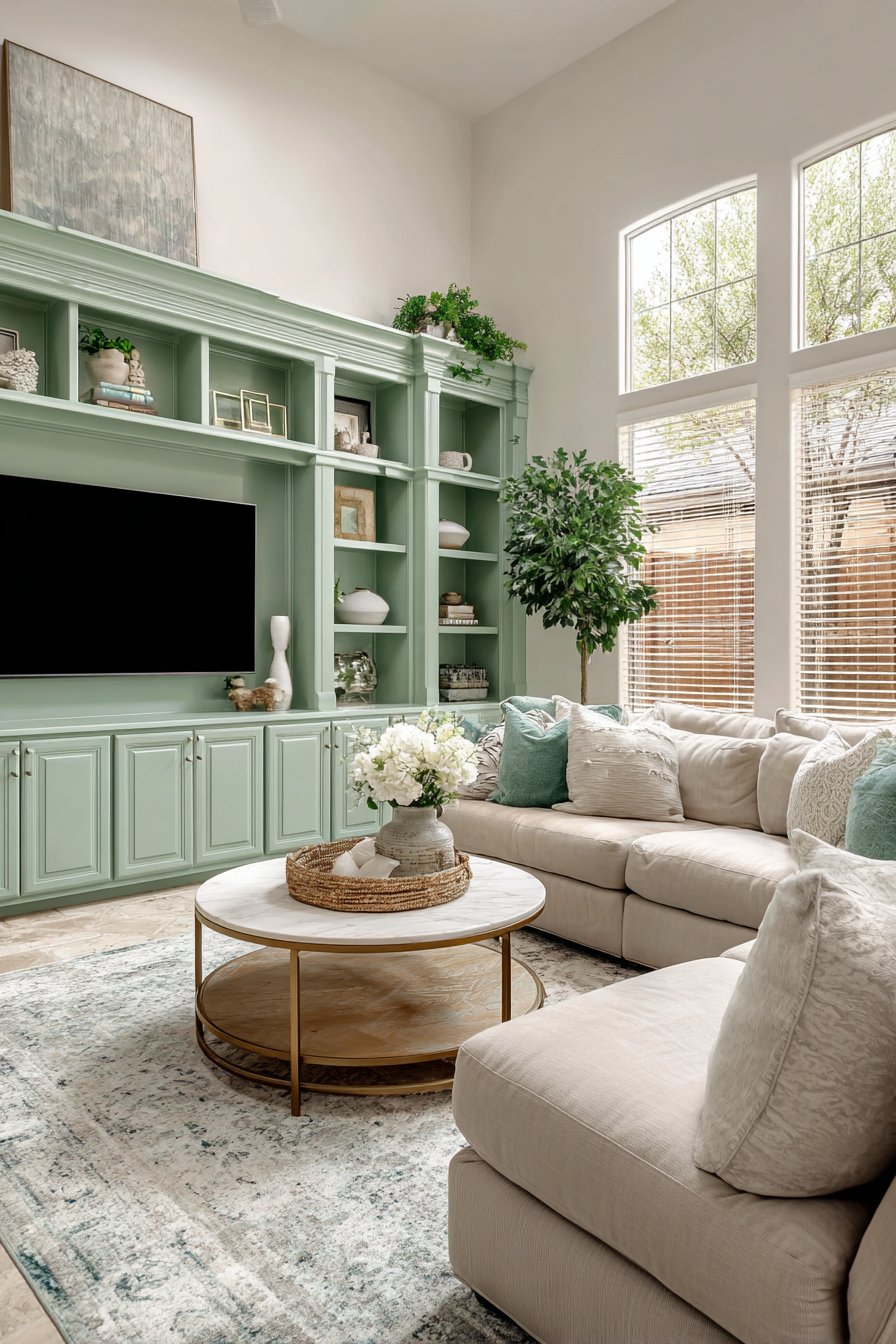
A neutral taupe sectional sofa faces the media wall, offering generous seating capacity for family gatherings or entertaining while maintaining a neutral presence that allows the mint and white architecture to command attention. The taupe tone bridges the coolness of mint green and the crispness of white, introducing subtle warmth that makes the space feel inviting rather than clinical.
A round brass and glass coffee table centers the seating arrangement, its transparent glass surface maintaining visual openness while the brass frame introduces metallic warmth and contemporary glamour. The circular form provides pleasing contrast to the room’s predominantly linear elements, softening the geometry and improving traffic flow around the seating area.
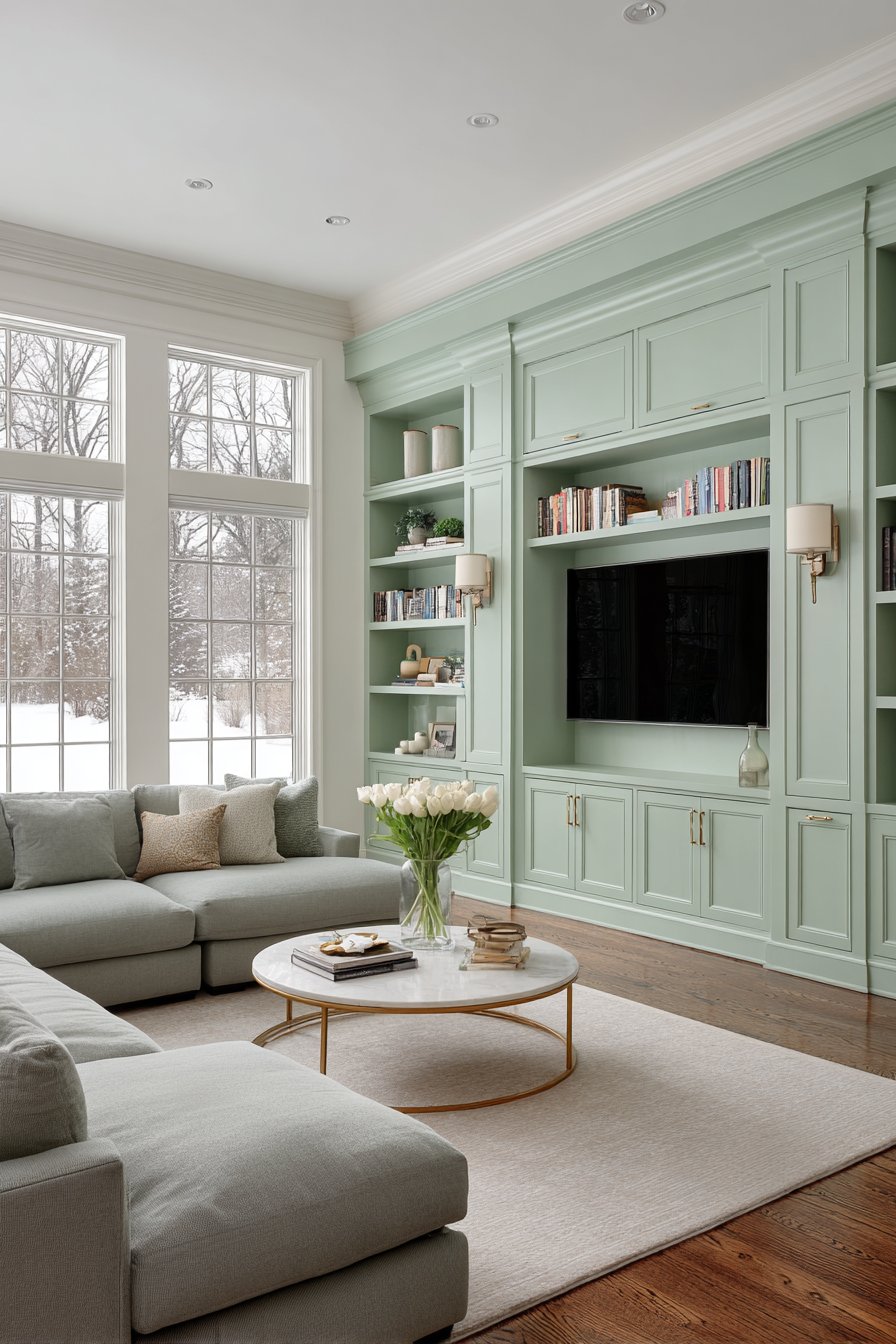
Large windows with light filtering blinds provide natural illumination while offering privacy control and glare reduction, essential considerations for spaces centered around television viewing. The window treatments’ clean, horizontal lines complement the room’s architectural elements while their neutral color maintains the space’s carefully calibrated color balance.
The interplay between the mint green lower portion and white upper portion creates a grounded yet airy feeling—the darker lower section provides visual weight and stability while the white upper reaches expand the space vertically, making standard-height ceilings feel taller and more spacious.
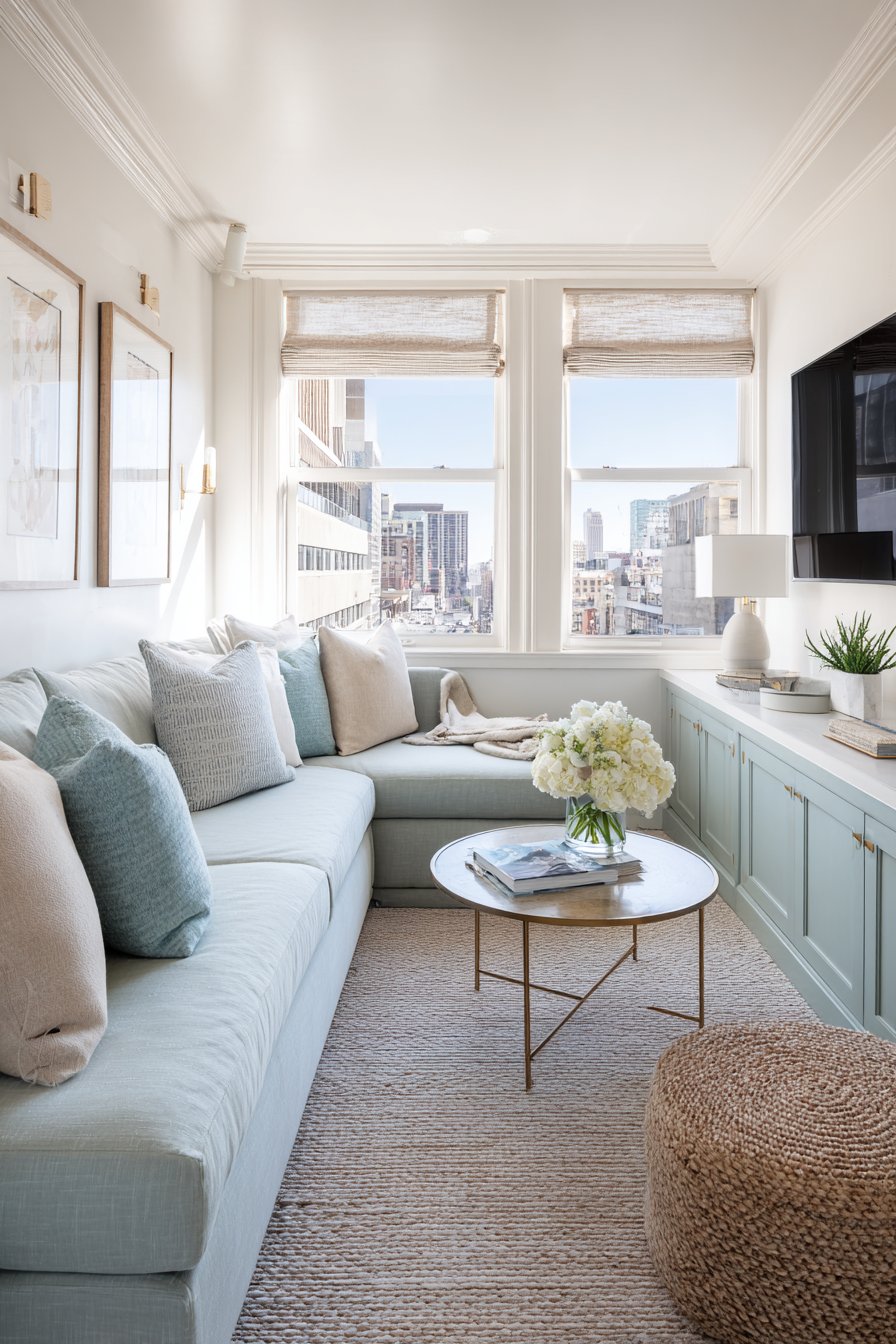
Key Design Tips:
- Divide the wall horizontally with mint green on the bottom third to half and white above for a grounded yet spacious feeling
- Choose built-in cabinetry for media storage to create clean lines and hide technological clutter that can disrupt visual serenity
- Select a substantial sectional sofa in a neutral tone to balance the bold architectural color choices without competing for attention
- Incorporate a round coffee table to soften the angular lines of sectional seating and built-in cabinetry
- Use light-filtering window treatments rather than blackout options to maintain connection with natural light throughout the day
- Install proper task lighting within or above the media console for functional illumination without harsh overhead lights
- Coordinate hardware finishes throughout the space, using brass or gold consistently for visual cohesion
- Keep the upper portions of walls and ceiling white to maximize light reflection and maintain an open, airy atmosphere
7. Sophisticated Mint Grasscloth Accent Wall
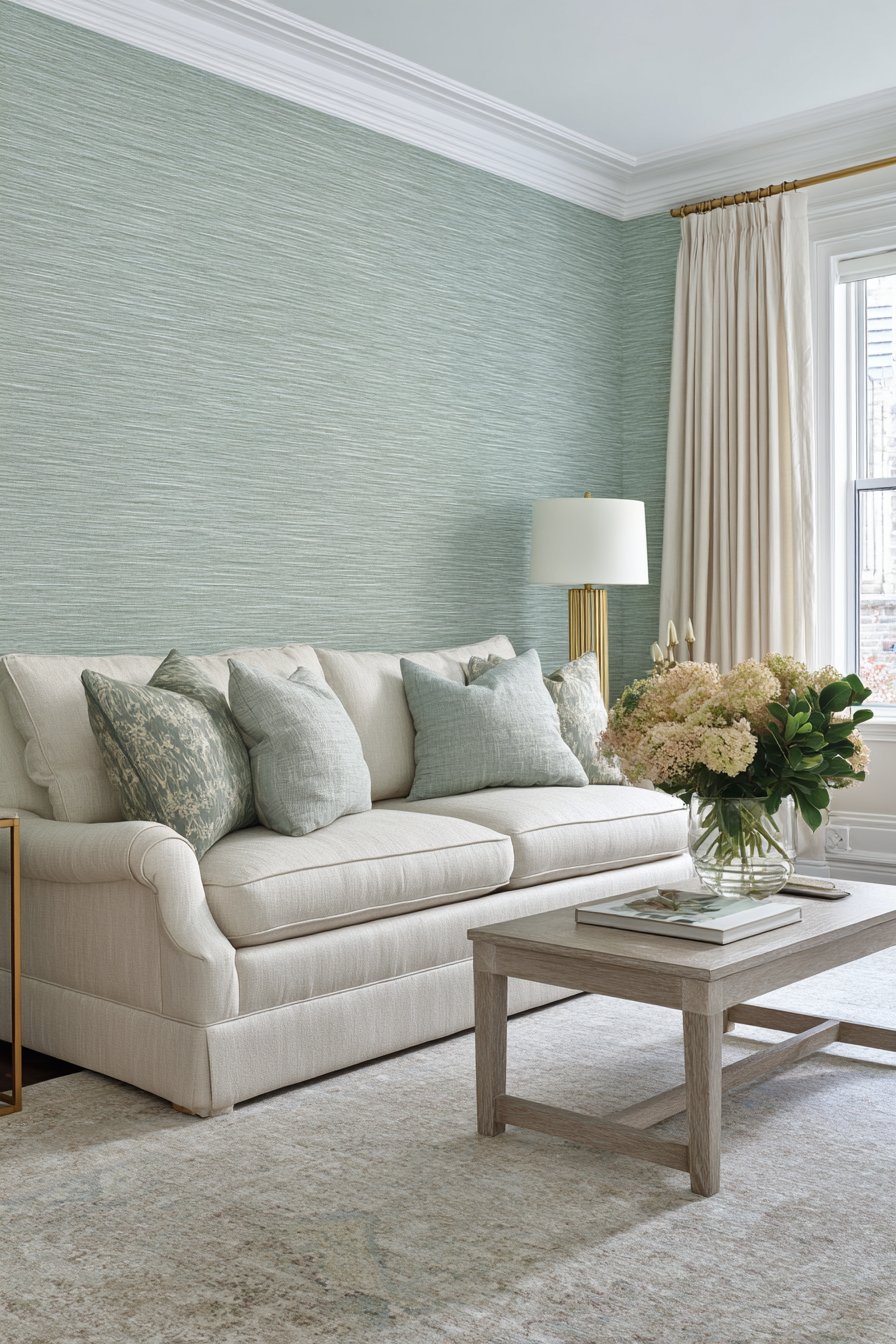
Textured mint green grasscloth wallpaper elevates a transitional living room from pleasant to extraordinary, demonstrating how material choice can be just as important as color selection in creating memorable spaces. Grasscloth wallpaper, made from natural fibers woven into beautiful, irregular patterns, introduces organic texture and subtle variation that painted walls simply cannot replicate.
Each panel displays slight color variations and natural imperfections that add character and depth, creating a focal wall that invites closer inspection and touch. This material choice speaks to a more sophisticated design sensibility—one that values craftsmanship, natural materials, and layered complexity over simple surface treatments.
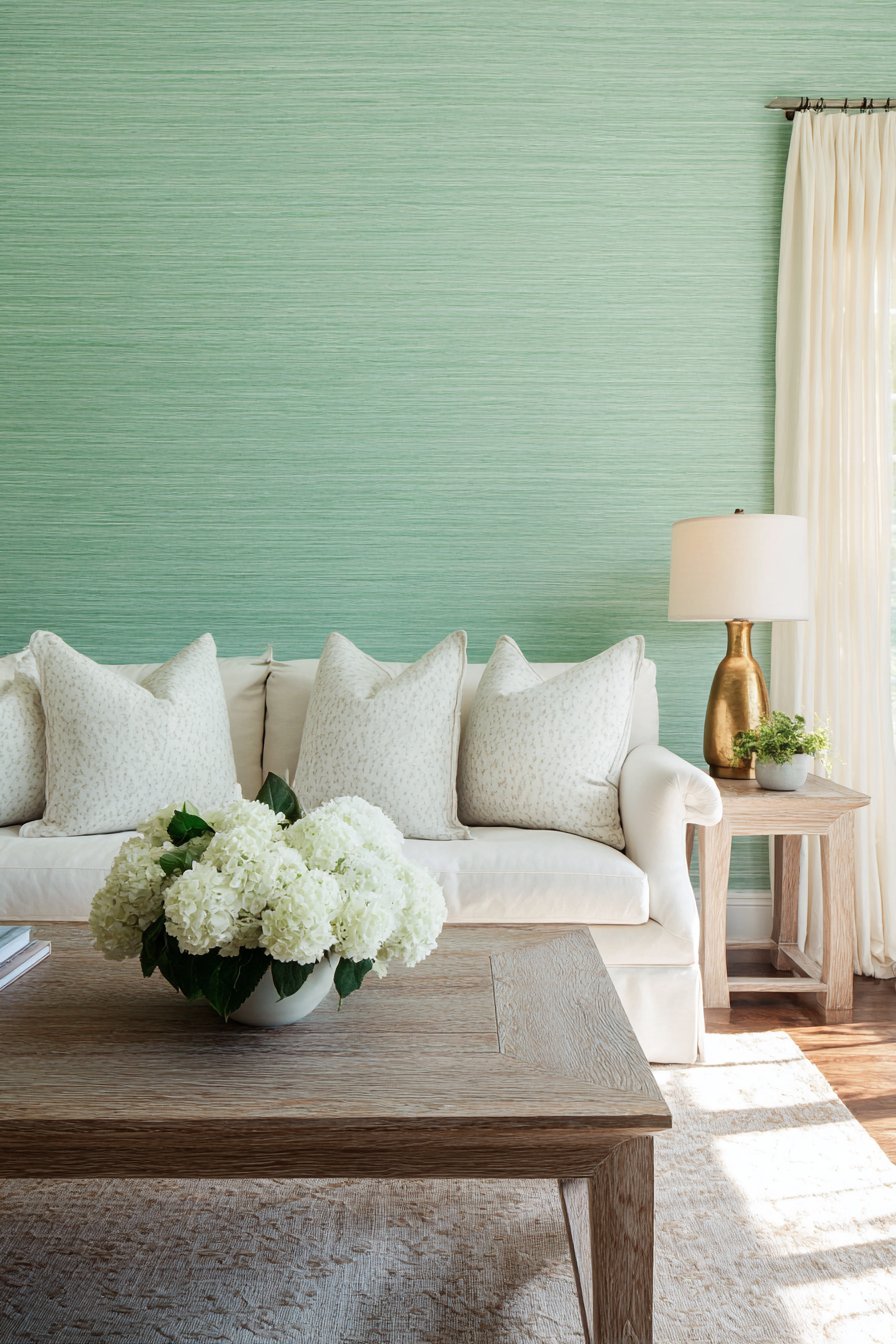
The focal wall provides a stunning backdrop for a cream linen sofa with rolled arms, whose traditional silhouette and natural fabric create a pleasing contrast to the grasscloth’s more exotic texture. The cream color allows the mint green to truly shine while providing a neutral, comfortable seating option that works within various design schemes.
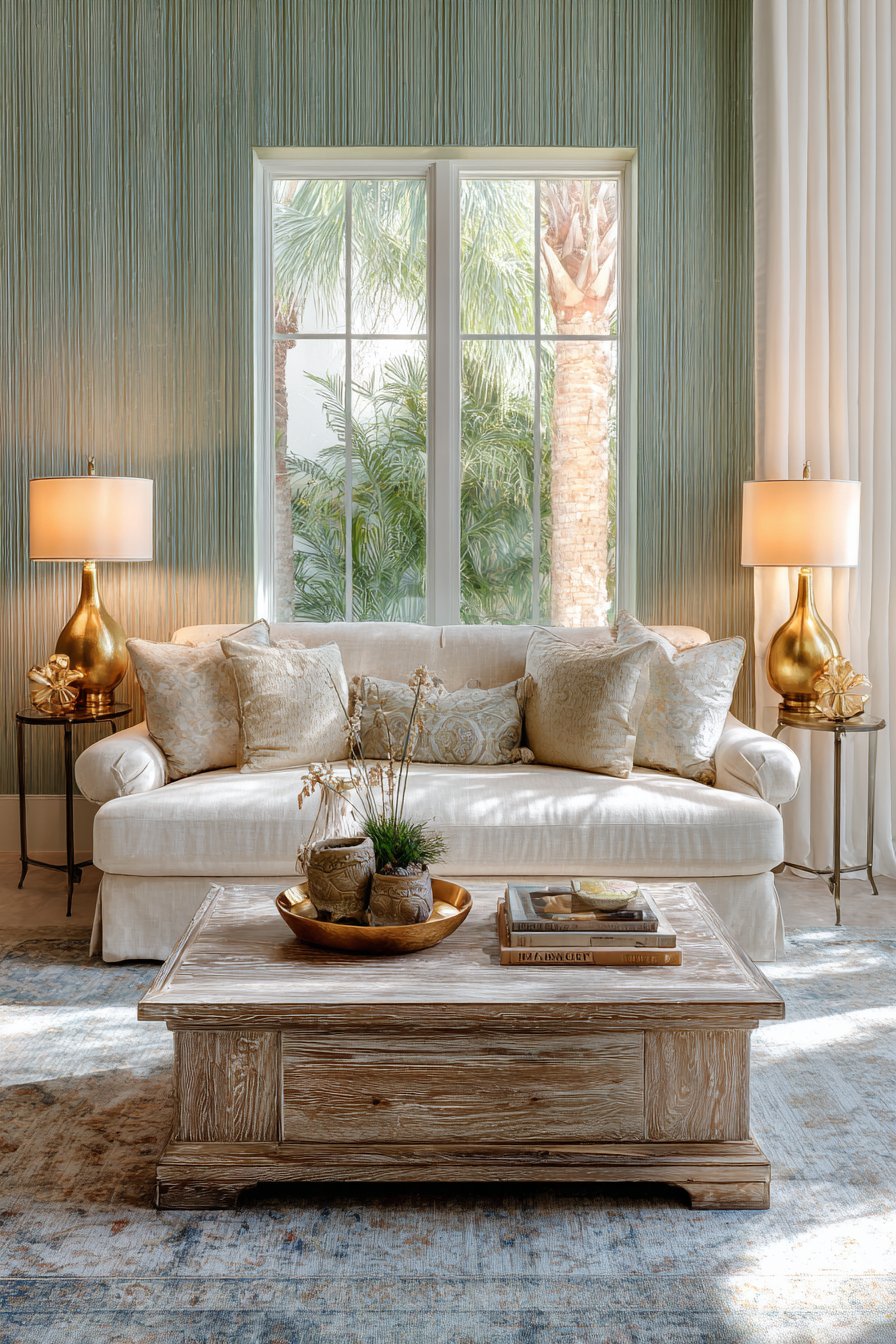
A weathered wood coffee table with subtle distressing sits atop a vintage-inspired area rug in muted tones, introducing layers of history and character that give the room depth and soul. The distressed wood suggests a piece with a story, whether genuinely antique or artfully aged, adding the kind of visual interest that brand-new furniture often lacks.
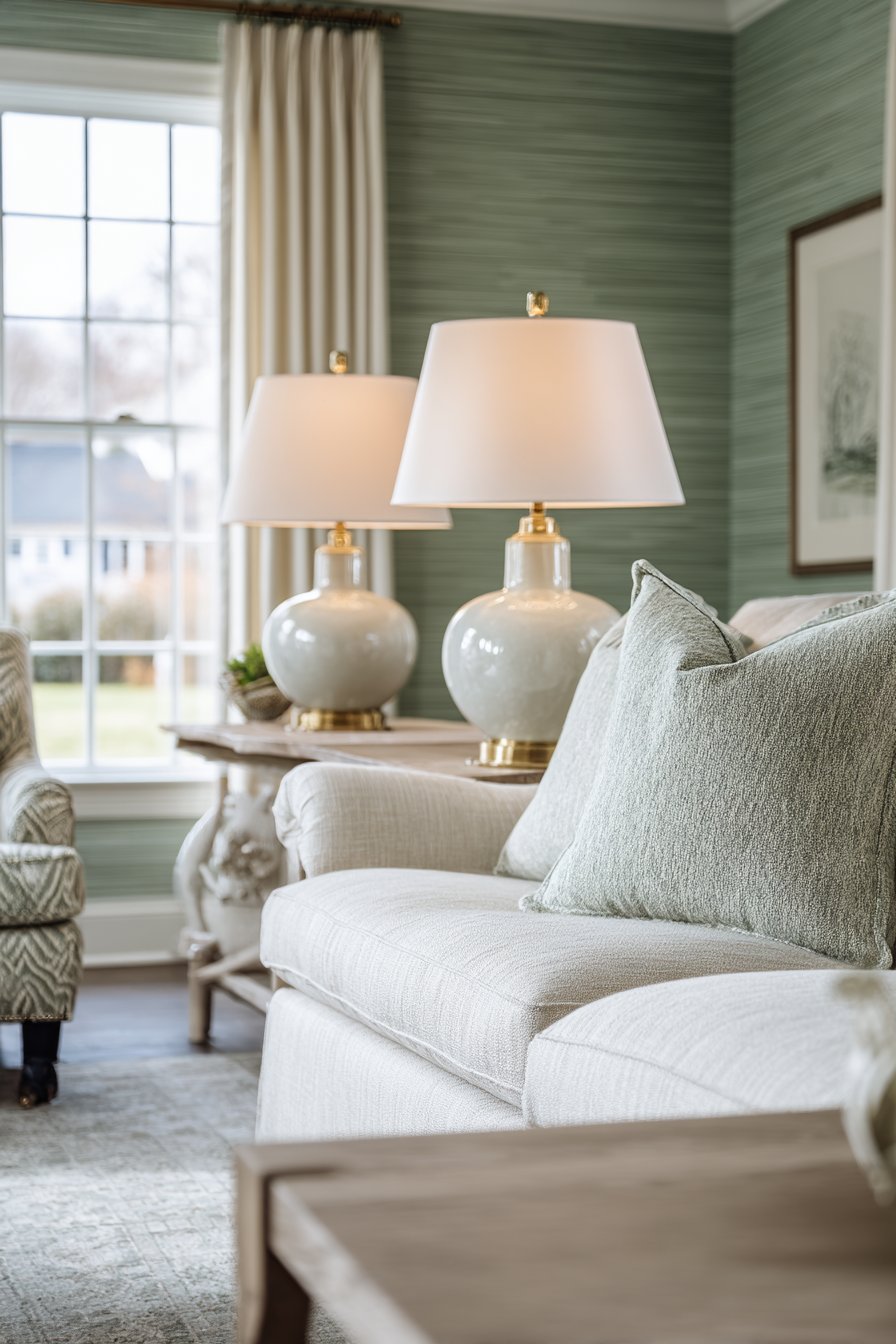
Brass table lamps on matching side tables flank the sofa, providing warm accent lighting that becomes especially important during evening hours when natural light fades. The brass finish coordinates beautifully with mint green, adding warmth and metallic shimmer that elevates the entire color scheme. During golden hour, when warm afternoon light filters through sheer curtains, the room transforms into something magical—the grasscloth glows with an inner warmth, the brass lamps catch and reflect amber light, and the entire space radiates sophisticated comfort. This attention to how a room performs at different times of day separates truly exceptional design from merely adequate arrangements.
Key Design Tips:
- Invest in real grasscloth wallpaper rather than vinyl alternatives for authentic texture and natural variation that photographs and experiences beautifully
- Hire a professional wallpaper installer for grasscloth, as its natural fibers require specific techniques and can be easily damaged by improper handling
- Position the grasscloth wall opposite or perpendicular to primary windows to maximize how natural light enhances its texture throughout the day
- Choose furniture with traditional silhouettes and natural fabrics to complement the organic, handcrafted quality of grasscloth
- Incorporate weathered or distressed wood pieces to add layers of history and texture that match the grasscloth’s artisanal character
- Select brass or warm metallic finishes for lighting and hardware to enhance the sophisticated, warm color palette
- Use muted, vintage-inspired textiles in rugs and pillows rather than bright contemporary patterns
- Consider the evening lighting carefully, using warm-toned bulbs that will make the grasscloth glow rather than appear dull or flat
8. Modern Farmhouse Mint Shiplap Statement
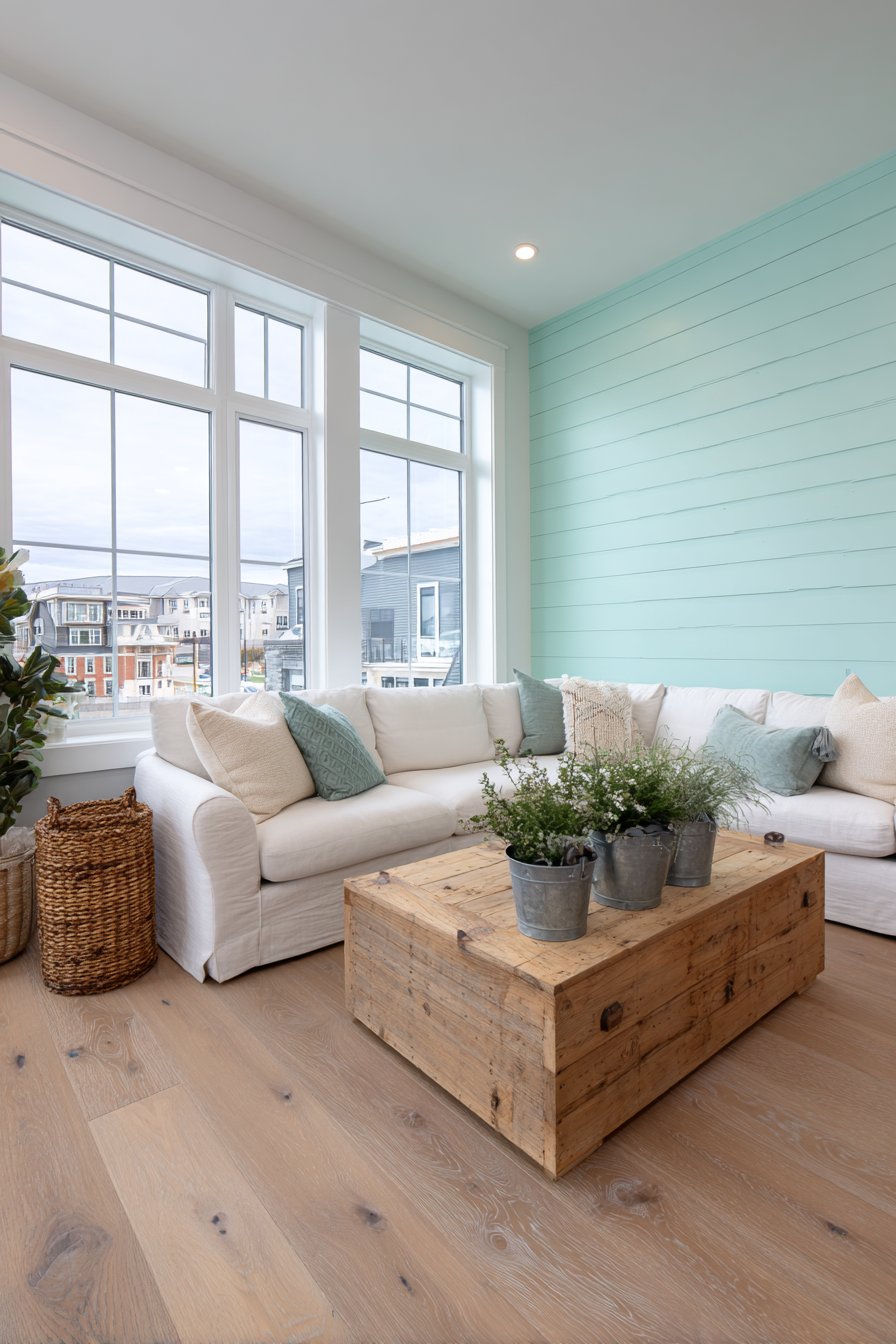
The modern farmhouse aesthetic finds fresh expression through a shiplap accent wall painted in soft mint green, where rustic architectural details meet contemporary color choices. Shiplap, with its horizontal lines and subtle shadow gaps, adds texture and visual interest while evoking the casual, comfortable character of traditional farmhouse design.
Painting this classic element in mint green rather than the expected white transforms it from predictable to personal, demonstrating how small color choices can dramatically shift a design’s personality. The shiplap creates both texture and pattern through its rhythmic horizontal lines, adding architectural interest to what might otherwise be a plain wall.
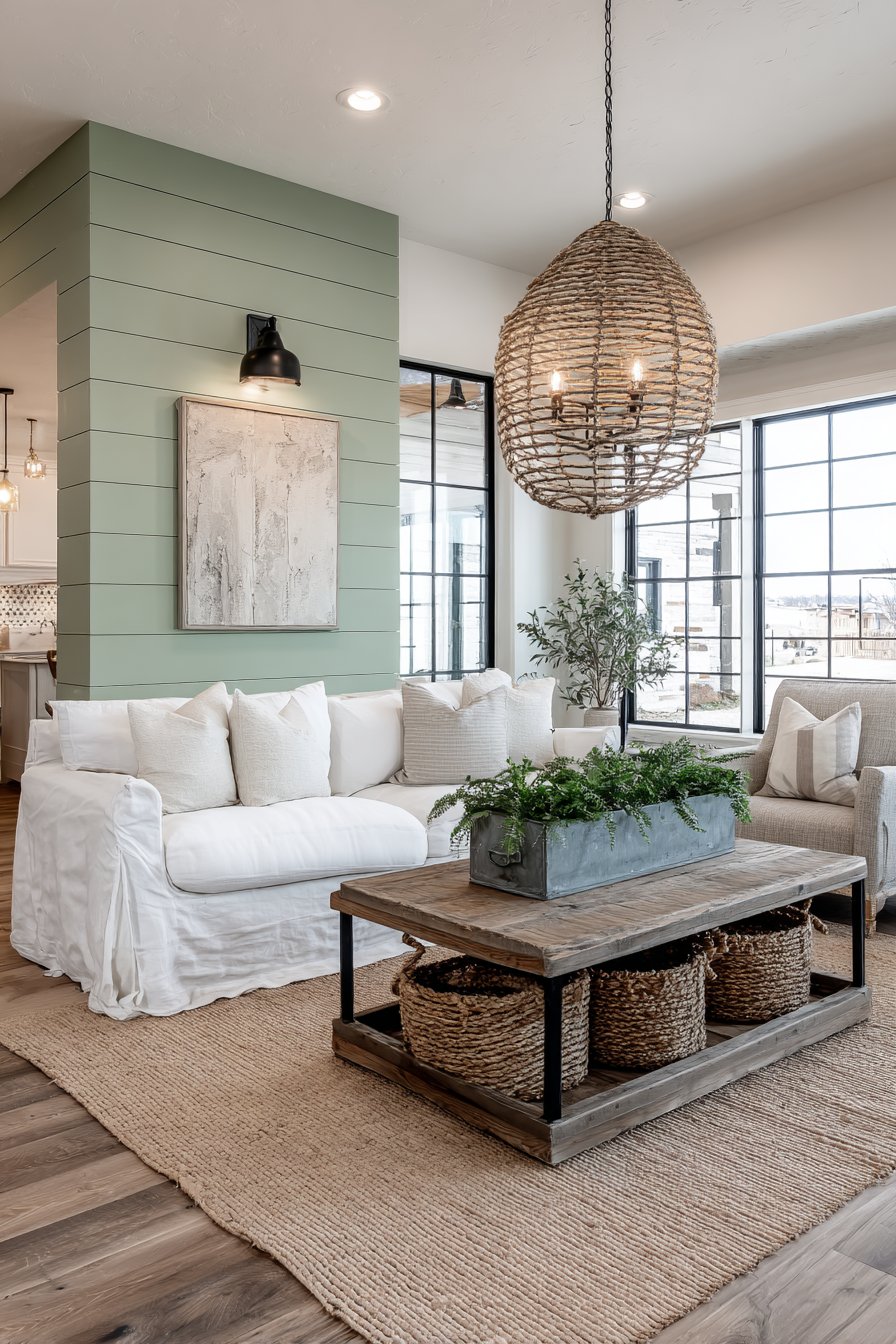
A comfortable white slipcovered sofa embodies the modern farmhouse commitment to casual elegance and practical beauty. Slipcovers offer the dual advantages of easy cleaning and the ability to completely transform a piece’s appearance, making them ideal for family-focused living rooms where life actually happens.
The white fabric creates crisp contrast against the mint green shiplap while maintaining the light, airy feeling essential to successful farmhouse design. A reclaimed barn wood coffee table introduces authentic rustic character, its weathered surface and substantial construction speaking to the farmhouse tradition of valuing durability and honest materials over disposable trends.
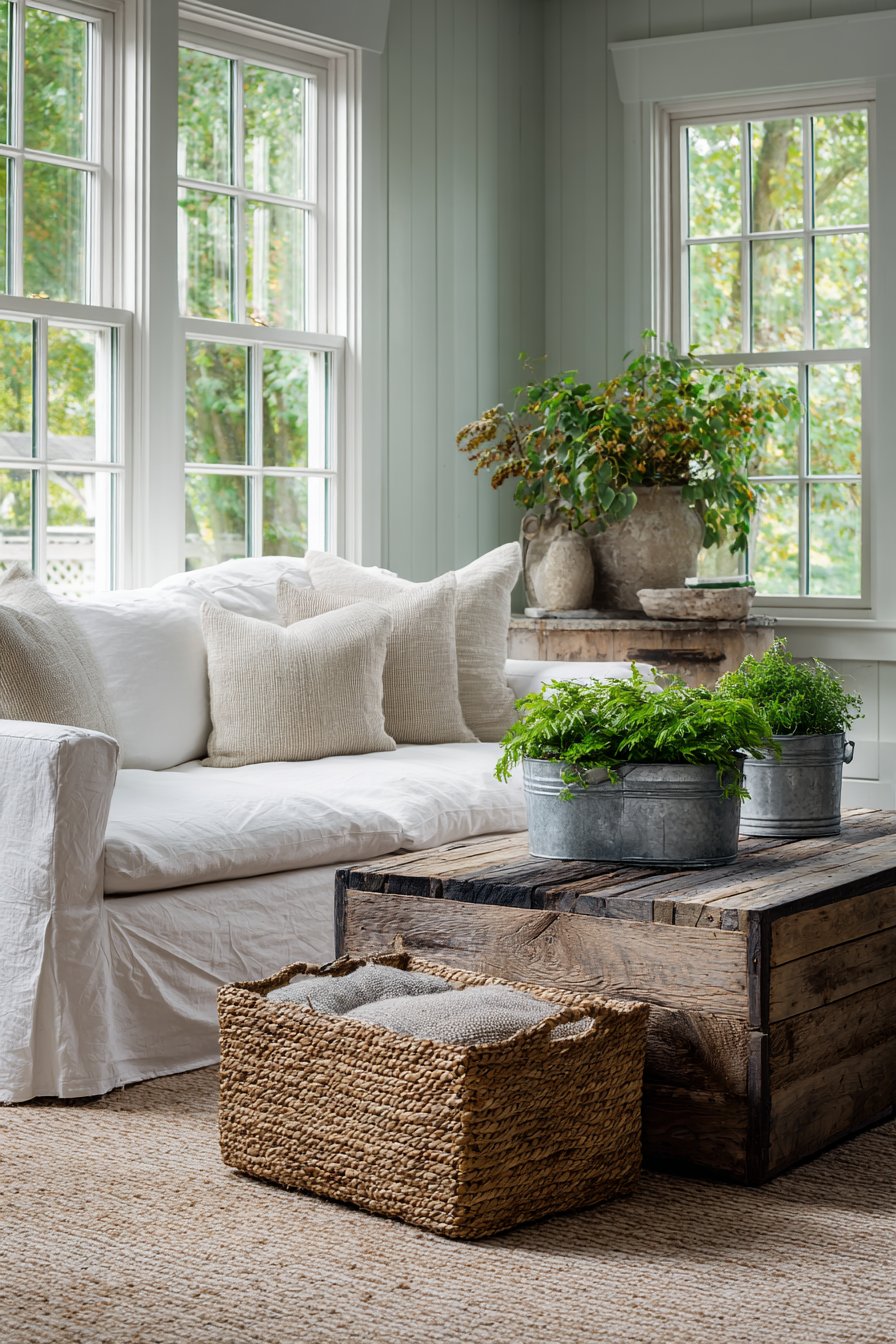
Galvanized metal planters with greenery add rustic charm while introducing living elements that freshen the space and connect it to the natural world. These industrial-agricultural pieces, originally designed for practical farm use, have become beloved in farmhouse decor for their authentic history and sculptural forms. Woven baskets provide practical storage for throws, magazines, or toys, demonstrating the farmhouse principle that beautiful objects should also serve useful purposes.
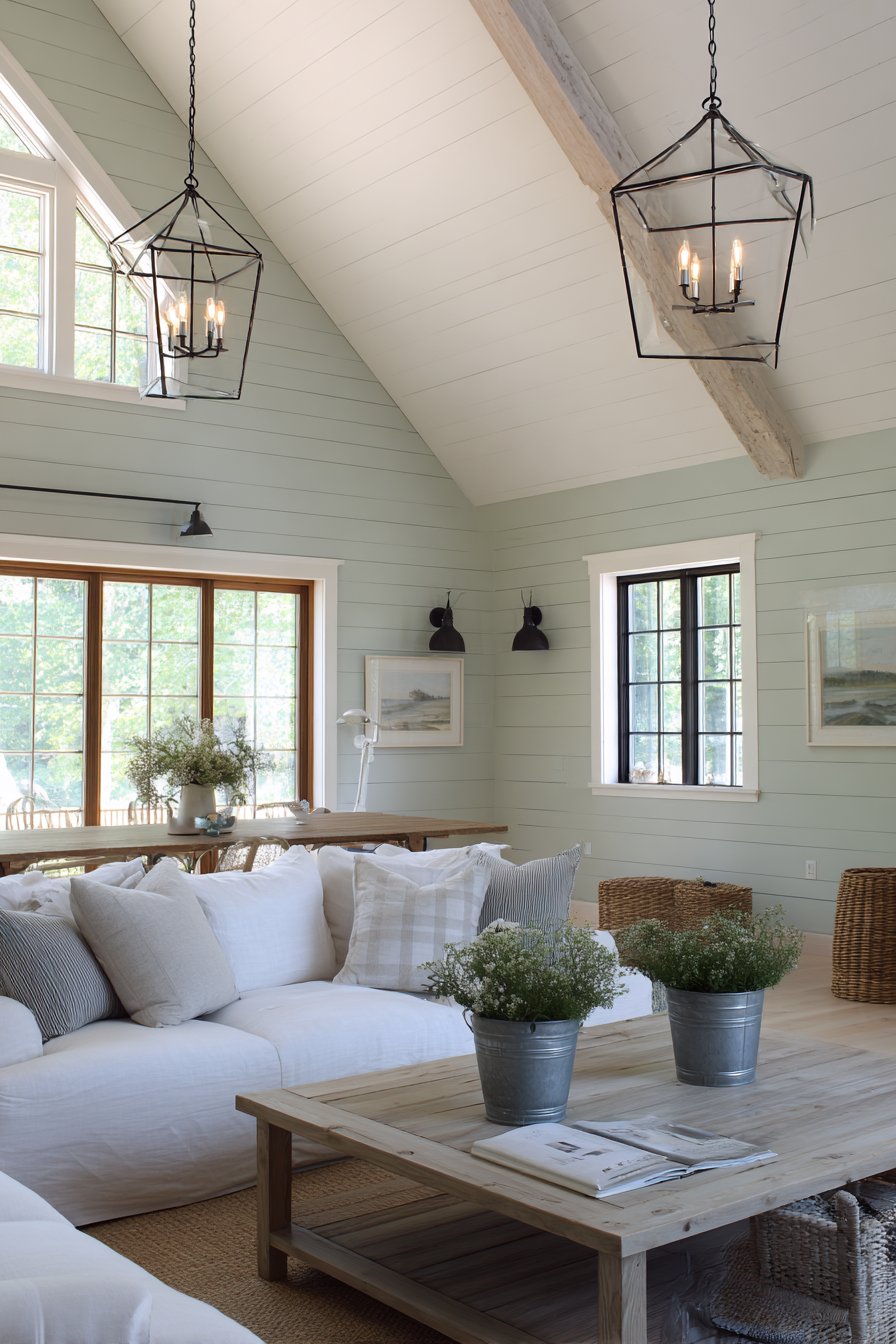
Natural light from multiple windows illuminates the space generously, essential for both plant health and for keeping the mint green reading true rather than muddy. The abundance of light also enhances the white shiplap’s shadows and dimension, making the architectural detail truly visible and appreciated.
Key Design Tips:
- Install real wood shiplap rather than printed wallpaper alternatives for authentic texture and shadow lines that add genuine architectural interest
- Paint shiplap in mint green after installation to ensure even coverage in all the grooves and gaps between boards
- Choose a white slipcovered sofa for easy maintenance and the flexibility to change your look by simply changing the slipcover
- Source a genuine reclaimed wood coffee table or furniture piece to add authentic character rather than artificially distressed new pieces
- Incorporate galvanized metal accessories sparingly—one or two pieces add farmhouse charm without overwhelming the space
- Use woven baskets for storage solutions that are both practical and decorative, hiding clutter while maintaining aesthetic appeal
- Maximize natural light through generous windows with simple treatments that don’t block precious daylight
- Balance rustic elements like barn wood and metal with softer pieces like white upholstery to avoid the space feeling too rough or masculine
- Keep the overall color palette limited to mint green, white, natural wood tones, and greenery for cohesive farmhouse appeal
9. Functional Mint Green Window Seat Haven
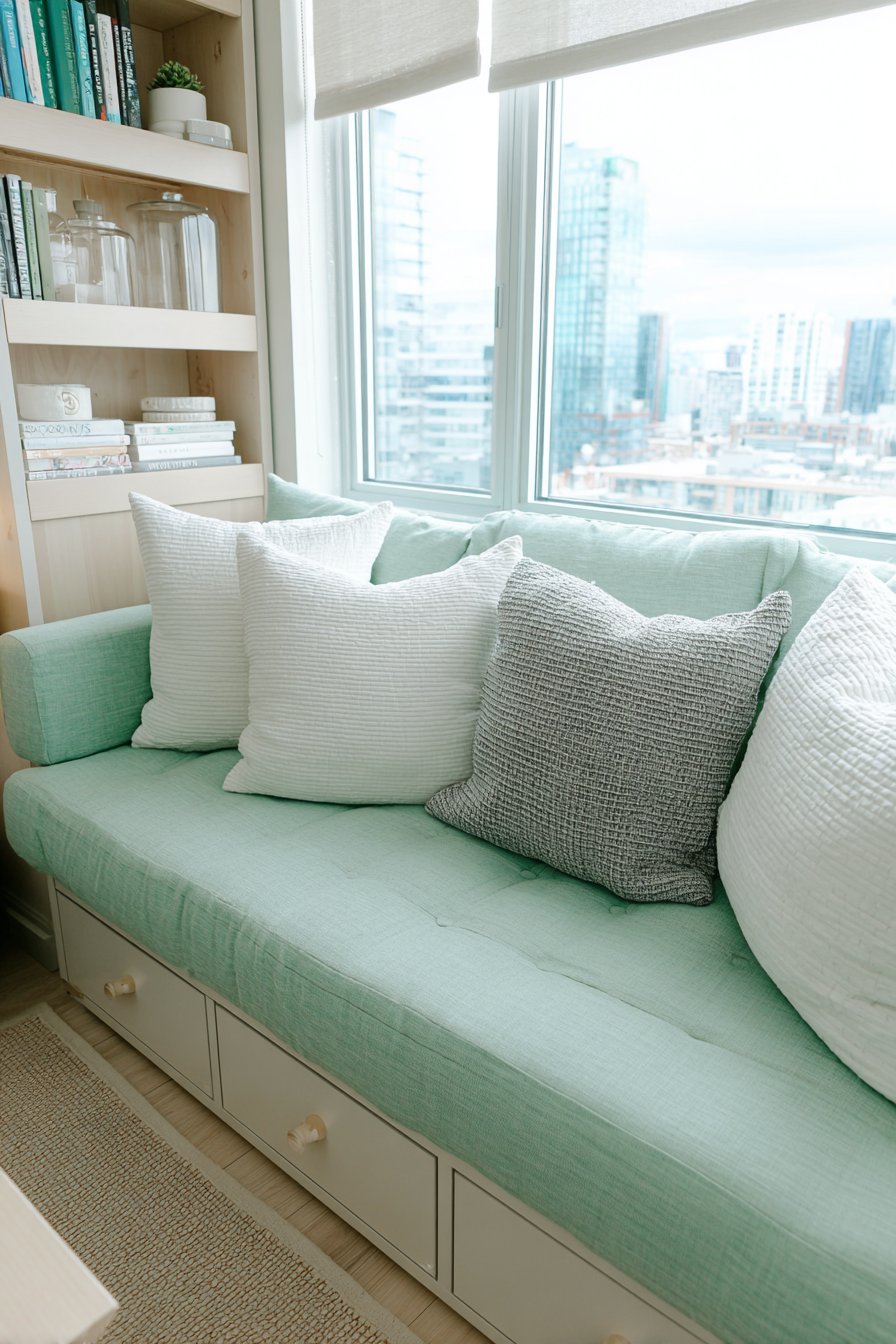
A mint green upholstered window seat transforms often-underutilized architectural space into a functional and beautiful focal point that combines seating, storage, and style. Built-in drawers beneath the window seat provide practical storage for blankets, books, or seasonal items, maximizing every inch of available space in a way that free-standing furniture simply cannot.
The mint green upholstery creates a custom, intentional appearance that elevates the window seat from basic built-in to designed focal point, demonstrating how color choices can transform functional elements into aesthetic statements.
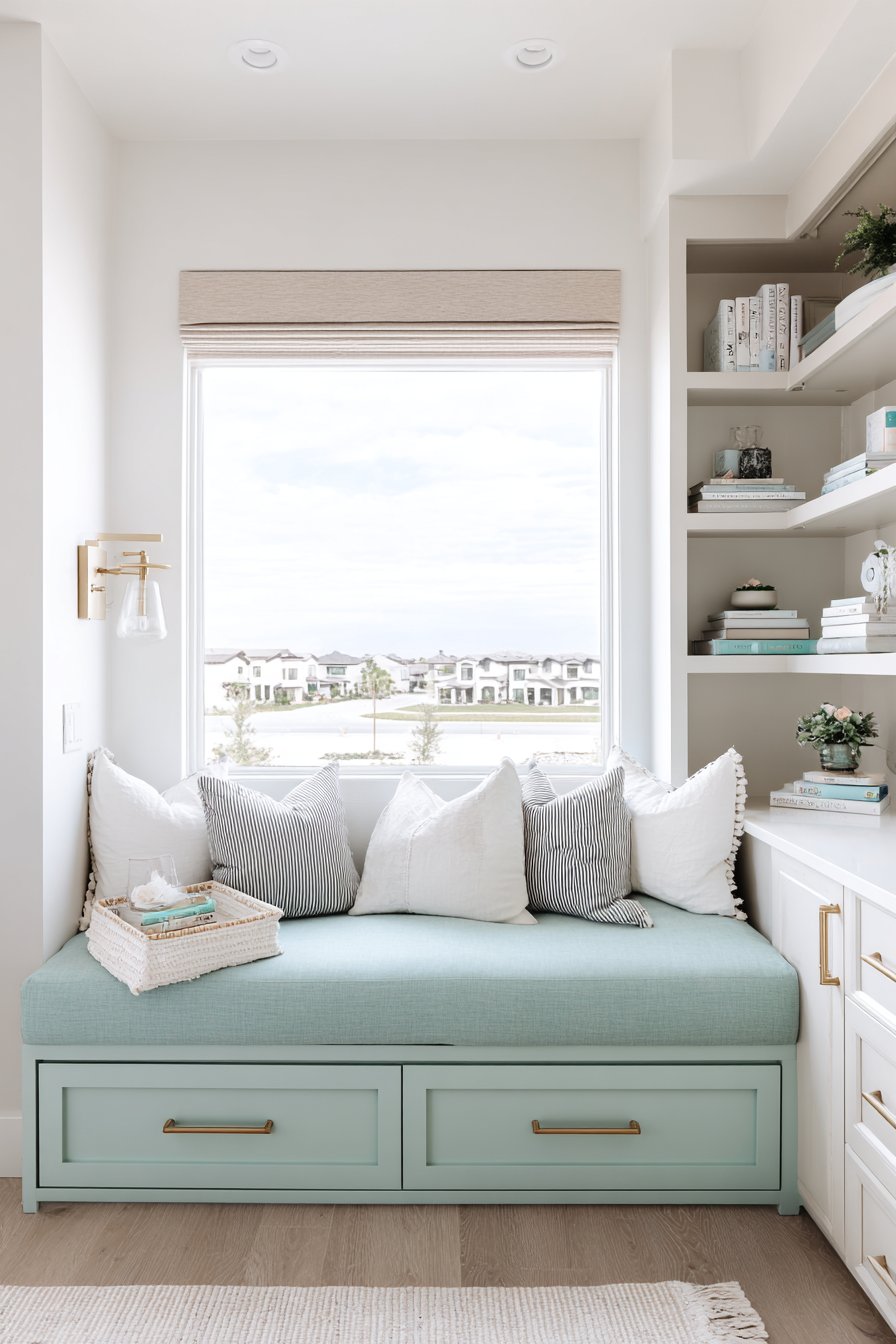
White cushions with subtle texture cover the seat, providing comfort for extended sitting while creating visual separation between the mint green base and the surrounding architecture. Grey accent pillows add additional comfort and introduce tonal variation that prevents the composition from feeling too matchy or one-dimensional.
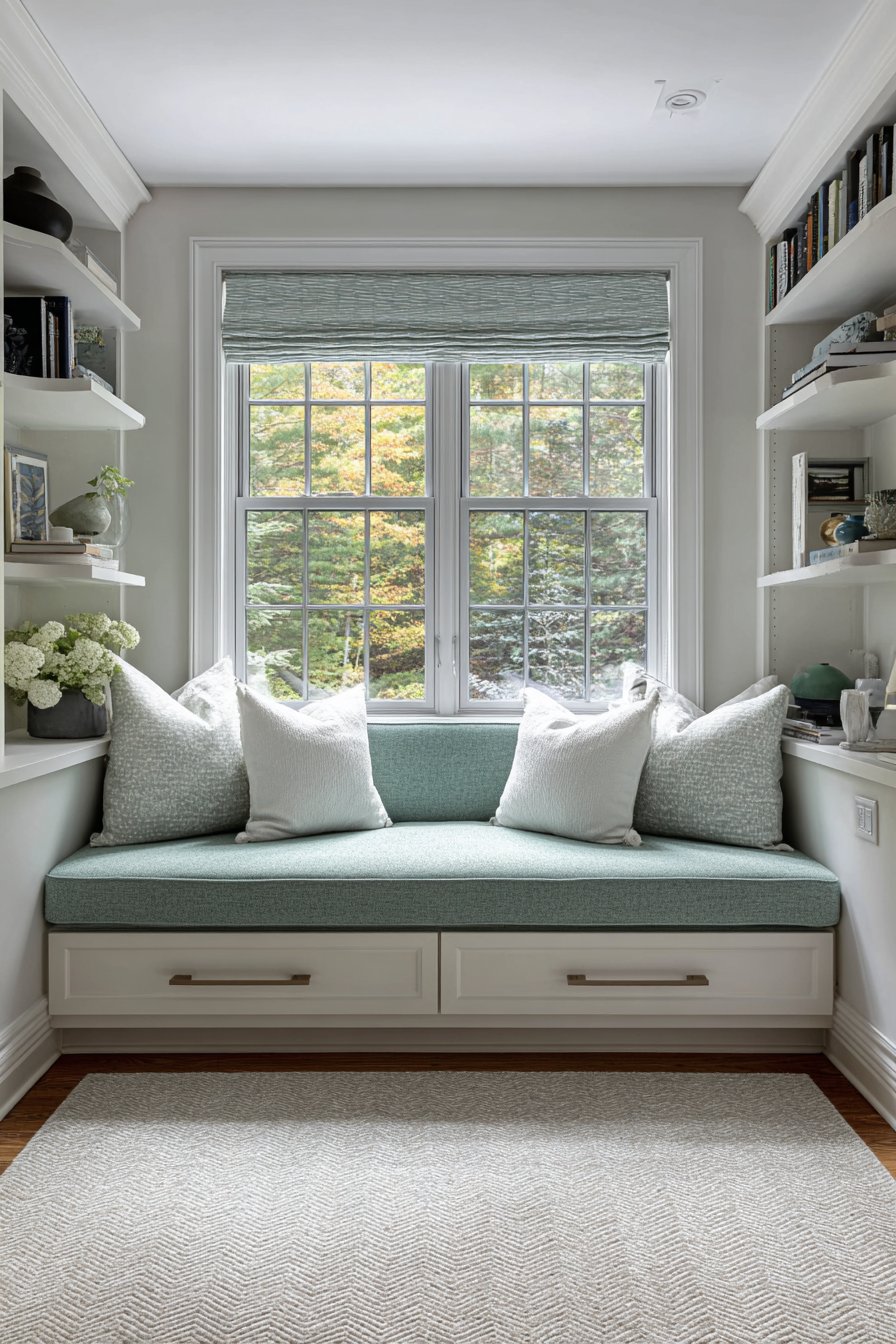
The combination of mint green, white, and grey creates a sophisticated, cohesive color story that feels both planned and relaxed. Open shelving in white flanks both sides of the window seat, displaying books and decorative objects in an accessible, attractive arrangement that combines beauty with function.
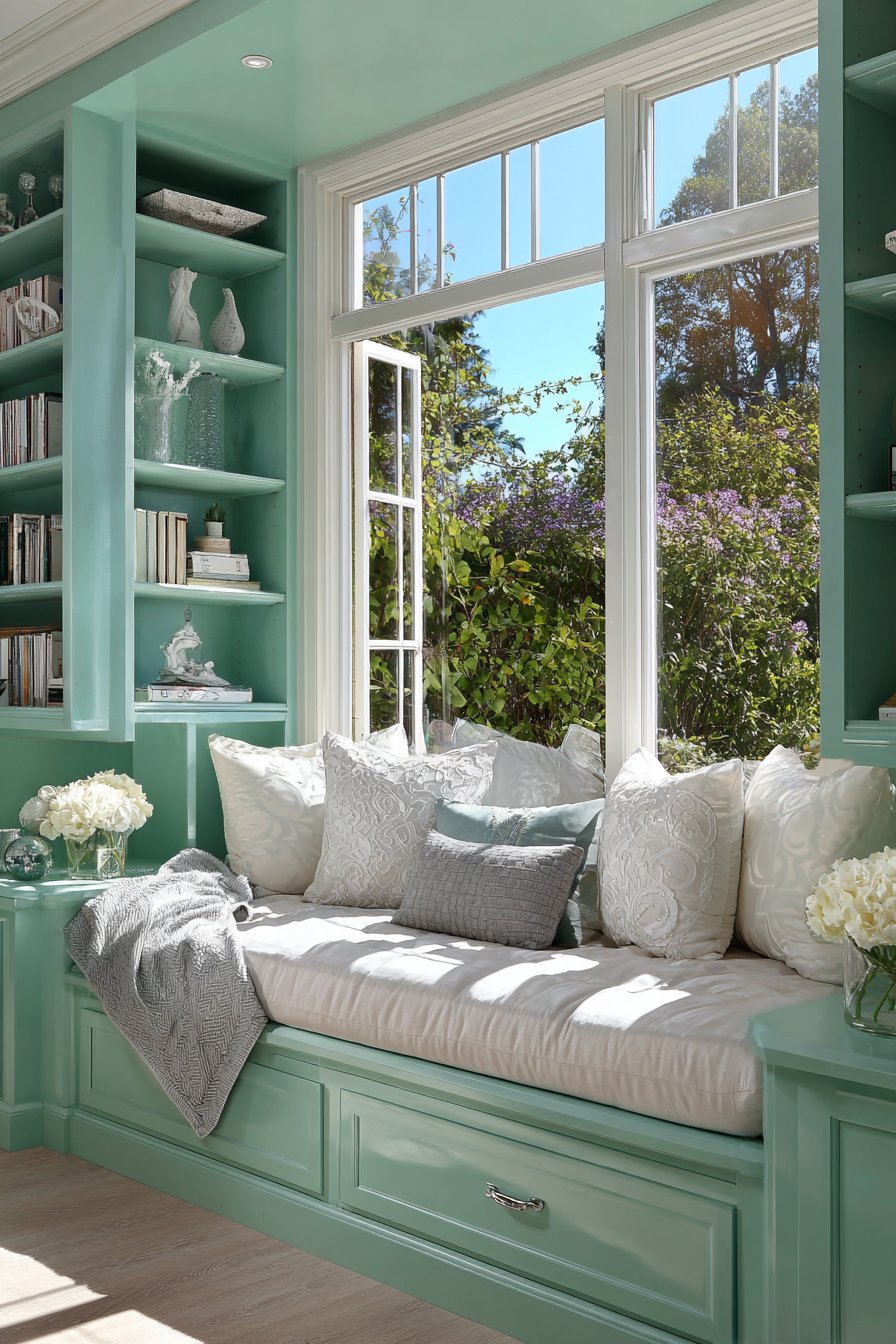
Soft natural daylight floods through the large window above, making the window seat an ideal location for reading, daydreaming, or simply enjoying the view. The abundant light also ensures the mint green upholstery appears fresh and true rather than shadowy or muted, an important consideration when using color in architectural elements. This design demonstrates a key principle of successful interior design: the best solutions address multiple needs simultaneously—this window seat provides seating, storage, display space, and aesthetic beauty while taking advantage of natural architectural features. It transforms a simple window into a destination within the room, a spot that family members will gravitate toward for its comfort, light, and peaceful atmosphere.
Key Design Tips:
- Build window seat depth to at least 18 inches for comfortable seating, with 20-24 inches being ideal for extended use
- Install drawer storage beneath the seat to maximize functionality and provide hidden storage for items you want accessible but not visible
- Upholster the window seat base in mint green fabric with stain-resistant treatment for durability in high-use areas
- Choose white or neutral cushions that can be easily cleaned or replaced while allowing the mint green base to remain the focal point
- Flank the window seat with open shelving to create a cohesive built-in appearance and provide display space for books and objects
- Position the window seat on a wall with strong natural light to make it an inviting destination for reading and relaxation
- Include both firm cushions for seating support and soft pillows for comfort and aesthetic layering
- Paint surrounding trim and shelving in crisp white to create clean definition and make the mint green upholstery pop visually
- Consider adding electrical outlets nearby for charging devices or powering reading lamps for evening use
10. Bohemian Mint Green Global Sanctuary
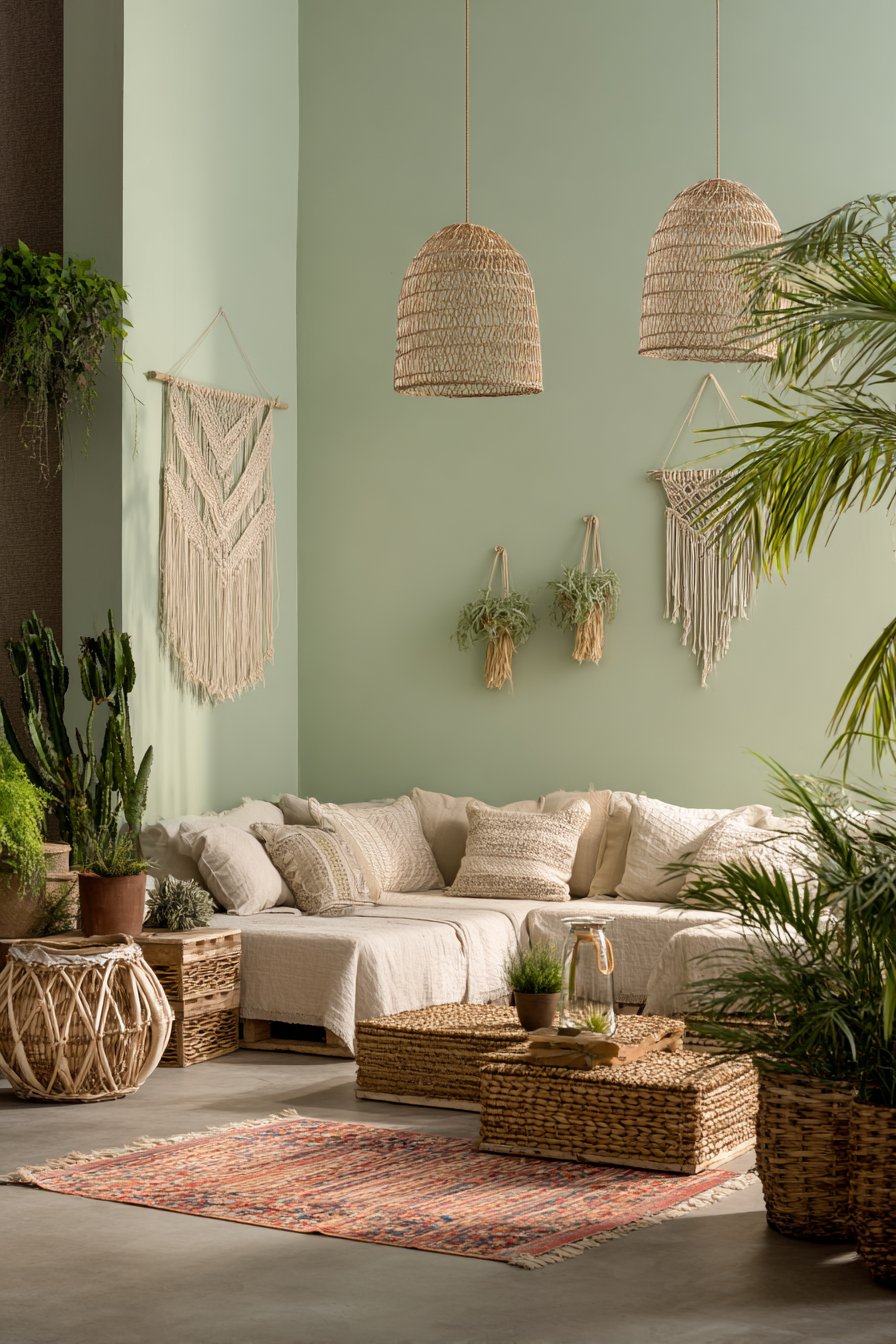
A bohemian living room embraces eclectic freedom and global influences, with mint green painted walls serving as a surprisingly perfect backdrop for layered textiles, natural materials, and collected treasures from around the world. The mint green creates a fresh, calming foundation that prevents the layered bohemian aesthetic from feeling chaotic or overwhelming, demonstrating how a cohesive wall color can unify diverse elements.
Macramé wall hangings and woven tapestries adorn the walls, introducing handcrafted texture and global artisan traditions that give the space soul and personality. These textile arts bring softness and organic forms that contrast beautifully with the flat painted surface.
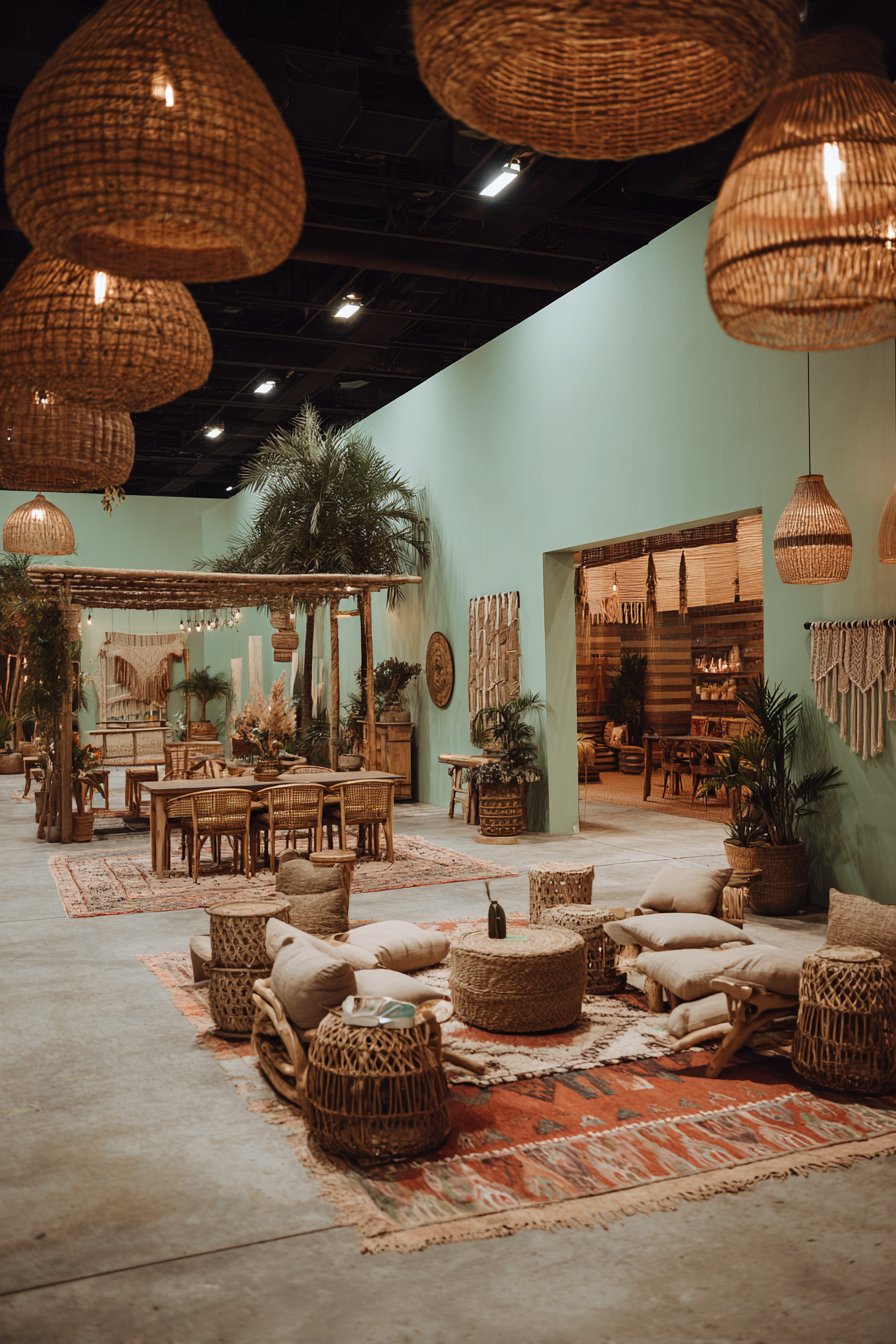
A low-profile sectional sofa in natural linen provides generous, comfortable seating with the casual, relaxed silhouette characteristic of bohemian style. The natural linen fabric adds subtle texture while maintaining neutral tones that allow the colorful textiles and accessories to take center stage.
Layered vintage rugs in terracotta and cream patterns create visual richness underfoot while defining the seating area and adding warmth both literally and figuratively. This layering technique—placing one rug atop another—is distinctly bohemian, creating depth and visual interest impossible to achieve with a single rug.
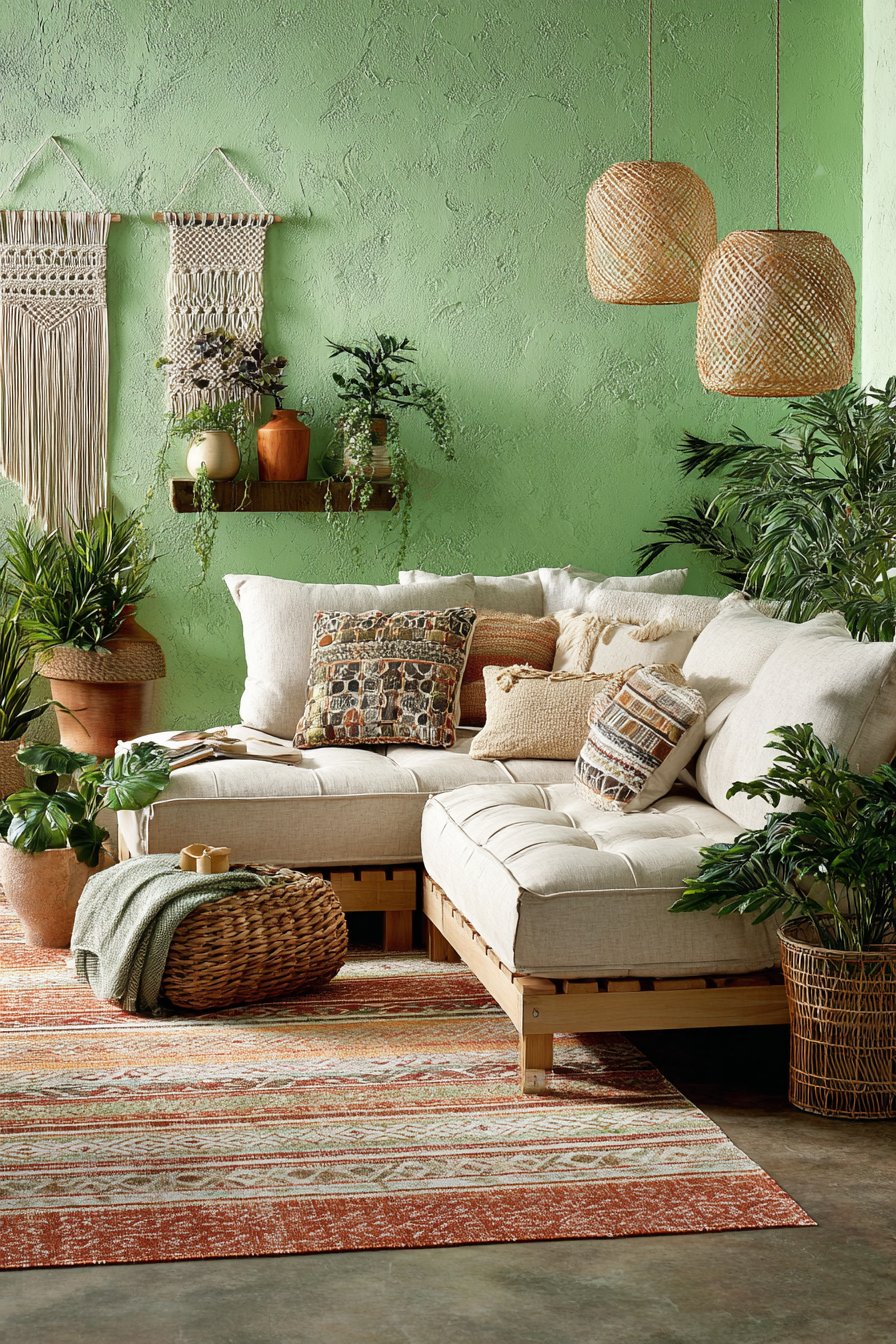
Rattan pendant lights hang from the ceiling, their woven natural forms casting interesting shadows and diffusing light in organic patterns throughout the space. These fixtures exemplify bohemian style’s embrace of natural materials and handcrafted quality over industrial uniformity. Potted plants in various sizes create an indoor garden feel, with greenery cascading from shelves, climbing from corners, and filling empty spots with living beauty.
The abundance of plants not only improves air quality but also reinforces the bohemian connection to nature and global traditions where indoor-outdoor living blurs boundaries. Together, these elements create a space that feels collected over time, traveled and worldly, yet deeply personal and comfortable.
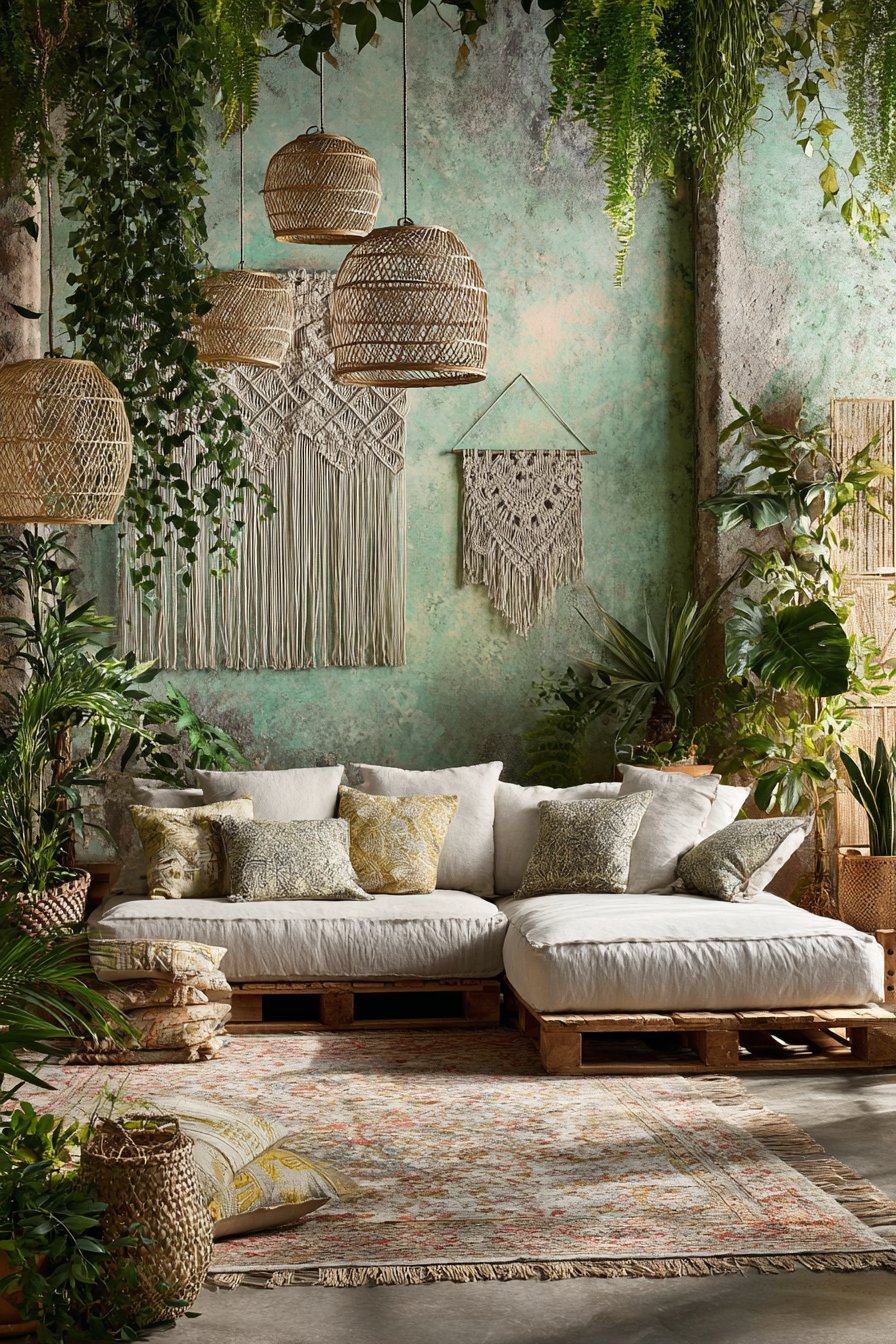
Key Design Tips:
- Paint walls in mint green to create a fresh, cohesive backdrop that unifies diverse bohemian elements without competing for attention
- Layer multiple rugs with different patterns and textures, ensuring they share some common colors for visual coherence
- Choose a low-profile sectional in natural fabric rather than structured traditional sofas for the relaxed silhouette bohemian style requires
- Hang macramé and woven textiles at varying heights to create visual rhythm and celebrate handcrafted artisan traditions
- Incorporate rattan and woven materials in lighting fixtures and furniture for organic texture and natural beauty
- Include plants abundantly, mixing sizes and varieties to create an indoor garden atmosphere
- Source vintage and global textiles from markets, travels, or ethical artisan cooperatives for an authentic bohemian character
- Embrace asymmetry and personal collection over matched sets—bohemian style celebrates individuality and accumulated treasures
- Use warm-toned lighting in evenings to enhance the cozy, intimate feeling and make the mint walls glow warmly
Why These Mint Green Living Room Designs Excel
These carefully curated mint green living room designs represent the pinnacle of contemporary interior design thinking, each demonstrating different aspects of why mint green has become such a sought-after color choice in modern home decor. The versatility of mint green across these varied design styles—from luxurious contemporary to casual farmhouse, minimalist Scandinavian to eclectic bohemian—proves this color’s remarkable adaptability. Unlike more restrictive color choices that work only within narrow stylistic parameters, mint green living rooms can be successfully executed across the entire spectrum of interior design approaches, making it an ideal choice for homeowners who want a fresh, distinctive look without limiting their stylistic options.
The psychological and practical benefits of mint green living rooms cannot be overstated. Color psychology research consistently shows that green tones reduce stress, lower blood pressure, and promote feelings of balance and renewal. Mint green specifically combines these calming properties with a refreshing quality that energizes without overstimulating, creating spaces that support both relaxation and social interaction. These living room designs leverage these psychological benefits while addressing practical concerns like natural light optimization, space definition, and functional furniture arrangement. Each space demonstrates how thoughtful color application—whether through painted walls, upholstered furniture, or architectural details—can transform the emotional experience of a room.
From a design execution standpoint, these mint green living rooms showcase professional-level techniques that separate exceptional interiors from merely adequate ones. The layering of textures seen throughout—velvet against jute, grasscloth behind linen, shiplap with white slipcovers—demonstrates sophisticated understanding of how tactile variety creates visual interest and sensory richness. The careful color palette limitations, typically restricting accompanying colors to neutrals, natural wood tones, and strategic metallic accents, show professional restraint that allows mint green to truly shine. The attention to natural lighting in each design recognizes that color is fundamentally about how surfaces interact with light, and that mint green specifically requires abundant natural illumination to display its fresh, clean qualities rather than appearing muddy or grey.
The integration of natural materials throughout these mint green living room designs reflects contemporary values around sustainability, authenticity, and connection to nature. Whether through jute rugs, rattan furniture, reclaimed wood tables, or abundant living plants, each space incorporates organic elements that ground the rooms and prevent them from feeling artificial or overly styled. This marriage of fresh mint green color with natural materials creates contemporary spaces that feel timeless rather than trendy, likely to remain appealing for years rather than feeling dated as specific design trends fade. The designs also demonstrate proper scale and proportion, with furniture sizes appropriately matched to room dimensions and architectural details proportioned to create visual harmony rather than competition.
Creating Your Perfect Mint Green Living Room
The versatility demonstrated across these ten mint green living room designs offers valuable insights for creating your own refreshed, personalized space. Whether you’re drawn to the luxurious sophistication of mint velvet furniture, the architectural drama of a grasscloth accent wall, or the casual comfort of farmhouse shiplap, the fundamental principles remain consistent: balance cool mint green tones with warm natural materials, layer diverse textures for sensory interest, maximize natural light to keep the color fresh and true, and exercise restraint in your accompanying color palette. These mint green living room ideas prove that this often-overlooked color deserves serious consideration for anyone seeking to create a living space that feels both contemporary and timeless, energizing and calming, distinctive and welcoming.
The key to successfully implementing mint green in your living room lies in understanding how the color interacts with your specific space’s architecture, natural light conditions, and existing elements. Test multiple shades of mint green in your actual room, observing how they appear at different times of day and under various lighting conditions before committing to a final choice. Consider which application method—full wall coverage, single accent wall, upholstered furniture, built-in cabinetry, or accessories—best suits your comfort level and design goals. Remember that mint green’s inherent versatility means you can start small with easily changeable elements like throw pillows and artwork, then gradually increase your commitment as you become confident in how the color performs in your specific environment.
These mint green living room designs ultimately demonstrate that great interior design isn’t about following rigid rules or mimicking showroom perfection, but rather about creating spaces that enhance your daily life while expressing your personal aesthetic. Mint green offers a refreshing alternative to neutral-only schemes without the overwhelming commitment of bolder color choices, creating living rooms that feel renewed and distinctive while remaining livable and adaptable. Whether you embrace mint green as a subtle whisper through accessories and accents or commit fully with painted walls and statement furniture, this versatile color can transform your living room into a sophisticated sanctuary that welcomes, refreshes, and inspires every day. Let these carefully crafted designs inspire your own mint green living room journey, creating a space uniquely suited to your lifestyle, preferences, and vision of home.
