


In today’s world of urban living and increasingly compact home designs, the tiny kitchen has evolved from a compromise into an opportunity for creative expression and ingenious problem-solving. These diminutive culinary spaces challenge us to rethink traditional kitchen design, forcing us to prioritize functionality without sacrificing aesthetic appeal. The art of designing a small kitchen lies in understanding that limitations can inspire innovation—every square inch becomes precious real estate, every design decision carries weight, and every storage solution must earn its place. When executed thoughtfully, a tiny kitchen can be just as efficient, beautiful, and enjoyable to use as its larger counterparts, proving that great design isn’t measured in square footage but in smart planning and purposeful choices.
The modern tiny kitchen represents a convergence of architectural ingenuity, interior design expertise, and practical living solutions. Whether you’re working with a galley layout in a city apartment, a single-wall kitchen in a studio, or a compact L-shaped configuration in a small home, the principles remain consistent: maximize vertical space, embrace multifunctional elements, and create visual lightness through strategic color and material choices. From Scandinavian minimalism to modern farmhouse charm, from sleek contemporary designs to vintage-inspired spaces, tiny kitchens can embody virtually any aesthetic while maintaining their essential functionality.
This comprehensive guide explores ten distinctive approaches to tiny kitchen design, each demonstrating unique strategies for conquering spatial constraints while creating environments that are both practical and inspiring. These designs showcase how different styles, color palettes, storage solutions, and material selections can transform cramped quarters into efficient, welcoming spaces where cooking becomes a pleasure rather than a challenge. Whether you’re renovating an existing small kitchen or designing a new compact space from scratch, these concepts offer valuable insights and actionable ideas to help you create a tiny kitchen that works beautifully for your lifestyle.
1. Floor-to-Ceiling White Brilliance with Butcher Block Warmth
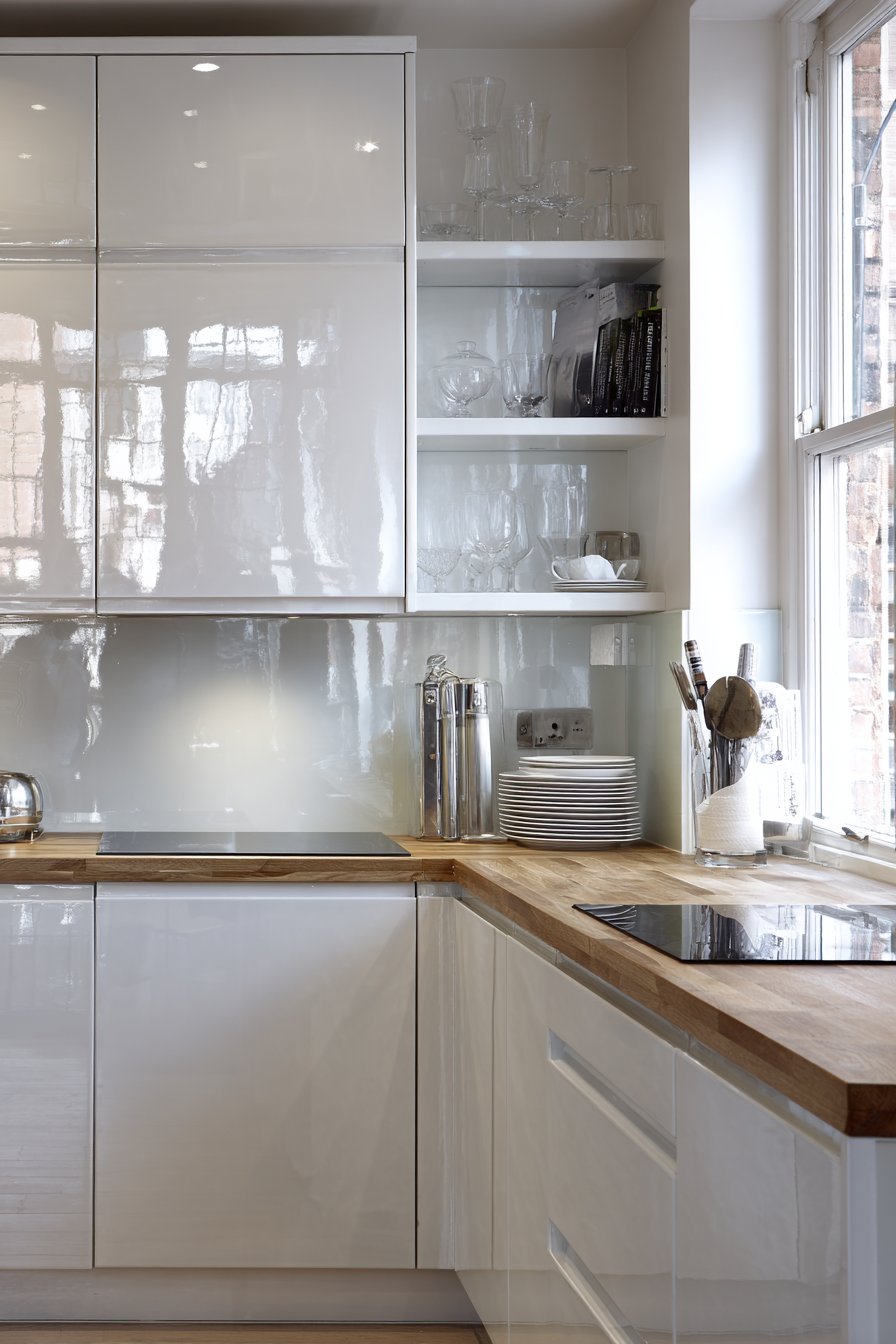
The power of vertical thinking becomes immediately apparent in this pristine white kitchen where custom cabinetry stretches from floor to ceiling, capturing every possible inch of storage potential. The handleless push-to-open doors create an uninterrupted visual flow across the cabinet surfaces, eliminating the visual clutter that traditional hardware can introduce in confined spaces.
This seamless approach not only contributes to a contemporary aesthetic but also prevents the physical obstruction that protruding handles might cause when moving through a tight kitchen. The crisp white finish reflects available light throughout the space, making the room feel considerably larger than its actual dimensions while maintaining a clean, timeless appeal that won’t feel dated in years to come.
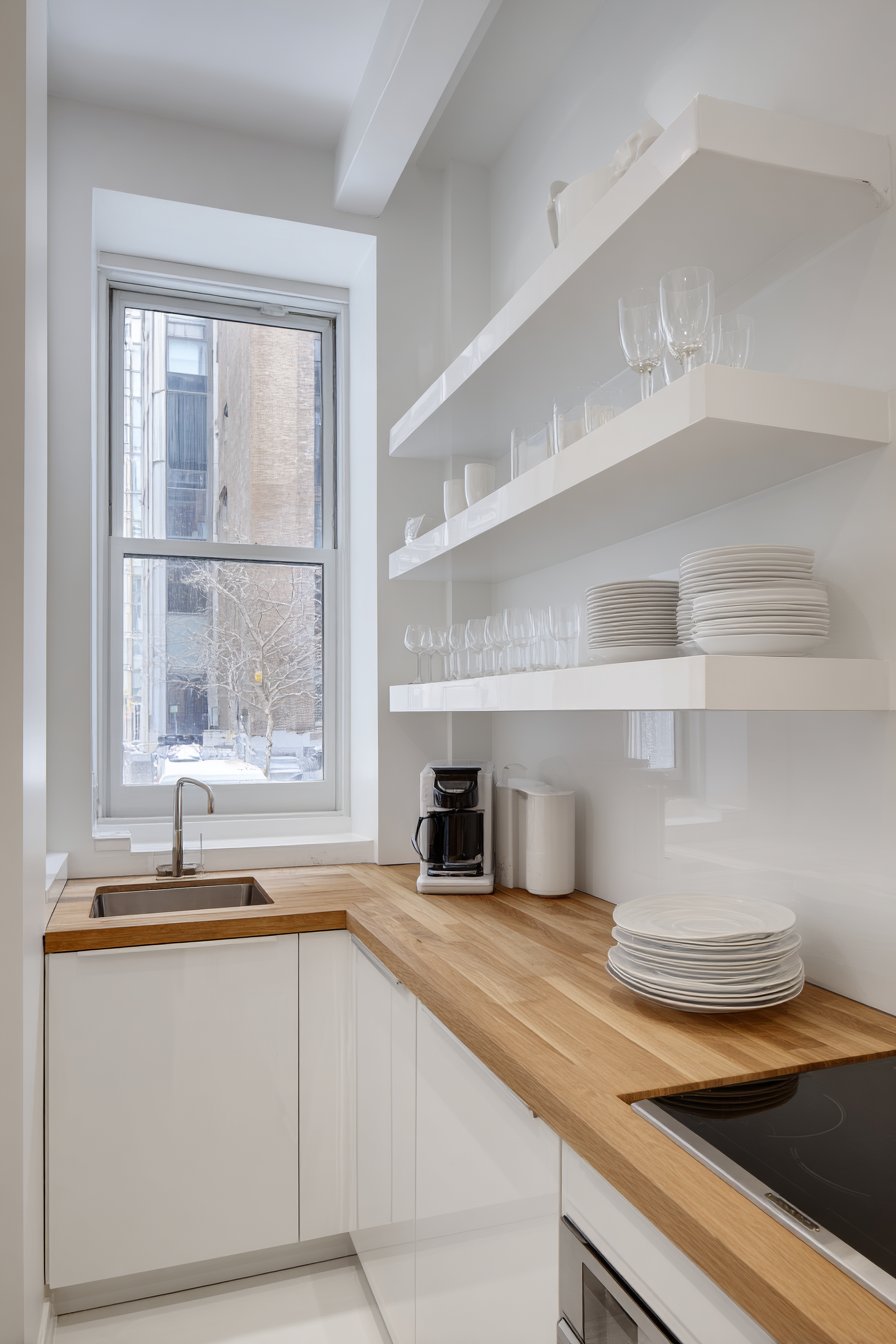
Against this backdrop of white efficiency, a compact butcher block countertop introduces essential warmth and organic texture that prevents the space from feeling sterile or clinical. The natural wood grain provides visual interest and tactile pleasure, creating a work surface that’s both beautiful and highly functional for food preparation.
A small two-burner induction cooktop integrates seamlessly into this surface, demonstrating that compact doesn’t mean compromising on cooking capability—these efficient appliances provide precise temperature control while consuming minimal counter space. The choice of induction technology offers additional benefits in tiny kitchens, as it generates less ambient heat than traditional gas or electric burners, keeping the small space more comfortable during cooking sessions.
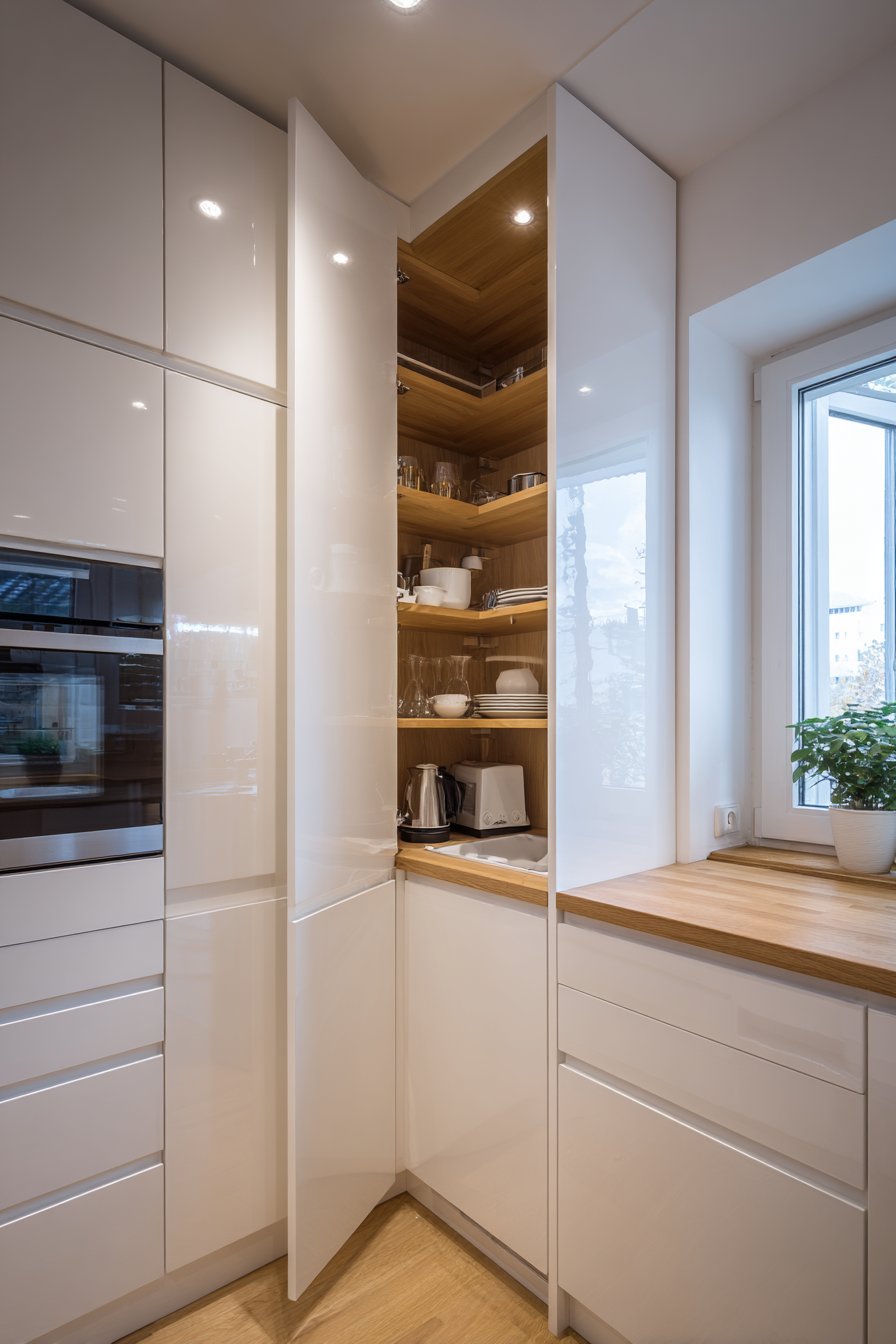
Open floating shelves positioned strategically within easy reach display a carefully curated selection of everyday dishes and glassware, proving that storage doesn’t always need to hide behind closed doors. This approach serves multiple purposes: it keeps frequently used items immediately accessible, adds visual interest through the display of attractive dishware, and creates an impression of openness that solid cabinet fronts might diminish.
The key to success with open shelving in small kitchens lies in disciplined organization and selecting items that contribute to rather than detract from the overall aesthetic. Natural daylight streaming through a small window becomes a crucial design element, illuminating the space with soft, flattering light that enhances the sense of openness.
Key Design Tips:
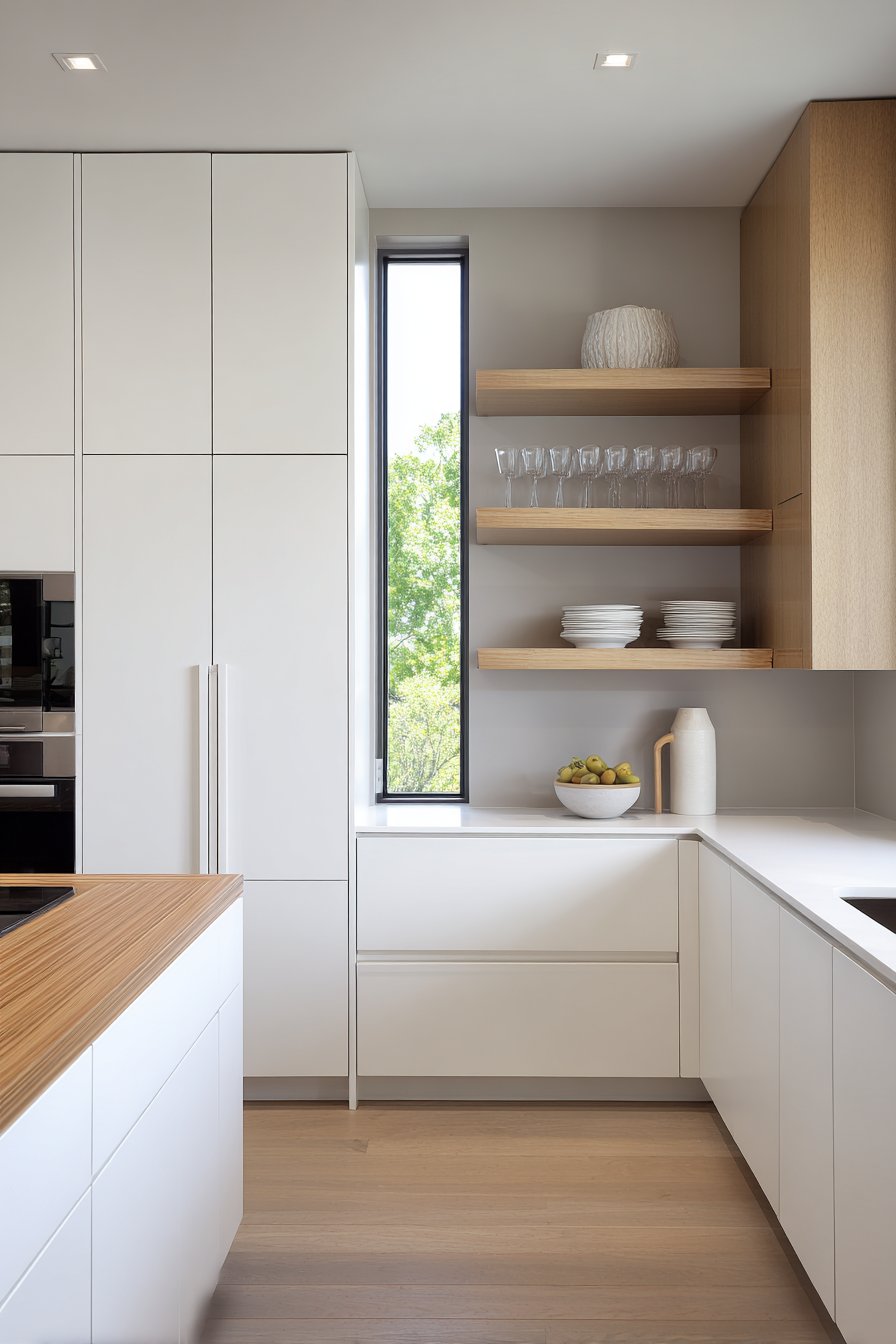
- Maximize vertical storage by installing cabinets that reach the ceiling, utilizing the often-wasted upper wall space for items used less frequently while keeping everyday essentials at convenient heights.
- Choose handleless cabinets with push-to-open mechanisms to create clean lines and prevent handles from catching on clothing or creating visual clutter in confined spaces.
- Introduce natural materials like butcher block countertops to add warmth and prevent all-white kitchens from feeling cold or institutional.
- Select compact appliances carefully, prioritizing induction cooktops and slim-profile options that provide full functionality while consuming less precious counter and floor space.
- Incorporate strategic open shelving to display attractive items, create visual breathing room, and keep frequently used dishes and glasses within easy reach.
2. Galley Perfection in Light Grey with Brass Accents
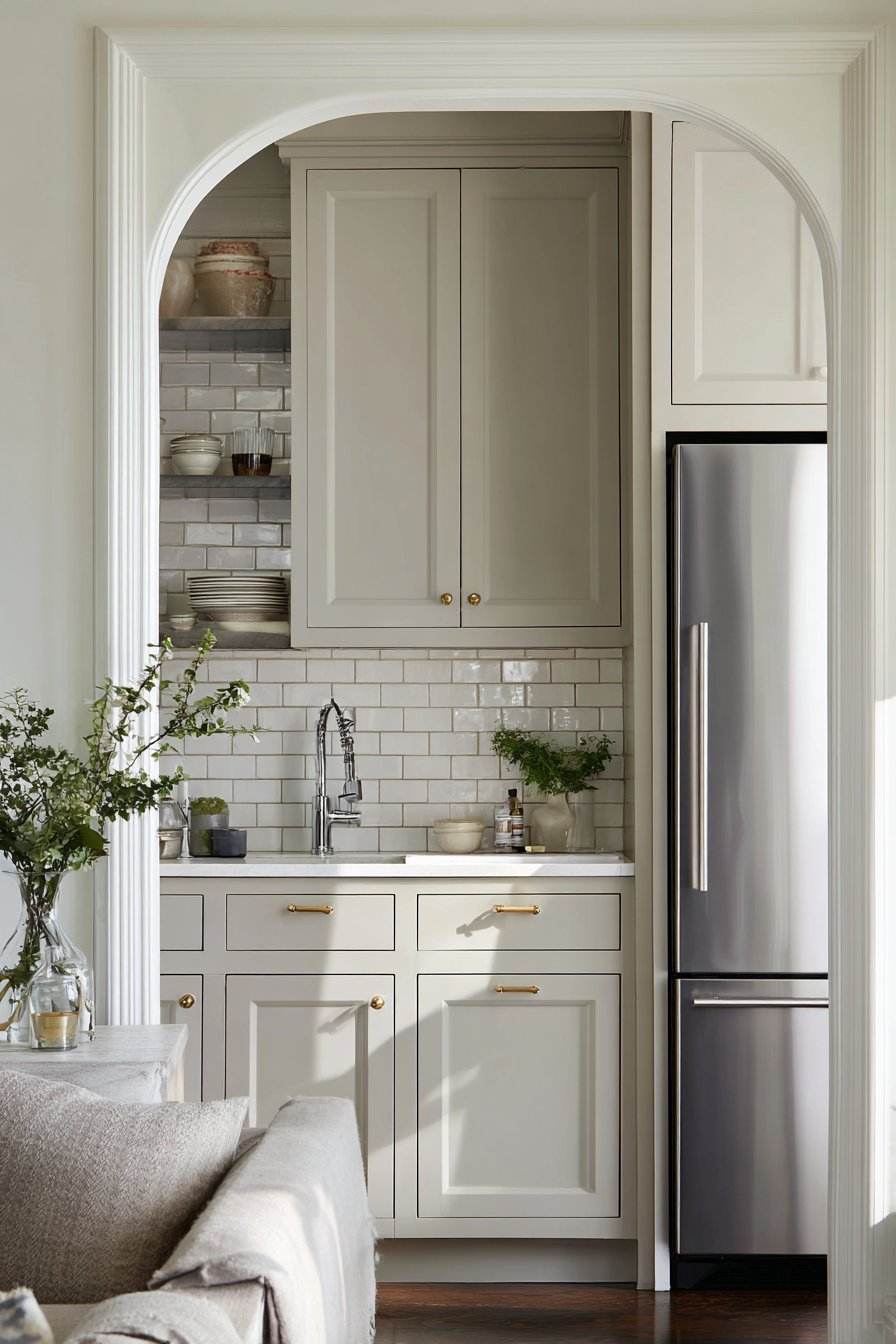
The narrow galley kitchen layout, while challenging, offers exceptional efficiency when designed properly, and this light grey interpretation demonstrates the style’s full potential. Shaker-style cabinets bring traditional charm to the contemporary space, their recessed panel doors adding subtle dimension without overwhelming the confined area.
The light grey finish strikes an ideal balance—darker than white for added character, yet pale enough to maintain the brightness essential in compact kitchens. Brass hardware punctuates each cabinet door and drawer, introducing gleaming warmth that elevates the entire design from simple to sophisticated, catching and reflecting light as you move through the space.
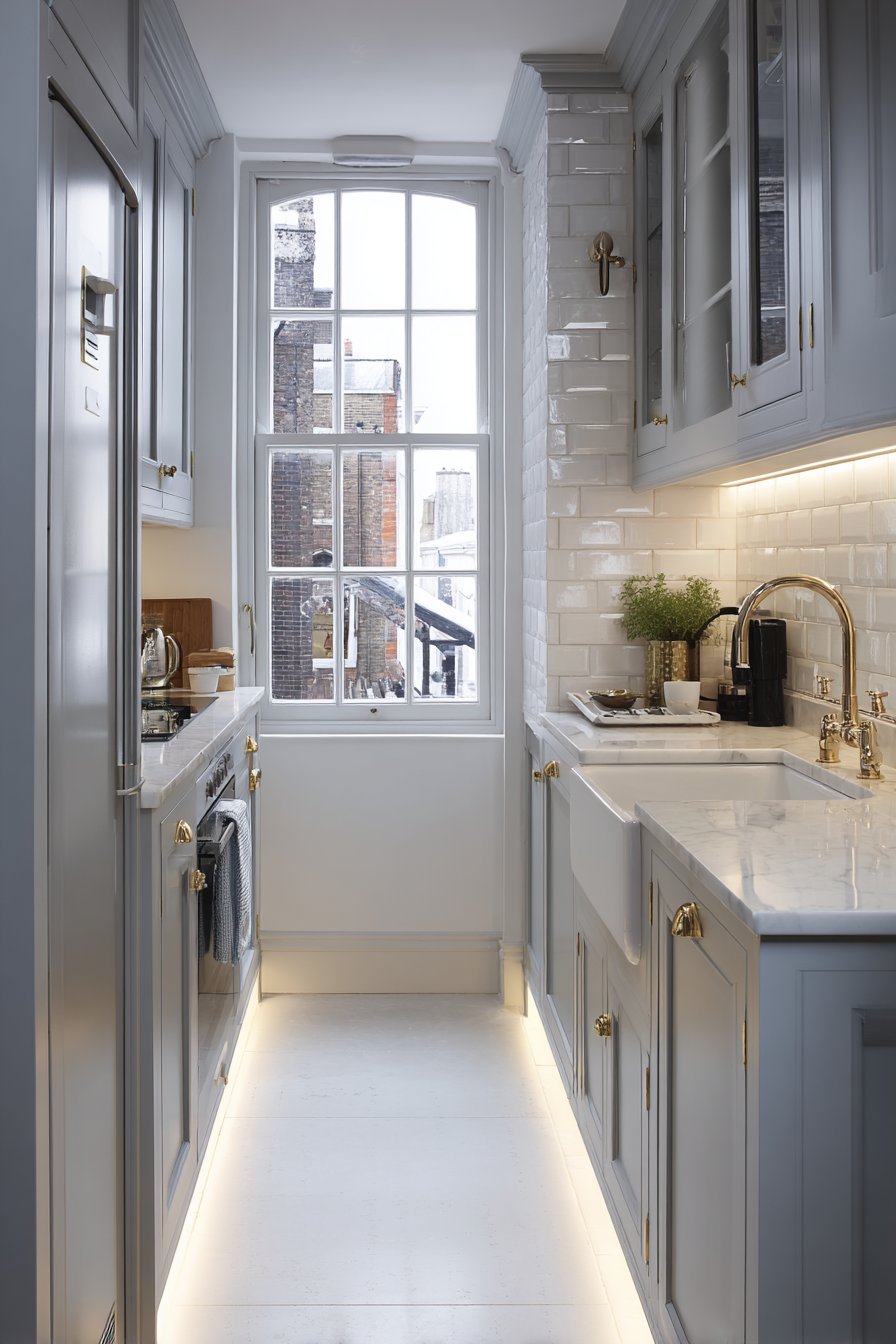
Every element in this galley kitchen has been selected with dimensional constraints in mind, yet nothing feels compromised. A slimline stainless steel refrigerator fits perfectly into its designated alcove, its reduced depth allowing for better traffic flow in the narrow corridor while still providing adequate food storage capacity.
The compact sink with a pull-down faucet represents another smart space-saving choice—the flexible faucet head extends your reach without requiring excessive counter space, making it easier to fill large pots or wash oversized items that might otherwise be challenging in a small sink.
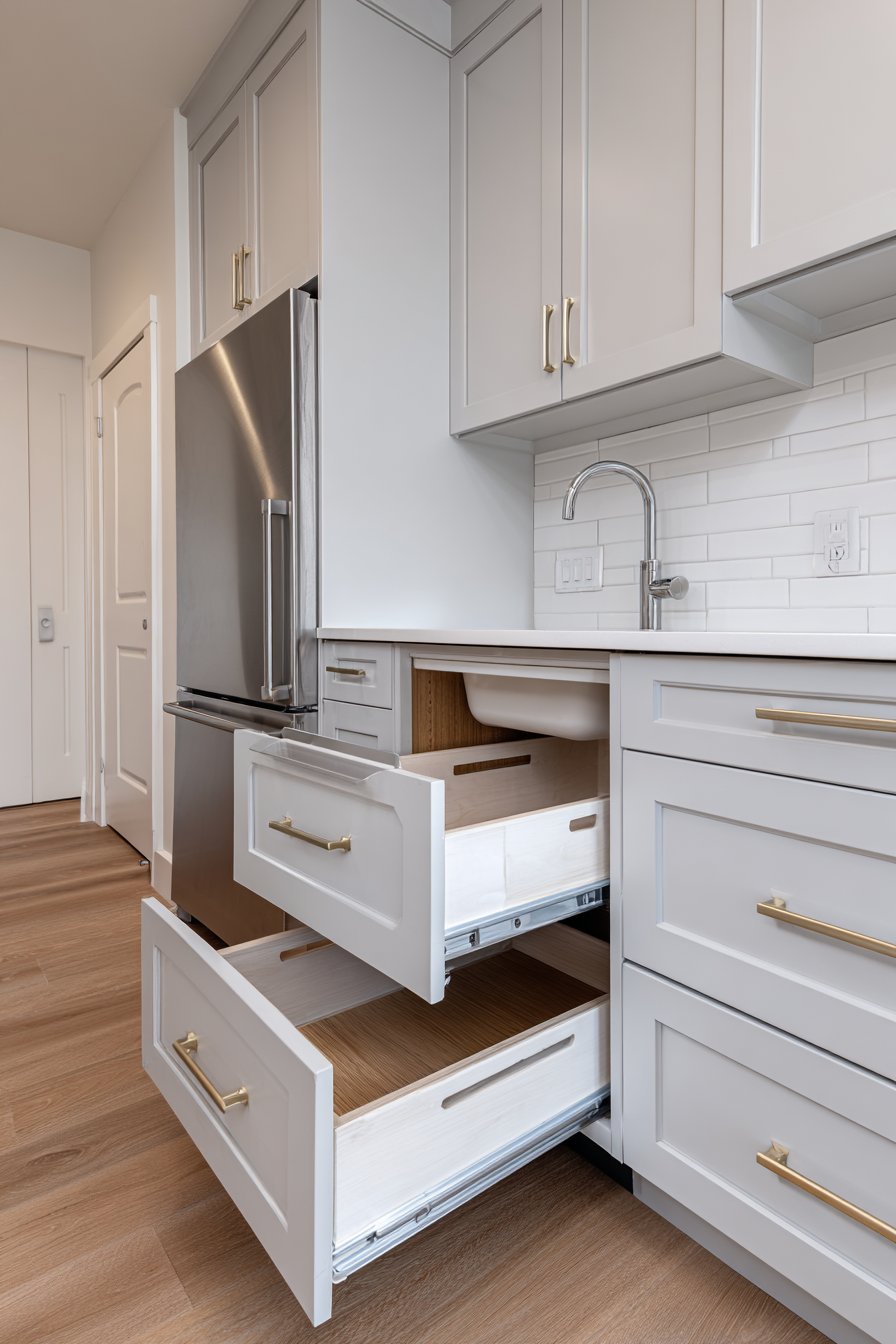
The white subway tile backsplash serves as more than mere decoration; its glossy surface acts as a light-reflecting element that bounces illumination throughout the confined space, effectively doubling the impact of available natural light.
This classic tile pattern remains timelessly appealing while its horizontal orientation subtly suggests greater width than actually exists. The clean grout lines contribute to the sense of order and precision that makes small kitchens feel intentional rather than cramped.
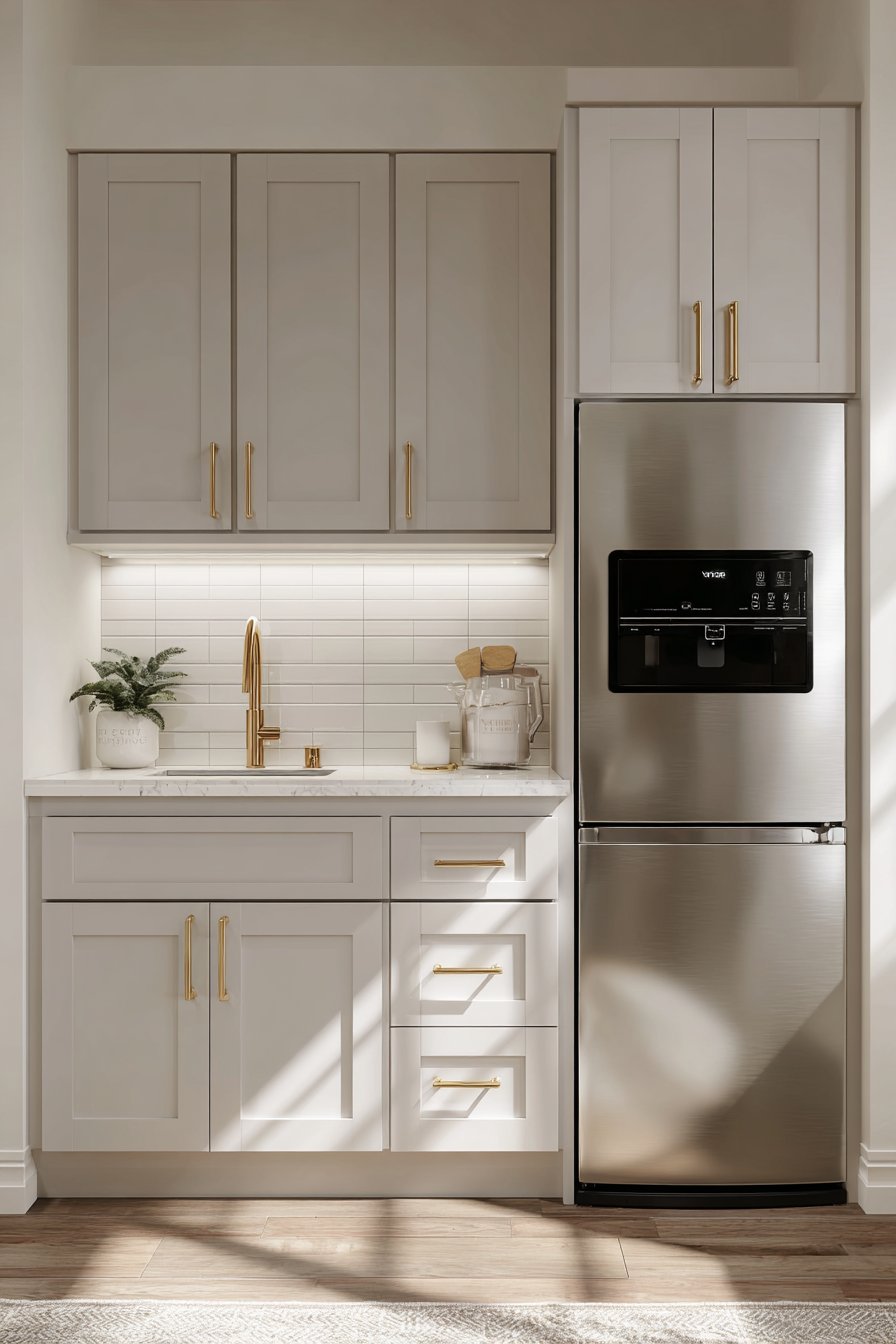
Thoughtful proportions define this galley kitchen’s success, with every measurement carefully considered to ensure adequate workspace without creating bottlenecks. The balanced exposure of professional interior photography captures the texture of cabinet finishes and the clean lines of the efficient layout, revealing how proper lighting design can transform a potentially dark corridor kitchen into an inviting culinary workspace. The functional design proves that galley kitchens, when executed with attention to proportion and detail, can rival more spacious layouts in both beauty and practicality.
Key Design Tips:
- Embrace the galley layout as an efficiency advantage rather than a limitation, placing work zones opposite each other for optimal workflow.
- Use light-reflecting surfaces like glossy subway tile to maximize available natural light and create a brighter, more spacious atmosphere.
- Choose brass or gold-toned hardware to introduce warmth and luxury that prevents grey kitchens from feeling cold or institutional.
- Select slimline appliances specifically designed for tight spaces, paying attention to depth measurements that impact traffic flow.
- Install pull-down faucets that provide flexibility and extended reach without requiring tall spout clearance or excessive counter space.
3. Navy Blue L-Shaped Innovation with Fold-Down Flexibility
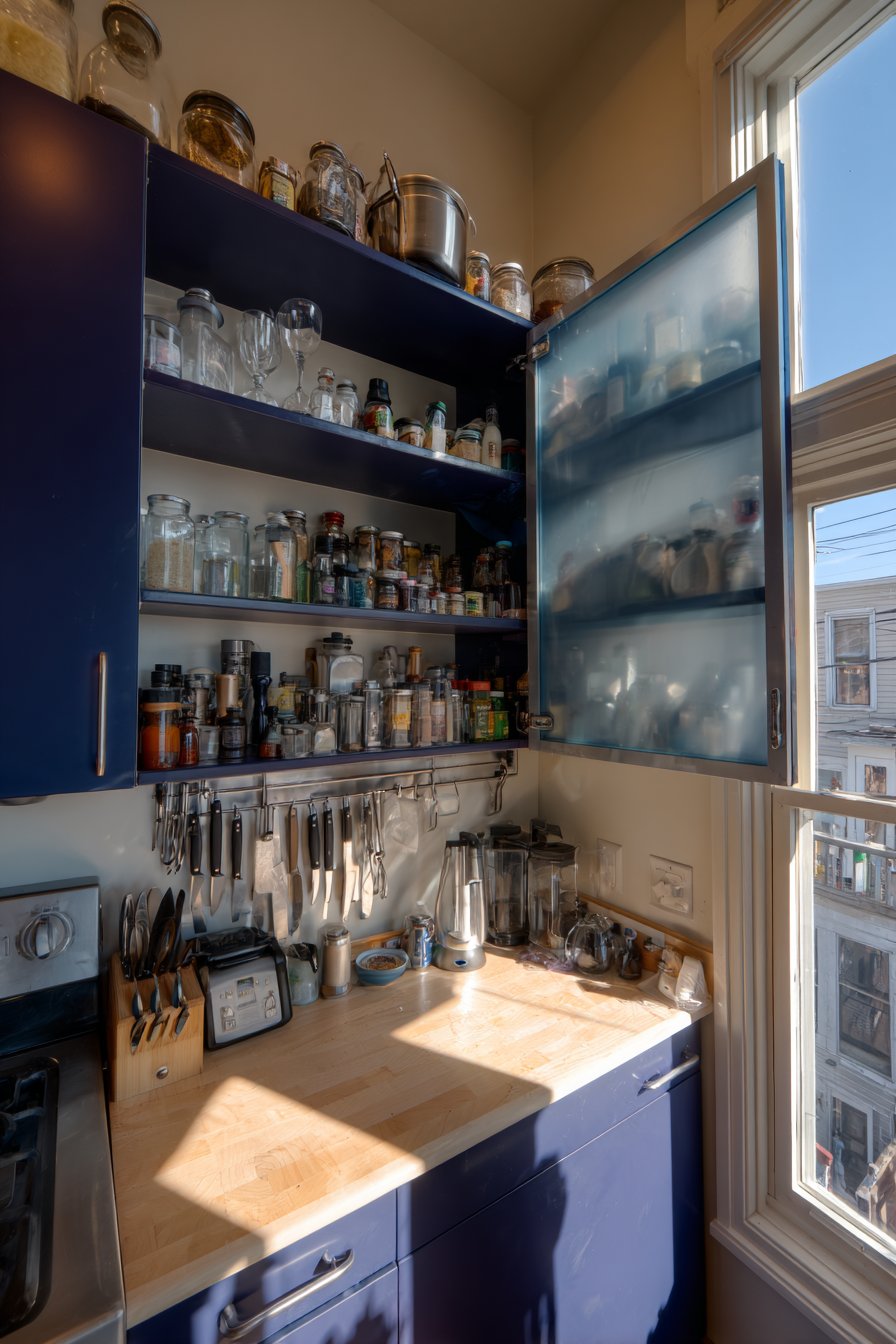
Bold color choices can transform tiny kitchens from apologetic afterthoughts into confident design statements, and this navy blue L-shaped configuration proves the point beautifully. The deep, saturated blue of the lower cabinets grounds the space with sophisticated drama while the frosted glass-fronted upper cabinets maintain airiness and visual lightness.
This two-tone approach creates vertical interest while preventing the darker color from overwhelming the compact dimensions—the eye travels upward to the lighter upper cabinets, effectively drawing attention to the room’s full height rather than its limited floor space.
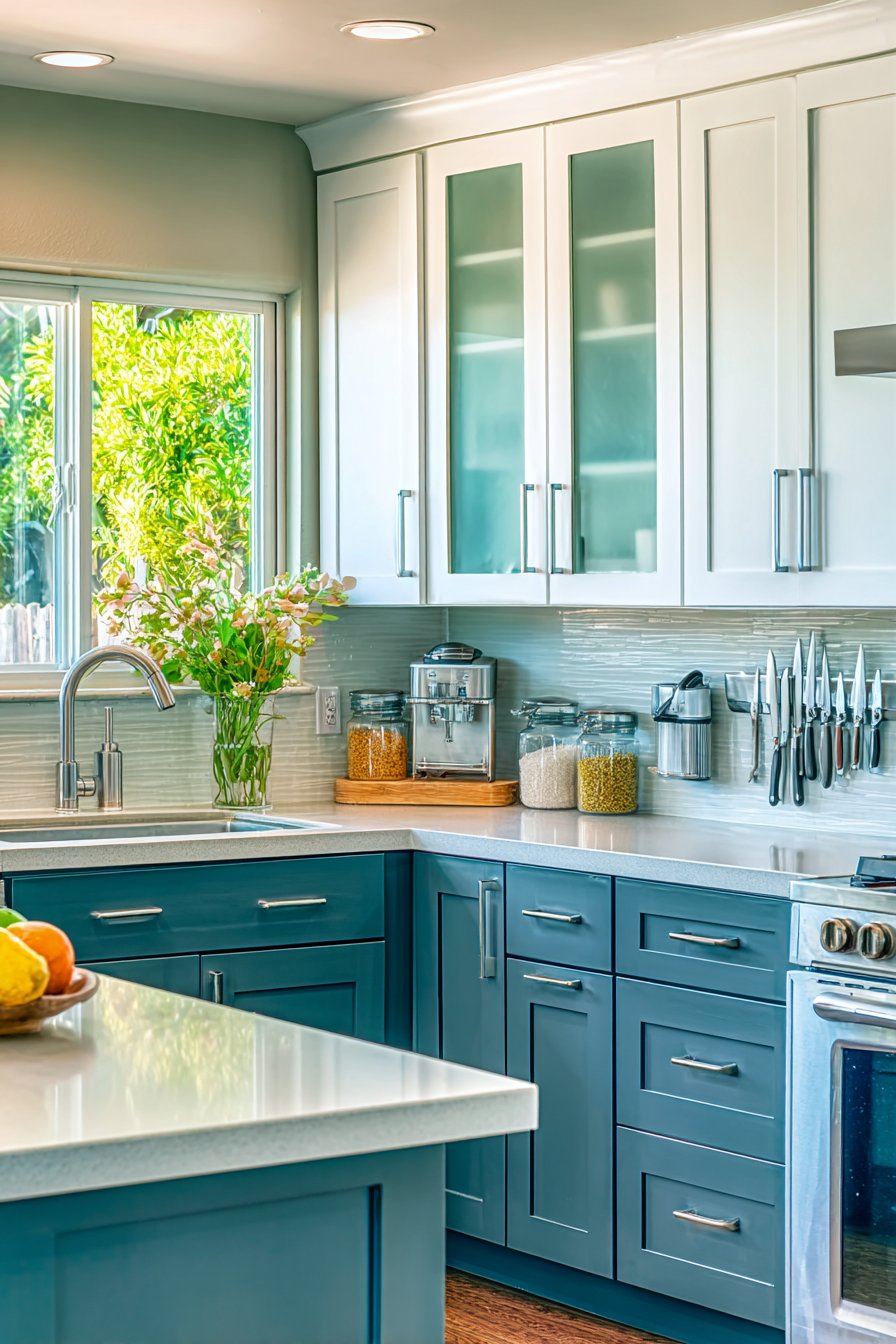
The L-shaped configuration makes brilliant use of corner space, often a problematic area in tiny kitchens where awkward angles can create dead zones. Specialized corner cabinet solutions with rotating shelves or pull-out systems ensure that every cubic inch remains accessible and functional rather than becoming a black hole where items disappear. This layout also provides two perpendicular work surfaces, allowing for distinct zones dedicated to different kitchen tasks without requiring excessive square footage.
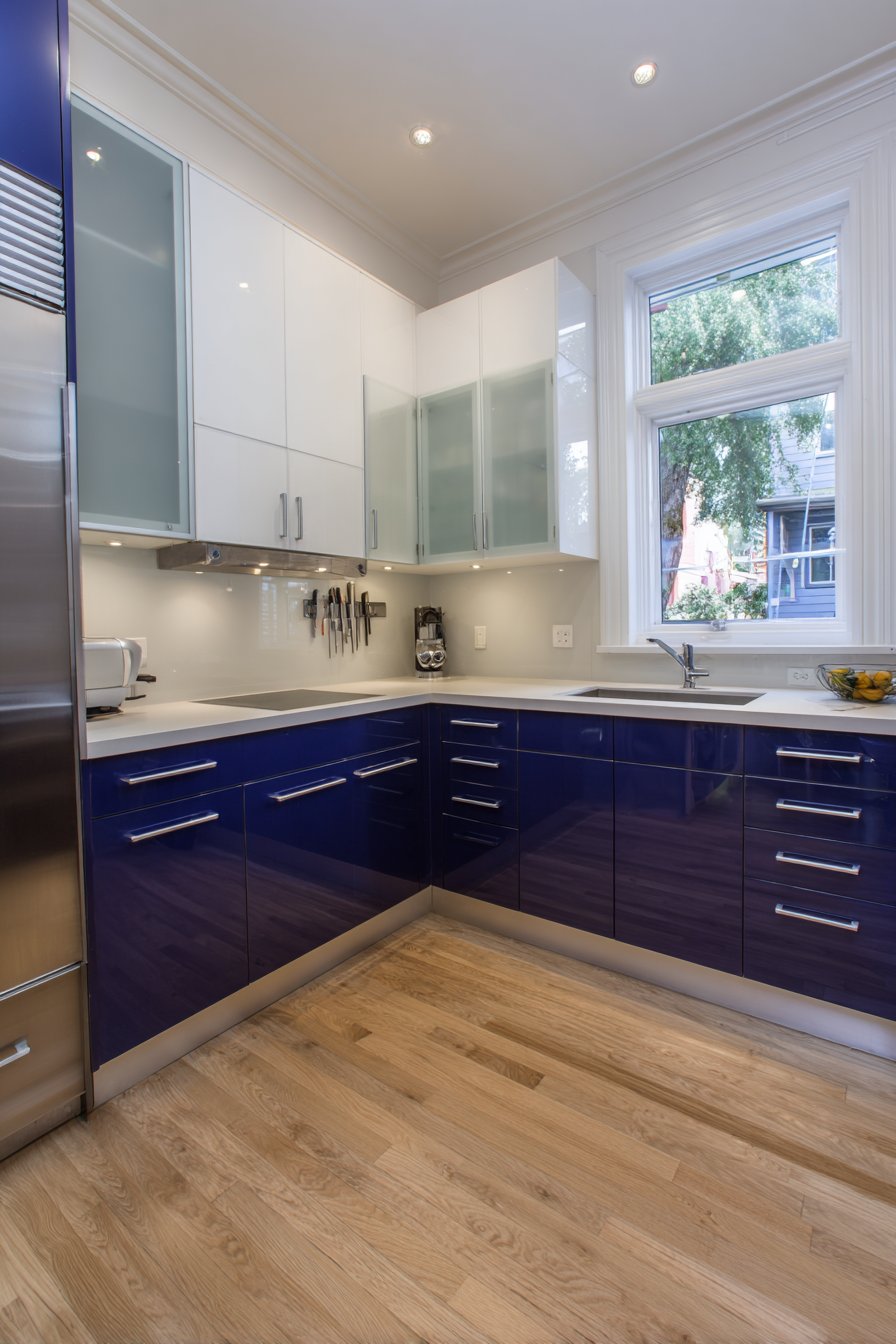
Perhaps the most ingenious element is the fold-down breakfast bar attached to the wall, demonstrating that small kitchens can indeed accommodate dining space when designers think creatively. When needed, the bar extends to provide comfortable seating for quick meals or casual work sessions; when not in use, it folds flat against the wall, reclaiming precious floor space. This transformational approach to furniture exemplifies the flexibility that makes tiny kitchens livable—spaces that adapt to changing needs throughout the day rather than committing permanently to a single function.
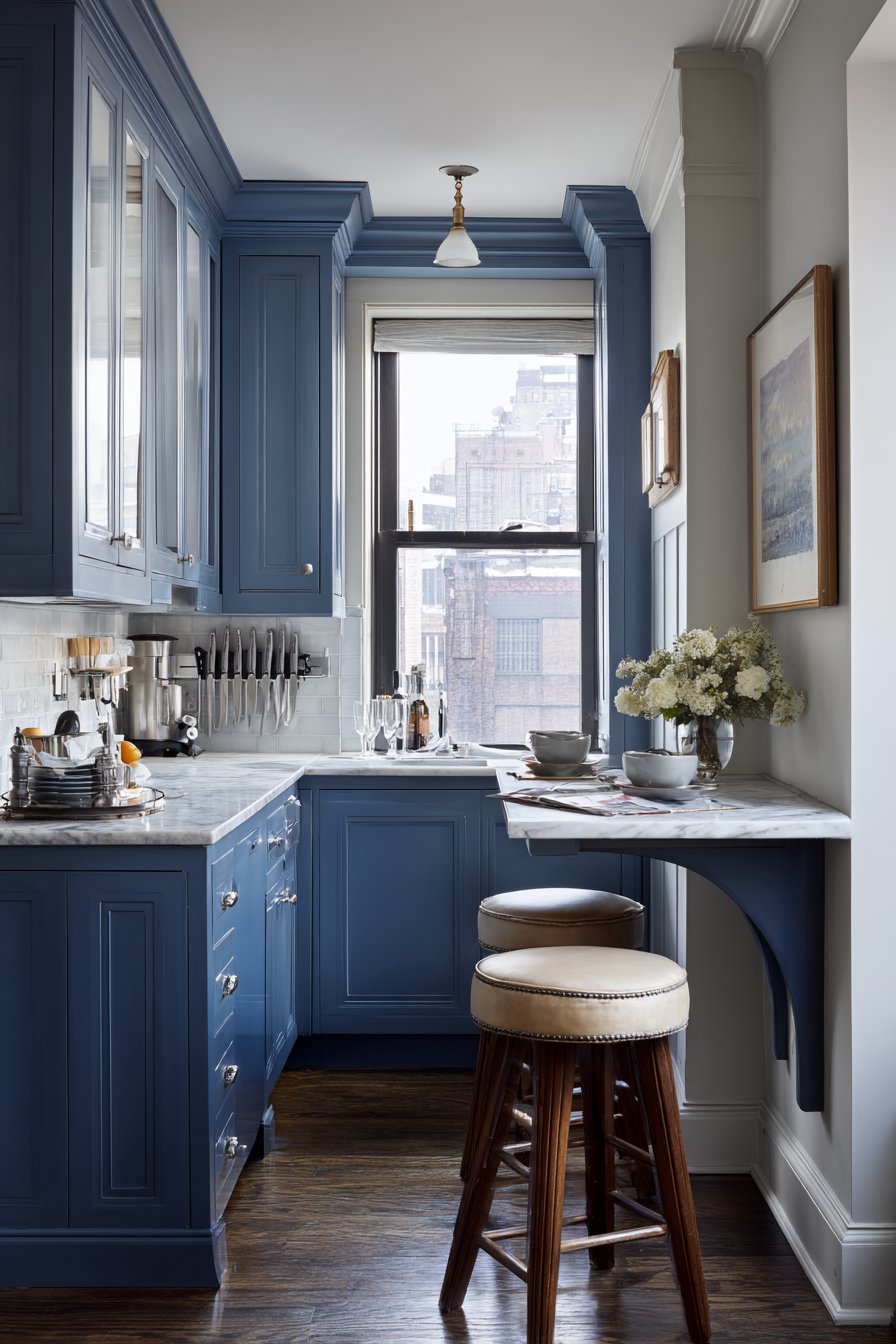
Vertical storage solutions abound, with magnetic knife strips and wall-mounted utensil holders keeping essential tools immediately accessible without cluttering the limited counter space. This vertical thinking extends the kitchen’s storage capacity exponentially, utilizing wall surfaces that might otherwise remain bare.
Natural morning light streaming through a petite window highlights these smart space-saving solutions, revealing how thoughtful planning can integrate storage and prep areas seamlessly. The frosted glass cabinet fronts offer a practical compromise—concealing clutter while allowing light to pass through, creating depth and dimension that solid doors would block.
Key Design Tips:
- Use bold colors strategically on lower cabinets to ground the space while keeping upper cabinets lighter to maintain openness and visual height.
- Maximize corner efficiency with specialized storage solutions like lazy Susans or pull-out corner systems that make awkward spaces fully functional.
- Install fold-down or pull-out surfaces that provide additional workspace or dining areas when needed but disappear when not in use.
- Mount tools vertically using magnetic strips, hooks, and wall-mounted holders to free counter space while keeping items accessible.
- Choose frosted glass cabinet fronts to add visual interest and allow light penetration while concealing less-than-perfect cabinet interiors.
4. Open Shelving Showcase with Mobile Island Flexibility
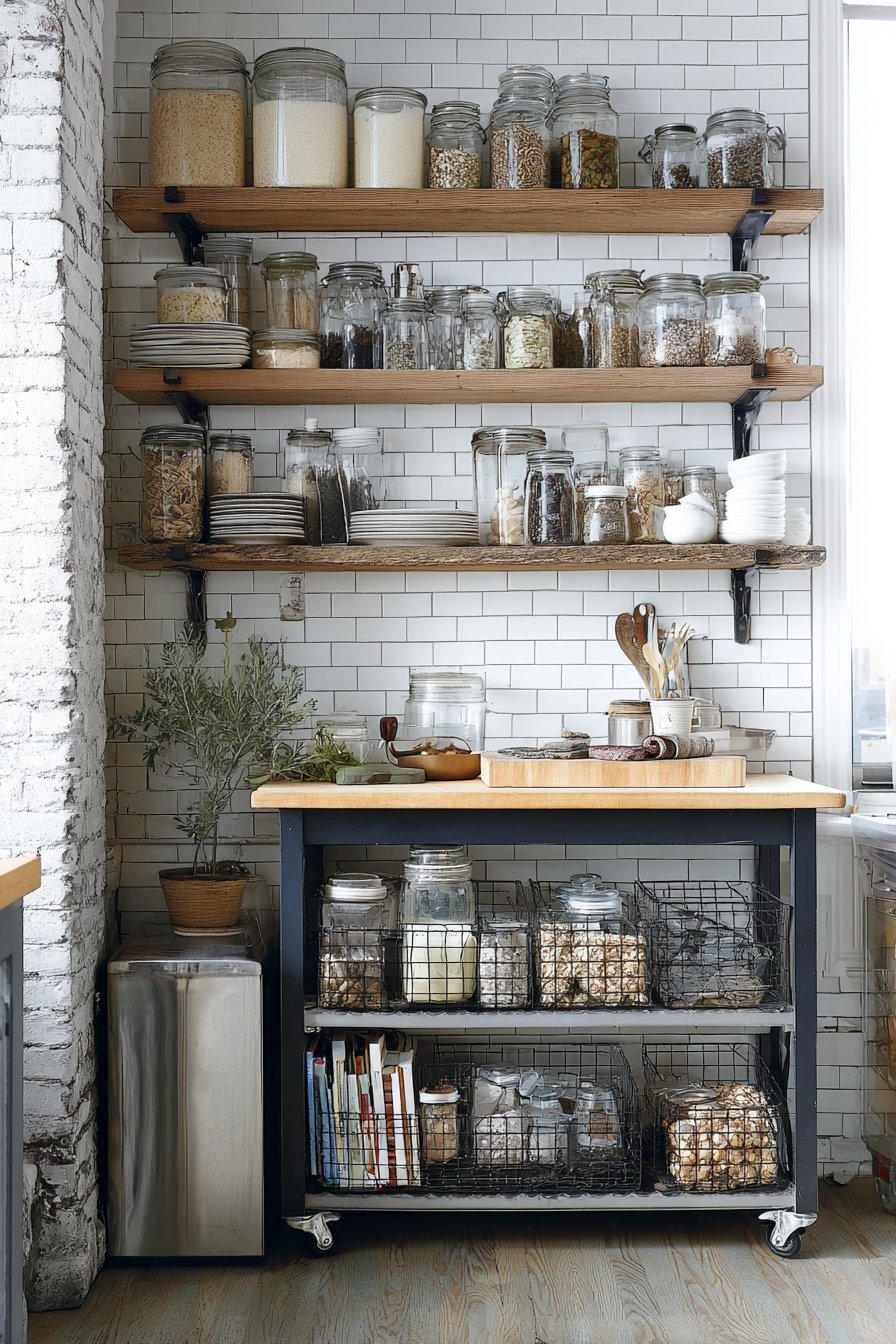
The strategic use of open shelving transforms this tiny kitchen into an airy, accessible space that feels more like a curated collection than a cramped cooking area. Wooden brackets mounted on white subway-tiled walls provide sturdy support for shelves that display neatly organized pantry items in matching glass containers.
This approach to storage embraces visibility, turning everyday ingredients into decorative elements while ensuring that everything remains immediately identifiable and reachable. The uniformity of the glass containers creates visual calm despite the open arrangement, proving that exposed storage can feel organized and intentional rather than chaotic.
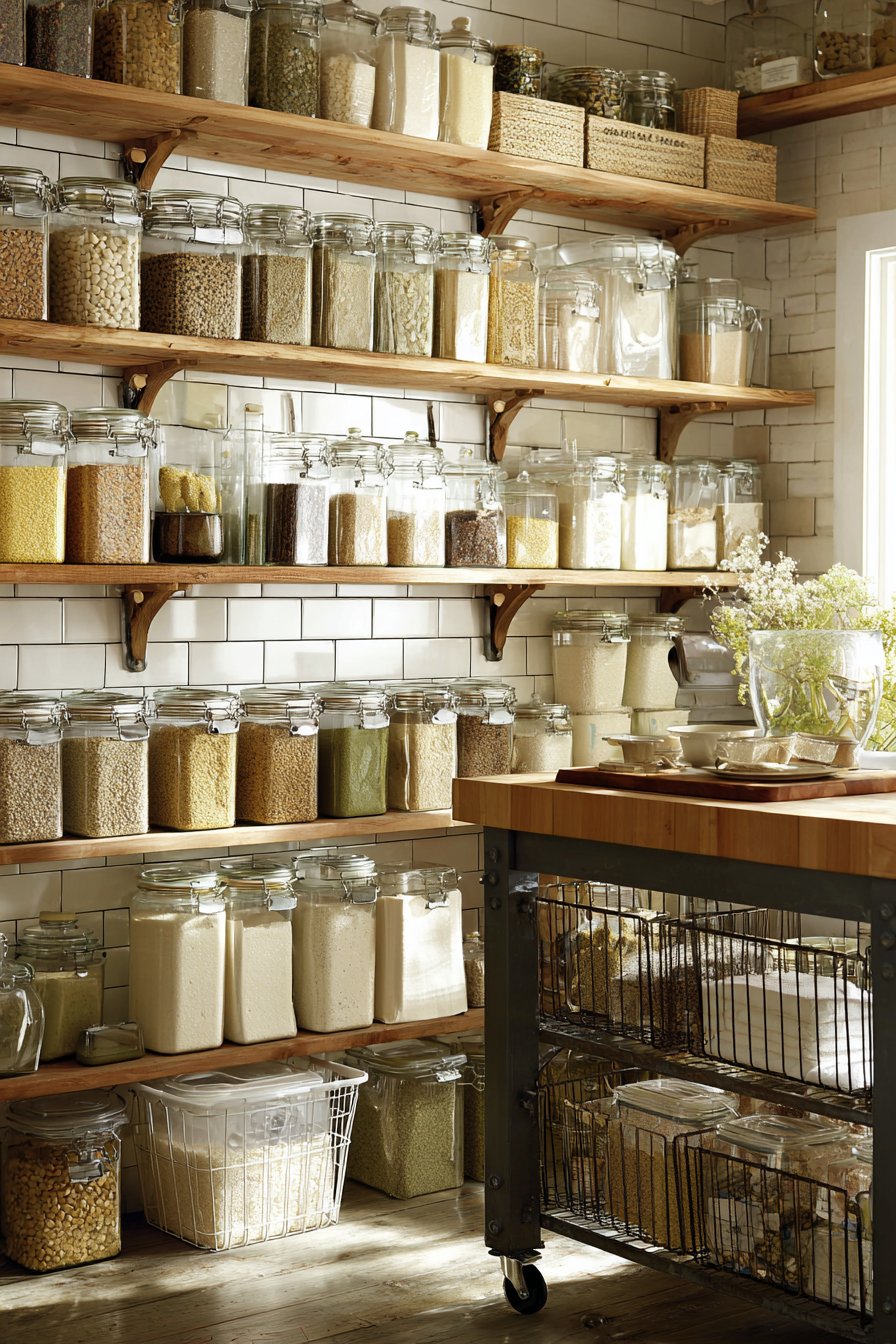
A portable kitchen island on casters serves as the space’s secret weapon, providing additional prep space and storage exactly where needed, then rolling out of the way when more floor space becomes necessary. The butcher block top offers a warm, durable work surface ideal for cutting, chopping, and food assembly, while wire baskets below keep frequently used items organized and visible. This mobility represents a fundamental shift in how we think about small kitchen design—rather than permanent fixtures that commit space to a single purpose, movable elements allow the room to transform based on immediate needs.
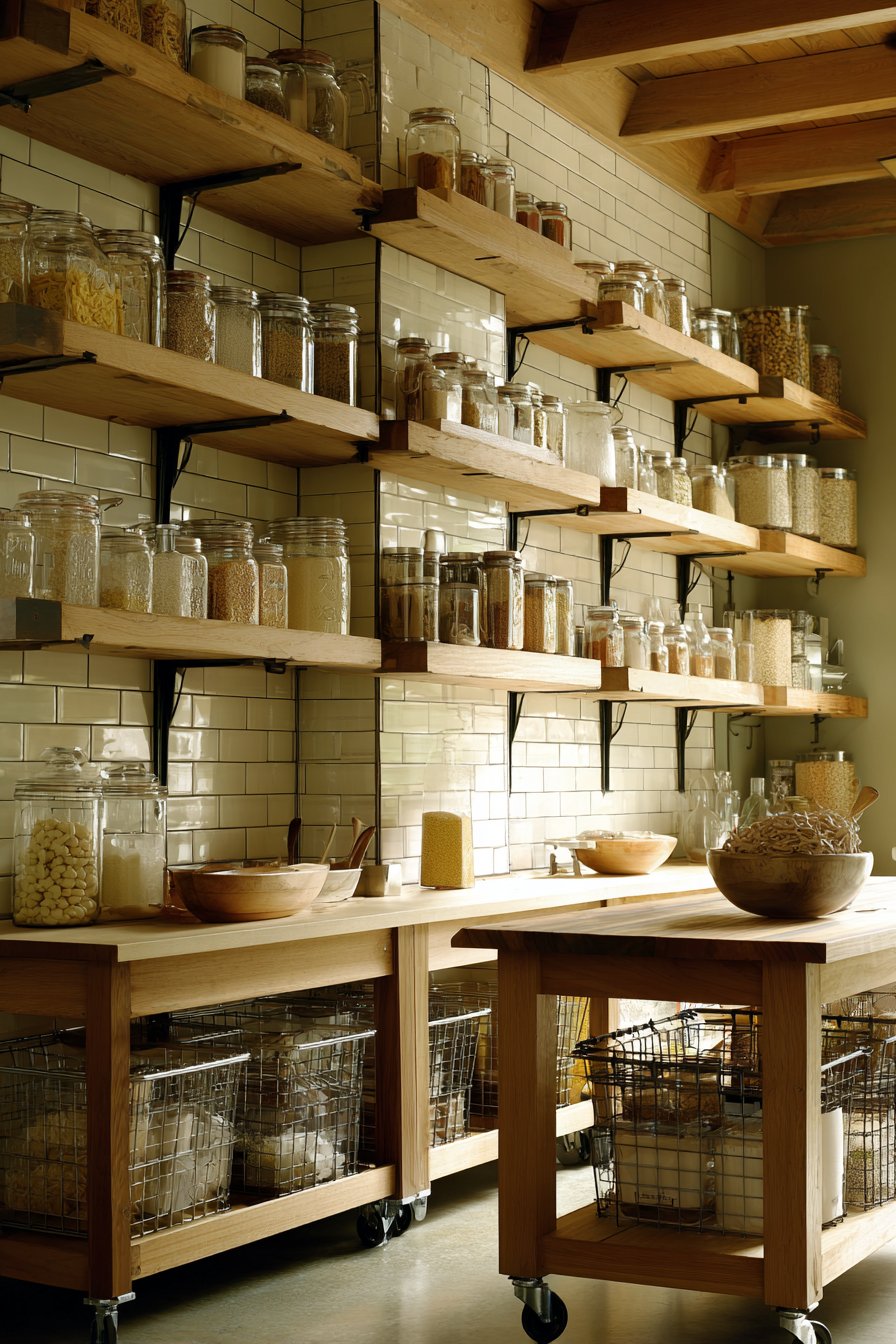
Compact under-cabinet lighting illuminates the minimal counter workspace with focused task lighting that makes food preparation safer and more pleasant. In tiny kitchens where natural light may be limited or window placement restricts workspace location, proper artificial lighting becomes essential.
LED strip lights or puck lights mounted beneath upper cabinets eliminate shadows on work surfaces while consuming minimal energy and generating little heat—both important considerations in compact spaces.
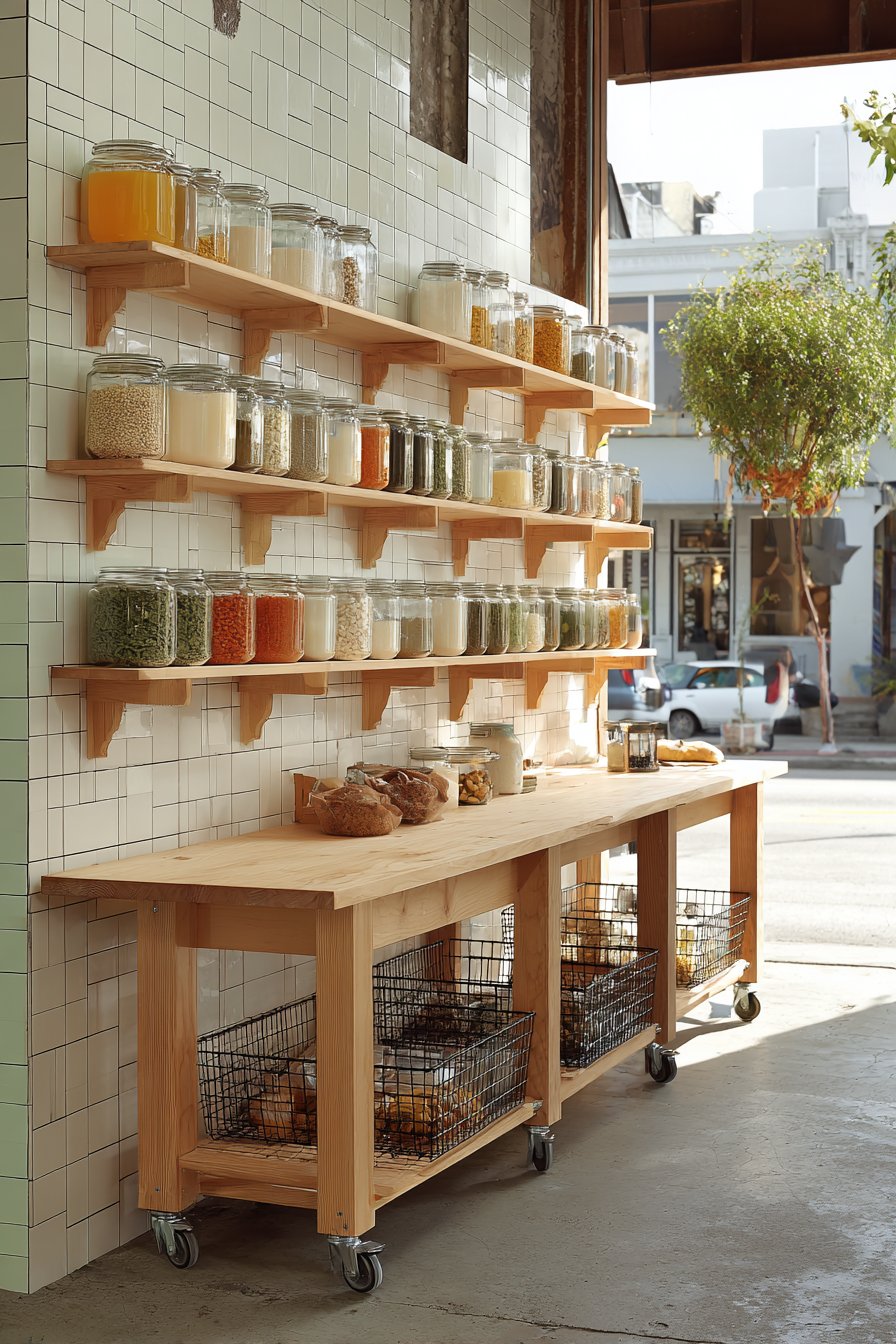
The vertical organization strategy captured in wide-angle architectural photography reveals how this kitchen maximizes every available surface for storage. Upper walls support the open shelving systems, mid-level spaces provide work surfaces and prep areas, and lower cabinets offer closed storage for less attractive items. The accessible storage solutions mean that even when cabinets are minimal or nonexistent, everything has a designated place. Soft diffused daylight enhances the cozy yet functional atmosphere, demonstrating that small kitchens can feel warm and inviting when design choices prioritize openness and accessibility over concealment.
Key Design Tips:
- Organize open shelving deliberately using matching containers and disciplined arrangement to create visual harmony rather than clutter.
- Add a mobile island on casters to provide flexible workspace and storage that can be repositioned or removed as needs change.
- Install under-cabinet lighting to ensure adequate task illumination on work surfaces, especially where natural light is limited.
- Use vertical wall space extensively with shelving, hooks, and mounted storage to expand capacity beyond traditional cabinets.
- Choose butcher block surfaces for mobile elements, providing warm, durable work surfaces that improve with age and use.
5. Scandinavian Serenity in Natural Oak with Integrated Appliances
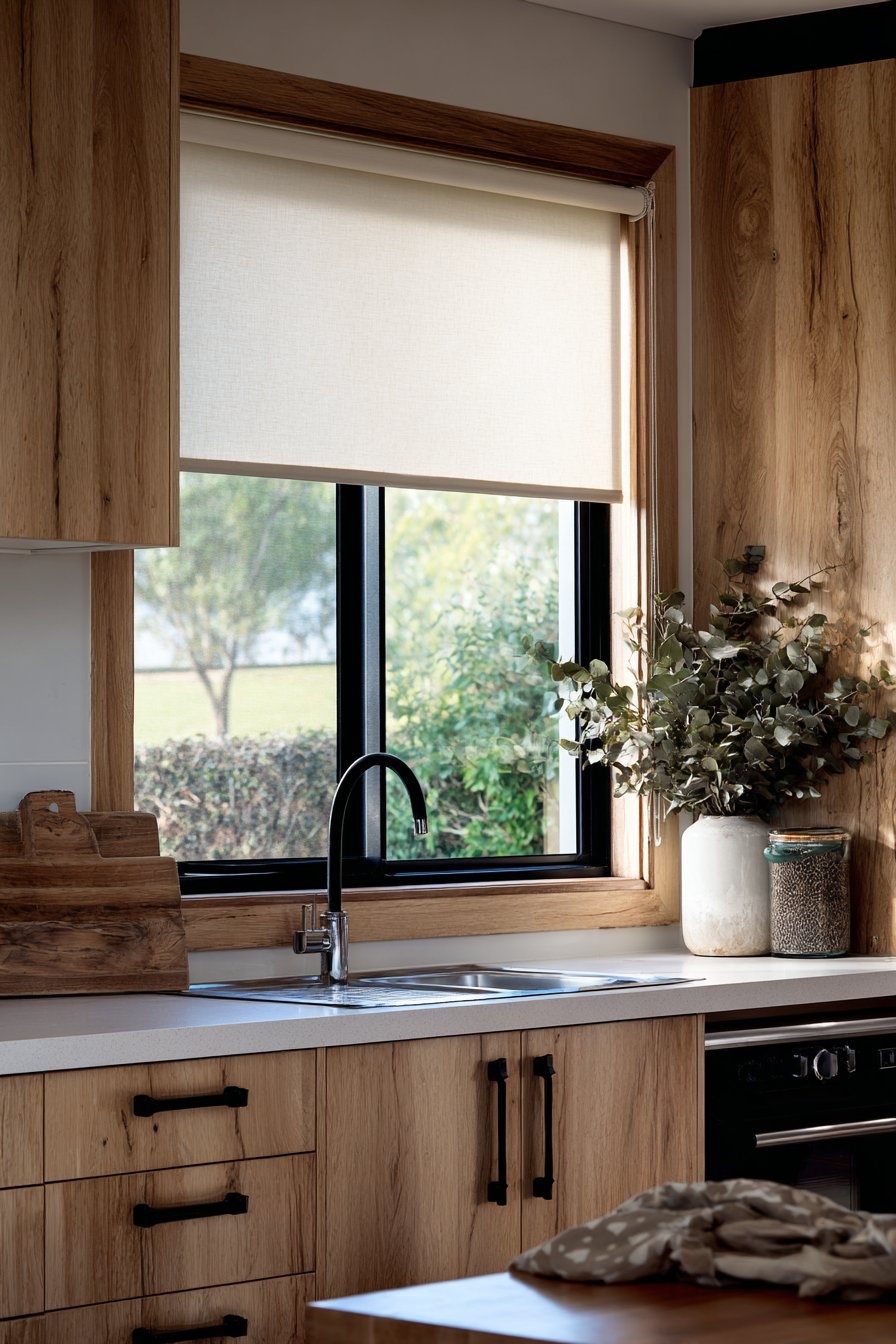
The Scandinavian design philosophy finds perfect expression in tiny kitchen design, where the principles of minimalism, functionality, and natural materials align seamlessly with spatial constraints. This kitchen featuring natural oak lower cabinets exemplifies the Nordic approach—clean lines, honest materials, and a restrained color palette that creates tranquility rather than visual complexity. The warm, blonde tones of oak bring organic beauty to the space while the wood’s natural grain provides subtle texture that prevents the minimalist design from feeling bland or characterless.
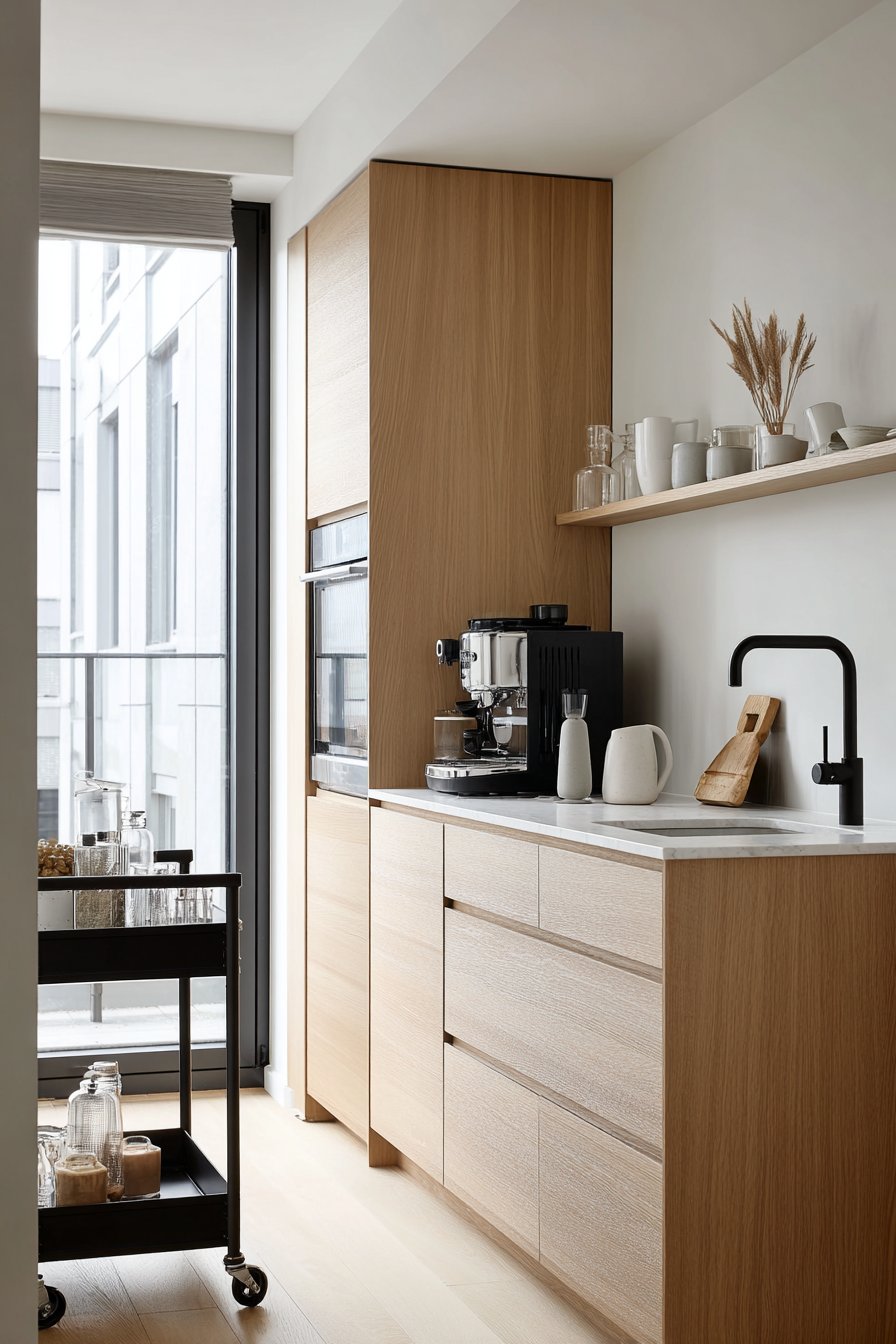
Integrated appliances hidden behind matching cabinet fronts maintain the seamless visual flow that makes Scandinavian kitchens feel so peaceful and uncluttered. A dishwasher, refrigerator, and possibly even a microwave disappear behind oak facades, creating the impression of continuous cabinetry rather than a patchwork of different appliances and finishes.
This integration serves both aesthetic and practical purposes—the unified appearance makes the kitchen feel larger and more cohesive, while the smooth cabinet fronts are easier to clean and maintain than appliances with textured surfaces and multiple materials.
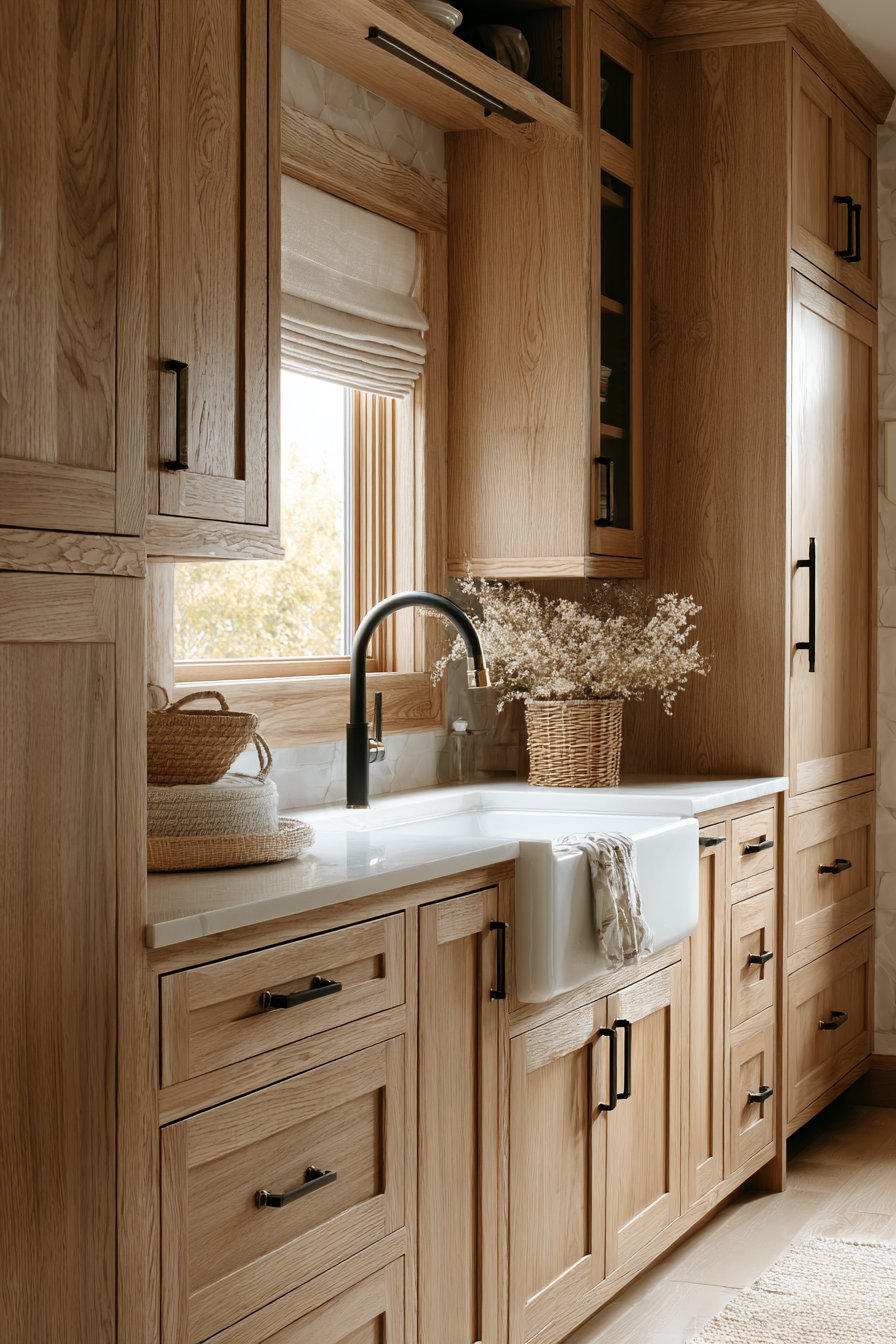
A single bowl undermount sink in white ceramic sits beneath a window with a simple roller shade, embodying the Scandinavian appreciation for simplicity and function. The undermount installation creates a seamless transition from countertop to sink, making cleanup easier and contributing to the space’s clean aesthetic. The white ceramic provides a crisp contrast against the warm oak while its classic material choice ensures longevity—this sink will remain beautiful and functional for decades, regardless of changing trends.
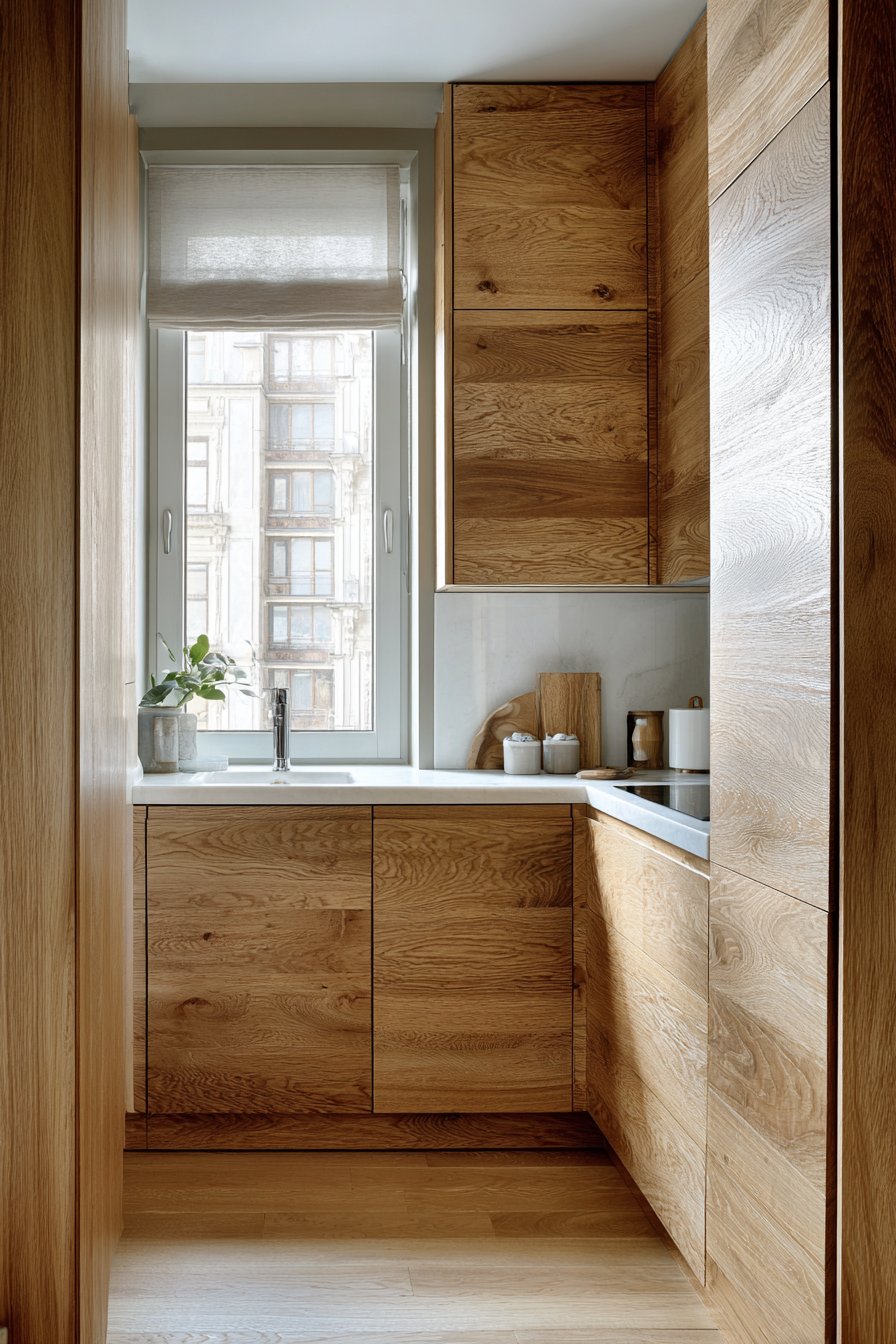
Matte black hardware and fixtures provide subtle contrast against the light wood tones, creating visual anchor points that help define individual elements without overwhelming the serene palette. A narrow rolling cart offers additional mobile storage, maintaining the Scandinavian preference for flexible, adaptable furnishings that serve multiple purposes.
Professional interior photography with natural lighting showcases the minimalist aesthetic and efficient use of compact dimensions, highlighting natural wood grain textures and clean geometric lines that characterize this enduringly popular design approach.
Key Design Tips:
- Embrace natural wood tones like oak or ash to bring warmth and organic beauty to small kitchens without adding visual complexity.
- Hide appliances behind matching cabinet panels to create seamless, cohesive surfaces that make spaces feel larger and more intentional.
- Choose undermount sinks for clean transitions between countertop and basin that simplify cleaning and enhance the minimalist aesthetic.
- Use matte black accents sparingly on hardware and fixtures to provide definition and contrast against light wood tones.
- Add mobile storage on wheels or casters to maintain flexibility in how the space functions throughout different activities.
6. Single-Wall Efficiency in Warm Grey with Smart Storage
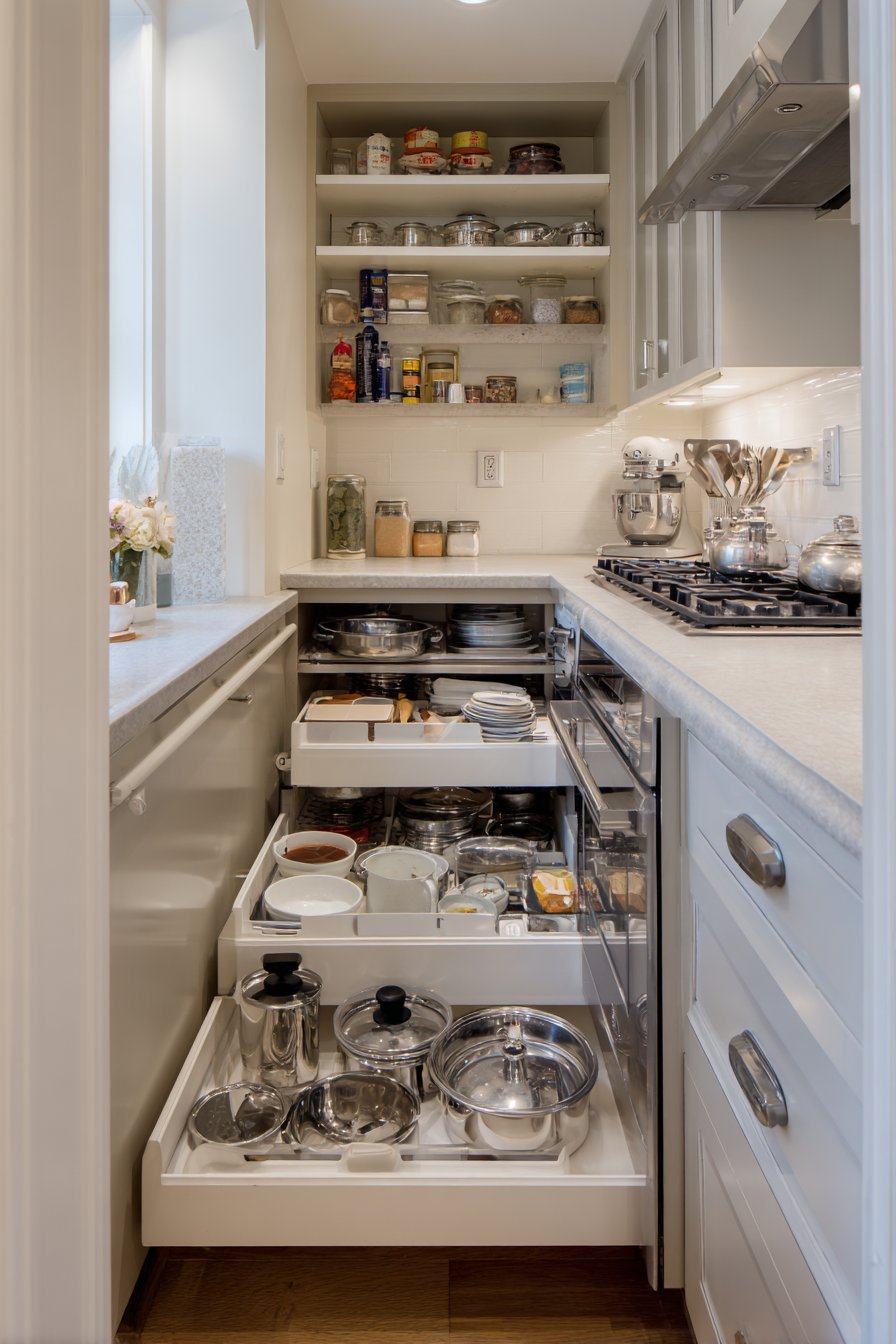
The single-wall kitchen layout represents the ultimate space-saving configuration, consolidating all kitchen functions along one continuous wall. This warm grey interpretation demonstrates how thoughtful planning can make this compact arrangement surprisingly functional.
Upper and lower cabinets in warm grey with soft-close mechanisms provide ample storage while the unified color creates visual continuity that makes the wall feel like a single purposeful element rather than a collection of separate components. The soft-close feature adds a touch of luxury while preventing the loud bangs that can be particularly jarring in small spaces with hard surfaces.
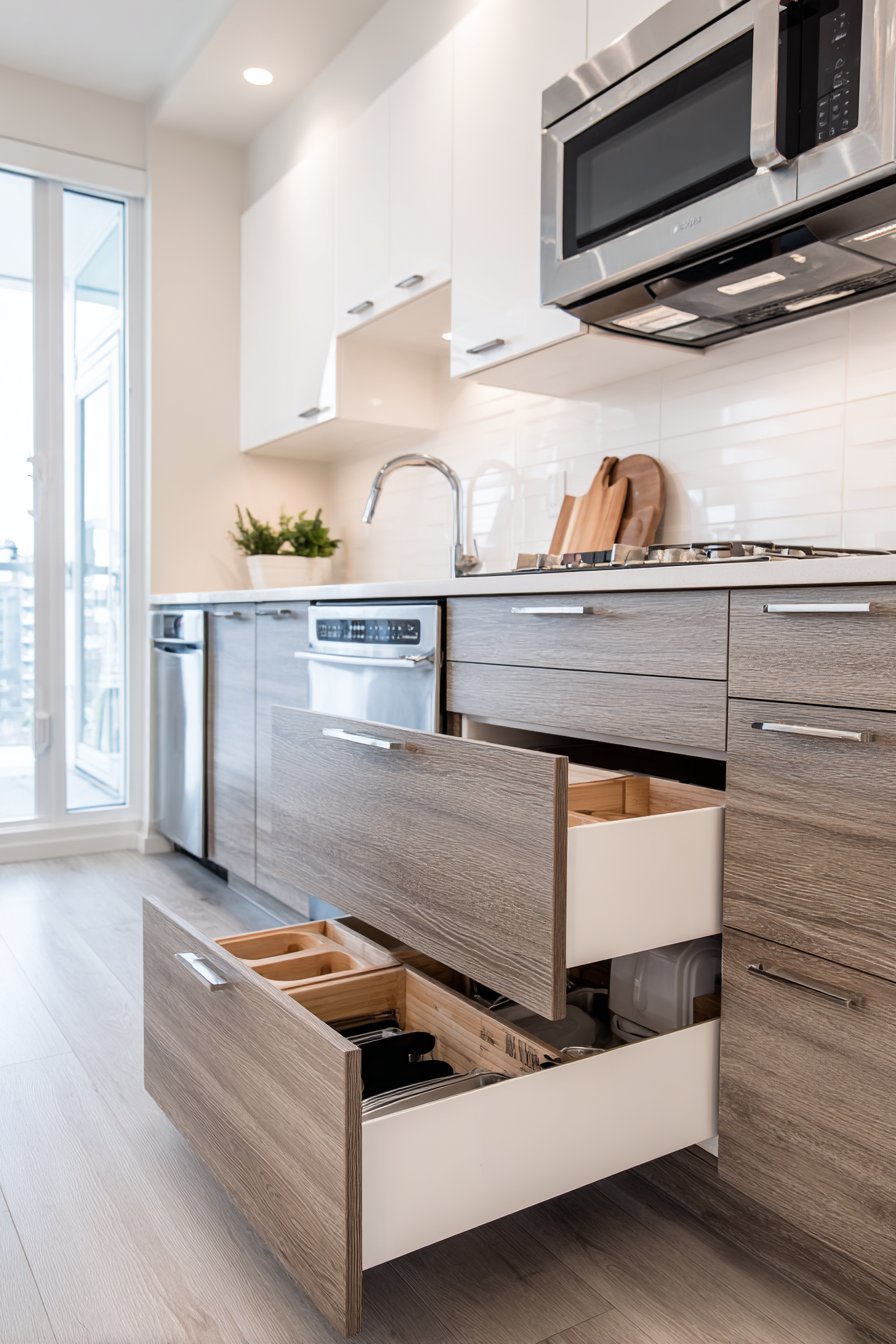
A compact dishwasher drawer fits beneath the counter alongside deep pull-out drawers designed specifically for pots and pans, proving that single-wall kitchens needn’t sacrifice any essential appliances or storage categories. The dishwasher drawer format offers particular advantages in tiny kitchens—its reduced size fits into spaces where full-height dishwashers won’t, and its drawer-style access eliminates the need to bend as deeply as traditional front-loading models require. Deep pull-out drawers with heavy-duty slides make accessing large cookware easy, transforming potentially difficult-to-reach base cabinets into highly functional storage.
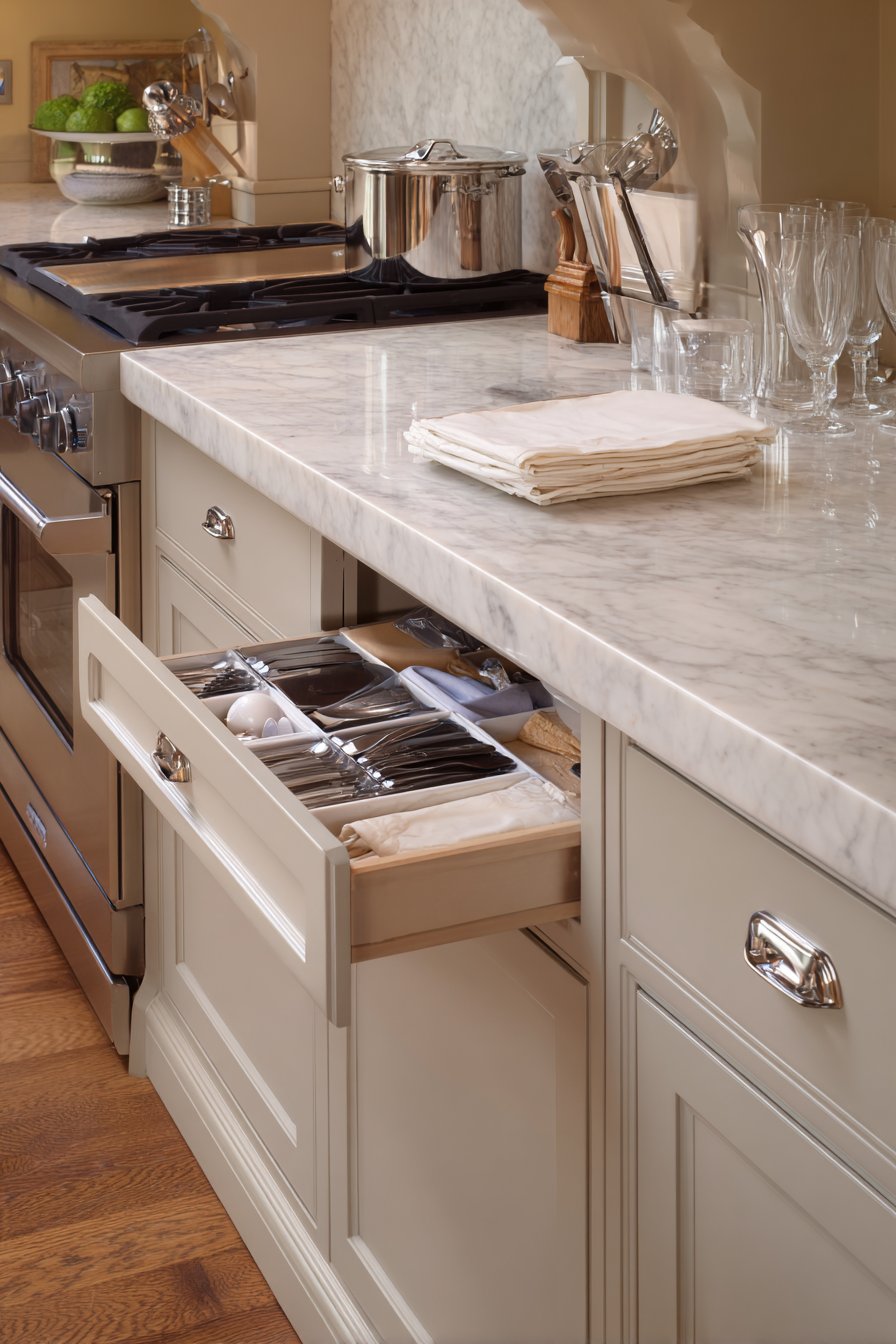
Slim profile appliances including a 20-inch range maintain precious floor space without compromising cooking capability. These compact ranges provide the same features as their larger counterparts—multiple burners, an oven with adequate capacity for most cooking needs—in a footprint that leaves room for essential counter workspace on either side.
The quartz countertop in light grey with subtle veining provides durable workspace that coordinates beautifully with the cabinet color while offering the practical benefits of engineered stone: resistance to staining, scratching, and heat damage without requiring the maintenance that natural stone demands.
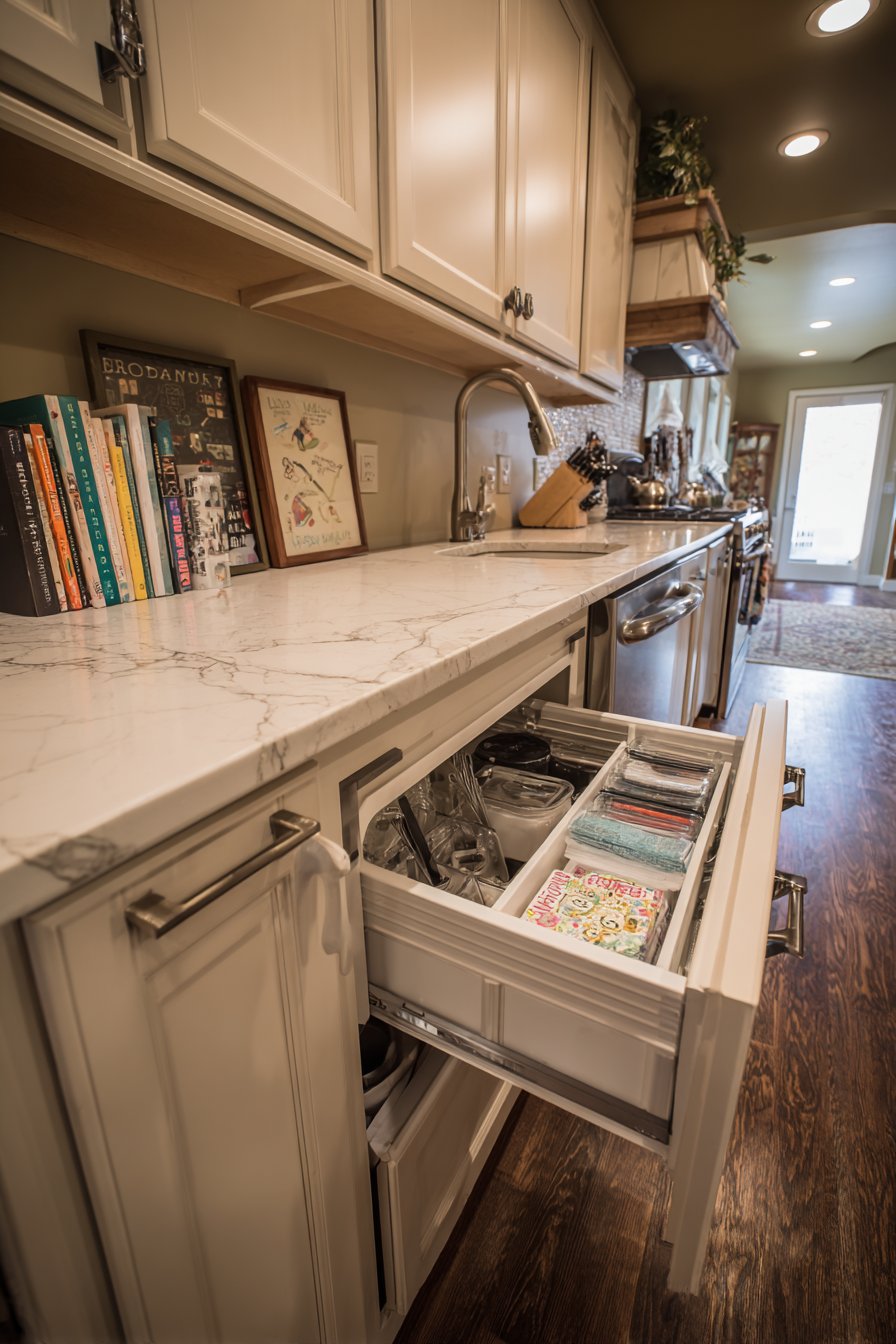
Interior design photography detail shots focus on the practical hardware and organizational inserts that make this kitchen function smoothly despite its compressed dimensions. Drawer dividers, pull-out organizers, and specialized storage solutions transform standard cabinets into highly organized systems where every item has a designated spot. Balanced exposure captures material textures and the thoughtful space planning in realistic lighting conditions, revealing how professional-grade organization systems can elevate a tiny kitchen’s functionality dramatically.
Key Design Tips:
- Optimize single-wall layouts by ensuring adequate counter space on both sides of the range for safe food preparation and plating.
- Install soft-close mechanisms on all cabinets and drawers to add perceived quality while reducing noise in compact spaces.
- Choose drawer dishwashers for space-constrained kitchens where full-size models won’t fit or would block traffic flow.
- Use deep pull-out drawers for pots and pans instead of traditional base cabinets with doors that create awkward access.
- Select slim appliances specifically designed for compact spaces, particularly 20-24 inch ranges that provide full functionality in smaller footprints.
7. Modern Farmhouse Charm in White Beadboard with Vintage Details
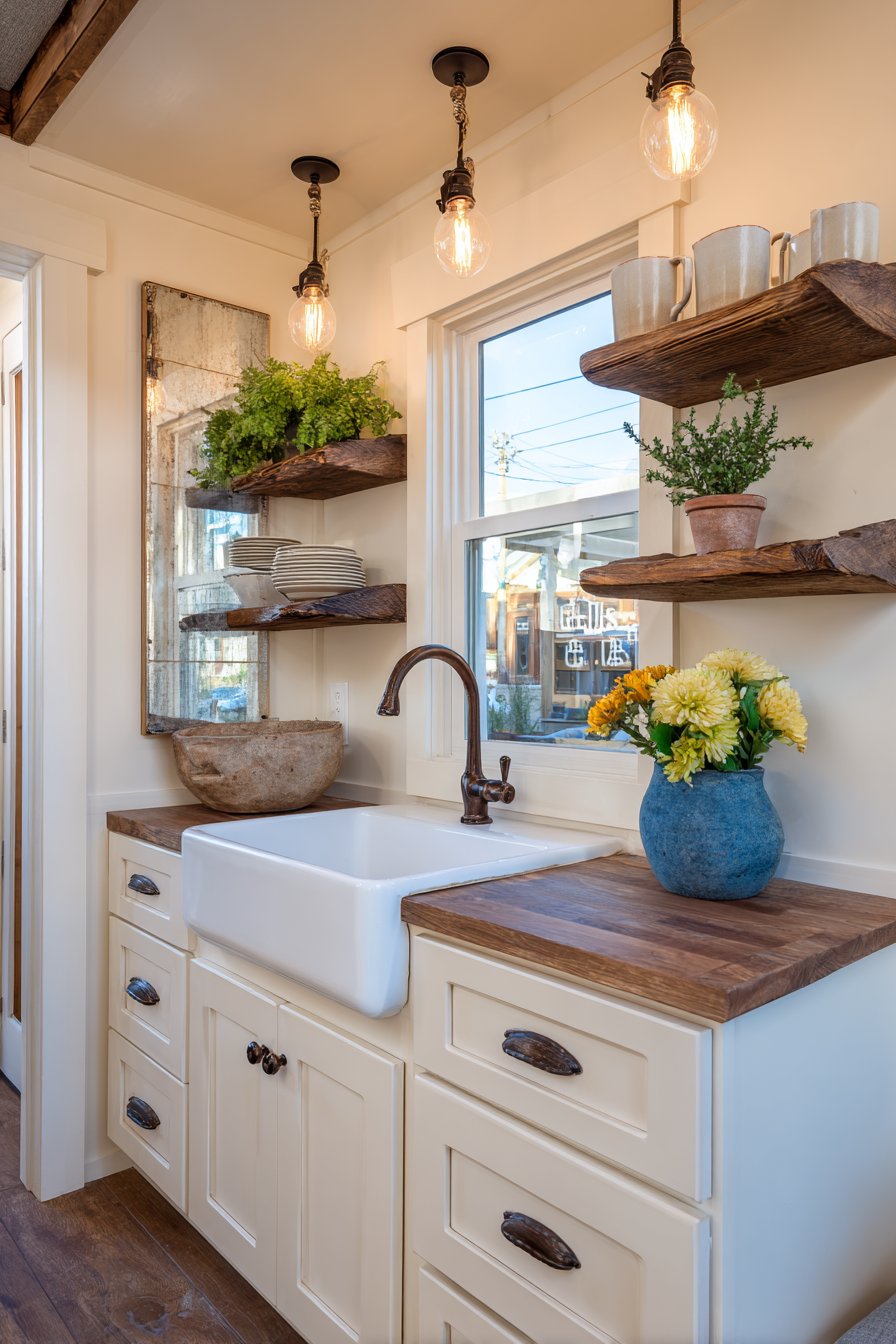
The modern farmhouse style brings warmth, character, and lived-in comfort to tiny kitchens, proving that compact spaces can embrace decorative details without feeling cluttered. White beadboard cabinet fronts introduce textural interest through their vertical grooves, creating visual movement and traditional charm without overwhelming the limited square footage. Vintage-inspired cup pulls in oil-rubbed bronze provide authentic period detail while their curved shape feels comfortable in the hand and their dark finish creates pleasing contrast against the white cabinets.
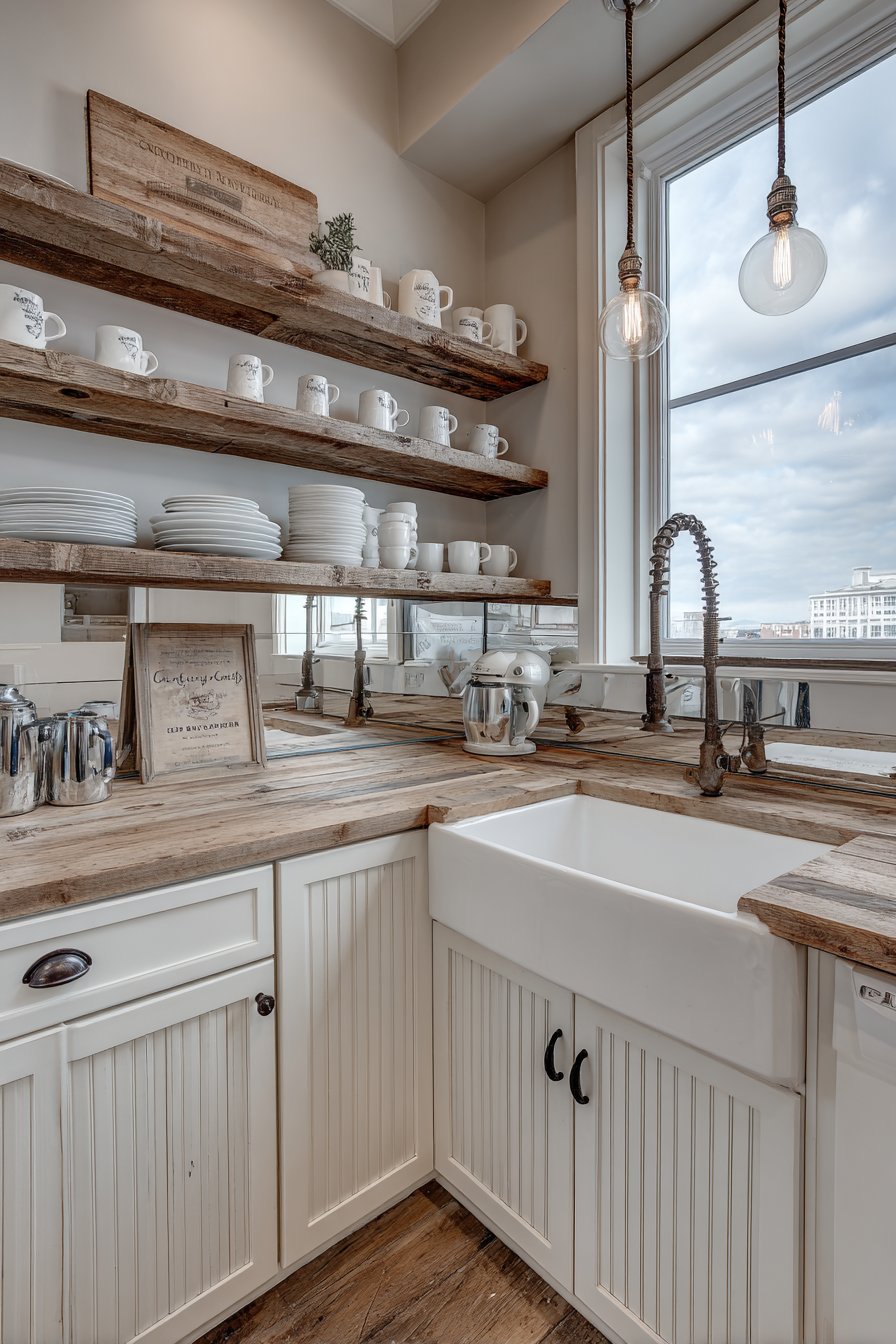
A small farmhouse sink with a gooseneck faucet serves as the kitchen’s focal point, its apron-front design and generous basin bringing both beauty and functionality to the compact space. Despite its traditional styling, the farmhouse sink offers practical advantages—the forward-positioned basin eliminates the countertop overhang that can create an uncomfortable reach, while the deep bowl accommodates large pots and baking sheets that might not fit in standard undermount sinks. The gooseneck faucet provides high clearance for filling tall vessels and adds an elegant architectural element to the sink area.
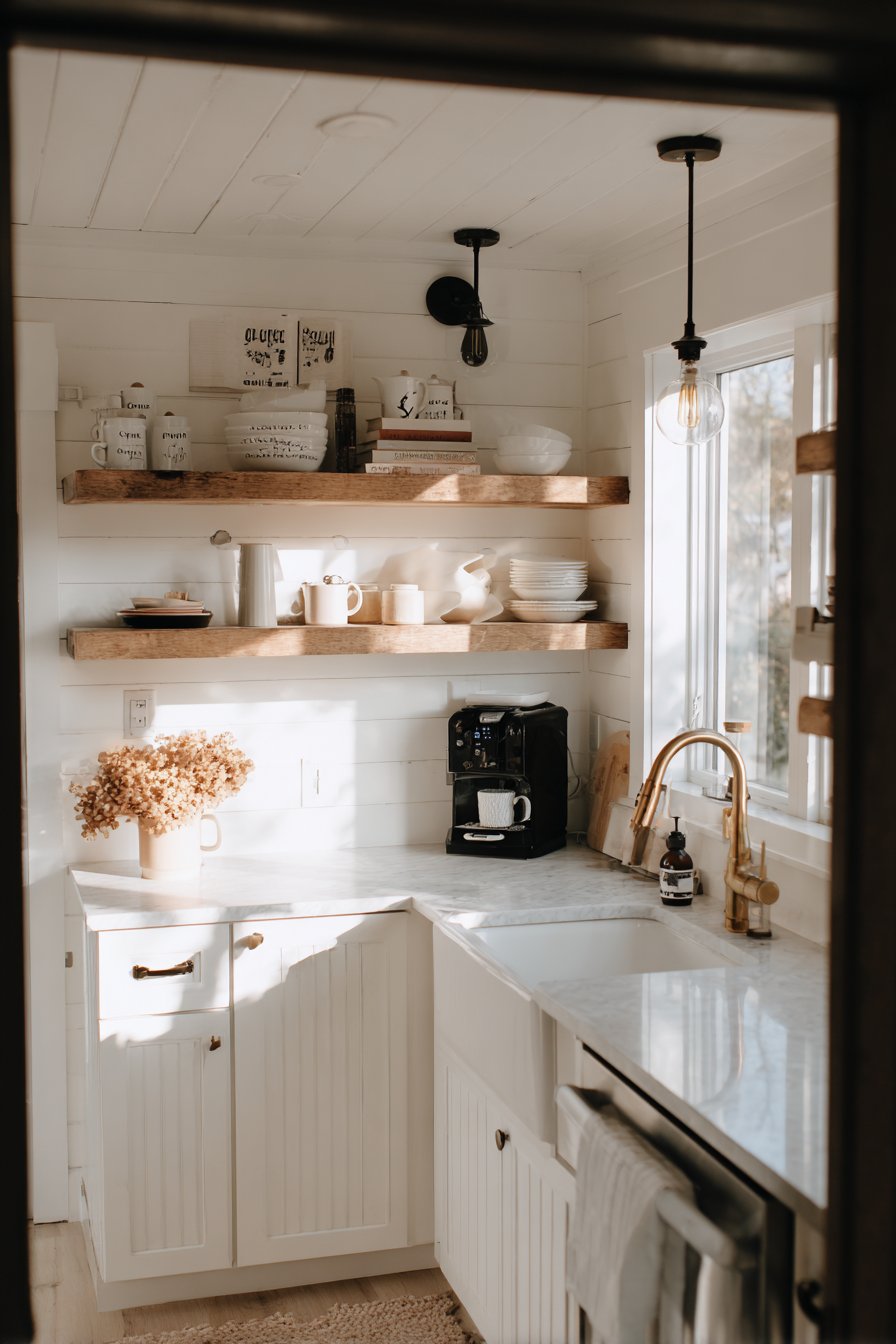
The mirror backsplash represents a brilliant space-enhancing strategy, visually expanding the cramped space by reflecting the room back on itself. This reflective surface effectively doubles the perceived depth of the kitchen, making it feel significantly less confined.
The mirror also bounces light throughout the space, brightening darker areas and creating dynamic visual interest as reflections shift throughout the day. Reclaimed wood floating shelves hold everyday mugs and plates, their weathered appearance adding authentic character while the open storage keeps frequently used items accessible.
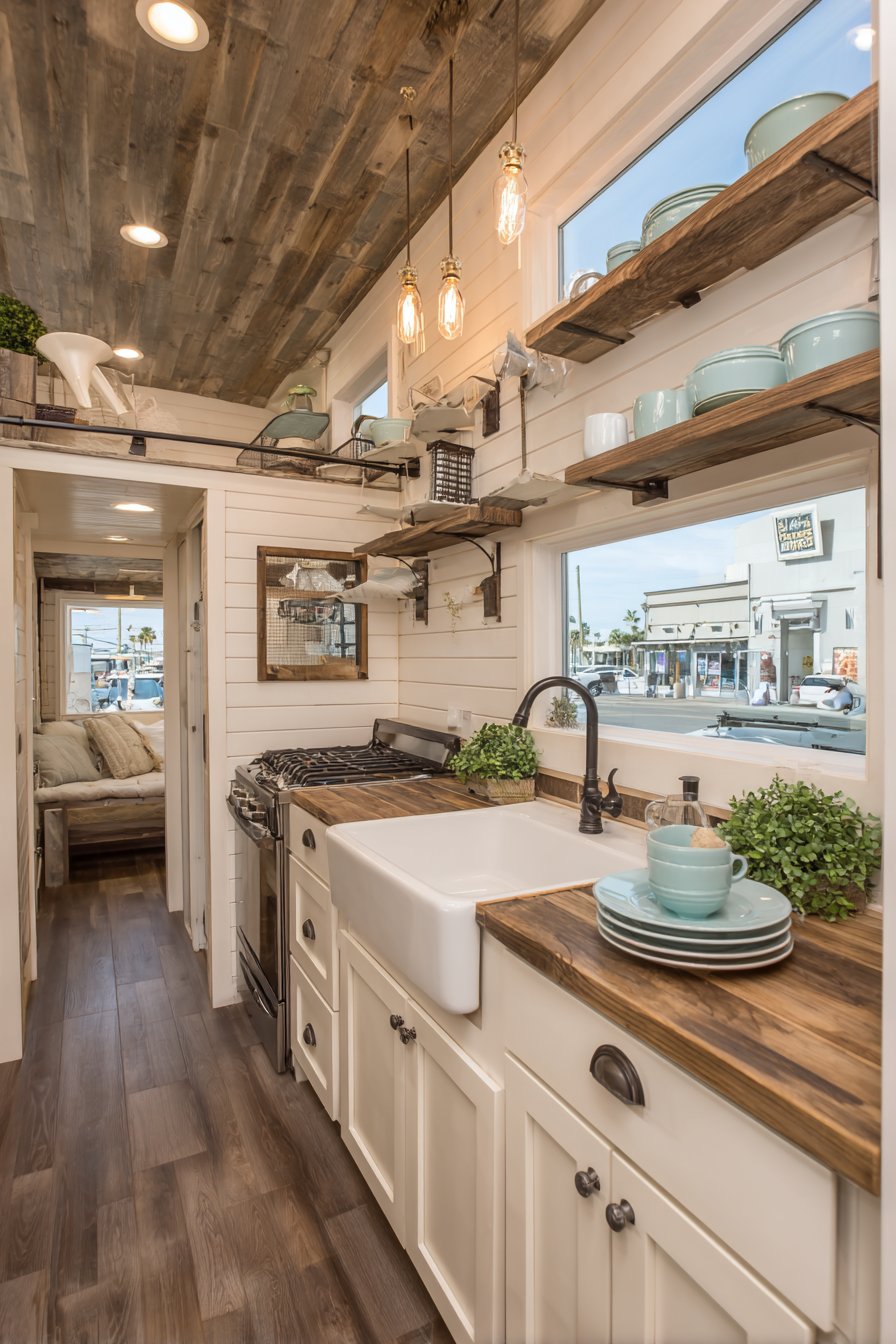
Pendant lighting with Edison bulbs hangs above the narrow counter, providing both task illumination and decorative charm. These vintage-style bulbs with visible filaments create warm, inviting light while serving as sculptural elements even when not illuminated. Wide-angle interior photography captures the entire compact layout with natural window light creating soft shadows that emphasize the cottage-style details and cozy livable character, demonstrating that tiny kitchens can embrace decorative styles without sacrificing functionality.
Key Design Tips:
- Add texture with beadboard cabinet fronts to create visual interest without requiring additional space or three-dimensional elements.
- Install mirror backsplashes to visually double the space while reflecting light throughout the kitchen for a brighter, more open feel.
- Choose farmhouse sinks even in small kitchens for their practical deep basins and forward-positioned installation that improves ergonomics.
- Use reclaimed wood for floating shelves to introduce authentic character and warmth that prevents white kitchens from feeling sterile.
- Hang decorative pendant lights with vintage-style Edison bulbs to provide task lighting and visual interest in compact spaces.
8. Corner Sink Innovation in Pale Mint Green with Hidden Storage
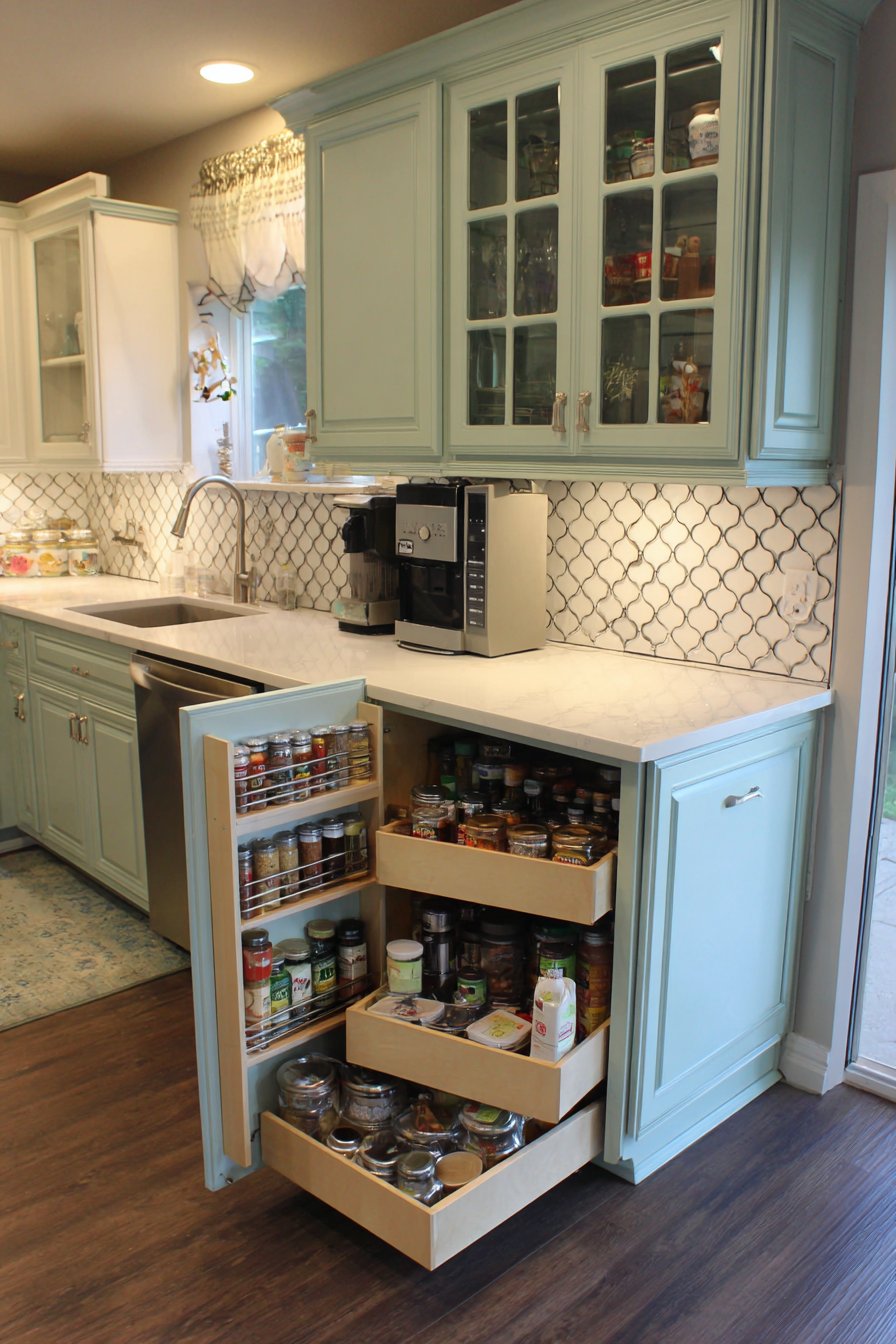
Unconventional solutions often prove most effective in tiny kitchens, and the corner sink configuration demonstrates this principle beautifully. By positioning the sink in the corner rather than centered on a wall, this layout maximizes usable counter length on both adjoining walls, creating significantly more continuous workspace for food preparation. This arrangement also takes advantage of the corner area that often becomes problematic dead space in small kitchens, transforming an awkward zone into the kitchen’s most functional element.
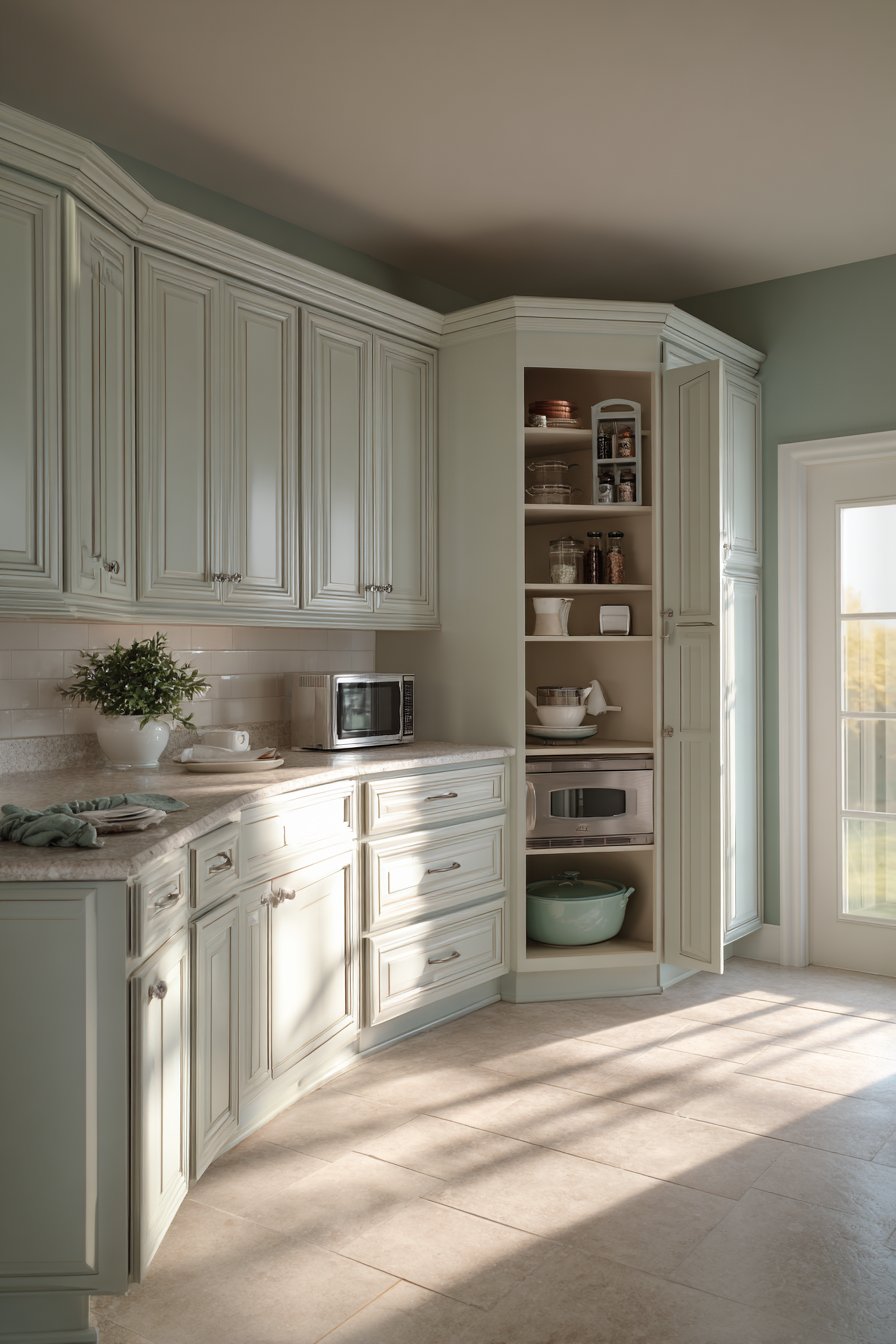
Pale mint green cabinets provide a fresh color accent that injects personality and cheerfulness into the compact space without overwhelming it with intense saturation. This soft, cool-toned hue feels both vintage-inspired and contemporary, offering a pleasant alternative to the white, grey, and wood tones that dominate many small kitchen designs. The color choice demonstrates that tiny kitchens can embrace personality and style—small doesn’t necessitate neutral or boring.
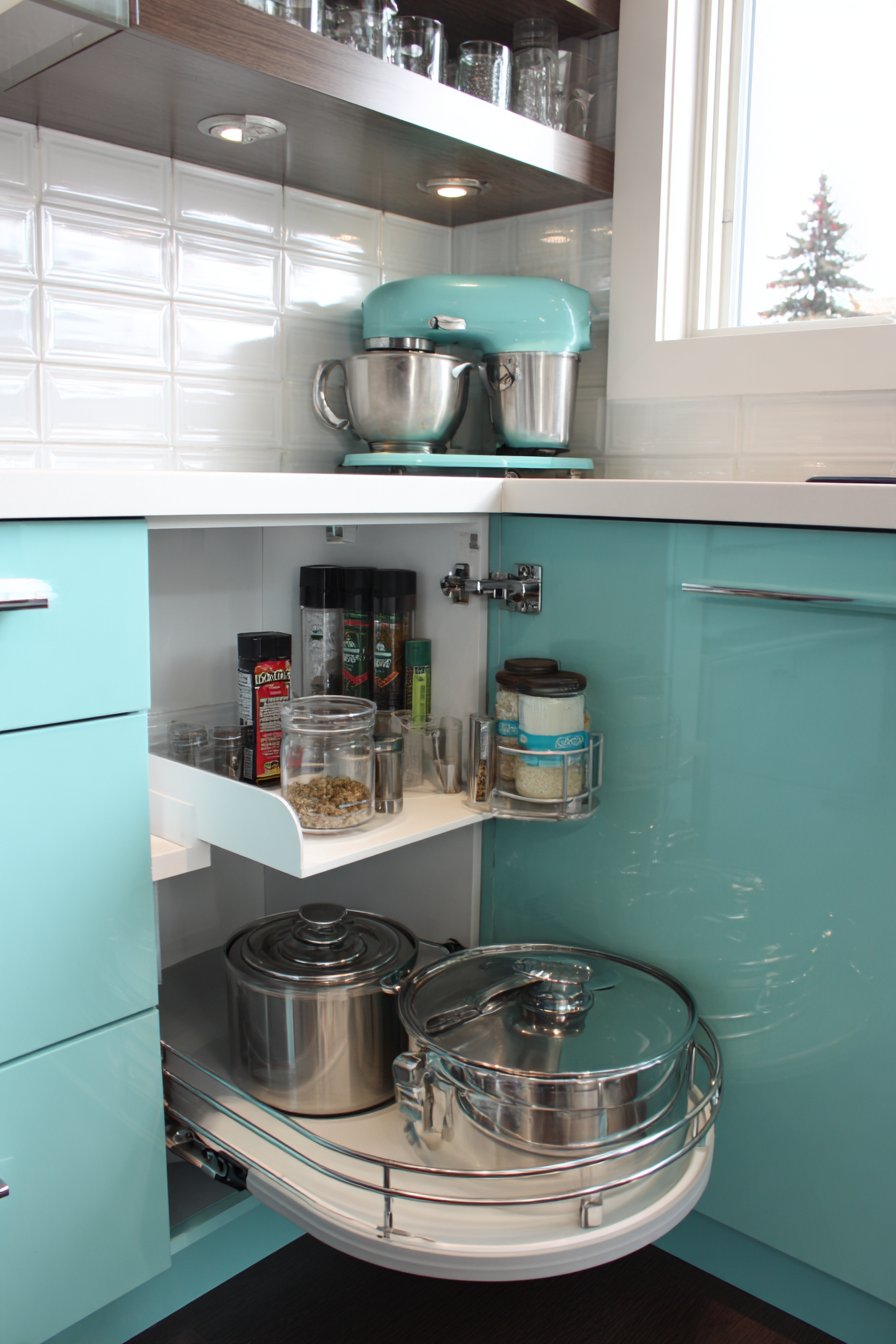
Intelligent storage solutions abound, with a magnetic spice rack mounted inside a cabinet door keeping seasonings organized and accessible without consuming precious drawer or counter space. Pull-out pantry systems slide smoothly from narrow gaps between appliances or at cabinet ends, transforming six-inch spaces into remarkably functional storage for canned goods, oils, and other pantry staples. These ingenious organizers demonstrate that in tiny kitchens, every fraction of available space can be captured and utilized effectively.
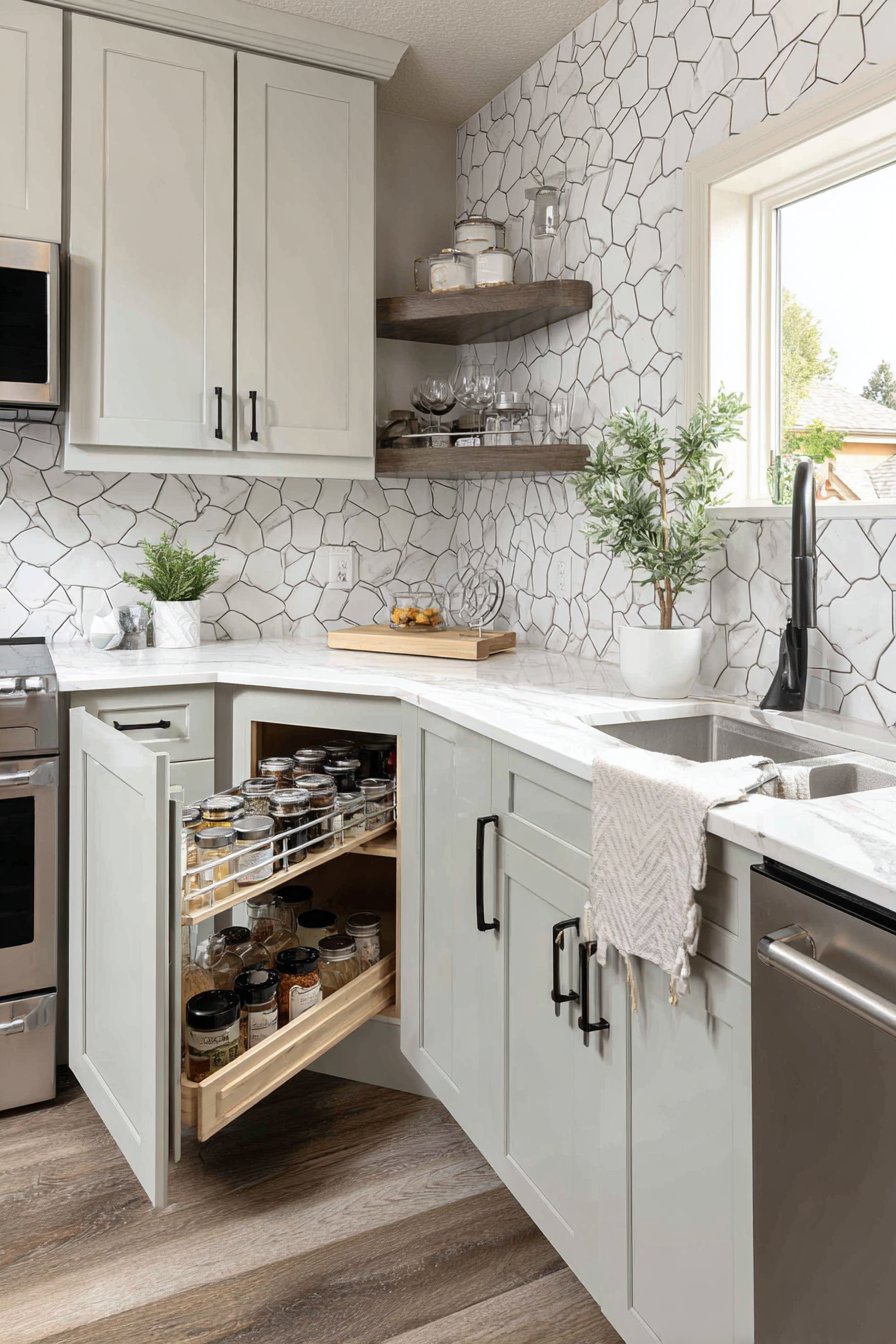
Small-scale appliances in stainless steel maintain a professional look without overwhelming the space with oversized equipment. A compact refrigerator, narrow range, and appropriately-sized microwave provide full functionality while leaving adequate room for movement and work surfaces.
The white ceramic tile with grey grout lines the backsplash, creating a clean, classic backdrop that doesn’t compete with the colored cabinets while providing easy-to-clean protection. Professional interior photography with morning light highlights the creative layout solutions and the cheerful yet practical color scheme, showing realistic material finishes and natural wear patterns that prove this isn’t just a styled showcase but a genuinely livable kitchen.
Key Design Tips:
- Position sinks in corners to maximize continuous counter length on adjoining walls while utilizing otherwise problematic corner space.
- Introduce soft color through cabinetry to add personality and warmth without requiring pattern or decorative elements that might overwhelm small spaces.
- Mount storage inside doors using magnetic racks, hooks, and organizers to capture hidden space for spices, utensils, and cleaning supplies.
- Install pull-out pantry systems in narrow gaps to transform unusable spaces into highly functional storage for dry goods and canned items.
- Select appropriately-scaled appliances that provide necessary functions without consuming excessive space or dominating the visual composition.
9. Urban Contemporary in Matte Black with Industrial Touches
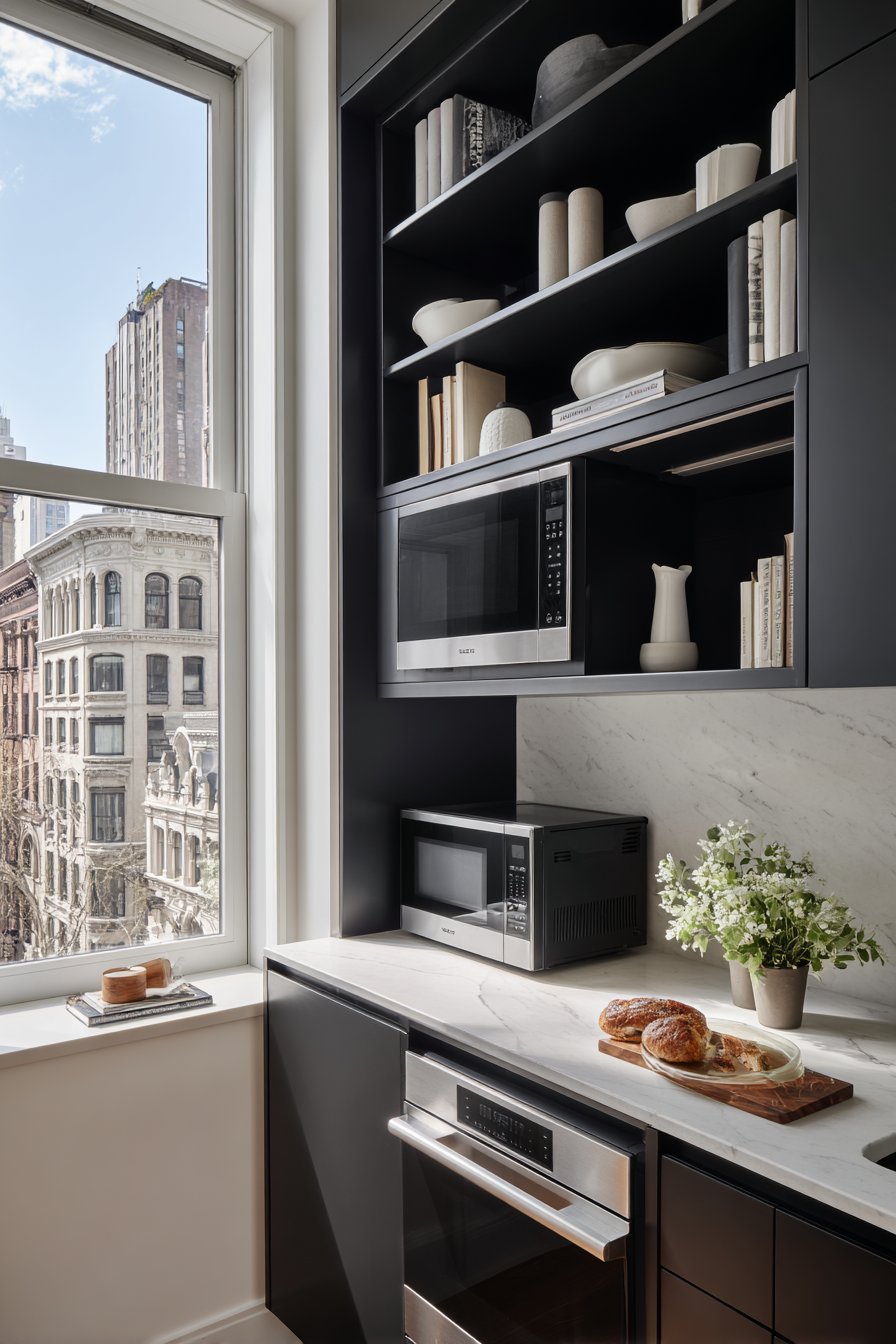
The urban apartment kitchen demands sophistication and efficiency in equal measure, and this matte black interpretation delivers both with confidence. Handleless matte black cabinets create a sleek contemporary look that feels current and design-forward while the dark finish adds drama and depth to the compact space.
This bold color choice might seem counterintuitive in a tiny kitchen, but when executed properly with adequate lighting and contrasting elements, dark cabinets can actually create a jewel-box effect that feels luxurious and intentional rather than cramped.
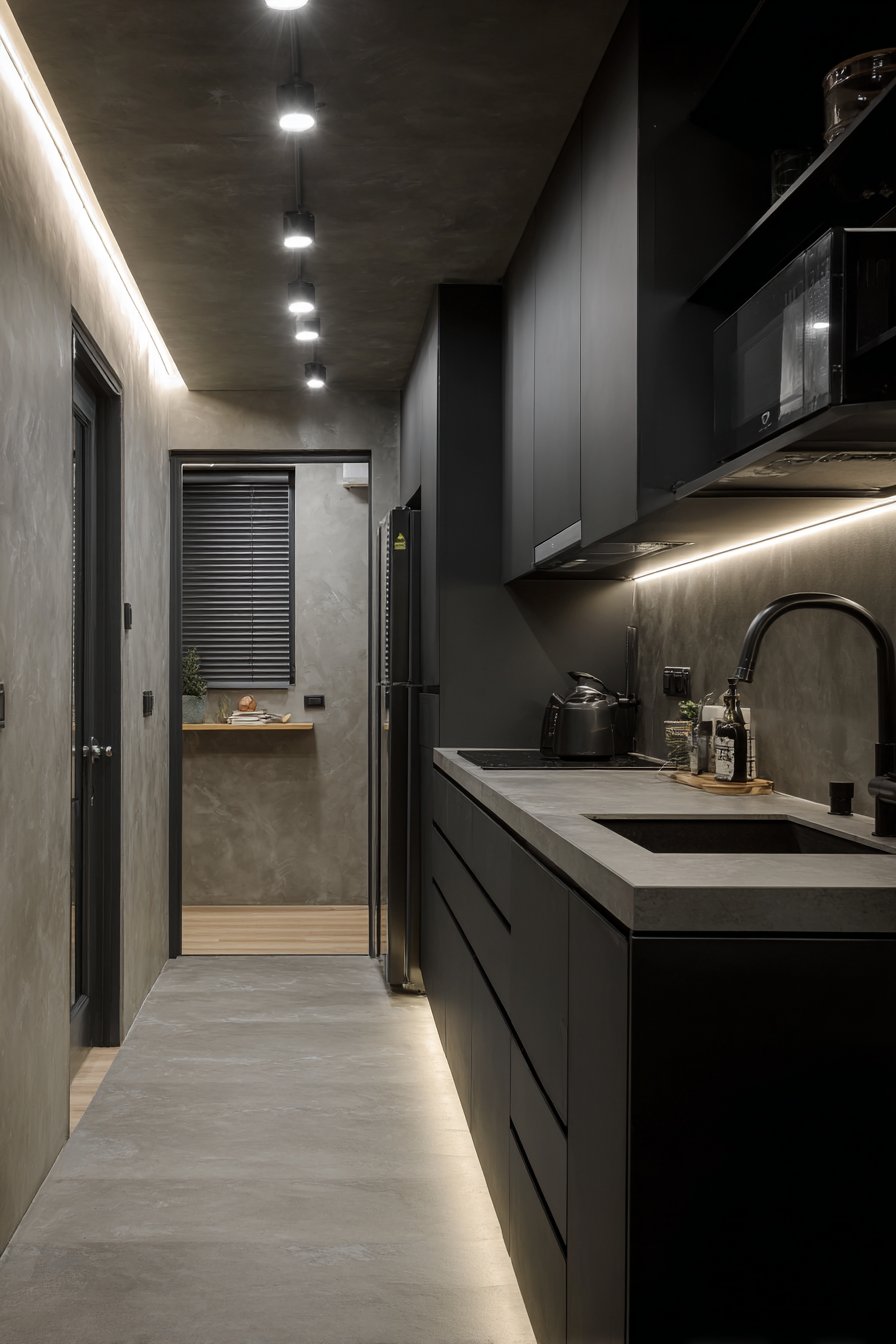
A compact over-the-range microwave saves precious counter space by occupying the area above the cooking surface that would otherwise remain empty or require a bulky ventilation hood. This integration makes particular sense in tiny kitchens where every square inch of counter space directly impacts functionality. The built-in ventilation system keeps cooking odors and smoke under control without requiring separate equipment or additional spatial allocation.
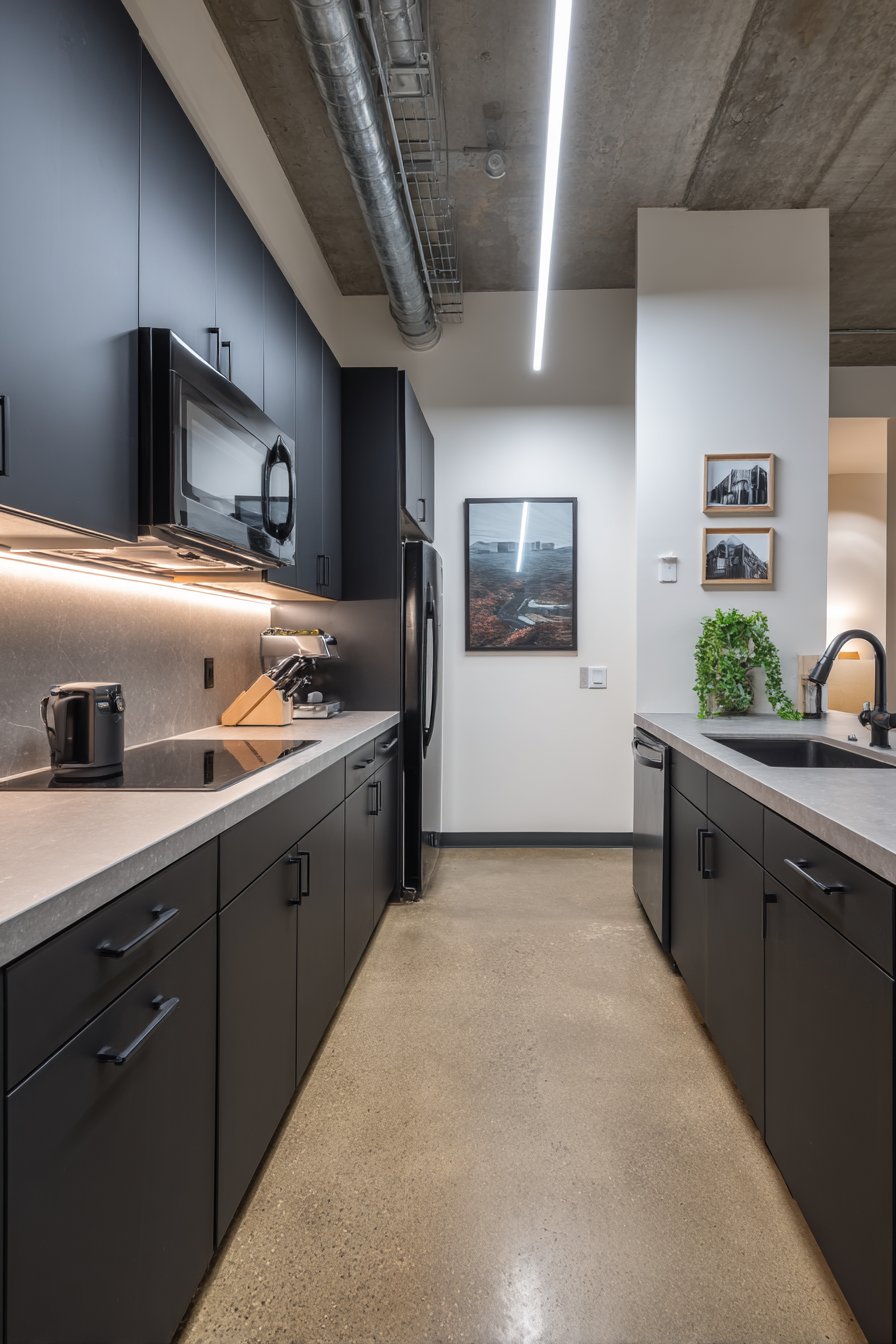
The narrow slide-out pantry maximizes storage in a six-inch gap that might otherwise remain wasted space between appliances or at the end of a cabinet run. These slim vertical organizers, equipped with multiple shelves or baskets, store surprising quantities of canned goods, bottles, and packages while maintaining easy visibility and access to every item.
This represents the kind of innovative thinking that separates adequate tiny kitchens from exceptional ones—identifying every available inch and determining how to make it functional.
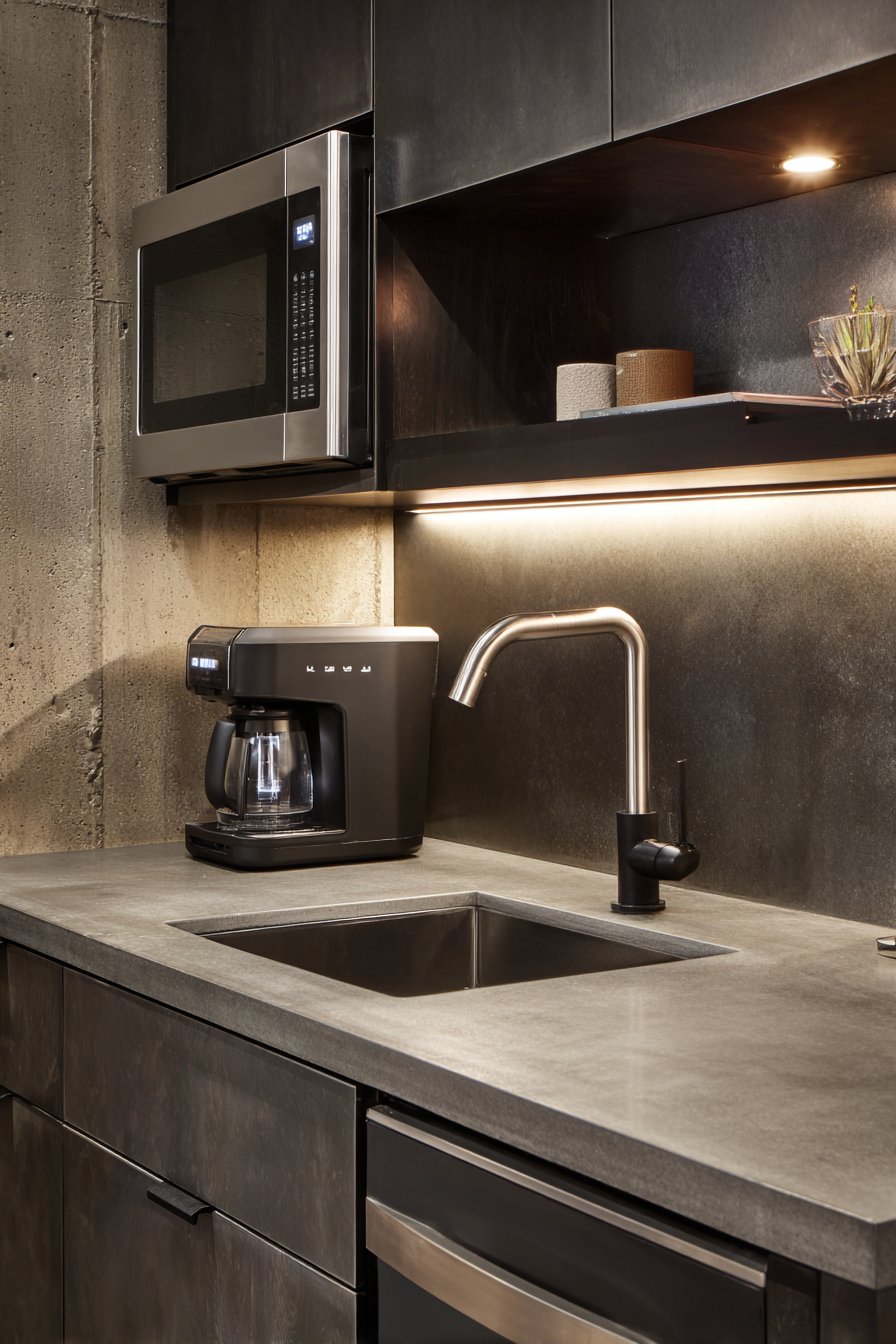
Concrete-effect laminate countertops provide an industrial touch at an affordable price point, delivering the aesthetic of poured concrete or cement without the weight, installation complexity, or expense of actual concrete. Modern laminates offer impressive durability and realistic textures that make them viable alternatives to natural or engineered stone.
Under-cabinet LED strip lighting ensures adequate task illumination, particularly crucial in this dark color scheme where insufficient lighting could make food preparation difficult and potentially unsafe. Interior design photography perspective shows the full wall arrangement with balanced artificial and natural lighting, capturing the modern minimalist aesthetic and the realistic implementation of space-saving features in an urban setting.
Key Design Tips:
- Embrace dark cabinets in tiny kitchens when combined with excellent lighting and light-reflecting surfaces to create sophisticated drama.
- Install over-the-range microwaves to combine two functions in one vertical footprint, saving valuable counter space.
- Add slide-out pantries in narrow gaps to capture otherwise wasted space for functional storage of pantry items.
- Use concrete-effect laminates to achieve industrial aesthetics at accessible price points with easier installation than real concrete.
- Install LED strip lighting under all upper cabinets to provide essential task lighting that makes dark kitchens functional and safe.
10. Bright White Multifunctional Design with Integrated Dining
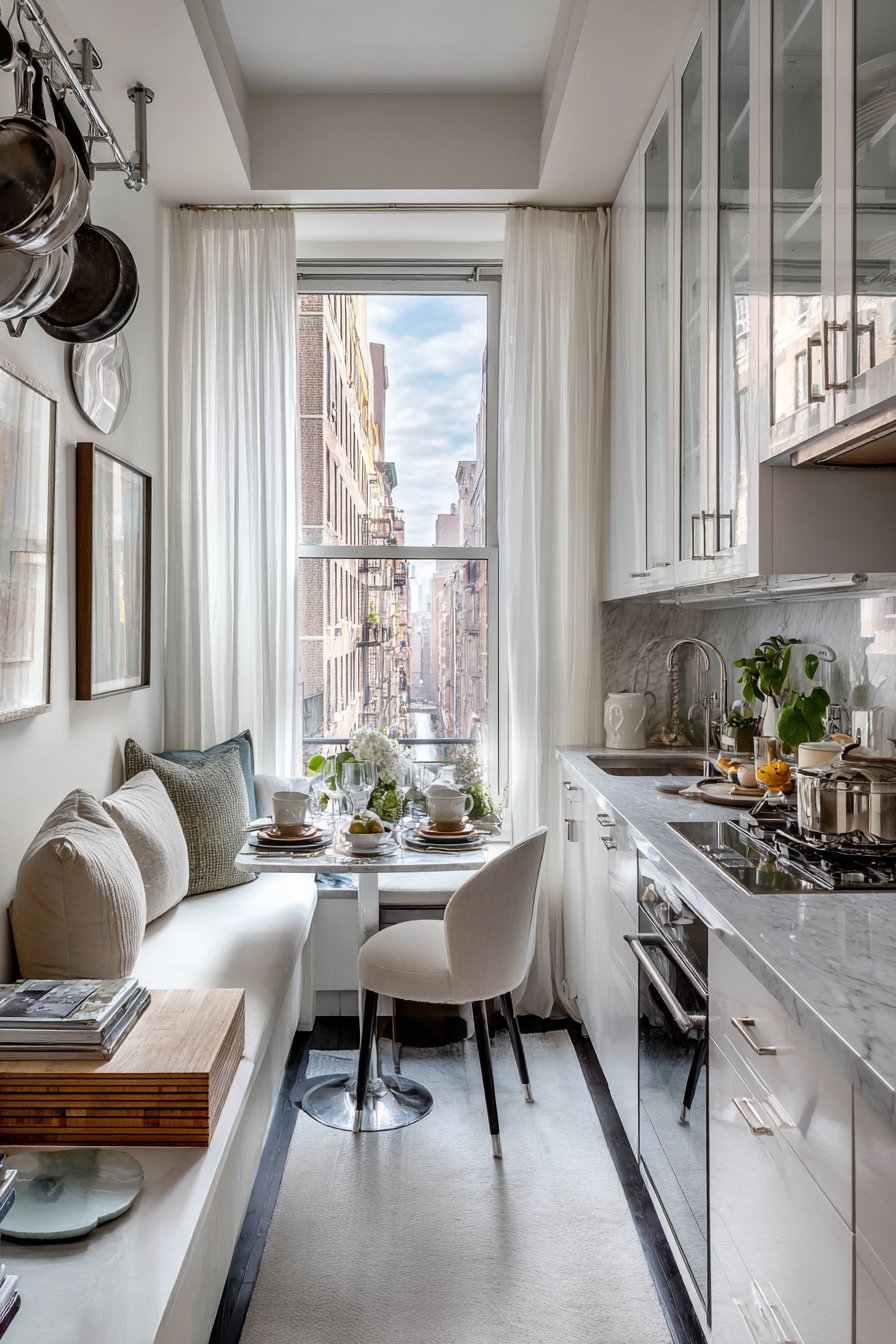
The ultimate tiny kitchen challenge involves incorporating dining space within severely limited square footage, and this bright white design solves the puzzle elegantly. Glass-front upper cabinets create an airy feel despite limited square footage, allowing the eye to see through rather than stopping at solid surfaces.
This transparency prevents the cabinets from visually weighing down the space while adding depth and dimension. The bright white color scheme maximizes light reflection, ensuring that every photon of available natural light bounces throughout the room multiple times before being absorbed.
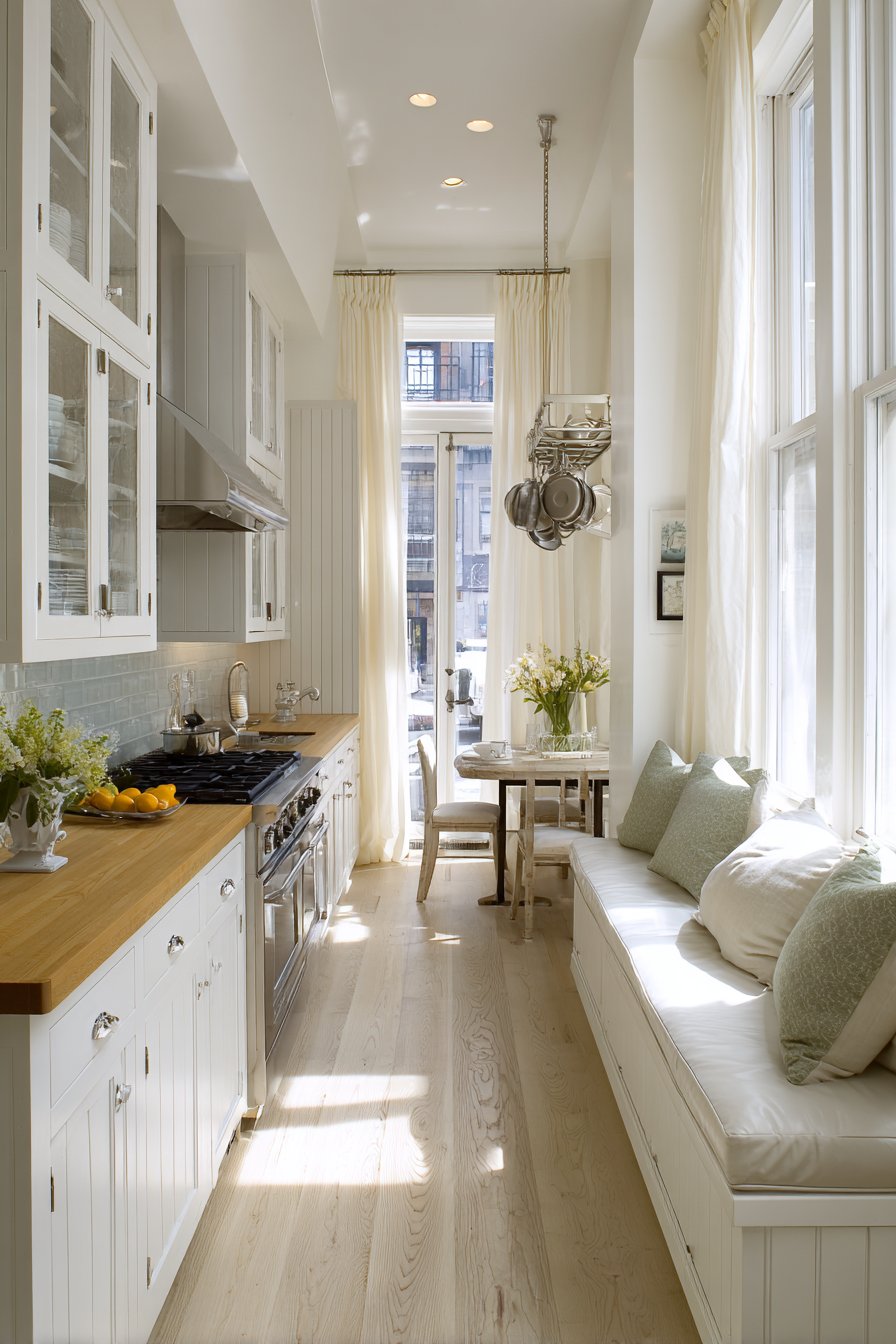
The slim built-in breakfast nook with banquette seating demonstrates exceptional spatial intelligence, transforming an awkward end wall into comfortable dining for two or three people. The banquette format consumes less floor space than individual chairs while the built-in nature eliminates gaps behind and beside seating where crumbs and debris might collect.
Hidden storage underneath the banquette cushions provides additional capacity for items used less frequently—seasonal dishware, extra linens, or small appliances that don’t merit daily accessibility.
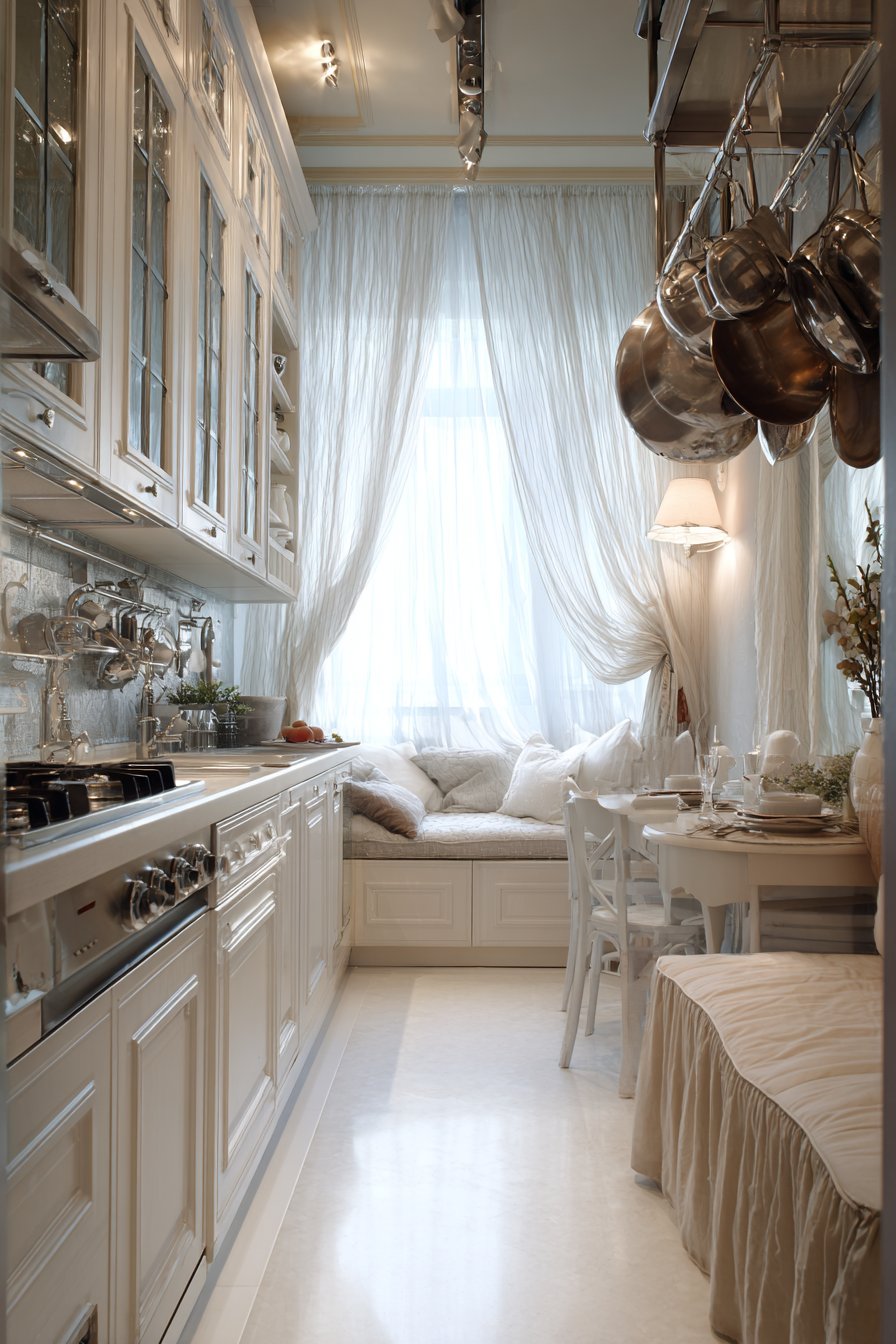
Butcher block countertops add natural warmth while a stainless steel backsplash behind the cooktop offers easy maintenance in the kitchen’s highest-splash zone. The combination of materials—white cabinets, wood counters, stainless steel—creates visual interest through varied textures while maintaining a cohesive color story.
A pot rack suspended from the ceiling keeps cookware accessible while freeing cabinet space for other items. This vertical storage solution works particularly well in kitchens with adequate ceiling height, transforming unused airspace into functional storage.
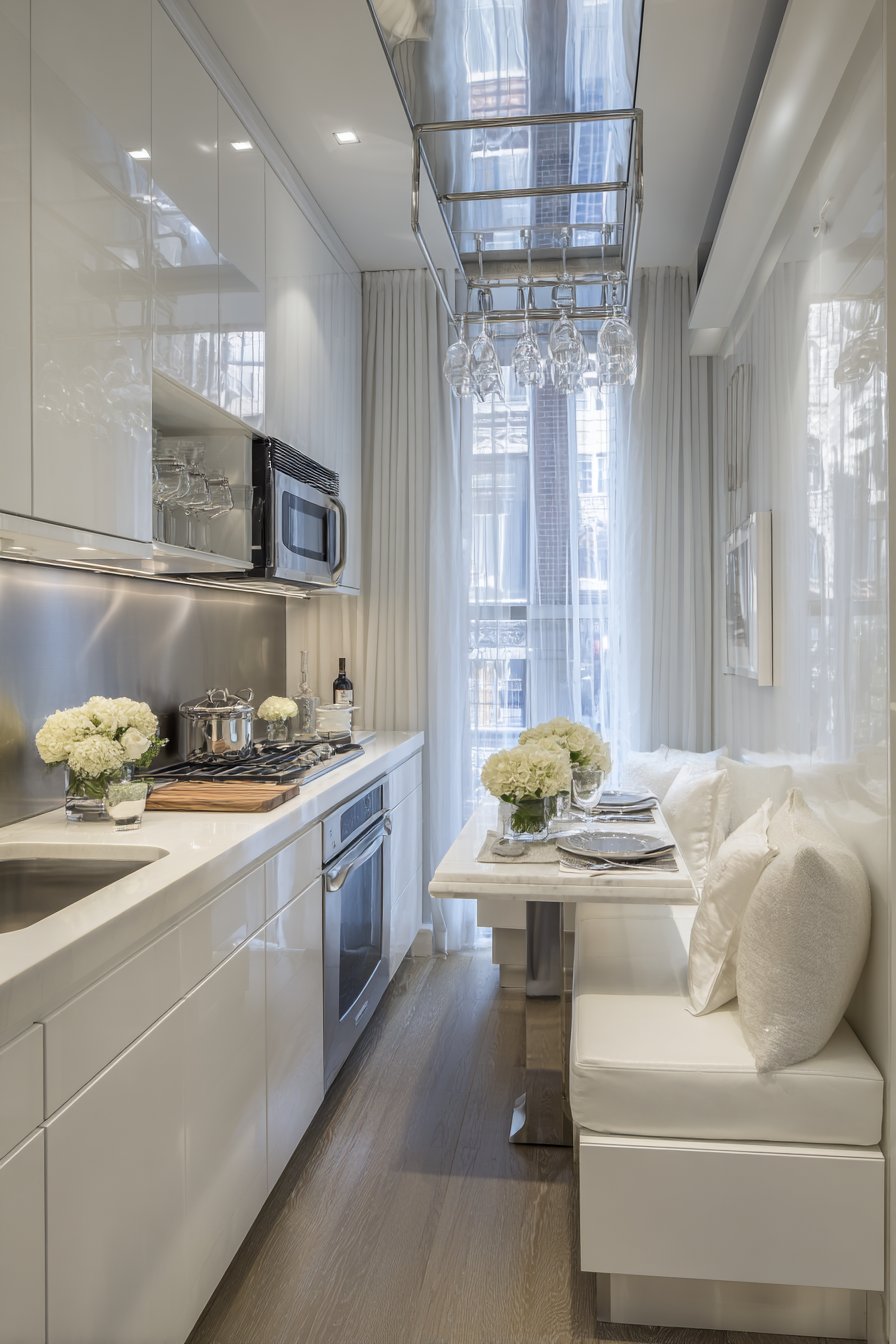
Wide-angle interior photography captures the multifunctional layout with soft natural daylight filtering through sheer curtains, highlighting the clever integration of dining and cooking zones. The realistic livability of the compact design becomes apparent—this isn’t a theoretical exercise or a styled set but a genuinely functional space where meals can be prepared, served, and enjoyed without leaving the compact footprint. Sheer curtains soften the window light while maintaining privacy, creating a comfortable atmosphere that invites lingering even after the meal concludes.
Key Design Tips:
- Install glass-front upper cabinets to create visual depth and airiness while displaying attractive dishware that contributes to the decor.
- Build in banquette seating with storage underneath to incorporate dining space efficiently while adding hidden storage capacity.
- Use stainless steel strategically behind cooktops for durable, easy-to-clean backsplash protection in high-splash zones.
- Hang ceiling-mounted pot racks to utilize vertical space while keeping frequently used cookware immediately accessible.
- Layer white surfaces with natural wood and metal accents to prevent all-white kitchens from feeling sterile or cold.
Why These Tiny Kitchen Designs Represent the Best in Compact Culinary Spaces
The ten tiny kitchen designs presented in this comprehensive guide represent the pinnacle of compact kitchen planning, each addressing the unique challenges of limited space through innovative solutions and thoughtful design choices. These aren’t merely attractive spaces—they’re highly functional environments that prove small kitchens can deliver exceptional performance when designed with expertise and creativity. The best tiny kitchens, as demonstrated throughout this collection, share several fundamental characteristics that distinguish them from merely adequate compact spaces.
Maximized Vertical Storage emerges as a consistent theme across nearly every design, from the floor-to-ceiling cabinetry of the white and butcher block kitchen to the creative use of ceiling-mounted pot racks and high-mounted open shelving. The most successful tiny kitchens recognize that when horizontal space is limited, vertical expansion becomes essential. Upper wall areas that might remain bare in larger kitchens become prime real estate for storage, display, and organization systems. This vertical thinking dramatically increases storage capacity without expanding the kitchen’s footprint.
Strategic Color and Material Choices play crucial roles in how tiny kitchens feel and function. Light-reflecting surfaces like white cabinetry, glossy subway tiles, mirror backsplashes, and glass-front cabinets help small spaces feel more open and airy by bouncing available light throughout the room. However, these designs also demonstrate that tiny kitchens can embrace color and darker tones—the navy blue L-shaped kitchen, the pale mint corner sink design, and even the bold matte black urban kitchen prove that personality and style need not be sacrificed to spatial constraints when colors are used strategically and supported by excellent lighting.
Space-Saving Appliances and Fixtures represent another hallmark of excellent tiny kitchen design. From compact two-burner induction cooktops to slimline refrigerators, drawer dishwashers to 20-inch ranges, these kitchens demonstrate that full functionality doesn’t require full-size equipment. Modern appliance manufacturers recognize the growing market for compact living and have developed impressive products that deliver professional performance in surprisingly small formats. Over-the-range microwaves, compact sink configurations with pull-down faucets, and undermount installations all contribute to maximizing usable counter space.
Intelligent Storage Solutions distinguish truly excellent tiny kitchens from mediocre ones. Pull-out pantries in six-inch gaps, magnetic spice racks mounted inside cabinet doors, slide-out corner systems, drawer organizers, and specialized inserts transform standard cabinets into highly efficient storage systems where every item has a designated location. These organizational elements prevent the clutter and chaos that can make small kitchens feel overwhelming and dysfunctional. The investment in quality organizational systems pays dividends daily through improved efficiency and reduced frustration.
Flexible and Multifunctional Elements appear throughout these designs—mobile islands on casters, fold-down breakfast bars, built-in banquettes with hidden storage, and narrow rolling carts all demonstrate how adaptable furnishings allow tiny kitchens to serve multiple purposes. Rather than committing space permanently to a single function, these flexible elements allow the kitchen to transform based on immediate needs, expanding when additional work surface or dining space is required, then contracting to open floor space for movement and other activities.
Professional-Grade Lighting Design emerges as essential rather than optional in tiny kitchens. Under-cabinet LED strips, pendant fixtures, and strategic use of natural light ensure adequate task illumination for safe food preparation while contributing to the overall ambiance. In compact spaces where shadows can make rooms feel even smaller and darker, thoughtful lighting placement becomes critical to both functionality and perception. These designs demonstrate that multiple light sources at various levels create dimension and depth while ensuring every work surface receives adequate illumination.
Cohesive Design Aesthetics unite each of these tiny kitchens despite their varied styles. Whether embracing Scandinavian minimalism, modern farmhouse charm, contemporary urban sophistication, or traditional warmth, each design maintains visual consistency through coordinated materials, unified color palettes, and thoughtful details. This cohesion creates a sense of intentionality that makes small spaces feel purposefully designed rather than accidentally constrained. Every element—from hardware selections to backsplash materials, countertop choices to cabinet styles—contributes to a unified whole.
These ten designs collectively demonstrate that tiny kitchen solutions can embrace virtually any aesthetic while maintaining exceptional functionality. The compact kitchen ideas presented here prove that limitations in square footage need not translate to limitations in style, storage, or cooking capability. Small kitchen design at its finest balances beauty and practicality, creating spaces that feel welcoming rather than cramped, efficient rather than compromised. The space-saving kitchen concepts showcased throughout this guide offer actionable inspiration for anyone facing the challenge of creating functional culinary spaces within limited dimensions.
Conclusion
The tiny kitchen, far from being a design challenge to merely tolerate, presents an opportunity to demonstrate creativity, ingenuity, and sophisticated problem-solving skills. These ten distinctive designs prove that compact culinary spaces can deliver everything larger kitchens offer—adequate storage, full cooking capability, comfortable work surfaces, and even dining areas—when approached with expertise and imagination. The key takeaways from this comprehensive exploration include the importance of maximizing vertical space through floor-to-ceiling storage, selecting appropriately-scaled appliances that provide full functionality in compact formats, implementing intelligent organizational systems that keep everything accessible and orderly, and choosing colors and materials that enhance the sense of space rather than diminishing it.
Whether you’re drawn to the Scandinavian serenity of natural oak and minimalist fixtures, the bold confidence of dark matte cabinets with industrial accents, the traditional warmth of modern farmhouse beadboard and vintage details, or the crisp efficiency of all-white surfaces with strategic wood accents, your tiny kitchen can reflect your personal style while meeting your practical needs. The multifunctional elements, flexible furniture, strategic lighting, and space-saving configurations demonstrated throughout this guide provide a framework for rethinking how compact kitchens can function and feel.
As you consider implementing these ideas in your own home, remember that the most successful tiny kitchens result from thoughtful planning that considers your specific cooking habits, storage needs, and lifestyle requirements. Start by evaluating how you use your kitchen—which items you reach for daily, which appliances earn their place through frequent use, and which storage solutions would genuinely improve your efficiency. Measure carefully and prioritize ruthlessly, recognizing that in tiny kitchens, every element must justify its presence through beauty, functionality, or ideally both.
Don’t be intimidated by the spatial constraints you’re working with. Instead, view them as creative parameters that will push you toward innovative solutions you might never have considered in a larger space. The fold-down breakfast bar, the slide-out pantry in a six-inch gap, the corner sink that maximizes counter length, the mobile island that adapts to changing needs—these ingenious elements exist precisely because designers refused to accept that small kitchens must be inferior kitchens. Your compact culinary space can be just as thoughtfully designed, beautifully finished, and pleasurable to use as any sprawling chef’s kitchen when you apply the principles demonstrated throughout this guide.
Consider engaging with professionals who specialize in small space design if your budget allows. Interior designers and kitchen planners with expertise in compact layouts bring valuable experience in spatial optimization, material selection, and clever storage solutions that can make the difference between a cramped, frustrating kitchen and an efficient, enjoyable one. They understand the nuances of traffic flow in tight spaces, the importance of adequate clearances around appliances, and the specialized products available for compact installations. However, if professional design services aren’t accessible, the concepts and strategies presented here provide a solid foundation for planning your own tiny kitchen renovation or new installation.
When selecting materials and finishes for your compact kitchen, prioritize durability and maintenance requirements alongside aesthetics. In small spaces where every surface sees frequent use and contact, choosing materials that age gracefully and clean easily becomes especially important. Quartz countertops resist staining and require no sealing, making them ideal for compact kitchens where spills might not be noticed immediately. Ceramic or porcelain tile backsplashes withstand heat and moisture while offering easy cleanup. Soft-close cabinet mechanisms prevent the harsh banging that can damage cabinet boxes and doors over time while making your kitchen feel more refined and peaceful to use.
Don’t overlook the psychological impact of your tiny kitchen’s design. Colors, textures, and lighting significantly affect how the space feels to occupy and use daily. If your kitchen tends toward dark or lacks natural light, prioritize light-reflecting surfaces, white or pale-colored cabinets, and excellent artificial lighting to prevent the space from feeling oppressive. Conversely, if you have good natural light, you can be bolder with colors and materials, knowing that adequate illumination will prevent darker tones from making the space feel cave-like. Consider how the kitchen makes you feel when you enter it—does it invite you to cook and create, or does it stress you before you’ve even begun? The emotional response to your space matters as much as its practical functionality.
Remember that organization systems are investments that pay returns every single day. The cost of quality drawer dividers, pull-out organizers, specialized corner cabinet solutions, and other storage accessories might seem significant initially, but when calculated across the years you’ll use them, the per-day cost becomes negligible. More importantly, the time and frustration these systems save—by making every item immediately locatable and accessible—adds up to hours recovered annually. In tiny kitchens where disorganization can rapidly spiral into chaos, maintaining order through smart storage infrastructure becomes essential rather than optional.
Finally, embrace the intimacy and efficiency that tiny kitchens offer. While you might initially mourn the lack of expansive counters and abundant storage, you’ll likely discover advantages in the compact layout. Everything remains within arm’s reach, reducing the steps and movements required during meal preparation. The kitchen becomes easier to clean and maintain when there’s simply less square footage to manage. Utility costs may decrease when you’re not heating, cooling, and lighting unnecessary space. Most importantly, a well-designed tiny kitchen demonstrates that quality of design matters far more than quantity of space—that thoughtful, intentional choices create environments where people genuinely enjoy spending time, regardless of square footage.
Your tiny kitchen journey begins with inspiration, continues through careful planning, and culminates in a space that serves you beautifully every day. Whether you implement all ten design concepts explored in this guide or cherry-pick specific elements that address your particular challenges, the fundamental principles remain constant: maximize vertical space, choose appropriately-scaled elements, implement intelligent storage, prioritize light and openness, embrace flexibility, and never apologize for your kitchen’s size. Small spaces designed with expertise, creativity, and attention to detail can rival or exceed the functionality and beauty of their larger counterparts, proving definitively that in kitchen design, size truly doesn’t matter—vision, planning, and execution do.
Take these ideas, adapt them to your specific circumstances, and create a tiny kitchen that works brilliantly for your life. Mix styles, combine concepts, and personalize solutions to reflect your unique needs and aesthetic preferences. The most successful tiny kitchens aren’t those that rigidly follow a single design template but rather those that thoughtfully address the specific challenges and opportunities presented by their particular space, resulting in highly individualized environments that feel custom-created rather than compromise-accepted. Your tiny kitchen holds enormous potential—now you have the knowledge and inspiration to unlock it.
