


Creating a stunning half bathroom requires more than just picking pretty tiles and fixtures. These compact spaces, often called powder rooms, present unique challenges that demand professional-level thinking. With limited square footage averaging just 20 square feet, every design decision carries significant weight.
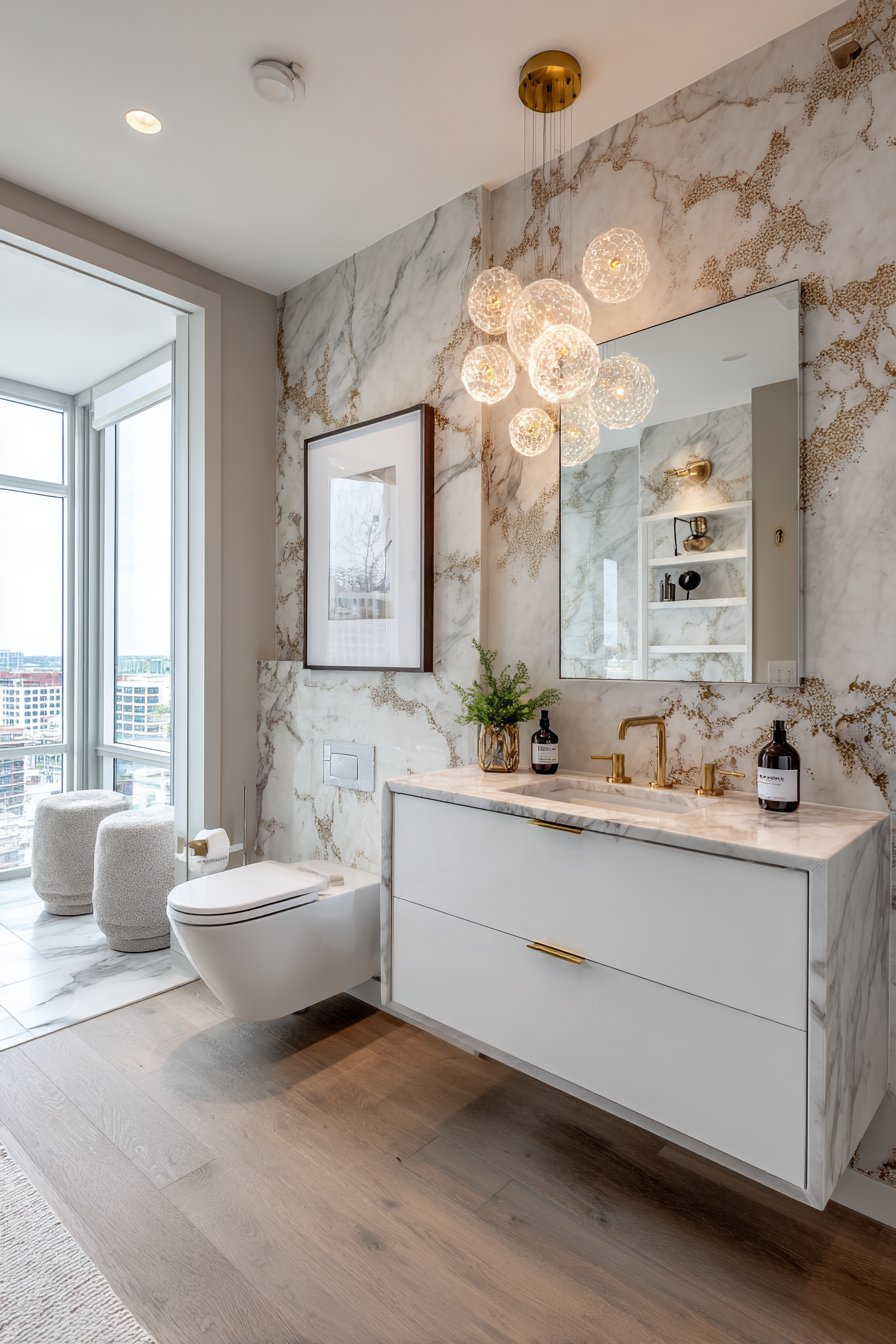
Half bathrooms serve a crucial role in your home’s functionality and guest experience. Unlike full bathrooms, these spaces focus purely on visual impact and efficient utility. They’re often the only bathroom guests see, making them your home’s first impression. Smart design transforms these small spaces into memorable showcases of your style and attention to detail.
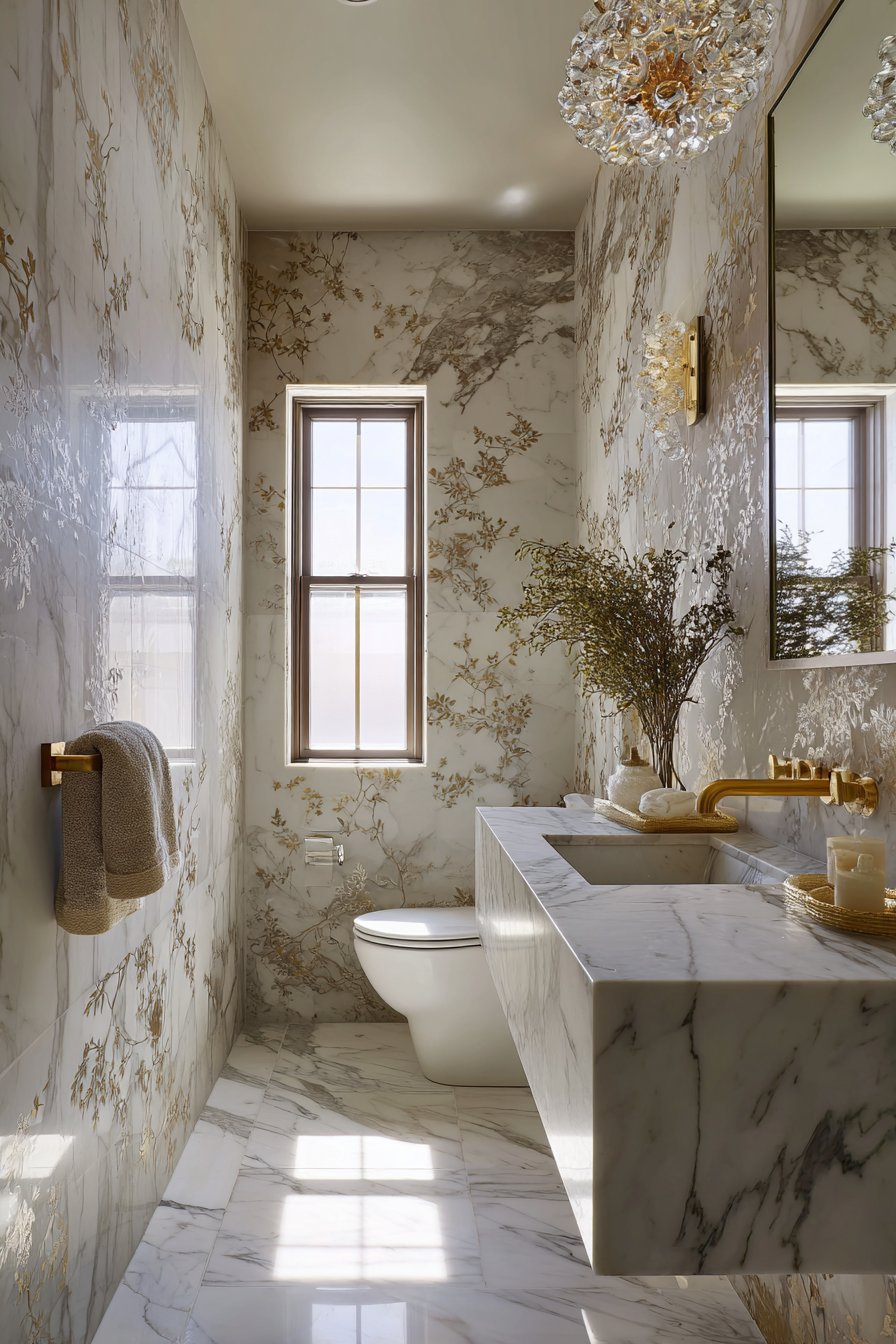
This article reveals six professional secrets that interior designers use to create exceptional half bathrooms. From strategic lighting choices to space-maximizing techniques, these insights will help you craft a powder room that punches well above its weight class. Whether you’re renovating or starting fresh, these proven strategies deliver remarkable results.
1. Master the Art of Vertical Emphasis
Professional designers know that drawing the eye upward makes small bathrooms feel dramatically larger. This technique creates the illusion of height and spaciousness in even the tiniest powder rooms. By emphasizing vertical lines and elements, you trick the brain into perceiving more volume than actually exists.
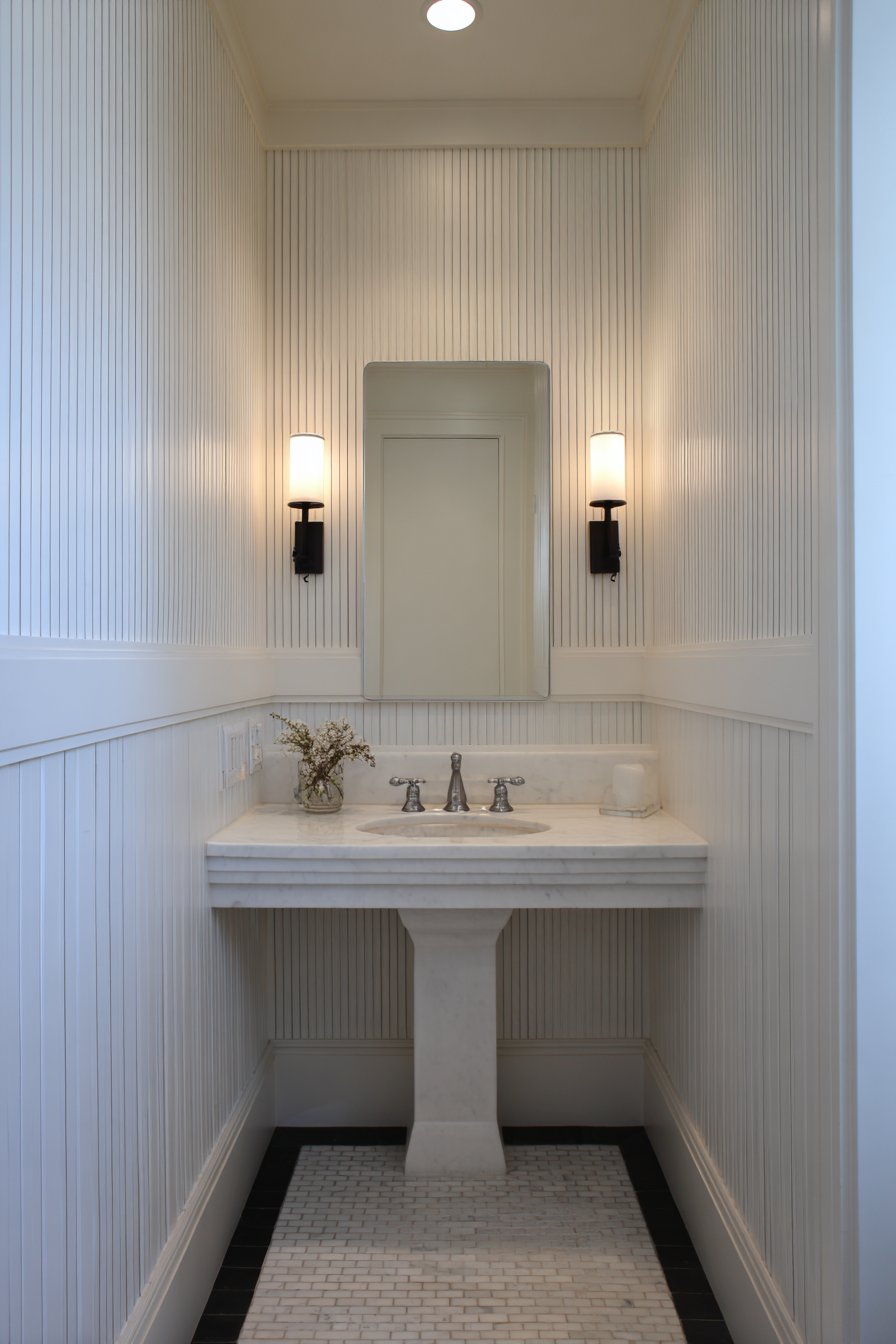
The key lies in strategic placement of tall, narrow elements throughout the space. Floor-to-ceiling mirrors, vertical tile patterns, and elongated light fixtures all contribute to this effect. Consider installing wainscoting that extends higher than traditional 36-inch heights. Paint colors can enhance this too—using darker tones on lower walls and lighter shades above creates upward movement.
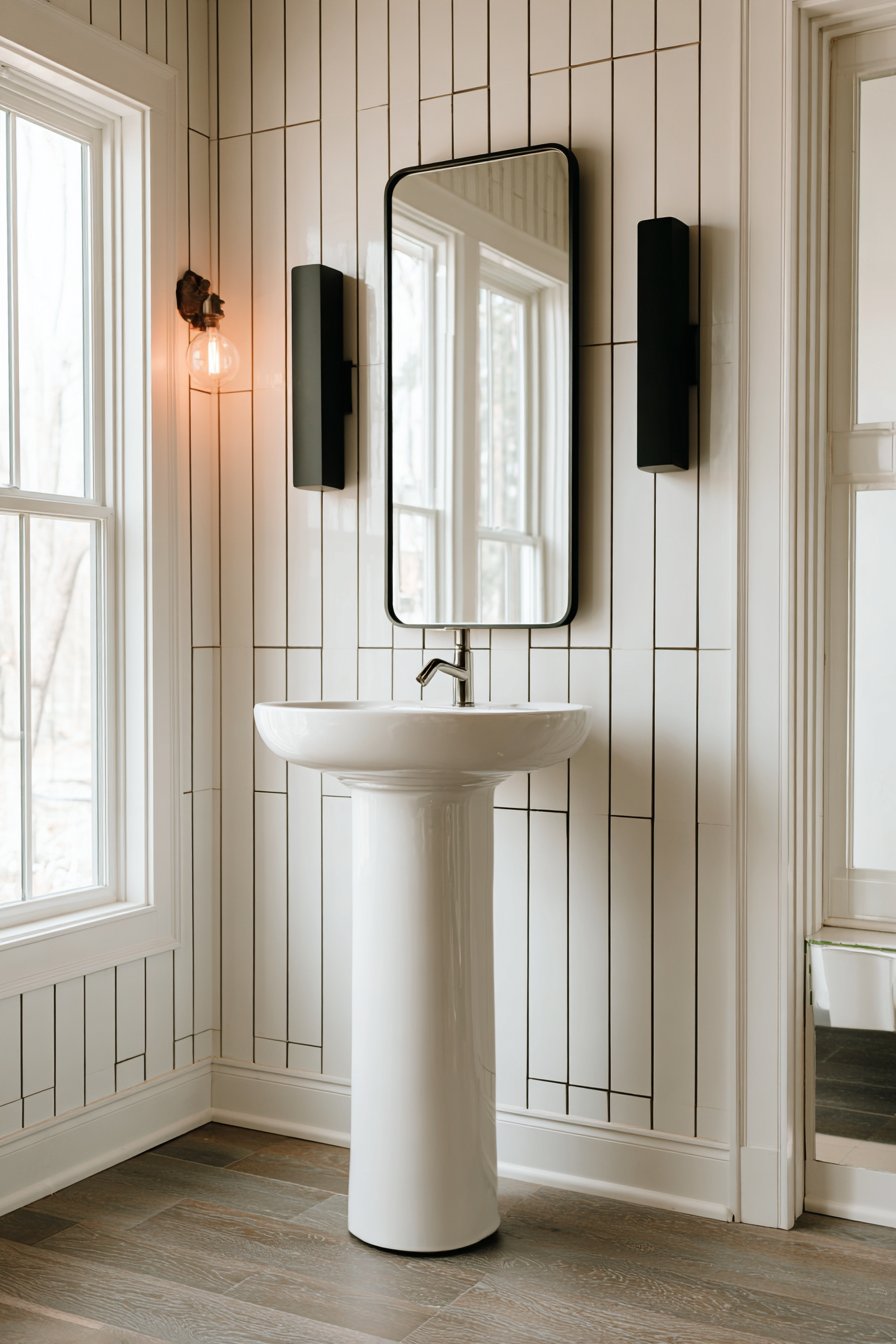
Storage solutions should embrace verticality rather than sprawl horizontally. Wall-mounted cabinets that reach toward the ceiling maximize storage while maintaining the upward visual flow. Avoid wide, squat fixtures that emphasize the room’s compact footprint. Instead, choose pedestal sinks or narrow wall-mounted vanities that don’t break vertical sight lines.
- Install mirrors that extend from countertop to ceiling for maximum height illusion
- Choose vertical subway tile patterns instead of horizontal arrangements
- Select tall, narrow storage towers rather than wide cabinets
- Use vertical striping in wallpaper or paint treatments strategically
- Mount towel bars and accessories in vertical arrangements when possible
- Consider slim, elongated sconces rather than horizontal vanity lighting
2. Leverage Statement Lighting as Functional Art
Lighting transforms half bathrooms from purely functional spaces into design showpieces. Since powder rooms lack windows in many homes, artificial lighting becomes your primary tool for ambiance. Professional designers treat lighting fixtures as sculptural elements that provide illumination and visual interest simultaneously.
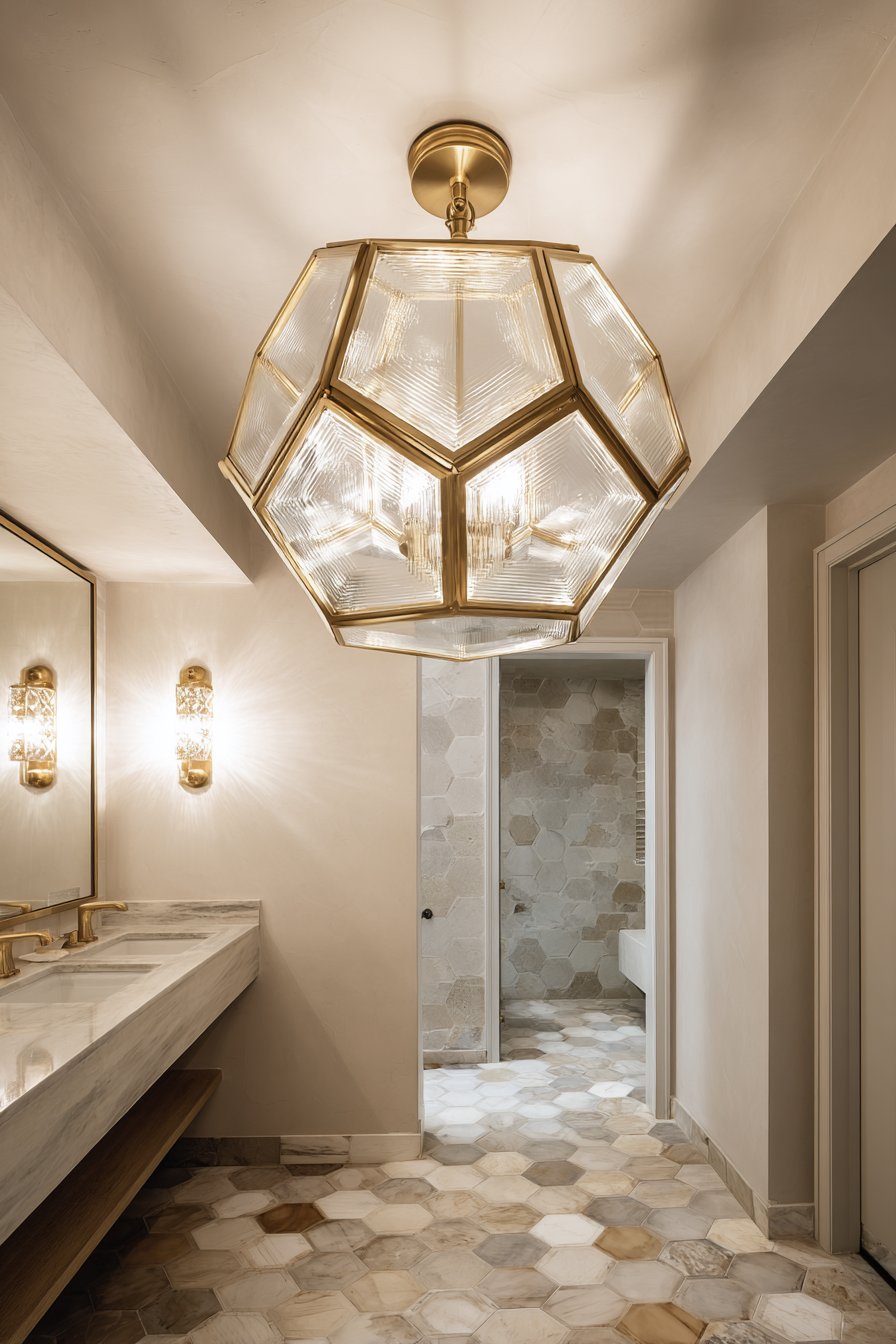
The right fixture draws attention and becomes a conversation starter for guests. Oversized pendants, unique chandeliers, or artistic sconces create focal points that distract from limited square footage. Layered lighting—combining ambient, task, and accent sources—adds depth and dimension. This approach prevents the flat, institutional feel that single-source overhead lighting creates.
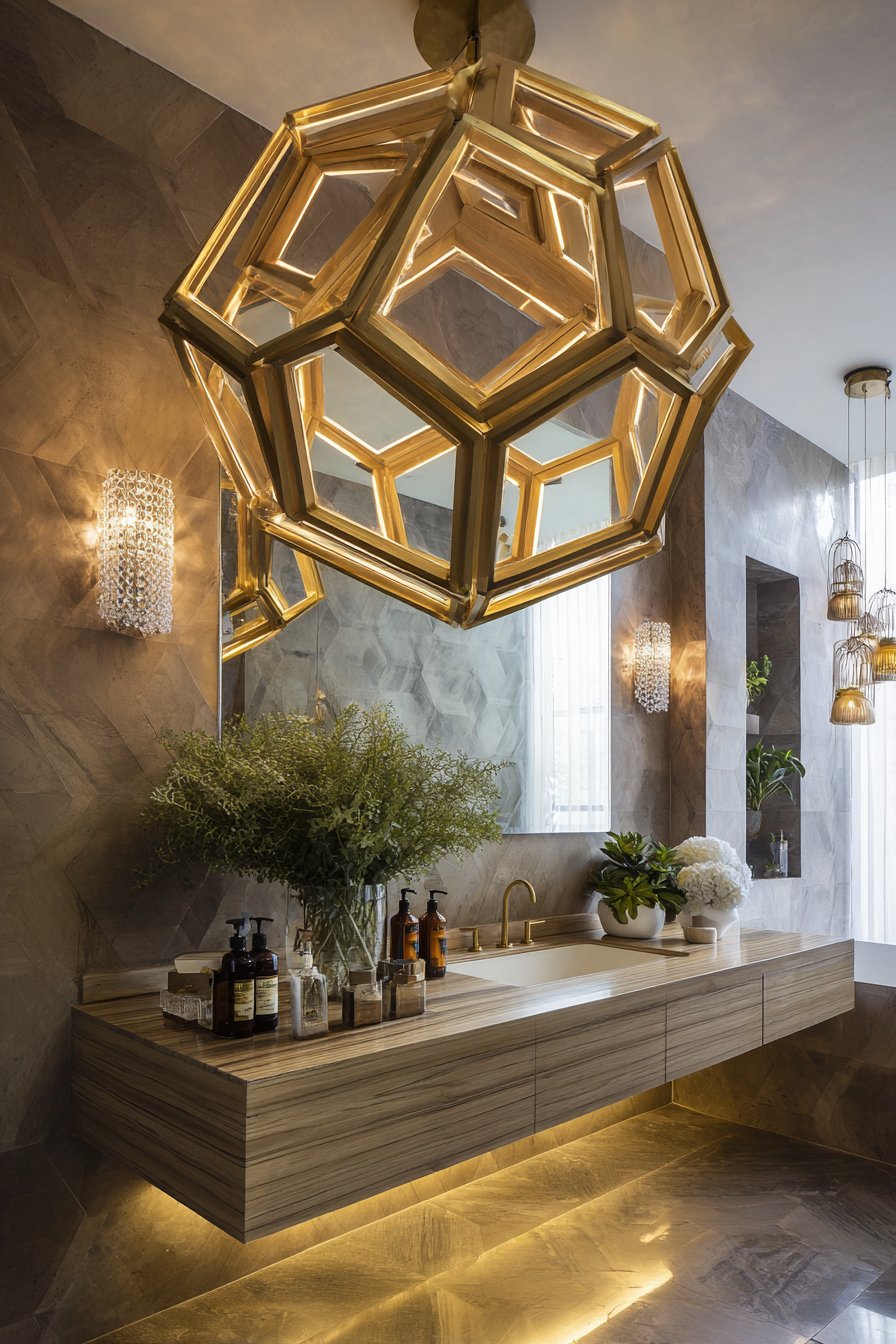
Choose fixtures with personality and presence that reflect your overall design aesthetic. A crystal chandelier adds glamour, while industrial pendants create edgy sophistication. Ensure task lighting provides adequate illumination at the mirror without harsh shadows. Dimmer switches offer flexibility, allowing you to adjust the mood from bright functionality to soft ambiance.
- Install a statement chandelier or pendant as the room’s centerpiece
- Add wall sconces flanking the mirror at eye level for shadow-free lighting
- Include LED strips under floating vanities for modern ambient glow
- Choose fixtures with metallic finishes that reflect light throughout the space
- Consider smart bulbs that allow color temperature adjustments for different times
- Ensure minimum 75 watts equivalent for task lighting at mirror areas
3. Embrace Bold Wall Treatments Without Fear
Half bathrooms offer the perfect opportunity for design risk-taking that might overwhelm larger spaces. With minimal square footage, you can afford premium materials and bold patterns without breaking your budget. Professional designers leverage this advantage to create memorable spaces that showcase daring choices.
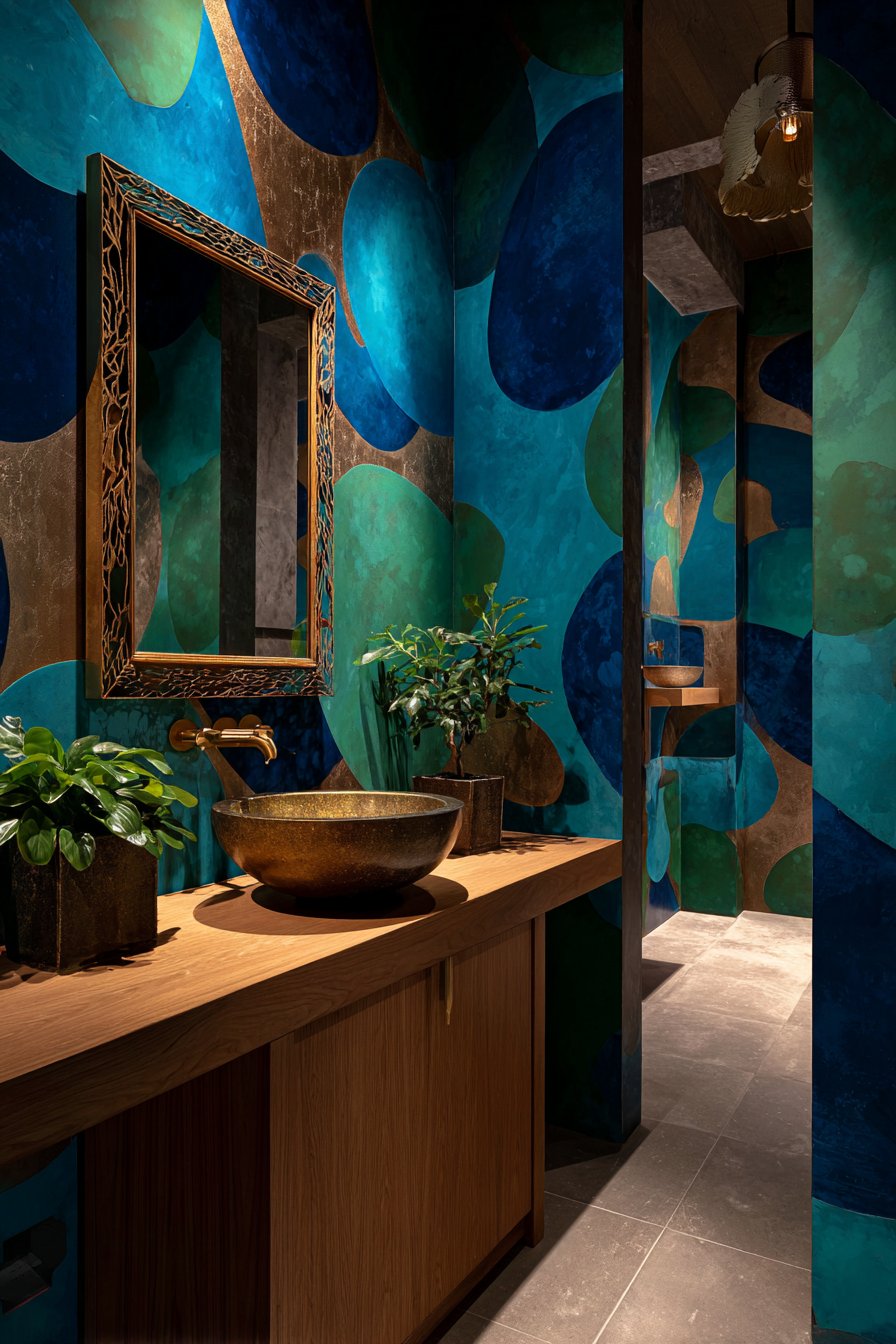
Dramatic wallpaper patterns, rich paint colors, or textured wall panels make powerful statements in powder rooms. These treatments create visual richness that distracts from size limitations while expressing personality. Geometric patterns, botanical prints, or metallic accents transform plain walls into artistic backdrops. The contained nature of half bathrooms means bold choices feel curated rather than overwhelming.
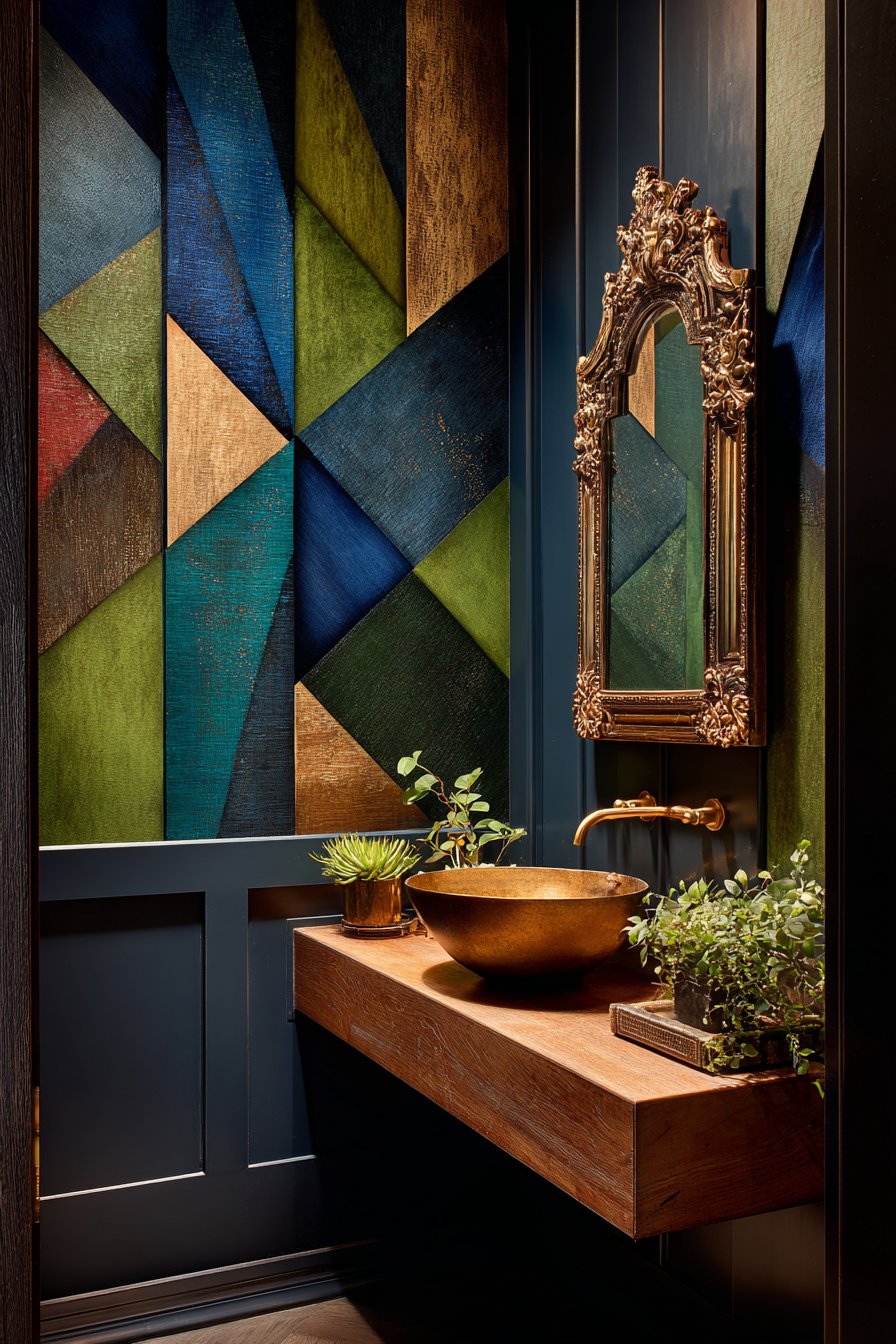
Consider three-dimensional wall treatments like shiplap, board and batten, or decorative molding for added depth. Textured tiles, stone veneers, or specialized plaster finishes introduce tactile interest. These surfaces catch and reflect light differently throughout the day, creating dynamic visual experiences. Don’t shy away from dark, moody colors—they can make small spaces feel intimate and sophisticated rather than cramped.
- Select one accent wall for maximum pattern impact while keeping others neutral
- Use removable wallpaper for renters or those wanting flexibility
- Paint ceilings in unexpected colors or add metallic finishes for surprise elements
- Install picture frame molding to create architectural interest on plain walls
- Consider washable wallpaper in powder rooms for practical maintenance
- Test samples in actual lighting conditions before committing to bold choices
4. Prioritize Proportion and Scale Ruthlessly
Understanding proper scale separates amateur designs from professional results in compact bathrooms. Fixtures and furnishings must relate harmoniously to room dimensions—neither overwhelming the space nor appearing lost within it. This balance requires careful measurement and visualization before purchasing anything.
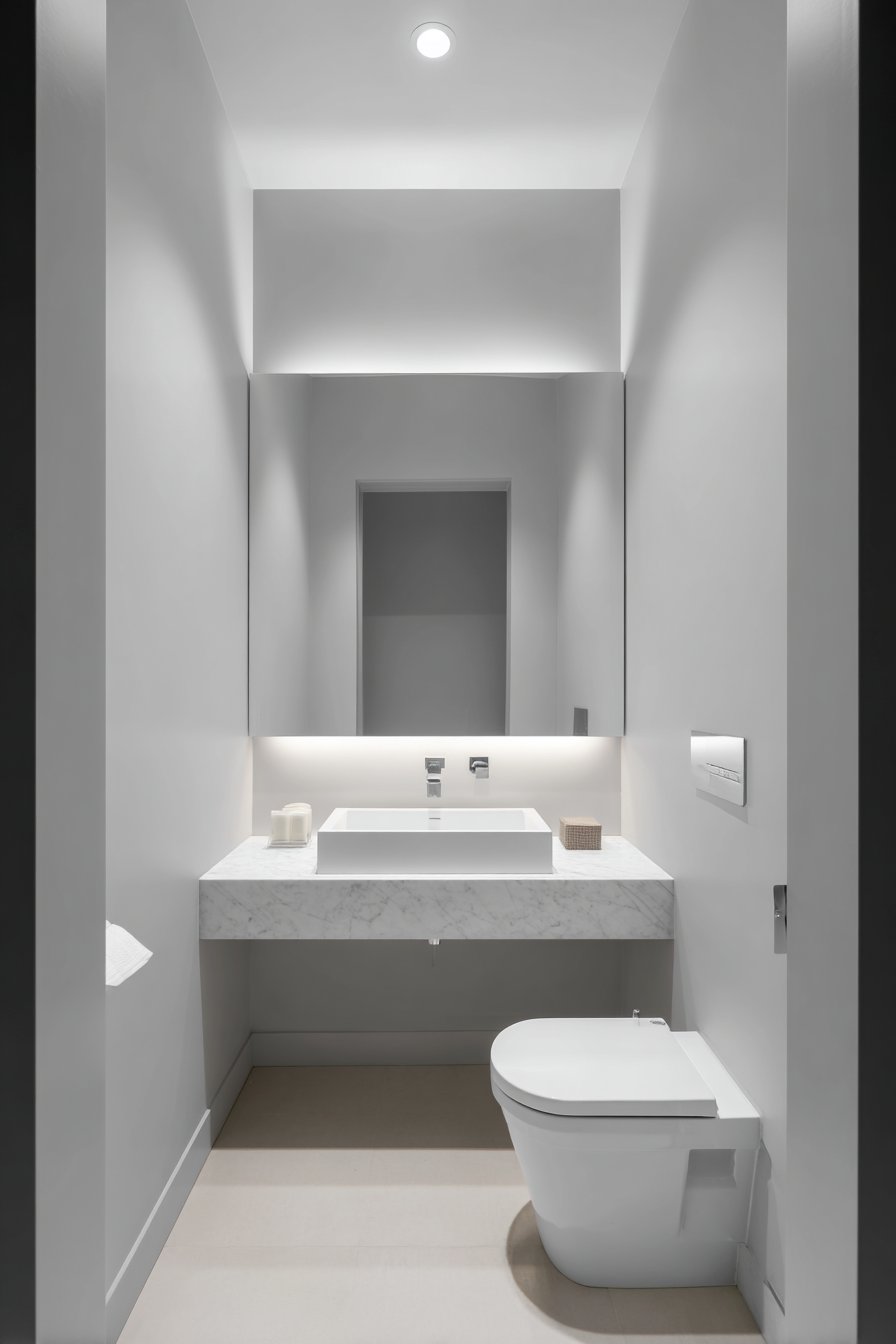
Standard fixtures often prove too large for powder room applications. A typical 30-inch vanity might dominate a narrow bathroom, while a 48-inch mirror could dwarf available wall space. Professionals always measure twice and consider the visual weight of items, not just physical dimensions. Floating vanities appear lighter than floor-mounted versions with similar footprints.
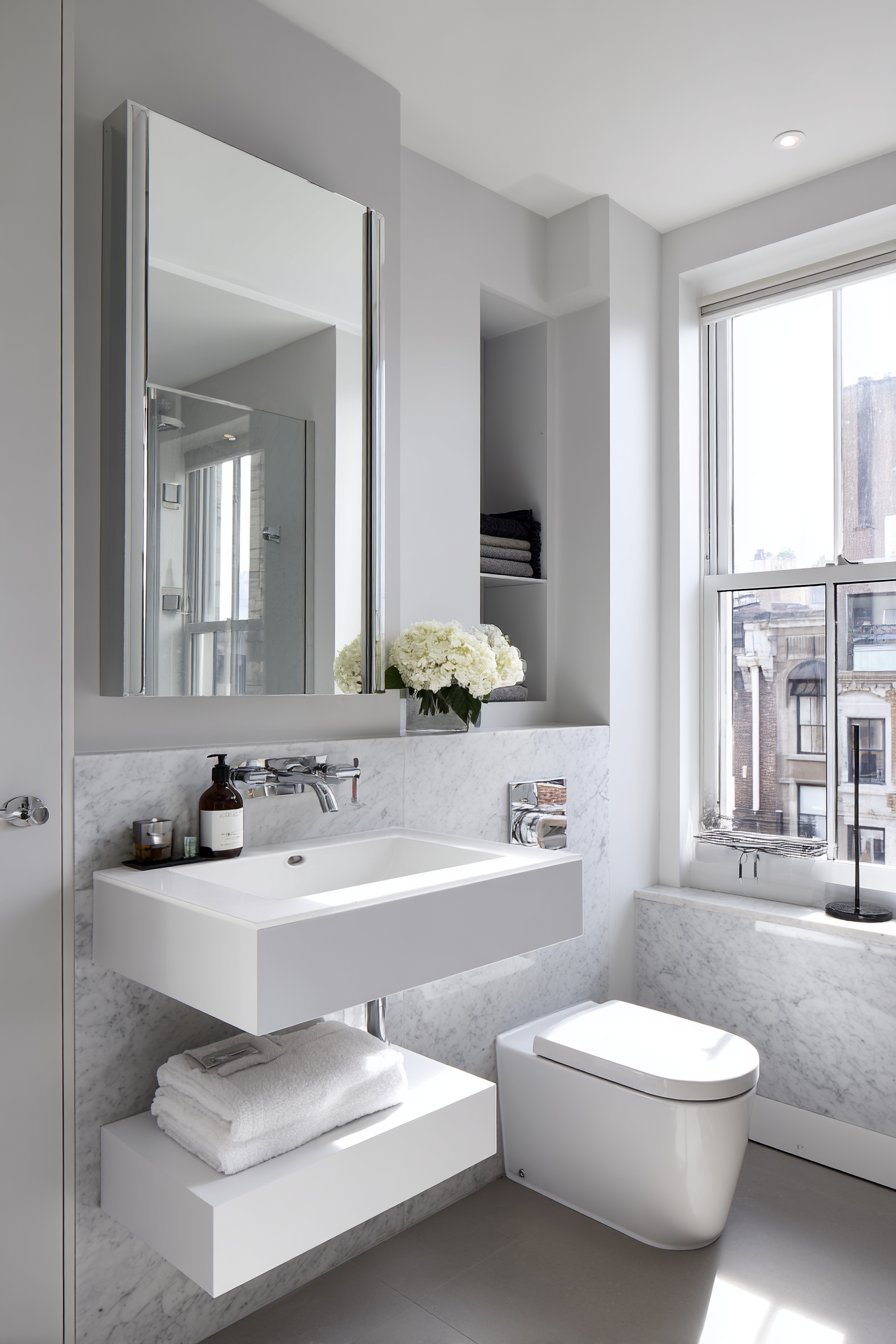
Every element should earn its place through proportional appropriateness. Door swings, toilet placement, and circulation space all demand careful planning. The industry standard suggests 30 inches of clearance in front of fixtures, but creative placement can maximize usability. Corner sinks, wall-hung toilets, and pocket doors solve common spatial challenges while maintaining comfort and functionality.
- Measure all dimensions including door swings and traffic patterns before shopping
- Choose vanities between 18-24 inches wide for truly compact powder rooms
- Select wall-mounted toilets that save 8-10 inches of floor space
- Use graph paper or design apps to visualize layouts before purchasing
- Consider pedestal sinks for the smallest spaces requiring maximum floor area
- Ensure mirrors don’t extend beyond vanity width by more than 6 inches
5. Create Cohesive Material Stories
Professional designs tell unified visual stories through intentional material selection and repetition. Rather than treating each element as separate, successful half bathrooms weave together finishes that complement and enhance each other. This coordination creates sophisticated, polished results that appear thoughtfully curated rather than randomly assembled.
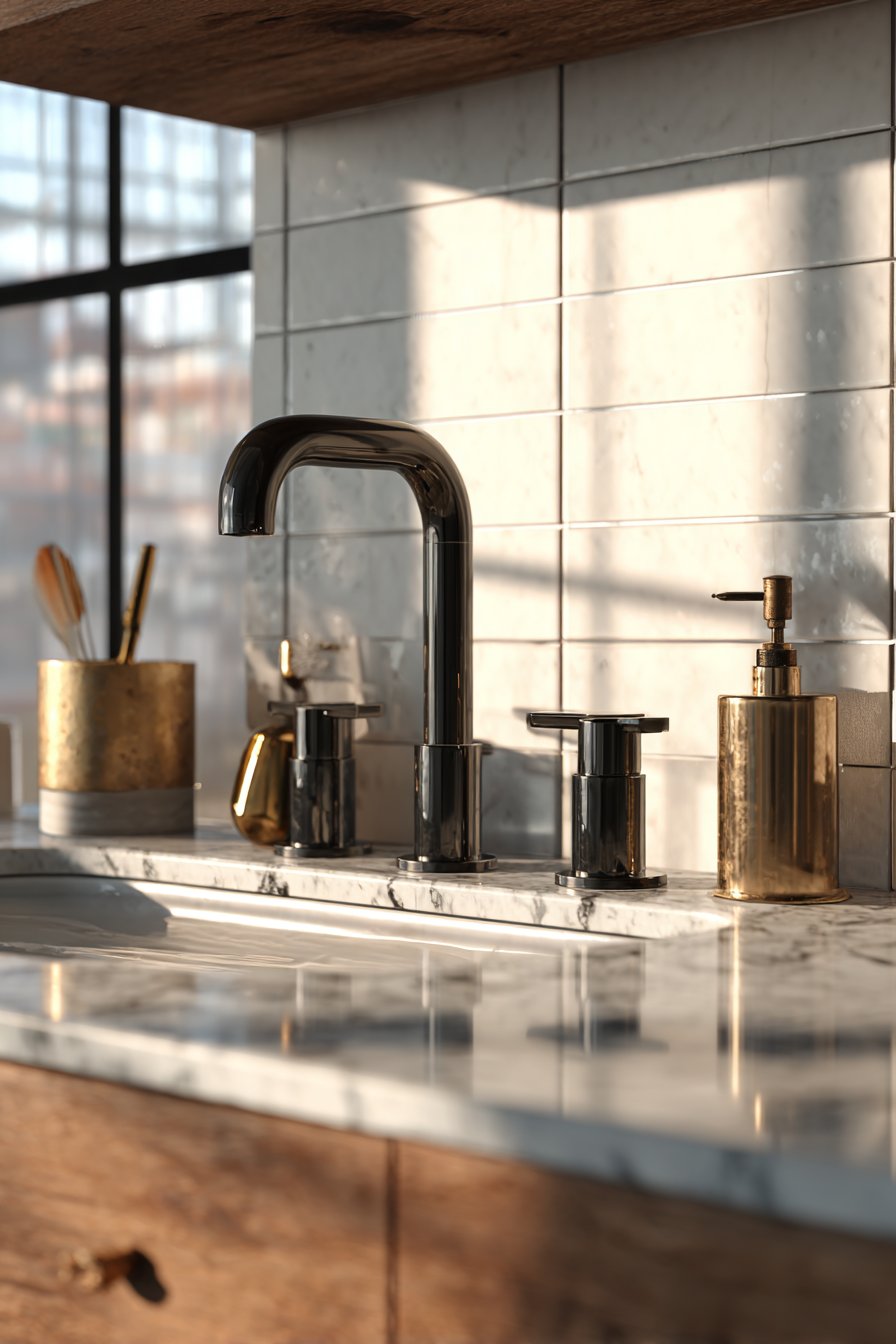
Limit your material palette to three to four key finishes for cohesion without monotony. For example, pair matte black fixtures with white marble, brass accents, and natural wood tones. Repeat finishes across different elements—matching faucet and light fixture metals, coordinating tile with countertop materials. This repetition creates visual rhythm that guides the eye smoothly through the space.
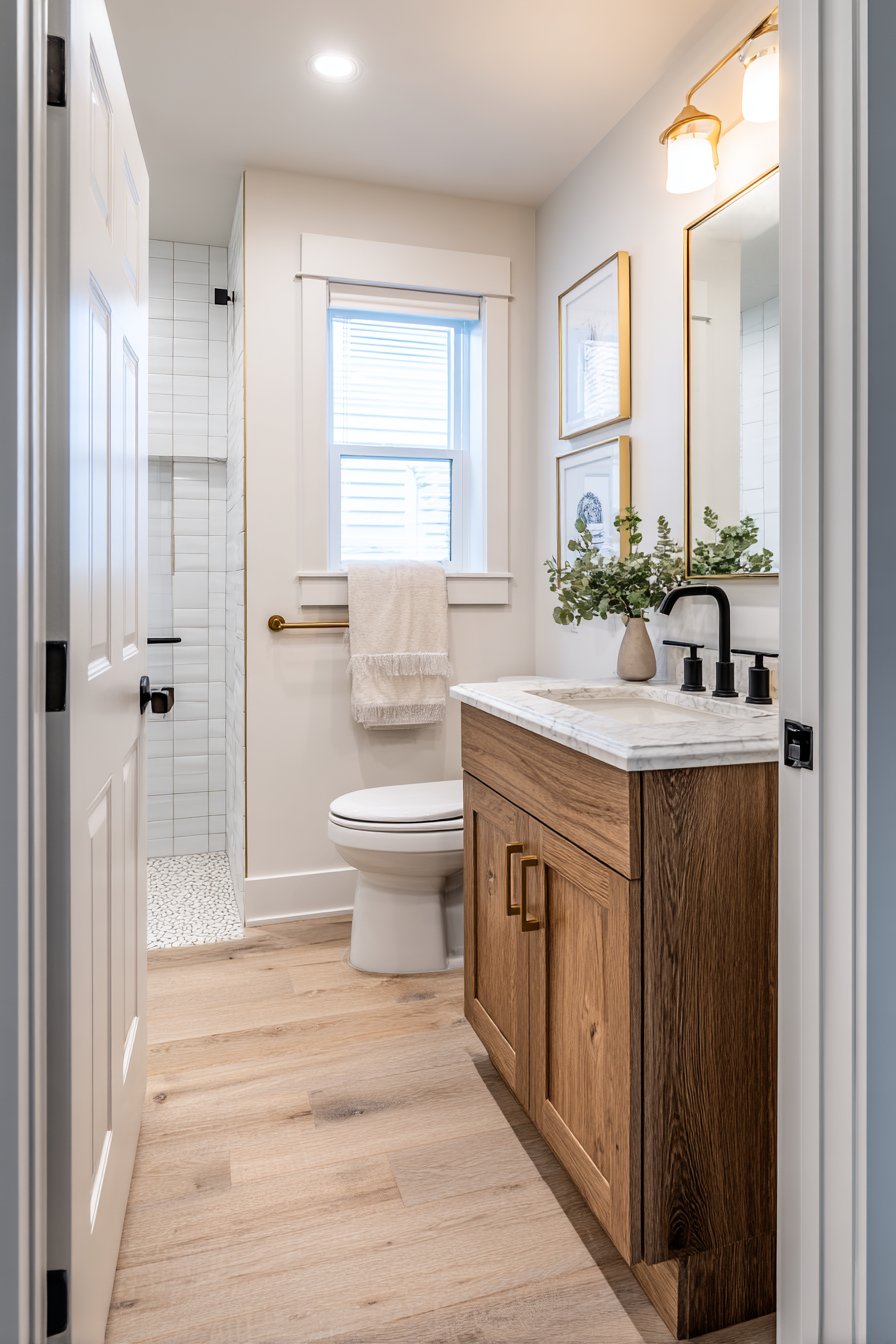
Consider the interplay between materials and their reflective or textural qualities. Mixing matte and glossy finishes adds depth, while combining smooth and textured surfaces creates tactile interest. Natural materials like wood, stone, and metal bring authenticity and warmth that synthetic alternatives cannot replicate. Invest in fewer, higher-quality materials rather than spreading budgets thin across many mediocre choices.
- Select one hero material to anchor the design, then build supporting palette around it
- Match metal finishes across all hardware, fixtures, and accessories
- Coordinate grout colors with tile selections for seamless or contrasting effects
- Use natural stone or quality porcelain rather than vinyl or laminate when possible
- Consider how materials age—some patina beautifully while others deteriorate quickly
- Create sample boards with actual material swatches before finalizing purchases
6. Implement Strategic Storage Solutions
Even half bathrooms require thoughtful storage planning despite lacking shower and clothing areas. Guests need access to essentials like hand towels, tissues, and toiletries. Invisible storage maintains clean aesthetics while ensuring functionality. Professional designers incorporate storage that serves dual purposes and maximizes every cubic inch.
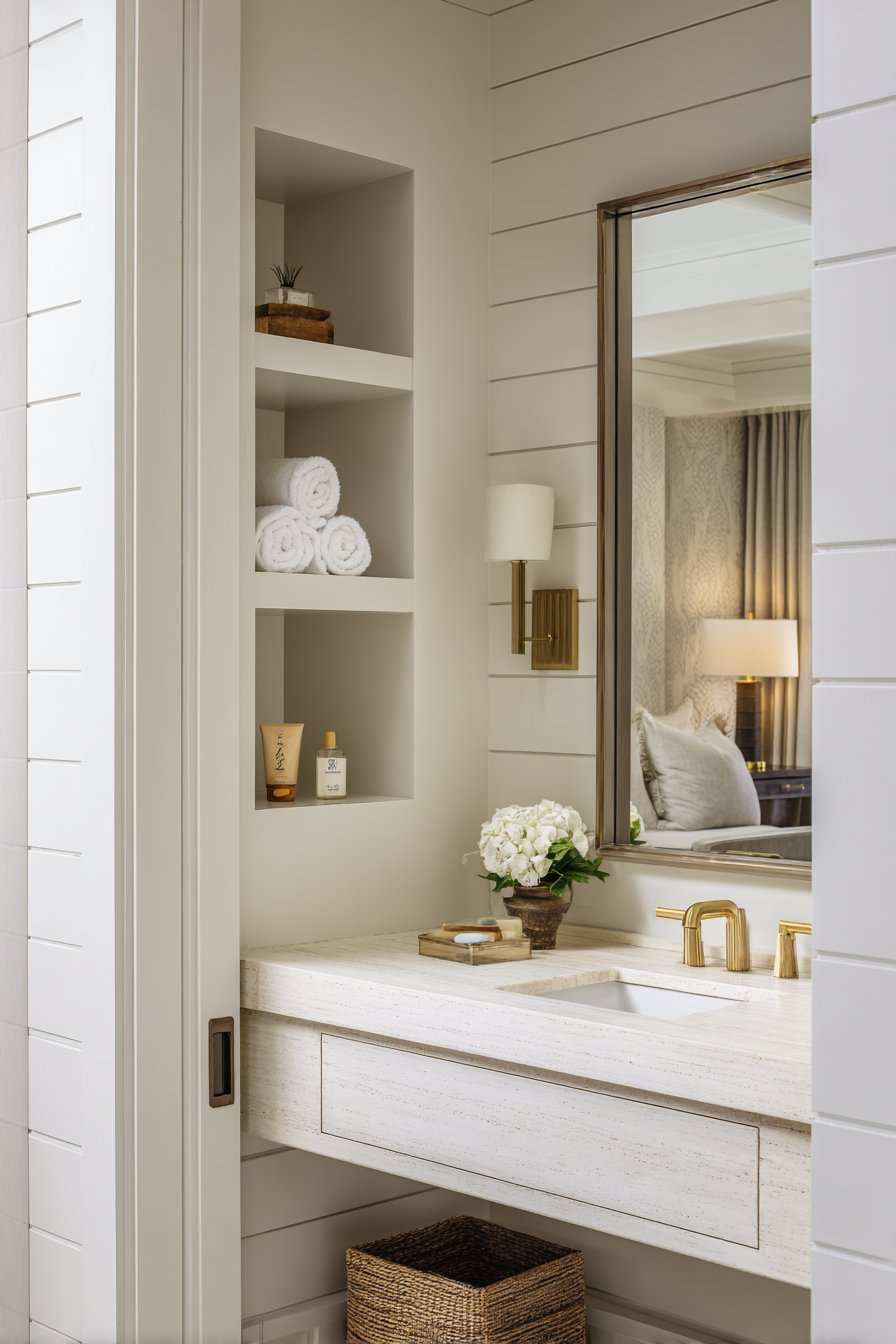
Recessed medicine cabinets offer storage without protruding into limited floor space. These built-in solutions utilize wall cavity depth for holding necessities while maintaining sleek facades. Floating vanities with drawers keep supplies concealed yet accessible. Decorative baskets on open shelving provide storage with visual warmth. Hooks behind doors maximize vertical surfaces for hanging items.
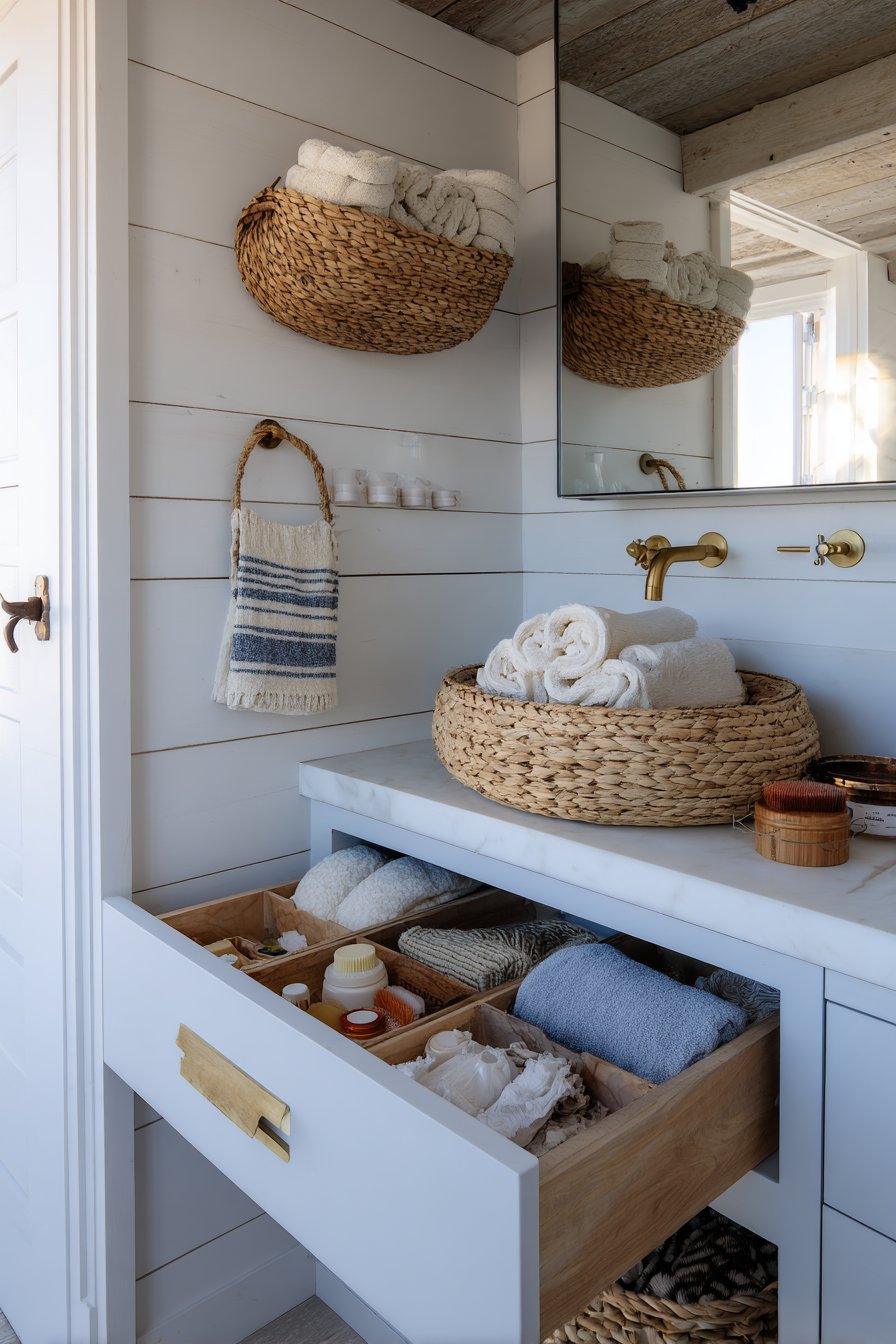
Think beyond traditional bathroom storage conventions. Narrow wall niches between studs hold toiletries and decorative objects without sacrificing floor area. Magnetic strips can organize small metal items inside cabinet doors. Consider furniture pieces like slim consoles with drawers that don’t read as typical bathroom vanities. Every storage solution should maintain the room’s aesthetic while serving practical needs.
- Install recessed shelving in wall cavities between studs for hidden storage
- Choose vanities with internal organizers rather than single open spaces
- Add decorative lidded boxes on counters to contain small items stylishly
- Mount towel hooks on doors or narrow wall sections beside fixtures
- Use mirrored medicine cabinets that provide storage and reflection simultaneously
- Consider roll-out drawers in lower vanity cabinets for easier access to supplies
Conclusion
These six professional secrets provide the foundation for creating exceptional half bathrooms that defy size limitations. By mastering vertical emphasis, strategic lighting, bold treatments, proper proportions, cohesive materials, and smart storage, you’ll craft powder rooms that impress and function beautifully. Each principle works independently yet amplifies the others when combined thoughtfully.
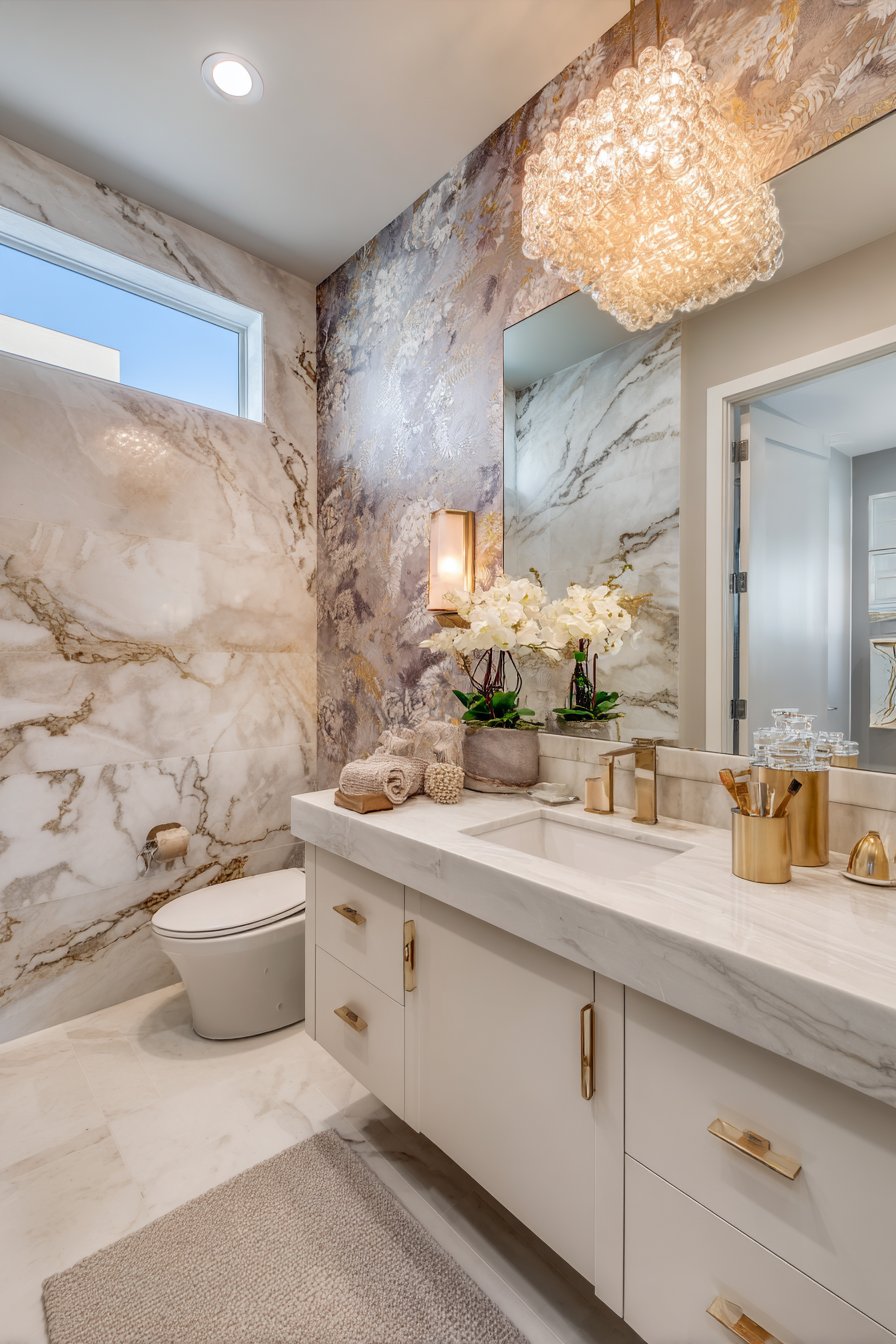
Remember that half bathrooms offer unique freedom for design experimentation without overwhelming your home. Start with one or two secrets that resonate most with your vision and budget. As you implement these professional strategies, you’ll discover how thoughtful design transforms even the smallest spaces into memorable experiences. Your powder room can become the hidden gem that guests remember long after they leave.
