


A well-organized kitchen is the heart of a functional home. When everything has its place, cooking becomes a joy rather than a chore. The difference between a chaotic kitchen and an organized culinary space lies in thoughtful design decisions made from the very beginning.
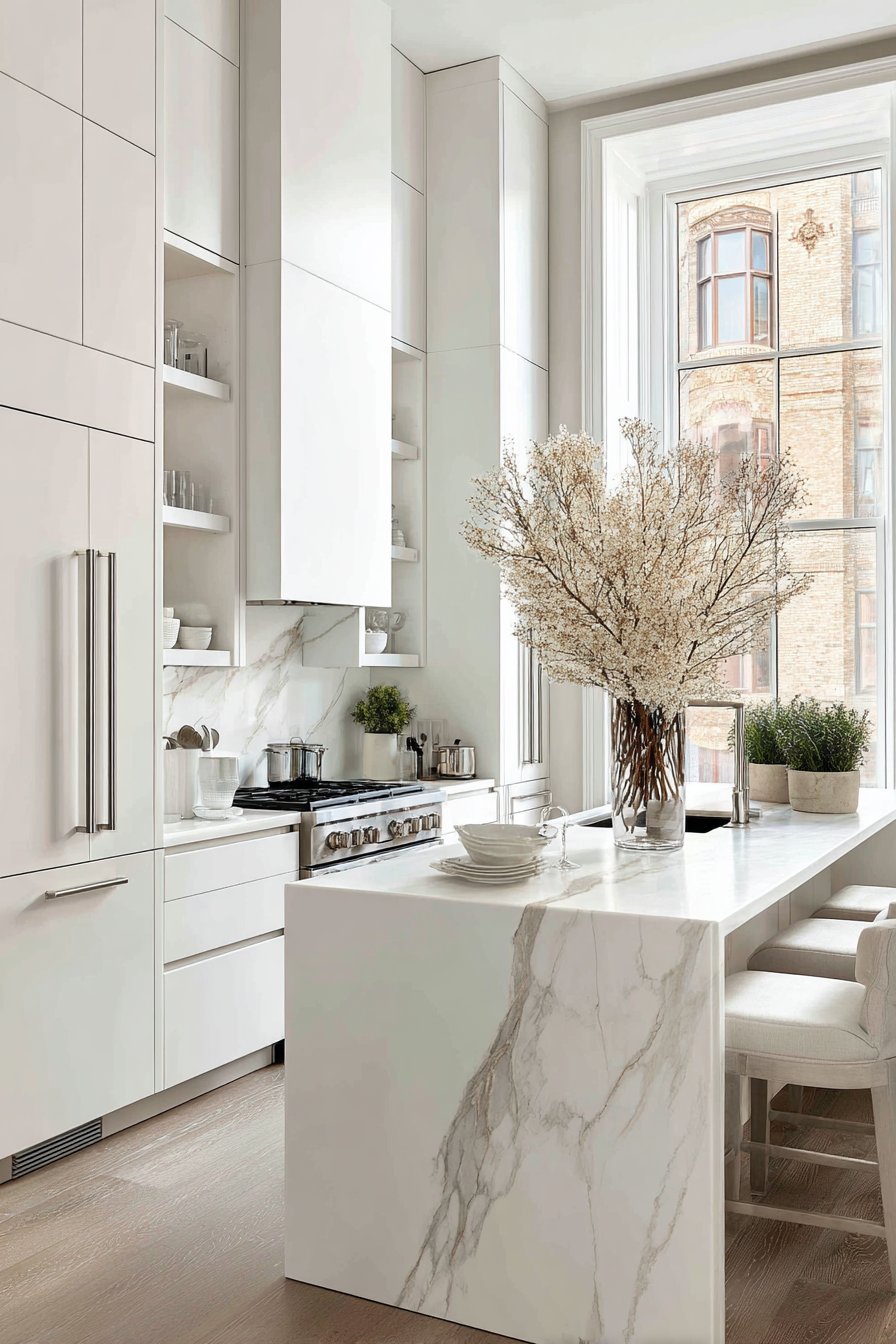
Creating a kitchen that maintains its organization requires more than just buying storage containers. It demands careful planning of layout, workflow, and storage solutions that work with your daily routines. Whether you’re renovating an existing space or designing a new kitchen, understanding the principles of organized design will transform how you cook, entertain, and live.
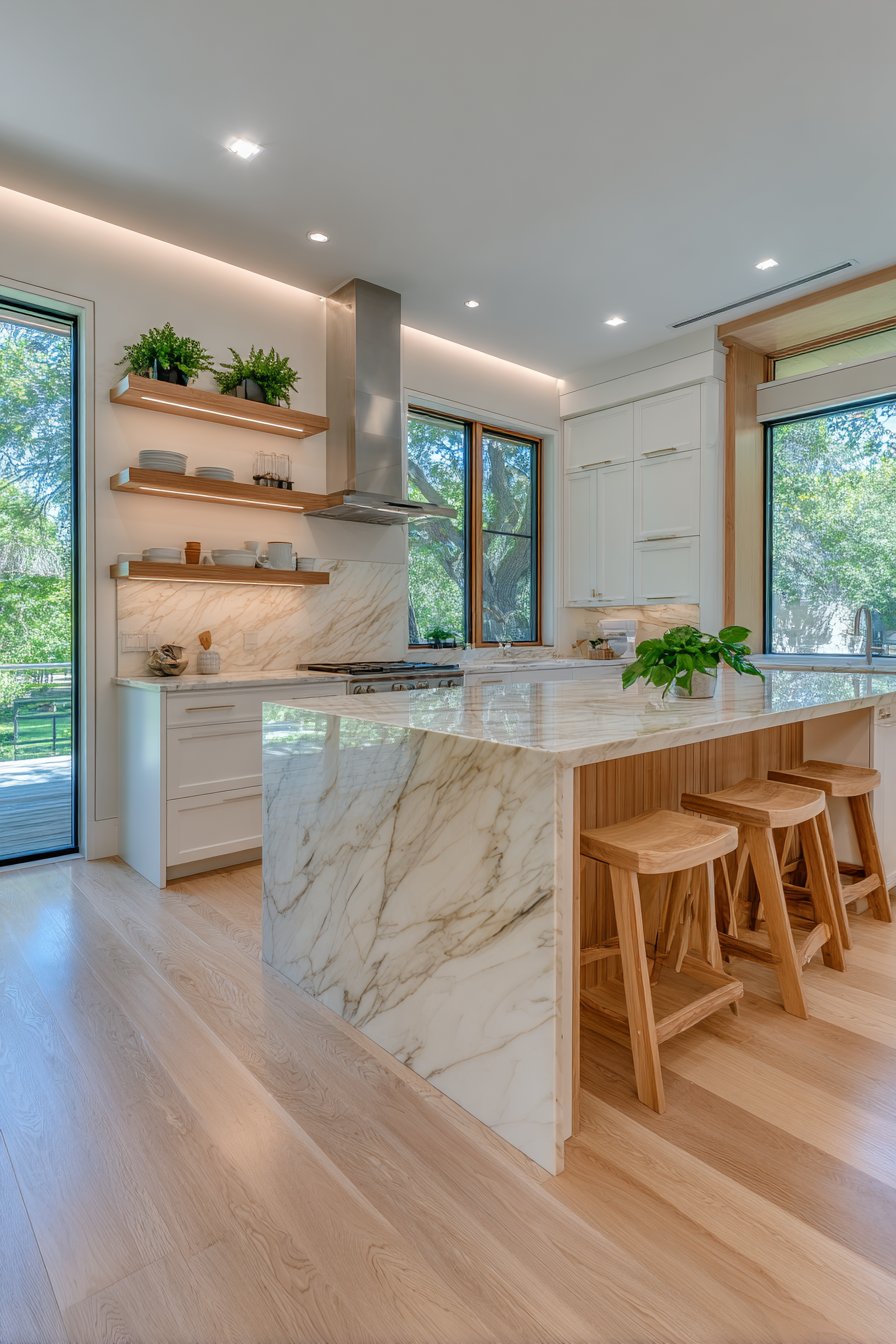
This comprehensive guide explores essential strategies for designing a kitchen that naturally stays tidy. From strategic storage placement to smart appliance choices, each tip focuses on creating sustainable organization systems. These design principles cater to various lifestyles, kitchen sizes, and budgets, ensuring every home cook can benefit from improved functionality.
1. Plan Your Kitchen Work Triangle
The work triangle concept remains fundamental to kitchen efficiency. This design principle positions your sink, stove, and refrigerator in a triangular layout. The goal is to minimize unnecessary movement while cooking and preparing meals.
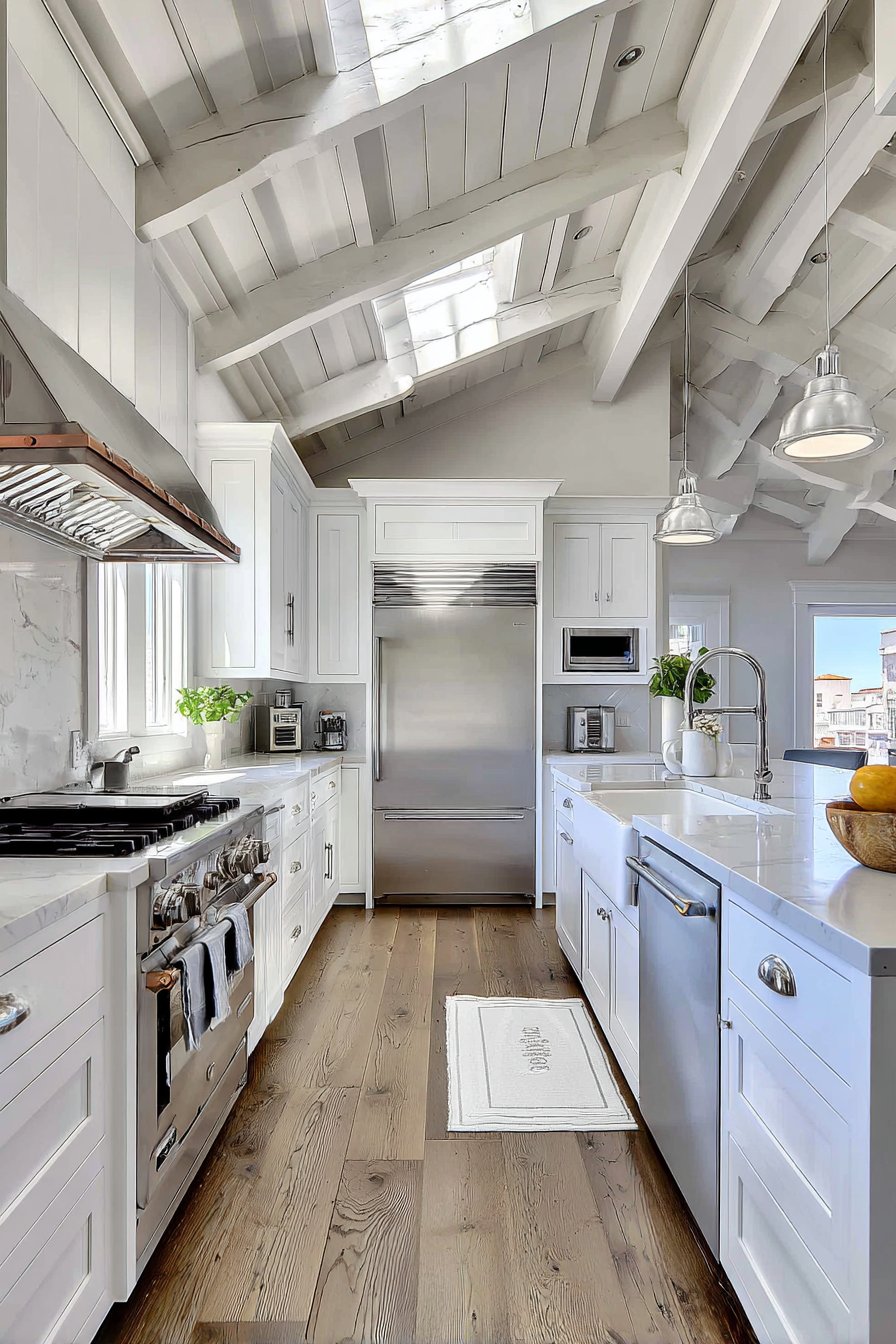
A well-planned triangle creates natural workflow patterns that prevent clutter accumulation. When appliances and workstations are conveniently located, you’re less likely to abandon items mid-task. Each leg of the triangle should measure between four and nine feet for optimal functionality.
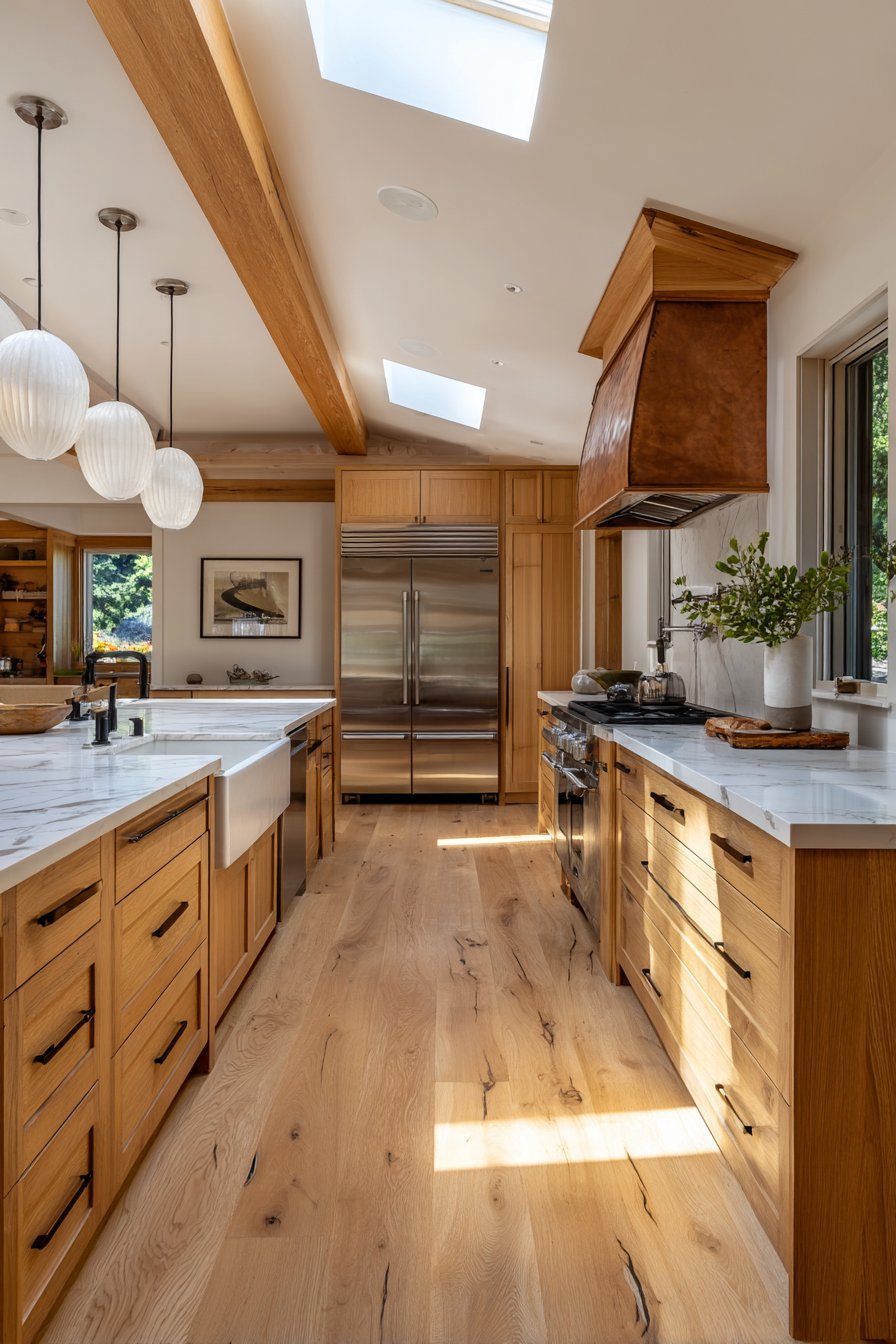
Consider how you actually use your kitchen daily. Place frequently used items within easy reach of their corresponding work zones. This intentional placement reduces counter clutter because everything returns to its logical home after use.
- Position the sink near the dishwasher for efficient cleanup workflows
- Keep the refrigerator accessible without blocking cooking zones
- Ensure adequate counter space between each triangle point
- Avoid placing major walkways through the work triangle
- Test the layout with painter’s tape before finalizing design
- Adjust measurements based on your height and reach
2. Maximize Vertical Storage Space
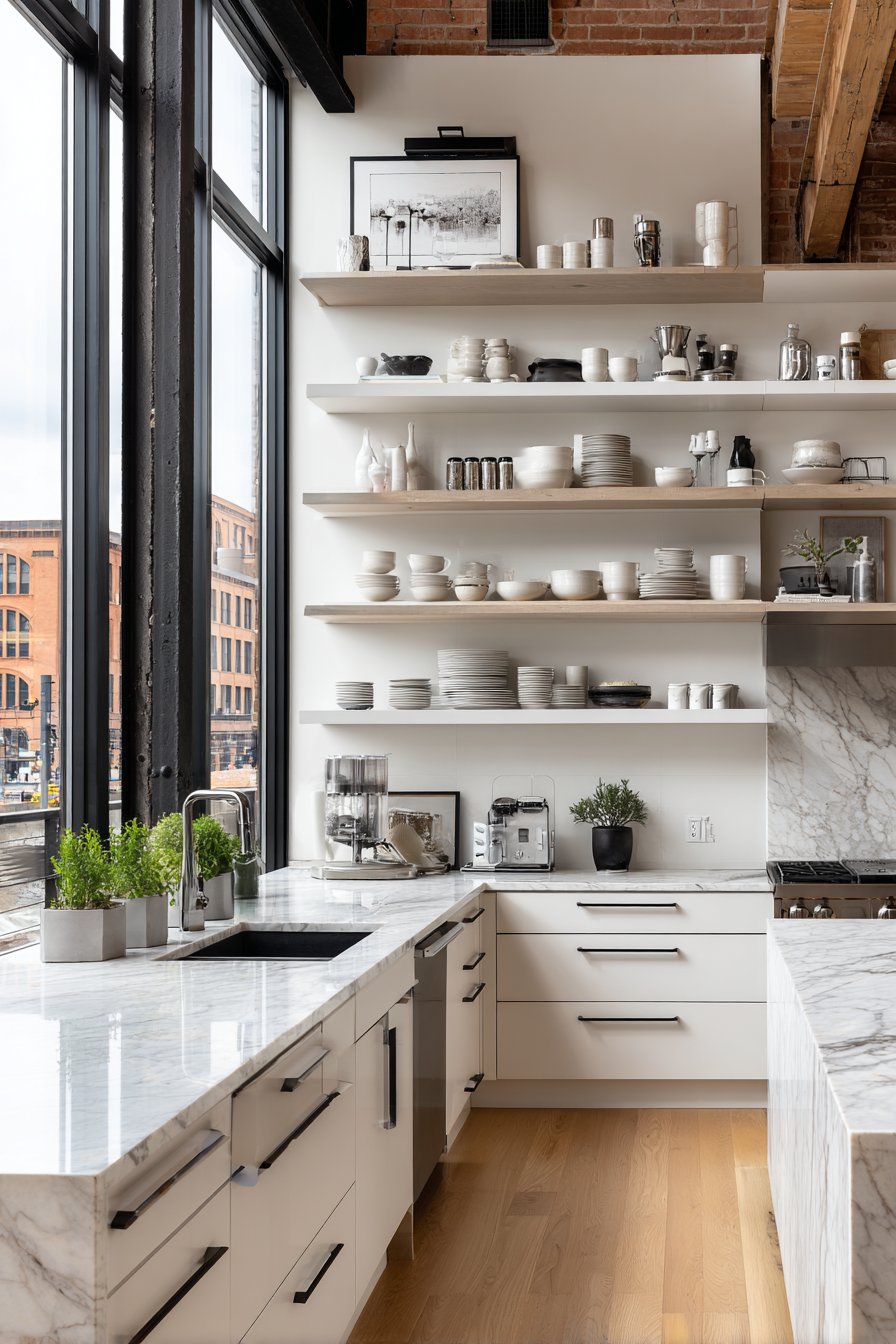
Most kitchens have untapped vertical potential waiting to be utilized. Looking upward reveals valuable storage opportunities that keep counters clear. Installing cabinets that reach the ceiling eliminates dust-collecting gaps while providing extra space.
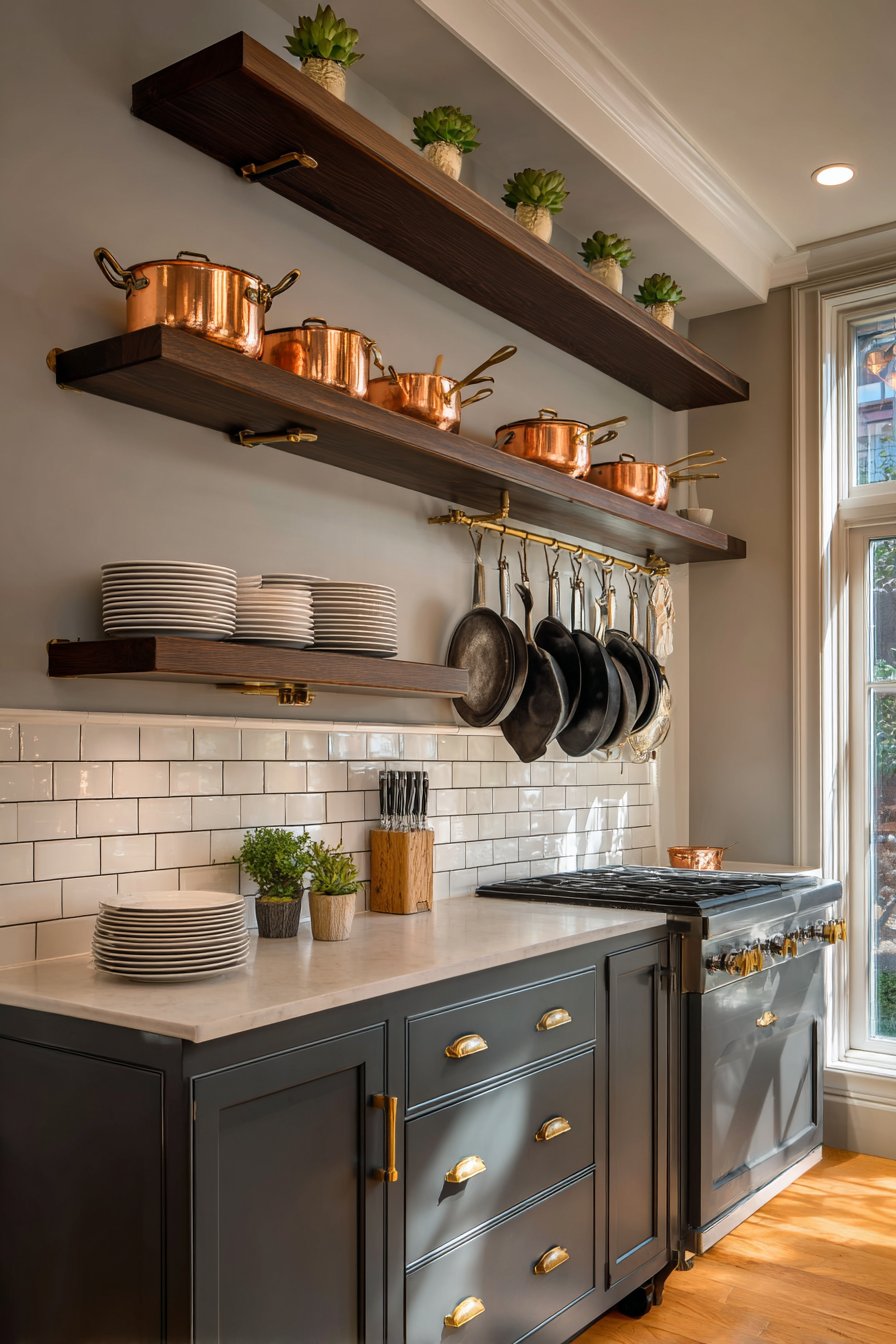
Vertical storage solutions include tall pantry cabinets, floating shelves, and wall-mounted racks. These options store items you use less frequently at higher levels. Reserve lower, accessible areas for everyday essentials that need quick access during cooking.
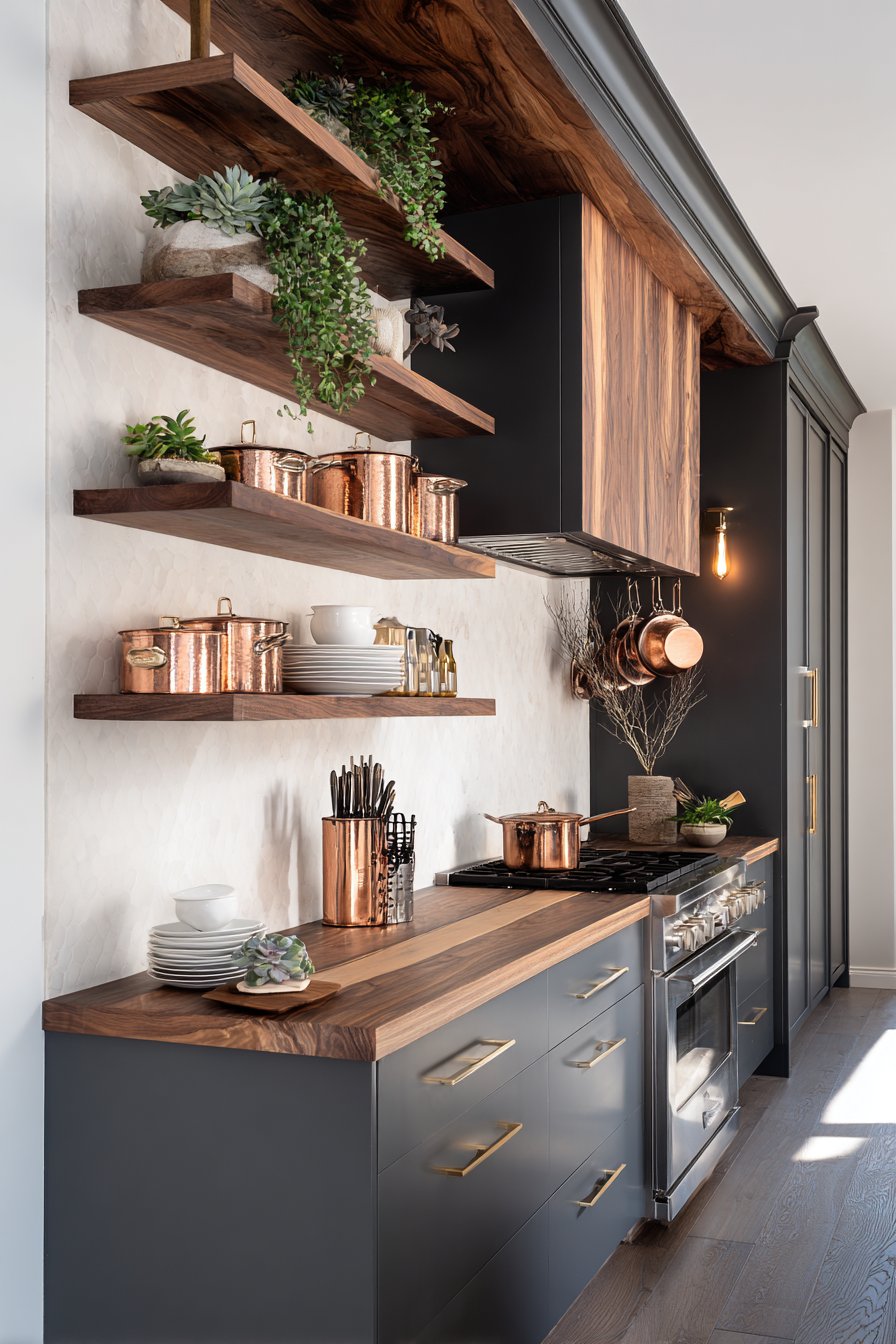
Think beyond traditional cabinets when planning vertical storage. Pegboards, magnetic strips, and hanging pot racks free up precious cabinet space. These solutions also create visual interest while keeping cooking tools organized and within reach.
- Install ceiling-height cabinets for maximum storage capacity
- Use step stools or pull-down shelving systems for high storage
- Mount magnetic knife strips to free drawer space
- Add hooks inside cabinet doors for measuring spoons and cups
- Install floating shelves for frequently used items and decor
- Consider pull-out vertical organizers for baking sheets and trays
3. Design Deep Drawers with Smart Dividers
Deep drawers outperform traditional cabinets for accessibility and organization. You can see everything at a glance without digging through stacked items. This visibility encourages maintaining organization because misplaced items are immediately obvious.
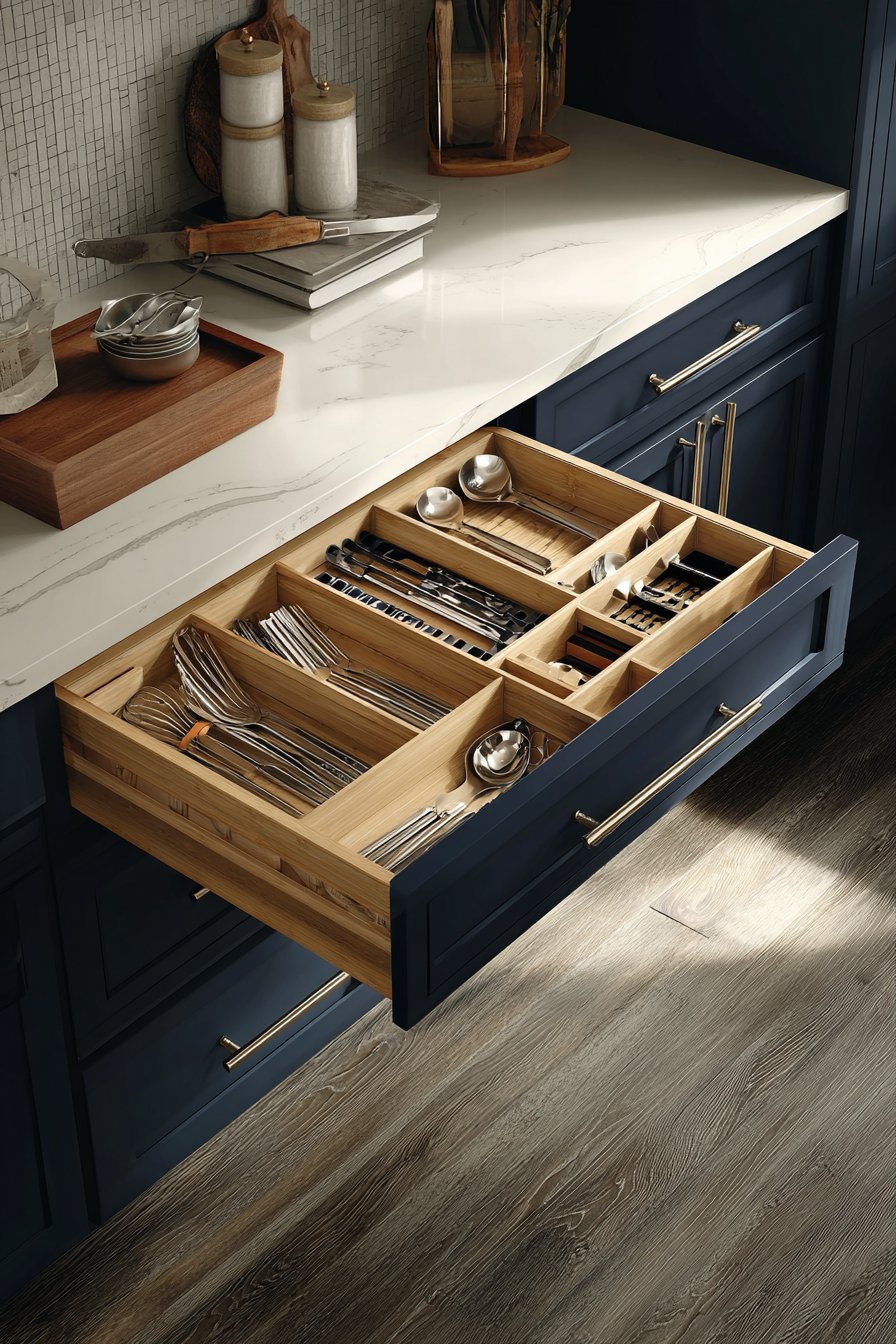
Custom drawer dividers transform deep drawers into highly functional spaces. Adjustable organizers accommodate various items from utensils to pots. The key is creating dedicated zones for different categories, preventing the jumbled mess common in undivided drawers.
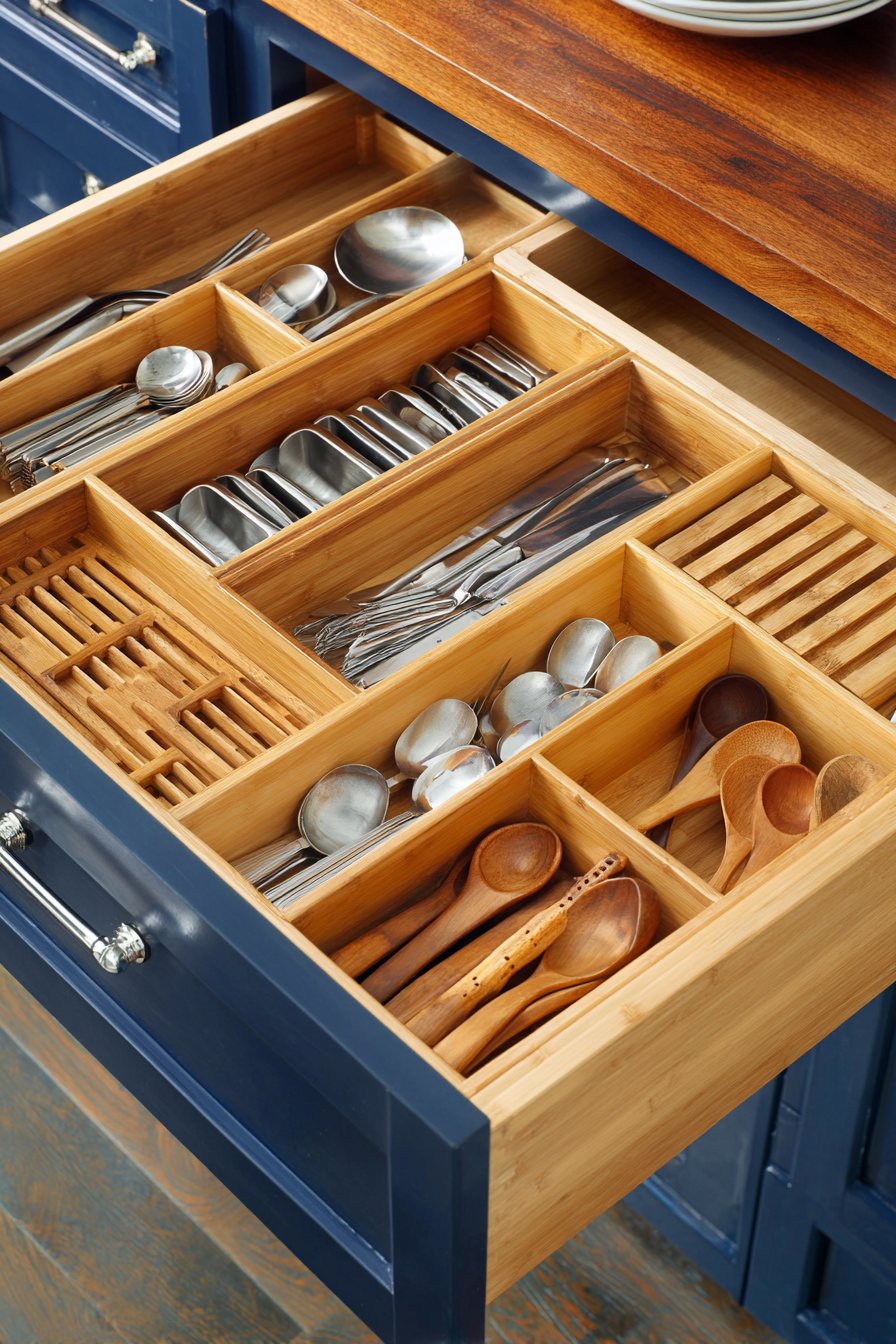
Plan drawer placement strategically near their corresponding work zones. Store cooking utensils near the stove and prep tools near your main workspace. This proximity creates efficient workflows that naturally maintain organization throughout daily cooking activities.
- Install soft-close mechanisms to prevent drawer slam damage
- Use spring-loaded dividers that adjust as needs change
- Create a dedicated drawer for food storage containers and lids
- Add drawer organizers specifically designed for spices or knives
- Include one deep drawer near the dishwasher for clean dishes
- Consider drawer inserts for awkwardly shaped items like rolling pins
4. Incorporate Pull-Out Storage Solutions
Pull-out shelves and organizers eliminate the frustrating reach into deep cabinets. These mechanisms bring items forward, making every inch of cabinet space accessible. The result is less clutter because you’ll actually use the storage available.
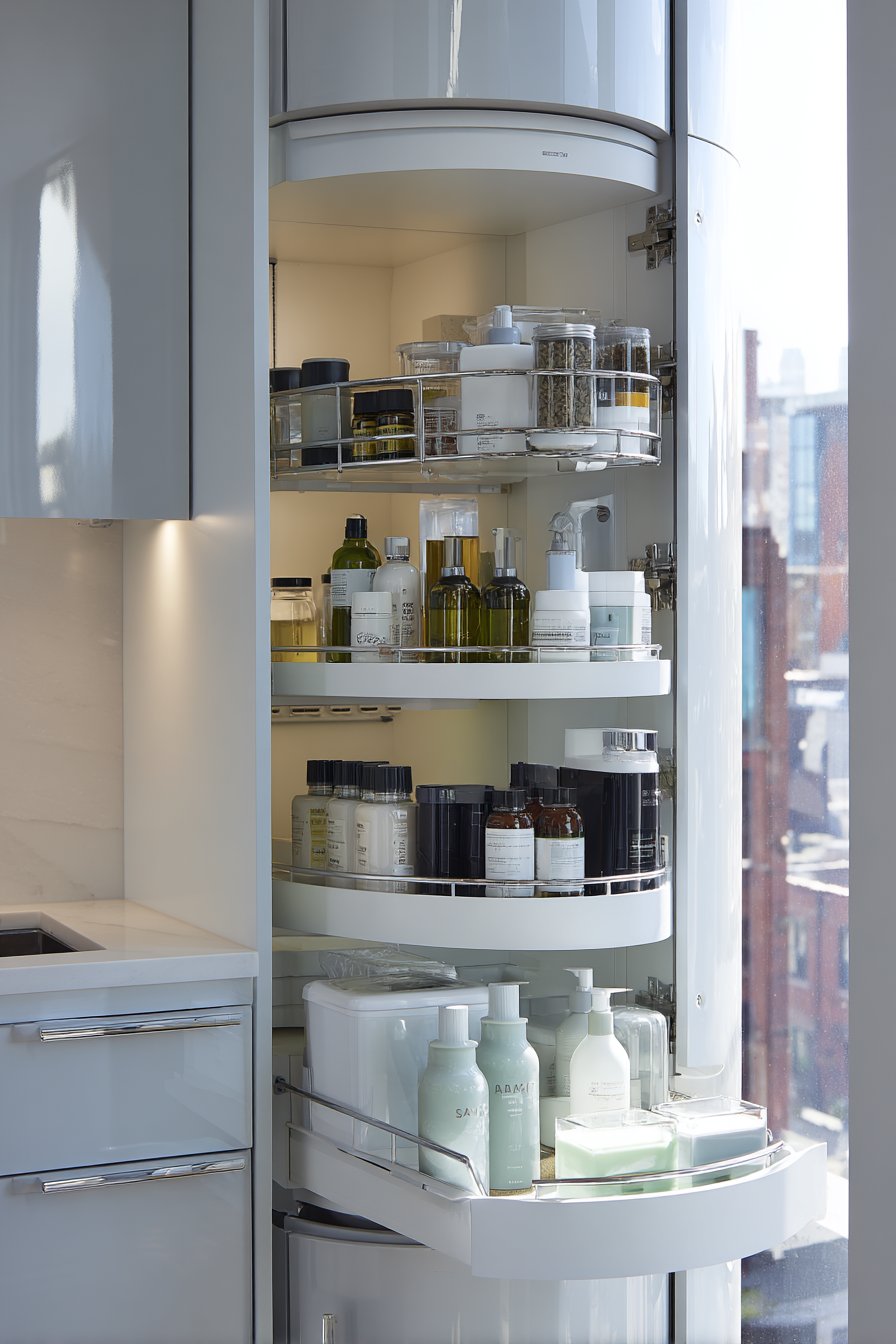
Corner cabinets particularly benefit from pull-out systems like lazy Susans or swing-out shelves. These traditionally wasted spaces become valuable storage when properly equipped. You’ll avoid the black hole effect where items disappear into forgotten corners.
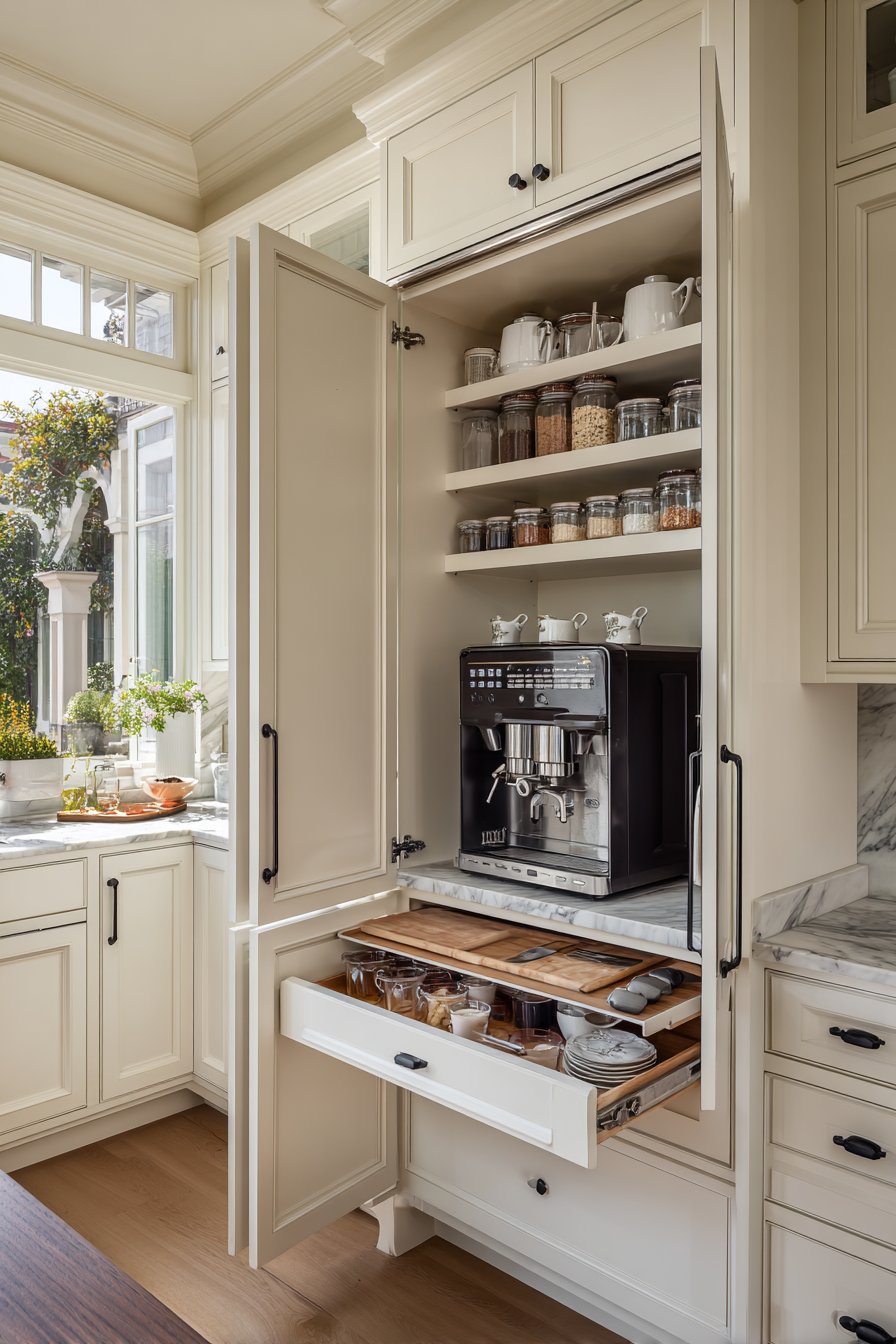
Pull-out trash and recycling bins keep waste containers hidden yet accessible. This concealed storage maintains clean aesthetics while encouraging proper disposal habits. Multiple compartments support composting and recycling programs without visual clutter.
- Install pull-out spice racks in narrow spaces between appliances
- Use gliding shelves in pantry cabinets for canned goods visibility
- Add pull-out cutting boards that tuck away when not needed
- Include pull-out shelving under the sink for cleaning supplies
- Consider pull-out appliance garages for small kitchen equipment
- Choose soft-close mechanisms for quiet, smooth operation
5. Create Dedicated Zones for Different Tasks
Zone-based organization mirrors natural kitchen workflows and activities. Designate specific areas for food prep, cooking, baking, and cleanup. Each zone contains the tools and ingredients needed for its particular function.
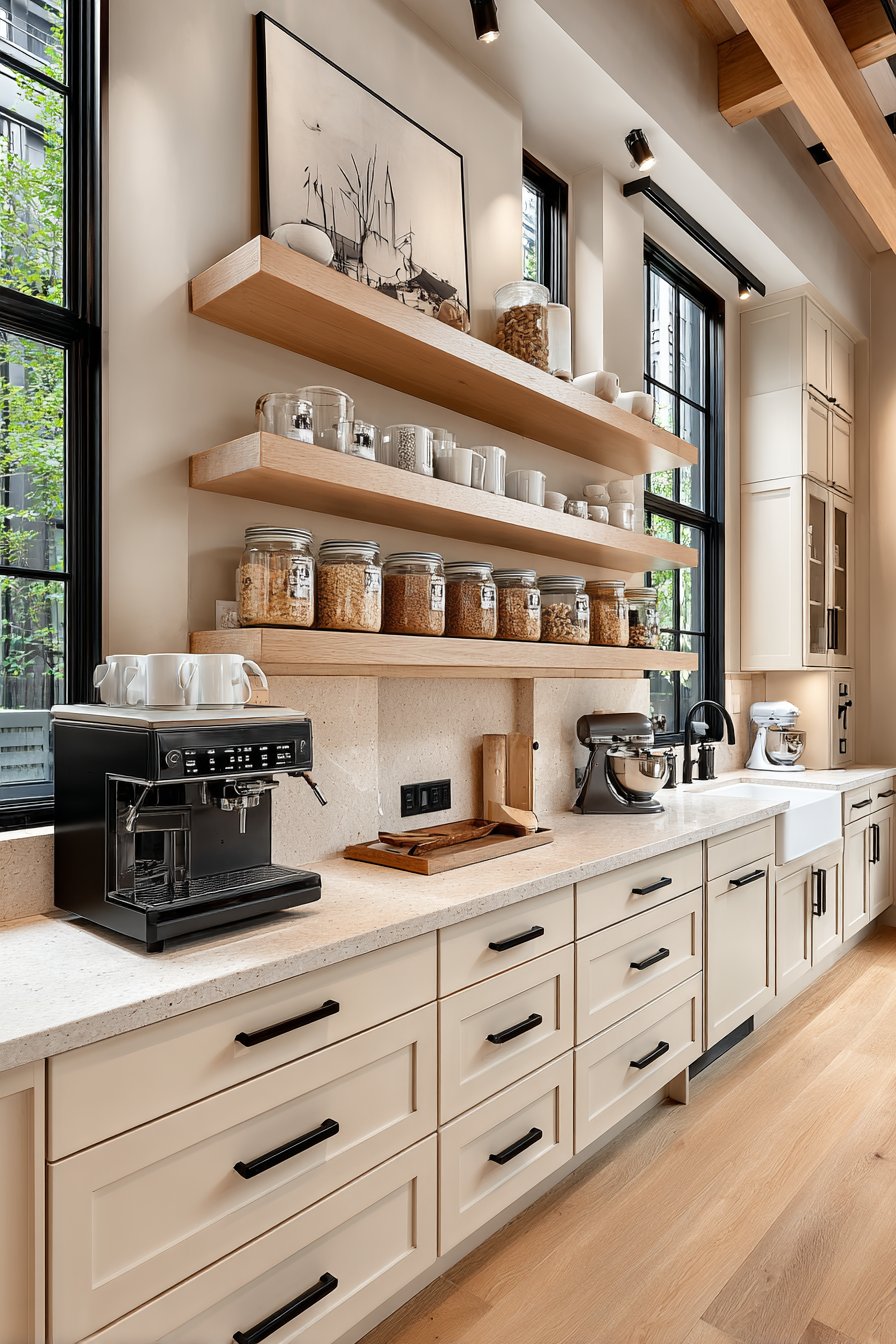
A baking zone might include measuring cups, mixing bowls, and baking ingredients stored together. Your coffee station holds mugs, coffee supplies, and the coffee maker in one convenient location. These dedicated areas eliminate searching and encourage tidiness.
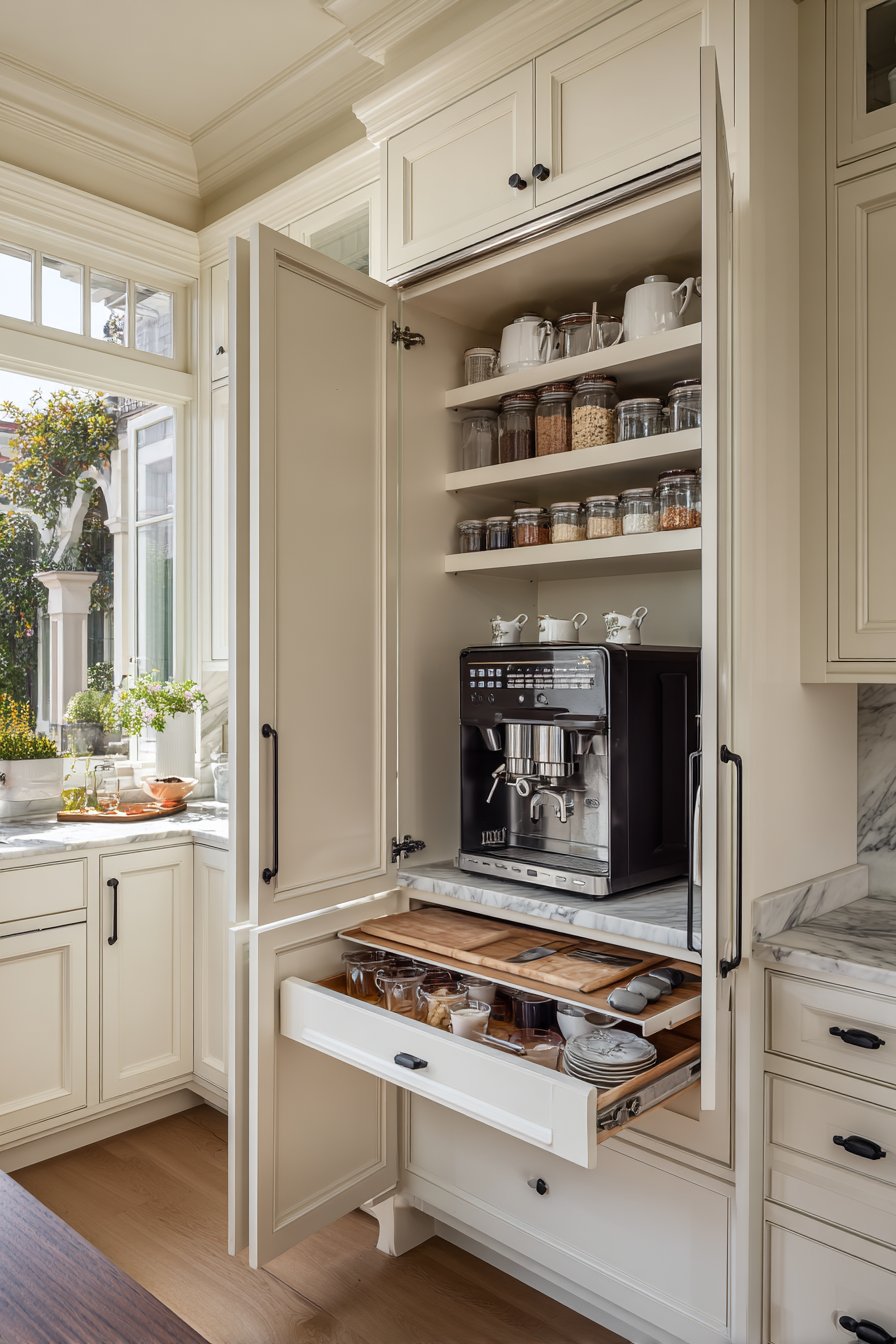
Clearly defined zones prevent the random placement that leads to disorganization. Family members know exactly where items belong, making it easier to maintain order. This system also speeds up meal preparation because everything needed is already grouped logically.
- Group similar items together based on frequency of use
- Store cooking oils and spices near the stove for easy access
- Create a breakfast station with cereals, bowls, and coffee supplies
- Designate one cabinet area for lunch-packing supplies
- Establish a beverage zone with glasses, drinks, and ice
- Set up a snack zone accessible to children at their height
6. Choose Multi-Functional Design Elements
Multi-purpose features maximize efficiency in any kitchen size. Kitchen islands with built-in storage, seating, and workspace serve multiple needs simultaneously. These versatile elements reduce the need for additional furniture that creates clutter.
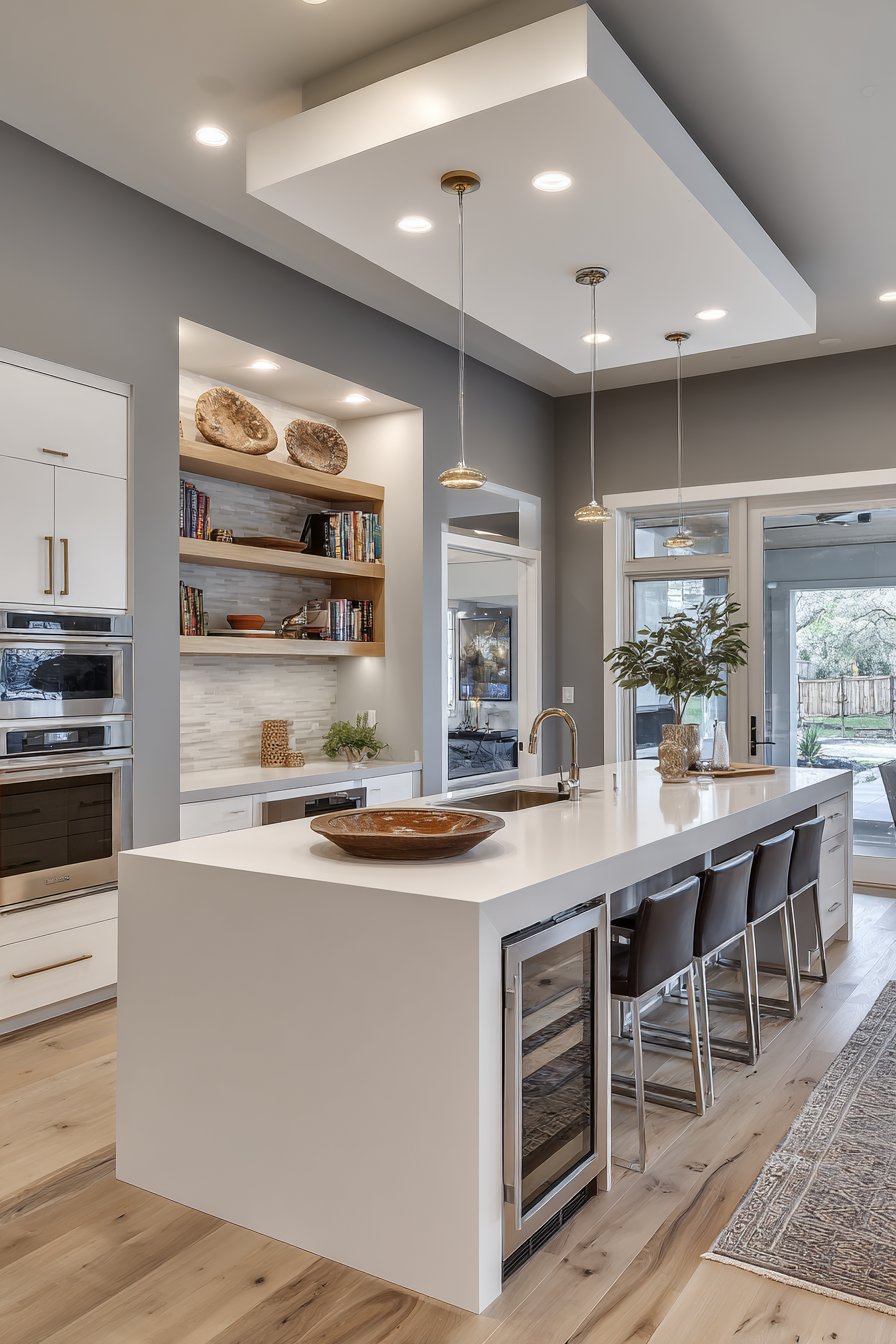
Select appliances that perform multiple functions to minimize equipment proliferation. A combination microwave-convection oven saves counter and cabinet space. Multi-cookers replace several single-purpose appliances, freeing storage for other essentials.
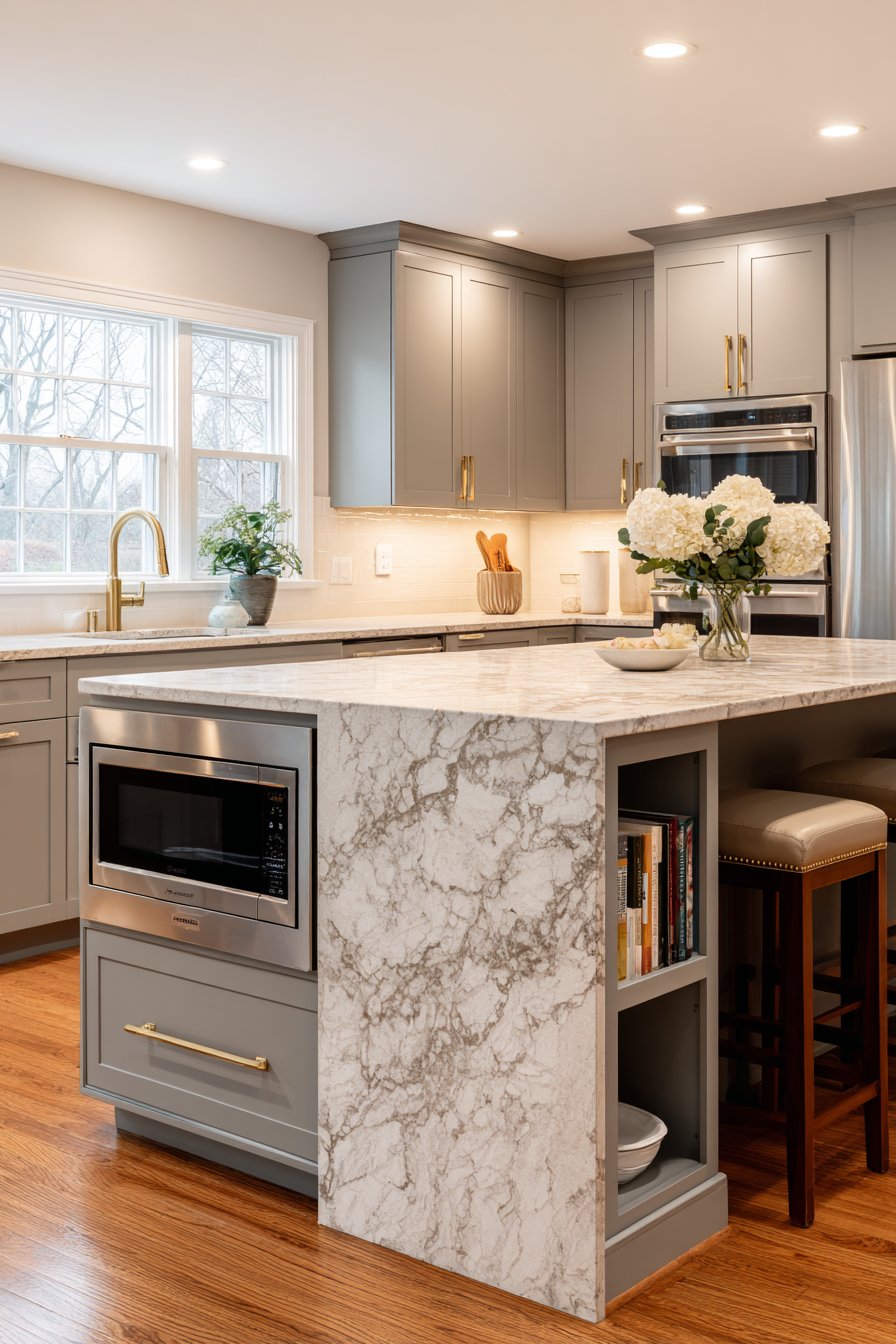
Built-in charging stations and message centers keep technology organized without cluttering counters. Incorporating these features during the design phase creates seamless integration. The result is a kitchen that accommodates modern needs while maintaining visual calm.
- Install a kitchen island with open shelving on one side for cookbooks
- Choose a table with built-in storage drawers or shelves underneath
- Add a fold-down desk area for meal planning and recipes
- Include toe-kick drawers for storing flat items like baking sheets
- Select a sink with integrated cutting board and colander accessories
- Design a butler’s pantry that serves as prep and storage space
Conclusion
Designing an organized kitchen requires intentional planning and smart storage choices. By implementing these six strategies, you create a space that naturally resists clutter and chaos. The work triangle ensures efficient movement, while vertical storage and deep drawers maximize capacity.
Remember that the best kitchen design reflects your unique cooking style and household needs. Start with these foundational principles, then customize details to match your lifestyle. An organized kitchen isn’t just beautiful—it makes daily life easier, more enjoyable, and less stressful. Invest time in thoughtful design now, and you’ll reap the benefits of effortless organization for years to come.
