


Your bedroom should be a peaceful retreat where rest and relaxation come naturally. However, many homeowners unknowingly sabotage their sanctuaries through poor furniture placement and design choices. These common mistakes can make your space feel cramped, chaotic, and uncomfortable, ultimately affecting your sleep quality and daily well-being.
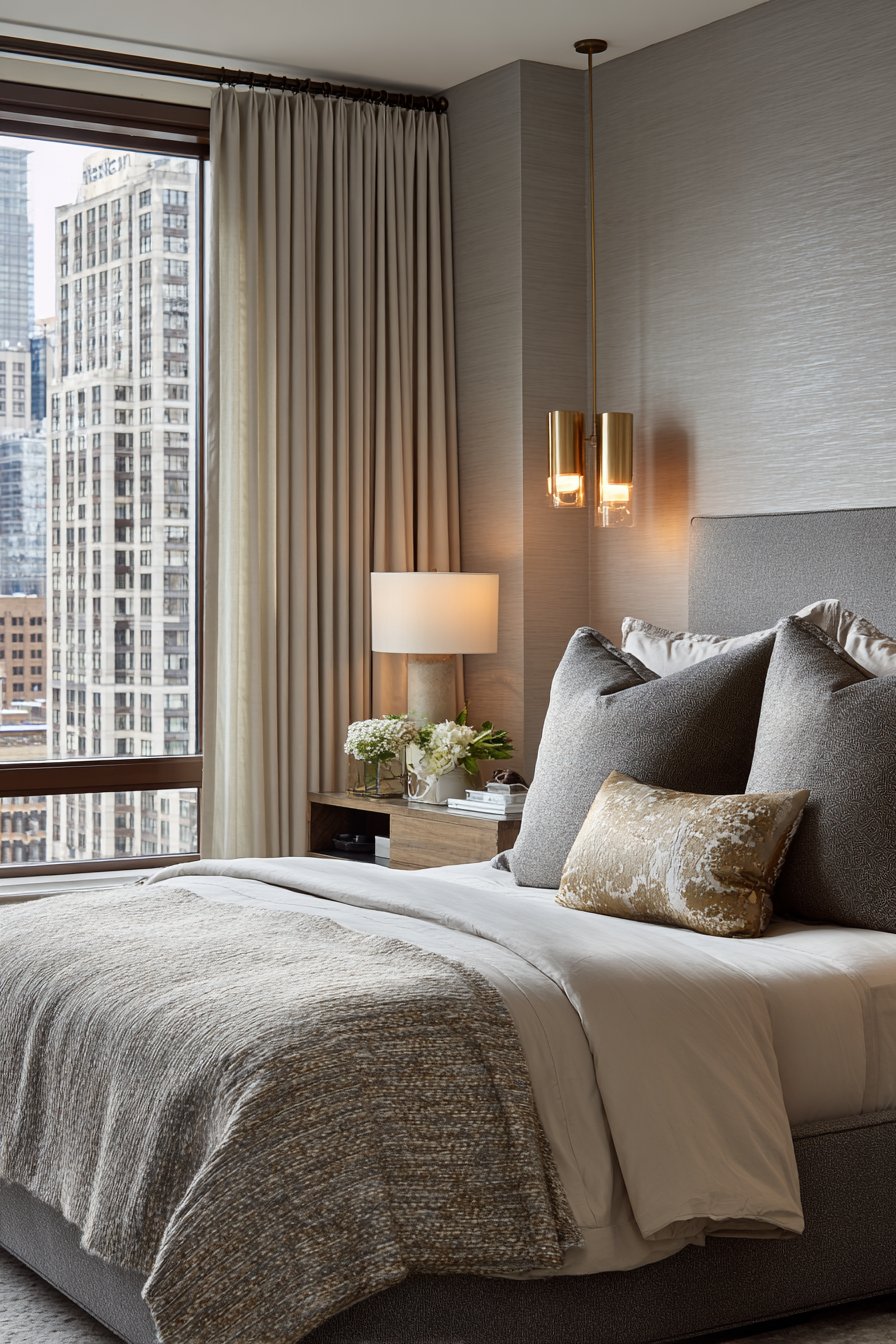
Understanding proper furniture arrangement goes beyond aesthetics—it’s about creating functional flow and psychological comfort. The way you position your bed, dresser, and nightstands directly impacts how you move through the space and how restful it feels. Whether you’re working with a cozy studio or a spacious master suite, avoiding these critical mistakes will transform your bedroom into the serene haven you deserve.
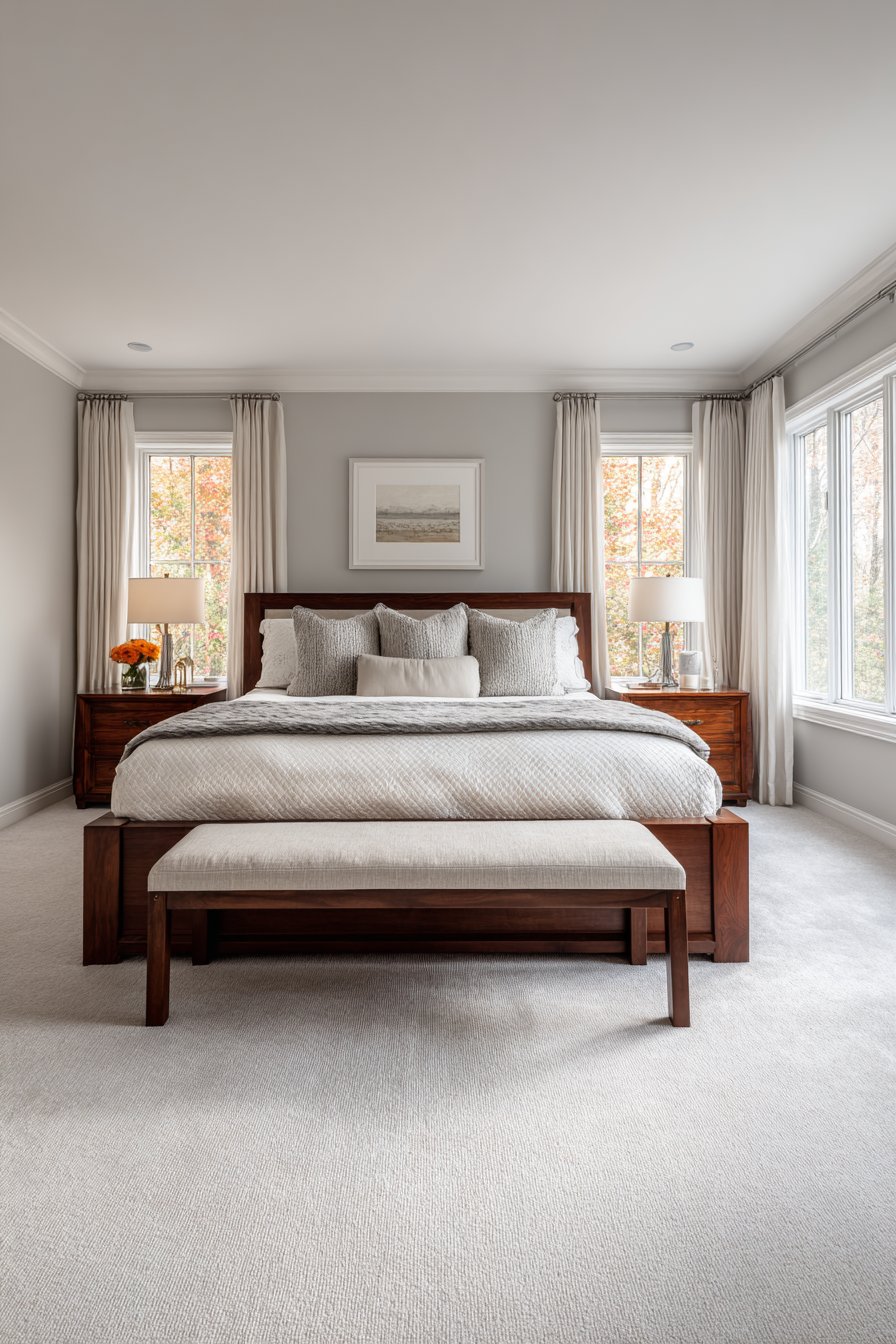
This comprehensive guide explores eight furniture arrangement errors that plague even the most well-intentioned decorators. From blocking natural light to ignoring proper proportions, these missteps are surprisingly common yet entirely preventable. Let’s dive into each mistake and discover how strategic placement can revolutionize your bedroom experience.
1. Pushing All Furniture Against the Walls
Many people instinctively push every piece of furniture flush against the walls, thinking this maximizes floor space. This approach actually creates an uncomfortable, sterile environment that feels more like a waiting room than a personal sanctuary. Rooms need breathing space, and floating furniture pieces can actually make your bedroom feel larger and more intentional.
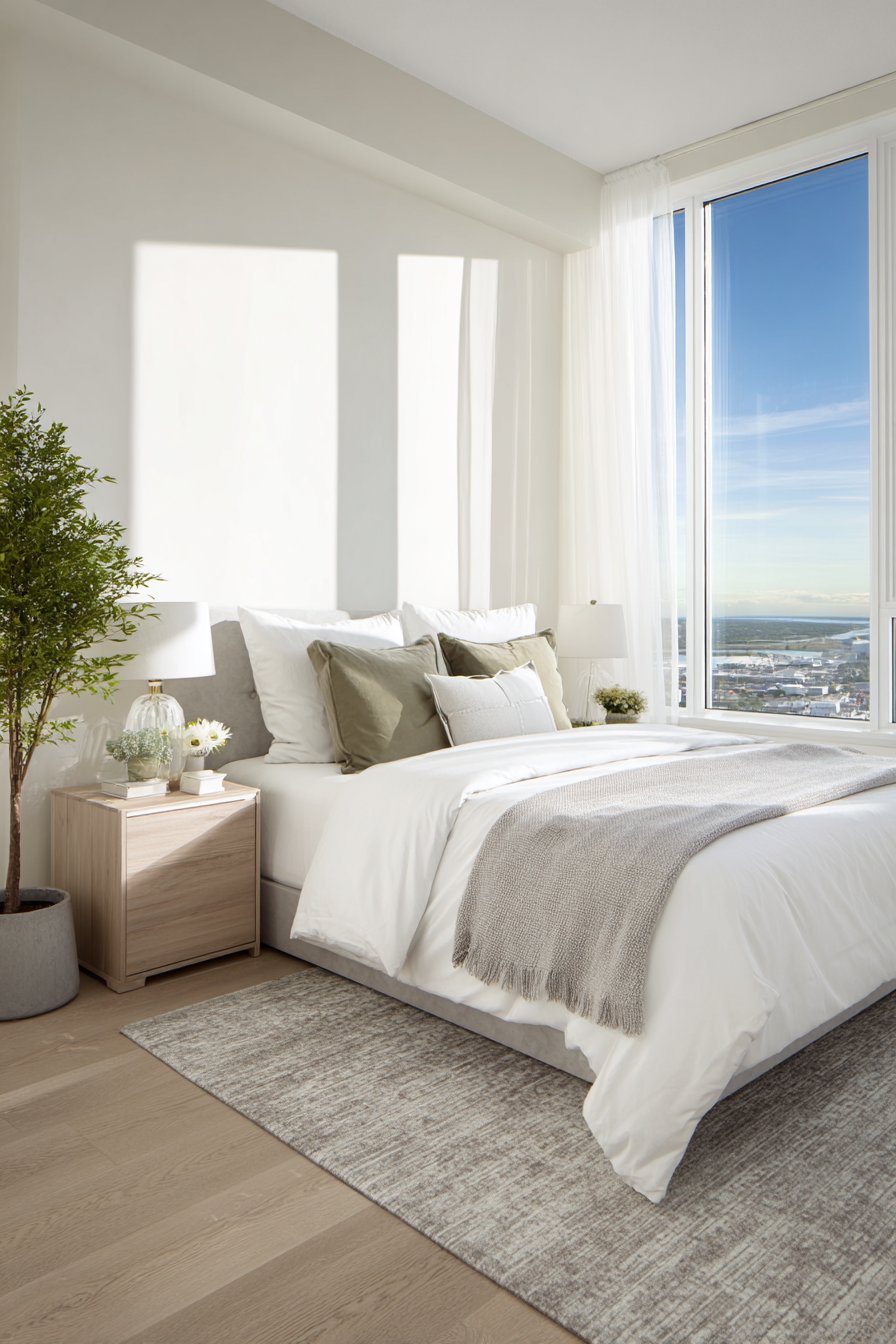
The gap between furniture and walls creates visual depth and allows for better air circulation. This spacing prevents your room from feeling like a box and adds sophistication to the overall design. Consider pulling your bed at least 12-18 inches from the wall to create a hotel-like ambiance that feels luxurious rather than cramped.
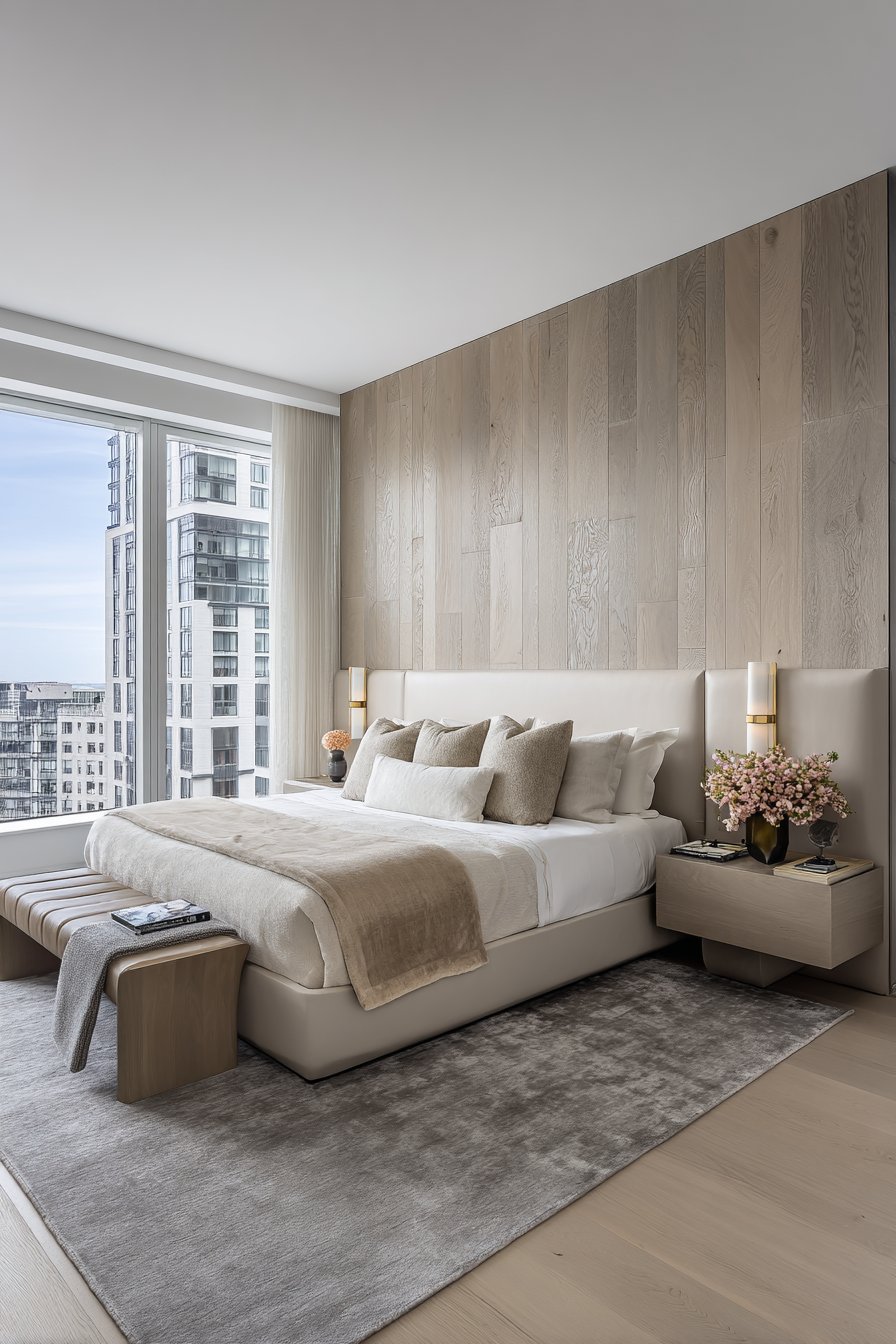
Strategic furniture placement involves creating conversation zones and purposeful pathways. Even in smaller bedrooms, leaving some wall space empty draws the eye and creates balance. This technique works particularly well when you pair it with thoughtful lighting and accent pieces that guide movement through the space.
- Pull your bed away from walls to create an upscale, intentional look
- Leave at least 24-36 inches of walking space around major furniture pieces
- Use area rugs to anchor floating furniture arrangements visually
- Create small vignettes with chairs or benches positioned away from walls
- Allow negative space on walls to prevent a cluttered, overcrowded appearance
- Position nightstands slightly away from walls for easier access and cleaning
2. Blocking Windows and Natural Light Sources
Placing tall furniture like armoires or bookcases in front of windows is a devastating design mistake that robs your bedroom of natural light and ventilation. Windows are architectural features that should be celebrated, not hidden behind bulky pieces. Natural light regulates your circadian rhythm and significantly impacts mood, making window access crucial for bedroom functionality.
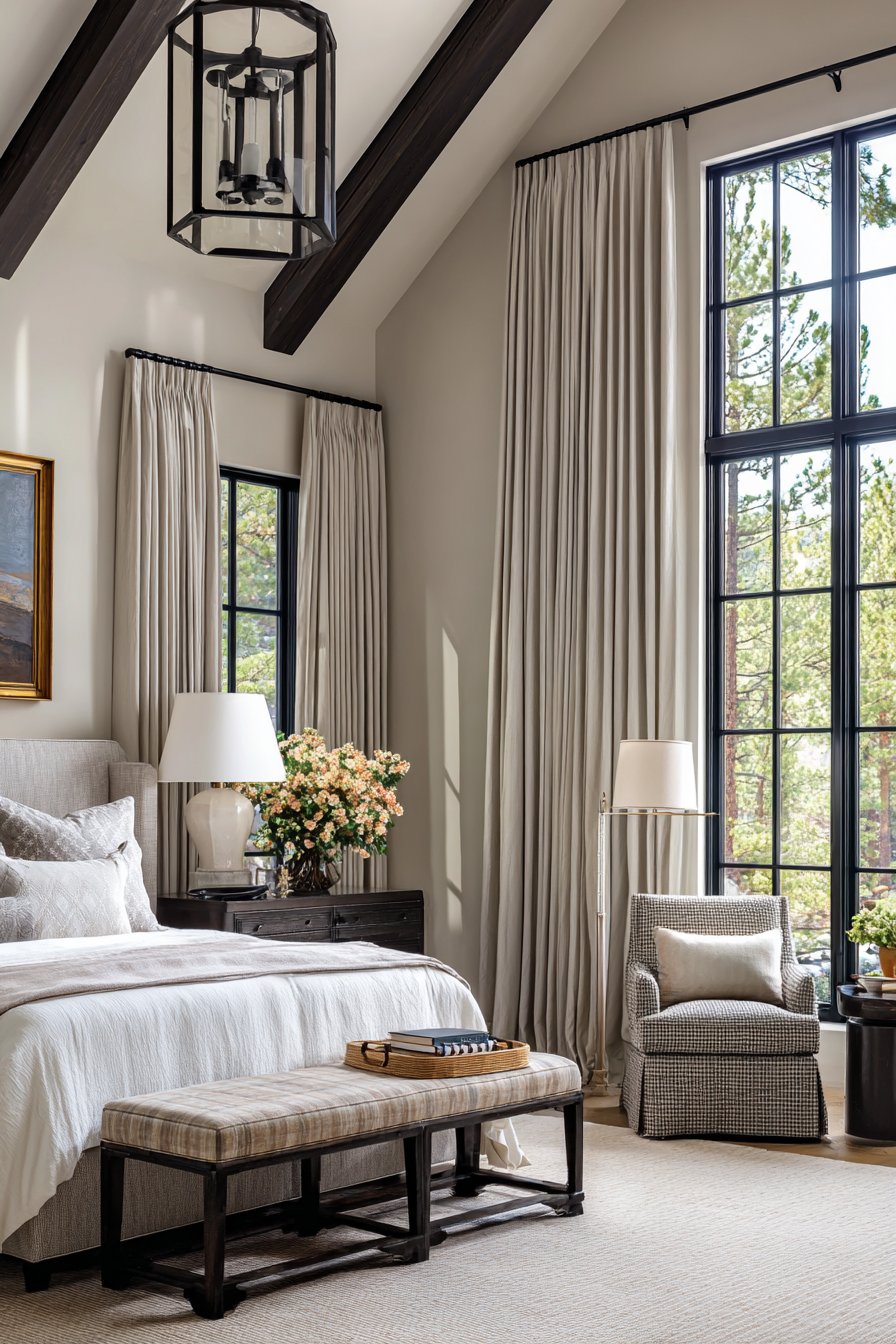
When you block windows, you force yourself to rely on artificial lighting throughout the day, which increases energy costs and creates an oppressive atmosphere. This arrangement also prevents proper air circulation, leading to stuffiness and potential moisture issues. Your windows should remain easily accessible for opening, cleaning, and enjoying outdoor views.
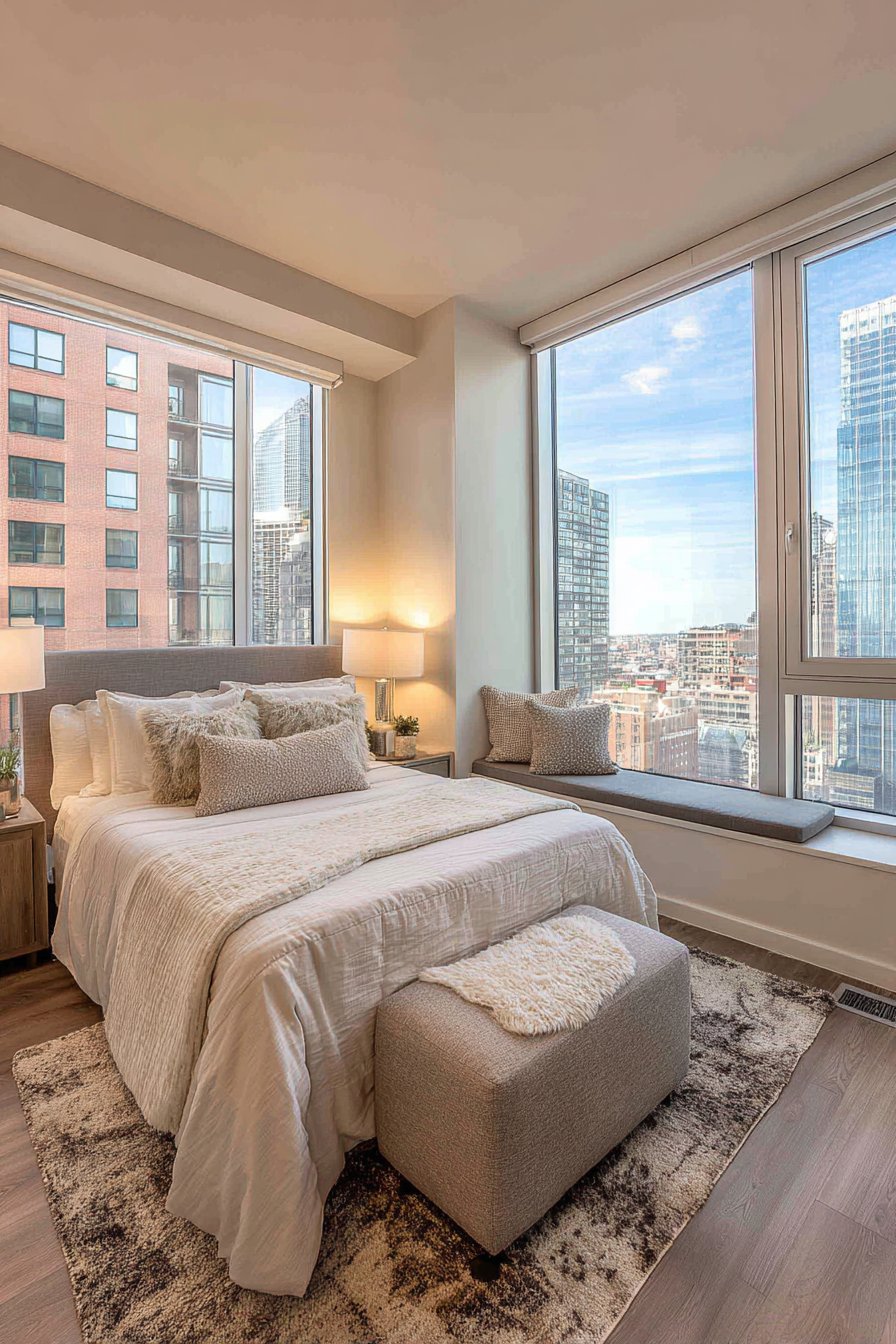
Consider your room’s light patterns throughout the day when planning furniture placement. Morning light from east-facing windows energizes your wake-up routine, while western light provides warmth in evenings. Blocking these natural cycles disrupts your body’s natural rhythms and makes the space feel disconnected from the outside world.
- Keep at least 6-12 inches clearance around windows for proper function
- Position mirrors opposite windows to amplify natural light distribution
- Use low-profile furniture like benches beneath windows instead of tall pieces
- Install window treatments that maximize light when open
- Arrange seating to take advantage of natural light for reading areas
- Ensure curtain rods extend beyond window frames for full light exposure
3. Centering Everything on the Television
Modern bedrooms increasingly feature televisions, but making the TV the focal point creates an entertainment center rather than a restful retreat. This arrangement prioritizes screen time over sleep hygiene and often results in awkward furniture angles that compromise functionality. Your bedroom should encourage relaxation and rest, not binge-watching marathons.
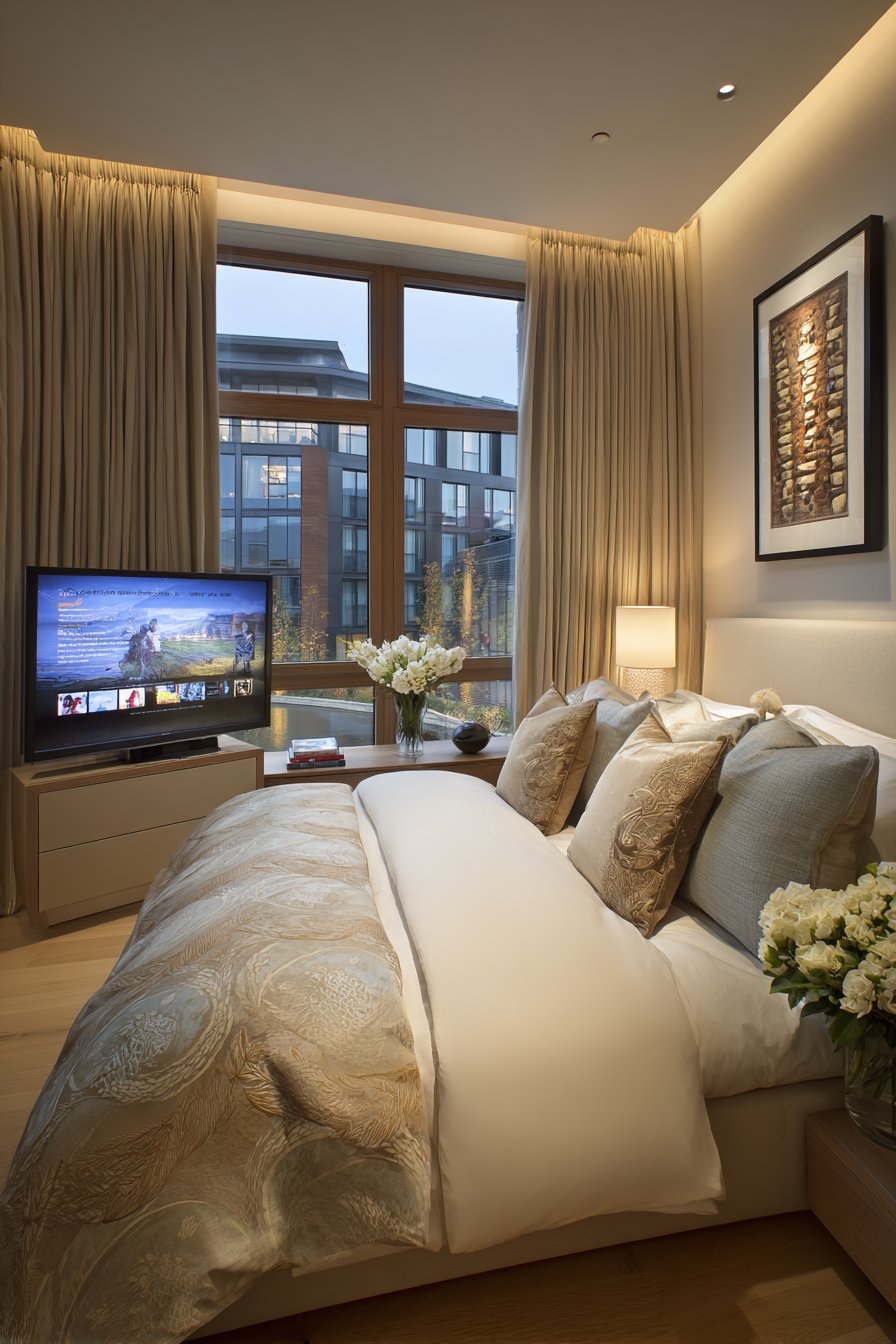
When furniture faces the television, you sacrifice optimal bed placement and natural traffic flow. This setup typically forces the bed against walls in uncomfortable positions or blocks access to closets and bathrooms. The constant visual pull of a television screen also disrupts the calm atmosphere essential for quality sleep.
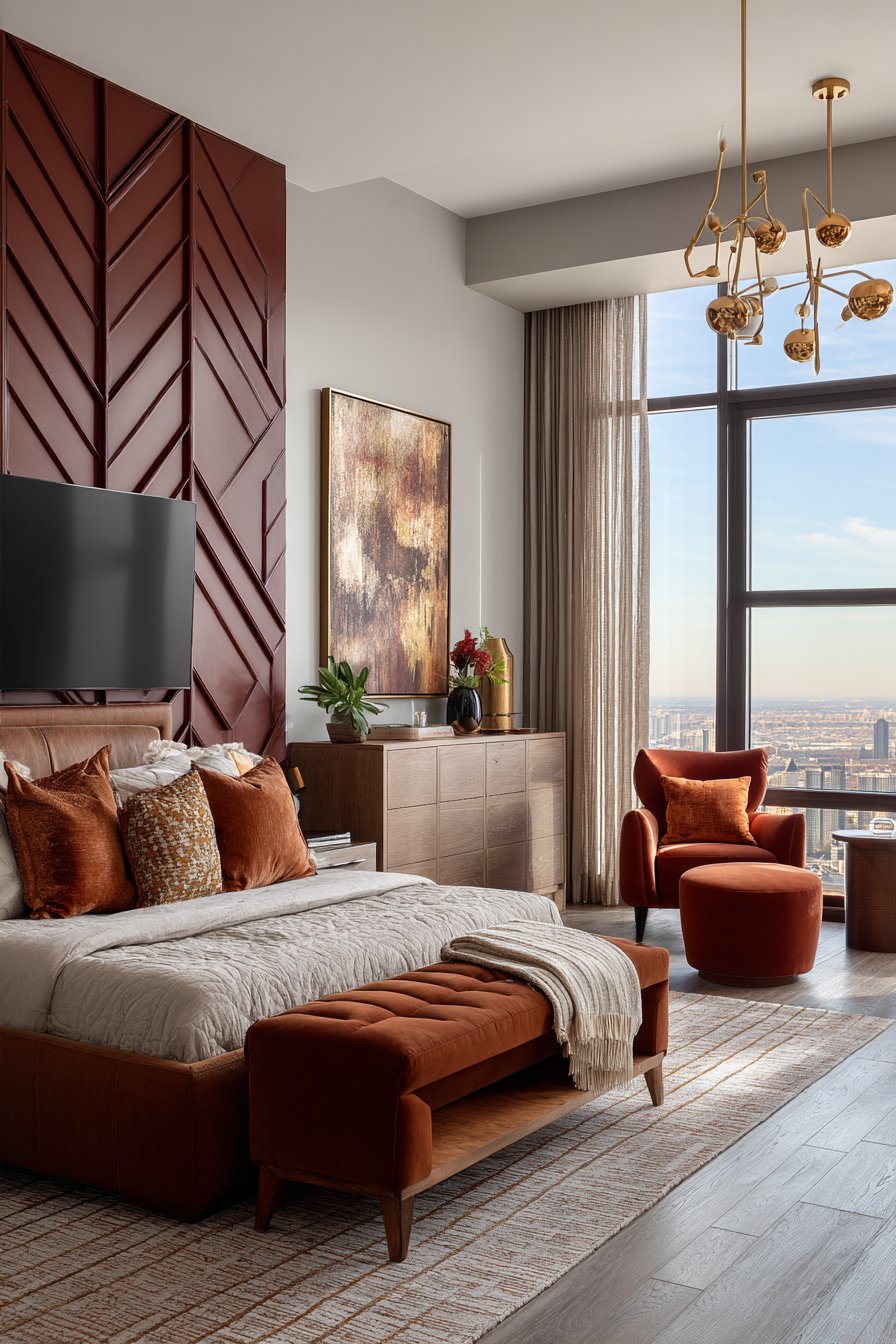
Consider treating your TV as a secondary feature rather than the room’s anchor. Concealing it in armoires or using lifts that hide the screen when not in use preserves your bedroom’s peaceful aesthetic. This approach allows you to maintain proper furniture arrangement while still enjoying occasional entertainment without compromising the room’s primary purpose.
- Mount TVs on articulating arms for flexible viewing without fixed furniture arrangements
- Use furniture that serves multiple purposes beyond TV viewing
- Position the bed based on architectural features, not screen placement
- Install blackout solutions for screens to minimize sleep disruption
- Create a primary focal point using artwork, headboards, or architectural elements
- Limit screen size to maintain bedroom proportions and prevent dominance
4. Ignoring Proper Scale and Proportion
Selecting furniture that’s too large or too small for your bedroom creates visual chaos and functional problems. An oversized bed in a small room overwhelms the space, while tiny nightstands beside a king bed look comically inadequate. Understanding scale relationships is fundamental to creating harmonious, well-balanced interiors.
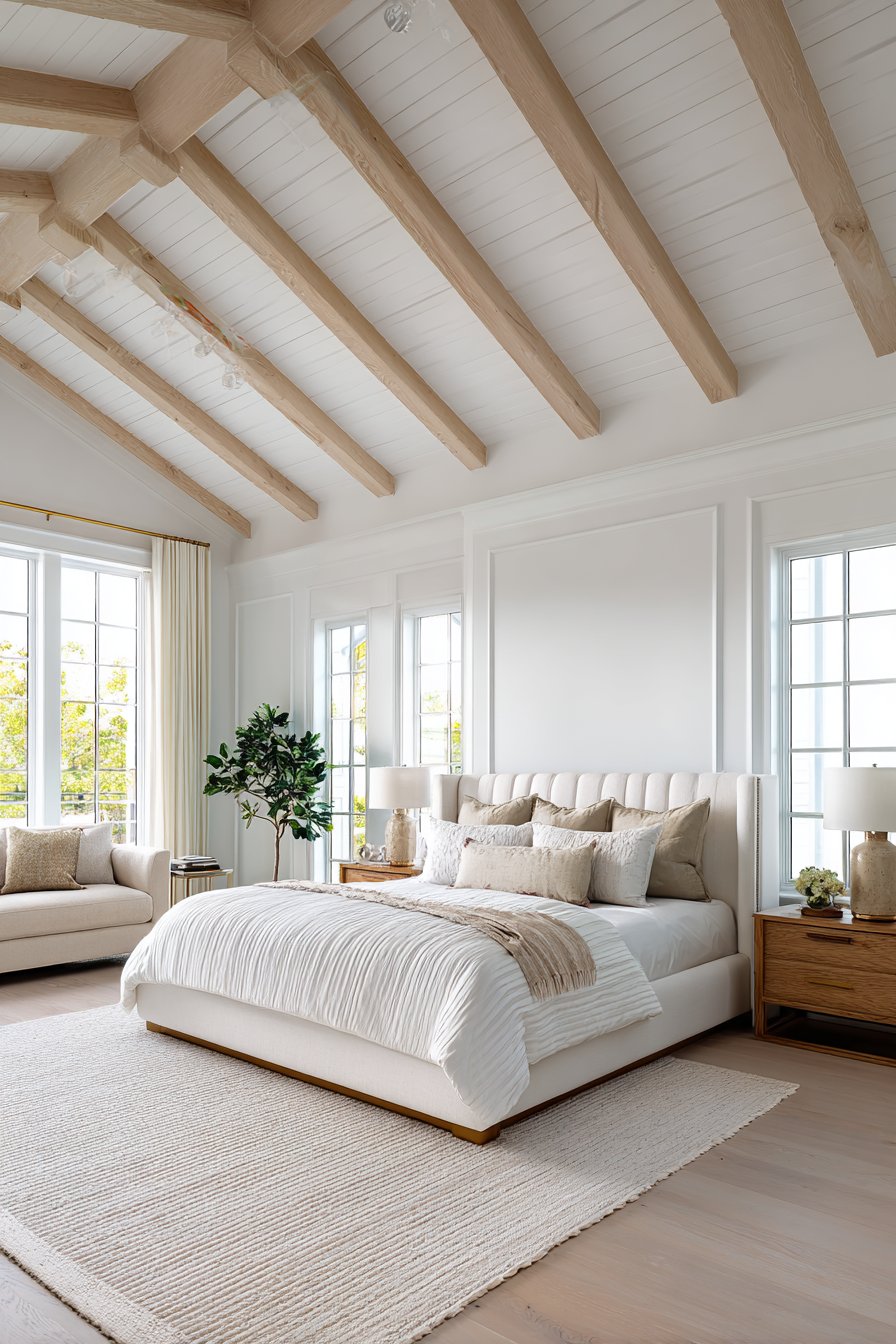
The general rule suggests bedroom furniture should occupy approximately one-third of your floor space, leaving room for movement and breathing space. Measure your room carefully before purchasing furniture, considering ceiling height as well as square footage. A nine-foot ceiling can accommodate taller pieces, while standard eight-foot ceilings require lower profiles to prevent a cramped feeling.
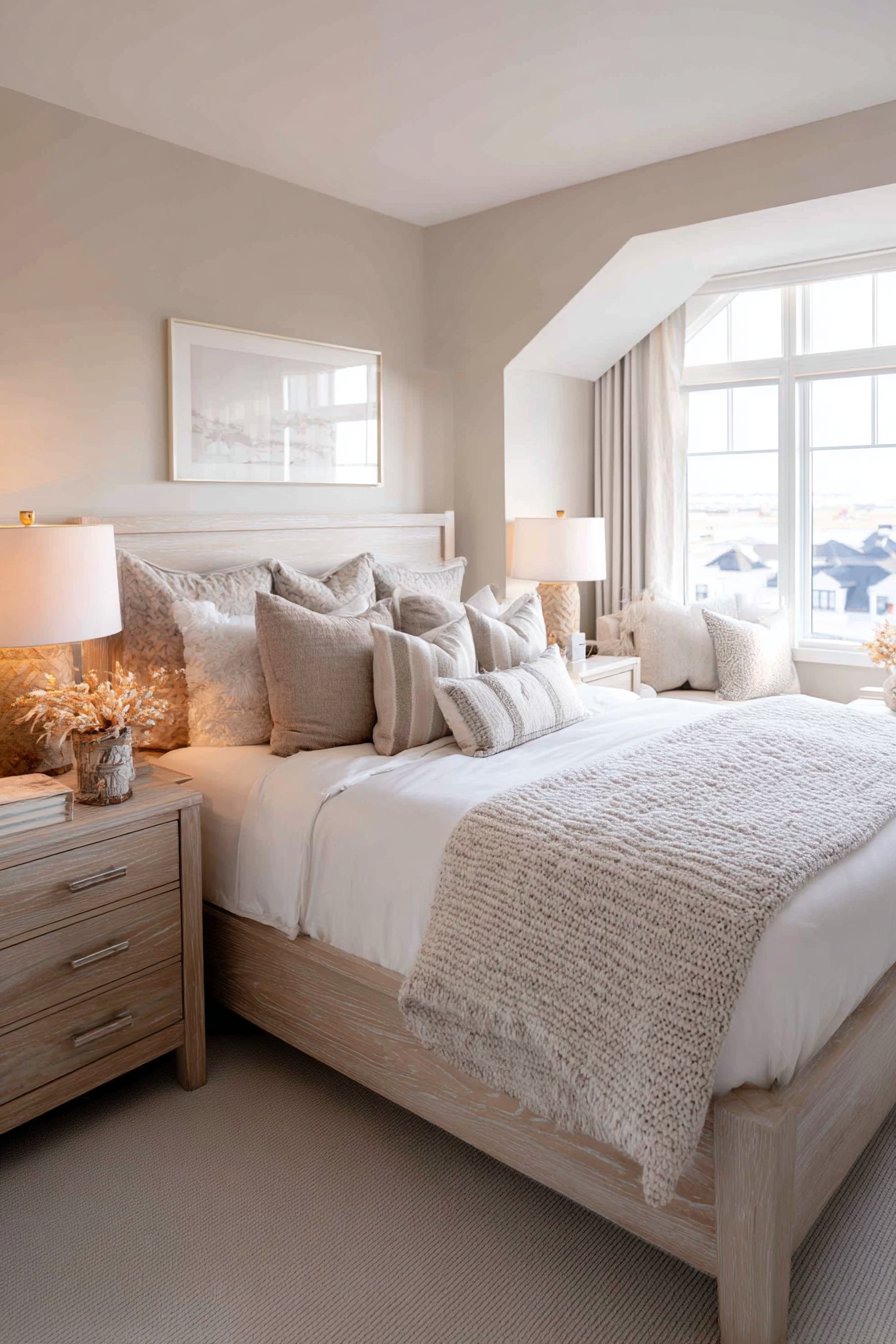
Proportion extends beyond individual pieces to include visual weight distribution across the room. Heavy, dark furniture grouped on one side creates imbalance, while thoughtfully distributed pieces establish equilibrium. Consider sightlines from the doorway and ensure no single piece dominates the view or blocks natural pathways.
- Measure room dimensions and doorways before purchasing any furniture
- Leave 24-30 inches on each side of the bed for comfortable movement
- Match nightstand height to mattress top for functional and visual balance
- Use furniture with exposed legs to create airiness in smaller spaces
- Limit furniture quantity based on room size—fewer pieces feel more spacious
- Consider custom or space-saving furniture for rooms under 120 square feet
5. Creating Inefficient Traffic Patterns
Poor furniture placement forces you to navigate obstacle courses every time you move through your bedroom. Blocked pathways to bathrooms, closets, or windows create daily frustration and even safety hazards, especially during nighttime trips. Traffic flow should be intuitive, allowing easy access to all functional areas without awkward maneuvering.
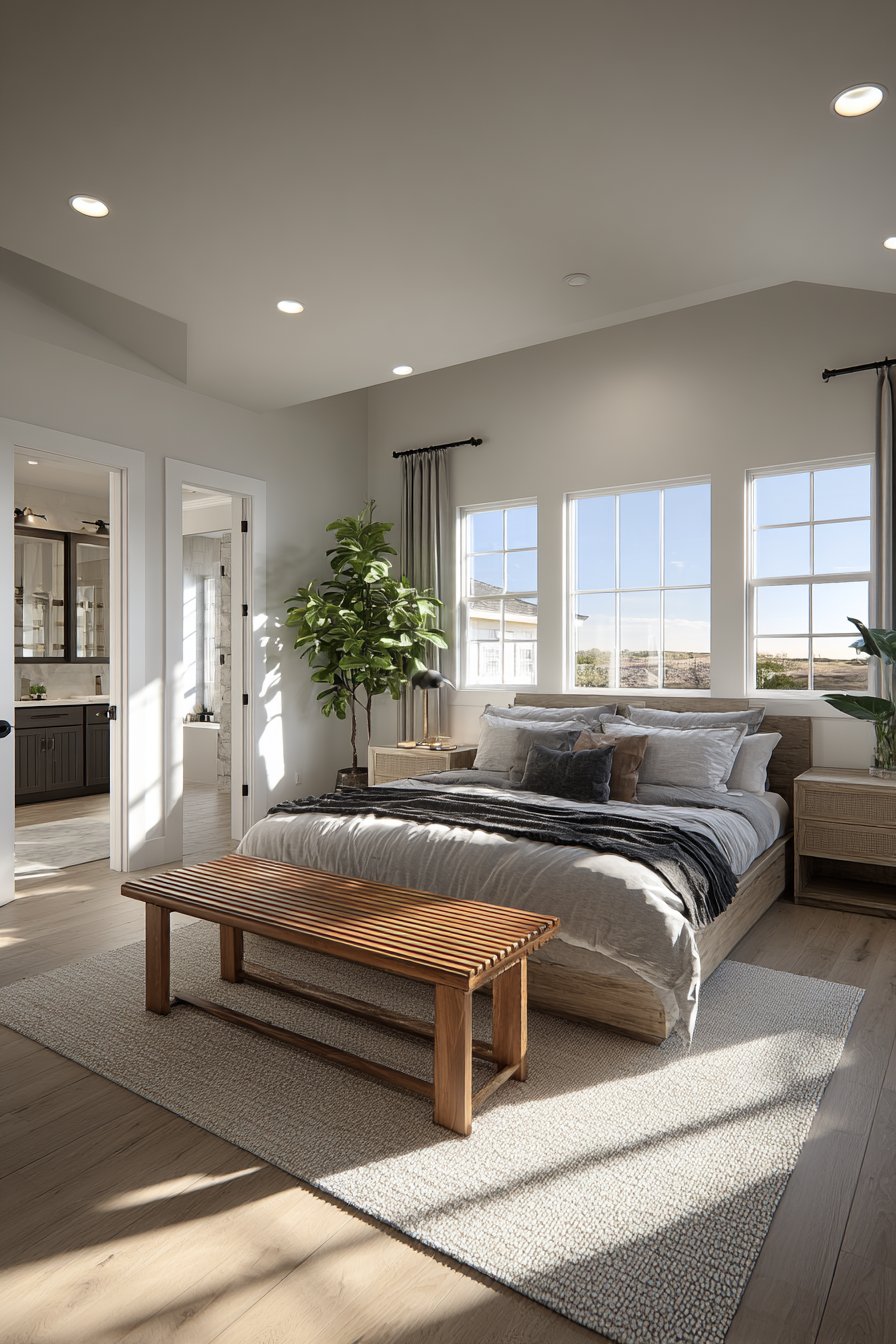
Main walkways require at least 36 inches of clearance for comfortable passage, while secondary paths need a minimum of 24 inches. These measurements ensure you can move freely even when drawers are open or doors are ajar. Cramped pathways make rooms feel smaller and create a claustrophobic atmosphere that undermines relaxation.
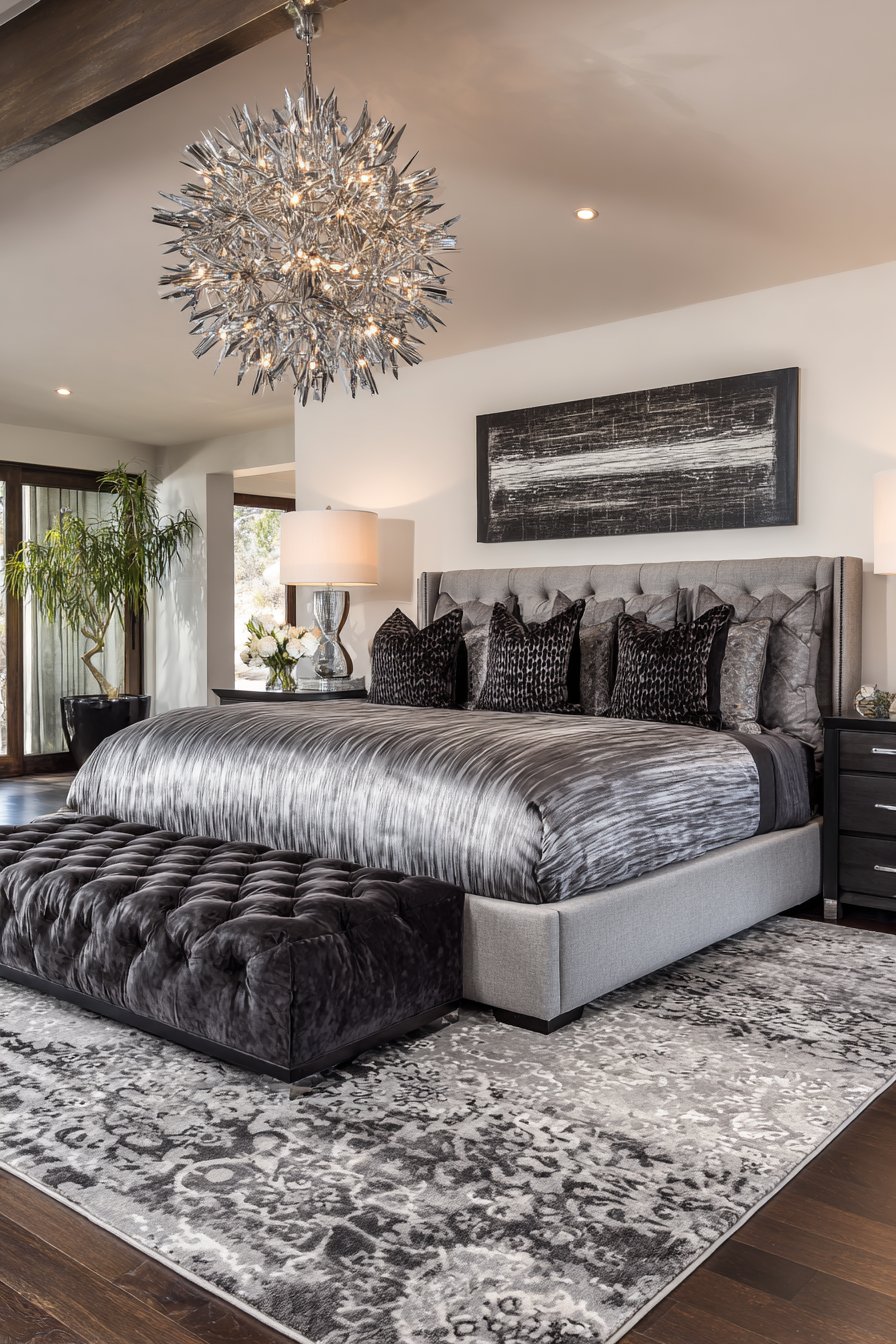
Consider your daily routines when planning furniture arrangement—how you enter from the hallway, access your closet for morning dressing, and navigate to the bathroom during the night. Each pathway should flow logically without requiring you to squeeze between furniture or take circuitous routes to reach essential areas.
- Map your daily movement patterns before finalizing furniture placement
- Ensure clear, straight paths from bed to bathroom for nighttime safety
- Position dressers and closets for easy access during morning routines
- Avoid placing furniture where doors swing open
- Create symmetrical pathways on both sides of the bed when possible
- Test traffic flow by walking through planned arrangements before committing
6. Neglecting Bedside Accessibility and Symmetry
Asymmetrical nightstand arrangements or inaccessible bedside areas create functional frustration and visual imbalance. Both sides of the bed deserve equal attention, with matching or complementary surfaces for lamps, phones, and bedtime essentials. Bedside symmetry isn’t about rigid matching—it’s about creating equal functionality and visual weight.
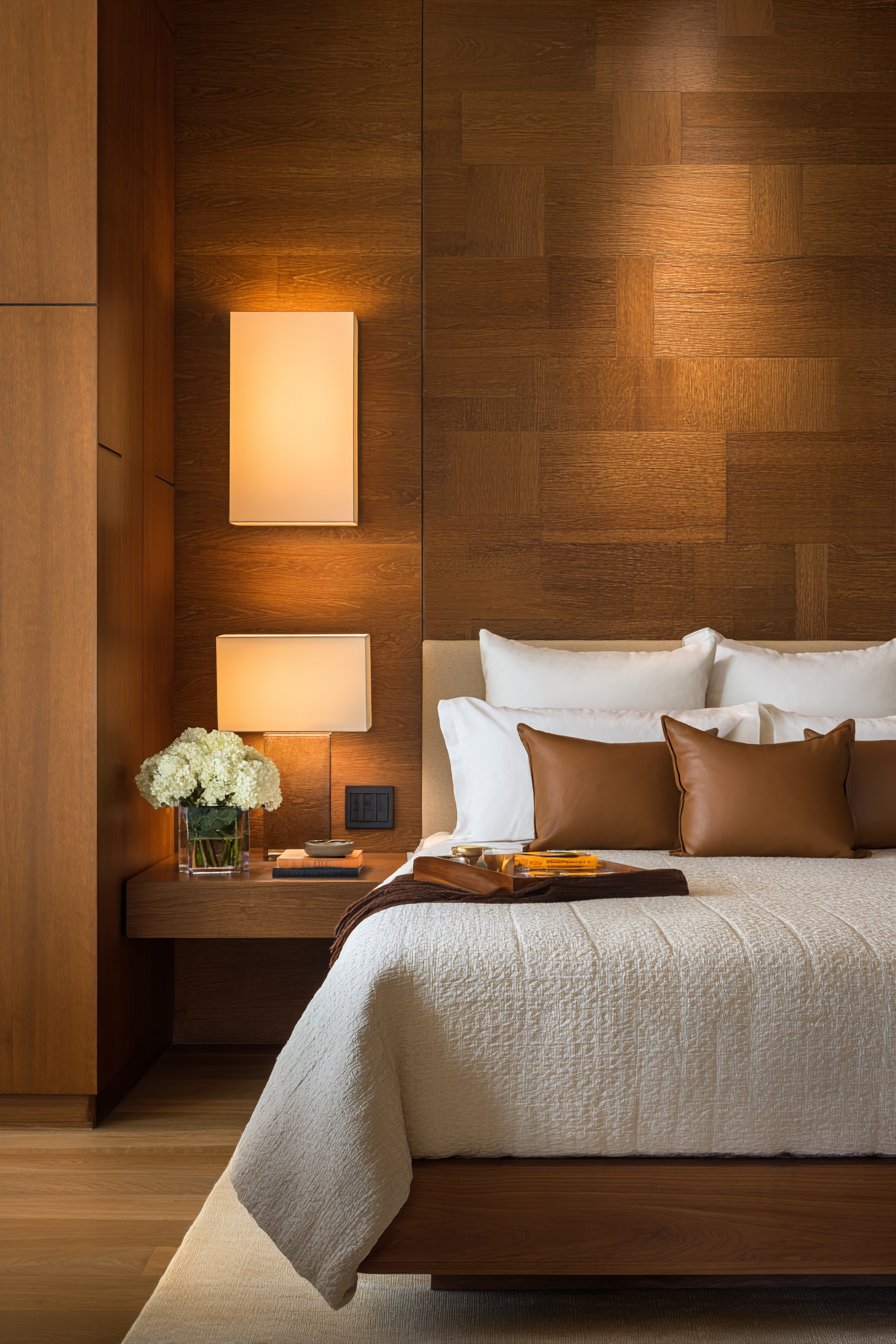
When nightstands are different heights or one side lacks a surface entirely, the room feels unfinished and chaotic. This arrangement also creates relationship friction when partners have unequal access to charging stations, lighting, and storage. Even in single-occupant rooms, balanced bedside arrangements create psychological comfort and aesthetic appeal.
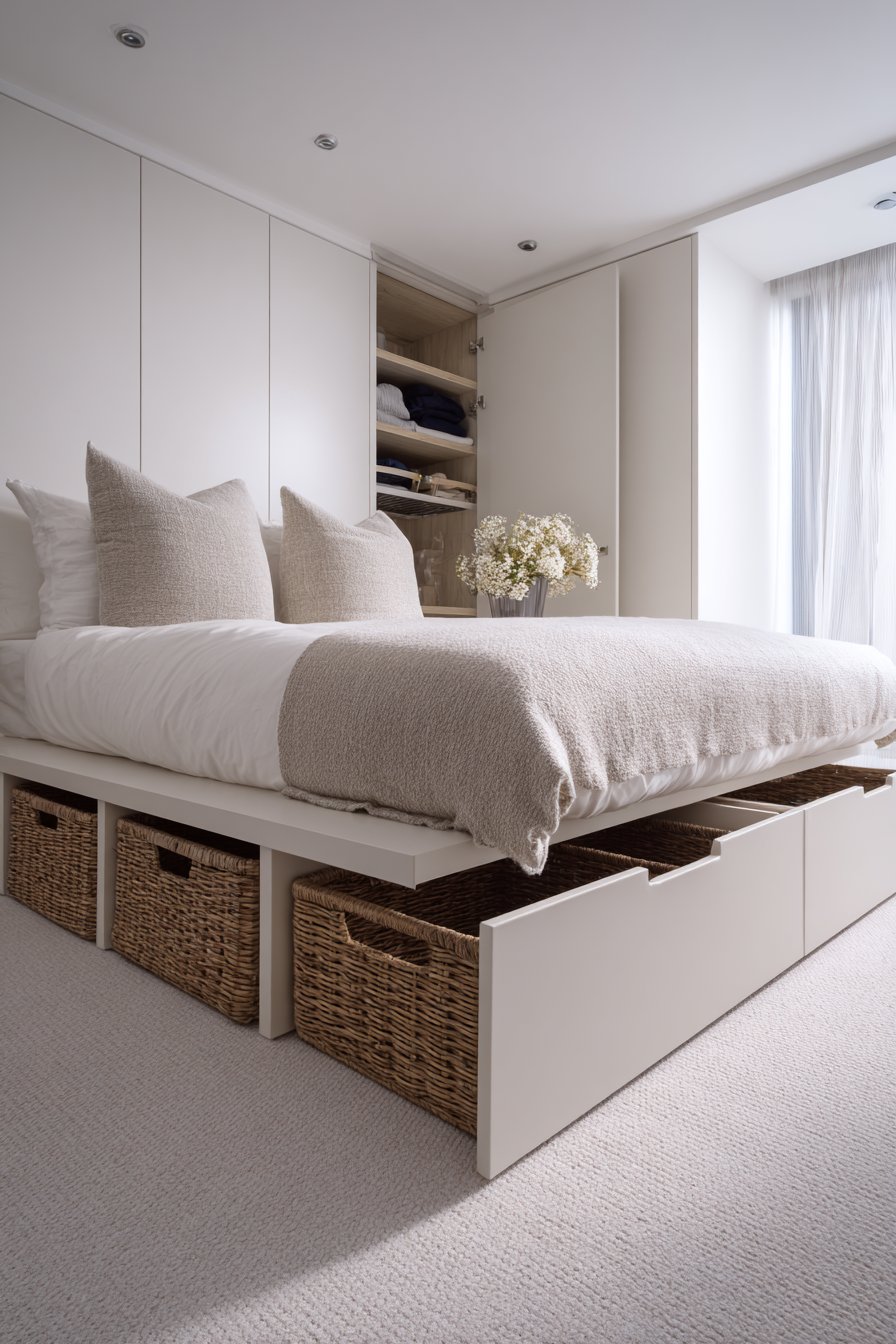
Consider the practical needs of both bed sides—reading lights, alarm clocks, water glasses, and phone charging. Each person should reach these essentials without stretching awkwardly or disturbing their partner. This functional planning extends to sufficient surface area for items without creating cluttered, overcrowded nightstands.
- Install matching light sources on both sides for balanced illumination
- Ensure nightstands are within easy reach without excessive stretching
- Provide adequate surface area for essentials—minimum 18 inches wide
- Include storage solutions like drawers for clutter-free surfaces
- Match nightstand height to mattress top for easy access from bed
- Add power outlets or charging stations accessible from both bed sides
7. Overlooking Storage and Clutter Management
Insufficient storage planning leads to visible clutter that destroys your bedroom’s peaceful atmosphere. Clothes draped over chairs, items piled on dressers, and belongings scattered across surfaces create visual noise that increases stress and prevents relaxation. Strategic storage should be integrated into your furniture arrangement from the beginning, not added as an afterthought.
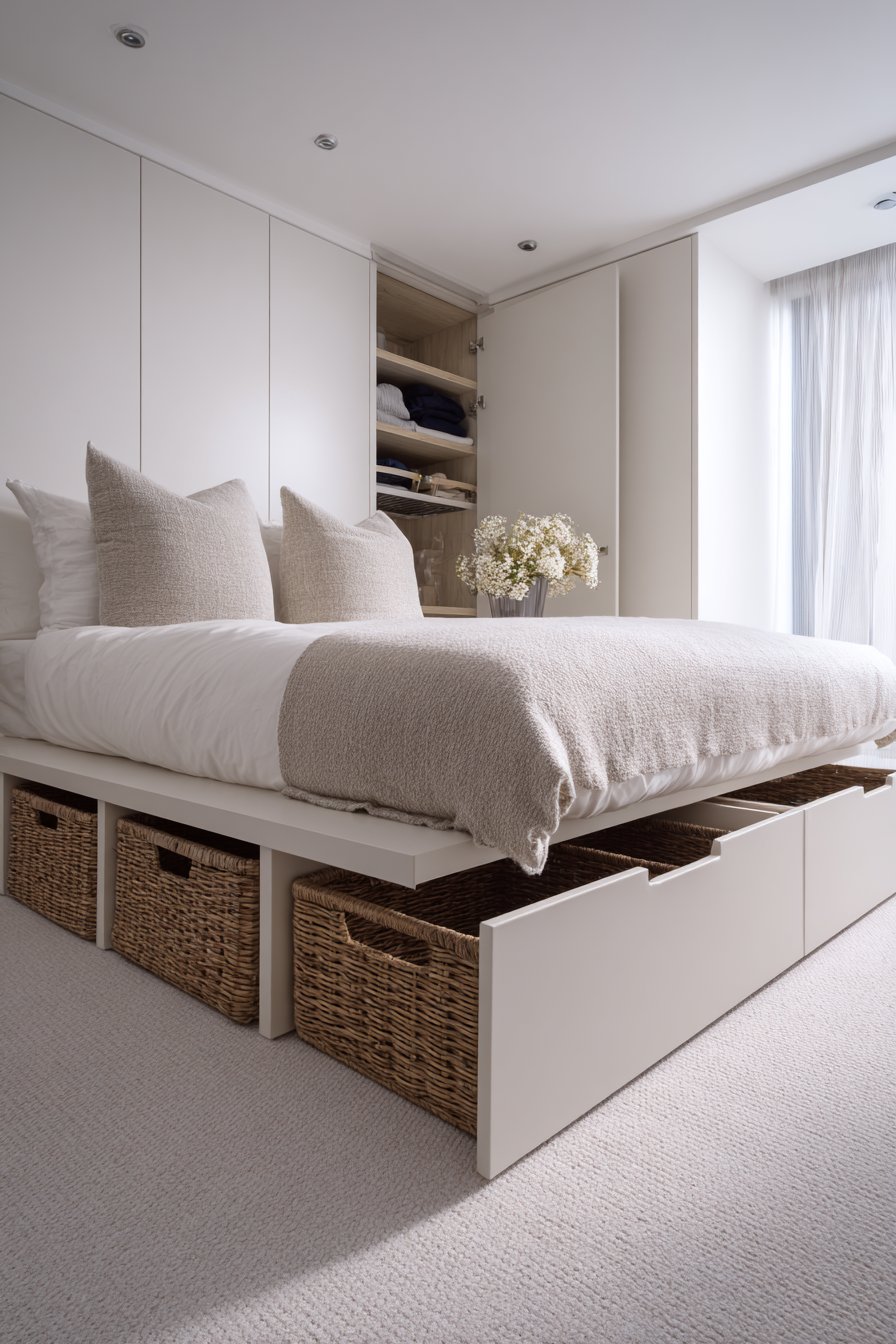
Hidden storage solutions like under-bed drawers, storage ottomans, and built-in wardrobes maximize space without adding visual bulk. Vertical storage extends upward rather than consuming precious floor space, making rooms feel larger while accommodating more belongings. This approach maintains clean surfaces that promote mental calm and better sleep quality.
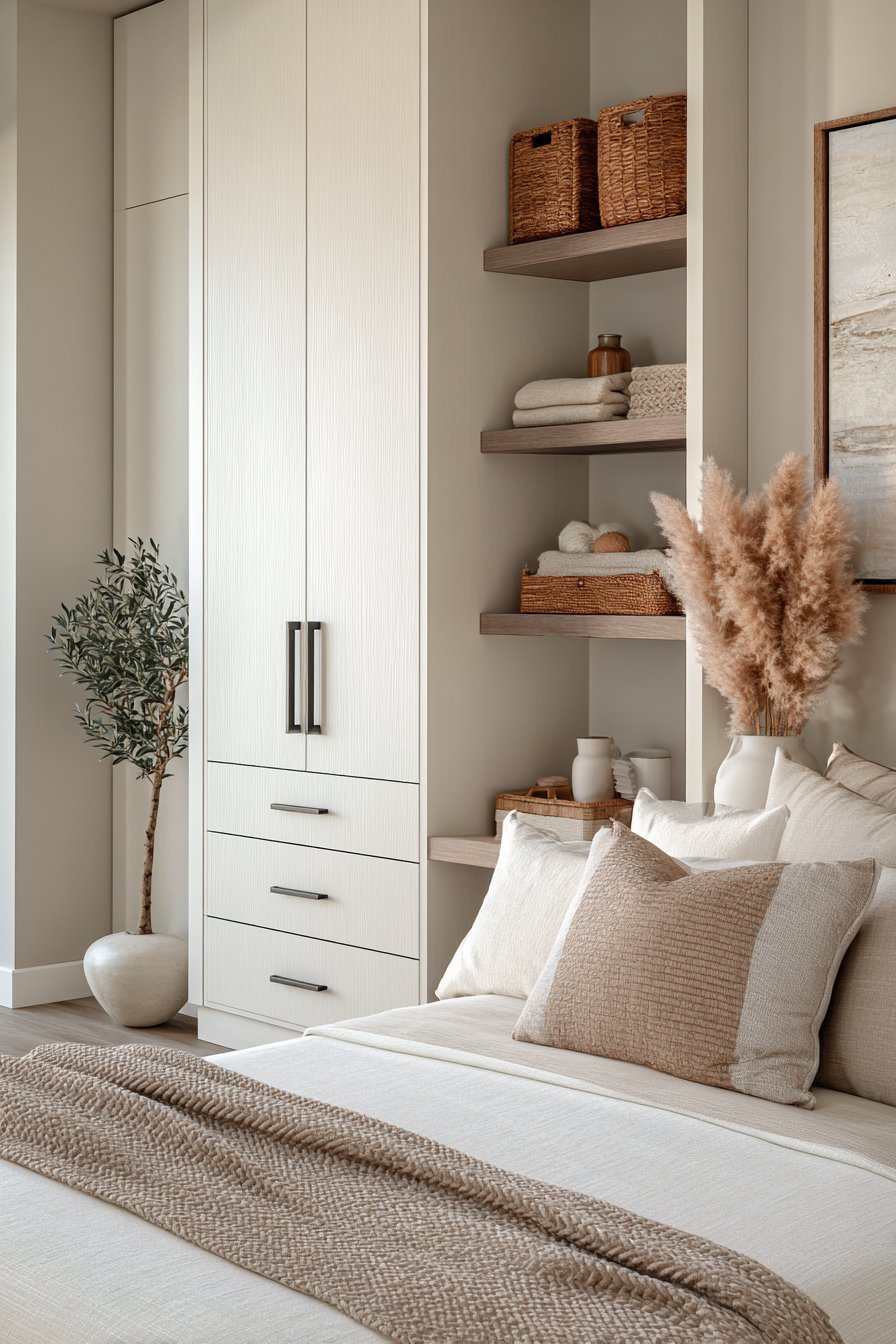
Consider your actual storage needs honestly when selecting and arranging bedroom furniture. A beautiful dresser that can’t hold your clothing forces overflow into visible piles. Matching furniture quantity and storage capacity to your real requirements prevents the gradual accumulation of surface clutter that plagues many bedrooms.
- Utilize vertical space with tall dressers or wall-mounted shelving systems
- Invest in beds with built-in storage drawers underneath
- Install closet organization systems to maximize existing storage capacity
- Use decorative baskets and boxes to contain small items attractively
- Limit surface decorations to essential items plus one or two accent pieces
- Implement the one-in-one-out rule to prevent belongings from overwhelming storage
8. Placing the Bed in High-Traffic or Awkward Positions
Your bed placement dramatically affects sleep quality and room functionality. Positioning it directly in line with the door creates subconscious anxiety, while placing it under windows exposes you to temperature fluctuations and disruptive light. The bed should occupy the commanding position—visible from the entrance but not directly aligned with the doorway.
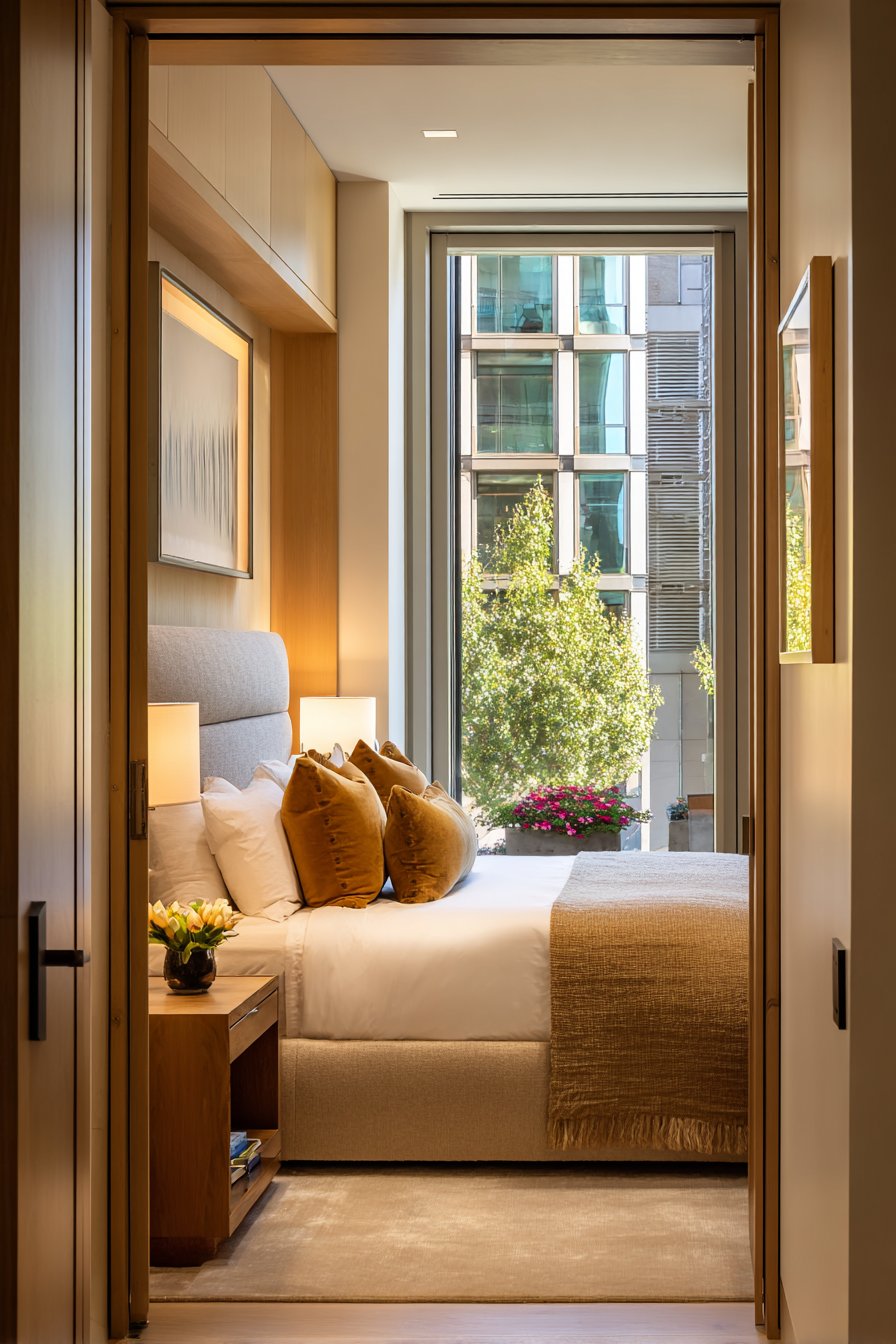
Beds tucked into corners or placed diagonally might seem creative, but they sacrifice accessibility and create awkward gaps that collect dust. Both sides of the bed should be equally accessible for making the bed, changing linens, and nighttime entry. Corner placement also limits headboard options and makes the room feel smaller by emphasizing odd angles.
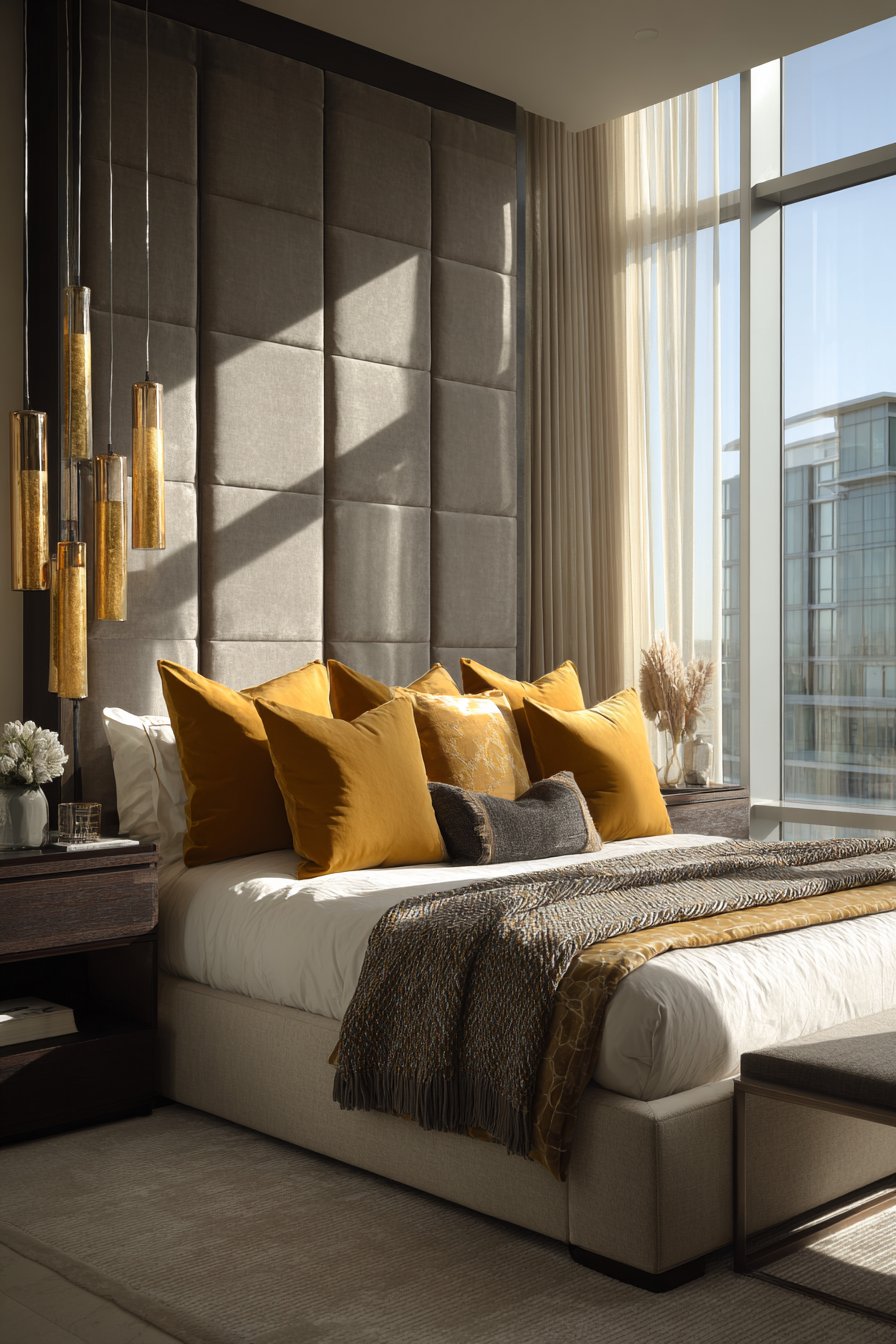
The commanding position principle from feng shui offers practical wisdom: place your bed where you can see the door while lying down, but not directly in line with it. This position provides psychological security while maintaining proper distance from doorway traffic and noise. It also typically provides the best architectural backdrop for an impressive headboard or accent wall.
- Position bed so you can see the entrance without being directly aligned with it
- Avoid placing beds directly under windows or air conditioning vents
- Center beds on the longest wall when room proportions allow
- Ensure both sides of the bed have equal access and space
- Leave sufficient space behind headboards for proper wall clearance
- Consider room’s natural focal points when determining bed placement
Conclusion
Avoiding these eight common furniture arrangement mistakes transforms your bedroom from a cluttered afterthought into a purposeful sanctuary. Each decision—from bed placement to storage solutions—contributes to the overall functionality and aesthetic appeal of your most personal space. Remember that great design balances practical needs with visual harmony, creating rooms that serve your lifestyle while nurturing your well-being.
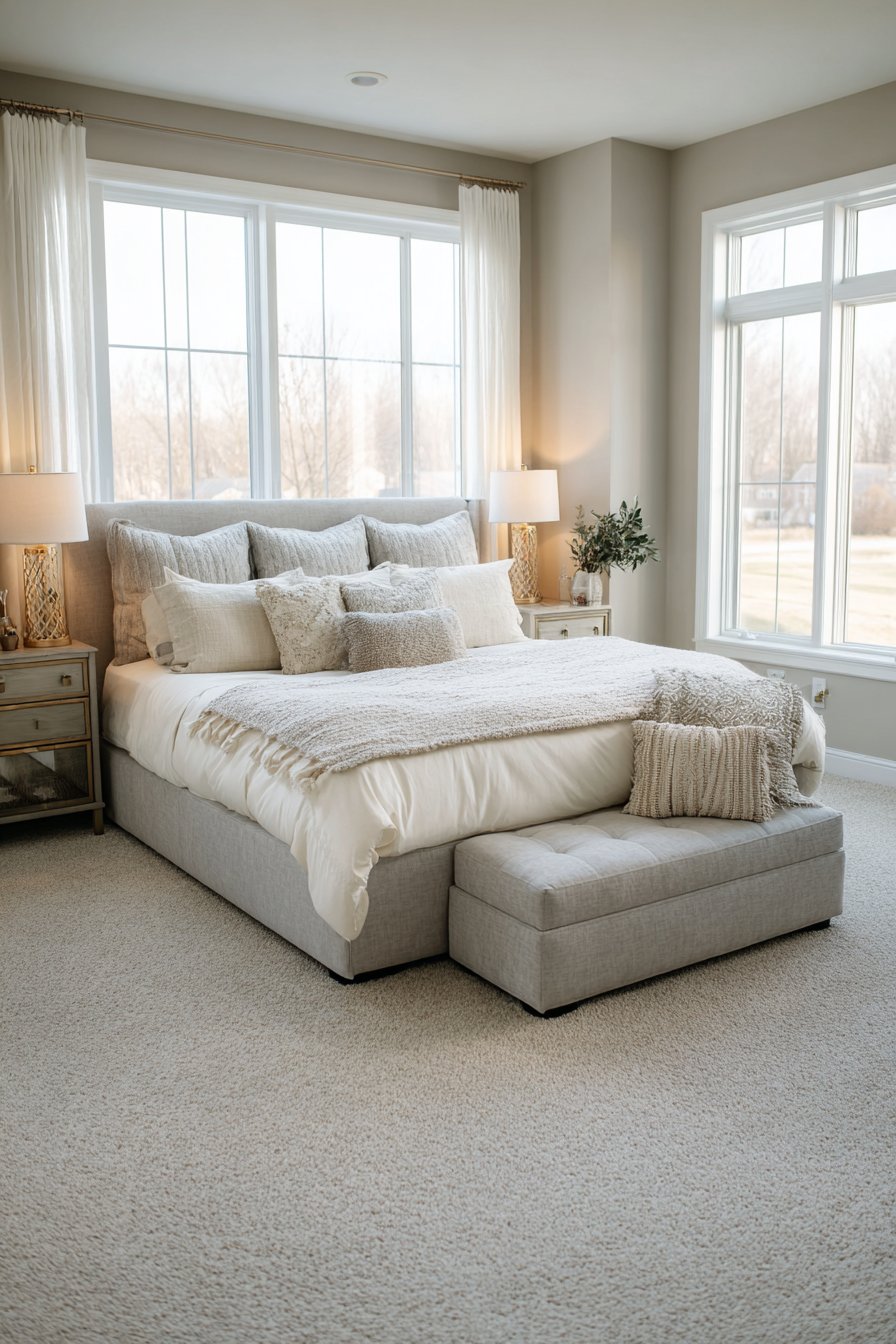
Take time to measure, plan, and visualize your arrangement before committing to furniture placement. Small adjustments often yield dramatic improvements in how your bedroom feels and functions. Your sleep sanctuary deserves the same thoughtful attention you give to public spaces—after all, you spend nearly one-third of your life here. Embrace these principles, trust your instincts, and create a bedroom that truly supports rest, rejuvenation, and personal peace.
