


Yellow bedrooms have emerged as a bold design choice that can transform sleeping spaces into vibrant, energizing sanctuaries. However, the key to success lies in understanding how to harness this luminous color without creating visual chaos. Many homeowners hesitate to embrace yellow, fearing it might overwhelm their intimate spaces. The truth is that when applied with strategic thoughtfulness, yellow can elevate a bedroom from ordinary to extraordinary.
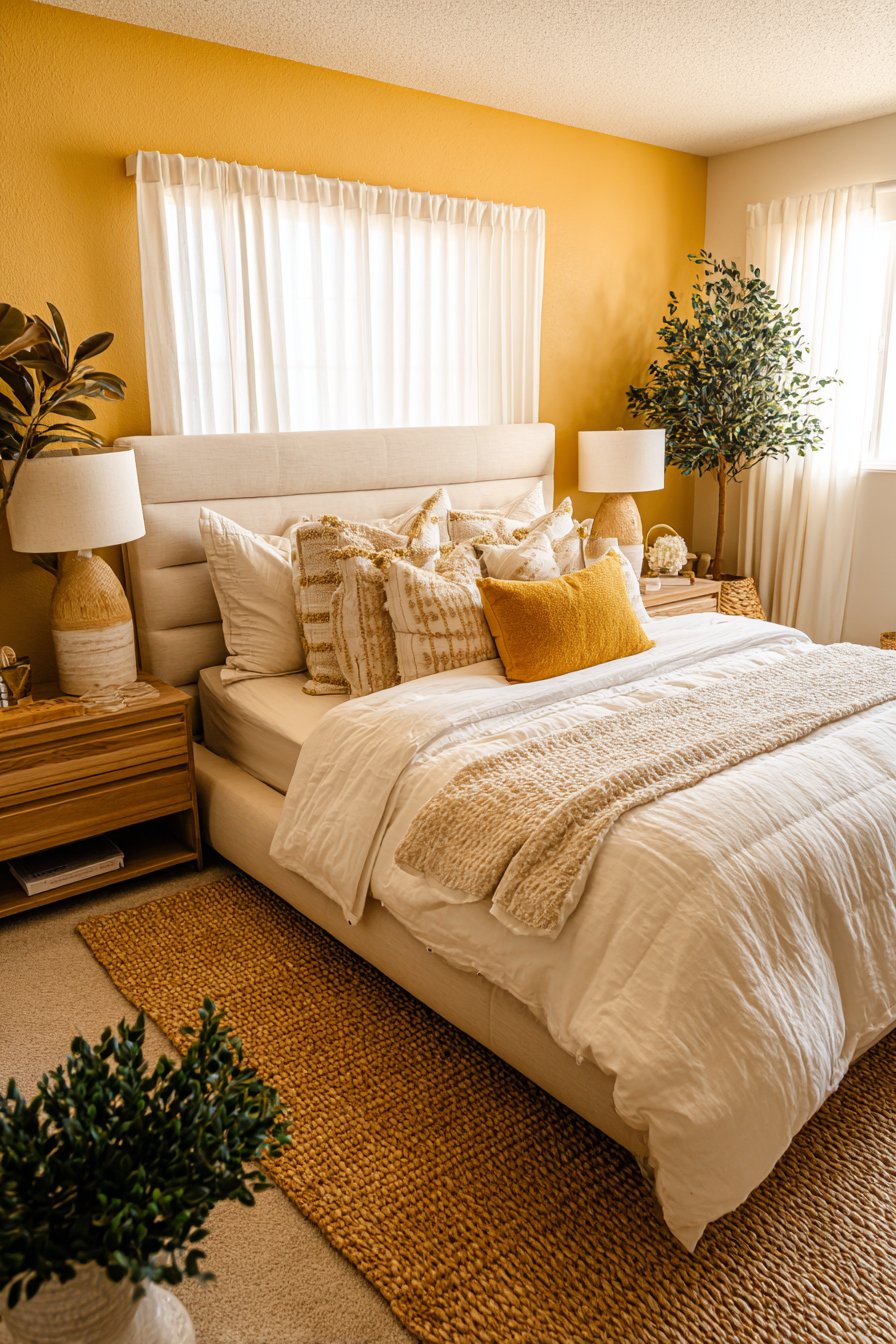
Thoughtful interior design creates spaces that nurture both functionality and inspiration. Different color approaches cater to diverse personalities and lifestyles, from those seeking morning energy to individuals craving warmth. This article explores essential techniques for incorporating yellow successfully, covering balance strategies, tone selection, material pairings, and lighting considerations. Each method offers unique benefits that prevent color fatigue while maintaining visual interest.
1. Start with the Right Yellow Tone
Selecting the appropriate yellow shade determines whether your bedroom feels welcoming or overwhelming. Not all yellows are created equal, and understanding undertones and intensity prevents design disasters. Cool yellows with green undertones create calming atmospheres, while warm yellows with orange bases energize spaces. The room’s natural light dramatically affects how yellow appears throughout the day.
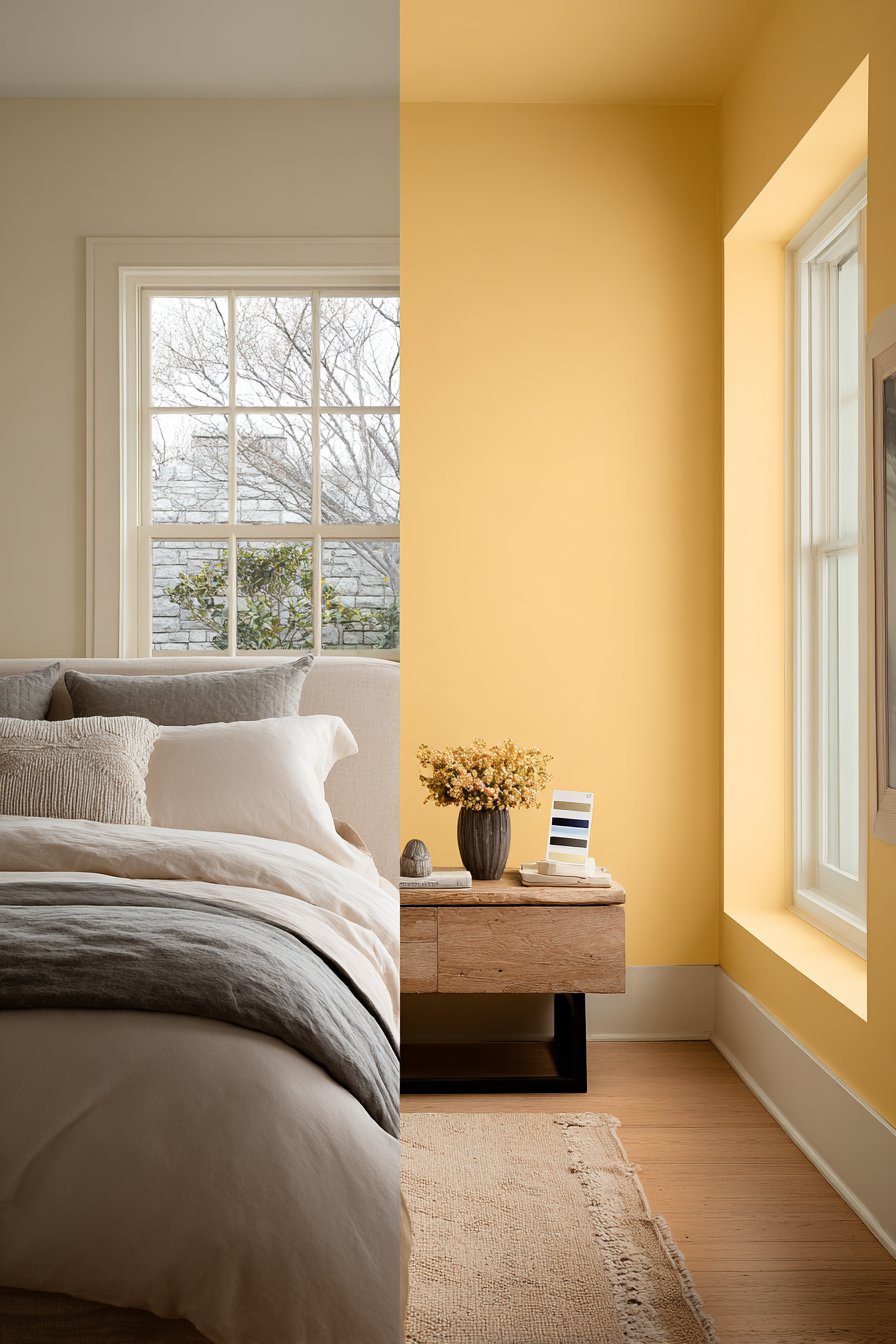
Consider your bedroom’s orientation and existing light sources before committing to a shade. North-facing rooms benefit from warmer yellow tones that compensate for cool natural light. South-facing spaces can handle cooler, more subtle yellows without appearing washed out. Test paint samples on multiple walls and observe them during different times of day.
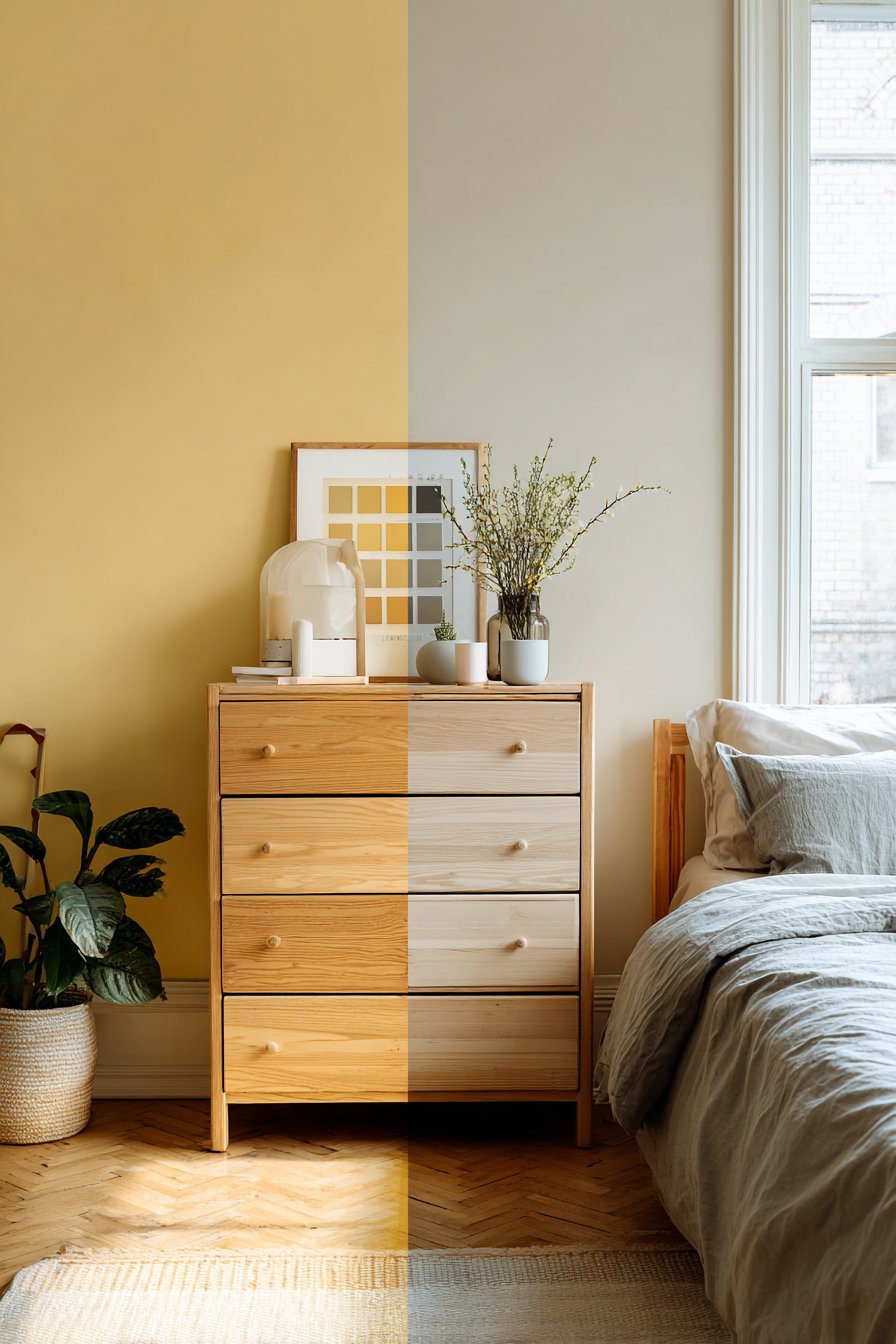
The saturation level impacts the overall mood significantly. Soft buttery yellows provide gentle warmth without demanding attention, making them ideal for restful environments. Deeper mustard or golden yellows work best as accent features rather than dominant wall colors. Your chosen shade should complement your lifestyle and sleep preferences.
- Sample at least three different yellow tones before final selection
- Observe colors during morning, afternoon, and evening light conditions
- Consider undertones that complement existing furniture and flooring
- Start with lighter shades if uncertain about yellow commitment
- Use deeper yellows sparingly on single accent walls
- Match intensity levels with room size and natural light availability
2. Balance Yellow with Neutral Foundations
Grounding yellow with neutral elements creates visual breathing room that prevents sensory overload. White, gray, beige, and cream serve as perfect counterbalances to yellow’s vibrancy. This approach allows yellow to shine without dominating every surface and sightline. The 60-30-10 rule works exceptionally well with yellow bedrooms.
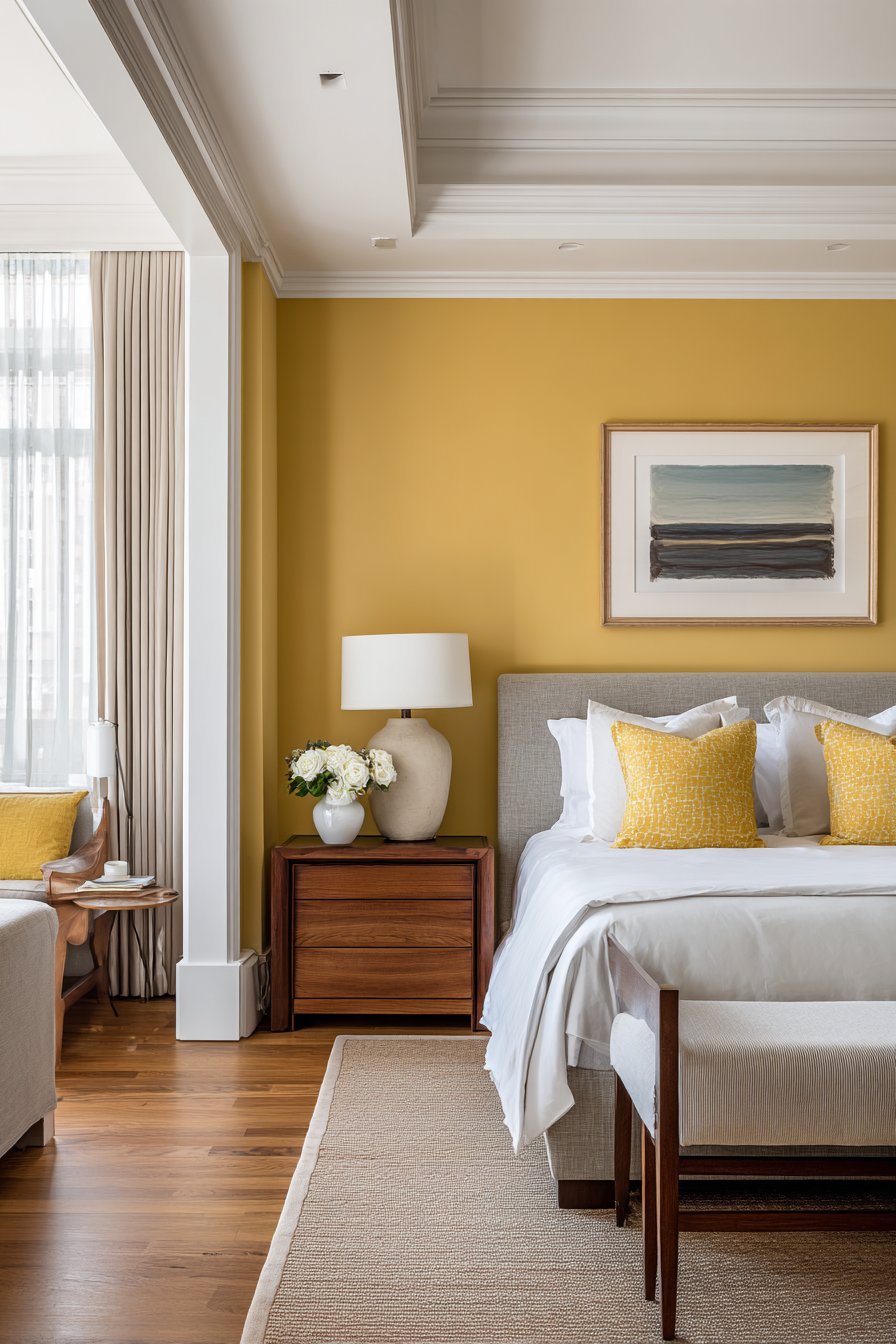
Apply neutrals to larger surfaces like floors, ceilings, and bedding foundations. Reserve yellow for walls, decorative pillows, artwork, or featured furniture pieces. This distribution creates natural focal points while maintaining overall harmony. Crisp white trim and ceiling paint make yellow walls appear more refined and intentional.
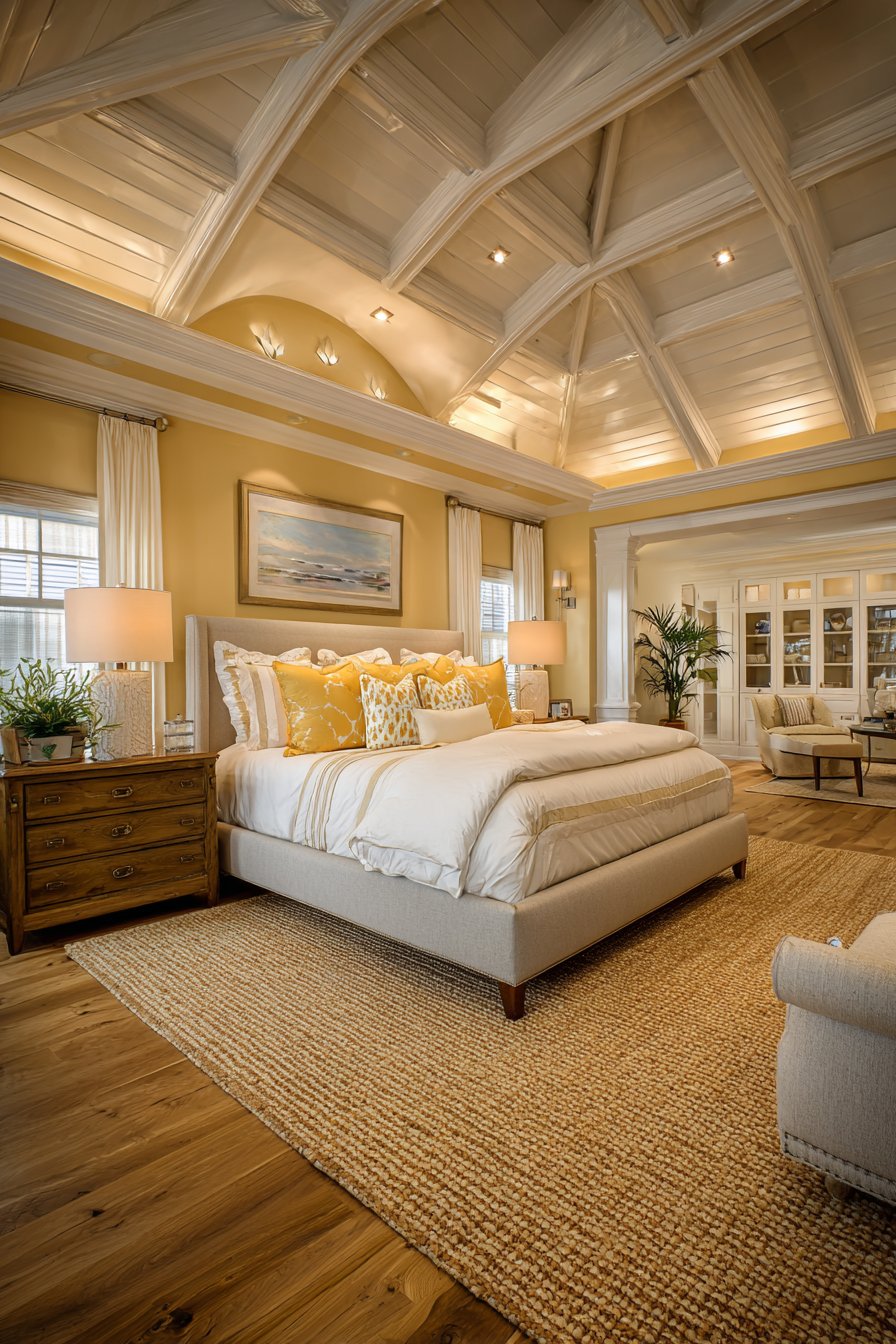
Gray neutrals offer sophisticated contrast that enhances yellow’s warmth without competing. Warm beiges create cohesive, layered depth that feels organic and inviting. Consider incorporating natural wood tones as neutral elements that bridge yellow with earth-inspired palettes. These combinations prevent the space from feeling one-dimensional or cartoonish.
- Use white or off-white for ceiling and trim work
- Incorporate gray bedding or upholstery as yellow counterpoints
- Choose neutral flooring in wood, beige carpet, or gray tones
- Limit yellow to 30-40% of visible surfaces maximum
- Layer multiple neutral shades for dimensional interest
- Select furniture in natural materials like wood or woven fibers
3. Incorporate Strategic Pattern Mixing
Patterns dilute yellow’s intensity while adding textural complexity and visual interest. Mixing yellow with patterned elements creates movement without overwhelming the senses. Geometric designs, florals, and abstract prints can all incorporate yellow as one color among several. This technique prevents monotony while maintaining color cohesion.
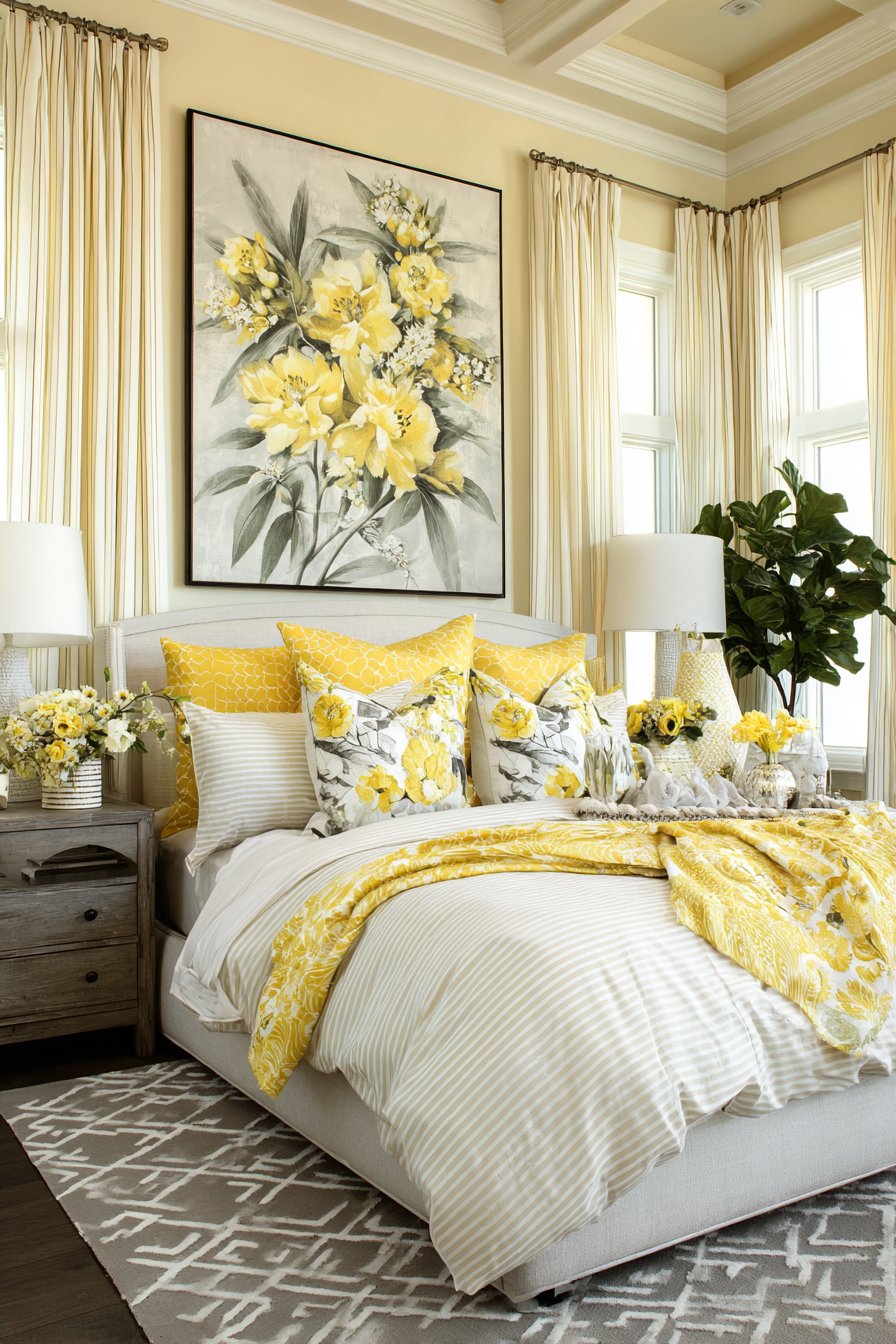
Choose patterns where yellow appears alongside complementary colors like navy, gray, or white. Striped bedding with yellow and white breaks visual weight more effectively than solid yellow. Floral patterns featuring yellow blooms with green foliage create natural, calming combinations. Limit bold patterns to accent pieces rather than dominant features.
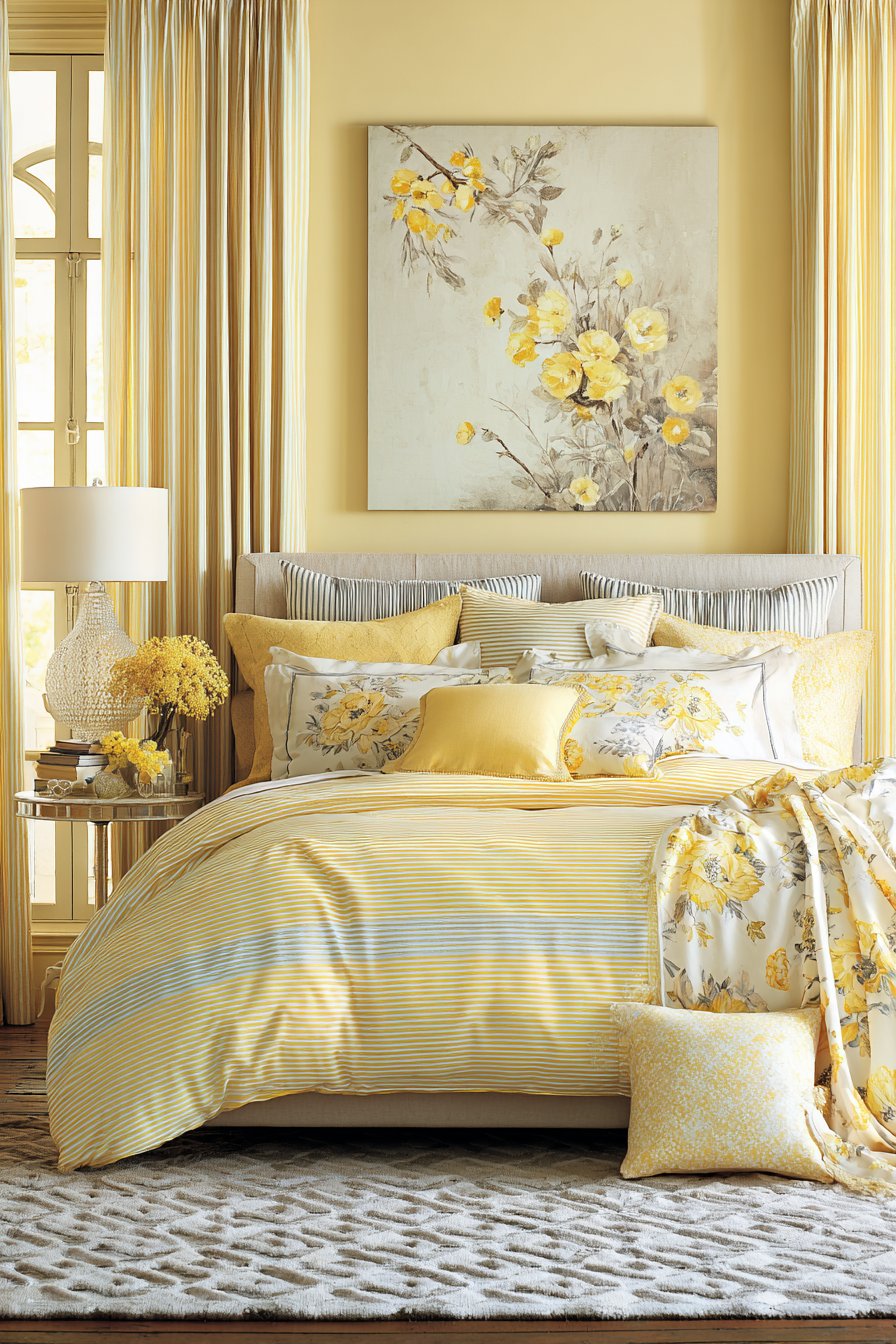
Scale matters when mixing patterns in yellow bedrooms. Combine large-scale patterns with smaller prints to create balanced hierarchy. A yellow geometric rug can pair beautifully with subtle pinstripe curtains. Ensure patterns share at least one common color to maintain cohesion. Avoid using more than three different pattern types simultaneously.
- Mix one large-scale pattern with smaller complementary designs
- Use patterned throw pillows featuring yellow with other colors
- Consider geometric or botanical patterns for sophisticated appeal
- Limit patterns to bedding, curtains, and select accent pieces
- Ensure patterns share common colors for cohesive look
- Vary pattern styles between geometric, organic, and abstract
4. Master Lighting for Yellow Spaces
Lighting profoundly affects how yellow appears and feels throughout your bedroom environment. The wrong lighting can make yellow appear sickly or garish, while proper illumination enhances its warmth. Layered lighting with multiple sources creates flexibility for different moods and activities. Natural light management remains equally critical as artificial lighting choices.
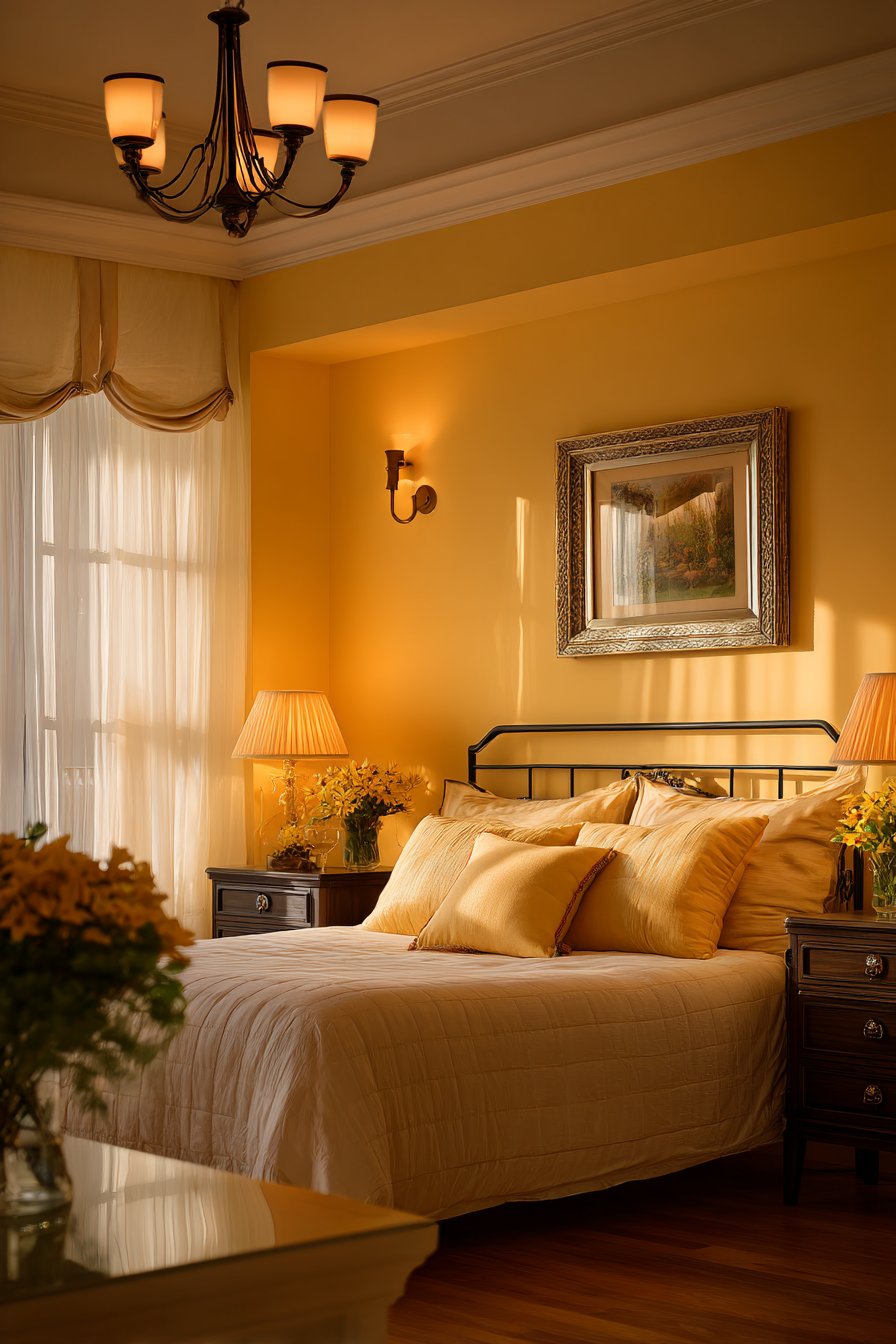
Install dimmable fixtures that allow precise control over yellow’s intensity at different times. Warm white bulbs (2700-3000K) complement yellow walls beautifully, while cool bulbs can create unpleasant green casts. Bedside lamps with fabric shades diffuse light softly, preventing harsh yellow reflections. Consider how metallic lamp finishes interact with yellow tones.
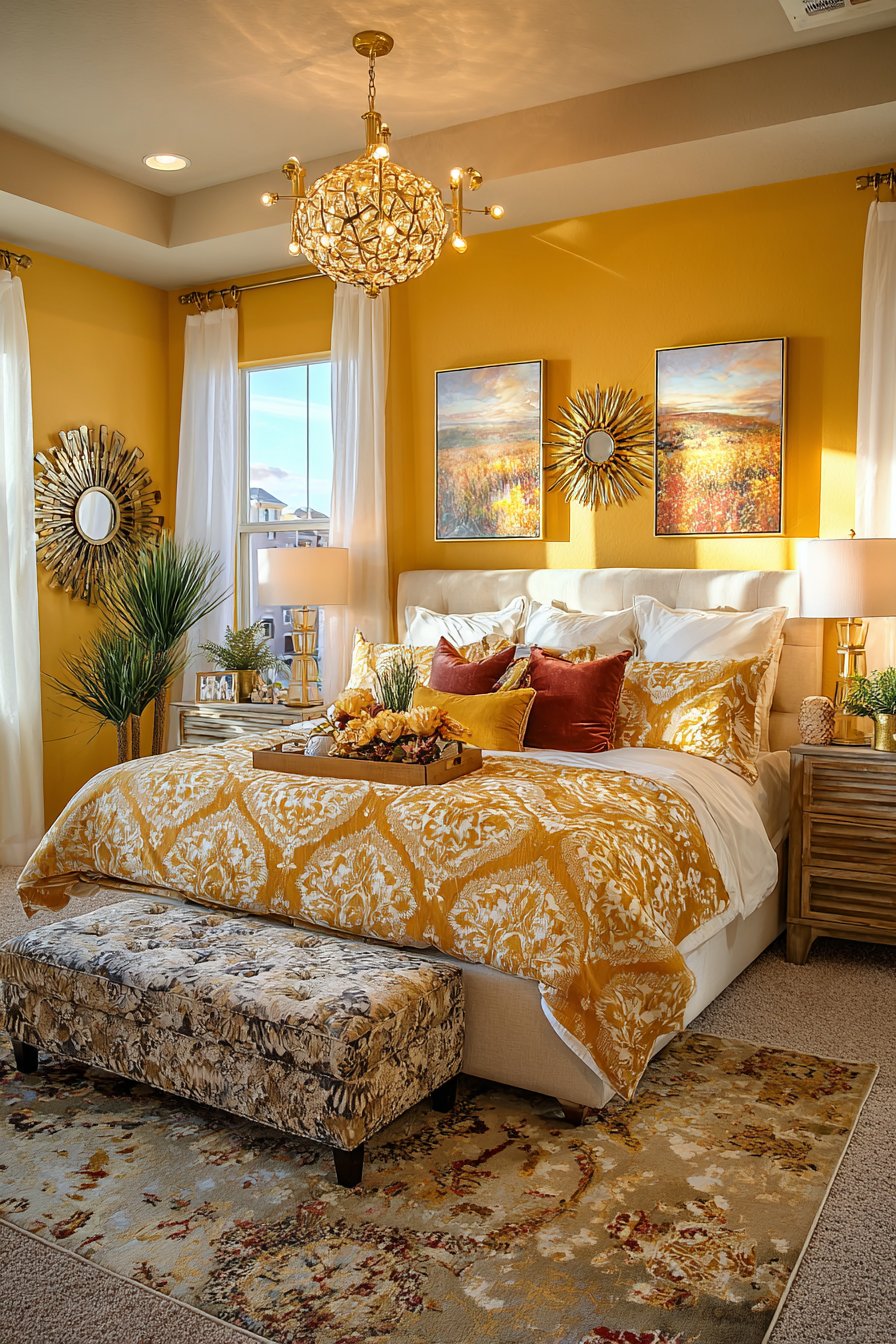
Window treatments control natural light without blocking it completely. Sheer curtains in white or cream allow filtered illumination that softens yellow walls. Blackout shades provide darkness when needed without conflicting with yellow during daytime. Mirrors positioned strategically reflect light and make yellow spaces feel larger and brighter.
- Install dimmer switches for overhead and accent lighting
- Use warm white LED bulbs between 2700-3000K color temperature
- Add multiple light sources at different heights and locations
- Choose lamp shades in neutral fabrics for soft light diffusion
- Hang sheer curtains to filter harsh direct sunlight
- Position mirrors to reflect natural light without amplifying yellow excessively
5. Introduce Contrasting Accent Colors
Strategic accent colors create dynamic tension that makes yellow bedrooms more sophisticated and livable. Navy blue, charcoal gray, emerald green, and crisp white all provide excellent contrast. These combinations prevent yellow from feeling childish or one-note. Color theory principles guide successful accent selection for maximum impact.
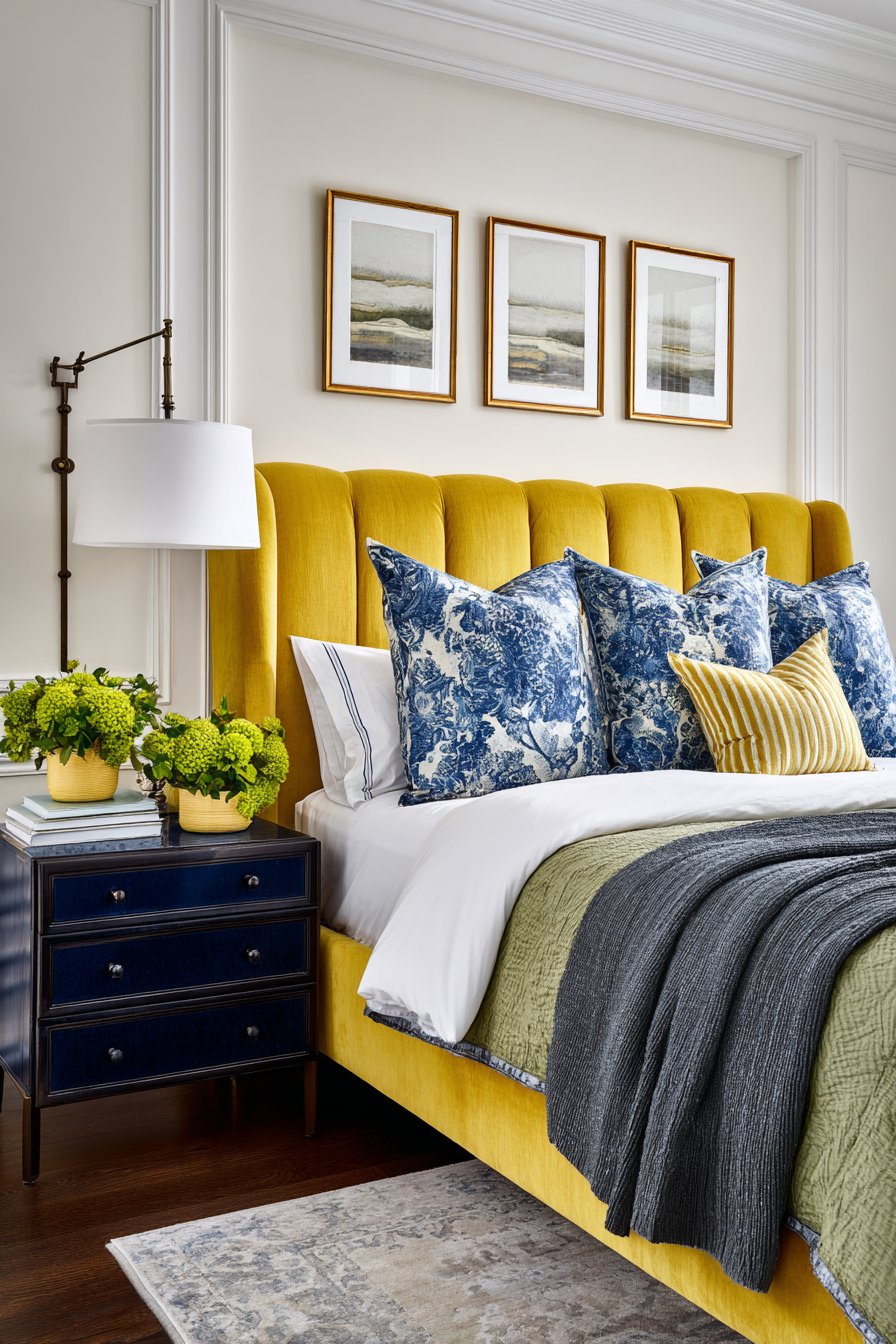
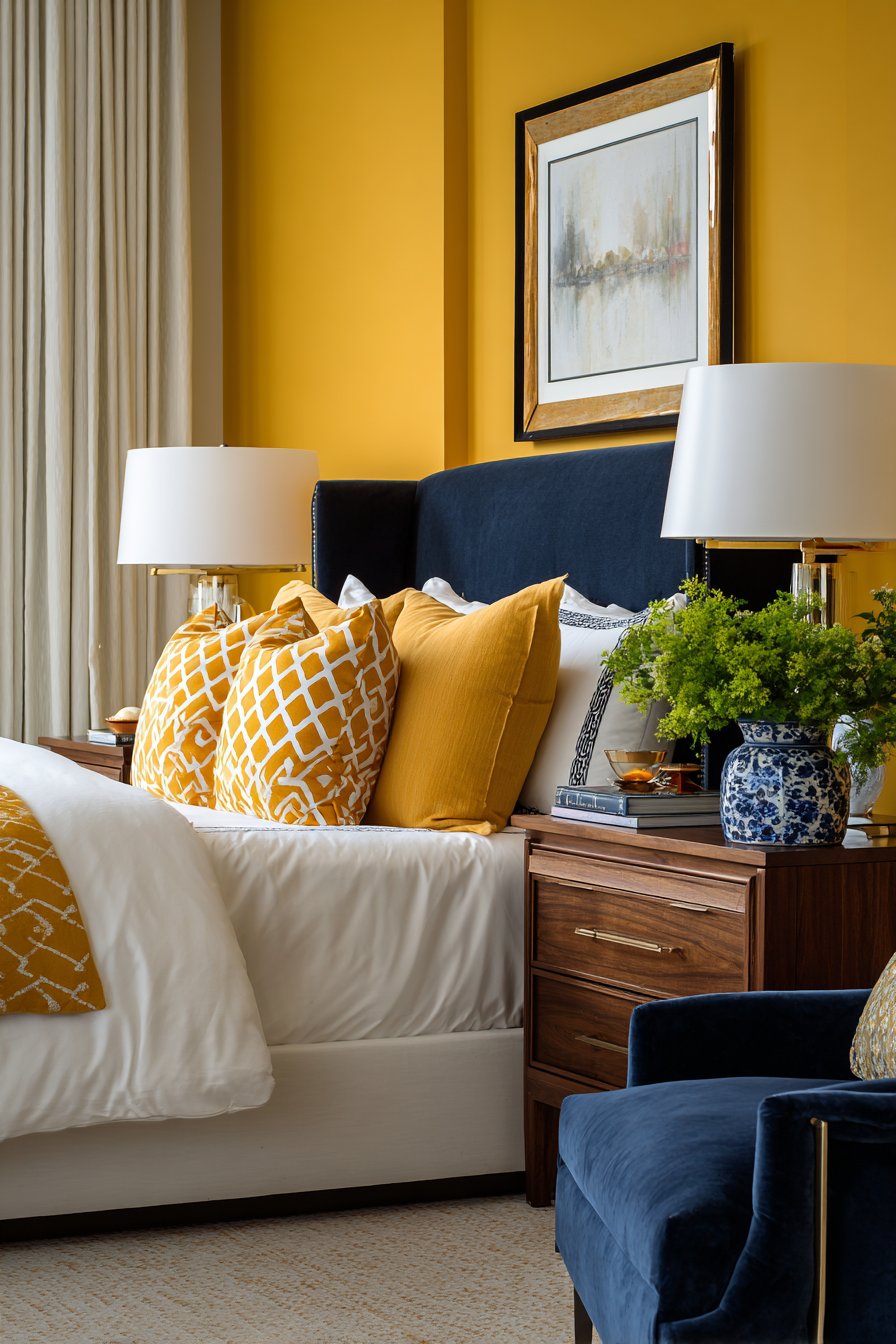
Navy blue creates classic elegance when paired with softer yellows, evoking nautical or traditional aesthetics. Deep charcoal pillows or throws add masculine edge that balances yellow’s cheerfulness. Emerald or sage green introduces natural harmony that feels organic and calming. Select accent colors based on desired mood and personal style preferences.
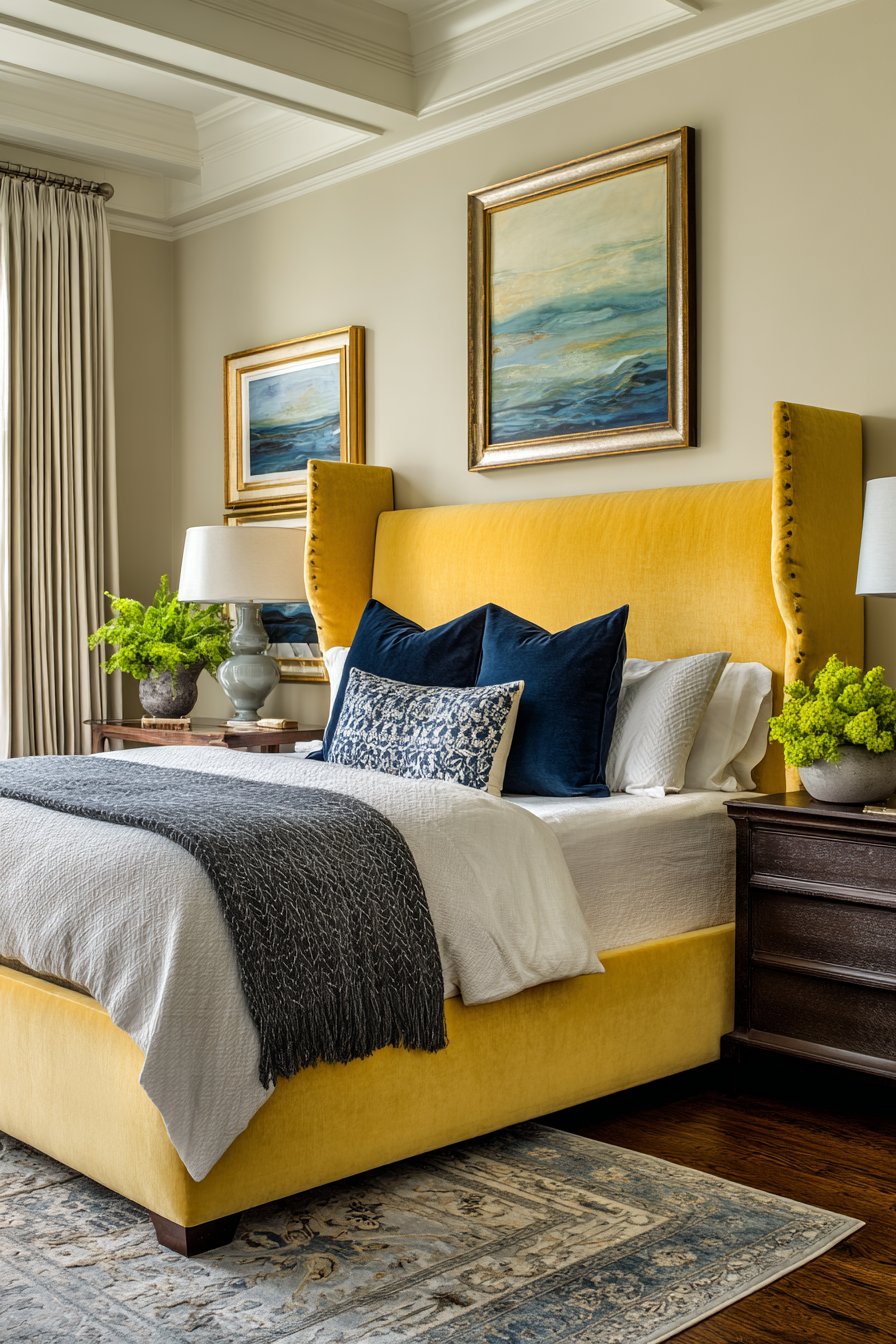
Distribute accent colors throughout the room using textiles, artwork, and decorative accessories. A navy throw blanket, charcoal curtain panels, and white ceramic lamps create layered interest. Avoid introducing more than two accent colors beyond yellow and neutrals. Metallic finishes in brass or bronze complement yellow while adding sophisticated shimmer.
- Pair soft yellows with navy for timeless appeal
- Use charcoal gray accents for modern sophistication
- Incorporate green tones for natural, harmonious combinations
- Limit accent colors to two beyond yellow and neutrals
- Distribute accent colors evenly throughout the space
- Add metallic touches in warm finishes like brass or gold
6. Choose Materials That Soften Yellow’s Impact
Material selection significantly influences how yellow is perceived and experienced in bedroom settings. Natural textures like linen, cotton, jute, and wood absorb visual intensity better than synthetic glossy surfaces. Matte finishes prevent yellow from appearing too vibrant or artificial. The interplay between materials and color creates depth that elevates overall design quality.
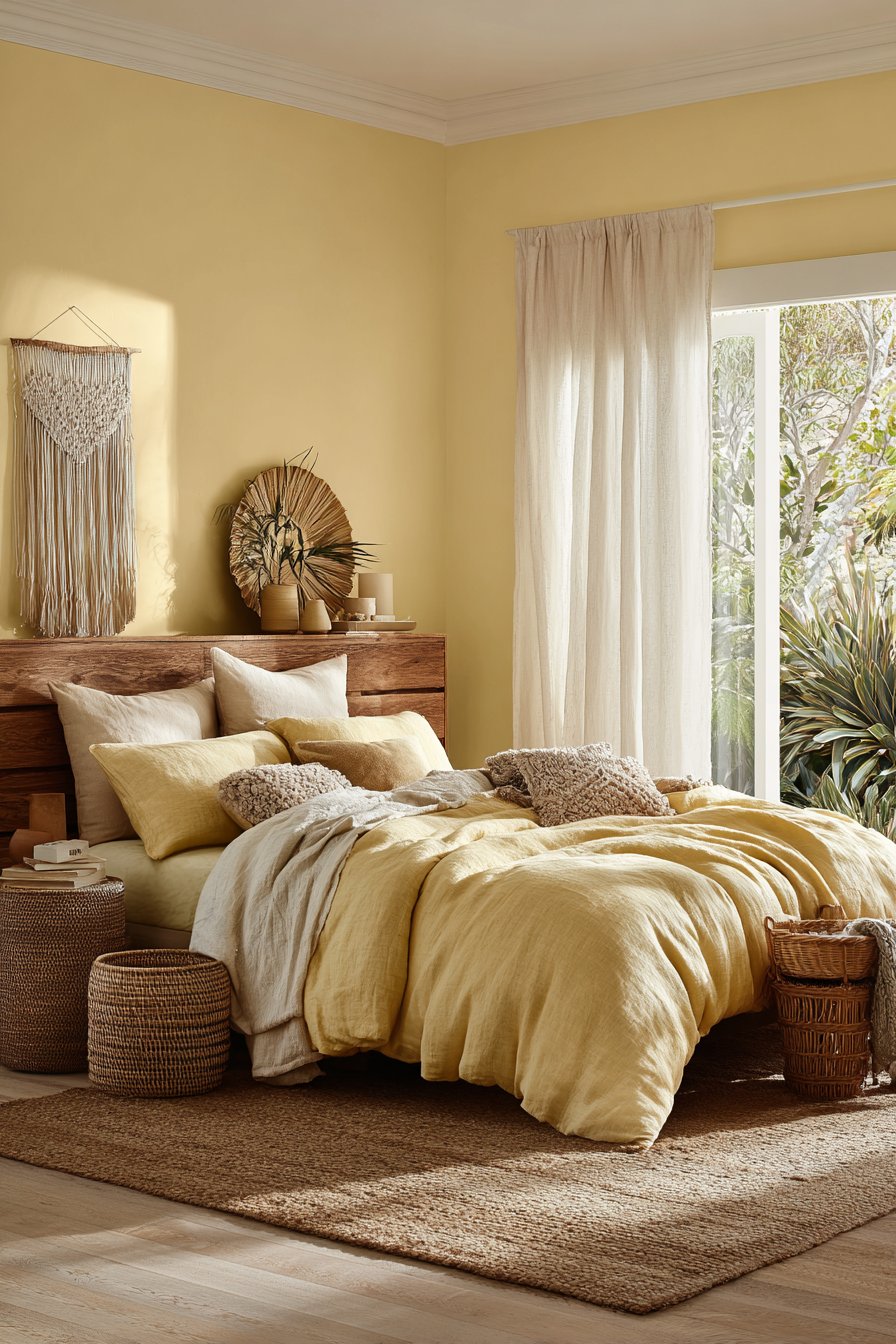
Linen bedding in yellow feels relaxed and organic rather than overwhelming, thanks to the fabric’s inherent texture. Jute rugs ground yellow walls with earthy neutrality that balances brightness. Wooden furniture in warm tones complements yellow naturally without adding competing color. Avoid high-gloss finishes that amplify yellow’s reflectivity unnecessarily.
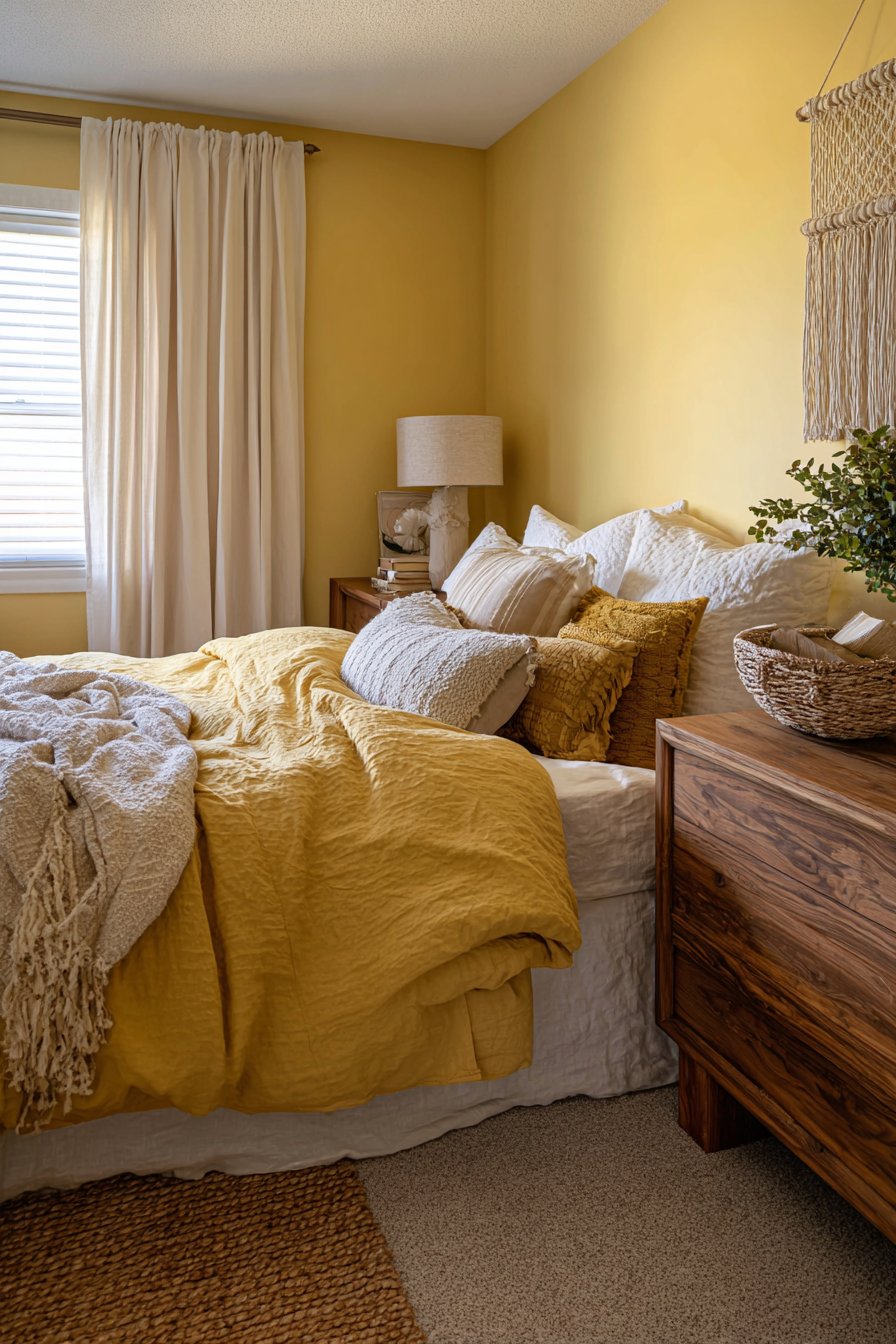
Incorporate woven textures through baskets, wall hangings, or upholstered headboards. These materials create tactile dimension that distracts from color saturation. Velvet accent pillows in yellow feel luxurious and sophisticated rather than garish. Mix smooth and textured materials to prevent visual monotony while maintaining color cohesion throughout the space.
- Choose matte or eggshell paint finishes over high-gloss options
- Use natural fiber textiles like linen, cotton, and wool
- Incorporate wooden furniture in warm or medium tones
- Add woven elements through rugs, baskets, or wall decor
- Select velvet or textured fabrics for upholstered pieces
- Avoid synthetic materials with excessive sheen or reflectivity
Conclusion
Creating successful yellow bedrooms requires intentional design decisions that balance vibrancy with restraint. By selecting appropriate tones, grounding with neutrals, mixing patterns thoughtfully, mastering lighting, introducing contrasting accents, and choosing softening materials, you can harness yellow’s energizing potential without overwhelming your space. Each strategy works together to create bedrooms that feel warm, inviting, and perfectly personalized.
Experiment with these proven techniques in your own home, starting small with accessories before committing to larger applications. Remember that design is personal—trust your instincts while following these foundational principles. Your yellow bedroom can become a daily source of joy and inspiration when executed with care and creativity.
