


Selecting the right rug size can transform your living room from cluttered chaos to harmonious elegance. Many homeowners underestimate the impact of proper rug sizing, leading to spaces that feel disconnected or visually awkward. A well-chosen rug anchors your furniture, defines conversation areas, and creates a cohesive foundation for your entire design scheme.
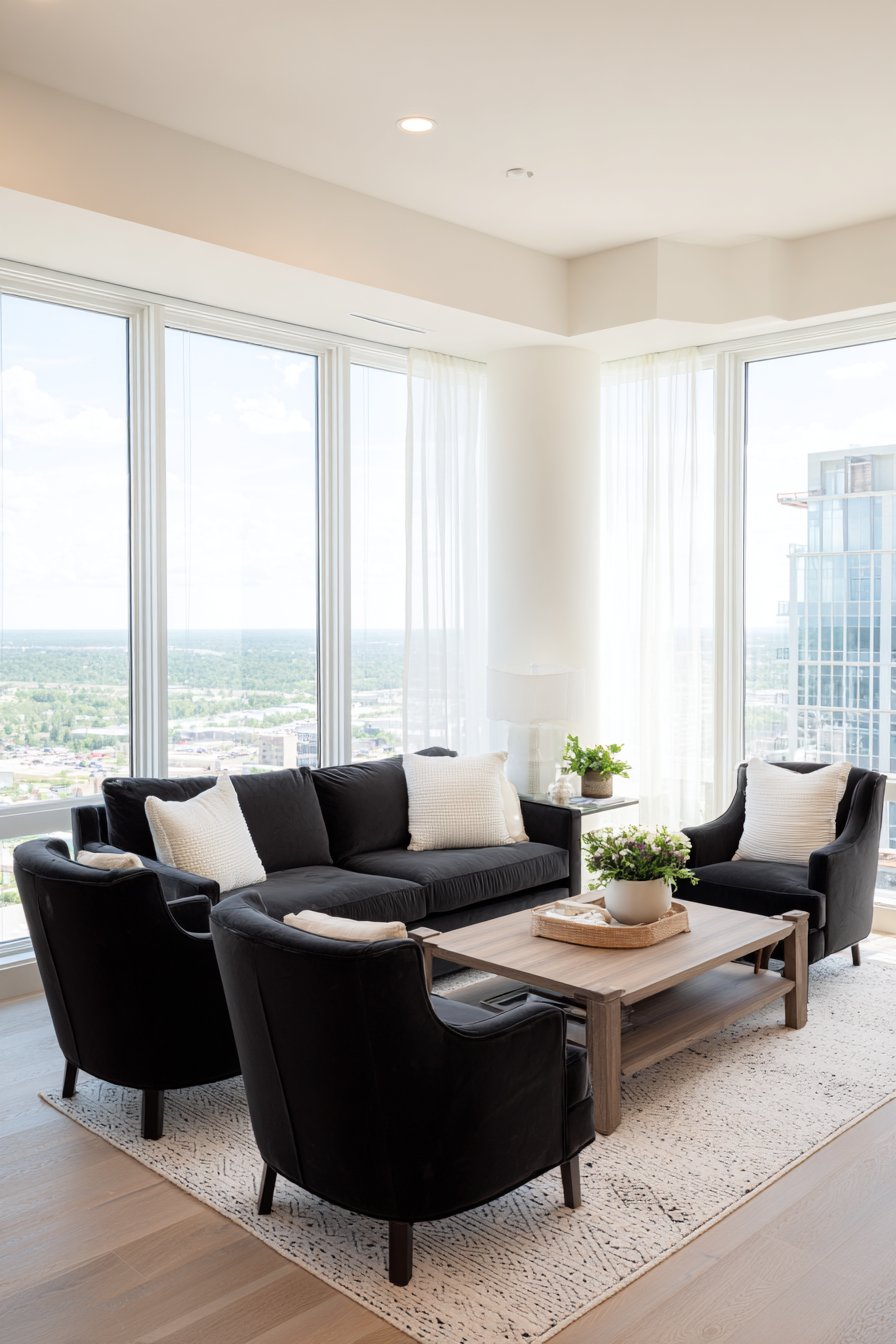
The perfect rug acts as the room’s visual anchor, pulling together disparate furniture pieces into a unified whole. Understanding spatial relationships between your rug and furniture placement is crucial for achieving professional-looking results. Whether you’re working with a compact apartment or an expansive great room, the principles of rug sizing remain consistent, though their application varies based on your specific space and lifestyle needs.
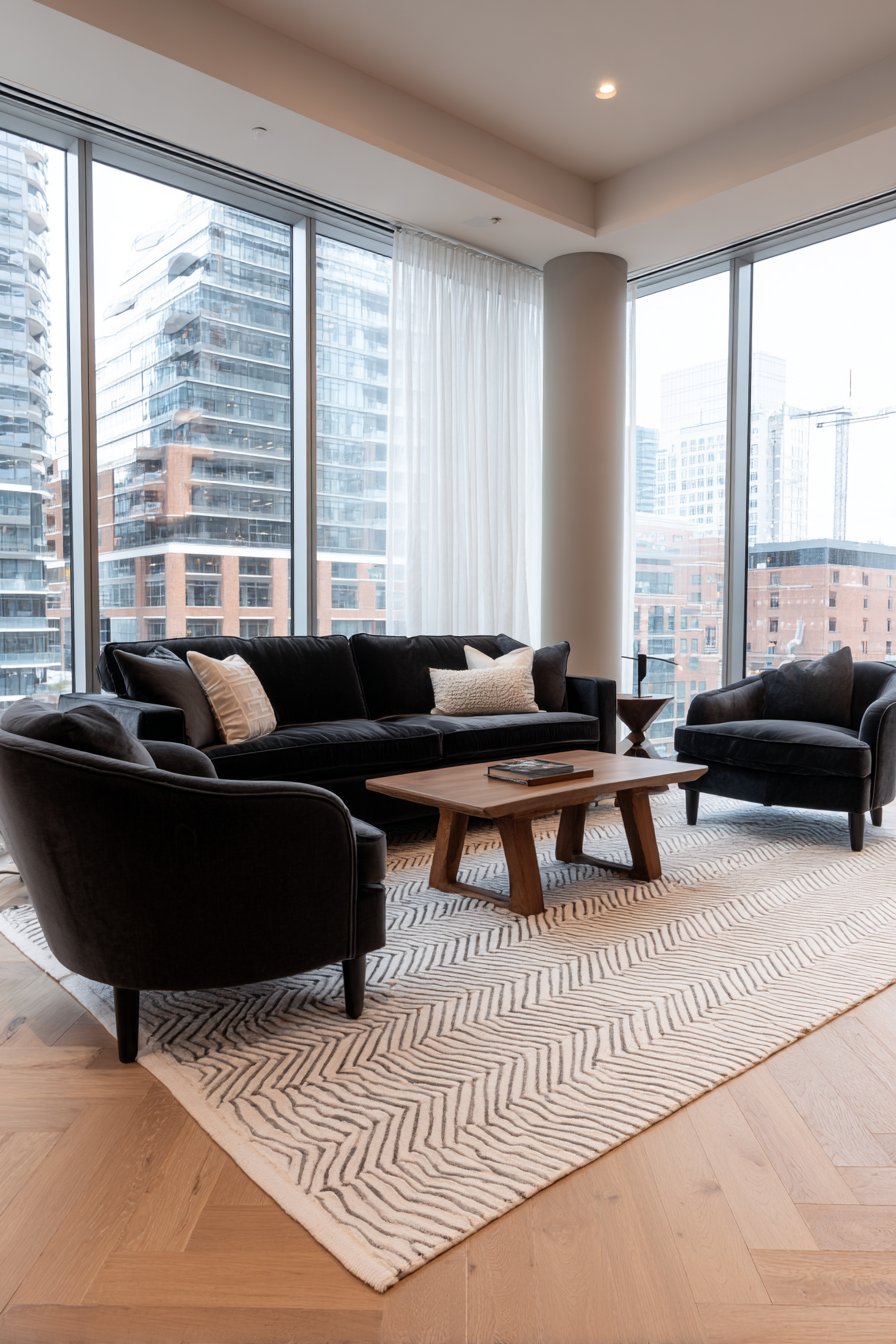
This comprehensive guide explores six essential strategies for selecting the ideal rug dimensions for your living room. From understanding standard sizing conventions to mastering furniture placement techniques, you’ll discover practical solutions that work for various room configurations and design styles. These time-tested approaches will help you avoid common pitfalls and create a living space that feels both inviting and thoughtfully designed.
1. Understanding Standard Rug Sizes and Room Proportions
Standard rug sizes follow industry conventions that typically include 5×8, 6×9, 8×10, 9×12, and 10×14 feet. These predetermined dimensions simplify shopping and ensure compatibility with most furniture arrangements. However, knowing these standards is only your starting point for making an informed decision.
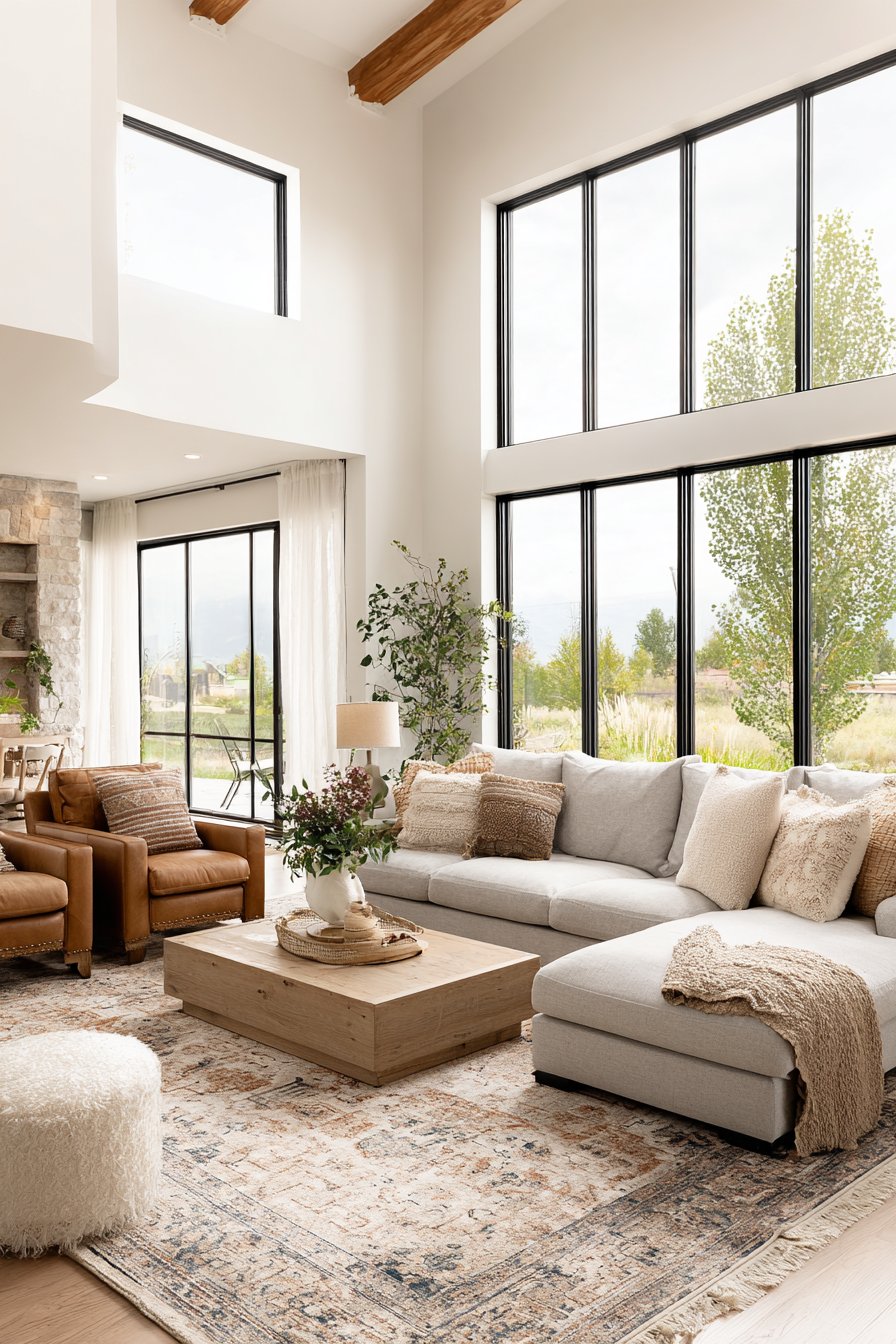
Your living room’s proportions dictate which size category works best. A balanced ratio between floor space and rug coverage creates visual harmony. As a general rule, leave 12 to 24 inches of bare floor between the rug edge and walls. This breathing room prevents the space from feeling cramped or overwhelming.
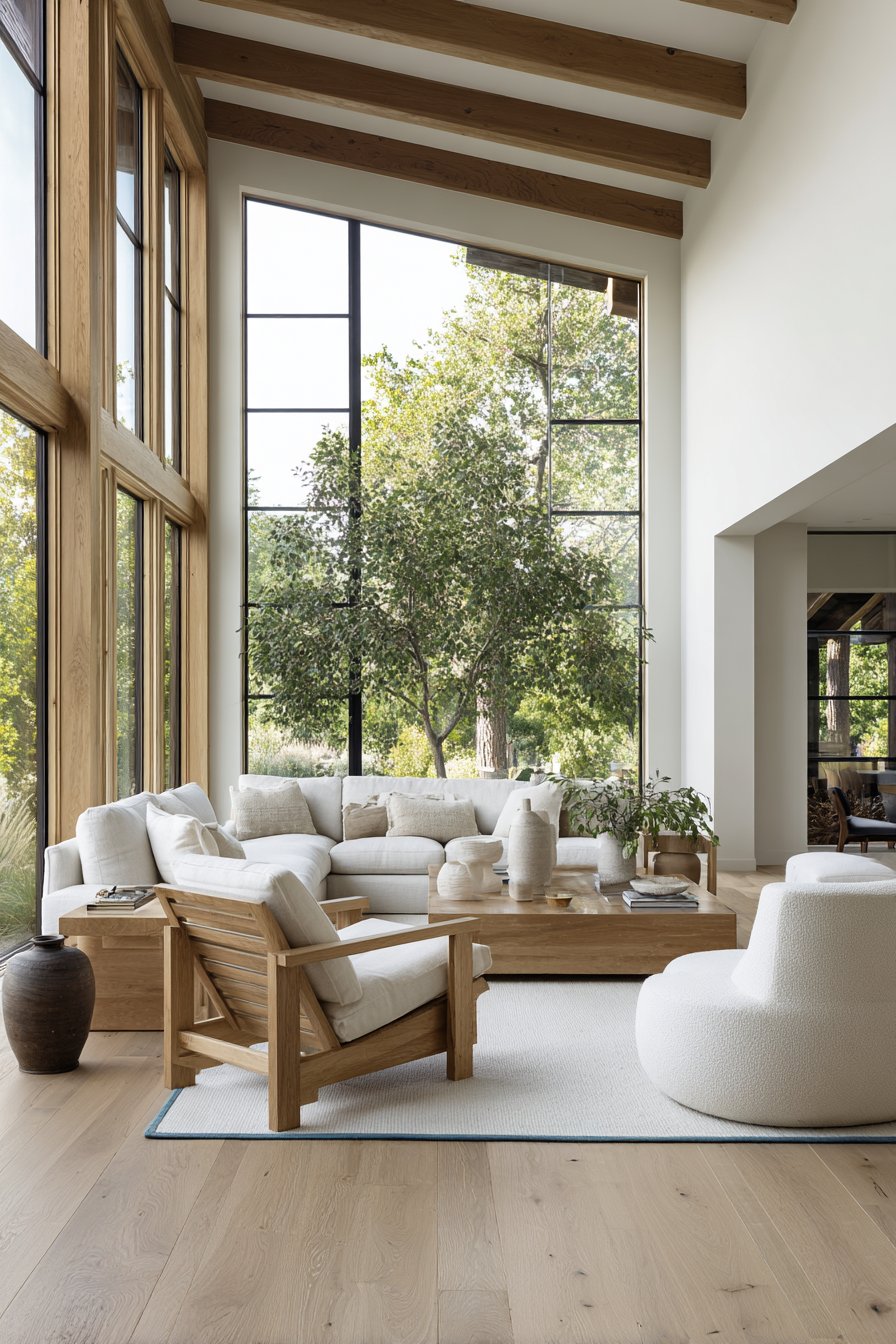
Consider your room’s traffic patterns when evaluating size options. High-traffic areas benefit from larger coverage that extends beyond primary walkways. Smaller rugs can create tripping hazards when placed in pathways. Always measure your space twice before purchasing to avoid costly sizing mistakes.
- Measure your room’s length and width before shopping for rugs
- Account for furniture depth when calculating required rug dimensions
- Leave consistent border space around the rug for visual balance
- Consider doorway clearances to ensure rugs don’t interfere with movement
- Use painter’s tape to outline potential rug sizes on your floor
- Photograph your taped outline to visualize the final result
2. The All-Furniture-On Method for Cohesive Design
The all-furniture-on approach places every major furniture piece completely on the rug surface. This technique creates the most cohesive and luxurious appearance in living rooms. Your sofa, chairs, coffee table, and side tables all rest firmly on the rug, establishing a defined conversation zone.
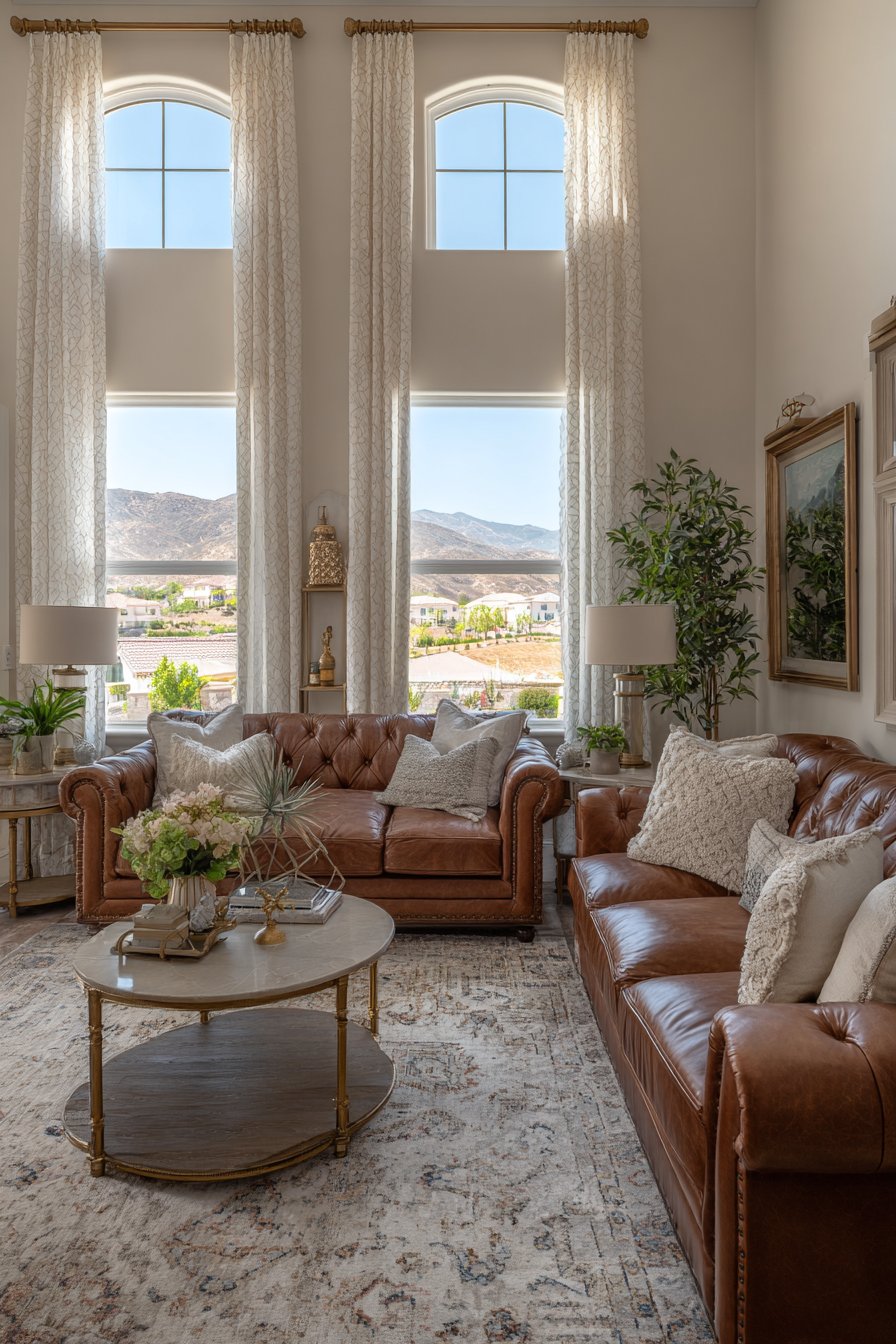
This method requires the largest rug investment but delivers maximum visual impact. An 8×10 rug minimum typically accommodates standard furniture arrangements, while larger rooms may need 9×12 or bigger. The unified foundation makes spaces feel more expensive and thoughtfully designed.
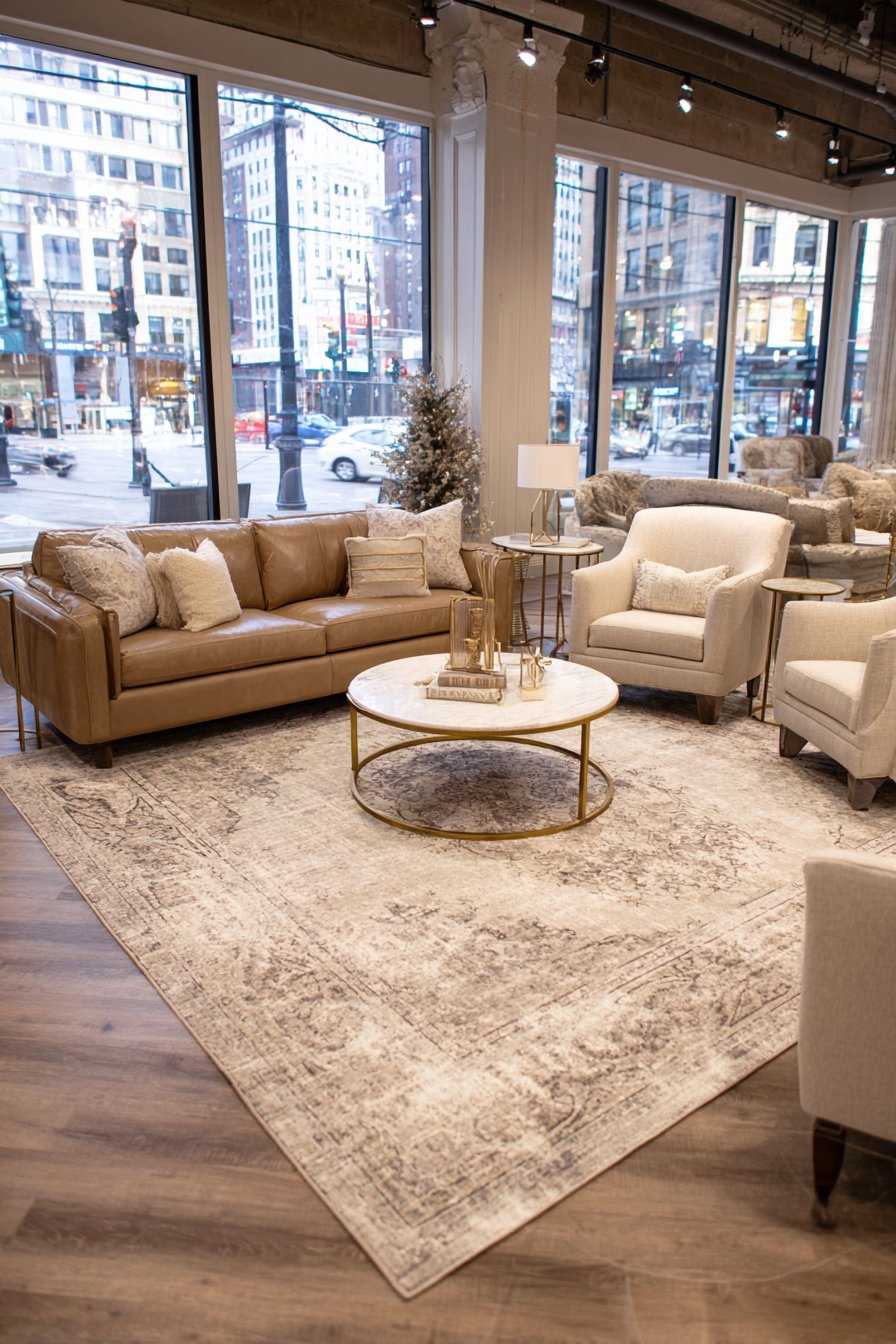
Budget constraints may limit this approach for some homeowners. However, the investment pays dividends in creating a polished, designer-quality aesthetic. If you can only afford one quality rug, making it large enough for all furniture creates better results than multiple smaller rugs scattered throughout the space.
- Opt for 9×12 rugs in rooms measuring 12×15 feet or larger
- Ensure at least 6 inches of rug extends beyond furniture edges
- Choose low-pile rugs for easier furniture placement and stability
- Verify that reclining furniture has adequate rug coverage when extended
- Consider custom sizing for unusually shaped or oversized rooms
- Layer smaller accent rugs over large foundation rugs for added interest
3. The Front-Feet-On Approach for Versatility
Placing only the front legs of your furniture on the rug offers an excellent middle-ground solution. This popular compromise works beautifully in medium-sized living rooms where budget or space constraints exist. Your sofa and chairs rest partially on the rug while back legs remain on bare floor.
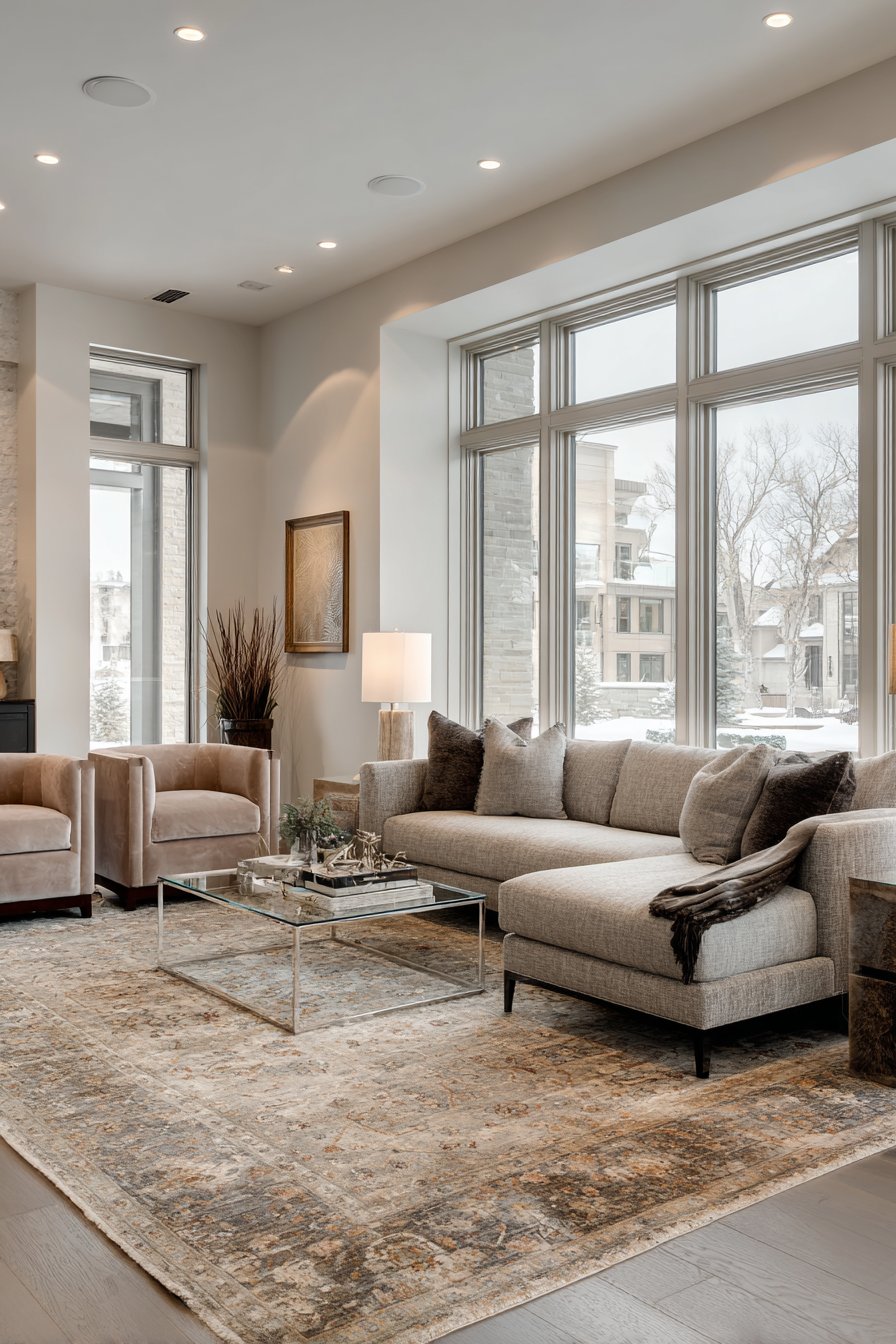
This arrangement requires less rug real estate than the all-on method. A 6×9 or 8×10 rug typically suffices for standard seating configurations. The technique maintains visual connection between furniture pieces while reducing overall rug investment costs significantly.
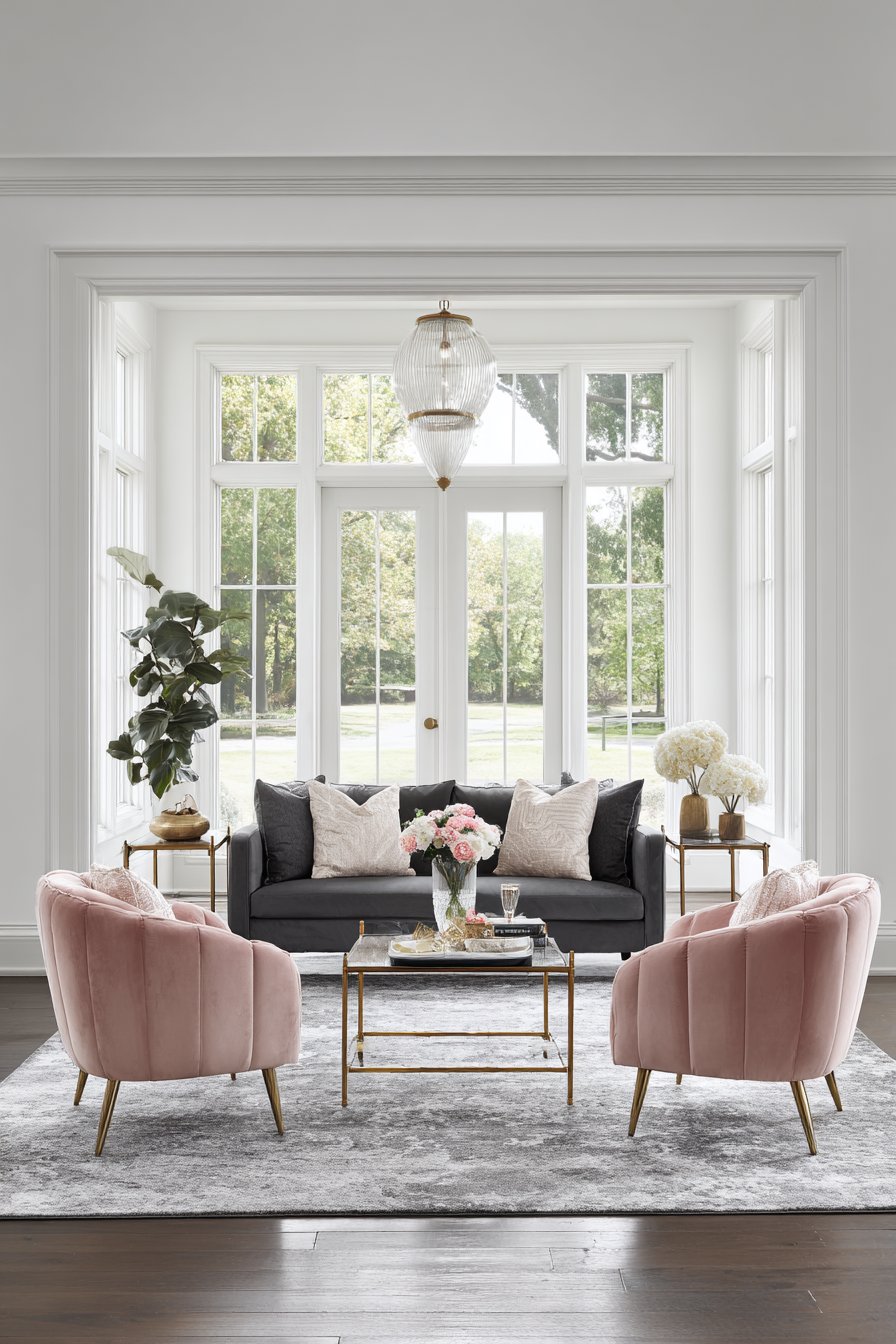
Ensure your coffee table sits completely on the rug for proper visual anchoring. This central placement keeps the conversation area cohesive even when surrounding furniture extends beyond rug boundaries. The front-feet approach works especially well with sectional sofas and L-shaped arrangements.
- Position the rug so front furniture legs sit 2-4 inches from the edge
- Center your coffee table with at least 8 inches of rug on all sides
- Maintain symmetry by ensuring equal rug exposure on both sofa sides
- Use rug pads to prevent slipping with partial furniture weight
- Coordinate rug edges with major architectural features like fireplaces
- Avoid tiny rugs that only fit under coffee tables
4. Floating Furniture Arrangements for Modern Spaces
The floating arrangement positions furniture completely off the rug, creating a distinct centerpiece within the room. This contemporary approach works best in larger living rooms where multiple zones exist. Your rug becomes an artistic element rather than purely functional foundation.
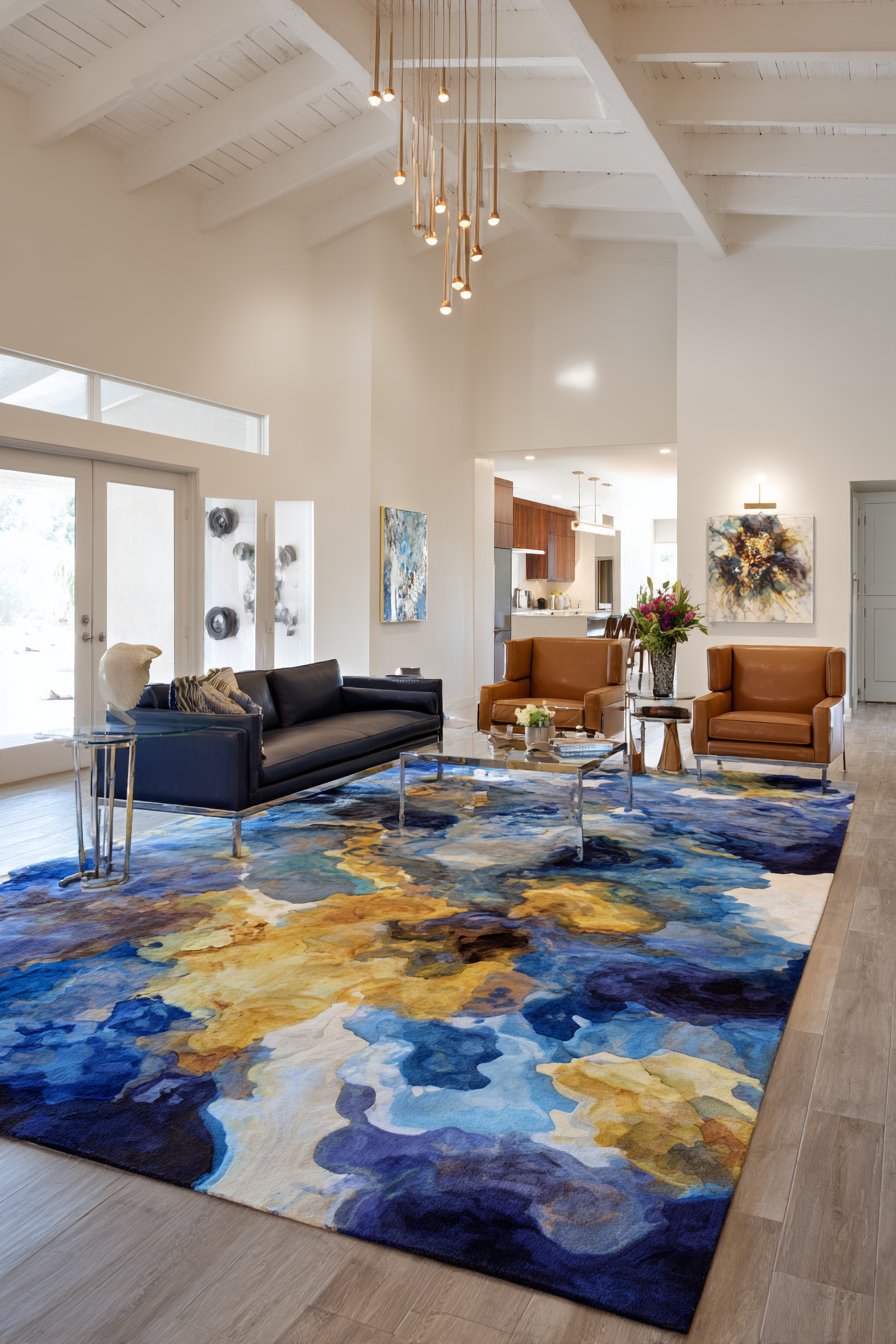
This technique requires careful spatial planning to avoid awkward gaps. The rug should be proportionally significant relative to the surrounding furniture without touching any pieces. Typically, maintain 6 to 12 inches between rug edges and nearest furniture legs for optimal visual balance.
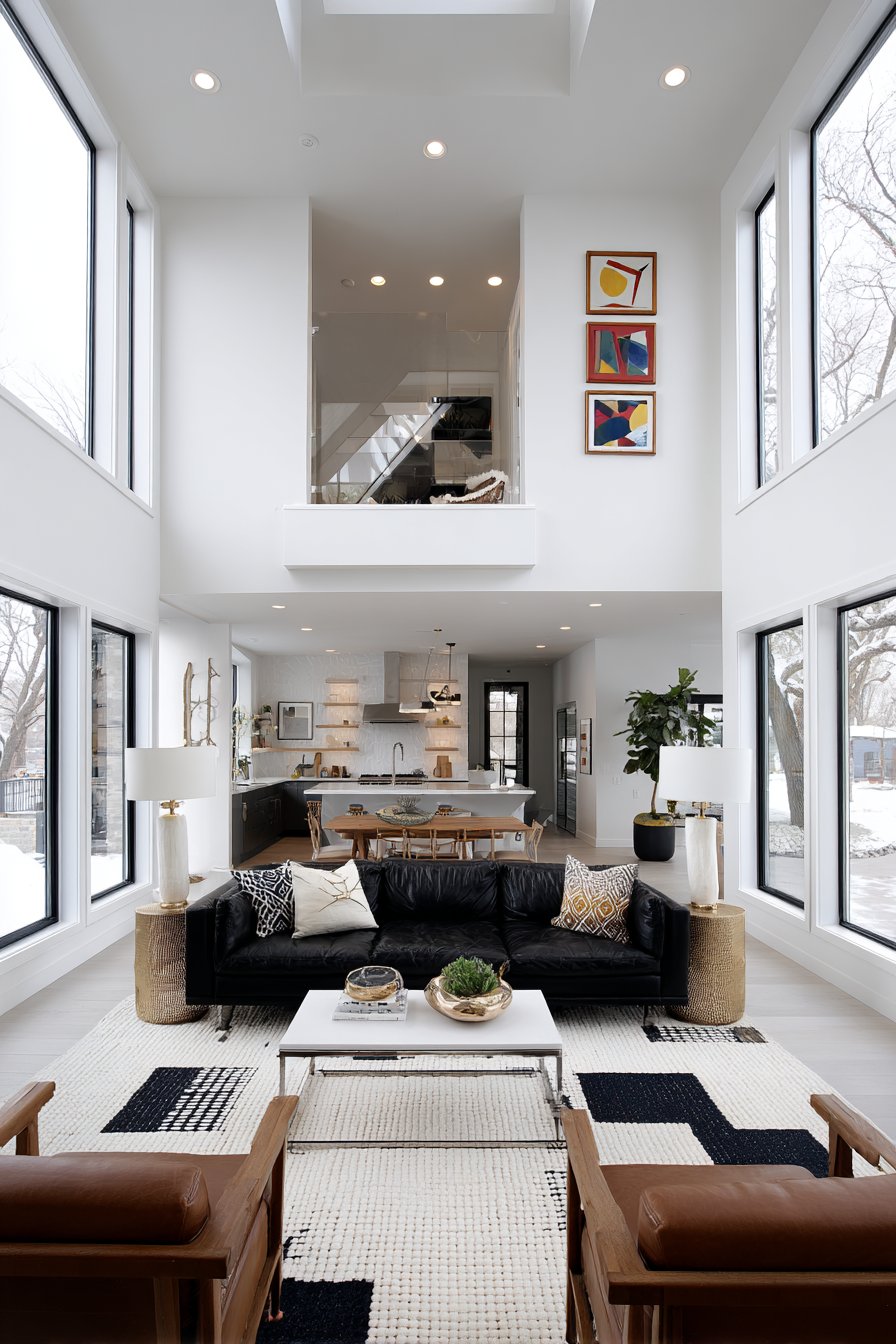
Floating arrangements excel in open-concept spaces where zone definition matters. The isolated rug can delineate living areas from dining spaces or home offices. Choose bold patterns or colors since the rug functions as standalone art rather than subtle backdrop.
- Select 5×7 or 6×9 rugs for floating arrangements in standard rooms
- Ensure the rug aligns with the room’s center point
- Use furniture placement to frame the rug as a focal point
- Choose rugs with finished edges or decorative borders for floating displays
- Coordinate rug colors with throw pillows and accessories for cohesion
- Consider round or uniquely shaped rugs for added visual interest
5. Sectional Sofa Rug Sizing Strategies
Sectional sofas present unique sizing challenges due to their L-shaped or U-shaped configurations. The rug must accommodate the sectional’s footprint while maintaining proper proportions. Most sectionals require at least an 8×10 rug, though 9×12 or larger often provides better coverage.
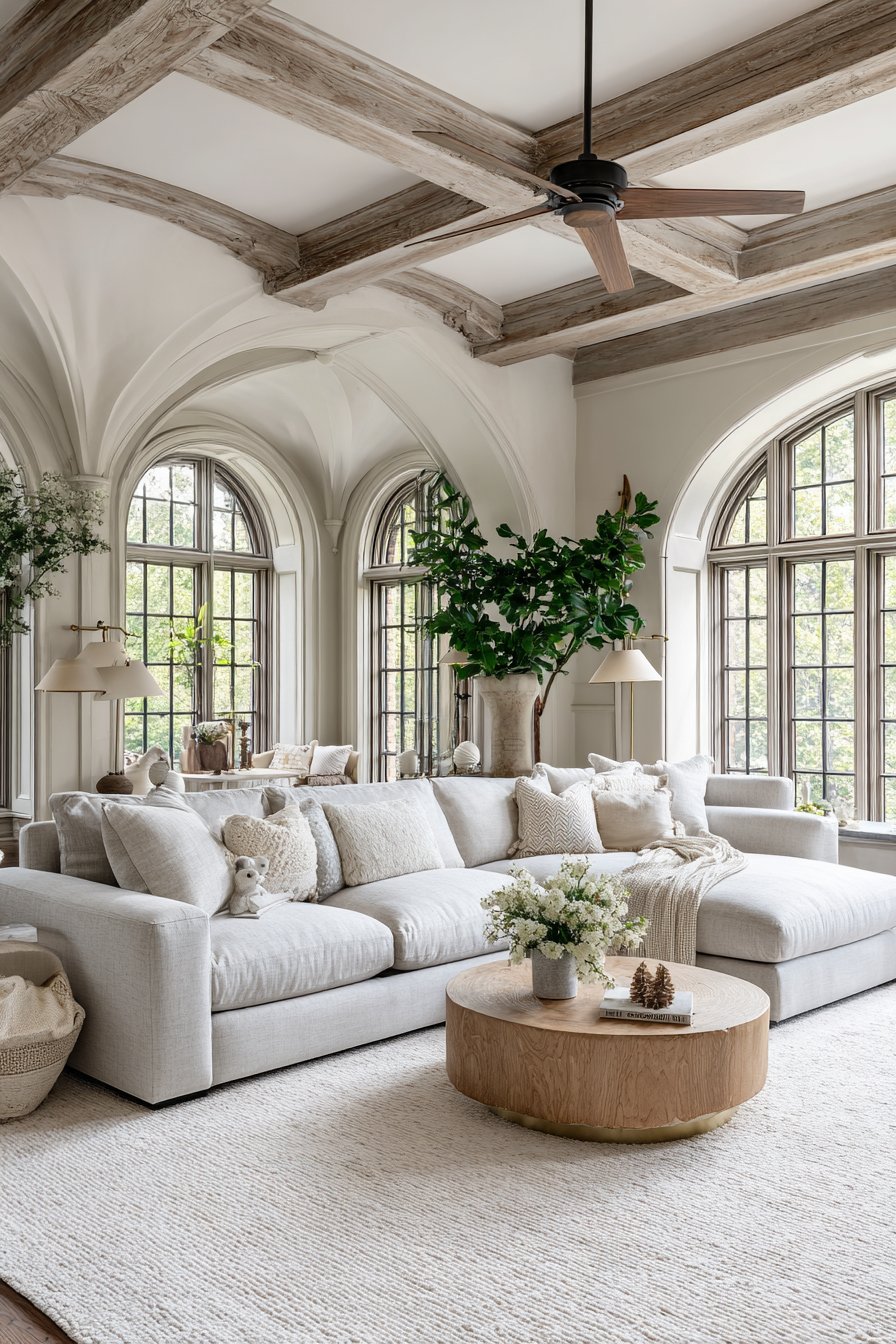
Measure your sectional’s longest dimension and add 24 inches minimum for ideal rug sizing. This ensures adequate rug extension beyond the furniture’s edges. The chaise portion particularly needs sufficient coverage to prevent it from appearing disconnected from the main seating area.
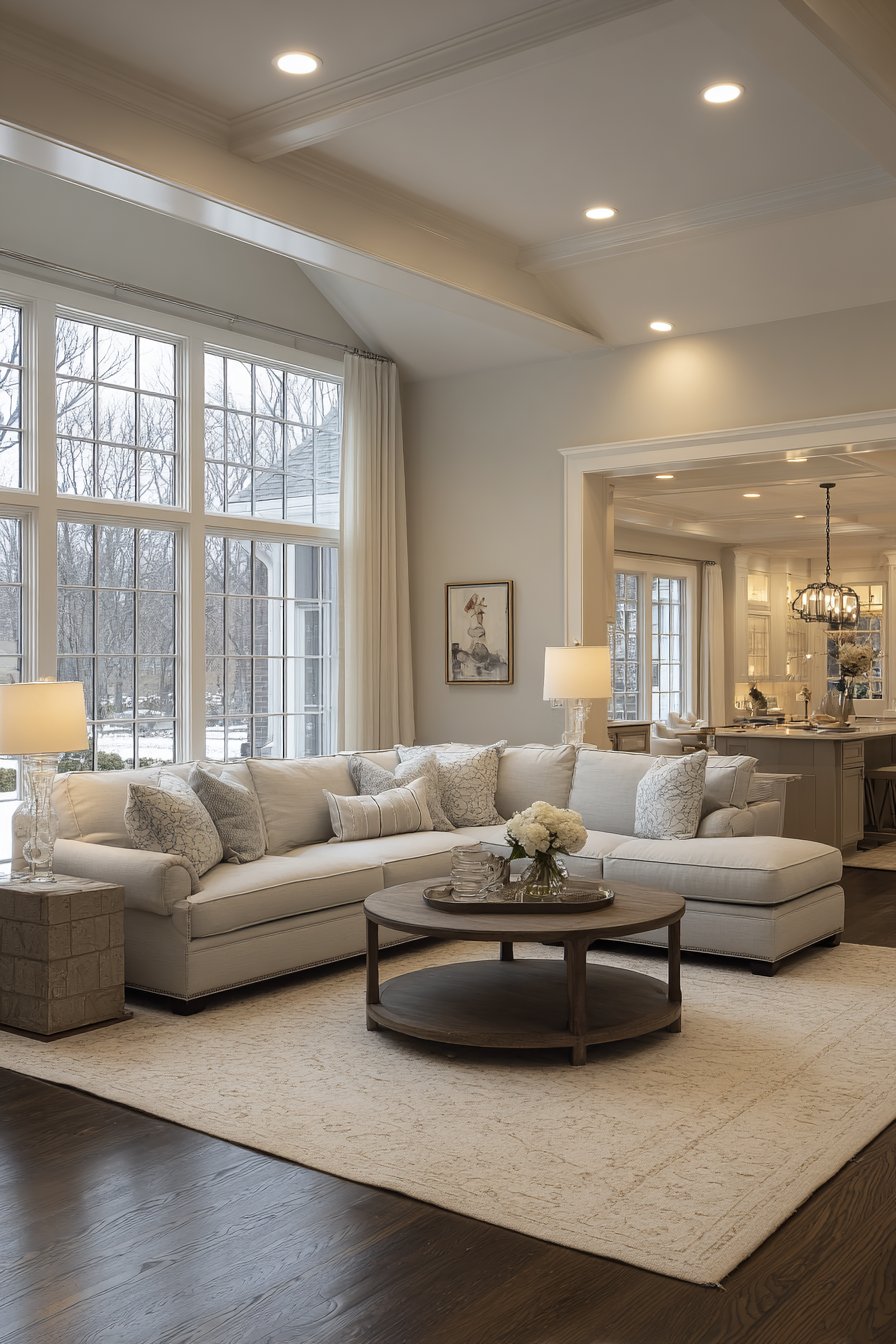
Consider the sectional’s orientation relative to room traffic patterns. Rugs should extend into walkway spaces just enough to unify the seating zone without creating tripping hazards. Custom-cut or layered rugs can address unusually shaped sectionals that don’t fit standard rug dimensions.
- Place the entire sectional on the rug for maximum cohesion
- Ensure the chaise lounge has at least 12 inches of rug underneath
- Position coffee tables centrally with equal rug space on all sides
- Use rectangular rugs for L-shaped sectionals and square rugs for U-shapes
- Consider runner-style rugs for long, narrow sectional arrangements
- Anchor modular sectionals with rugs before finalizing furniture placement
6. Common Rug Sizing Mistakes to Avoid
The most frequent error involves choosing undersized rugs that make spaces feel disjointed and cheap. Tiny rugs floating in large rooms create visual confusion and undermine design efforts. When in doubt, always size up rather than down for more professional results.
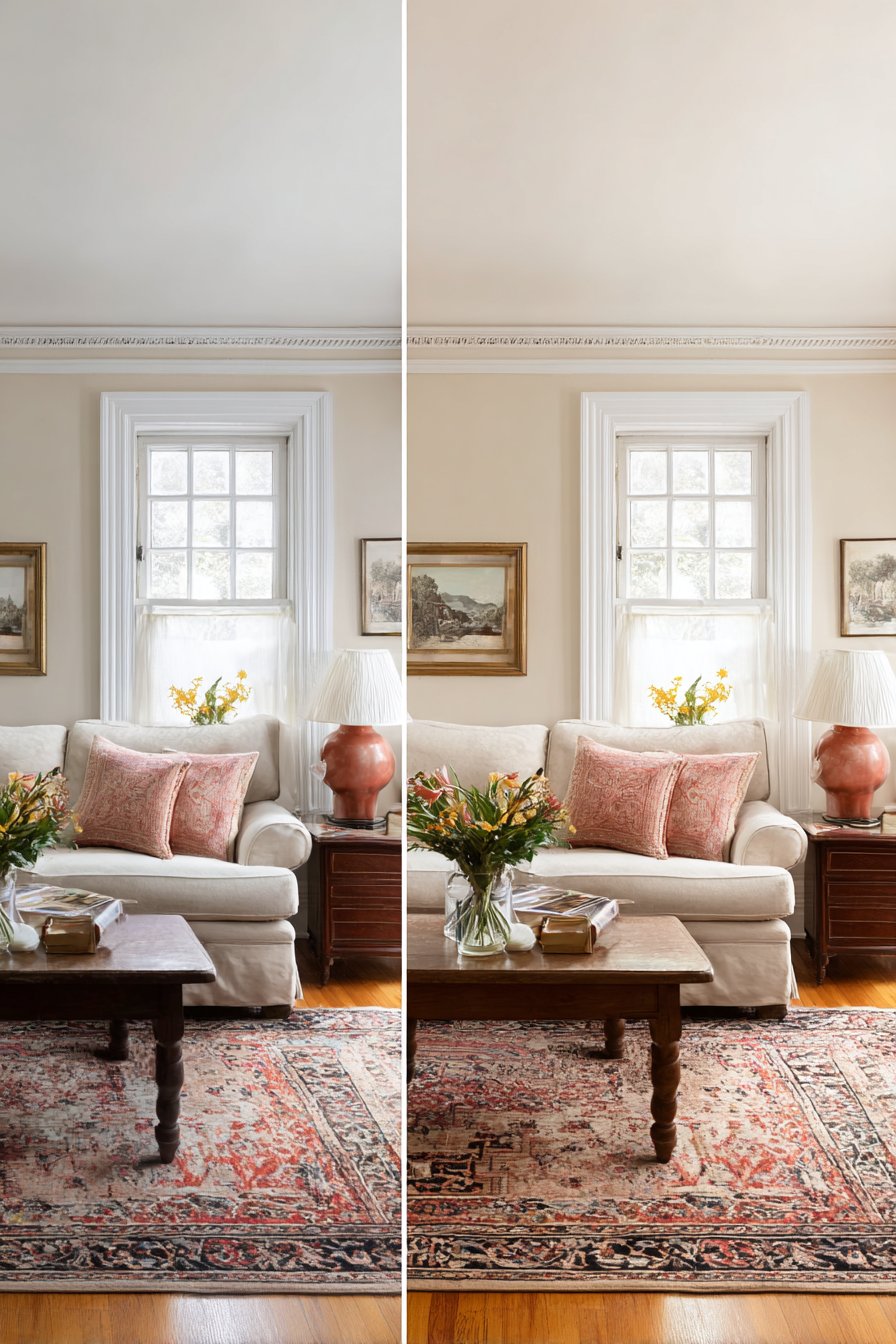
Ignoring furniture scale leads to proportion problems. Your rug should relate logically to your largest furniture pieces. A massive sectional paired with a petite rug looks awkward and unbalanced. Similarly, oversized rugs in tiny rooms overwhelm the space and eliminate necessary floor breathing room.
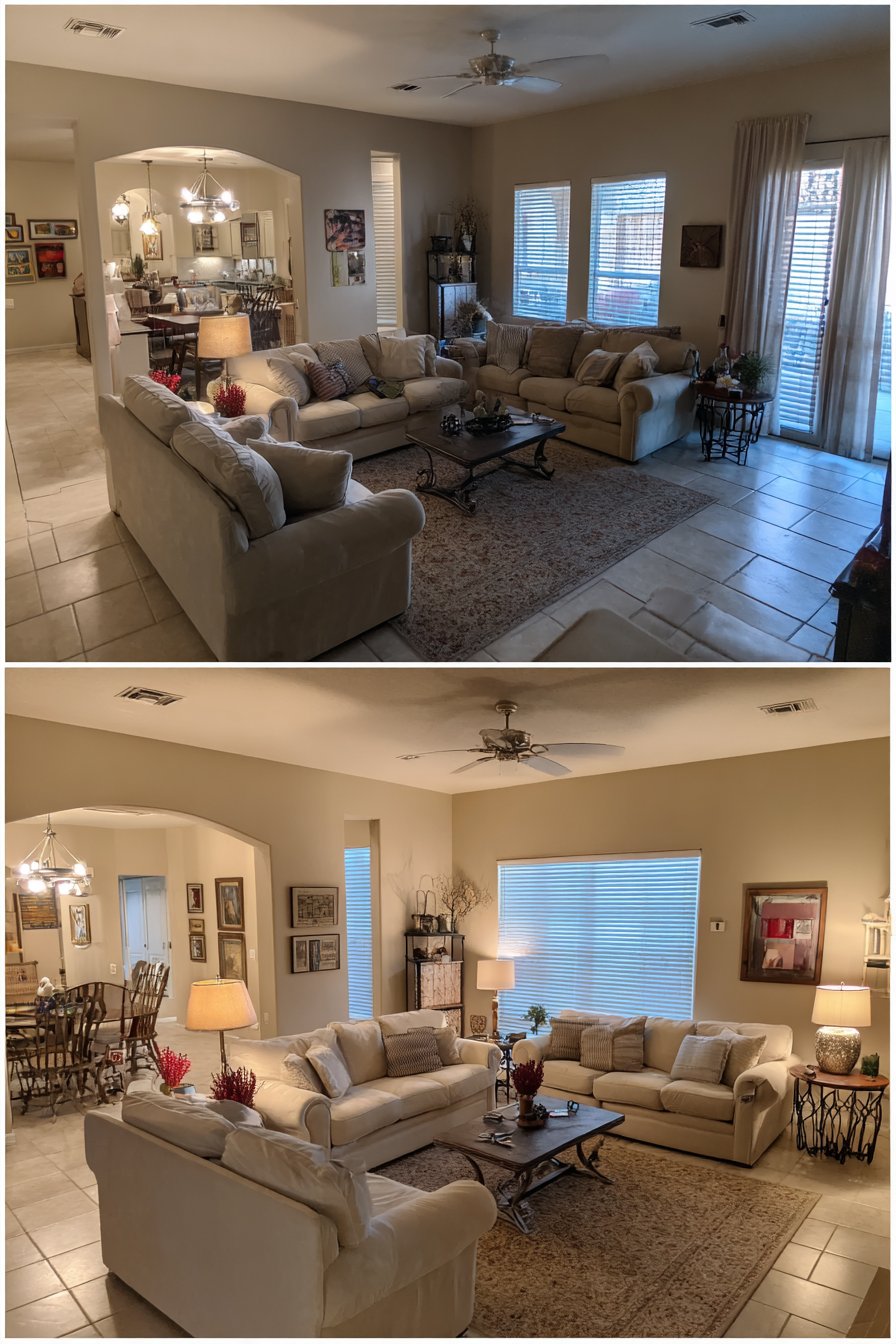
Forgetting about rug placement under dining tables within open living areas causes functional issues. Ensure dining chairs can pull out completely while remaining on the rug surface. This prevents uneven flooring that makes chairs wobble and creates uncomfortable dining experiences.
- Avoid rugs smaller than 5×7 feet in living rooms
- Never use multiple small rugs when one large rug would work better
- Don’t place rugs partially under doorways or in main traffic paths
- Resist buying rugs before measuring your furniture arrangement
- Avoid extremely thick pile rugs that interfere with furniture stability
- Don’t forget to account for furniture with wheels or casters
Conclusion
Choosing the perfect rug size transforms your living room from ordinary to extraordinary. By understanding standard dimensions, furniture placement techniques, and common mistakes, you create spaces that feel professionally designed and intentionally curated. Remember that proper rug sizing anchors your furniture, defines conversation zones, and establishes visual harmony.
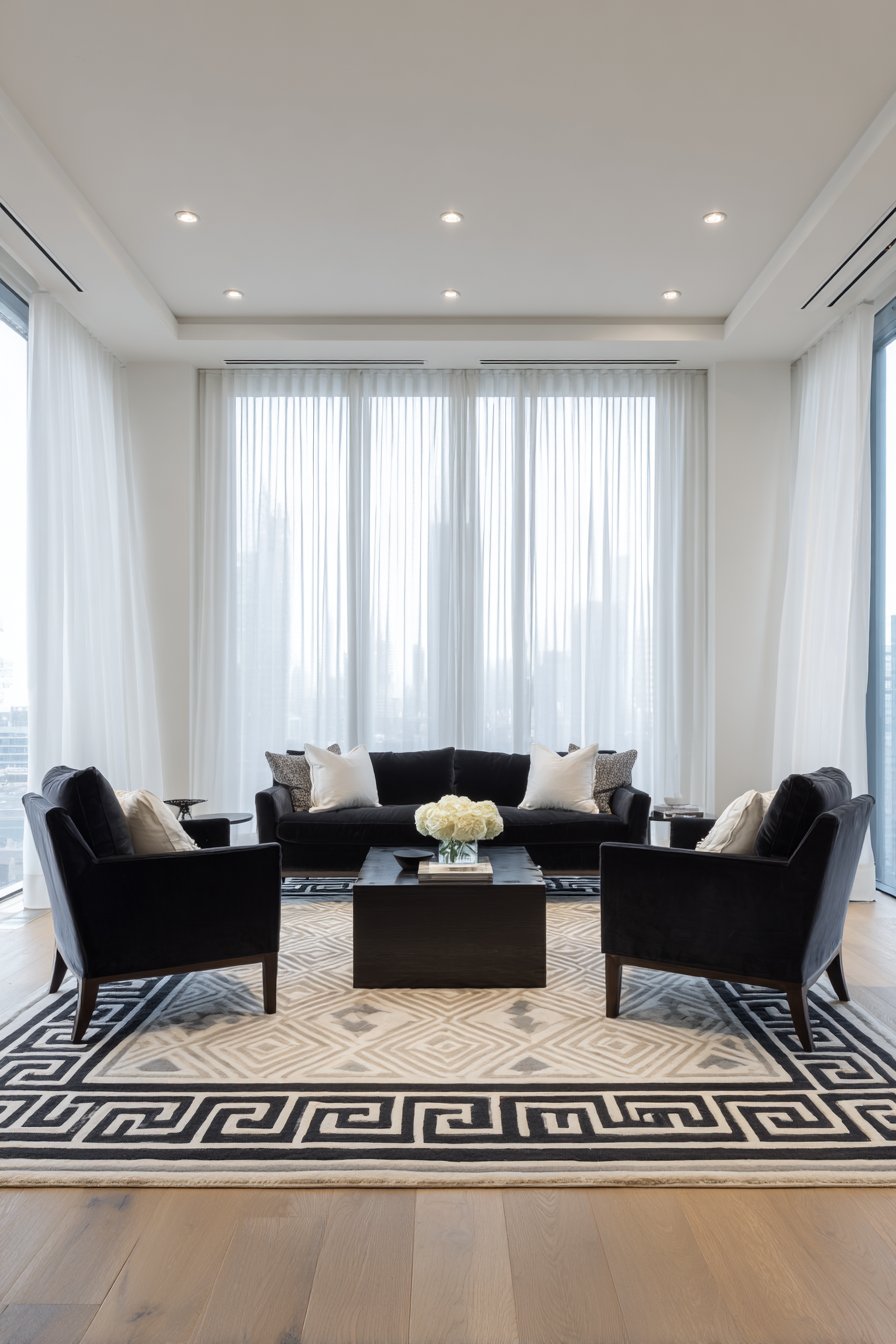
Experiment with these strategies using painter’s tape to preview different dimensions before making your final purchase. Trust your instincts while following these proven principles, and don’t hesitate to invest in larger sizes when budget allows. Your living room deserves a rug that enhances its beauty, functionality, and overall design impact for years to come.
