


Dark grey sofas have become a cornerstone of modern interior design, offering sophisticated versatility that few other furniture pieces can match. These elegant centerpieces blend seamlessly with various aesthetics while providing a neutral foundation for creative expression. Whether you’re designing a minimalist sanctuary or a vibrant, eclectic space, understanding how to style your dark grey sofa transforms it from simple furniture into a design statement.
Thoughtful interior design creates spaces that inspire daily living and reflect individual personality. Your sofa serves as more than seating—it anchors your room’s entire aesthetic and sets the tone for comfort and style. Dark grey sofas particularly excel at this role, offering timeless appeal while remaining adaptable to changing trends and personal preferences.
This article explores seven essential tips for maximizing your dark grey sofa’s potential. From color coordination to texture layering, these strategies help you create a cohesive, inviting space that showcases your unique style while maintaining functional elegance.
1. Layer with Textured Throw Pillows
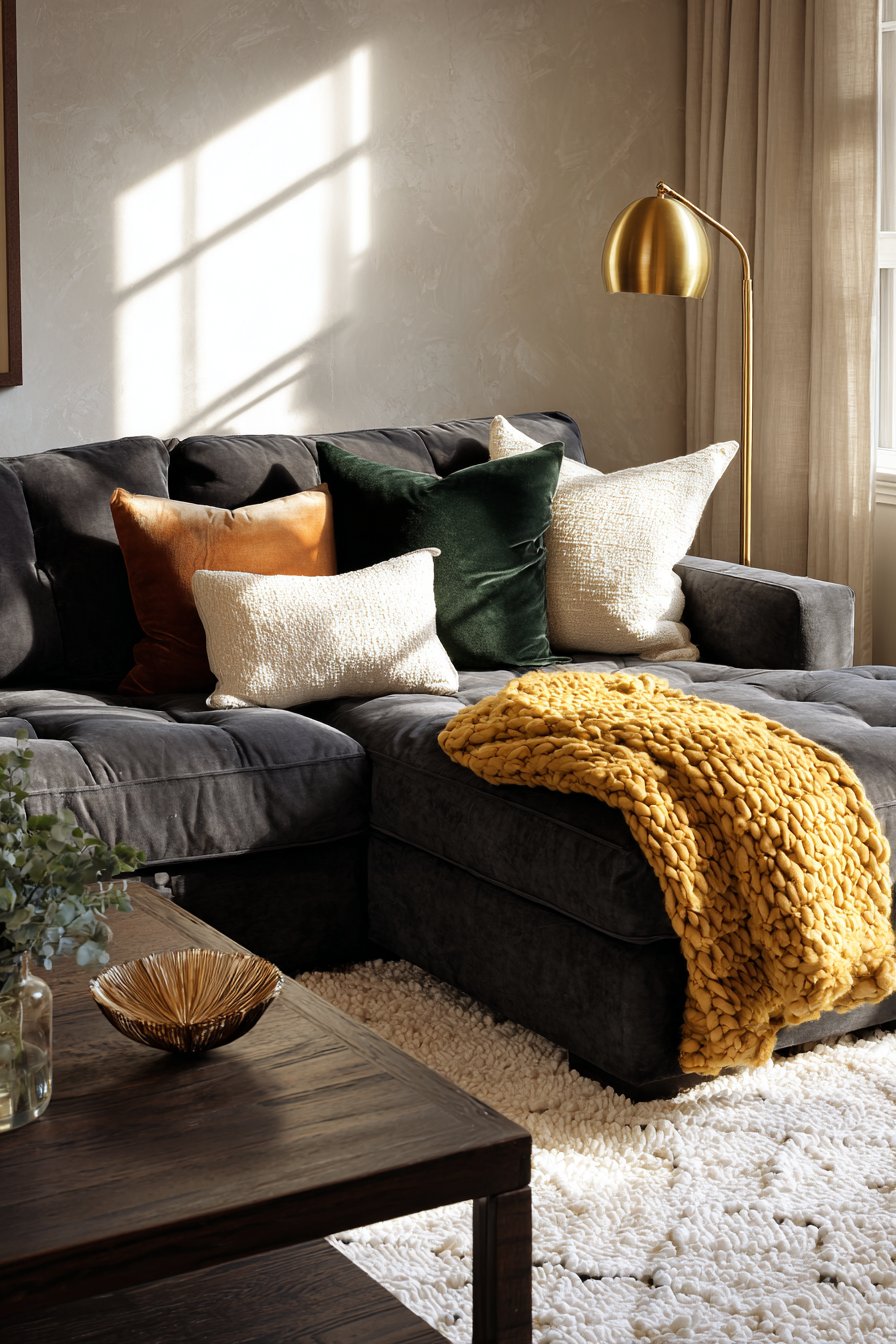
Throw pillows transform dark grey sofas from stark to stunning through strategic texture layering. The neutral backdrop of grey allows you to experiment boldly with various fabrics, patterns, and sizes. Velvet cushions add luxury, while linen brings casual sophistication. Mixing textures creates visual interest that prevents your seating area from appearing flat or one-dimensional.
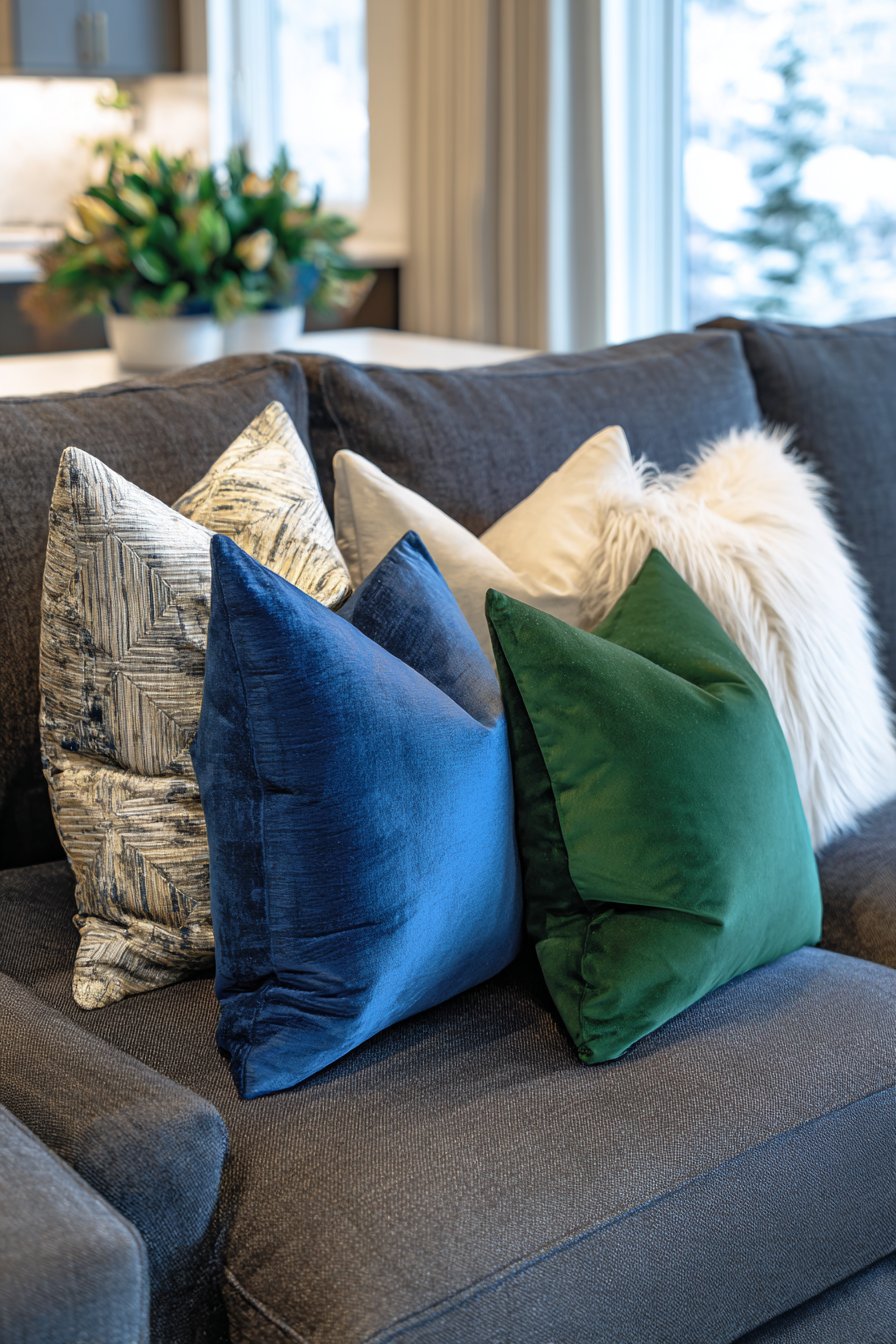
Color selection matters tremendously when choosing pillows for grey sofas. Warm metallics like copper and gold introduce elegance, while jewel tones such as emerald or sapphire create dramatic contrast. Pastels soften the grey’s intensity, and monochromatic schemes maintain sleek minimalism. Consider your room’s existing palette when selecting pillow colors.
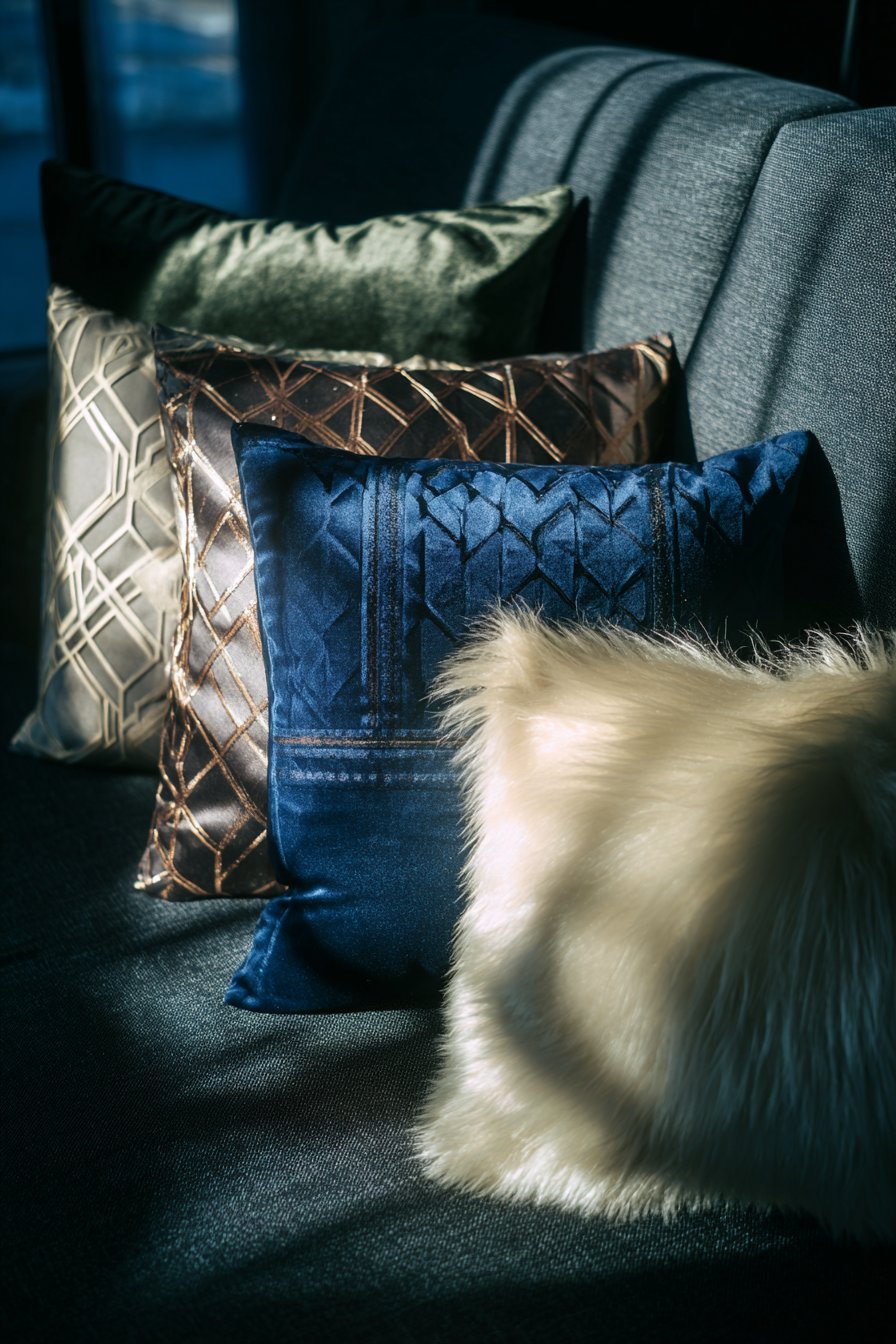
The arrangement requires thoughtful planning for maximum impact. Start with larger pillows in back corners, then layer medium and small sizes forward. Vary your patterns—geometric prints, florals, and solid colors—to create dimensional interest. Odd numbers typically work best, with five to seven pillows creating balanced asymmetry.
- Mix at least three different textures per sofa arrangement
- Include one metallic or high-sheen pillow for visual pop
- Change pillow covers seasonally for fresh looks without major expense
- Select pillows ranging from 18 to 24 inches for proper scale
- Maintain a cohesive color story with 2-3 main hues
- Invest in quality inserts that maintain shape and comfort
2. Incorporate Warm-Toned Throws and Blankets
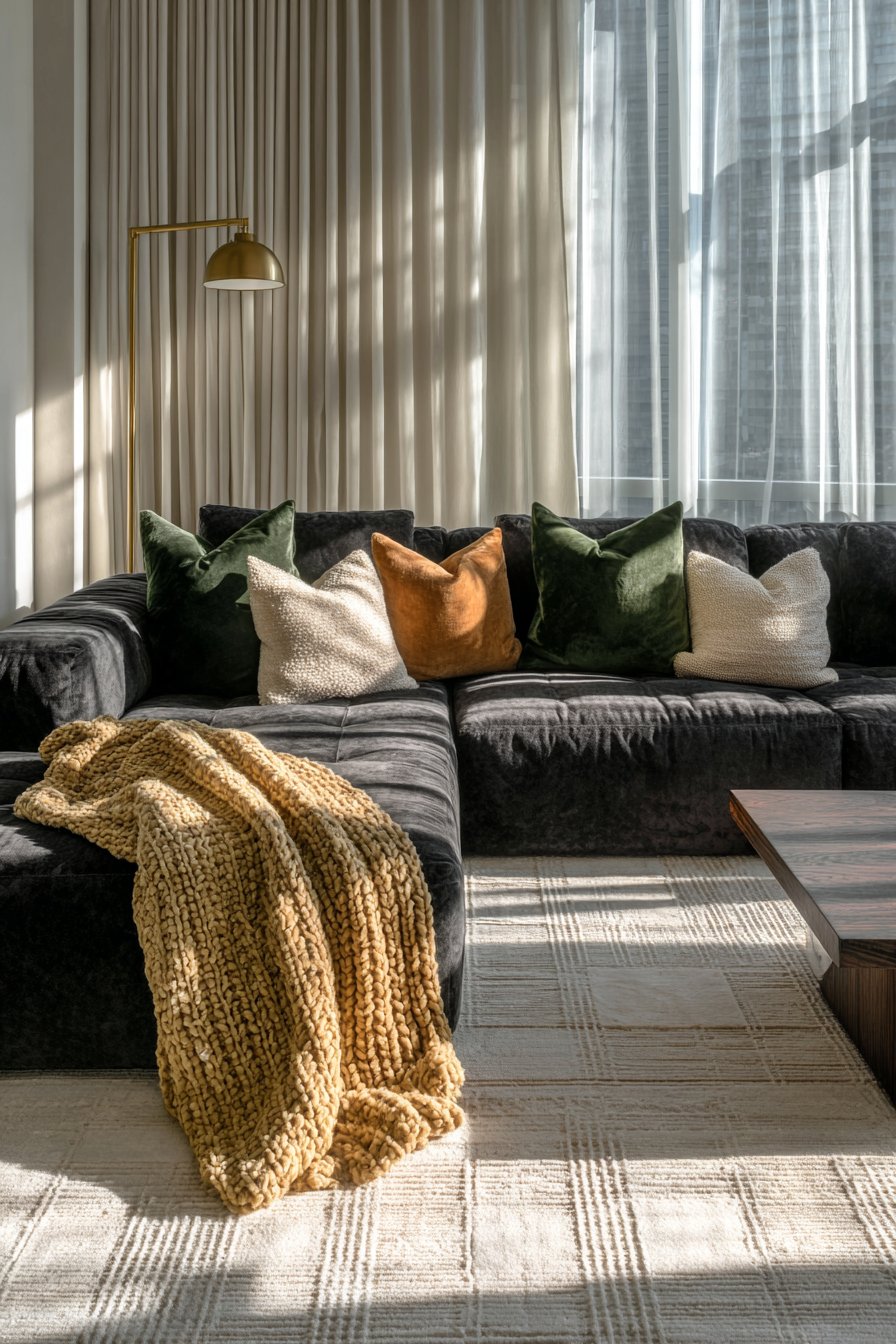
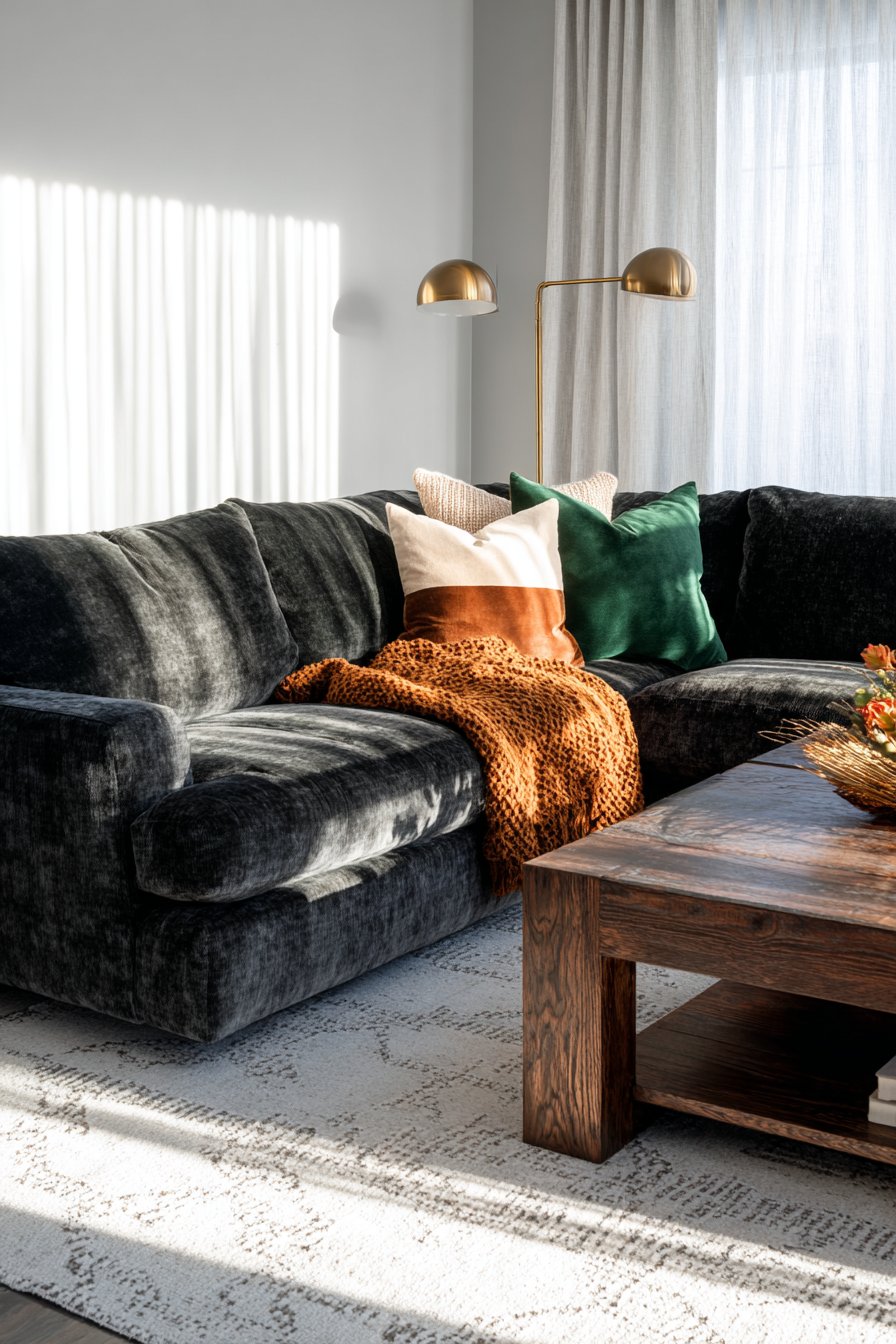
Throws introduce essential warmth that counterbalances grey’s naturally cool undertones. Draping a chunky knit blanket over your sofa’s arm creates instant coziness while adding textural dimension. Warm colors like rust, caramel, mustard, and terracotta work particularly well against dark grey, creating an inviting contrast that draws people into your space.
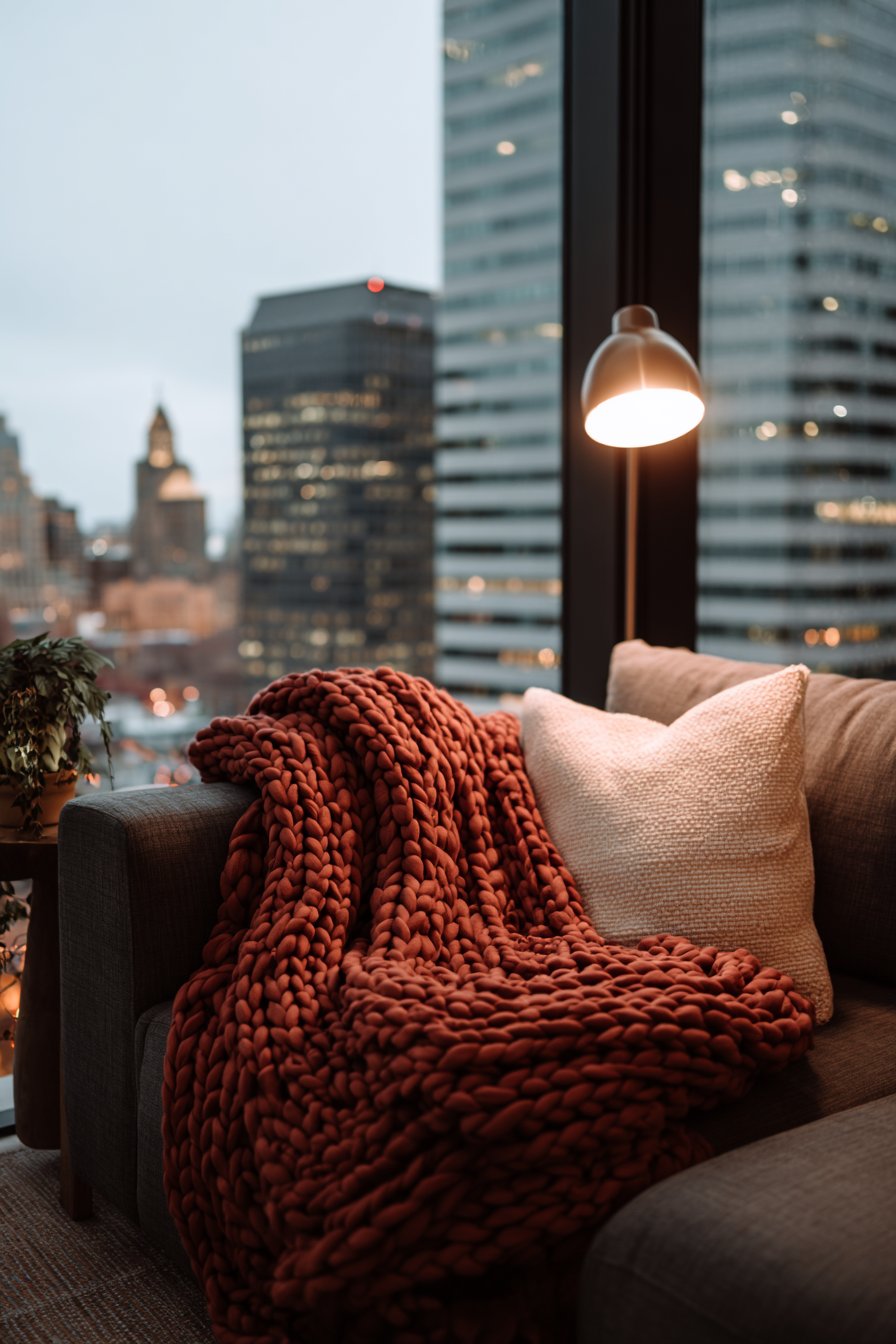
Material selection significantly impacts both aesthetics and functionality. Wool and cashmere provide luxurious warmth for winter months, while cotton and linen work better for year-round use. Faux fur throws add glamorous texture and work especially well in contemporary or glam-inspired interiors. Consider washability when making selections for high-traffic family spaces.
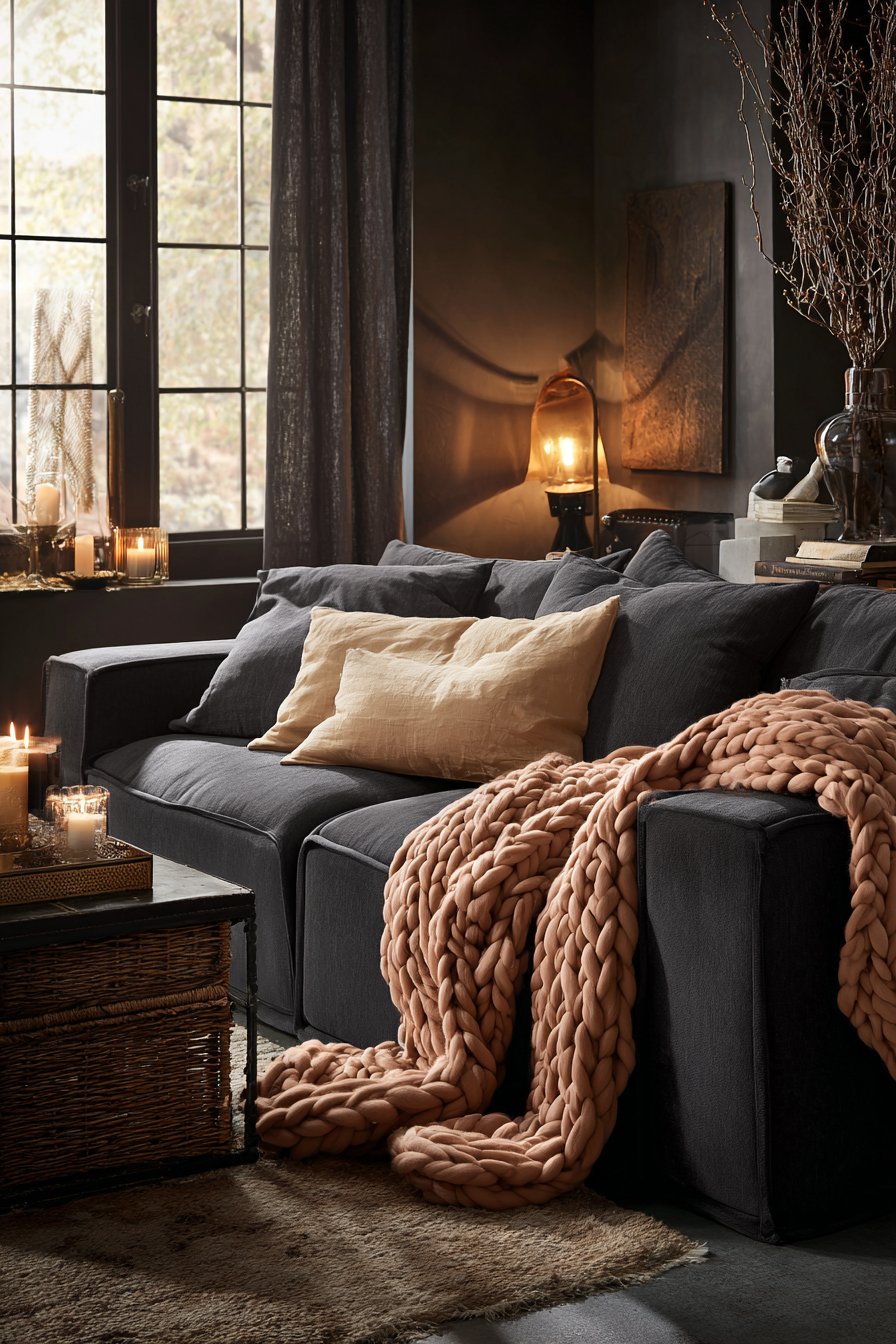
Placement matters as much as selection when styling throws. Casually drape blankets over one arm for effortless appeal, or fold them neatly across the back for structured elegance. Multiple throws in complementary colors create layered luxury, though avoid overwhelming your sofa with excessive fabric.
- Choose throws in warm neutrals like beige, tan, or cream for versatility
- Select chunky knit textures for cozy, inviting ambiance
- Drape throws asymmetrically for relaxed, lived-in appeal
- Layer two complementary throws for extra visual interest
- Ensure throws measure at least 50 by 60 inches for proper coverage
- Rotate seasonal throws to refresh your space effortlessly
3. Add Vibrant Accent Colors Through Art and Accessories
Dark grey sofas provide the perfect canvas for bold accent colors that energize your space. Since grey remains neutral, you can experiment with vivid hues without creating overwhelming chaos. Colorful artwork hung above your sofa establishes a focal point while introducing personality and visual interest to otherwise neutral surroundings.
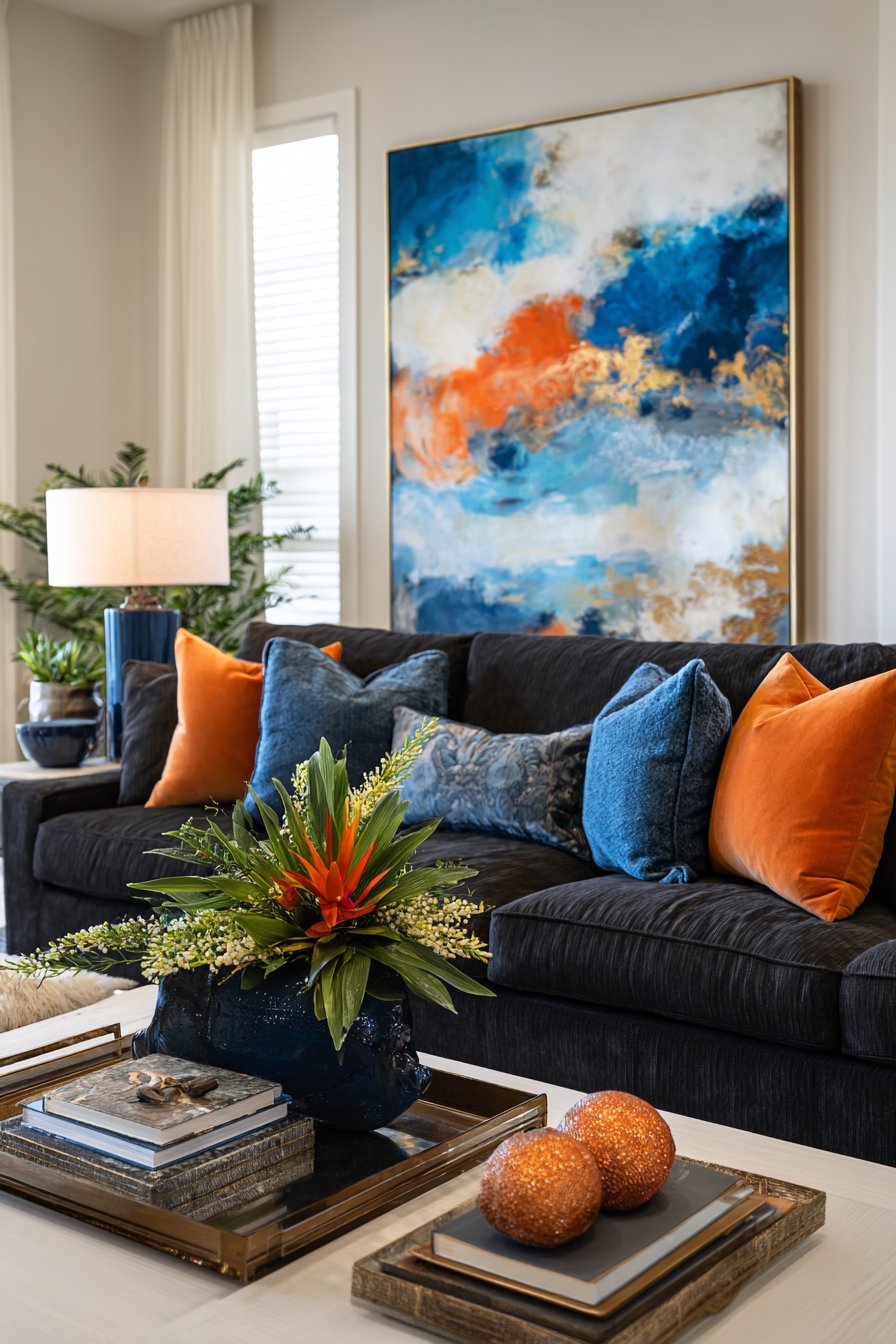
Strategic color placement creates cohesion throughout your room. If your artwork features coral and navy, echo these shades in throw pillows, vases, or side table accessories. This repetition creates intentional design flow that feels curated rather than random. Limit yourself to three main accent colors to maintain sophistication.
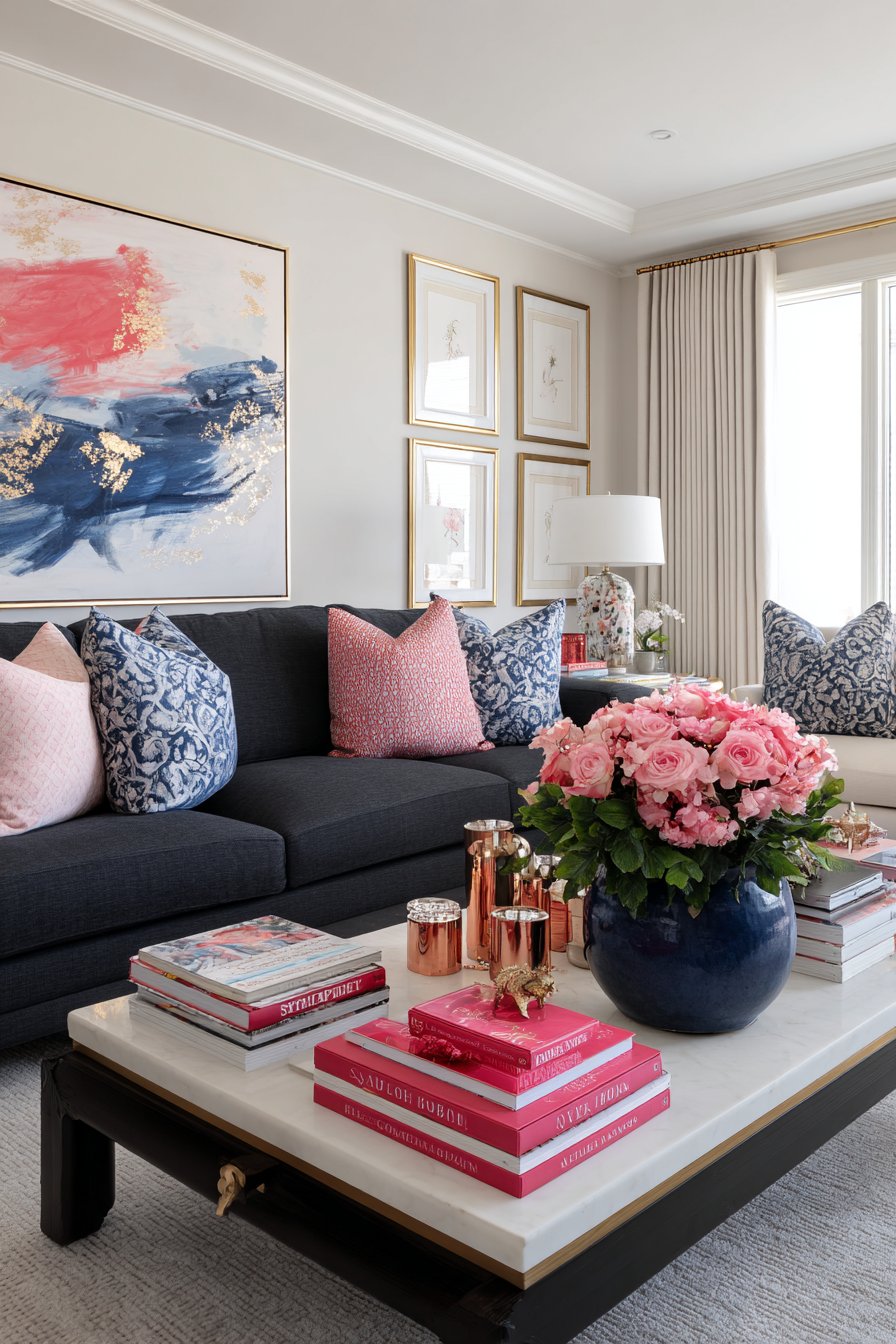
Accessories offer flexibility for seasonal refreshes and trend experimentation. Colorful books, decorative objects, and plants bring life to coffee tables and shelving near your sofa. Botanical elements particularly complement grey’s earthiness, with deep green foliage creating natural harmony. Don’t overlook lighting fixtures as opportunities for introducing metallic or colored accents.
- Select one large statement art piece or create a curated gallery wall
- Echo artwork colors in at least three other room elements
- Use the 60-30-10 rule: 60% grey, 30% secondary color, 10% accent
- Incorporate fresh flowers or greenery for organic color variation
- Choose decorative trays in brass or copper for warm metallic accents
- Rotate small accessories seasonally without major investment
4. Create Contrast with Light-Colored Rugs
Rugs establish visual grounding while creating dramatic contrast beneath dark grey sofas. Light-colored area rugs—cream, ivory, beige, or soft grey—prevent your seating from appearing heavy or visually sinking into floors. This contrast defines your seating area while brightening the overall space, particularly important in rooms with limited natural light.
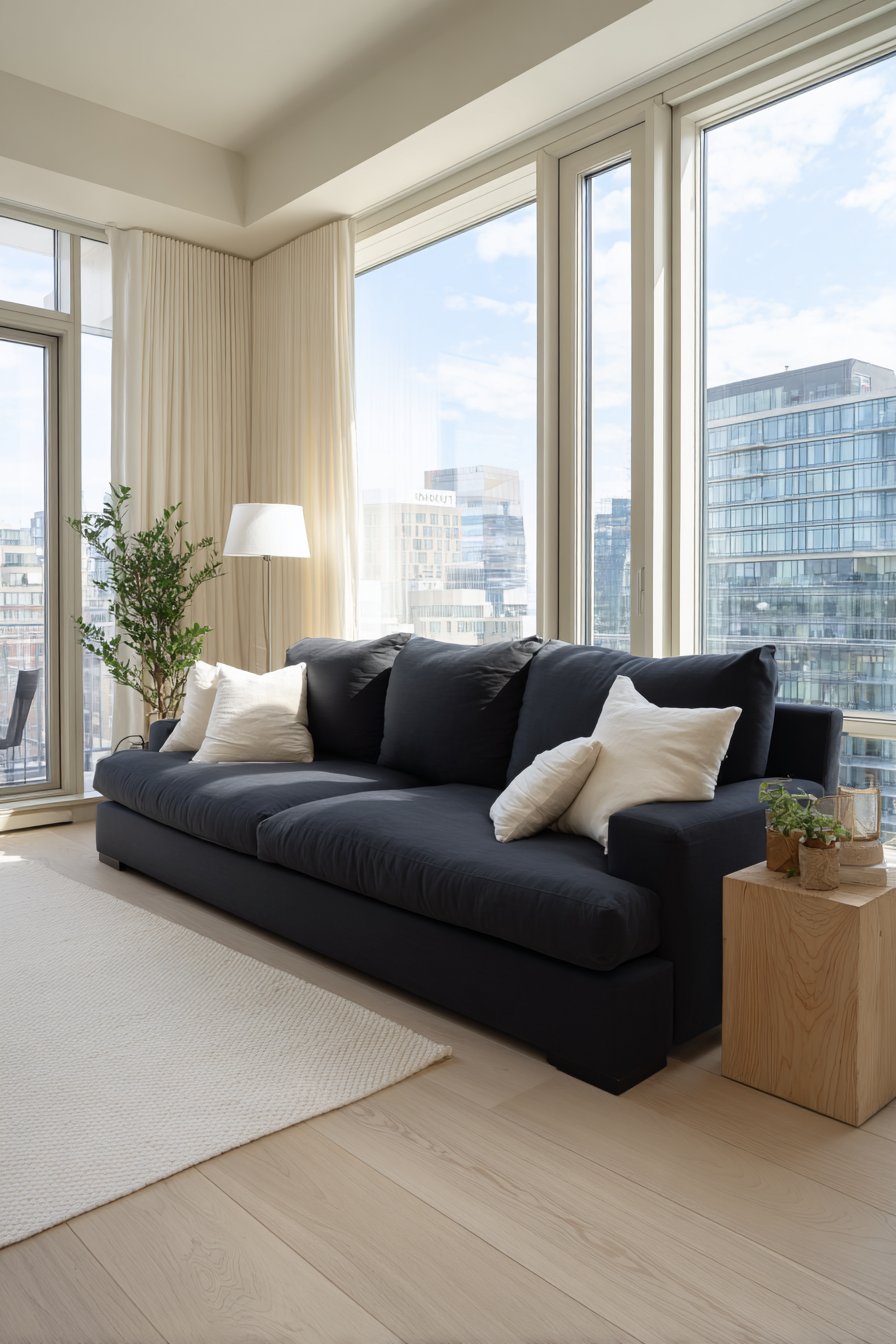
Size and placement require careful consideration for proper proportions. Your rug should extend at least 18 inches beyond your sofa’s edges on all sides, allowing front furniture legs to rest comfortably on the rug’s surface. This creates unified cohesion between pieces while defining your conversational area within larger open-plan spaces.
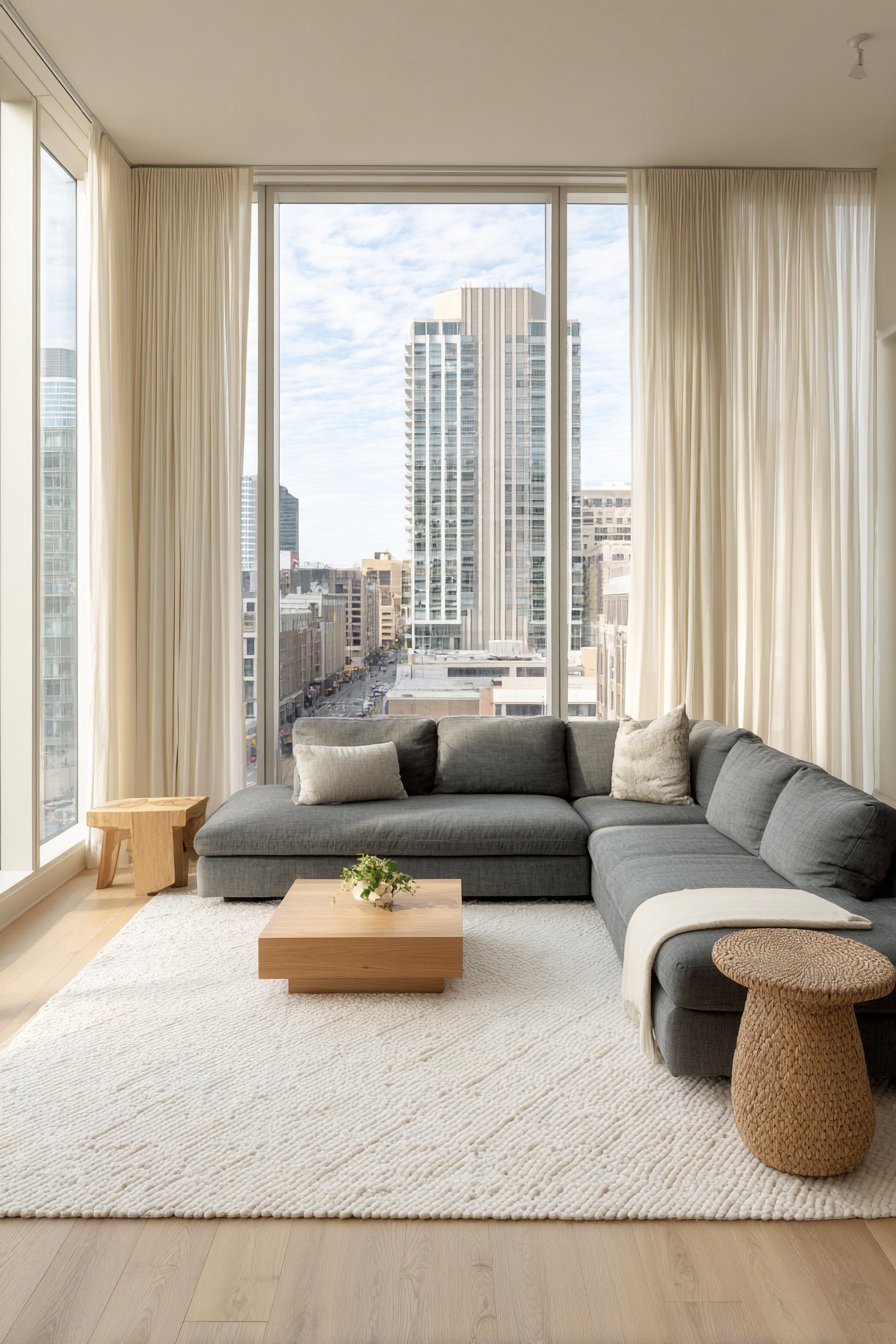
Pattern and texture add another dimension to rug selection. Subtle geometric patterns introduce visual interest without overwhelming grey’s sophistication. Natural fiber rugs like jute or sisal bring organic texture, while plush wool creates luxurious softness underfoot. Consider your lifestyle—high-pile rugs feel wonderful but show wear more quickly in busy households.
- Measure carefully ensuring rugs accommodate all seating pieces appropriately
- Choose low-pile options for easy maintenance in high-traffic areas
- Layer smaller patterned rugs over larger neutral ones for dimension
- Select washable rugs for family-friendly practicality
- Invest in quality rug pads for safety and longevity
- Consider indoor-outdoor rugs for durability without sacrificing style
5. Balance with Natural Wood Elements
Wood introduces organic warmth that beautifully offsets grey’s modern coolness. Coffee tables, side tables, and shelving in natural wood tones create visual balance while adding timeless appeal. Medium to warm wood tones like walnut, oak, and teak work particularly well, though lighter woods like ash create Scandinavian-inspired serenity.
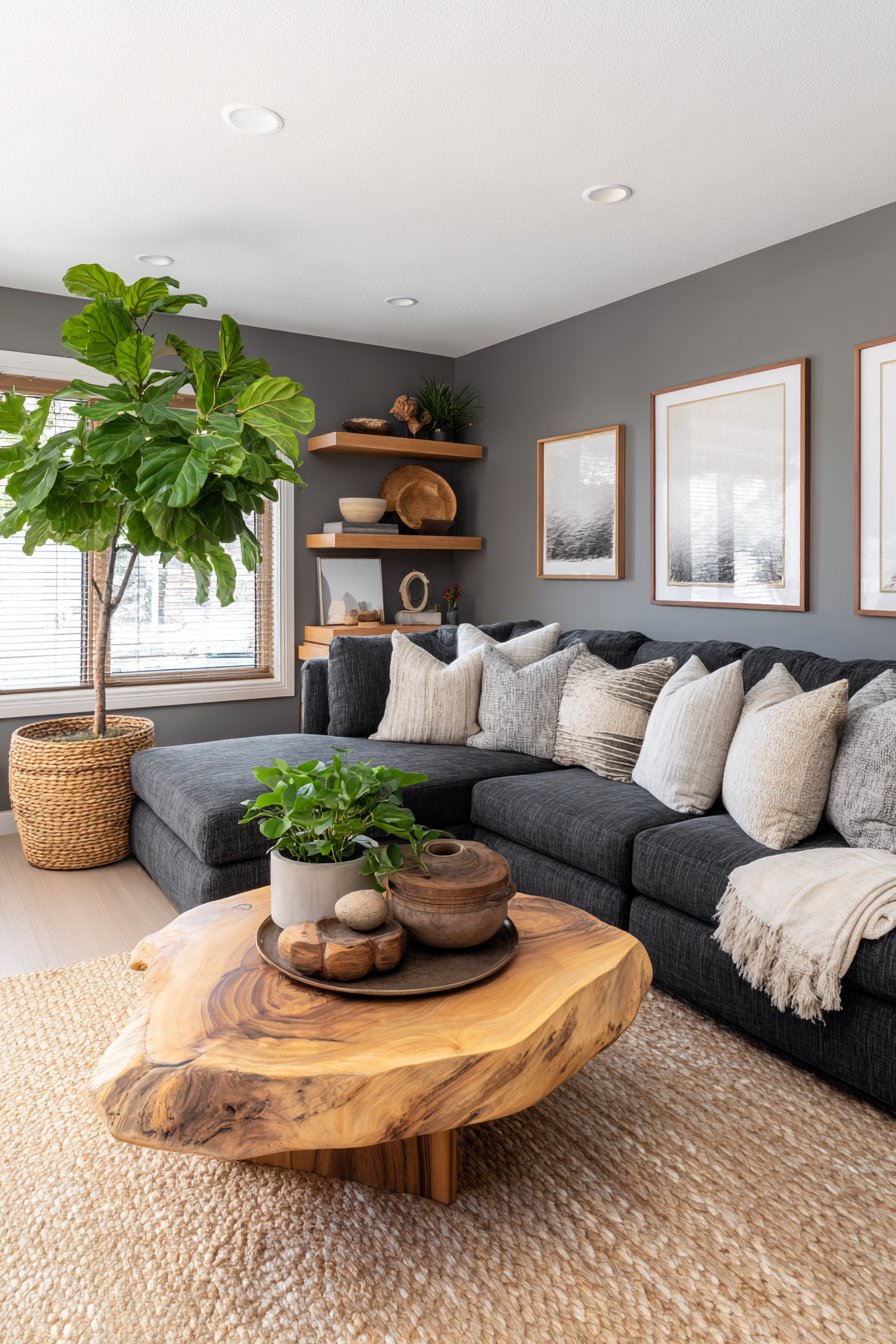
The grain and finish impact overall aesthetic significantly. Live-edge pieces bring rustic character, while smooth, polished surfaces maintain contemporary sophistication. Mixing wood tones adds depth, though staying within similar undertones prevents visual confusion. Consider your flooring when selecting furniture woods to ensure complementary harmony.
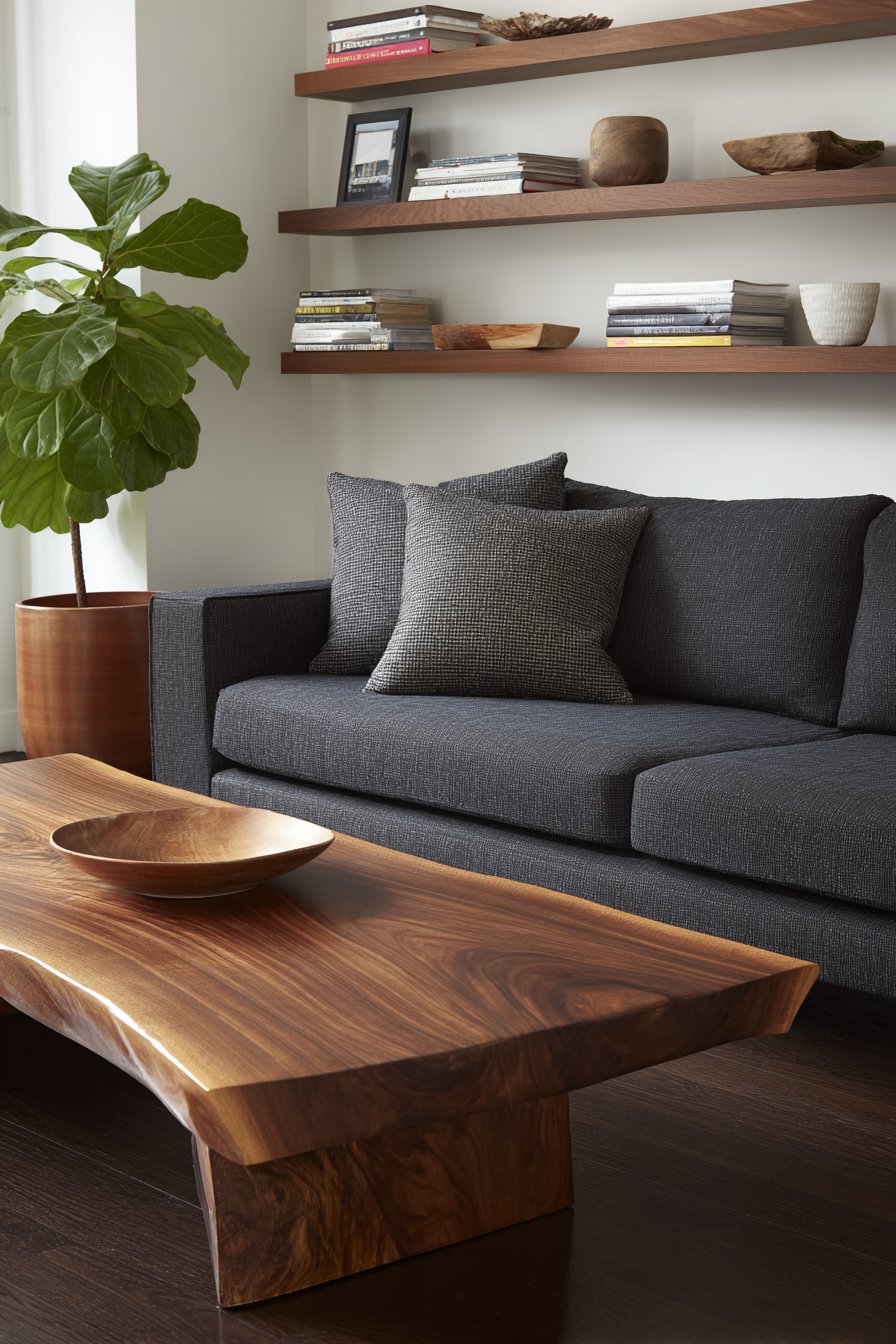
Wood accessories extend this warmth beyond major furniture pieces. Wooden bowls, picture frames, and decorative objects distributed throughout your space reinforce the natural element theme. Plants in wooden containers further enhance this connection, creating biophilic design that promotes wellbeing and relaxation.
- Mix wood furniture with at least one other natural material
- Incorporate wooden picture frames in varying sizes and finishes
- Add wooden candle holders or trays to coffee tables
- Choose furniture with visible grain patterns for added interest
- Balance dark grey with medium-toned woods for optimal warmth
- Avoid matching all wood tones exactly for more organic appeal
6. Enhance with Metallic Accents and Hardware
Metallics add instant glamour while reflecting light throughout your space. Brass, gold, copper, and bronze bring warmth that complements dark grey beautifully, while silver and chrome maintain cooler, more contemporary aesthetics. Metallic accent lamps, side tables, or picture frames create sophisticated polish without overwhelming budgets.
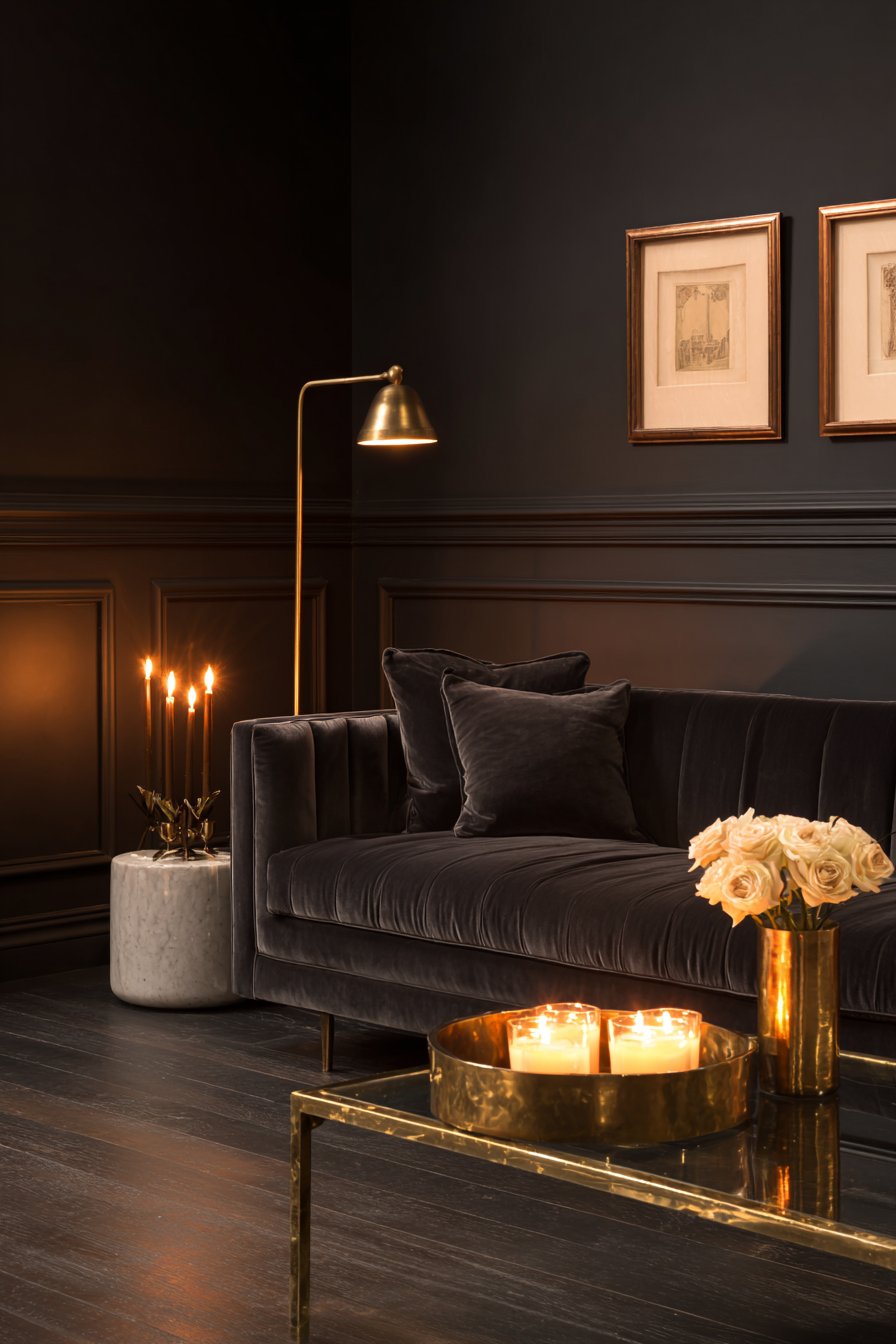
Consistency in metal finishes creates cohesive design flow. Choose one primary metal for larger pieces like coffee table legs or floor lamps, then use that same finish in smaller accessories throughout the room. Mixing metals works when done intentionally, limiting combinations to two finishes maximum for maintained sophistication.
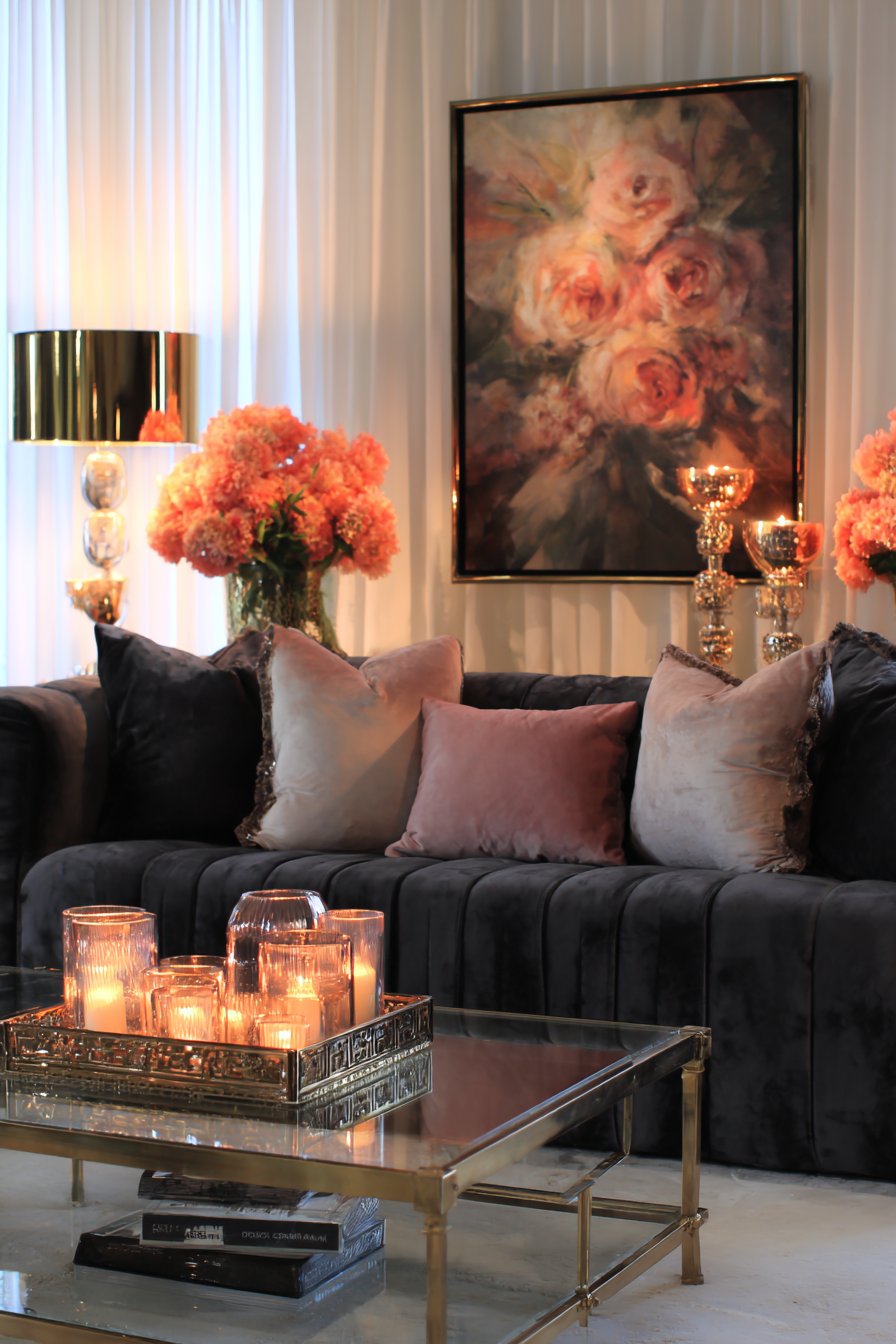
Hardware and fixtures deserve consideration in metallic planning. Curtain rods, door handles, and light switch plates might seem minor, but coordinating these elements with your decorative metallics creates thoughtful cohesion. These details separate amateur styling from professional-looking spaces.
- Select brushed or matte metallic finishes for sophisticated subtlety
- Incorporate one large metallic statement piece like a floor lamp
- Add metallic-framed mirrors to amplify light and space
- Choose decorative objects with metallic glazes or accents
- Limit metallic finishes to two types maximum per room
- Mix metallic tones strategically with warm metals paired together
7. Illuminate with Layered Lighting Solutions
Lighting transforms dark grey sofas from potentially heavy to elegantly grounded. Multiple light sources at varying heights create depth and ambiance impossible with single overhead fixtures. Floor lamps beside your sofa provide task lighting for reading, while table lamps on nearby surfaces add warm ambient glow.
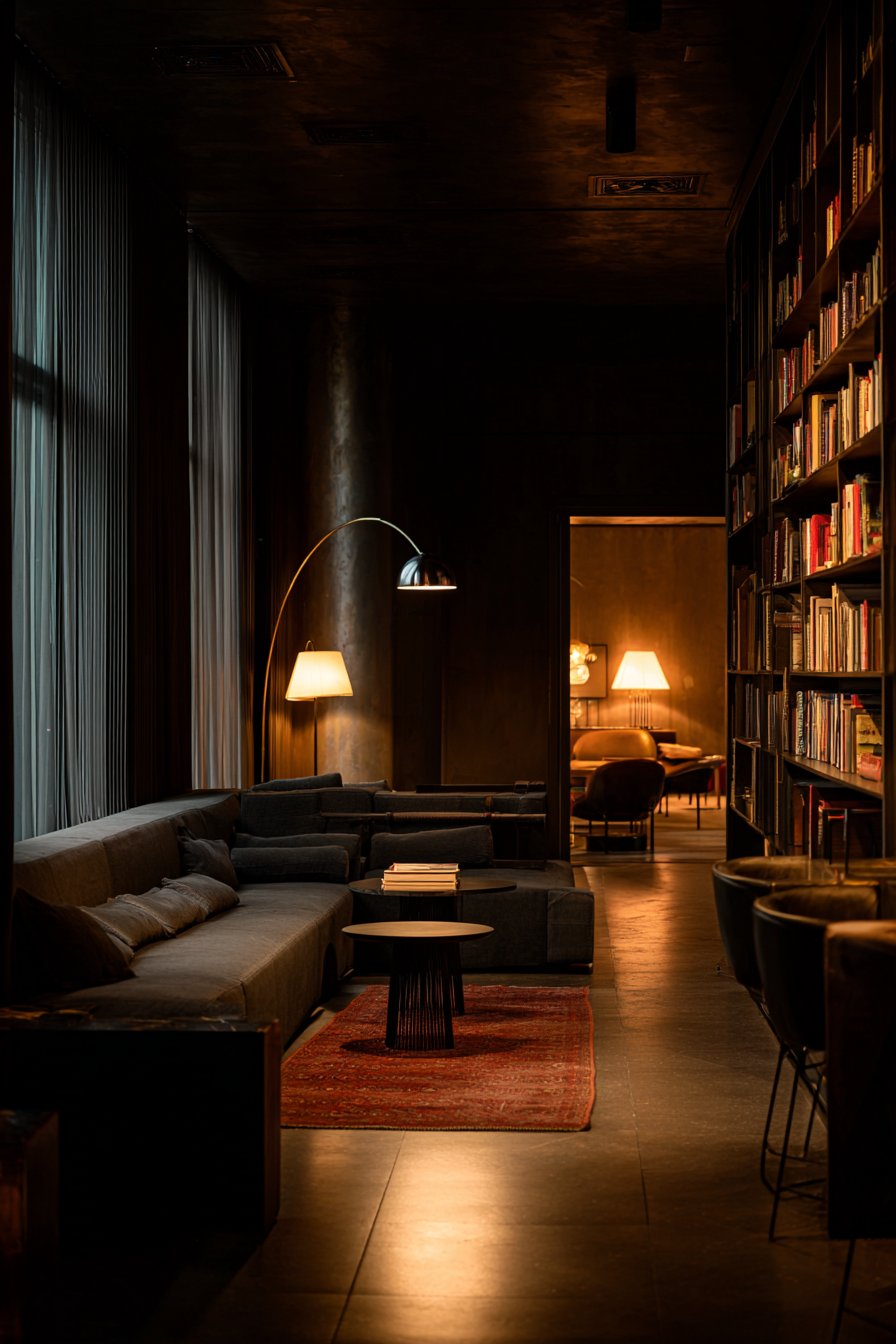
Strategic placement maximizes both functionality and aesthetics. Position floor lamps at sofa ends where armrests meet, ensuring adequate light without crowding seating space. Table lamps on console tables behind sofas create depth, while overhead pendants or chandeliers anchor the entire seating area within larger rooms.
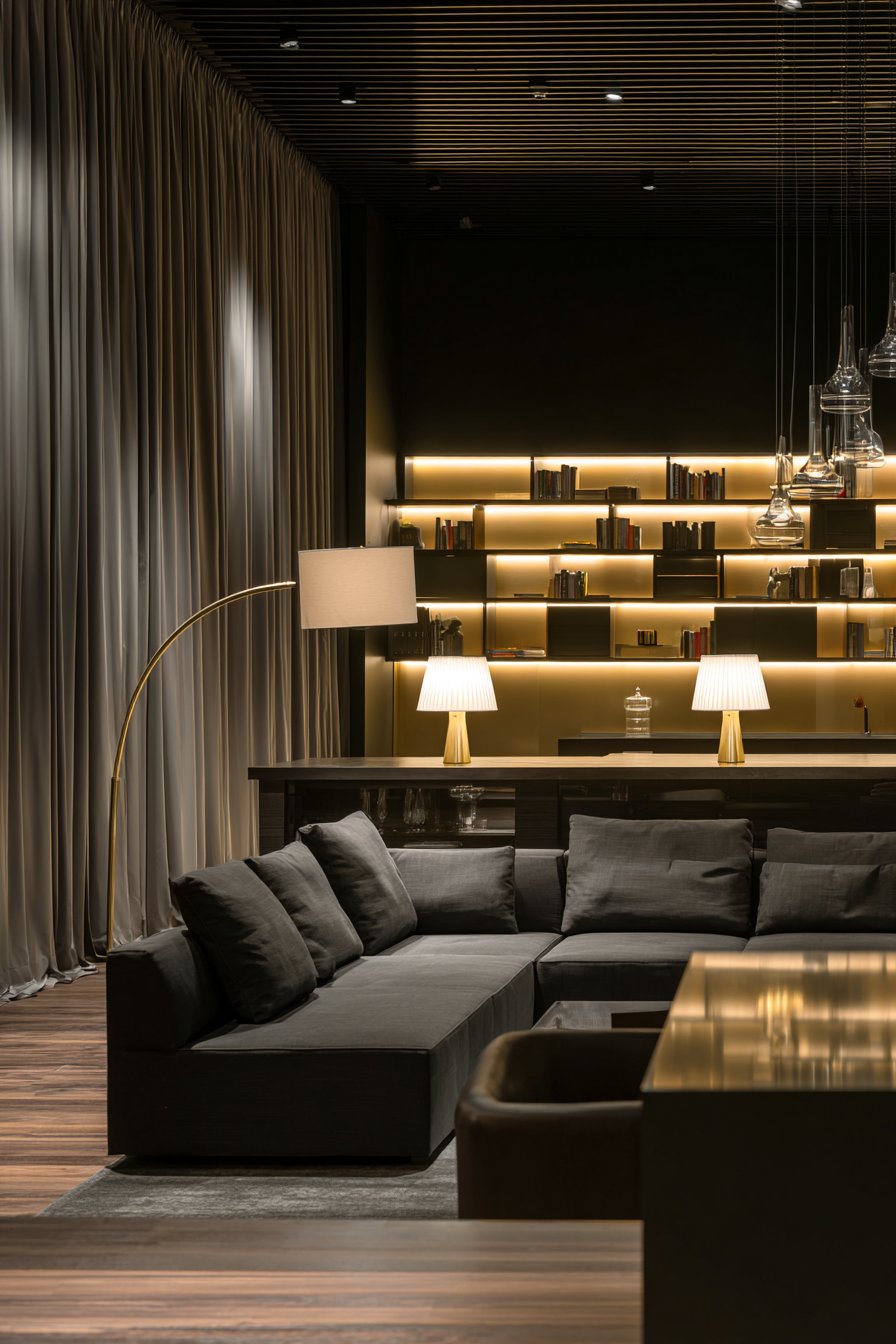
Bulb selection impacts the atmosphere significantly. Warm white bulbs (2700-3000K) create cozy, inviting spaces that complement grey’s potential coolness. Dimmer switches offer flexibility, allowing you to adjust brightness for different activities and moods. Decorative bulbs in statement fixtures become sculptural elements themselves, adding visual interest even when unlit.
- Install dimmer switches for adjustable ambiance control
- Use three-way bulbs for lighting flexibility without multiple switches
- Position floor lamps to illuminate reading areas effectively
- Add LED strip lighting beneath floating shelves for modern flair
- Choose lampshades in warm neutrals to soften light quality
- Layer ambient, task, and accent lighting for complete coverage
Conclusion
Styling dark grey sofas successfully combines color theory, texture layering, and thoughtful accessorizing to create spaces that feel both sophisticated and welcoming. These seven strategies provide a foundation for transforming your seating area into a design centerpiece that reflects your personal aesthetic while maintaining timeless appeal.
Experiment with these ideas, adapting them to your unique space and lifestyle needs. Remember that great design evolves—allow your room to grow and change as your preferences develop. Your dark grey sofa’s versatility ensures it will anchor beautiful spaces for years to come, adapting gracefully to whatever style journey awaits.
