


The heart of every home deserves to be a space that reflects warmth, character, and timeless beauty. Few materials can transform a kitchen quite like wood, offering an organic elegance that transcends fleeting trends and connects us to nature’s inherent artistry. A wooden kitchen is more than just a culinary workspace—it’s a living testament to craftsmanship, sustainability, and the enduring appeal of natural materials. From the rich, honeyed tones of oak to the deep sophistication of walnut, wood brings an unparalleled sense of comfort and authenticity to the spaces where we gather, cook, and create memories.
In an era where kitchen design often gravitates toward stark minimalism or industrial aesthetics, wooden kitchens stand as a reminder that warmth and functionality need not be mutually exclusive. The versatility of wood allows it to adapt seamlessly to virtually any design philosophy—whether you’re drawn to the rustic charm of farmhouse aesthetics, the clean lines of Scandinavian minimalism, or the refined elegance of contemporary design. Each grain pattern tells a story, each knot adds character, and each finish option opens new possibilities for personalization.
This comprehensive exploration delves into ten exceptional wooden kitchen designs, each showcasing unique approaches to incorporating this magnificent material into the heart of your home. From spacious layouts featuring custom cabinetry to compact designs that maximize every inch of space, these kitchens demonstrate how wood can be shaped, finished, and arranged to create environments that are as practical as they are beautiful. Whether you’re planning a complete kitchen renovation or simply seeking inspiration to refresh your existing space, these designs offer valuable insights into the transformative power of wood in kitchen design.
1. Spacious Natural Oak Kitchen with Custom Cabinetry
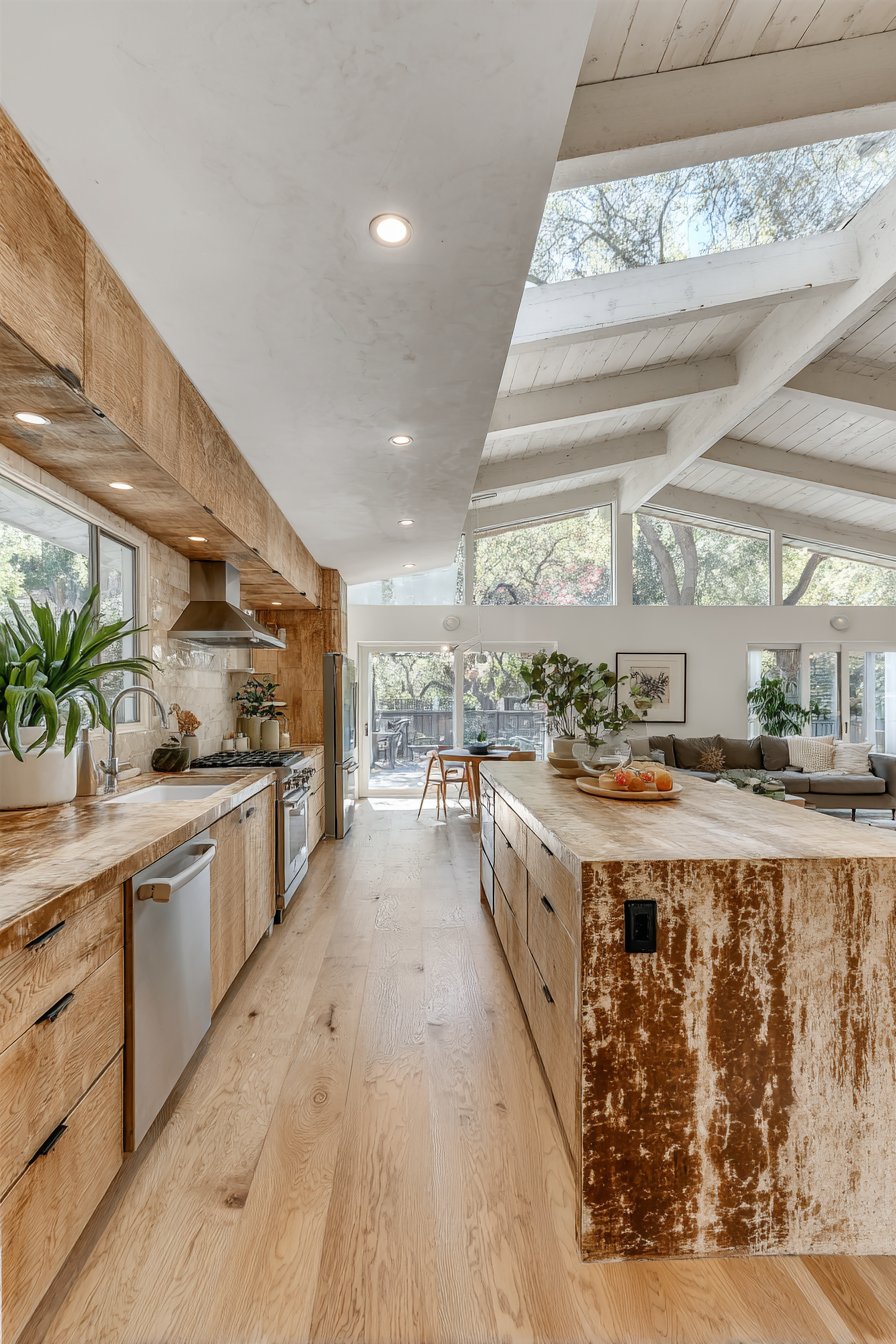
Step into a kitchen where natural oak takes center stage, transforming an ordinary cooking space into an extraordinary sanctuary of warmth and sophistication. The custom cabinetry, crafted from carefully selected oak boards, displays the wood’s signature grain patterns in all their glory—each swirl and line a unique fingerprint of nature’s artistry. The warm honey finish enhances the wood’s natural golden undertones, creating an inviting atmosphere that seems to glow from within, especially when bathed in natural light streaming through generously sized windows.
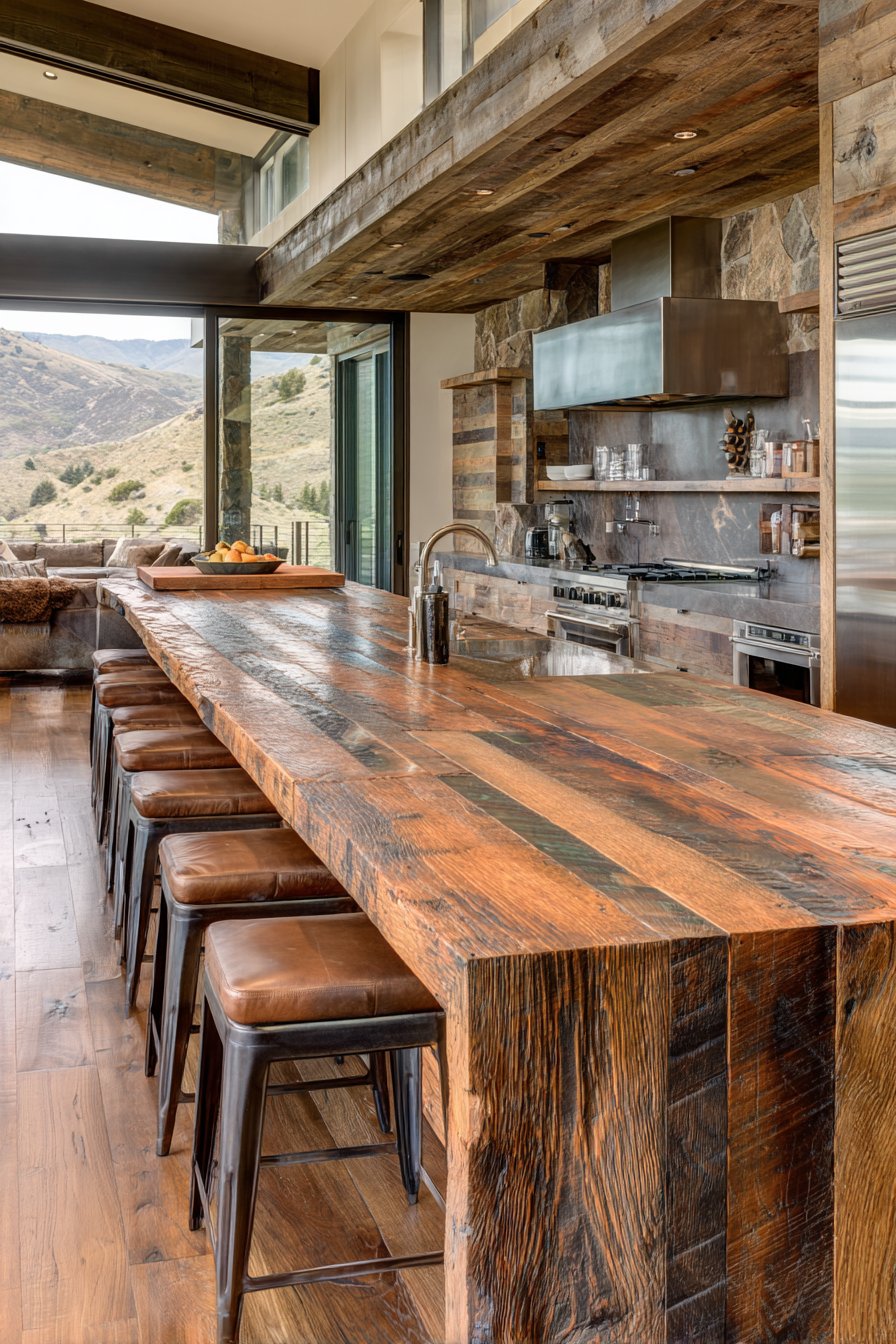
The kitchen island commands attention as a functional masterpiece constructed from reclaimed wood, its butcher block countertop bearing the subtle marks of time and use that add depth and authenticity to the design. These natural color variations and gentle wear patterns aren’t flaws—they’re features that tell stories and add soul to the space.
The surface invites touch and use, developing a beautiful patina over time that only enhances its appeal. This island serves as both a practical workspace and a gathering point, where family and friends naturally gravitate during meal preparation and casual conversations.

Modern stainless steel appliances provide a striking contemporary contrast that prevents the space from feeling overly traditional or dated. This juxtaposition of organic and industrial elements creates visual interest while maintaining the kitchen’s overall warmth.
The appliances’ sleek surfaces reflect the surrounding wood tones, creating subtle interplay between materials that adds sophistication to the design. Large windows allow soft natural lighting to flood the space, creating gentle shadows that dance across the wood grain throughout the day, highlighting every texture and detail of the expert craftsmanship.

The wide-angle perspective of this layout reveals thoughtful spatial planning where every element has its place and purpose. Storage solutions are abundant yet discreet, with cabinets extending to the ceiling to maximize vertical space while maintaining clean, uncluttered lines. The wood’s visible grain patterns create a sense of movement throughout the space, drawing the eye naturally from one area to another without the need for excessive decoration.
Key Design Tips:
- Select oak with prominent grain patterns to create visual interest and character throughout the cabinetry
- Position the kitchen island strategically to serve as both a functional workspace and natural gathering point for social interaction
- Incorporate reclaimed wood elements to add history, sustainability, and authentic character to your design
- Balance organic materials with modern appliances to create a kitchen that feels both timeless and contemporary
- Maximize natural light sources through strategic window placement to showcase the wood’s natural beauty throughout the day
- Choose warm honey finishes that enhance rather than obscure the natural grain patterns and golden undertones of oak
2. Cozy Walnut Kitchen with Shaker-Style Elegance
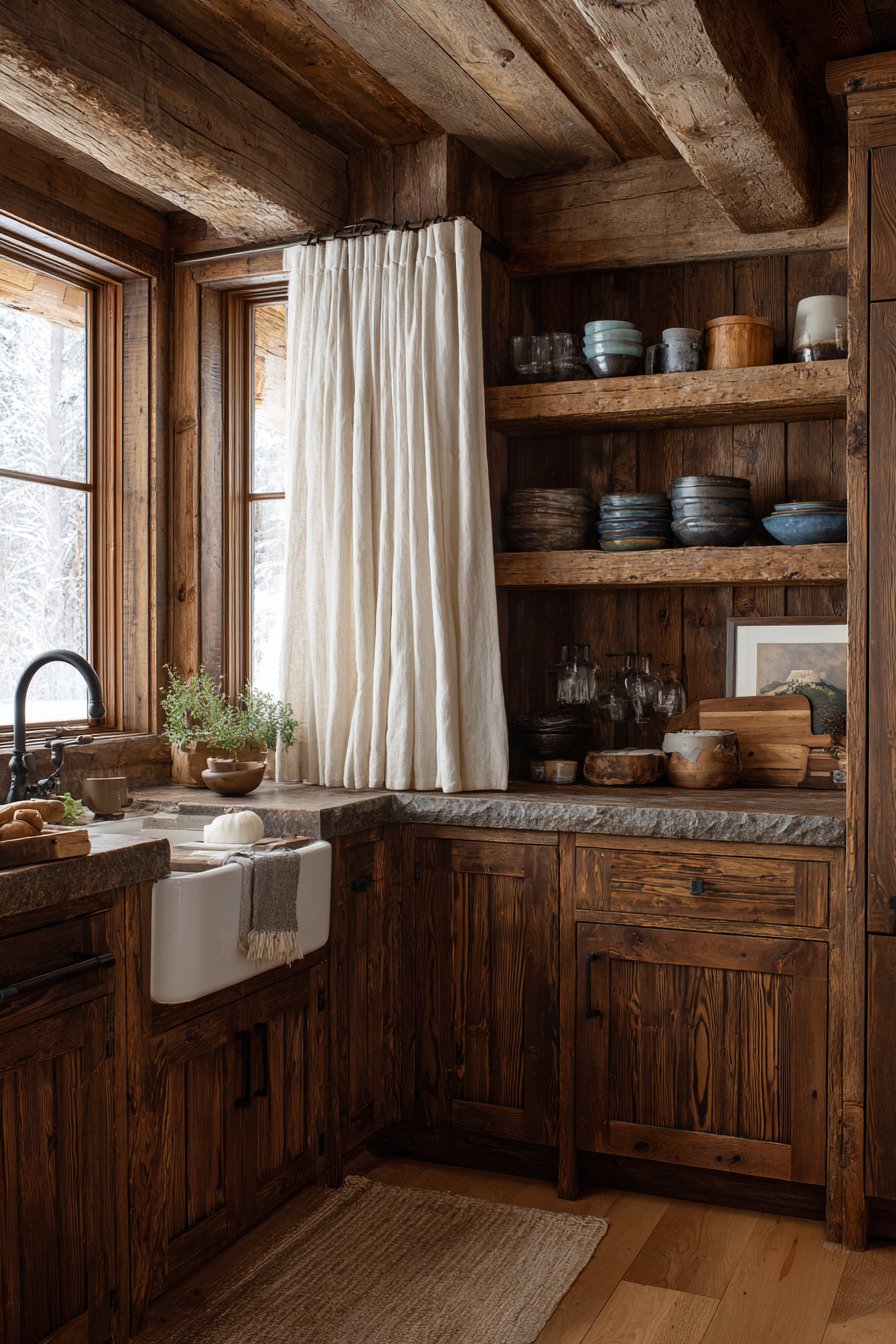
Rich walnut cabinetry reaches from floor to ceiling in this intimate kitchen design, where every surface celebrates the deep, luxurious tones that make walnut one of the most coveted hardwoods for interior spaces. The shaker-style cabinet doors, with their clean lines and traditional five-piece construction, showcase the wood’s natural knots and distinctive grain patterns without unnecessary ornamentation. This classic door style has endured for centuries precisely because it allows the wood itself to be the star, and walnut—with its dramatic color variations ranging from chocolate brown to purple-black—deserves center stage.

The decision to incorporate open floating shelves made from thick pine planks introduces a clever design contrast while serving practical storage needs. These shelves display rustic dishware, cooking essentials, and cherished kitchen items, transforming everyday objects into an organic decorative display.
The lighter pine provides visual relief from the walnut’s intensity while maintaining the kitchen’s commitment to natural wood materials. This layering of different wood species creates depth and prevents the space from feeling monotonous or heavy.
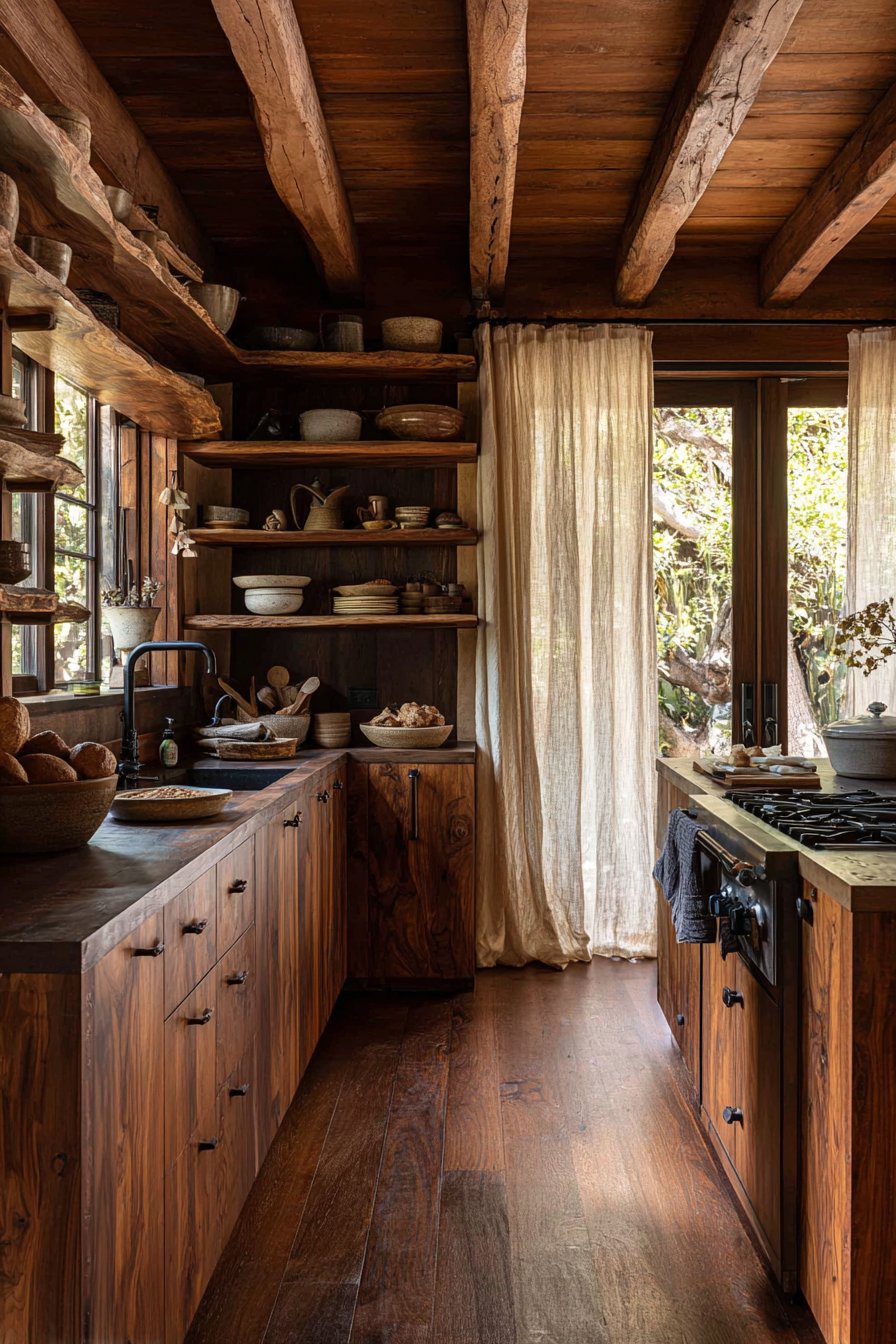
Beneath a window dressed with sheer linen curtains sits a classic farmhouse sink, its generous proportions perfect for accommodating large pots and baking sheets. The curtains filter harsh daylight into a soft, diffused glow that bathes the kitchen in gentle illumination throughout the day.
This natural lighting strategy highlights the warmth of the wood tones without creating harsh shadows or glare on work surfaces. The window becomes a focal point that connects the interior space with the outdoors, bringing nature’s changing light into the heart of the home.
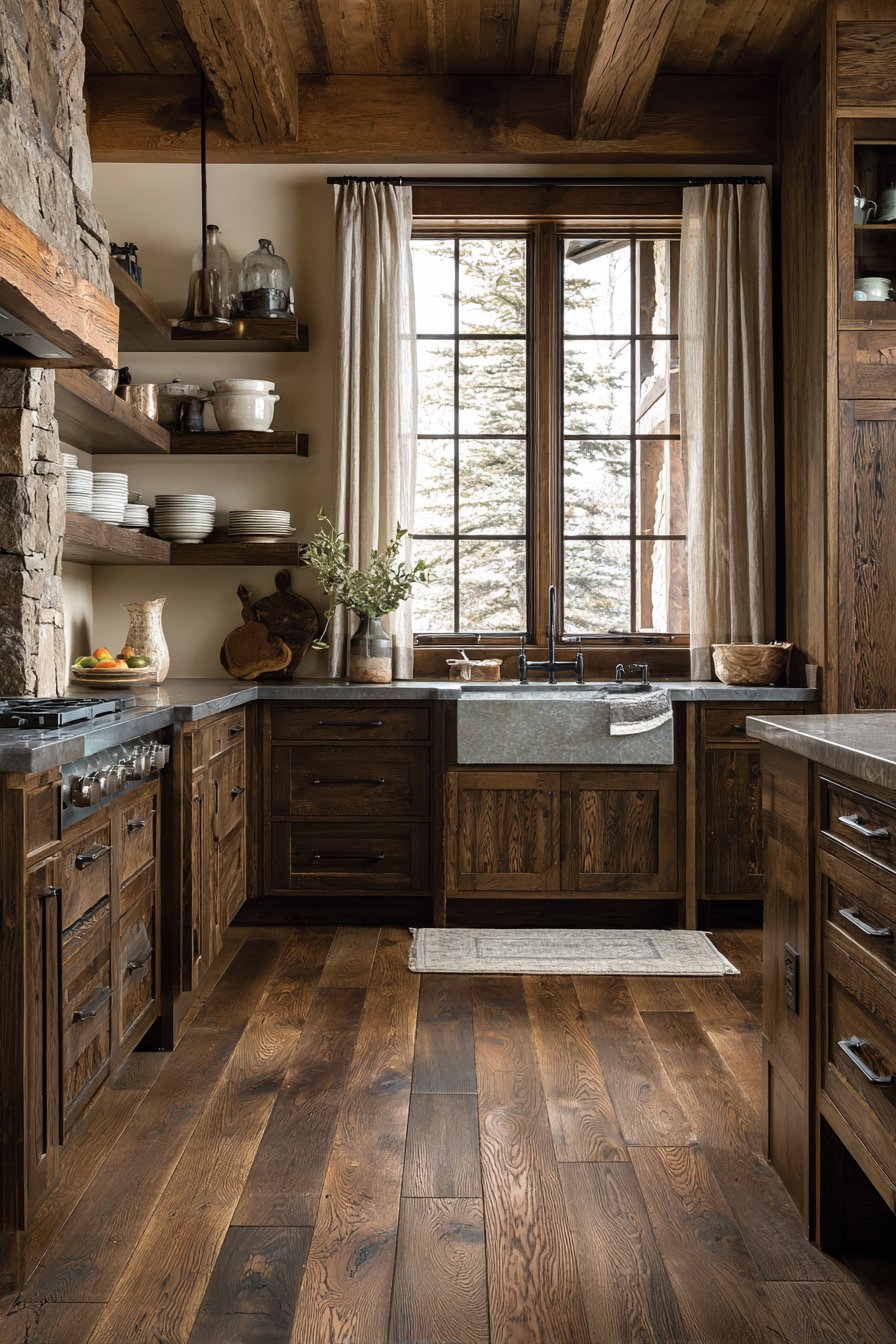
Hand-scraped flooring adds another layer of texture and authenticity to the design, its deliberately imperfect surface echoing traditional craftsmanship methods. This flooring technique creates subtle variations in the wood’s surface that catch light differently throughout the day, adding movement and interest to the floor plane. The scraping reveals additional layers of the wood’s character, creating a floor that looks and feels like it has been lovingly worn over generations.
Key Design Tips:
- Embrace walnut’s natural color variations rather than seeking uniformity—the contrast between light and dark areas adds dramatic visual appeal
- Combine shaker-style cabinetry with your choice of wood species to achieve a timeless aesthetic that never feels dated
- Install floor-to-ceiling cabinets to maximize storage capacity while creating an impressive vertical presence
- Incorporate open shelving strategically to break up solid cabinetry and create display opportunities for beautiful kitchen items
- Choose hand-scraped flooring to add authentic texture and create a surface that actually looks better as it ages
- Use sheer window treatments that filter rather than block natural light, maintaining privacy while showcasing wood tones
3. Modern Maple Kitchen with Sleek Horizontal Lines
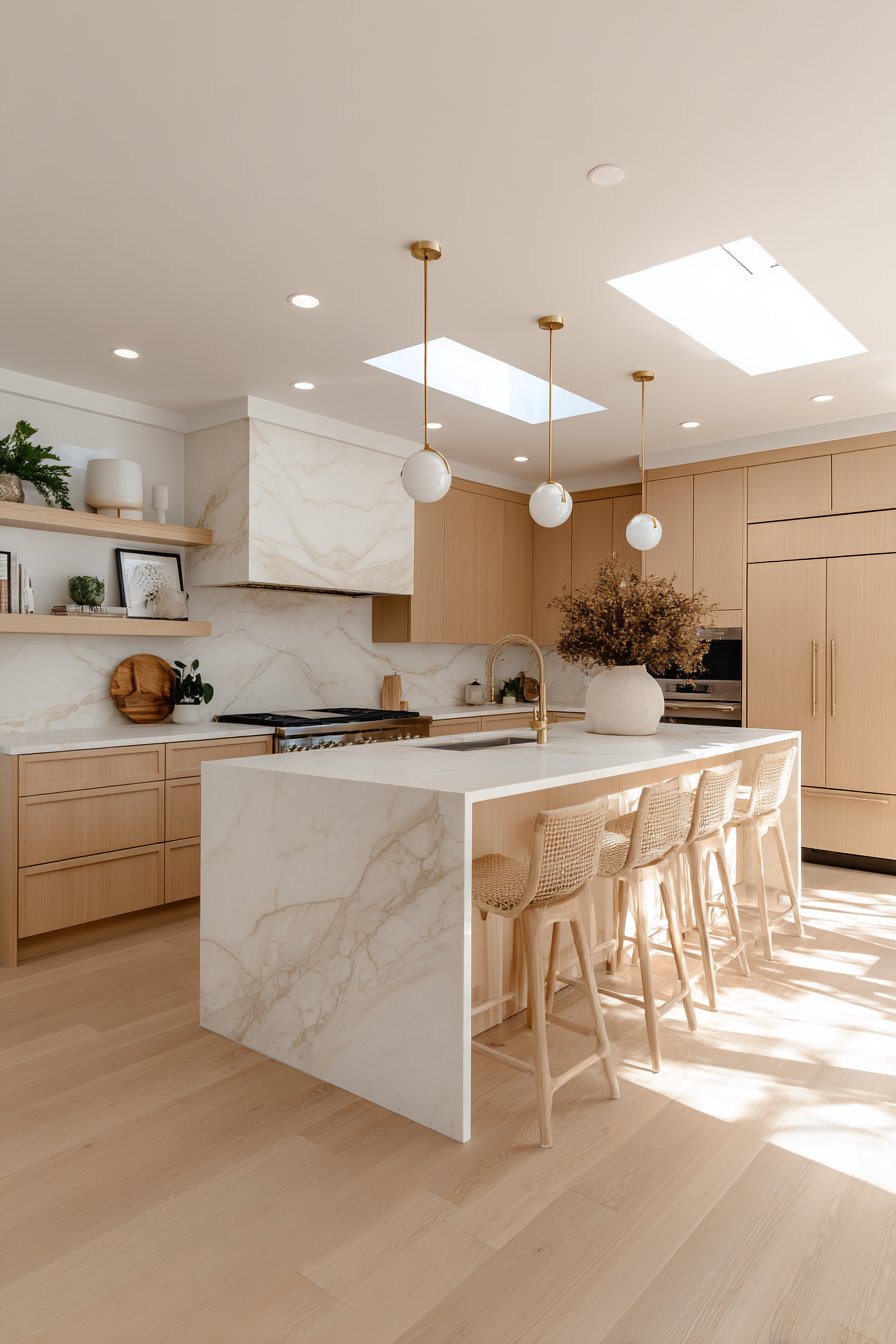
Light maple cabinetry brings a breath of fresh air to modern kitchen design, its pale golden hues and subtle horizontal grain patterns creating an aesthetic that feels both contemporary and naturally warm. The handle-less integrated design represents the pinnacle of minimalist kitchen cabinetry, where smooth surfaces interrupted only by discreet touch-latch mechanisms create a seamless, sculptural quality. This approach transforms cabinetry from mere storage into architectural elements that define the space through clean, continuous planes of beautiful wood.

The kitchen island showcases a stunning waterfall-edge detail, where the wooden countertop cascades down both sides in continuous book-matched panels. This design element creates dramatic visual impact while highlighting the natural variations in tone inherent to maple wood.
The waterfall edge draws the eye vertically, adding height and drama to what could otherwise be a simple horizontal surface. As light plays across these vertical surfaces throughout the day, the wood’s subtle figure patterns create ever-changing visual interest.
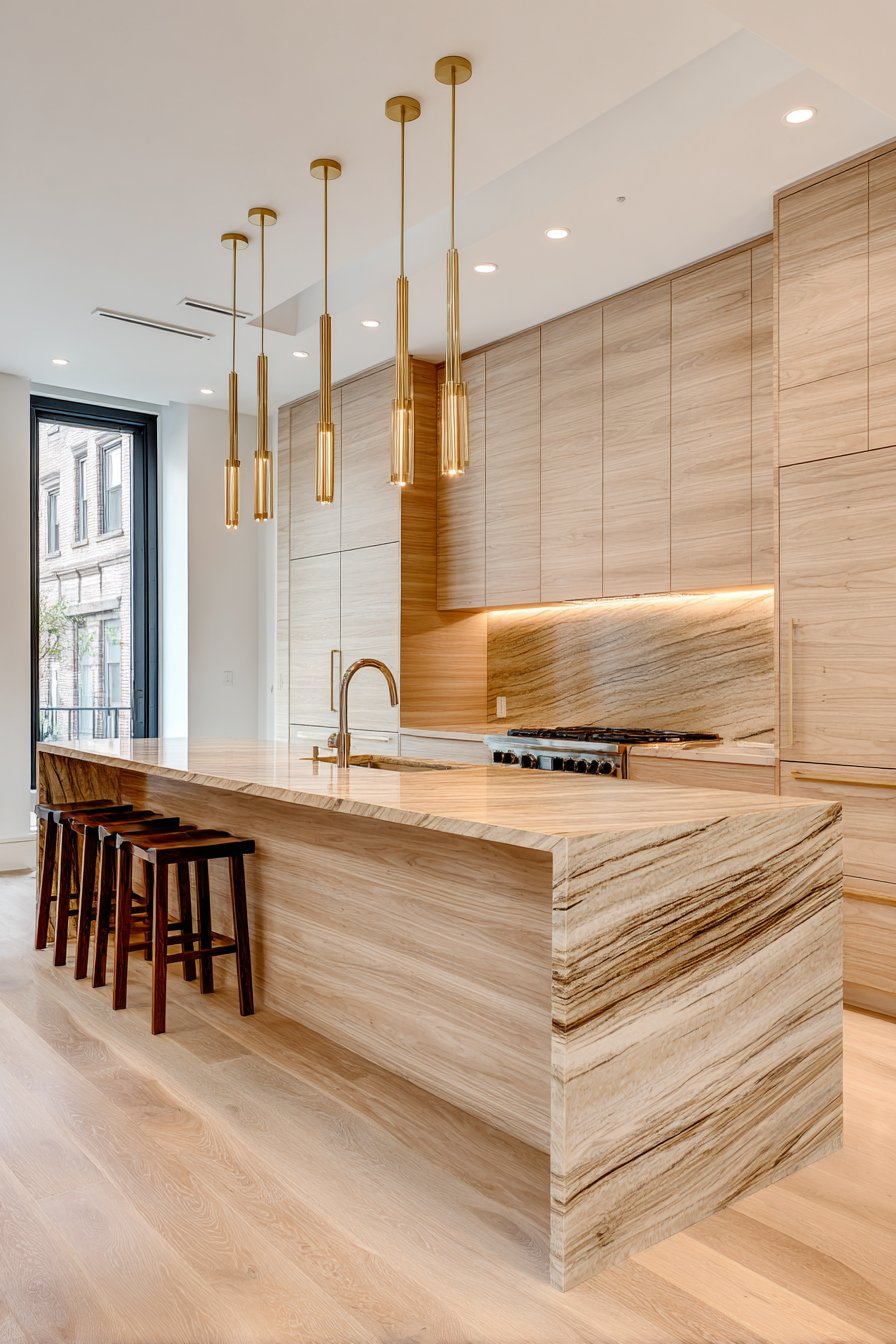
Pendant lights with brushed brass fixtures hang at precisely calculated heights above the island, their warm metallic finish complementing maple’s golden undertones. These fixtures cast pools of focused light on work surfaces below while creating an ambient glow that highlights the smooth wood surfaces’ gentle sheen. The choice of brushed brass rather than chrome or nickel adds warmth that harmonizes with the wood tones rather than introducing cool contrasts.
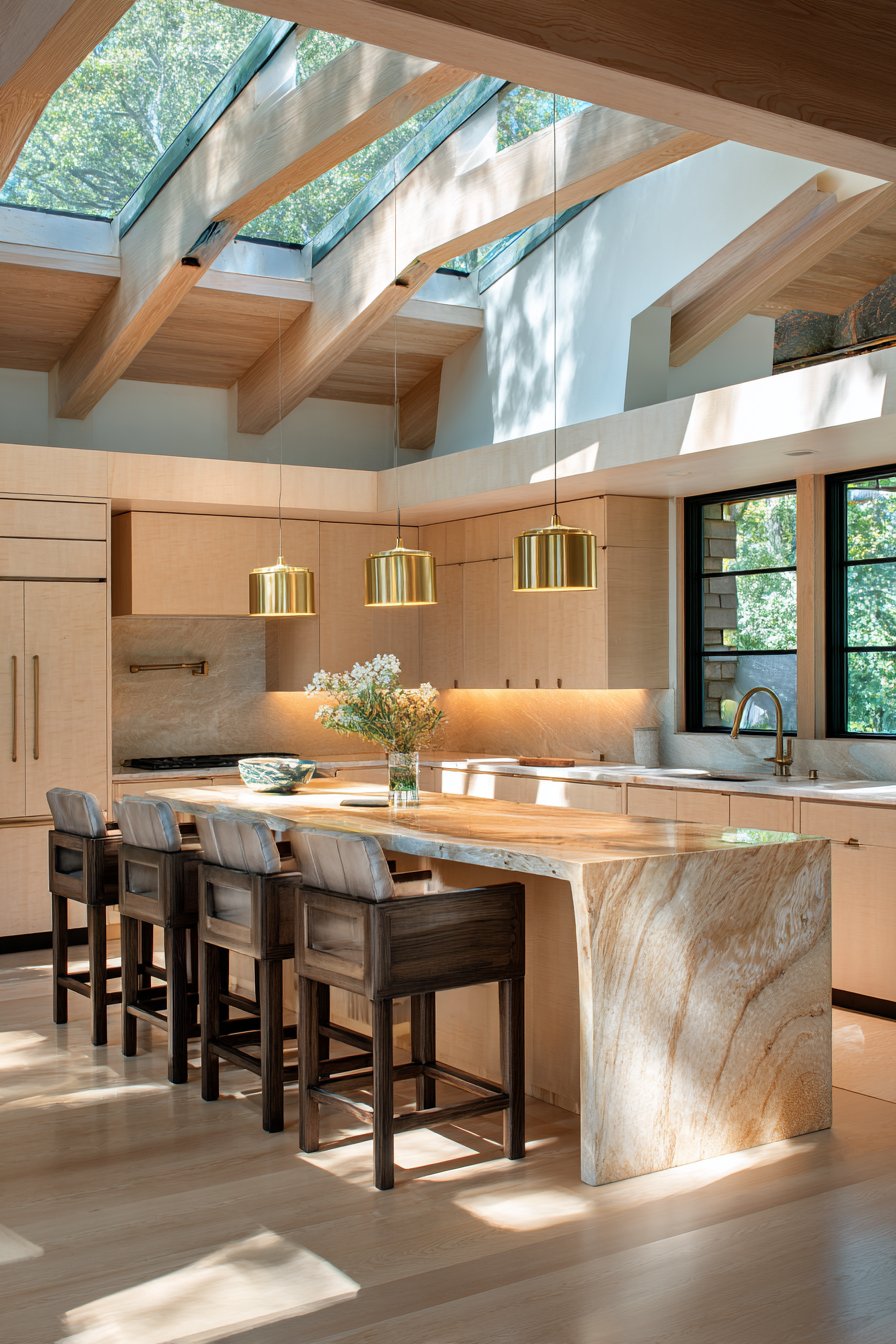
Skylights positioned strategically overhead flood the space with natural daylight from above, eliminating dark corners and creating subtle reflections on the maple’s smooth surfaces. This overhead lighting strategy showcases the wood’s golden undertones while preventing the pale cabinetry from appearing washed out or bland. The interplay of natural light from above and focused pendant lighting creates layered illumination that makes the kitchen functional at any time of day while maintaining its aesthetic appeal.
Key Design Tips:
- Choose light-colored woods like maple for modern kitchens to create an airy, spacious feeling even in smaller footprints
- Incorporate waterfall-edge islands to add architectural drama and showcase beautiful wood grain patterns
- Install handle-less cabinetry with integrated push-to-open mechanisms for the ultimate minimalist aesthetic
- Select fixtures in warm metallic finishes like brushed brass that complement rather than contrast with wood tones
- Add skylights where possible to introduce overhead natural light that eliminates shadows and highlights wood beauty
- Emphasize horizontal grain patterns in wood selection to reinforce modern, clean-lined design principles
4. Scandinavian-Inspired Birch Kitchen with Nordic Simplicity

Pale birch cabinets embody the essence of Scandinavian design philosophy, where simplicity meets functionality in perfect harmony. The minimalist flat-panel doors feature no unnecessary embellishment, allowing the visible wood grain texture to provide all the visual interest needed.
This restraint is not about lack of character but rather about celebrating the inherent beauty of the material itself. Birch’s fine, consistent grain creates subtle patterns that add warmth without overwhelming the space’s commitment to Nordic simplicity and order.
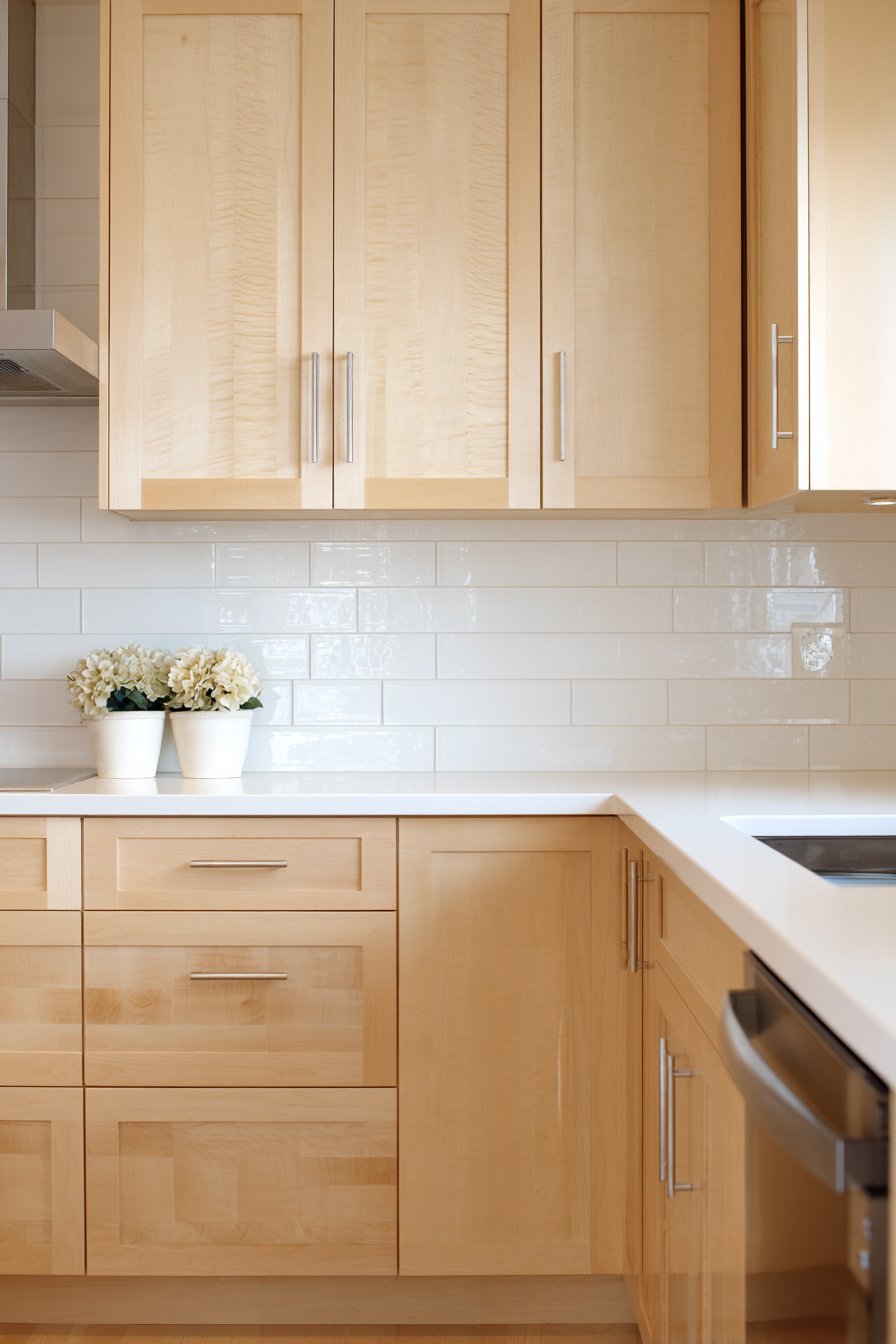
Solid beech wood countertops introduce a warmer counterpoint to the pale birch cabinetry, their matte finish revealing slight natural imperfections that add authenticity to the design. These imperfections—small knots, minor color variations, and subtle surface irregularities—remind us that we’re working with natural materials rather than synthetic imitations. The beech’s slightly darker tone compared to the birch creates gentle contrast while maintaining the kitchen’s overall light, bright character.

White subway tile backsplash provides crisp, clean contrast that enhances rather than competes with the wood elements. The classic tile pattern adds subtle texture through its dimensional surface and grout lines while maintaining the bright, airy aesthetic central to Scandinavian design. This timeless choice ensures the kitchen won’t feel dated as trends evolve, and the white reflects light throughout the space, maximizing the sense of openness.

The wide-angle perspective reveals how carefully this kitchen balances light wood tones with white elements to create a space that feels larger than its actual footprint. Soft diffused natural lighting streams through windows left largely unadorned, following the Scandinavian practice of maximizing daylight during shorter winter days. The interplay between light wood and white surfaces creates an almost luminous quality, as if the kitchen itself is a source of light rather than merely reflecting it.
Key Design Tips:
- Select pale woods like birch to maximize light reflection and create the airy feeling essential to Scandinavian design
- Choose flat-panel cabinet doors that showcase wood grain without decorative detailing or raised panels
- Incorporate solid wood countertops with matte finishes that feel warm and inviting to touch
- Use white tile backsplashes to create clean contrast while maintaining brightness throughout the space
- Embrace natural imperfections in wood surfaces as authentic design features rather than flaws to hide
- Maximize natural light through generous windows with minimal treatments, following Nordic design principles
5. Rustic Farmhouse Kitchen with Weathered Oak Character
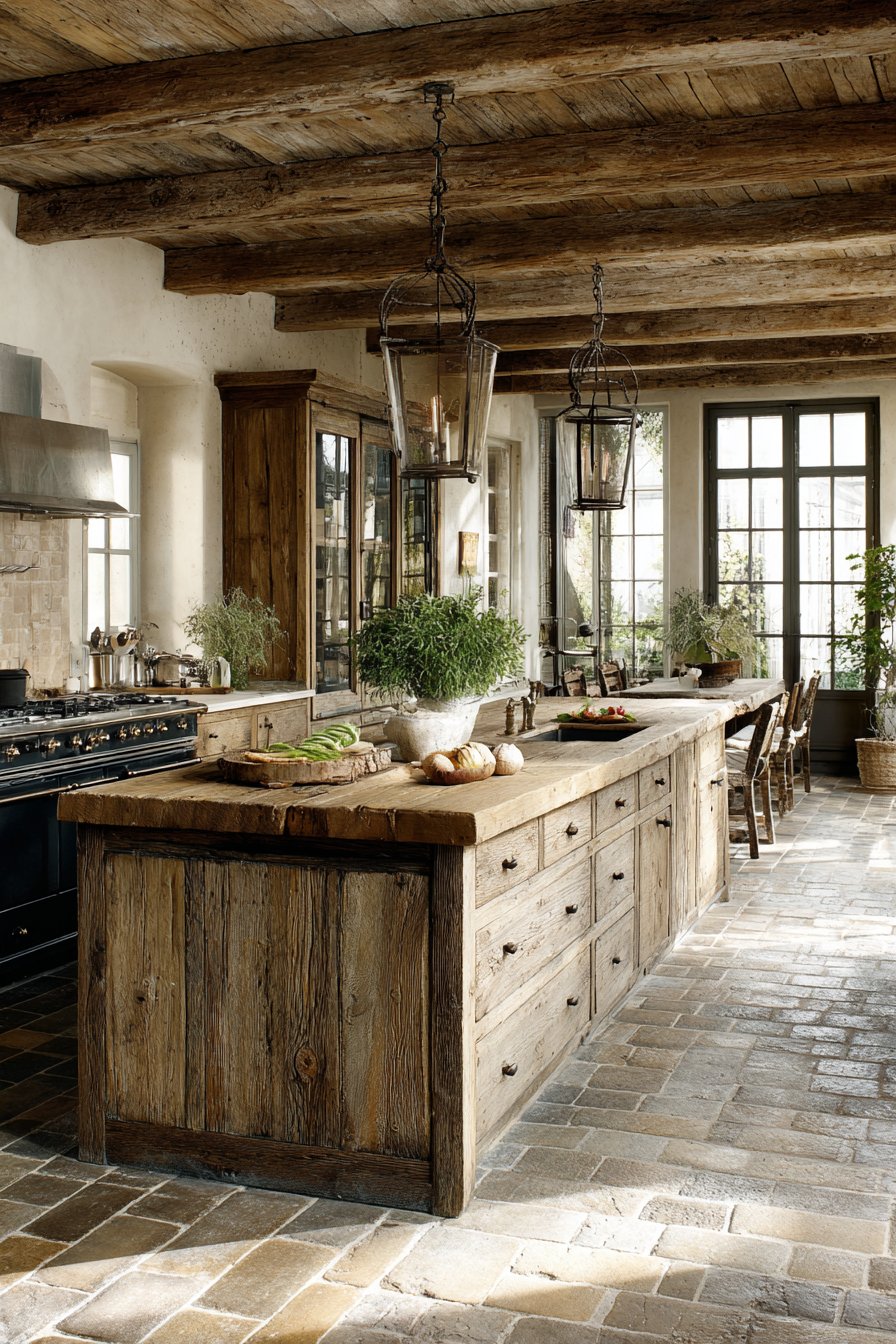
Exposed ceiling beams crafted from weathered oak immediately establish this kitchen’s rustic credentials, their aged appearance suggesting a structure that has stood for generations. These architectural elements add visual weight and history to the upper portion of the room, creating a sense of shelter and permanence that contrasts beautifully with more modern functional elements below. The weathering process has deepened the oak’s color and enhanced its grain patterns, creating surface variations that no new wood could replicate.
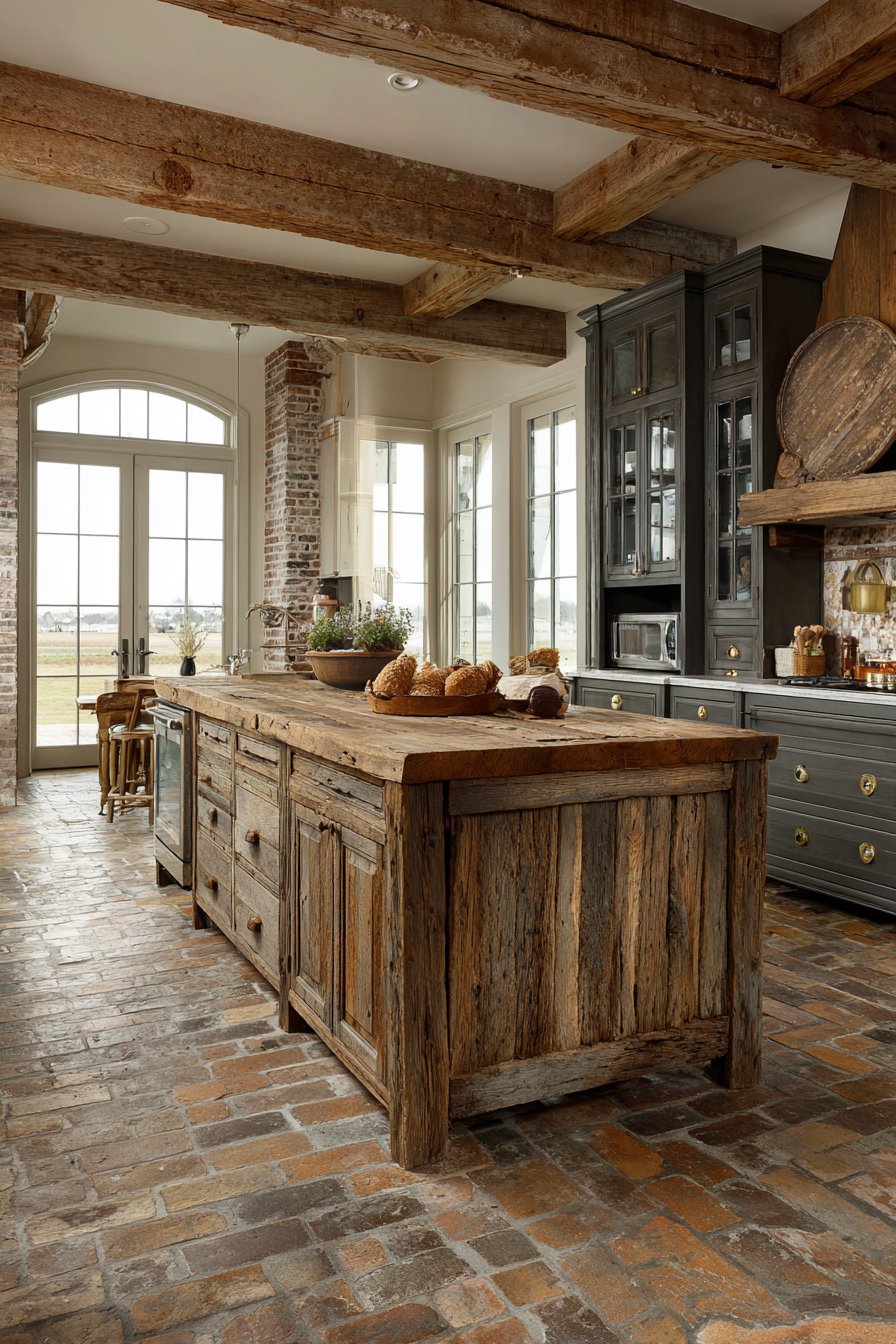
Distressed wooden cabinets with antique brass hardware continue the farmhouse aesthetic, their deliberately aged appearance suggesting years of loving use. The distressing technique—achieved through wire brushing, denting, and strategic sanding—creates surface texture that catches light differently than smooth cabinetry, adding depth and shadow play throughout the day. The antique brass hardware oxidizes naturally over time, developing a patina that only enhances its appearance and authenticity.
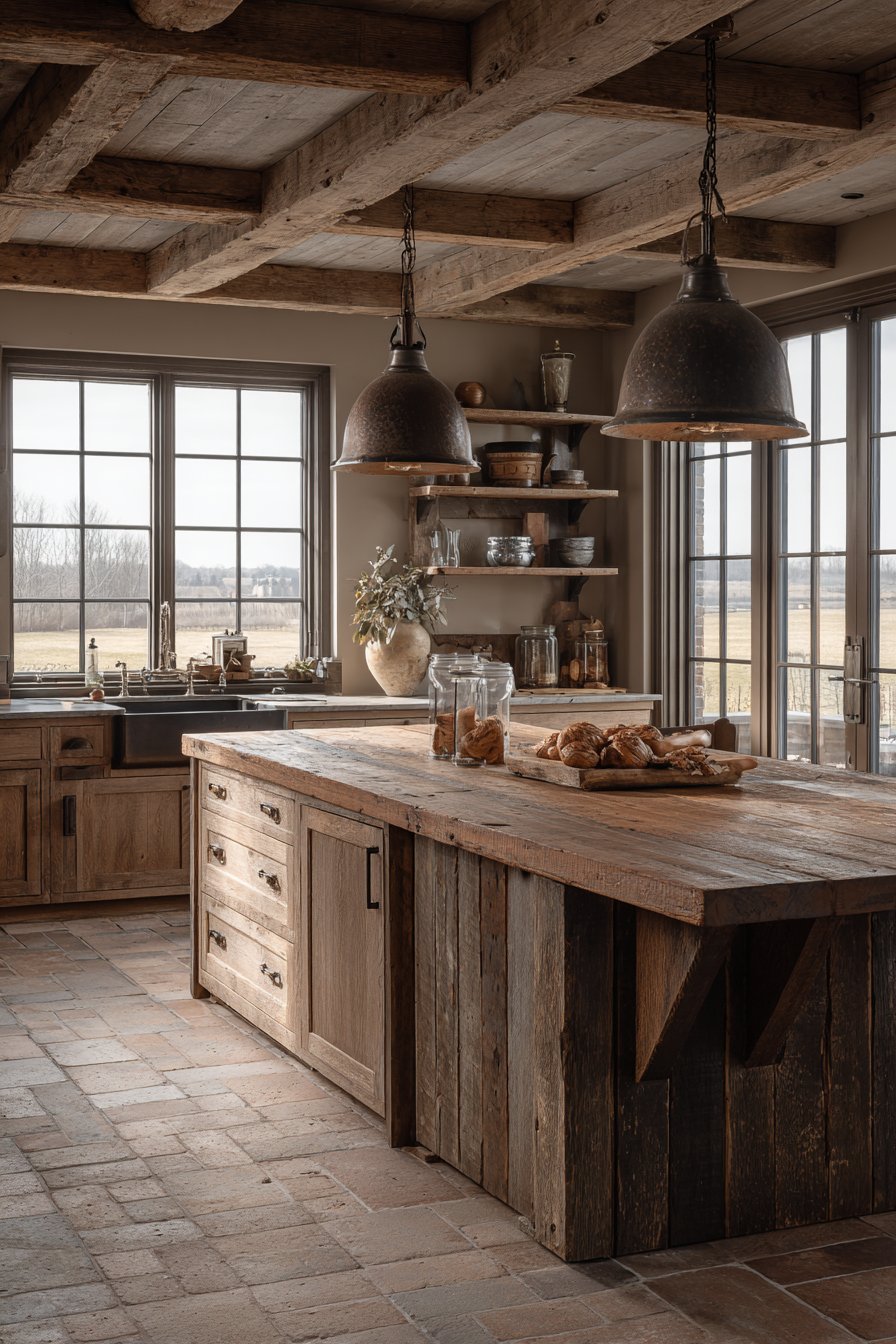
The kitchen island serves as the space’s centerpiece, featuring a thick wooden top made from salvaged barn wood with authentic patina and natural edge details. This piece brings genuine history into the kitchen—wood that once formed walls or floors in agricultural structures now serves as a gathering place for modern family life. The natural edge, where the wood’s organic contour remains intact rather than being cut straight, creates organic visual interest and reminds us of the tree from which this board was cut.
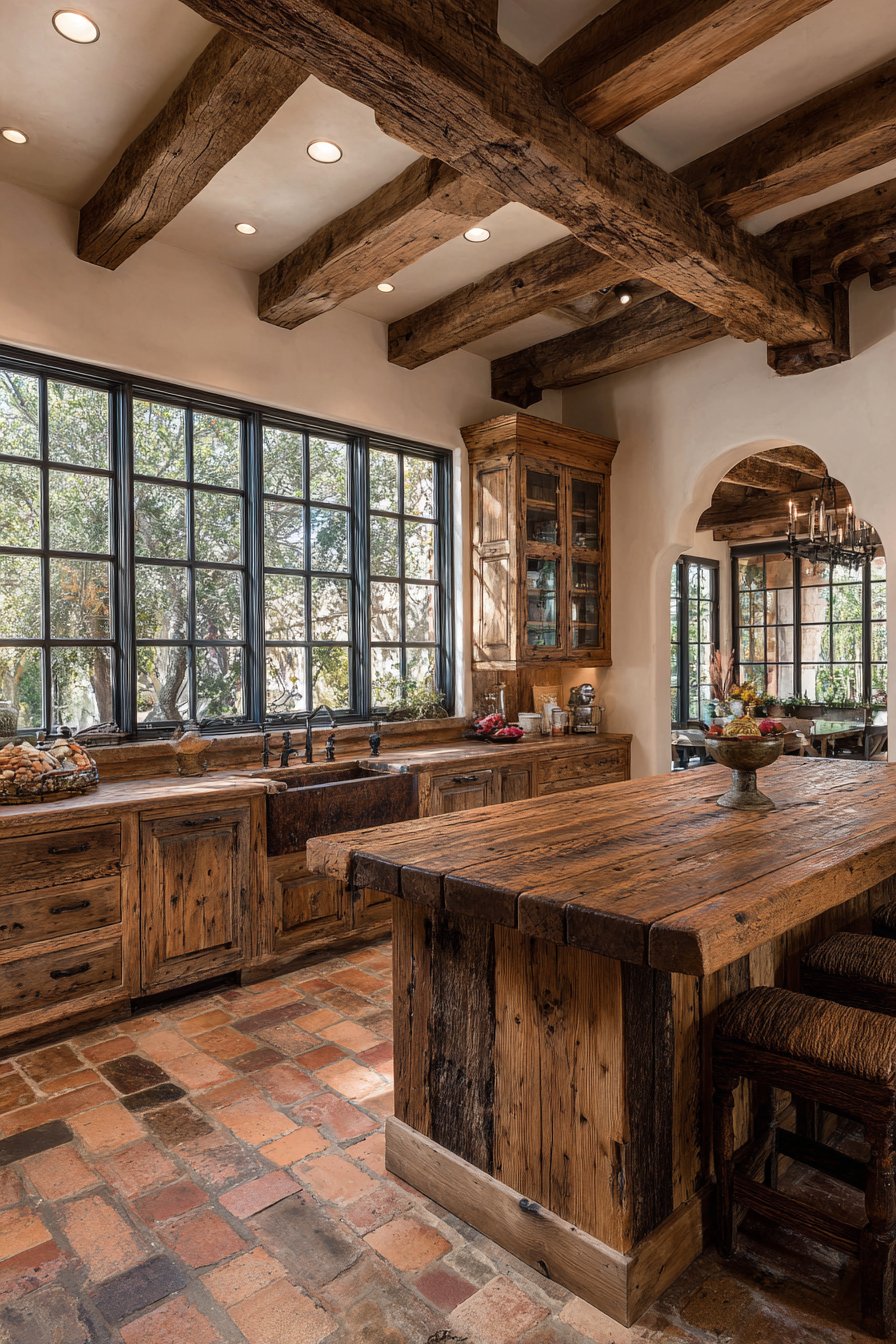
Terra cotta floor tiles in warm, earthy tones complement the wood elements while providing practical, durable flooring that ages beautifully. These tiles add Mediterranean warmth to the farmhouse aesthetic, creating a fusion that feels both traditional and unique. Golden hour lighting streams through multi-pane windows, creating that magical quality of light that photographers chase—warm, soft, and deeply flattering to both people and spaces. This natural illumination emphasizes every texture and material, from the rough-hewn ceiling beams to the smooth patina of the island top.
Key Design Tips:
- Incorporate exposed wood beams to add architectural character and create visual interest in the ceiling plane
- Choose distressed finishes on cabinetry for authentic farmhouse appeal that looks better as it ages
- Use salvaged barn wood for countertops or island tops to introduce genuine history and character
- Select antique brass hardware that develops natural patina over time rather than maintaining a static appearance
- Install terra cotta or similar warm-toned flooring to complement wood elements and add Mediterranean warmth
- Preserve natural edge details on wood countertops to celebrate the organic origin of the material
6. Contemporary Dark Espresso Kitchen with Sophisticated Depth
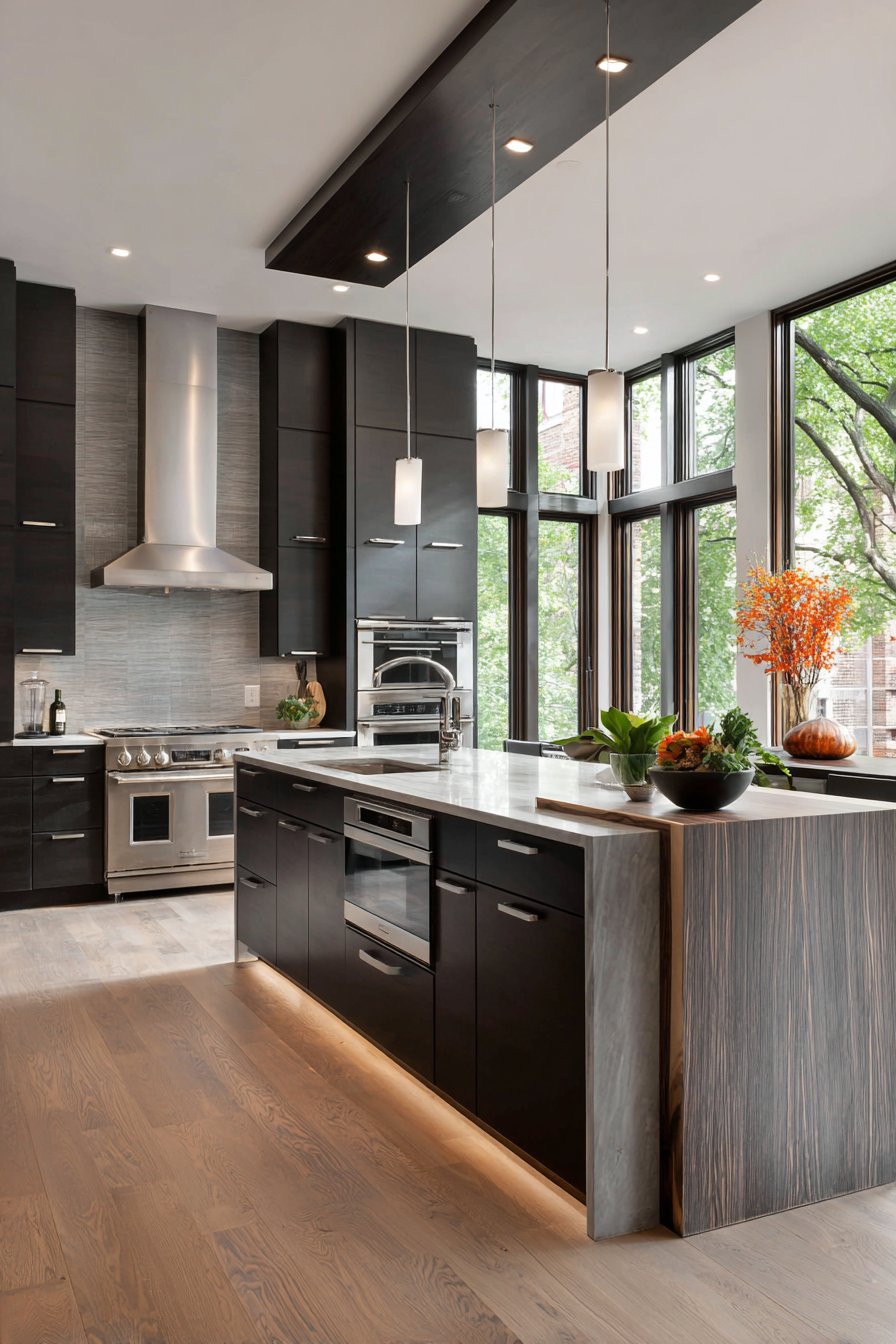
Dark espresso-stained cabinetry creates an atmosphere of sophisticated elegance, its rich brown-black tones providing dramatic contrast to lighter elements throughout the kitchen. The smooth surfaces and chrome hardware accents reinforce the contemporary aesthetic, where restraint and refinement take precedence over rustic texture. This darker wood finish requires confidence—it can make a space feel intimate and cozy or potentially heavy and oppressive if not balanced carefully with lighting and lighter elements.
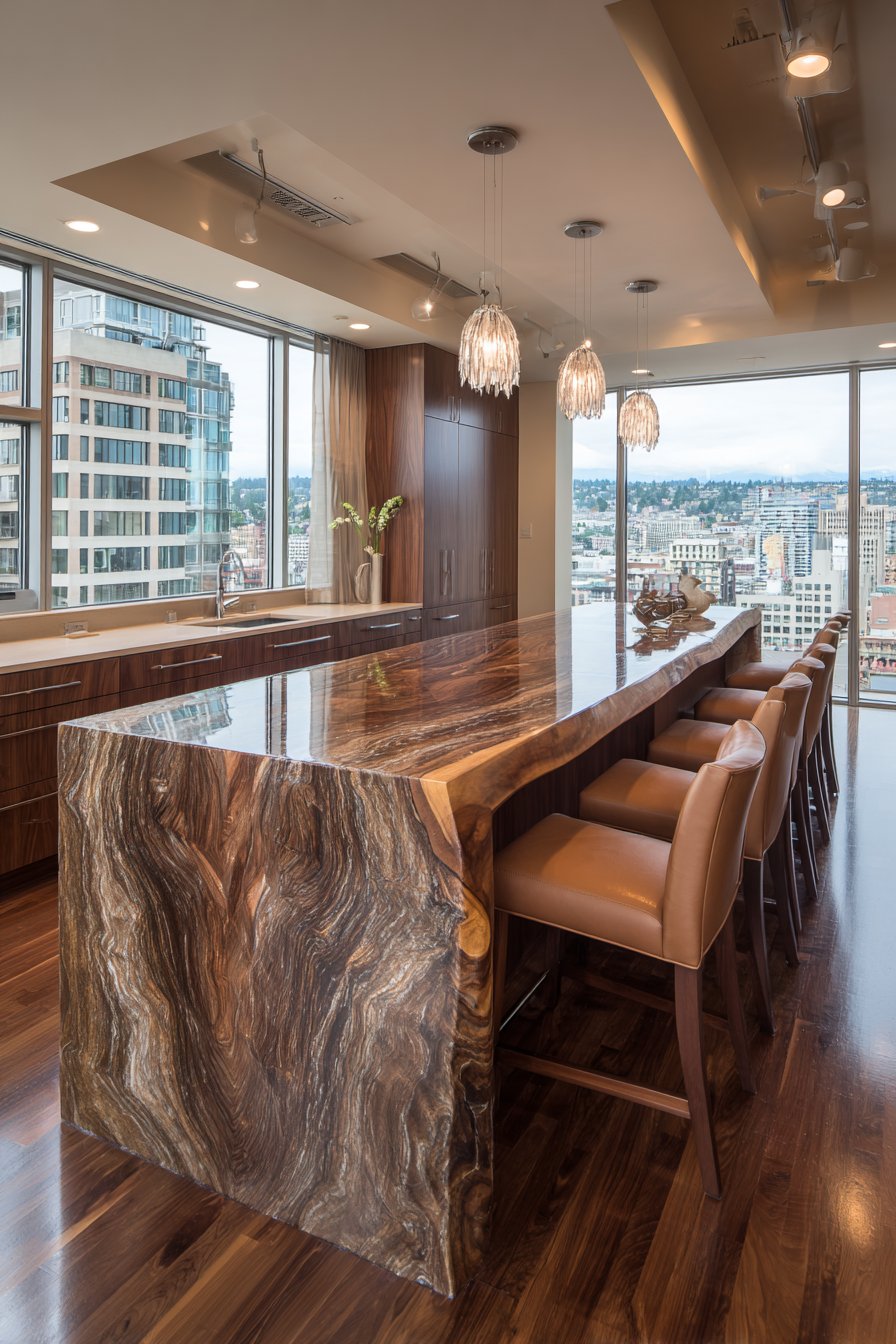
A wooden breakfast bar with waterfall edges made from book-matched walnut showcases one of woodworking’s most impressive techniques. Book-matching involves slicing consecutive boards from the same section of log and opening them like pages of a book, creating symmetrical grain patterns that mirror each other across a central axis. This technique produces spectacular visual effects in woods with dramatic grain like walnut, creating what appears to be intentional artistic patterns that are actually nature’s own design.
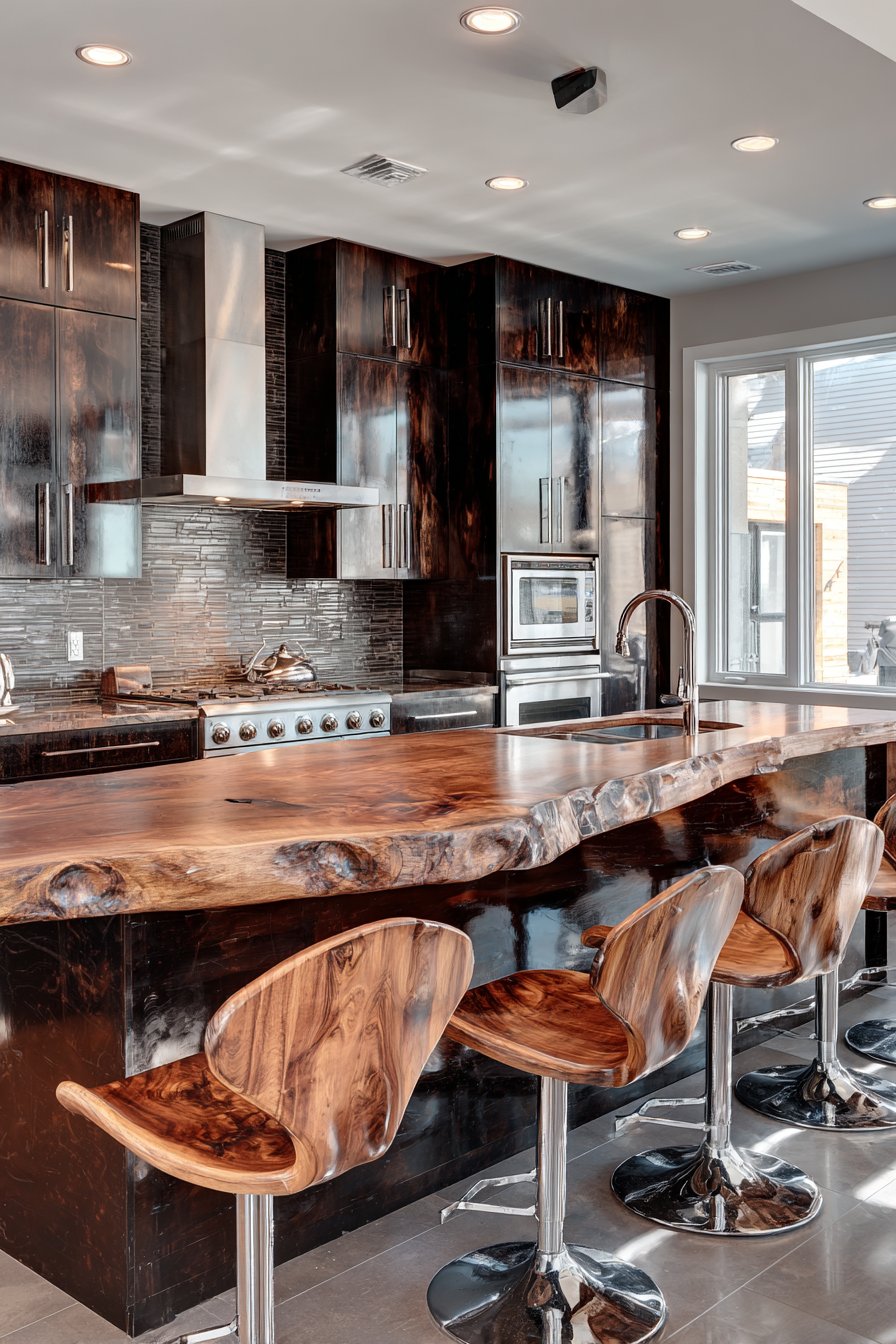
Under-cabinet LED lighting provides crucial illumination that prevents the dark cabinetry from creating shadowy, unwelcoming work surfaces. These discreet fixtures create subtle highlights on the rich wood finish, adding dimension and depth to what could otherwise appear as flat, dark surfaces. The LED technology offers energy efficiency and cool operation, essential when lights may remain on for extended periods to maintain the kitchen’s welcoming ambiance.
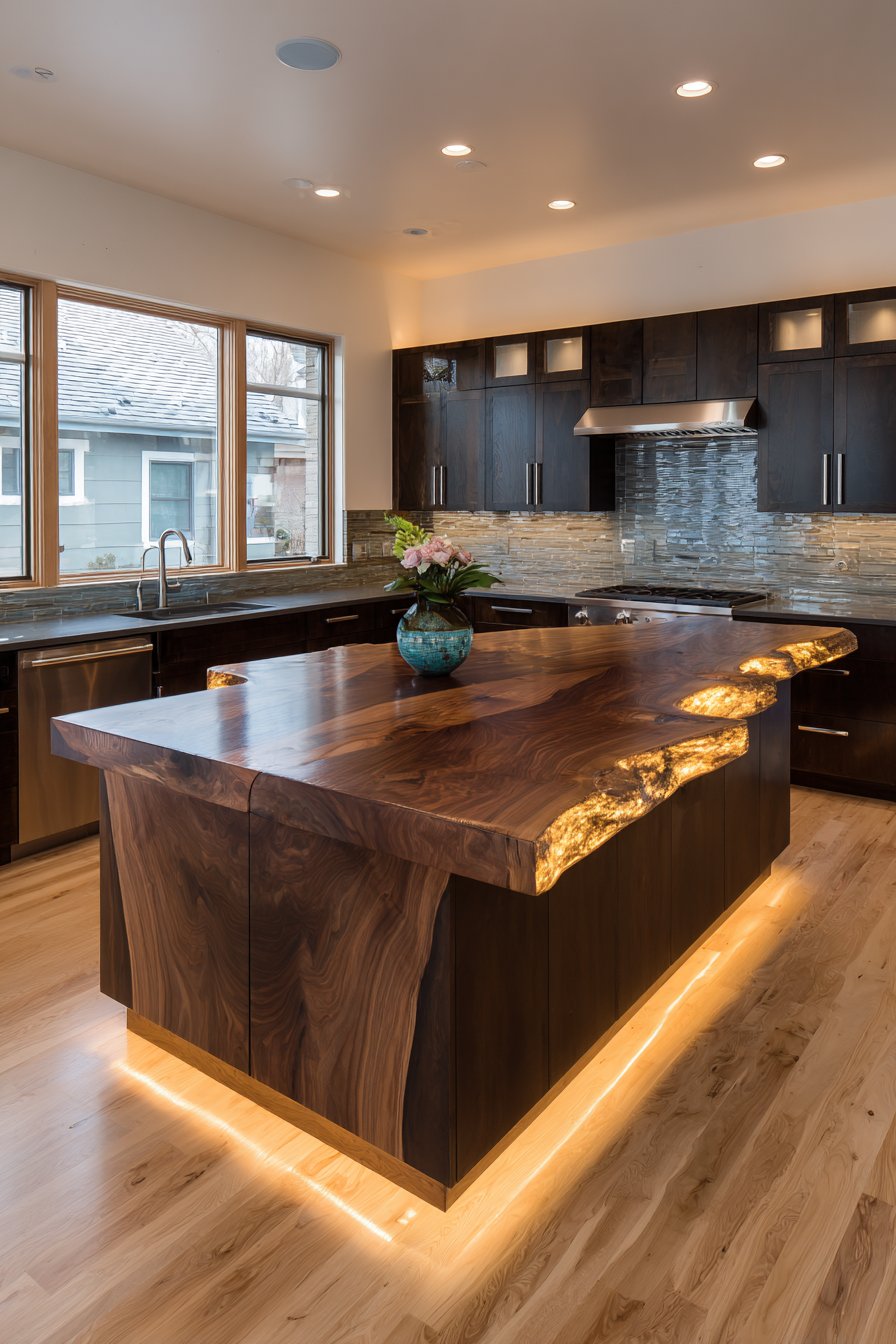
Natural light from corner windows positioned strategically prevents the space from feeling heavy or claustrophobic despite the dark cabinetry. Corner windows are particularly effective because they introduce light from two directions, creating more dynamic shadows and highlights than single-direction lighting. This balanced exposure showcases the sophisticated dark wood aesthetic while maintaining a sense of openness and connection to the outdoors.
Key Design Tips:
- Use dark wood finishes in kitchens with abundant natural light to prevent the space from feeling closed-in
- Incorporate book-matched wood elements in focal areas like islands to create stunning natural art installations
- Install under-cabinet lighting as essential rather than optional when working with dark cabinetry
- Choose waterfall edges on islands or peninsulas to create dramatic vertical design elements
- Select chrome or stainless hardware to provide crisp contrast against dark wood surfaces
- Position windows in corners when possible to introduce multi-directional natural light that prevents dark spaces from feeling heavy
7. Compact Wooden Kitchen with Vertical Efficiency
Vertical grain fir cabinetry demonstrates that small kitchens can be both beautiful and highly functional when designed with intelligence and precision. The natural clear finish allows the fir’s authentic texture and straight grain patterns to shine through, creating visual interest without requiring extensive square footage.
Vertical grain, where the wood is cut so growth rings run perpendicular to the face, creates distinctive straight-lined patterns that reinforce the sense of height and draw the eye upward, making the compact space feel larger.
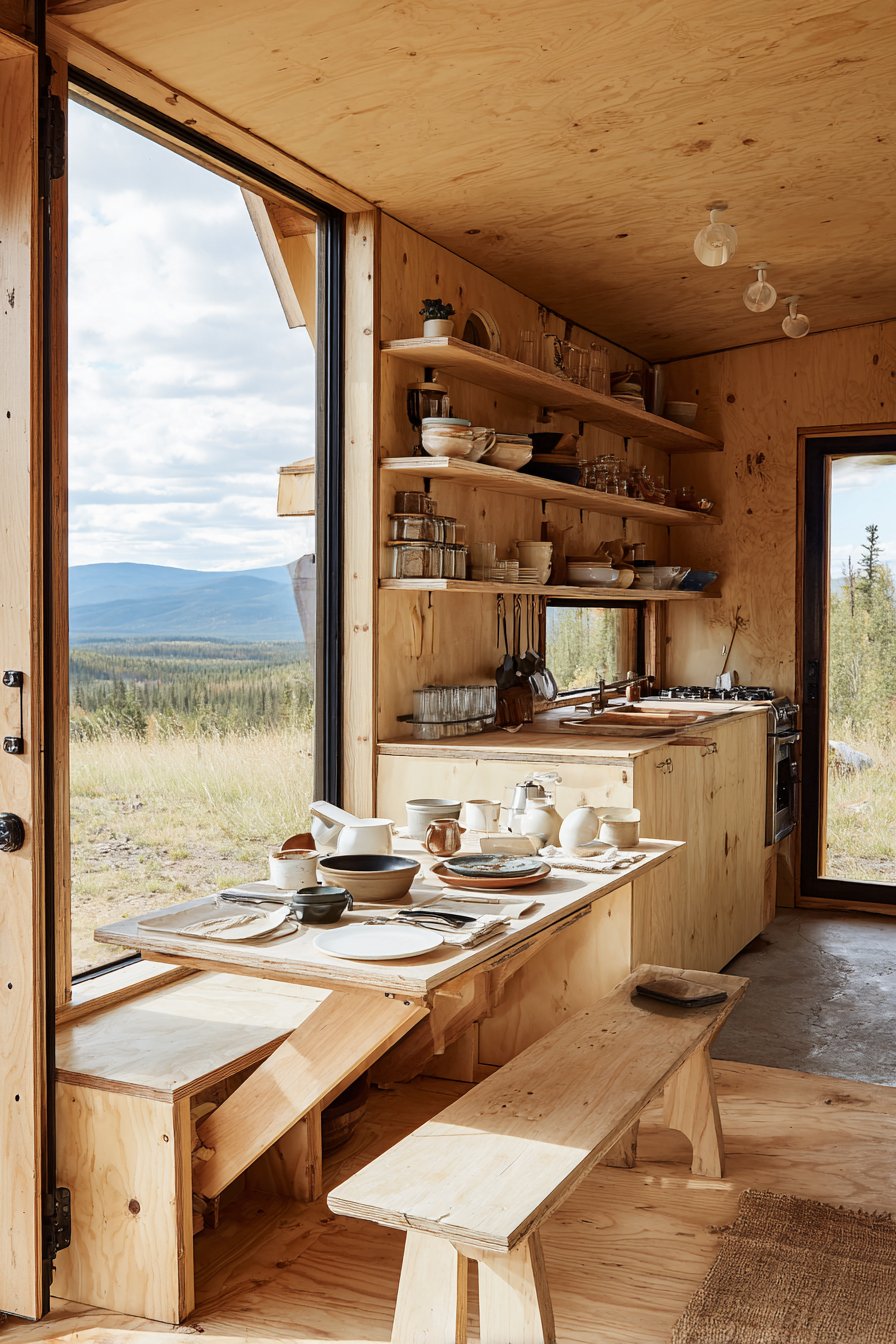
Built-in wooden shelving with integrated lighting transforms storage from utilitarian necessity into attractive display opportunity. These shelves showcase organized pantry items and minimalist kitchenware, turning everyday essentials into decorative elements through thoughtful arrangement and lighting. The integrated lighting eliminates shadows within deep shelving units while highlighting the wood’s warm tones, creating depth in what could otherwise be flat storage planes.
A small wooden fold-down table attached to the island provides additional workspace that disappears when not needed—the kind of clever, space-saving solution essential in compact kitchens. When raised, it provides valuable prep surface or casual dining space; when lowered, it tucks away to maintain clear circulation paths. This flexibility allows the kitchen to adapt to different activities and needs throughout the day without permanently sacrificing valuable floor space.
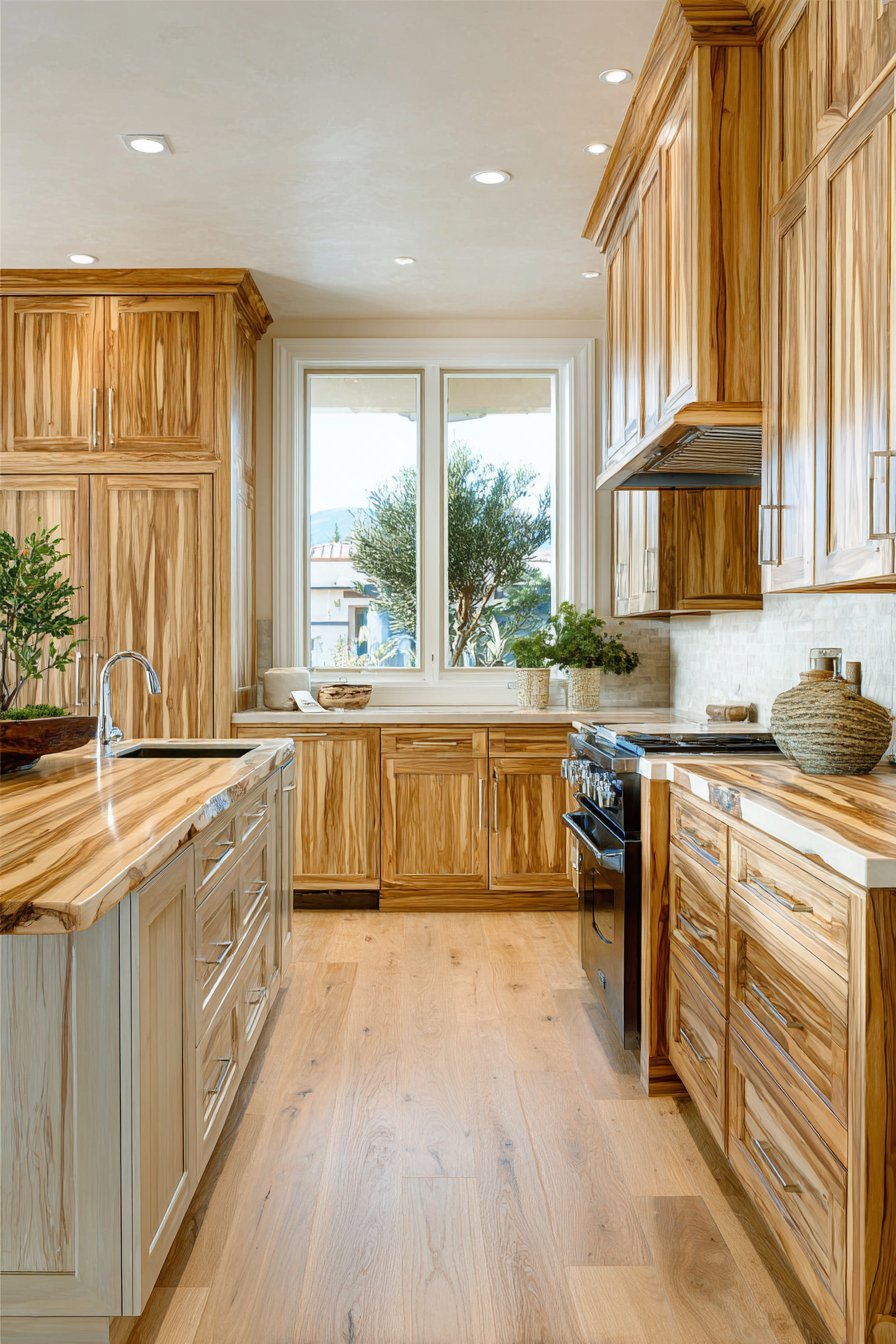
The wide-angle perspective reveals how clever storage solutions and functional layout can make every square inch earn its keep. Vertical storage maximizes wall space, pull-out organizers ensure deep cabinets remain accessible, and careful planning eliminates wasted corners or awkward gaps. Soft natural lighting emphasizes the warm wood tones while making the compact space feel open and inviting rather than cramped and closed-in.
Key Design Tips:
- Choose vertical grain woods in small kitchens to create visual height and make spaces feel larger
- Incorporate fold-down or pull-out elements that provide flexibility without permanently consuming space
- Add integrated lighting to shelving units to create depth and eliminate shadows in compact areas
- Use clear or light finishes on wood to maintain brightness and openness in smaller footprints
- Design built-in storage solutions that maximize every inch of available space efficiently
- Create display storage for attractive kitchen items that serve double duty as decoration
8. Two-Tone Wooden Kitchen with Material Contrast

Light ash upper cabinets paired with darker cherry wood base cabinets create sophisticated visual layering through the strategic use of contrasting wood species. This two-tone approach prevents monotony while maintaining the kitchen’s commitment to natural materials, with each wood species displaying distinct grain patterns and natural variations. The lighter ash draws the eye upward and prevents the space from feeling top-heavy, while the darker cherry base cabinets ground the design and hide inevitable scuffs and marks in high-traffic lower areas.
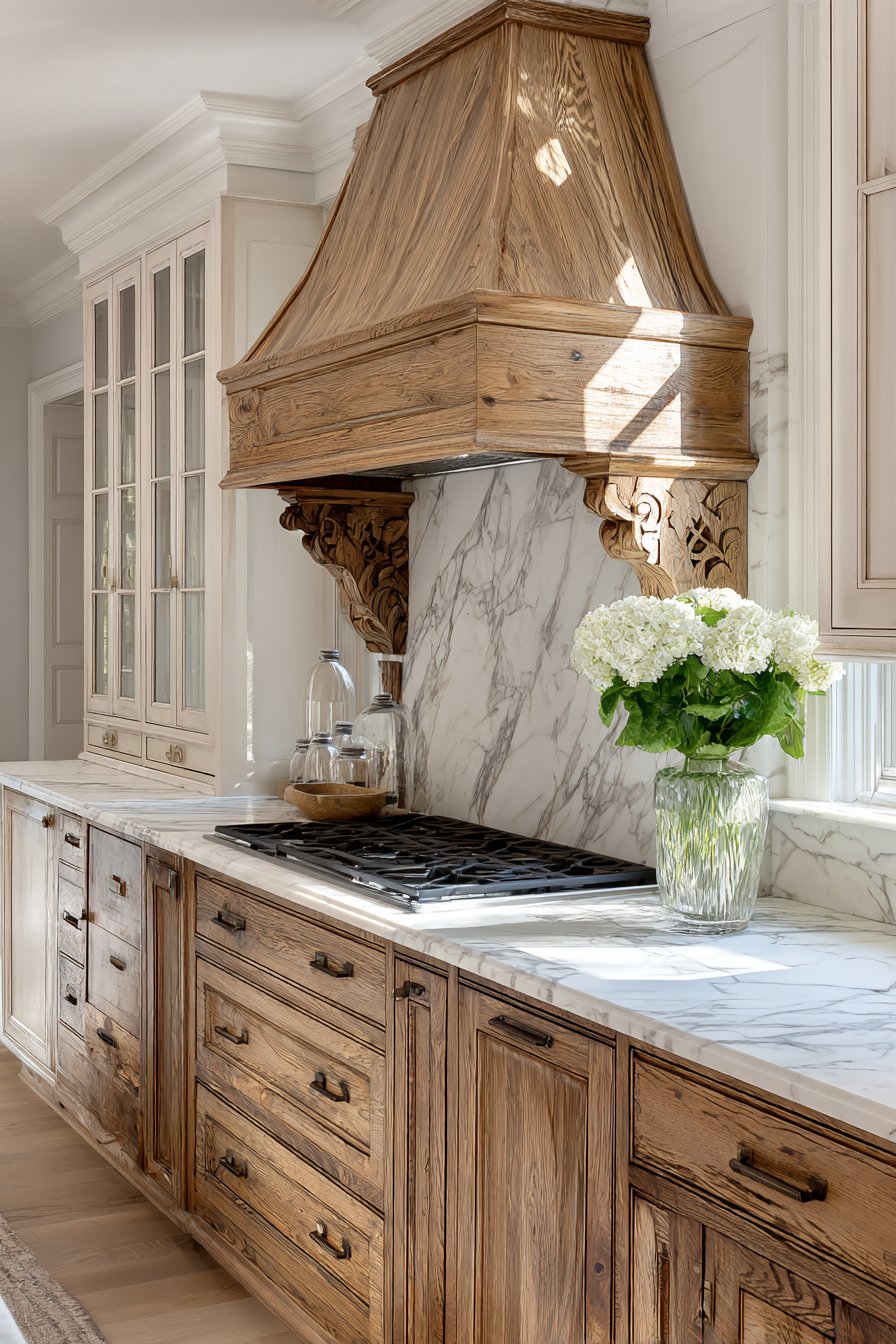
The wooden hood vent cover becomes an architectural focal point rather than merely functional necessity, featuring decorative corbels and visible wood joinery details that showcase traditional woodworking craftsmanship.
This element bridges the aesthetic gap between the upper and lower cabinetry while adding verticality and visual interest to what is often an awkward, bulky appliance. The exposed joinery—dovetails, mortise and tenon connections, or other traditional techniques—celebrates the craft of woodworking rather than hiding construction methods behind veneers or fillers.
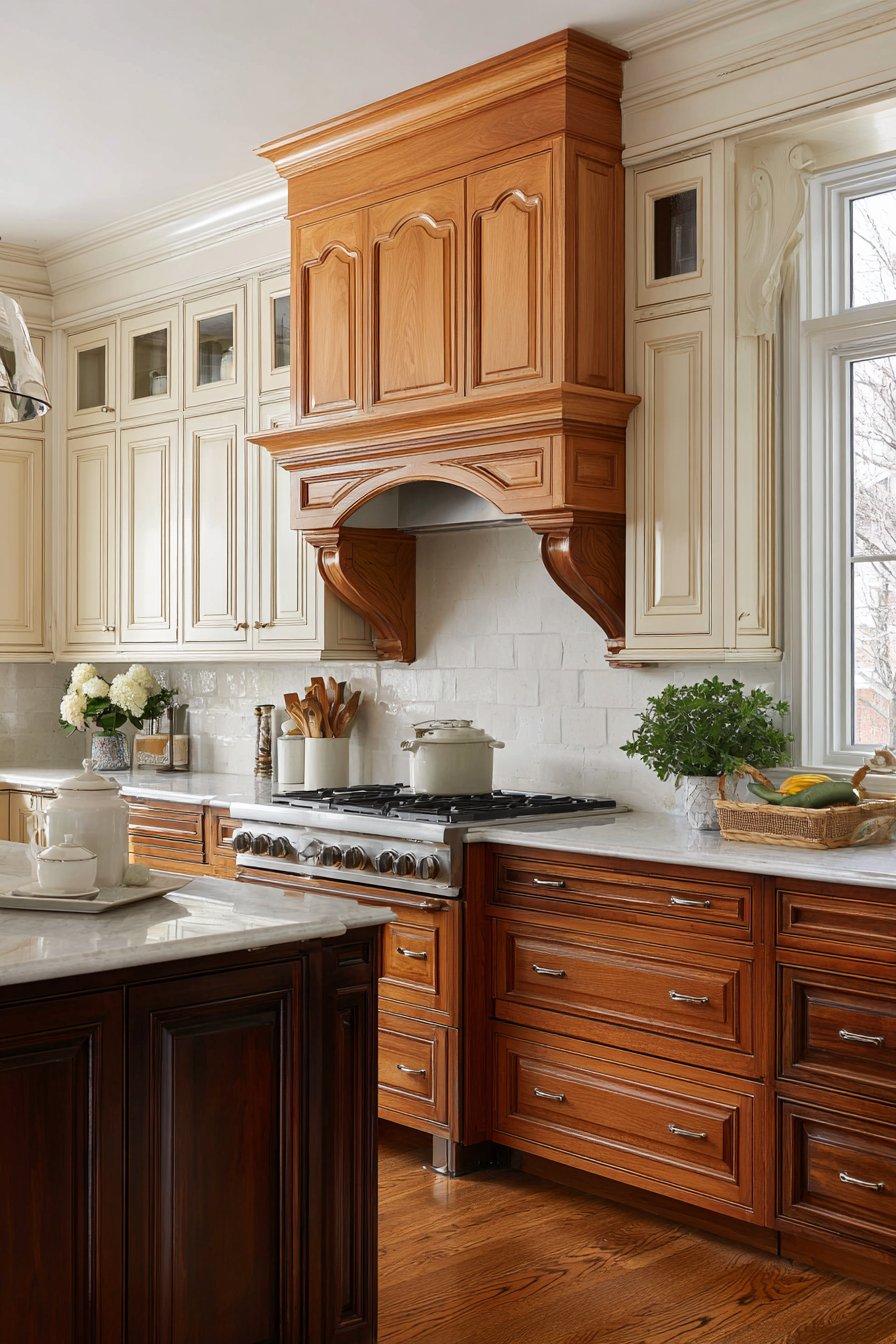
Marble countertops provide elegant contrast to the organic wood elements, their cool, smooth surfaces and distinctive veining creating a luxurious counterpoint to wood’s warmth. This natural stone brings different textures and visual qualities into the space—polished surfaces that reflect light differently than wood, random organic patterns that contrast with wood grain’s linear qualities, and a sense of permanence and luxury that elevates the entire design.
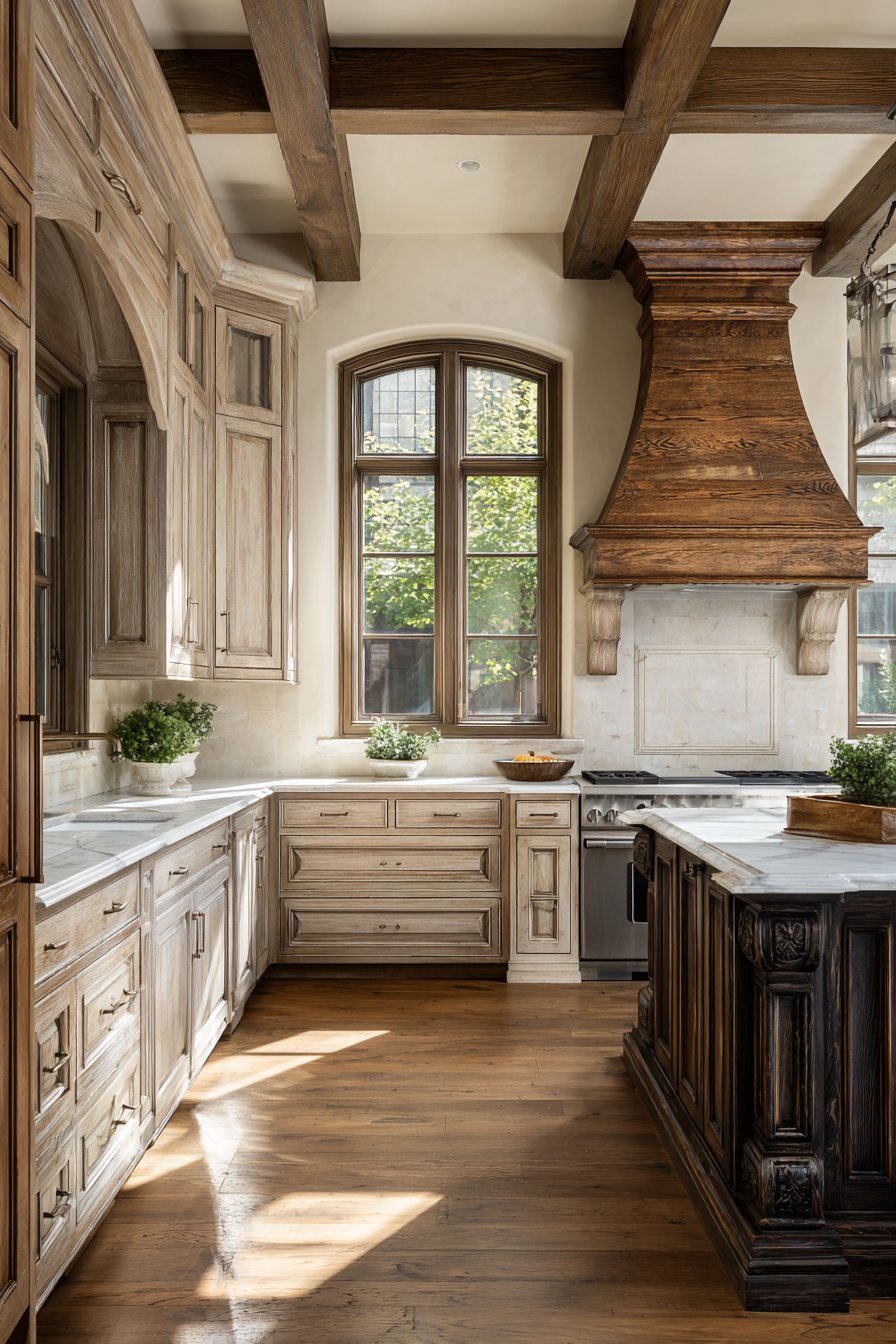
Professional interior photography captures the material interplay with natural daylight creating depth through soft shadows and highlights. The varied surface qualities—smooth marble, textured wood grain, matte cabinetry, and polished stone—each respond to light differently, creating a rich visual tapestry that changes throughout the day as light angles shift. This dynamic quality ensures the kitchen never looks static or boring, even though its basic design elements remain constant.
Key Design Tips:
- Use lighter woods on upper cabinets and darker tones below to create balanced visual weight distribution
- Select contrasting wood species with distinctly different grain patterns for maximum visual interest
- Transform functional elements like hood vents into decorative focal points through custom wood detailing
- Incorporate visible wood joinery to celebrate traditional craftsmanship and add authentic detail
- Pair wood cabinetry with stone countertops to create luxurious material contrast and varied textures
- Consider how different materials respond to light when planning finishes and surface treatments
9. Transitional Hickory Kitchen with Balanced Character

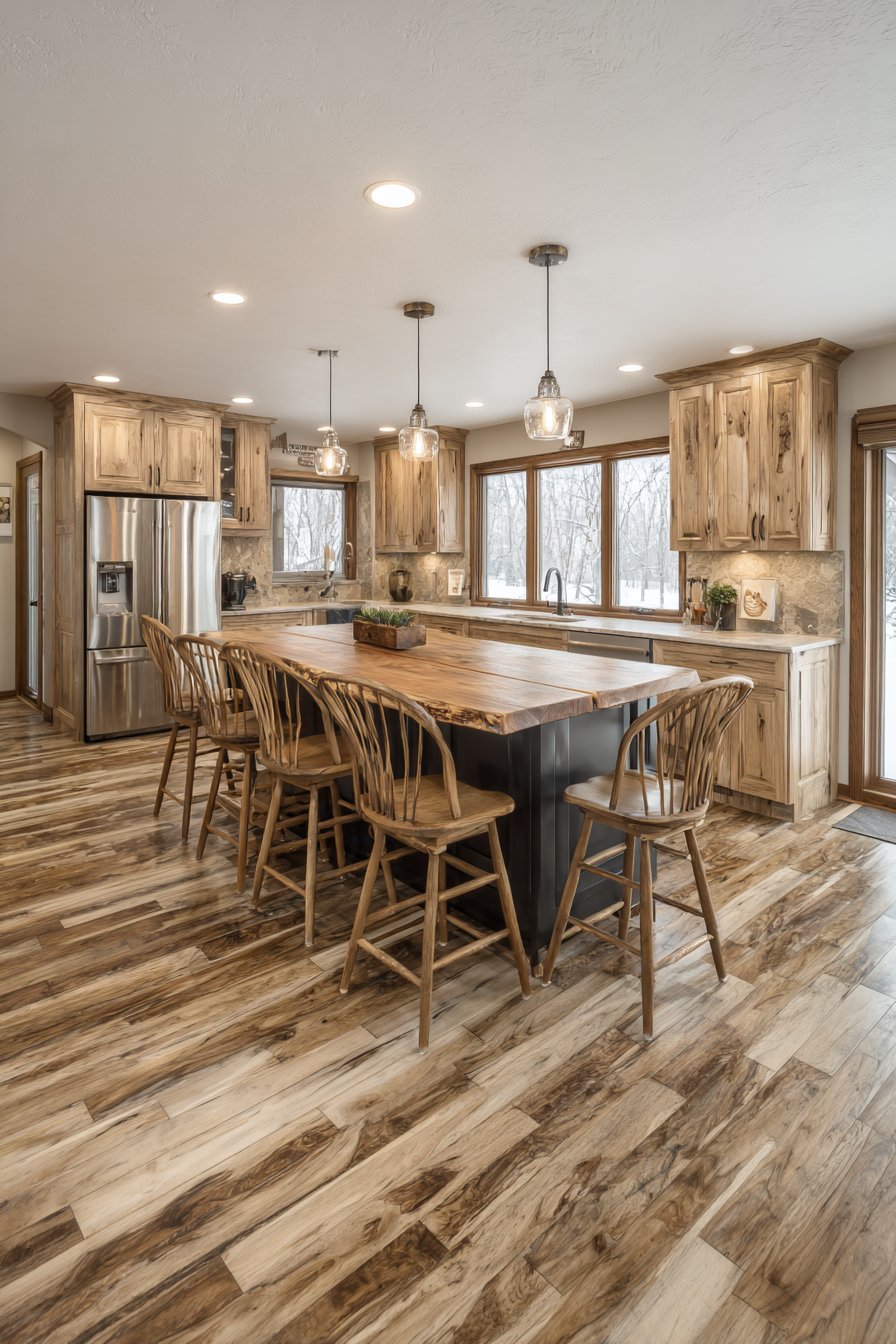
Medium-toned hickory cabinets strike the perfect balance between traditional and contemporary, their raised panel doors displaying the prominent grain character and natural color striations that make hickory uniquely recognizable. This wood species offers exceptional variation from pale cream to deep brown, sometimes within the same board, creating organic visual interest without any need for staining or artificial coloring. The raised panel door style adds subtle shadow lines and dimension while remaining restrained enough for transitional design sensibilities.
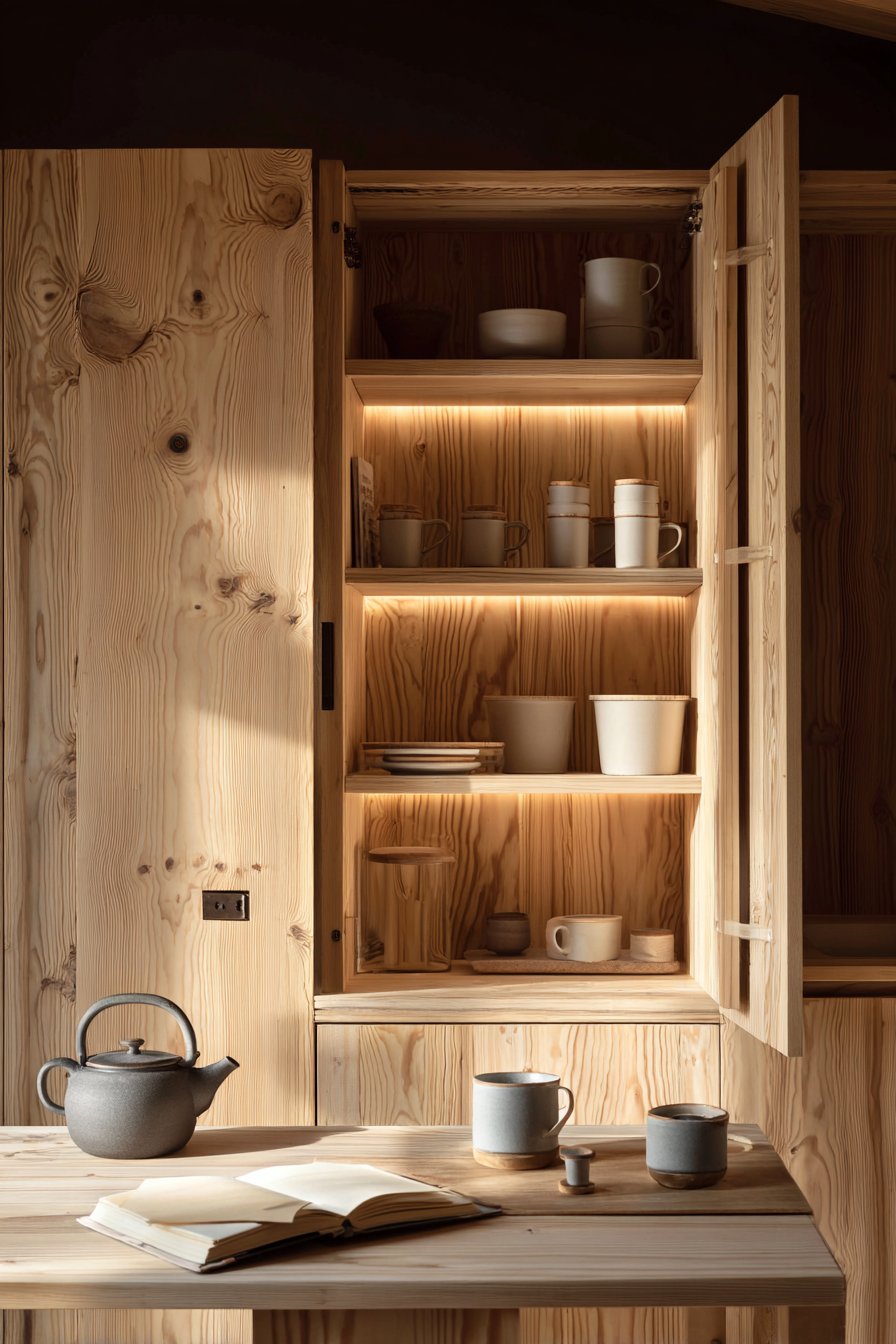
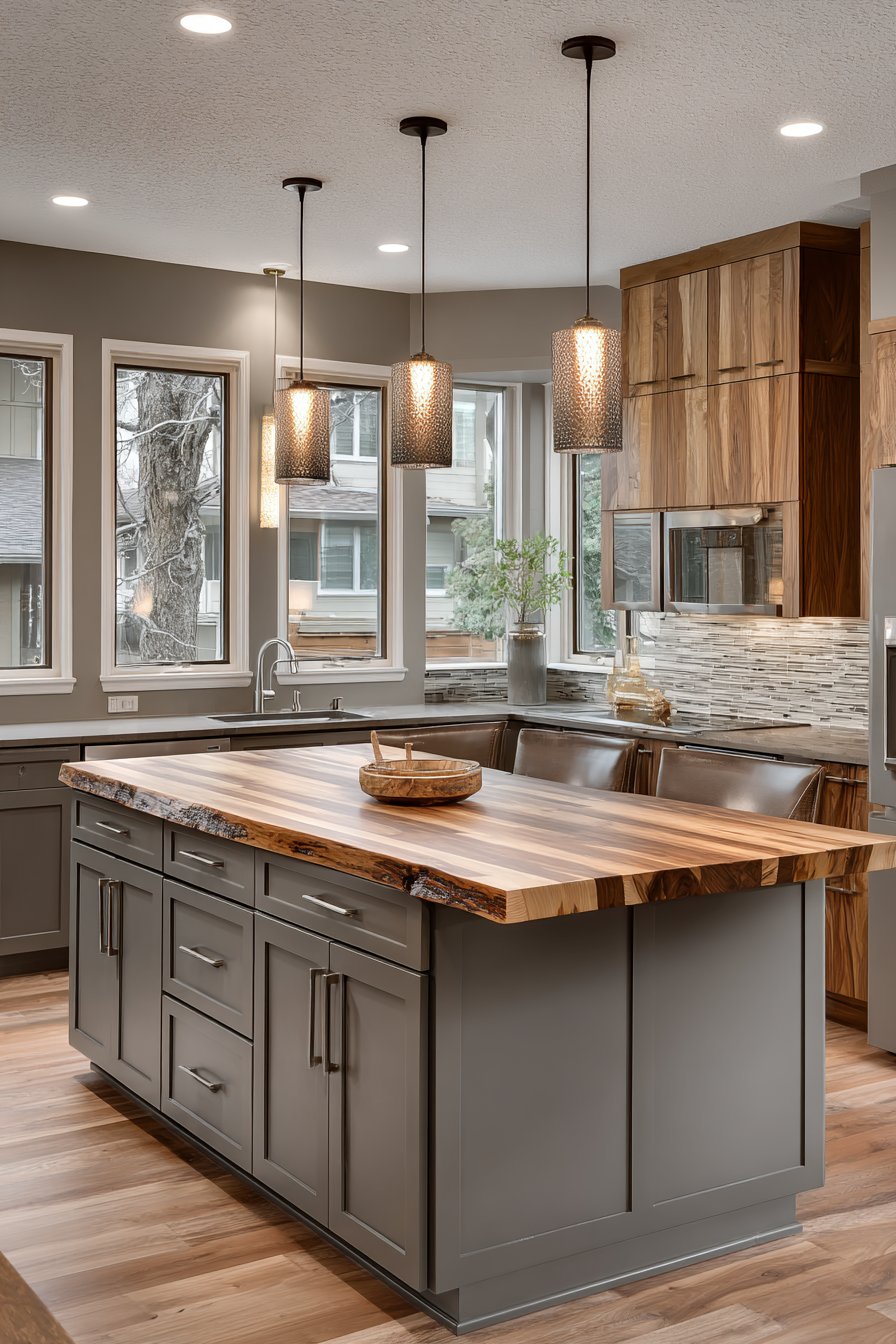
The kitchen island introduces deliberate contrast through a painted base topped with thick hickory countertop featuring live edge details on one side. This combination—painted base, natural wood top—bridges traditional and contemporary aesthetics while adding functional workspace and visual anchor to the kitchen’s center. The live edge, where bark has been removed but the wood’s natural contour remains, brings organic sculptural quality that contrasts beautifully with the geometric lines of cabinetry and appliances.
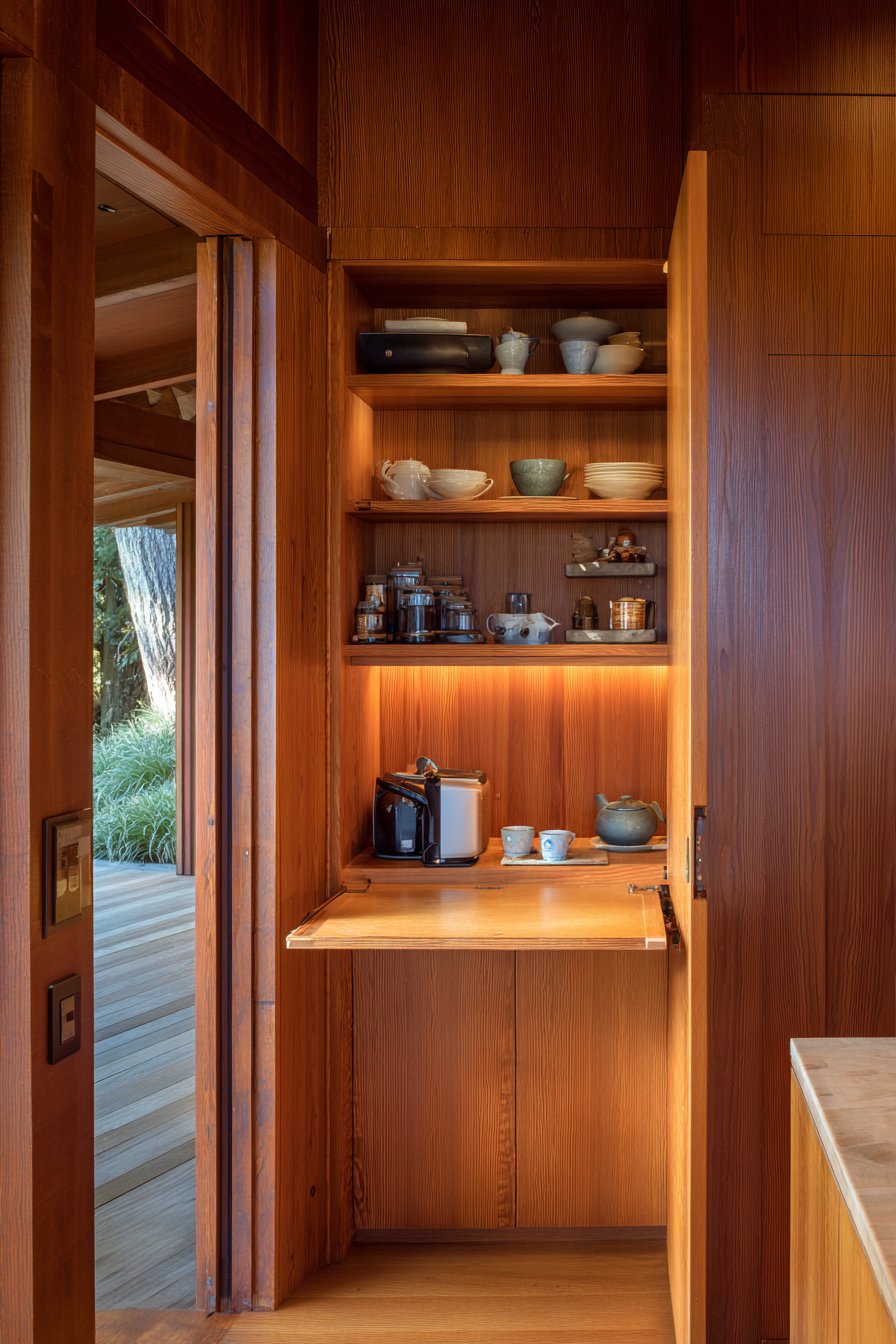
Brushed nickel hardware and fixtures provide metallic accents that complement the natural wood tones without competing for attention. This finish choice—neither too warm like brass nor too cool like chrome—achieves perfect neutrality that works with hickory’s varied coloring. The brushed finish adds subtle texture while hiding fingerprints and water spots better than polished alternatives, making it both beautiful and practical for kitchen use.
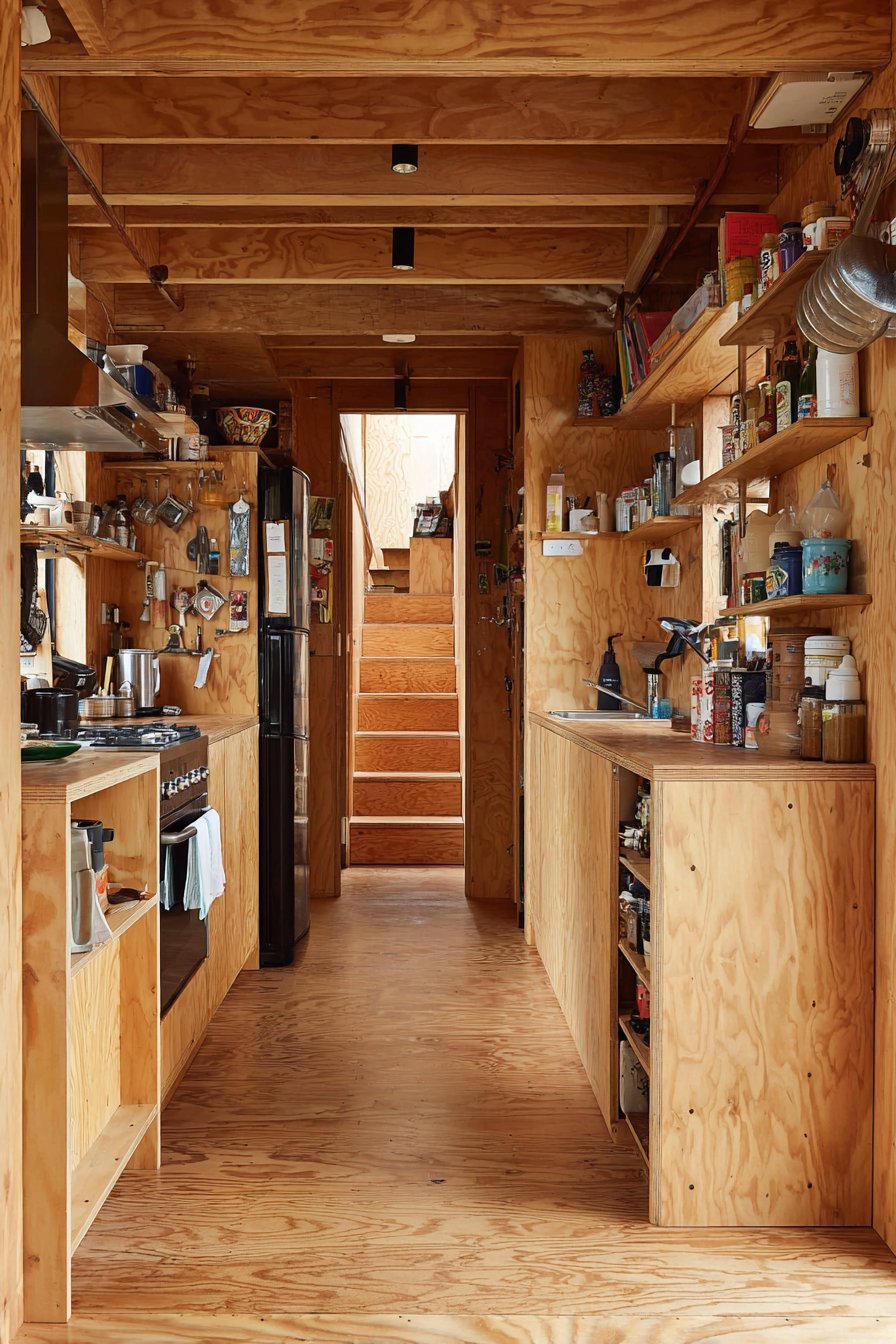
The interior design perspective reveals how this balanced design creates spaces that feel neither too traditional nor too modern, appealing to a broad range of aesthetic preferences. Soft diffused lighting from multiple windows creates even illumination that captures the authentic wood textures throughout the day. This multi-directional natural light prevents the prominent hickory grain from creating visual chaos, instead highlighting its character as an asset rather than an overwhelming distraction.
Key Design Tips:
- Choose hickory when you want dramatic natural variation in color and grain without any staining
- Combine painted and natural wood elements to bridge traditional and contemporary design styles
- Feature live edge details on islands or countertops as organic sculptural elements
- Select raised panel doors in medium profiles that add interest without excessive ornamentation
- Use brushed nickel finishes as neutral metallic accents that complement varied wood tones
- Install windows on multiple walls to create even, diffused natural lighting that showcases wood character
10. Artisan White Oak Kitchen with Specialized Craftsmanship

Quarter-sawn white oak cabinetry showcases specialized woodworking techniques that produce distinctive ray fleck patterns visible only in this particular wood cut. Quarter-sawing involves cutting logs perpendicular to growth rings rather than tangentially, producing boards with straight grain and dramatic silver or gold flecks created by the wood’s medullary rays. This cutting method was favored by Arts and Crafts movement furniture makers and remains prized today for its stability, beauty, and the skilled craftsmanship it requires.
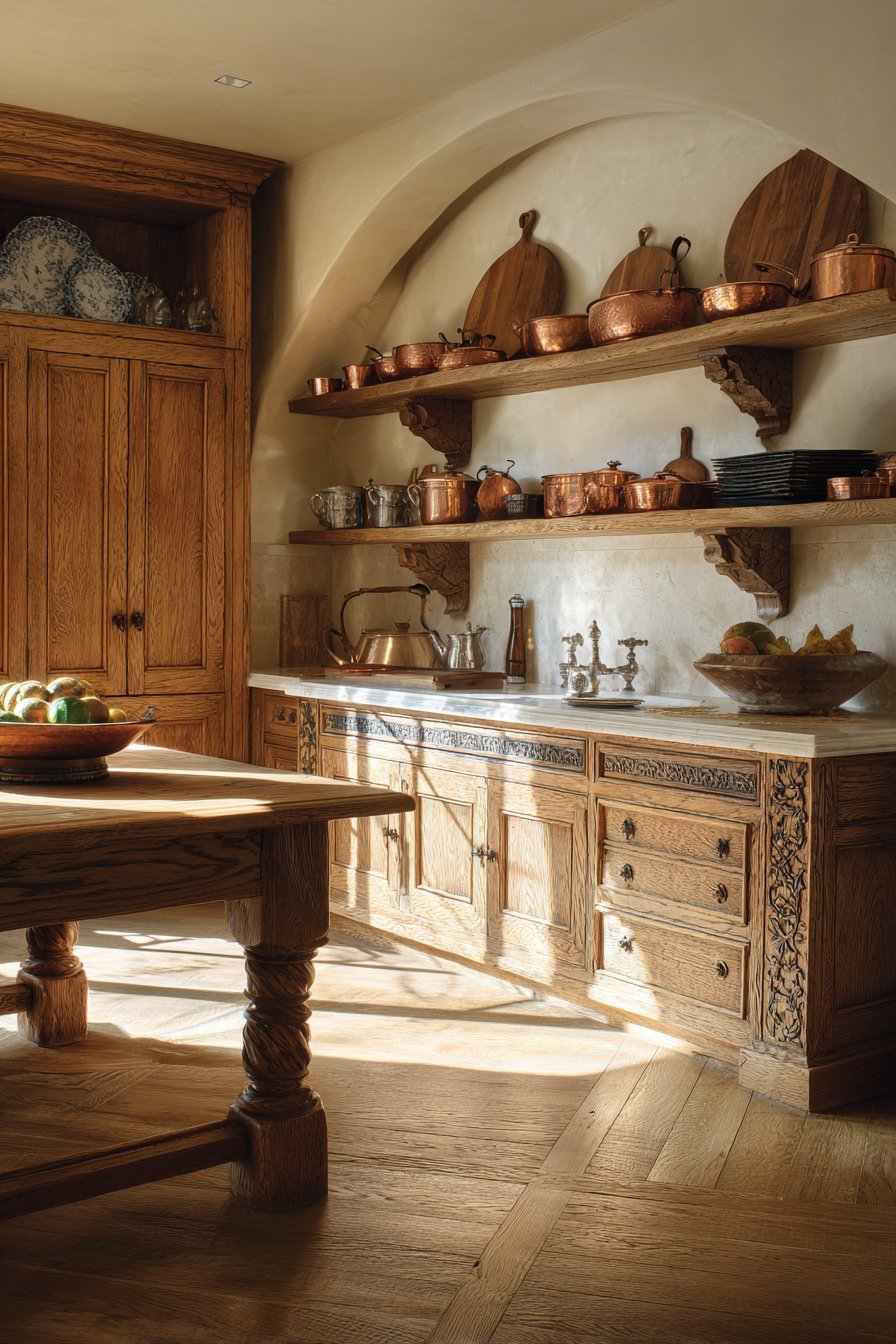
Open wooden shelving with decorative brackets made from matching oak creates display opportunities that feel integrated rather than added as afterthoughts. These shelves showcase copper cookware and wooden cutting boards—items chosen not just for utility but for their contribution to the kitchen’s warm, handcrafted aesthetic. The copper adds metallic warmth that complements oak’s golden tones, while wooden boards introduce additional natural texture and the promise of functional beauty.
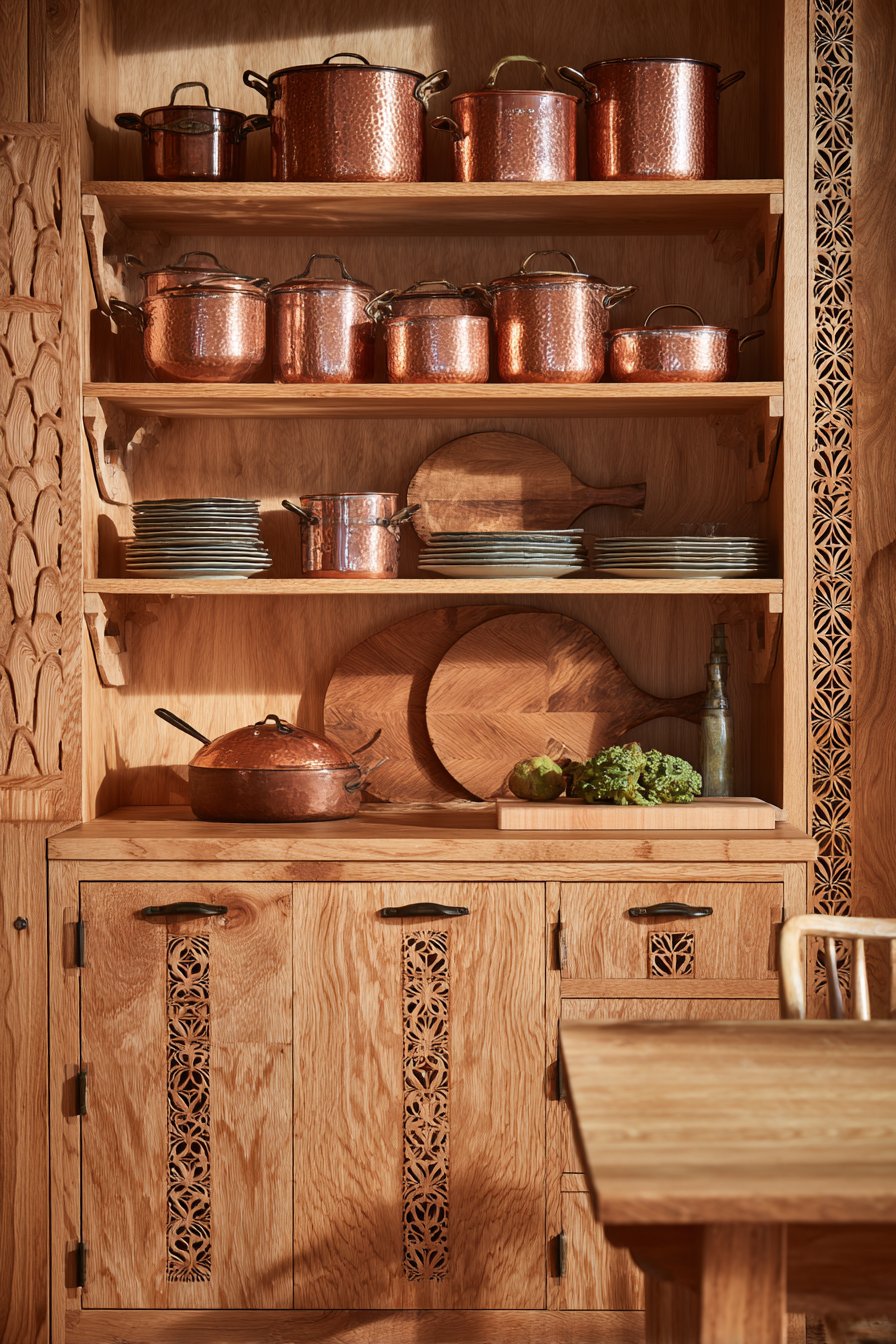
A farmhouse-style wooden table serves additional prep space while reinforcing the artisan aesthetic with its substantial construction and honest joinery. This table might feature traditional elements like turned legs, breadboard ends, or visible pegging that connects back to historical furniture making traditions. It provides flexible workspace that can be moved if needed while adding another horizontal plane of beautiful wood to the design composition.

Architectural photography captures the space with natural lighting that emphasizes every specialized woodworking technique, from the quarter-sawn patterns to the carefully crafted shelf brackets. The ray fleck patterns catch light at different angles throughout the day, creating subtle sparkle effects that seem to emanate from within the wood itself. This dynamic quality rewards extended viewing, revealing new details and effects as lighting conditions change.
Key Design Tips:
- Select quarter-sawn oak when you want the most distinctive grain patterns and superior wood stability
- Use matching wood species for cabinets, shelves, and brackets to create cohesive, integrated designs
- Display beautiful functional items like copper cookware as part of the kitchen’s decorative scheme
- Incorporate farmhouse tables as flexible workspace that adds warmth and traditional craftsmanship
- Choose specialized wood cuts like quarter-sawing when craftsmanship and unique beauty are priorities
- Arrange elements to showcase natural lighting that reveals specialized grain patterns throughout the day
Why These Wooden Kitchen Designs Represent the Best in Contemporary Kitchen Design
The ten wooden kitchen designs presented throughout this article represent the pinnacle of contemporary kitchen planning, each demonstrating unique approaches to incorporating natural wood materials into functional culinary spaces. These designs succeed because they balance aesthetic beauty with practical functionality—a kitchen must perform well regardless of how beautiful it appears. The extensive use of solid wood cabinetry, natural wood countertops, and wooden architectural elements creates warm, inviting environments that encourage gathering, cooking, and family connection in ways that synthetic materials simply cannot replicate.
Natural wood kitchen design remains perpetually relevant because wood brings inherent warmth, texture, and character that humans find innately appealing. Whether you prefer the rich walnut tones of design two, the pale Scandinavian birch of design four, or the dramatic quarter-sawn oak of design ten, wood species selection allows infinite personalization. The organic grain patterns, natural color variations, and tactile qualities of wood engage multiple senses simultaneously, creating spaces that feel alive rather than sterile. Each wooden kitchen design showcased here demonstrates how sustainable wood materials can create timeless aesthetics that won’t appear dated as trends cycle through seasons and years.
These exemplary designs excel at spatial planning and layout optimization, critical factors in kitchen functionality regardless of size or style. The compact vertical fir kitchen proves that small spaces can be both efficient and beautiful, while the spacious oak kitchen demonstrates how generous square footage can be organized to maximize both storage and work surfaces. The careful attention to natural lighting strategies—from skylights in the modern maple kitchen to corner windows in the contemporary espresso design—shows understanding that proper illumination makes or breaks kitchen usability and ambiance.
Material contrast and texture layering appear as recurring themes throughout these designs, preventing visual monotony while maintaining cohesive aesthetics. The two-tone ash and cherry kitchen exemplifies sophisticated material pairing, while the rustic farmhouse design layers weathered oak beams, distressed cabinetry, and salvaged barn wood for rich textural complexity. These approaches demonstrate that successful wooden kitchen design need not rely on wood alone—strategic incorporation of metal hardware, stone countertops, tile backsplashes, and varied finishes creates visual interest and functional diversity.
The craftsmanship quality evident throughout these designs separates exceptional kitchens from merely adequate ones. Notice the waterfall-edge islands in the modern maple and contemporary espresso kitchens, the visible wood joinery in the two-tone design’s hood vent, and the specialized quarter-sawing technique in the artisan oak kitchen. These details reveal designers and craftspeople who understand traditional woodworking methods while incorporating modern manufacturing technologies where appropriate. The result is custom cabinetry that appears meticulously handcrafted even when produced using contemporary equipment and techniques.
Sustainable design principles underlie many of these kitchens, particularly those incorporating reclaimed wood elements or salvaged materials. The spacious oak kitchen’s reclaimed wood island and the rustic farmhouse kitchen’s barn wood top demonstrate how repurposed materials bring authentic character while reducing environmental impact. As consciousness about sustainability grows, eco-friendly wooden kitchens using responsibly harvested lumber, low-VOC finishes, and reclaimed materials become increasingly desirable for environmentally aware homeowners.
Each design’s success stems from understanding how wood finish options dramatically alter appearance and feel. Compare the natural clear finish on vertical grain fir cabinetry with the dark espresso stain on contemporary cabinetry—both use quality hardwoods, but the finish choices create entirely different atmospheres. Honey finishes, warm walnut stains, light natural oils, and painted bases each offer distinct aesthetic possibilities while providing varying levels of wood grain visibility and color enhancement. These diverse finish approaches demonstrate wood’s versatility in adapting to any design vision.
The hardware selections throughout these kitchens—from antique brass in rustic designs to brushed nickel in transitional spaces to chrome accents in contemporary kitchens—show how metallic elements significantly impact overall aesthetic cohesion. Proper hardware choice complements rather than competes with wood tones, adding functional beauty to cabinet doors and drawers. The various designs prove that hardware should be selected based on overall design intent rather than following generic rules about matching metals throughout.
Open shelving solutions appear in multiple designs, from thick pine planks in the walnut kitchen to integrated oak shelving in the artisan design. This practical trend serves dual purposes: providing accessible storage for frequently used items while creating display opportunities that personalize the kitchen. The designs demonstrate that open shelving works best when thoughtfully incorporated rather than used excessively, balancing display with enclosed storage for a clutter-free appearance.
The island designs featured throughout—from butcher block countertops to breakfast bars to farmhouse prep tables—illustrate how central work surfaces have become essential features in contemporary kitchen planning. These islands provide valuable prep space, casual dining areas, and natural gathering points that encourage social interaction during cooking activities. The variety of island styles proves that this element can adapt to virtually any kitchen size and design aesthetic while adding functional versatility.
Lighting strategies receive thoughtful attention in every design, recognizing that proper illumination determines both functionality and ambiance. The combination of natural lighting from windows and skylights, task lighting under cabinets, ambient pendant fixtures, and integrated shelf lighting creates layered illumination that adapts to different activities and times of day. These sophisticated lighting approaches ensure wooden surfaces appear warm and inviting while providing adequate visibility for detailed cooking tasks.
The enduring appeal of these wooden kitchen designs lies in their ability to create emotional connections that transcend mere functionality. Wood’s organic origins, natural aging properties, and sensory qualities trigger positive psychological responses that synthetic materials cannot replicate. These designs prove that investing in quality wooden cabinetry and elements creates kitchens that improve with age rather than requiring frequent replacement to stay current with changing trends.
Conclusion
The journey through these ten exceptional wooden kitchen designs reveals the remarkable versatility and enduring appeal of natural wood in contemporary kitchen spaces. From the rustic charm of weathered oak beams and salvaged barn wood to the refined elegance of quarter-sawn white oak and book-matched walnut, wood offers infinite possibilities for creating kitchens that reflect individual personalities and lifestyles. Each design demonstrates that successful wooden kitchens balance aesthetic beauty with practical functionality, creating spaces where cooking, gathering, and living intersect seamlessly.
The key takeaways from these designs emphasize several critical principles: select wood species and finishes that align with your overall design vision, incorporate varied textures and materials to prevent monotony, prioritize natural lighting strategies that showcase wood’s inherent beauty, and invest in quality craftsmanship that ensures longevity. Whether you’re drawn to the minimalist Scandinavian aesthetic of pale birch, the dramatic contemporary impact of dark espresso staining, or the authentic farmhouse character of distressed cabinetry with antique hardware, wood adapts to support your vision while bringing warmth and organic beauty to your home’s heart.
As you contemplate your own kitchen renovation or refresh project, draw inspiration from these designs while adapting their principles to your unique space, needs, and preferences. Consider how natural grain patterns might add visual interest to flat cabinet doors, how reclaimed wood elements could introduce character and sustainability, or how specialized woodworking techniques like quarter-sawing might create distinctive focal points. Remember that successful wooden kitchen design isn’t about following rigid rules but rather understanding fundamental principles and applying them creatively to your specific circumstances. Embrace experimentation with different wood species, finish options, and design elements—the worst that can happen is discovering what doesn’t work for you, which brings you closer to understanding what does. Your kitchen deserves the timeless beauty, warmth, and character that only natural wood can provide.
