


The kitchen has always been the heart of the home, a place where families gather, meals are prepared with love, and memories are created. In recent years, wood kitchens have experienced a remarkable renaissance, moving beyond traditional design boundaries to embrace contemporary aesthetics while maintaining their inherent warmth and natural beauty. The versatility of wood as a material allows homeowners to create spaces that are not only functional but also deeply personal, reflecting individual tastes and lifestyles.
Wood kitchens offer an unparalleled combination of durability, aesthetic appeal, and timeless elegance. From the rich, dark tones of walnut to the light, airy qualities of birch, wood brings a sense of organic beauty that synthetic materials simply cannot replicate. The natural grain patterns, unique color variations, and tactile warmth of wood create an inviting atmosphere that makes the kitchen a place where people want to spend time. Whether you’re drawn to rustic farmhouse charm or sleek contemporary minimalism, wood adapts beautifully to any design vision.
This comprehensive guide explores ten distinctive wood kitchen designs, each showcasing different approaches to incorporating this magnificent material into your culinary space. From maximizing storage in compact areas to creating stunning focal points with reclaimed wood islands, these designs demonstrate the incredible range of possibilities that wood offers. You’ll discover how different wood species, finishes, and design styles can transform your kitchen into a space that’s both highly functional and visually stunning, proving that wood kitchens are far more than a trend—they’re a lasting investment in beauty and quality.
1. Natural Oak Kitchen with Warm Honey Tones
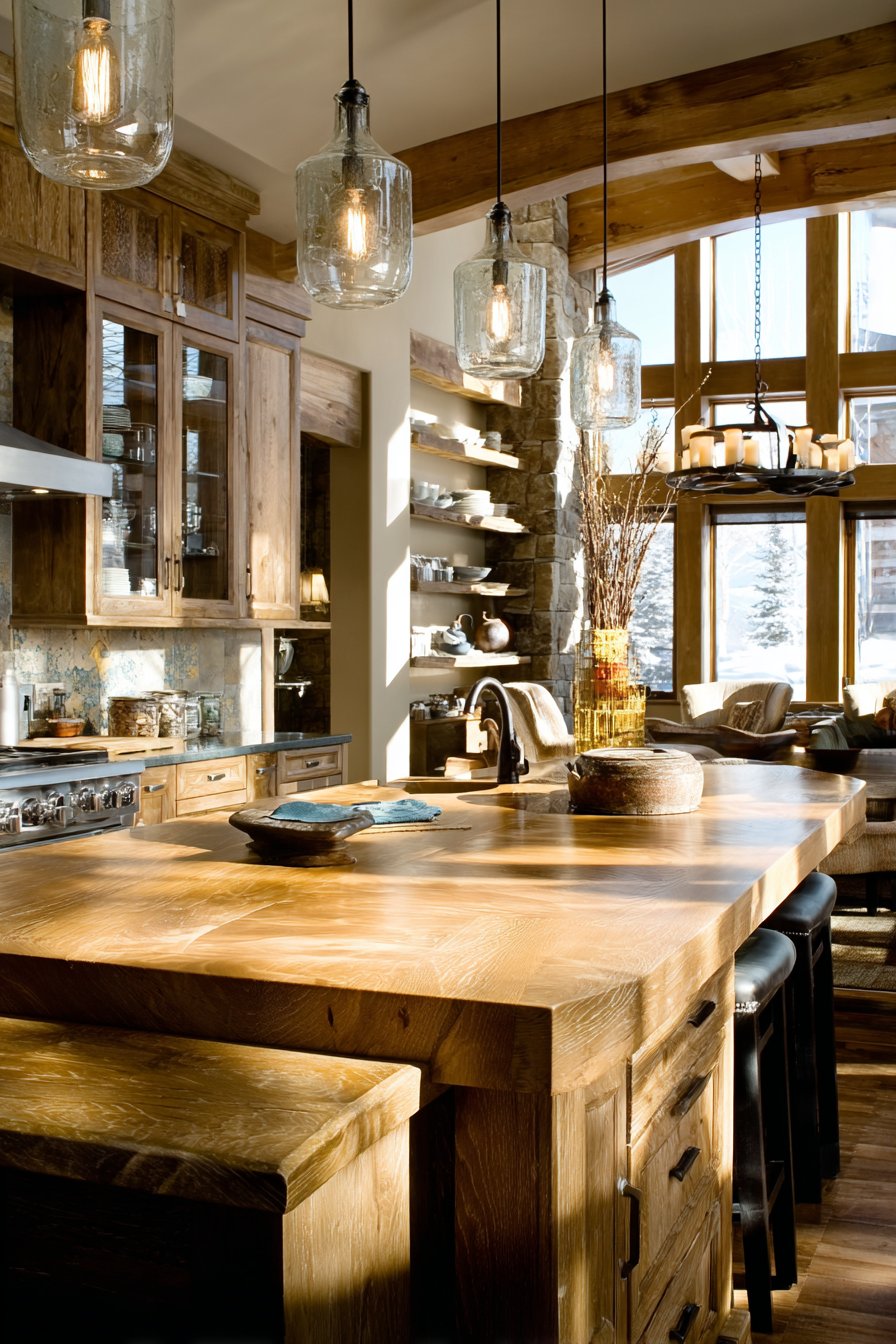
Step into a kitchen where natural oak cabinetry takes center stage, showcasing beautiful grain patterns and a honey-toned finish that immediately warms the entire space. The visible wood grain creates a sense of authenticity and connection to nature, with each cabinet door telling its own unique story through the organic patterns that flow across the surface. This design celebrates the inherent beauty of oak, allowing its natural characteristics to shine without excessive processing or artificial enhancement. The honey tones catch and reflect light throughout the day, creating a dynamic environment that feels alive and responsive to changing conditions.
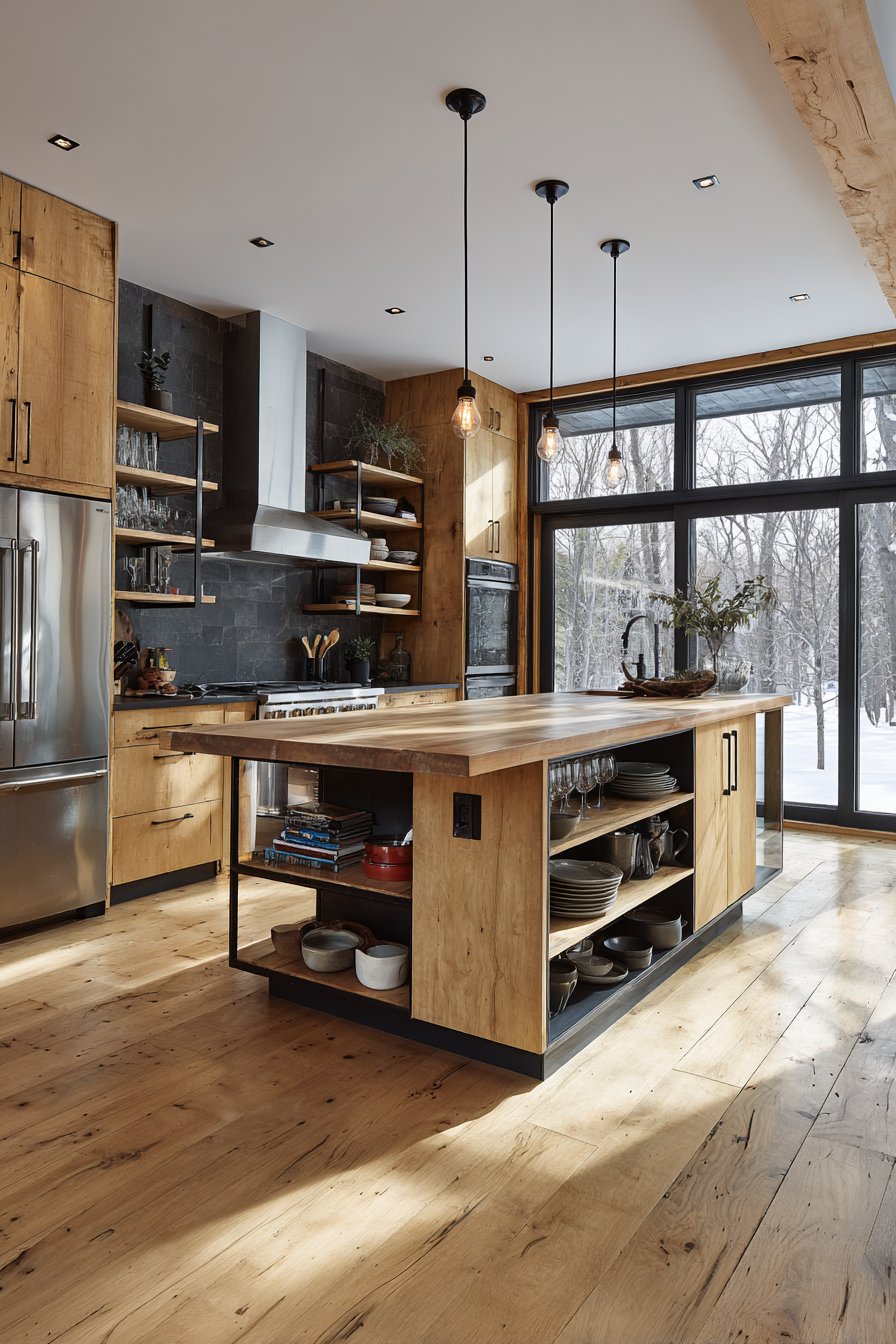
The large central island serves as both a functional workspace and a stunning design element, topped with butcher block countertop that displays authentic wood texture and subtle color variations. The island becomes the natural gathering point in the kitchen, where family members can sit with morning coffee, children can do homework while dinner is prepared, or guests can mingle during entertaining.
The butcher block surface is not only beautiful but also practical, providing an ideal surface for food preparation that improves with age and use. Small knife marks and the gentle patina that develops over time add character rather than diminishing the surface’s appeal.
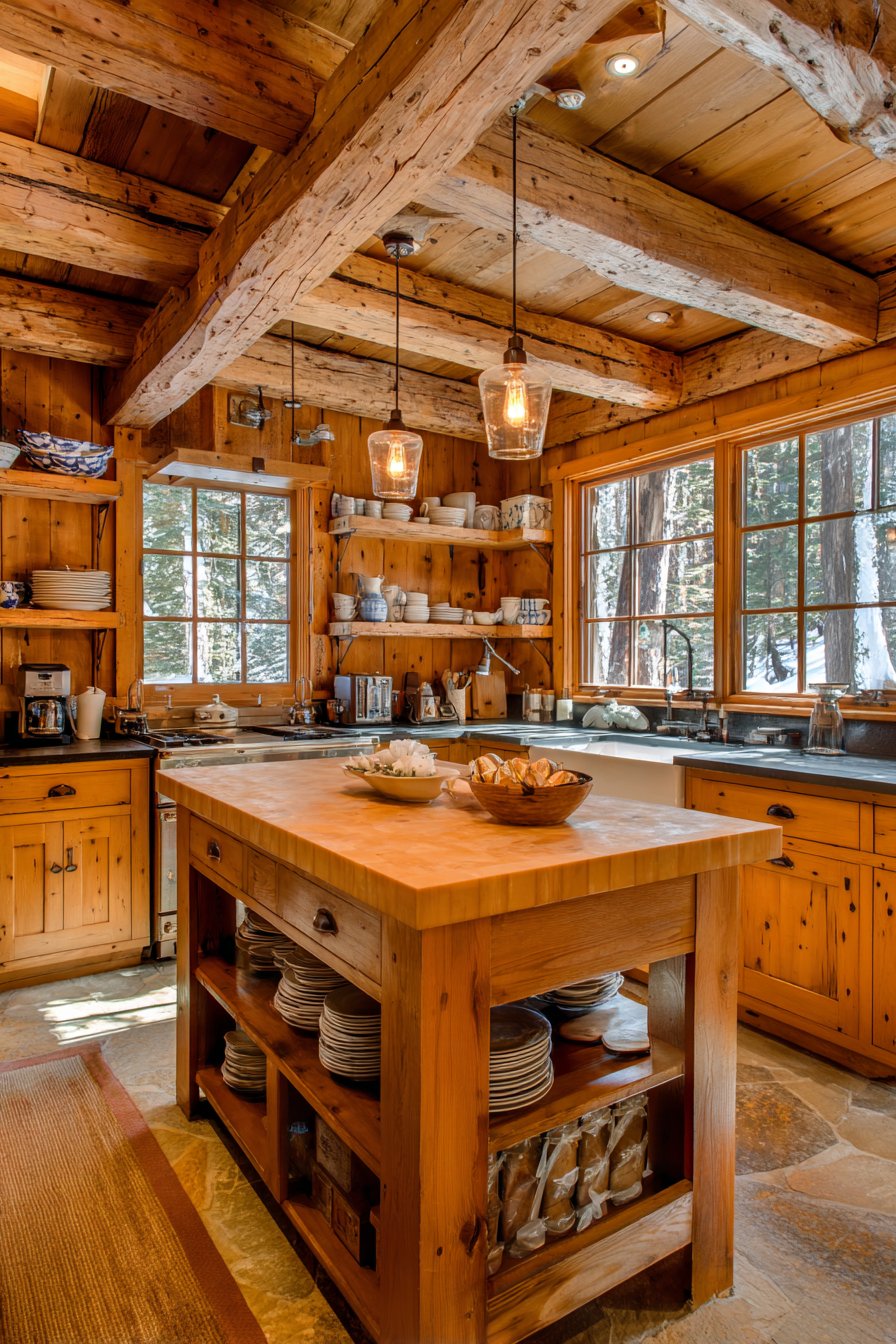
Open shelving creates an opportunity to display ceramic dishes and glassware against the wooden backdrop, adding both functionality and visual interest to the design. The deliberate choice to leave some storage open rather than hiding everything behind cabinet doors creates a sense of accessibility and casual elegance.
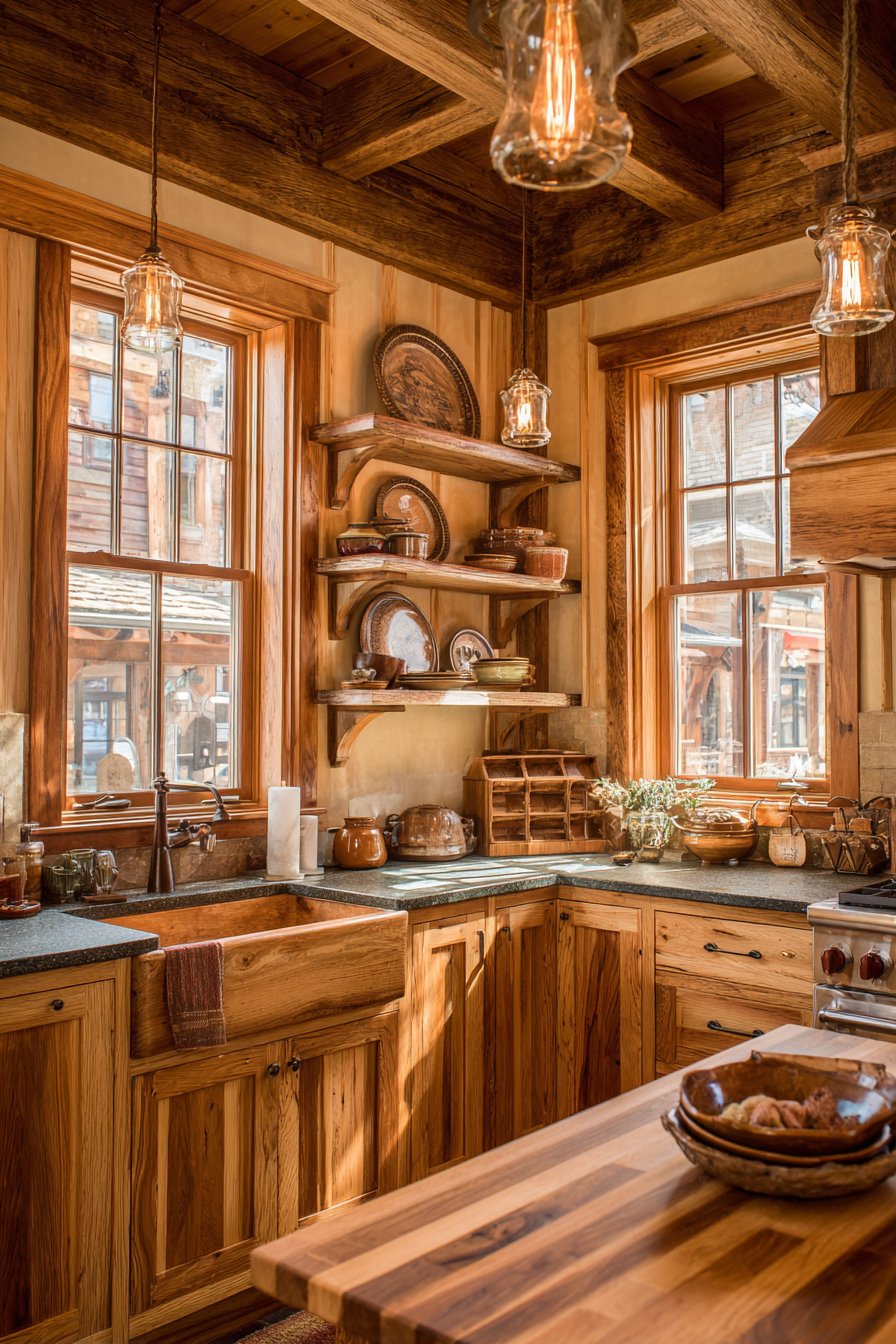
Stainless steel appliances provide a modern contrast that prevents the space from feeling too rustic or dated, while pendant lights with Edison bulbs cast a warm glow over the workspace, creating pools of inviting light that make the kitchen feel cozy even in the evening hours. Large windows allow natural light to flood the space during daytime hours, highlighting the rich wood tones and creating gentle shadows that emphasize the organic material texture.
Key Design Tips:
- Select oak with prominent grain patterns to maximize visual interest and celebrate the natural beauty of the wood rather than trying to minimize or hide these organic features.
- Incorporate a butcher block island to create a warm, functional centerpiece that serves multiple purposes and develops character over time with regular use.
- Balance wood elements with modern appliances to prevent the design from feeling too traditional or dated, creating a kitchen that feels current and fresh.
- Use Edison bulb pendant lights to enhance the warm tones of oak and create atmospheric lighting that complements the natural materials.
- Maximize natural light with large windows to showcase the honey tones and grain patterns throughout the day as light conditions change.
2. Rustic Reclaimed Barn Wood Kitchen
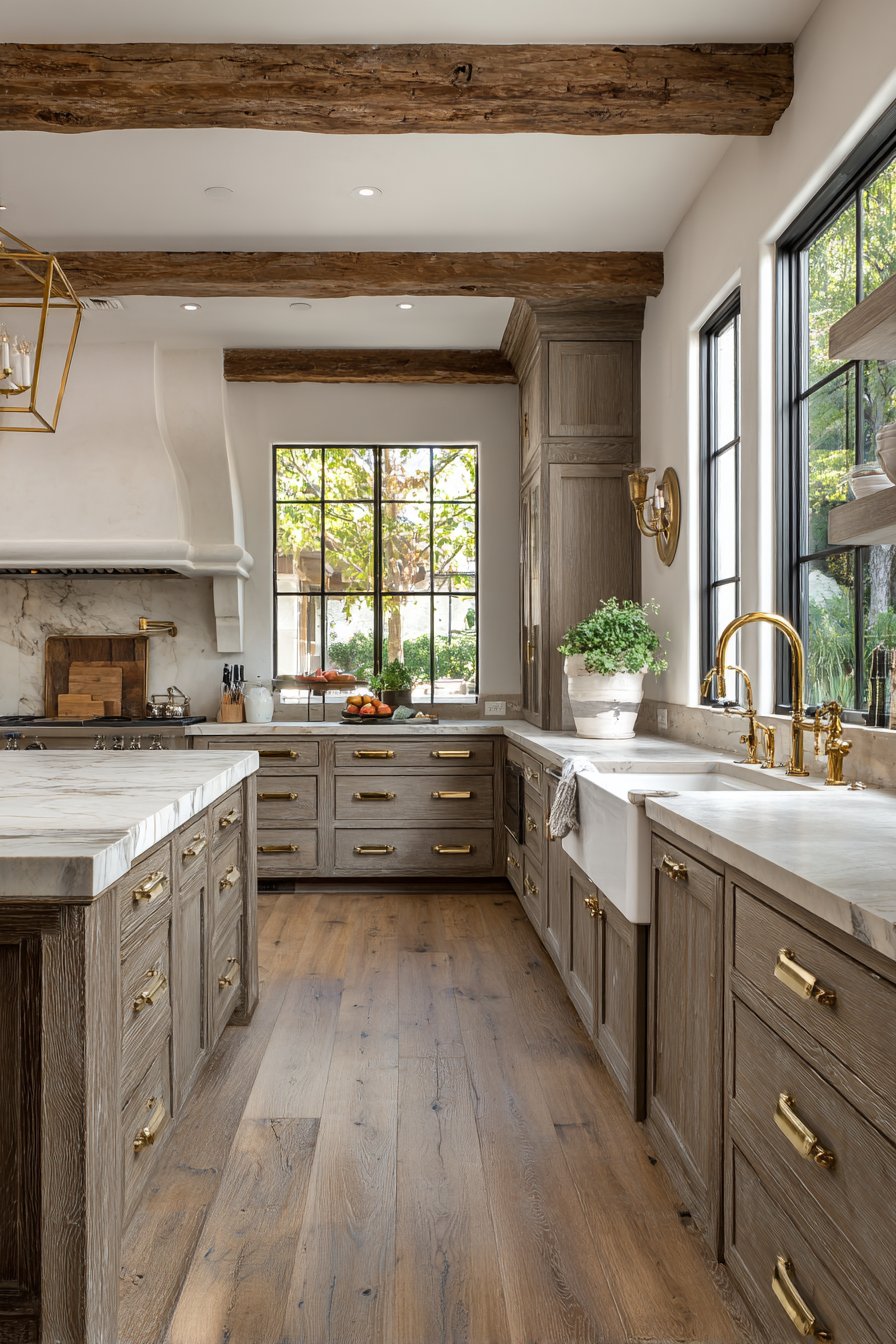
Imagine walking into a kitchen where history literally surrounds you, with reclaimed barn wood ceiling beams creating architectural drama overhead and telling stories of their previous life. The shaker-style walnut cabinets feature traditional brass hardware that gleams against the deep, rich tones of the wood, creating a perfect marriage of craftsmanship and material quality.
This design embraces authenticity, celebrating imperfections and the weathered character that only time can create. The walnut cabinetry provides a sophisticated foundation with its refined lines and proportions, while the reclaimed ceiling beams add texture, depth, and a sense of heritage to the space.
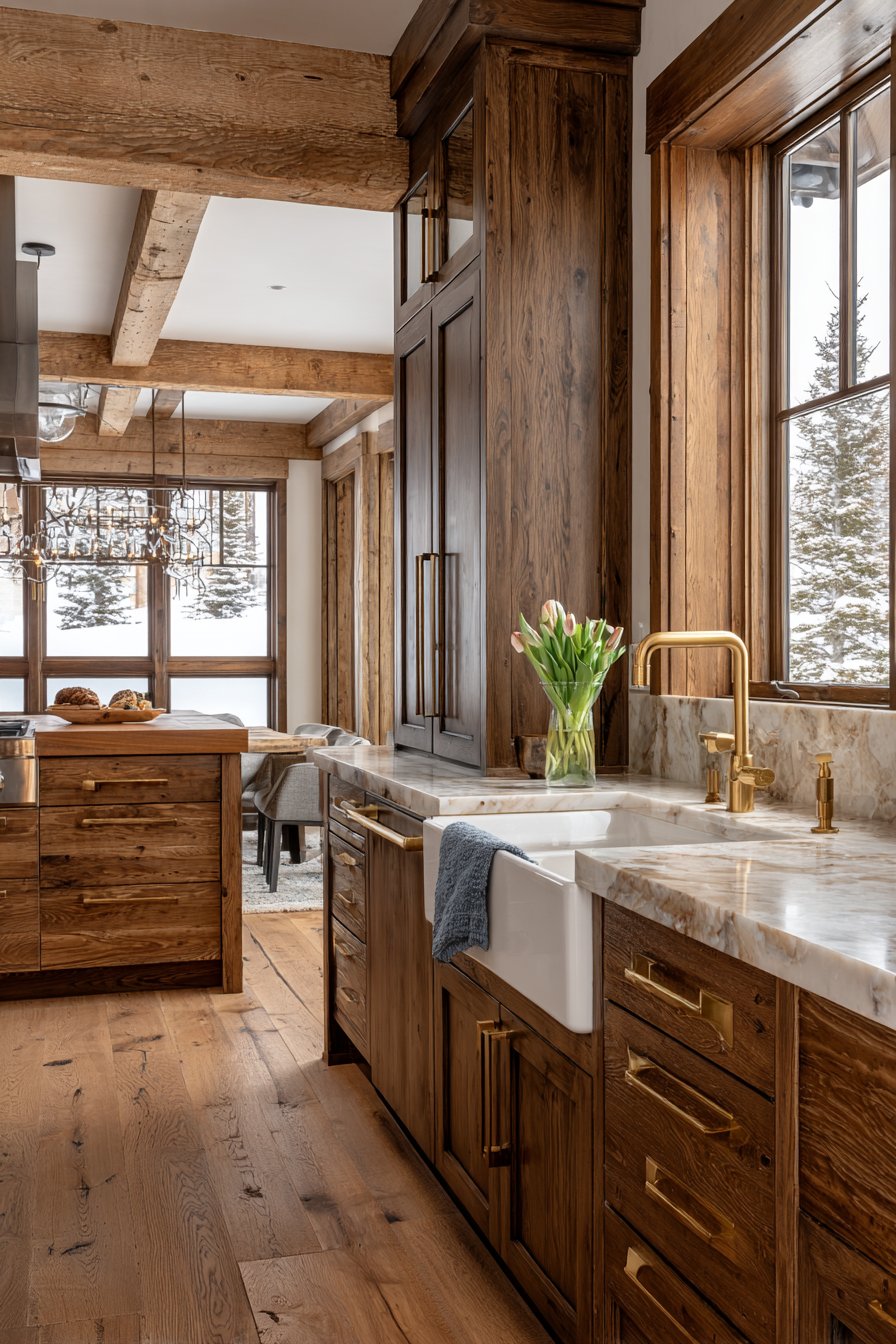
The farmhouse sink becomes a focal point, set beautifully in butcher block countertops with natural edge details that preserve the organic shape of the original wood. These live-edge details create visual interest and remind us of the tree from which the wood came, maintaining a connection to nature even in this carefully designed space.
The visible wood grain across the countertops creates a tapestry of natural patterns, with no two sections appearing exactly alike. Wood plank flooring in weathered oak adds another layer of rustic authenticity to the design, with its aged appearance suggesting years of family gatherings and culinary adventures.
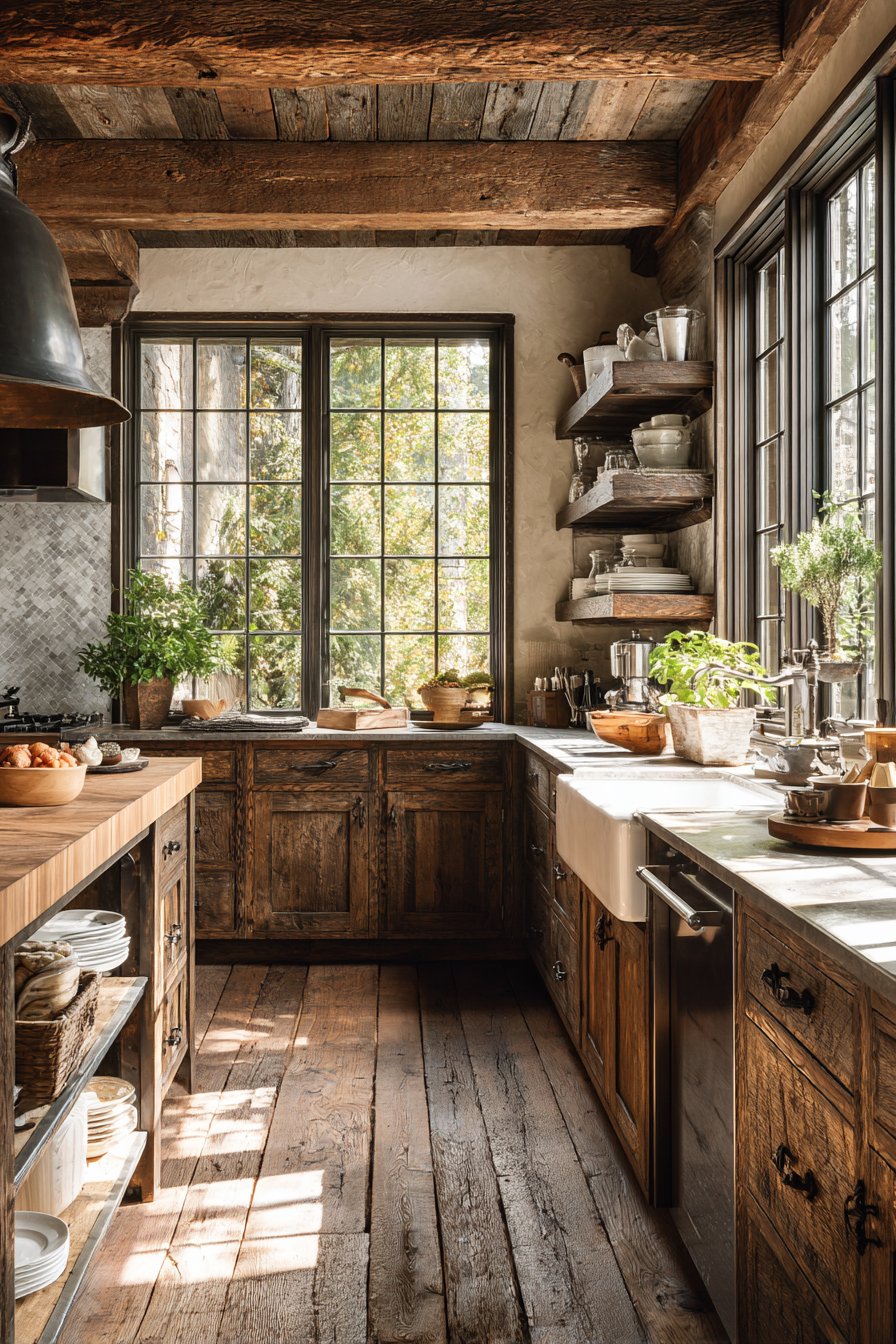
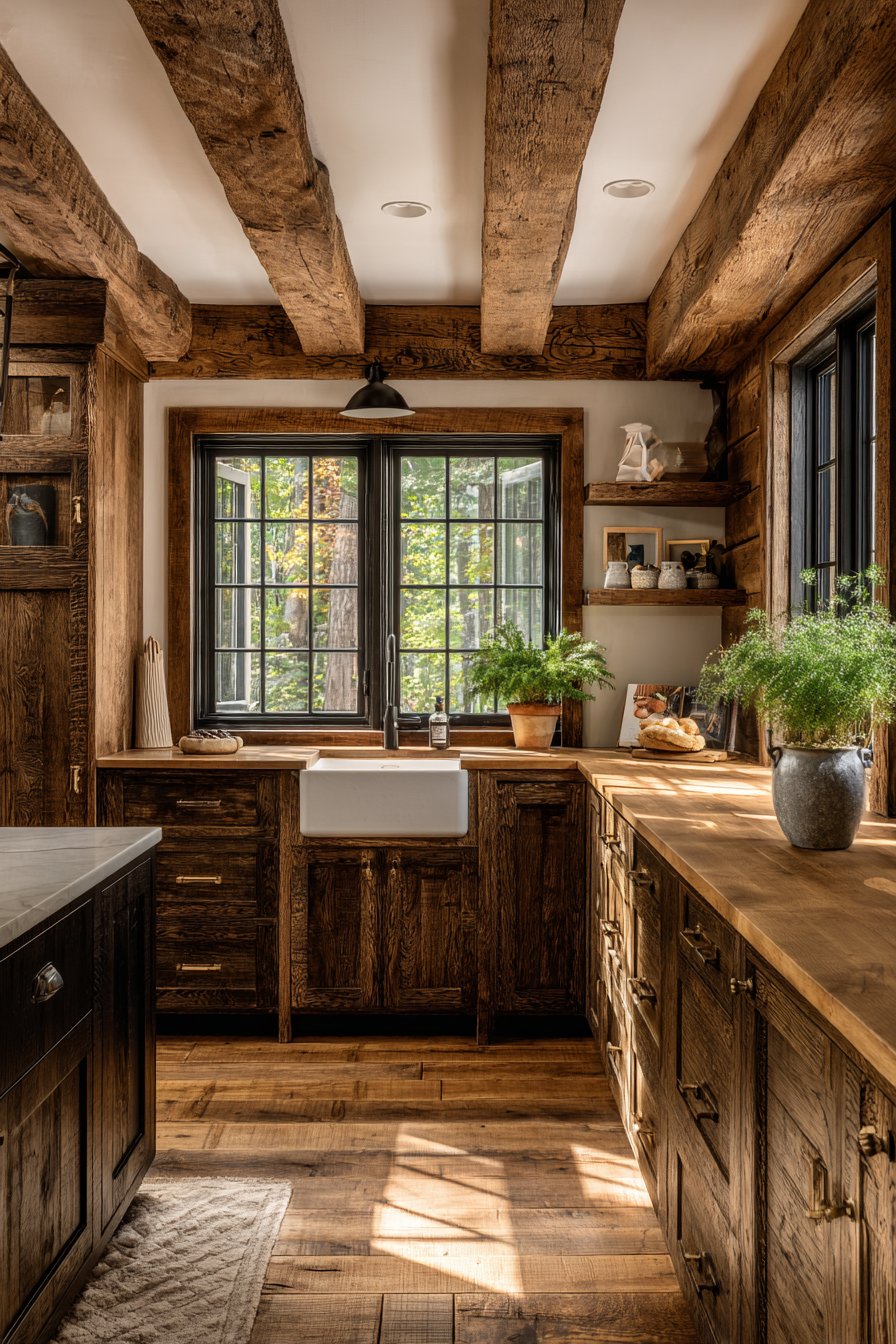
Morning light streaming through windows illuminates the layered wood tones and textures throughout the kitchen, creating a warm, lived-in quality that makes the space feel instantly comfortable and welcoming. The interplay between the darker walnut cabinets, medium-toned butcher block countertops, and lighter weathered oak flooring creates visual depth and prevents the abundance of wood from feeling monotonous or overwhelming. The brass hardware catches the light and adds subtle sparkle, while the white farmhouse sink provides a clean, bright contrast point that draws the eye and balances the richness of the surrounding wood.
Key Design Tips:
- Source authentic reclaimed barn wood for ceiling beams to add genuine character and architectural interest that cannot be replicated with new materials.
- Choose shaker-style cabinets in walnut for a timeless look that combines traditional craftsmanship with sophisticated wood tones.
- Install a farmhouse sink to enhance the rustic aesthetic while providing practical benefits for food preparation and cleanup.
- Incorporate natural edge details on countertops to celebrate the organic origins of the wood and create unique focal points.
- Select weathered oak flooring to complete the rustic layering and ensure the design feels cohesive from floor to ceiling.
3. Scandinavian Light Birch Kitchen
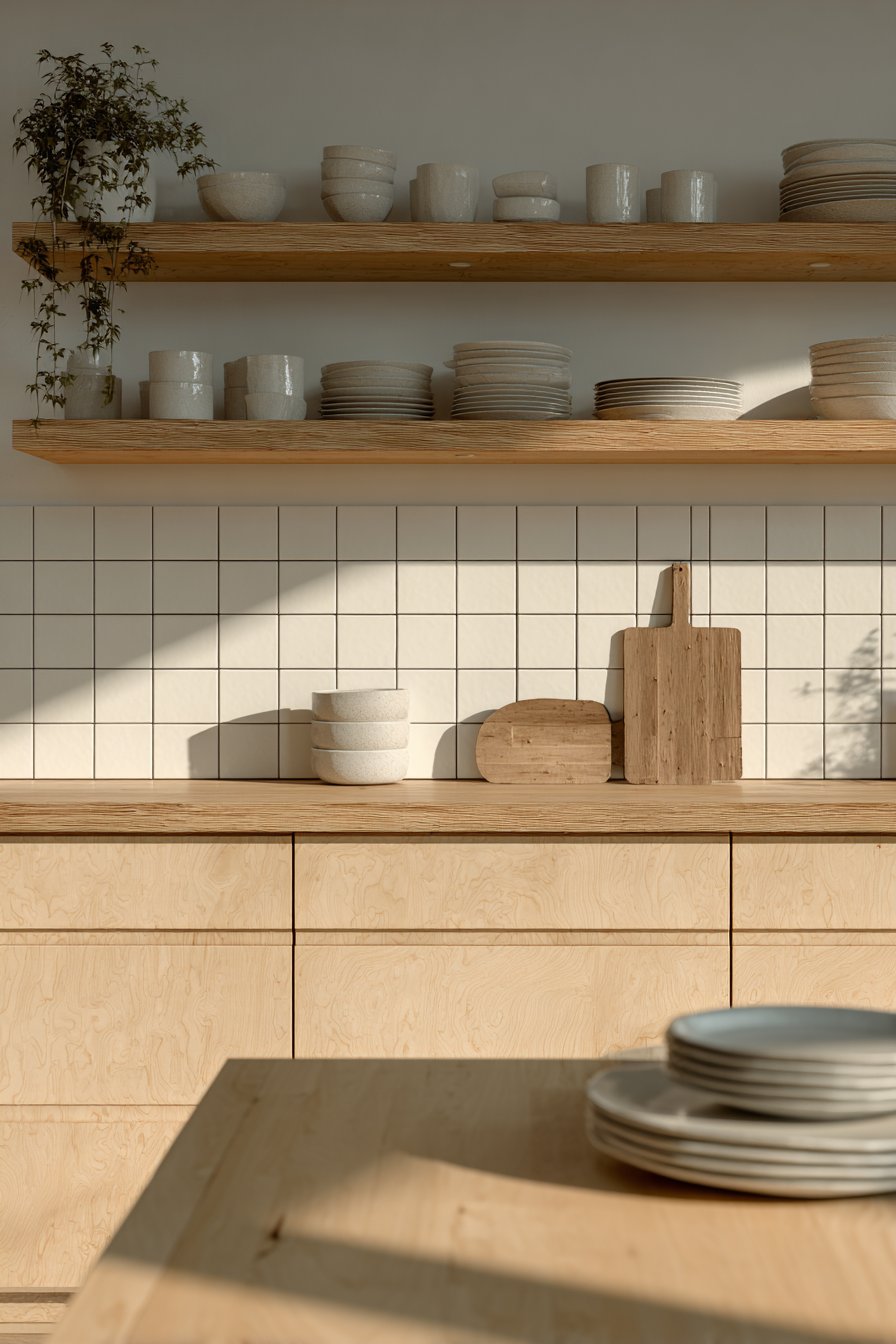
Enter a kitchen that embodies the principles of Nordic design, where light birch cabinets with clean lines and minimalist aesthetics create an atmosphere of serene simplicity. The pale wood tones reflect and amplify natural light, making the space feel larger, airier, and more open than its actual dimensions might suggest.
This Scandinavian approach prioritizes functionality without sacrificing beauty, creating a kitchen that feels both practical and deeply peaceful. The birch wood brings warmth to what might otherwise be a stark white space, preventing the minimalism from feeling cold or sterile.
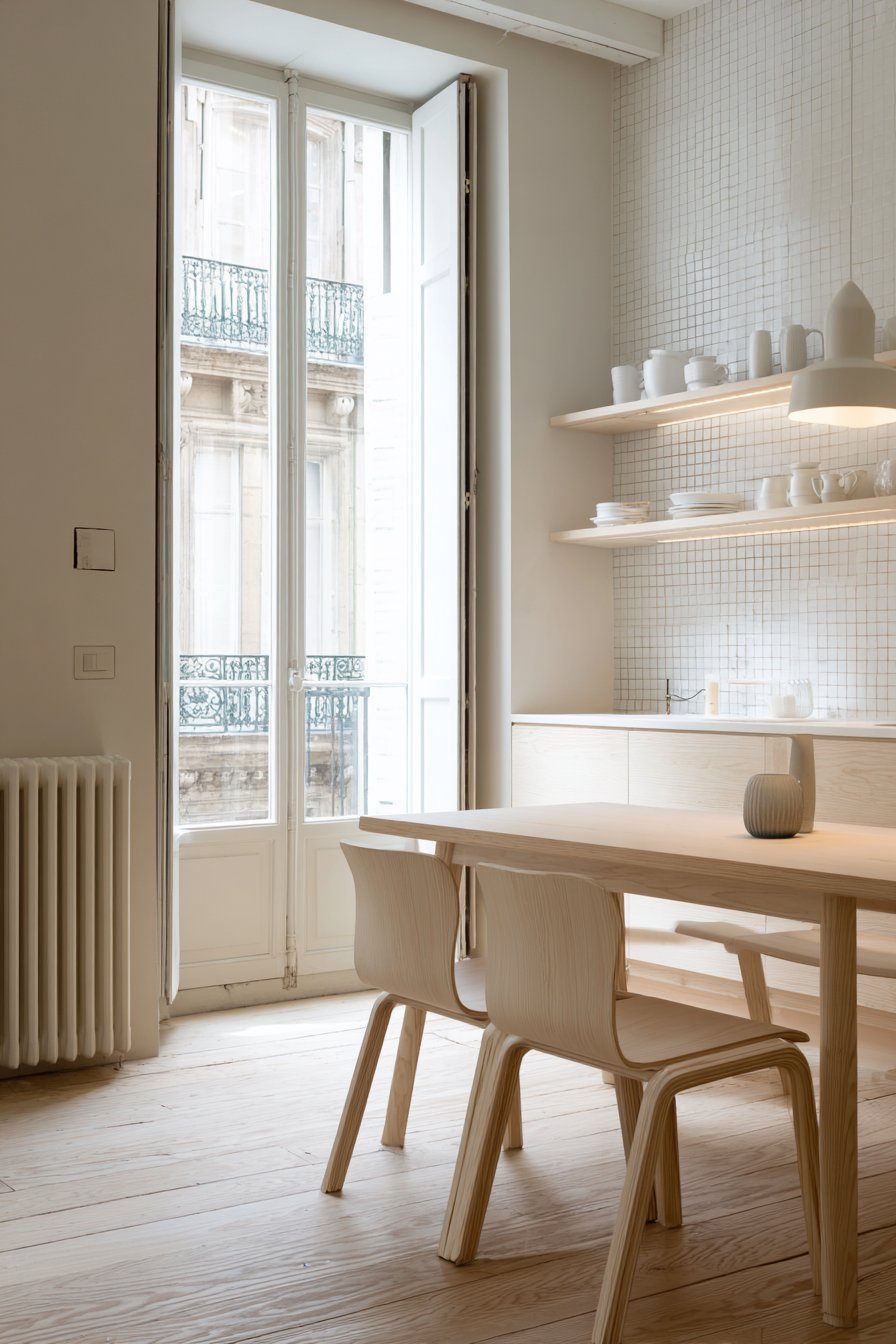
Floating wooden shelves display simple white dinnerware, creating a gallery-like presentation that turns everyday objects into design elements. This open storage approach is quintessentially Scandinavian, reflecting the philosophy that beautiful, well-made items deserve to be seen and appreciated rather than hidden away.
A wooden dining table integrated into the kitchen space creates a seamless flow between cooking and dining areas, encouraging the communal aspect of meals and reinforcing the kitchen’s role as a social space. The table’s natural wood surface provides visual continuity with the cabinets while serving as a versatile workspace for everything from meal prep to laptop work.
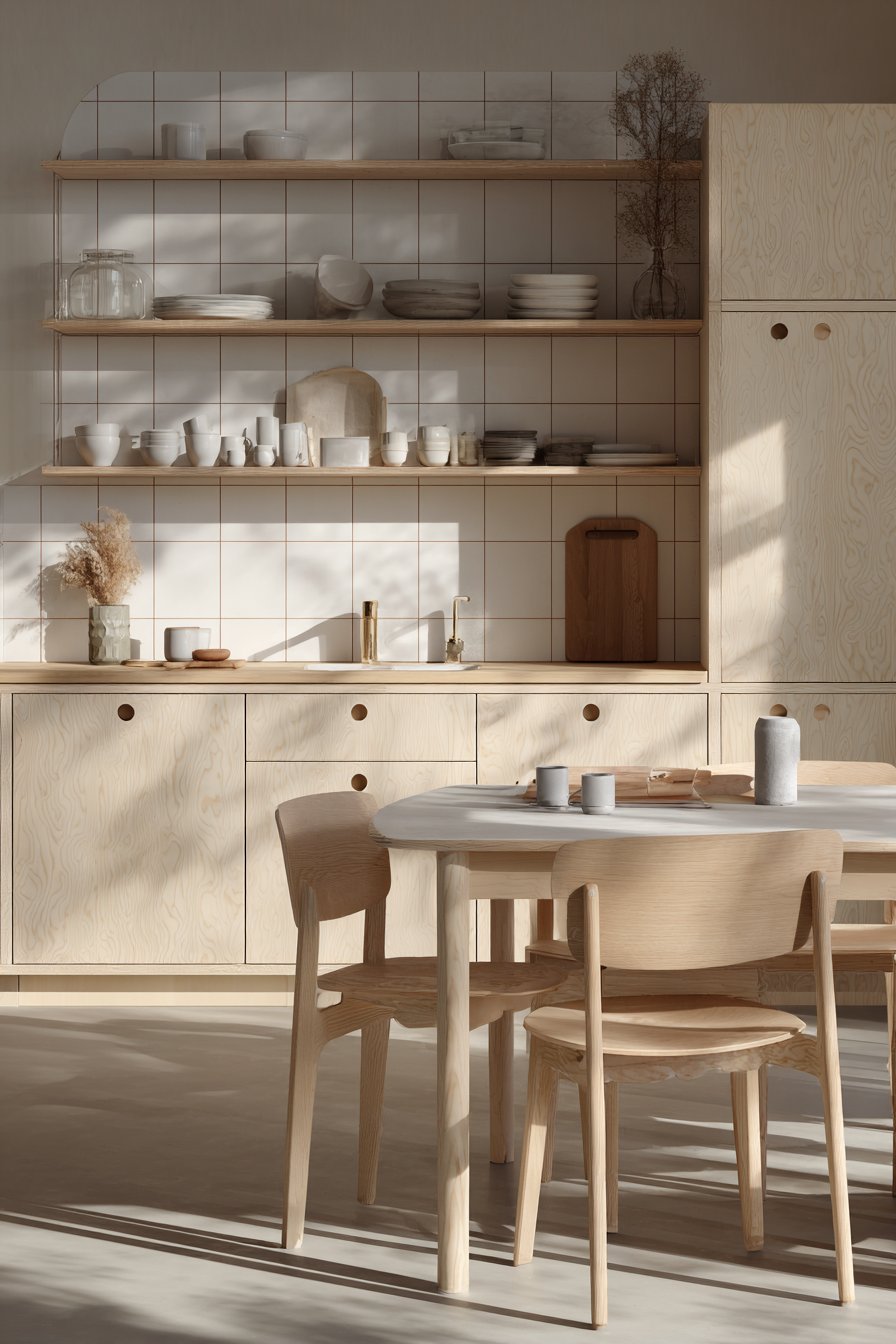
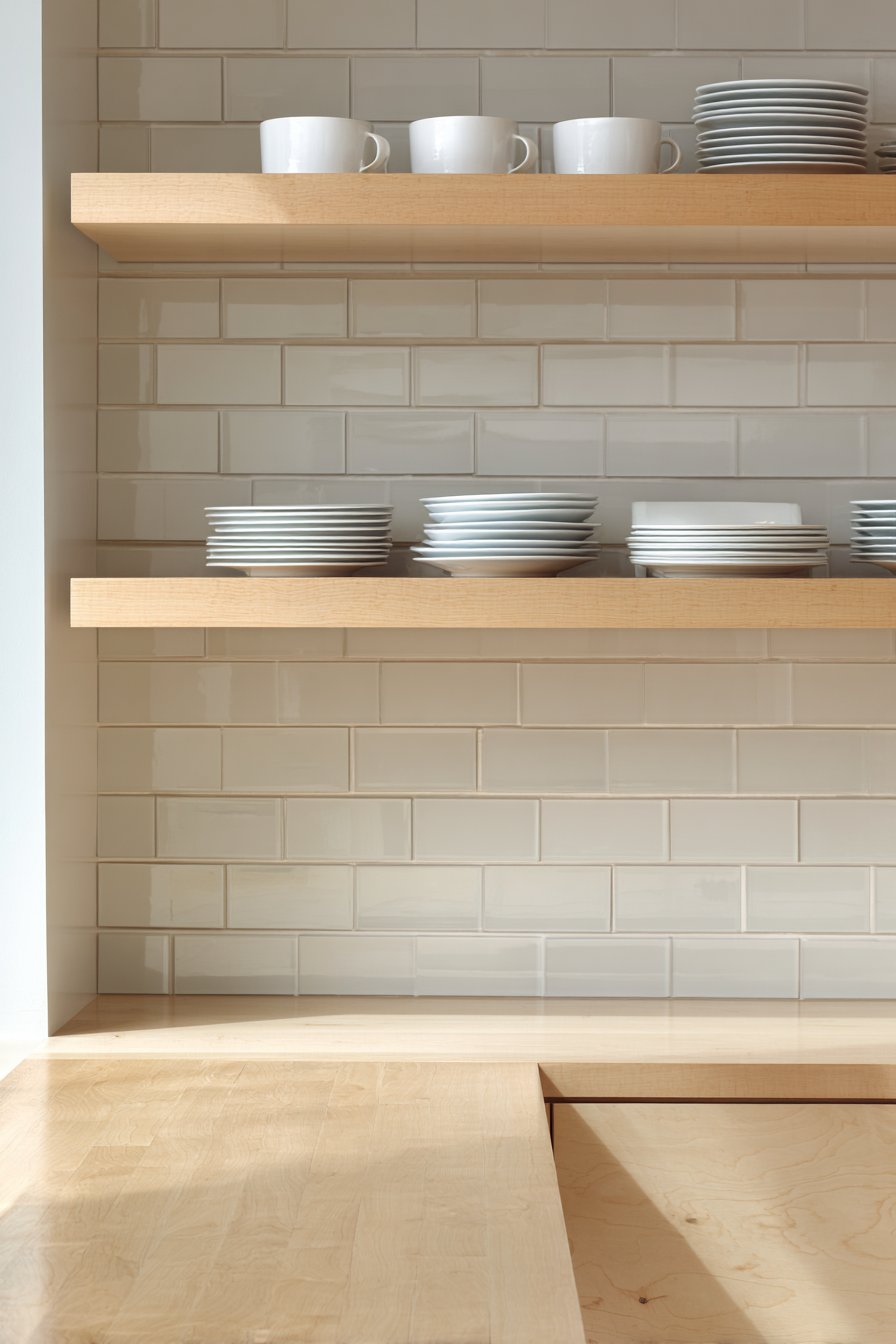
The matte white subway tile backsplash contrasts beautifully with the natural wood elements while maintaining the Nordic aesthetic of simplicity and refinement. The tiles provide a practical, easy-to-clean surface that doesn’t compete with the wood for attention, instead serving as a neutral backdrop that allows the organic materials to take center stage.
Soft diffused daylight filters through windows, highlighting the pale wood tones and creating an airy, functional workspace with understated elegance. The overall effect is calming and restorative, a kitchen that feels like a breath of fresh air and provides a peaceful retreat from the chaos of daily life.
Key Design Tips:
- Choose light birch cabinetry to maximize natural light reflection and create the airy, open feeling characteristic of Scandinavian design.
- Install floating shelves instead of upper cabinets in some areas to maintain visual openness and display beautiful dishware as part of the design.
- Integrate a wooden dining table into the kitchen layout to create a multi-functional space that encourages gathering and connection.
- Use matte white subway tiles for the backsplash to provide clean contrast without overwhelming the subtle wood tones.
- Maximize natural light with minimal window treatments to keep the space bright and showcase the pale wood throughout the day.
4. Modern Horizontal-Grain Walnut Kitchen
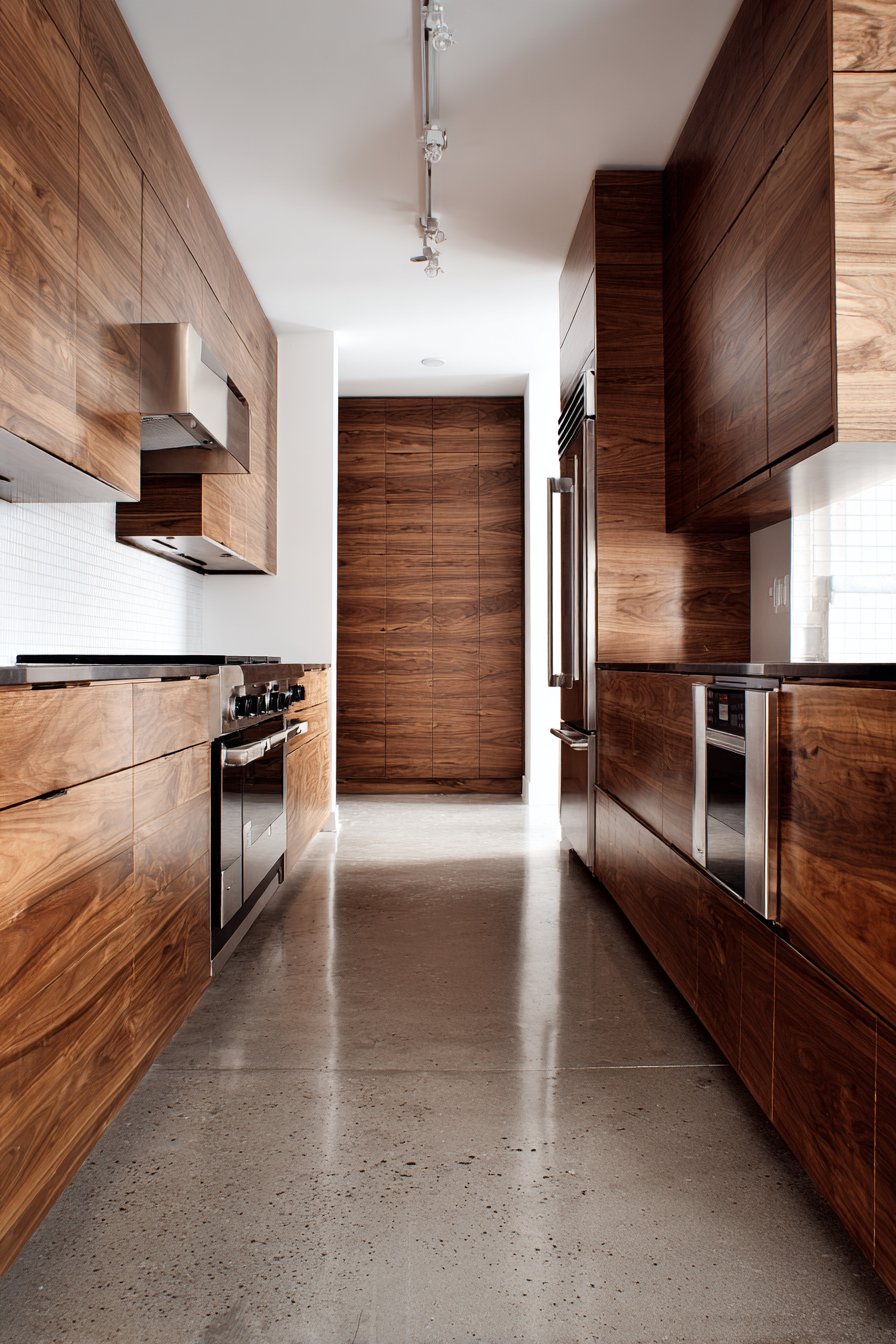
This sophisticated kitchen showcases horizontal-grain walnut cabinetry with integrated handle-less drawers that create sleek, uninterrupted lines throughout the space. The design represents the pinnacle of contemporary wood kitchen aesthetics, where the beauty of natural materials meets cutting-edge design sensibility.
The horizontal grain pattern creates visual movement across the cabinet faces, drawing the eye and creating rhythm in what might otherwise be flat surfaces. The handle-less design achieves a level of minimalism that feels both luxurious and practical, with push-to-open mechanisms that eliminate visual clutter.
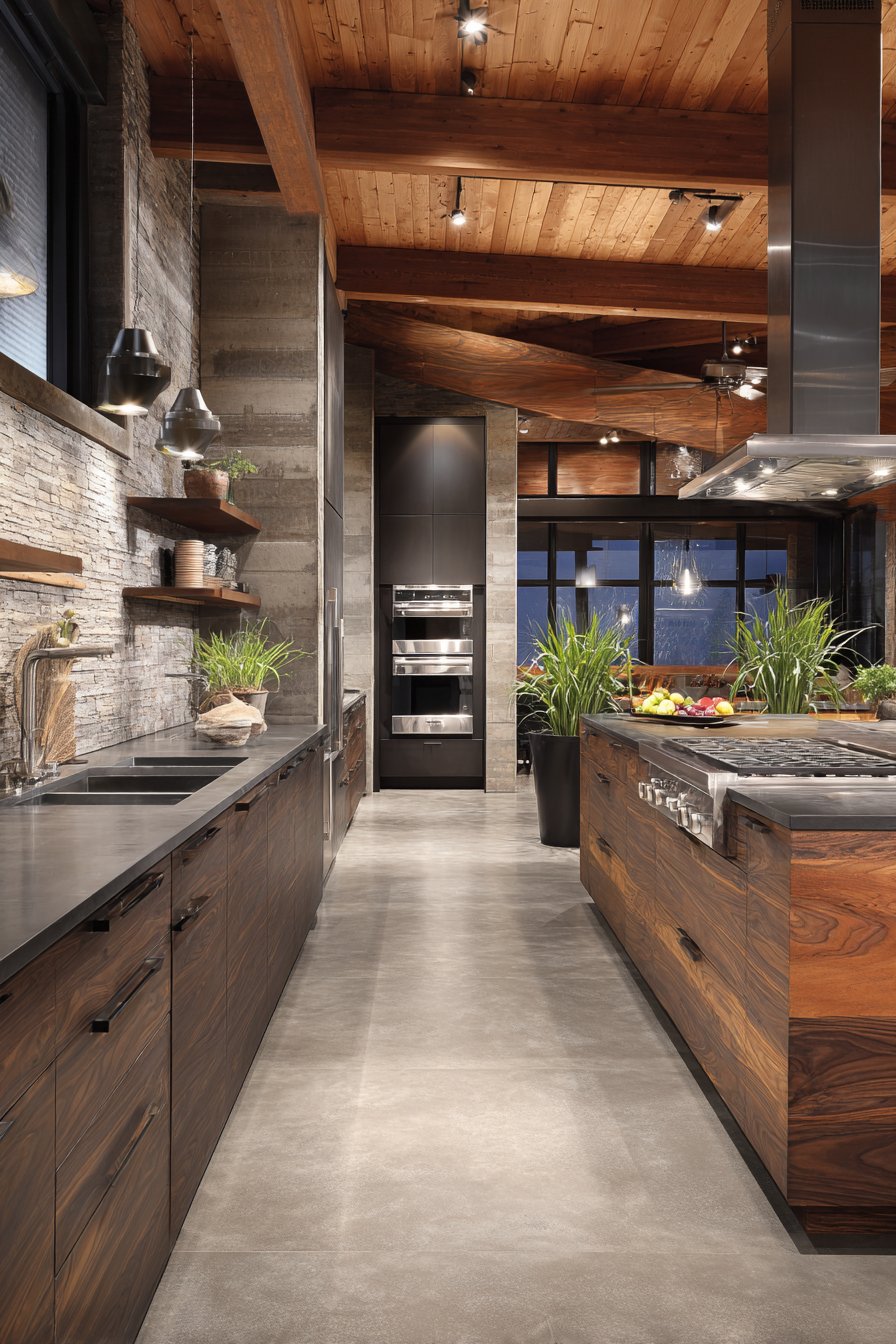
The waterfall-edge wood island serves as a stunning focal point, with natural variations in the dark brown tones creating a sense of depth and organic beauty. The continuous grain flow from the island’s top surface down its sides creates a dramatic visual effect that showcases the wood’s inherent beauty and the craftsmanship required to execute such a detail.
This design element transforms the island from a simple work surface into a sculptural statement piece that anchors the entire kitchen. The rich, dark walnut tones bring warmth and sophistication to the space, preventing the modern aesthetic from feeling cold or impersonal.
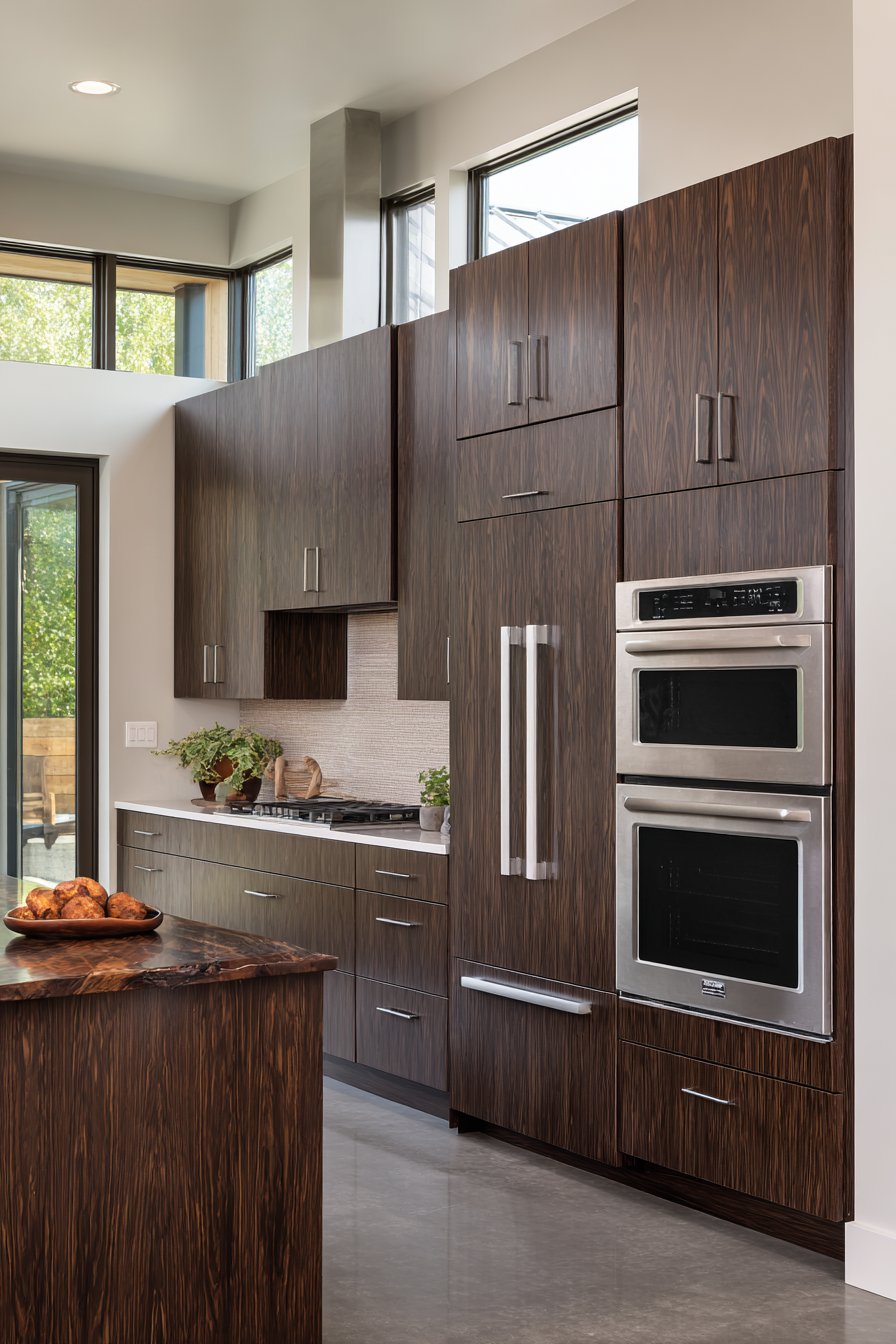
Concrete flooring provides an industrial contrast that highlights the organic warmth of the walnut, creating a dynamic interplay between refined natural wood and raw architectural materials. This juxtaposition is at the heart of contemporary design, where unexpected material combinations create visual interest and depth.
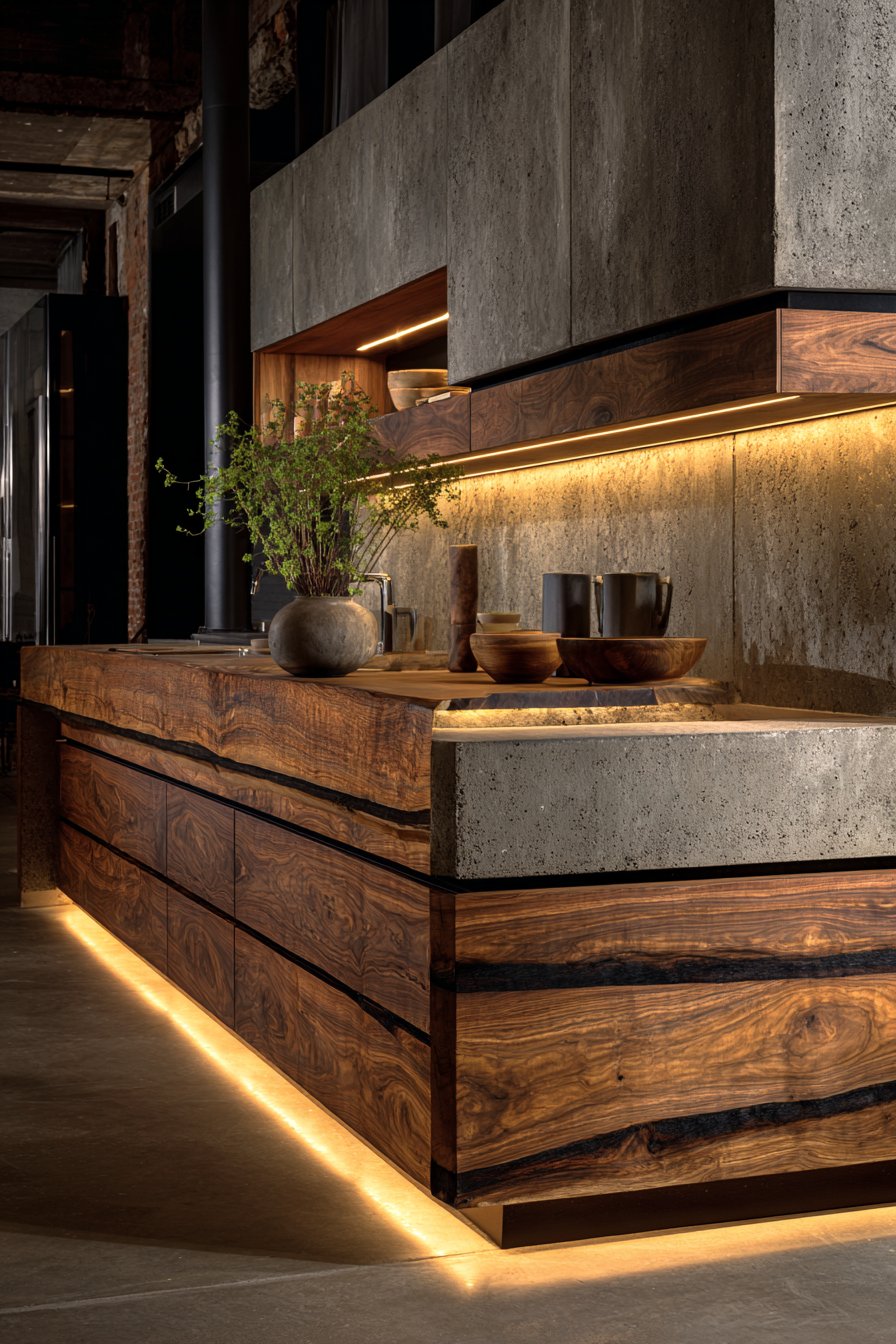
Under-cabinet LED lighting highlights the wood grain texture, creating pools of functional task lighting while also showcasing the beauty of the material itself. The balanced exposure of professional photography captures the sophisticated material interplay, emphasizing how smooth wood surfaces interact with raw concrete to create a space that feels both polished and authentically industrial.
Key Design Tips:
- Select horizontal-grain walnut to create visual movement and showcase the wood’s natural beauty in a contemporary way.
- Install handle-less cabinetry with push-to-open mechanisms for a sleek, minimalist appearance that eliminates visual clutter.
- Create a waterfall-edge island to make a dramatic statement and showcase expert craftsmanship and material quality.
- Pair wood with concrete flooring for industrial contrast that grounds the design and creates visual interest through material juxtaposition.
- Add under-cabinet LED lighting to highlight wood grain texture while providing functional task lighting for food preparation.
5. Compact Cherry Wood Kitchen with Smart Storage
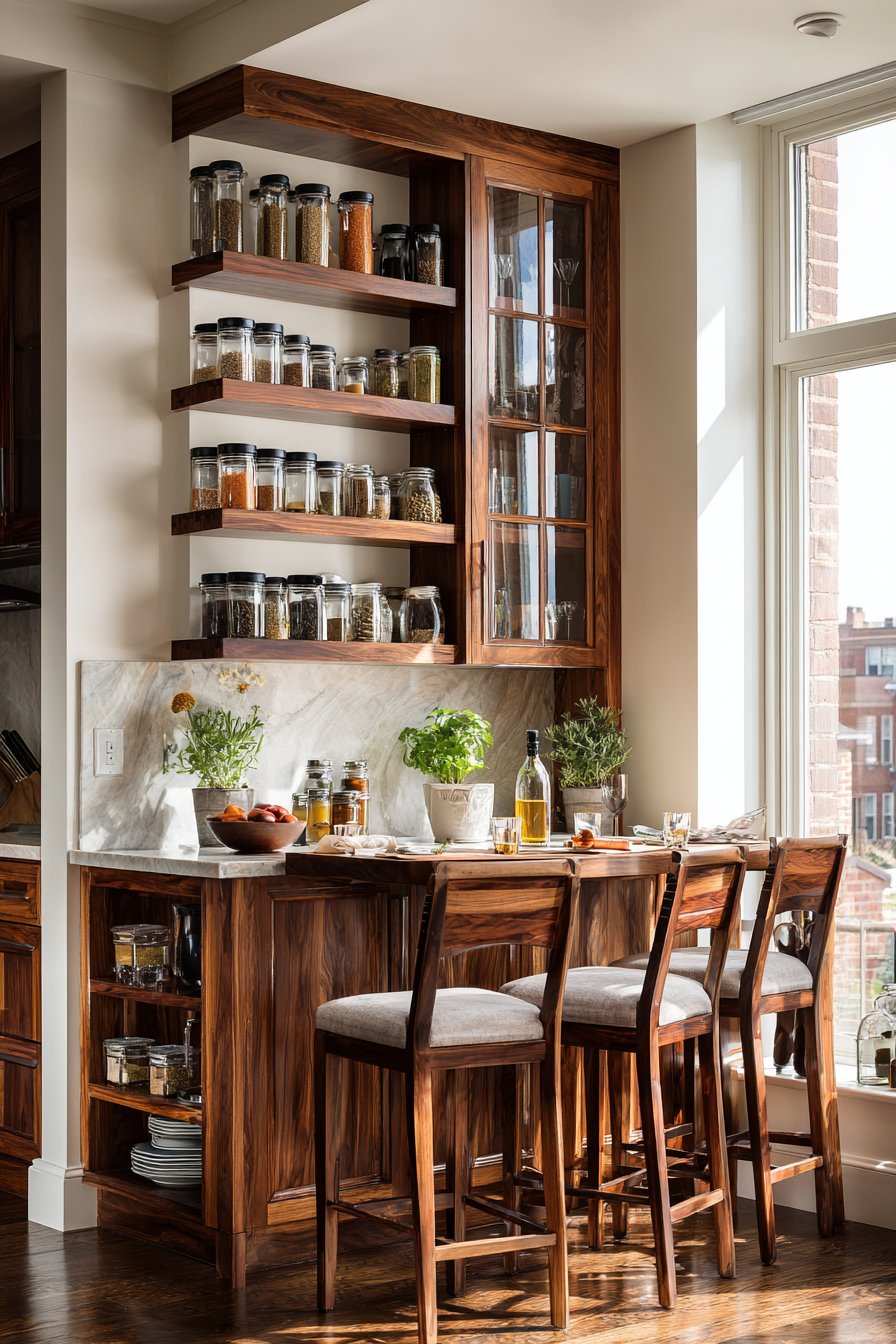
Maximize every inch of available space in this thoughtfully designed small kitchen featuring floor-to-ceiling cherry wood cabinets that eliminate wasted vertical space. The rich, reddish-brown tones of cherry wood bring warmth and elegance to a compact footprint, proving that size limitations need not compromise style or sophistication.
This design demonstrates how intelligent planning and beautiful materials can transform even the smallest kitchen into a highly functional and visually appealing space. The floor-to-ceiling approach to cabinetry provides exponentially more storage than standard-height cabinets, allowing homeowners to keep everything organized and accessible.
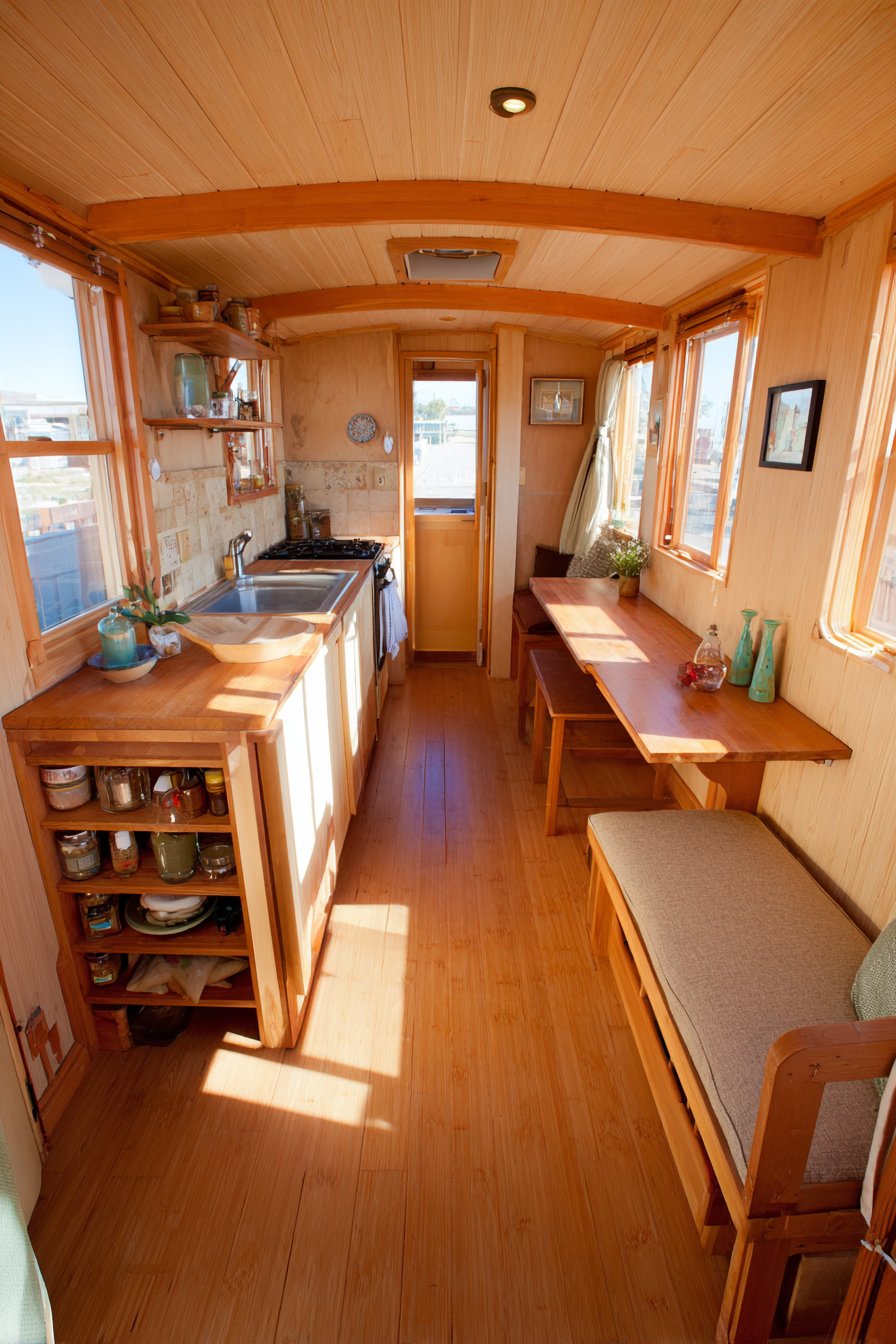
The compact wooden breakfast bar features built-in storage underneath, serving triple duty as a dining surface, additional workspace, and clever storage solution. This multi-functional approach is essential in small kitchens, where every element must work hard and serve multiple purposes.
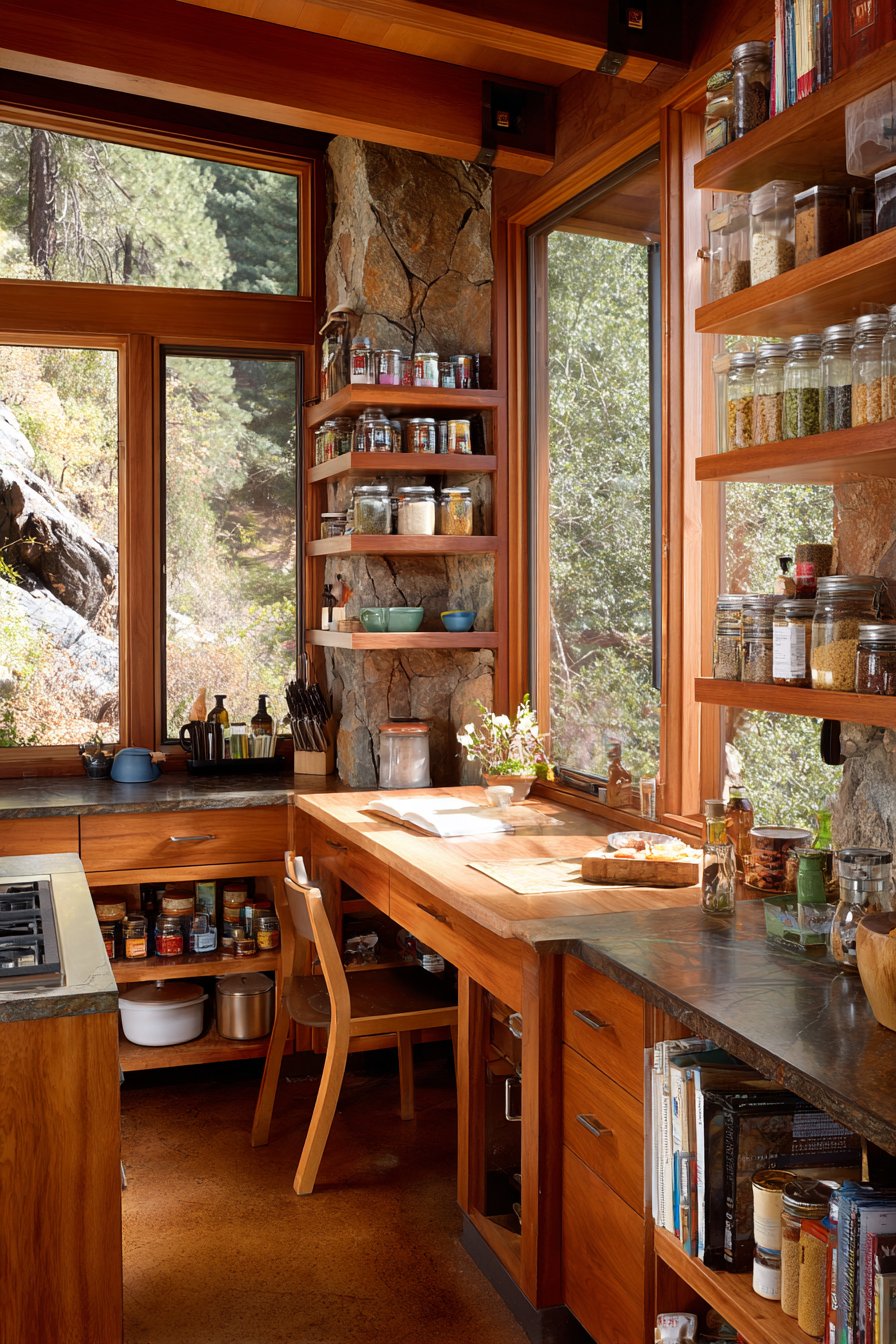
The breakfast bar creates a casual dining option that doesn’t require a separate table, freeing up valuable floor space while maintaining the social aspect of shared meals. Open wooden shelving near the cooking area displays spices and cooking oils in glass containers, turning practical storage into an attractive design element that adds visual interest and keeps frequently used items within easy reach.
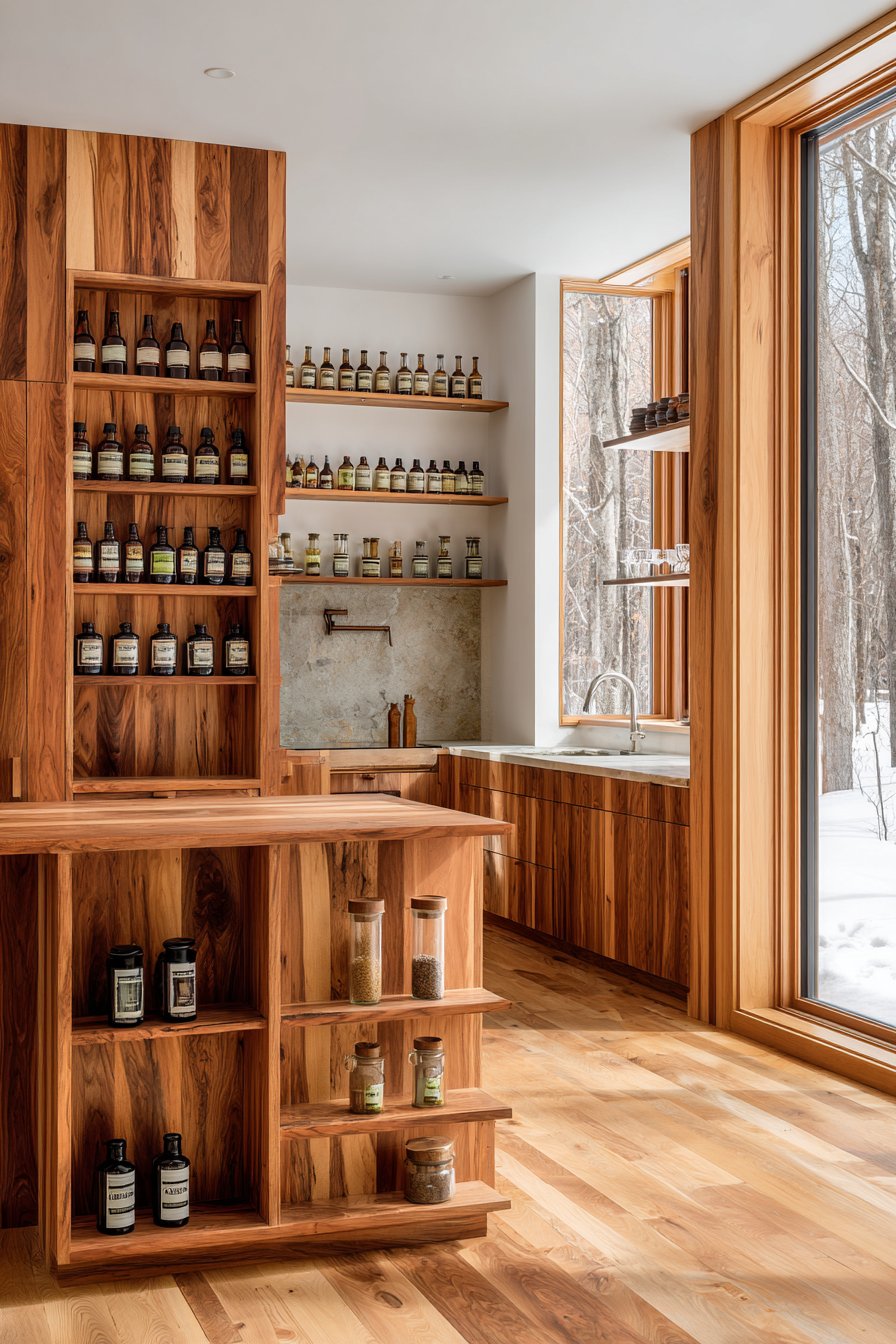
The backsplash features natural stone that complements the warm cherry wood tones, adding textural variety and creating visual interest without overwhelming the compact space. The stone’s neutral coloring allows the beautiful cherry wood to remain the star of the design while providing a durable, heat-resistant surface behind the cooking area.
Natural window light illuminates the rich cherry wood finish and highlights the practical organization of the compact space, proving that thoughtful design and quality materials can make even the smallest kitchen feel welcoming and functional. The efficient layout ensures that everything has its place, and the beautiful wood surfaces make even routine tasks feel special.
Key Design Tips:
- Install floor-to-ceiling cabinetry to maximize vertical storage space and eliminate the dust-catching gap above standard cabinets.
- Incorporate a wooden breakfast bar with built-in storage to create multi-functional space that serves several purposes simultaneously.
- Use open shelving strategically near cooking areas to keep frequently used items accessible while adding visual interest.
- Choose natural stone backsplash to complement warm cherry tones and add textural variety to the compact space.
- Prioritize efficient organization with dedicated storage solutions for every category of kitchen items to maximize functionality.
6. Statement Reclaimed Wood Island Kitchen
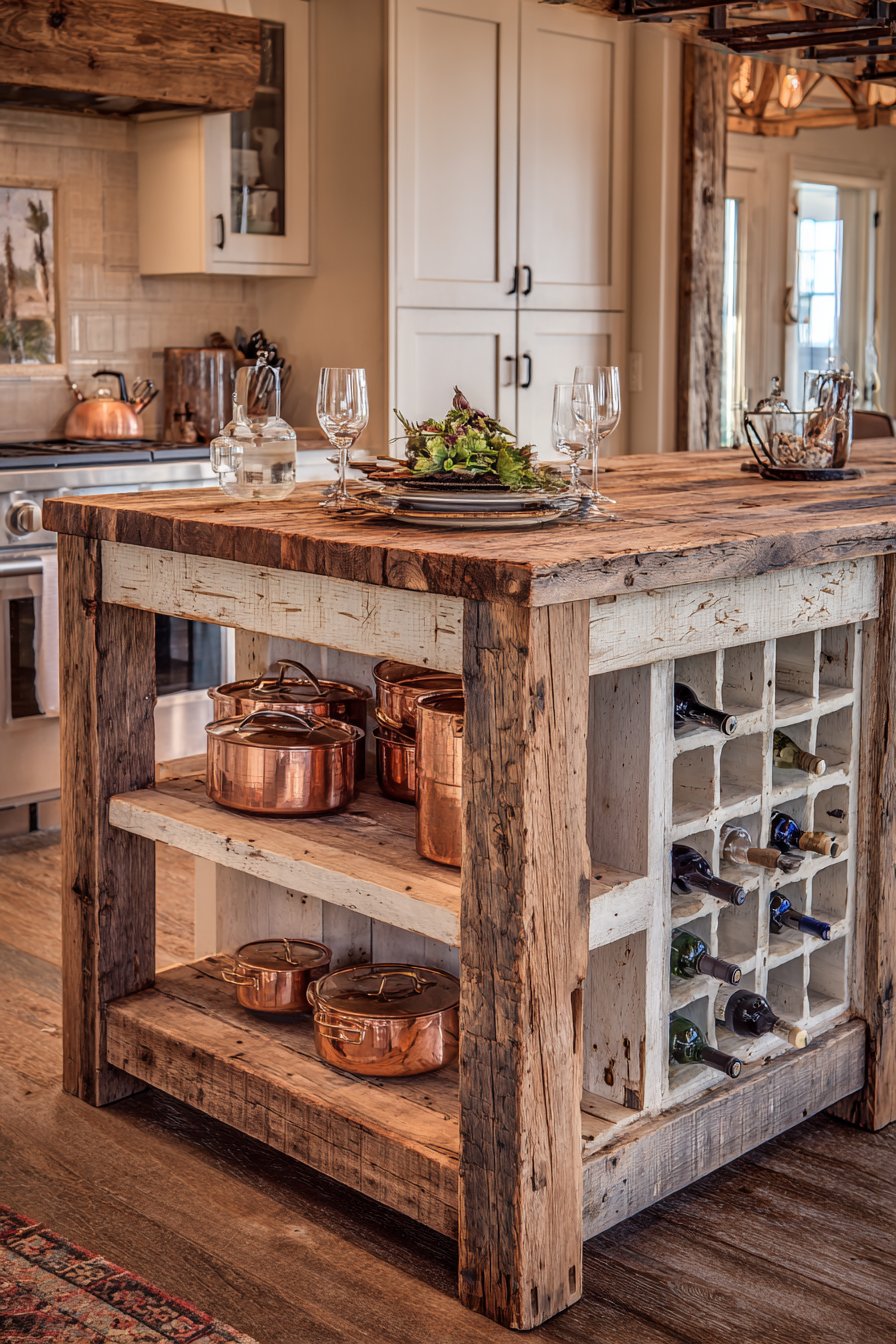
The centerpiece of this kitchen is an extraordinary island crafted from thick reclaimed wood planks with a distressed finish that celebrates every mark of age and use. Visible nail holes, weathered patina, and color variations tell the story of the wood’s previous life, adding character and historical depth that new materials simply cannot provide.
This approach to design values authenticity and sustainability, giving new life to materials that have already served one purpose and are ready to become the heart of a contemporary kitchen. The substantial thickness of the planks creates a sense of solidity and permanence, while the distressed finish ensures the island will only become more beautiful with continued use.
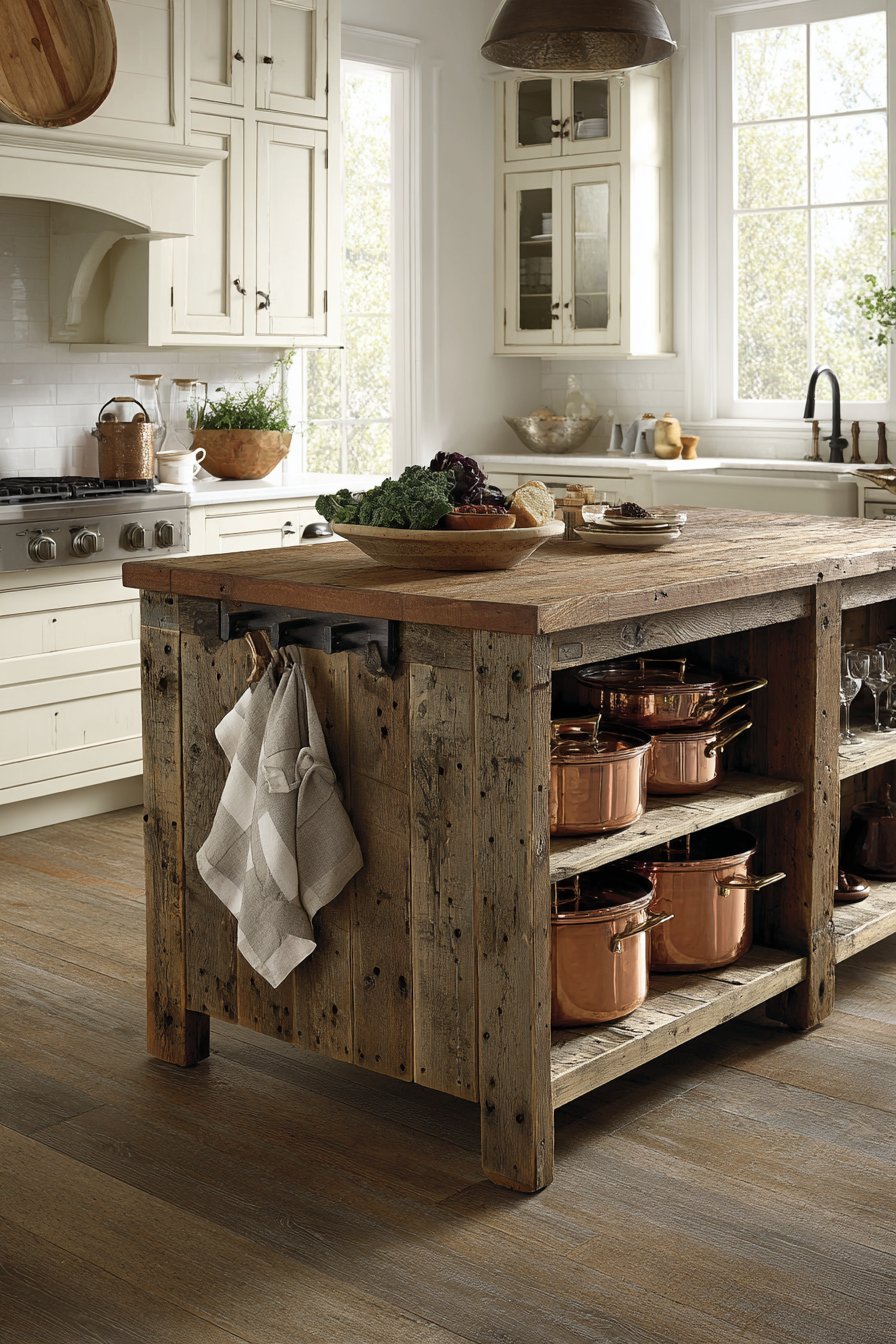
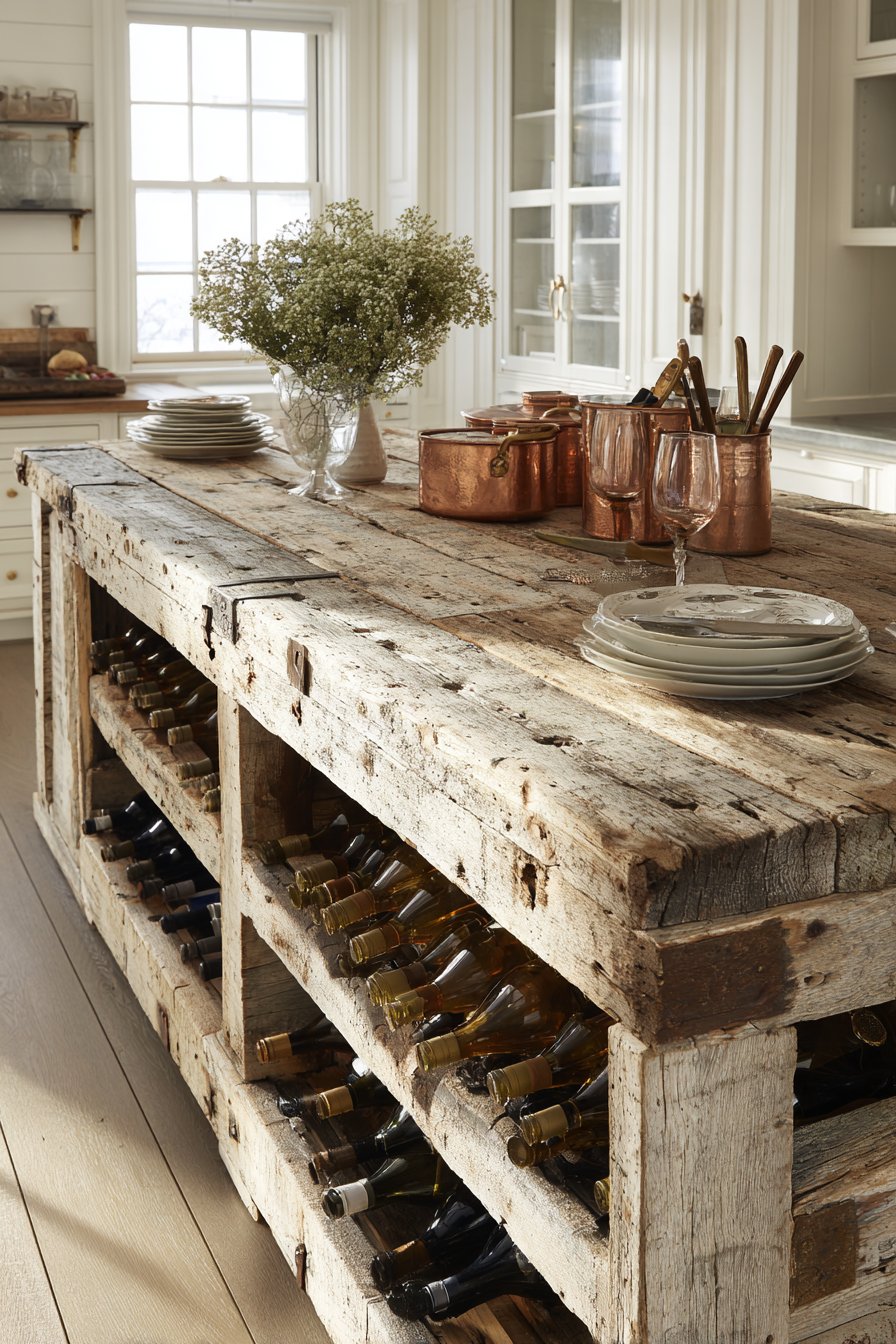
The island features open storage with wine rack integration, creating a functional display area that’s as practical as it is attractive. The lower shelf displays copper cookware that catches the light and adds warm metallic accents that complement the wood’s natural tones.
This thoughtful integration of storage and display transforms the island from a simple work surface into a multi-functional piece of furniture that serves the kitchen in numerous ways. The open design prevents the substantial island from feeling heavy or oppressive, maintaining visual flow through the space while providing ample storage for wine, cookware, and serving pieces.
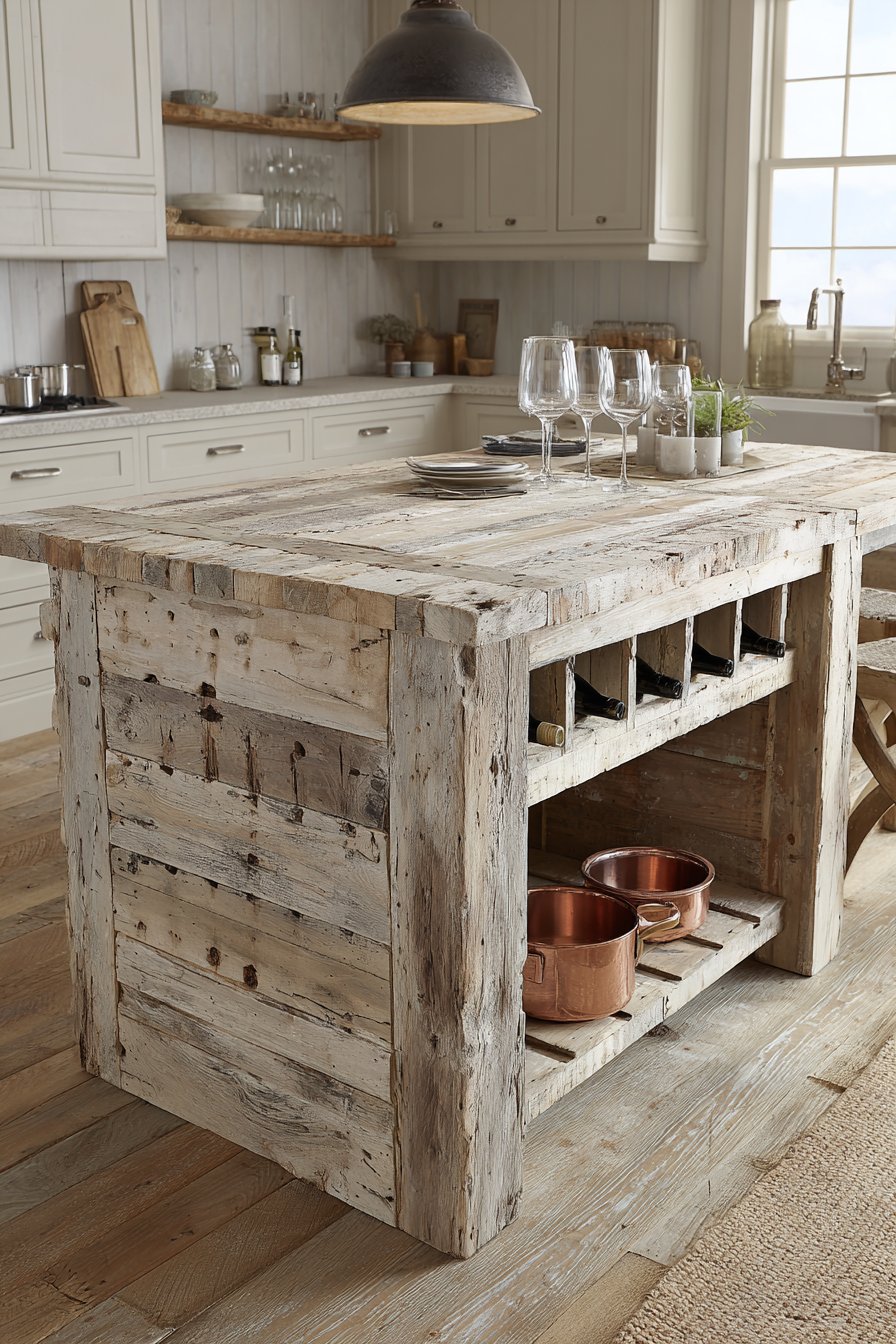
Surrounding cabinetry painted in crisp white creates stunning contrast that keeps the focus squarely on the wooden island. This design choice prevents the space from feeling too rustic or dark, using the white cabinetry to brighten and modernize the overall aesthetic. The contrast between the weathered, authentic reclaimed wood and the fresh white painted cabinets creates visual drama and allows each element to shine.
Soft natural lighting emphasizes the material’s history and patina, creating highlights and shadows that showcase the authentic weathered texture of the reclaimed wood. This focal point approach to kitchen design creates a memorable space where the island becomes a conversation piece and the defining feature of the room.
Key Design Tips:
- Source thick reclaimed wood planks with visible character marks to create an island with genuine historical interest and sustainable credentials.
- Incorporate open storage and wine racks into the island design to maximize functionality while maintaining visual interest.
- Display copper cookware on lower shelves to add warm metallic accents that complement natural wood tones beautifully.
- Paint surrounding cabinetry white to create contrast and prevent the space from feeling too dark or overwhelming with wood.
- Use soft natural lighting to highlight the patina and texture of reclaimed wood, showcasing its authentic character and history.
7. Transitional Maple Kitchen with Traditional Charm
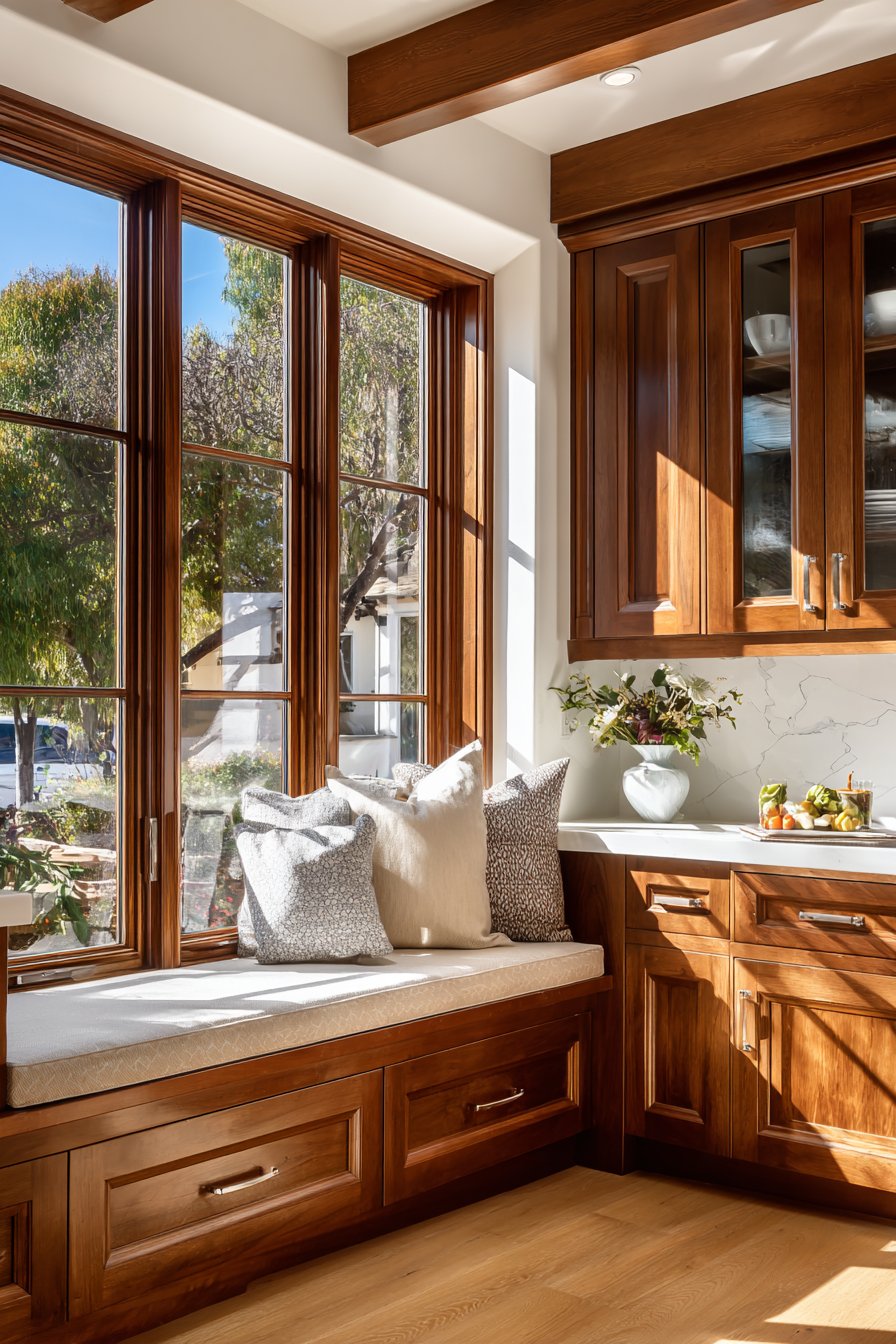
This beautifully balanced kitchen blends traditional and contemporary elements through medium-toned maple cabinets featuring raised panel doors and brushed nickel hardware. The transitional style appeals to homeowners who appreciate classic design elements but want to avoid appearing dated or overly formal.
The maple’s medium tone provides versatility, working equally well with warm and cool accent colors while bringing natural warmth to the space. The raised panel doors add subtle architectural detail that elevates the design without overwhelming it, while the brushed nickel hardware provides a refined finish that bridges traditional and contemporary sensibilities.
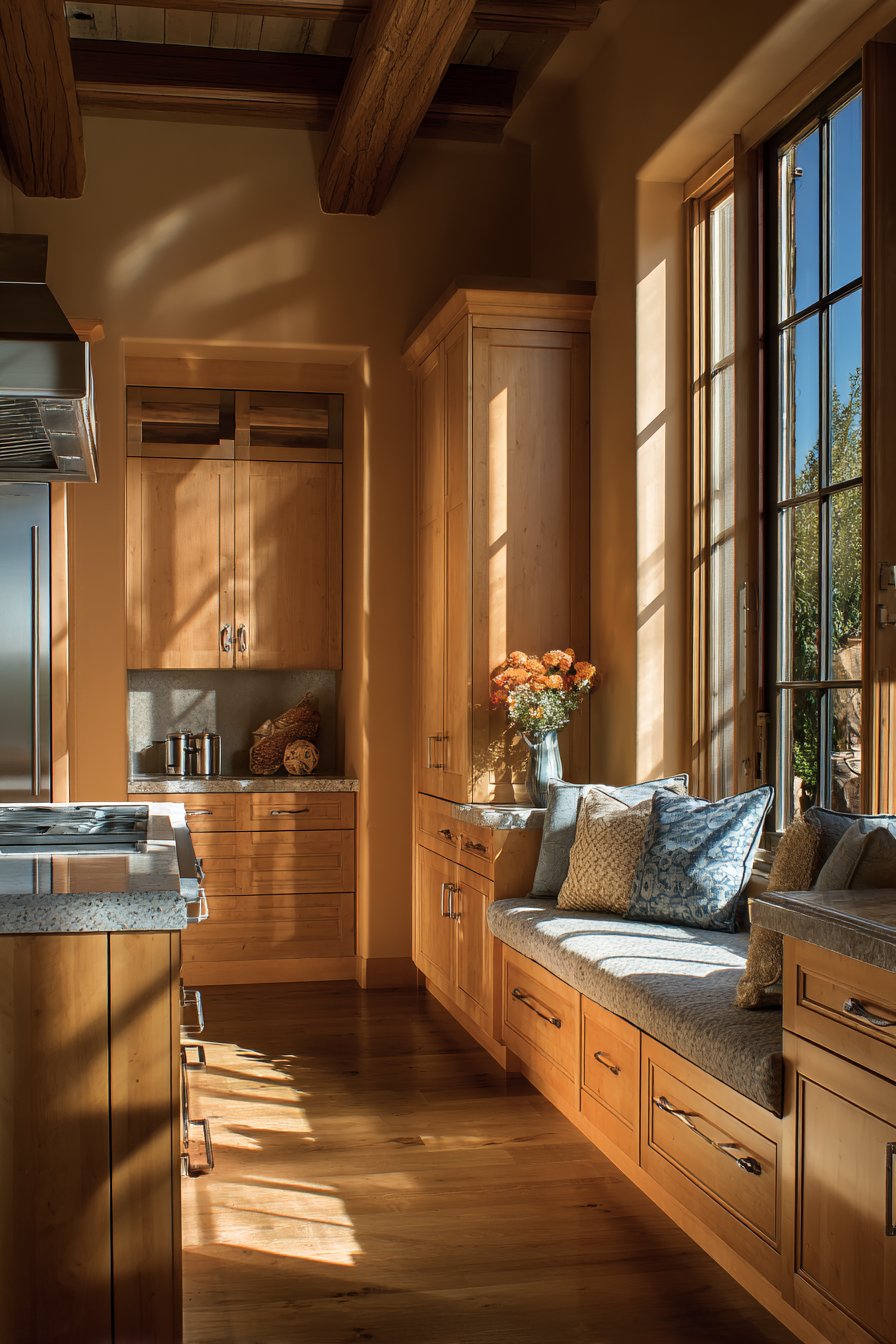
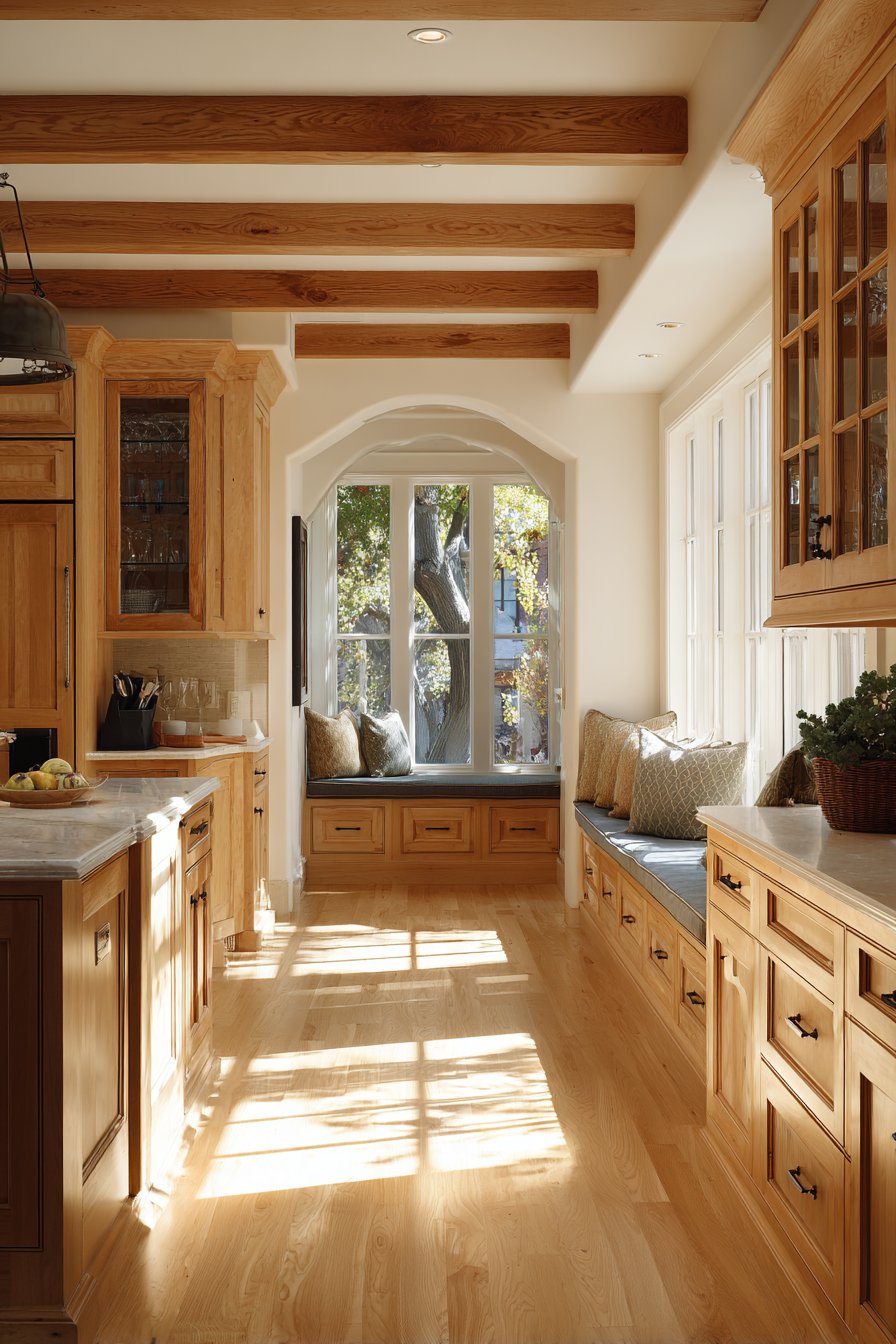
Wood beam accents on the ceiling complement the cabinetry while adding architectural interest and drawing the eye upward to appreciate the full height of the space. These beams create a sense of structure and craftsmanship, suggesting a home built with care and attention to detail. Quartz countertops provide practical work surfaces that resist staining and scratching while offering the appearance of natural stone. This choice balances the warmth of wood with the durability and low maintenance that modern families require, creating a kitchen that’s as practical as it is beautiful.
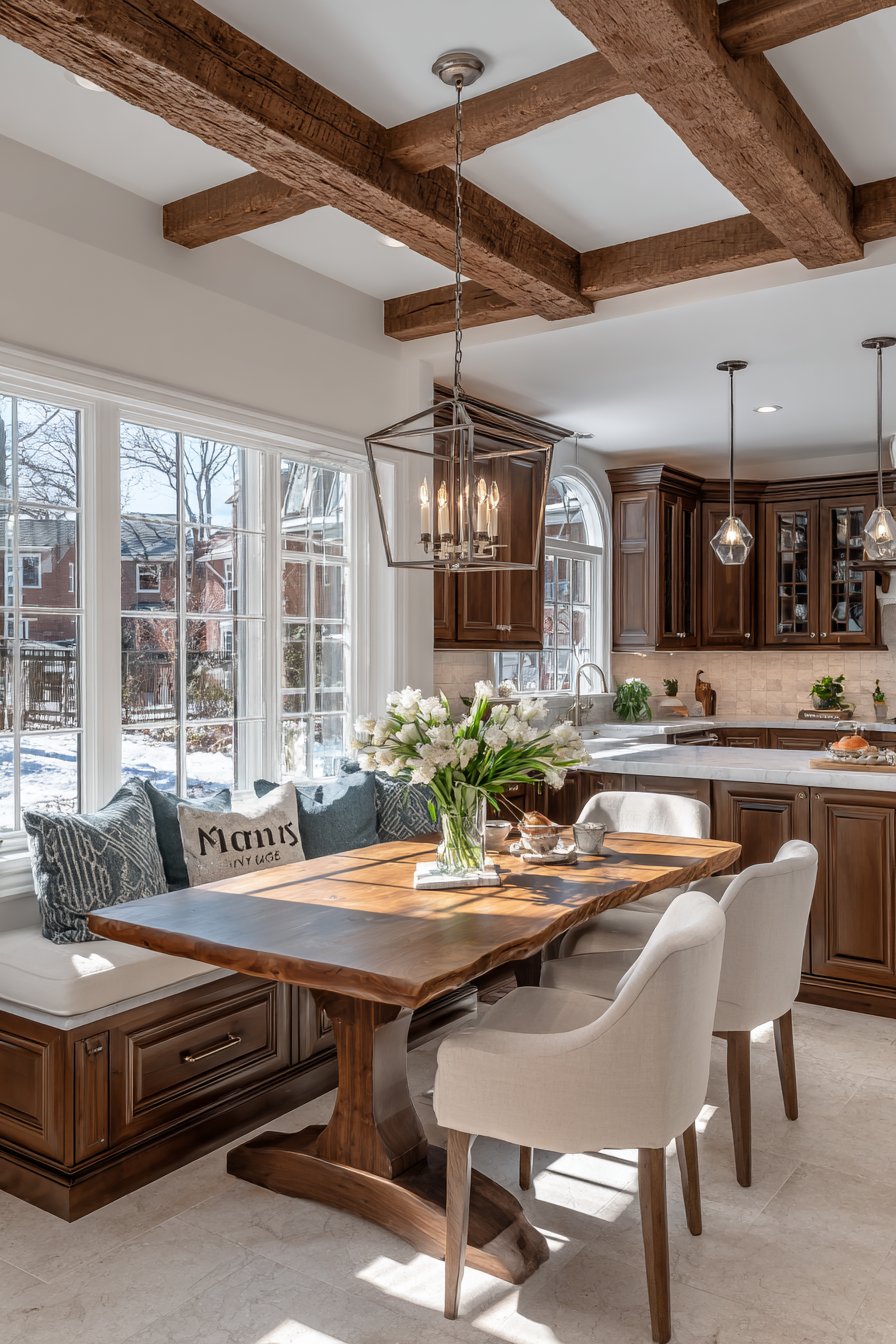
The kitchen includes a built-in wooden bench seating area near a window with cushioned upholstery, creating an inviting nook perfect for casual meals, morning coffee, or simply enjoying natural light while reading. This integrated seating transforms an otherwise underutilized area into a cherished spot that family members gravitate toward throughout the day.
Natural afternoon light streams through windows, highlighting the warm maple tones and creating inviting shadows in the seating nook. The balanced design successfully merges traditional warmth with contemporary functionality, creating a kitchen that feels timeless rather than trendy.
Key Design Tips:
- Choose maple cabinets with raised panels to achieve a transitional style that honors tradition while remaining current and fresh.
- Add wood beam accents to the ceiling for architectural interest that complements the cabinetry and adds visual weight above.
- Install quartz countertops to balance wood warmth with practical durability and low-maintenance performance for busy families.
- Create a built-in bench seating area near windows to maximize space usage and create an inviting spot for casual dining.
- Select brushed nickel hardware to bridge traditional and contemporary elements with a refined metallic finish.
8. Two-Toned Wood Kitchen with Visual Drama
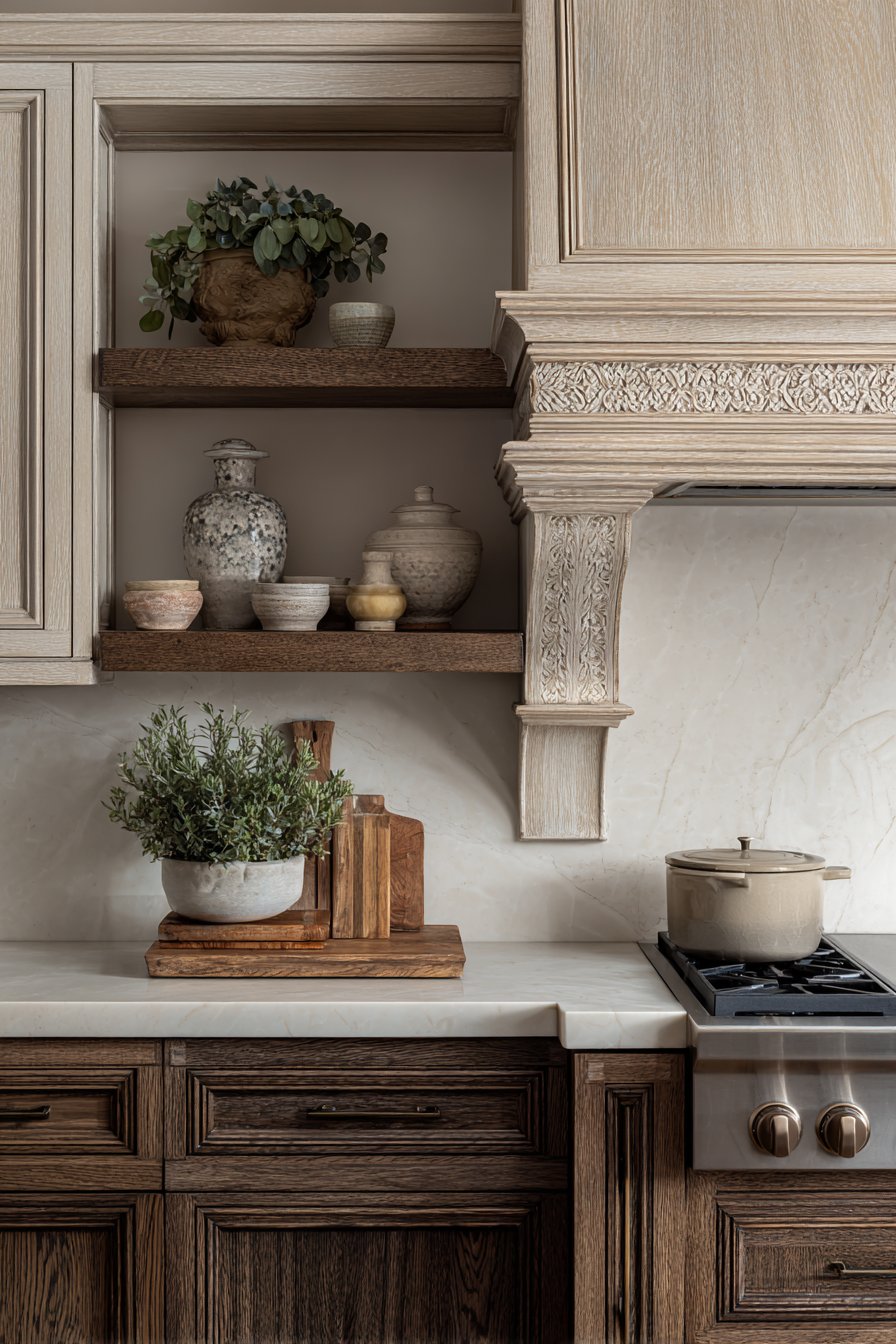
Create striking visual interest with a two-toned cabinetry approach featuring dark walnut lower cabinets and natural ash upper cabinets. This sophisticated design technique adds depth and dimension to the kitchen, preventing the visual monotony that can occur when all cabinets are the same color and finish.
The dark walnut grounds the space and provides visual weight at the base, while the lighter ash upper cabinets prevent the kitchen from feeling too heavy or closed in. This approach creates a sense of airiness above while maintaining substance and richness below.
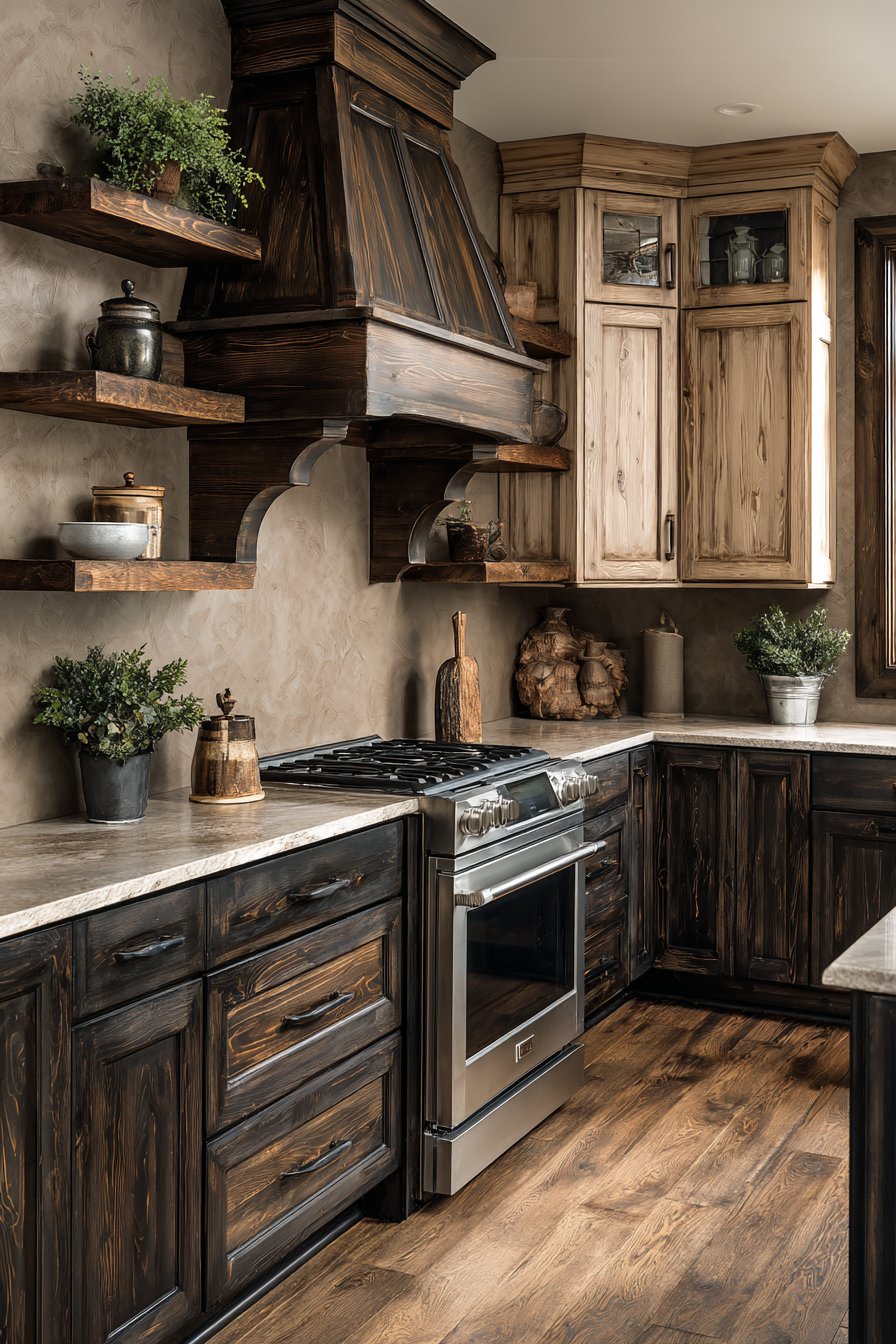
Wooden floating shelves display greenery and vintage kitchen accessories, adding personality and life to the space while maintaining the wood theme throughout. These open shelves break up the cabinetry and provide opportunities for personal expression through carefully curated displays.
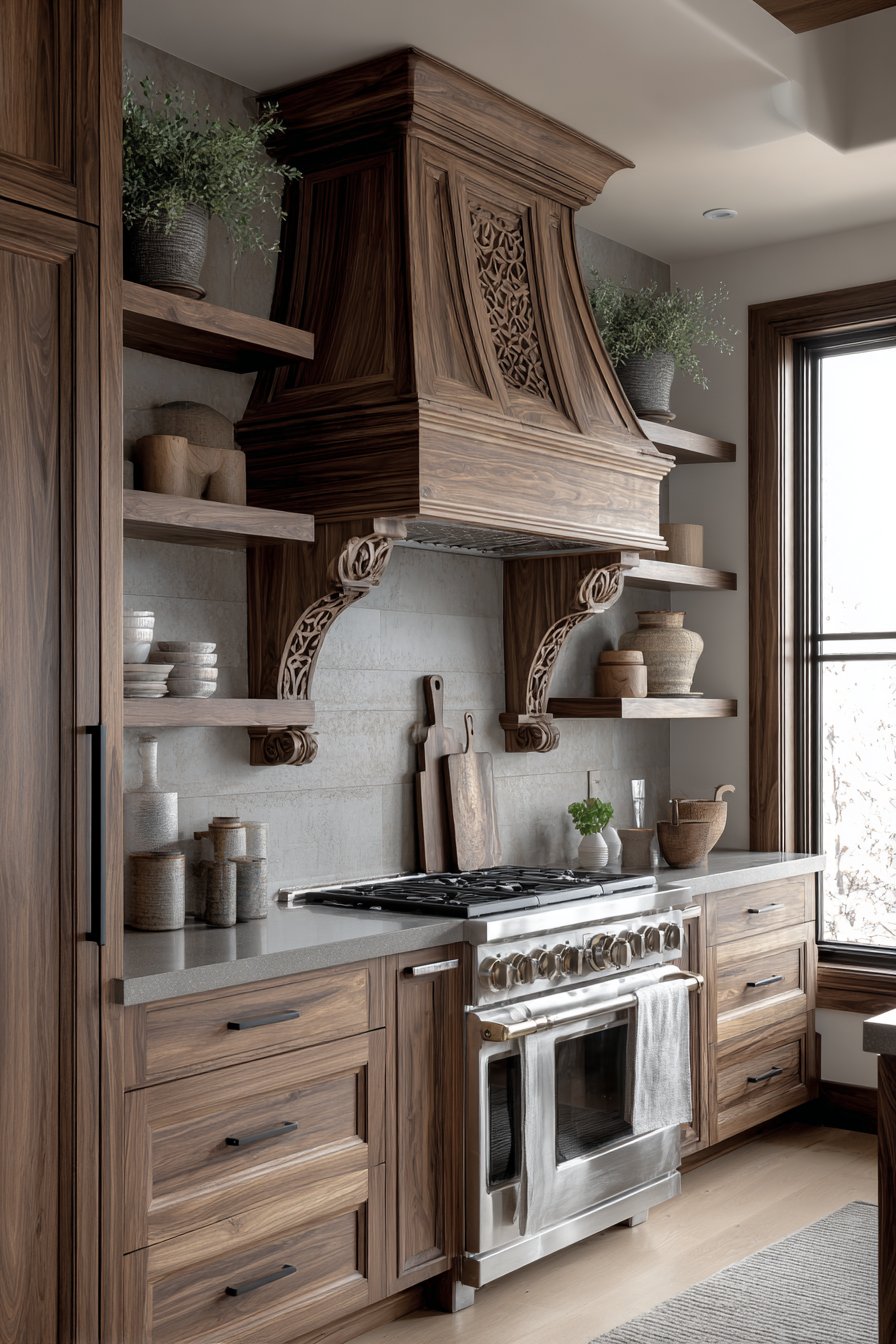
The plants bring natural vitality to the kitchen, softening the hard edges of cabinetry and appliances while improving air quality. A wooden range hood becomes a dramatic focal point above the stove with decorative corbel details that showcase craftsmanship and attention to architectural detail. This custom element transforms a functional necessity into a design statement that draws the eye and anchors the cooking area.
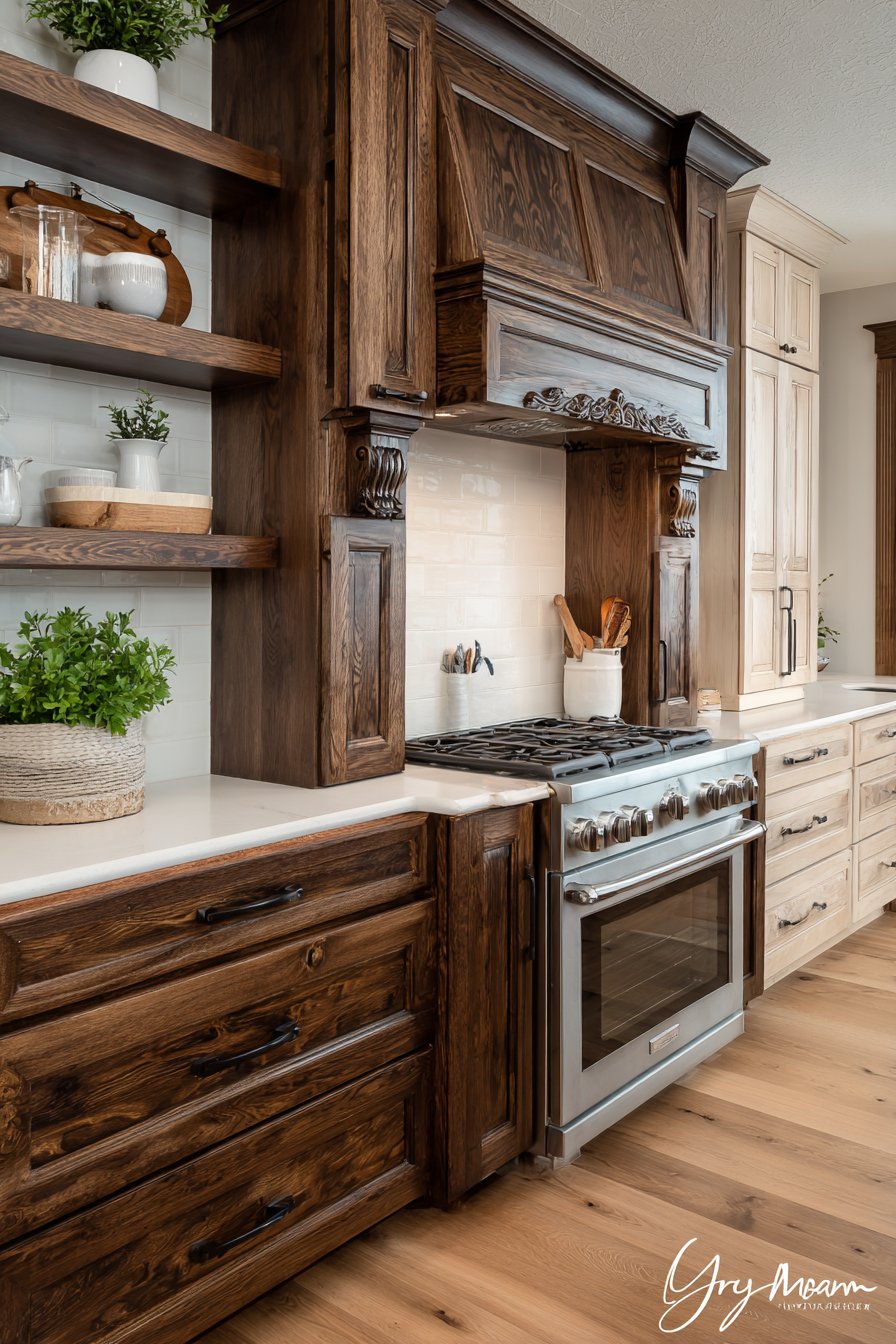
The sophisticated contrast between wood tones creates layered visual interest that rewards closer inspection, with the grain patterns of both species contributing to the overall composition. Soft natural lighting emphasizes these grain patterns and creates depth in the layered design, preventing the two-toned approach from appearing jarring or disconnected.
The ash’s lighter, more subtle grain provides a gentle backdrop for the walnut’s bolder, more dramatic patterns. This design proves that wood kitchens need not be monochromatic, and that thoughtful use of contrasting wood species can elevate the entire space to new levels of sophistication and visual interest.
Key Design Tips:
- Combine dark walnut lower cabinets with light ash uppers to create sophisticated contrast and visual depth throughout the kitchen.
- Install wooden floating shelves to break up cabinetry and provide display opportunities for plants and decorative accessories.
- Design a custom wooden range hood with decorative details to create a focal point above the cooking area.
- Display greenery on shelves and counters to add life, color, and softness to the harder edges of wood and stone.
- Use natural lighting strategically to emphasize grain patterns and create depth in the two-toned design scheme.
9. Contemporary Oak Kitchen with Vertical Grain
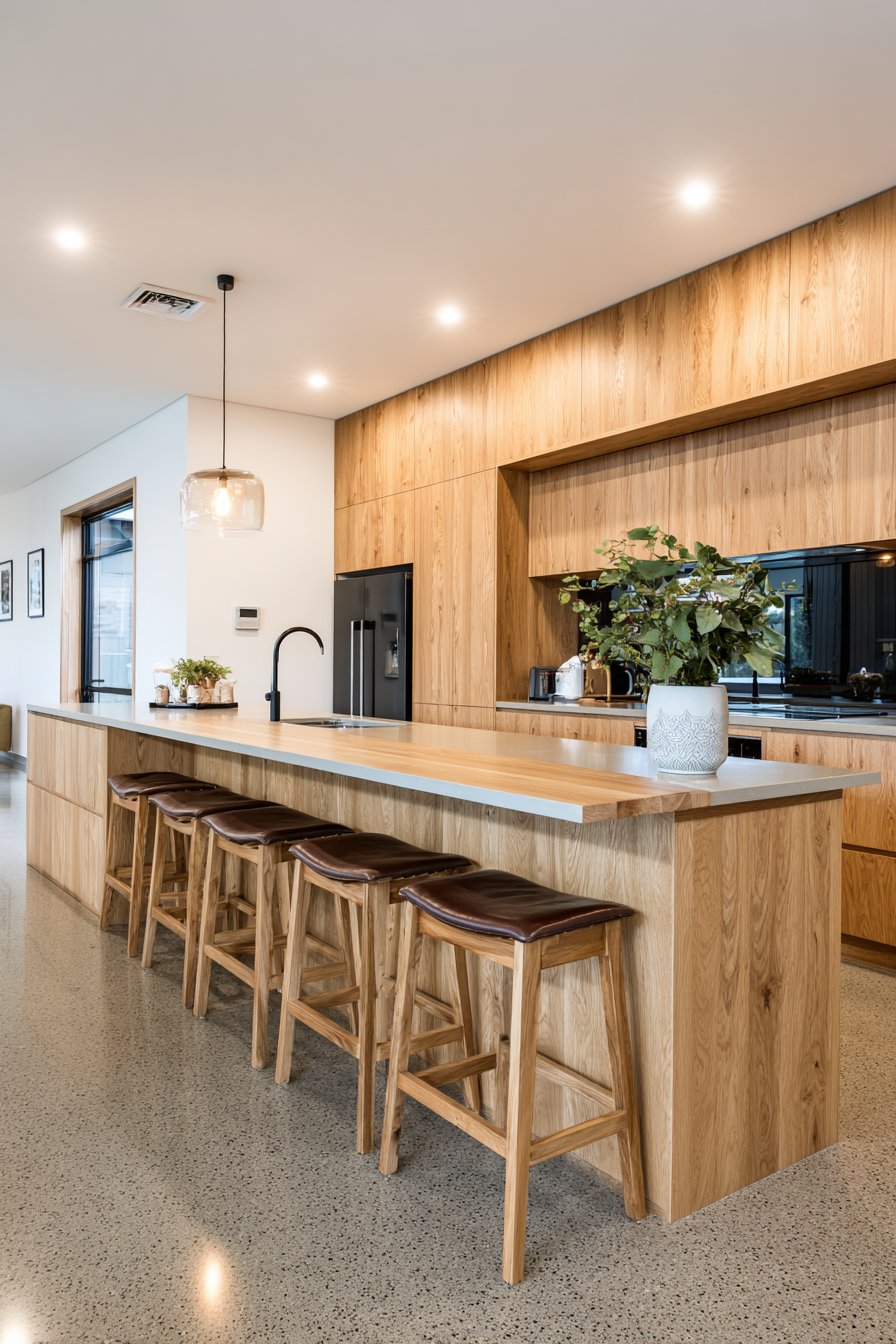
Experience modern sophistication in this contemporary kitchen featuring vertical-grain oak cabinets with a matte finish that showcases the wood’s linear patterns. The vertical orientation of the grain creates a sense of height and elegance, drawing the eye upward and making the space feel more expansive.
The matte finish provides a refined, contemporary appearance that avoids the glossy sheen of traditional wood finishes, resulting in a sophisticated look that feels current and fresh. This approach to wood finishing allows the material’s natural beauty to shine without excessive reflection or shine that might feel dated.
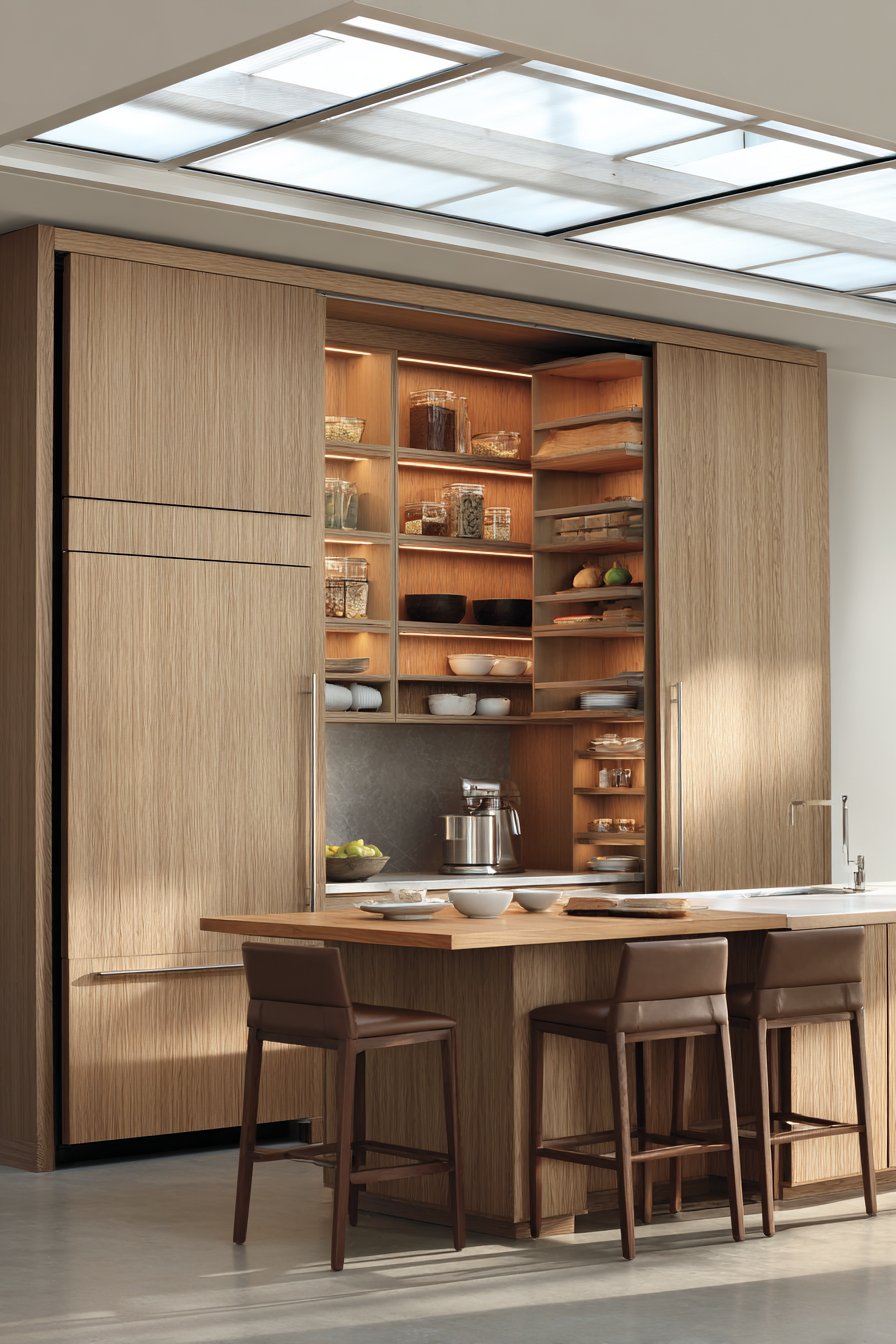
The full-height wooden pantry wall features integrated pull-out storage solutions that maximize organization while maintaining the clean lines of the contemporary design. This floor-to-ceiling approach to pantry storage eliminates wasted space and provides exponentially more capacity than traditional pantry cabinets.
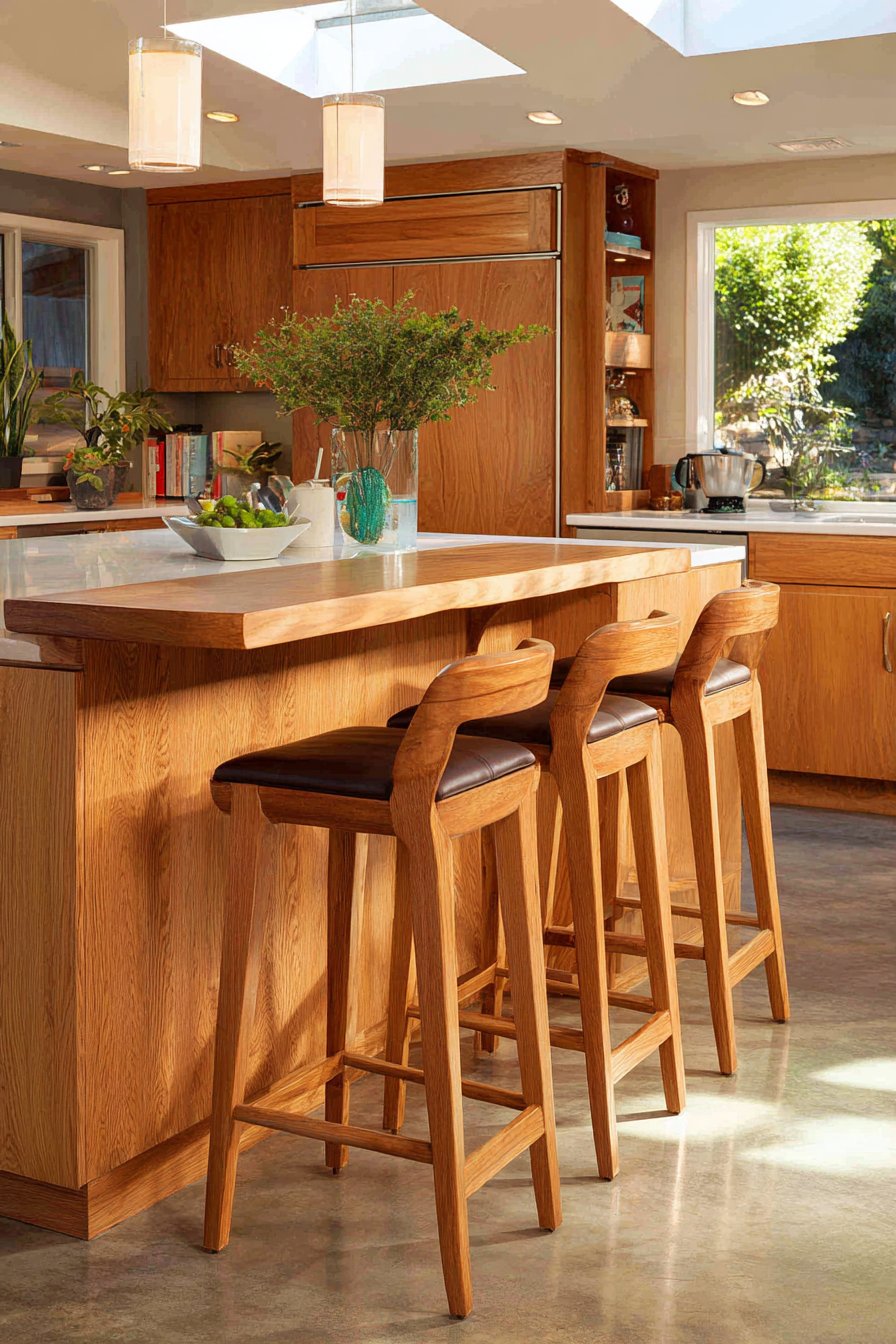
The integrated pull-out systems ensure that everything from canned goods to small appliances has a designated space and remains easily accessible. A wood-topped peninsula provides seating for casual dining, complete with matching wooden bar stools featuring leather upholstery that adds a touch of luxury and comfort.
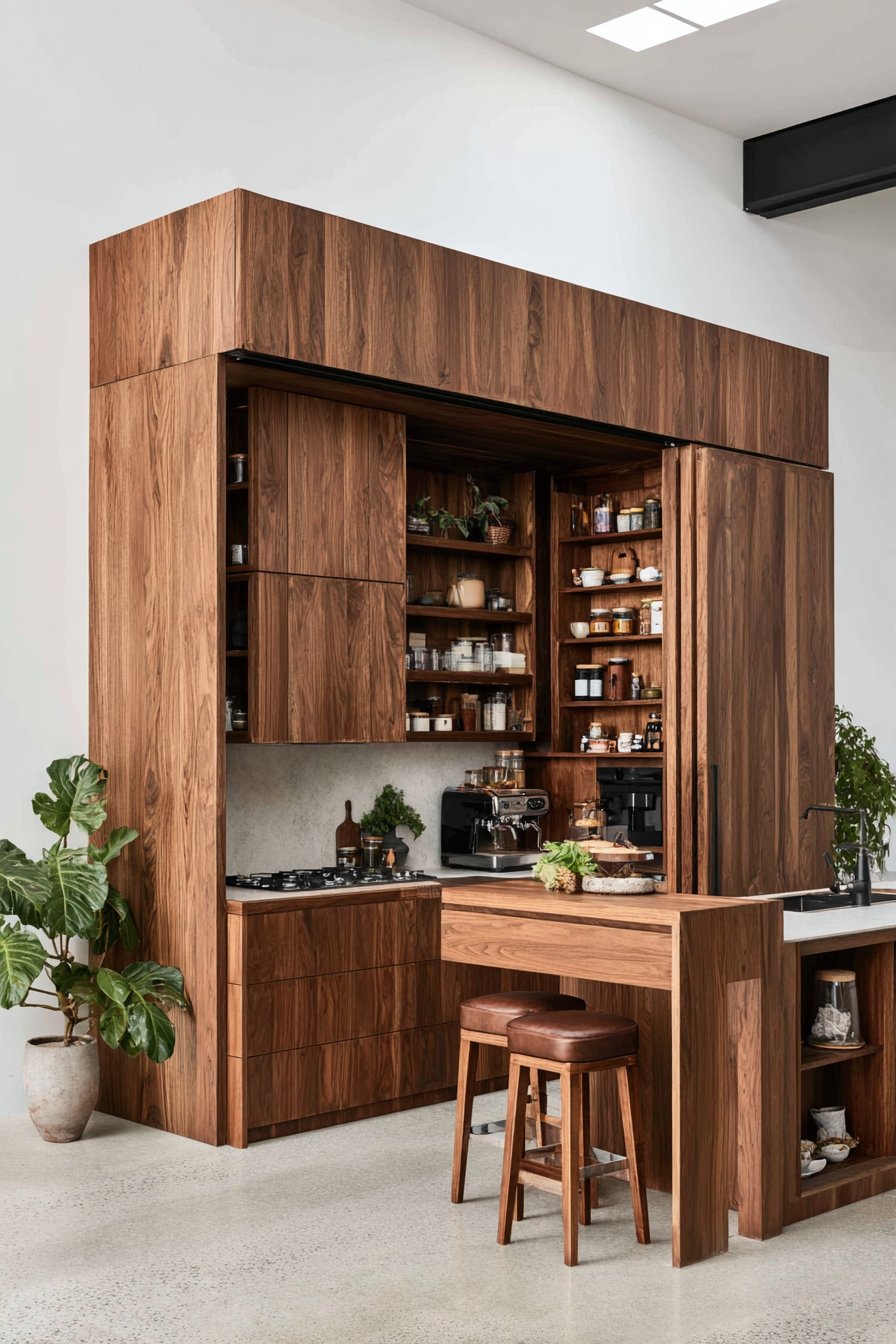
Polished concrete countertops provide modern contrast to the warm oak cabinetry, creating a material dialogue that defines contemporary design. The concrete’s cool, industrial character balances the organic warmth of the wood, preventing the space from feeling too rustic or traditional. Natural light from skylights illuminates the consistent oak grain pattern from above, creating a bright, airy atmosphere that showcases the wood’s beauty while highlighting the concrete’s subtle reflections. This functional layout successfully combines storage efficiency with aesthetic sophistication, proving that contemporary design can be both beautiful and eminently practical.
Key Design Tips:
- Select vertical-grain oak with matte finish to create contemporary elegance and showcase linear grain patterns that feel modern.
- Install a full-height pantry wall with pull-out systems to maximize storage capacity and organizational efficiency.
- Create a wood-topped peninsula with seating to provide casual dining space and encourage social interaction while cooking.
- Choose polished concrete countertops for modern material contrast that balances wood’s organic warmth with industrial sophistication.
- Add skylights where possible to illuminate wood grain patterns from above and create a bright, energizing atmosphere.
10. Open-Concept Hickory Kitchen with Rustic Functionality
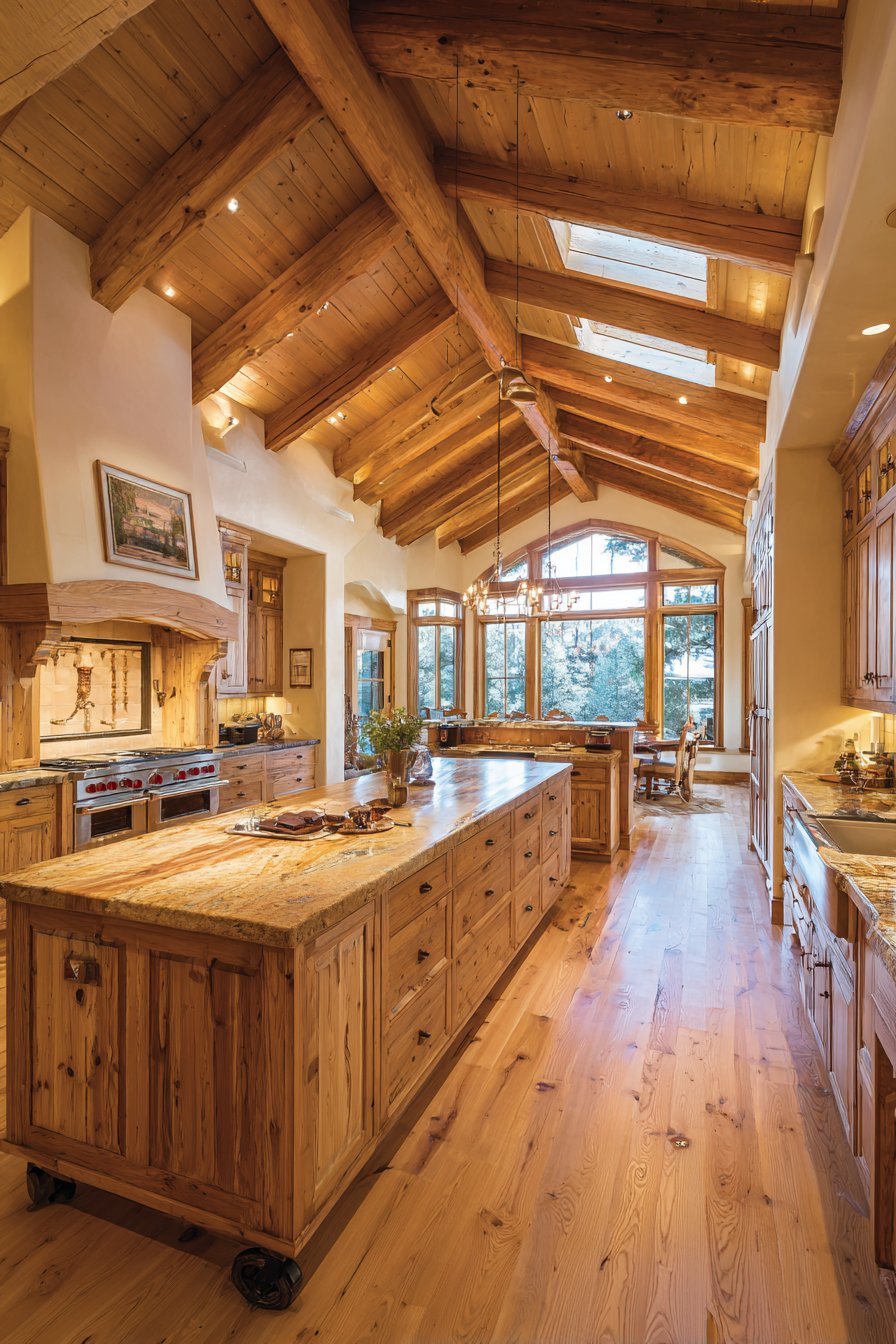
Embrace authentic rustic style in this open-concept kitchen featuring exposed wooden ceiling joists and custom-built hickory cabinets with natural knots and color variation. The hickory’s inherent character creates visual interest through its varied coloring and distinctive grain patterns, with each cabinet face unique in appearance.
This design celebrates imperfection and natural variation, recognizing that the knots and color shifts that might be considered flaws in other contexts actually enhance the rustic authenticity and organic beauty of this kitchen. The exposed ceiling joists add architectural drama and reinforce the rustic aesthetic while creating visual interest overhead.
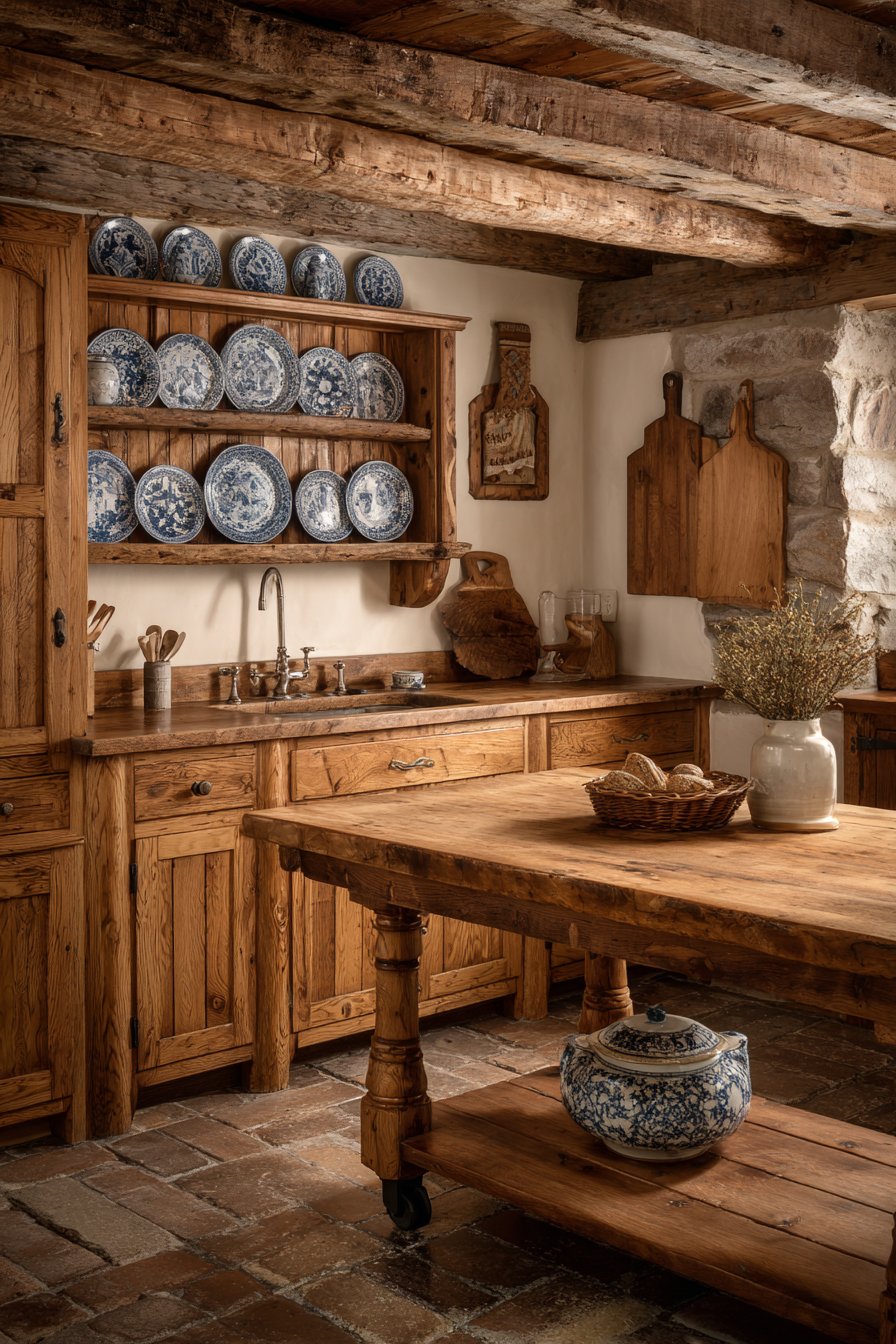
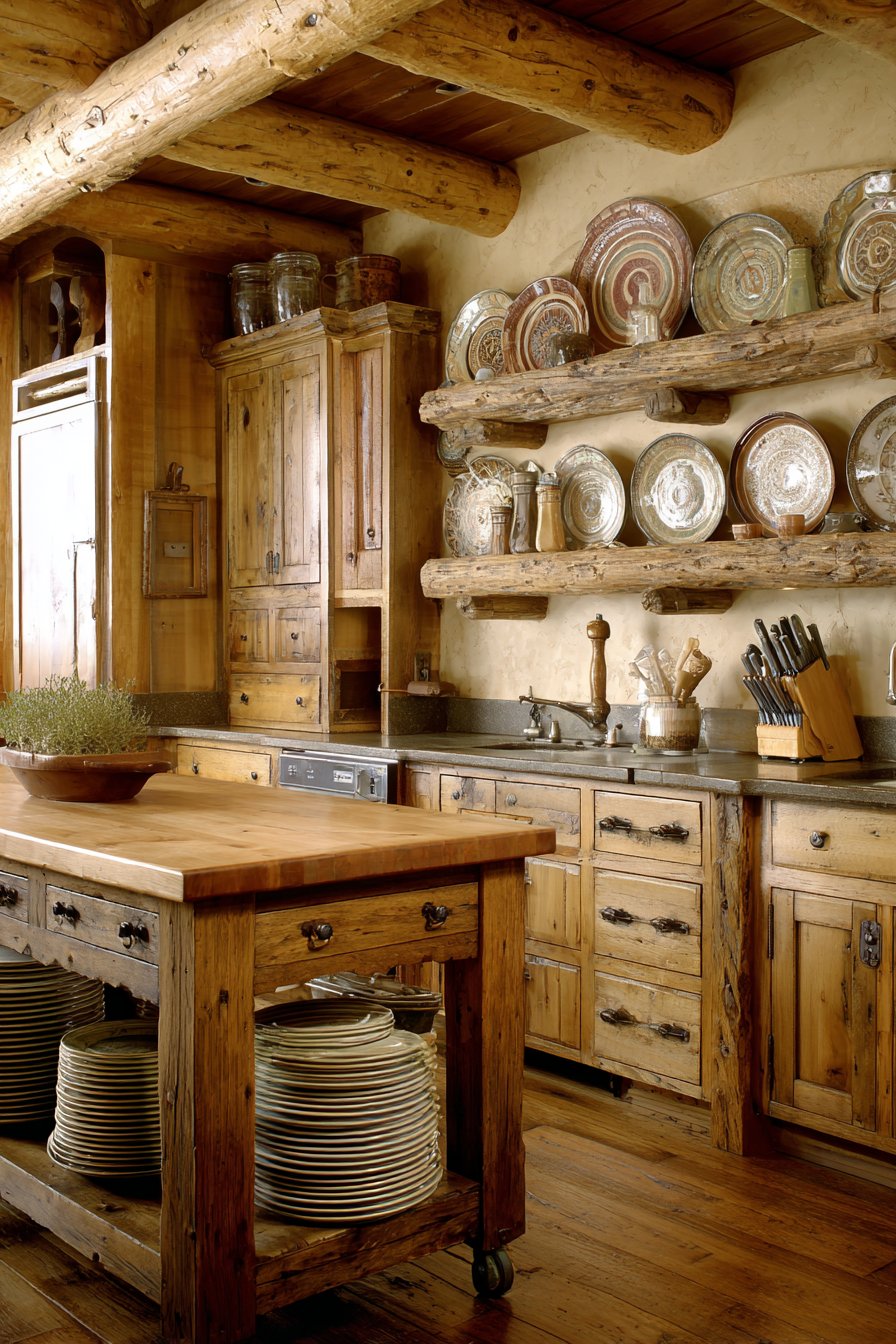
The large wooden prep table on wheels serves as a flexible workspace that can be repositioned as needed, providing ultimate versatility in kitchen workflow. This movable island concept acknowledges that kitchen needs change throughout the day and that flexibility enhances functionality. The substantial prep table provides ample surface area for complex cooking projects while maintaining the ability to roll aside when more floor space is needed. Wooden plate racks mounted on walls display everyday dishes, turning functional storage into decorative display and keeping frequently used items readily accessible. A wooden knife block and cutting boards add functional decor elements that reinforce the kitchen’s practical, lived-in quality.
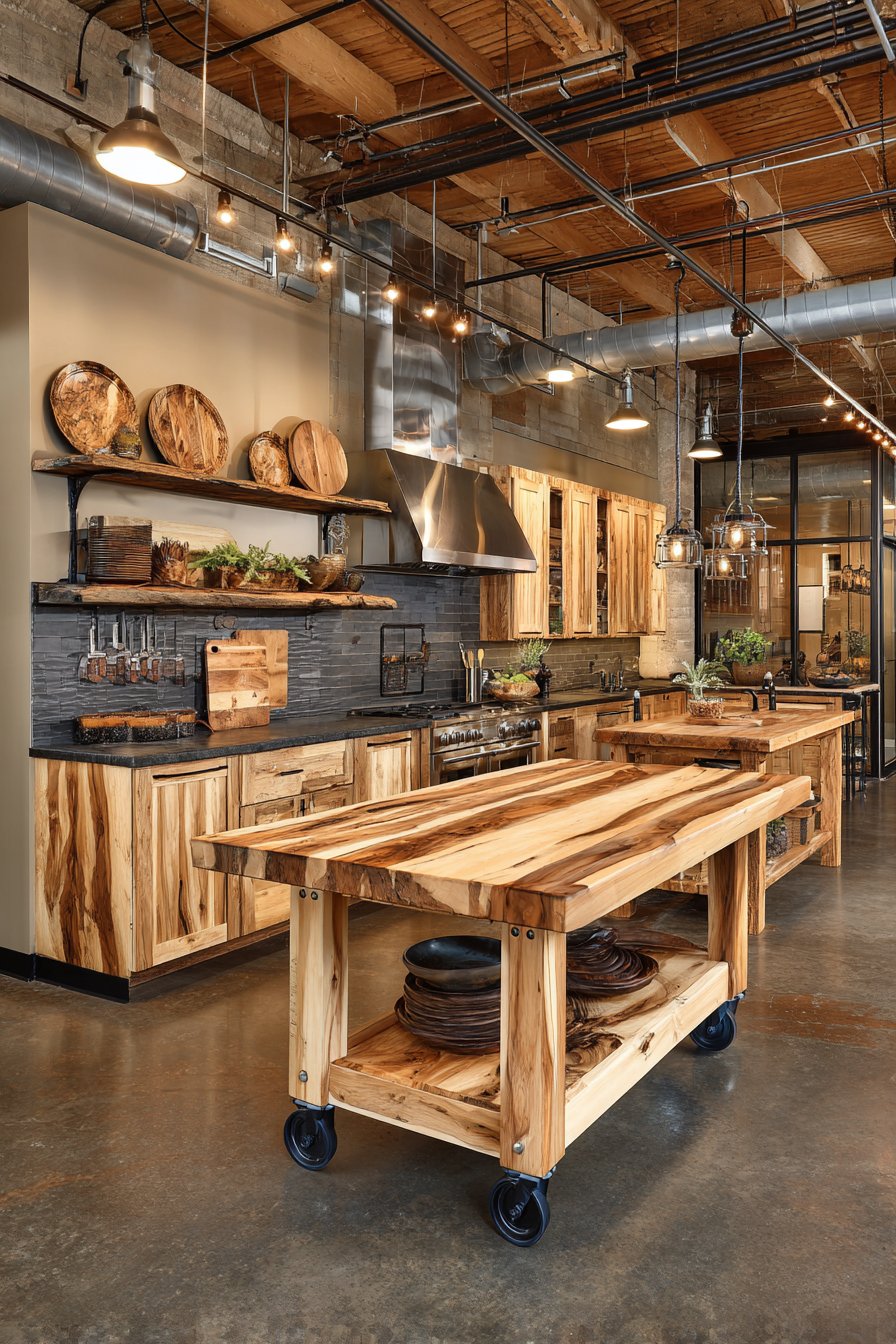
Soft golden hour lighting captures the authentic rustic-meets-functional aesthetic, highlighting the varied wood tones and creating a warm, inviting atmosphere that feels both practical and beautiful. The combination of hickory cabinets, exposed ceiling joists, and movable prep table creates a kitchen that feels like a working culinary studio rather than a pristine showroom.
This design proves that rustic style can be highly functional and that embracing natural material variations creates spaces with genuine character and personality. The open-concept layout ensures that the kitchen integrates seamlessly with adjacent living spaces, making it perfect for entertaining and family gatherings.
Key Design Tips:
- Choose hickory cabinetry to embrace natural knots and color variation that add authentic rustic character and visual interest.
- Install exposed wooden ceiling joists to add architectural drama and reinforce the rustic aesthetic from floor to ceiling.
- Incorporate a wheeled wooden prep table for flexible workspace that adapts to changing kitchen needs throughout the day.
- Mount wooden plate racks on walls to combine functional storage with decorative display that keeps everyday items accessible.
- Add wooden knife blocks and cutting boards as functional decor that reinforces the practical, lived-in quality of the space.
Why These Wood Kitchen Designs Stand Out
Wood kitchen designs represent the perfect convergence of natural beauty, functional excellence, and timeless appeal that transcends passing trends. Each of the ten designs explored in this comprehensive guide demonstrates unique approaches to incorporating wood into the kitchen space, from the warm honey tones of natural oak to the sophisticated contrast of two-toned cabinetry. These kitchens exemplify how wood species selection, finish choices, and design philosophy combine to create spaces that are distinctly personal yet universally appealing.
The versatility of wood as a kitchen material cannot be overstated. Whether you’re drawn to the rustic authenticity of reclaimed barn wood with its visible history and weathered patina, or you prefer the clean lines and minimalist aesthetic of Scandinavian birch cabinetry, wood adapts beautifully to your vision. Contemporary designs featuring horizontal-grain walnut with handle-less drawers prove that wood fits seamlessly into modern design vocabularies, while transitional spaces with maple cabinetry and raised panels demonstrate how wood bridges traditional and contemporary sensibilities. This remarkable adaptability ensures that wood kitchens remain relevant across changing design trends and personal taste evolution.
The practical benefits of wood kitchens extend far beyond their undeniable aesthetic appeal. Wood provides excellent durability when properly finished and maintained, with quality wood cabinetry lasting decades and often outliving the home’s other finishes. Unlike synthetic materials that can appear dated as styles change, wood develops character and patina over time, actually improving in appearance as it ages. The natural warmth of wood creates inviting atmospheres that make kitchens feel welcoming and comfortable, encouraging family members to gather and spend time together. From compact cherry wood kitchens that maximize storage in small footprints to expansive open-concept hickory spaces with movable prep tables, wood solutions exist for every kitchen size and configuration.
These wood kitchen designs excel because they honor the material’s natural characteristics rather than trying to disguise or minimize them. The visible grain patterns in oak cabinetry, the natural edge details on butcher block countertops, the color variations in hickory wood, and the nail holes in reclaimed planks all contribute to the authentic beauty that makes these kitchens special. Modern design trends increasingly value authenticity and connection to natural materials, making wood kitchens more relevant than ever in contemporary home design. The sustainability aspect of choosing wood, particularly reclaimed or responsibly harvested wood, appeals to environmentally conscious homeowners who want their design choices to reflect their values.
The investment value of wood kitchens remains strong, with quality wood cabinetry and elements significantly increasing home resale value. Potential buyers consistently rank wood kitchens among the most desirable features, recognizing both the aesthetic appeal and the long-term durability that wood provides. Unlike trendy materials that may feel dated within a few years, wood maintains its appeal across generations and design eras. Whether you’re planning to enjoy your wood kitchen for decades or anticipate selling in the near future, the choice to invest in quality wood elements represents sound financial planning alongside aesthetic enhancement.
From storage solutions in floor-to-ceiling cherry wood cabinets to statement-making reclaimed wood islands that serve as conversation pieces, these designs showcase the incredible range of possibilities within wood kitchen design. The integration of modern conveniences like LED under-cabinet lighting, push-to-open mechanisms, and pull-out pantry systems proves that choosing wood doesn’t mean sacrificing contemporary functionality. Smart design choices like two-toned cabinetry, waterfall-edge islands, and strategic use of open shelving demonstrate how traditional materials can be deployed in innovative ways that feel fresh and current.
Conclusion
Wood kitchens offer an unmatched combination of natural beauty, functional excellence, and enduring style that makes them worthy of serious consideration for any kitchen renovation or new build project. The ten distinctive designs explored in this guide demonstrate the remarkable versatility of wood as a kitchen material, showcasing everything from rustic reclaimed barn wood to contemporary vertical-grain oak, from warm honey-toned natural oak to sophisticated two-toned walnut and ash combinations. Each approach offers unique benefits and aesthetic qualities, proving that wood adapts beautifully to virtually any design vision and personal preference.
The key to creating a successful wood kitchen lies in thoughtful material selection, understanding how different wood species and finishes contribute to the overall atmosphere, and carefully balancing wood elements with complementary materials like stone, concrete, and metal. Whether you’re working with a compact space that requires floor-to-ceiling storage solutions or designing an expansive open-concept kitchen with exposed ceiling joists, the principles remain consistent: celebrate the natural beauty of wood, prioritize functionality alongside aesthetics, and create spaces that invite people to gather and connect.
As you embark on your own kitchen design journey, consider which of these approaches resonates most strongly with your personal style and practical needs. Don’t be afraid to mix elements from different designs, combining the rustic charm of reclaimed wood with the clean lines of contemporary cabinetry, or pairing traditional raised panels with modern handle-less drawers. The beauty of wood is its flexibility and its ability to bridge different design styles seamlessly. Experiment with color tones, grain patterns, and finishes to discover combinations that feel uniquely yours while maintaining the timeless appeal that makes wood kitchens a lasting investment in beauty, functionality, and value
