


The interior design world is experiencing a profound shift as homeowners seek spaces that feel both serene and inviting. Warm minimalism has emerged as the antidote to stark, cold interiors that dominated the minimalist movement for years. This evolved approach combines the clean lines and uncluttered spaces of traditional minimalism with natural textures, earthy tones, and tactile materials that create genuine comfort.
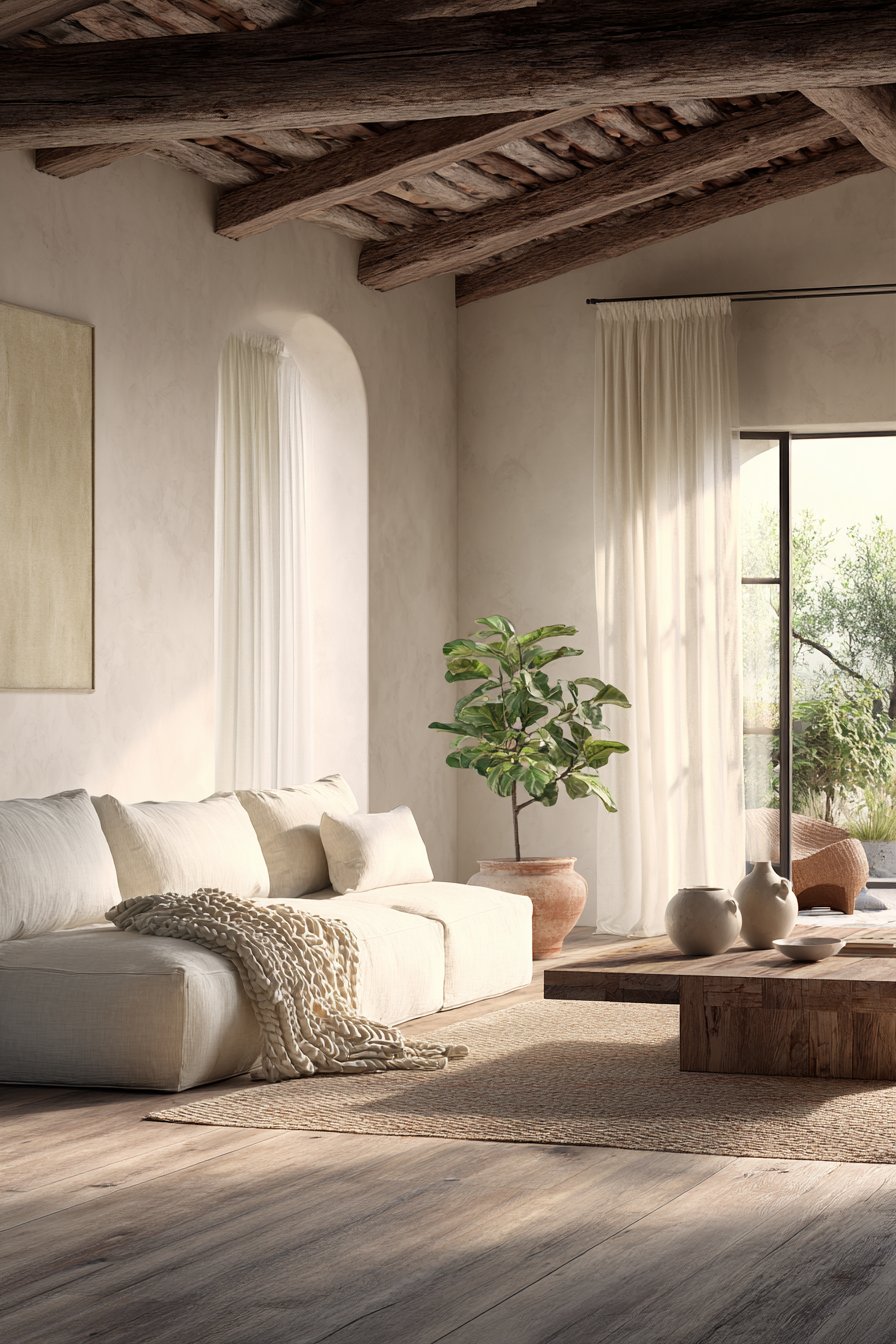
Thoughtful interior design transcends mere aesthetics—it shapes how we live, work, and find peace in our daily environments. The right design philosophy can transform a house into a sanctuary that reflects your personality while supporting your lifestyle needs. Warm minimalism achieves this delicate balance by eliminating excess without sacrificing the emotional warmth that makes a space feel like home.
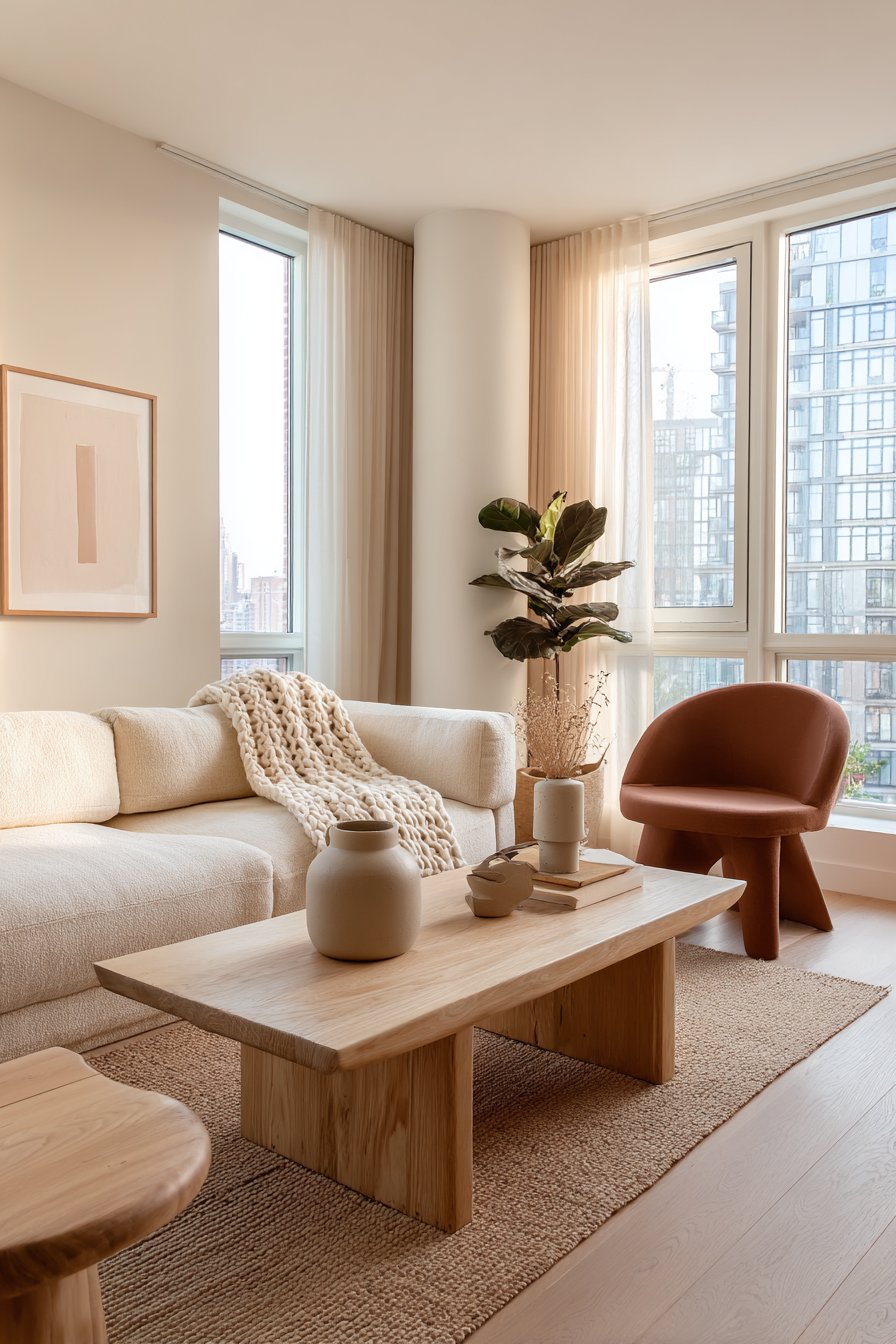
This comprehensive guide explores why warm minimalism is revolutionizing residential design and how you can embrace this transformative approach. From material selection to color palettes, lighting strategies to furniture choices, we’ll uncover the elements that make this style both timeless and remarkably livable for modern families.
1. The Philosophy Behind Warm Minimalism
Warm minimalism rejects the notion that minimal living must feel austere or uncomfortable. This design approach prioritizes intentionality—every object in your space should serve a purpose or bring genuine joy. The philosophy centers on creating breathing room that allows your mind to rest while surrounding yourself with carefully chosen elements that add warmth and character.
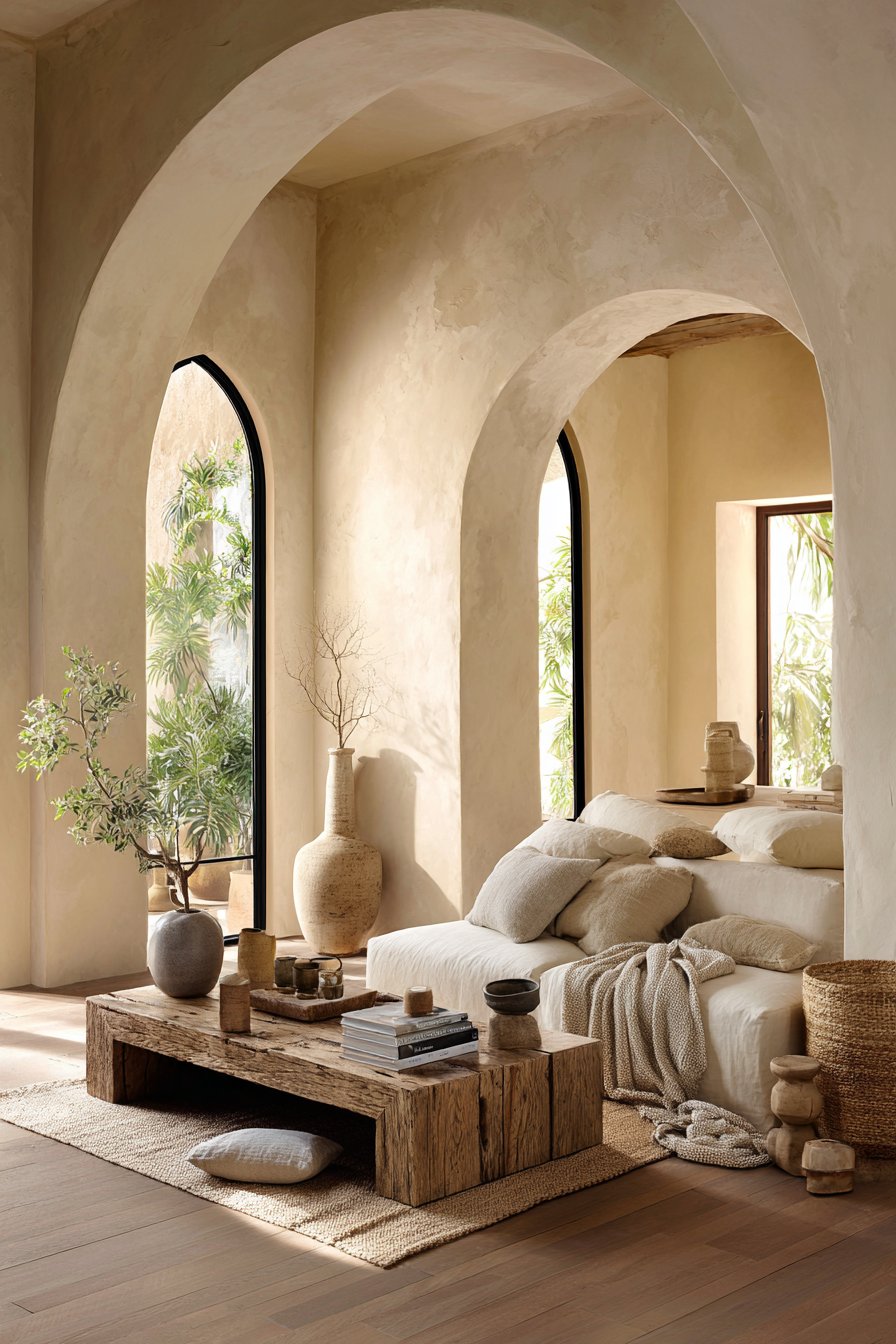
Unlike traditional minimalism that often feels clinical, warm minimalism incorporates natural materials and organic textures that appeal to our innate human need for connection with nature. Think wool throws draped over linen sofas, wooden coffee tables with visible grain, and ceramic vessels in neutral tones. These elements introduce visual and tactile interest without creating visual chaos.
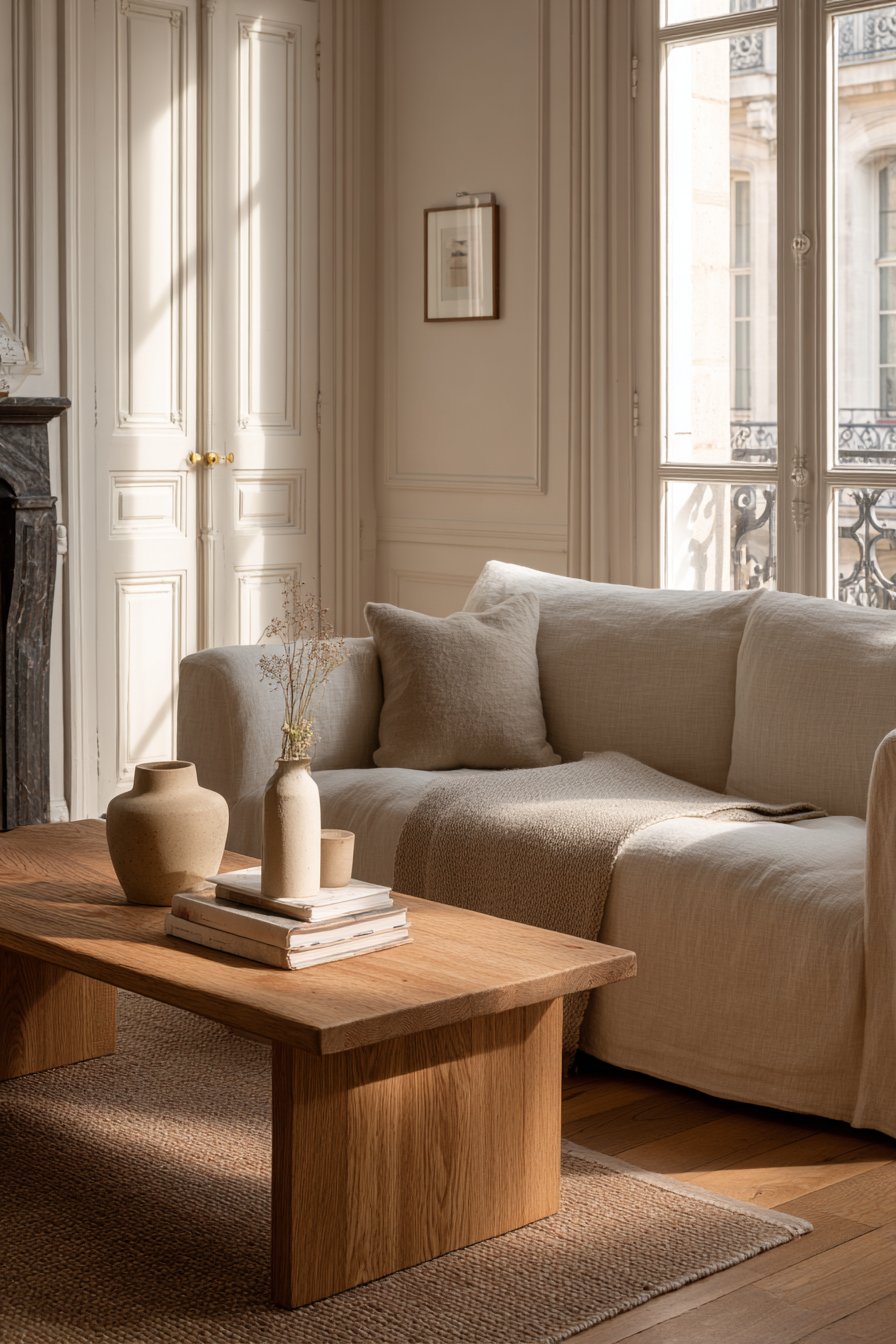
The key lies in editing ruthlessly while choosing additions thoughtfully. Each piece should earn its place through beauty, function, or emotional significance. This selective approach prevents spaces from feeling empty or impersonal while maintaining the calm, uncluttered aesthetic that defines minimalist design.
- Embrace the “less but better” philosophy when selecting furniture and decor
- Choose quality pieces that will last decades over trendy items
- Allow negative space to exist without feeling compelled to fill every corner
- Invest in items with personal meaning rather than generic accessories
- Consider the emotional response each object creates in your space
- Edit seasonal decorations to maintain visual simplicity year-round
2. Material Selection and Natural Textures
The material palette defines warm minimalism more than any other element. Natural, unfinished materials like raw wood, linen, wool, and stone create depth and warmth while maintaining simplicity. These materials age beautifully, developing patina and character over time rather than looking worn or dated.
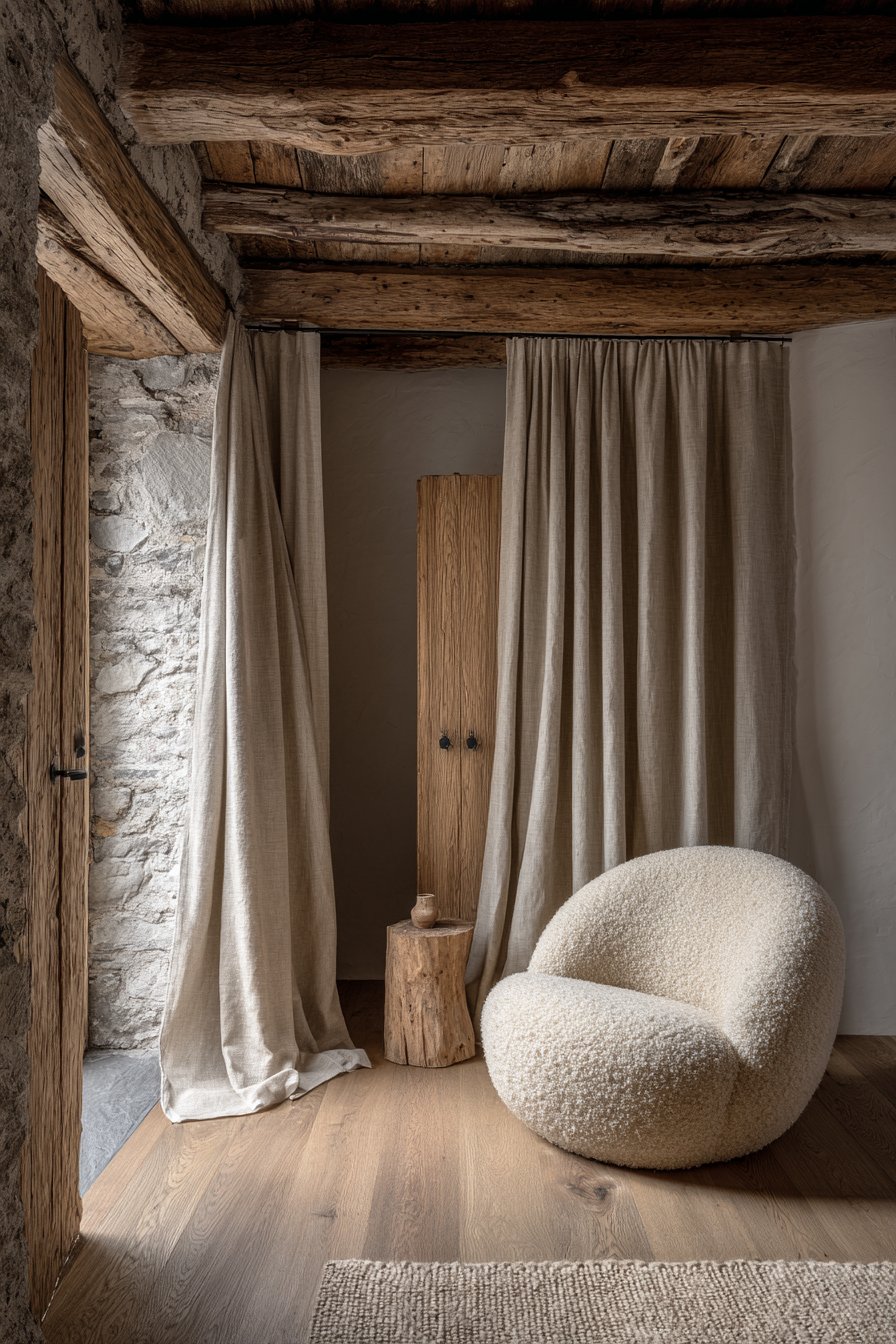
Wood plays a starring role in warm minimalist interiors, whether through exposed ceiling beams, wide-plank flooring, or handcrafted furniture. Choose woods with visible grain patterns and warm undertones like oak, walnut, or teak. The organic irregularities in natural wood add visual interest without requiring additional decorative elements.
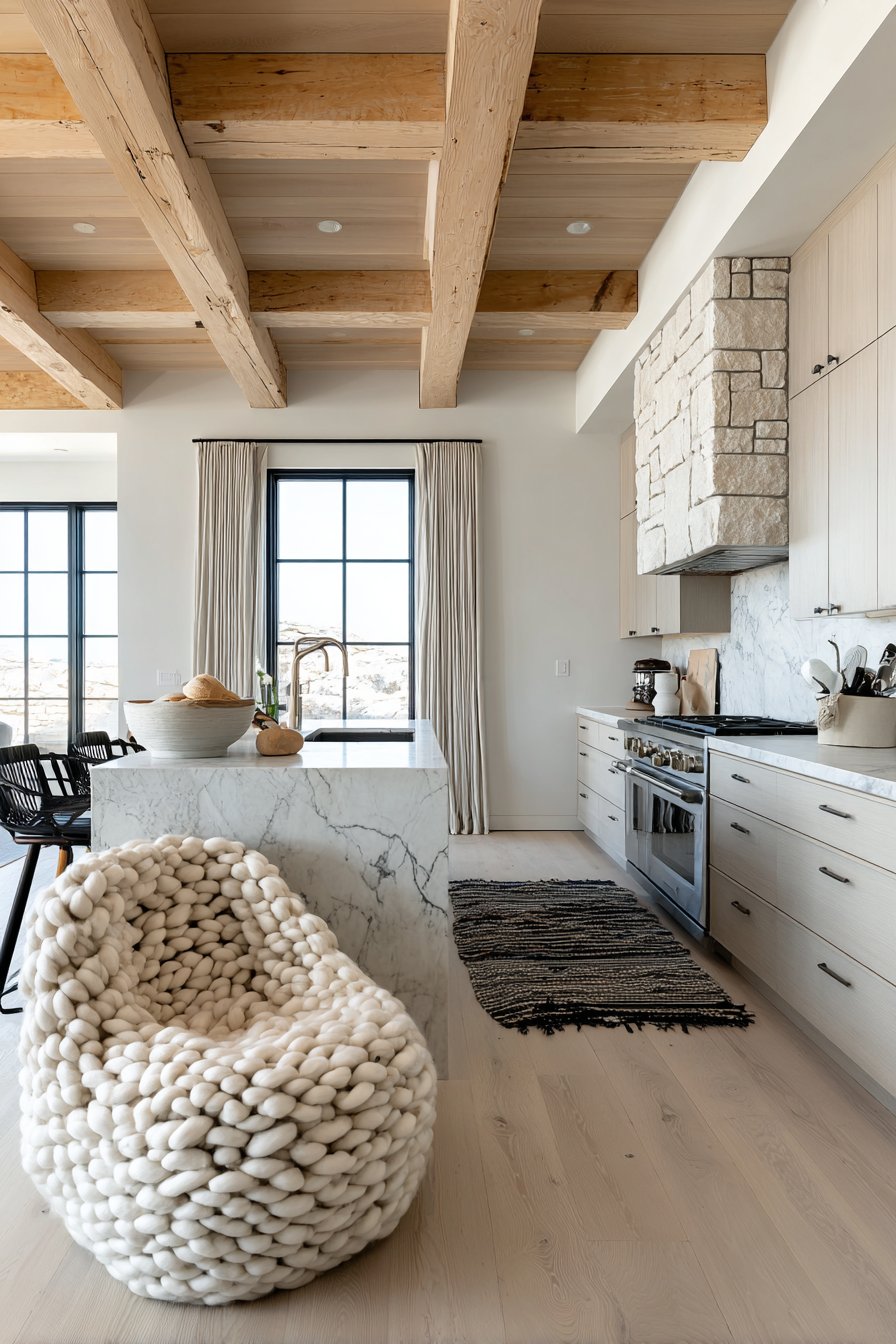
Textiles introduce essential softness and tactile warmth. Layer different textures through chunky knit throws, bouclé upholstery, jute rugs, and linen curtains. These natural fibers create subtle variation in tone and texture that prevents spaces from feeling flat. The key is maintaining a cohesive color story while varying the texture and weight of materials.
- Incorporate at least three different natural materials in each room
- Choose solid wood furniture over veneers for authentic quality
- Layer rugs using natural fibers like sisal, jute, or wool
- Select stone countertops with natural veining for organic visual interest
- Use linen bedding and curtains to introduce soft texture
- Mix smooth and rough textures to create tactile contrast
3. The Warm Neutral Color Palette
Color selection anchors the entire warm minimalist aesthetic. The palette revolves around earth-derived neutrals—think warm whites, creamy beiges, soft taupes, terracotta, and warm grays with brown undertones. These colors create a soothing foundation that feels grounded and welcoming rather than stark.
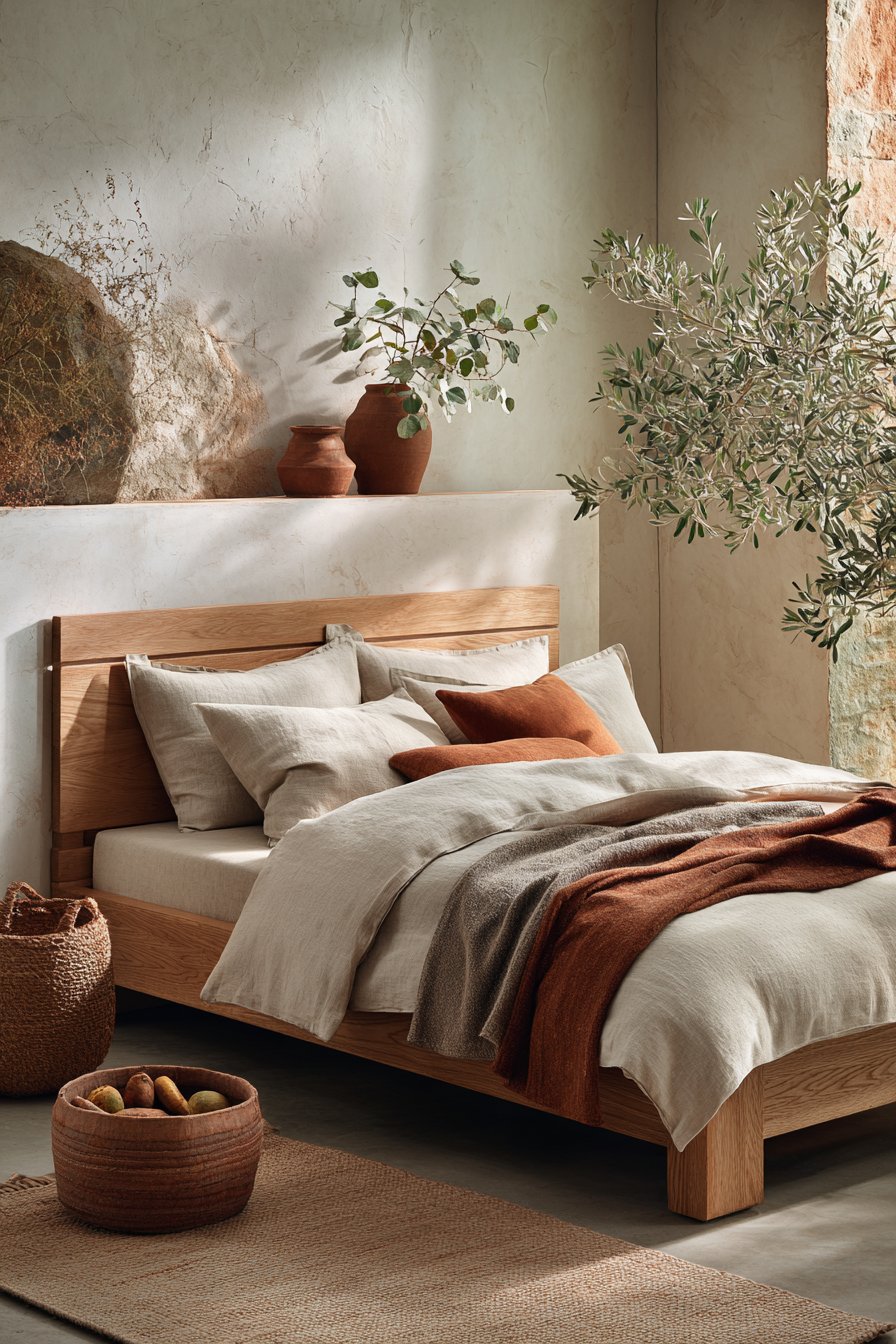
Unlike cool minimalism’s reliance on pure white and gray, warm minimalism embraces off-white shades like ivory, cream, and bone. These subtle variations add depth without introducing pattern or bold color. The warmth comes from choosing neutrals with yellow, red, or brown undertones instead of blue or green bases.
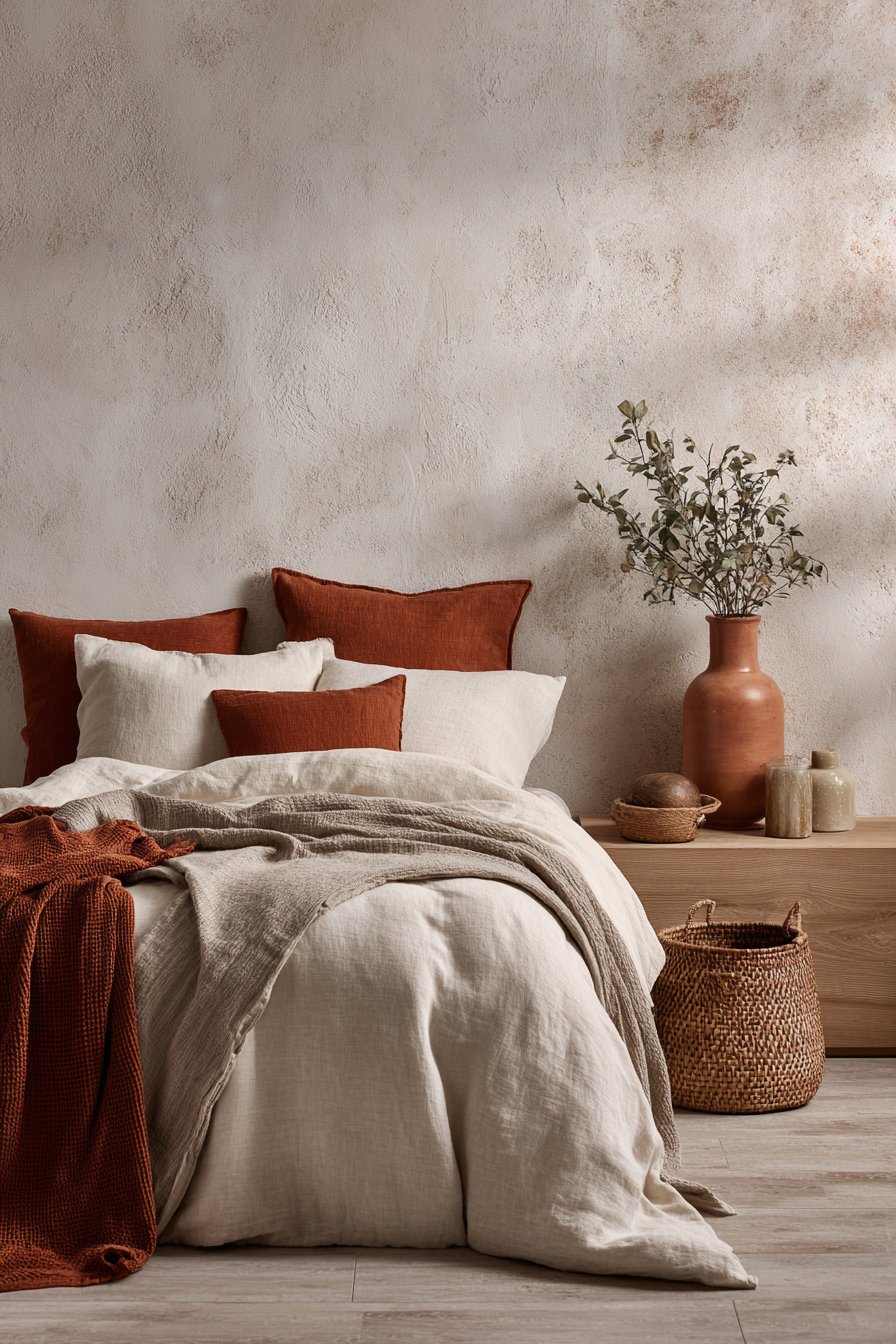
Accent colors should draw from nature—rust, clay, sage, or warm terracotta work beautifully in small doses. These hues appear through carefully chosen accessories like ceramic vases, woven baskets, or single statement chairs. The goal is creating a monochromatic scheme with subtle variation rather than introducing multiple competing colors.
- Test paint colors in different lighting conditions before committing
- Choose warm whites with LRV values between 75-85 for main walls
- Use darker neutral tones on accent walls to add depth
- Limit accent colors to two or three maximum throughout the space
- Incorporate natural wood tones as part of your color palette
- Consider the undertones in all materials to ensure harmony
4. Strategic Lighting Design
Lighting transforms warm minimalism from concept to lived reality. Layered lighting creates ambiance and functionality while maintaining the style’s clean aesthetic. The goal is achieving soft, diffused illumination that eliminates harsh shadows and creates a welcoming atmosphere throughout the day.
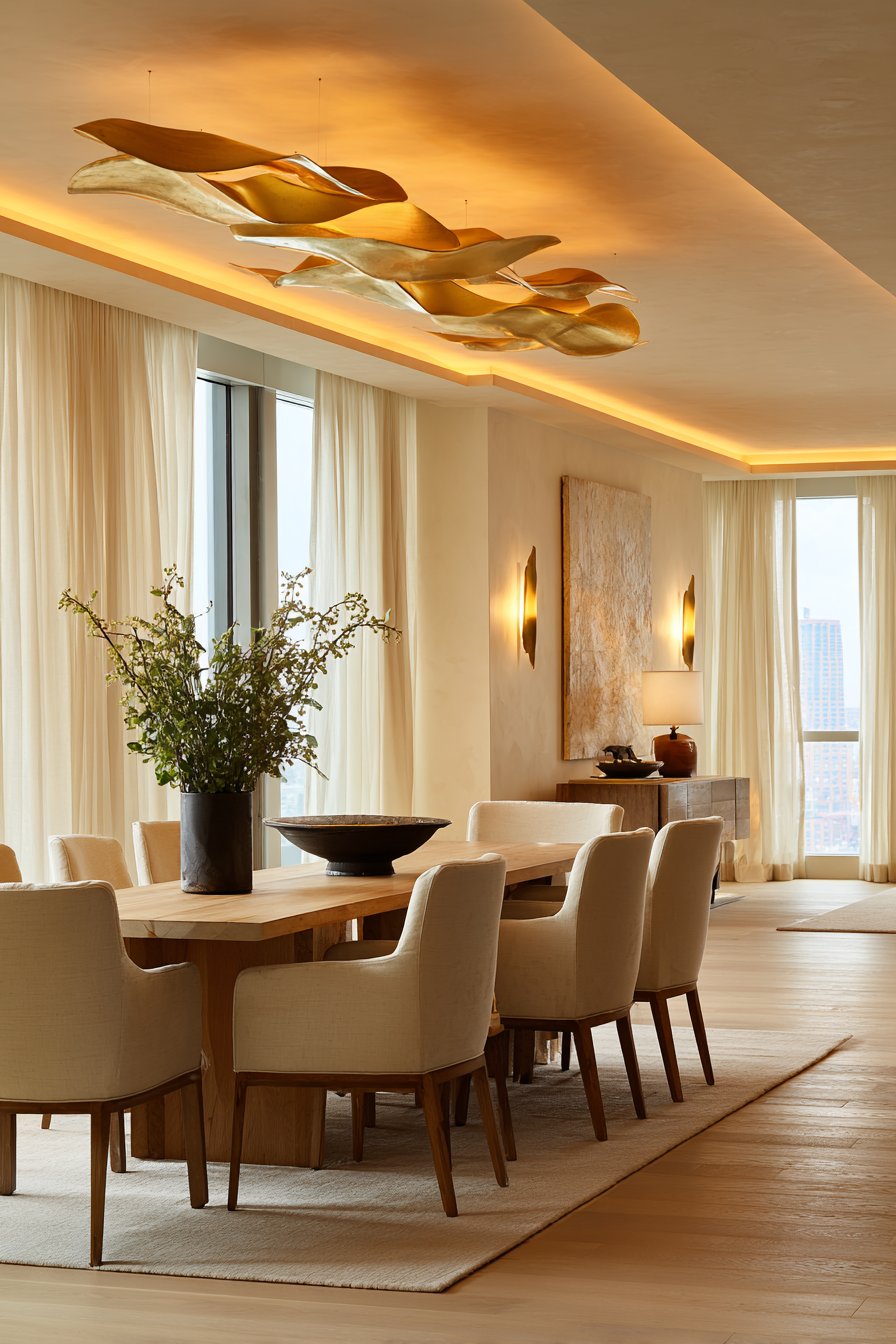
Natural light remains the priority in any warm minimalist space. Maximize daylight through sheer window treatments or completely bare windows where privacy allows. The interplay of natural light with natural materials creates dynamic visual interest that changes throughout the day, adding life to simplified spaces.
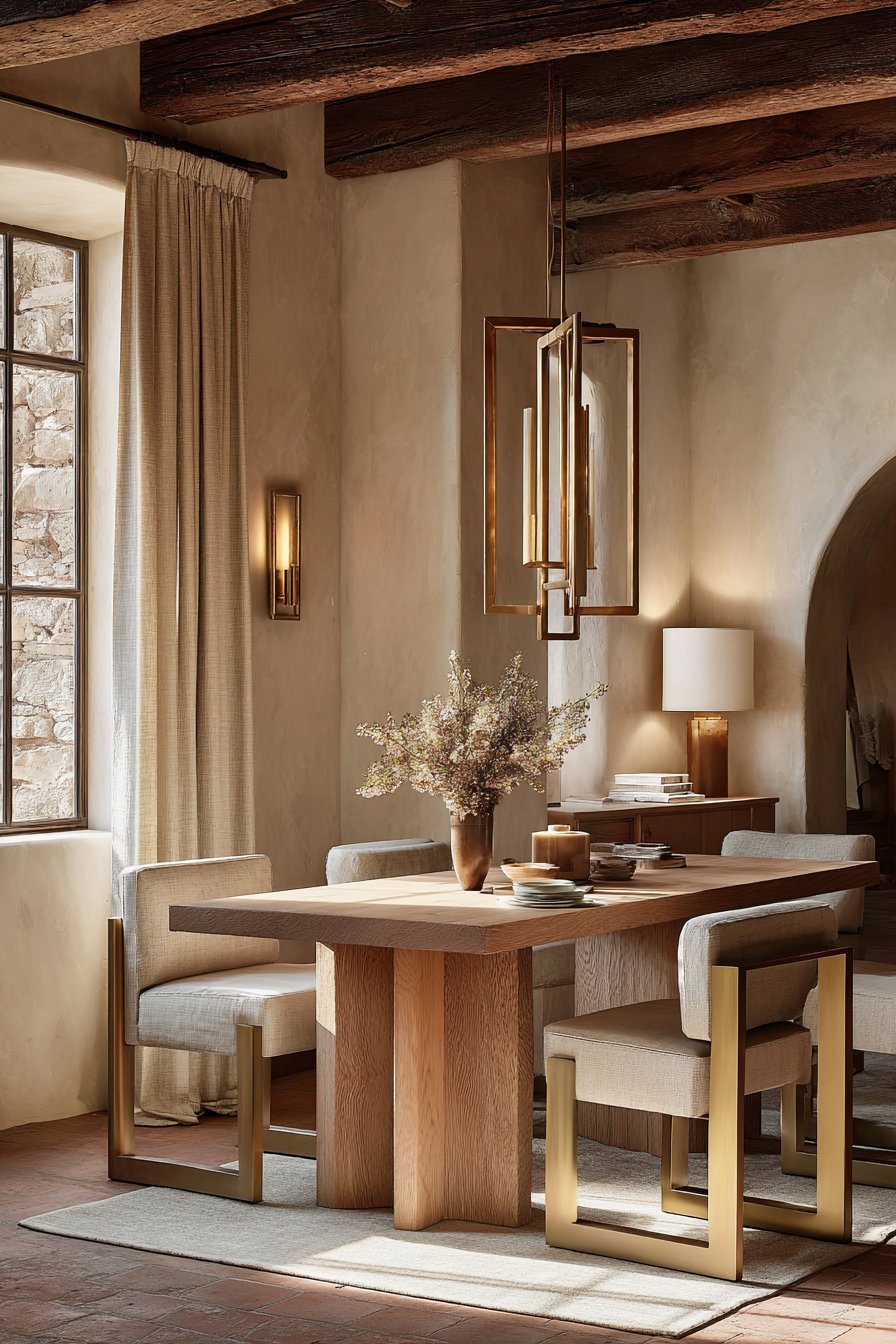
Artificial lighting should feel invisible and intentional. Recessed lighting, wall sconces, and sculptural pendant lights in warm metals like brass or bronze add architectural interest without clutter. Choose bulbs with warm color temperatures between 2700K-3000K to enhance the cozy atmosphere. Dimmer switches allow you to adjust lighting intensity for different moods and times.
- Install multiple light sources on separate switches for flexibility
- Use table lamps and floor lamps to create pools of warm light
- Choose fixtures with simple, sculptural forms that complement minimalism
- Avoid overhead lighting as the sole source—it creates harsh shadows
- Position mirrors strategically to reflect and amplify natural light
- Consider LED strips under cabinets for subtle ambient lighting
5. Furniture Selection and Spatial Planning
Furniture in warm minimalist spaces combines clean-lined silhouettes with organic materials and comfortable proportions. Each piece should feature simple geometry without excessive ornamentation, but never at the expense of comfort. The focus shifts from quantity to quality—fewer pieces of exceptional craftsmanship create more impact.
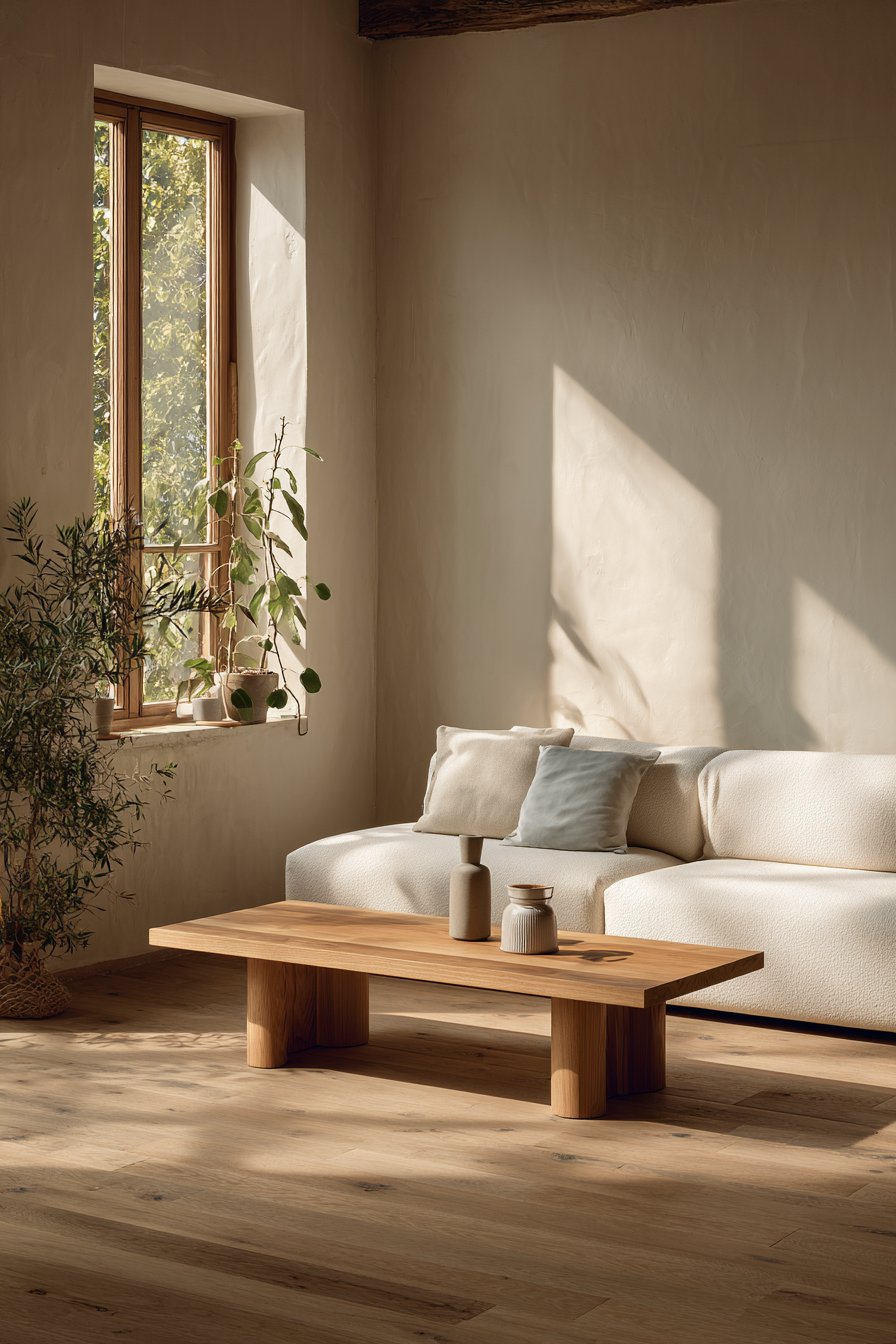
Scale matters tremendously in minimal spaces. Choose furniture that fits the room proportions without overwhelming the space or floating awkwardly. Low-profile pieces with visible legs create airiness and make rooms feel larger. Avoid bulky, oversized furniture that consumes visual space even when the color palette remains neutral.
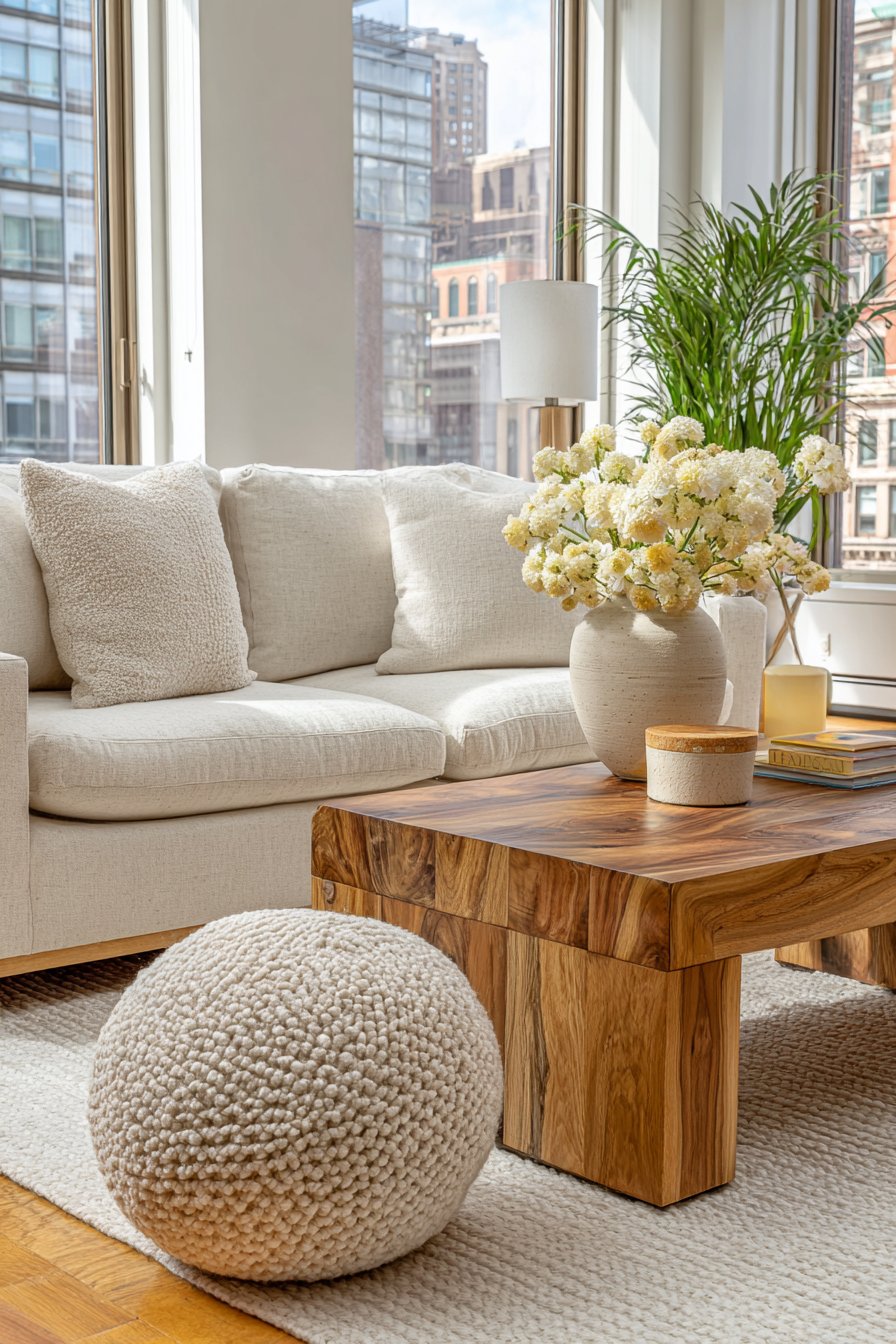
The spatial arrangement should facilitate natural flow and conversation while maintaining breathing room between furniture groupings. Leave adequate walking paths and allow furniture to float away from walls when space permits. This creates intentional negative space that’s essential to the minimalist aesthetic while making rooms feel purposefully designed.
- Measure rooms carefully and create scaled floor plans before purchasing
- Choose sofas and chairs with exposed wooden or metal legs
- Invest in multi-functional furniture like storage ottomans or extendable tables
- Maintain at least 30 inches between furniture pieces for comfortable circulation
- Select dining tables in natural wood with simple, tapered legs
- Avoid matching furniture sets in favor of curated, complementary pieces
6. Bringing Life Through Intentional Accessories
Accessories in warm minimalism serve as thoughtful punctuation marks rather than visual noise. Each decorative object should be carefully considered and beautifully crafted. The approach favors quality over quantity—one stunning ceramic vase makes more impact than a shelf crowded with trinkets.
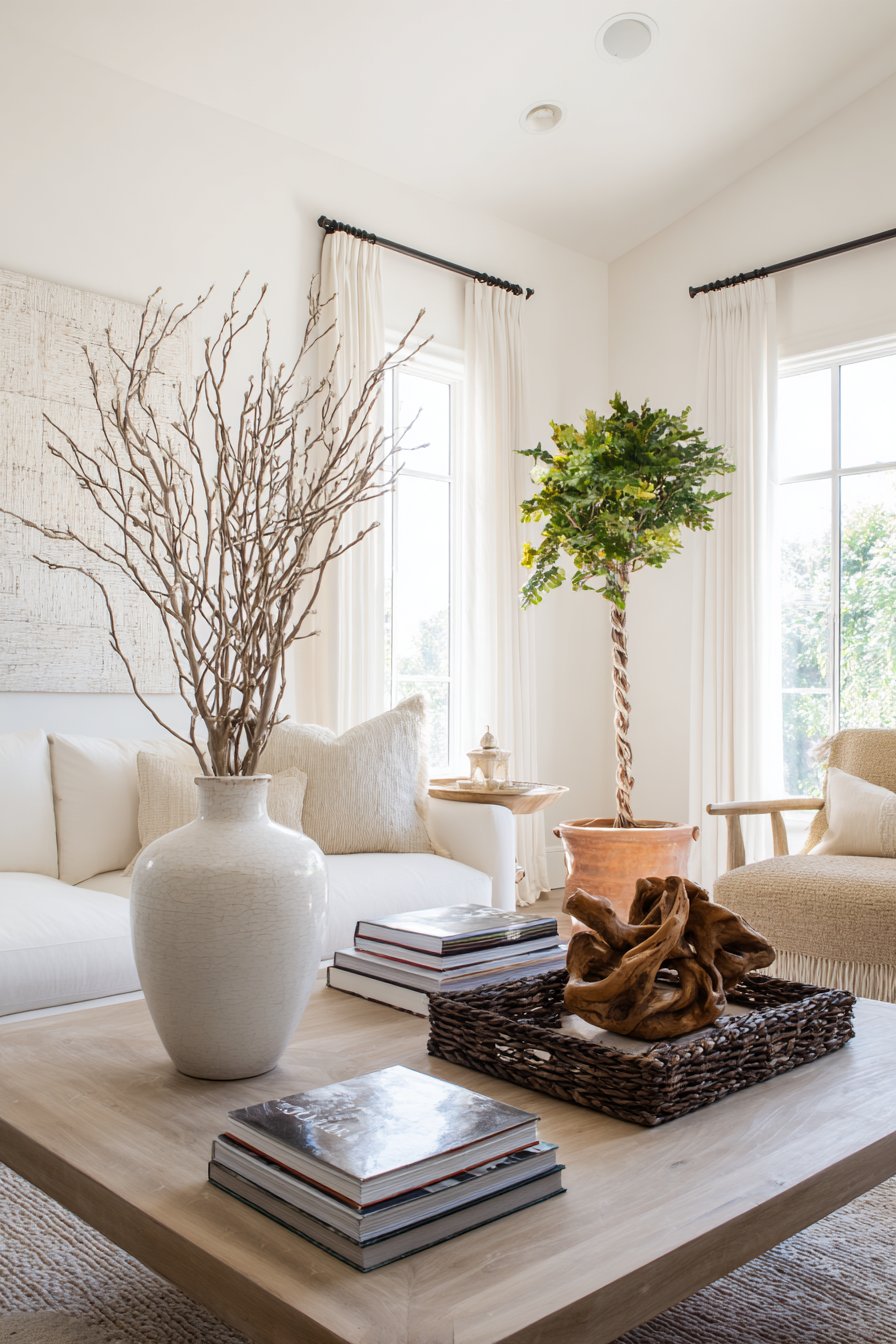
Natural elements breathe life into minimal spaces without adding clutter. Fresh greenery, dried branches, and single-stem flowers introduce organic movement and connection to nature. Choose planters in neutral ceramics or natural baskets that complement rather than compete with the overall aesthetic. Large-scale plants like fiddle leaf figs or olive trees make bold statements with minimal pieces.
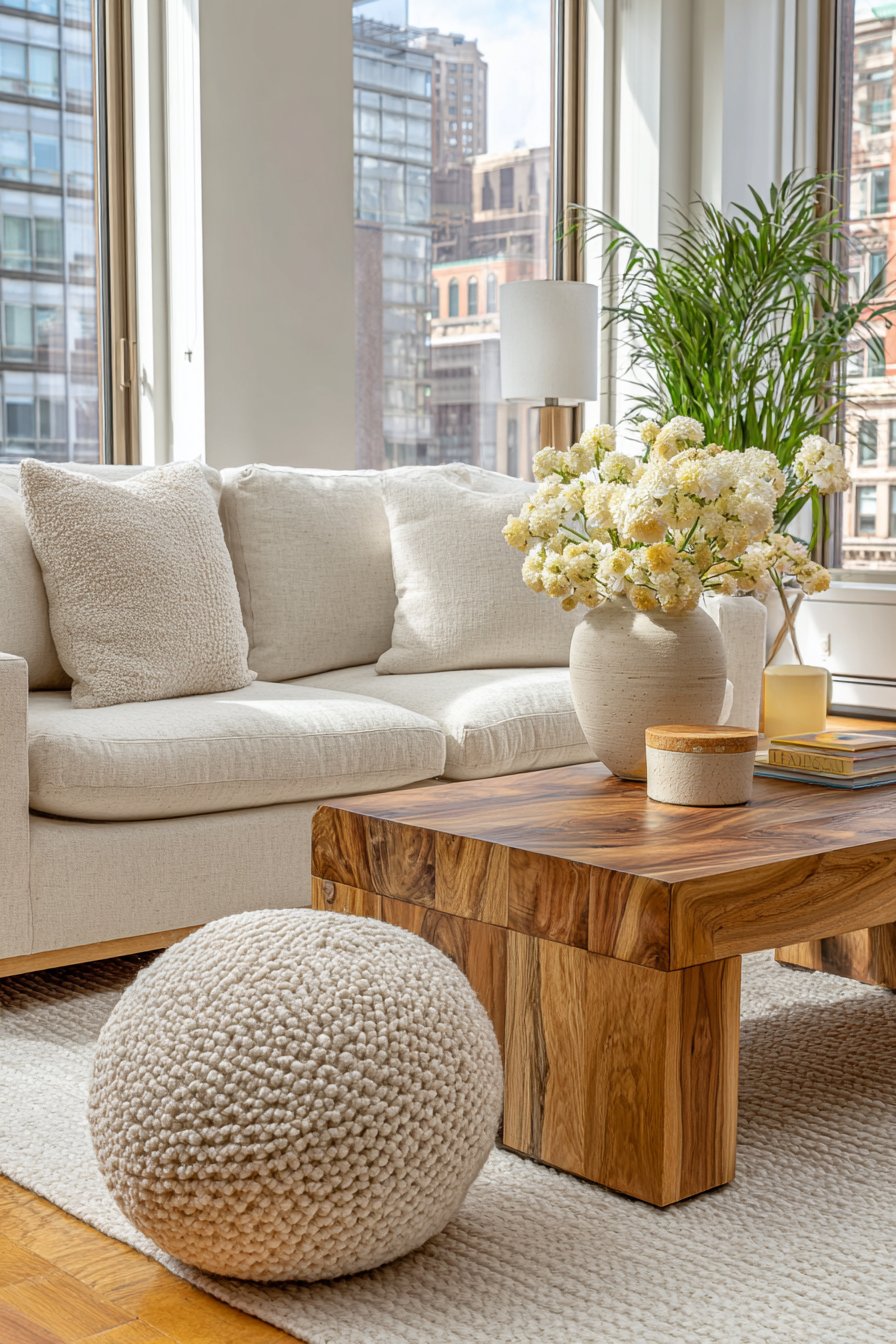
Artwork and personal items require the most editing. Select meaningful pieces that resonate emotionally rather than filling walls because space exists. Large-scale art works better than gallery walls in minimal spaces. Group smaller accessories in odd numbers on trays or shallow bowls to create cohesive vignettes rather than scattered displays.
- Limit accessories to items you genuinely love and use regularly
- Display books with spines facing in for a calmer visual effect
- Choose sculptural objects in natural materials like wood, stone, or ceramic
- Rotate seasonal accessories to keep spaces feeling fresh without accumulation
- Use decorative trays to corral small items into intentional groupings
- Edit ruthlessly—remove one item for every new addition to maintain balance
Conclusion
Warm minimalism represents an evolution in how we approach home design—proving that simplicity and comfort can coexist beautifully. This transformative style creates spaces that feel both calming and emotionally nourishing by combining minimal aesthetics with natural warmth. The result is homes that support wellbeing while reflecting personal style in its most refined form.
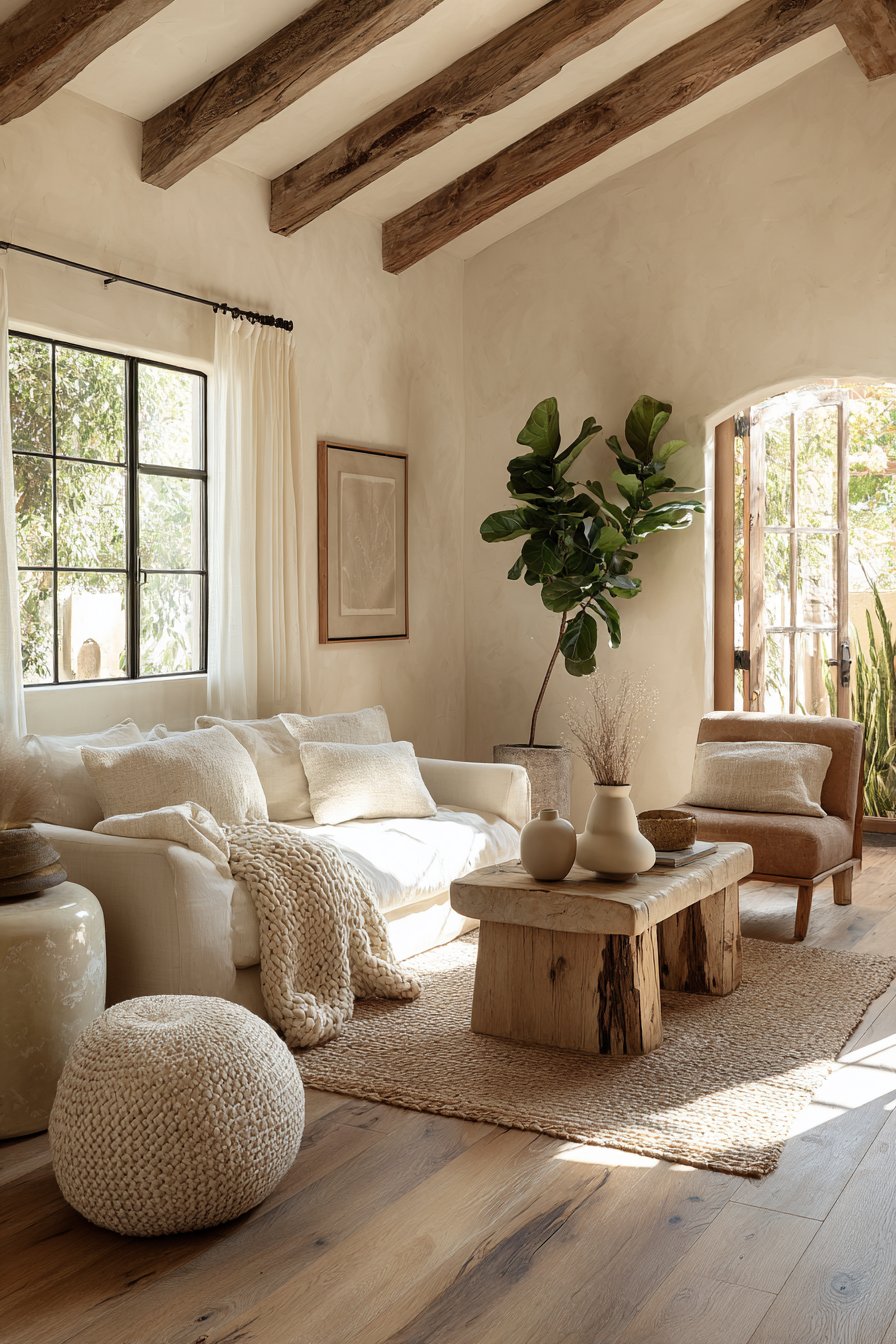
Embrace this approach gradually by editing existing possessions, investing in quality over quantity, and surrounding yourself with natural materials and earth-inspired colors. Remember that warm minimalism isn’t about achieving perfection—it’s about creating intentional spaces that enhance daily life. Start with one room, apply these principles thoughtfully, and experience how this transformative design philosophy can bring peace and beauty to your home.
