


Creating a warm living room goes beyond simply choosing cozy furniture or adding a few throw blankets. It’s about crafting an atmosphere that envelops you in comfort the moment you step through the door. The art of designing a warm living space lies in the thoughtful layering of textures, the strategic use of rich color palettes, and the careful consideration of lighting that transforms a house into a home. Whether you’re drawn to rustic charm, modern elegance, or eclectic bohemian vibes, the fundamental principles of warmth remain consistent: natural materials, inviting tones, and spaces that encourage relaxation and connection.
In today’s fast-paced world, your living room serves as a sanctuary from daily stresses. It’s where families gather for movie nights, where friends share laughter over coffee, and where you unwind after long days. The design choices you make in this space directly impact your mood, energy levels, and overall sense of well-being. Warm living rooms achieve this balance by incorporating elements that engage all the senses—from the visual appeal of harmonious color schemes to the tactile pleasure of plush fabrics and the ambient glow of thoughtfully placed lighting.
This comprehensive guide explores ten distinctive approaches to creating warm living room spaces that cater to various design preferences and lifestyles. From fireplace focal points that command attention to carefully curated reading nooks that invite quiet contemplation, each concept demonstrates how different materials, colors, and design strategies work together to create inviting atmospheres. These ideas showcase the versatility of warm design principles, proving that comfort and style are not mutually exclusive but rather complementary aspects of exceptional interior design.
1. Caramel-Toned Comfort with Layered Textiles
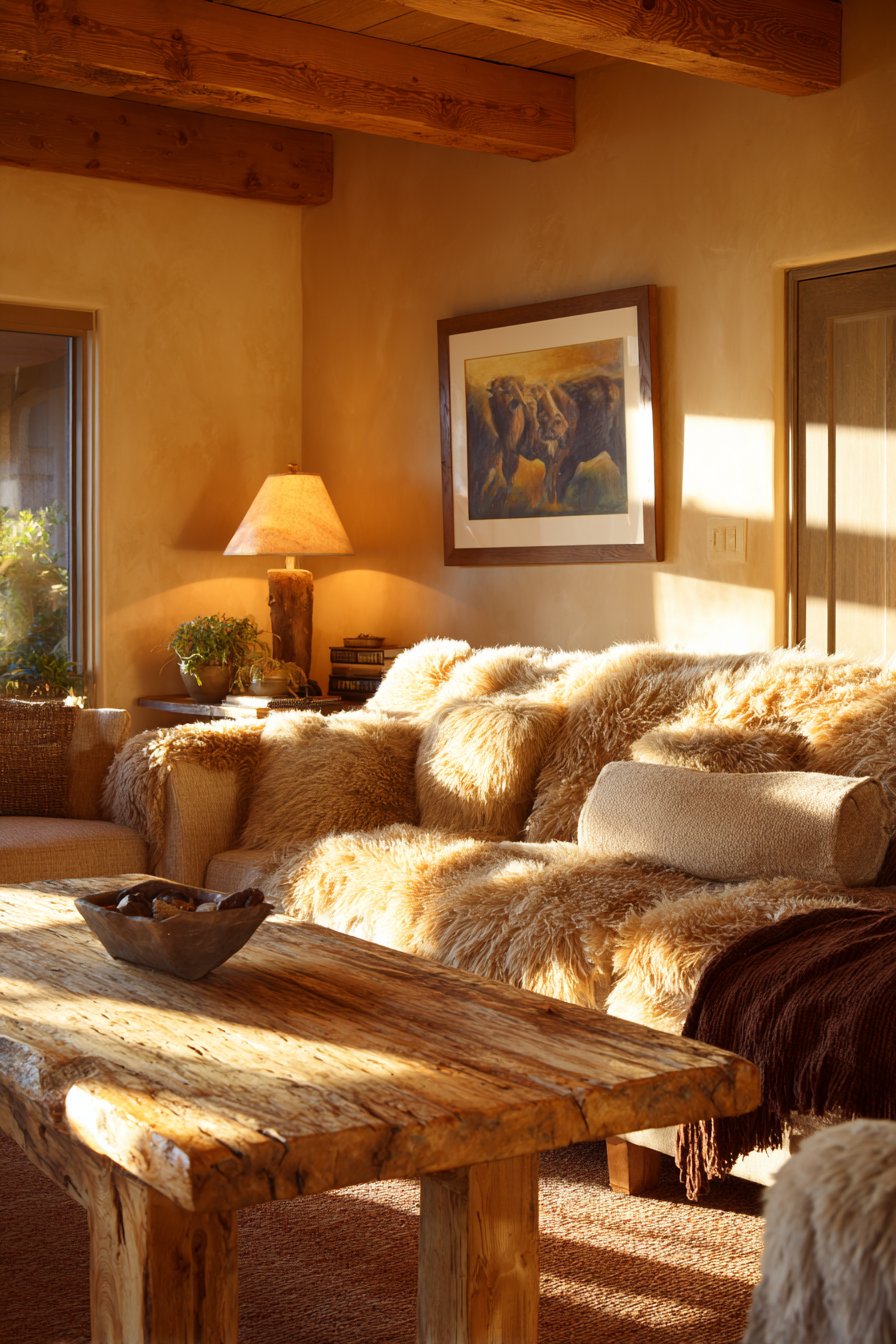
The foundation of this inviting living room centers around a plush sectional sofa in rich caramel tones. This substantial piece serves as both anchor and invitation. Its generous proportions promise comfort while its warm hue establishes the room’s overall temperature. Layered throw blankets in rust and cream colors add depth and visual interest. These textiles invite touch and provide practical warmth during cooler evenings.
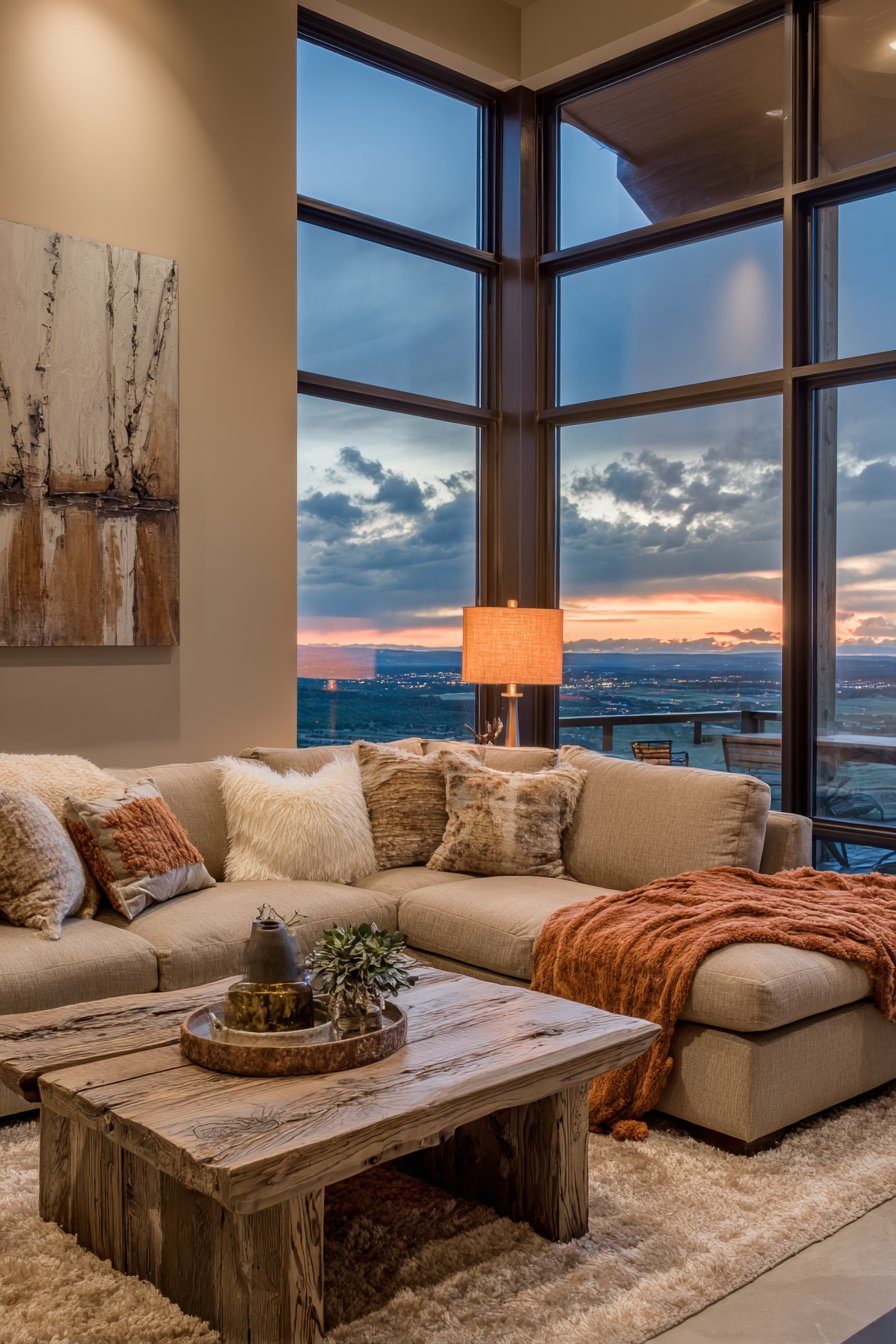
A natural wood coffee table with pronounced grain patterns brings organic beauty to the seating arrangement. The visible wood grain tells a story of growth and time. It provides textural contrast against the soft upholstery surrounding it. This piece grounds the space while maintaining the warm aesthetic through its honey-toned finish.
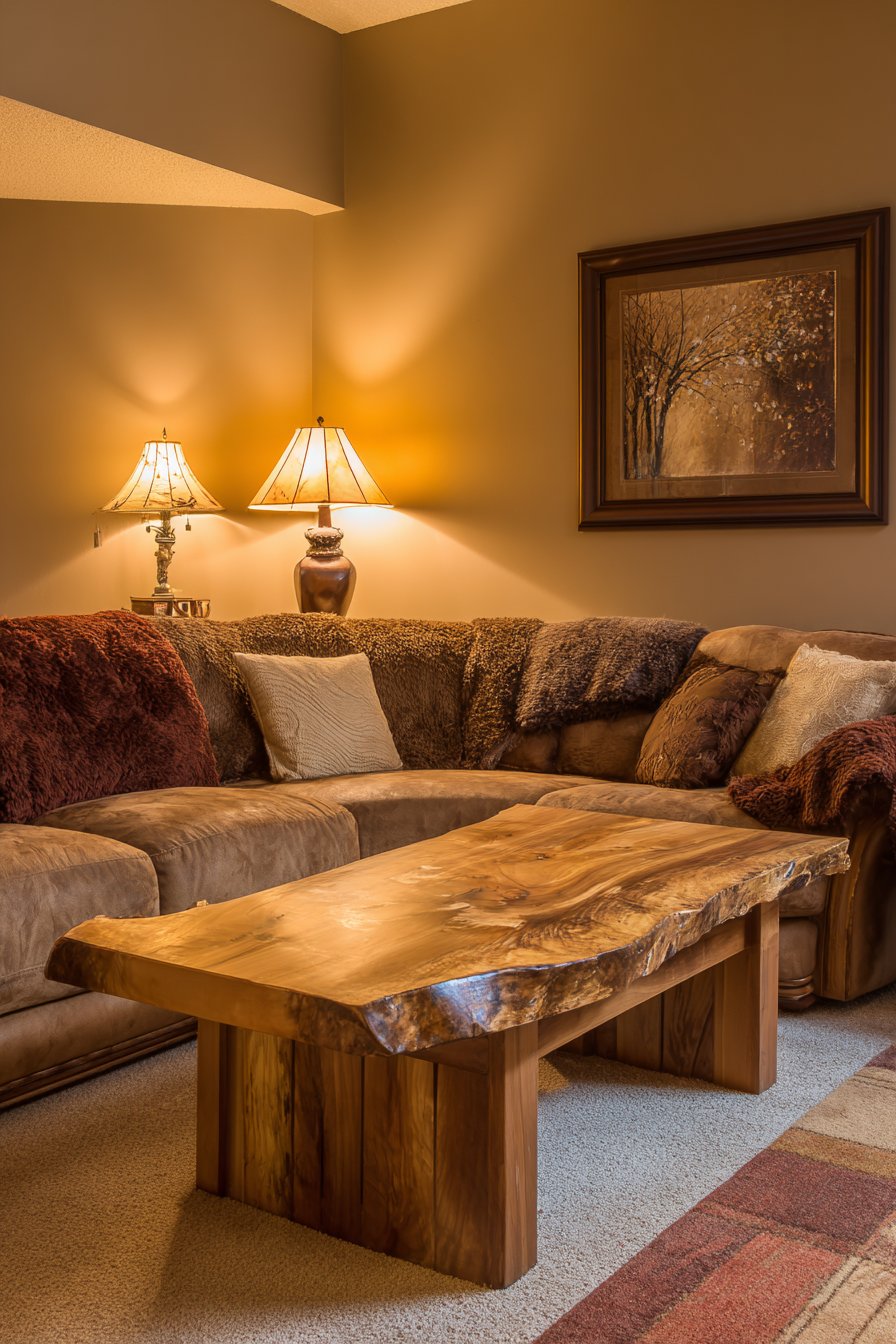
Brass table lamps cast a golden glow throughout the space as evening approaches. This ambient lighting creates pools of warmth that make the room feel intimate and welcoming. The walls, painted in warm beige, reflect this gentle illumination beautifully. They create a cocoon-like atmosphere that feels both spacious and cozy. A textured area rug in terracotta and ivory completes the foundation. It anchors all elements together while adding another layer of tactile warmth underfoot.

The strategic layering of materials creates visual and physical warmth simultaneously. Soft shadows throughout the space add dimension without creating harsh contrasts. Every element works in harmony to produce an environment that feels naturally inviting. The wide-angle perspective reveals how each component contributes to the overall sense of comfort and relaxation.
Key Design Tips:
- Select sectional sofas in caramel or honey tones for maximum warmth and versatility
- Layer multiple throw blankets in complementary warm shades for added texture and comfort
- Choose coffee tables with visible wood grain to emphasize natural beauty and organic appeal
- Install brass or gold-toned lamps to create warm ambient lighting in evening hours
- Use textured area rugs in terracotta shades to anchor seating areas effectively
- Paint walls in warm beige or cream to reflect light and enhance the cozy atmosphere
- Mix rust and cream textiles for a sophisticated yet comfortable color palette
2. Fireplace Focal Point with Stone and Wood Elements
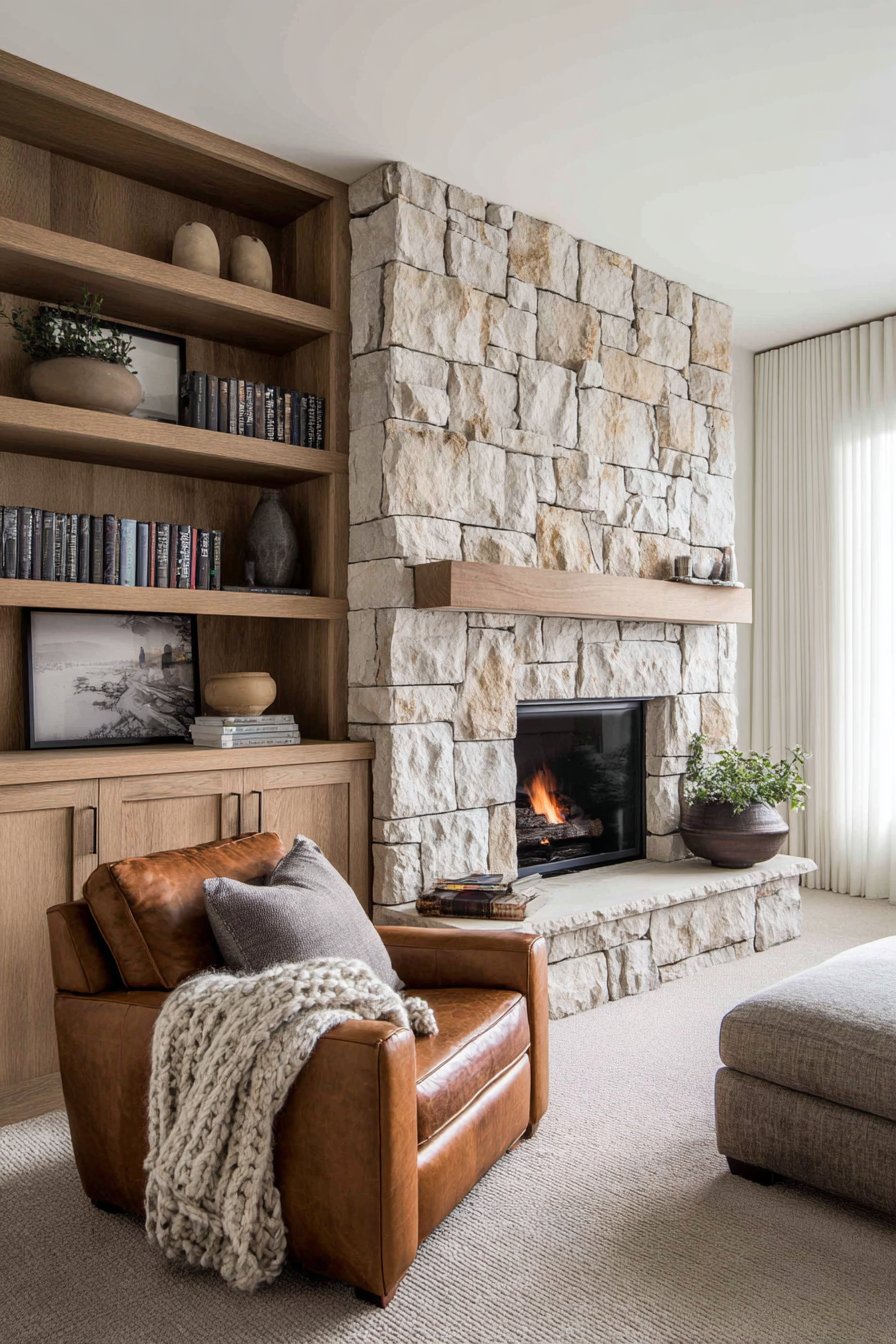
A stacked stone fireplace wall becomes the undeniable heart of this warm living room design. The stones, selected in honey and amber tones, create a natural gradient of warmth. Each stone catches light differently, adding depth and visual interest. Built-in wooden shelving flanks the fireplace on both sides. These shelves provide both function and beauty.

The shelving displays curated books with warm-toned spines alongside pottery in earthy glazes. These decorative elements extend the warm color palette throughout the vertical space. A cognac brown leather armchair sits beside the hearth, perfectly positioned for fireside reading. The leather develops character over time, growing richer and more beautiful with age. A chunky knit throw draped over the arm adds softness against the leather’s smooth surface.

Soft recessed lighting highlights the stone texture beautifully without overwhelming the space. Natural light filters through sheer curtains, creating a delicate balance between artificial and natural illumination. The curtains diffuse harsh sunlight while maintaining a connection to the outdoors. This careful lighting design ensures the room feels warm and inviting at any hour.
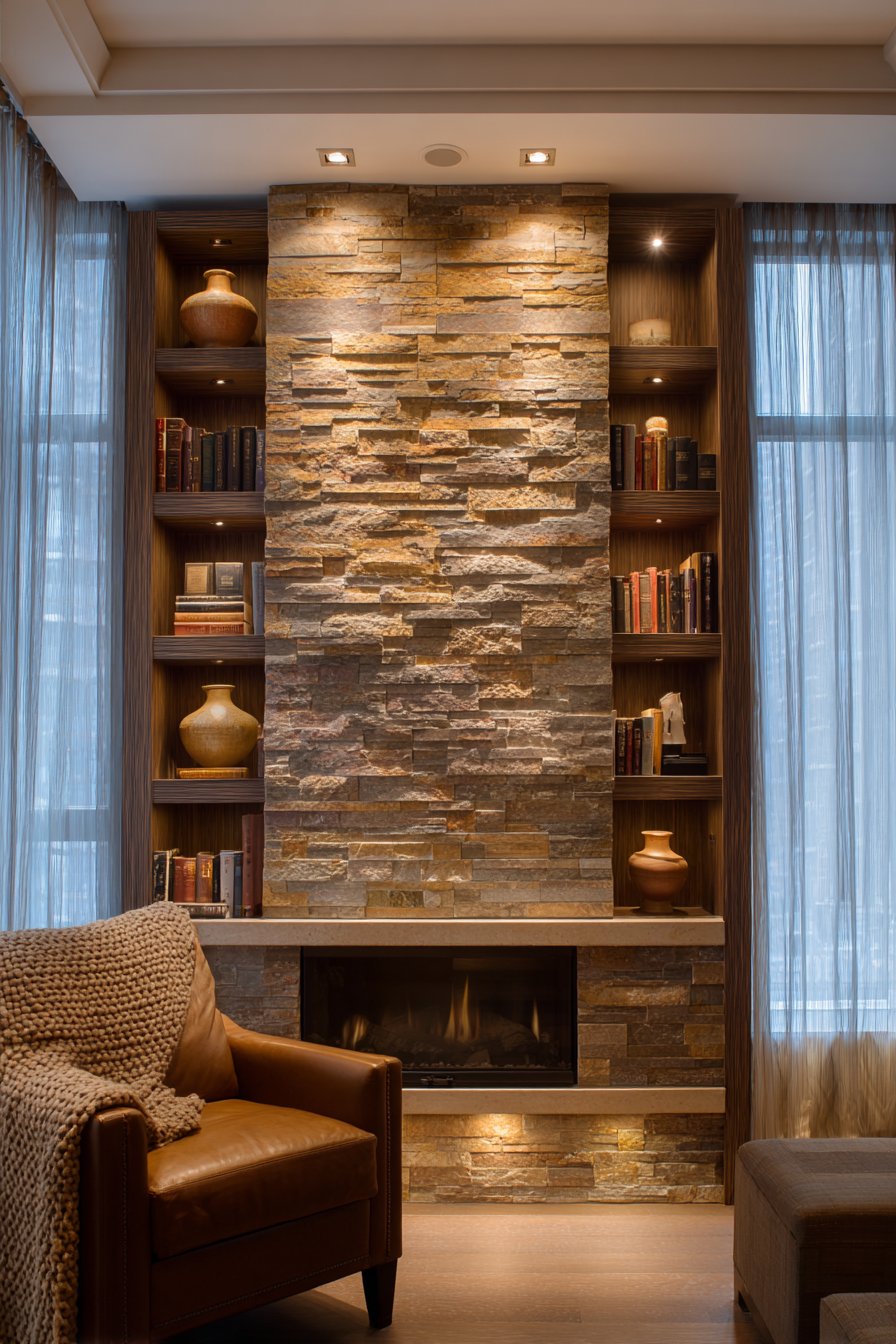
The combination of stone, wood, and leather creates a timeless aesthetic. These materials age gracefully, improving rather than deteriorating over time. The fireplace serves as both functional heat source and visual anchor. It draws people together naturally, encouraging conversation and connection.
Key Design Tips:
- Choose stacked stone in honey and amber tones for natural warmth and texture
- Install built-in shelving around fireplaces to maximize storage and display opportunities
- Select cognac or tan leather furniture for durability and timeless appeal
- Add chunky knit throws for textural contrast against smooth leather surfaces
- Use recessed lighting to highlight architectural features without creating glare
- Hang sheer curtains to filter natural light while maintaining outdoor views
- Display warm-toned pottery and books to extend the color palette vertically
- Position seating near the fireplace to create intimate conversation areas
3. Sunlit Elegance with Rich Wood and Velvet
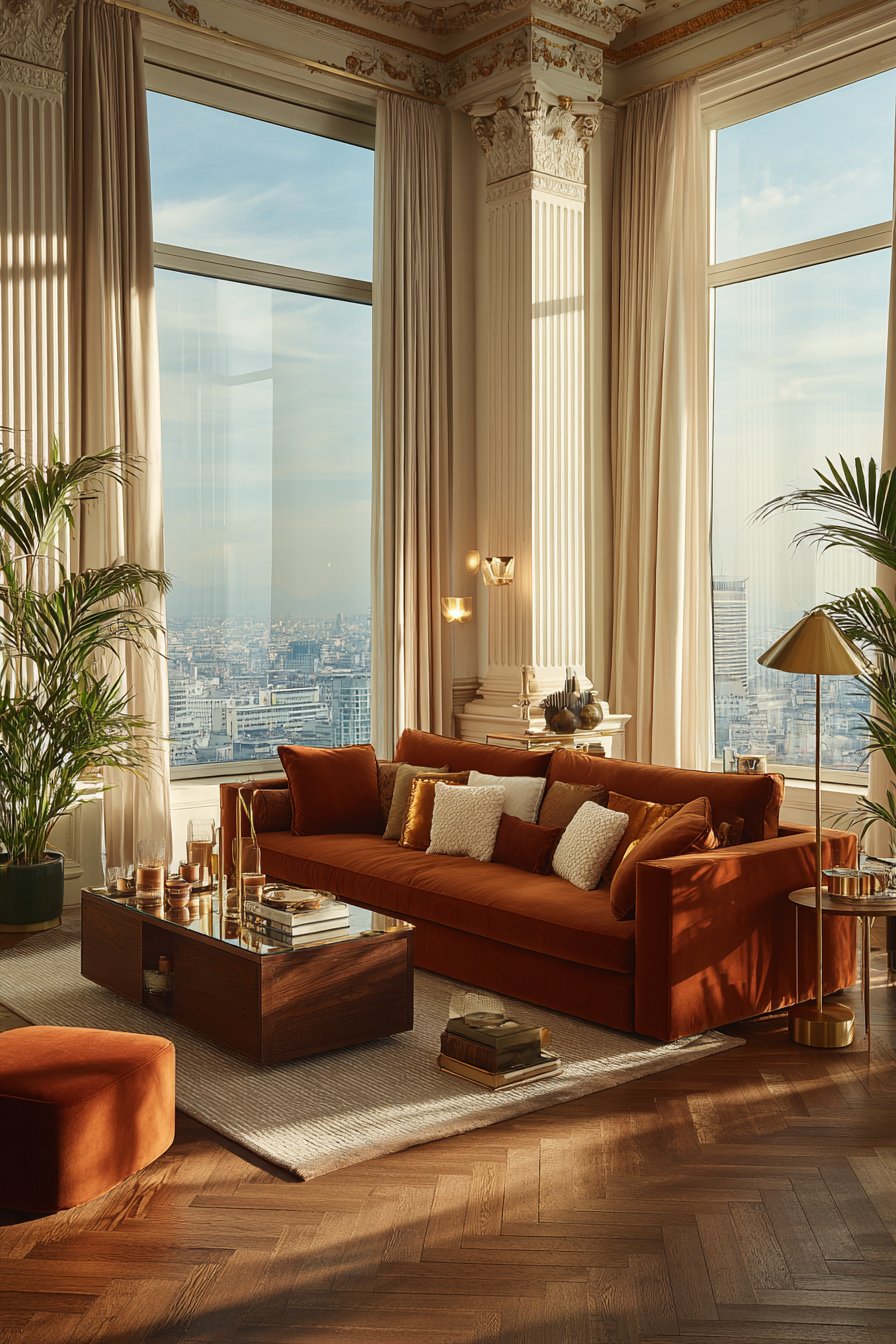
Rich hardwood flooring in walnut finish sets the stage for this sophisticated warm living room. The wood reflects soft afternoon sunlight, creating dancing patterns of light throughout the space. Large windows dressed with linen curtains in warm ivory maximize natural light penetration. These curtains frame the views while providing privacy when needed.

A deep ochre velvet sofa centers the space with commanding presence. This luxurious fabric catches light beautifully, appearing to change color throughout the day. Mixed metallic accent pillows in copper and gold tones add shimmer and dimension. They create focal points that draw the eye across the sofa’s length.

A vintage-inspired brass floor lamp provides ambient glow during evening hours. Its warm illumination complements the natural sunlight that dominates during daytime. The lamp’s sculptural form adds visual interest while serving a practical purpose. Its placement ensures adequate lighting for reading or conversation.
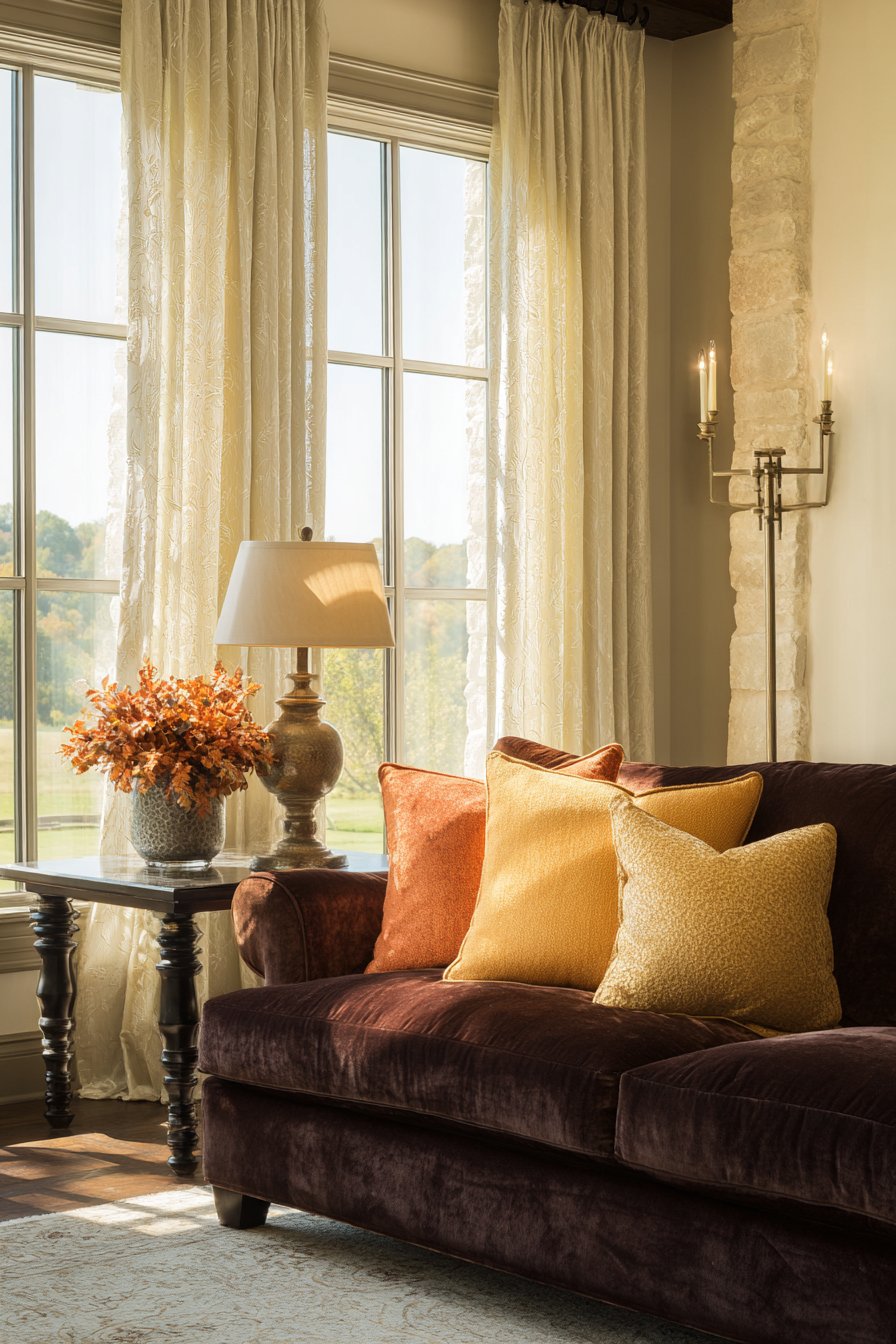
The walnut flooring grounds the entire design with its deep, rich tones. It provides warmth from the foundation up, affecting the room’s overall temperature perception. The wood’s natural variations create subtle visual interest underfoot. This flooring choice pairs beautifully with the ochre velvet and metallic accents.
Key Design Tips:
- Install walnut or dark wood flooring for foundational warmth and elegance
- Choose deep ochre or mustard velvet upholstery for luxurious texture and color
- Hang linen curtains in ivory or cream to filter light while maintaining warmth
- Add metallic accent pillows in copper and gold for shimmer and sophistication
- Position furniture to maximize natural light exposure throughout the day
- Select vintage-inspired brass floor lamps for both function and style
- Allow large windows to dominate the design for maximum natural illumination
- Use mixed metallics to create layered visual interest without overwhelming the space
4. Gallery Wall Warmth with Mid-Century Modern Touches
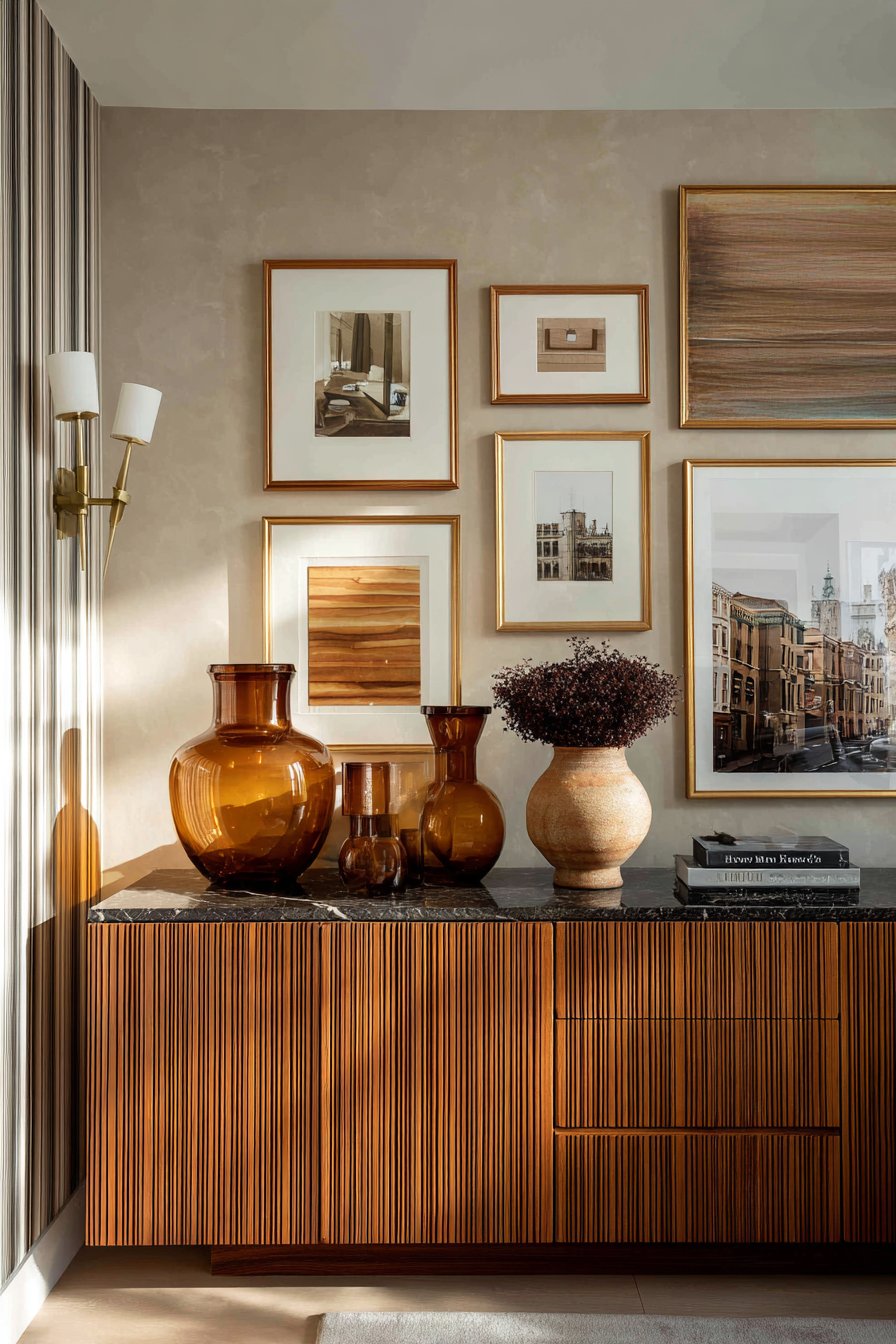
A carefully curated gallery wall transforms an ordinary living room into a personalized, warm retreat. Wooden frames in various warm wood tones create cohesion while allowing individual pieces to shine. The artwork features earthy color palettes with terracottas, ochres, and warm neutrals. This selection extends the room’s warm atmosphere vertically across the wall.
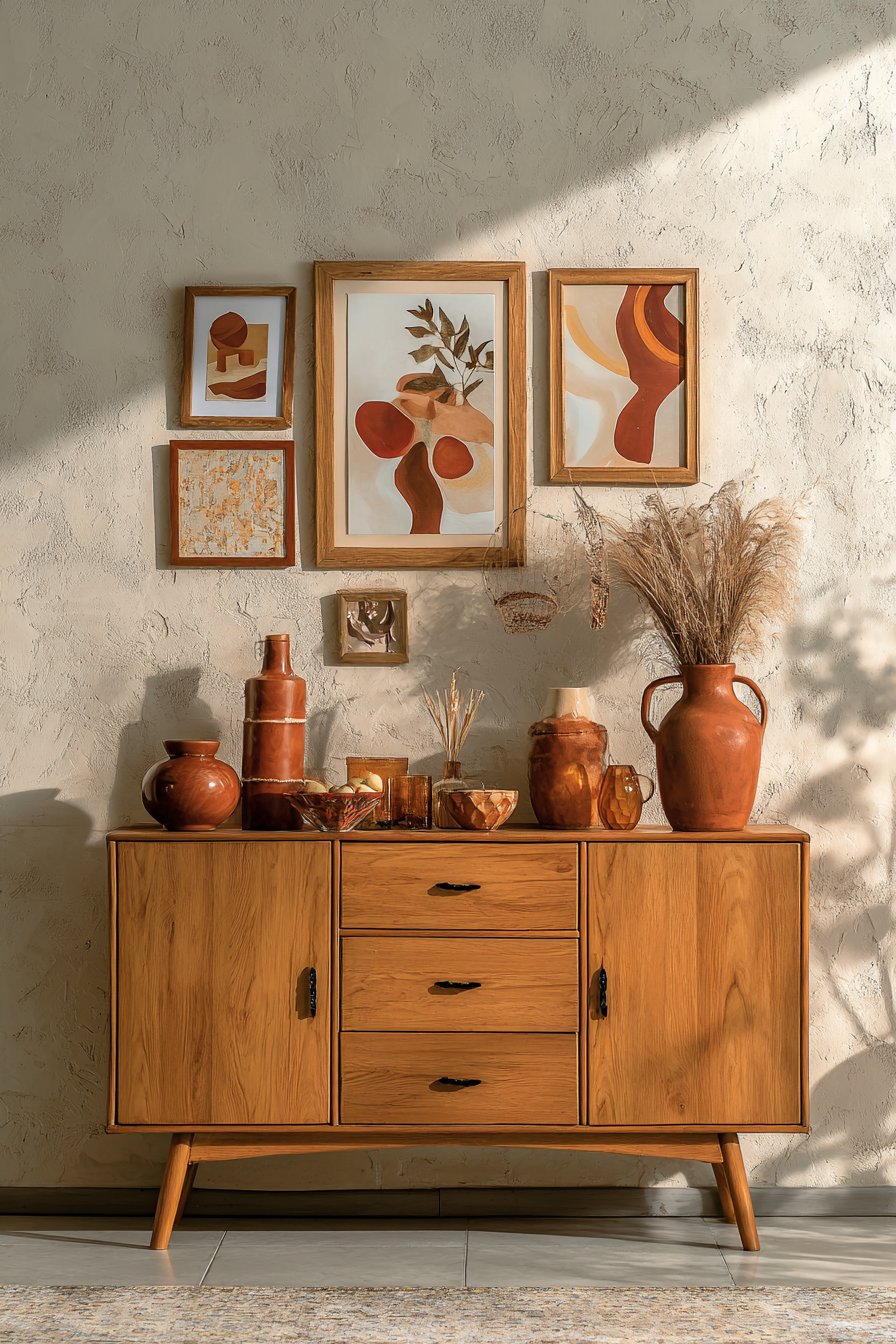
Below the gallery wall, a mid-century modern credenza in teak wood provides storage and display opportunities. This piece exemplifies the warm minimalism of mid-century design. Its clean lines don’t sacrifice warmth for simplicity. Decorative elements atop the credenza include ceramic vases in terracotta and amber glass pieces. These objects catch and refract light beautifully.
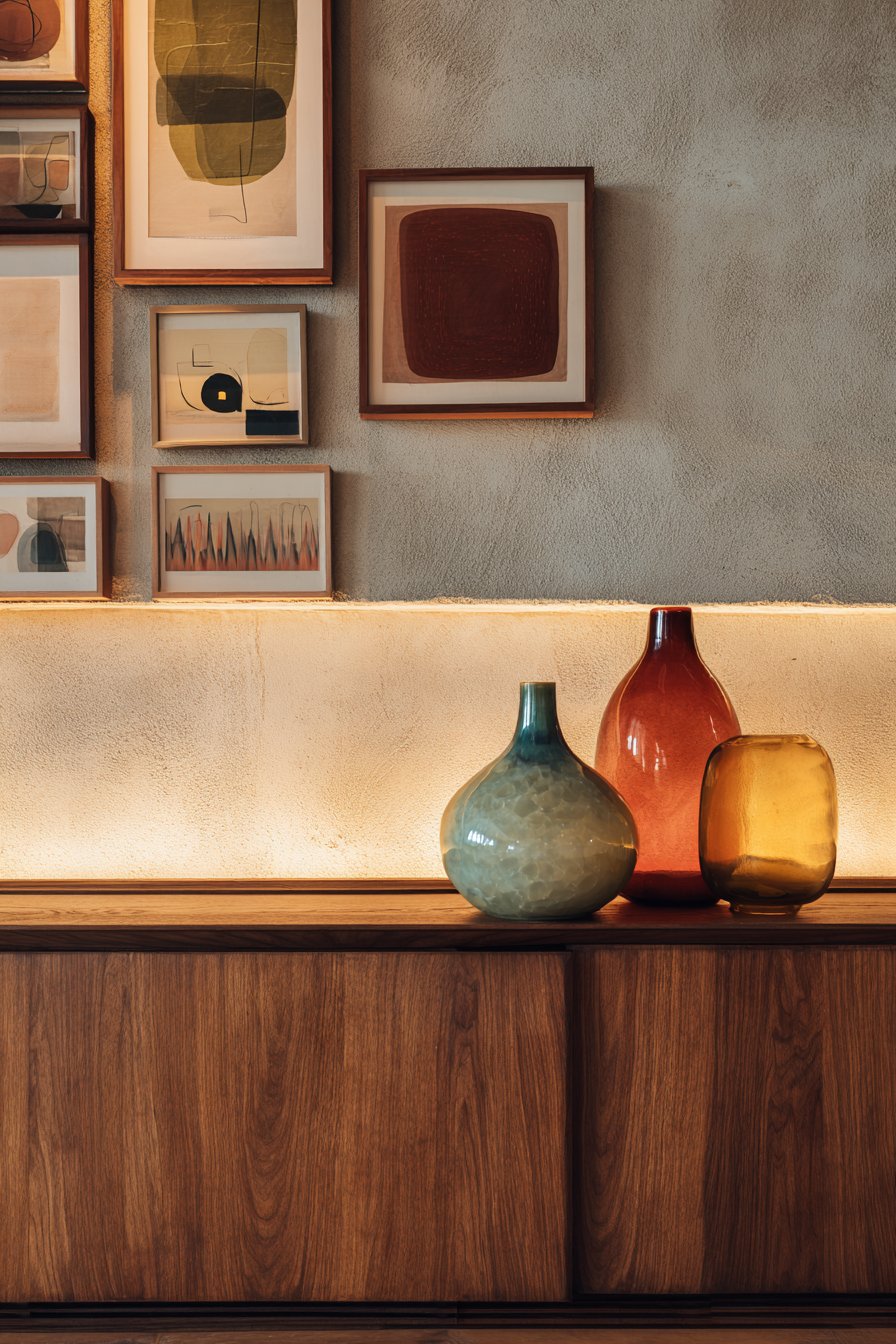
Warm track lighting creates gentle highlights on the textured wall painted in warm greige. This paint color serves as the perfect neutral backdrop for the gallery wall. It’s warm enough to contribute to the overall atmosphere yet subtle enough not to compete with the artwork. The track lighting can be adjusted to highlight specific pieces or create overall ambient illumination.
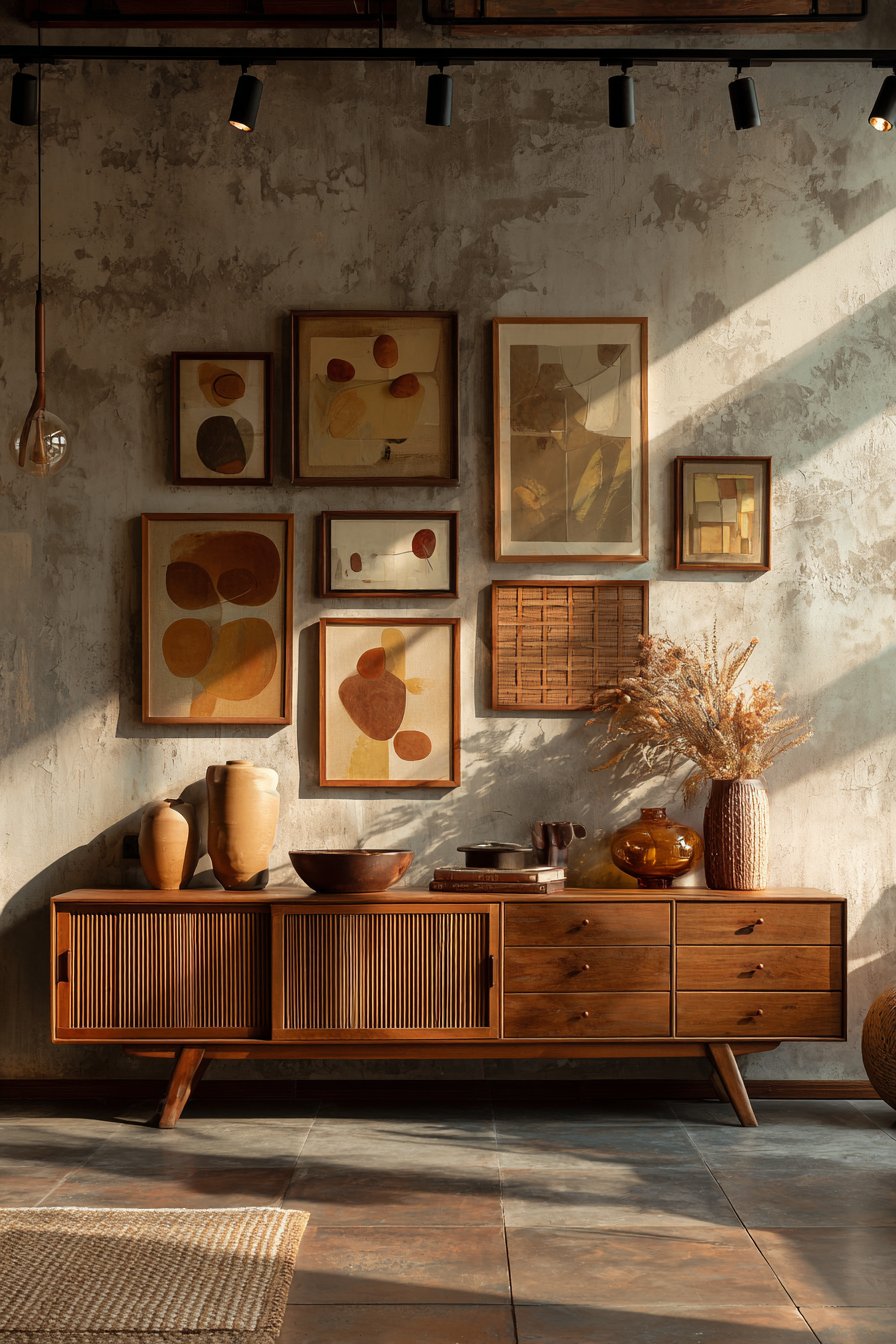
The detail-focused approach to this space demonstrates how curated collections create warmth. Personal touches and carefully selected art make a space feel lived-in and loved. The mid-century credenza bridges vintage charm with modern functionality. Its warm teak finish ties together the entire composition.
Key Design Tips:
- Create gallery walls using wooden frames in various warm wood tones for cohesion
- Select artwork with earthy color palettes to reinforce the warm atmosphere
- Choose mid-century modern furniture in teak or walnut for timeless appeal
- Display ceramic vases in terracotta and amber glass for decorative warmth
- Paint walls in warm greige to provide a neutral yet warm backdrop
- Install adjustable track lighting to highlight artwork and create an ambient glow
- Mix frame sizes and orientations for dynamic visual interest
- Keep credenza styling minimal to let wood tones and select objects shine
5. Cozy Reading Nook with Burnt Sienna Accents
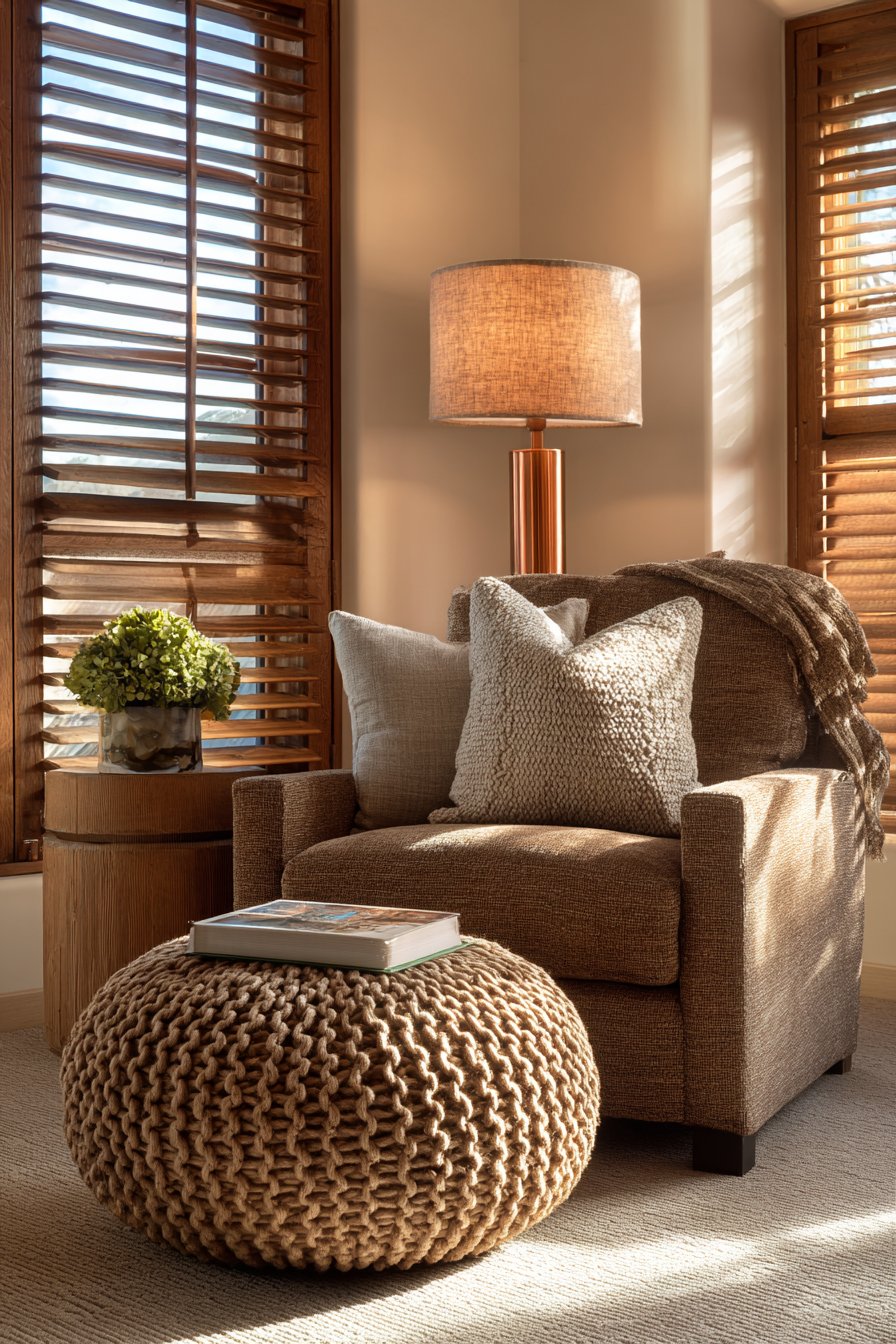
An oversized upholstered chair in burnt sienna fabric creates an intimate reading corner within the larger living room. This substantial piece invites hours of comfortable reading and relaxation. Its warm color immediately draws attention and establishes a focal point. The chair’s generous proportions accommodate various sitting positions comfortably.
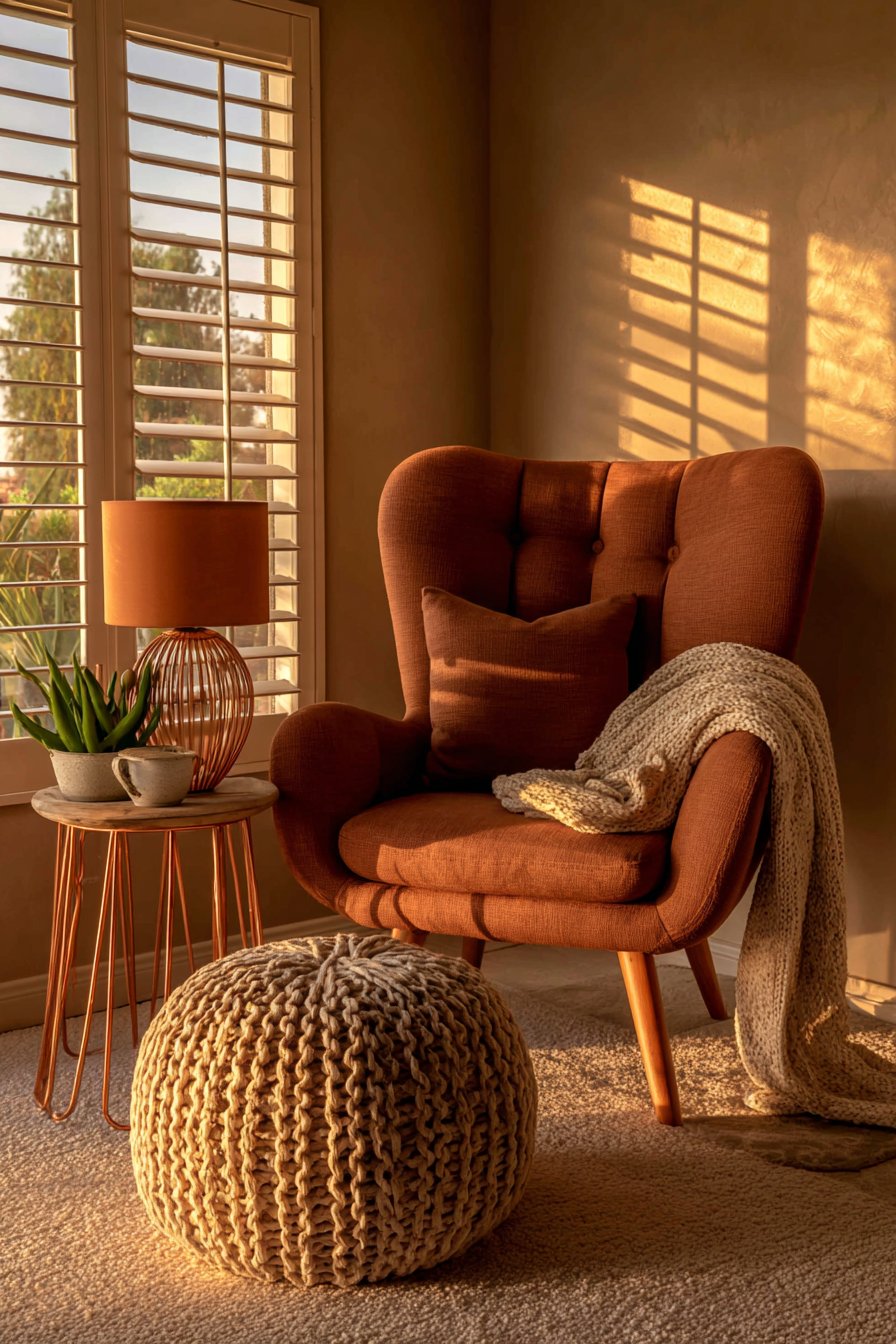
Warm wooden shutters frame the nearby window, controlling light while adding architectural interest. These shutters offer flexibility in adjusting natural light throughout the day. Their honey-toned wood complements the burnt sienna upholstery beautifully. A woven jute pouf serves as a footrest, adding organic texture and earthy warmth.
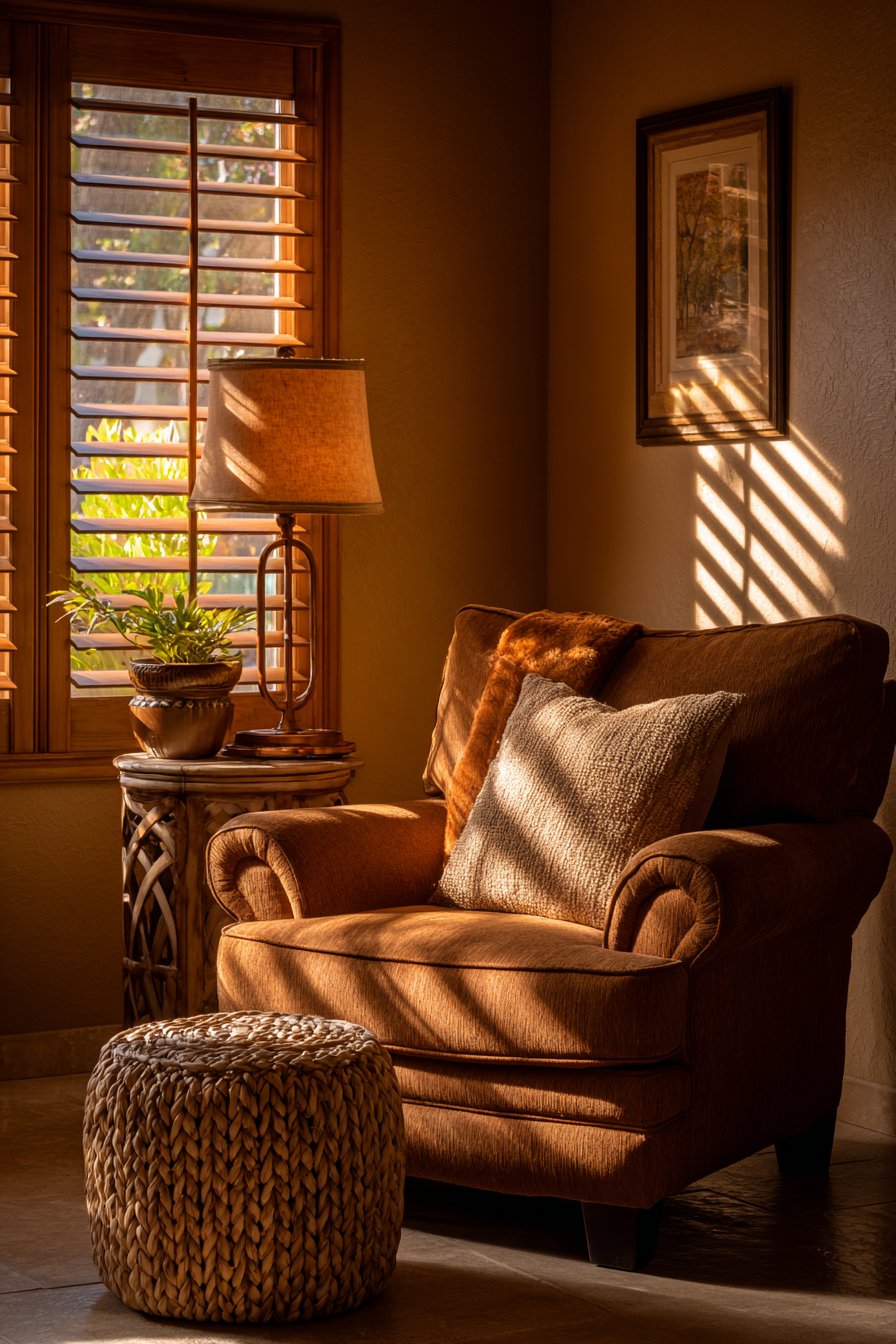
A small side table with copper accents holds a reading lamp with a warm-toned shade. The copper catches afternoon light, creating small sparkles of brightness. The lamp provides necessary task lighting for reading while contributing to the overall warm ambiance. Its shade diffuses light softly, preventing eye strain during extended reading sessions.
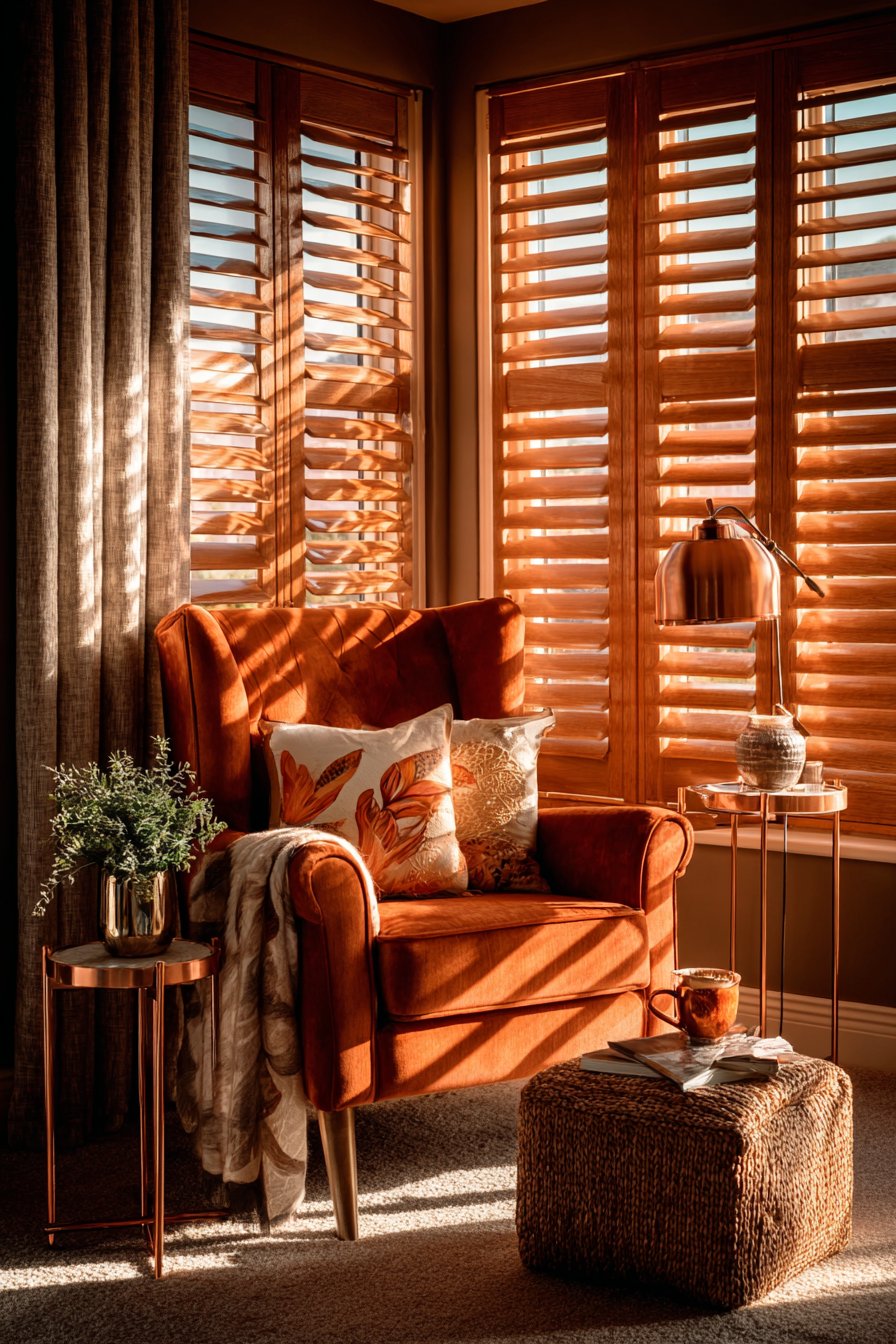
Natural afternoon light creates a cozy glow that highlights the textured fabrics throughout the nook. The interplay between natural and artificial lighting ensures the space remains inviting at any hour. This corner demonstrates how a dedicated reading space can be carved from a larger living room. It provides a sense of retreat without requiring physical separation.
Key Design Tips:
- Choose oversized chairs in burnt sienna or rust colors for maximum comfort and warmth
- Install wooden shutters in honey oak for light control and architectural appeal
- Add woven jute poufs as footrests for organic texture and flexibility
- Select side tables with copper or brass accents to catch and reflect light
- Use reading lamps with warm-toned shades for task lighting without harshness
- Position reading nooks near windows to maximize natural afternoon light
- Layer textured fabrics to create tactile interest and visual warmth
- Create dedicated zones within larger spaces for specific activities and functions
6. Layered Window Treatments for Light and Warmth
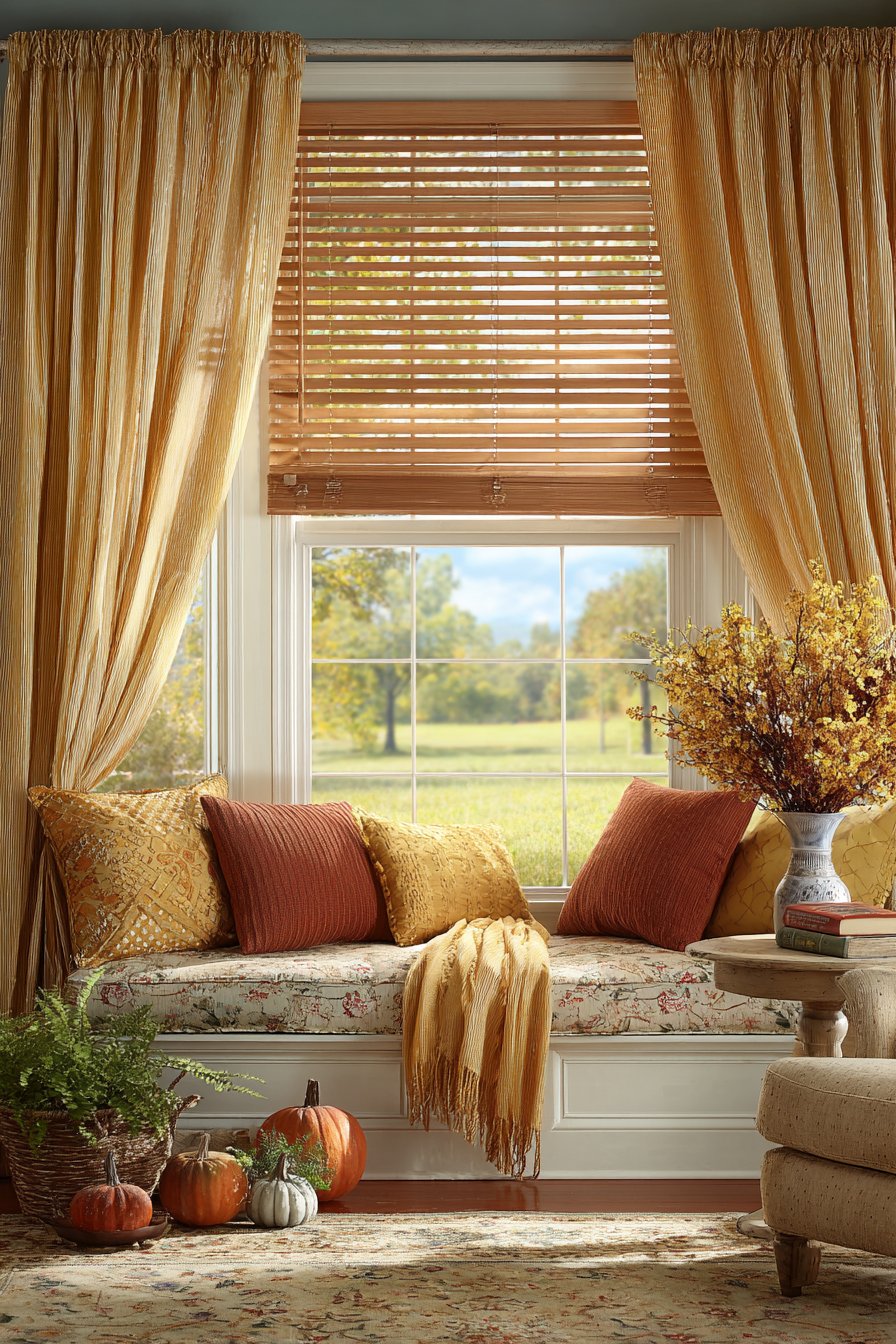
The strategic layering of window treatments demonstrates sophisticated control of natural light and warmth. Wooden blinds in honey oak provide the foundation layer, offering privacy and light adjustment. These blinds’ warm wood tone contributes to the overall color palette. Flowing curtains in warm sand color add softness and elegance.
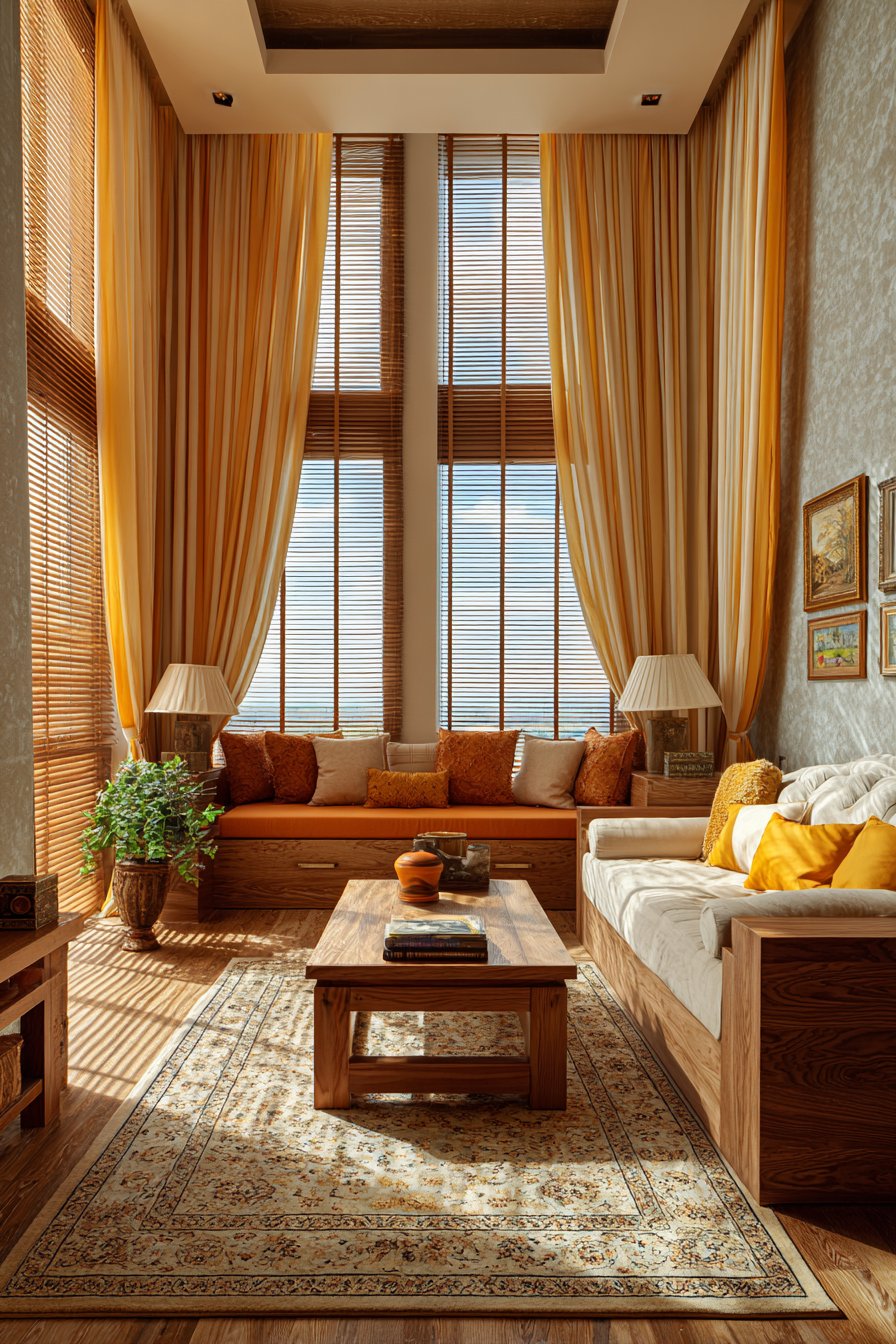
The combination allows for precise light control throughout the day. Blinds can be adjusted to filter harsh midday sun while curtains soften the overall appearance. This layered approach creates depth and visual interest at the windows. The warm sand curtains complement the honey oak blinds perfectly.
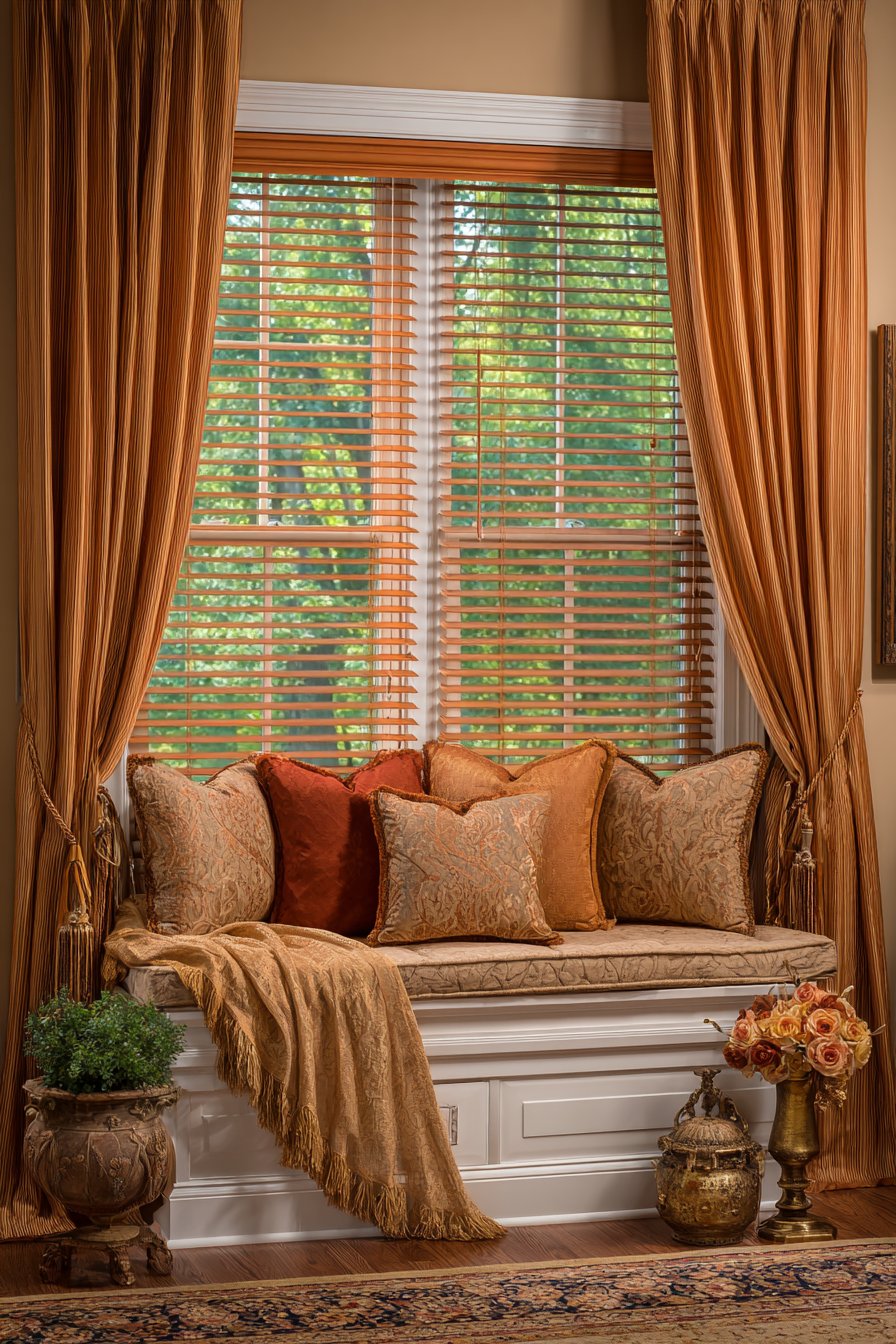
A window seat beneath these treatments provides cozy seating with cushions in rust and mustard tones. This built-in seating maximizes space efficiency while creating an inviting spot for reading or daydreaming. The cushions’ warm colors echo other textiles throughout the room. They add comfort to what might otherwise be a hard surface.
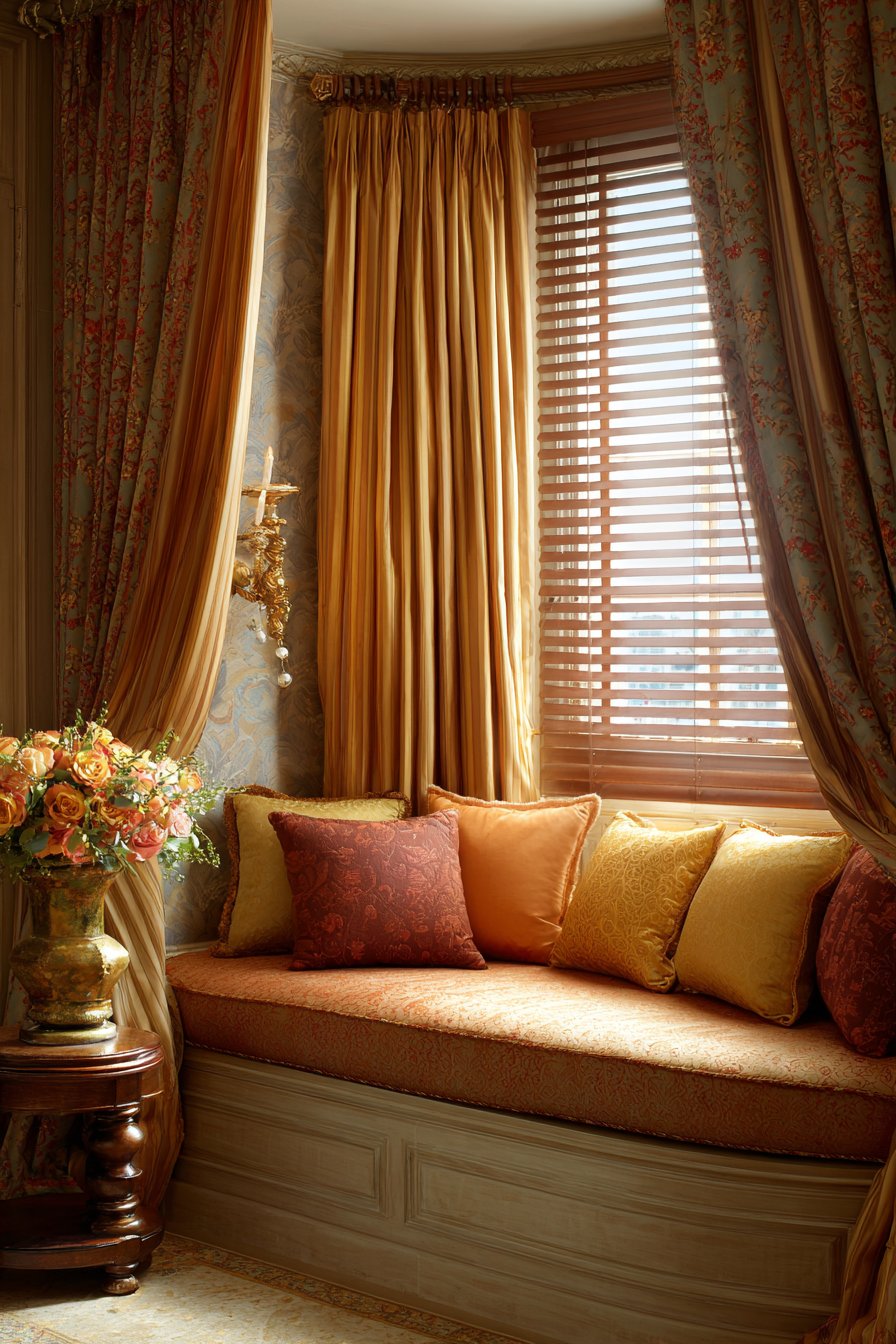
The interplay between natural and artificial lighting becomes evident in this design. During daytime, filtered natural light creates warmth. As evening approaches, artificial lighting takes over seamlessly. The window treatments help retain heat during cooler months while preventing excessive heat gain during summer.
Key Design Tips:
- Layer wooden blinds with flowing curtains for maximum light control and warmth
- Choose blinds in honey oak or warm wood tones to contribute to color palette
- Select curtains in sand, cream, or warm ivory for softness and elegance
- Add window seats with warm-toned cushions to maximize seating and comfort
- Use rust and mustard cushion colors to create vibrant focal points
- Position window treatments to frame views while controlling temperature and light
- Consider heat retention properties when selecting window treatment combinations
- Balance privacy needs with natural light exposure through thoughtful layering
7. Terracotta Accent Wall with Natural Fiber Elements
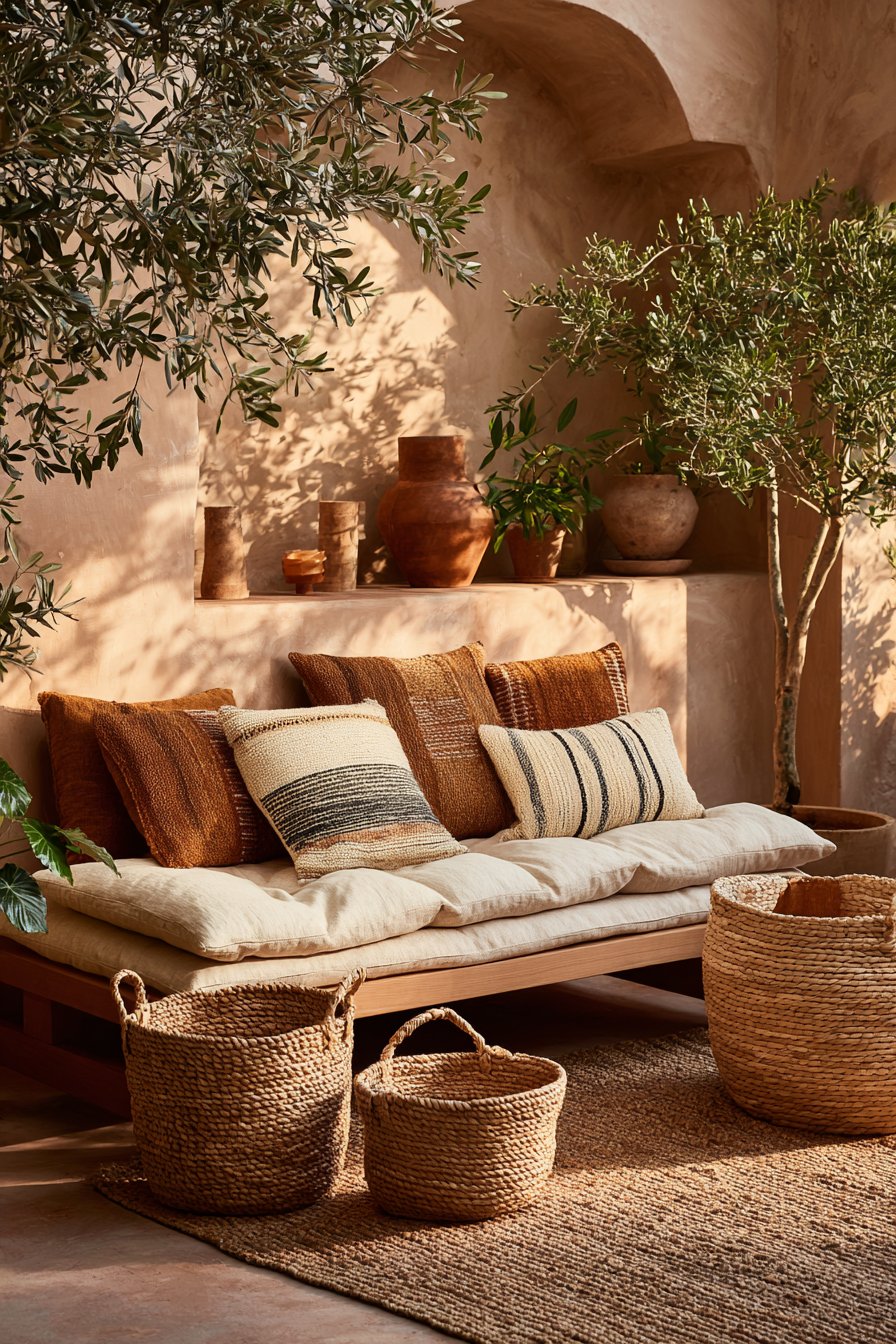
A textured accent wall in warm terracotta plaster finish commands attention in this living room design. The plaster’s texture catches light throughout the day, creating ever-changing shadow patterns. This three-dimensional quality adds depth and interest. The terracotta color brings earthy warmth that feels both contemporary and timeless.

A low-profile sofa in camel-colored linen sits against this dramatic backdrop. The linen’s natural texture complements the plaster wall beautifully. An array of pillows in spice tones—cinnamon, paprika, and saffron—adds layers of color. These warm hues create a gradient effect across the sofa.
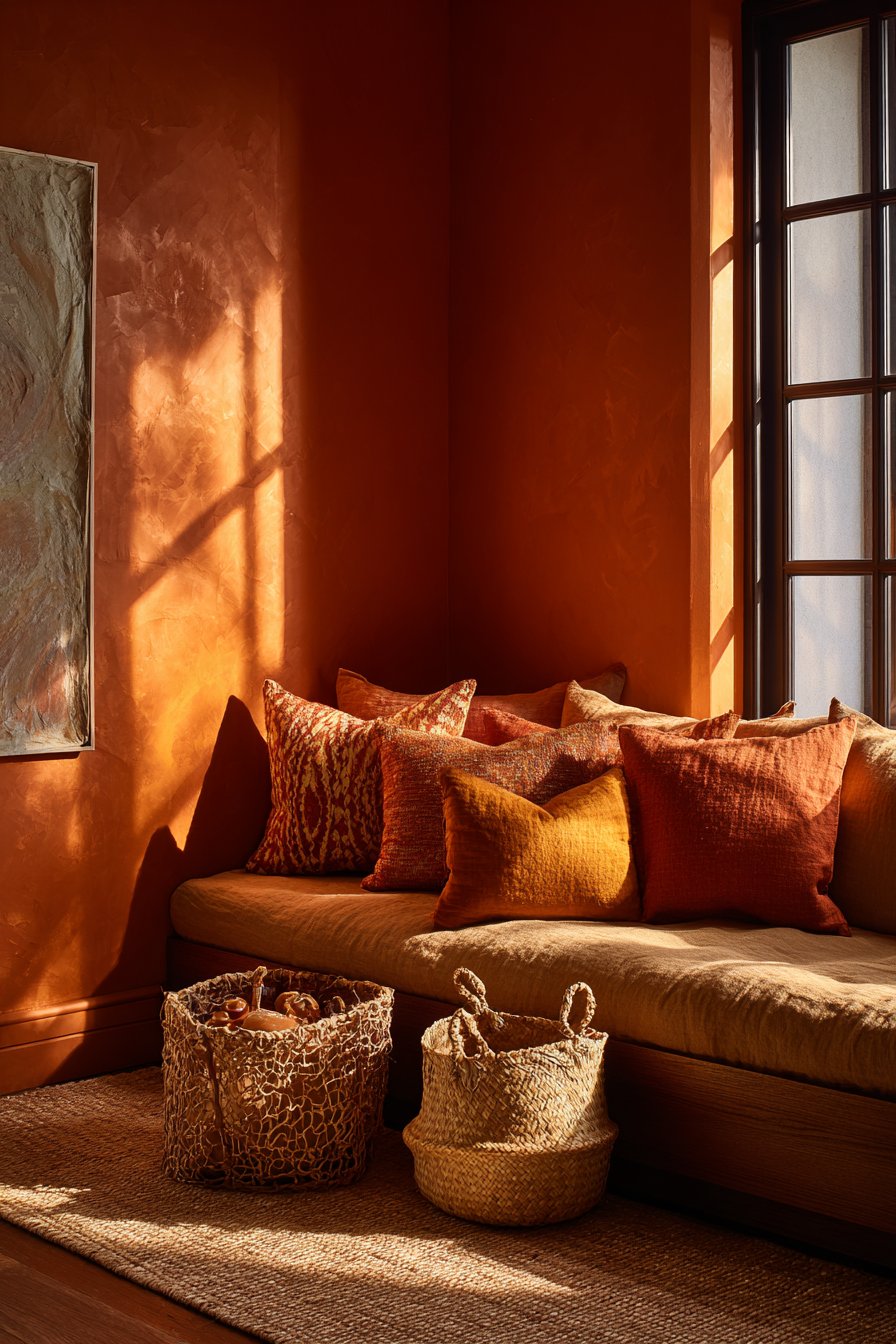
Natural fiber baskets provide stylish storage throughout the space. These practical elements maintain the organic, earthy aesthetic. They add texture while keeping the room organized and clutter-free. A jute area rug adds warmth underfoot while grounding the furniture arrangement.
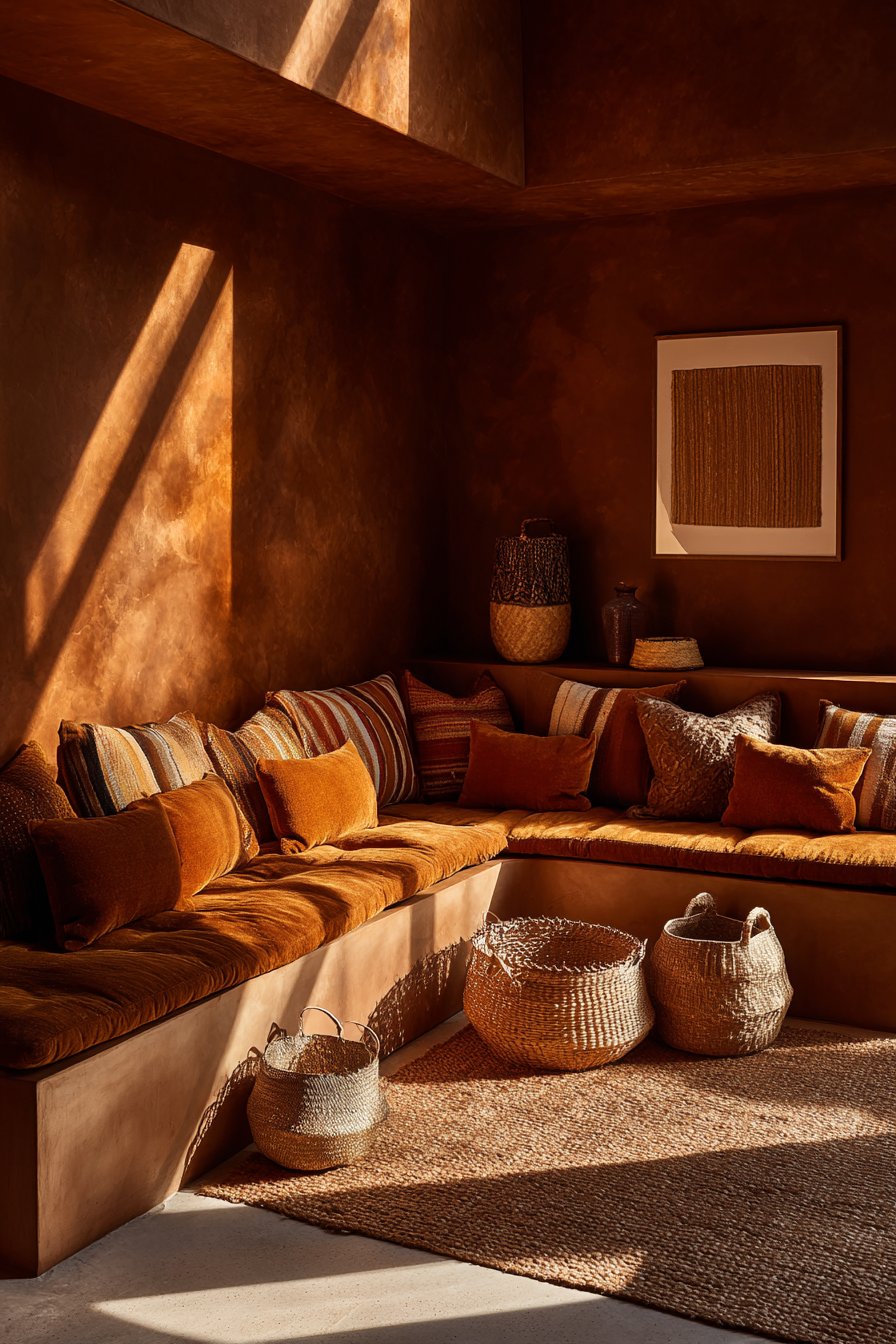
Golden hour sunlight creates dramatic warm shadows and highlights throughout this space. The terracotta wall seems to glow during these magic hours. The natural light enhances every material and texture in the room. This timing demonstrates how natural light can dramatically affect a space’s warmth and mood.
Key Design Tips:
- Apply textured plaster finishes in terracotta for dramatic, warm accent walls
- Select low-profile sofas in camel-colored linen for understated elegance
- Layer pillows in spice tones like cinnamon, paprika, and saffron
- Incorporate natural fiber baskets for storage that maintain aesthetic integrity
- Use jute area rugs to add organic warmth and texture underfoot
- Position accent walls to maximize golden hour sunlight exposure
- Choose materials that create interesting shadow patterns throughout the day
- Maintain cohesive earth-tone palette across all elements for harmonious design
8. Conversation Circle with Leather and Live Edge Wood

A tufted leather sofa in rich tan anchors this conversation-focused living room arrangement. The leather’s quality and color create immediate warmth and sophistication. Positioned opposite are two upholstered chairs in warm cinnamon fabric. This facing arrangement encourages interaction and eye contact during conversations.
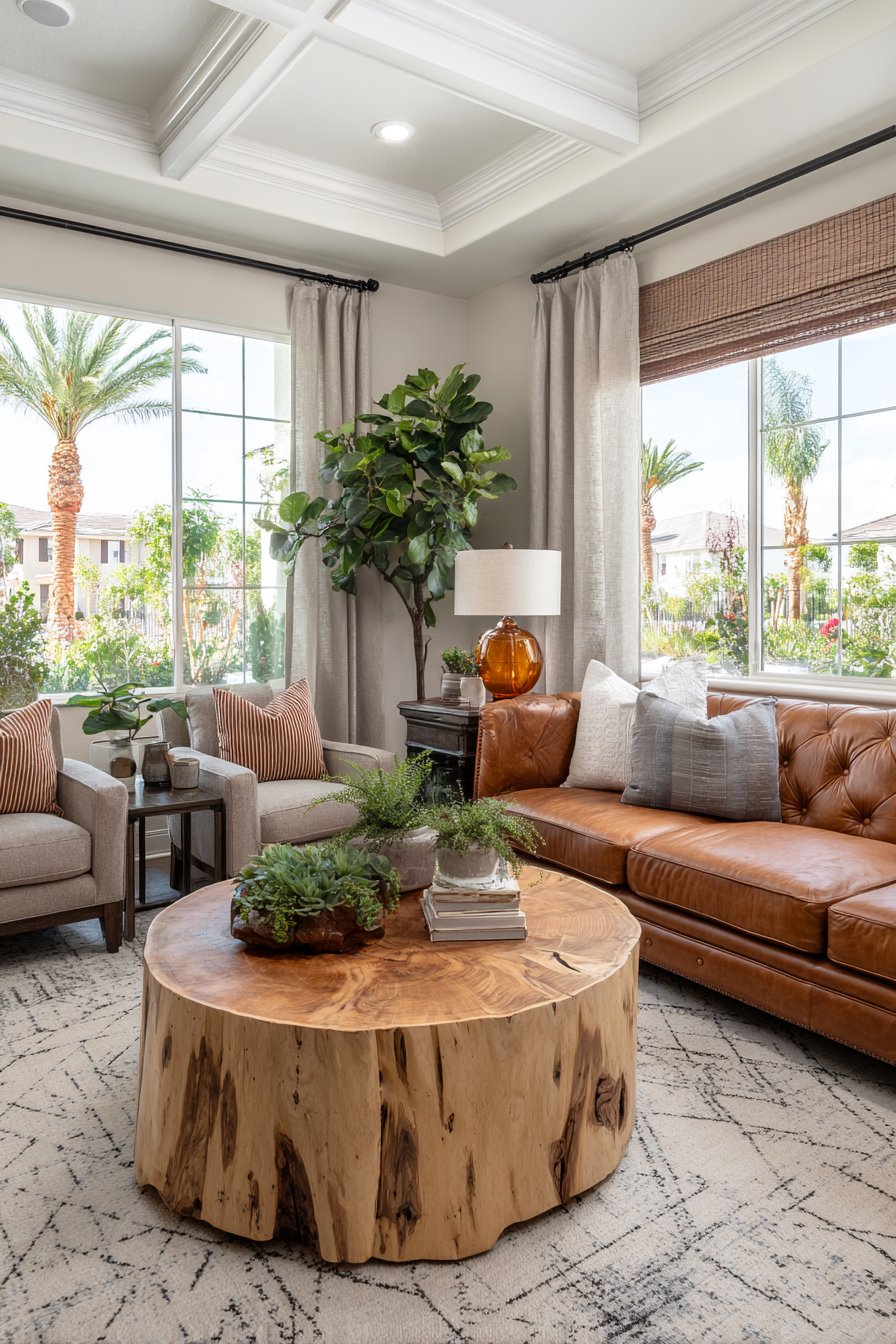
A round wooden coffee table with live edge detail centers the seating grouping. The live edge preserves the tree’s natural contour, celebrating organic imperfection. This piece serves as both functional surface and conversation starter. Its natural beauty draws attention without demanding it.
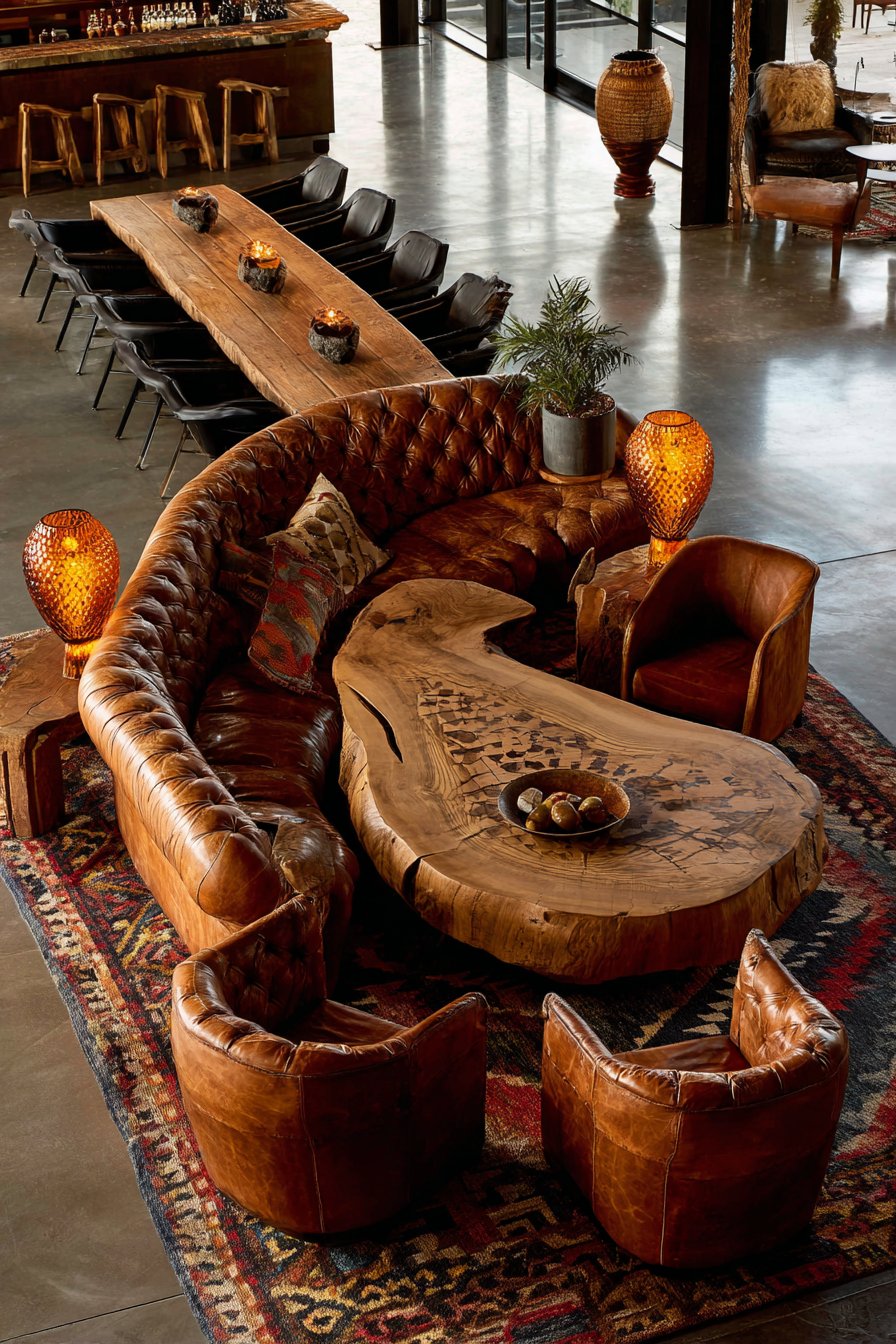
The furniture grouping sits atop a vintage-inspired rug with warm geometric patterns. These patterns add visual interest without overwhelming the space. The rug’s warm colors tie together the tan leather and cinnamon fabric. Table lamps with amber glass bases provide pools of warm light during evening gatherings.
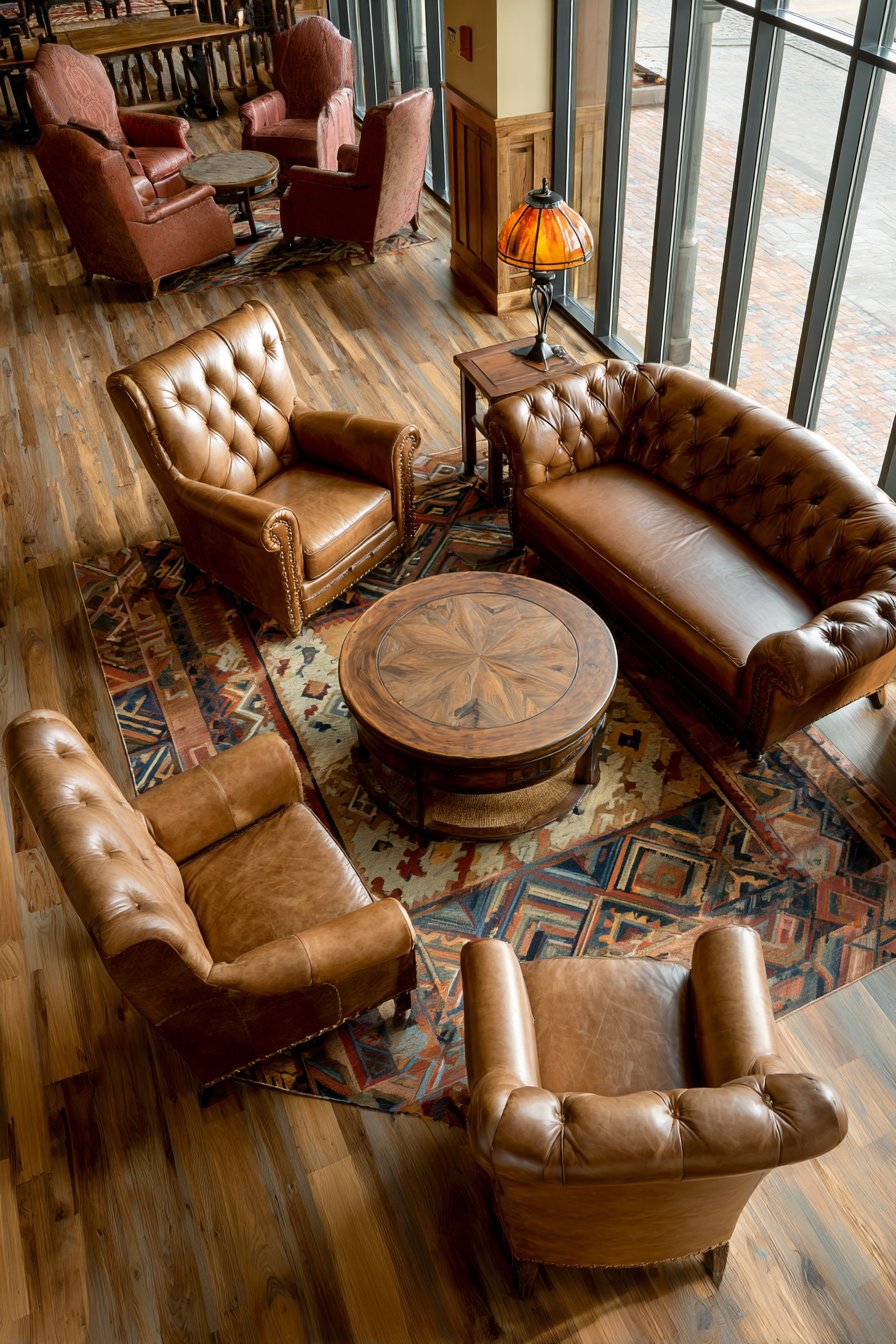
The functional furniture arrangement prioritizes conversation and connection. Every seat offers clear sightlines to others in the grouping. The round coffee table ensures equal access from all positions. This democratic arrangement makes everyone feel included and valued.
Key Design Tips:
- Arrange furniture in conversation groupings with clear sightlines between seats
- Choose tufted leather sofas in tan or cognac for durability and warmth
- Add upholstered chairs in cinnamon or warm spice tones for comfort
- Select round coffee tables with live edge details for organic focal points
- Use vintage-inspired rugs with geometric patterns for visual interest
- Install table lamps with amber glass bases for warm ambient lighting
- Position seating to create intimate yet open gathering spaces
- Maintain balance in furniture scale to ensure comfortable conversation distances
9. Layered Lighting Design with Brass and Edison Bulbs
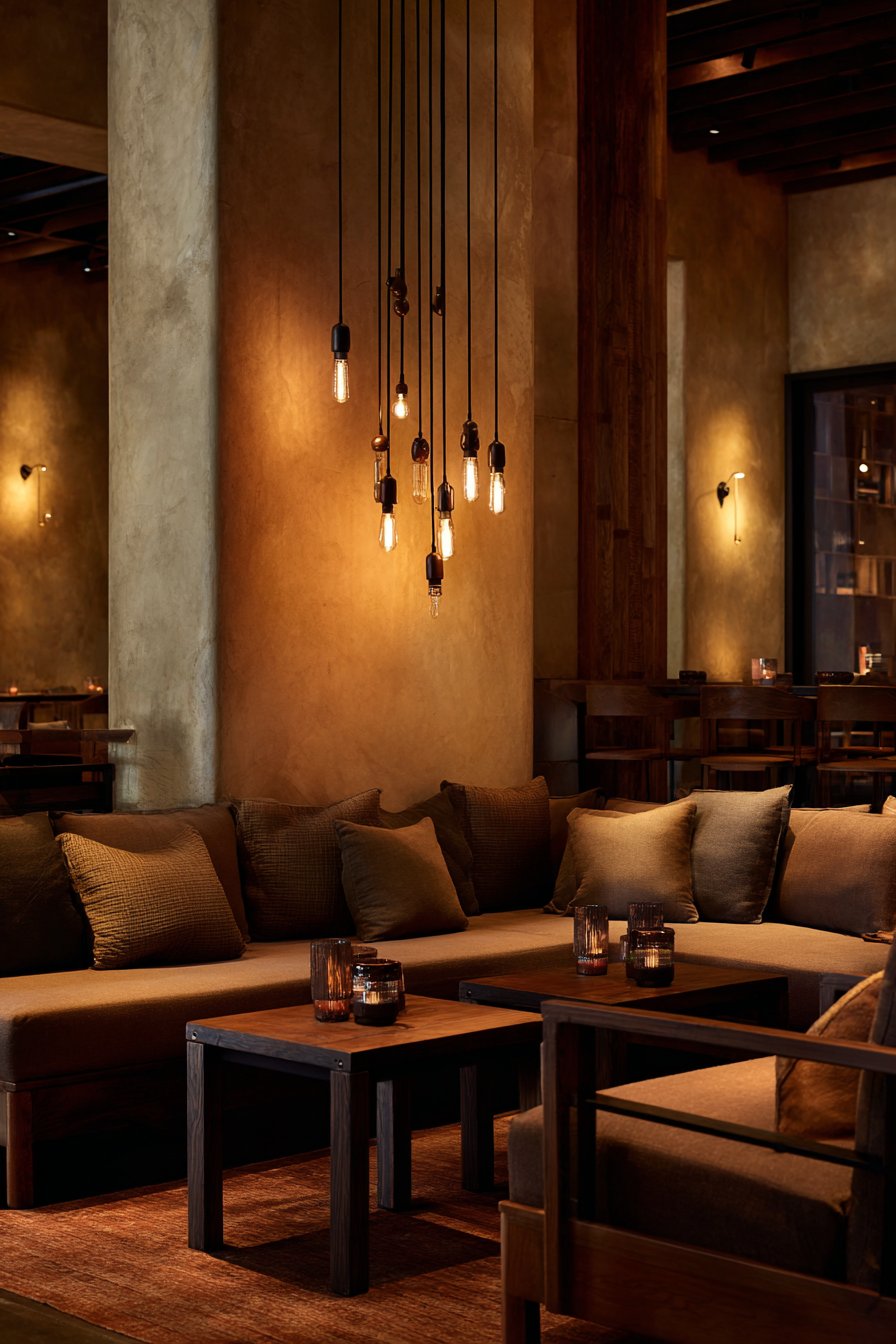
A statement pendant fixture with brass finish and warm Edison bulbs becomes the crowning jewel of this living room. The brass catches and reflects light throughout the space. Edison bulbs provide warm, ambient illumination that feels both vintage and contemporary. This overhead lighting sets the room’s overall tone.
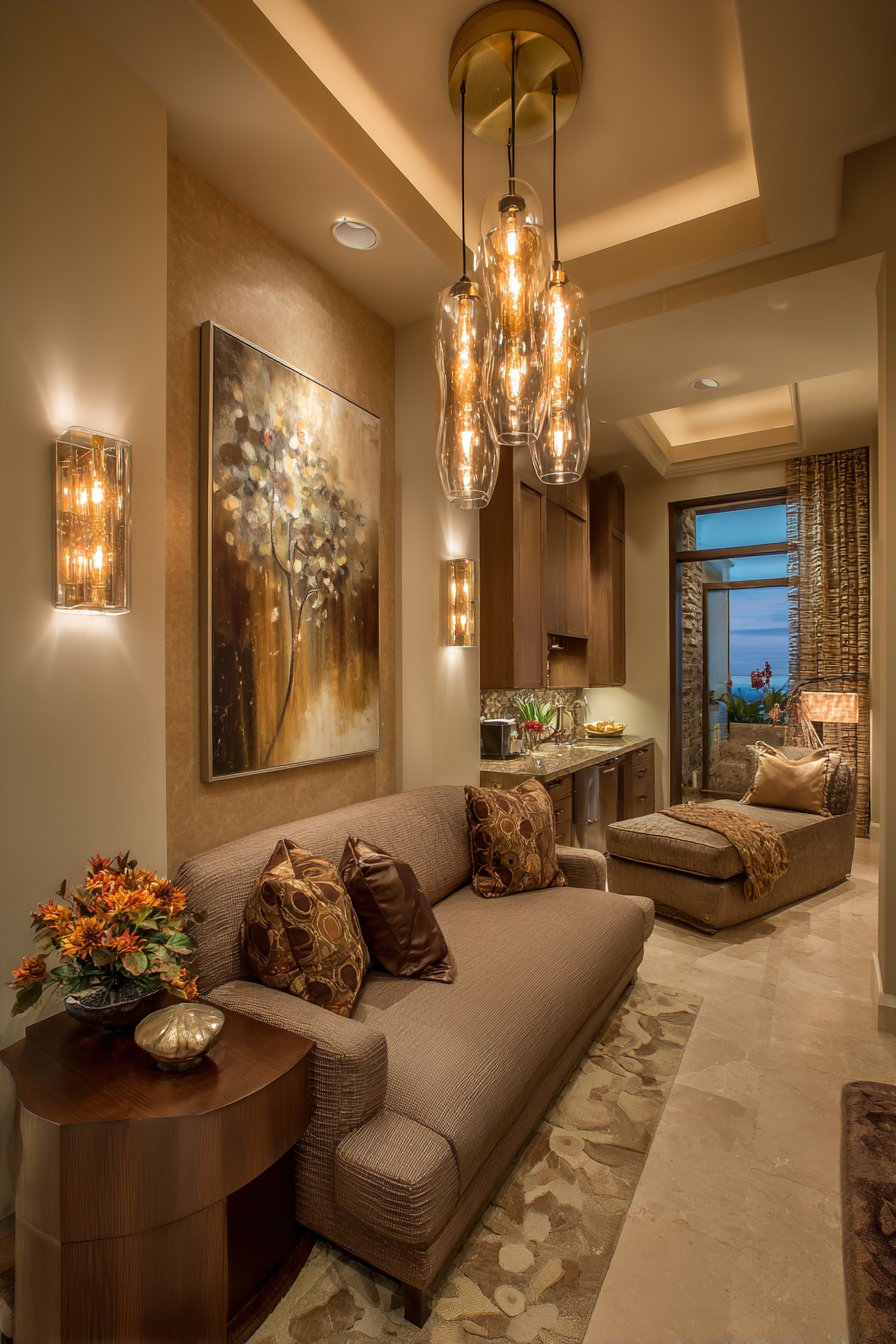
Wall sconces cast warm uplighting on textured walls painted in sandy beige. This indirect lighting technique creates drama without harshness. The uplighting emphasizes wall texture while adding layers of illumination. The sandy beige walls reflect this light beautifully, enhancing warmth throughout the evening hours.
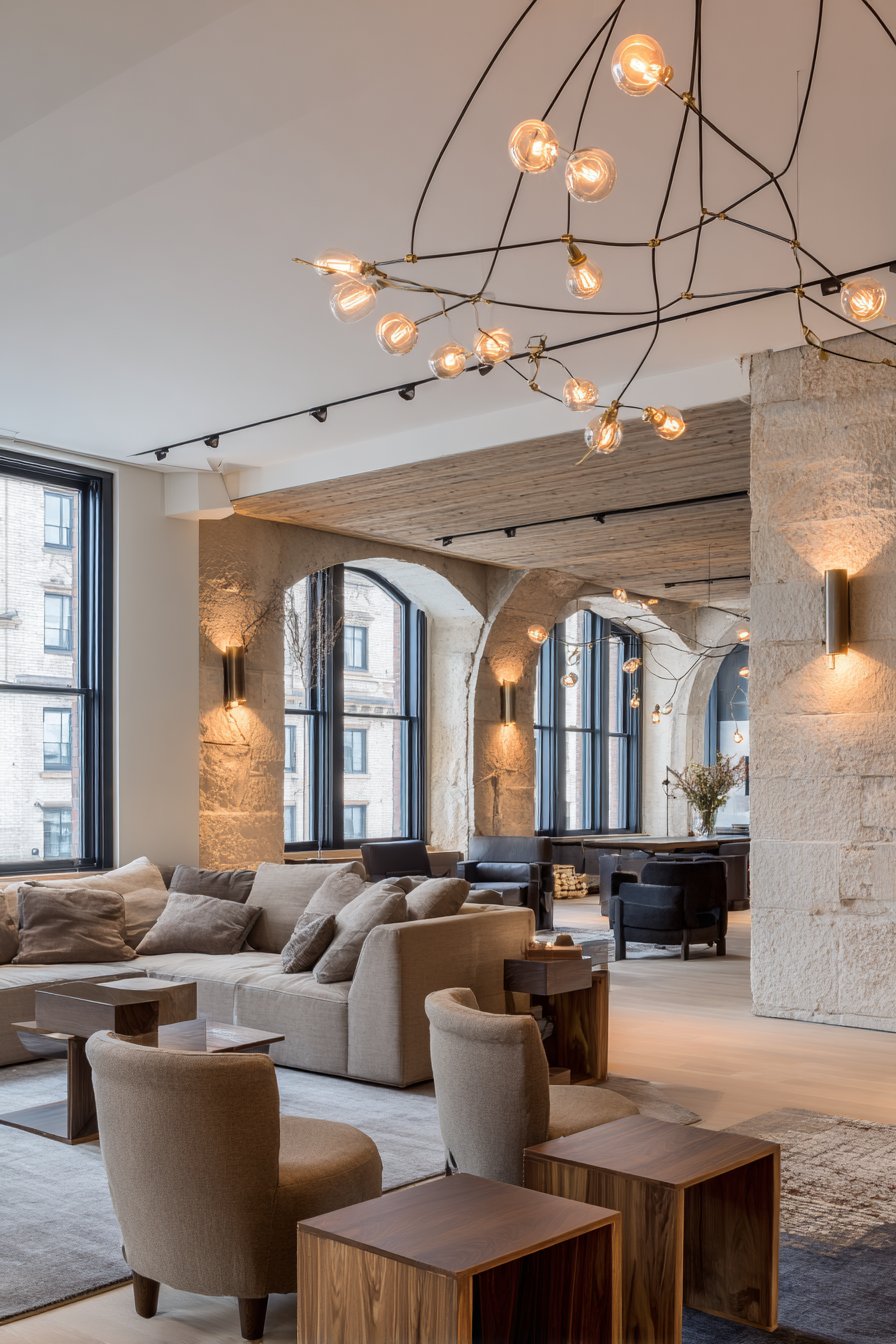
The seating area features a sofa in warm taupe with wooden side tables in walnut finish. These pieces ground the lighting design with solid, warm furnishings. The wood tones echo the brass fixtures, creating material harmony. Multiple light sources at varying heights create depth and eliminate harsh shadows.
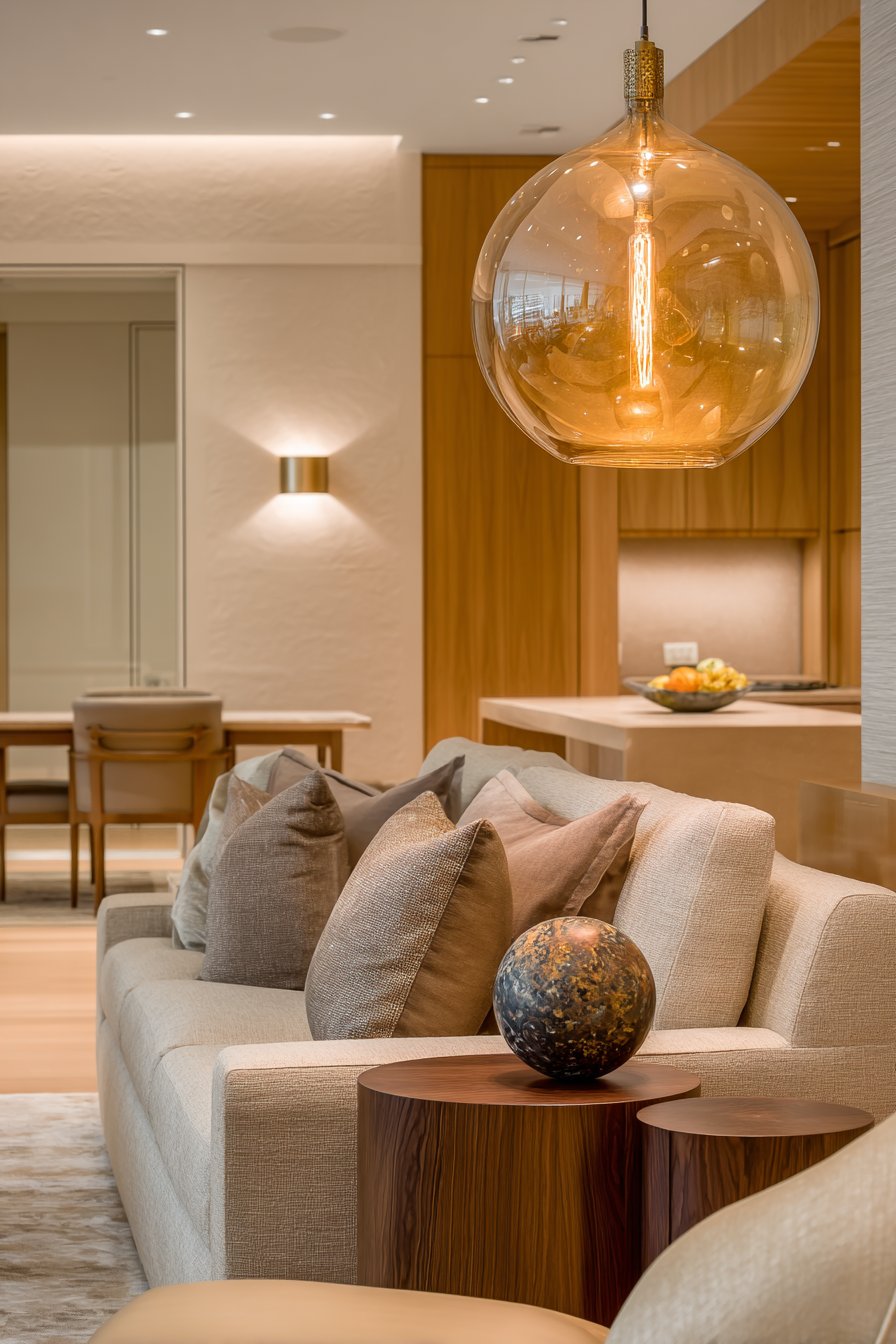
Evening photography captures the ambient glow created by these layered light sources. The combination of pendant, sconces, and table lamps ensures even illumination. Each light source contributes to the overall warmth without dominating. This approach demonstrates how lighting design affects temperature perception as much as color choices do.
Key Design Tips:
- Install statement pendant fixtures with brass finishes for dramatic focal points
- Use warm Edison bulbs to create vintage ambiance with modern efficiency
- Add wall sconces for uplighting that emphasize texture and creates drama
- Paint walls in sandy beige or warm neutrals to reflect light effectively
- Select sofas in warm taupe for neutral foundations that support lighting design
- Choose wooden side tables in walnut to echo brass fixture tones
- Layer lighting at multiple heights for even, shadow-free illumination
- Create ambient glow through multiple light sources rather than single bright fixtures
10. Eclectic Mix of Natural Materials and Earth Tones
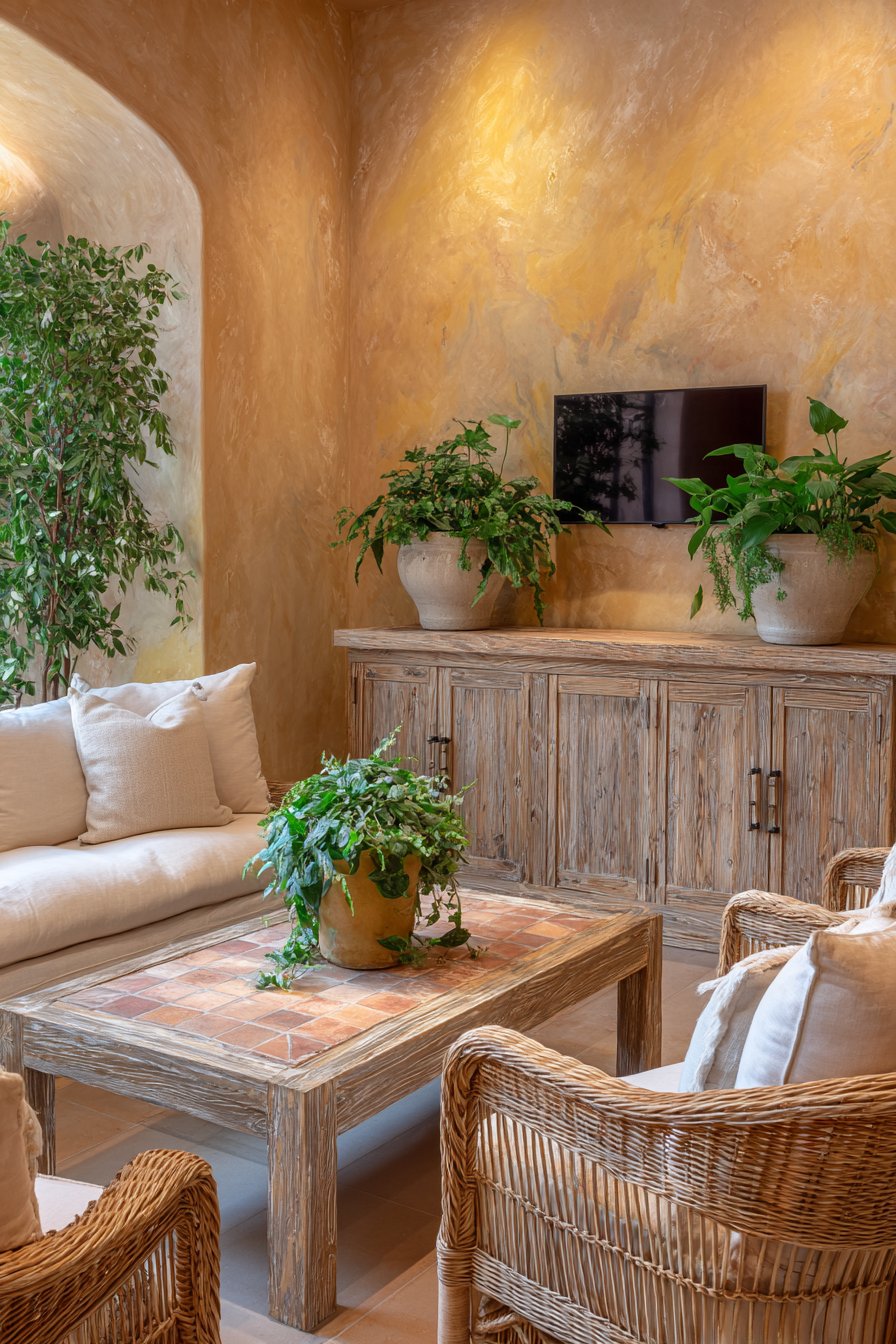
A reclaimed wood media console anchors this eclectic living room with rustic charm. The reclaimed wood shows character through weathering, nail holes, and color variations. This piece tells a story while serving modern entertainment needs. Its substantial presence grounds the more delicate elements surrounding it.
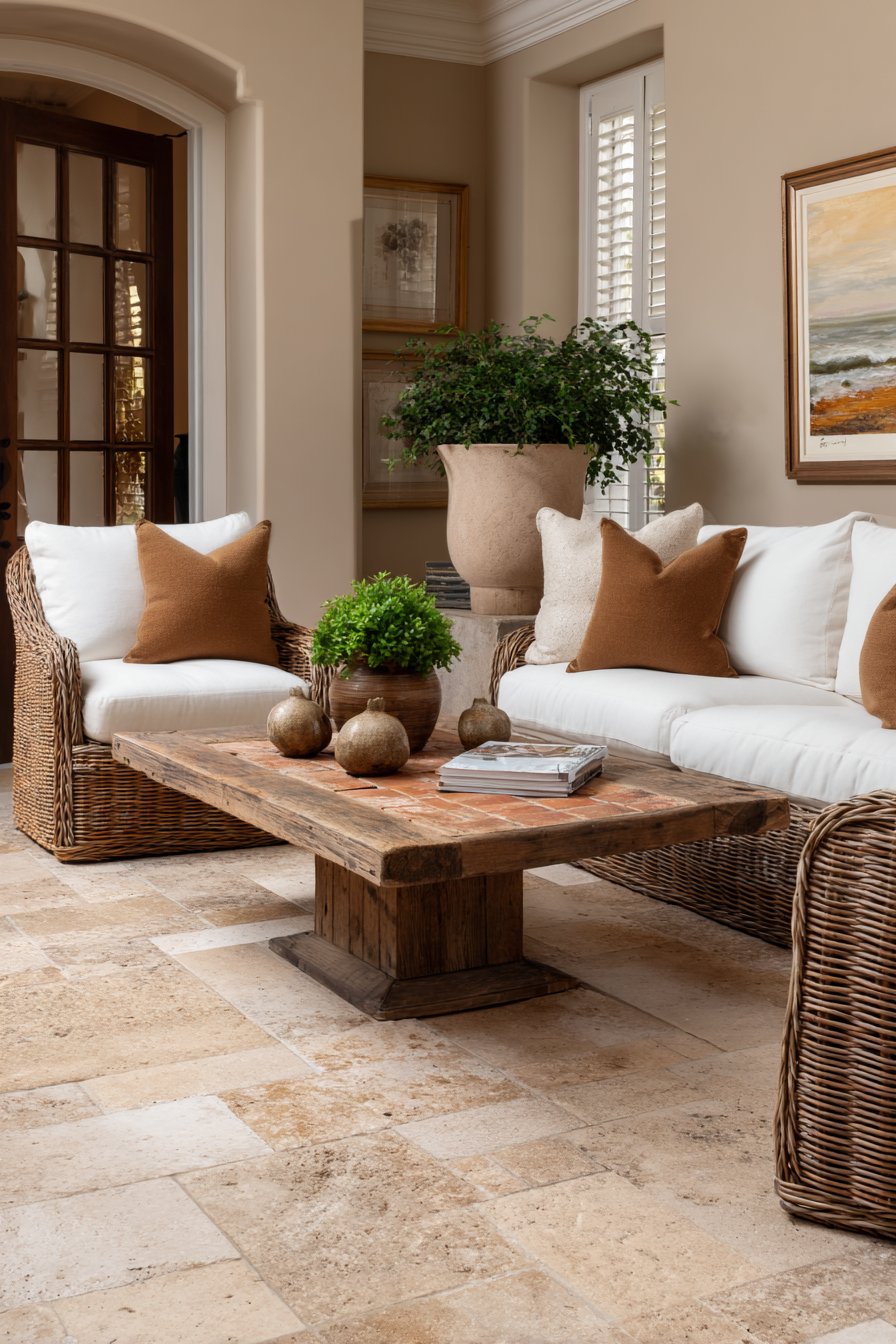
Rattan accent chairs with cream cushions add organic texture and warmth. The rattan’s woven pattern creates visual interest and lightweight appearance. Cream cushions soften the chairs while maintaining the warm, neutral palette. A coffee table with terracotta tile inlay introduces unexpected color and handcrafted appeal.

Walls in warm putty color provide a neutral backdrop that allows materials to shine. This subtle wall color doesn’t compete with the natural materials’ inherent beauty. Potted plants in ceramic planters add organic warmth and living energy. The plants bring nature indoors, softening hard edges and purifying air.
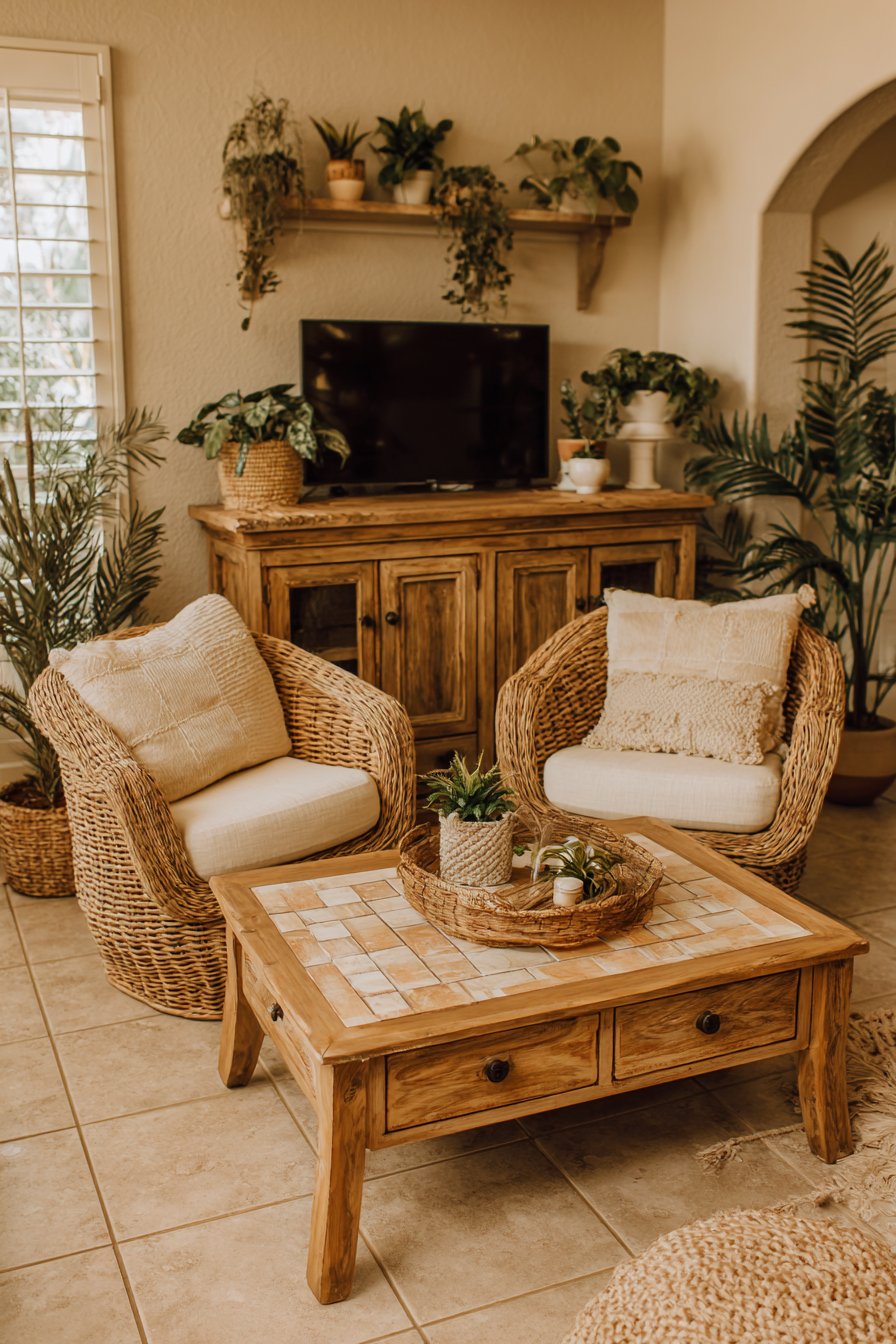
Soft natural daylight combines with warm LED ambient lighting to create comfortable atmosphere throughout the day. The LED lighting mimics natural light’s warmth without its harshness. This combination ensures the space feels welcoming at any hour. The harmonious blend of materials, textures, and earth-toned colors creates cohesive, inviting warmth.
Key Design Tips:
- Choose reclaimed wood furniture for character, sustainability, and storytelling appeal
- Add rattan accent chairs for organic texture and bohemian-inspired warmth
- Select coffee tables with terracotta tile inlays for handcrafted, artisan touches
- Paint walls in warm putty or greige to provide neutral, warm backdrops
- Include potted plants in ceramic planters for living warmth and air quality
- Mix natural materials like wood, rattan, and tile for eclectic sophistication
- Use warm LED lighting to extend daytime warmth into evening hours
- Balance various textures to create visual interest without overwhelming the space
Why These Warm Living Room Designs Work Best
These ten warm living room ideas represent the pinnacle of inviting interior design because they address multiple layers of comfort simultaneously. Each design demonstrates how warm color palettes, natural materials, and thoughtful lighting combine to create spaces that feel genuinely welcoming. The caramel-toned comfort design works exceptionally well for families seeking relaxed, casual spaces. The fireplace focal point approach succeeds in creating gathering spots that naturally draw people together.
The sunlit elegance design proves that warmth doesn’t require sacrificing sophistication. Rich materials like velvet and walnut demonstrate how luxury and comfort coexist beautifully. Gallery wall concepts succeed by adding personality and warmth through curated collections. These personalized touches make spaces feel unique rather than generic.
Reading nook designs address the growing desire for dedicated relaxation zones within larger spaces. They demonstrate how warmth can be concentrated in smaller areas for maximum impact. Layered window treatment approaches succeed by solving practical problems while enhancing aesthetic appeal. They control light, temperature, and privacy while contributing to overall warmth.
Terracotta accent wall designs work because they make bold statements without feeling cold or minimalist. The earthy color inherently feels warm and grounding. Conversation circle arrangements succeed by prioritizing human connection over media consumption. They create spaces where people naturally gather and engage.
Layered lighting designs demonstrate technical sophistication while achieving emotional warmth. Multiple light sources at various heights eliminate harsh shadows while creating ambient glow. The eclectic natural materials approach succeeds by celebrating imperfection and authenticity. These spaces feel collected over time rather than decorated in a day.
All these designs incorporate warm color palettes ranging from caramel and cognac to terracotta and ochre. These colors psychologically register as warm, affecting how we perceive temperature. Natural materials like wood, stone, leather, and rattan add organic warmth that synthetic materials cannot replicate. These materials age beautifully, developing character over time.
Texture plays a crucial role in every design, with layered fabrics, woven elements, and varied surfaces creating tactile interest. Smooth leather contrasts with chunky knits, while rough stone balances against soft velvet. This textural variety engages multiple senses, making spaces feel more dynamic and alive.
Lighting emerges as perhaps the most critical element across all designs. Warm-toned bulbs, brass fixtures, and strategic placement transform spaces from ordinary to extraordinary. Natural light remains irreplaceable, with every design maximizing its presence through thoughtful window treatments and furniture positioning.
These warm living room ideas work best because they prioritize human comfort and connection. They create backgrounds for life’s important moments rather than demanding attention themselves. They balance beauty with functionality, ensuring spaces remain practical while feeling beautiful. Most importantly, they demonstrate that warmth comes from thoughtful design decisions layered carefully over time.
Conclusion
Creating a warm living room requires more than following trends or purchasing expensive furniture. It demands thoughtful consideration of how colors, materials, lighting, and textures work together to create inviting atmospheres. The ten designs explored in this article demonstrate various approaches to achieving warmth, from bold terracotta accent walls to subtle layering of neutral tones.
The key takeaway is that warmth can be achieved through many different design styles and budgets. Whether you’re drawn to the rustic charm of reclaimed wood or the sophisticated elegance of velvet and brass, the fundamental principles remain constant. Choose warm color palettes, incorporate natural materials, layer textures thoughtfully, and design lighting that creates ambient glow rather than harsh illumination.
Start small by introducing warm-toned throw blankets or switching to warm-toned light bulbs. Gradually layer in natural materials like wood, rattan, or stone. Consider how your furniture arrangement encourages connection and conversation. Pay attention to how natural light moves through your space throughout the day.
Remember that the warmest living rooms reflect the personalities and lifestyles of those who inhabit them. Don’t be afraid to experiment with these ideas, adapting them to your specific needs and preferences. Your living room should feel like a warm embrace, welcoming you home every single day. Take inspiration from these designs and create a space that truly feels like yours—warm, inviting, and perfectly suited to the life you want to live.
