


Most homeowners focus exclusively on floor space when designing living rooms, completely overlooking the untapped potential above eye level. Vertical space represents your room’s most underutilized asset, offering storage, display, and design opportunities that transform cramped quarters into efficient, beautiful environments. Learning to think vertically revolutionizes how you approach small space challenges and opens entirely new possibilities.
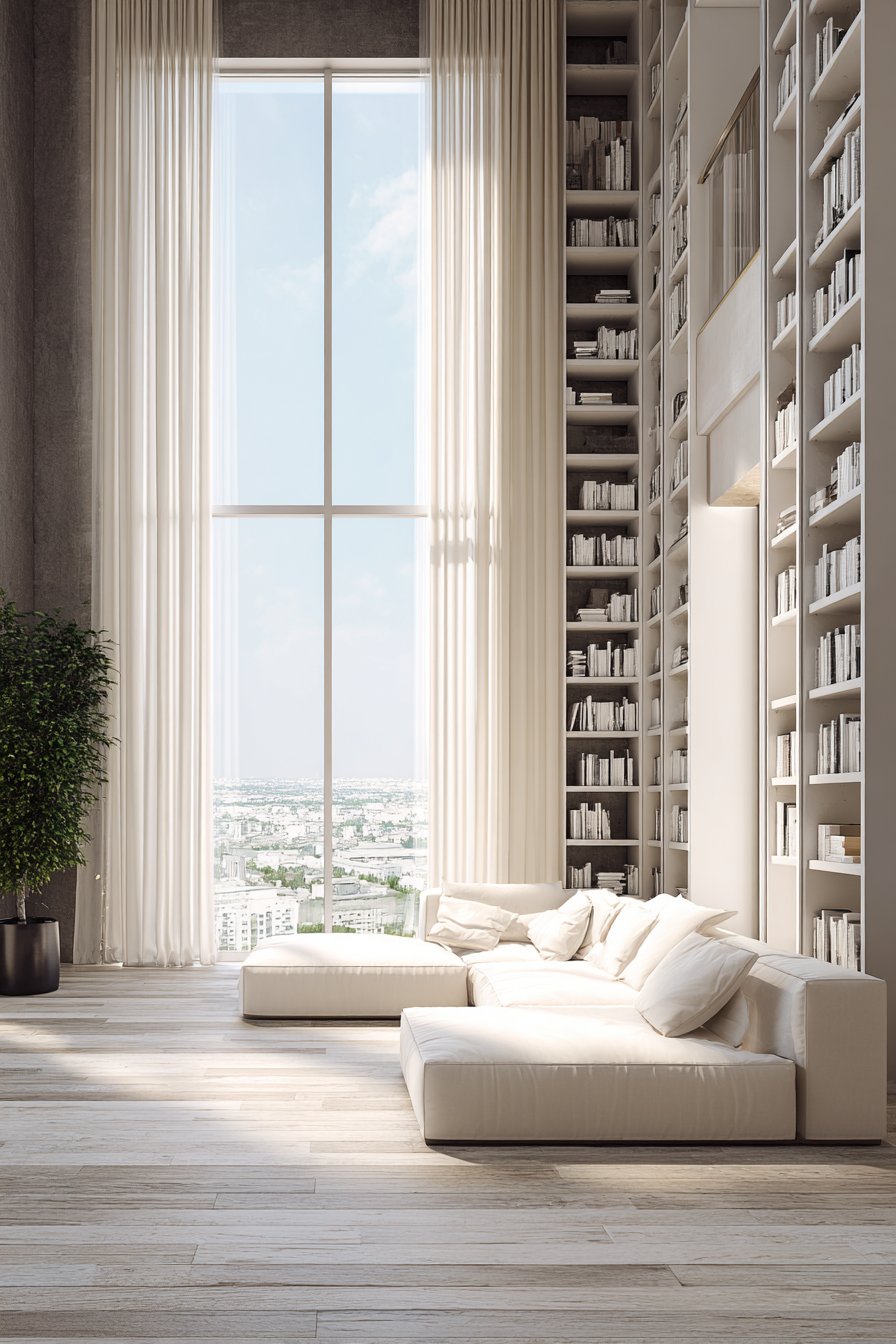
Thoughtful interior design requires looking beyond conventional horizontal thinking to embrace three-dimensional space planning. Your living room extends from floor to ceiling, yet traditional furniture arrangements rarely activate the upper two-thirds of available wall height. This oversight wastes valuable real estate while leaving rooms feeling incomplete and underdesigned, regardless of square footage limitations.
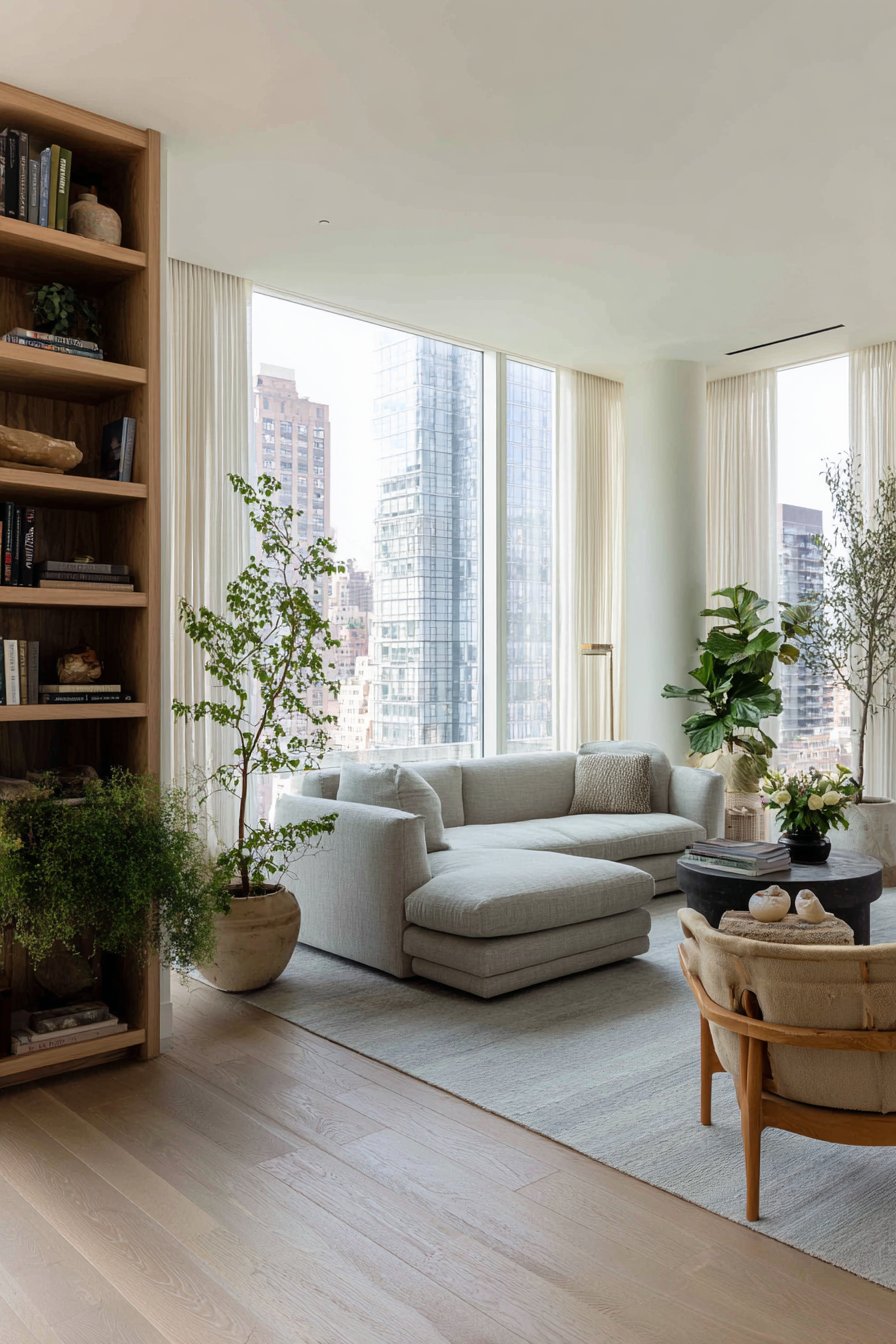
This comprehensive guide explores six proven strategies for maximizing vertical space in living rooms of any size. From floor-to-ceiling storage solutions to strategic visual tricks, these approaches deliver both functional benefits and aesthetic enhancement. Whether you’re working with a compact apartment or simply want to optimize your existing space, these vertical thinking techniques create dramatic improvements in organization, style, and perceived spaciousness.
1. Install Floor-to-Ceiling Shelving Systems
Floor-to-ceiling shelving transforms blank walls into productive storage while creating impressive architectural features. These towering units draw eyes upward, making standard 8-foot ceilings appear taller while providing exponentially more storage than conventional bookcases. The vertical emphasis creates a dramatic visual impact that low, horizontal furniture cannot match.
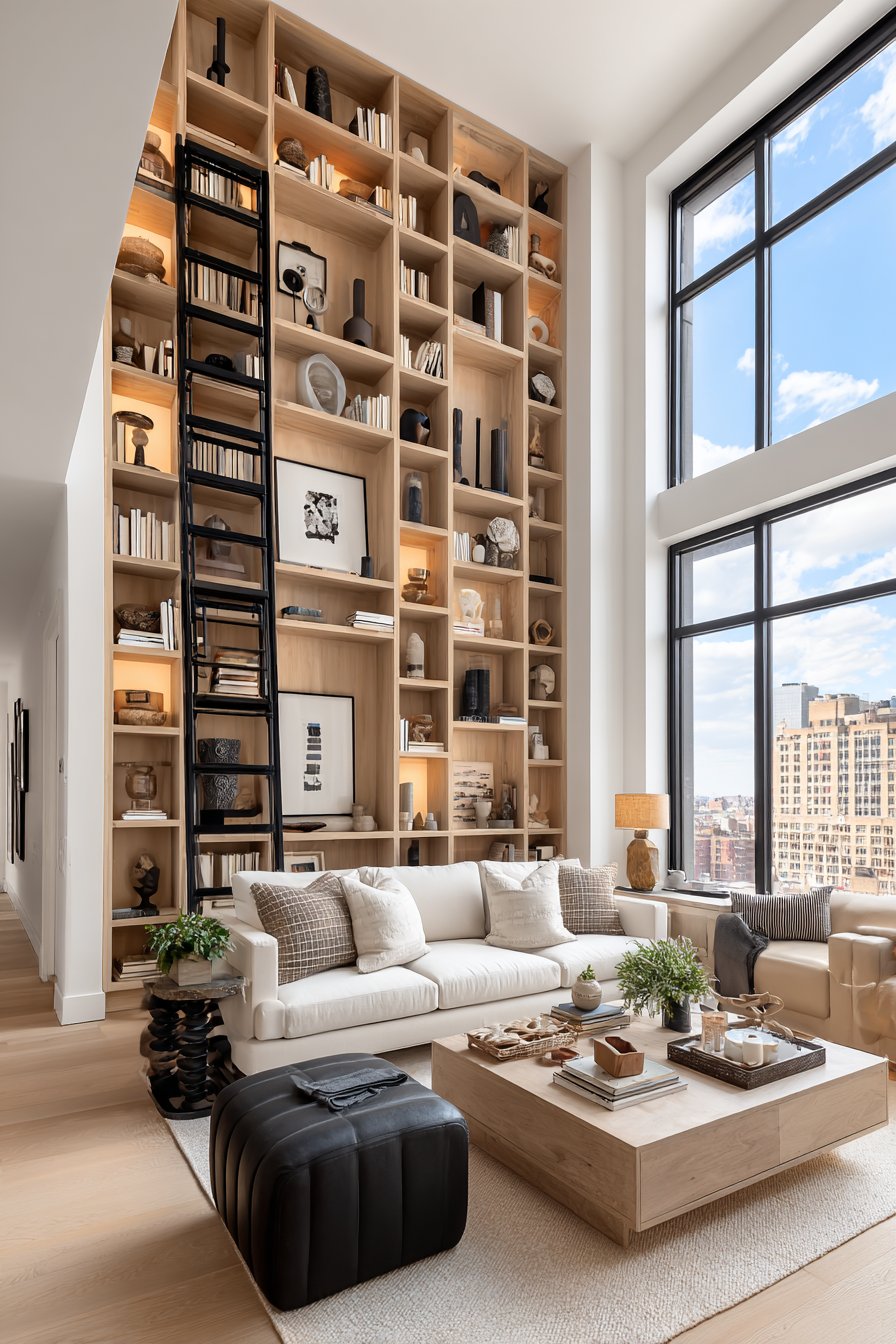
Custom-built or modular shelving systems offer flexibility for personalized configurations that adapt to your specific needs. Open shelving displays books, decorative objects, and plants while maintaining visual flow, whereas closed cabinets at upper levels conceal clutter. Mixing open and closed storage creates balanced functionality that serves both practical and aesthetic purposes effectively.
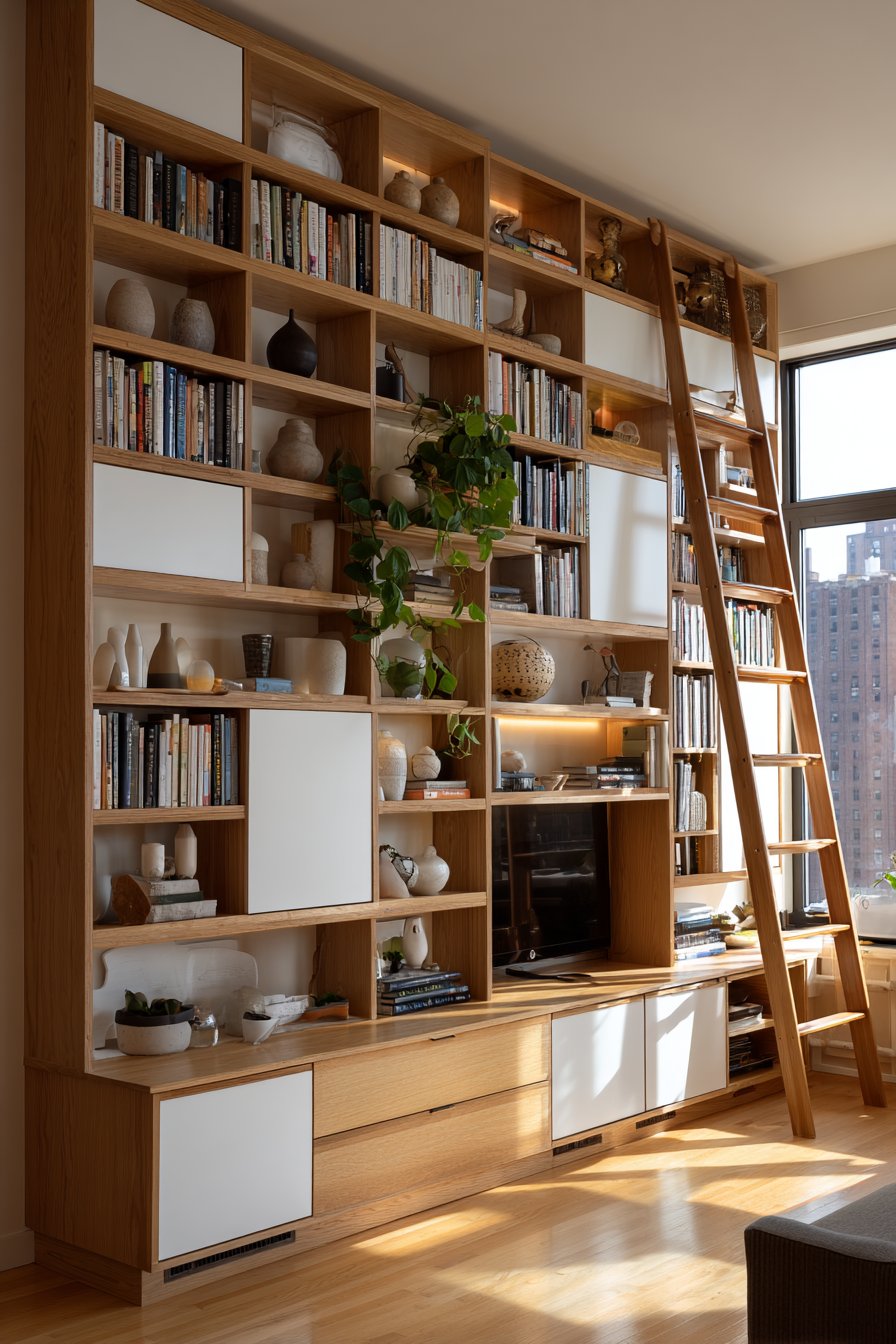
The investment in quality ceiling-height shelving pays dividends through increased home value and daily utility. Professional installation ensures structural integrity for heavy loads, while proper anchoring prevents safety hazards. These systems last decades when properly installed, making them among the most cost-effective furniture investments measured over time.
- Measure ceiling height precisely before ordering custom shelving units
- Use lower shelves for frequently accessed items and upper shelves for seasonal storage
- Install library ladders or rolling step stools for safe upper shelf access
- Paint shelving the same color as walls for seamless architectural integration
- Display items in grouped collections rather than scattered randomly across shelves
- Incorporate lighting within shelving to highlight displays and improve functionality
2. Utilize Wall-Mounted Storage Solutions
Wall-mounted storage liberates precious floor space while keeping essential items accessible and organized. Floating shelves, wall-mounted cabinets, and modular storage systems attach directly to walls, eliminating bulky furniture footprints. This approach proves especially valuable in smaller living rooms where every square foot matters for circulation and comfort.
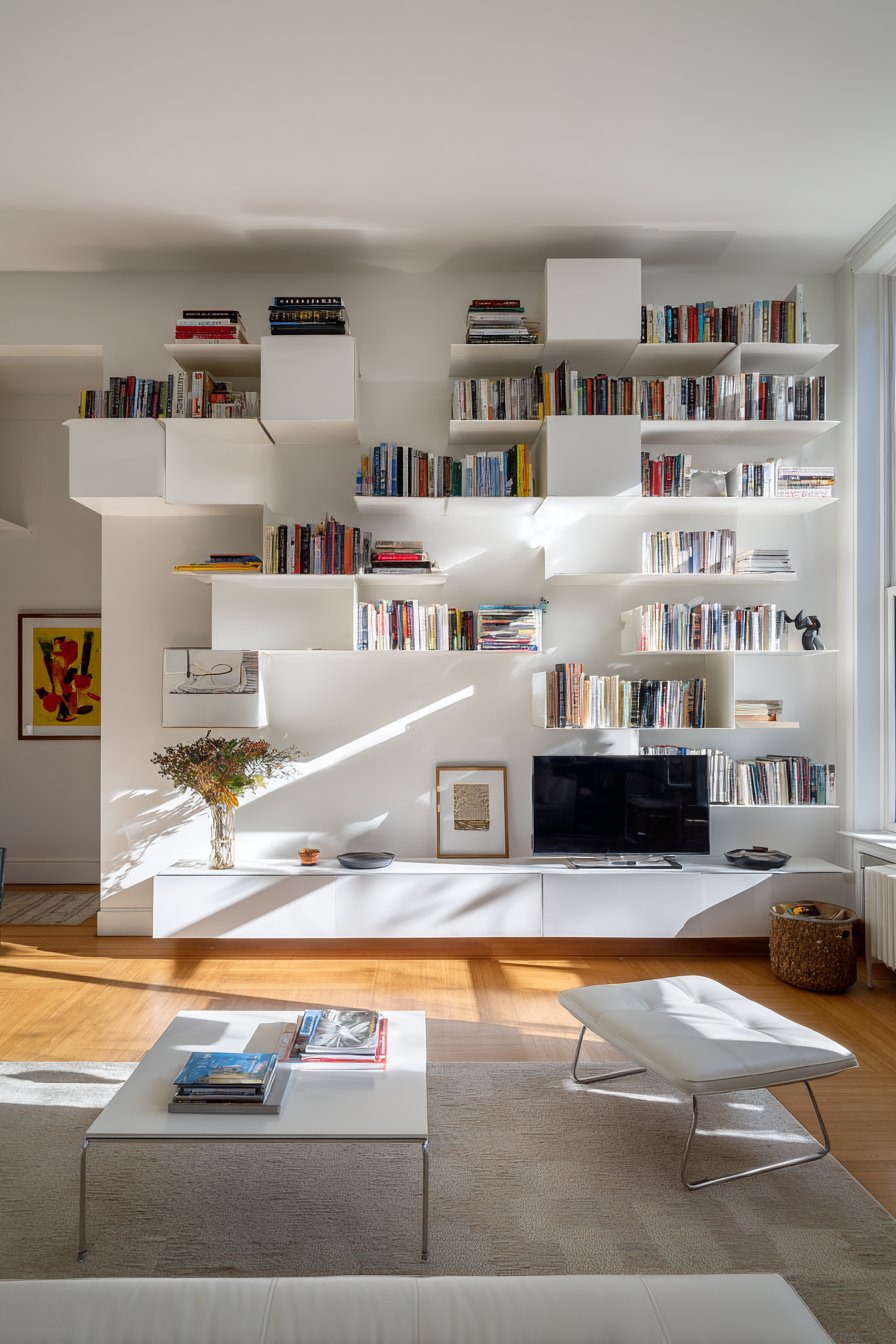
The variety of wall-mounted options accommodates diverse storage needs from media consoles to desk systems. Floating media units suspend televisions and components at optimal viewing heights while creating clean, modern aesthetics. Wall-mounted desks fold down when needed and disappear when not in use, supporting multi-functional room purposes without permanent space dedication.
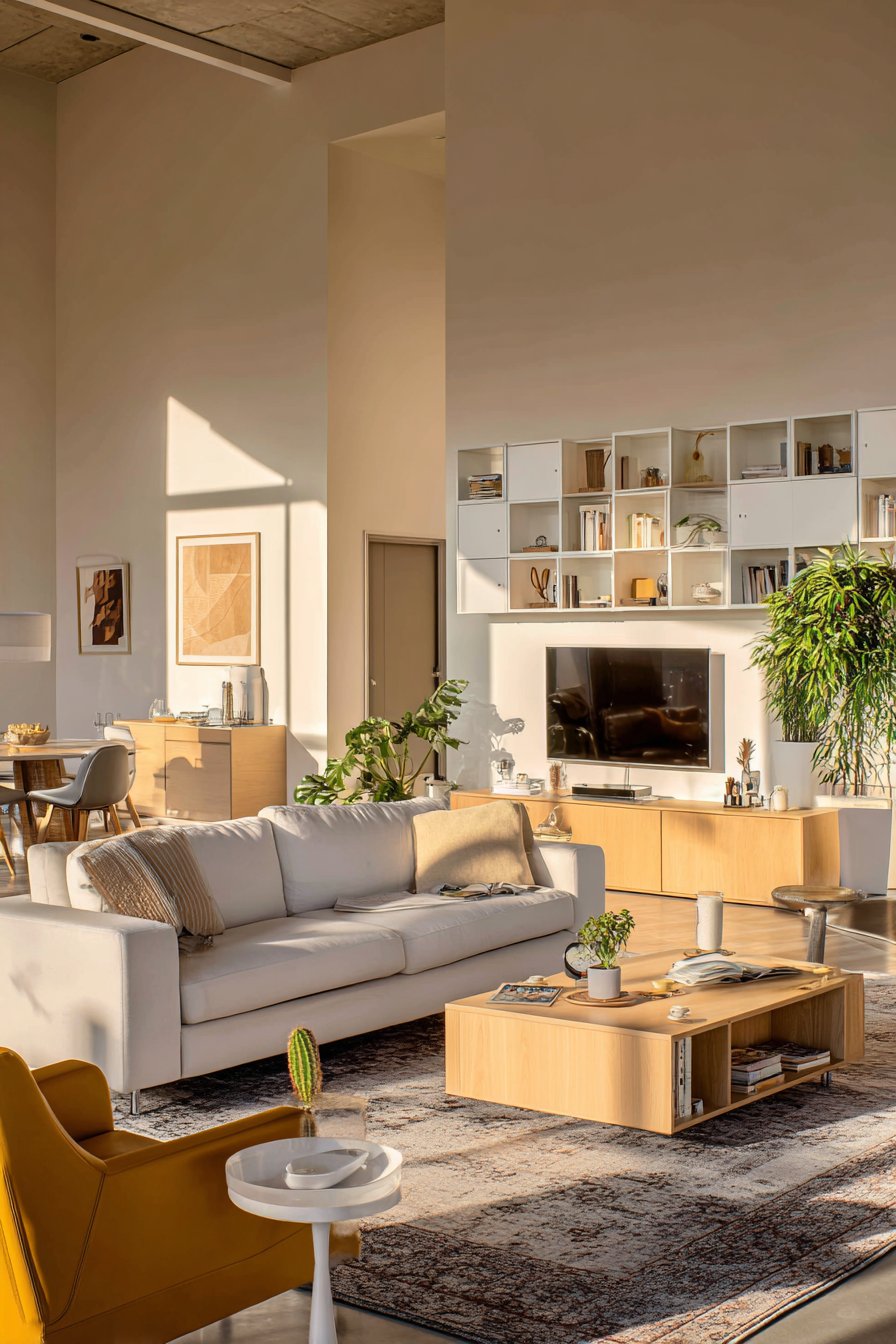
Strategic placement of wall-mounted storage creates vertical organization that guides eyes upward while maintaining room openness. Installing units at varying heights adds dimensional interest that flat walls lack. This layered approach to vertical space utilization maximizes storage capacity without creating the heavy, cluttered feeling that floor-based furniture often produces.
- Mount the television at eye level when seated for comfortable viewing angles
- Install floating shelves in odd numbers for pleasing asymmetrical balance
- Use heavy-duty wall anchors rated for twice your anticipated weight load
- Position wall-mounted storage to frame seating areas and define zones
- Consider modular systems that grow with changing storage needs over time
- Leave breathing room between mounted elements to prevent overwhelming walls
3. Hang Floor-to-Ceiling Curtains
Floor-to-ceiling window treatments create vertical drama that makes rooms appear significantly taller than actual measurements. Installing curtain rods at ceiling height rather than just above windows adds 12-24 inches of perceived height instantly. This simple trick costs nothing beyond standard window treatment installation yet delivers professional designer results.
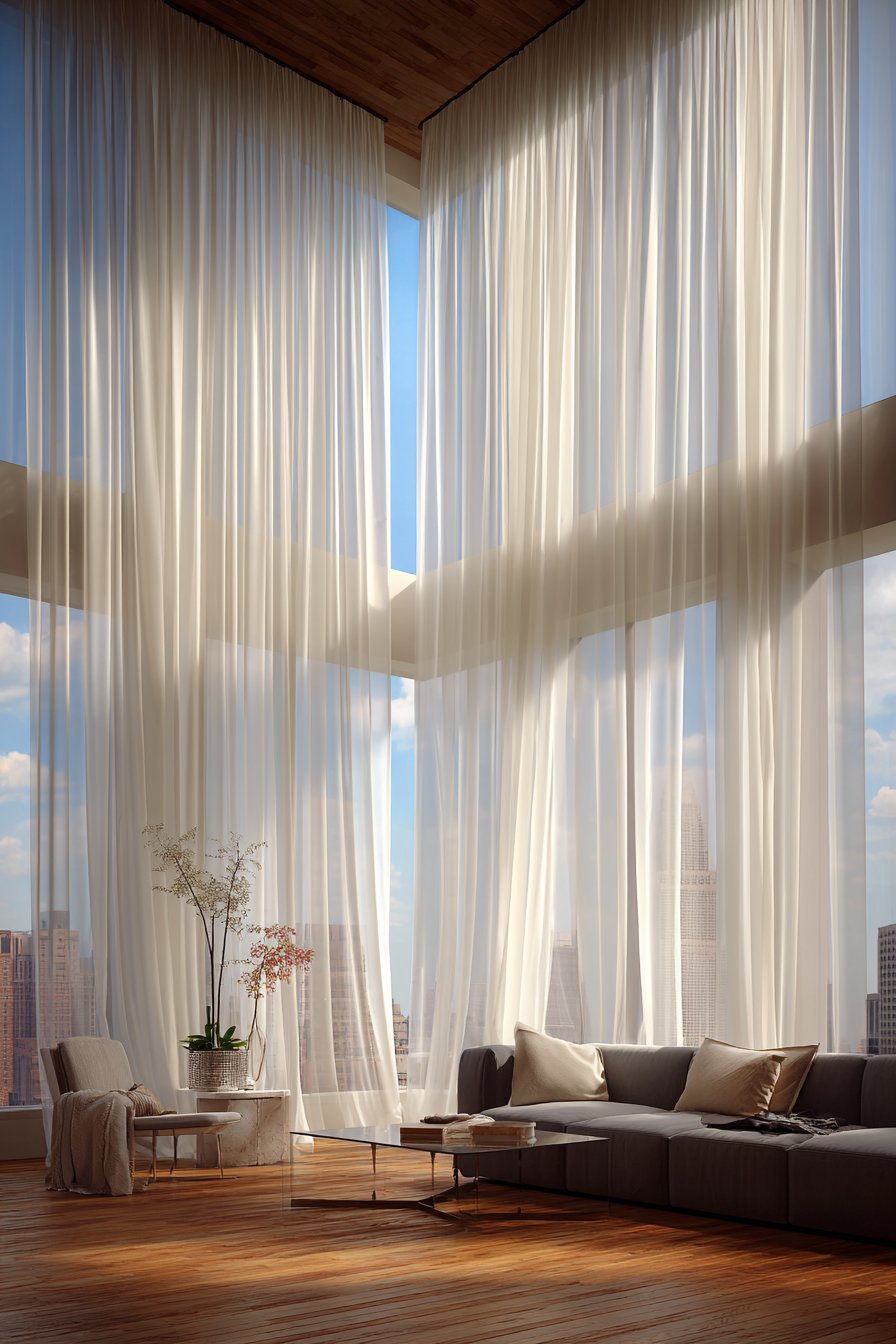
The continuous vertical lines created by long drapes draw eyes from floor to ceiling in uninterrupted sweeps. Choose solid colors or subtle vertical patterns to emphasize height-enhancing effects. Avoid horizontal patterns or heavy, gathered fabrics that create visual weight and counteract the vertical elongation you’re working to achieve.
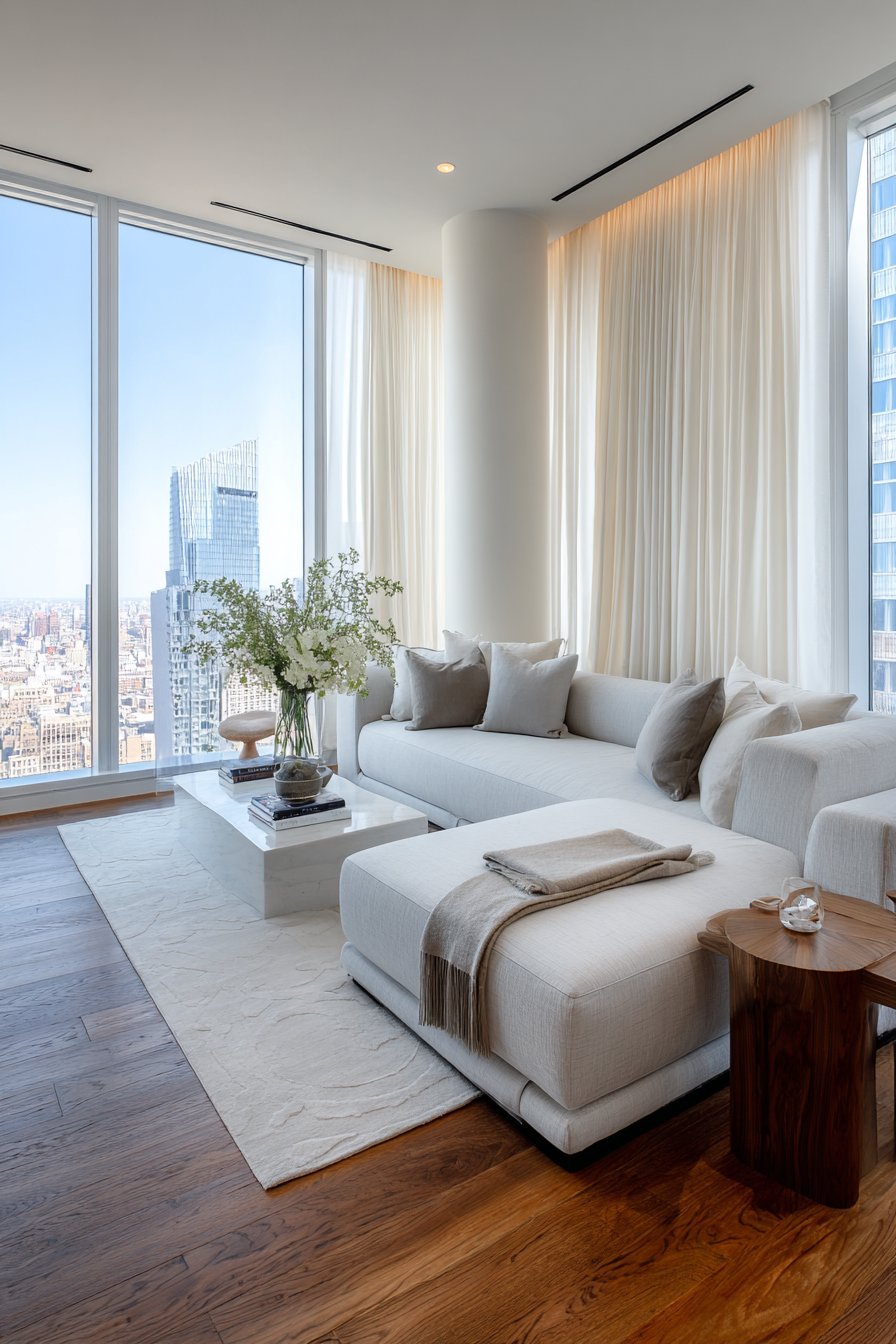
Proper curtain length proves critical for maximizing vertical impact and maintaining polished appearance. Panels should graze or puddle slightly on floors rather than floating awkwardly above. This floor-touching detail creates luxurious, finished appearance while reinforcing the floor-to-ceiling connection that makes spaces feel more expansive and thoughtfully designed.
- Install curtain rods within 2-4 inches of ceiling for maximum height illusion
- Choose curtains that extend to floor level or puddle 1-2 inches beyond
- Select lightweight fabrics in light colors for airy, expansive feelings
- Use simple rod designs that don’t draw attention from vertical lines
- Consider motorized tracks for easy operation of ceiling-height curtains
- Avoid valances or horizontal trim that interrupts vertical flow
4. Create Vertical Gallery Walls
Vertical gallery walls direct attention upward while showcasing personal collections and artistic expression. Unlike horizontal arrangements that emphasize wall width, vertical compositions create columnar displays that elongate walls visually. This approach works particularly well flanking windows, doorways, or focal furniture pieces where vertical emphasis enhances architectural features.
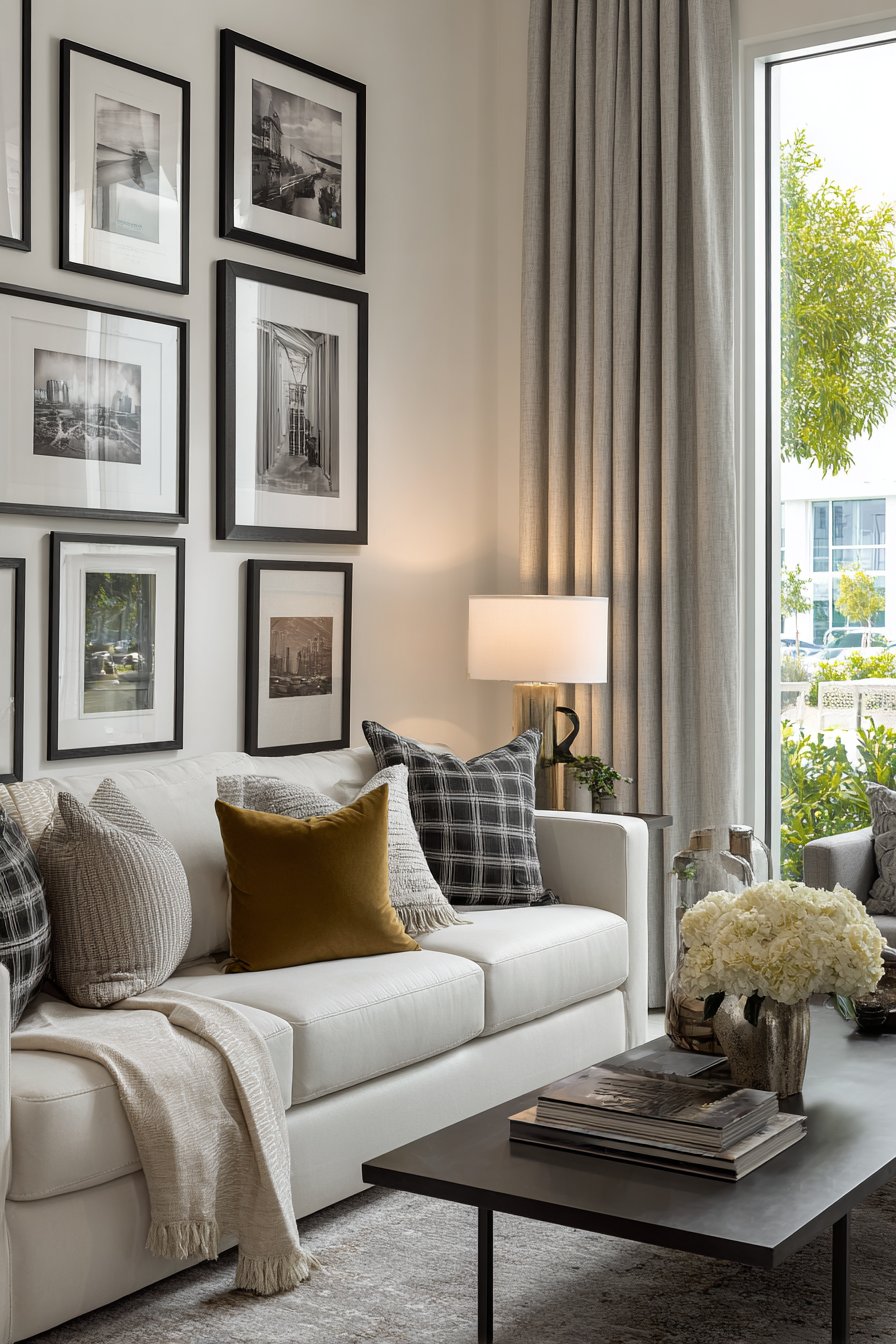
Strategic frame arrangement in vertical configurations requires different planning than traditional grid layouts. Start with your largest piece at eye level, then build upward and downward in progressively smaller frames. Maintain consistent spacing (typically 2-3 inches between frames) to create cohesive columns rather than scattered chaos.
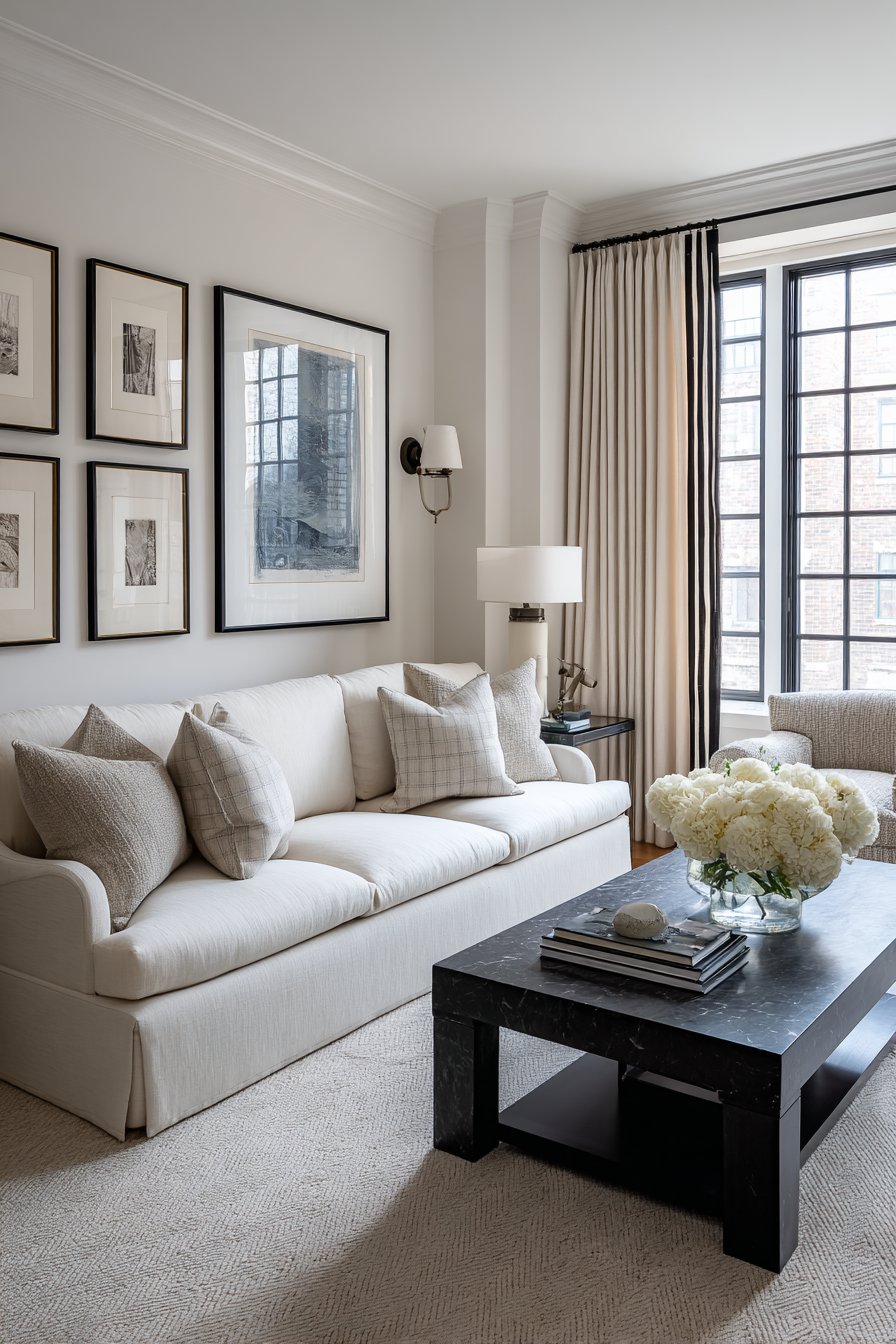
The psychological impact of upward-moving galleries subtly influences how occupants perceive ceiling height and room proportions. Our eyes naturally follow arranged elements, so vertical compositions literally train viewers to look up, increasing awareness of vertical space. This simple visual trick makes rooms feel taller without any structural changes or major investments.
- Measure and mark frame positions with painter’s tape before hammering nails
- Create templates from paper matching frame sizes for easy planning
- Start hanging from the center piece and work outward for balanced results
- Limit vertical galleries to odd numbers of frames for visual appeal
- Use consistent frame styles and colors for cohesive, professional appearance
- Extend vertical galleries to within 6-8 inches of ceiling for maximum impact
5. Incorporate Tall, Narrow Furniture Pieces
Tall, narrow furniture emphasizes vertical proportions while minimizing floor space consumption. Armoires, tall cabinets, and slim bookcases provide substantial storage in compact footprints. These pieces draw eyes upward through their height while their narrow profiles maintain circulation space and prevent rooms from feeling crowded or cluttered.
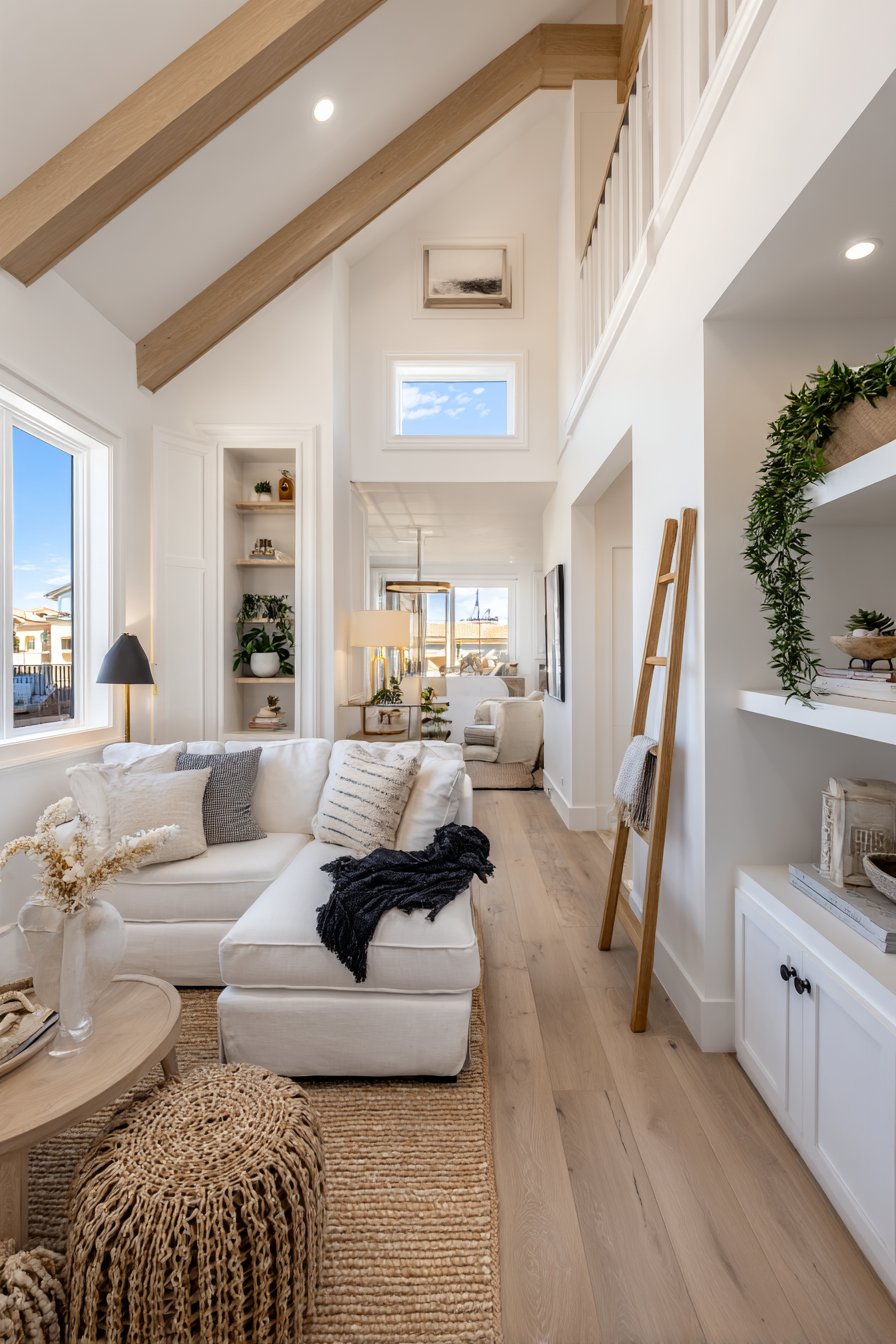
The principle of vertical over horizontal proves especially important in small living rooms. A single tall bookcase provides equivalent storage to three short, wide units while occupying one-third the floor space. This efficient use of vertical real estate maintains open floor area for traffic flow and furniture arrangement flexibility.
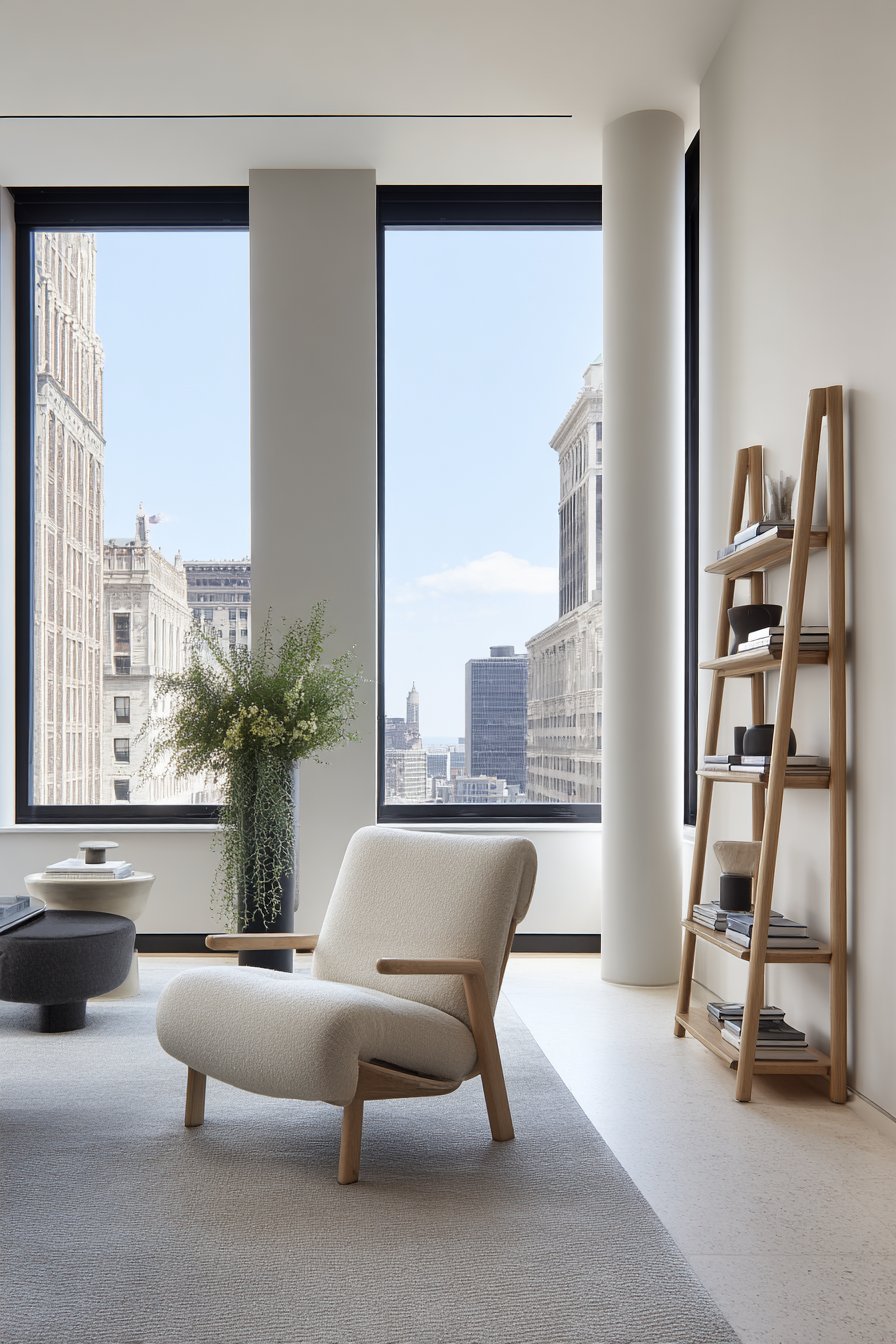
Selecting furniture with visible height creates architectural interest through varied elevations. Mix tall pieces with lower seating to establish visual rhythm and dimensional variety. This elevation diversity prevents monotonous horizontal planes while reinforcing your vertical space maximization strategy throughout the room’s entire composition and design scheme.
- Choose furniture pieces at least 6 feet tall for meaningful vertical impact
- Position tall furniture against shorter walls to avoid overwhelming proportions
- Ensure tall pieces remain proportional to room size and ceiling height
- Use tall, narrow plant stands to add greenery without floor space sacrifice
- Consider ladder-style shelving that leans against walls for easy installation
- Balance tall furniture with low-profile seating to create elevation contrast
6. Add Vertical Lighting Elements
Vertical lighting fixtures create upward illumination that activates ceiling space while making rooms feel taller and more expansive. Floor lamps, tall table lamps, and wall sconces direct light toward ceilings, bouncing illumination downward while creating an ambient glow. This upward lighting approach eliminates the cave-like feeling that downward-only lighting often creates in standard ceiling-height rooms.
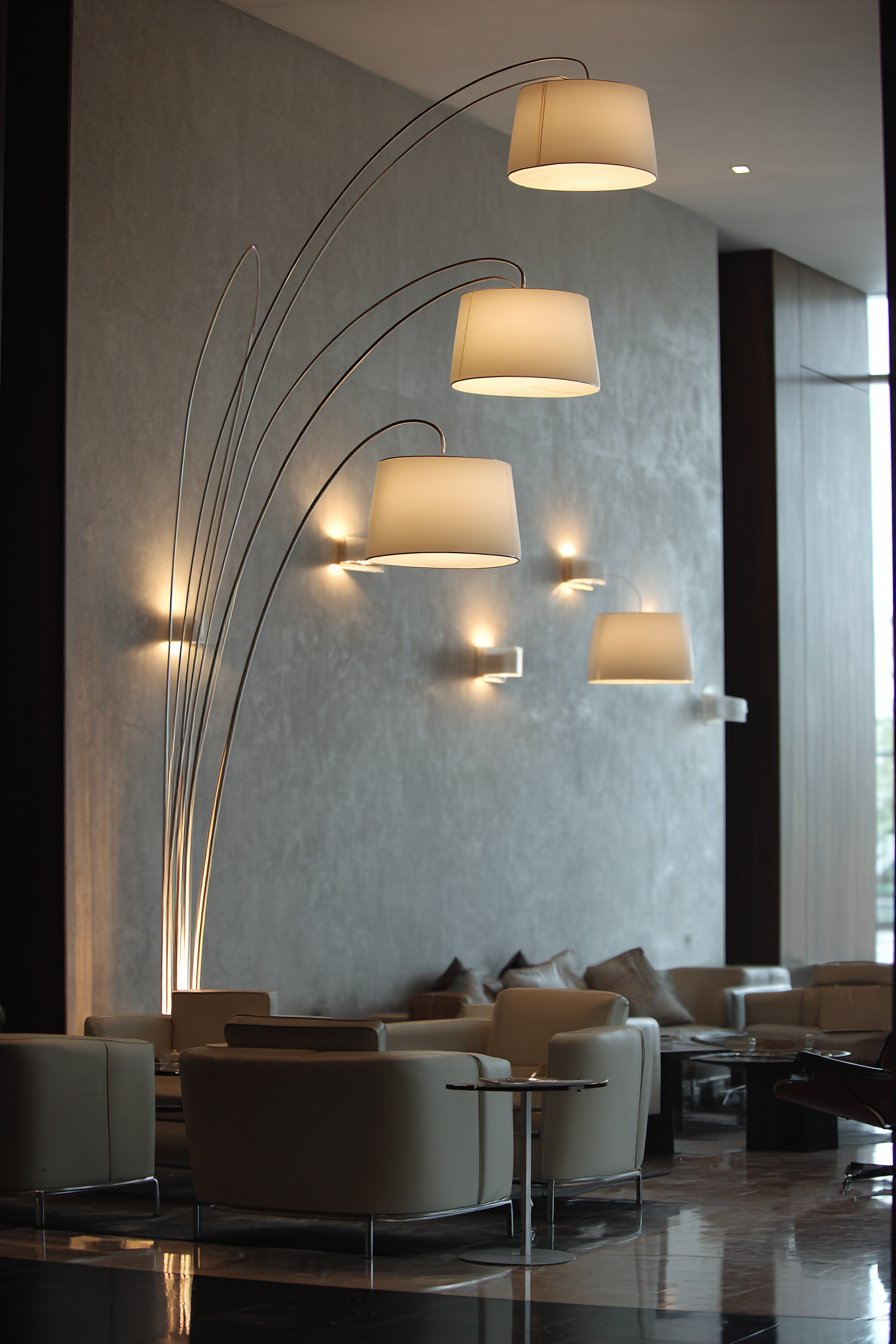
Tall floor lamps serve dual purposes as functional lighting and vertical design elements. Slim, columnar designs with upward-facing shades emphasize height while providing task lighting for reading areas. Arc floor lamps reach overhead to illuminate specific zones without requiring ceiling installation, offering flexibility conventional fixtures cannot match.
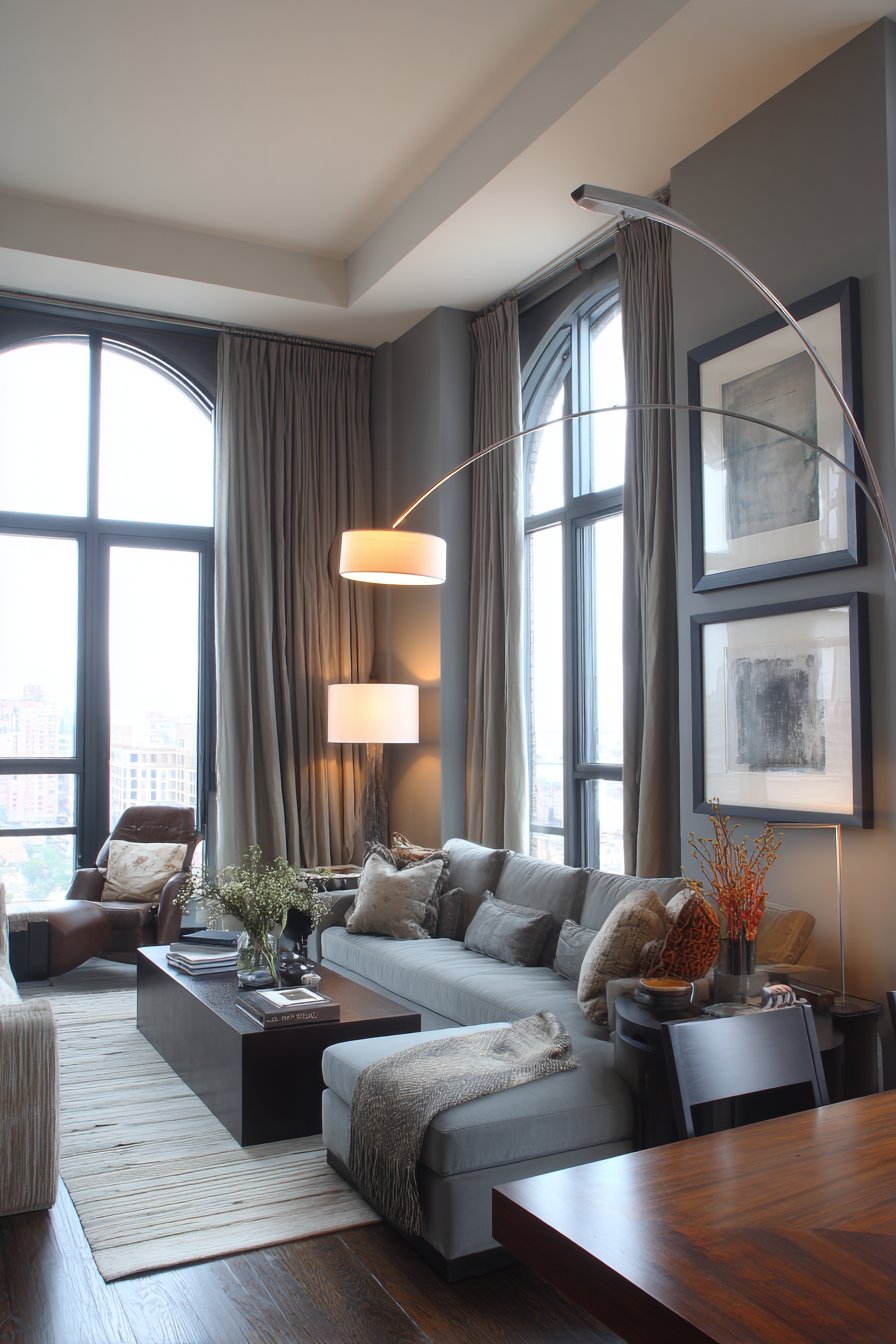
Strategic placement of vertical lighting creates layered illumination at multiple heights throughout your living room. Combine floor lamps, wall sconces, and table lamps at varying elevations to establish dimensional lighting that emphasizes vertical space. This multi-level approach creates depth and interest while ensuring adequate illumination for all activities and purposes.
- Install wall sconces at 60-66 inches above floor level for optimal effect
- Choose floor lamps at least 5-6 feet tall for significant vertical presence
- Use uplighting to wash ceilings with light and create height illusion
- Position tall lamps in room corners to activate often-wasted vertical space
- Select slim lamp profiles that provide height without consuming floor space
- Install dimmer switches for adjustable ambient lighting at all levels
Conclusion
Maximizing vertical space transforms living rooms from ordinary to extraordinary through strategic design thinking and intentional furniture selection. These six approaches work individually or collectively to activate your room’s full three-dimensional potential, creating storage, style, and spaciousness that horizontal thinking alone cannot achieve. The key lies in consistently choosing vertical solutions over horizontal alternatives throughout your design process.
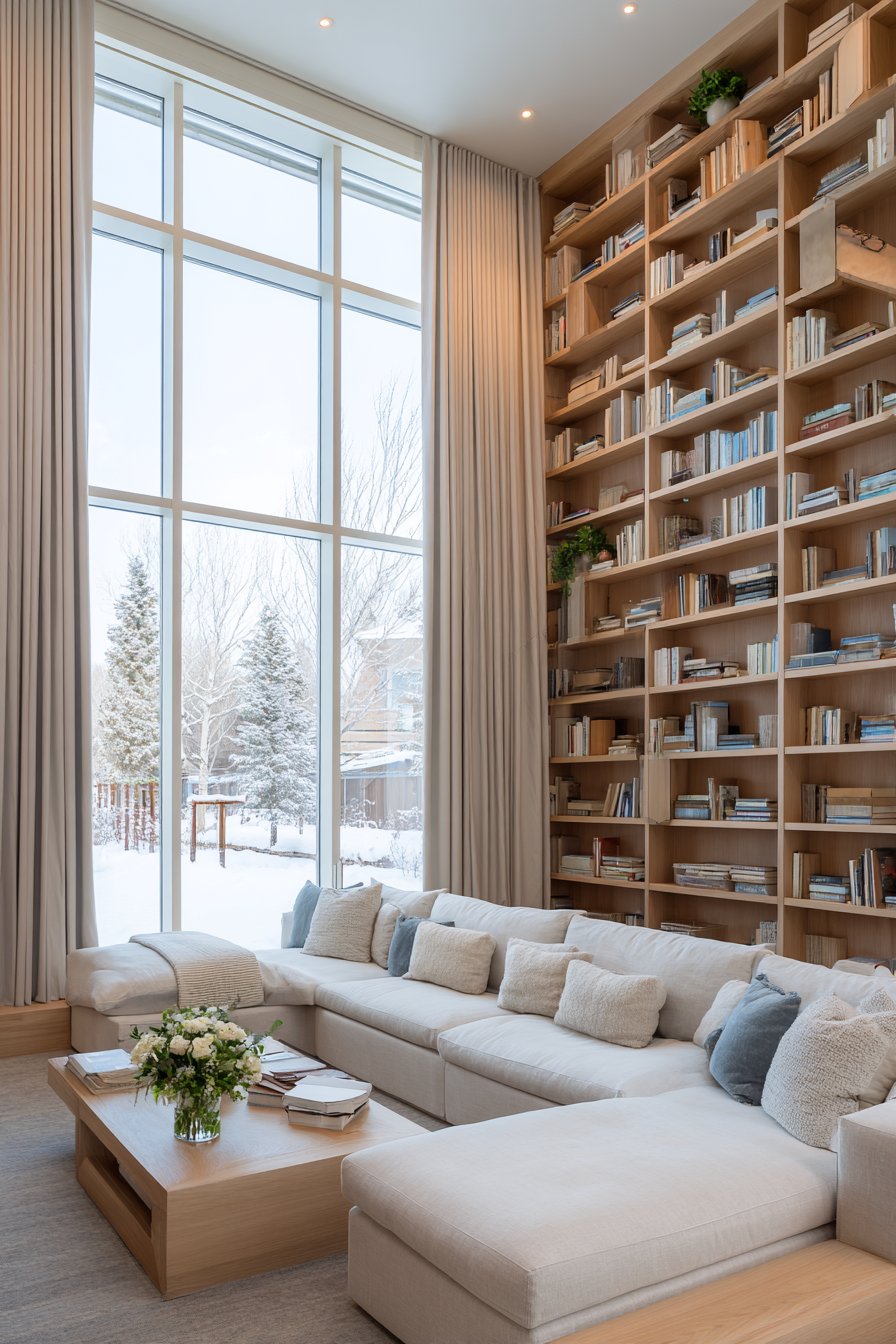
Start implementing these vertical strategies gradually, adding one or two techniques initially before layering additional approaches. Remember that successful space maximization balances aesthetic appeal with practical functionality, ensuring your living room remains beautiful and livable. Your walls hold tremendous untapped potential—unlock it through thoughtful vertical design that celebrates your room’s full height and creates the efficient, inspiring space you deserve.
