


The transitional living room represents the pinnacle of interior design versatility and timeless appeal. This sophisticated style bridges the gap between traditional elegance and modern simplicity. It creates spaces that feel both comfortable and current. Homeowners increasingly seek this balanced approach to design. It offers the warmth of classic interiors without feeling dated. It embraces contemporary aesthetics without appearing cold or stark.
The beauty of transitional design lies in its ability to evolve with your lifestyle and preferences. These living rooms feature neutral color palettes that provide a serene backdrop for daily living. They incorporate quality materials and thoughtful details that stand the test of time. The furniture selections blend refined tailoring with clean lines and comfortable proportions. Lighting layers create ambiance while serving practical purposes. Every element works together to achieve a harmonious and inviting atmosphere.
In this comprehensive guide, we explore ten exceptional transitional living room designs. Each space demonstrates unique ways to blend traditional and contemporary elements seamlessly. From sophisticated entertainment walls to cozy reading nooks, these designs offer inspiration for every aspect of your living room. You’ll discover how to select furniture, arrange layouts, choose materials, and add finishing touches. These ideas will help you create a transitional living room that reflects your personal style while maintaining timeless appeal.
1. Harmonious Blend of Traditional and Contemporary Elements
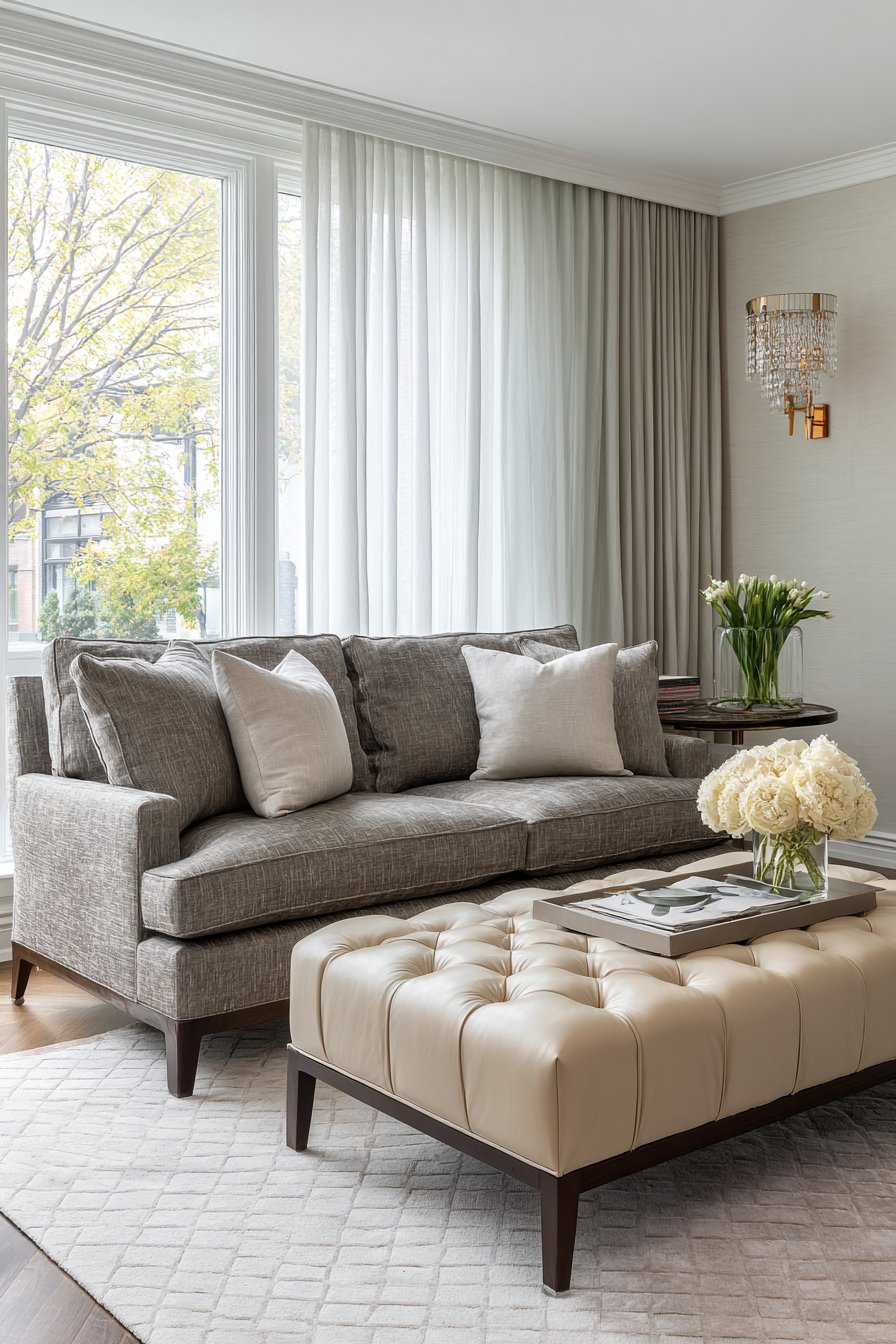
This transitional living room exemplifies the perfect marriage between classic comfort and modern sophistication. A neutral grey sofa anchors the space with its clean lines and subtly rolled arms. The textured linen fabric adds tactile interest while maintaining the room’s refined aesthetic. The sofa’s design walks the fine line between formal and casual perfectly. It invites relaxation without sacrificing visual elegance.
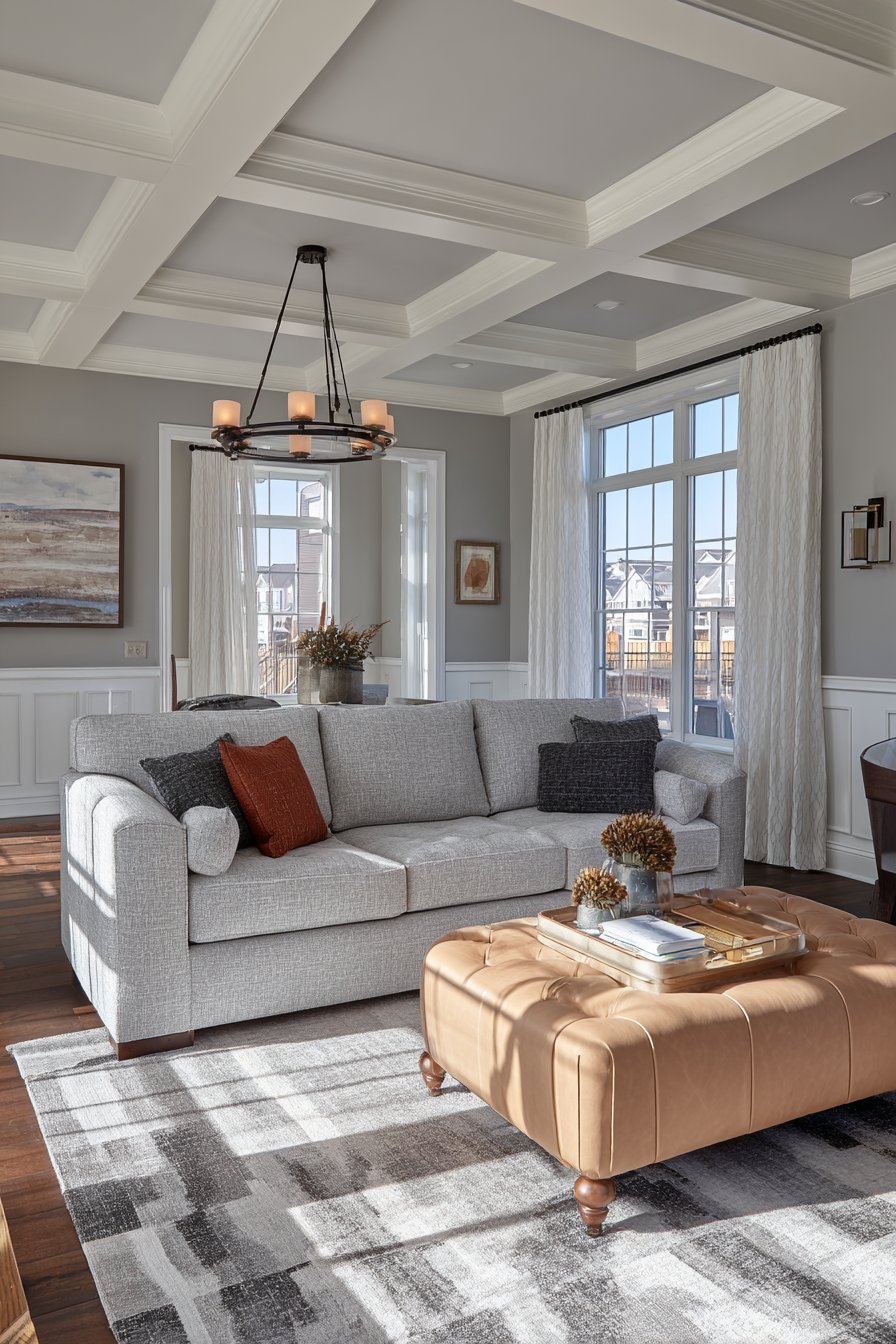
The classic tufted ottoman in soft beige leather serves multiple purposes as a coffee table centerpiece. Its traditional button tufting nods to heritage design principles. The leather’s supple texture and neutral tone complement the contemporary elements surrounding it. A geometric wool area rug in muted tones grounds the seating arrangement. The rug’s pattern adds visual interest without overwhelming the space’s serene atmosphere.
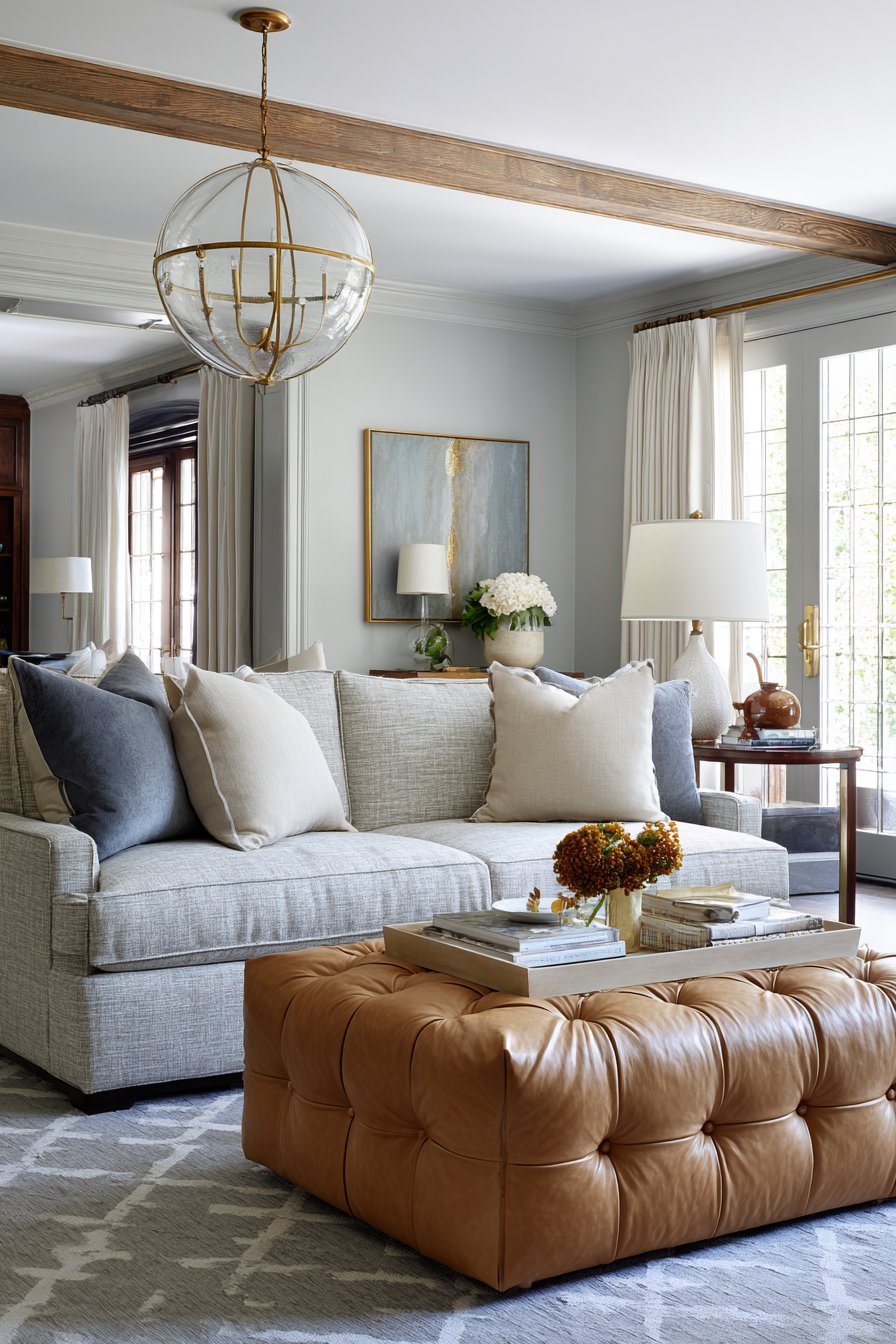
Lighting plays a crucial role in establishing this room’s sophisticated character. Recessed lighting provides even ambient illumination throughout the space. A modern chandelier with a traditional silhouette hangs as a statement piece overhead.
This fixture perfectly encapsulates transitional design philosophy by merging classic form with contemporary execution. Natural daylight streams through sheer curtains, creating a soft, welcoming glow. The curtains filter harsh sunlight while maintaining connection to the outdoors.
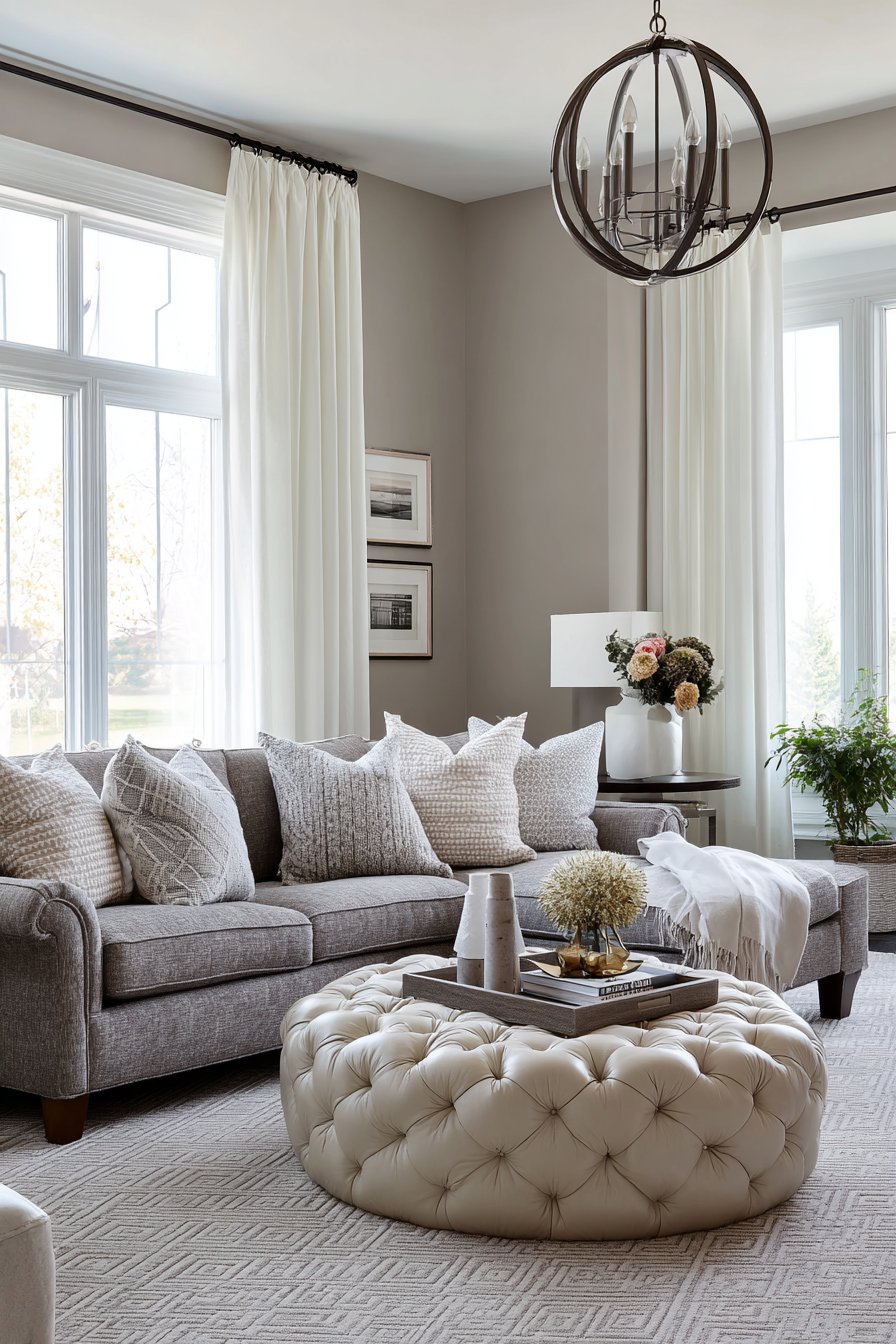
The overall aesthetic achieves a sophisticated yet comfortable environment ideal for modern living. Every design choice supports the transitional concept of balance and restraint. The neutral palette creates a timeless foundation that won’t feel dated in years to come. This living room proves that mixing design eras can result in a cohesive, elegant space.
Key Design Tips:
- Select sofas with clean lines softened by subtle traditional details like rolled arms
- Choose neutral fabrics with interesting textures to add depth without color
- Use tufted ottomans as versatile coffee tables that offer storage and seating
- Layer lighting with recessed fixtures and statement chandeliers for balanced illumination
- Install sheer curtains to filter natural light while maintaining privacy
- Invest in geometric wool rugs that ground the space with subtle pattern
2. Comfortable Elegance Through Thoughtful Furniture Arrangement
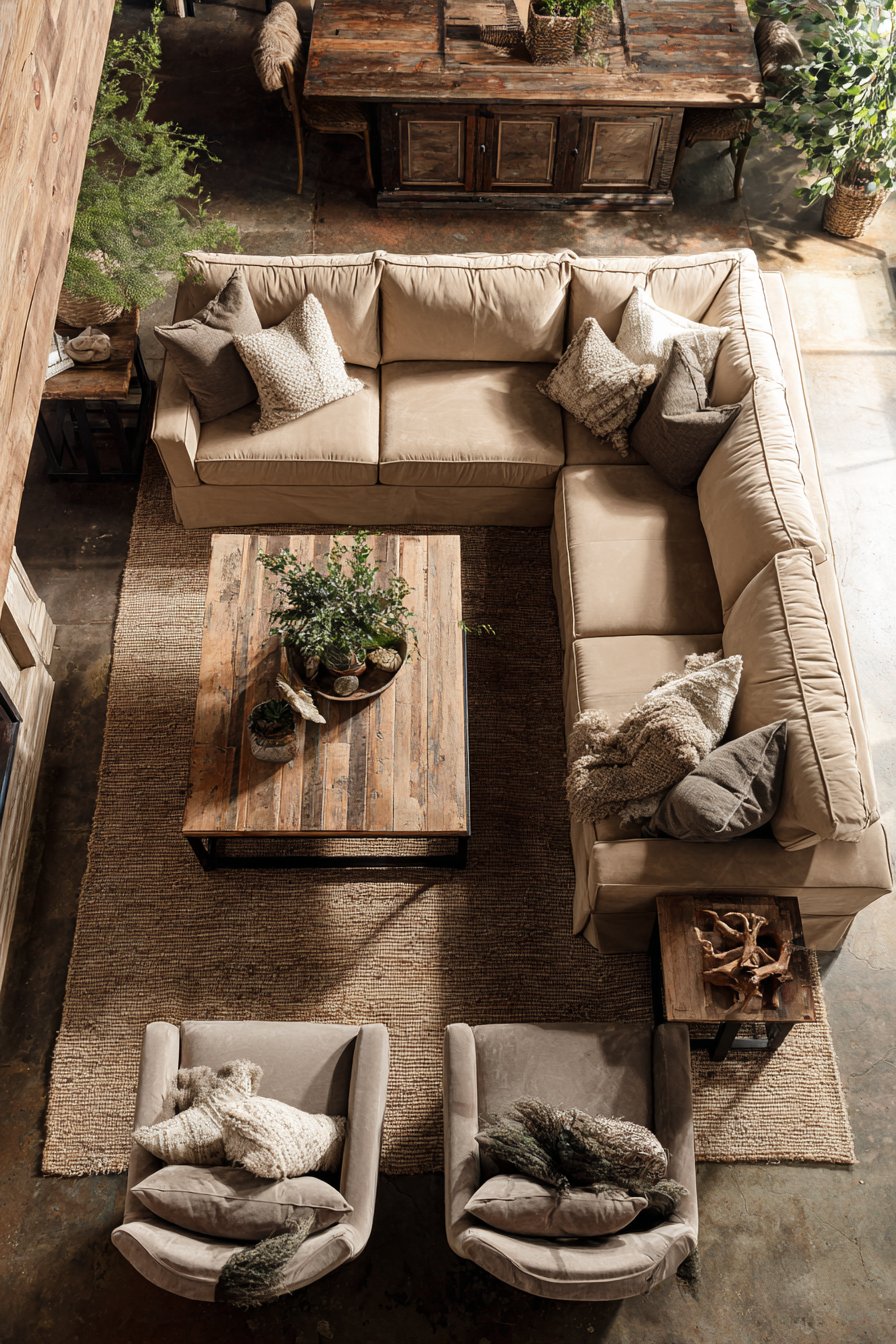
A plush sectional sofa in warm taupe becomes the focal point of this inviting transitional living room. The refined tailoring and track arms demonstrate how contemporary silhouettes can maintain traditional comfort levels. The sectional’s generous proportions encourage family gatherings and casual entertaining. Its neutral color allows other design elements to shine without competing for attention.
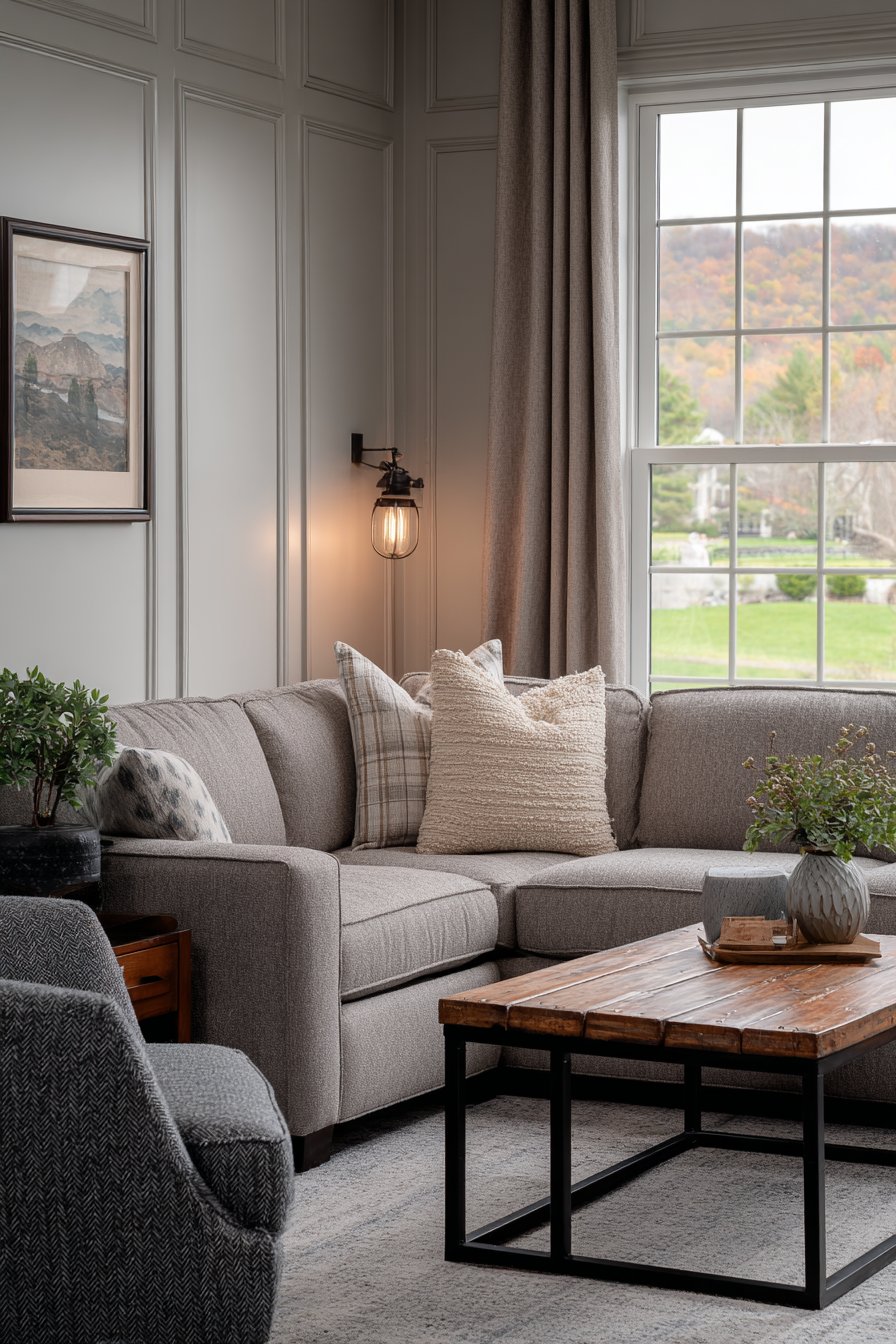
Two wingback accent chairs upholstered in subtle herringbone fabric provide additional seating with classic appeal. The wingback design represents traditional furniture forms at their finest. The herringbone pattern adds visual texture while remaining understated and sophisticated. These chairs frame the seating area and create conversational intimacy. Their positioning demonstrates the importance of thoughtful furniture arrangement in transitional spaces.
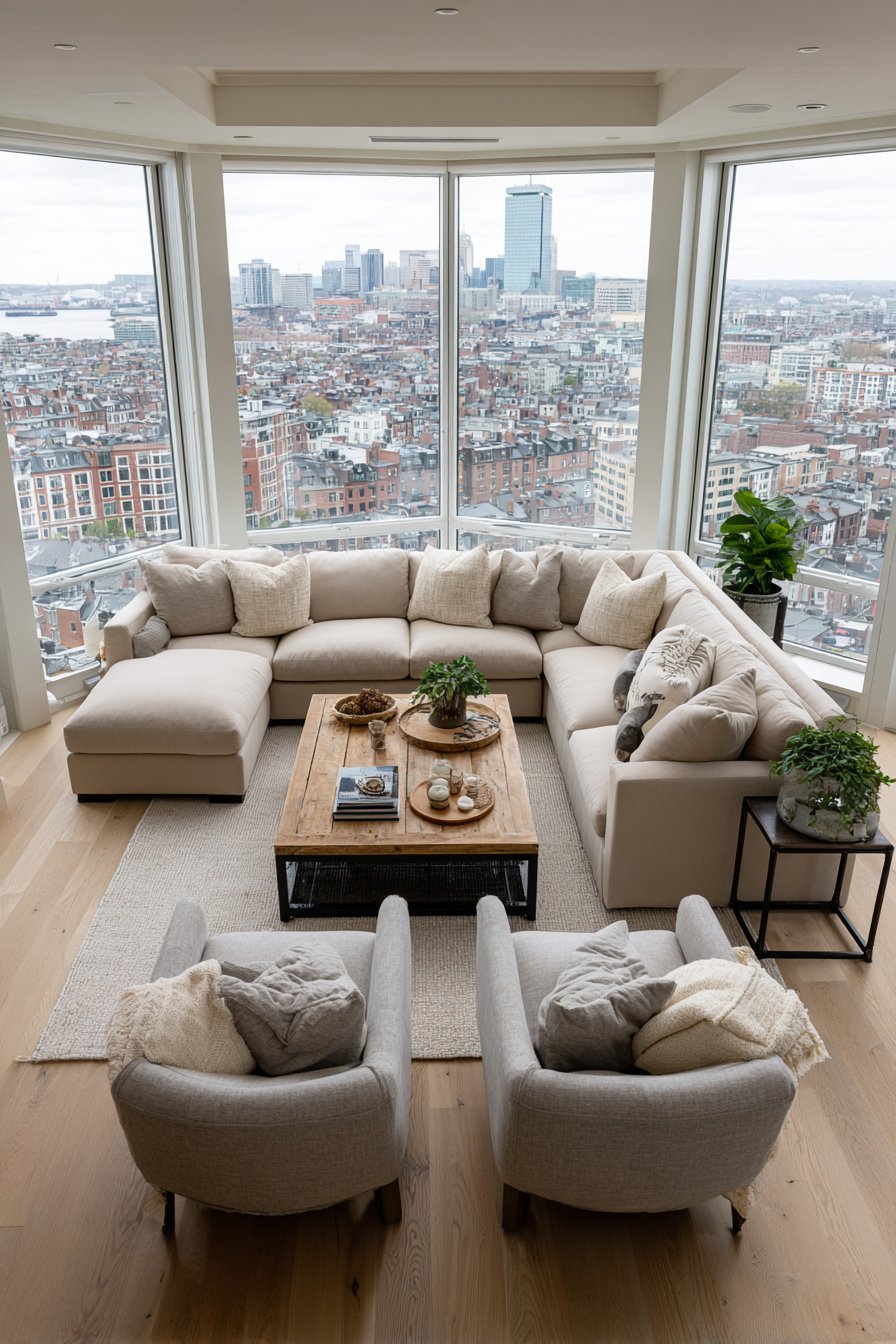
The reclaimed wood coffee table with simple metal legs bridges old and new design sensibilities beautifully. Reclaimed wood brings history and character to contemporary interiors. The metal legs provide an industrial edge that keeps the piece feeling current. This combination of materials exemplifies transitional design’s eclectic yet harmonious approach. Decorative pillows in varied neutral textures complete the seating arrangement with layered visual interest.
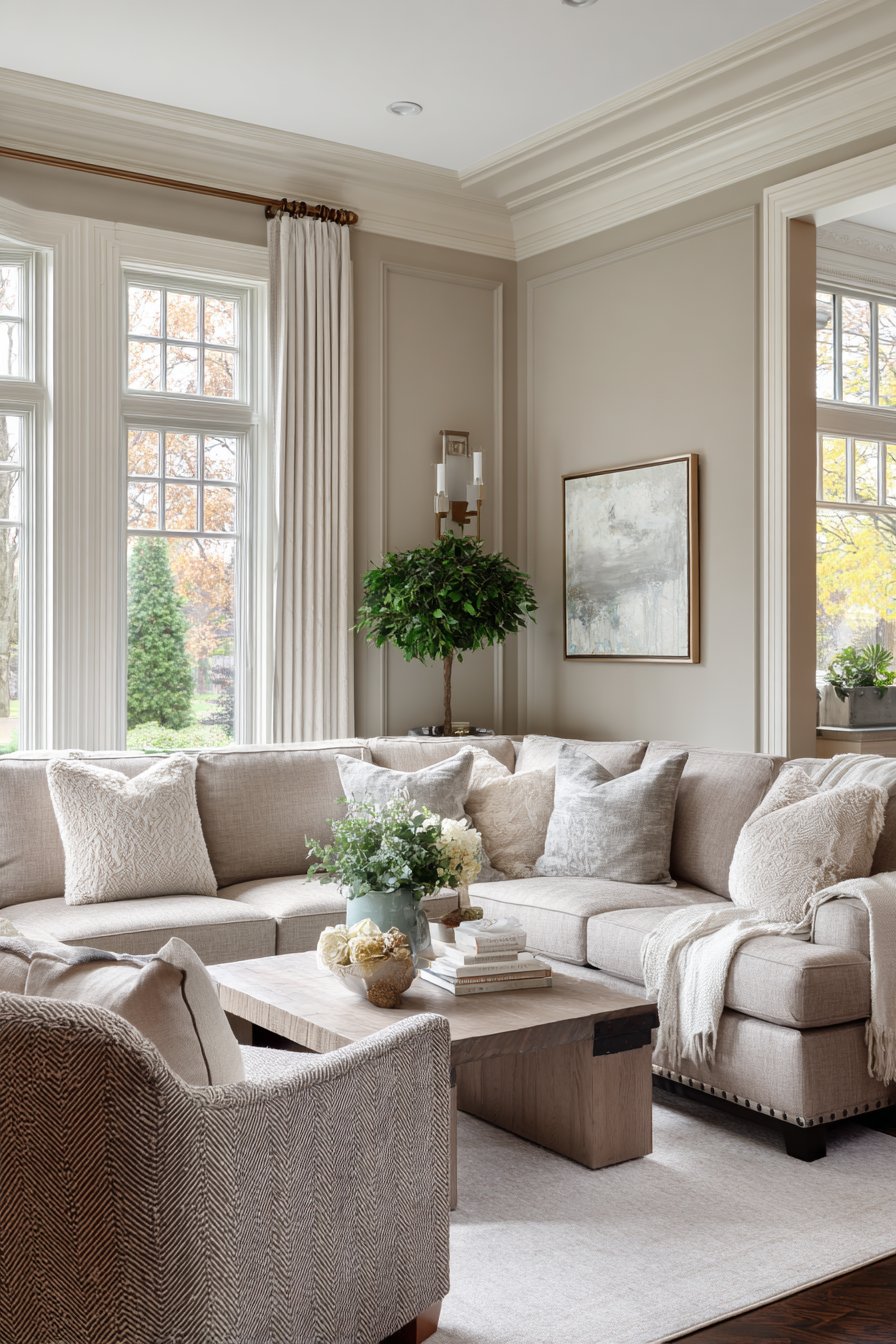
Soft diffused lighting throughout the space emphasizes the room’s comfortable elegance. The lighting design avoids harsh shadows while providing adequate illumination for all activities. This careful attention to lighting quality separates professionally designed spaces from amateur attempts. The seamless blend of classic and modern elements creates a living room that welcomes all ages.
Key Design Tips:
- Choose sectional sofas with track arms for a contemporary twist on traditional comfort
- Add wingback chairs in textured fabrics to introduce classic silhouettes
- Select coffee tables that combine natural wood with metal for material contrast
- Layer neutral throw pillows in various textures for depth and visual interest
- Ensure furniture arrangement promotes conversation and comfortable traffic flow
- Use soft, diffused lighting to create an inviting atmosphere throughout the day
3. Sophisticated Entertainment Wall with Functional Beauty
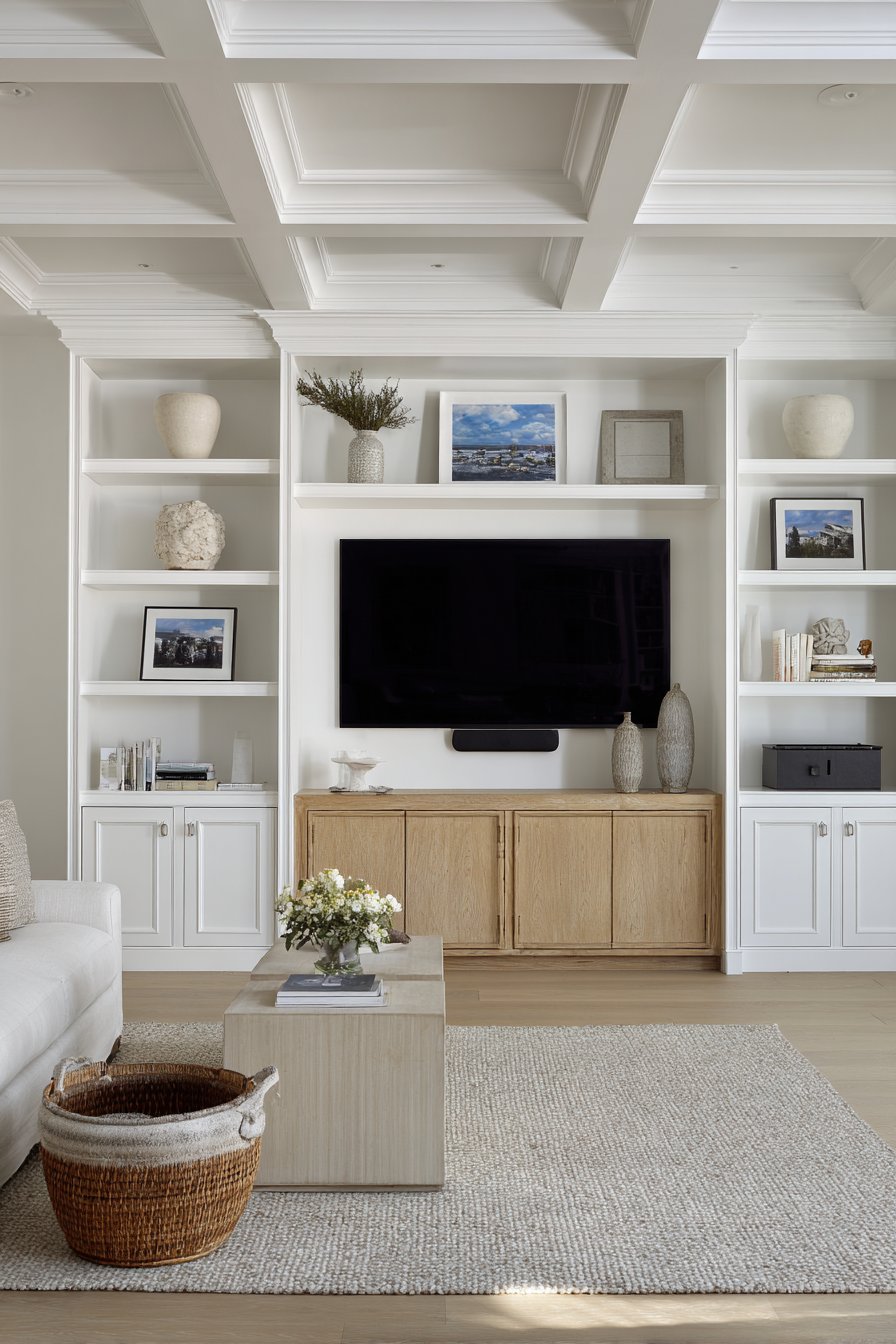
The entertainment wall in this transitional living room demonstrates how built-in cabinetry can be both functional and beautiful. White shaker-style cabinetry flanks a wall-mounted flat screen television with architectural precision. The shaker style brings traditional craftsmanship to modern media storage needs. This built-in approach eliminates visual clutter while providing ample storage for electronics and accessories.
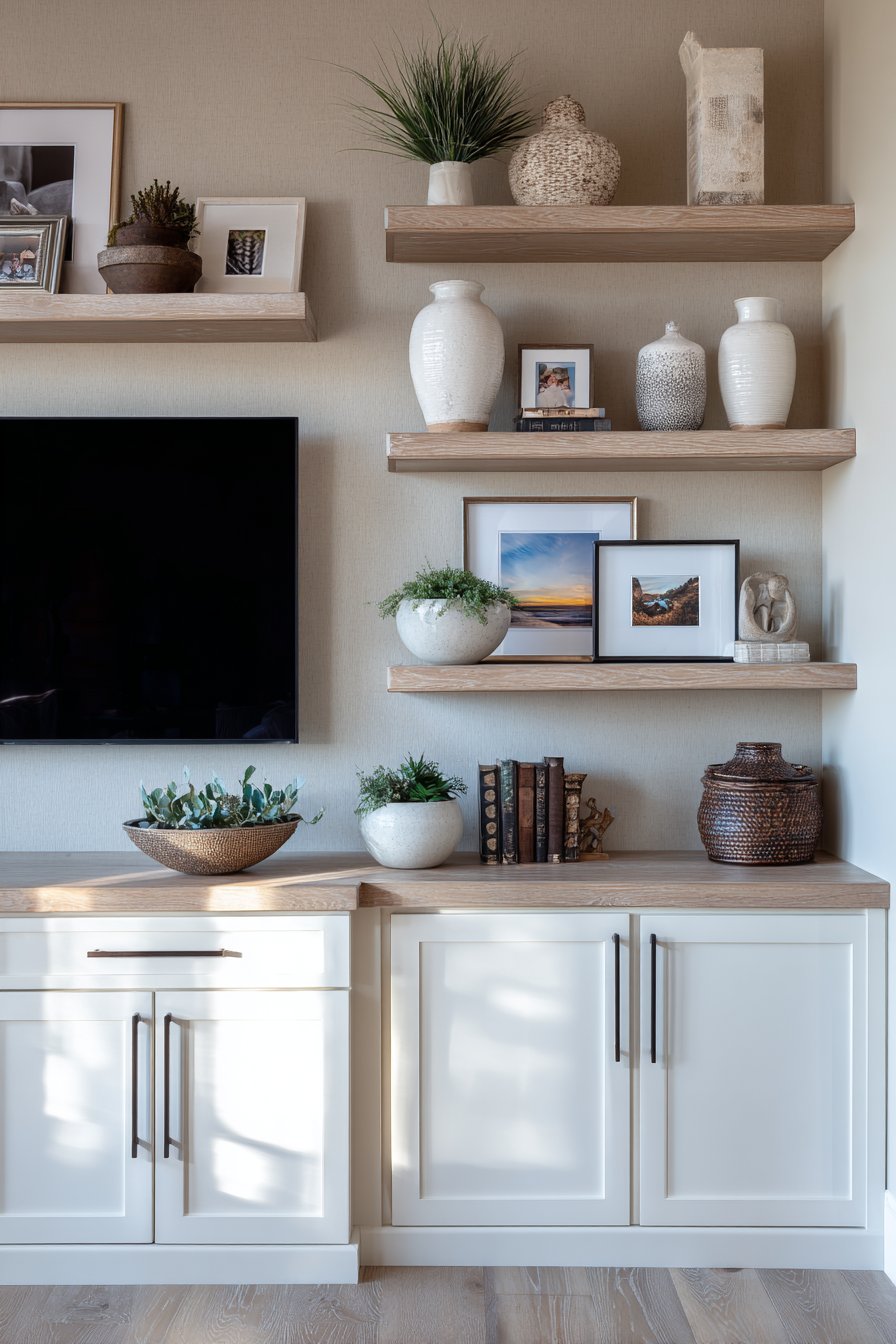
The shelving displays curated decor items that reveal the homeowner’s personality and interests. Ceramic vases in neutral tones add sculptural elements to the shelves. Framed family photos bring personal warmth to the sophisticated design. Leather-bound books suggest intellectual pursuits while adding rich texture and color. Each displayed item serves a purpose in the overall composition without creating visual chaos.
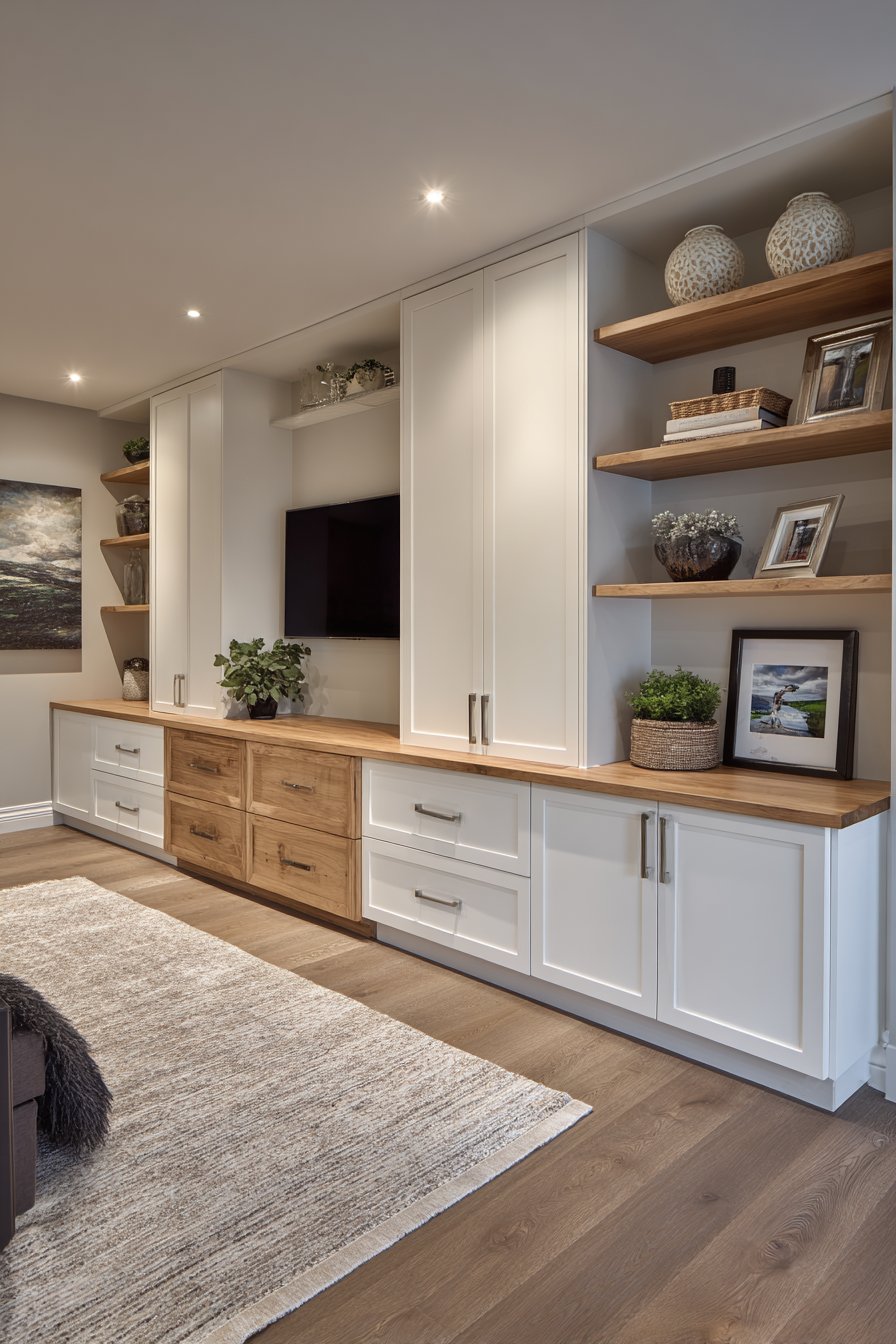
A contemporary media console in natural oak provides additional storage below the television. The natural oak finish introduces warm wood tones that soften the white cabinetry. This console bridges the traditional upper cabinetry with more contemporary lower storage needs. The combination of white and natural wood creates a balanced, timeless palette. Recessed lighting within the built-ins creates subtle highlights on varied textures and surfaces.
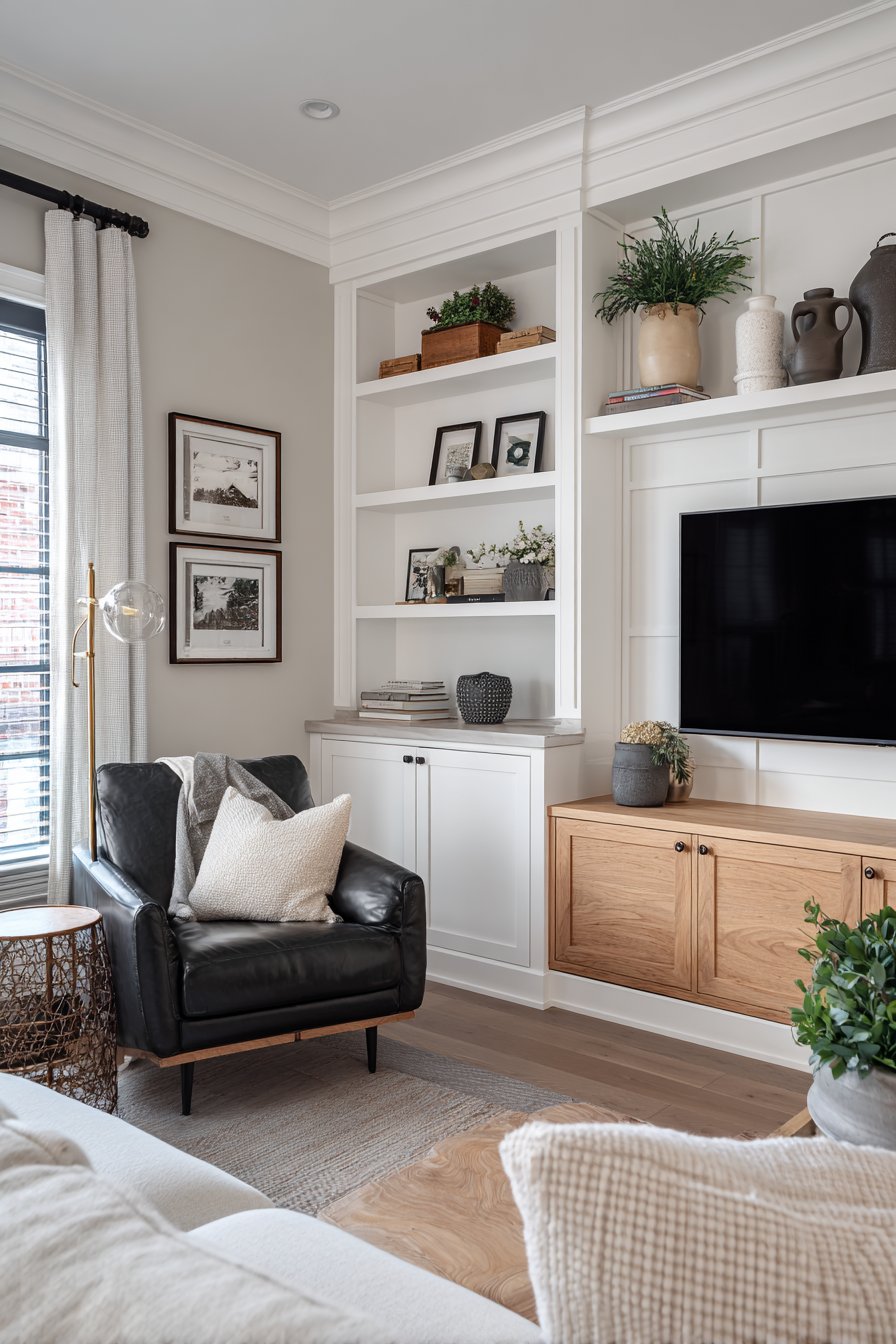
This entertainment wall proves that technology integration doesn’t require sacrificing style or architectural character. The refined simplicity defines transitional design at its best. Every element serves both aesthetic and practical purposes. The result is a living room that functions beautifully for modern entertainment needs while maintaining elegant visual appeal.
Key Design Tips:
- Install white shaker-style built-ins to create a classic yet clean backdrop for electronics
- Curate shelving displays with meaningful items rather than filling every space
- Choose media consoles in natural wood to warm up white cabinetry
- Incorporate recessed lighting within built-ins to highlight displayed items
- Balance personal photos with decorative objects for varied visual interest
- Select neutral ceramic vases and accessories that complement your color scheme
4. Elegant Coffee Table Styling as a Room Centerpiece
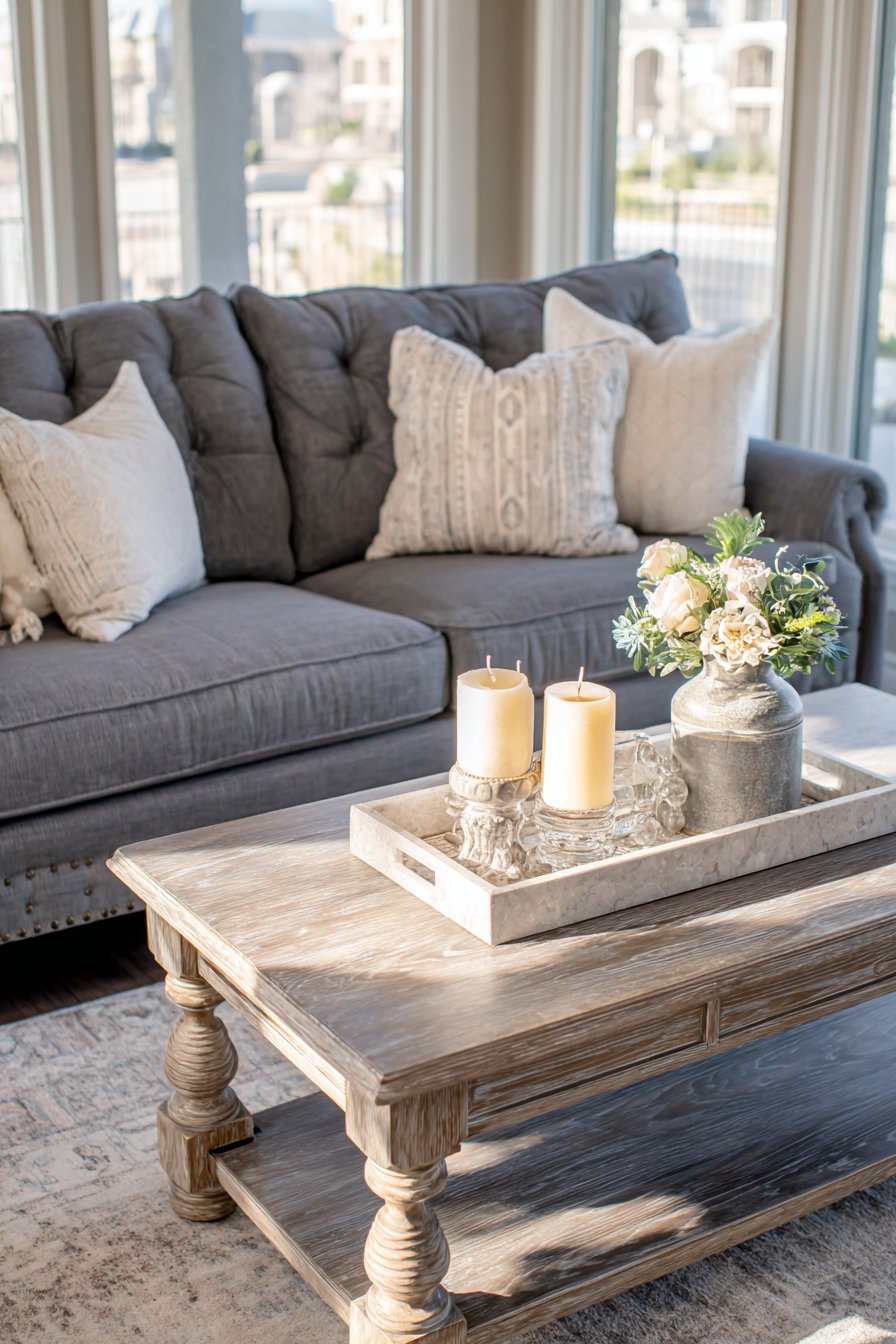
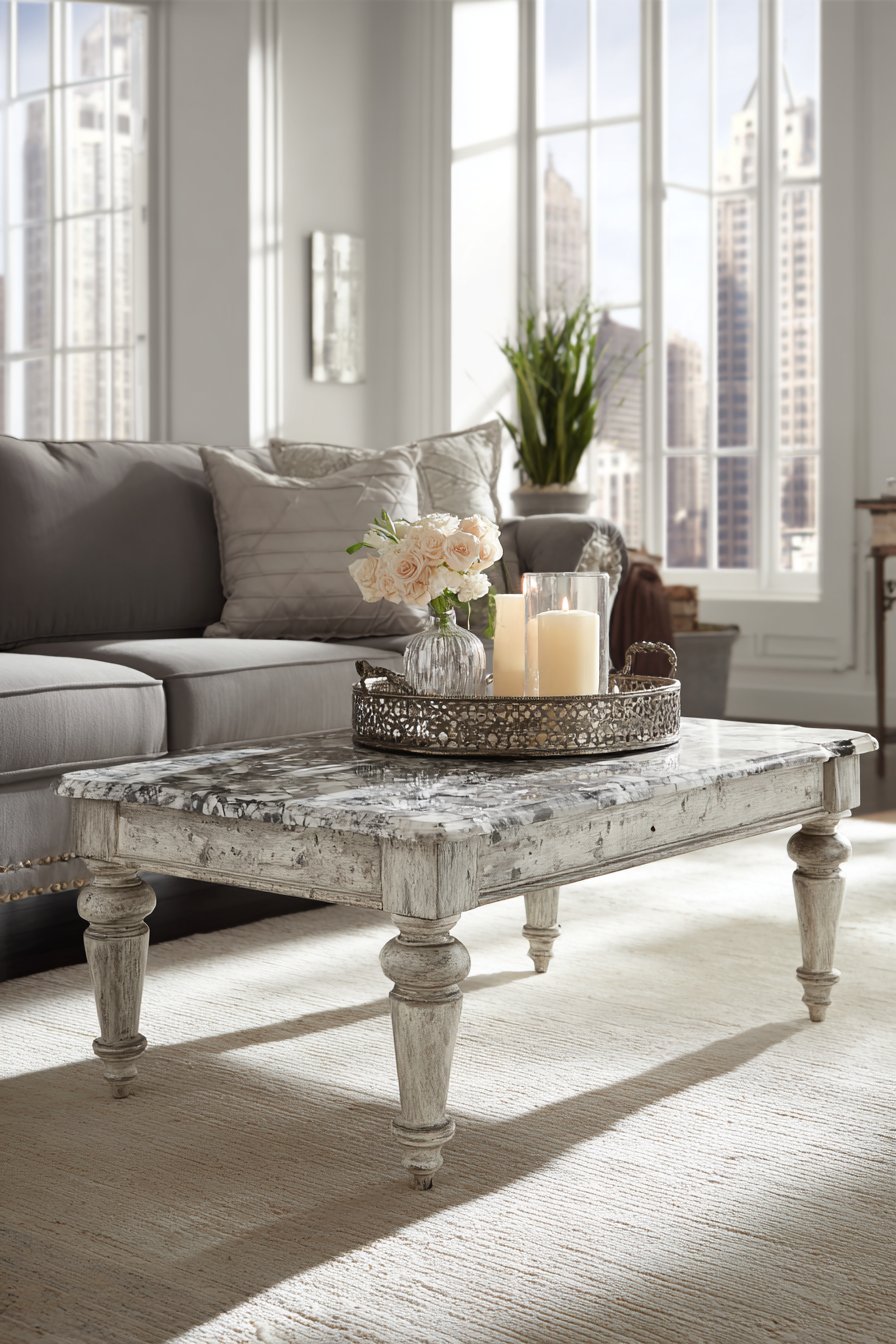
A marble-topped coffee table with elegant turned legs commands attention in this refined transitional living room. The marble top brings luxury and sophistication with its natural veining and cool surface. Turned legs in a weathered finish add traditional architectural detail to the contemporary marble slab. This combination creates a coffee table that feels both substantial and graceful. The weathered finish prevents the piece from appearing too formal or precious.
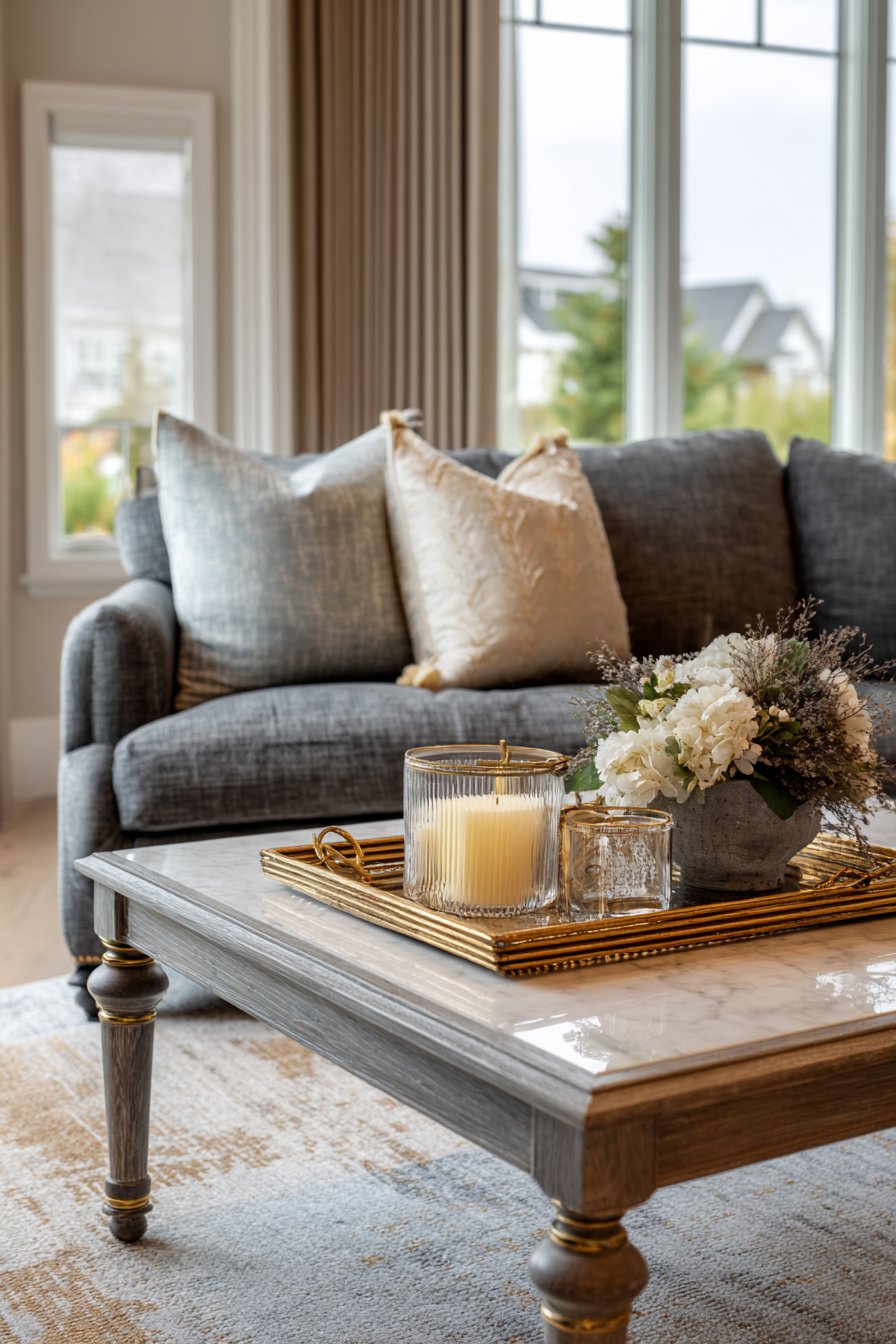
The table styling demonstrates restraint and purposeful composition essential to transitional design. A decorative tray holds candles and a simple floral arrangement with deliberate asymmetry. The tray corrals smaller items and creates a cohesive vignette on the expansive marble surface. Fresh flowers bring life and organic beauty to the structured environment. Candles add warmth and the promise of ambient evening lighting.
A neutral jute rug with subtle pattern details anchors the coffee table and surrounding seating area. Jute provides natural texture that grounds contemporary spaces with organic warmth. The subtle pattern adds visual interest without competing with the marble table’s natural beauty. Behind the table, a contemporary sofa in grey linen features classic welting details. This welting represents traditional upholstery techniques applied to modern furniture forms.
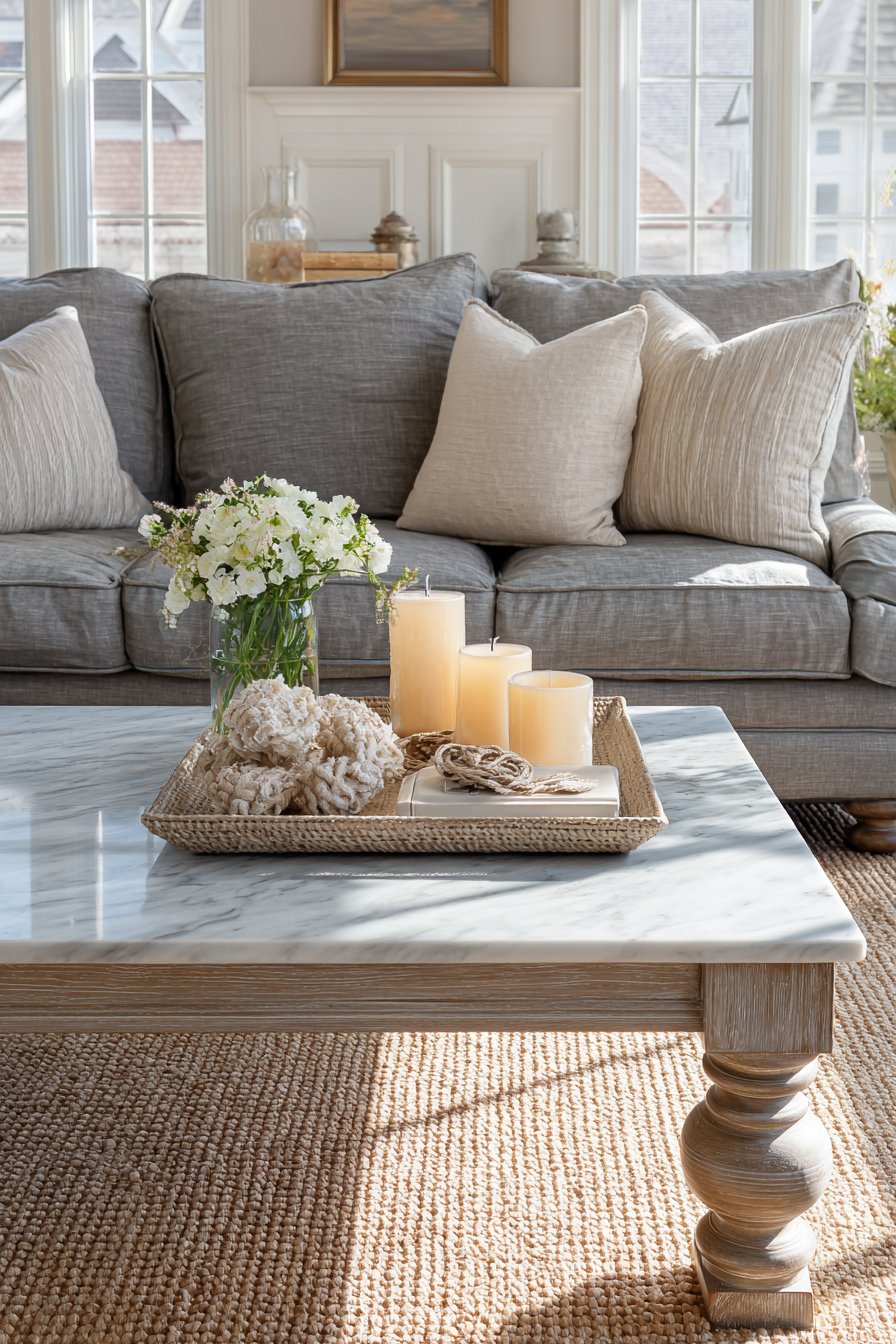
Natural light from nearby windows creates soft shadows that highlight the material textures throughout the space. These changing shadows add dynamic visual interest as light moves across surfaces during the day. The practical yet refined styling demonstrates how everyday living can maintain elegance. This approach to coffee table design shows that less is often more in transitional interiors.
Key Design Tips:
- Select coffee tables with marble tops for luxurious durability and natural beauty
- Choose weathered finishes on turned legs to blend traditional and contemporary styles
- Use decorative trays to organize coffee table styling and create visual cohesion
- Add fresh flowers regularly to bring life and color to neutral palettes
- Layer jute rugs under seating areas for natural texture and warmth
- Incorporate welting details on upholstered furniture for traditional craftsmanship touches
5. Window Treatments That Frame Natural Light Beautifully
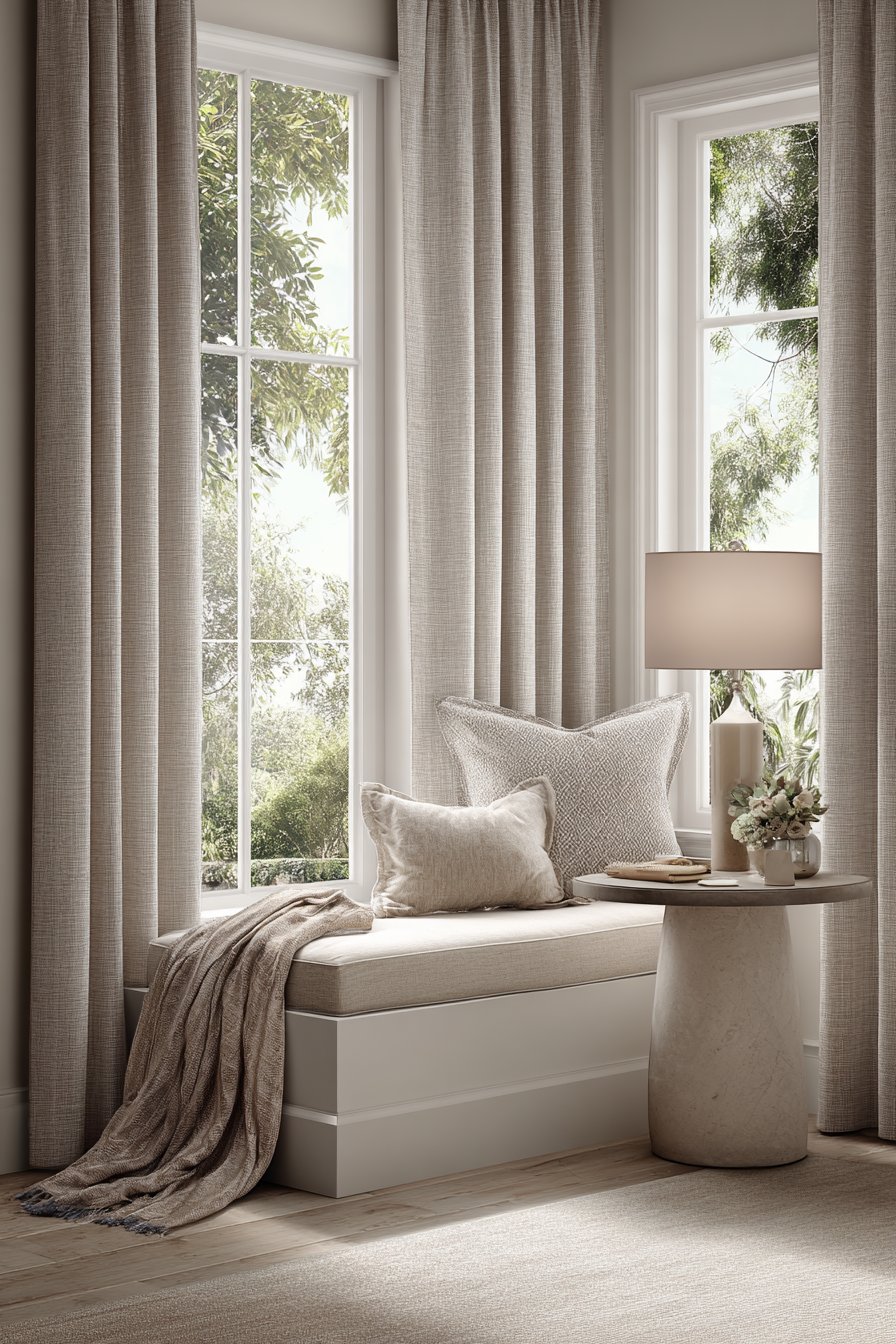
The window area in this transitional living room showcases how proper window treatments elevate entire spaces. Floor-length curtains in natural linen feature simple pleated headers that add traditional fullness without excessive fussiness.
The natural linen fabric filters light beautifully while maintaining connection to the outdoors. Brushed nickel hardware provides contemporary metallic accents that complement the soft fabric. The hardware’s finish bridges warm and cool tones effortlessly.
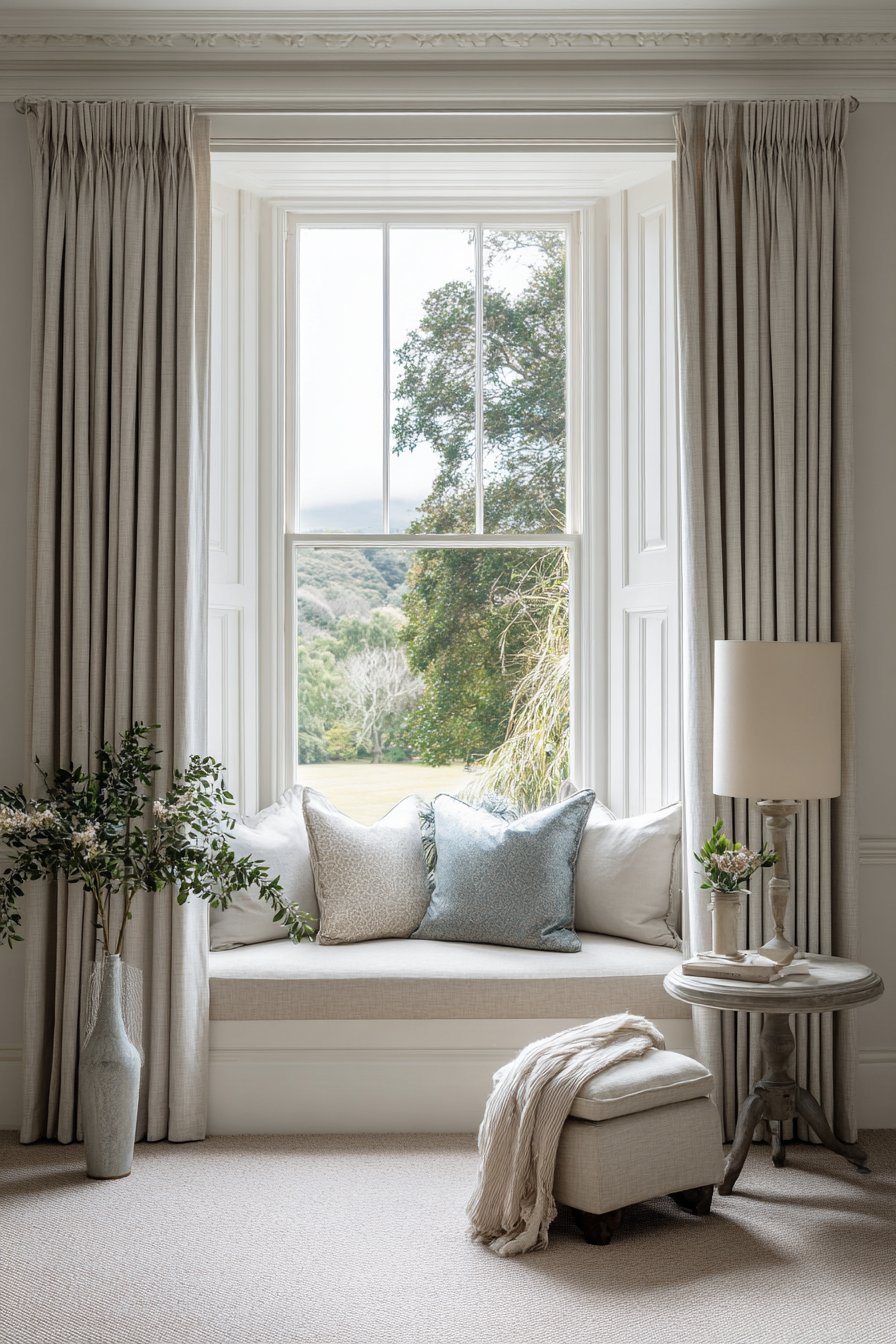
A cushioned window seat with tailored upholstery in cream fabric creates an inviting retreat within the room. The window seat provides additional seating while maximizing the architectural feature of a sunny window. Tailored upholstery demonstrates the attention to detail characteristic of transitional design. Coordinating throw pillows add comfort and visual continuity with other room textiles. This built-in seating transforms an ordinary window into a cherished gathering spot.
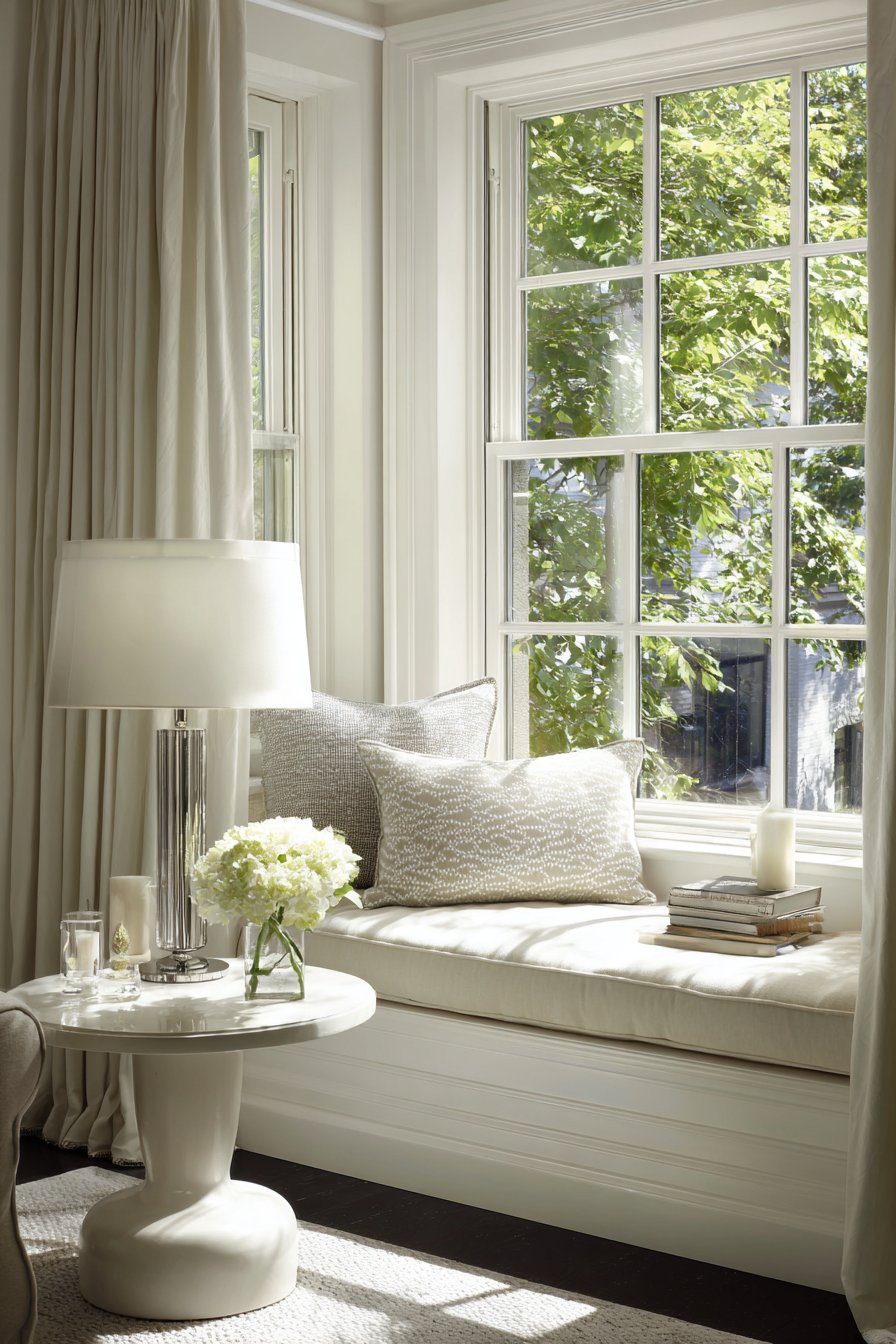
A round side table with classical proportions but clean contemporary lines holds essential items within reach. The table’s round shape softens the angular lines of the window frame and surrounding architecture. Its classical proportions ensure it doesn’t feel out of place despite its contemporary simplicity. A table lamp with a linen drum shade provides task lighting for reading or relaxing. The drum shade’s simple form echoes the curtains’ natural linen fabric.
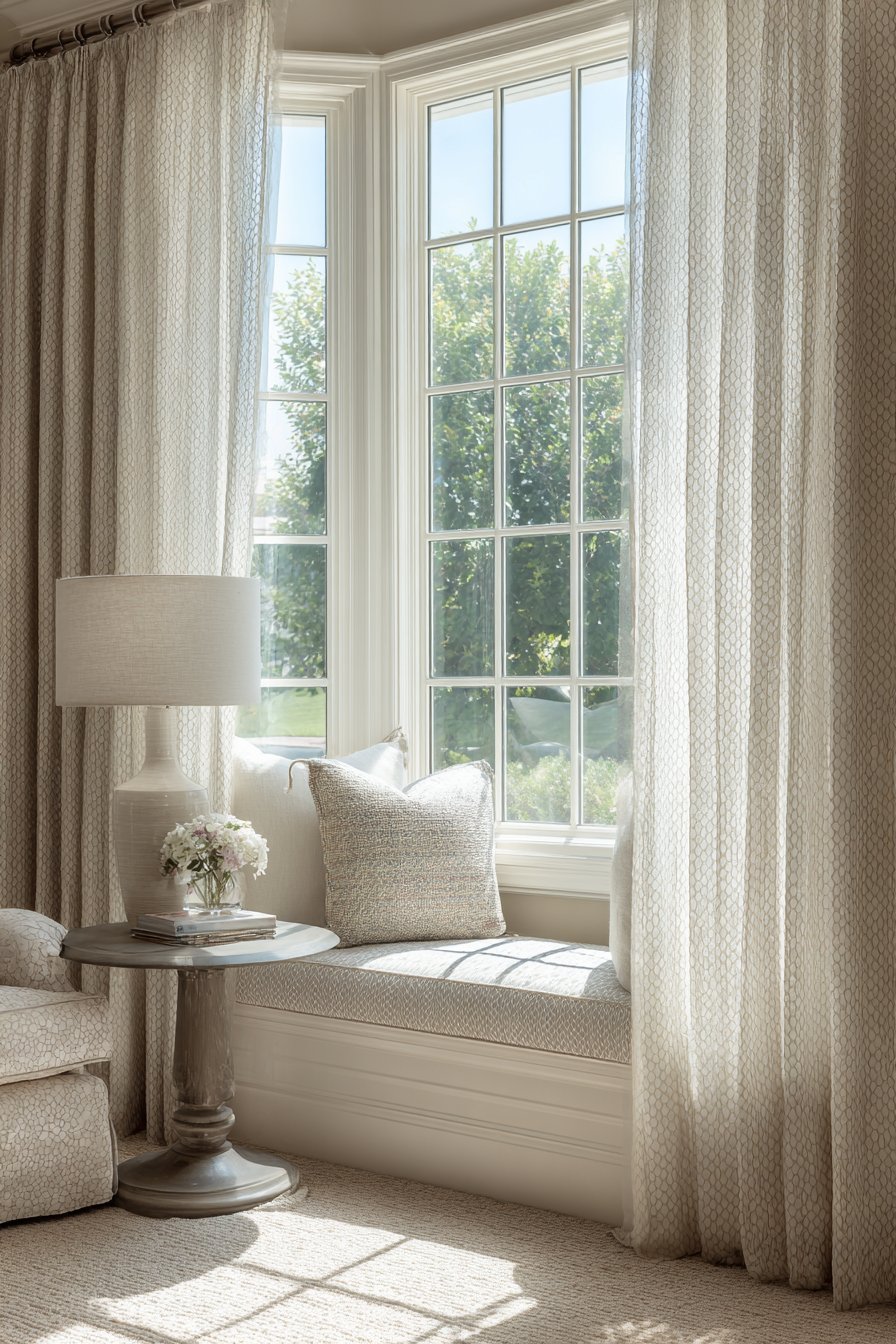
Natural daylight filters through the space, emphasizing the timeless elegance and livable comfort of this design. The window treatment allows light to enter while providing privacy and softness. This area demonstrates how transitional design creates spaces that are both beautiful and functional. Every element contributes to the room’s overall sense of sophisticated comfort.
Key Design Tips:
- Hang floor-length linen curtains with simple pleated headers for timeless window dressing
- Install brushed nickel hardware that bridges traditional and contemporary metal finishes
- Create cushioned window seats to maximize natural light areas and add seating
- Select round side tables to soften angular architectural features
- Choose table lamps with linen drum shades for clean, classic lighting
- Coordinate throw pillow fabrics with curtain materials for visual cohesion
6. Fireplace Focal Point with Balanced Formality
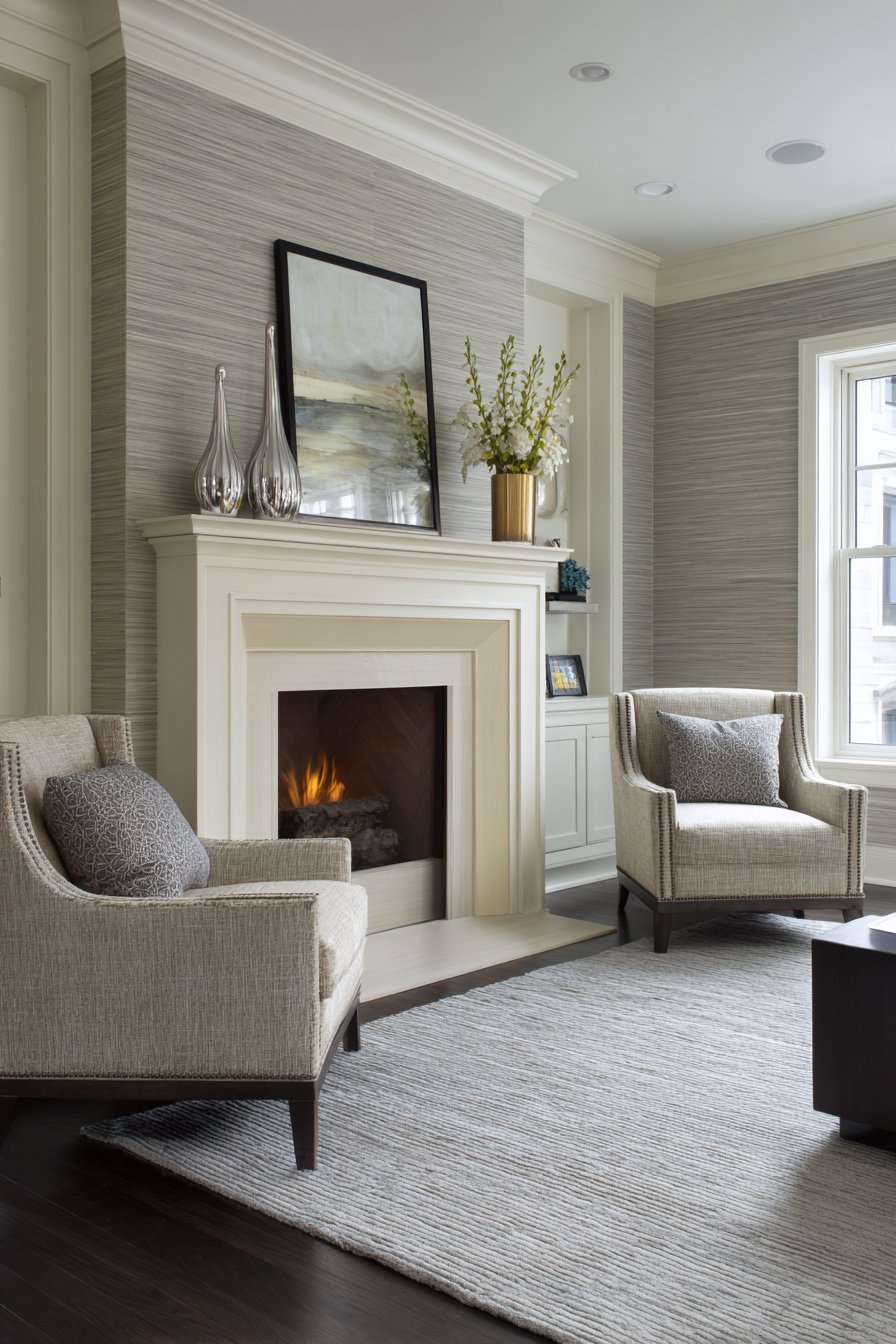
The fireplace in this transitional living room serves as a stunning focal point that balances formality with relaxed sophistication. A clean-lined mantel in painted white wood provides a crisp architectural frame for the fireplace opening. The white paint creates a bright, fresh foundation that works with any color scheme. Above the mantel, a large frameless mirror expands the sense of space and reflects light throughout the room. The frameless design keeps the mirror contemporary while its size adds traditional grandeur.
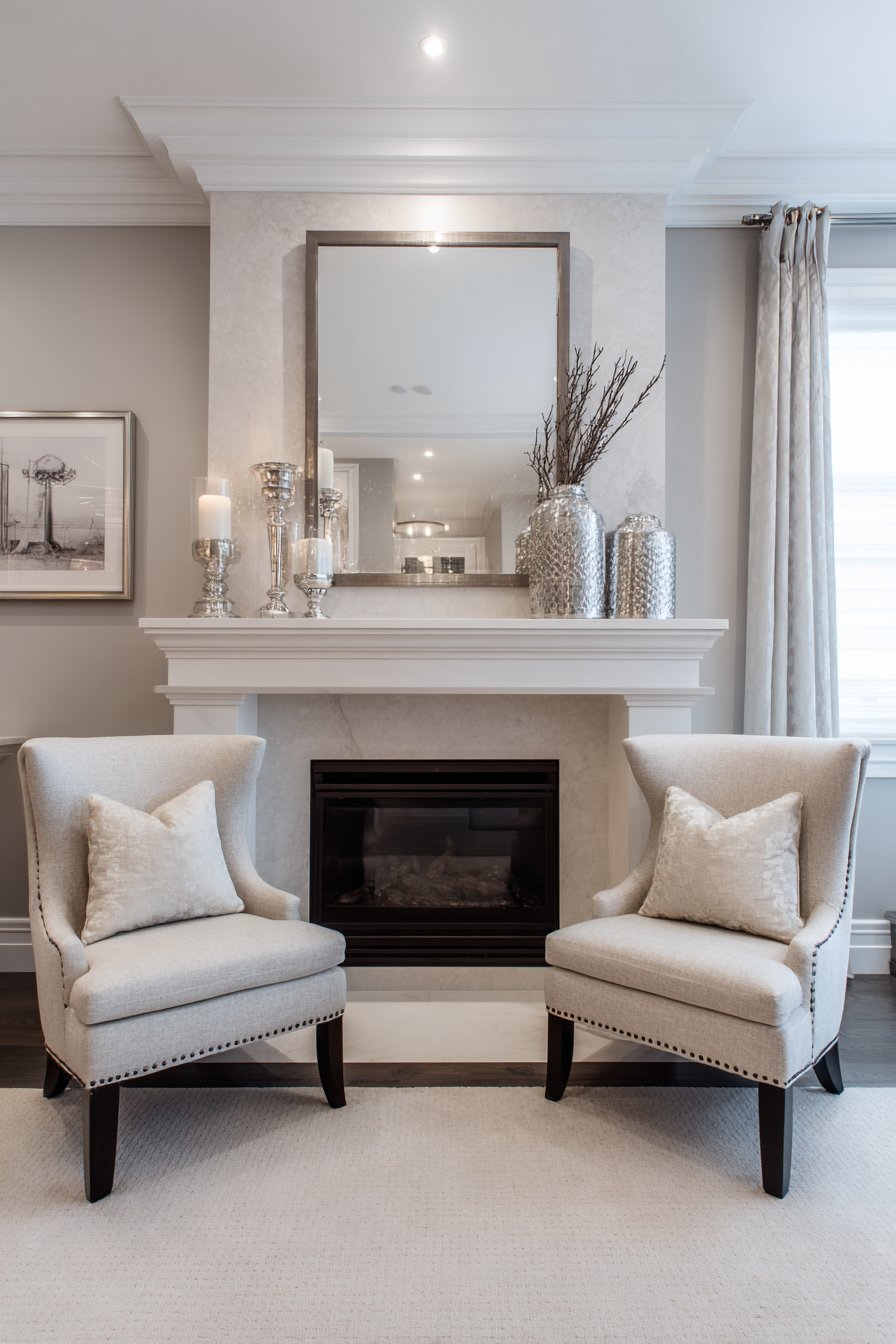
The mantel displays a symmetrical arrangement of contemporary accessories with careful attention to scale and proportion. Mercury glass vessels catch and reflect light with their silvered surfaces and organic forms. Simple candle holders in varying heights create visual interest through repetition and variation. This symmetrical styling brings traditional formality to the contemporary accessory selection. The restraint shown in the display prevents the mantel from appearing cluttered or overdone.
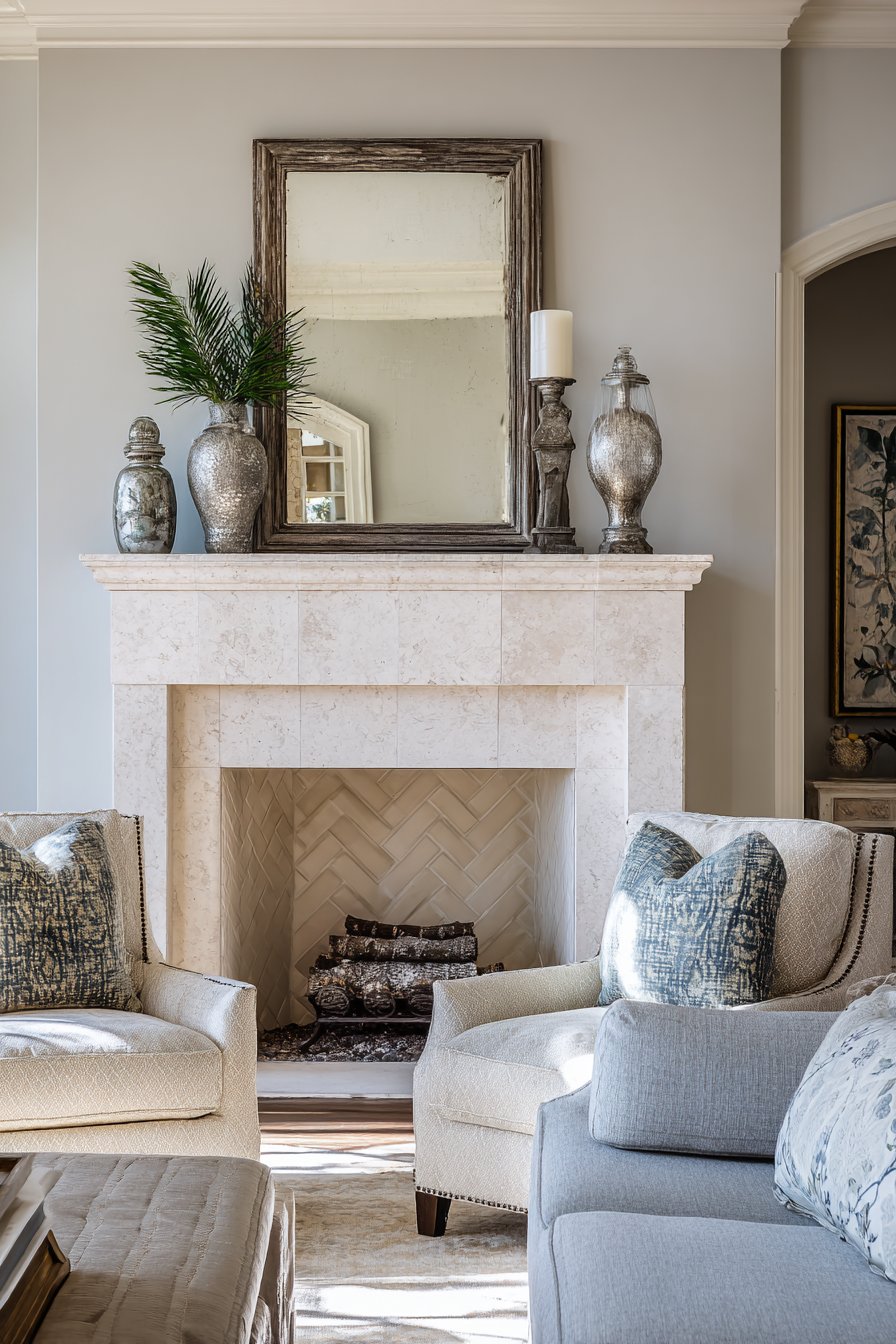
Two matching upholstered chairs in neutral fabric flank the fireplace with perfect symmetry. Subtle nailhead trim adds traditional detailing without overwhelming the chairs’ simple silhouettes. The neutral fabric ensures these chairs coordinate with various color schemes and design updates. Their placement creates a formal seating area perfect for intimate conversations. This symmetrical arrangement honors traditional design principles while maintaining contemporary simplicity.
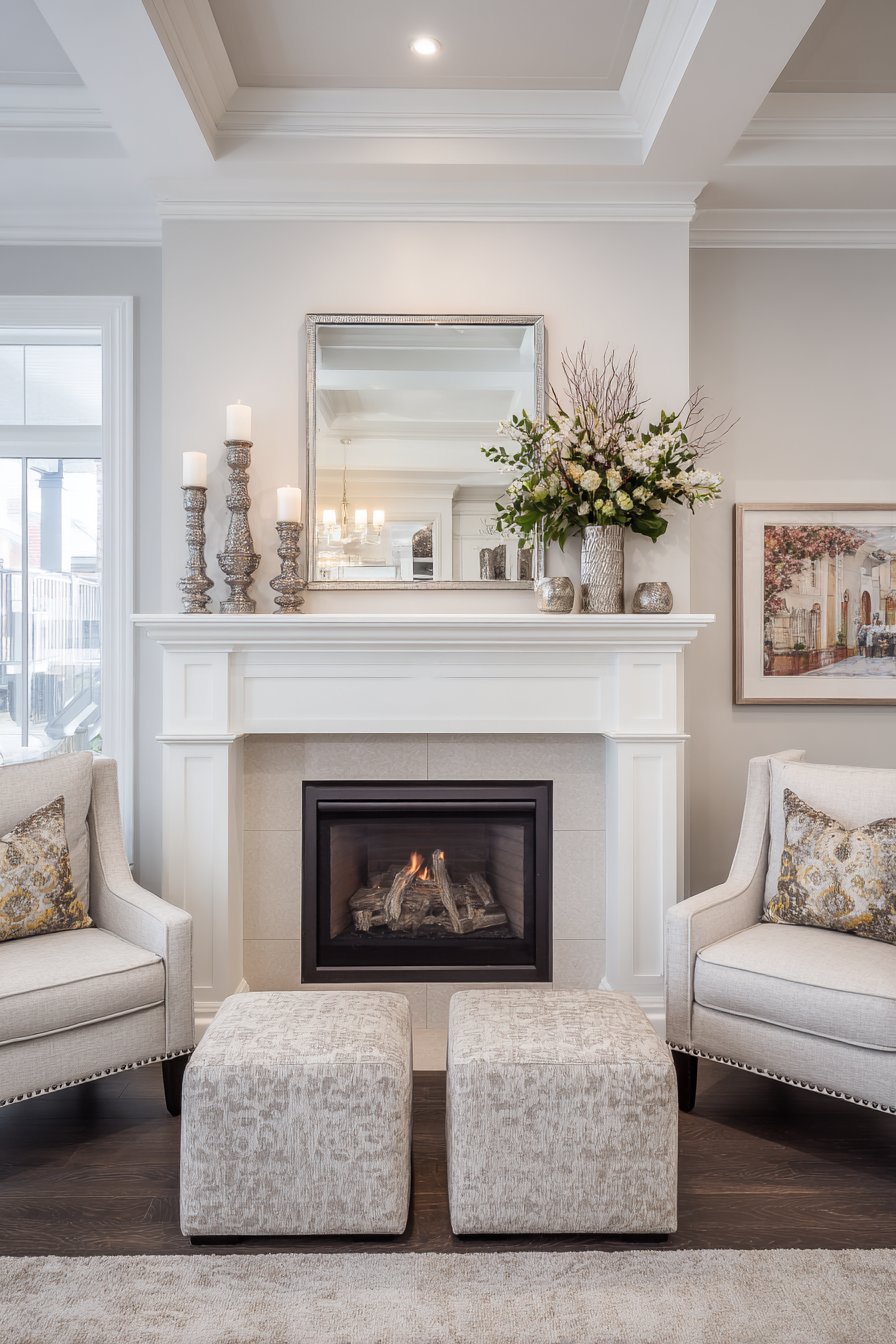
Soft grey paint on the surrounding walls provides a sophisticated backdrop for the white trim molding. The grey creates depth and visual interest without overwhelming the space with bold color. White trim molding adds architectural detail and crispness to the wall treatment. Natural lighting conditions change the grey’s appearance throughout the day, adding dynamic visual interest. This fireplace area demonstrates how balanced formality can feel approachable and comfortable.
Key Design Tips:
- Paint fireplace mantels in crisp white for a fresh, versatile foundation
- Hang large frameless mirrors above mantels to expand space and reflect light
- Arrange mantel accessories symmetrically for traditional formality with contemporary restraint
- Choose upholstered chairs with subtle nailhead trim for classic detailing
- Flank fireplaces with matching chairs to create formal symmetry
- Use soft grey wall paint to add sophistication while maintaining neutral flexibility
7. Layered Lighting for Conversation Areas
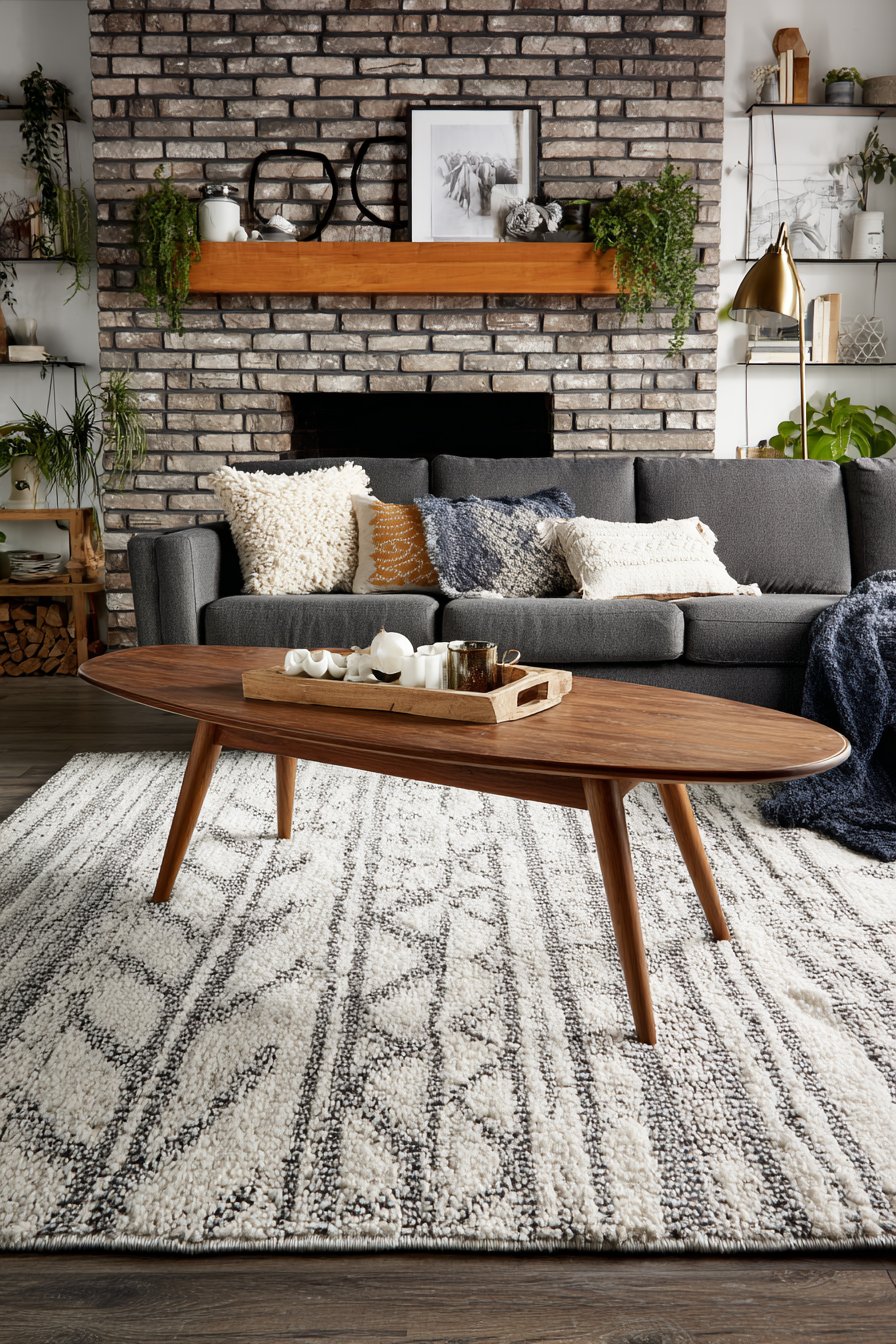
This transitional living room’s conversation area demonstrates how layered lighting creates ambiance and functionality. A low-profile sofa in charcoal grey performance fabric provides contemporary comfort with practical durability. The low profile keeps sight lines open and maintains an airy feel in the space. Performance fabric ensures the sofa withstands daily family living without sacrificing style. The charcoal grey adds depth to the neutral palette without introducing bold color.
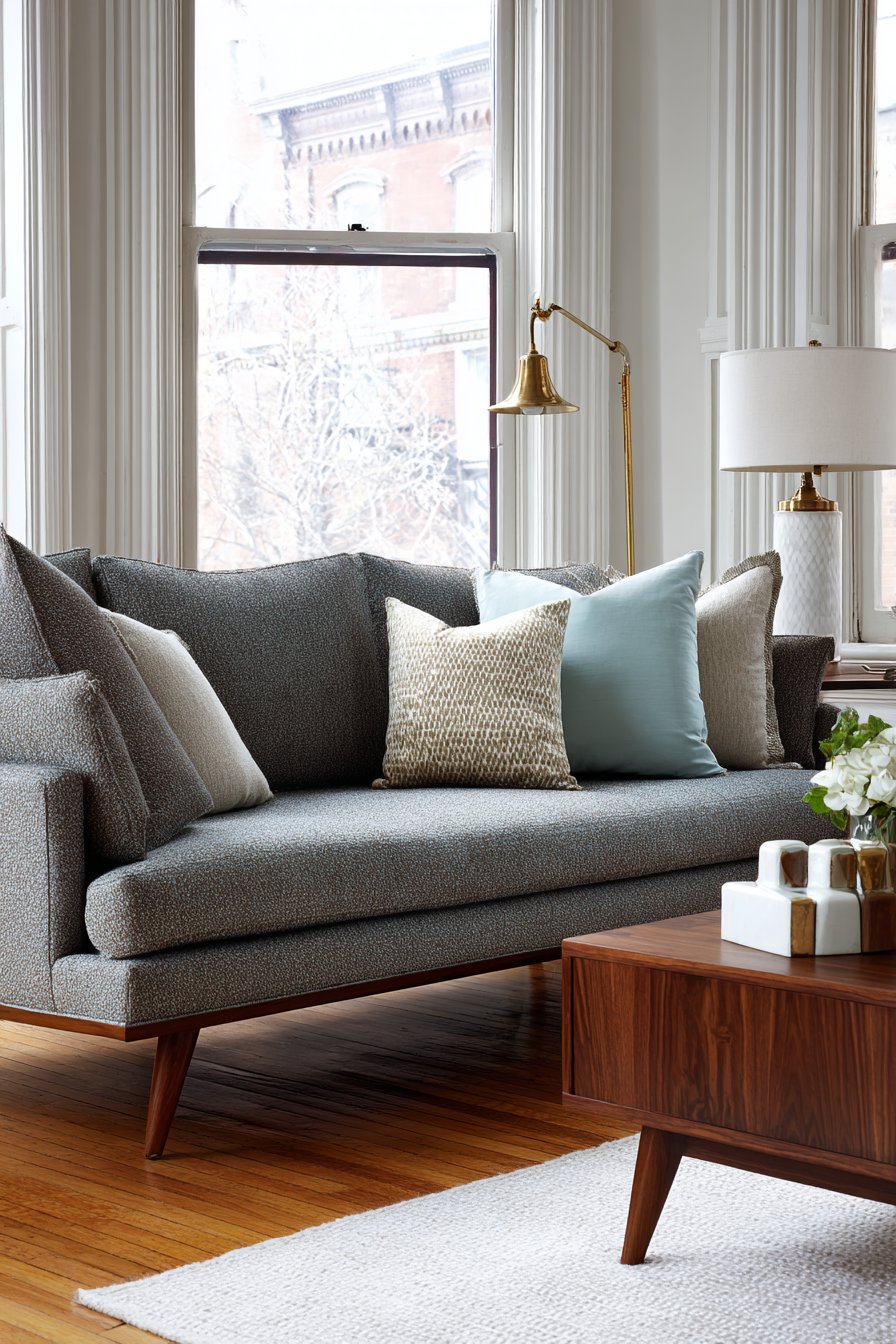
A mid-century inspired coffee table in walnut with tapered legs introduces warm wood tones and retro appeal. The walnut’s rich coloring contrasts beautifully with the grey sofa and lighter surrounding elements. Tapered legs reference mid-century design while remaining simple enough for transitional spaces. This coffee table demonstrates how selective vintage-inspired pieces add character to blended design styles. Its scale and proportions suit modern living room dimensions perfectly.
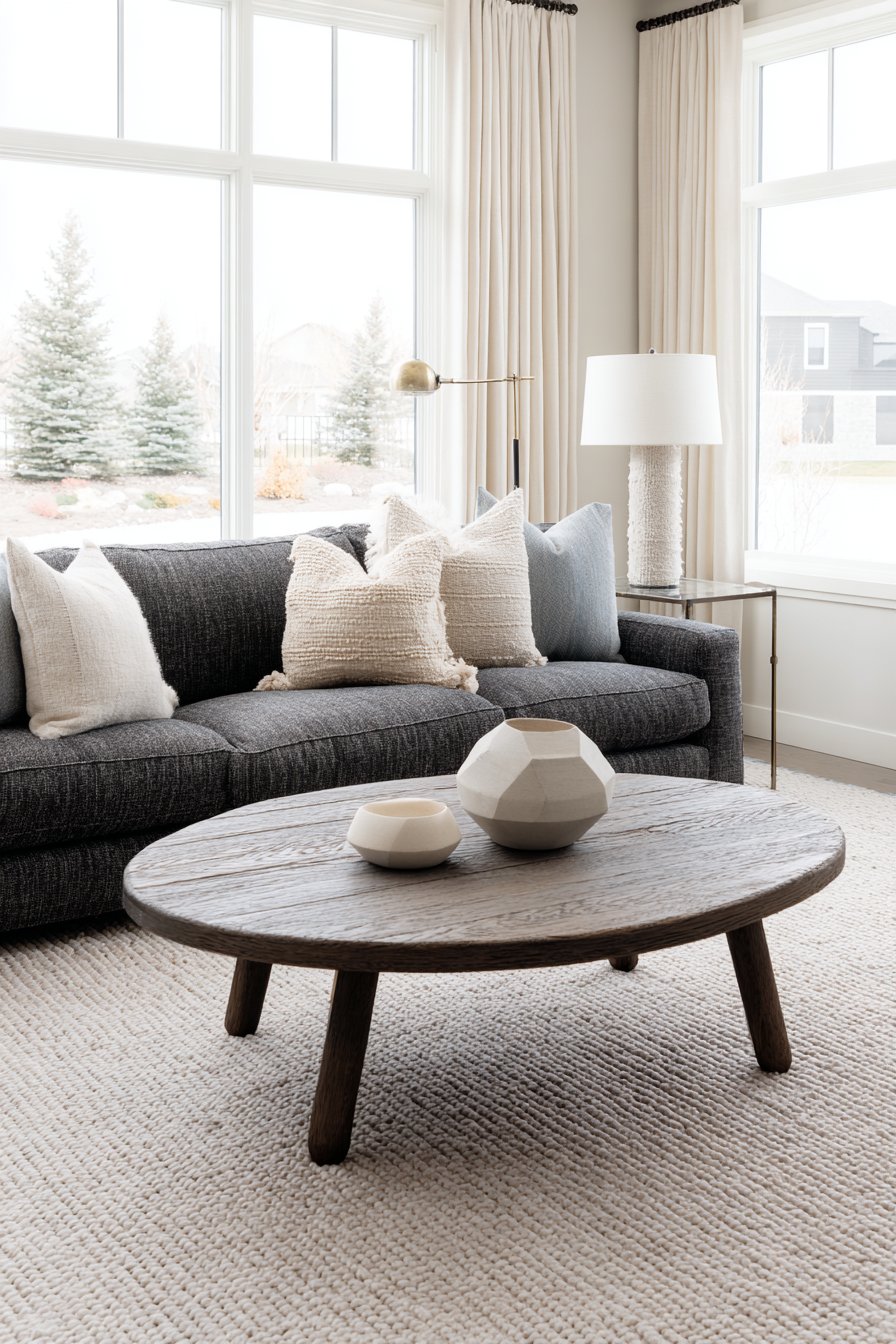
The layered lighting approach includes multiple sources that serve different purposes throughout the day and evening. A modern floor lamp with traditional brass finish provides ambient lighting and visual interest. The brass finish adds warmth and traditional luxury to the contemporary lamp form. A classic table lamp with an updated geometric base offers task lighting for reading or working. Textured throw pillows in cream, taupe, and soft blue add subtle color accents to the neutral foundation.
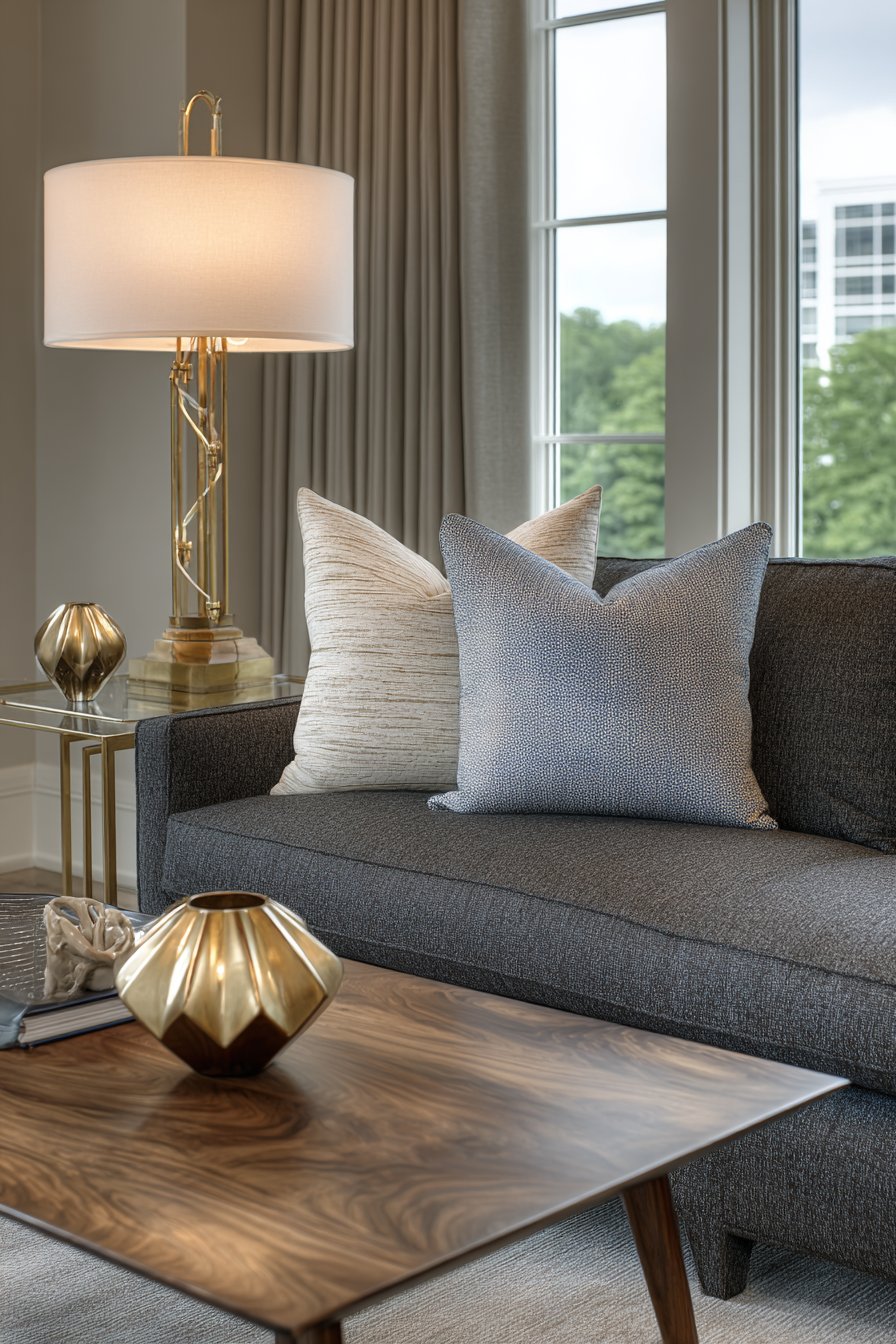
This conversation area showcases the cohesive blend of eras while maintaining a fresh, accessible aesthetic. Every design choice supports the room’s function as a gathering space for modern family living. The balanced exposure in natural light emphasizes each element’s contribution to the overall design. This space proves that transitional design can be both stylish and family-friendly.
Key Design Tips:
- Choose performance fabrics for sofas to combine style with practical durability
- Select low-profile furniture to maintain open sight lines and airy spatial feel
- Add mid-century inspired coffee tables for character and warm wood tones
- Layer multiple light sources including floor lamps and table lamps for versatility
- Use brass finishes on lighting fixtures to add traditional warmth to modern forms
- Introduce subtle color through textured throw pillows in coordinated neutrals
8. Reading Nook with Functional Elegance
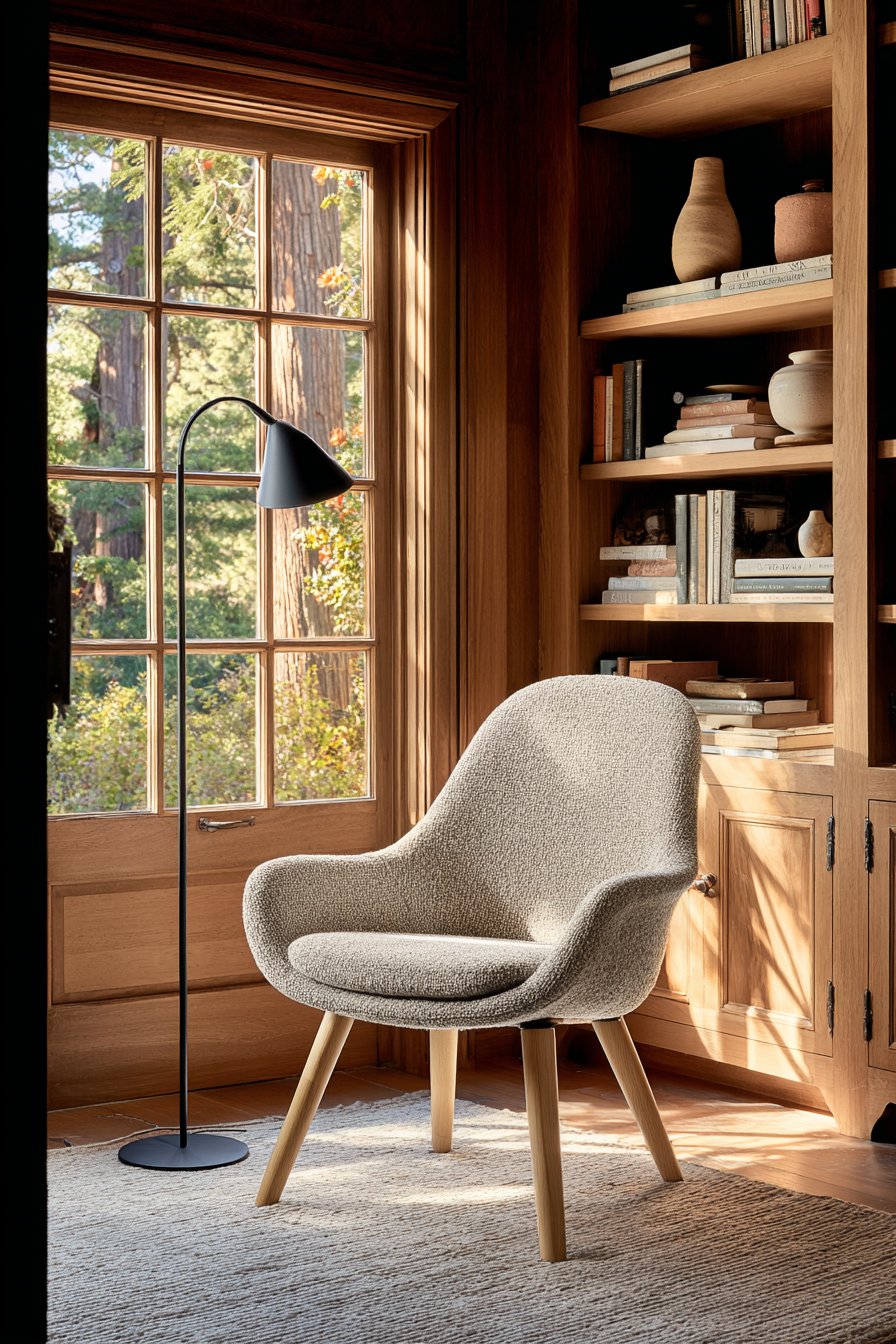
A reading nook positioned near a large window transforms this transitional living room into a literacy lover’s paradise. Natural oak built-in shelving displays books and decorative objects with both beauty and accessibility. The natural oak introduces warm wood tones that create a cozy atmosphere in the reading area. Built-in shelving maximizes storage while maintaining clean architectural lines throughout the space. The shelves become both functional storage and decorative architectural features.
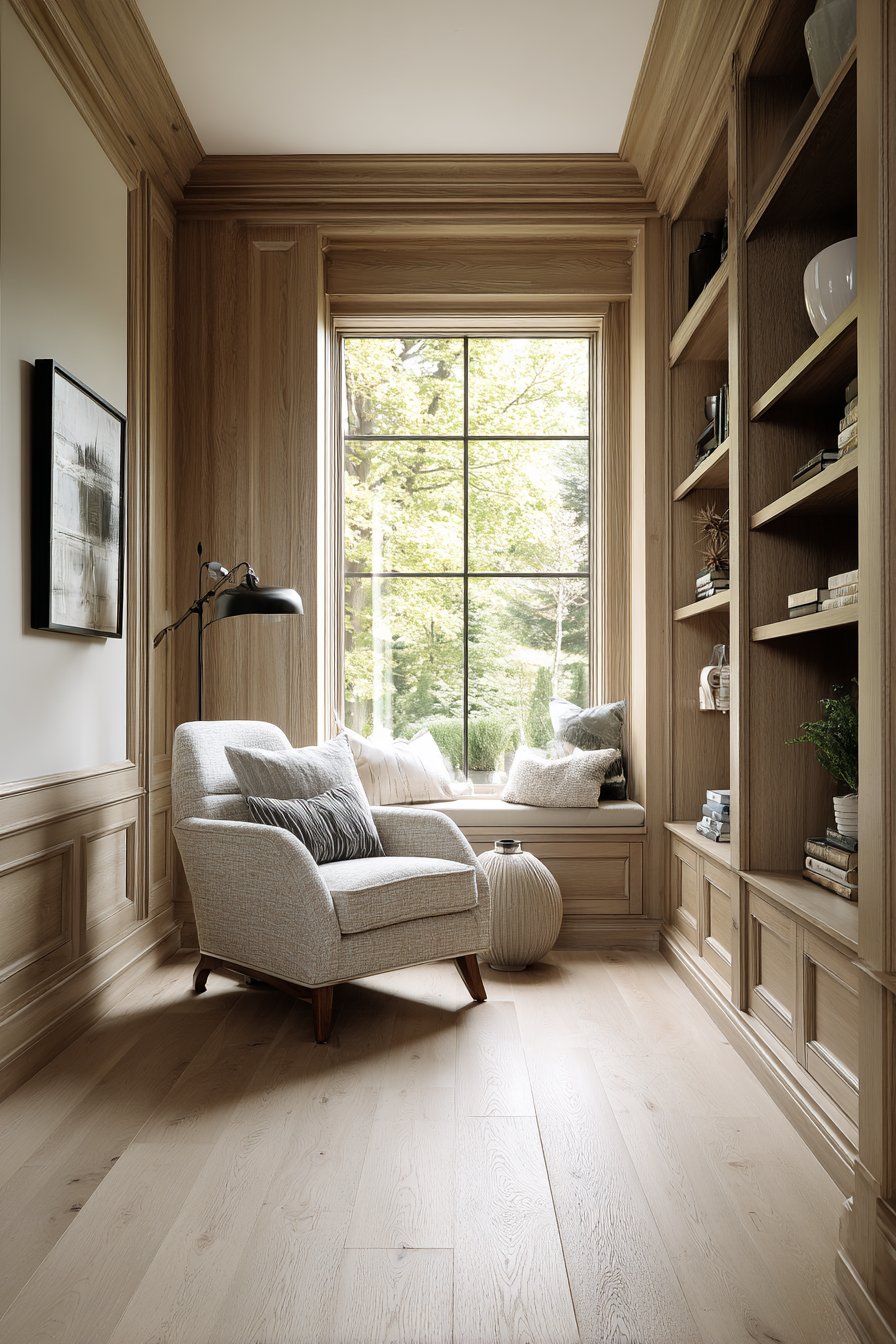
A comfortable accent chair upholstered in neutral tweed fabric combines classic comfort with contemporary simplicity. The tweed fabric provides visual texture and traditional appeal without feeling dated or formal. Gently curved arms offer ergonomic comfort for extended reading sessions.
Wooden legs in a finish that coordinates with the oak shelving create visual continuity. This chair demonstrates how furniture can be both beautiful and supremely comfortable for its intended purpose.
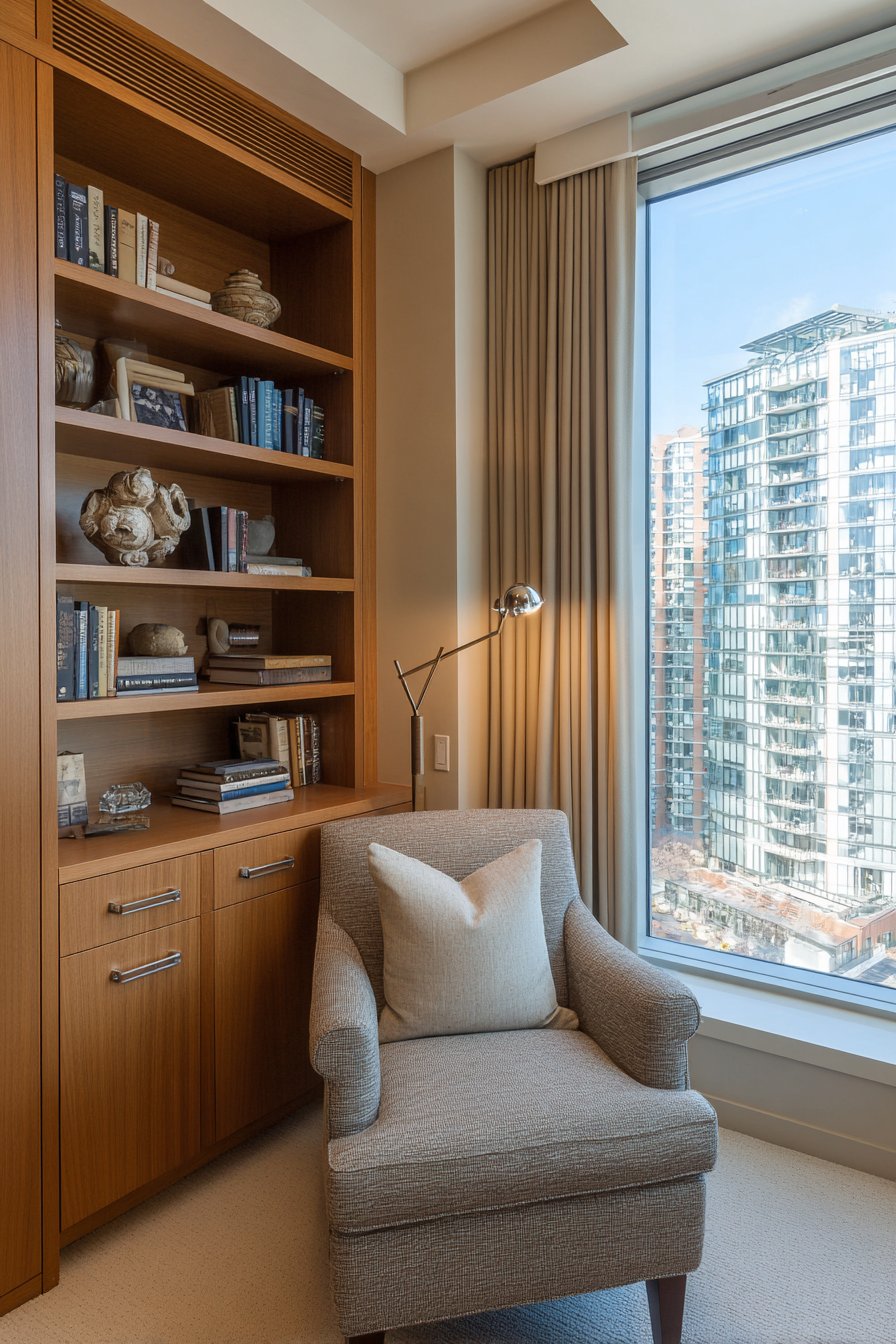
A sleek floor lamp with an adjustable arm provides task lighting essential for reading without eyestrain. The adjustable arm allows precise light direction for different times of day and reading positions. This flexibility makes the reading nook functional morning, afternoon, and evening. The lamp’s sleek design keeps the space feeling contemporary despite its traditional purpose. Soft natural daylight from the nearby window highlights the warm wood tones and textile textures.
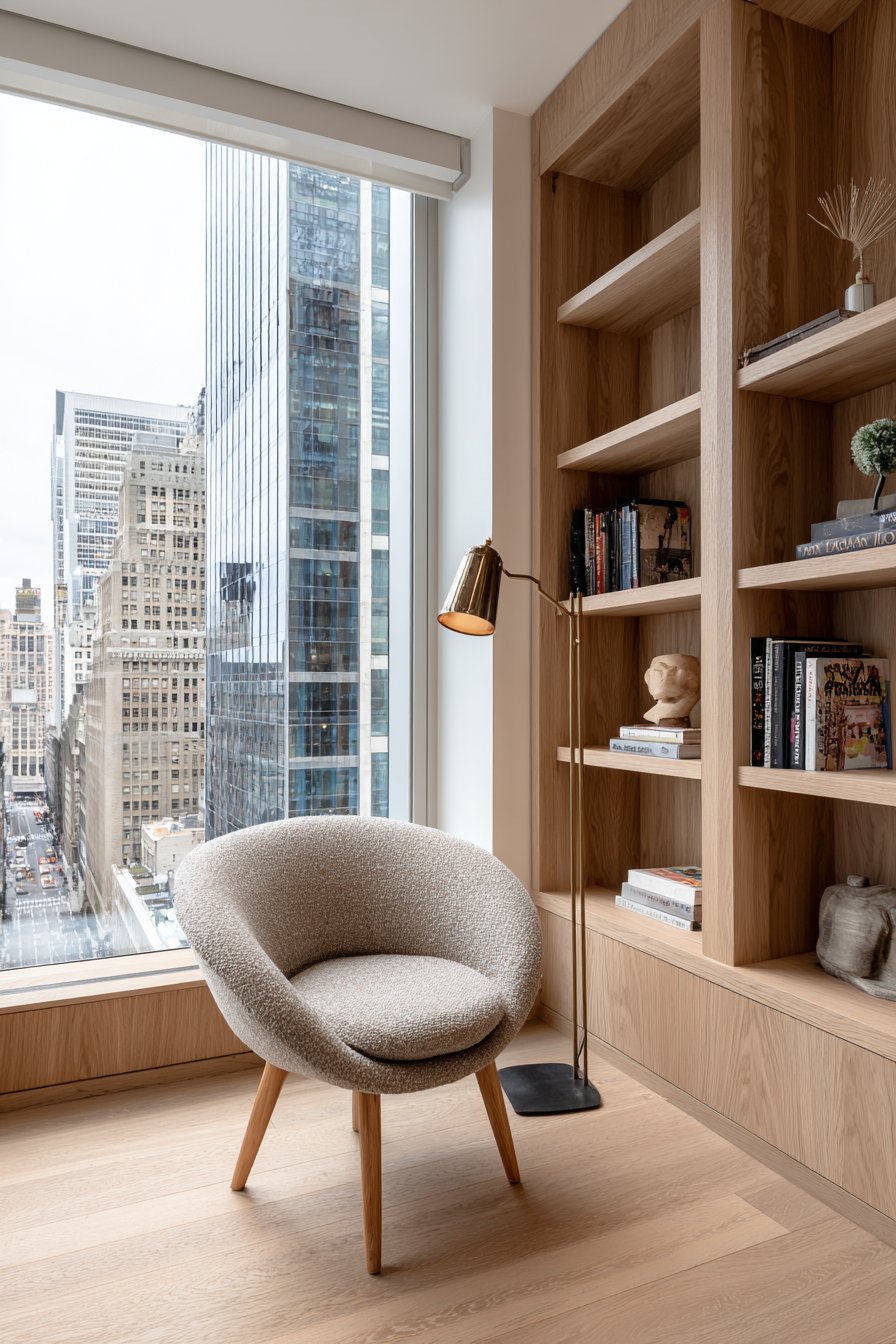
This reading nook exemplifies transitional design’s practical sophistication and attention to how people actually use spaces. The functional elements never sacrifice aesthetic appeal for utility. Every material choice supports both the visual design and the space’s primary function. This approach to creating specialized areas within larger rooms adds tremendous value to transitional living rooms.
Key Design Tips:
- Install natural oak built-in shelving near windows for functional beauty
- Select tweed-upholstered accent chairs for texture and traditional comfort
- Choose chairs with gently curved arms for ergonomic reading support
- Add floor lamps with adjustable arms for flexible task lighting
- Coordinate furniture wood finishes with built-in cabinetry for visual flow
- Position reading nooks near natural light sources to reduce lighting needs during daytime
9. Accent Walls with Architectural Detail
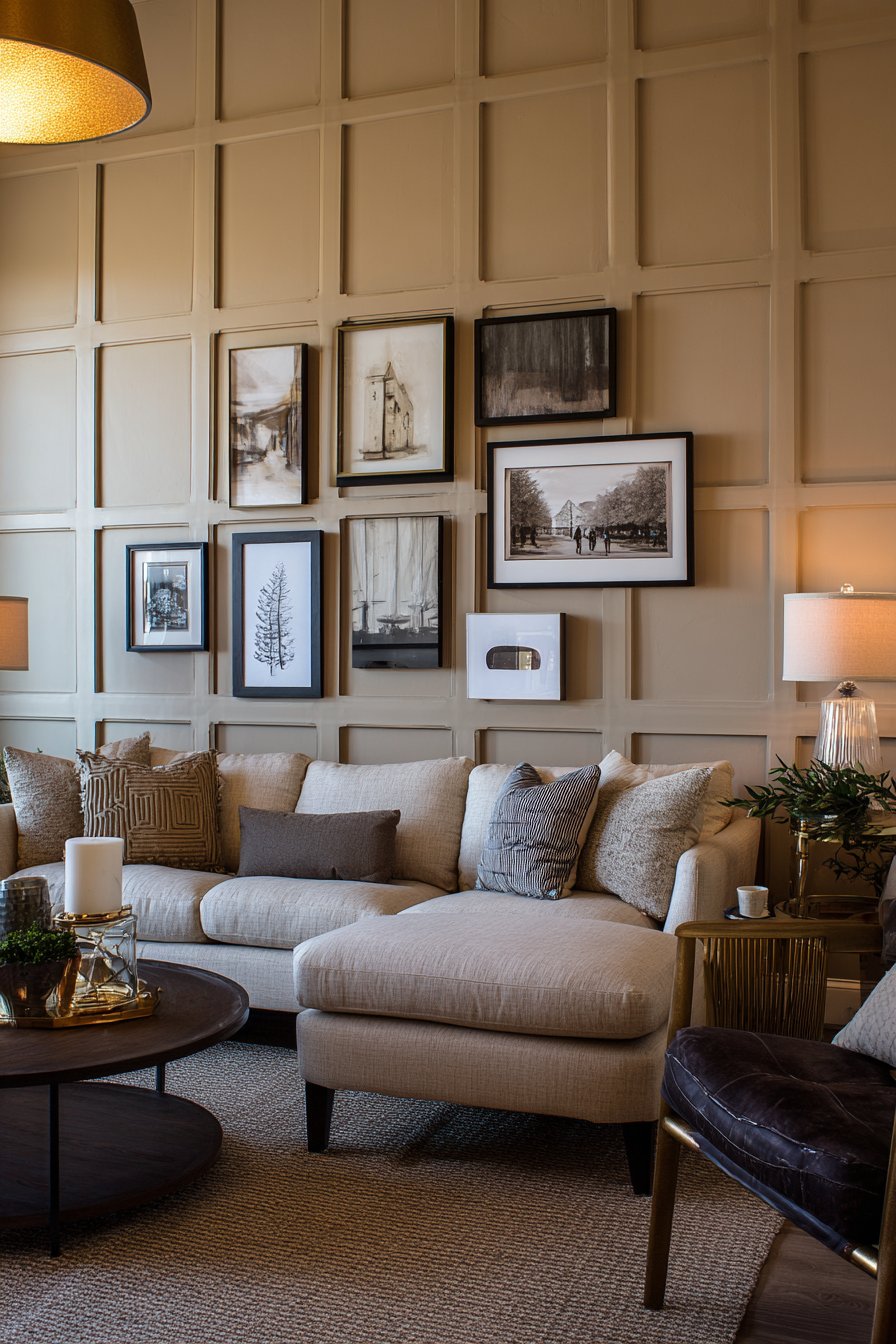
This transitional living room features an accent wall that demonstrates how paint color and architectural detail elevate spaces. Warm greige paint creates a sophisticated backdrop that reads as both grey and beige depending on lighting conditions.
This color versatility makes greige perfect for transitional spaces that bridge cool and warm palettes. The warm undertones prevent the grey from feeling cold or institutional. Classic wainscoting in crisp white adds traditional architectural detail to the contemporary paint color.
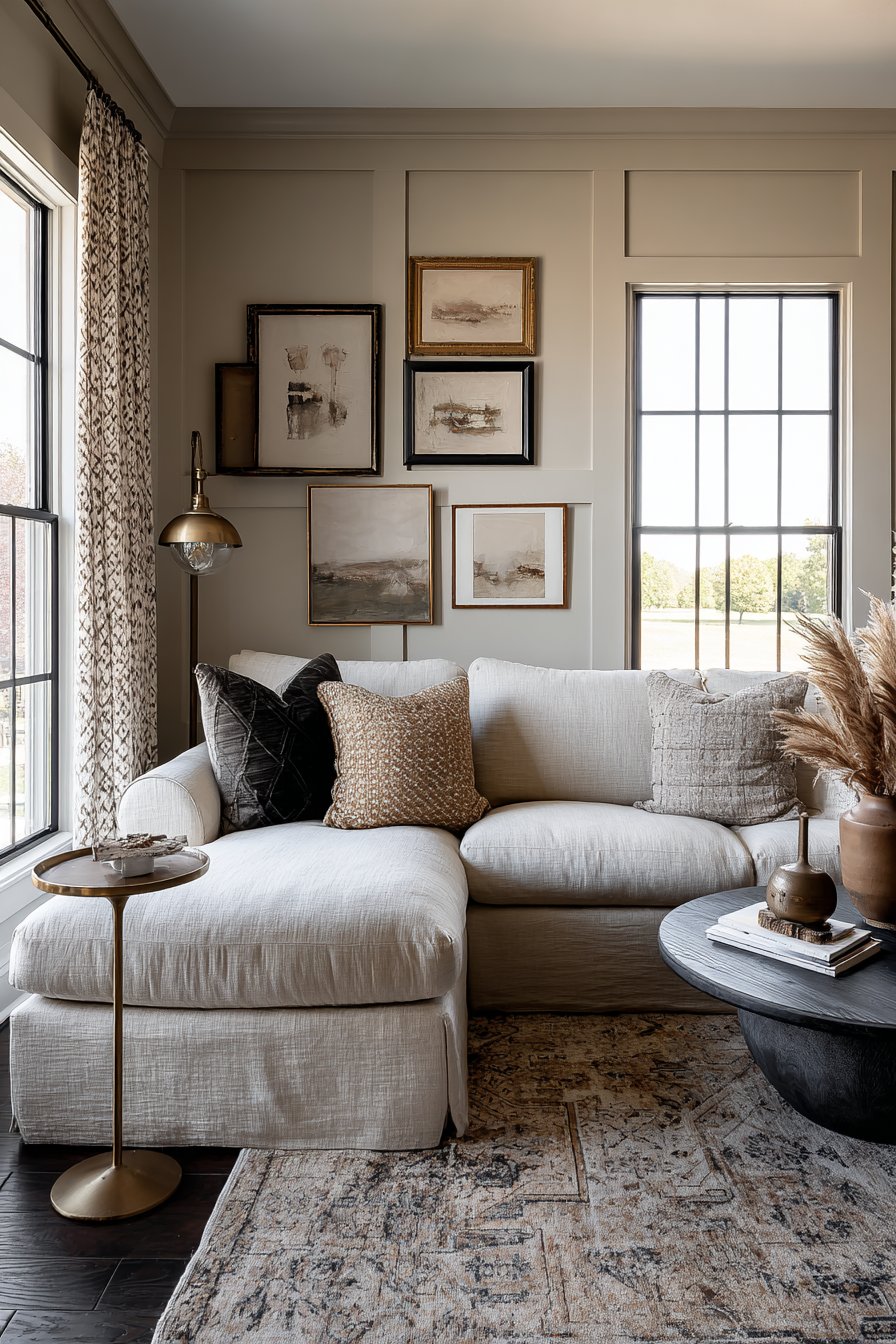
The furniture arrangement includes a contemporary sectional with traditional rolled arms upholstered in oatmeal linen. This sectional demonstrates the quintessential transitional furniture approach of mixing design eras. The rolled arms bring traditional comfort and visual softness to the contemporary sectional form. Oatmeal linen provides a neutral foundation that works with various color schemes and seasonal decor changes. The sectional faces a gallery wall of black-framed artwork in various sizes.
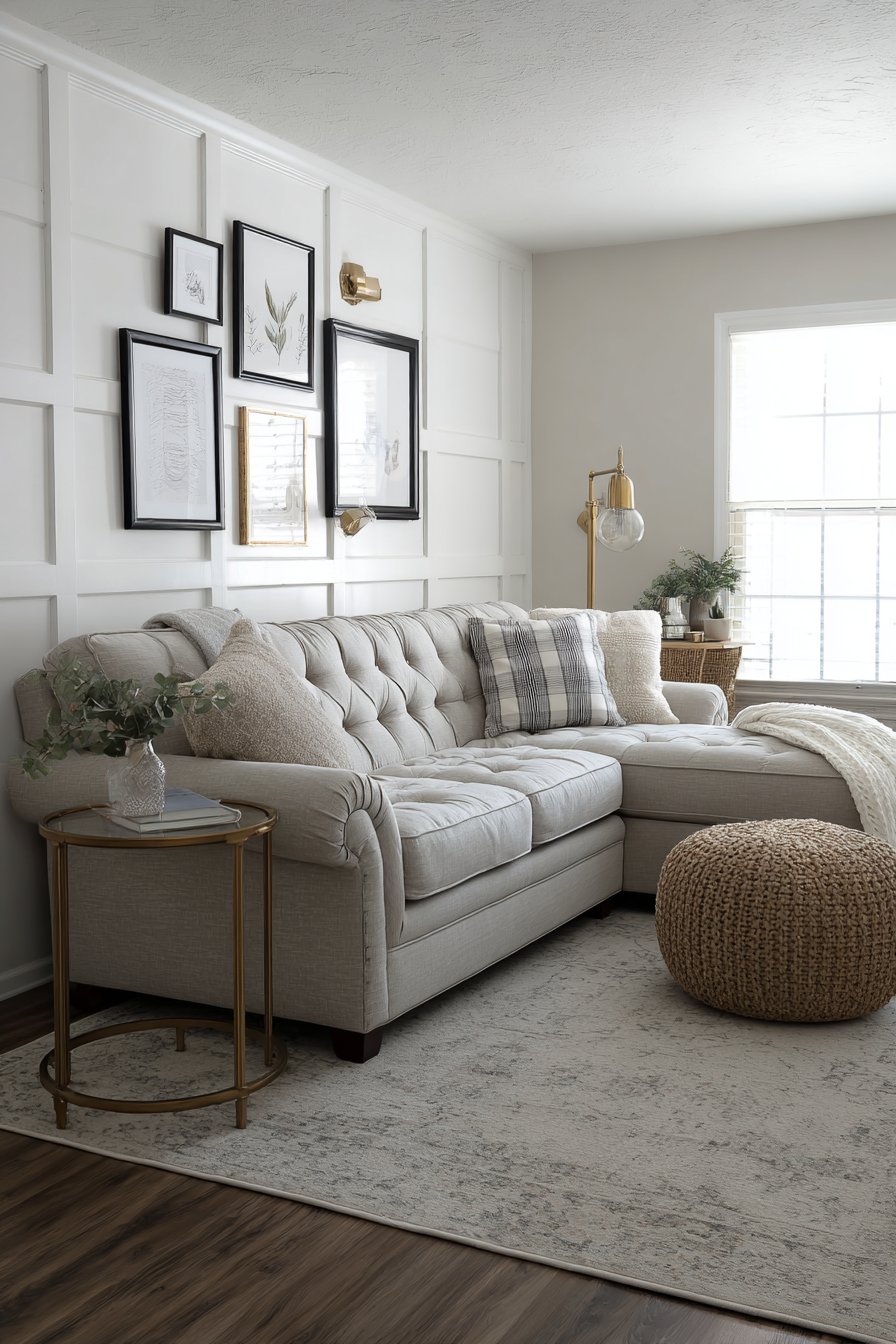
The gallery wall creates a focal point that showcases personal style and artistic taste. Black frames provide graphic contrast against the warm greige wall color. Various sizes arranged in a deliberate composition add visual interest and dynamic energy.
This gallery wall approach allows for evolving displays as art collection grows or tastes change. A round brass and glass side table adds a touch of refinement with its mixed materials and metallic accents.
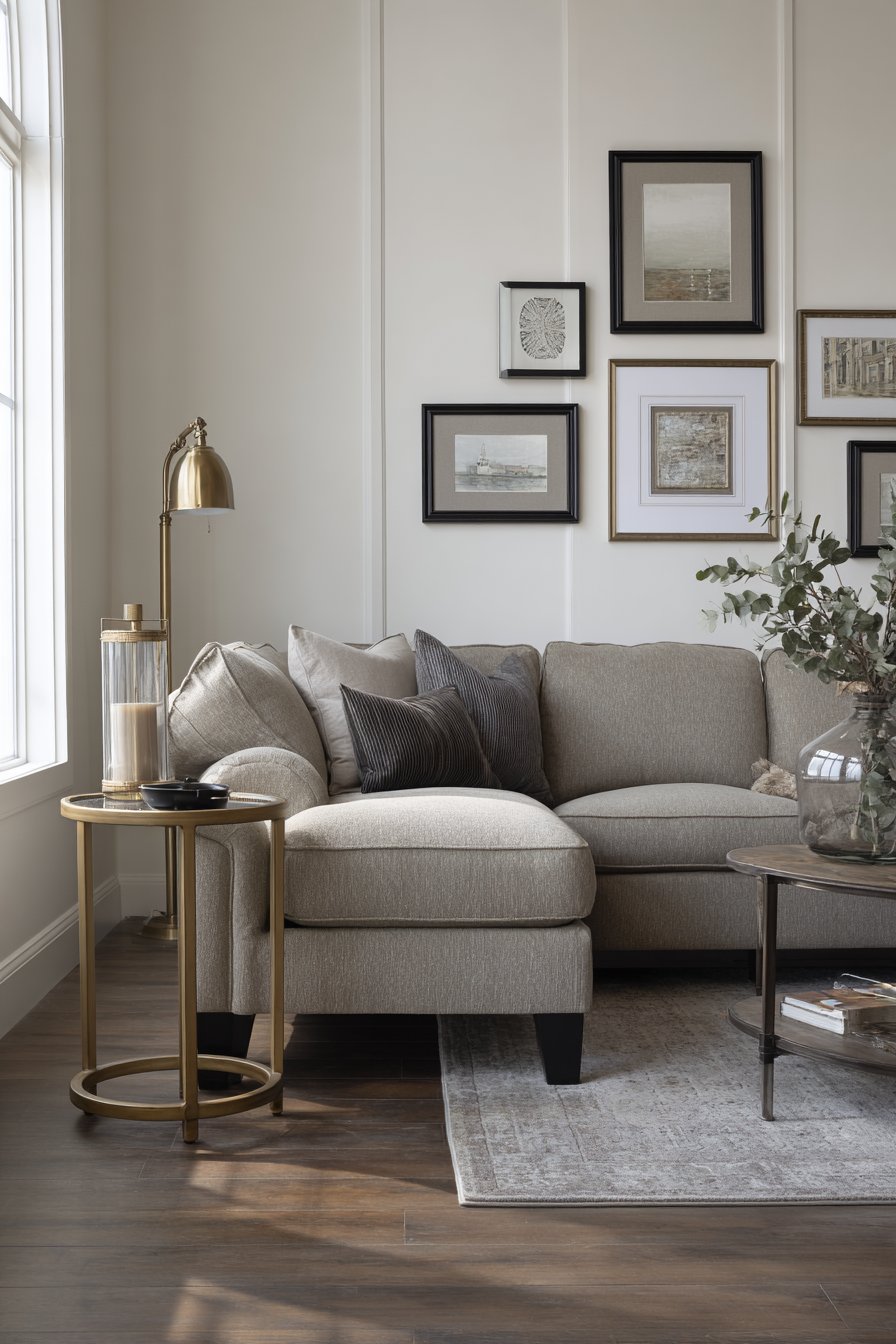
The neutral palette and mixed design elements create a timeless, versatile space with both visual interest and comfort. This room demonstrates how restrained color choices allow architectural details and furniture forms to shine. The balance between contemporary and traditional elements feels effortless rather than forced. This living room proves that transitional design creates spaces that adapt to changing needs and preferences over time.
Key Design Tips:
- Paint accent walls in warm greige for sophisticated versatility in changing light
- Add white wainscoting to create traditional architectural interest on contemporary walls
- Choose sectionals with rolled arms to blend traditional comfort with modern forms
- Create gallery walls with black frames in various sizes for graphic impact
- Arrange artwork deliberately rather than symmetrically for contemporary appeal
- Add brass and glass side tables for refined mixed-material accents
10. Open Floor Plan with Seamless Integration
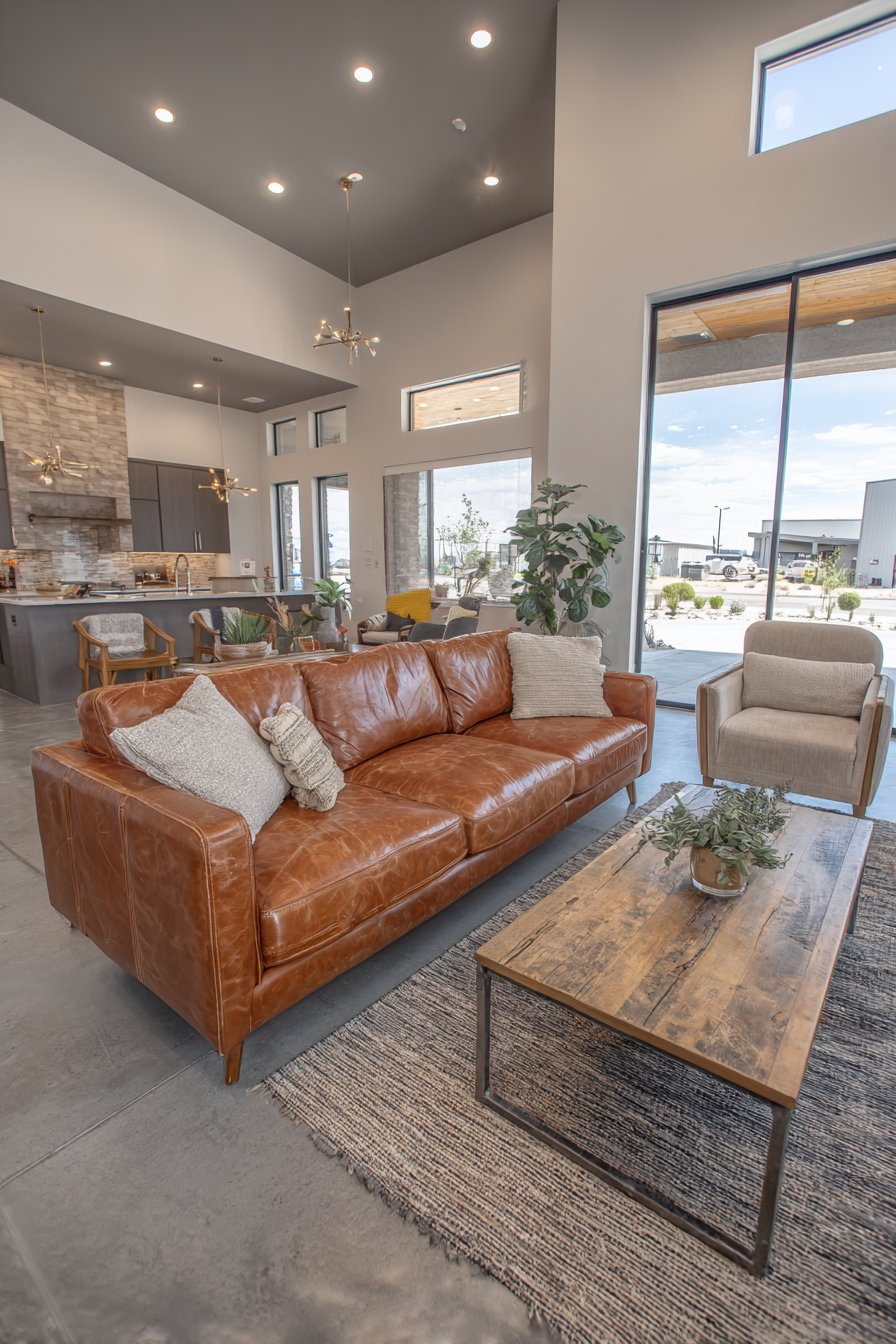
This transitional living room showcases how open floor plans can maintain distinct functional areas while feeling cohesive. A camel-colored leather sofa with clean modern lines and classic button tufting anchors the seating area. The leather’s warm camel color adds richness without overwhelming the neutral palette.
Button tufting brings traditional upholstery detailing to the sofa’s contemporary silhouette. This combination creates a statement piece that exemplifies transitional design philosophy beautifully.
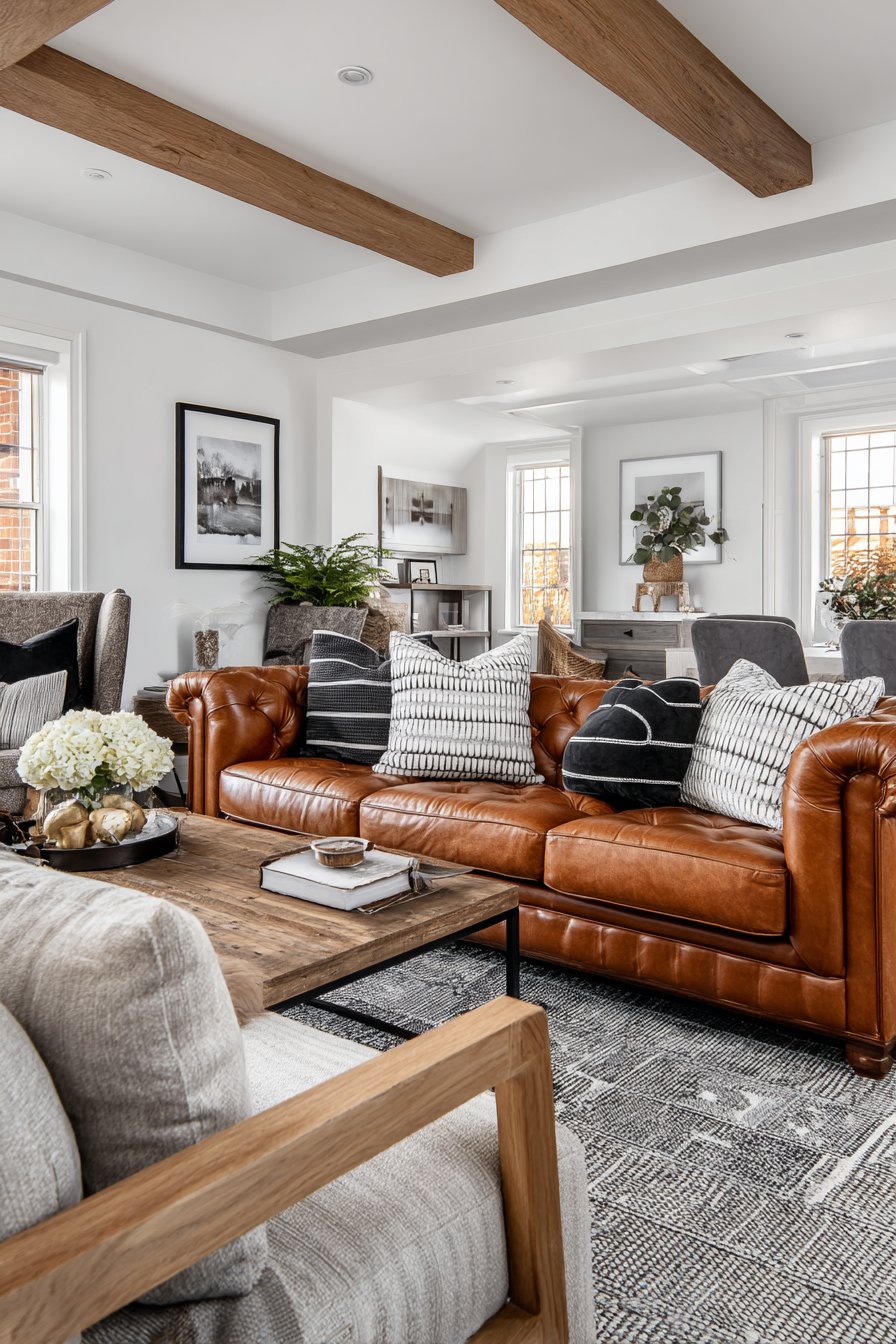
A pair of linen-upholstered armchairs with exposed wood frames provide additional seating with mixed-material appeal. The linen upholstery keeps the chairs feeling light and airy in the open space. Exposed wood frames add traditional craftsmanship details and visual interest. These chairs complement the leather sofa without matching it exactly, demonstrating transitional design’s eclectic approach. A rectangular coffee table combining metal and reclaimed wood ties the seating group together with more mixed materials.
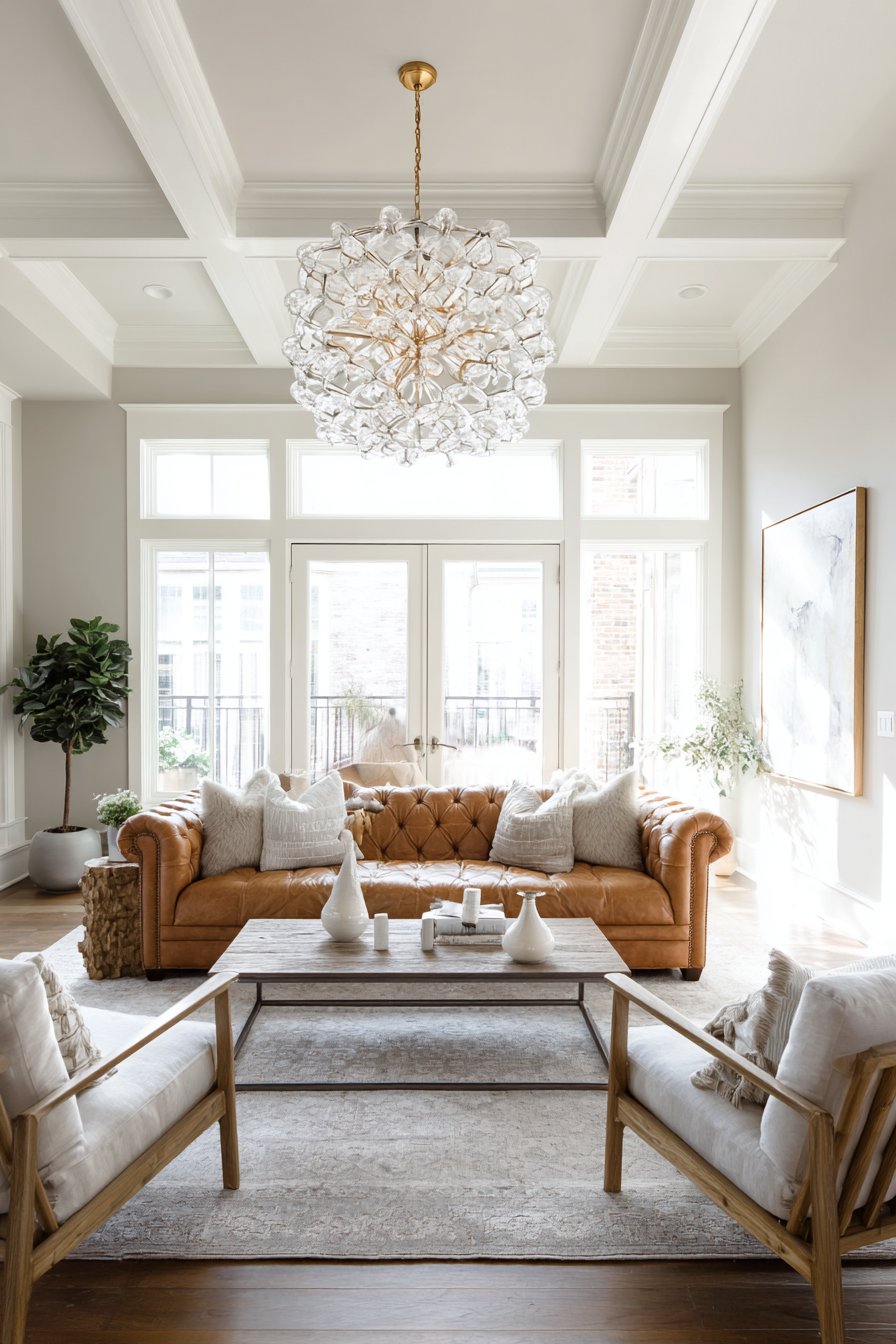
Area rugs in complementary neutral tones define the seating space within the larger open floor plan. These rugs create visual boundaries without requiring walls or partitions. The layered neutral tones add depth and warmth underfoot while maintaining the room’s cohesive color story. Natural light from multiple windows creates depth and dimension throughout the open space. The abundant natural light prevents the neutral palette from feeling dull or monotonous.
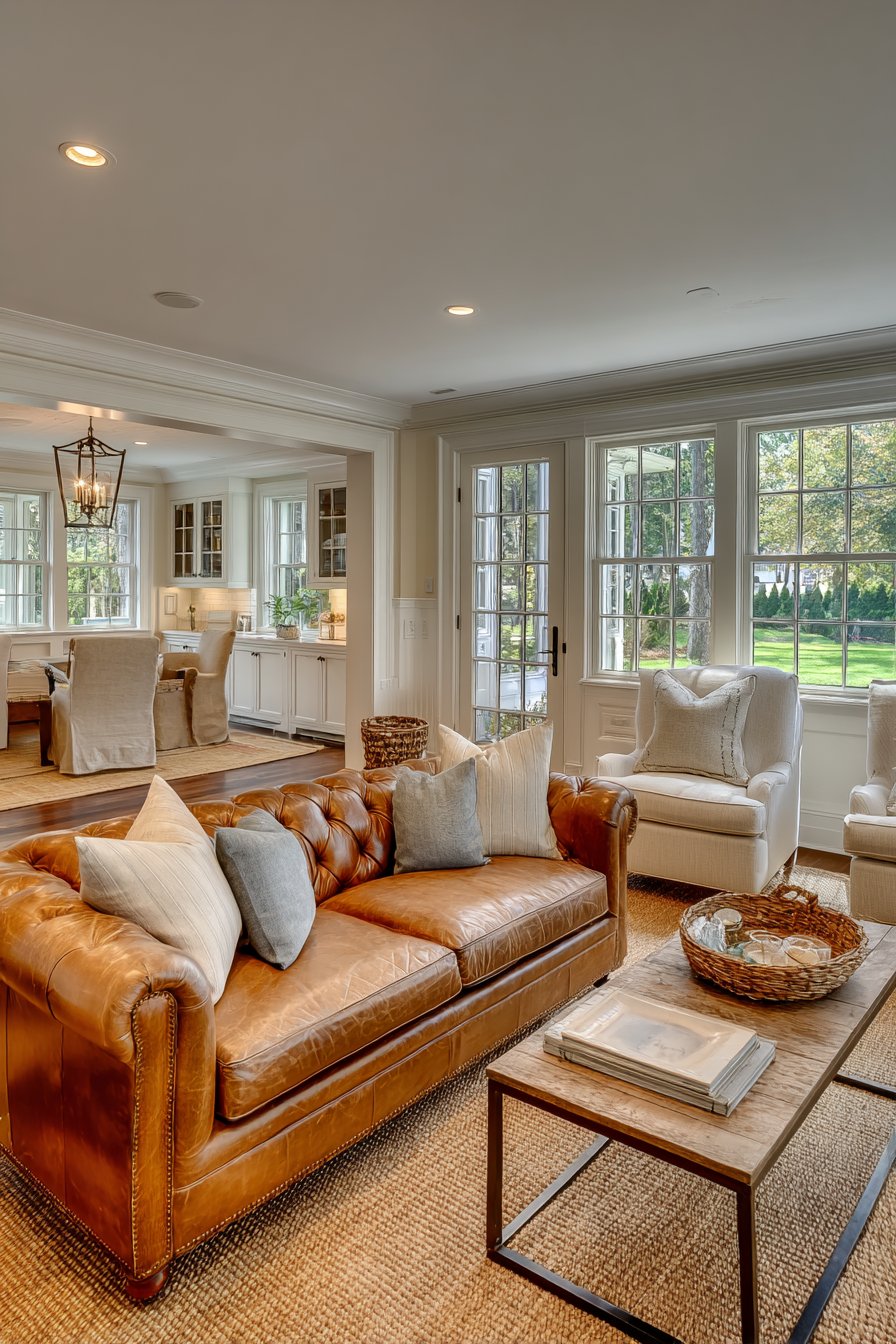
This spacious yet inviting atmosphere demonstrates the sophisticated balance between traditional warmth and contemporary simplicity. The open floor plan allows for flexible furniture arrangements and easy entertaining. Every design choice supports both the room’s aesthetic appeal and its practical function. This living room proves that transitional design excels in creating versatile, timeless spaces for modern life.
Key Design Tips:
- Choose leather sofas with button tufting to blend traditional and contemporary upholstery
- Select camel-colored leather for warmth that doesn’t overwhelm neutral palettes
- Add armchairs with exposed wood frames for mixed-material visual interest
- Use rectangular coffee tables combining metal and wood for material diversity
- Define seating areas in open floor plans with layered area rugs
- Maximize natural light from multiple windows to add depth and dimension
Why These Transitional Living Room Designs Are the Best Choice
These ten transitional living room designs represent the best approach to creating timeless, versatile interiors for modern living. Transitional style has emerged as the premier choice for homeowners seeking sophistication without stuffiness. The balanced blend of traditional and contemporary elements ensures these spaces never feel dated or trendy. Each design demonstrates how careful attention to furniture selection, material mixing, and architectural details creates cohesive, elegant rooms.
The versatility of transitional design makes it the best choice for families with evolving needs and preferences. These living rooms accommodate both formal entertaining and casual daily living with equal grace. The neutral color palettes provide serene foundations that reduce stress and promote relaxation. Quality materials like linen, leather, reclaimed wood, and marble ensure longevity and enduring beauty. These investments in lasting materials make transitional design economically smart for long-term homeownership.
Transitional living rooms excel at creating spaces that appeal to multiple generations and diverse aesthetic preferences. The blend of classic comfort and contemporary simplicity satisfies both traditional and modern sensibilities. Built-in storage solutions like entertainment walls and shelving maximize functionality without sacrificing style. Layered lighting approaches ensure these rooms function beautifully throughout day and evening hours. The attention to both form and function defines transitional design’s practical sophistication.
The design principles demonstrated in these ten living rooms translate easily to various home sizes and architectural styles. From cozy conversation areas to expansive open floor plans, transitional design adapts beautifully. The emphasis on quality over quantity prevents rooms from feeling cluttered or overwhelming. Mixed materials add visual interest and textural depth that flat, monochromatic spaces lack. These design choices create living rooms that feel curated rather than decorated.
Transitional style’s popularity continues growing because it addresses modern living requirements while honoring design heritage. The clean lines and uncluttered aesthetics align with contemporary preferences for simplified living. Simultaneously, the comfortable proportions and refined details satisfy desires for warmth and elegance. This duality makes transitional living rooms the best choice for creating homes that truly feel like personal sanctuaries. The sophisticated restraint allows homeowners’ personalities and treasured possessions to shine without competing with overly designed interiors.
These designs demonstrate how transitional style accommodates technological integration without appearing dated when technology evolves. Entertainment walls and media storage solutions look intentional rather than apologetic about modern necessities. The neutral backdrops allow artwork, books, and personal collections to become focal points. This flexibility ensures transitional living rooms remain relevant and beautiful for decades. The investment in quality transitional design pays dividends in daily enjoyment and long-term property value.
Conclusion
Creating a transitional living room that balances traditional elegance with contemporary simplicity requires thoughtful planning and quality execution. The ten designs explored in this article demonstrate various approaches to achieving this sophisticated blend. Whether you prefer the formality of symmetrical fireplace arrangements or the casual comfort of reading nooks, transitional design offers endless possibilities. The key lies in selecting furniture with clean lines softened by traditional details and mixing materials for textural depth.
Start your transitional living room transformation by establishing a neutral color palette that provides a timeless foundation. Invest in quality upholstered pieces that combine contemporary silhouettes with classic comfort features. Layer lighting through multiple sources including recessed fixtures, chandeliers, and task lamps. Add architectural interest through built-in cabinetry, wainscoting, or carefully chosen accent walls. Remember that restraint and edited styling create more sophisticated spaces than overcrowded arrangements.
Experiment with these ideas in your own home by starting with one or two key transitional pieces. A quality sofa with rolled arms and clean lines can transform your entire living room aesthetic. Add texture through natural fiber rugs, linen curtains, and varied throw pillows. Mix wood finishes and metal accents to create visual interest without overwhelming the space. Trust that the balanced, timeless appeal of transitional design will serve your family beautifully for years to come.
