


Creating a traditional living room is about embracing timeless elegance and classical sophistication. These spaces celebrate rich architectural details, luxurious fabrics, and carefully curated furnishings that stand the test of time. Traditional design draws inspiration from European decor styles, particularly English and French aesthetics, where symmetry, refinement, and quality craftsmanship reign supreme. The beauty of traditional interiors lies in their ability to create warm, inviting environments that feel both formal and comfortable.
Traditional living rooms serve as the heart of the home, where families gather and guests are entertained. These spaces feature distinguished elements like ornate moldings, rich wood tones, and sumptuous upholstery fabrics. Crown molding, wainscoting, and coffered ceilings add architectural interest while anchoring the room’s classical character. Color palettes typically include warm neutrals, deep jewel tones, and sophisticated earth tones that create a sense of established elegance. Furniture arrangements emphasize balance and proportion, with pieces often positioned symmetrically to create visual harmony.
This comprehensive guide explores ten distinctive traditional living room designs that showcase various interpretations of classic style. From formal seating arrangements featuring Chesterfield sofas to cozy reading corners with leather wingback chairs, each concept demonstrates how traditional elements can be combined to create spaces of enduring beauty. Whether you’re drawn to rich burgundy velvets or prefer sage green damask, these ideas will inspire you to transform your living room into a sophisticated sanctuary that honors timeless design principles while meeting modern living needs.
1. Formal Burgundy Velvet Elegance with Persian Rug Foundation
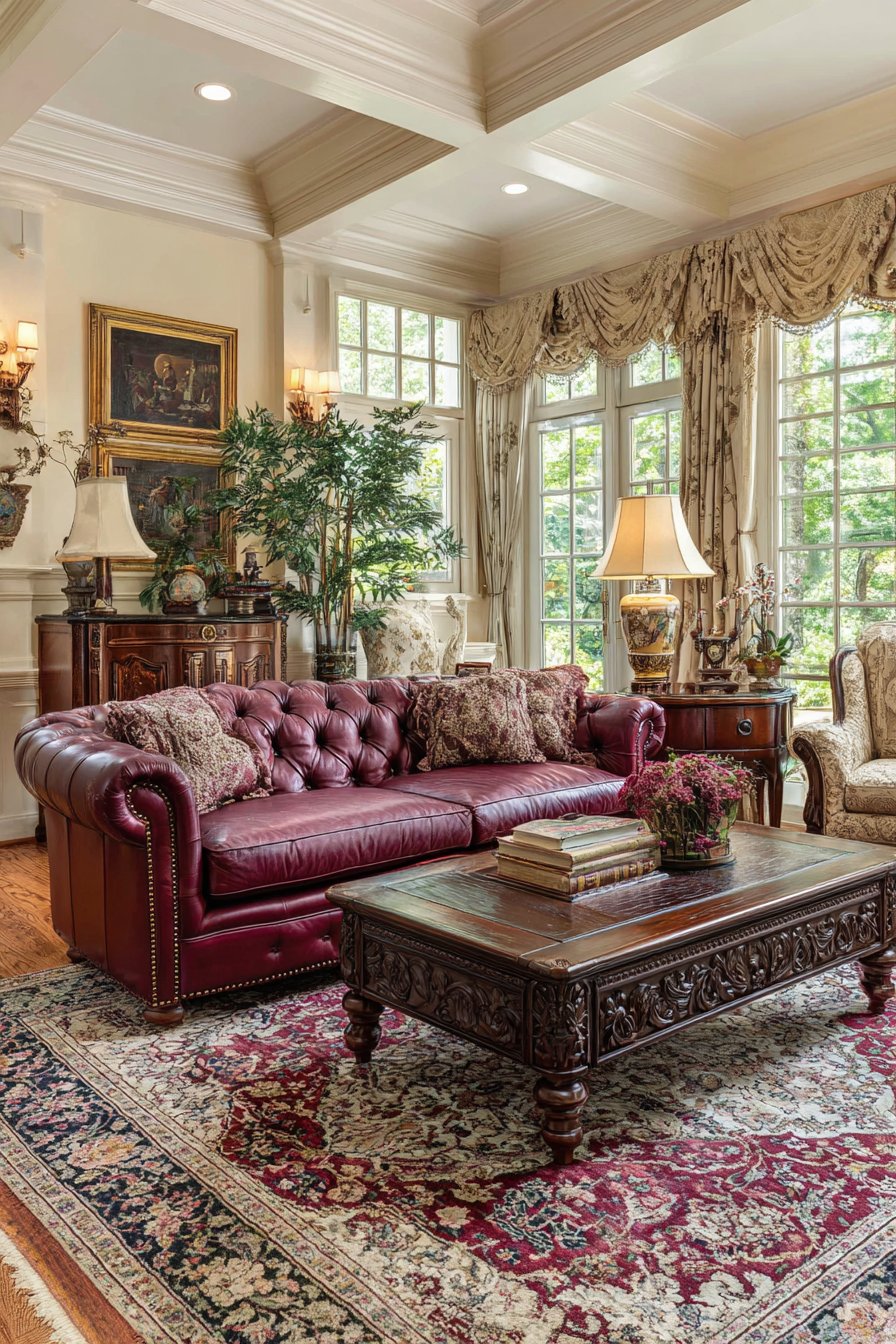
The quintessential traditional living room begins with a statement piece that commands attention and sets the tone for the entire space. A tufted Chesterfield sofa upholstered in rich burgundy velvet creates an immediate impression of luxury and sophistication.
The deep button tufting and rolled arms characteristic of Chesterfield design add dimensional texture that catches light beautifully throughout the day. Flanking this centerpiece are matching wingback chairs that echo the burgundy tone, creating a cohesive seating arrangement that invites conversation and comfort.
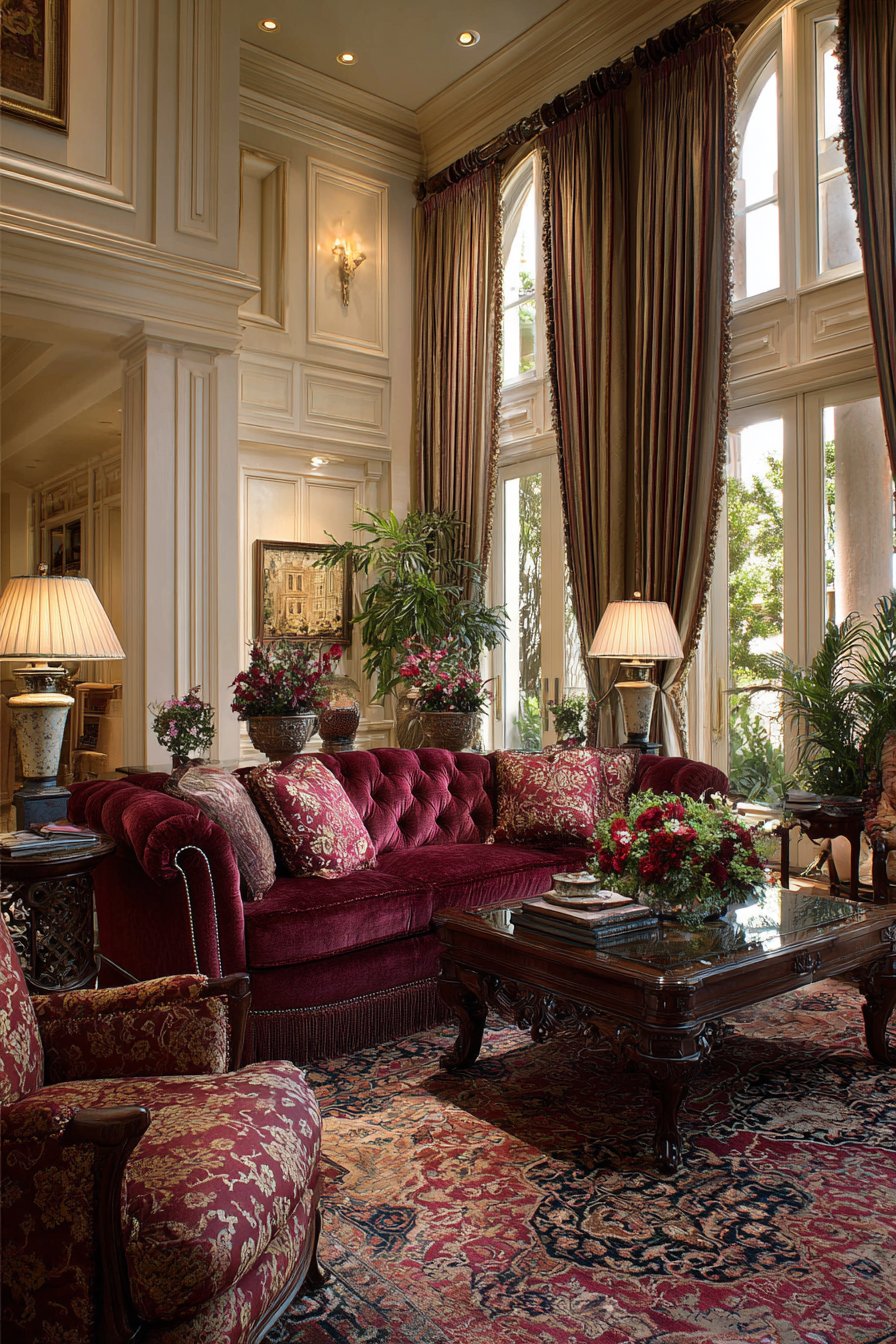
The foundation of this elegant space is an authentic Persian rug featuring intricate floral patterns in complementary deep reds and gold. These hand-knotted masterpieces bring centuries of artistic tradition into the room while providing both visual anchoring and physical warmth.
The mahogany coffee table positioned centrally showcases carved details that demonstrate fine craftsmanship, its dark wood tones creating striking contrast against the rug’s vibrant palette. Solid wood side tables flank the sofa, each supporting classic table lamps with cream silk shades that provide soft, diffused illumination.
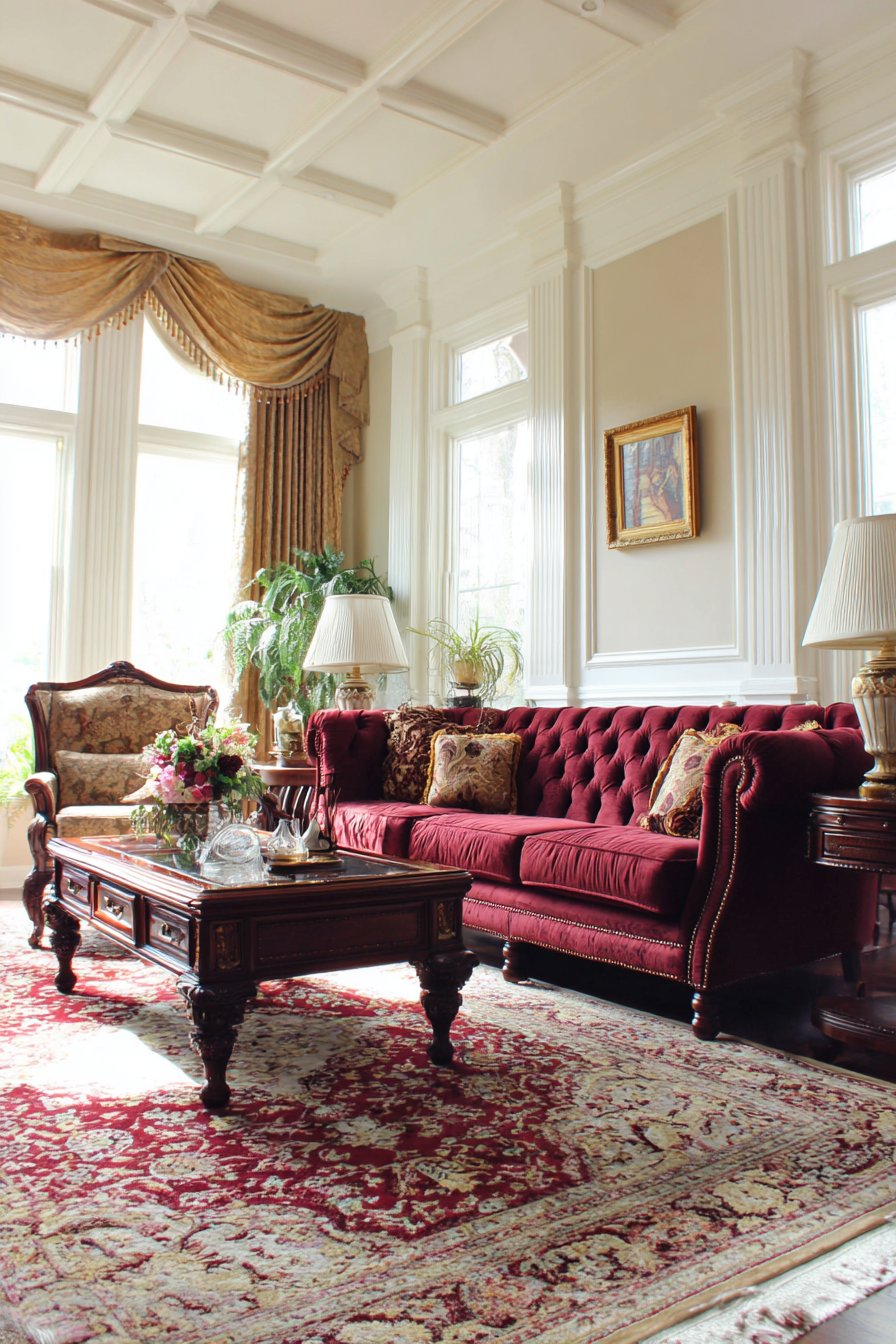
Architectural elements elevate this space from simply furnished to architecturally distinguished. Crown molding traces the ceiling perimeter while wainscoting adds vertical interest to cream-painted walls, creating the kind of dimensional detailing that defines traditional interiors.
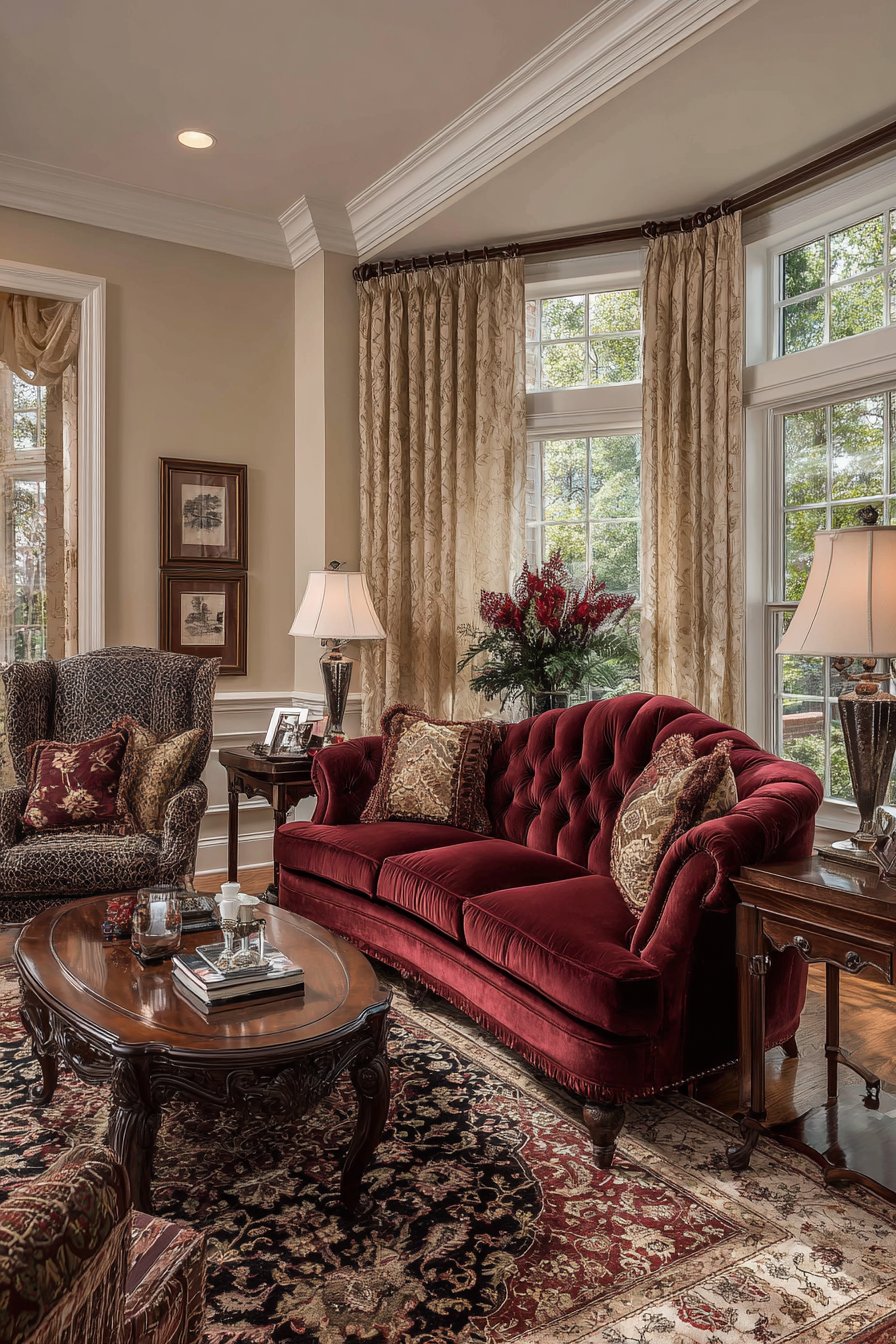
Floor-length windows dressed with layered drapes and decorative valances allow natural light to filter through while maintaining privacy and formality. The interplay between rich burgundy upholstery, golden rug tones, and cream walls creates a warm color story that feels both inviting and refined.
Key Design Tips:
- Select a Chesterfield sofa with genuine button tufting for authentic traditional character
- Layer window treatments with sheers, drapes, and valances for depth and formality
- Choose Persian or Oriental rugs with intricate patterns that complement your upholstery colors
- Install crown molding and wainscoting to add architectural authenticity
- Position matching table lamps symmetrically to create balanced lighting and visual harmony
- Opt for mahogany or cherry wood furniture pieces that showcase visible wood grain
- Maintain a cohesive color palette using variations of reds, golds, and creams
2. Symmetrical Fireplace Sanctuary with Built-in Bookcases
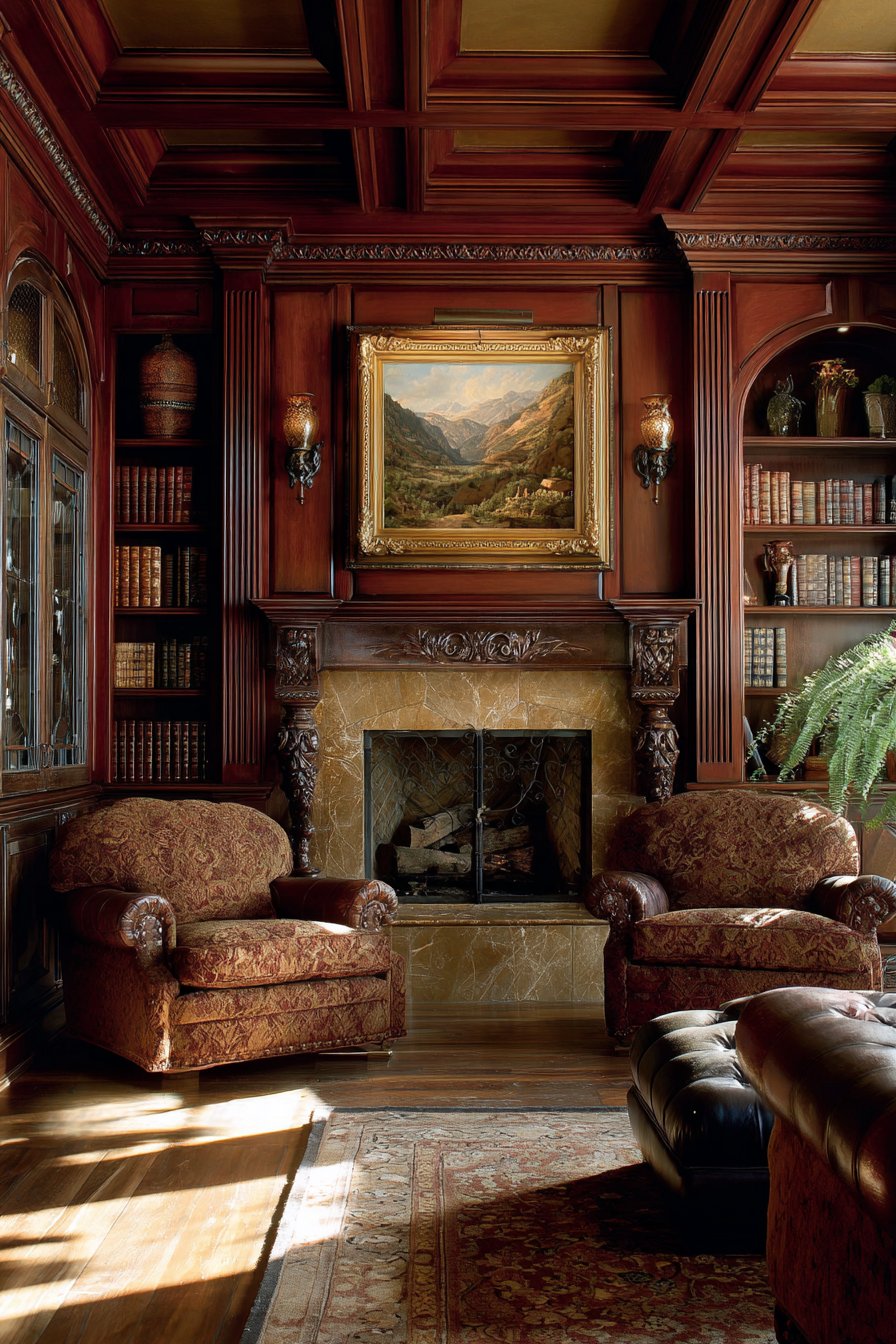
A fireplace naturally becomes the focal point in any traditional living room, especially when framed by architectural elements that emphasize its importance. An ornate carved wooden mantel in dark cherry finish provides the perfect backdrop for displaying treasured objects and seasonal decorations.
The marble surround adds classical elegance while the practical warmth of a working fireplace creates an inviting atmosphere during cooler months. This central feature anchors the entire room design and establishes the formal tone of the space.
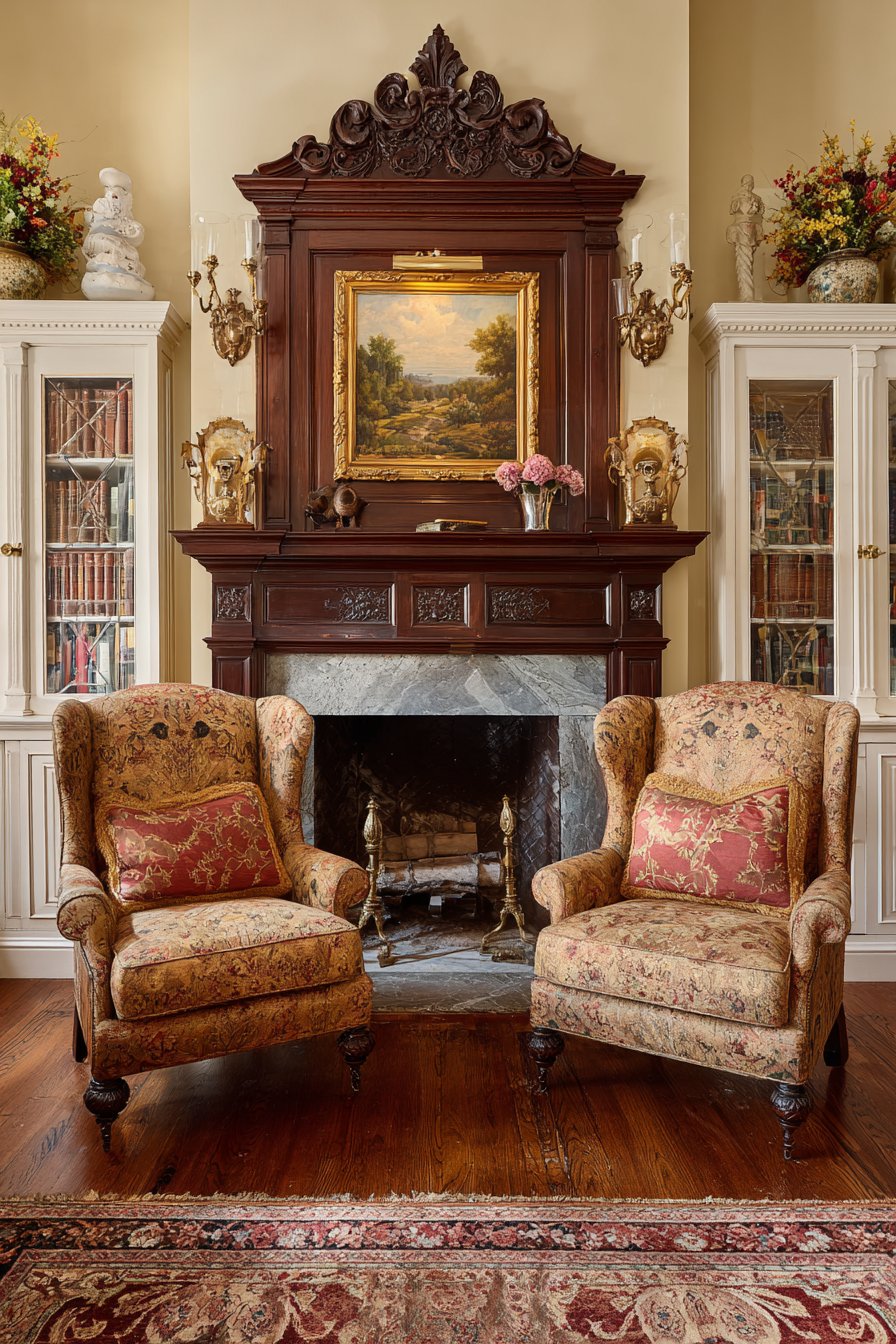
Symmetry is a hallmark of traditional design, beautifully demonstrated through the matching upholstered armchairs positioned on either side of the fireplace. These chairs feature damask fabric with subtle patterns that add visual interest without overwhelming the space.
A gilt-framed landscape painting hangs above the mantel, its generous proportions appropriate for the wall space while its subject matter reinforces the classical aesthetic. Brass wall sconces flanking the artwork provide both functional illumination and decorative accent, their warm metallic finish complementing the rich wood tones throughout the room.
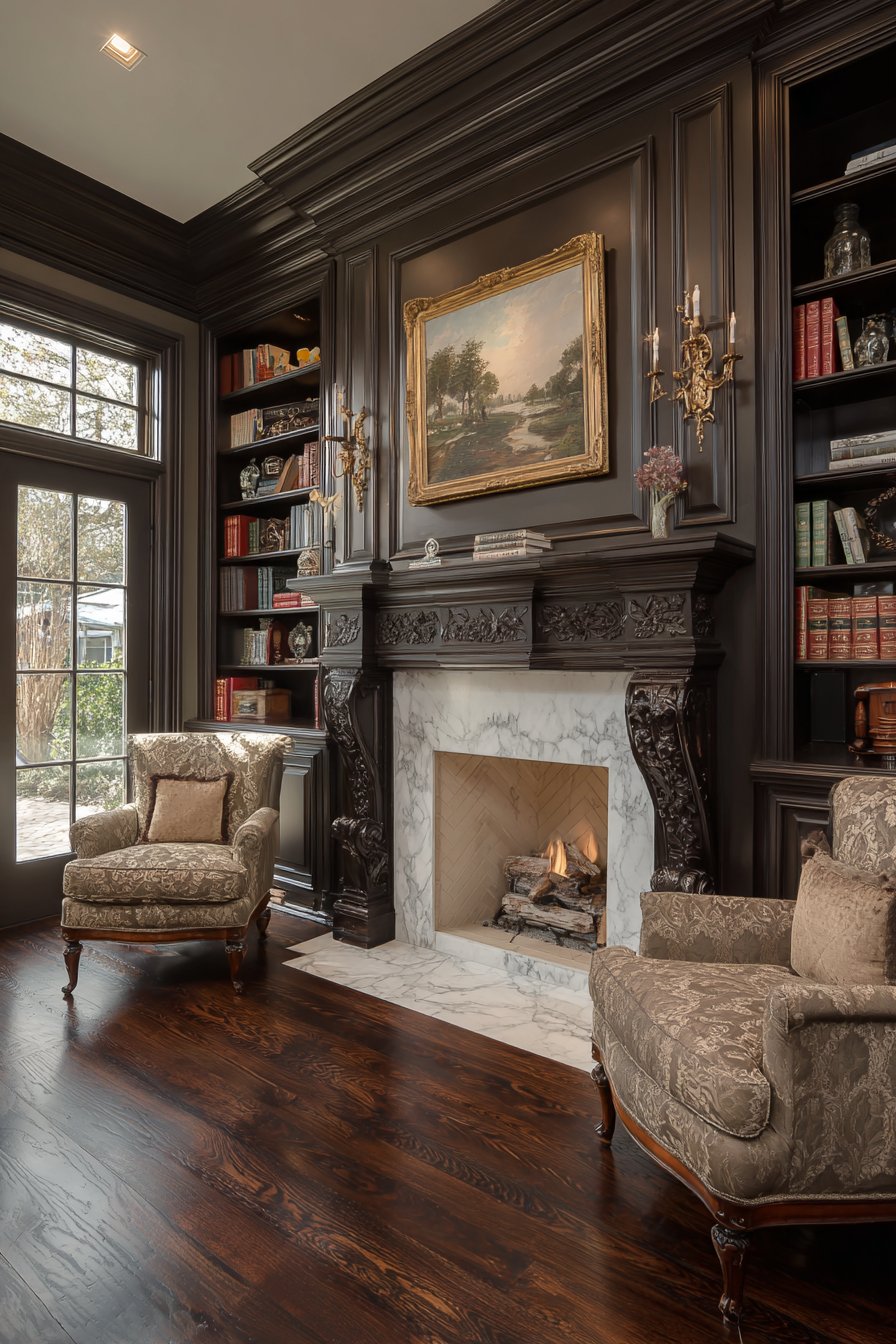
Built-in bookcases with glass doors create functional storage while displaying leather-bound volumes and classic decorative objects. These custom cabinetry pieces demonstrate the traditional emphasis on both beauty and utility, offering organized storage that enhances rather than detracts from the room’s elegance.
The hardwood floor features a traditional border inlay that frames the space and adds another layer of crafted detail. Natural afternoon light streaming through windows creates subtle shadows that emphasize architectural depth and highlight the room’s classical proportions.
Key Design Tips:
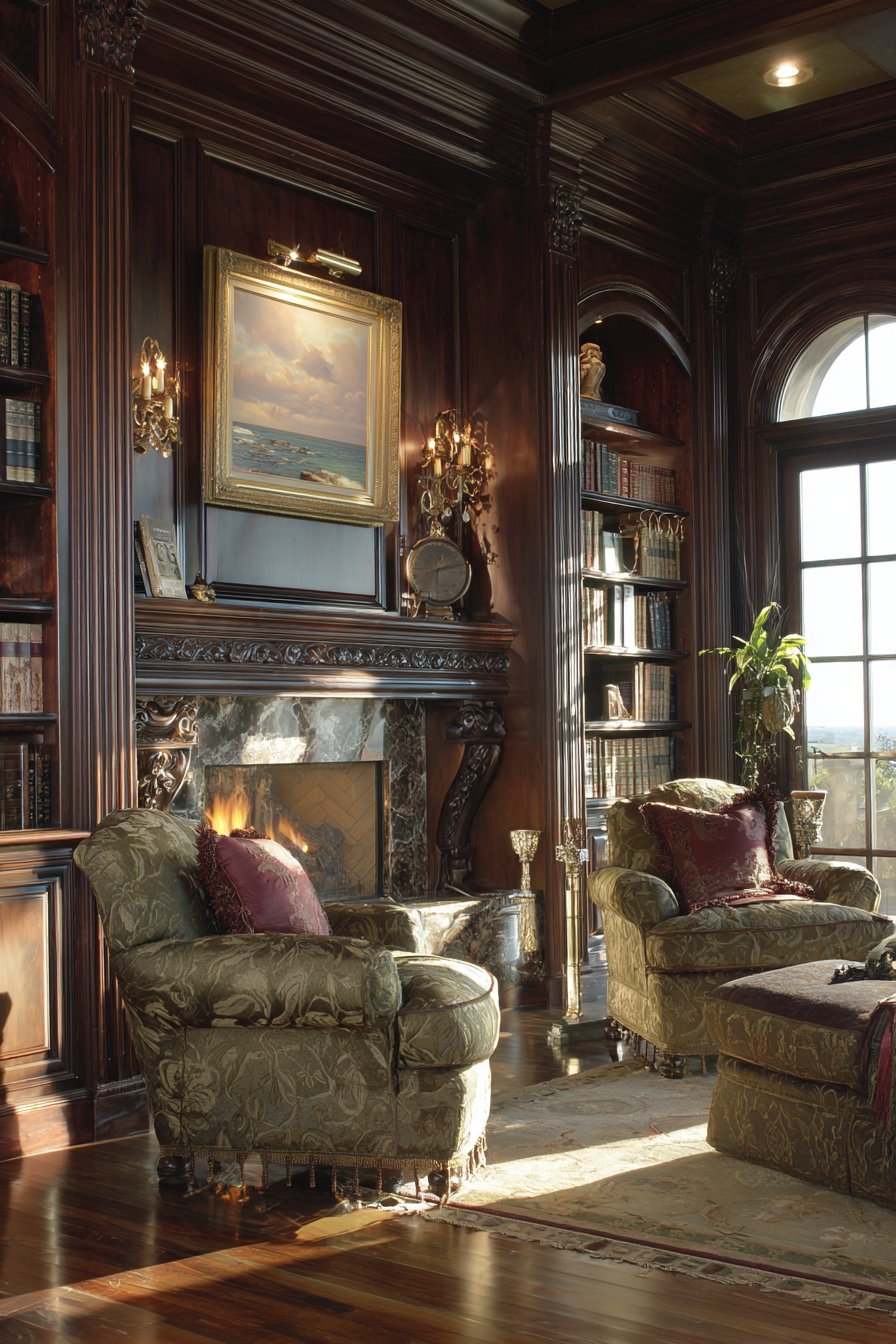
- Position matching furniture pieces symmetrically around the fireplace for balanced composition
- Choose an ornate wooden mantel with carved details appropriate to your home’s architectural style
- Install built-in bookcases for storage that look custom and intentional
- Use brass hardware and lighting fixtures for warm metallic accents
- Display leather-bound books and classic decorative objects for an authentic traditional character
- Consider hardwood flooring with decorative inlay borders to frame the room
- Hang oversized artwork above the mantel to create appropriate visual weight
- Select damask or jacquard upholstery fabrics for subtle pattern and texture
3. Sage Green Serenity with Layered Textile Luxury
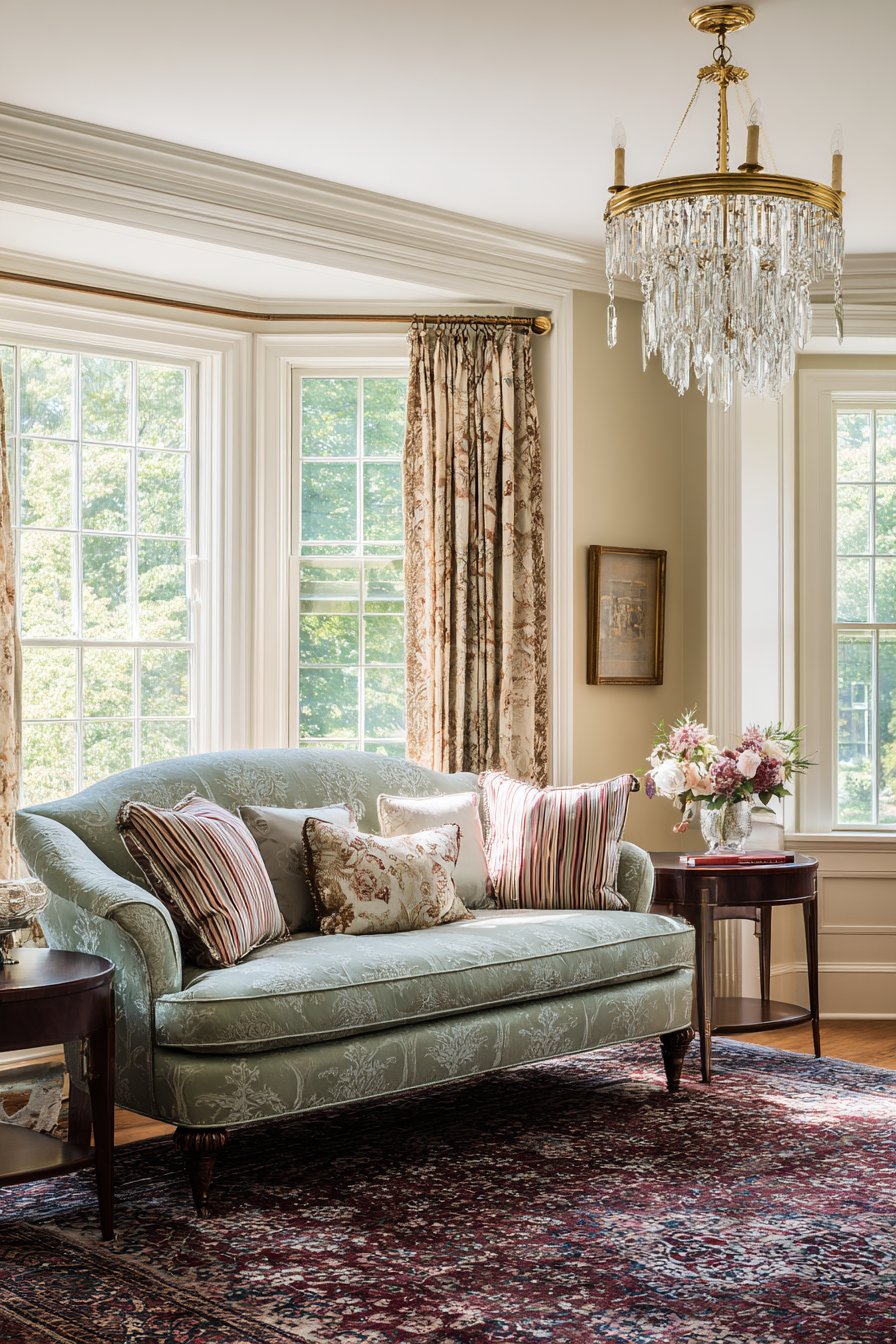
Color choice profoundly impacts the mood and character of a traditional living room. A camelback sofa upholstered in sage green damask introduces a softer, more serene interpretation of classic style while maintaining formal elegance.
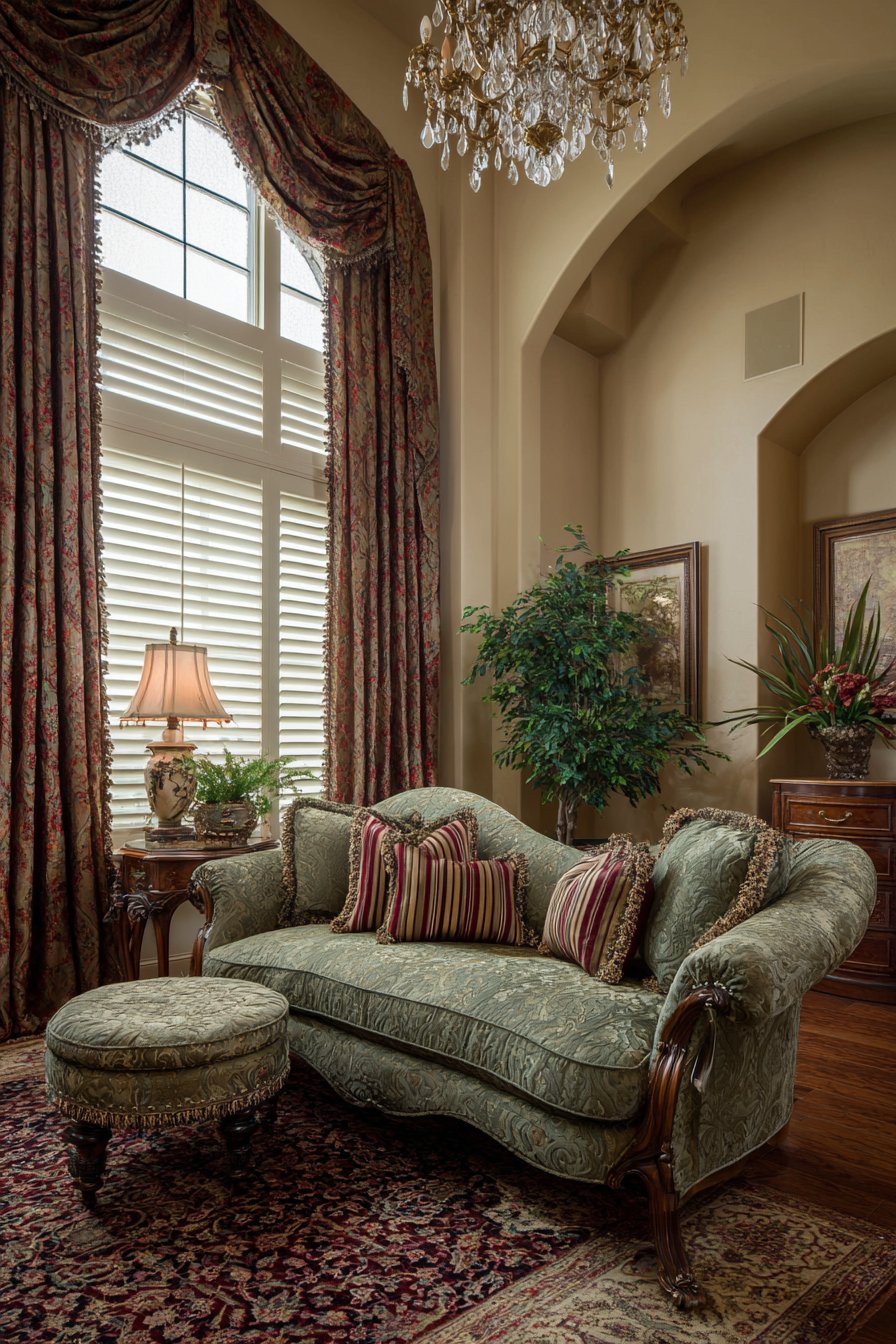
The camelback silhouette, with its distinctive curved back, is an iconic traditional furniture shape that adds sculptural interest to the room. Coordinating striped silk accent pillows provide refined detail and introduce additional texture through their lustrous fabric finish.
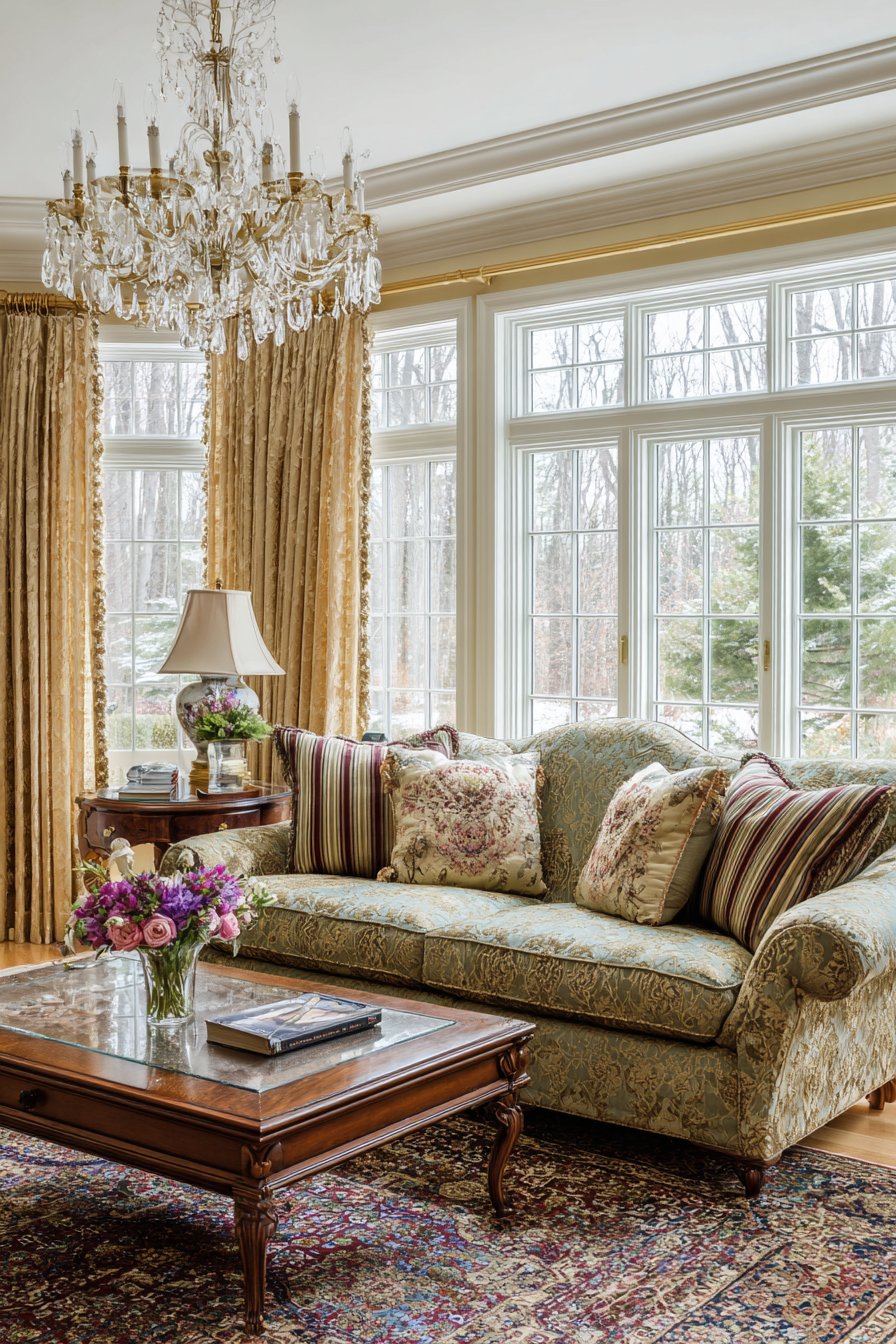
Warm cream walls create the perfect backdrop for the sage green upholstery, allowing the furniture to stand out while maintaining a cohesive, tranquil color story. This neutral wall treatment also maximizes natural light reflection, making the space feel brighter and more open.
An antique-style oriental carpet in muted burgundy, gold, and navy anchors the furniture grouping, its traditional patterns and aged patina adding depth and visual complexity. The rug’s colors tie together various elements in the room while defining the main seating area.
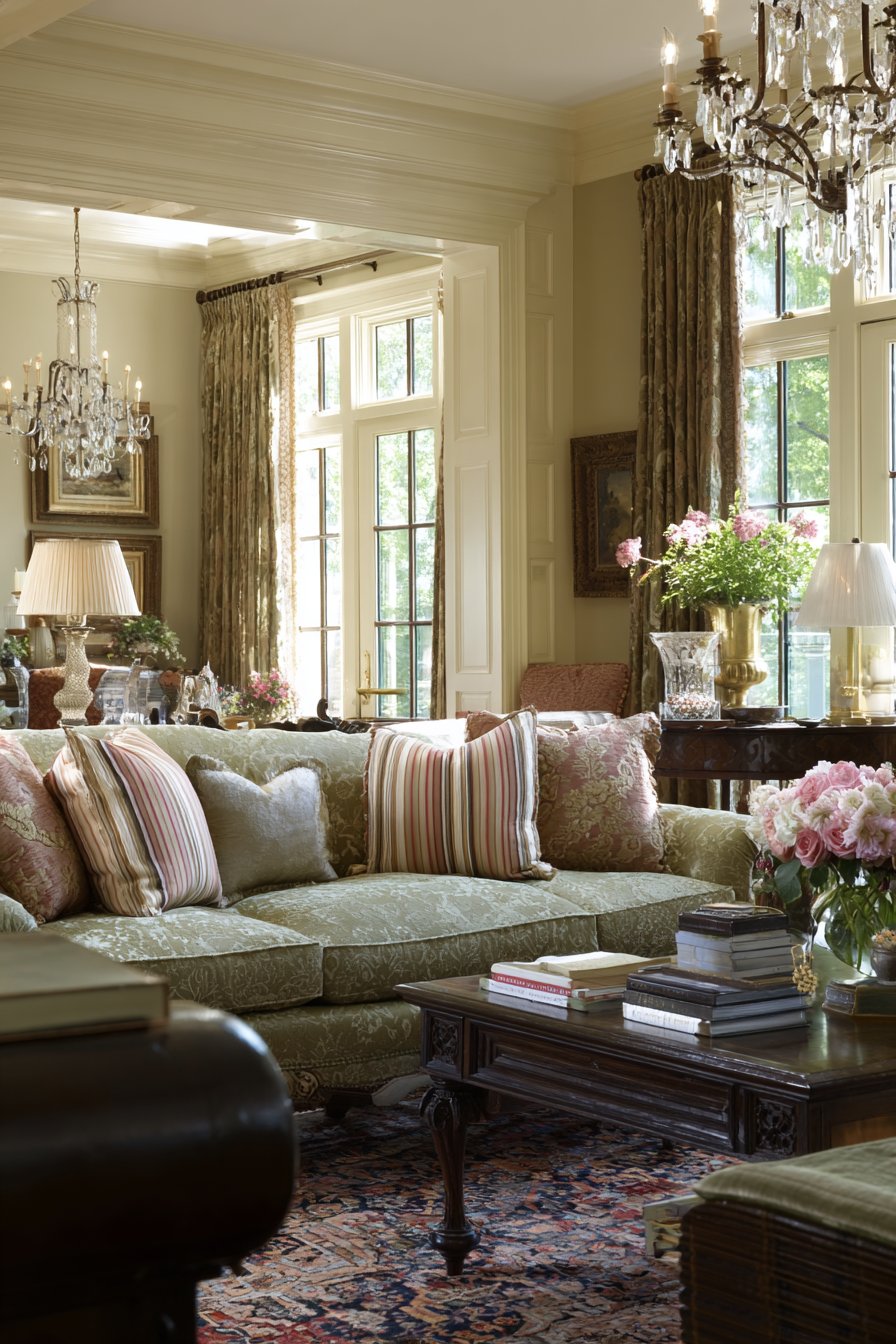
Overhead, a crystal chandelier with brass hardware provides elegant illumination that becomes a focal point when lit in evening hours. Heavy brocade window treatments with decorative tiebacks frame multi-pane windows, their substantial fabric weight adding to the room’s luxurious feel.
These layered textiles—damask upholstery, silk pillows, oriental carpet, and brocade drapes—create the rich, tactile environment characteristic of traditional interiors. The interplay of soft diffused daylight with various fabric patterns and wood grain details throughout the day ensures the room never appears static.
Key Design Tips:
- Choose a camelback sofa for an authentic traditional silhouette and visual interest
- Use sage green or other muted jewel tones for a sophisticated alternative to darker colors
- Layer multiple textile types, including damask, silk, brocade, and wool for textural richness
- Install a crystal chandelier with brass or bronze hardware for formal overhead lighting
- Select window treatments with decorative tiebacks to control light while adding elegance
- Paint walls in warm neutrals to create a versatile backdrop for furnishings
- Anchor seating areas with oriental carpets in complementary color palettes
- Add striped or patterned accent pillows to introduce additional visual detail
4. Dual Sofa Conversation Area with Medallion Rug Drama
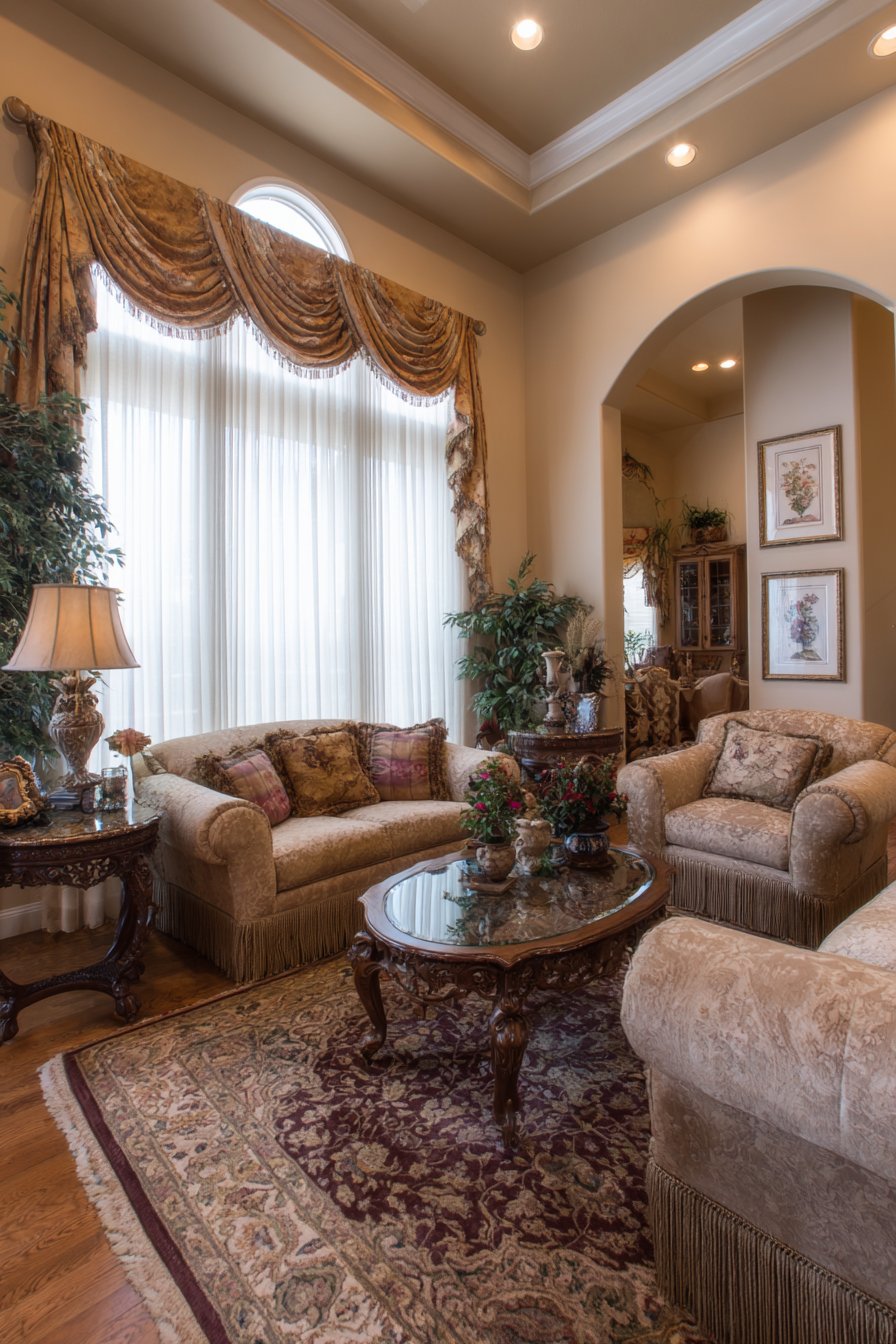
Creating distinct conversation areas within larger living rooms enhances both functionality and social interaction. Matching rolled-arm sofas in neutral linen face each other across an ornately carved coffee table with a glass insert top, establishing an intimate dialogue space within the broader room.
This symmetrical arrangement encourages face-to-face conversation while the neutral upholstery provides a calm foundation that allows decorative elements to shine. The rolled arms offer comfortable support while maintaining the clean lines essential to traditional design.
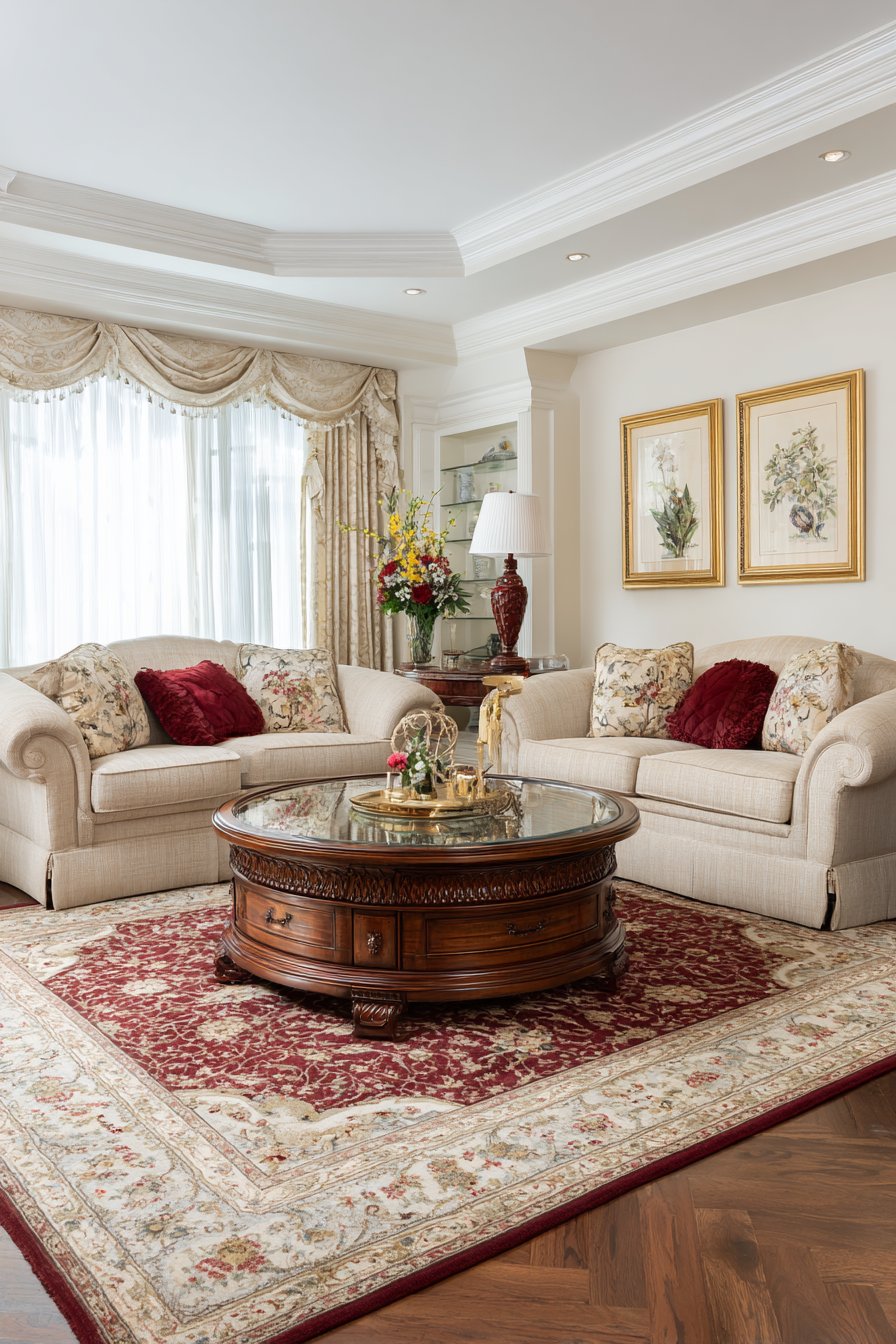
A wool area rug with a classic medallion pattern in burgundy and cream defines this conversation zone, visually separating it from other areas while adding warmth underfoot. Medallion rugs feature a central decorative motif that draws the eye and anchors furniture placement, making them ideal for formal seating arrangements. Mahogany accent tables positioned beside each sofa display traditional ceramic table lamps with pleated fabric shades, providing task lighting for reading while contributing to the room’s symmetrical aesthetic.
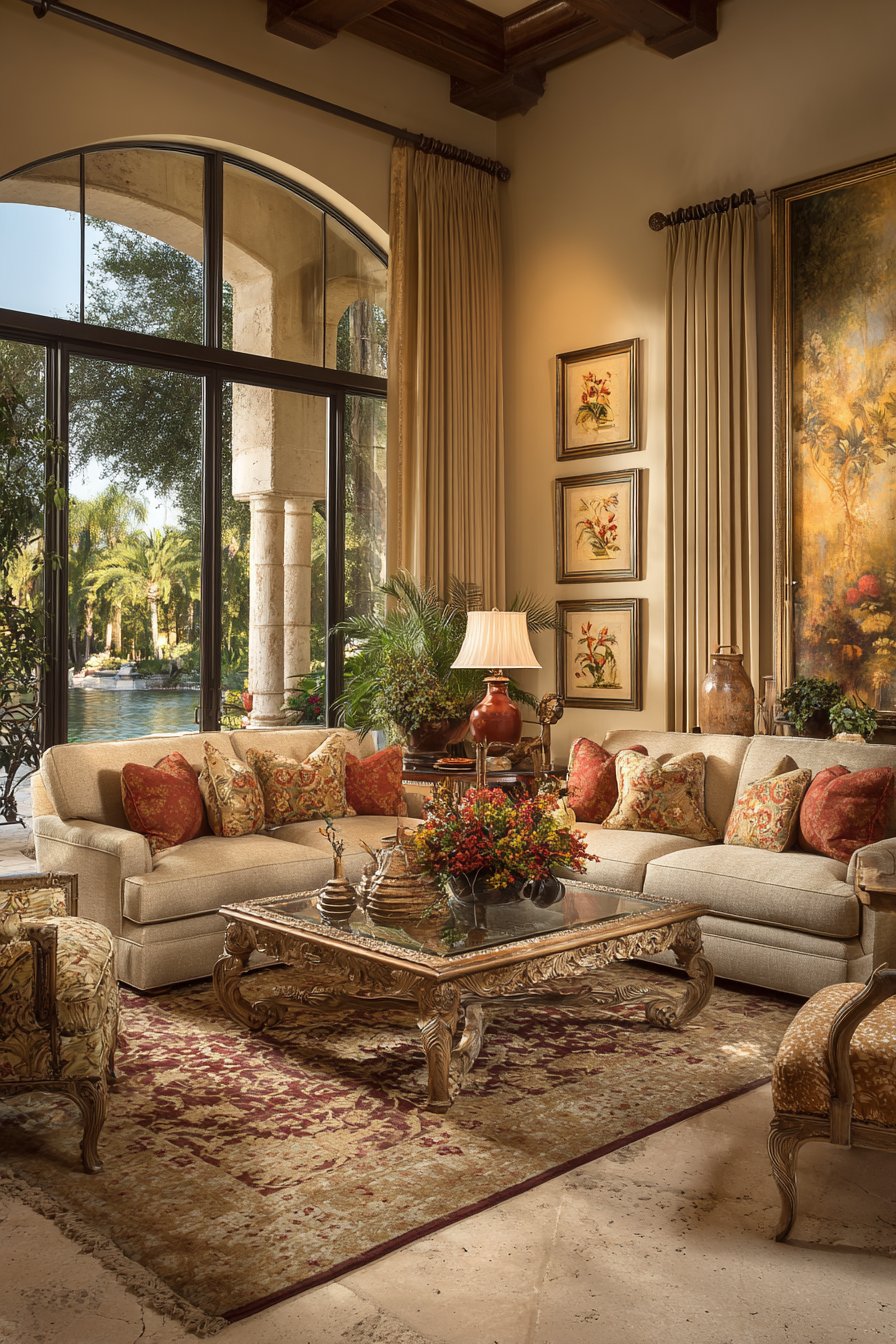
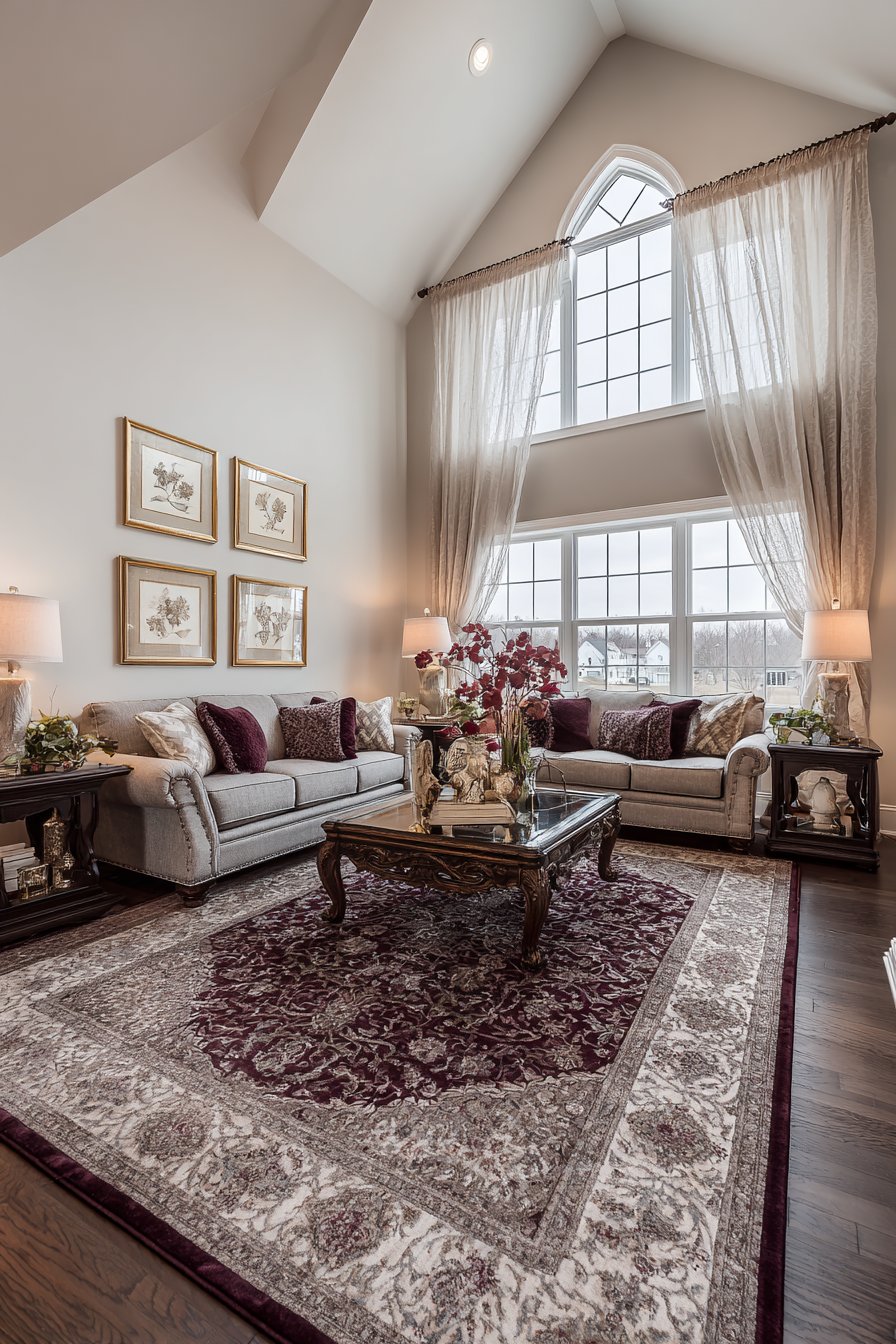
Walls adorned with framed botanical prints in matching gold frames create a curated gallery arrangement that demonstrates traditional design’s appreciation for nature and art. These prints are arranged symmetrically, reinforcing the room’s balanced composition.
Above, a coffered ceiling adds significant architectural depth and interest, transforming what might otherwise be an overlooked surface into a fifth wall worthy of attention. Natural lighting streaming through sheer curtains beneath formal swag valances creates soft, diffused illumination that highlights material richness without harsh shadows.
Key Design Tips:
- Position matching sofas facing each other to create intimate conversation areas
- Select neutral upholstery as a foundation for layering colorful accessories
- Choose medallion-pattern rugs to anchor and define seating zones
- Install coffered ceilings for added architectural dimension and traditional character
- Display botanical prints or landscape paintings in matching frames for cohesive wall art
- Use mahogany or other dark wood accent tables for traditional warmth
- Layer window treatments with sheers and formal valances for light control
- Incorporate glass-top coffee tables to maintain visual openness while providing function
- Ensure symmetrical lamp placement for balanced lighting and visual harmony
5. Golden Window Treatment Showcase with Luxurious Fabric Layers
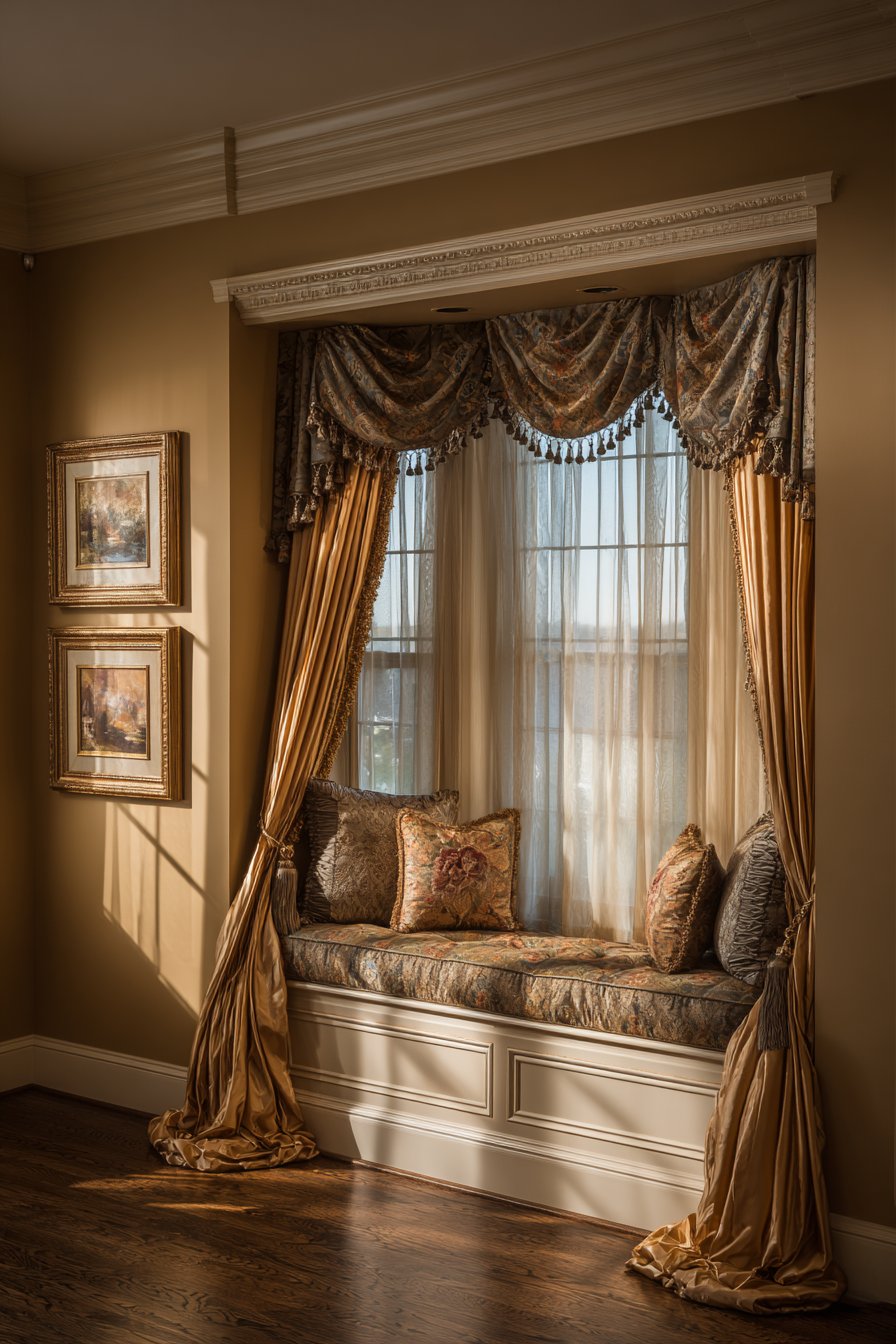
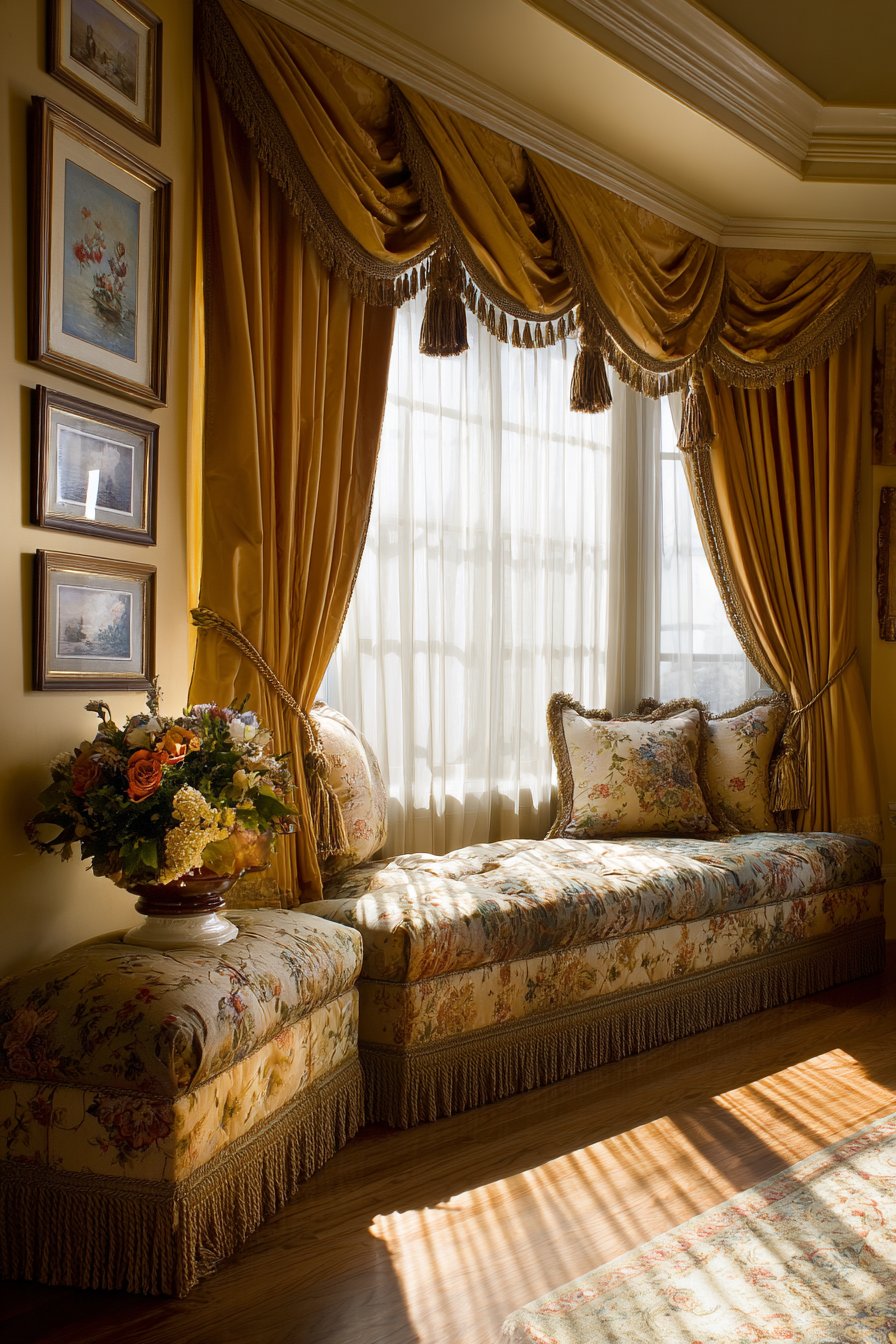
Windows in traditional living rooms receive special attention as opportunities to display luxurious fabrics and masterful drapery techniques. Floor-to-ceiling silk drapes in deep gold create instant drama and elegance while their substantial length emphasizes the room’s vertical height.
These drapes are paired with coordinating patterned valances featuring tassel trim, demonstrating the traditional approach to layered window dressings that combines beauty with light control functionality. The deep gold color adds warmth and richness while complementing various furniture finishes.
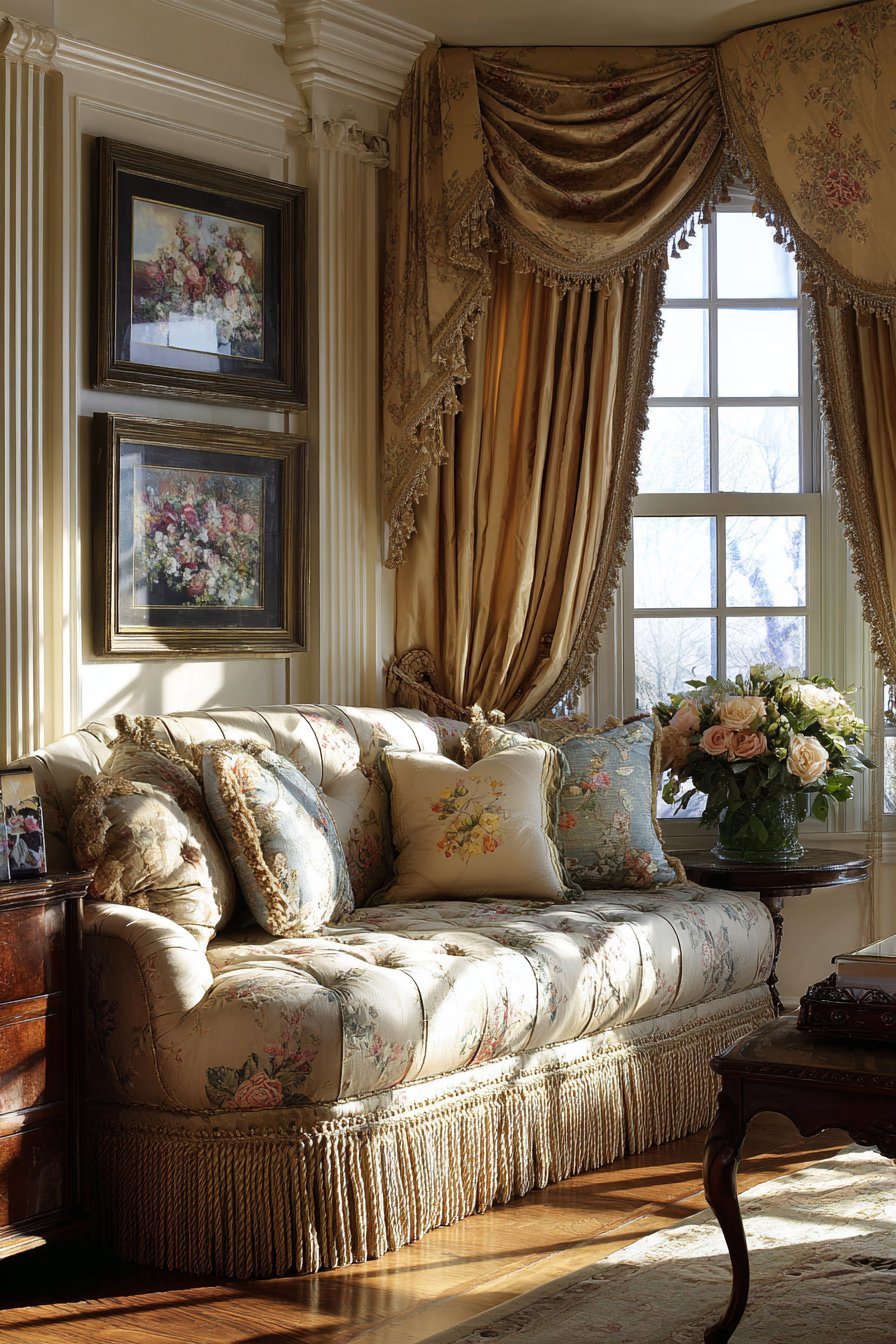
Below this elaborate window treatment sits a cushioned window seat featuring tufted upholstery in complementary floral tapestry fabric. Decorative throw pillows add comfort and additional pattern mixing, creating an inviting nook perfect for reading or quiet contemplation.
Window seats represent traditional design’s emphasis on creating functional beauty—maximizing architectural features while providing comfortable seating. The floral tapestry fabric connects the window area to other traditional elements in the room through its classical pattern and rich coloration.
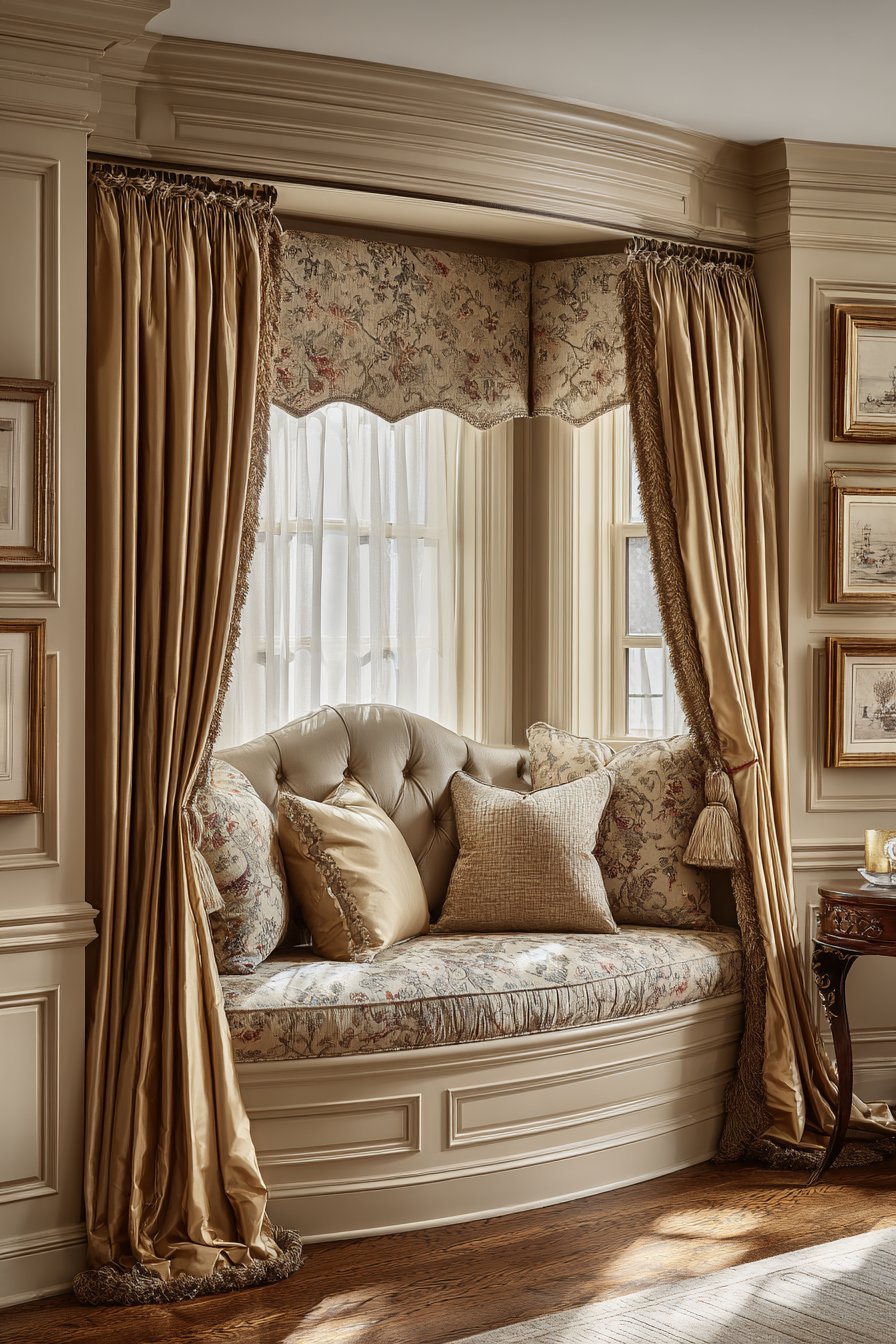
Architectural moldings frame this luxurious vignette, with crown molding defining the ceiling edge and picture rail molding providing a horizontal line for displaying traditional artwork. These moldings add depth and shadow lines that enhance the room’s dimensional quality.
Warm oak hardwood flooring shows natural color variation that adds organic beauty underfoot; its honey tones complement the golden window treatments. Golden hour lighting filtering through sheer under-curtains creates enchanting soft shadows that highlight luxurious fabric textures and demonstrate classical window dressing techniques at their finest.
Key Design Tips:
- Invest in floor-to-ceiling drapes to emphasize ceiling height and create drama
- Layer window treatments with sheers, drapes, and decorative valances for depth
- Choose rich jewel tones like deep gold, burgundy, or navy for window fabrics
- Add tassel trim and decorative tiebacks for authentic traditional detailing
- Create window seats with tufted upholstery for functional beauty
- Install picture rail molding to display artwork without wall damage
- Use floral tapestry or damask fabrics for upholstered elements
- Select hardwood flooring in warm tones that complement your color palette
- Ensure adequate under-curtain sheers for privacy and light diffusion
6. Formal Built-in Cabinetry Wall in Rich Walnut Finish
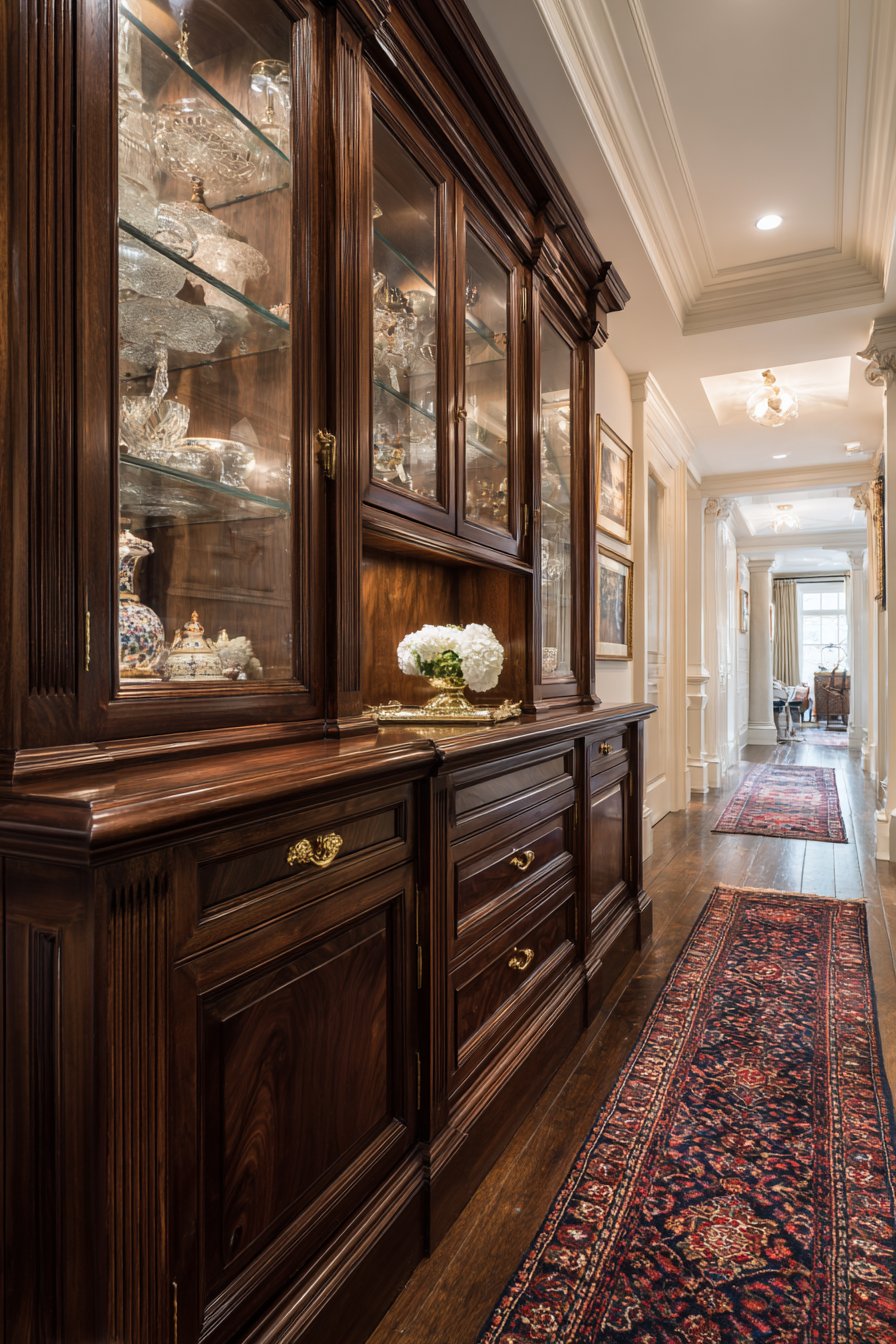
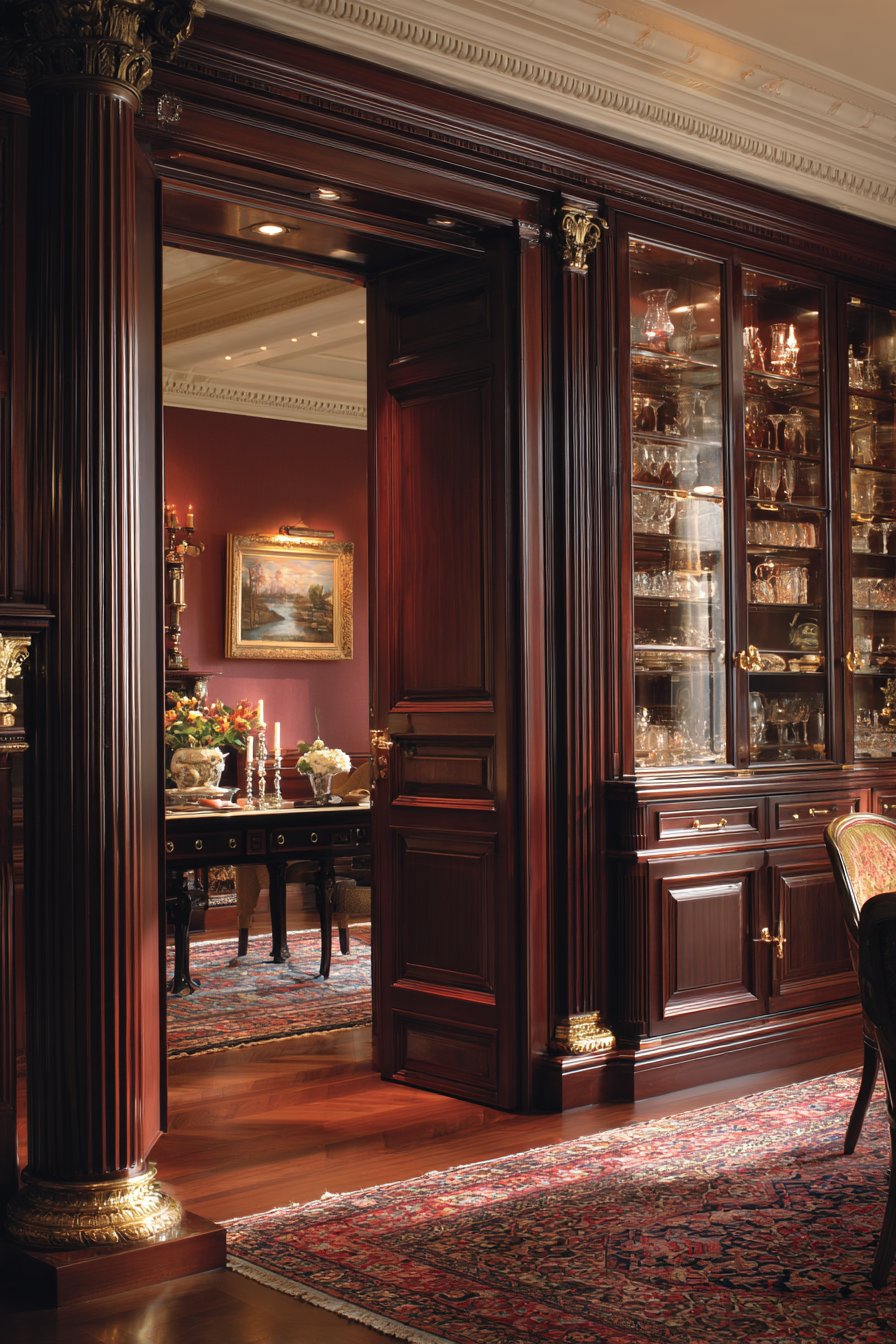
Built-in cabinetry represents traditional design’s commitment to custom, site-specific craftsmanship that elevates rooms beyond basic furnishing. A full wall of rich walnut cabinetry with raised panel doors and brass hardware creates impressive storage while serving as a major architectural feature.
Glass-front upper cabinets provide protected display space for fine china and crystal, allowing treasured collections to become part of the room’s decoration. Lower cabinets with solid doors offer concealed storage for less attractive necessities, maintaining the room’s elegant appearance.
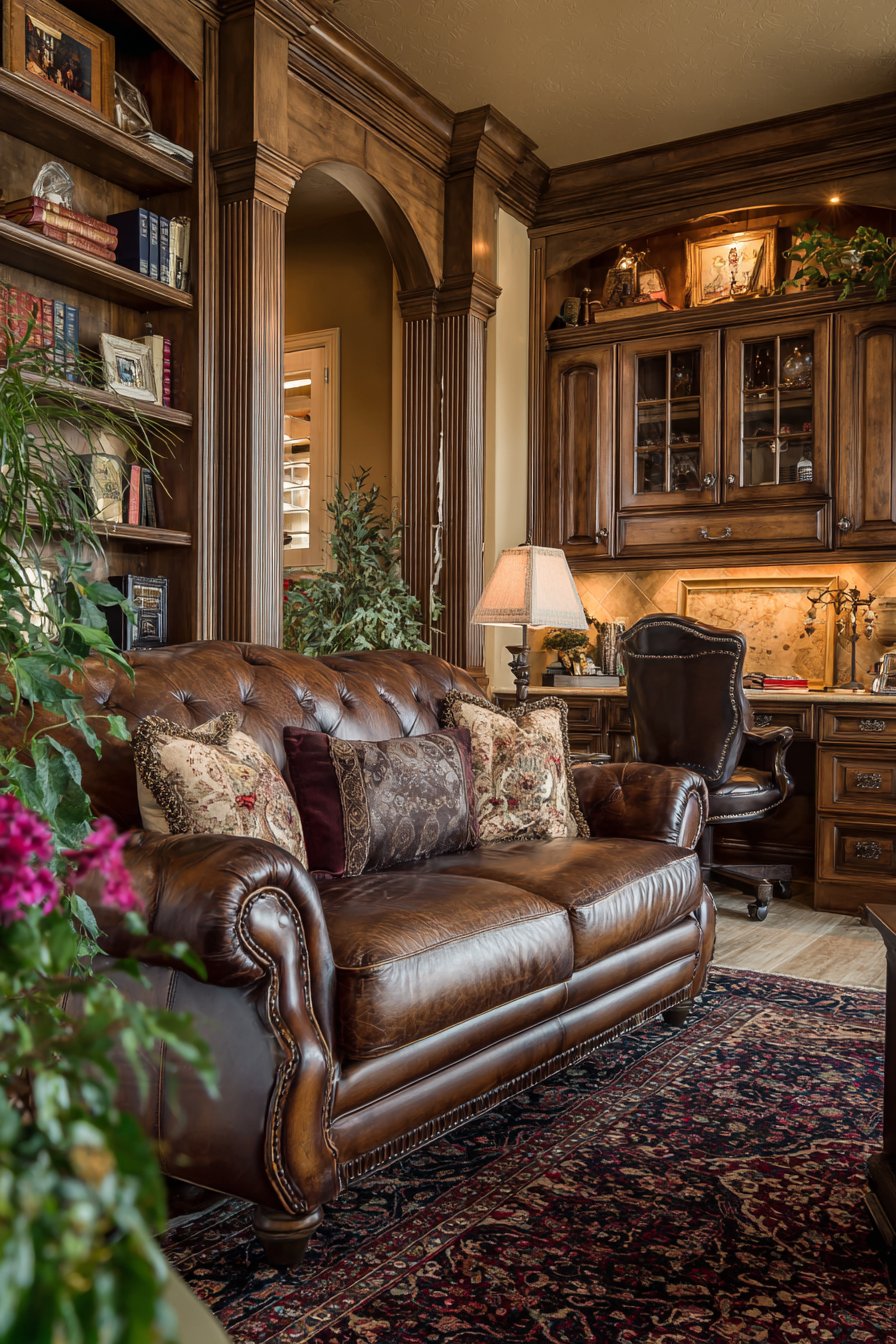
A leather-topped writing desk integrates seamlessly into this built-in system, creating a functional workspace that doesn’t require additional furniture or floor space. This demonstrates traditional design’s emphasis on thoughtful planning and multi-purpose spaces.
Traditional dental molding crowns the cabinetry units while fluted columns add classical architectural detail that references ancient Greek and Roman design principles. These elements transform functional storage into sophisticated architectural statement pieces worthy of the room’s formal character.
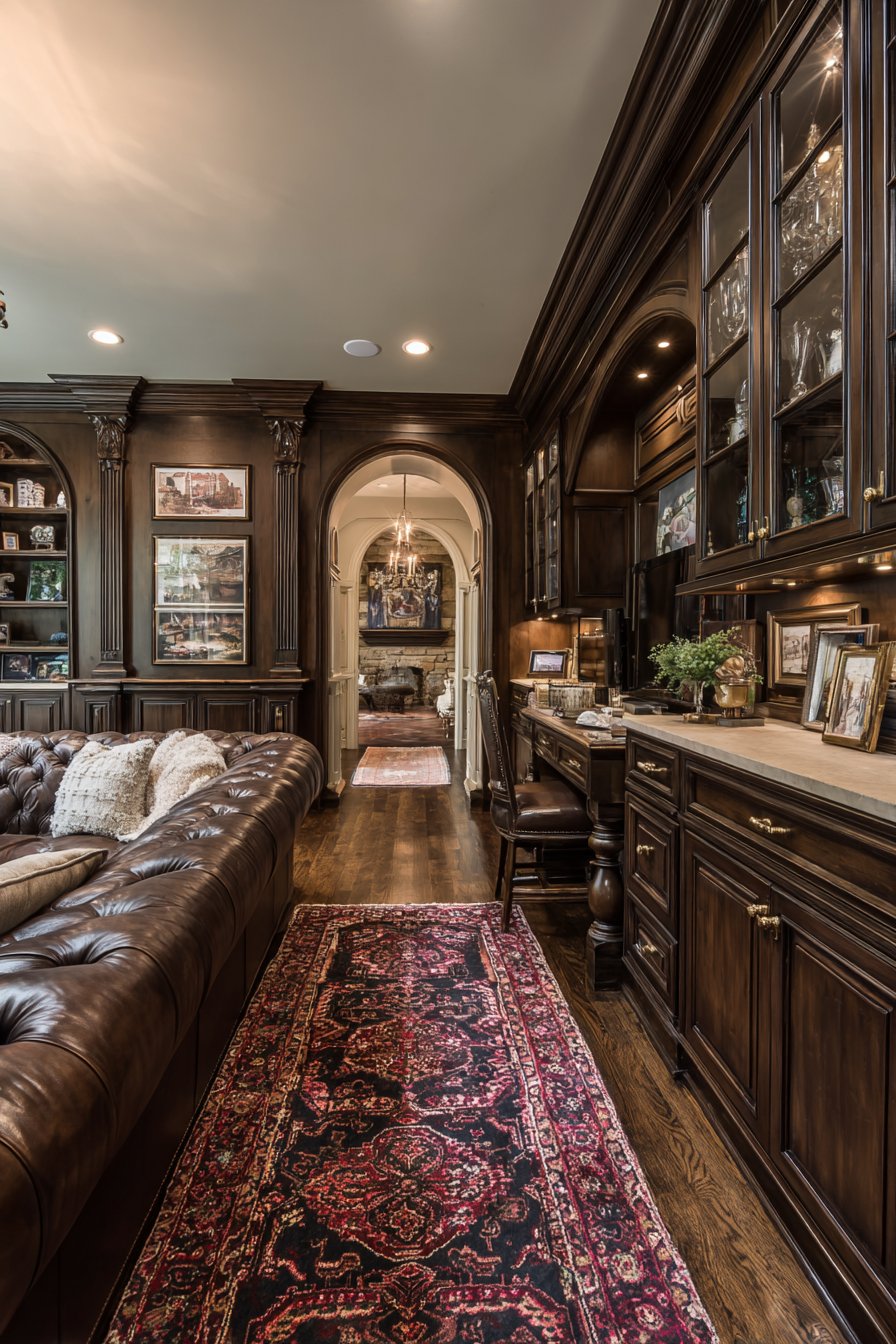
The practical elegance of this storage solution becomes evident in daily use—everything has its designated place, reducing clutter while maintaining beauty. A Persian runner rug in burgundy and navy leads to this space, its linear format appropriate for traffic flow, while its traditional pattern connects to other textiles in the room.
Balanced artificial and natural lighting highlights wood grain, creates brass reflections, and ensures the cabinetry display is always visible and attractive. This wide-angle perspective showing full wall integration demonstrates how built-ins can transform a room’s functionality without sacrificing aesthetic appeal.
Key Design Tips:
- Commission custom built-in cabinetry for seamless architectural integration
- Choose rich wood finishes like walnut, cherry, or mahogany for traditional warmth
- Install glass-front upper cabinets to display collections while protecting them
- Select raised panel doors for authentic traditional cabinet styling
- Use brass hardware throughout for cohesive metallic accents
- Incorporate dental molding and fluted columns for classical architectural detail
- Integrate a desk or other functional element into the built-in system
- Add interior cabinet lighting to highlight displays and create ambiance
- Choose runner rugs to define pathways and connect built-ins to the room’s design
7. Cozy Reading Corner with Cognac Leather and Brass Accents
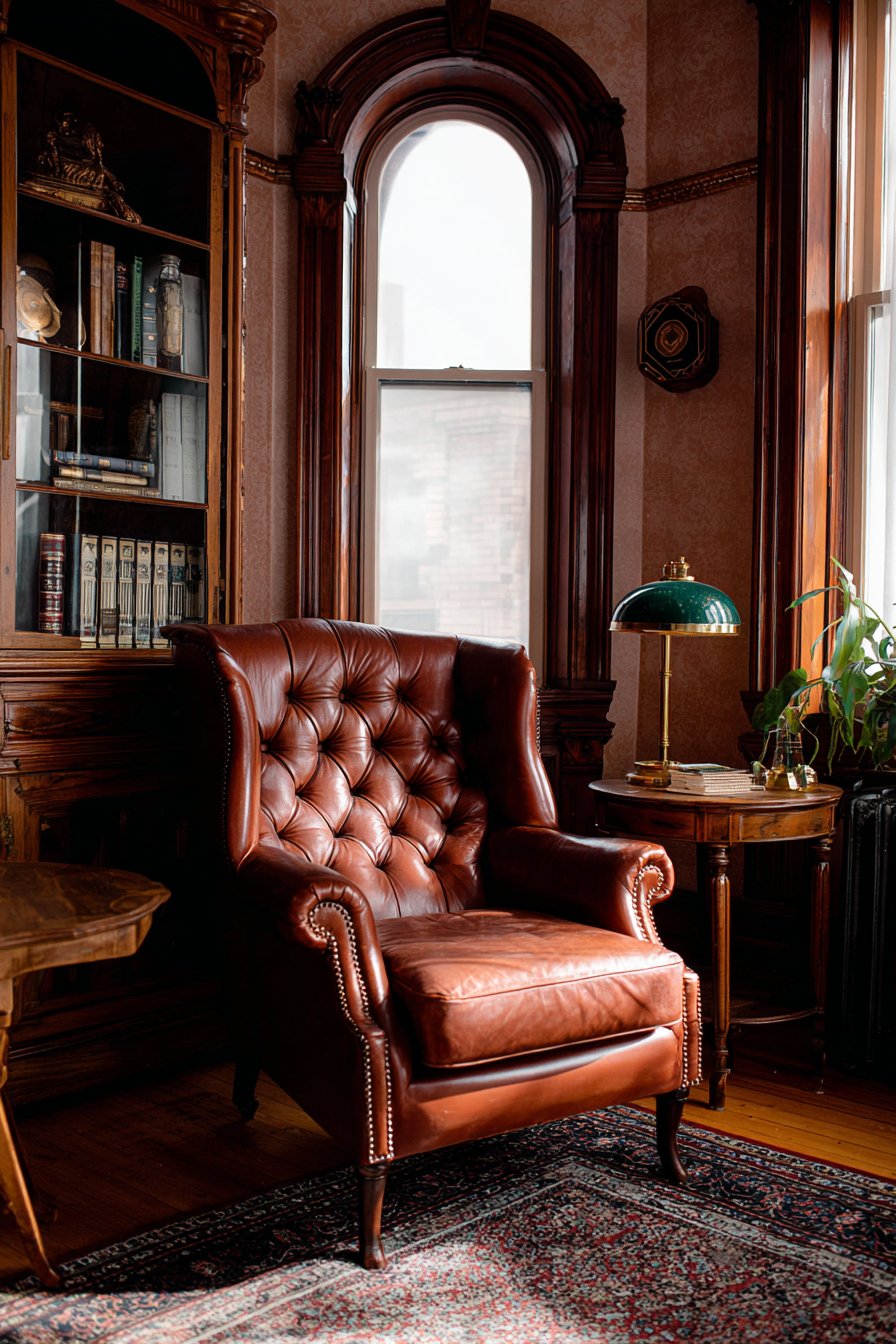
Every traditional living room benefits from intimate zones designed for specific activities beyond general conversation. A tufted leather wingback chair in cognac brown positioned beside a tall arched window creates the perfect reading retreat.
The cognac color brings warmth and sophistication while developing rich patina over time, a characteristic that aligns with traditional design’s appreciation for materials that age beautifully. The wingback design provides comfortable head support during extended reading sessions while its high back creates a sense of enclosure and privacy.
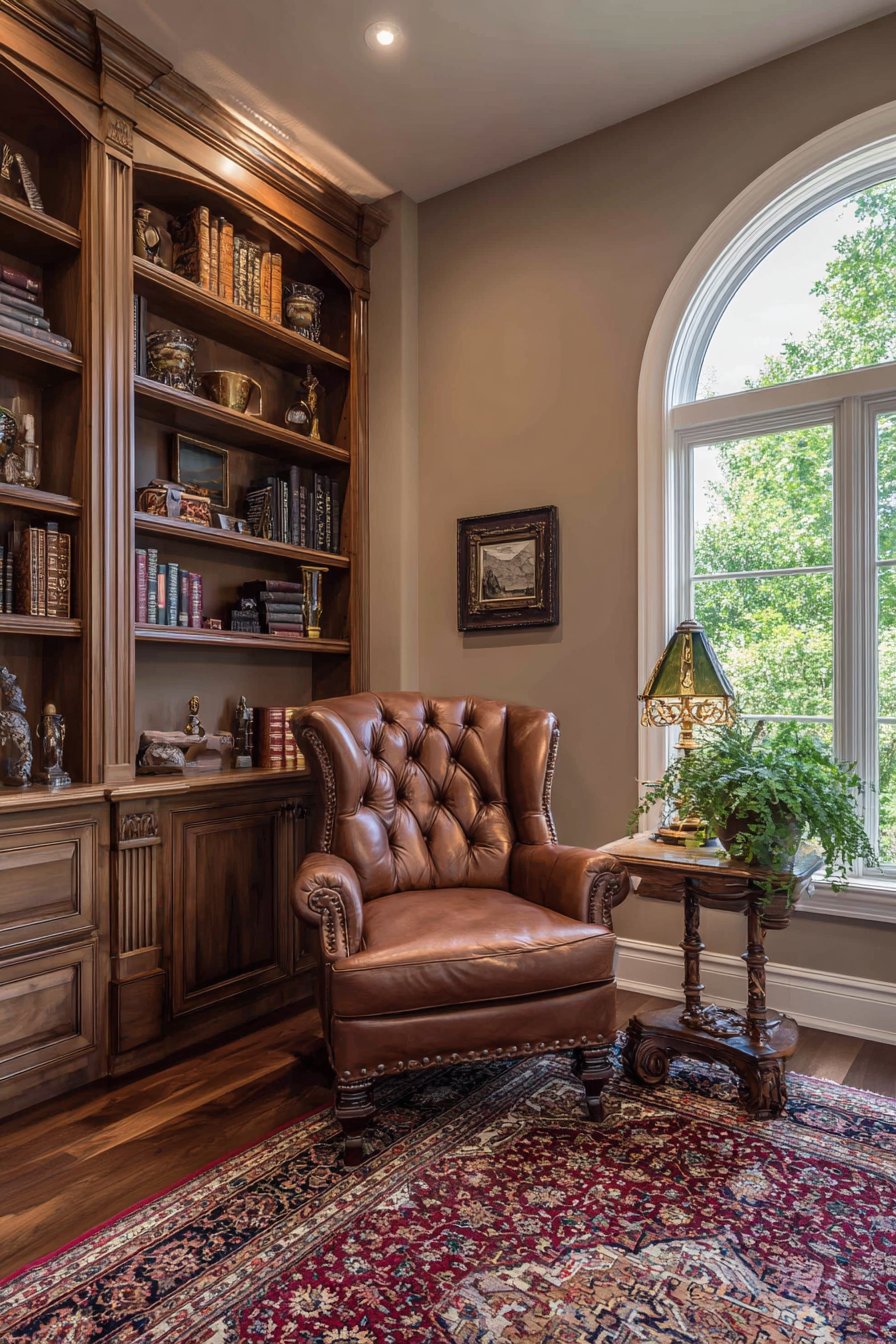
A turned-leg side table in cherry wood holds a traditional brass reading lamp with green glass shade, providing focused task lighting essential for comfortable reading. This lamp style, often called a banker’s lamp, adds authentic period character while serving a practical purpose.
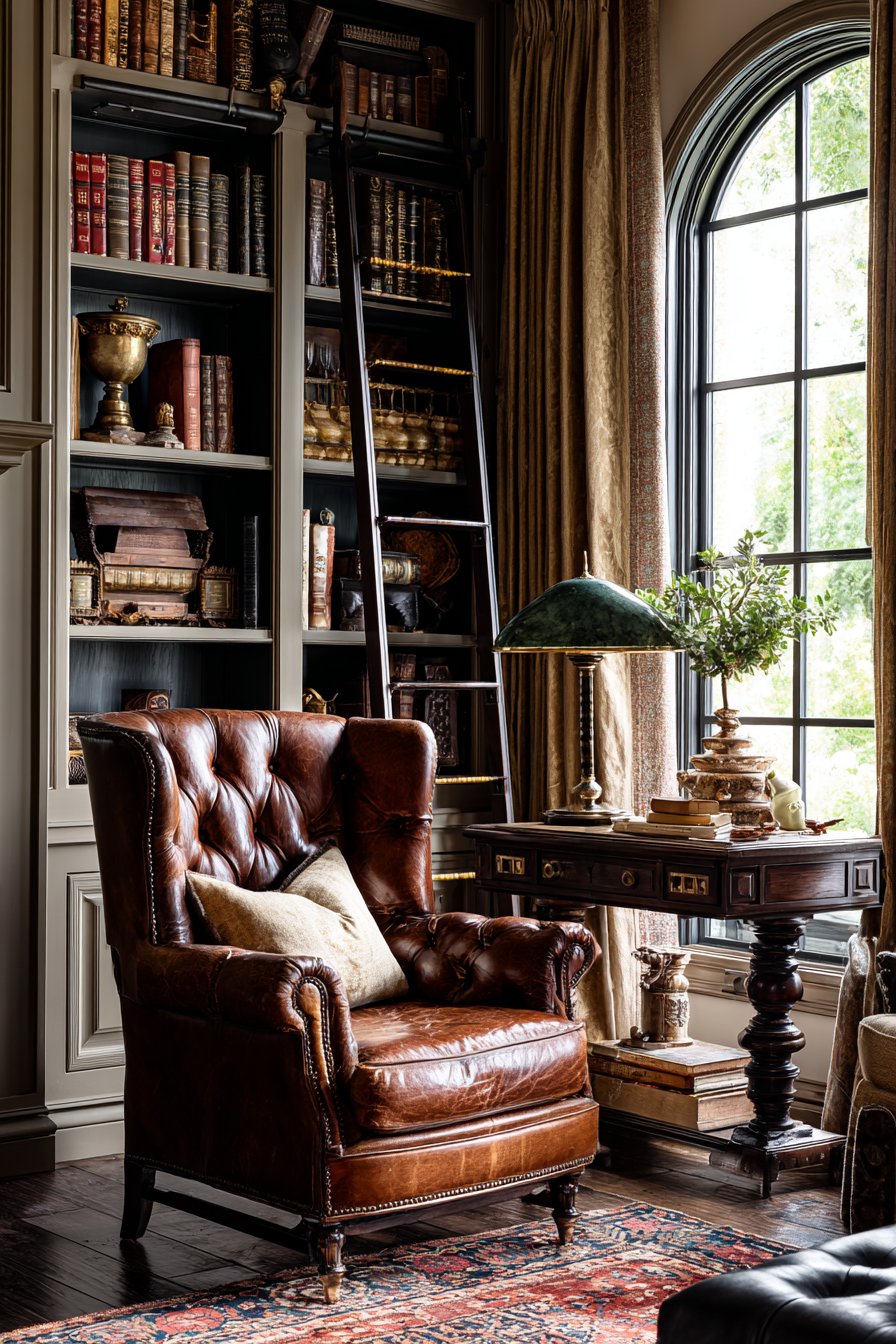
Built-in bookcases with ladder access display leather-bound books and classic decorative objects, creating a library atmosphere that encourages literary pursuits. The ladder itself becomes a decorative element, adding vertical interest and suggesting extensive collections that require special access.
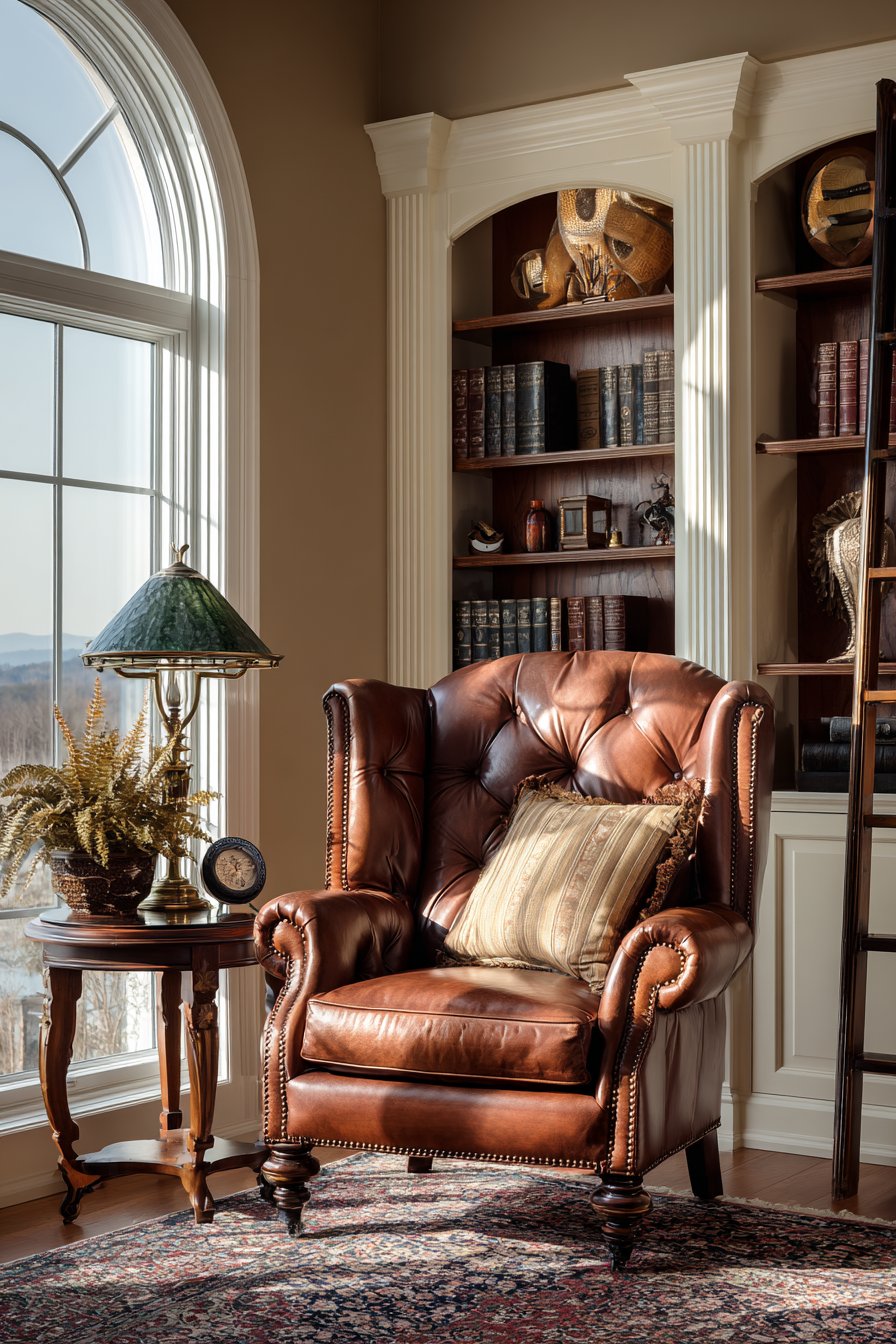
An antique Persian rug segment defines this intimate corner, separating it visually from the larger room while adding pattern and color at floor level. Walls painted in warm taupe with chair rail molding create a sophisticated backdrop that doesn’t compete with the rich leather and wood tones.
Natural light from the arched window provides daytime illumination that changes throughout the day, creating different moods and shadow patterns. This functional traditional vignette demonstrates how thoughtful furniture placement and lighting design can transform an underutilized corner into a cherished personal retreat.
Key Design Tips:
- Create dedicated reading corners with comfortable wingback chairs
- Choose cognac or brown leather that develops attractive patina over time
- Install built-in bookcases with ladder access for library-style character
- Use brass reading lamps with green glass shades for authentic traditional lighting
- Position reading chairs near windows to maximize natural light
- Add turned-leg side tables in cherry or mahogany for functional elegance
- Paint walls in warm neutrals like taupe or cream for sophisticated backdrops
- Install chair rail molding to add horizontal visual interest
- Define corners with rug segments that complement the main room carpet
8. Grand Entertainment Wall with Integrated Fireplace
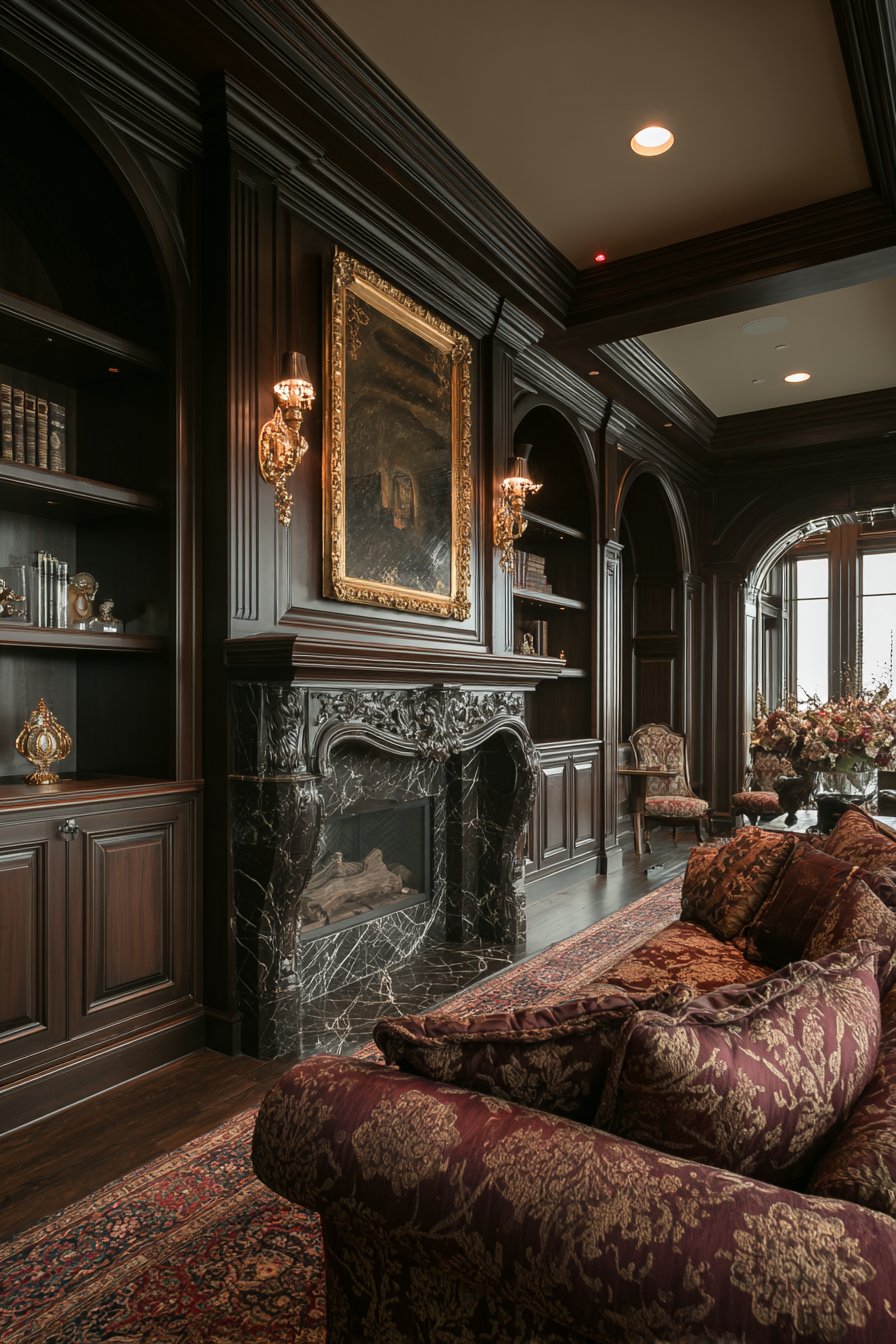
Large-scale built-in cabinetry walls that integrate entertainment systems and fireplaces represent traditional design adapted for modern living needs. Dark mahogany cabinetry featuring arched display niches and adjustable shelving creates an impressive visual impact while providing extensive storage.
The marble-surround fireplace integrates into the center of this built-in system, maintaining its role as focal point while being flanked by matching cabinets. An ornate carved wooden overmantel adds decorative detail that draws the eye upward and frames the fireplace opening.
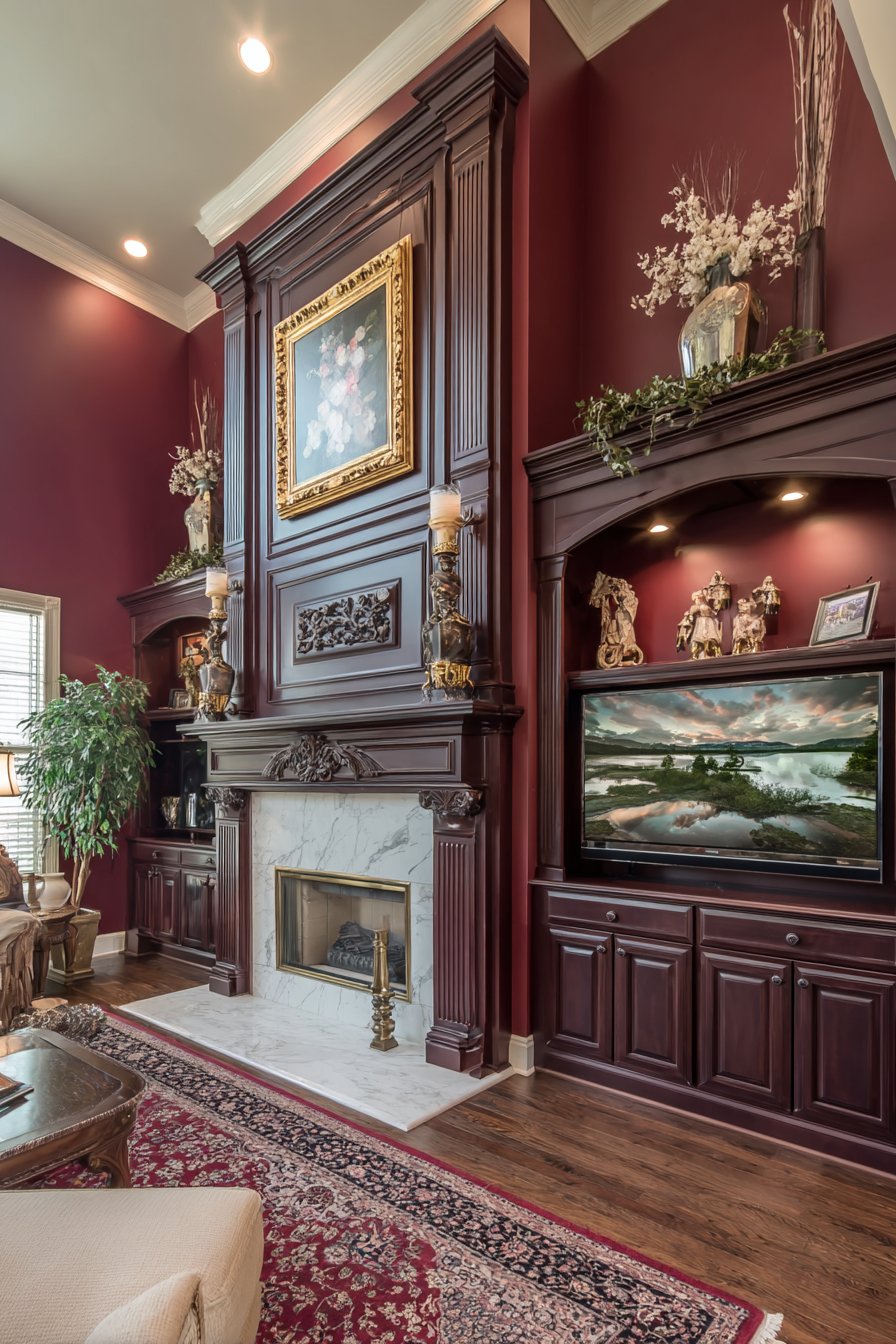
Matching side cabinets provide media storage behind raised panel doors with antique brass hardware, concealing modern technology behind traditional facades. This approach allows contemporary entertainment systems to coexist with classical aesthetics without visual conflict.
Above the mantel, a large gold-framed mirror reflects light and creates the illusion of expanded space, a traditional design technique that remains effective in contemporary homes. The mirror’s size and ornate frame make it worthy of its prominent position while serving practical purposes.
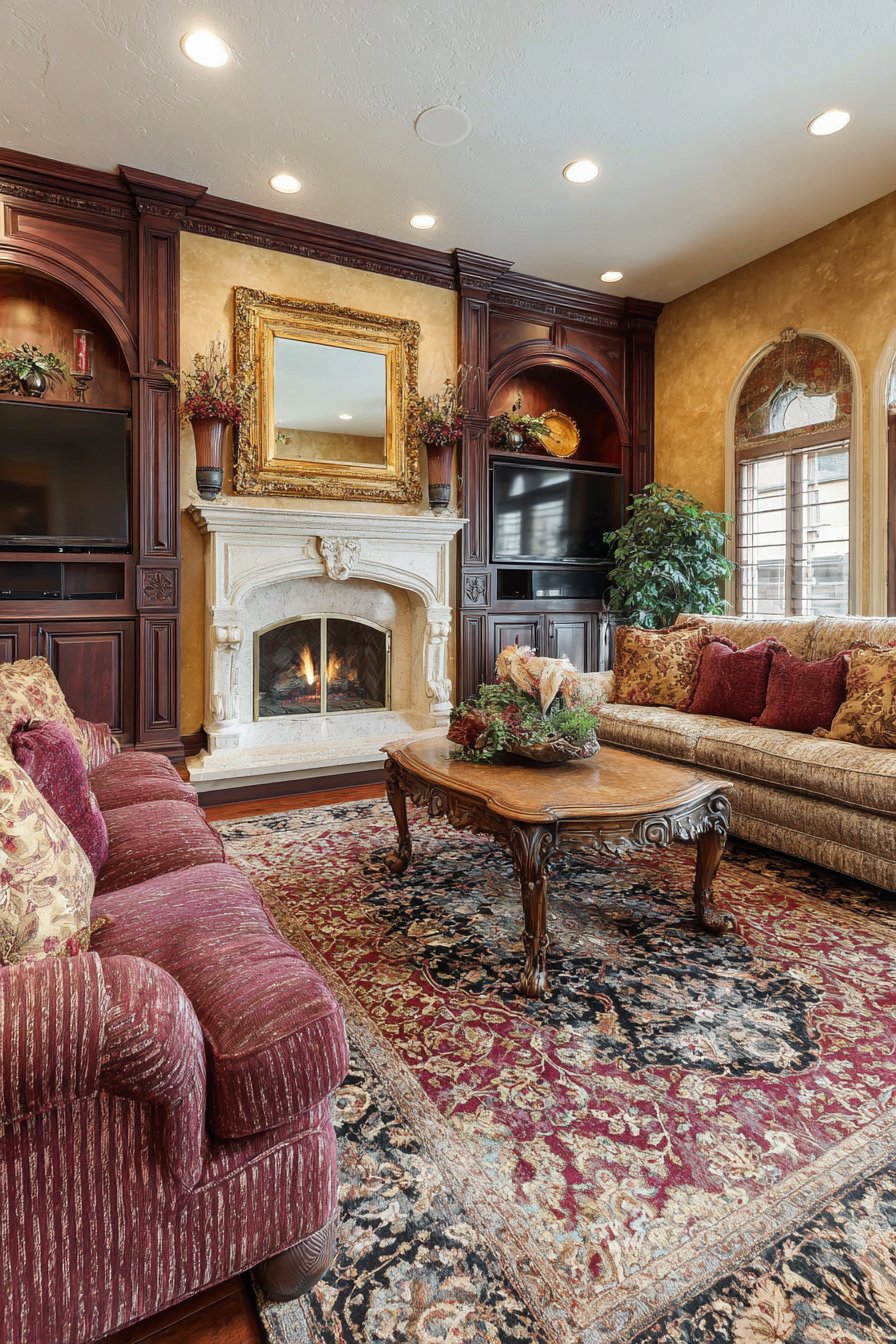
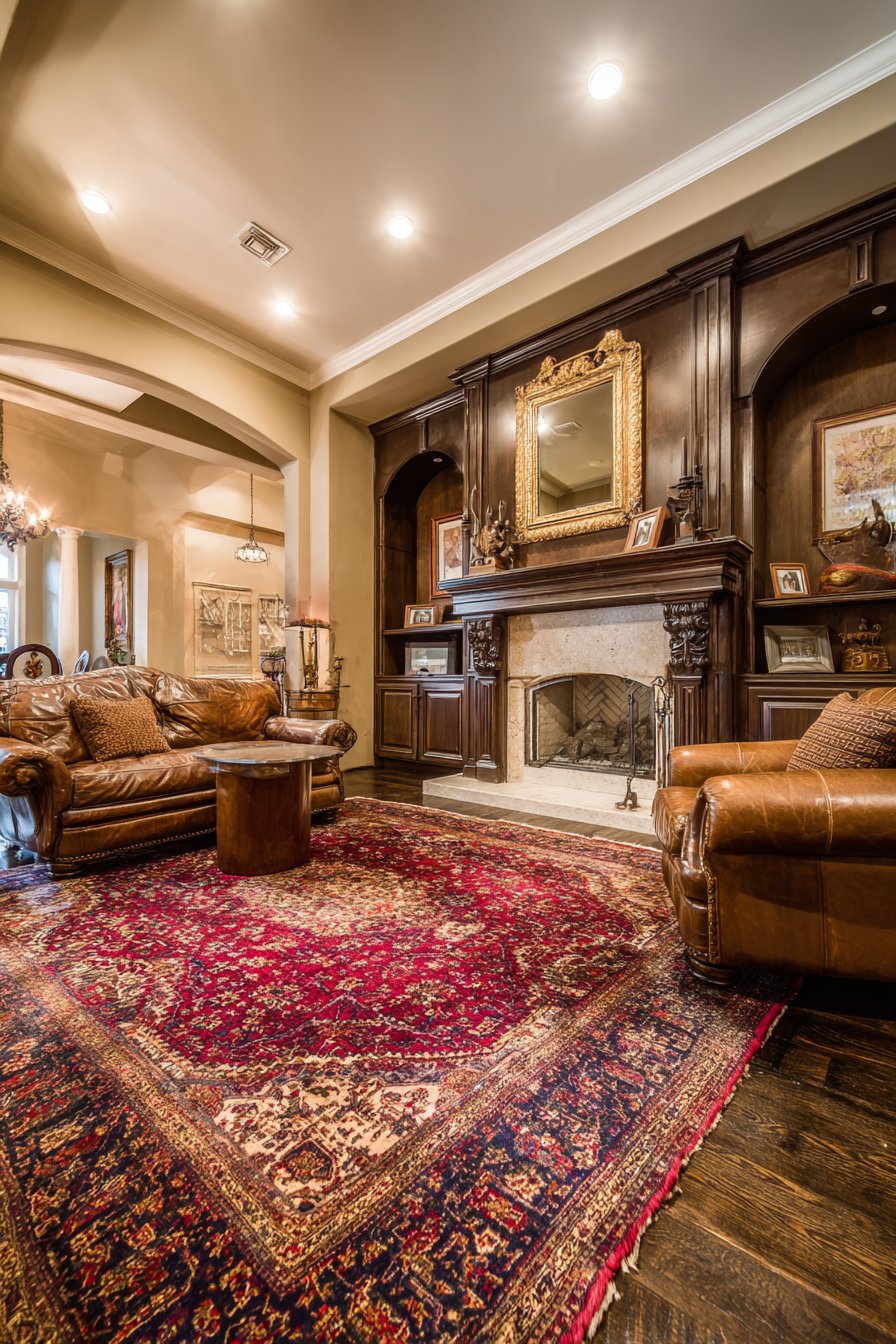
An oriental carpet in traditional red and navy patterns anchors the facing sofa arrangement, defining the primary viewing and conversation area. This layout balances the room’s formality with comfortable functionality, allowing family members to enjoy both the fireplace and entertainment features.
Soft recessed lighting combined with natural daylight creates balanced illumination that emphasizes architectural symmetry without harsh shadows. The entire composition demonstrates how traditional materials and classical proportions can accommodate modern lifestyle requirements while maintaining timeless elegance.
Key Design Tips:
- Integrate fireplaces into entertainment walls for unified focal points
- Use raised panel doors to conceal modern electronics behind traditional facades
- Install arched display niches for architectural interest and collection displays
- Choose dark mahogany or walnut for dramatic built-in cabinetry
- Hang oversized mirrors above mantels to reflect light and expand visual space
- Add ornate carved overmantels for decorative impact above fireplaces
- Combine recessed and natural lighting for balanced, flattering illumination
- Anchor seating areas with oriental carpets in traditional red and navy palettes
- Select antique brass hardware throughout for cohesive metallic detailing
9. Formal Entryway Transition with Console Table Elegance
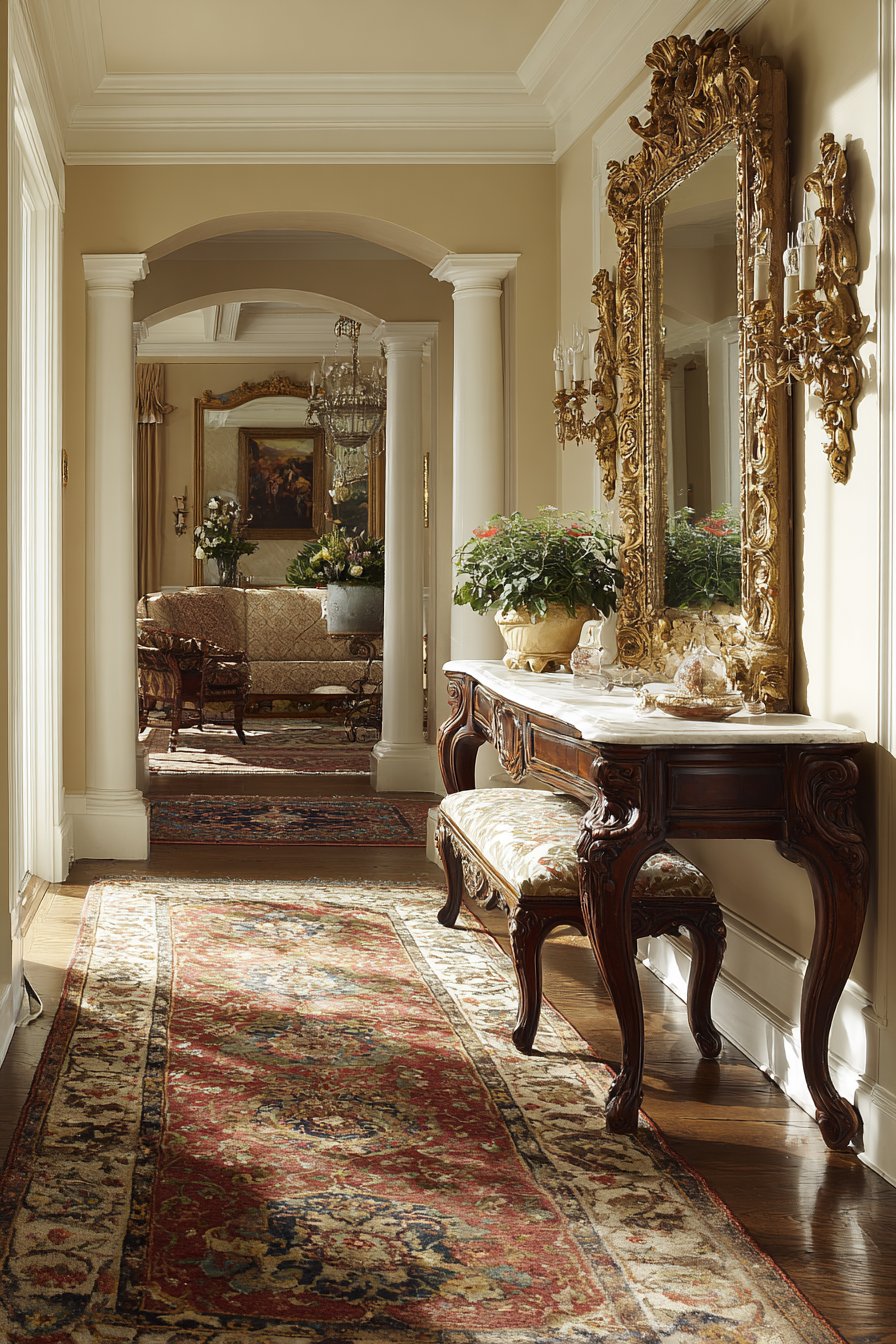
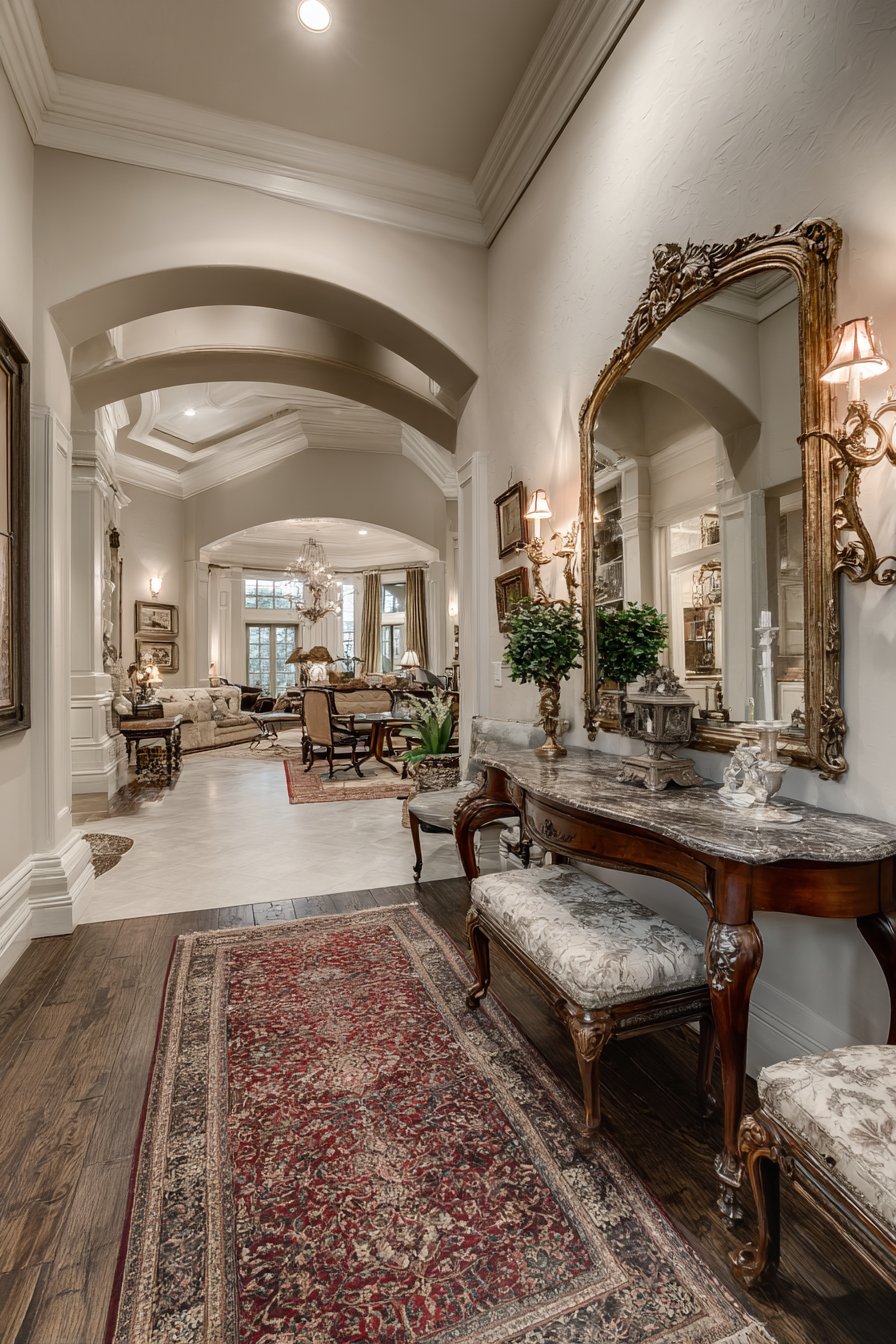
The transition space between entrance and living room deserves careful attention in traditional homes, as it sets expectations for the elegance to come. A mahogany console table featuring curved cabriole legs and marble top creates an impressive first impression while providing functional space for keys, mail, and decorative displays. Cabriole legs with their distinctive S-curve represent classical furniture design at its most refined, adding sculptural interest to a practical piece. The marble top adds luxury while being durable enough for daily use.
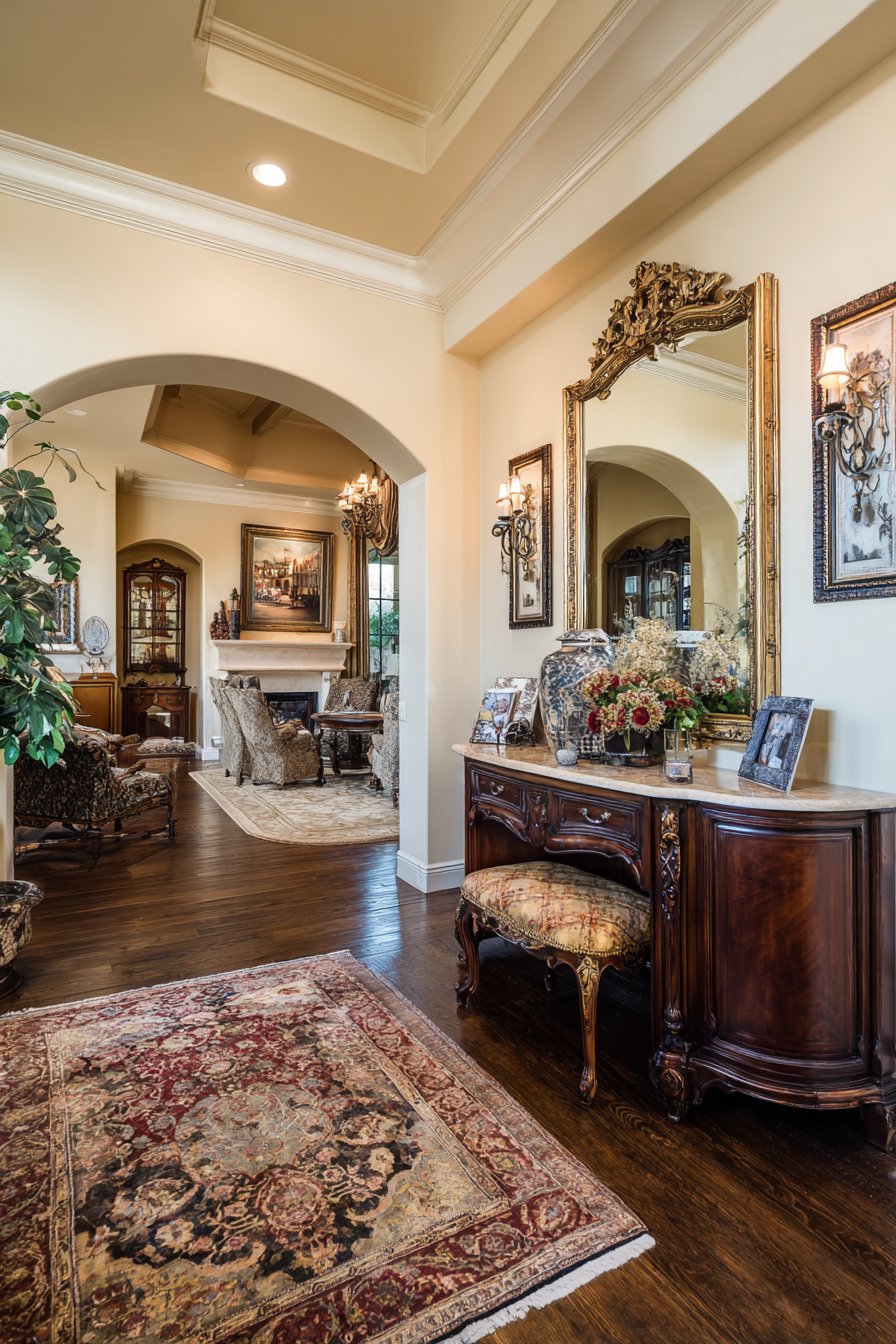
A large beveled mirror in an ornate gilded frame hangs above the console, flanked by traditional brass wall sconces that provide welcoming illumination. Beveled mirrors add sparkle and dimension through their angled edges while expanding the perceived space of entry areas.
The gilded frame’s ornate detailing complements the room’s overall formal aesthetic while the brass sconces echo hardware finishes used throughout the space. Below the console, a coordinating upholstered bench with needlepoint cushion provides a practical perch for removing shoes or setting down packages.
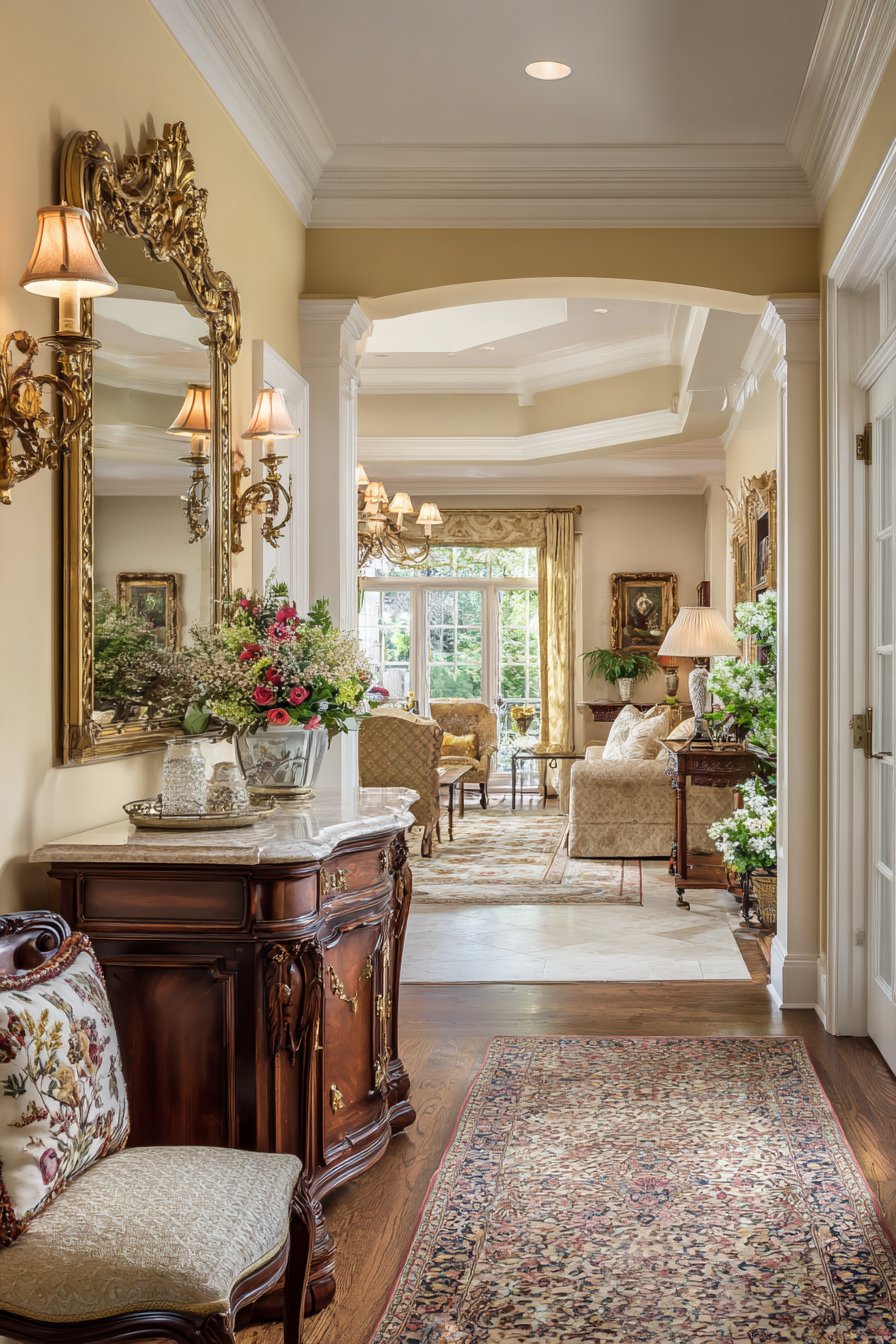
A Persian hall runner in rich jewel tones leads from the entry into the main living space visible beyond, creating visual flow while protecting high-traffic flooring. Crown molding and picture rail molding frame cream-painted walls, continuing the architectural detailing from adjacent rooms and creating cohesive design throughout the home.
Natural lighting from adjacent spaces highlights the classical proportions and elegant traditional furnishings, while balanced exposure captures material details and demonstrates how proper entryway design transitions visitors from exterior to interior spaces with grace and beauty.
Key Design Tips:
- Select console tables with cabriole legs for authentic traditional furniture styling
- Hang oversized mirrors above consoles to maximize light and create spaciousness
- Flank mirrors with matching wall sconces for symmetrical lighting
- Add upholstered benches for functional seating in transition spaces
- Use Persian or oriental hall runners to protect floors and guide traffic flow
- Continue crown molding and picture rail detailing from adjacent rooms
- Choose marble-top furniture for durable luxury in high-traffic areas
- Paint walls in neutral cream or ivory to brighten entry spaces
- Coordinate entryway finishes and hardware with main living areas
10. Sophisticated Sage and Cream Color Story with Gallery Wall
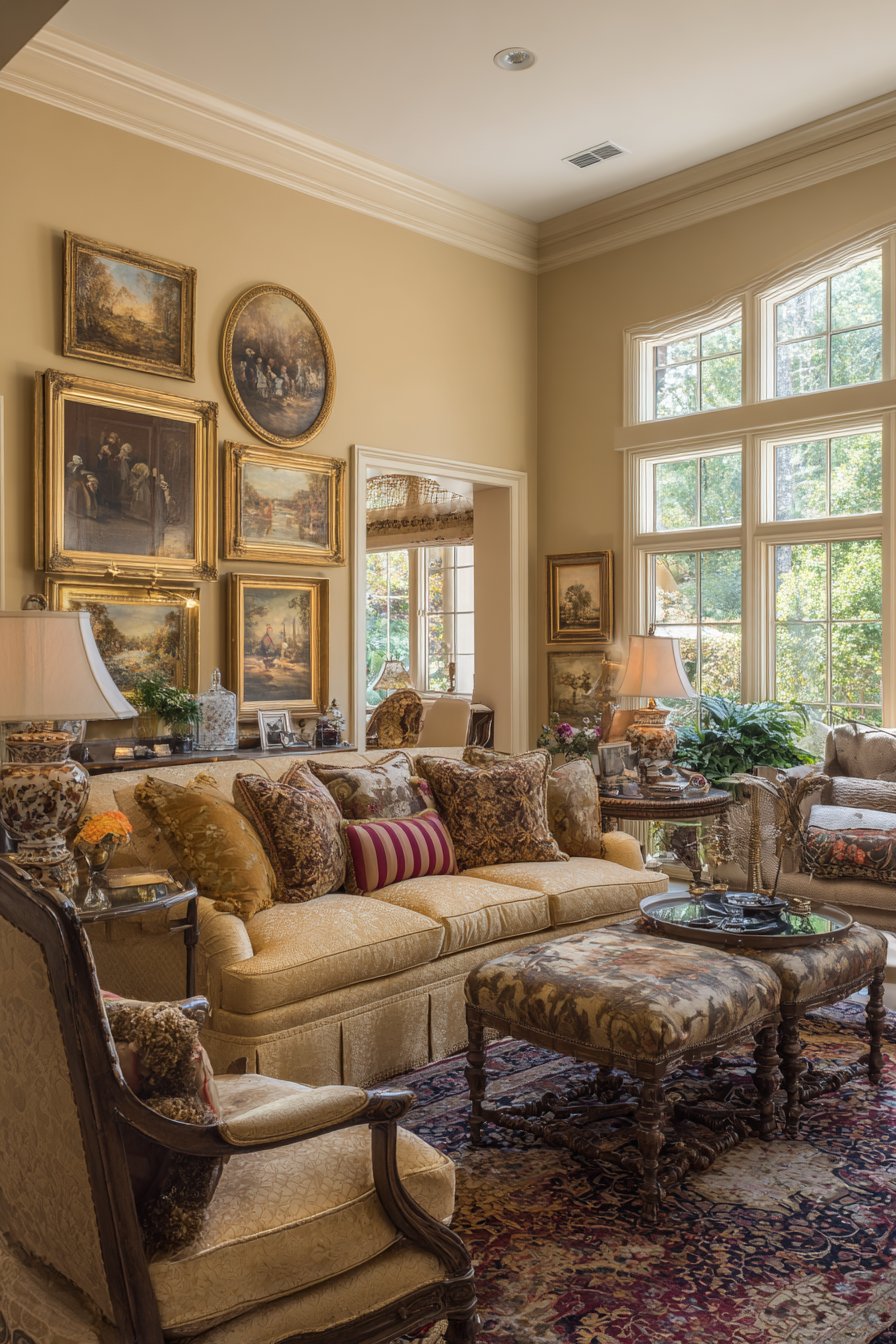
Color coordination reaches its apex in traditional interiors that successfully blend multiple hues into harmonious compositions. Walls in warm sage green complemented by cream trim and crown molding create a sophisticated foundation that feels both classic and slightly unexpected.
Sage green offers a refined alternative to more common traditional colors while maintaining appropriate formality and elegance. The cream trim provides crisp contrast that emphasizes architectural details and creates visual definition between walls and ceiling planes.
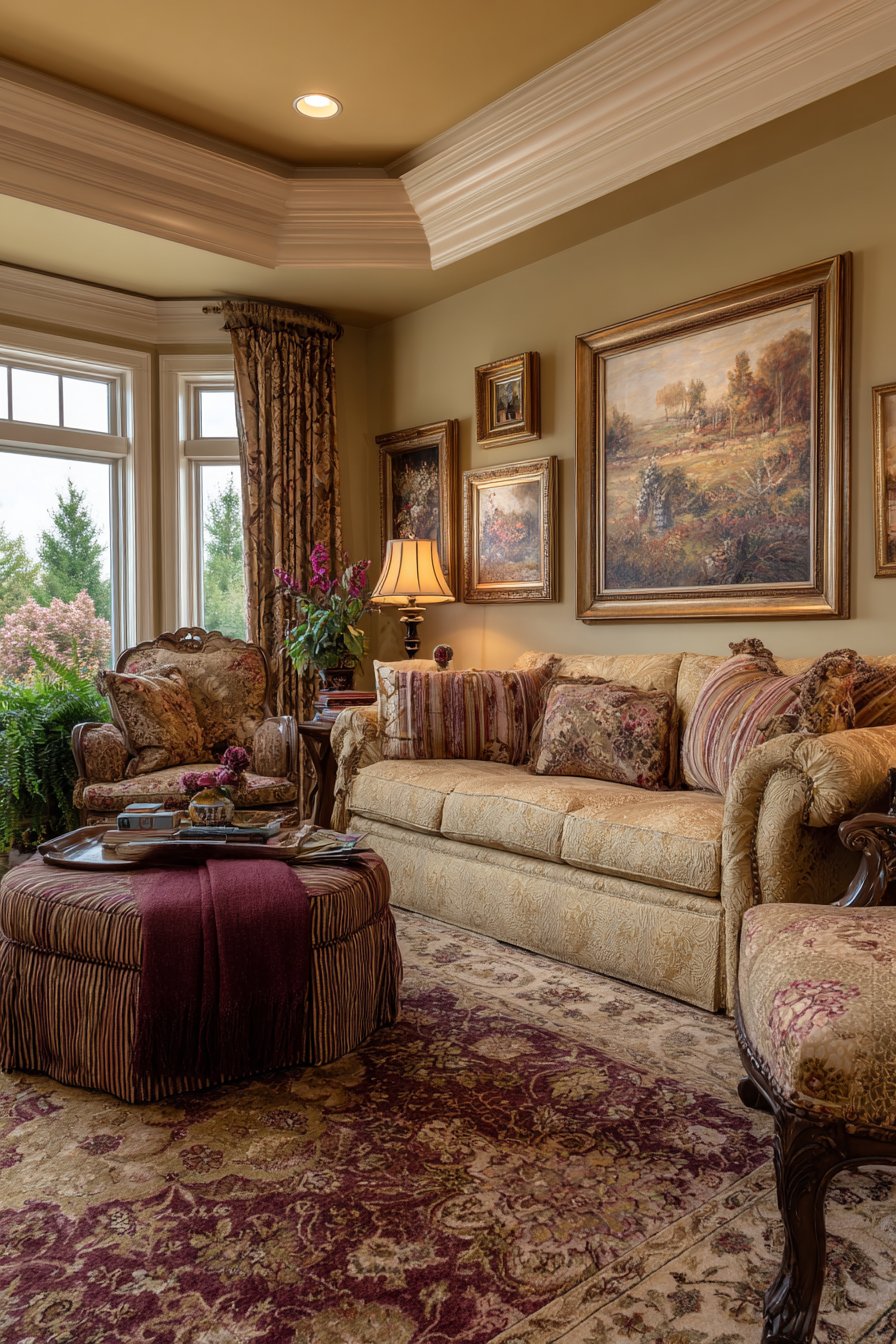
A rolled-arm sofa in jacquard fabric forms the seating area centerpiece, its woven pattern adding subtle visual texture without overwhelming the space. Coordinating throw pillows in paisley and stripe patterns demonstrates skillful pattern mixing—a traditional design technique that adds interest while maintaining cohesion through shared color palettes.
Antique-style side chairs with carved wood frames and tapestry upholstery complete the seating group, their traditional silhouettes and rich fabrics contributing to the room’s collected-over-time appearance that characterizes the best traditional interiors.
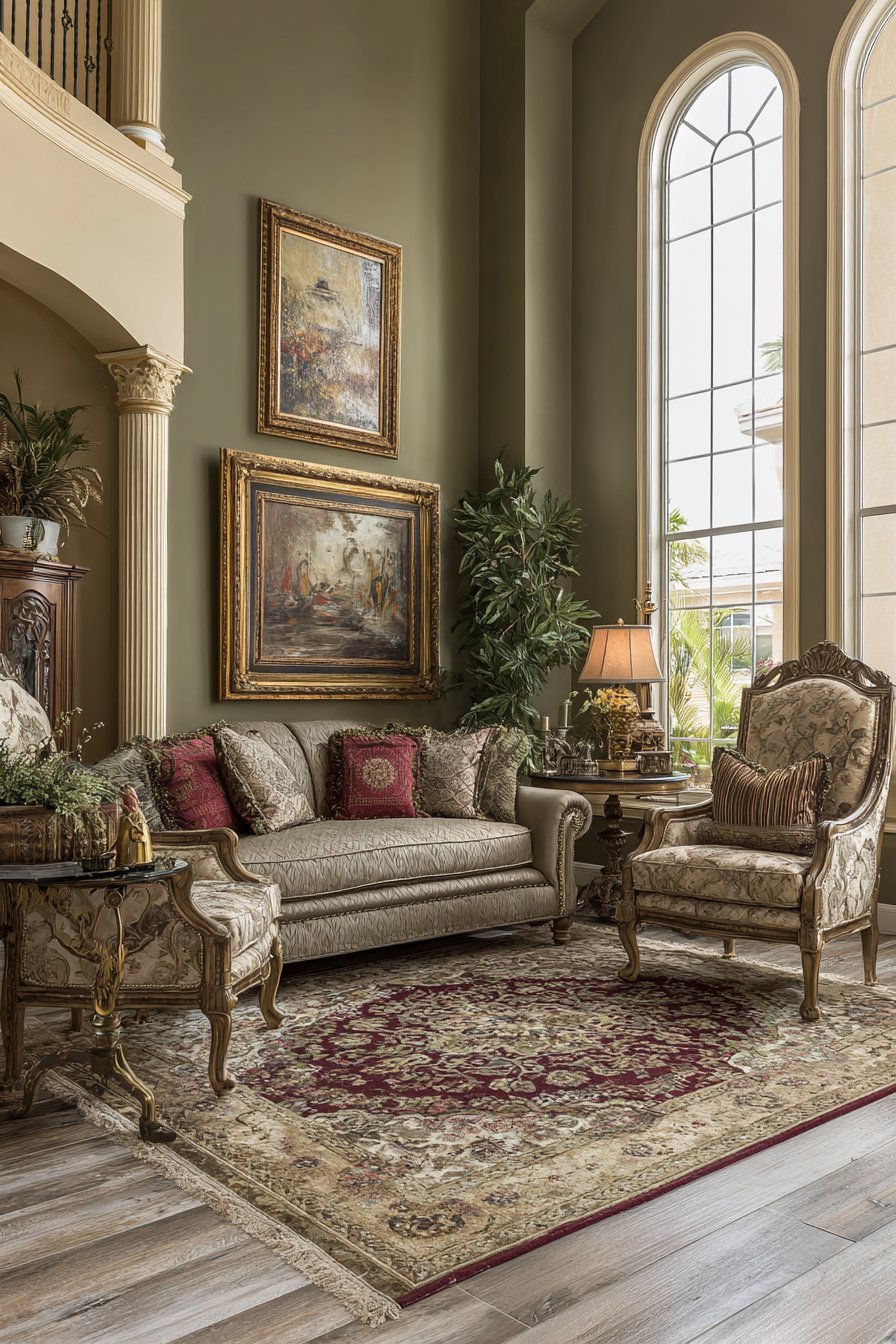
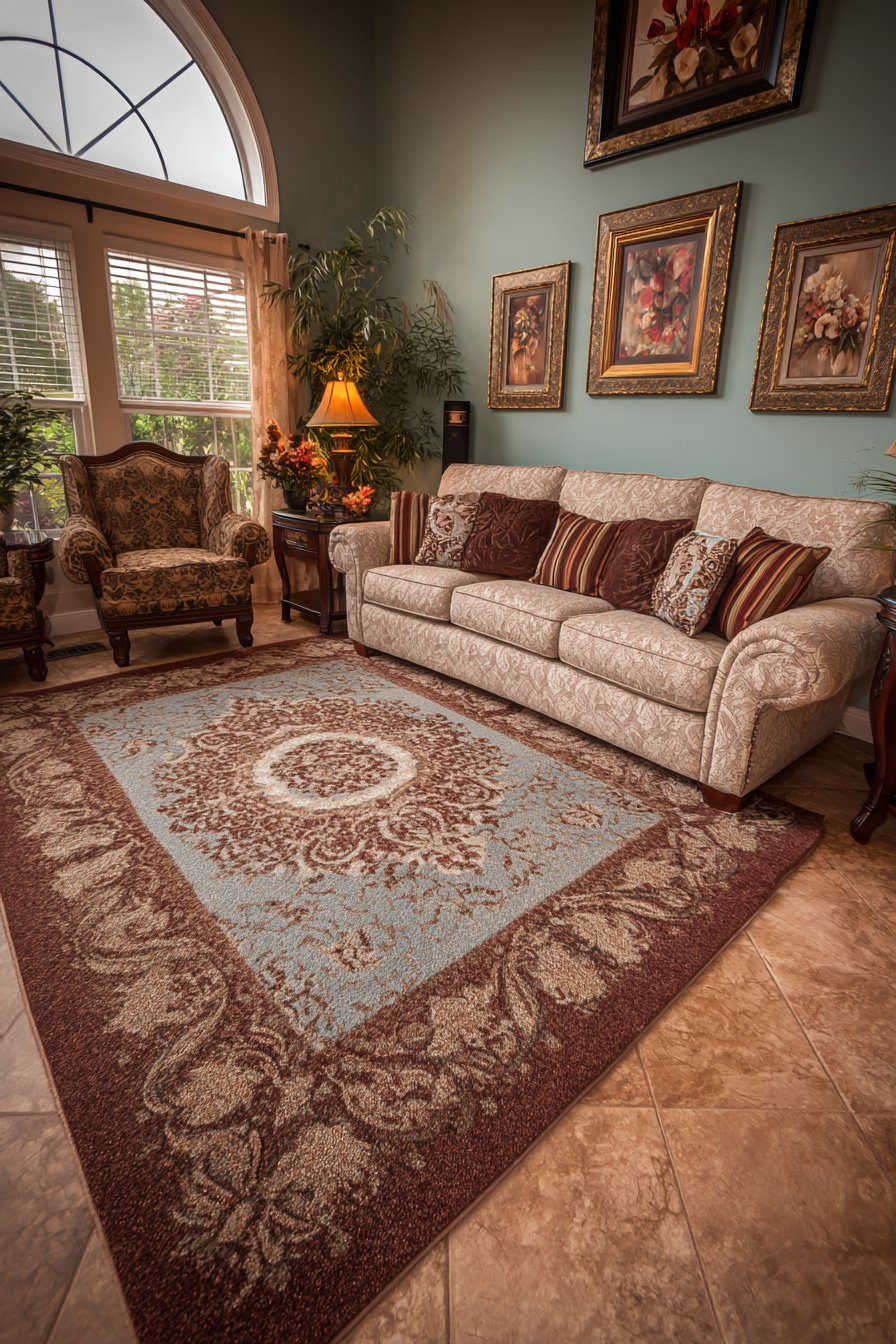
An ornate area rug with a botanical medallion pattern in burgundy, gold, and green anchors the furniture arrangement while tying together the room’s color story. Botanical patterns celebrate nature through stylized floral and foliage designs that have decorated traditional spaces for centuries.
Traditional oil paintings in gilded frames create a gallery wall that personalizes the space while demonstrating the traditional emphasis on fine art display. Soft natural window light combined with warm table lamp glow creates an inviting ambiance throughout the day, while the cohesive color story and attention to fabric textures demonstrate traditional design principles executed with confidence and skill.
Key Design Tips:
- Choose sophisticated color combinations like sage green and cream for refined palettes
- Mix patterns thoughtfully using paisley, stripes, and florals in coordinated colors
- Select jacquard upholstery fabrics for subtle woven patterns and texture
- Create gallery walls with oil paintings in matching gilded frames
- Combine multiple seating types, including sofas and side chairs for varied interests
- Anchor spaces with botanical-pattern rugs that incorporate the room’s color palette
- Use carved wood frames on furniture pieces for traditional craftsmanship details
- Layer natural and artificial lighting for flexible ambiance control
- Maintain color cohesion across walls, trim, upholstery, and accessories
Why These Traditional Living Room Designs Stand the Test of Time
Traditional living room design continues to captivate homeowners because it emphasizes quality, craftsmanship, and timeless beauty over fleeting trends. These ten design concepts showcase why traditional interiors remain relevant and desirable in contemporary homes. The formal burgundy velvet Chesterfield arrangement demonstrates how rich jewel tones and luxurious fabrics create immediate impressions of elegance and sophistication. This approach suits those who appreciate grandeur and aren’t afraid to make bold statements with color and texture.
The symmetrical fireplace sanctuary with built-in bookcases appeals to lovers of architectural detail and balanced composition. Traditional design’s emphasis on symmetry creates inherently pleasing proportions that feel right instinctively. The sage green serenity concept proves that traditional doesn’t always mean dark and heavy—softer color palettes create equally elegant spaces with lighter, more serene atmospheres. This versatility makes traditional design accessible to various personal preferences while maintaining classical principles.
Dual sofa conversation areas and window treatment showcases demonstrate traditional design’s commitment to both beauty and functionality. These spaces aren’t merely attractive—they facilitate comfortable living, easy conversation, and practical daily use. The formal built-in cabinetry and entertainment walls show how traditional aesthetics can incorporate modern technology and storage needs without compromising classical elegance. This adaptability ensures traditional interiors remain relevant as lifestyles evolve.
Reading corners, entryway transitions, and sophisticated color stories illustrate traditional design’s attention to detail at every scale. No space is too small for thoughtful treatment, and no element is considered unimportant. This comprehensive approach creates cohesive interiors where every detail contributes to the overall aesthetic. The use of quality materials—genuine wood, natural fibers, authentic Persian rugs, and fine upholstery fabrics—ensures these rooms age gracefully, developing character over time rather than showing wear.
Traditional living room design succeeds because it honors historical design principles while remaining adaptable to contemporary needs. Crown molding, wainscoting, coffered ceilings, and picture rails add architectural interest that new construction often lacks. Built-in cabinetry maximizes storage while creating custom, fitted appearances. Layered window treatments control light and privacy while showcasing beautiful fabrics. Symmetrical furniture arrangements create visual balance that feels inherently comfortable and correct.
The color palettes used in traditional design—burgundy, navy, sage green, cream, taupe, and gold—create sophisticated combinations that work beautifully together while providing enough variety for personal expression. These colors have proven staying power, unlike trend-driven hues that quickly date interiors. Rich wood tones in mahogany, cherry, and walnut bring warmth and natural beauty that synthetic materials cannot replicate. These materials improve with age, developing patinas and character that add value over time.
Traditional design’s emphasis on quality over quantity means investing in fewer, better pieces rather than filling rooms with disposable furniture. A well-made Chesterfield sofa, genuine Persian rug, or custom built-in cabinetry becomes an heirloom passed through generations. This sustainability aspect appeals to environmentally conscious homeowners who recognize that truly timeless design is the ultimate green choice. Furniture that lasts decades or centuries doesn’t end up in landfills.
The pattern mixing techniques shown in these designs—damask, paisley, stripes, florals, and medallions—create visual richness without chaos when executed within coordinated color palettes. This layering of patterns and textures gives traditional rooms depth and interest that solid-colored minimalist spaces lack. Each glance reveals new details to appreciate, making these rooms endlessly interesting rather than visually exhausting after initial impact fades.
Traditional lighting approaches using crystal chandeliers, brass sconces, and table lamps with fabric shades create warm, flattering illumination. Multiple light sources at different heights provide flexibility for various activities and moods. This layered lighting strategy proves far more functional and beautiful than single overhead fixtures. The warm glow of traditional lighting fixtures creates an ambiance that LED strips and modern fixtures struggle to match.
These design concepts work beautifully in various architectural styles, from historic homes where they feel naturally appropriate to newer construction where they add instant character and gravitas. Traditional design bridges old and new, honoring heritage while accommodating contemporary lifestyles. Whether furnishing a Victorian mansion, Georgian townhouse, or new suburban home, these traditional principles create spaces of enduring beauty that transcend architectural limitations and time periods.
Conclusion
Traditional living room design offers a sophisticated approach to creating spaces that balance formal elegance with comfortable functionality. The ten concepts explored in this article demonstrate the versatility within traditional style—from rich burgundy velvets to softer sage greens, from grand entertainment walls to intimate reading corners. Each design showcases fundamental principles: quality materials, balanced composition, architectural detail, and layered textures that create rich, inviting environments.
Implementing traditional design in your home begins with understanding these core principles rather than simply copying specific elements. Choose quality furniture pieces with classic silhouettes that will serve you well for decades. Invest in authentic materials like hardwood, genuine leather, natural fiber rugs, and quality upholstery fabrics. Layer patterns and textures thoughtfully within coordinated color palettes. Add architectural details like crown molding, wainscoting, or built-in cabinetry to create dimensional interest. Create symmetrical arrangements that feel balanced and intentional.
Traditional living rooms succeed because they create timeless beauty that improves with age rather than following trends that quickly feel dated. These spaces welcome families and guests with equal grace, providing comfortable settings for daily life while maintaining the polish appropriate for special occasions. Start with one room or even one well-chosen piece, and build your traditional interior gradually, allowing your space to develop character and personality over time. The result will be a living room that honors classical design principles while perfectly serving your contemporary lifestyle—a space where you’ll feel proud to spend time, entertain guests, and create lasting memories.
