


In today’s world of urban living and compact homes, the tiny bedroom has evolved from a design challenge into an opportunity for creative innovation. Whether you’re furnishing a studio apartment, converting a spare room, or simply working with limited square footage, thoughtful interior design can transform even the smallest sleeping space into a functional, beautiful retreat. The key lies in understanding how to maximize every inch while maintaining a sense of openness, tranquility, and personal style that makes the room feel like a true sanctuary rather than a cramped afterthought.
The art of tiny bedroom design requires a delicate balance between aesthetics and practicality. It’s about making intelligent choices with furniture placement, color palettes, lighting strategies, and storage solutions that don’t compromise on style or comfort. Modern interior design has given us countless innovative approaches to small-space living, from multifunctional furniture pieces that serve double duty to clever architectural interventions that create vertical storage opportunities. Each solution offers a unique way to address the universal challenge of creating a restful, organized bedroom environment within spatial constraints.
This comprehensive guide explores ten exceptional tiny bedroom designs, each offering distinct approaches to maximizing limited square footage. From Murphy beds that disappear during daytime hours to lofted sleeping platforms that free up valuable floor space below, these designs showcase how strategic planning, quality materials, and attention to detail can create bedrooms that feel both spacious and intimate. Whether you’re drawn to Scandinavian minimalism, Japanese-inspired zen aesthetics, or practical contemporary solutions, you’ll discover actionable ideas and professional design insights that can transform your own small bedroom into an efficient, inviting space that perfectly serves your lifestyle needs.
1. The Transformative Murphy Bed Bedroom with Integrated Home Office
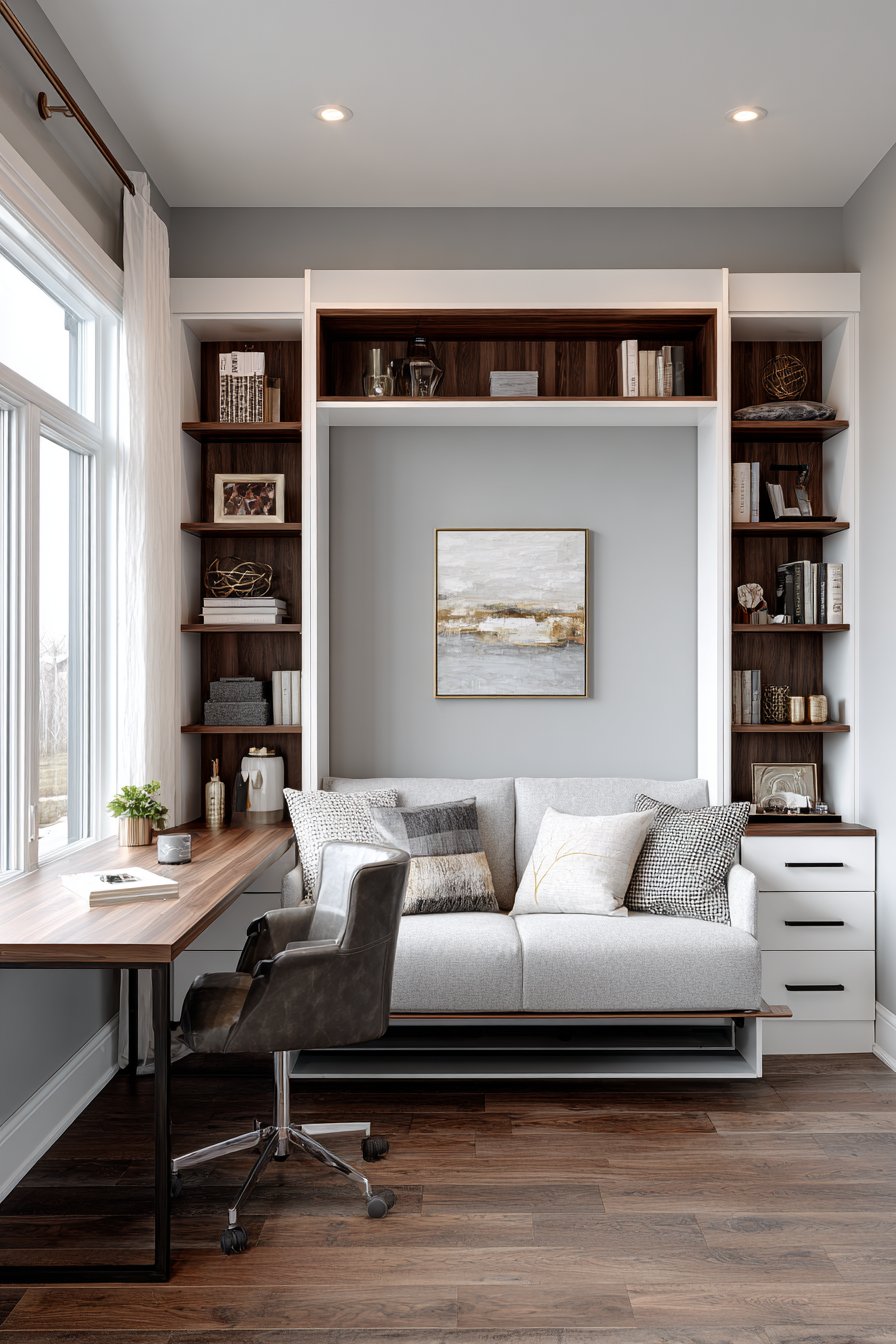
Stepping into a tiny bedroom featuring a space-saving Murphy bed represents the ultimate expression of multifunctional design philosophy. This ingenious layout centers around a wall-mounted bed that folds seamlessly into a custom cabinet system, revealing a compact but fully functional home office setup during daytime hours. The transformation is almost magical—what serves as a restful sleeping space by night becomes a productive workspace by day, all within the same modest square footage. The bed frame itself incorporates integrated storage shelves on both sides, providing homes for books, decorative objects, and personal items without requiring any additional floor space.
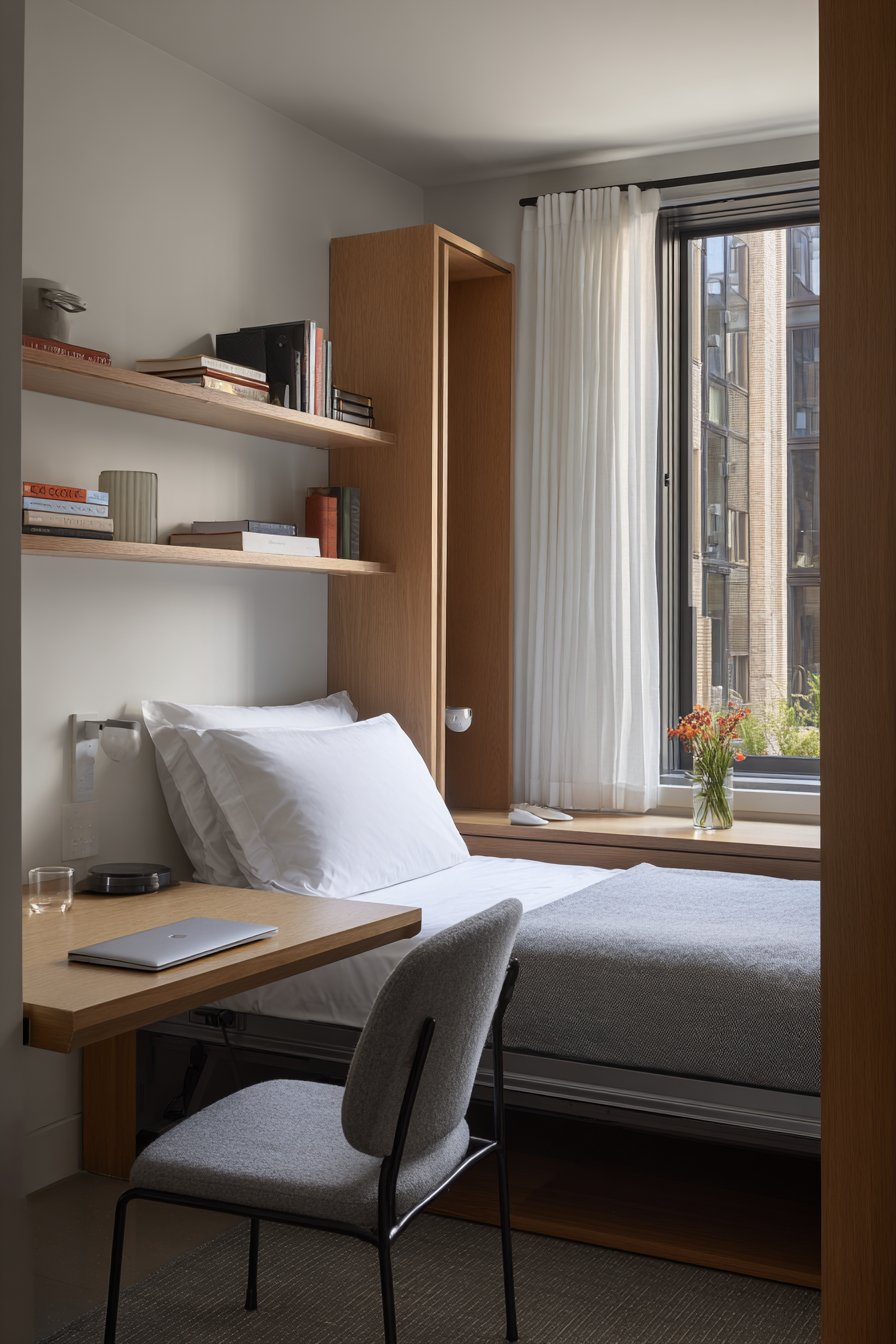
The color palette of light grey walls serves a strategic purpose beyond mere aesthetic preference. These soft, neutral tones maximize the psychological sense of space, making the room feel significantly larger than its actual dimensions.
The absence of dark, heavy colors prevents visual weight from closing in on the compact area. Natural oak floating shelves punctuate the walls at various heights, offering additional storage capacity while maintaining an open, airy quality. Unlike bulky traditional furniture pieces, these suspended shelves appear to float against the wall, creating storage solutions that don’t contribute to visual clutter or spatial congestion.
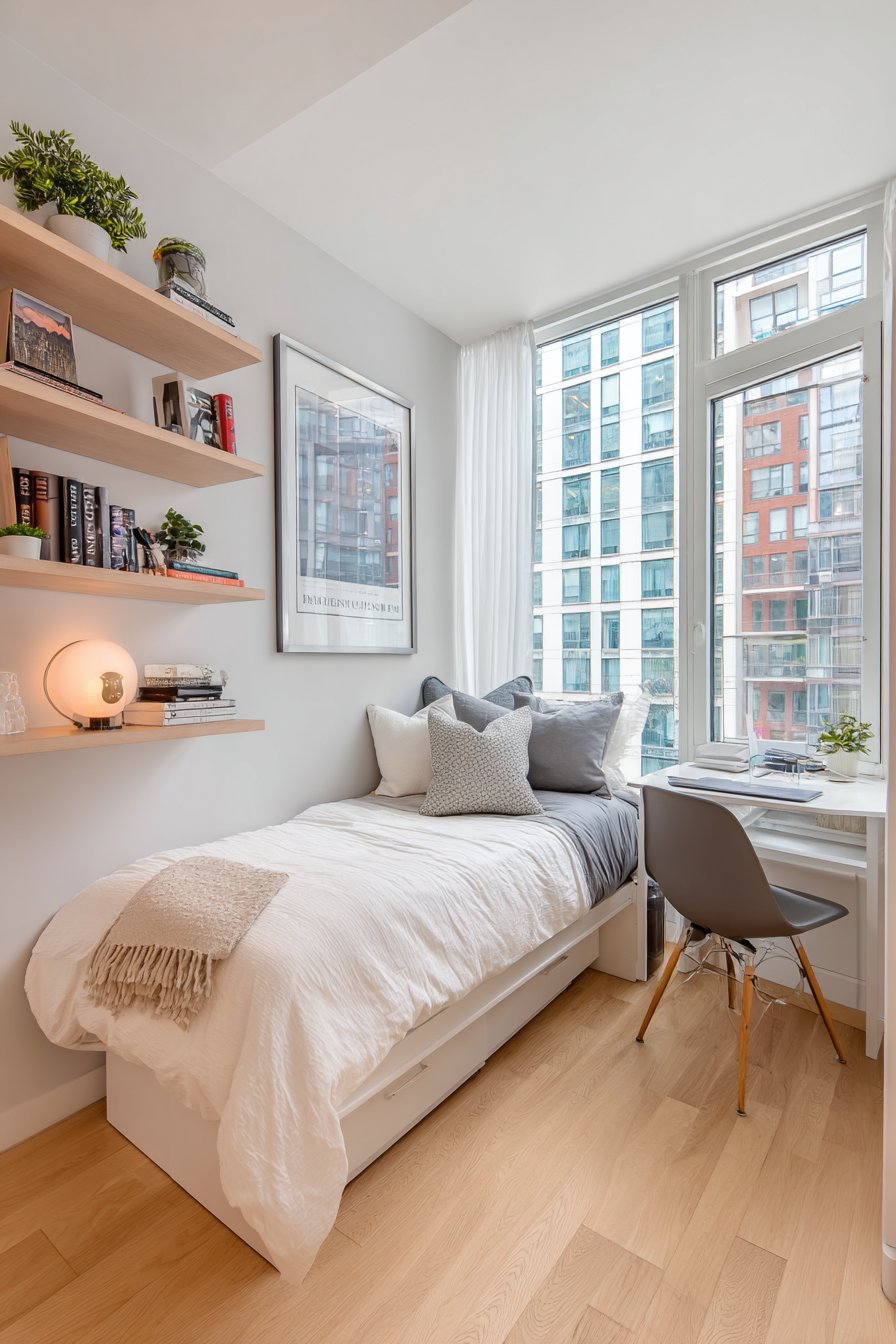
Natural light plays a transformative role in this tiny bedroom design. A narrow window dressed with sheer white curtains allows soft, diffused illumination to flood the space throughout the day. The translucent fabric filters harsh direct sunlight while maintaining privacy, creating a gentle, even glow that enhances the room’s sense of openness.
When the Murphy bed is folded away, sunlight reaches deeper into the room, illuminating the home office area and making computer work or creative projects more pleasant. The interplay between natural light and the pale wood tones of the oak shelving creates warmth without heaviness, a delicate balance crucial for small bedroom success.
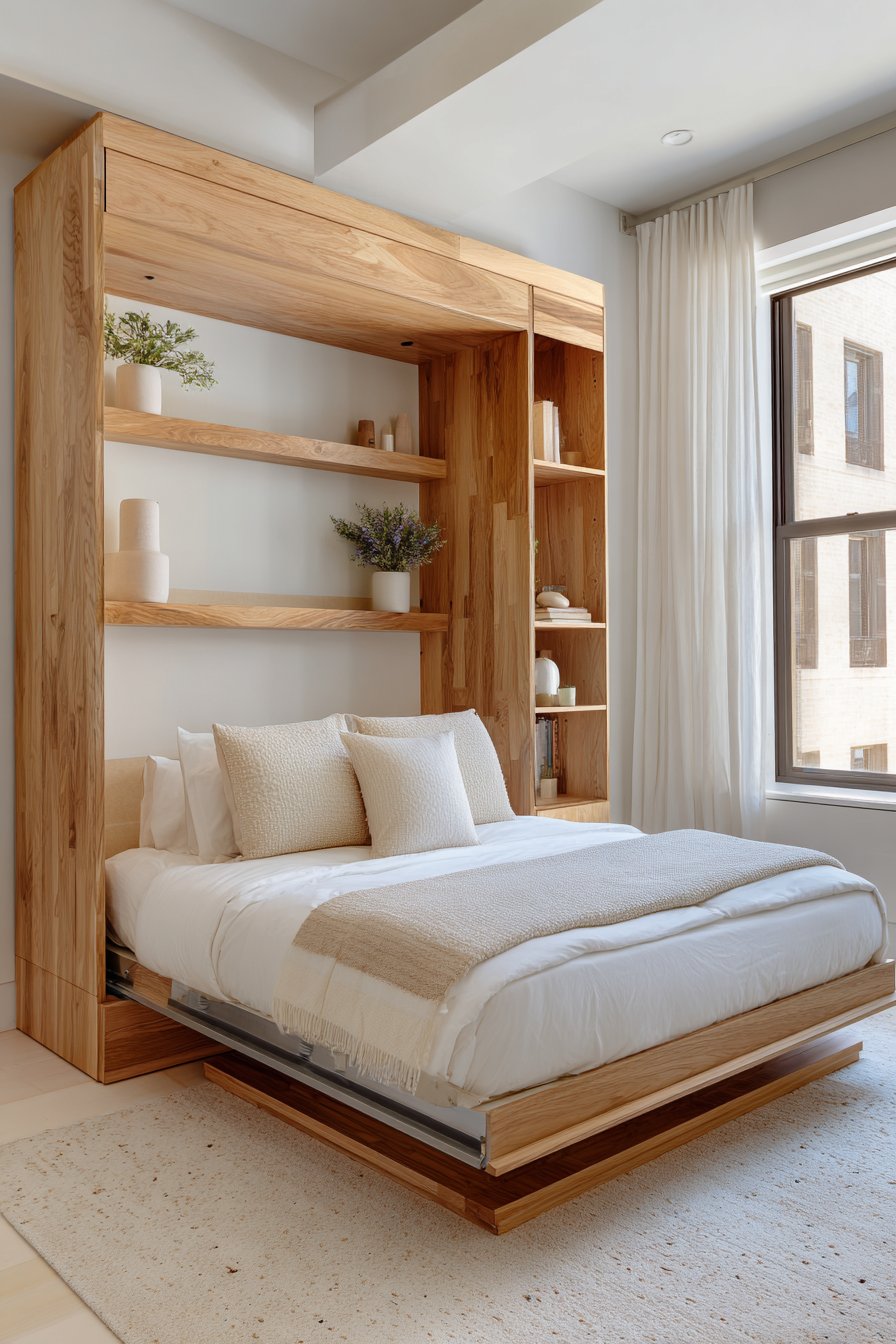
The wide-angle perspective of this space reveals the true genius of the layout—every element serves multiple purposes, and nothing occupies precious floor space unnecessarily. The Murphy bed mechanism operates smoothly, allowing for effortless daily transitions between sleeping and working modes. Quality hardware ensures the bed feels secure when deployed, yet folds away completely when office functionality takes priority. This adaptability makes the room feel significantly larger than a traditional bedroom of similar dimensions, where a permanently positioned bed would dominate the floor plan and limit other activities.
Key design considerations include investing in a quality Murphy bed mechanism with smooth, easy operation to ensure you’ll actually use the transformation feature daily rather than leaving the bed perpetually deployed, choosing integrated lighting within the cabinet system to illuminate both the sleeping area when deployed and the office space when folded away, selecting a Murphy bed design with built-in shelving rather than plain cabinet doors to maximize storage without additional furniture, keeping the office setup minimal and organized with cable management solutions so the daily transformation takes seconds rather than minutes, and using the wall space above the Murphy bed cabinet for additional floating shelves or artwork to draw the eye upward and emphasize ceiling height.
2. The Elevated Living Solution with Lofted Sleeping Platform
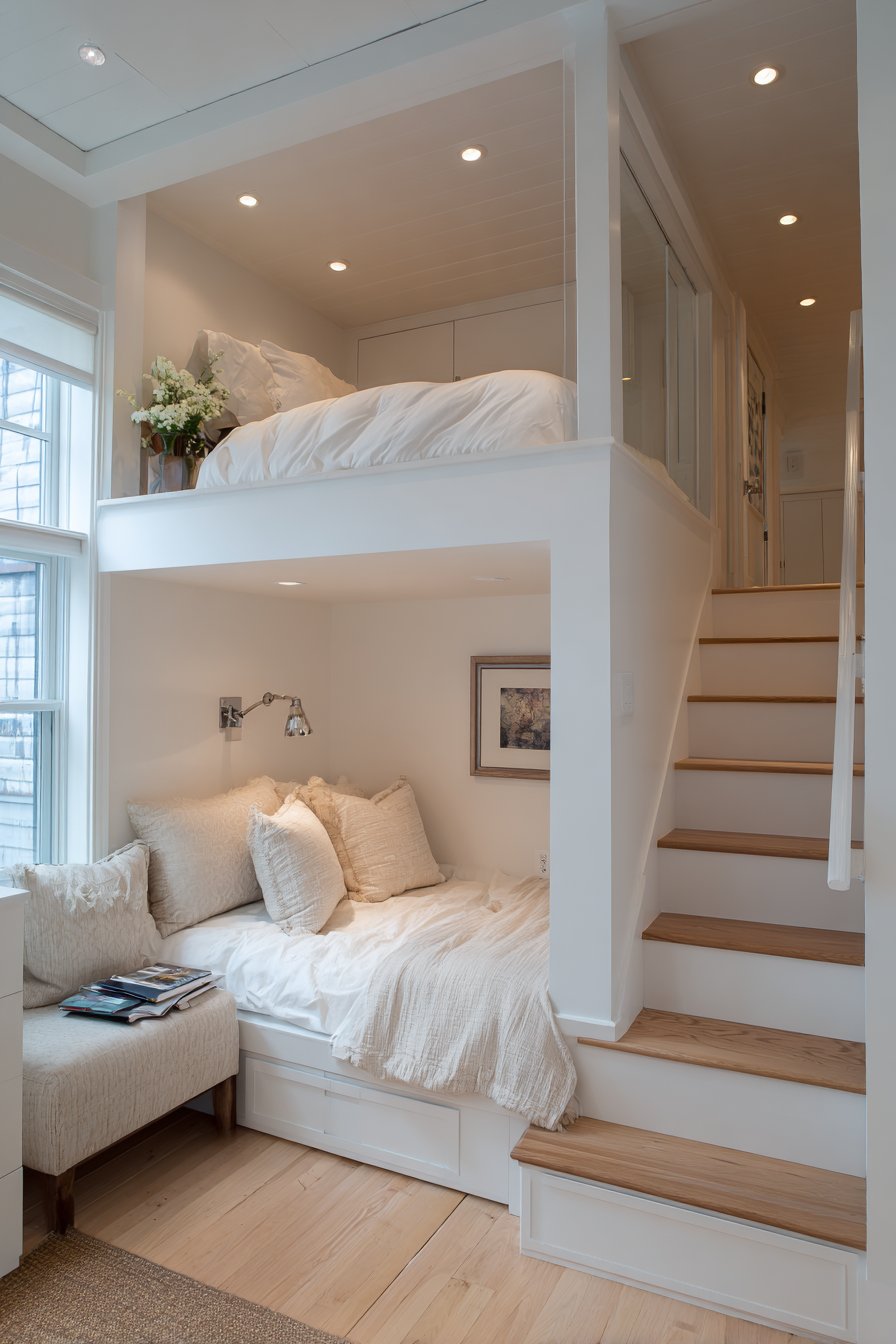
A lofted sleeping platform represents one of the most dramatic and effective strategies for conquering tiny bedroom limitations. This vertical approach to space planning elevates the bed several feet above the floor, supported by a sturdy framework that incorporates built-in stairs rather than a simple ladder.
These stairs serve a dual purpose that exemplifies smart small-space thinking—each step conceals a storage drawer that pulls out to reveal compartments for clothing, linens, shoes, or personal belongings. The engineering is both practical and beautiful, with each drawer fitted with quality hardware that ensures smooth operation and long-term durability.
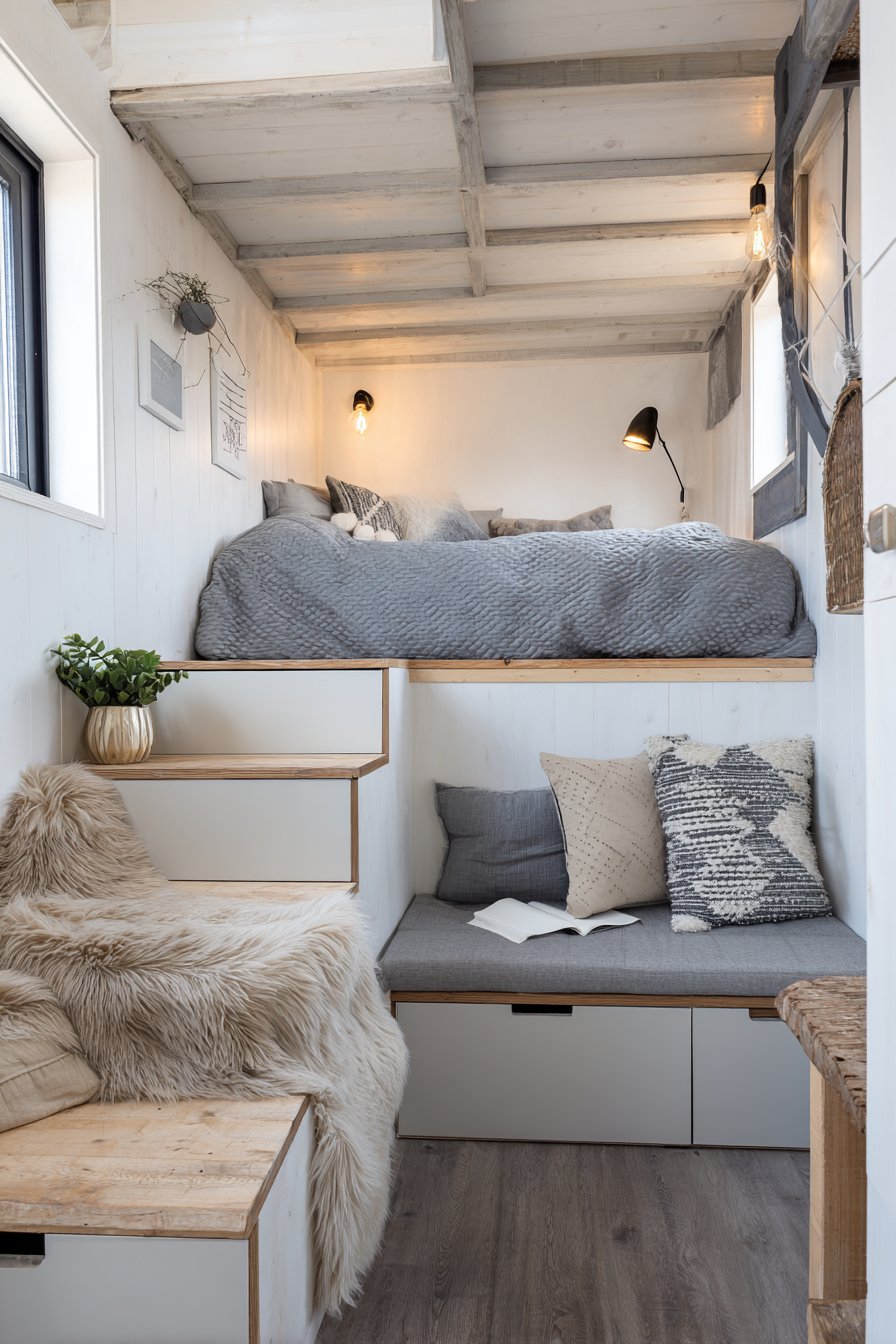
The space beneath the elevated sleeping platform becomes an entirely new room within the room—a cozy reading nook that transforms otherwise wasted vertical space into a cherished retreat. A small upholstered bench with plush cushions invites you to curl up with a favorite book, while a wall-mounted reading light positioned at the perfect height eliminates the need for floor lamps or table lighting that would consume valuable space. This beneath-the-loft area feels intimate and protected, almost cave-like in its cozy embrace, yet remains visually connected to the rest of the bedroom through thoughtful design choices.
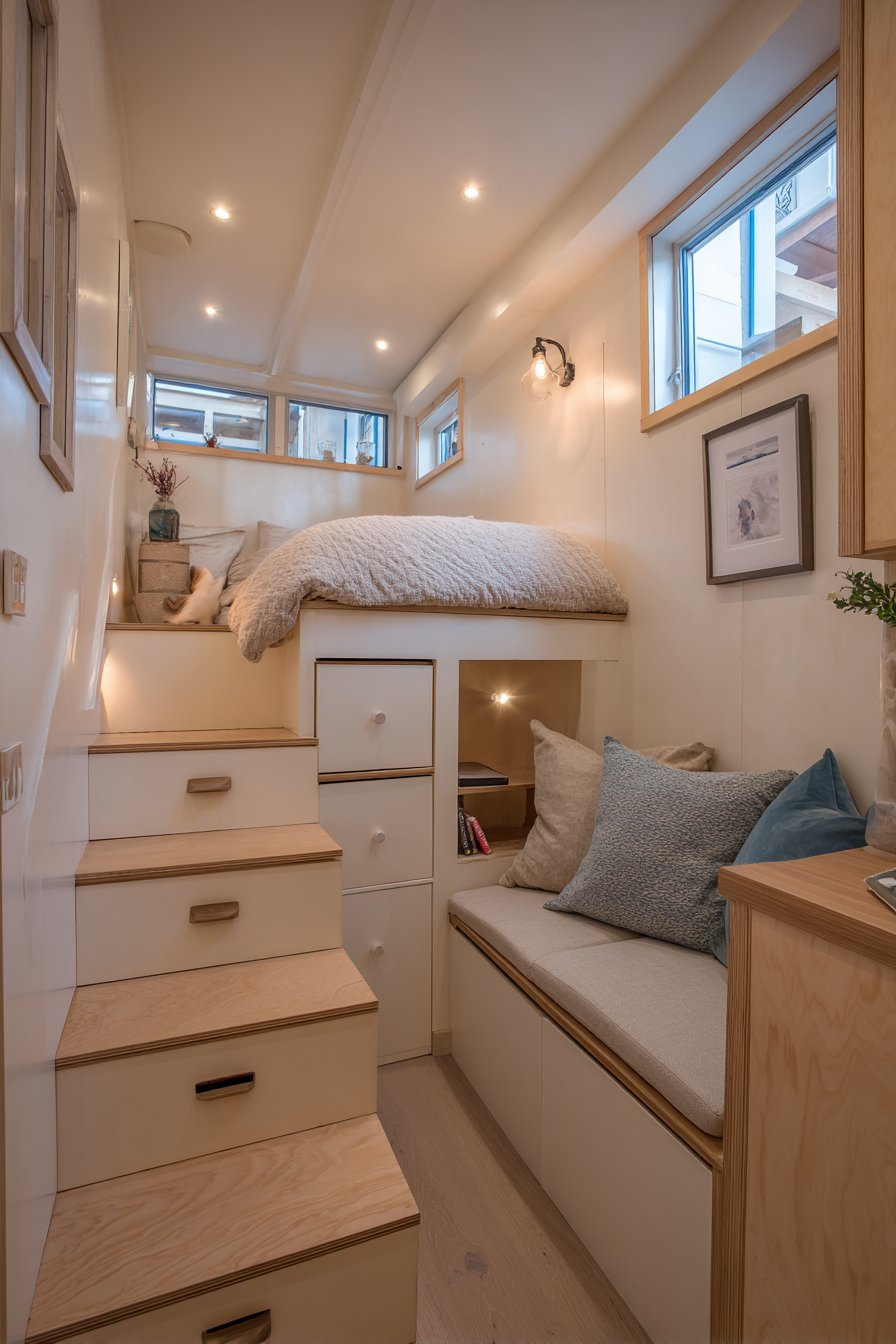
White walls and light wood tones create an airy feel throughout this compact space, preventing the lofted structure from feeling heavy or oppressive. The lightness of the color palette is essential—darker woods or painted surfaces would make the overhead platform feel lower and more confining.
Instead, the pale natural materials reflect available light, bouncing illumination throughout the room and maintaining a sense of spaciousness despite the dramatic vertical intervention. The wood grain adds subtle texture and visual interest without overwhelming the minimalist aesthetic.
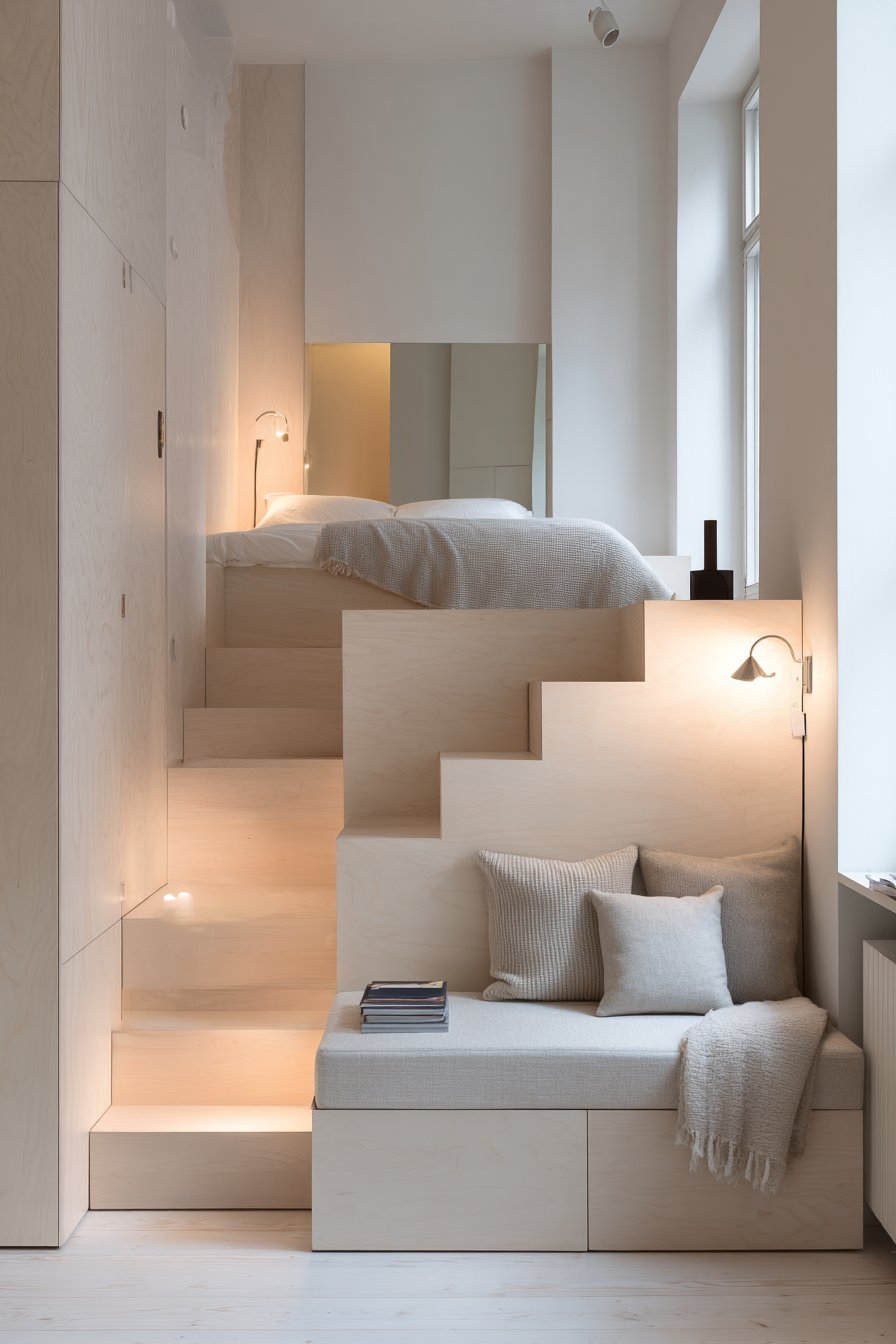
Professional interior photography captures this innovative design with soft diffused lighting that emphasizes the texture details of both fabric and wood materials. The cushions on the reading bench show their woven texture, the wood stairs reveal their grain patterns, and the overall composition demonstrates how thoughtful material selection contributes to the room’s success. Every surface has been considered not just for its functional purpose but for its tactile quality and visual contribution to the harmonious whole.
Important design tips for lofted platform bedrooms include ensuring the ceiling height is adequate for comfortable sitting on the elevated bed without feeling claustrophobic, installing a safety railing on the sleeping platform side to prevent falls during sleep, choosing stairs over ladders for safety and the opportunity to integrate storage drawers, positioning the reading nook to receive natural light from windows when possible, and selecting lightweight bedding and minimal pillows on the loft to maintain the airy aesthetic and prevent the elevated area from appearing cluttered or heavy.
3. The Corner Platform Strategy with Mirror Magic
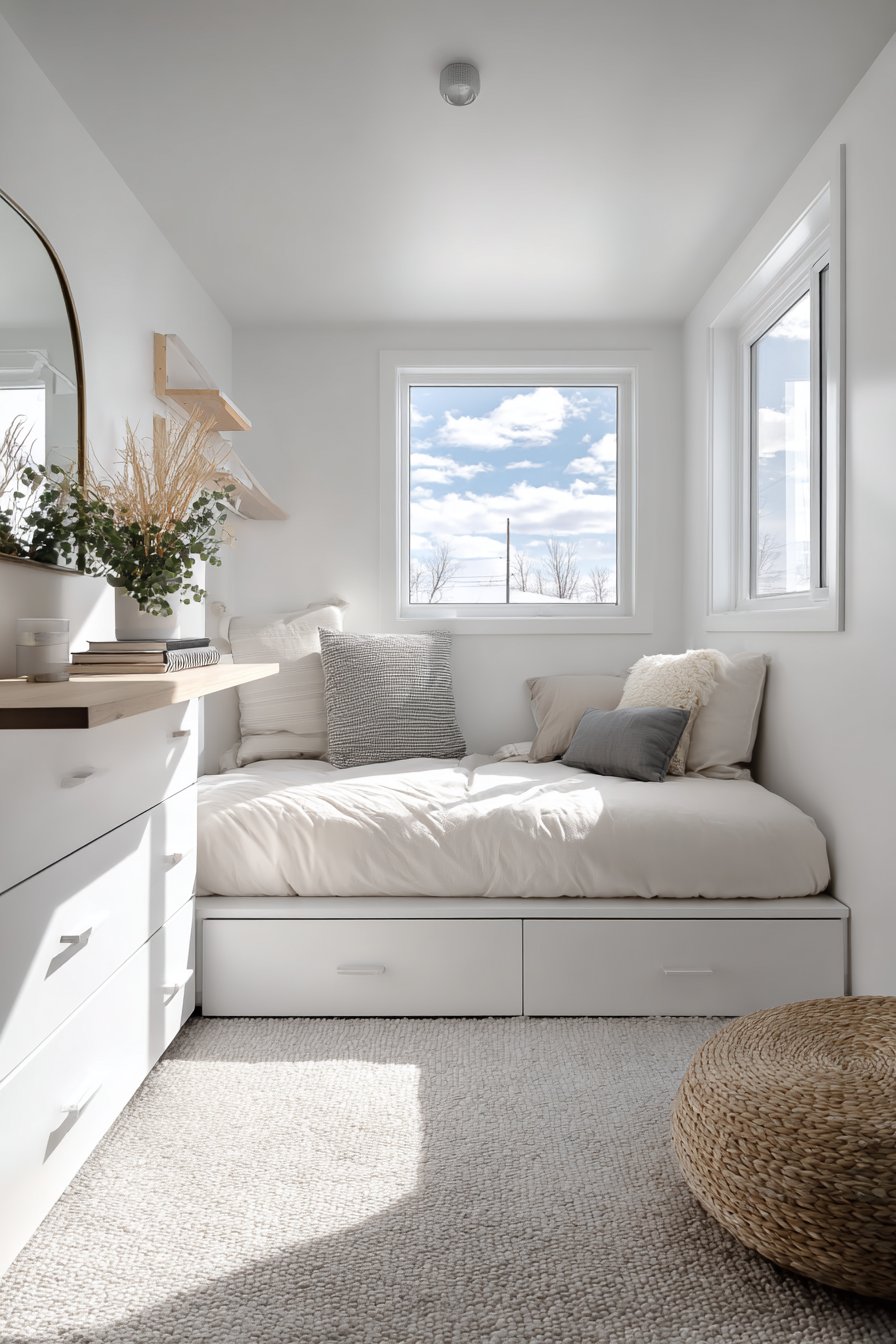
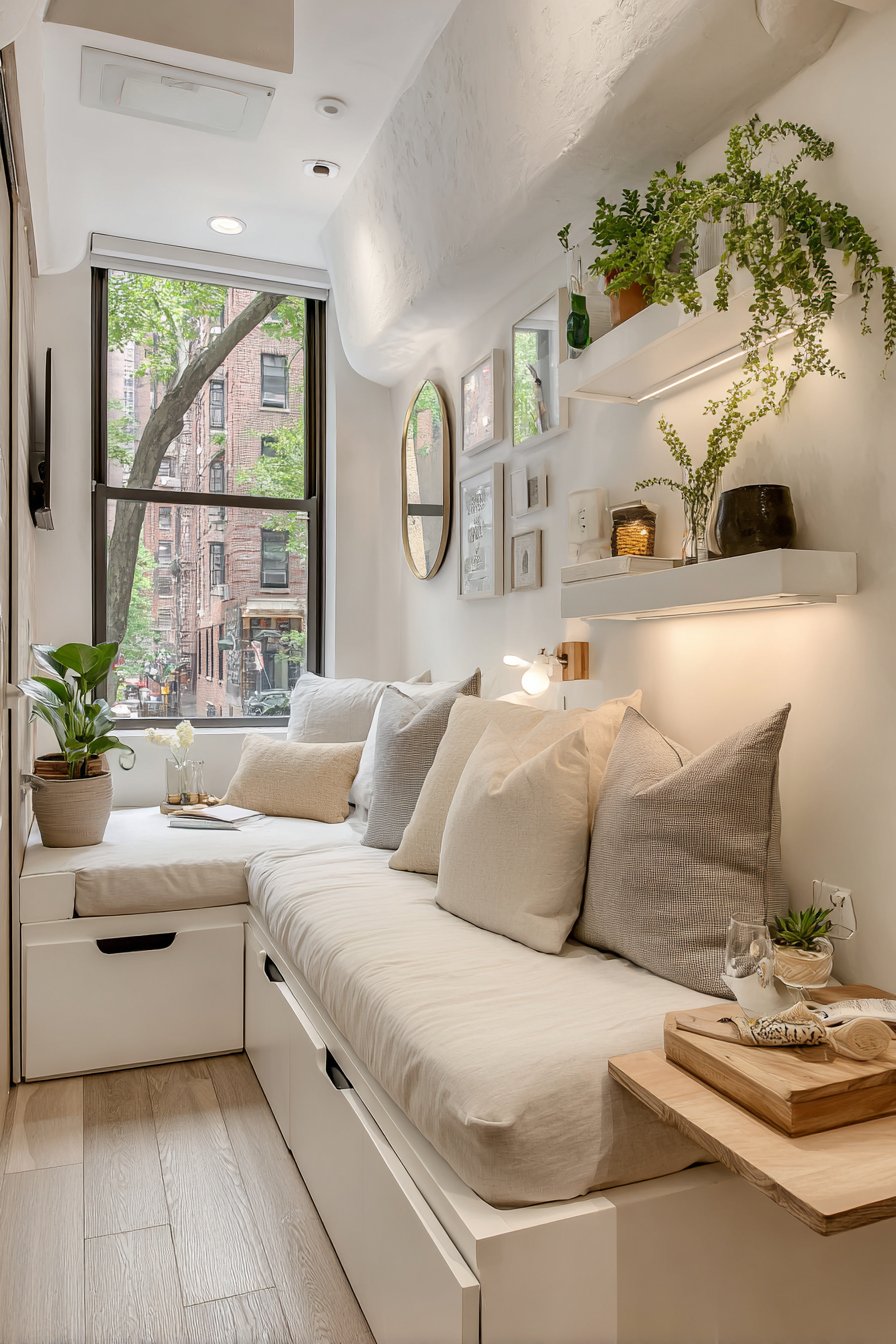
The corner-positioned platform bed represents a strategic approach to tiny bedroom layout that maximizes usable floor space while creating distinct zones within the compact room. By anchoring the bed in one corner, this design leaves the center of the room open for movement and other activities, preventing the cramped feeling that occurs when a bed dominates the middle of a small space.
The platform itself features underneath storage drawers with smooth-glide mechanisms that operate silently and effortlessly, providing substantial hidden storage capacity for clothing, extra bedding, or seasonal items without any visual impact on the room’s aesthetic.
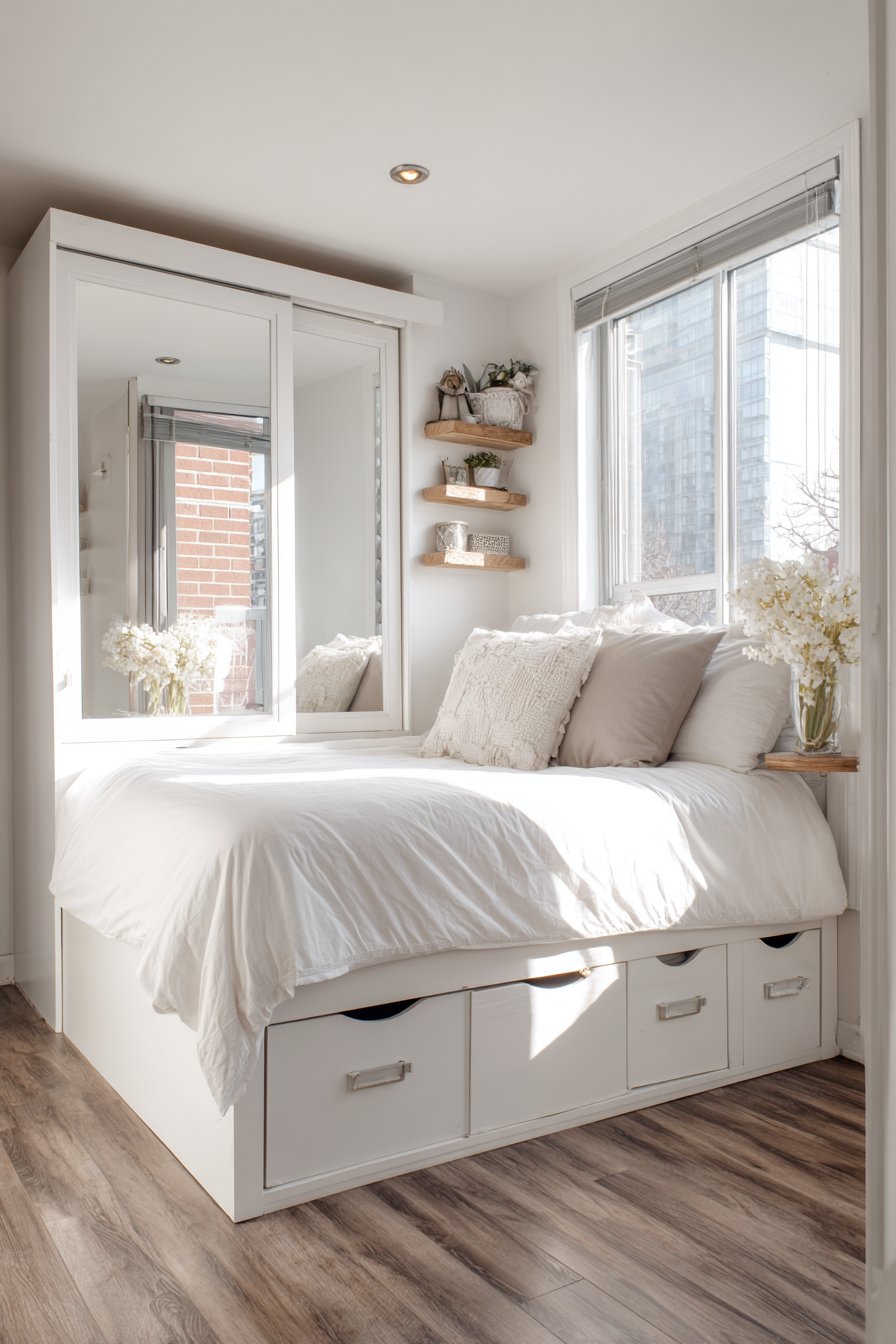
A slim floating nightstand mounted directly to the wall exemplifies the space-saving philosophy carried throughout this design. Rather than occupying precious floor space with a traditional nightstand, this wall-mounted solution provides essential bedside functionality—a place for a lamp, phone, book, or glass of water—while keeping the floor beneath completely clear.
This clearance contributes significantly to the psychological sense of spaciousness, as visible floor area makes any room feel larger. The floating nightstand appears almost sculptural, its clean lines and minimal profile adding to rather than detracting from the room’s aesthetic appeal.
The true genius of this tiny bedroom design lies in the strategic placement of mirrors on the closet doors. This classic interior design technique visually expands the room by reflecting light and creating the illusion of depth and additional space.
When natural morning light streams through the single window, it bounces off these mirrored surfaces, effectively doubling the illumination and making the room feel significantly brighter and more spacious than its actual square footage would suggest. The mirrors also reflect views of the room itself, creating visual complexity and interest that prevents the space from feeling monotonous or confined.
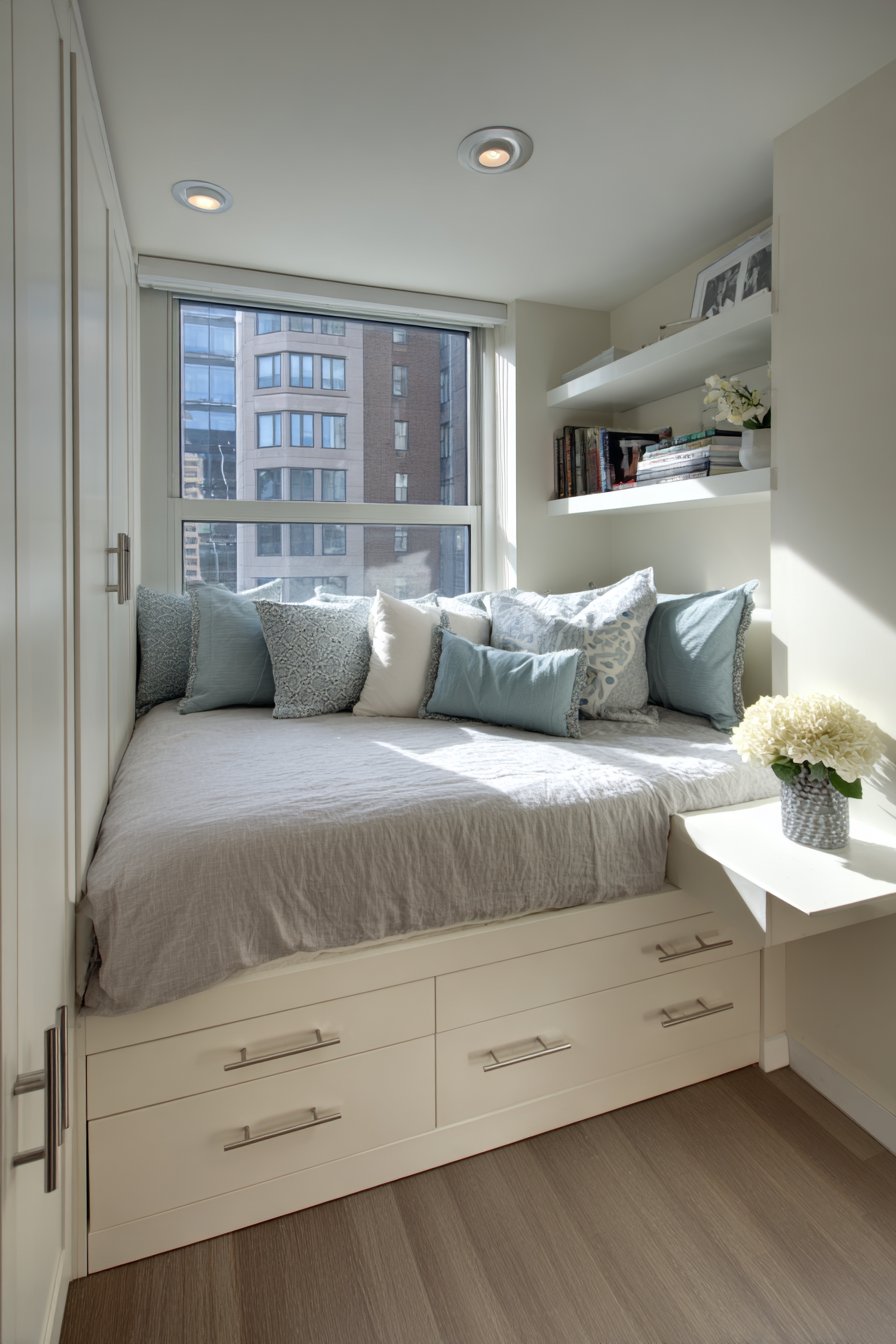
The lighting strategy deserves particular attention in this design. Natural morning light creates gentle shadows that highlight the minimalist aesthetic, emphasizing clean lines and uncluttered surfaces. As sunlight moves across the room throughout the day, the interplay of light and shadow adds dynamic visual interest to what might otherwise be a static, simple space. The shadows define edges and contours, giving depth to the minimalist design and preventing it from feeling flat or sterile.
Essential design strategies for corner platform bedrooms include positioning the bed to leave the longest sight line open across the room for maximum perceived spaciousness, ensuring platform storage drawers open smoothly without binding against wall corners, mounting the floating nightstand at a comfortable height for reaching from the bed, using full-length mirrors rather than decorative mirrors to maximize the space-expanding effect, and keeping the area around the bed minimal and uncluttered to maintain clean sight lines and emphasize the spacious feeling created by the strategic layout.
4. The Scandinavian-Inspired Hydraulic Storage Bedroom
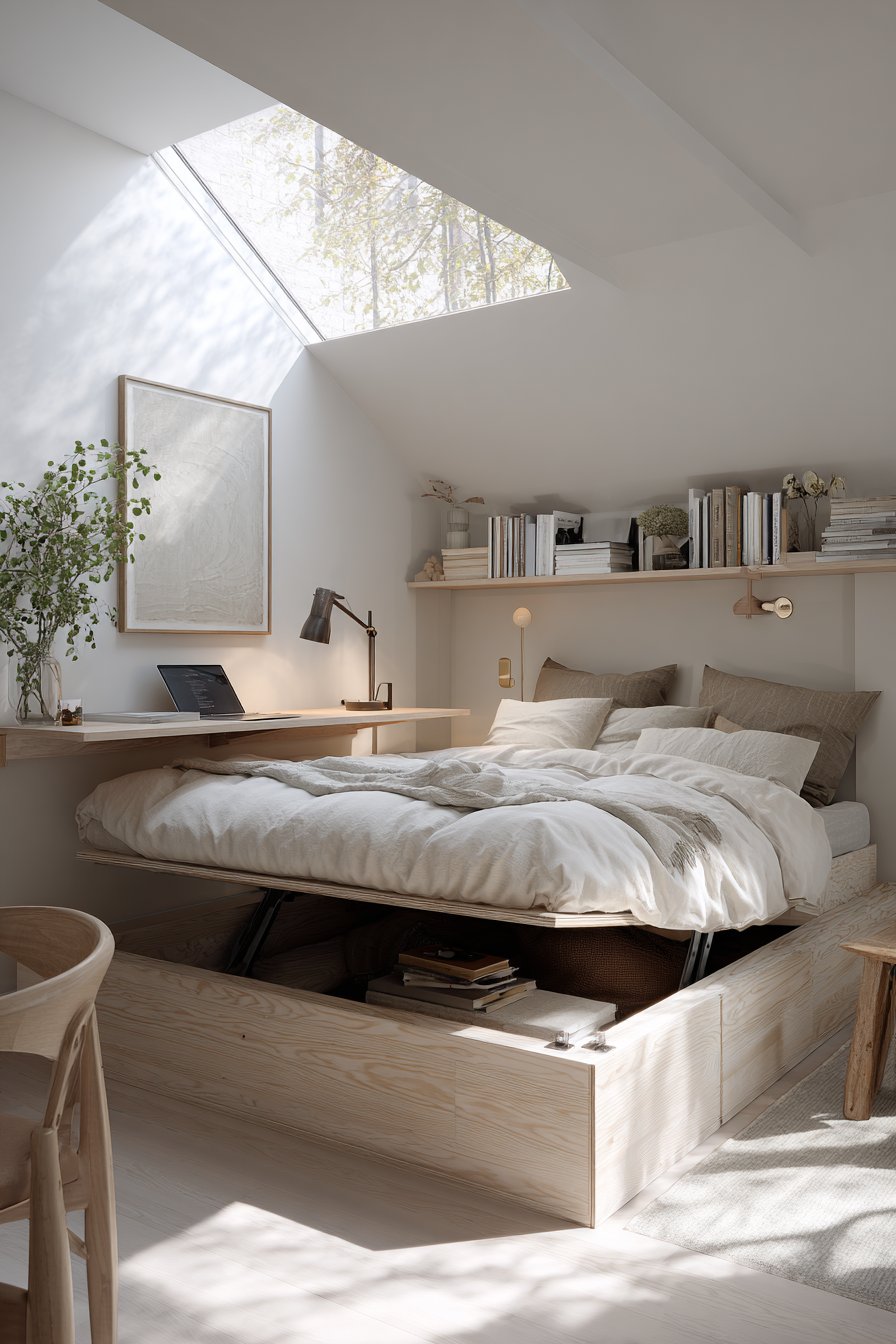
Scandinavian design principles shine beautifully in this tiny bedroom featuring a custom-built bed frame with a hydraulic lift mechanism. The innovative engineering allows the entire mattress platform to lift upward smoothly and effortlessly, revealing spacious storage compartments beneath where seasonal clothing, luggage, extra linens, or rarely used items can be stored completely out of sight.
This hidden storage solution is far superior to visible storage furniture that would clutter the room and diminish its serene, uncluttered appearance. The hydraulic mechanism makes daily access practical rather than laborious, encouraging actual use of the storage space.
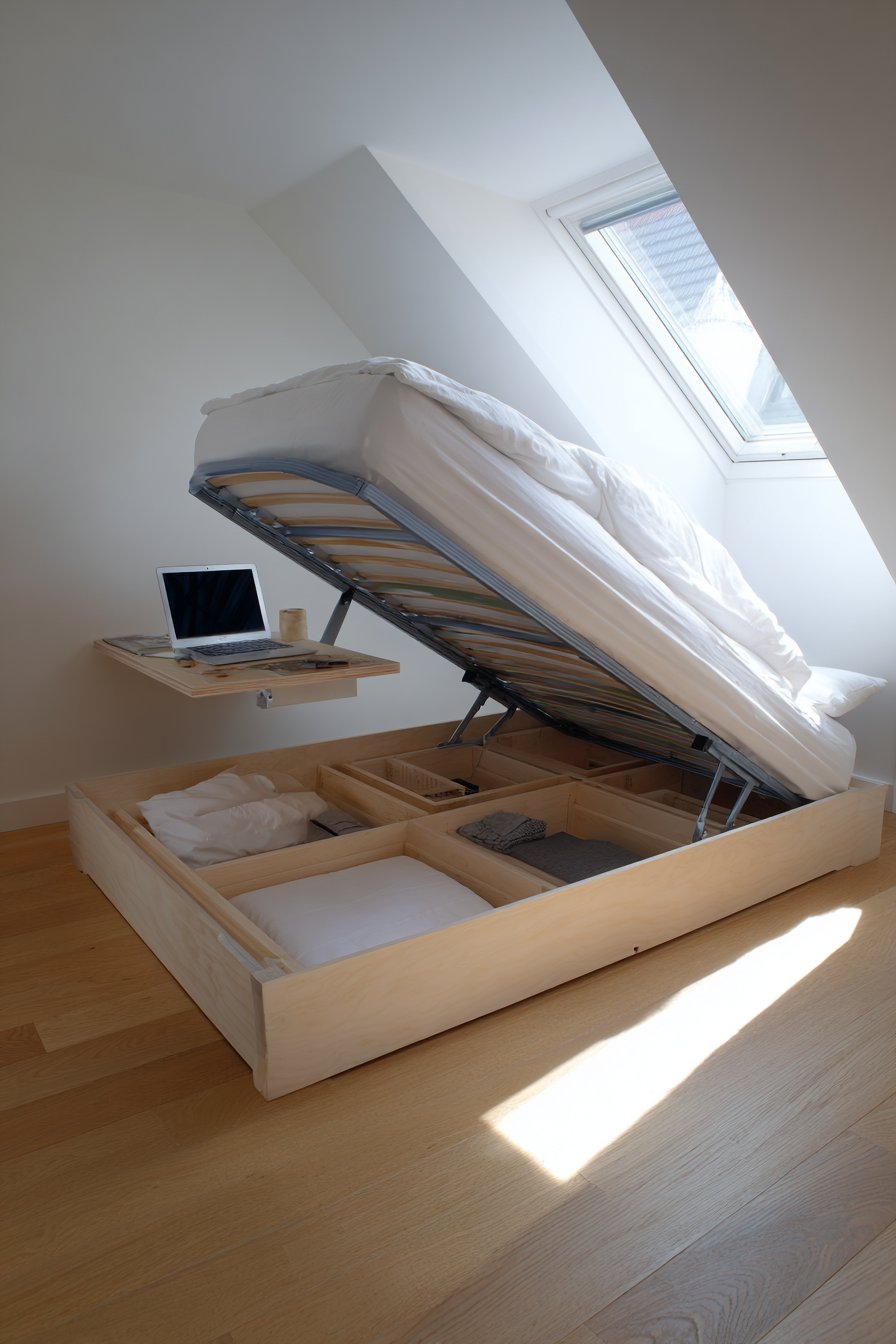
The Scandinavian aesthetic is evident in every material choice, from the light birch wood of the bed frame to the crisp white bedding that creates a fresh, airy atmosphere. Birch wood is prized in Nordic design for its pale, almost blonde coloring and subtle grain pattern that adds warmth without heaviness.
The natural wood tones bring organic texture to the space while maintaining the light, bright quality essential for small-room success. White bedding provides a clean, restful backdrop and reflects maximum light, contributing to the overall sense of spaciousness and tranquility.
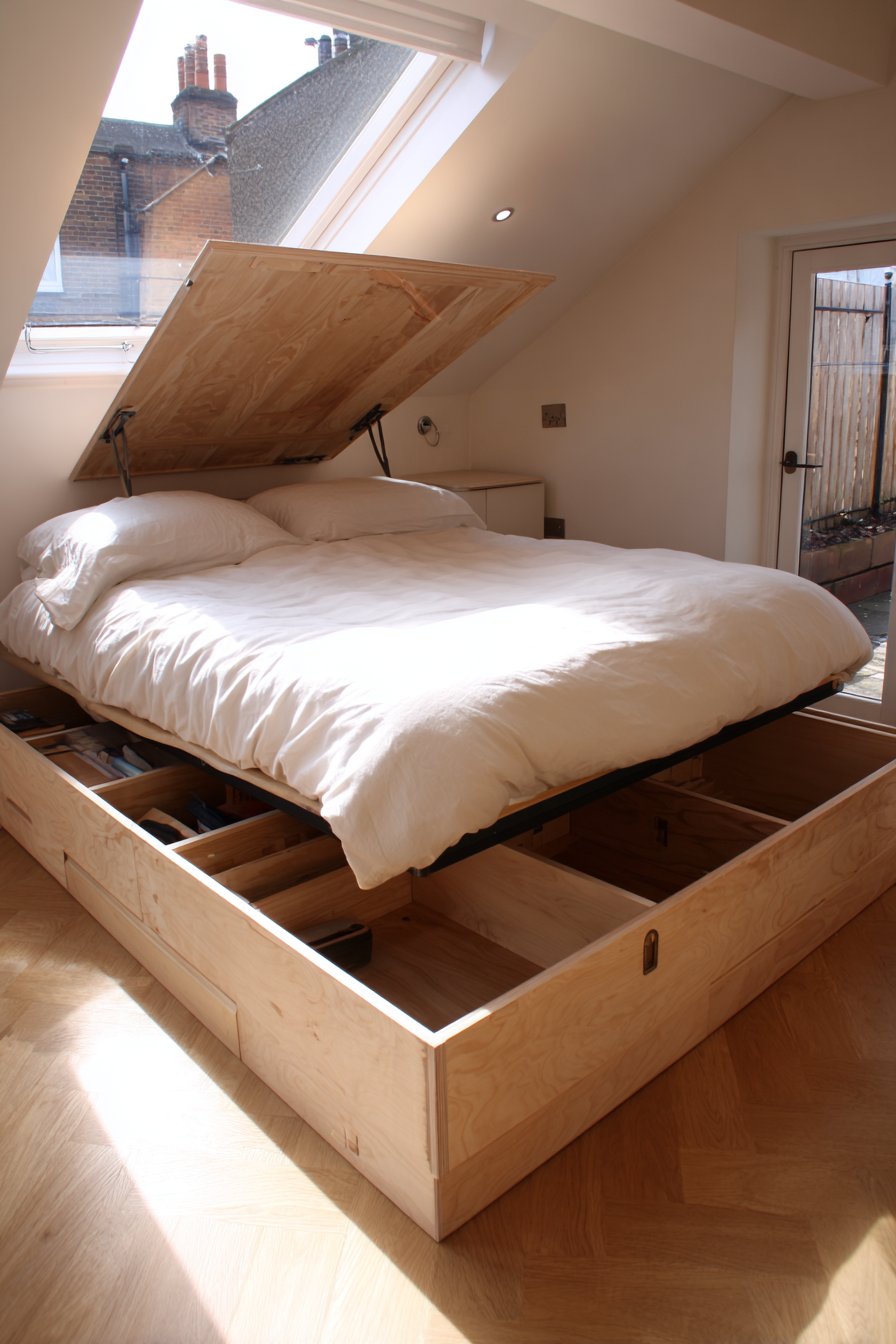
A wall-mounted fold-down desk provides workspace functionality without permanent floor space commitment, continuing the multifunctional philosophy that makes this tiny bedroom so successful. When needed for work or creative projects, the desk folds down to create a stable, functional work surface.
When the workday ends, it folds flat against the wall, completely disappearing and restoring the bedroom’s peaceful, uncluttered character. This flexibility allows the room to adapt to different needs throughout the day without requiring any furniture to be moved or rearranged.
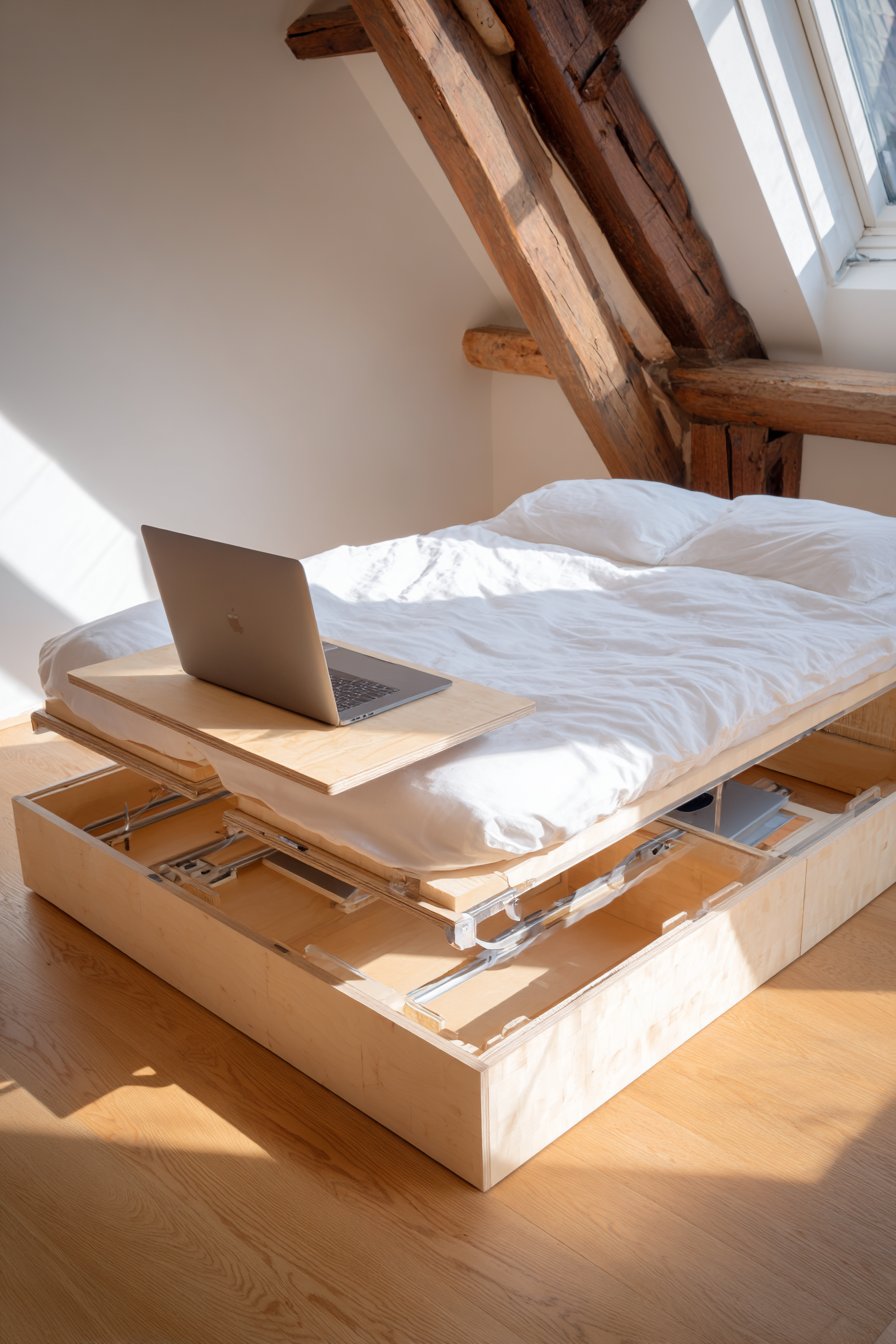
The crowning glory of this design is the skylight positioned above the bed, flooding the room with natural illumination from above. This overhead natural light source creates beautiful depth and shadows on the pale wood textures, highlighting the grain patterns and giving dimensionality to surfaces that might otherwise appear flat. The skylight also solves a common tiny bedroom challenge—limited wall space for windows. By bringing light from above, the design preserves wall space for storage and maintains privacy while still providing abundant natural illumination.
Design principles for Scandinavian hydraulic storage bedrooms include investing in quality hydraulic lift mechanisms that operate smoothly and safely with minimal effort, choosing light-colored woods and fabrics to maximize brightness and spaciousness, ensuring the bed frame is structurally sound to support both the mattress weight and the hydraulic mechanism, organizing storage beneath the bed in clear bins or compartments for easy access when the platform is lifted, and positioning the fold-down desk to receive natural light from windows or skylights for comfortable work conditions.
5. The Streamlined Built-In Wardrobe Sanctuary
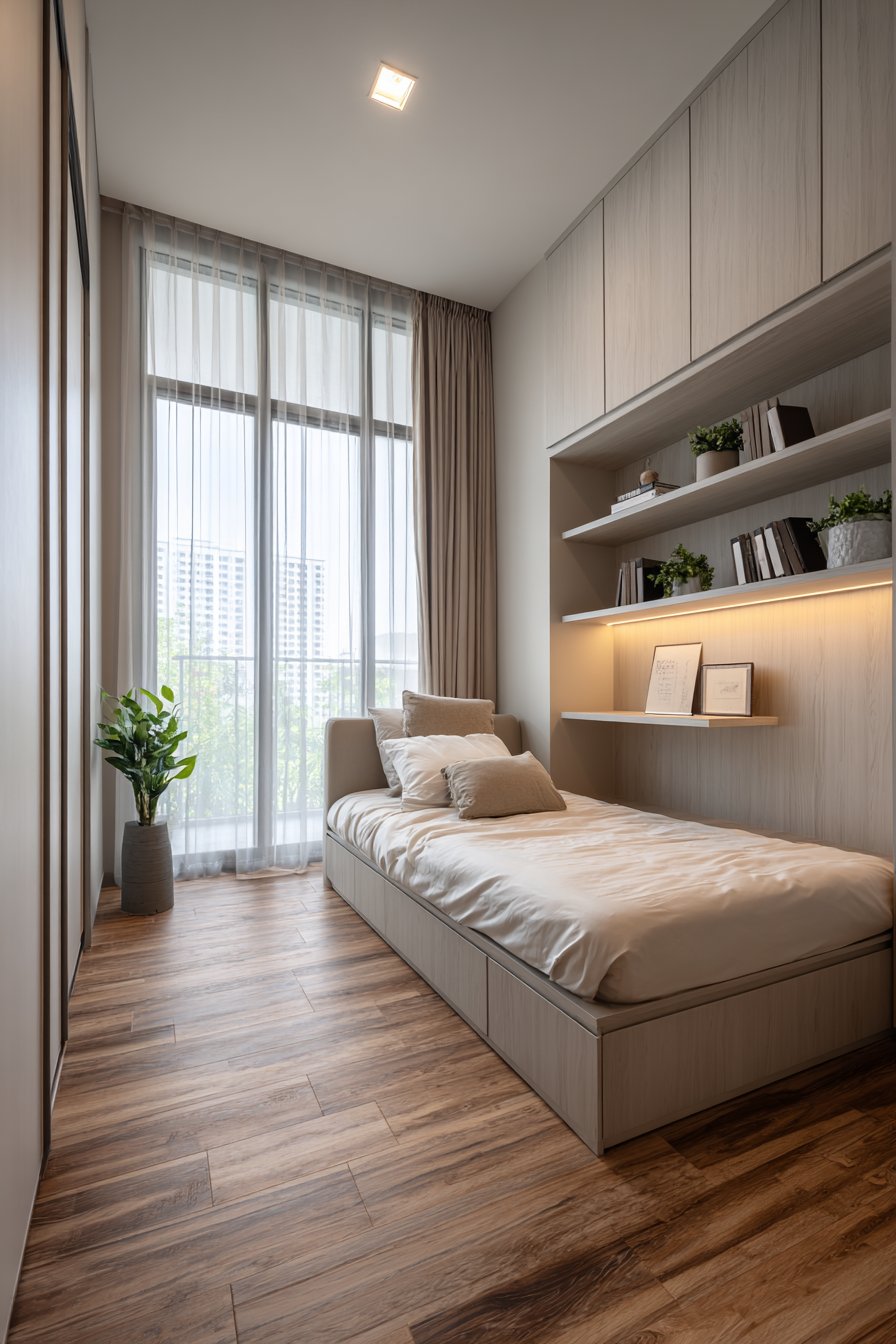
Floor-to-ceiling built-in wardrobes represent a transformative approach to tiny bedroom storage, converting an entire wall into functional storage space while maintaining a serene, streamlined aesthetic. The sliding doors finished in soft grey blend seamlessly with the walls, creating visual continuity that makes the wardrobes feel like an architectural feature rather than added furniture.
This integration is crucial for small-space success—when storage solutions blend into the architecture, they contribute to rather than detract from the sense of spaciousness. The sliding mechanism saves the floor space that hinged doors would require for opening, another thoughtful detail in this carefully planned design.
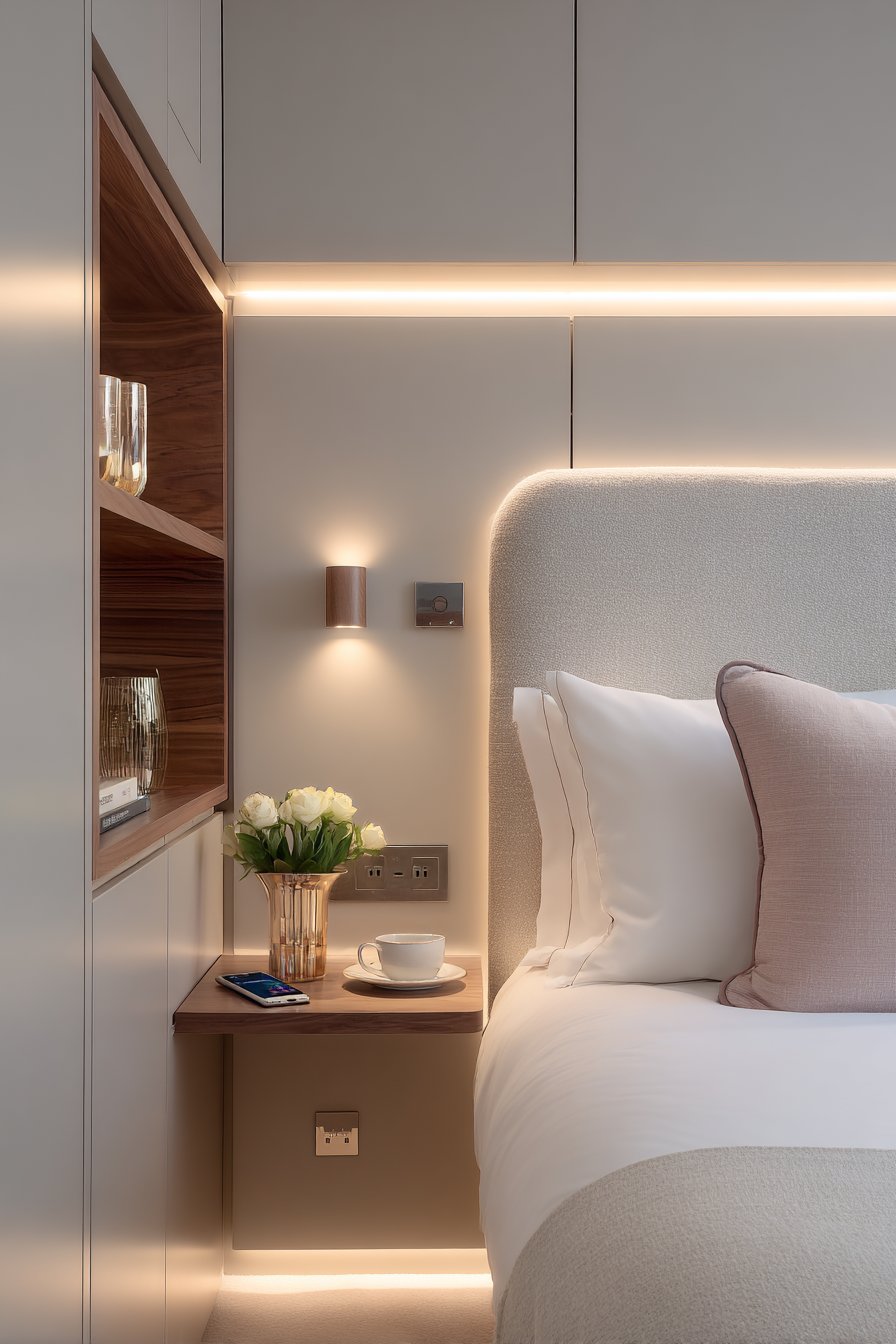
The narrow single bed features an upholstered headboard that extends vertically to become a focal point and functional element. Integrated within this headboard are USB charging ports and LED reading lights, eliminating the need for bedside lamps or extension cords that would clutter the minimal nightstand area.
This integration of technology into furniture represents contemporary design thinking at its best—anticipating user needs and solving them elegantly within the design itself rather than through added accessories. The upholstered surface adds softness and tactile comfort to the room’s material palette, balancing the smooth, hard surfaces of the wardrobe doors and walls.
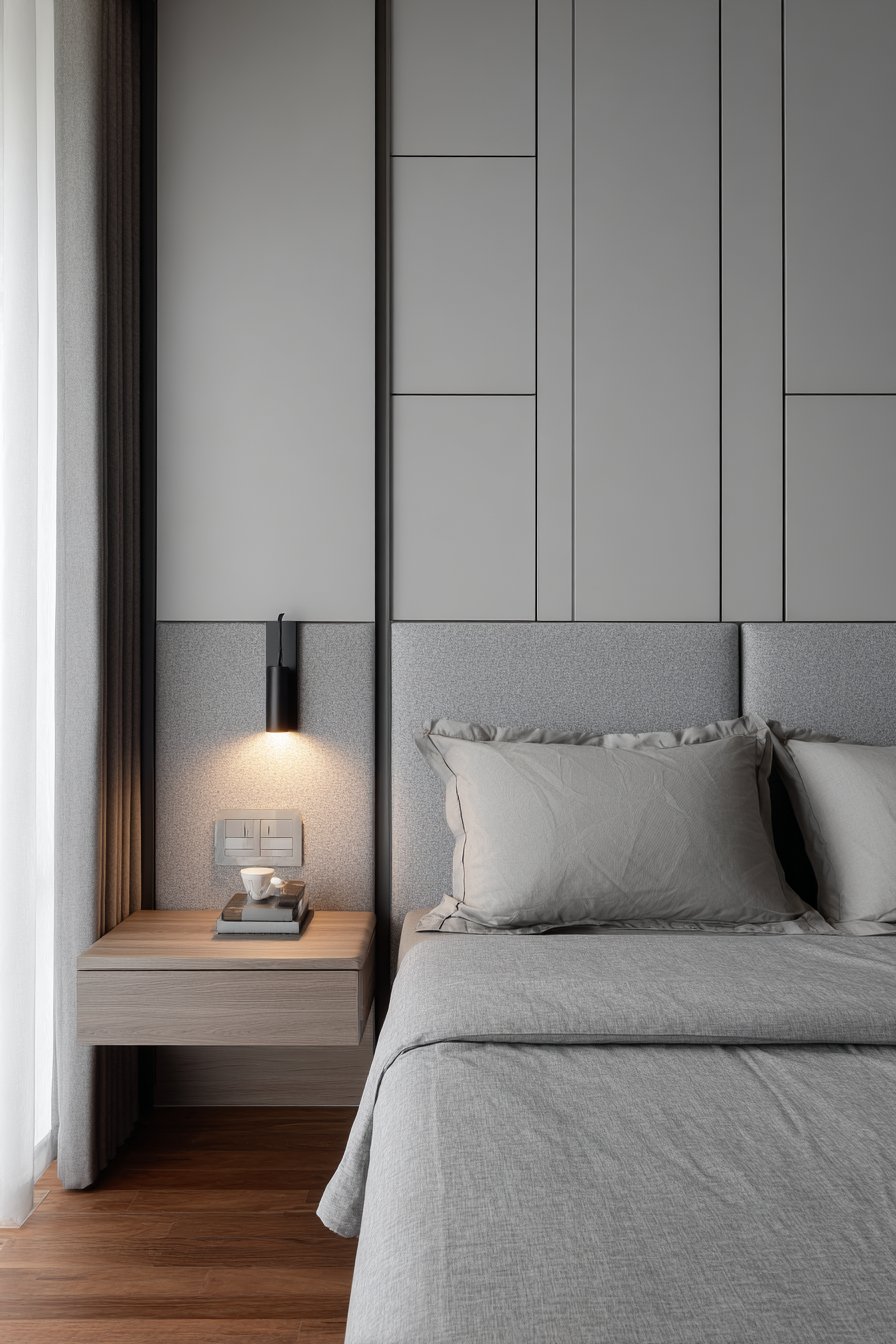
A compact floating shelf serves as a minimalist nightstand, providing just enough surface area for absolute essentials—perhaps a small plant, a book, or a glass of water—without occupying valuable floor space or adding visual weight to the room.
The floating installation maintains clear floor area beneath, contributing to the room’s uncluttered appearance and making cleaning easier. This restraint in furnishing is a hallmark of successful tiny bedroom design—providing exactly what’s needed without excess that would compromise spaciousness.
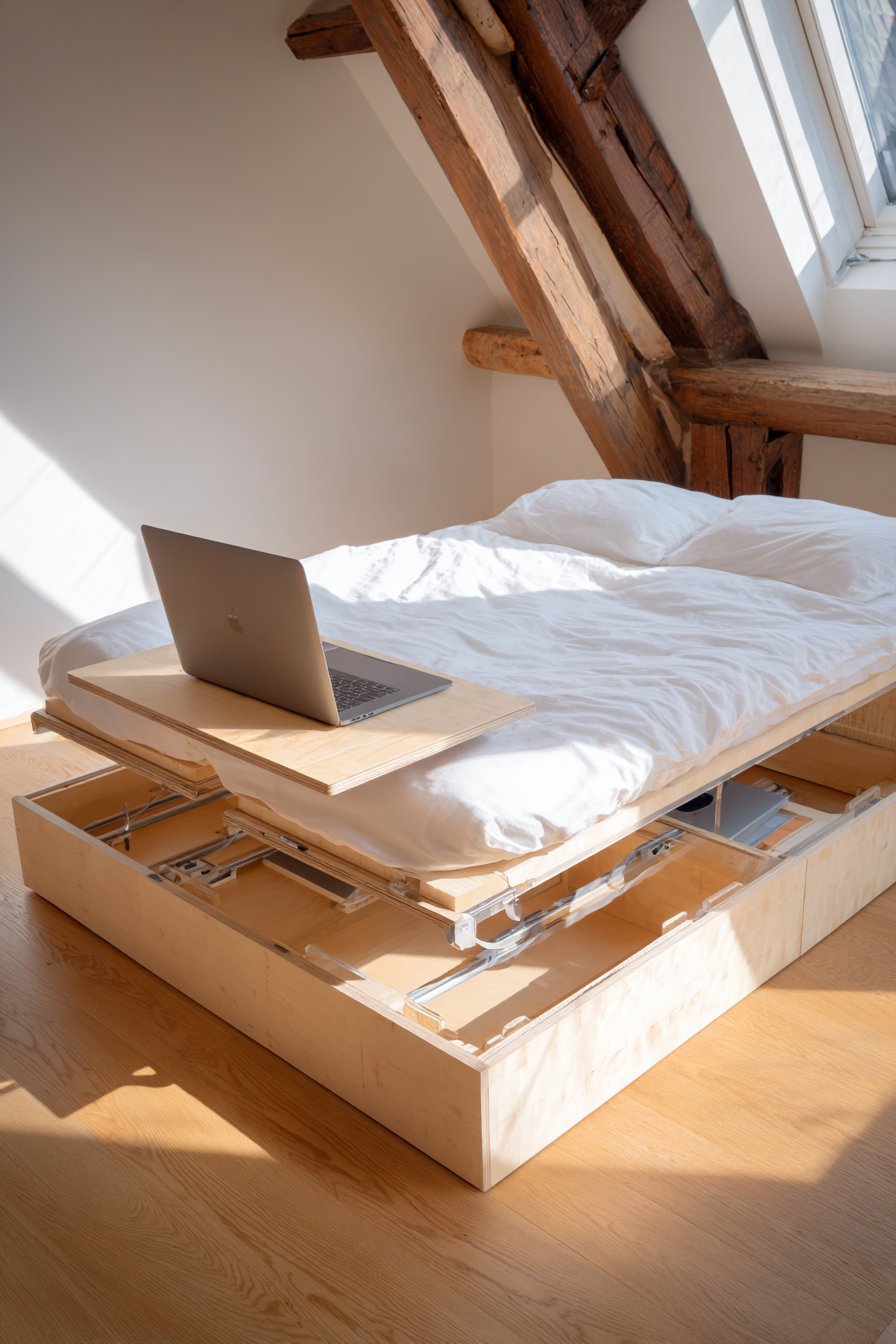
The professional photography of this space emphasizes how every inch serves a purpose while maintaining a serene, uncluttered atmosphere. The balanced exposure highlights the subtle variations in the grey tones, the texture of the upholstered headboard, and the clean lines that define the space. The streamlined design creates a bedroom that feels like a peaceful retreat rather than a cramped necessity, proving that limited square footage need not mean compromised comfort or style.
Key considerations for built-in wardrobe bedrooms include customizing wardrobe depth to maximize storage while maintaining adequate floor space for comfortable movement, choosing soft-close sliding mechanisms for quiet operation, integrating lighting inside wardrobes for visibility when selecting clothing, selecting a bed size appropriate to the room dimensions while ensuring adequate storage within the wardrobe system, and maintaining a cohesive color palette between walls, wardrobes, and furnishings to create visual flow and spaciousness.
6. The Flexible Daybed Guest Accommodation
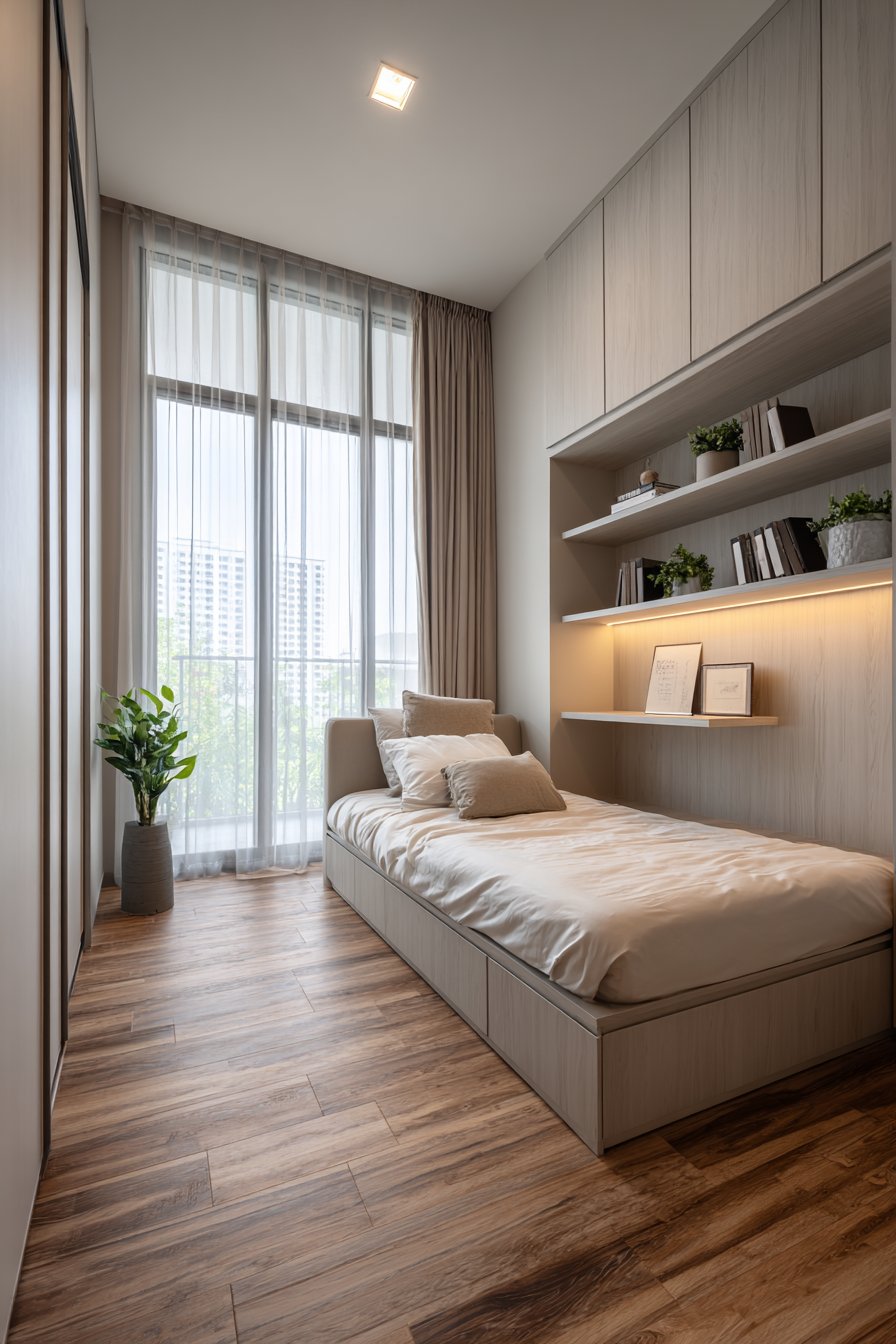
A daybed positioned against the wall offers exceptional versatility for a tiny bedroom that must serve multiple functions. This space-efficient furniture piece functions as a sofa during the day, providing comfortable seating for reading, working on a laptop, or conversing with visitors.
At night, it transforms into a comfortable sleeping surface, and the genius continues with a trundle bed concealed beneath that pulls out to accommodate overnight guests. This dual sleeping capacity in a footprint smaller than a traditional full-size bed makes this design ideal for studio apartments, home offices that occasionally host visitors, or children’s rooms where sleepovers are common.
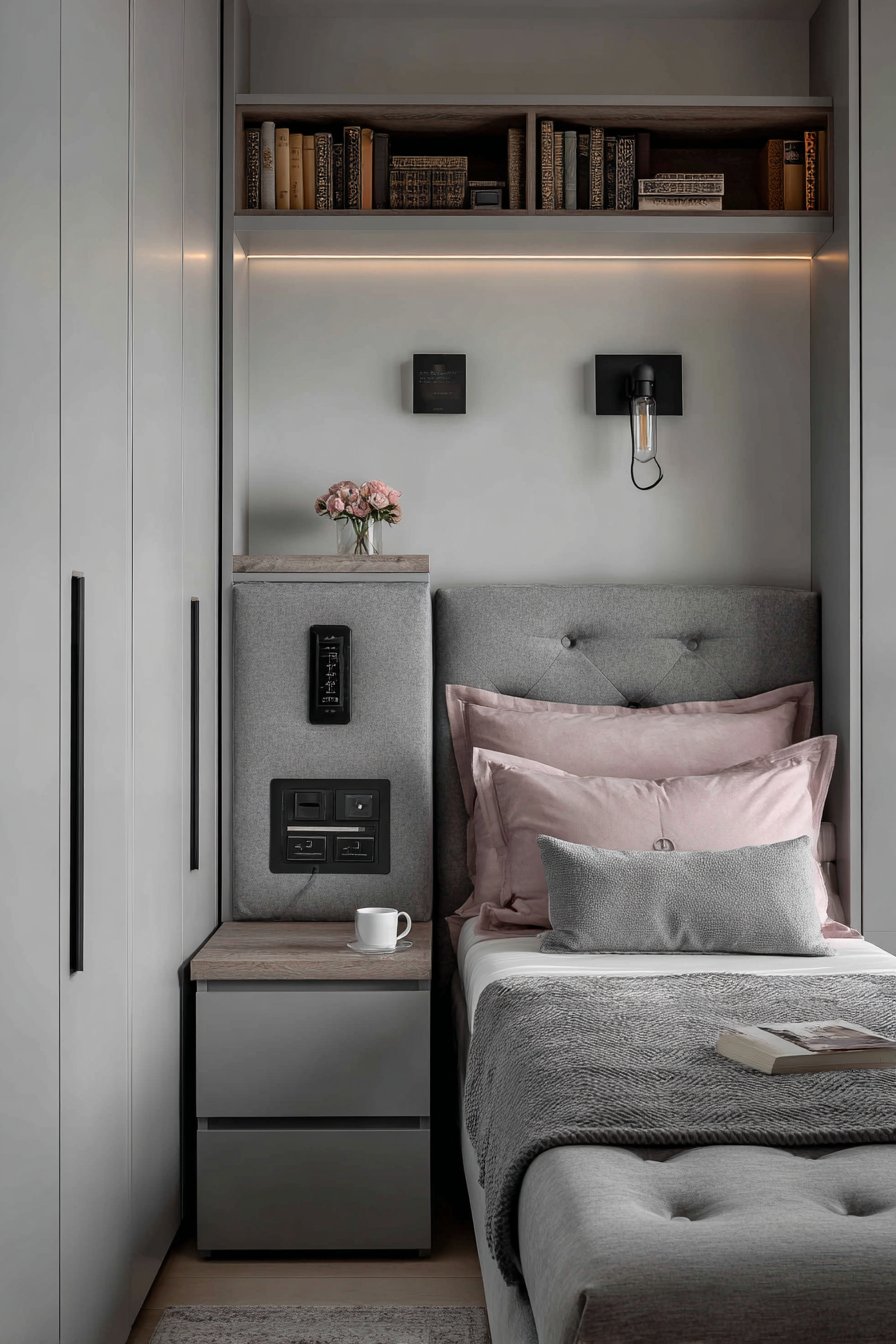
Open shelving mounted above the daybed displays minimal decor and provides book storage, eliminating the need for a separate bookcase that would consume floor space. The open design maintains visual lightness—closed cabinets would create a heavier, more enclosed feeling above the seating area.
The carefully curated display of books and decorative objects adds personality and visual interest without clutter, demonstrating the delicate balance between personalization and minimalism that characterizes successful small-space design. Each item on the shelves has been chosen intentionally, contributing to the room’s aesthetic without overwhelming it.
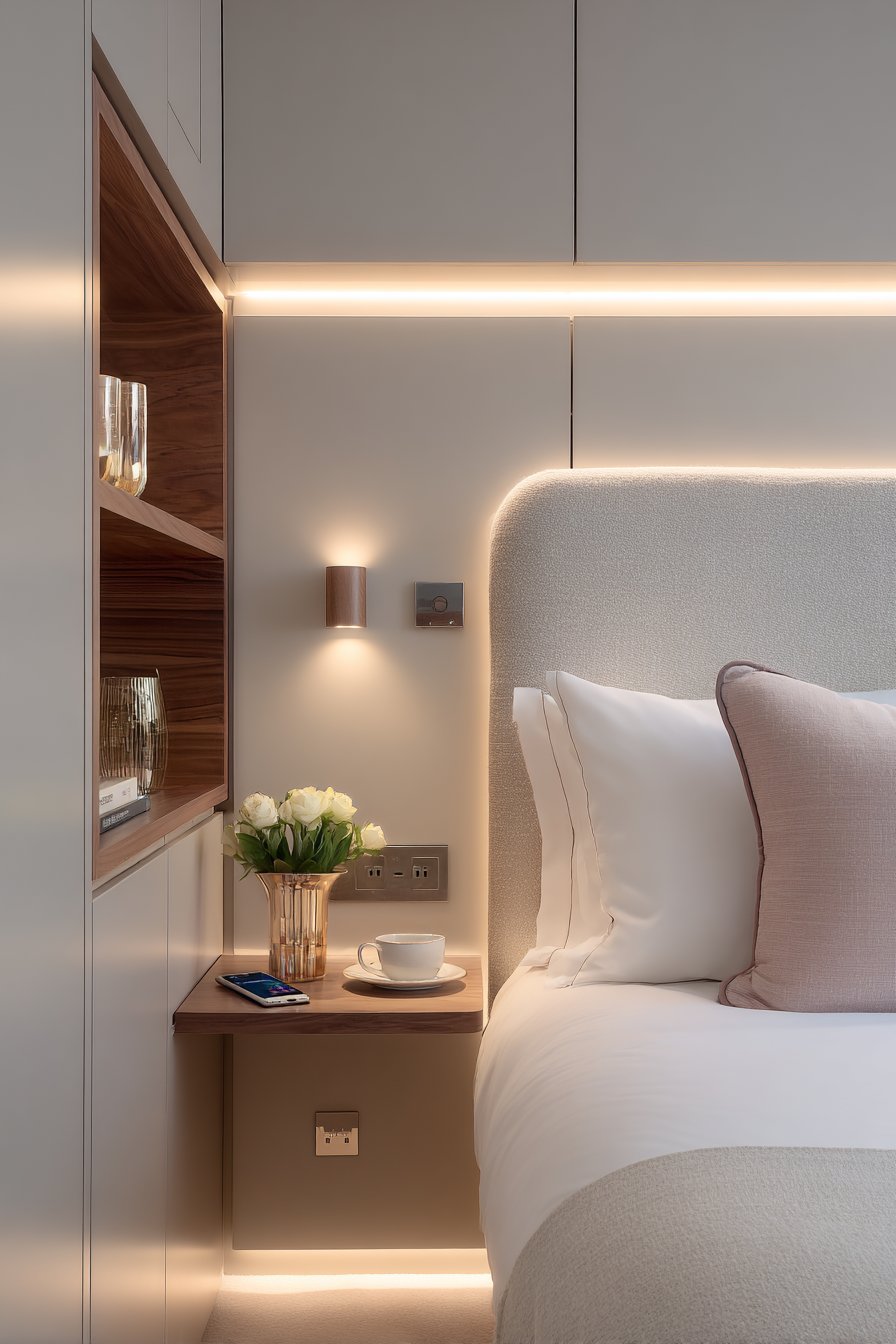
A small round side table on casters offers flexibility that fixed furniture cannot match. The wheeled base allows the table to be positioned wherever needed—beside the daybed for beverages and snacks, pulled forward to serve as a laptop desk, or rolled completely out of the way when maximum floor space is required.
This mobility is invaluable in tiny spaces where furniture must adapt to different activities throughout the day. The round shape eliminates sharp corners that could be hazardous in tight quarters, while the compact diameter provides functionality without spatial dominance.
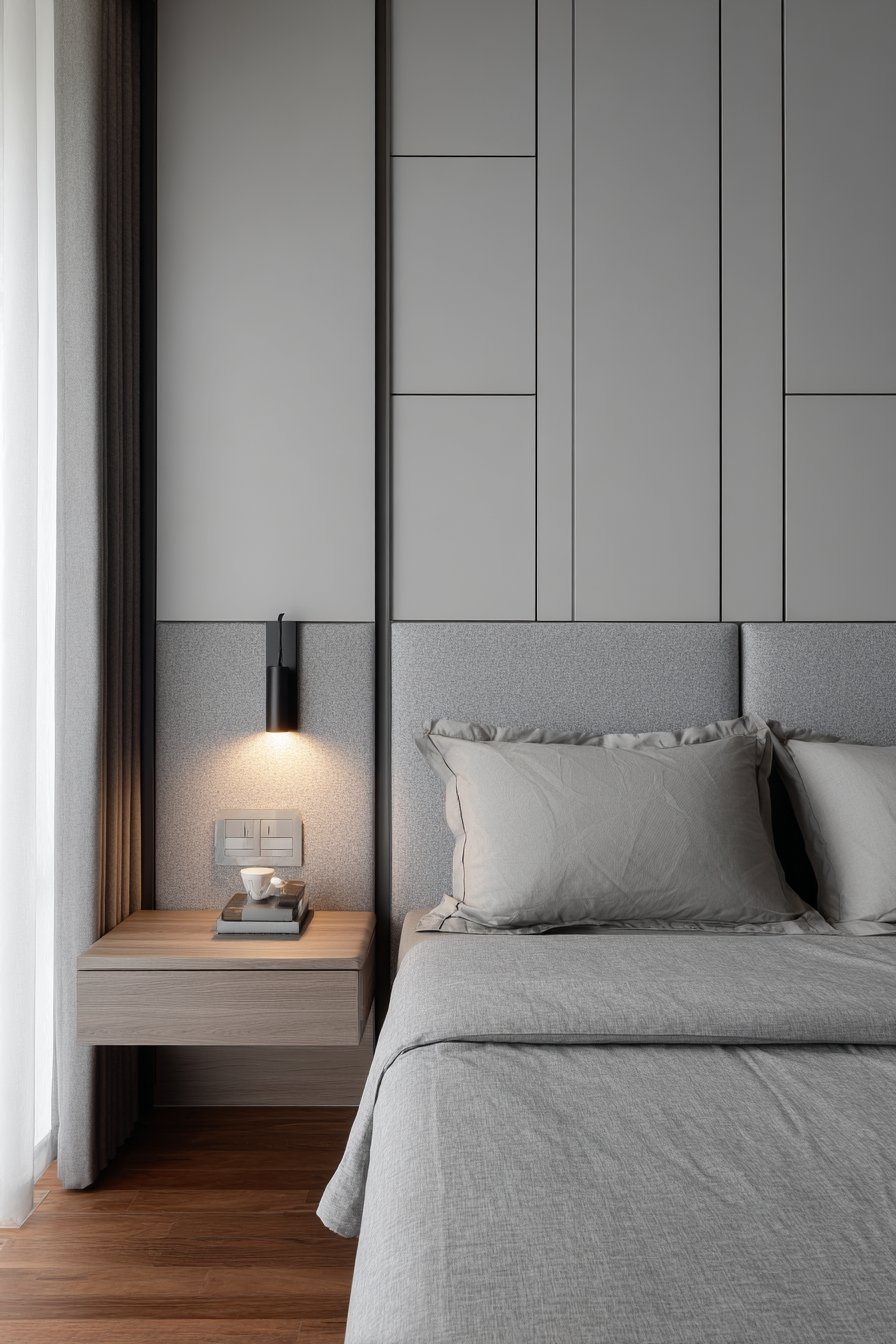
Walls painted in warm off-white reflect natural light from a corner window with simple roller blinds, creating a cozy yet functional atmosphere throughout the space. The warm undertones in the paint prevent the room from feeling cold or clinical despite its minimal furnishing. Natural light streaming from the corner position illuminates the room from an angle, creating gentle shadows and dimensional interest. The roller blinds provide privacy and light control without the visual weight of curtains or the harshness of hard blinds.
Important design elements for daybed bedrooms include choosing a daybed with a comfortable mattress suitable for regular sleeping rather than just occasional use, ensuring the trundle mechanism operates smoothly and stores completely beneath the daybed when not needed, arranging the seating area to face the best view or most pleasant aspect of the room, selecting washable cushion covers and bedding for easy maintenance, and providing adequate storage for guest bedding so the trundle can be made up quickly when visitors arrive.
7. The Japanese-Inspired Minimalist Zen Retreat
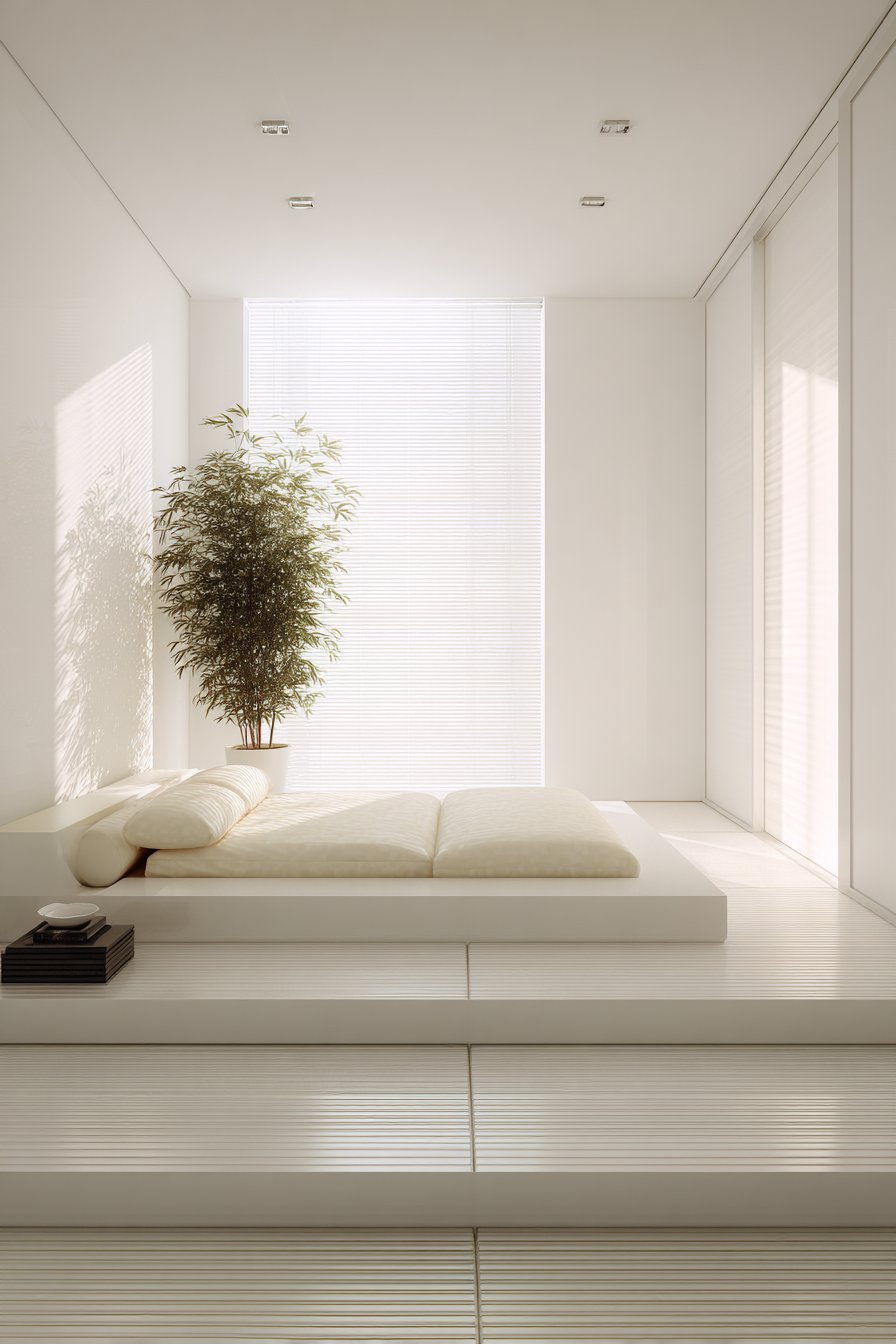
Japanese design philosophy brings profound wisdom to tiny bedroom challenges through its emphasis on simplicity, natural materials, and thoughtful spatial organization. This bedroom features a low platform bed on tatami-style flooring, immediately establishing the room’s aesthetic direction and cultural inspiration.
The low bed profile makes the ceiling appear higher, creating a sense of vertical spaciousness that counterbalances the limited floor area. Sleeping closer to the ground also has a grounding, calming psychological effect that enhances the room’s function as a restful retreat from daily stresses.
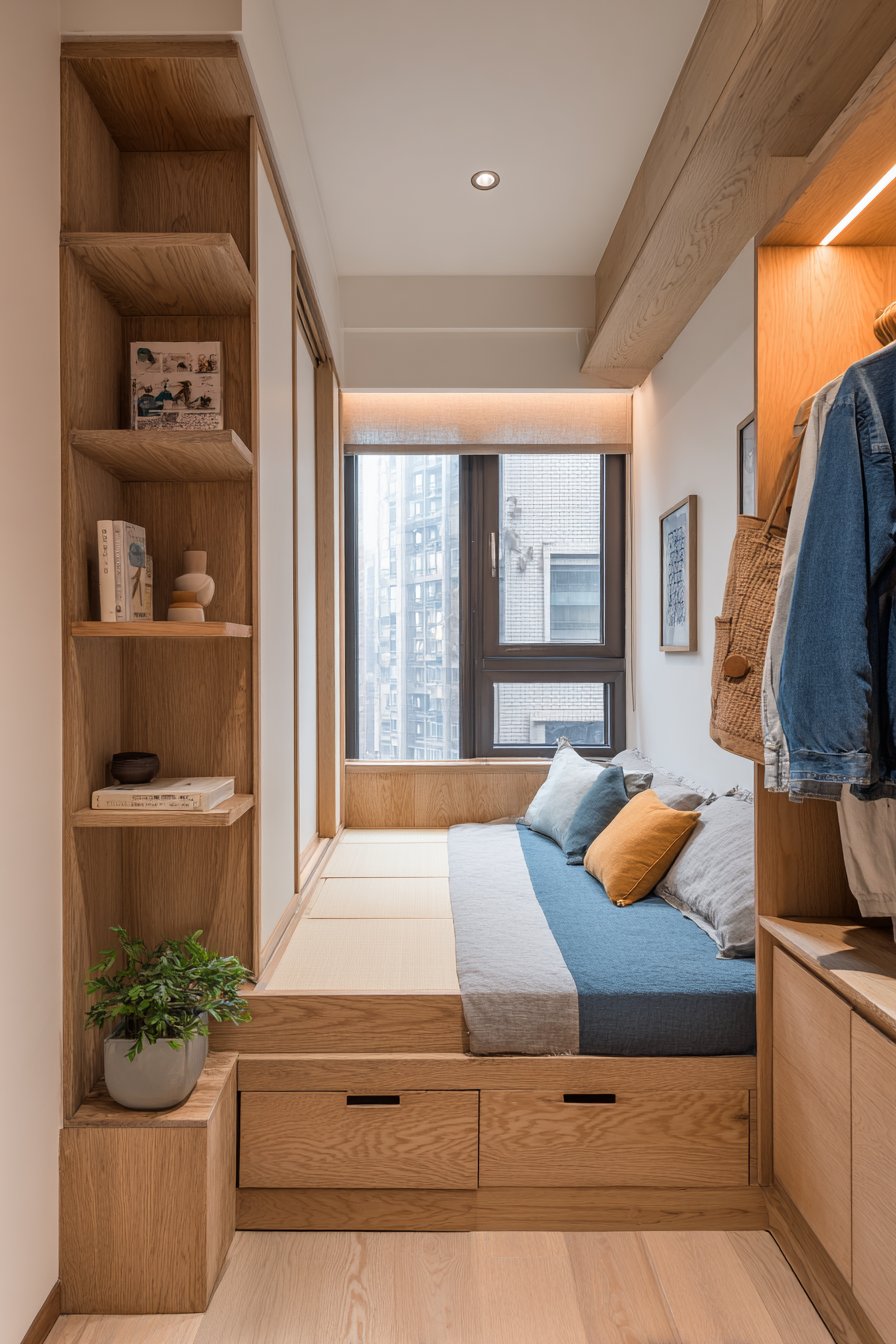
Built-in wall niches provide storage for folded clothes and minimal decorative items, following the Japanese tradition of integrated architectural storage rather than freestanding furniture. These recessed compartments preserve floor space while offering surprising storage capacity.
The niches are sized and positioned thoughtfully—some deeper for stacked clothing, others shallower for display of a ceramic piece or small plant. This built-in approach creates clean, uninterrupted wall surfaces interrupted only by these purposeful openings, a much more serene visual experience than walls lined with furniture pieces.
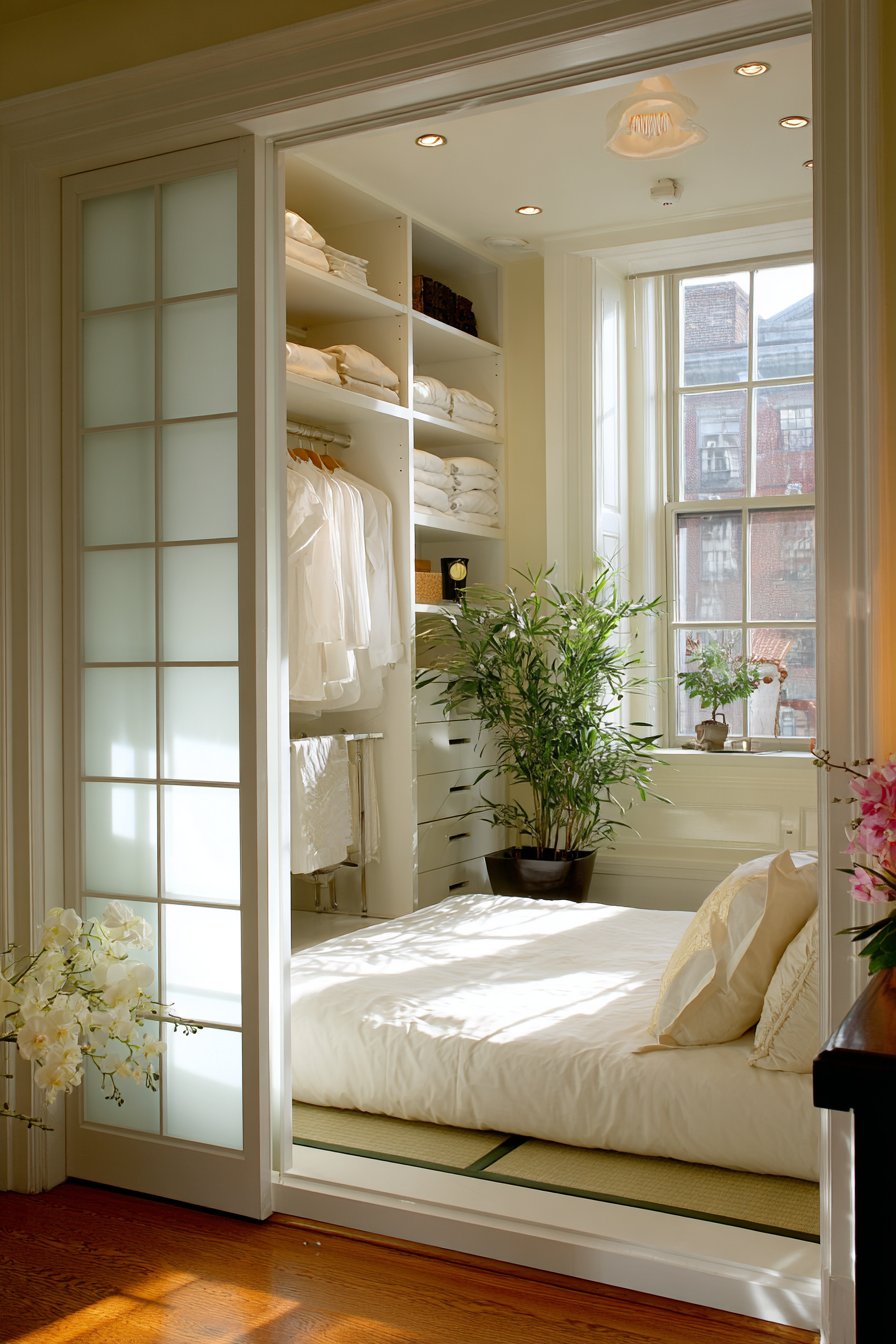
A single potted plant adds life and natural beauty to the space without cluttering it, embodying the Japanese principle of bringing nature indoors in carefully considered, minimal ways. The plant might be a small bonsai, a simple bamboo arrangement, or a sculptural succulent—whatever the choice, it’s singular and intentional rather than part of a collection. This restraint allows the plant to function almost as a living art piece, drawing the eye and providing a focal point for meditation or contemplation.
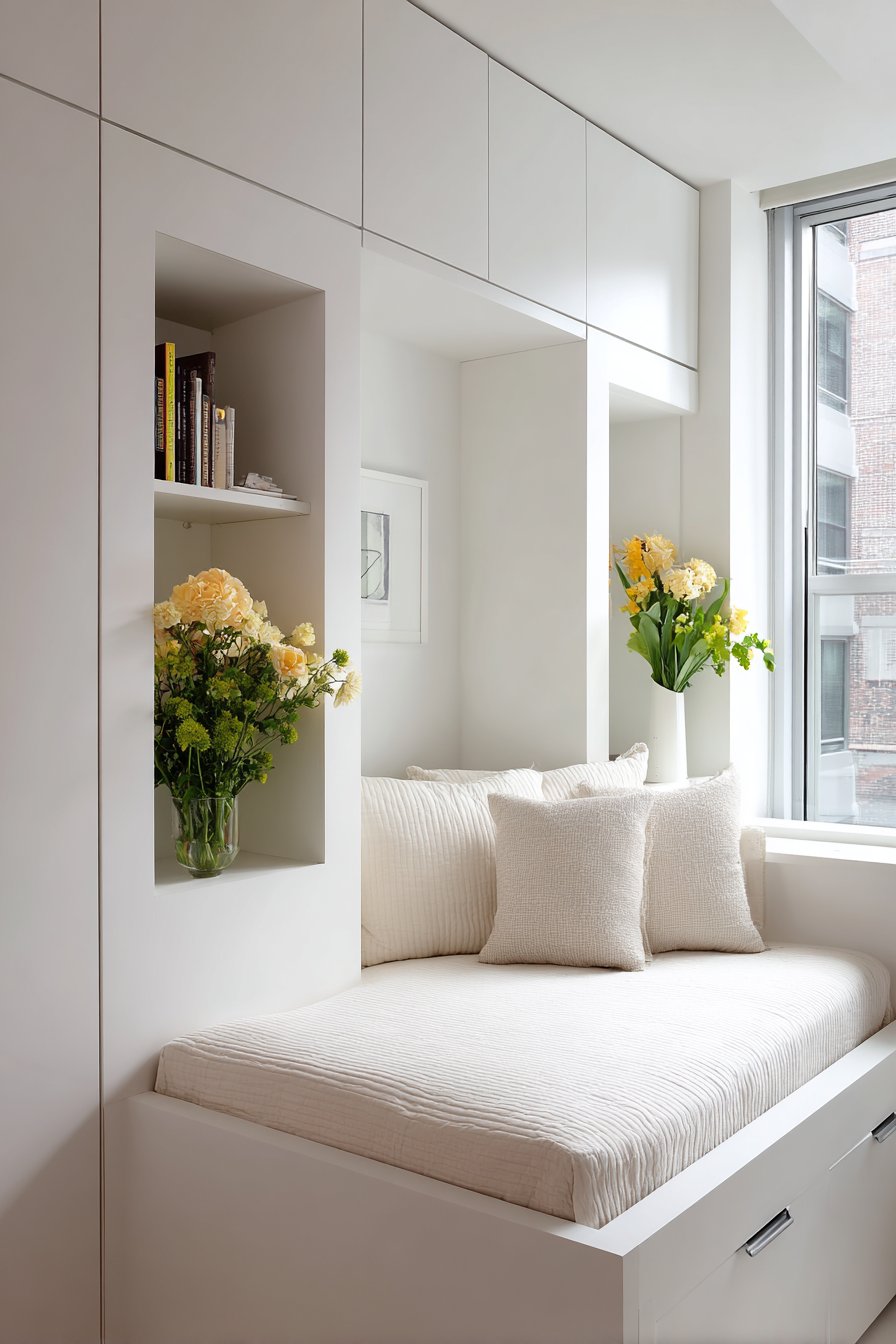
Shoji-inspired sliding panels conceal a compact closet, their translucent surfaces allowing diffused light to filter through while maintaining privacy for stored items. These panels reference traditional Japanese architecture while serving thoroughly practical functions in a contemporary setting. Natural daylight filters through translucent window coverings, creating soft, even illumination that eliminates harsh shadows and contributes to the zen-like tranquility that defines this space.
The quality of light in this room promotes rest and reflection, making it a true sanctuary. Design principles for Japanese-inspired minimalist bedrooms include selecting low-profile furniture to maximize perceived ceiling height, incorporating natural materials like wood, cotton, and rice paper for authenticity and warmth, limiting the color palette to neutrals with perhaps one accent color drawn from nature, ensuring storage solutions are integrated and concealed rather than freestanding and visible, and maintaining strict discipline about possessions to prevent clutter from compromising the minimalist aesthetic.
8. The Vertical Storage Solution with Extended Headboard
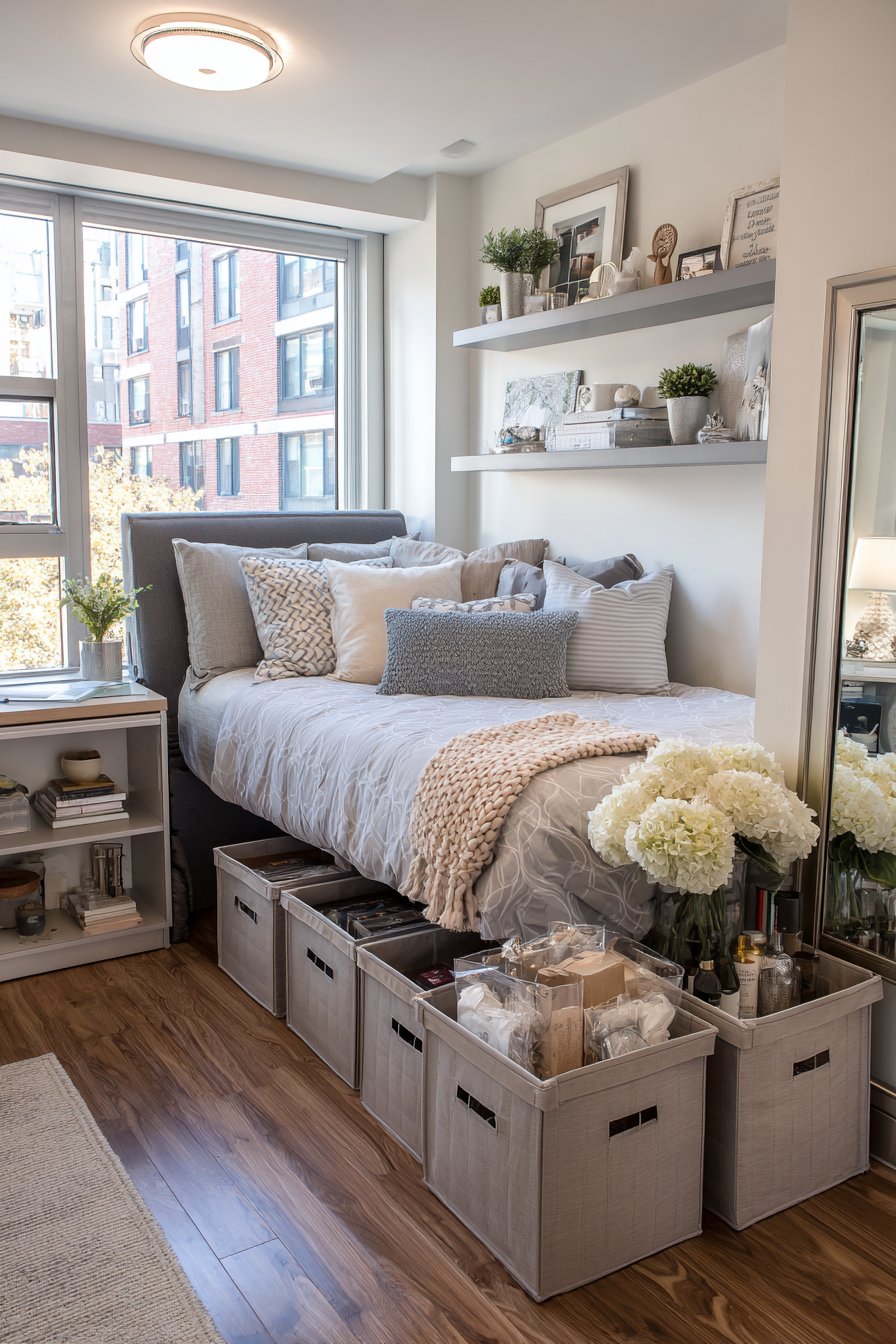
This tiny bedroom showcases an innovative approach to vertical space utilization through an upholstered headboard that extends dramatically from behind the bed all the way to the ceiling. Rather than stopping at traditional headboard height, this architectural element incorporates floating shelves at various heights, creating storage and display opportunities that would otherwise require floor space.
Subtle LED strip lighting integrated into the shelving provides ambient illumination and task lighting for bedtime reading without requiring bedside lamps. This vertical emphasis draws the eye upward, making the room feel taller and more spacious than its actual dimensions.
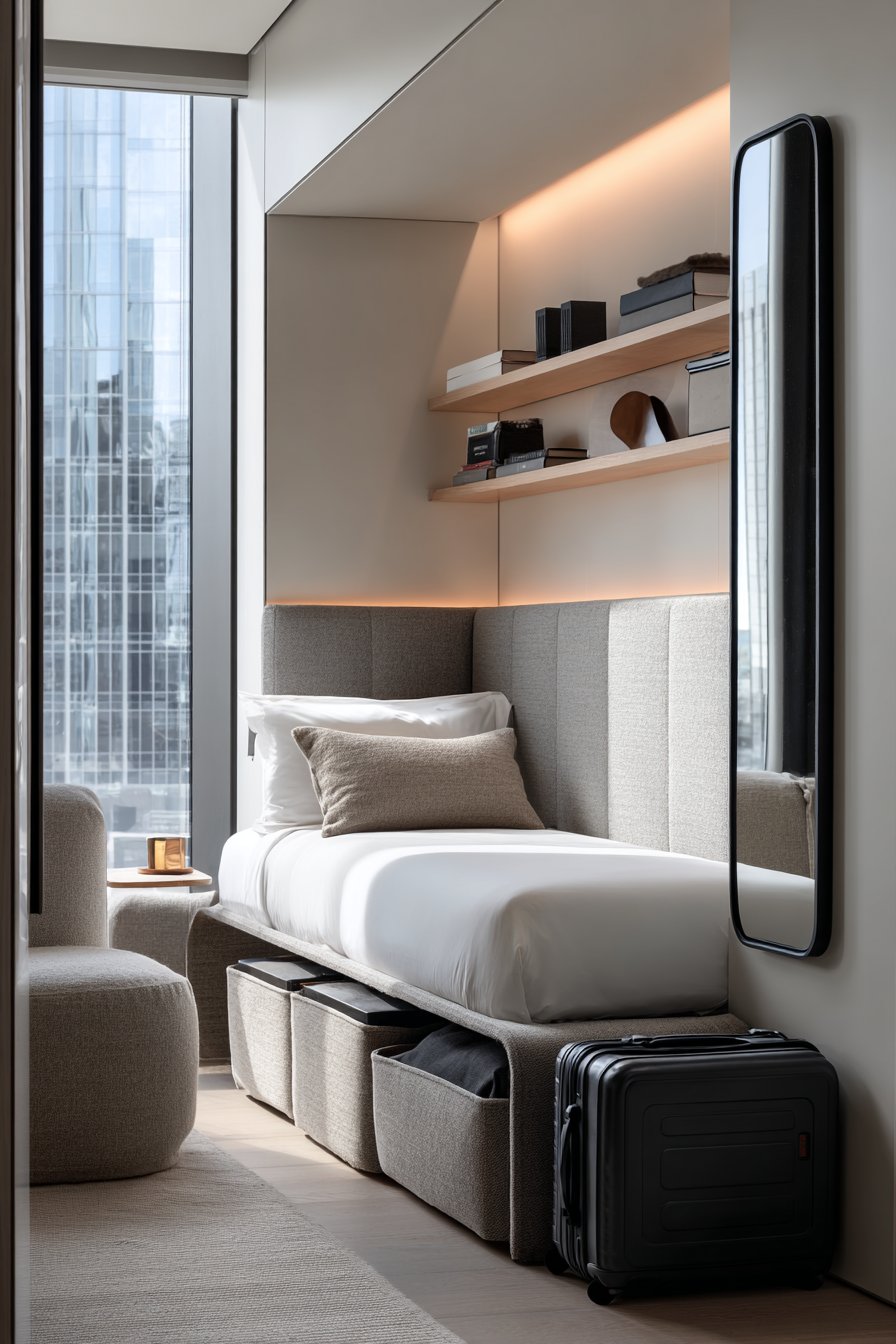
The twin bed is positioned to maximize surrounding floor space, and beneath it, rolling storage bins in coordinating neutral tones slide out to reveal organized storage for clothing, shoes, linens, or personal items. These bins maximize the valuable under-bed real estate while remaining completely hidden when pushed back into place.
The rolling mechanism allows easy access without requiring you to crouch or reach awkwardly into dark recesses—a practical detail that encourages actual use of the storage rather than letting it become a catch-all for forgotten items.
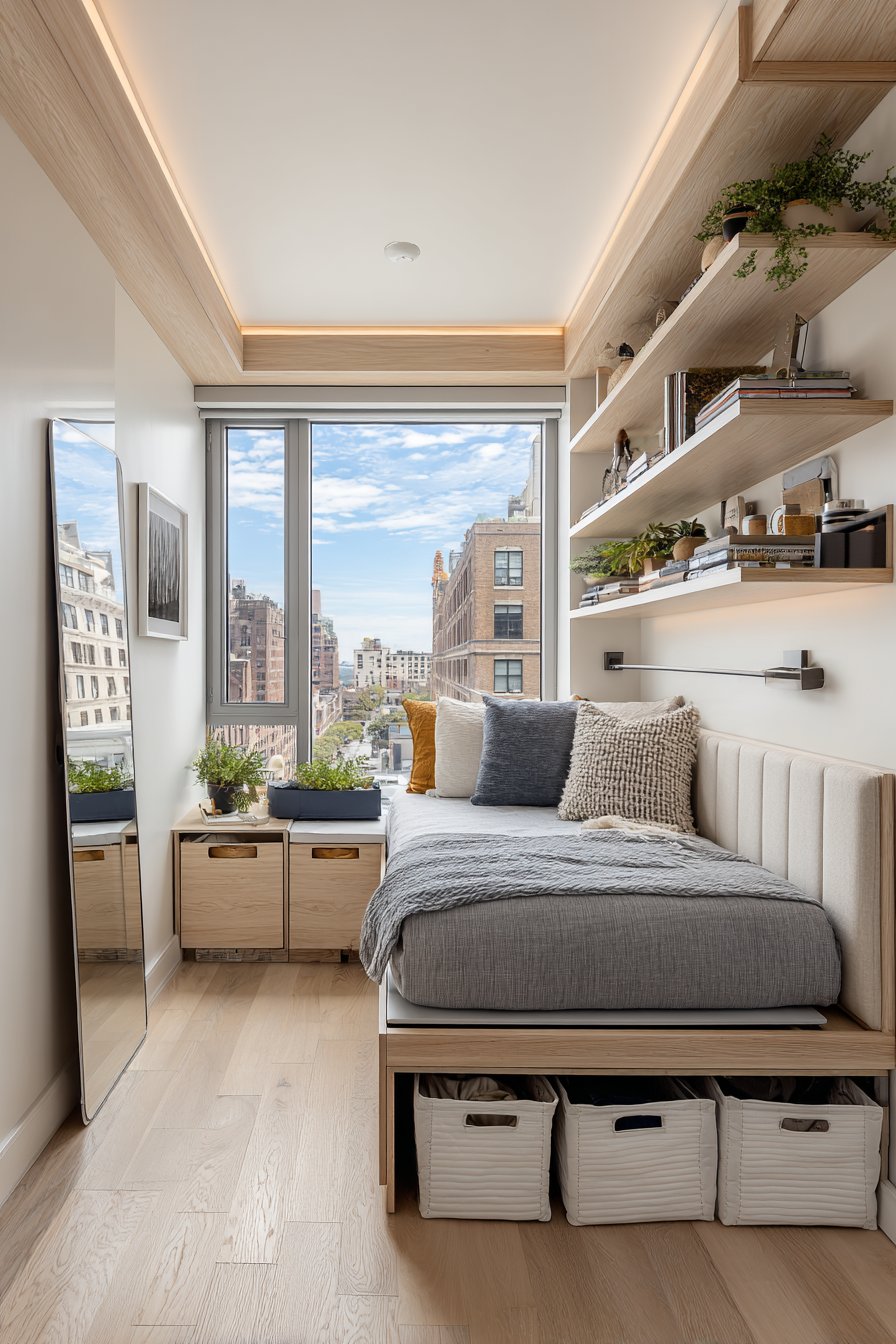
A narrow full-length mirror leans against the wall rather than being mounted, adding flexibility to the room’s arrangement while creating the powerful illusion of expanded space. The mirror reflects the room back on itself, effectively doubling the perceived square footage and bouncing light throughout the space.
The leaning position rather than hanging adds a casual, contemporary element to the design while avoiding the need for wall mounting that might be prohibited in rental situations or would leave holes if the mirror were relocated.
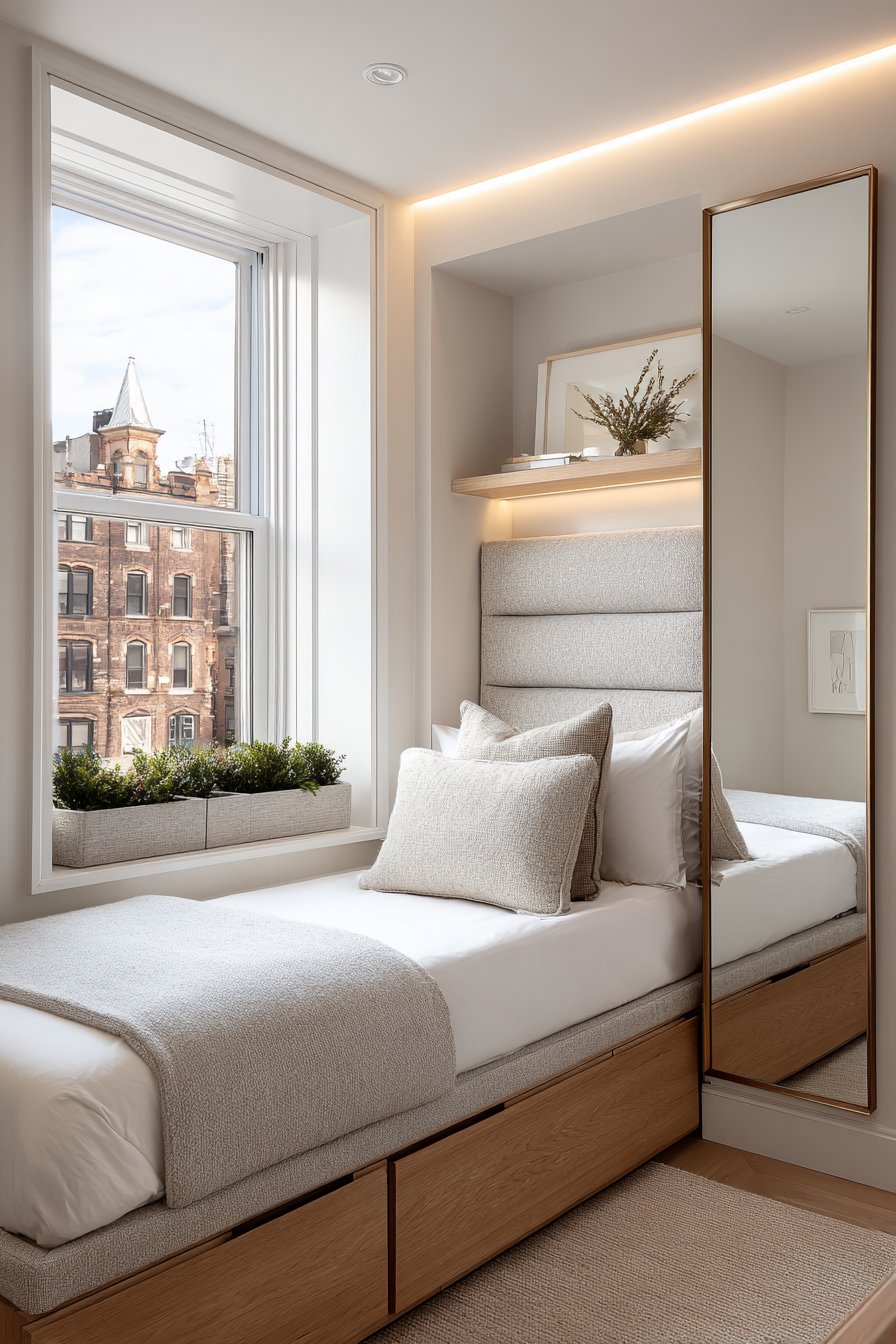
Professional interior photography captured with natural window light emphasizes the room’s smart vertical storage solutions and the subtle texture variations in the fabrics and materials. The upholstered headboard shows its woven texture, the rolling bins reveal their fabric or woven construction, and the overall composition demonstrates how layering different neutral materials creates visual interest without colorful patterns or busy designs.
Key strategies for vertical storage bedrooms include extending storage and design elements to ceiling height to maximize space utilization and draw the eye upward, integrating lighting directly into shelving and headboards to eliminate need for space-consuming lamps, choosing under-bed storage with smooth-rolling wheels for easy access and frequent use, positioning mirrors strategically to reflect light and views that enhance rather than clutter the space, and maintaining a cohesive neutral palette that allows textural variety to provide visual interest.
9. The Custom Carpentry Alcove Bedroom
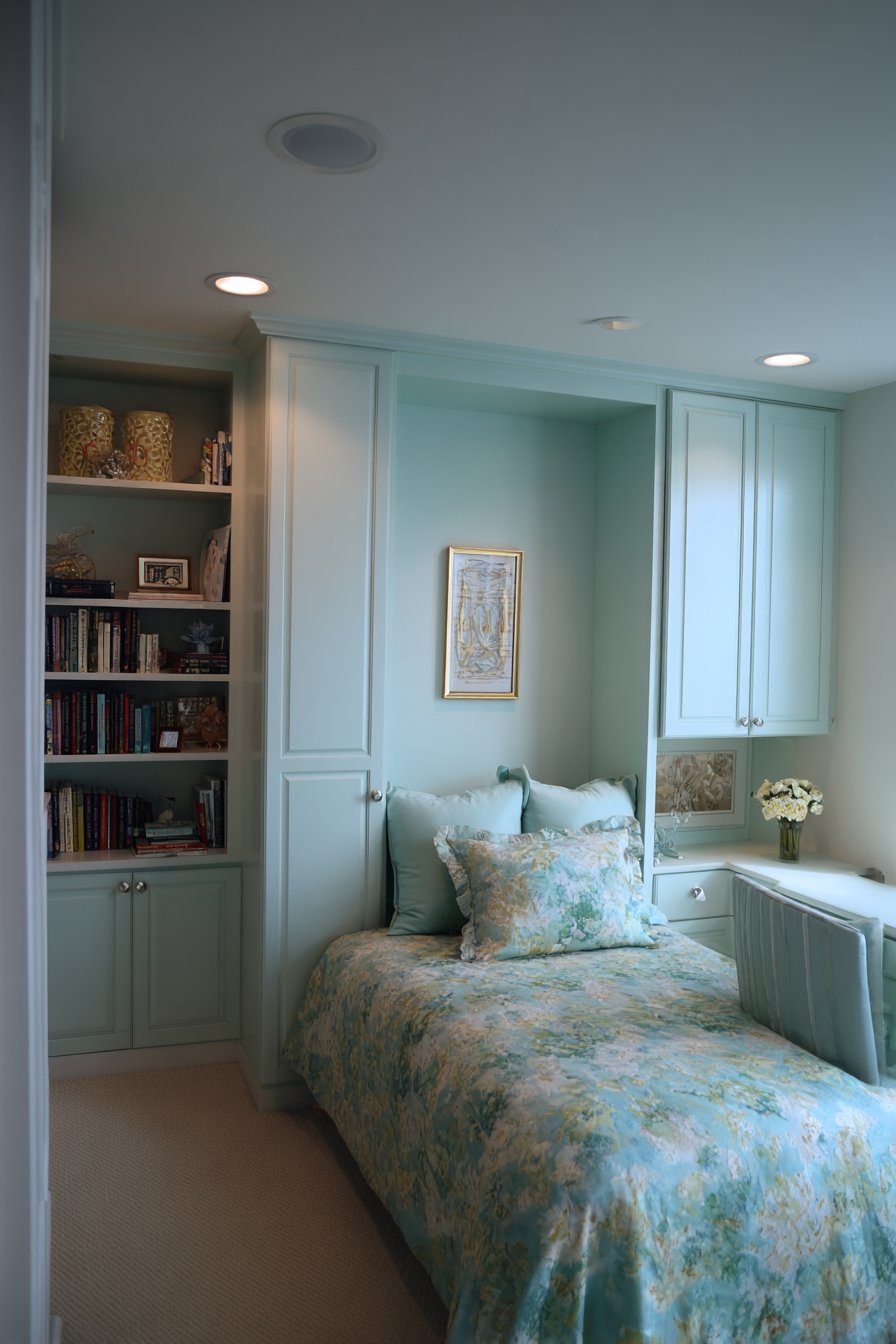
Custom carpentry reaches its pinnacle in this tiny bedroom featuring an alcove bed built into an integrated unit that combines sleeping, storage, and workspace functions within a single architectural intervention. The bed nestles into a purpose-built alcove surrounded by overhead storage cabinets and side compartments that utilize every available cubic inch.
This built-in approach transforms what would be wasted space—the area above and beside the bed—into highly functional storage without consuming any floor space. The custom nature of the installation ensures perfect fit and maximum efficiency, impossible to achieve with standard furniture pieces.
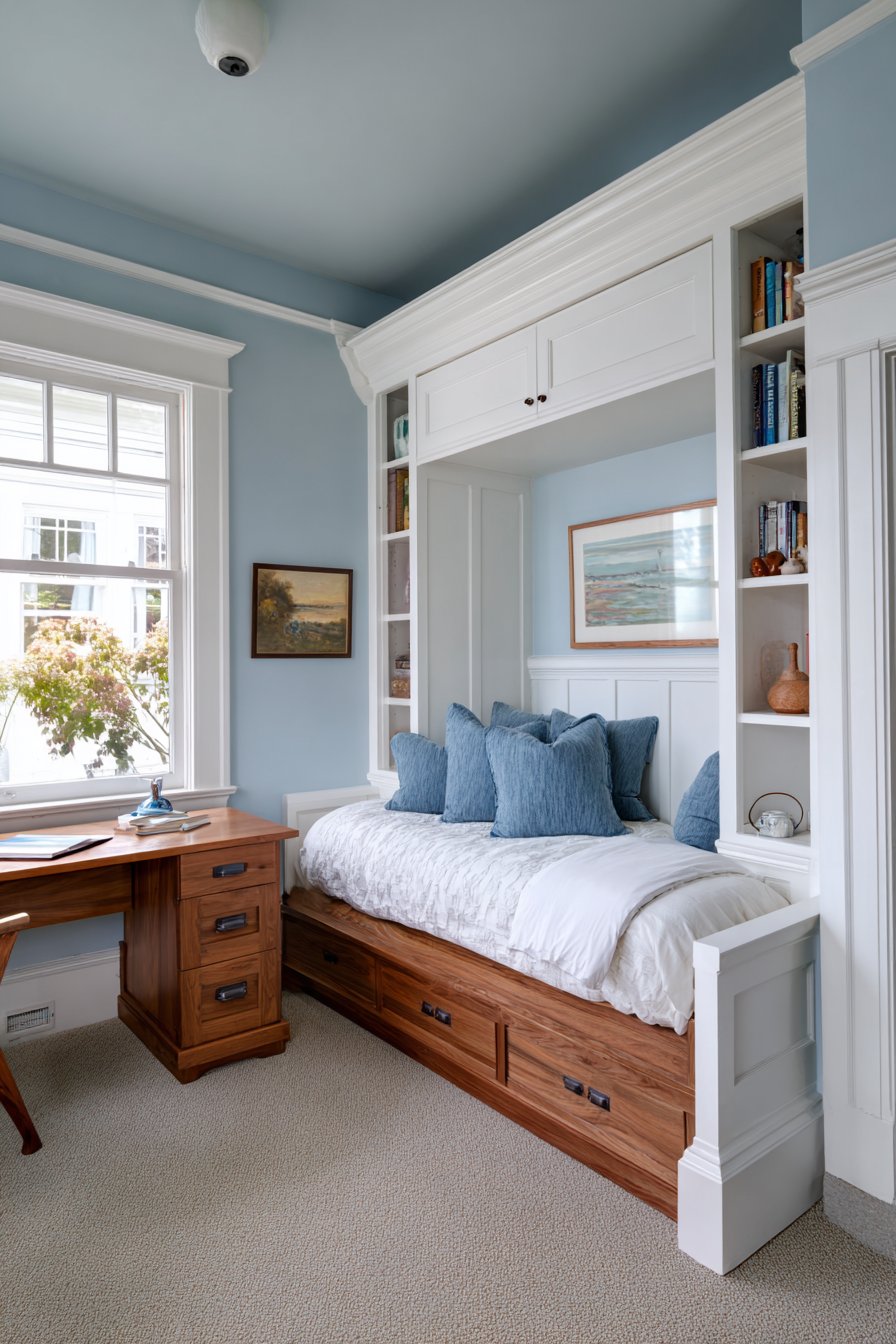
The remaining floor space, freed from the burden of accommodating storage furniture, provides room for a small writing desk that folds against the wall when not in use. This fold-down desk creates a dedicated workspace during the day while completely disappearing at night to maintain an open floor area for dressing, movement, or yoga practice.
The desk surface, when deployed, is sturdy and adequately sized for laptop work, writing, or creative projects. When folded away, its profile is so minimal that it appears more like decorative wall paneling than furniture.
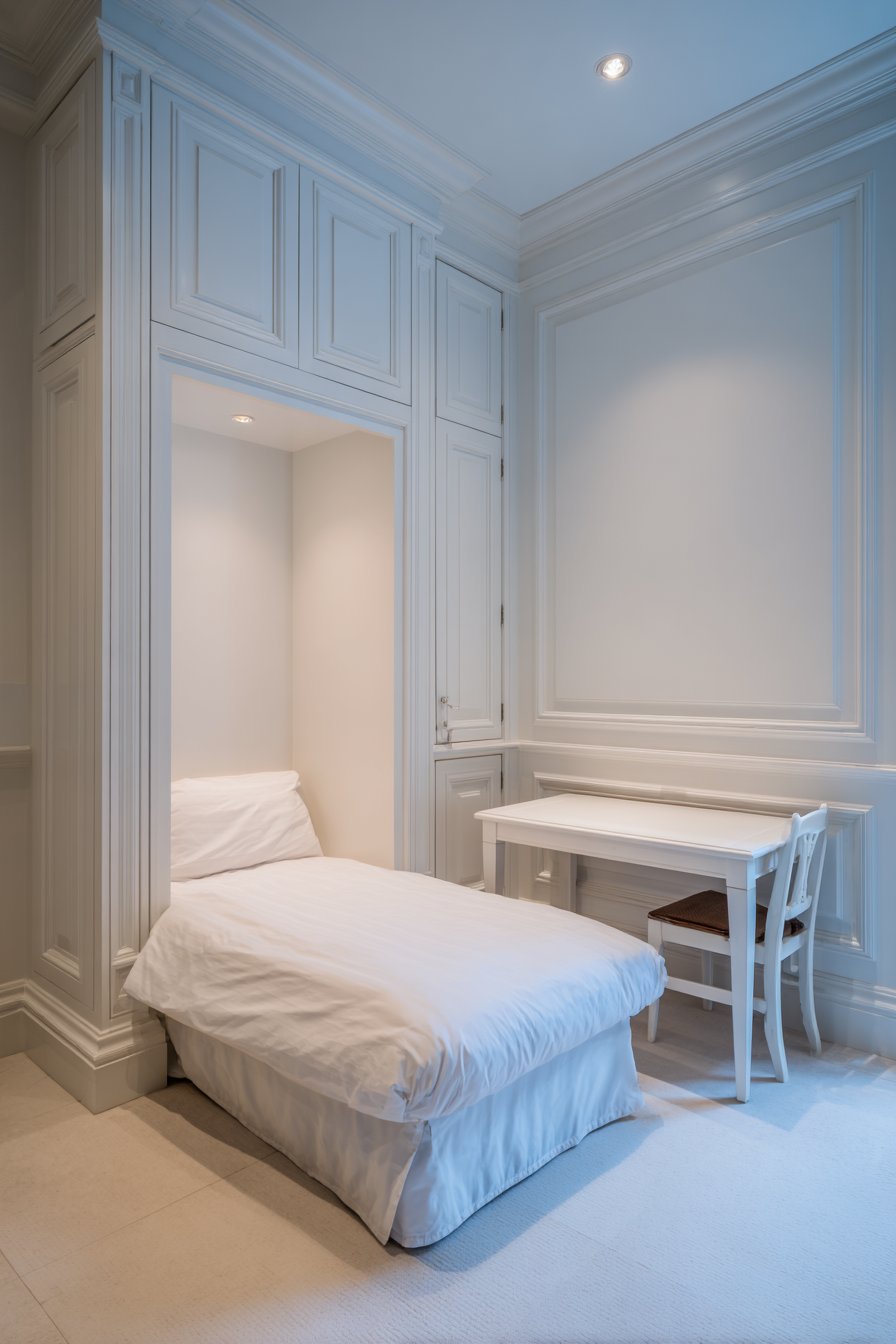
Pale blue-grey walls and white trim create a calming atmosphere in the compact space, with the cool color palette promoting relaxation and rest. The blue-grey is sophisticated yet soothing, avoiding the clinical feel of pure grey while maintaining the spacious quality that light colors provide.
White trim provides crisp definition and architectural detail that elevates the space beyond basic painted walls. This color combination works particularly well in bedrooms with limited natural light, as the cool tones don’t become dull or dingy in lower light conditions.
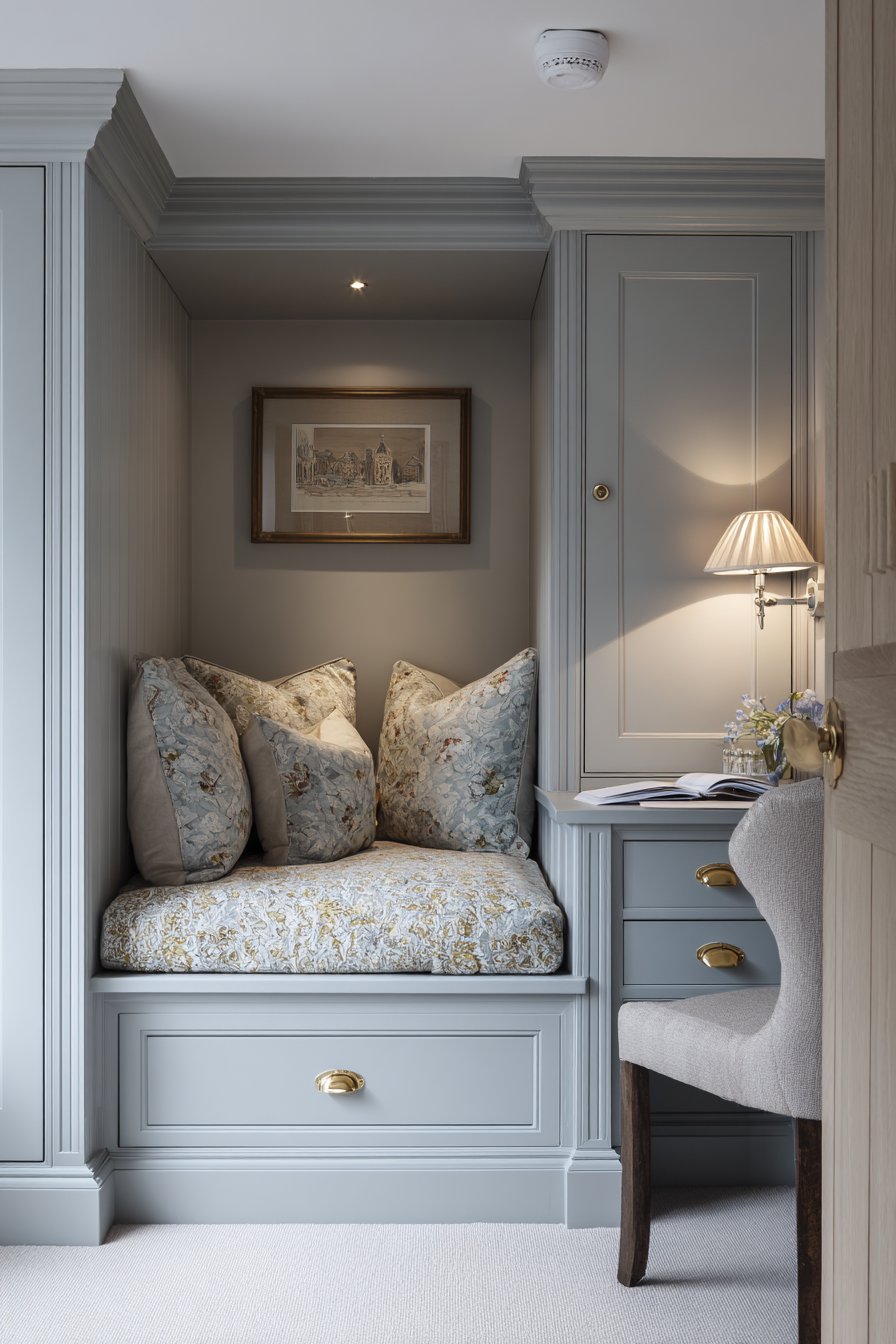
Soft diffused lighting from recessed fixtures highlights the craftsmanship of the built-in furniture, casting gentle illumination across the woodwork and emphasizing the quality of the custom construction. Recessed fixtures keep the ceiling plane uninterrupted, maintaining maximum perceived ceiling height while providing adequate general illumination. The lighting can be dimmed for evening relaxation or brightened for reading and work tasks.
Important considerations for custom carpentry alcove bedrooms include working with experienced carpenters who understand spatial efficiency and can maximize every dimension, ensuring adequate ventilation around the enclosed sleeping area to prevent it from feeling stuffy, incorporating lighting within the alcove for reading and creating ambiance, designing the fold-down desk with adequate support and stable hardware for safe daily use, and selecting materials and finishes that complement the room’s architecture while remaining durable for daily use.
10. The Captain’s Bed Storage Integration
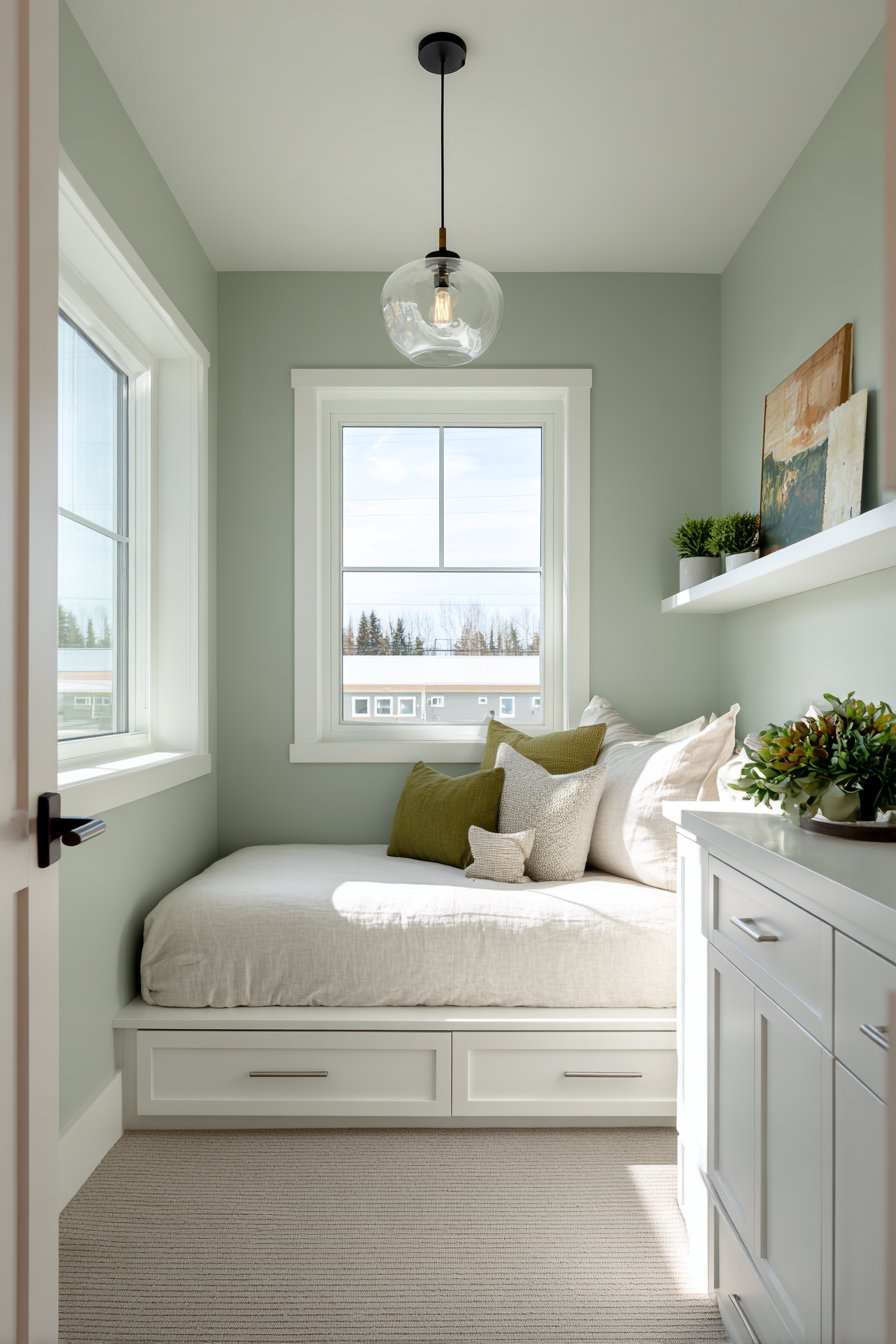
The captain’s bed design represents a time-tested approach to bedroom storage that remains remarkably relevant for contemporary tiny spaces. This bedroom features a captain’s bed with multiple built-in drawers along the base and sides, eliminating entirely the need for a separate dresser that would consume precious floor space and create visual clutter.
The drawer integration is so complete that the bed becomes a storage system rather than just a sleeping surface, with compartments of varying sizes designed to accommodate different types of clothing and personal items. Deep drawers handle bulky sweaters and jeans, while shallower drawers organize smaller items.
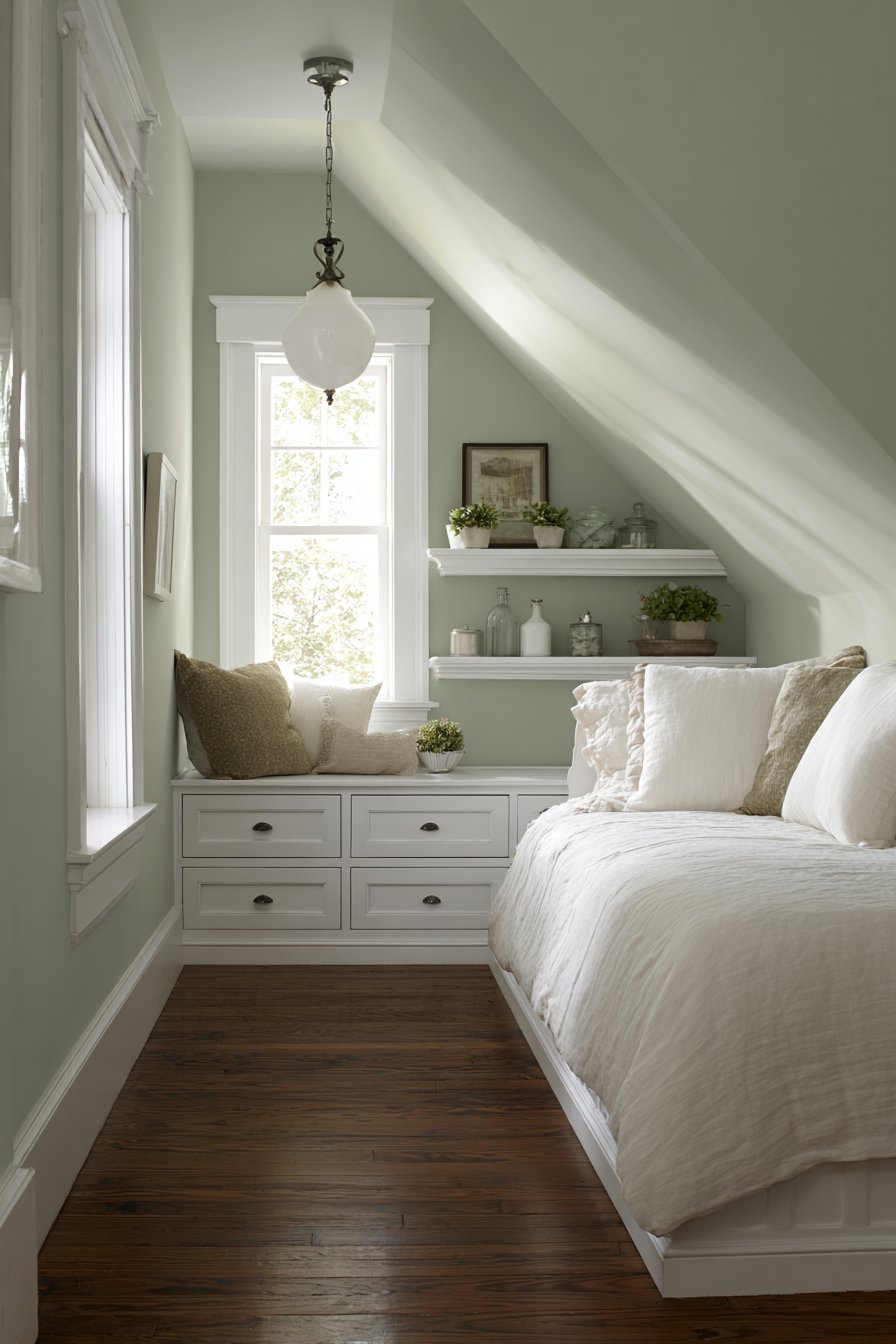
A narrow floating shelf runs the entire length of one wall, providing display space for small potted succulents and essential items without the visual bulk of a deeper shelf or cabinet. This linear display creates horizontal emphasis that makes the room feel wider, while the narrow depth preserves valuable floor space.
The succulents require minimal care and add living greenery that purifies air and provides a connection to nature—important in a small interior space where outdoor access might be limited. The display is curated and intentional, avoiding the cluttered appearance that would result from filling the shelf with miscellaneous items.
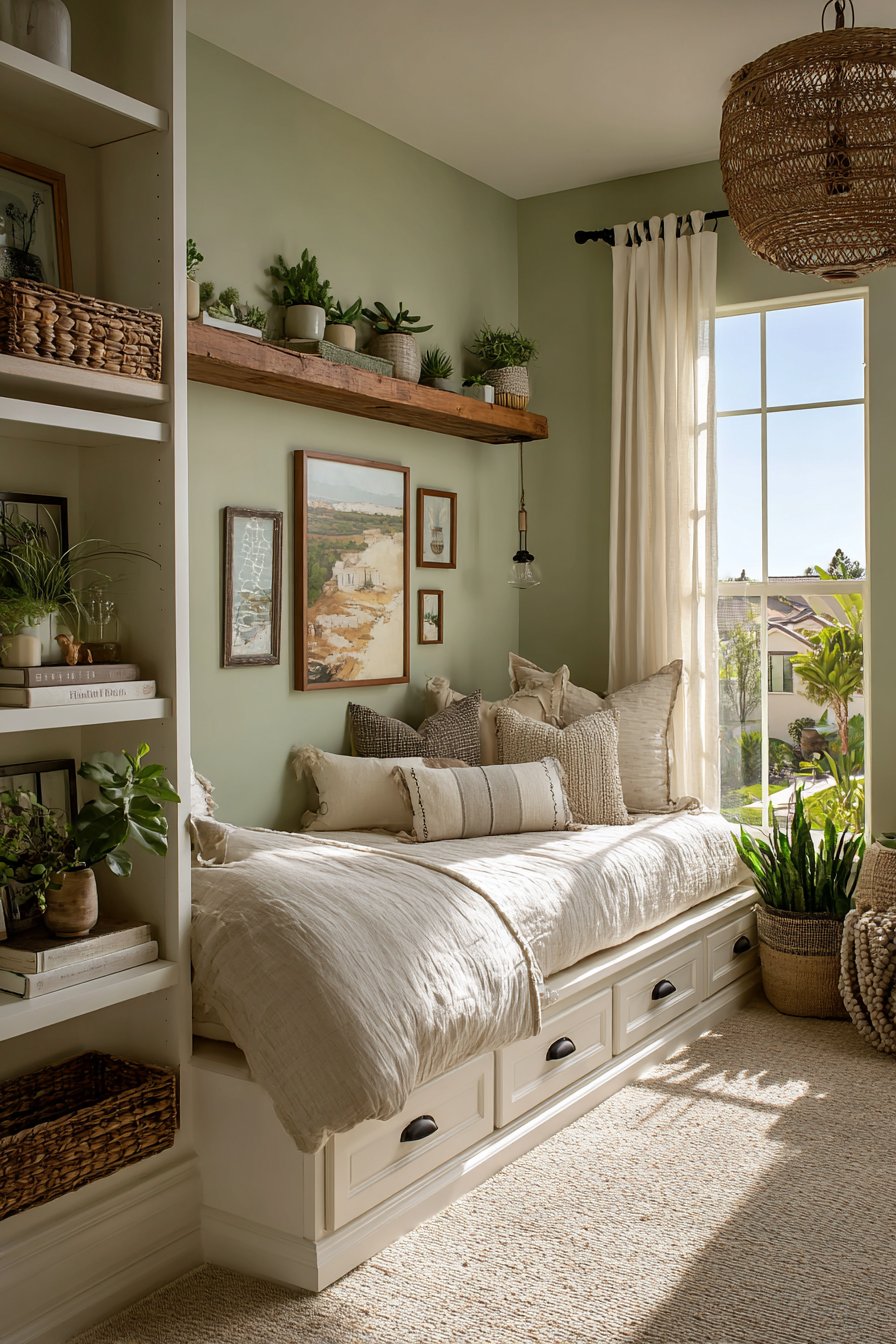
Walls painted in soft sage green paired with natural linen bedding create a fresh, restful environment that promotes healthy sleep and peaceful mornings. Sage green is having a design moment for good reason—this soft, muted green evokes nature and tranquility while remaining neutral enough to coordinate with various accent colors and personal items.
The natural linen bedding adds organic texture and breathability, contributing to sleep comfort while maintaining the room’s natural, unprocessed aesthetic. Linen’s subtle variations and gentle wrinkles add visual interest and a casual, lived-in quality.
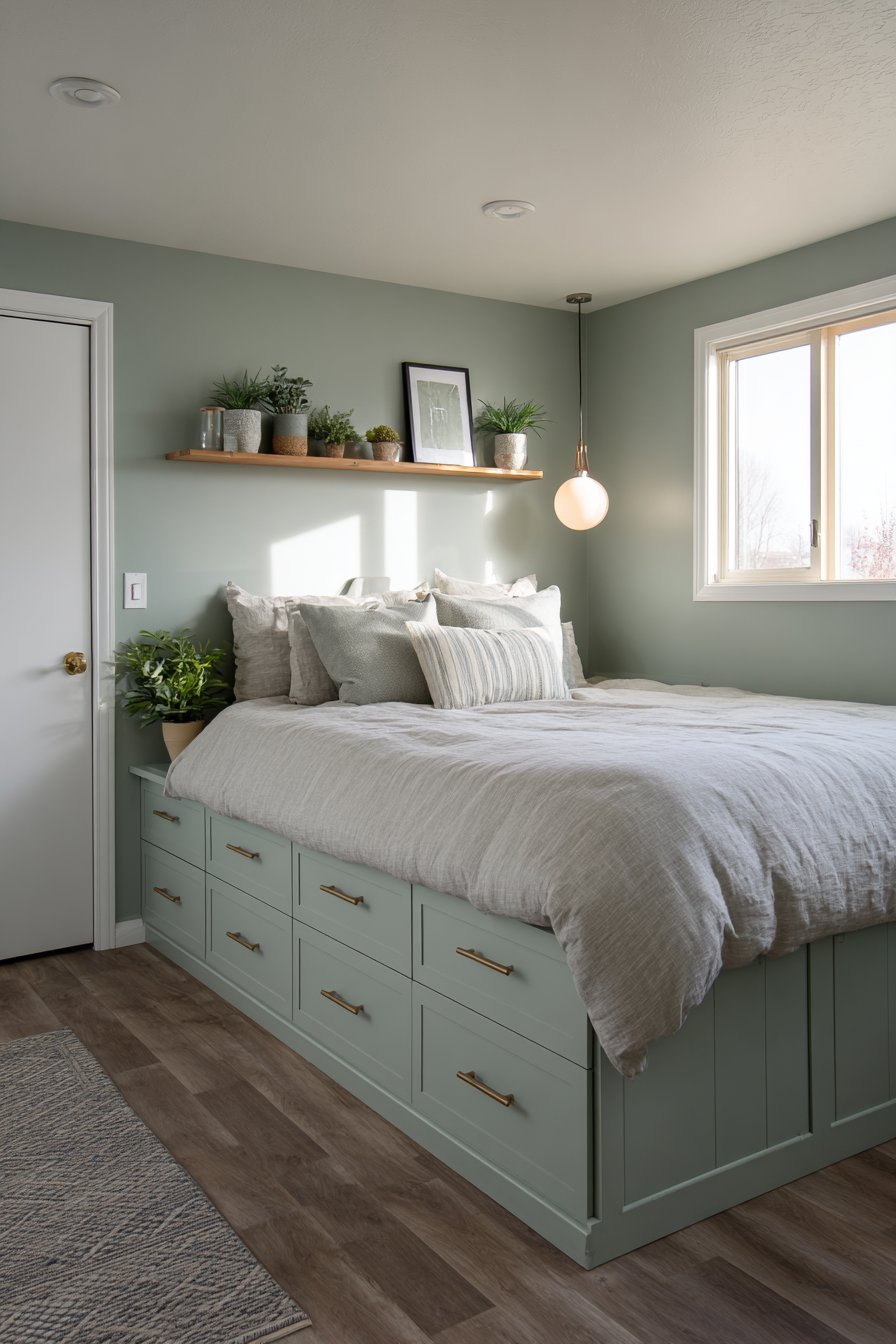
A compact pendant light hangs beside the bed, saving nightstand space while providing focused task lighting for reading. The pendant drops from the ceiling on a minimal cord, drawing the eye upward and emphasizing ceiling height while delivering light exactly where needed. This suspended lighting solution is both practical and sculptural, serving as a design element in its own right. Wide-angle photography captures the practical yet inviting atmosphere, demonstrating how clever integration of storage within furniture pieces creates a bedroom that’s organized, functional, and genuinely comfortable.
Essential design tips for captain’s bed bedrooms include selecting a bed with smooth-operating drawers that won’t catch or stick with regular use, organizing drawer contents with dividers or small containers for easy access, ensuring adequate clearance around the bed for drawer operation, choosing a bed height that provides substantial storage without making entry and exit from bed difficult, and coordinating bedding and wall colors to create a cohesive, restful environment conducive to quality sleep.
Why These Tiny Bedroom Designs Are Among the Best Solutions
These ten tiny bedroom designs represent the pinnacle of small-space interior design thinking, each offering unique approaches to universal challenges while maintaining individual aesthetic character. The Murphy bed with integrated home office exemplifies transformative design that allows a single room to serve multiple essential functions without compromise, making it ideal for studio apartments, tiny homes, and urban dwellings where every square foot carries premium value. The lofted sleeping platform demonstrates how vertical space utilization can effectively double usable room area, creating distinct zones for sleeping and living within a compact footprint—perfect for younger occupants or those comfortable with stairs who want maximum functionality from minimal square footage.
The corner platform strategy with mirror magic showcases classic interior design principles applied with precision to small bedroom challenges. Strategic furniture placement, floating storage solutions, and reflective surfaces combine to create a space that lives significantly larger than its actual dimensions. This approach works beautifully in rectangular rooms where corner positioning creates the longest sight lines and most efficient traffic patterns. The Scandinavian-inspired hydraulic storage bedroom demonstrates how quality materials, thoughtful engineering, and restraint in decoration create serene environments that prioritize rest and rejuvenation—essential bedroom functions that can be lost when storage and clutter dominate.
The streamlined built-in wardrobe sanctuary proves that adequate storage need not compromise aesthetic beauty or spatial serenity. By integrating storage into the architecture rather than filling the room with furniture, this design maintains clean lines, uncluttered surfaces, and a peaceful atmosphere conducive to rest. This approach is particularly valuable for those with substantial wardrobes who refuse to sacrifice style or comfort despite limited square footage. The flexible daybed guest accommodation addresses a common modern need—spaces that serve daily occupants while occasionally hosting visitors. This multifunctional approach maximizes value from every square foot while maintaining comfort for all users.
The Japanese-inspired minimalist zen retreat brings ancient design wisdom to contemporary small-space challenges, proving that limitations can inspire beauty and that less truly can be more. This design philosophy resonates with those seeking simplicity, mindfulness, and escape from material excess. The vertical storage solution with extended headboard demonstrates innovative thinking about furniture design, treating walls as opportunities rather than boundaries and creating storage that enhances rather than clutters. This approach works exceptionally well in rooms with adequate ceiling height where vertical space remains untapped.
The custom carpentry alcove bedroom represents the ultimate commitment to personalized space planning, where every element is designed specifically for the room’s exact dimensions and the occupant’s precise needs. While more investment-intensive than standard furniture solutions, custom carpentry delivers unmatched efficiency and aesthetic integration. Finally, the captain’s bed storage integration offers a tried-and-true solution that remains relevant because it works—providing substantial hidden storage within the footprint of necessary furniture. This approach suits those who appreciate traditional design wisdom applied to contemporary needs.
Each design incorporates principles of successful tiny bedroom planning including maximizing vertical space utilization, integrating storage within necessary furniture rather than adding separate storage pieces, using light colors and reflective surfaces to enhance perceived spaciousness, incorporating multifunctional elements that serve multiple purposes, maintaining visual simplicity and restraint in decoration, optimizing natural light through window treatments and strategic mirror placement, and selecting appropriately scaled furniture that serves needs without overwhelming space. These designs prove that tiny bedrooms can be beautiful, functional, comfortable spaces that support healthy living rather than compromised substitutes for “real” bedrooms.
Conclusion
The tiny bedroom designs explored throughout this comprehensive guide demonstrate that limited square footage need not limit comfort, style, or functionality. From transformative Murphy beds to elevated lofted platforms, from Scandinavian-inspired simplicity to Japanese minimalist zen, each approach offers valuable insights for anyone facing small-bedroom challenges. The key takeaways include embracing vertical space as valuable as floor space, investing in multifunctional furniture that serves multiple purposes, maintaining light color palettes and maximizing natural light, integrating storage within architecture and furniture rather than adding separate pieces, and approaching design with intention and restraint rather than filling every surface.
Whether you’re furnishing a studio apartment, converting a spare room into a guest bedroom, or simply working with the compact bedroom dimensions common in contemporary housing, these design strategies can transform your space into an efficient, beautiful retreat. The most successful tiny bedrooms balance practical storage and functional needs with aesthetic beauty and restful atmosphere, creating spaces that genuinely support healthy living rather than feeling like compromises necessitated by space limitations.
We encourage you to experiment with these ideas in your own home, adapting the principles to your specific needs, aesthetic preferences, and architectural constraints. Remember that tiny bedroom design is ultimately about making thoughtful choices—every furniture piece, every color selection, every storage solution should serve your life while contributing to a space that feels both spacious and intimate, both organized and restful. With creativity, planning, and commitment to quality over quantity, your tiny bedroom can become one of your home’s most successful and cherished spaces.
