


Small bathrooms present unique design challenges that require creative thinking and smart solutions. The limited square footage doesn’t mean you have to compromise on style, functionality, or comfort. With the right approach to layout, storage, materials, and lighting, even the tiniest bathroom can become a beautiful and practical space that meets all your daily needs while reflecting your personal aesthetic.
The key to successful tiny bathroom design lies in understanding how to maximize every inch of available space. This means thinking vertically, choosing fixtures that serve multiple purposes, and using visual tricks to make the room feel larger than it actually is. Color choices, lighting strategies, and clever storage solutions all play crucial roles in transforming a cramped bathroom into an inviting retreat.
In this comprehensive guide, we explore ten innovative tiny bathroom designs that demonstrate various approaches to small-space optimization. From Japanese-inspired minimalism to vintage charm, from sleek modern wet rooms to efficient galley layouts, these ideas showcase how different styles can work beautifully in compact bathrooms. Each design offers valuable lessons in spatial planning, material selection, and the art of creating functional beauty within tight constraints.
1. Corner Shower Sanctuary with Frameless Glass
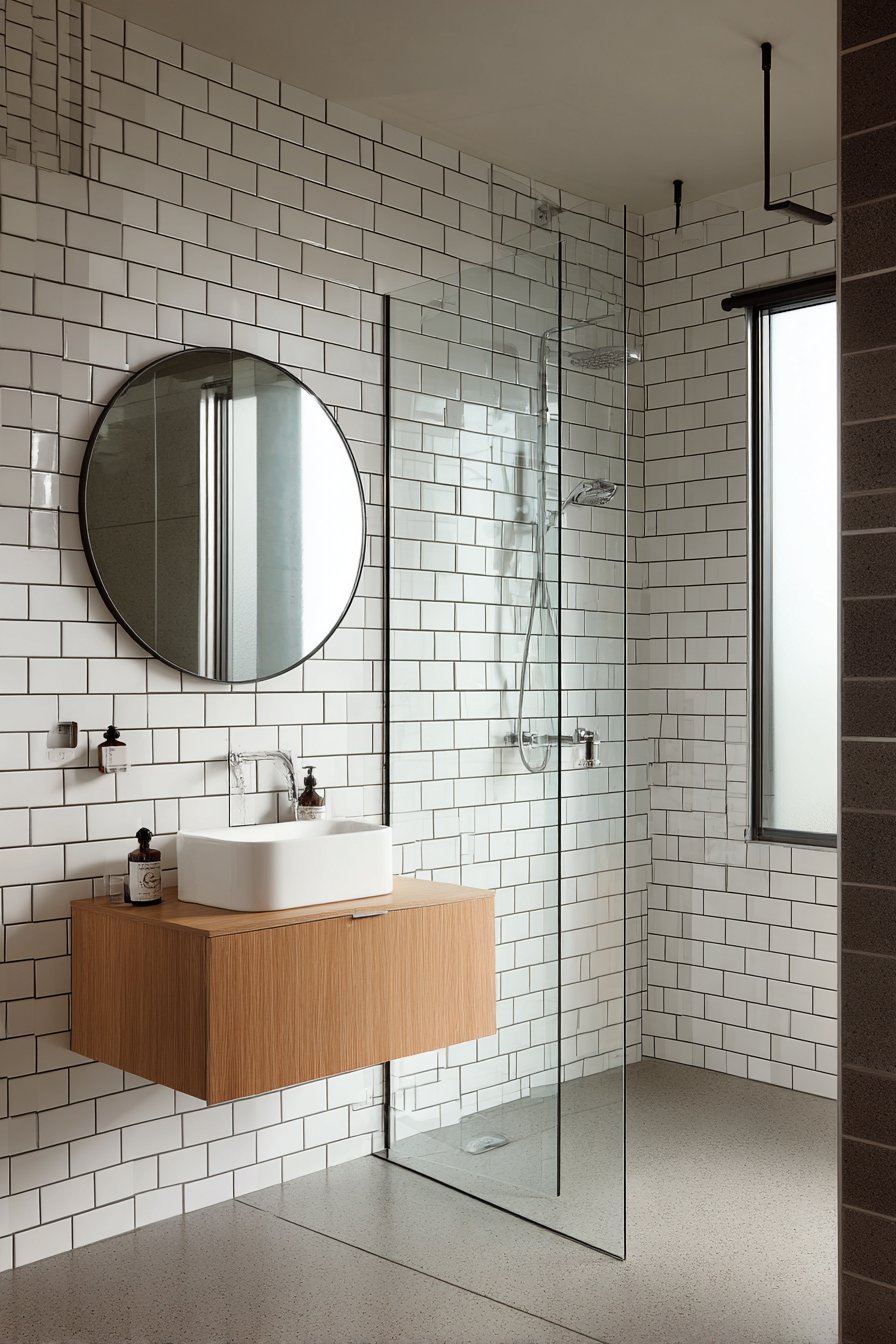
The frameless glass shower enclosure represents one of the smartest choices for tiny bathrooms. Unlike traditional shower curtains or framed doors, transparent glass disappears visually. This creates an uninterrupted sightline that makes the entire bathroom feel more spacious. The corner placement maximizes floor space in the center of the room.
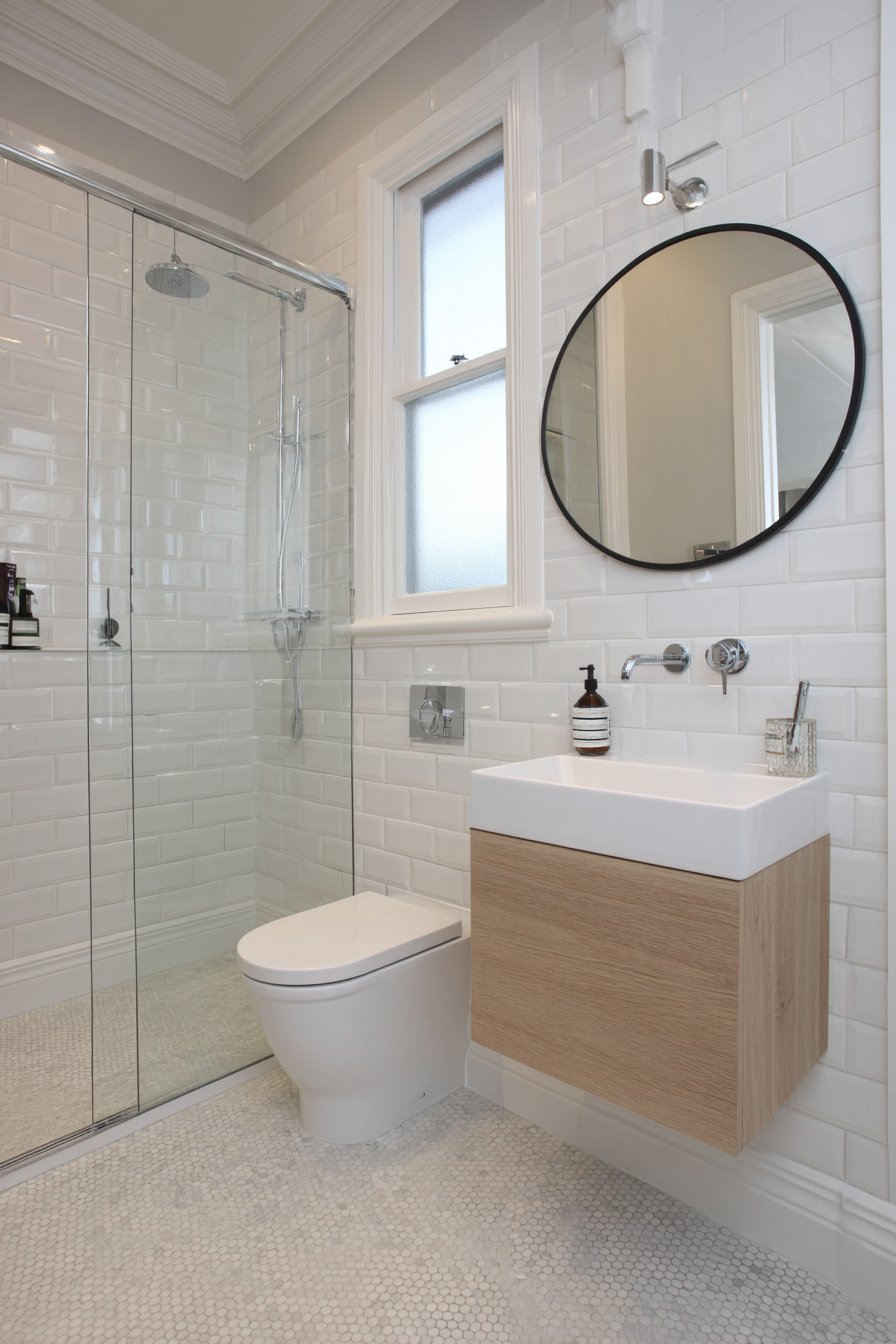
White subway tiles running from floor to ceiling serve multiple purposes in this design. They reflect available light beautifully, bouncing illumination around the compact space. The light grey grout adds subtle definition without creating harsh visual breaks. This timeless tile choice also resists moisture damage while remaining easy to clean and maintain over the years of use.
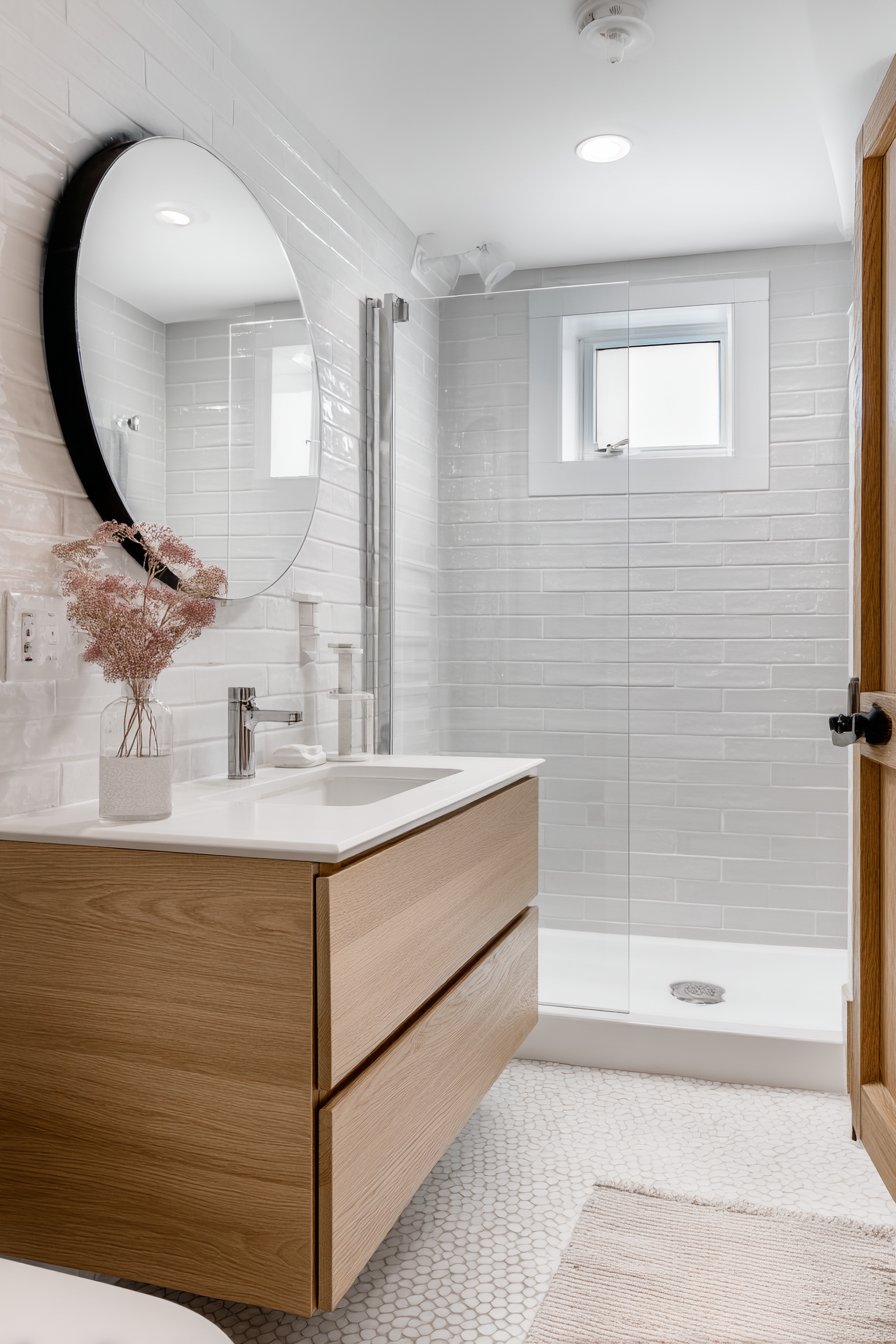
The floating vanity in white oak brings warmth to the predominantly white palette. Wall-mounted fixtures free up valuable floor space beneath, making the room feel less cluttered. The integrated sink design eliminates the gap between countertop and basin where dirt typically accumulates. This creates cleaner lines and easier maintenance routines for busy homeowners.
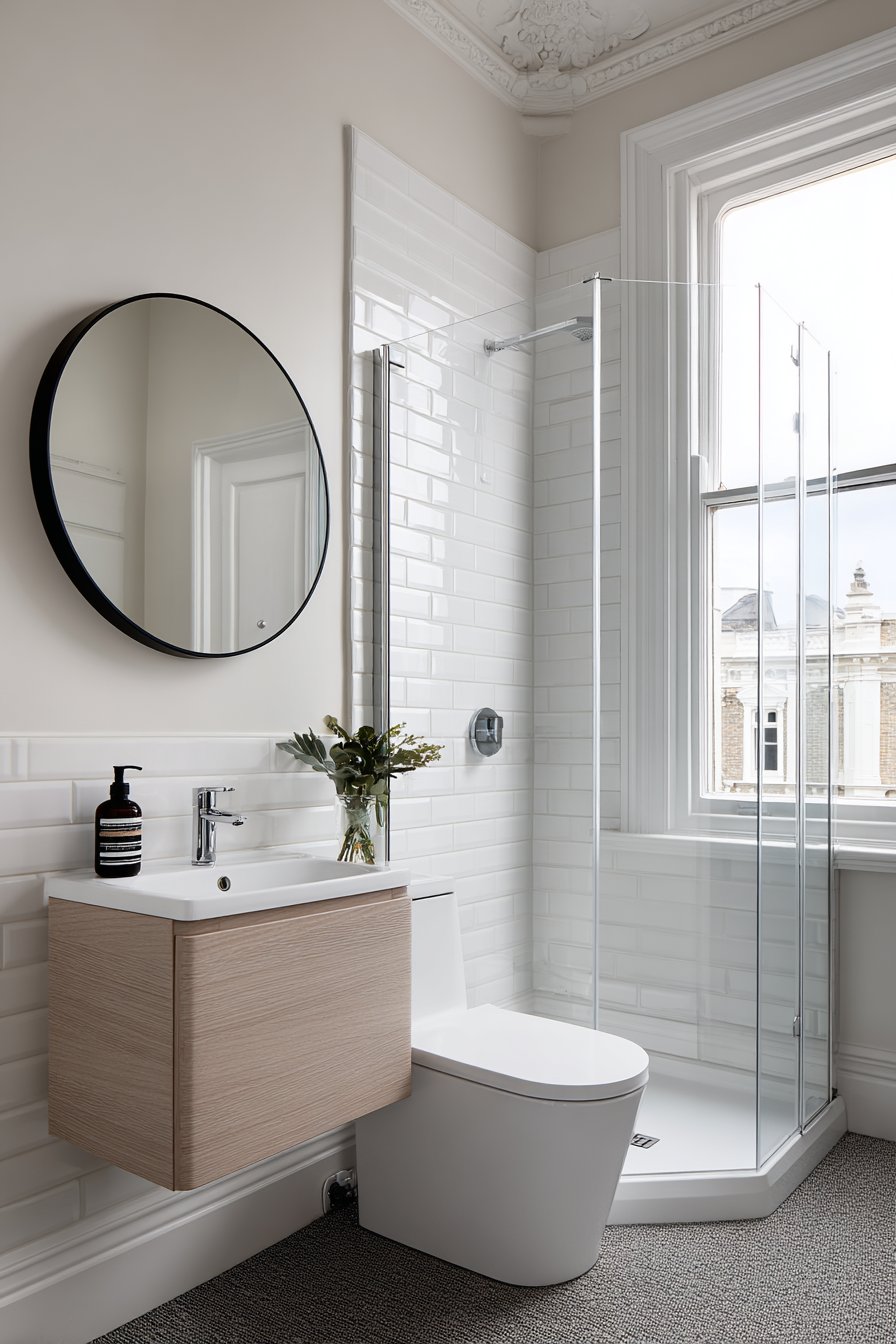
A round mirror with a thin black frame provides just enough contrast without overwhelming the space. Mirrors are essential in tiny bathrooms as they double the perceived space through reflection. The small frosted window allows natural light to filter in while maintaining privacy from outside views.
Key design elements for this layout include:
- Installing frameless glass to maintain visual continuity throughout the space
- Extending tiles to the ceiling to draw the eye upward and increase perceived height
- Choosing wall-mounted vanities to expose more floor area and enhance spaciousness
- Positioning mirrors to capture and reflect natural light from windows
- Selecting integrated sinks to minimize visual clutter and simplify cleaning
2. Vertical Storage Solutions Above the Toilet
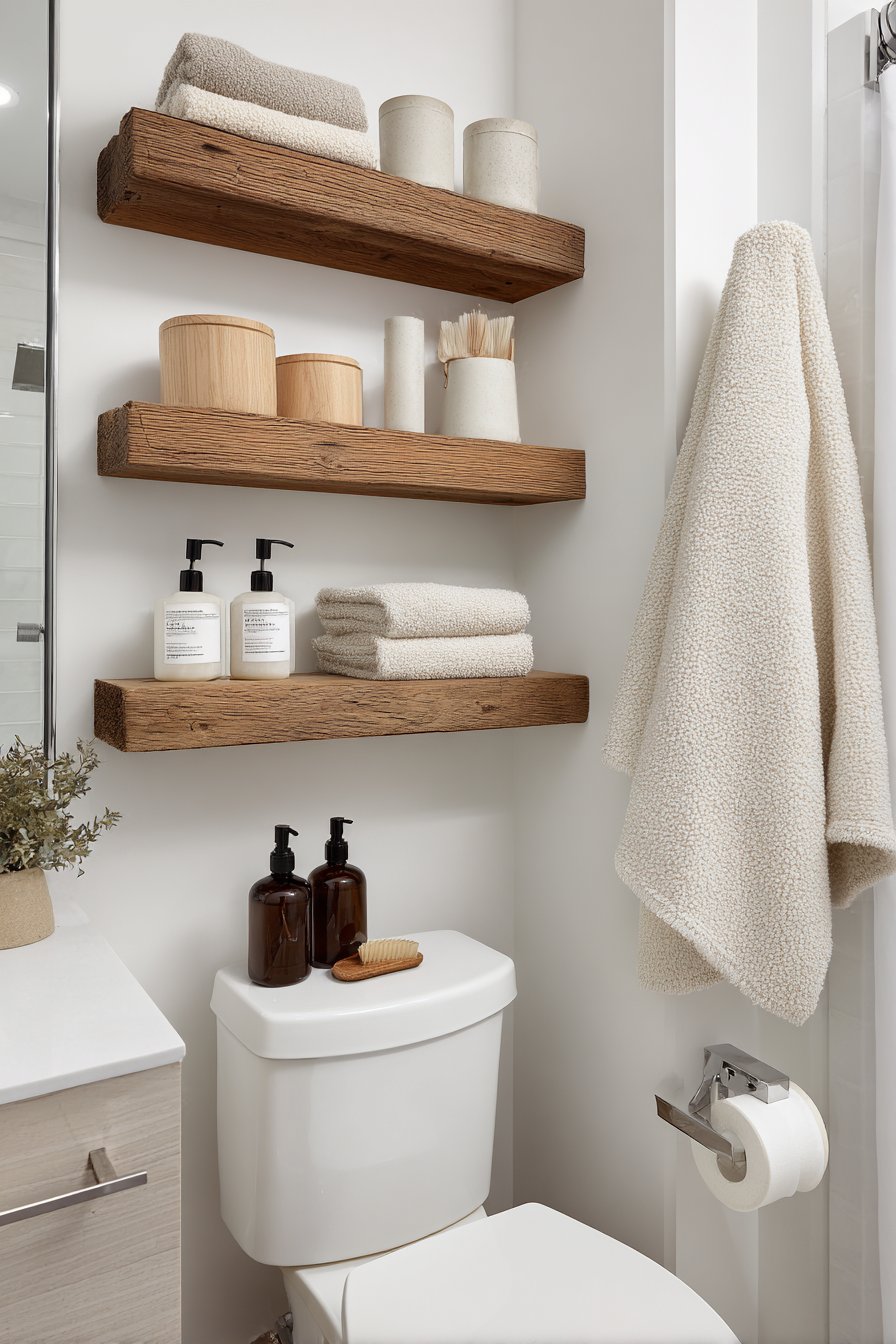
Dead space above the toilet often goes unused in small bathrooms. This design transforms that vertical real estate into functional storage. Floating shelves made from reclaimed wood add character while providing essential storage capacity. The wood’s natural texture and grain patterns create visual interest against plain white walls.
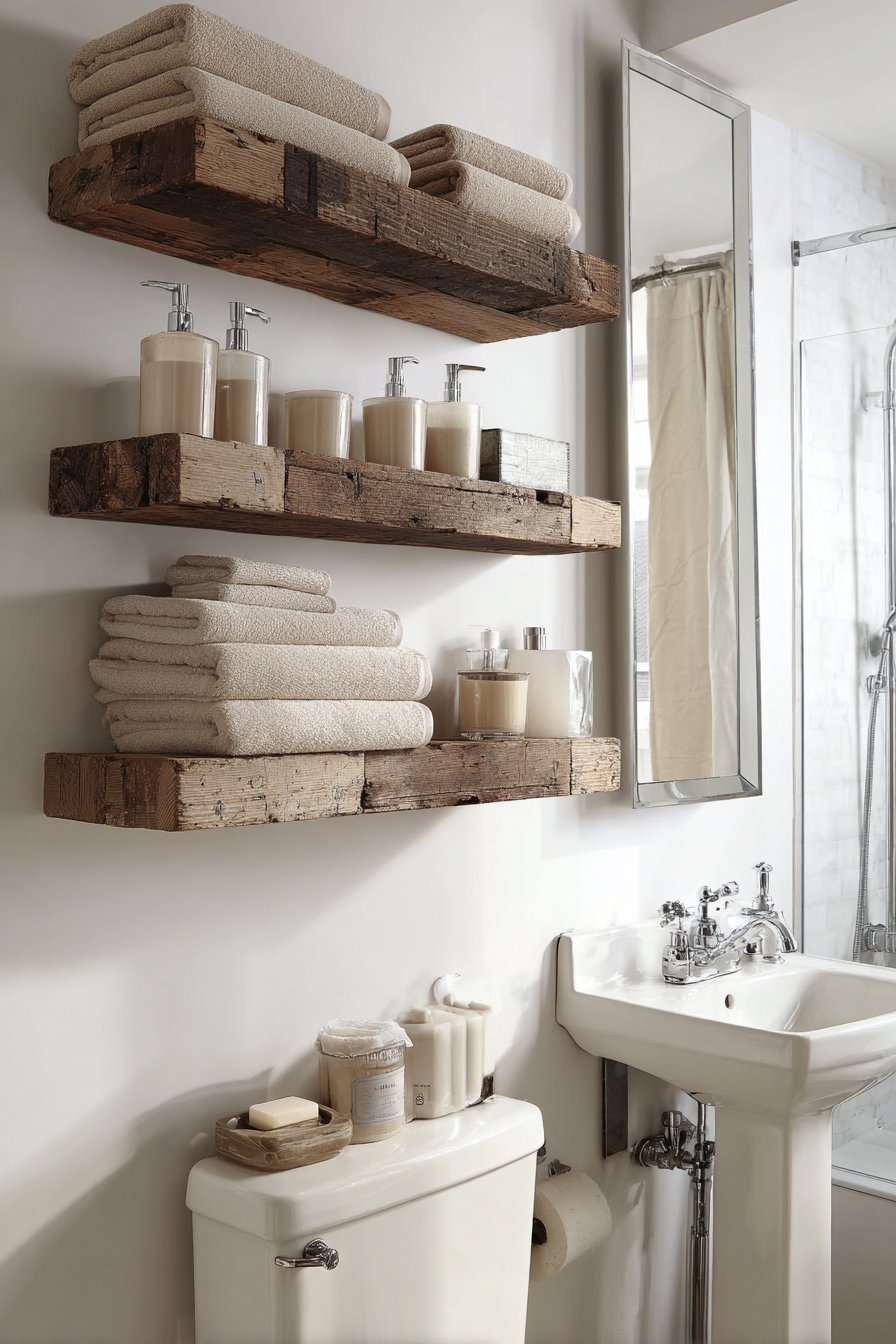
Neatly folded towels and bathroom essentials arranged in matching neutral containers create an organized, spa-like appearance. This approach to open storage works when items are thoughtfully curated and displayed. The neutral color palette maintains visual calm rather than creating busy, distracting patterns that would make the small space feel chaotic.
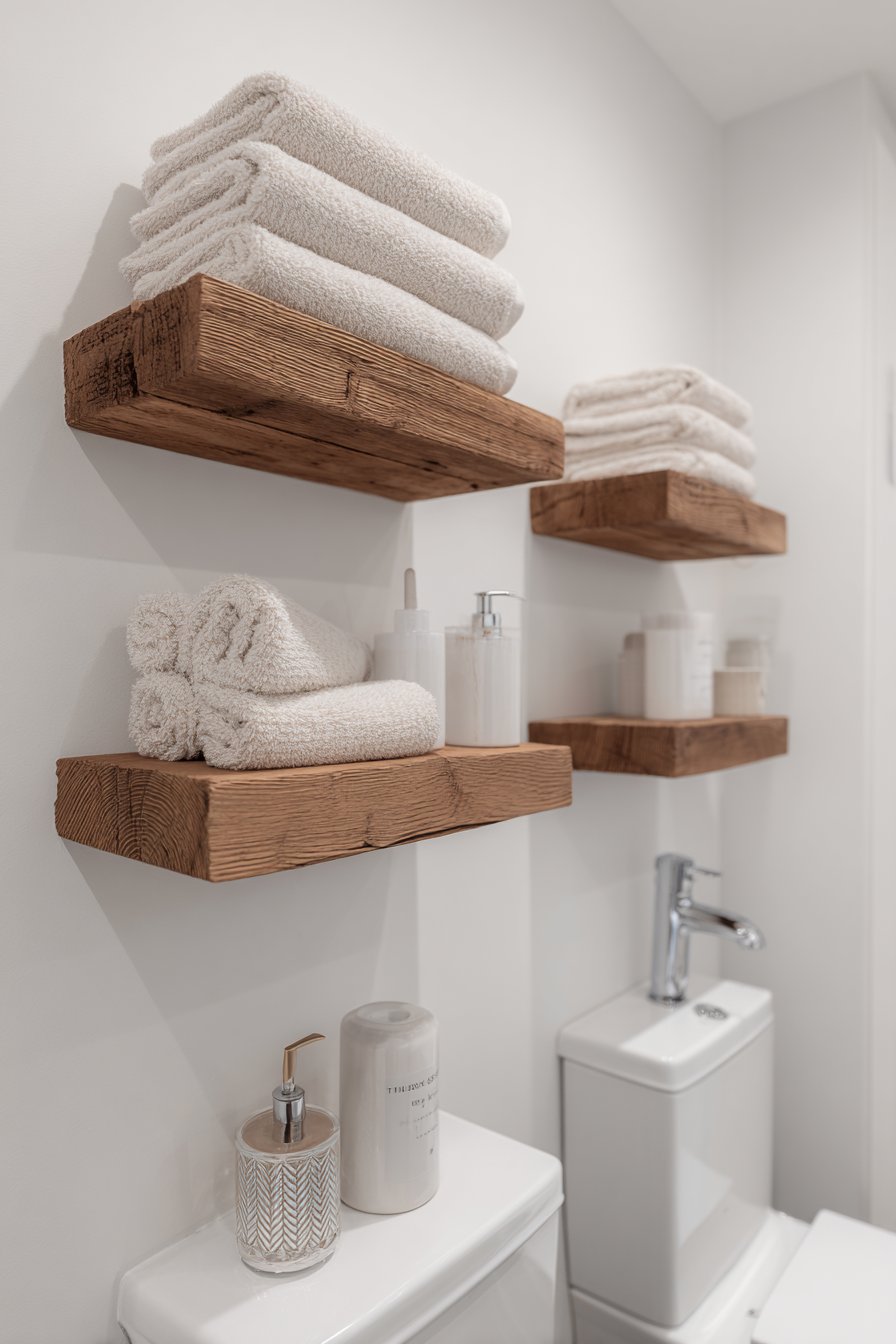
Soft white walls with moisture-resistant paint keep the bathroom bright and airy. White reflects maximum light, which is crucial in tiny spaces with limited natural illumination. The moisture-resistant finish prevents peeling, bubbling, and mold growth in the humid bathroom environment. This practical choice extends the life of your paint job significantly.
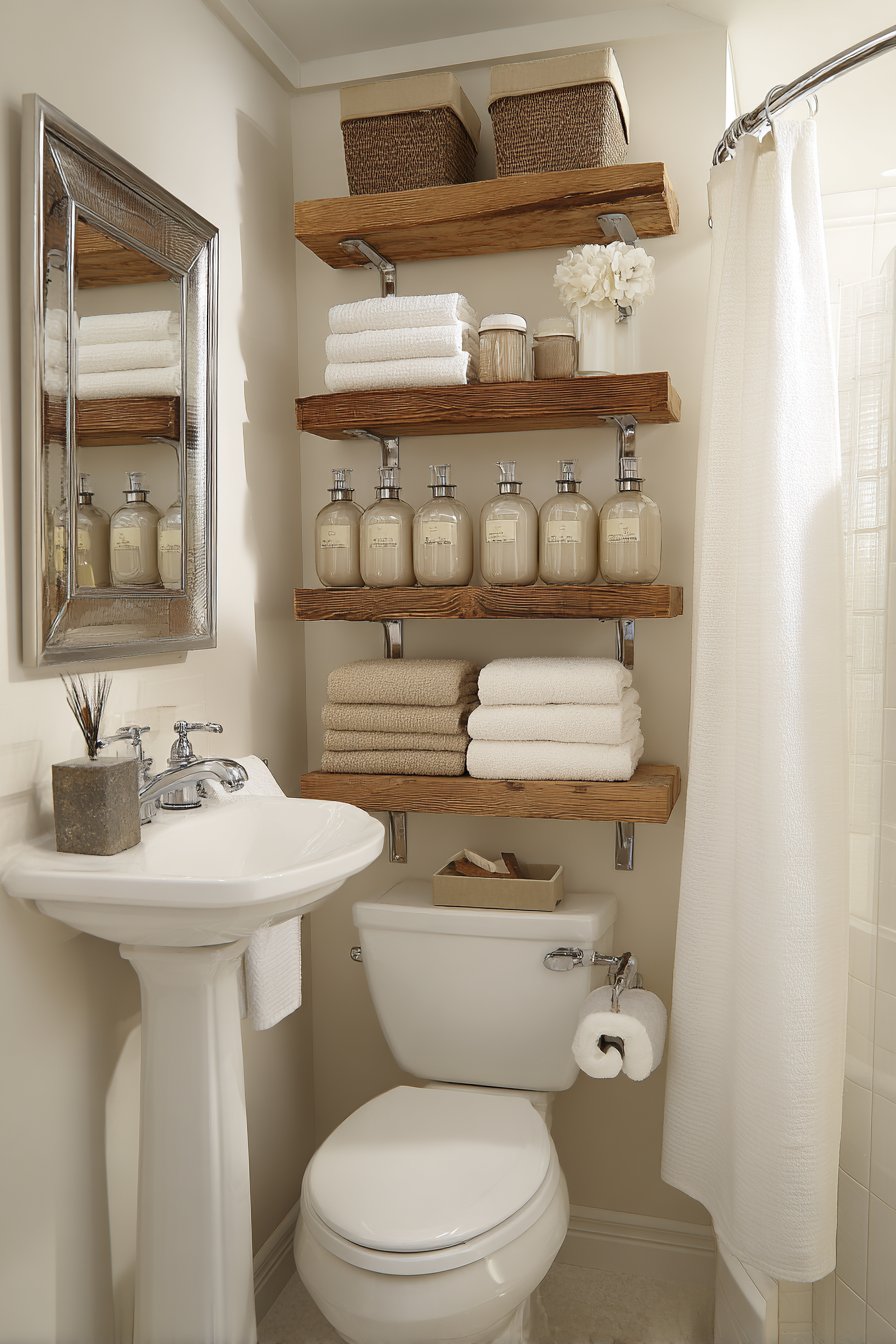
The compact pedestal sink maintains an open feel by minimizing visual bulk. Unlike vanity cabinets that can make small bathrooms feel cramped, pedestal sinks expose more floor space. Chrome fixtures add subtle shine without competing with other design elements in the room.
Essential tips for maximizing vertical storage:
- Measure carefully to ensure shelves don’t interfere with head clearance when using the toilet
- Use identical containers to create visual harmony and prevent cluttered appearance
- Install shelves at varying heights to accommodate different item sizes efficiently
- Choose moisture-resistant materials like sealed wood or coated metal for longevity
- Display only daily essentials while storing less attractive items in closed cabinets
3. Wet Room Design with Pocket Door
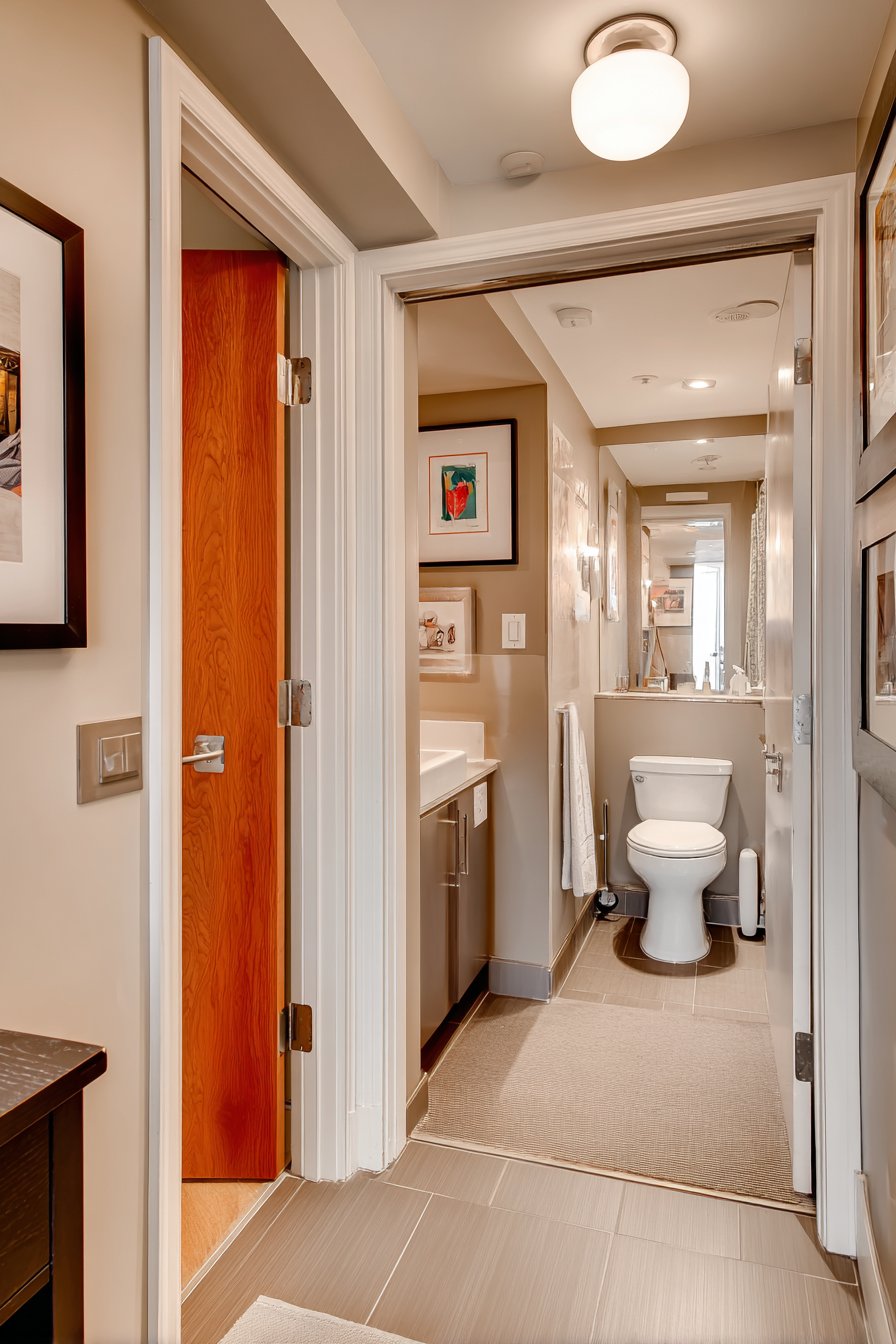
The space-saving pocket door slides into the wall cavity rather than swinging open into valuable floor space. This single change can make a dramatic difference in tight bathroom layouts. The wet room concept eliminates the shower enclosure entirely, allowing water to drain through a floor drain positioned strategically within the space.
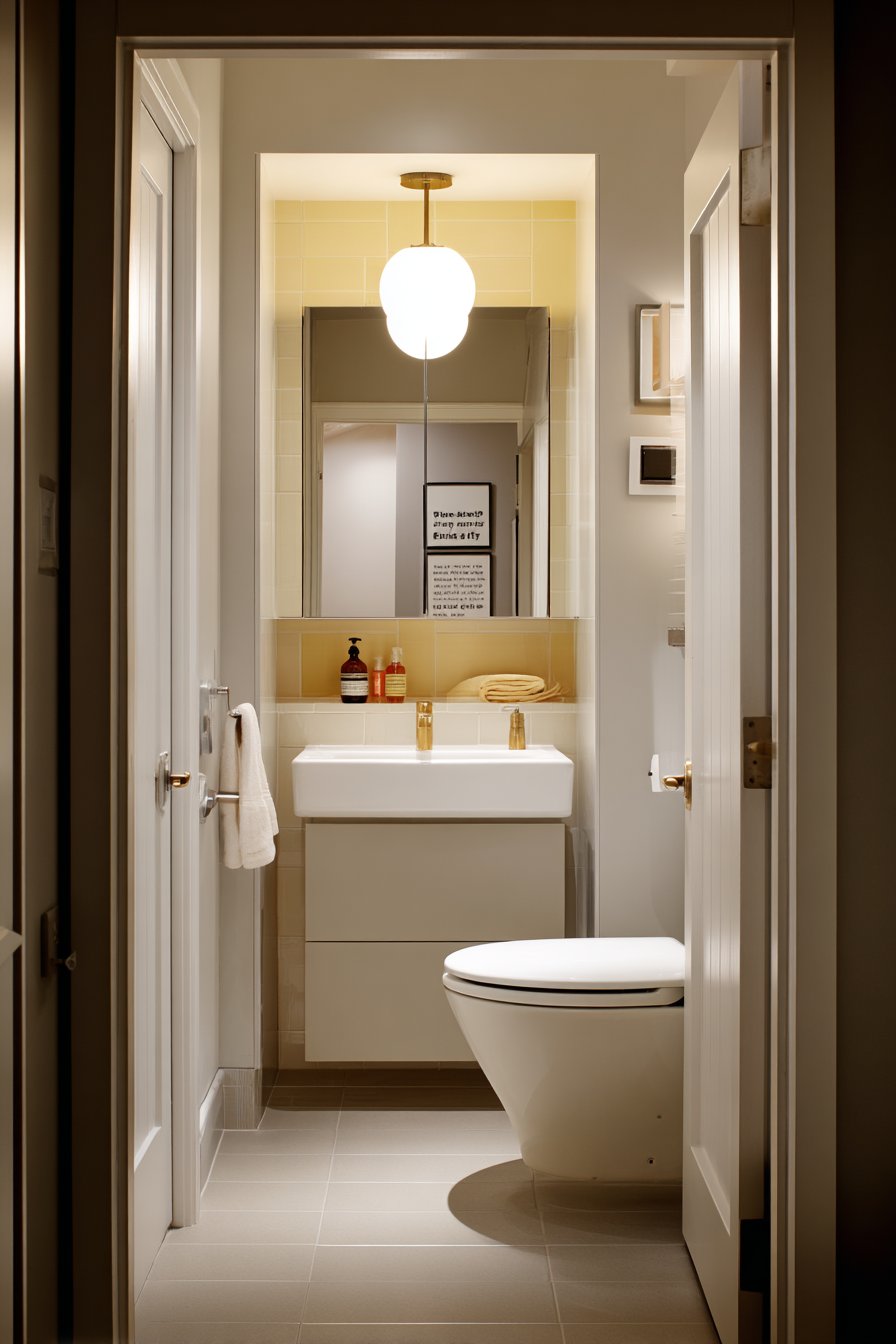
Large format porcelain tiles in warm beige create seamless visual continuity across walls and floors. Fewer grout lines mean less visual interruption and easier cleaning maintenance. The warm beige tone adds subtle coziness while remaining neutral enough to complement various decorating styles and color schemes over time.
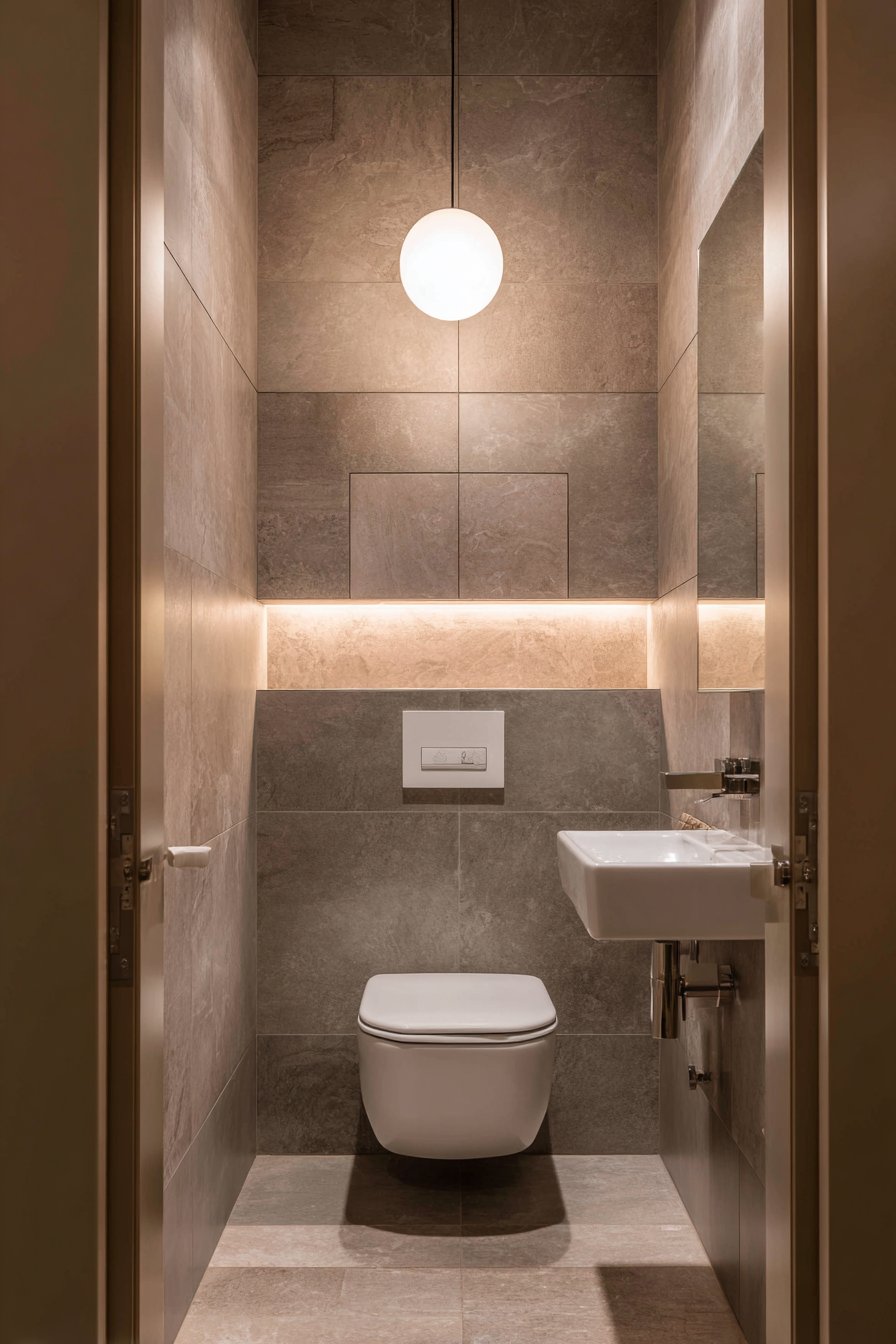
Wall-mounted fixtures, including both toilet and sink, leave the floor completely clear. This creates an illusion of greater space since the eye travels uninterrupted across the floor surface. Cleaning becomes simpler when you can mop beneath fixtures without navigating around pedestal bases or vanity legs.
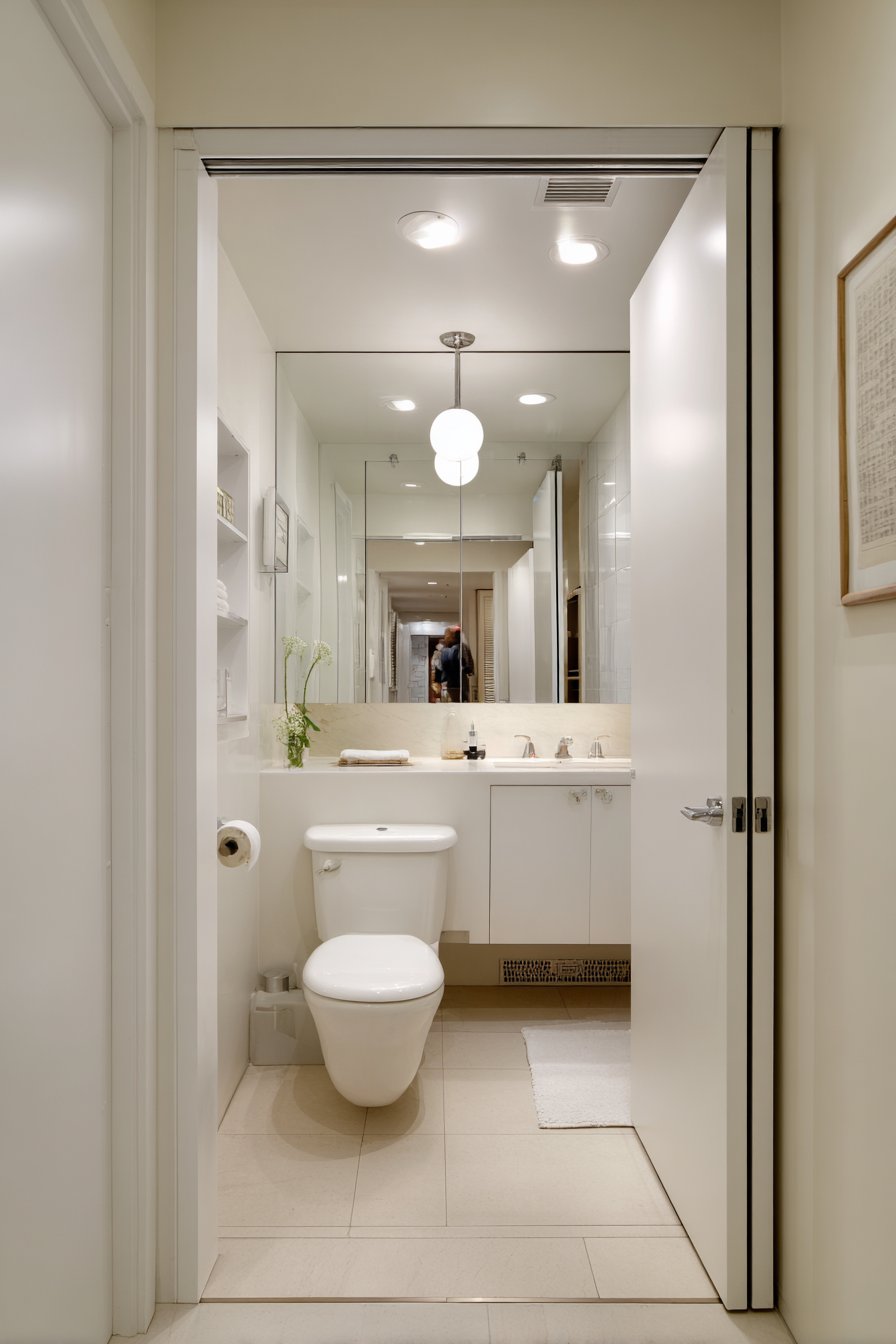
Brushed brass fixtures introduce subtle elegance and warmth to the neutral palette. The recessed medicine cabinet with mirrored front serves dual purposes. It provides hidden storage for medications and toiletries while reflecting light to enhance brightness. The single pendant light with frosted globe creates soft, ambient illumination without harsh shadows.
Important considerations for wet room design:
- Ensure proper waterproofing extends well beyond the immediate shower area boundaries
- Install adequate floor drainage with an appropriate slope for water management
- Choose slip-resistant tiles to maintain safety on wet surfaces throughout
- Position the drain strategically to direct water away from the door entrance
- Select fixtures rated for direct water exposure if they’re within the wet zone
4. Narrow Layout with Slimline Vanity
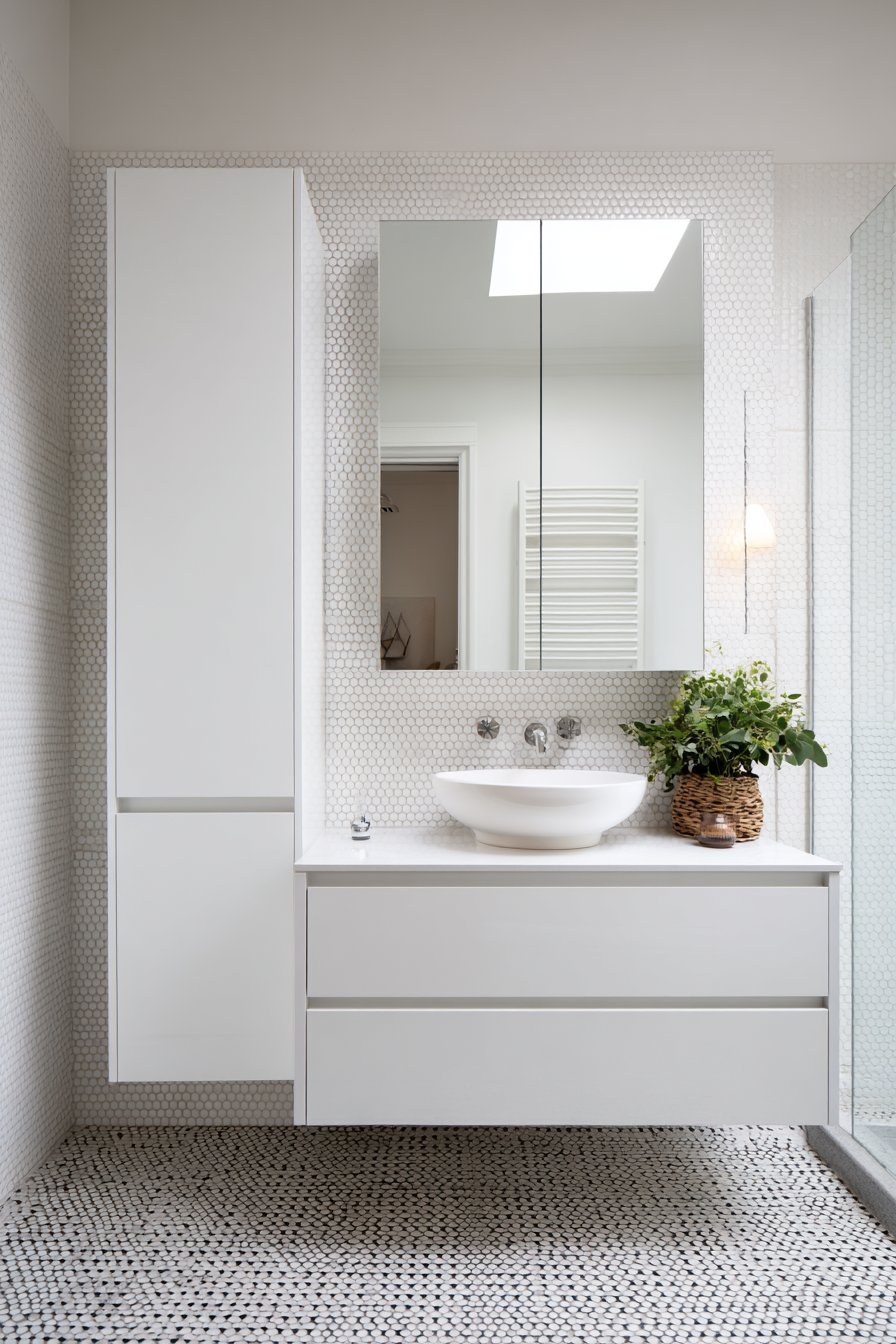
When bathroom width is severely limited, every inch matters tremendously. This design features a slimline vanity unit measuring just eighteen inches deep. Standard vanities typically measure twenty-one to twenty-four inches, so this three to six inch reduction significantly impacts circulation space. The glossy white wall-hung cabinet reflects light beautifully while soft-close drawers prevent slamming in tight quarters.
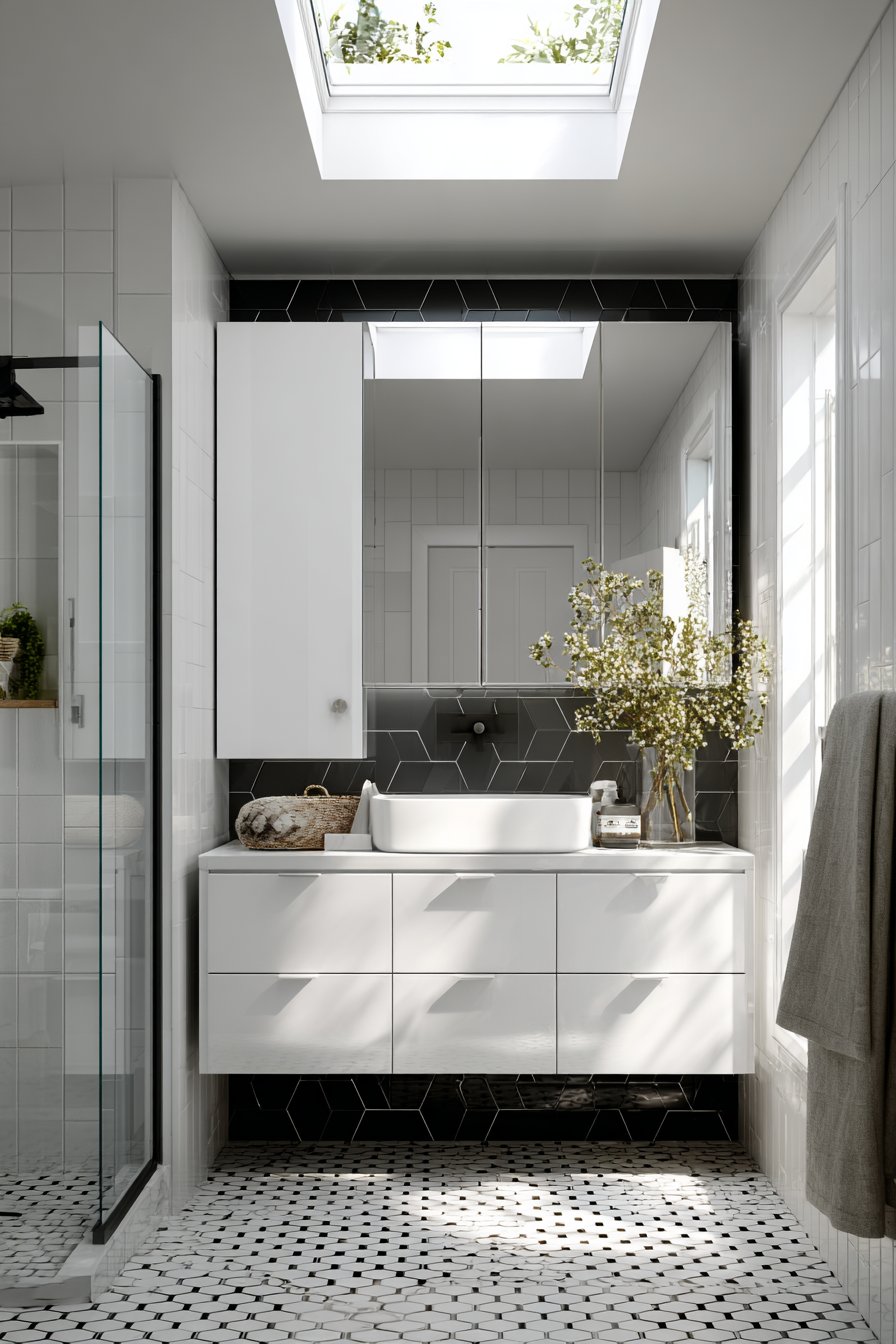
The rectangular vessel sink sits atop the compact vanity, adding sculptural interest without consuming excessive counter space. Vessel sinks raise the basin above the counter surface, creating a distinctive focal point. The mirrored cabinet above serves double duty by providing essential storage while reflecting light to expand perceived dimensions visually.
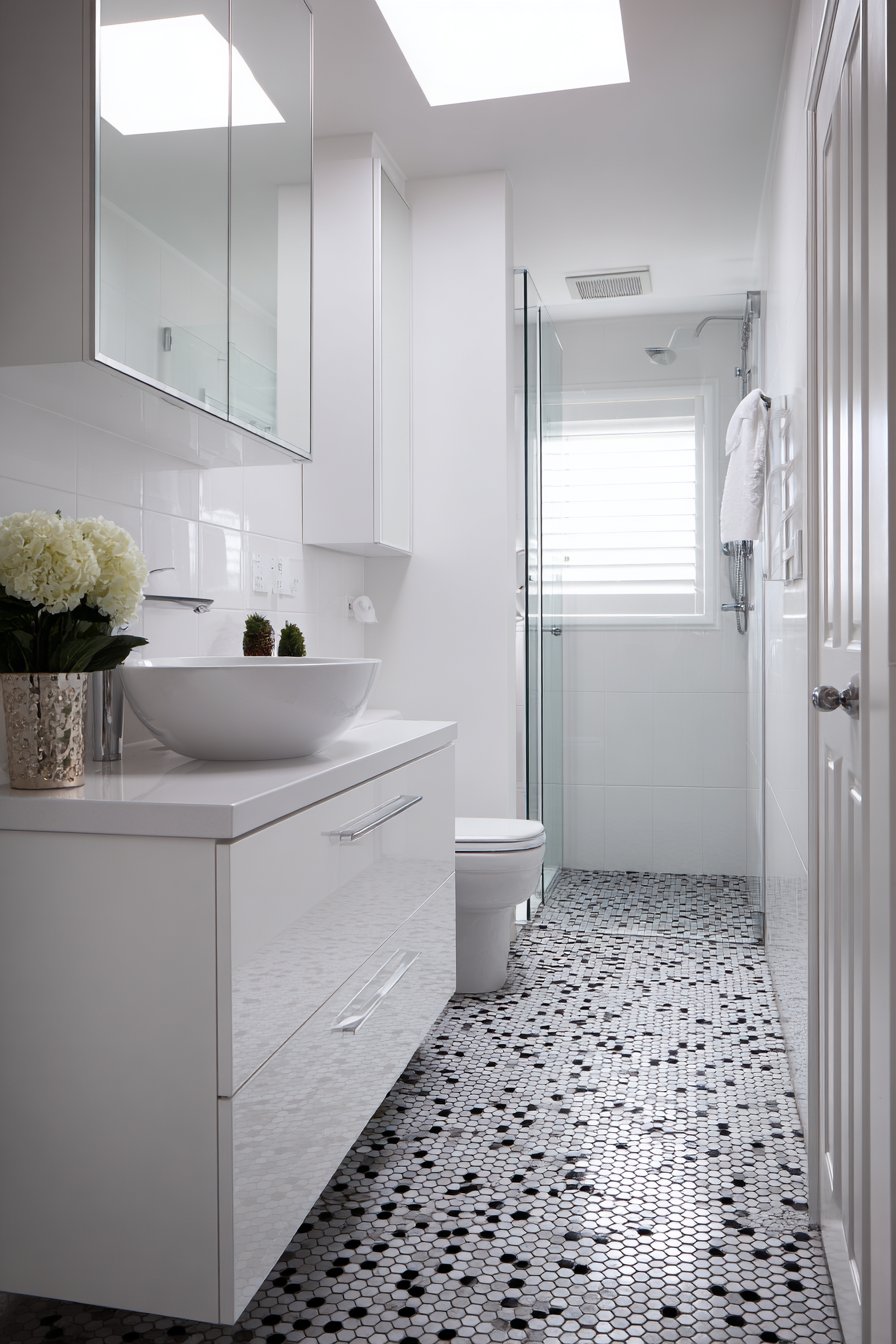
Hexagonal mosaic floor tiles in matte white with black grout add texture and pattern without overwhelming the narrow space. The geometric pattern creates visual interest at foot level while the matte finish provides better traction than glossy tiles. Black grout adds definition and hides dirt better than white grout in high-traffic areas.
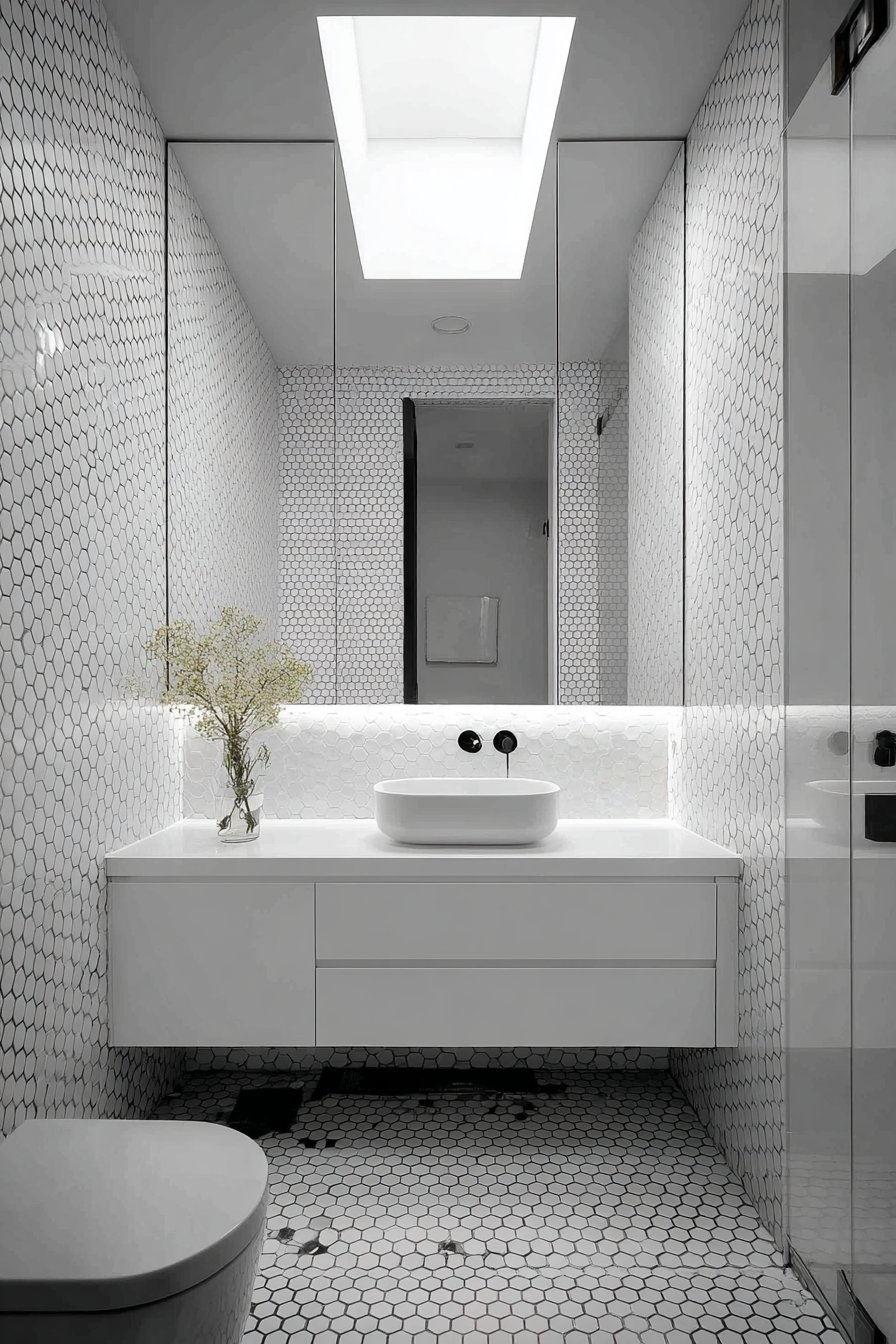
The skylight above represents the ultimate natural lighting solution for narrow bathrooms without wall space for windows. Natural daylight floods down from above, eliminating the cave-like feeling that windowless bathrooms often suffer from. The overhead light also creates interesting shadows that add depth and dimension throughout the day.
Strategies for optimizing narrow bathroom layouts:
- Choose slimline fixtures specifically designed for compact spaces and tight clearances
- Install wall-mounted cabinets to eliminate floor-based storage that blocks circulation
- Use vessel sinks to reduce the required counter depth while maintaining functionality
- Add skylights when wall windows aren’t possible for natural illumination
- Select light colors and reflective surfaces to counteract the narrow proportions
5. Japanese-Inspired Soaking Tub Alcove
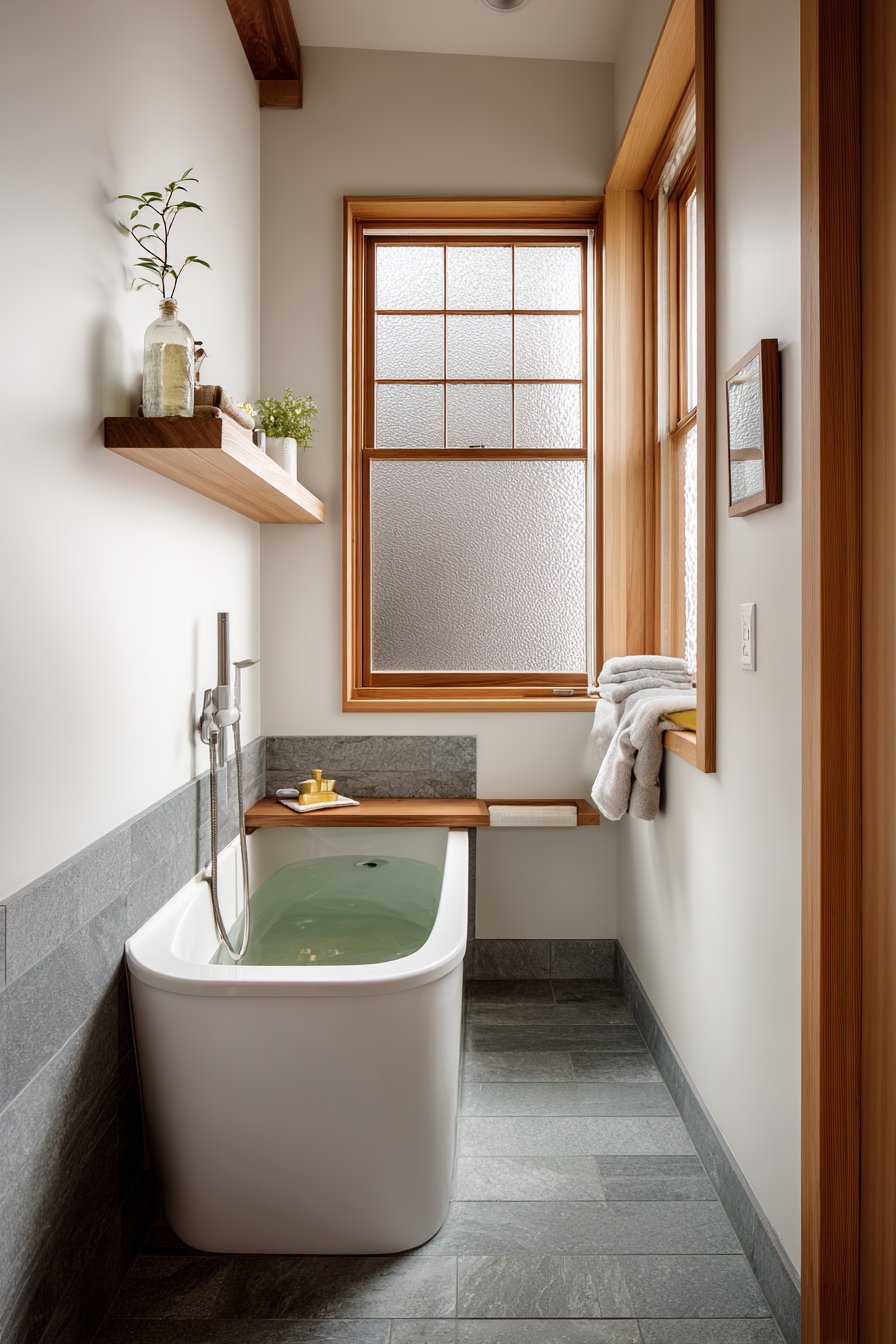
The compact Japanese soaking tub proves that tiny bathrooms can accommodate bathing options beyond showers. These deep tubs occupy less floor space than standard Western tubs while providing a more immersive bathing experience. The simple wood surround adds natural warmth and connects to Japanese design traditions emphasizing organic materials.
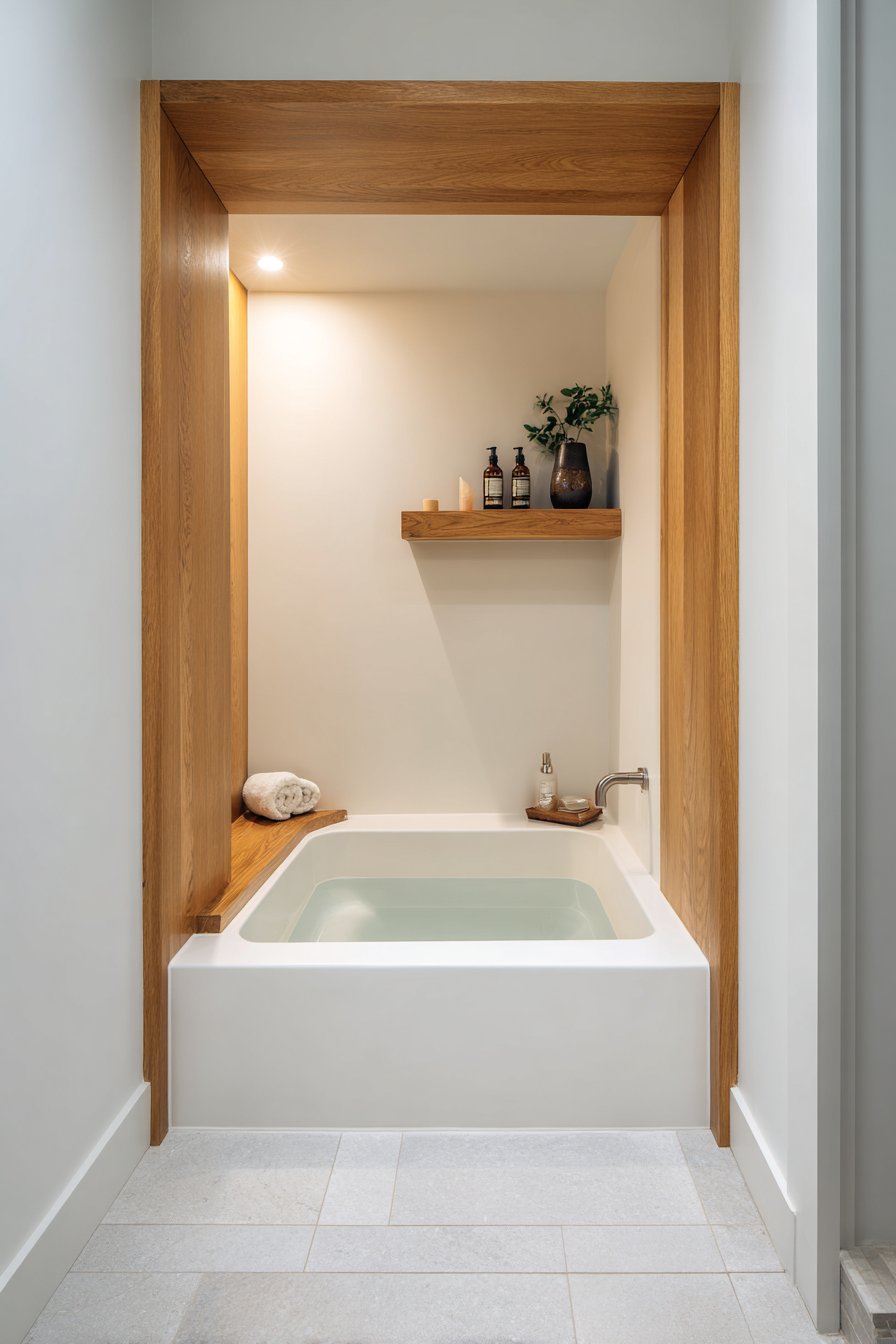
The neutral color palette of white walls and light grey stone-look porcelain tiles creates a serene, zen-like atmosphere. This restrained approach to color allows the mind to relax rather than processing visual stimulation. The stone-look tiles provide natural texture without the maintenance challenges of genuine stone in wet environments.
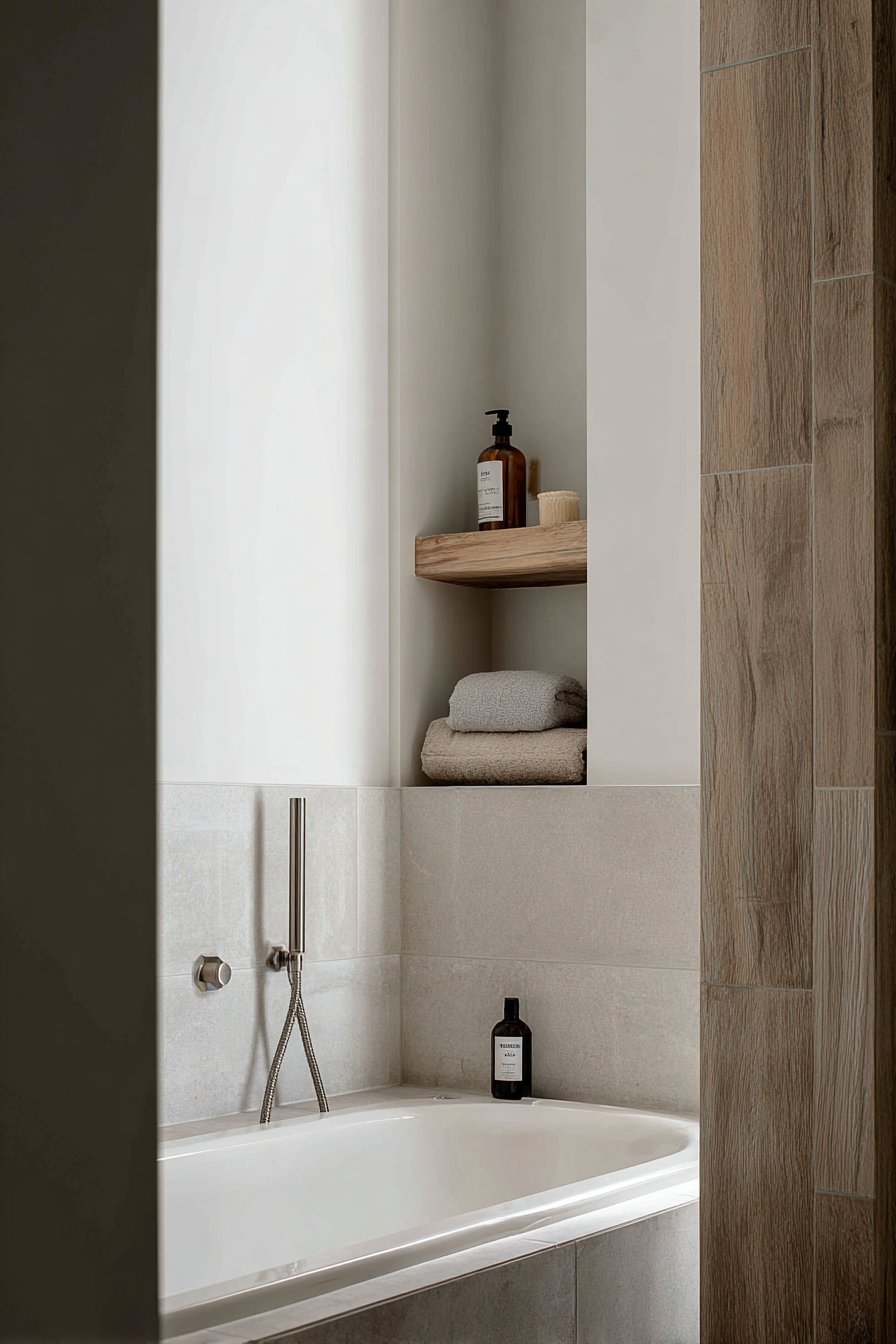
The minimalist wall-mounted faucet with handheld spray attachment maintains clean lines essential to Japanese design philosophy. Wall-mounted fixtures eliminate visual clutter on the tub deck, making the small space feel more open. The handheld spray provides flexibility for bathing and makes cleaning the tub interior much easier.
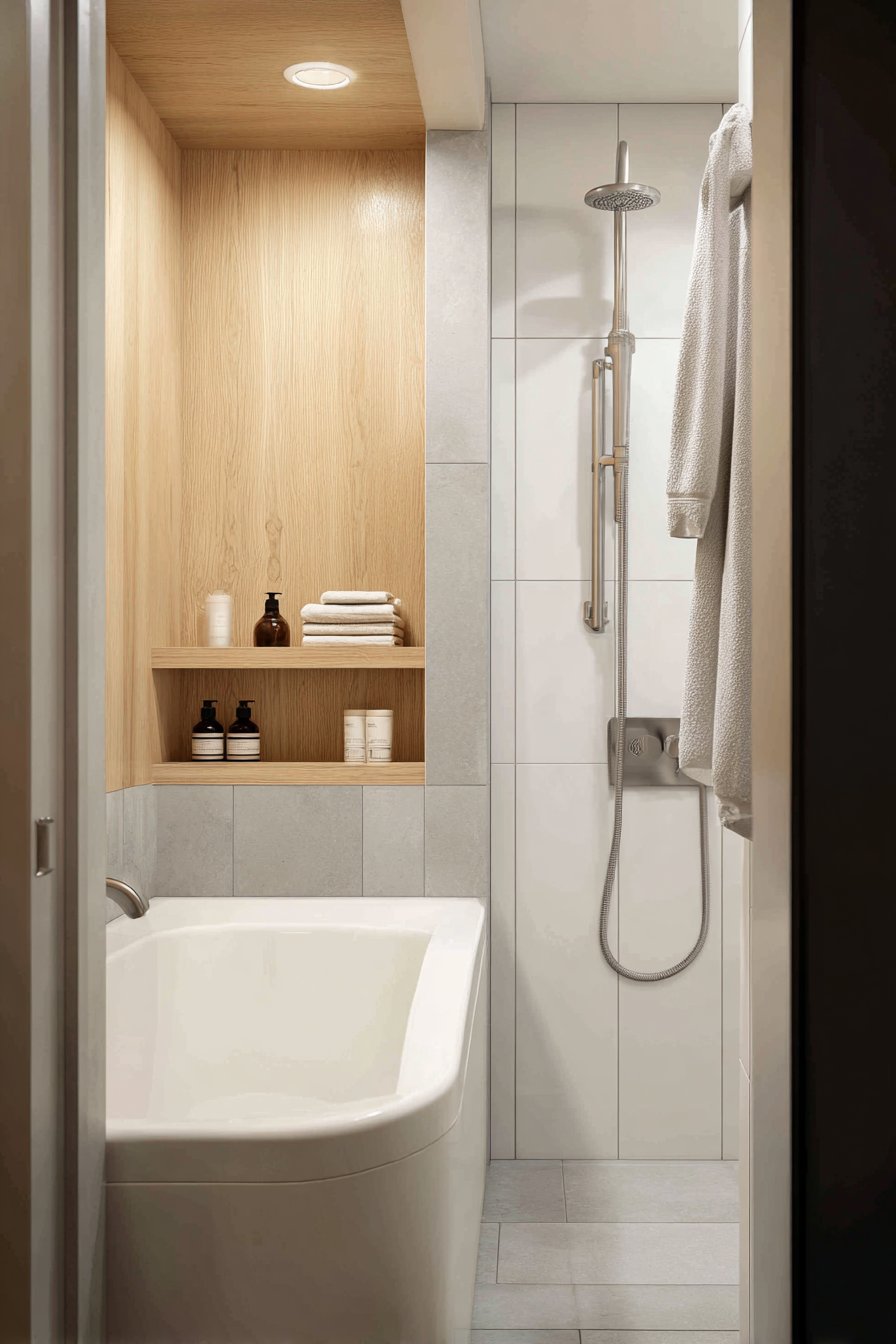
A single floating shelf in natural oak holds essential toiletries without requiring a bulky storage unit. The minimalist approach extends to accessories and displayed items. Only what’s truly necessary and beautiful earns a place in this carefully curated space.
Keys to achieving Japanese-inspired bathroom design:
- Prioritize quality over quantity in fixture selection and material choices
- Embrace negative space as a design element rather than filling every surface
- Choose natural materials like wood and stone that age beautifully over time
- Install deep soaking tubs designed for sitting rather than reclining positions
- Maintain strict visual discipline by limiting decorative objects and color palette
6. Ladder-Style Towel Rack and Dual-Purpose Furniture
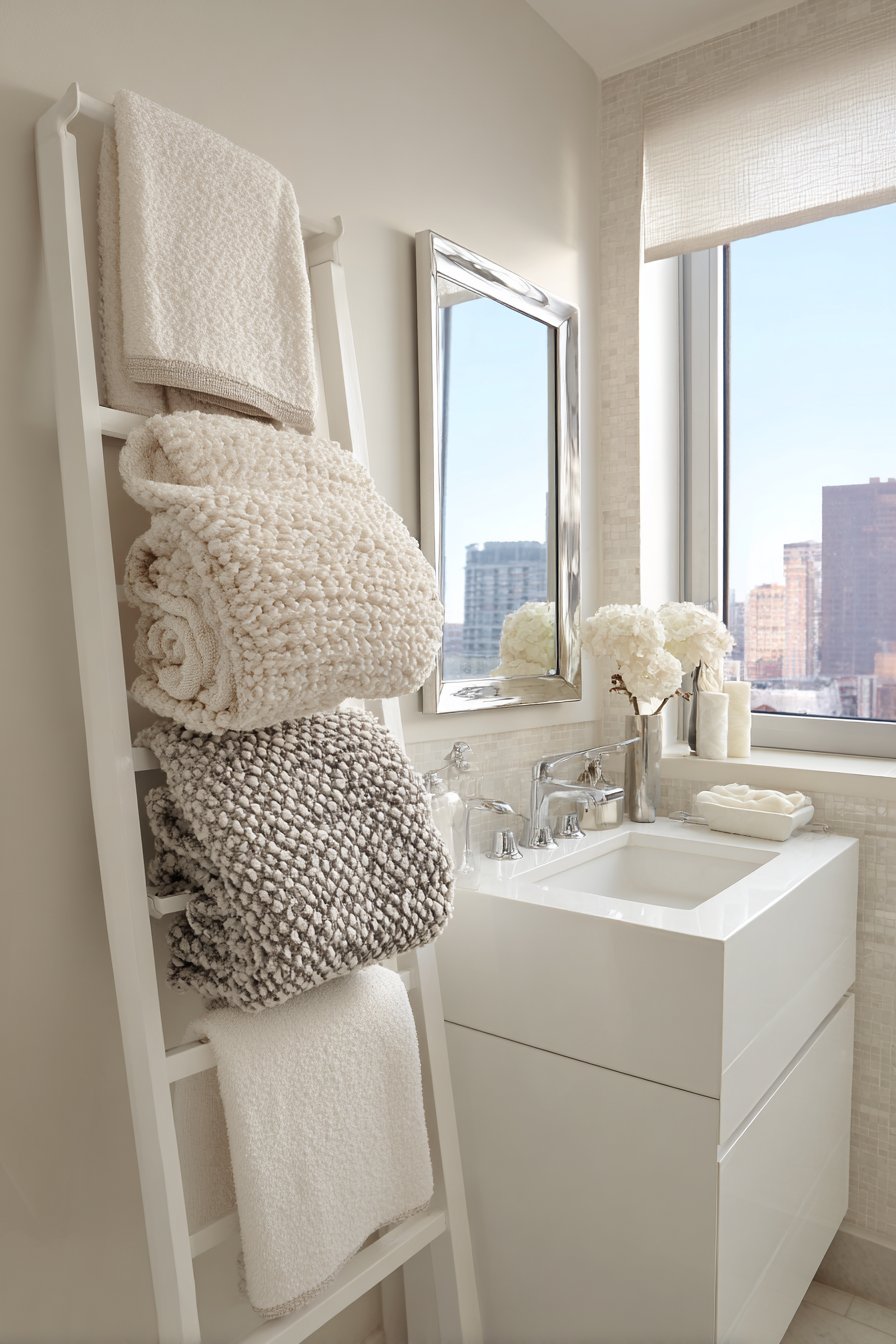
Clever dual-purpose furniture transforms tiny bathroom challenges into design opportunities. The ladder-style towel rack leans casually against the wall without requiring permanent installation. This flexibility allows renters to add storage without drilling holes or making permanent changes. The ladder silhouette takes up minimal floor space while providing multiple rungs for towel storage.
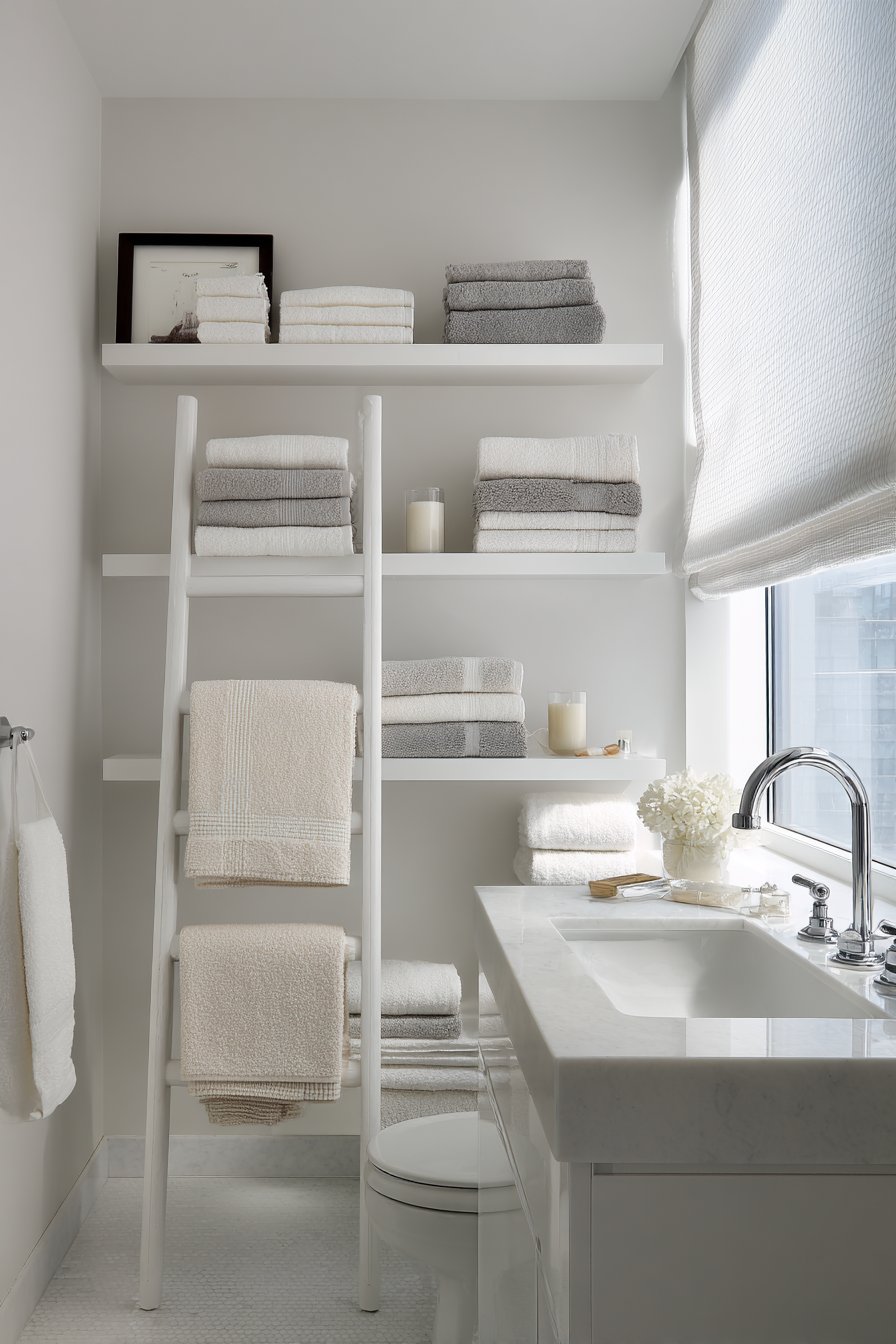
The monochromatic white scheme creates visual unity, making the compact bathroom feel more cohesive and spacious. Textured cotton towels in varying shades of cream and grey add subtle visual interest without disrupting the calm palette. The varied textures prevent the all-white scheme from feeling flat or boring.
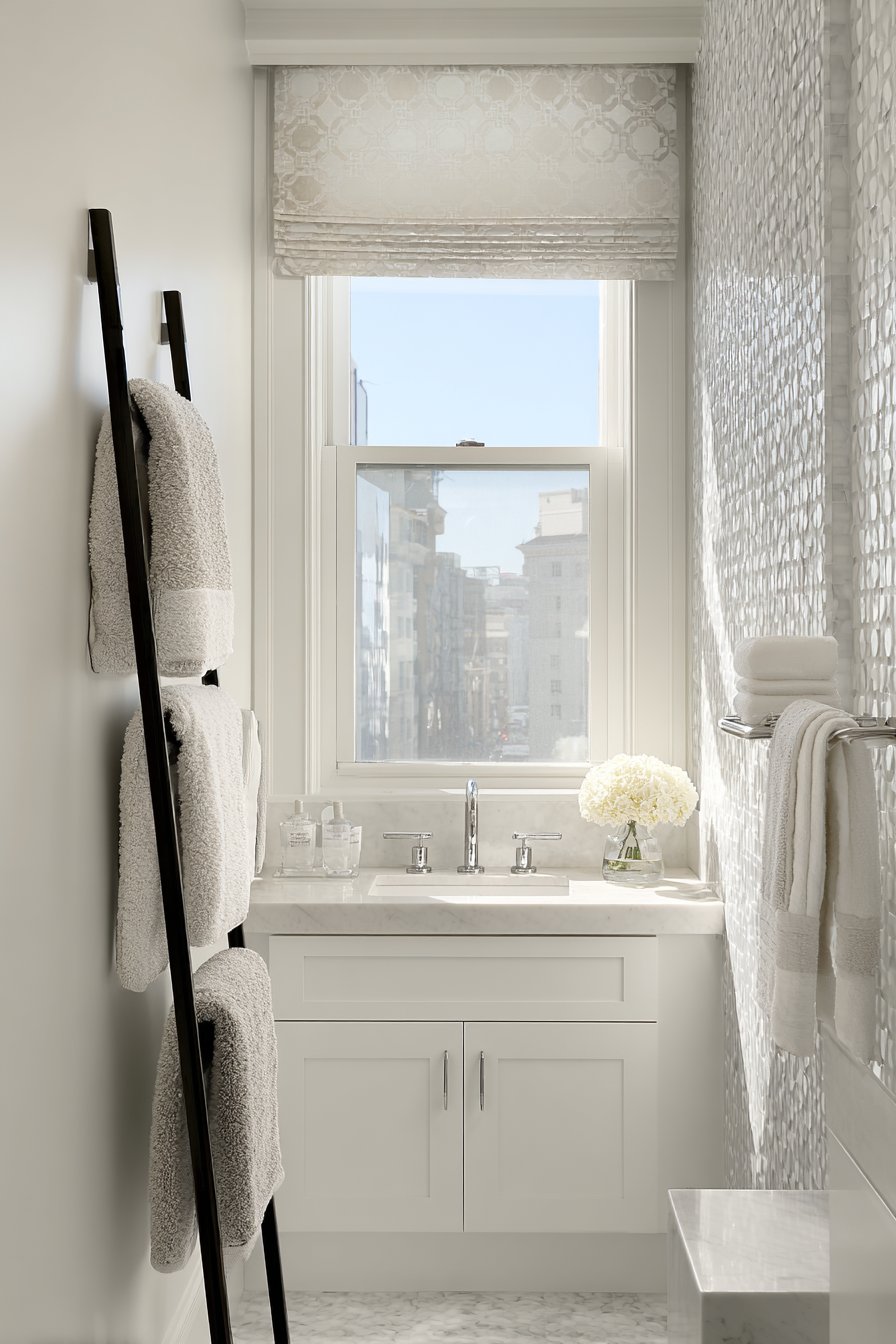
The compact corner sink makes brilliant use of space that’s often wasted in small bathrooms. Corner fixtures free up valuable wall length for other purposes while maintaining full functionality. Chrome fixtures add understated shine that brightens the space without demanding attention or competing with other design elements.
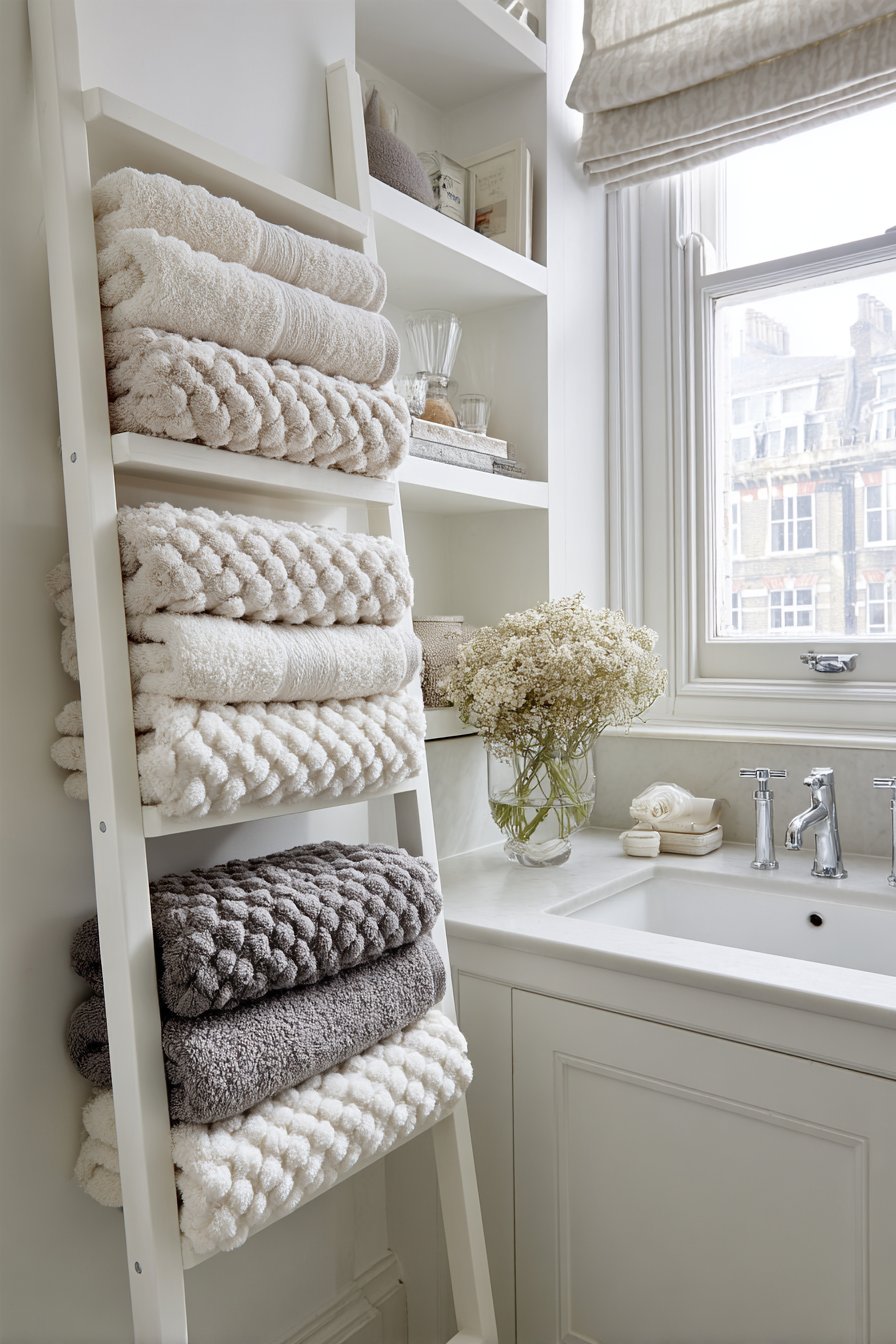
The window dressed with a translucent roman shade filters natural light beautifully while maintaining privacy from outside views. The soft fabric adds textural warmth to the primarily hard surfaces of tile and porcelain. Natural light remains the most effective way to make small spaces feel larger and more inviting.
Effective approaches to dual-purpose bathroom furniture:
- Choose leaning storage that doesn’t require wall mounting in rental properties
- Select corner fixtures to maximize usable wall space for other purposes
- Use window treatments that filter rather than block natural light completely
- Maintain monochromatic color schemes to enhance visual spaciousness perception
- Add texture through towels and fabrics rather than busy patterns or colors
7. All-White Design with Varied Textures
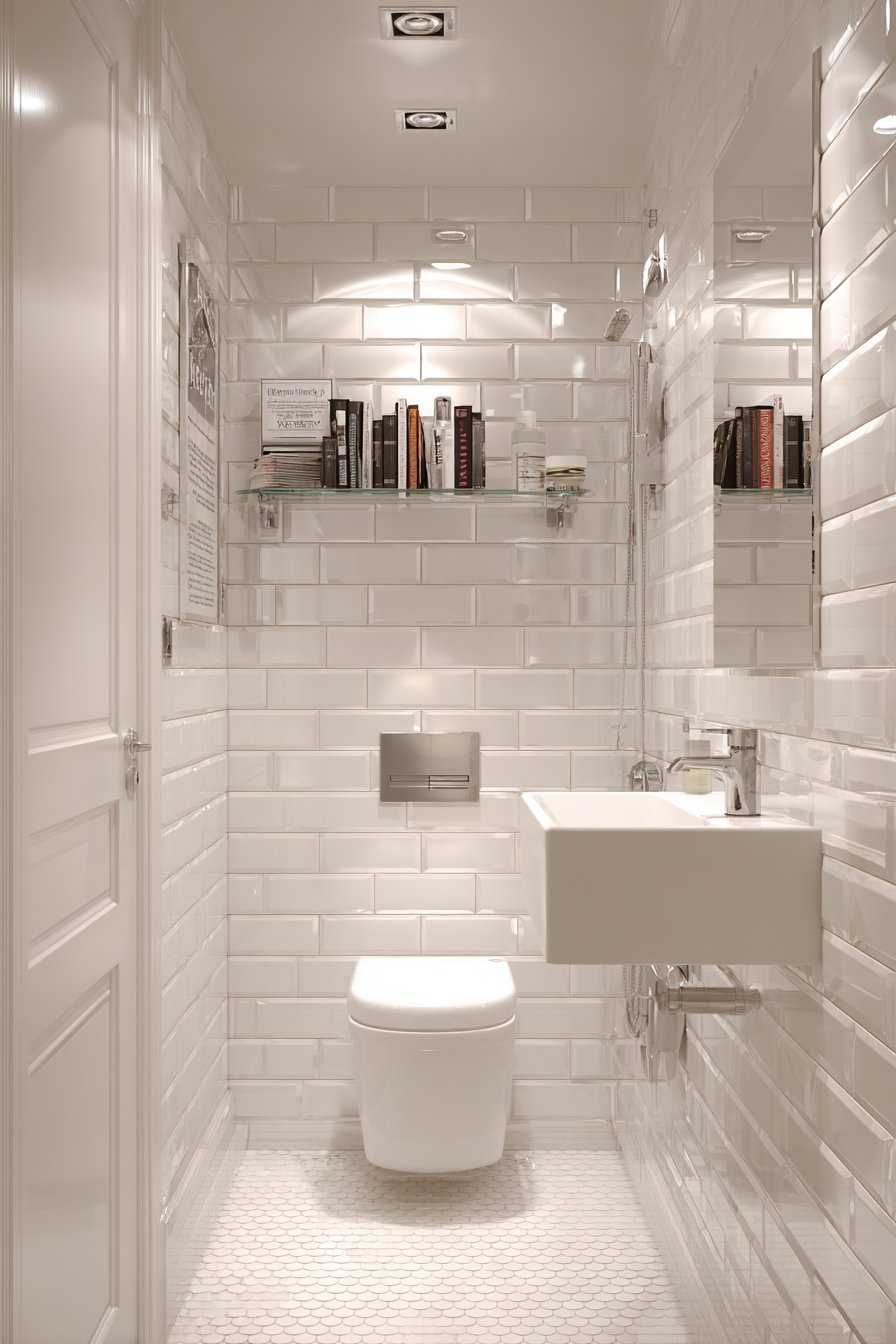
An all-white color scheme might seem risky in a tiny bathroom, but varied textures prevent monotony while maximizing brightness. Beveled subway tiles on walls catch and reflect light from multiple angles. The beveled edges create subtle shadows that add depth and dimension to flat walls. This classic tile choice never goes out of style.
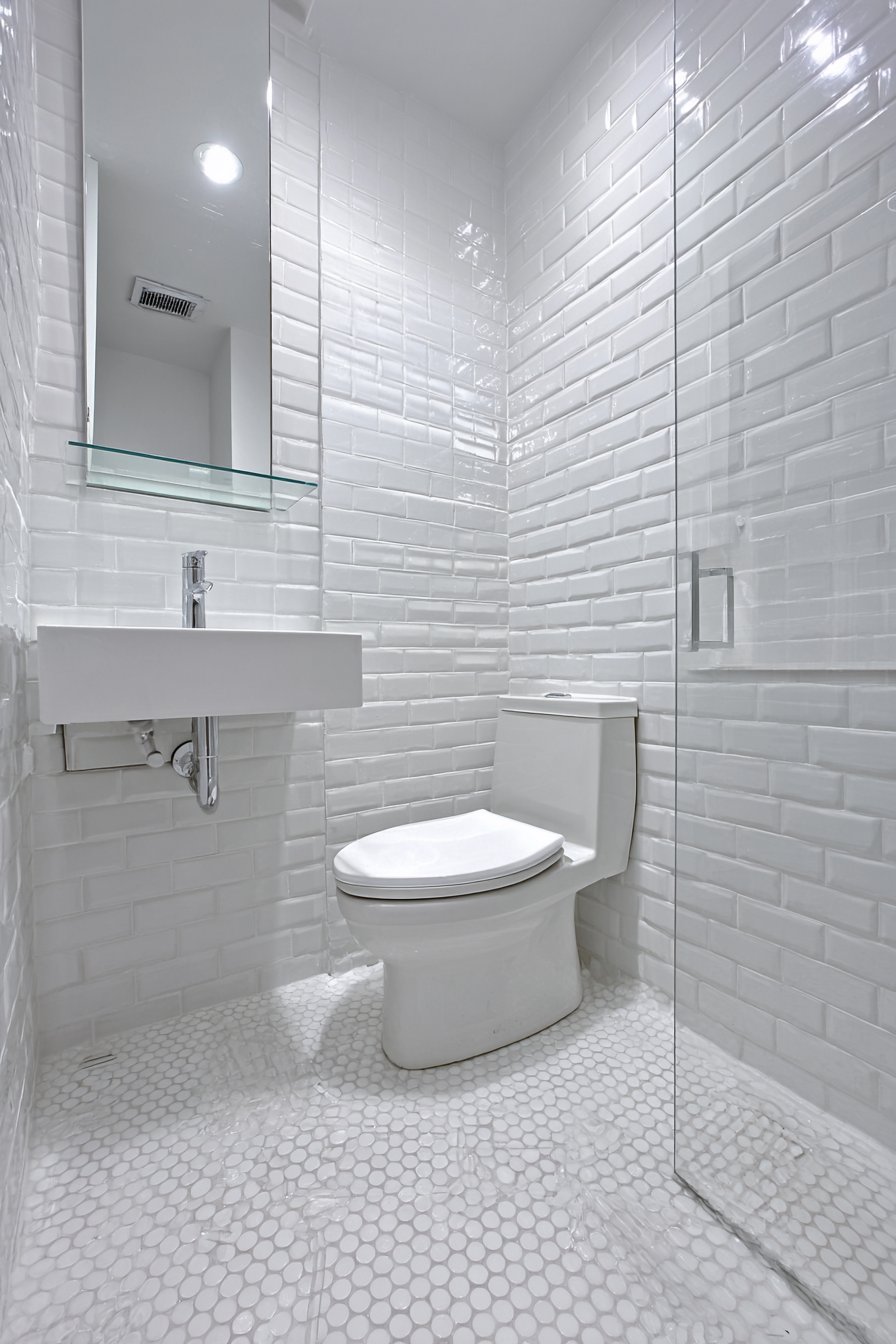
Matte white hexagonal floor tiles provide slip resistance and subtle textural contrast to the glossy wall tiles. The geometric pattern adds visual interest at foot level without introducing color that might shrink the space visually. The matte finish hides water spots and soap residue better than glossy surfaces.
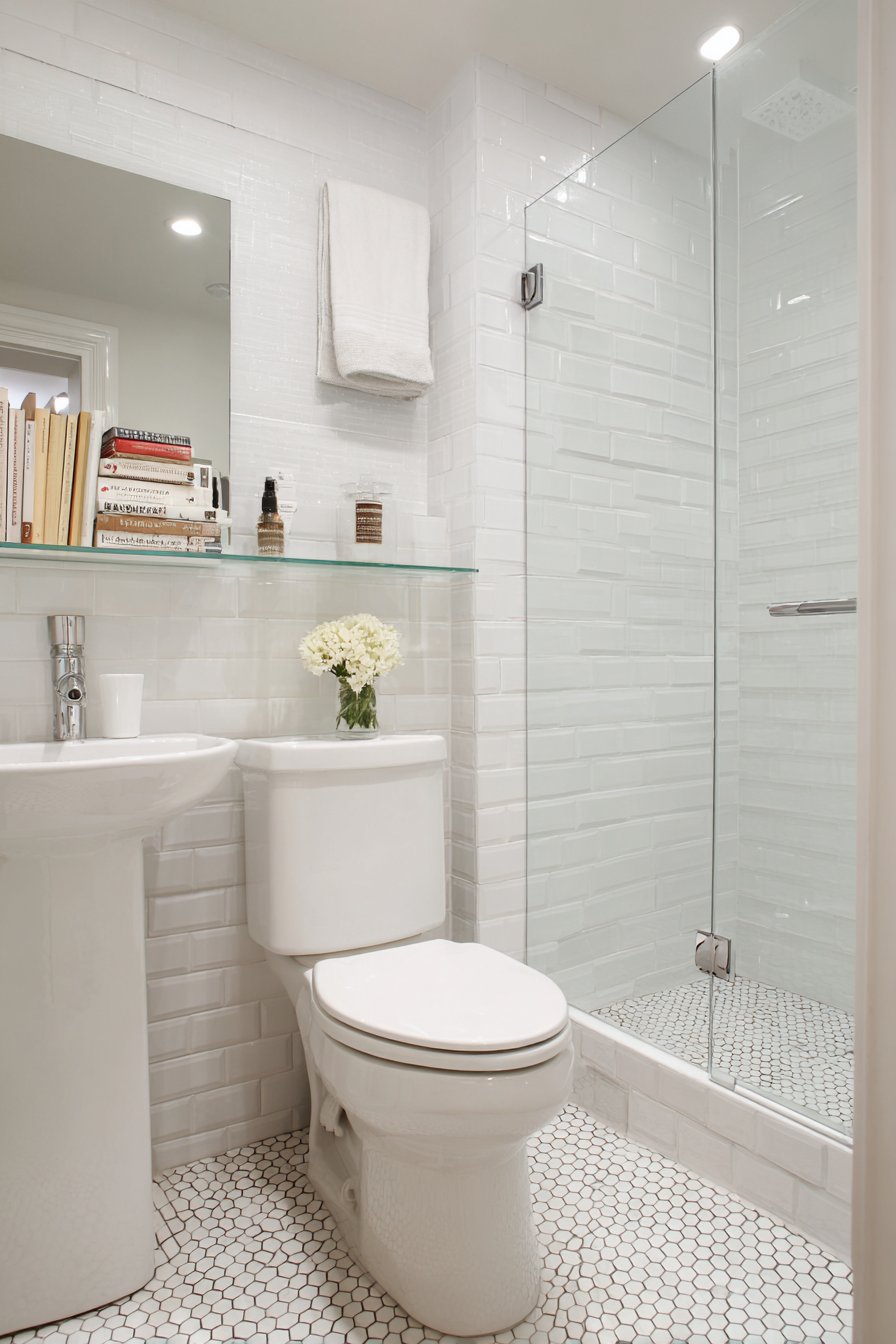
Wall-mounted fixtures, including toilet with concealed tank and slim-profile sink, maximize every inch of floor space. Concealed tanks hide bulky plumbing while creating streamlined profiles. The exposed floor beneath fixtures makes the room feel significantly more spacious than traditional floor-mounted alternatives.
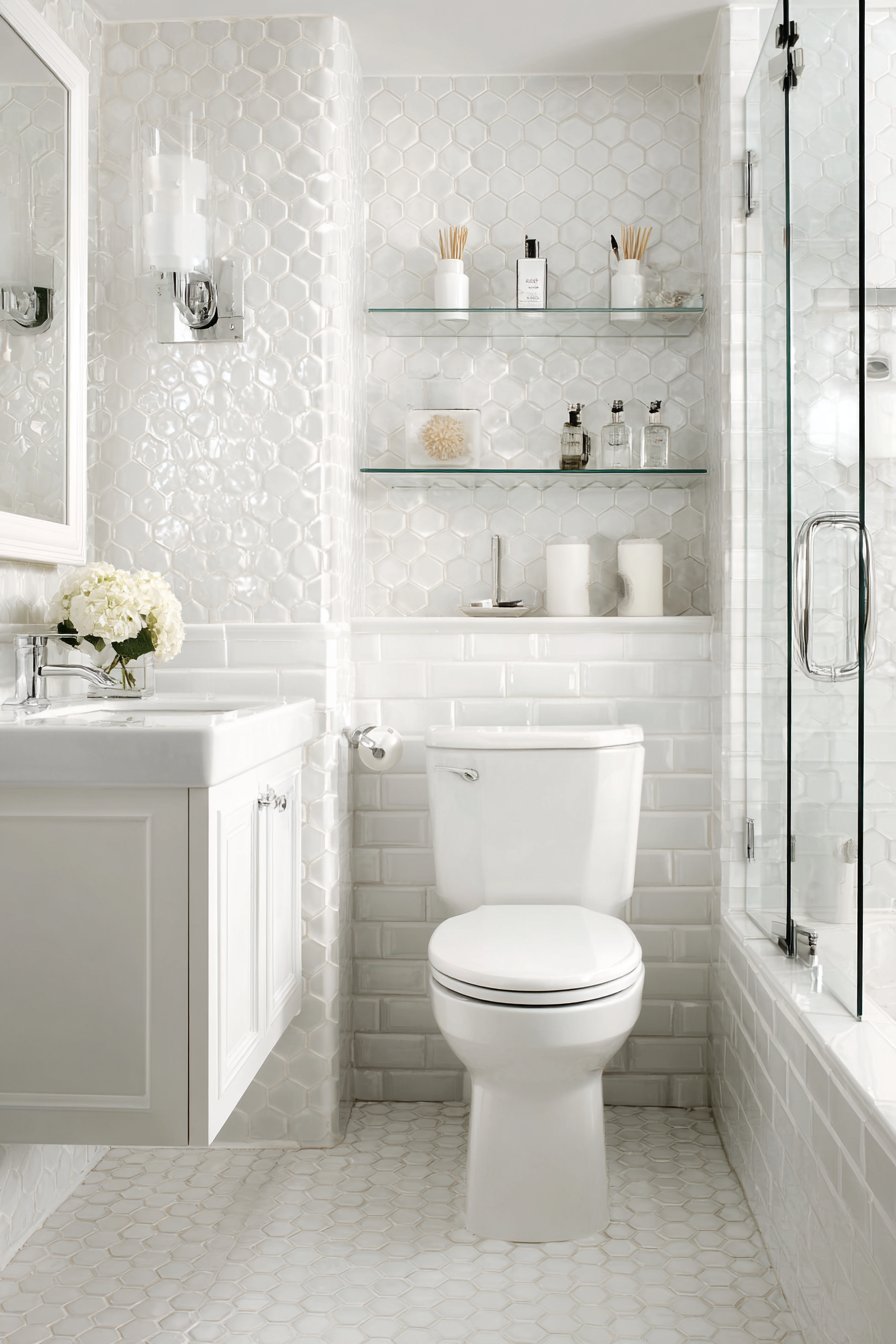
Chrome hardware and a single glass shelf maintain the light, open aesthetic without adding visual weight. Glass shelving disappears visually while providing essential storage for daily toiletries. Chrome reflects light beautifully, adding sparkle without colorful distraction.
Techniques for successful monochromatic tiny bathroom design:
- Mix glossy and matte finishes to create textural variation and visual interest
- Choose different tile shapes and sizes to add pattern without introducing color
- Install wall-mounted fixtures to expose maximum floor area and enhance spaciousness
- Use transparent materials like glass for shelving and accessories when possible
- Select varied whites from warm to cool to create subtle tonal depth
8. Galley-Style Layout with Continuous Tile
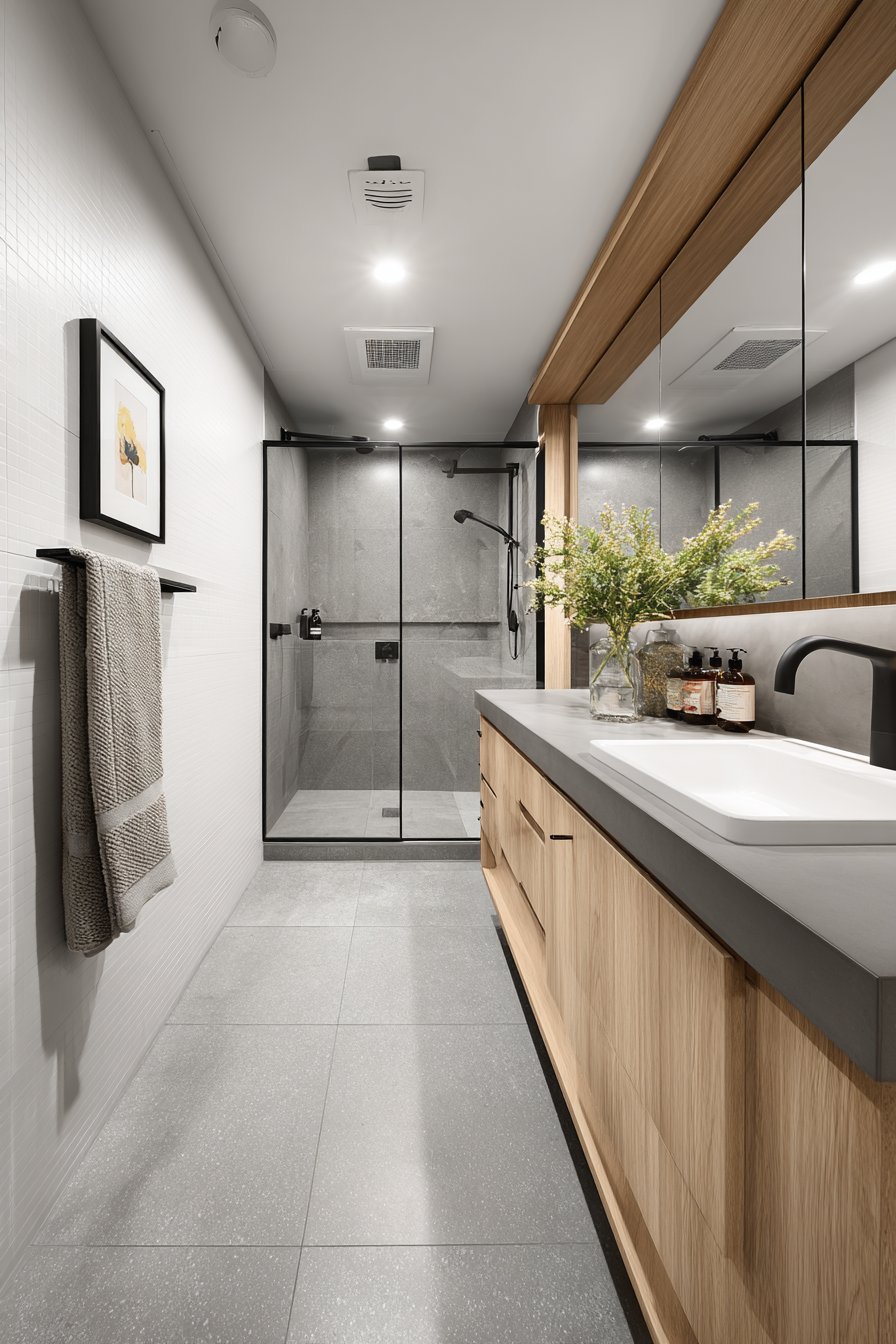
The narrow galley-style layout borrows from ship and airplane design where every inch counts. Positioning the shower at one end and vanity opposite creates efficient traffic flow. This linear arrangement works beautifully in long, narrow spaces where side-by-side placement isn’t possible.
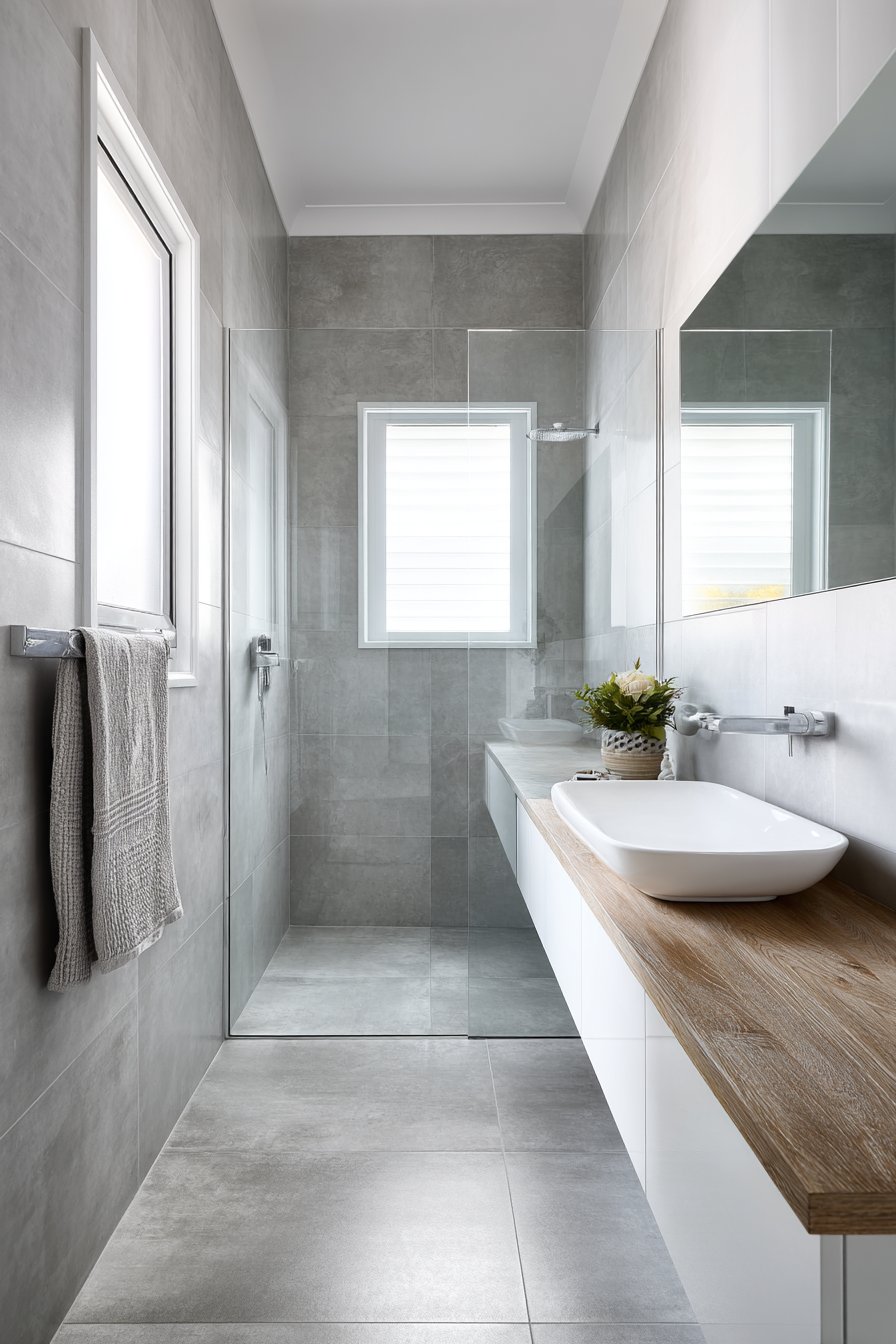
Continuous large-format grey tiles on floor and lower walls create powerful visual flow. The eye travels along these uninterrupted surfaces, perceiving length rather than narrowness. Large tiles also mean fewer grout lines to clean, reducing maintenance time and effort significantly.
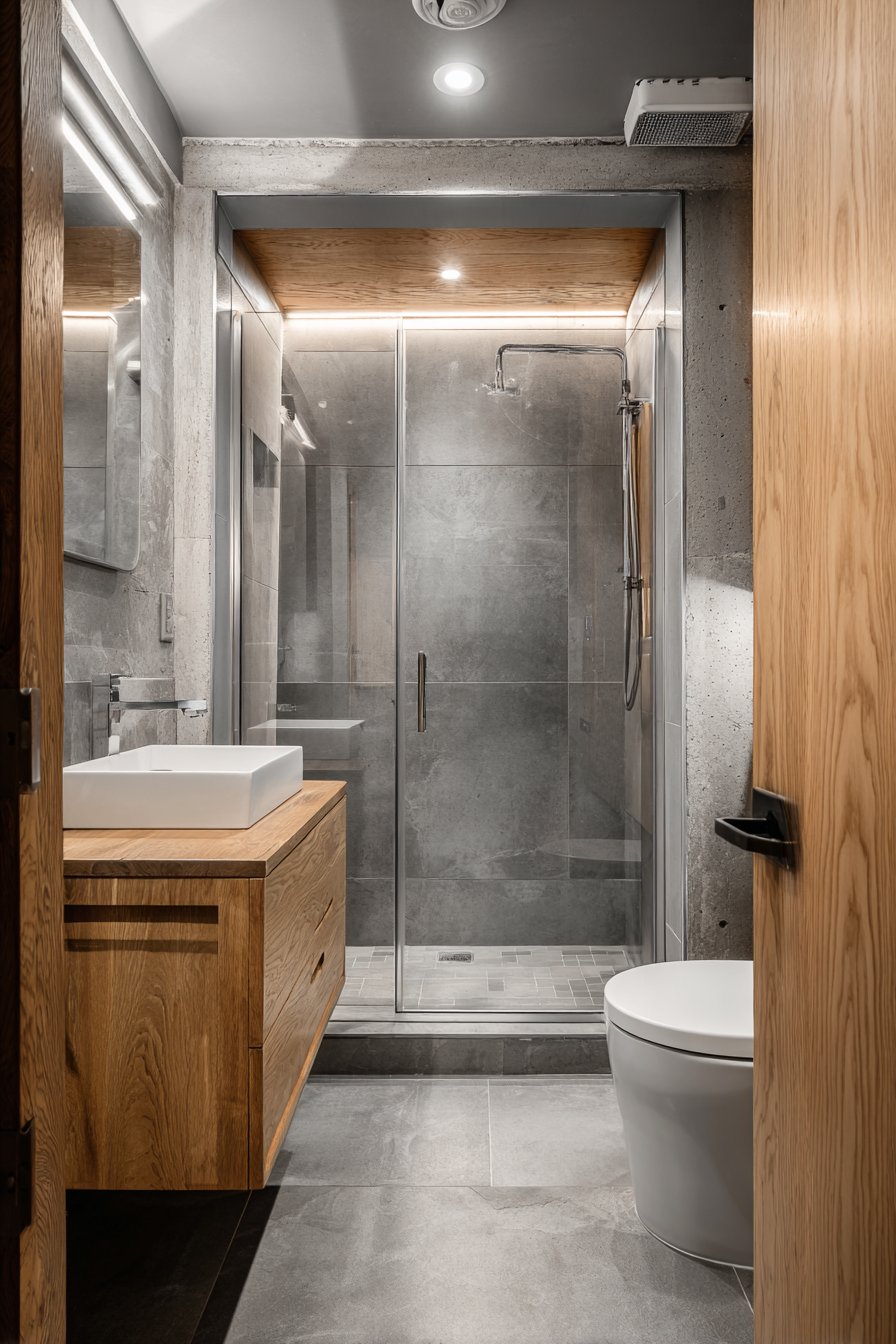
Upper walls in crisp white with moisture-resistant paint reflect available light downward into the darker lower portion. This two-tone approach adds visual interest while serving practical purposes. The white upper portion prevents the grey from making the narrow space feel like a tunnel.
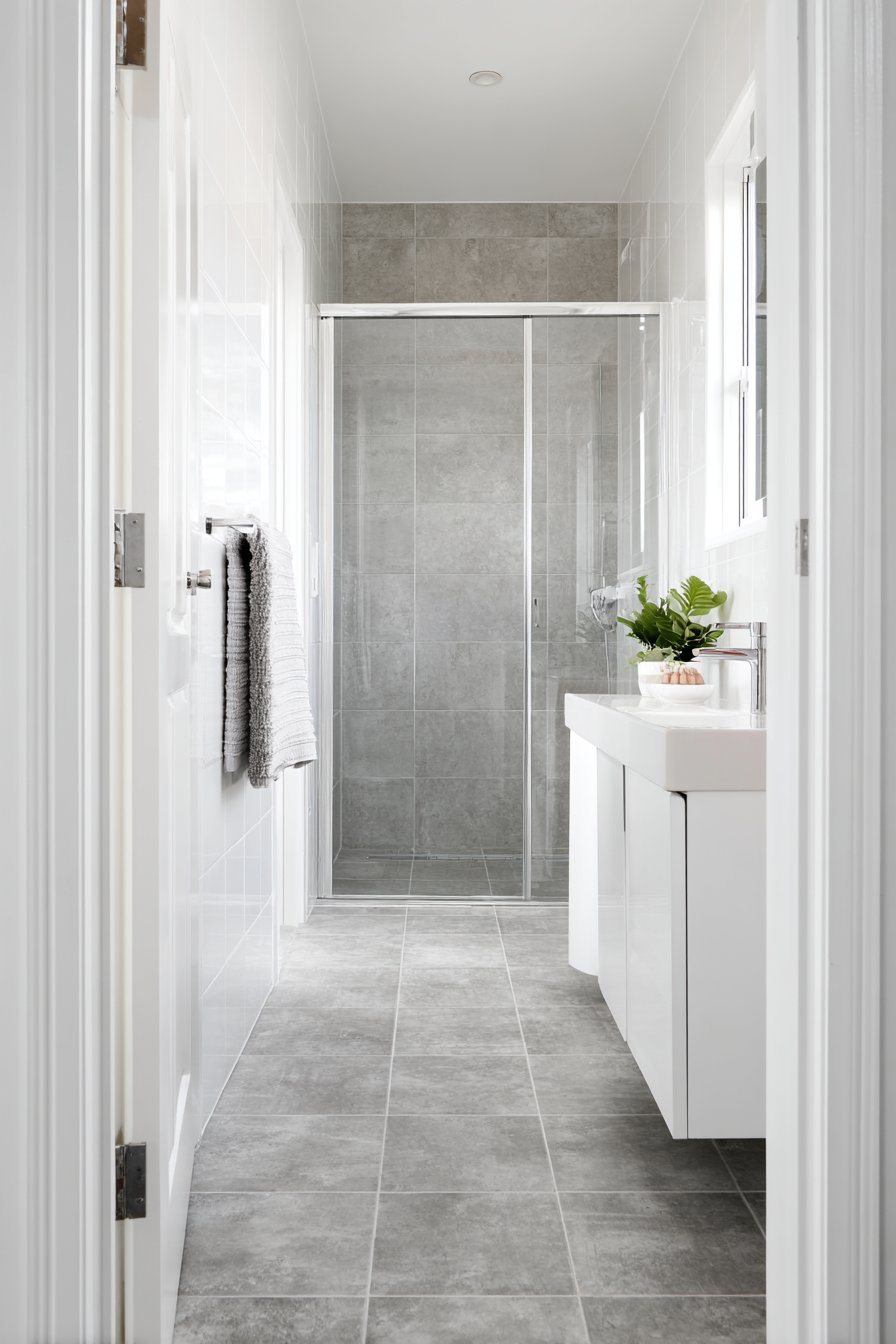
The frameless glass shower screen maintains sightlines through the entire length of the bathroom. This transparency prevents the space from feeling choppy or divided into separate zones. The compact floating vanity with integrated towel bar demonstrates excellent multi-functional design thinking.
Essential elements for successful galley bathroom layouts:
- Position fixtures in a linear arrangement to maximize circulation space between them
- Use continuous flooring to emphasize length and create visual flow through space
- Install frameless glass barriers to maintain visual continuity from end to end
- Choose large-format tiles to minimize grout lines and enhance a seamless appearance
- Add towel bars directly to vanities when wall space is limited
9. Vintage-Inspired Corner Sink with Freestanding Tub
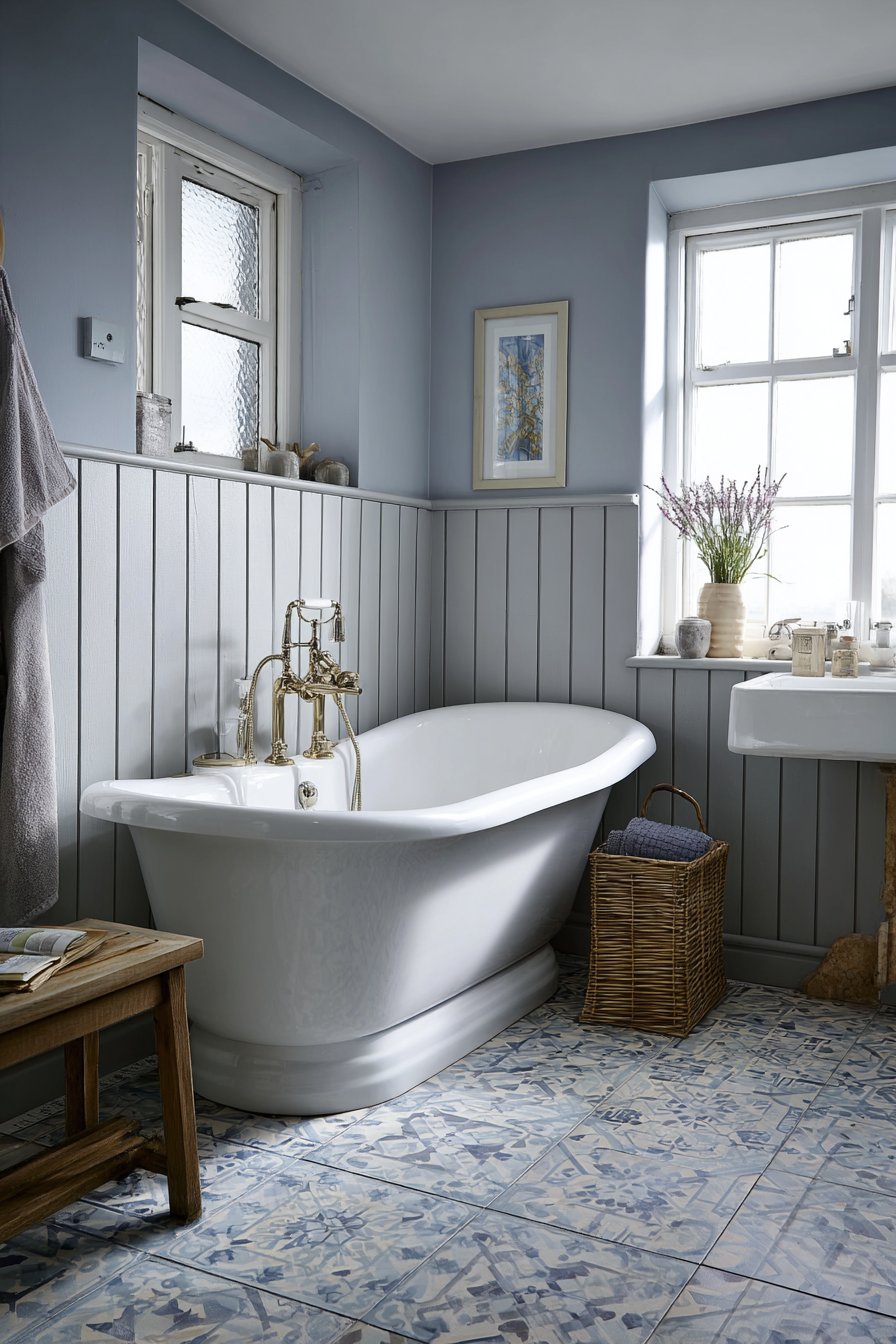
Vintage-inspired design proves tiny bathrooms can have big personality and undeniable charm. The corner pedestal sink positioned strategically leaves maximum clearance for a compact freestanding tub. This careful space planning allows inclusion of both washing and bathing fixtures within tight constraints. Vintage brass fixtures add character and warmth while maintaining timeless appeal that won’t look dated quickly.
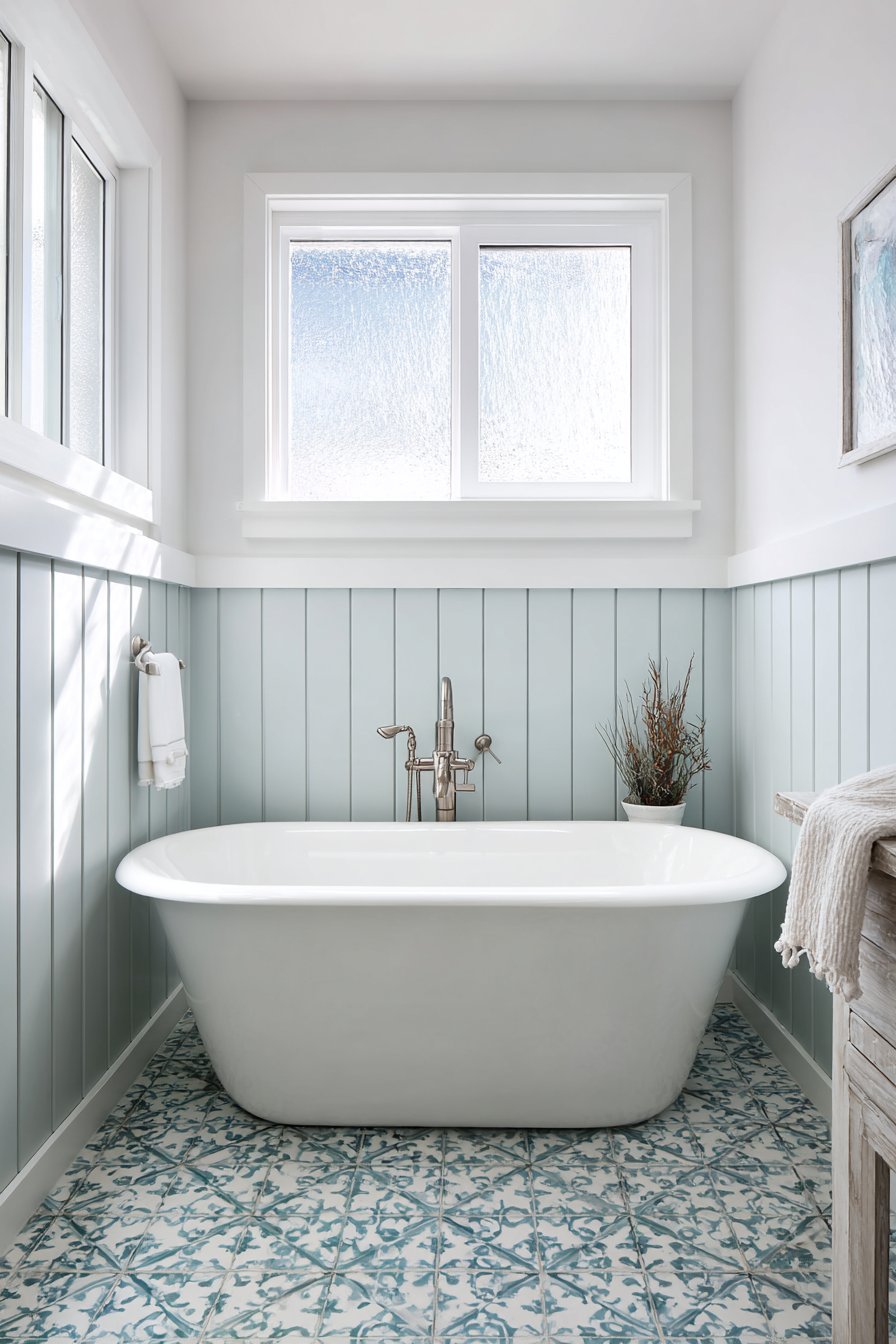
Beadboard wainscoting in soft grey extends halfway up walls, adding texture and traditional detailing. This architectural element provides visual interest and protection from moisture and scuffs in the splash zone. White painted plaster above keeps the upper portion bright and prevents the grey from overwhelming the small dimensions.
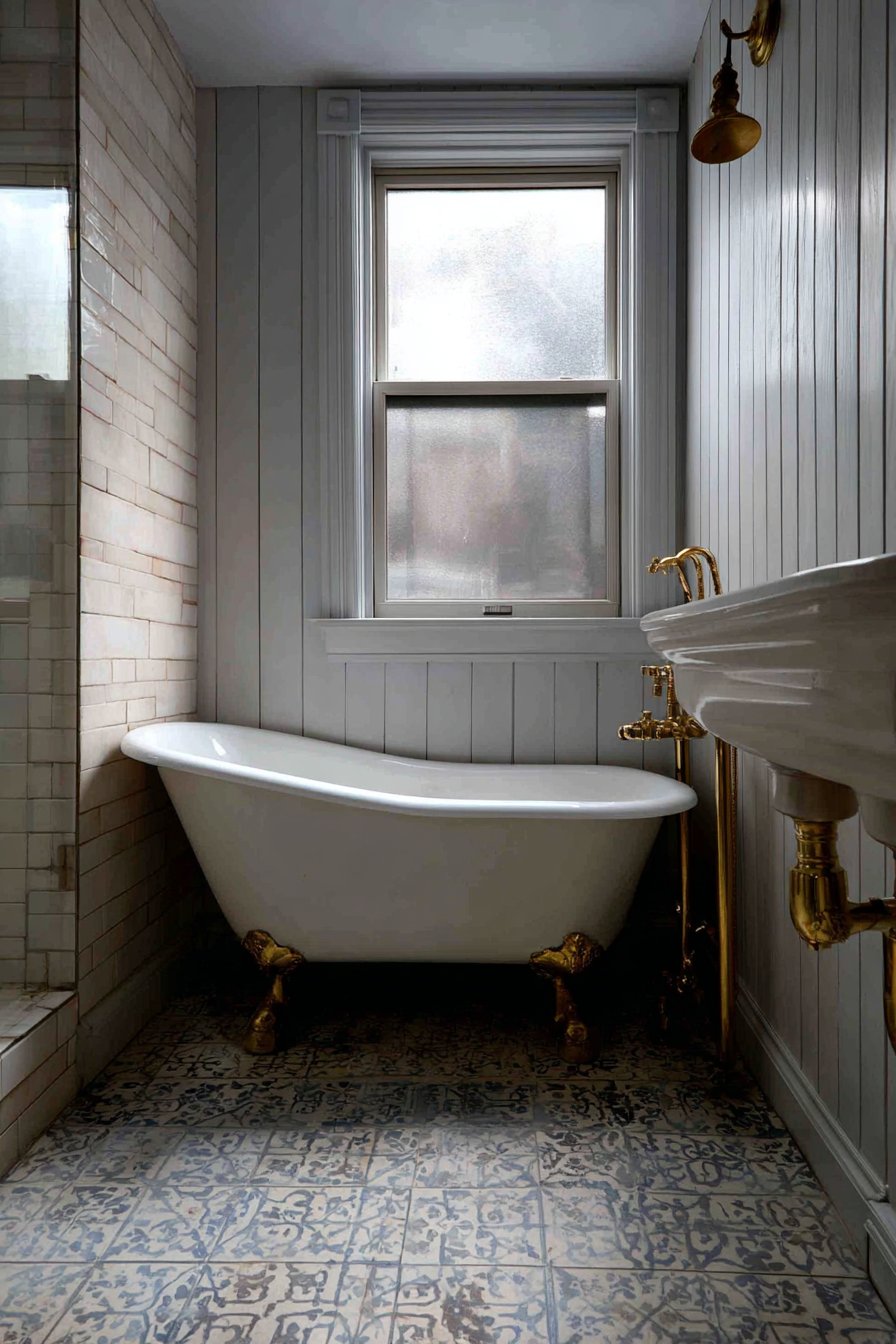
The small casement window with frosted glass provides essential ventilation while allowing natural light penetration. Proper ventilation prevents mold and mildew growth in the humid bathroom environment. Frosted glass maintains privacy without blocking beneficial daylight that makes small spaces feel more welcoming.
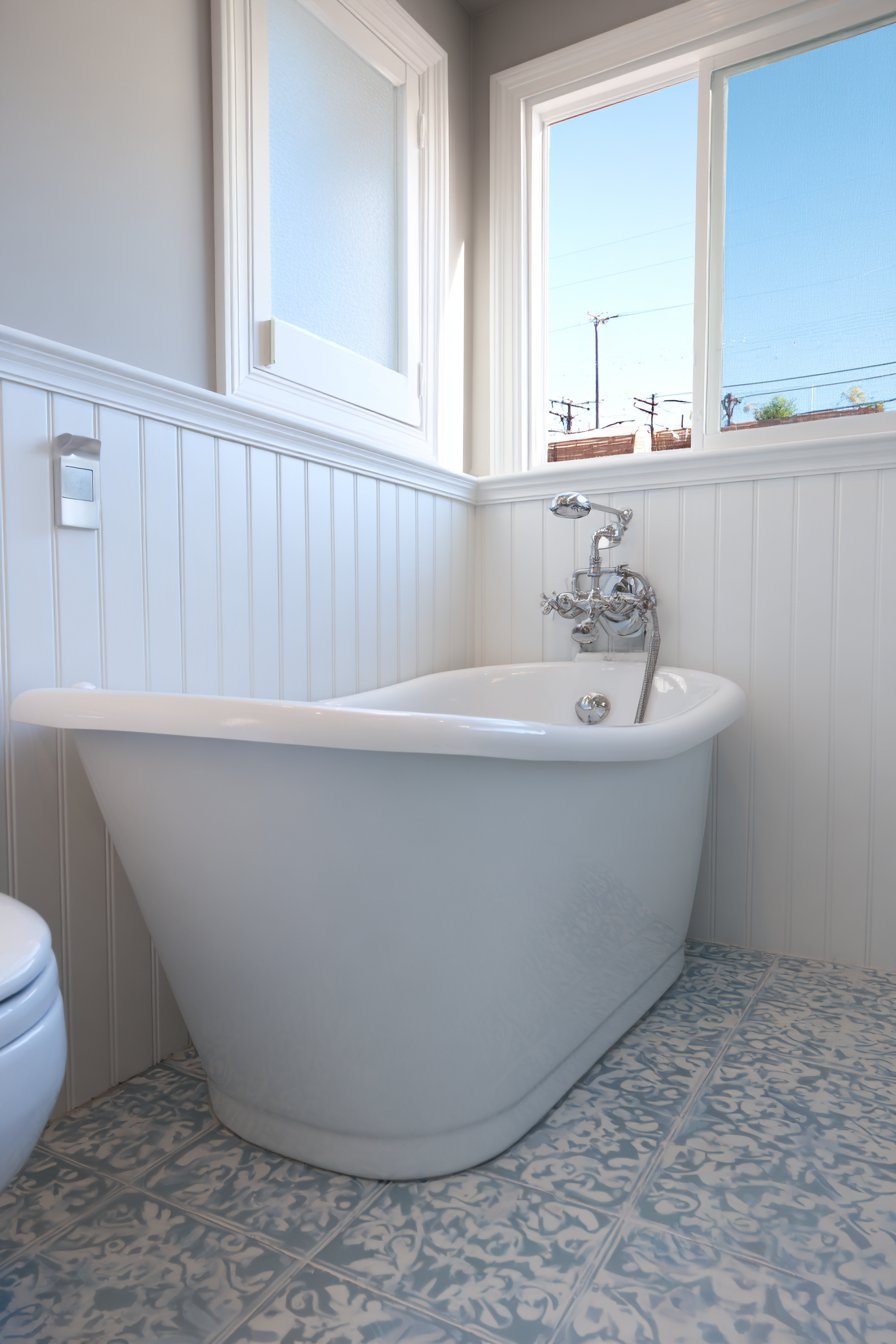
Patterned cement floor tiles in muted blue and white add visual interest at foot level without overwhelming the compact space. The pattern draws the eye downward, creating another focal point that prevents the design from feeling too simple. Cement tiles are durable and develop beautiful patina over time.
Key considerations for vintage-inspired tiny bathrooms:
- Choose compact versions of classic fixtures like pedestal sinks and freestanding tubs
- Add architectural details like beadboard to increase visual interest and character
- Select vintage-style fixtures in finishes like brass that age beautifully with use
- Use patterned floor tiles to add personality without overwhelming limited square footage
- Ensure adequate ventilation to protect vintage materials from moisture damage over time
10. Modern Wet Room with Linear Drain
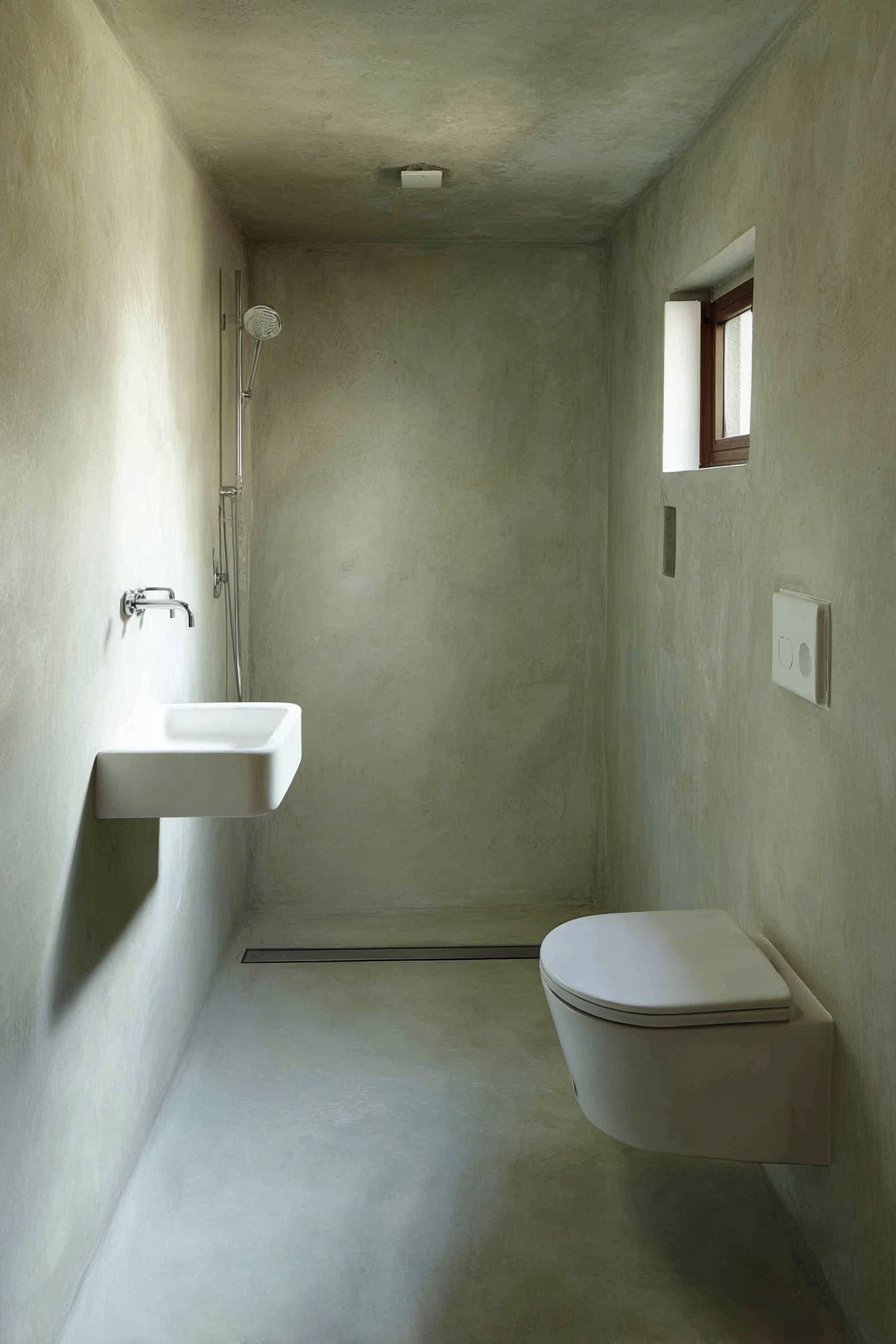
The modern wet room configuration represents the ultimate in minimalist tiny bathroom design. The linear drain positioned along the back wall creates a sleek, contemporary look while efficiently managing water drainage. This placement allows the entire floor to slope gently in one direction rather than toward a central drain point.
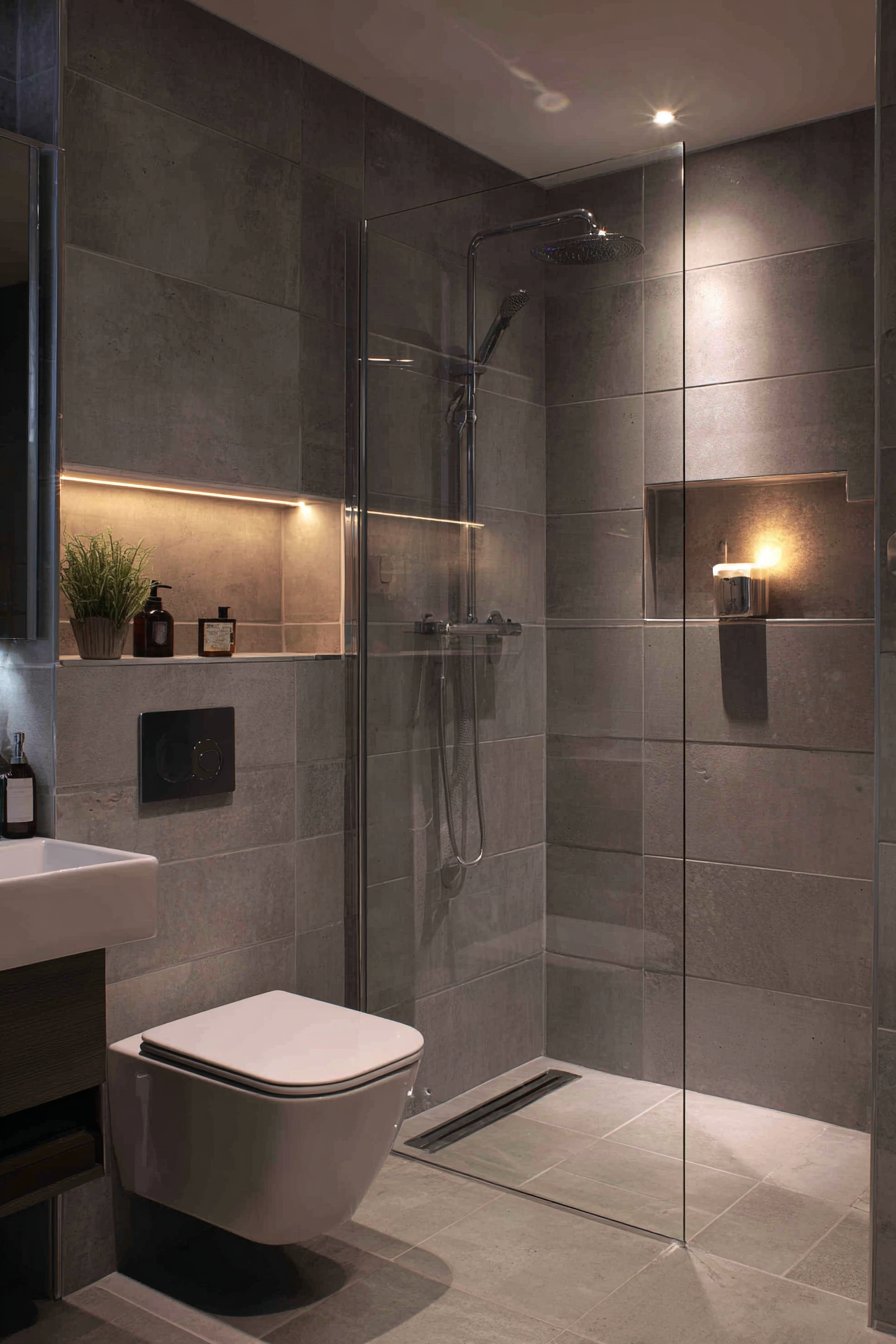
Continuous waterproof microcement in light grey covers all surfaces for ultimate seamless appearance. Microcement creates completely jointless surfaces that resist water penetration while offering contemporary industrial aesthetic. The material works equally well on floors, walls, and even ceilings, creating visual unity throughout the compact space.
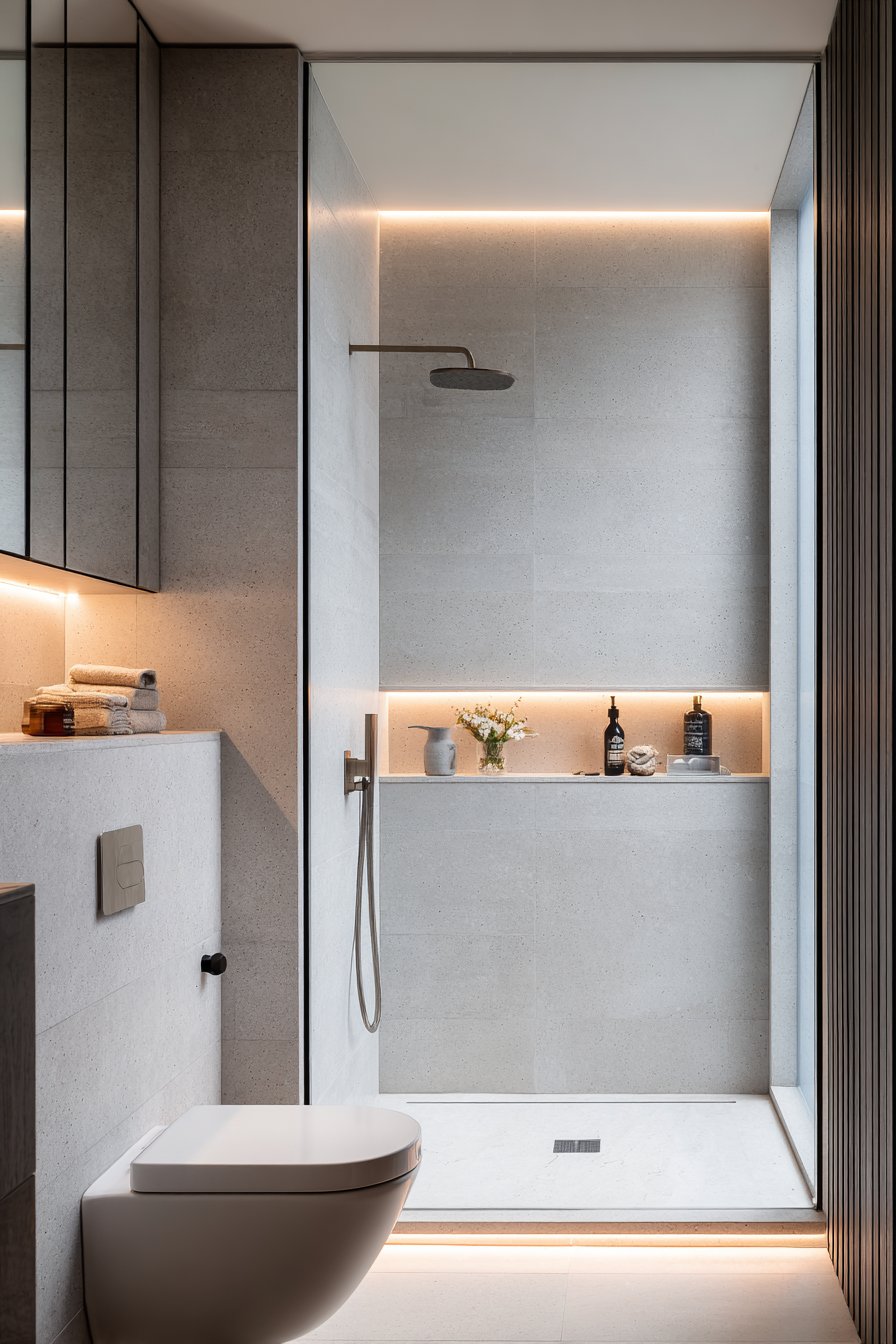
Wall-hung fixtures, including toilet and compact sink with single-lever mixer tap, maintain the clean, minimalist lines central to modern design. Every element appears to float, leaving the floor completely visible and uninterrupted. This visual trick makes the tiny bathroom feel considerably more spacious than its actual dimensions.
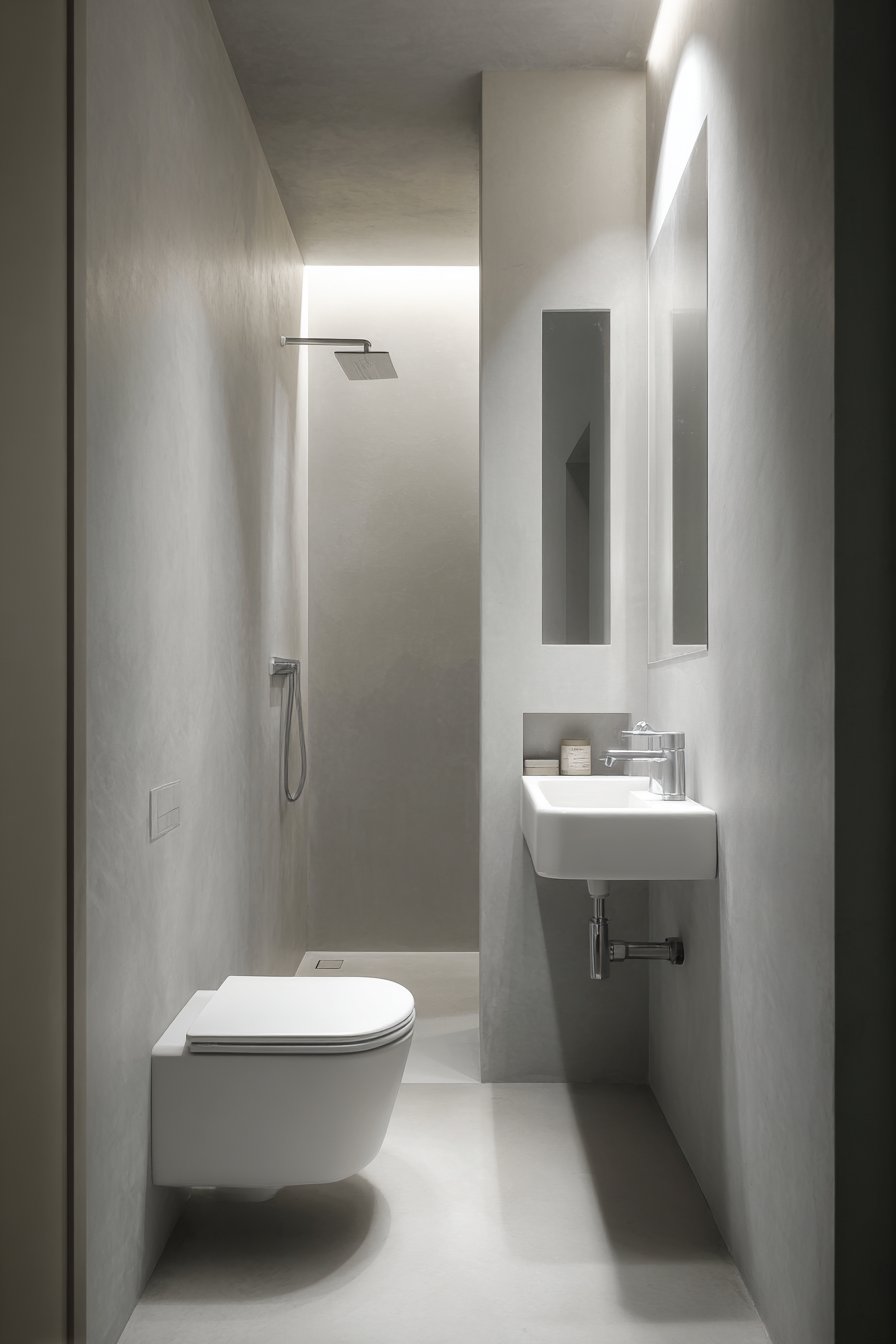
The built-in recessed niche in the shower area provides essential storage without protruding into precious circulation space. Recessed niches are cut into the wall structure during construction or renovation. Flush-mounted LED lighting creates even, shadow-free illumination across all surfaces. This consistent lighting enhances the seamless, minimalist aesthetic.
Critical elements for successful modern wet room design:
- Install proper waterproofing membranes beneath all surface materials without exception
- Use linear drains for contemporary aesthetic and efficient water management patterns
- Choose seamless materials like microcement or large-format tiles to minimize visual breaks
- Recess all storage niches into wall cavities rather than adding protruding elements
- Install flush-mounted lighting for clean, modern aesthetic and even illumination distribution
Why These Tiny Bathroom Ideas Work Best
These ten tiny bathroom designs succeed because they address the fundamental challenges of small-space bathroom design through proven strategies. Visual expansion through mirrors, glass, and light colors makes compact dimensions feel more generous. Each design demonstrates how thoughtful fixture selection can maintain full functionality while minimizing the spatial footprint significantly.
Storage solutions integrated into the architecture rather than added as afterthoughts help maintain clean lines. Vertical storage maximizes unused wall space above toilets and beside vanities. Recessed niches and medicine cabinets provide hidden storage that doesn’t protrude into circulation paths. These approaches prevent clutter accumulation that makes small bathrooms feel chaotic and cramped.
Material selection plays a crucial role in tiny bathroom success. Large-format tiles reduce visual fragmentation through fewer grout lines. Continuous surfaces in materials like microcement create seamless expanses that trick the eye into perceiving more space. Reflective surfaces including mirrors, glass, and glossy tiles bounce light around compact rooms, increasing perceived brightness and dimensions.
Layout efficiency determines whether tiny bathrooms feel frustratingly cramped or surprisingly comfortable. Corner fixtures utilize space that conventional placement wastes. Wall-mounted elements expose floor area that makes rooms feel larger. Wet room configurations eliminate shower enclosures that subdivide already limited square footage. These spatial strategies maximize every available inch.
Lighting design transforms tiny bathrooms from dark caves into bright, welcoming spaces. Natural light through windows, skylights, or solar tubes provides the most effective illumination. Multiple artificial light sources including ambient, task, and accent lighting create depth and prevent flat, institutional feelings. Proper lighting makes small bathrooms feel safe, functional, and inviting regardless of dimensions.
The most successful tiny bathrooms embrace their compact dimensions rather than apologizing for limited space. Clever design celebrates efficiency and minimalism as positive attributes. Strategic choices in fixtures, materials, colors, and lighting create beautiful, functional spaces that prove bigger isn’t always better. These ideas demonstrate how thoughtful design overcomes spatial limitations to create bathrooms that delight daily.
Conclusion
Transforming a tiny bathroom into a stylish, functional space requires careful planning and smart design choices. The ten ideas presented here demonstrate that limited square footage doesn’t mean limited possibilities. Whether you prefer modern minimalism, vintage charm, Japanese serenity, or contemporary elegance, compact bathrooms can reflect your personal style while meeting practical needs.
The key principles remain consistent across all successful tiny bathroom designs. Maximize natural light and supplement with thoughtful artificial lighting. Choose wall-mounted and corner fixtures that expose floor space. Use mirrors and glass to create visual expansion. Select large-format tiles and seamless materials to minimize visual fragmentation. Embrace vertical storage to utilize every inch of available wall height.
Start your tiny bathroom transformation by carefully measuring your space and identifying which fixtures are absolutely essential. Consider your daily routines and how the bathroom layout can best support them. Research fixtures specifically designed for compact spaces. Don’t be afraid to think creatively about layout options that differ from conventional bathroom arrangements.
With the strategies and inspiration provided in these ten tiny bathroom ideas, you can create a space that feels surprisingly spacious, utterly beautiful, and perfectly functional. Your tiny bathroom can become a sanctuary that you look forward to using every day, proving that thoughtful design triumphs over spatial constraints every time.
