


Selecting the perfect flooring for your bathroom represents one of the most critical decisions in any renovation project. The bathroom floor must withstand constant moisture exposure while delivering aesthetic appeal and lasting durability. Both terrazzo and travertine have emerged as premium flooring options, each offering distinct advantages that cater to different design preferences and practical requirements.
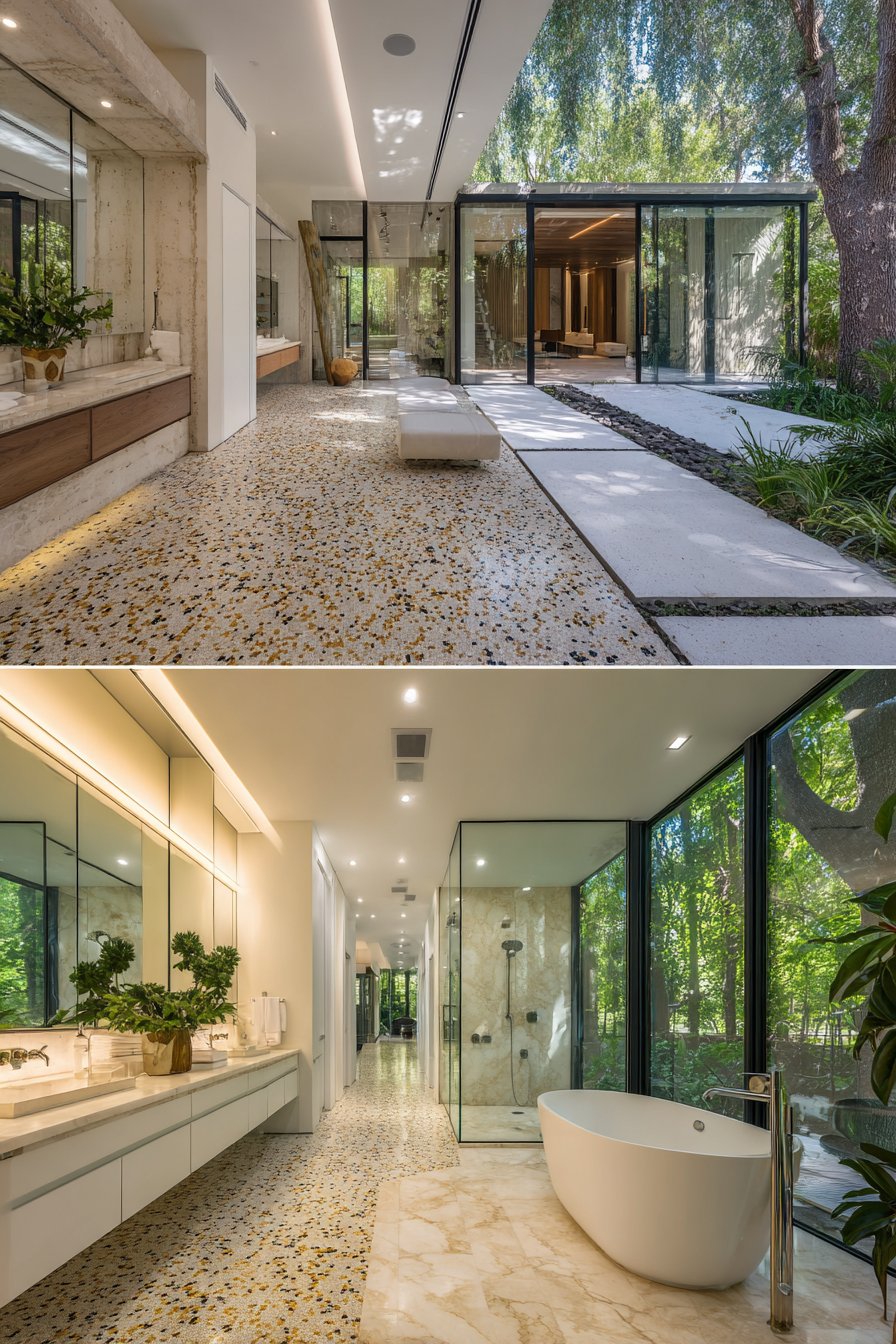
Understanding the characteristics of these two materials helps homeowners make informed choices aligned with their lifestyle needs. Terrazzo brings a modern artistic flair with its composite nature, while travertine offers timeless natural elegance. This comprehensive guide explores both materials in depth, examining their properties, maintenance requirements, costs, and suitability for bathroom environments to help you determine which option best serves your space.
1. Material Composition and Manufacturing Process
Terrazzo flooring consists of composite materials combining marble, quartz, granite, or glass chips set in cement or epoxy resin. Manufacturers create custom patterns by embedding various aggregates into the binding material. The surface receives extensive polishing to achieve a smooth, lustrous finish. This engineered approach allows for unlimited design possibilities and color combinations that suit contemporary aesthetics.
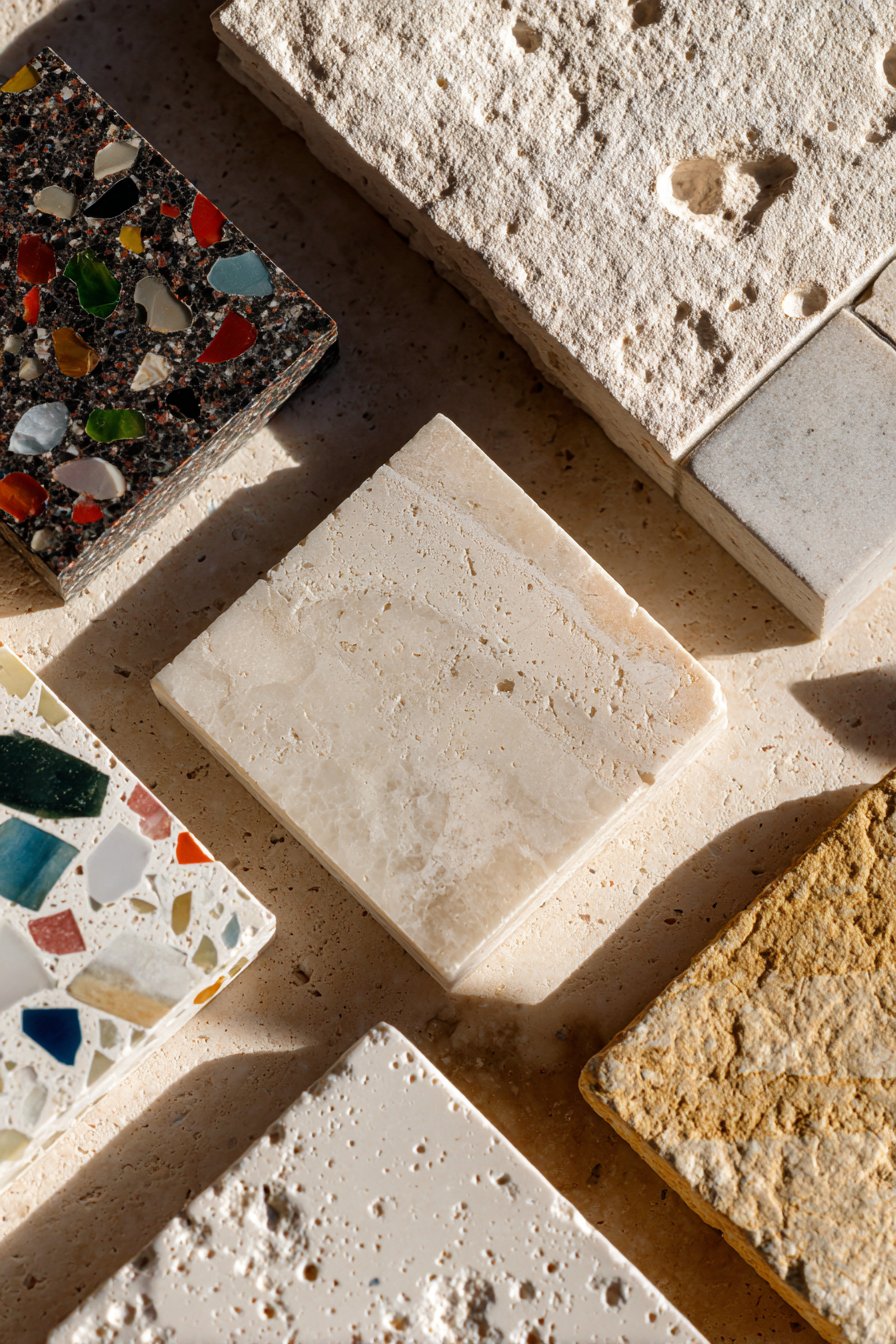
Travertine emerges as a natural sedimentary stone formed through mineral deposits around hot springs and limestone caves over thousands of years. The stone displays characteristic porous textures and natural pitting that create unique visual interest. Each travertine tile tells a geological story with distinctive veining and color variations ranging from creamy whites to rich walnut tones.
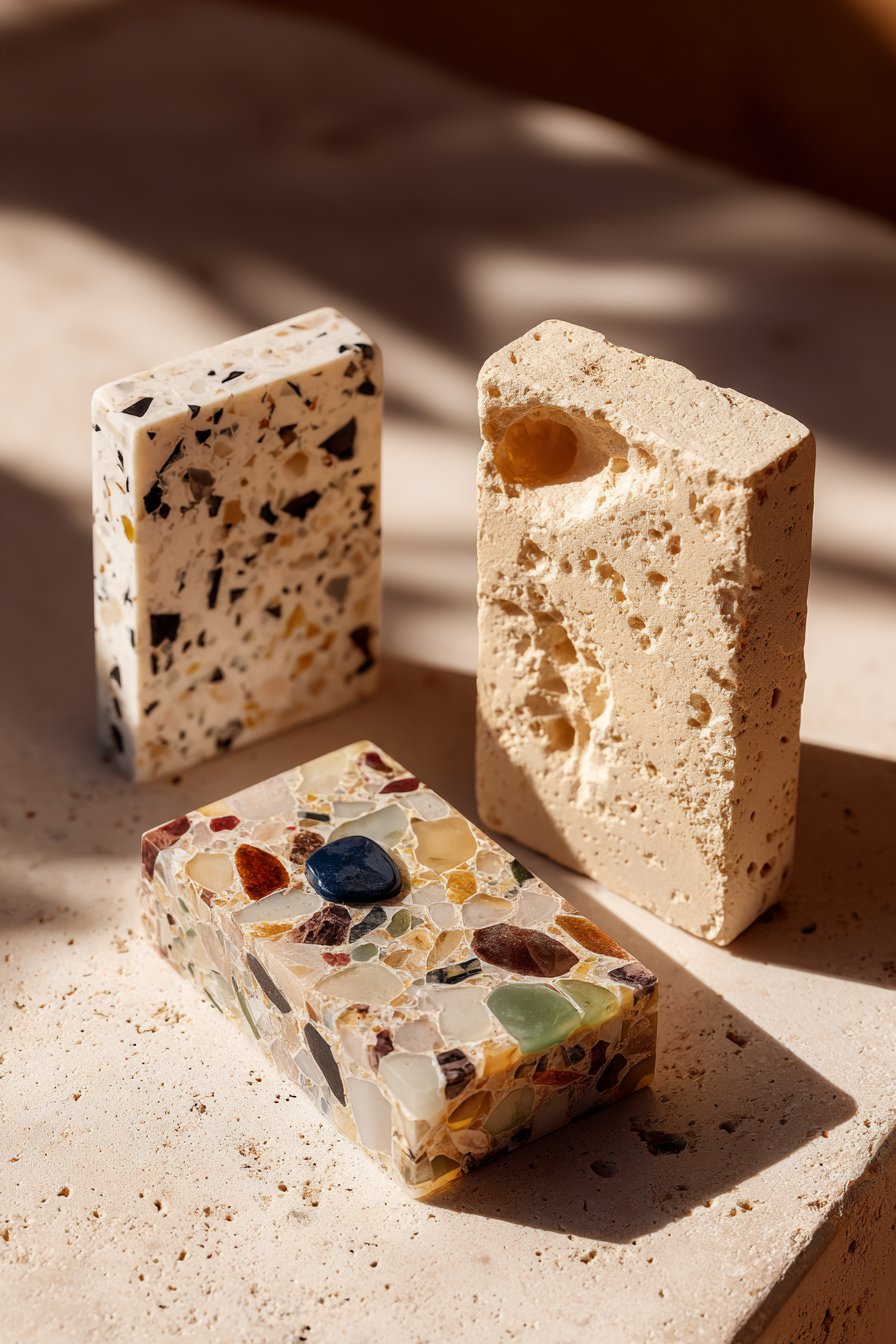
The fundamental difference lies in terrazzo’s manufactured versatility versus travertine’s organic authenticity. Terrazzo can incorporate recycled materials, making it an environmentally conscious choice for sustainable design. Travertine requires quarrying and processing but offers the irreplaceable beauty of genuine natural stone.
- Terrazzo allows complete customization of colors and patterns
- Travertine provides authentic natural stone character
- Terrazzo composition includes cement-based or epoxy-based options
- Travertine forms naturally through thousands of years
- Both materials require professional installation expertise
- Terrazzo can incorporate sustainable recycled content
2. Durability and Longevity Considerations
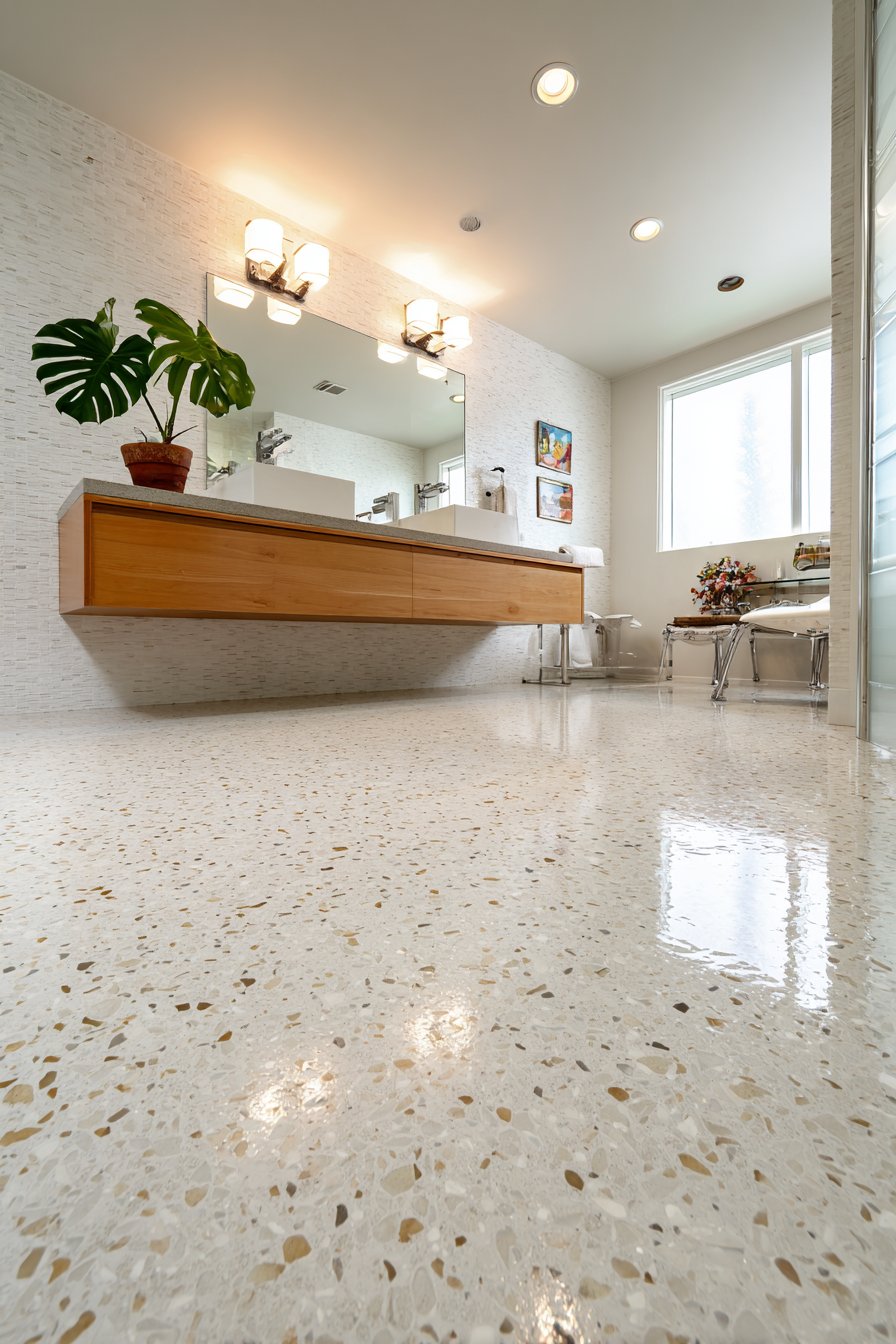
Terrazzo floors demonstrate exceptional durability when properly installed and maintained, often lasting 40 years or more in residential settings. The material resists scratching, chipping, and impact damage better than many natural stones. Its non-porous surface when sealed prevents moisture penetration and bacterial growth, making it ideal for bathroom environments.
Travertine offers substantial durability but requires more careful maintenance due to its porous nature. The stone can last several decades with proper sealing and care. However, its softer composition compared to granite or marble makes it susceptible to scratching from abrasive materials. The natural pitting can trap moisture if inadequately sealed, potentially causing water damage over time.
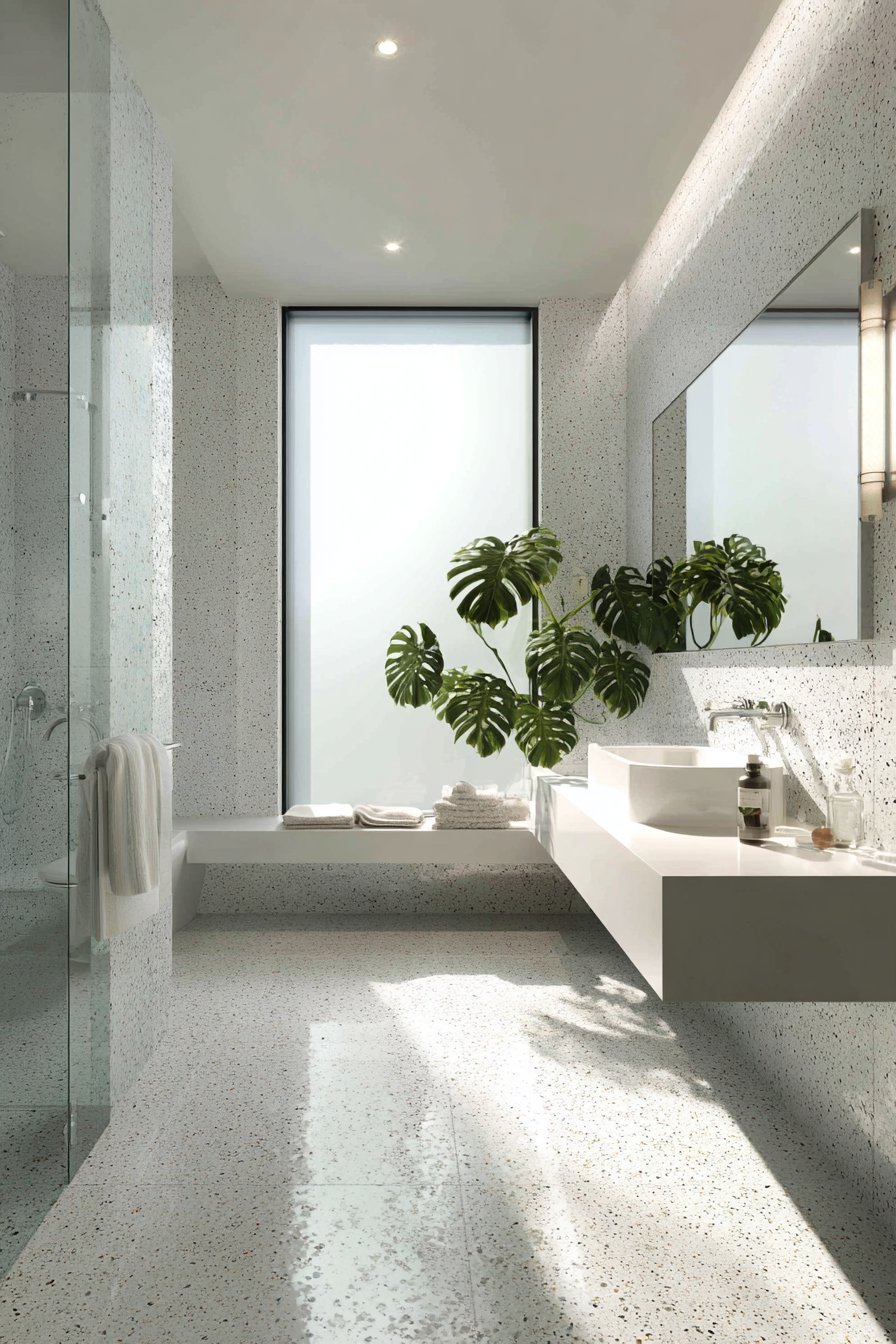
Both materials perform well under bathroom conditions when treated appropriately. Terrazzo’s superior moisture resistance gives it an edge in wet areas like shower floors. Travertine works beautifully in bathroom settings but demands more diligent maintenance to preserve its integrity and appearance.
- Apply quality sealant to travertine every 1-2 years
- Terrazzo requires resealing less frequently, typically every 3-5 years
- Both materials withstand temperature fluctuations effectively
- Avoid acidic cleaners on travertine to prevent etching
- Terrazzo maintains consistent appearance longer than travertine
- Consider traffic patterns when choosing between materials
3. Aesthetic Appeal and Design Versatility
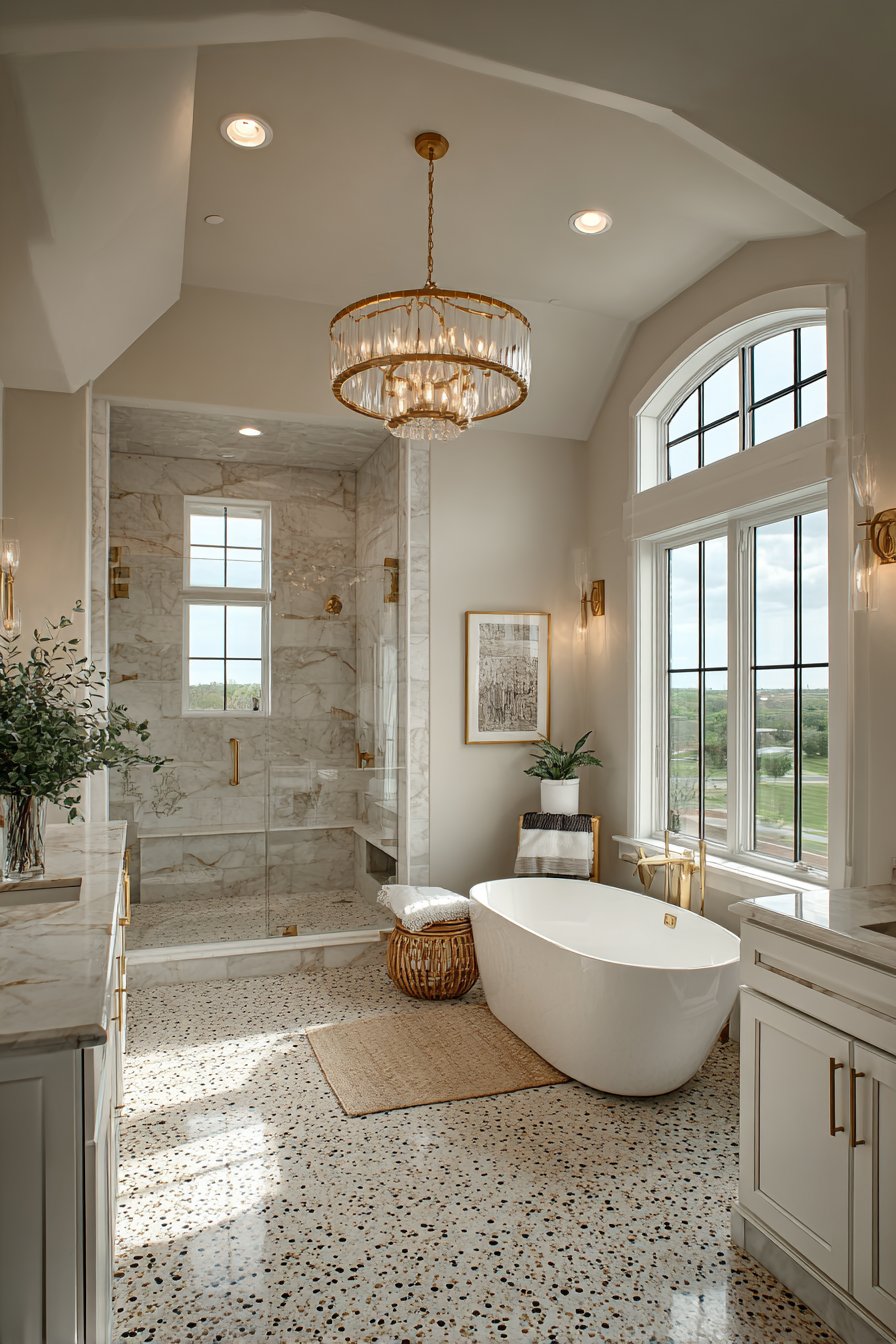
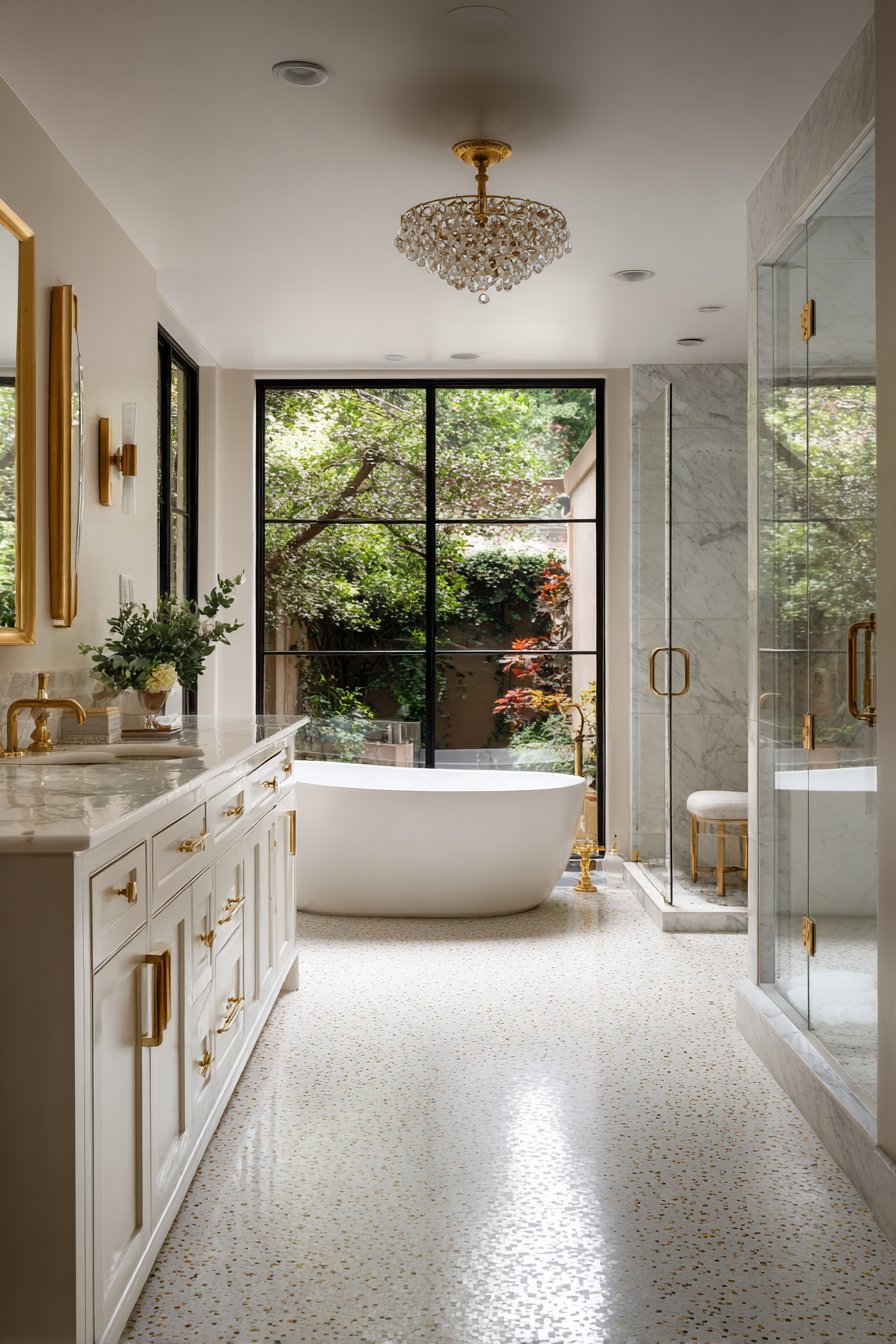
Terrazzo delivers bold contemporary style with its distinctive speckled appearance and vibrant color potential. Designers can create custom patterns, incorporate company logos, or match specific color schemes. The material works beautifully in modern minimalist bathrooms, mid-century modern spaces, and eclectic designs. Its smooth surface reflects light beautifully, enhancing smaller bathrooms.
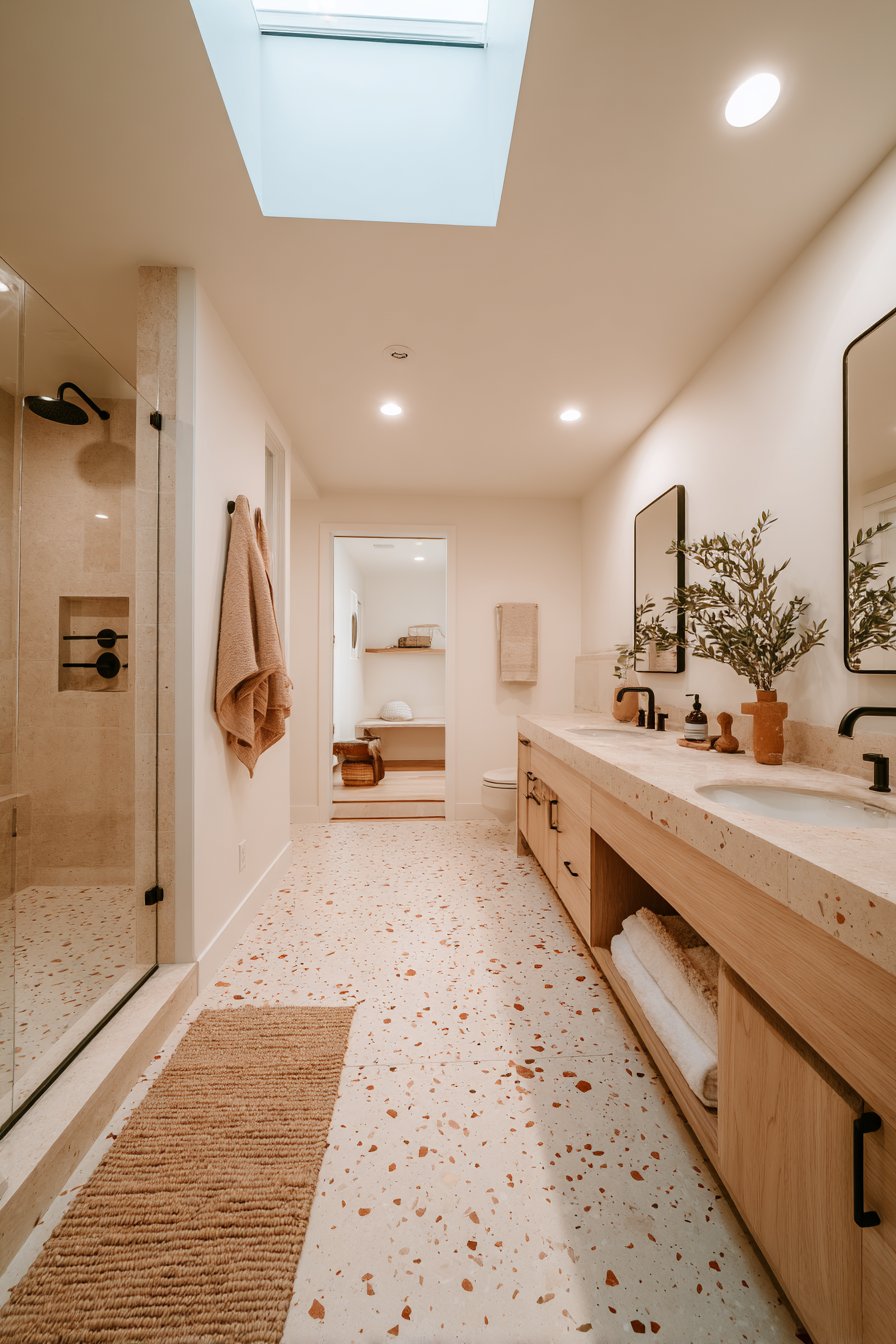
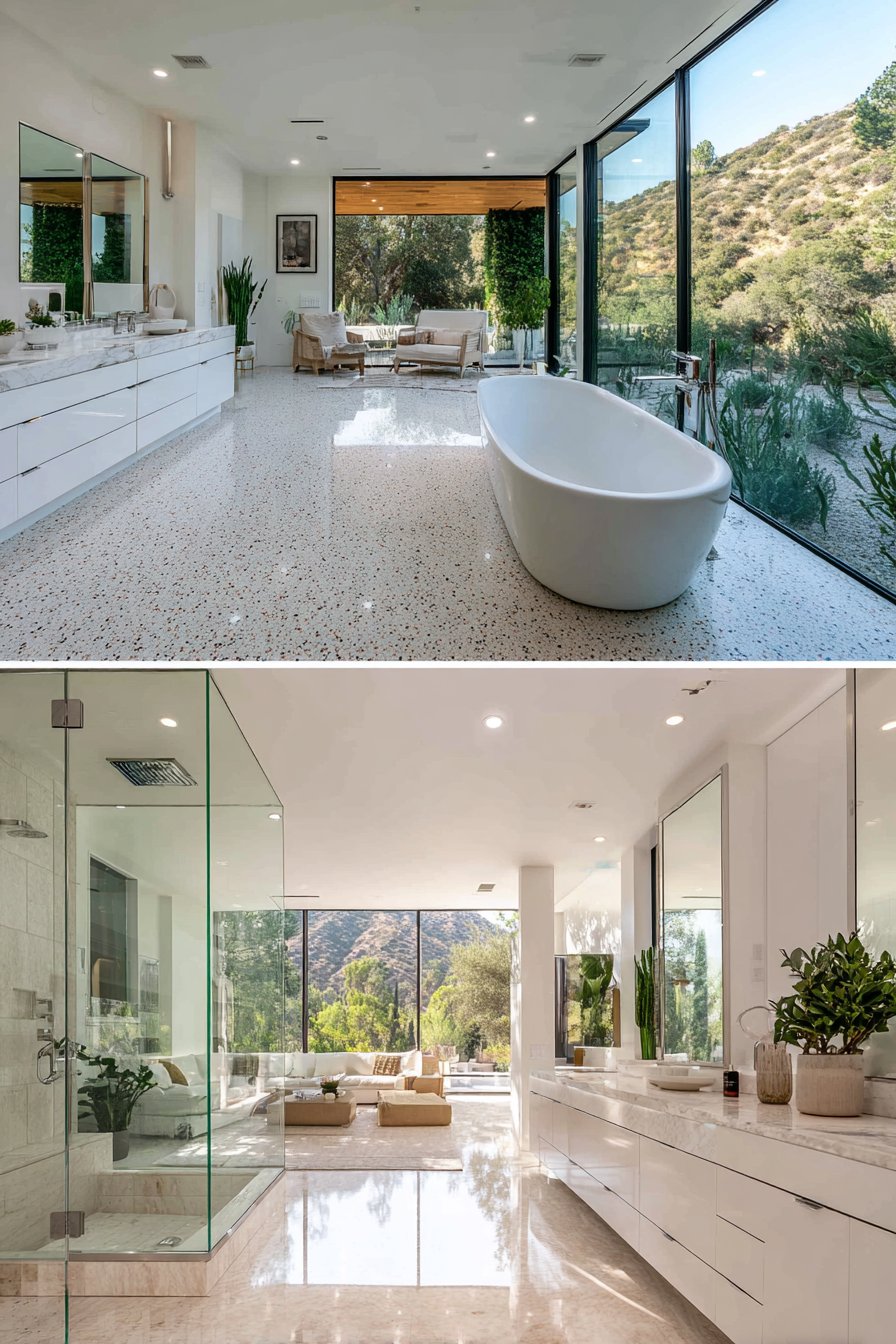
Travertine exudes classic elegance with its warm earth tones and natural texture variations. The stone complements traditional, Mediterranean, and transitional design styles effortlessly. Its organic character adds depth and visual interest without overwhelming the space. The subtle color variations create a sophisticated backdrop for various bathroom styles.
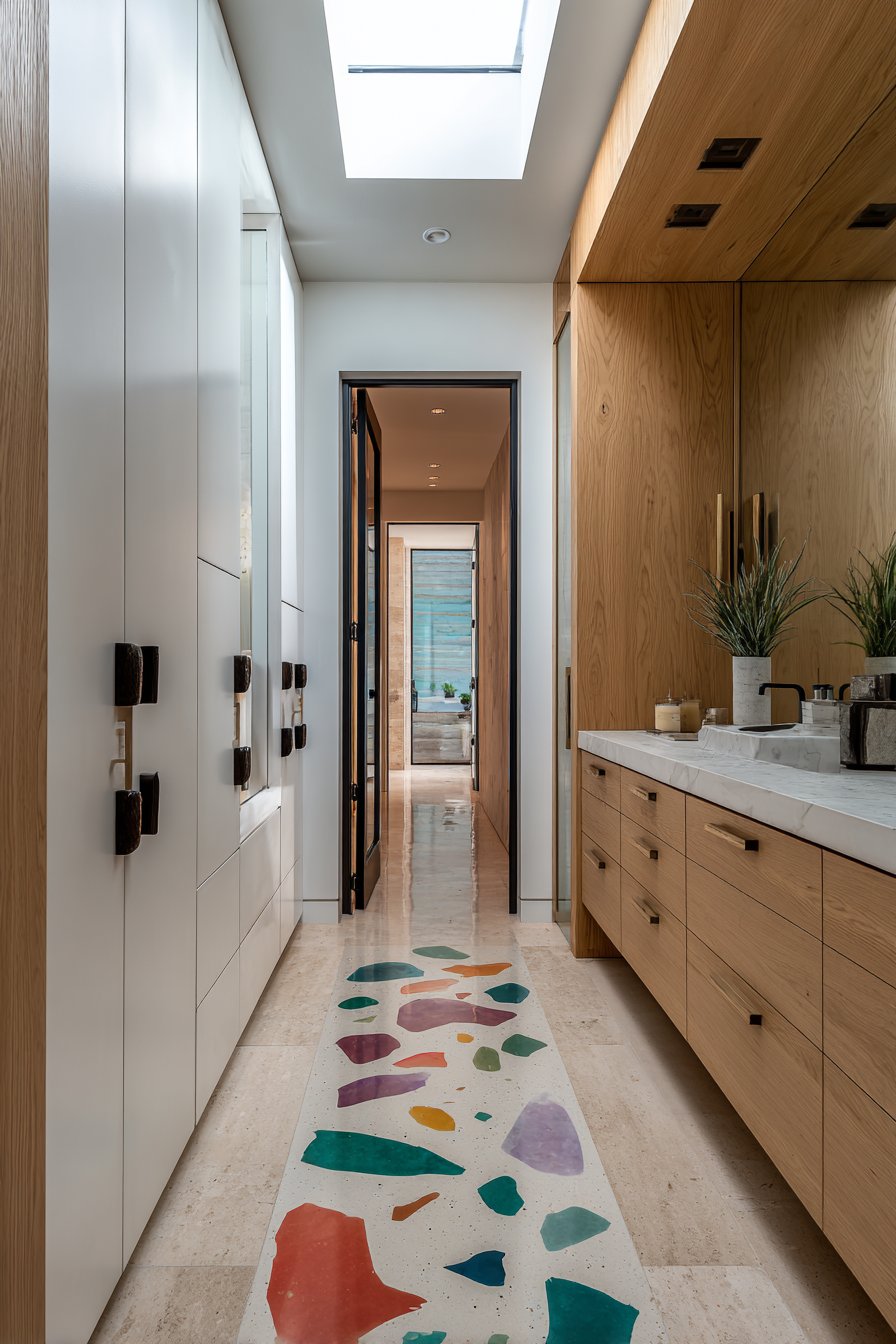
Design flexibility differs significantly between these materials. Terrazzo offers limitless customization through color selection and aggregate choices. Travertine provides natural beauty but limited color range. Consider your overall design vision when selecting between manufactured versatility and natural authenticity.
- Terrazzo suits modern, industrial, and contemporary designs
- Travertine enhances traditional, rustic, and Mediterranean styles
- Mix terrazzo with sleek fixtures for cohesive modern look
- Pair travertine with bronze or brass hardware
- Consider existing color palette when choosing materials
- Use terrazzo for bold statement floors in spacious bathrooms
4. Installation Requirements and Complexity
Terrazzo installation demands specialized expertise and significant time investment. The process involves preparing the substrate, applying the terrazzo mixture, allowing proper curing, and extensive polishing. Professional installation typically takes several days to complete. The labor-intensive process contributes to higher overall costs but ensures proper adhesion and longevity.
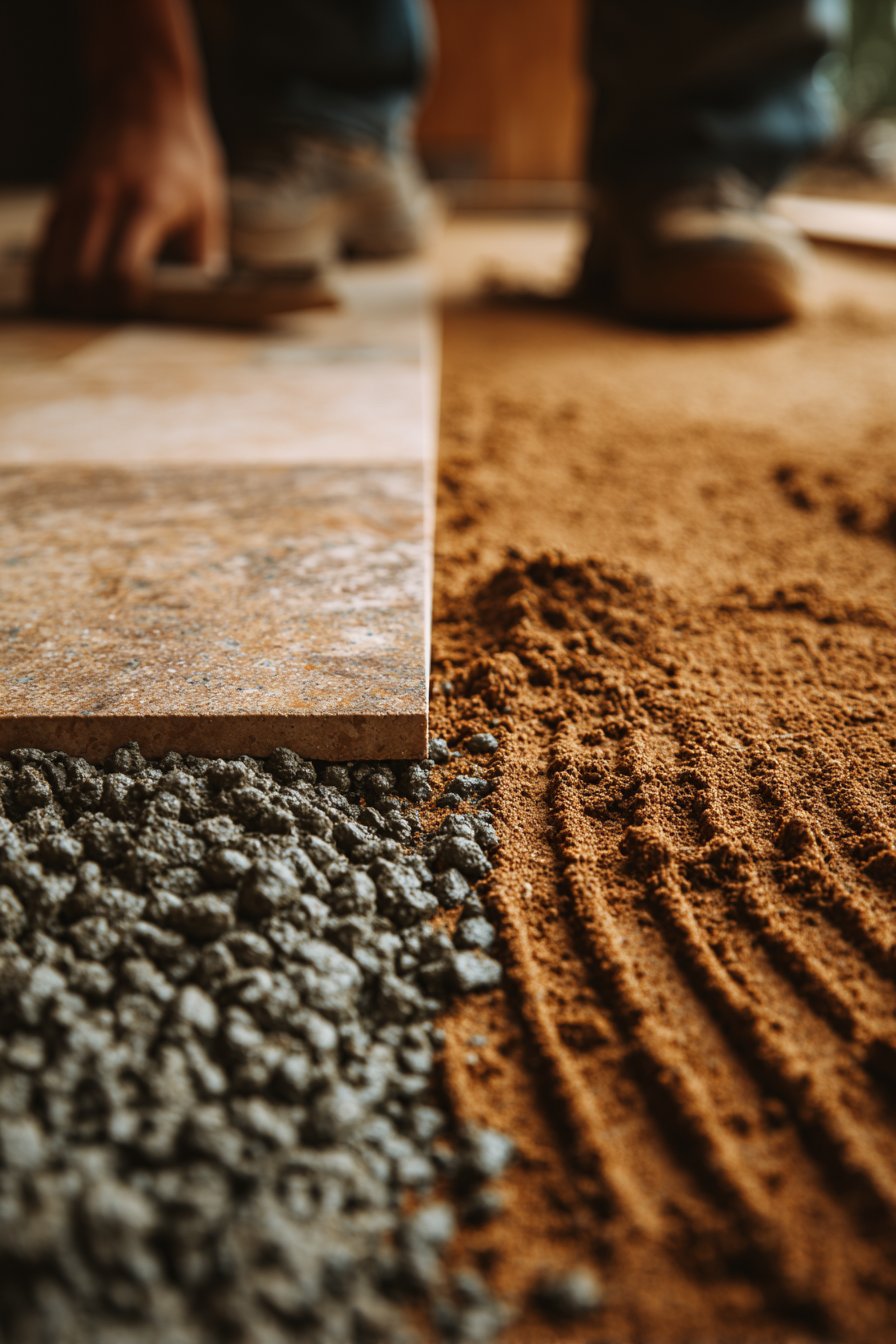
Travertine tiles install similarly to other natural stone products, making the process more straightforward. Installers set individual tiles using thin-set mortar, maintain consistent spacing, and apply grout. The installation timeline typically completes faster than terrazzo. However, proper substrate preparation remains critical for preventing future cracking or shifting.
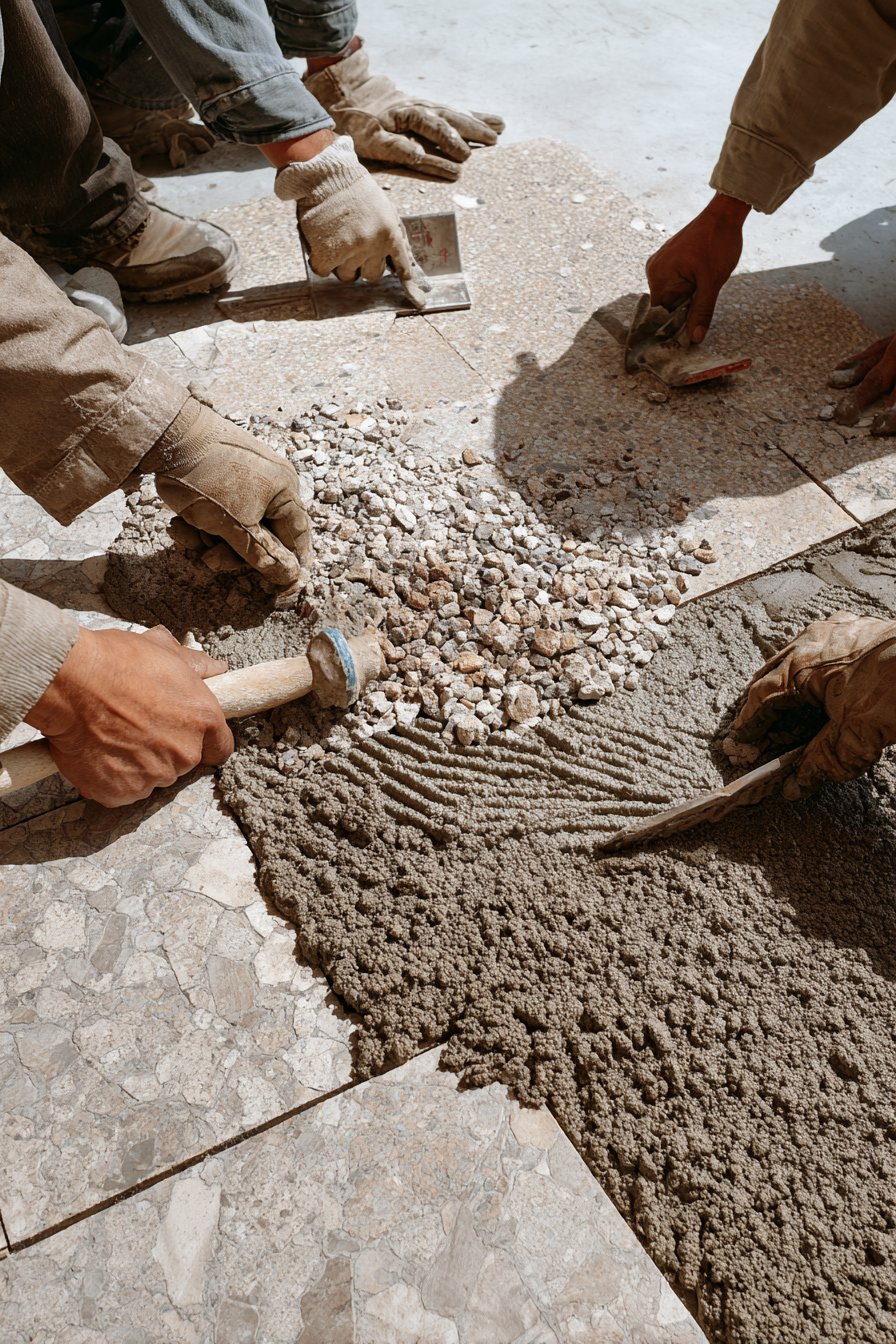
Both materials require level subfloors and proper waterproofing in bathroom applications. Terrazzo offers seamless installation options that eliminate grout lines, reducing maintenance needs. Travertine’s tile format creates grout lines that require regular cleaning but allows easier replacement of damaged sections.
- Hire experienced professionals familiar with chosen material
- Ensure proper waterproofing membrane installation beforehand
- Allow adequate curing time before using terrazzo floors
- Plan for 2-3 days of installation time for travertine
- Budget extra for complex terrazzo patterns or designs
- Verify installer credentials and review previous work examples
5. Maintenance Requirements and Cleaning Protocols
Terrazzo requires minimal maintenance compared to many flooring options. Regular sweeping or vacuuming removes debris, while damp mopping with pH-neutral cleaners maintains the surface. The sealed surface resists staining and requires occasional resealing every few years. Avoid abrasive cleaners that might dull the polished finish.
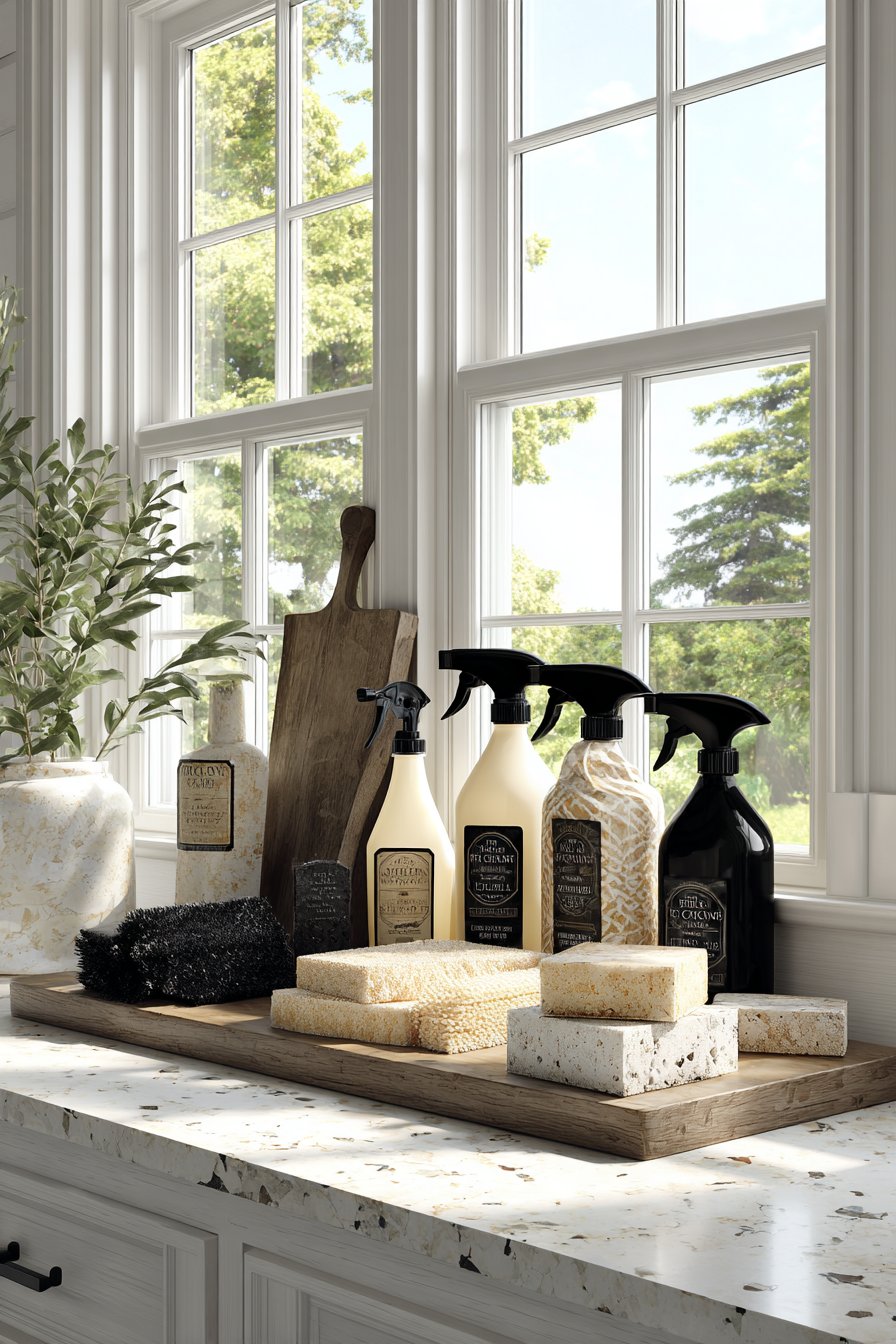
Travertine demands more attentive care due to its porous structure and sensitivity to acids. Clean spills immediately to prevent staining, especially from acidic substances like citrus or wine. Use only pH-neutral stone cleaners designed for natural stone. Regular sealing protects against moisture absorption and staining while preserving the stone’s natural beauty.
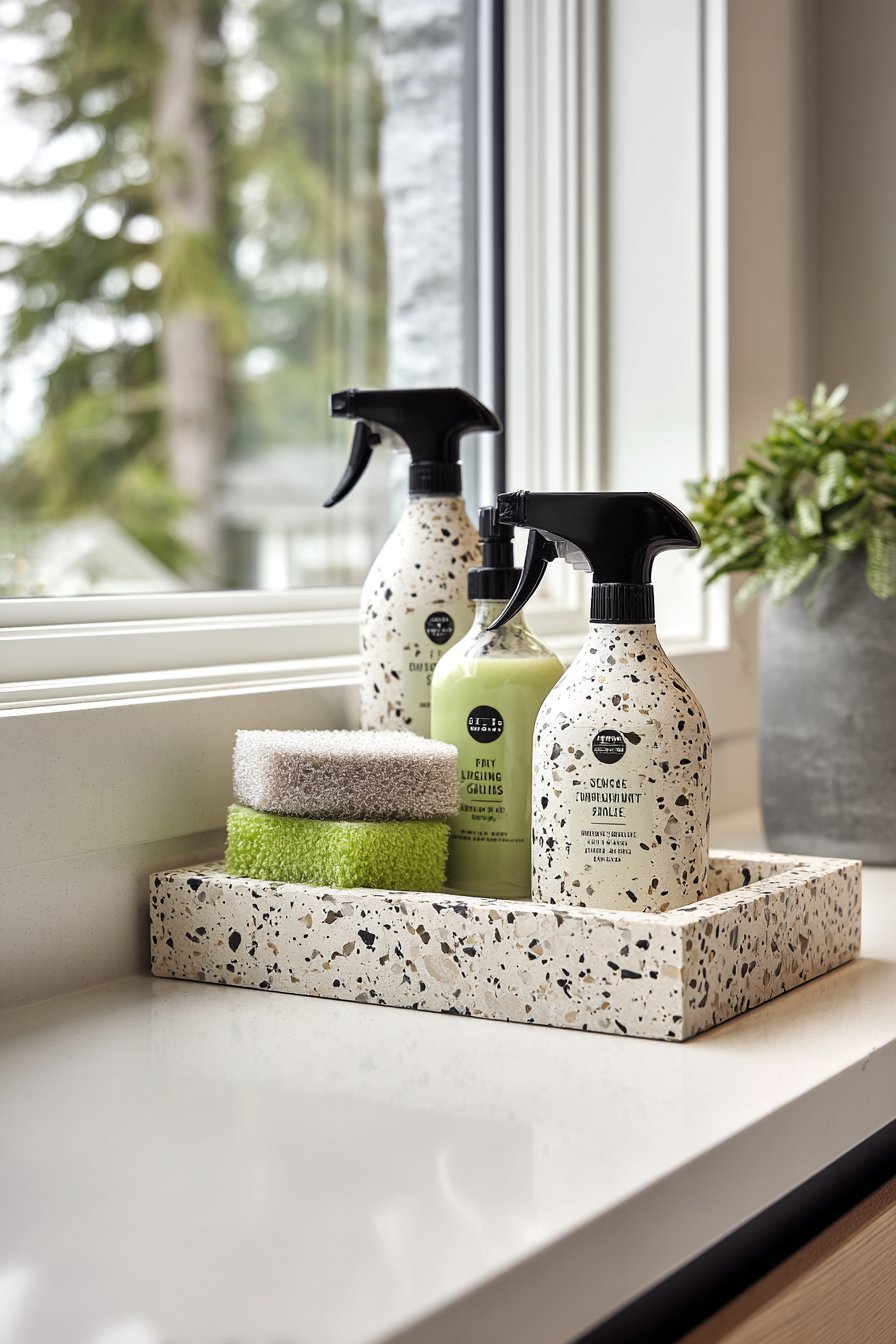
Daily maintenance routines differ significantly between these materials. Terrazzo offers superior stain resistance and easier cleanup. Travertine requires more careful product selection and prompt attention to spills but rewards conscientious care with lasting beauty.
- Sweep or vacuum both materials daily in high-traffic areas
- Mop terrazzo weekly with pH-neutral cleaner
- Clean travertine with stone-specific cleaning products only
- Reseal travertine annually or biannually depending on use
- Address spills immediately on travertine surfaces
- Avoid vinegar, lemon, and harsh chemicals on both materials
6. Cost Analysis and Long-Term Value
Terrazzo represents a significant upfront investment with materials and installation ranging from $50-$100 per square foot. Custom designs and complex patterns increase costs further. However, the material’s exceptional longevity and minimal maintenance requirements provide excellent long-term value. Terrazzo floors often outlast the building itself.
Travertine offers more accessible pricing between $15-$50 per square foot installed, depending on quality grade and tile size. The lower initial cost appeals to budget-conscious homeowners. However, ongoing maintenance expenses including regular sealing and potential repairs add to lifetime ownership costs over decades.
Consider total cost of ownership rather than initial price alone. Terrazzo’s higher upfront cost balances against lower maintenance needs and longer lifespan. Travertine’s affordability works well for budget-limited projects but requires ongoing financial commitment for proper maintenance and care.
- Obtain multiple quotes from licensed professionals before deciding
- Factor in maintenance costs over expected lifespan
- Consider resale value enhancement from premium flooring
- Budget for quality sealants and appropriate cleaning products
- Evaluate warranty coverage offered by installers
- Compare long-term value rather than initial price alone
Conclusion
Choosing between terrazzo and travertine depends on your design preferences, budget constraints, and maintenance commitment. Terrazzo excels in modern applications requiring durability and minimal upkeep, while travertine provides natural elegance for traditional aesthetics. Both materials elevate bathroom design when properly installed and maintained.
Consider your lifestyle, design vision, and long-term plans when making this important decision. Either material can create a stunning bathroom environment that serves your household for decades. Trust your instincts, consult with professionals, and select the flooring that best reflects your personal style and practical needs.
