


The heart of every home deserves thoughtful design that balances functionality with visual appeal. In today’s evolving world of interior design, the kitchen has transcended its traditional role as merely a cooking space to become a statement of personal style, culinary passion, and architectural sophistication. Among the myriad of material choices available to homeowners and designers, stainless steel has emerged as a timeless favorite, offering durability, hygiene, and an unmistakable professional aesthetic that transforms ordinary kitchens into extraordinary culinary environments.
Stainless steel kitchens represent more than just a design trend—they embody a philosophy of precision, cleanliness, and modern living. This versatile material brings the professional-grade quality of commercial kitchens into residential spaces, creating environments where form meets function in perfect harmony. Whether you’re drawn to sleek minimalism, industrial chic, or transitional elegance, stainless steel adapts beautifully to diverse design sensibilities while maintaining its core characteristics of resilience and timeless appeal.
In this comprehensive guide, we’ll explore ten distinctive stainless steel kitchen designs, each offering unique approaches to incorporating this remarkable material into your home. From compact urban apartments to expansive chef-worthy spaces, these designs demonstrate how stainless steel can be the foundation for creating kitchens that are both beautiful and supremely practical. Whether you’re planning a complete renovation or seeking inspiration for smaller updates, these professionally conceived spaces will illuminate the endless possibilities that stainless steel brings to contemporary kitchen design.
1. Professional-Grade Culinary Workspace with Brushed Stainless Steel Finishes
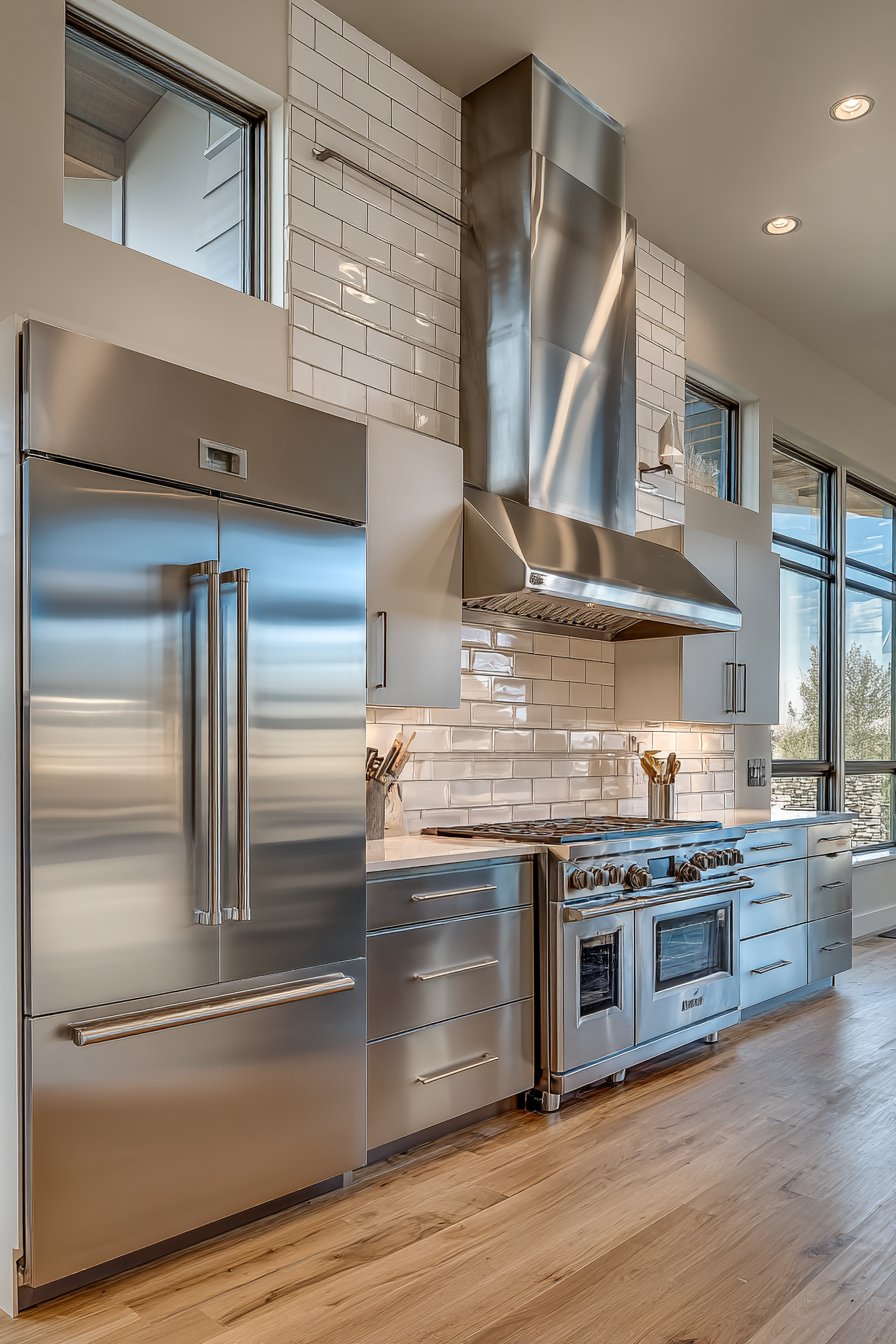
Stepping into this modern stainless steel kitchen feels like entering a professional chef’s domain, where every element has been carefully selected to create a cohesive and highly functional culinary workspace. The space is anchored by a commanding, large stainless steel refrigerator that stands against one wall, its brushed finish catching and diffusing light throughout the room. Across from it, a matching professional-grade range and hood system dominate the cooking area, their substantial presence speaking to serious culinary ambitions while their refined finishes maintain residential warmth.
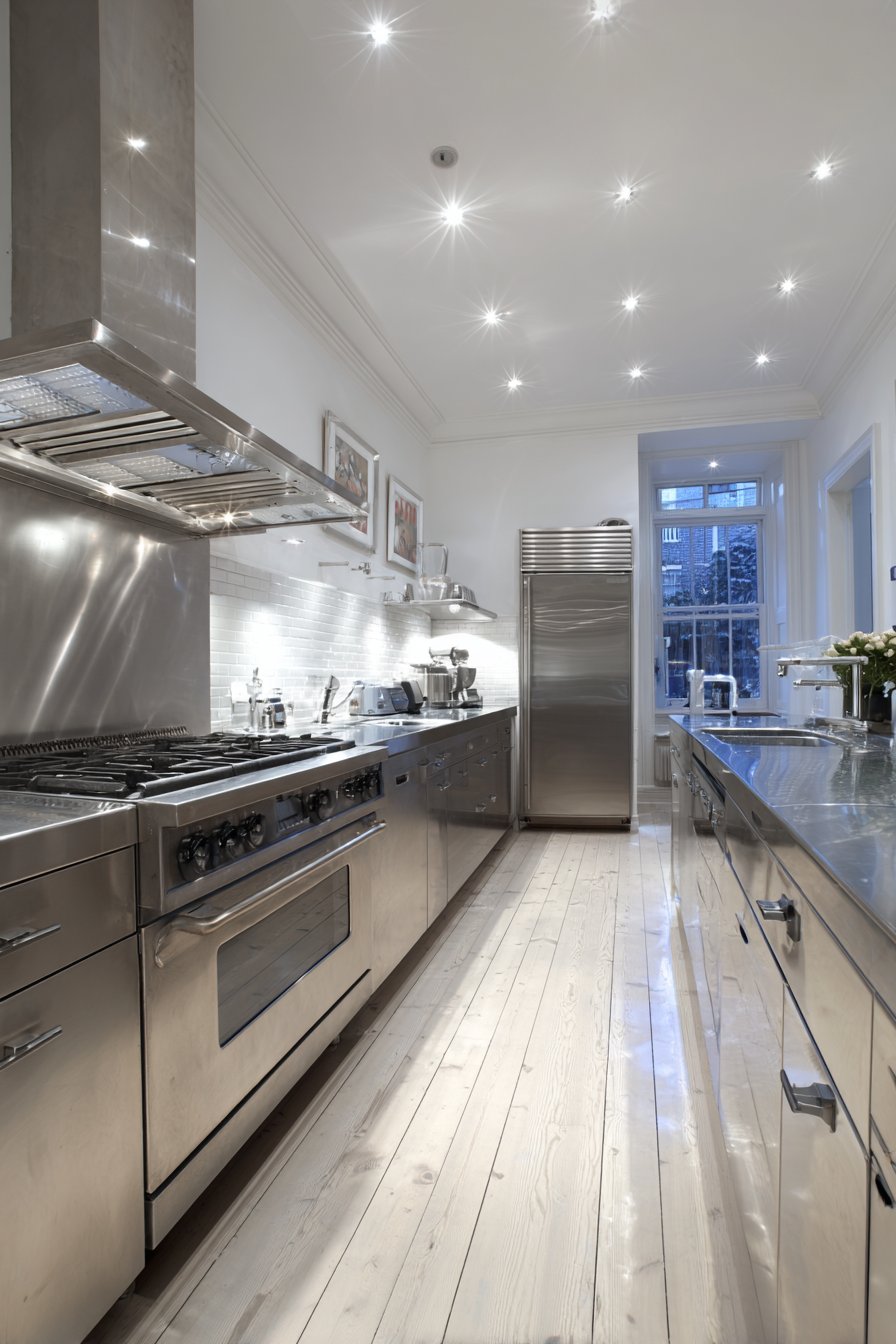
The kitchen’s defining feature is its extensive use of stainless steel surfaces—sleek countertops that reflect ambient light create an almost luminous quality, transforming the space throughout the day as natural light shifts and changes. A full-height stainless steel backsplash with subtle horizontal grain texture extends from counter to ceiling, creating a dramatic focal wall that’s both practical and visually striking. The horizontal grain pattern adds depth and interest to what might otherwise be an overwhelming expanse of metal, while also serving the practical purpose of disguising minor scratches and wear that naturally occur in a working kitchen.
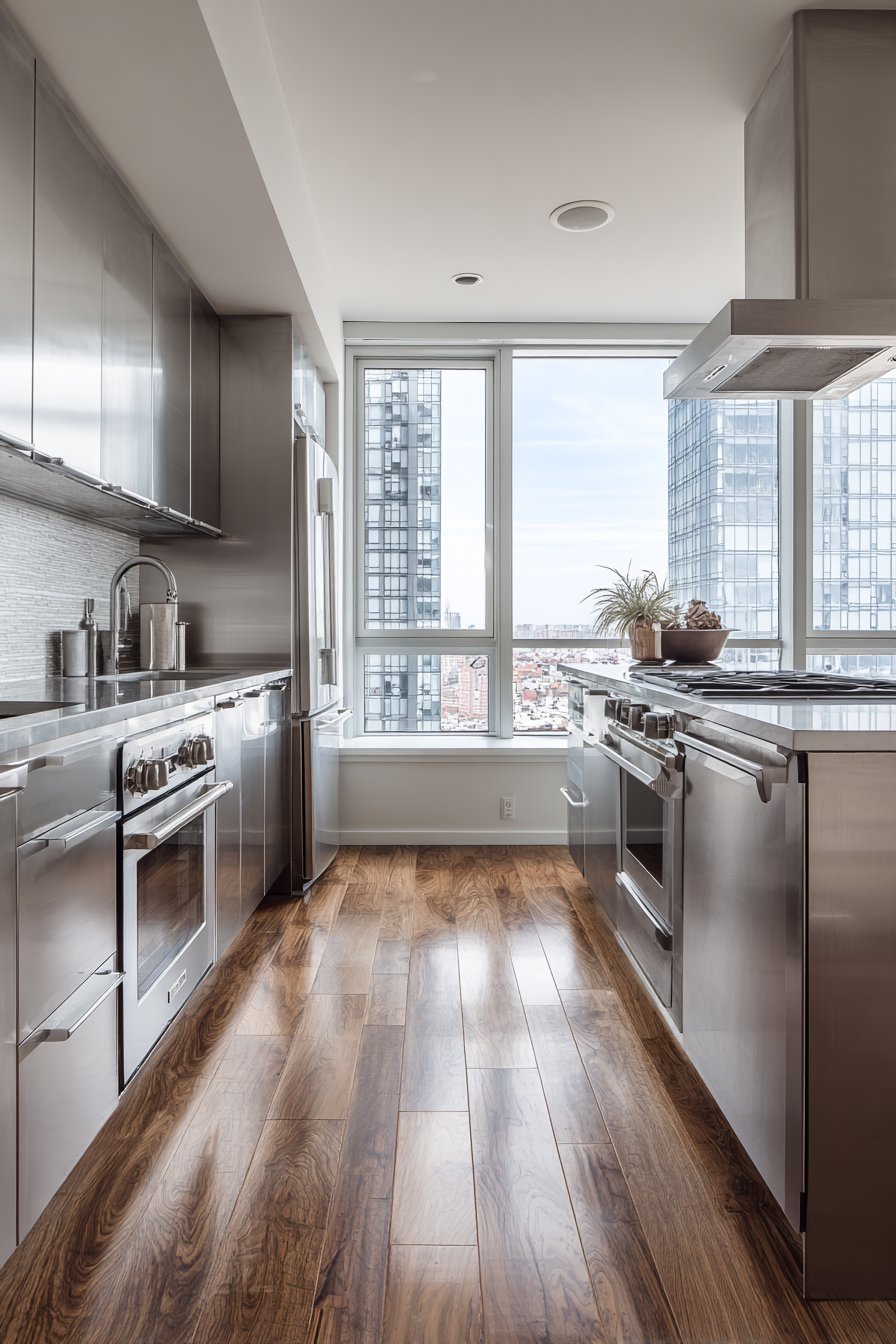
White subway tile on adjacent walls provides essential visual contrast, preventing the space from feeling too industrial or cold. This classic tile choice bridges the gap between commercial efficiency and residential comfort, its traditional pattern and bright white color offering a softer counterpoint to the hard metallic surfaces.
The interplay between the cool stainless steel and warm white tile creates a balanced environment that feels both professional and welcoming, suitable for everything from quick weekday meals to elaborate dinner party preparations.

The thoughtful lighting design maximizes the reflective qualities of stainless steel—recessed windows provide balanced natural illumination that highlights the material’s inherent beauty without creating harsh glare. As daylight streams in, it dances across the brushed surfaces, creating subtle shadows and highlights that emphasize the texture and craftsmanship of the installation. This industrial-meets-residential aesthetic represents the perfect marriage of professional functionality and home comfort.
Key Design Tips:
- Invest in professional-grade appliances with matching finishes to create visual cohesion and ensure consistent quality across your kitchen workspace.
- Choose brushed stainless steel finishes over polished varieties to minimize visible fingerprints and scratches while adding subtle texture and depth to surfaces.
- Balance extensive stainless steel with softer materials like white tile or painted walls to prevent the space from feeling too clinical or industrial.
- Maximize natural lighting with strategically placed windows to showcase the reflective beauty of stainless steel throughout different times of day.
- Consider full-height backsplashes in stainless steel to create dramatic focal points while providing easy-to-clean surfaces behind cooking areas.
2. Contemporary Stainless Steel Island as Kitchen Centerpiece
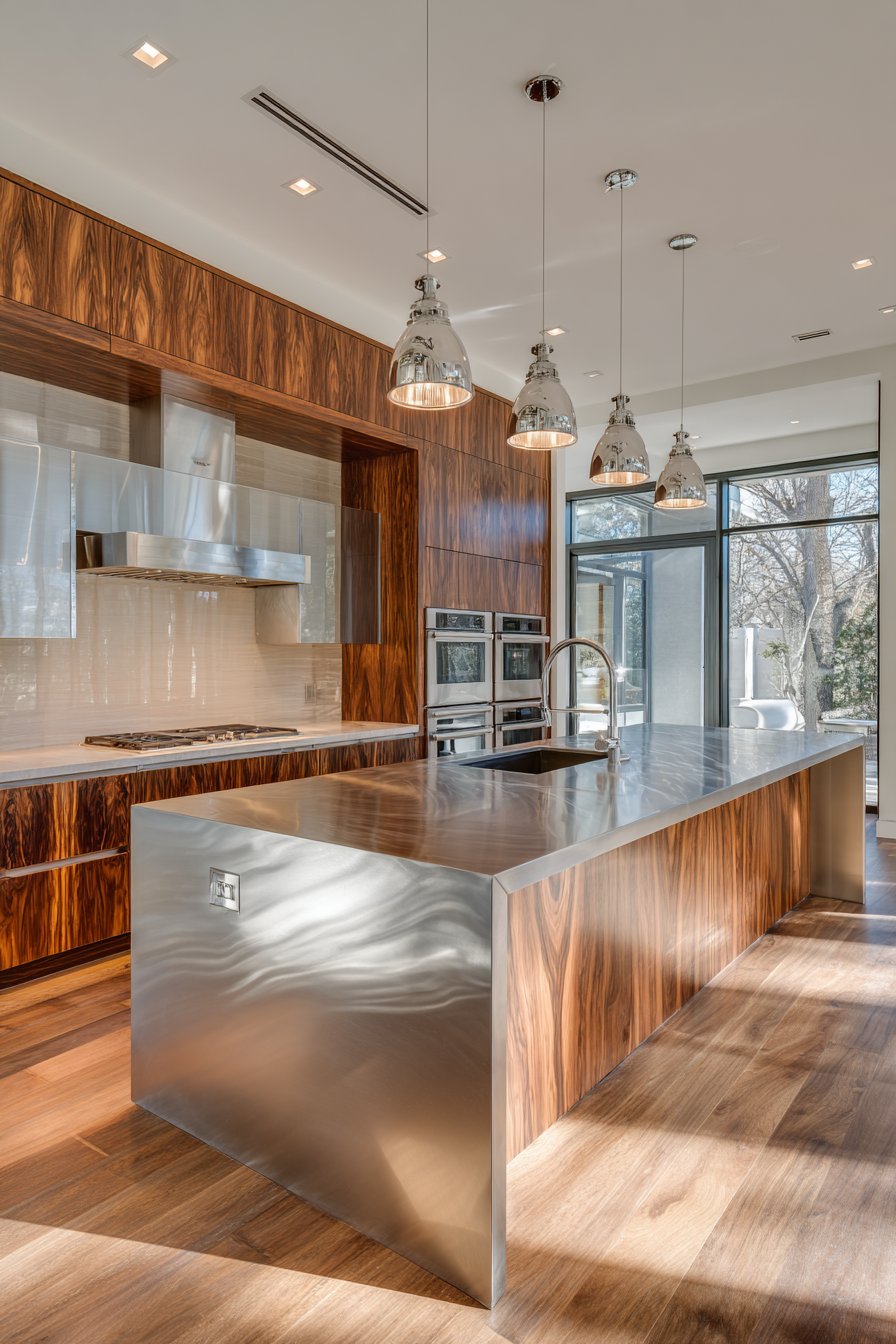
The contemporary kitchen island stands as the undisputed focal point of this stunning space, featuring a spectacular waterfall-edge stainless steel countertop where the visible brushed texture creates mesmerizing visual interest. The waterfall design, where the countertop material cascades down the sides to the floor, creates a seamless, sculptural element that elevates the island from mere workspace to architectural statement. The brushed texture catches light at different angles throughout the day, creating a dynamic surface that never looks quite the same twice, embodying the living quality that makes stainless steel so compelling in residential design.
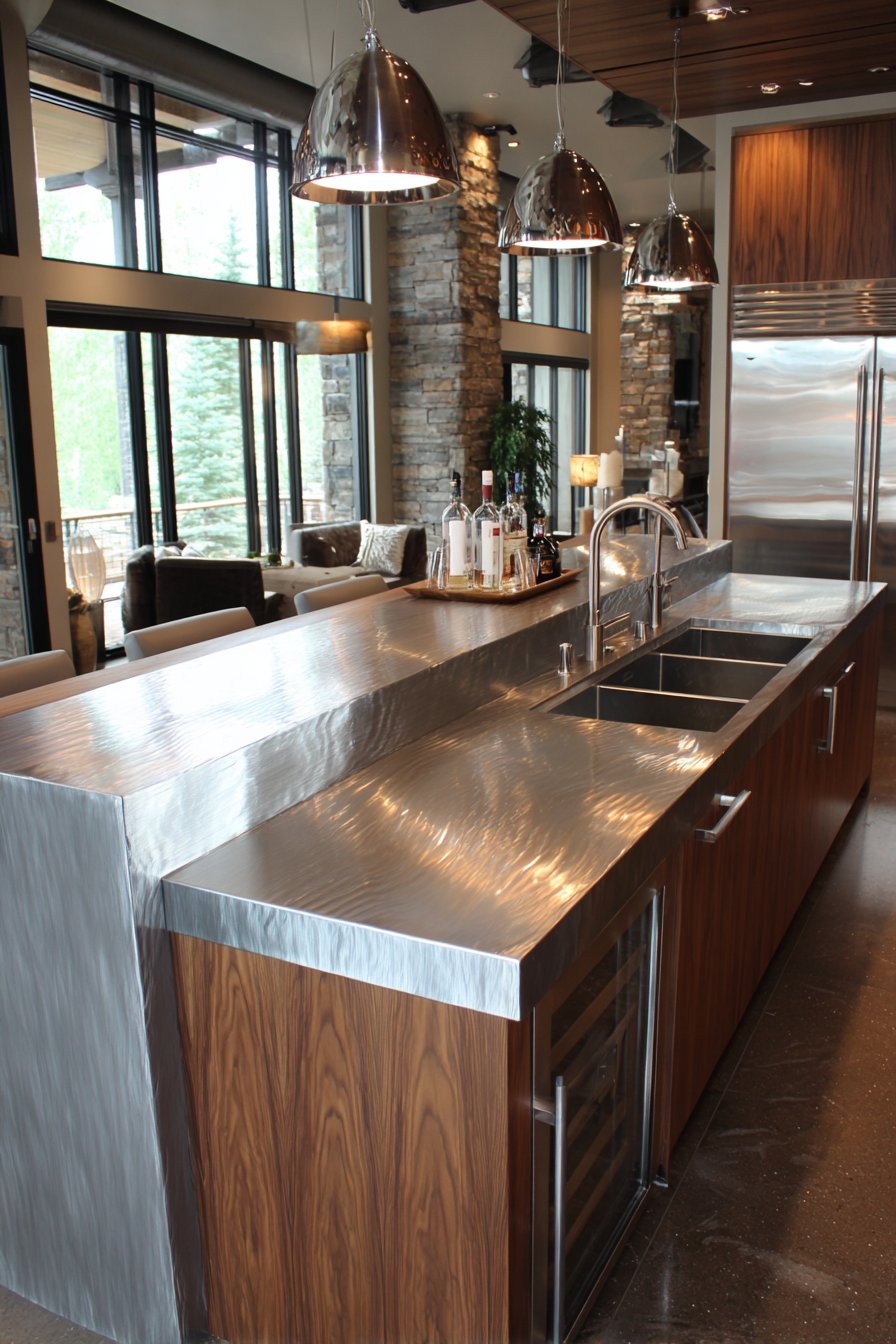
This island transcends traditional functionality by incorporating integrated stainless steel appliances that transform it into a complete entertainment and preparation hub. A built-in wine cooler keeps beverages at perfect temperature for hosting, while a prep sink with commercial-style faucet enables efficient food preparation without constantly moving to the main sink area.
The commercial-style faucet, with its articulated arm and professional spray head, brings restaurant-quality functionality to the home environment, making everything from washing vegetables to filling large pots effortlessly easy.
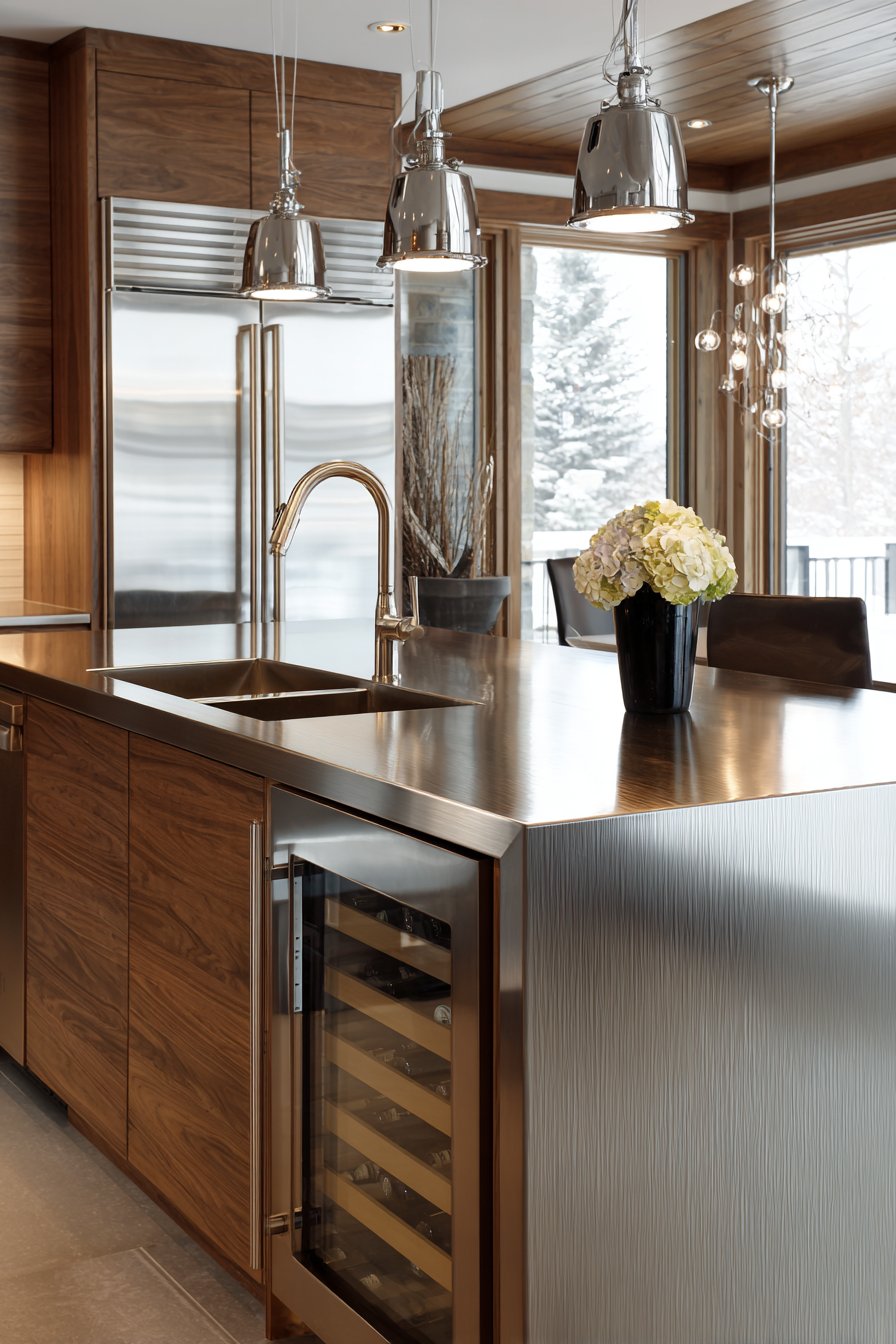
The genius of this design lies in its material contrast—surrounding cabinetry in warm walnut wood provides the perfect counterbalance to the cool metallic surfaces. The rich, chocolate tones of walnut, with its distinctive grain patterns and natural depth, create visual warmth that prevents the stainless steel from dominating the space. This marriage of warm wood and cool metal represents a fundamental principle of successful interior design: the importance of contrast in creating spaces that feel both dynamic and harmonious.
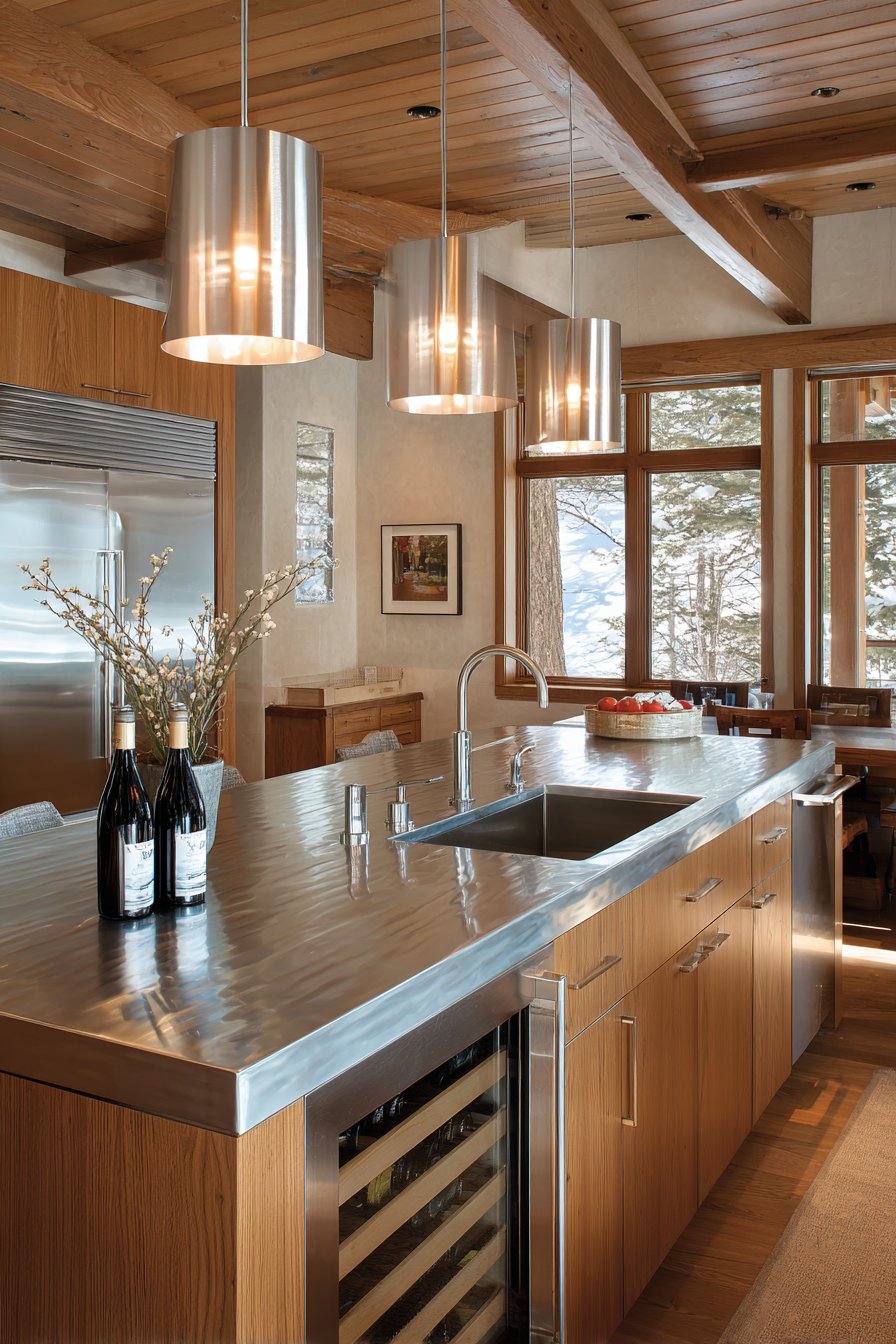
Overhead, pendant lights with industrial metal shades hang at carefully calculated heights, creating soft reflections on the polished stainless steel surfaces while providing task lighting for food preparation and casual dining. Natural daylight streaming through adjacent windows bathes the space in changing light throughout the day, emphasizing the beautiful interplay between the warm wood tones and cool metallic surfaces. This thoughtful layering of natural and artificial light sources ensures the kitchen remains functional and beautiful from morning coffee to evening entertaining.
Key Design Tips:
- Choose waterfall-edge countertops to create a seamless, high-end look that showcases the beauty of stainless steel from multiple angles.
- Integrate appliances into islands to maximize functionality and create efficient work triangles that reduce unnecessary movement during cooking.
- Pair stainless steel with warm wood tones like walnut, oak, or cherry to create visual balance and prevent overly cold or industrial atmospheres.
- Install commercial-style faucets for superior functionality and authentic professional kitchen aesthetics in residential spaces.
- Layer lighting sources including pendants, natural light, and under-cabinet fixtures to highlight stainless steel’s reflective qualities throughout the day.
3. Industrial-Grade Stainless Steel Open Shelving Storage System
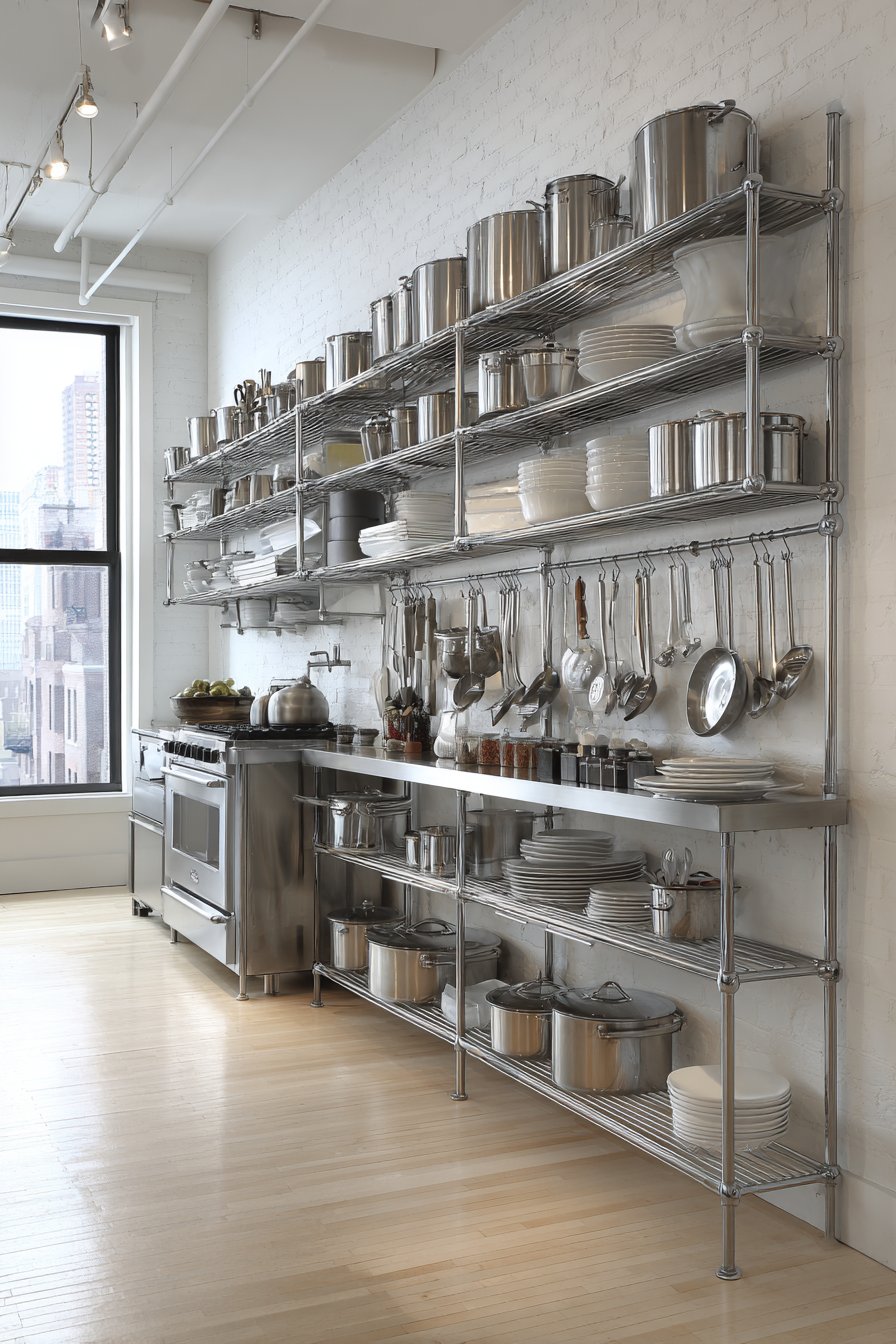
This practical stainless steel kitchen embraces the beauty of organized visibility through an innovative open shelving solution that transforms storage from hidden necessity to displayed art form. Industrial-grade stainless steel brackets and shelves create a floor-to-ceiling system that maximizes vertical space while maintaining an airy, open feel that would be impossible with traditional closed cabinetry. The honest display of cookware and dishes celebrates the tools of cooking, turning everyday objects into a curated collection that reflects the personality and priorities of the home chef.
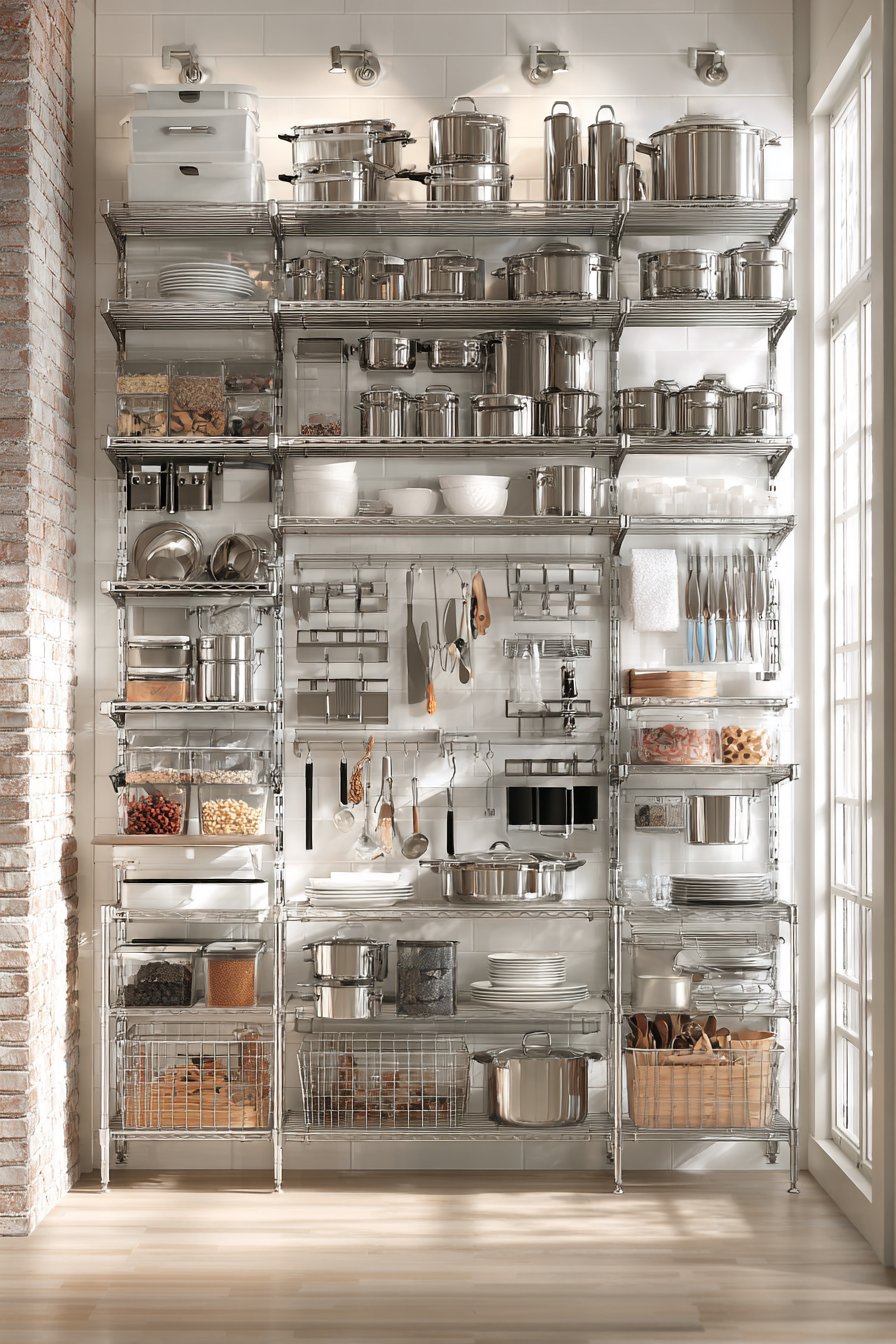
The shelving system demonstrates how practical organization can become a design feature in itself—each shelf is carefully arranged with an eye toward both accessibility and visual appeal. Heavy cast iron skillets rest on lower shelves for easy access and safety, while delicate glassware claims higher positions where it catches and refracts light beautifully.
The stainless steel construction ensures these shelves can handle significant weight without sagging or warping, providing the structural integrity necessary for serious kitchen storage while maintaining their sleek, minimal profile.
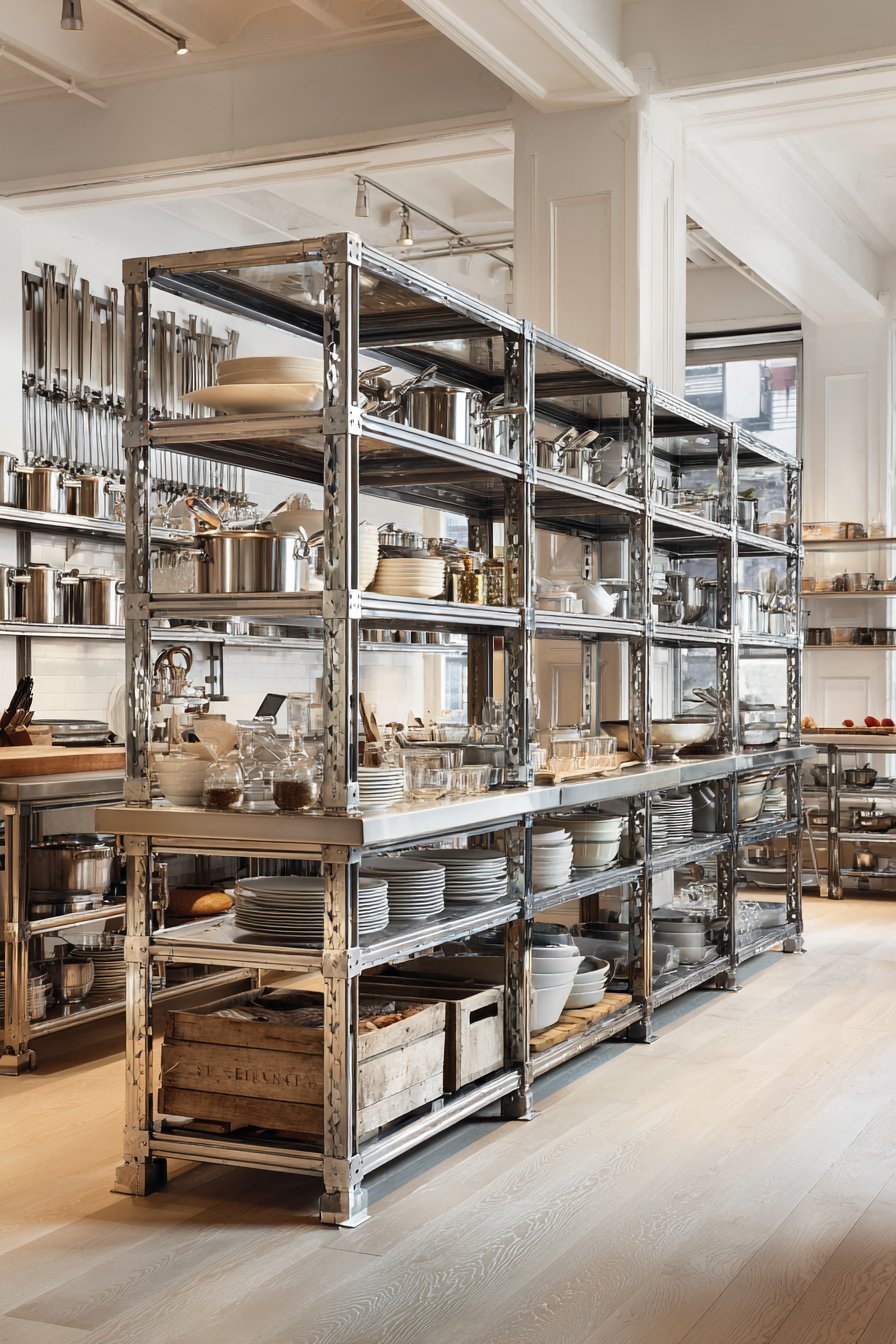
Complementing the open shelving, stainless steel magnetic knife strips and utensil rails add functional organization that keeps essential tools within arm’s reach while freeing up valuable counter and drawer space. These magnetic systems showcase quality knives as the beautiful tools they are, while the utilitarian rails display frequently used utensils in a way that’s both accessible and visually interesting. This approach to organization reflects a commercial kitchen sensibility—where efficiency demands that everything have its place and that place be immediately visible.
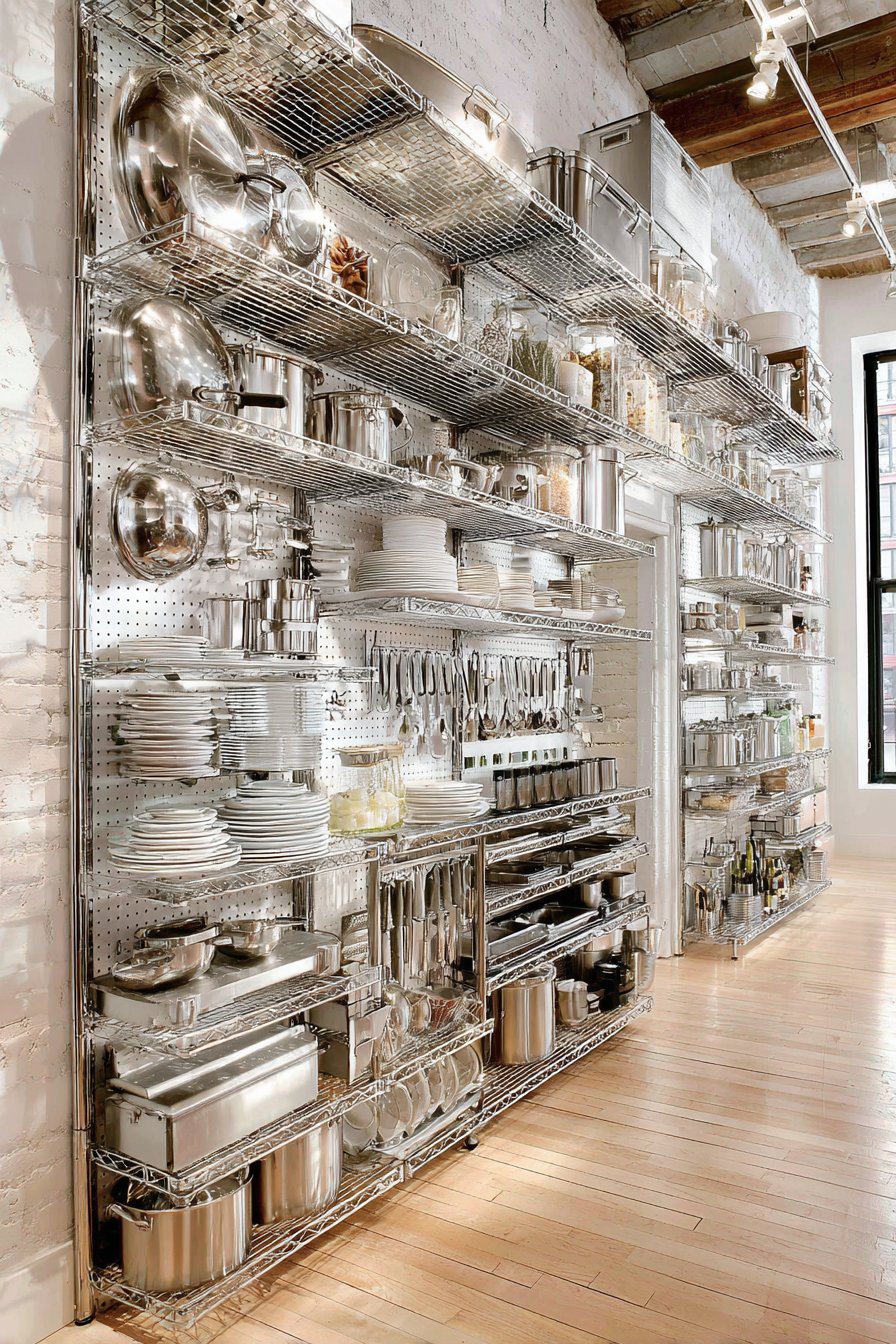
White painted walls and light oak flooring provide essential visual balance to the extensive metallic elements, preventing the space from feeling too austere or industrial. The light oak brings natural warmth and organic texture that grounds the space, while white walls maximize light reflection and create a clean backdrop that lets the stainless steel and displayed items become the visual focus. This combination creates what might be called “utilitarian beauty”—a space where practical function and aesthetic appeal are inseparably intertwined, where the honest display of materials and tools becomes the decoration itself.
Key Design Tips:
- Install floor-to-ceiling shelving to maximize storage capacity in smaller kitchens while maintaining an open, airy feel that enclosed cabinets cannot provide.
- Arrange shelving with intention of placing heavier items on lower shelves for safety while positioning attractive pieces at eye level for visual interest.
- Use magnetic knife strips to display quality knives safely while freeing up drawer space and adding functional decoration to walls.
- Balance open shelving with some closed storage to hide less attractive necessities and reduce visual clutter in daily life.
- Maintain organization by treating displayed items as decor, keeping shelves neat and curated rather than overstuffed or chaotic.
4. Dramatic Floor-to-Ceiling Stainless Steel Backsplash Feature Wall

This kitchen makes a bold architectural statement with its dramatic floor-to-ceiling stainless steel backsplash that spans from countertop to ceiling, creating an unmistakable focal point behind the cooking range. Large-format stainless steel panels eliminate the busy grout lines and seams that would fragment a smaller-scale installation, instead presenting a unified metallic canvas that transforms the entire wall into a work of functional art. The scale of this installation demonstrates confidence in design—rather than using stainless steel timidly as an accent, this approach embraces it fully as a primary architectural material.
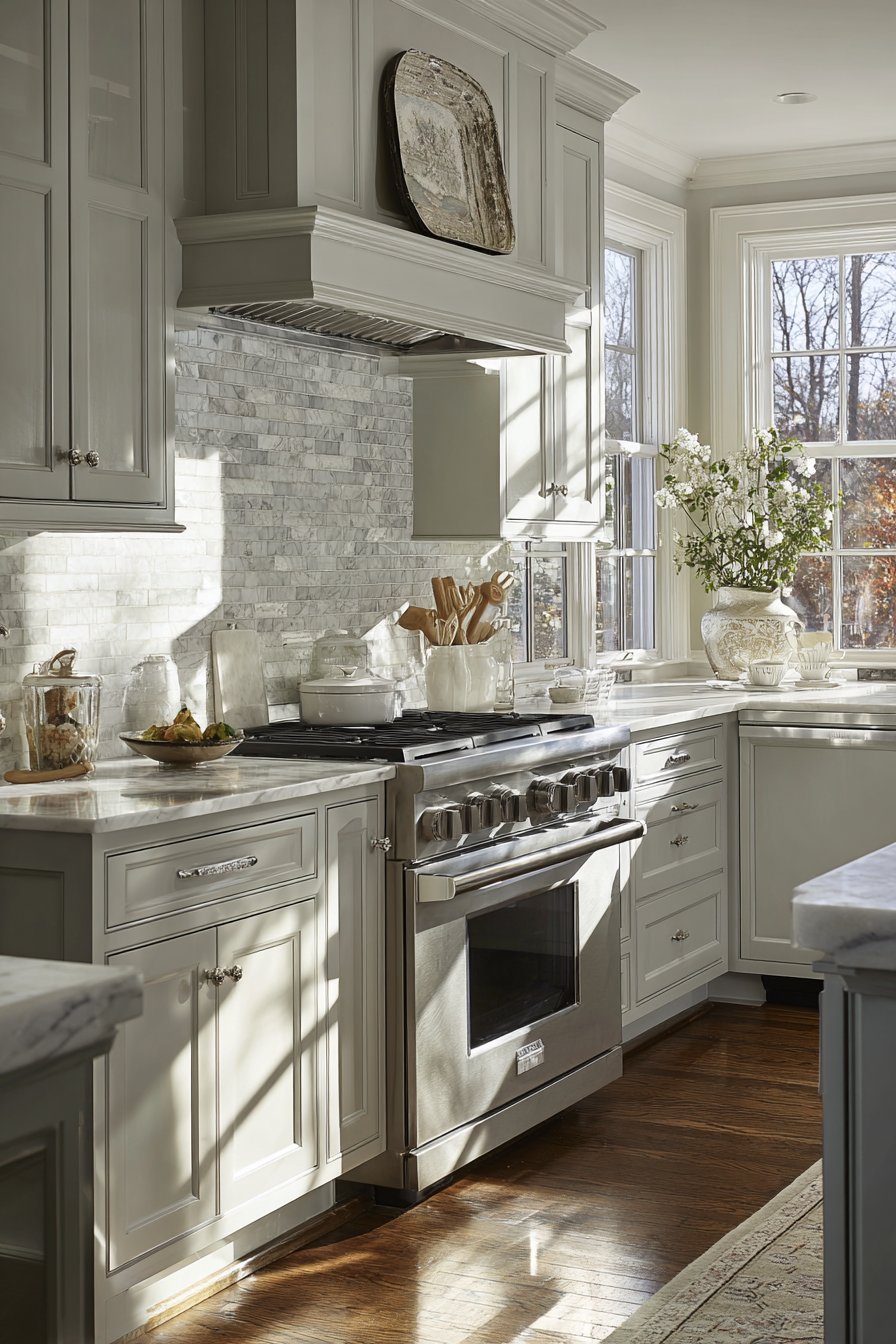
The panels showcase subtle variations in brushed finish direction, a detail that elevates this installation from simple to sophisticated. As natural light moves through the space throughout the day, these directional variations catch light differently, creating an ever-changing play of highlights and shadows across the surface. Morning sun might create vertical streaks of brightness, while afternoon light could emphasize horizontal patterns, making the wall a dynamic element that responds to its environment rather than remaining static.
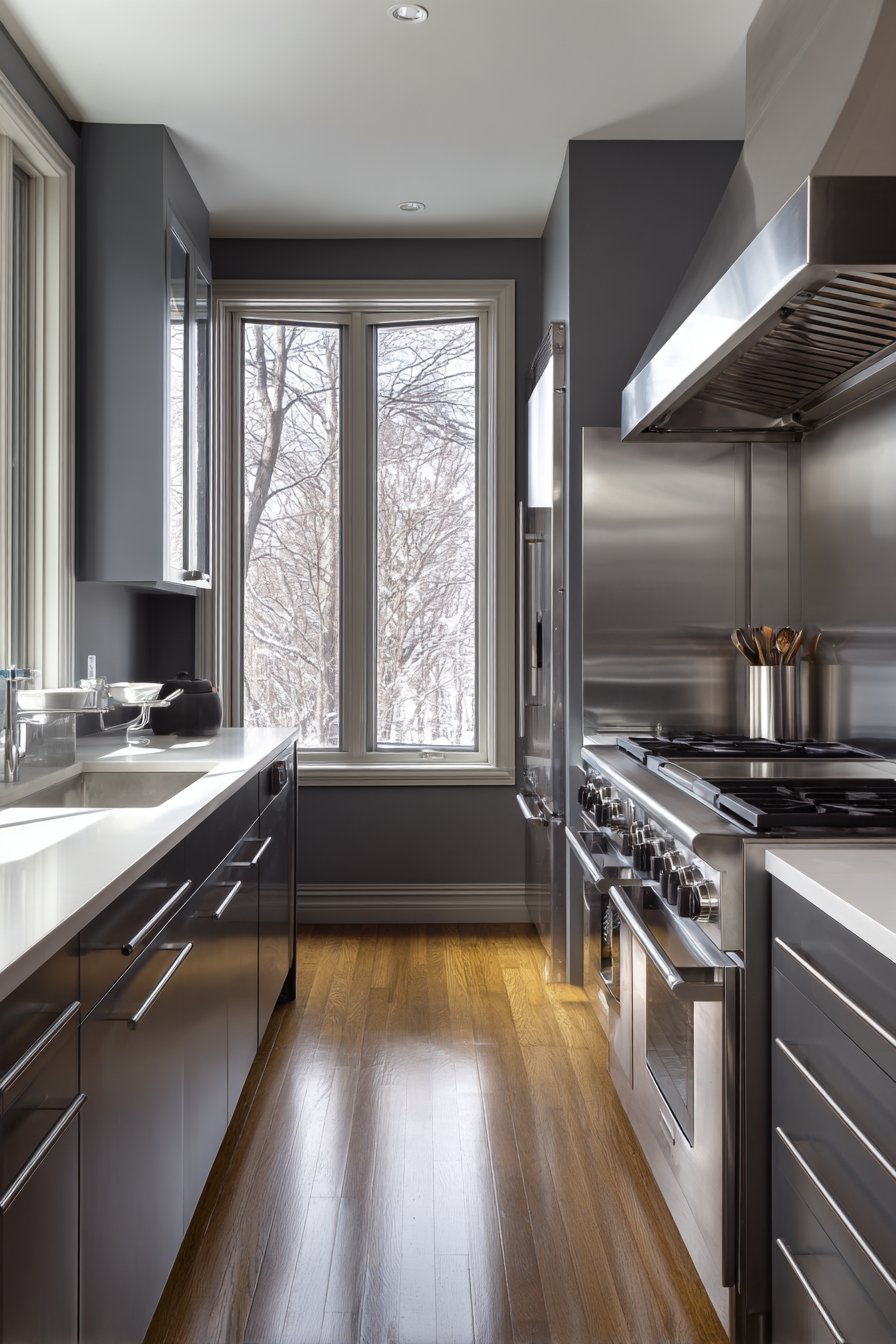
White quartz countertops and light grey cabinetry frame the metallic statement wall with careful restraint, allowing the stainless steel to command attention without overwhelming the space. The white quartz provides a clean, bright surface that reflects light upward toward the feature wall, while the light grey cabinets create a sophisticated neutral backdrop that neither competes with nor detracts from the focal point. A professional gas range with stainless steel finish integrates seamlessly into this composition, its material continuity making it feel like an organic part of the wall rather than an appliance merely placed against it.

The architectural quality of this installation demonstrates how stainless steel can function as a finish material comparable to stone, tile, or wood paneling. The large panels create clean lines and minimal interruptions, emphasizing the sleek, modern aesthetic while providing the practical benefits of an easy-to-clean surface behind the cooking area where splashes and splatters are inevitable. Balanced exposure in photography captures how natural window light creates dynamic reflections throughout the day, highlighting the considered craftsmanship and material quality of the installation.
Key Design Tips:
- Use large-format panels to minimize seams and create a more unified, architectural appearance in stainless steel wall installations.
- Vary brush direction slightly between panels to add subtle visual interest and create dynamic light reflection throughout the day.
- Frame feature walls with neutral cabinetry and countertops to prevent competing focal points and allow the stainless steel to shine.
- Extend backsplashes to ceiling height to create dramatic impact and eliminate the awkward gap that standard-height backsplashes can leave.
- Match appliance finishes to wall finishes for material continuity that creates a cohesive, intentional design rather than piecemeal appearance.
5. Space-Efficient Stainless Steel Kitchen for Urban Apartment Living

Compact living demands intelligent design, and this stainless steel kitchen demonstrates how thoughtful material selection and space planning can create a fully functional culinary environment within a modest footprint. Space-efficient stainless steel appliances—including a slim-profile refrigerator, compact dishwasher, and streamlined range—prove that small doesn’t mean sacrificing quality or performance. These appliances are specifically designed for urban living, offering full functionality in dimensions that respect the realities of apartment life.
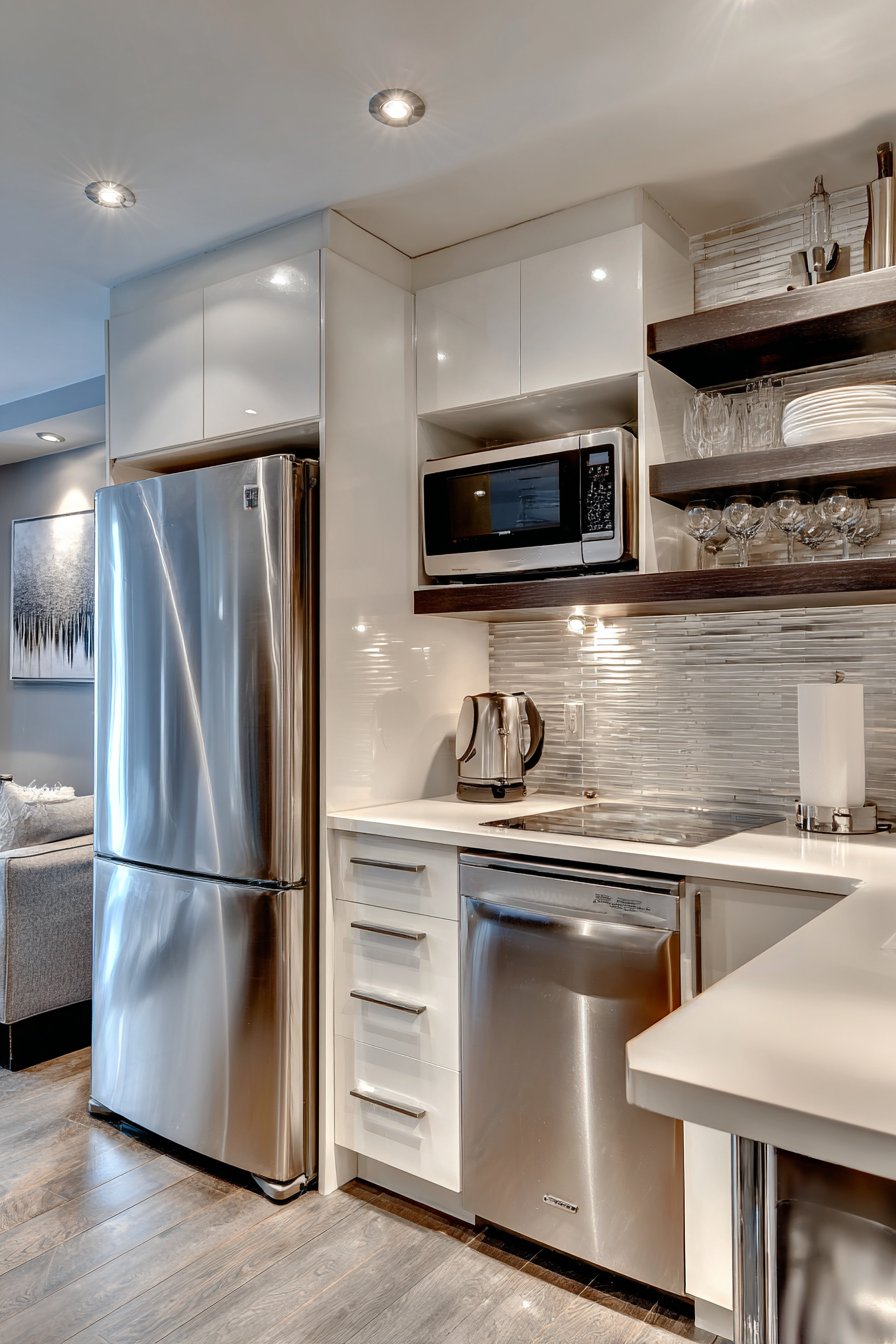
The kitchen maximizes storage without overwhelming the limited square footage through the strategic use of stainless steel open shelving. Rather than bulky upper cabinets that would make the space feel closed-in and claustrophobic, these metal shelves maintain visual openness while providing ample storage for dishes, glassware, and frequently used cooking supplies. The transparency of this approach creates the optical illusion of more space—you can see through the shelving to the wall beyond, preventing the visual blockage that solid cabinets would create.

A small breakfast bar with stainless steel edge detail provides essential dining space without requiring a separate dining area—a crucial consideration in compact urban apartments where every square foot must serve multiple purposes.
The stainless steel edge detail ties this element visually to the kitchen’s primary material palette while providing durability along this high-traffic edge that will endure daily use. Glossy white cabinets in the lower sections reflect available light, brightening the space and creating an airy feel despite the compact dimensions.
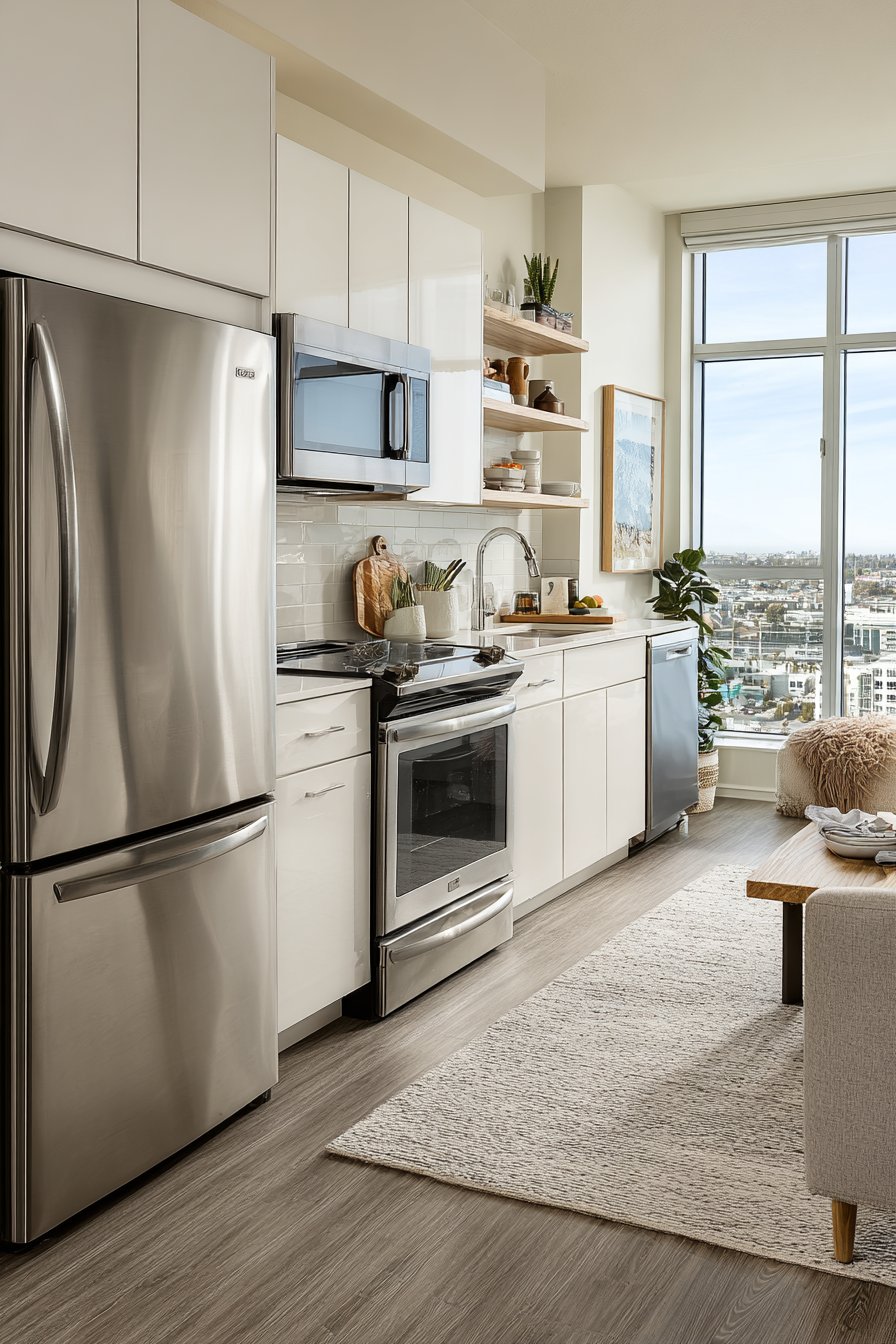
Concrete-look porcelain flooring grounds the space with substance and visual weight, preventing the kitchen from feeling too lightweight or insubstantial despite its small size. This flooring choice brings an industrial edge that complements the stainless steel while providing practical benefits—porcelain’s durability and easy maintenance make it ideal for kitchen environments, while the concrete aesthetic adds contemporary urban style. Morning light streaming through windows emphasizes the reflective qualities of stainless steel surfaces while highlighting the intelligent space optimization that makes this compact kitchen feel surprisingly spacious and functional.
Key Design Tips:
- Choose slim-profile appliances specifically designed for compact spaces to maintain full functionality without sacrificing valuable square footage.
- Use open shelving strategically to maximize storage while maintaining visual openness that makes small spaces feel larger.
- Incorporate multi-purpose elements like breakfast bars that serve as both workspace and dining areas to maximize functionality.
- Select glossy cabinet finishes in light colors to reflect light and create a brighter, more spacious feeling in compact kitchens.
- Balance materials carefully using grounding elements like concrete-look flooring to prevent small spaces from feeling insubstantial or temporary.
6. Commercial-Style Stainless Steel Prep Area for Serious Cooking

This kitchen speaks directly to passionate home cooks who demand professional-level functionality in their residential space. At its heart sits a commercial-style stainless steel work table that serves as additional counter space, bringing the authentic feel of a restaurant kitchen into the home environment.
Complete with a lower shelf for convenient storage of frequently used pots, pans, and mixing bowls, this work table embodies the marriage of form and function that defines great kitchen design—it’s beautiful in its honest utility, requiring no decoration beyond its inherent structural clarity.
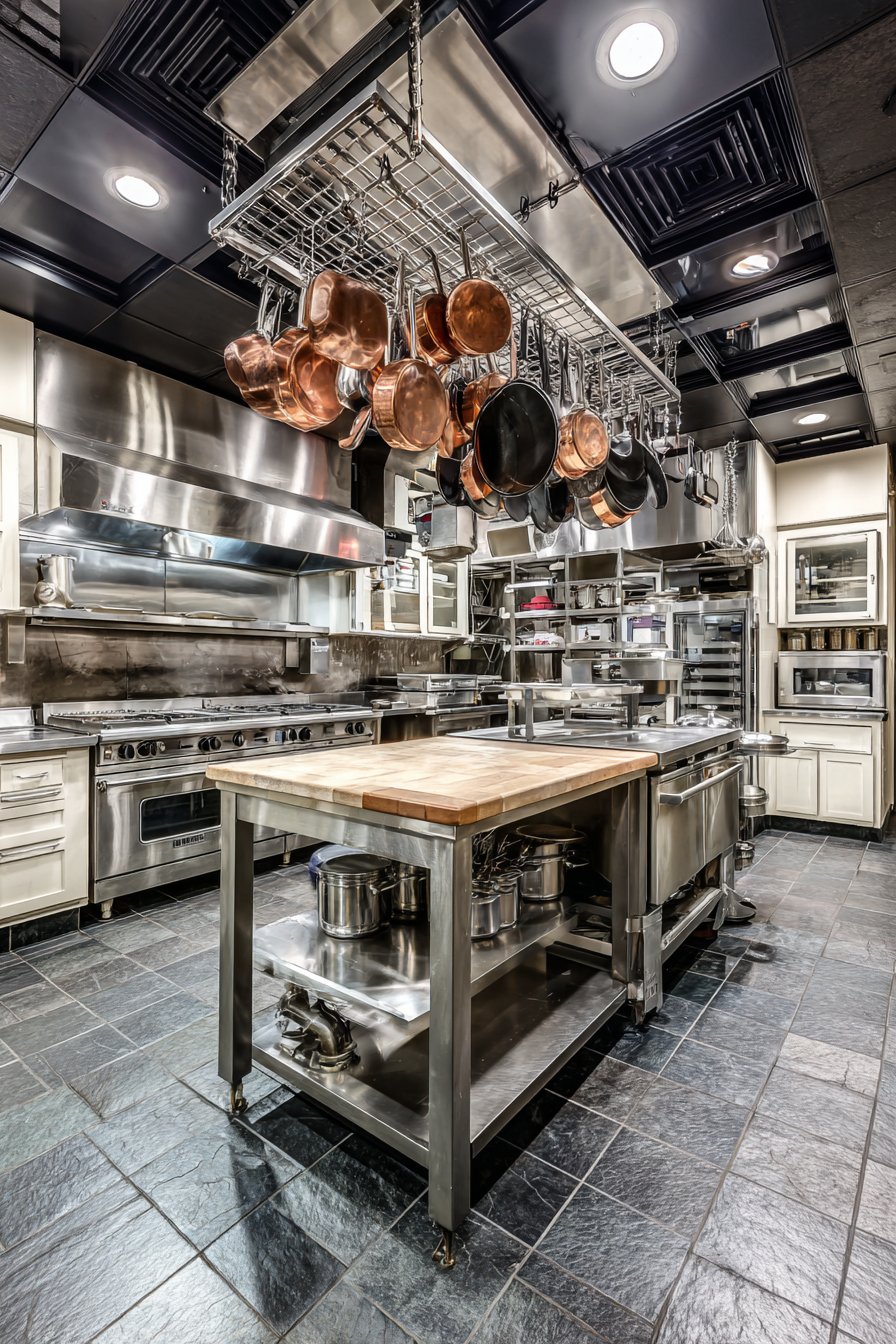
Professional stainless steel appliances, including a chef’s range with six burners and dual ovens, create a serious cooking environment capable of handling everything from weeknight family dinners to elaborate multi-course dinner parties. The six-burner configuration provides the flexibility to have multiple dishes cooking simultaneously at different temperatures, while dual ovens allow for roasting proteins at high heat while baking delicate desserts at lower temperatures. This level of equipment transforms cooking from a chore into a genuine culinary experience, empowering home chefs to execute recipes and techniques that would be impossible with standard residential appliances.
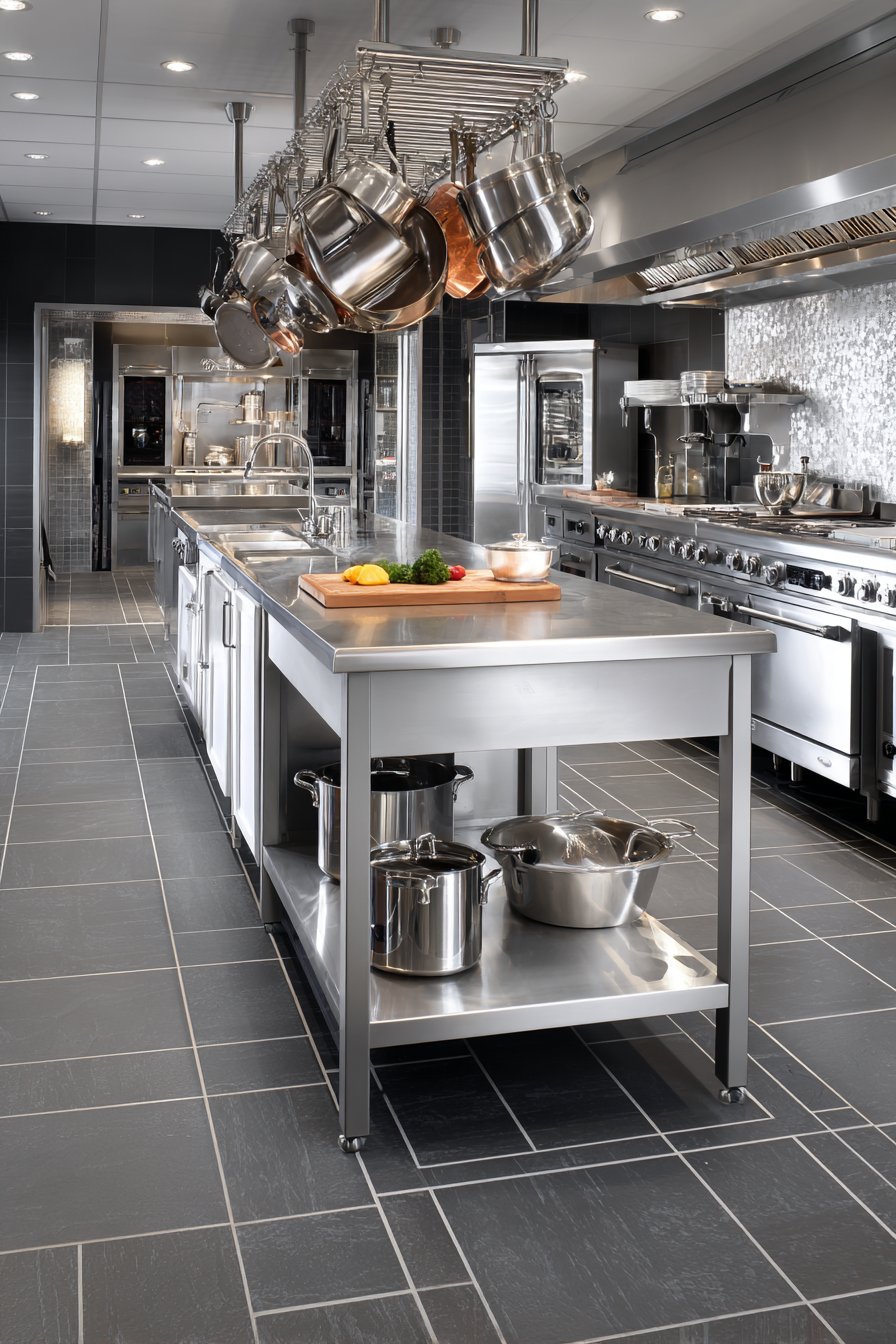
A stainless steel pot rack suspended from the ceiling displays copper-bottom cookware, turning functional storage into visual interest while keeping heavy pots and pans accessible without consuming precious cabinet space. The copper bottoms of quality cookware create beautiful visual accents against the stainless steel, their warm metallic glow providing color and warmth in a predominantly cool-toned space. This suspended storage also serves a practical purpose—keeping frequently used items within easy reach reduces the physical strain of repeatedly bending to retrieve heavy items from lower cabinets.
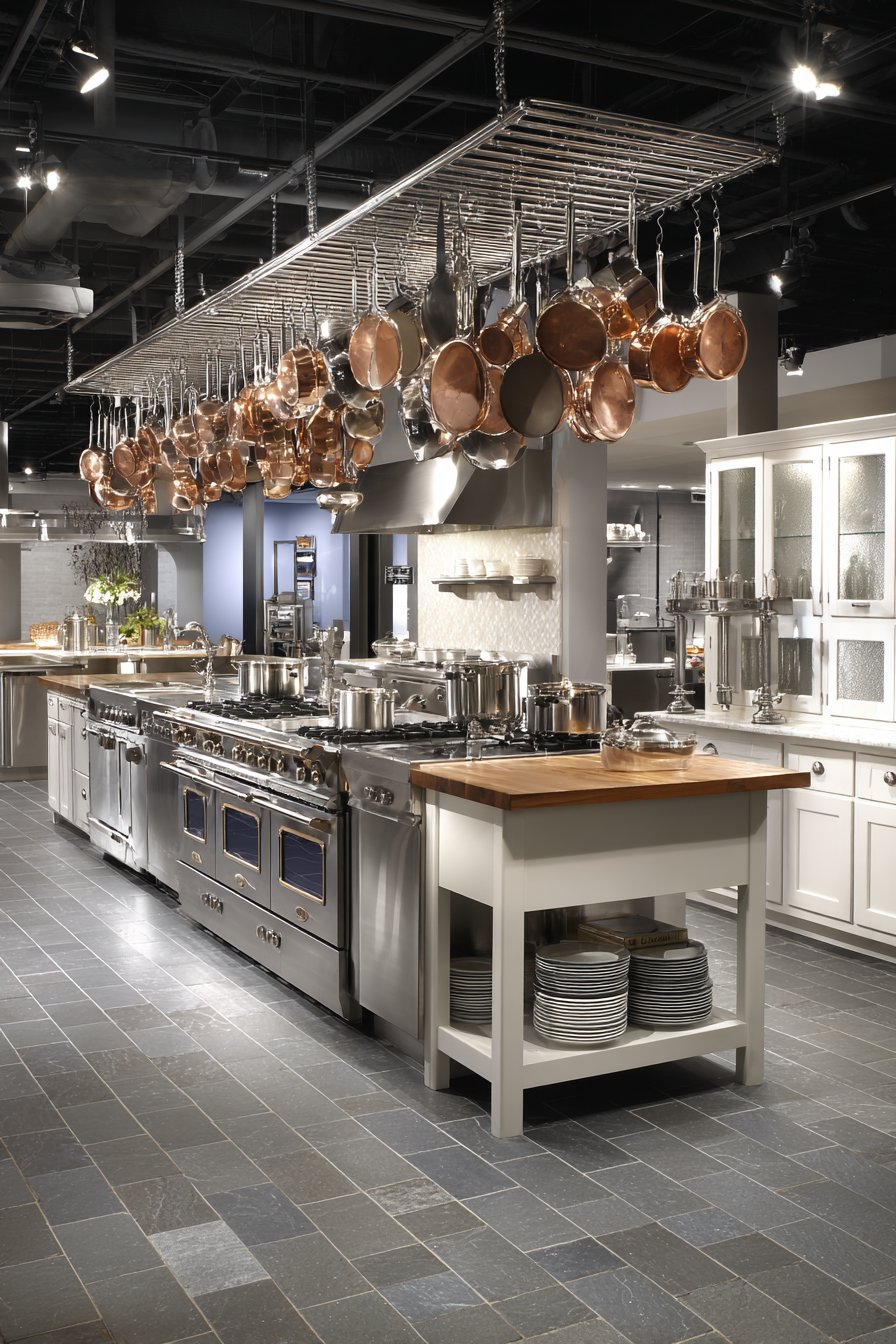
Dark grey slate tile flooring and white shaker cabinets provide essential visual balance to the extensive professional equipment, preventing the space from feeling too industrial or institutional. The slate brings natural texture and earthy tones that ground the design, while the classic white shaker cabinets contribute traditional residential warmth. Natural overhead lighting creates authentic shadows and highlights on the various stainless steel textures and finishes, emphasizing the professional-grade quality of the materials and equipment while maintaining a connection to the home environment through thoughtful material balance.
Key Design Tips:
- Add commercial work tables to residential kitchens for authentic professional functionality and additional workspace for serious cooking projects.
- Invest in chef-quality ranges with multiple burners and dual ovens to expand cooking capabilities and enable complex meal preparation.
- Install overhead pot racks to free up cabinet space while displaying quality cookware as functional decoration.
- Choose professional-grade materials like slate tile flooring that can withstand the demands of serious cooking while adding natural texture.
- Balance commercial elements with residential touches like shaker cabinets to create a space that feels professional yet welcoming.
7. Transitional Stainless Steel Kitchen Blending Classic and Contemporary
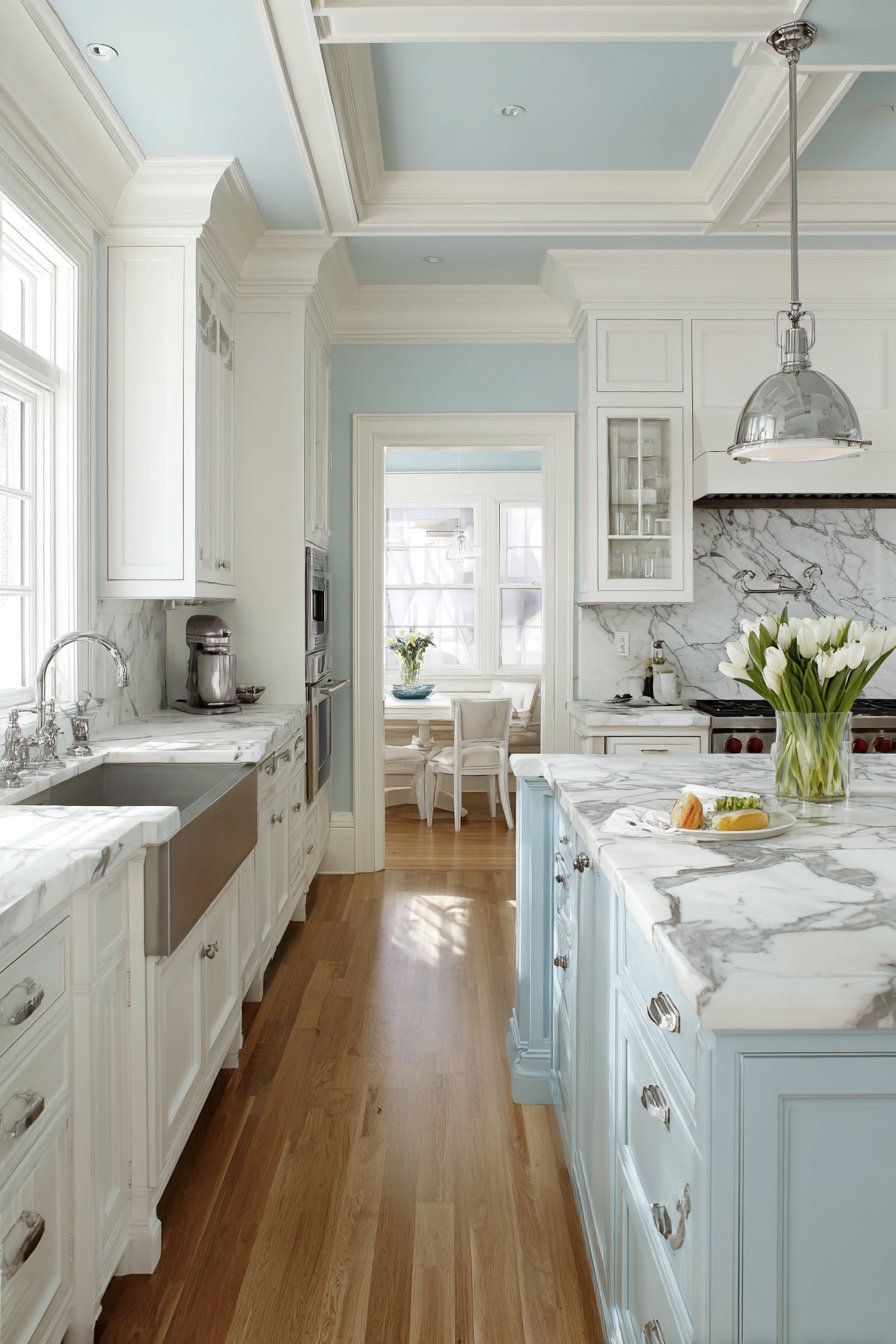
This transitional kitchen achieves the difficult balance between traditional warmth and contemporary functionality, creating a space that feels simultaneously timeless and current. Stainless steel appliances are carefully integrated into custom cabinetry featuring inset panel doors in a sophisticated soft grey-blue finish.
This color choice demonstrates the power of subtle hues—neither fully grey nor fully blue, this shade bridges warm and cool tones, creating a versatile backdrop that complements both the metallic appliances and traditional design elements.
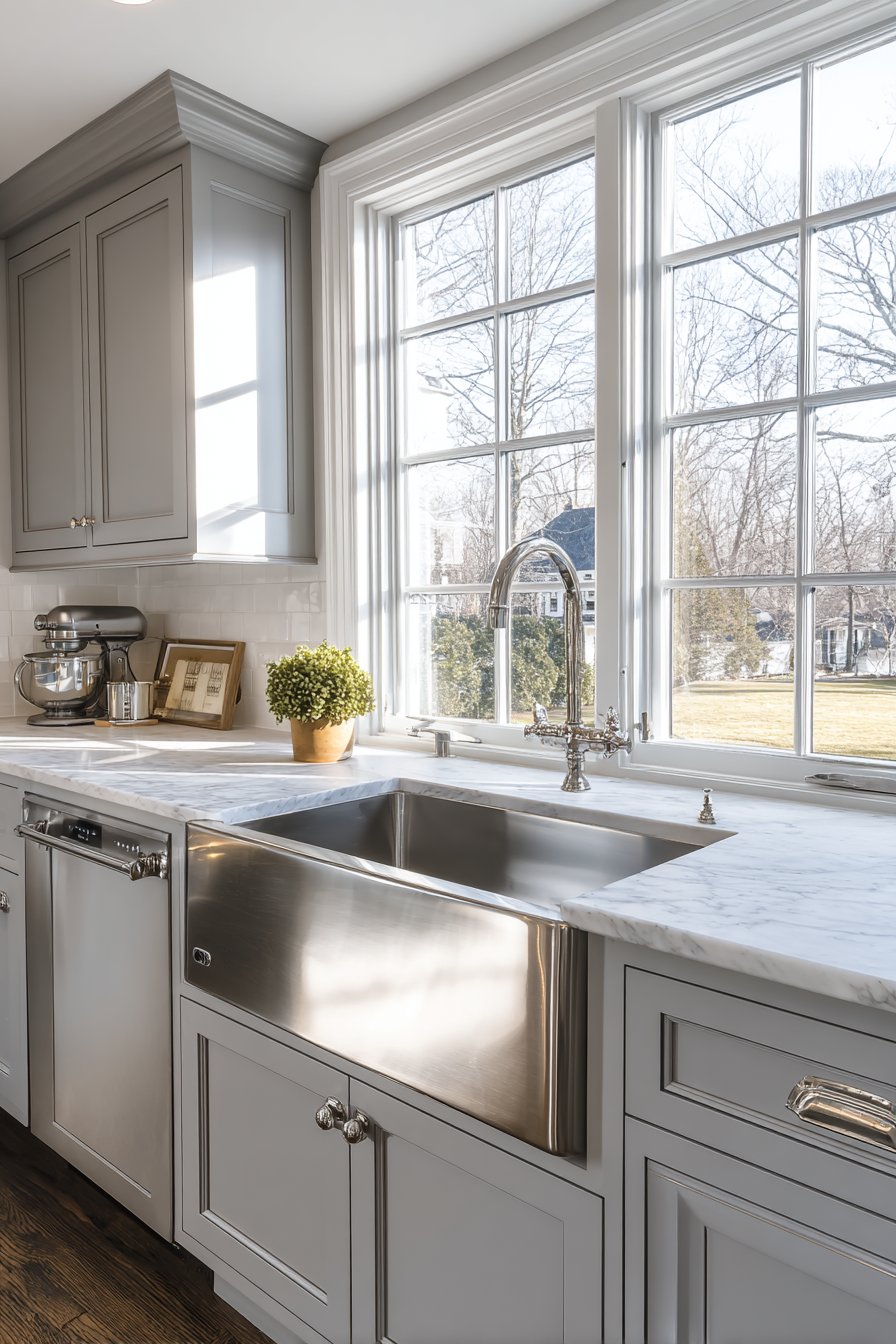
The focal point of this design is a farmhouse-style stainless steel apron-front sink paired with a professional bridge faucet—a combination that perfectly embodies the transitional aesthetic. The apron-front sink style has roots in traditional farmhouse kitchens, where large, deep sinks were essential for washing everything from vegetables to large pots. Executing this classic form in stainless steel rather than fireclay or porcelain brings contemporary performance and commercial durability to a traditional design, creating a piece that honors history while embracing modern materials.
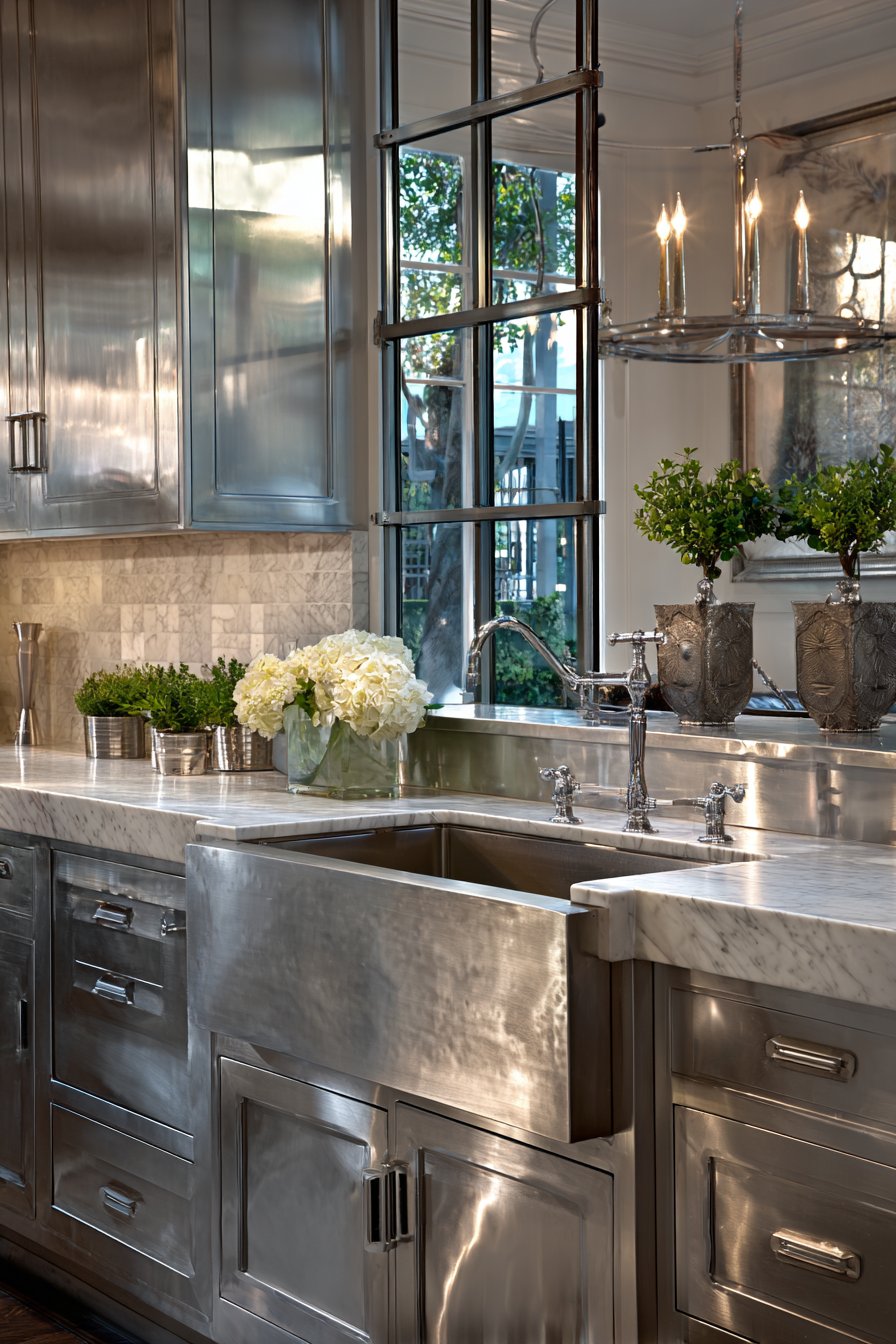
Stainless steel cabinet hardware in a satin finish ties the entire look together, creating visual continuity between appliances, sink, and cabinetry. The satin finish strikes the perfect balance for transitional design—less flashy than polished chrome but more refined than brushed nickel, it complements both traditional and contemporary elements without favoring either too strongly. White marble countertops with delicate grey veining provide a luxurious work surface that complements the metal tones while bringing natural stone’s organic beauty and traditional prestige to the contemporary functionality of stainless steel.
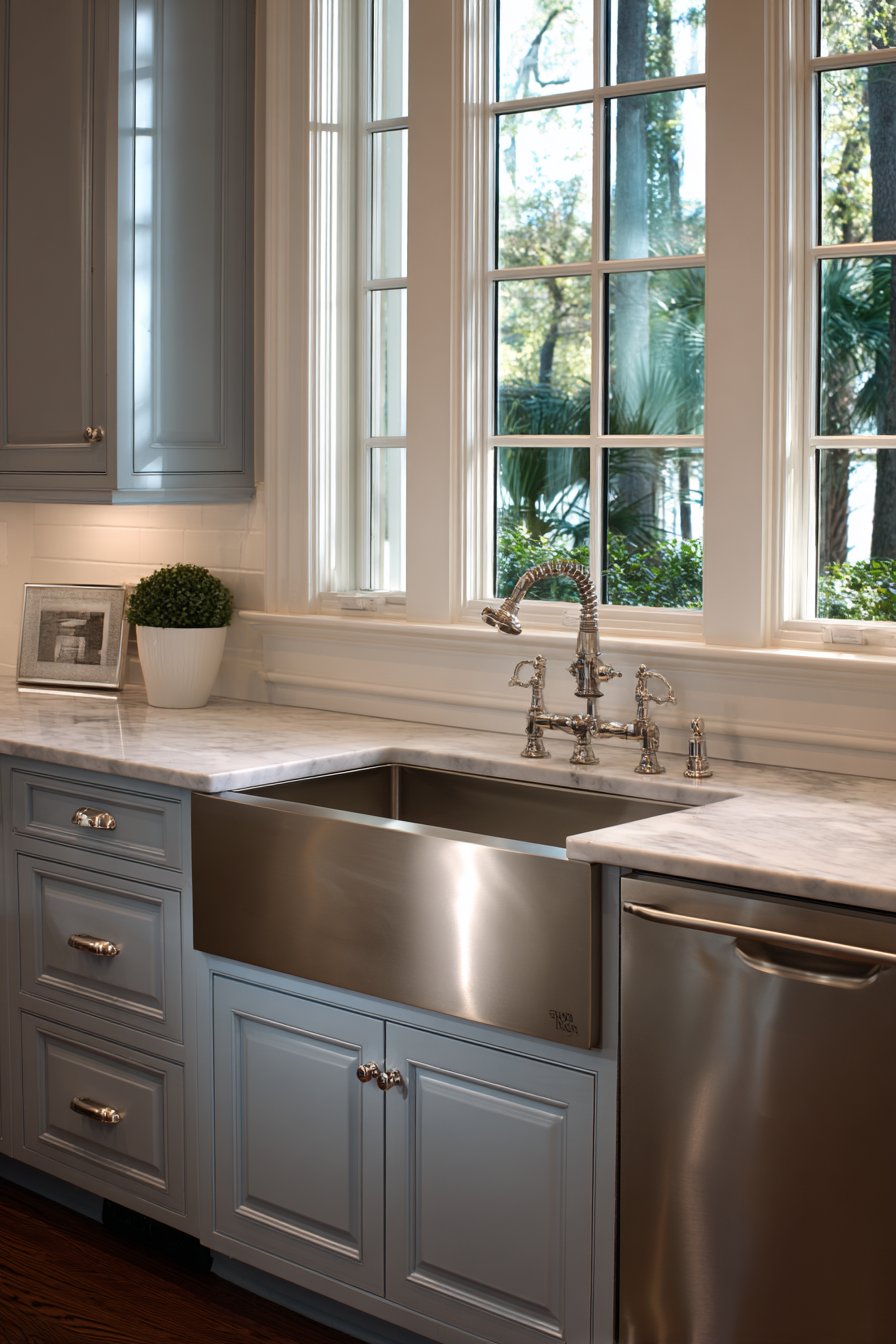
Natural window light from multiple directions creates depth and dimension throughout the space, highlighting how traditional cabinetry craftsmanship can successfully incorporate modern materials. The inset panel doors—where the door panel sits flush with the cabinet frame rather than overlapping it—represent a traditional cabinet construction technique that speaks to quality and attention to detail. This marriage of classic design and modern stainless steel functionality demonstrates that contemporary materials need not mean abandoning traditional aesthetics, but rather can enhance and modernize them while respecting their essential character.
Key Design Tips:
- Choose sophisticated neutral colors for cabinetry that bridge warm and cool tones, creating versatile backdrops for stainless steel appliances.
- Mix traditional and contemporary elements intentionally, using modern materials to execute classic forms for authentic transitional style.
- Select satin-finish hardware as a middle ground between highly polished and heavily brushed finishes for balanced transitional aesthetics.
- Incorporate natural stone countertops to add organic beauty and traditional luxury while maintaining contemporary functionality.
- Maximize natural light from multiple directions to create depth and highlight the successful integration of diverse design elements.
8. Authentic Industrial Loft Aesthetic with Exposed Stainless Steel Systems
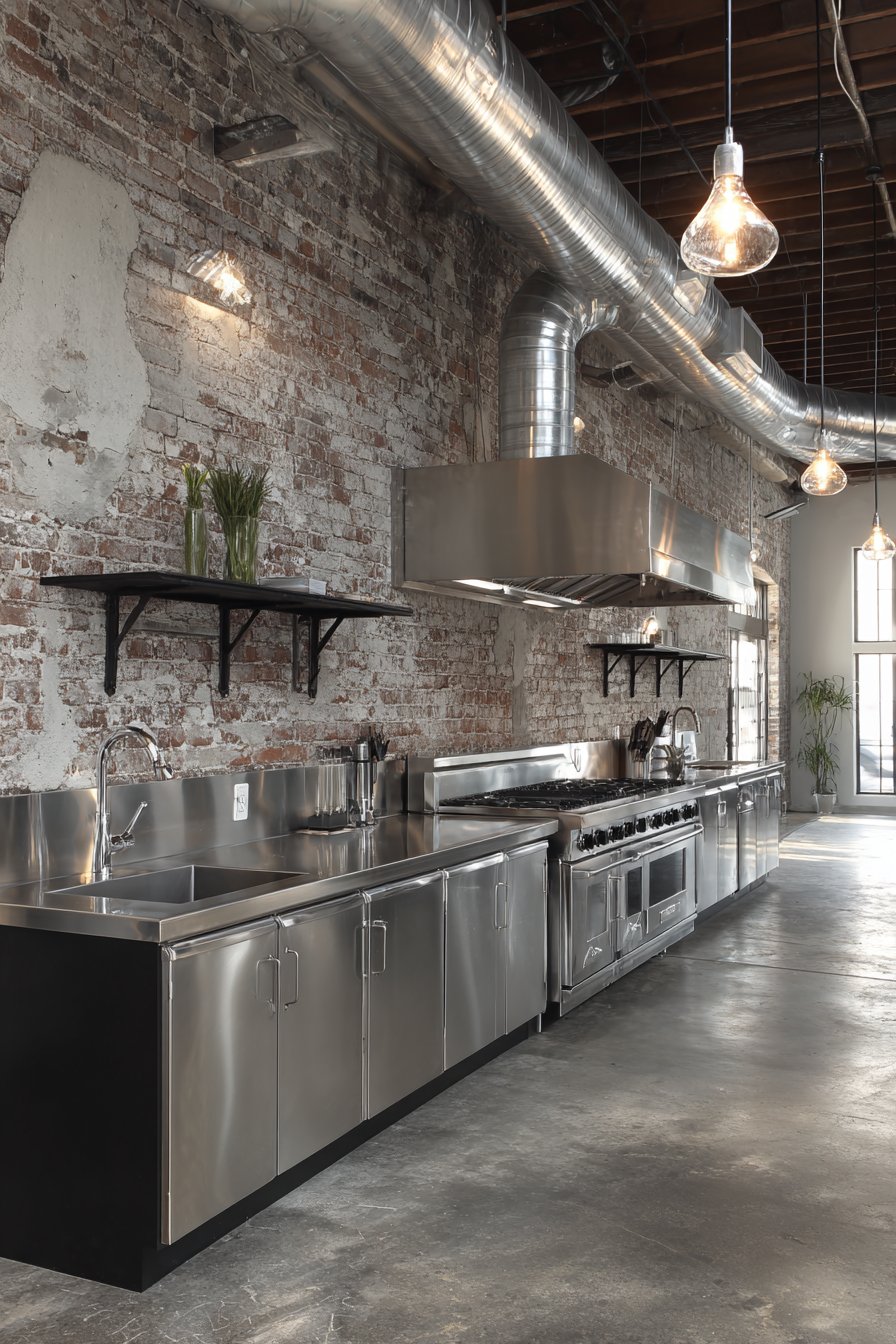
This industrial-style kitchen embraces raw, utilitarian beauty by exposing typically hidden elements, transforming necessary infrastructure into design features. Exposed stainless steel ductwork and ventilation create an authentic loft aesthetic that celebrates the honest display of building systems rather than concealing them behind finished ceilings and walls. This approach reflects the industrial design philosophy that beauty emerges from honesty about materials and function—if something must exist for the building to work, why not celebrate it rather than hide it?
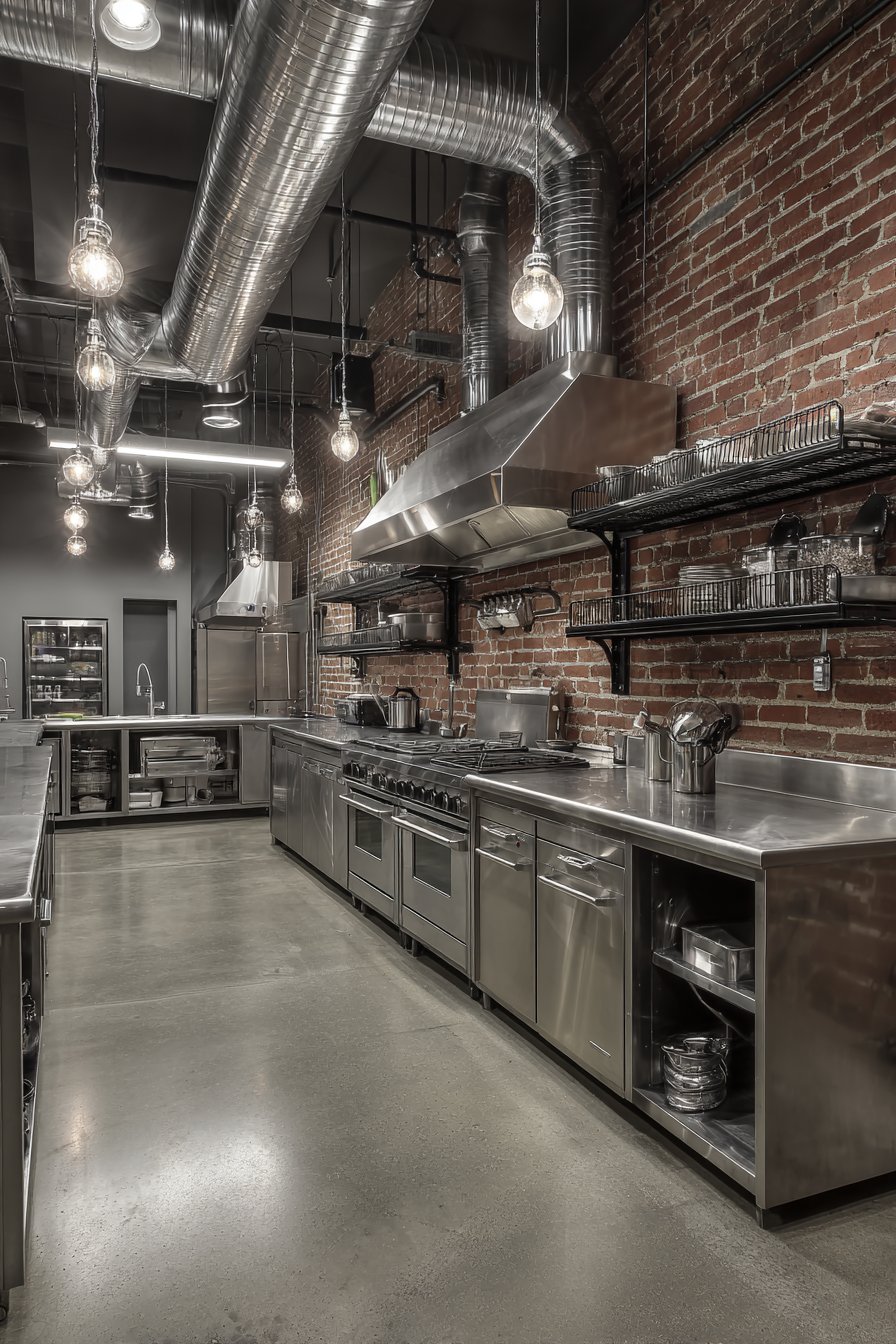
Custom stainless steel countertops feature integrated drainboards—a practical detail borrowed from commercial kitchens where efficiency and hygiene are paramount. The drainboards, with their subtly ribbed surface, allow dishes to air-dry while directing water back toward the sink, eliminating the need for separate dish racks that consume counter space. These countertops flank a commercial-grade range, creating an efficient work triangle where serious cooking can happen with professional ease.
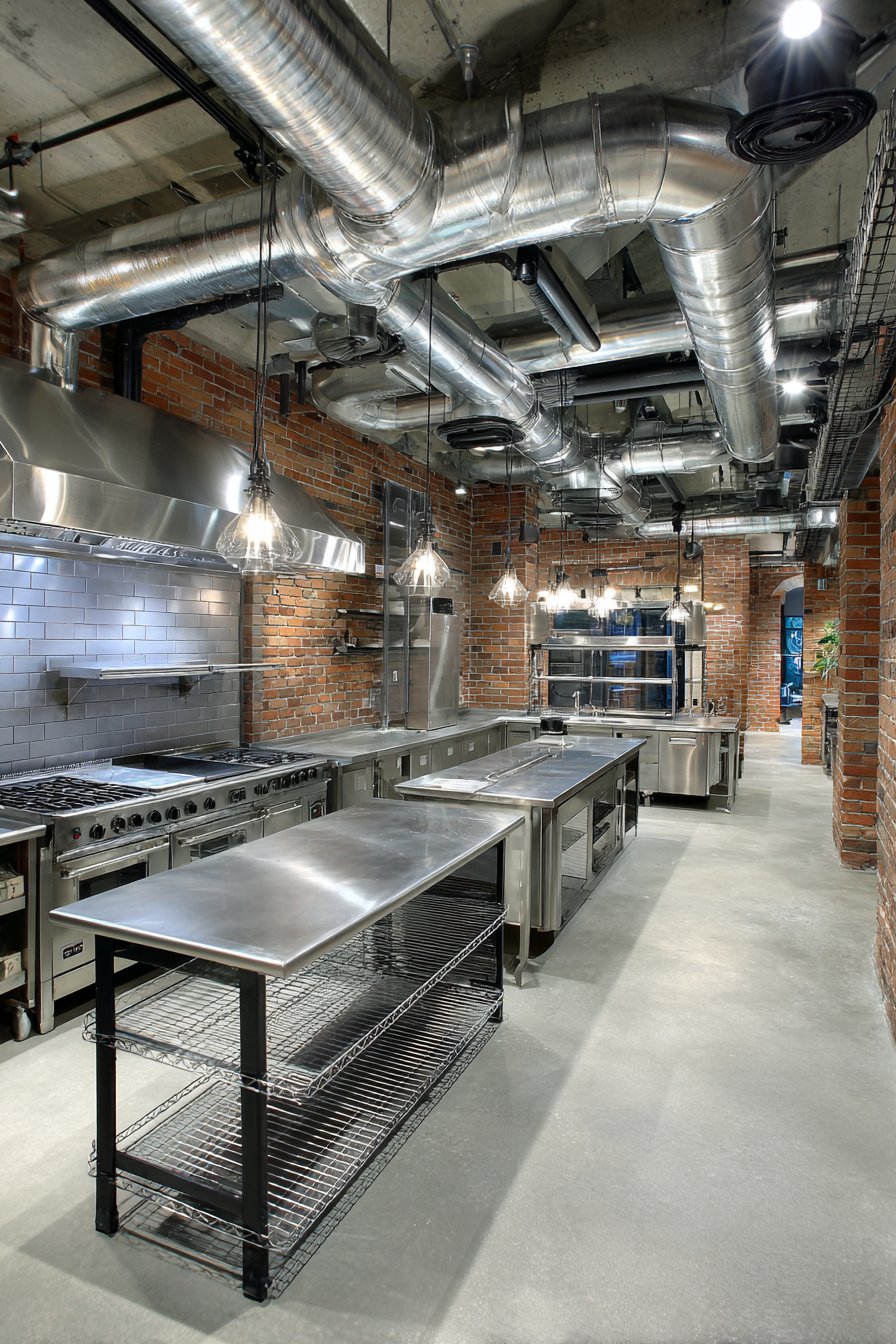
Stainless steel wire shelving on black metal frames provides open storage that maintains the industrial aesthetic while offering practical accessibility. Unlike solid shelving, the wire construction allows light to pass through and air to circulate, preventing the closed-in feeling that solid shelves might create. The black metal frames create strong graphic lines against concrete floors and exposed brick walls, emphasizing the geometric, structural quality of industrial design.
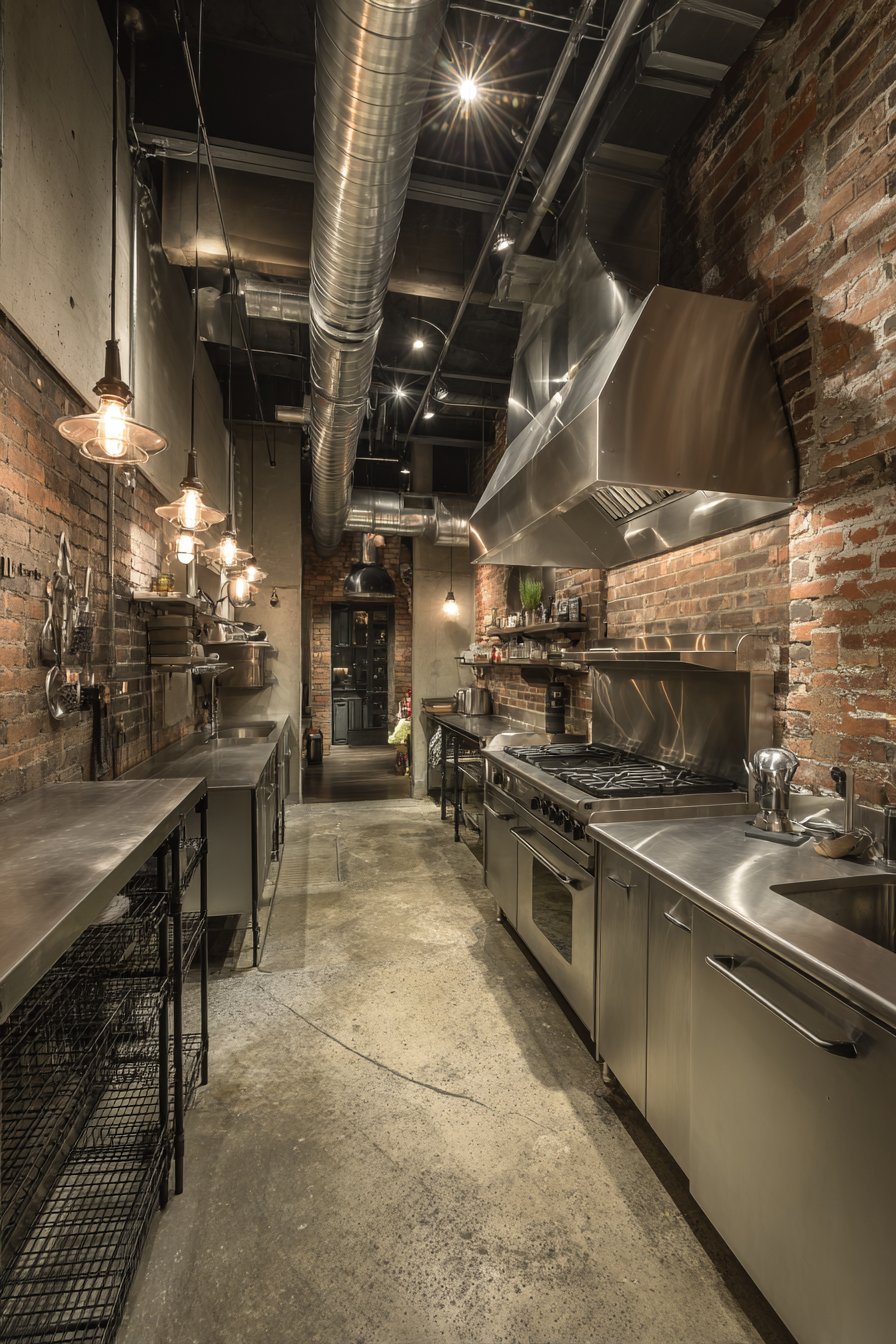
The material palette tells a story of urban renovation—concrete floors and exposed brick walls speak to the building’s original industrial purpose, while gleaming stainless steel elements represent its contemporary residential transformation. Edison bulb pendant lights hanging above the prep area contribute authentic period charm, their visible filaments and warm glow softening the harder edges of metal and masonry. Dramatic side lighting emphasizes the textural contrast between rough industrial materials like concrete and brick and the sleek, refined surfaces of stainless steel, creating a space where past and present coexist in dynamic tension.
Key Design Tips:
- Expose building systems like ductwork and ventilation when possible to create authentic industrial character in loft-style spaces.
- Incorporate commercial details like integrated drainboards to add professional functionality while reinforcing industrial aesthetics.
- Use wire shelving for open storage that maintains visual lightness while providing practical accessibility in industrial kitchens.
- Preserve original materials like brick and concrete as they provide textural contrast and authentic character against refined metal surfaces.
- Choose period-appropriate lighting like Edison bulbs to soften industrial spaces while maintaining aesthetic consistency.
9. Minimalist Stainless Steel Kitchen with Seamless Surfaces
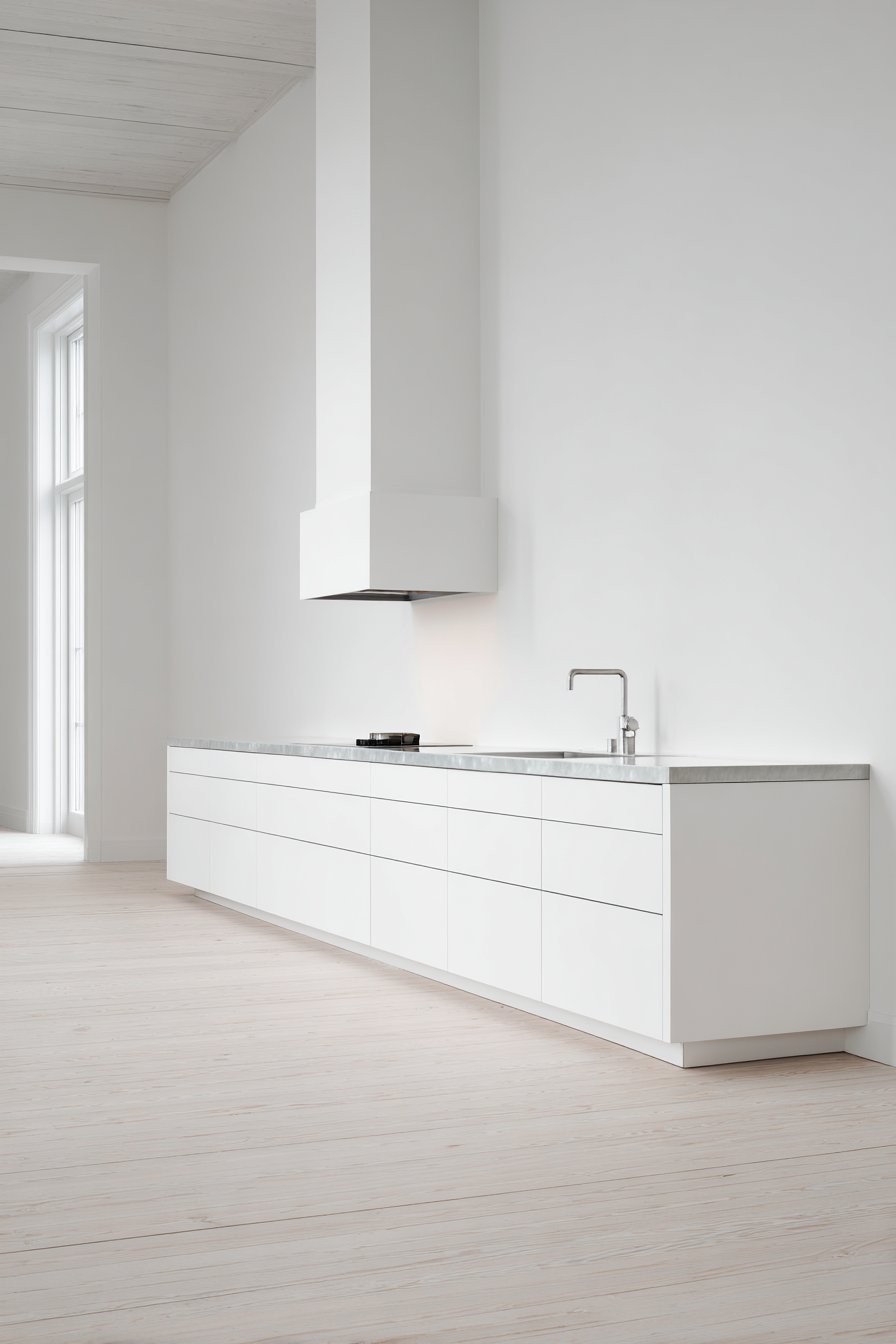
This minimalist kitchen embodies the “less is more” philosophy through precision craftsmanship and material continuity. Seamless stainless steel countertops with integrated sink and cooktop create clean, continuous surfaces where traditional seams and joints have been eliminated entirely.
This level of integration requires exceptional fabrication skill—the sink bowl and cooktop cutouts must be executed with perfect precision, and all seams must be welded and polished to invisibility, creating the illusion that the entire counter has been formed from a single piece of metal.
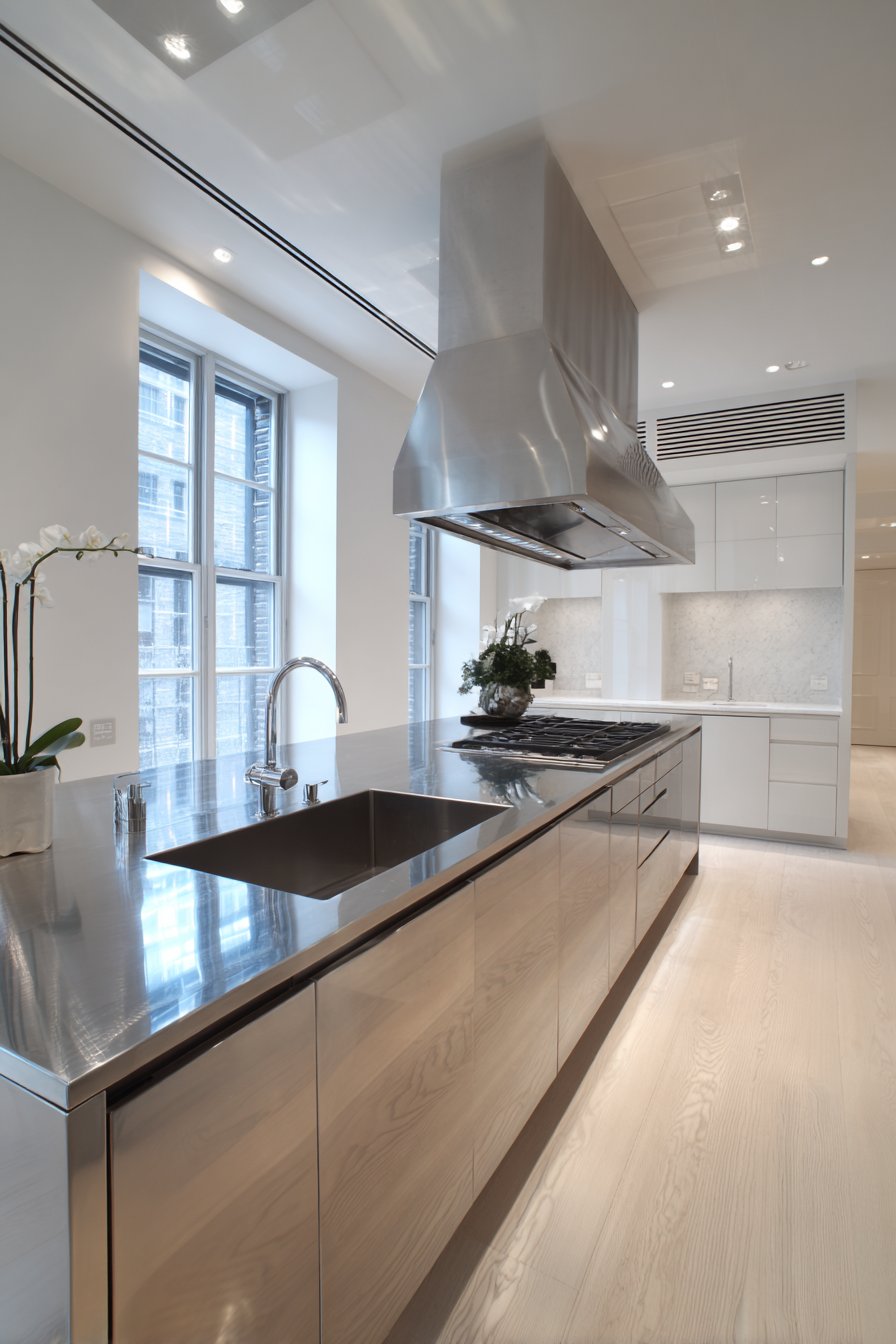
Handle-less stainless steel cabinet fronts with push-to-open mechanisms maintain the streamlined aesthetic by eliminating all visible hardware. This approach requires careful planning—the push-to-open systems must be precisely calibrated so cabinets respond to light pressure without being so sensitive that they open accidentally. The result is a facade of uninterrupted surfaces where nothing breaks the clean lines, creating a zen-like sense of order and calm that characterizes true minimalism.
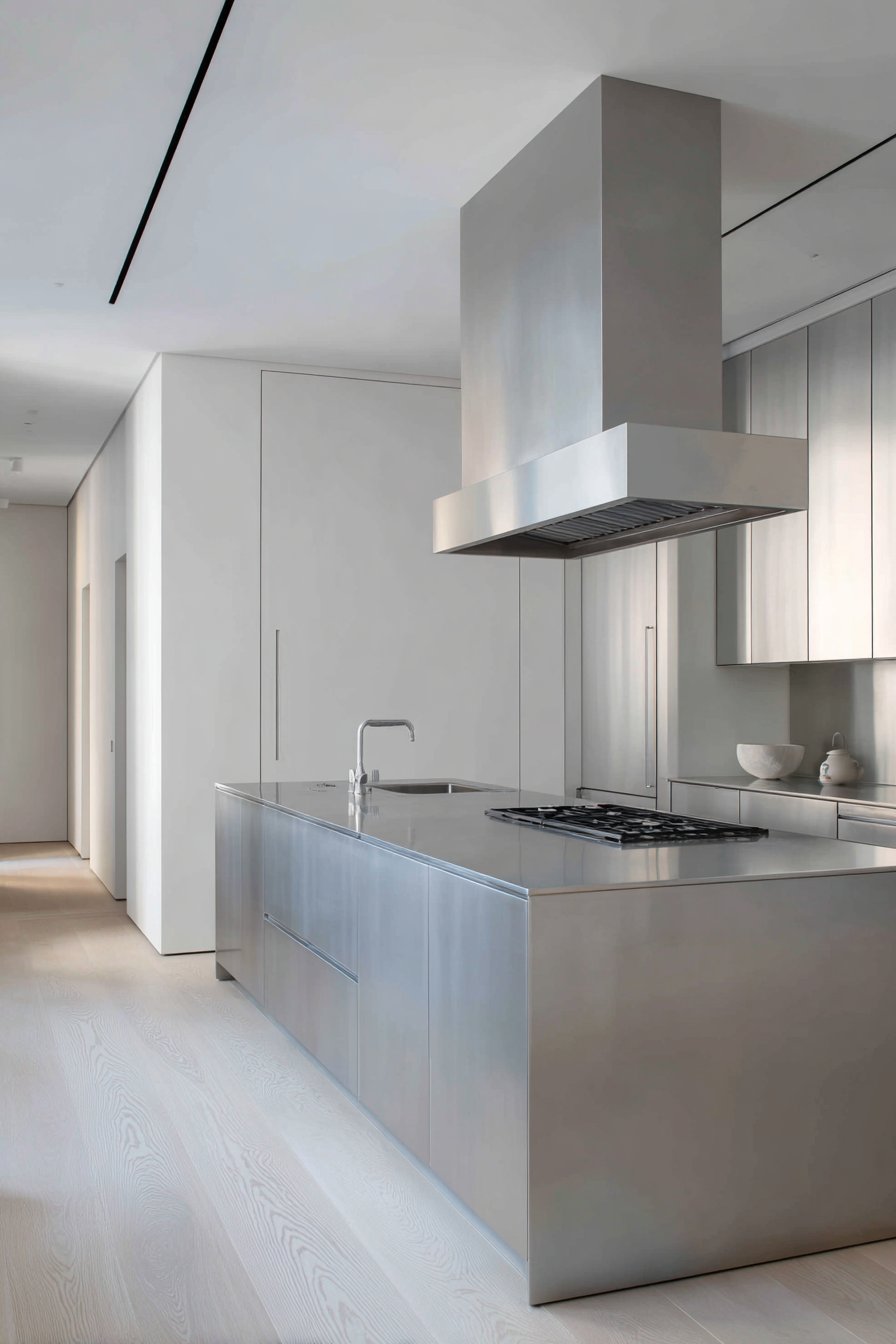
A single statement piece provides necessary visual interest in this restrained environment—a stainless steel range hood with geometric design serves as the kitchen’s focal point. Its angular, sculptural form elevates it from mere ventilation equipment to an architectural element, demonstrating how even purely functional objects can become art when designed with intention and executed with precision. The geometric design creates visual interest through form rather than decoration, aligning perfectly with minimalist principles.
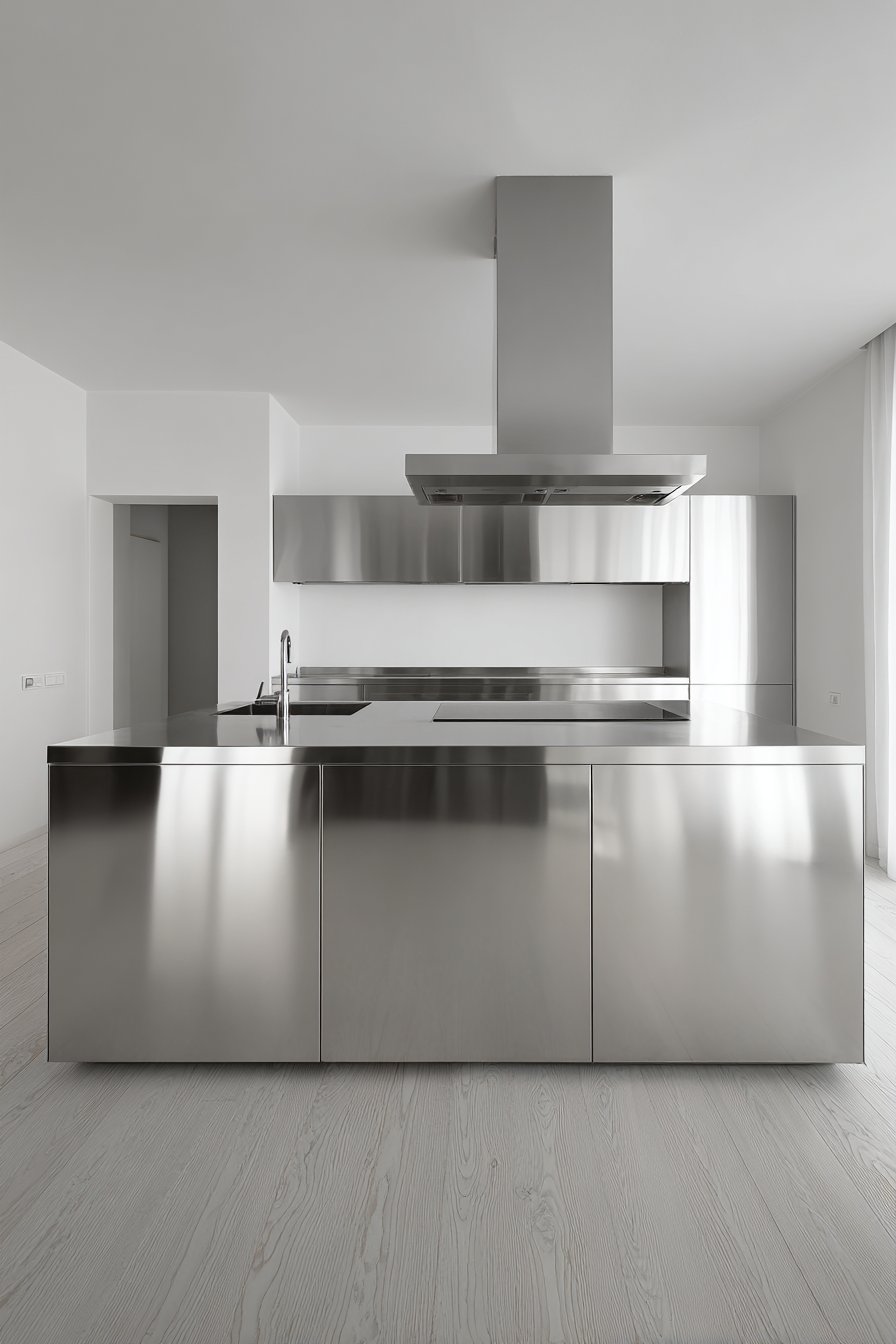
White walls and light ash wood flooring enhance the minimalist approach by providing a neutral, calm backdrop that allows the stainless steel to take center stage. The light ash brings subtle warmth and organic texture without introducing visual complexity—its fine, straight grain and pale color maintain the overall sense of simplicity while grounding the space with natural material. Soft, even lighting showcases the precise craftsmanship and material continuity, revealing how the stainless steel surfaces reflect subtle environmental tones while maintaining the uncluttered, zen-like atmosphere that defines successful minimalist design.
Key Design Tips:
- Invest in seamless integration of sinks and cooktops into countertops to eliminate visual breaks and create continuous surfaces.
- Choose handle-less cabinets with push-to-open or touch-latch mechanisms to maintain clean lines and uninterrupted surfaces.
- Select one statement piece to provide visual interest in minimalist spaces without overwhelming the restrained aesthetic.
- Use neutral backgrounds like white walls and light wood floors to create calm environments that let materials shine.
- Prioritize precision craftsmanship as visible quality becomes paramount when design relies on simplicity rather than decoration.
10. Complete Stainless Steel Kitchen Renovation with Floor-to-Ceiling Cabinet Doors

This comprehensive kitchen renovation showcases the transformative power of stainless steel through a complete material makeover that demonstrates commitment to a cohesive design vision. Floor-to-ceiling stainless steel cabinet doors featuring vertical grain texture on upper cabinets create a dramatic impact while maximizing storage capacity.
The vertical grain texture adds visual interest to what could otherwise be overwhelming expanses of metal, while also serving the practical purpose of disguising fingerprints and minor surface imperfections that accumulate with daily use.
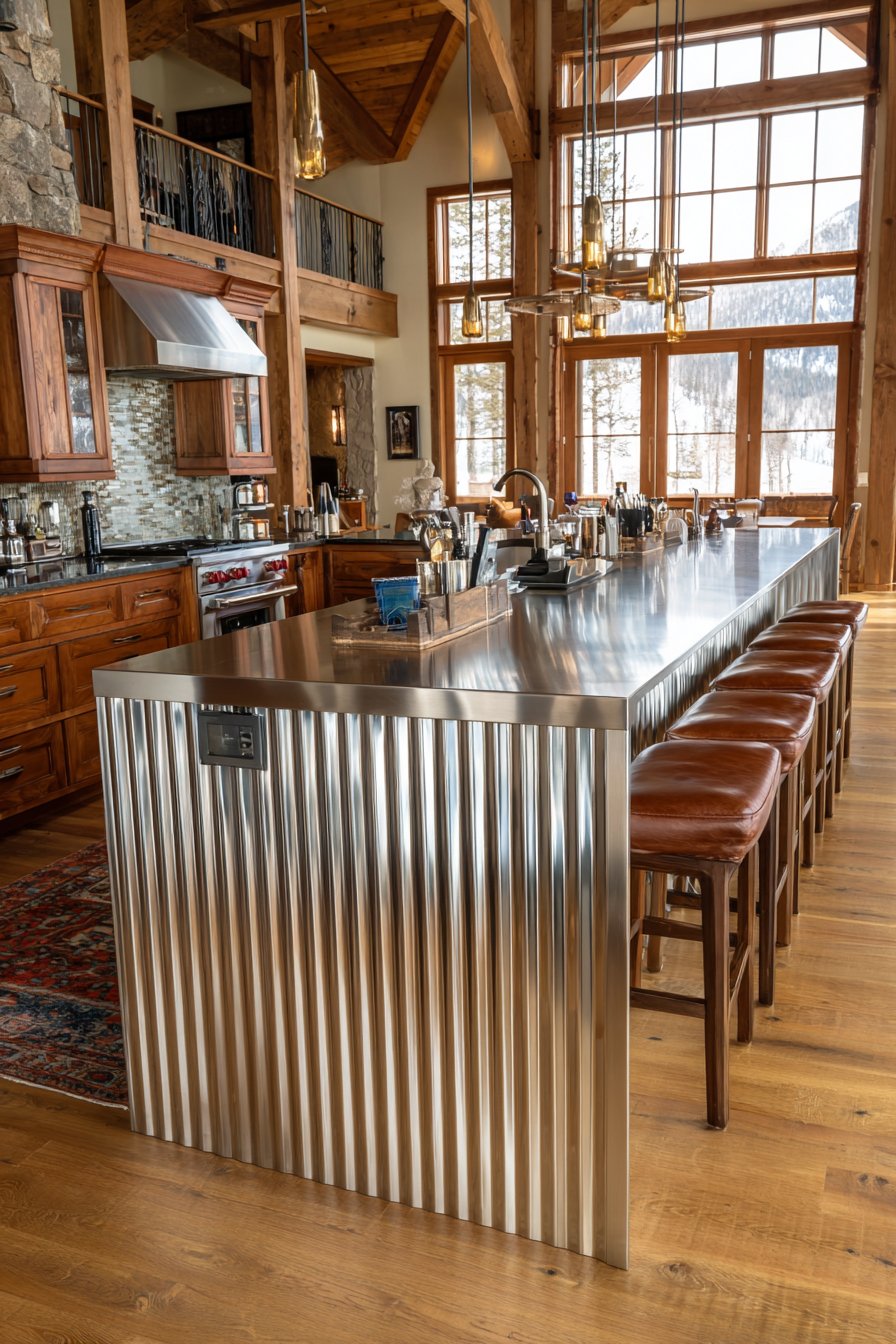
A large stainless steel peninsula with waterfall edges serves as both a functional divider and a stunning architectural element, creating clear separation between kitchen and dining areas while maintaining visual connection and flow.
The peninsula incorporates bar seating with leather upholstered stools, creating a casual dining option that encourages interaction between cook and guests. The leather upholstery introduces natural texture and warmth, its organic character providing essential contrast to the metal surfaces while offering comfortable seating for extended conversations.
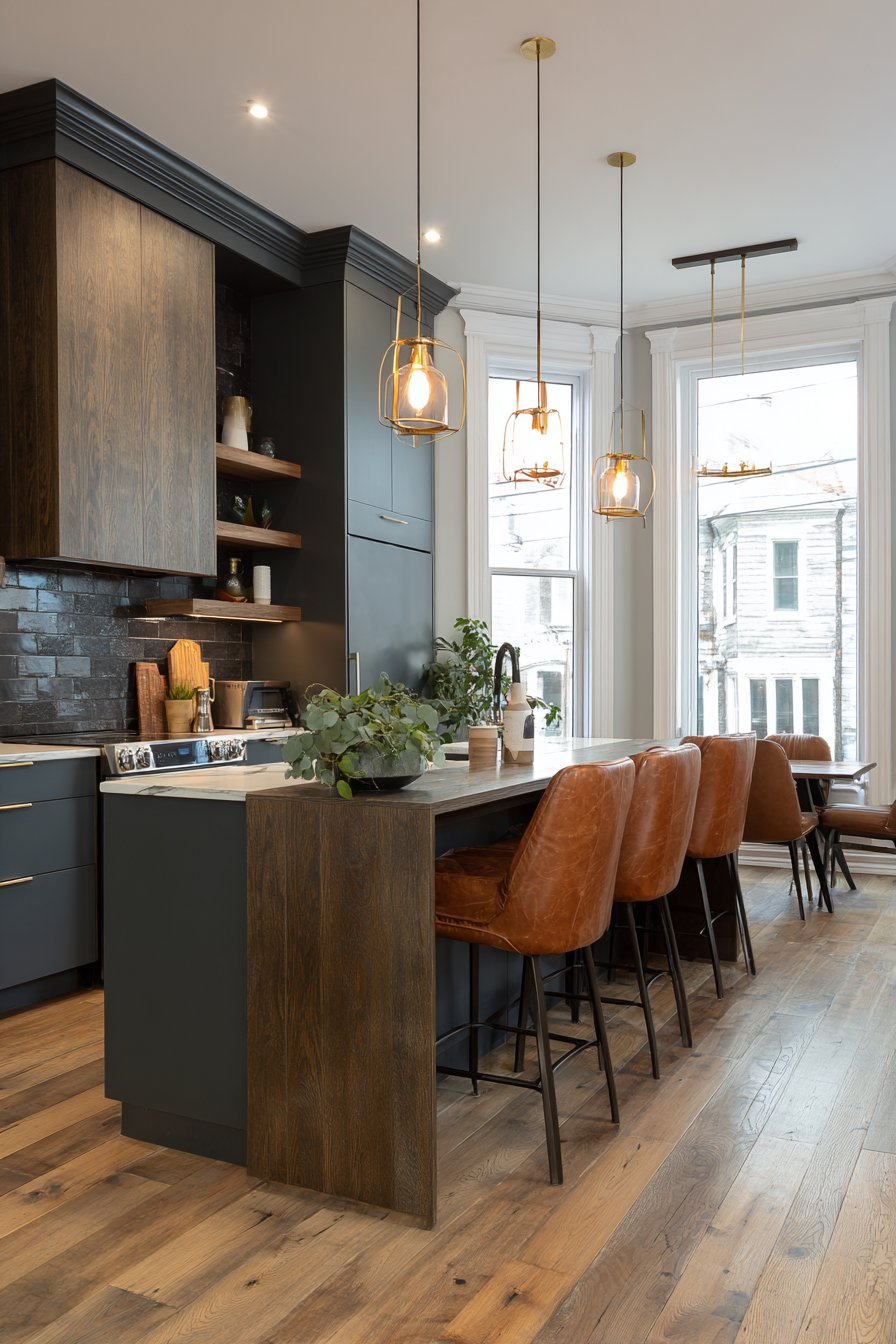
All appliances feature matching stainless steel finishes, creating visual cohesion that transforms individual elements into a unified composition. This complete commitment to material consistency demonstrates the power of thoughtful planning—rather than mixing finishes or allowing appliances to appear as separate entities, this approach treats them as integral parts of a larger design vision. The result is a kitchen that feels intentional and complete rather than assembled piece by piece over time.
Warm honey-toned hardwood floors and pendant lighting with brass accents soften the metallic palette, preventing the extensive use of stainless steel from feeling cold or institutional. The hardwood brings organic warmth and traditional residential character, its amber tones creating visual comfort that balances the cool metallic surfaces. Brass pendant fixtures contribute warm metallic accents that complement rather than compete with the stainless steel, their golden glow adding layers of visual interest and sophisticated contrast.
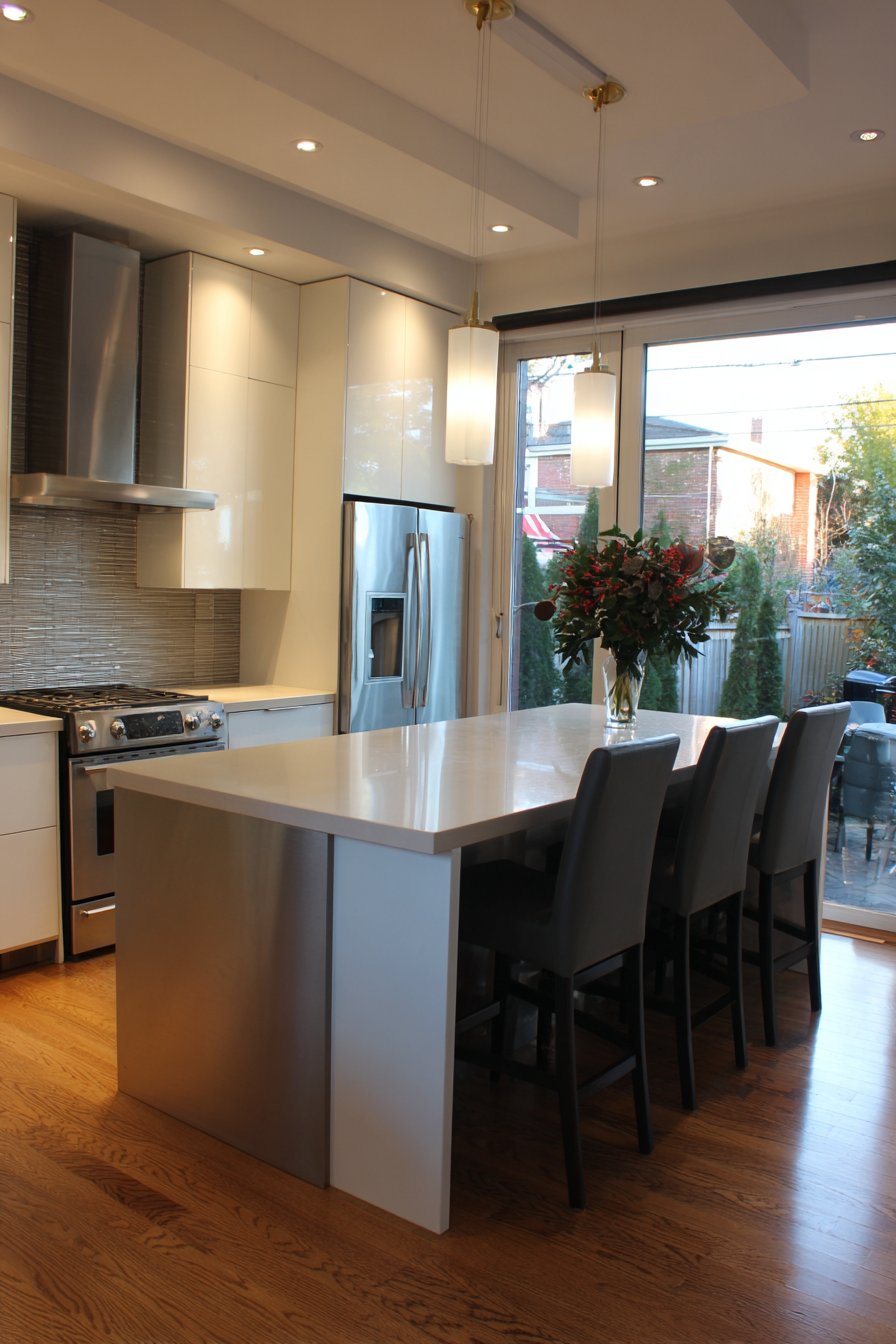
Golden hour natural lighting streaming through large windows captures the sophisticated balance between industrial materials and warm, inviting livability. As the afternoon sun bathes the space in warm light, it transforms the stainless steel surfaces, making them glow with amber highlights rather than reflecting cool tones. This demonstrates how stainless steel adapts to its lighting environment, taking on the character of surrounding light rather than imposing a single cold aesthetic regardless of conditions.
Key Design Tips:
- Extend cabinets to ceiling height to maximize storage while creating impressive visual impact and eliminating dust-catching gaps.
- Add texture to large metal surfaces through grain patterns or directional finishes to create visual interest and disguise wear.
- Use peninsulas as space dividers to maintain open-plan flow while creating functional separation between cooking and dining areas.
- Introduce warm materials strategically through flooring, upholstery, and lighting to balance cool metallic surfaces and create inviting atmospheres.
- Plan for natural light with large windows positioned to take advantage of golden hour light that warms stainless steel surfaces beautifully.
Why These Stainless Steel Kitchen Designs Represent the Best in Contemporary Interior Design
The ten stainless steel kitchen designs explored in this article represent the pinnacle of contemporary kitchen design, each demonstrating why stainless steel has become the material of choice for discerning homeowners and professional designers. These spaces succeed because they understand and leverage the unique properties of stainless steel—its durability, hygienic surface, reflective qualities, and professional aesthetic—while carefully balancing these characteristics with complementary materials and thoughtful design decisions.
Modern stainless steel kitchens excel at creating professional-grade culinary environments in residential settings. The restaurant-quality functionality these designs provide cannot be overstated—commercial-grade appliances, professional work surfaces, and chef-level organization systems transform home cooking from basic meal preparation into genuine culinary expression. Home cooks who invest in these kitchen designs find themselves empowered to attempt more ambitious recipes and techniques, knowing their equipment and workspace can support their culinary ambitions.
Contemporary kitchen design increasingly values transparency and honesty in materials, and stainless steel embodies these principles perfectly. Unlike materials that hide their true nature under veneers or finishes, stainless steel presents itself authentically—its surface may be brushed or polished, but it remains fundamentally honest about what it is. This authenticity resonates with contemporary design values that favor genuine materials over imitations, celebrating rather than concealing the properties that make each material unique.
The versatility demonstrated across these ten designs proves that stainless steel adapts successfully to multiple aesthetic directions. Whether paired with warm walnut wood for contemporary elegance, combined with exposed brick for industrial chic, or set against white marble for transitional sophistication, stainless steel proves itself a remarkably flexible material. This adaptability makes it an intelligent investment—unlike materials that lock homeowners into specific styles, stainless steel can evolve through multiple design iterations simply by changing surrounding elements.
Practical considerations make these stainless steel kitchen designs exceptionally smart choices for real-world living. The hygienic properties of stainless steel cannot be matched by most other surfaces—its non-porous nature resists bacterial growth, while its durability means it won’t chip, crack, or harbor hidden moisture that could promote mold growth. For families concerned about food safety and kitchen cleanliness, these practical benefits provide peace of mind that more decorative materials cannot offer.
The professional aesthetic that stainless steel brings to residential kitchens creates spaces that inspire confidence and elevate everyday cooking. There’s psychological power in working in an environment that looks and feels professional—it encourages attention to technique, respect for ingredients, and pride in the cooking process. These stainless steel kitchens transform daily meal preparation from mundane routine into opportunities for creative expression and culinary achievement.
Space optimization features prominently in many of these designs, demonstrating how stainless steel contributes to functional efficiency. Open stainless steel shelving maximizes storage without visual weight, integrated appliances create seamless work zones, and reflective surfaces bounce light to make spaces feel more expansive. For urban dwellers working with limited square footage, these space-efficient strategies make stainless steel an intelligent choice that delivers both style and substance within compact footprints.
Material longevity makes stainless steel kitchen investments economically sound over extended timeframes. While initial costs may exceed some alternatives, the exceptional durability of quality stainless steel means these kitchens maintain their appearance and functionality for decades rather than years. Unlike surfaces that fade, stain, or deteriorate with normal use, properly maintained stainless steel actually develops a more beautiful patina over time, its subtle wear patterns telling the story of countless meals prepared and shared.
The reflective properties of stainless steel create dynamic environments that change throughout the day as natural light shifts and moves through the space. Morning kitchens bathed in cool dawn light present different moods than afternoon spaces warmed by golden sunlight. This living quality means stainless steel kitchens never become static or boring—they respond to their environment, creating ever-changing visual interest that keeps spaces feeling fresh and engaging even after years of daily use.
Environmental considerations increasingly influence material choices, and stainless steel offers sustainable advantages that align with contemporary values. The material is highly recyclable, with most stainless steel containing significant recycled content. Its longevity means fewer replacements over building lifetimes, reducing resource consumption and waste generation. For environmentally conscious homeowners, these sustainability credentials make stainless steel a responsible choice that doesn’t compromise aesthetic or functional goals.
These ten designs demonstrate optimal material combinations that prevent stainless steel kitchens from feeling cold or institutional. Warm wood tones, natural stone surfaces, leather upholstery, and thoughtful lighting all contribute to creating spaces that balance the professional character of stainless steel with residential warmth and comfort. Understanding these material relationships enables designers to create stainless steel kitchens that feel inviting and livable rather than clinical or sterile.
The integration of commercial kitchen strategies into residential design represents a significant trend in contemporary kitchens, and these stainless steel designs lead this movement. Professional work tables, commercial-grade ventilation, industrial storage solutions, and chef-level appliances bring restaurant functionality into homes, enabling serious cooking while maintaining aesthetic sophistication. This democratization of professional kitchen design empowers home cooks to achieve results that would have been impossible in traditional residential kitchens.
Minimalist design principles find natural expression in stainless steel kitchens, where the material’s inherent qualities reduce the need for decorative additions. Clean lines, seamless surfaces, and material honesty allow these spaces to embrace simplicity without feeling stark or incomplete. For adherents of minimalist philosophy, stainless steel provides the perfect foundation for creating serene, uncluttered environments focused on essential elements rather than decorative excess.
Urban loft conversions and industrial-style homes find their ideal kitchen material in stainless steel, which bridges the gap between building heritage and contemporary function. The material respects the industrial character of converted spaces while providing modern performance and hygiene. Exposed ductwork, concrete floors, and brick walls gain sophisticated counterpoints in stainless steel elements that honor historical context while meeting current needs.
Investment value considerations make these stainless steel kitchen designs particularly attractive to homeowners concerned with property values. Quality kitchen renovations consistently deliver strong returns, and professional-grade stainless steel kitchens appeal to serious buyers who recognize the value of superior materials and thoughtful design. Real estate professionals consistently note that well-designed stainless steel kitchens enhance property appeal and command premium prices in competitive markets.
The timeless aesthetic quality of stainless steel prevents these designs from appearing dated as trends evolve and styles change. Unlike materials strongly associated with specific decades or design movements, stainless steel maintains a neutral, enduring character that transcends temporary fashion. Homeowners investing in these kitchens can feel confident their spaces will remain aesthetically relevant for decades rather than appearing dated within a few years.
Culinary performance considerations elevate these stainless steel kitchen designs beyond mere aesthetic exercises into functional investments in cooking capability. Professional-grade work surfaces maintain consistent temperatures for pastry work, commercial ventilation handles high-heat cooking without overwhelming spaces with smoke and steam, and quality appliances deliver precise temperature control that enables sophisticated techniques. For passionate cooks, these functional advantages justify the investment in stainless steel kitchen design.
The psychological impact of beautiful, functional spaces should not be underestimated, and these stainless steel kitchens deliver emotional rewards alongside practical benefits. Pride in one’s kitchen encourages more home cooking, healthier eating habits, and increased social entertaining. The pleasure of working in a well-designed space enhances daily life in ways that extend far beyond simple utility, making these kitchen investments valuable for their contribution to overall quality of life and household wellbeing.
Maintenance efficiency represents another compelling advantage of these stainless steel kitchen designs. While some worry about fingerprints and water spots, modern brushed and textured finishes minimize visible marks, while the fundamental ease of cleaning stainless steel surfaces saves countless hours over the life of the kitchen. Simple wiping with appropriate cleaners maintains appearance without the special treatments required by more delicate materials like natural stone or certain wood finishes.
The design continuity across appliances, surfaces, and fixtures creates visual harmony that elevates these kitchens above spaces where elements appear randomly assembled. When refrigerators, ranges, hoods, sinks, and countertops share material qualities and finishes, the result is a cohesive environment that feels intentionally designed rather than accidentally accumulated. This unity of vision demonstrates sophisticated design thinking that creates spaces greater than the sum of their individual parts.
Lighting design integration works exceptionally well in stainless steel kitchens, where reflective surfaces amplify and distribute both natural and artificial light throughout the space. Strategic placement of windows, skylights, pendant fixtures, and under-cabinet lighting creates layered illumination that enhances functionality while showcasing the material’s inherent beauty. The interplay between light sources and reflective surfaces creates atmospheric depth that transforms these kitchens from simple work spaces into dynamic environments.
Professional photography and documentation of these stainless steel kitchen designs reveals their photogenic qualities—they capture beautifully in images that translate well across digital and print media. For homeowners who enjoy sharing their spaces on social media or for those concerned with documentation for insurance or resale purposes, this photographic appeal provides unexpected benefits. The way stainless steel reflects and interacts with light creates naturally dramatic images without requiring extensive staging or artificial enhancement.
Cultural associations with professional cooking and culinary excellence make stainless steel kitchens aspirational spaces that connect homeowners to the world of serious gastronomy. Television cooking shows, celebrity chef restaurants, and culinary schools all feature stainless steel kitchens, creating positive associations that extend beyond mere aesthetics into lifestyle aspiration. Owning a kitchen that evokes these professional environments brings a sense of connection to culinary culture that inspires better cooking and greater food appreciation.
Customization possibilities within stainless steel design allow these kitchens to be tailored precisely to individual needs and preferences. Custom fabrication enables integrated features, unusual dimensions, and specific functional elements that standardized materials cannot accommodate. Whether incorporating a custom drainboard, creating an unusual sink configuration, or designing a unique island shape, stainless steel’s workability allows designers to create truly personalized solutions.
The hygienic advantages of stainless steel take on particular importance in contemporary kitchens where food safety awareness has increased dramatically. The material’s resistance to bacterial growth, ease of sanitization, and impermeability to moisture make it the gold standard in environments where hygiene matters. For families with food allergies, compromised immune systems, or simply high standards for cleanliness, these advantages provide tangible health benefits beyond aesthetic considerations.
Resale appeal considerations make stainless steel kitchen investments particularly shrewd for homeowners who may eventually sell their properties. Real estate markets consistently show that updated kitchens with quality materials command premium prices and sell more quickly than homes with outdated or inferior kitchen spaces. Professional-grade stainless steel kitchens appeal to a broad range of buyers, from serious home cooks to busy professionals who appreciate low-maintenance quality.
The acoustic properties of these kitchens deserve mention—while hard surfaces can potentially create echoey environments, thoughtful design incorporating sound-absorbing elements like wood, upholstery, and textile window treatments prevents uncomfortable acoustics. The proper balance of reflective and absorptive materials creates kitchens that sound as good as they look, facilitating comfortable conversation during cooking and entertaining.
Global design influence reflects the international appeal of stainless steel kitchens—this aesthetic transcends cultural boundaries and geographical locations. From Tokyo to Toronto, Stockholm to Singapore, stainless steel kitchens communicate contemporary sophistication in a visual language that requires no translation. This universal appeal makes these designs relevant regardless of location or cultural context.
Technology integration finds natural accommodation in stainless steel kitchens, where modern smart appliances, charging stations, and integrated audio systems can be incorporated seamlessly. The contemporary aesthetic of stainless steel aligns perfectly with high-tech features, creating spaces where cutting-edge functionality feels at home rather than awkwardly imposed on traditional design.
The emotional satisfaction of investing in quality materials and craftsmanship provides intangible rewards that enhance daily life. Pride of ownership, confidence in material longevity, and pleasure in beautiful functionality create positive associations that make time spent in these kitchens genuinely enjoyable. These psychological benefits, while difficult to quantify, significantly impact household happiness and life satisfaction.
Commercial-grade durability ensures these stainless steel kitchens withstand the demands of active households without showing premature wear. Where lesser materials might chip, stain, or deteriorate under regular use, quality stainless steel maintains its appearance and performance through decades of meal preparation. This resilience makes these kitchens particularly suitable for families with children, frequent entertainers, or anyone who uses their kitchen intensively.
The educational value of working in well-designed spaces shouldn’t be overlooked—cooking in professional-quality environments encourages skill development and culinary experimentation. When your kitchen looks and functions like a professional space, you’re more likely to approach cooking with the seriousness and attention it deserves, leading to improved techniques and better results.
Investment in stainless steel kitchen design represents a commitment to quality over quantity, prioritizing enduring value over short-term trends. This philosophy aligns with sustainable living principles and mindful consumption, creating spaces that serve households well for decades rather than requiring frequent replacement or renovation. The long-term perspective these designs embody makes them particularly appropriate for our current moment of heightened environmental awareness and resource consciousness.
Conclusion:
The journey through these ten exceptional stainless steel kitchen designs reveals the remarkable versatility, functionality, and enduring appeal of this outstanding material. From compact urban apartments to expansive culinary workshops, from minimalist restraint to industrial exuberance, stainless steel proves itself capable of supporting diverse design visions while maintaining its core characteristics of durability, hygiene, and professional-grade performance. These spaces demonstrate that choosing stainless steel means embracing a design philosophy that values authenticity, quality, and thoughtful integration of form and function.
As you consider your own kitchen design or renovation, let these examples inspire confidence in exploring stainless steel’s possibilities. Whether you’re drawn to the dramatic impact of floor-to-ceiling stainless installations, the practical efficiency of commercial-grade work surfaces, or the sophisticated balance of transitional designs that blend traditional warmth with contemporary materials, there’s a stainless steel approach that can fulfill your culinary dreams and aesthetic aspirations.
The key to success lies in understanding how to balance stainless steel’s inherent character with complementary materials and thoughtful design decisions. Warm wood tones, natural stone surfaces, strategic lighting, and careful attention to proportion and scale transform potentially cold metallic spaces into inviting environments where cooking becomes a pleasure rather than chore. Don’t fear the material—embrace it, understanding that with proper planning and design consideration, stainless steel creates kitchens that serve households beautifully for decades.
Start your stainless steel kitchen journey by identifying which of these ten design approaches resonates most strongly with your personal style and functional needs. Consider your cooking habits, entertaining patterns, spatial constraints, and aesthetic preferences. Consult with experienced kitchen designers and fabricators who understand how to work with stainless steel, leveraging their expertise to create custom solutions tailored to your specific situation.
Remember that investing in a stainless steel kitchen means investing in quality that endures—these are not disposable spaces designed for short-term trends but rather thoughtful environments created to serve generations of cooks, meals, and memories. The time, consideration, and resources devoted to creating an exceptional stainless steel kitchen pay dividends daily through enhanced functionality, aesthetic pleasure, and the simple satisfaction of working in a space that reflects your values and supports your culinary ambitions. Your dream kitchen awaits—let stainless steel be the foundation upon which you build it.
