


In today’s urban landscape, small space living has evolved from a compromise into an art form. As housing costs rise and city living becomes more prevalent, the ability to create beautiful, functional spaces within limited square footage has become essential. The challenge isn’t merely about fitting furniture into tight quarters—it’s about crafting environments that nurture well-being, inspire creativity, and adapt to our ever-changing needs. Thoughtful interior design transforms constraints into opportunities, proving that square footage doesn’t dictate quality of life.
The beauty of small space design lies in its clever problem-solving and intentional choices. Every element must earn its place, serving multiple purposes while contributing to the overall aesthetic. From studio apartments that seamlessly blend sleeping, working, and entertaining zones to compact kitchens that rival their larger counterparts in functionality, smart design makes the impossible possible. The spaces we’ll explore demonstrate how strategic furniture selection, vertical storage solutions, and multi-functional pieces create homes that feel spacious and welcoming.
This article presents ten innovative small space solutions, each addressing different areas of the home. You’ll discover how to maximize studio apartments, optimize tiny kitchens, create serene bedrooms with ample storage, and even fit nurseries and home offices into the smallest nooks. These designs share common principles: they embrace light, utilize vertical space, incorporate flexible furniture, and maintain clean lines. Whether you’re downsizing, living in your first apartment, or simply seeking to make the most of every inch, these ideas will inspire you to see your space through fresh eyes.
1. The Ultimate Multi-Functional Studio Apartment
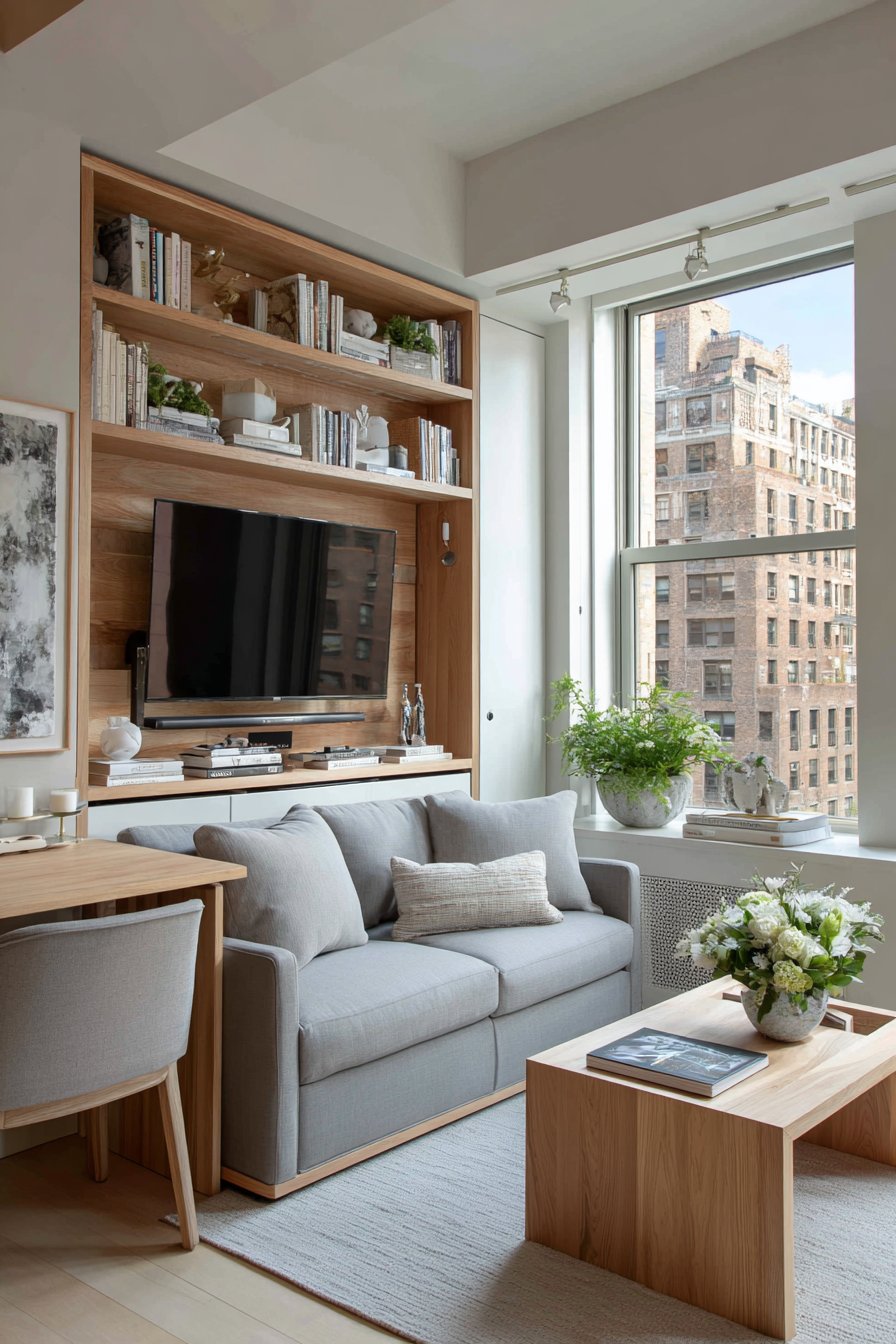
Stepping into this compact studio apartment reveals a masterclass in spatial efficiency. The star of the space is an ingenious multi-functional wall unit in light oak with matte white accents. This hardworking piece features a fold-down desk that disappears when not needed, integrated shelving for books and décor, and a concealed Murphy bed mechanism that transforms the living area into a bedroom within seconds. The light oak finish brings warmth without heaviness, while the white accents create an airy, expansive feel that defies the room’s modest dimensions.
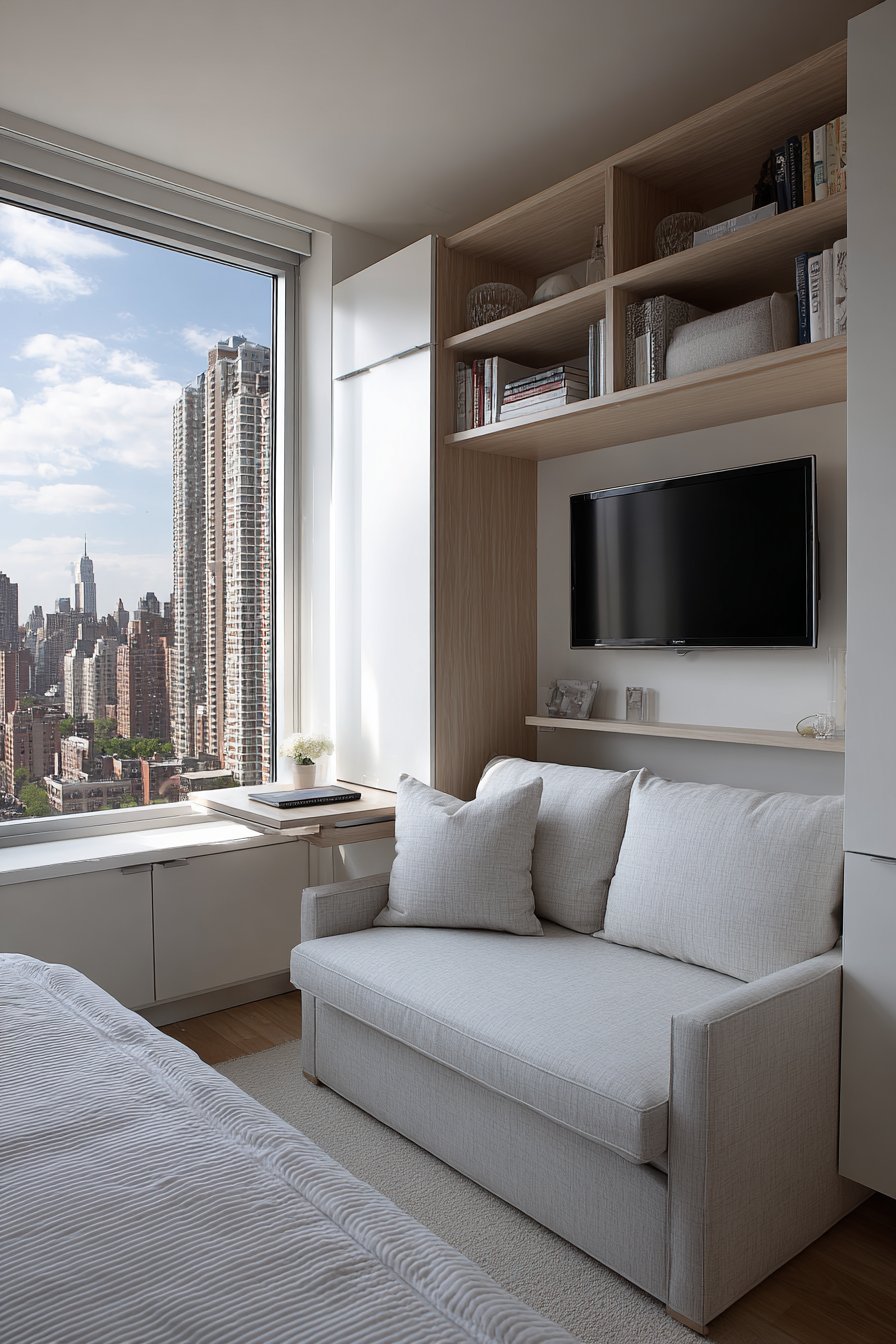
A small loveseat upholstered in soft grey linen provides comfortable seating without overwhelming the space. Its neutral tone complements the wall unit while maintaining visual calm. Positioned opposite a wall-mounted TV, the loveseat creates a cozy entertainment zone that doesn’t compromise precious floor space.
The absence of bulky entertainment centers or traditional bed frames demonstrates how eliminating standard furniture pieces opens up possibilities. Every item serves multiple purposes or maintains a minimal footprint, allowing the apartment to breathe.
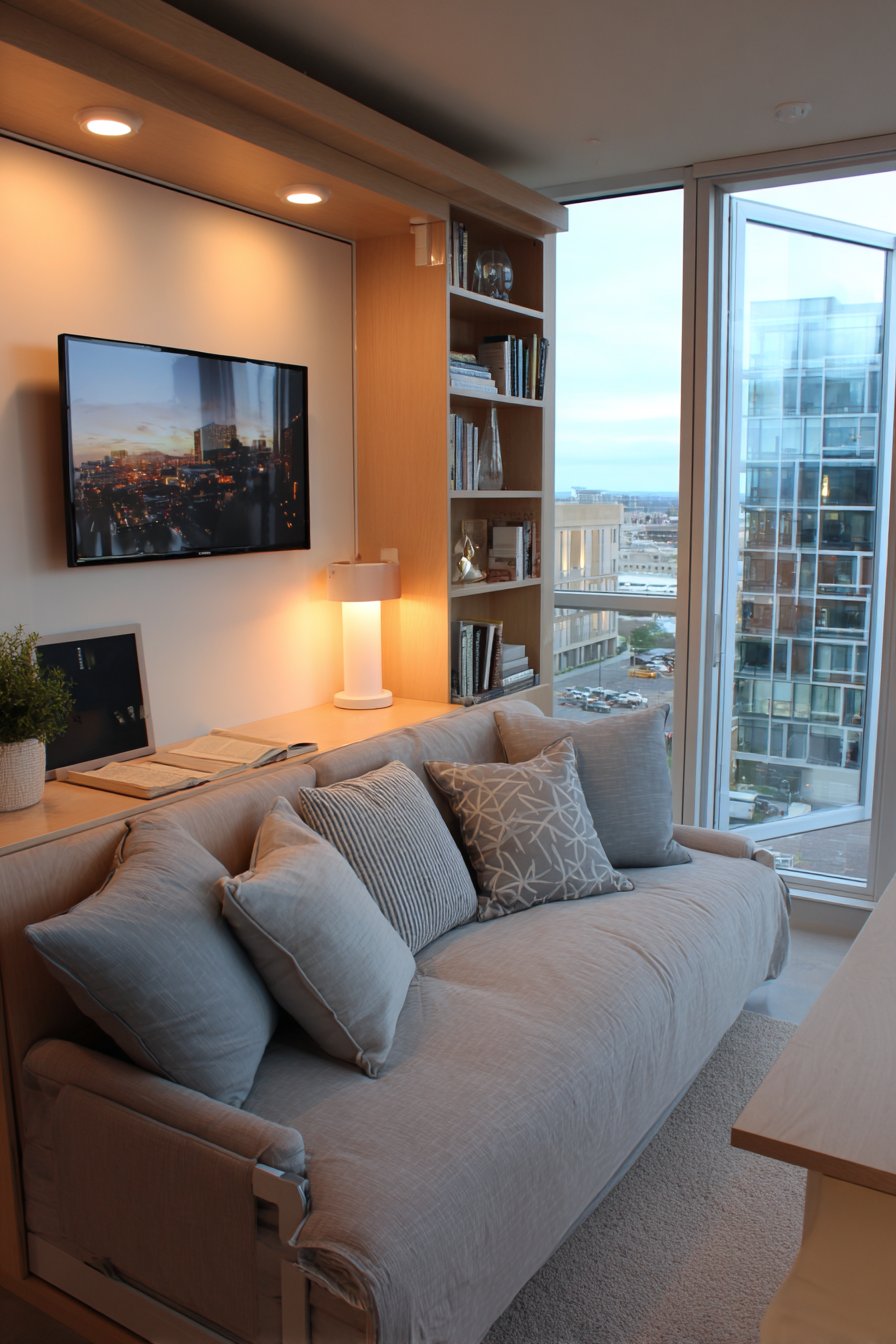
Natural light floods through a large window, the room’s greatest asset. This abundant daylight illuminates the efficient layout, reducing the need for artificial lighting during daytime hours. The window also provides a connection to the outside world, preventing the studio from feeling claustrophobic.
Strategic furniture placement ensures the natural light reaches every corner, bouncing off the light oak and white surfaces to enhance brightness. This careful consideration of light sources transforms a small space into an inviting haven.
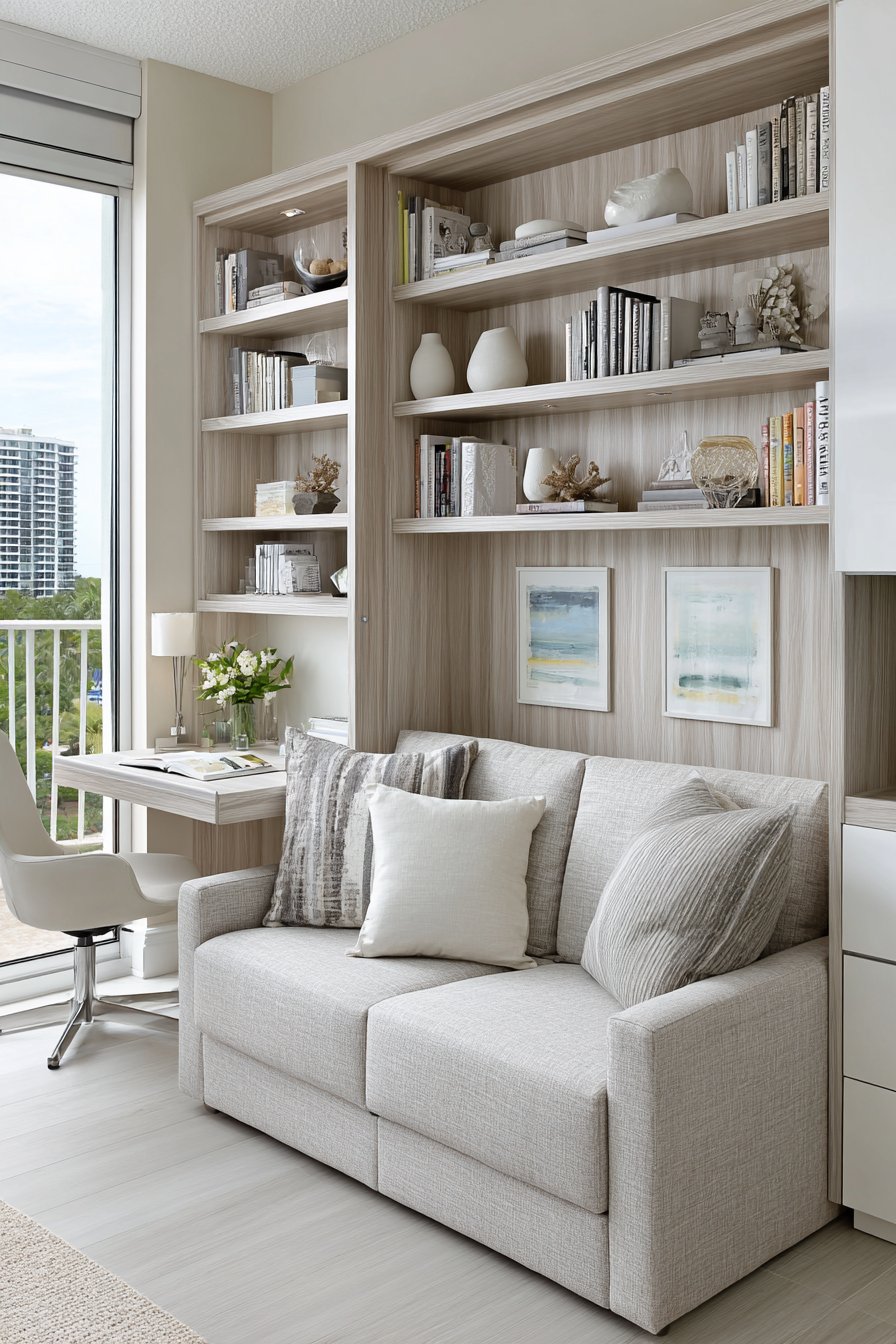
The genius of this design lies in its adaptability. Morning coffee happens at the fold-down desk, which serves as a home office during work hours. Evenings bring the loveseat into focus for relaxation and entertainment. When night falls, the Murphy bed descends smoothly, converting the living room into a comfortable bedroom. This seamless transformation between functions eliminates the need for separate rooms, proving that smart design can pack multiple lifestyles into a single compact footprint.
Key Design Tips:
- Invest in a quality Murphy bed system with an attractive exterior that functions as daytime storage or display.
- Choose a loveseat over a full sofa to maintain walkways and visual openness.
- Mount the TV on the wall to eliminate furniture bulk and create flexibility in room arrangement.
- Prioritize natural light by keeping window treatments minimal and using reflective surfaces nearby.
- Select furniture in light, neutral tones that visually recede rather than dominate the space.
2. The Galley Kitchen That Maximizes Every Inch
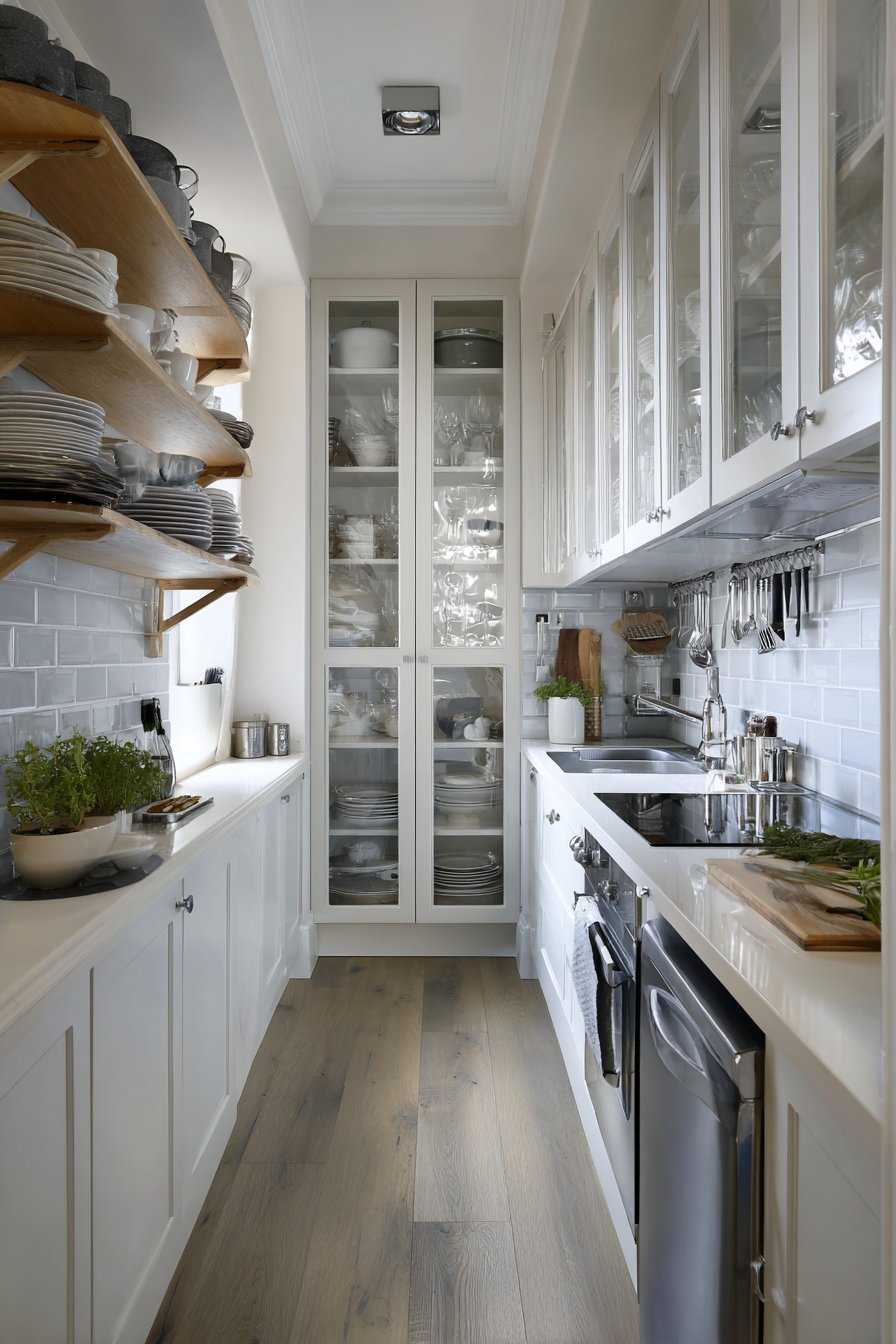
This small space kitchen proves that cooking prowess doesn’t require sprawling square footage. Floor-to-ceiling cabinetry in crisp white creates an illusion of height while providing substantial storage capacity. The upper cabinets feature glass-front doors, a strategic choice that adds visual depth without the visual weight of solid doors. Through these transparent panels, neatly arranged dishes and glassware become part of the décor, encouraging organization while making frequently used items easy to locate.
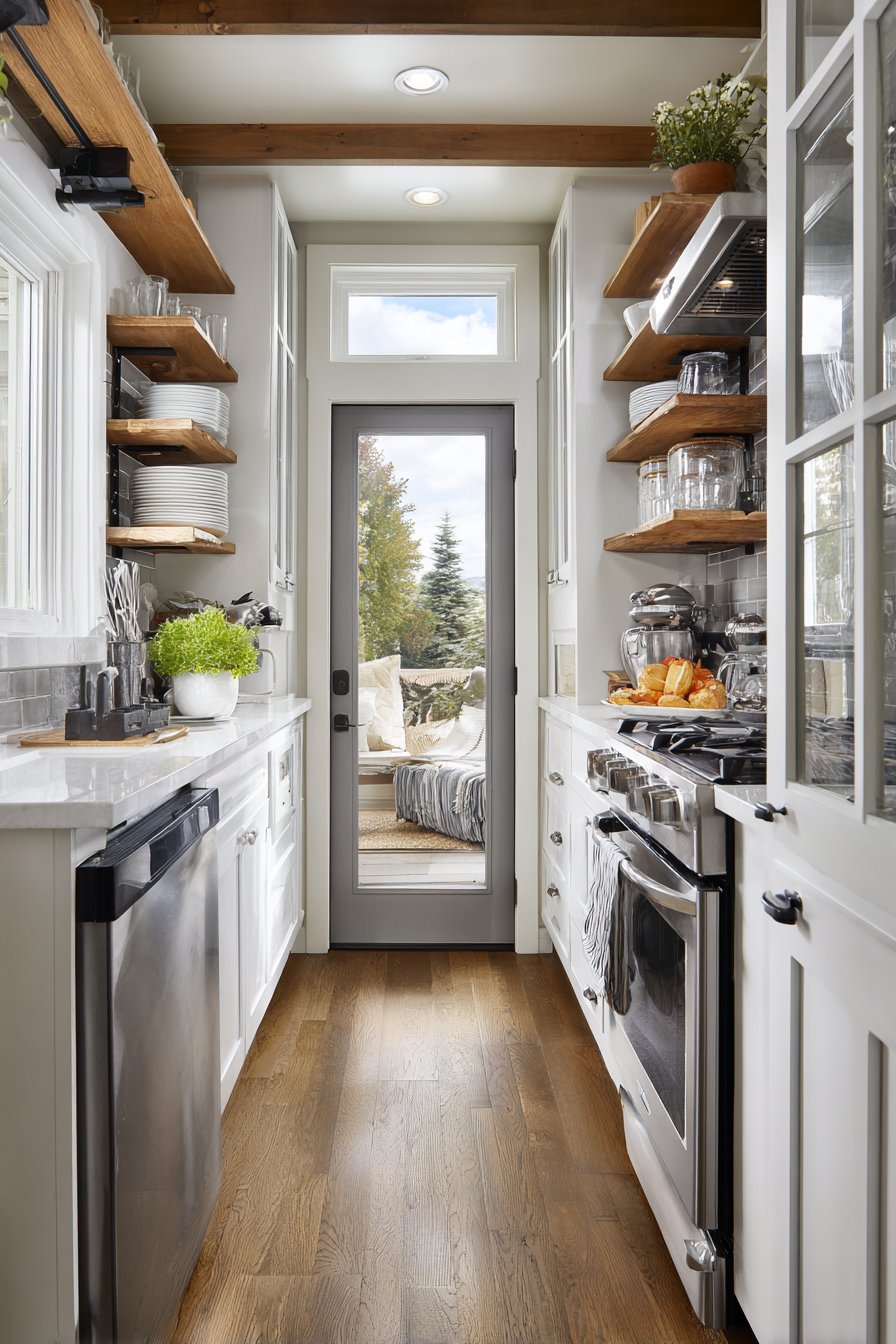
The narrow galley layout channels efficiency, positioning everything within easy reach. A compact two-burner induction cooktop offers modern cooking technology in a space-saving format, generating less heat than traditional ranges while providing precise temperature control.
Below the counter, an under-counter refrigerator maintains the streamlined upper cabinetry line, preventing the bulky appliance from dominating the space visually. This thoughtful appliance selection demonstrates how compact alternatives can meet full-sized needs without compromise.
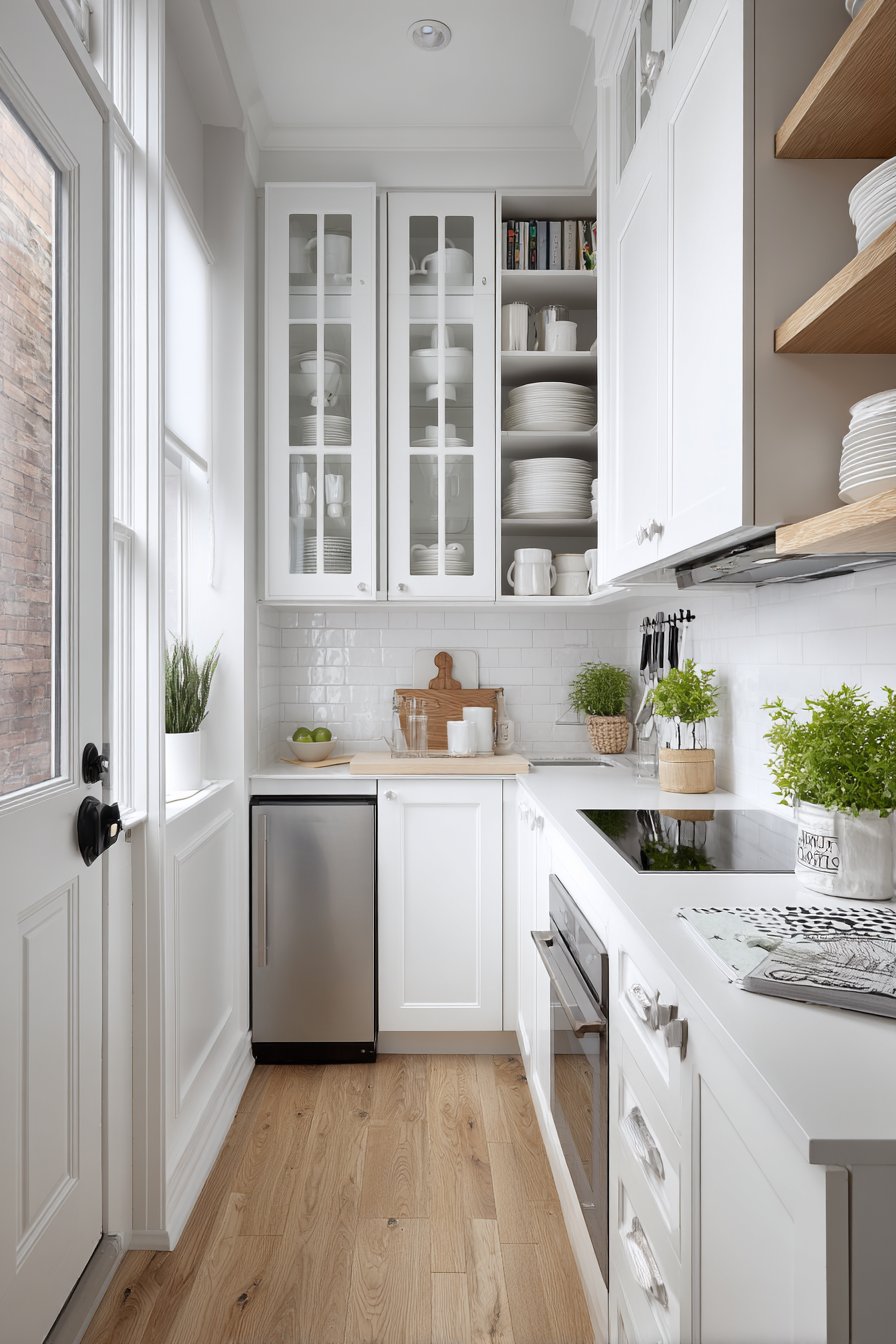
Open shelving with wooden brackets introduces warmth and accessibility to the design. These shelves display everyday dishes, keeping them within arm’s reach while adding personality through their arrangement. A magnetic knife strip mounted on the wall provides safe, space-efficient storage, while a hanging rail suspends frequently used utensils. These vertical storage solutions exemplify the small space mantra: when you can’t expand outward, expand upward. Every wall surface becomes valuable real estate for storage and organization.
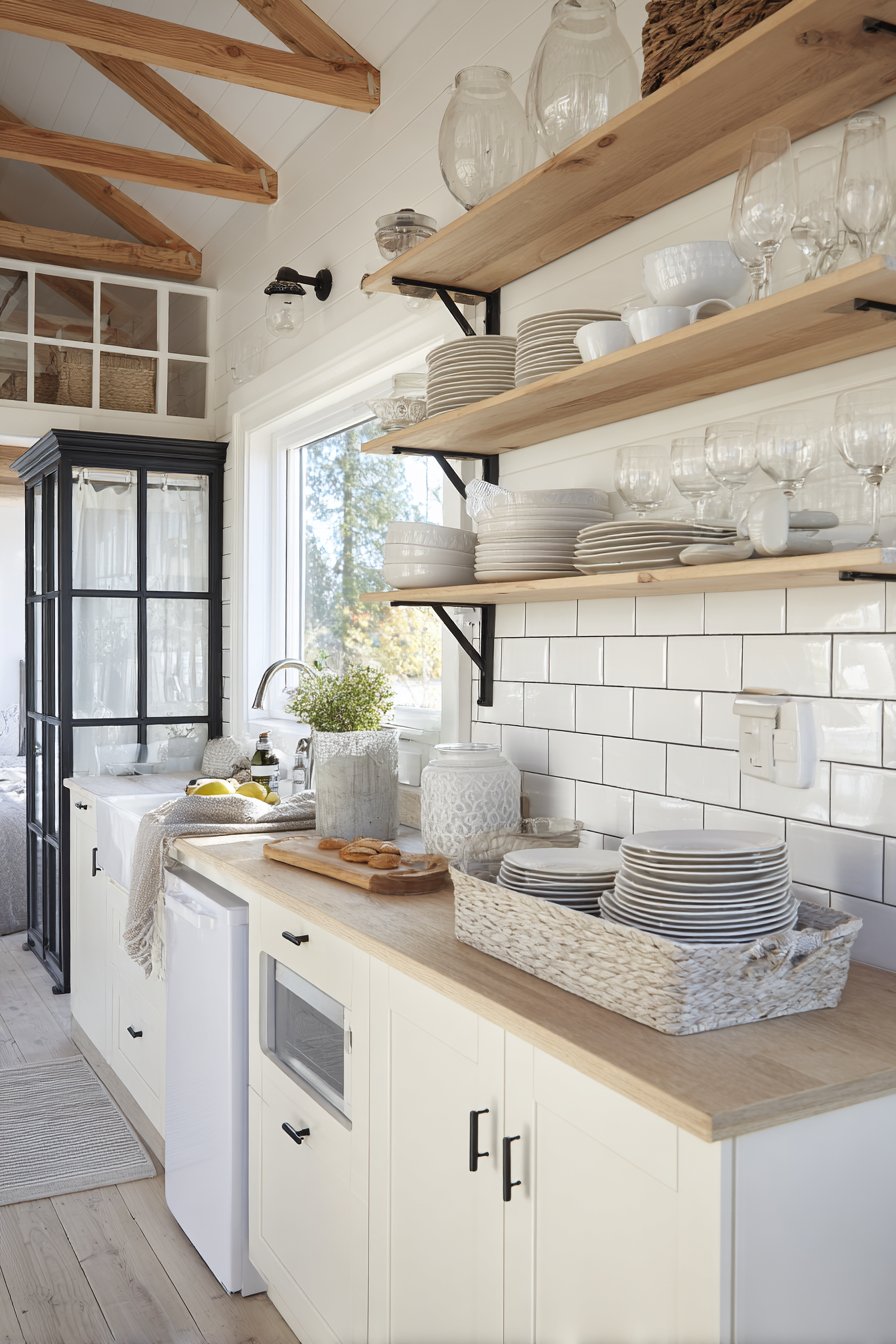
The subway tile backsplash serves multiple purposes beyond its classic aesthetic appeal. Its reflective glazed surface bounces natural daylight deeper into the space, amplifying the brightness from windows. The timeless white tiles complement the cabinetry while adding subtle texture through their beveled edges. This kitchen demonstrates that limitations breed creativity, with each design decision carefully considered to balance function, storage, and visual appeal within tight confines.
Key Design Tips:
- Install floor-to-ceiling cabinets to maximize storage and draw the eye upward, creating height perception.
- Use glass-front upper cabinets to prevent a closed-in feeling while displaying organized dishware.
- Choose compact, efficient appliances like induction cooktops that perform well in small footprints.
- Embrace open shelving for frequently used items to reduce cabinet door traffic and add visual interest.
- Utilize magnetic strips and hanging rails to keep counters clear and tools accessible.
3. The Bedroom That Conquers Clutter with Style
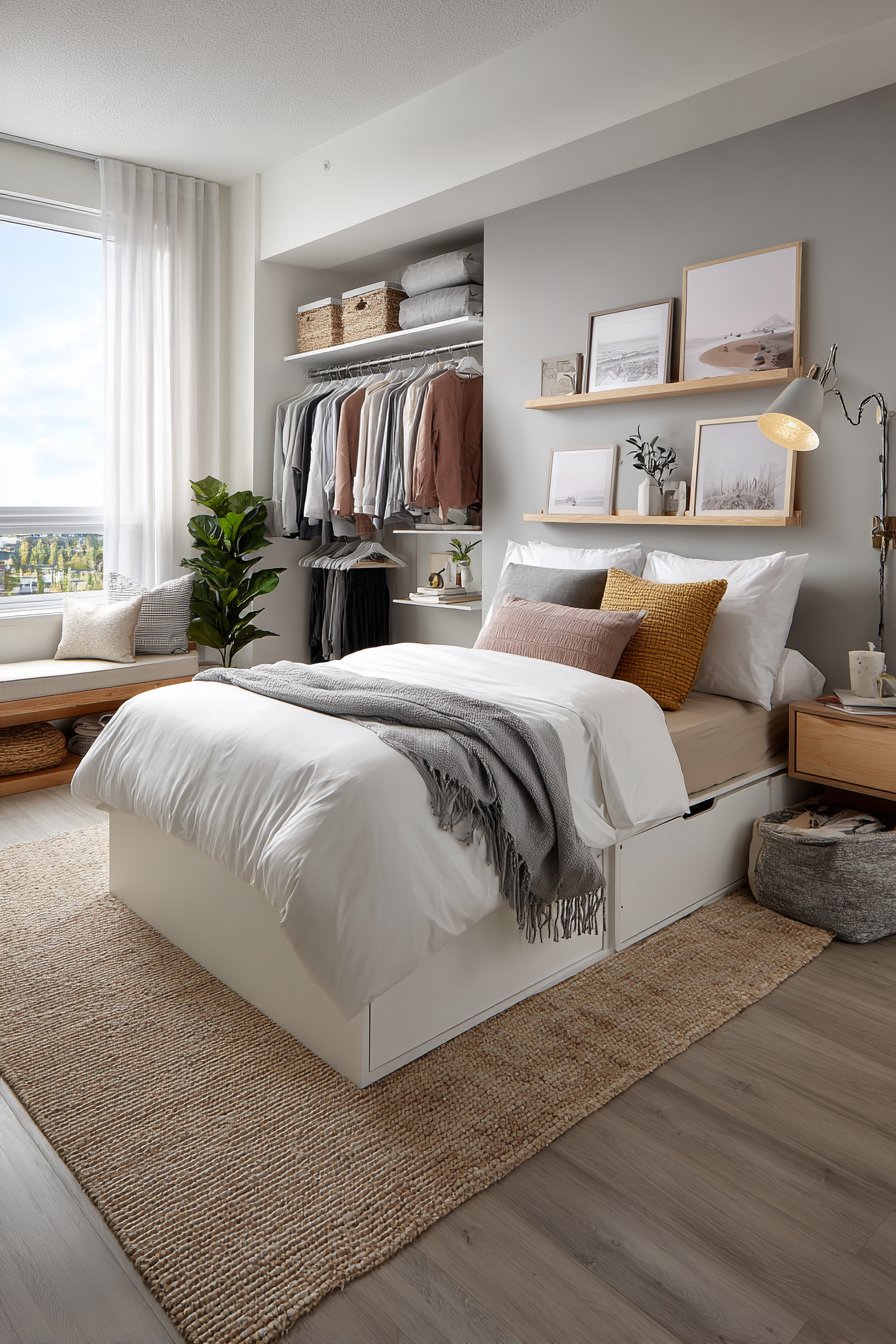
This small bedroom showcases how thoughtful storage integration creates serenity in compact sleeping quarters. The platform bed anchors the space with clean, contemporary lines while concealing storage drawers underneath. These built-in drawers eliminate the need for separate dressers, storing out-of-season clothing, extra bedding, or personal items discreetly. The low profile of the platform bed maintains visual openness, preventing the room from feeling cramped despite the limited floor area.
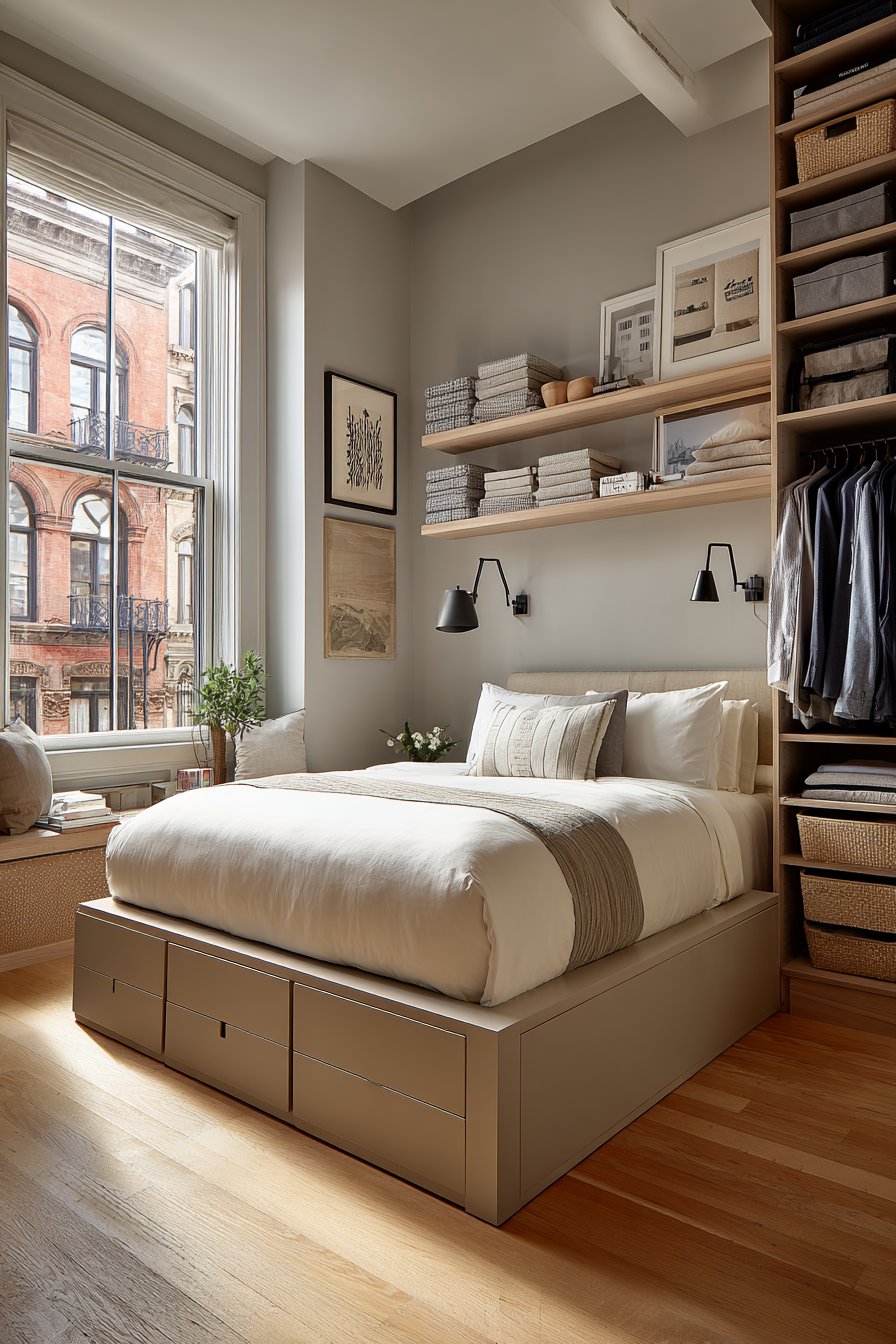
Floating nightstand shelves replace traditional bedside tables, offering surfaces for lamps, books, and alarm clocks without the visual weight of furniture legs. This wall-mounted approach keeps floor space clear for easier cleaning and movement.
Above the bed, vertical storage reaches toward the ceiling with a floor-to-ceiling closet featuring sliding doors. The sliding mechanism saves the swing space required by hinged doors, a crucial consideration in tight quarters. Wall-mounted clothing hooks provide additional hanging space for tomorrow’s outfit or frequently worn items.
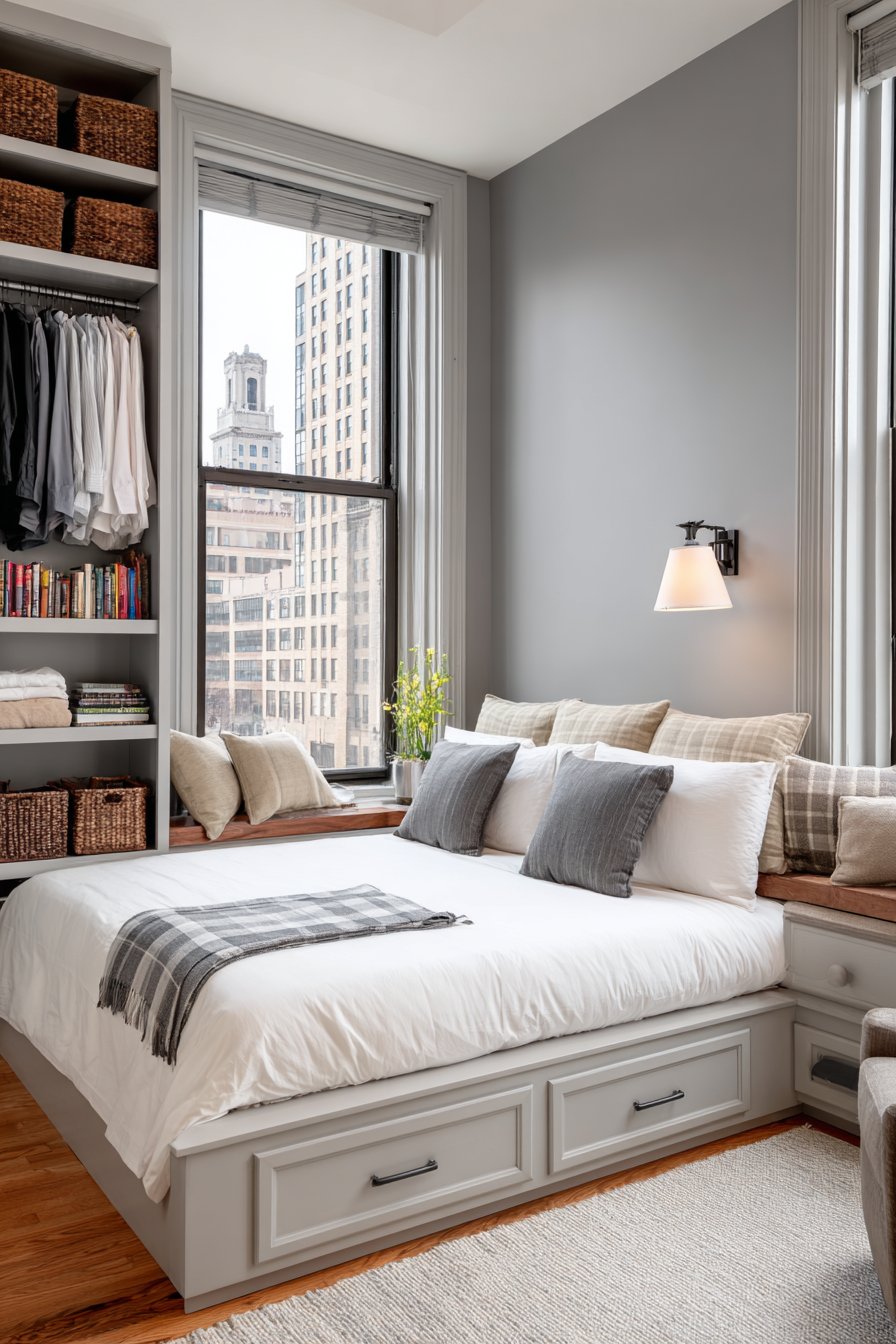
Soft grey walls create a calm, cocoon-like atmosphere that promotes relaxation and sleep. This neutral backdrop allows white bedding to appear crisp and inviting while letting natural wood accents provide warmth. The restrained color palette prevents visual chaos, allowing the eye to rest rather than jumping between competing hues. Natural wood appears in drawer fronts, closet doors, and decorative accents, introducing organic texture that softens the modern aesthetic.
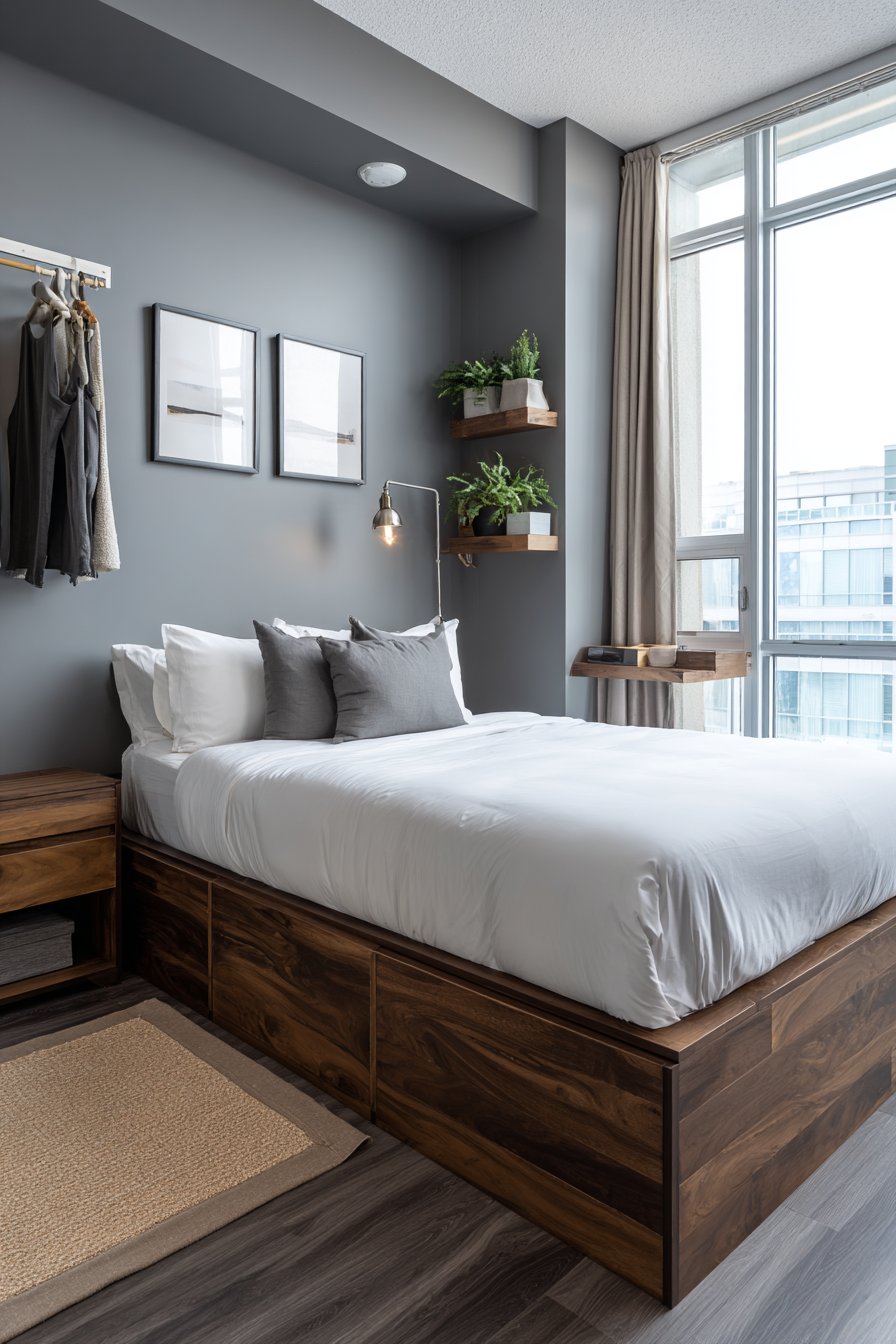
A compact reading corner maximizes the room’s functionality beyond sleep. A wall-mounted swing arm lamp illuminates a cozy chair or floor cushion without requiring a floor lamp that would consume precious space. This reading nook demonstrates how small bedrooms can accommodate multiple activities when furniture is carefully selected and positioned. The room proves that small doesn’t mean sacrificing comfort or personal touches—it simply requires more intentional planning.
Key Design Tips:
- Select platform beds with integrated storage to eliminate the need for additional furniture pieces.
- Install floating nightstands to maintain floor space and create a modern, streamlined look.
- Choose sliding closet doors over hinged ones to save the clearance space required for door swing.
- Use a neutral color palette with one or two accent tones to create visual calm.
- Add wall-mounted lighting fixtures to provide task lighting without consuming floor or surface space.
4. The Bathroom Where Transparency Creates Space
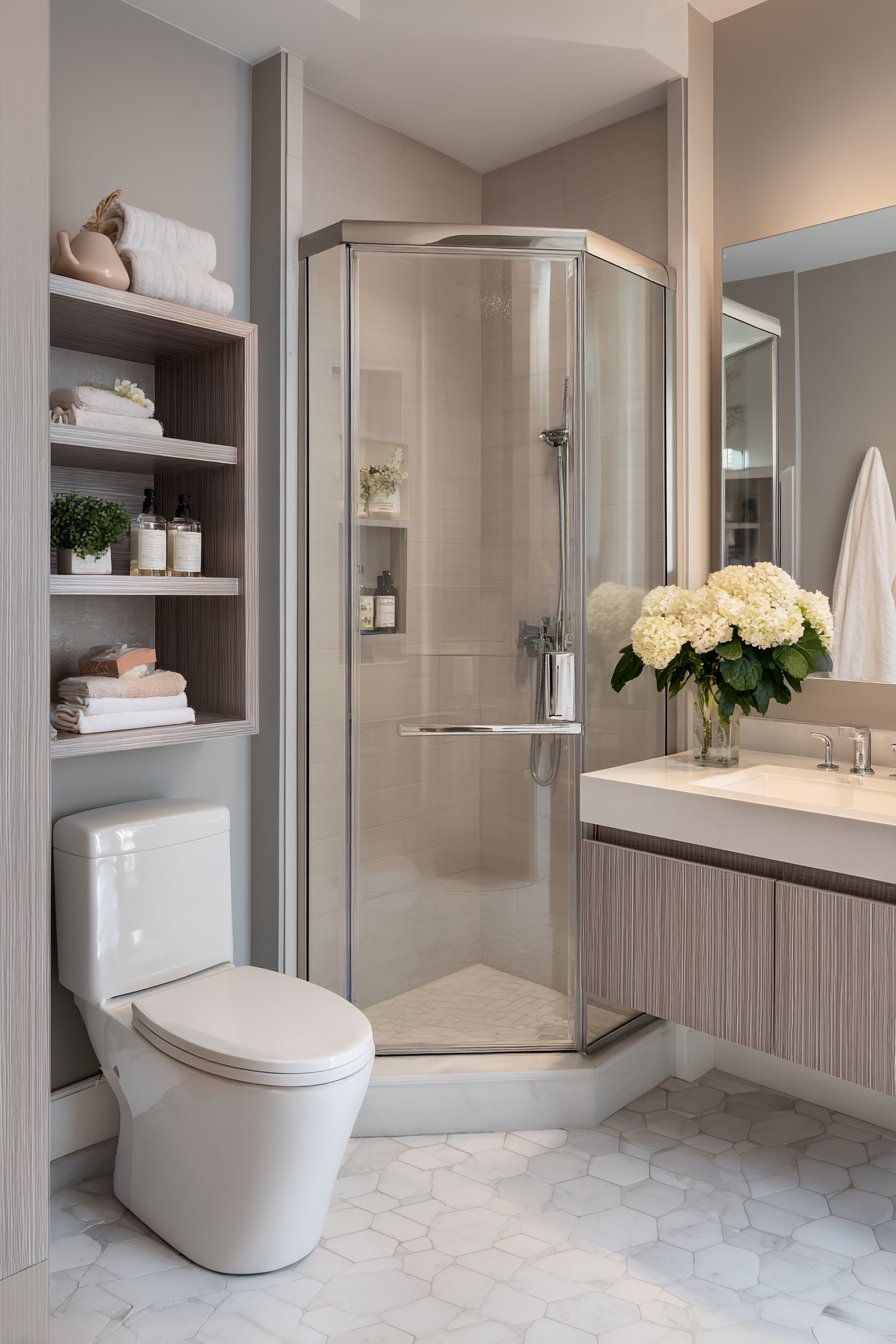
This compact bathroom demonstrates how strategic design choices can make a small footprint feel surprisingly spacious. The corner walk-in shower features a frameless glass enclosure that eliminates visual barriers, allowing the eye to travel uninterrupted across the entire room.
This transparency is crucial in small bathrooms, where solid shower curtains or framed enclosures would chop the space into even smaller segments. The glass lets light flow freely, preventing the shower area from becoming a dark, cave-like corner.
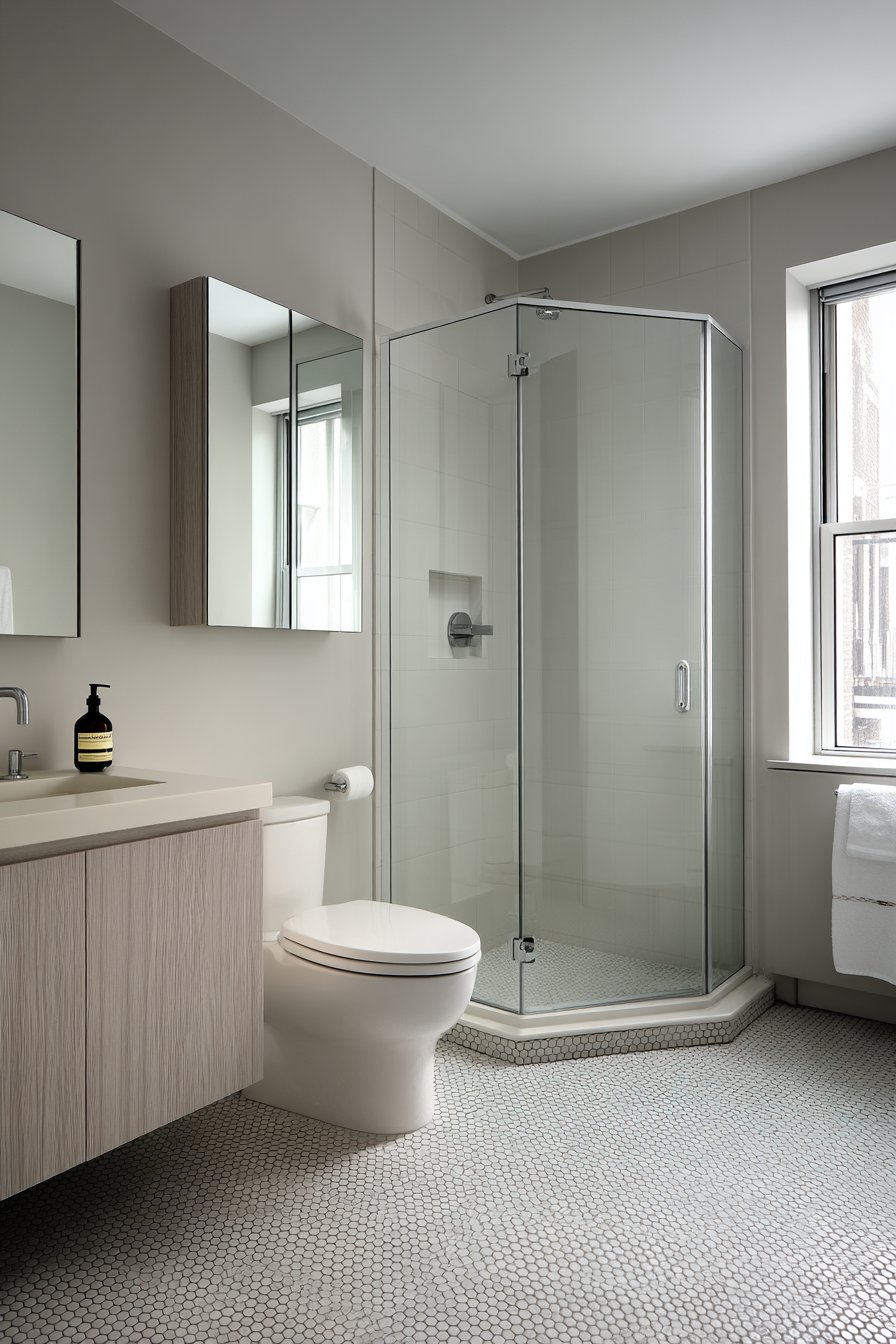
A wall-hung toilet and floating vanity revolutionize the room’s sense of space by revealing the floor beneath. This exposed floor area tricks the eye into perceiving more square footage than actually exists. The floating vanity in light wood provides essential storage without the bulkiness of traditional vanities that sit on the floor. An integrated towel bar on the vanity’s side eliminates the need for separate towel racks, demonstrating how multi-functional elements reduce clutter and visual noise.
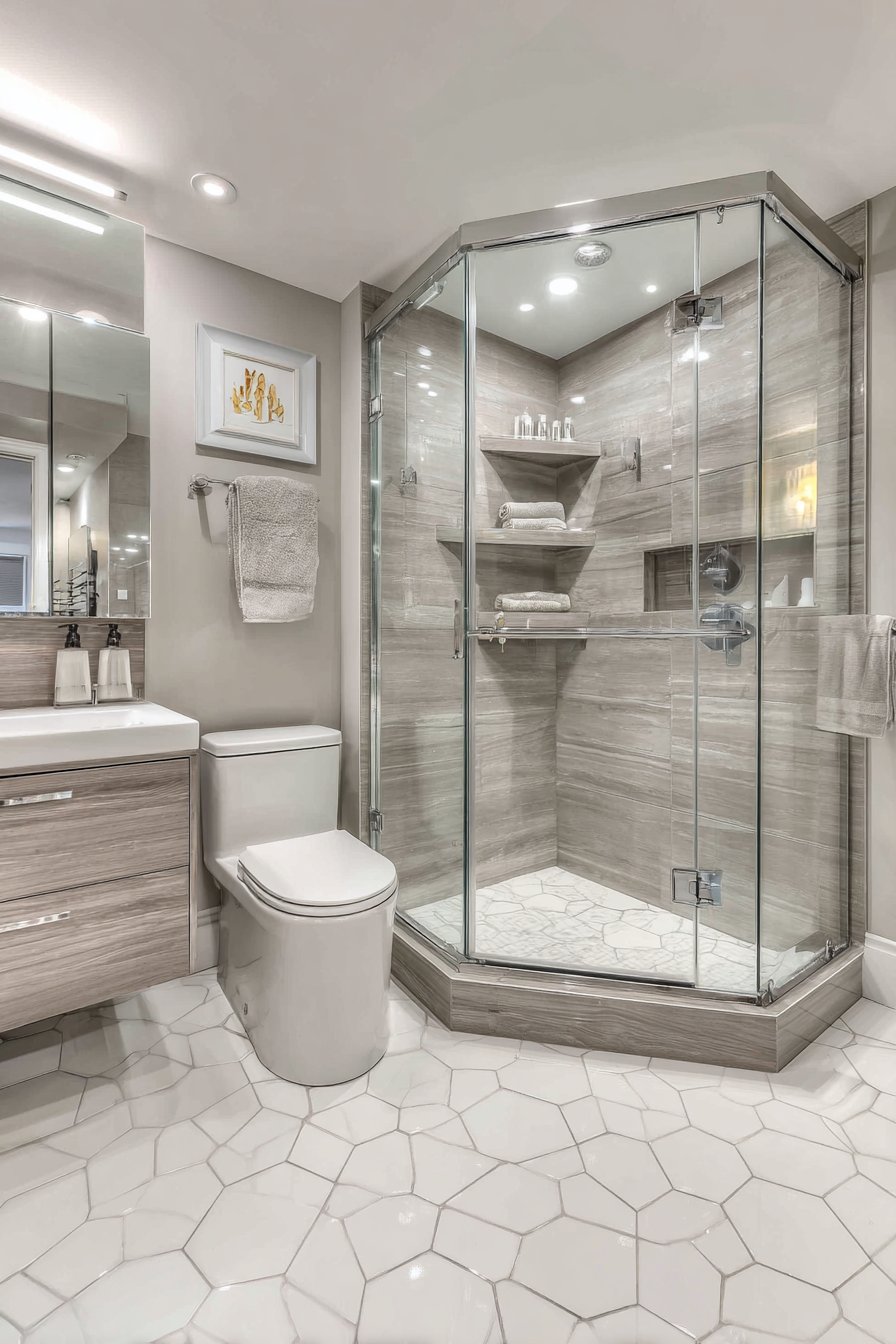
Storage hides in plain sight with a recessed medicine cabinet featuring a mirrored door. Rather than protruding into the room and creating awkward corners, this cabinet sits flush within the wall cavity, providing storage without sacrificing space.
The mirrored door doubles the room’s perceived size through reflection while serving its practical purpose. This clever integration shows how built-in storage can be nearly invisible yet highly functional.
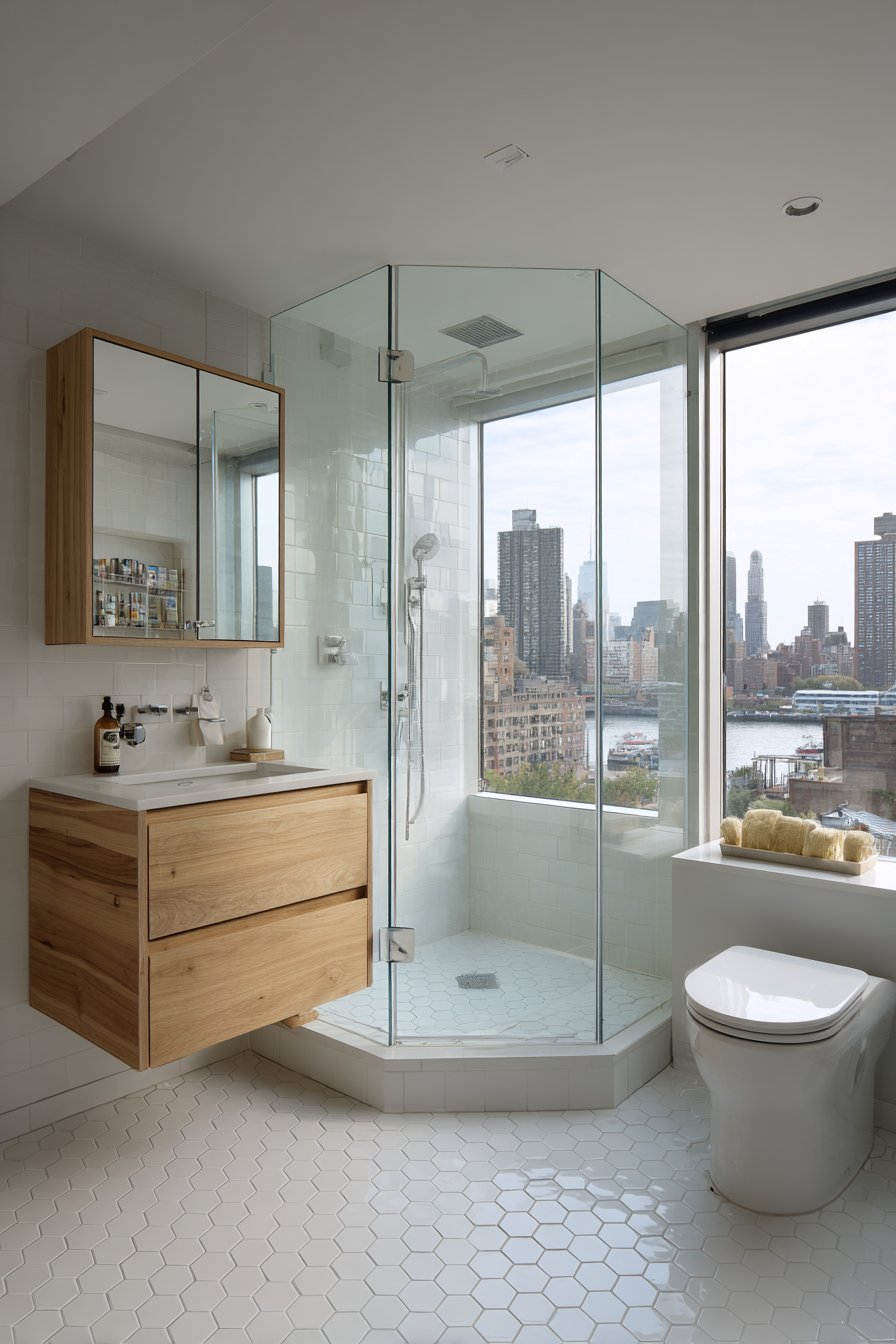
Hexagonal white floor tiles add subtle pattern and visual interest without overwhelming the compact space. Their geometric shape creates movement across the floor while maintaining a clean, fresh appearance. Light grey walls enhance the sense of openness, reflecting light rather than absorbing it. Together, these reflective and light surfaces amplify the bathroom’s compact dimensions, proving that thoughtful material selection dramatically impacts spatial perception.
Key Design Tips:
- Install frameless glass shower enclosures to maintain visual continuity throughout the bathroom.
- Choose wall-mounted toilets and floating vanities to reveal floor space and enhance the sense of openness.
- Incorporate recessed storage solutions that utilize wall cavity space without protruding into the room.
- Select light-colored, reflective materials for walls and floors to bounce light and expand visual boundaries.
- Use mirrors strategically to double the perceived space through reflection.
5. The Closet-Turned-Office Innovation
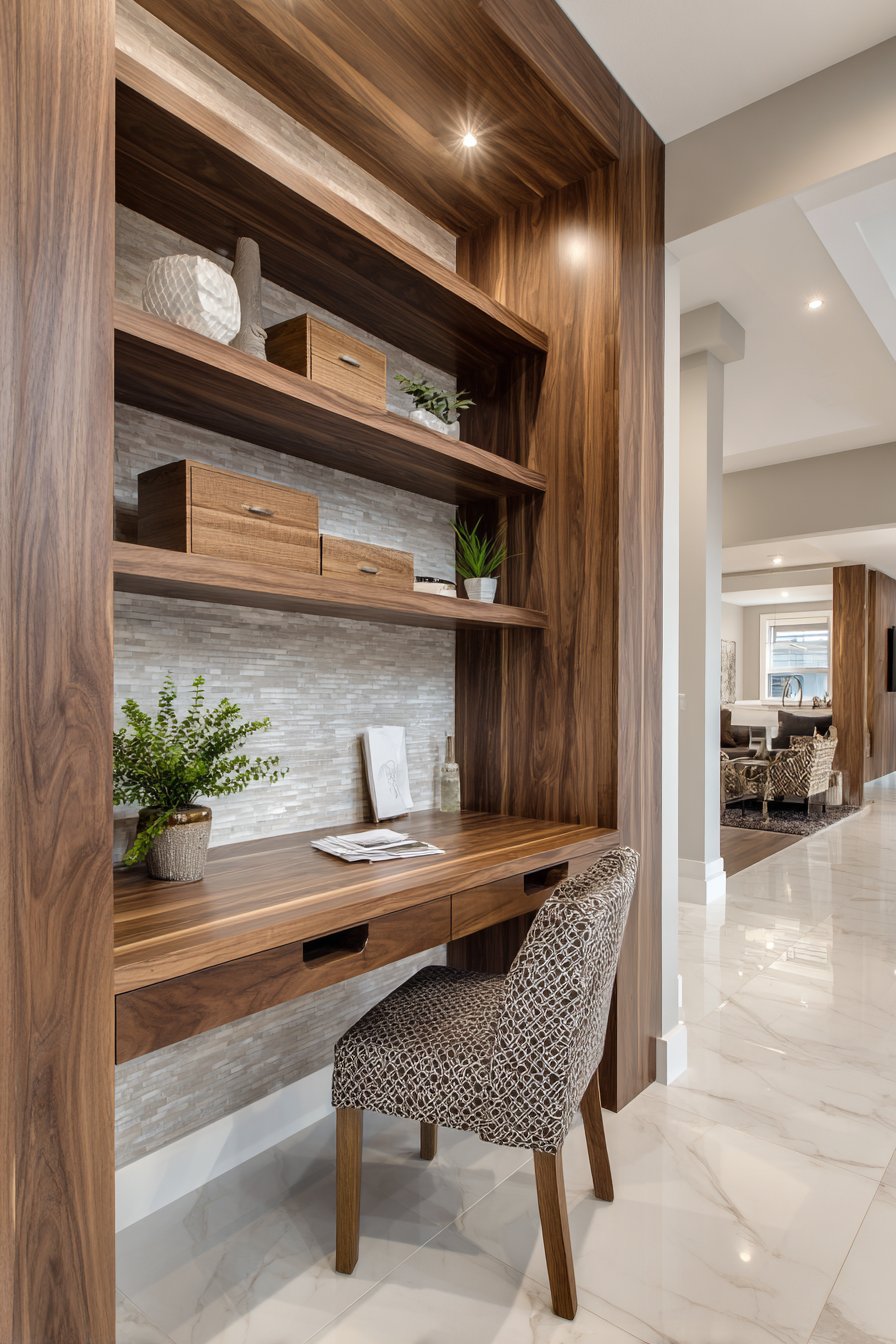
This ingenious home office transformation proves that productive workspaces can emerge from the most unlikely places. A former closet becomes a functional office nook through custom-built solutions tailored to the narrow space. The floating desk in natural walnut provides a substantial work surface while maintaining the illusion of space beneath.
Cable management cutouts keep technology cords organized and hidden, preventing the tangled mess that plagues many home offices. This attention to detail creates a professional workspace despite the unconventional location.
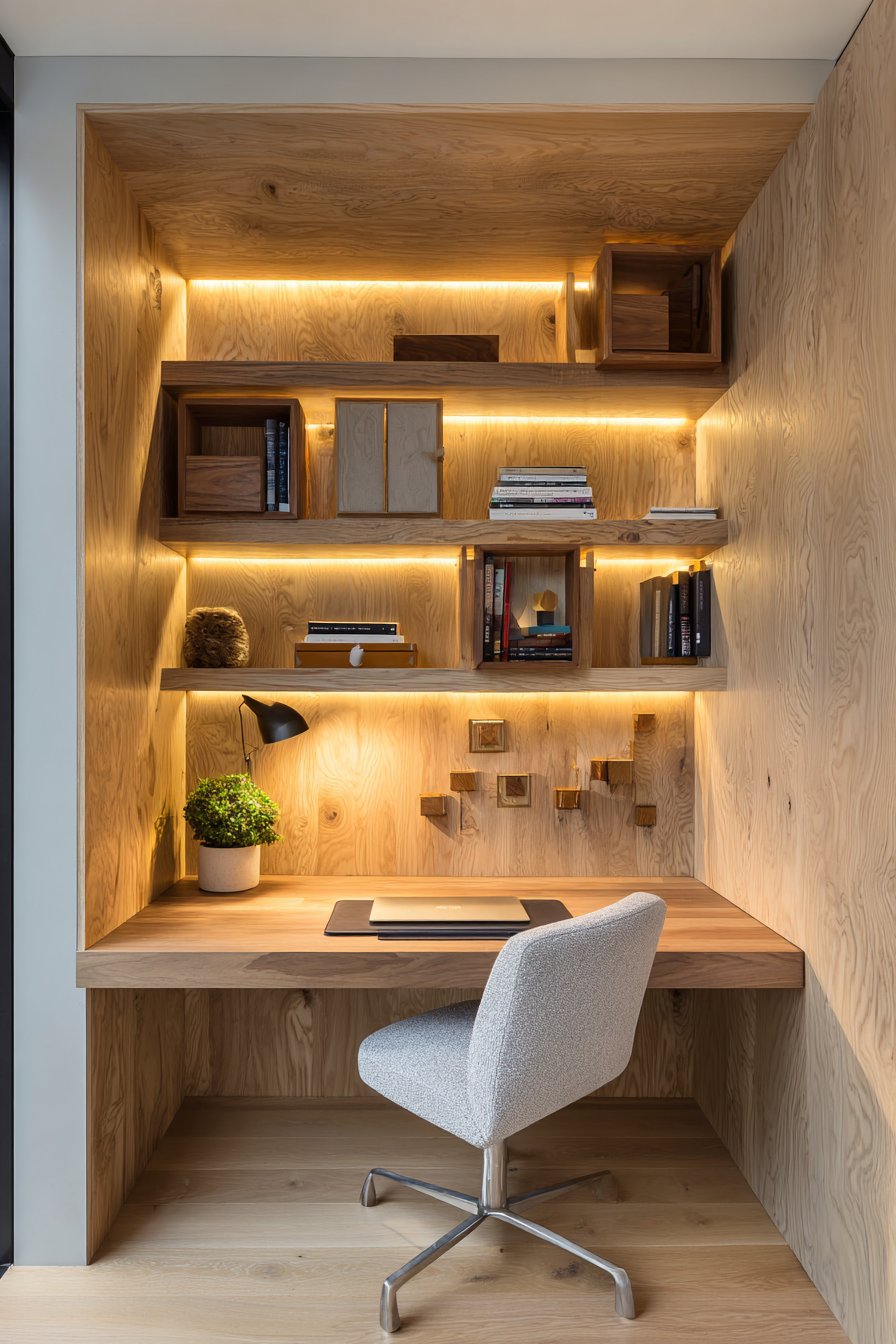
Above the desk, floating shelves in matching walnut hold office supplies in coordinating wooden organizers. This vertical storage approach maximizes the closet’s height while keeping essentials within arm’s reach. The matching wood tones create visual cohesion, making the small nook feel intentional rather than improvised. Carefully curated items on these shelves balance function with aesthetics, displaying a few decorative objects alongside practical storage containers.
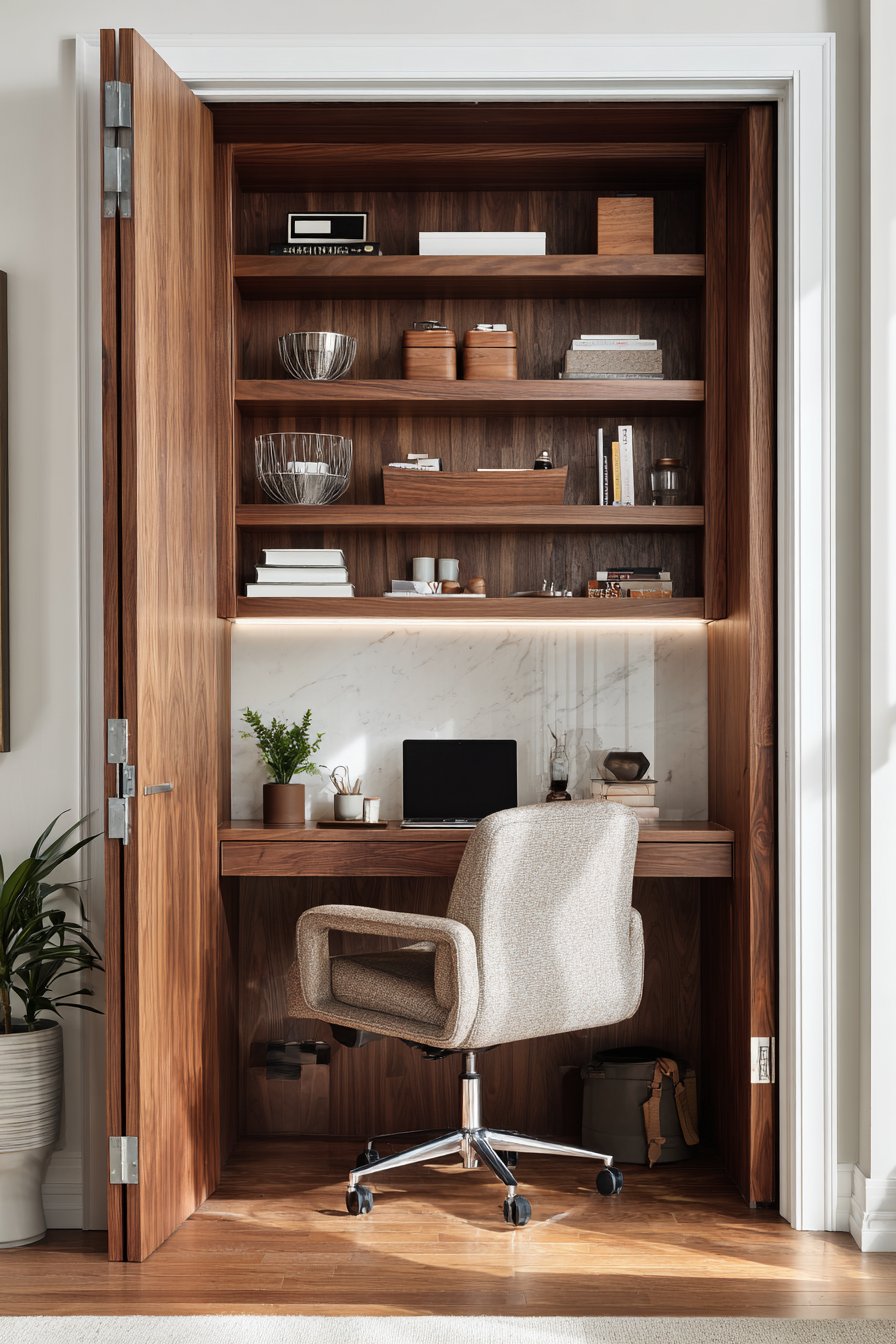
A compact task chair tucks neatly underneath the desk when not in use, disappearing completely to reclaim the hallway or bedroom space. Choosing a chair without bulky armrests ensures it slides fully under the desk, a crucial consideration in tight quarters.
LED strip lighting illuminates the workspace from above, providing focused task lighting without requiring a desk lamp that would consume precious surface area. This overhead lighting solution ensures adequate brightness for computer work and reading while maintaining the desk’s clean appearance.
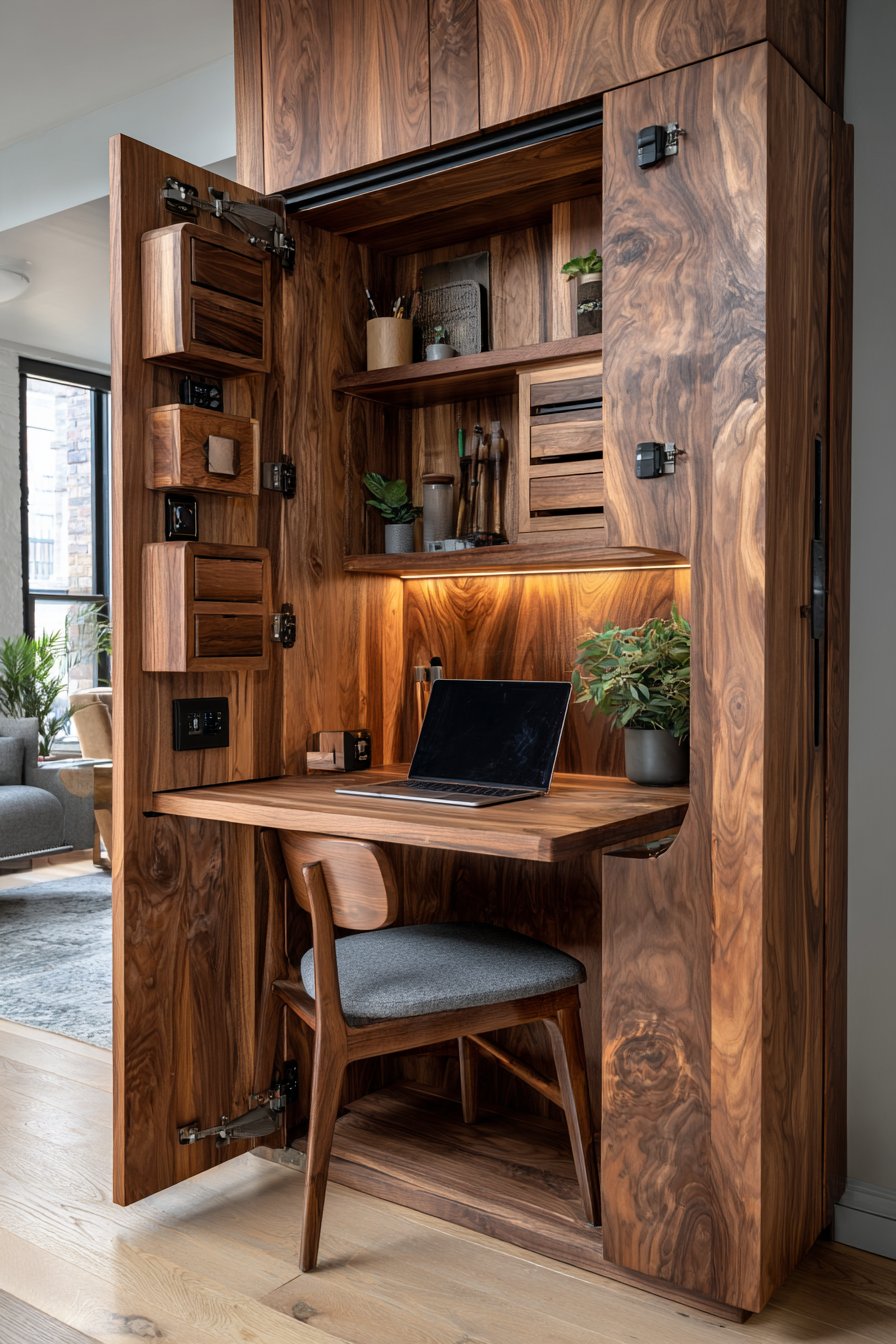
A small potted plant introduces life and color to the workspace, offering a touch of nature that improves air quality and mood. This single organic element prevents the nook from feeling sterile or institutional, personalizing the space without cluttering it. The transformation demonstrates that unused closets, alcoves, or corners can become highly functional spaces with creative thinking and custom solutions. Sometimes the best space isn’t created—it’s discovered and reimagined.
Key Design Tips:
- Convert underutilized closets or nooks into purposeful workspaces with custom-fitted furniture.
- Install floating desks to maintain visual lightness and make small spaces feel less cramped.
- Incorporate LED strip lighting for bright, focused illumination without consuming desk space.
- Choose compact, armless task chairs that can fully retract under desks when not needed.
- Add one or two small plants to introduce color and improve the workspace environment.
6. The Entryway That Masters Vertical Organization
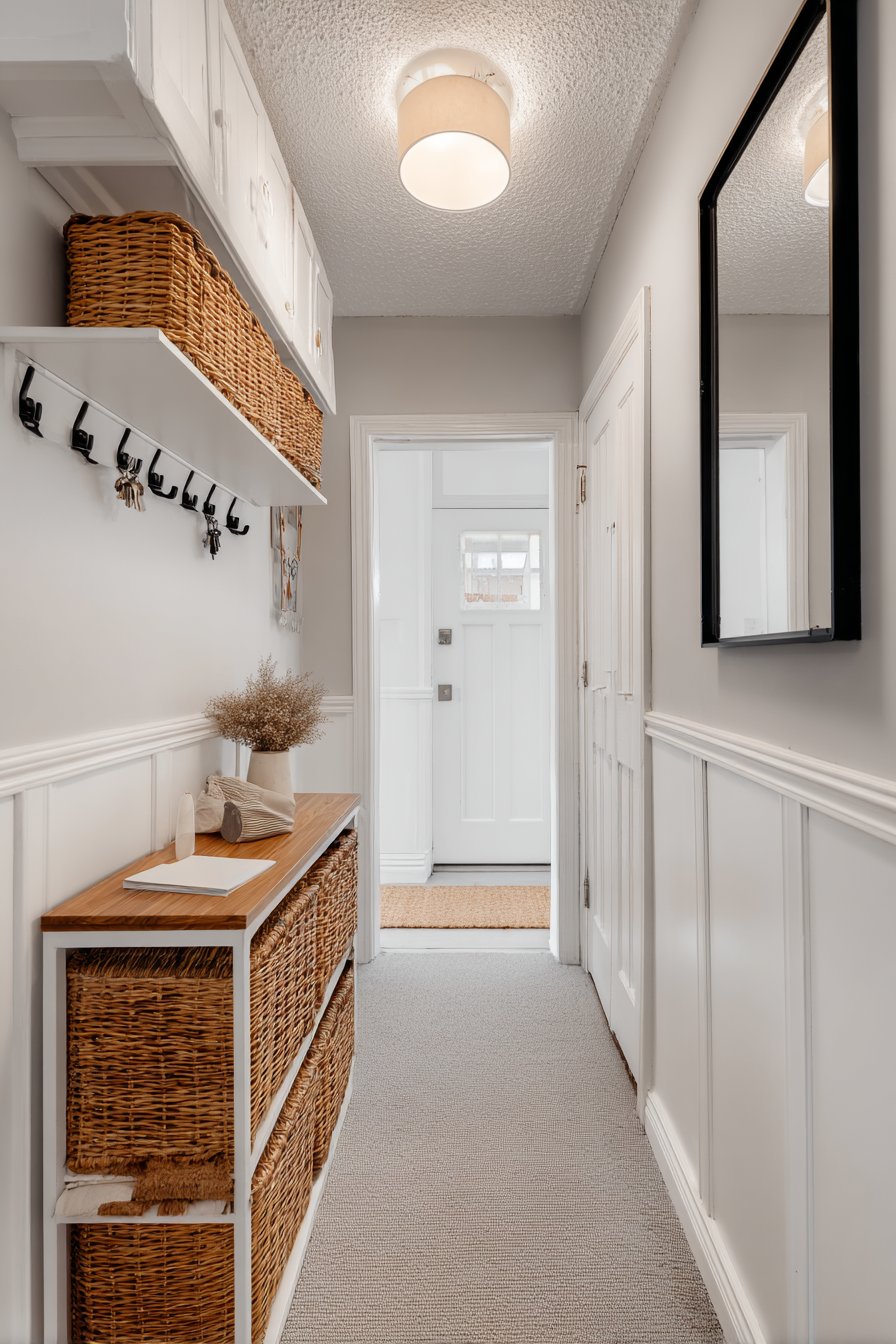
First impressions matter, and this compact entryway proves that limited square footage doesn’t mean sacrificing style or functionality. A narrow console table provides a landing spot for keys, mail, and everyday essentials without protruding far into the hallway. Below, woven baskets slide underneath for discreet shoe storage, keeping footwear organized and hidden from view. These natural fiber baskets add texture and warmth while serving an essential organizational purpose.
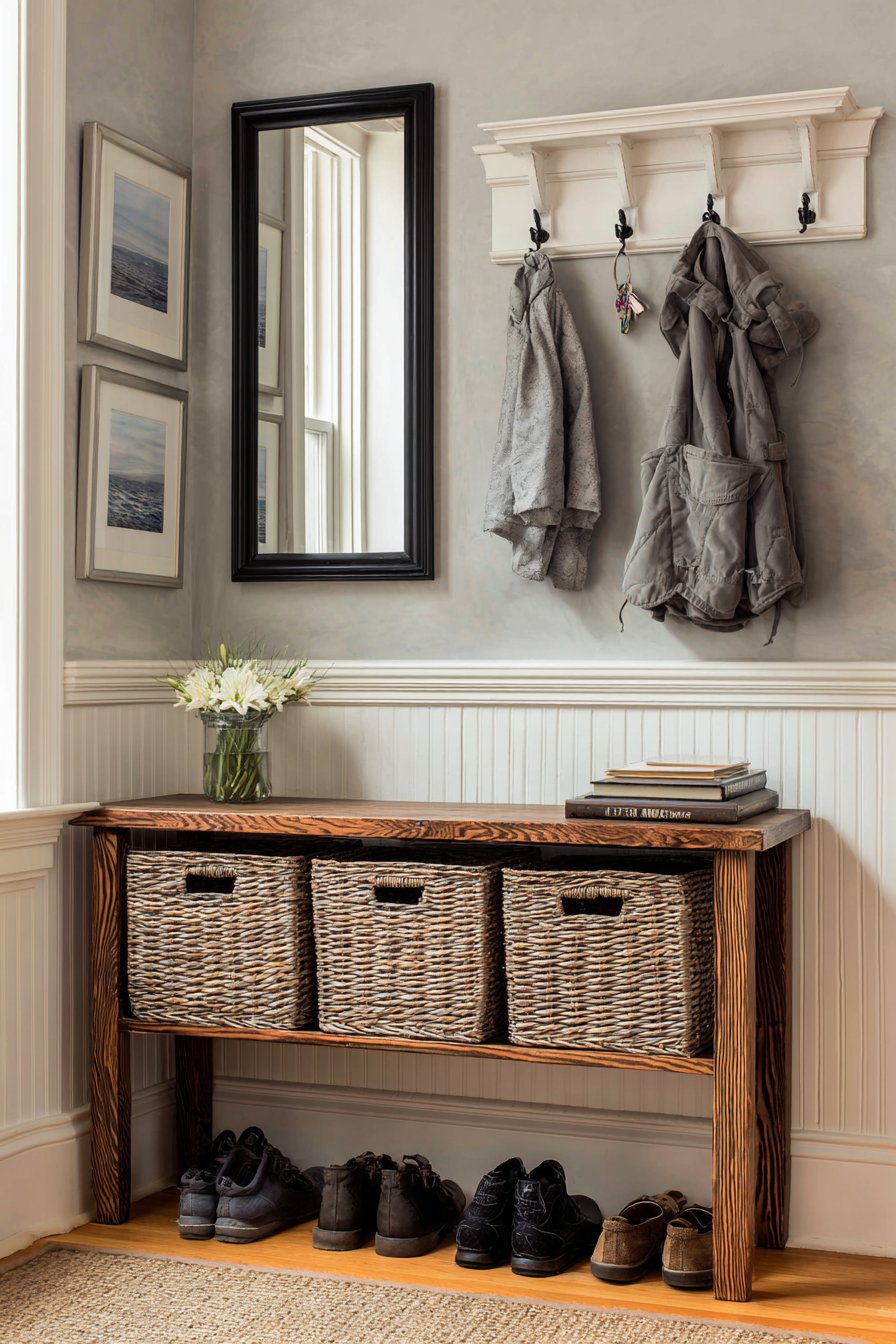
Wall-mounted coat hooks with individual cubbies above create a vertical storage system that maximizes wall space. Each family member can have a designated hook for coats and bags, while the cubby above holds keys, sunglasses, and mail.
This dedicated organization prevents the chaos that often accumulates in entryways, establishing a system that’s easy to maintain. The wall-mounted approach leaves the floor completely clear, making the narrow entry feel more spacious and easier to navigate.
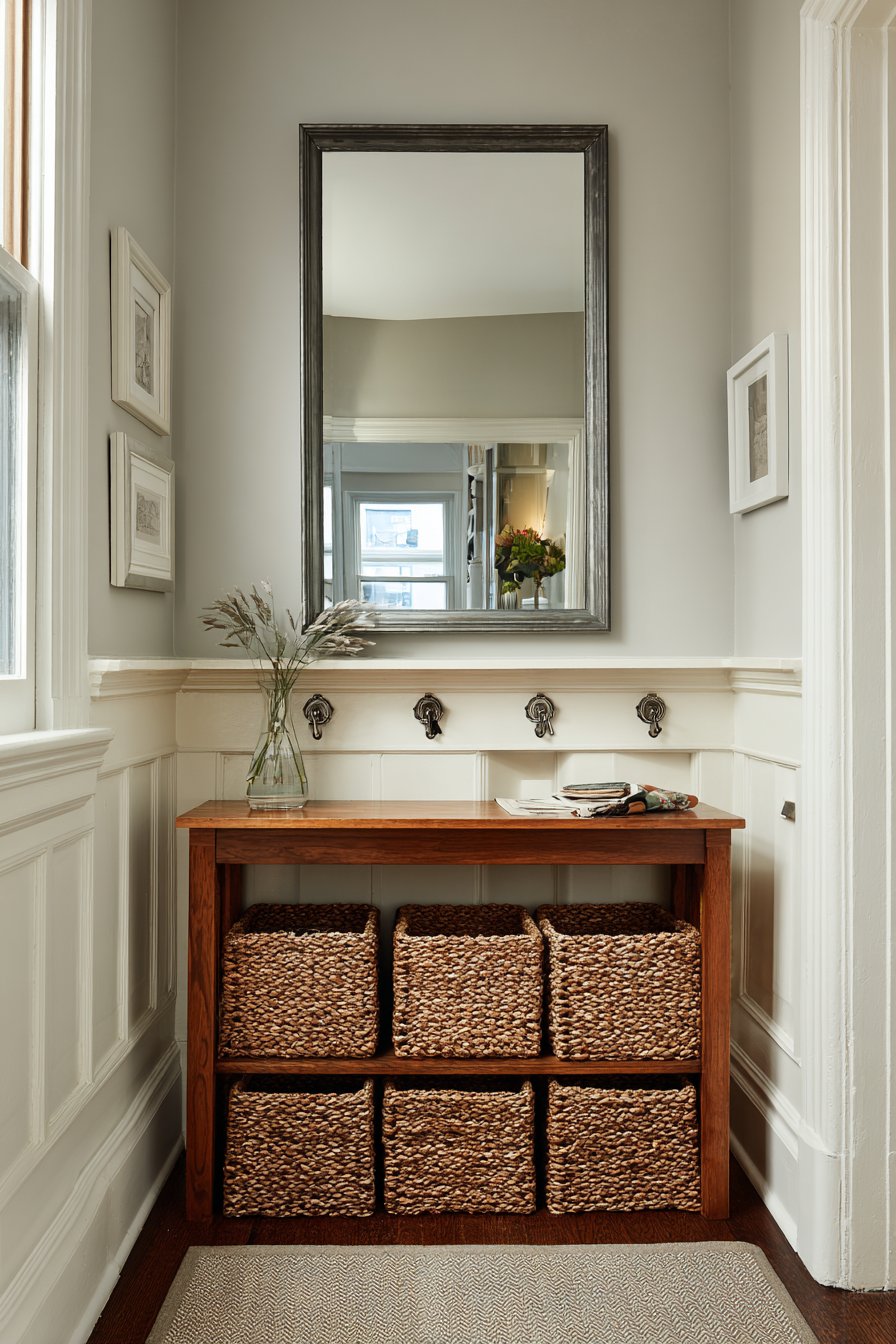
A tall, narrow mirror with a thin black frame becomes the entryway’s focal point while serving practical and visual purposes. The mirror provides a final appearance check before heading out, but more importantly, it reflects light and views from other rooms, creating the illusion of more space.
The thin black frame adds definition without visual weight, complementing the room’s light palette while introducing a modern edge. Strategic mirror placement can double the perceived size of any small space.
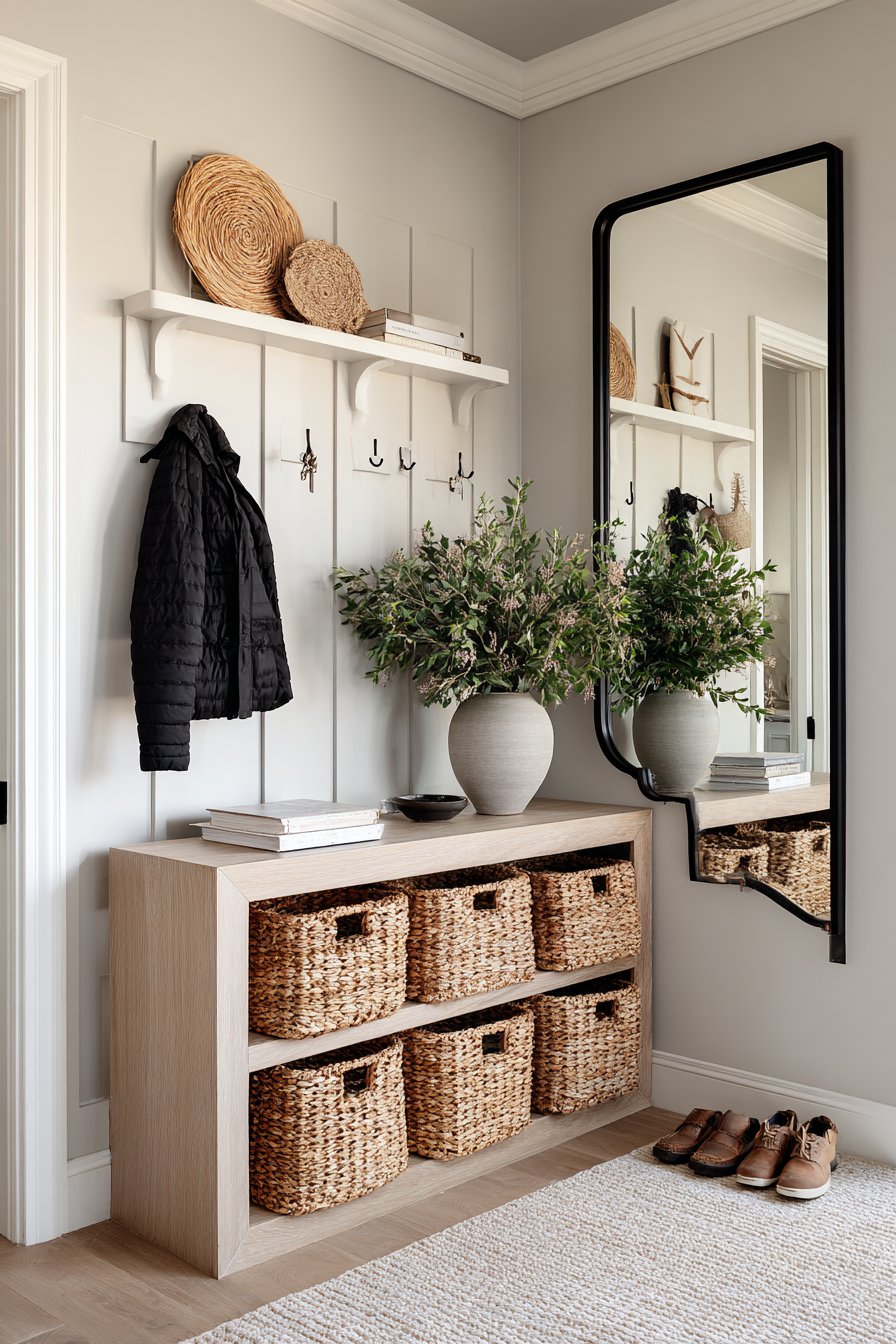
Light grey walls paired with white wainscoting add architectural character without overwhelming the compact area. The wainscoting creates visual interest at eye level while protecting walls from daily wear in this high-traffic zone. This classic detail proves that small spaces can accommodate traditional architectural elements when executed with restraint. The light color palette maintains brightness and openness, welcoming inhabitants and guests into the home with grace.
Key Design Tips:
- Use narrow console tables that provide function without extending far into walkways.
- Incorporate baskets or bins underneath console tables to maximize storage in unused space.
- Install wall-mounted hook systems with cubbies to organize daily essentials vertically.
- Position mirrors to reflect light and create the perception of expanded space in narrow entries.
- Add wainscoting or other architectural details to introduce character without consuming floor space.
7. The Studio Layout That Defines Without Dividing
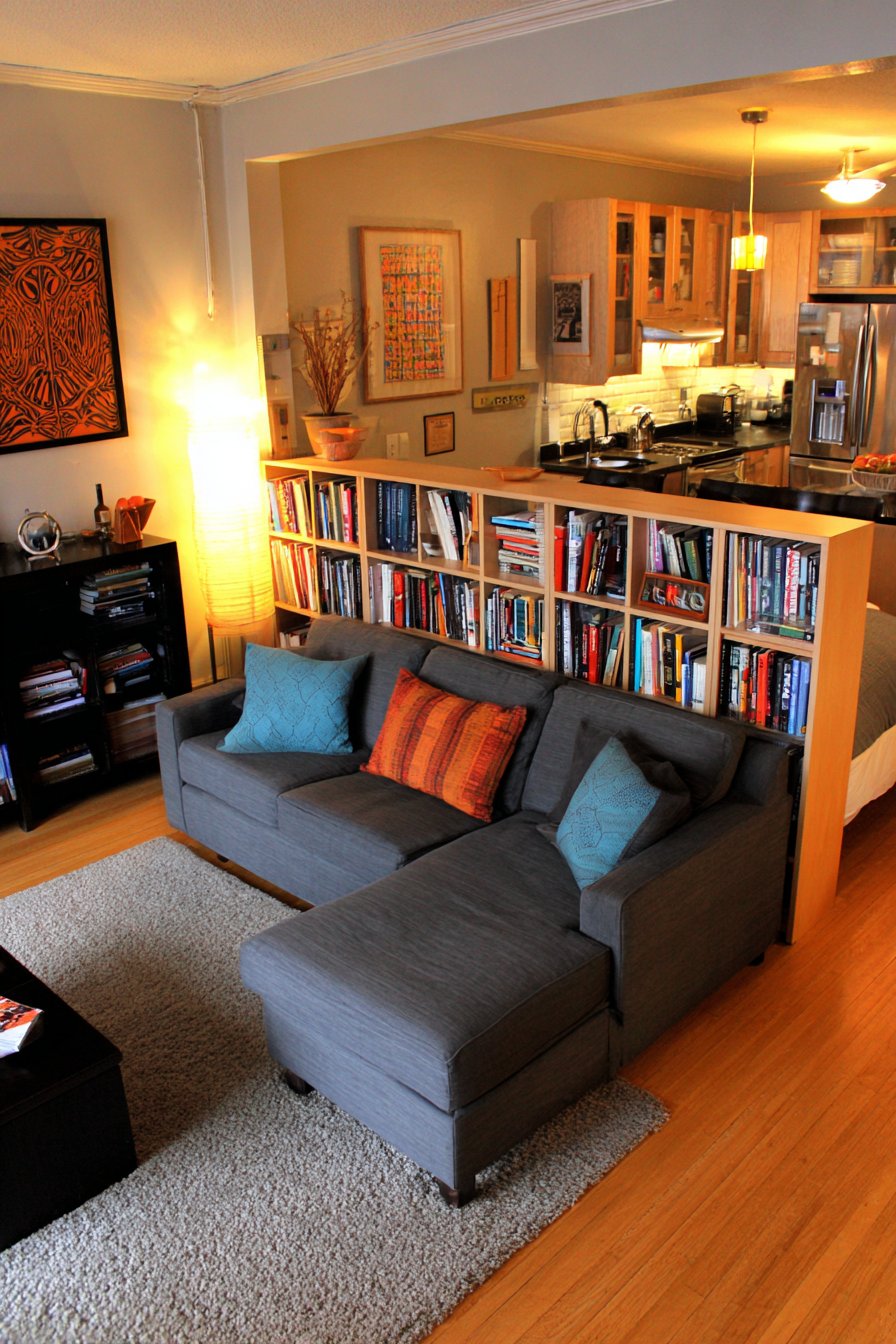
This open-plan studio apartment demonstrates how to create distinct zones without erecting walls that would shrink the space. The room divider bookshelf serves as the hero piece, separating the sleeping area from the living space while maintaining visual connection between zones.
Constructed in light oak with open shelving, this divider provides storage for books and decorative items while allowing light and sightlines to pass through. This semi-transparent approach defines areas without the claustrophobic effect of solid walls.
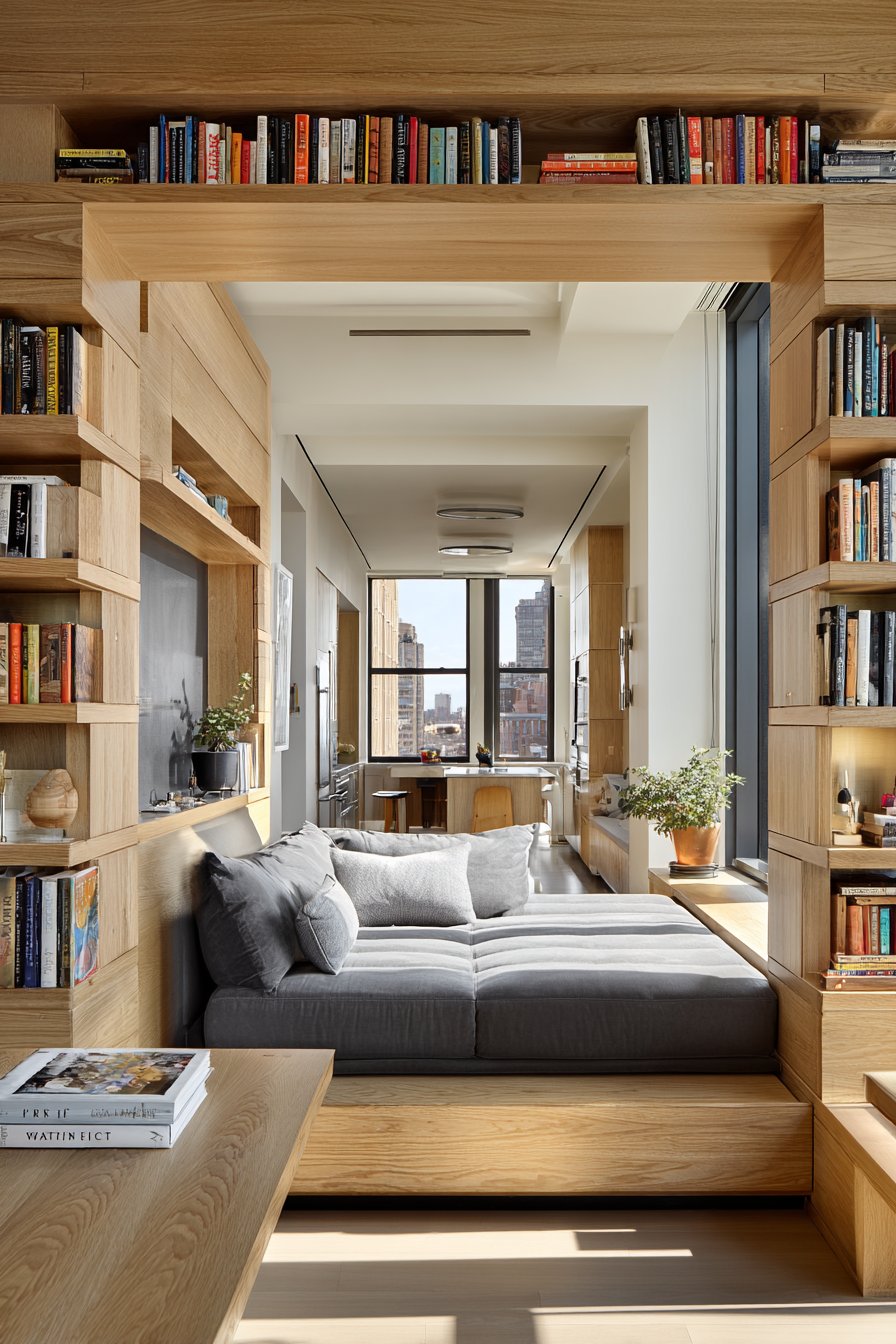
The living zone features a compact sectional sofa in charcoal grey, providing ample seating without overwhelming the space. Its L-shape creates a defined conversation area while offering flexibility for entertaining or relaxing.
Facing a wall-mounted entertainment center, the seating arrangement establishes clear purpose for this portion of the studio. The elevated TV and concealed media storage maintain clean lines, preventing electronic equipment from cluttering the space. Dark grey upholstery grounds the room while contrasting beautifully with the light oak divider.
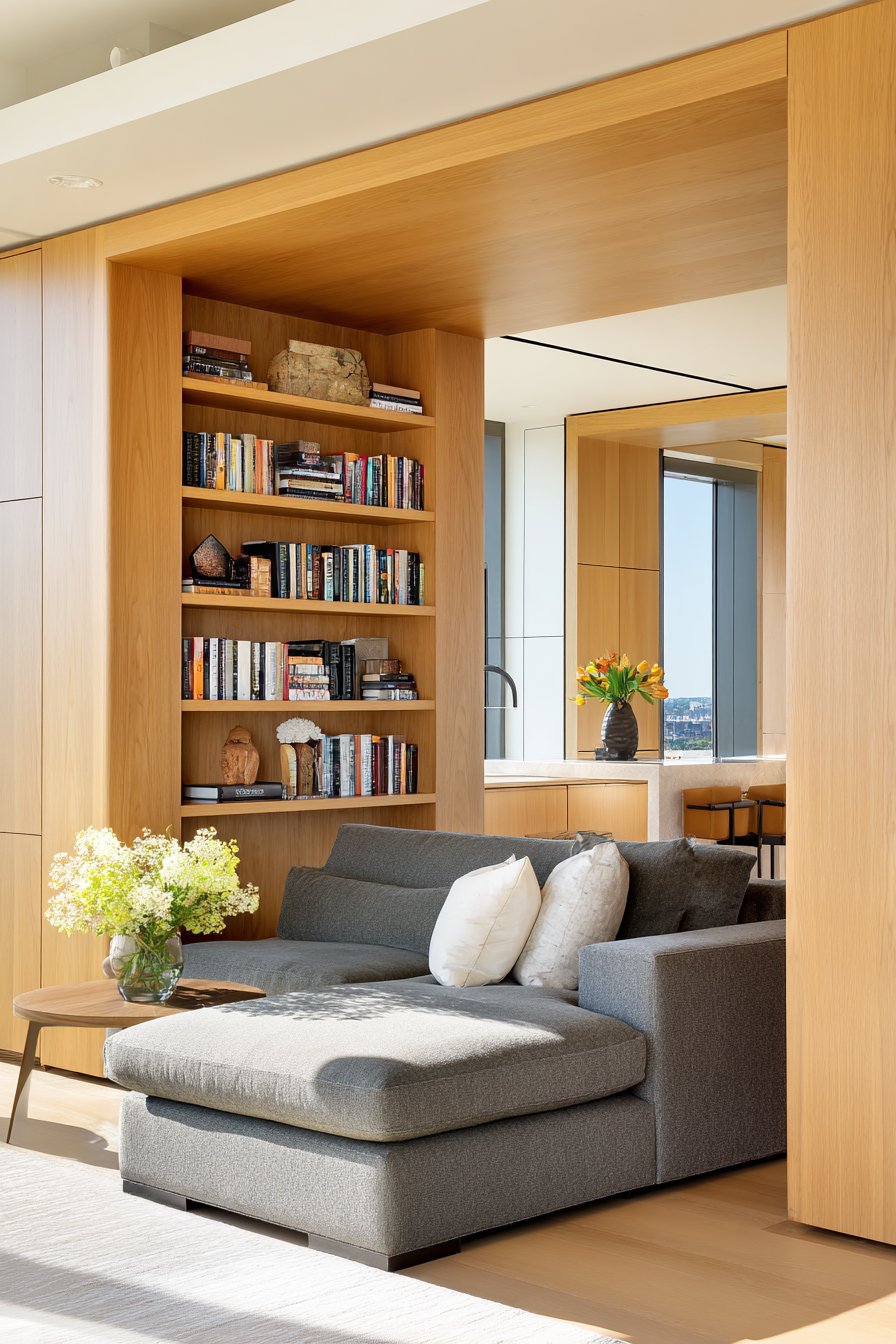
Behind the bookshelf divider, the sleeping area maintains privacy without complete isolation. This partial separation allows the bedroom zone to feel distinct while preserving the studio’s sense of spaciousness. Residents can retreat to the sleeping area for rest while still feeling connected to the main living space. This balance between privacy and openness is crucial in studio living, where complete isolation isn’t possible but psychological boundaries remain important.
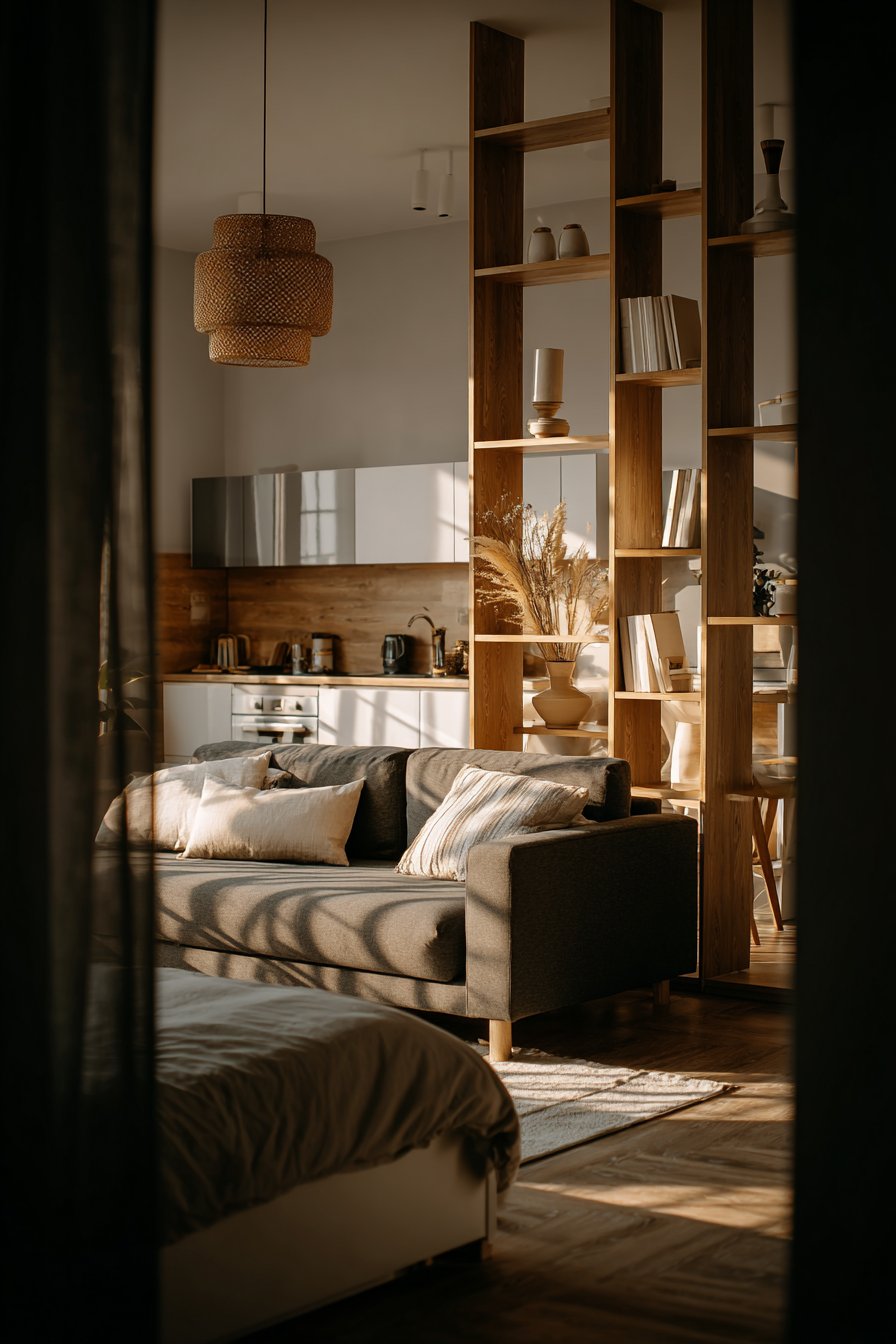
The kitchen area visible in the background features a breakfast bar that defines the cooking zone while providing casual dining space. This multi-functional element serves as both food prep area and eating surface, eliminating the need for a separate dining table. Golden hour ambiance fills the space with warm natural light, casting gentle shadows that emphasize the apartment’s depth and dimension. The wide-angle perspective reveals how thoughtful furniture placement creates multiple functional zones within a single open room.
Key Design Tips:
- Use open bookshelf dividers to separate zones while maintaining light flow and visual connection.
- Position furniture to define distinct areas for sleeping, living, and dining without physical walls.
- Choose compact sectional sofas that maximize seating in L-shaped configurations suited to corners.
- Install wall-mounted entertainment centers to keep media equipment organized without consuming floor space.
- Incorporate breakfast bars or counter-height tables that serve multiple purposes in kitchen zones.
8. The Flexible Dining Solution for Small Spaces
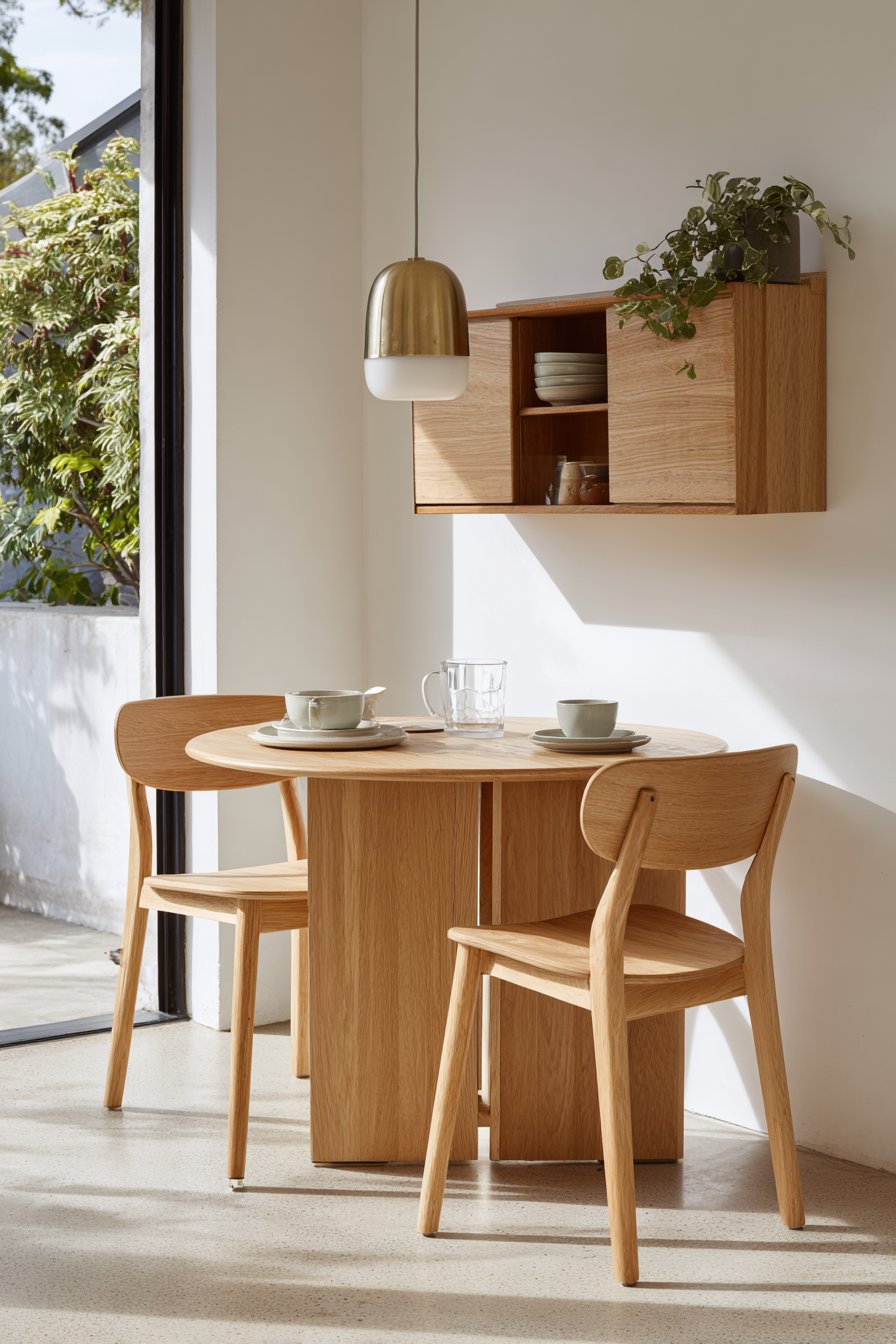
This adaptable dining area showcases how the right furniture transforms small spaces into entertaining-ready zones. The round drop-leaf table in natural oak serves as the centerpiece, currently set for intimate dining for two with simple white dinnerware.
When guests arrive, the leaves extend to accommodate additional place settings. When not needed, the table contracts to a compact console, reclaiming valuable floor space. This flexibility is essential in small homes where dedicated dining rooms are impossible.
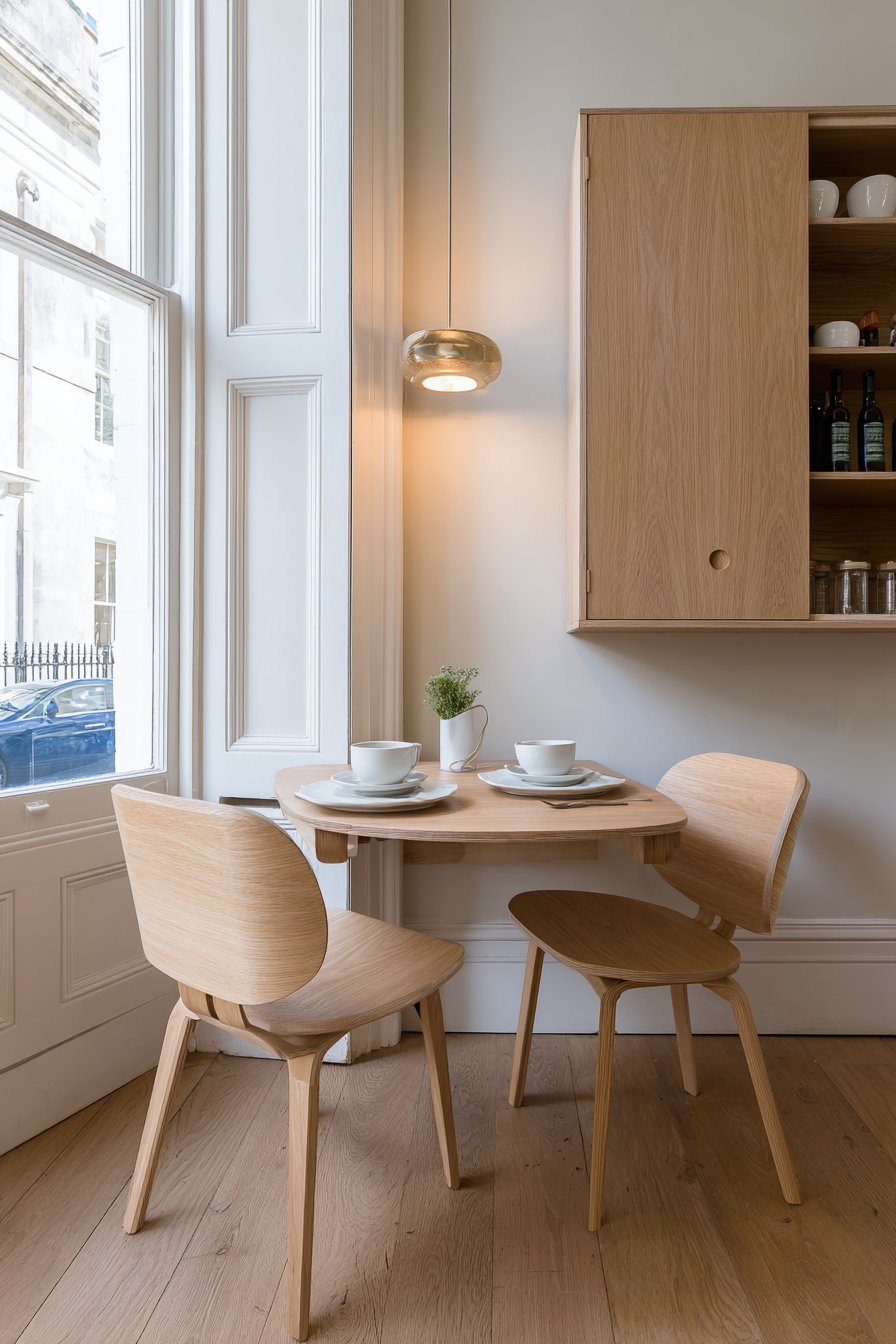
Two stackable chairs with curved wooden backs provide comfortable seating that can disappear when unnecessary. After dinner, these chairs stack neatly in a closet or corner, freeing the area for other activities. The curved backs add ergonomic comfort and visual softness while maintaining a lightweight profile. Natural wood construction echoes the table’s oak finish, creating cohesive design throughout the dining zone. This chair selection proves that stackable doesn’t mean sacrificing style or comfort.
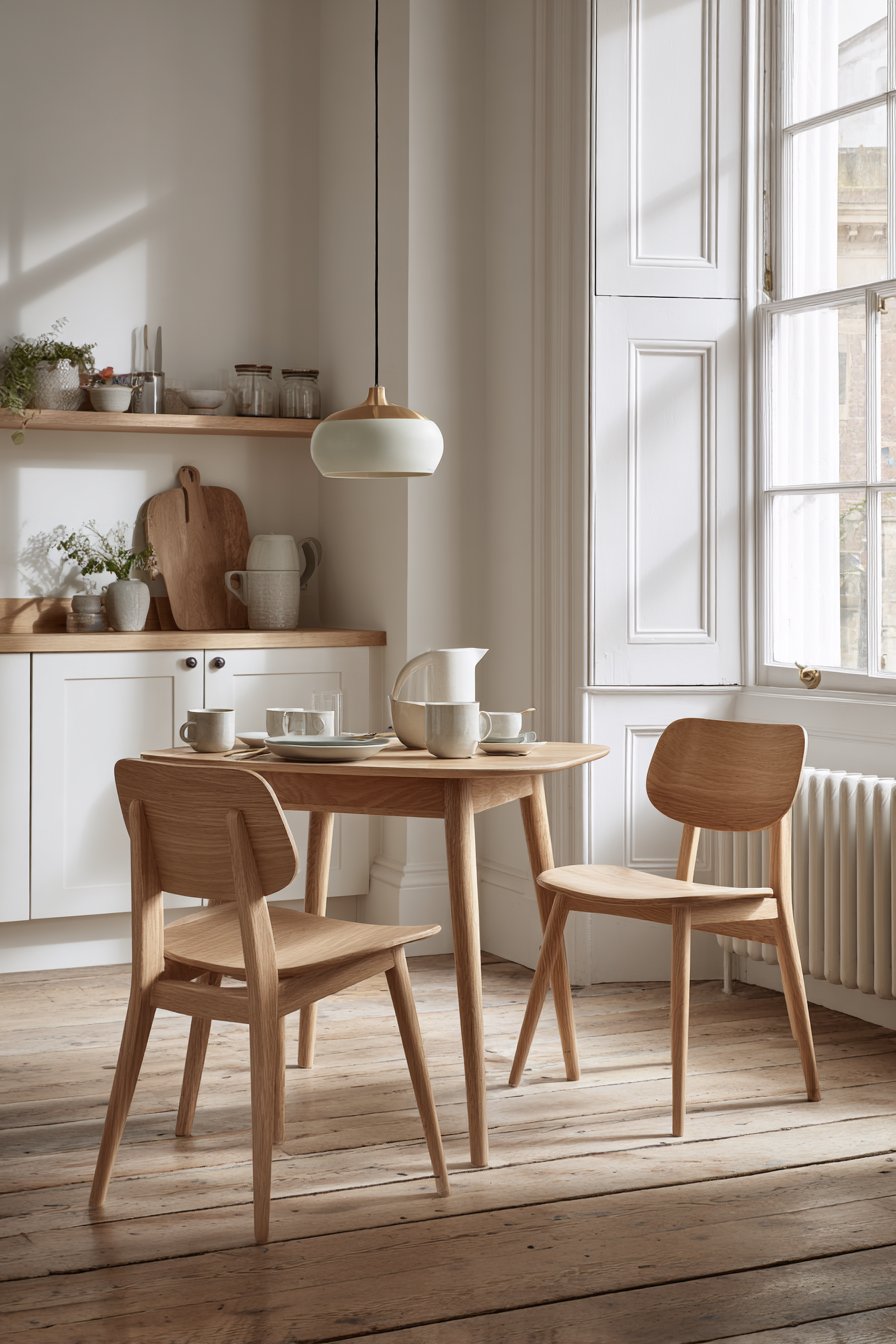
A narrow floating sideboard with closed storage holds dining essentials—linens, serving pieces, and dinnerware—within easy reach. The floating design reveals floor space beneath, maintaining visual openness while providing crucial storage.
Closed doors conceal contents, presenting a clean, uncluttered appearance. This piece demonstrates how smart storage keeps dining necessities accessible without displaying them constantly, maintaining the room’s aesthetic between meals.
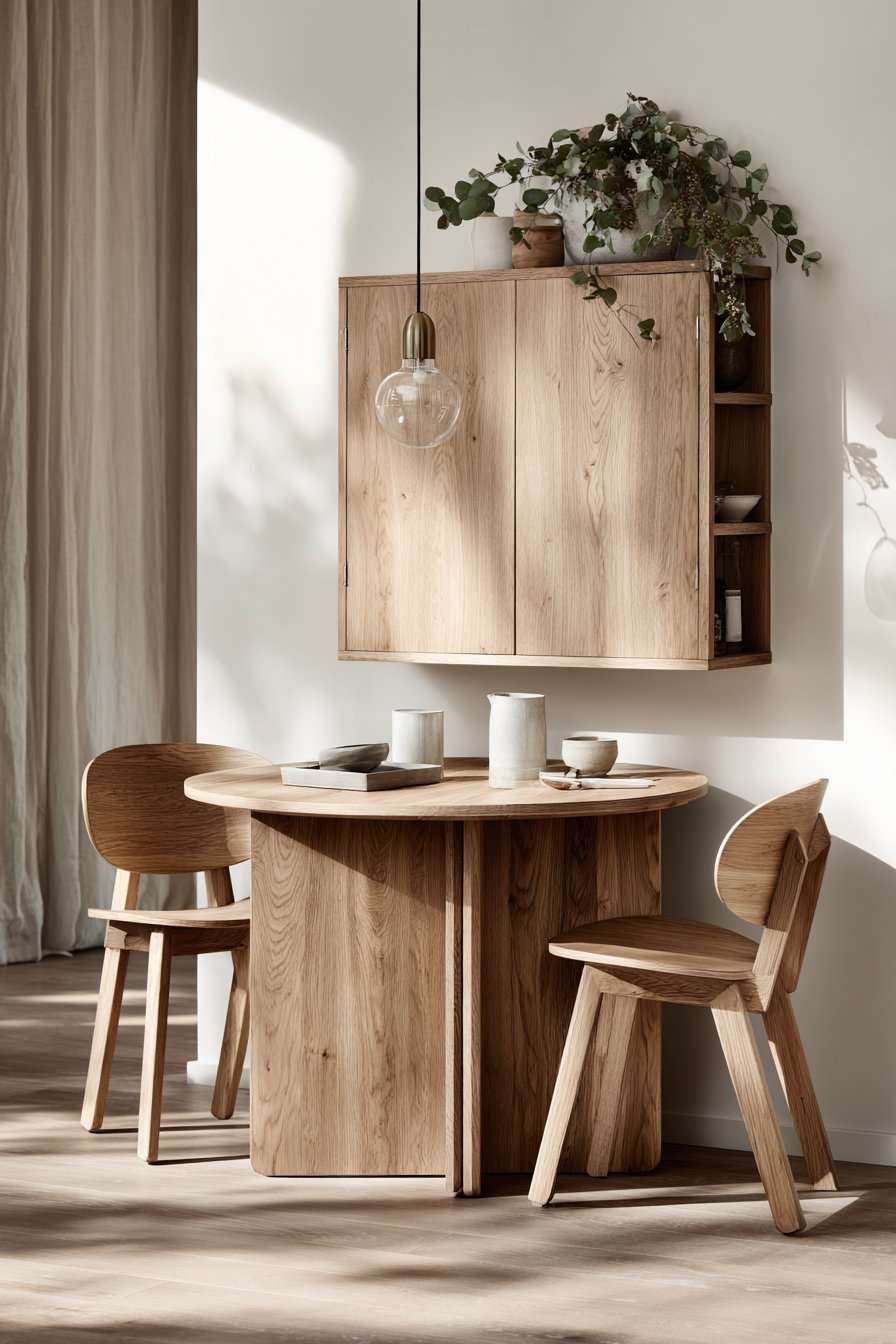
A pendant light with brushed brass finish hangs at optimal height above the table, providing focused illumination for dining while adding sophisticated style. The brass finish introduces warmth and a touch of glamour, elevating the simple dining setup. Proper lighting height ensures the fixture illuminates the table without interfering with sightlines or conversation. Natural light streams from a nearby window, supplementing the pendant and filling the space with soft daylight during morning and afternoon meals.
Key Design Tips:
- Choose drop-leaf or expandable tables that adapt to different occasions while saving space when contracted.
- Select stackable chairs that offer comfort and style but can be stored away when not in use.
- Install floating sideboards to provide dining storage while maintaining visual openness beneath.
- Hang pendant lights at appropriate heights to illuminate dining surfaces without obstructing views.
- Position dining areas near natural light sources to reduce reliance on artificial lighting during daytime.
9. The Hallway Laundry That Hides in Plain Sight
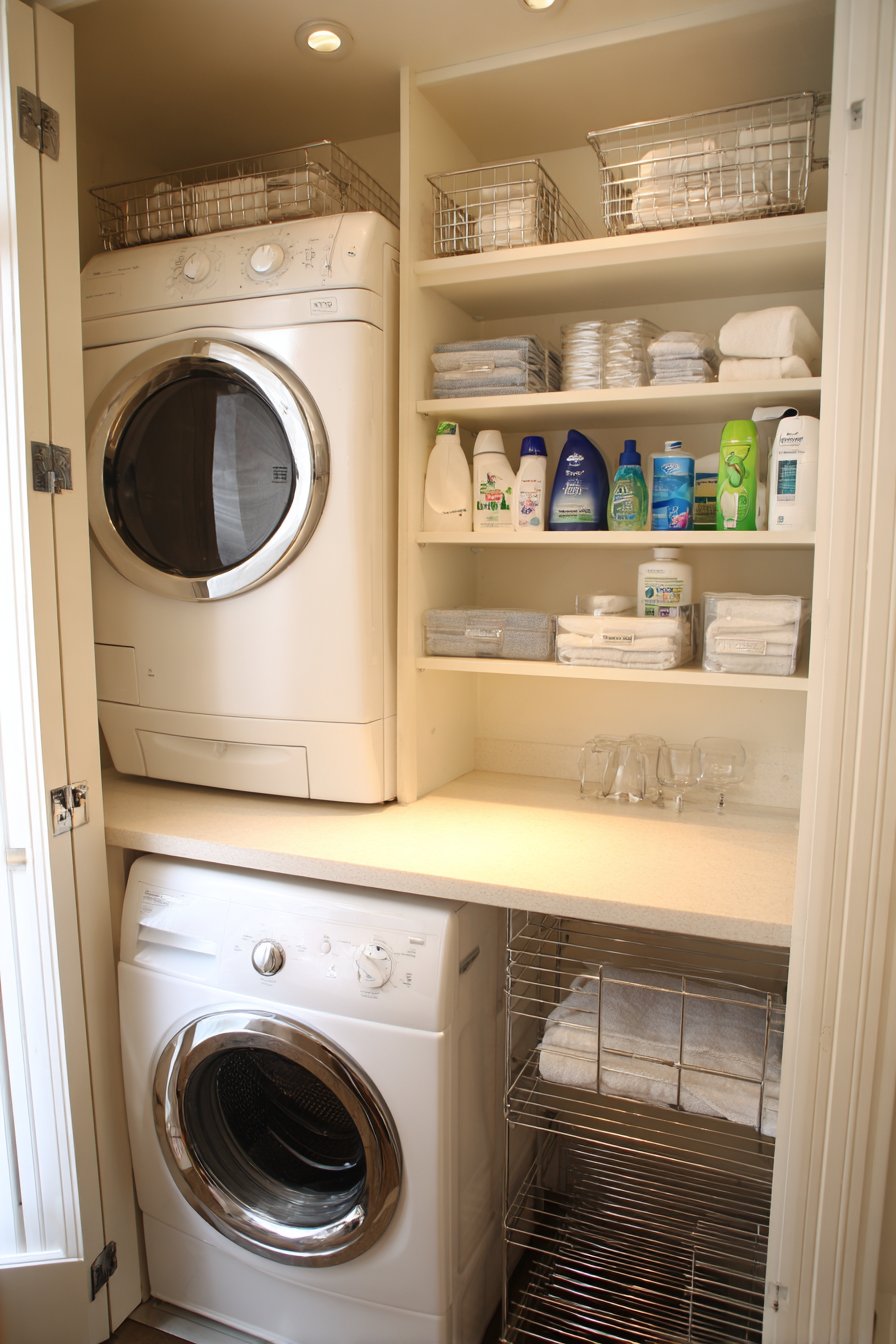
This efficient laundry solution proves that essential utilities can fit into the smallest spaces when vertically oriented. A hallway closet transforms into a functional laundry area with a compact stacked washer-dryer unit occupying the vertical space efficiently.
Surrounding custom shelving cradles the appliances while providing storage for detergent, fabric softener, and other laundry supplies. This built-in approach maximizes every inch of the closet’s depth and height, turning what might be wasted space into highly functional area.
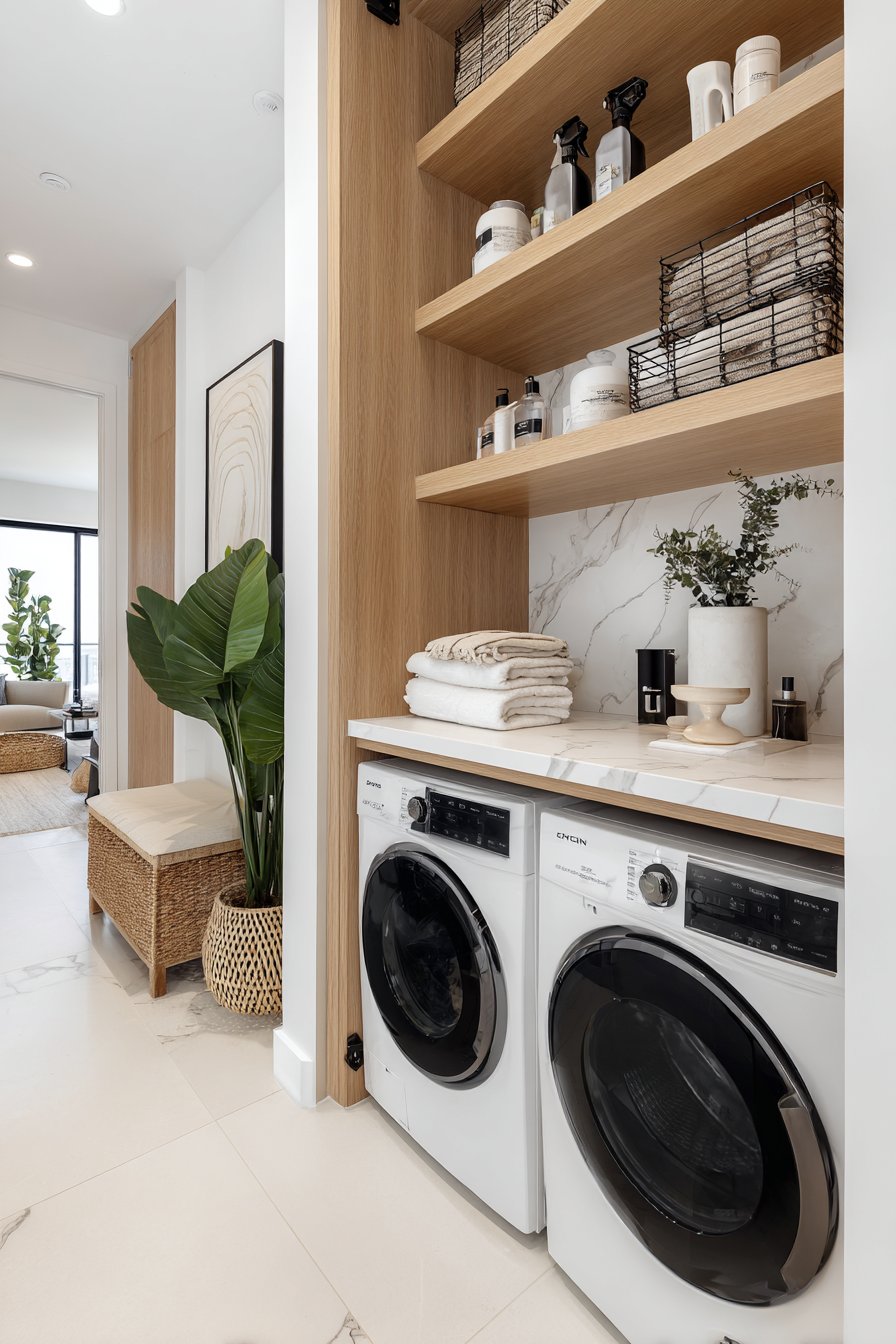
A pull-out drying rack mounted to the adjacent wall demonstrates clever space-saving ingenuity. When needed, the rack extends to air-dry delicates and sweaters. When laundry is finished, it folds flat against the wall, disappearing completely and restoring hallway space.
This retractable solution eliminates the need for permanent drying racks that would clutter the hallway or living spaces. It exemplifies the small space principle of multi-functionality and adaptability.
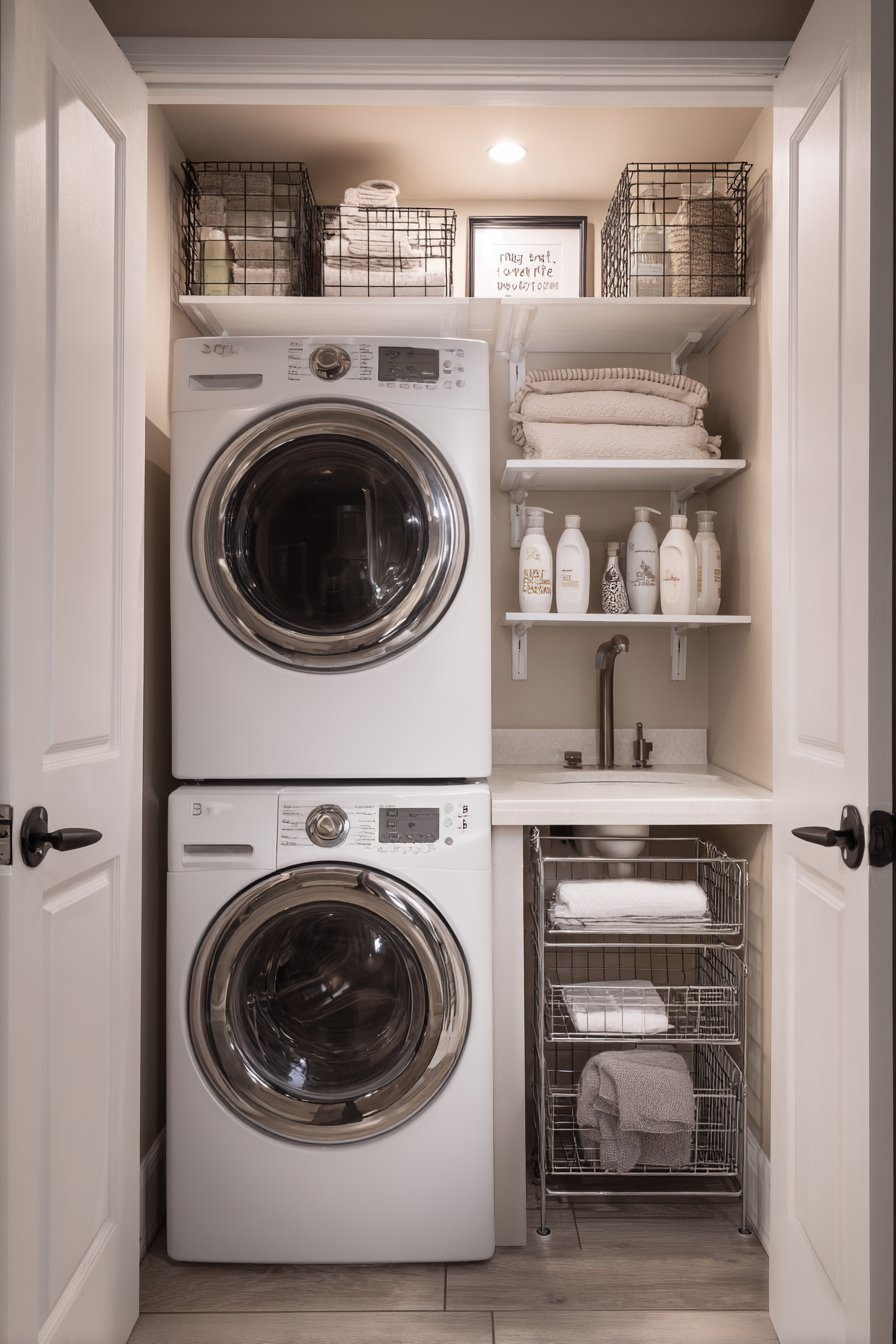
Wire baskets on upper shelves organize cleaning products, dryer sheets, and stain removers, keeping supplies visible and accessible. The open wire construction prevents the claustrophobic feeling that solid containers might create in the narrow closet.
A small countertop installed over the machines provides essential folding space, transforming the closet from merely housing appliances to supporting the entire laundry process. This horizontal surface means clean clothes can be folded immediately, reducing wrinkles and avoiding the pile-up on beds or sofas.
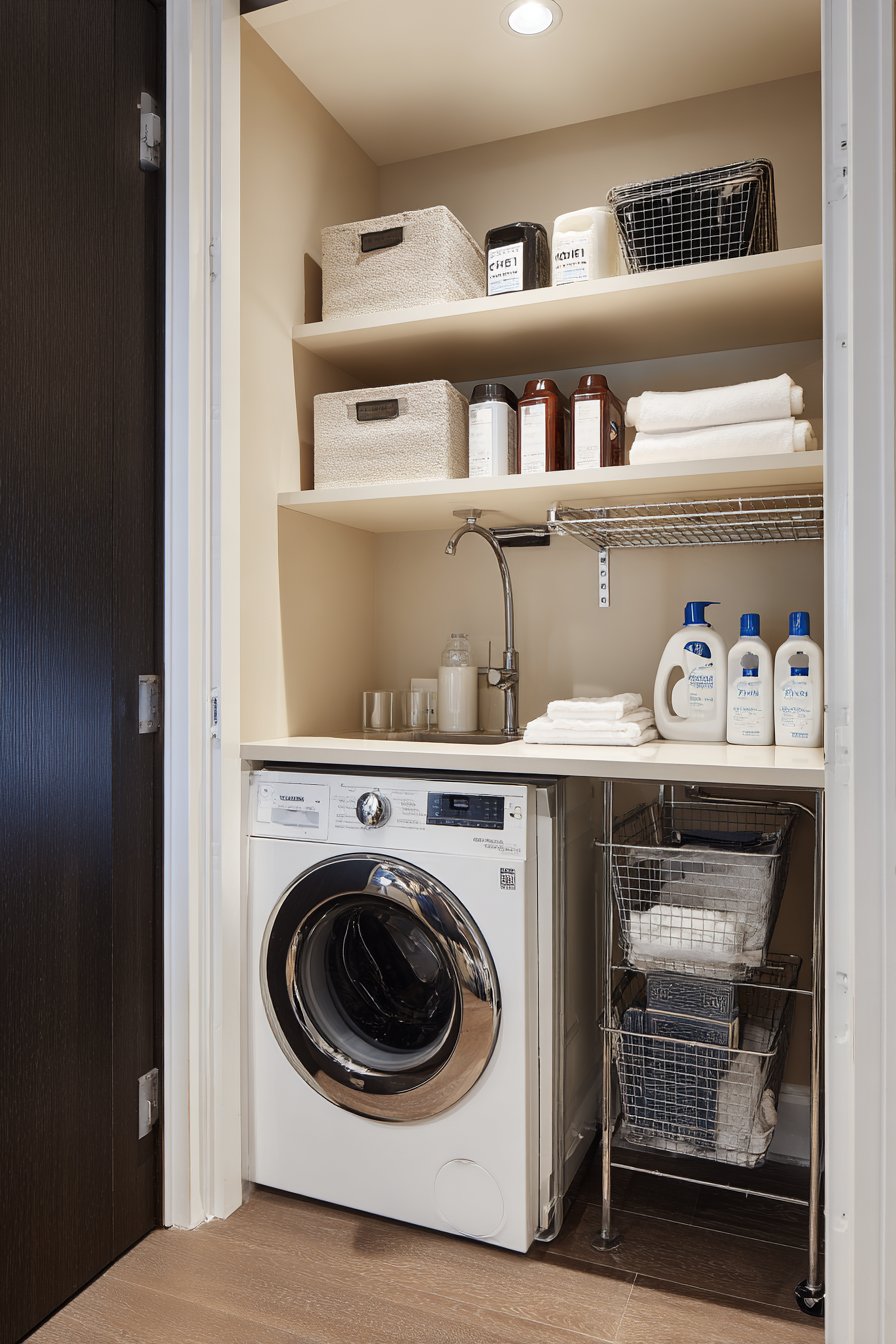
Recessed lighting illuminates the compact workspace, ensuring adequate visibility for reading labels and sorting clothes despite the closet’s confined nature. This overhead lighting eliminates the need for lamps or floor lights that would consume precious space. The transformation demonstrates that laundry facilities don’t require dedicated rooms—with creative planning, they can integrate seamlessly into hallways, closets, or even kitchens while remaining fully functional.
Key Design Tips:
- Stack washer-dryer units vertically to minimize floor space consumption in closets or alcoves.
- Surround appliances with custom shelving to maximize storage for laundry supplies and products.
- Install pull-out or fold-down drying racks that disappear when not needed to maintain space flexibility.
- Add a countertop above or beside machines to create folding surfaces for immediate garment care.
- Incorporate recessed lighting to ensure adequate illumination in enclosed laundry spaces.
10. The Nursery That Grows with Your Child
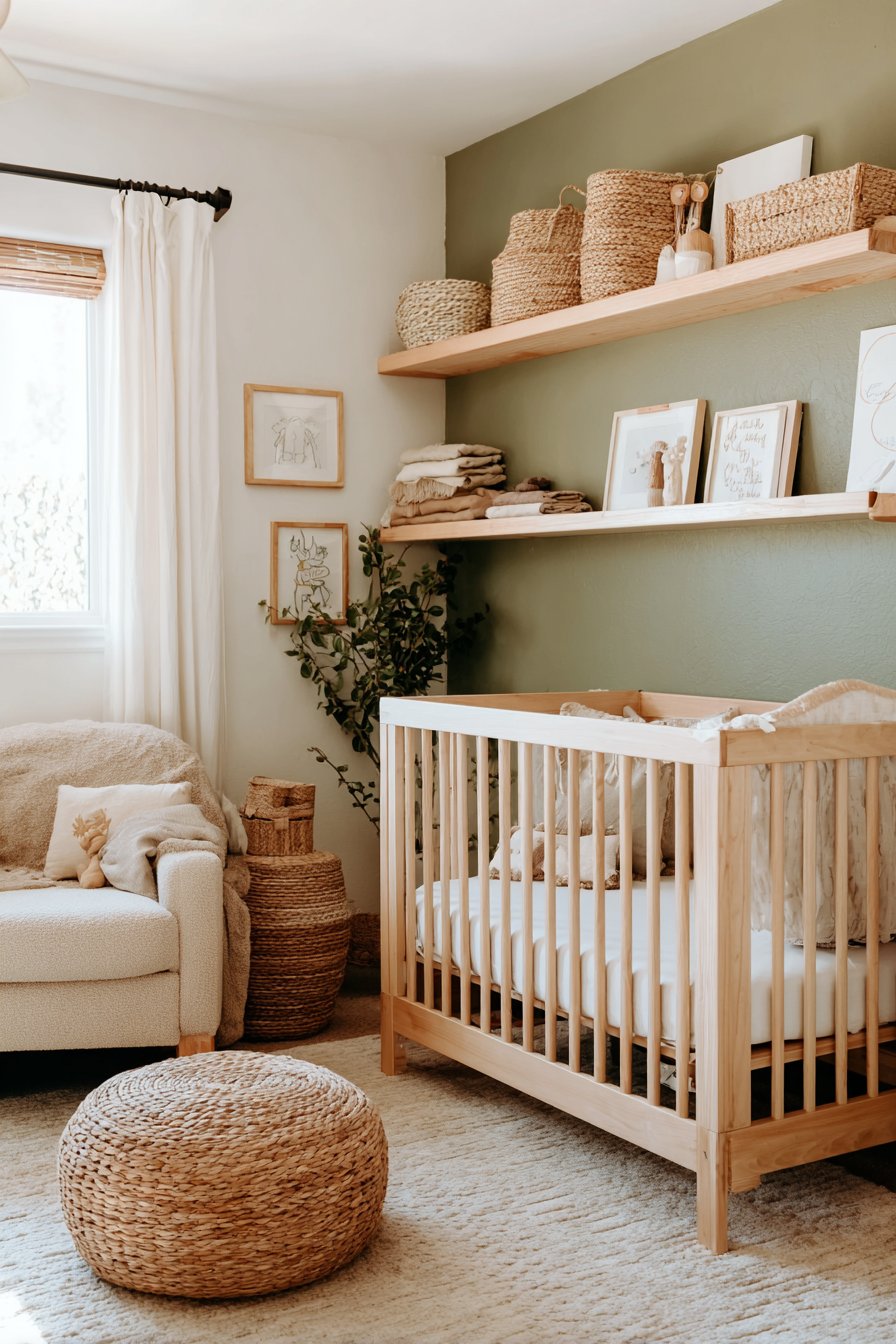
This thoughtfully designed nursery demonstrates how small spaces can accommodate all essential baby needs while maintaining serenity and safety. The convertible crib positioned against a soft sage green accent wall serves as the room’s anchor.
This transformative furniture piece begins as a crib and later converts into a toddler bed, adapting to the child’s growth while eliminating the need to purchase multiple beds. This longevity makes it both economically and spatially efficient, crucial considerations in small home living.
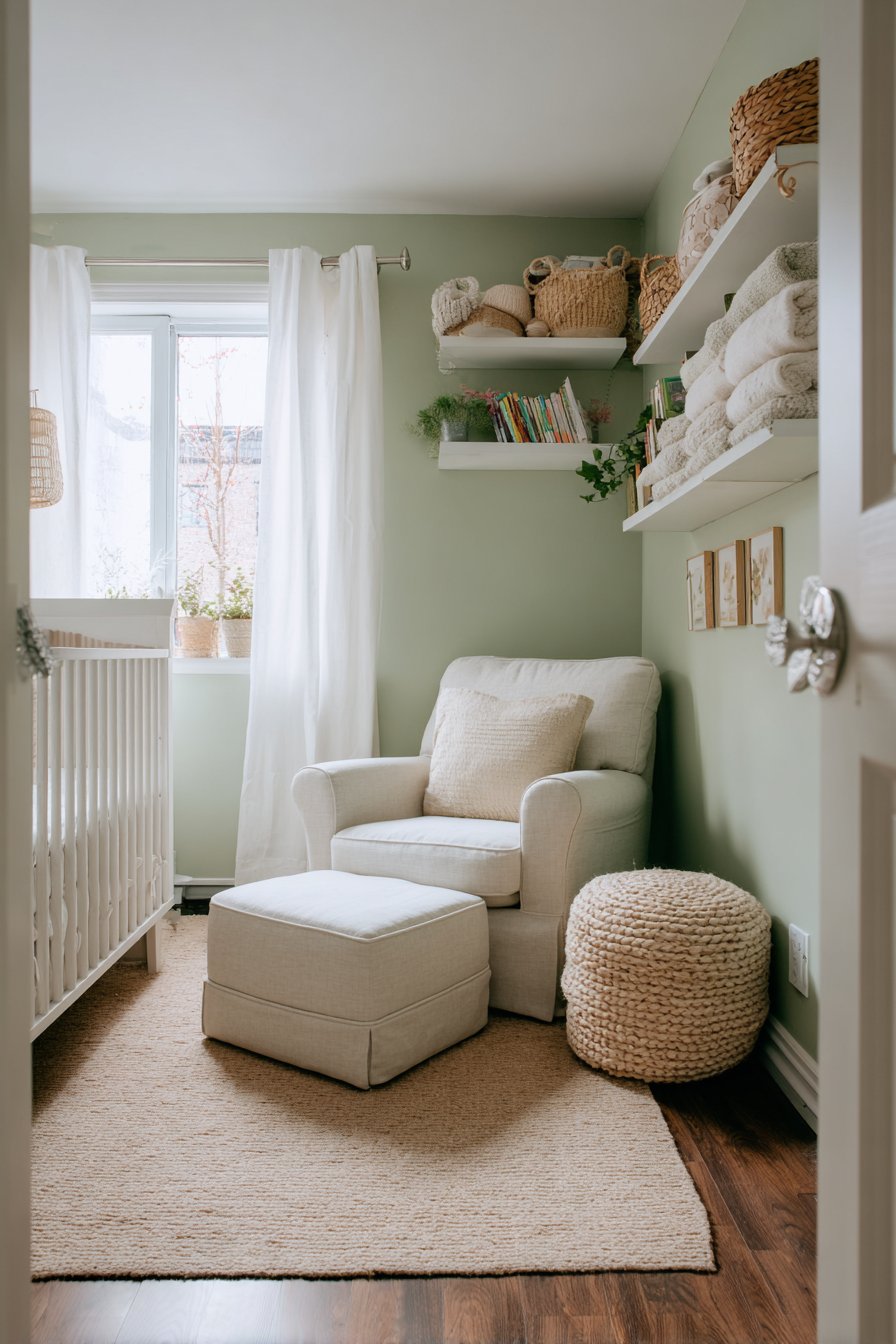
Above the changing table, floating shelves display folded baby clothes in natural woven baskets, combining storage with decorative display. These baskets keep clothing organized by size or type while maintaining easy access during diaper changes.
The natural woven texture introduces warmth and organic appeal, softening the room’s contemporary efficiency. Floating shelves eliminate the need for bulky dressers, freeing floor space for play as the child grows.
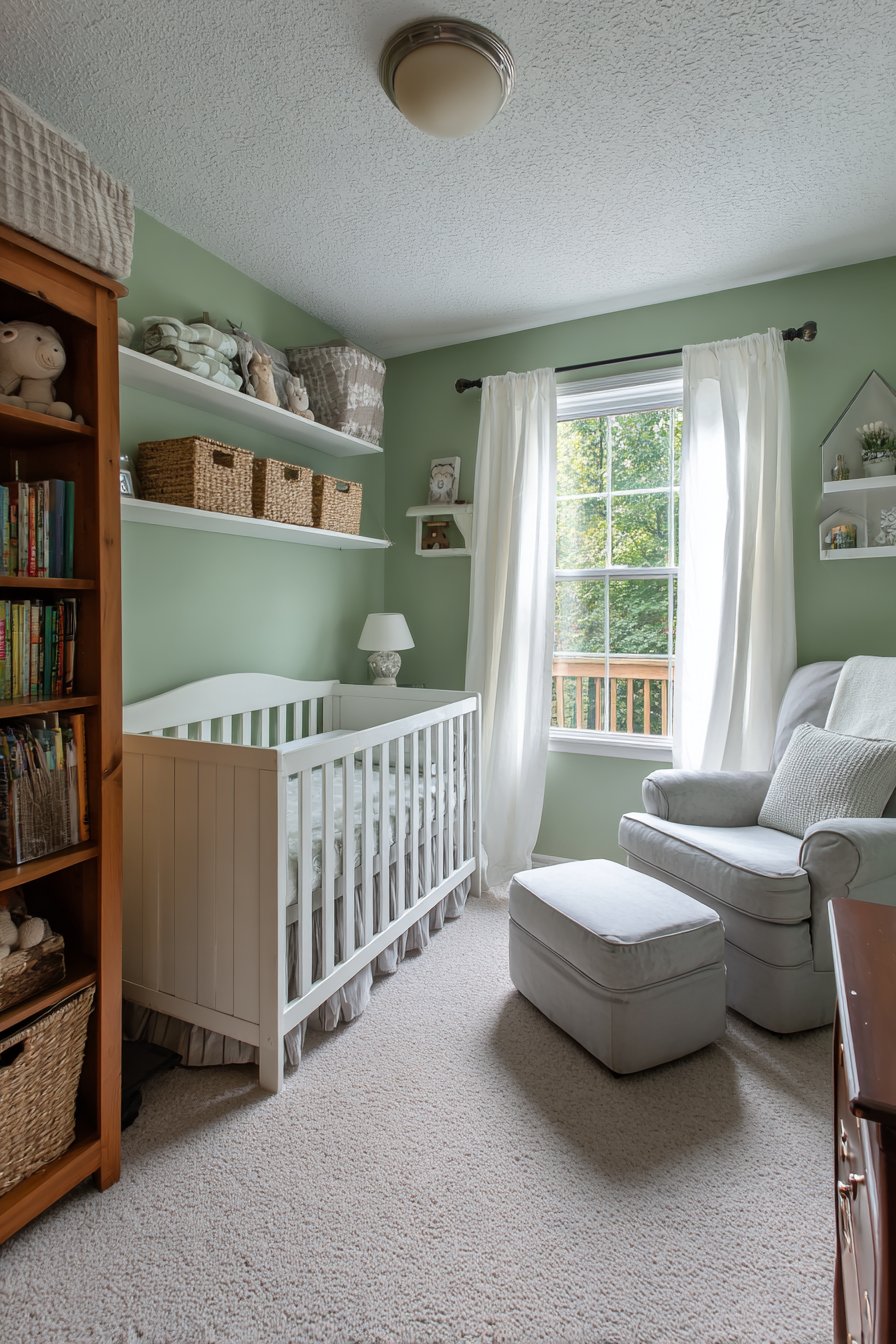
A compact glider chair with ottoman fits snugly in the corner near the window, creating a comfortable nursing and bonding spot. The window’s sheer white curtains filter natural light, creating a soft, dreamlike quality perfect for naptime and bedtime routines.
The glider’s compact proportions ensure it doesn’t dominate the room while still providing the gentle rocking motion that soothes babies and parents alike. The matching ottoman supports tired feet during late-night feedings, adding comfort without consuming much space.
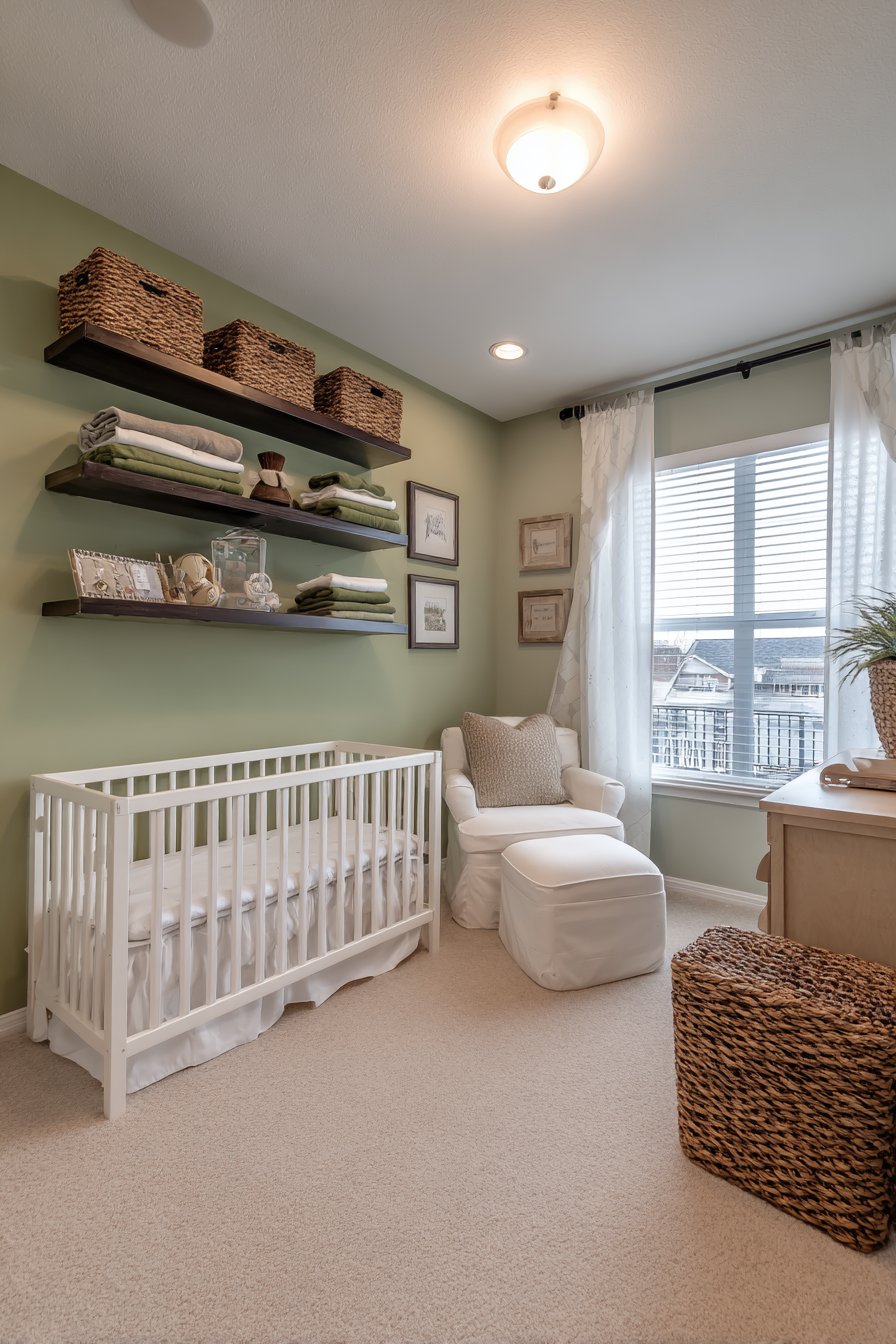
Wall-mounted book ledges save precious floor space while encouraging early literacy. These shallow shelves display books with covers forward, making it easy for growing toddlers to see and choose their favorites. As children develop, this visible book display encourages reading habits and allows them to participate in choosing bedtime stories. The nursery proves that small spaces can nurture growth, learning, and bonding when every element is chosen with care and purpose.
Key Design Tips:
- Select convertible cribs that transform into toddler beds to extend furniture lifespan and reduce costs.
- Use floating shelves with baskets to organize baby essentials while keeping them easily accessible.
- Choose compact gliders or rockers designed specifically for small nurseries but maintain comfort.
- Install wall-mounted book ledges that display covers forward to encourage reading and save floor space.
- Filter natural light with sheer curtains that maintain brightness while creating a calm atmosphere.
Why These Small Space Living Designs Excel
These ten innovative designs represent the pinnacle of small space living solutions, each addressing specific challenges while maintaining aesthetic excellence. The common thread throughout these spaces is intentional design—every element serves multiple purposes, maximizes vertical space, and contributes to an overall sense of openness. These aren’t compromised living situations but rather optimized environments that prove less square footage can lead to more thoughtful, purposeful living.
The studio apartment’s multi-functional wall unit exemplifies space-saving furniture at its finest, incorporating storage solutions, work surfaces, and sleeping accommodations in one streamlined piece. This consolidation eliminates furniture redundancy while maintaining full functionality. Similarly, the galley kitchen demonstrates how compact appliances and vertical storage can deliver professional-level cooking capability within minimal square footage. These designs succeed because they reject traditional furniture layouts in favor of purpose-built solutions.
Small space bedroom design addresses one of the most challenging aspects of compact living—finding adequate storage without sacrificing comfort. The platform bed with built-in drawers and floor-to-ceiling closets proves that careful planning eliminates clutter while maintaining bedroom serenity. The bathroom’s frameless glass shower and floating vanity showcase how transparency and suspended furniture create spatial perception beyond actual dimensions. These rooms feel larger than their measurements suggest through strategic material choices and fixture placement.
The home office transformation from unused closet space represents creative problem-solving at its best. Many small homes contain underutilized nooks, alcoves, and closets that can become productive workspaces with custom solutions. The entryway’s vertical organization system and the studio’s bookshelf room divider both demonstrate how to define spaces and add storage without construction or permanent walls. These flexible solutions adapt to changing needs over time.
The drop-leaf dining table and stackable chairs embody the adaptability essential to small space success. Furniture that transforms or stores away allows rooms to serve multiple purposes throughout the day and week. The hallway laundry closet proves that essential utilities don’t require dedicated rooms when vertical organization and compact appliances are embraced. The convertible nursery furniture acknowledges that small space living often involves growing families, with solutions that adapt as children develop.
These designs excel because they embrace small space living rather than fighting against it. Instead of trying to cram full-sized furniture into undersized rooms, they accept the constraints and design accordingly. Light colors, reflective surfaces, and strategic lighting amplify natural brightness. Multi-functional furniture reduces piece counts while maintaining capability. Vertical storage utilizes often-wasted wall space. Together, these principles create homes that feel spacious, organized, and intentional regardless of actual square footage.
Conclusion
Small space living no longer represents limitation but rather opportunity for creative, efficient design. These ten spaces demonstrate that compact homes can accommodate full lives—working, cooking, sleeping, entertaining, and even raising children—when approached with intention and intelligence. The key lies in embracing multi-functional furniture, maximizing vertical storage, maintaining light palettes, and selecting pieces that serve multiple purposes.
As you consider your own small space challenges, remember that every constraint presents a design opportunity. That unused closet could become a productive home office. That cramped bedroom could gain serenity through platform storage beds. Your galley kitchen could rival larger spaces through smart appliance choices and vertical organization. The apartment that feels impossibly small today can transform into a perfectly optimized home tomorrow.
Start by assessing your space’s potential rather than its limitations. Identify underutilized areas like closets, hallways, and corners that could serve new purposes. Consider which furniture pieces could be replaced with multi-functional alternatives. Look upward to discover vertical storage opportunities on every wall. Most importantly, prioritize what matters most to you—whether that’s a comfortable workspace, efficient kitchen, or peaceful bedroom—and design accordingly. Your small space can become your perfectly tailored home.
