


Transforming a cramped attic bedroom into a spacious sanctuary requires strategic design choices and clever spatial planning. Many homeowners overlook the potential of attic spaces, viewing sloped ceilings and limited square footage as insurmountable challenges. However, with thoughtful interior design principles, these cozy nooks can become breathtaking retreats that feel surprisingly open and airy.
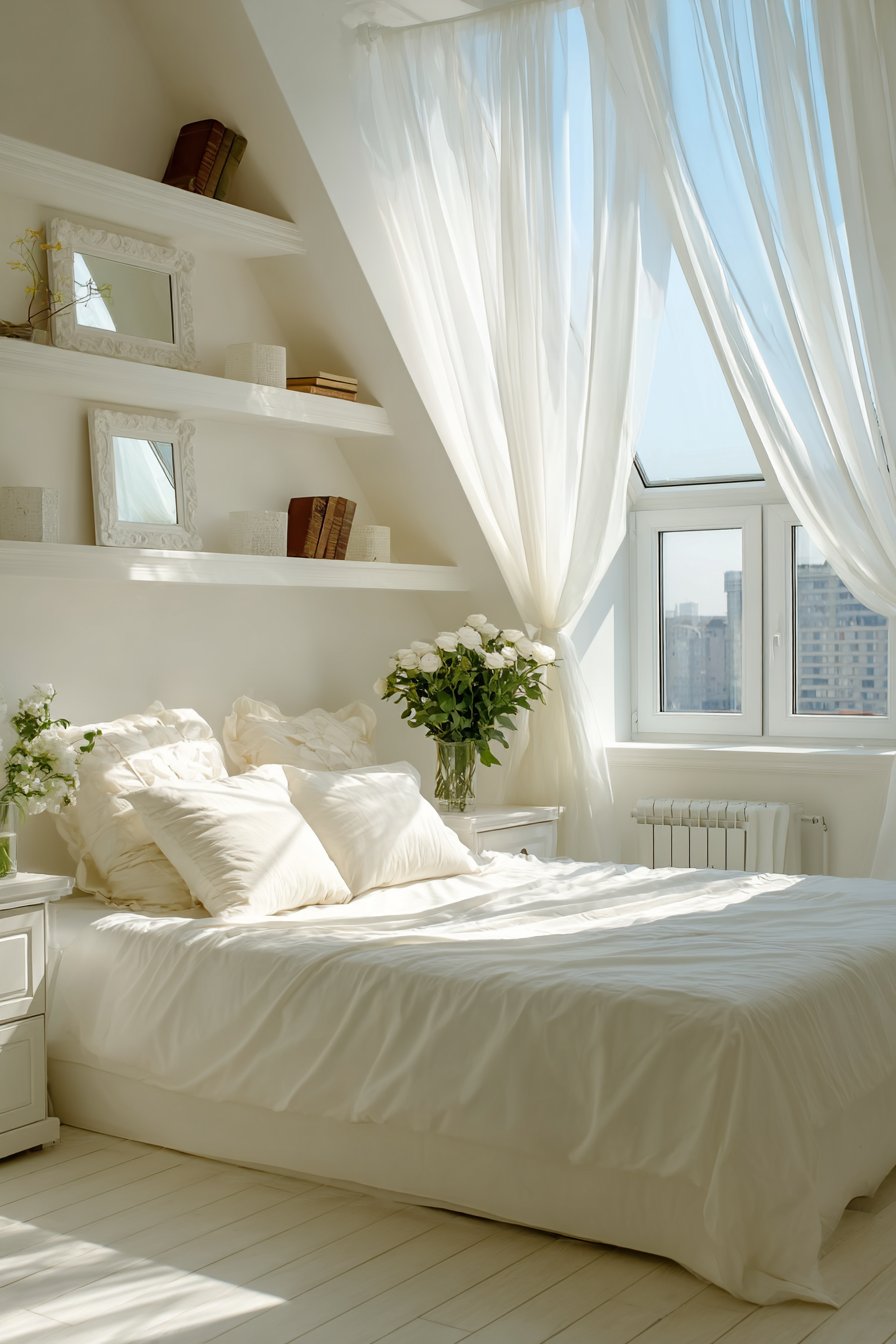
The art of making small spaces feel larger lies in understanding how light, color, and proportion work together to influence perception. Interior designers have long recognized that physical space and perceived space are two different concepts. By manipulating visual elements and employing smart furnishing strategies, you can dramatically alter how spacious an attic bedroom feels. This approach combines aesthetic appeal with practical functionality, creating rooms that serve multiple purposes without feeling cluttered.
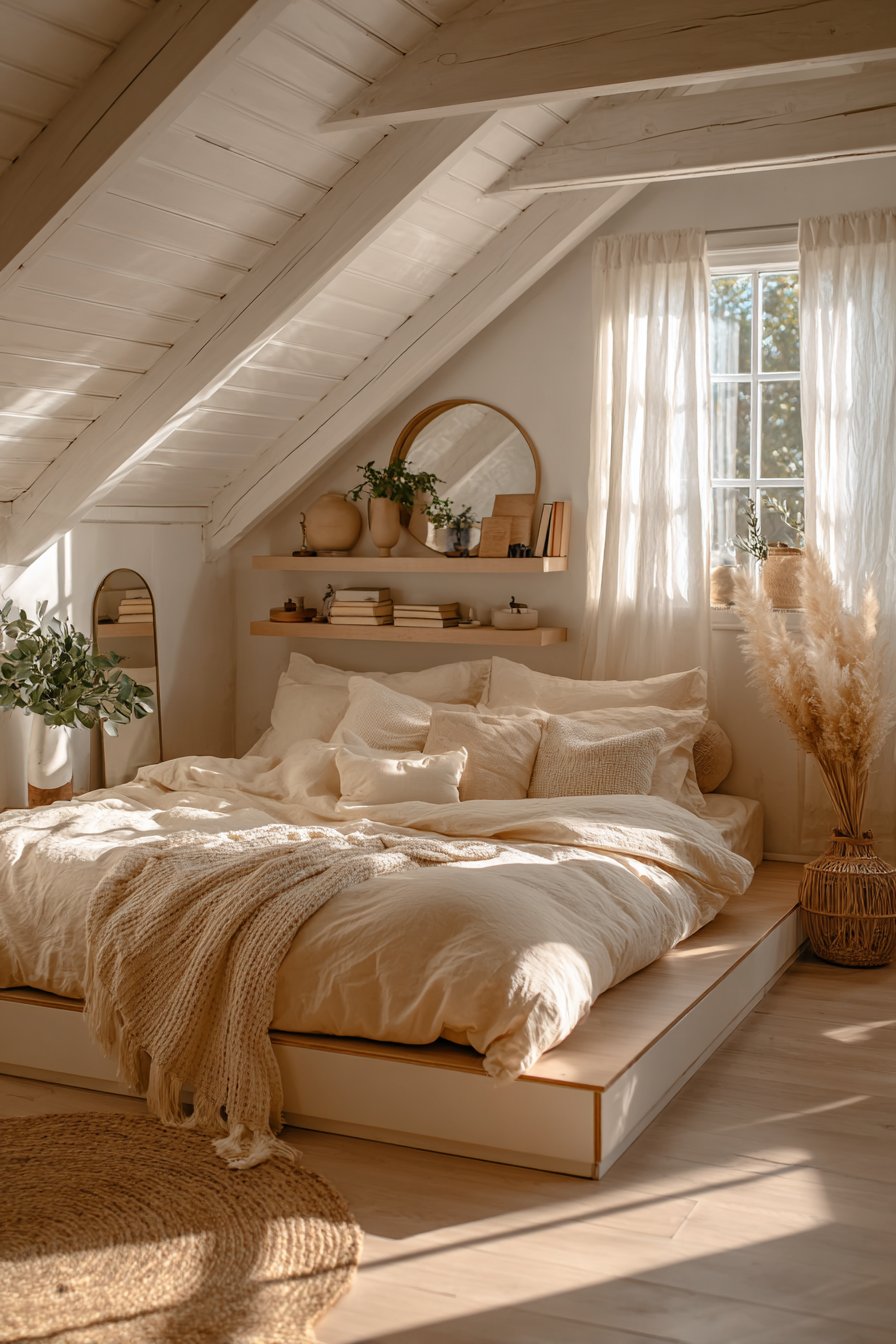
This comprehensive guide explores proven techniques for maximizing your attic bedroom’s potential. From strategic color choices to innovative storage solutions, each method has been carefully selected for its effectiveness in small-space design. Whether you’re converting an unused attic or redesigning an existing bedroom, these ideas will help you create a space that feels open, inviting, and perfectly suited to modern living.
1. Embrace Light Colors and Reflective Surfaces
Light colors are your greatest ally when creating the illusion of expanded space in compact attic bedrooms. White, cream, and soft pastels reflect natural light throughout the room, making walls appear to recede. This optical effect tricks the eye into perceiving more square footage than actually exists. The psychological impact of bright, airy tones cannot be overstated in confined quarters.
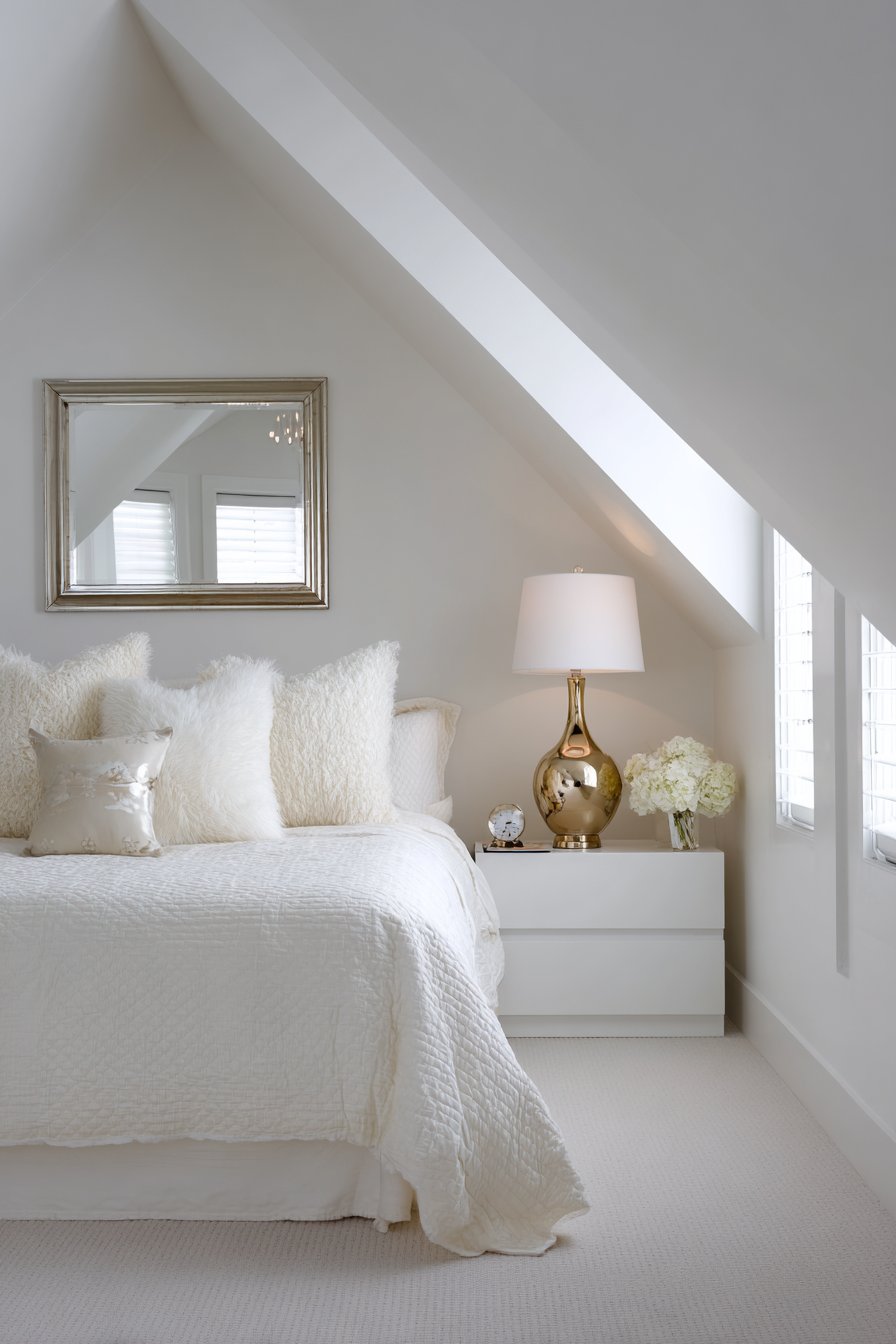
Incorporating reflective surfaces amplifies this effect exponentially. Mirrors strategically placed opposite windows double natural light while creating depth through reflection. Glossy finishes on furniture, metallic accents, and glass elements contribute to this light-bouncing phenomenon. Consider high-gloss paint for trim work or selecting furniture with lacquered surfaces that catch and reflect ambient illumination.
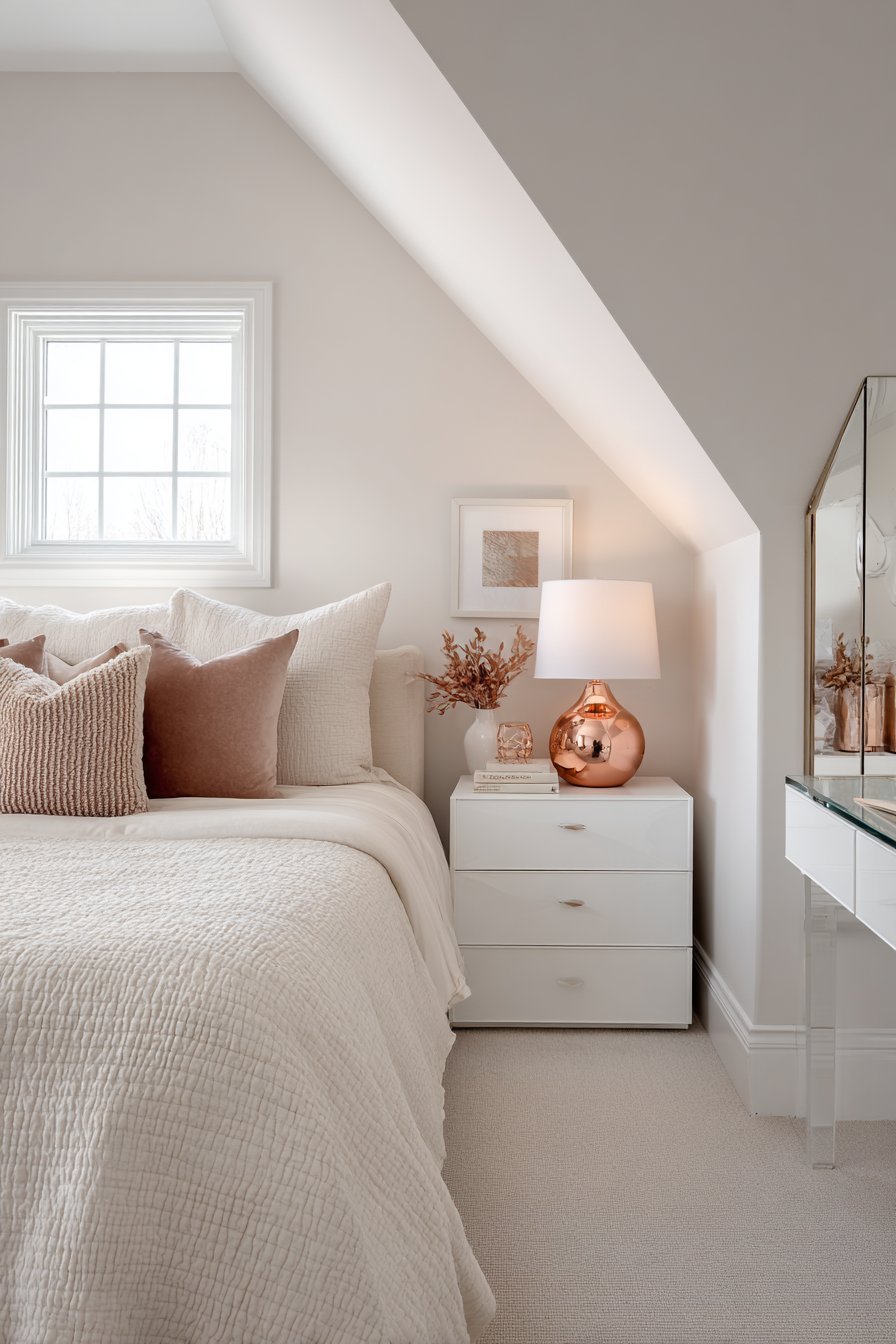
The key is maintaining consistency throughout the space without creating a sterile environment. Layer different shades of your chosen color family to add visual interest while preserving the expansive feeling. Texture becomes crucial in monochromatic schemes, preventing the room from feeling flat or uninspiring.
- Paint ceiling and walls the same light color to eliminate visual boundaries
- Install large mirrors on the longest wall to maximize depth perception
- Choose furniture with glass tops or lucite components for transparency
- Use satin or semi-gloss paint finishes instead of flat matte
- Add metallic accessories in silver, gold, or rose gold for light reflection
- Consider mirrored closet doors to double the room’s visual size
2. Maximize Vertical Storage Solutions
Attic bedrooms typically feature unique architectural elements like sloped ceilings that require creative storage approaches. Vertical space often goes underutilized, yet it offers tremendous potential for organization without consuming precious floor area. Built-in shelving that follows the roofline transforms awkward angles into functional assets rather than design obstacles.
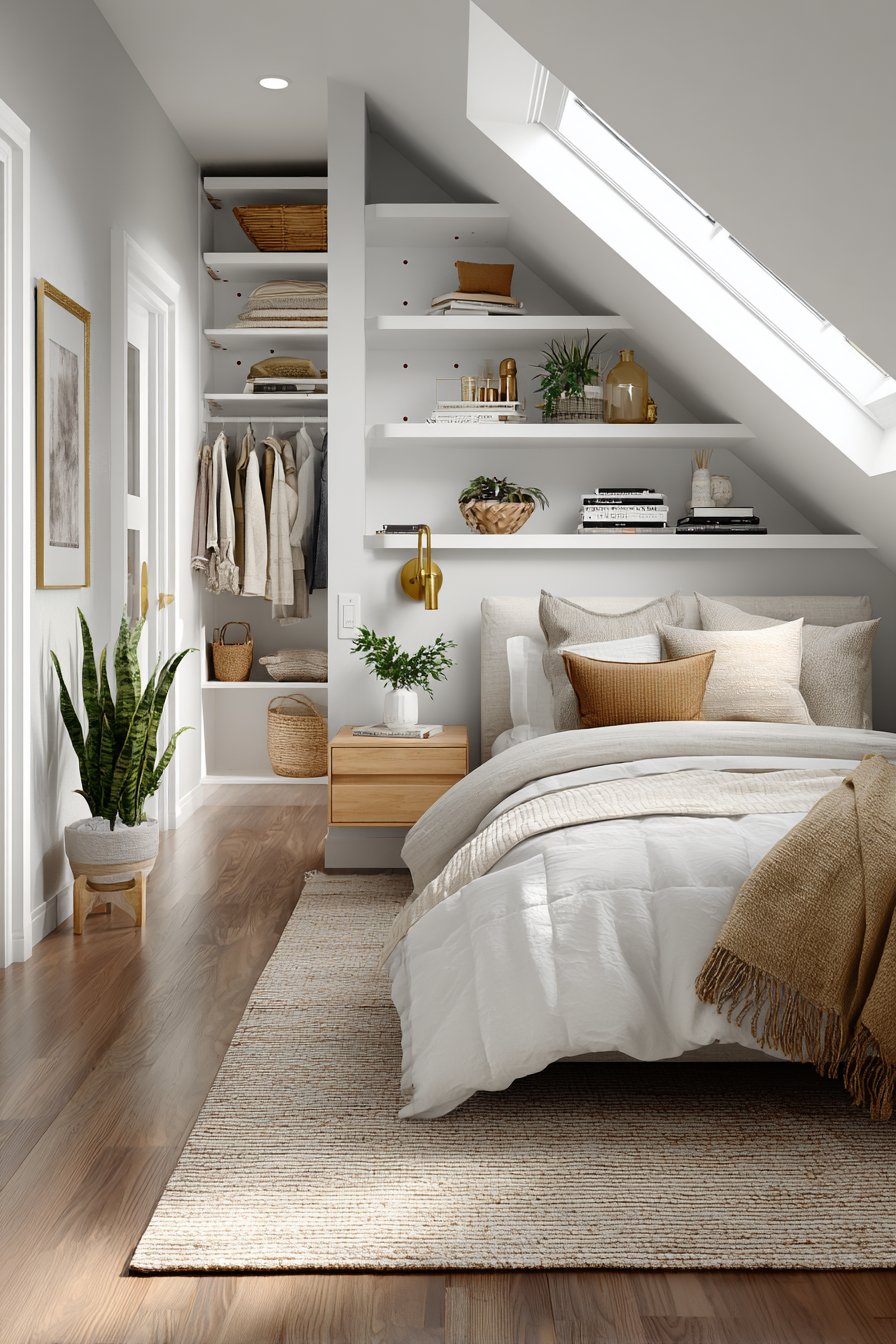
Wall-mounted storage keeps the floor clear, which is essential for maintaining an open, spacious feeling. Floating shelves, hanging organizers, and tall narrow bookcases draw the eye upward, emphasizing ceiling height. This vertical emphasis makes rooms feel taller and more expansive. The absence of bulky floor-based storage units allows for uninterrupted sight lines across the room.
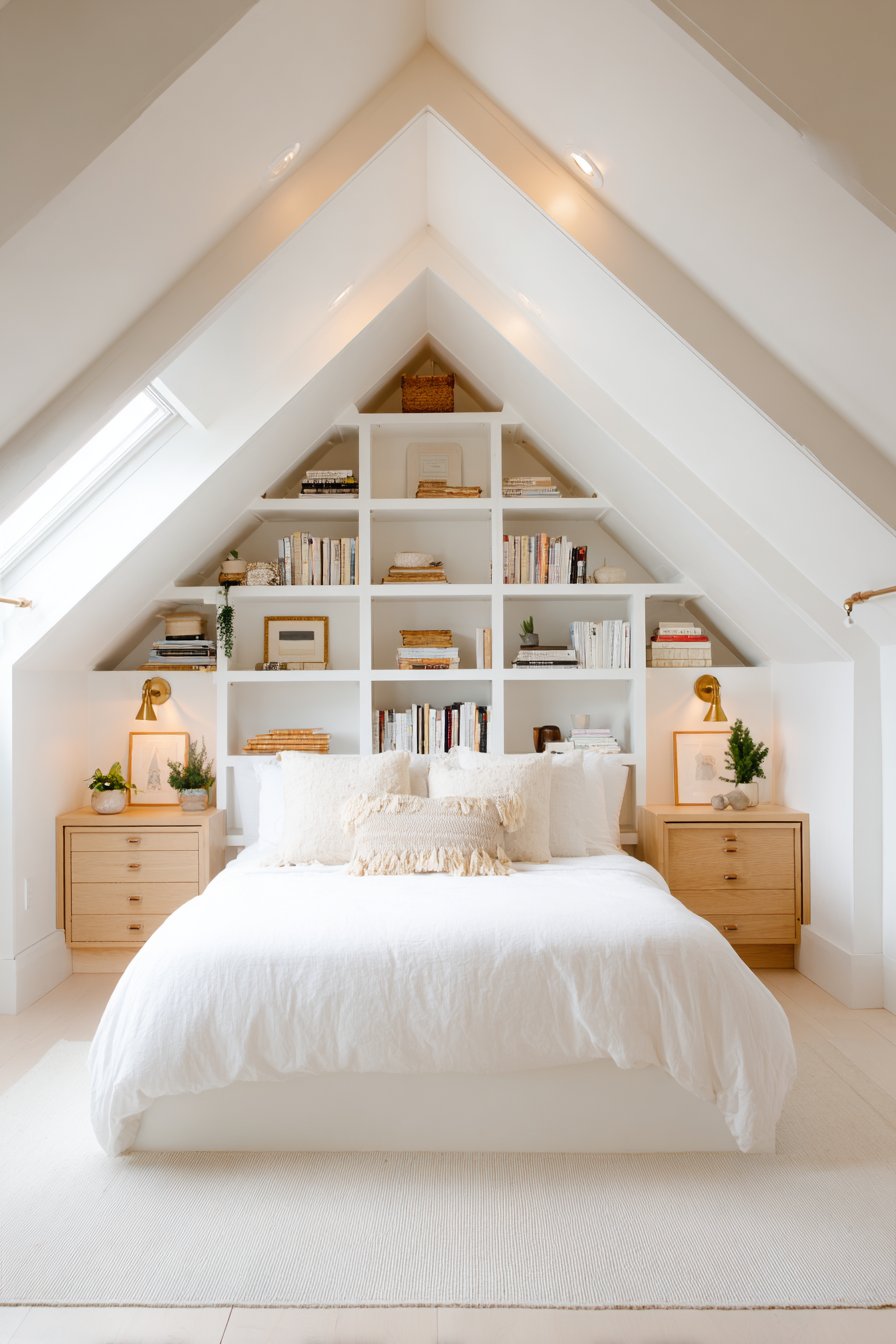
Custom solutions work best in attics where standard furniture often doesn’t fit properly. Consider commissioning built-ins that maximize every inch of available wall space. These installations can incorporate hidden storage compartments in unexpected places, keeping belongings organized while maintaining clean visual lines throughout the space.
- Install floor-to-ceiling shelving units in corners with full height clearance
- Use wall-mounted nightstands instead of traditional bedside tables
- Hang clothing rods at varying heights to utilize sloped ceiling areas
- Add floating shelves above the bed for books and decorative items
- Install pegboard systems for customizable, changeable storage configurations
- Use over-door organizers and hooks to maximize every vertical surface
3. Select Multi-Functional Furniture Pieces
Multi-functional furniture is absolutely essential in small attic bedrooms where every square foot counts. A bed with built-in drawers eliminates the need for a separate dresser, instantly freeing up valuable floor space. Ottoman storage benches, fold-down desks, and convertible pieces serve dual purposes without the bulk of multiple furniture items.
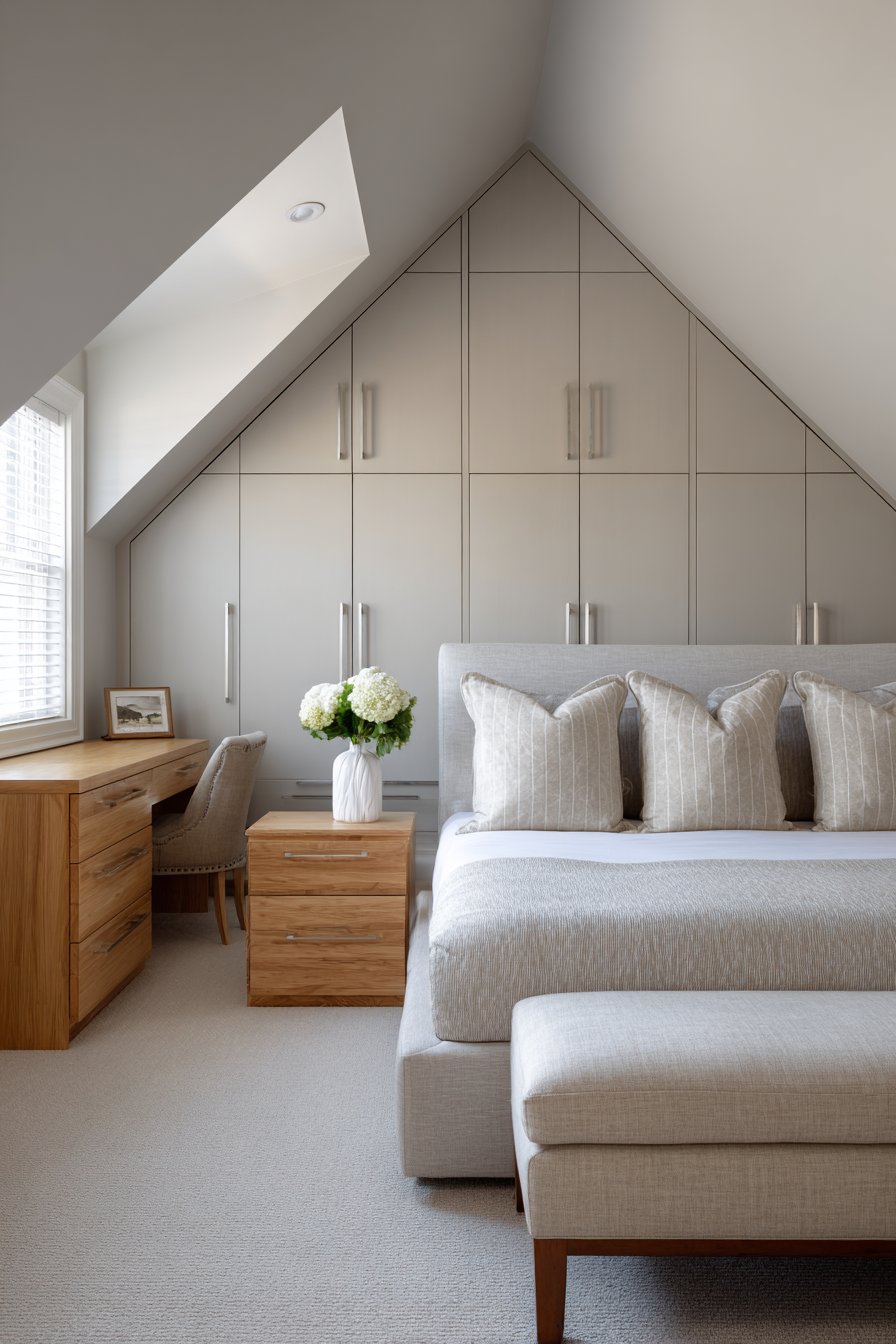
The principle of quality over quantity applies perfectly to small-space furnishing. One well-chosen piece that serves three functions beats three separate items cluttering the room. Murphy beds, though initially more expensive, can transform a bedroom into a multi-purpose space during daytime hours. This flexibility proves invaluable in compact attic conversions.
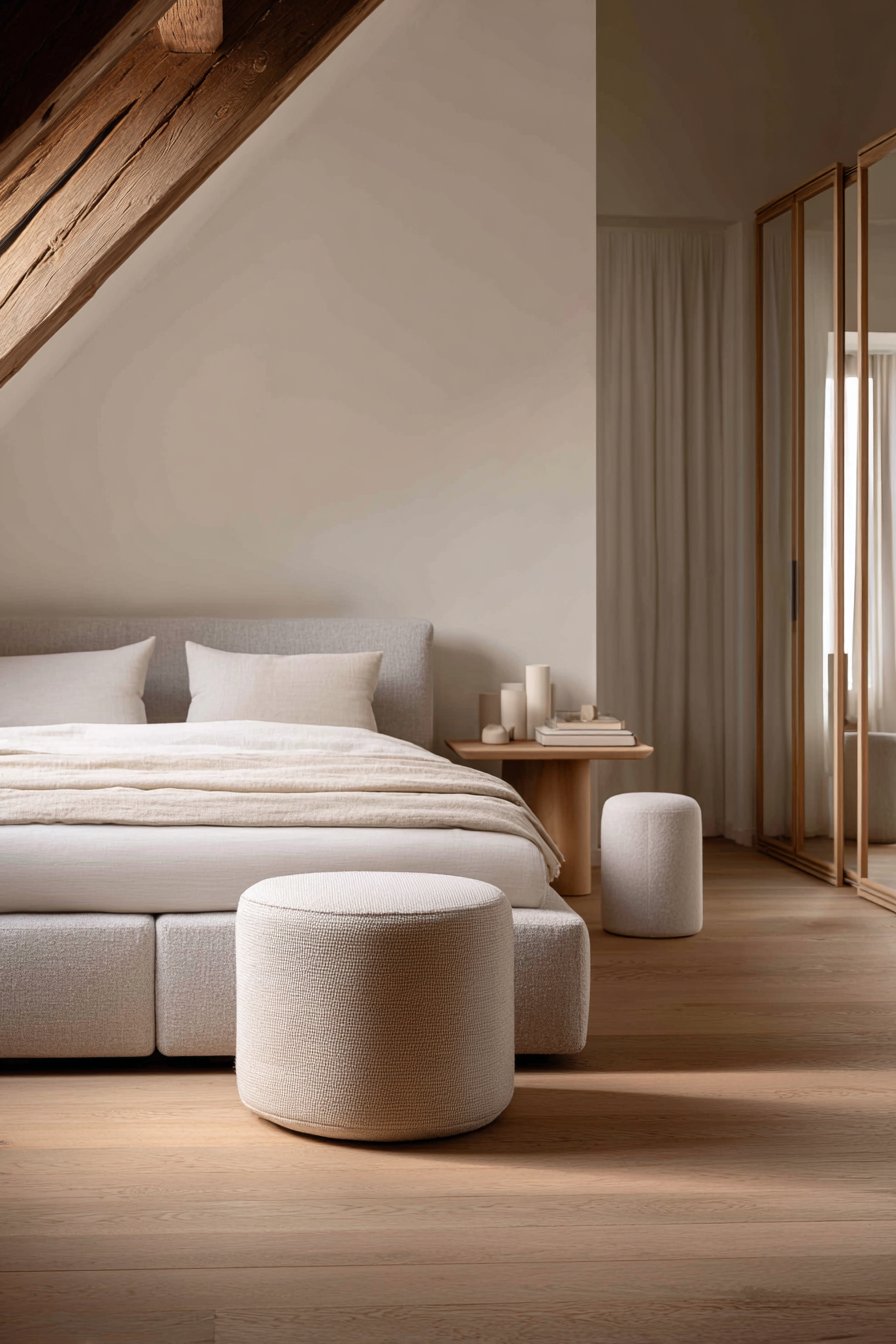
Scale matters tremendously when selecting furniture for tight quarters. Pieces should be appropriately sized for the room, avoiding oversized items that overwhelm the space. Furniture with exposed legs creates a sense of airiness by allowing light to flow underneath. This visual trick makes pieces appear to float, contributing to an overall lightness in the room’s aesthetic.
- Choose platform beds with integrated drawer storage underneath
- Select storage ottomans that function as seating and hidden storage
- Install a fold-down wall desk that disappears when not needed
- Use nesting tables that can be separated or stacked as needed
- Opt for wardrobes with mirrored doors for dual functionality
- Consider sleeper sofas if the room serves multiple purposes
4. Optimize Natural Light and Window Treatments
Natural light has an unparalleled ability to make small spaces feel significantly larger and more welcoming. Attic windows, whether dormers or skylights, should be treated as precious assets requiring strategic enhancement. Heavy drapes that block light should be avoided entirely in favor of treatments that maximize illumination while providing necessary privacy.
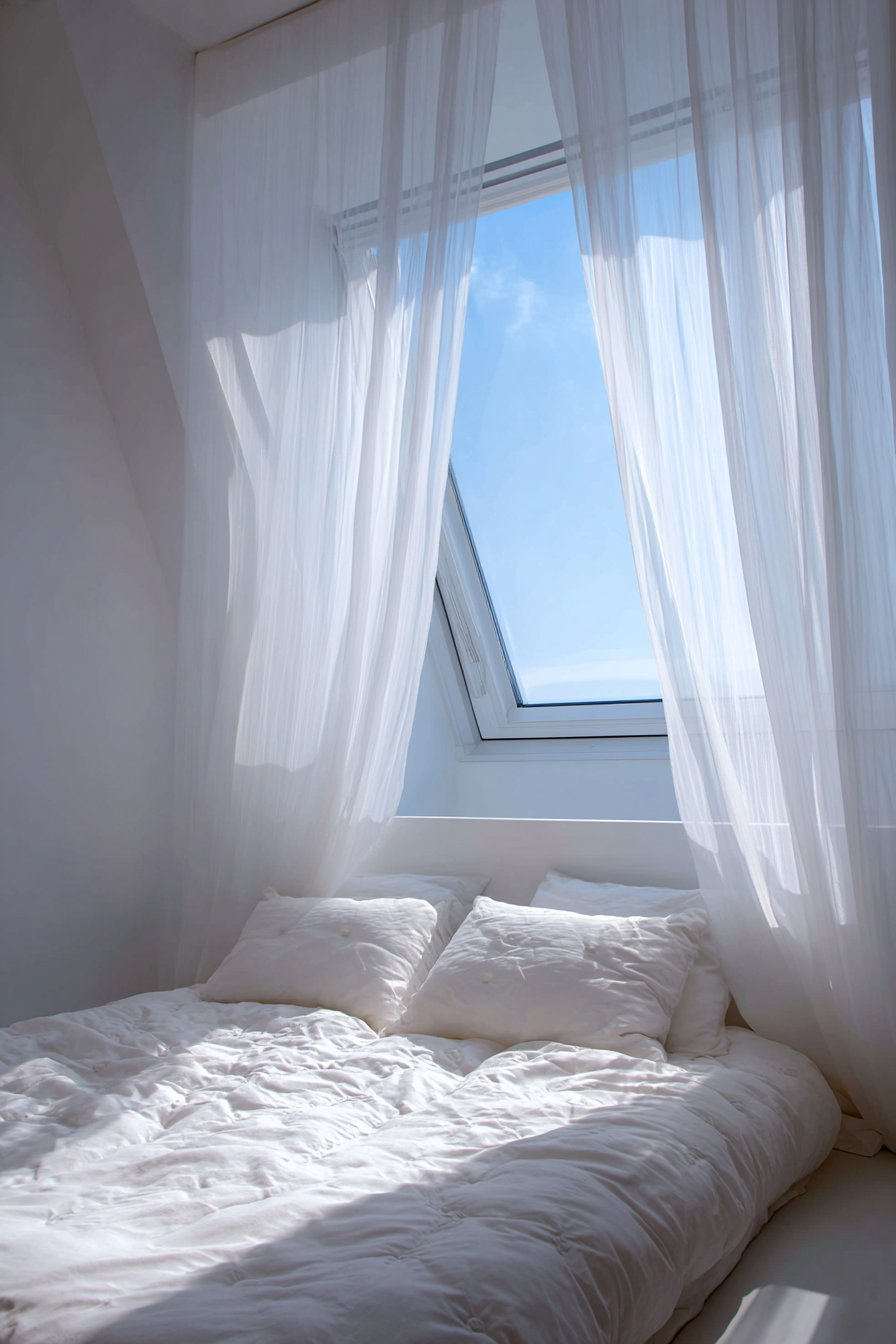
Sheer curtains or light-filtering shades offer the perfect compromise between privacy and brightness. These treatments soften incoming light without substantially reducing its intensity. When possible, mount curtain rods closer to the ceiling and extend them beyond the window frame. This technique creates the illusion of taller, wider windows that flood the room with natural light.
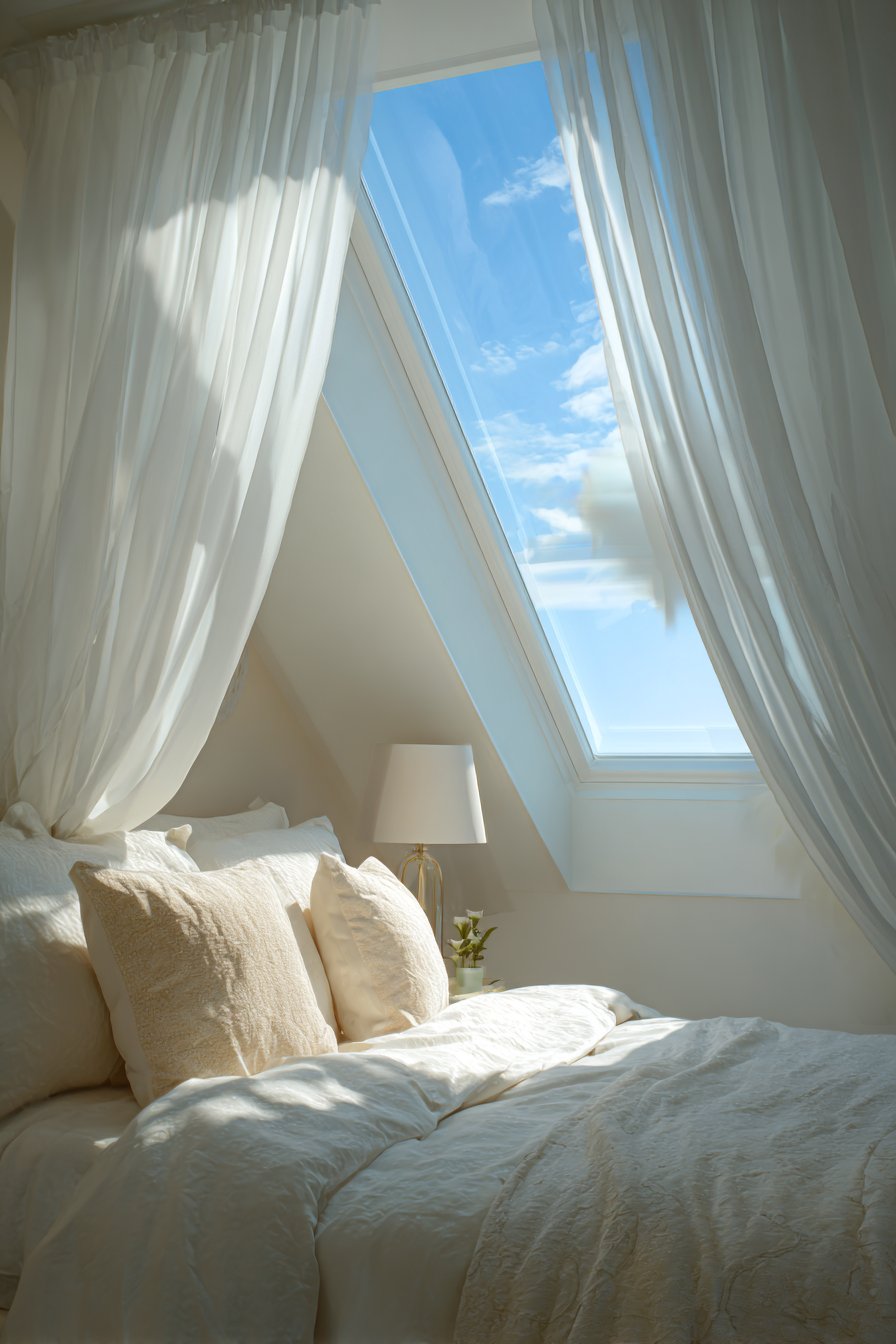
Skylights deserve special consideration in attic conversions as they introduce vertical light that dramatically brightens spaces. Remote-controlled blinds for skylights allow precise light control throughout the day. The psychological impact of natural overhead light mimics outdoor spaces, making the room feel less confined and more connected to nature.
- Install skylights if structurally possible for overhead natural light
- Use sheer white or neutral curtains instead of heavy blackout drapes
- Mount curtain rods near the ceiling to emphasize window height
- Keep window sills clear of clutter and decorative items
- Consider solar tubes for attics without direct roof access
- Use light-filtering cellular shades that provide privacy without blocking light
5. Create Strategic Sight Lines and Flow
Thoughtful furniture placement dramatically impacts how spacious a room feels regardless of actual dimensions. Arranging furniture to create clear pathways prevents the cramped feeling that comes from obstacle courses through cluttered spaces. The longest uninterrupted sight line in the room should remain clear, drawing the eye across the entire space.
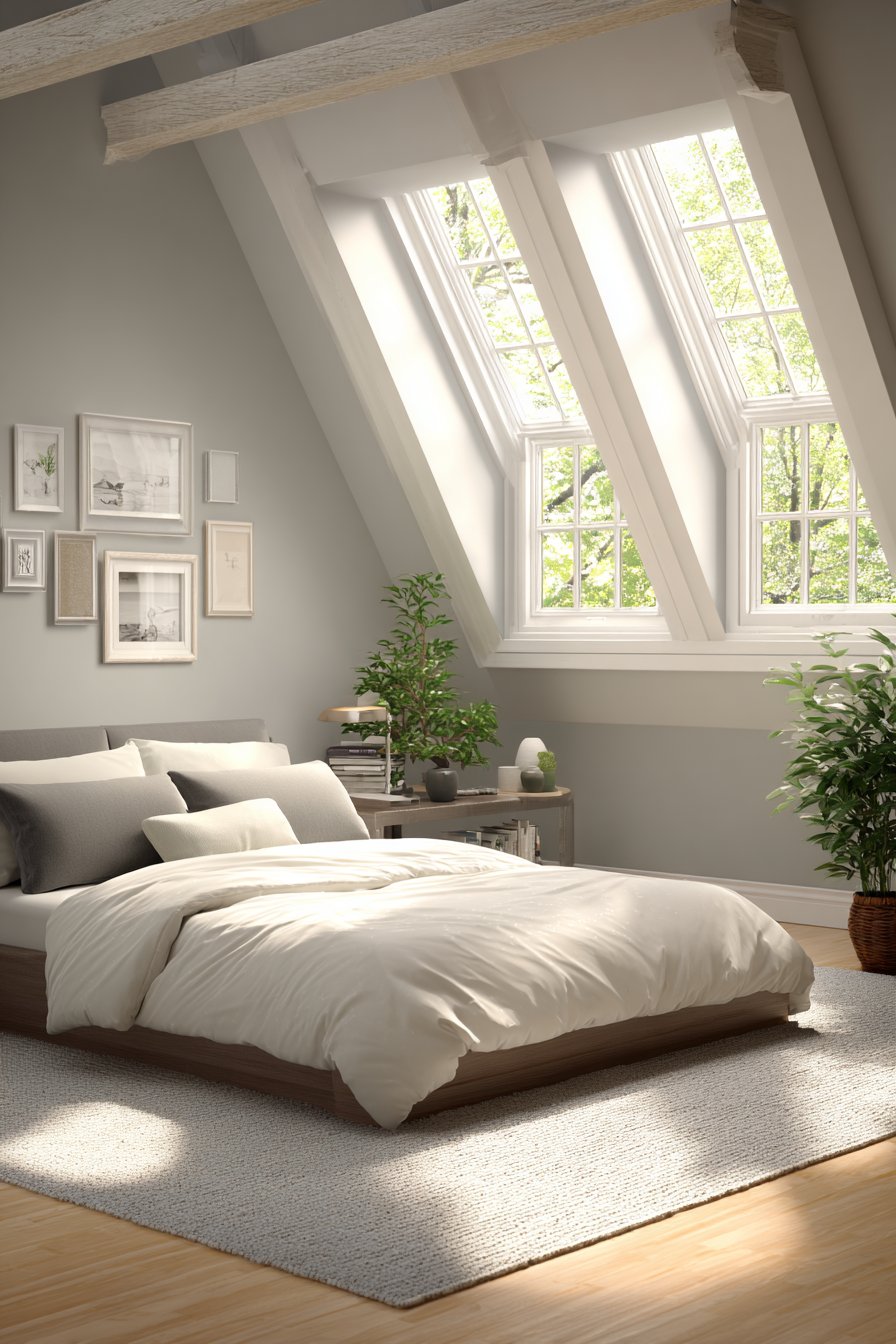
Floating furniture away from walls, when space permits, paradoxically makes rooms feel larger. This technique creates breathing room around pieces and suggests abundance rather than limitation. In attics, position the bed perpendicular to sloped ceilings rather than against them to avoid the closed-in feeling that low ceilings can create.
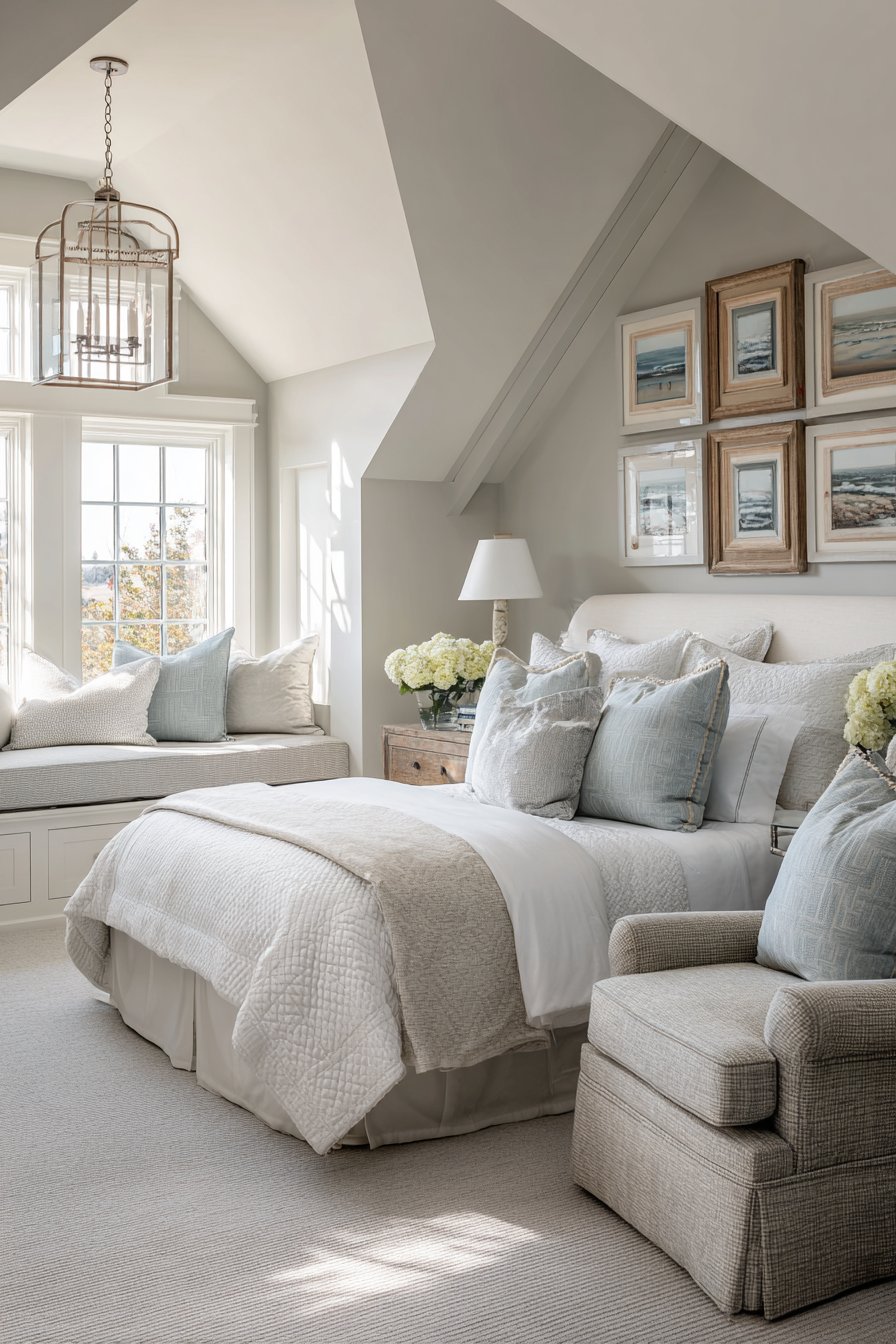
The concept of negative space proves crucial in small-room design. Empty floor space is not wasted space—it’s essential for visual comfort. Resist the urge to fill every corner with furniture or décor. These purposeful voids allow the eye to rest and contribute to an overall sense of openness that makes the room feel substantially larger.
- Position the bed to face the longest wall for maximum visual depth
- Leave at least 24 inches of clearway around the bed for easy movement
- Avoid placing tall furniture against the room’s entrance wall
- Create a focal point on the wall with the most height clearance
- Use area rugs to define spaces without physical barriers
- Keep the center of the room as open as possible
6. Minimize Visual Clutter Through Smart Organization
Clutter-free environments automatically feel more spacious regardless of actual square footage. In attic bedrooms, maintaining organization requires deliberate systems and disciplined habits. Everything needs a designated home, preferably behind closed doors or in concealed storage solutions. Visual chaos overwhelms small spaces instantly.
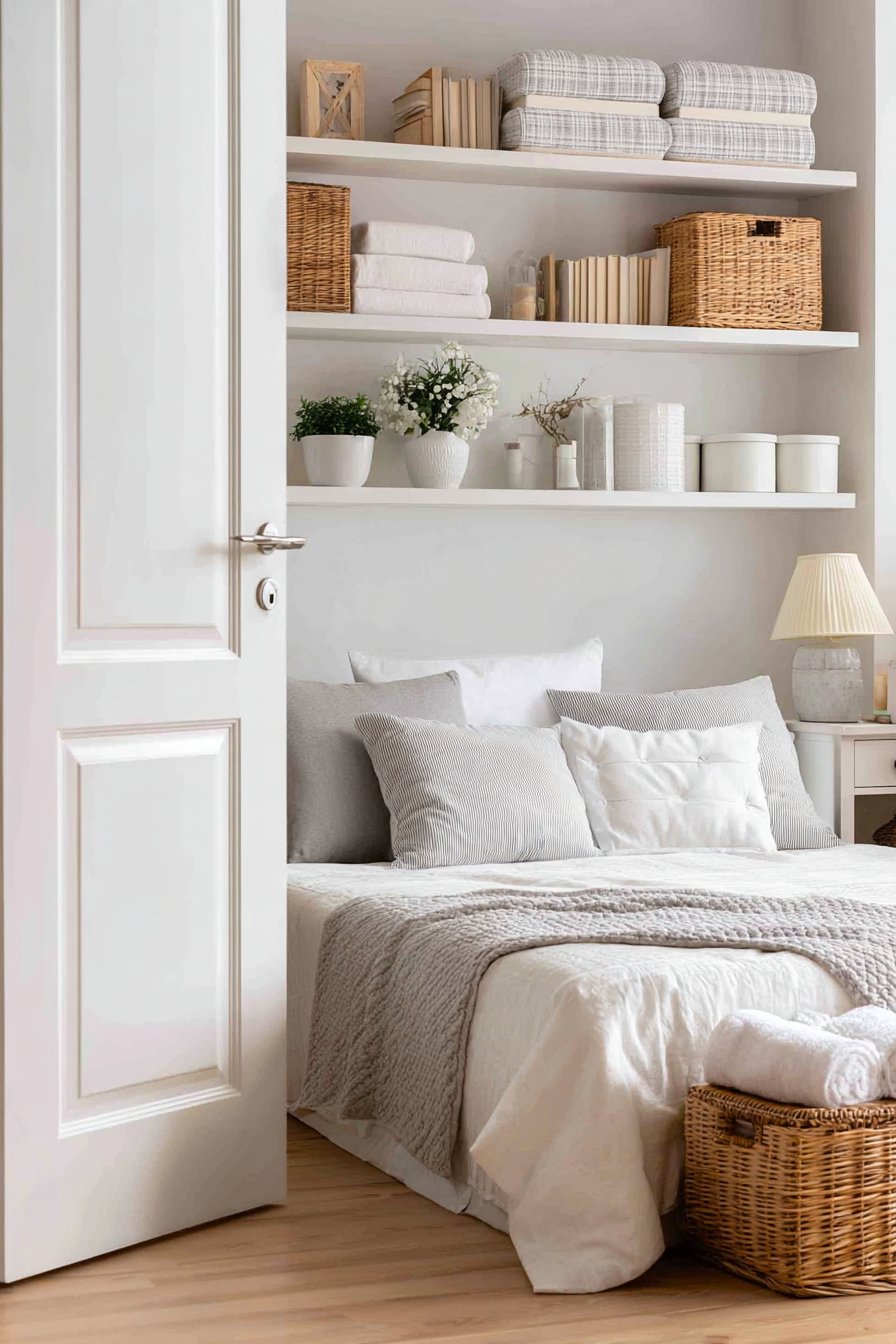
Implementing a minimalist approach doesn’t mean living without possessions—it means being selective and intentional. Display only your most cherished items while storing seasonal or infrequently used belongings elsewhere. The principle of one in, one out maintains balance and prevents accumulation that leads to cramped conditions.
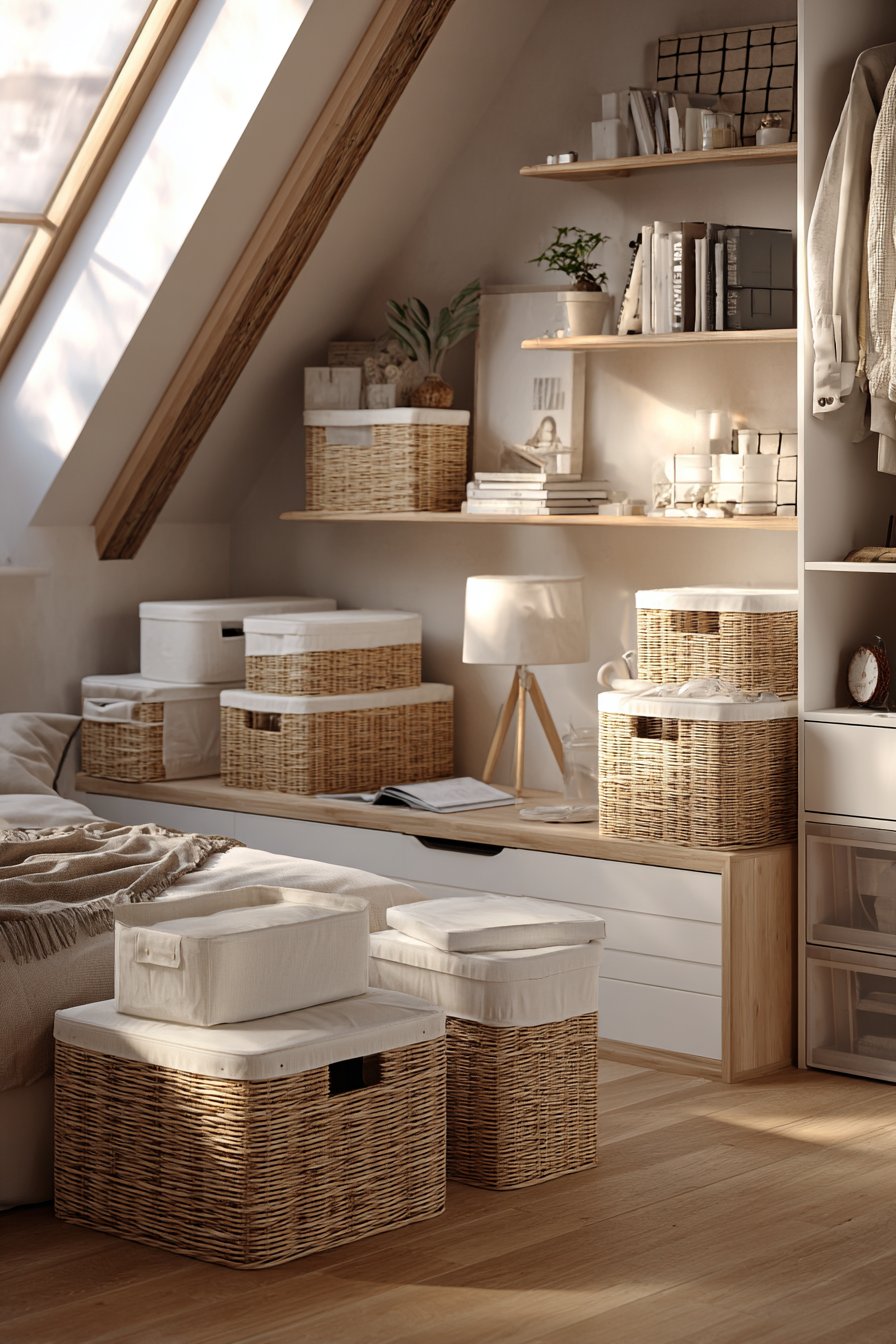
Clever concealment techniques hide everyday necessities without sacrificing accessibility. Under-bed storage in matching containers, coordinated baskets on shelving, and labeled bins maintain order while keeping surfaces clear. The time invested in proper organization systems pays dividends in perceived spaciousness and reduced stress in your personal sanctuary.
- Use matching storage containers for a cohesive, organized appearance
- Install closet organization systems to maximize clothing storage efficiency
- Keep bedside surfaces limited to essentials like lamps and alarm clocks
- Store off-season clothing in vacuum-sealed bags under the bed
- Use drawer dividers to maximize dresser storage capacity
- Implement a nightly 5-minute tidy routine to maintain organization
Conclusion
Transforming a small attic bedroom into a spacious-feeling retreat is entirely achievable through strategic design decisions and thoughtful implementation. The techniques outlined—from embracing light colors and maximizing vertical storage to optimizing natural light and minimizing clutter—work synergistically to create environments that feel considerably larger than their actual dimensions. Remember that perception is reality when it comes to spatial design.
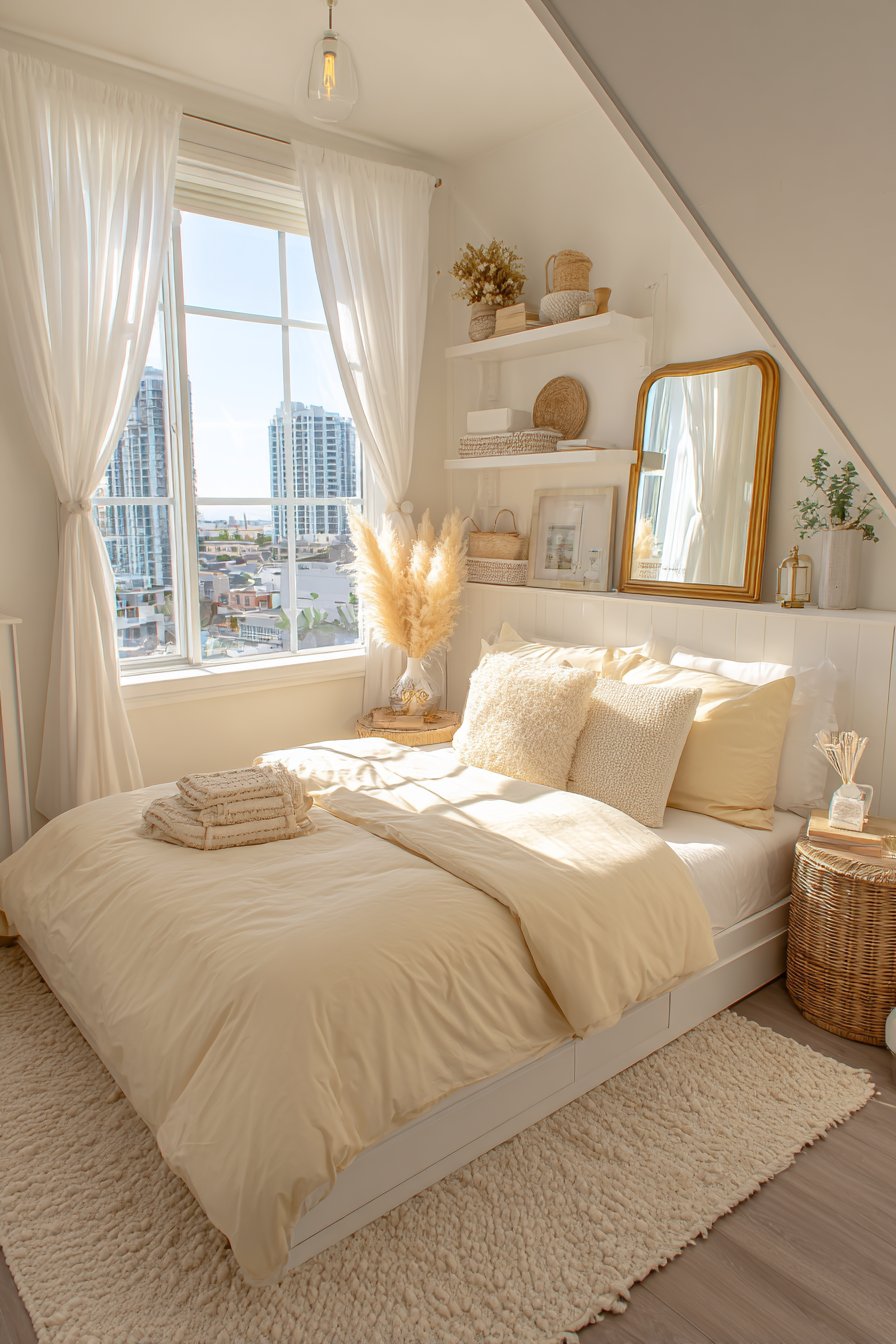
Don’t feel overwhelmed by implementing all these strategies simultaneously. Start with the changes that resonate most with your style and budget, then gradually incorporate additional elements. Your attic bedroom has incredible potential waiting to be unlocked. With patience, creativity, and these proven design principles, you’ll create a personal sanctuary that feels open, airy, and perfectly suited to your needs. Embrace the unique character of your attic space and transform it into the spacious bedroom you’ve always envisioned.
