


Attic bedrooms possess a unique architectural charm that sets them apart from conventional sleeping spaces. The sloped ceilings, exposed beams, and intimate proportions create opportunities for creative design solutions. These cozy spaces, often overlooked or underutilized, can become the most enchanting rooms in your home. With thoughtful planning and strategic design choices, even the smallest attic can transform into a functional and inspiring bedroom retreat.
The key to successful attic bedroom design lies in embracing the space’s inherent characteristics rather than fighting against them. Low ceilings become cozy nooks. Awkward angles provide perfect spots for built-in storage. Natural light from dormers and skylights bathes the room in warmth. This article explores ten distinctive approaches to small attic bedroom design, each offering unique solutions for common challenges. From minimalist Scandinavian aesthetics to bold industrial styles, these ideas demonstrate how diverse design philosophies can adapt to compact, sloped spaces.
Whether you’re converting an unused attic into a guest room, creating a teen retreat, or designing your own personal sanctuary, these concepts will inspire your transformation. Each design showcases practical storage solutions, clever furniture placement, and atmospheric lighting techniques. The following sections present detailed explorations of various styles, materials, and layouts that maximize both functionality and visual appeal in small attic bedrooms.
1. Platform Bed Paradise with Built-In Storage
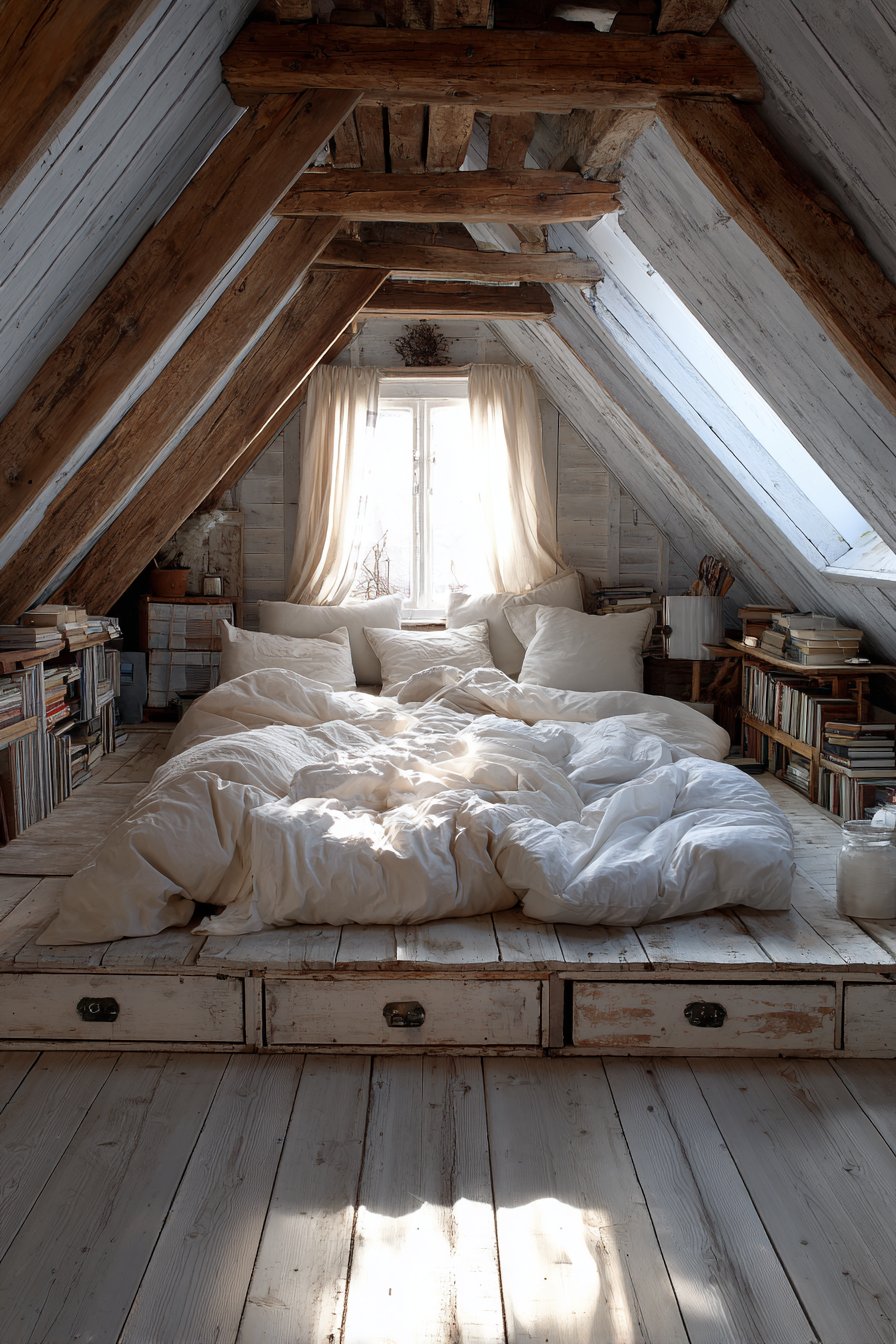
The foundation of this attic bedroom centers on a low-profile platform bed strategically positioned beneath the sloped ceiling. This intelligent placement maximizes precious floor space while maintaining comfortable headroom.
White shiplap walls create a bright, airy backdrop that reflects natural light from the dormer window. The vertical wall treatment adds subtle texture without overwhelming the compact dimensions. Simple linen curtains dress the window, filtering daylight while maintaining the room’s clean aesthetic.
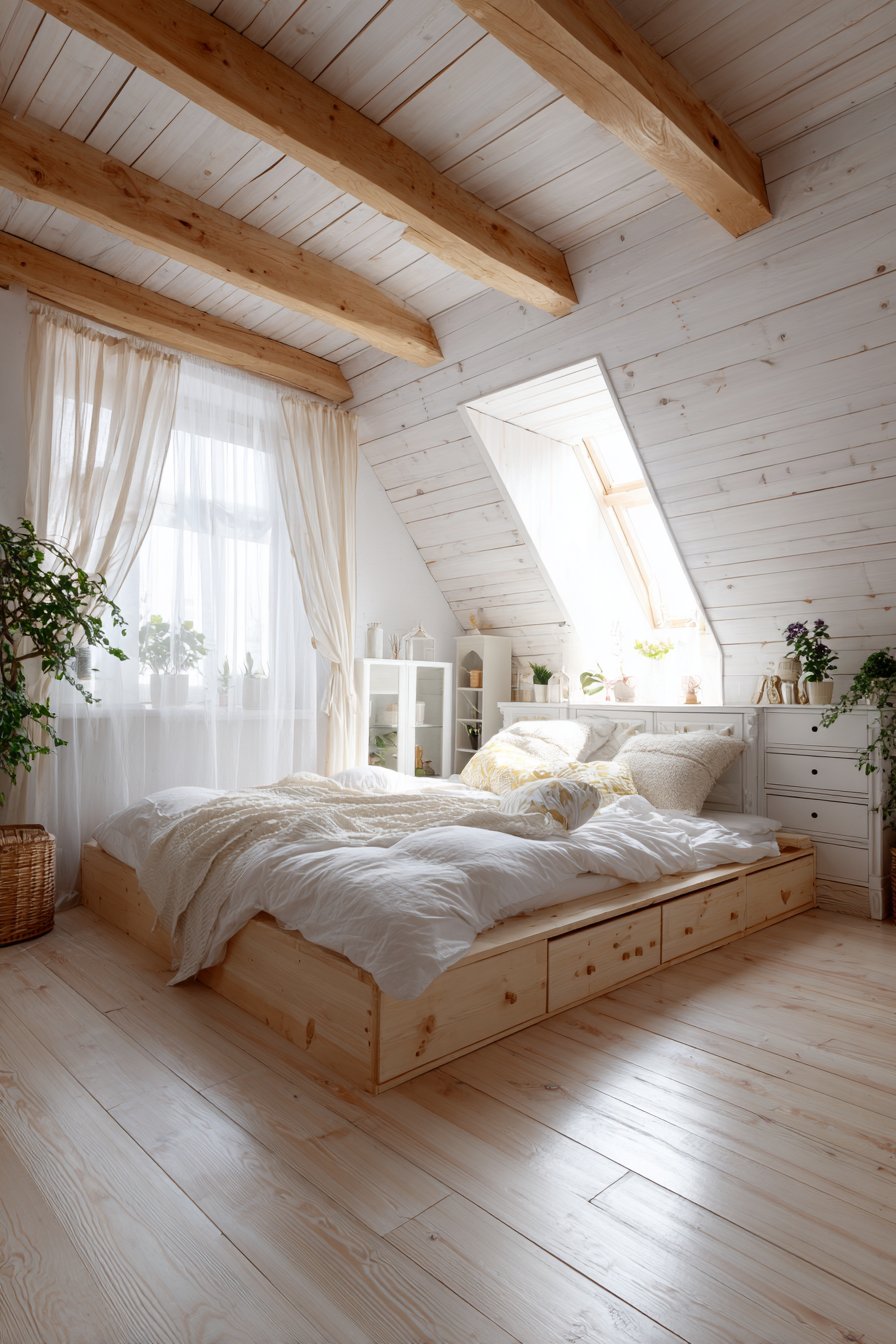
Built-in storage drawers integrated directly into the bed frame solve the common attic storage dilemma. These pull-out compartments utilize space that would otherwise remain empty beneath the mattress. The drawer fronts match the bed’s finish, creating visual continuity.
This eliminates the need for bulky dressers or armoires that would crowd the limited floor area. Exposed wooden beams overhead provide architectural character and visual interest. Their natural wood tone contrasts beautifully with the white walls, adding warmth without heaviness.
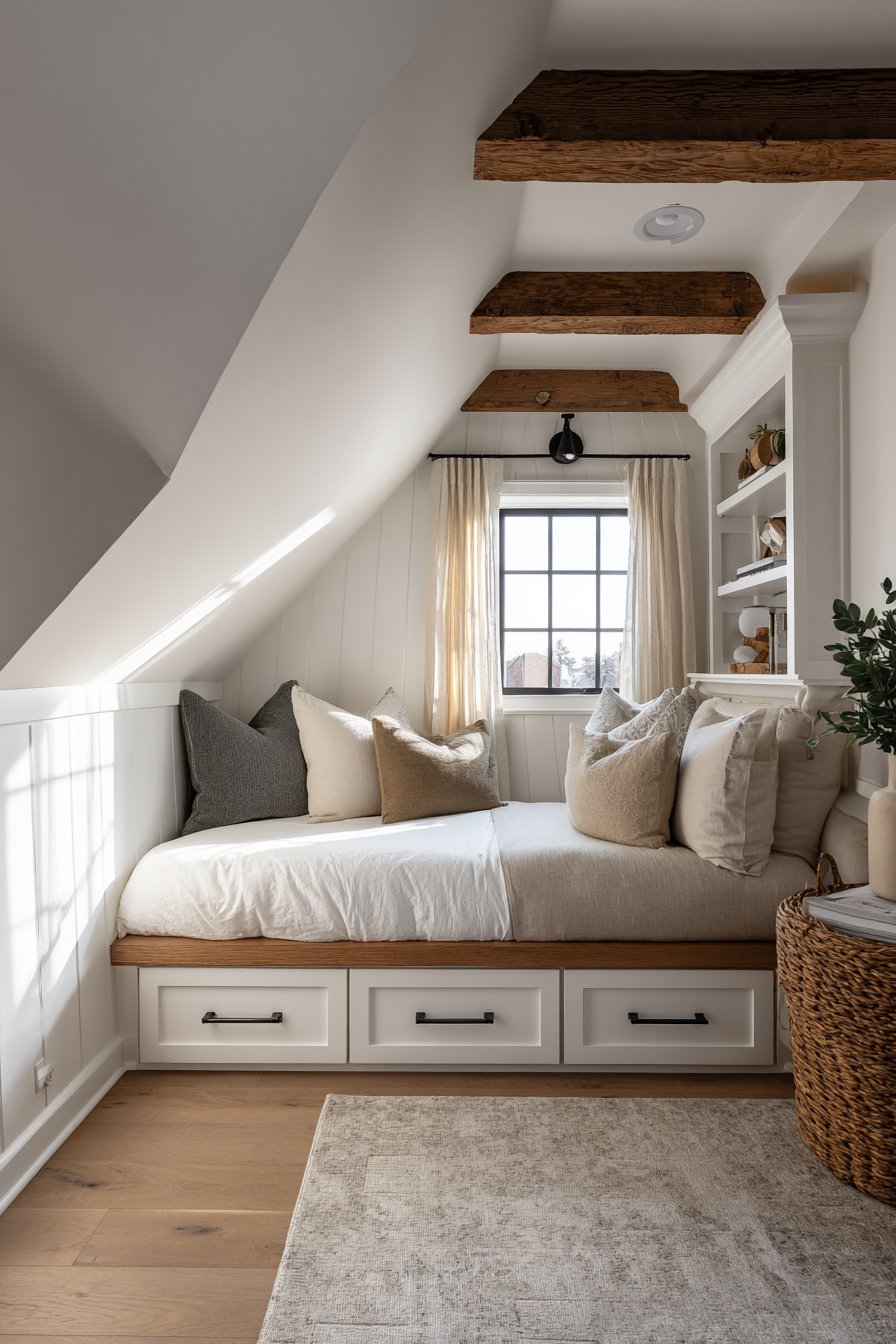
The material palette emphasizes natural textures and light-reflecting surfaces. Soft linens on the bed invite relaxation while maintaining the airy feel. The shiplap’s horizontal lines draw the eye across the room, making the space feel wider. Natural light streaming through the dormer creates gentle shadows that emphasize the room’s cozy proportions. The overall effect is serene yet practical, proving that small spaces need not sacrifice comfort for functionality.
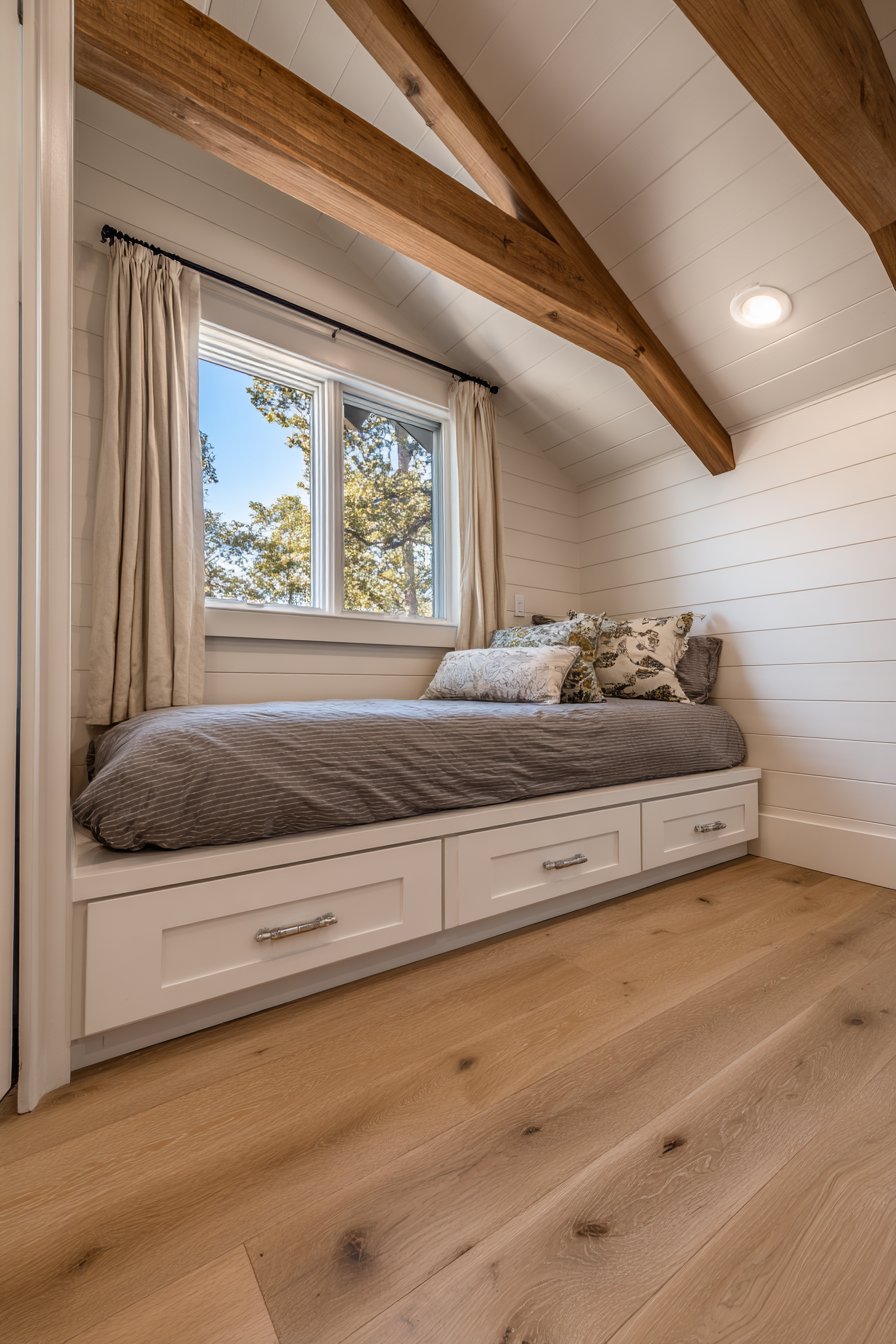
This design excels at creating vertical visual flow while maintaining horizontal spaciousness. The low profile of the platform bed keeps sightlines open throughout the room. Wide-angle perspectives reveal how clever spatial planning transforms architectural challenges into design advantages. The efficient layout proves that thoughtful furniture selection can dramatically impact a small attic bedroom’s livability.
Key design tips for this approach:
- Position the bed beneath the lowest ceiling point to maximize standing space elsewhere
- Choose white or light-colored shiplap to amplify natural light and create visual expansion
- Integrate storage drawers into the bed frame to eliminate bulky furniture pieces
- Preserve exposed beams as architectural features that add character and warmth
- Use simple window treatments that filter light without blocking precious illumination
2. Scandinavian Simplicity with Window Seat Charm
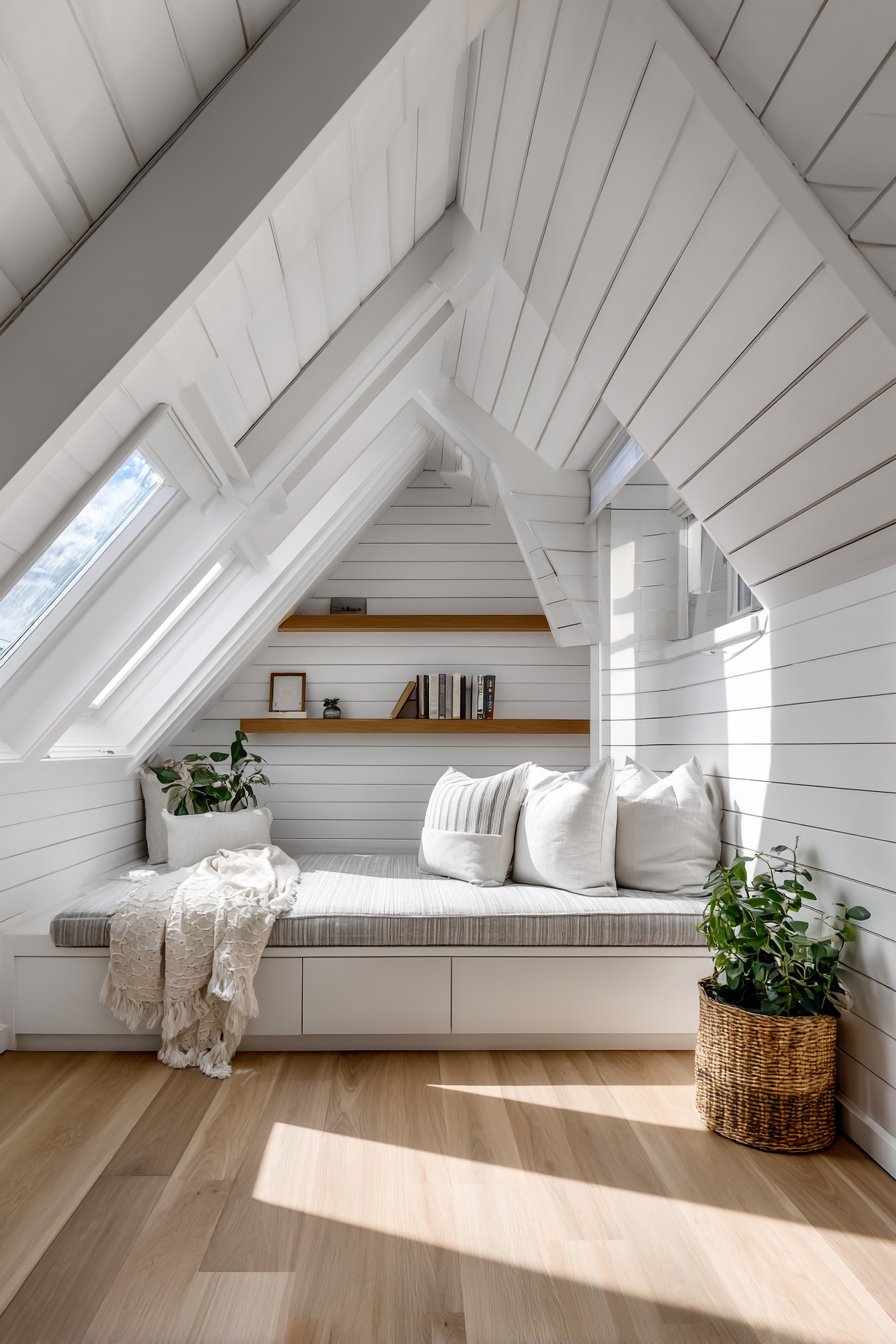
This Scandinavian-inspired attic bedroom embraces minimalist principles while maximizing both comfort and functionality. White-painted sloped ceilings create an expansive feel that defies the room’s compact dimensions. Light oak hardwood flooring adds warmth and natural beauty without visual weight. The wood’s subtle grain patterns provide texture while maintaining the clean aesthetic central to Scandinavian design philosophy.

A compact reading nook nestled in the eave transforms an awkward space into a beloved feature. The cushioned window seat offers a perfect perch for morning coffee or evening reading. Storage compartments built beneath the seat utilize otherwise wasted space. This dual-purpose design element adds both functionality and charm. The nook becomes a destination within the bedroom, creating layers of use within the compact footprint.
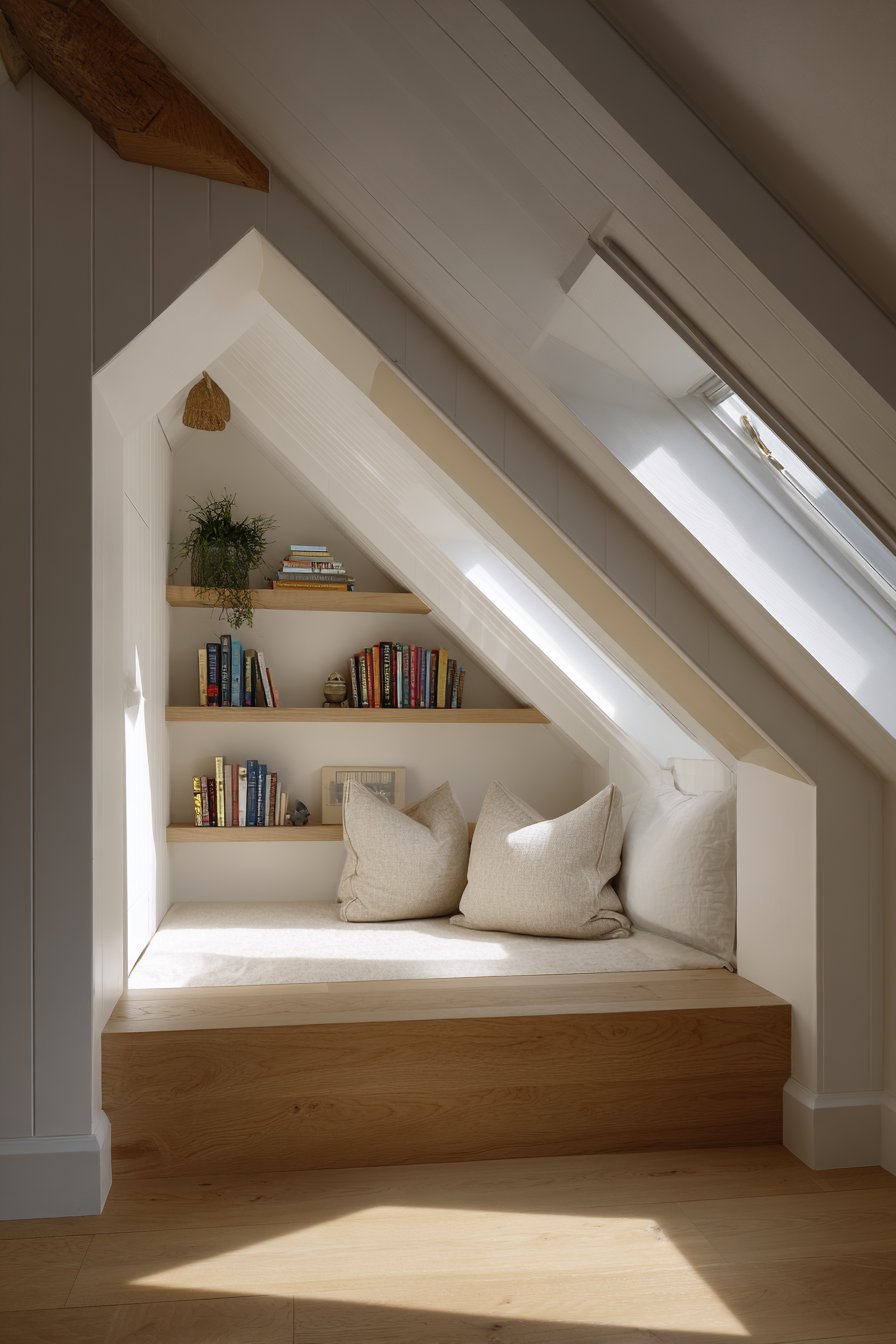
Minimalist floating shelves mounted on the vertical wall provide display and storage without consuming floor space. These sleek platforms showcase books, small plants, and decorative objects. The floating design maintains visual lightness essential in small spaces. Each shelf becomes a curated display that adds personality without clutter. Small potted plants introduce organic elements that soften the room’s clean lines.
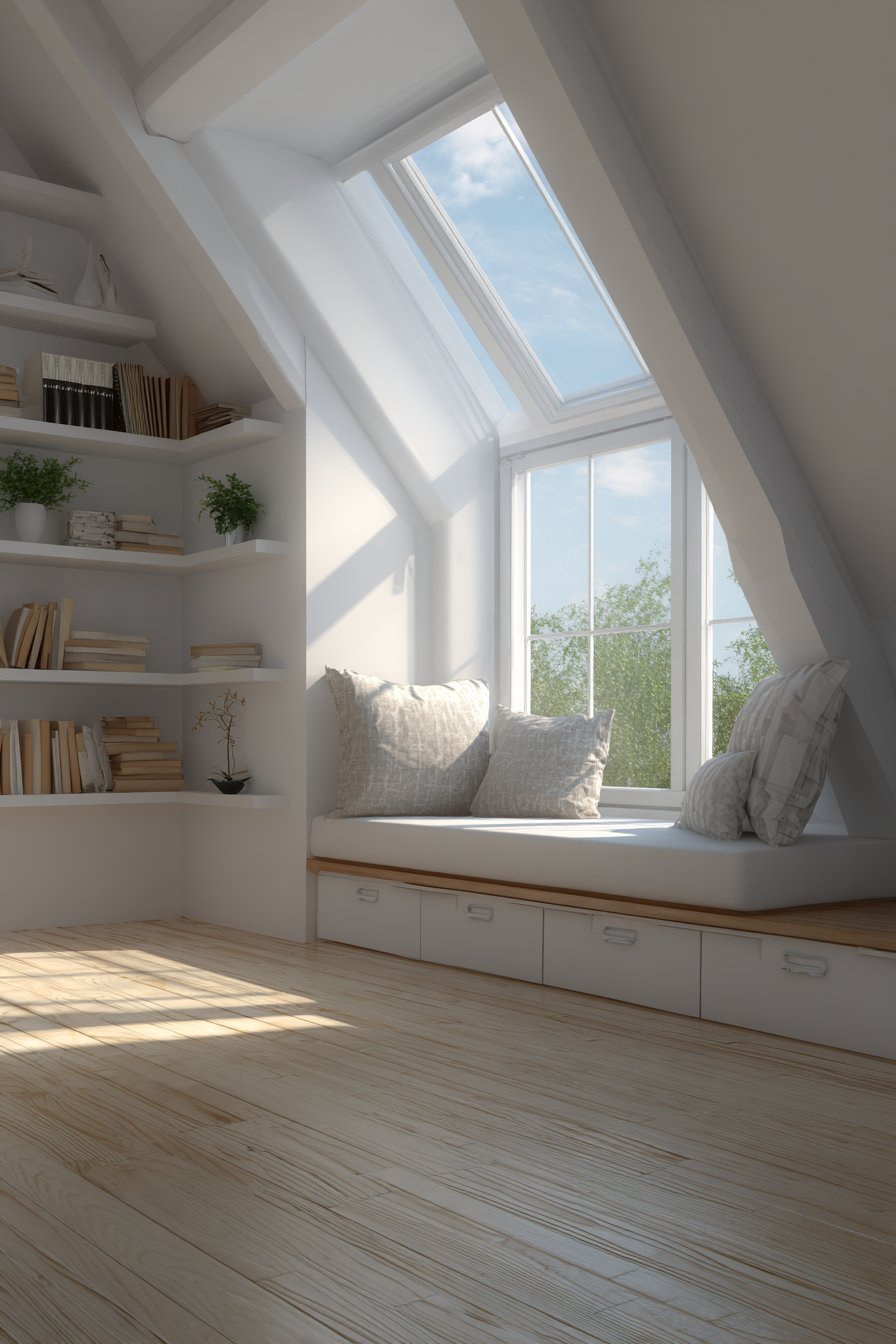
Professional lighting design emphasizes natural daylight as the primary illumination source. Skylights flood the space with overhead light that eliminates shadows in the sloped ceiling areas. This vertical illumination creates an uplifting atmosphere throughout the day. Gentle shadows cast by the skylights accentuate the room’s intimate proportions. The interplay of light and shadow adds depth and dimension to the minimalist palette.
Essential elements for achieving this Scandinavian aesthetic:
- Paint sloped ceilings white to reflect maximum light and create airiness
- Install light oak flooring for warmth that complements the minimal color scheme
- Build window seats with hidden storage to maximize every available space
- Mount floating shelves for display without sacrificing precious floor area
- Incorporate skylights to flood the room with natural daylight from above
- Add small plants to introduce organic elements and visual softness
3. Smart Storage Solutions with Custom Built-Ins
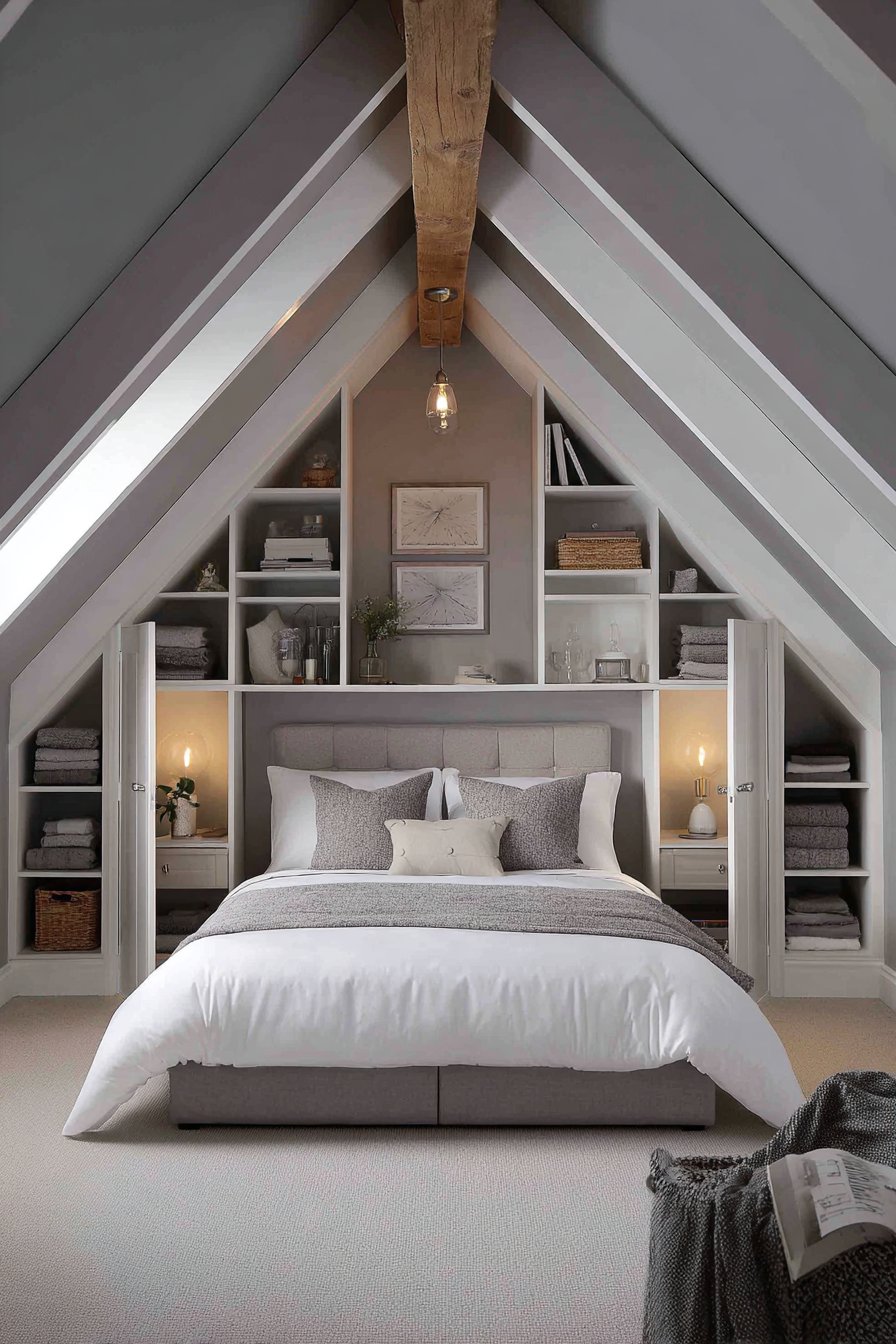
This attic bedroom demonstrates how custom cabinetry can transform challenging architecture into functional assets. Custom-built wardrobes fitted precisely into low-ceiling areas along the sloped walls maximize storage capacity. These bespoke units utilize spaces where standard furniture cannot fit. The tailored approach ensures every inch serves a purpose. Floor-to-ceiling storage along the angled walls provides ample organization without consuming central floor space.
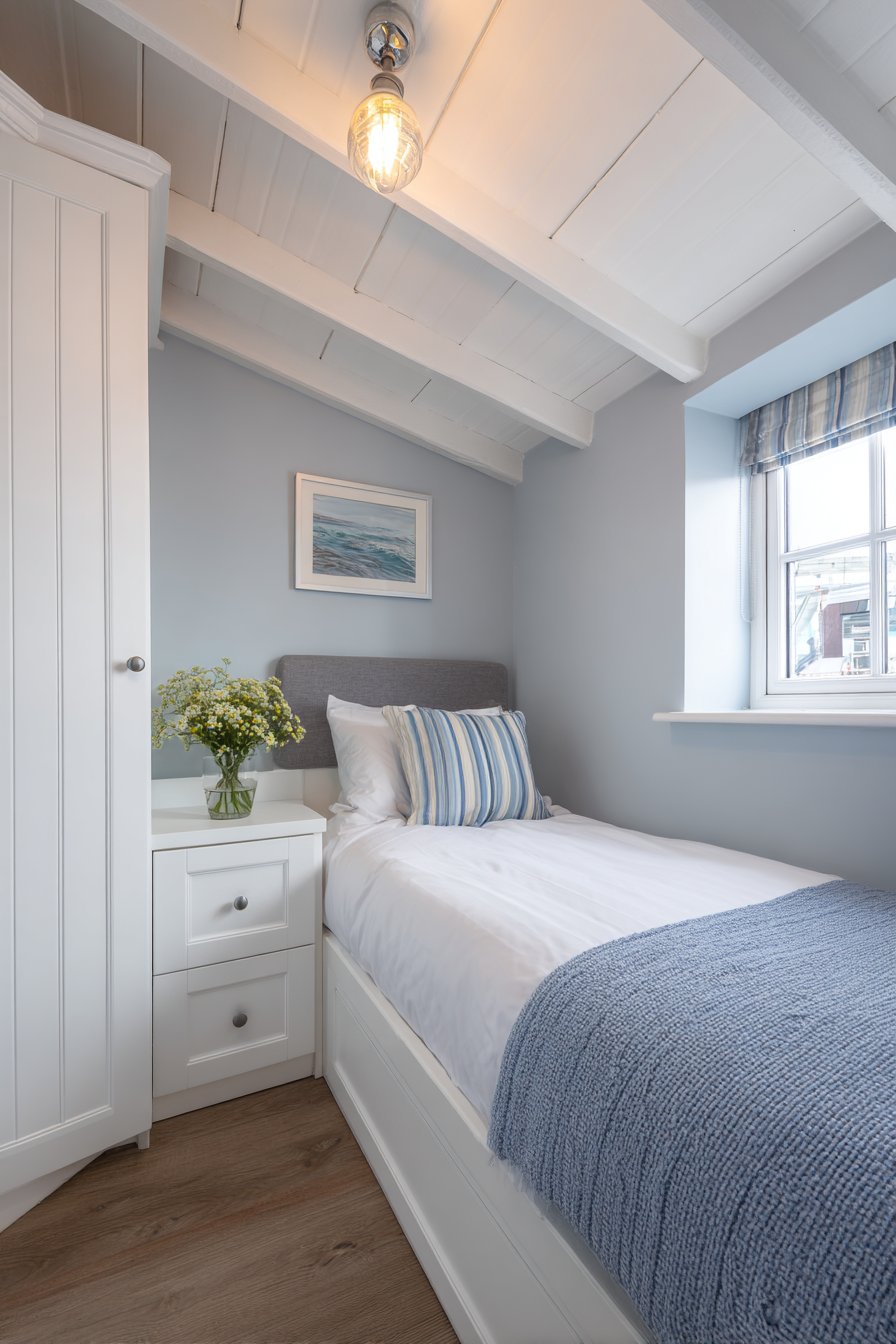
A centrally positioned twin bed with a simple upholstered headboard anchors the sleeping area. This strategic placement preserves maximum standing height around the bed. The upholstered headboard adds soft texture and comfort for reading or lounging. Its neutral tone complements the room’s sophisticated color palette. The bed’s central location creates balanced circulation paths on either side.
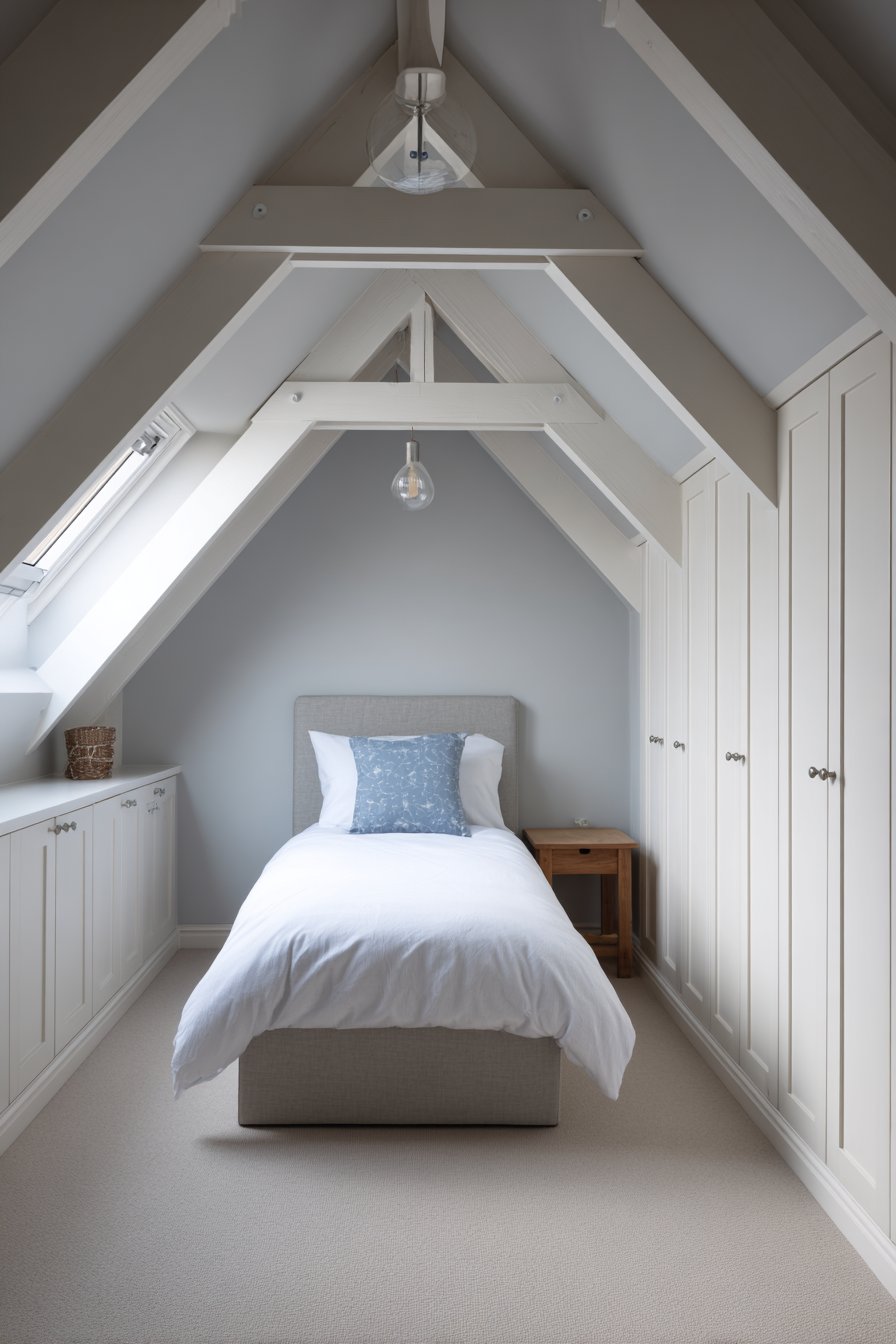
Soft grey walls provide a calming neutral backdrop that enhances the room’s serene atmosphere. This subtle hue offers more visual interest than pure white while maintaining brightness. White-painted exposed rafters create striking contrast against the grey walls. The architectural elements become decorative features rather than obstacles. A small pendant light suspended from the peak provides ambient evening illumination with minimal visual intrusion.

The balanced exposure of natural and artificial lighting creates versatility throughout the day. Strategic placement of the single pendant provides focused illumination where needed most. The grey and white color scheme allows lighting to play across surfaces with nuance. Shadows and highlights emphasize the room’s unique architectural character. This thoughtful integration of storage and sleeping areas proves that practical design need not sacrifice aesthetic appeal.
Critical considerations for custom storage integration:
- Measure sloped ceiling areas precisely to design fitted wardrobes that maximize capacity
- Position the bed centrally to maintain adequate standing height around the sleeping area
- Choose soft grey walls for calming sophistication with light-reflective properties
- Paint exposed rafters white to create architectural contrast and visual interest
- Install a single pendant light for efficient ambient illumination
- Select upholstered headboards for comfort and textural softness
4. Rustic Cottage Romance with Natural Materials
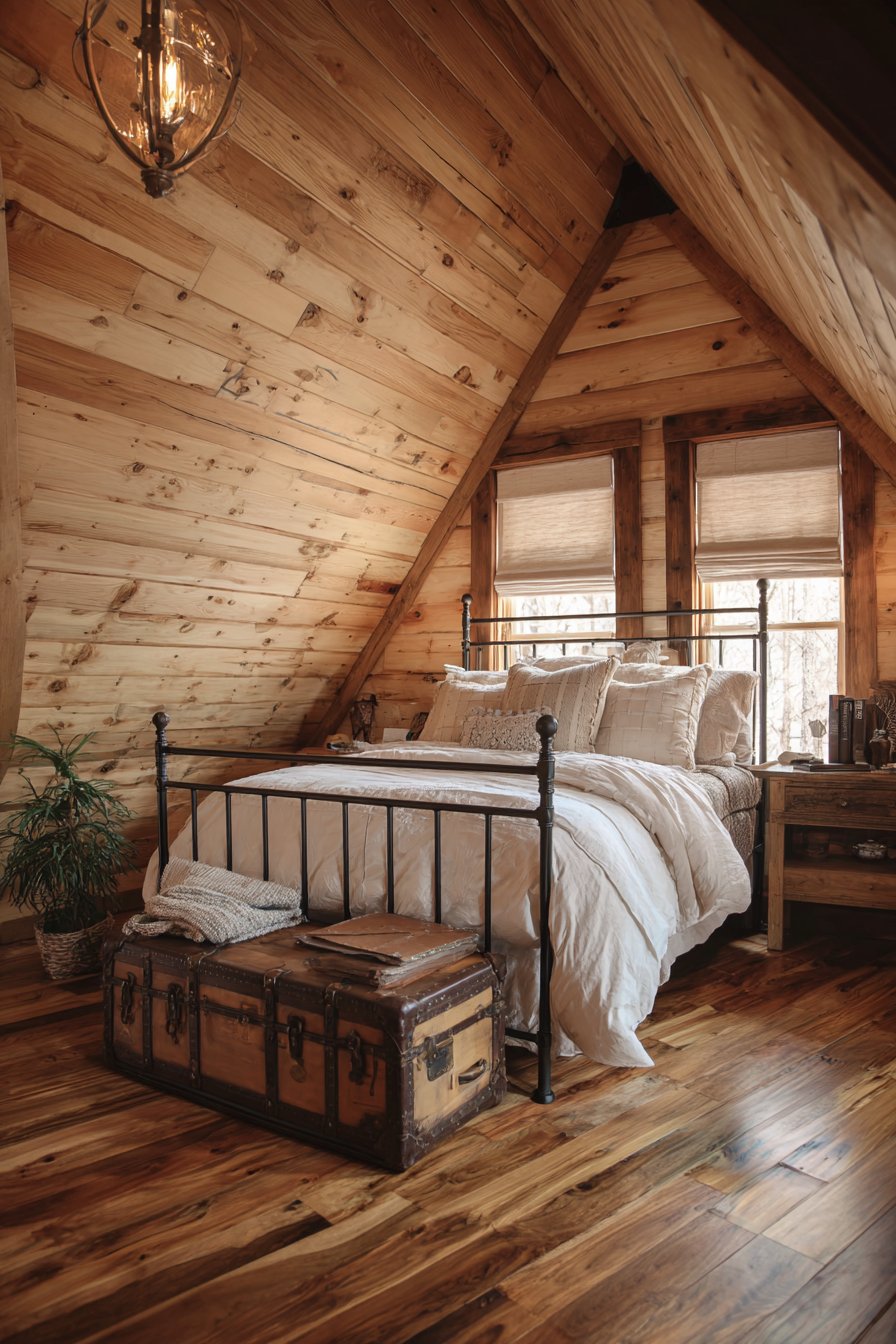
This rustic attic bedroom celebrates natural materials and cottage-inspired charm. Natural wood-paneled sloped ceilings create warmth and organic texture throughout the space. The wood’s grain patterns and natural variations add visual richness. Whitewashed wooden floorboards provide a lighter counterpoint to the ceiling’s deeper tones. This material contrast creates dynamic visual interest while maintaining cohesion through the shared wood medium.
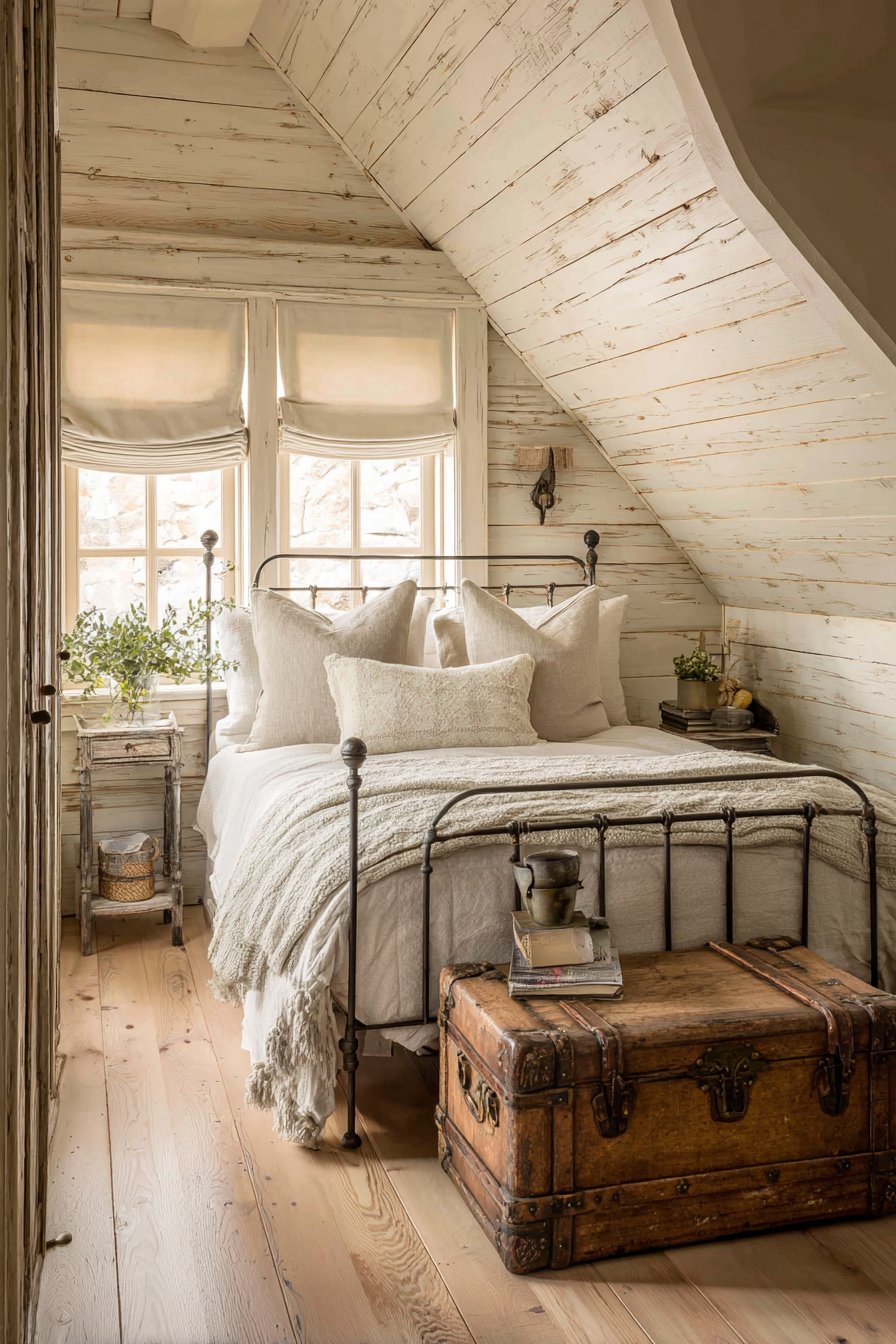
A wrought iron bed frame sits proudly against the only full-height wall in the room. The metal’s scrollwork and details add vintage character and romantic appeal. Compact nightstands flank the bed, providing essential surfaces without overwhelming the space. Their modest scale suits the room’s proportions perfectly. These pieces echo the rustic aesthetic while maintaining functionality.
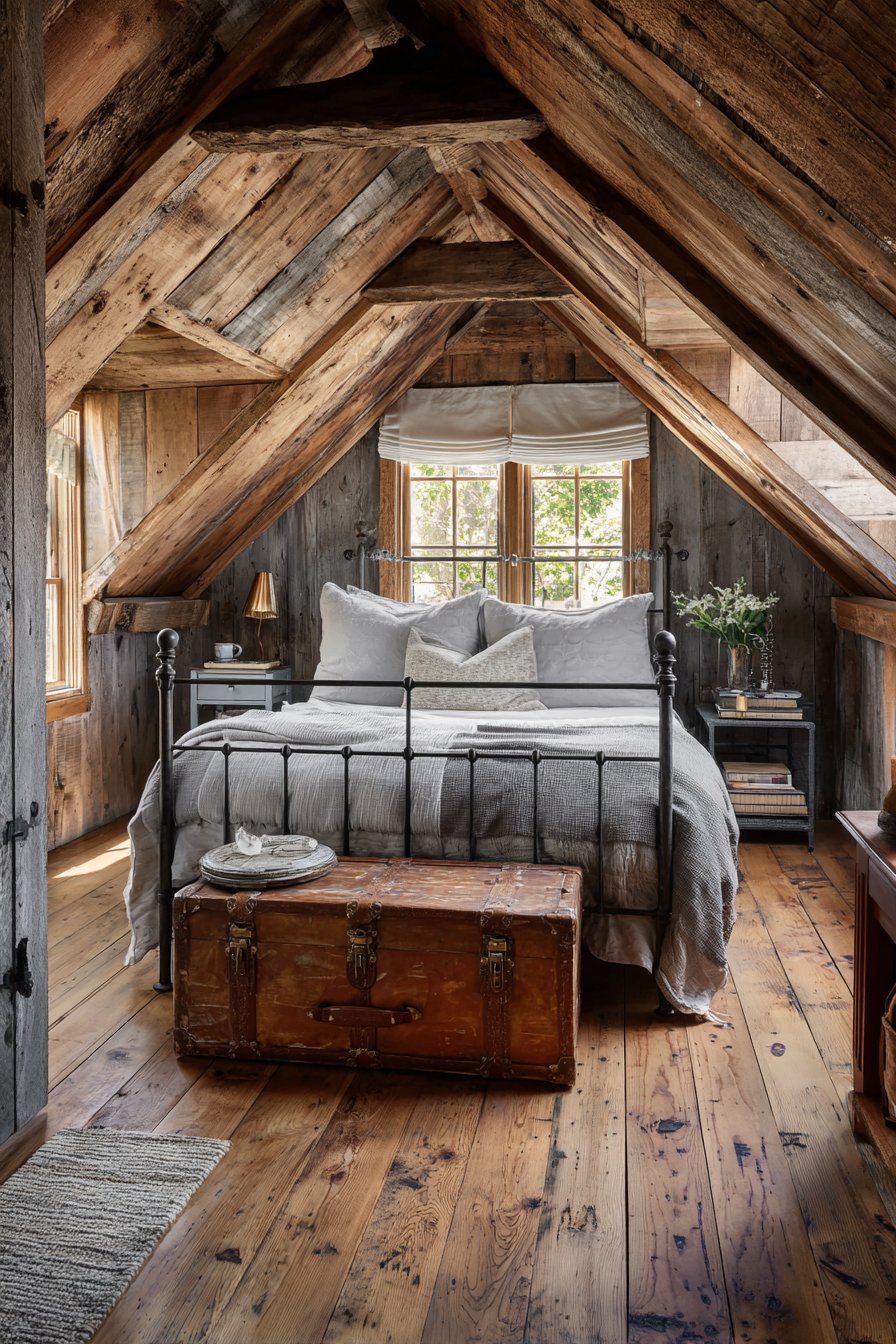
A vintage trunk positioned at the foot of the bed serves dual purposes beautifully. It provides practical storage for linens, blankets, or seasonal clothing. Simultaneously, it adds authentic period character that enhances the cottage atmosphere. The trunk’s worn leather and metal hardware tell stories of times past. Such pieces add soul and individuality to the design.

Dormer windows dressed with white Roman shades offer flexible light control. The shades filter harsh sunlight while preserving privacy when desired. When raised, they allow maximum natural illumination to flood the space. The white fabric complements the whitewashed floors and maintains visual continuity. Natural light emphasizes wood grain textures and creates an inviting, warm atmosphere throughout the day.
Essential elements for rustic cottage styling:
- Install natural wood paneling on sloped ceilings for organic warmth and texture
- Choose whitewashed floorboards to balance darker ceiling tones with brightness
- Select wrought iron bed frames for vintage character and romantic appeal
- Use vintage trunks for storage that doubles as authentic decorative elements
- Dress dormer windows with Roman shades for flexible light control
- Incorporate compact nightstands scaled appropriately for small spaces
5. Modern Monochromatic Sophistication
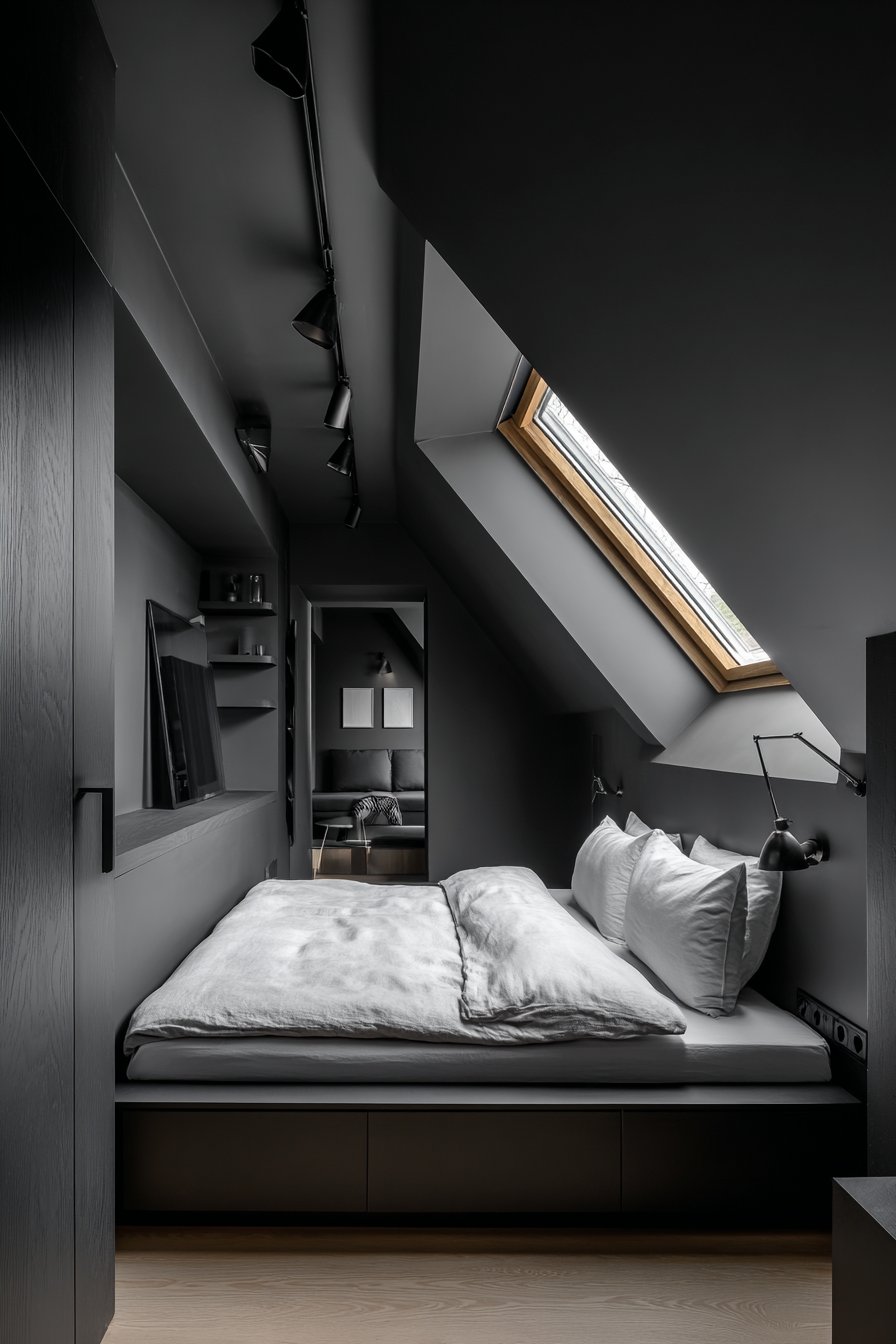
This contemporary attic bedroom showcases the power of a refined monochromatic palette. Matte charcoal grey walls on vertical surfaces create dramatic depth and modern sophistication. The rich tone provides bold contrast against crisp white sloped ceilings. This two-tone approach delineates architectural elements while maintaining visual cohesion. The neutral scheme creates timeless elegance that transcends trends.
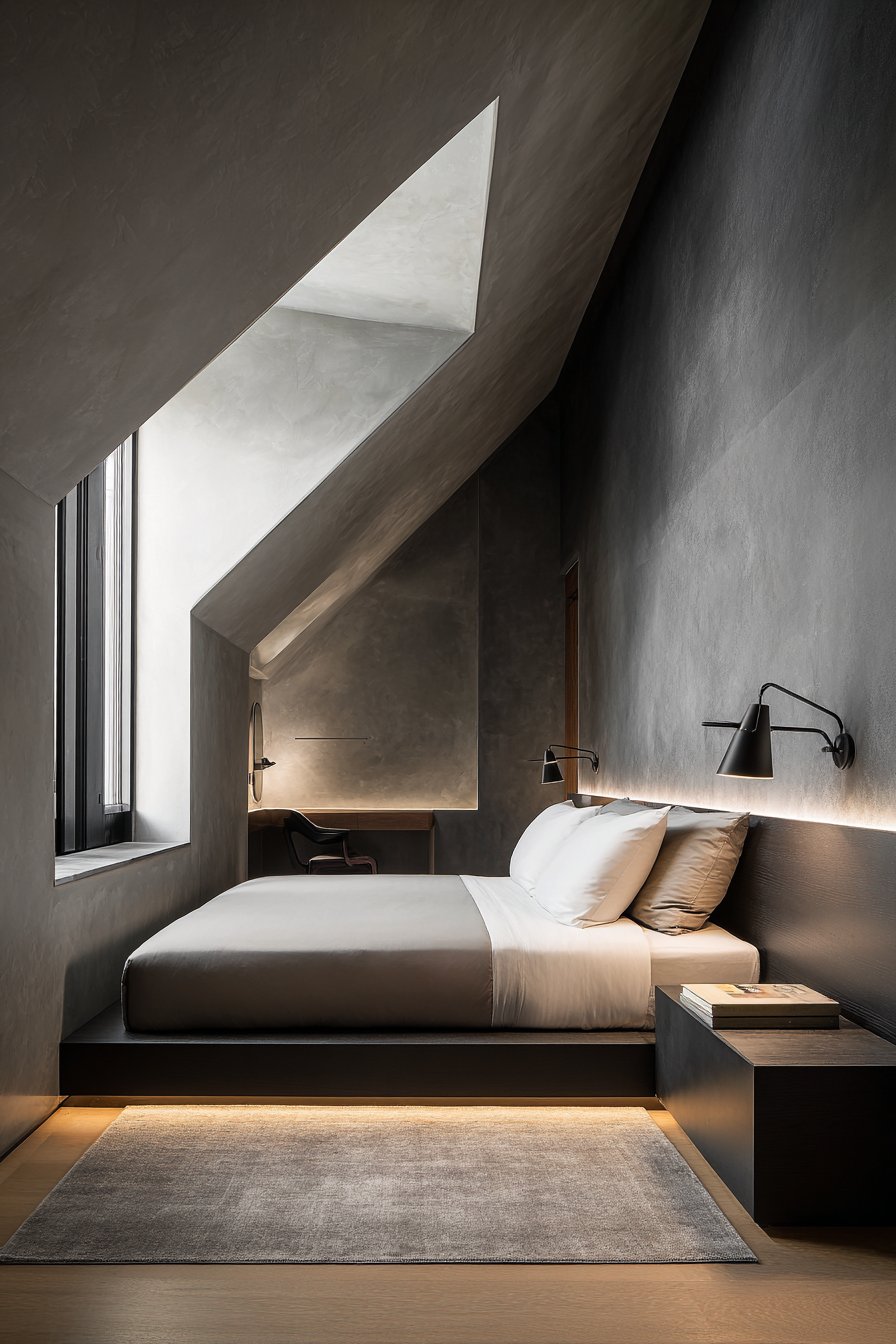
A sleek low-profile bed with integrated side tables exemplifies space-efficient modern design. The built-in tables eliminate the need for separate nightstands that would consume floor space. Clean lines and minimal ornamentation characterize the contemporary aesthetic. The bed’s low height preserves sightlines and enhances the feeling of spaciousness. Its streamlined form complements the room’s architectural geometry.
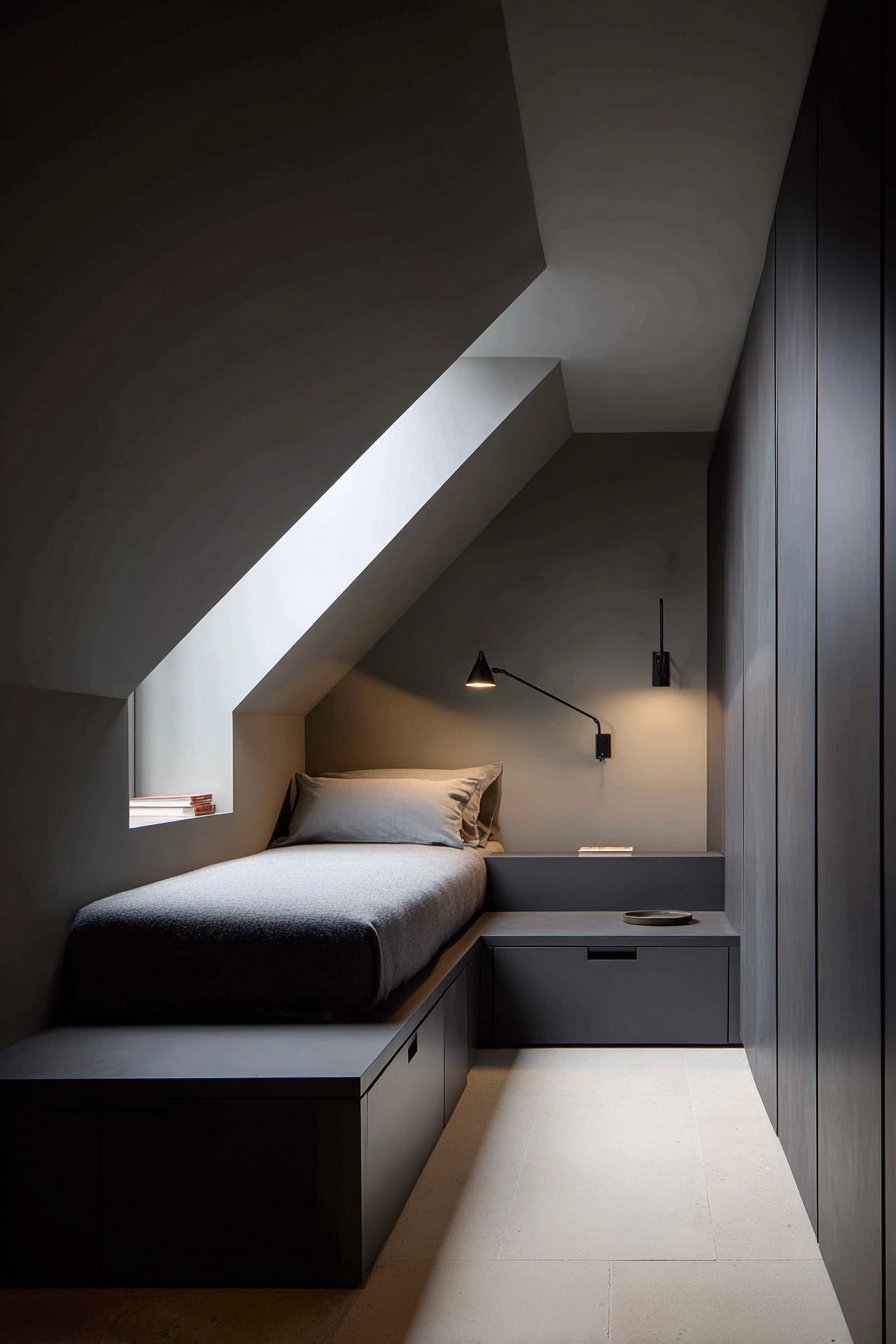
Wall-mounted swing-arm reading lights provide focused task lighting without requiring surface space. These articulating fixtures offer adjustable illumination for bedtime reading. Their sleek metal finish complements the modern aesthetic perfectly. The wall-mounted design keeps nightstand surfaces clear and uncluttered. This practical lighting solution demonstrates how thoughtful fixture selection enhances both function and style.

A large skylight serves as the room’s architectural focal point and primary light source. Natural illumination pours down from above, washing the white ceiling with brightness. This overhead light source eliminates the shadowy corners common in sloped-ceiling spaces. The skylight also provides views of clouds and stars, connecting the interior with the exterior. The strategic placement transforms a potential limitation into a dramatic design asset.
Key strategies for modern monochromatic design:
- Paint vertical walls in matte charcoal grey for contemporary depth and sophistication
- Keep sloped ceilings crisp white to reflect light and prevent visual heaviness
- Choose beds with integrated side tables to maximize space efficiency
- Install wall-mounted swing-arm lamps to preserve surface areas
- Incorporate large skylights for dramatic natural illumination from above
- Maintain clean lines and minimal ornamentation throughout the design
6. Multifunctional Murphy Bed Innovation

This innovative attic bedroom demonstrates ultimate space flexibility through transformable design. A murphy bed mounted against the wall folds up to reveal a functional workspace underneath. This ingenious solution allows the room to serve dual purposes throughout the day.
During sleeping hours, the bed provides comfortable rest. When retracted, a compact desk and workspace emerge for productivity. The transformation takes moments but dramatically changes the room’s functionality.
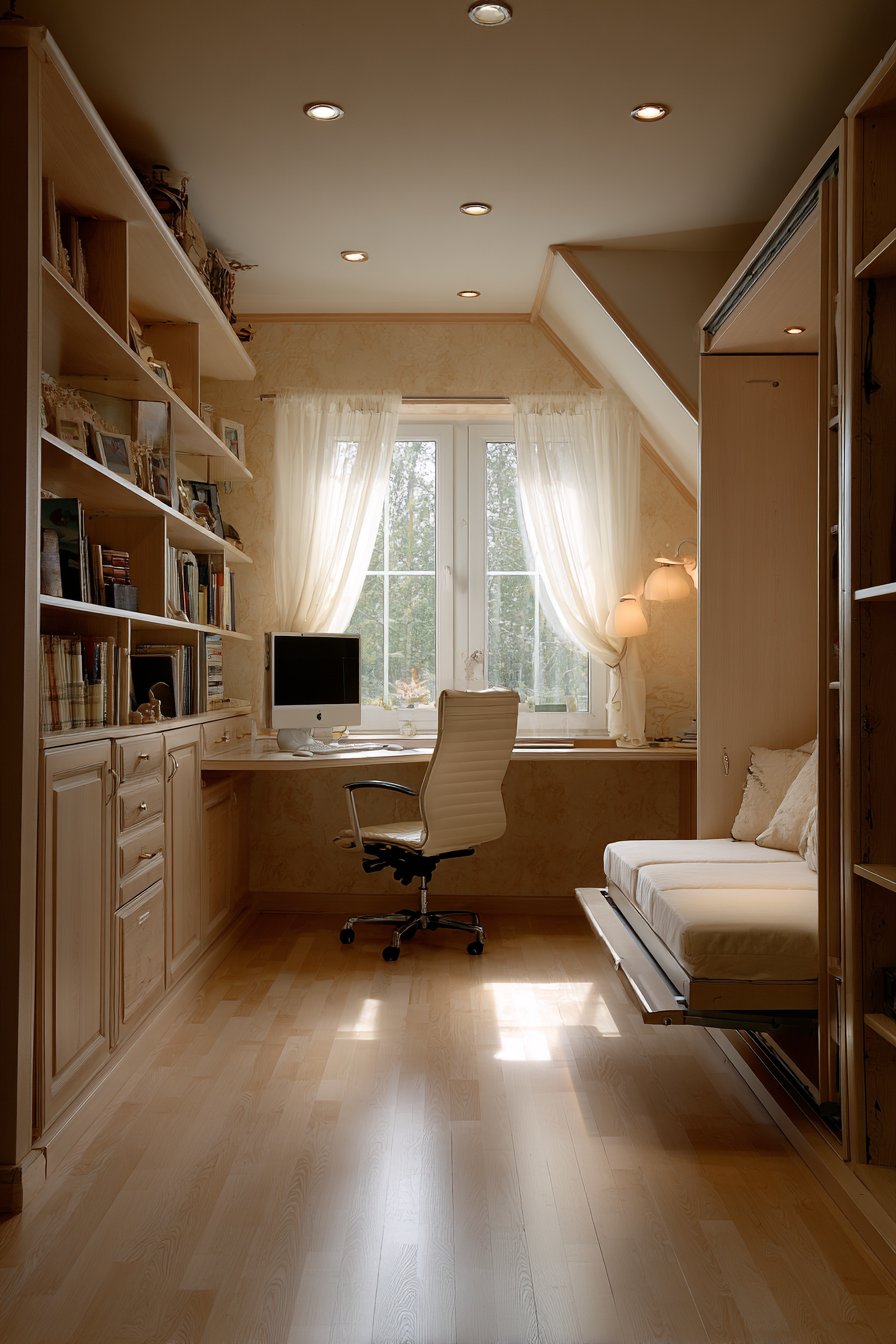
Light oak built-in shelving units line the vertical wall from floor to ceiling. These custom units provide abundant display and storage capacity. The light wood tone adds warmth while maintaining visual lightness. Open shelving allows for personal expression through displayed books, photos, and objects. Lower closed cabinets conceal items that require hidden storage. This combination of open and closed storage balances accessibility with organization.
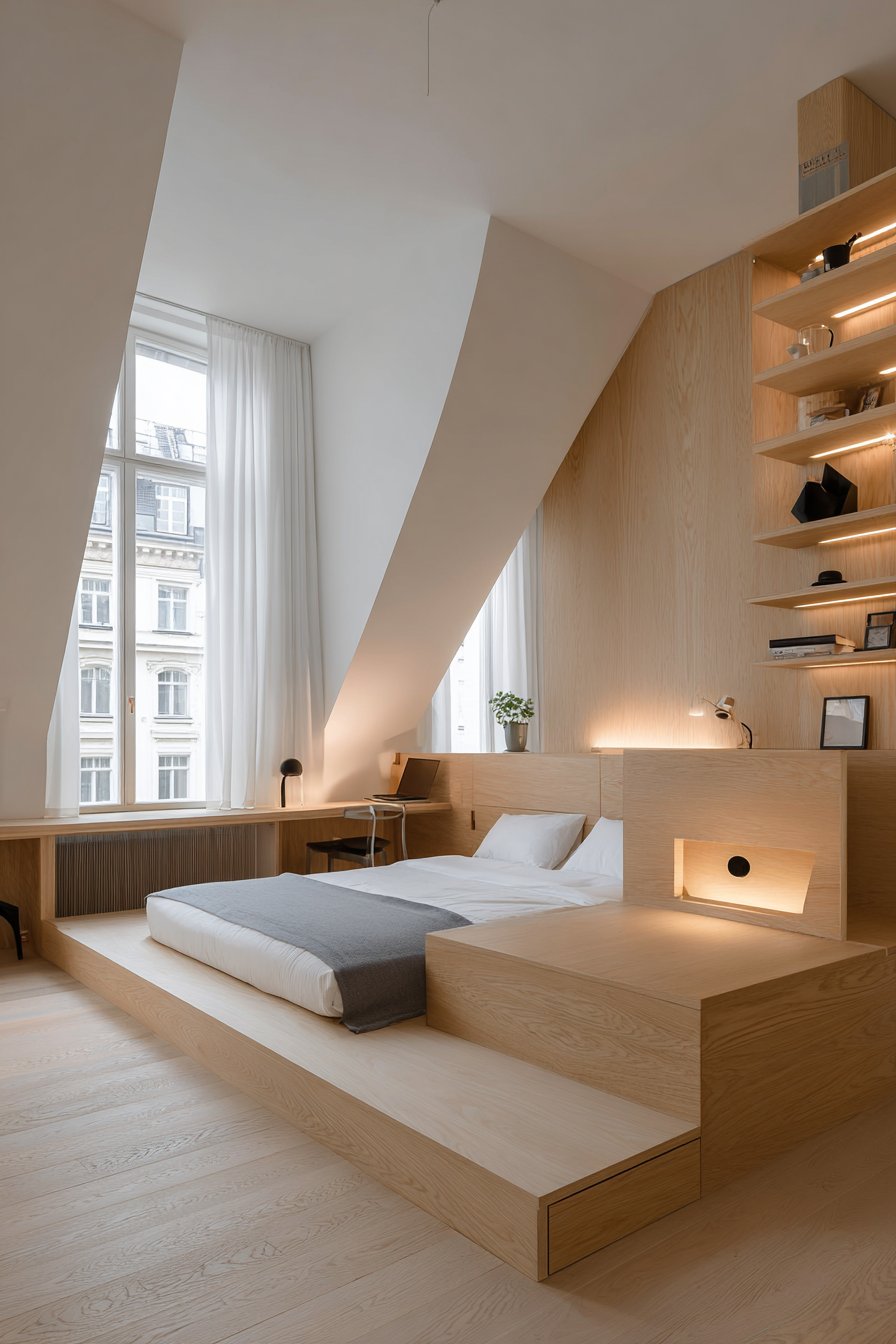
Soft cream walls enhance the brightness from a pair of dormer windows. The warm neutral creates an inviting atmosphere suitable for both rest and work. Sheer white curtains diffuse natural light beautifully without blocking illumination. The translucent fabric maintains privacy while preserving the room’s airy quality. Multiple windows ensure adequate lighting for workspace tasks during daytime hours.
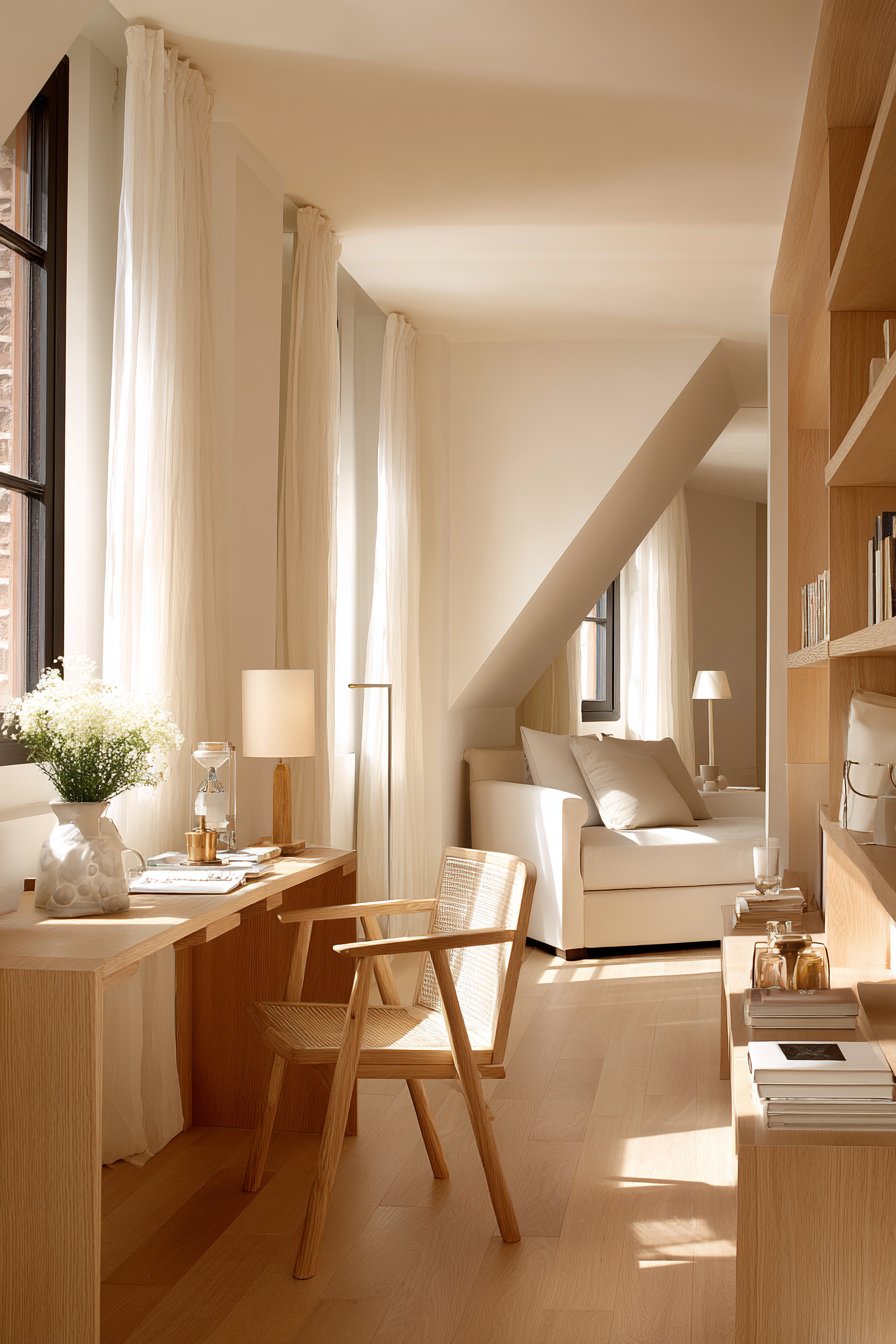
The dual functionality proves particularly valuable in homes where space is at a premium. Guest rooms can double as home offices. Teen bedrooms can accommodate both study and sleep. The wide-angle perspective reveals how thoughtful planning creates surprising versatility within compact dimensions. Natural lighting highlights warm wood tones and demonstrates the space’s adaptability.
Implementation essentials for multifunctional murphy bed rooms:
- Install quality murphy bed hardware that operates smoothly and locks securely
- Design the workspace to remain organized even when the bed is deployed
- Build light oak shelving units for warmth and abundant storage capacity
- Paint walls in soft cream to enhance the brightness from dormer windows
- Use sheer white curtains to diffuse light while maintaining privacy
- Plan electrical outlets for both bed and workspace configurations
7. Bohemian Teen Retreat with Textural Layers
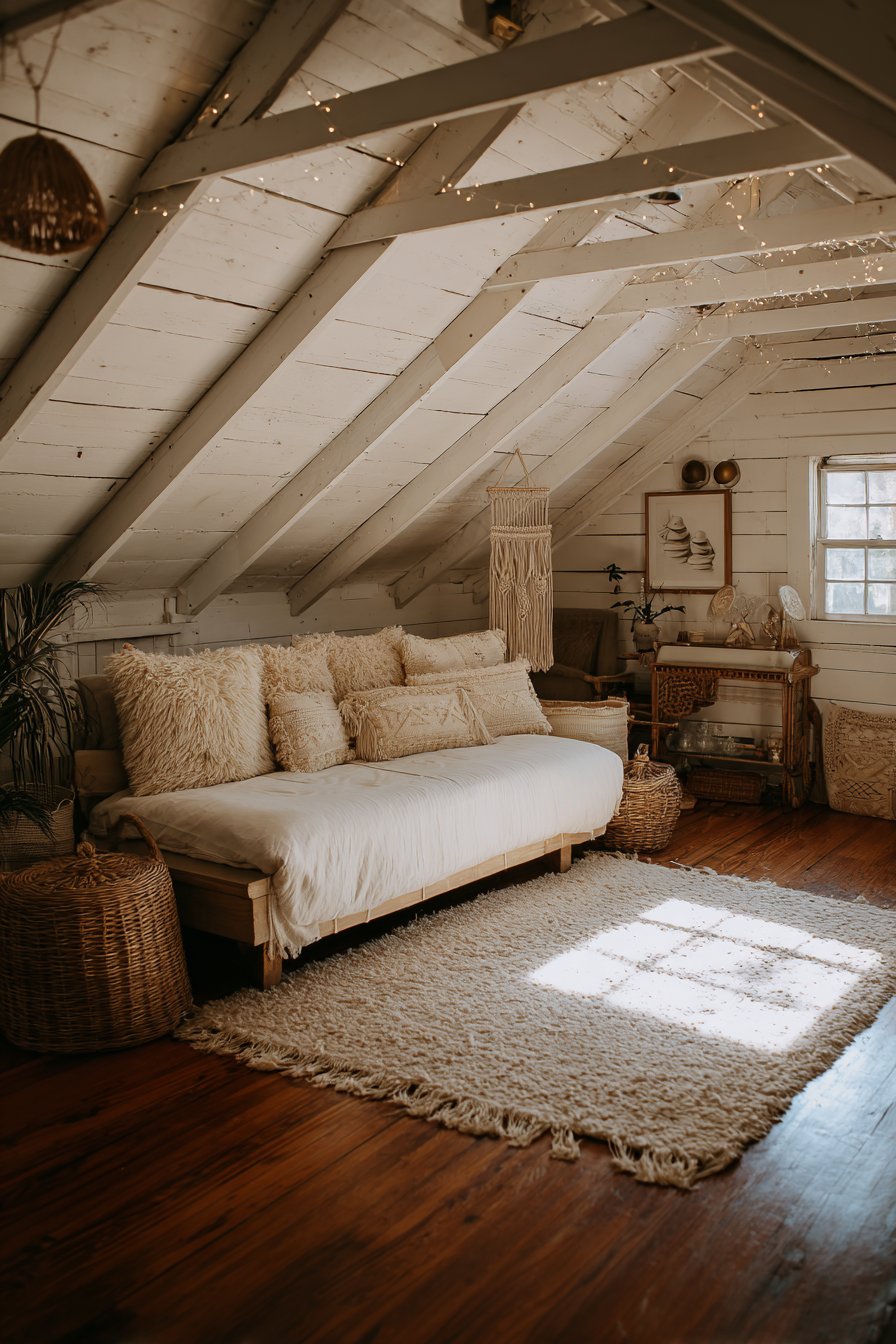
This bohemian-inspired attic bedroom creates a personalized sanctuary perfect for teenagers. String lights draped along exposed white-painted beams add magical ambiance and youthful charm. The twinkling illumination creates a warm, inviting atmosphere during evening hours. White-painted beams maintain brightness while the lights add personality and whimsy. This combination balances structure with creative expression beautifully.
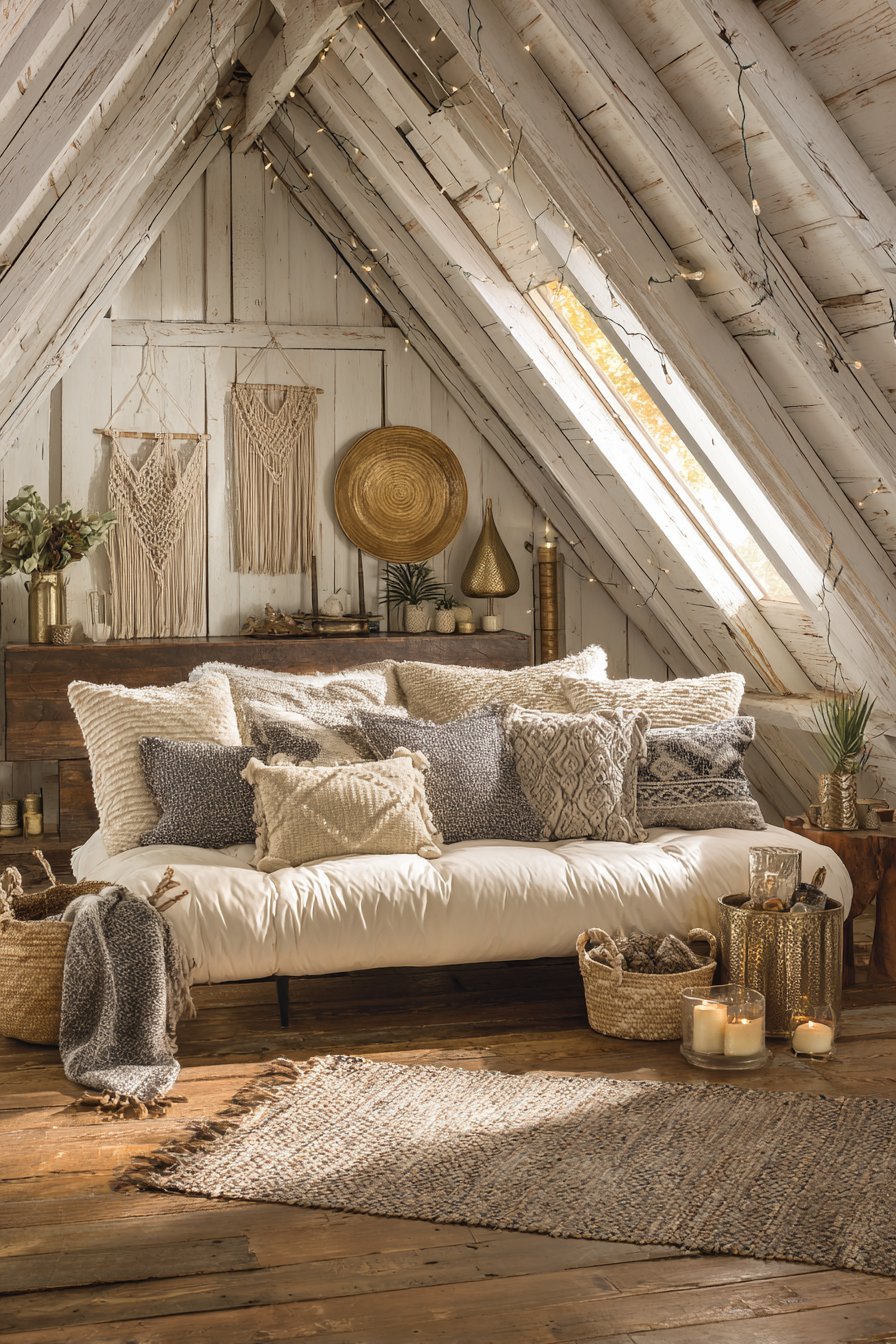
A comfortable daybed positioned beneath the highest ceiling point maximizes headroom and versatility. Multiple textured throw pillows in various patterns and fabrics create an inviting lounging space. The daybed serves equally well for sleeping, reading, or socializing with friends. Its positioning takes full advantage of the room’s tallest area. The abundance of pillows adds color, pattern, and comfort in signature bohemian style.
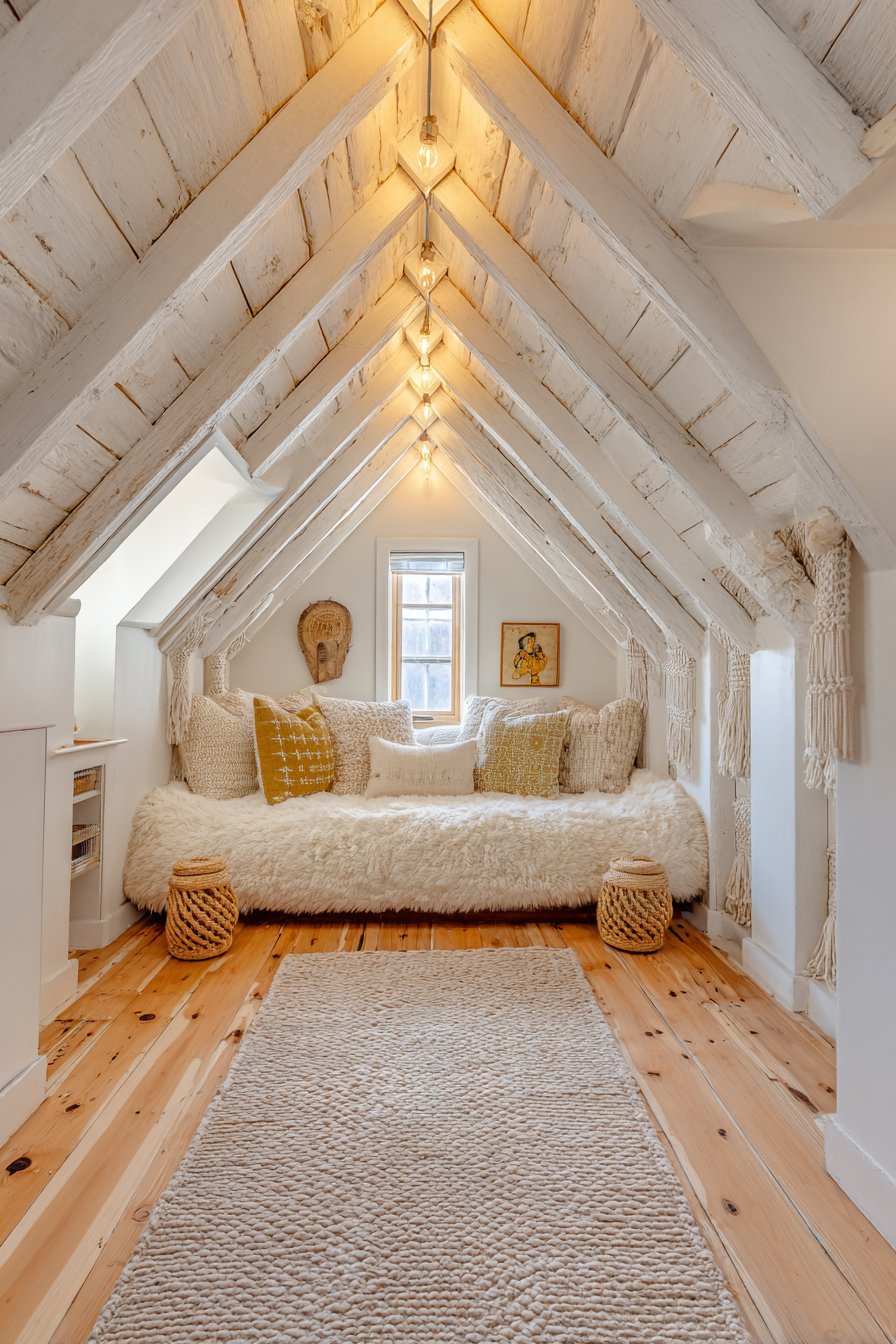
Macramé wall hangings introduce handcrafted texture and artistic expression to the vertical walls. These woven pieces add dimensional interest and soft, organic forms. Woven baskets mounted on walls or placed on shelves provide decorative storage solutions. The natural fibers complement the bohemian aesthetic while serving practical purposes. Each basket can corral small items while contributing to the overall design narrative.
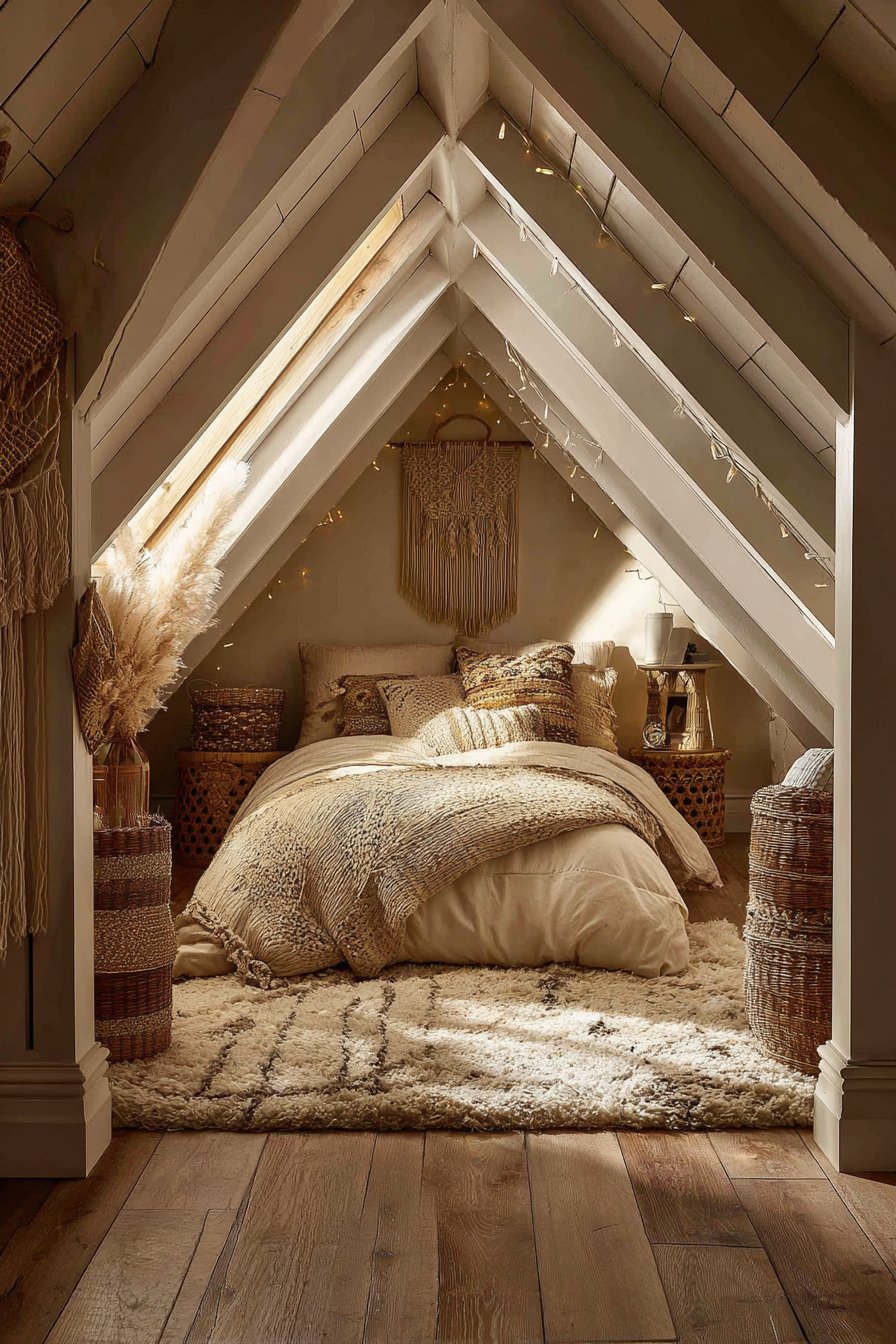
A small area rug defines the sleeping zone on natural pine flooring. The rug’s pattern and texture add another layer to the space’s eclectic mix. It also provides warmth underfoot and helps absorb sound in the compact room. Golden hour light streaming through a skylight creates magical atmosphere throughout the space. The warm illumination enhances colors and creates inviting shadows that emphasize layered textures.
Creating an authentic bohemian teen retreat:
- String LED lights along exposed beams for magical ambient lighting
- Position a daybed beneath the highest ceiling point for maximum comfort
- Layer multiple textured throw pillows in various patterns and colors
- Hang macramé wall art for handcrafted texture and artistic expression
- Use woven baskets for decorative storage that supports the aesthetic
- Add area rugs to define zones and introduce pattern and warmth
8. Nautical Captain’s Quarters Theme
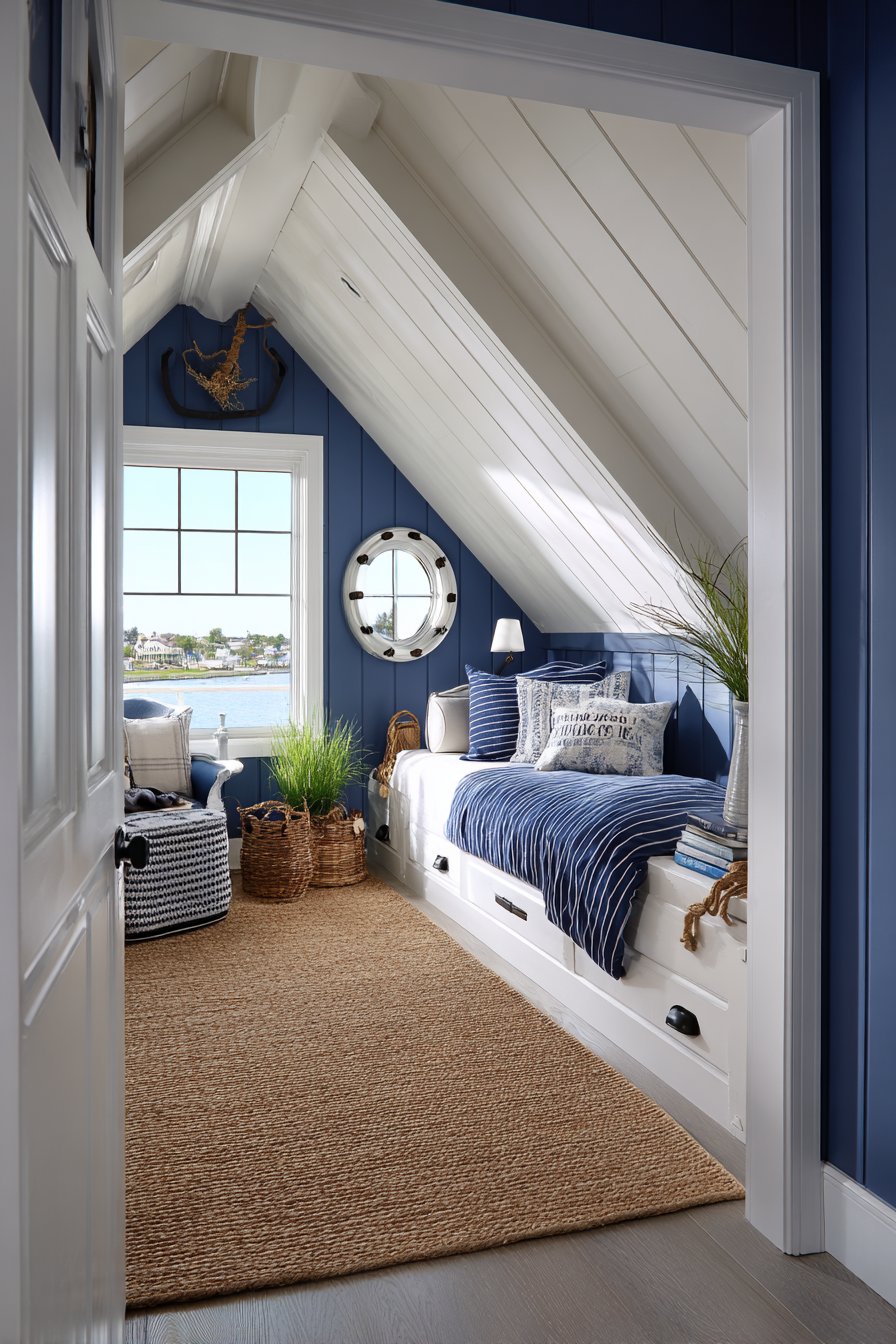
This nautical-themed attic bedroom captures coastal charm through cohesive design elements. Navy blue accent walls on vertical surfaces create bold contrast with crisp white sloped ceilings. The classic maritime color combination evokes seaside cottages and ocean vistas. Exposed beams painted white emphasize the architectural structure while maintaining brightness. The two-tone approach clearly delineates the room’s unique geometry.
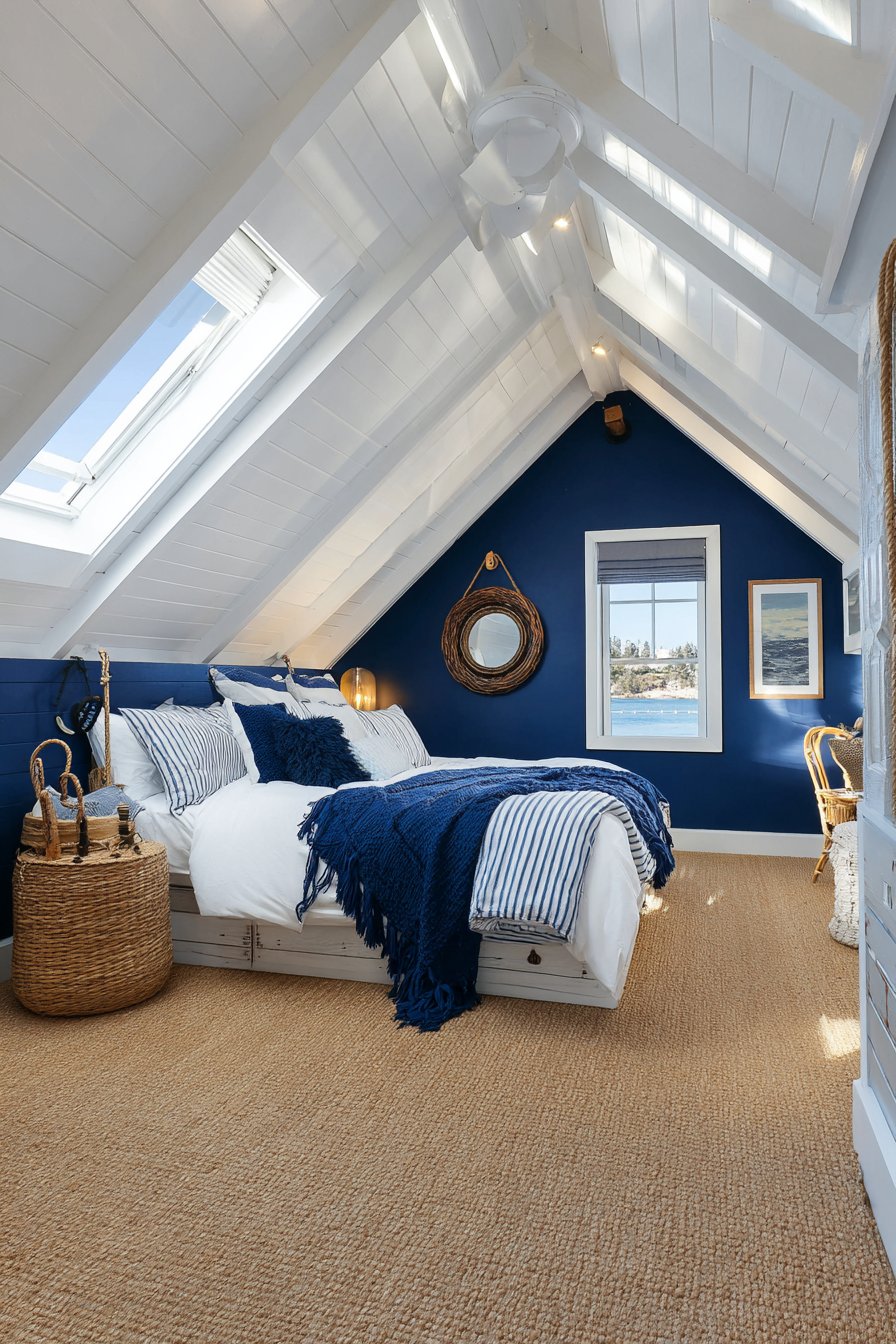
A built-in captain’s bed anchors the space with both style and function. Drawer storage integrated underneath the bed maximizes the compact footprint efficiently. These pull-out compartments provide ample organization for clothing and personal items. The built-in design eliminates the need for separate dressers or storage furniture. The captain’s bed style authentically references nautical quarters while solving practical storage challenges.
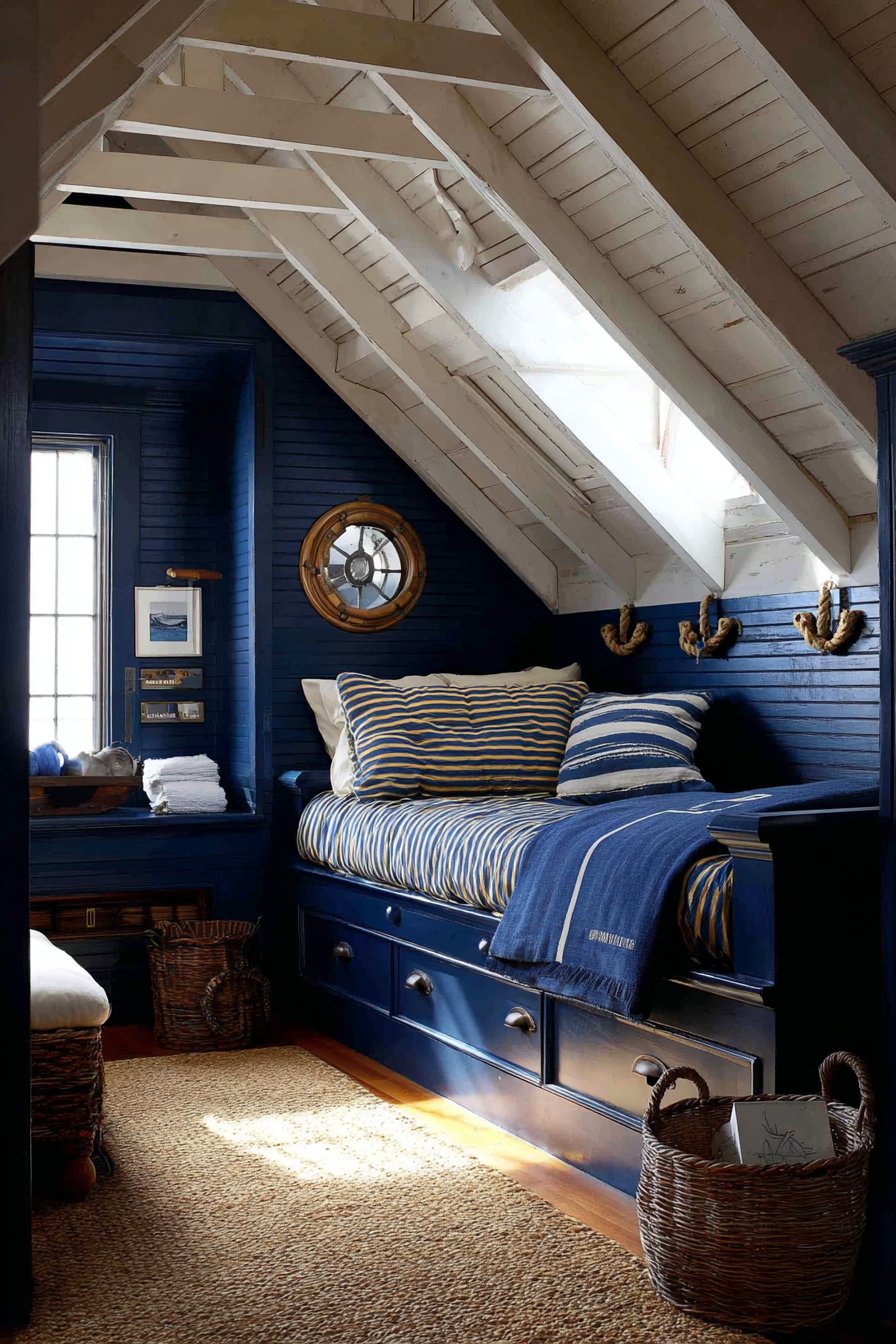
Rope-wrapped wall hooks add thematic details that are both decorative and functional. The natural fiber texture introduces organic elements within the navy and white scheme. A porthole-style mirror serves as a statement piece that reinforces the coastal theme. Its circular form provides visual variety among the room’s angular architecture. These carefully chosen accessories create authentic nautical atmosphere without veering into costume territory.
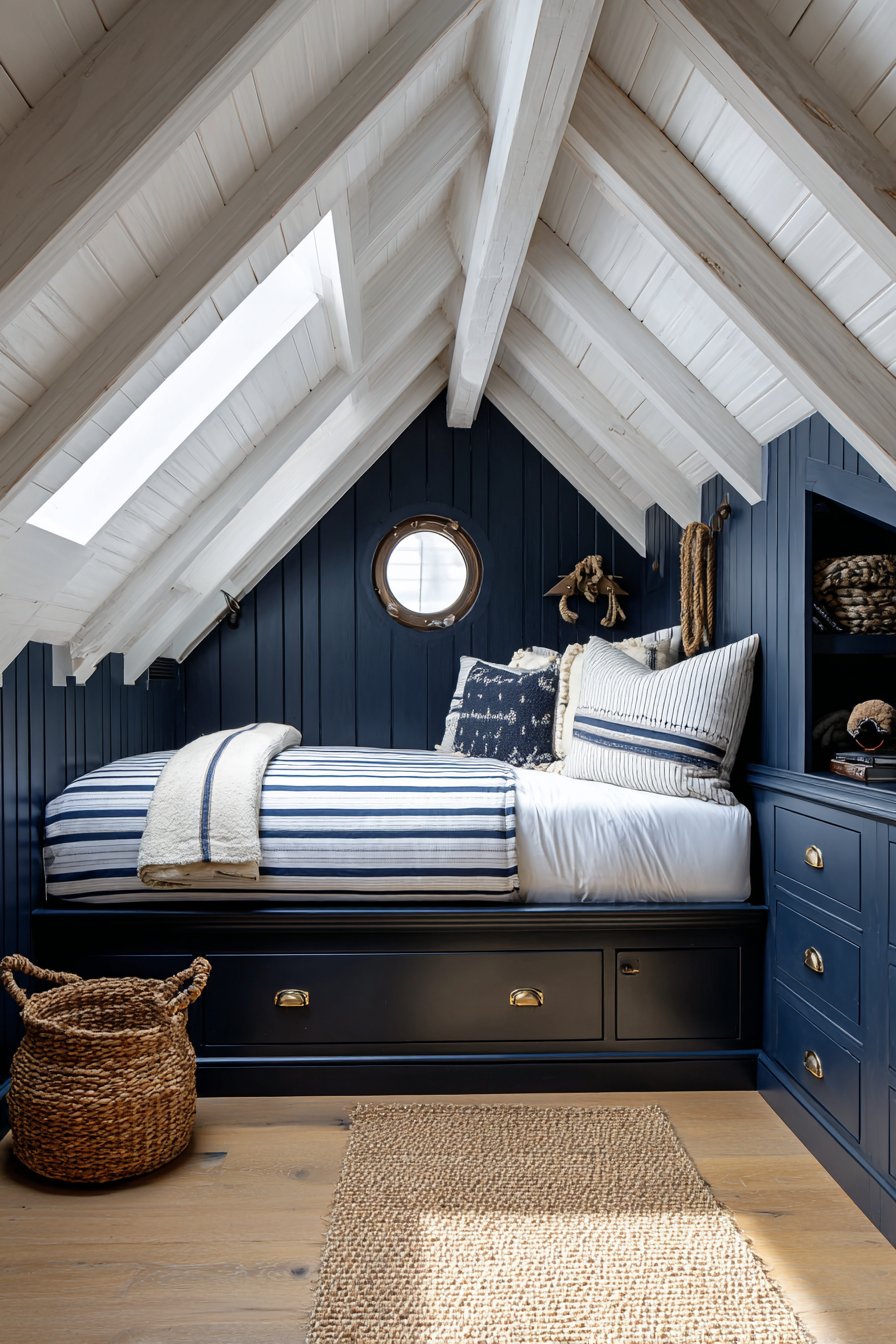
Natural jute rugs and striped bedding complete the coastal aesthetic with textural richness. The jute’s organic weave adds warmth and natural beauty to the floor. Striped patterns echo classic maritime textiles and add visual rhythm. Professional lighting through dormer windows highlights the cohesive design and practical storage integration. The natural illumination showcases how themed decor elements work together harmoniously.
Nautical design essentials for attic bedrooms:
- Paint vertical walls navy blue for bold coastal color contrast
- Keep sloped ceilings and beams white to maintain brightness
- Install captain’s beds with drawer storage for authentic nautical function
- Use rope-wrapped hooks for thematic detail and practical hanging storage
- Incorporate porthole mirrors as statement pieces that reinforce the theme
- Layer jute rugs and striped textiles for coastal texture and pattern
9. Industrial-Modern Edge with Raw Materials
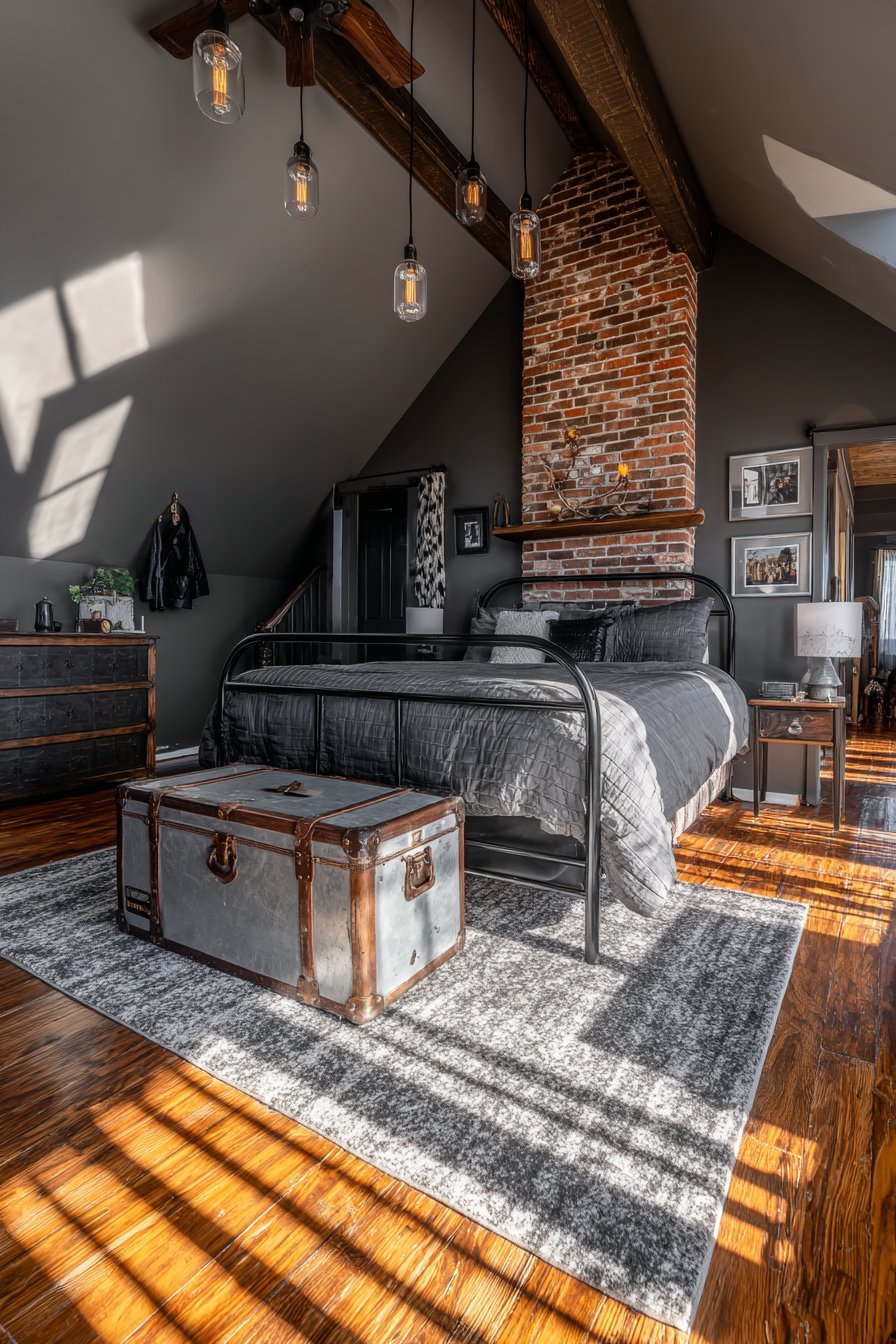
This industrial-modern attic bedroom embraces raw materials and edgy aesthetics. Exposed brick on the vertical chimney wall provides authentic urban texture and visual interest. The brick’s natural color variations add warmth while maintaining the industrial character. A matte black metal bed frame introduces sleek modern geometry against the rustic brick. The contrast between refined metal and rough masonry creates dynamic tension that defines industrial style.
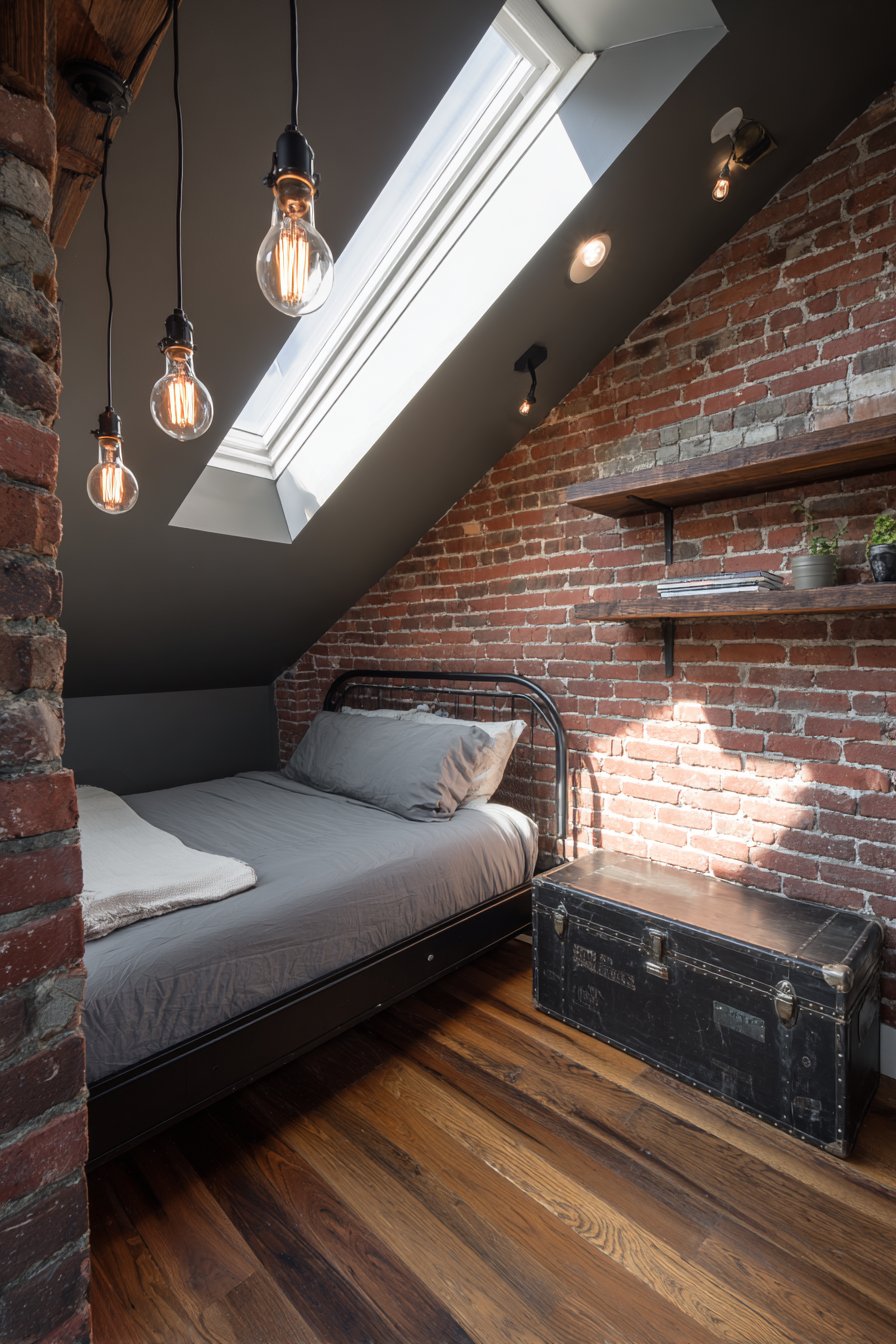
Edison bulb pendant lights suspended from exposed ceiling joists provide both illumination and design impact. The vintage-style bulbs emit warm light that softens the industrial materials. Dark grey painted joists create architectural definition overhead. The exposed structural elements become decorative features rather than elements to conceal. This honest expression of construction embodies industrial design philosophy.
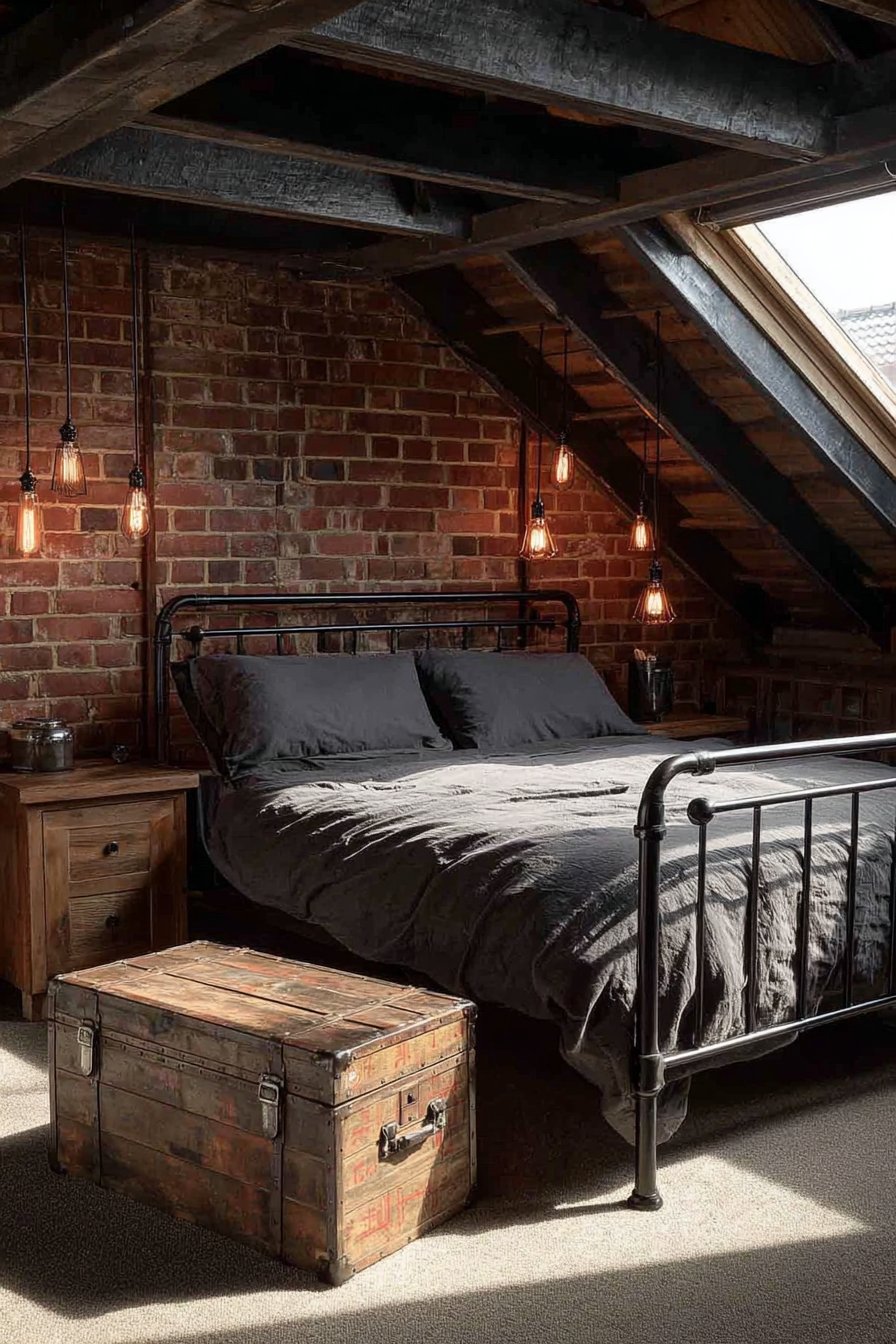
Reclaimed wood floating shelves provide minimalist storage with sustainable character. The weathered wood’s patina tells stories while offering practical display surfaces. A galvanized metal trunk serves as an unconventional nightstand with authentic industrial flair. Its utilitarian character complements the room’s edgy aesthetic perfectly. These carefully curated pieces balance rough and refined elements characteristic of successful industrial design.
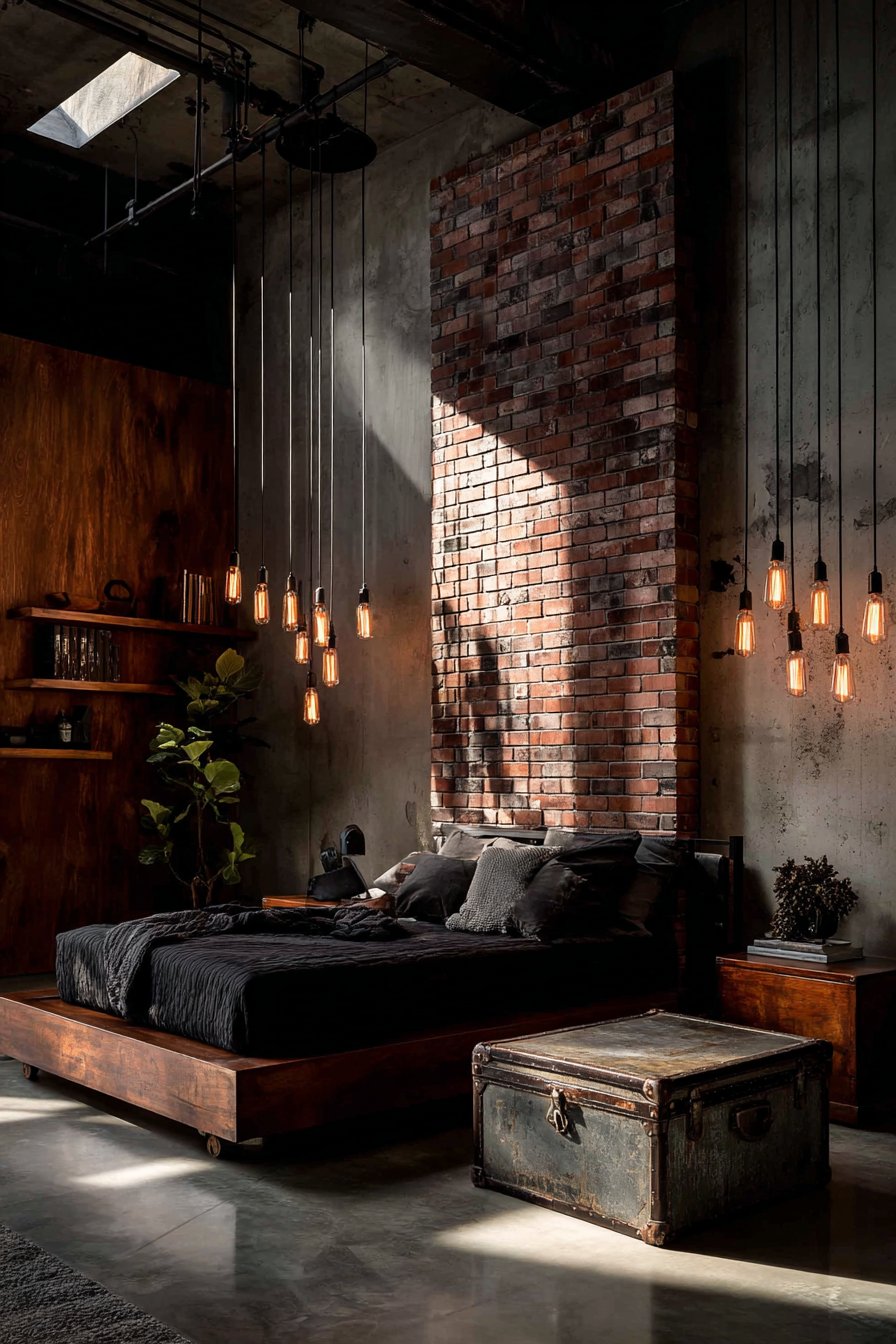
Dramatic lighting from a skylight creates shadows that highlight varied textures throughout the space. Natural light emphasizes the brick’s dimensional surface and the metal’s sleek finish. The interplay of rough brick, smooth metal, and weathered wood creates rich textural contrast. Wide-angle perspectives reveal how these distinct materials coexist harmoniously. The edgy aesthetic proves that industrial style adapts beautifully to attic architecture.
Industrial-modern design implementation:
- Expose brick walls where possible for authentic urban texture
- Choose matte black metal bed frames for sleek contemporary contrast
- Install Edison bulb pendants on exposed joists for vintage-industrial lighting
- Paint ceiling joists dark grey to create architectural definition
- Use reclaimed wood shelving for sustainable character and warmth
- Incorporate galvanized metal furniture for utilitarian industrial flair
10. Serene All-White Minimalist Haven
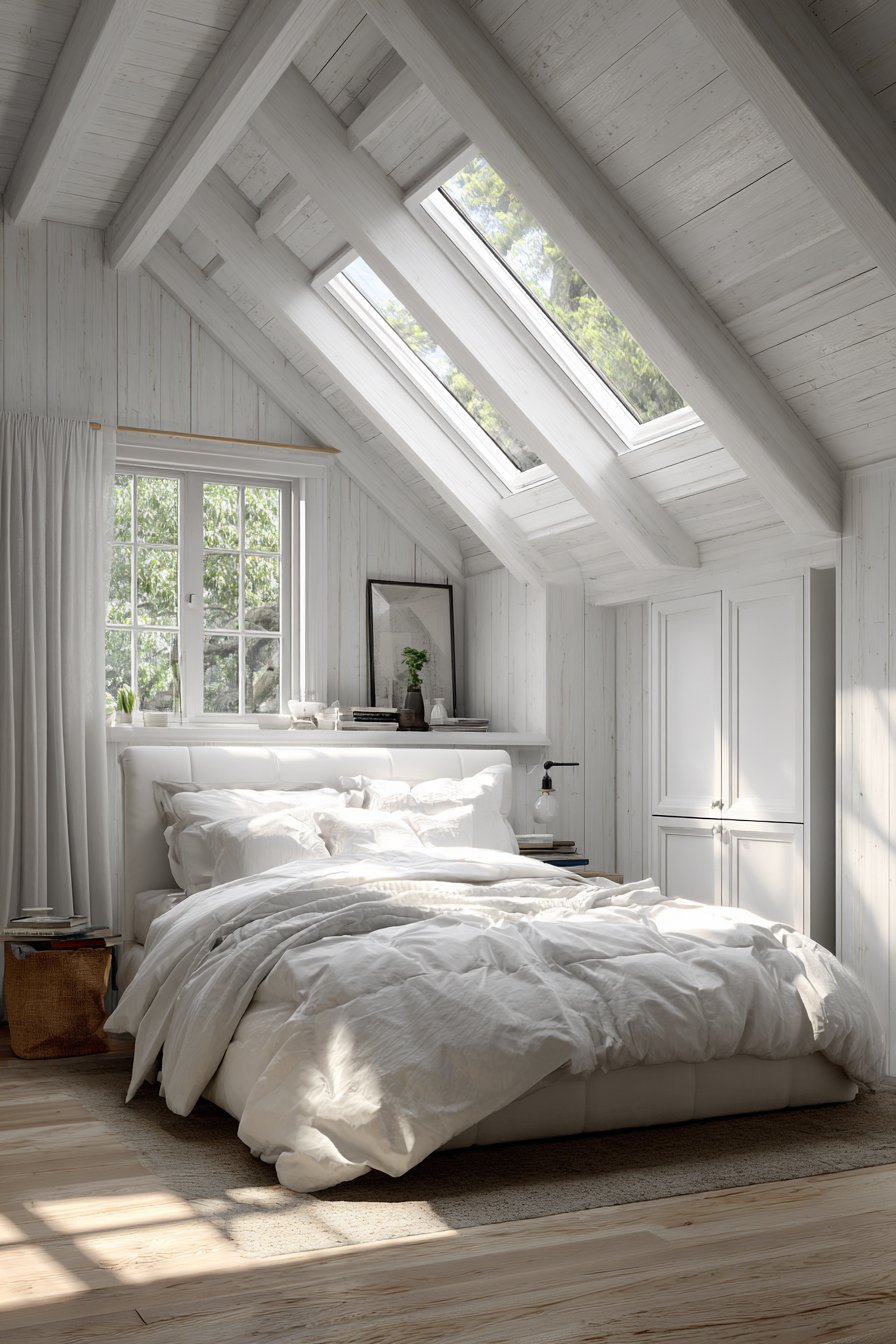
This all-white attic bedroom demonstrates how monochromatic design maximizes spatial perception. The serene color scheme creates an airy, peaceful atmosphere within the compact footprint. Every surface painted white reflects maximum light and eliminates visual boundaries. This cohesive approach makes the small space feel significantly larger than its actual dimensions. The absence of contrasting colors creates seamless visual flow.
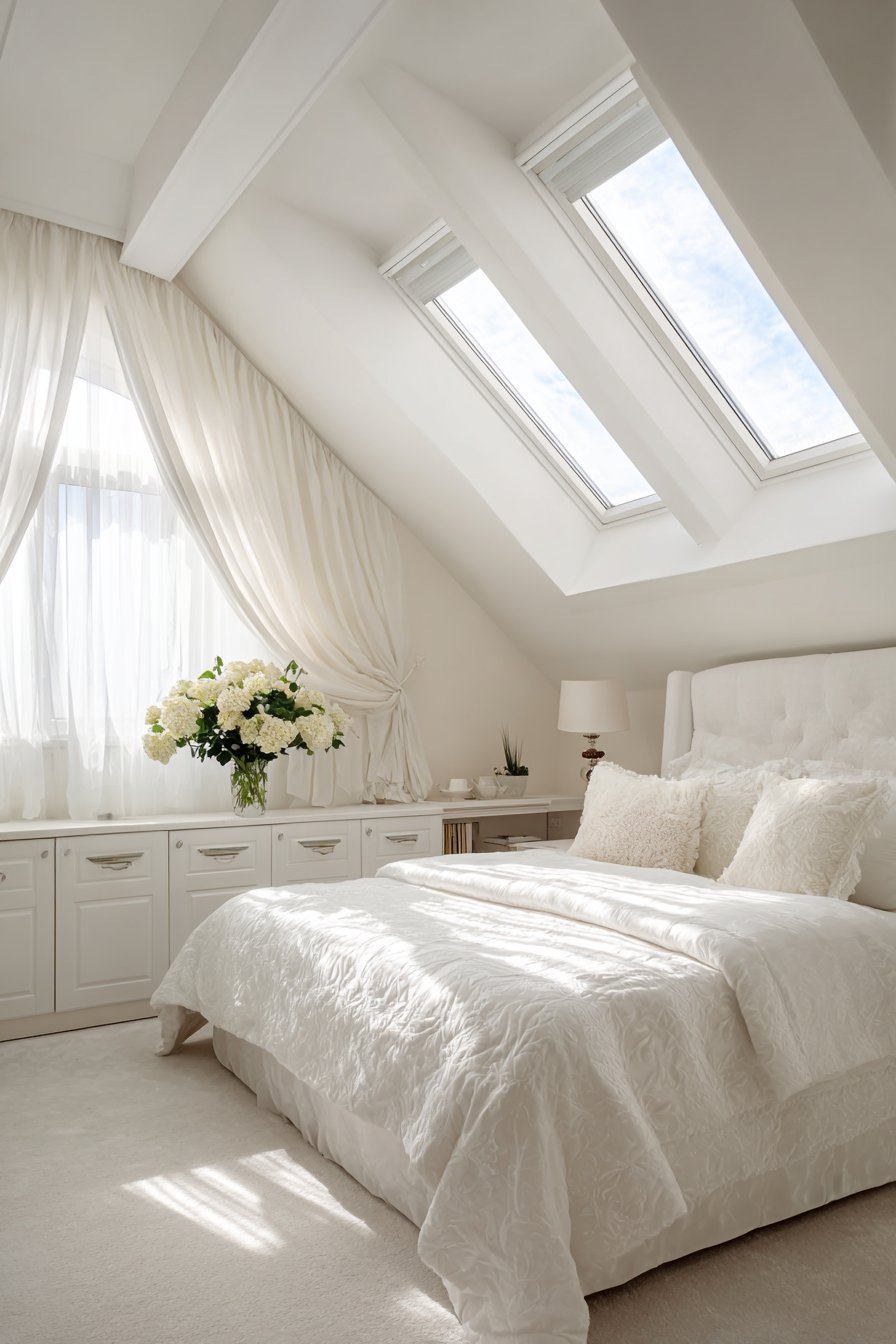
A simple white upholstered bed centers beneath the peak of the sloped ceiling. The soft upholstery adds subtle texture within the monochromatic palette. Built-in knee-wall storage cabinets painted to match the walls provide concealed organization. These low-profile units utilize the awkward spaces where the ceiling meets the floor. Their seamless integration maintains the room’s clean, uncluttered appearance.
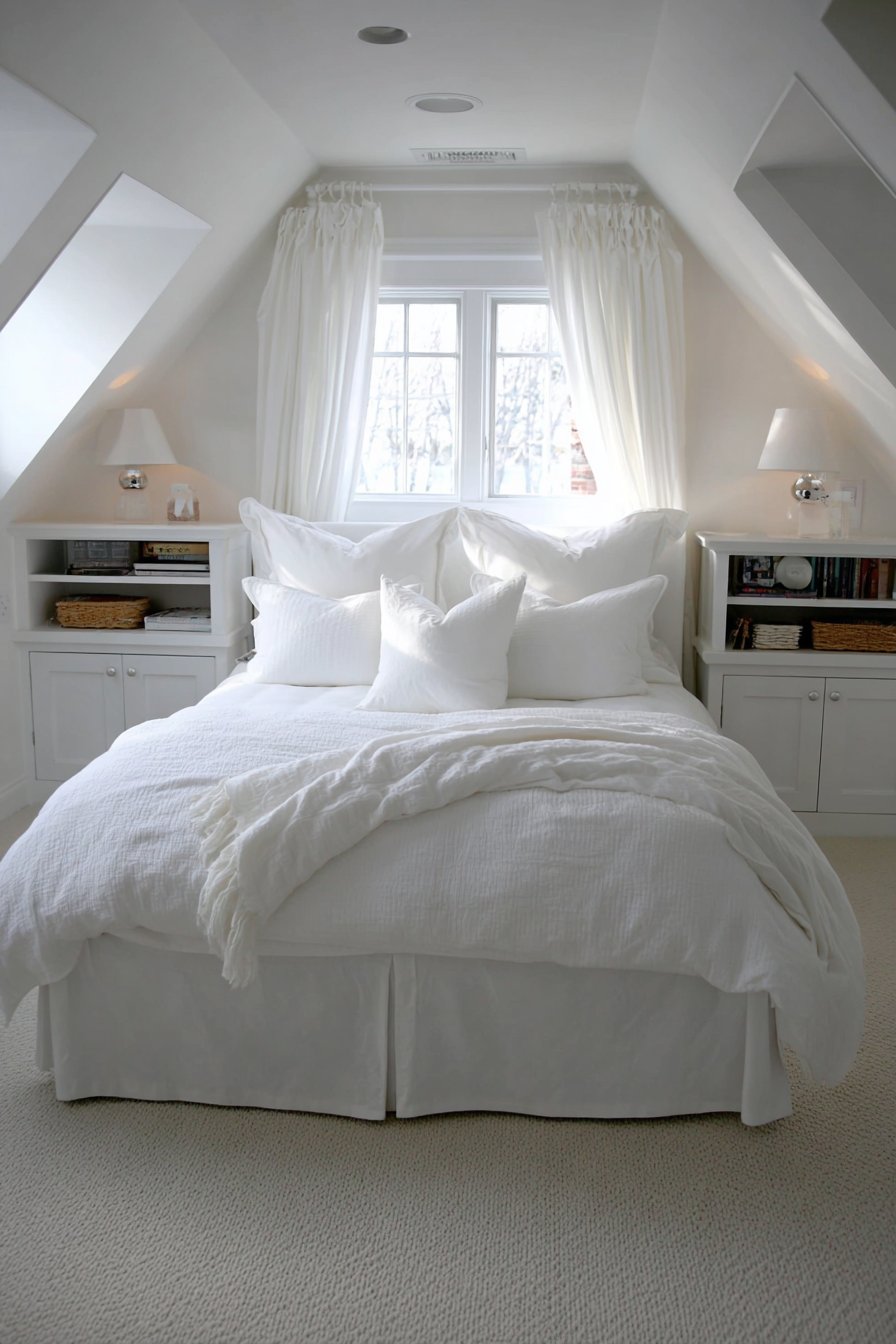
Velux skylights flood the space with abundant natural daylight from multiple angles. This overhead illumination eliminates the darkness common in spaces with limited wall area for windows. The skylights also provide ventilation and views of sky and trees. Gauzy white curtains on a dormer window soften incoming light beautifully. The translucent fabric diffuses harsh rays while maintaining the room’s brightness.
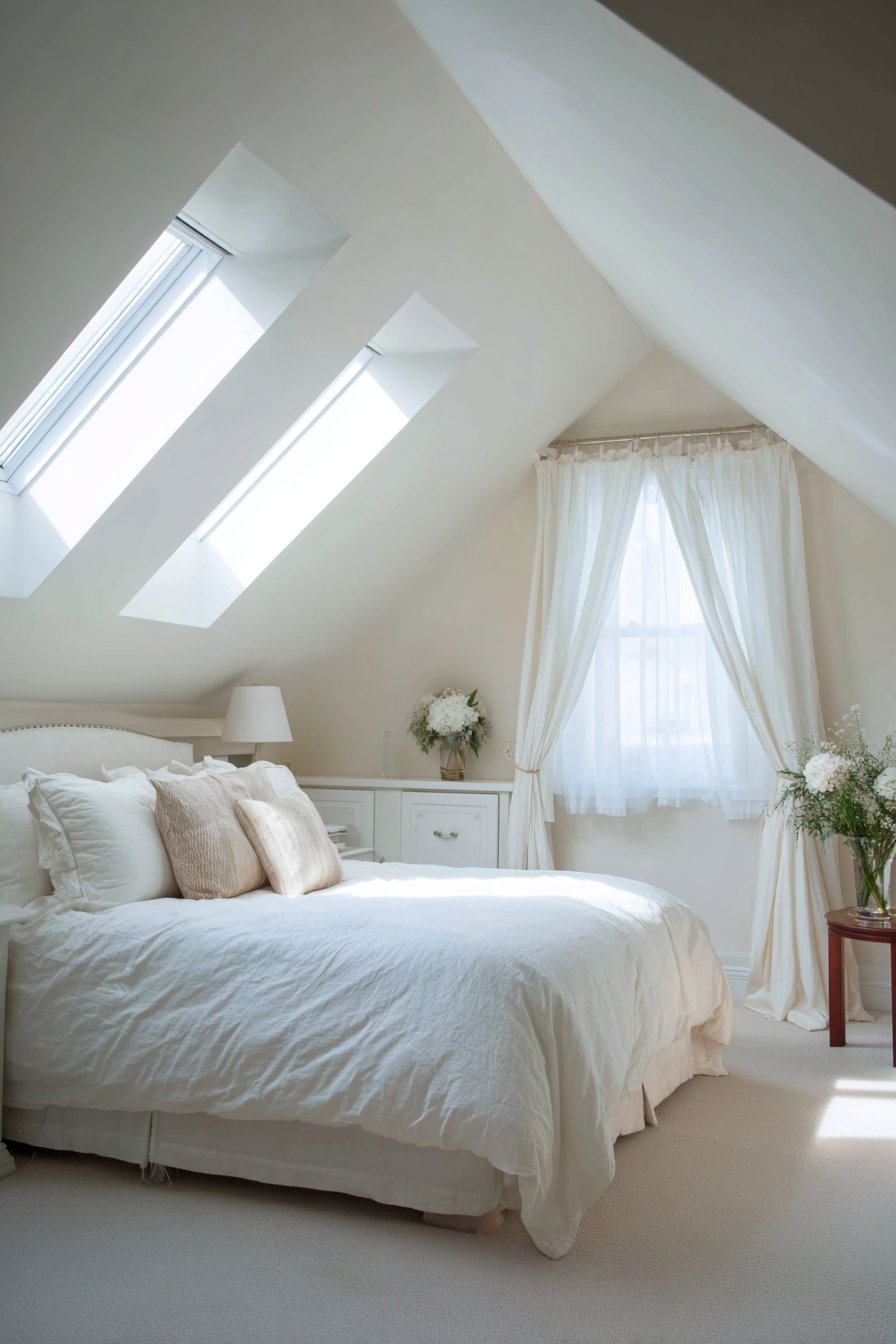
The balanced photographic exposure captures the peaceful atmosphere and spatial qualities. Emphasis on subtle texture variations in linens and painted surfaces prevents the white-on-white scheme from appearing sterile. The layering of different white tones and finishes creates depth and interest. Natural lighting makes the monochromatic scheme feel inviting rather than clinical. This design proves that limitation can inspire creativity and elegance.
All-white design principles:
- Paint all surfaces white to reflect maximum light and eliminate visual boundaries
- Center the bed beneath the ceiling peak for balanced symmetry
- Build knee-wall storage cabinets that blend seamlessly with wall paint
- Install multiple skylights to flood the space with natural daylight
- Use gauzy white curtains to soften light while maintaining brightness
- Layer various white tones and textures to create depth and prevent sterility
Why These Small Attic Bedroom Ideas Excel
These ten small attic bedroom designs represent the finest approaches to transforming compact sloped spaces into functional retreats. Each concept addresses the unique challenges inherent in attic architecture while celebrating distinctive aesthetic preferences. The platform bed design with built-in storage exemplifies space-efficient furniture selection for small bedroom layouts. The Scandinavian-inspired room demonstrates how minimalist principles create airiness in compact dimensions through light colors and smart furniture placement.
The custom built-in storage solution proves that bespoke cabinetry maximizes every available inch in challenging attic spaces. Fitted wardrobes along sloped walls utilize areas where standard furniture fails. The rustic cottage design showcases how natural materials like wood paneling and wrought iron create warmth and character. Vintage elements add authenticity that mass-produced furniture cannot replicate in small bedroom spaces.
Modern monochromatic sophistication illustrates the power of refined color palettes in small attic bedrooms. The charcoal and white scheme creates contemporary elegance while maintaining brightness. Murphy bed innovation demonstrates ultimate versatility for multifunctional small spaces. Guest rooms transform into home offices with simple mechanical operation in compact attic footprints.
Bohemian teen retreat design proves that personal expression thrives in small attic bedroom environments. Layered textures, string lights, and handcrafted elements create youthful sanctuaries. The nautical captain’s quarters theme shows how cohesive styling transforms ordinary attic bedrooms into immersive experiences. Navy blue walls, rope details, and maritime accessories create authentic coastal charm.
Industrial-modern edge design celebrates raw materials like exposed brick and metal in small bedroom contexts. The juxtaposition of rough and refined textures creates visual interest in compact spaces. Serene all-white minimalism demonstrates how monochromatic schemes maximize spatial perception in tight attic quarters. Light reflection and seamless surfaces make small bedrooms feel surprisingly spacious.
Each design incorporates essential small attic bedroom elements: strategic lighting through skylights and dormers, clever storage solutions including built-ins and multifunctional furniture, low-profile beds that maximize headroom, and color schemes that enhance natural light. These approaches address common attic bedroom challenges like limited floor space, sloped ceilings, restricted standing height, and awkward angles.
The designs utilize various storage strategies essential for small attic bedrooms. Platform beds with integrated drawers, window seats with hidden compartments, fitted wardrobes along slopes, and wall-mounted shelving preserve floor space. Multifunctional furniture like murphy beds and captain’s beds with storage maximizes efficiency. These solutions prove that small attic bedrooms can offer ample organization without sacrificing style.
Lighting design plays a crucial roles in each concept. Skylights provide natural illumination that transforms dark attic spaces. Dormer windows offer traditional light sources and architectural interest. Strategic artificial lighting through pendants, wall sconces, and string lights creates ambiance. The interplay of natural and artificial illumination ensures small attic bedrooms remain bright and welcoming.
Material selection distinguishes each design while addressing practical concerns. Light-colored woods, white paint, and neutral textiles reflect light in compact spaces. Natural materials like jute, linen, and reclaimed wood add warmth and texture. Metal elements provide contemporary contrast and durability. These material choices balance aesthetic preferences with functional requirements in small bedroom environments.
Color psychology influences each palette selection for small attic bedrooms. White and cream tones maximize light reflection and spatial perception. Navy blue creates depth while maintaining brightness through contrast. Charcoal grey adds sophistication without darkness when paired with white. Soft grey provides calming neutrality. These color strategies enhance the livability of compact attic sleeping spaces.
Furniture placement strategies optimize circulation and functionality in every design. Centrally positioned beds maintain standing height around sleeping areas. Low-profile platforms preserve sightlines across small spaces. Window seats transform awkward nooks into beloved features. Strategic arrangement creates balanced flow despite architectural constraints in attic bedrooms.
These small attic bedroom ideas incorporate current design trends while respecting timeless principles. Scandinavian minimalism, industrial aesthetics, bohemian eclecticism, and nautical themes reflect contemporary preferences. Built-in storage, multifunctional furniture, and sustainable materials address modern lifestyle needs. The designs balance trend-forward elements with enduring appeal suitable for long-term enjoyment.
Each concept demonstrates how specific design styles adapt to small attic bedroom constraints. The designs prove that architectural challenges inspire creative solutions rather than limiting possibilities. Sloped ceilings become design features rather than obstacles. Limited square footage encourages thoughtful curation over excessive accumulation. Awkward angles create opportunities for custom built-ins and unique furniture placement.
Professional interior photography techniques reveal how these designs succeed in real-world applications. Wide-angle lenses capture full room layouts in compact spaces. Balanced exposure showcases both bright and shadowed areas. Natural lighting photography emphasizes an authentic atmosphere. Detail shots highlight material textures and finish quality. These photographic approaches document design success in small attic bedrooms.
The versatility across these ten concepts ensures solutions for diverse needs and preferences. Young professionals appreciate modern minimalism and multifunctional murphy beds. Teenagers embrace bohemian personalization and creative expression. Families value guest room functionality and nautical charm. Empty nesters enjoy rustic cottage warmth and sophisticated monochromatic schemes. Small attic bedrooms accommodate various life stages and lifestyle requirements.
Budget considerations vary across these design approaches. All-white minimalism achieves impact through paint and simple furniture. Platform beds with storage offer mid-range investment with lasting value. Custom built-ins represent higher investment but maximize difficult spaces. DIY elements like macramé and string lights reduce costs in bohemian designs. These options accommodate different financial parameters for attic bedroom renovations.
Sustainability factors into several design concepts through material selection. Reclaimed wood shelving and vintage furniture reduce environmental impact. Natural fibers like jute and linen offer renewable options. Energy-efficient skylights provide natural lighting that reduces electricity consumption. These eco-conscious choices create responsible small attic bedroom designs.
Seasonal adaptability enhances the livability of these small attic bedroom designs. White schemes remain cool and bright during summer months. Layered textiles in bohemian and rustic designs add warmth for winter. Adjustable window treatments regulate light and temperature throughout the year. Versatile color palettes transition seamlessly across seasons in compact attic spaces.
The spatial planning evident in each design maximizes usable square footage in small attic bedrooms. Vertical storage utilizes wall height where floor space is limited. Low furniture profiles preserve sight lines and enhance spaciousness. Strategic bed placement maintains adequate standing room. These planning strategies extract maximum functionality from minimal dimensions.
Architectural features receive thoughtful treatment across all ten designs. Exposed beams become decorative elements through paint or natural finish. Sloped ceilings define zones rather than limit function. Dormer windows provide focal points and natural light. Skylights transform dark spaces into bright retreats. These approaches celebrate rather than conceal attic architecture.
Personal expression opportunities exist within each design framework. Open shelving displays cherished objects and books. Wall space accommodates art and photography. Textile selections introduce color and pattern. Accessory choices reflect individual interests and stories. Small attic bedrooms become personal sanctuaries through thoughtful customization.
Maintenance considerations influence material and finish selections throughout these designs. White paint refreshes easily to maintain crispness. Durable fabrics withstand frequent use in compact spaces. Quality hardware ensures built-ins function smoothly long-term. Low-maintenance materials suit busy lifestyles while preserving design integrity in small attic bedrooms.
These exemplary small attic bedroom ideas demonstrate that compact dimensions need not compromise style, comfort, or functionality. Strategic planning, thoughtful material selection, and creative problem-solving transform challenging spaces into treasured retreats. Whether embracing minimalism or maximalism, contemporary or traditional aesthetics, these designs prove that small attic bedrooms offer remarkable potential for beautiful, livable spaces.
Conclusion
Small attic bedrooms present unique opportunities for creative interior design that transforms architectural constraints into distinctive advantages. The ten concepts explored demonstrate diverse aesthetic approaches that address common challenges while celebrating individual style preferences. From space-efficient platform beds with integrated storage to versatile murphy bed configurations, practical solutions abound for maximizing compact dimensions. Built-in wardrobes, window seats with hidden compartments, and multifunctional furniture prove that small spaces can offer surprising storage capacity.
The importance of strategic lighting cannot be overstated in attic bedroom design success. Skylights and dormer windows flood compact spaces with natural illumination that expands spatial perception. Carefully selected artificial lighting through pendants, sconces, and decorative fixtures creates ambiance while serving practical purposes. Material choices ranging from light-reflecting white paint to warm natural woods influence both aesthetics and functionality.
Color palettes play crucial roles in enhancing small attic bedroom environments. Monochromatic white schemes maximize brightness and spaciousness. Navy and white combinations create coastal charm. Charcoal and white pairings deliver contemporary sophistication. Soft neutrals provide calming backdrops for personalization. These strategic color decisions profoundly impact how compact spaces feel and function.
Each design concept offers actionable inspiration for transforming your own attic space. Whether you’re drawn to Scandinavian minimalism, rustic cottage warmth, industrial edge, or bohemian creativity, these ideas provide roadmaps for successful implementation. The key lies in embracing your space’s unique characteristics while selecting design elements that reflect your personal aesthetic and lifestyle needs.
Begin your small attic bedroom transformation by assessing your space’s specific dimensions and architectural features. Identify opportunities for built-in storage along sloped walls. Consider natural light sources and how to maximize their impact. Determine which furniture pieces are essential and seek low-profile options that preserve spatial flow. Select a color palette that enhances brightness while expressing your style preferences.
Don’t hesitate to combine elements from multiple designs to create a personalized solution. Mix the storage efficiency of built-in drawers with the aesthetic warmth of natural wood. Pair modern minimalist furniture with bohemian textiles for eclectic appeal. Blend nautical color schemes with rustic materials for coastal cottage charm. The most successful small attic bedrooms reflect their occupants’ unique personalities and needs.
Remember that transformation doesn’t require completing everything simultaneously. Start with foundational elements like paint color and lighting improvements. Add storage solutions as budget allows. Incorporate furniture and accessories gradually while living in the space. This phased approach allows you to assess what works and adjust accordingly.
Your small attic bedroom holds tremendous potential to become your home’s most cherished retreat. With thoughtful planning, creative problem-solving, and inspiration from these diverse design concepts, you can transform even the most challenging compact space into a beautiful, functional sanctuary. Embrace the adventure of attic bedroom design and create a personal haven that exceeds your expectations.
