


The art of interior design extends far beyond simply arranging furniture in a room. It encompasses the careful selection of colors, textures, and materials that together create an environment reflecting your personality and lifestyle. A thoughtfully designed living room becomes more than just a space for relaxation. It transforms into a sanctuary where memories are made, conversations flow naturally, and comfort meets aesthetic beauty. The power of color psychology plays a crucial role in how we experience our homes. When harnessed correctly, it can influence our moods, energy levels, and overall wellbeing.
The combination of sage green and pink represents one of interior design’s most harmonious and versatile color pairings. Sage green brings the calming influence of nature indoors, evoking feelings of tranquility and balance. Pink, particularly in its softer iterations like blush and dusty rose, adds warmth, sophistication, and a gentle romantic quality. Together, these colors create a palette that feels both contemporary and timeless. This pairing works beautifully across multiple design styles, from minimalist Scandinavian to bohemian eclectic.
In this comprehensive guide, we explore ten distinct approaches to incorporating sage green and pink into your living room. Each design concept offers unique interpretations of this beautiful color story. From plush velvet textures to minimalist aesthetics, traditional elegance to compact apartment solutions, you’ll discover how these colors adapt to various spaces and styles. Whether you’re planning a complete room makeover or seeking inspiration for subtle updates, these ideas will guide you toward creating a living space that feels both refreshing and inviting.
1. Luxurious Velvet and Marble Elegance
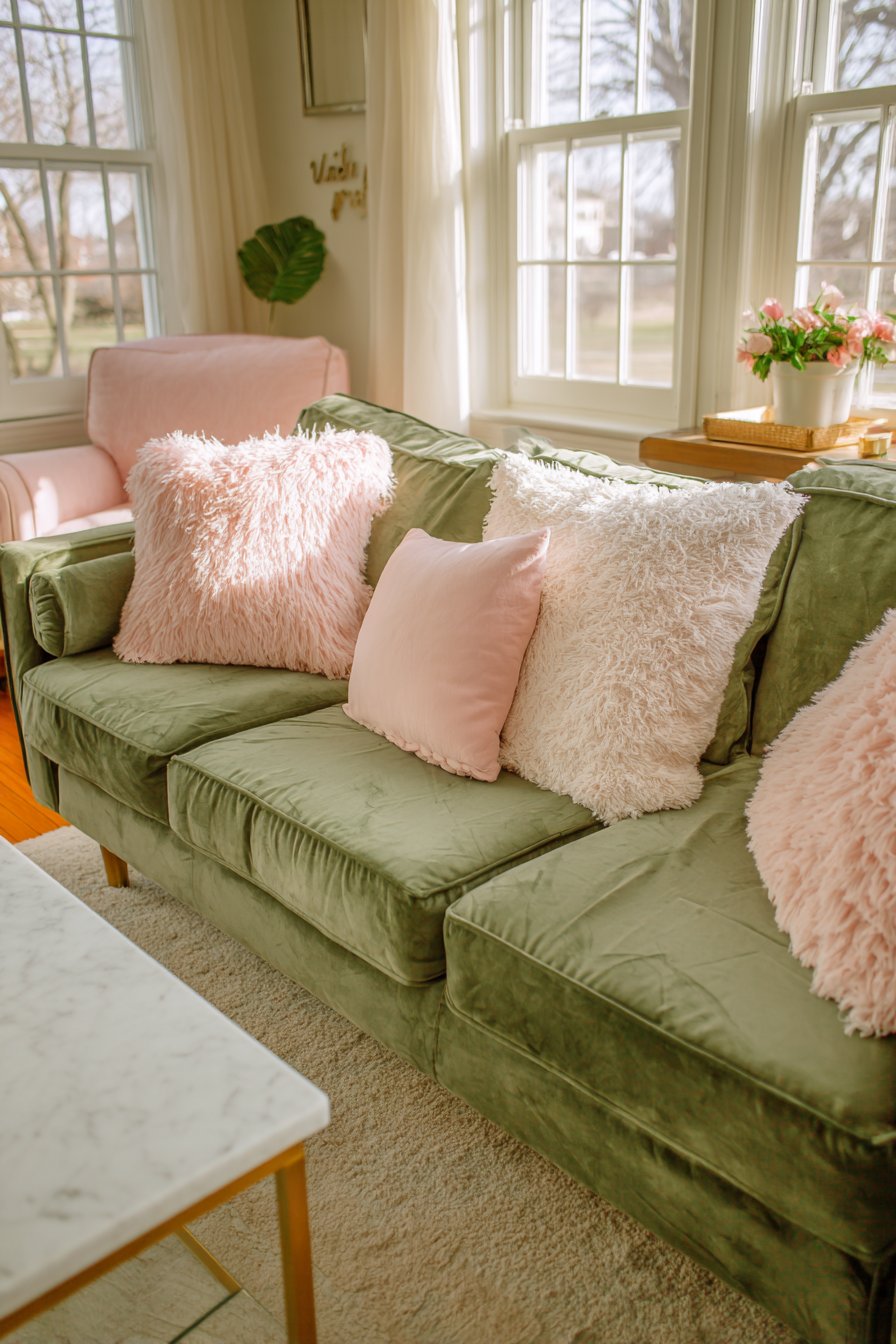
Imagine stepping into a living room where a sumptuous sage green velvet sofa commands attention as the centerpiece. The plush texture invites you to sink into its cushions. Blush pink throw pillows in varied textures create visual interest and tactile appeal. Each pillow tells its own story through fabric choice. Some feature smooth silk, while others showcase chunky knits or embroidered details. This layering of textures elevates the space beyond simple color coordination.
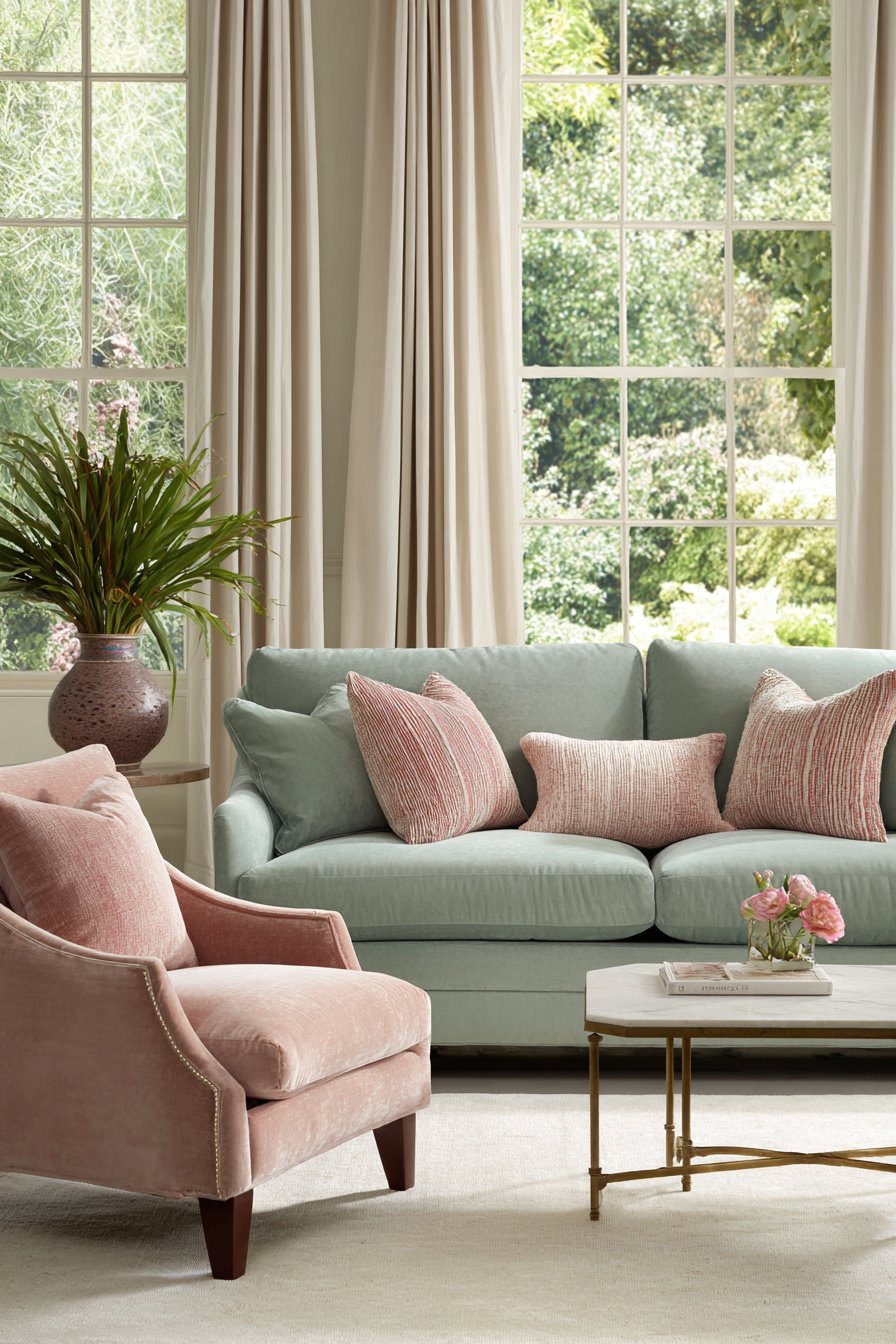
The marble-top coffee table with brass legs introduces an element of refined luxury. Its cool white surface with delicate veining provides a neutral anchor. The brass legs catch and reflect light throughout the day. This metallic accent bridges the sage and pink tones beautifully. A cream wool area rug grounds the entire seating arrangement. Its neutral tone allows the green and pink elements to shine.
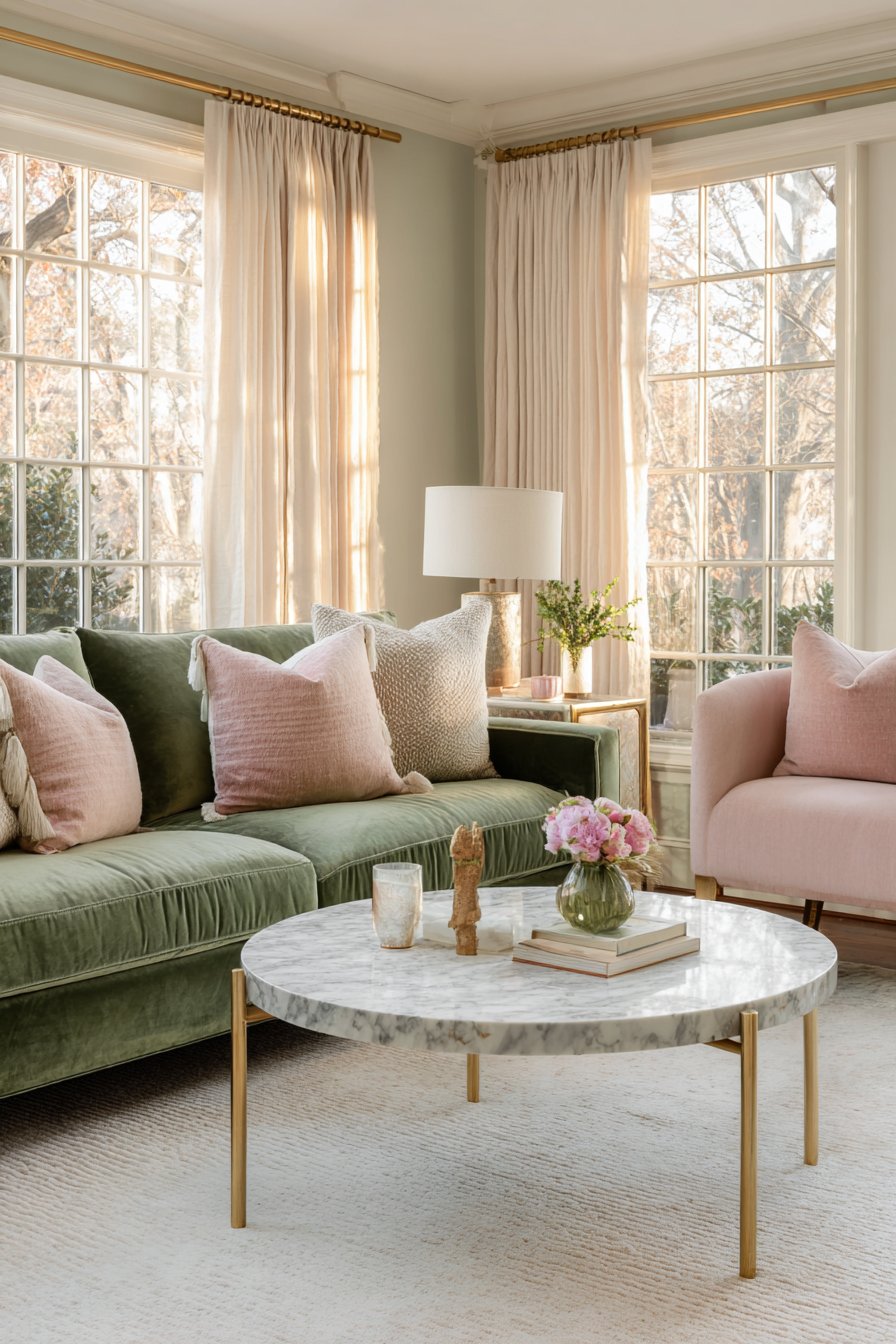
Near the window, a dusty pink accent chair creates a perfect reading nook. Natural linen curtains filter sunlight into a soft, diffused glow. The light quality changes throughout the day, creating dynamic shadow play. Morning light brings coolness while afternoon sun adds warmth. This interplay enhances the complementary nature of sage and pink.
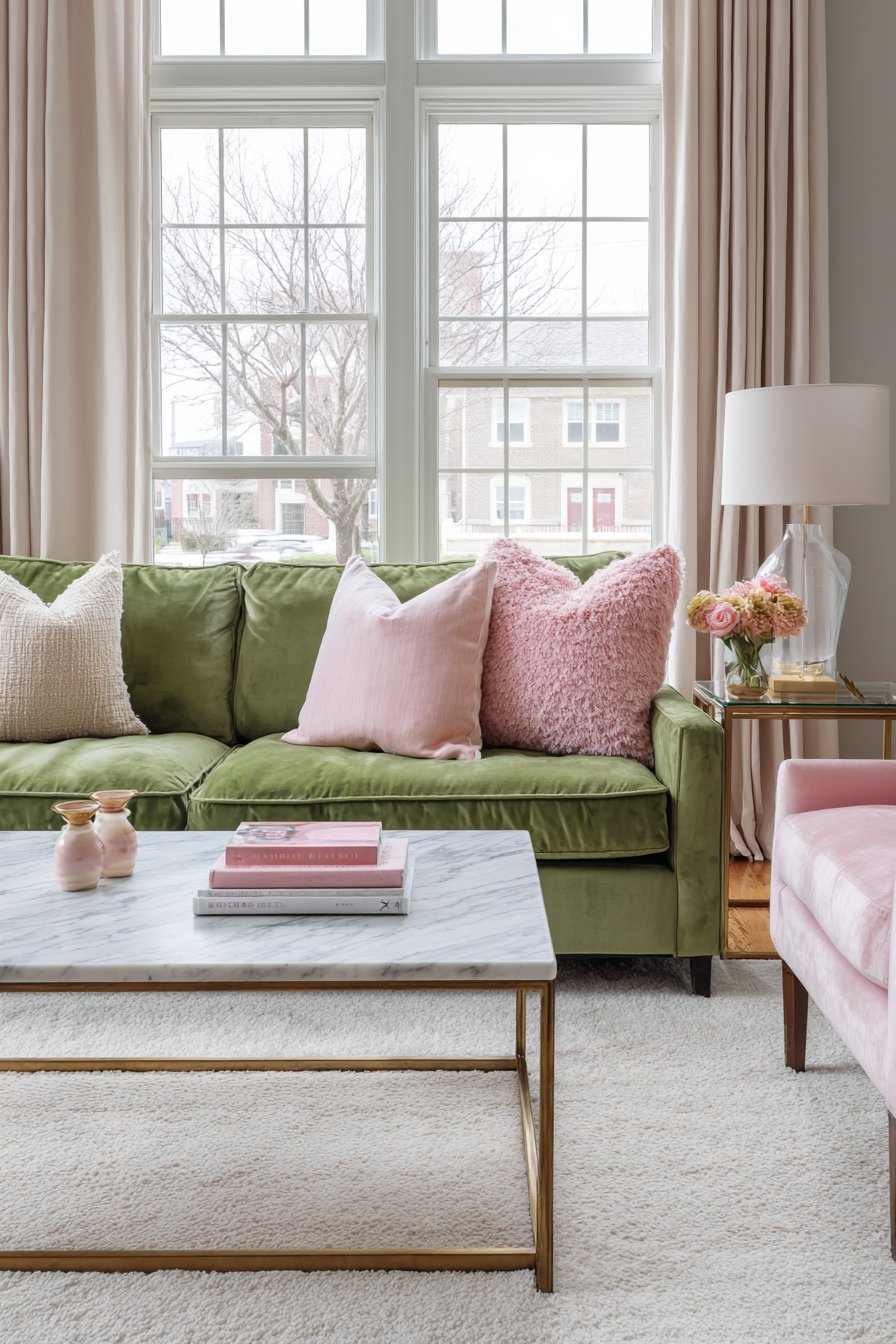
The intimate seating arrangement encourages conversation and connection. Every element has been carefully considered for both beauty and function. The gentle shadows across surfaces add depth and dimension. Material quality speaks volumes in this sophisticated space.
Key Design Tips:
- Choose velvet upholstery for added luxury and depth of color
- Layer throw pillows in various textures for visual interest
- Select brass or gold-toned metals to warm the color palette
- Use natural linen curtains to soften harsh sunlight
- Invest in quality wool rugs for comfort underfoot
2. Modern Feature Wall Statement
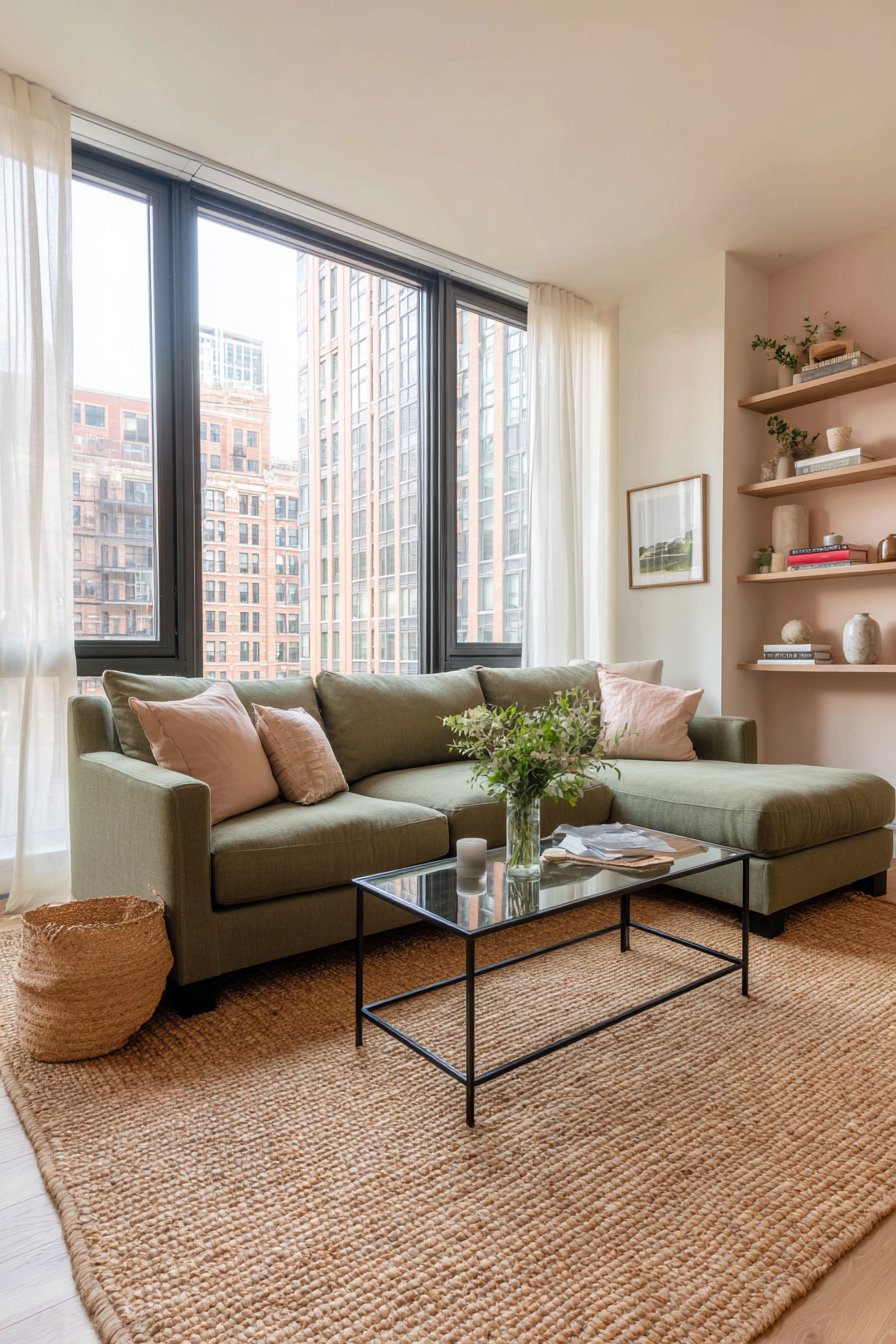
A muted blush pink feature wall transforms this modern living room into something extraordinary. The wall serves as a backdrop for a low-profile sage green sectional sofa. This design choice creates dramatic visual impact without overwhelming the space. The soft pink hue feels sophisticated rather than overly sweet. It provides warmth while maintaining a contemporary edge.
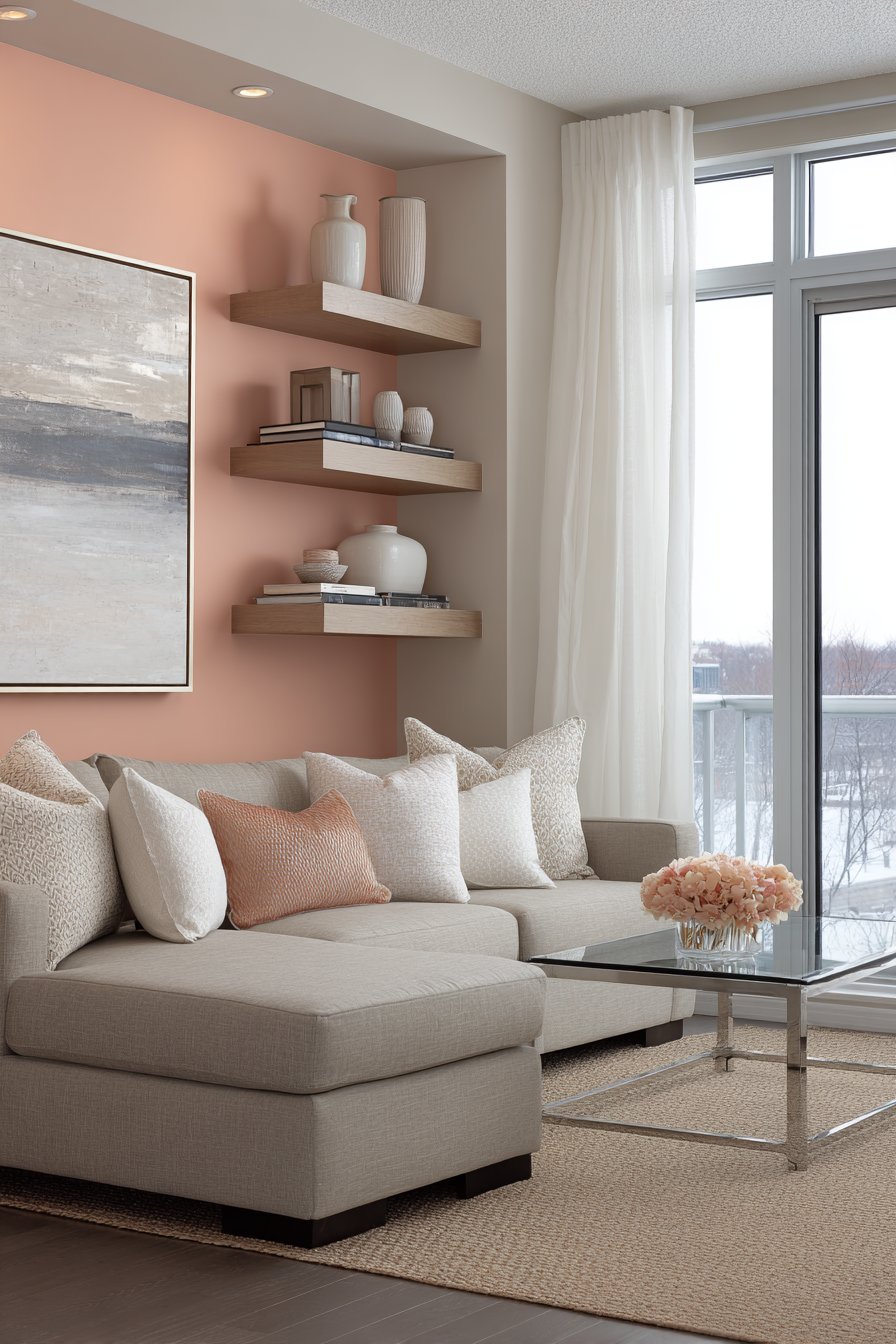
Light oak floating shelves add architectural interest to the pink wall. They display ceramic vases in coordinating colors and carefully curated art books. Each shelf becomes a mini gallery of texture and form. The natural wood grain introduces organic warmth. Its honey tones complement both sage and pink beautifully.
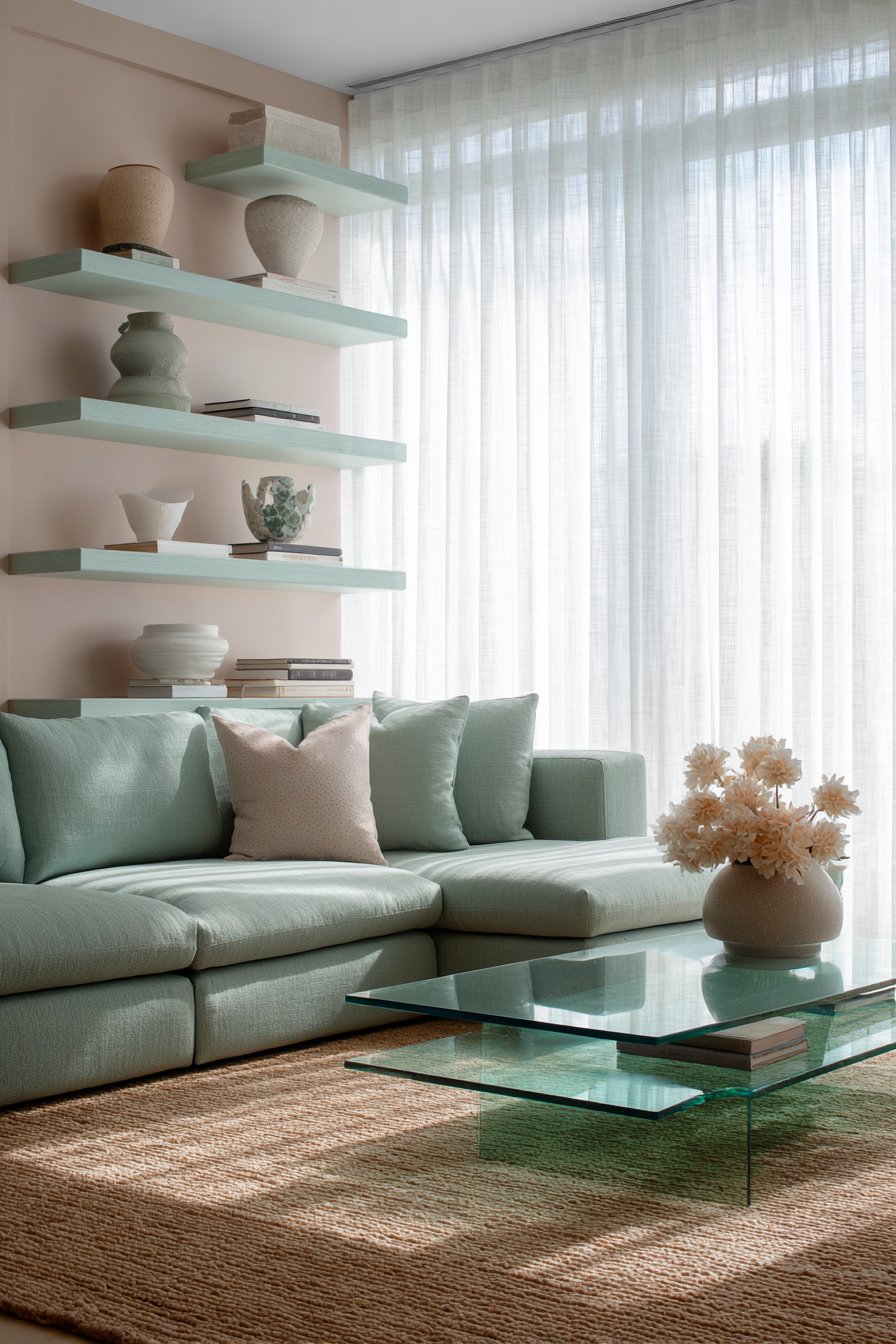
A natural jute rug anchors the seating area beneath a glass coffee table. The jute’s neutral tone and textured weave add earthiness. The glass table maintains visual openness and doesn’t compete for attention. Large windows with sheer white curtains maximize natural light. Diffused daylight illuminates the space evenly throughout the day.
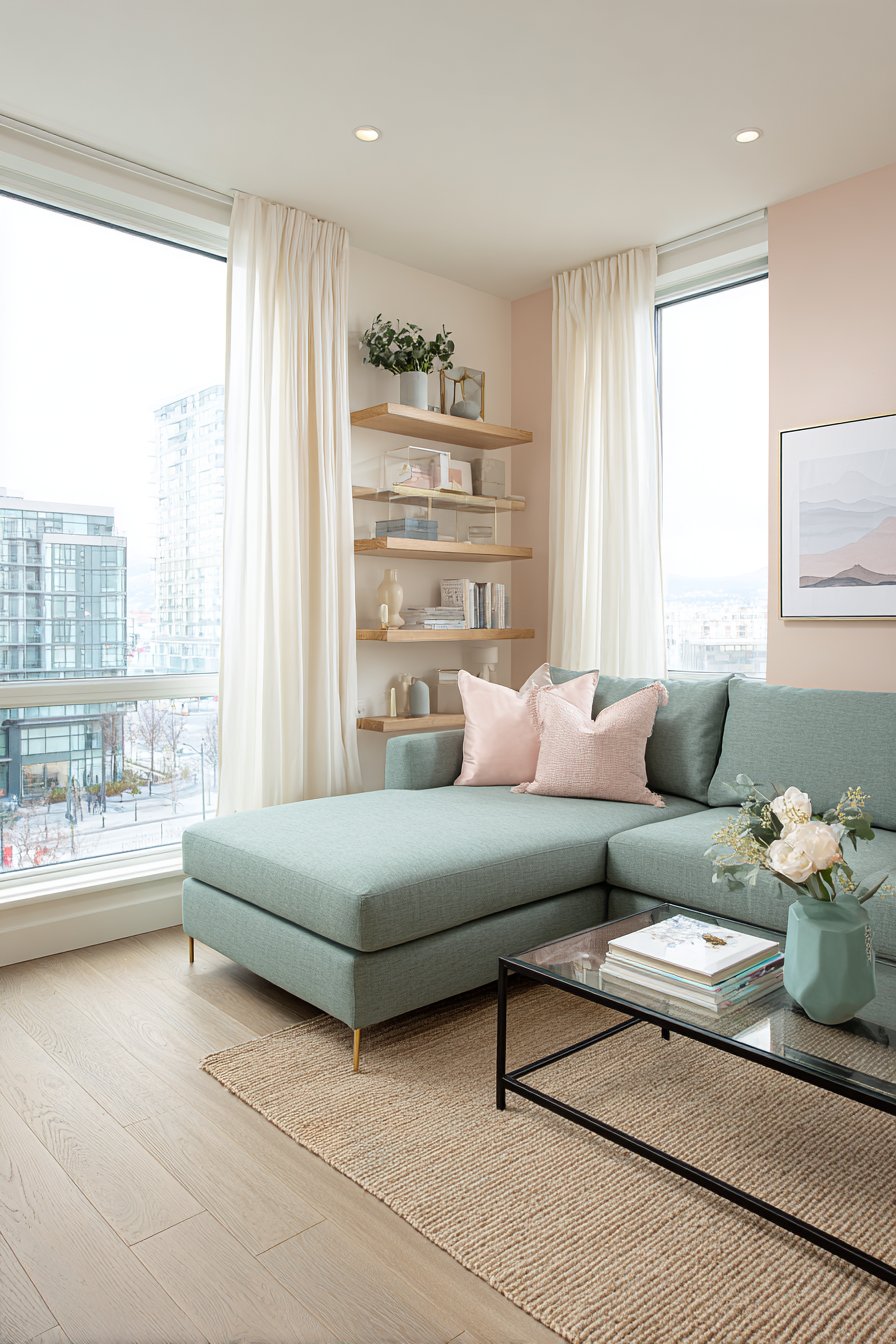
The cohesive color story flows seamlessly from wall to furniture to accessories. Each surface texture contributes to the overall sensory experience. The balanced room layout ensures functionality meets aesthetic appeal. This modern interpretation proves that sage green and pink can feel fresh and current.
Key Design Tips:
- Paint one feature wall instead of the entire room for impact
- Use floating shelves to add storage without visual weight
- Choose jute or sisal rugs for natural texture
- Opt for glass furniture to maintain openness in modern spaces
- Keep window treatments minimal to maximize natural light
3. Minimalist Scandinavian Serenity
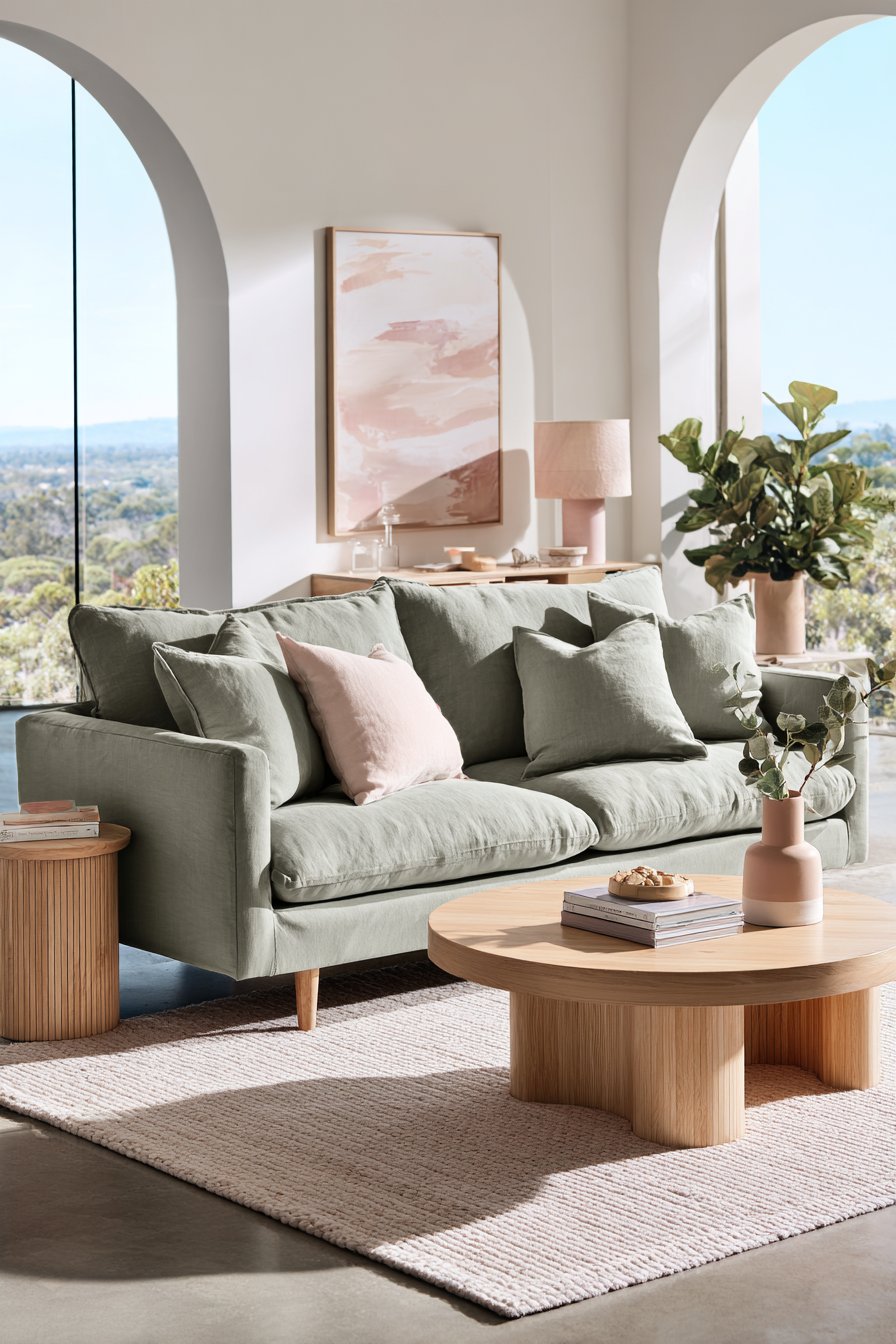
White walls provide a crisp, clean canvas in this minimalist living room. A streamlined sage green linen sofa sits elegantly against the neutral backdrop. The linen fabric brings organic texture while maintaining simplicity. Its relaxed drape creates an inviting, lived-in quality. A single oversized abstract art piece dominates one wall. Soft pink and sage green brushstrokes dance across the canvas.
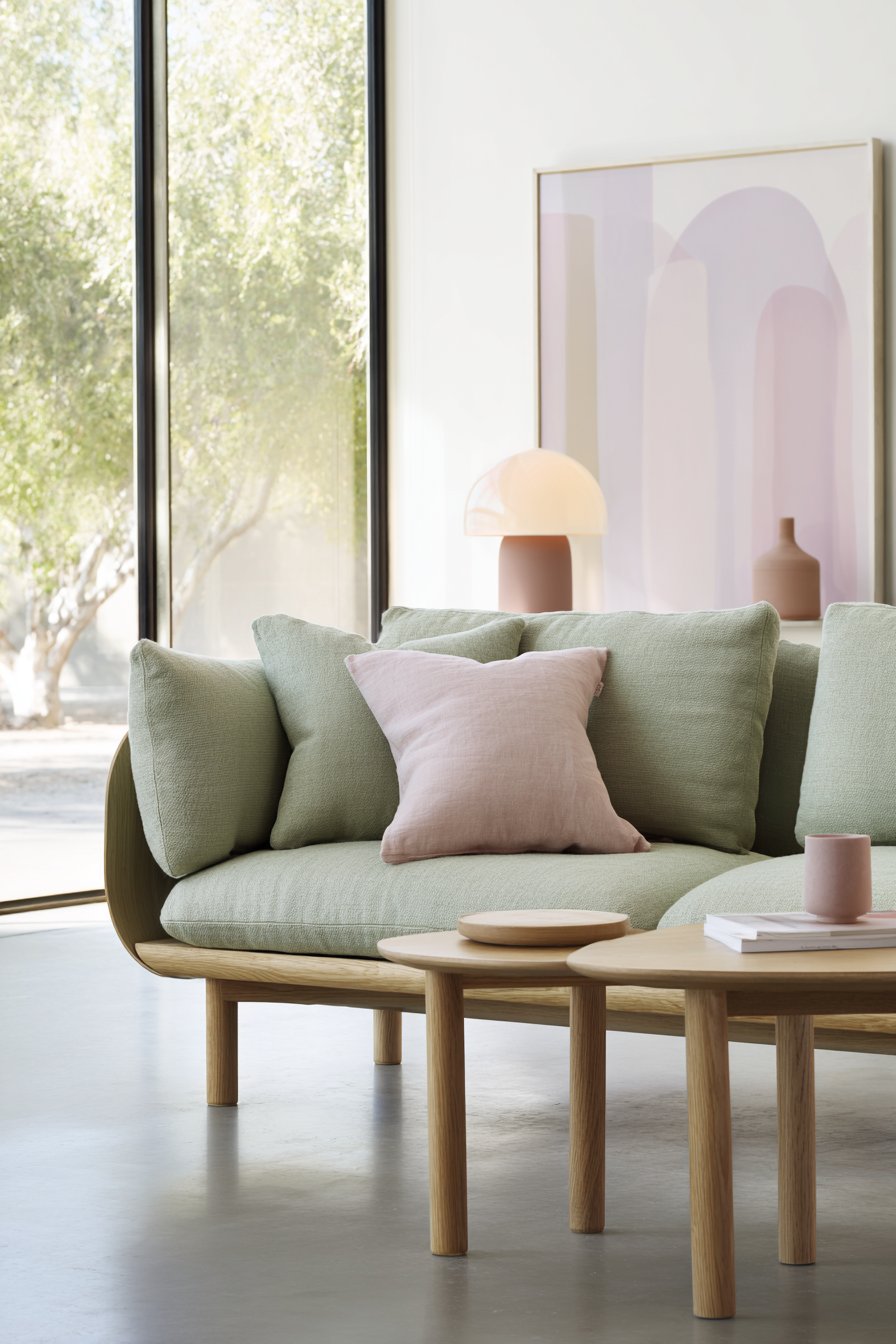
Scandinavian-style light wood furniture maintains the restrained aesthetic. A coffee table and side table feature clean lines and beautiful grain patterns. The pale wood tones add warmth without disrupting the calm atmosphere. Every piece serves a clear purpose. No excess decorative elements clutter the visual field.
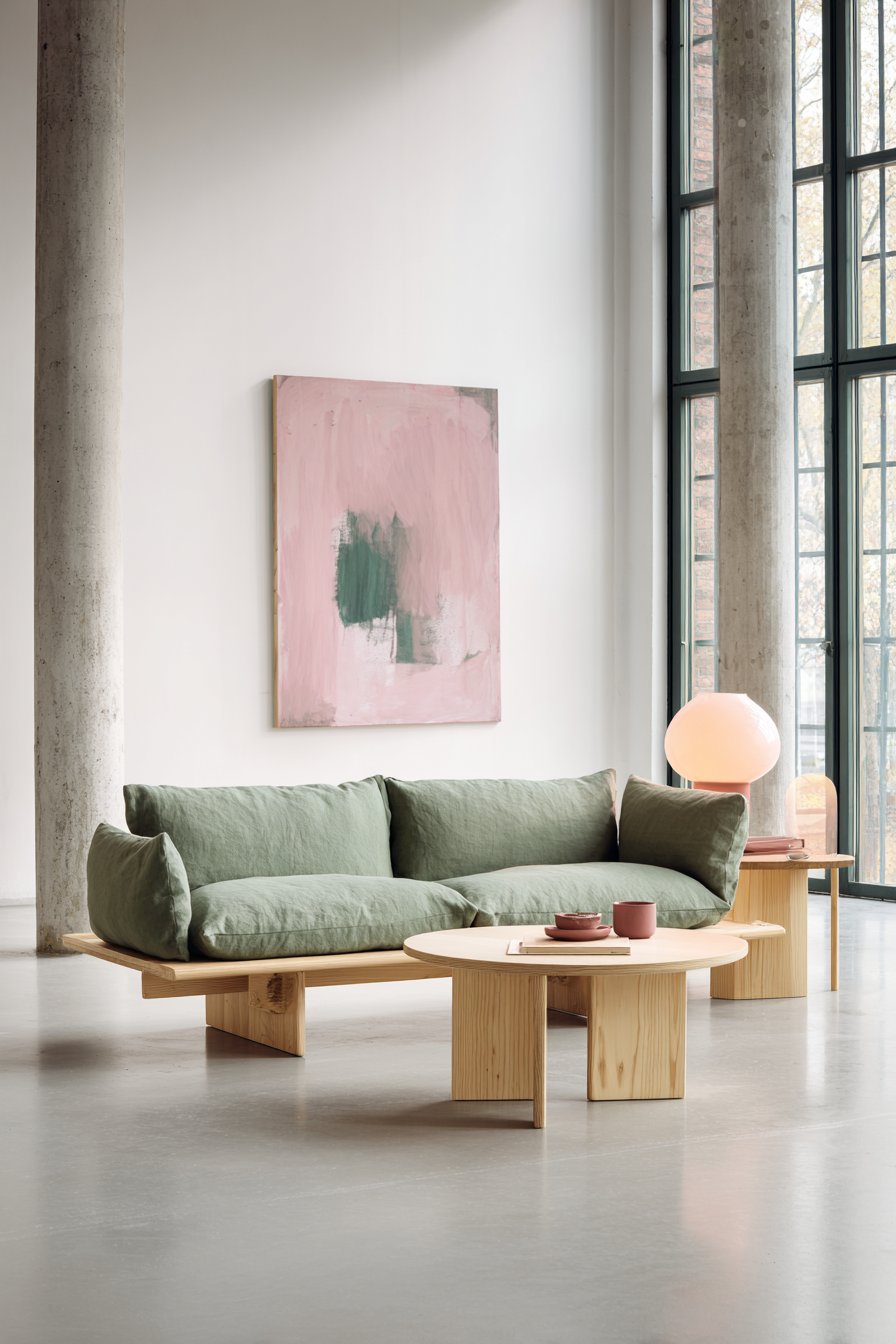
A dusty pink ceramic table lamp provides warm ambient lighting in the evening. Its simple form echoes the minimalist philosophy. The ceramic glaze catches light beautifully during the day. Floor-to-ceiling windows flood the room with natural daylight. The quality of materials shines through in this pared-back approach.
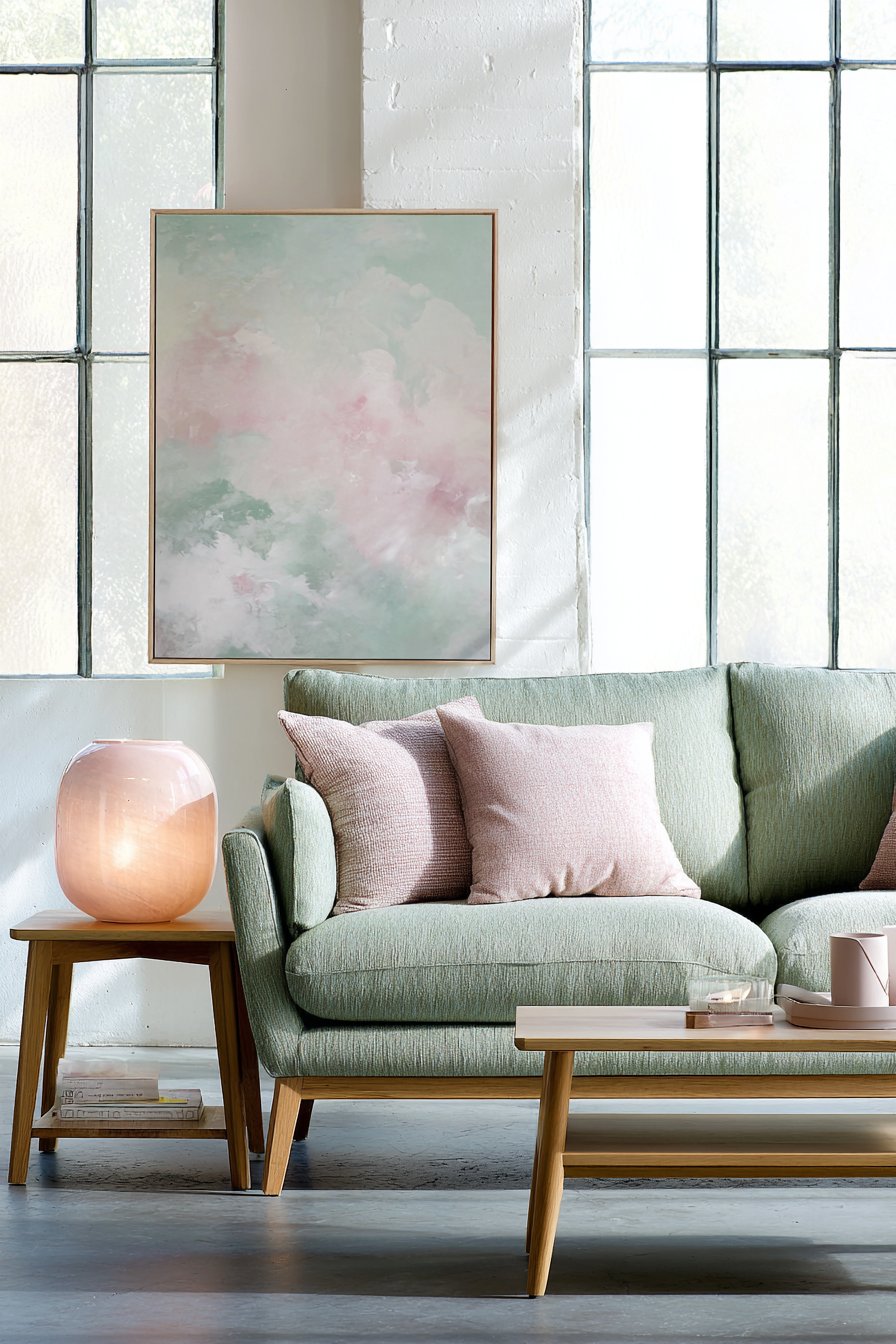
This design celebrates the beauty of restraint and intentionality. Each element has been carefully chosen and placed. The limited color palette creates harmony and coherence. Negative space becomes as important as the furniture itself.
Key Design Tips:
- Limit your color palette to create cohesion
- Choose one statement art piece rather than multiple small ones
- Select linen fabrics for their natural, relaxed drape
- Embrace negative space as part of the design
- Use light wood tones to add warmth to minimalist spaces
4. Bohemian Layered Comfort
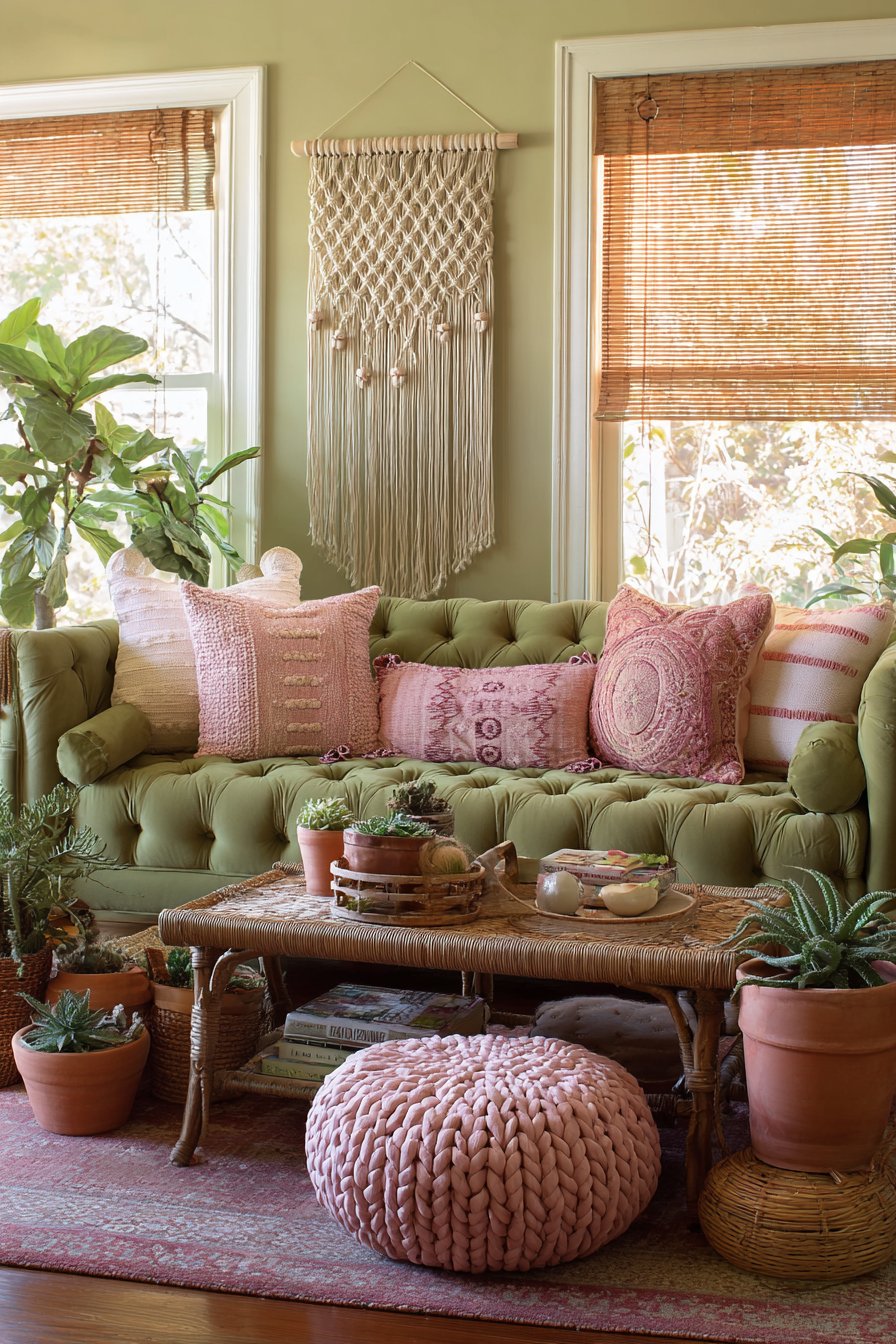
A low sage green tufted sofa sets the foundation for this eclectic bohemian retreat. Layers of throw pillows create a collected-over-time aesthetic. Pink and sage patterned textiles mix freely with geometric and floral designs. No two pillows match exactly, yet all work together harmoniously. A macramé wall hanging adds handcrafted texture above the sofa.
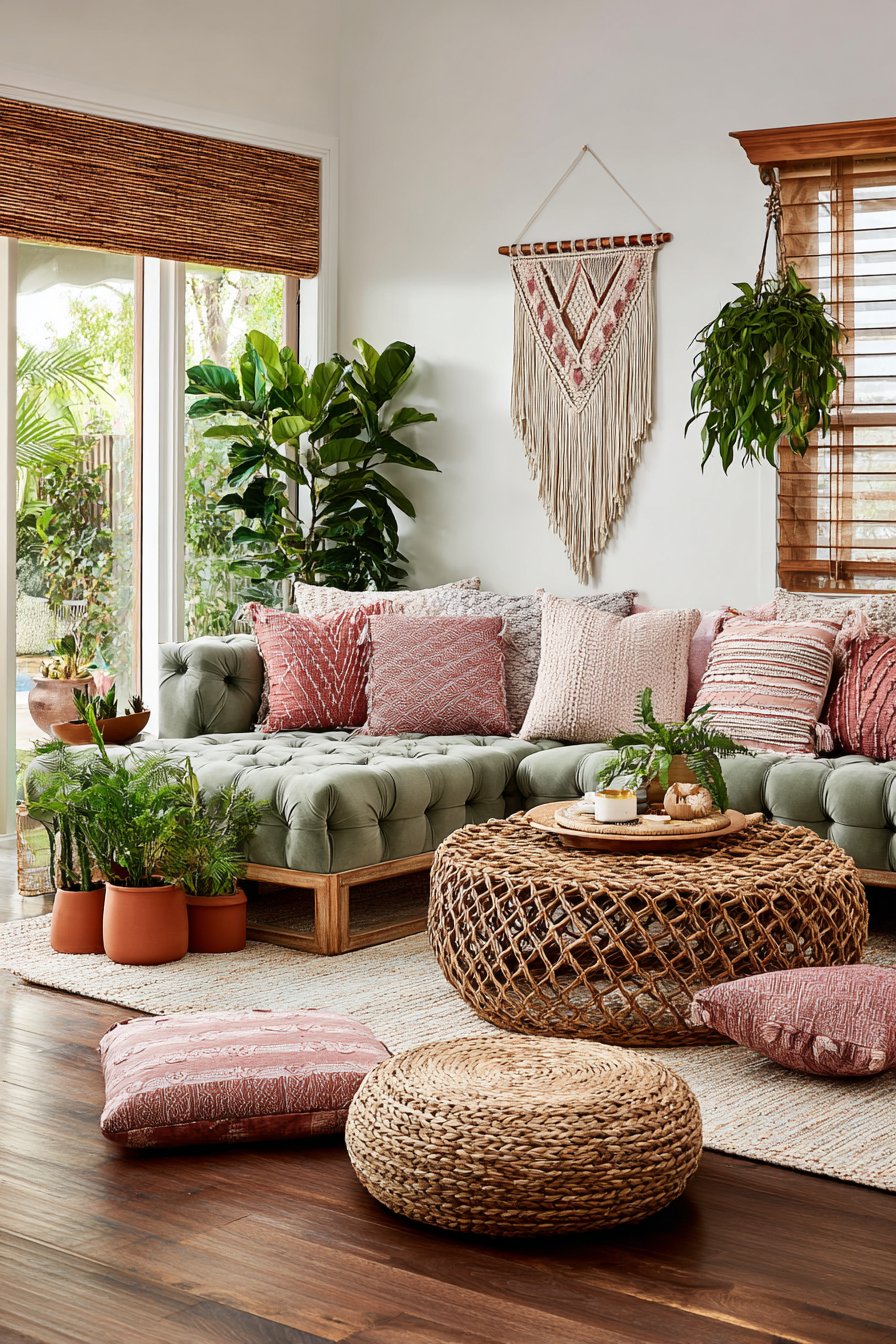
The rattan coffee table brings natural, organic material into the mix. Floor cushions in complementary tones surround it, creating casual seating options. This arrangement encourages relaxed gatherings and informal conversations. The furniture placement feels organic rather than rigidly structured. Abundant potted plants in terracotta pots add life and movement.
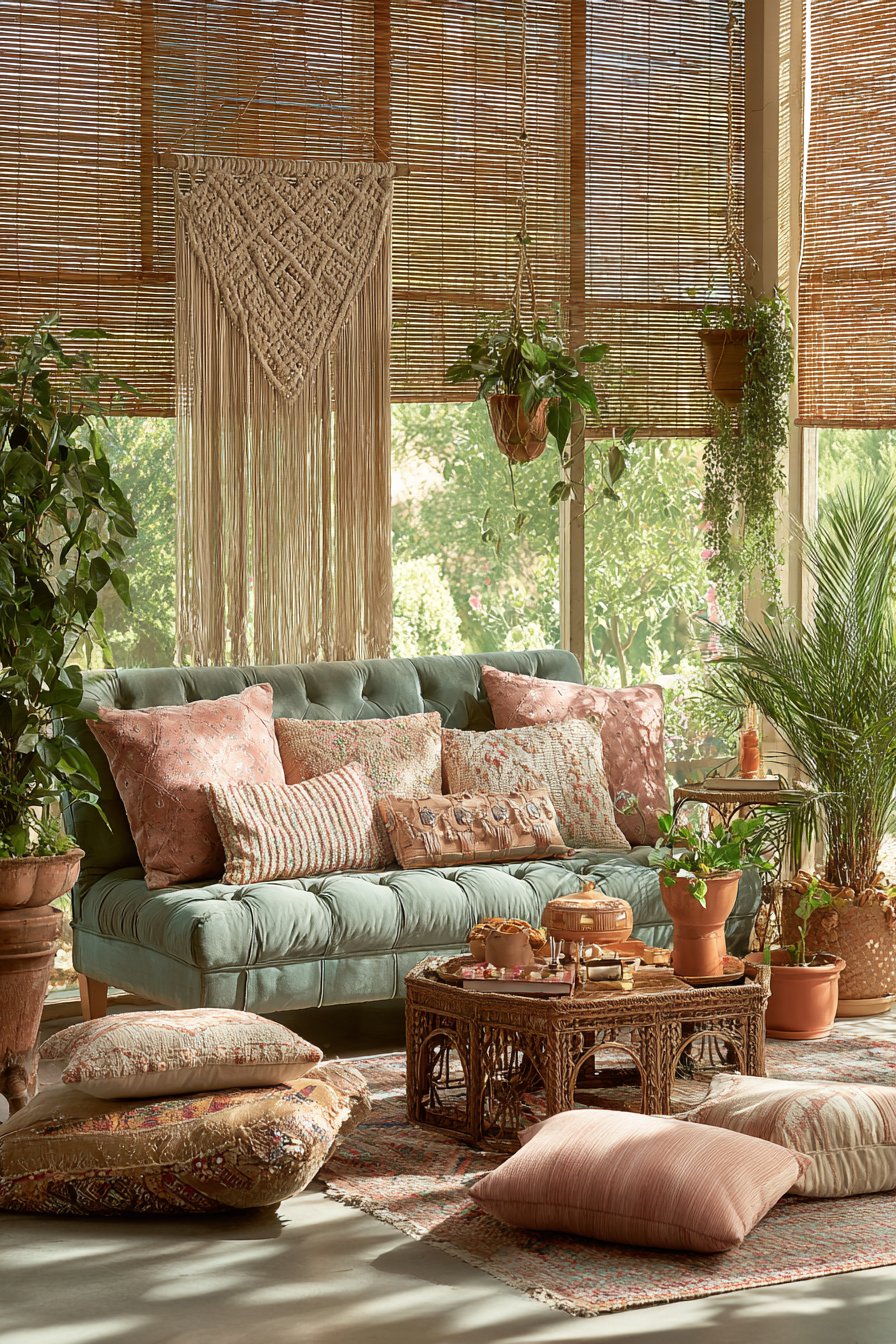
Warm natural lighting filters through bamboo blinds, creating interesting shadow patterns. The bamboo’s linear structure adds architectural interest. As sunlight shifts, the room transforms throughout the day. Terracotta, rattan, macramé, and plants all contribute earthy elements. These natural materials ground the sage and pink color scheme.
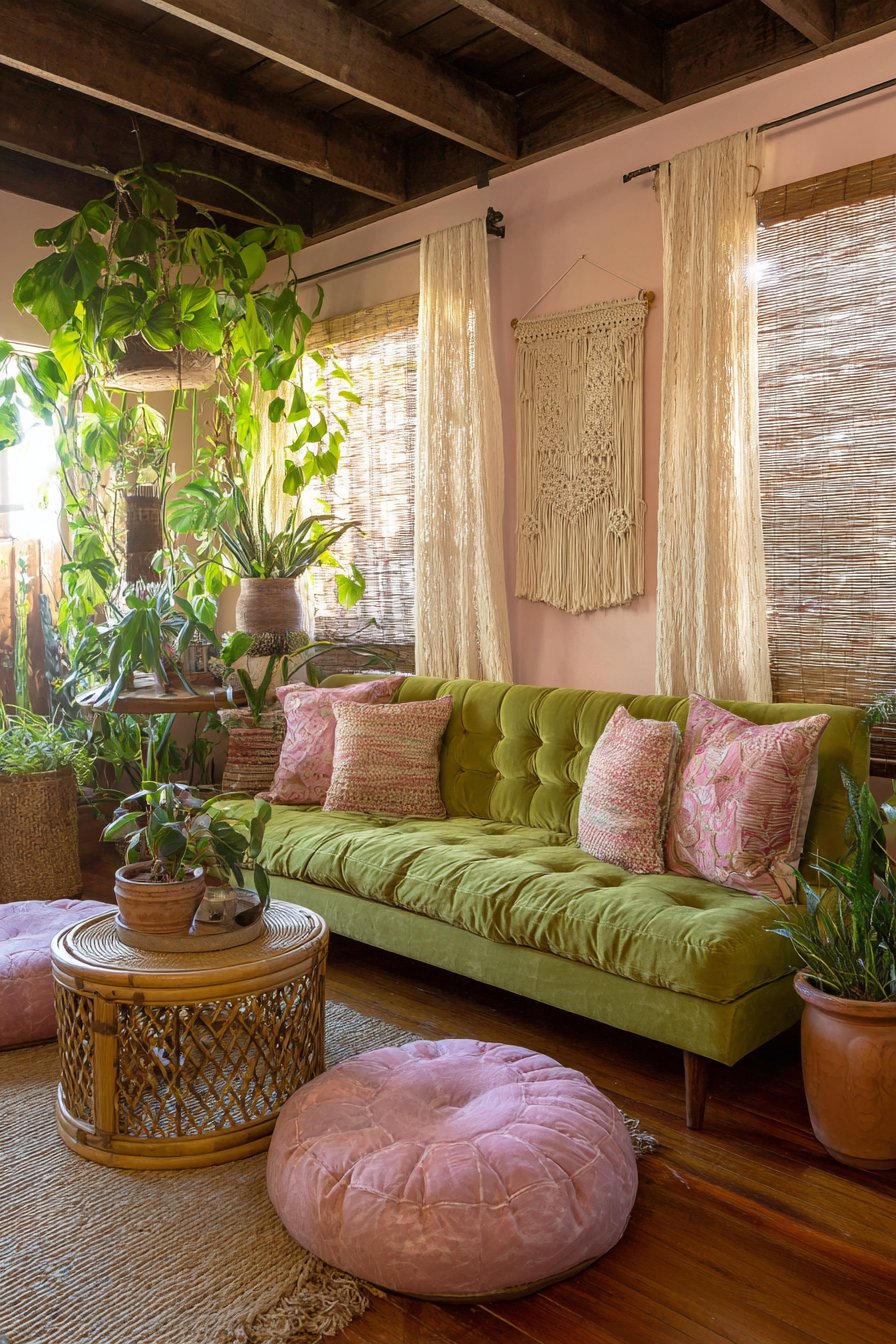
The layered, lived-in aesthetic tells a story of personal style and collected treasures. Textile details become focal points worth examining closely. Organic material combinations create depth and richness. This bohemian interpretation feels warm, welcoming, and thoroughly personal.
Key Design Tips:
- Mix patterns freely within your color palette
- Incorporate handmade elements like macramé for uniqueness
- Use natural materials like rattan and terracotta
- Add abundant plants for life and air quality
- Create flexible seating with floor cushions
5. Scandinavian Functional Beauty
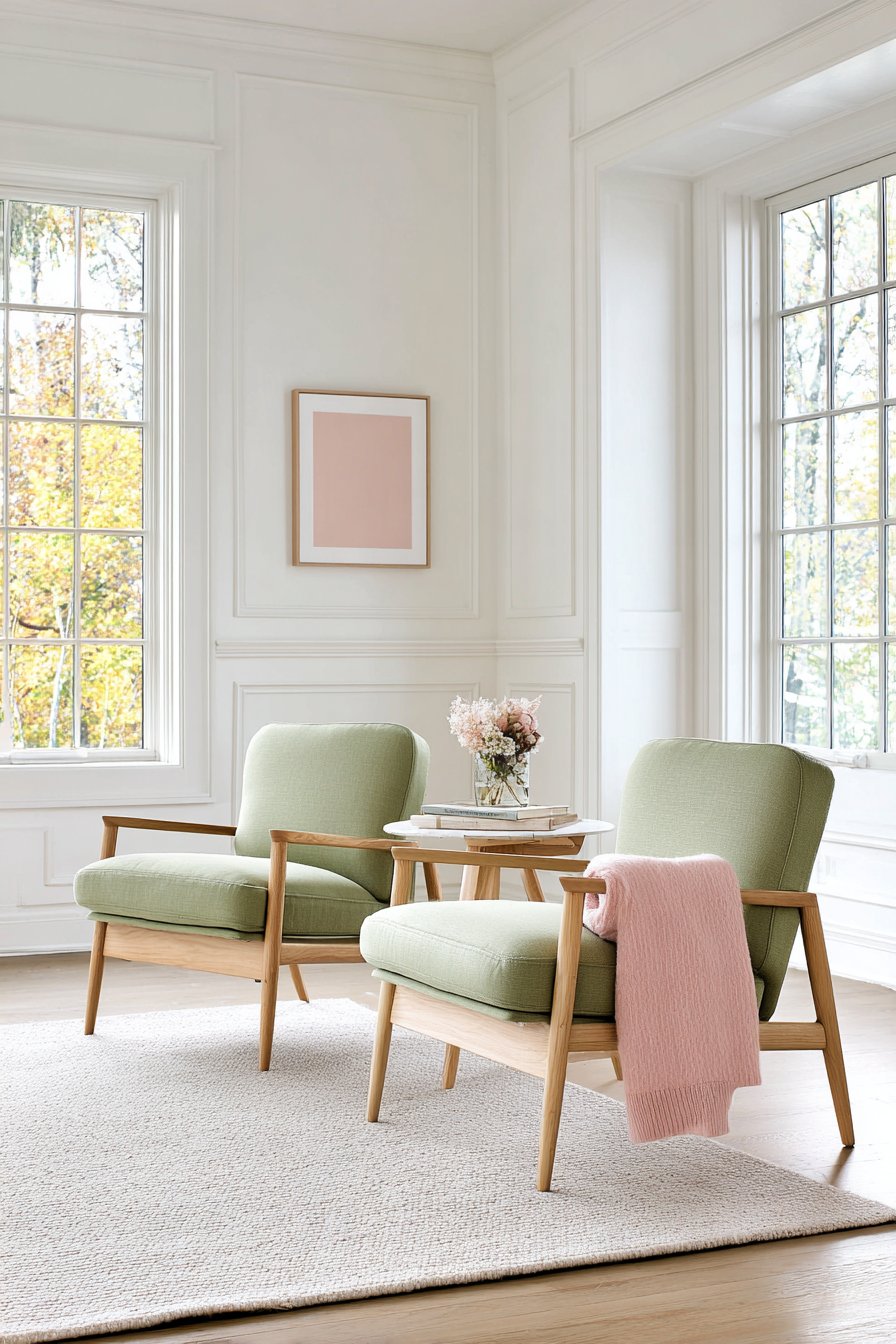
Clean-lined sage green upholstered armchairs flank a simple white oak coffee table. The symmetrical arrangement creates visual balance and calm. Each chair’s form is refined yet comfortable. The upholstery fabric feels substantial and durable. A blush pink wool throw blanket drapes casually over one chair. This single pop of pink adds warmth without overwhelming the space.
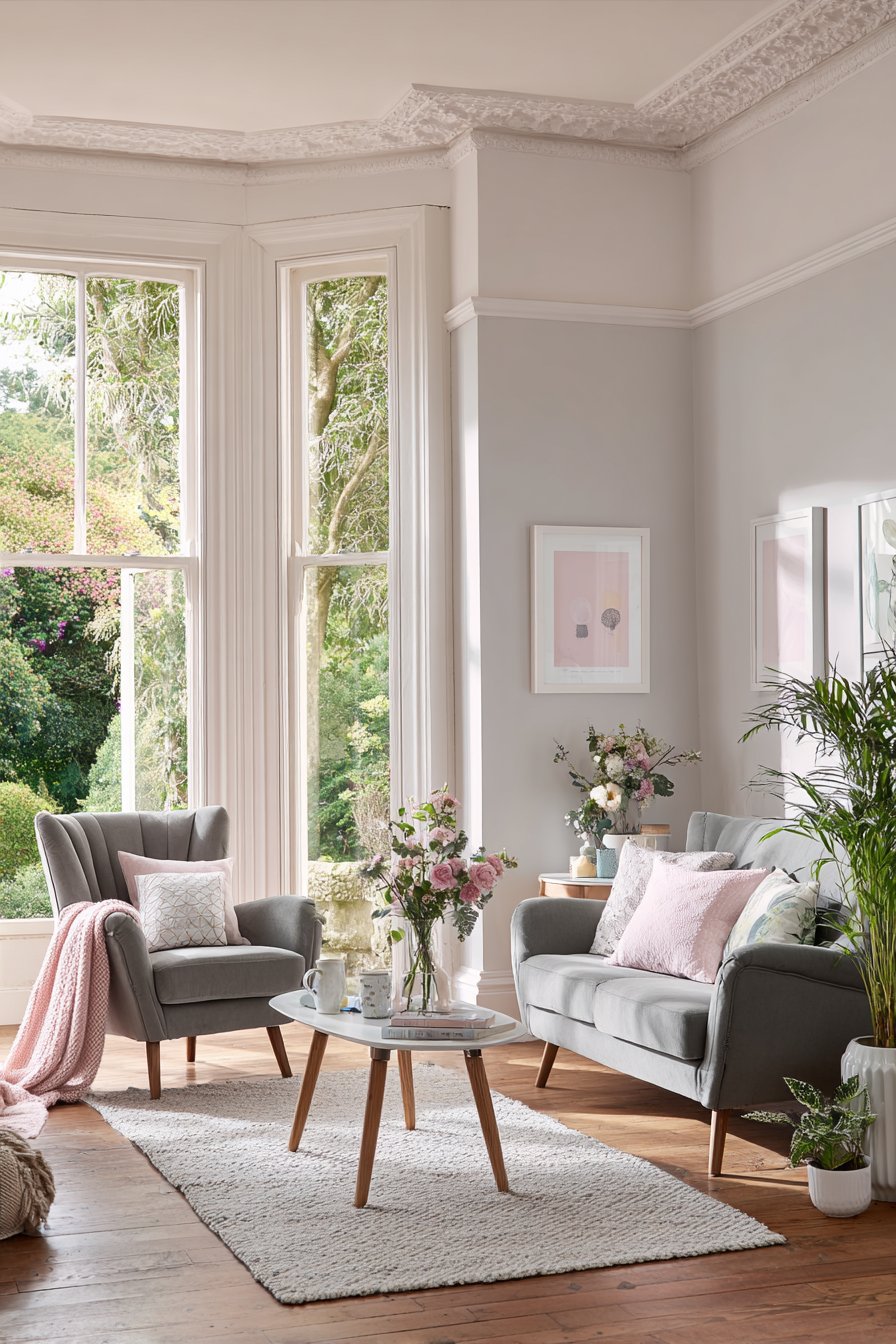
Minimal artwork in soft pink tones adorns crisp white walls. The restraint in wall decoration allows the eye to rest. Pale oak flooring throughout reflects natural light upward. Large windows create soft shadows that change as the sun moves. The interplay of light and shadow adds subtle drama.
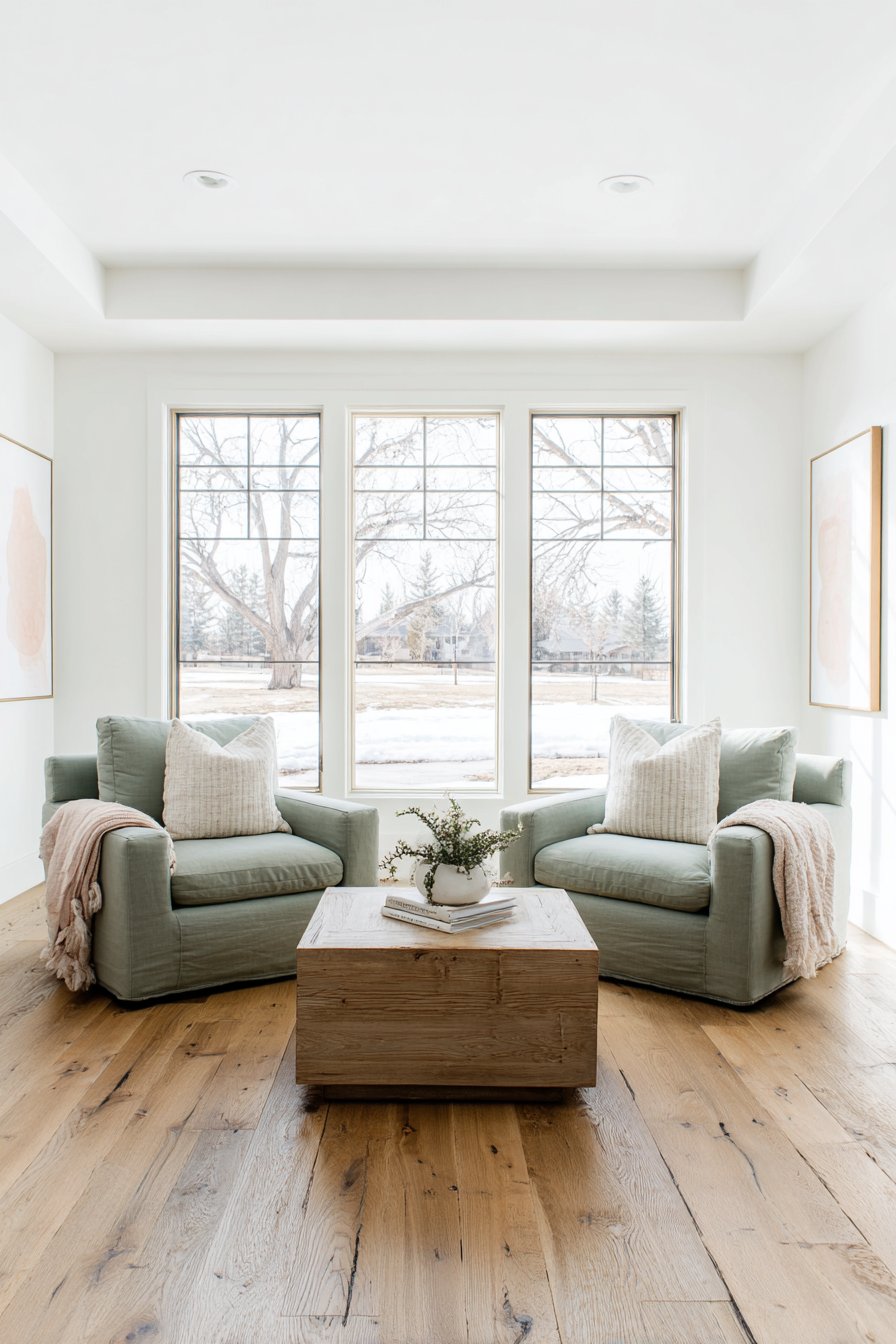
The calm, functional design embodies Scandinavian principles of hygge and simplicity. Every element serves both practical and aesthetic purposes. The subtle color integration feels effortless and unforced. Quality over quantity guides every design decision. Materials are chosen for longevity and timeless appeal.
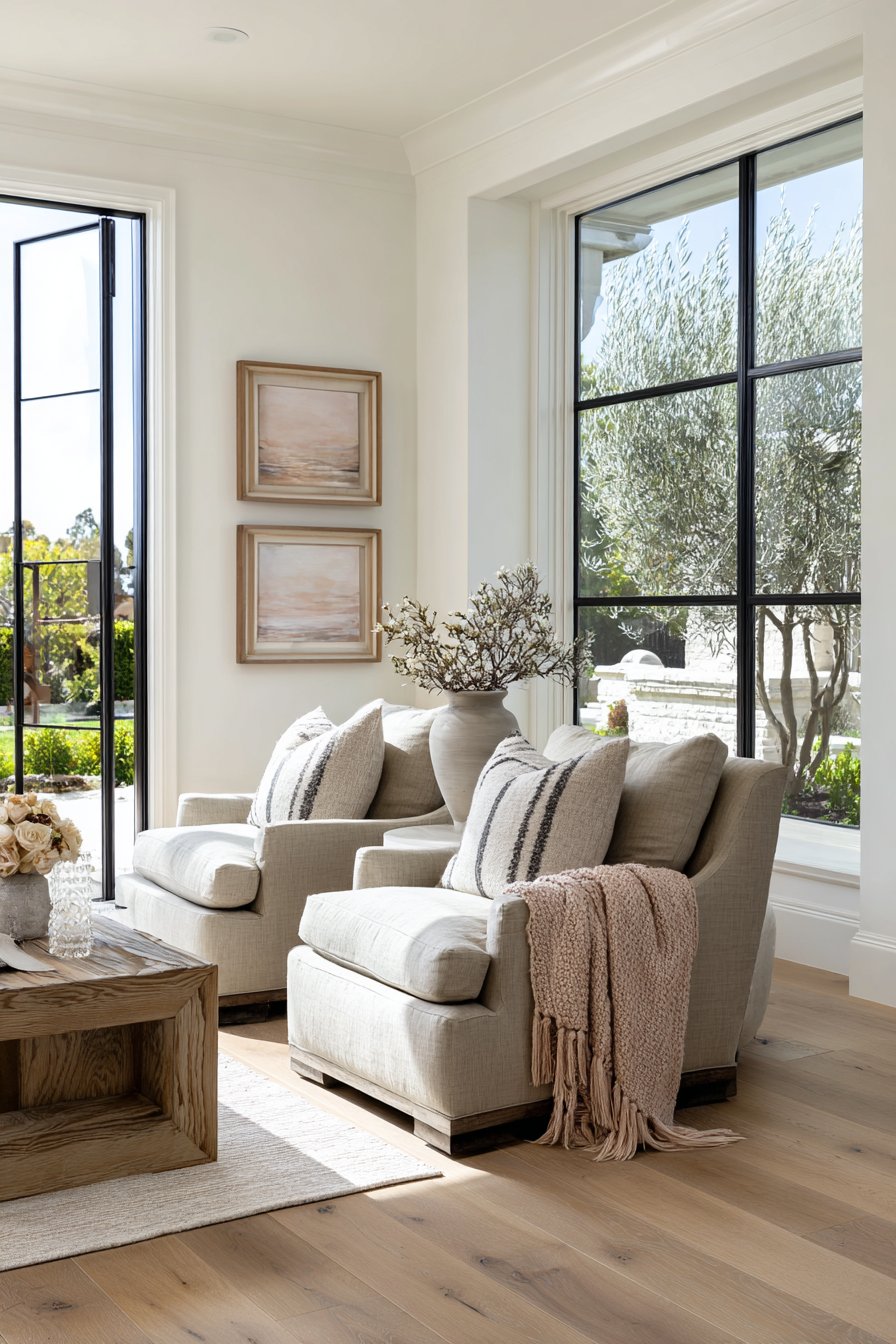
This approach proves that sage green and pink work beautifully in restrained settings. The colors don’t need to dominate to make an impact. Strategic placement creates maximum effect with minimal effort. The overall feeling is one of peace, clarity, and quiet sophistication.
Key Design Tips:
- Choose quality over quantity in furniture selection
- Use symmetry to create visual calm
- Add color through textiles for easy updates
- Select pale wood tones for Scandinavian authenticity
- Keep wall art minimal and purposeful
6. Traditional Timeless Elegance
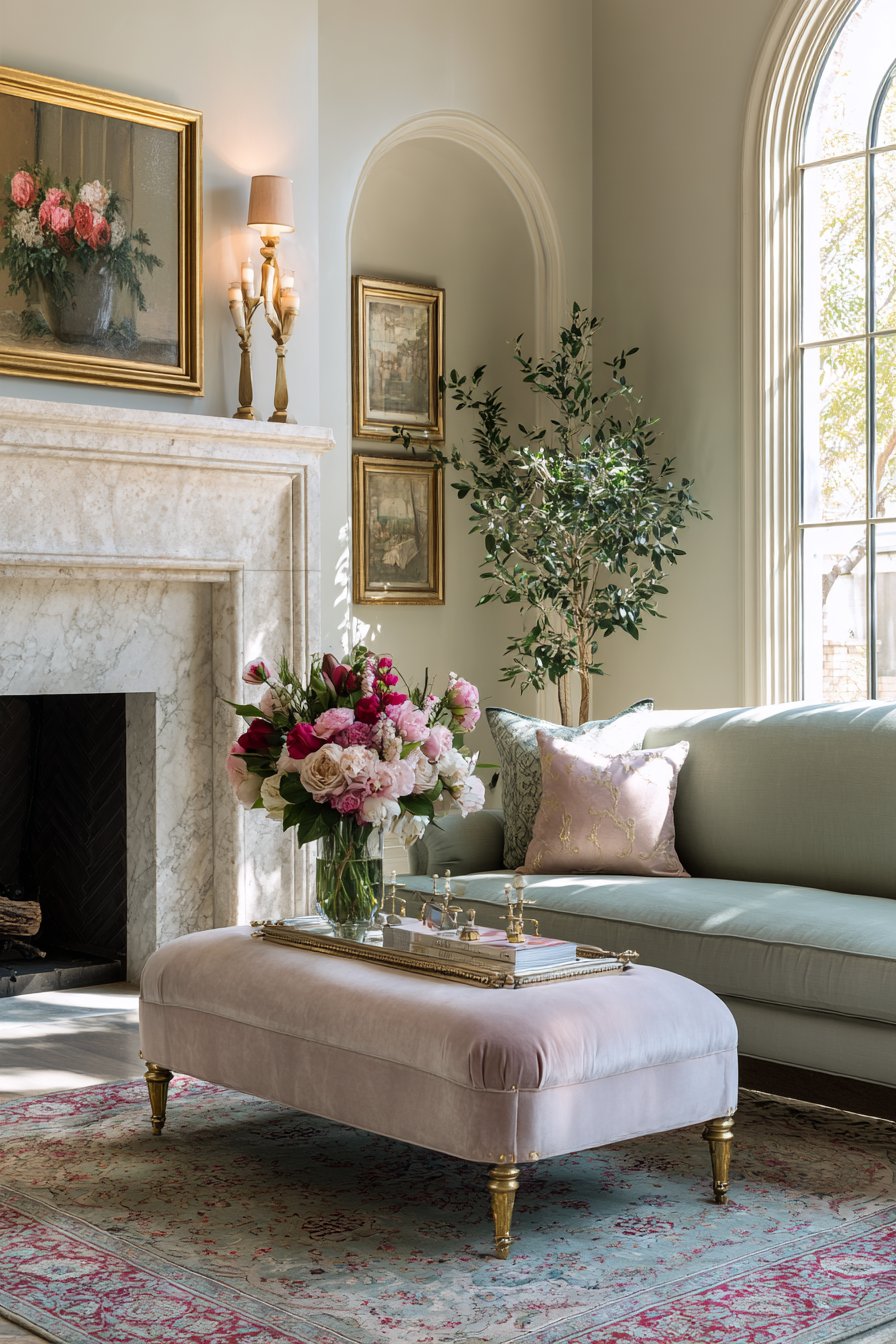
A classic rolled-arm sofa in sage green linen anchors this traditional living room. The sofa faces a beautiful marble fireplace, creating a natural focal point. Traditional proportions and details speak to enduring design principles. The linen upholstery feels both formal and comfortable. A pink velvet ottoman serves dual purposes as seating and coffee table.
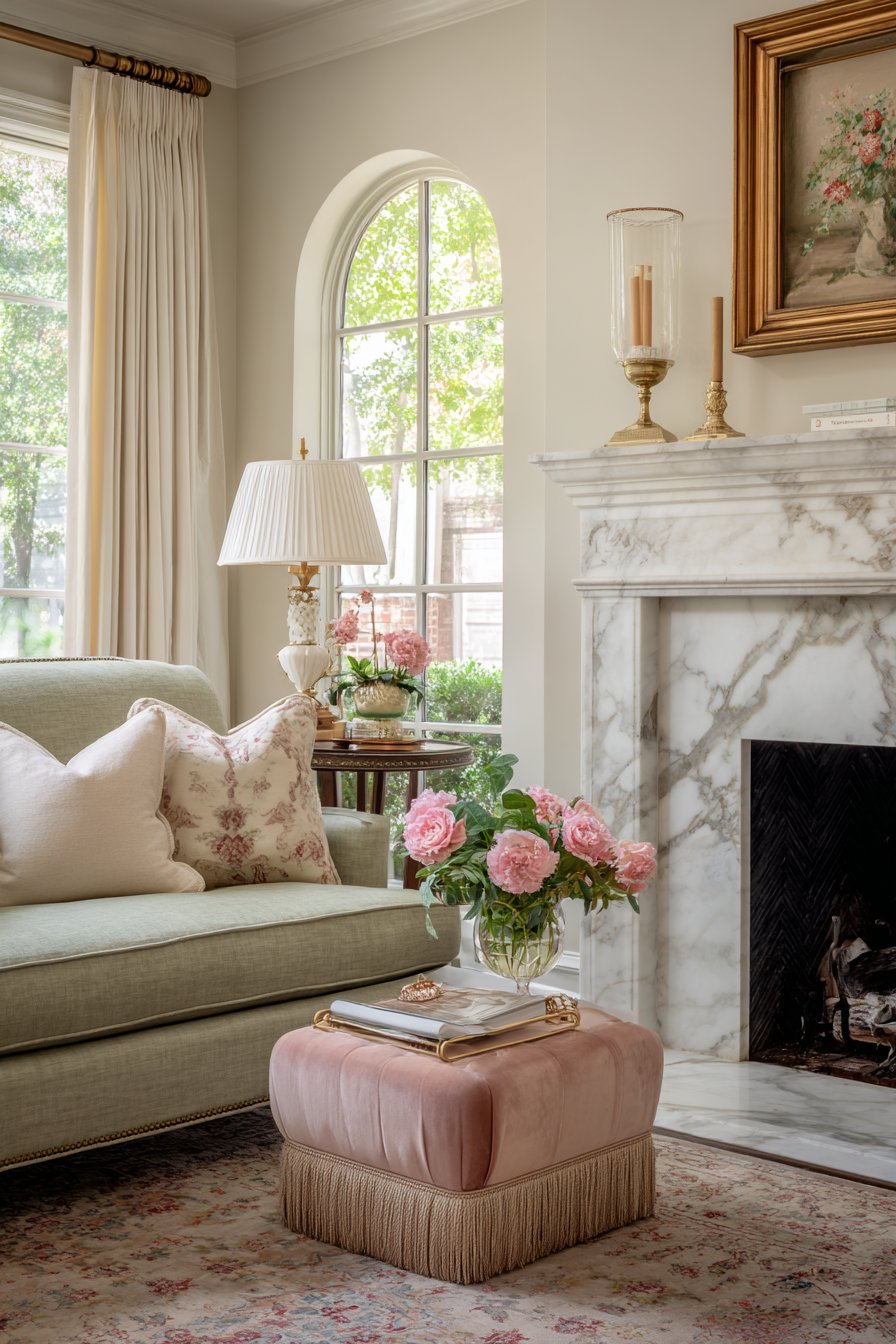
Antique brass picture frames add historical character to the walls. Table lamps in soft pink shades cast a warm, flattering glow. The brass bases coordinate with other metallic accents throughout the room. A Persian-style area rug in coordinating sage and rose tones anchors the formal seating area. Its intricate pattern adds visual richness and depth.
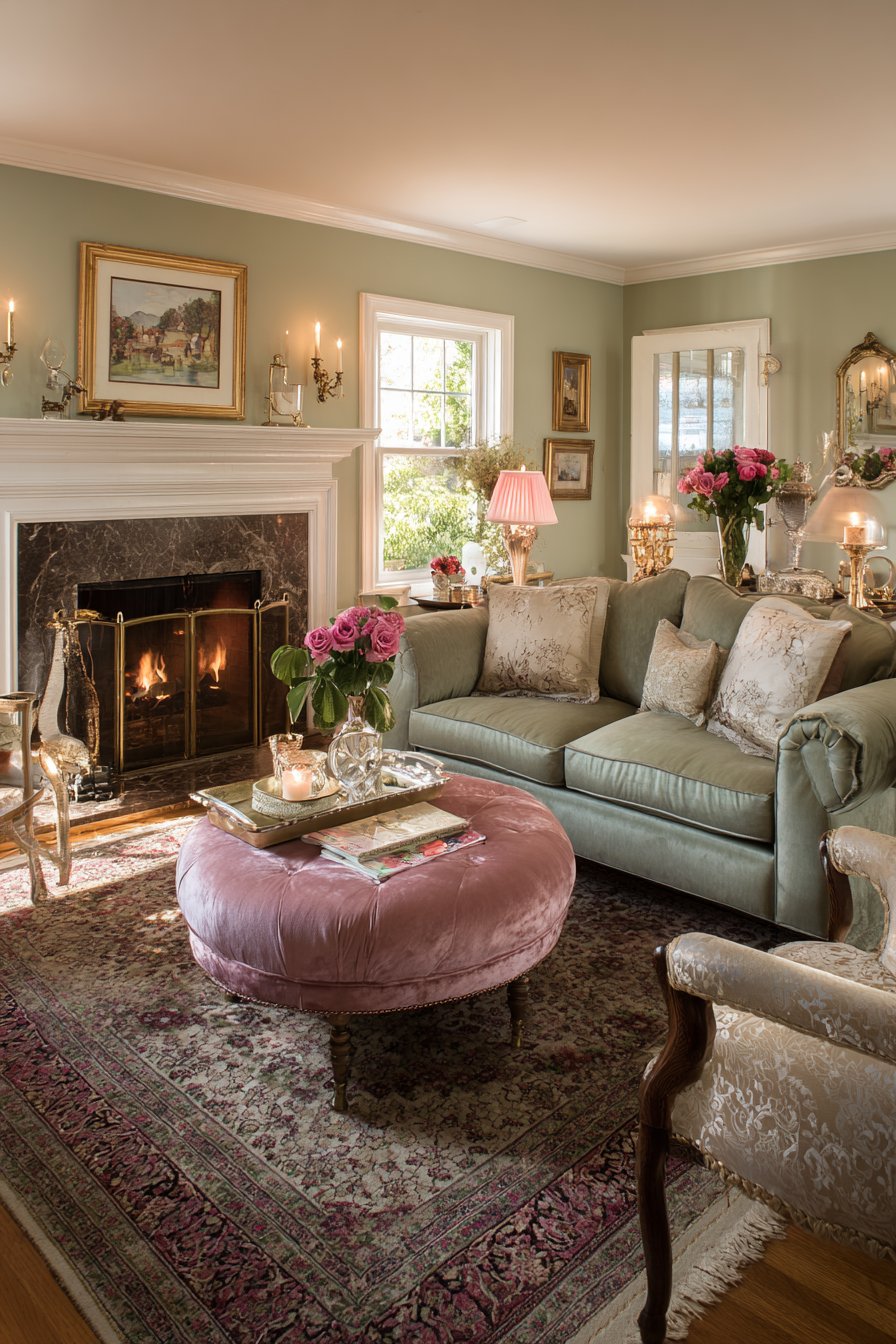
The elegant material choices elevate this traditional interpretation. Marble, velvet, brass, and fine textiles create luxury. The timeless color combination feels sophisticated rather than trendy. Warm natural lighting highlights the quality of each surface and finish. Every detail contributes to an atmosphere of refined comfort.
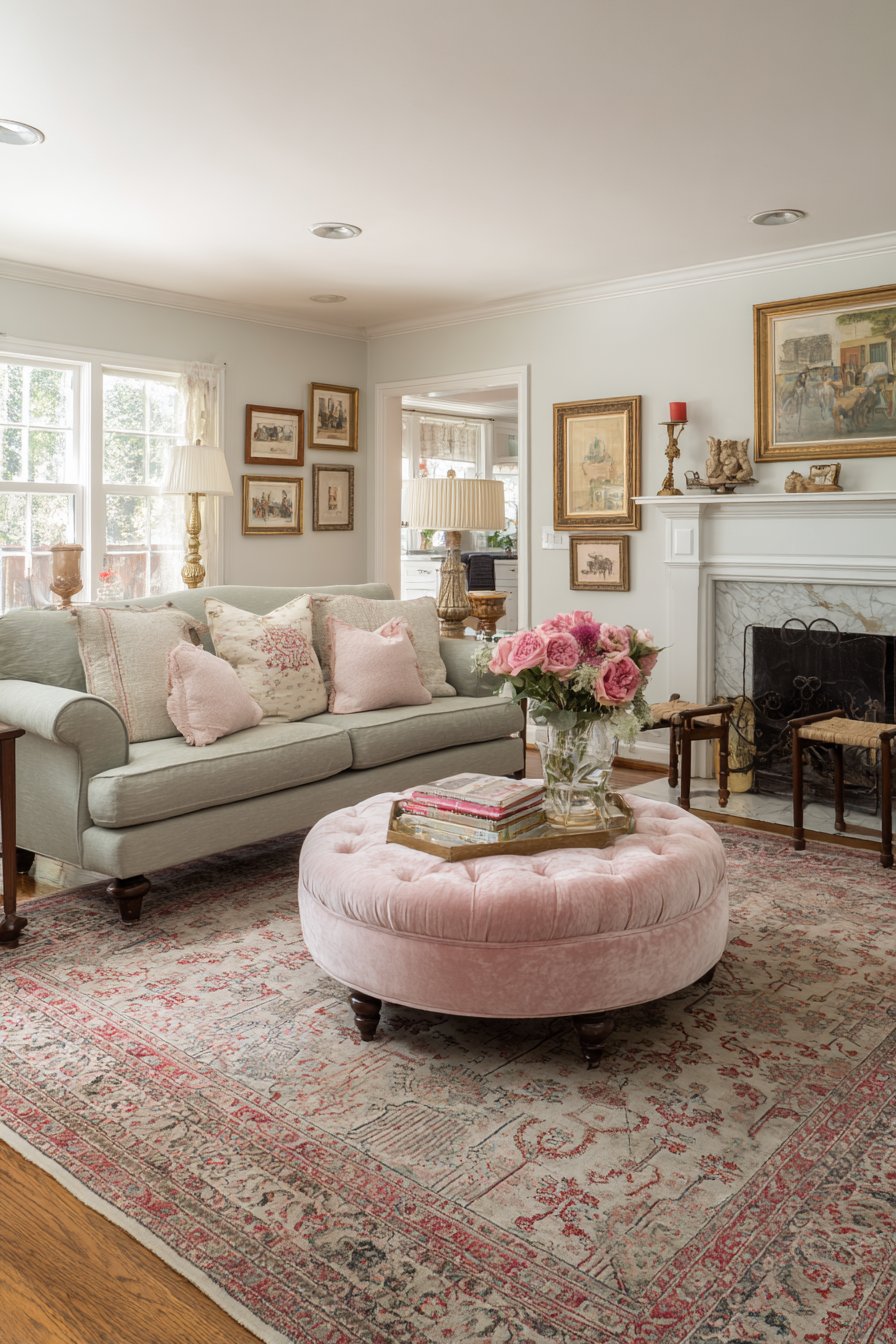
This formal seating area invites leisurely conversations and elegant entertaining. The design honors classical proportions while feeling fresh and current. Sage green and pink prove their versatility across design eras. Traditional doesn’t mean outdated when executed with quality and care.
Key Design Tips:
- Choose classic furniture silhouettes for timeless appeal
- Incorporate antique or vintage elements for character
- Use Persian or Oriental rugs for traditional grounding
- Select velvet for luxurious texture in traditional spaces
- Position seating to face architectural features like fireplaces
7. Textile-Focused Layering
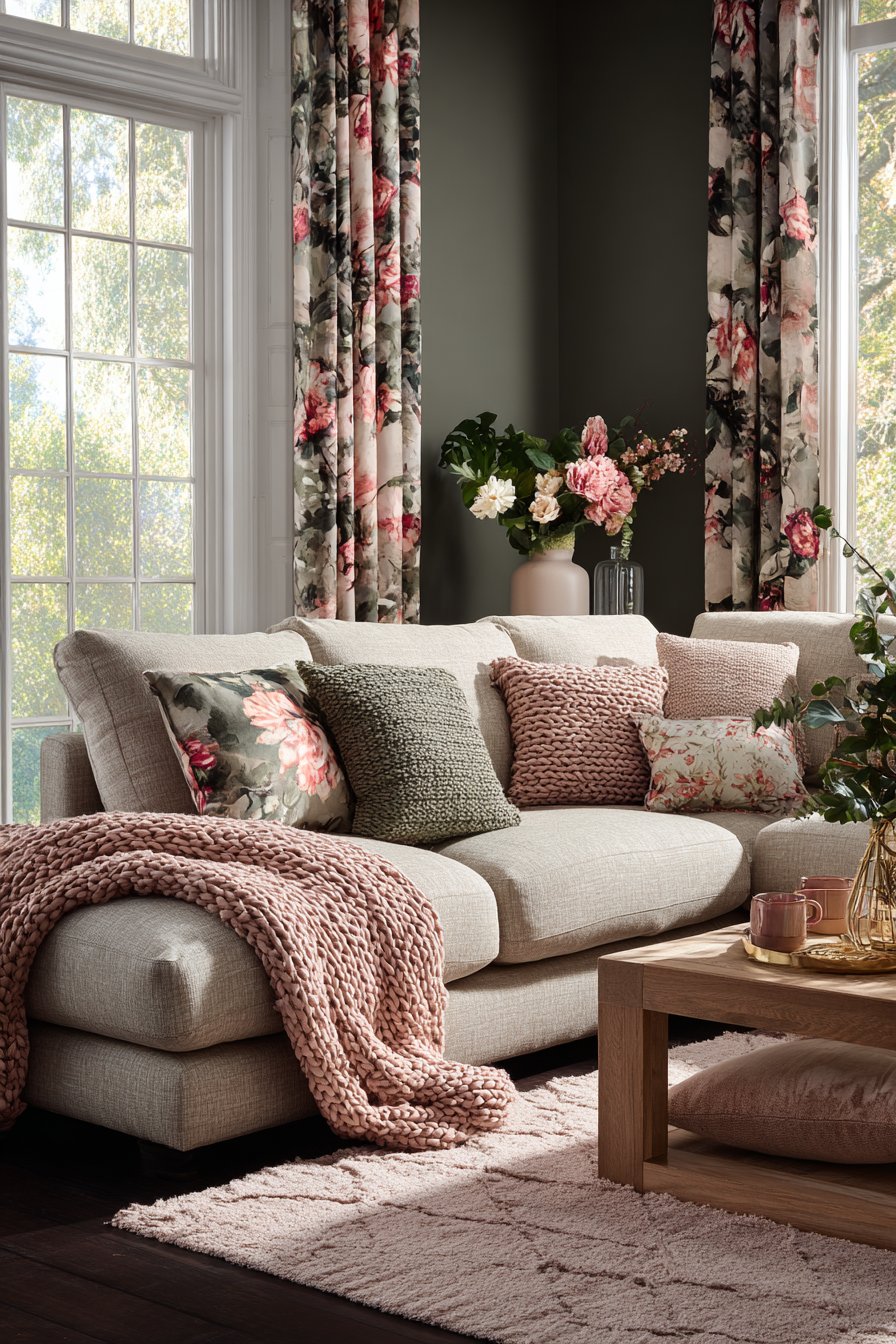
A neutral oat-colored sofa serves as a canvas for textile artistry. Sage green linen cushion covers add color and texture. Pink knitted throw blankets introduce handcrafted warmth and dimension. The layering of fabrics creates a touchable, inviting quality. Floor-to-ceiling curtains in sage green velvet frame tall windows dramatically.
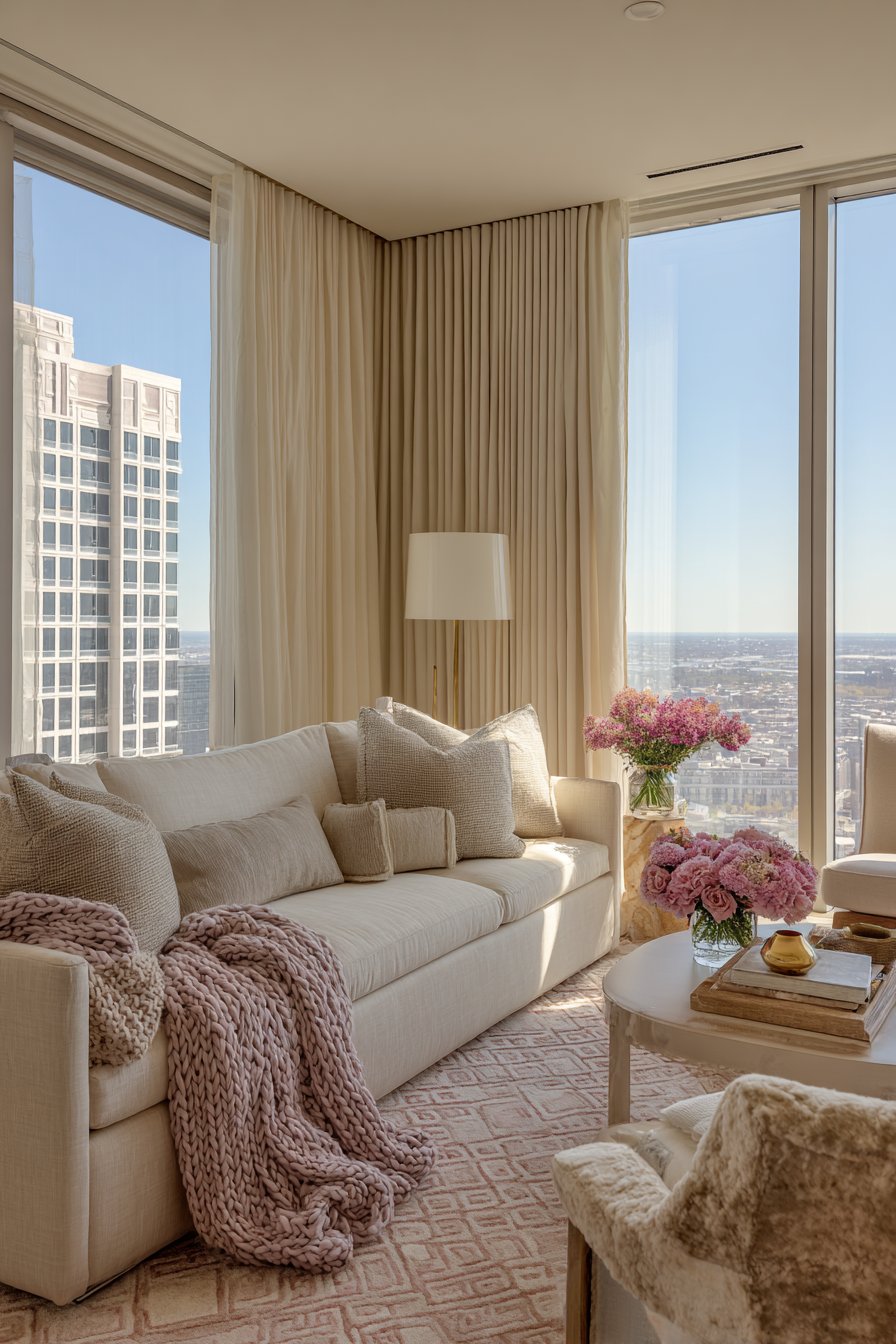
Behind the velvet curtains, sheer underlayers filter afternoon light beautifully. The dual-layer approach provides both privacy and light control. A blush pink area rug with subtle geometric pattern defines the seating zone. Its pattern adds visual interest without overwhelming the space. Natural afternoon light streams through, highlighting every textile detail.
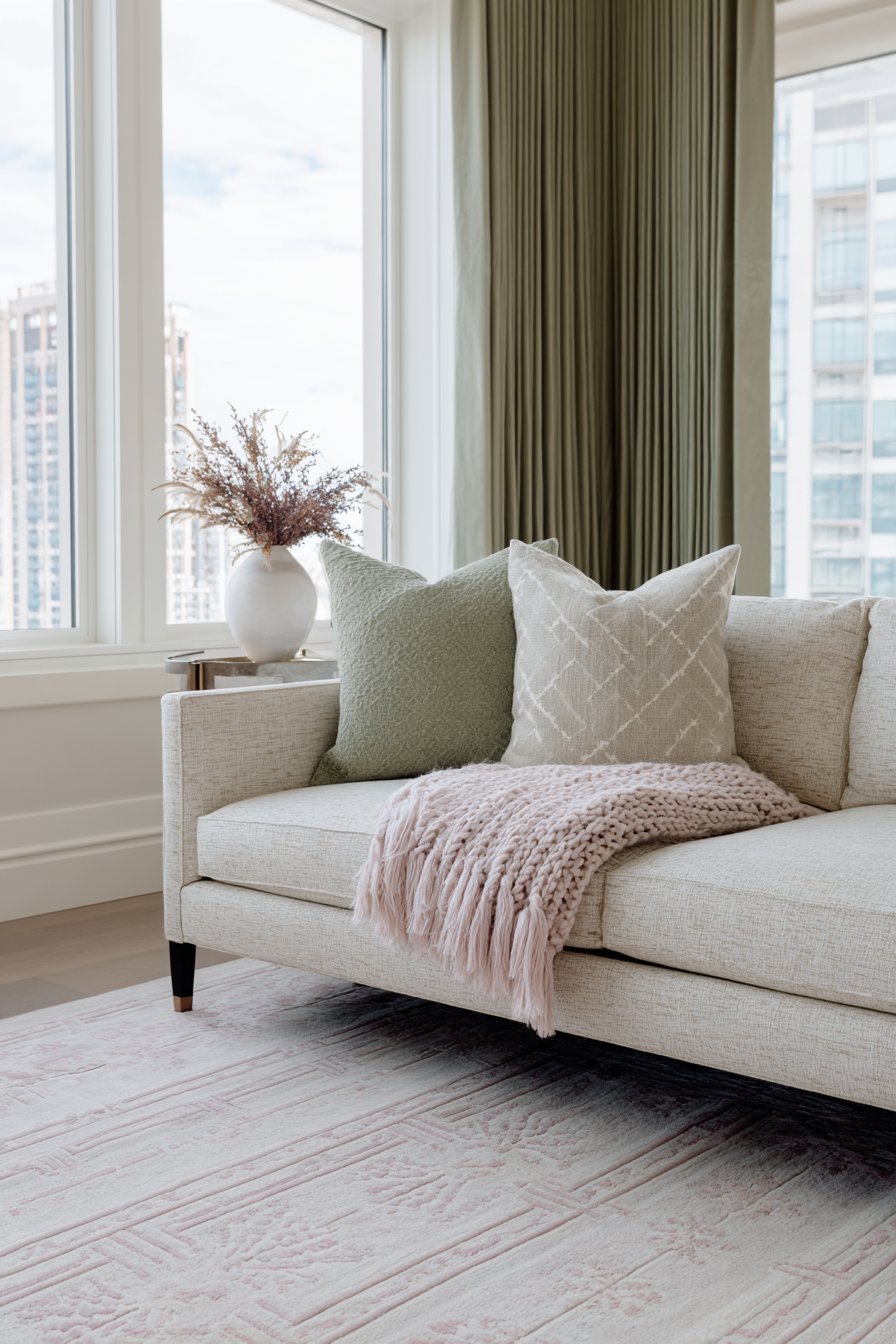
Fabric textures and weave patterns become the stars of this design approach. The interplay of soft and structured textiles creates depth. Velvet’s lustrous nap contrasts with linen’s matte finish. Knitted throws add three-dimensional texture. Each textile choice contributes to the coordinated color scheme.
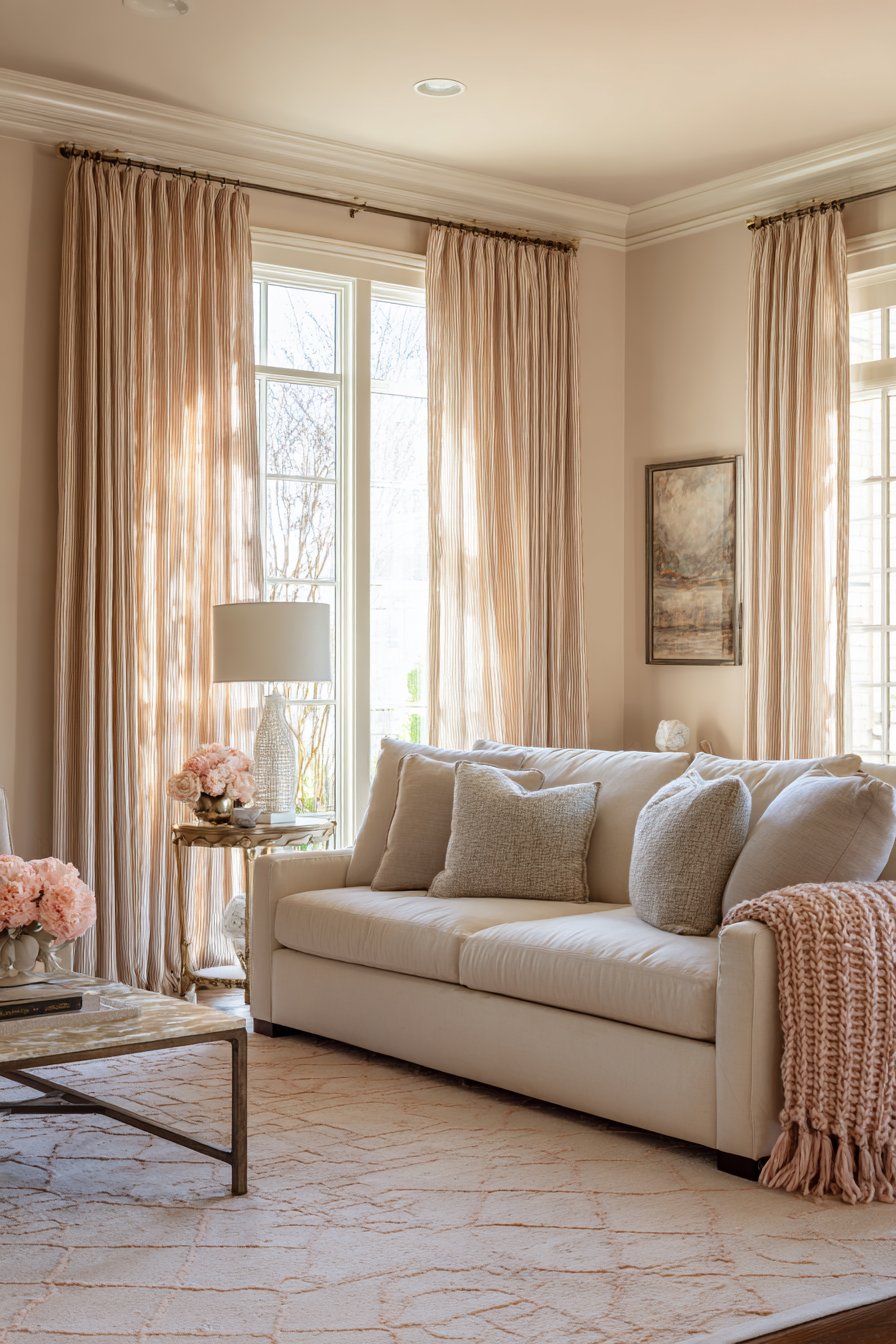
This design celebrates the sensory experience of beautiful fabrics. Quality textiles elevate even simple furniture forms. The layers create warmth and personality. Changing throw pillows or blankets allows easy seasonal updates.
Key Design Tips:
- Layer multiple textile types for depth and interest
- Use floor-to-ceiling curtains to add height drama
- Choose sheer underlayers for light flexibility
- Mix matte and lustrous fabrics for contrast
- Select geometric patterns for subtle visual interest
8. Art-Centered Contemporary Design
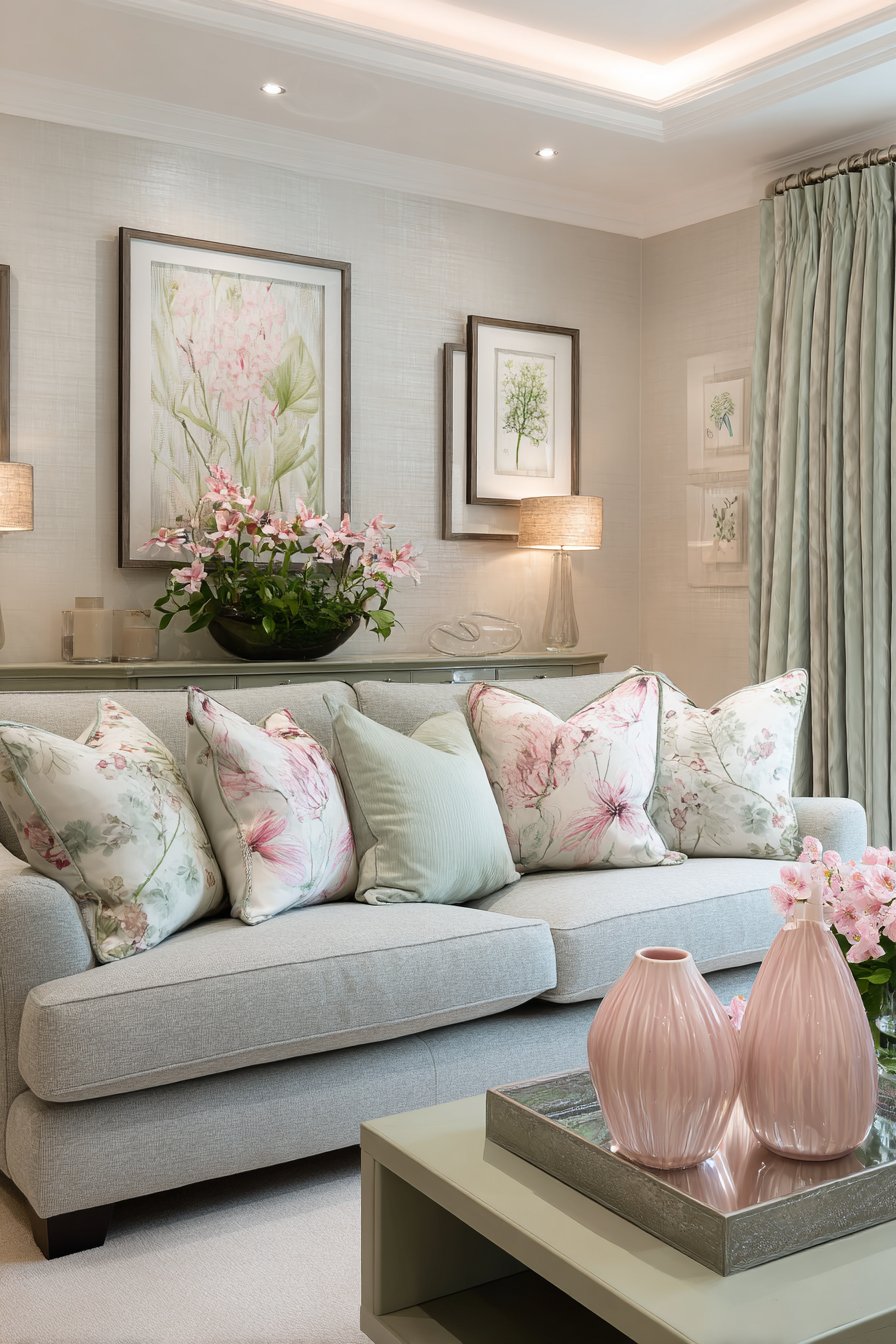
A gallery wall featuring botanical prints and abstract paintings dominates this contemporary living room. Sage green and pink tones flow through the curated art collection. The artwork becomes the primary source of color in the space. A simple grey sofa provides a neutral foundation. Its understated form allows the art to command attention.
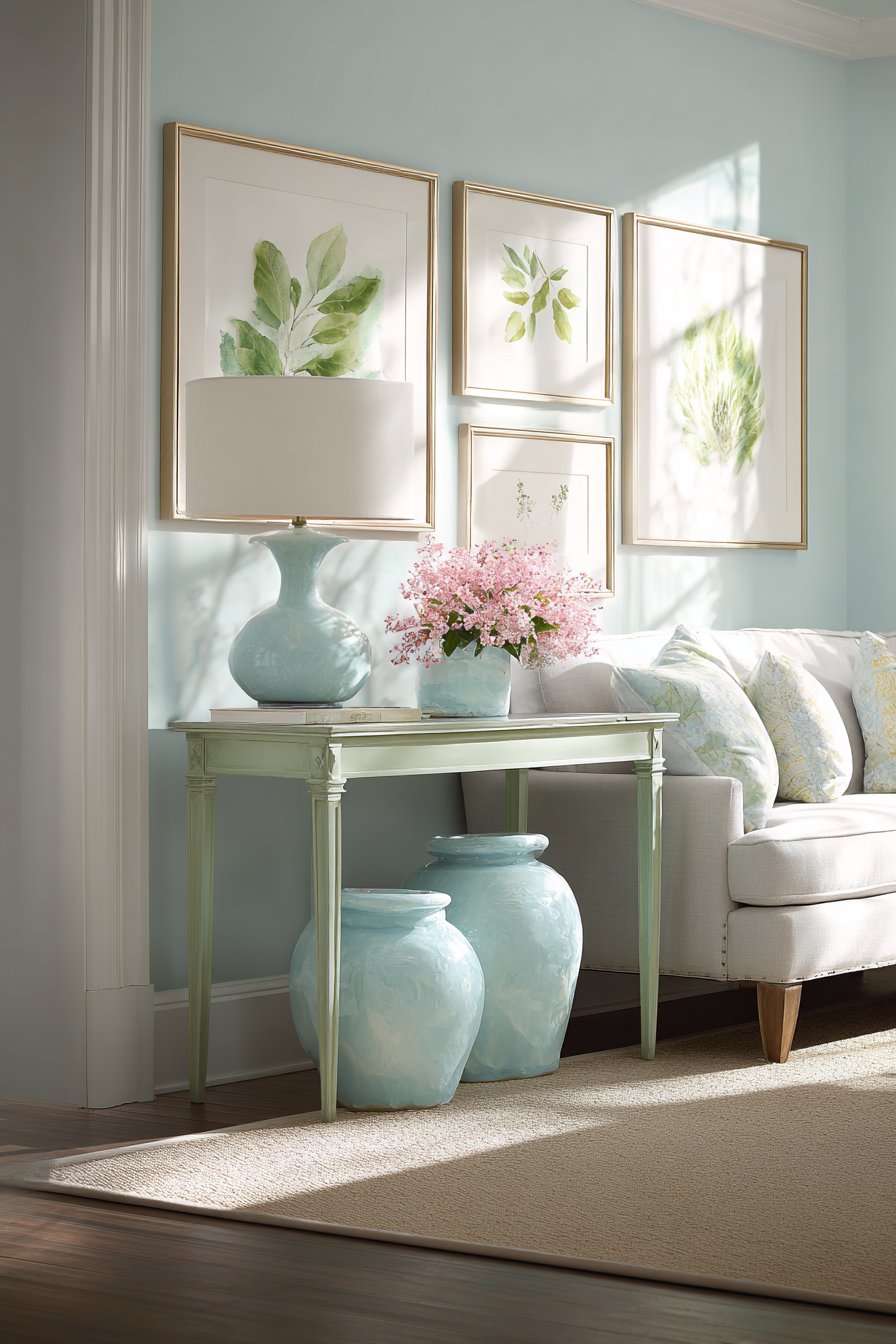
Pink ceramic sculptural vases sit on a sage green lacquered console table. These three-dimensional art pieces add another layer of visual interest. The lacquered finish reflects light with a glossy sheen. Minimal furniture keeps the focus on the walls. Every piece serves a purpose without competing for attention.

Soft recessed lighting and natural daylight create ideal viewing conditions for the artwork. The lighting design has been carefully planned. Colors appear true and vibrant throughout the day. This approach introduces the color palette primarily through curated art pieces and accessories. It allows for easy updates and personal expression.
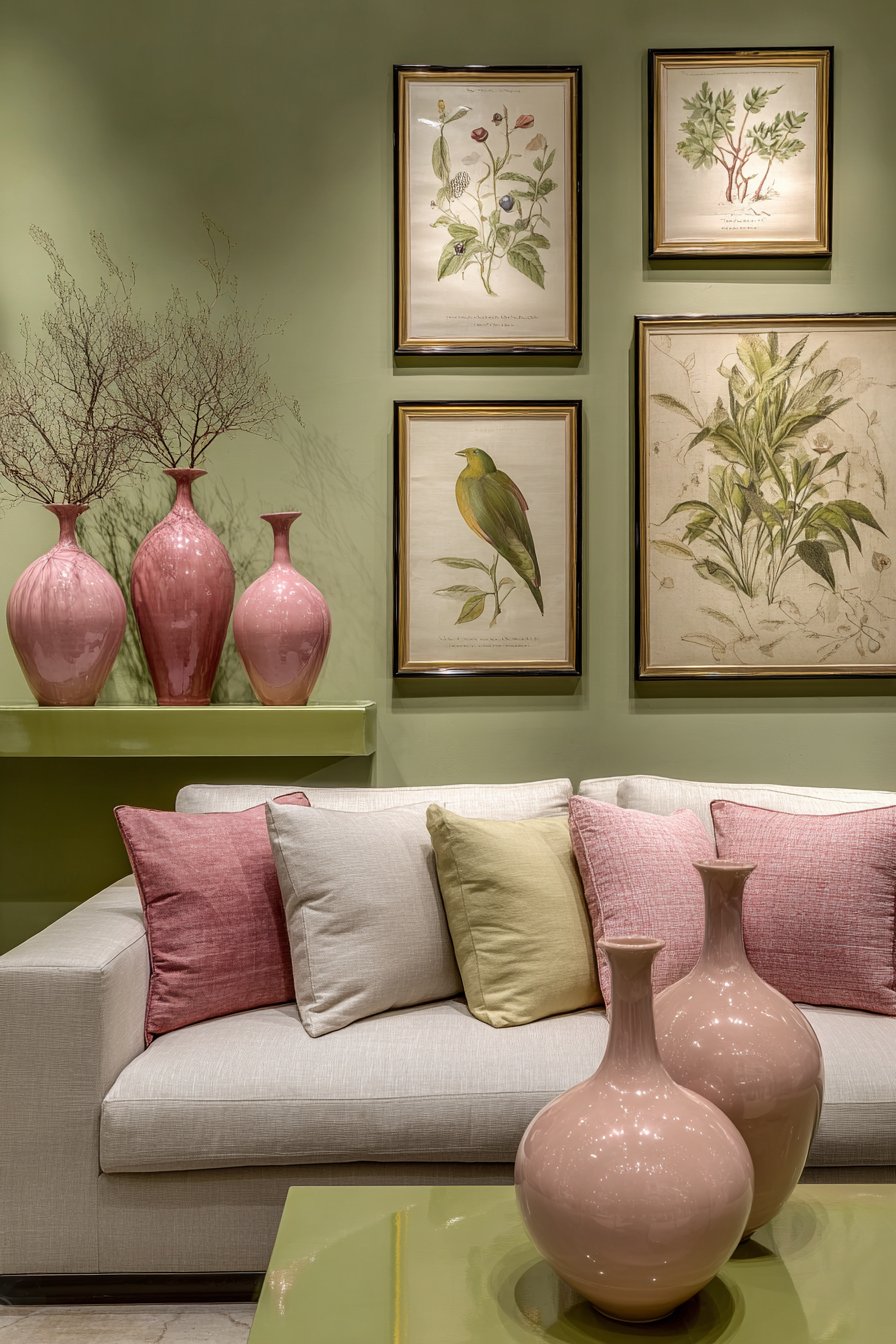
The art-centered design proves that sage green and pink can be incorporated subtly yet effectively. Color doesn’t need to cover large surfaces to make impact. Strategic placement in meaningful pieces creates a sophisticated aesthetic. This contemporary interpretation feels gallery-like and refined.
Key Design Tips:
- Create gallery walls with coordinated color themes
- Choose neutral furniture when art is the focal point
- Use sculptural accessories as three-dimensional art
- Invest in quality lighting to showcase artwork properly
- Select lacquered finishes for contemporary shine
9. Compact Apartment Smart Design
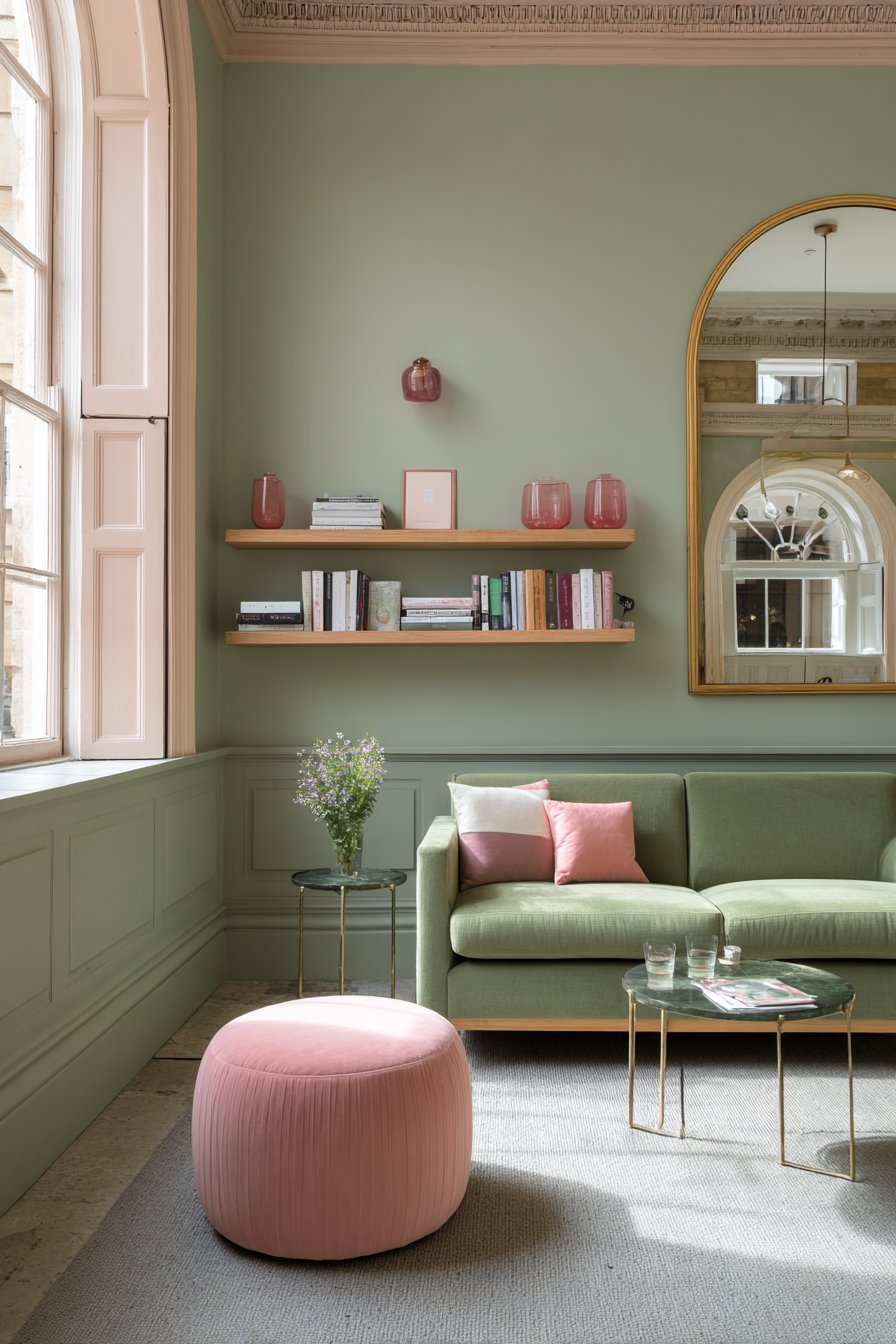
A sage green loveseat fits perfectly against one wall of this compact living room. Space planning becomes crucial in smaller environments. A pink velvet pouf serves as flexible seating that moves as needed. Its soft form adds color without permanent commitment. Wall-mounted floating shelves in light wood maximize vertical space.
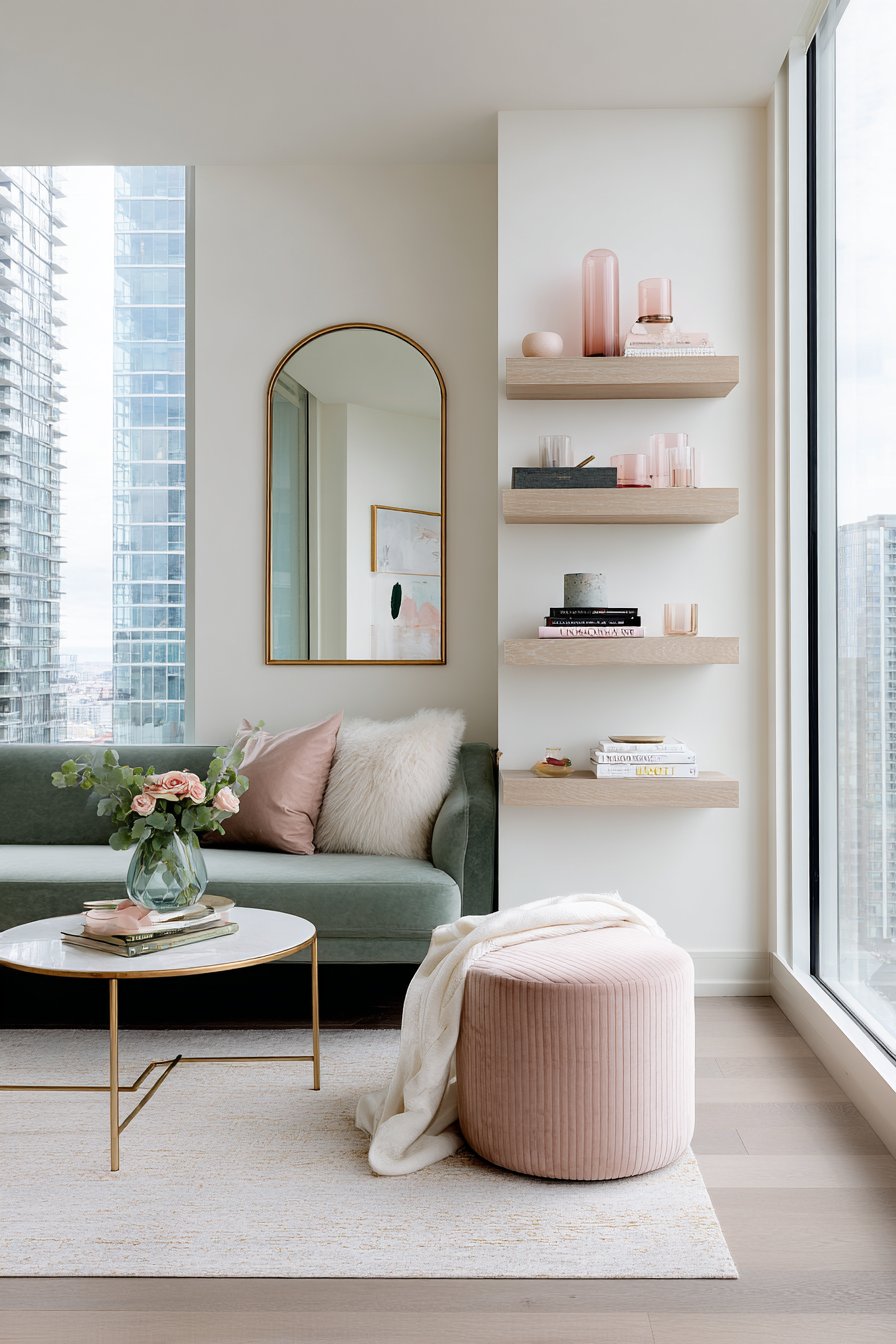
The shelves hold books and pink glass decorative objects without floor footprint. A small round coffee table in brass and glass maintains openness. The transparent surface and metallic frame feel light and airy. A large mirror with thin gold frame reflects natural light from the single window. This clever trick doubles the perceived light and space.
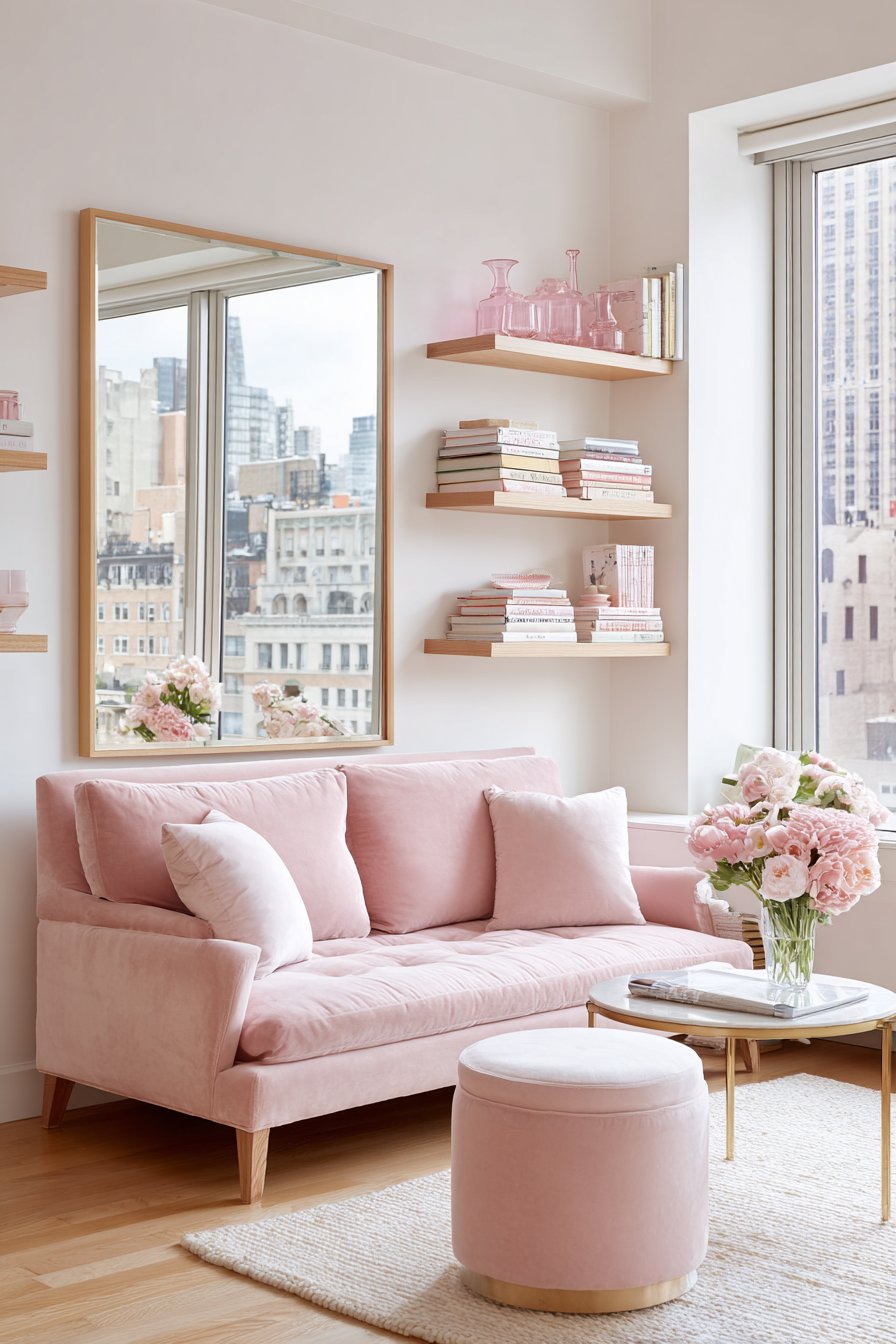
The soft color palette makes the small room feel larger and more cohesive. Sage green and pink create visual calm rather than busy energy. Wide-angle perspective reveals clever space planning throughout. Every piece has been chosen for its scale and multi-functionality. Nothing excess clutters the limited square footage.
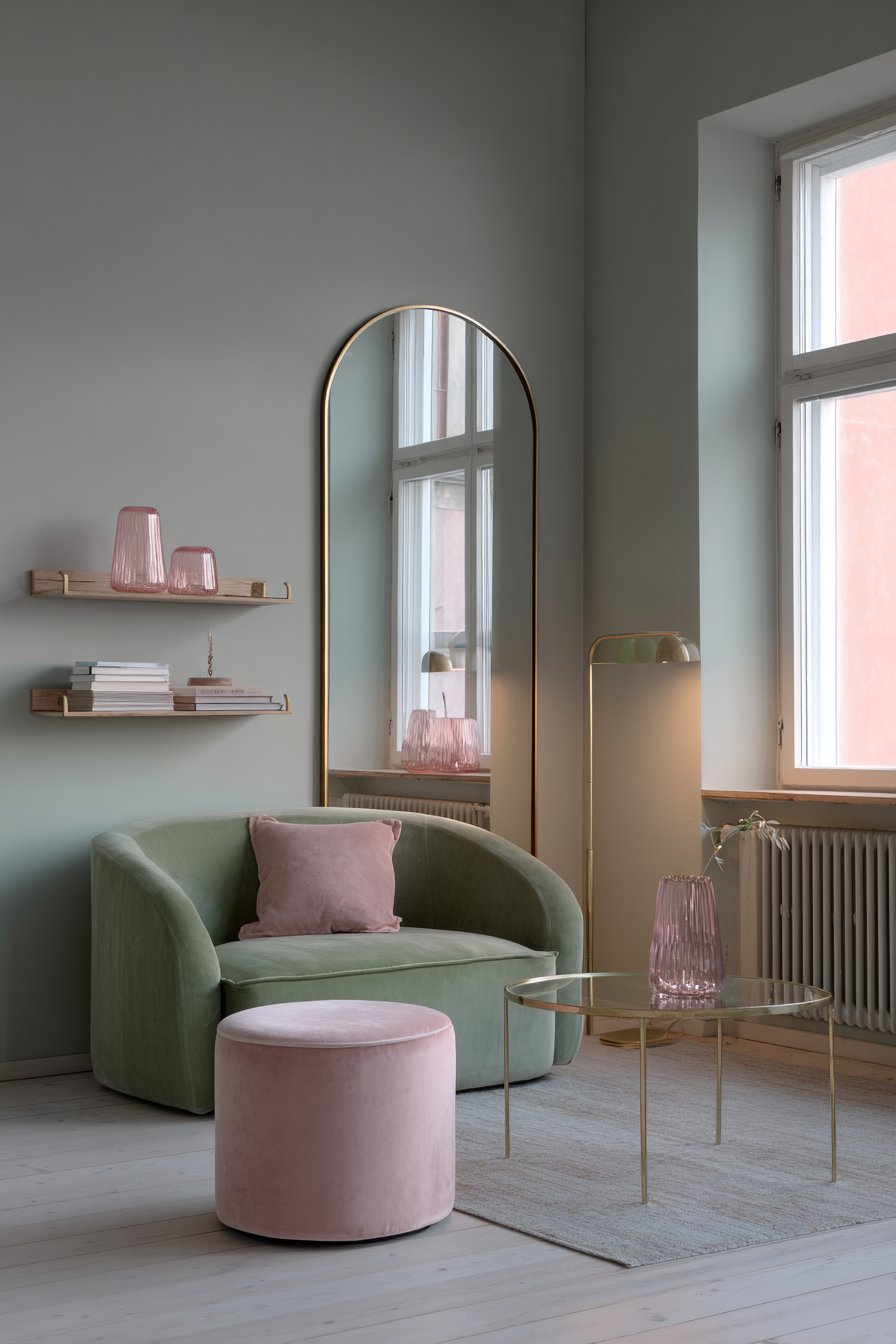
This compact design proves that small spaces can still embrace beautiful color combinations. Thoughtful planning allows for both style and function. The sage and pink palette adds personality without overwhelming. Smart furniture choices maintain comfort and livability.
Key Design Tips:
- Choose loveseats instead of full sofas for small rooms
- Use poufs for flexible, movable seating options
- Install floating shelves to maximize vertical storage
- Add large mirrors to reflect light and expand space
- Select glass furniture to maintain visual openness
10. Spacious Grand Entertaining Space
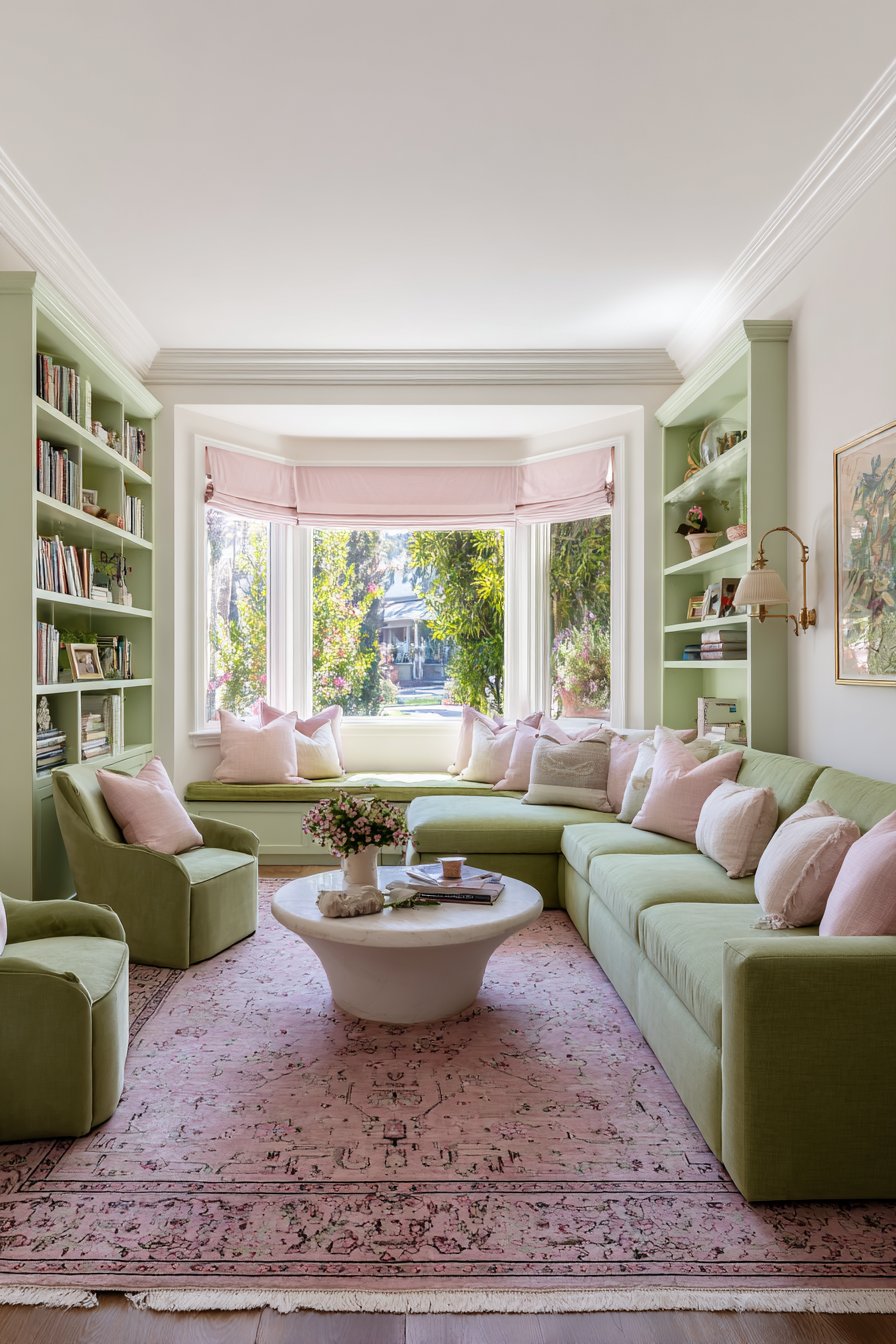
An L-shaped sage green sectional sofa anchors a generous seating area. Its scale matches the room’s spacious proportions perfectly. A large pink-toned vintage Persian rug grounds the entire arrangement. The rug’s intricate patterns add historical richness and depth. Matching sage green wingback chairs create an intimate conversation grouping within the larger space.
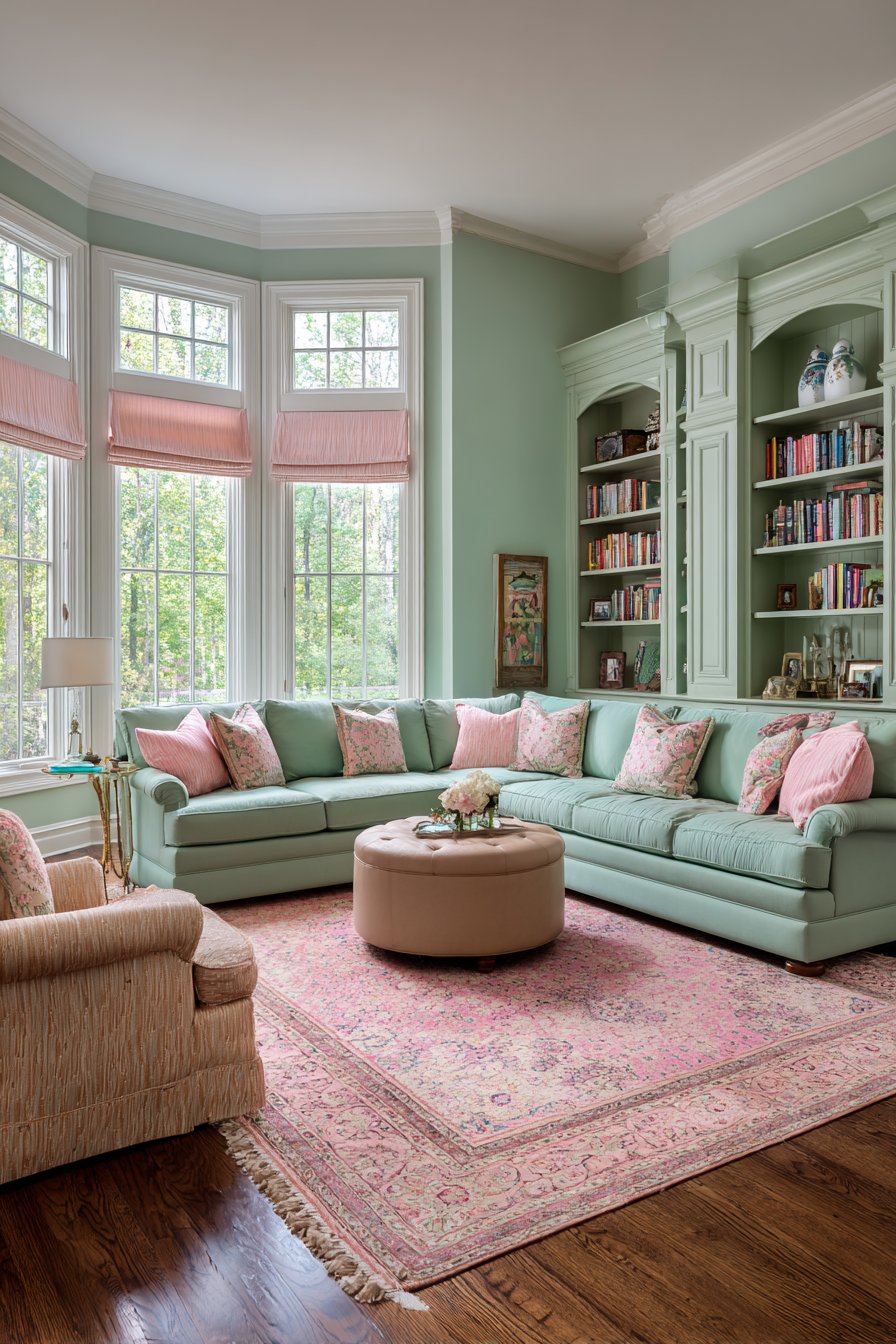
Built-in bookshelves painted in soft sage green flank a central window. These architectural elements integrate color directly into the room’s structure. Pink linen Roman shades filter natural light throughout the day. The fabric softness contrasts beautifully with hard architectural surfaces. Professional wide-angle perspective captures the full room layout magnificently.
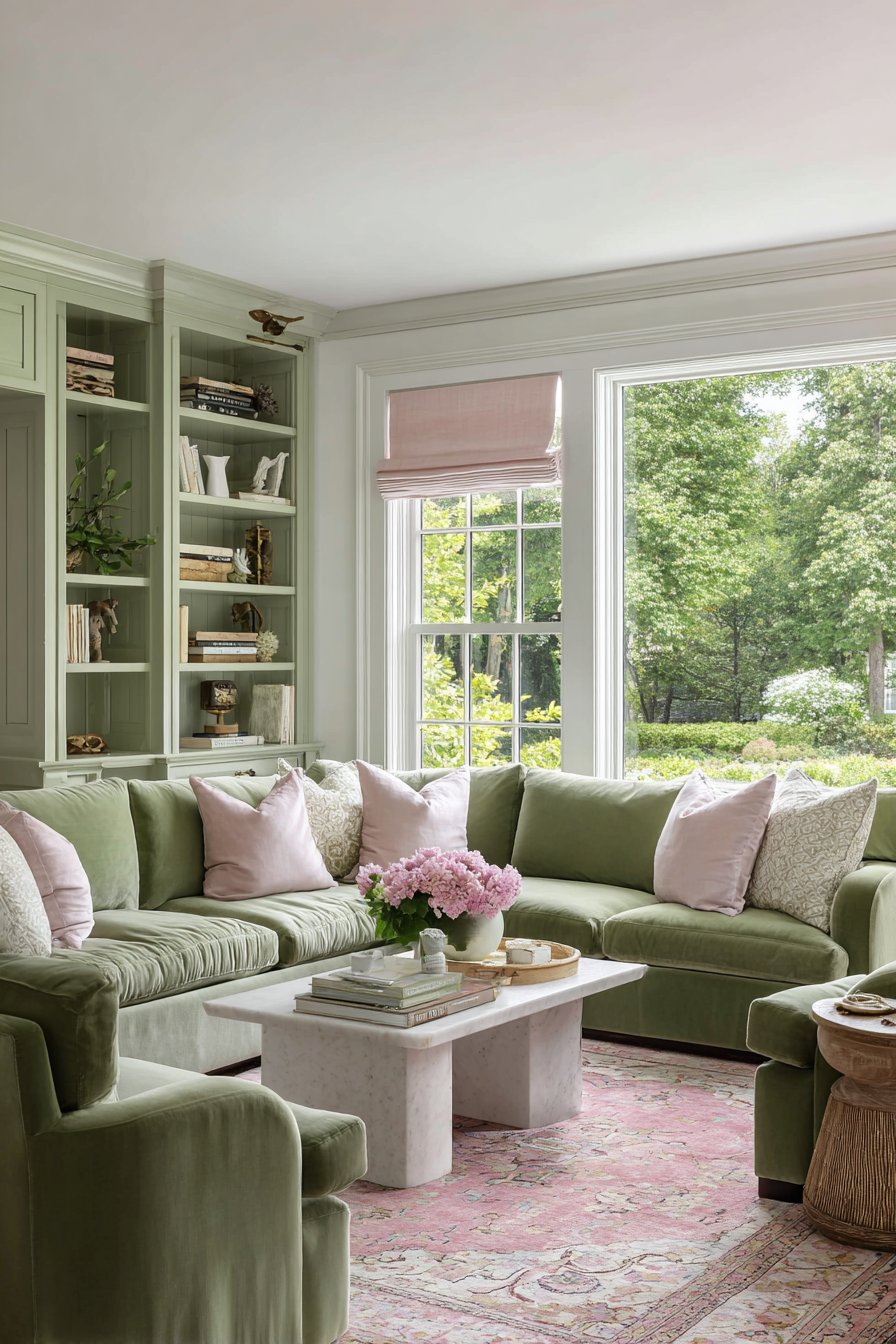
Both colors distribute throughout the space in furniture, textiles, and architectural elements. The distribution feels balanced and intentional. Natural lighting changes the appearance of colors as the day progresses. Morning light brings coolness while evening light adds warmth. The generous proportions allow for multiple seating zones and functions.
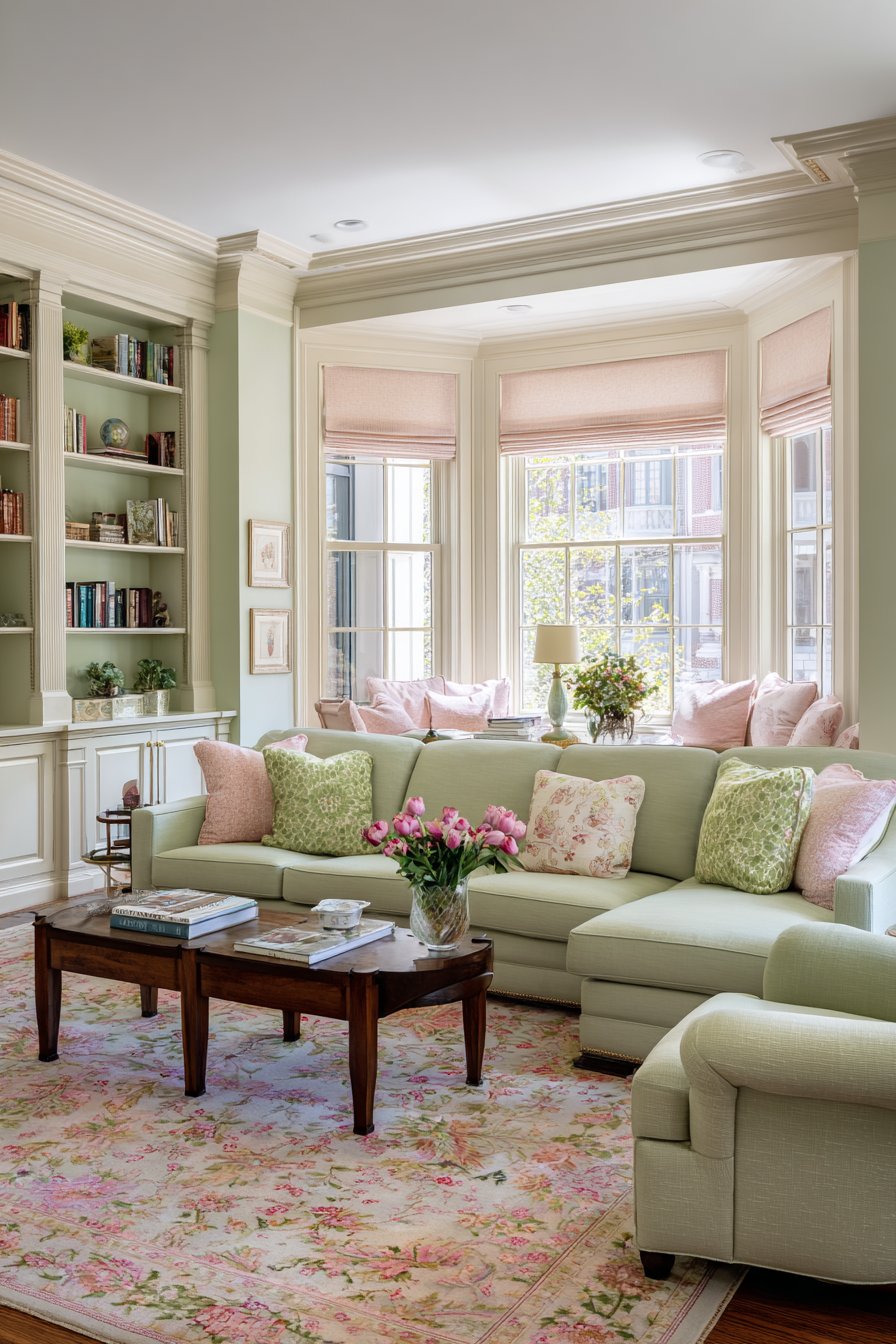
This spacious interpretation shows sage green and pink at their most impressive. Large rooms provide canvas for bold color decisions. The scale of furniture and rugs matches the architectural volume. Every zone within the room serves a distinct purpose while contributing to overall harmony.
Key Design Tips:
- Scale furniture appropriately to room size
- Use sectionals to define large seating areas
- Paint built-ins to integrate color architecturally
- Create multiple seating zones in spacious rooms
- Choose large rugs that anchor entire furniture groupings
Why These Sage Green and Pink Living Room Designs Are the Best
These ten living room designs represent the pinnacle of sage green and pink interior styling. Each interpretation showcases unique advantages while sharing common strengths. The color combination’s versatility emerges as its greatest asset. From traditional to contemporary, minimalist to maximalist, these hues adapt beautifully. This flexibility makes sage green and pink accessible to various design preferences and personal styles.
The psychological benefits of this color pairing cannot be overstated. Sage green connects us to nature and promotes feelings of calm and balance. Pink adds warmth, comfort, and gentle energy to spaces. Together, they create environments that feel both energizing and relaxing. This balance supports wellbeing and mental clarity. The colors work harmoniously to reduce stress and promote contentment.
Material diversity across these designs demonstrates another key strength. Velvet brings luxury and depth to sage and pink tones. Linen adds organic texture and casual sophistication. Glass and brass introduce reflective qualities that enhance light. Natural materials like jute, rattan, and wood ground the palette. Each material interaction creates new visual and tactile experiences.
The designs accommodate various lifestyle needs and space constraints beautifully. Compact apartment dwellers find solutions in smart, space-saving approaches. Families with spacious homes discover grand entertaining possibilities. Single professionals enjoy minimalist serenity. Artistic souls embrace bohemian layering. The sage green and pink palette serves everyone equally well.
Lighting plays a transformative role in all these spaces. Natural daylight reveals the true beauty of these complementary colors. The way sage green and pink interact with changing light throughout the day adds dynamic interest. Morning sun brings freshness while afternoon light adds warmth. Evening artificial lighting creates cozy, intimate atmospheres. This light responsiveness keeps spaces feeling alive and ever-changing.
The timeless quality of sage green and pink ensures lasting appeal. Unlike trendy color combinations that quickly feel dated, this pairing has endured. Historical design periods have embraced these colors repeatedly. Contemporary designers continue finding fresh interpretations. This longevity makes investing in sage green and pink furnishings worthwhile. Your room won’t feel outdated in coming years.
Accessorizing opportunities abound with this color scheme. Pink glass, sage ceramics, brass metals, and natural wood all complement beautifully. Artwork incorporating these colors ties rooms together cohesively. Textiles offer easy seasonal updates without major investment. The palette accommodates both bold statements and subtle whispers. This flexibility allows personal style evolution over time.
The commercial availability of sage green and pink products makes implementation practical. Major furniture retailers stock pieces in these popular colors. Paint companies offer numerous shades within both color families. Textile manufacturers produce fabrics, rugs, and curtains in matching tones. DIY enthusiasts find ample options for custom projects. Accessibility removes barriers to creating these beautiful spaces.
Professional designers consistently rank sage green and pink among their favorite combinations. The pairing photographs beautifully for portfolios and publications. Clients respond positively to the sophisticated yet approachable aesthetic. Real estate professionals note that homes featuring these colors often sell faster. The broad appeal crosses demographic boundaries and personal taste differences.
Environmental consciousness aligns well with this nature-inspired palette. Sage green’s connection to plants encourages biophilic design principles. Adding living plants enhances rooms decorated in these colors. Natural, sustainable materials complement the organic color story. Eco-friendly paint options exist in both shades. The palette supports healthy, sustainable living choices.
Conclusion
The sage green and pink living room designs presented here demonstrate remarkable versatility and enduring appeal. From luxurious velvet textures to minimalist restraint, each approach offers valuable lessons in color application. The psychological benefits of this calming yet warm combination enhance daily living experiences. Material choices from natural fibers to refined metals all find harmony within this palette.
Whether you’re working with a compact apartment or a spacious family room, these ideas adapt beautifully. The key lies in understanding your space, lifestyle, and personal preferences. Start small with throw pillows or artwork if you’re hesitant about commitment. Build confidence through accessories before tackling larger furniture or wall color decisions. Let natural light guide your specific shade selections within the sage and pink families.
Experiment boldly with these ideas in your own home. Trust your instincts while applying the principles demonstrated across these ten designs. Mix textures, layer textiles, and balance proportions thoughtfully. Remember that great design evolves over time through lived experience. Your sage green and pink living room will become a personal sanctuary reflecting your unique style and bringing daily joy for years to come.
