


Sharing a bedroom is a rite of passage for many siblings, yet it presents unique challenges for parents and designers alike. When two or more children occupy the same space, the room must accommodate different ages, interests, and personal boundaries while maintaining functionality. Strategic organization transforms cramped quarters into harmonious havens where each child feels valued and comfortable.
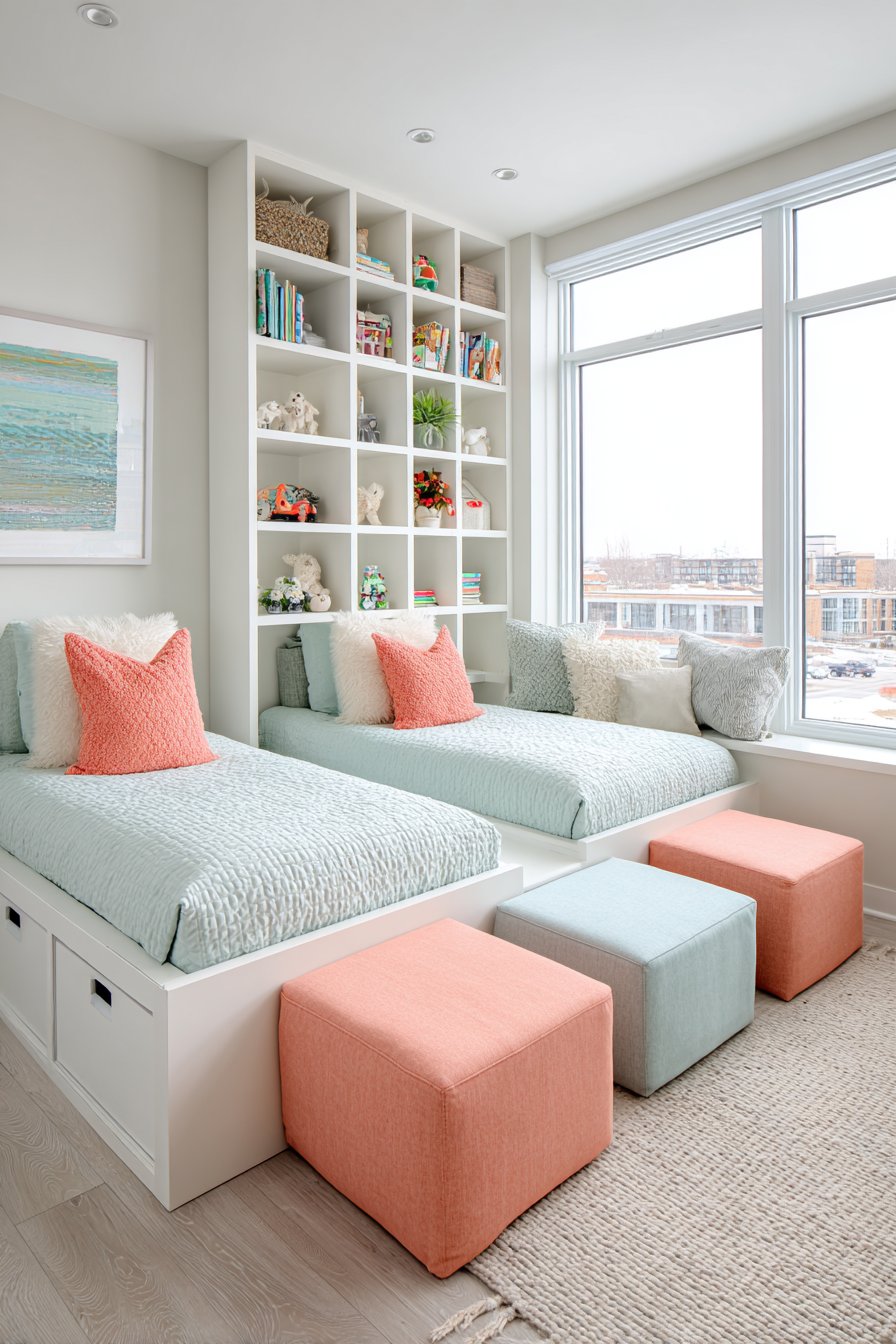
Thoughtful interior design plays a crucial role in creating spaces that nurture growth, creativity, and independence. A well-organized shared bedroom teaches children valuable lessons about cooperation and respect while maximizing every square inch available. The key lies in balancing individual needs with collective harmony, ensuring that each child has personal territory within the communal space.
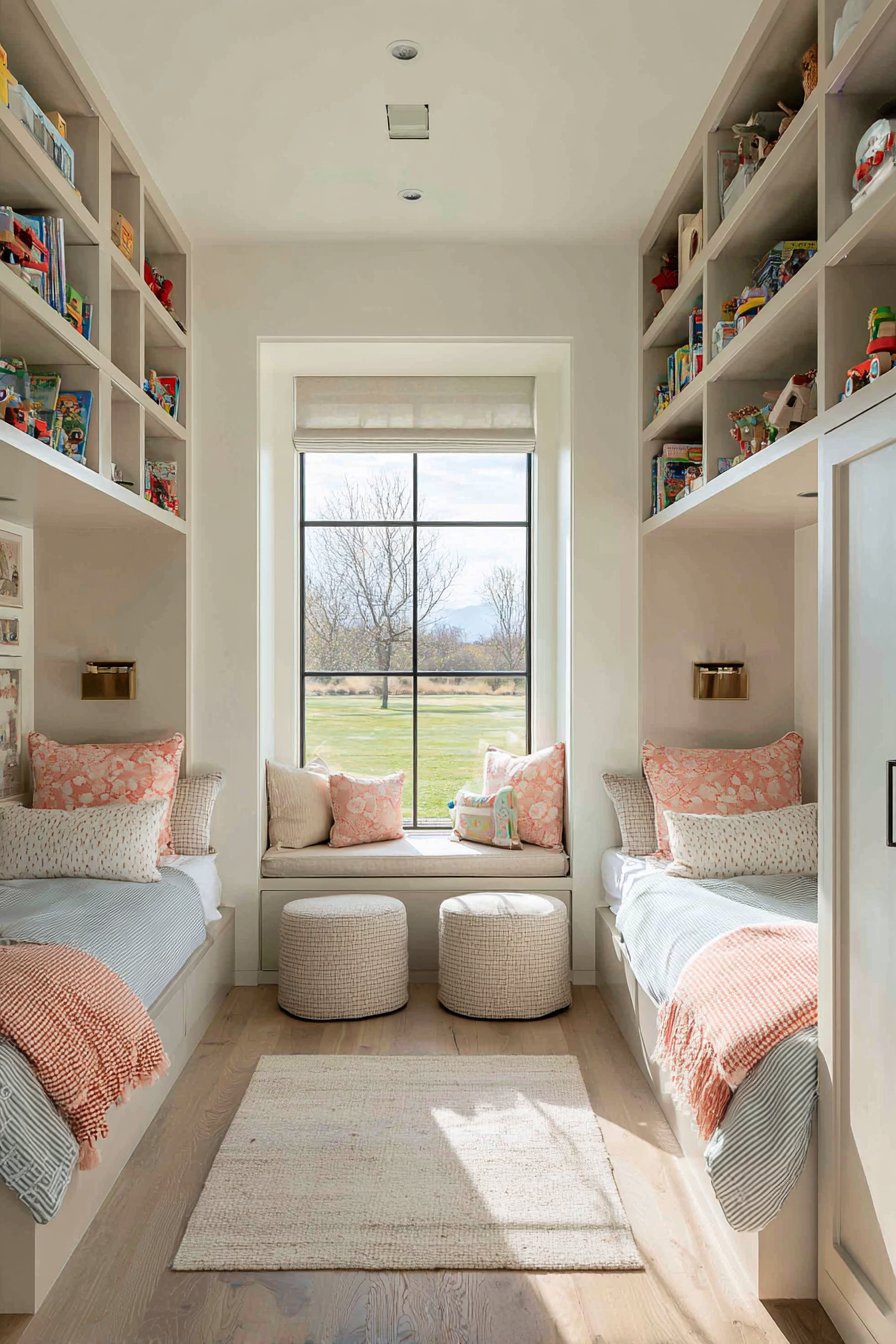
This comprehensive guide explores proven strategies for organizing shared kids’ bedrooms efficiently. From clever storage solutions to zone creation techniques, these ideas cater to various room sizes, budgets, and family dynamics. Whether you’re working with a compact urban apartment or a spacious suburban home, these actionable tips will help you create a functional, beautiful space that grows with your children.
1. Establish Clear Personal Zones
Creating distinct personal zones gives each child a sense of ownership and privacy within the shared space. Visual boundaries help minimize conflicts and allow children to express their individuality without overwhelming the room. These designated areas become sanctuaries where kids can retreat, study, or simply exist without constant interaction.
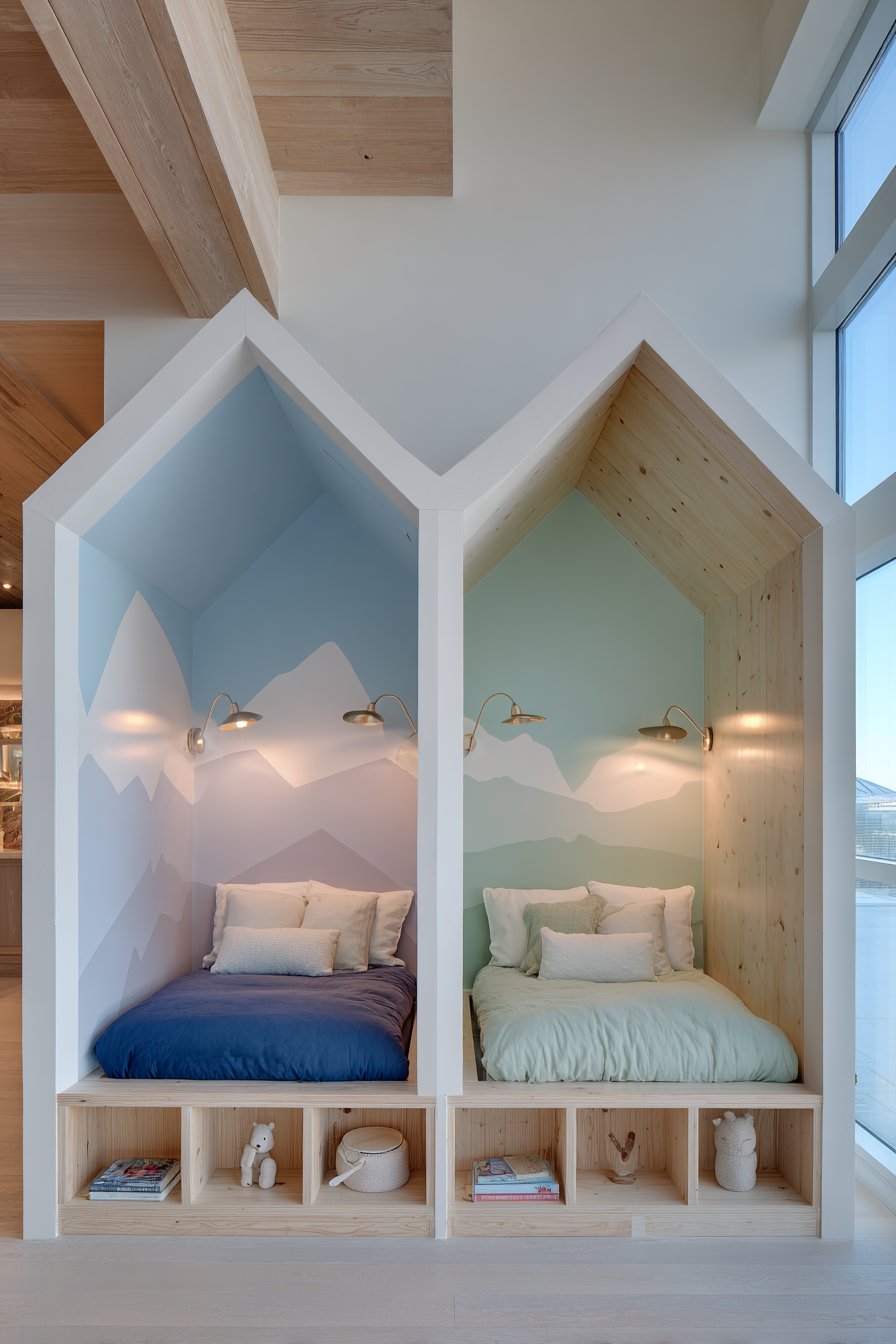
Physical dividers don’t require permanent walls or expensive renovations. Temporary solutions like bookcases, curtain panels, or even area rugs effectively delineate territory while maintaining flexibility. Color-coding systems where each child has a signature color for bedding, storage bins, and accessories reinforces these boundaries visually.
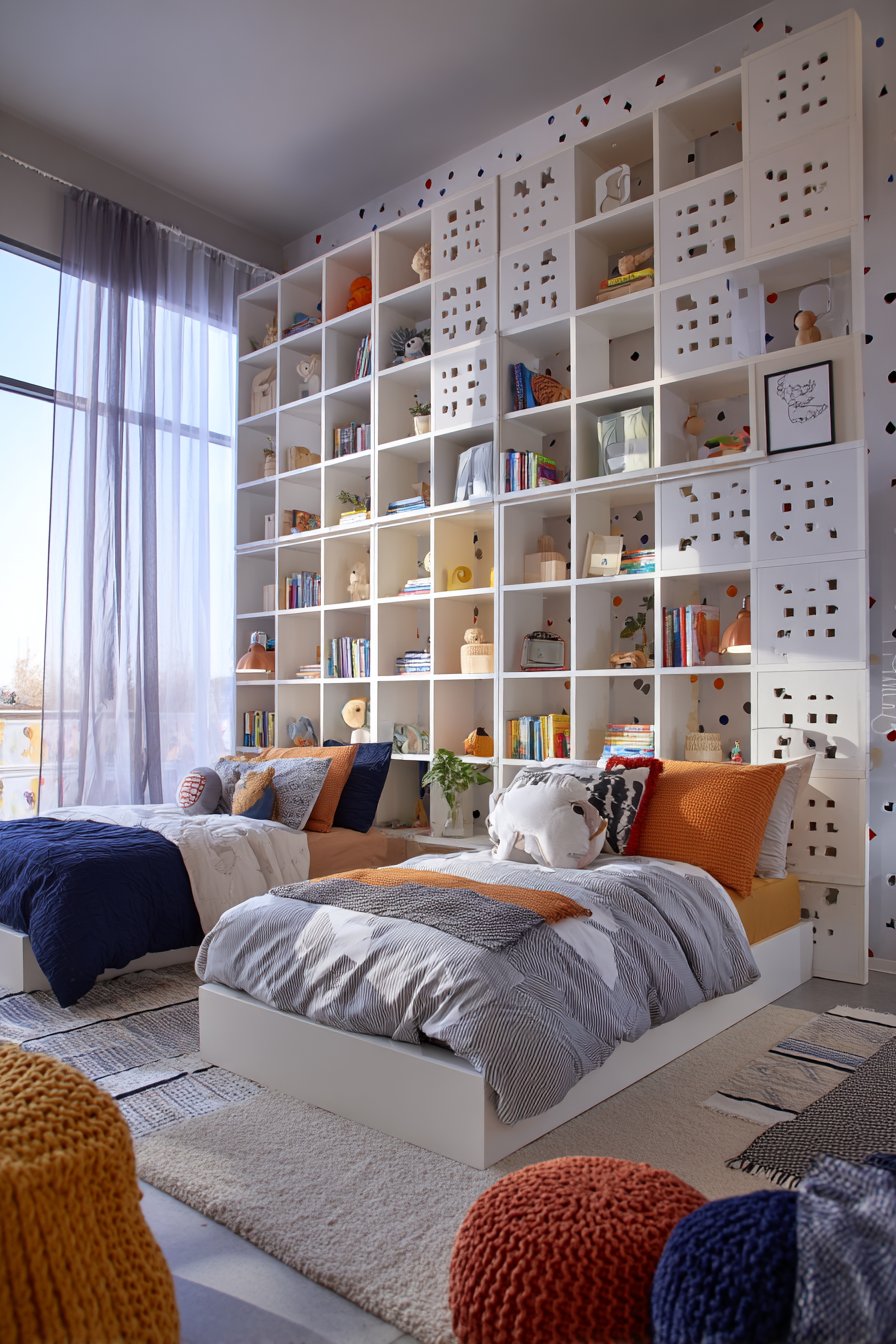
The psychological impact of personal space cannot be overstated, particularly for older children navigating adolescence. When siblings respect these invisible boundaries, they develop crucial life skills about consent and personal property. This foundation creates lasting habits that extend beyond childhood.
- Assign each child a specific wall or corner for their bed and belongings
- Use furniture placement strategically to create natural dividers between spaces
- Implement a color-coding system for easy identification of personal items
- Install individual reading lights or lamps for each zone
- Create visual separation with different wall colors or removable wallpaper sections
- Establish ground rules about respecting each other’s designated areas
2. Maximize Vertical Storage Solutions
When floor space is limited, the solution lies in looking upward toward underutilized vertical space. Walls offer incredible storage potential that most families overlook, leaving valuable square footage wasted. Installing shelves, hooks, and organizers at various heights accommodates children of different ages while keeping items accessible.
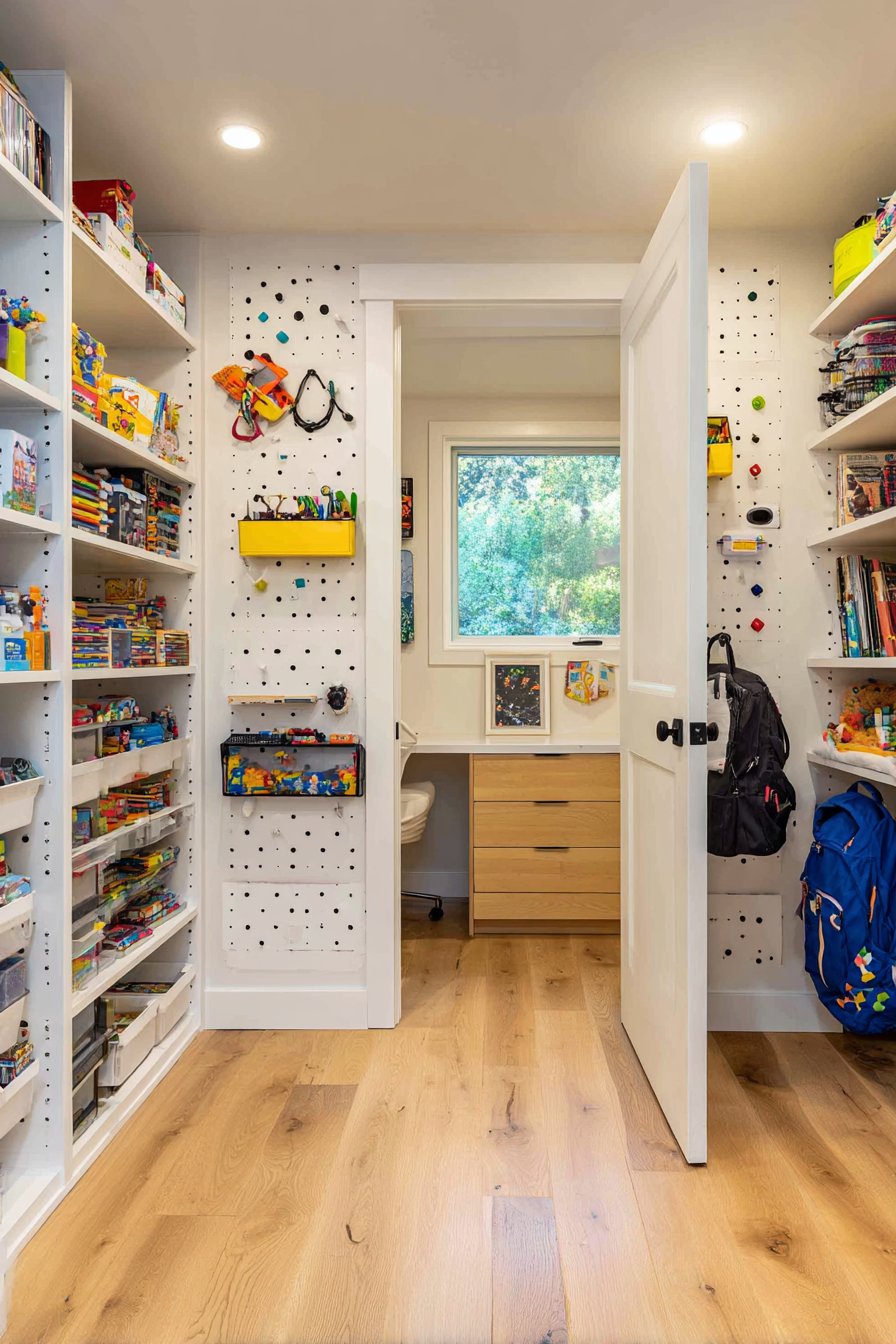
Wall-mounted systems free up precious floor space for play and movement. Floating shelves display books, toys, and decorative items without bulky bookcases consuming room. Pegboards offer customizable storage that evolves with changing needs, allowing you to rearrange hooks and baskets as children grow.
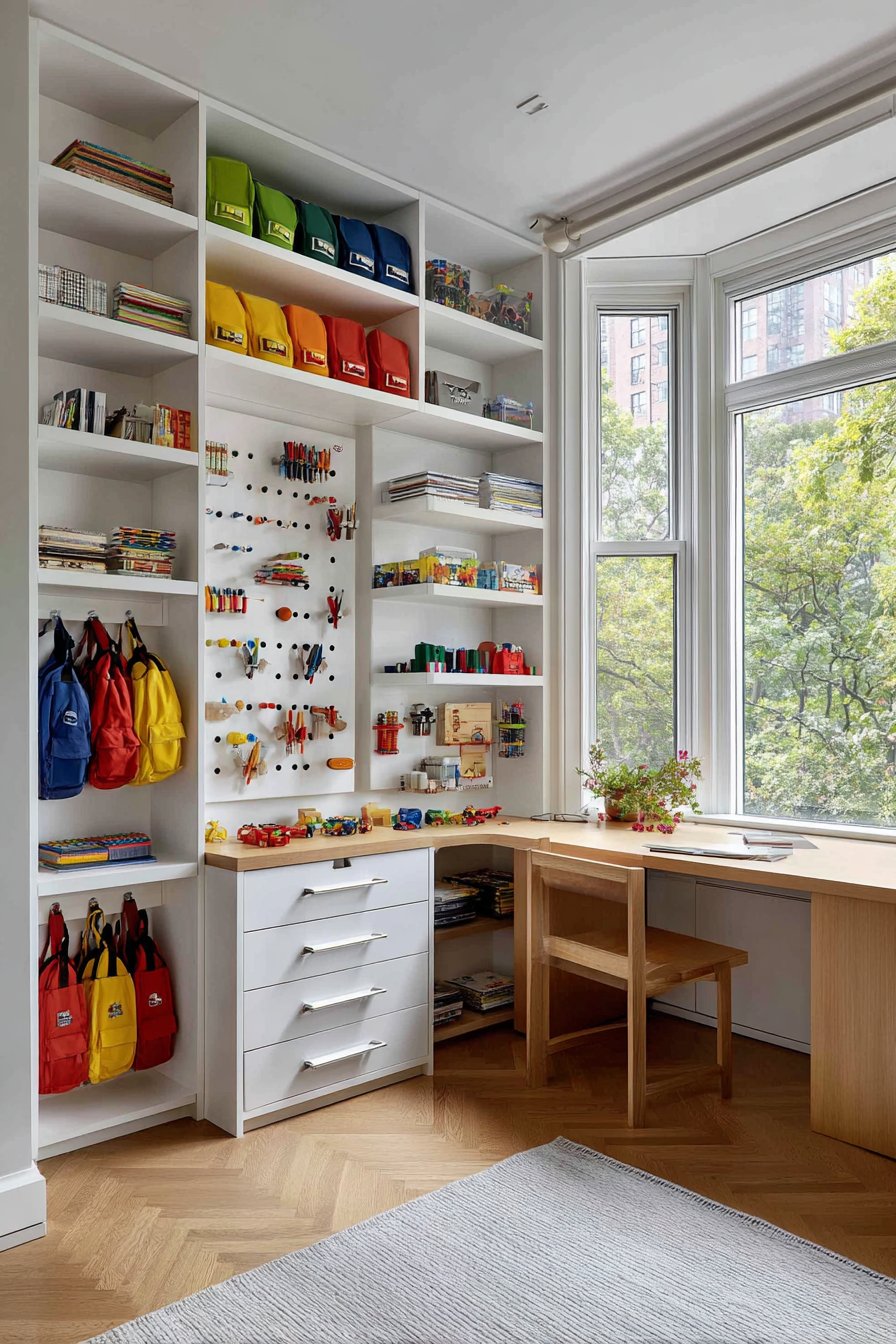
High storage solutions keep rarely-used items out of the way while maintaining accessibility for adults. Consider the reach height of each child when planning vertical storage to ensure independence. Lower shelves should hold daily essentials while upper storage houses seasonal clothing or special occasion items.
- Install floor-to-ceiling shelving units to maximize every inch of wall space
- Use over-door organizers for shoes, accessories, and small toys
- Mount hooks at child-appropriate heights for backpacks and jackets
- Consider wall-mounted desks that fold down when needed
- Install floating shelves in corners to utilize typically wasted space
- Use vertical drawer units instead of wide horizontal dressers
3. Invest in Multi-Functional Furniture
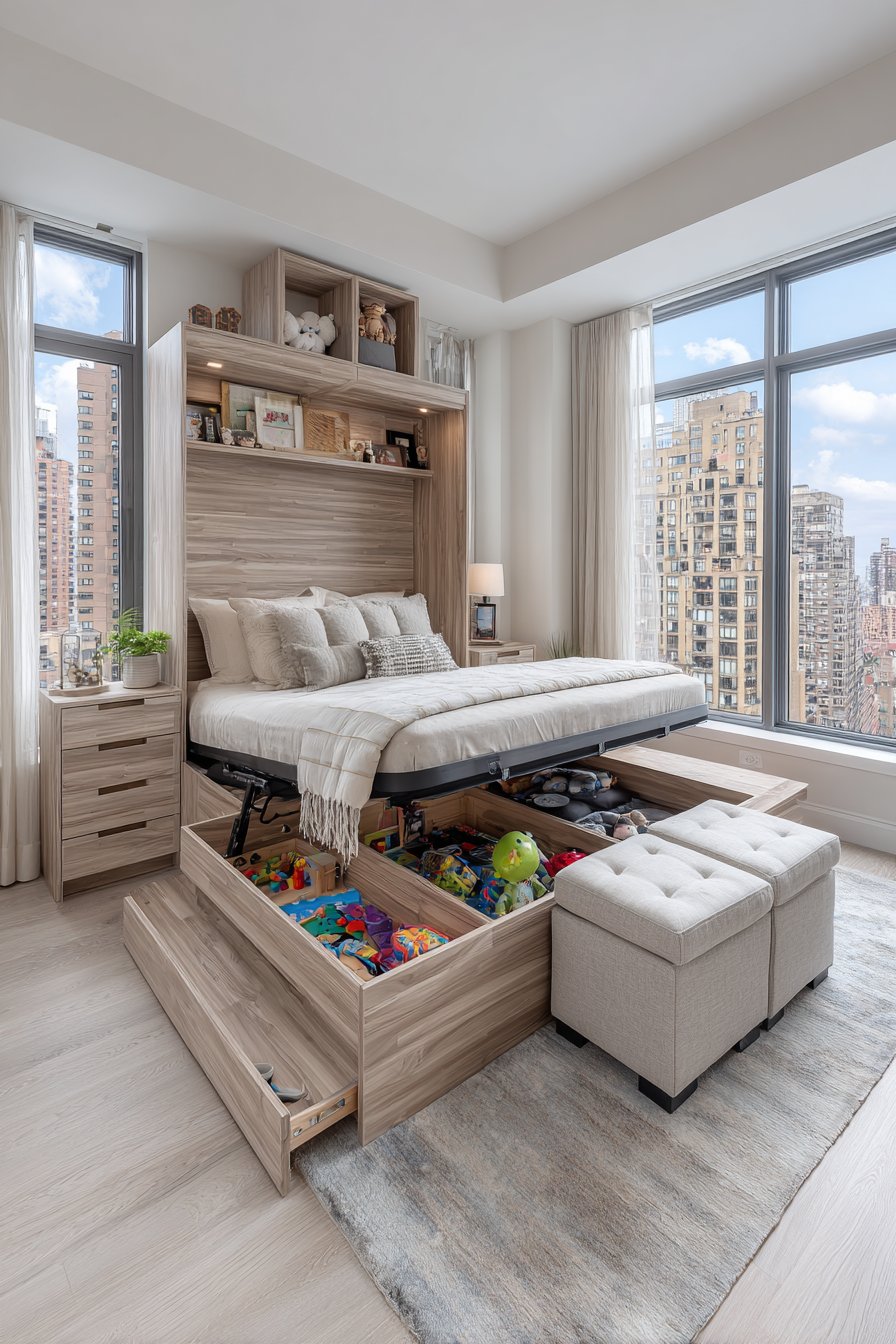
Multi-functional furniture is the secret weapon in shared bedroom organization. Pieces that serve dual or triple purposes eliminate clutter while reducing the total number of items needed. This approach proves especially valuable in smaller bedrooms where every piece must earn its place.
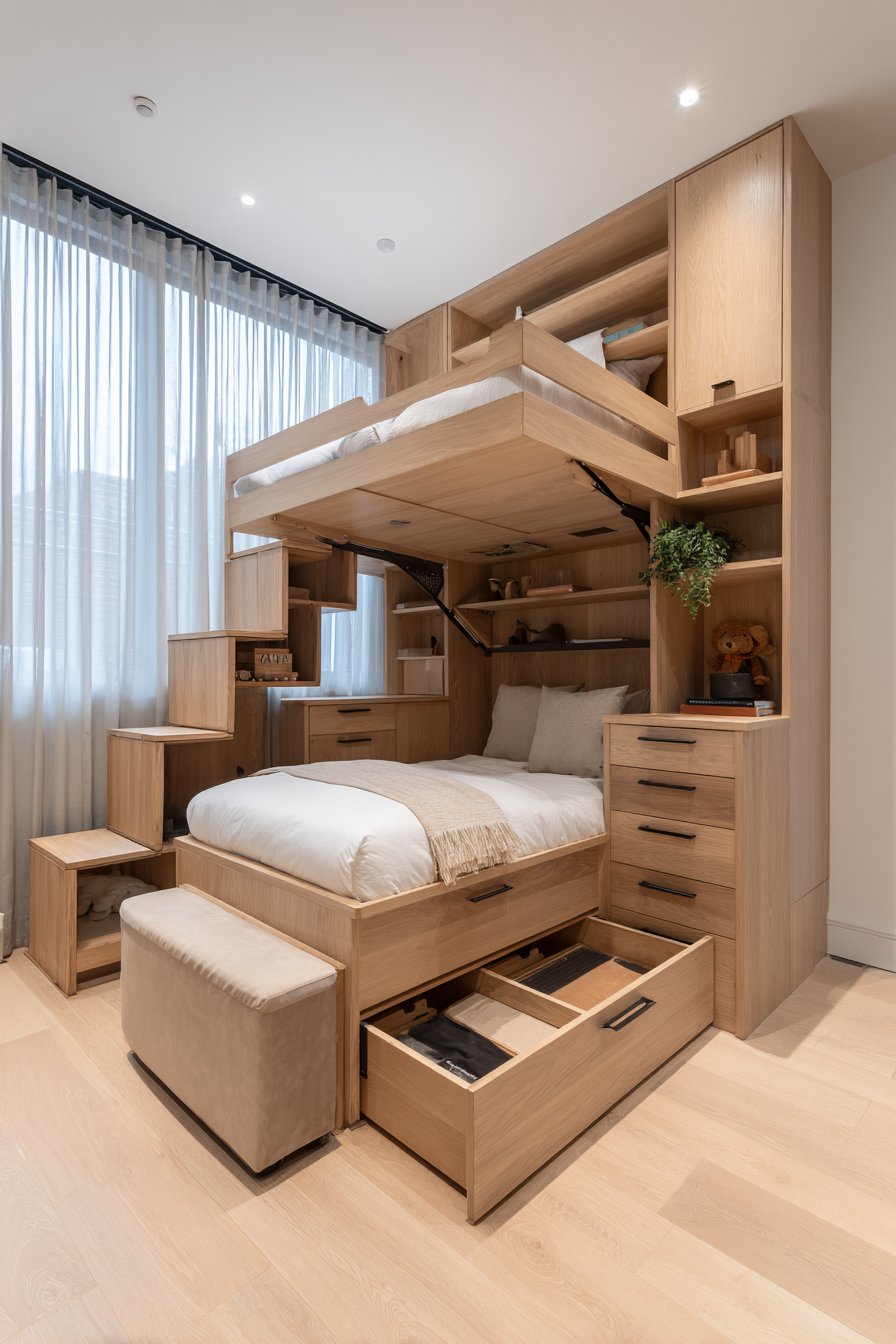
Beds with built-in storage drawers underneath provide hidden compartments for clothing, toys, or bedding. Ottoman benches offer seating while concealing books, games, or art supplies inside. Desks with integrated shelving combine study space with organizational capacity, creating compact homework stations.
Modular furniture systems adapt as children’s needs change throughout different developmental stages. Convertible pieces like loft beds with desk areas underneath grow with your child from elementary through high school. This long-term thinking saves money while reducing waste.
- Choose beds with underneath storage drawers or hydraulic lift mechanisms
- Select nightstands with multiple drawers instead of single-shelf versions
- Use storage ottomans that double as seating and toy boxes
- Install murphy beds or trundle beds to maximize daytime floor space
- Pick desks with built-in shelving and drawer organizers
- Consider loft beds with study areas or play spaces underneath
4. Implement Smart Closet Organization
Closets often become chaotic dumping grounds, but with strategic organization, they transform into efficient storage powerhouses. Shared closets require careful planning to accommodate multiple wardrobes while maintaining accessibility. Dividing the space equally prevents territorial disputes and teaches children responsibility.
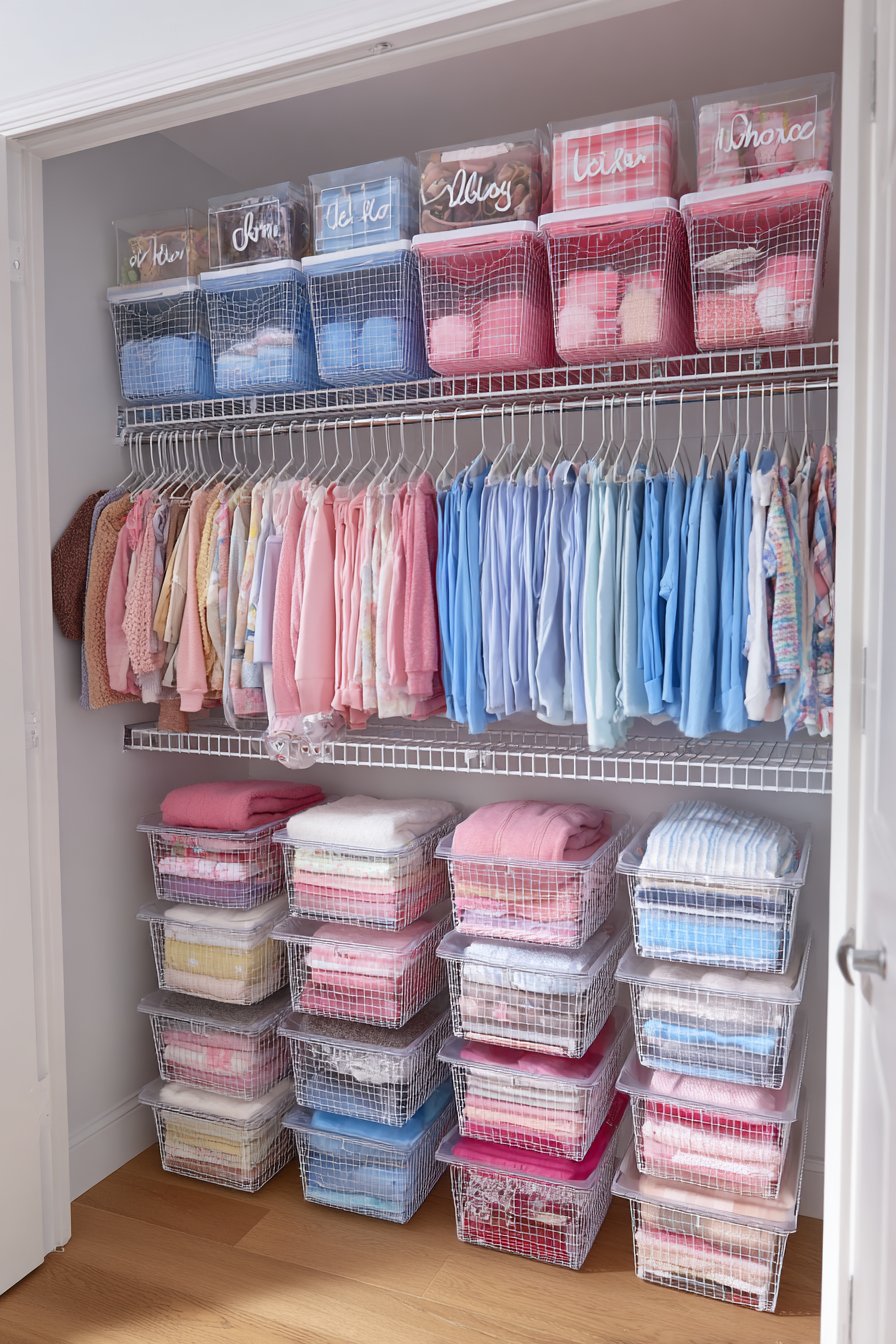
Double-hanging rods instantly double clothing capacity by utilizing vertical closet space. Install one rod at adult height for out-of-season items and another at child height for everyday wear. This system grows with your children, adjusting as they become taller.
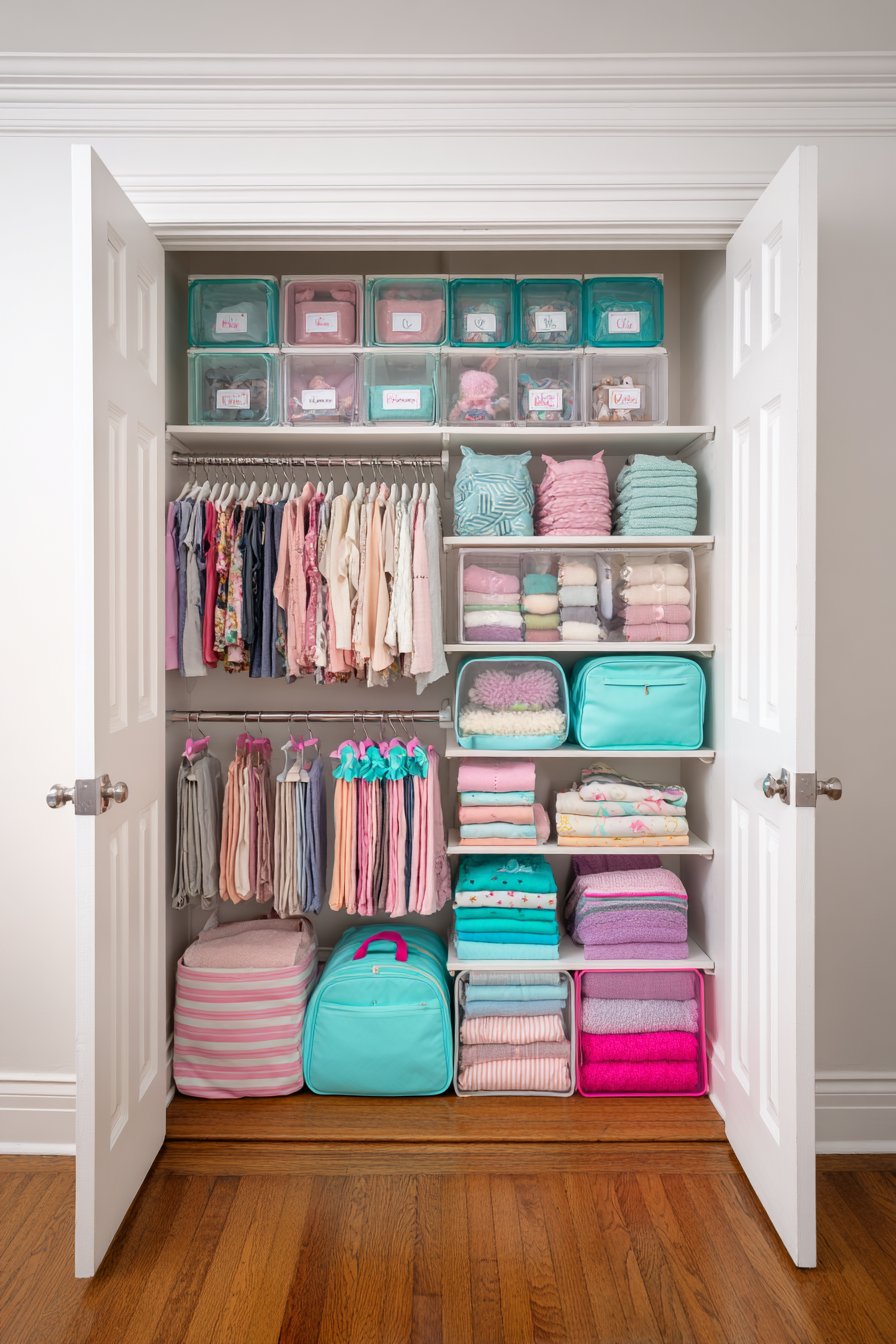
Clear storage containers allow children to see contents without rummaging through everything. Labeled bins eliminate confusion and make cleanup faster for young children still learning organizational skills. Seasonal rotation keeps current items accessible while archiving others efficiently.
- Install double rods to create two tiers of hanging space
- Use matching bins or baskets labeled with each child’s name
- Implement a color-coding system within the shared closet
- Add shelf dividers to keep stacks of clothing separated and neat
- Install hooks on the inside closet door for frequently worn items
- Use vacuum-sealed bags for off-season clothing storage
5. Create Designated Activity Stations
Activity stations prevent toys and supplies from migrating throughout the room. Dedicated areas for reading, crafts, building, or quiet play contain messes while encouraging focused engagement. These zones teach children to associate specific activities with particular spaces.
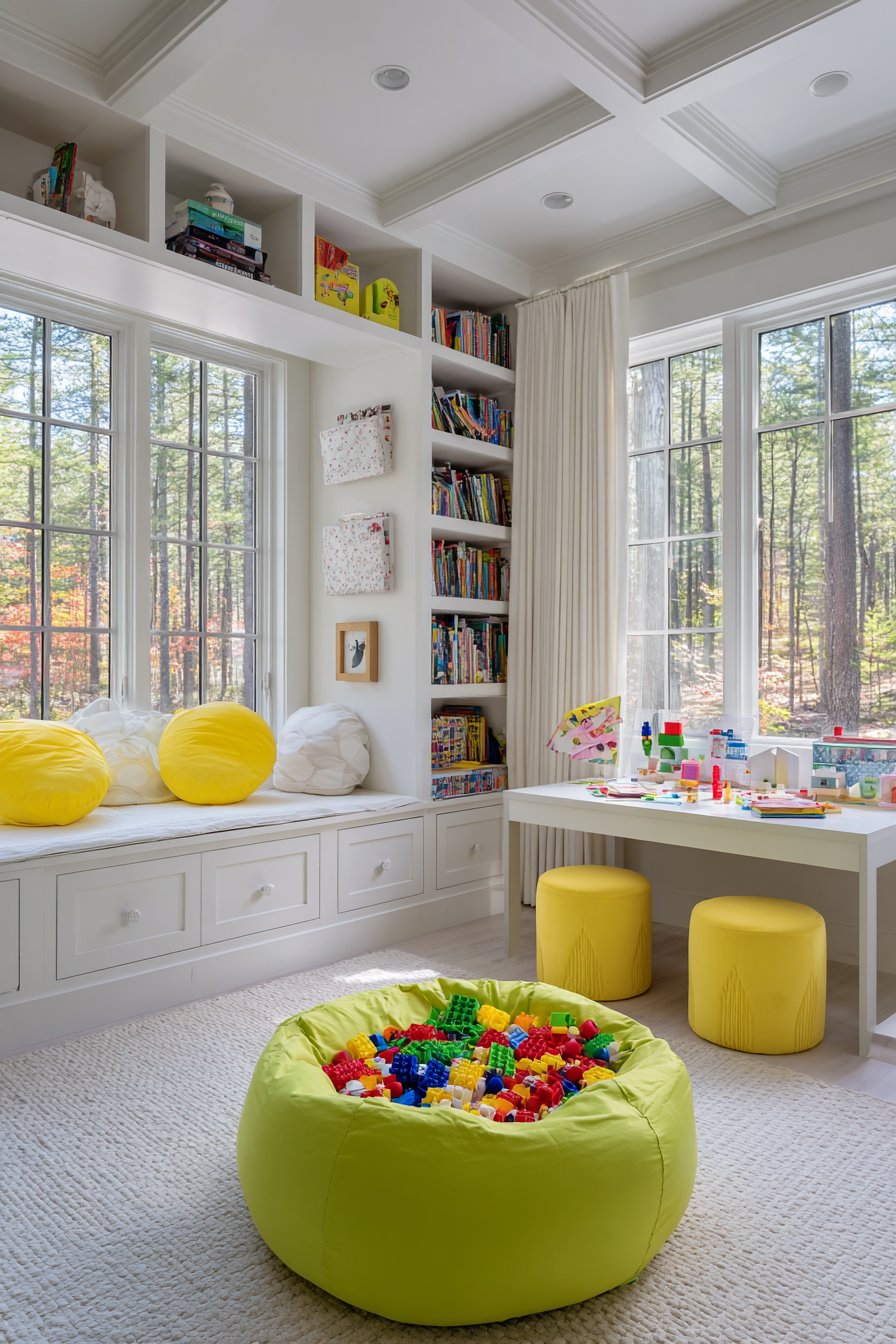
A reading nook with comfortable cushions, good lighting, and accessible bookshelves promotes literacy and provides quiet retreat space. Art stations with washable surfaces and organized supply storage foster creativity without creating chaos. Building zones with contained storage for blocks and construction toys prevent scattered pieces.
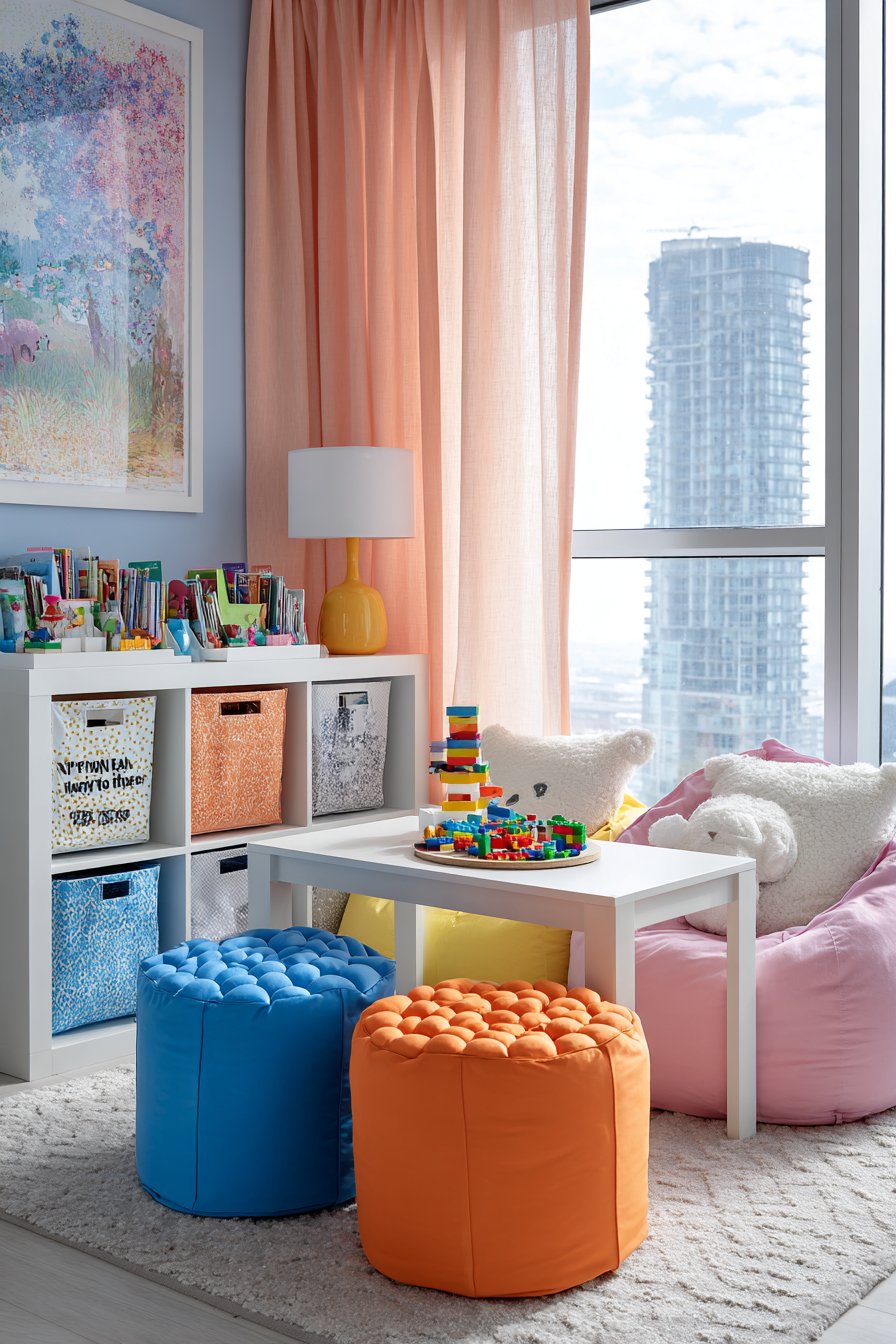
Rotate toys and activities seasonally to maintain interest without overwhelming the space. Store inactive collections elsewhere and bring them out periodically. This rotation strategy keeps the room feeling fresh while teaching children that they don’t need constant access to everything.
- Set up a cozy reading corner with pillows, blankets, and bookshelves
- Create an art station with a small table and organized supply storage
- Designate a building zone with bins for blocks and construction toys
- Install a small table for puzzles and board games
- Establish a dress-up area with costume storage and mirror
- Rotate toys monthly to maintain interest and reduce clutter
6. Establish Consistent Organization Routines
Even the most brilliant organization system fails without consistent maintenance routines. Teaching children to participate in daily tidying creates lifelong habits while keeping shared spaces functional. Age-appropriate responsibilities ensure everyone contributes to maintaining order.
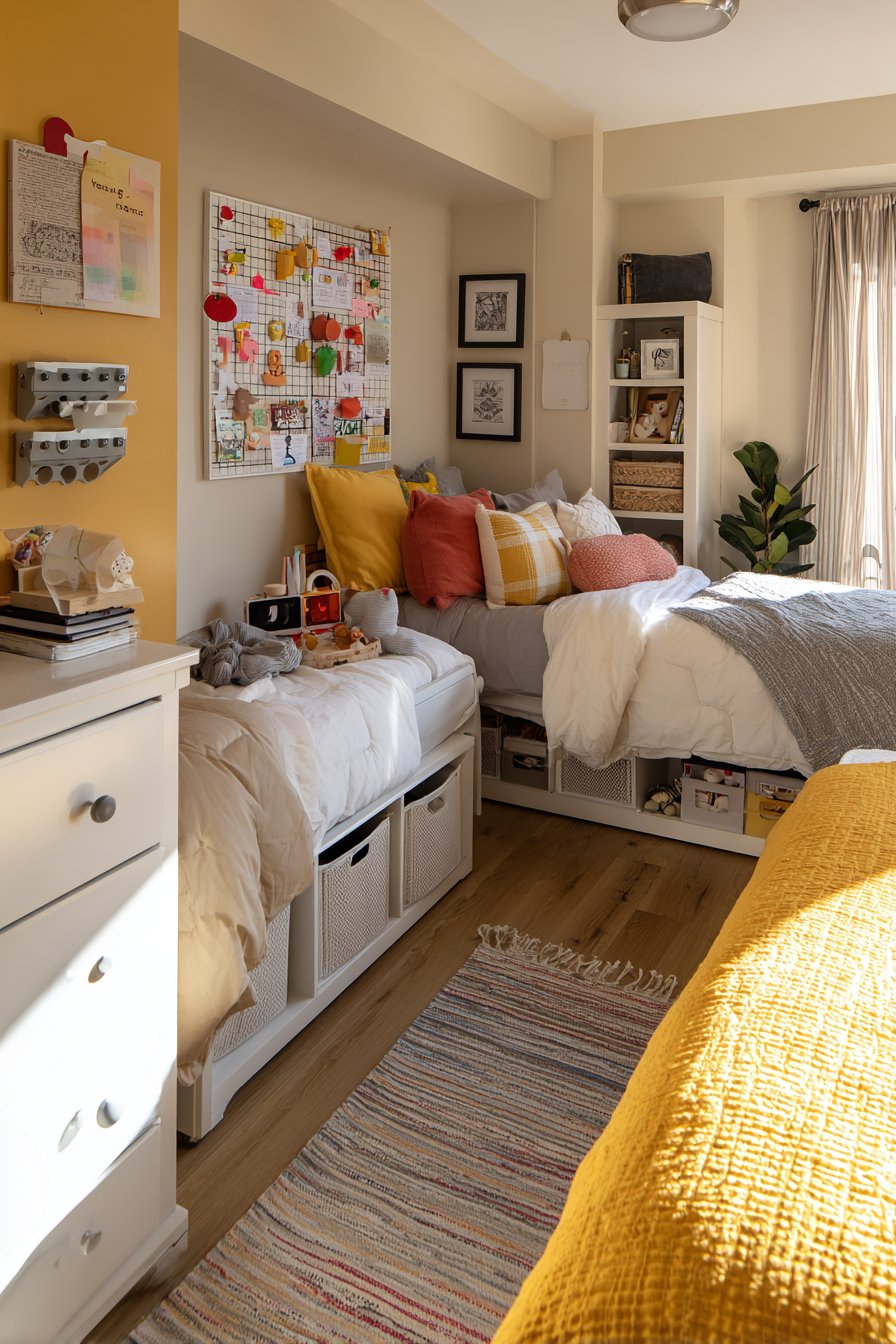
Five-minute pickups before bedtime prevent overwhelming messes from accumulating. Making cleanup a collaborative game rather than a chore increases cooperation and reduces resistance. Visual charts showing cleanup steps help younger children follow routines independently.
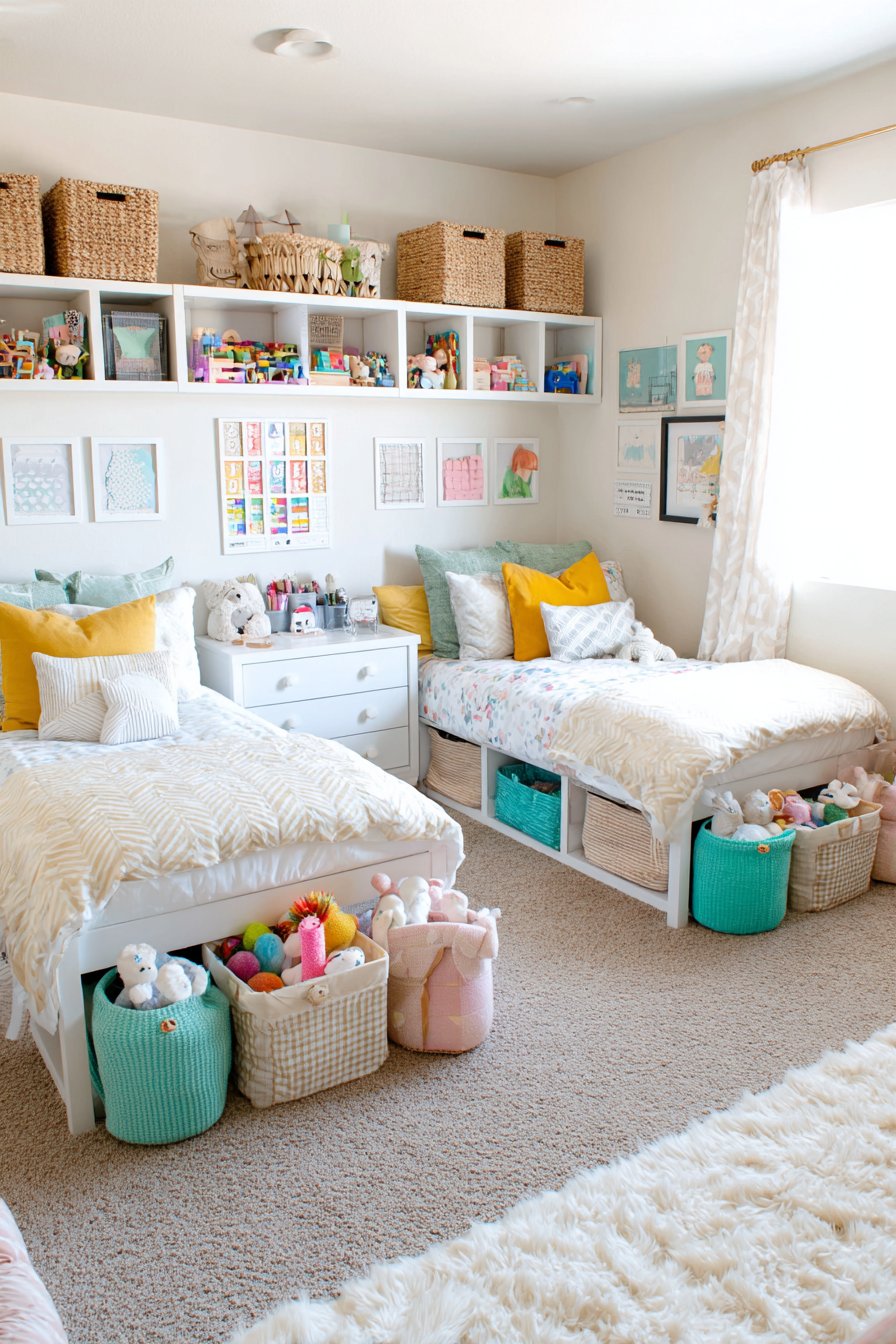
Weekly deeper organization sessions address areas that daily maintenance misses. These scheduled reviews prevent gradual decline into chaos. Involving children in decision-making about organization systems increases their investment in maintaining those systems.
- Implement a daily five-minute cleanup routine before bedtime
- Create visual chore charts showing each child’s responsibilities
- Schedule weekly organization sessions to address accumulated clutter
- Use timers to make cleanup feel like a game
- Reward consistent participation with privileges or incentives
- Model good organizational habits through your own behavior
Conclusion
Organizing a shared kids’ bedroom efficiently requires creativity, planning, and ongoing commitment. By establishing personal zones, maximizing vertical space, investing in multi-functional furniture, and implementing smart storage solutions, you create an environment where siblings thrive together. These strategies accommodate individual needs while fostering cooperation and mutual respect.
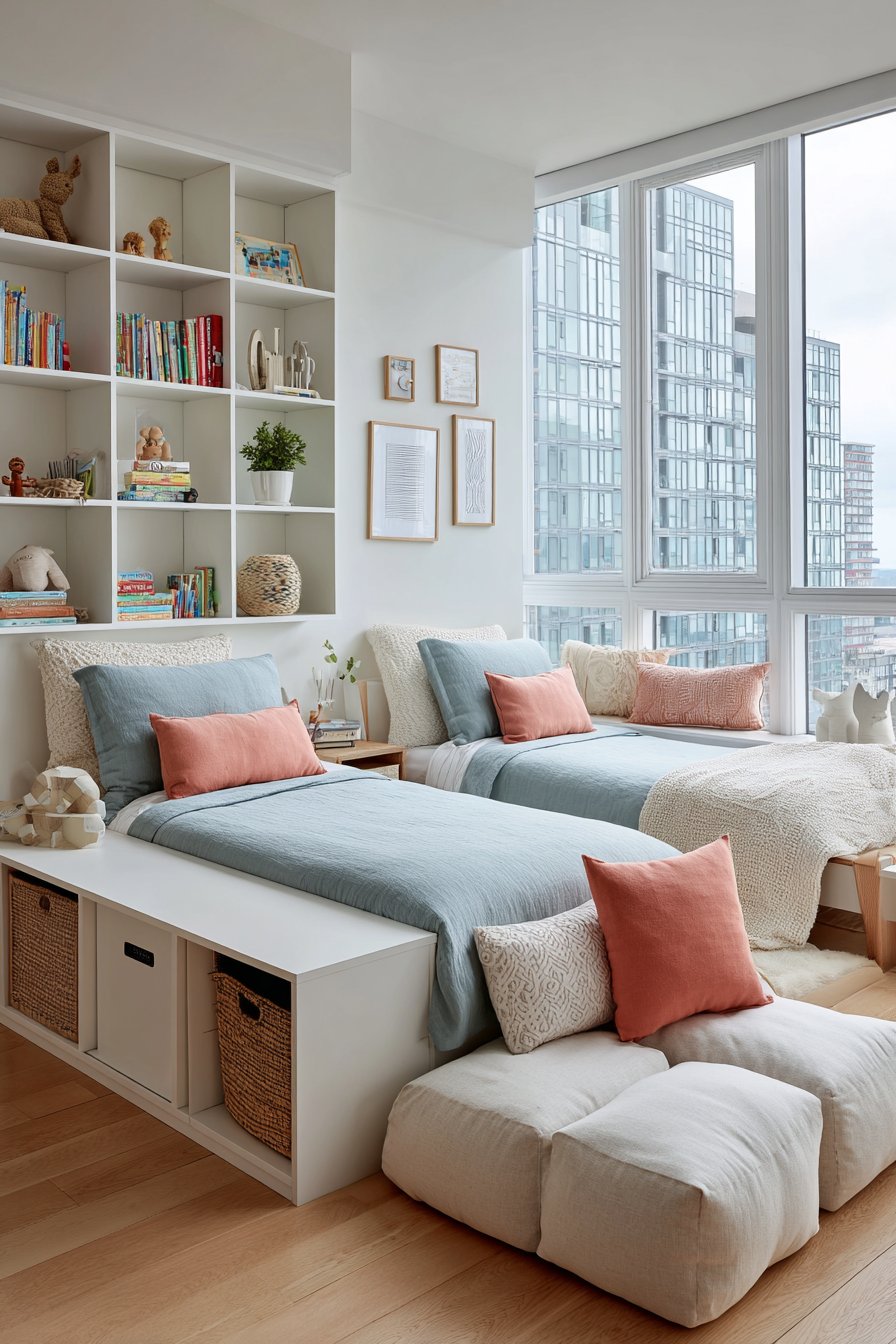
Remember that organization systems should evolve with your children, adapting as they grow and their needs change. Start with these foundational principles, then customize them to fit your family’s unique situation. With patience and consistency, your shared bedroom will transform into a harmonious space that nurtures both independence and sibling bonds.
