


The heart of every home deserves thoughtful design that balances beauty with practicality, and few materials accomplish this as gracefully as natural oak cabinetry. An oak cabinet kitchen represents more than just a functional cooking space—it embodies a legacy of craftsmanship, warmth, and enduring style that has graced homes for generations. The rich grain patterns, honey-toned hues, and remarkable durability of oak wood create an inviting atmosphere that transforms meal preparation into a genuine pleasure. Whether you’re renovating an existing kitchen or designing a new culinary haven, oak cabinetry offers versatility that adapts beautifully to various design aesthetics, from rustic farmhouse charm to sleek contemporary minimalism.
In today’s diverse design landscape, oak cabinet kitchens have experienced a remarkable renaissance, shedding outdated associations and emerging as a sophisticated choice for discerning homeowners. The natural variations in oak grain—from subtle cathedral patterns to bold, dramatic swirls—provide visual interest that manufactured materials simply cannot replicate. This authentic character, combined with oak’s exceptional strength and longevity, makes it an investment that appreciates in both value and beauty over time. The warm undertones of oak wood create an inherently welcoming environment, while its neutral palette serves as an excellent foundation for countless color schemes and decorative styles.
This comprehensive guide explores ten distinctive oak cabinet kitchen designs, each showcasing unique approaches to incorporating this timeless material into modern living spaces. From spacious traditional layouts to compact contemporary solutions, from rustic distressed finishes to sleek handleless designs, these concepts demonstrate the remarkable versatility of oak cabinetry. You’ll discover how different finishes, hardware choices, countertop pairings, and design elements can dramatically transform the character of an oak cabinet kitchen, creating spaces that reflect individual personalities while maintaining functional excellence. Whether you’re drawn to the cozy charm of a country kitchen or the clean lines of transitional design, these inspiring examples will help you envision the perfect oak cabinet kitchen for your home.
1. Traditional Honey-Toned Oak Kitchen with Quartz Elegance
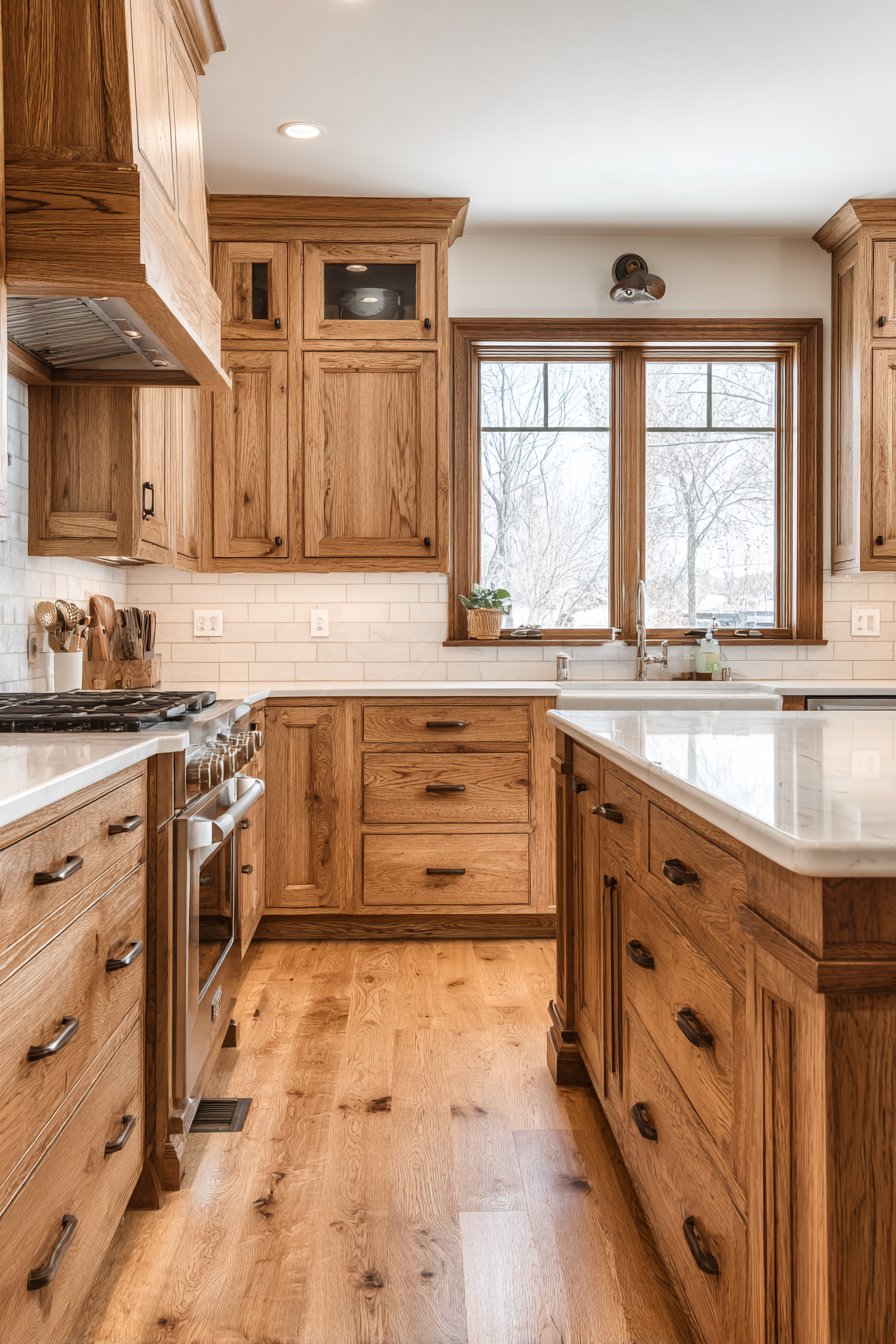
Step into a spacious kitchen where traditional oak cabinetry sets a foundation of natural warmth and timeless appeal. The honey-toned wood grain creates an immediate sense of welcome, with visible knots adding authentic character that tells the story of natural growth and organic beauty.
Every cabinet door showcases the distinctive patterns that make oak so beloved—sweeping cathedral grains that catch the light differently throughout the day, creating a living surface that evolves with changing illumination. The brushed brass hardware adds subtle sophistication, its warm metallic finish complementing rather than competing with the natural oak tones.
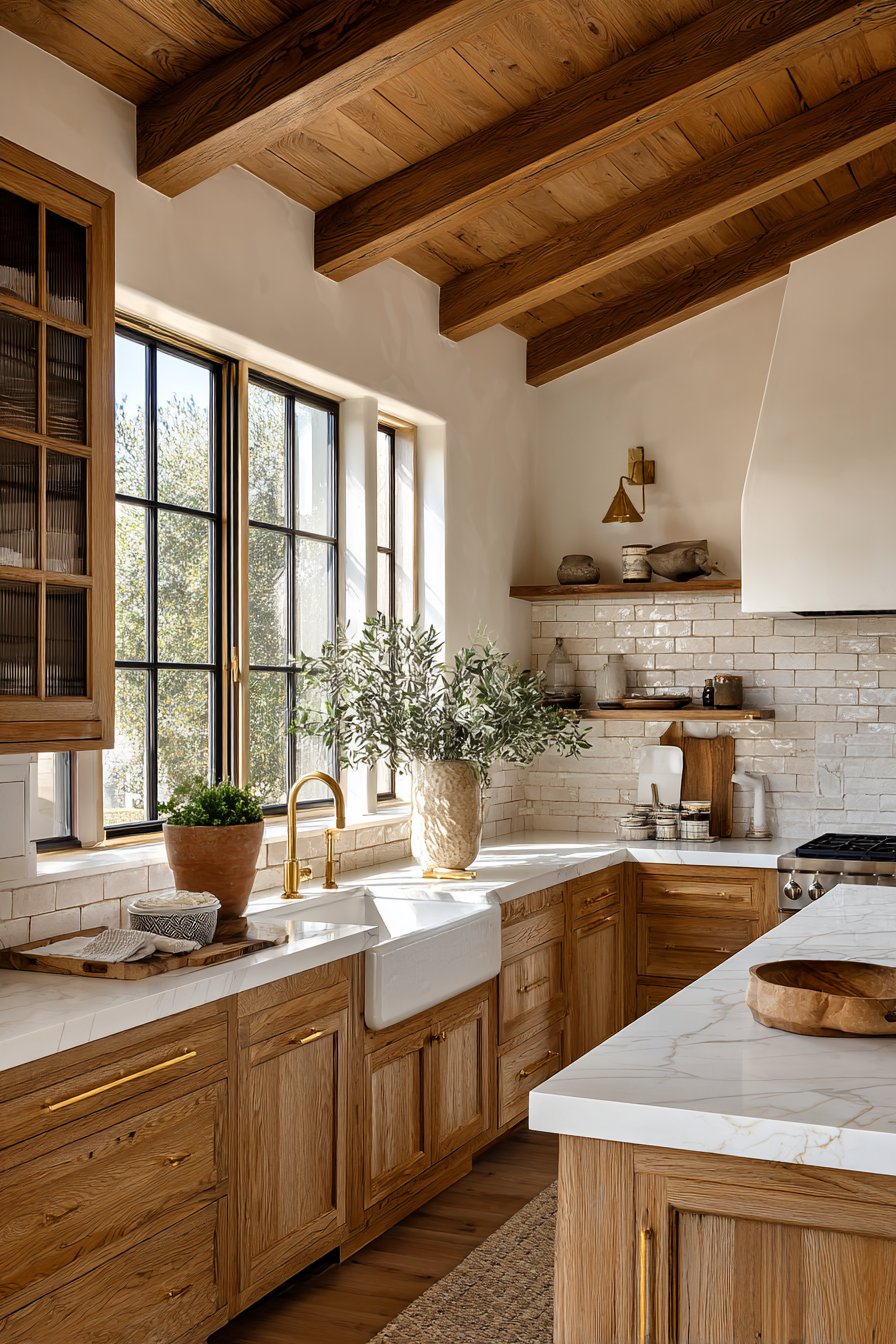
White quartz countertops provide a brilliant contrast that elevates the entire space, their pristine surface creating clean work areas while reflecting light throughout the kitchen. This juxtaposition of warm wood and cool white establishes a balanced aesthetic that feels both classic and fresh.
The subway tile backsplash in warm cream tones serves as a transitional element, harmonizing beautifully with the oak warmth while maintaining the kitchen’s bright, airy atmosphere. This thoughtful color coordination prevents the space from feeling too heavy or overly rustic, instead achieving an inviting sophistication.
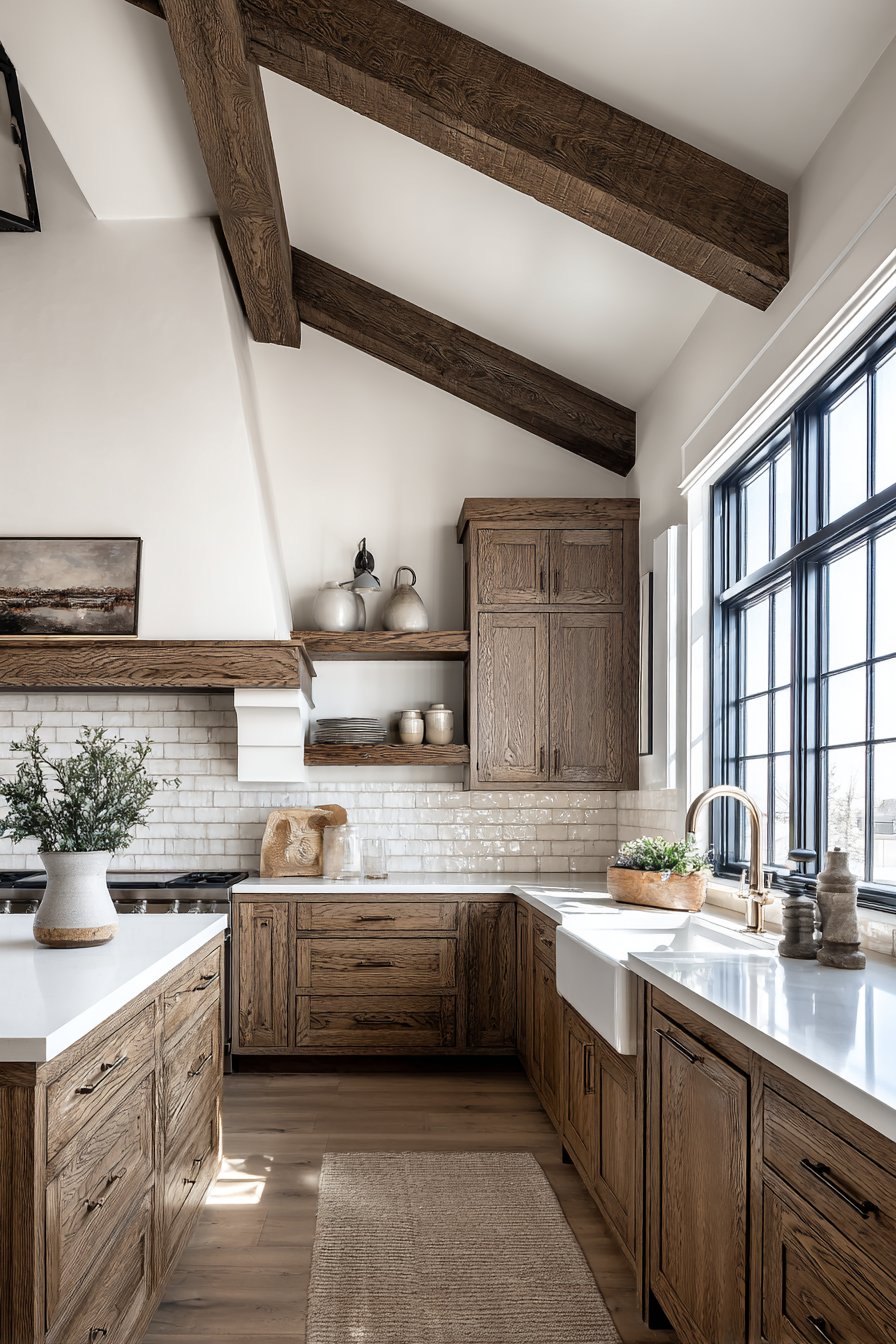
The large center island becomes the heart of this oak cabinet kitchen, featuring a matching oak base that provides substantial additional storage and generous prep space. Natural daylight streaming through windows above the sink performs magic on the rich wood texture, highlighting every nuance of grain pattern and bringing the oak cabinetry to life.
The interplay of natural light and shadow throughout the day showcases the dimensional quality of the wood, revealing depths and variations that artificial lighting alone cannot achieve. This kitchen demonstrates how traditional oak cabinetry can anchor a space while allowing modern elements to shine, creating an environment that feels both established and contemporary.
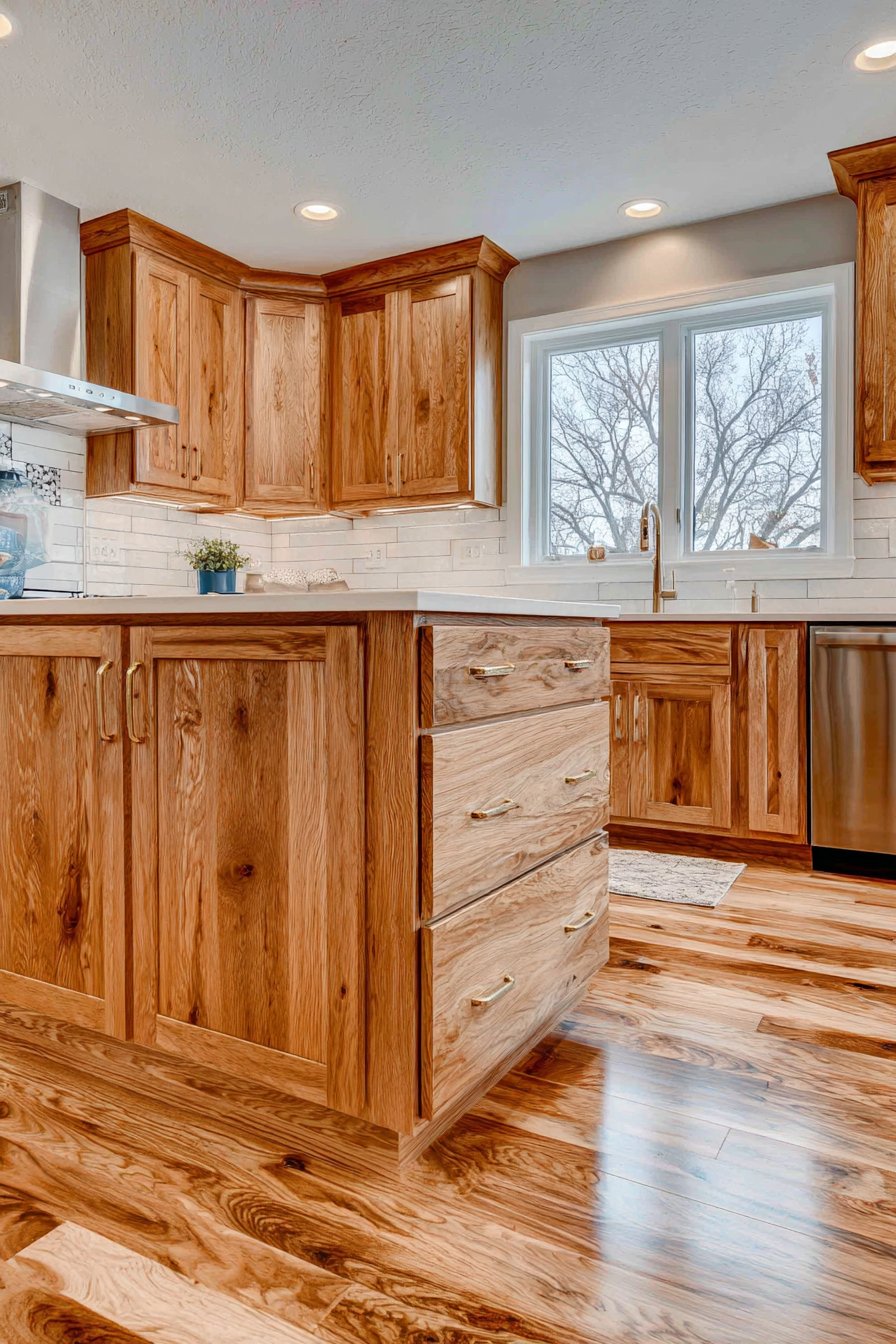
Key Design Tips:
- Select oak cabinetry with visible knots and natural grain variations to maximize authentic character and visual interest throughout the space
- Pair honey-toned oak with white or light-colored countertops to create contrast while maintaining a bright, open atmosphere
- Install brushed brass or bronze hardware that complements oak’s warm undertones without overwhelming the natural wood beauty
- Maximize natural light placement near oak cabinets to showcase the wood’s depth, grain patterns, and changing character throughout the day
- Choose warm cream or beige backsplash tiles that bridge the transition between oak cabinetry and white countertops for cohesive design
2. Medium Oak Kitchen with Stainless Steel Sophistication
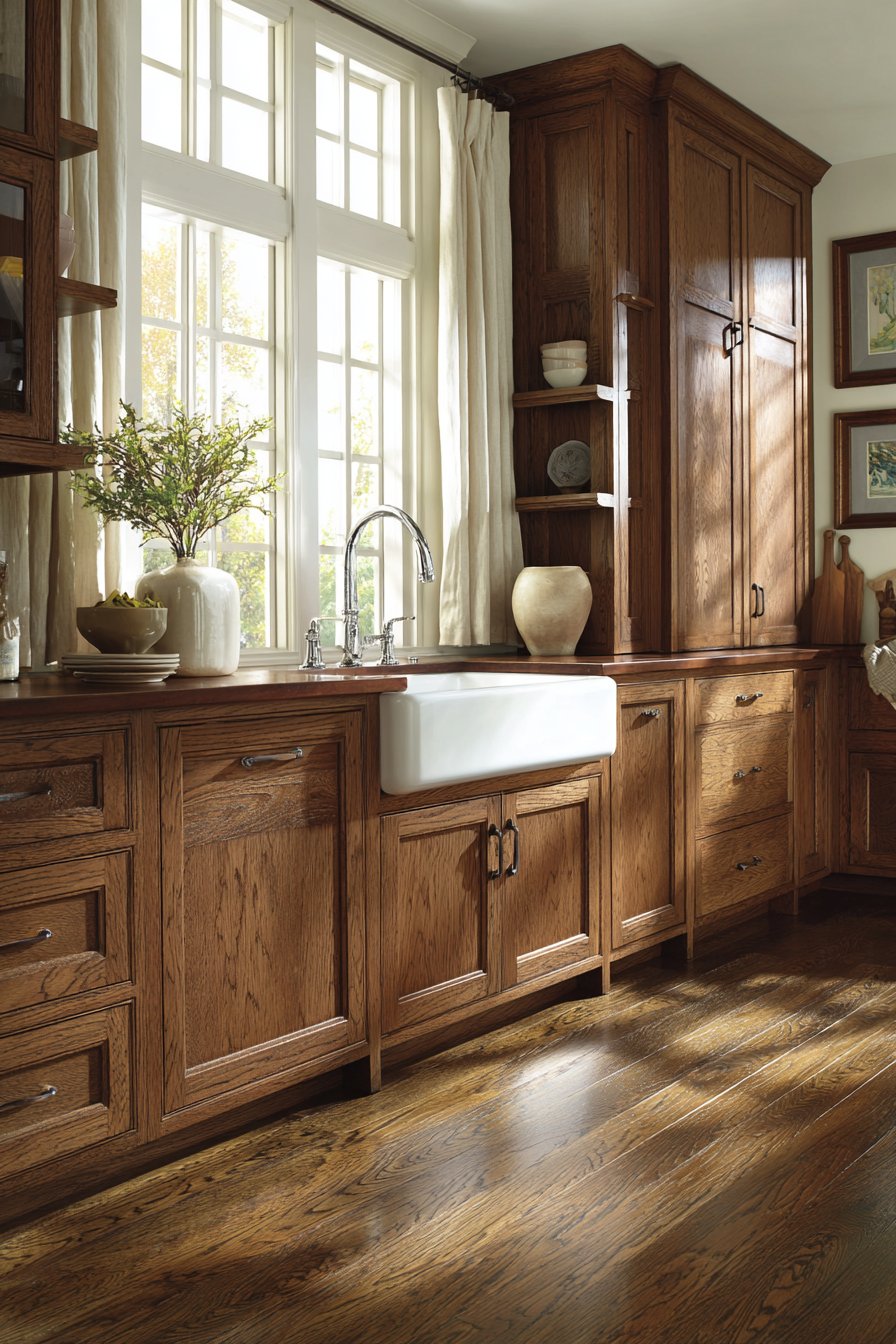
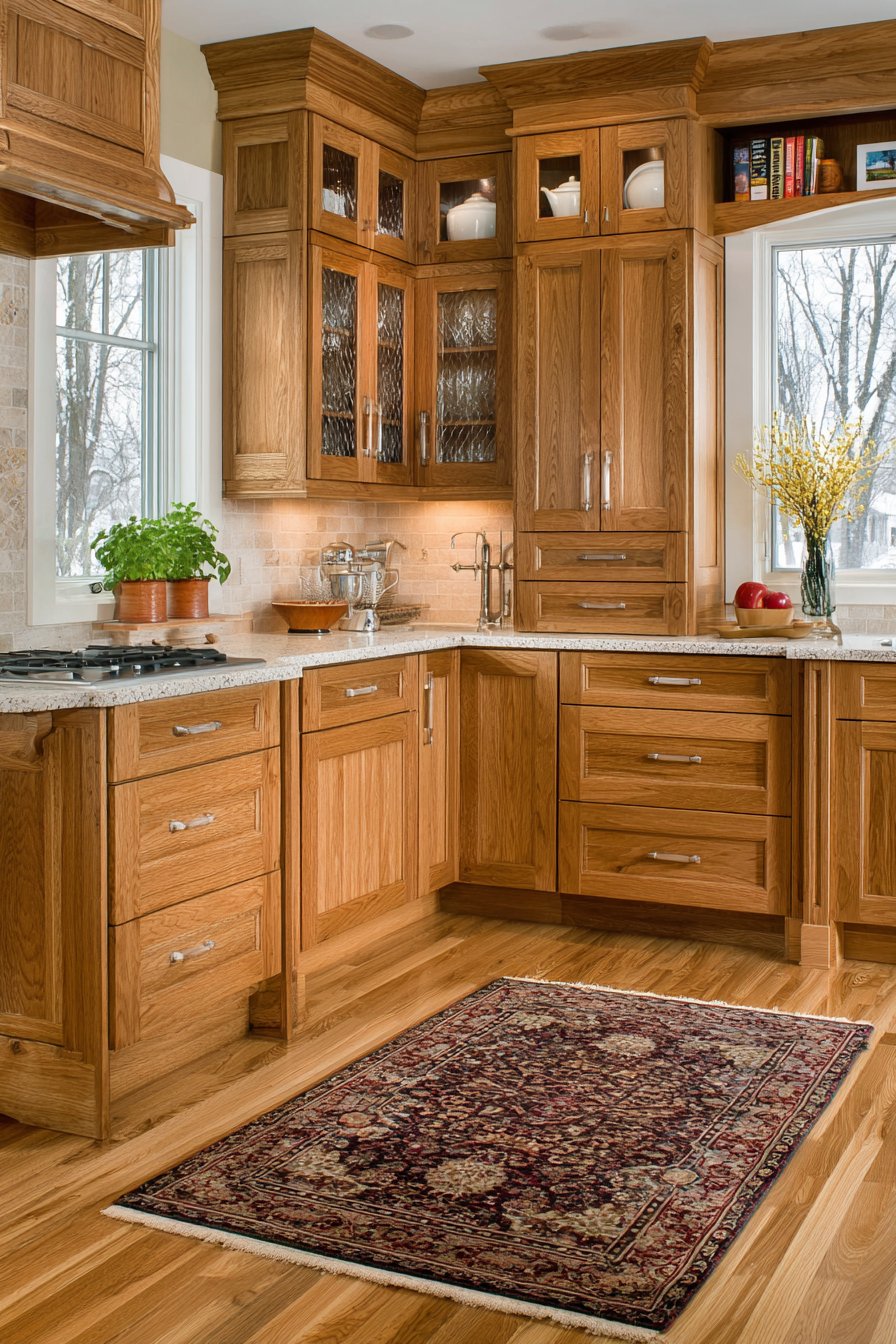
The marriage of traditional craftsmanship and modern convenience comes alive in this oak cabinet kitchen featuring upper and lower cabinetry in a refined medium oak finish. The cathedral grain patterns flow across raised panel doors, creating a sense of movement and visual rhythm that draws the eye throughout the space.
These traditional door styles speak to classic woodworking heritage, showcasing the skill and attention to detail that elevates oak cabinetry beyond mere storage to become genuine furniture pieces. The medium oak tone strikes a perfect balance—neither too light nor too dark—providing warmth without overwhelming the space with heaviness.
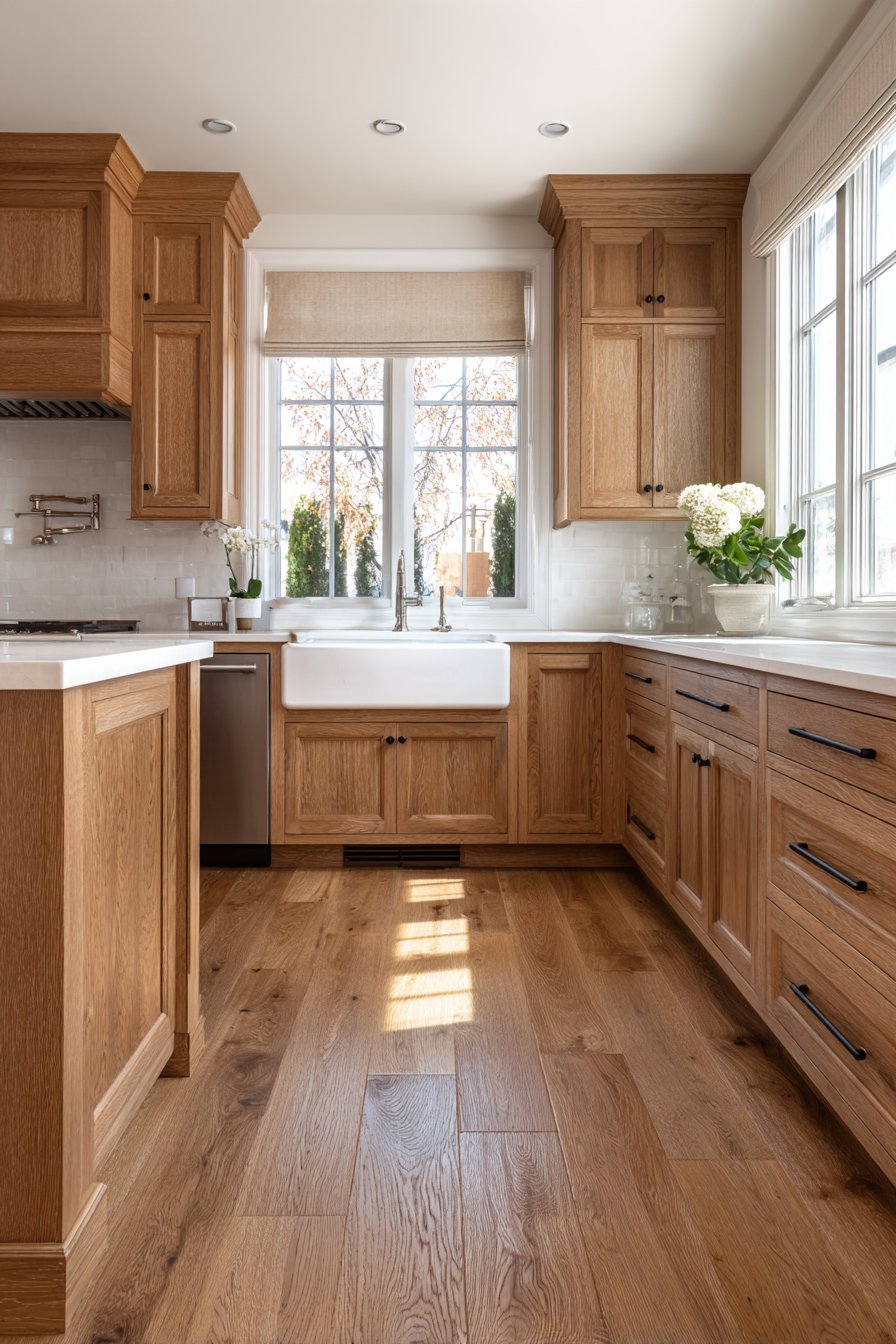
Stainless steel appliances introduce contemporary functionality while creating an unexpected harmony with the warm wood aesthetic. The cool metallic surfaces provide visual contrast that prevents monotony, their reflective qualities bouncing light around the room and enhancing the overall brightness.
A farmhouse sink nestled beneath a window becomes a focal point of both beauty and practicality, its generous basin ideal for everything from washing large pots to arranging fresh flowers. Simple linen cafe curtains frame the window with understated elegance, allowing natural light to filter through while maintaining privacy and softness.
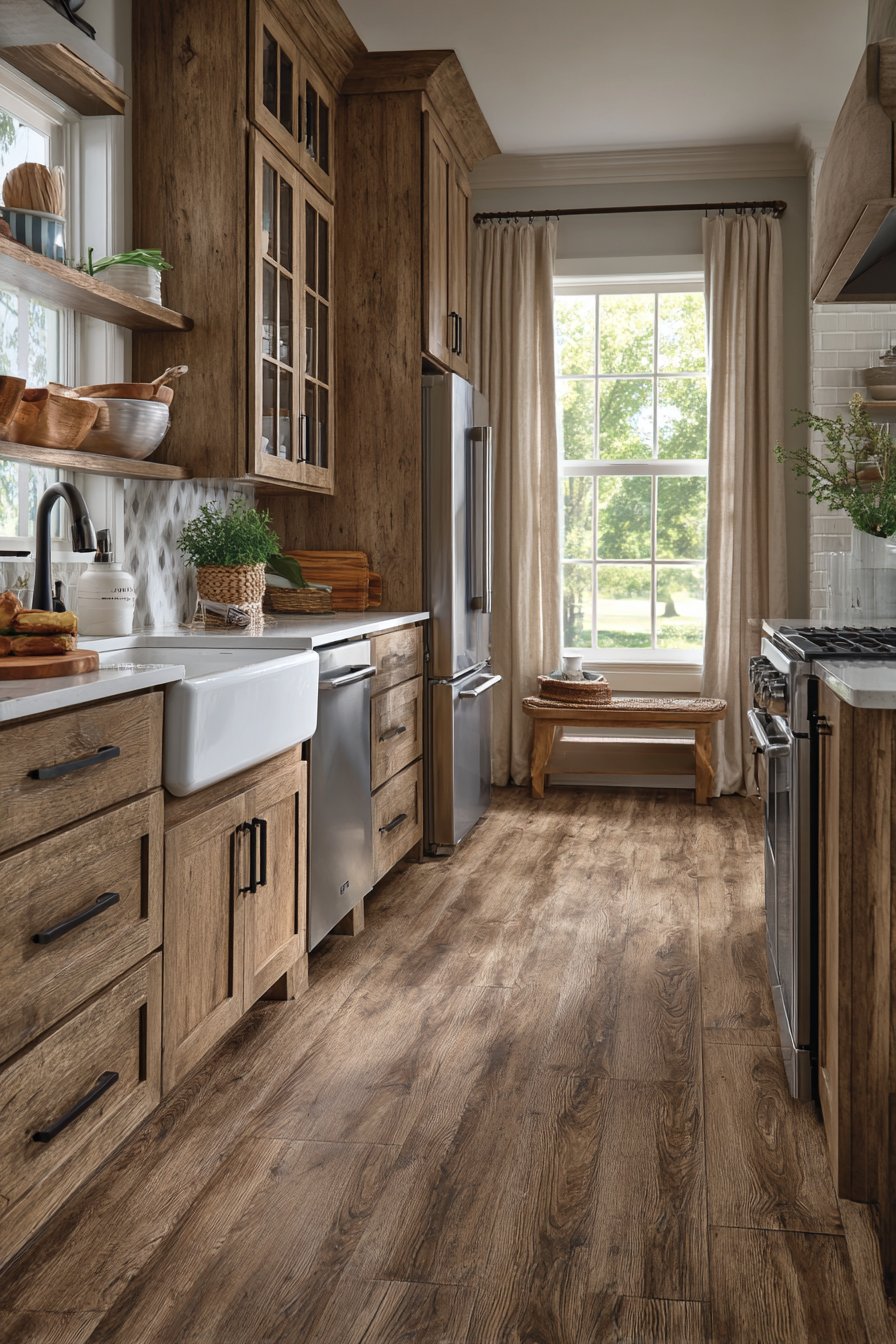
The hardwood flooring extends the natural wood narrative throughout the space, its complementary medium brown tones creating continuity from floor to ceiling. This cohesive approach to material selection establishes a unified aesthetic that feels intentional and well-considered.
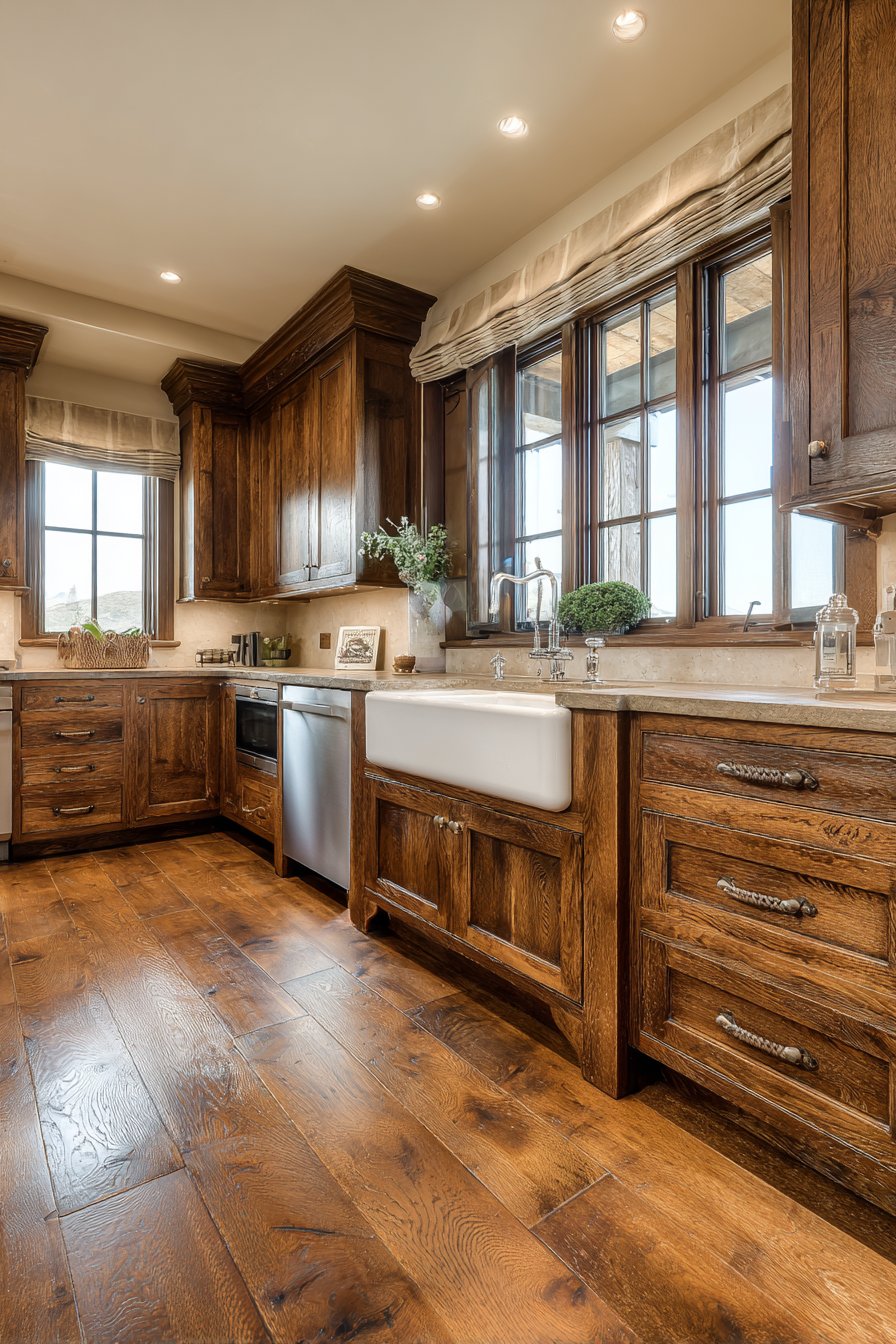
Soft natural lighting from multiple windows creates gentle shadows that dance across the dimensional oak cabinet doors, accentuating their raised panel construction and revealing the subtle natural variations in oak’s coloring. These light patterns change throughout the day, ensuring that the kitchen never appears static but instead evolves with the sun’s movement, offering new perspectives on familiar surfaces.
Key Design Tips:
- Choose raised panel oak doors with cathedral grain patterns to add traditional elegance and visual interest to your kitchen cabinetry
- Integrate stainless steel appliances to modernize oak kitchens while maintaining the warmth that makes wood cabinetry so appealing
- Install a farmhouse sink beneath a window to create a functional and aesthetically pleasing focal point that enhances daily kitchen tasks
- Select hardwood flooring in tones that complement rather than match oak cabinetry to create depth while maintaining natural wood cohesion
- Utilize multiple light sources and windows to create dynamic shadow play that highlights the dimensional qualities of raised panel oak doors
3. Cozy Oak Kitchen with Glass-Front Display Cabinets
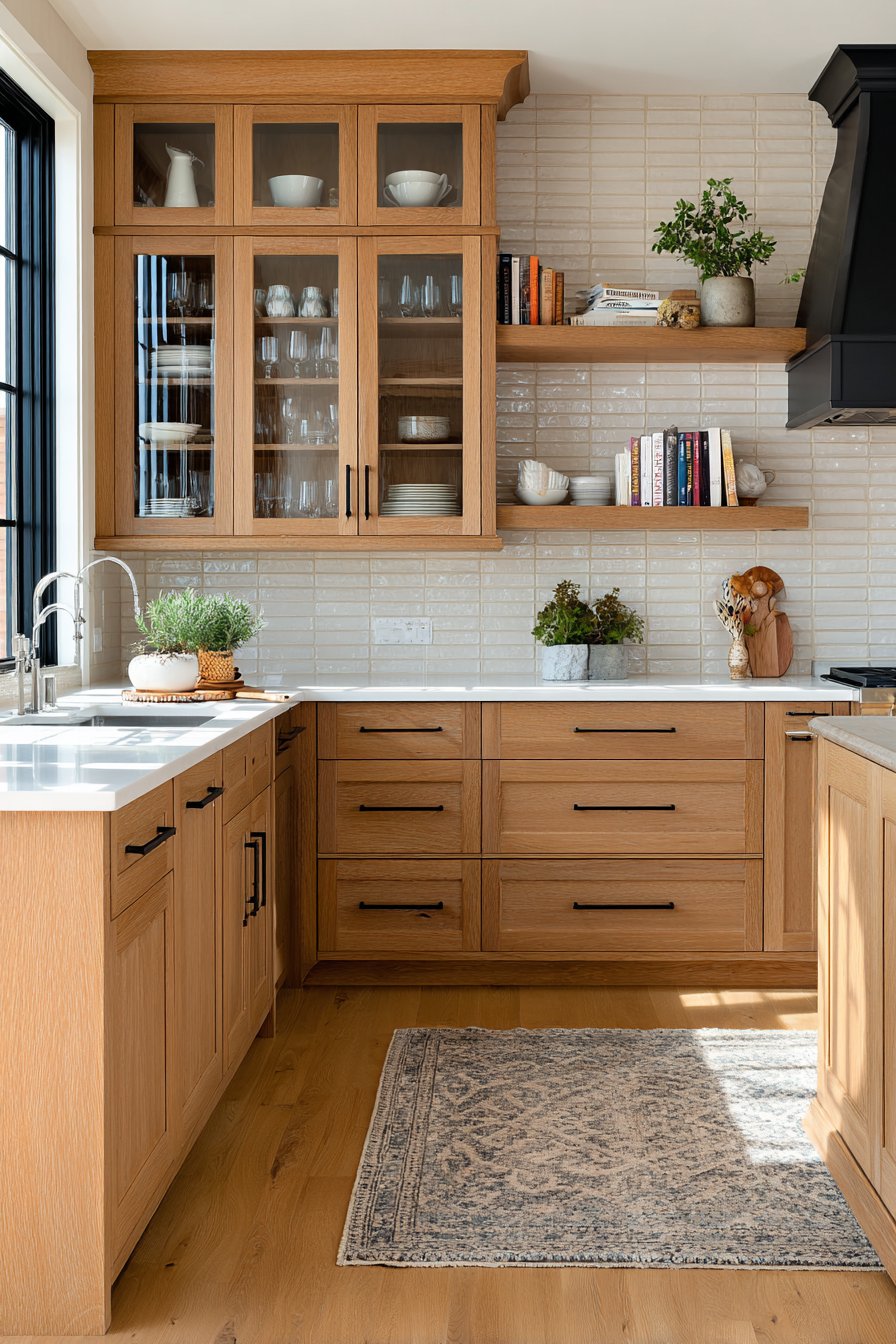
Warmth and personality converge in this charming oak cabinet kitchen where glass-front upper cabinets become showcases for treasured dishware and vintage glassware collections. The transparency of these display cabinets adds an element of openness that prevents the space from feeling enclosed, while simultaneously providing opportunities for personal expression through curated displays.
White dishware creates a clean, classic presentation against the oak backing, while vintage glassware catches and refracts light, adding sparkle and dimension to the upper reaches of the kitchen. The solid oak lower cabinets balance this openness by providing concealed storage for less photogenic necessities.
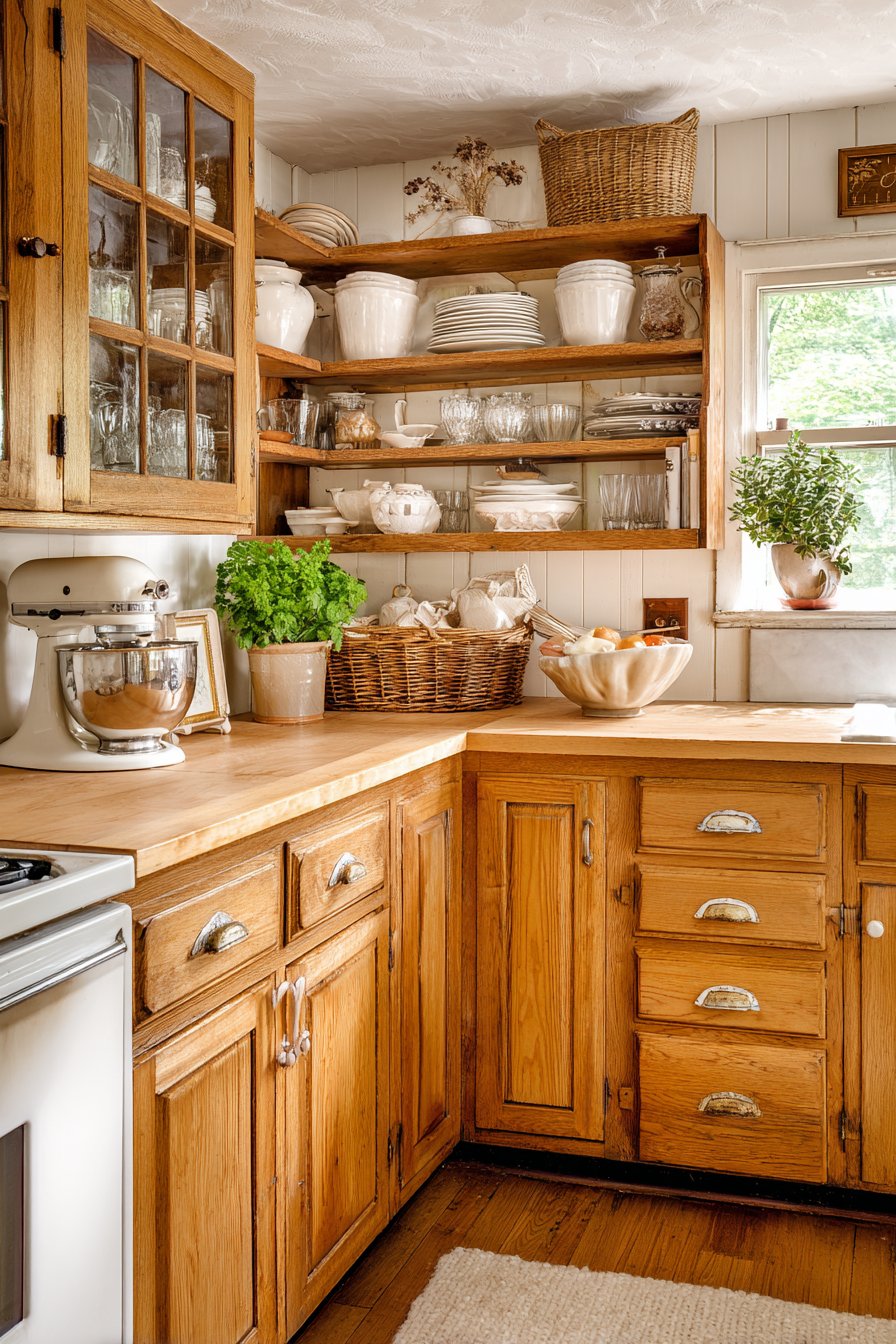
Butcher block countertops in warm maple create a seamless transition from cabinetry to work surface, establishing a cohesive natural wood aesthetic that celebrates organic materials. The end-grain construction of quality butcher block provides both beauty and functionality, its knife-friendly surface becoming a practical prep area that actually improves with use.
This surface develops a rich patina over time, telling the story of countless meals prepared and shared. Open shelving on one wall extends the display concept, offering homes for cookbooks whose colorful spines add pops of color, and potted herbs that bring living greenery into the space.
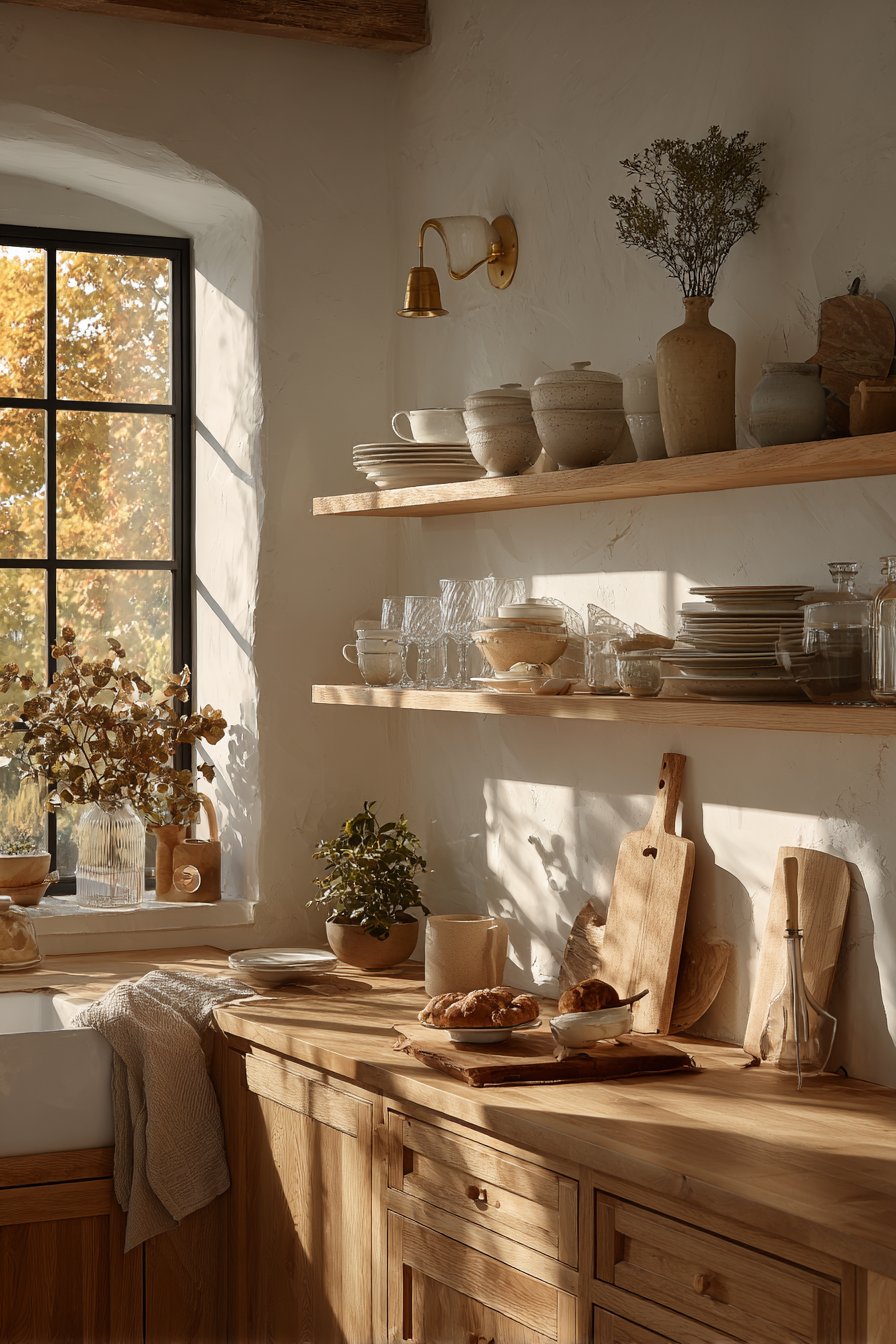
The golden hour lighting transforms this oak cabinet kitchen into something truly magical. Warm afternoon sunlight streaming through a side window illuminates the varied tones and grain patterns in the oak surfaces, creating a luminous quality that seems to emanate from the wood itself.
The natural variations in oak—from lighter sapwood streaks to deeper heartwood tones—become more pronounced in this directional lighting, revealing the full complexity and beauty of the material. This interplay of natural elements—wood, light, and living plants—creates an environment that feels connected to nature despite being thoroughly functional for modern cooking needs.
Key Design Tips:
- Install glass-front upper oak cabinets to display beautiful dishware while creating visual openness and reducing the visual weight of cabinetry
- Pair oak cabinetry with butcher block countertops to create a unified natural wood aesthetic that emphasizes organic materials and warmth
- Add open shelving sections to break up solid cabinetry runs while providing accessible storage for frequently used items and decorative displays
- Position windows to capture golden hour lighting that will dramatically enhance the beauty of oak grain patterns and natural color variations
- Display white dishware and glassware against oak cabinet interiors to create clean contrast and allow the wood grain to serve as a natural backdrop
4. Transitional Oak Kitchen with Shaker Simplicity
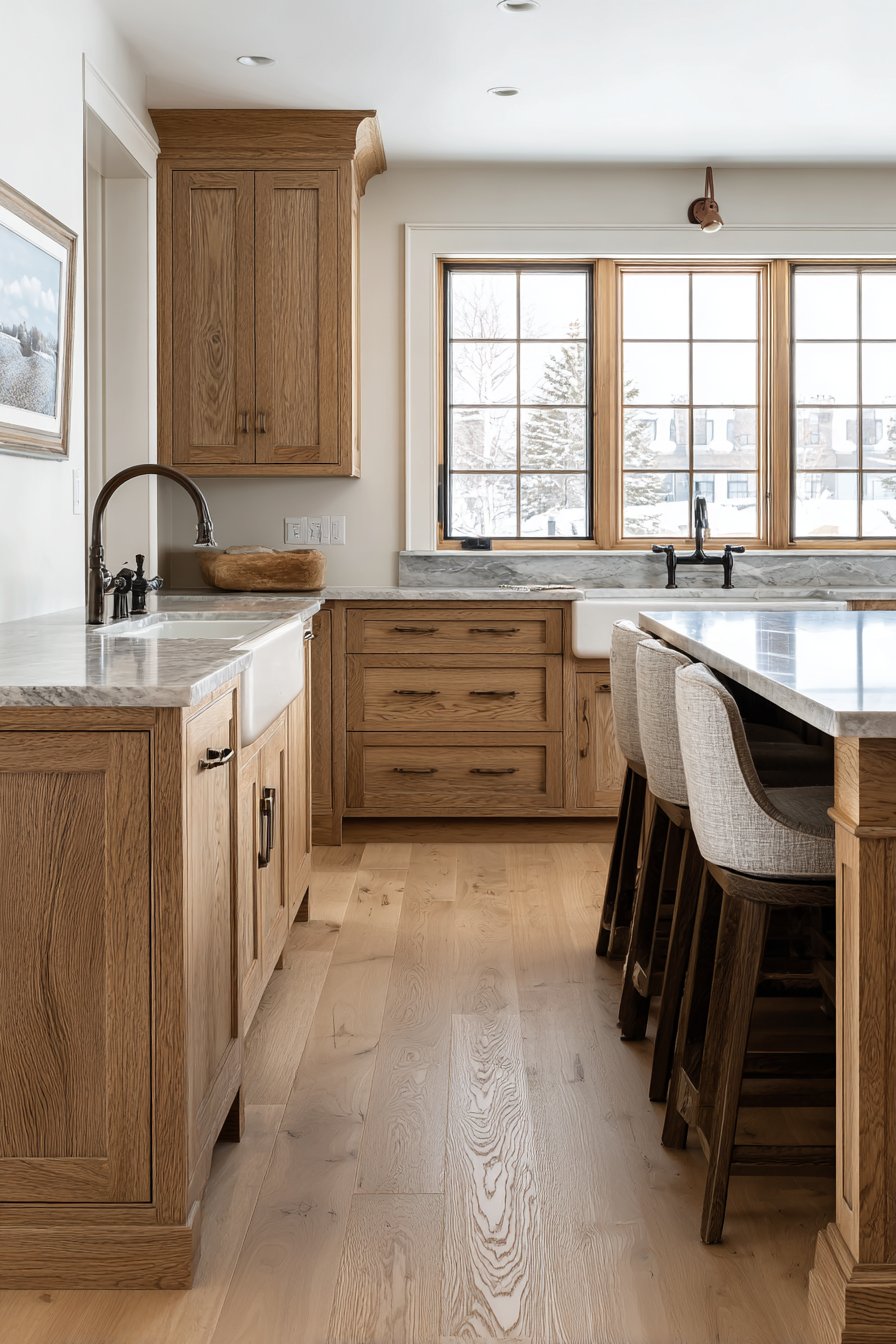
Sophisticated restraint defines this transitional oak cabinet kitchen where shaker-style doors in natural finish demonstrate that simplicity can be the ultimate form of elegance. The clean lines and minimal ornamentation of shaker design allow the beauty of the oak grain to take center stage, unobscured by fussy details or elaborate carvings.
Simple bronze knobs provide just enough hardware interest without detracting from the wood’s inherent beauty. This design philosophy embraces the “less is more” principle, proving that oak cabinetry doesn’t require elaborate styling to make a powerful design statement.
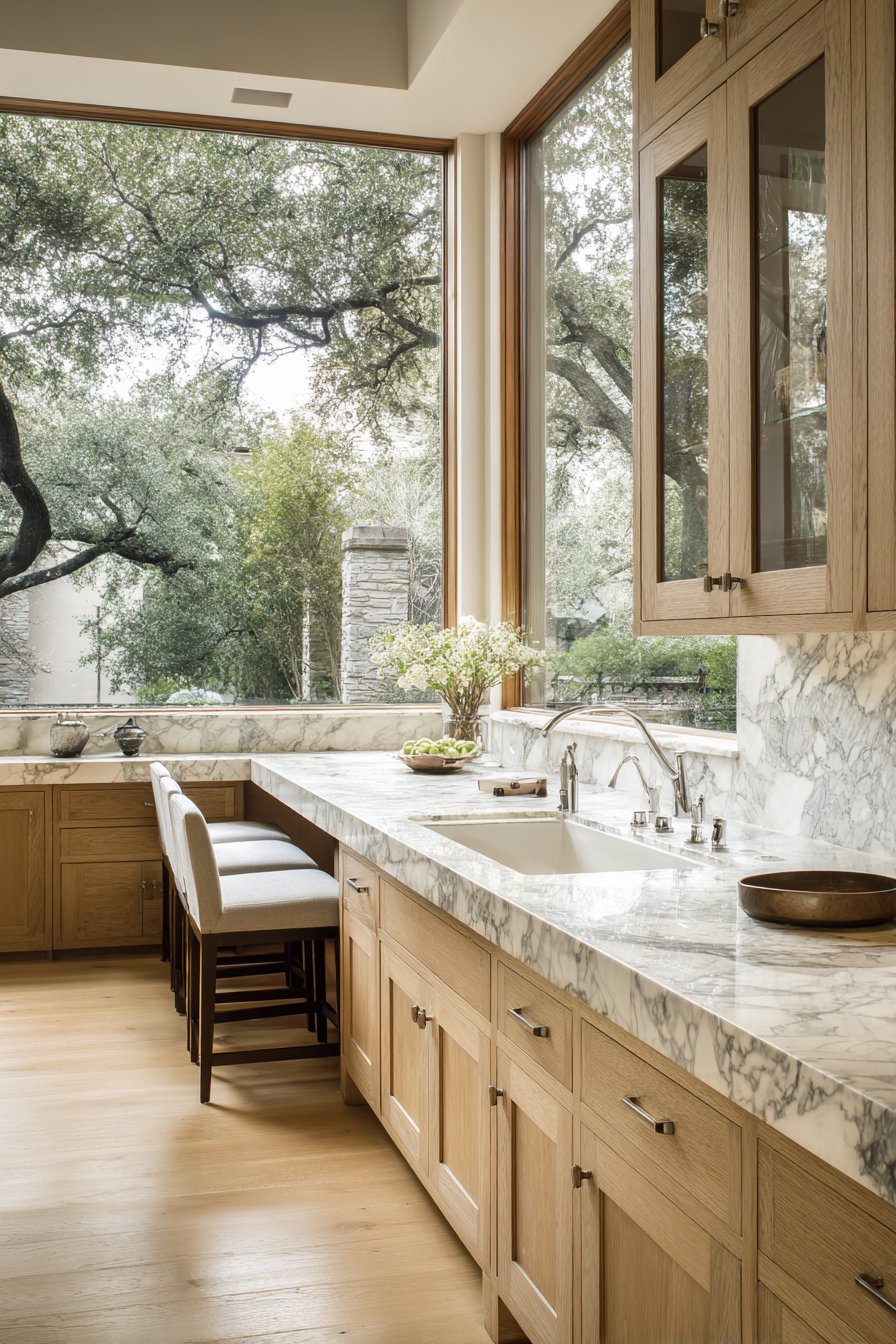
A large picture window above the farmhouse-style sink creates a stunning focal point that connects indoor cooking spaces with outdoor natural beauty. This window frames garden views like living artwork that changes with the seasons, bringing nature’s palette into daily kitchen activities.
The flood of natural light it provides transforms the workspace into a bright, cheerful environment where food preparation becomes genuinely enjoyable. Grey-veined marble countertops introduce an element of sophistication and luxury, their cool tones and elegant veining creating visual interest while maintaining overall warmth alongside the oak cabinetry.
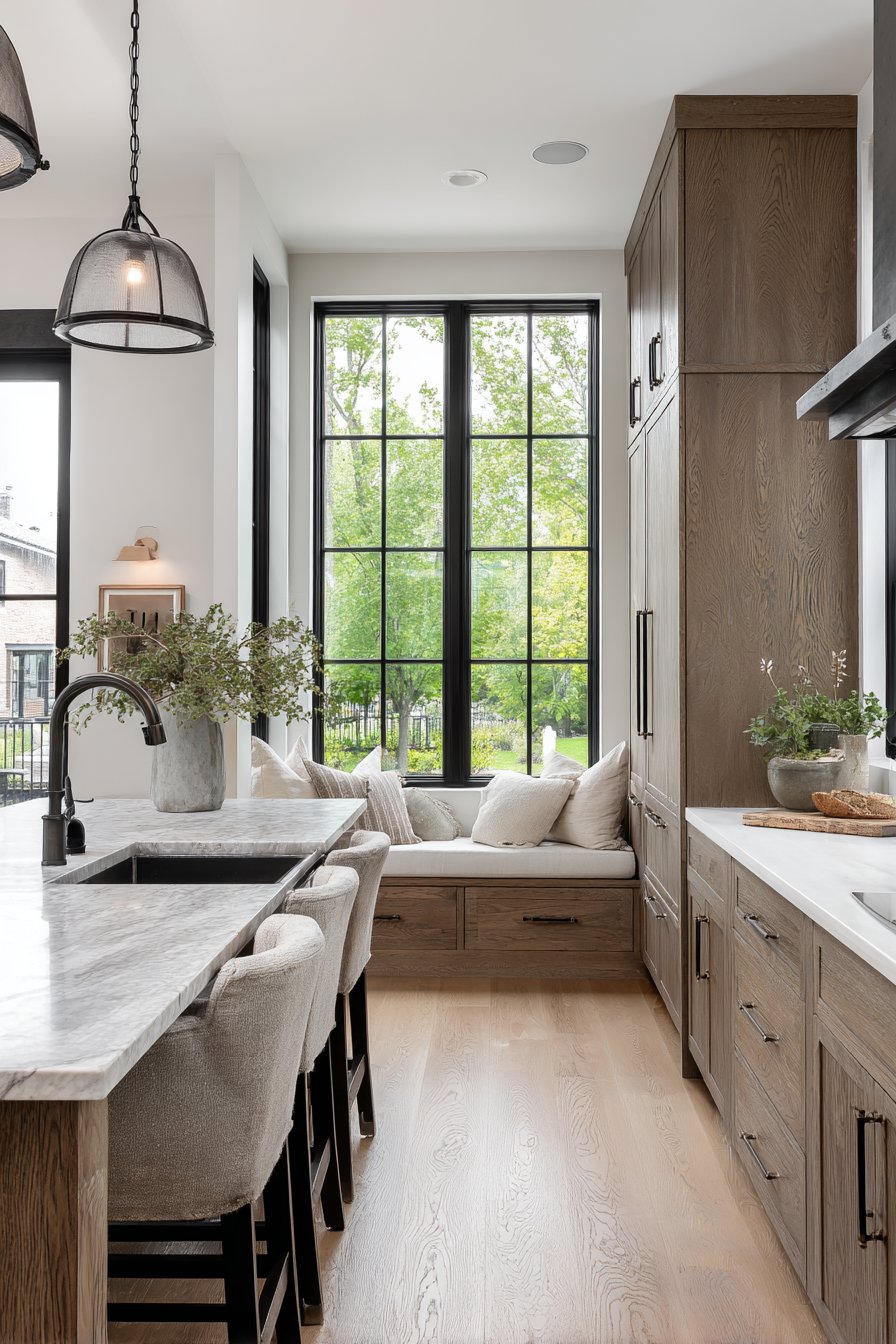
The kitchen peninsula extends the workspace while providing a natural gathering spot, its oak cabinet base supporting a countertop overhang that accommodates three upholstered counter stools. This casual seating area transforms the kitchen into a social hub where family and friends can congregate while meals are prepared, breaking down barriers between cook and guests.
The practical layout maximizes efficiency without sacrificing style, demonstrating how thoughtful space planning can enhance both functionality and aesthetics. Professional lighting design ensures that both the functional workspace and the beautiful natural oak wood grain receive appropriate illumination throughout all hours of use.
Key Design Tips:
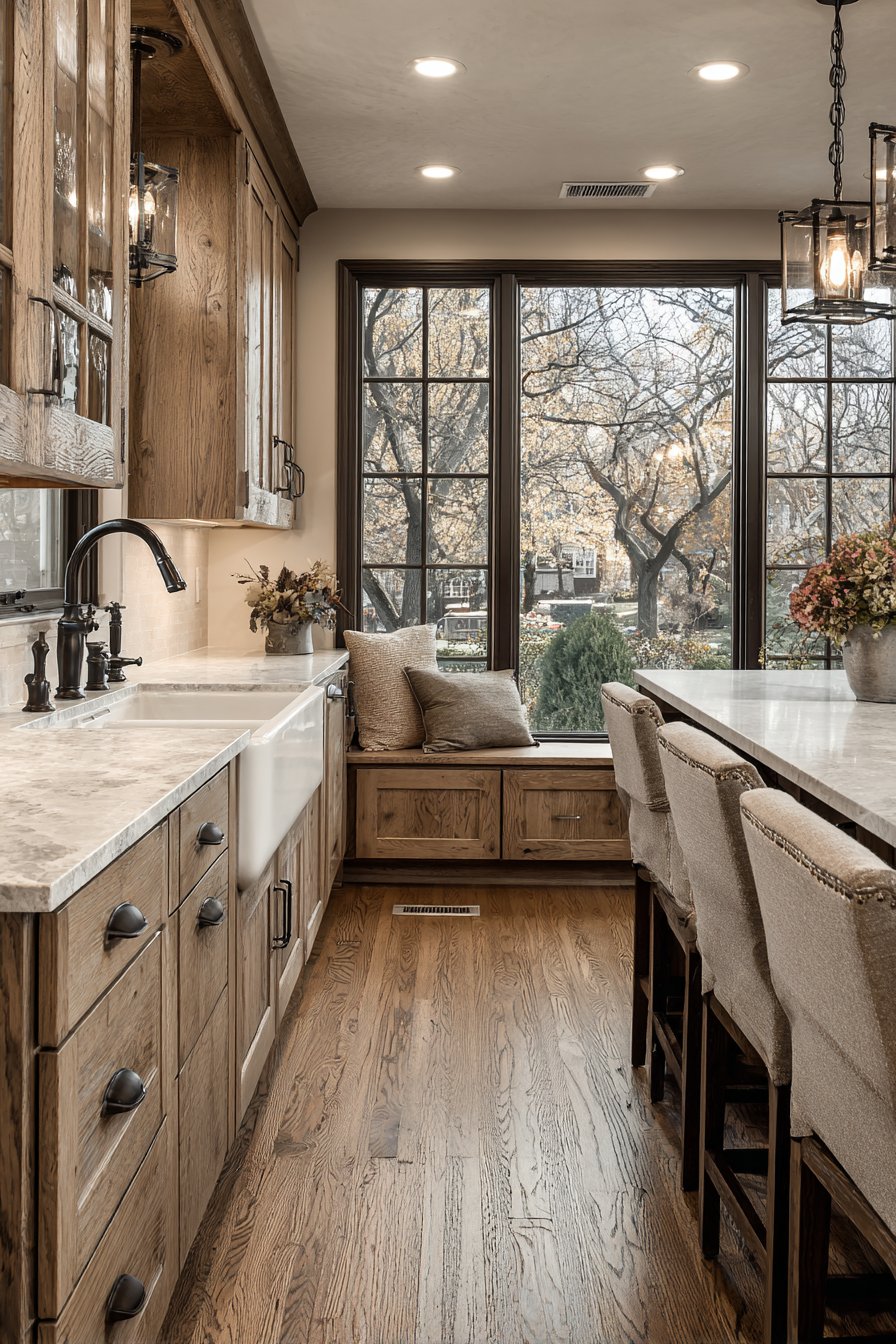
- Select shaker-style oak doors with simple bronze hardware to achieve a transitional aesthetic that bridges traditional and contemporary design
- Install a large picture window above the sink to flood the workspace with natural light while creating a connection to outdoor views
- Choose grey-veined marble countertops to add sophistication and cool-toned contrast that prevents oak kitchens from feeling too warm or rustic
- Design a peninsula with oak cabinet base and seating overhang to create casual dining space that encourages social interaction during meal prep
- Plan lighting carefully to ensure both functional task illumination and accent lighting that showcases the natural beauty of oak wood grain
5. Compact Oak Kitchen with Floor-to-Ceiling Storage
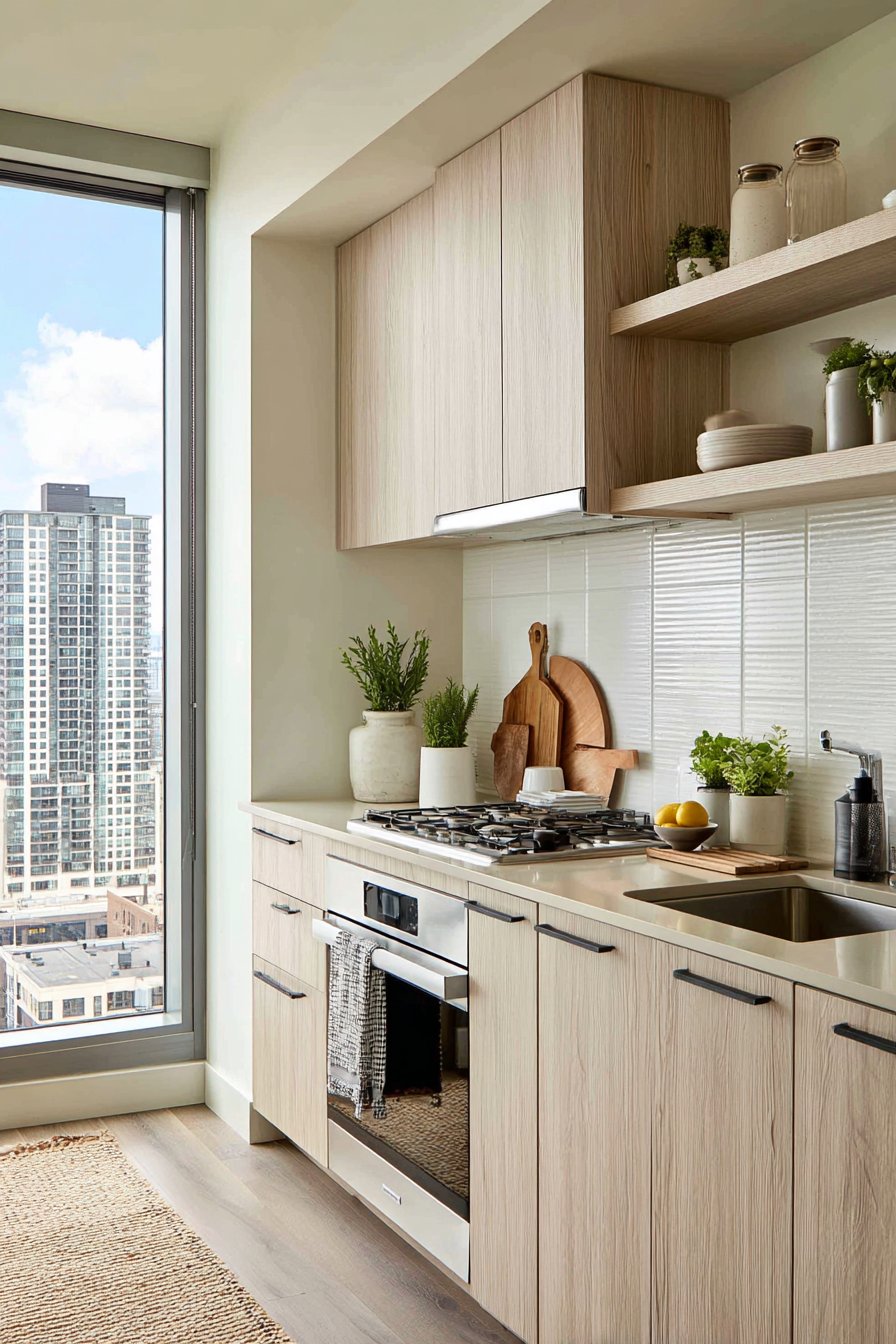
Efficiency meets elegance in this thoughtfully designed oak cabinet kitchen that maximizes every inch of available space through floor-to-ceiling cabinetry. The light oak finish with subtle grain variation creates an airy feeling despite the abundance of storage, proving that small kitchens need not sacrifice either capacity or style.
Contemporary flat-panel doors contribute to the streamlined aesthetic, their simple surfaces reflecting modern sensibilities while allowing the natural beauty of the oak wood to remain visible. This approach demonstrates how oak cabinetry can adapt to contemporary design preferences without losing its essential character.
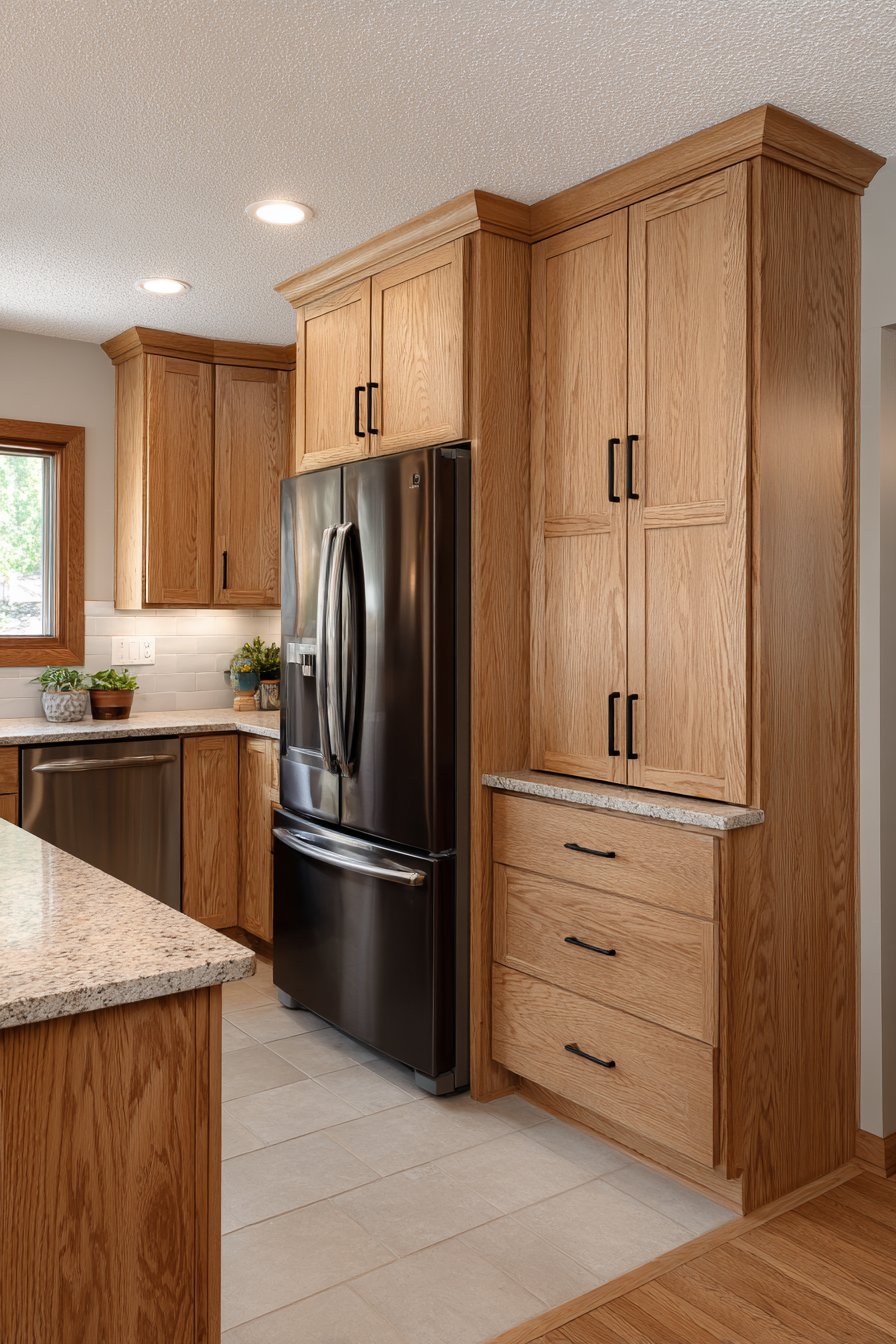
White ceramic tile backsplash with grey grout provides clean visual contrast while maintaining a bright, open atmosphere that prevents the compact space from feeling cramped or dark. The grey grout lines create subtle definition without harshness, adding just enough pattern interest to enliven the backsplash without overwhelming the small kitchen.
Undermount lighting beneath upper oak cabinets serves a dual purpose—providing essential task illumination for countertop work areas while creating a warm glow that highlights the granite countertops in warm beige tones. These counters echo the earthy warmth of the oak while offering a slightly different texture and color that adds depth to the material palette.
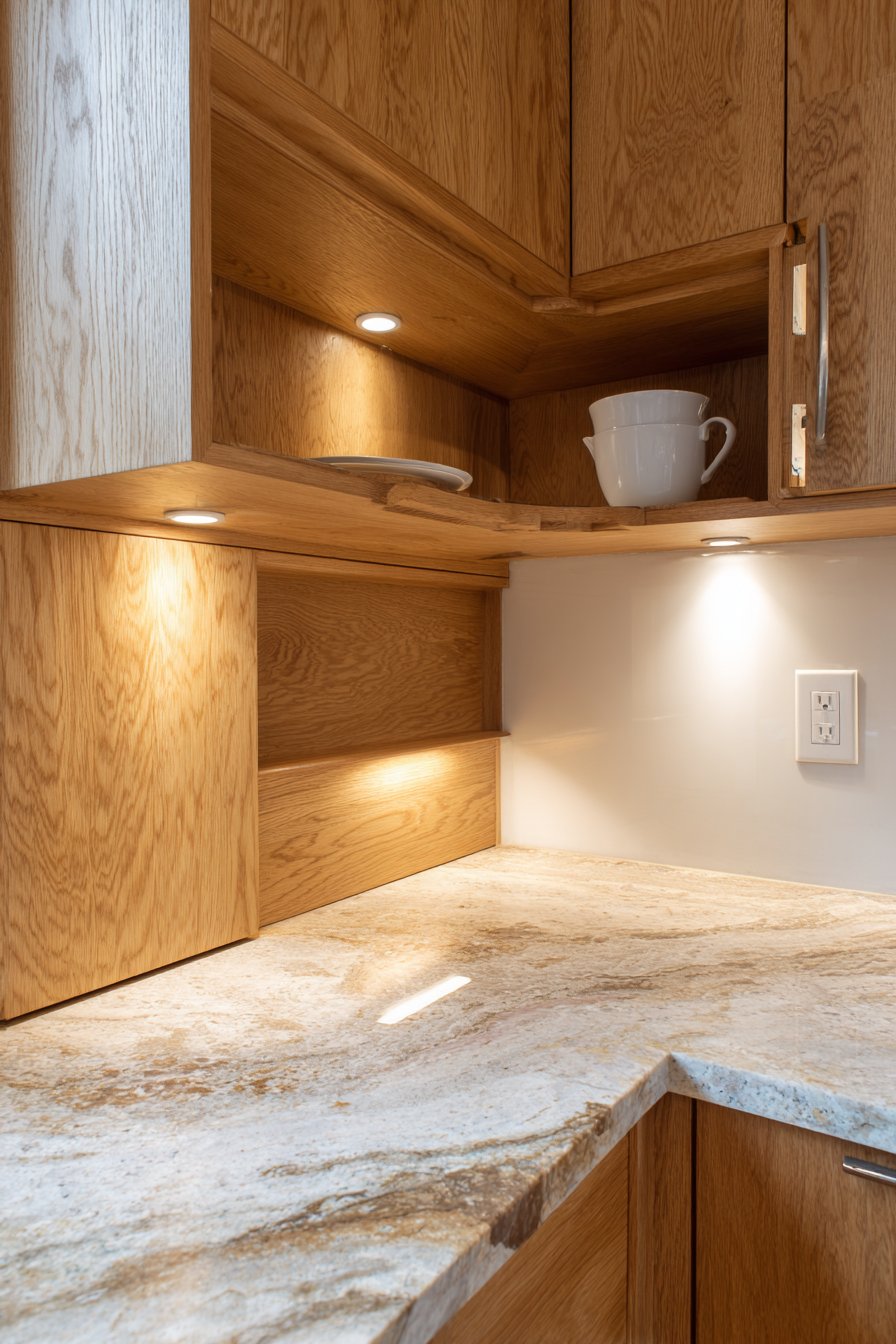
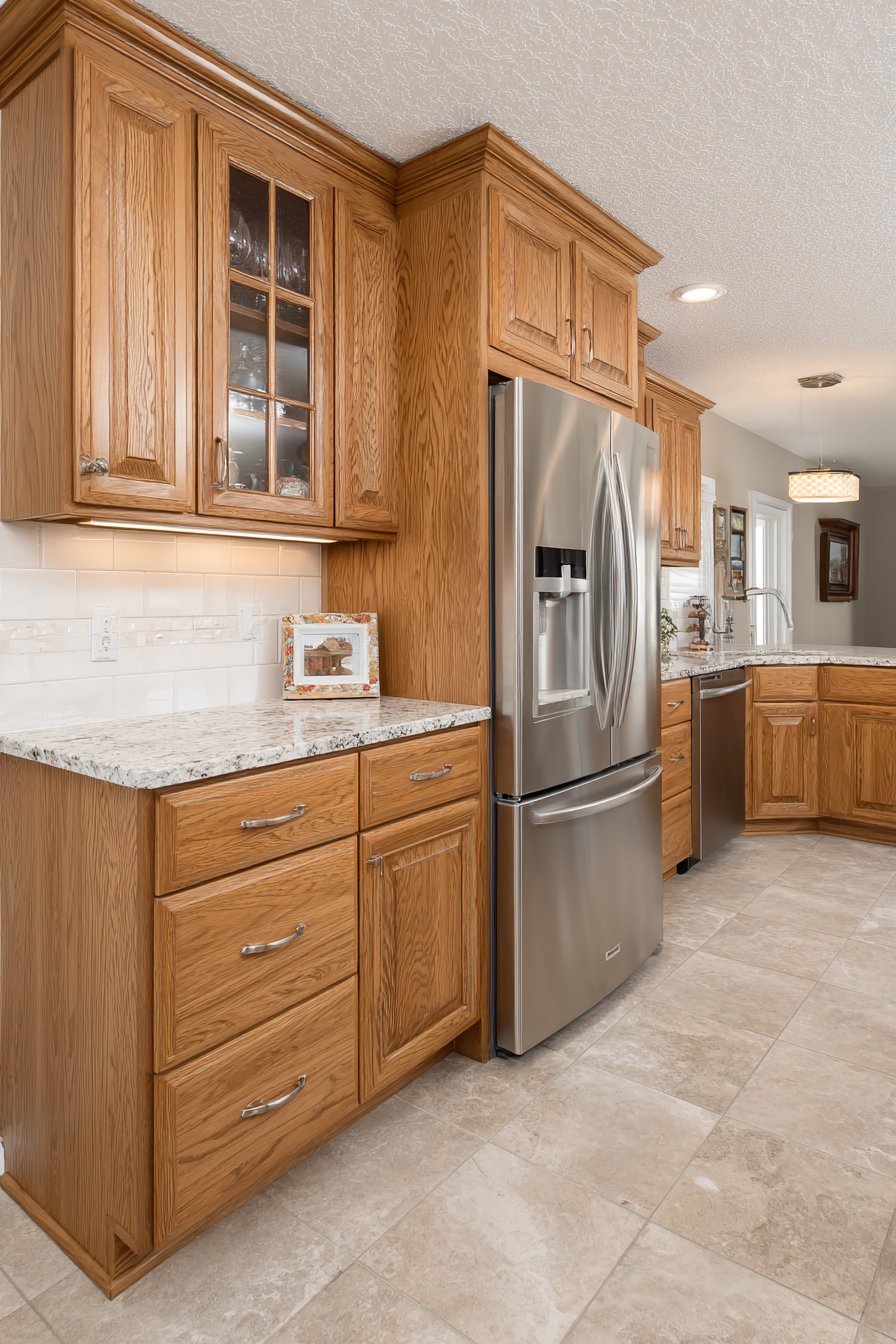
Stainless steel appliances are thoughtfully integrated into the oak cabinet runs, creating a seamless appearance that prioritizes visual continuity over appliance prominence. This integration approach makes the space feel more furniture-like and less utilitarian, an important consideration in compact kitchens where every visual element carries significant weight.
The clever storage solutions hidden within the floor-to-ceiling oak cabinetry—pull-out pantries, vertical dividers, specialized organizers—demonstrate that space-efficient design requires careful planning rather than compromise. Natural lighting highlights the practical elegance of the entire oak cabinet system, revealing how thoughtful design can make a compact kitchen feel both spacious and luxurious.
Key Design Tips:
- Install floor-to-ceiling oak cabinetry in compact kitchens to maximize storage capacity without consuming additional floor space
- Choose light oak finishes with flat-panel doors to create a contemporary, streamlined aesthetic that prevents small spaces from feeling heavy
- Add undermount lighting beneath upper cabinets to provide task illumination while creating ambient warmth that enhances oak’s natural beauty
- Select warm beige or cream countertops that complement oak tones while maintaining brightness in compact spaces
- Integrate appliances into oak cabinet runs for a seamless, furniture-like appearance that emphasizes design continuity over individual appliances
6. Rustic Oak Kitchen with Distressed Charm
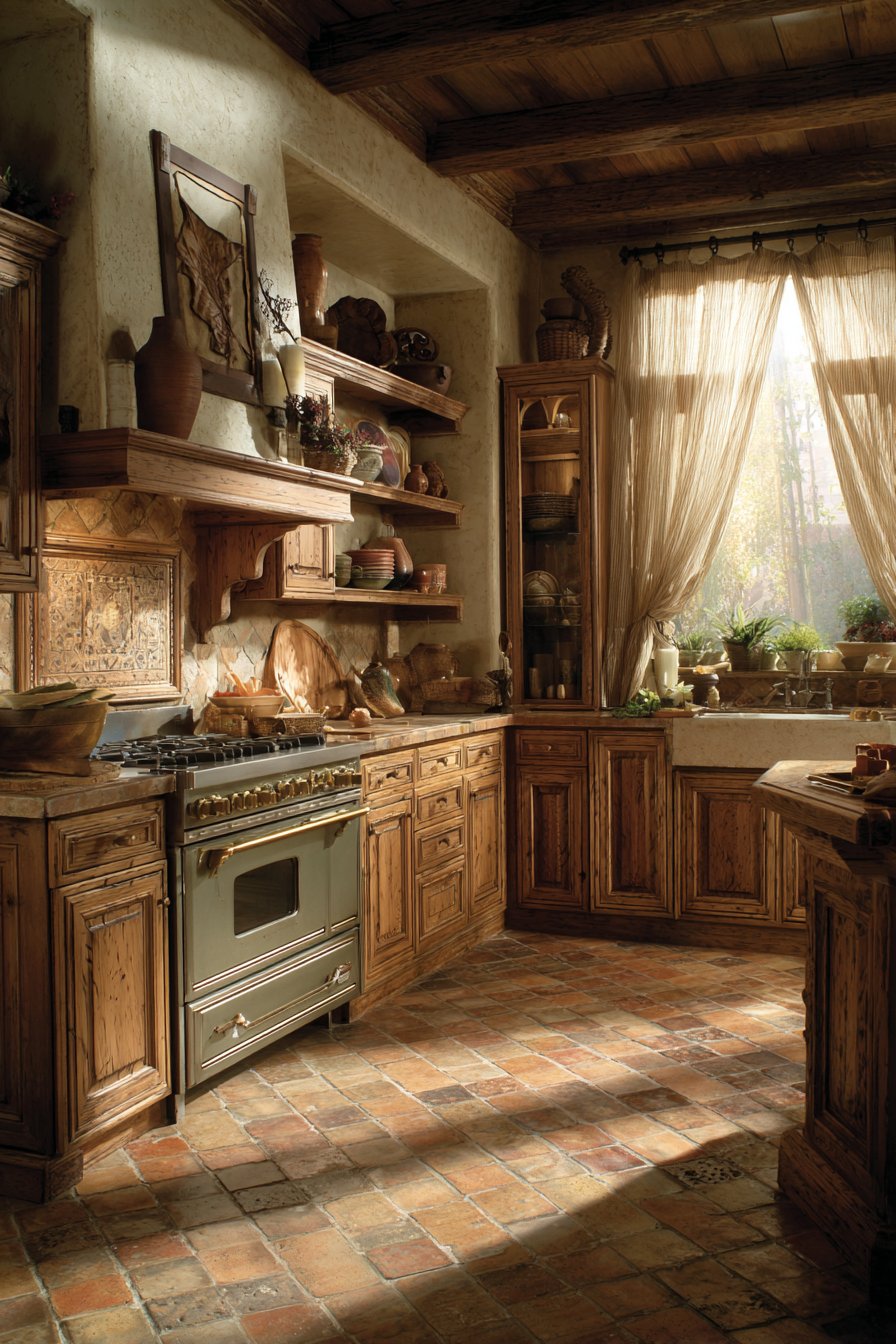
Authenticity and character define this rustic oak cabinet kitchen where distressed medium-oak finishes tell stories through every wear pattern and natural character mark. This intentionally aged appearance celebrates the beauty of imperfection, acknowledging that true character comes from use, time, and history.
The distressing technique reveals lighter wood beneath the surface finish, creating depth and dimension that new, perfect cabinetry simply cannot match. This approach appeals to those who appreciate patina and want their kitchen to feel established and lived-in from day one, as though it has been the heart of the home for generations.
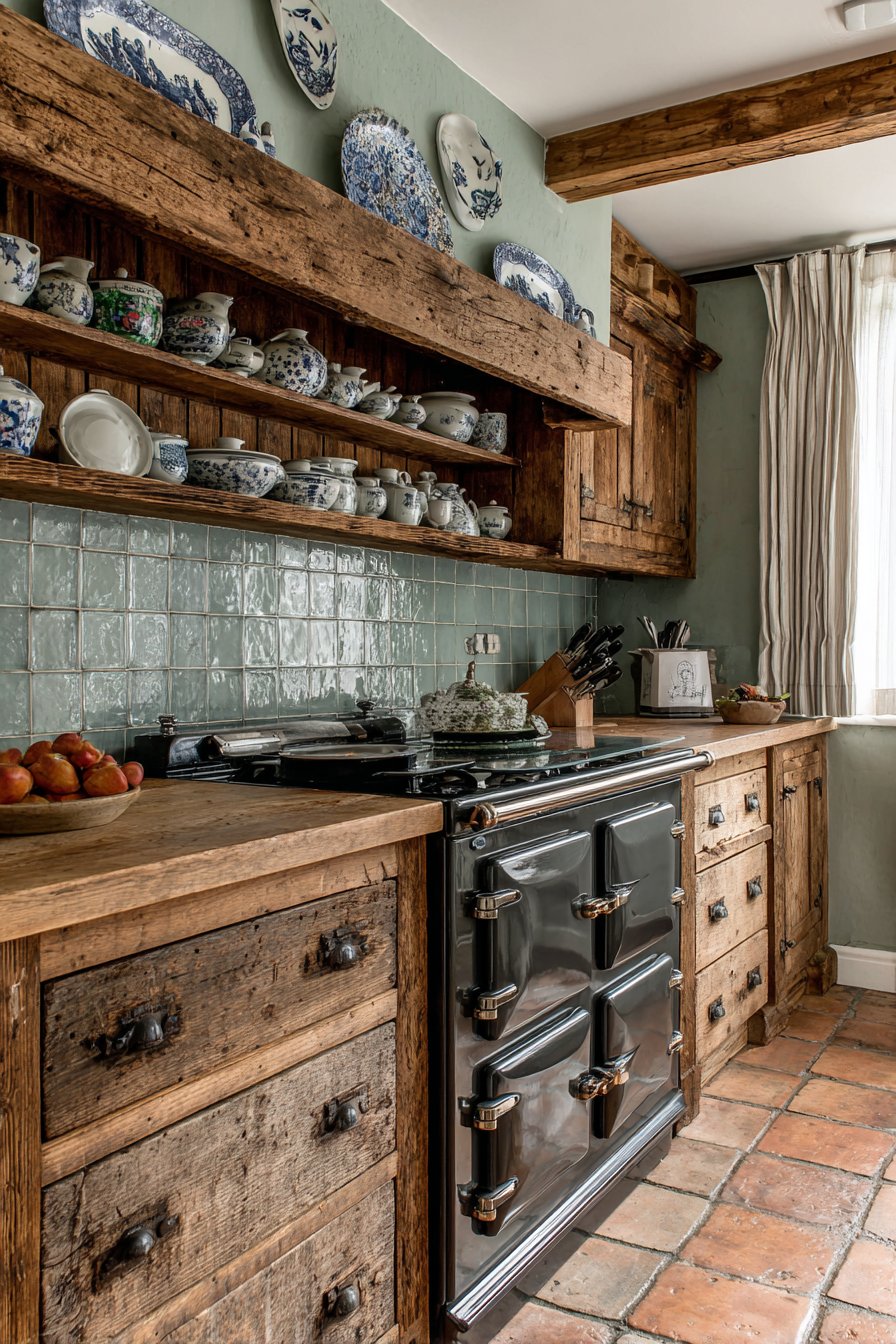
Open upper shelving alternates with traditional oak cabinet sections, creating a dynamic visual rhythm that prevents monotony while serving practical purposes. The open shelves display ceramic serving pieces that become part of the kitchen’s decorative scheme, transforming functional items into art.
This mix of open and closed storage adds variety to the visual landscape while keeping frequently used items easily accessible. A vintage-inspired range with brass accents serves as the kitchen’s focal point, its presence commanding attention and establishing the design’s nostalgic character. The beadboard backsplash painted in soft sage green introduces color while maintaining the cottage-inspired aesthetic.
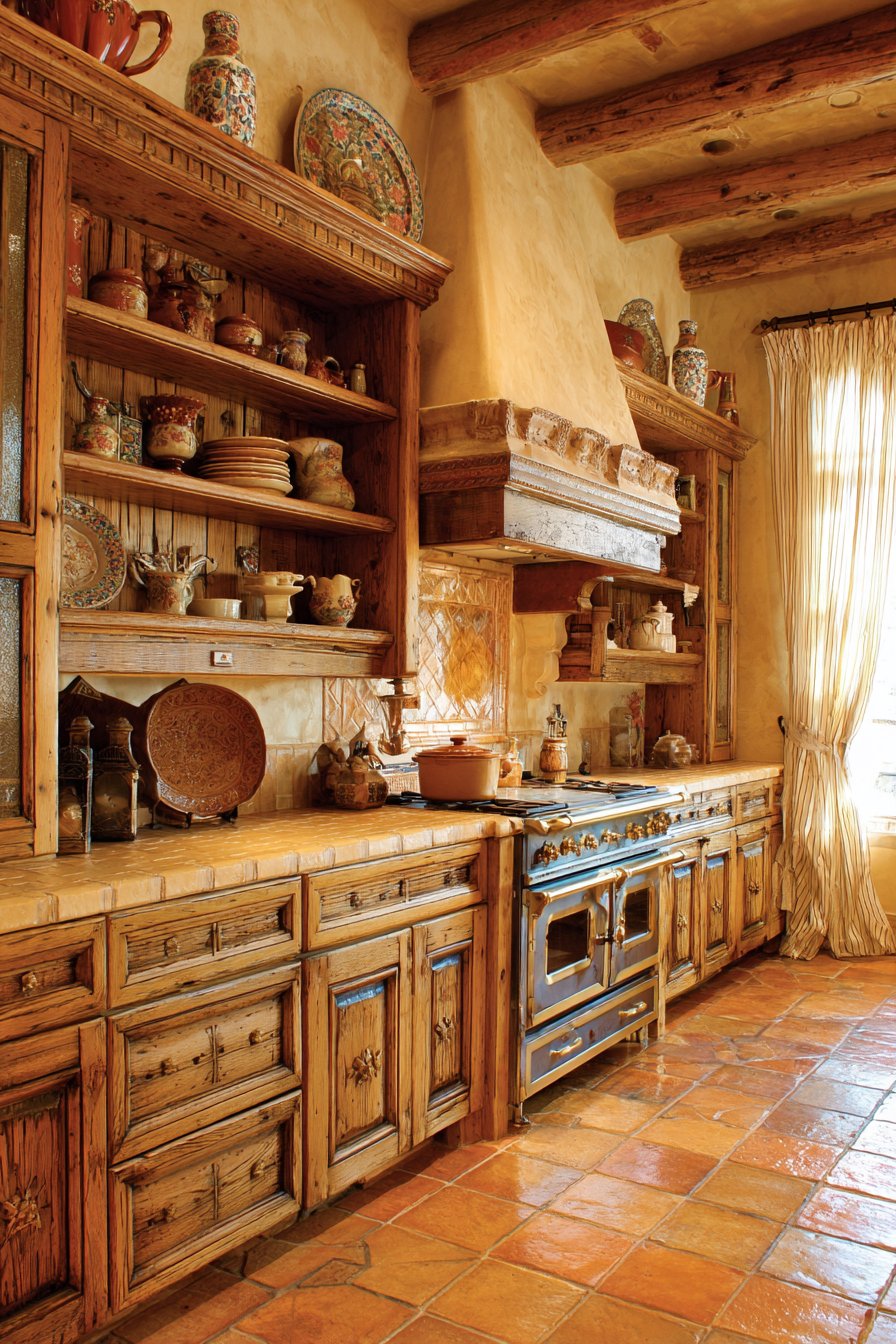
Terracotta floor tiles ground the space with earthy warmth, their slightly irregular surfaces and natural color variations enhancing the rustic theme. These tiles connect the kitchen to Mediterranean and farmhouse traditions, adding another layer of authenticity to the design.
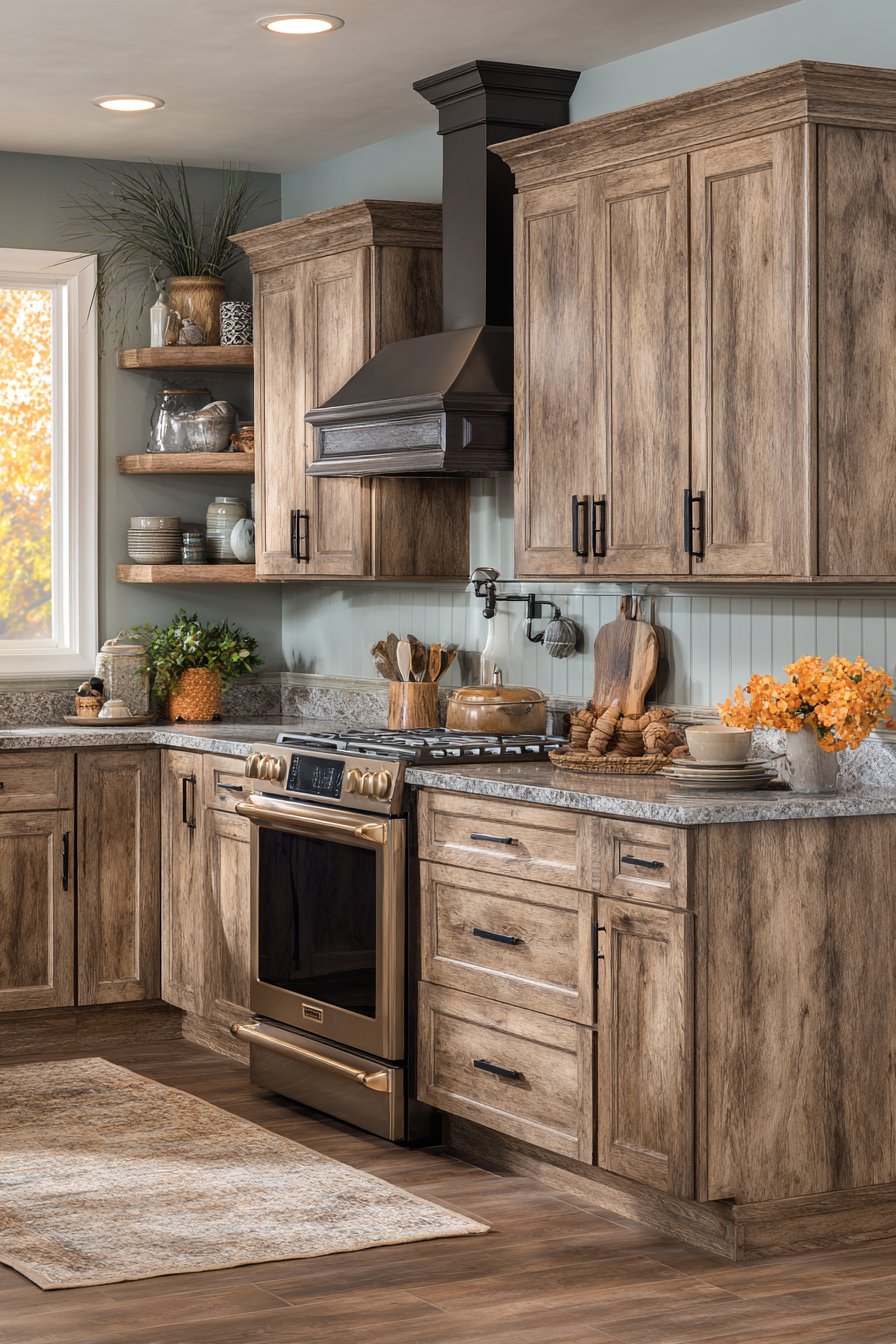
Morning light filtering through sheer curtains creates a soft, diffused illumination that highlights the textured oak cabinet surfaces and celebrates their natural imperfections rather than hiding them. This kitchen embraces the philosophy that beauty lies not in perfection but in the authentic expression of materials, craftsmanship, and the gentle marks left by daily living.
Key Design Tips:
- Choose distressed oak cabinet finishes with authentic wear patterns to create instant character and a lived-in feeling in new kitchens
- Alternate open shelving with closed oak cabinets to add visual interest while displaying beautiful dishware and serving pieces
- Install a vintage-inspired range as a focal point that establishes the rustic design theme and serves as the kitchen’s centerpiece
- Paint beadboard backsplash in soft, muted colors like sage green to introduce subtle color while maintaining cottage charm
- Select terracotta or natural stone floor tiles to enhance rustic themes and connect the space to traditional farmhouse and Mediterranean design roots
7. Contemporary Oak Kitchen with Handleless Minimalism
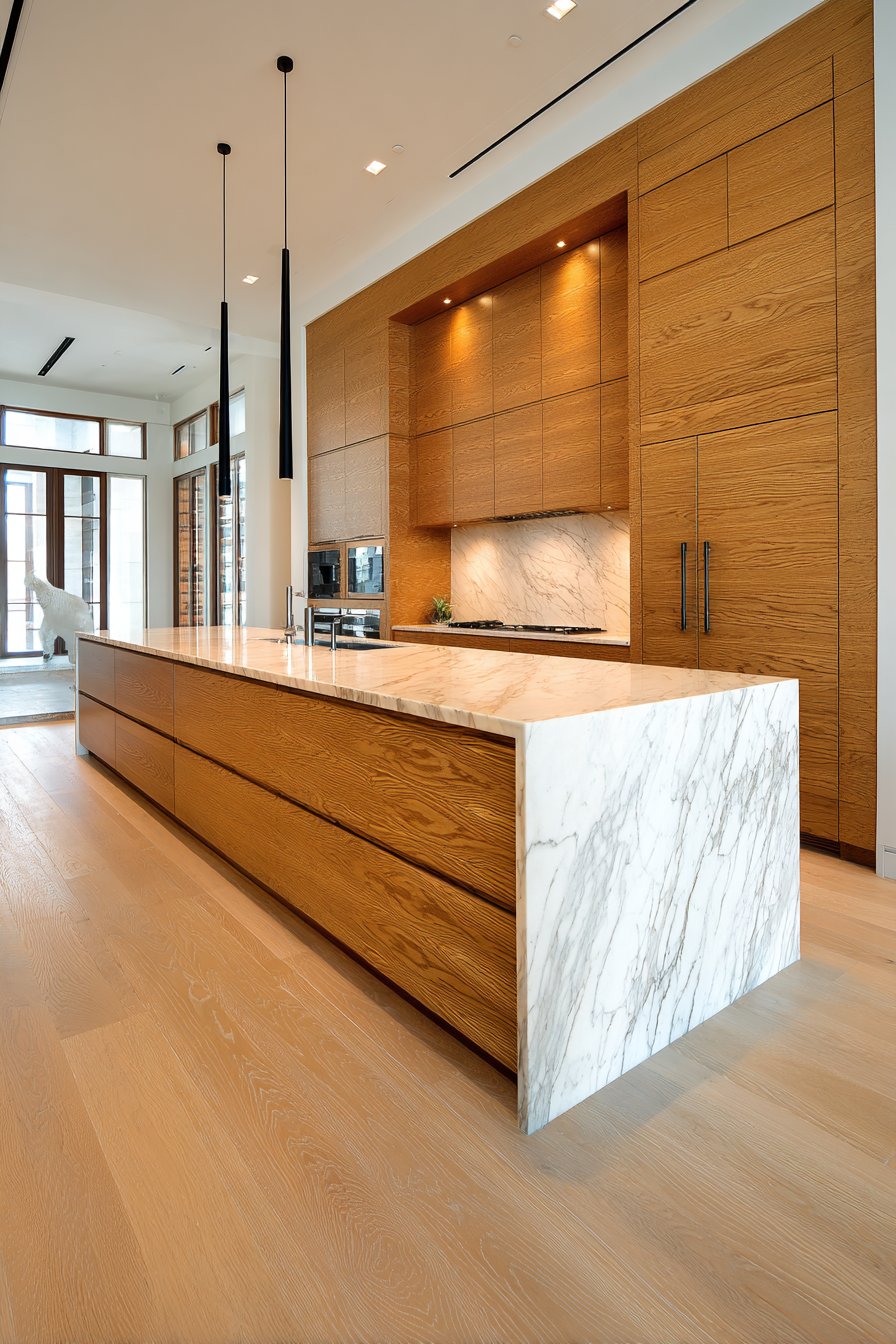
Clean lines and modern sophistication characterize this contemporary oak cabinet kitchen where horizontal-grain oak veneer creates striking visual impact through unconventional grain orientation. The clear matte finish protects the wood while maintaining its natural appearance, allowing the grain pattern to remain clearly visible without the glossy sheen that can feel dated.
Handleless cabinets with push-to-open mechanisms eliminate visual clutter, creating smooth, uninterrupted surfaces that emphasize the wood’s natural beauty. This approach represents oak cabinetry’s successful evolution into contemporary design, proving that this traditional material can feel thoroughly modern.
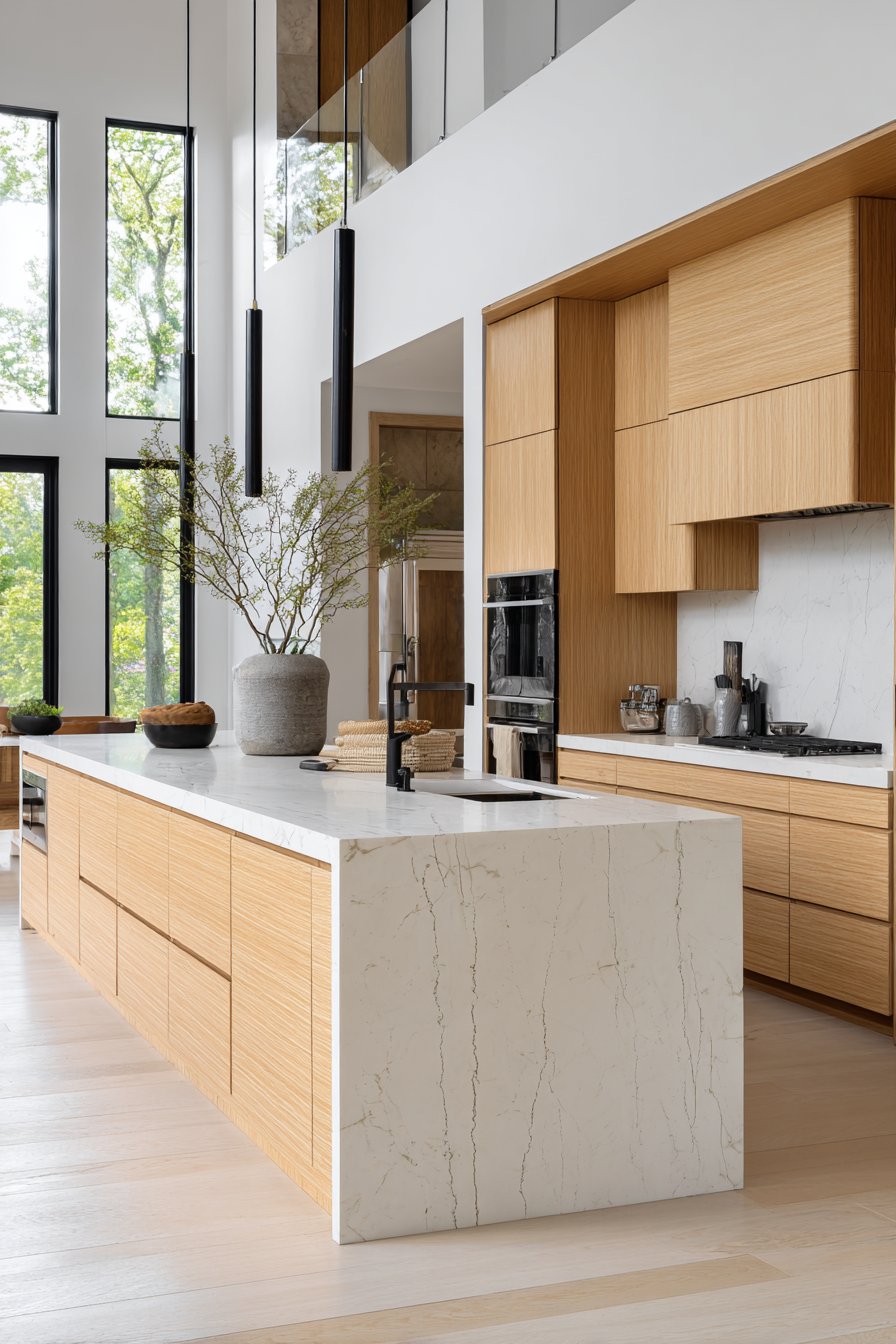
The waterfall-edge white Carrara marble island becomes a sculptural element that contrasts elegantly with the warm oak perimeter cabinetry. The continuous marble surface flowing from horizontal countertop to vertical edge creates a dramatic visual statement that draws the eye and establishes the island as the kitchen’s centerpiece.
This luxurious material juxtaposition—cool white marble against warm oak—creates tension and interest while maintaining overall design harmony. Minimalist black pendant lights suspended above the island add vertical elements and graphic punch, their simple forms echoing the handleless cabinet aesthetic.
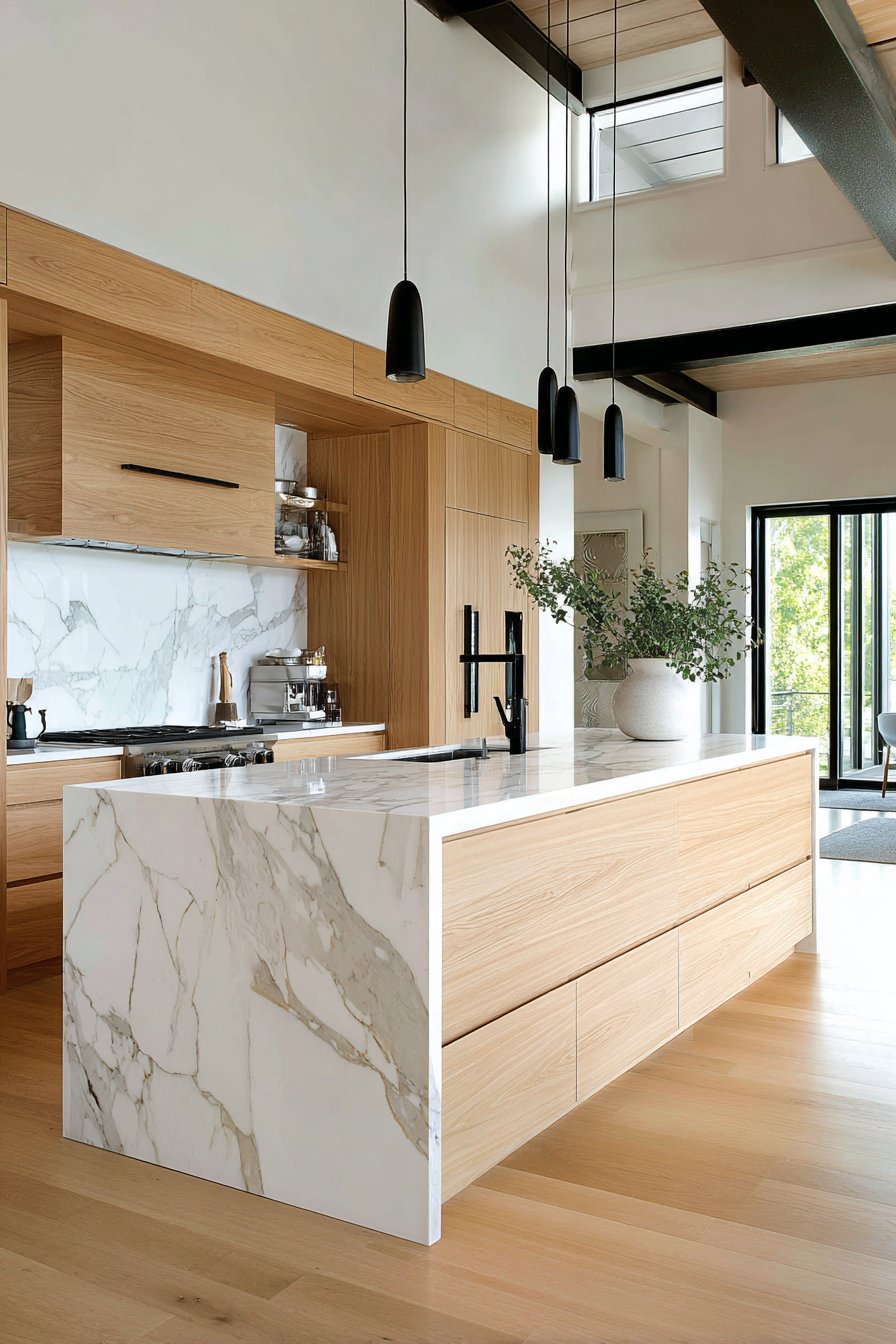
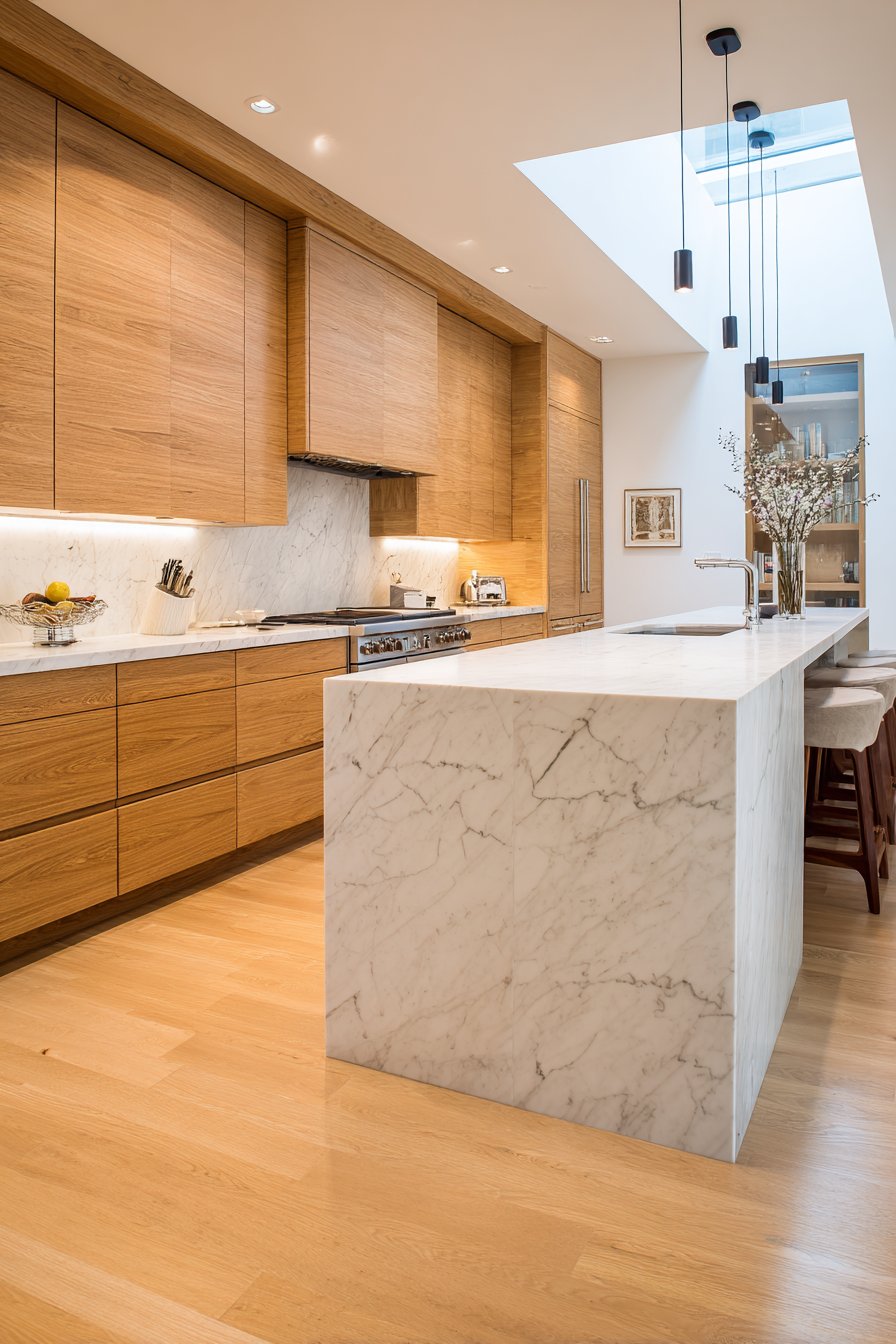
The full-height oak cabinet pantry demonstrates how contemporary design can address practical needs without compromising aesthetics. This floor-to-ceiling storage solution provides concealed organization for dry goods and kitchen necessities, maintaining the clean visual lines that define the space. Diffused natural light from skylights bathes the kitchen in even illumination that highlights the contemporary oak grain pattern and seamless cabinet integration.
This lighting approach eliminates harsh shadows while ensuring that the horizontal grain receives adequate emphasis, creating an environment that feels both bright and calm. The entire design celebrates oak’s adaptability, showing how this traditional material can anchor ultra-modern spaces when paired with contemporary forms and complementary materials.
Key Design Tips:
- Choose horizontal-grain oak veneer to create contemporary visual interest that differentiates modern oak kitchens from traditional designs
- Install handleless cabinets with push-to-open mechanisms to achieve clean, minimalist surfaces that emphasize wood grain over hardware
- Design a waterfall-edge marble island to create dramatic contrast with oak perimeter cabinetry while establishing a stunning focal point
- Add skylights for diffused natural lighting that evenly illuminates contemporary oak cabinets without creating harsh shadows
- Select a full-height oak pantry cabinet to maximize concealed storage while maintaining the clean lines essential to contemporary design
8. Sophisticated Oak Kitchen with Traditional Craftsmanship
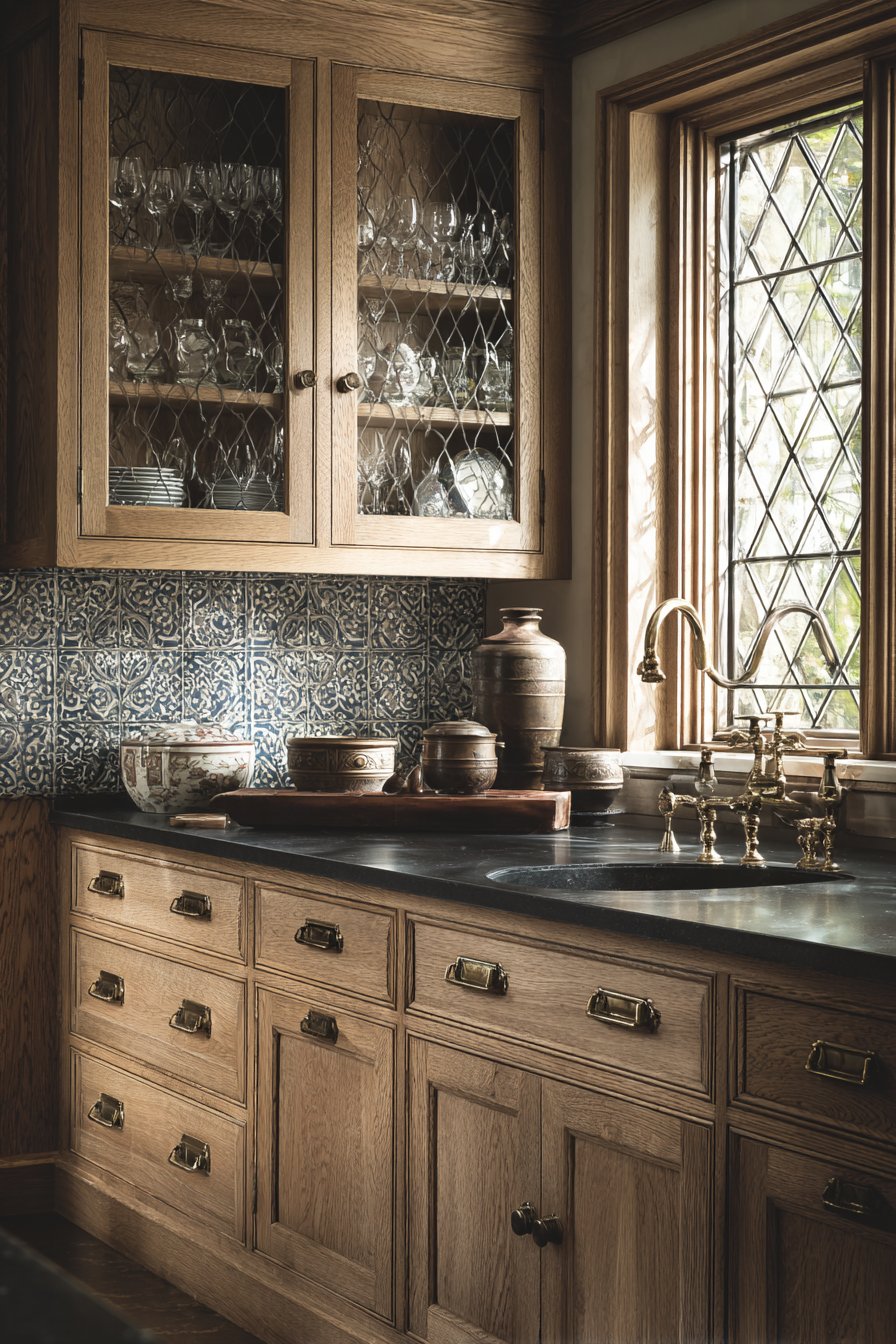
Masterful craftsmanship takes center stage in this sophisticated oak cabinet kitchen where every detail reflects thoughtful design and quality construction. Mullioned glass-front upper cabinets feature delicate framework that divides glass panels into elegant proportions, their interior lighting showcasing fine china collections as though in a gallery.
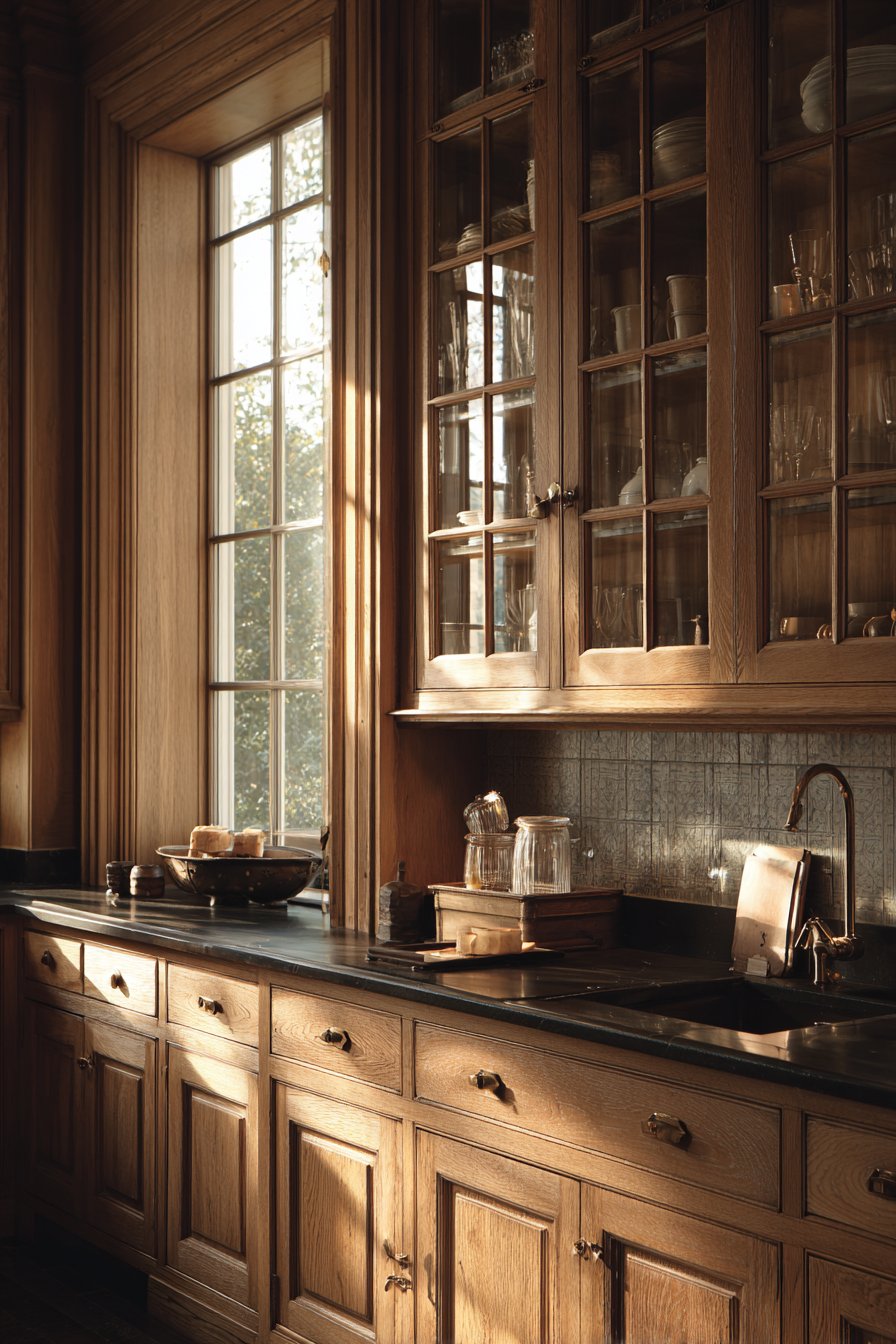
This illuminated display transforms everyday dinnerware into decorative elements, adding sparkle and visual interest to the upper cabinets while providing practical visibility. The lower oak cabinets feature inset panel doors—a hallmark of fine furniture construction—where doors sit flush within the cabinet frame rather than overlaying it, demonstrating superior craftsmanship.
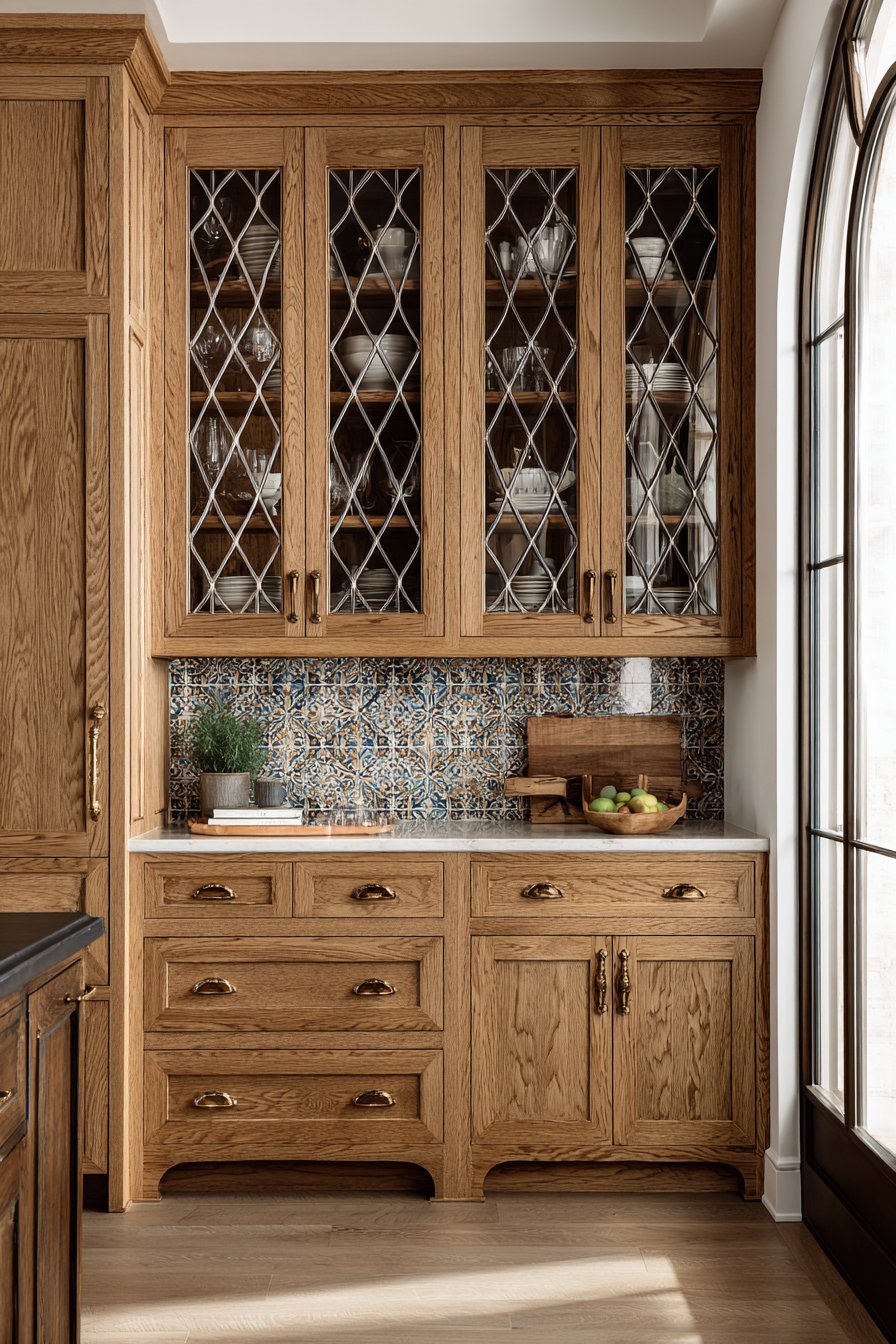
Antique brass bin pulls add historical authenticity and tactile pleasure, their warm patina complementing the medium oak finish while providing comfortable grip for daily use. These hardware choices reflect attention to period-appropriate details that elevate the design beyond generic traditionalism into genuine historical reference.
Dark soapstone countertops create rich, dramatic contrast with the medium oak cabinetry, their deep charcoal tones adding sophistication and gravitas. Soapstone’s naturally non-porous surface and heat-resistant properties make it an excellent functional choice, while its velvety texture and subtle veining provide visual luxury.
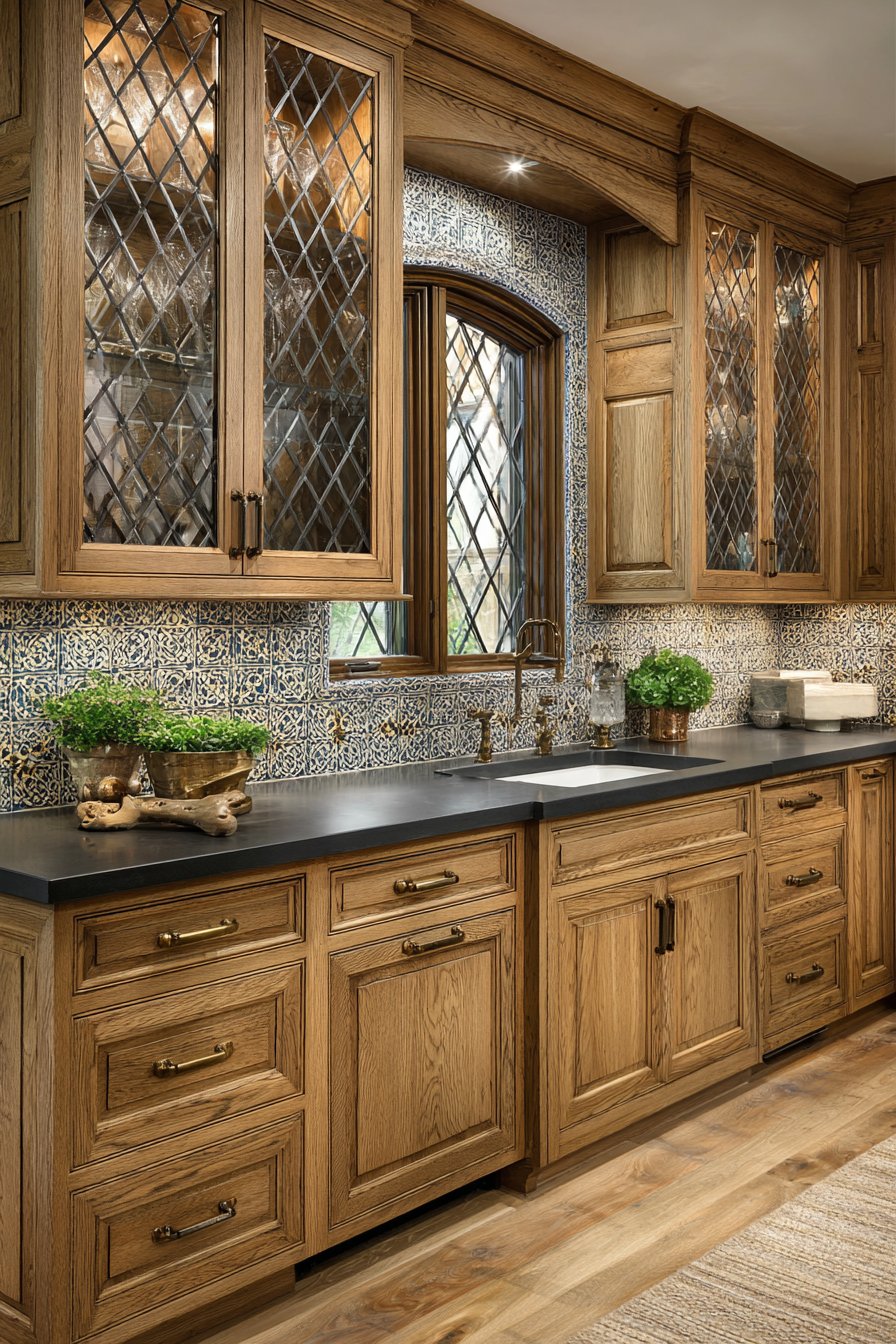
The decorative tile backsplash in muted blue and white patterns introduces artisanal character and visual complexity, its hand-painted aesthetic adding another layer of craftsmanship to the space. These tiles serve as jewelry for the kitchen, their intricate patterns drawing the eye and rewarding close examination. Natural window light creates soft highlights on the oak cabinet surfaces, skimming across the raised panels and revealing the full depth and dimension of the wood grain. This lighting interplay throughout the day ensures that the sophisticated details receive appropriate emphasis, allowing observers to appreciate the quality of construction and material selection that defines this traditional yet refined kitchen design.
Key Design Tips:
- Install mullioned glass-front oak cabinets with interior lighting to elegantly display fine china while adding architectural detail
- Choose inset panel door construction to showcase superior craftsmanship and achieve an authentic traditional furniture appearance
- Select dark soapstone countertops to create dramatic contrast with medium oak cabinetry while providing practical, heat-resistant work surfaces
- Add decorative tile backsplash with muted patterns to introduce artisanal character and visual interest without overwhelming the space
- Use antique brass hardware with authentic patina to complement oak’s warm tones while providing period-appropriate detail and tactile quality
9. Family-Friendly Oak Kitchen with Built-In Functionality
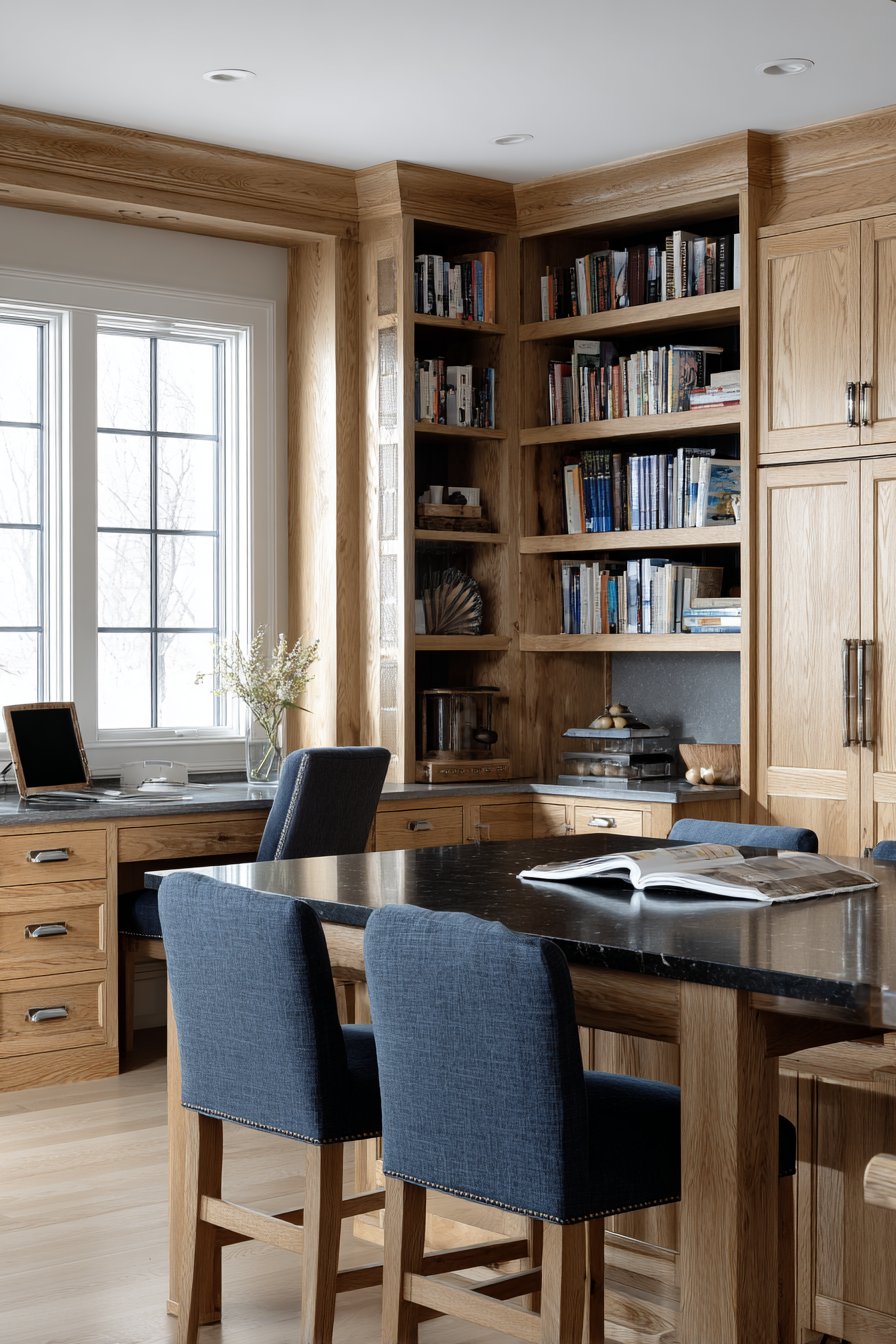
Practicality and warmth unite in this thoughtfully designed family-oriented oak cabinet kitchen where custom cabinetry addresses real-life needs without sacrificing style. A built-in desk nook with matching oak shelving above creates a dedicated homework station or household command center, acknowledging that modern kitchens serve multiple functions beyond meal preparation.
This integrated approach keeps family activities centralized while maintaining design cohesiveness through consistent material use. The main kitchen features oak shaker cabinets with soft-close drawers and doors—a crucial feature for busy households where cabinet doors might otherwise suffer from hasty handling.
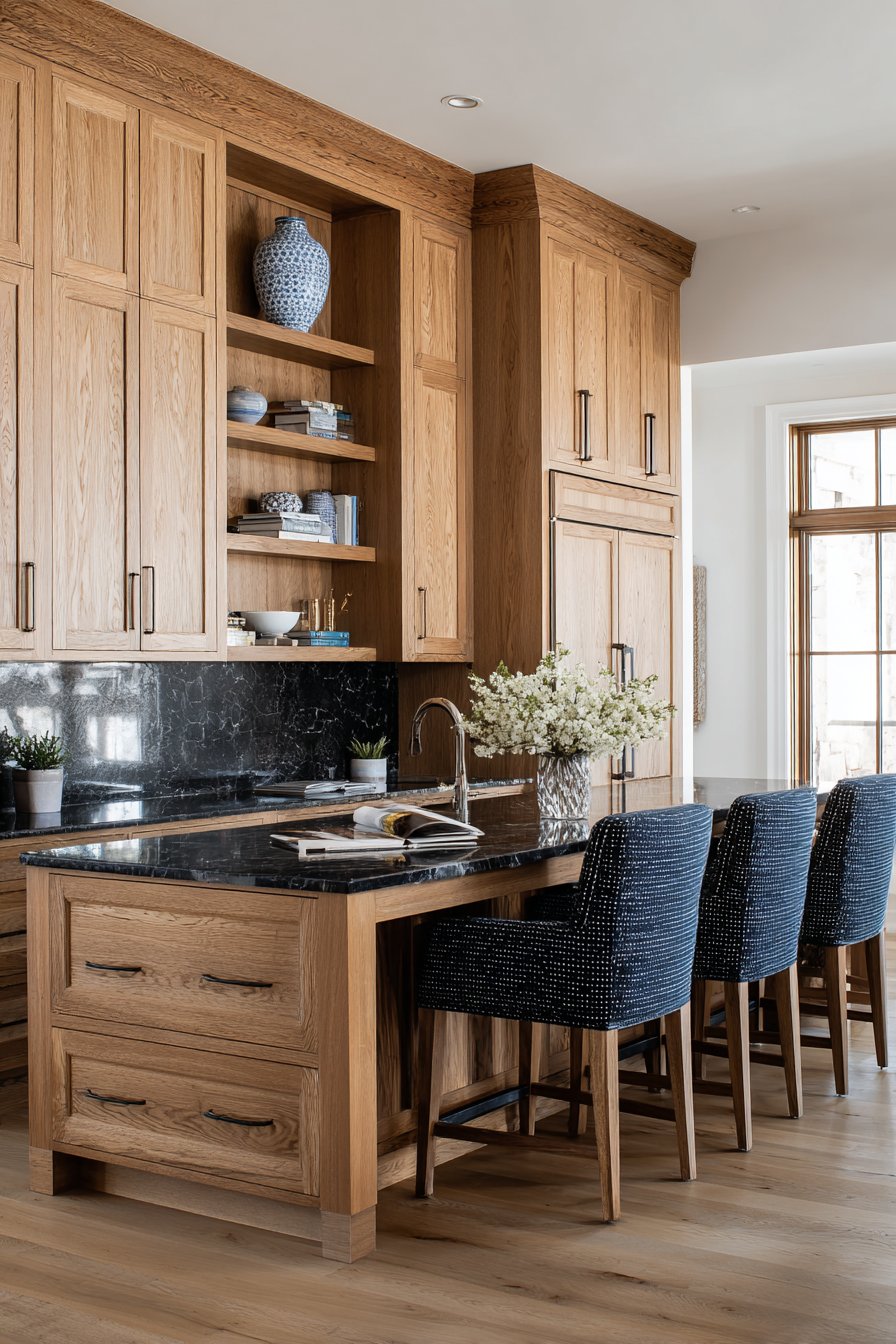
Honed black granite countertops provide a sophisticated dark surface that hides stains and scratches better than lighter materials—a practical consideration for families with active children. The honed finish eliminates glare while maintaining the granite’s inherent durability, creating surfaces that can withstand the demands of daily family life.
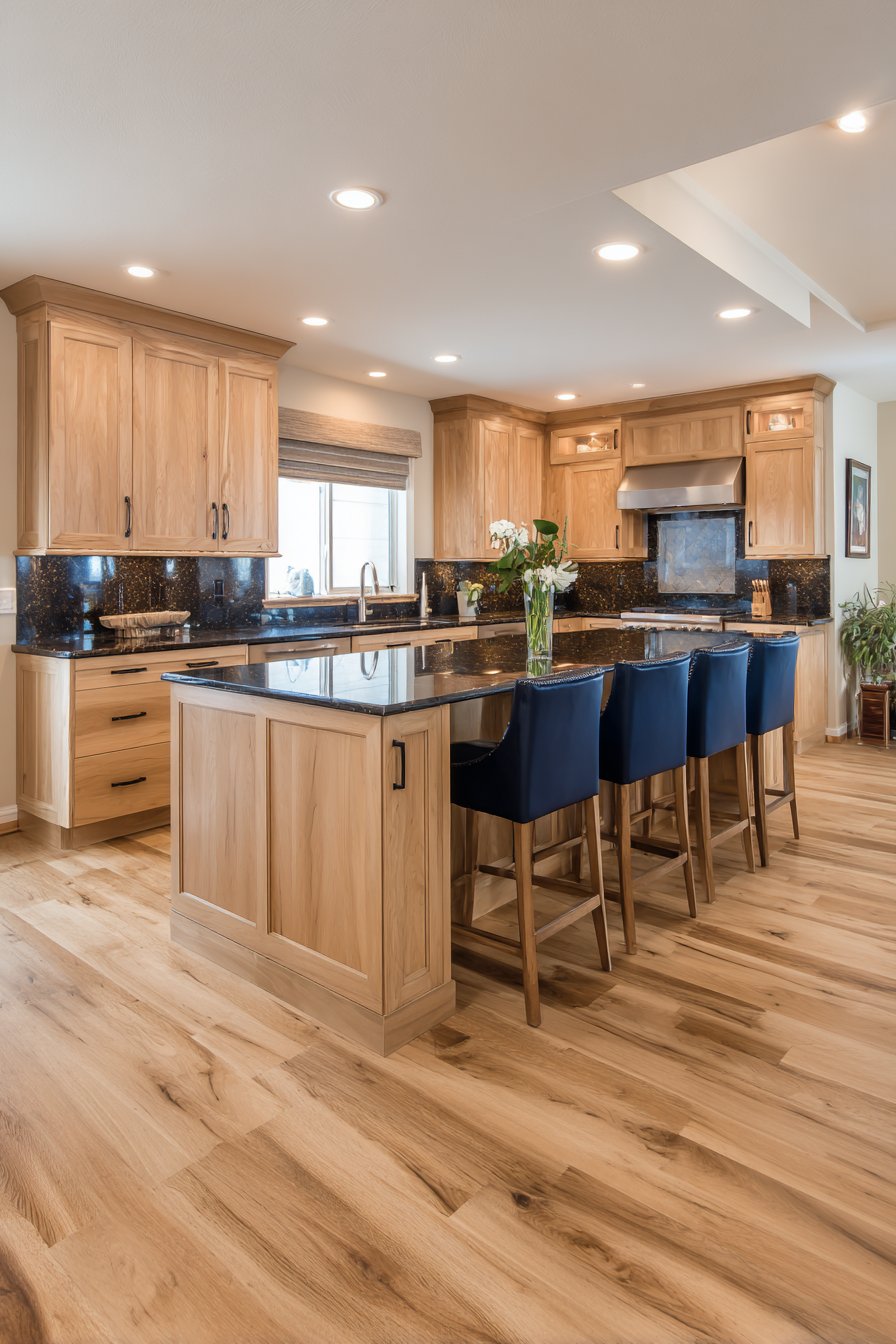
The spacious oak cabinet island with generous overhang seating accommodates four navy-upholstered barstools, creating an informal dining area where quick breakfasts, afternoon snacks, and homework sessions naturally occur. This multi-functional island becomes the true heart of the family kitchen, facilitating connection and conversation during busy days.
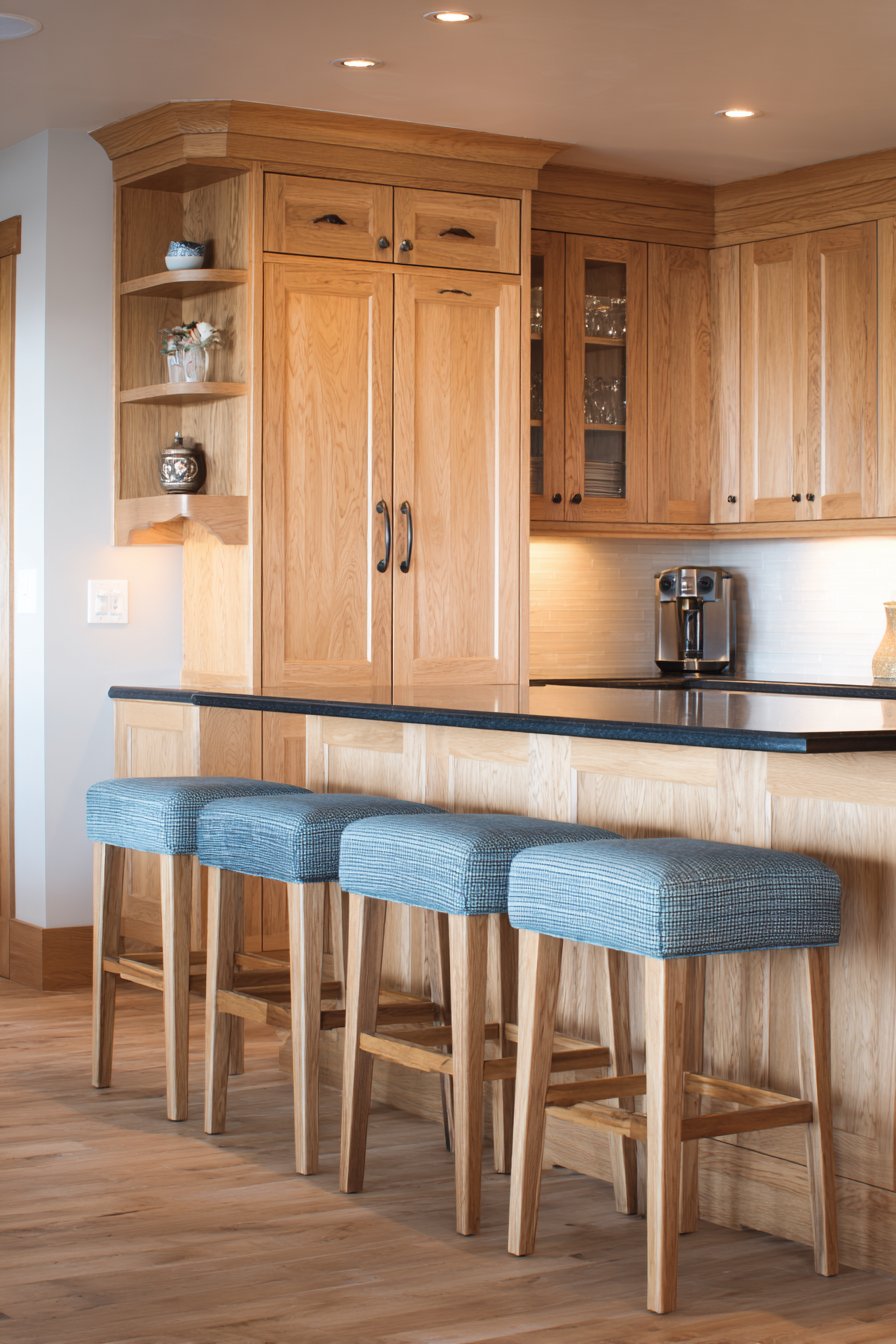
Recessed lighting and under-cabinet LED strips provide comprehensive task illumination that ensures safe food preparation regardless of time of day. This layered lighting approach addresses the functional demands of a hardworking family kitchen while highlighting the warm, welcoming oak cabinet tones throughout the space.
The wide-angle perspective reveals how thoughtful space planning creates distinct zones for different activities—cooking, homework, casual dining—without requiring walls or visual barriers. Natural light streaming through well-placed windows enhances the oak’s inherent warmth, creating an environment that feels both efficient and genuinely welcoming to all family members.
Key Design Tips:
- Incorporate a built-in desk nook with matching oak cabinetry to create a functional homework station or household command center
- Select soft-close mechanisms for all oak cabinet doors and drawers to protect cabinetry and reduce noise in busy family kitchens
- Choose honed dark countertops that hide stains and wear better than lighter surfaces while providing sophisticated contrast with oak cabinetry
- Design a large island with substantial seating overhang to accommodate multiple family members for casual meals and activities
- Install layered lighting including recessed fixtures and under-cabinet LEDs to ensure comprehensive task illumination for all kitchen activities
10. Two-Toned Oak Kitchen with Mixed-Finish Versatility
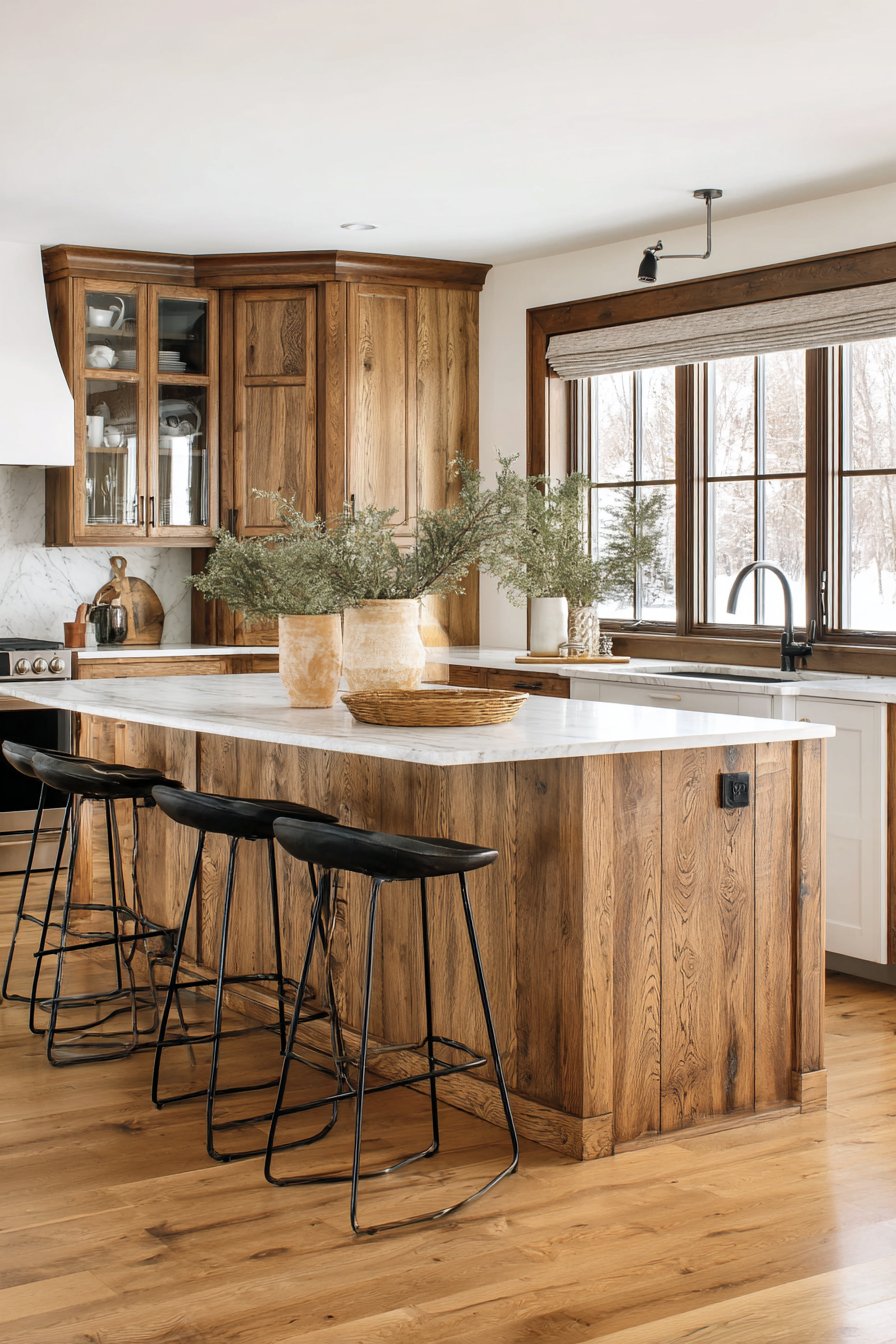
Creative contrast defines this innovative oak cabinet kitchen that breaks convention by blending traditional and modern elements through a sophisticated two-toned approach. Natural oak lower cabinets showcase the wood’s inherent grain texture and organic beauty, their visible character providing warmth and authenticity.
White painted upper cabinets create an unexpected pairing that lightens the visual weight of upper cabinetry while maintaining design interest through material contrast. This mixed-finish aesthetic represents a contemporary approach to kitchen design that honors traditional materials while embracing modern color-blocking principles.
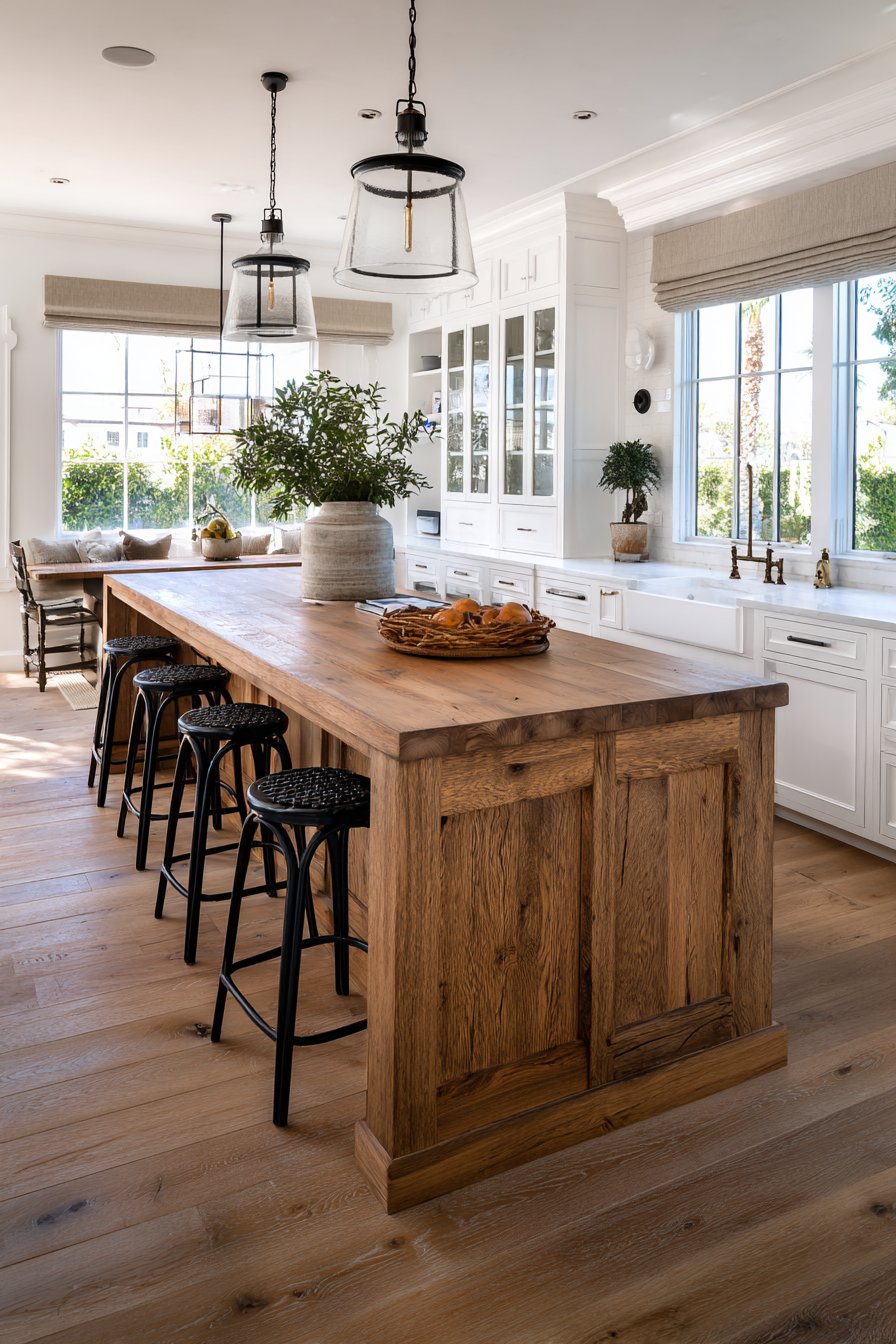
The thick butcher block oak countertop on the island creates a stunning warm prep surface that celebrates natural wood in horizontal application, its end-grain construction providing both beauty and functionality. This substantial surface becomes a focal point that draws attention and invites hands-on food preparation, from kneading bread dough to chopping fresh vegetables.
Perimeter counters showcase white quartz, maintaining the two-toned theme while providing ample easy-care surfaces for daily kitchen tasks. Industrial-style black metal bar stools introduce another material into the mix, their sleek profiles and dark finish providing visual punctuation and modern edge.
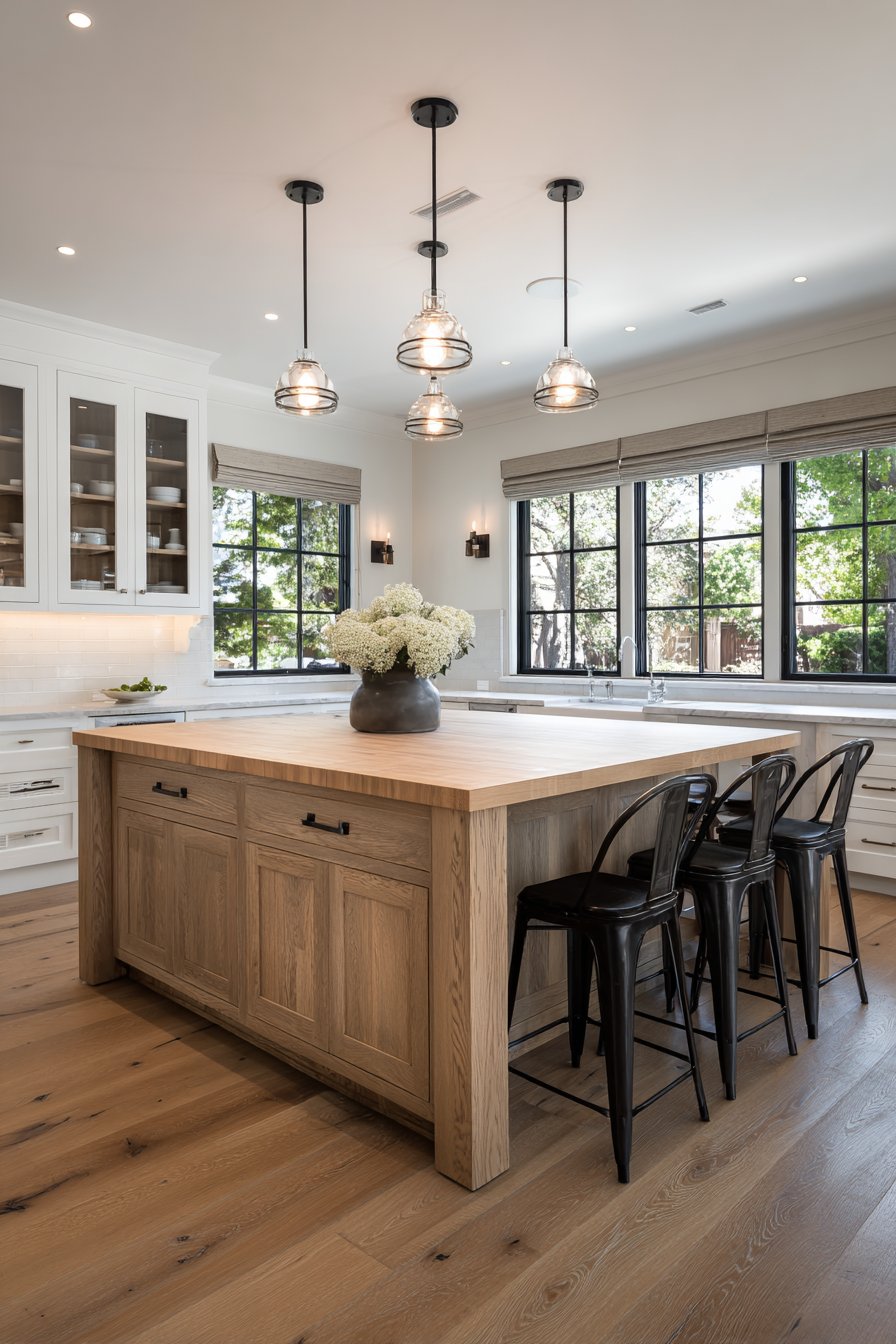
Large windows with simple roller shades flood the space with abundant natural light, crucial for a design that relies on material contrast to create visual interest. This illumination ensures that both the oak grain patterns and the white painted surfaces receive adequate emphasis, preventing either element from disappearing into shadow.
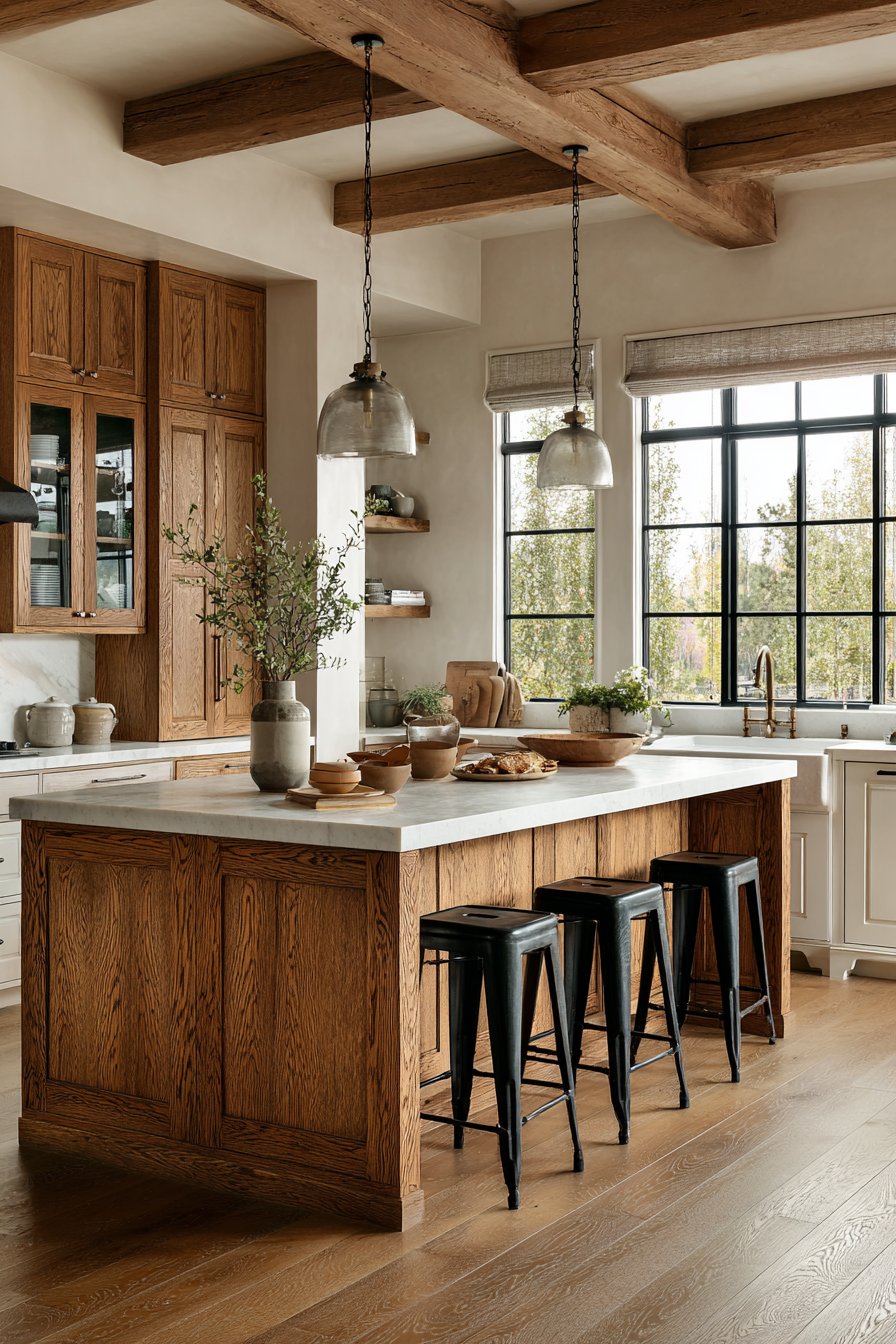
The harmonious blend of materials—natural oak, painted wood, butcher block, quartz, and metal—demonstrates sophisticated material mixing that feels intentional rather than chaotic. Natural knots in the oak cabinetry add authentic character marks that remind us of the wood’s organic origins, while the functional versatility of the mixed-finish design proves that oak kitchens can embrace contemporary trends without abandoning traditional warmth and appeal.
Key Design Tips:
- Create visual interest by pairing natural oak lower cabinets with white painted upper cabinets for a contemporary two-toned aesthetic
- Install a thick butcher block oak countertop on the island to create a warm, functional prep surface that showcases wood in horizontal application
- Use white quartz on perimeter counters to maintain the two-toned theme while providing practical, easy-maintenance work surfaces
- Add industrial-style metal bar stools to introduce contemporary contrast and visual punctuation against warm oak cabinetry
- Maximize natural light through large windows to ensure all materials and finishes receive adequate illumination and maintain visual balance
Why These Oak Cabinet Kitchen Designs Represent the Best in Contemporary Home Design
The ten oak cabinet kitchen designs presented in this comprehensive guide represent the pinnacle of what’s achievable when natural materials meet thoughtful design. Oak cabinetry continues to dominate kitchen design conversations precisely because of its remarkable versatility—capable of anchoring everything from ultra-traditional spaces to cutting-edge contemporary kitchens. The natural wood grain patterns inherent in oak provide visual interest that synthetic materials cannot replicate, with each piece of wood telling its own unique story through growth rings, knots, and color variations. This authentic character creates kitchens that feel genuine and connected to natural origins rather than manufactured and sterile.
The durability of oak wood ensures that these kitchen designs will remain functional and beautiful for decades, making oak cabinetry a wise investment for homeowners who value longevity. Unlike trendy materials that may feel dated within a few years, oak’s timeless appeal transcends design fads, its natural beauty remaining relevant regardless of shifting style preferences. The honey tones, warm undertones, and rich depth of oak wood create inherently welcoming environments where families naturally gather, transforming functional cooking spaces into genuine homes’ hearts. From traditional raised panel doors to contemporary flat-panel designs, from distressed finishes celebrating imperfection to sleek handleless systems embracing minimalism, oak cabinetry adapts to personal preferences while maintaining its essential warmth.
These designs demonstrate how oak kitchen cabinets pair beautifully with virtually any countertop material—from classic marble and granite to contemporary quartz and practical butcher block. The neutral warmth of oak serves as an excellent foundation for diverse color palettes, accommodating everything from all-white schemes to bold accent colors, from industrial blacks to soft sage greens. The natural wood grain provides sufficient visual interest that elaborate decorative elements become optional rather than necessary, allowing the material itself to shine as the primary design feature. Whether you’re drawn to the rustic charm of distressed finishes, the sophisticated elegance of traditional craftsmanship, or the clean lines of contemporary minimalism, oak cabinetry offers a foundation that supports your vision.
The practical benefits of oak extend beyond aesthetics into real-world functionality. Oak’s exceptional hardness makes it resistant to dents and damage from daily use, while its tight grain structure provides natural durability that stands up to the demands of busy kitchens. The wood accepts various finishes beautifully, from natural clear coats that showcase raw beauty to painted surfaces that offer color flexibility. Oak cabinet doors maintain their structural integrity over time, resisting warping and maintaining proper alignment even in kitchens with temperature and humidity fluctuations. This reliability means that oak kitchens continue performing as beautifully as they look, avoiding the functional failures that can plague lesser materials.
From space-maximizing compact designs to expansive family-friendly layouts, from single-tone traditional aesthetics to innovative two-toned contemporary approaches, these oak cabinet kitchen concepts prove that this classic material deserves its enduring popularity. The warm wood tones create psychologically comforting environments that reduce stress and encourage gathering, while the natural variations in grain ensure that no two oak kitchens ever look identical. The shaker style oak cabinets offer clean simplicity, raised panel oak doors provide traditional elegance, and handleless oak systems deliver modern minimalism—all while showcasing the same fundamental material in different interpretations.
The integration of oak cabinetry with modern conveniences—stainless steel appliances, contemporary lighting systems, innovative storage solutions—demonstrates that traditional materials need not feel outdated. These designs show how oak kitchen ideas can incorporate the latest functional innovations while maintaining timeless aesthetic appeal. The natural wood provides warmth that softens potentially cold modern elements, creating balanced spaces that feel both current and enduring. Whether combined with industrial metals, elegant marbles, practical laminates, or other natural woods, oak cabinetry serves as a unifying element that brings cohesion to diverse material palettes.
Conclusion
The enduring appeal of oak cabinet kitchens lies in their unique ability to balance timeless beauty with practical functionality, creating spaces that serve families beautifully while remaining stylistically relevant across decades. From the honey-toned traditional designs that celebrate oak’s classic warmth to contemporary interpretations that showcase the material’s modern versatility, these ten kitchen concepts demonstrate the remarkable range achievable with this exceptional wood. The natural grain patterns, authentic character marks, and warm undertones of oak cabinetry create inherently welcoming environments that transform everyday cooking tasks into genuine pleasures.
As you contemplate your own kitchen design or renovation, consider how oak cabinetry might serve as the foundation for a space that reflects your personal style while providing lasting value. Whether you’re drawn to the rustic charm of distressed finishes, the sophisticated elegance of traditional craftsmanship, the family-friendly functionality of built-in work zones, or the clean minimalism of handleless contemporary designs, oak offers a versatile canvas for your vision. Experiment with different hardware finishes, countertop materials, and color combinations to discover how this timeless material can adapt to your unique preferences and lifestyle needs.
Remember that the best kitchen design balances aesthetic beauty with daily functionality, creating spaces that look stunning in photographs while serving real families through countless meals, conversations, and memories. Oak cabinetry excels at this balance, providing durability that withstands heavy use while maintaining visual appeal that never grows tiresome. Let these inspiring examples guide your own design journey, encouraging you to embrace natural materials, thoughtful planning, and personal touches that will make your oak cabinet kitchen a true heart of your home for years to come.
