


In today’s digital age, creating outdoor spaces that encourage imaginative play and hands-on learning has become more crucial than ever. The humble mud kitchen has emerged as one of the most beloved additions to family gardens, offering children an authentic connection to nature while fostering creativity, independence, and sensory exploration. These charming outdoor cooking stations provide endless opportunities for imaginative play, teaching valuable life skills while keeping little ones engaged with the natural world around them.
The beauty of mud kitchen design lies in its versatility and accessibility. Whether you’re working with a sprawling backyard or a compact urban patio, there’s a mud kitchen solution that can transform your outdoor space into a hub of creative activity. From rustic reclaimed wood constructions that blend seamlessly with natural surroundings to modern, sleek designs that complement contemporary landscapes, mud kitchens can be tailored to match any aesthetic preference while serving the fundamental purpose of encouraging outdoor play.
This comprehensive guide explores twenty distinct mud kitchen designs, each offering unique features and benefits that cater to different needs, spaces, and budgets. From simple DIY projects that can be completed in a weekend to elaborate installations that become permanent garden features, these inspiring concepts will help you create the perfect outdoor cooking space that will provide years of entertainment and learning opportunities for children of all ages.
1. Charming Reclaimed Wood Garden Kitchen
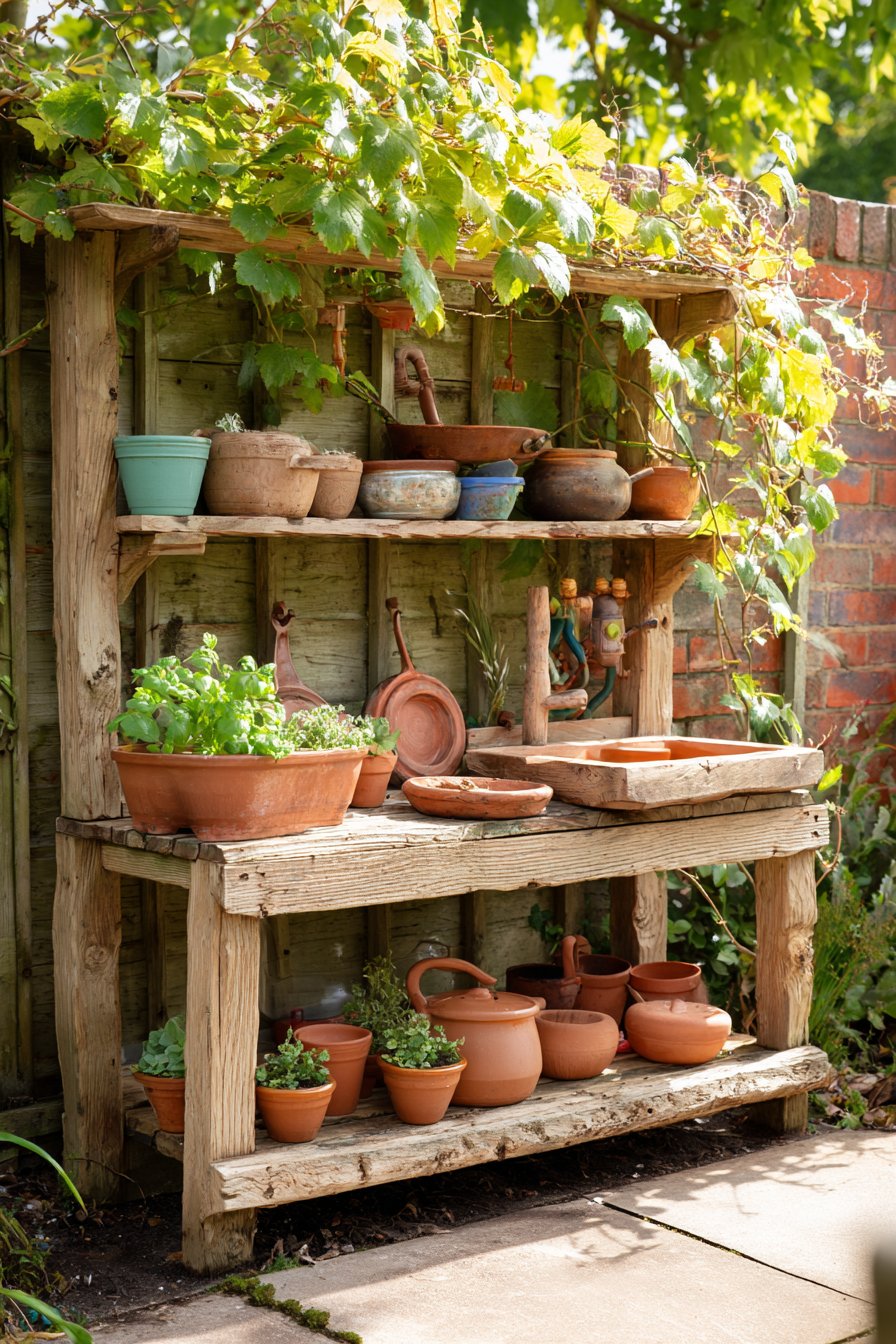
The rustic appeal of reclaimed wood creates an instantly welcoming mud kitchen that feels like a natural extension of your garden landscape. This design features multiple levels and compartments crafted from weathered timber that tells its own story through unique grain patterns and natural patina. The multi-tiered structure provides ample workspace while creating visual interest and practical storage solutions for an extensive collection of cooking implements.
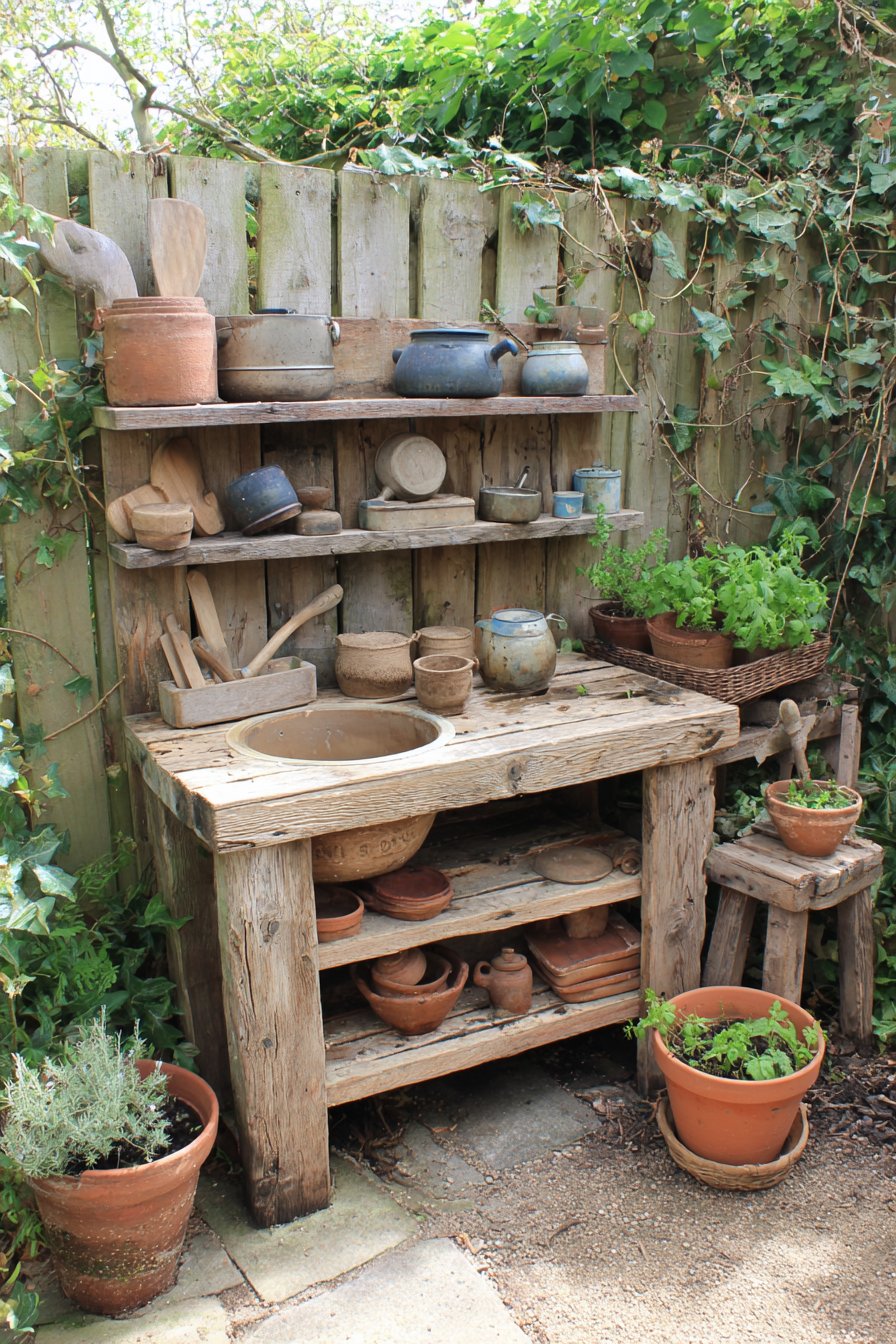
Natural wooden shelving displays a carefully curated assortment of vintage pots, pans, and kitchen utensils, creating an authentic cooking environment that mirrors real kitchen functionality. The incorporation of various sized containers and tools encourages role-playing activities while teaching organization and responsibility. A dedicated sink basin becomes the centerpiece for water play activities, surrounded by aromatic herbs growing in charming terracotta pots that add both visual appeal and sensory engagement.
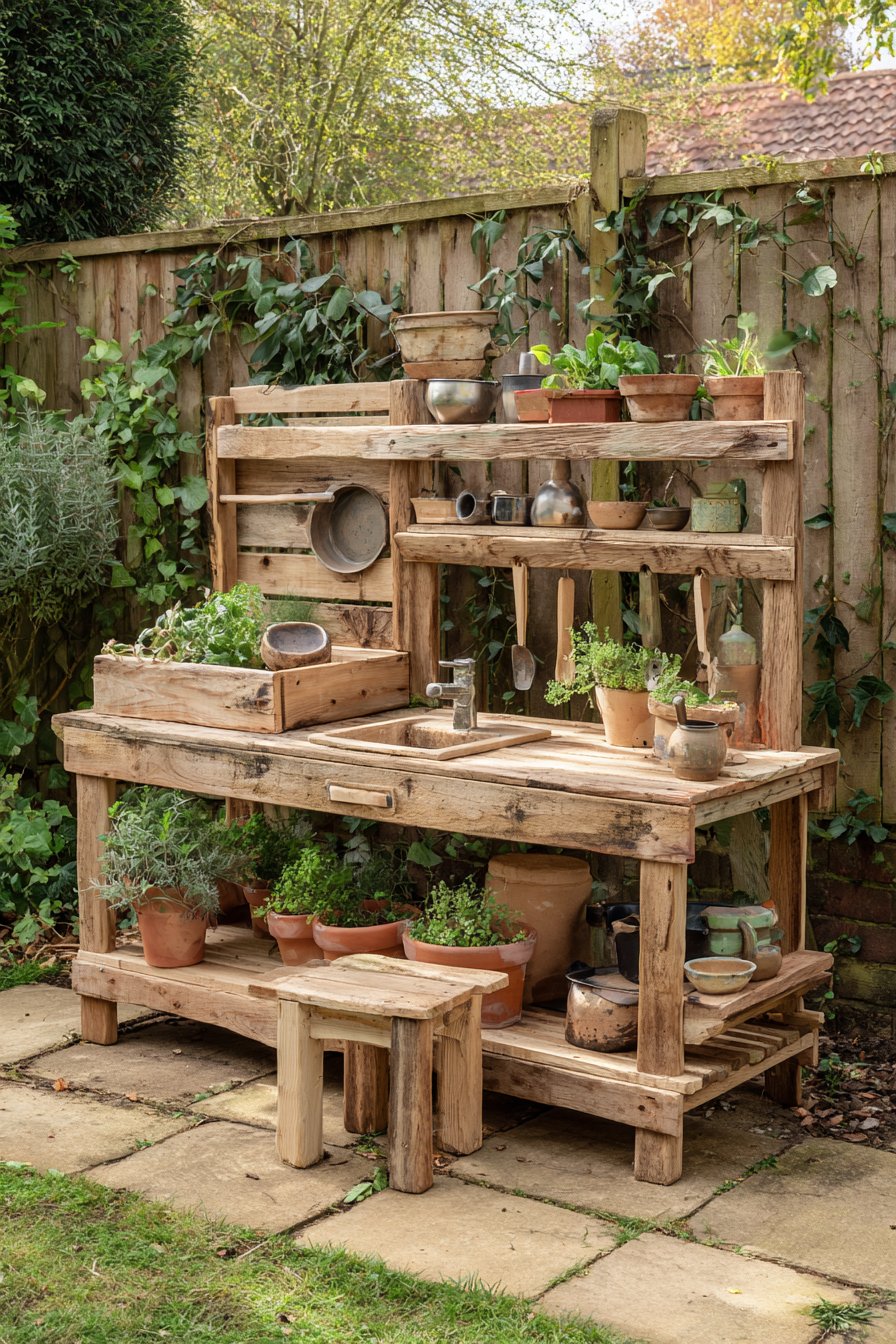
The strategic positioning against a garden fence adorned with climbing vines creates a natural backdrop that enhances the organic feel of the space. This integration with existing landscape features demonstrates how thoughtful placement can make a mud kitchen feel like an intentional part of your garden design rather than an afterthought. The interplay between man-made structures and natural elements creates a harmonious environment that encourages children to connect with nature while engaging in creative play.
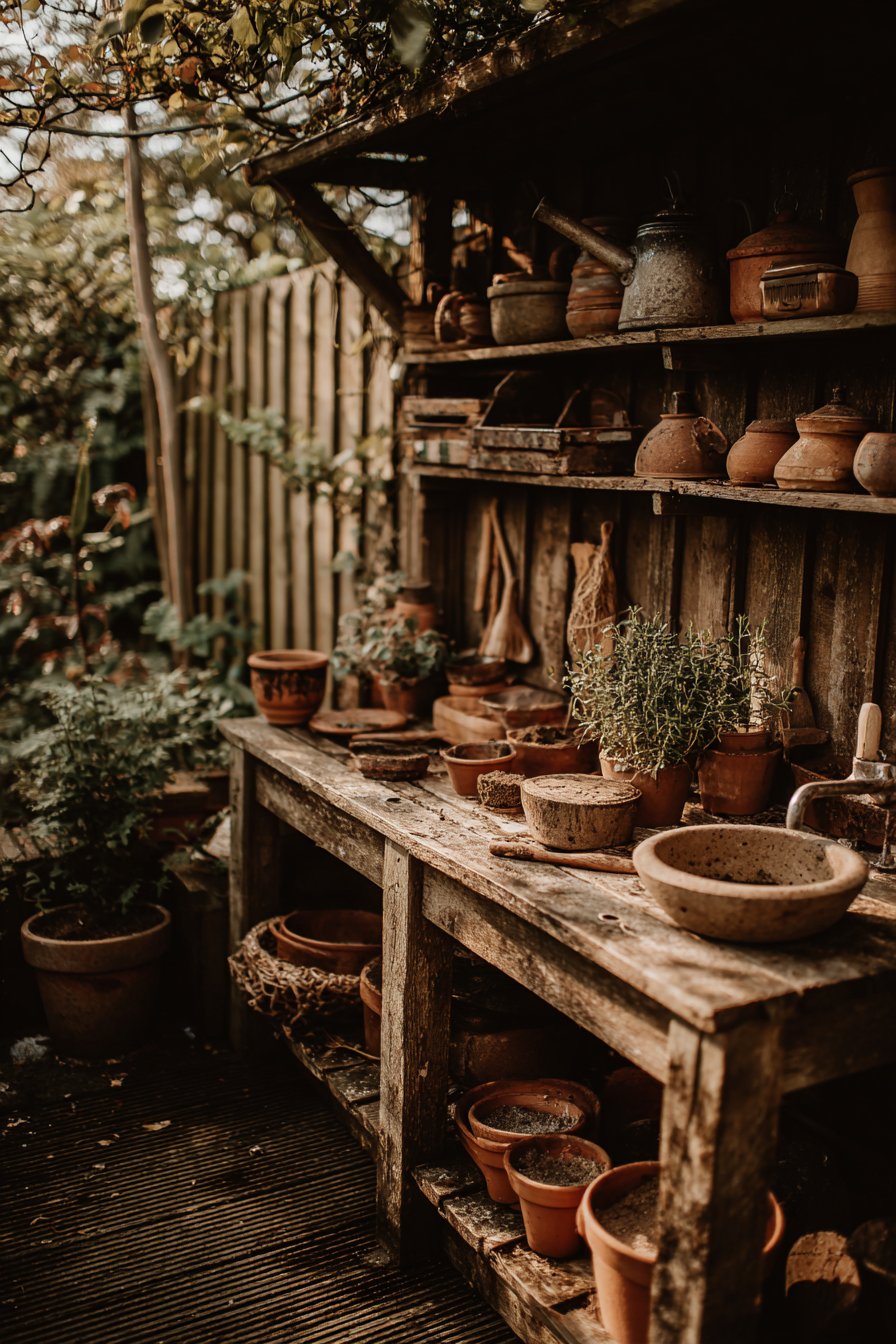
Key Design Tips:
- Select reclaimed wood with interesting grain patterns and natural weathering for authentic character
- Install multiple levels to accommodate different age groups and create varied play experiences
- Position strategically to take advantage of existing landscape features and natural shade
- Incorporate herb gardens directly into the design to engage multiple senses during play
- Choose vintage or antique cooking implements to enhance the authentic kitchen atmosphere
2. Sustainable Cedar Wood Organization Station
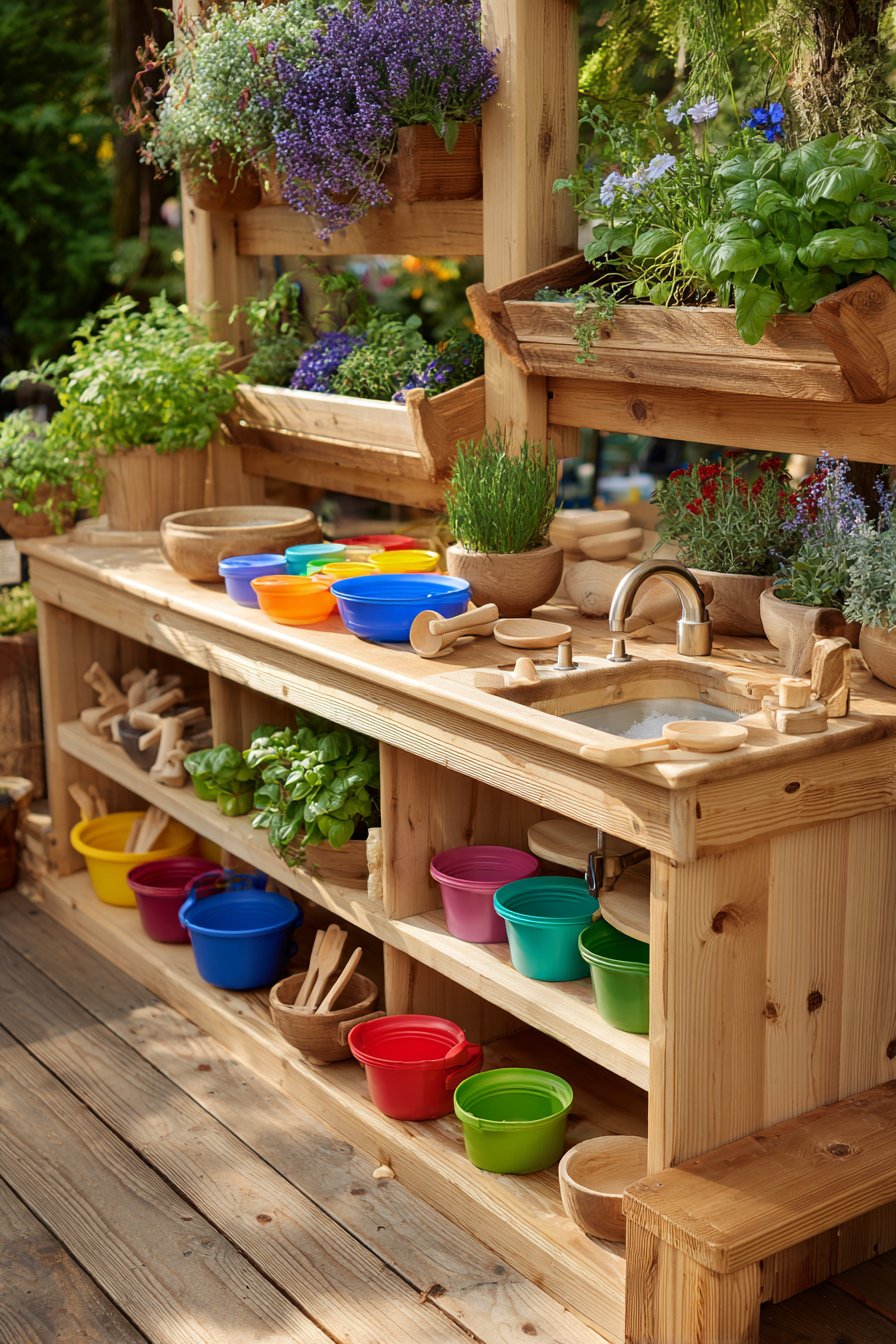
Cedar wood brings both beauty and practicality to outdoor mud kitchen design, offering natural weather resistance while maintaining an attractive appearance that ages gracefully. This well-organized station exemplifies how thoughtful design can maximize functionality within a compact footprint, featuring open shelving that displays colorful plastic bowls and wooden spoons in an appealing, accessible arrangement.
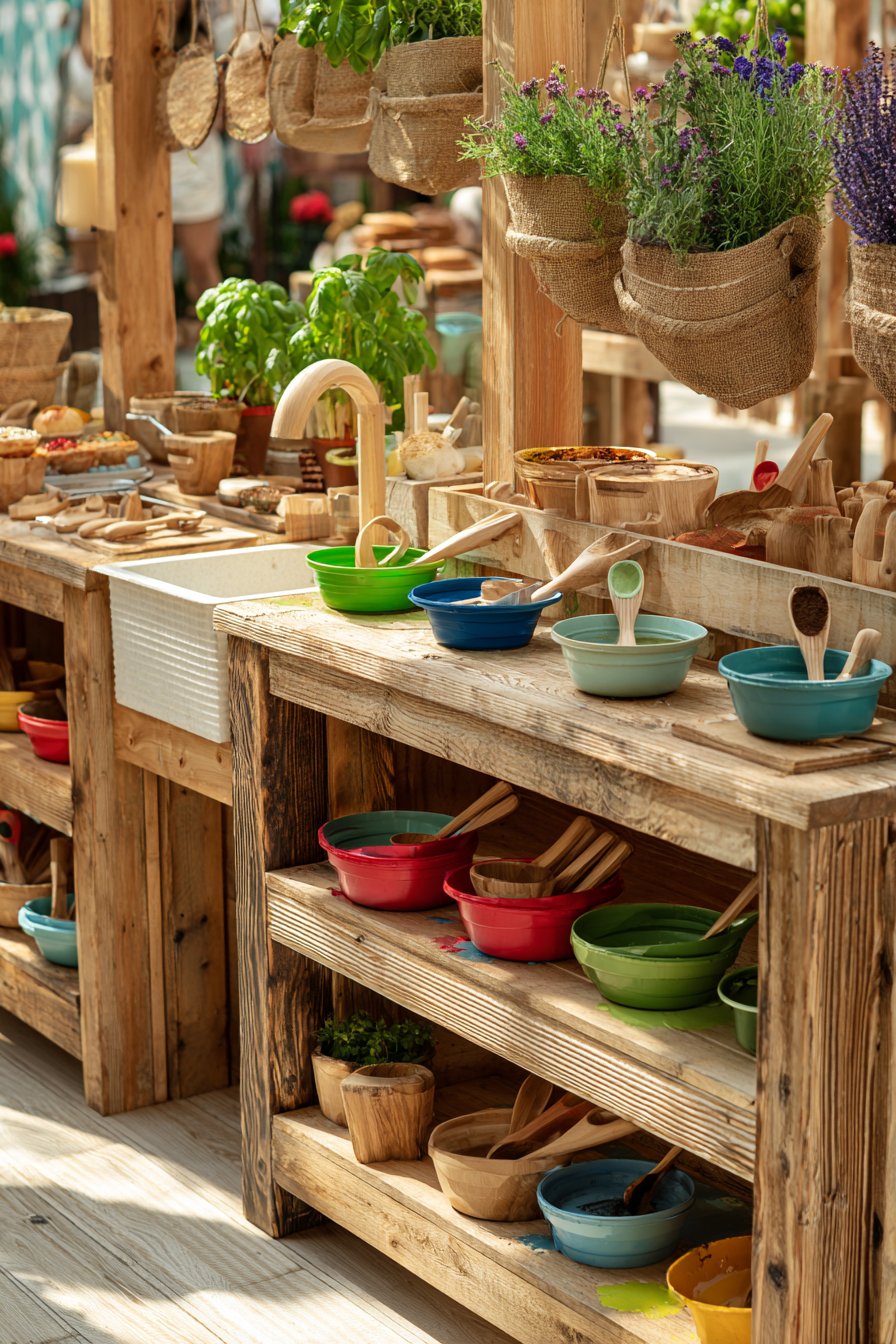
The weathered finish on the cedar wood provides instant character while protecting the structure from outdoor elements, ensuring longevity and minimal maintenance requirements. Open shelving concepts not only create easy access to cooking implements but also encourage children to maintain organization and take responsibility for their play materials. The visual display of colorful containers and tools creates an inviting workspace that draws children into active play.
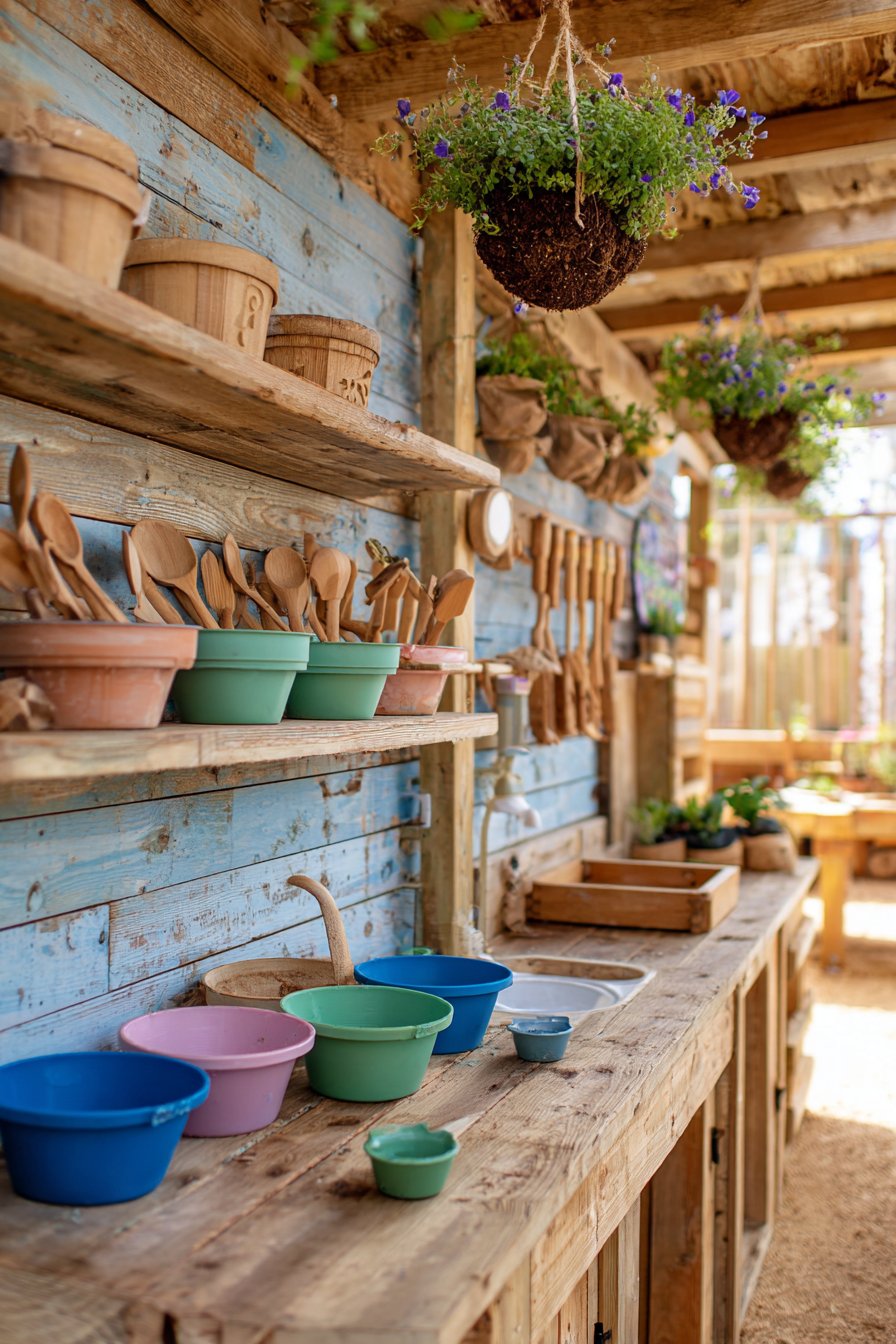
A designated mud-mixing area equipped with appropriately sized buckets and scoops demonstrates the importance of creating specialized zones within the mud kitchen design. This dedicated workspace prevents cross-contamination between different activities while teaching children about proper food preparation techniques. The working water tap connected to a practical basin elevates the play experience by providing running water for realistic cooking and cleaning activities.
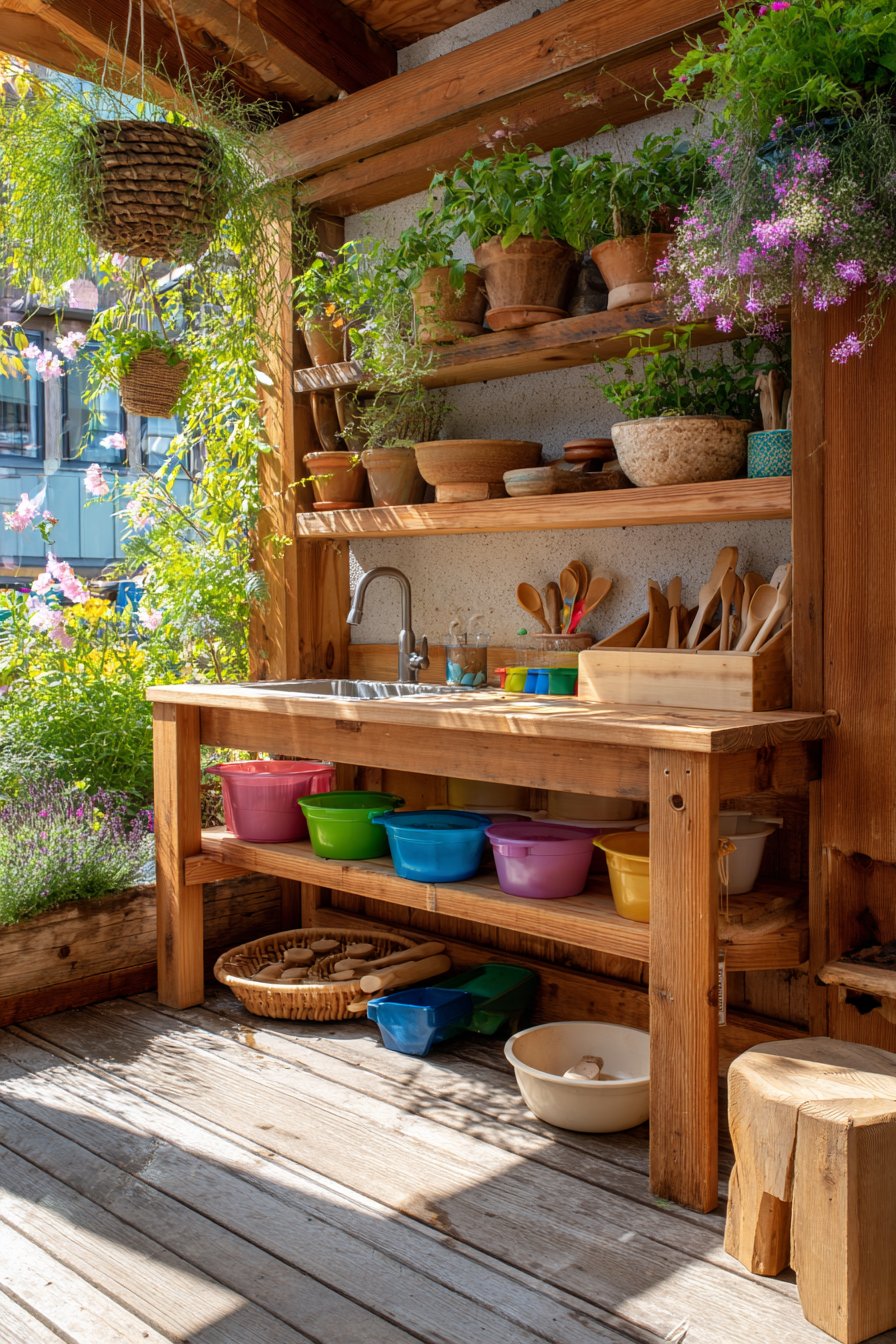
Fresh herbs and edible flowers growing in suspended planters above the workspace create a living canopy that provides natural aromatherapy while demonstrating the connection between gardening and cooking. This integration of growing elements directly into the kitchen design teaches children about ingredient sourcing and seasonal cooking while creating a dynamic environment that changes throughout the growing season.
Key Design Tips:
- Choose cedar wood for natural weather resistance and beautiful aging characteristics
- Implement open shelving systems to encourage organization and easy access to materials
- Create designated zones for different activities to promote structured play
- Install functional water features to enhance realistic cooking experiences
- Integrate edible plants to teach connections between gardening and food preparation
3. Creative Upcycled Pallet Construction
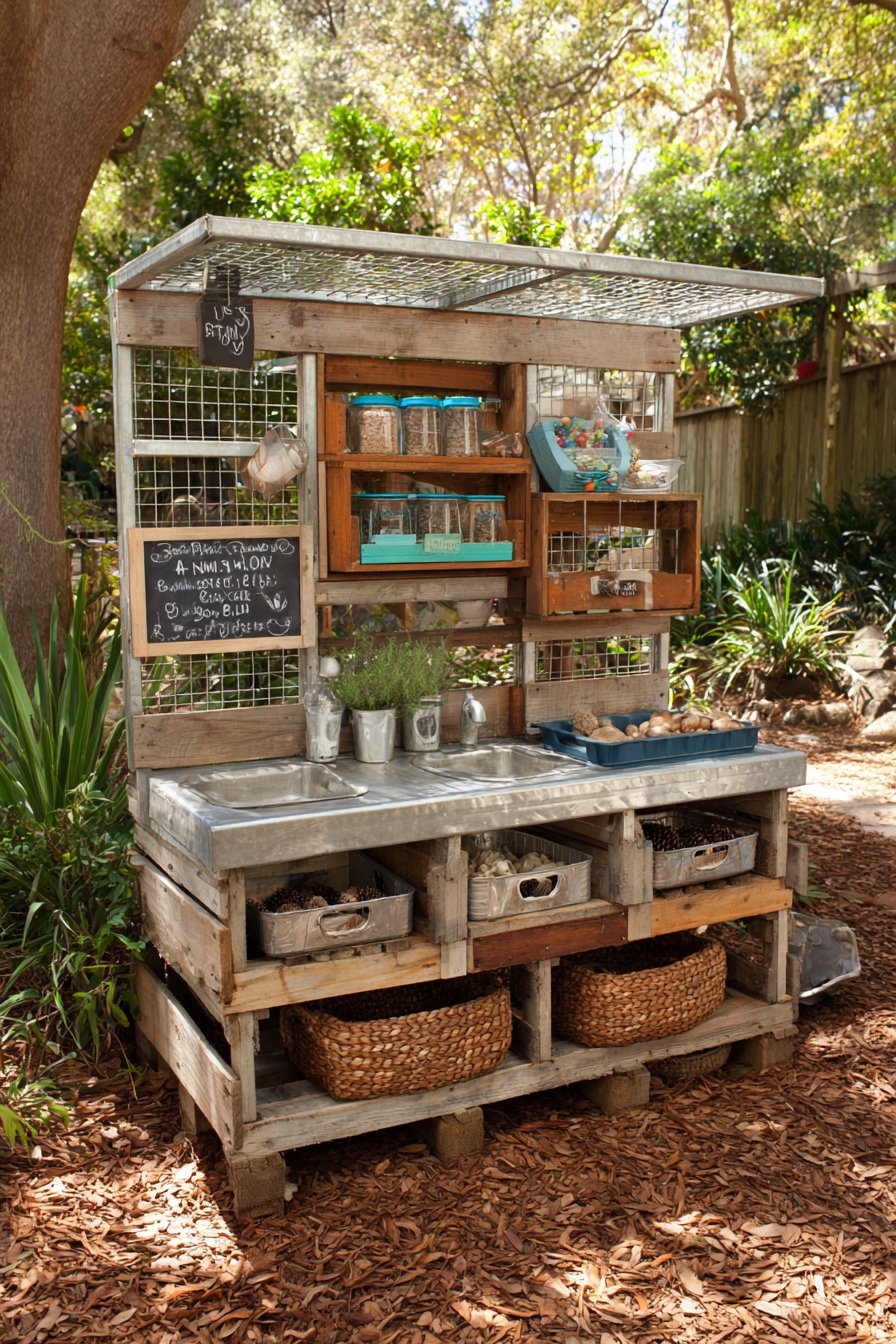
The environmental consciousness of modern families finds perfect expression in mud kitchen designs that repurpose discarded materials into functional play structures. Pallet-based construction demonstrates how creative thinking can transform industrial waste into engaging play environments while teaching children valuable lessons about sustainability and resourcefulness.
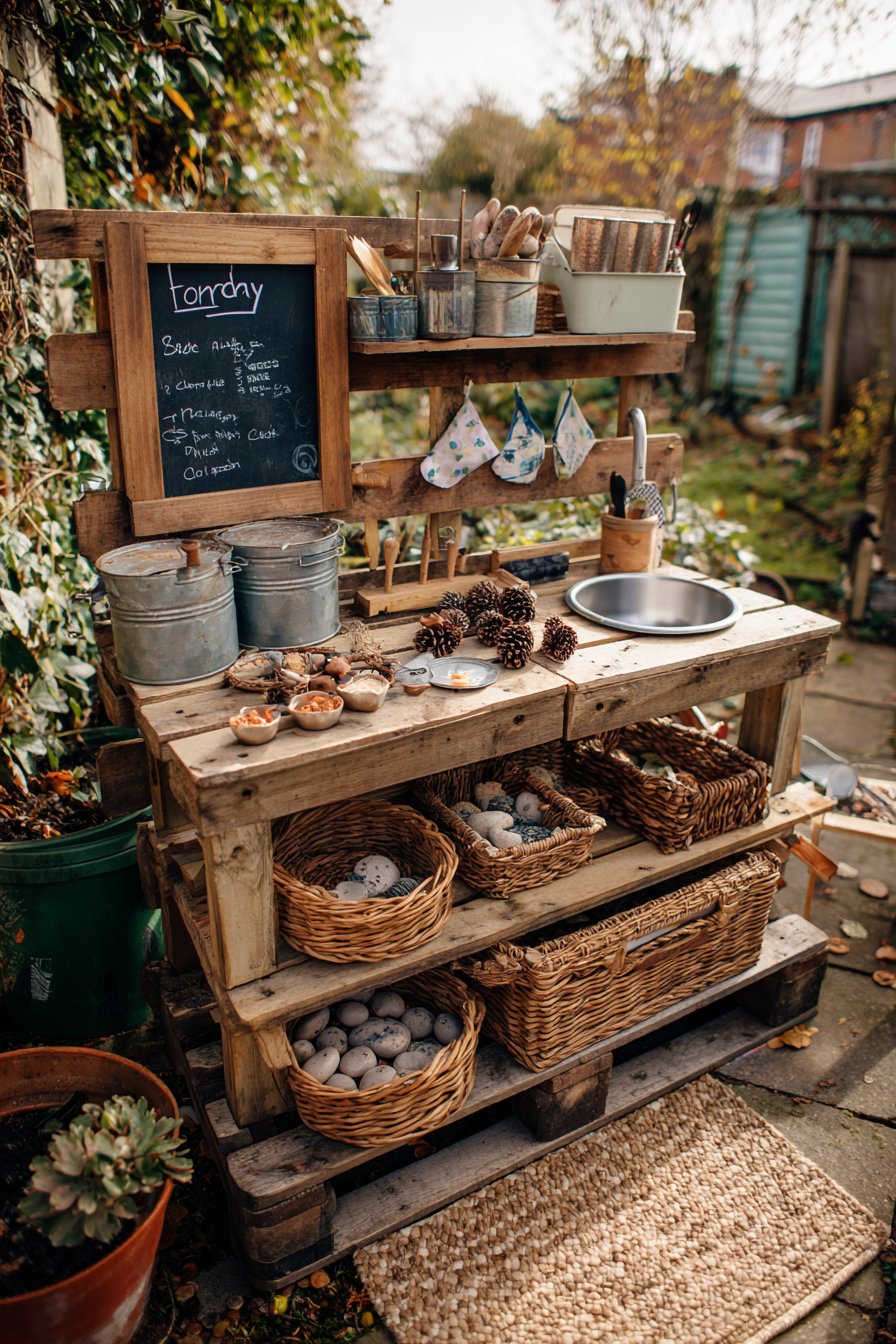
Multiple work surfaces positioned at varying heights accommodate children of different ages and developmental stages, ensuring that siblings can play together while each having age-appropriate workspace access. This inclusive design philosophy prevents younger children from feeling excluded while allowing older children to take on more complex cooking projects that match their developing motor skills and attention spans.
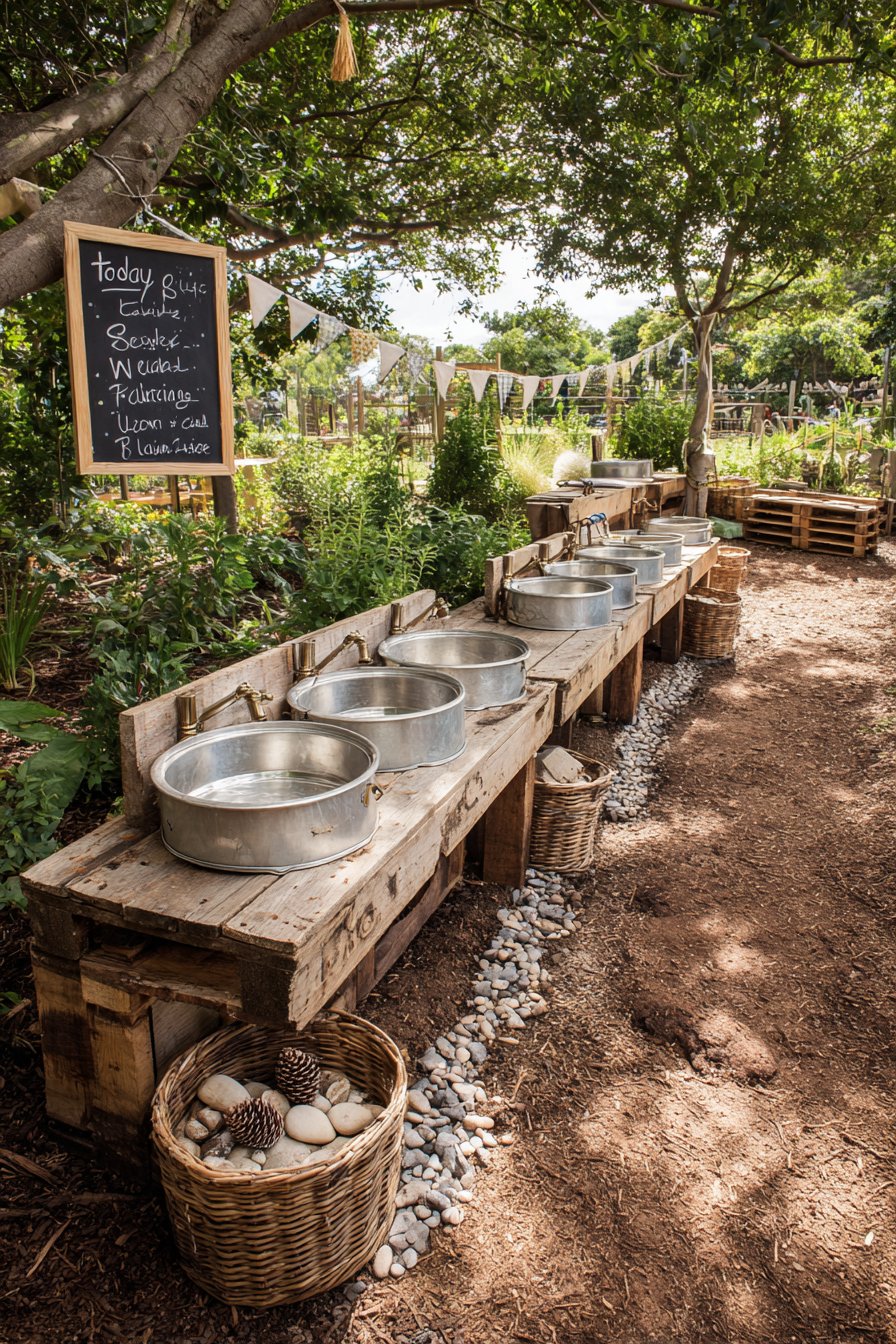
Galvanized metal containers serving as functional sinks provide durability and authentic industrial aesthetics while maintaining safety standards for outdoor play. The choice of metal over plastic demonstrates attention to longevity and environmental impact while creating surfaces that are easy to clean and maintain. Woven natural baskets offer attractive storage solutions for collected natural materials like pine cones, shells, and smooth stones that serve as cooking ingredients in imaginative play scenarios.
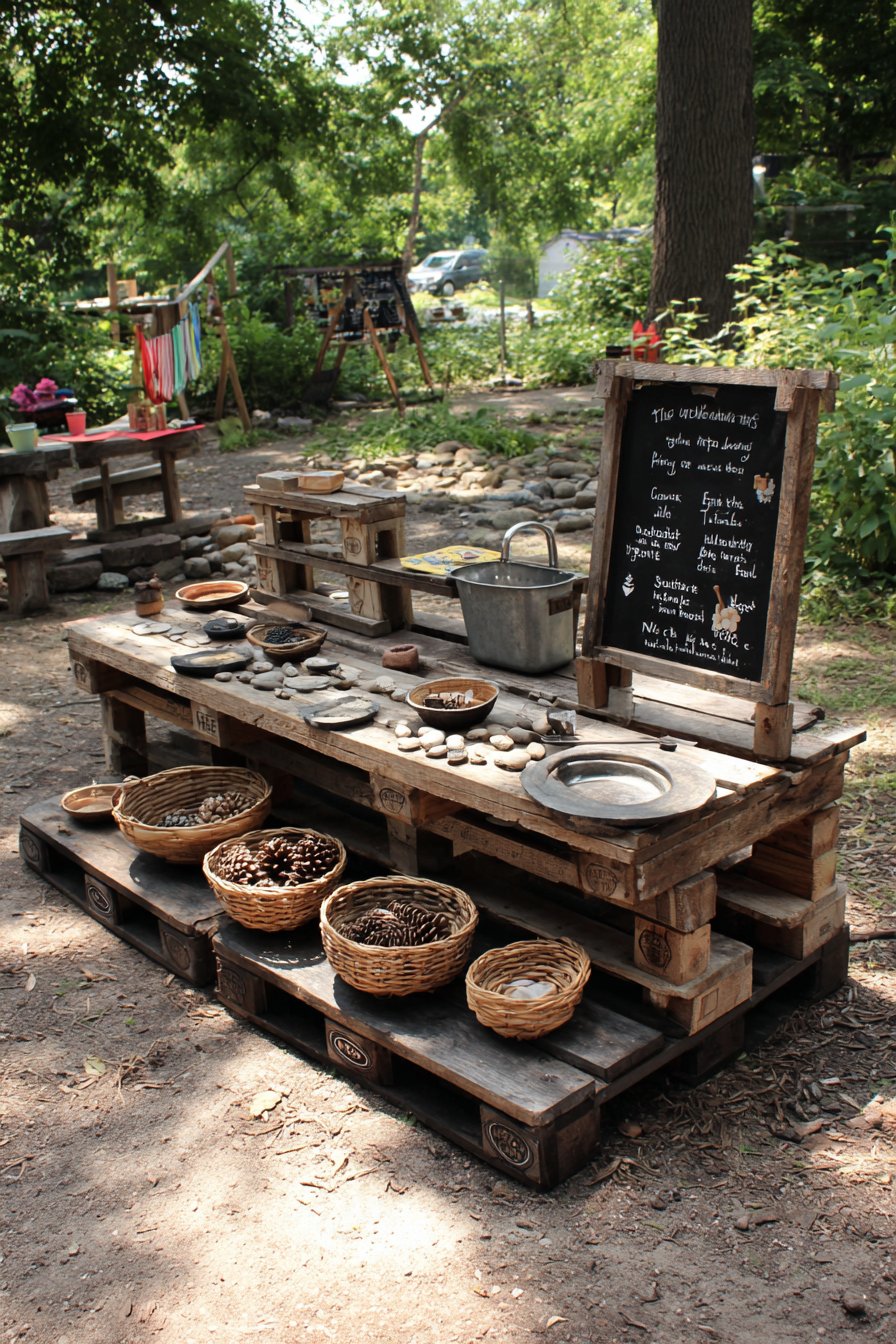
The addition of a chalkboard menu creates opportunities for literacy development and creative expression while adding an authentic restaurant atmosphere to the play experience. Children can practice writing skills while planning their culinary creations, developing both fine motor skills and creative thinking abilities through this simple but effective feature.
Key Design Tips:
- Sand and treat repurposed pallets thoroughly to ensure safety and longevity
- Create multiple work heights to accommodate various age groups simultaneously
- Incorporate authentic materials like galvanized metal for realistic kitchen functionality
- Add educational elements like chalkboards to encourage literacy and planning skills
- Use natural storage solutions that complement the sustainable design philosophy
4. Space-Saving Compact Design Solutions
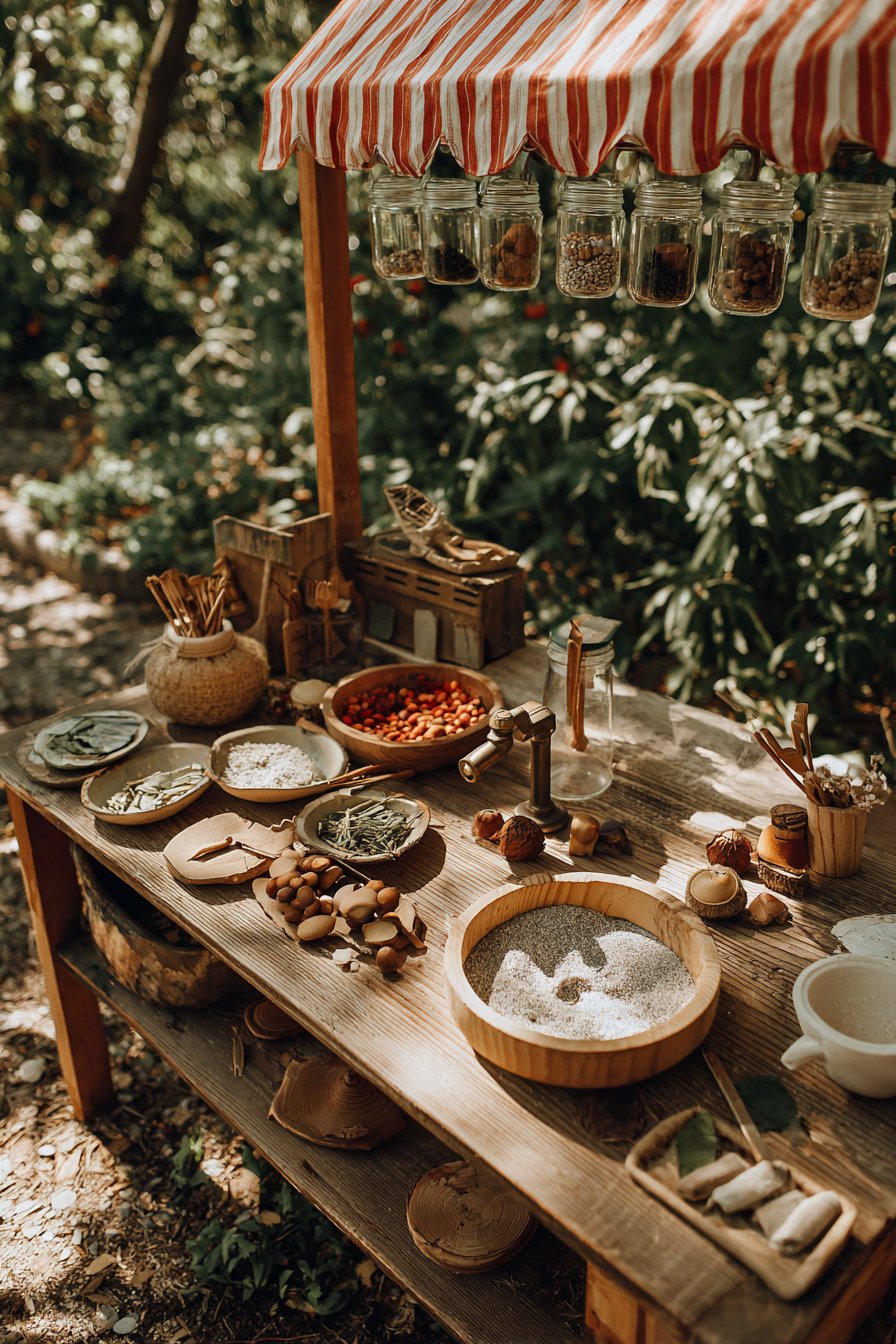
Urban and suburban families with limited outdoor space can still enjoy the benefits of mud kitchen play through thoughtfully designed compact solutions that maximize functionality within minimal footprints. Fold-down work surfaces represent innovative space-saving features that allow the kitchen to expand for active play periods while contracting to minimize space usage when not in use.
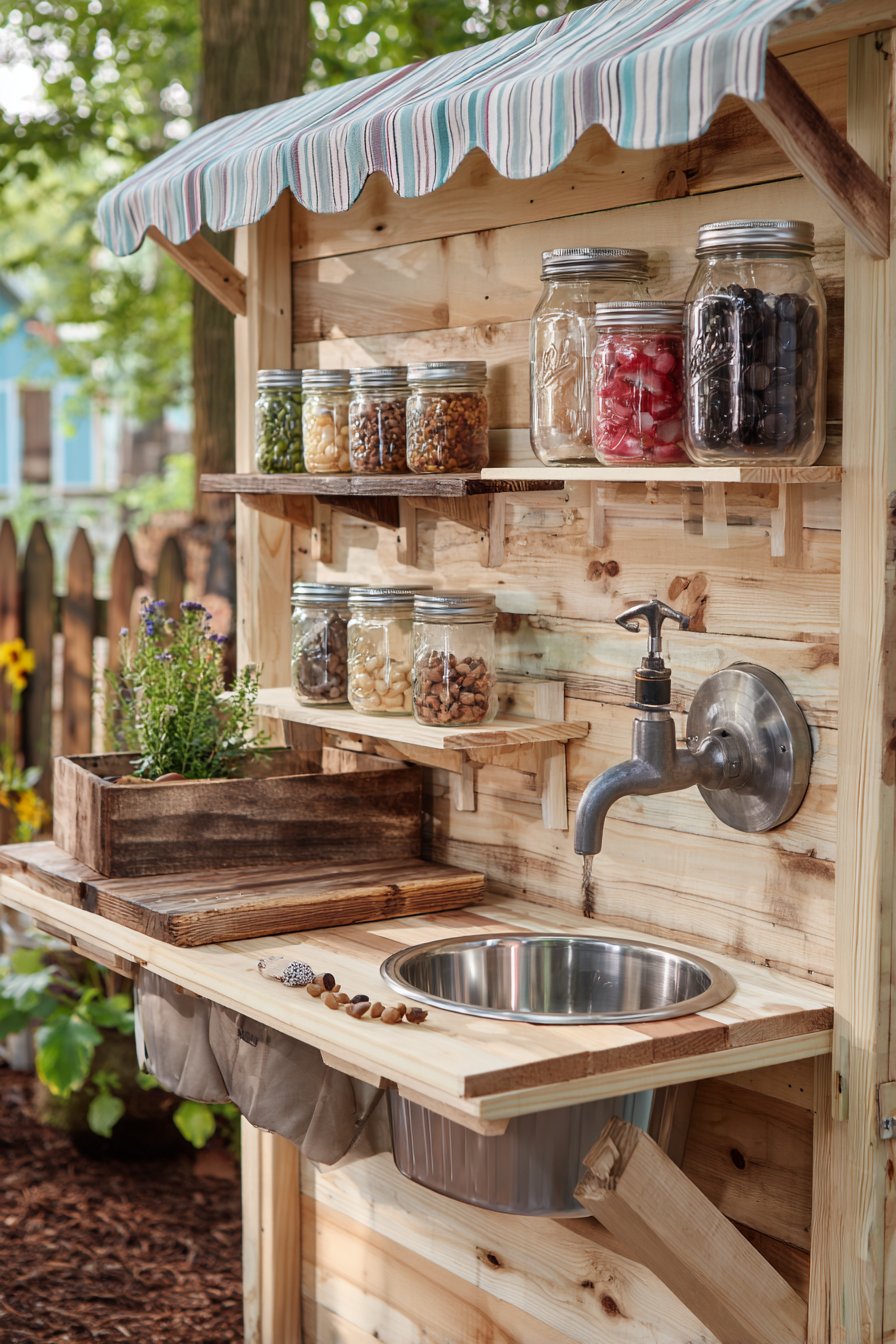
Natural pine wood construction provides an economical foundation that can be customized with paint or stain to match existing outdoor décor while maintaining the natural aesthetic that makes mud kitchens so appealing. The choice of pine demonstrates how budget-conscious families can still create beautiful, functional play spaces without compromising on quality or safety standards.
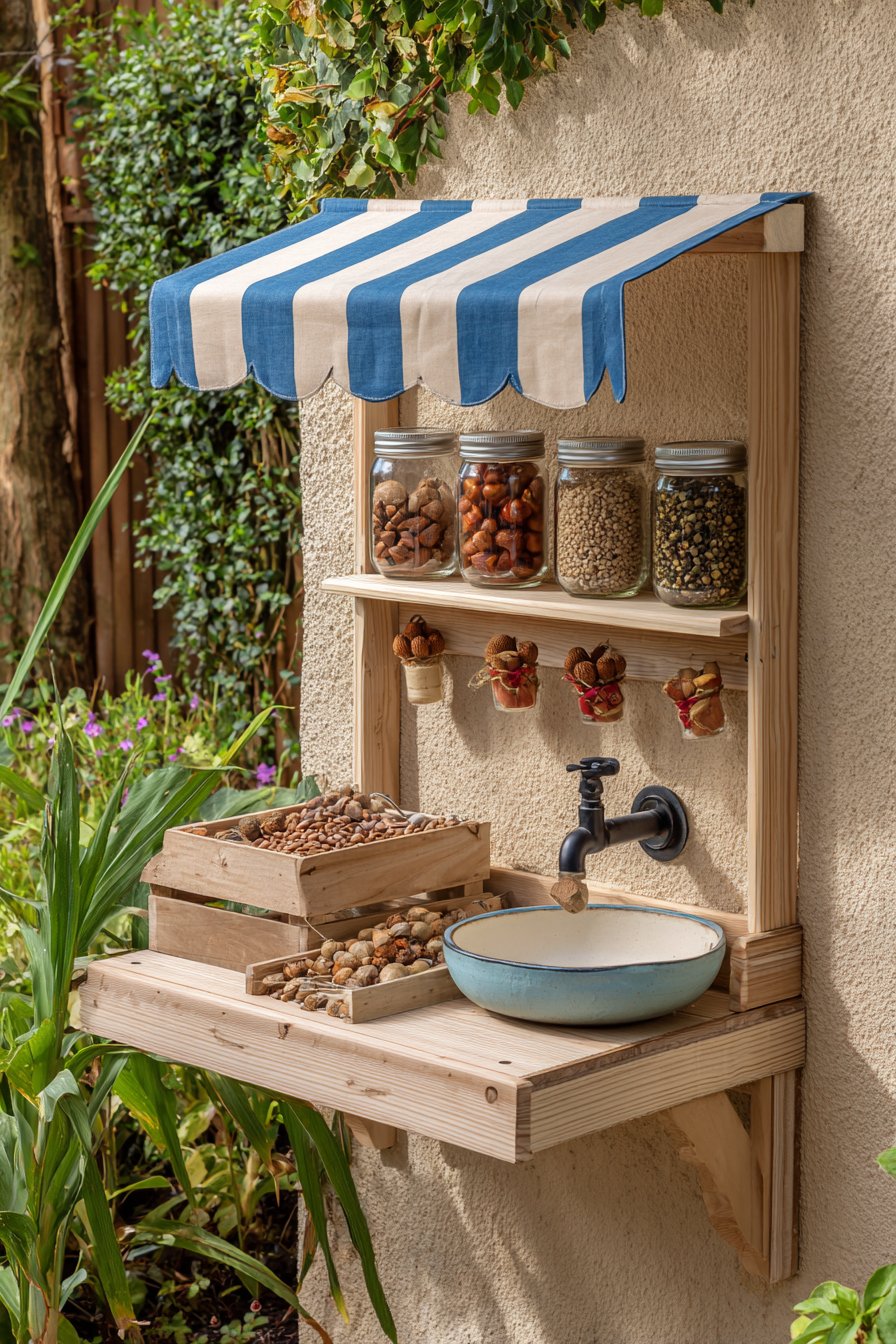
Wall-mounted mason jars create vertical storage solutions that keep natural cooking ingredients like acorns, leaves, and flower petals organized and accessible while adding visual interest to the compact design. This vertical storage approach teaches children about spatial efficiency while maintaining the organized appearance that encourages continued use and proper maintenance of the play space.
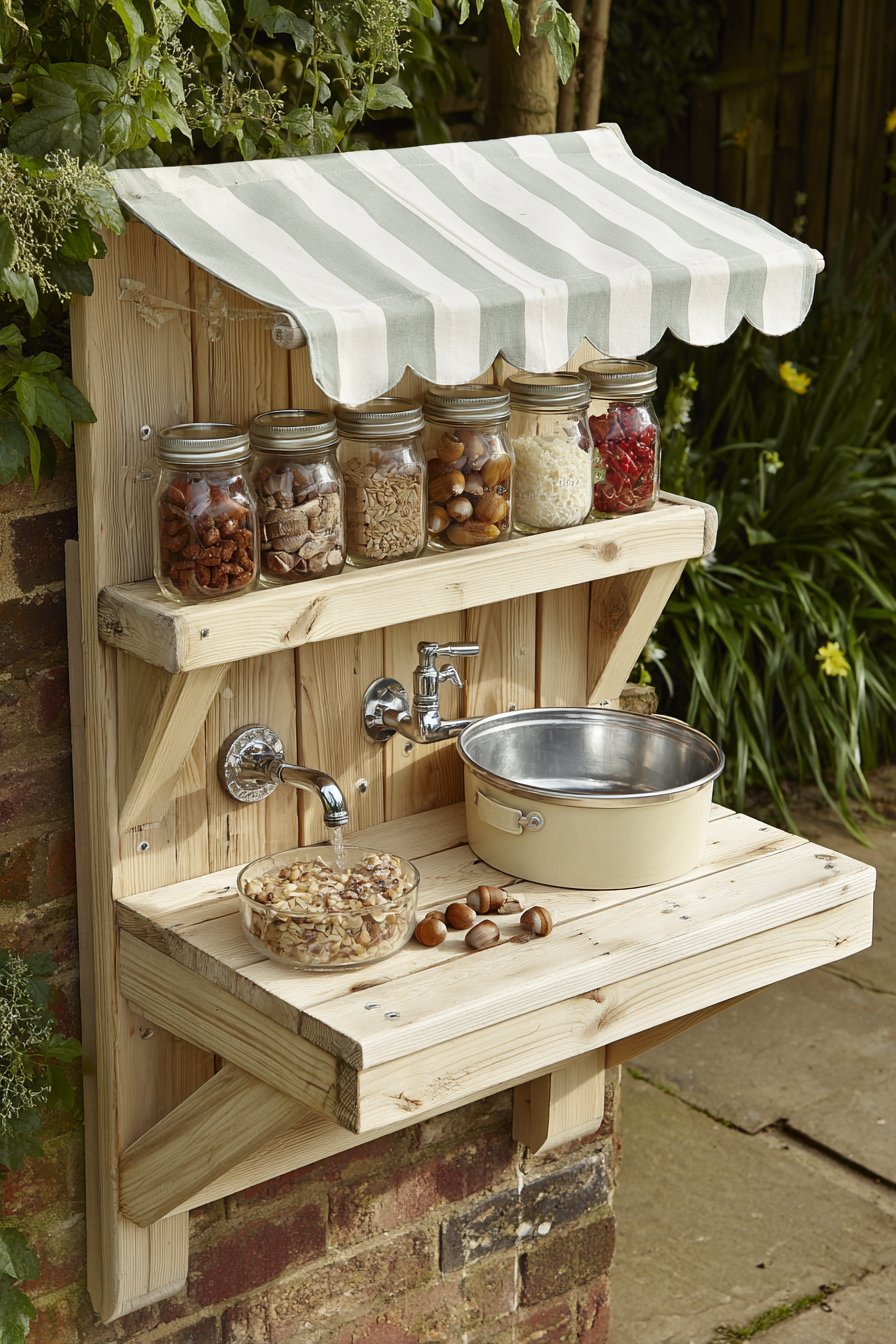
A vintage-style hand pump connected to a small enamel basin brings authentic charm while providing the water play element that children crave in outdoor cooking activities. The manual pump operation engages gross motor skills and teaches cause-and-effect relationships while creating the satisfying sensory experience of drawing water for cooking projects.
Key Design Tips:
- Implement fold-down surfaces to maximize flexibility in small spaces
- Utilize vertical storage solutions to keep materials organized without expanding the footprint
- Choose materials like pine that offer good value while maintaining natural aesthetics
- Install manual water systems that engage motor skills while providing functionality
- Design with portability in mind for renters or families who may need to relocate
5. Elaborate Realistic Kitchen Replication
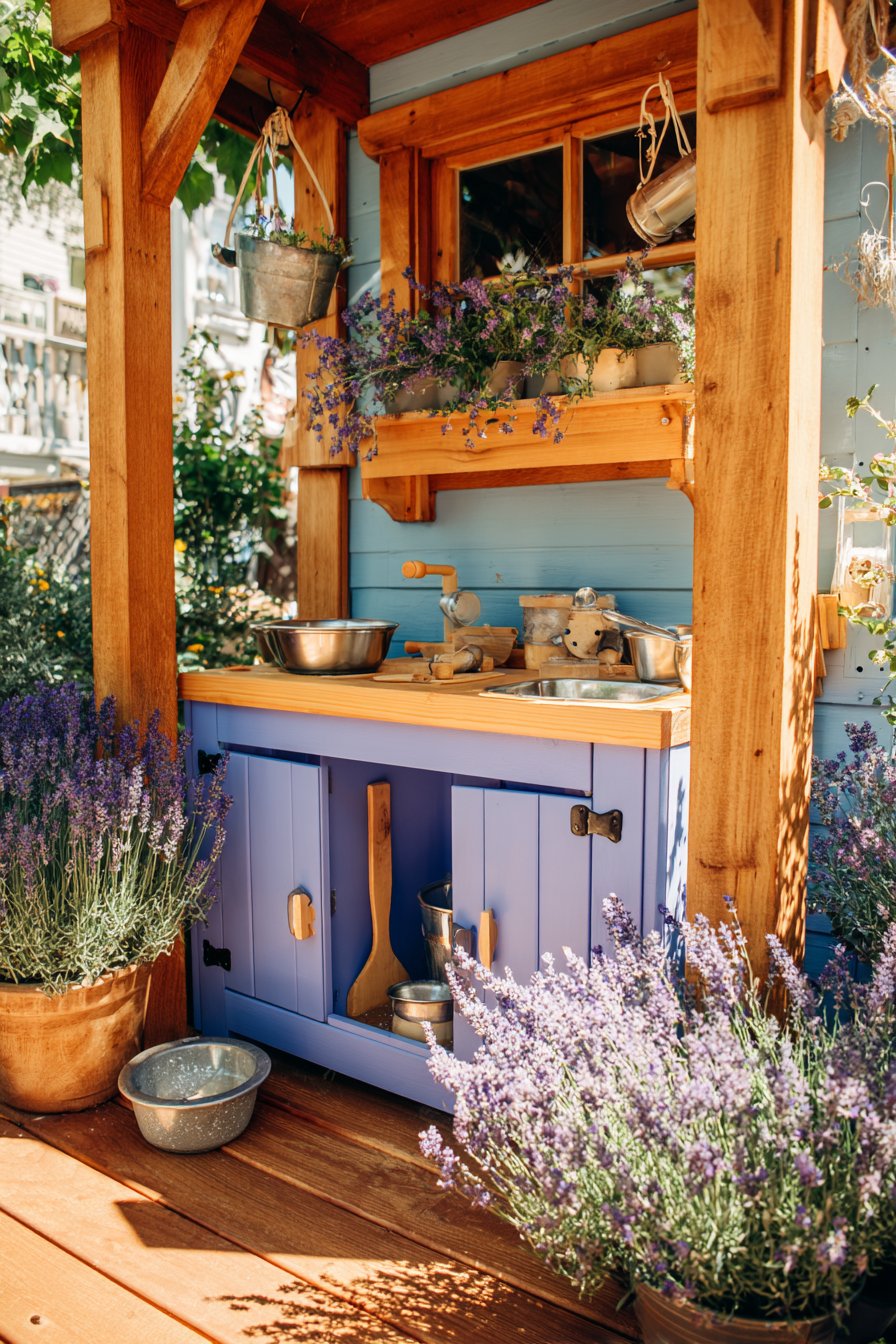
For families seeking to create the ultimate outdoor cooking experience, elaborate mud kitchen designs that closely mirror real kitchen layouts provide unparalleled opportunities for realistic role-playing and skill development. Custom-built wooden structures featuring both upper and lower cabinets create authentic storage solutions while teaching children about kitchen organization and proper tool storage.
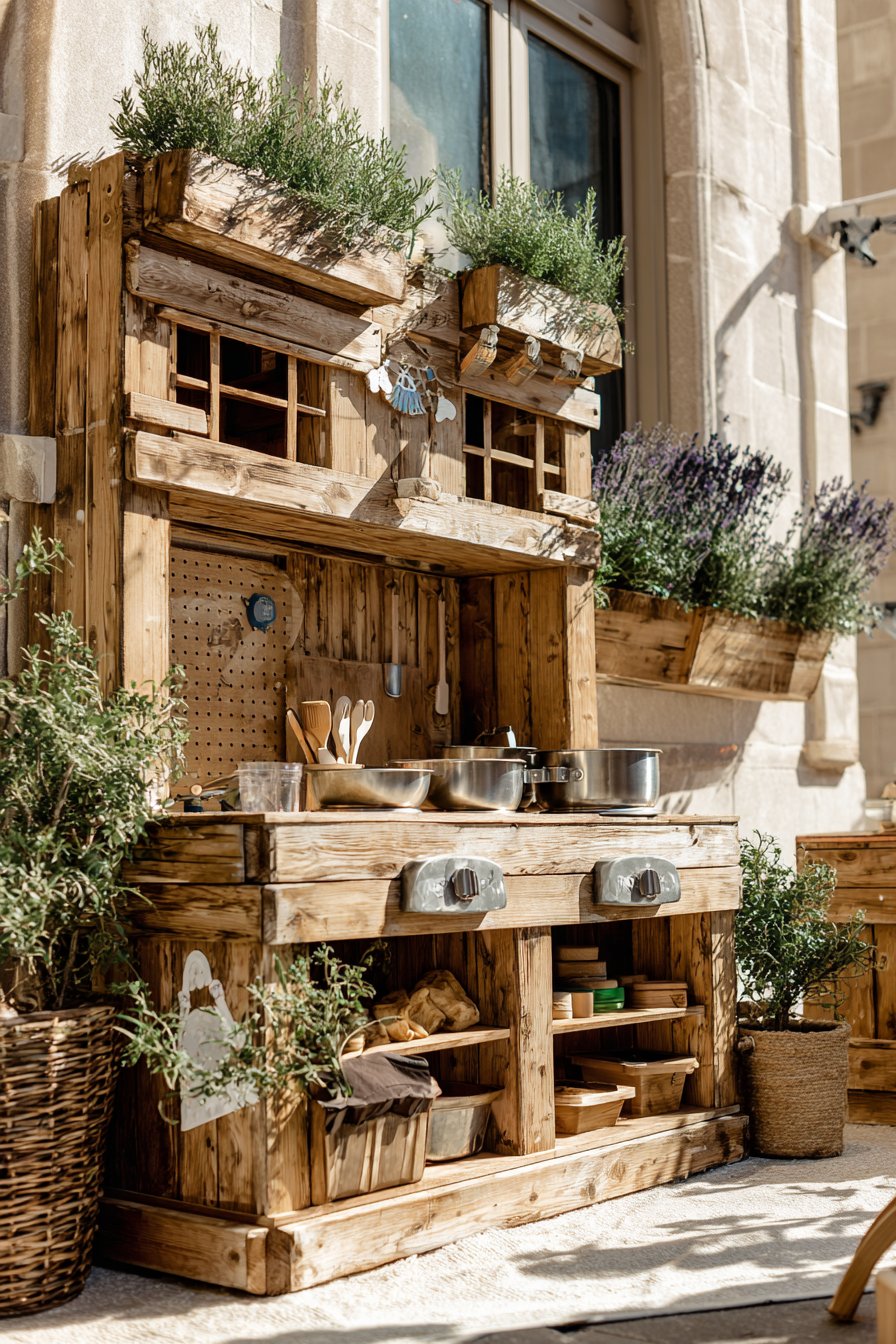
Stainless steel bowls and vintage aluminum pots elevate the cooking experience by providing realistic weight and texture that plastic alternatives cannot match. The incorporation of authentic cooking vessels teaches children about different materials and their properties while creating more engaging sensory experiences during play activities.
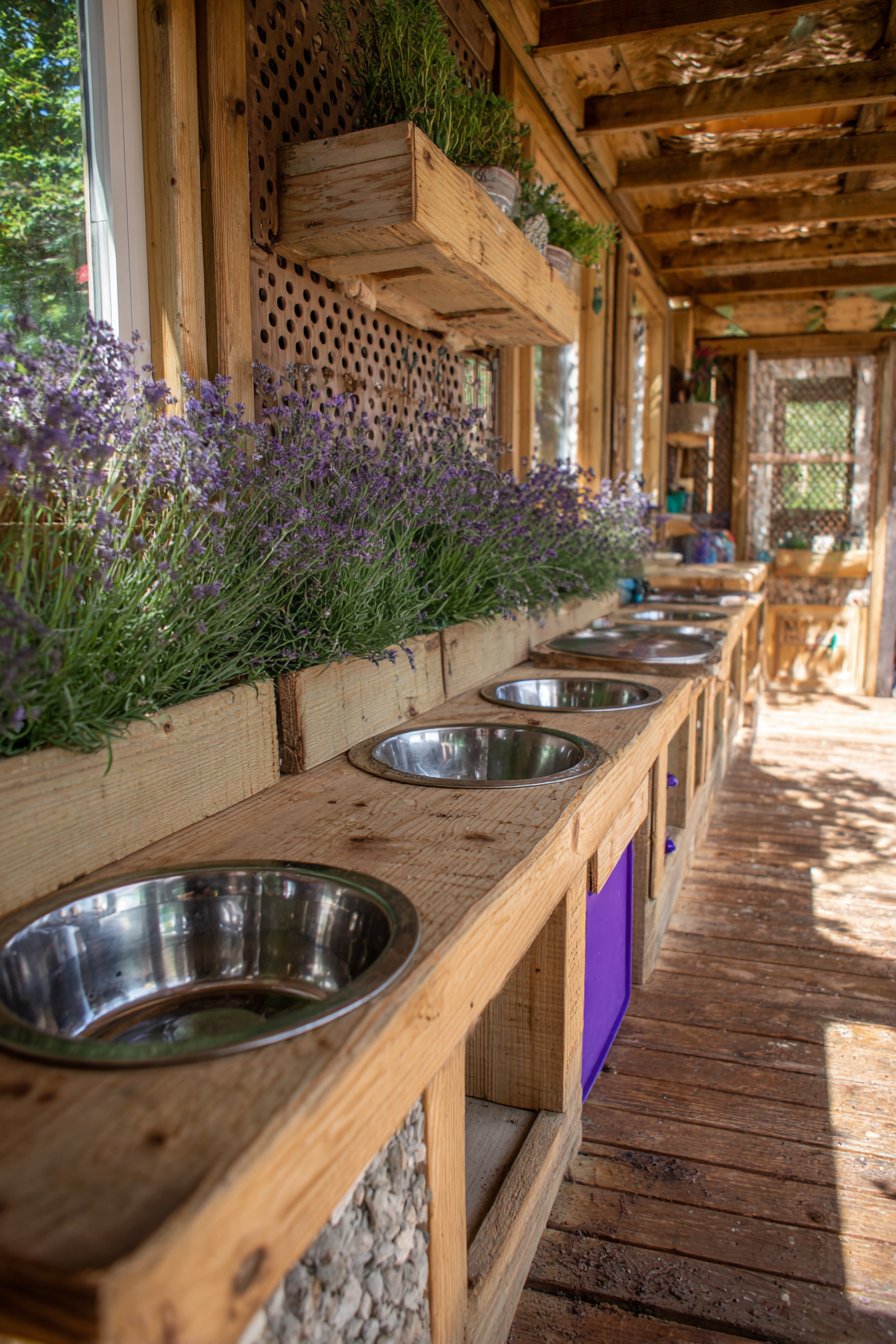
Pegboard wall systems position various utensils and tools at appropriate child heights, encouraging independence while teaching organizational skills and tool recognition. This professional kitchen feature demonstrates how adult cooking concepts can be scaled appropriately for children while maintaining functionality and educational value.
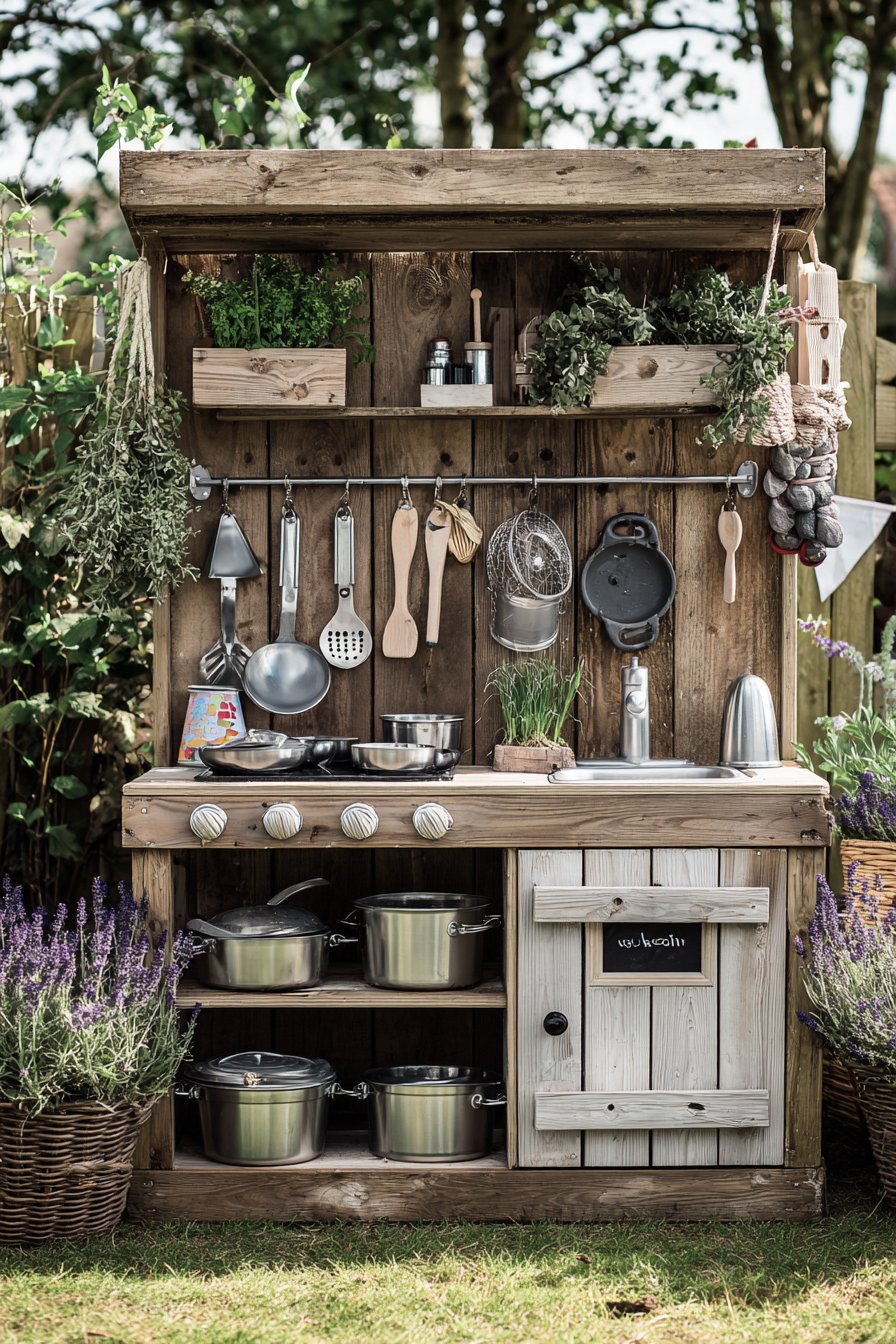
Window boxes attached directly to the kitchen structure and planted with aromatic herbs like fresh lavender and rosemary create immediate access to natural cooking ingredients while teaching children about herb cultivation and culinary applications. The integration of growing elements directly into the kitchen design reinforces the connection between gardening and cooking while providing ongoing sensory engagement.
Key Design Tips:
- Invest in quality construction materials for structures intended for heavy, long-term use
- Choose authentic cooking implements that provide realistic weight and sensory feedback
- Install professional organizational systems adapted for child-height accessibility
- Integrate herb gardens directly into the kitchen structure for immediate ingredient access
- Plan for weather protection to extend usability throughout different seasons
6. Natural Stone and Reclaimed Wood Integration
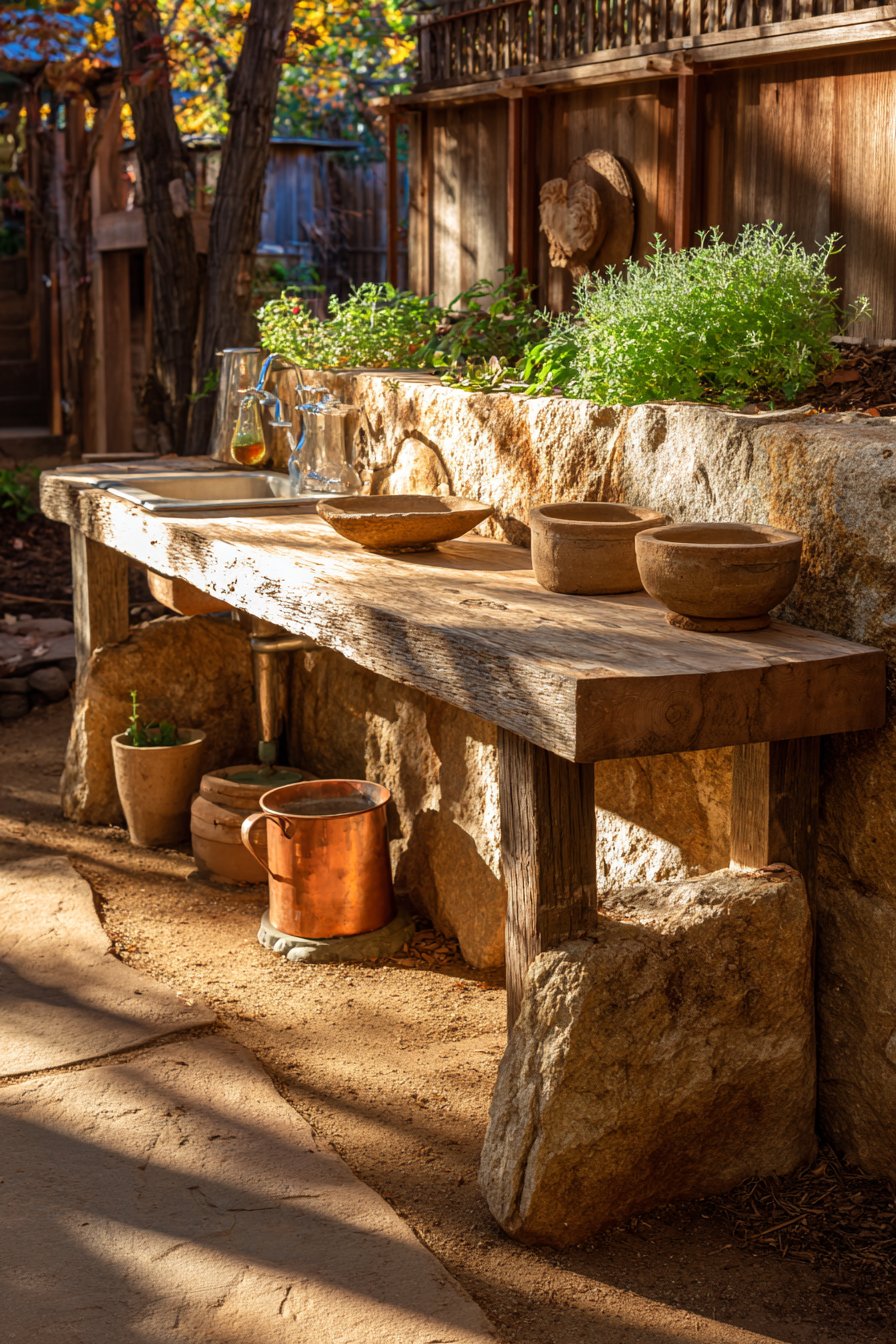
The marriage of natural stone foundations with reclaimed wood countertops creates mud kitchen designs that feel like permanent landscape features rather than temporary play structures. This approach demonstrates how thoughtful material selection can create outdoor kitchens that enhance property value while providing exceptional play experiences for children.
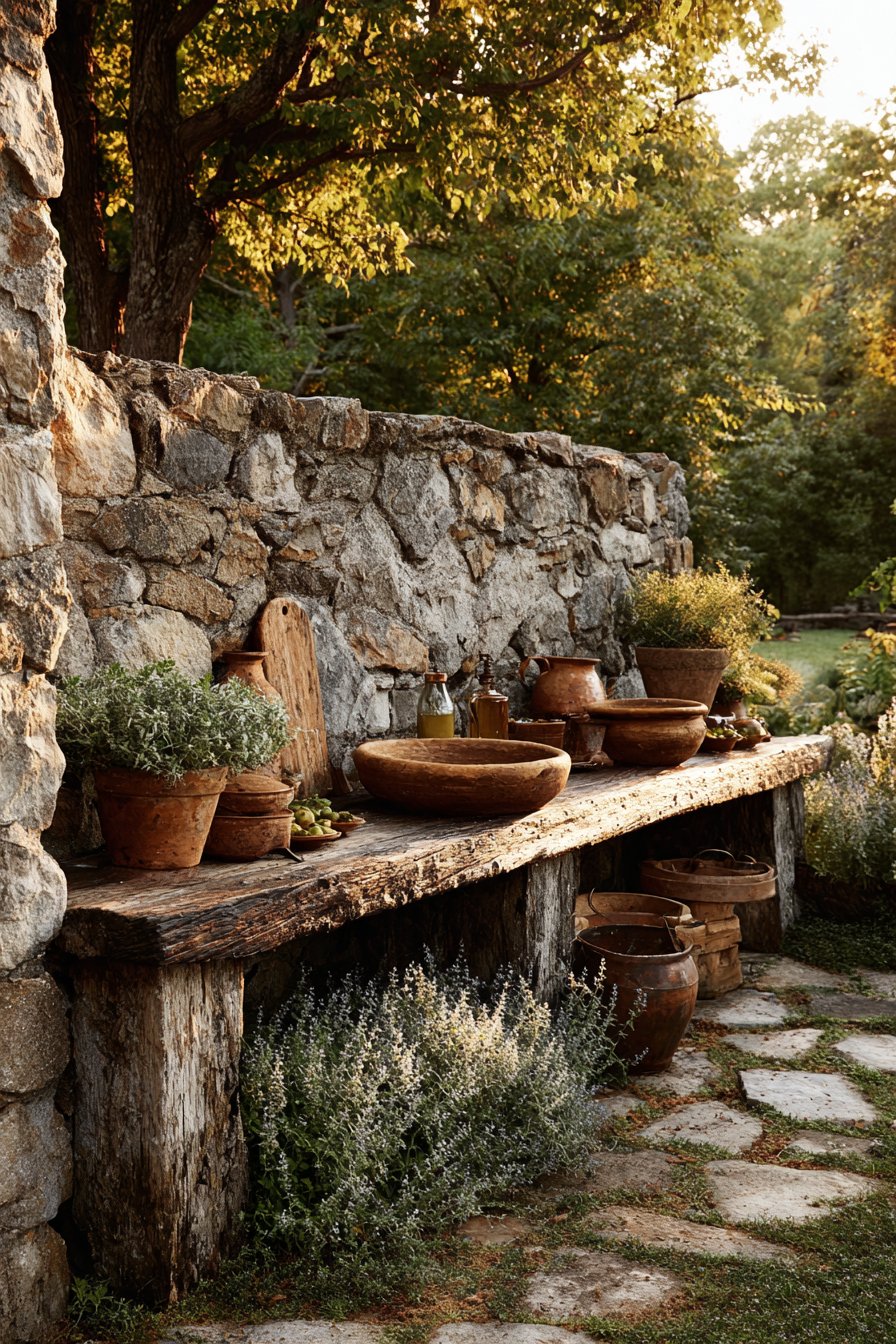
Clay pots in varying sizes serve multiple functions as both decorative elements and practical mixing bowls, teaching children about traditional cooking vessels while providing authentic cooking experiences. The variety in pot sizes encourages experimentation with different batch sizes and cooking projects while developing an understanding of volume and measurement concepts.
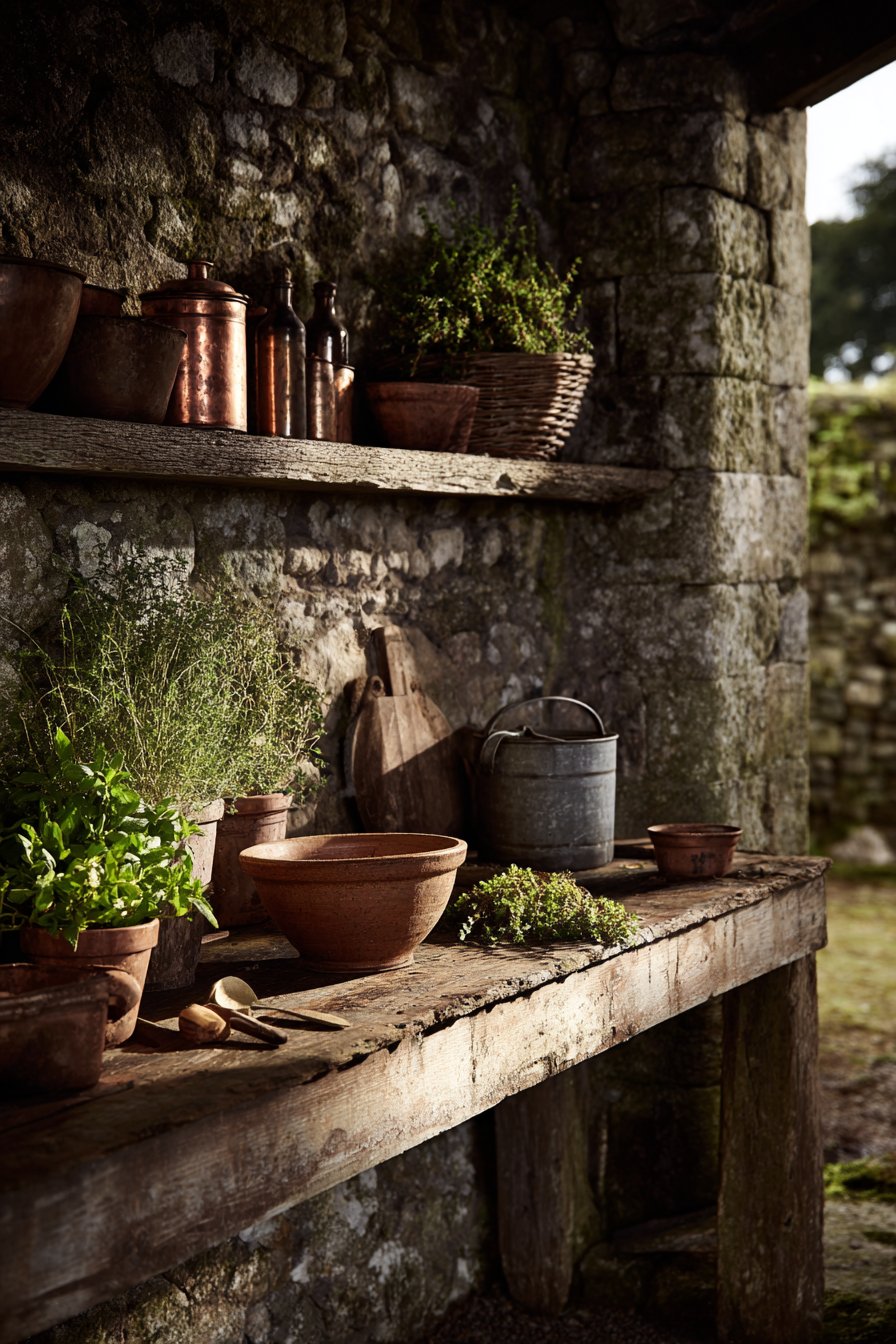
Natural herb growth around the kitchen base creates an organic integration between the built environment and natural landscape, demonstrating how outdoor structures can enhance rather than compete with existing garden features. Wild mint and thyme provide natural aromatherapy while teaching children about plant identification and culinary herb applications.
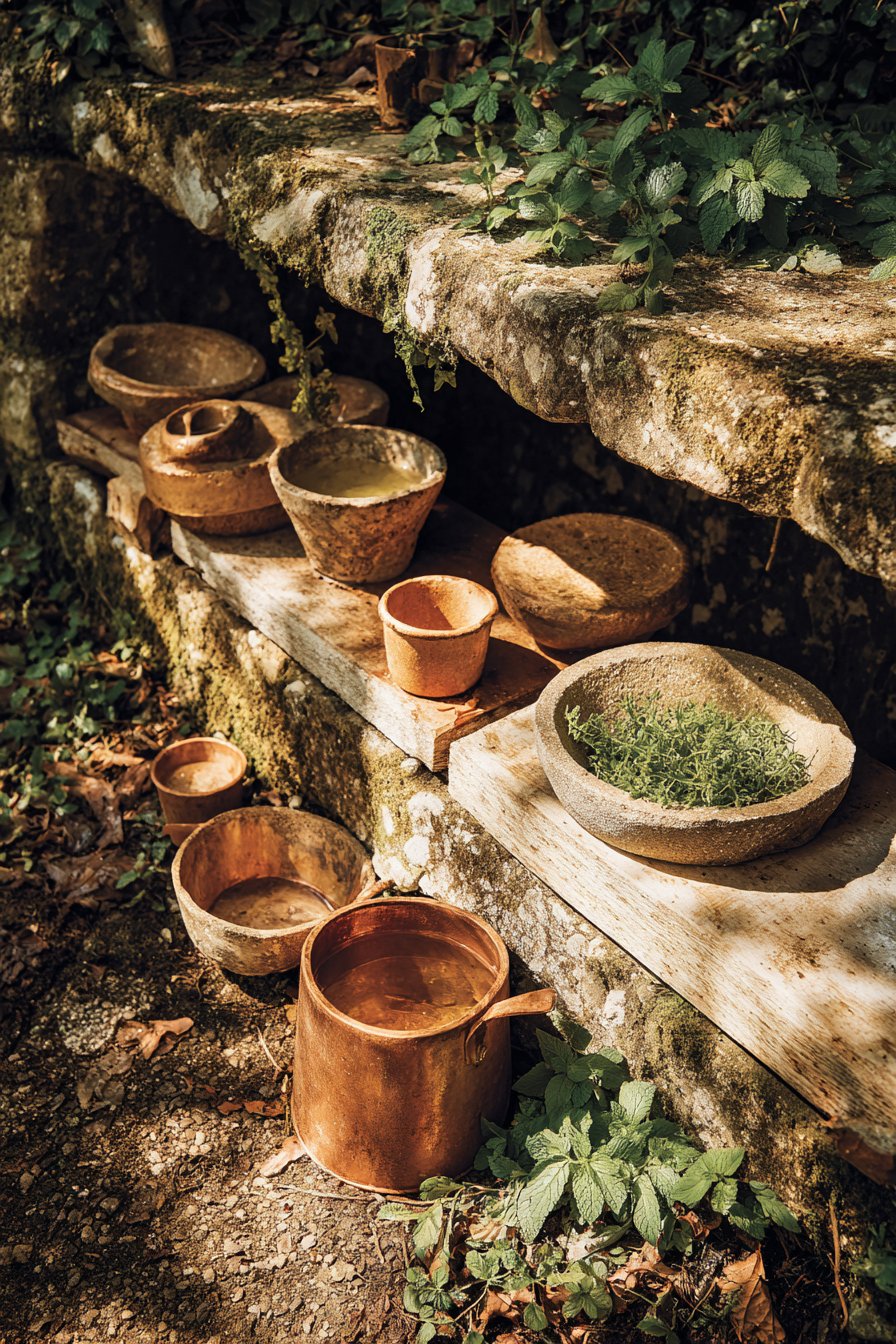
The utilization of natural stone as a base structure provides exceptional durability while creating thermal mass that moderates temperature fluctuations throughout daily use cycles. This natural temperature regulation creates more comfortable play conditions while teaching children about material properties and environmental interactions.
Key Design Tips:
- Select natural stone that complements existing landscape materials and color palettes
- Allow natural plant growth to integrate structure organically into the garden environment
- Choose traditional cooking vessels that provide authentic cultural and historical connections
- Design with natural drainage patterns to prevent water accumulation and structural damage
- Position to take advantage of natural light patterns and seasonal sun angles
7. Mobile Portable Kitchen Cart Design
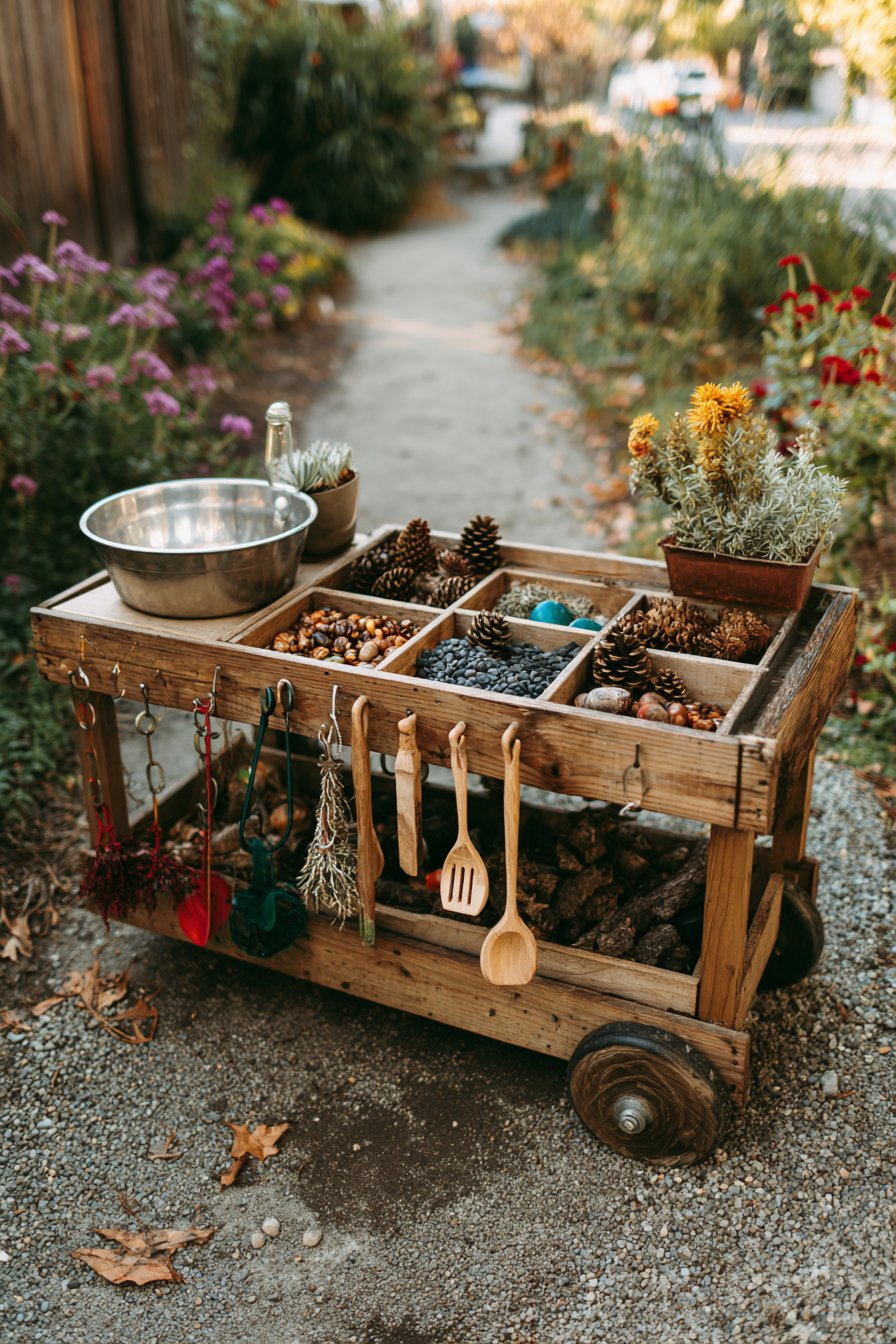
Portable mud kitchen solutions address the needs of families who value flexibility and may need to reconfigure outdoor spaces for different activities or seasonal changes. Wheeled cart designs enable easy relocation around the garden, allowing children to follow optimal sun and shade patterns while adapting to different play scenarios and group sizes.
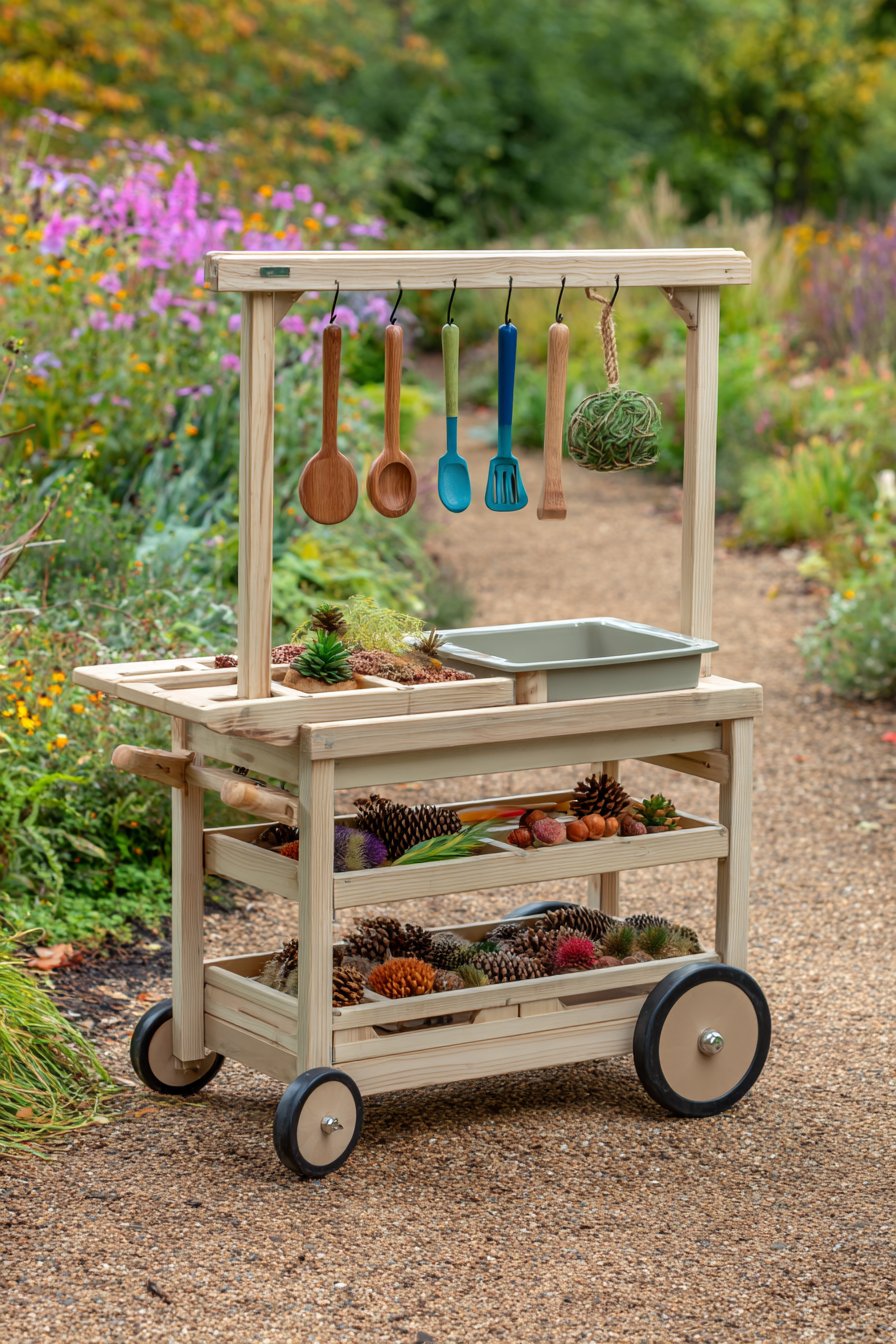
Multiple compartments within the mobile structure provide organized storage for natural materials like pinecones, acorns, and colorful leaves while teaching children about categorization and inventory management. The variety of storage solutions accommodates different types of play materials while encouraging children to maintain organization and care for their cooking supplies.
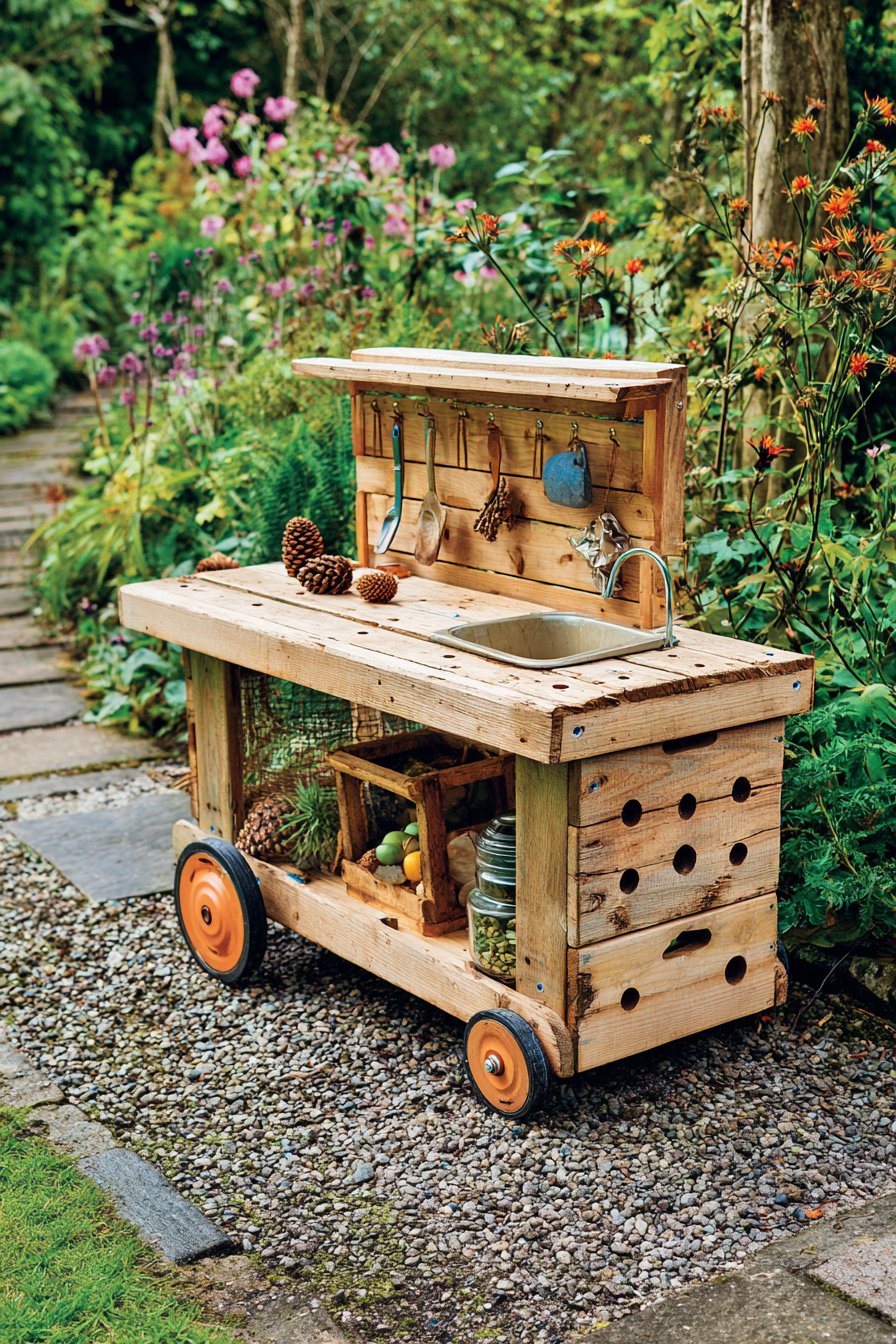
Removable water basins offer flexibility for different types of play activities while simplifying cleaning and winter storage requirements. The removable design also allows the basin to be used independently for water play activities or garden projects, extending the versatility and value of the investment.
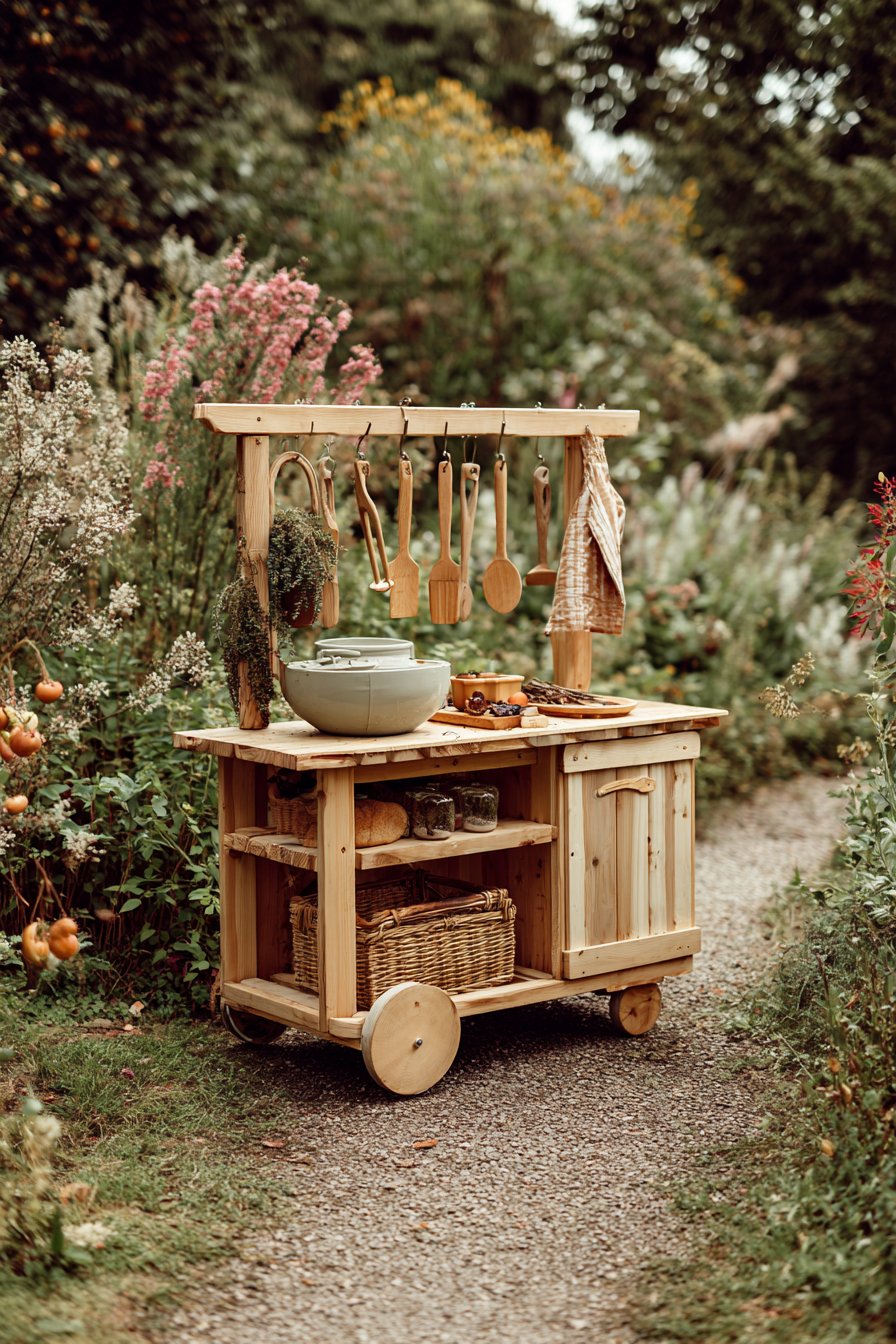
Hanging hooks integrated into the mobile design provide convenient storage for frequently used utensils while keeping them easily accessible during active play periods. This feature teaches children about tool organization and proper storage while maintaining the clutter-free appearance that encourages continued use of the play space.
Key Design Tips:
- Select high-quality casters rated for outdoor use and varied terrain conditions
- Design storage compartments with proper drainage to prevent water accumulation
- Create removable components for flexibility and easier seasonal storage
- Position handles and hooks at appropriate heights for independent child access
- Include locking mechanisms to prevent unwanted movement during active play
8. Multi-Functional Sandbox Integration
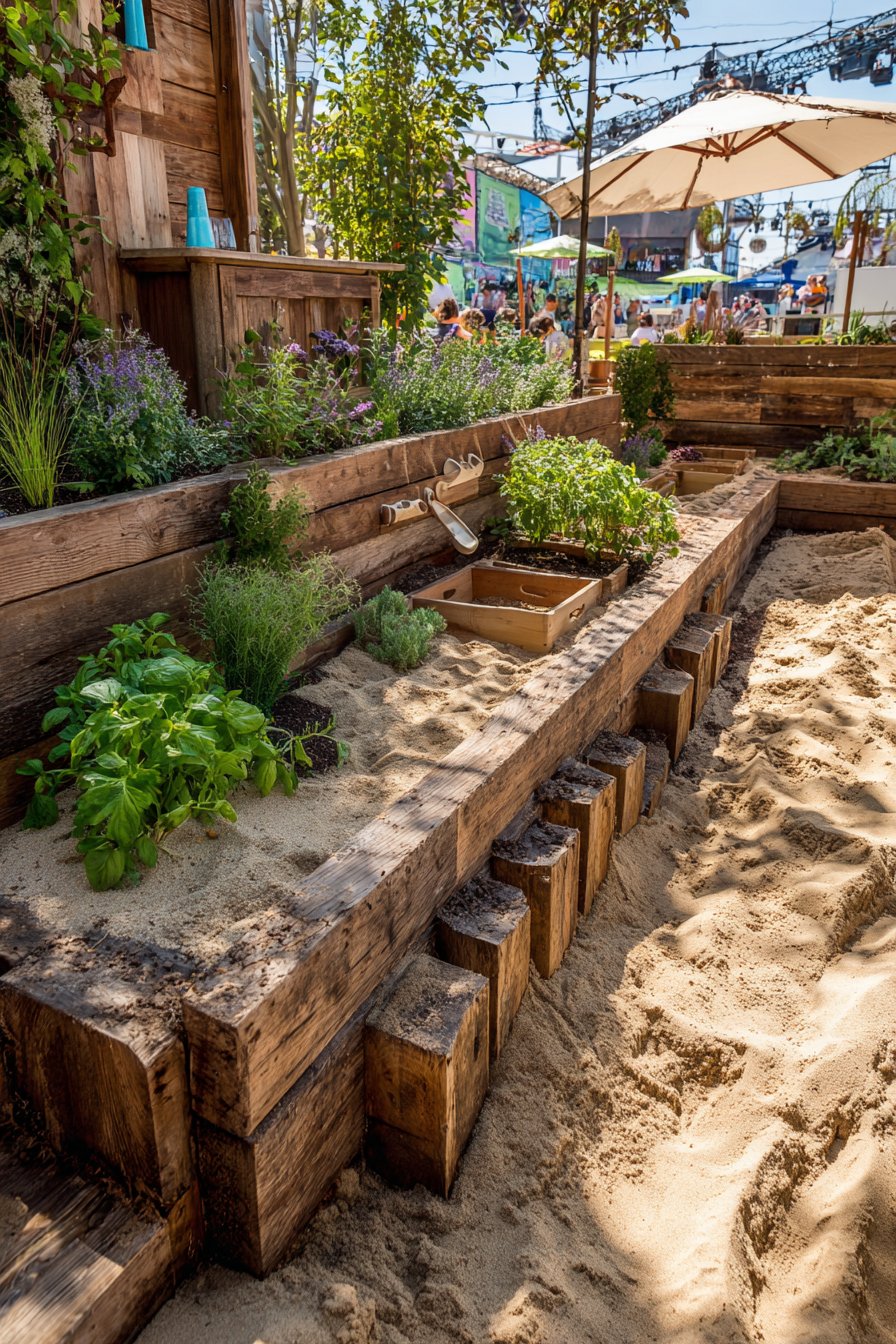
Combining mud kitchen functionality with traditional sandbox play creates comprehensive outdoor play environments that maximize space utilization while providing diverse activity options within a unified design concept. The seamless transition between sand play and cooking activities demonstrates how thoughtful planning can create cohesive play experiences that engage children for extended periods.
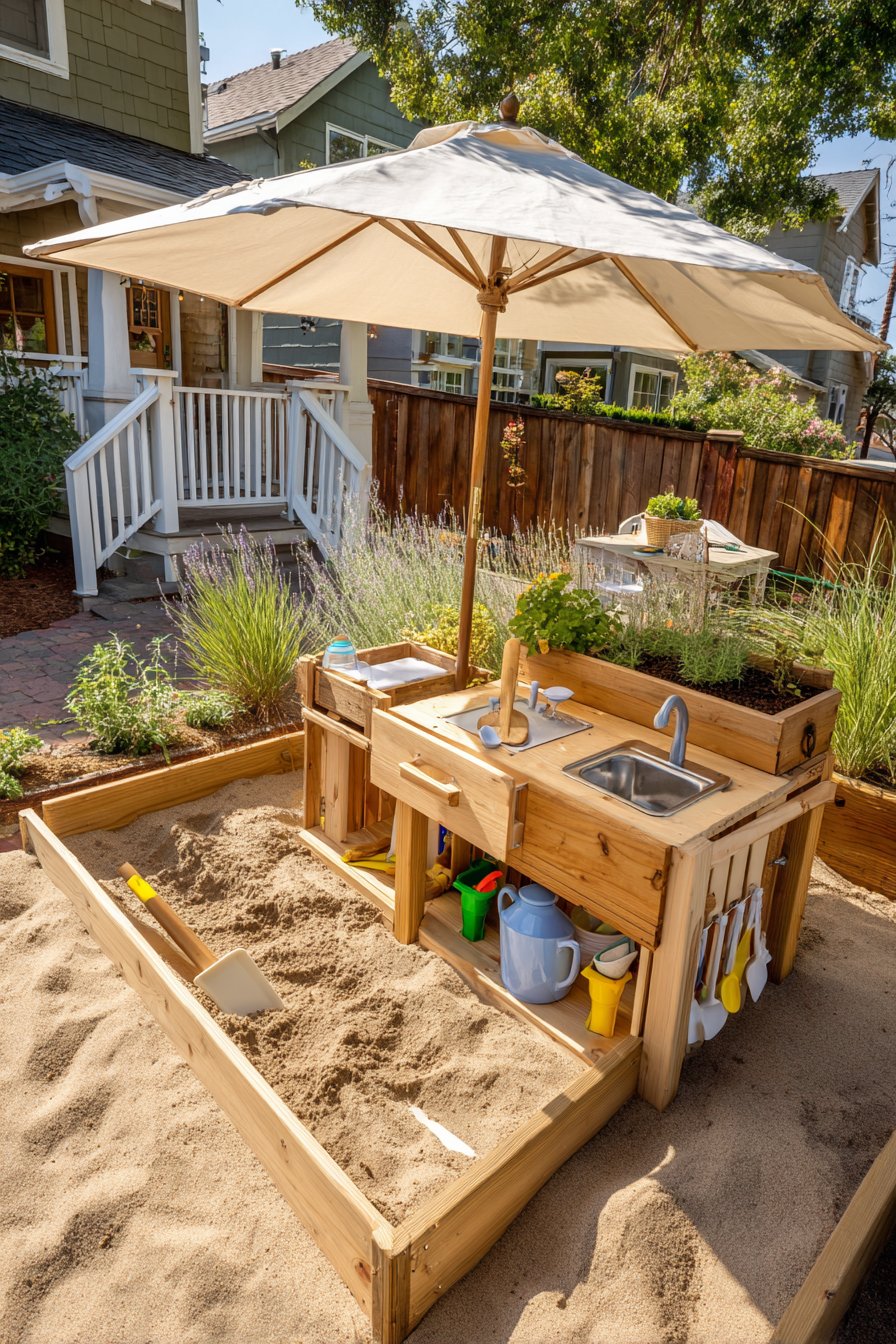
Built-in storage cubbies maintain organization between different types of play materials while teaching children about proper tool care and storage responsibility. The integration of storage directly into the play structure eliminates the need for separate storage solutions while maintaining easy access to materials during active play periods.
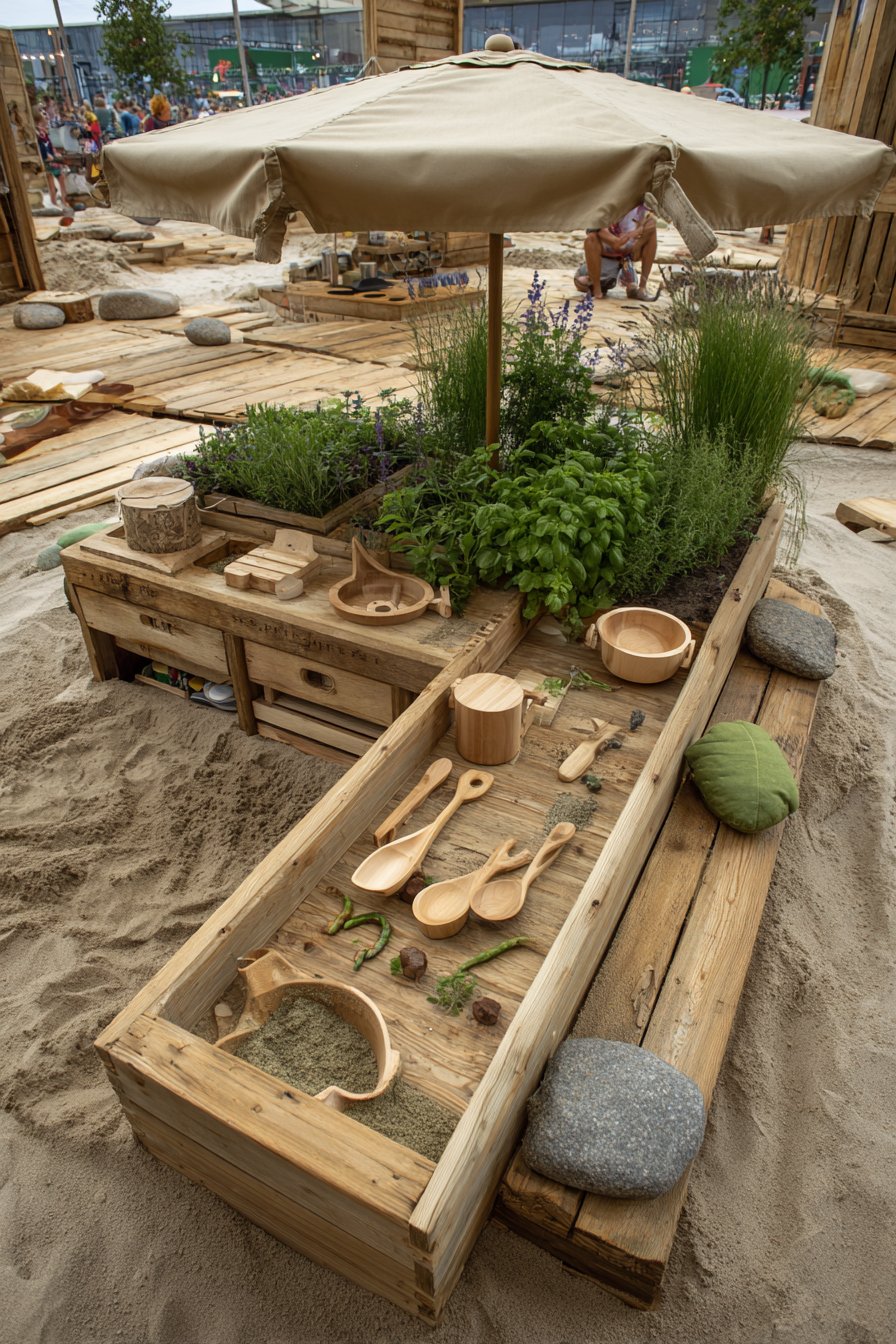
Canvas umbrellas or permanent shade structures protect both children and play materials from excessive sun exposure while extending the usability of the play space throughout different weather conditions. Proper shade provision demonstrates attention to child safety while creating more comfortable play environments during peak sun hours.
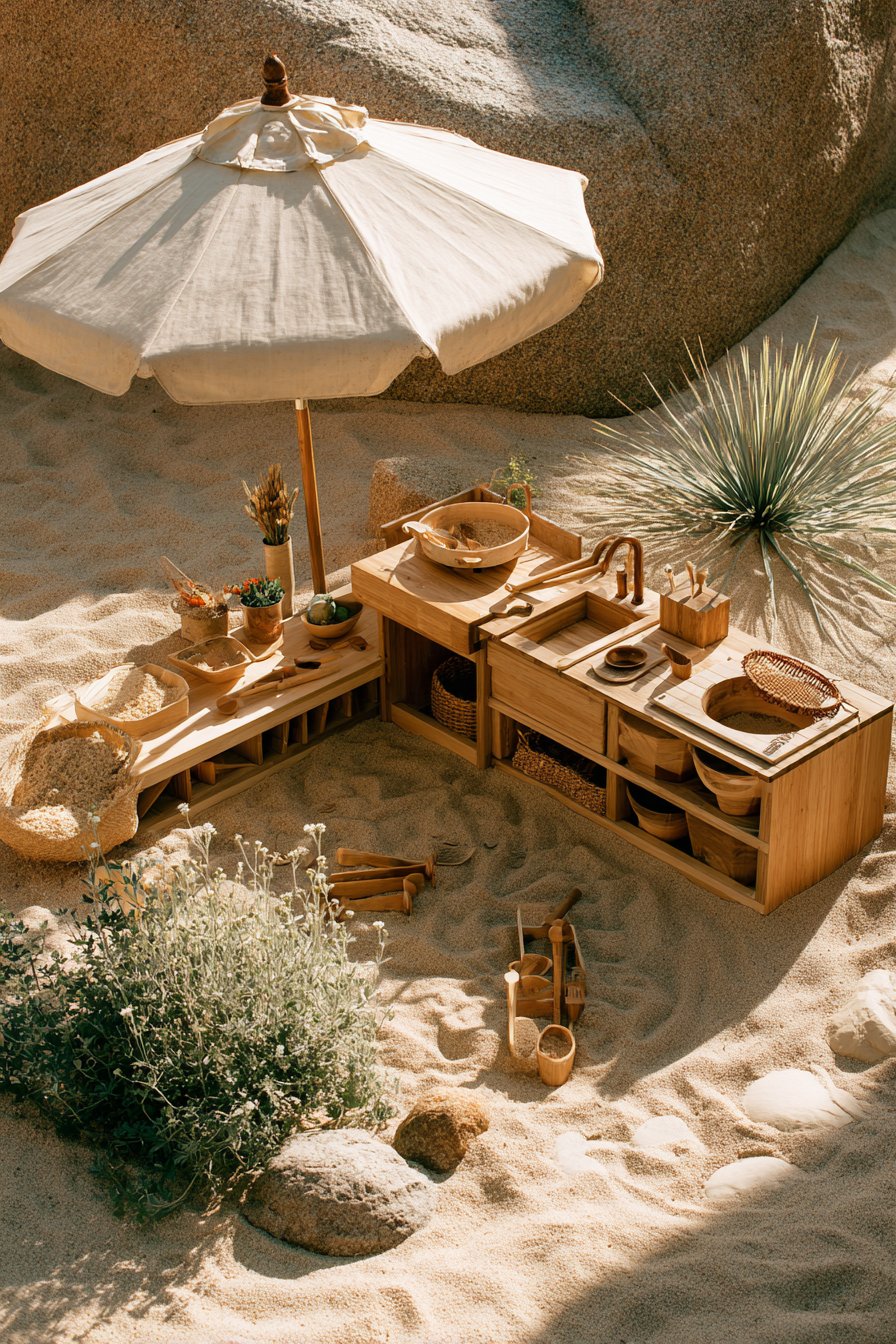
Child-friendly herb gardens featuring resilient plants like mint and chives provide natural cooking ingredients while teaching basic gardening skills and plant care responsibility. The selection of hardy, fast-growing herbs ensures successful growing experiences that build confidence and interest in gardening activities.
Key Design Tips:
- Plan drainage systems that accommodate both water play and sand maintenance
- Choose plants that can tolerate occasional sand disturbance and heavy child traffic
- Install shade solutions that can be adjusted based on seasonal sun angles
- Create clear boundaries between different play zones while maintaining visual cohesion
- Select sand play tools that can double as cooking implements for versatile use
9. Authentic Farm-Style Aesthetic
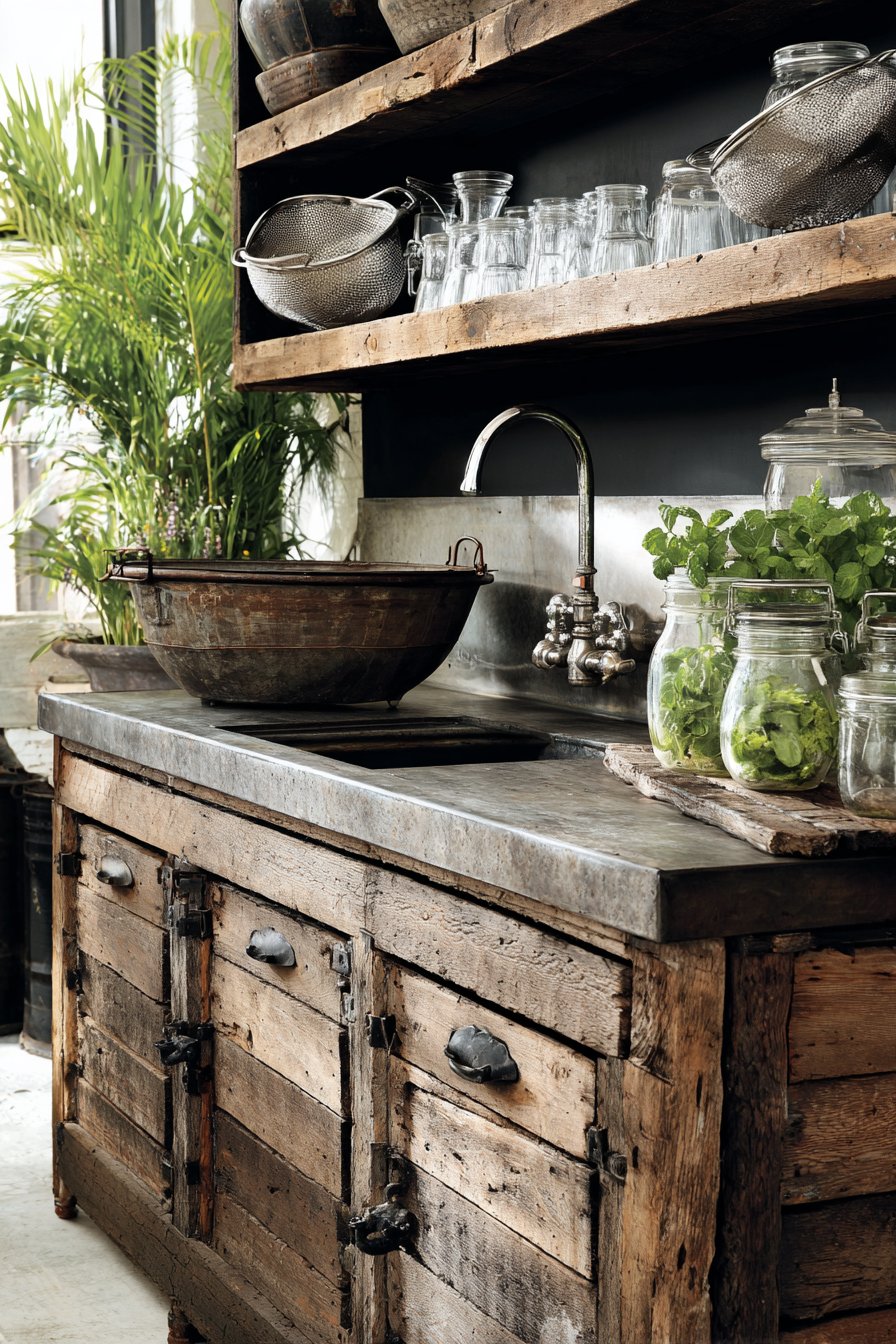
Reclaimed barn wood construction paired with galvanized steel accents creates mud kitchen designs that evoke authentic farmhouse charm while providing exceptional durability and weather resistance. The combination of natural wood textures with industrial metal elements demonstrates how contrasting materials can complement each other to create visually striking and functionally superior outdoor structures.
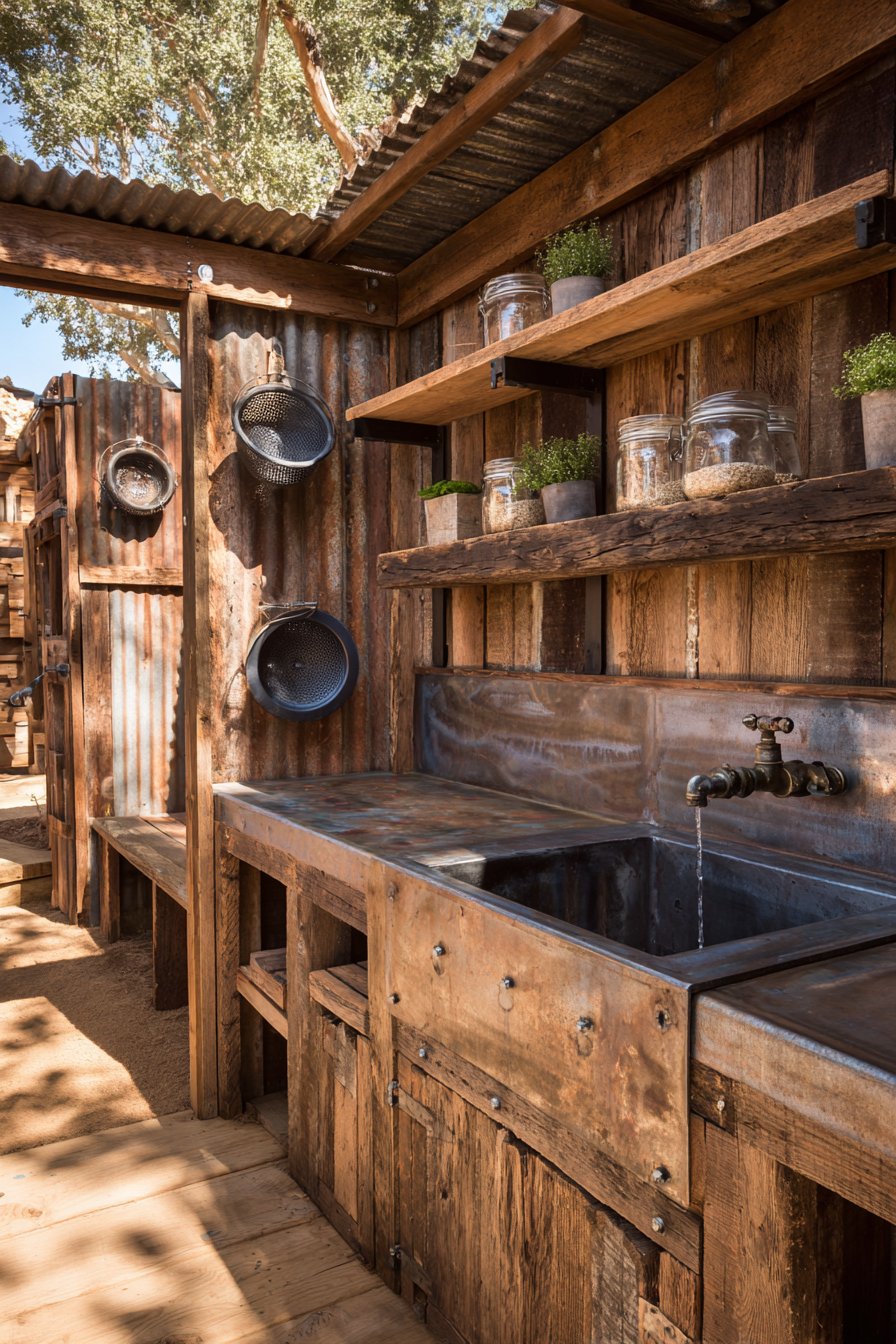
Vintage-style hardware including hand-forged hinges and traditional latches adds authentic period details while providing superior durability compared to modern plastic alternatives. The investment in quality hardware demonstrates attention to detail that enhances both the appearance and longevity of the outdoor kitchen structure.
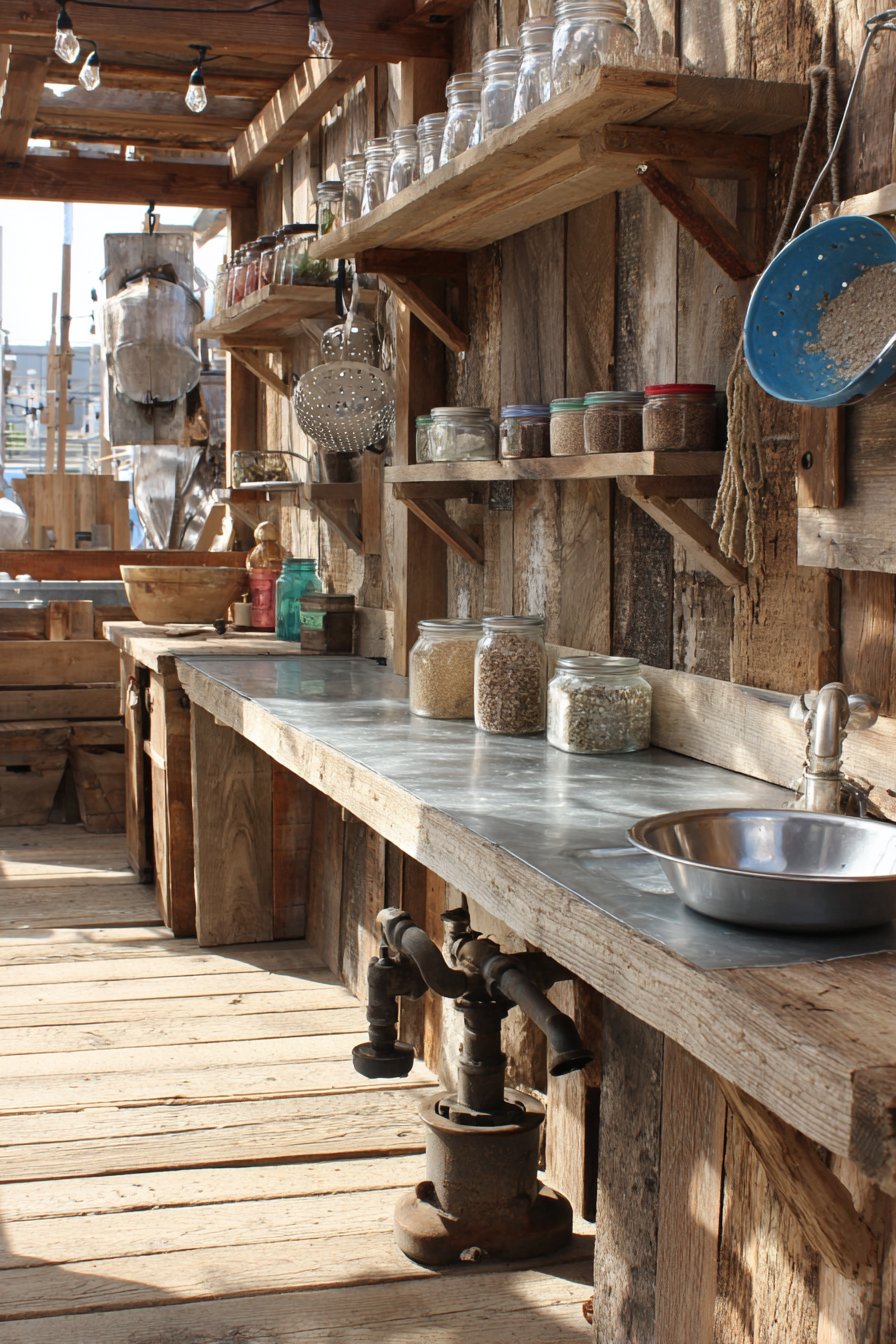
Working hand-crank well pumps provide both functional water access and an authentic farm equipment experience that teaches children about traditional water systems while engaging gross motor skills. The mechanical operation of hand pumps creates satisfying cause-and-effect learning opportunities while providing the physical activity that supports healthy development.
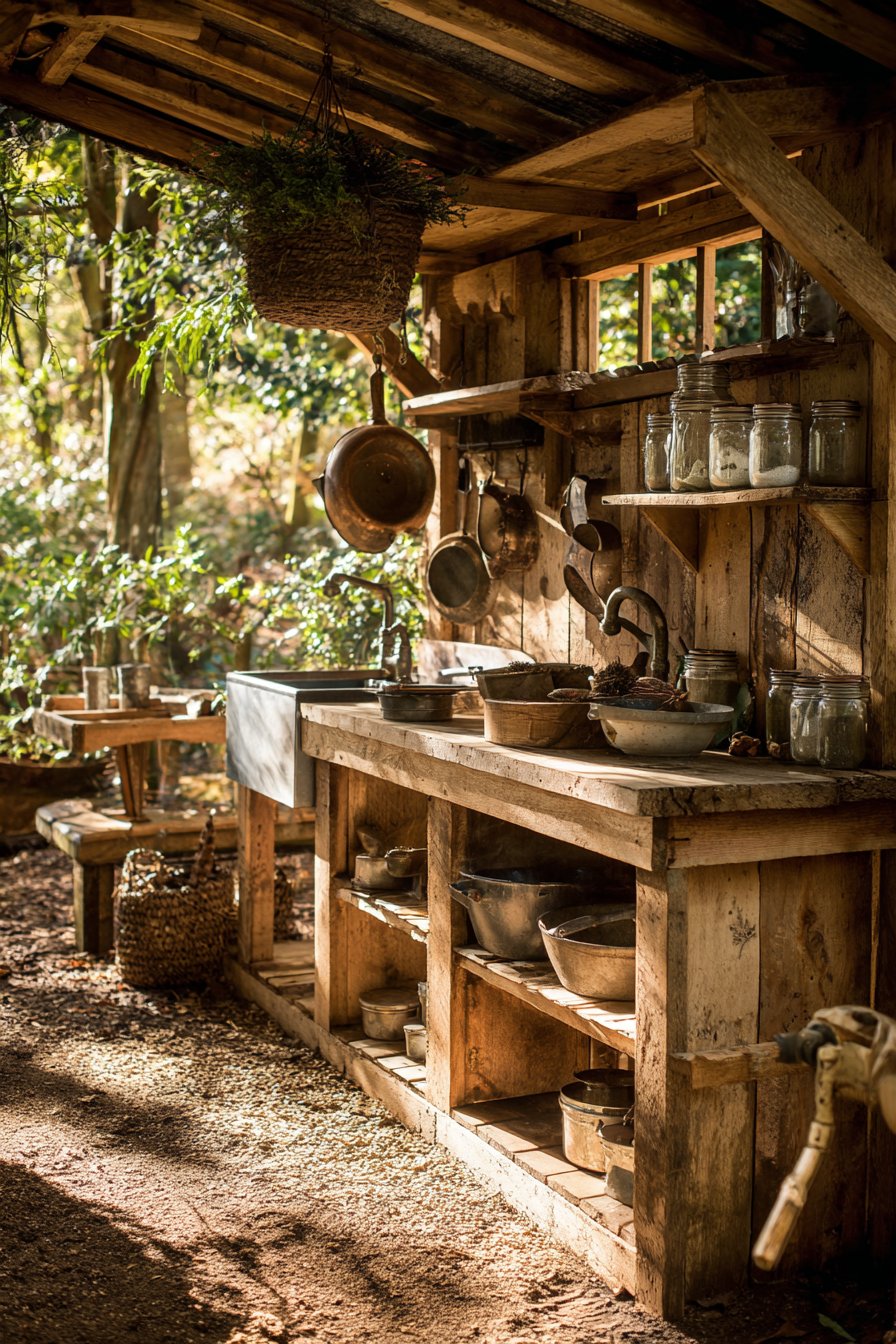
Mason jars filled with natural materials and arranged on open shelving create attractive display storage that encourages children to collect and organize natural cooking ingredients. The transparent storage allows children to easily identify and access materials while creating visually appealing organization that adults appreciate as well.
Key Design Tips:
- Source authentic reclaimed materials with verified safe lead and chemical content
- Invest in traditional hardware that provides both authenticity and superior durability
- Install mechanical water systems that engage children physically while providing function
- Create display storage that encourages the collection and organization of natural materials
- Design with proper ventilation to prevent moisture accumulation in enclosed storage areas
10. Contemporary Sustainable Bamboo Construction
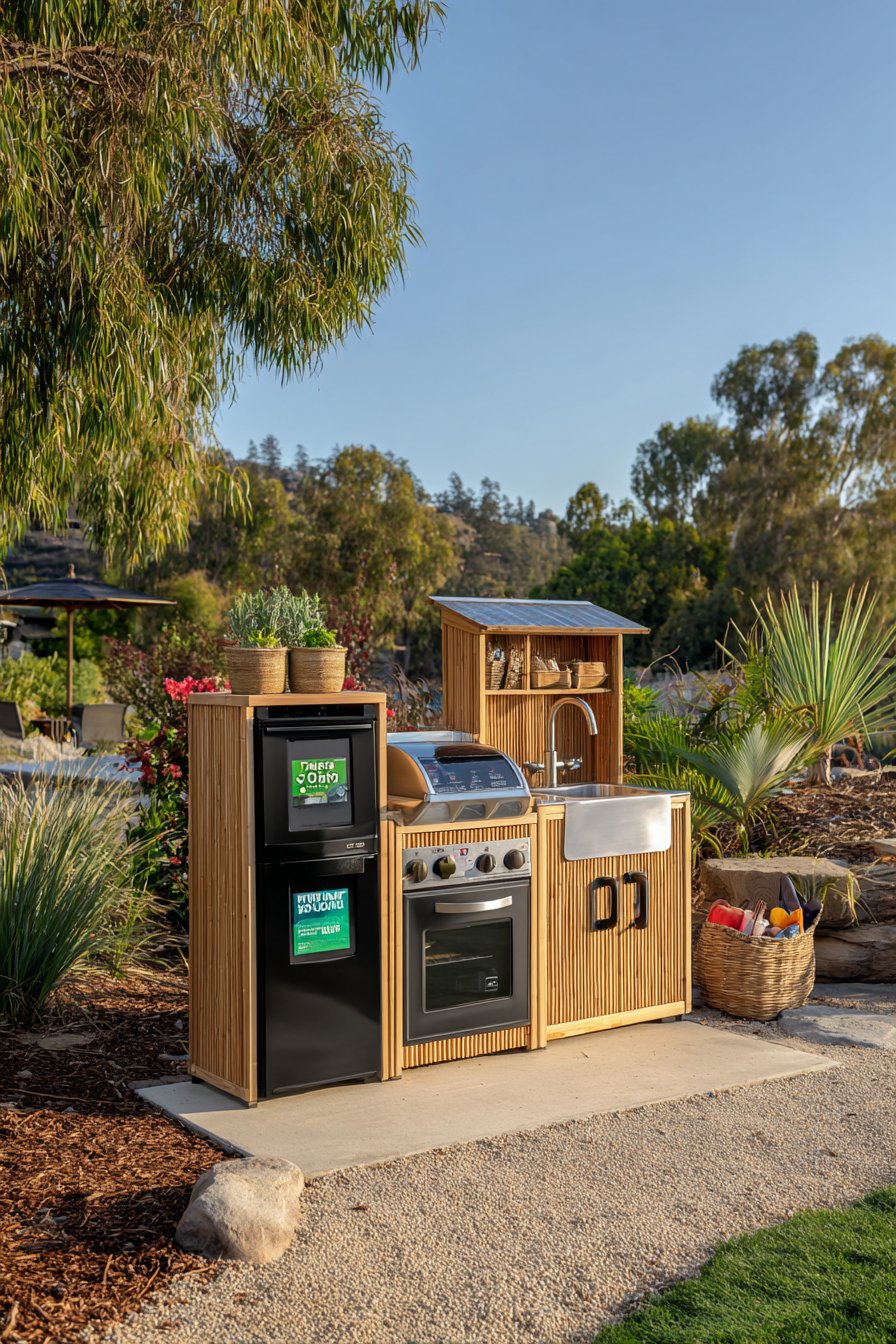
Modern mud kitchen design embraces sustainable bamboo construction that provides exceptional strength and weather resistance while demonstrating environmental responsibility and contemporary aesthetic sensibilities. Clean lines and geometric forms create visually striking structures that complement modern landscape design while providing exceptional functionality for outdoor cooking play.
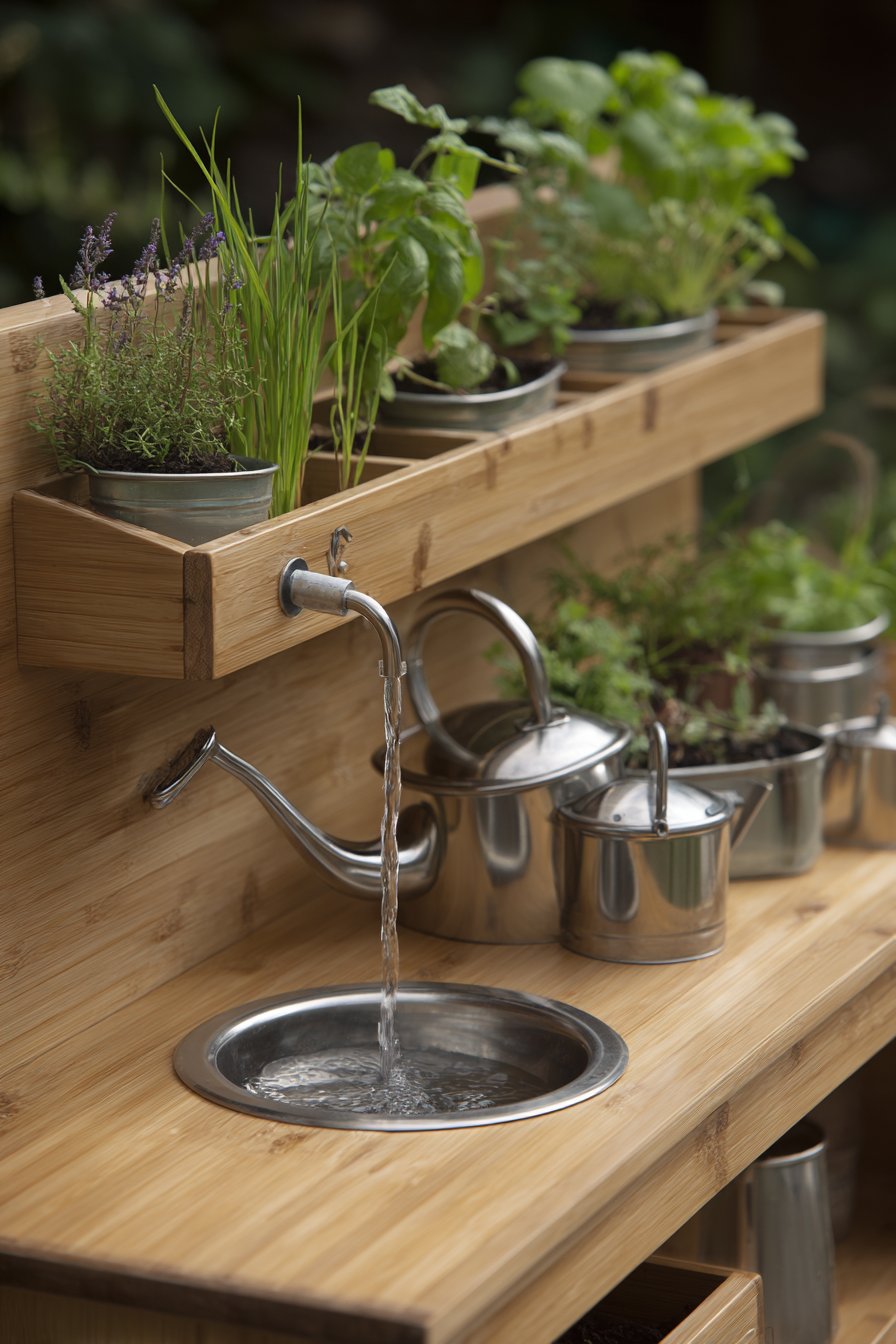
Stainless steel fixtures and contemporary hardware provide durability and easy maintenance while creating authentic commercial kitchen aesthetics that appeal to children interested in professional cooking concepts. The combination of sustainable materials with high-quality fixtures demonstrates how environmental consciousness and quality construction can coexist effectively.
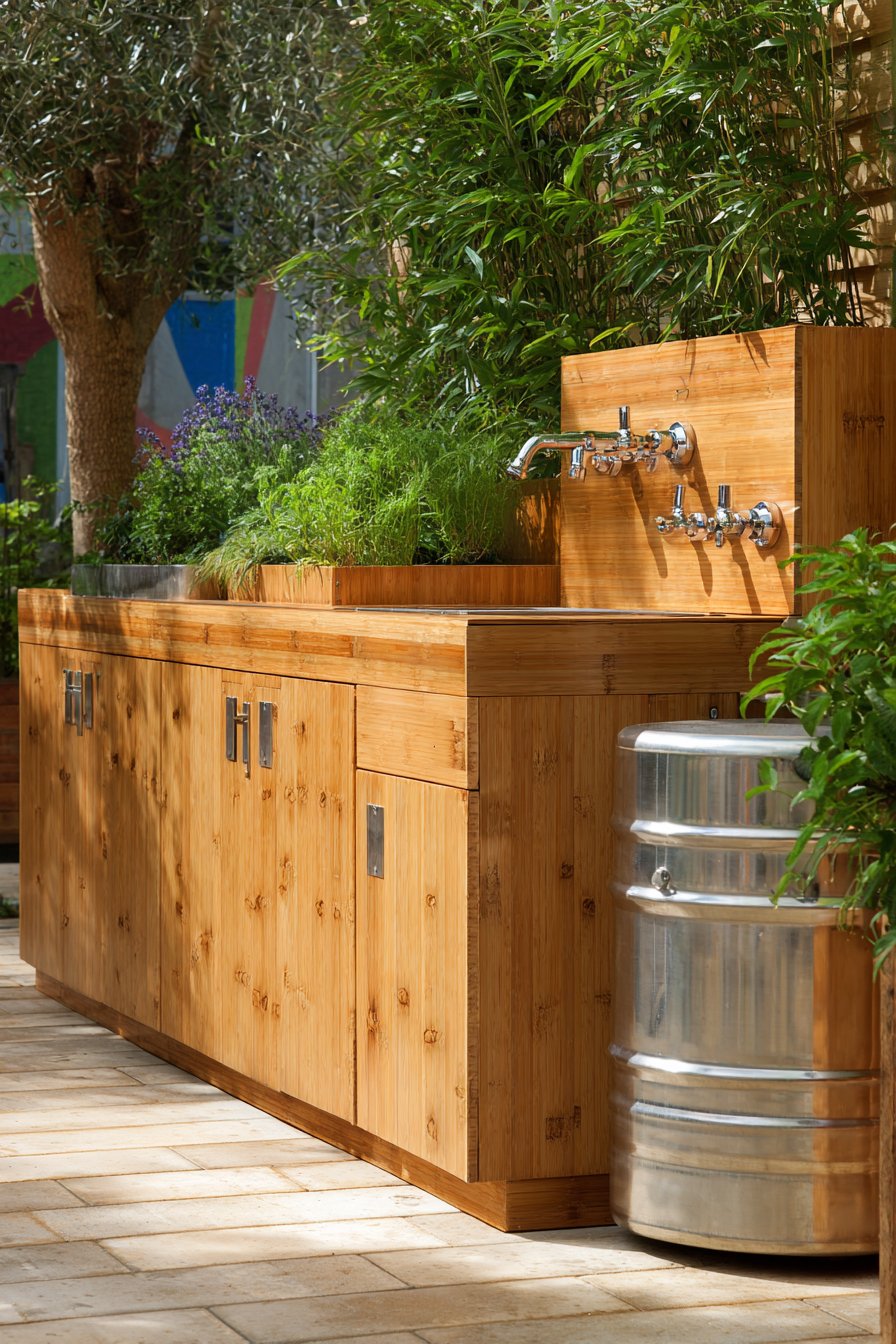
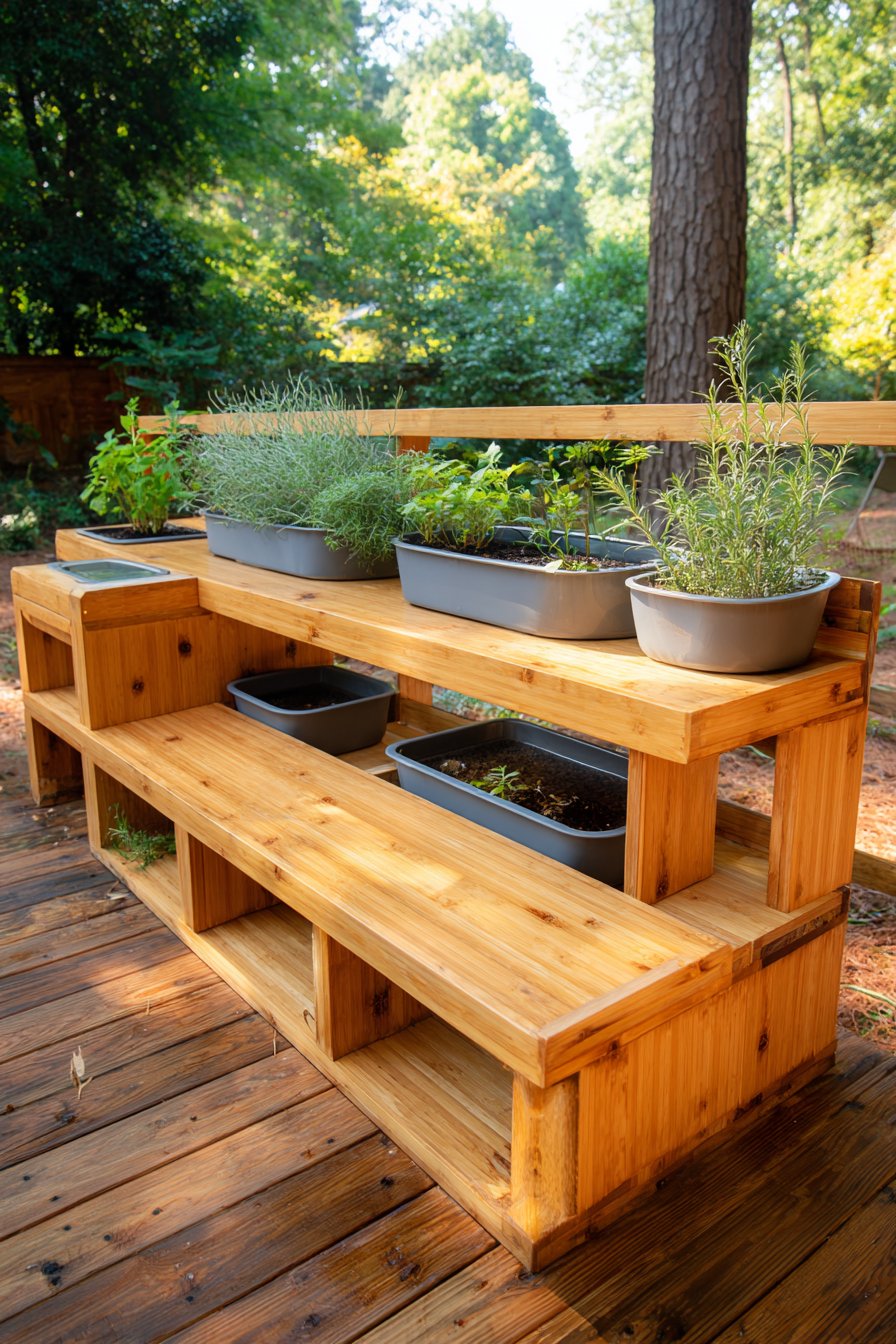
Geometric planters integrated into the kitchen design hold herbs and edible flowers while reinforcing the contemporary design aesthetic through consistent form language. The geometric approach to planting demonstrates how modern design principles can be applied to functional gardening elements while maintaining visual cohesion throughout the structure.
Rain collection barrels connected to the kitchen water system teach environmental awareness while providing sustainable water sources for cooking play activities. This integration of environmental education into play structure design demonstrates how learning opportunities can be embedded seamlessly into recreational activities.
Key Design Tips:
- Choose sustainably sourced bamboo with proper treatment for outdoor exposure
- Integrate environmental education elements that teach water conservation and sustainability
- Select contemporary fixtures that provide an authentic commercial kitchen experience
- Design geometric planting elements that complement the overall modern aesthetic
- Plan for proper drainage and water management to prevent structural damage
11. Collaborative Multi-Child Workspace
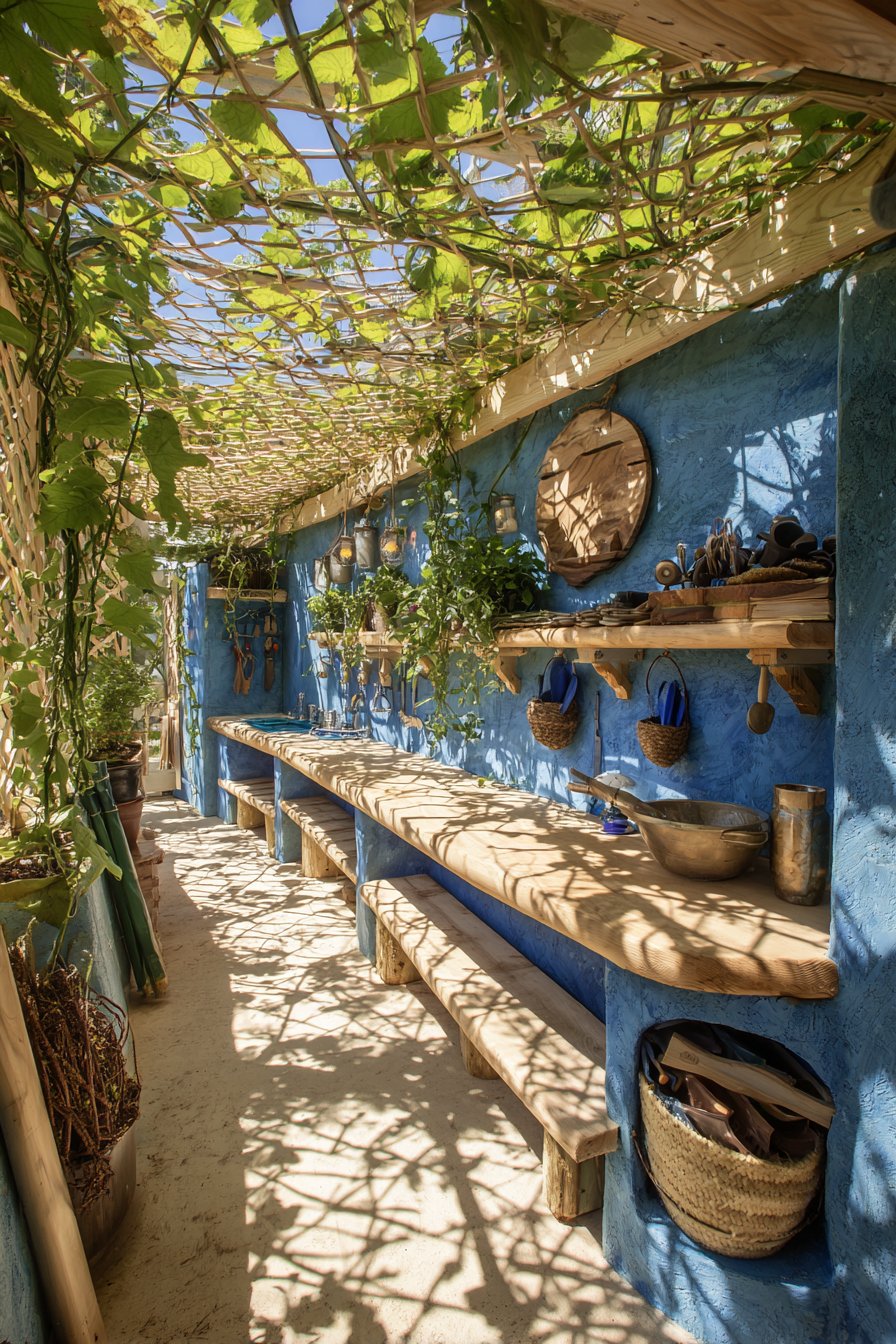
Designing mud kitchens to accommodate multiple children simultaneously requires careful attention to workspace layout and traffic flow patterns that prevent conflicts while encouraging cooperative play activities. Long counter configurations with individual work stations provide personal space while maintaining opportunities for collaboration and social interaction.
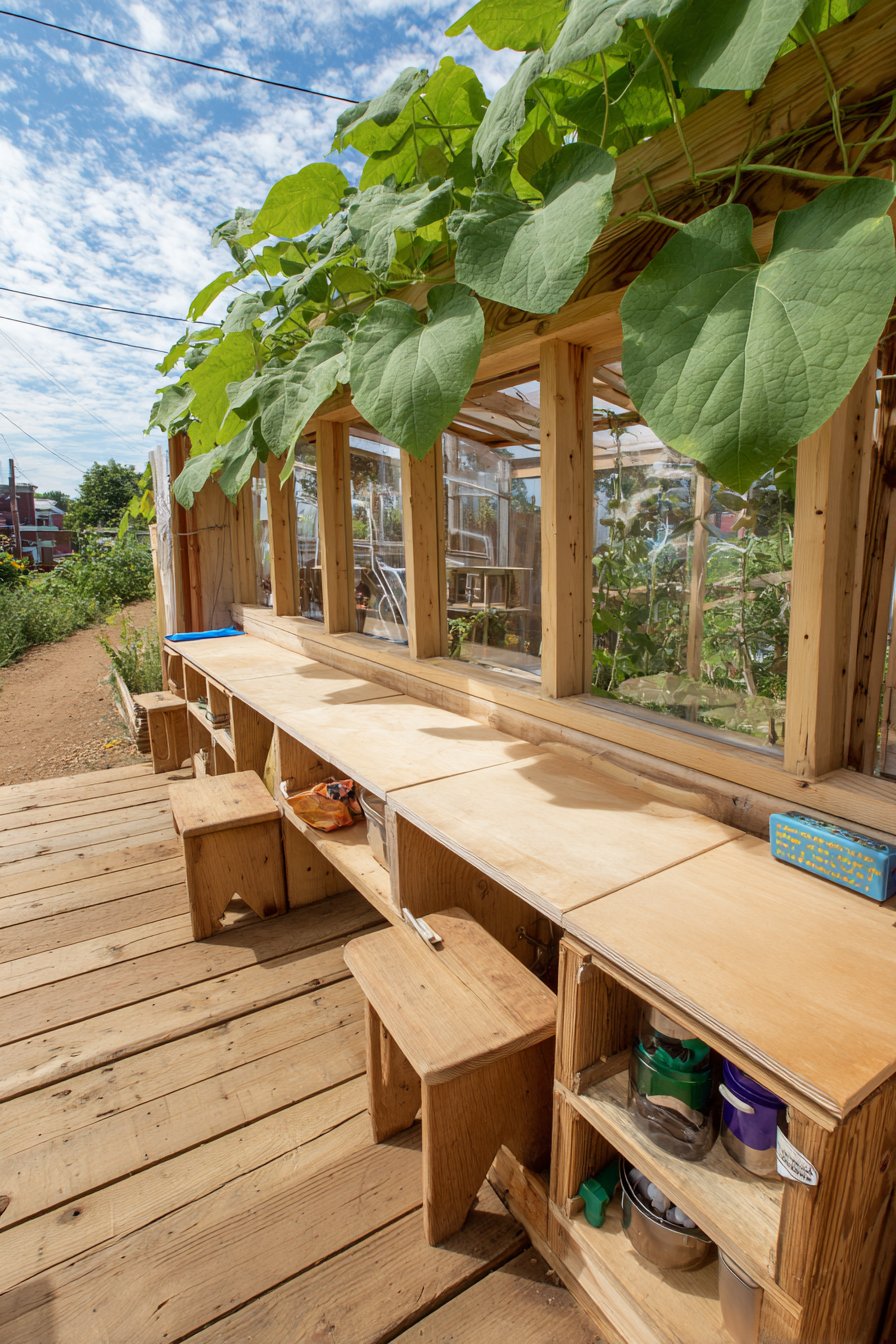
Built-in seating areas create designated spaces for planning, rest, and observation that support different play styles and energy levels throughout extended play sessions. The integration of seating directly into the kitchen structure eliminates the need for additional furniture while creating defined spaces that encourage different types of engagement with the play environment.
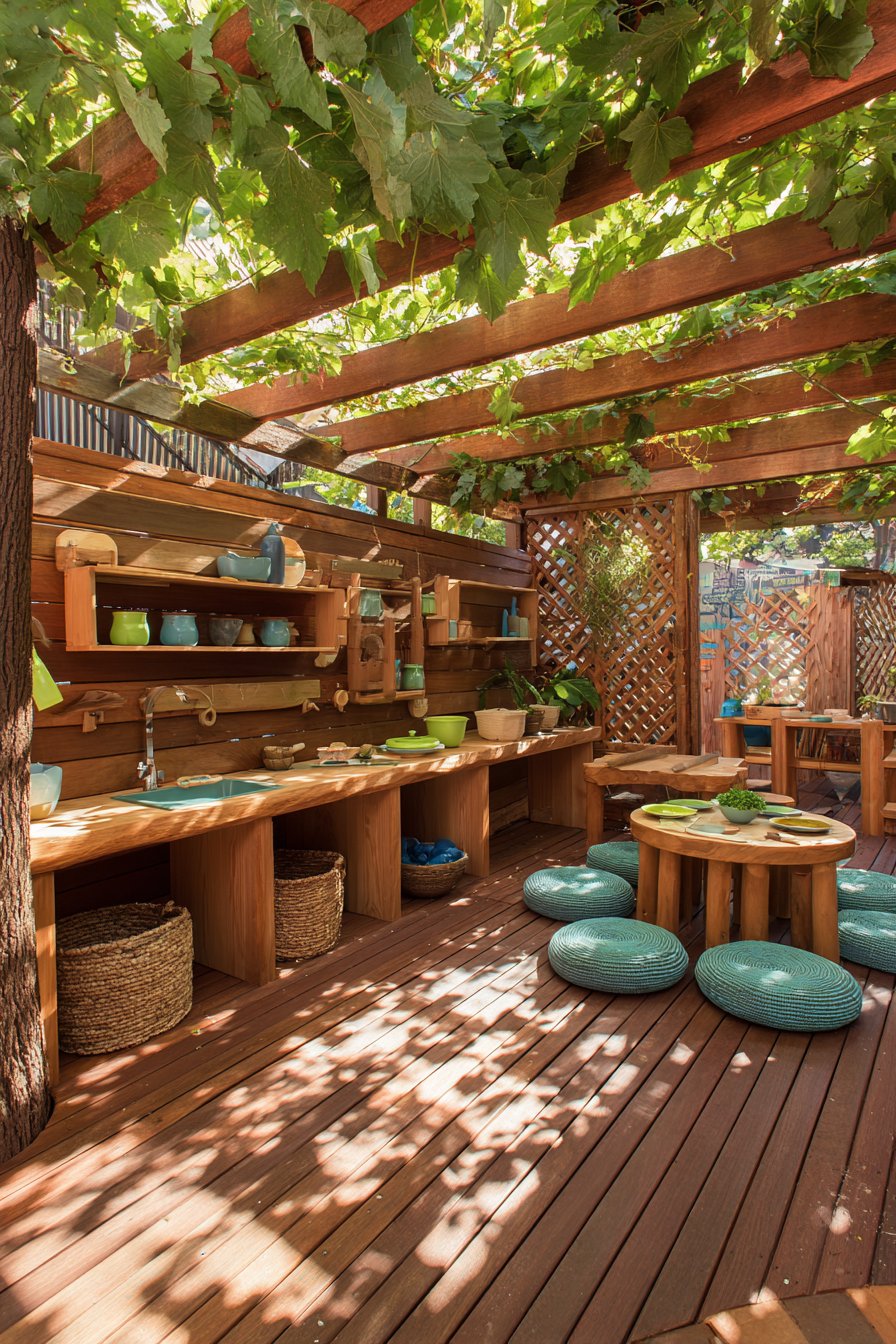
Cultural diversity in cooking implements introduces global awareness through play while teaching children about different culinary traditions and cultural practices. The inclusion of tools from various cultural traditions demonstrates how play can become a vehicle for cultural education and appreciation of diversity.
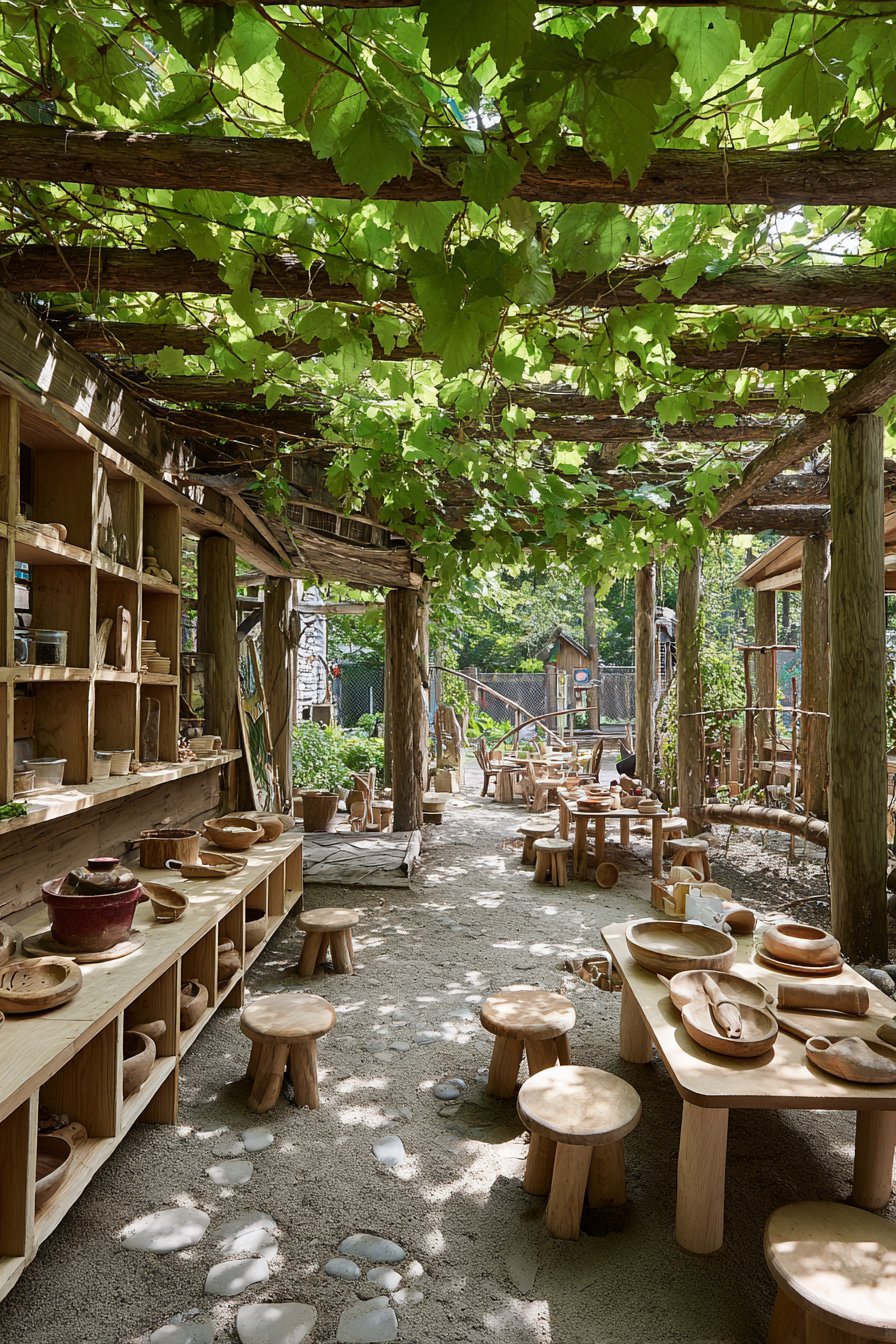
Climbing bean plants growing on integrated trellis systems provide natural shade while teaching children about vertical gardening and plant growth cycles. The living shade canopy creates dynamic environmental conditions that change throughout the growing season while providing educational opportunities about plant biology and gardening techniques.
Key Design Tips:
- Plan adequate workspace allocation to prevent conflicts between multiple users
- Include seating and observation areas that accommodate different play preferences
- Source culturally diverse cooking implements to encourage global awareness and learning
- Integrate vertical gardening elements that provide shade while teaching plant science
- Design clear traffic patterns that facilitate smooth movement around the collaborative workspace
12. Seasonal Adaptive Modular System
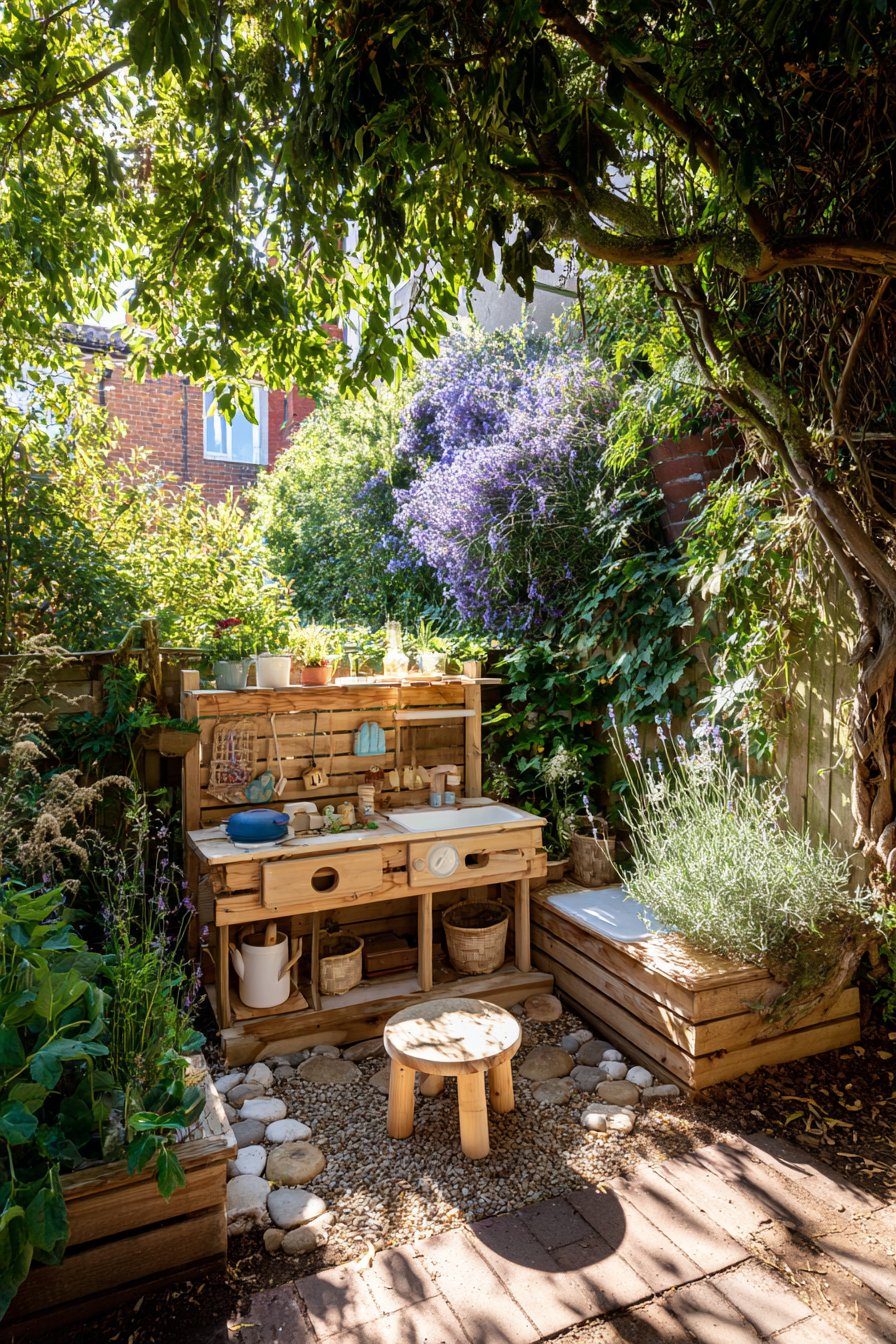
Modular mud kitchen components that can be rearranged throughout the year provide exceptional flexibility while teaching children about seasonal changes and adaptive planning. This approach demonstrates how thoughtful design can extend the useful life of play structures while providing ongoing novelty and interest that maintains child engagement over time.

Integrated raised beds that showcase seasonal herbs and vegetables demonstrate the connection between cooking play and actual food production while teaching children about seasonal gardening cycles and plant growth requirements. The integration of productive gardening into play space design creates educational opportunities about food systems and agricultural practices.
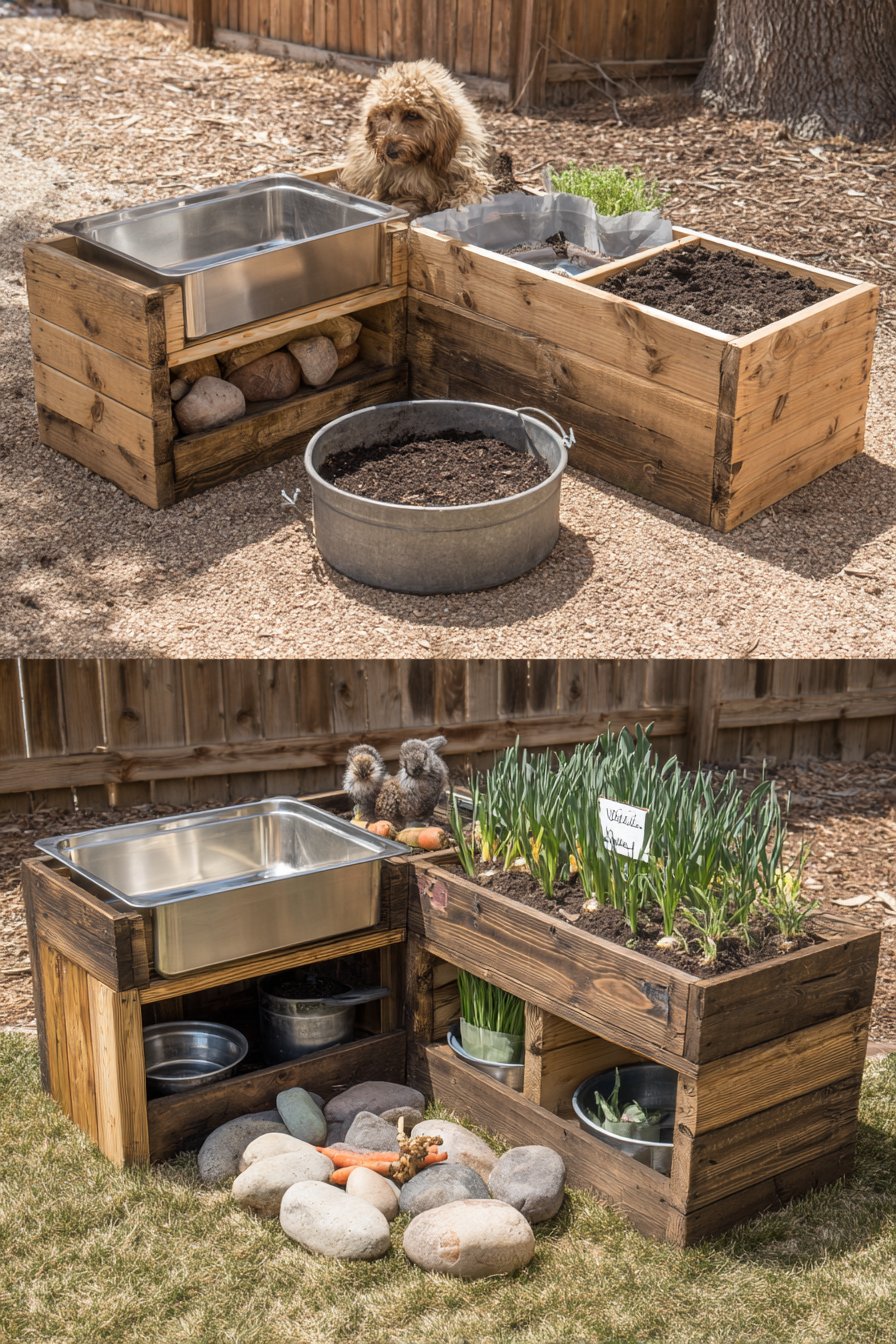
Weatherproof storage solutions protect play materials during harsh weather conditions while teaching children about equipment care and seasonal preparation. The planning required for seasonal storage teaches responsibility and forward thinking while ensuring that play materials remain in good condition for years of continued use.
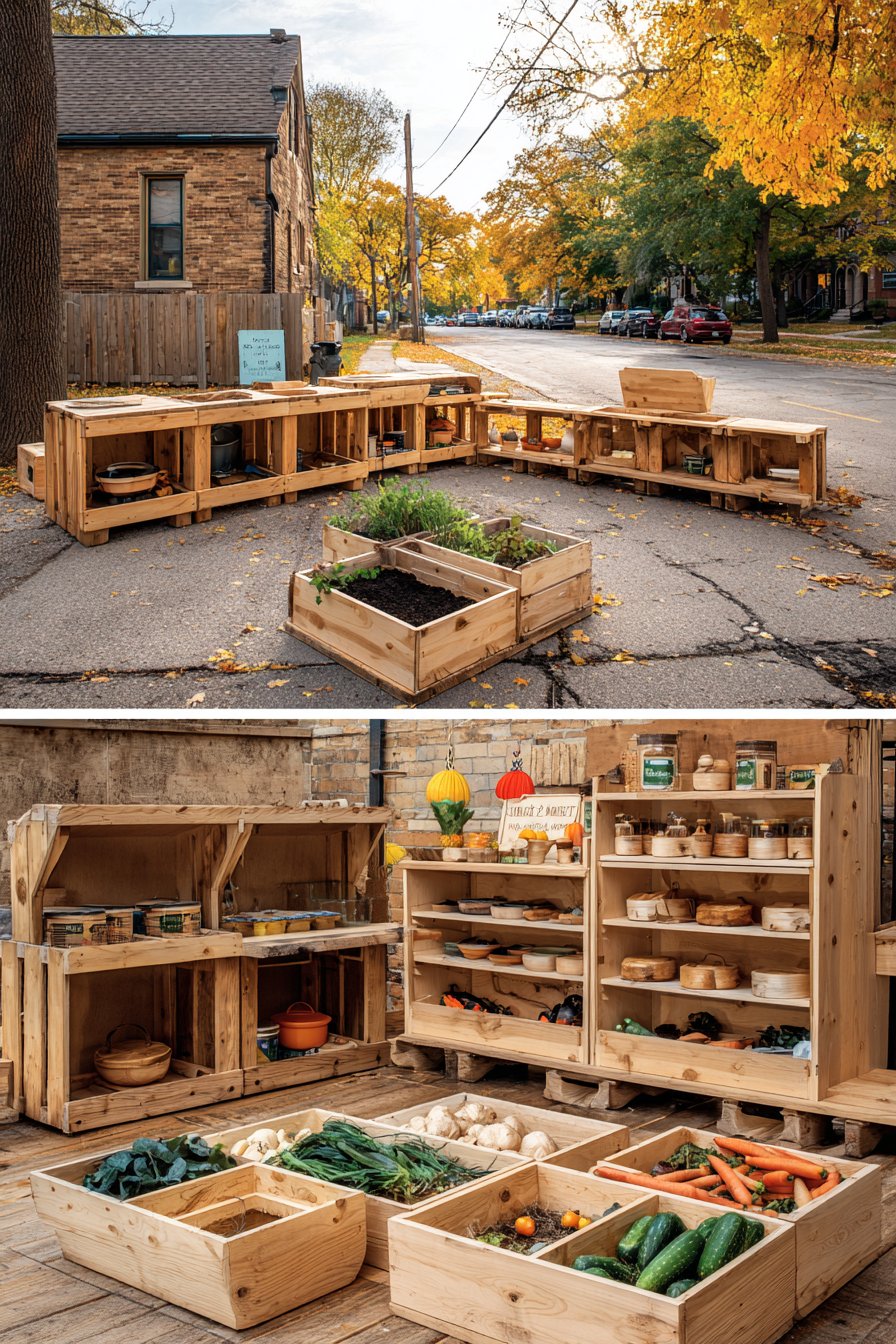
Seasonal decorations that can be easily changed transform the appearance and theme of the mud kitchen throughout the year, maintaining novelty and interest while teaching children about seasonal celebrations and natural cycles. This adaptive approach demonstrates how play spaces can evolve to match changing interests and seasonal activities.
Key Design Tips:
- Design modular components that can be safely reconfigured by adults with basic tools
- Plan raised bed dimensions that accommodate seasonal crop rotation and plant growth requirements
- Include weatherproof storage adequate for all play materials during off-season periods
- Create attachment points for seasonal decorations that can be easily changed by children
- Document configuration options to facilitate easy seasonal transitions and setup variations
13. Tree-Integrated Natural Design
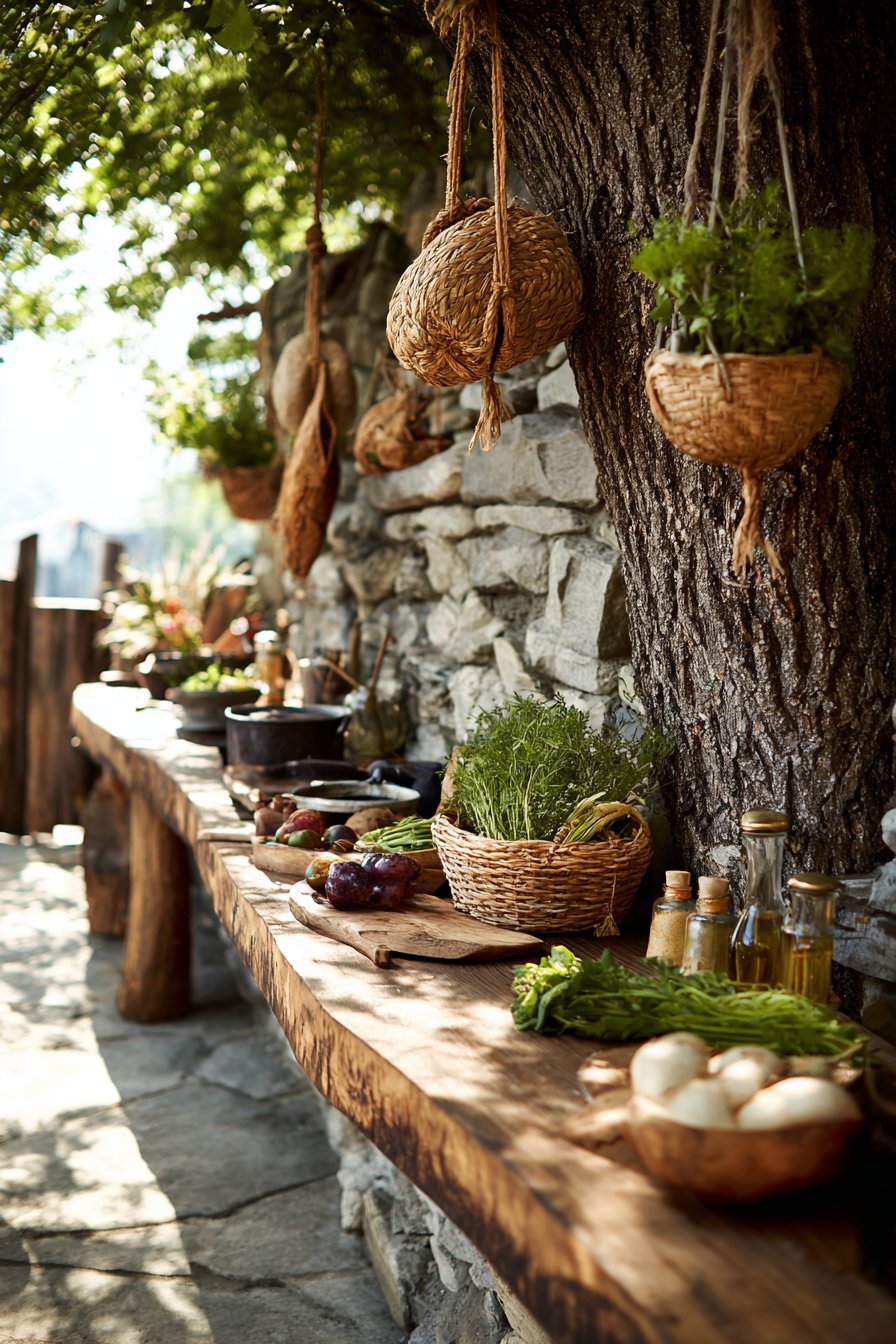
Building mud kitchen structures around existing trees creates unique design opportunities while demonstrating environmental stewardship and creative problem-solving approaches to landscape integration. The incorporation of living trees as central design elements teaches children about working with natural systems rather than imposing artificial structures on the landscape.
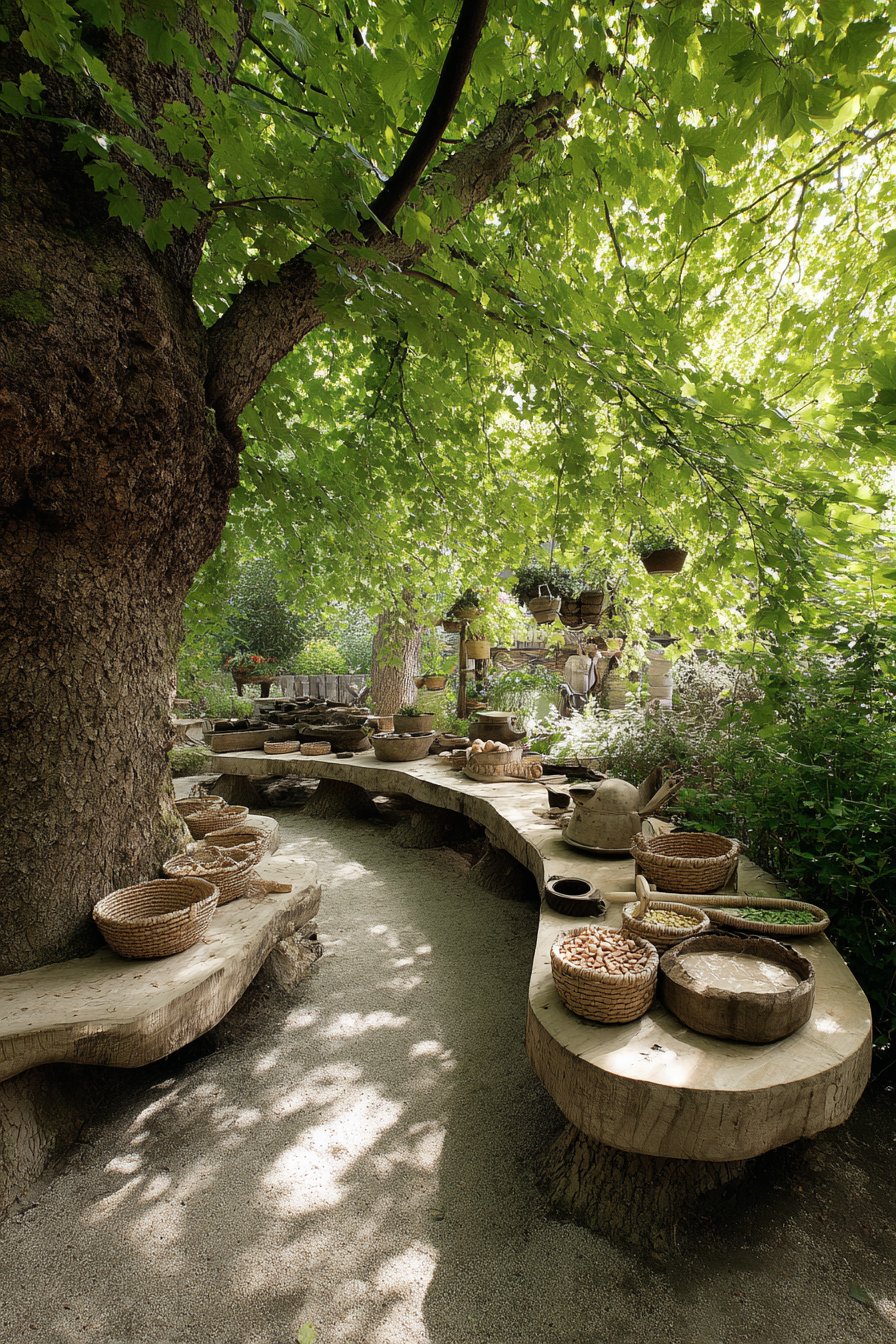
Curved wooden counters that flow organically around tree trunks create visually striking workspace configurations while accommodating the natural growth patterns of established trees. This approach demonstrates how human-made structures can complement and enhance natural features rather than competing with or damaging existing landscape elements.
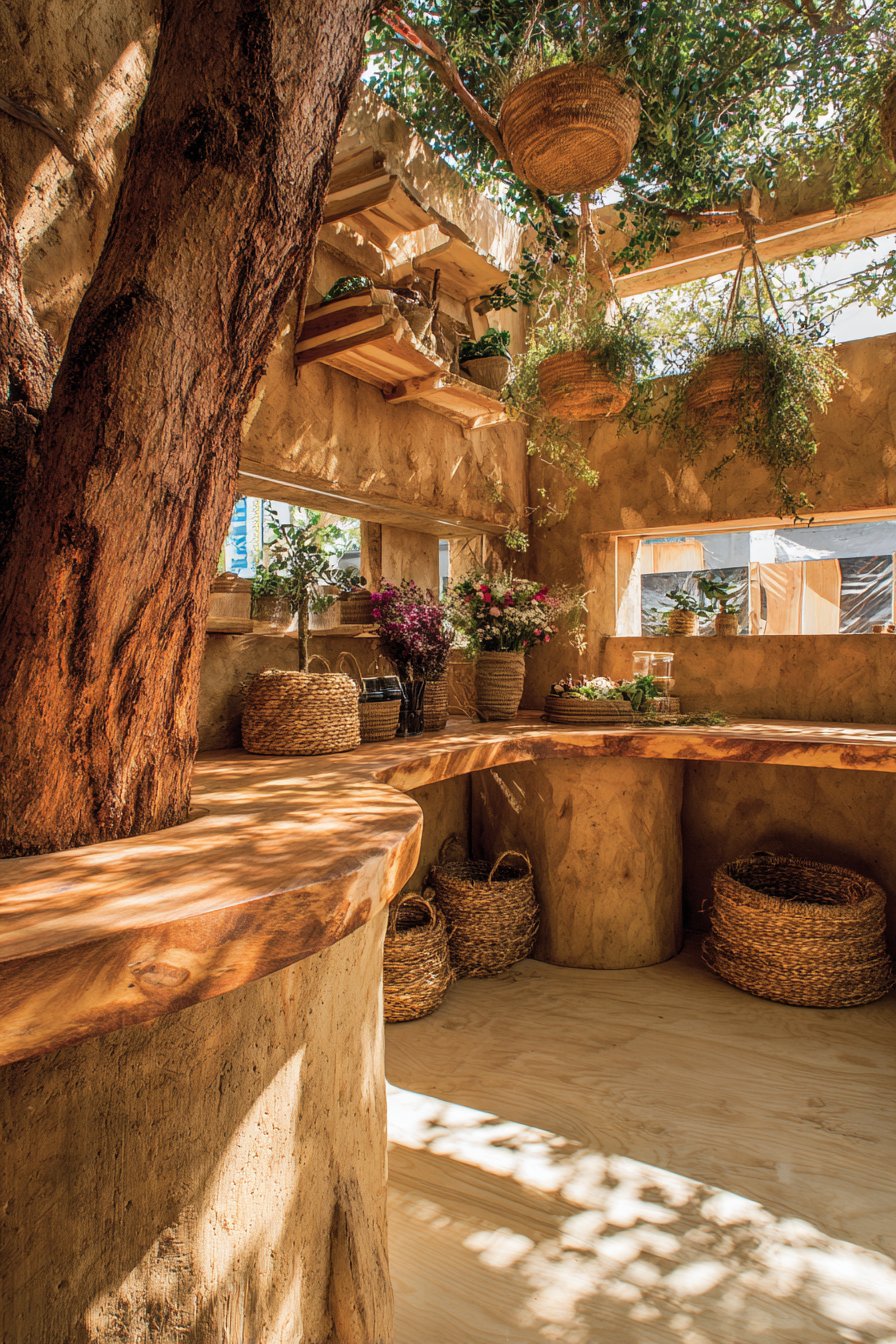
Hanging planters suspended from lower tree branches create three-dimensional growing spaces that maximize planting opportunities while providing natural shade and protection for herbs and flowers. The vertical integration of growing elements demonstrates efficient space utilization while creating dynamic visual interest throughout the growing season.
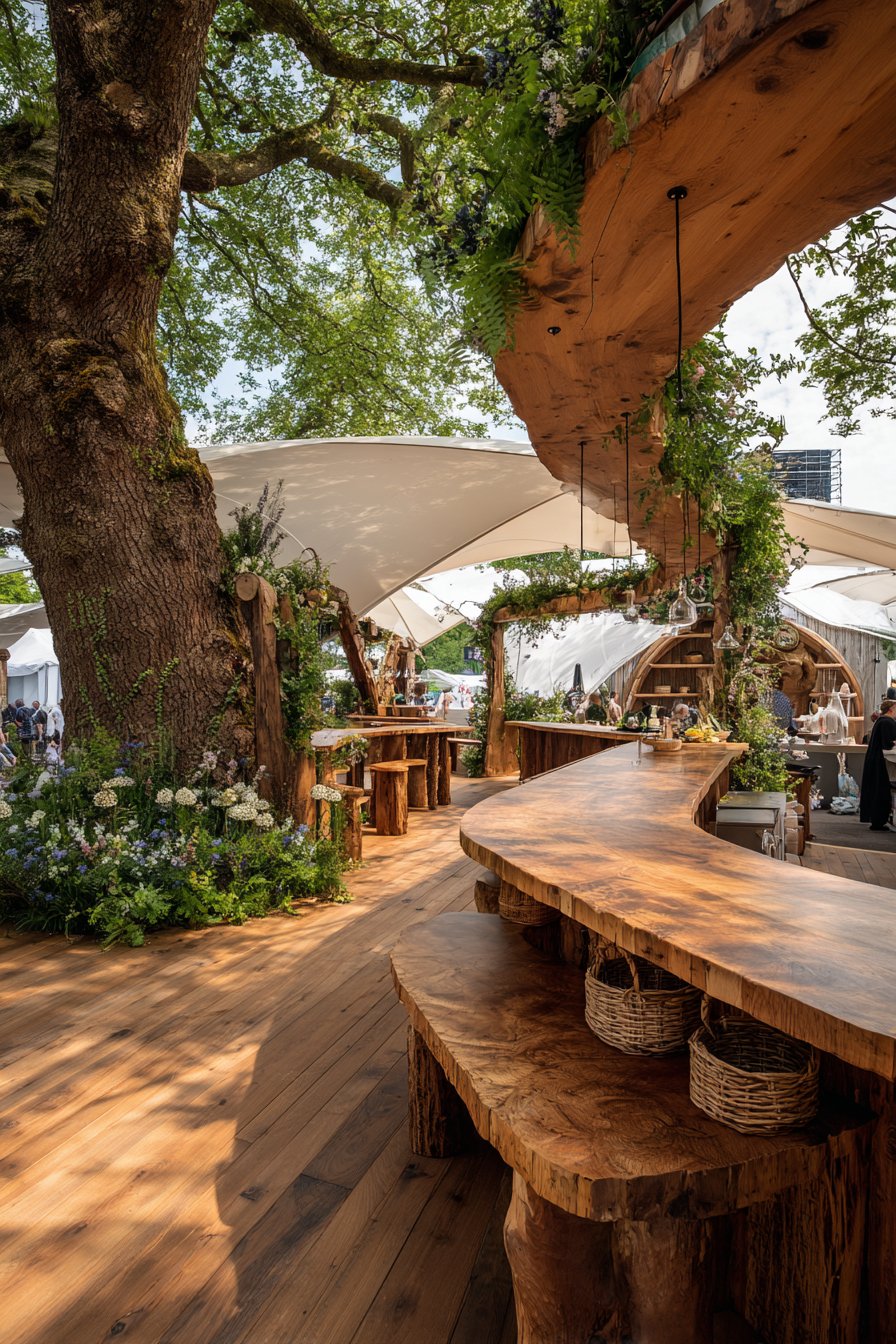
Dappled sunlight filtering through tree canopies creates constantly changing lighting conditions that enhance the sensory experience of outdoor cooking play while providing natural shade protection. The dynamic light patterns teach children about natural cycles and environmental changes while creating beautiful photogenic conditions for family memories.
Key Design Tips:
- Consult with arborists to ensure construction methods do not damage tree health
- Design curved elements using flexible construction techniques that accommodate tree growth
- Select plants appropriate for the specific light and moisture conditions under tree canopies
- Plan for falling leaves and seasonal debris in maintenance and cleaning routines
- Position work surfaces to take advantage of optimal light conditions throughout the day
14. Upcycled Colorful Creative Expression
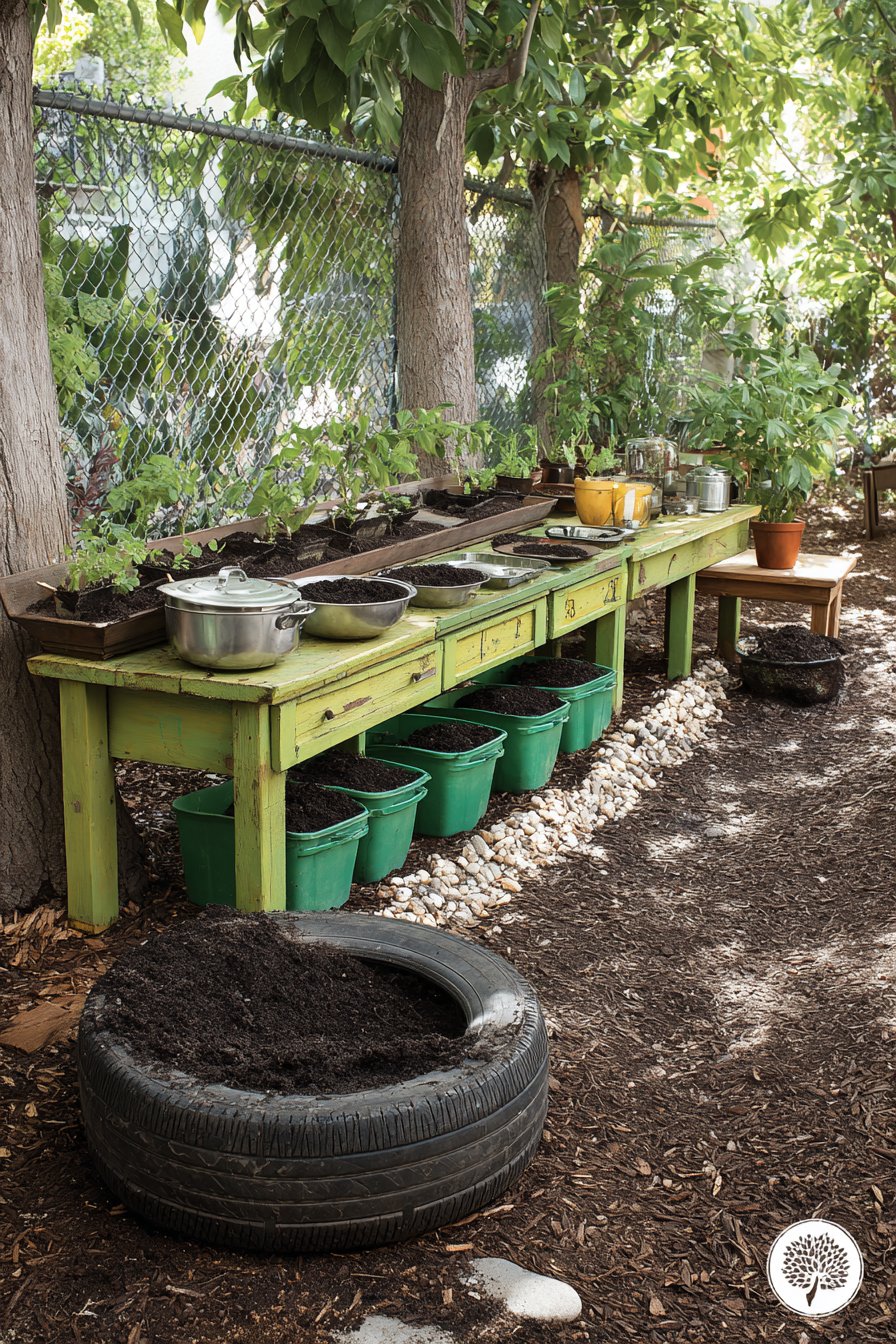
Repurposing discarded kitchen cabinets and household items into vibrant mud kitchen designs teaches children about creative reuse while demonstrating how imagination can transform unwanted materials into valuable play resources. Bright, child-friendly paint colors create exciting visual environments that stimulate creativity while providing opportunities for children to participate in the creation and customization of their play spaces.
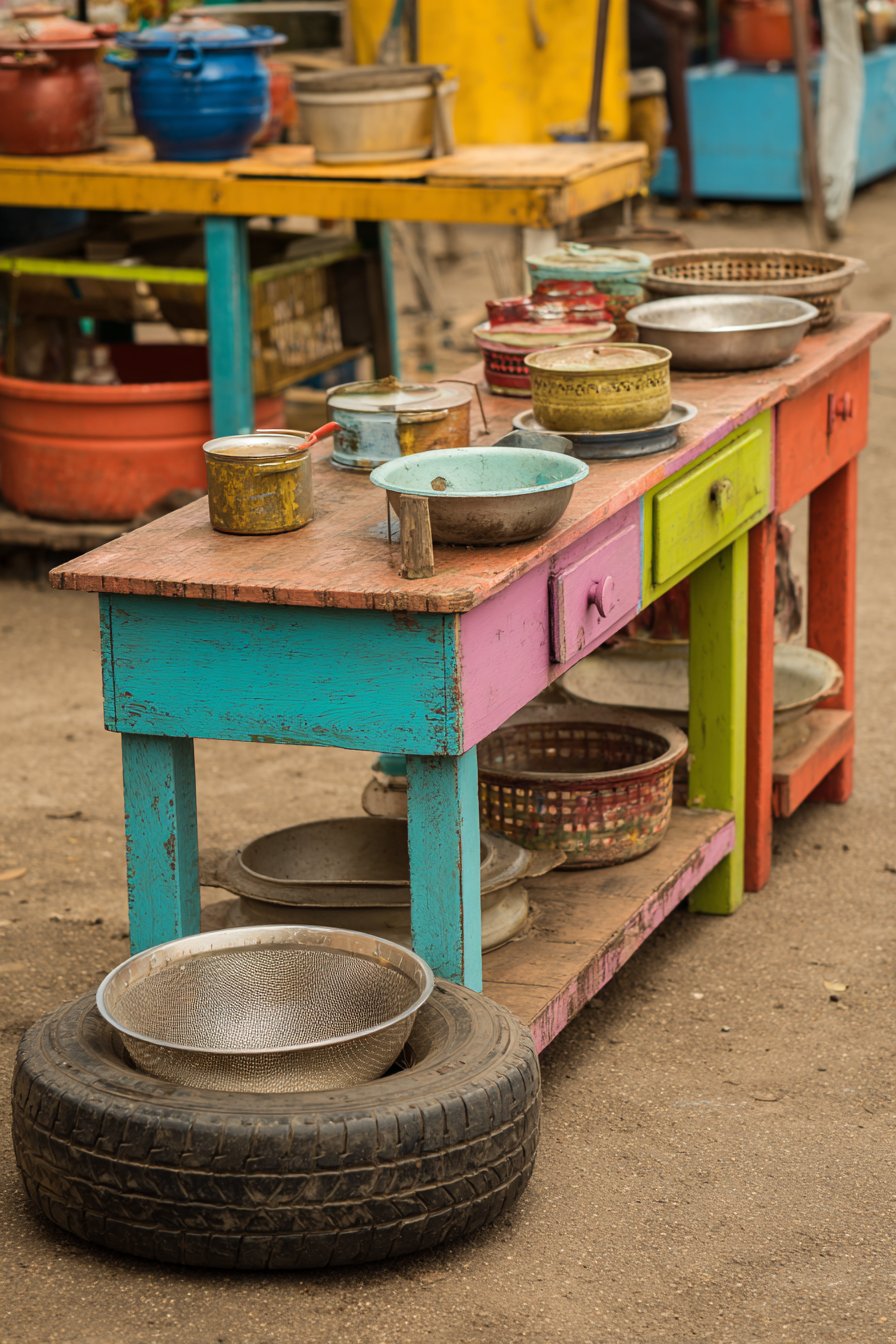
Vintage enamelware serving as cooking vessels provides authentic weight and thermal properties while introducing children to historical cooking methods and materials. The durability of enamelware makes it ideal for outdoor use while the authentic appearance enhances the realistic cooking experience that children crave in their play activities.
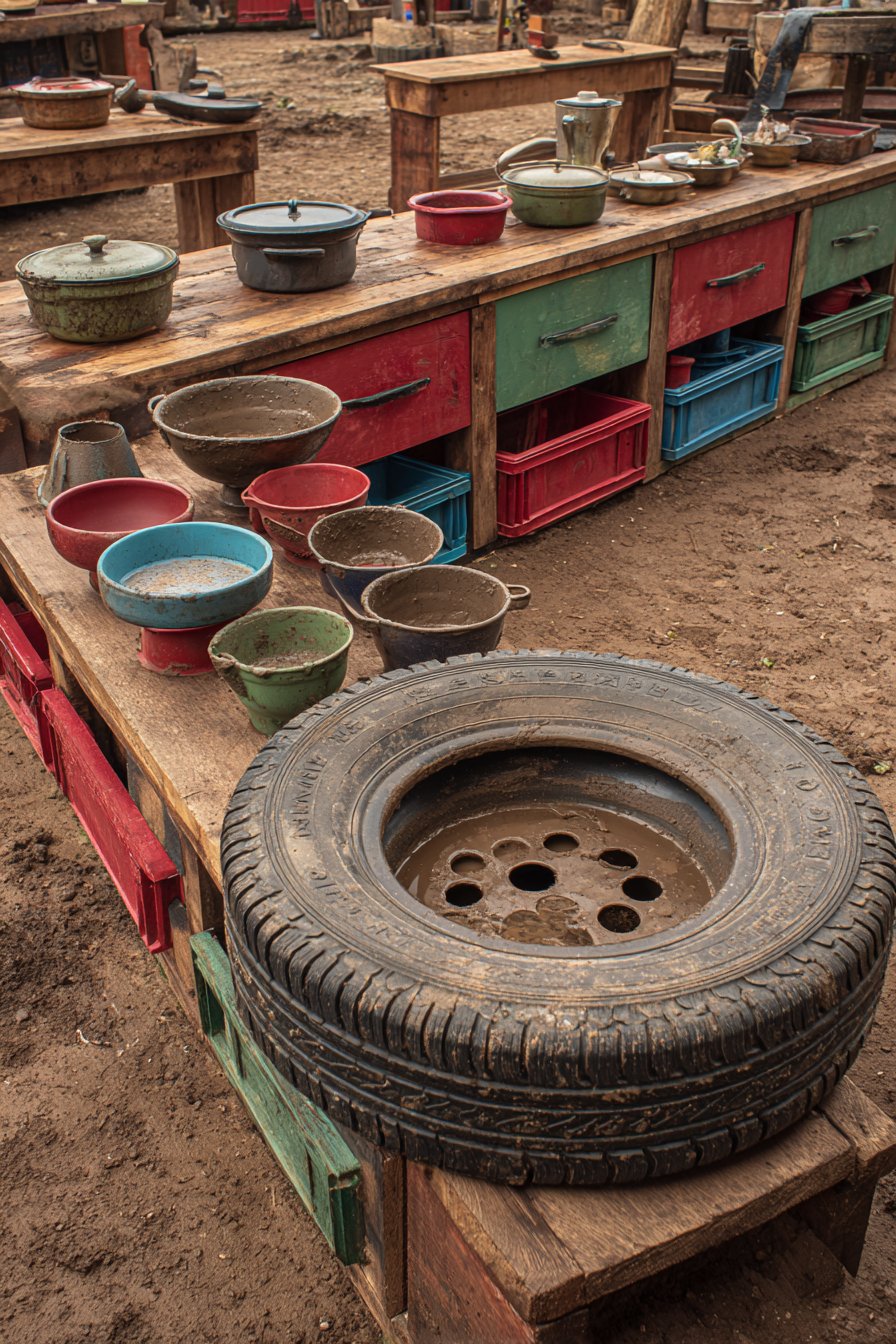
Creative repurposing of household items like colanders as strainers and painted tires as water basins demonstrates problem-solving skills while teaching children to see potential in discarded materials. This approach to construction encourages creative thinking and resourcefulness while creating unique design features that commercial play equipment cannot match.

Drain plugs in water basins provide realistic functionality while teaching children about water management and conservation. The ability to control water retention and drainage creates more sophisticated play opportunities while teaching practical skills about plumbing and water systems.
Key Design Tips:
- Use high-quality exterior paint designed for outdoor exposure and child safety
- Ensure all repurposed materials are thoroughly cleaned and safe for child contact
- Install proper drainage systems to prevent water stagnation and mosquito breeding
- Choose bright colors that maintain vibrancy under UV exposure and weather conditions
- Document the transformation process to teach children about creative recycling and upcycling
15. Elevated Deck Platform Integration
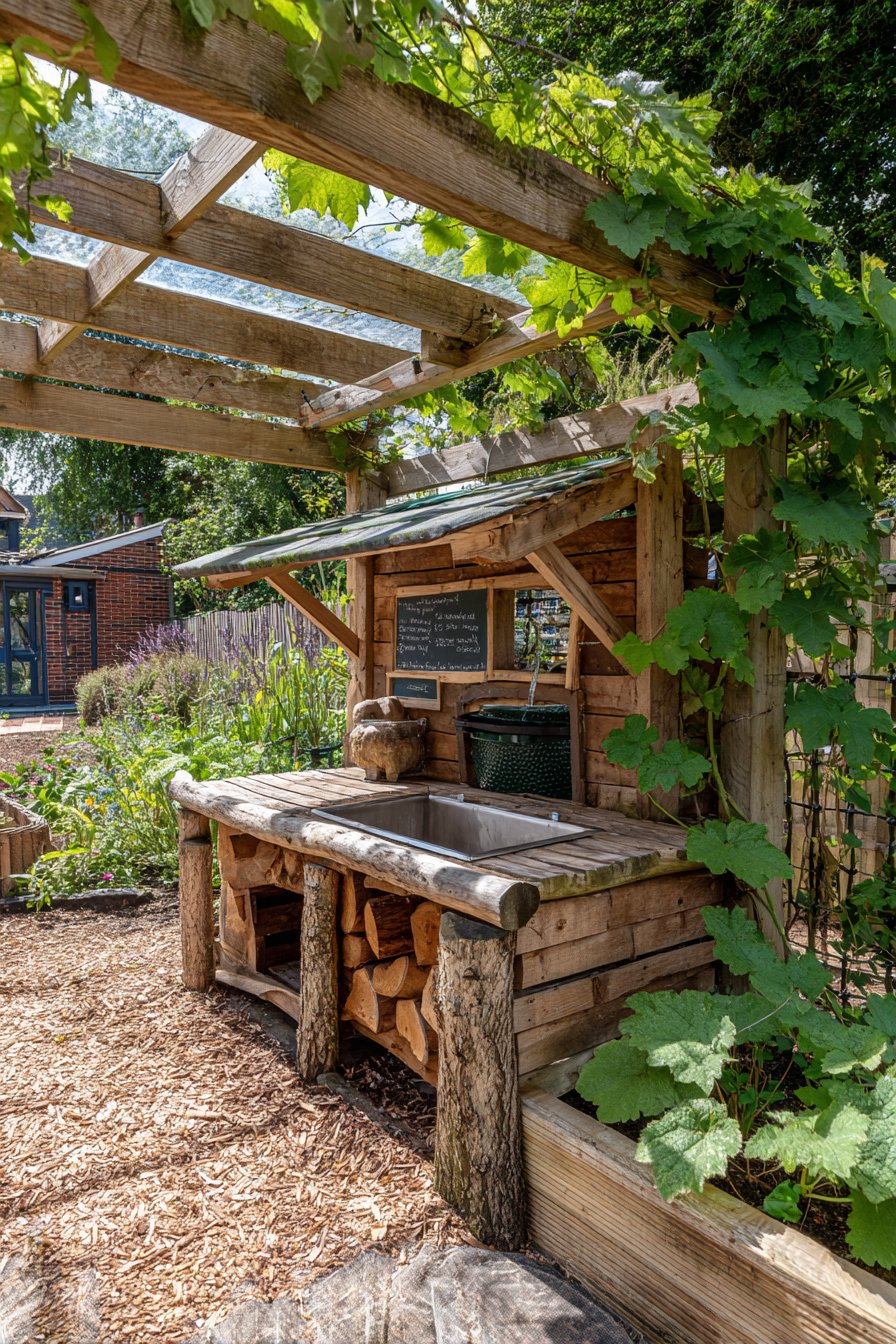
Raised deck platforms create defined play boundaries while providing excellent drainage and weather resistance that extends the usability of mud kitchen installations throughout different seasonal conditions. The elevated design also improves accessibility while creating clear visual separation between play areas and other garden functions.
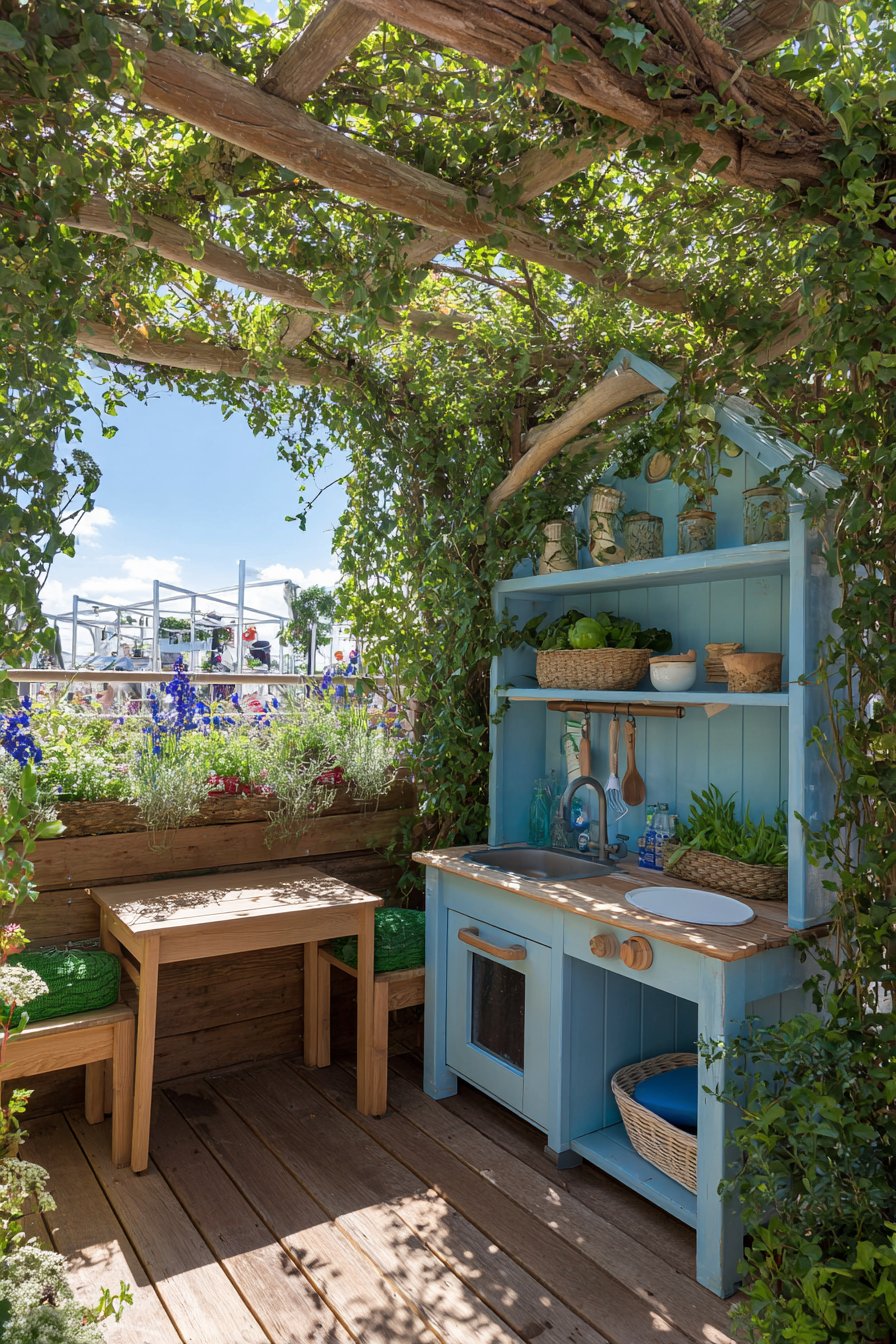
Non-slip surface treatments ensure child safety while maintaining easy cleaning capabilities that encourage regular maintenance and care of the play space. The attention to safety details demonstrates how proper planning can create play environments that provide freedom for exploration while maintaining appropriate safety standards.
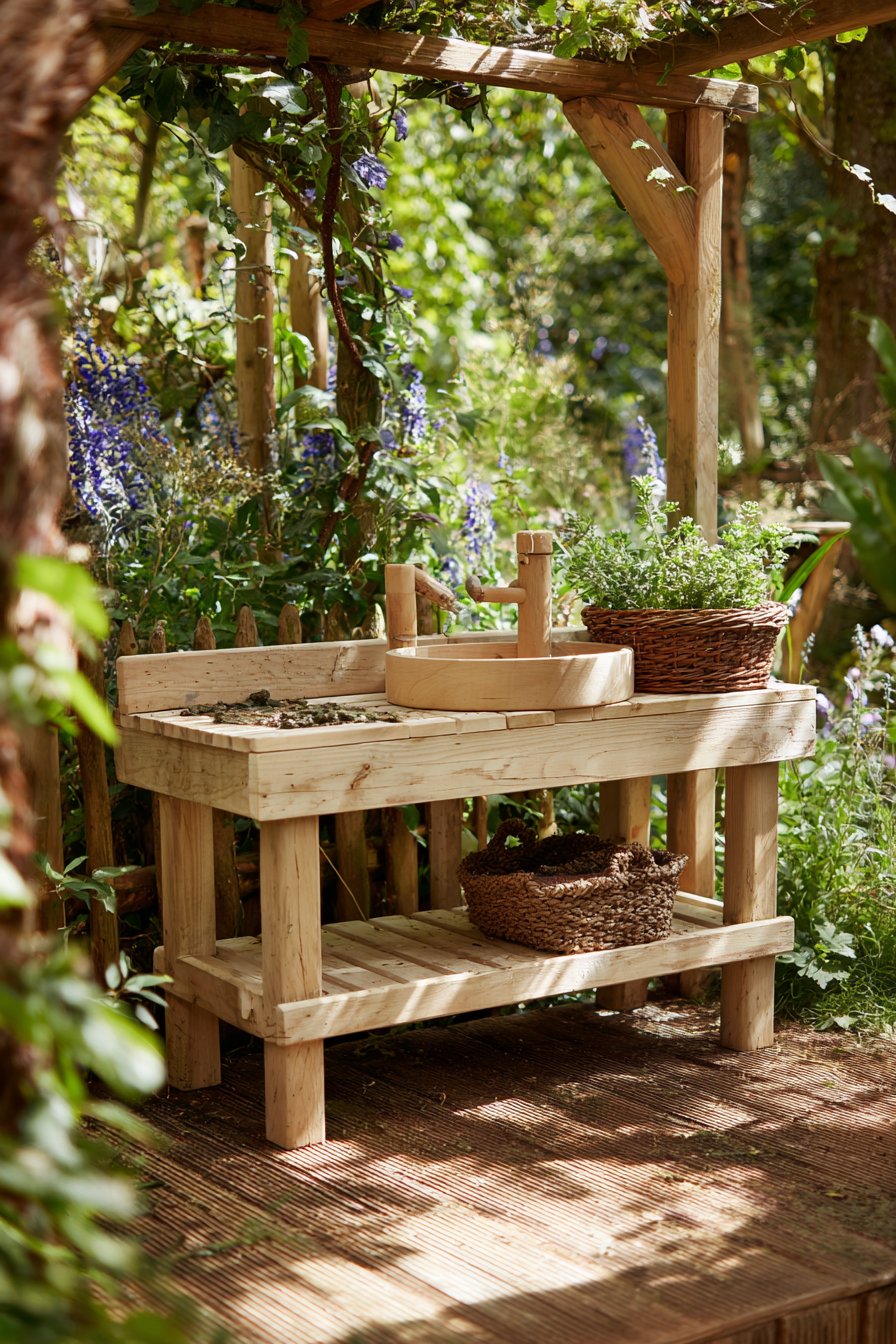
Built-in deck edge planters provide immediate access to fresh herbs and flowers while creating natural boundaries that define the play space without creating barriers that feel restrictive. The integration of growing elements directly into the deck structure reinforces the connection between cooking play and gardening activities.
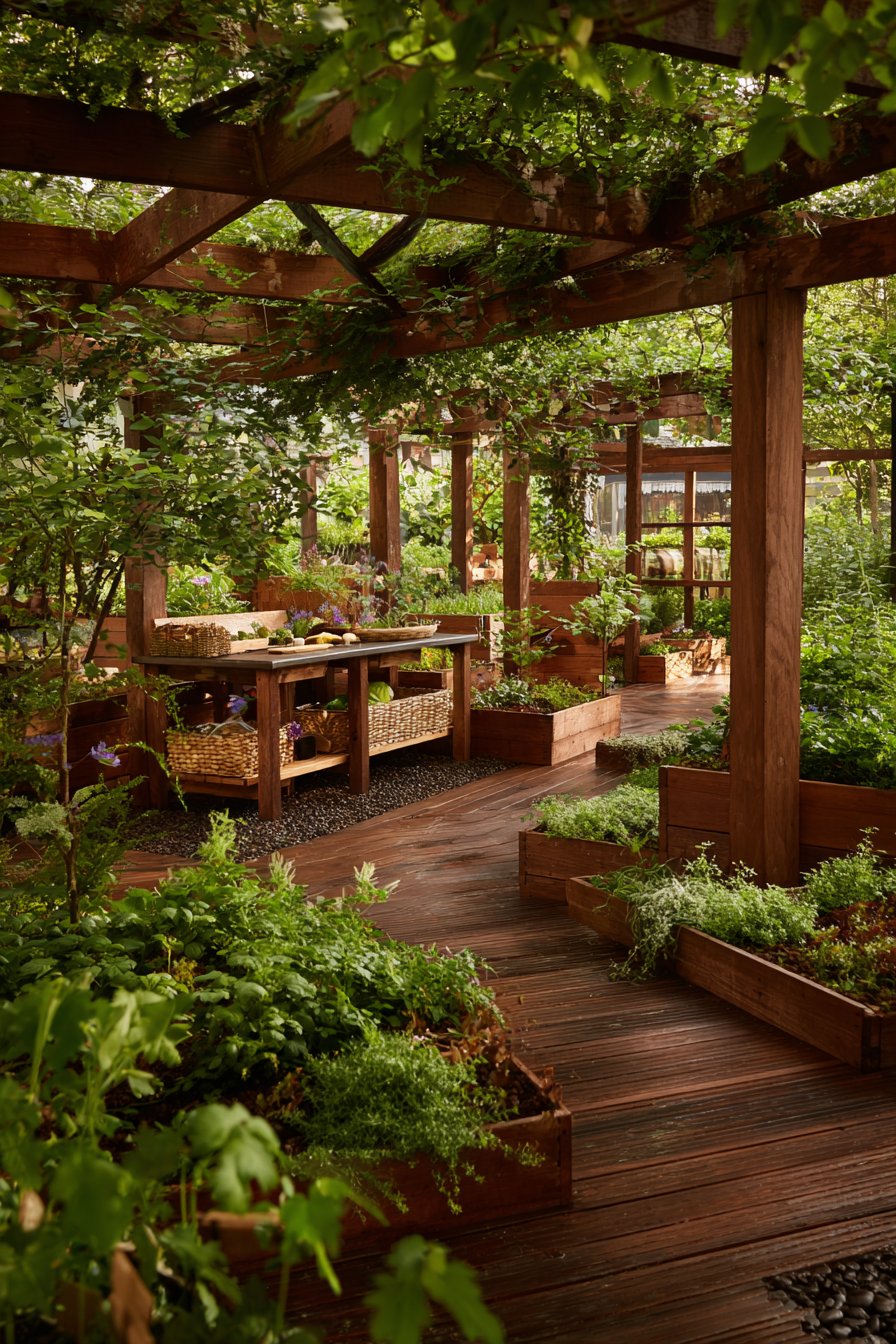
Pergola structures supporting climbing plants create natural shade canopies while teaching children about vertical gardening and plant growth patterns. The combination of architectural elements with living plants demonstrates how built and natural features can be integrated to create functional and beautiful outdoor spaces.
Key Design Tips:
- Select decking materials appropriate for outdoor exposure and child safety requirements
- Install proper drainage systems that prevent water accumulation under elevated structures
- Choose climbing plants appropriate for the local climate and growing conditions
- Design pergola structures that can support mature plant loads while providing adequate shade
- Include storage solutions that take advantage of the space created under elevated platforms
16. Water Feature Enhanced Design
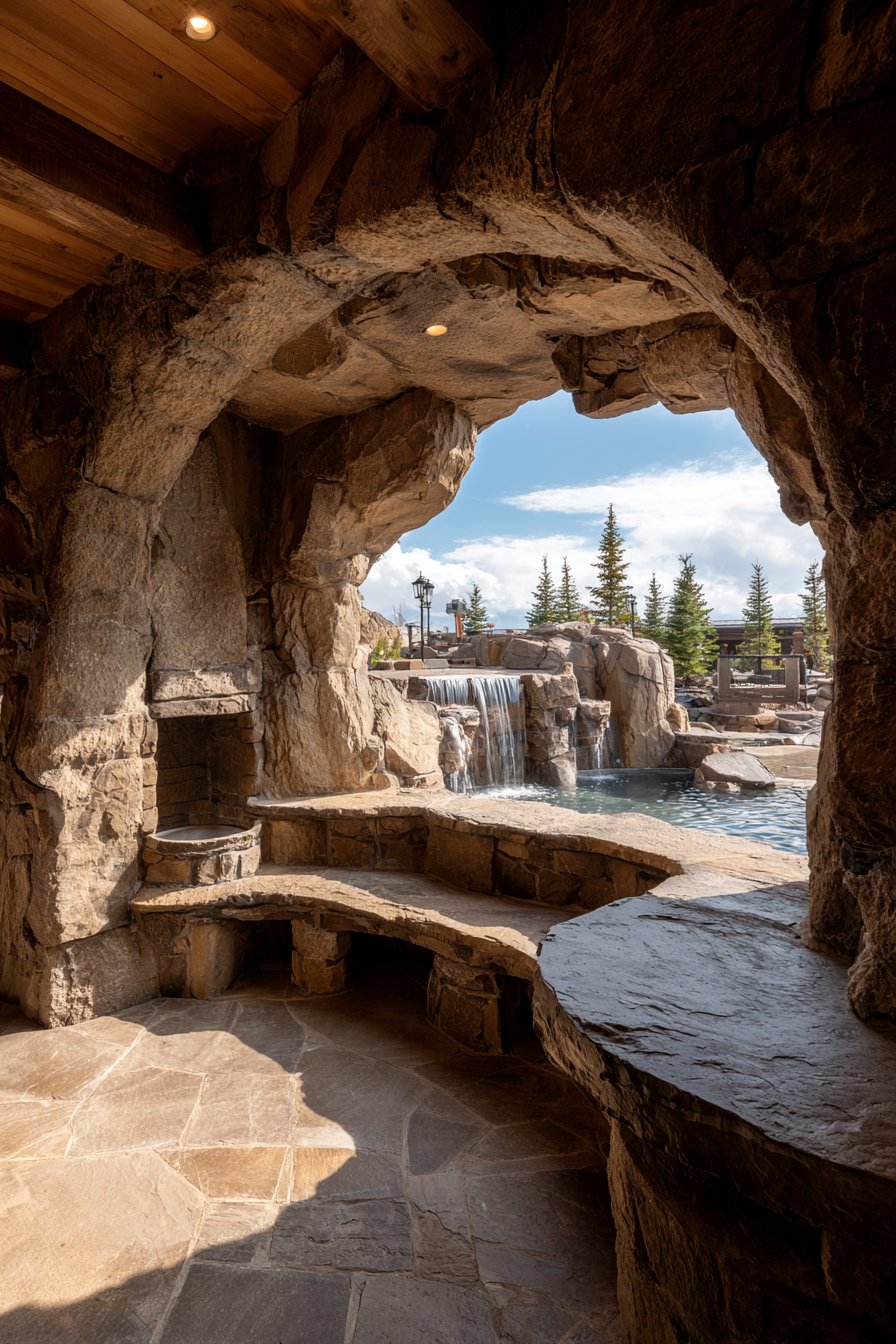
Advanced water features including small waterfalls and collection pools transform mud kitchen installations into comprehensive outdoor learning environments that teach children about water cycles and ecosystem relationships. The integration of moving water creates dynamic sensory experiences while providing educational opportunities about natural systems and environmental science.
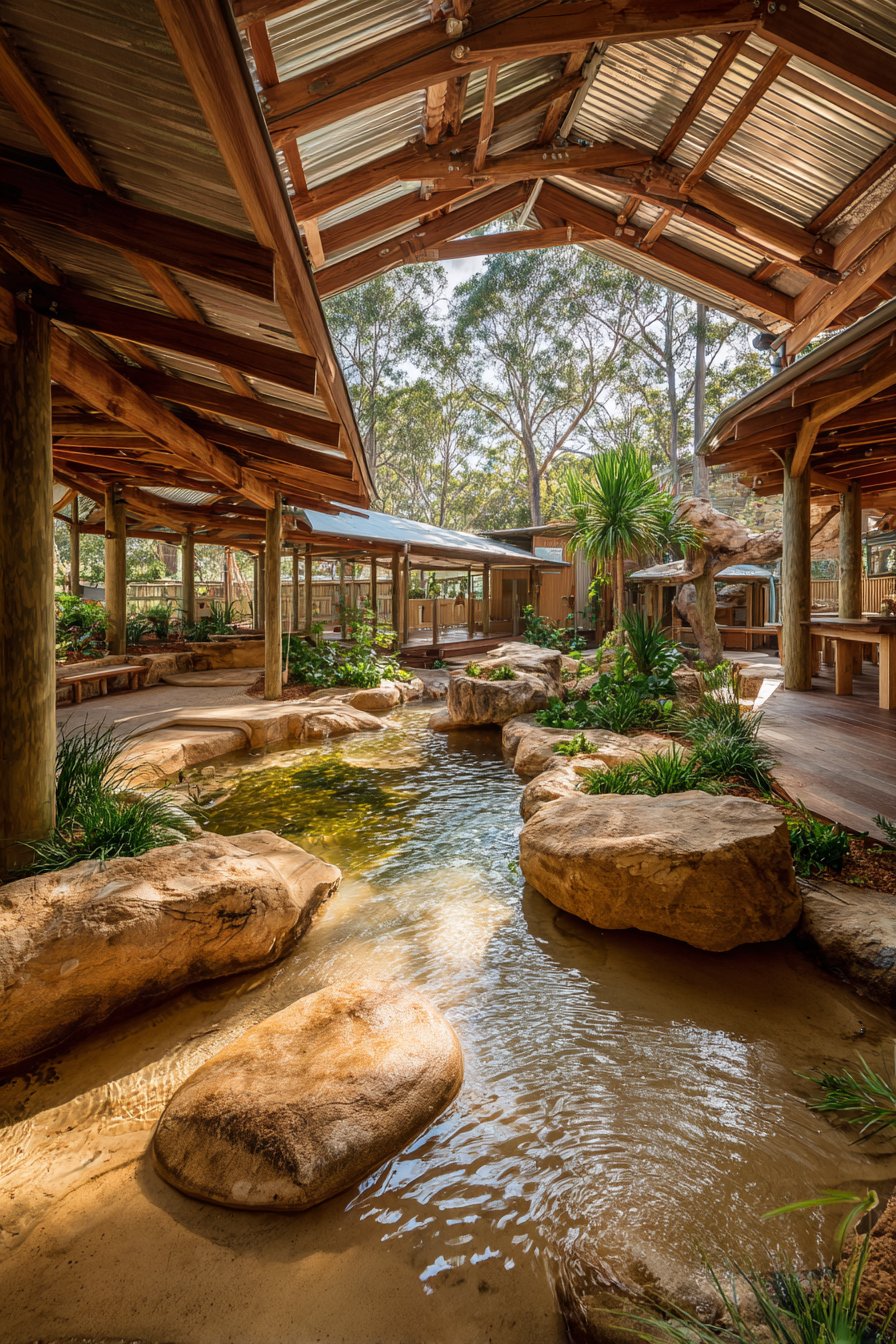
Natural stone construction provides exceptional durability while creating seamless integration with existing landscape features and design elements. The thermal mass of stone construction moderates temperature fluctuations while creating surfaces that feel authentic and natural under children’s hands and feet.
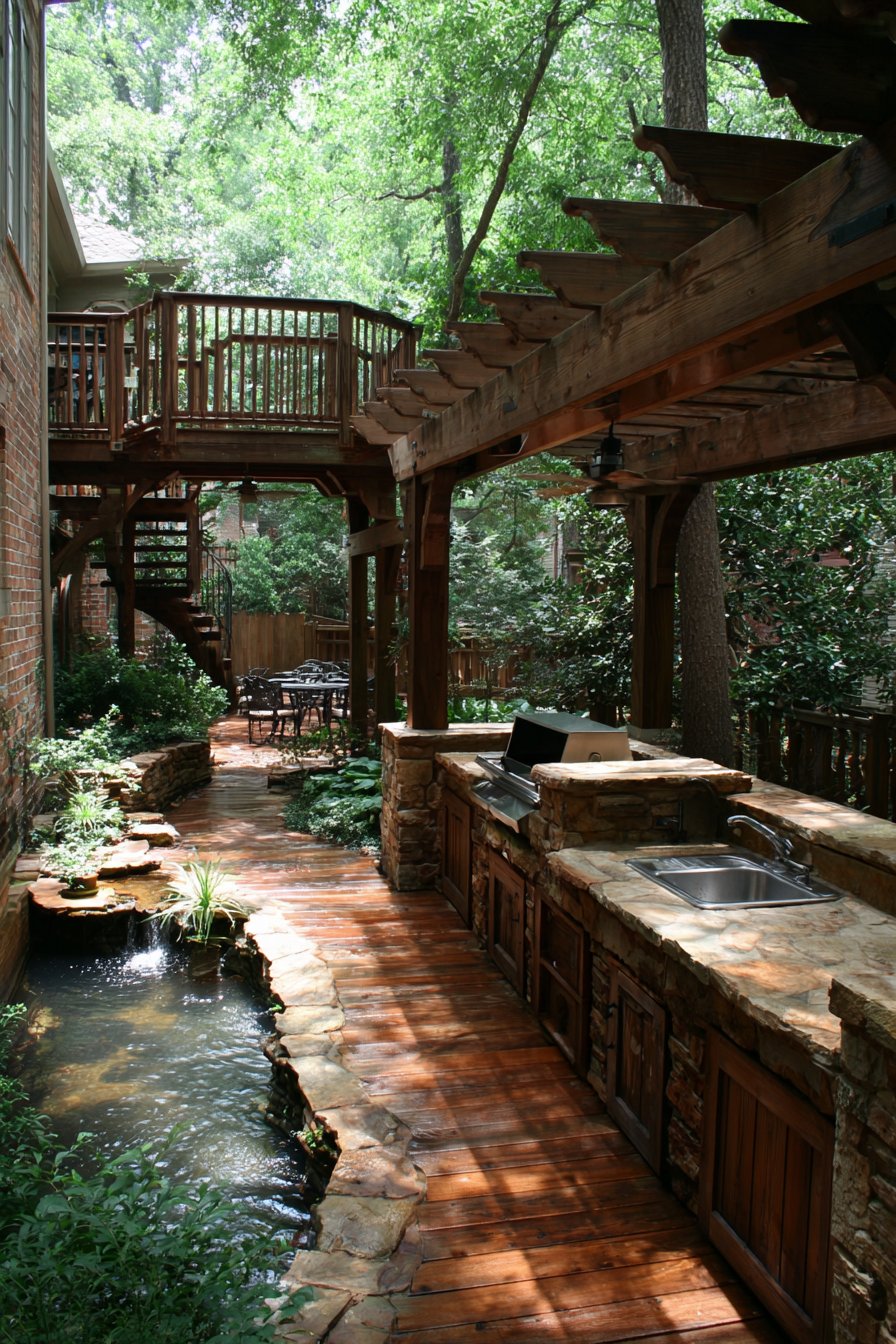
Aquatic plants integrated into water features teach children about different plant habitats while providing natural water filtration that maintains clear, healthy water conditions. The inclusion of aquatic ecosystems demonstrates how different organisms work together to create balanced natural systems.
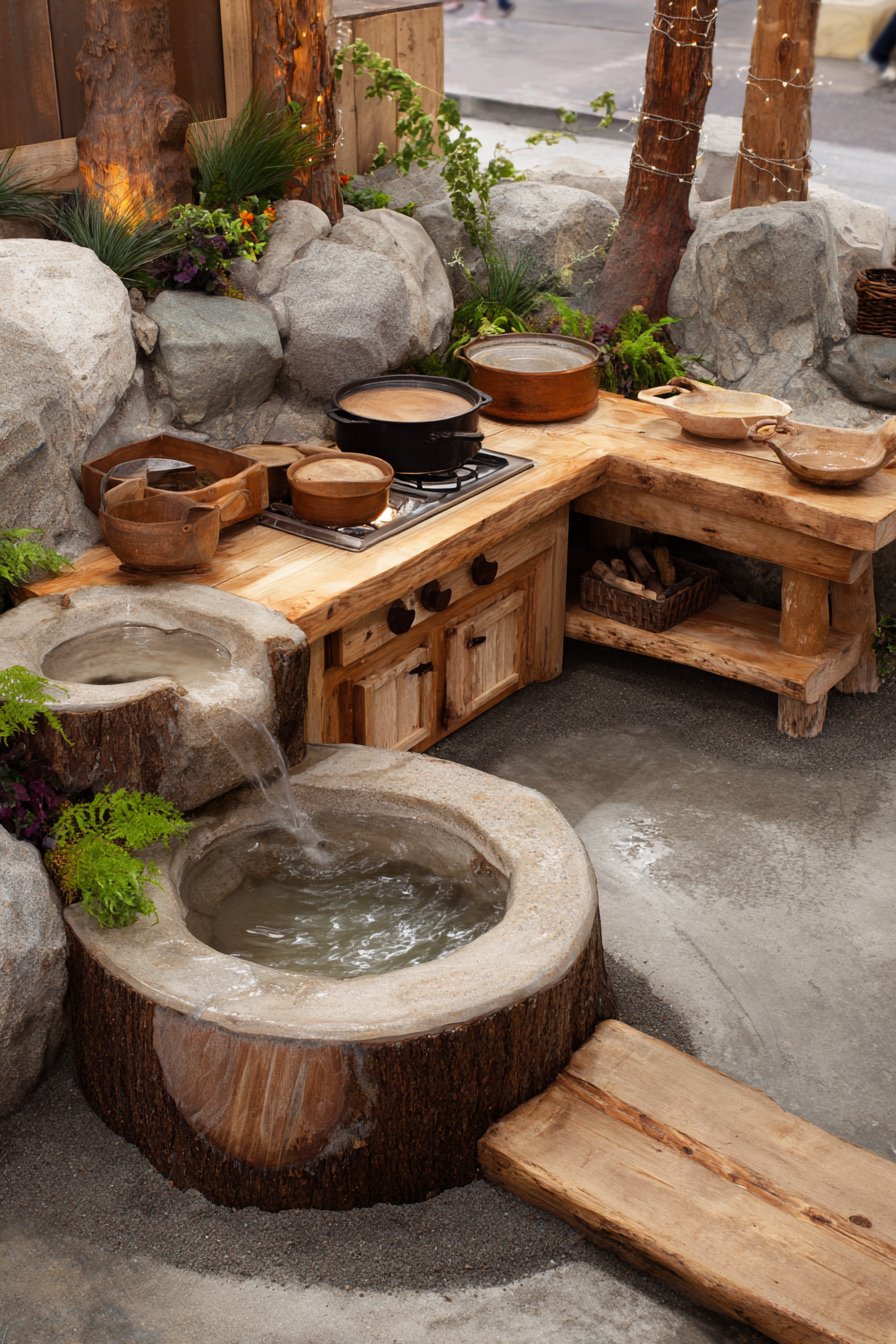
Bridges and pathways connecting different cooking areas create adventure elements while teaching children about spatial relationships and navigation skills. The integration of movement challenges into cooking play creates more comprehensive developmental opportunities while maintaining focus on culinary creativity and imagination.
Key Design Tips:
- Plan electrical systems for pumps and filters with proper outdoor safety features
- Choose aquatic plants appropriate for local climate and water conditions
- Design bridges and pathways with appropriate safety railings and non-slip surfaces
- Include filtration systems adequate for maintaining healthy water quality
- Position water features to take advantage of natural drainage and prevent flooding
17. Minimalist Zen-Inspired Simplicity
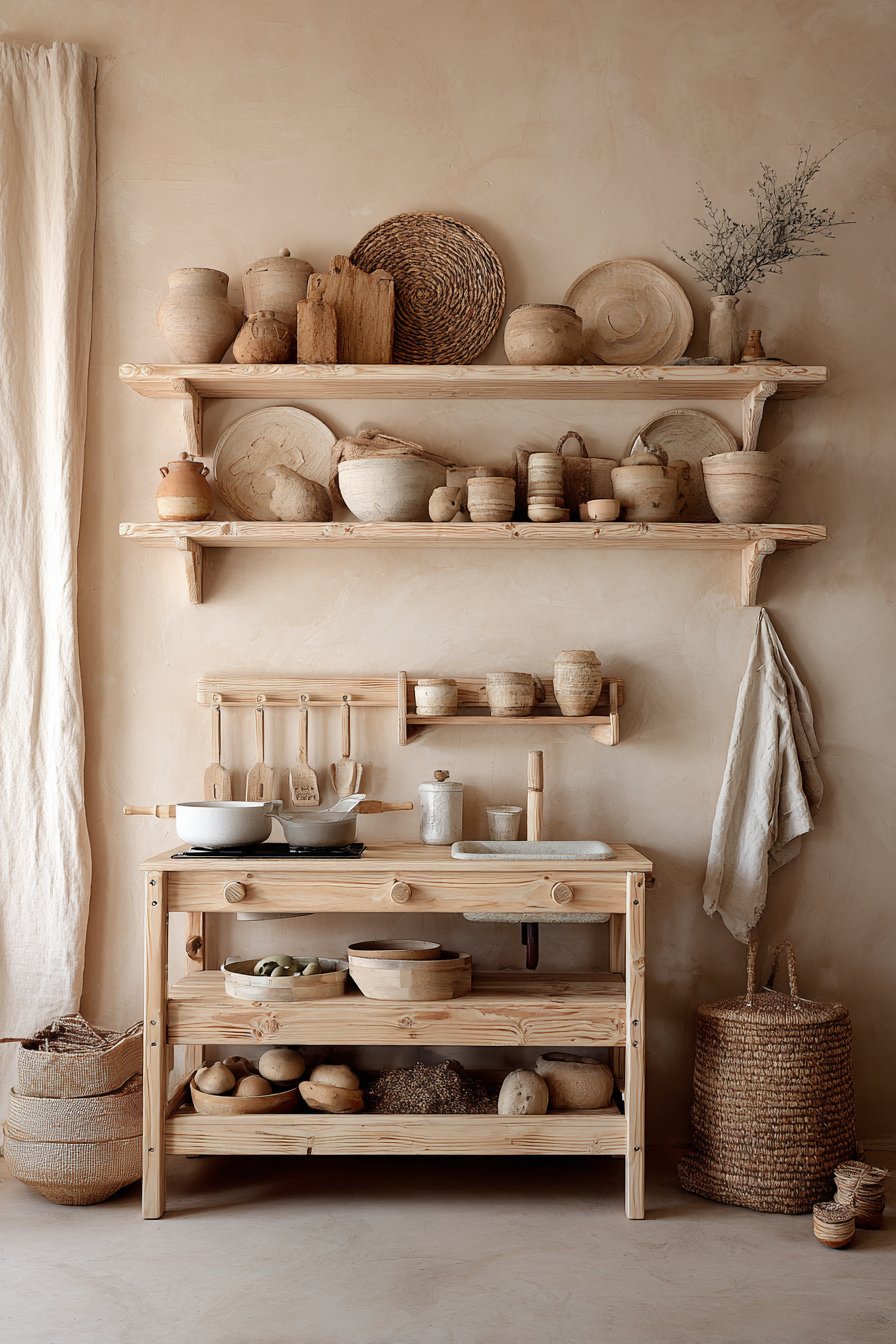
Clean geometric lines and carefully selected natural materials create mud kitchen designs that emphasize essential functions while maintaining exceptional aesthetic appeal and calming environmental qualities. The minimalist approach demonstrates how restraint in design choices can create more focused and meaningful play experiences.
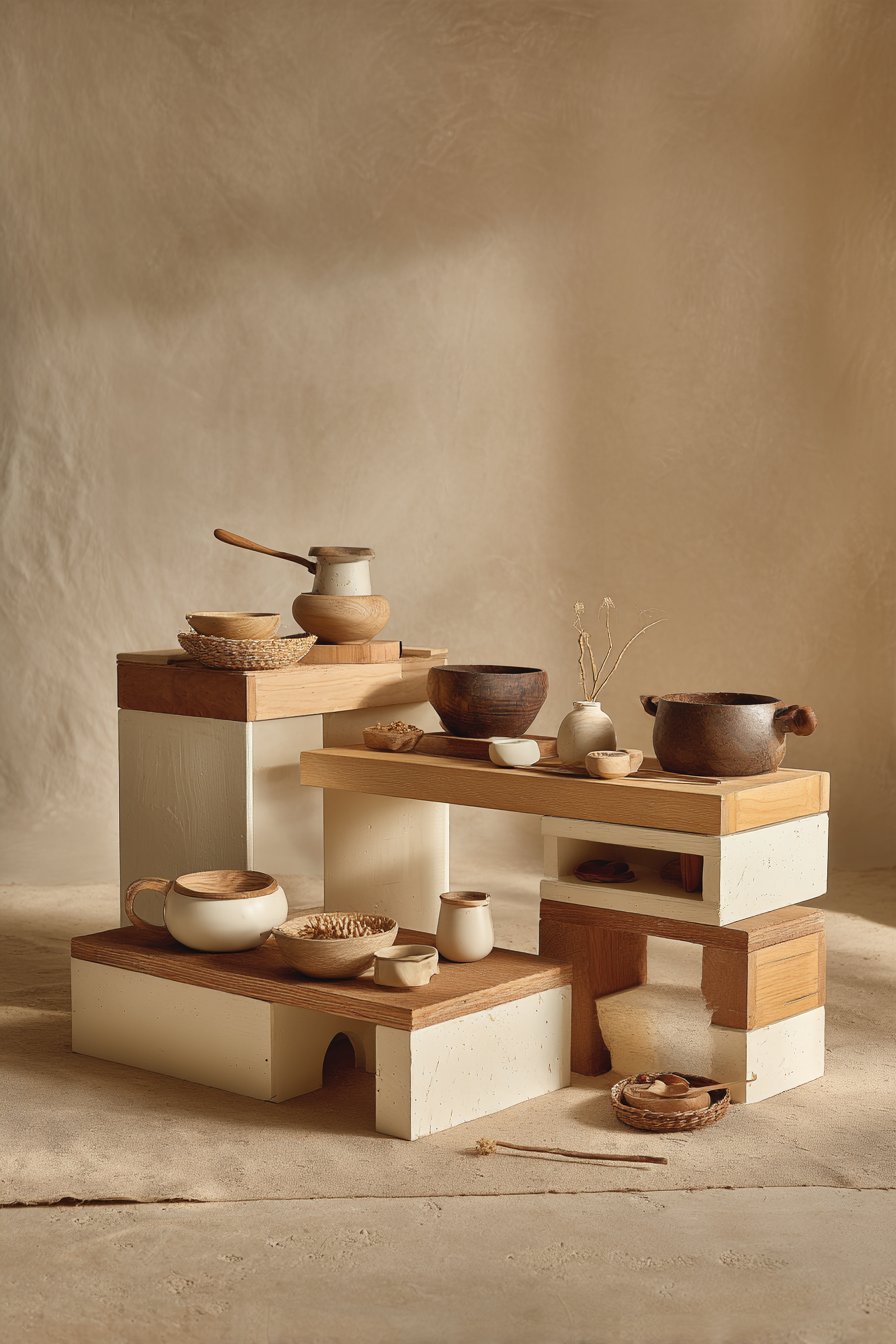
Simple wooden structures supporting basic cooking functions maintain visual appeal while eliminating unnecessary complexity that can overwhelm or distract from core play activities. This approach teaches children to appreciate quality materials and thoughtful design while focusing attention on imaginative play rather than complex features.
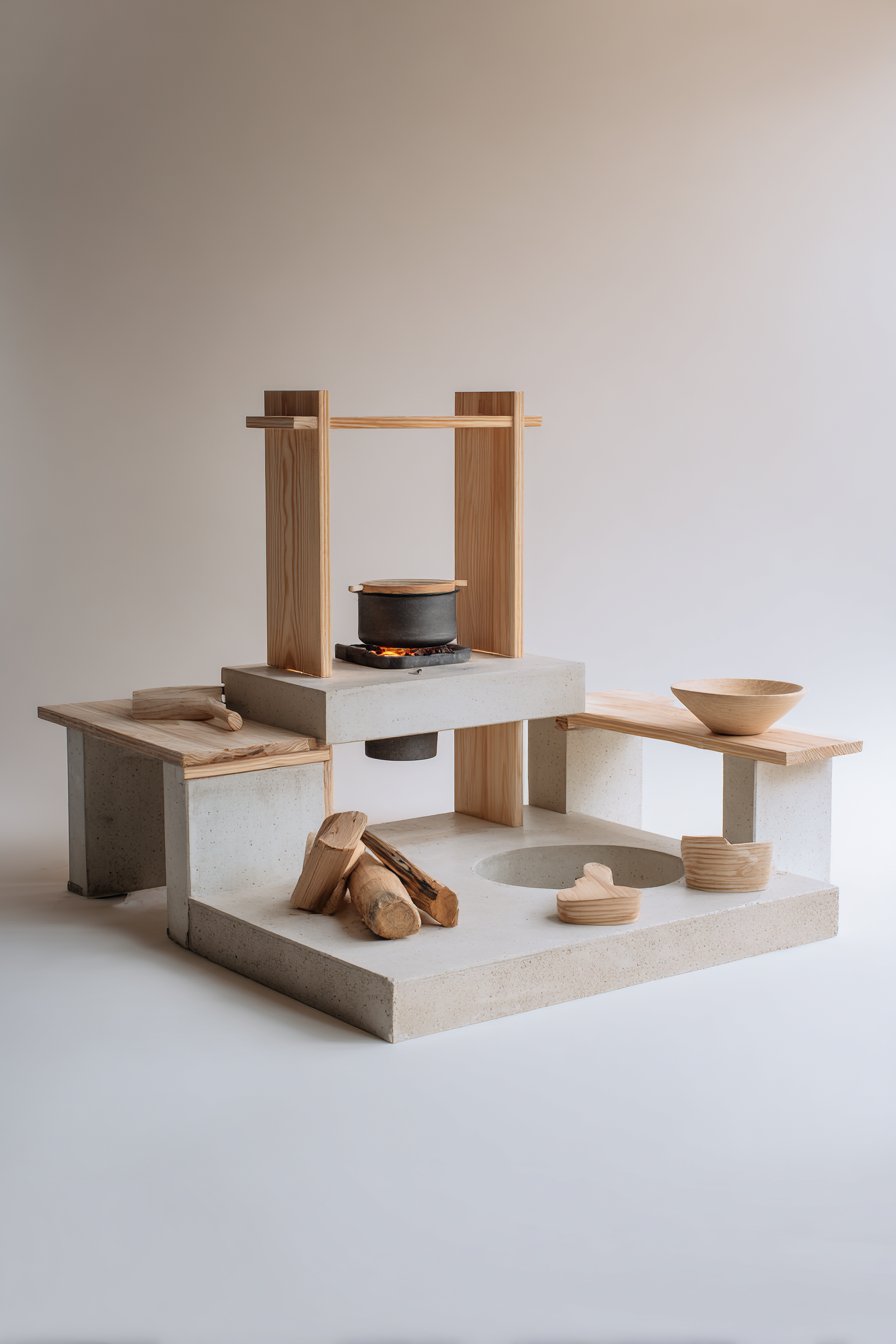
Neutral color palettes and uncluttered designs create calm play environments that support concentration and creative thinking while providing restful visual experiences for both children and adults. The peaceful aesthetic encourages mindful play activities and supports emotional regulation during outdoor time.
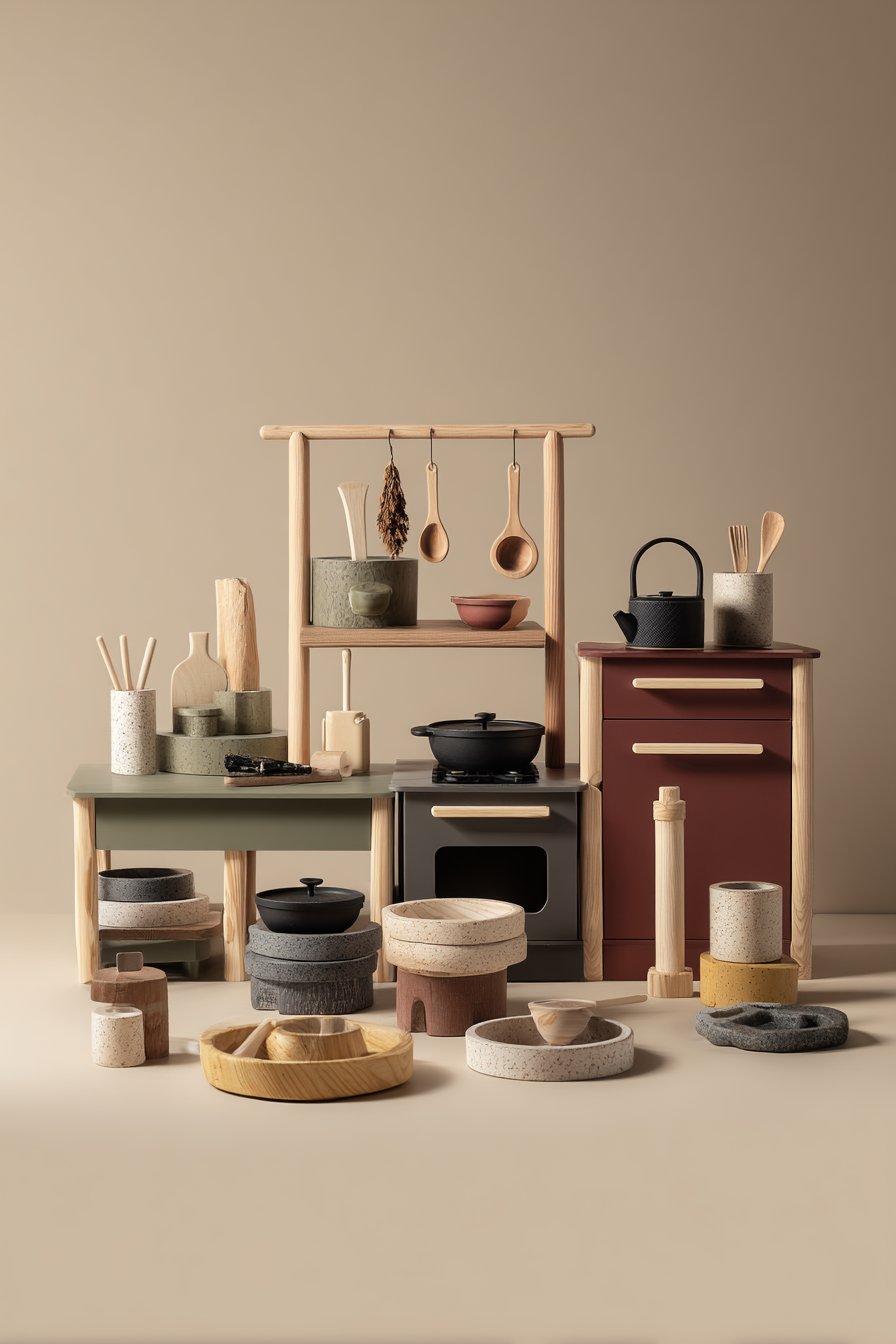
Hidden storage solutions maintain clean visual lines while providing necessary organization for play materials and cooking implements. The concealed storage demonstrates how functional requirements can be met without compromising aesthetic goals or creating visual clutter that detracts from the peaceful play environment.
Key Design Tips:
- Select high-quality natural materials that age beautifully and require minimal maintenance
- Design storage solutions that maintain clean lines while providing adequate organization
- Choose neutral colors that complement natural surroundings without competing for attention
- Emphasize texture and material quality over decorative elements or bright colors
- Plan proportions carefully to create harmonious relationships between different design elements
18. Universal Accessible Design Principles
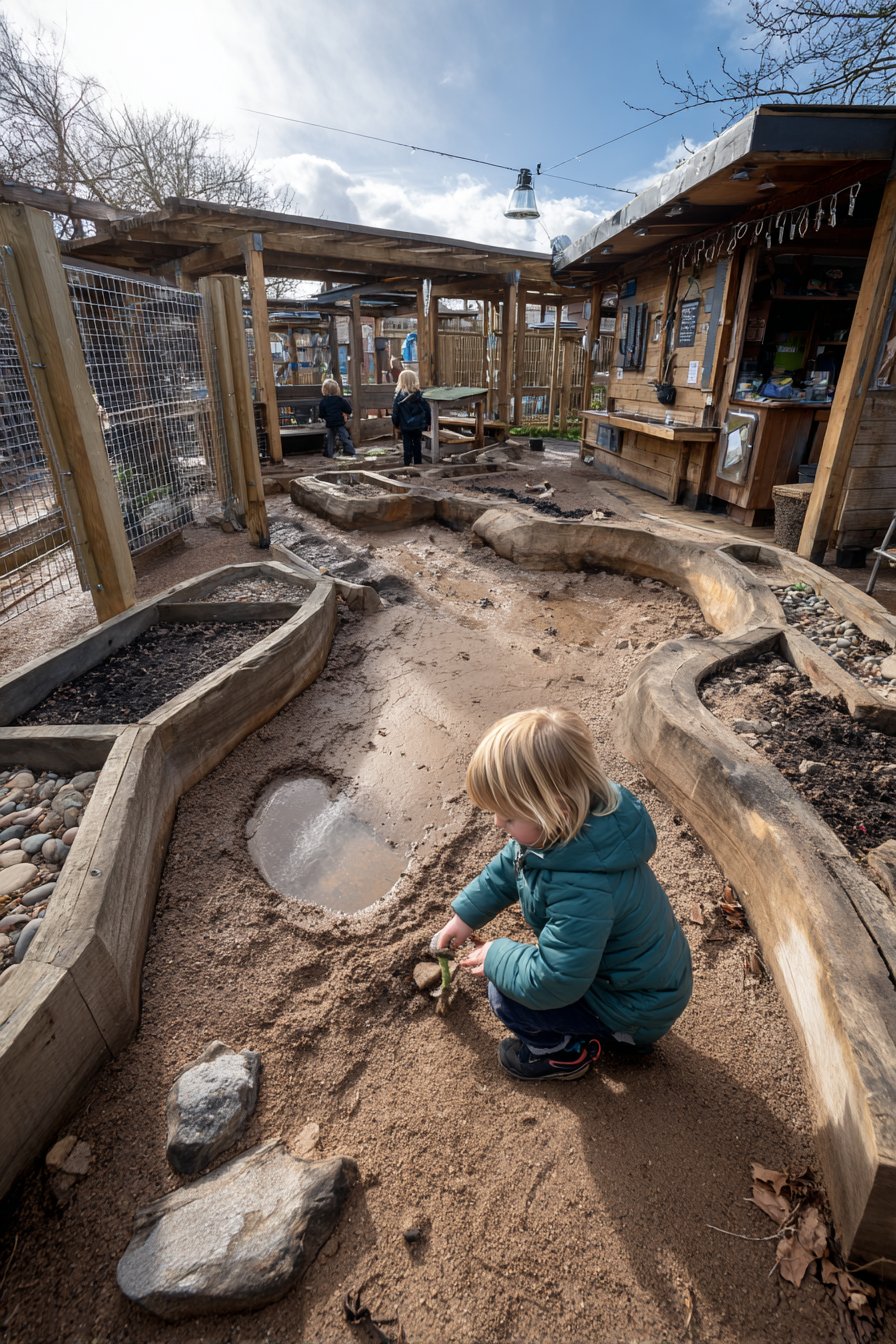
Inclusive mud kitchen designs featuring adjustable height work surfaces and wheelchair-friendly approaches ensure that children with different mobility needs can participate fully in outdoor cooking play activities. Wide pathways and carefully planned approaches eliminate barriers while creating welcoming environments for all children.
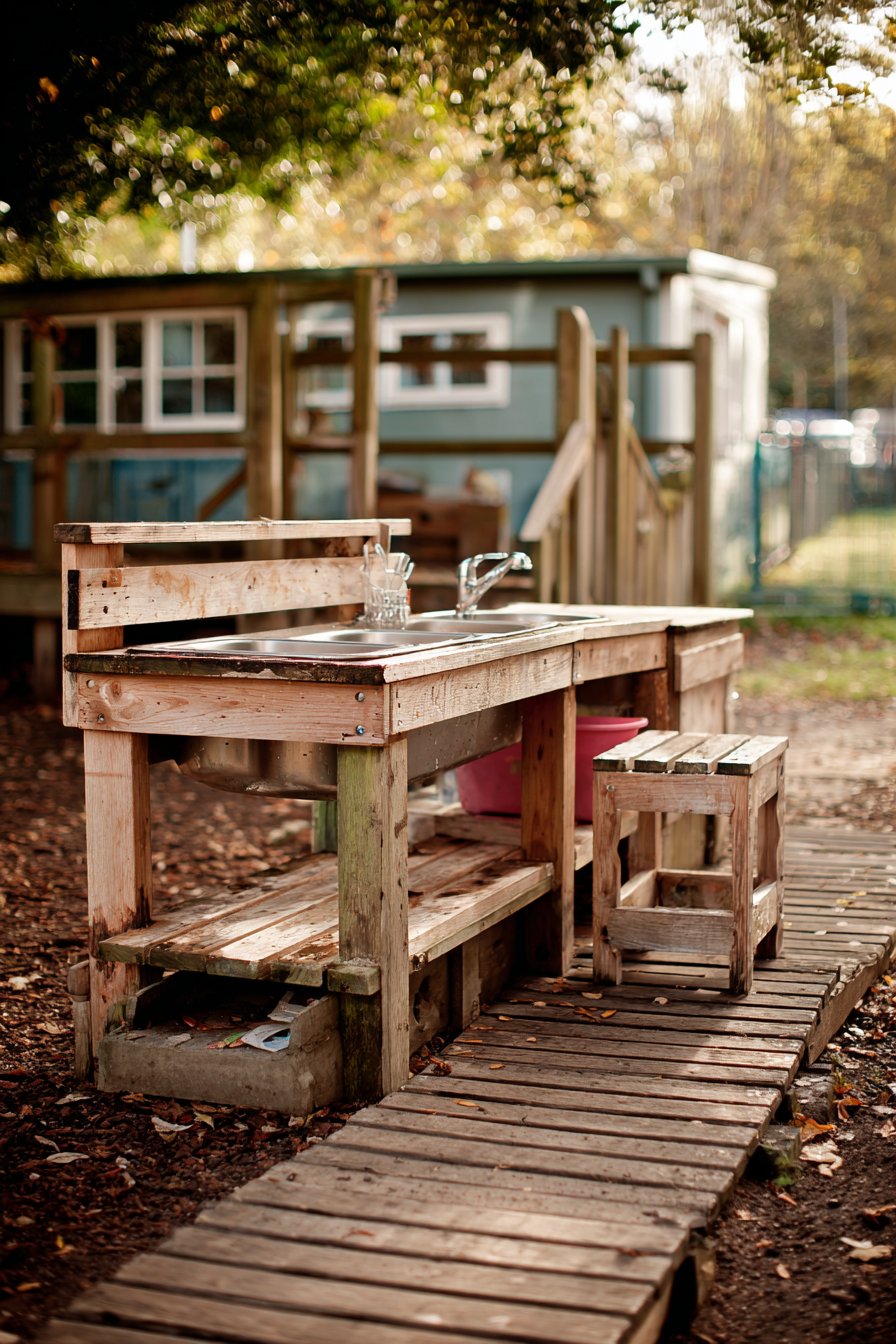
Varied working heights accommodate children using wheelchairs, walking aids, or other mobility devices while providing options for standing and seated play activities. This inclusive approach demonstrates how thoughtful design can create play opportunities for children with diverse abilities and needs.
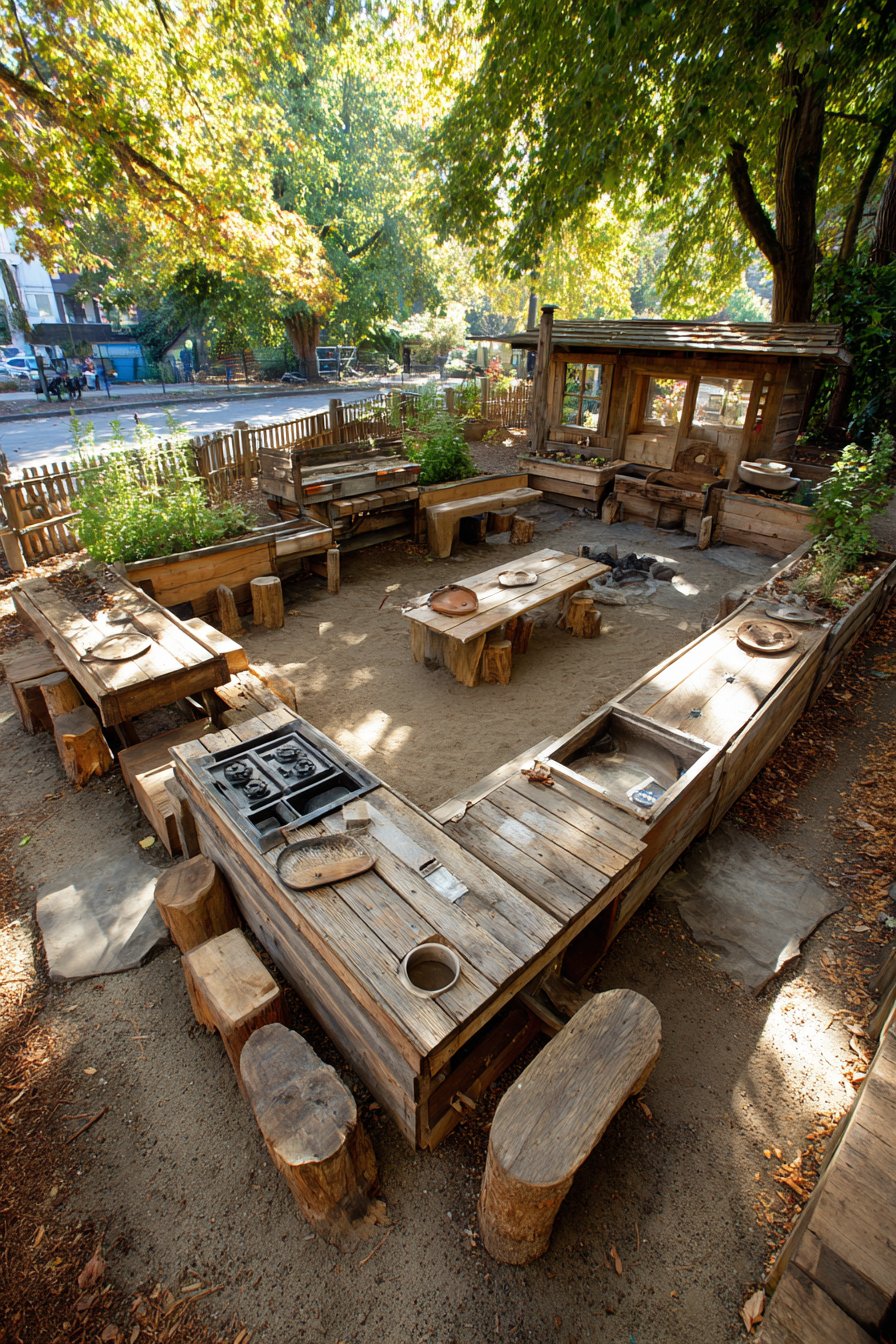
Multi-sensory elements including textured surfaces, wind chimes, and aromatic plants, provide engaging experiences for children with different sensory preferences and processing needs. The integration of various sensory opportunities ensures that children with different learning styles and abilities can find meaningful ways to engage with the play environment.
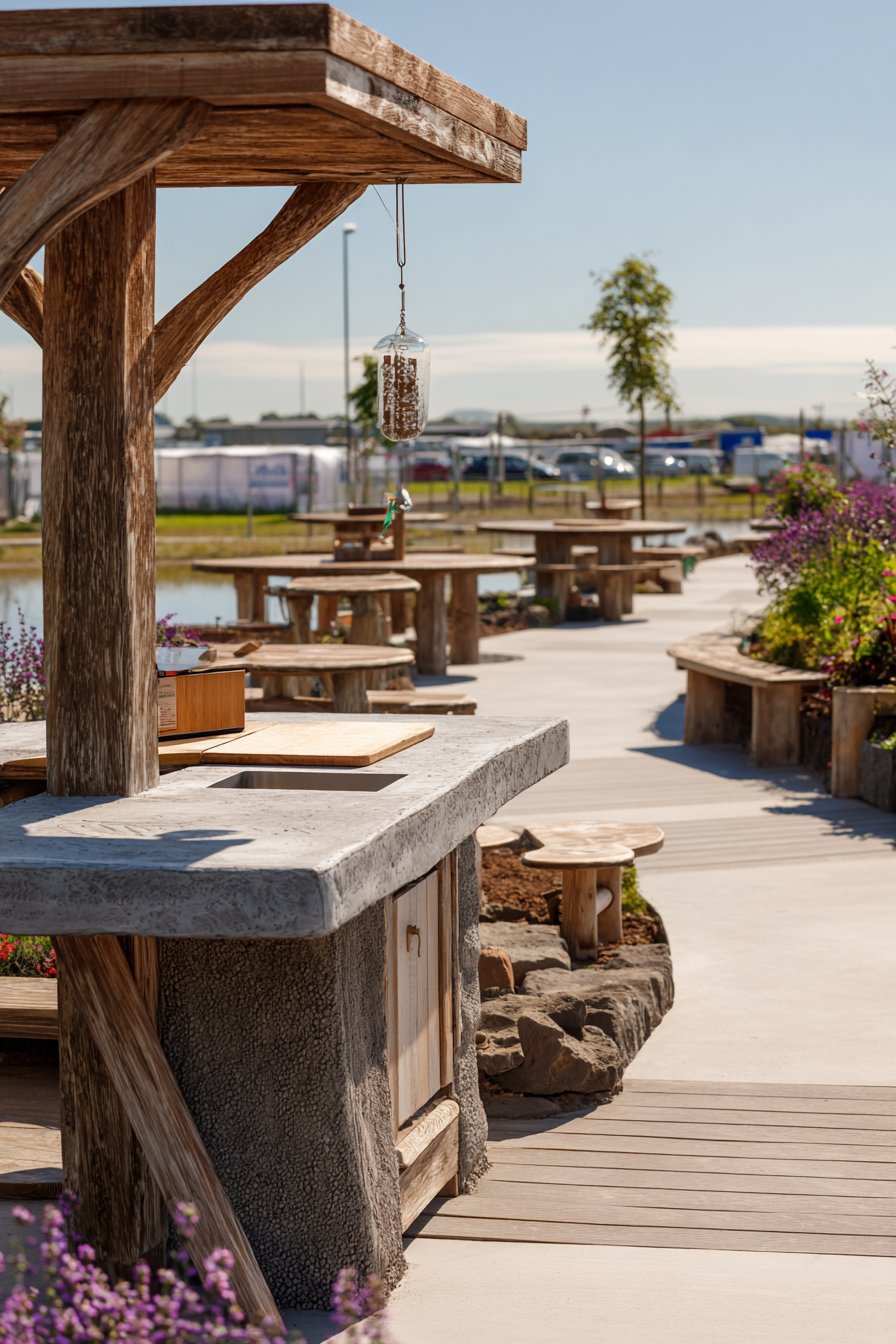
Accessible raised beds positioned at appropriate heights for wheelchair access provide gardening opportunities while teaching children about adaptive techniques and inclusive design principles. The demonstration of accessibility in gardening activities reinforces the message that outdoor activities can be adapted to meet diverse needs and abilities.
Key Design Tips:
- Consult with occupational therapists or accessibility experts during the design process
- Plan pathway widths and turning radii appropriate for mobility devices and assistance
- Include sensory elements that engage multiple senses without overwhelming sensitive children
- Design adjustable elements that can be modified to meet individual needs and preferences
- Position frequently used features within easy reach from seated positions
19. STEM Learning Integration
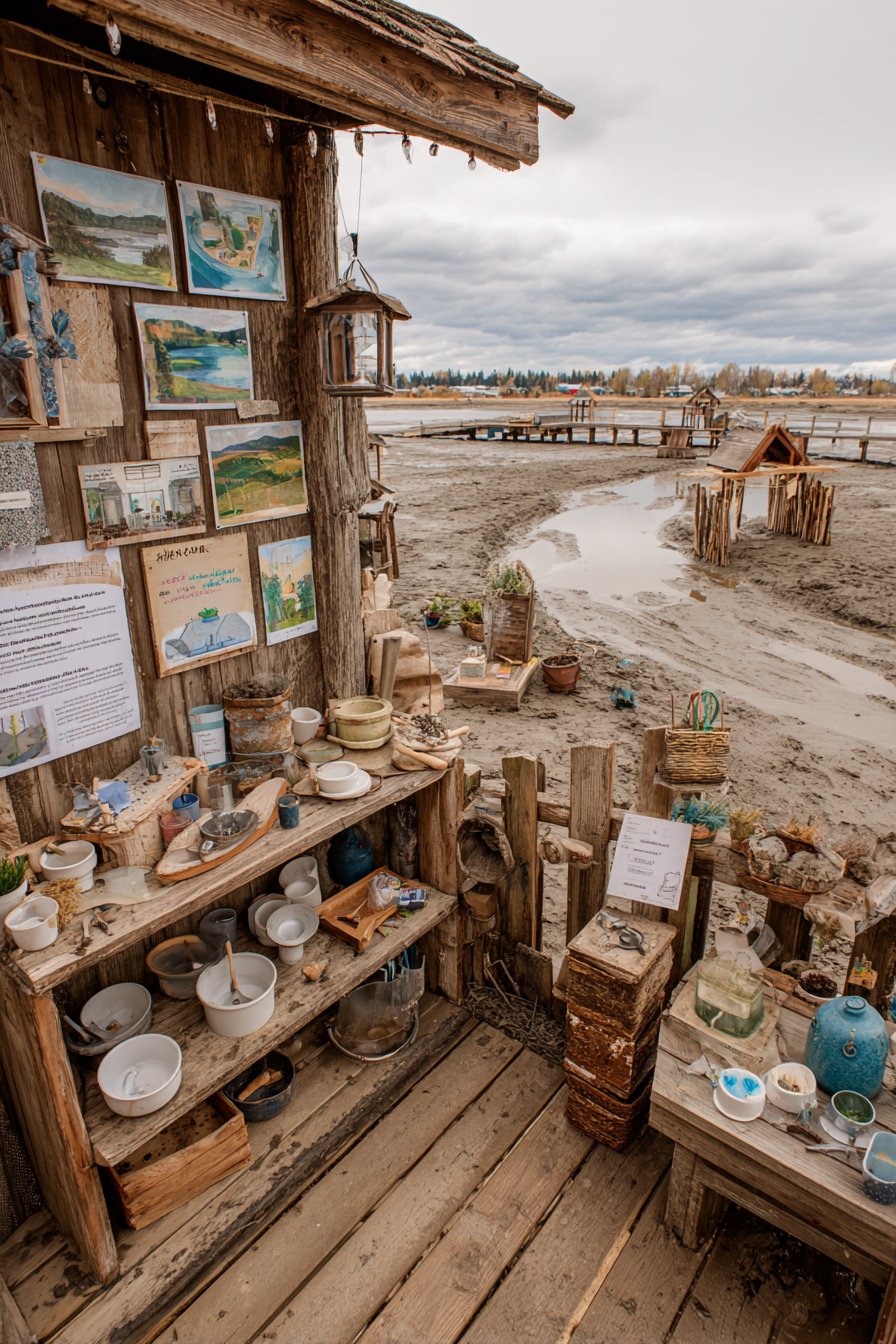
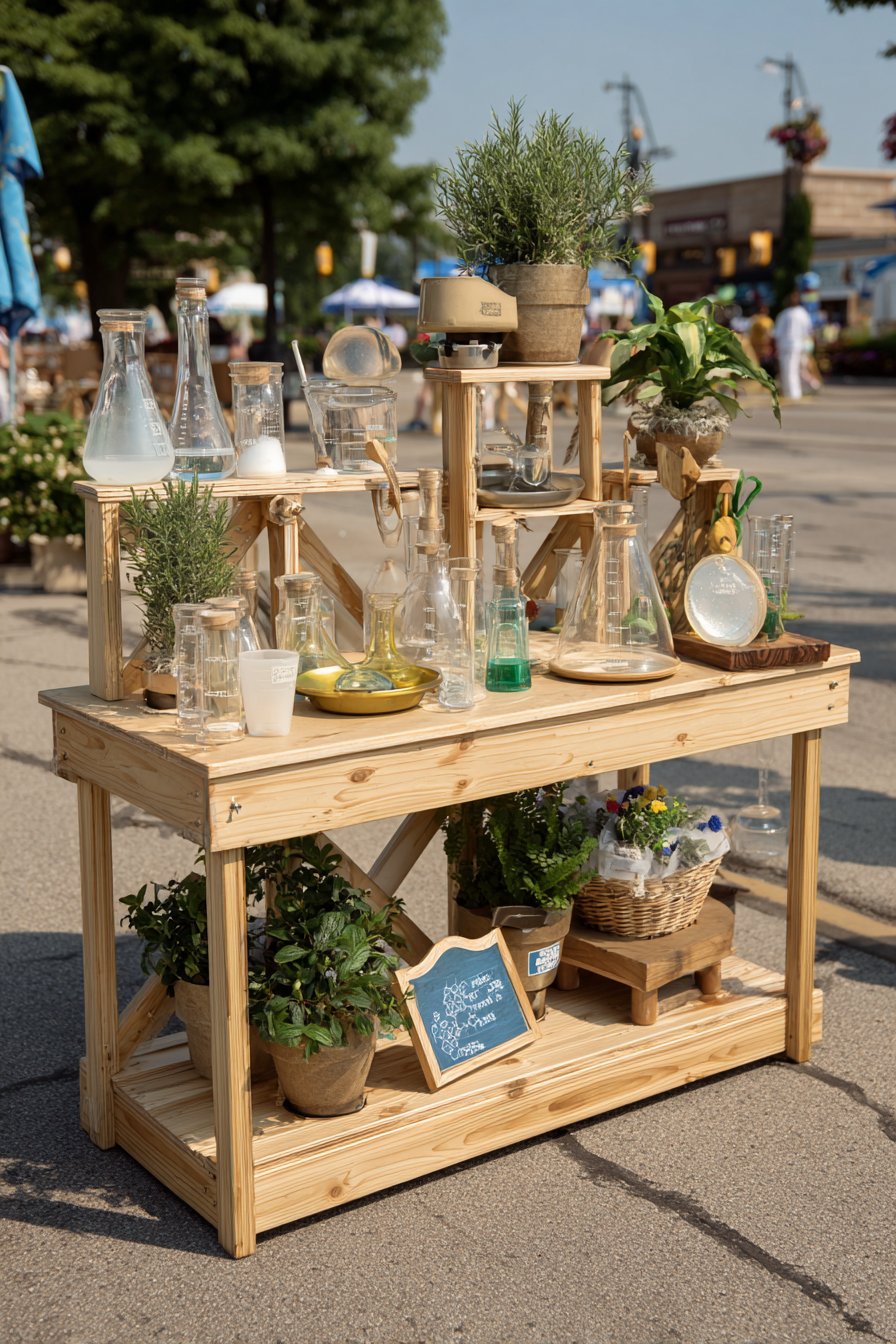
Educational mud kitchens incorporating measurement tools, scales, and simple mechanical devices transform outdoor play into comprehensive learning experiences that teach scientific concepts through hands-on exploration and experimentation. The integration of educational elements demonstrates how play can become a powerful vehicle for STEM learning and skill development.
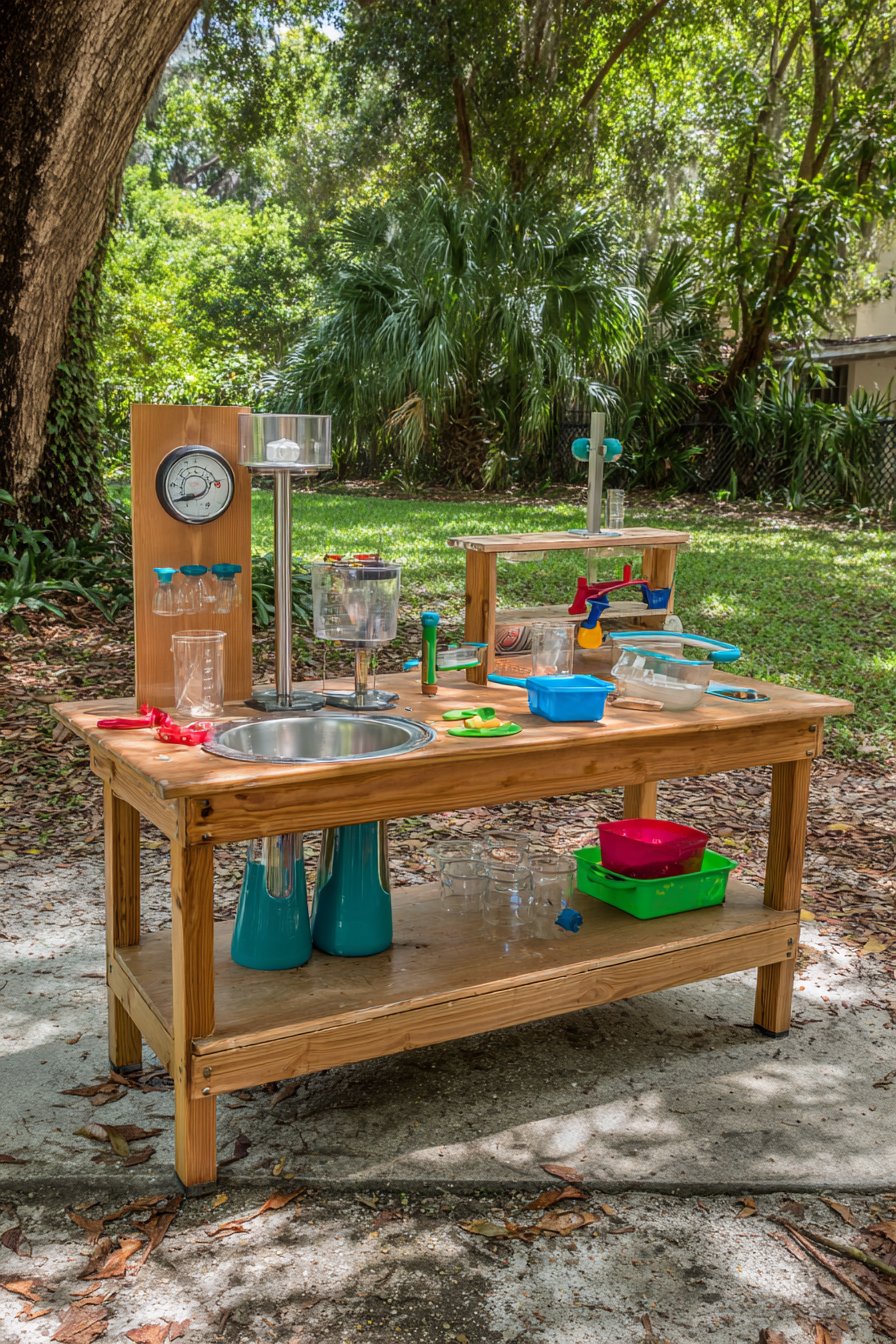
Scientific equipment adapted for children including beakers, funnels, and magnifying glasses, provides authentic research tools while teaching proper equipment use and scientific observation techniques. The availability of real scientific instruments encourages serious exploration while maintaining the playful atmosphere that keeps children engaged.
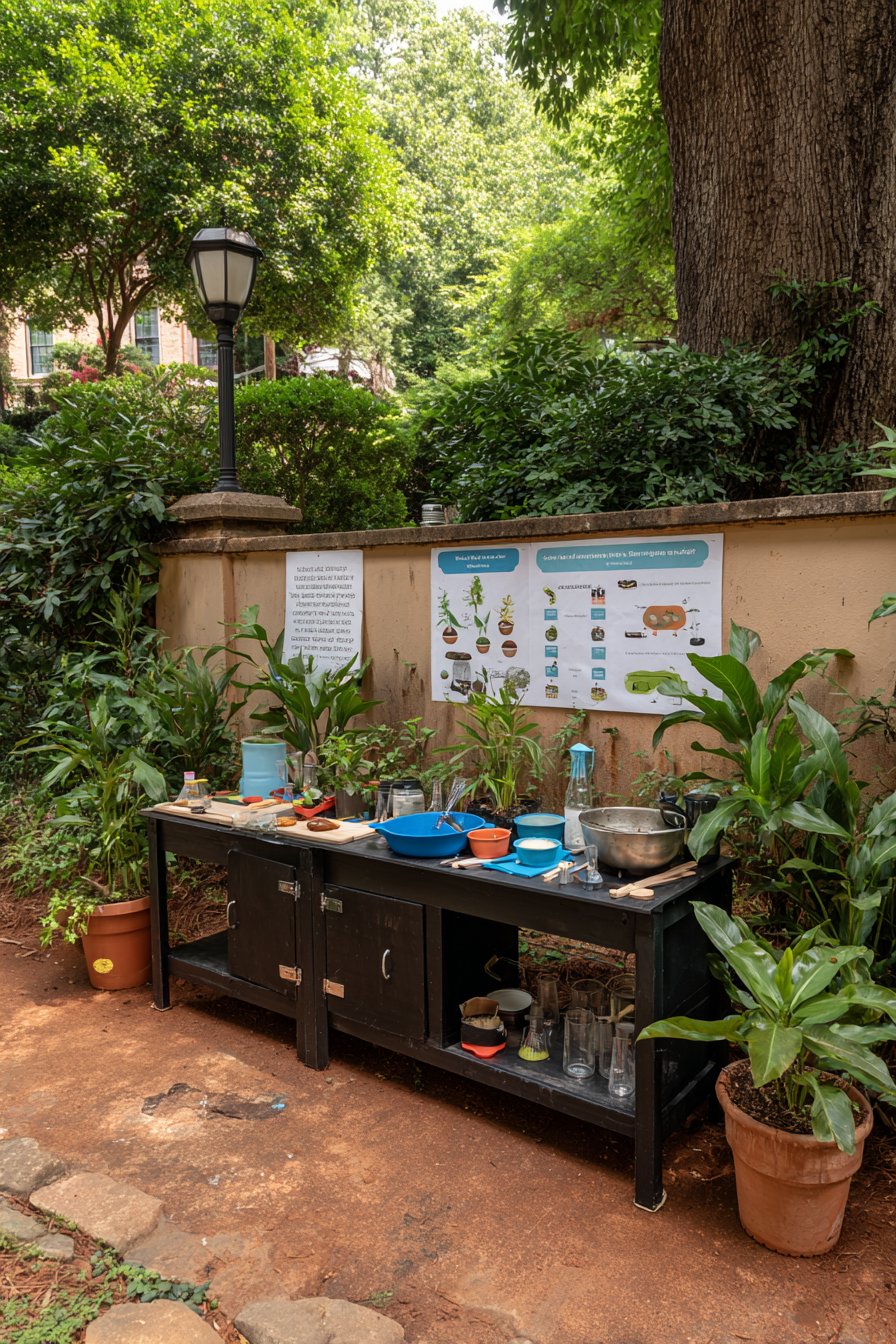
Weather stations positioned near the kitchen teach children about environmental conditions affecting cooking while providing ongoing opportunities for data collection and weather prediction activities. The integration of environmental monitoring into cooking play demonstrates the connections between weather, growing conditions, and food preparation.
Educational signage identifying plants and explaining scientific concepts reinforces learning opportunities while providing reference information that supports independent exploration and discovery. The presence of educational materials demonstrates how learning can be embedded seamlessly into play environments without creating classroom-like restrictions on creativity.
Key Design Tips:
- Choose scientific equipment designed specifically for child use and outdoor exposure
- Install weather monitoring equipment that provides accurate data while remaining child-accessible
- Create educational signage using weather-resistant materials and child-appropriate language
- Design storage systems that protect sensitive instruments while maintaining easy access
- Plan electrical systems for any electronic educational equipment with appropriate outdoor safety features
20. Artistic Multi-Disciplinary Creative Hub
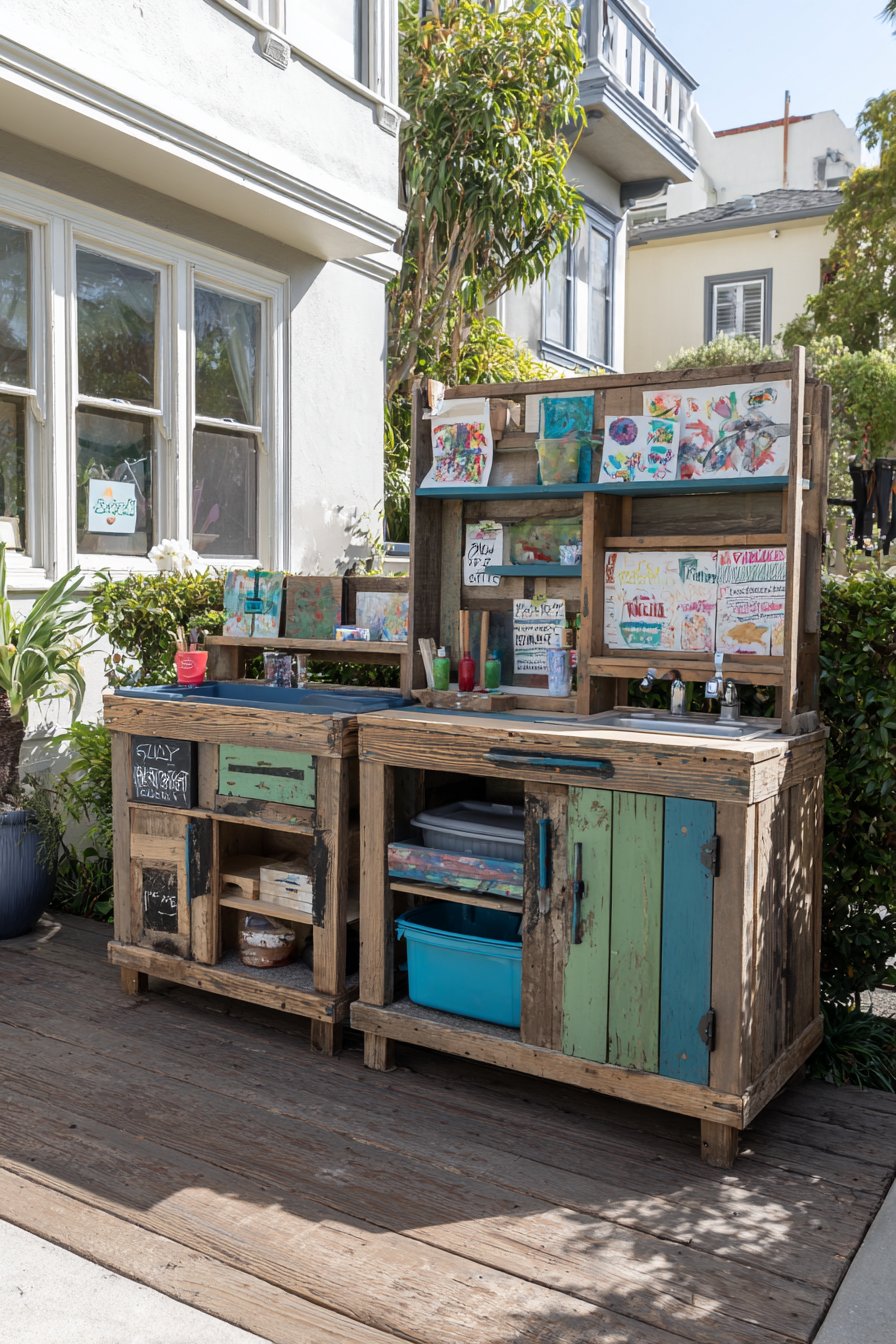
Comprehensive creative play spaces integrating artistic elements alongside cooking activities demonstrate how outdoor play can support multiple types of creative expression and skill development. Built-in easels and dedicated art storage create seamless transitions between cooking and artistic activities while maintaining organization and accessibility for different types of creative materials.
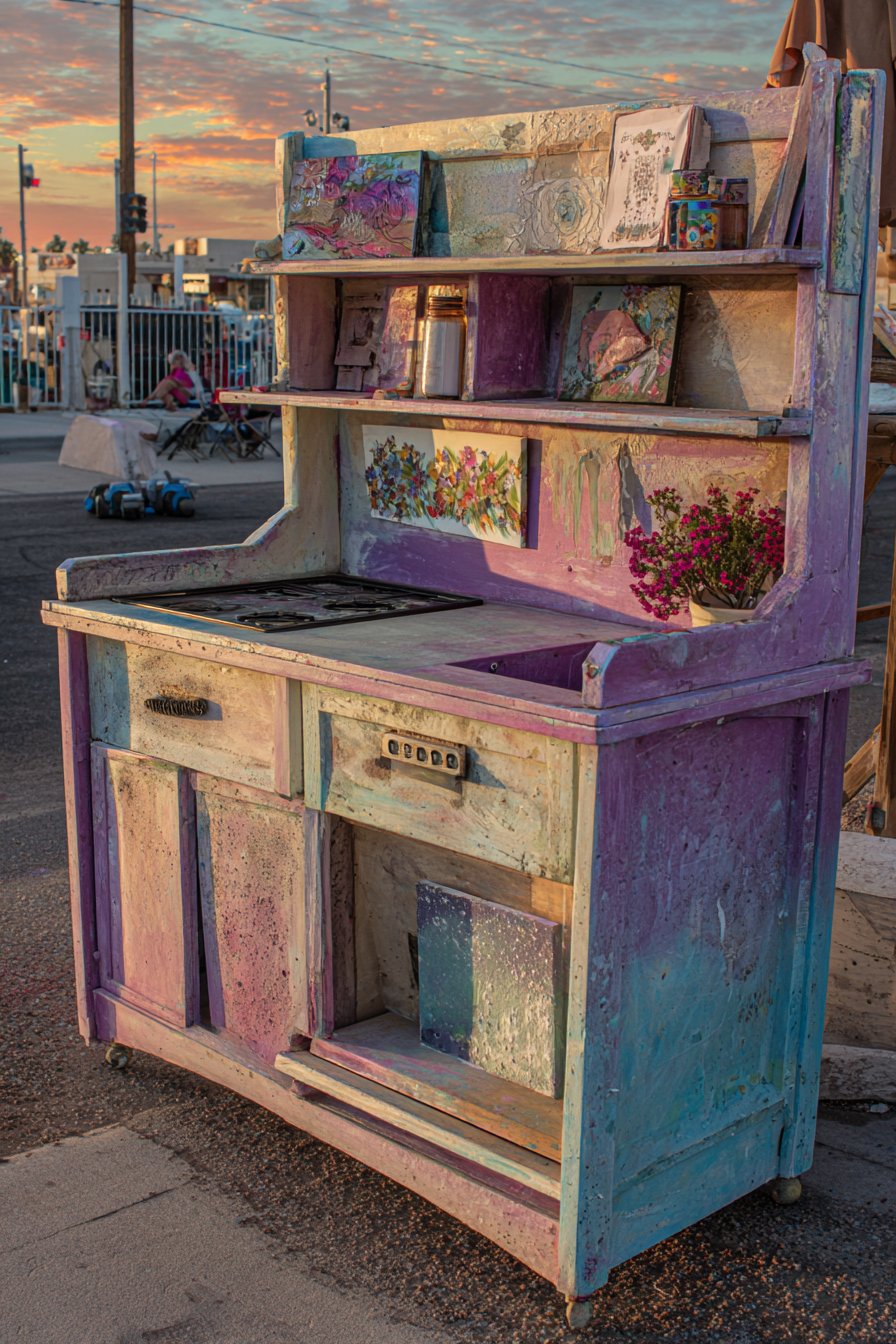
Natural pigments made from flowers, berries, and clay provide authentic art supplies while teaching children about traditional artistic techniques and the connection between natural materials and creative expression. The creation of art supplies from garden materials reinforces the relationship between growing, harvesting, and creating activities.
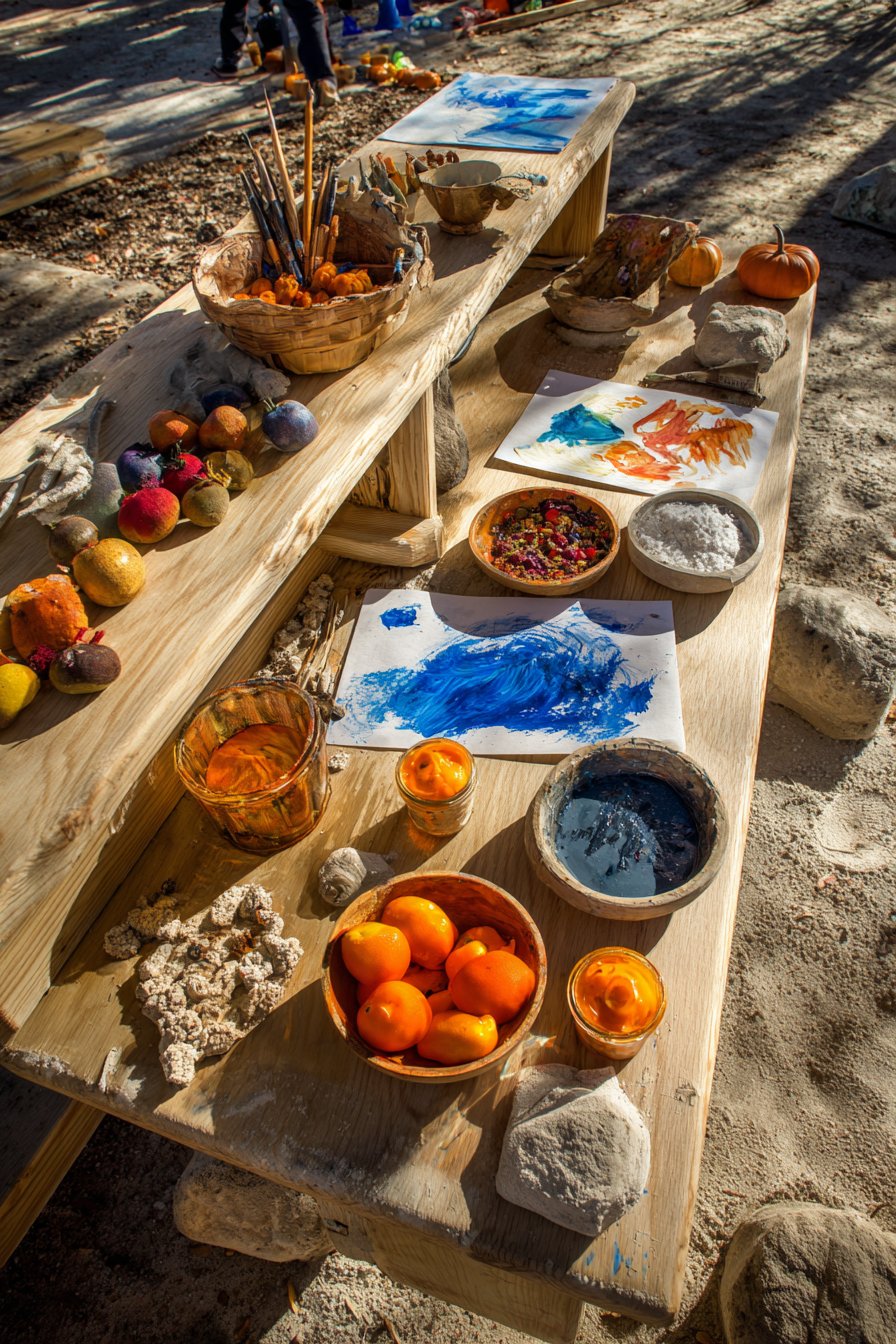
Display areas showcasing children’s artwork create pride and accomplishment while demonstrating the value placed on creative expression and individual achievement. The integration of display features into the play structure eliminates the need for separate art storage and presentation solutions while encouraging continued artistic exploration.
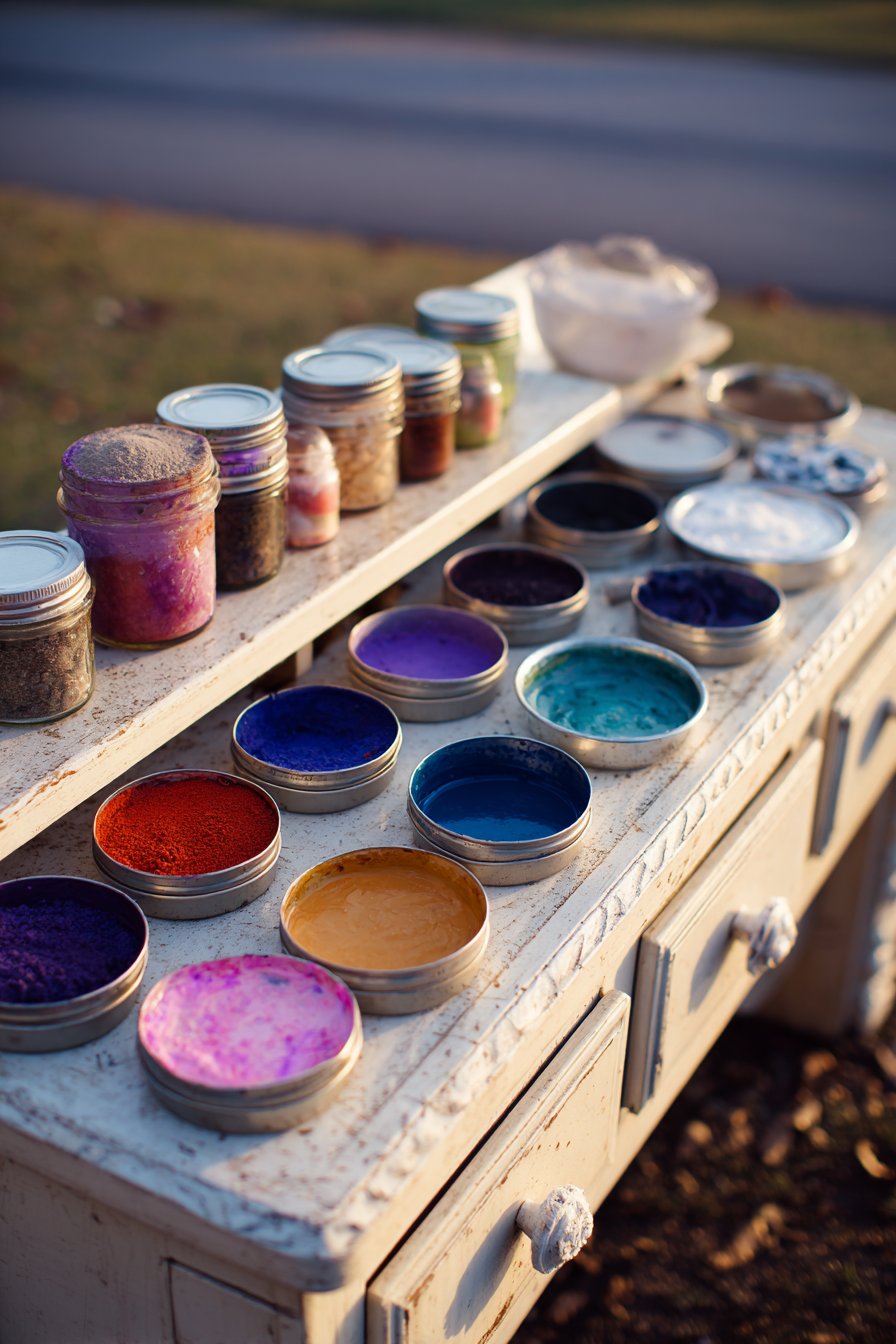
Multi-disciplinary approaches combining art and cooking activities create comprehensive creative experiences while teaching children about the connections between different forms of expression and creativity. This integrated approach demonstrates how play can support multiple developmental domains simultaneously while maintaining high levels of engagement and interest.
Key Design Tips:
- Plan storage systems that accommodate both cooking and art supplies with appropriate organization
- Choose art materials suitable for outdoor use that won’t damage natural surfaces or plants
- Design display areas that protect artwork from weather while remaining easily accessible
- Include washing stations adequate for cleaning both cooking and art materials
- Position artistic elements to take advantage of optimal natural light for creative activities
Why These Mud Kitchen Designs Represent the Best in Outdoor Play Innovation
The twenty mud kitchen designs featured in this comprehensive guide represent the pinnacle of outdoor play innovation, combining practical functionality with creative inspiration to create spaces that truly enhance childhood development and family outdoor time. These carefully curated concepts demonstrate how thoughtful design can transform simple outdoor cooking play into comprehensive learning environments that support multiple developmental domains while providing years of engaging entertainment.
Sustainable Material Innovation stands as a cornerstone of modern mud kitchen design, with options ranging from reclaimed barn wood and repurposed pallets to sustainable bamboo construction that demonstrates environmental responsibility while providing exceptional durability. These material choices teach children valuable lessons about conservation and creative reuse while creating play structures that withstand years of active outdoor use. The emphasis on sustainable construction methods reflects growing awareness of environmental impact while proving that eco-friendly choices can enhance rather than compromise design quality and functionality.
Inclusive Design Excellence emerges as a defining characteristic of superior mud kitchen installations, with universal accessibility features ensuring that children of all abilities can participate fully in outdoor cooking play. Adjustable height work surfaces, wheelchair-accessible pathways, and multi-sensory engagement opportunities demonstrate how inclusive design principles can create welcoming environments for diverse learning needs and physical abilities. This commitment to accessibility reflects broader social values while creating play opportunities that bring children together regardless of individual differences or challenges.
Educational Integration Mastery elevates these mud kitchen designs beyond simple play structures into comprehensive outdoor learning environments that seamlessly blend entertainment with skill development. STEM learning elements including measurement tools and scientific equipment transform cooking play into hands-on science education, while integrated herb gardens teach botany and sustainable growing practices. The incorporation of educational components demonstrates how learning can be embedded naturally into play activities without creating restrictive academic atmospheres that diminish creative enjoyment.
Space Optimization Innovation addresses the diverse needs of modern families through designs ranging from compact fold-down solutions for small urban spaces to elaborate multi-station installations for large family gardens. Portable wheeled designs provide flexibility for families who need to reconfigure spaces seasonally, while tree-integrated installations demonstrate how creative problem-solving can work with existing landscape features rather than requiring their removal. This variety in scale and configuration ensures that every family can find mud kitchen solutions appropriate for their specific space constraints and usage requirements.
Multi-Functional Design Philosophy maximizes the value and versatility of outdoor play investments through installations that serve multiple purposes and accommodate various types of creative activities. Sandbox integration creates comprehensive play environments, while artistic elements transform cooking spaces into multi-disciplinary creative hubs that support both culinary and artistic expression. This integrated approach demonstrates how thoughtful planning can create outdoor spaces that grow with children’s developing interests while providing maximum return on investment in outdoor play infrastructure.
Weather-Resistant Construction Standards ensure long-term durability through material selection and design features that withstand outdoor exposure while maintaining safety and functionality throughout seasonal changes. Proper drainage systems, weatherproof storage solutions, and UV-resistant finishes protect both structure and play materials while extending usability throughout different weather conditions. The attention to weather resistance demonstrates how quality construction can create play investments that provide value for many years rather than requiring frequent replacement or major maintenance.
Cultural and Global Awareness Integration broadens children’s perspectives through cooking implements from different cultural traditions and design elements that reflect diverse architectural styles and approaches to outdoor cooking. This multicultural approach teaches appreciation for diversity while expanding children’s understanding of different ways of living and cooking around the world. The integration of global perspectives demonstrates how play can become a vehicle for cultural education and international awareness development.
The superior quality of these mud kitchen designs lies in their ability to balance multiple competing demands: safety and adventure, education and entertainment, durability and aesthetic appeal, functionality and creative expression. Each design represents careful consideration of child development principles while maintaining practical requirements for outdoor installation and long-term maintenance. The integration of natural elements with built structures demonstrates sophisticated understanding of landscape design while creating seamless connections between indoor and outdoor learning environments.
These exceptional mud kitchen concepts prove that outdoor play equipment can transcend simple entertainment to become comprehensive developmental tools that support physical, cognitive, social, and emotional growth. The careful attention to detail in each design reflects deep understanding of child development needs while demonstrating how creative design can transform ordinary outdoor spaces into extraordinary learning environments that families treasure for years to come.
Conclusion
The journey through these twenty inspiring mud kitchen designs reveals the incredible potential for transforming outdoor spaces into dynamic learning environments that nurture creativity, independence, and connection with nature. From simple weekend DIY projects using repurposed materials to elaborate permanent installations that become cherished family gathering spaces, these concepts demonstrate that meaningful outdoor play opportunities can be created regardless of budget, space, or construction expertise.
The key takeaways from this comprehensive exploration emphasize the importance of thoughtful material selection, inclusive design principles, and integration of educational elements that extend play value beyond simple entertainment. Whether choosing sustainable bamboo construction, incorporating accessibility features, or adding STEM learning components, the most successful mud kitchen installations balance multiple objectives while maintaining focus on creative play and childhood development.
As you consider implementing these ideas in your own outdoor space, remember that the most important element is not perfection in execution but rather the intention to create opportunities for hands-on learning, creative expression, and joyful outdoor time. Start with simple concepts that match your current resources and gradually expand based on your family’s interests and usage patterns, allowing your mud kitchen to evolve naturally into the perfect outdoor play environment for your unique situation and needs.
