


The kitchen has evolved from a purely functional space into the heart of the modern home—a place where culinary creativity meets social interaction, and where thoughtful design can dramatically enhance both daily routines and quality of life. Today’s homeowners seek kitchens that not only serve their practical needs but also reflect their personal style, embrace innovative technology, and create an atmosphere that inspires both cooking and conversation. The modern kitchen represents a harmonious blend of form and function, where sleek aesthetics meet intelligent storage solutions, and where every element is carefully considered to create a space that’s as beautiful as it is efficient.
In an era where open-concept living has become increasingly popular, the kitchen no longer exists in isolation but flows seamlessly into the broader living space, making its design more important than ever. Whether you’re drawn to minimalist Scandinavian simplicity, bold industrial accents, or the warmth of natural materials, modern kitchen design offers endless possibilities for creating a space that truly reflects your lifestyle. From smart home integration to sustainable material choices, contemporary kitchens are pushing boundaries while maintaining the timeless principles of good design: clarity, functionality, and beauty.
This comprehensive guide explores ten distinctive modern kitchen concepts, each offering unique approaches to color, materials, layout, and ambiance. From compact spaces that maximize every inch to expansive designs that make bold statements, these ideas demonstrate how thoughtful interior design can transform the kitchen from a simple workspace into an inspiring environment that elevates everyday living. Whether you’re planning a complete renovation or seeking inspiration for smaller updates, these modern kitchen ideas will help you envision the possibilities for your own culinary sanctuary.
1. Minimalist White Kitchen with Integrated LED Lighting
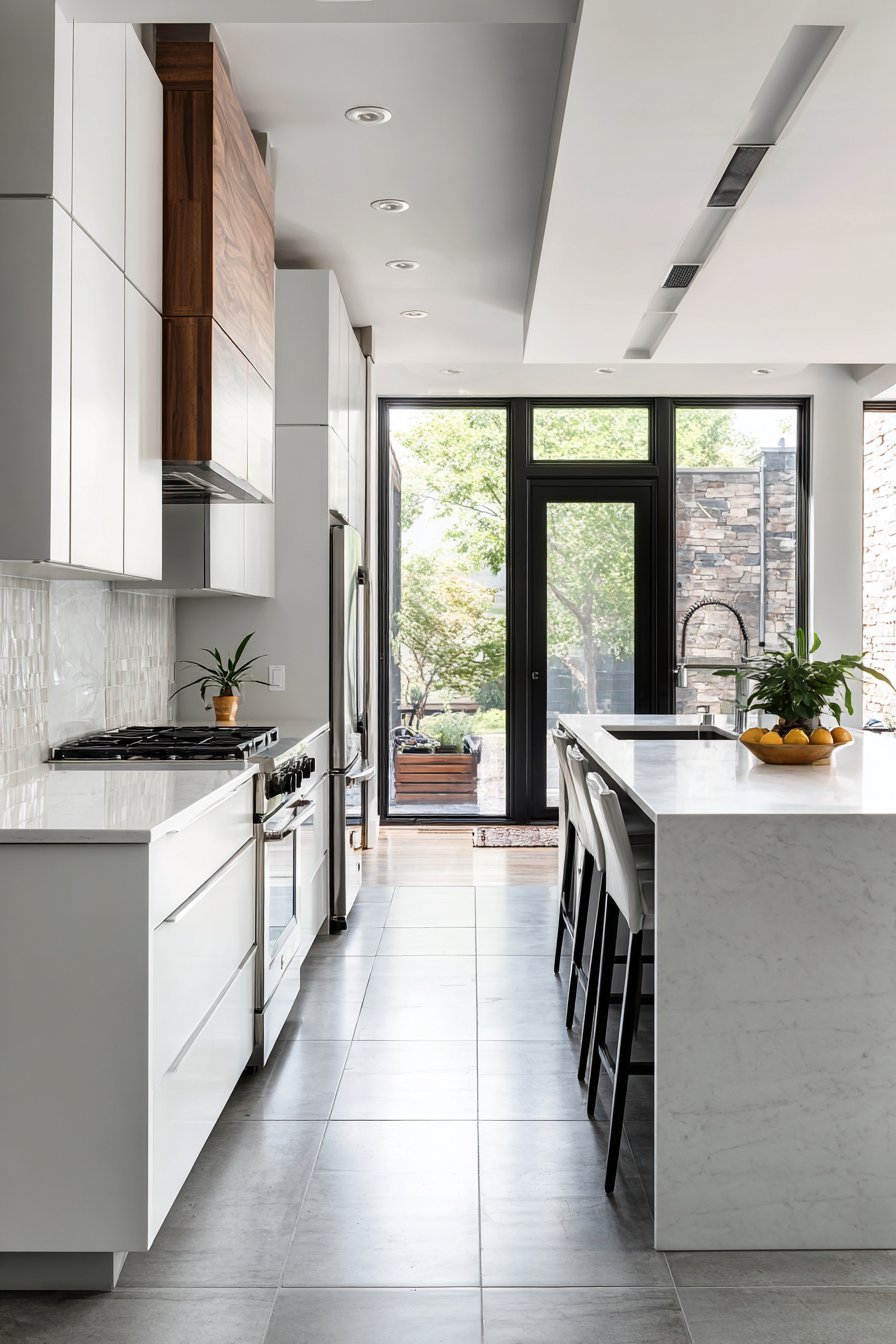
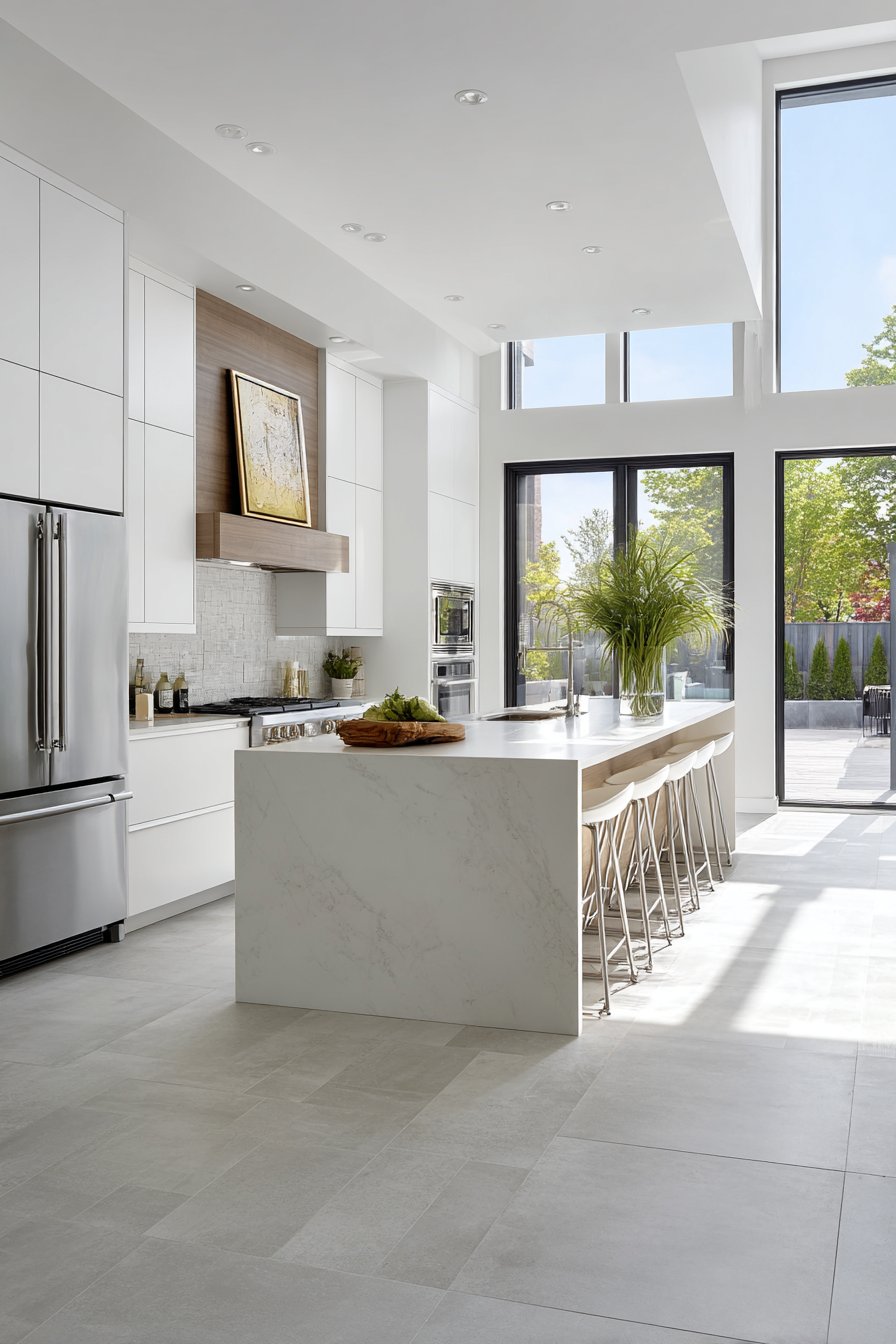
Step into this pristine modern kitchen where sleek handleless cabinetry in matte white creates an atmosphere of serene sophistication. The absence of visible hardware contributes to the seamless, flowing aesthetic that defines contemporary minimalism. Integrated LED strip lighting beneath the wall-mounted units provides both functional task lighting and a subtle architectural element that emphasizes the horizontal lines of the design. The illumination creates a gentle glow that transforms the workspace into something almost ethereal, particularly effective during evening hours when the ambient lighting takes center stage.
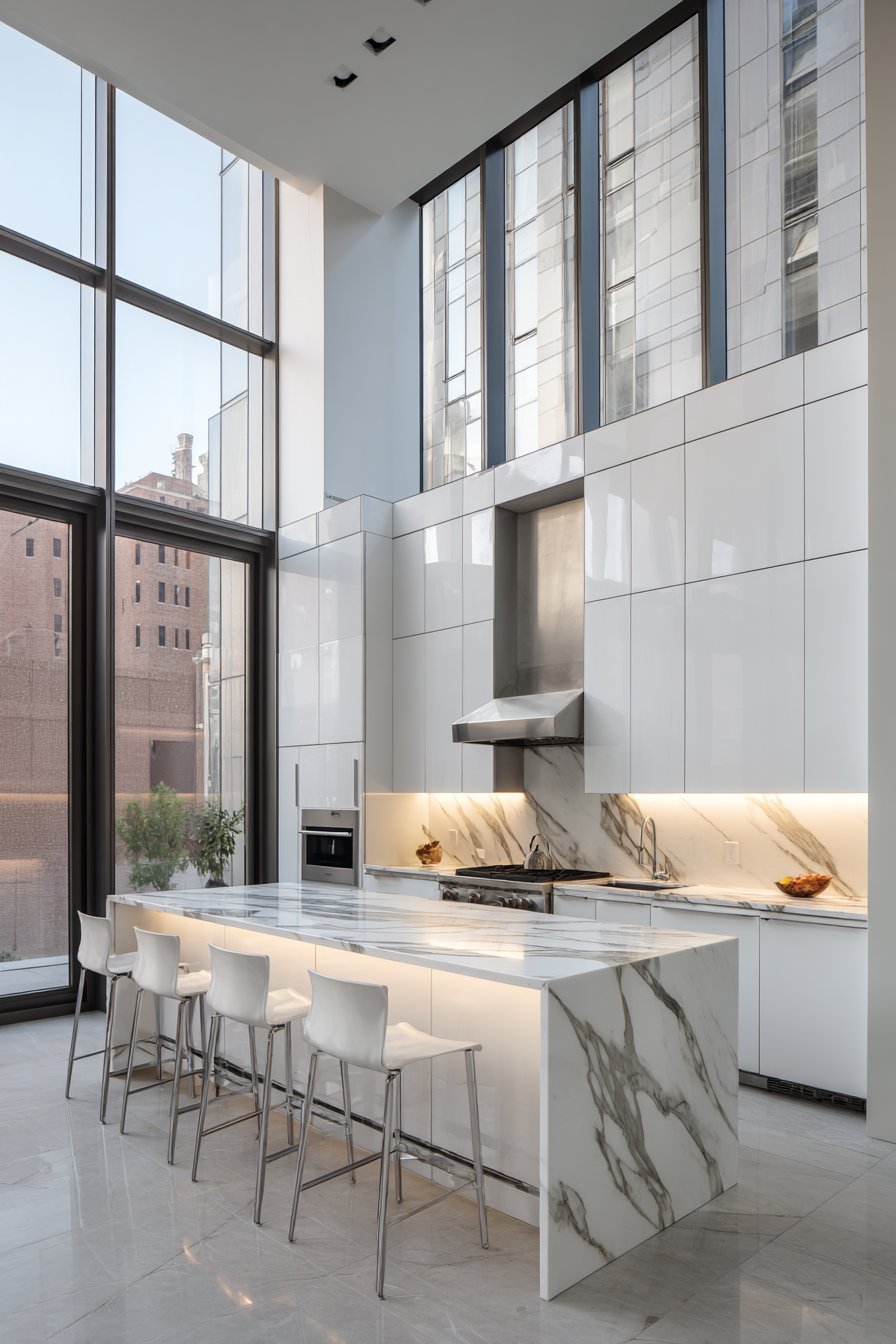
Large format porcelain floor tiles in light grey establish a solid foundation for the design, their generous proportions reducing grout lines and contributing to the uncluttered visual flow. The cool grey tone provides just enough contrast with the white cabinetry to define the space without disrupting the overall harmony. At the heart of this kitchen stands a waterfall edge quartz island in subtle grey veining, its continuous surface flowing gracefully from countertop to floor, creating a sculptural centerpiece that’s both functional and visually striking. Contemporary bar stools with clean-lined silhouettes invite casual dining and conversation.
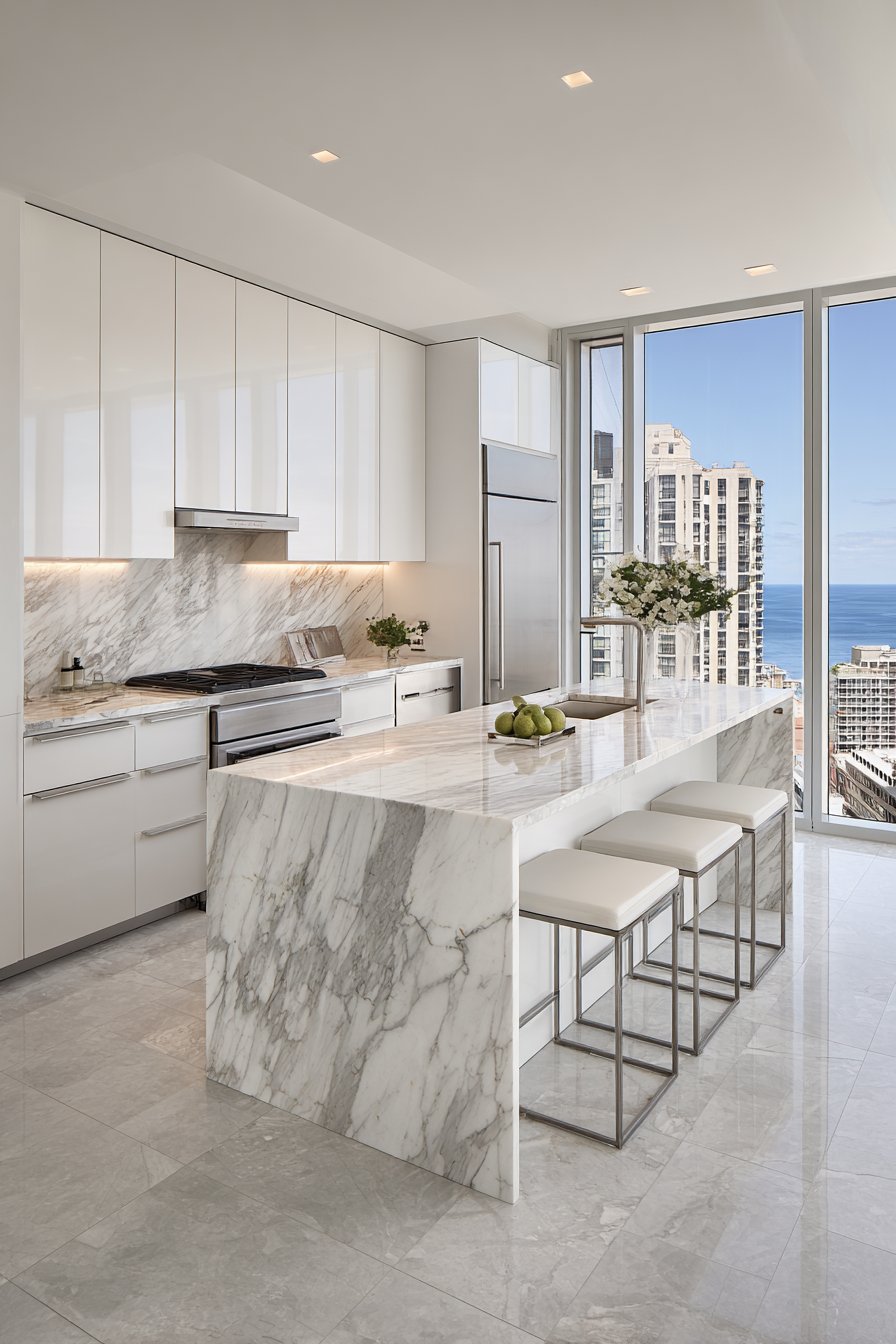
The integration of stainless steel appliances flush-mounted into the cabinetry demonstrates the attention to detail that defines truly modern design. By eliminating protruding elements and maintaining consistent surface planes, the kitchen achieves a level of visual calm that’s both restful and sophisticated.
Floor-to-ceiling windows flood the space with natural daylight, their generous proportions not only illuminating the interior but also creating a strong connection between the cooking space and the outdoors. The interplay between the cool material palette and warm natural light creates dynamic visual interest throughout the day.
Key Design Tips:
- Select matte finishes for cabinetry to minimize fingerprints while maintaining the sophisticated aesthetic
- Install LED strip lighting on dimmer switches to adjust ambiance throughout the day
- Choose large format tiles to reduce grout lines and enhance the minimalist aesthetic
- Position the island to create clear work zones while maintaining open circulation paths
- Integrate appliances flush with cabinetry to maintain seamless visual flow
- Maximize natural light with minimal window treatments or opt for sleek roller shades
2. Two-Tone Navy and Oak Modern Kitchen
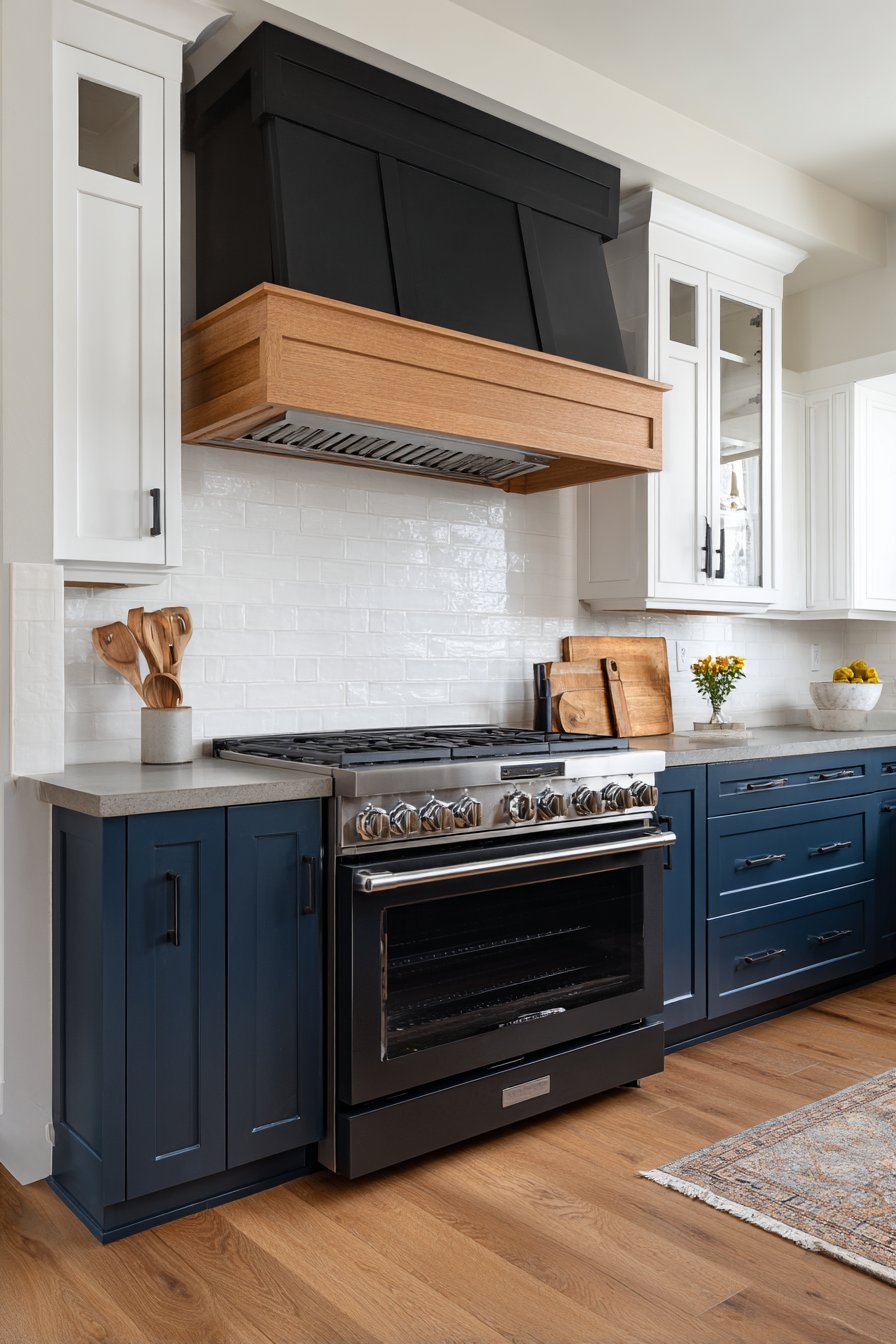
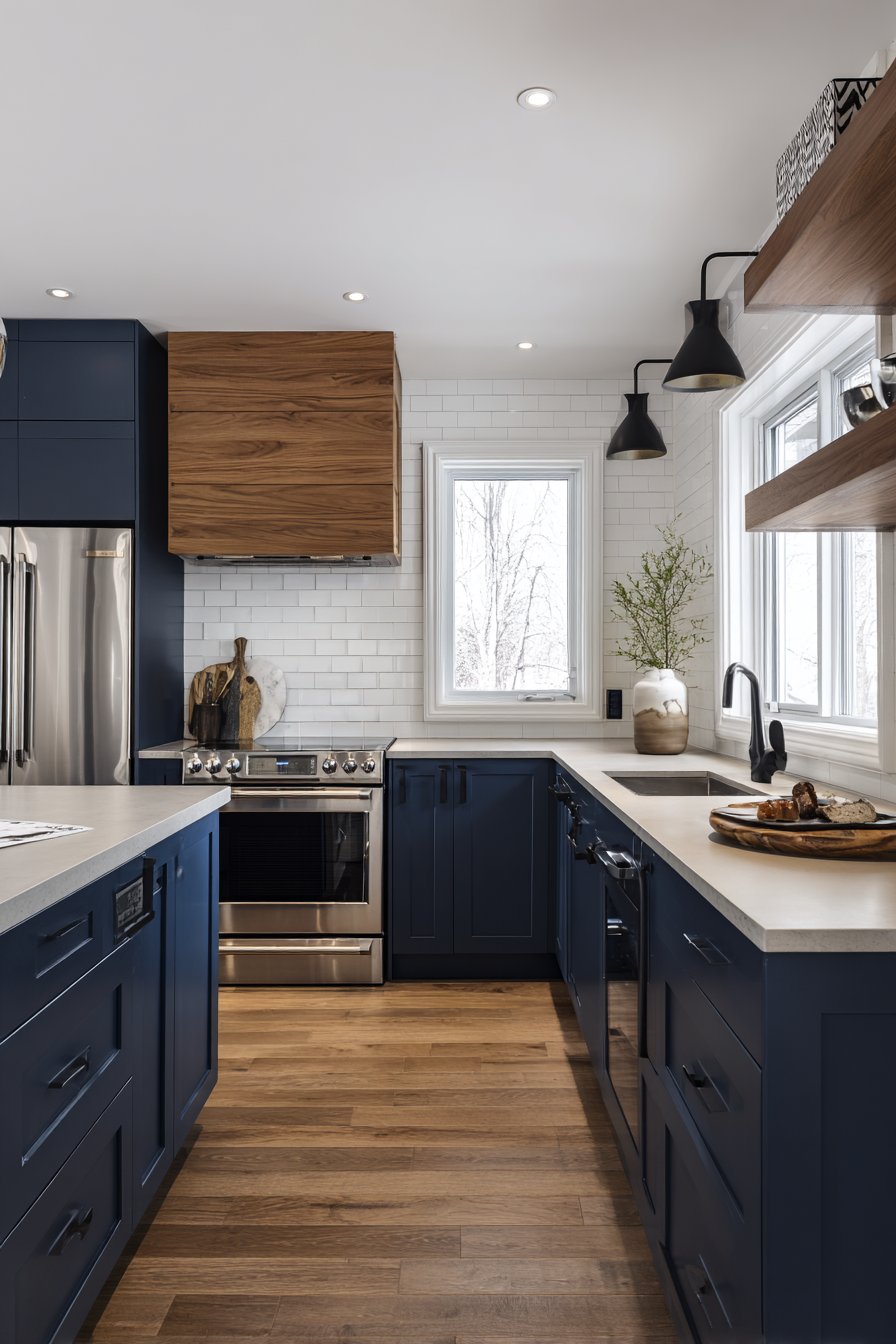
This striking modern kitchen embraces bold color blocking through its sophisticated two-tone design, where deep navy blue lower cabinets create a grounding, substantial presence while warm oak upper shelving introduces natural texture and organic warmth.
The combination is unexpected yet perfectly balanced, demonstrating how contemporary design can incorporate rich color without sacrificing sophistication. The navy cabinetry provides dramatic visual weight at the base of the design, anchoring the space and creating a sense of stability and permanence that contrasts beautifully with the lighter, more open feel of the wooden shelving above.
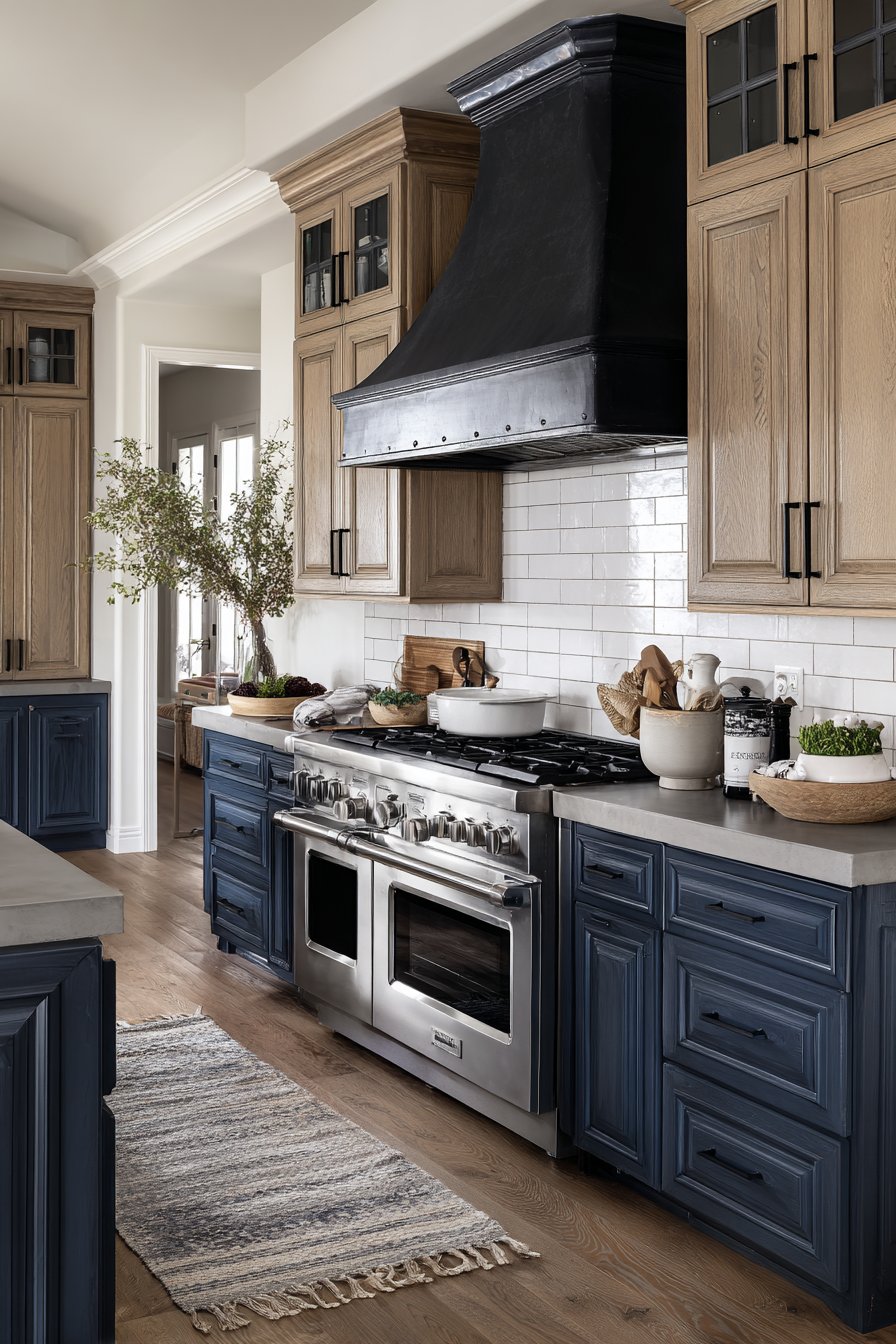
Matte black hardware and fixtures create striking contrast points throughout the space, their dark finish echoing the depth of the navy cabinetry while introducing an industrial edge that prevents the design from feeling too refined or precious. These carefully placed black accents—from cabinet pulls to faucets to light fixtures—create visual rhythm and guide the eye through the space.
The backsplash features classic white subway tiles with dark grout lines, a timeless choice that bridges the gap between the navy and oak elements while introducing subtle pattern through the grout work. The dark grout is particularly effective at defining each tile, creating graphic interest without overwhelming the design.
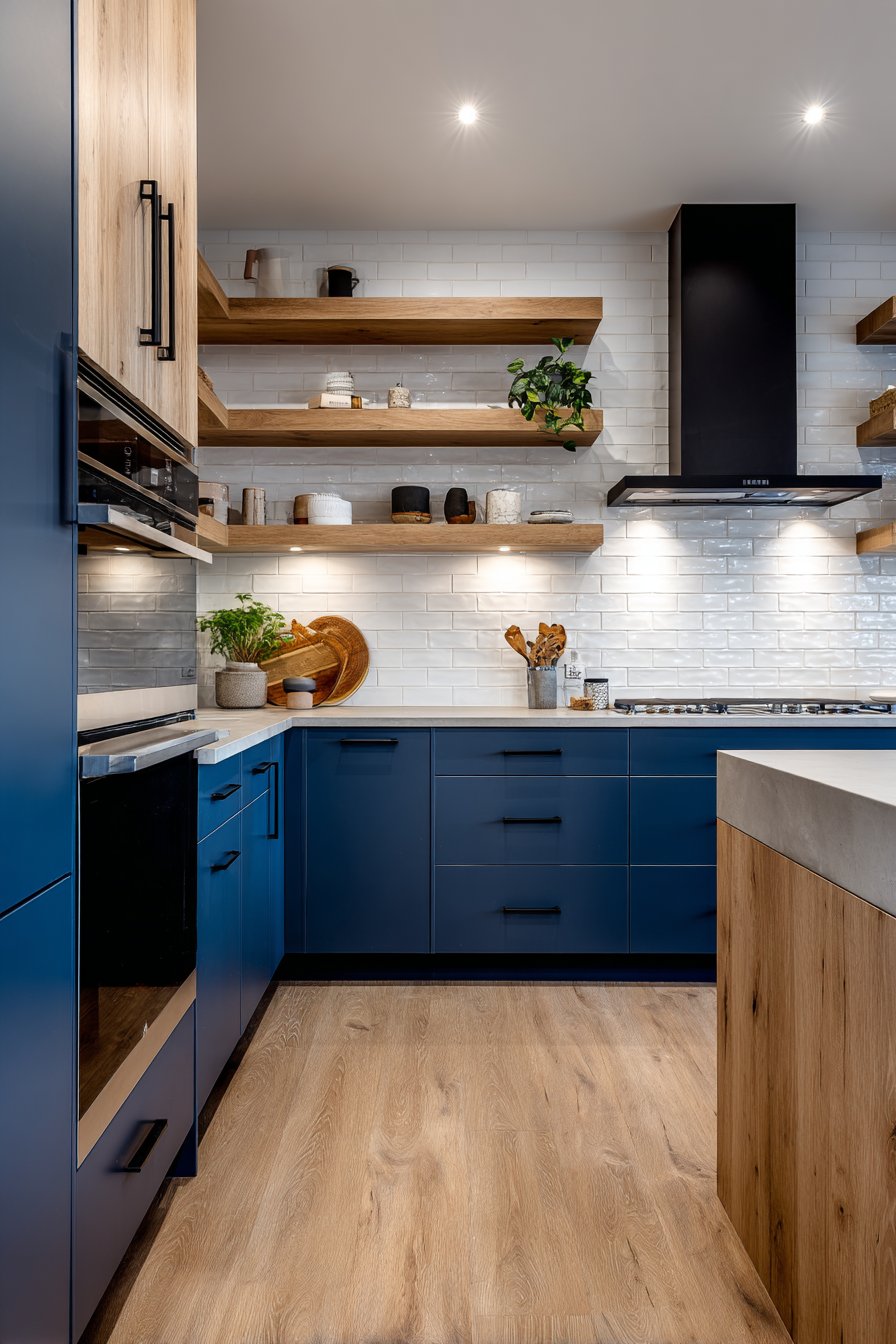
Concrete-effect countertops add an industrial edge that complements the matte black accents while providing a durable, practical work surface with contemporary appeal. The slightly rough texture of the concrete effect introduces tactile interest and contrasts beautifully with the smooth surfaces of the cabinetry and tiles.
This kitchen demonstrates the power of thoughtful color blocking and material mixing in contemporary design, where each element is carefully selected to contribute to the overall composition. The layered textures—smooth navy paint, natural oak grain, glossy subway tile, and textured concrete—create visual depth that rewards closer inspection.
Key Design Tips:
- Use deep, saturated colors on lower cabinets to ground the design and hide wear
- Combine natural wood with painted finishes for visual warmth and depth
- Select matte black hardware for a contemporary industrial touch
- Install dark grout with light tiles to add definition and reduce visible staining
- Balance bold color with neutral elements to prevent visual overwhelm
- Layer different textures to create tactile and visual interest throughout the space
3. Compact Modern Kitchen with Smart Storage Solutions
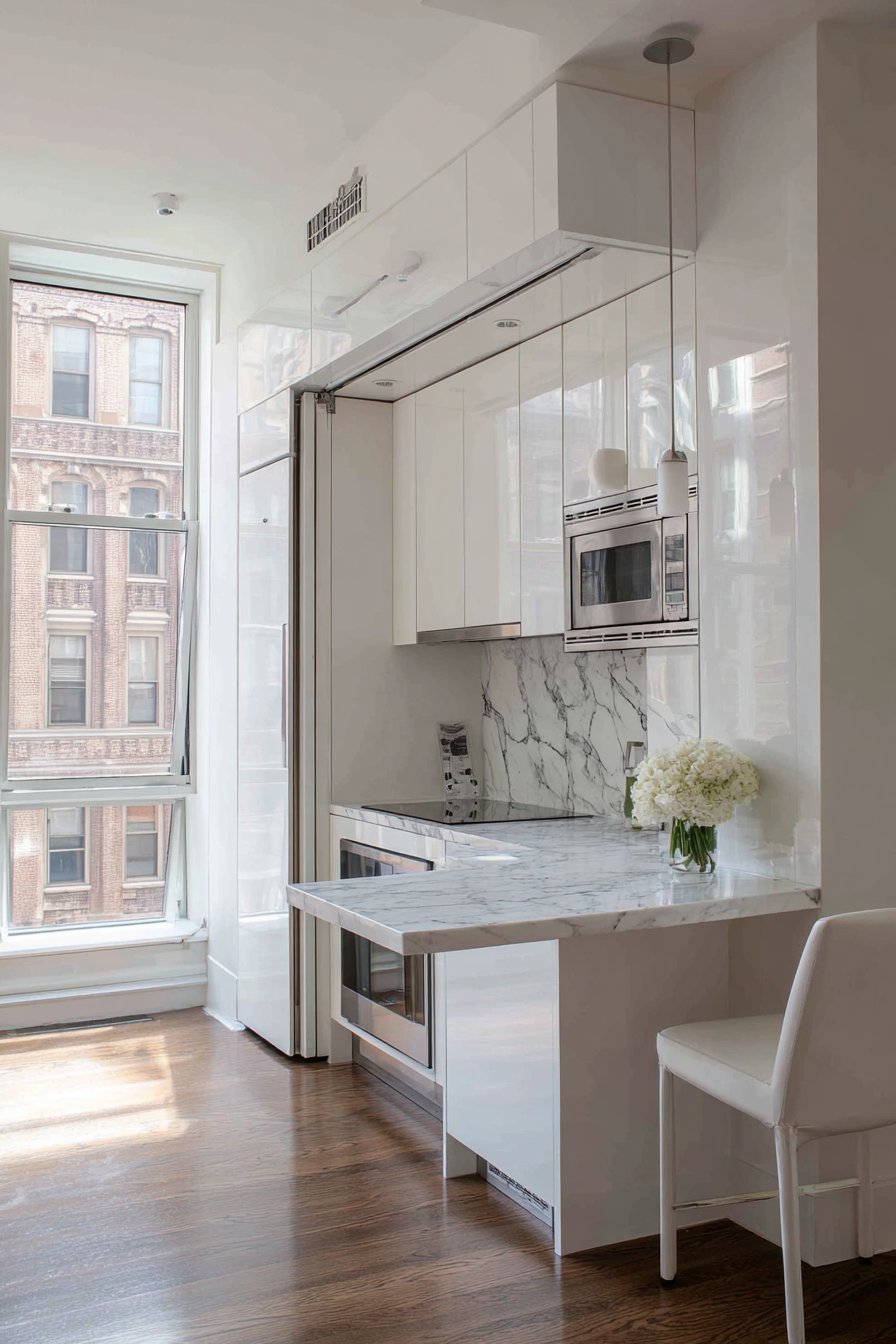
In this brilliantly conceived compact modern kitchen, every square inch has been thoughtfully optimized to maximize functionality without sacrificing style. Floor-to-ceiling storage solutions transform vertical space into valuable real estate, with pull-out pantry systems that glide smoothly to reveal organized storage for dry goods and appliance garages that conceal small appliances behind sleek cabinet doors when not in use. This approach to storage keeps countertops clear and uncluttered, essential in smaller spaces where visual chaos can quickly make the room feel cramped and overwhelming.
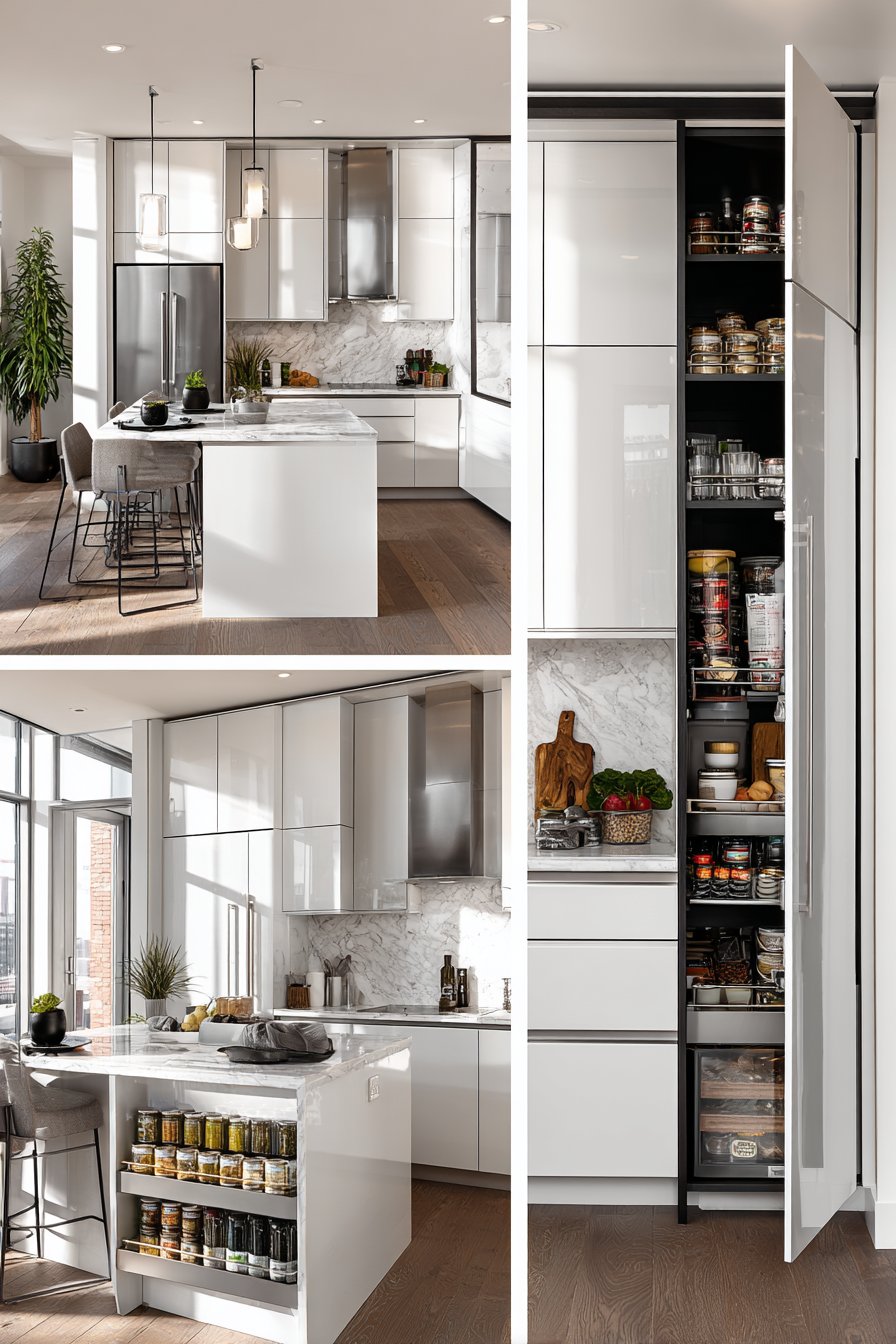
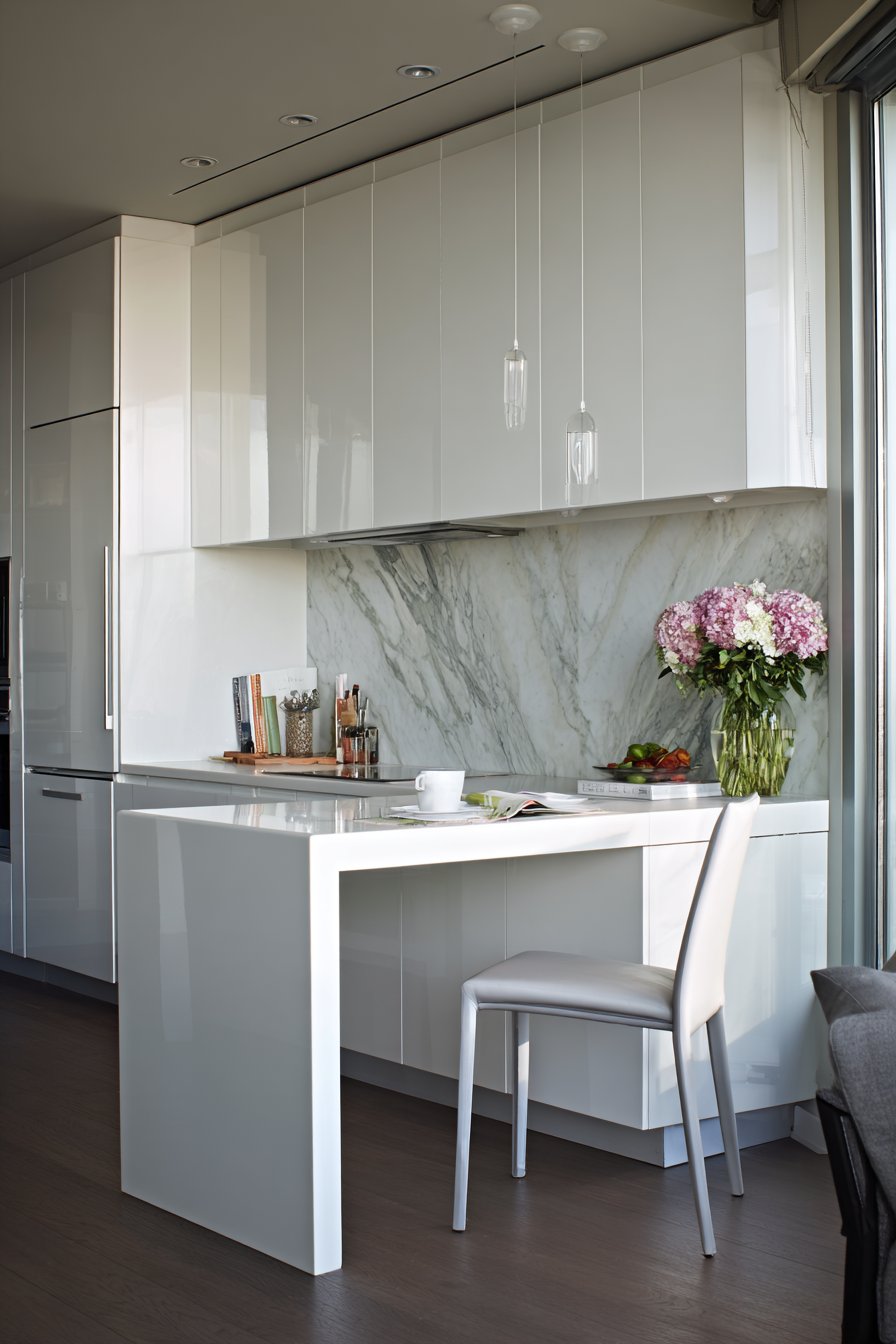
High-gloss white lacquer cabinets work strategically to reflect natural light throughout the space, effectively multiplying the available illumination and creating the illusion of greater volume. The reflective quality of the lacquer finish bounces light from surface to surface, ensuring that even corners of the kitchen remain bright and welcoming.
A slim breakfast bar with a waterfall edge extends gracefully from the main counter, providing casual dining space without requiring a separate island footprint. Minimalist pendant lights suspended above the breakfast bar define the dining zone while providing focused task lighting exactly where it’s needed.
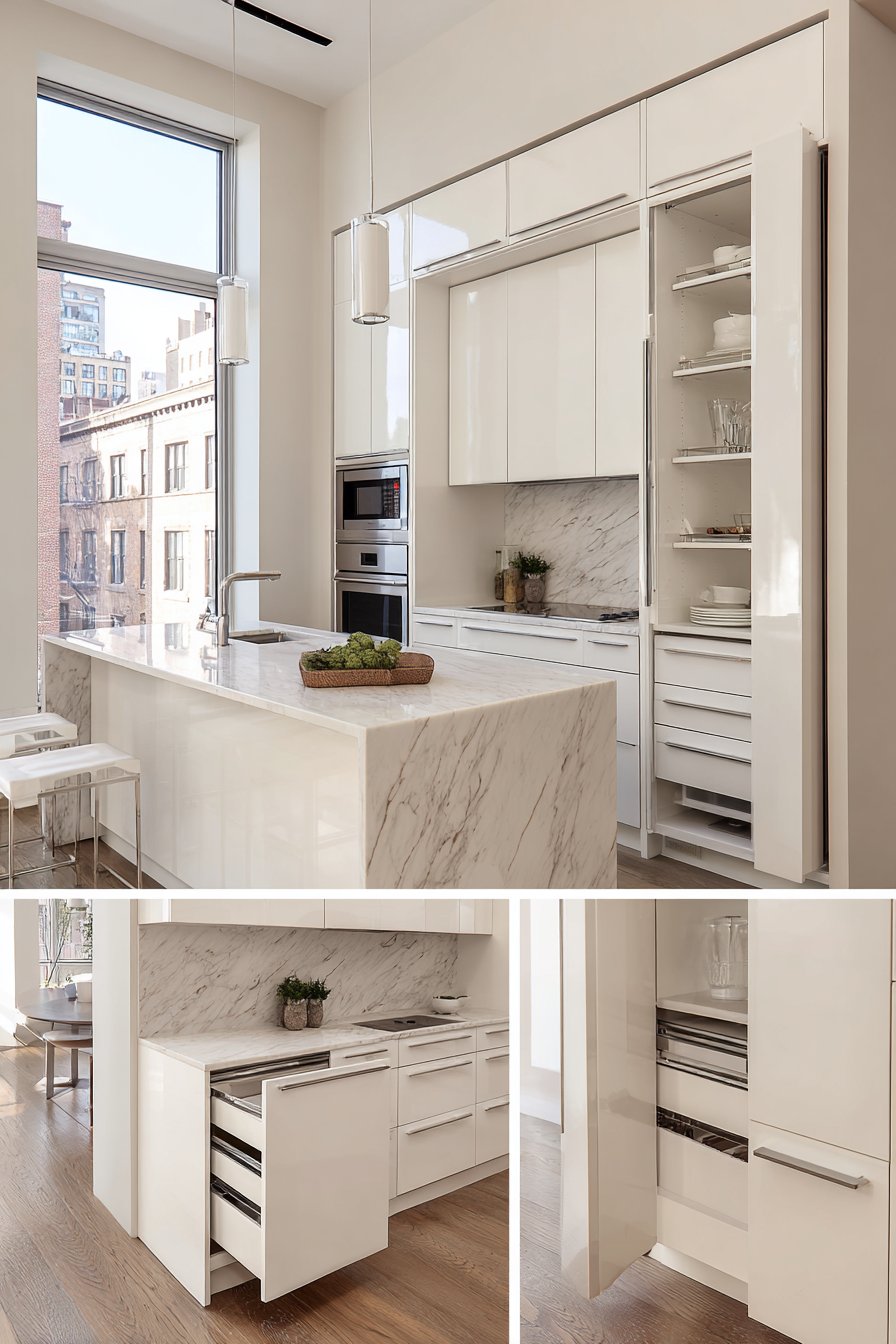
The backsplash showcases large format marble-look tiles with subtle grey veining, introducing pattern and visual interest without overwhelming the compact space. The larger tile format reduces grout lines, contributing to the clean, streamlined aesthetic that makes the kitchen feel more spacious. This design proves that limited square footage doesn’t mean limited style or functionality—through intelligent planning and clever storage solutions, even the smallest kitchens can be both beautiful and highly functional. The key lies in vertical thinking, reflective surfaces, and multi-functional elements that serve multiple purposes.
Key Design Tips:
- Maximize vertical space with floor-to-ceiling cabinetry for increased storage capacity
- Choose high-gloss finishes in light colors to reflect light and expand visual space
- Install pull-out systems for pantries and spice storage to maximize accessibility
- Create appliance garages to keep countertops clear and uncluttered
- Use a breakfast bar instead of a full island in tight spaces for dining without bulk
- Select large format tiles to minimize grout lines and enhance spatial flow
- Install task lighting at key work areas to ensure adequate illumination
4. Luxe Modern Kitchen with Expansive Island
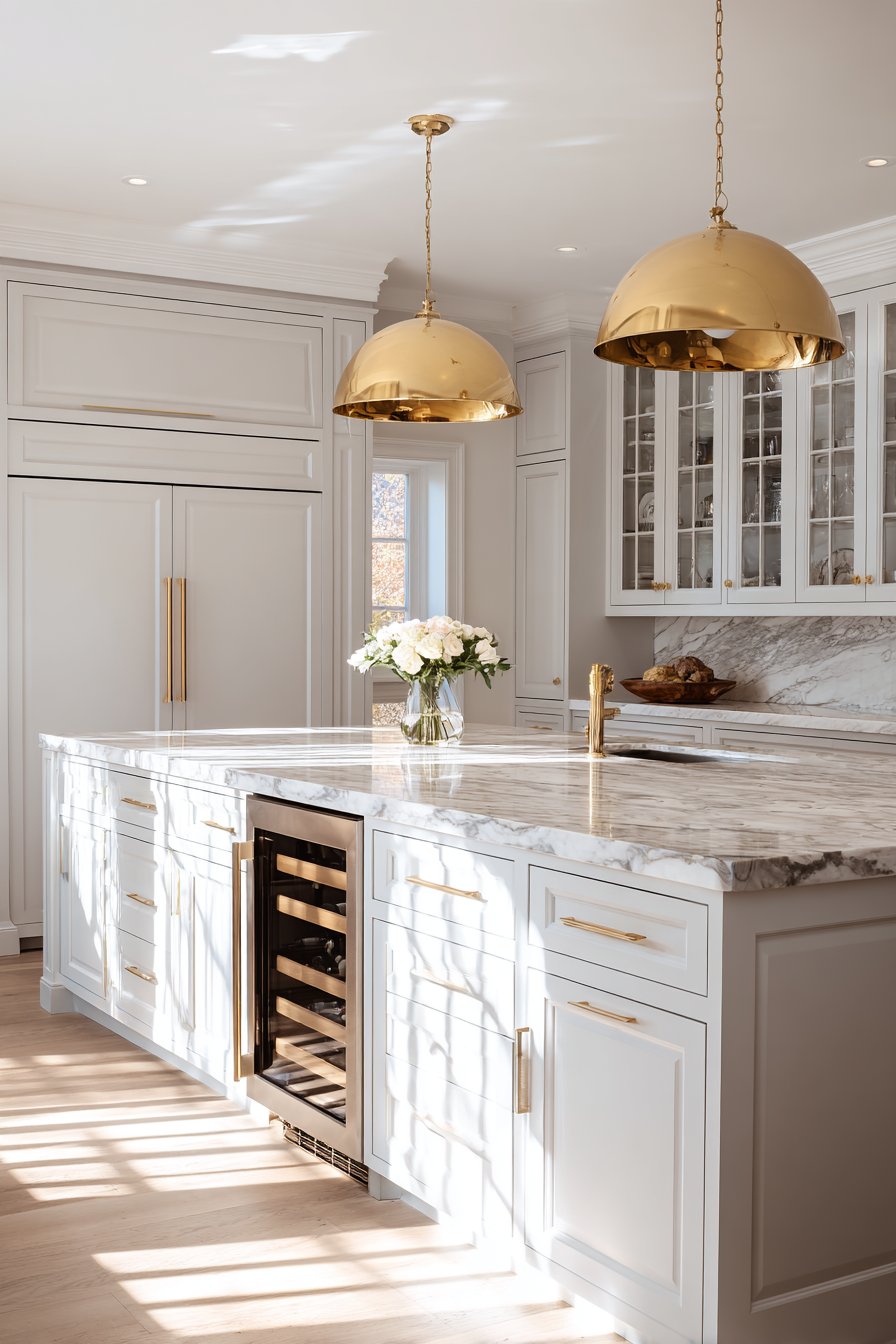
This sophisticated modern kitchen centers on an expansive central island that functions as both a practical workspace and a luxurious entertaining hub. The island features built-in conveniences including a wine cooler for proper beverage storage at ideal temperatures and a prep sink that allows multiple cooks to work simultaneously without crowding the main cleanup area.
Topped with honed black granite, the island makes a bold statement—the dark stone with its matte finish provides dramatic contrast against lighter surrounding elements while the honed surface offers practical benefits, being less prone to showing fingerprints and water spots than polished finishes.
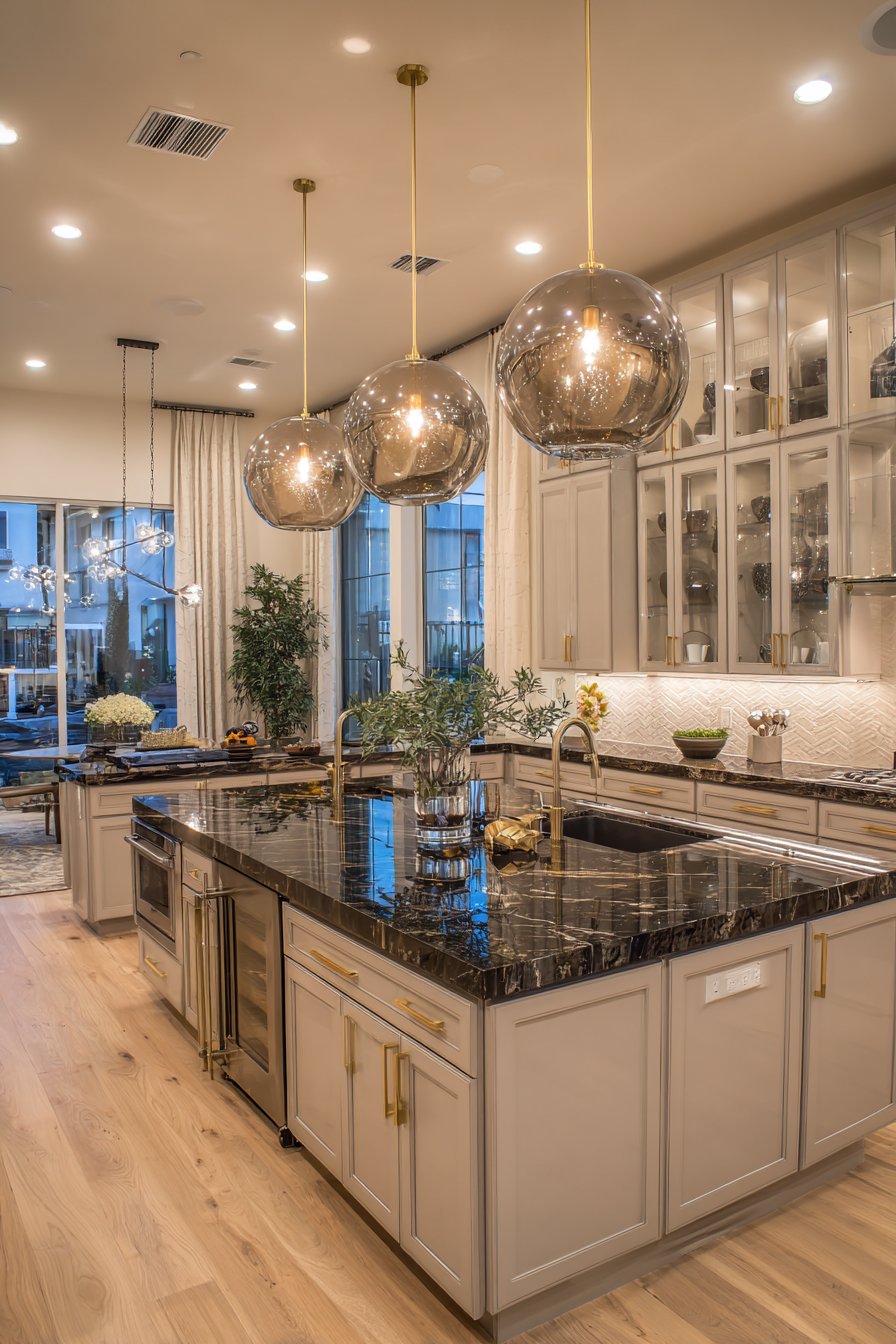
Frameless glass-front upper cabinets display curated dishware, transforming functional storage into an opportunity for artistic display. The transparency of these cabinets prevents the upper portion of the kitchen from feeling heavy or closed-in while allowing homeowners to showcase beautiful serving pieces, glassware, or colorful ceramics. Lower cabinets feature soft-close mechanisms in a warm grey finish, combining quiet operation with a sophisticated neutral tone that grounds the design. Brushed brass fixtures and hardware add luxe touches throughout, their warm metallic gleam introducing a sense of refinement and elegance that elevates the entire space.
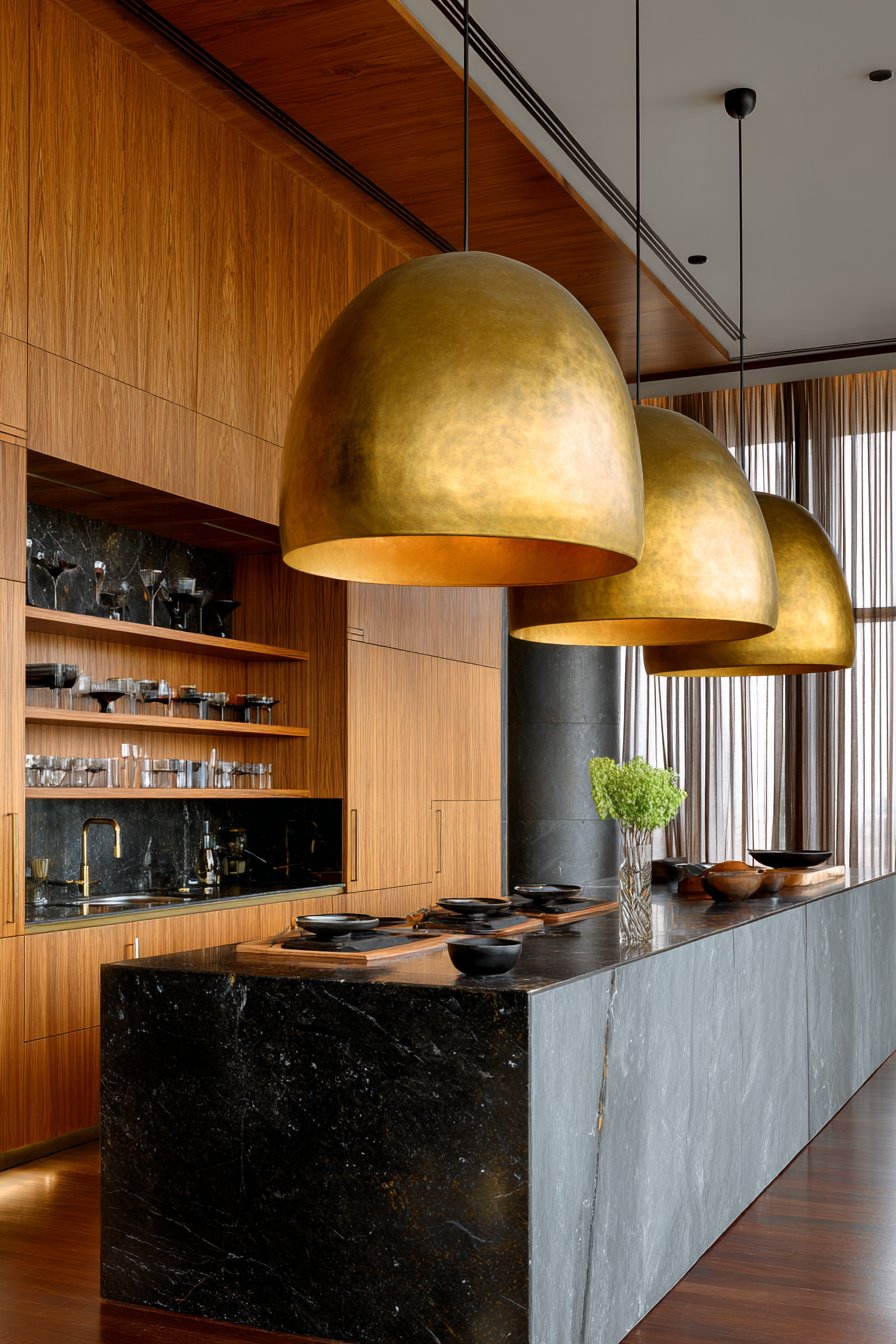
Three oversized dome pendants hang at varying heights above the island, creating visual drama and providing layered illumination for different activities—from food preparation to casual dining to evening entertaining. The varying heights prevent the lighting from appearing too regimented while ensuring adequate coverage across the expansive island surface.
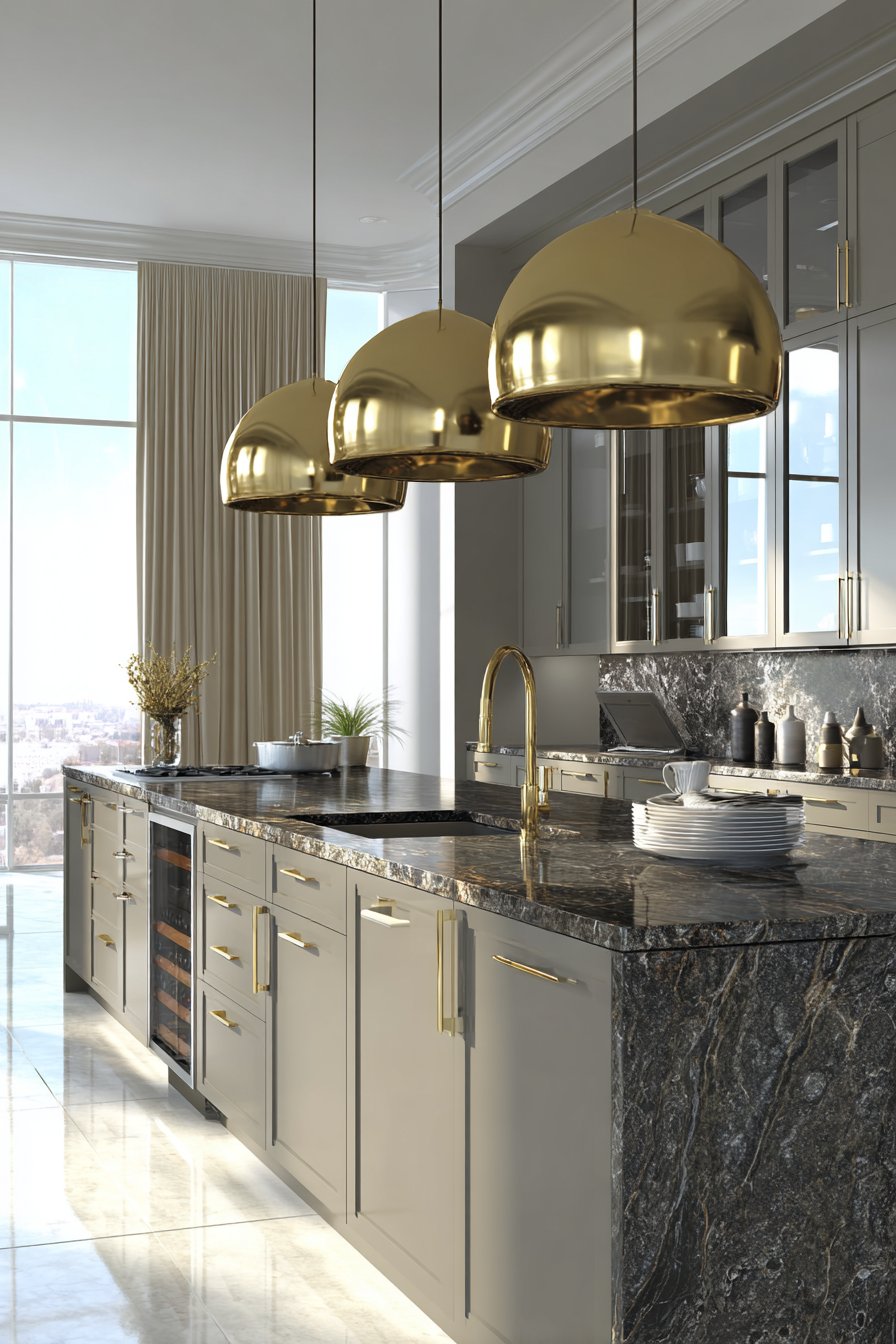
Golden hour natural light filtering through sheer window treatments creates warm highlights on the polished surfaces, demonstrating how natural illumination transforms the space throughout the day. The interplay between the cool grey cabinetry, warm brass accents, and dramatic black granite creates a sophisticated palette with remarkable depth.
Key Design Tips:
- Size your island proportionally to your kitchen—allow at least 42 inches of clearance on all sides
- Include a secondary sink on large islands to improve workflow efficiency
- Choose honed stone finishes for high-use surfaces to minimize visible wear
- Display only your most beautiful items in glass-front cabinets for curated impact
- Install pendant lights at varying heights for visual interest and adequate task lighting
- Use warm metallic accents like brass or copper to introduce luxury and warmth
- Invest in soft-close mechanisms for all drawers and doors for lasting quality
5. Scandinavian-Inspired Modern Kitchen with Natural Materials
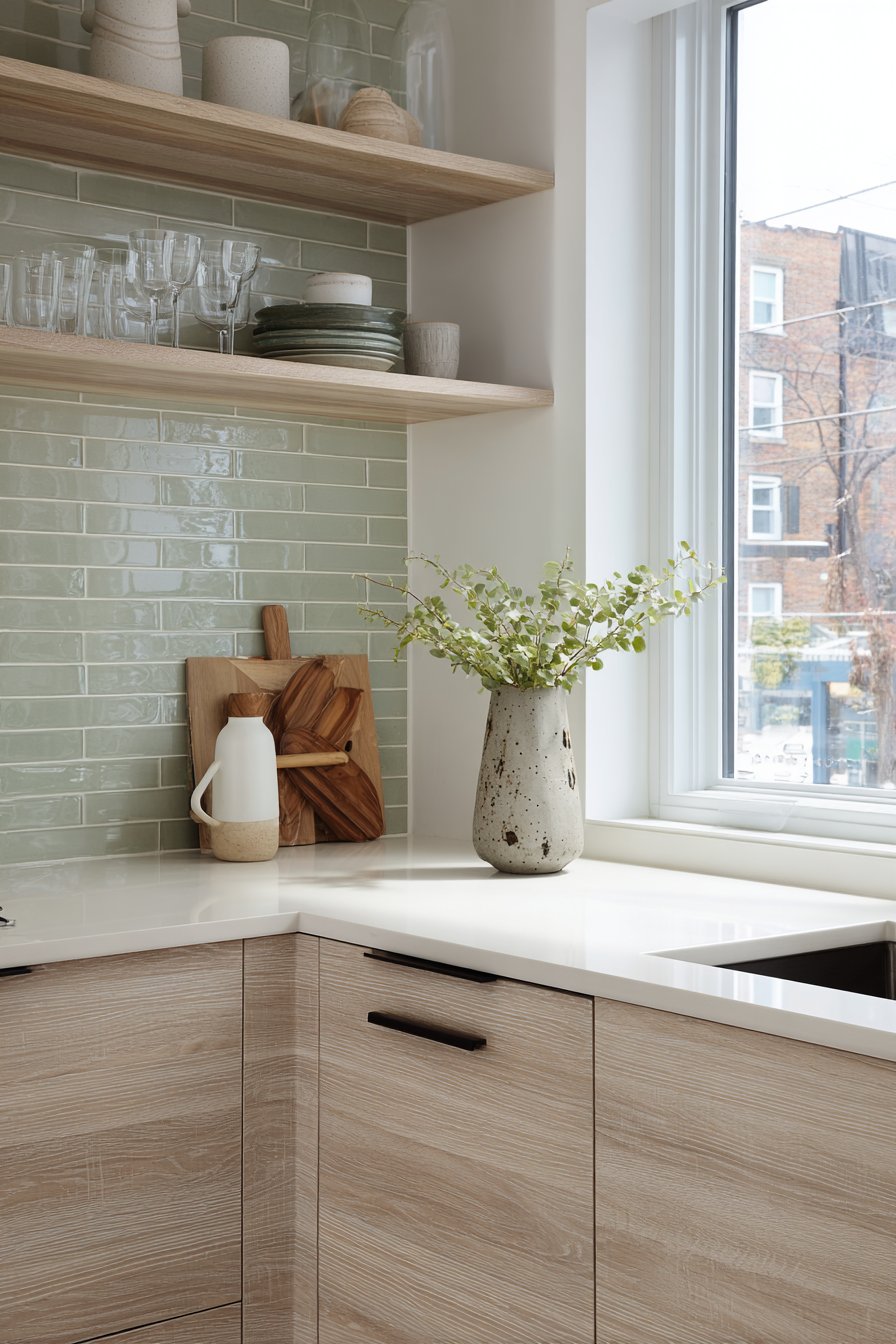
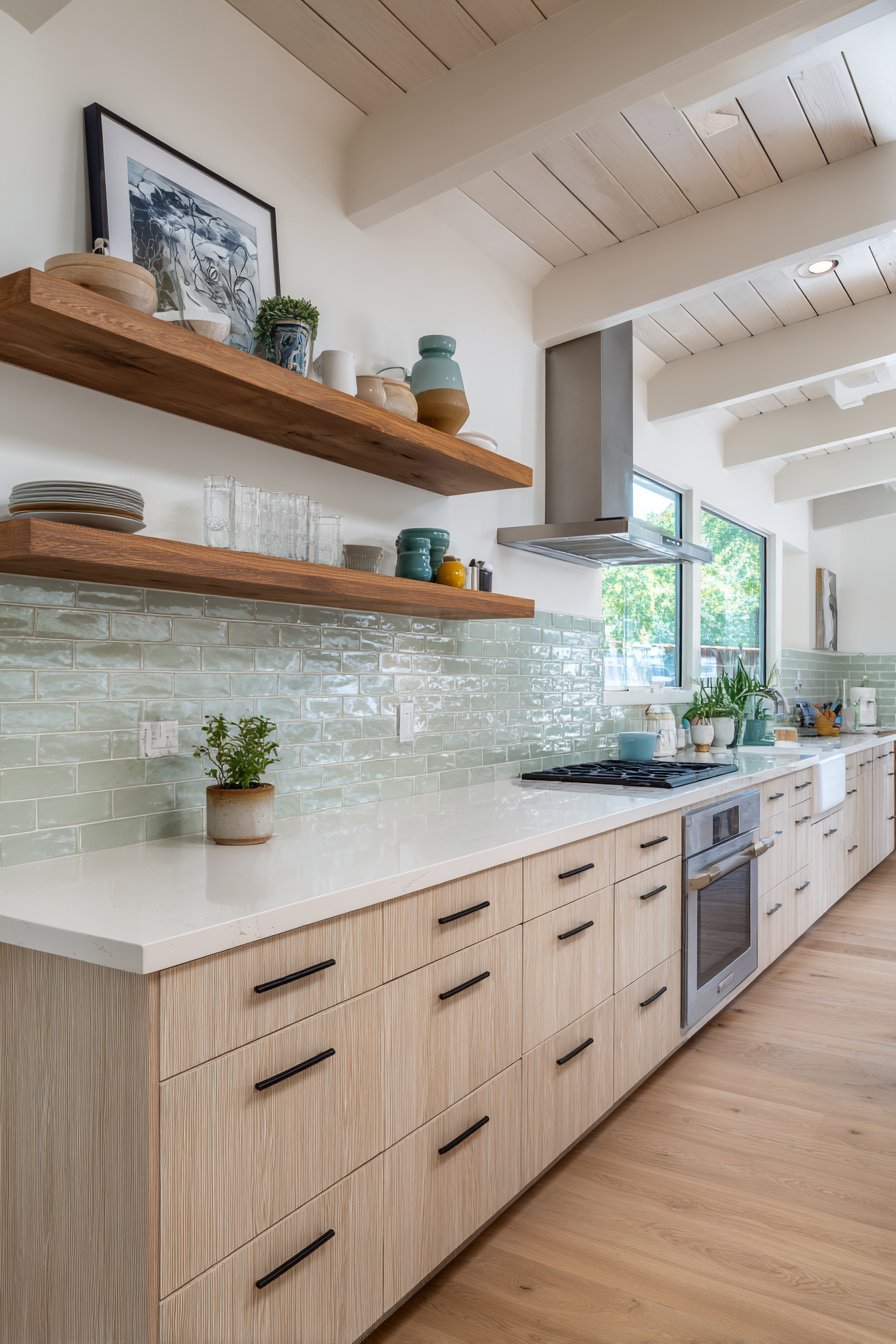
This beautifully restrained modern kitchen draws inspiration from Scandinavian design principles, where simplicity, functionality, and connection to nature create spaces of remarkable serenity. Light ash wood cabinets with visible grain texture celebrate the honest beauty of natural materials, their pale tone and organic patterns introducing warmth without visual weight. Simple cylindrical handles in matte black provide necessary function while maintaining the minimalist aesthetic—their straightforward form and dark finish create subtle contrast points against the light wood without demanding attention.
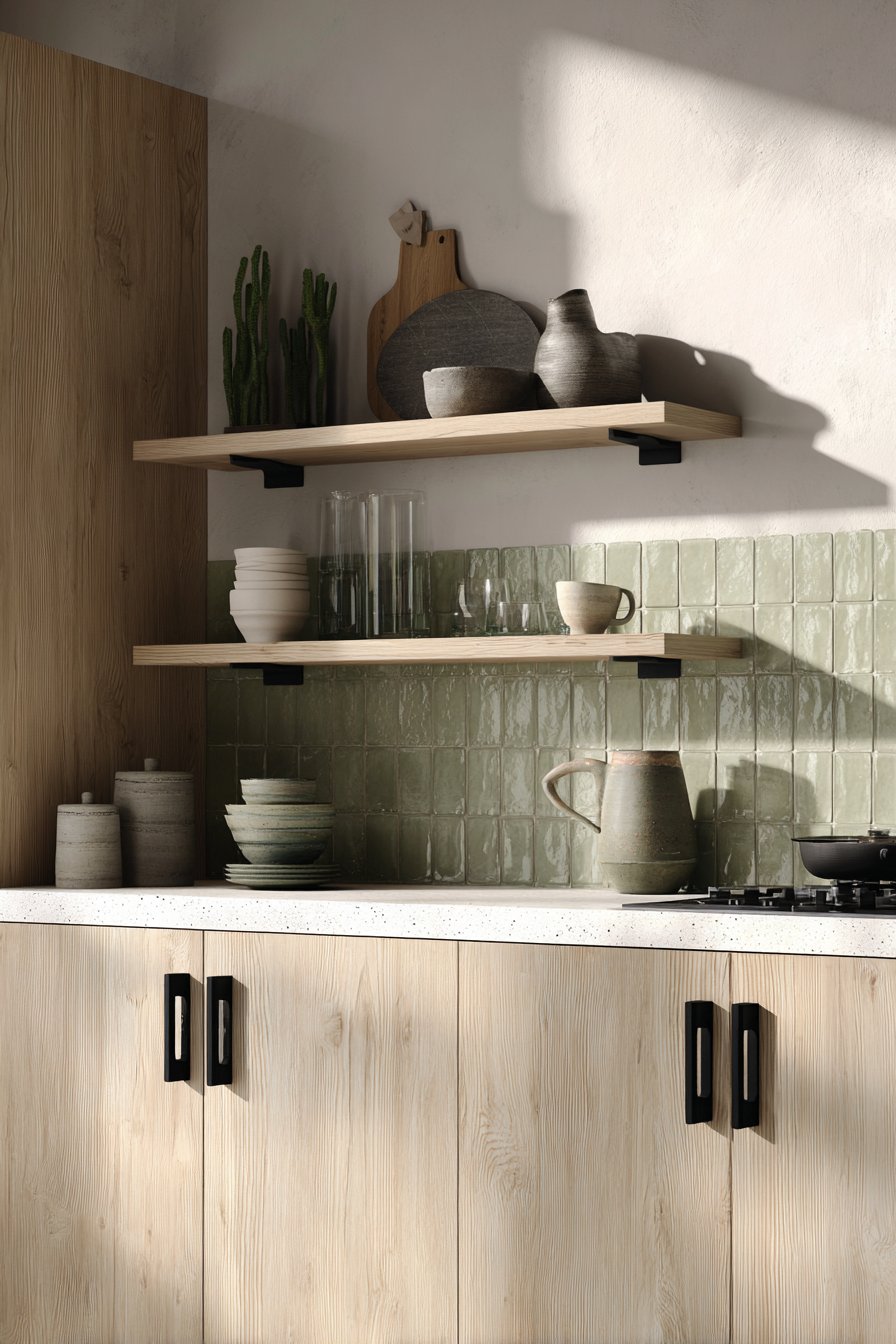
Open shelving displays minimalist ceramics and glassware, embracing the Scandinavian principle of keeping frequently used items accessible while celebrating their simple beauty. This approach requires discipline—only the most essential and aesthetically pleasing items should occupy these open spaces—but the result is a kitchen that feels both lived-in and carefully curated. White quartz countertops with subtle flecks complement the organic material palette, their clean surface providing practical workspace while their slight variation prevents sterility.
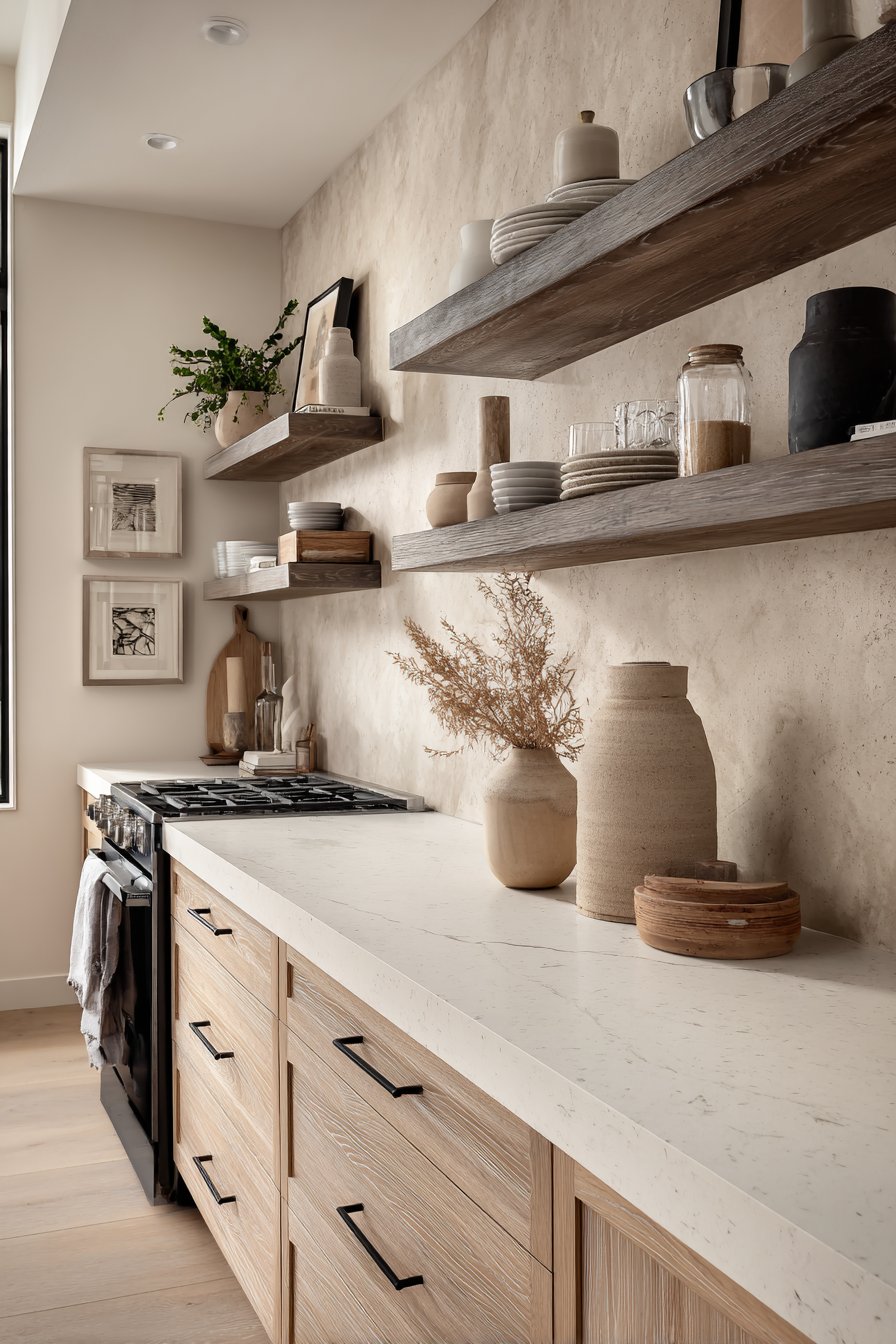
A ceramic tile backsplash in soft sage green adds a gentle color accent that connects the kitchen to nature, introducing just enough chromatic interest to prevent the palette from feeling too neutral. The muted green-grey tone harmonizes beautifully with both the ash wood and white quartz, demonstrating the Scandinavian talent for subtle color use.
Abundant natural daylight emphasizes the honest materials and functional simplicity that define this approach to kitchen design, while the absence of unnecessary ornamentation allows the quality of the materials themselves to shine. This kitchen proves that modern design needn’t be cold or impersonal—through careful material selection and respect for natural beauty, it can feel warm, inviting, and deeply human.
Key Design Tips:
- Select light wood species like ash, birch, or oak for authentic Scandinavian character
- Keep color palettes neutral with one soft accent color drawn from nature
- Embrace open shelving but maintain strict discipline about displayed items
- Choose matte black hardware for subtle contrast without visual heaviness
- Maximize natural light with minimal window treatments
- Display functional items beautifully rather than hiding everything behind doors
- Prioritize quality natural materials over elaborate ornamentation
6. Modern Kitchen with Vertical Herb Garden Feature
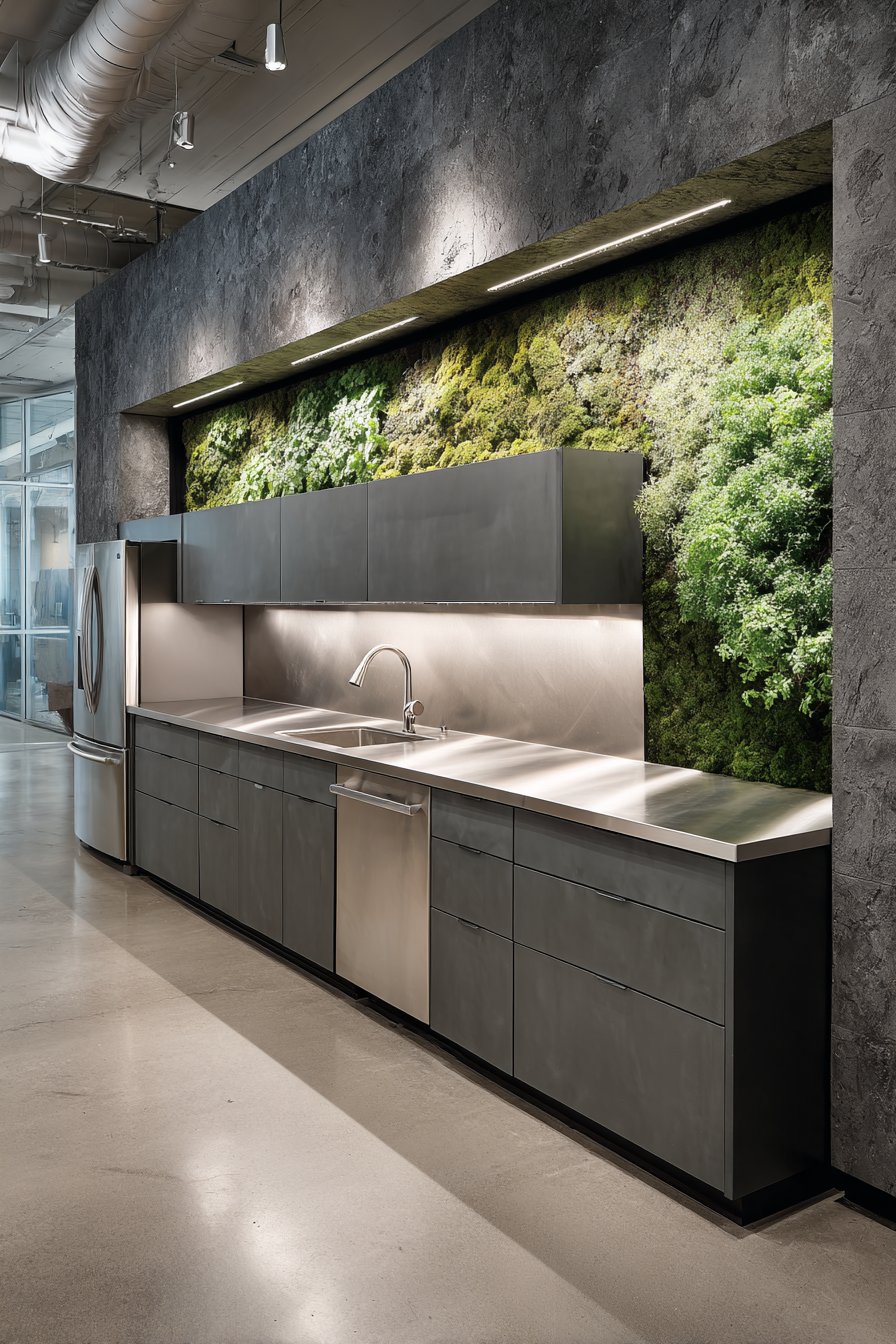
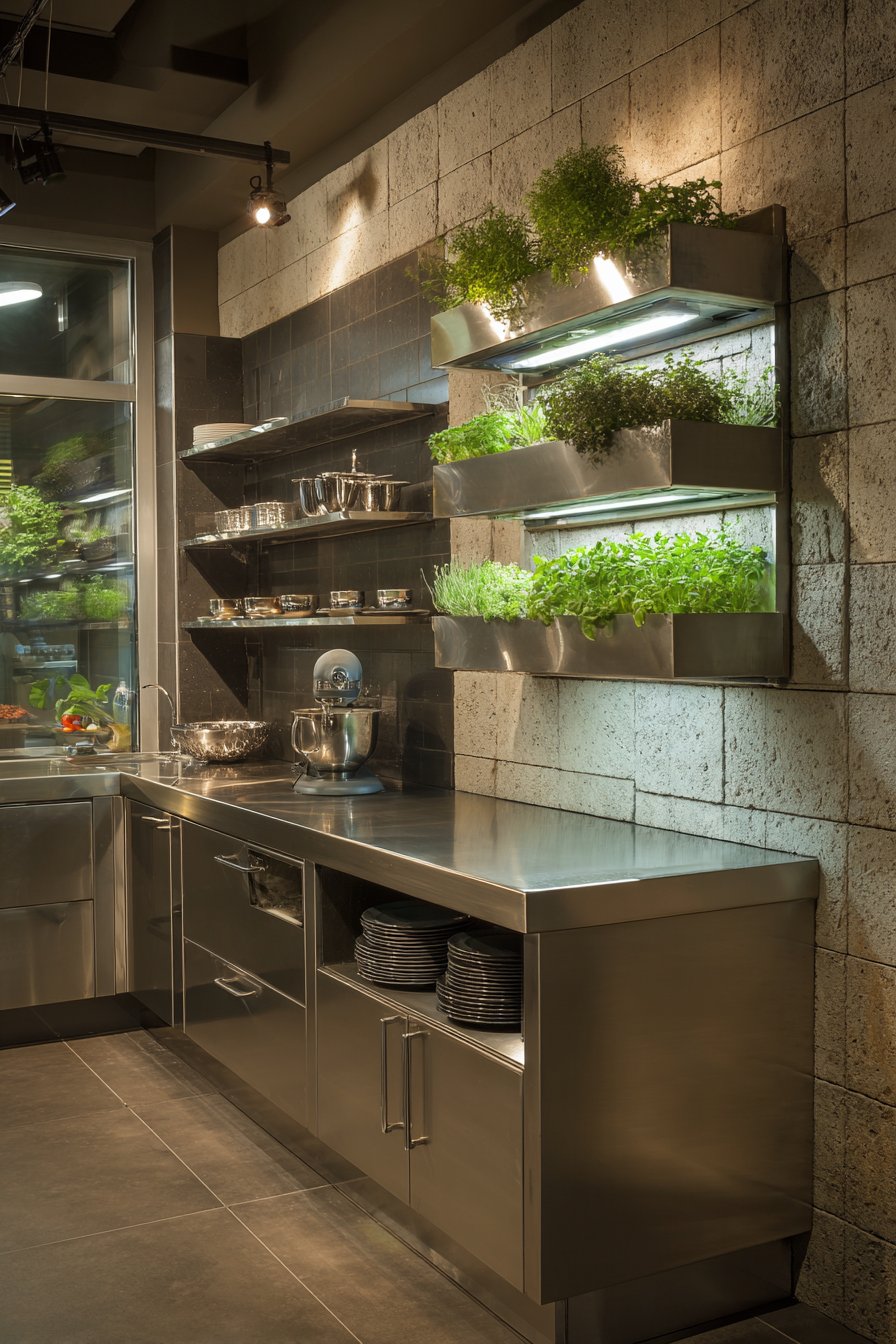
This innovative modern kitchen incorporates living elements through a striking vertical herb garden system with integrated grow lights mounted on a feature wall of textured charcoal tiles. The living wall transforms a purely functional space into something more dynamic and connected to nature, while providing fresh herbs within arm’s reach of the cooking zone. The integrated grow lights ensure year-round plant health regardless of natural light conditions, their gentle illumination adding atmospheric lighting during evening hours. The textured charcoal tiles behind the herb garden create dramatic contrast with the greenery while providing a sophisticated backdrop that prevents the feature from appearing too rustic or casual.
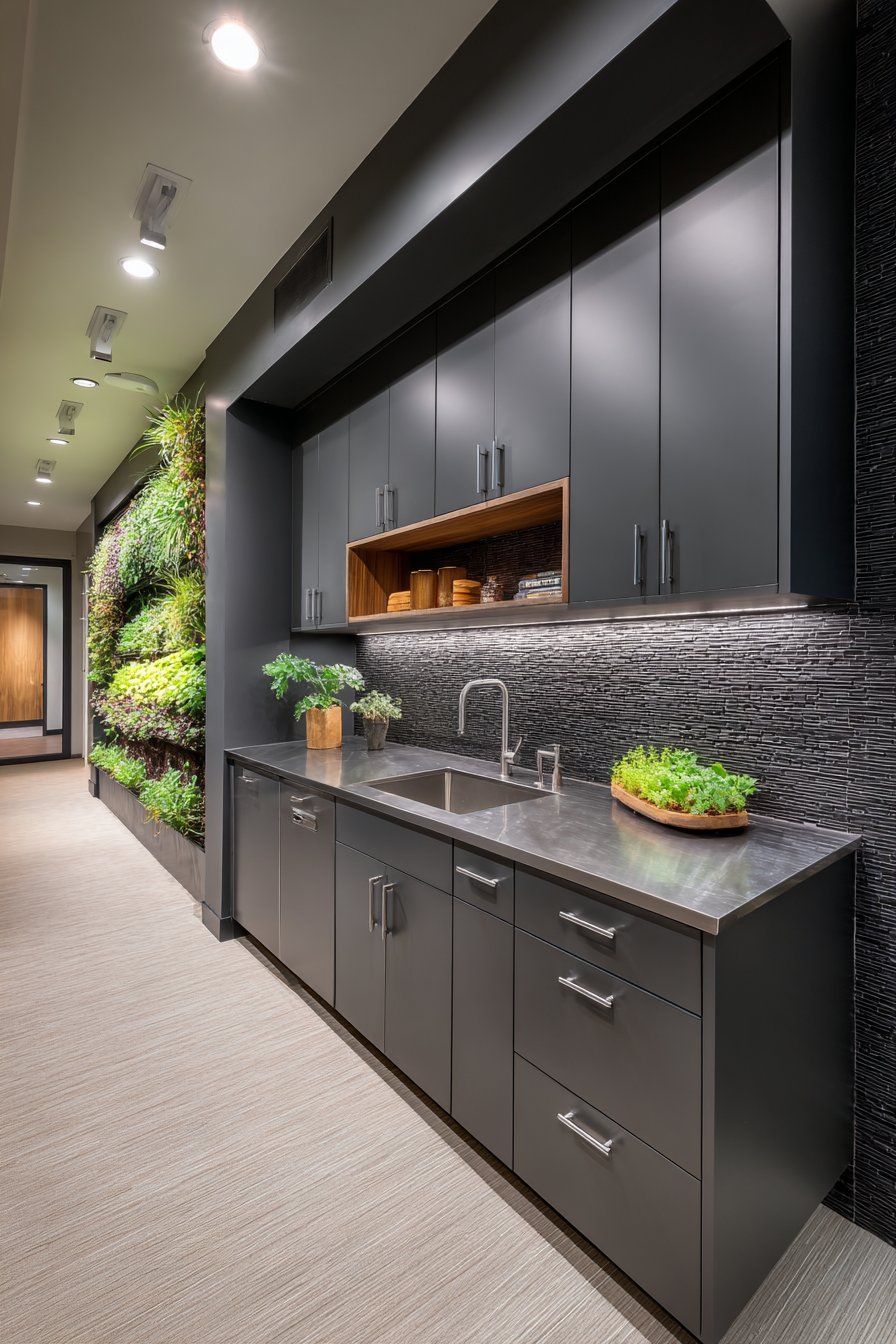
The adjacent workspace includes handleless cabinets in matte graphite with touch-to-open mechanisms, demonstrating how technology can enhance both function and aesthetics in contemporary kitchen design. The touch-to-open system eliminates the need for hardware entirely, creating seamless surfaces that are both beautiful and practical—particularly useful when hands are full or messy during cooking. The matte graphite finish provides depth and sophistication while complementing the charcoal tile wall, creating cohesive color flow throughout the space.
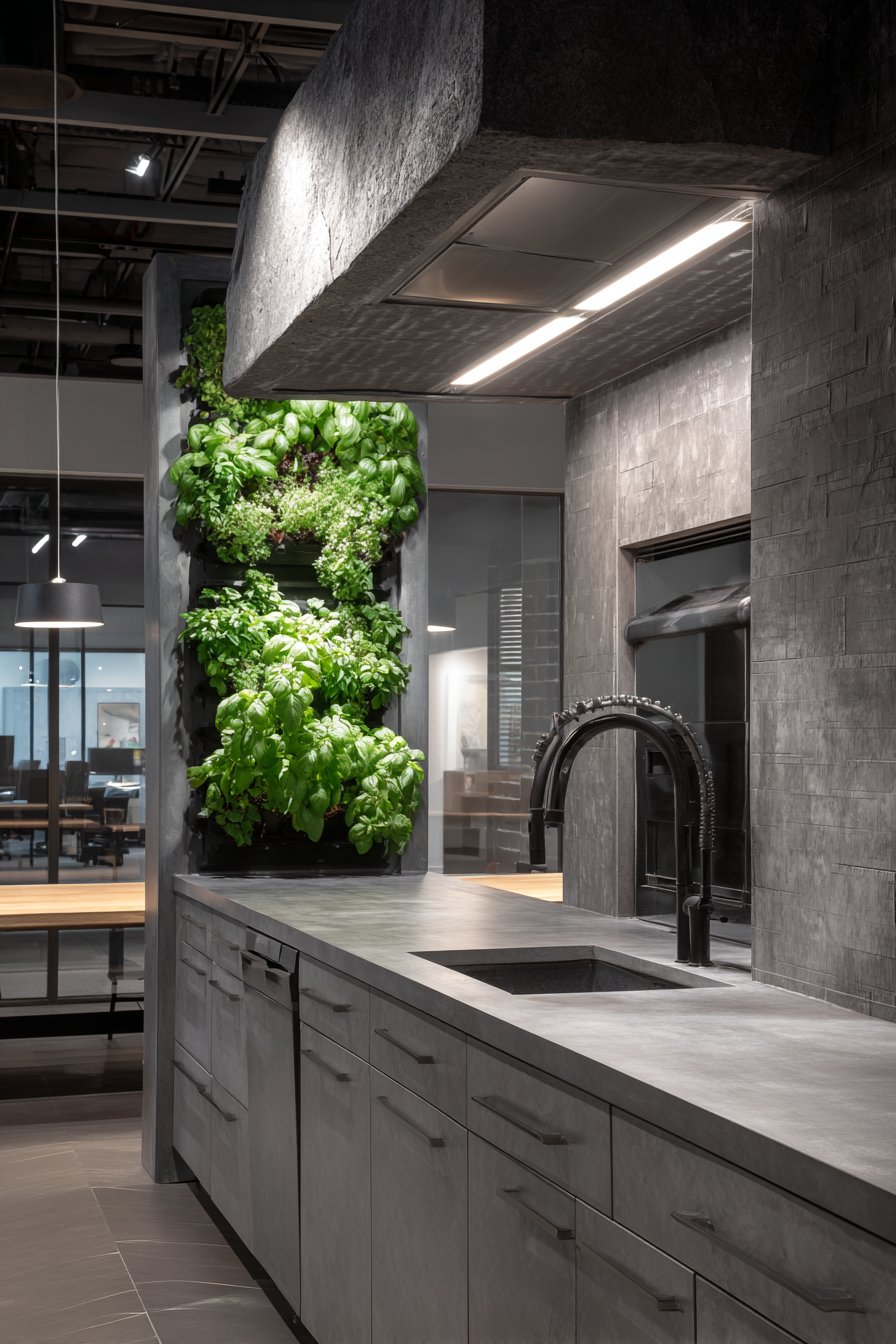
Stainless steel countertops provide professional-grade durability with an industrial aesthetic that feels appropriate for serious cooking. While stainless steel requires more maintenance than some alternatives, many cooking enthusiasts appreciate its restaurant-quality appearance and exceptional hygiene properties—the non-porous surface resists bacteria and can be thoroughly sanitized.
The combination of living plants, textured tile, sleek cabinetry, and industrial steel creates remarkable material diversity, demonstrating how contemporary design can successfully blend organic and manufactured elements. Soft shadows define the sleek architectural elements, emphasizing the clean lines and precise detailing that characterize modern kitchen design.
Key Design Tips:
- Install vertical gardens near the cooking zone for convenient herb access
- Include grow lights for plants in kitchens without abundant natural light
- Use textured tiles as feature walls to add depth and visual interest
- Consider touch-to-open mechanisms for truly handleless cabinetry
- Choose stainless steel counters if you value commercial-grade durability
- Balance high-tech elements with organic features like living plants
- Ensure adequate drainage and waterproofing for any living wall installation
7. Tech-Forward Modern Kitchen with Smart Integration
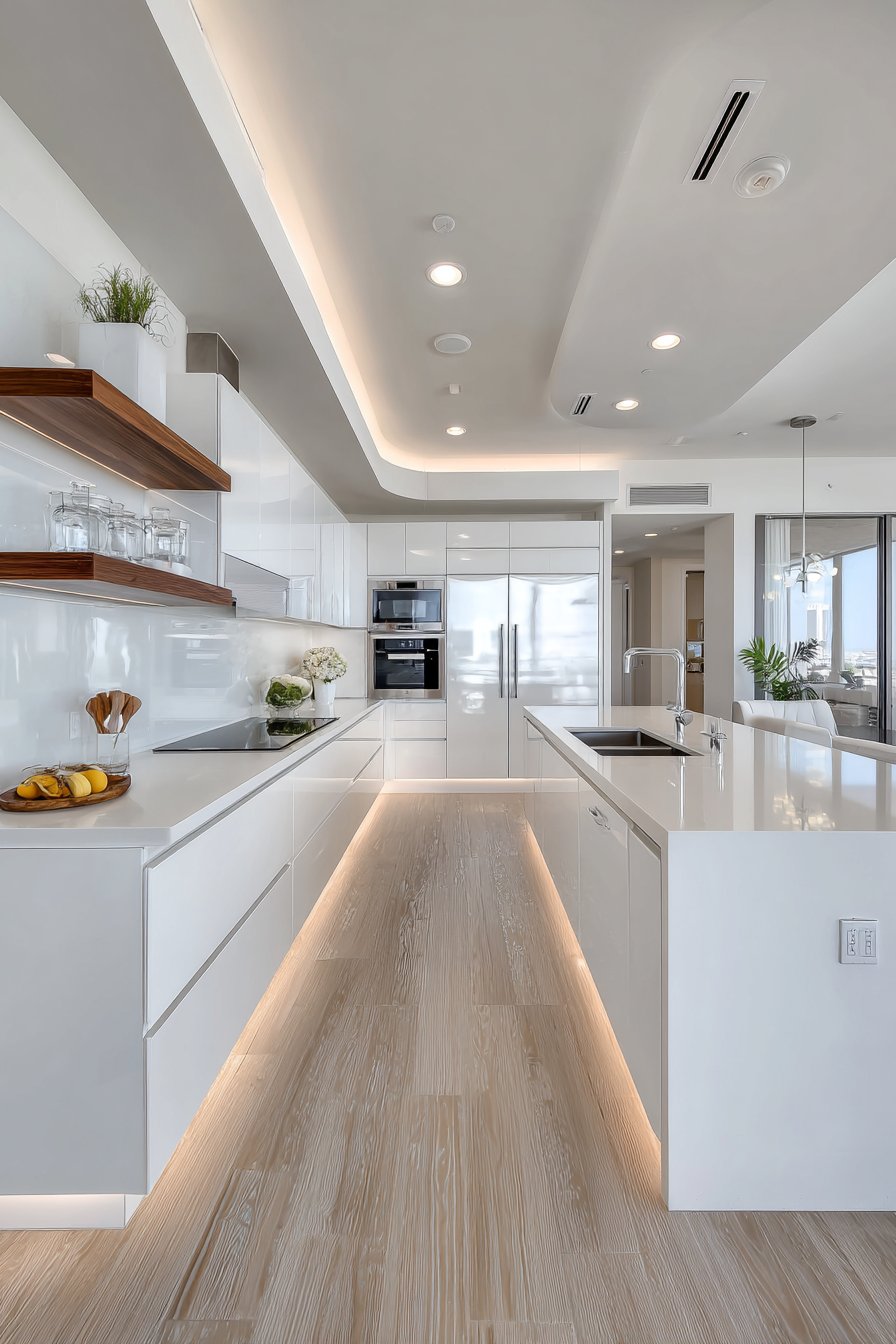
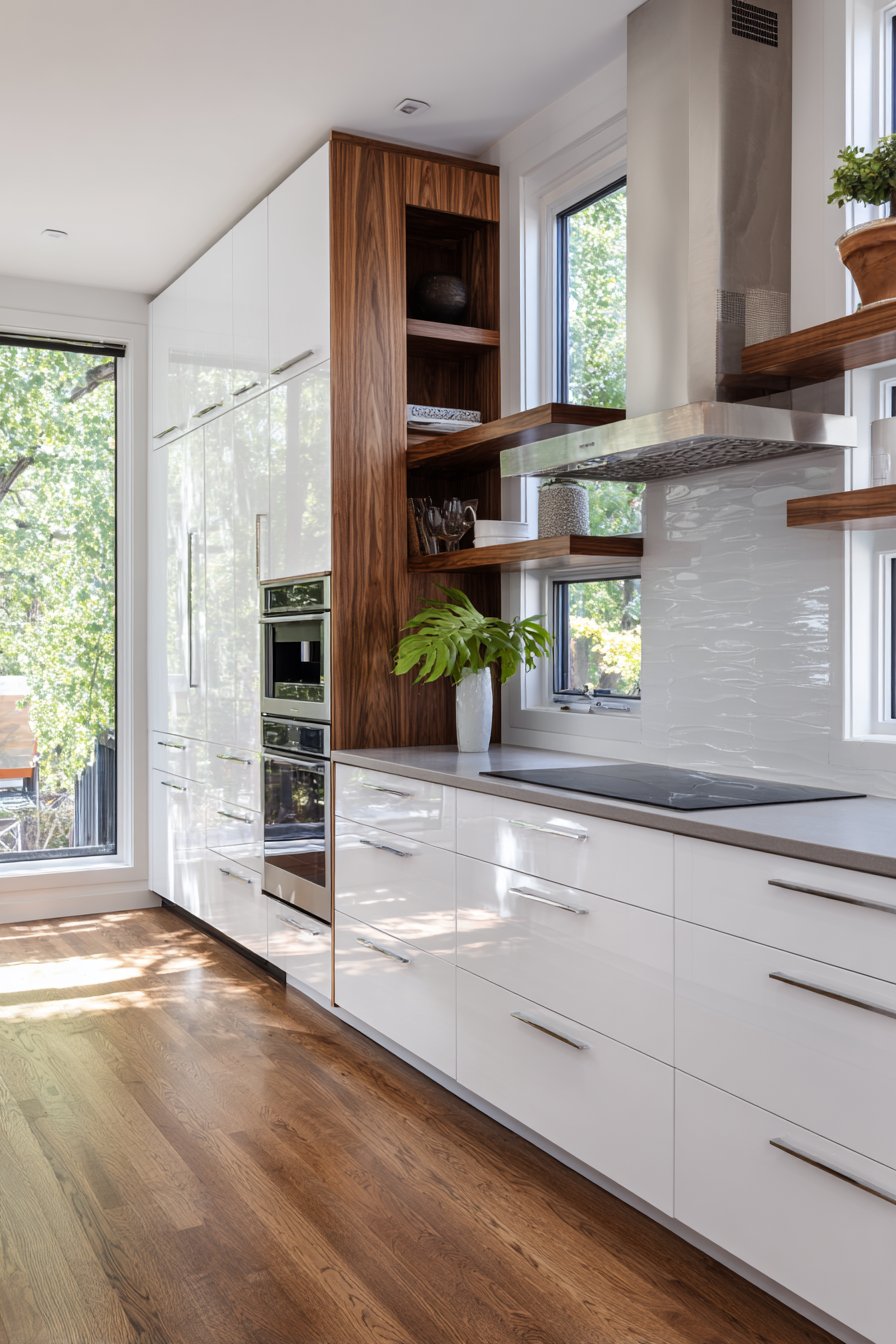
This forward-thinking modern kitchen embraces technology as a central design element, featuring touch-screen backsplash panels that can display recipes, control smart appliances, or function as entertainment while cooking. Motion-sensor cabinet lighting responds to movement, illuminating interiors when doors open or providing under-cabinet task lighting when someone enters the workspace—adding convenience while contributing to energy efficiency. Glossy white cabinets create a clean canvas for the technology features while maintaining the minimalist aesthetics that prevent the space from feeling cluttered or overly complicated.
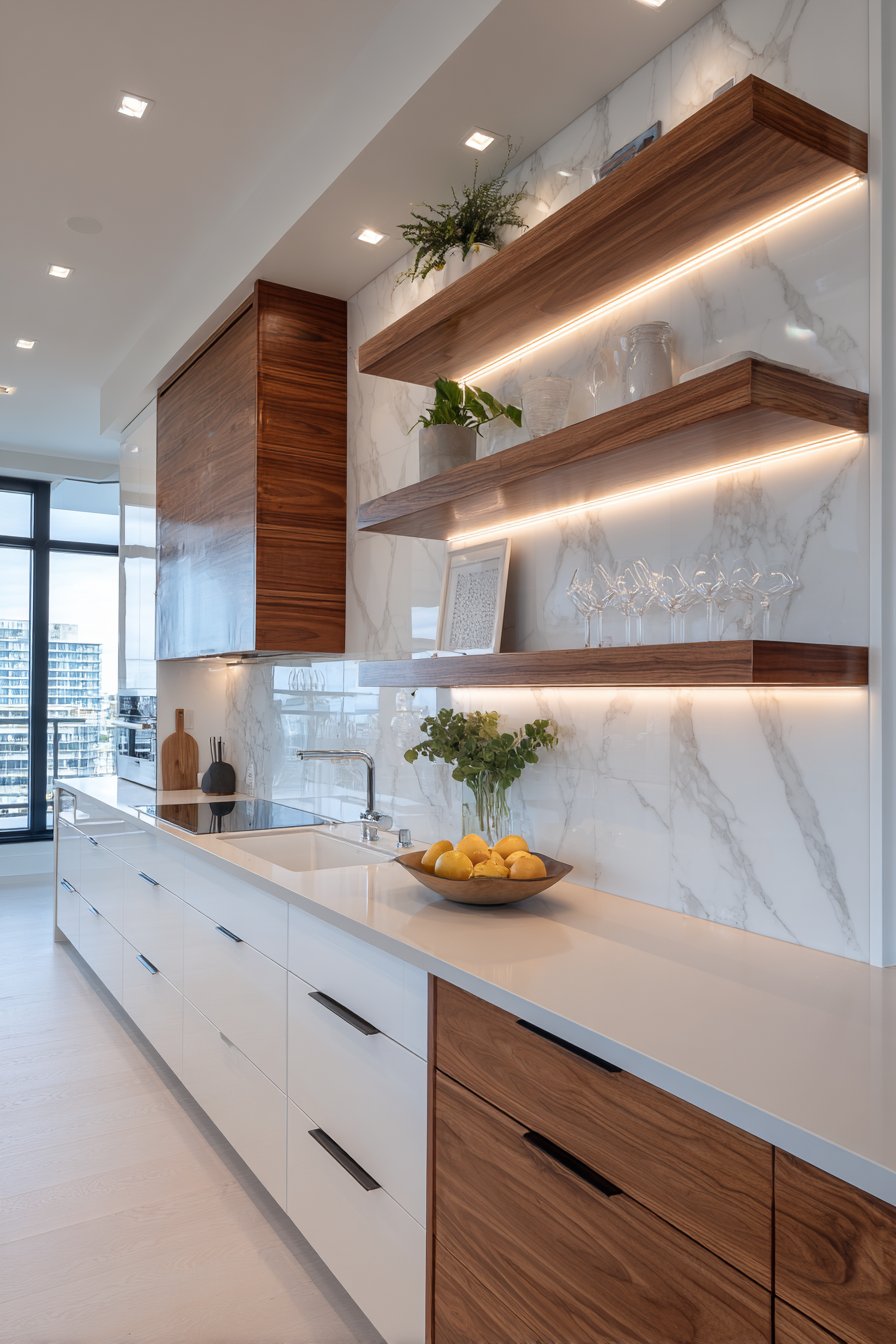
A large induction cooktop sits flush with grey engineered stone countertops, its sleek surface offering rapid heating, precise temperature control, and easy cleanup—advantages that make induction technology increasingly popular in contemporary kitchens.
When not in use, the cooktop surface appears as a seamless continuation of the counter, maintaining the clean lines that define modern design. Floating shelves in natural walnut break up the white palette, introducing warmth through natural wood grain while providing display space for beautiful cookbooks, ceramics, or small plants.
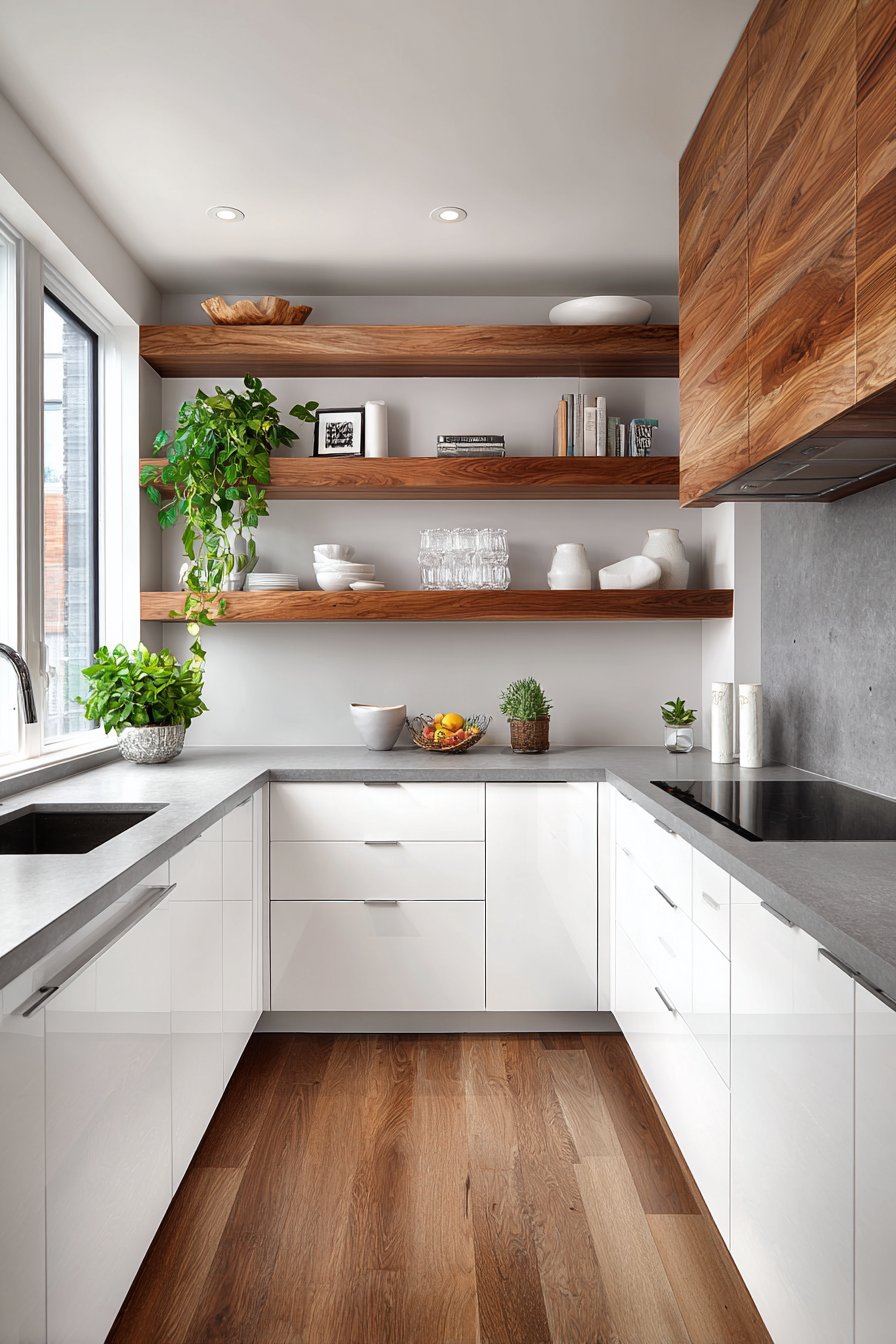
LED accent lighting creates atmospheric highlights on reflective surfaces during early evening hours, transforming the kitchen from a bright, functional workspace during the day into a more intimate, ambient environment as natural light fades.
The combination of task lighting, accent lighting, and smart controls allows for infinite adjustment based on activity and mood. This kitchen demonstrates how technology can enhance rather than dominate contemporary design when thoughtfully integrated—the smart features serve the inhabitants rather than demanding attention, creating a space that’s both cutting-edge and comfortable, sophisticated and practical.
Key Design Tips:
- Research smart home compatibility before purchasing connected appliances
- Install adequate electrical outlets and charging stations for devices
- Use glossy white cabinets to reflect light and create a clean tech backdrop
- Choose flush-mount induction cooktops for seamless surfaces and easy cleaning
- Layer multiple types of lighting for flexibility throughout the day
- Include natural materials like wood to prevent the space from feeling too sterile
- Plan for future tech upgrades with flexible wiring and accessible connections
8. Bold Contrast Modern Kitchen with Black Accent Wall
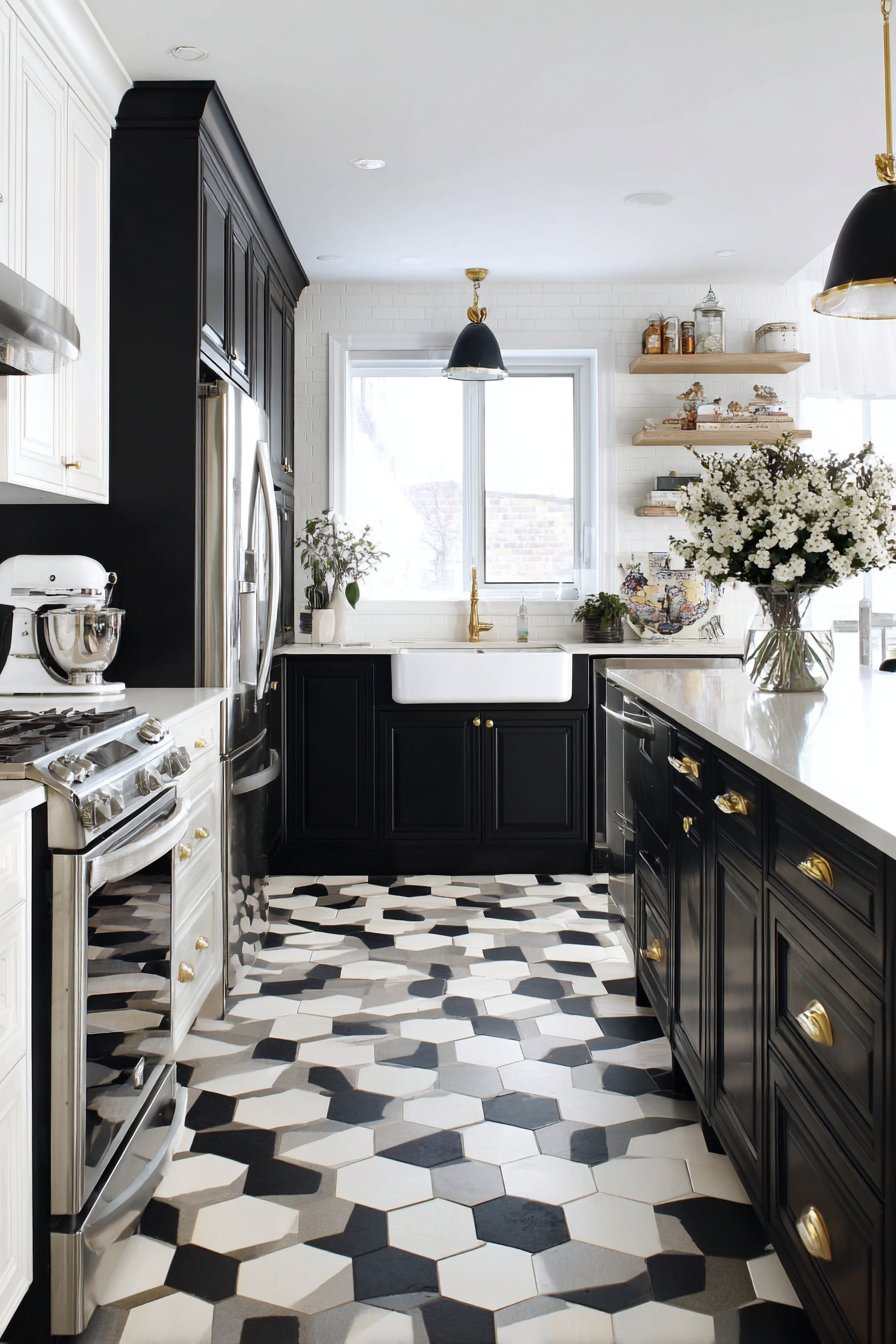
This dramatic modern kitchen makes a powerful statement through its bold black accent wall with integrated appliances creating a monolithic, intentionally striking presence. The dark wall, rather than making the space feel smaller, actually adds depth and drama, demonstrating how confident color choices can transform a kitchen from merely functional to genuinely memorable. Integrated appliances—including refrigerator, ovens, and microwave—disappear into the black wall, creating a unified architectural element rather than a collection of separate machines.
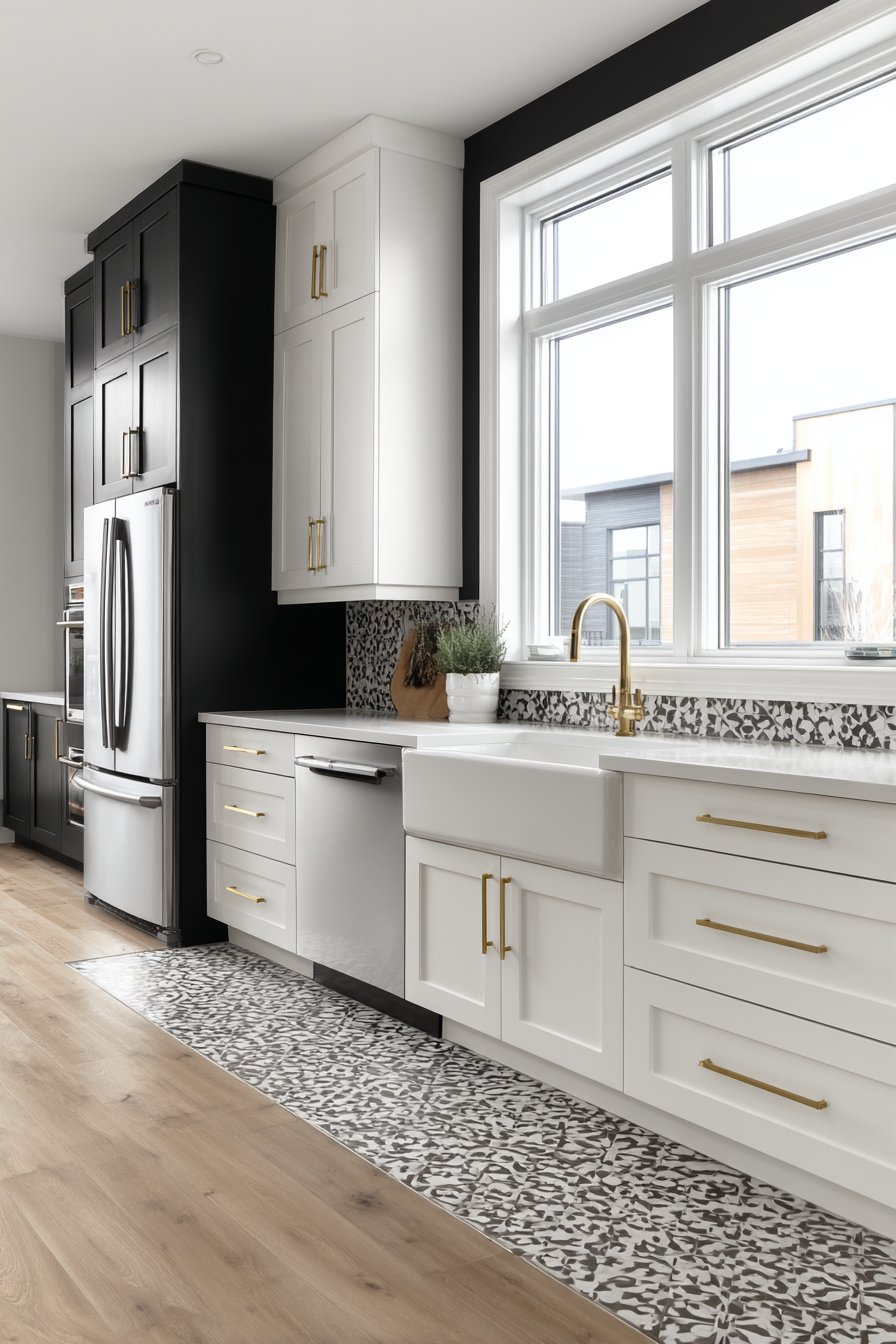
Contrasting white Shaker-style cabinets with gold hardware provide traditional-meets-contemporary styling that prevents the design from feeling too modern or cold. The Shaker profile, with its recessed panel and simple frame, offers just enough decorative detail to add character without compromising the overall modern aesthetic.
Gold hardware introduces warmth and luxury, its burnished gleam creating jewel-like accent points that catch the light and draw the eye. A farmhouse sink in white fireclay sits below a large window with minimal trim, combining traditional form with contemporary simplicity—the generous basin provides practical workspace while the white finish maintains visual continuity with the cabinetry.
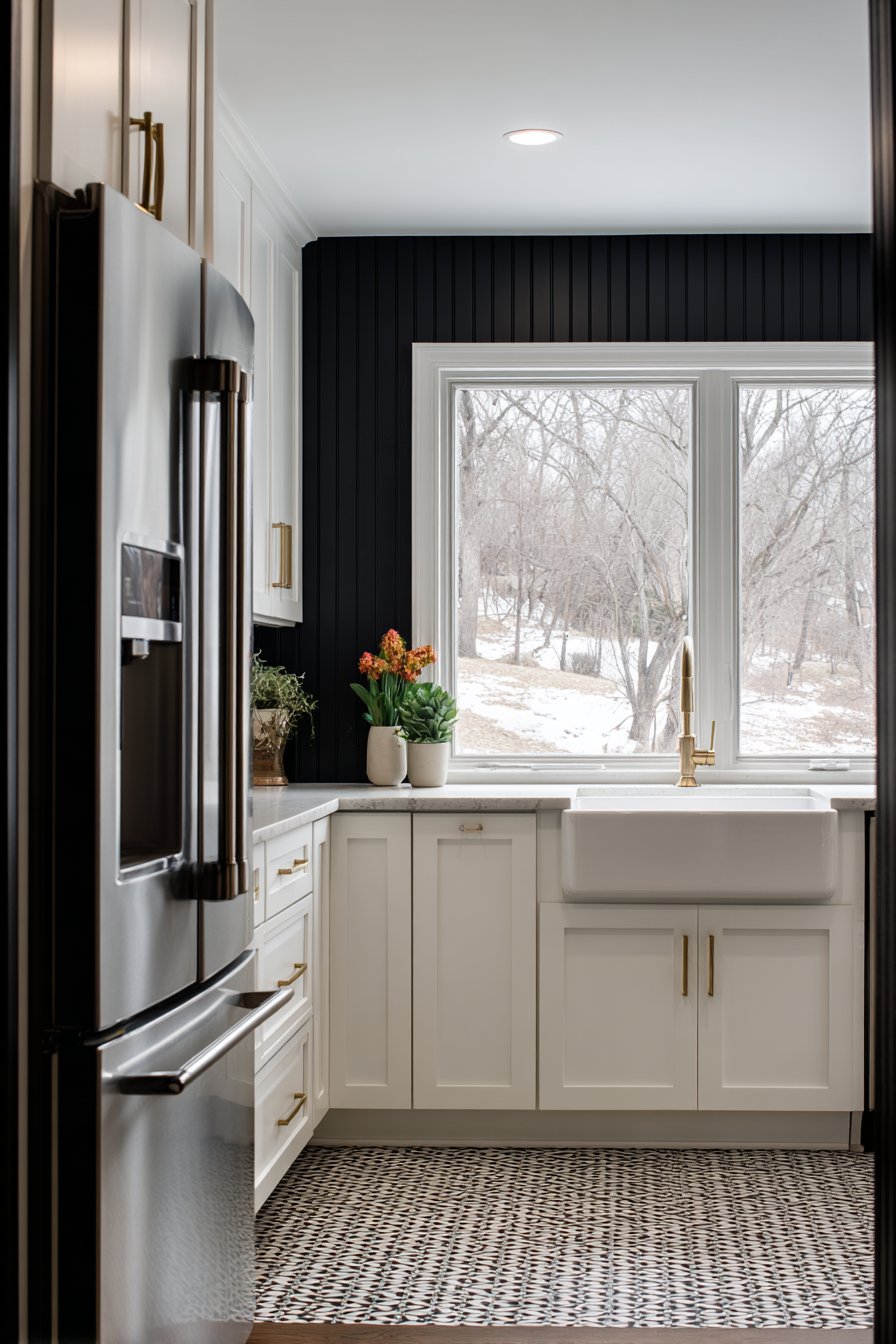
Hexagonal cement tiles in black and white geometric patterns define the floor, introducing playful pattern and additional visual interest at ground level. The geometric floor treatment complements rather than competes with the bold wall, demonstrating how multiple strong elements can coexist when carefully balanced.
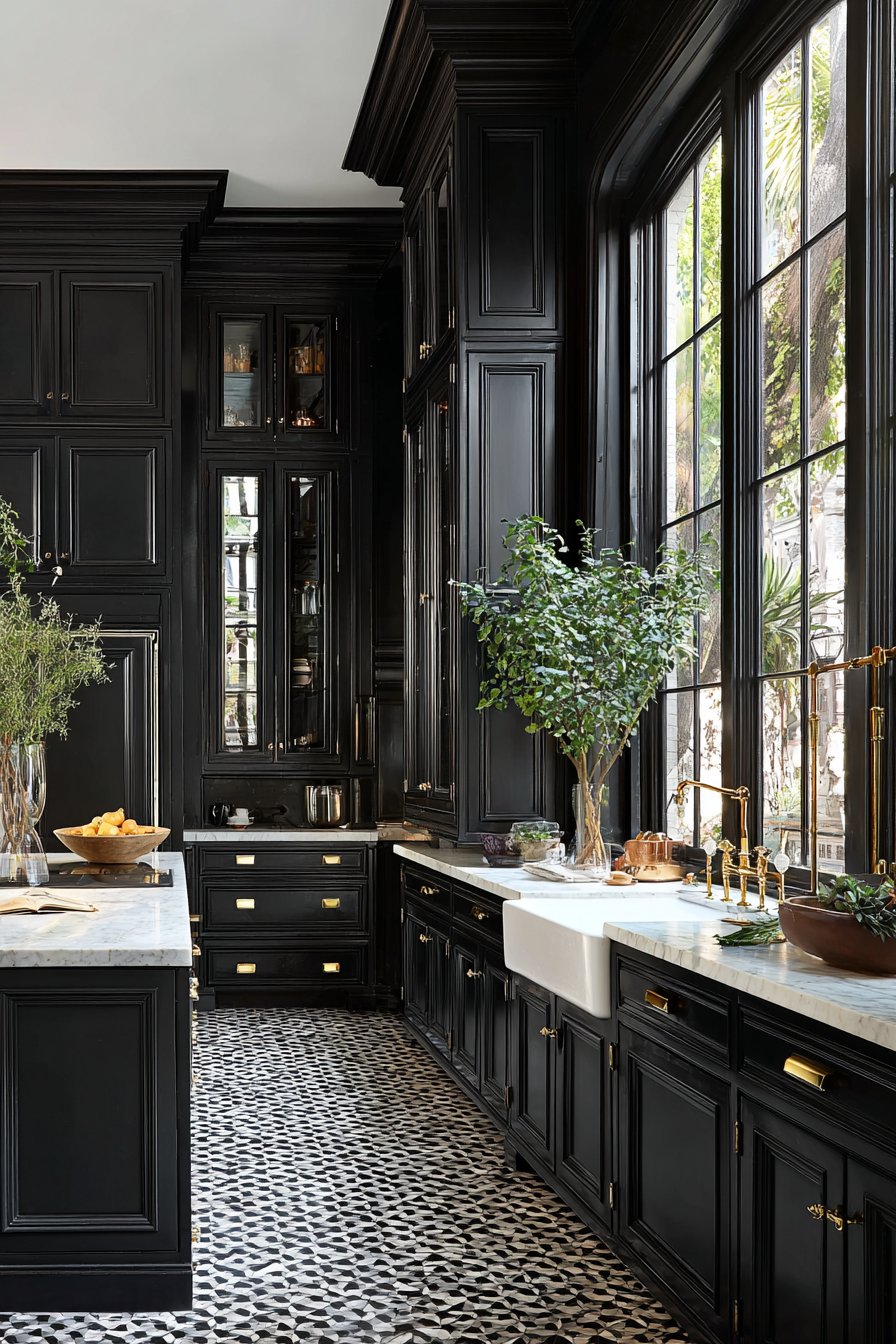
Natural window lighting emphasizes the bold contrast and textural variety while maintaining balanced exposure across the high-contrast surfaces—a testament to how proper lighting design can make even dramatic color schemes feel welcoming rather than harsh. This kitchen proves that modern design can embrace both bold statements and traditional elements, creating spaces that feel fresh yet timeless.
Key Design Tips:
- Use dark accent walls to create depth and drama in larger kitchens
- Integrate appliances into accent walls for a monolithic, architectural effect
- Balance bold modern elements with traditional details like Shaker cabinets
- Choose warm metallic hardware like gold or brass to soften high-contrast schemes
- Install farmhouse sinks for generous workspace and traditional character
- Use patterned floor tiles to add visual interest at ground level
- Ensure adequate lighting in high-contrast kitchens to prevent harsh shadows
9. Open-Concept Modern Kitchen with Peninsula Seating
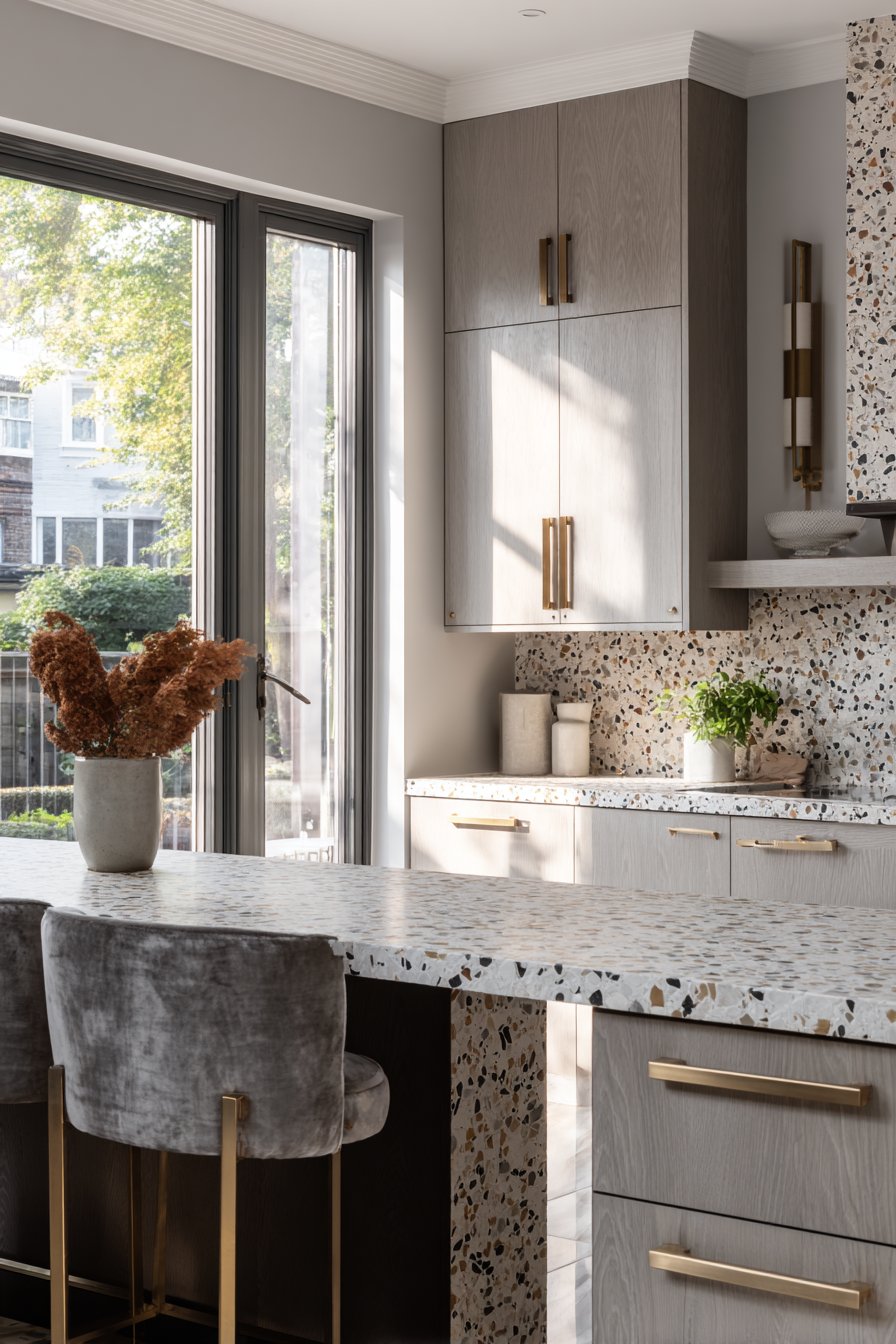
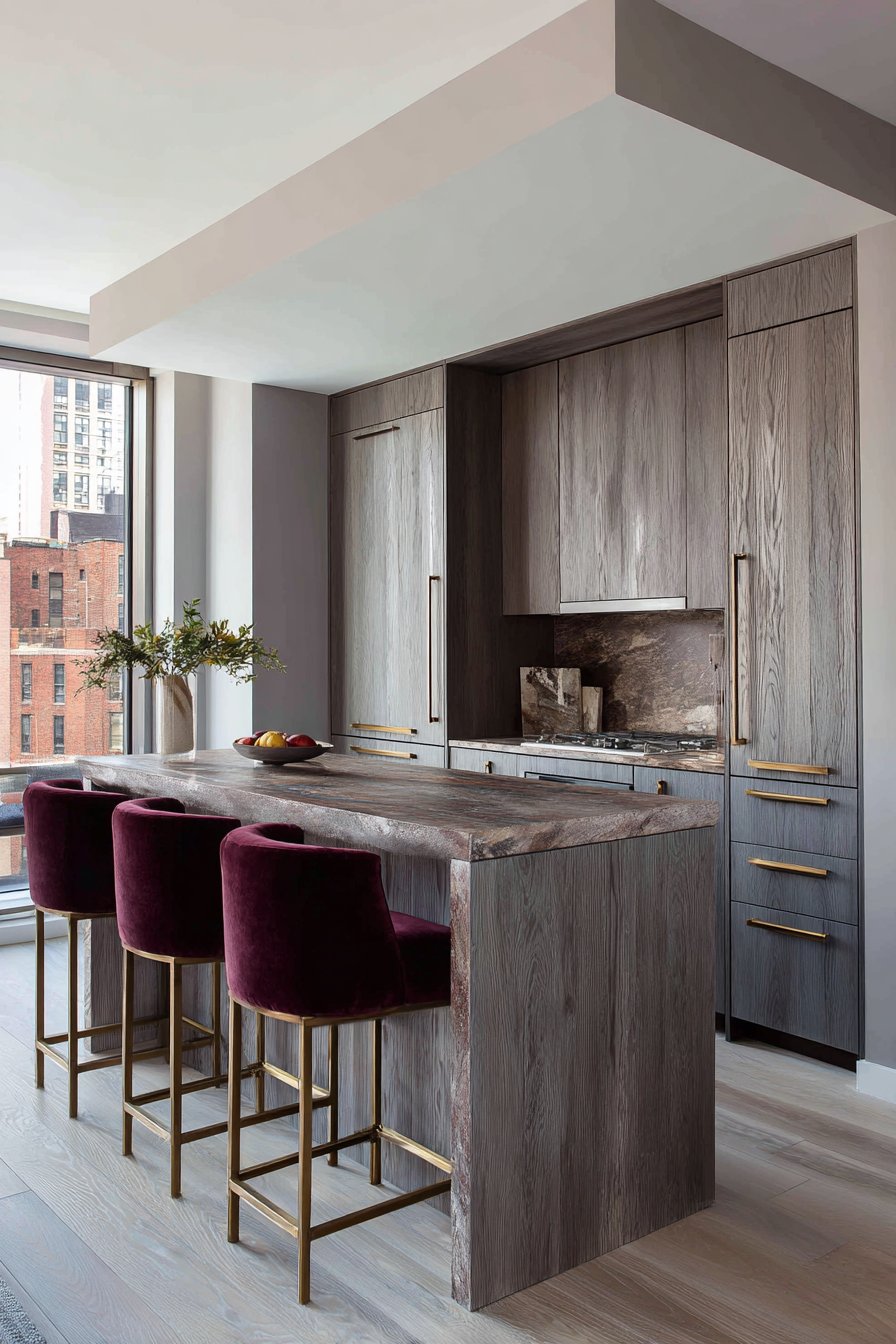
This sociable modern kitchen embraces open-concept living through a peninsula counter with seating for four on velvet upholstered counter stools, creating a natural gathering point that encourages conversation and connection. The peninsula configuration offers the workspace and storage benefits of an island while maintaining better flow in open layouts where circulation needs to remain clear. Velvet upholstery on the counter stools introduces unexpected luxury and comfort, transforming simple seating into something more refined and inviting—the plush texture and slight sheen of velvet elevates the entire space.
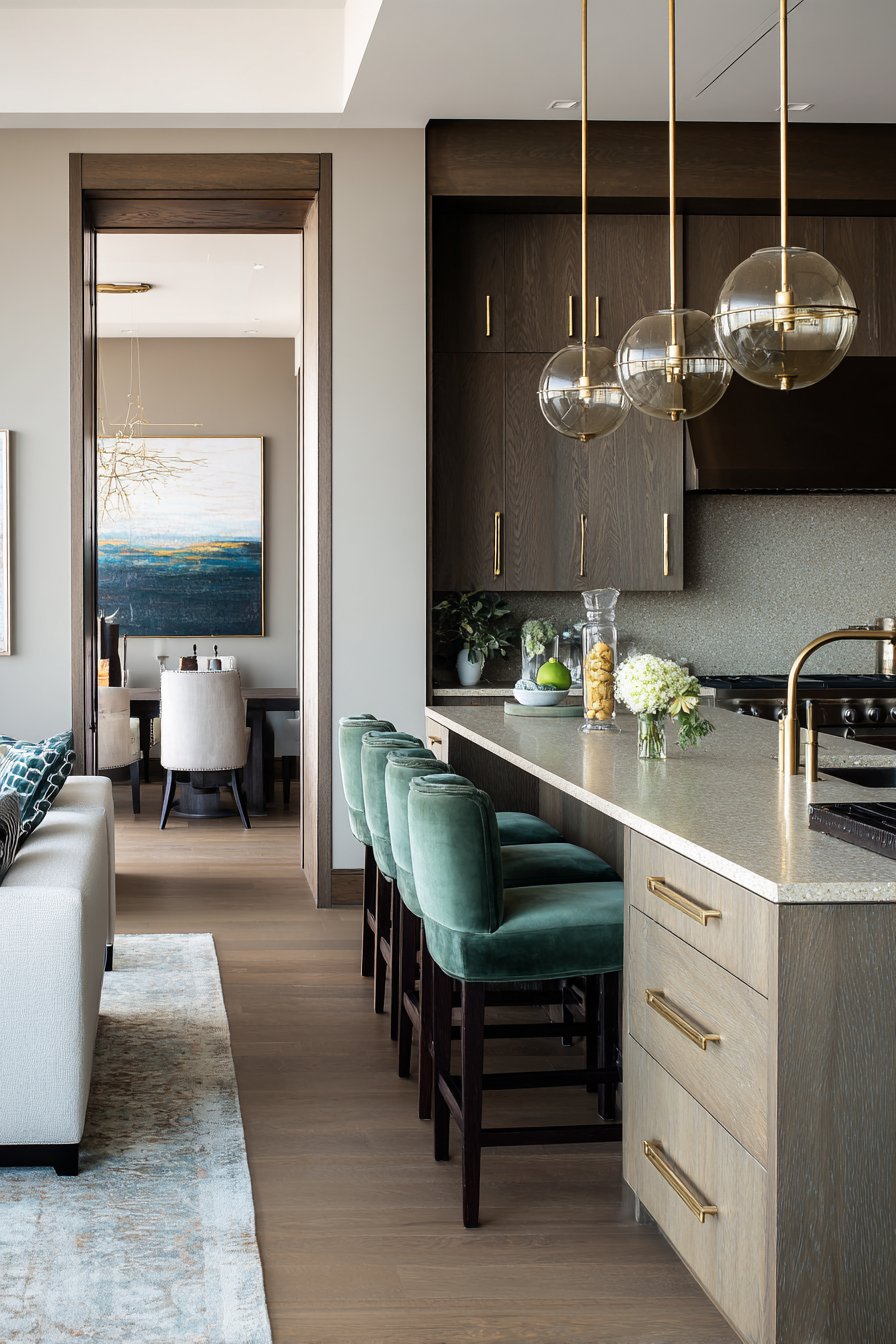
Slab-front cabinets in medium grey oak veneer showcase natural wood movement and character, celebrating the organic patterns and color variation that make each piece of wood unique. Unlike painted cabinetry where uniformity is the goal, wood veneer embraces variation as a feature, ensuring that no two cabinets look exactly alike.
The medium grey tone of the oak provides sophisticated neutrality while the visible grain adds warmth and texture. Terrazzo countertops in neutral tones with multicolored aggregate add artisanal detail and visual interest—the speckled pattern creates subtle movement across the surface while the composite material offers exceptional durability.
Brass rail hardware on drawers provides warm metallic accents that complement the velvet upholstery and oak cabinetry, creating cohesive material flow throughout the space. The rail-style pulls offer both beauty and function, their horizontal orientation emphasizing the clean lines of the drawer fronts while providing easy grip.
Soft diffused daylight highlights the inviting material palette and conversational arrangement, demonstrating how proper lighting enhances the social nature of this design. This kitchen proves that modern doesn’t mean isolated or cold—through thoughtful layout and material selection, contemporary kitchens can be as warm and welcoming as the most traditional spaces.
Key Design Tips:
- Use peninsula layouts to create workspace while maintaining circulation in open plans
- Choose upholstered seating for comfort during extended conversations
- Select wood veneer that showcases natural grain for warmth and character
- Consider terrazzo countertops for durable surfaces with artisanal appeal
- Install rail-style hardware for clean lines and easy grip
- Position seating to face living areas for social interaction
- Use warm materials like wood, brass, and velvet to soften modern lines
10. Sustainable Modern Kitchen with Reclaimed Materials
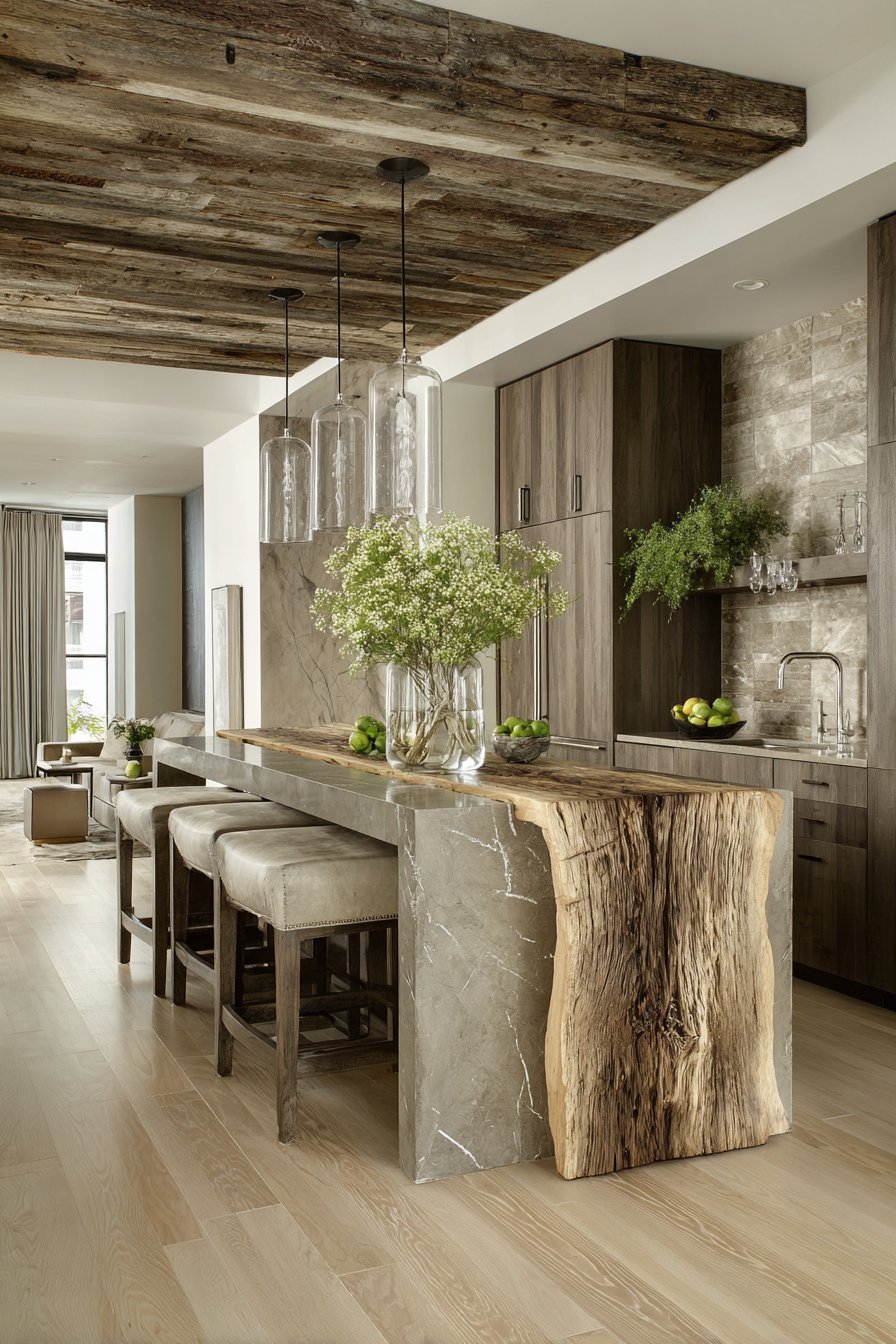
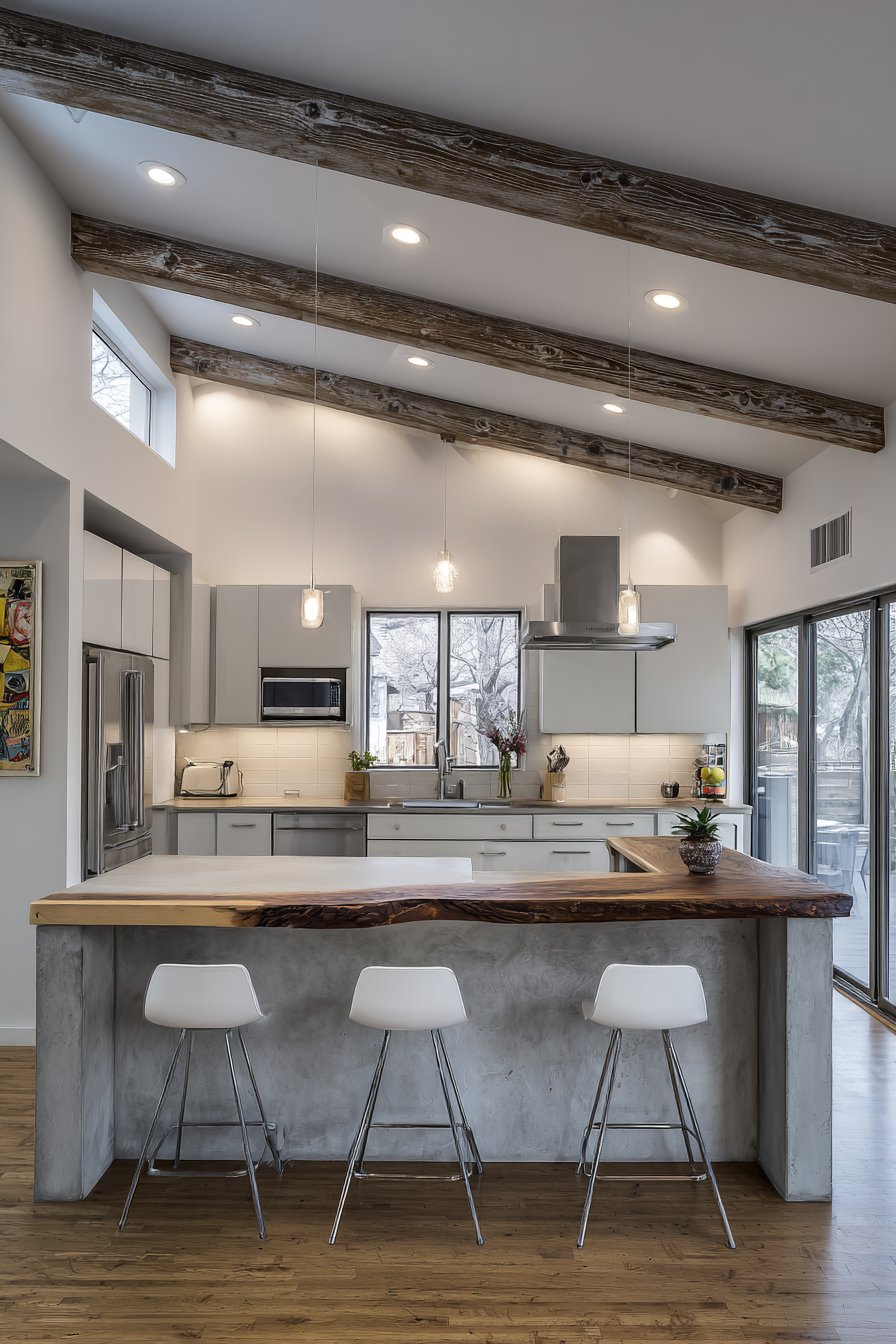
This environmentally conscious modern kitchen emphasizes sustainable materials beginning with reclaimed wood ceiling beams that introduce history and character while contrasting beautifully with contemporary flat-panel cabinetry in recycled composite material with a concrete-grey finish.
The ceiling beams—salvaged from old barns or industrial buildings—bring warmth and texture overhead while their weathered appearance tells a story of previous use and purpose. The recycled composite cabinetry demonstrates that sustainable choices need not compromise aesthetics, the concrete-grey finish providing contemporary sophistication while the recycled content reduces environmental impact.
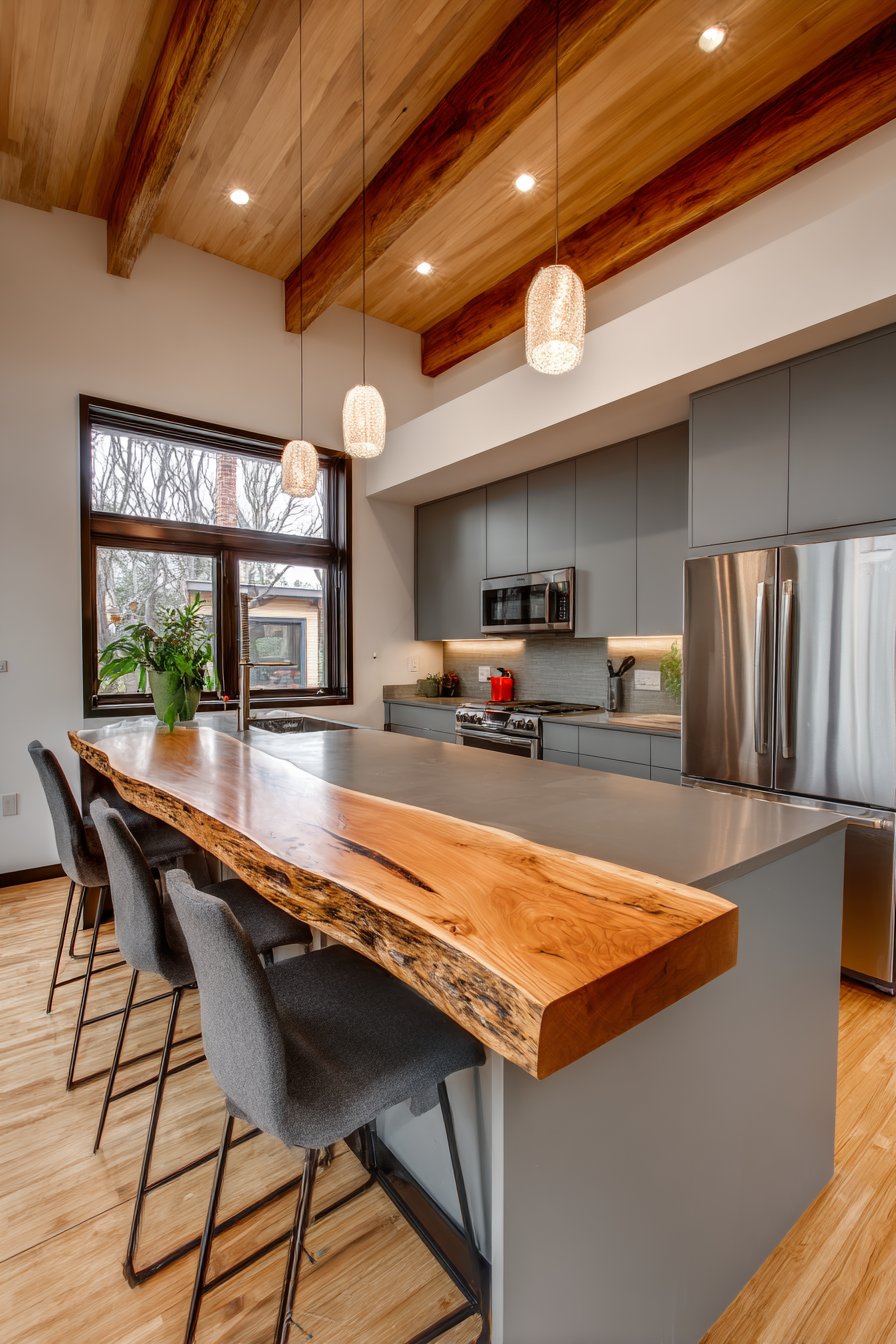
Energy-efficient appliances are integrated seamlessly throughout the space, their advanced technology reducing energy consumption and operating costs while their flush-mounted installation maintains the clean aesthetic. A live-edge wood countertop on the island provides organic contrast to the sleek surroundings, celebrating the natural form of the tree while creating a focal point that draws attention and invites touch. The live edge—where the natural contour of the tree is preserved rather than cut straight—introduces flowing, irregular lines that soften the geometric precision of the surrounding elements.
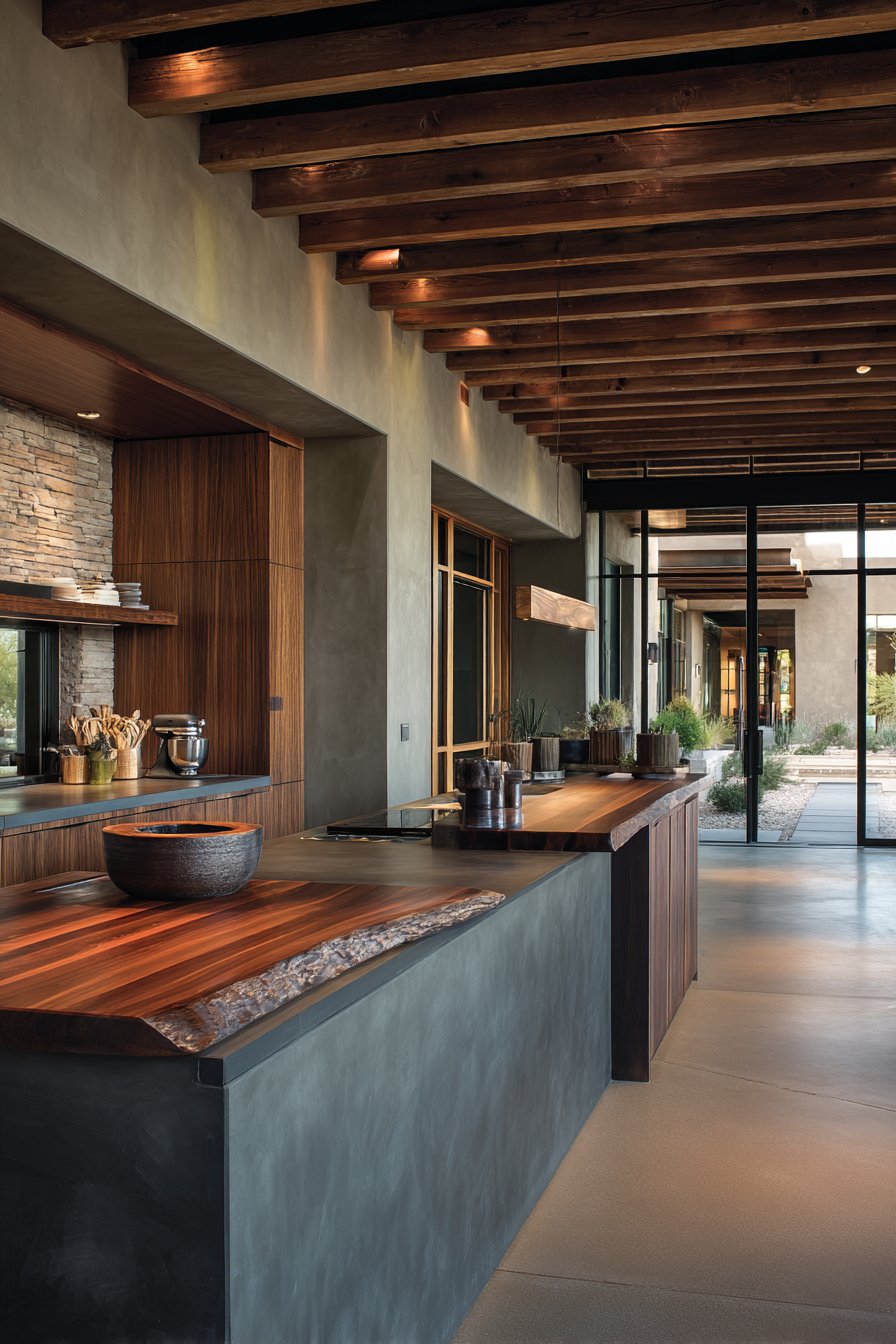
Cork flooring in natural tone adds warmth and eco-friendly functionality, its slightly cushioned surface providing comfort underfoot while its sustainable harvest methods make it an environmentally responsible choice. Cork naturally resists mold, mildew, and pests while providing excellent insulation properties. The thoughtful blend of rustic reclaimed elements with modern minimalist sensibilities creates remarkable visual tension—the rough texture of old wood beams and live-edge counters contrasts with the smooth surfaces of contemporary cabinetry, while the natural materials ground the space in authenticity. This kitchen proves that sustainability and style are not competing priorities but complementary values that can create spaces of exceptional beauty and integrity.
Key Design Tips:
- Source reclaimed wood from reputable suppliers who document material origins
- Choose recycled composite cabinetry certified by environmental standards
- Invest in Energy Star-rated appliances for long-term efficiency
- Consider live-edge wood for islands or counters as organic focal points
- Install cork flooring for sustainable, comfortable, and quiet surfaces
- Balance rustic reclaimed elements with sleek modern finishes
- Ensure proper sealing and treatment of reclaimed materials for kitchen use
- Research the embodied energy of materials to make truly sustainable choices
Why These Modern Kitchen Designs Represent the Best of Contemporary Living
These ten modern kitchen concepts represent the pinnacle of contemporary interior design, each demonstrating how thoughtful planning, quality materials, and innovative thinking can transform the kitchen from a purely utilitarian space into the true heart of the home. The minimalist white kitchen with integrated LED lighting showcases the power of restraint, proving that sophistication often lies in what you remove rather than what you add—its clean lines, seamless surfaces, and strategic lighting create an environment of remarkable calm that feels both current and timeless. The two-tone navy and oak design demonstrates how contemporary kitchens can embrace bold color and rich contrast without sacrificing elegance, showing that modern design need not be neutral or safe.
The compact kitchen with smart storage solutions addresses one of the most common challenges in contemporary living—limited space—by proving that intelligent design can make even the smallest kitchens both beautiful and highly functional through vertical thinking and multi-purpose elements. The luxe kitchen with expansive island represents the growing desire for kitchens that support both serious cooking and social entertaining, its generous proportions and upscale finishes creating a space worthy of hosting while maintaining practical functionality. The Scandinavian-inspired design connects contemporary interiors to timeless principles of simplicity, natural materials, and honest craftsmanship, creating spaces that feel warm, human, and deeply livable rather than cold or austere.
The vertical herb garden kitchen represents growing interest in biophilic design—the integration of natural elements into built environments—demonstrating how living plants can transform kitchen spaces while providing practical benefits like fresh herbs for cooking. The tech-forward kitchen with smart integration addresses the reality of modern life where technology increasingly supports daily routines, showing how digital integration can enhance rather than dominate when thoughtfully implemented. The bold contrast kitchen with black accent wall proves that modern design can make dramatic statements through confident color choices and material mixing, creating memorable spaces that reflect strong personal style.
The open-concept kitchen with peninsula seating responds to evolving lifestyle patterns where kitchens have become social spaces rather than isolated work zones, its conversational layout and inviting materials fostering connection and interaction. Finally, the sustainable kitchen with reclaimed materials addresses perhaps the most important consideration for contemporary design—environmental responsibility—demonstrating that ecological consciousness and aesthetic excellence are not competing priorities but complementary values. Together, these designs showcase the incredible diversity possible within modern kitchen design, from minimalist restraint to bold expression, from compact efficiency to expansive luxury, from high-tech innovation to sustainable tradition.
These modern kitchen ideas succeed because they address real needs—for beauty, functionality, sustainability, technology, and social connection—while demonstrating mastery of fundamental design principles including proportion, balance, material selection, lighting, and spatial planning. They prove that contemporary kitchen design has evolved far beyond simple trends or superficial styling, instead representing thoughtful responses to how we actually live, cook, gather, and connect in the twenty-first century. Whether drawn to minimalist simplicity or dramatic contrast, compact efficiency or expansive luxury, natural materials or technological innovation, there are modern kitchen solutions that can transform your cooking space into an environment that truly supports and enhances your daily life.
Conclusion
The modern kitchen has emerged as the ultimate expression of contemporary living, where functionality and beauty converge to create spaces that inspire daily rituals and foster meaningful connections. These ten distinctive design concepts demonstrate the remarkable breadth of possibilities available within modern kitchen design—from serene minimalist environments to bold, dramatic statements, from compact efficiency to expansive luxury, from traditional warmth to cutting-edge technology. Each approach offers valuable insights into how thoughtful material selection, intelligent spatial planning, and attention to detail can transform the kitchen from a simple workspace into the genuine heart of the home.
The key takeaway from these diverse designs is that successful modern kitchens balance multiple priorities simultaneously—they must be beautiful enough to serve as the centerpiece of open-concept living, functional enough to support serious cooking and daily meal preparation, durable enough to withstand years of heavy use, and flexible enough to accommodate evolving needs and technologies. Whether you’re drawn to the serene restraint of Scandinavian simplicity, the bold drama of high-contrast design, the environmental consciousness of sustainable materials, or the forward-thinking convenience of smart home integration, the modern kitchen offers solutions that can truly enhance your quality of life.
As you consider implementing these ideas in your own home, remember that the best kitchen design ultimately reflects your personal lifestyle, cooking habits, aesthetic preferences, and values. Don’t be afraid to mix elements from different approaches—perhaps combining the bold color of the navy and oak kitchen with the smart storage of the compact design, or blending the sustainable materials of the eco-conscious kitchen with the technological conveniences of the smart integration concept. The beauty of modern design lies in its flexibility and its emphasis on individual expression. Take inspiration from these concepts, adapt them to your specific needs and space, and create a kitchen that’s uniquely yours—a space where cooking becomes pleasure, where gathering becomes natural, and where everyday moments are elevated into something special.
