


Creating a living room that feels spacious, bright, and thoughtfully designed requires more than just furniture placement. Strategic use of mirrors can revolutionize your space, amplifying natural light, creating visual depth, and serving as stunning focal points. Mirrors are perhaps the most versatile decorative element in interior design, offering both functional and aesthetic benefits that transform ordinary rooms into extraordinary spaces. Whether you’re working with a compact apartment or a spacious home, the right mirror placement can make your living room feel twice its size while adding sophisticated style.
The art of incorporating mirrors into living room design has evolved significantly over the years. Today’s designers embrace everything from minimalist frameless panels to ornate vintage pieces, each serving a unique purpose in spatial composition. The key lies in understanding how reflective surfaces interact with light, architecture, and existing décor. A well-placed mirror doesn’t just reflect what’s in front of it; it captures and redistributes natural light, creates the illusion of additional windows, and can even become the room’s defining feature.
This comprehensive guide explores ten distinctive approaches to mirrors in living room ideas, each showcasing different styles, frame materials, and placement strategies. From contemporary slim-framed designs to bohemian sunburst collections, these concepts demonstrate how mirrors can elevate any living space. You’ll discover practical tips for selecting the right mirror size, determining optimal placement, and coordinating frames with your existing décor. Whether you prefer the clean lines of Scandinavian design or the rich ornamentation of traditional interiors, you’ll find inspiration to transform your living room into a light-filled, visually expansive sanctuary.
1. Contemporary Slim-Frame Mirror Above the Sofa
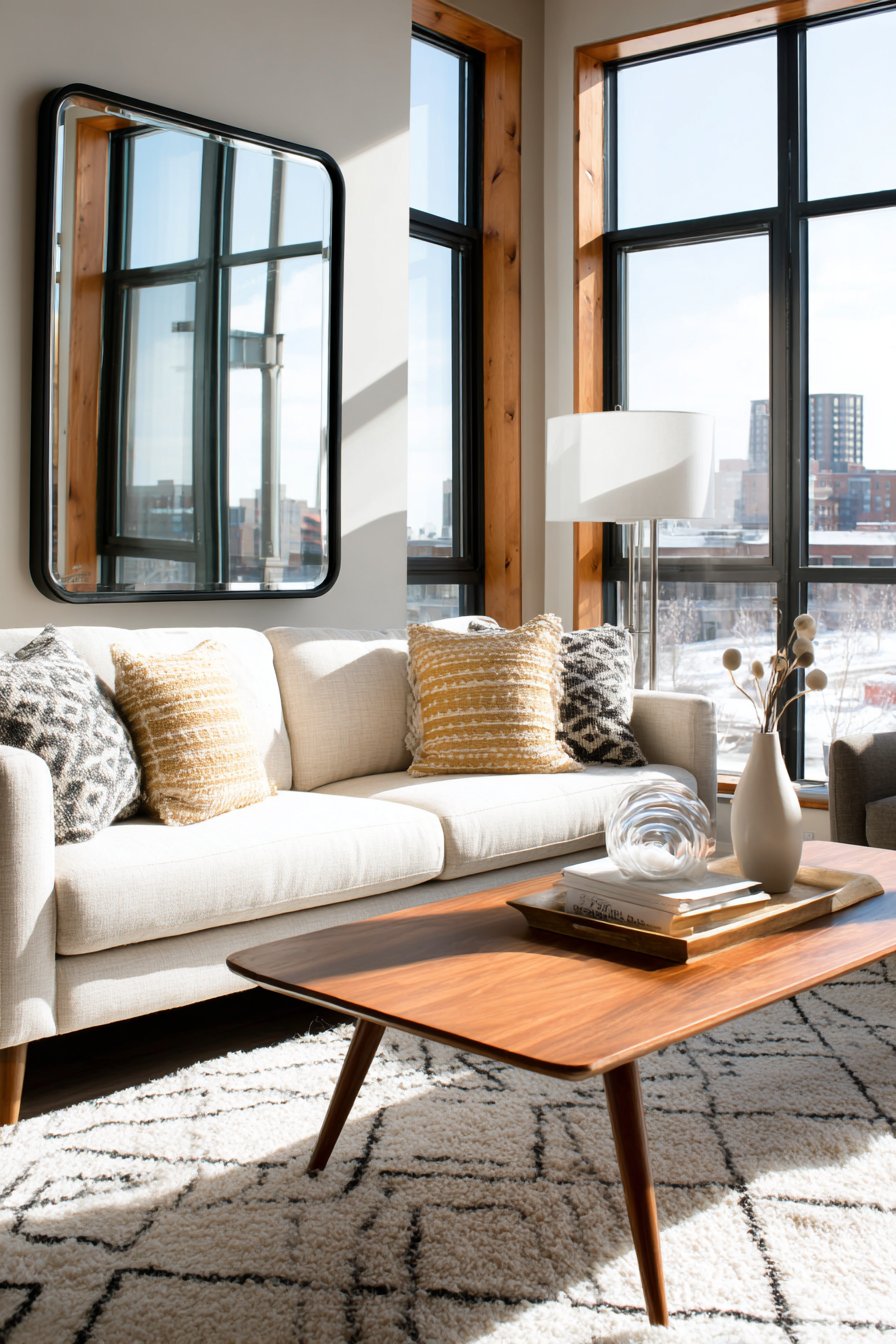
A large rectangular mirror with a sleek black metal frame creates instant sophistication when mounted above a cream linen sofa. This contemporary approach to mirrors in living room ideas demonstrates how minimalist framing allows the reflective surface to take center stage.
The slim profile prevents the mirror from overwhelming the space while providing maximum reflective area. Natural light from opposite windows bounces off the mirror’s surface, effectively doubling the illumination and creating an airy, open atmosphere. The combination of the neutral sofa and dark frame creates visual contrast without competing for attention.
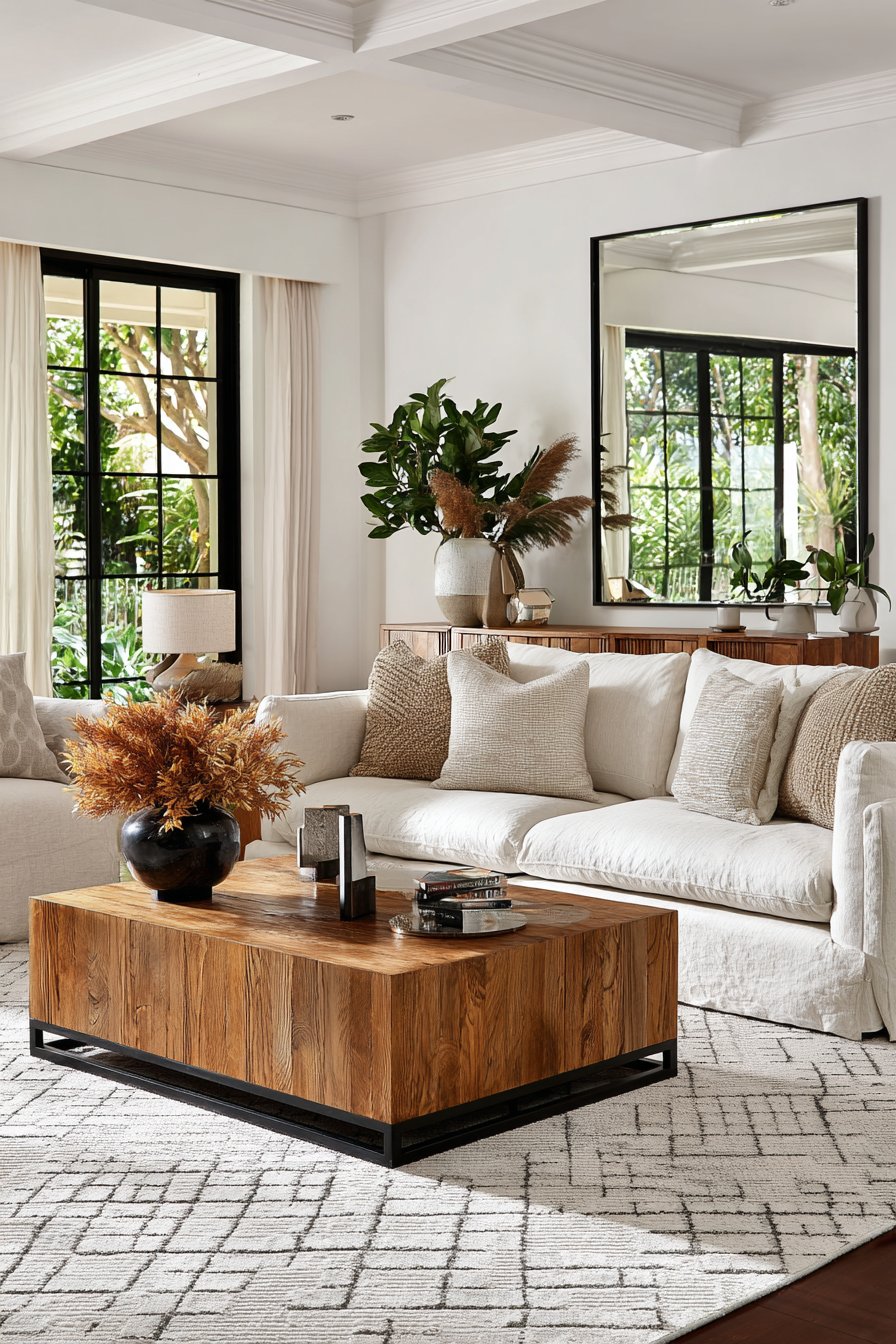
The placement above the sofa serves both practical and aesthetic purposes. It draws the eye upward, emphasizing ceiling height and vertical space. The mirror reflects the room’s opposite wall, creating visual depth that makes the space feel significantly larger.
A mid-century modern walnut coffee table anchors the seating area, its warm wood tones complementing the cream upholstery. A geometric patterned rug adds textural interest while grounding the entire arrangement.
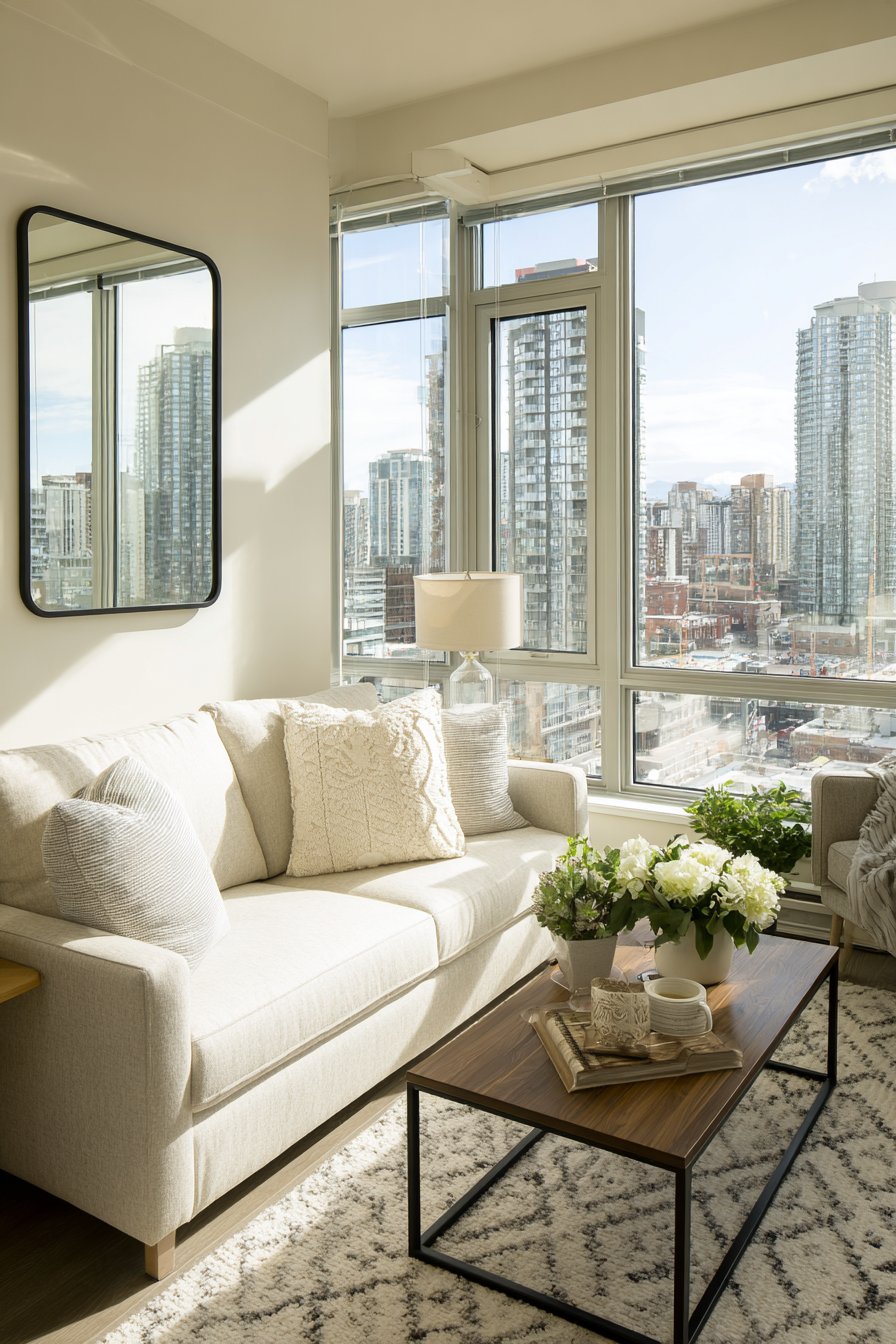
Afternoon sunlight streaming through windows creates dynamic interplay with the mirror’s surface. Natural shadows shift throughout the day, adding movement and life to the static reflection. The mirror captures these light changes, distributing illumination to darker corners of the room. This passive lighting strategy reduces the need for artificial light during daytime hours, creating an energy-efficient and naturally bright environment.
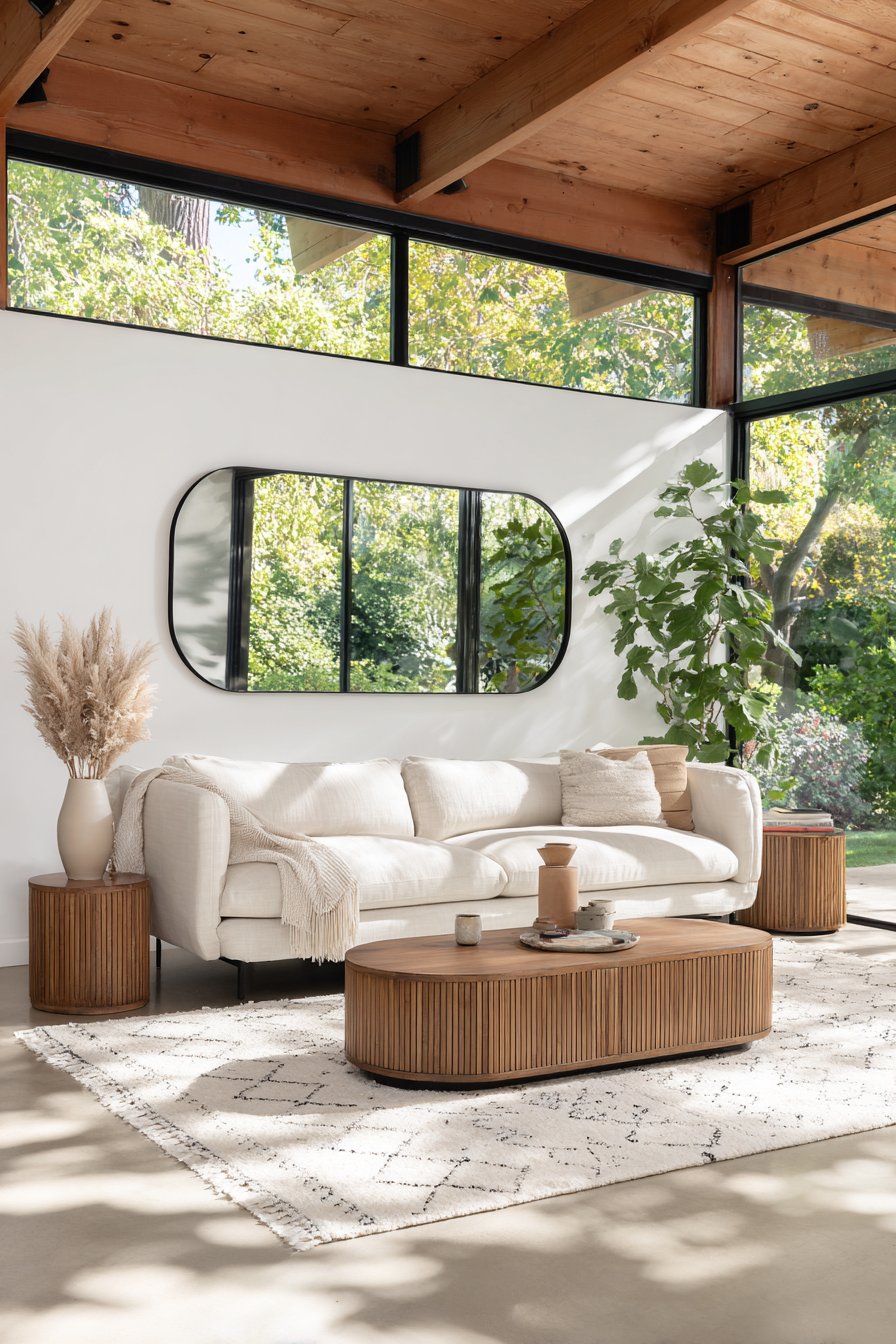
The beauty of this design lies in its versatility and timeless appeal. The black metal frame works seamlessly with various color palettes and design styles. It provides structure without ornamental distraction, allowing homeowners to update accessories and textiles without replacing the mirror.
Key design tips for this approach:
- Choose a mirror width that spans two-thirds to three-quarters of your sofa’s length for balanced proportions.
- Mount the mirror 6-8 inches above the sofa back to create visual connection without overwhelming the furniture.
- Select a frame thickness between half-inch to one inch for contemporary aesthetics.
- Position the mirror to reflect windows or architectural features rather than blank walls.
- Ensure proper wall anchoring using appropriate hardware rated for the mirror’s weight.
2. Eclectic Vintage Mirror Gallery Wall
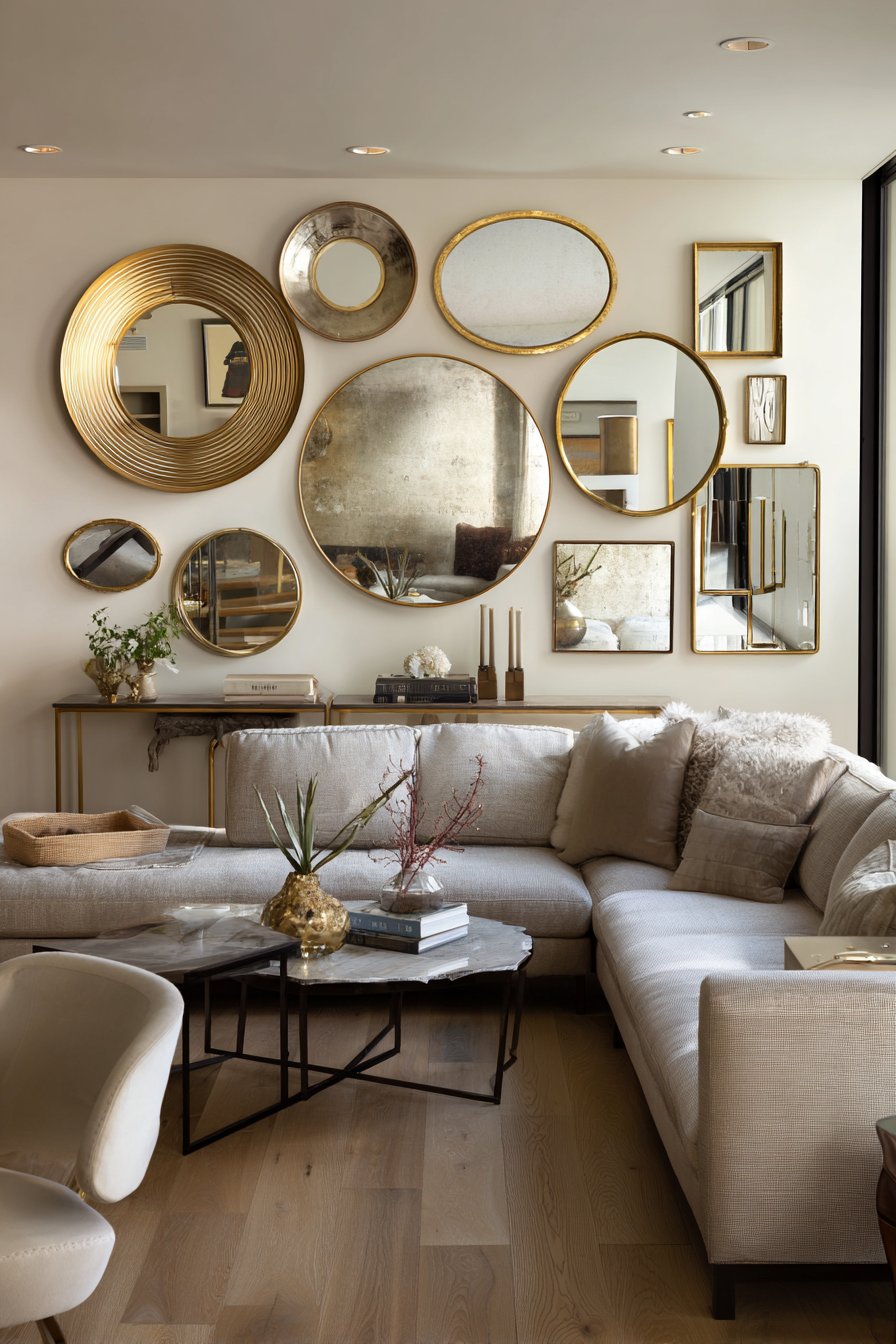
An asymmetric collection of vintage mirrors in mixed metallic finishes creates captivating visual interest above a console table. This eclectic approach to mirrors in living room ideas celebrates individuality and curated style. Brass, gold, and silver frames intermingle in harmonious chaos, each mirror contributing its unique character.
Round, oval, and rectangular shapes of varying sizes form an organic arrangement that feels intentional yet spontaneous. The gallery wall concept transforms a functional mirror into an art installation that commands attention and sparks conversation.
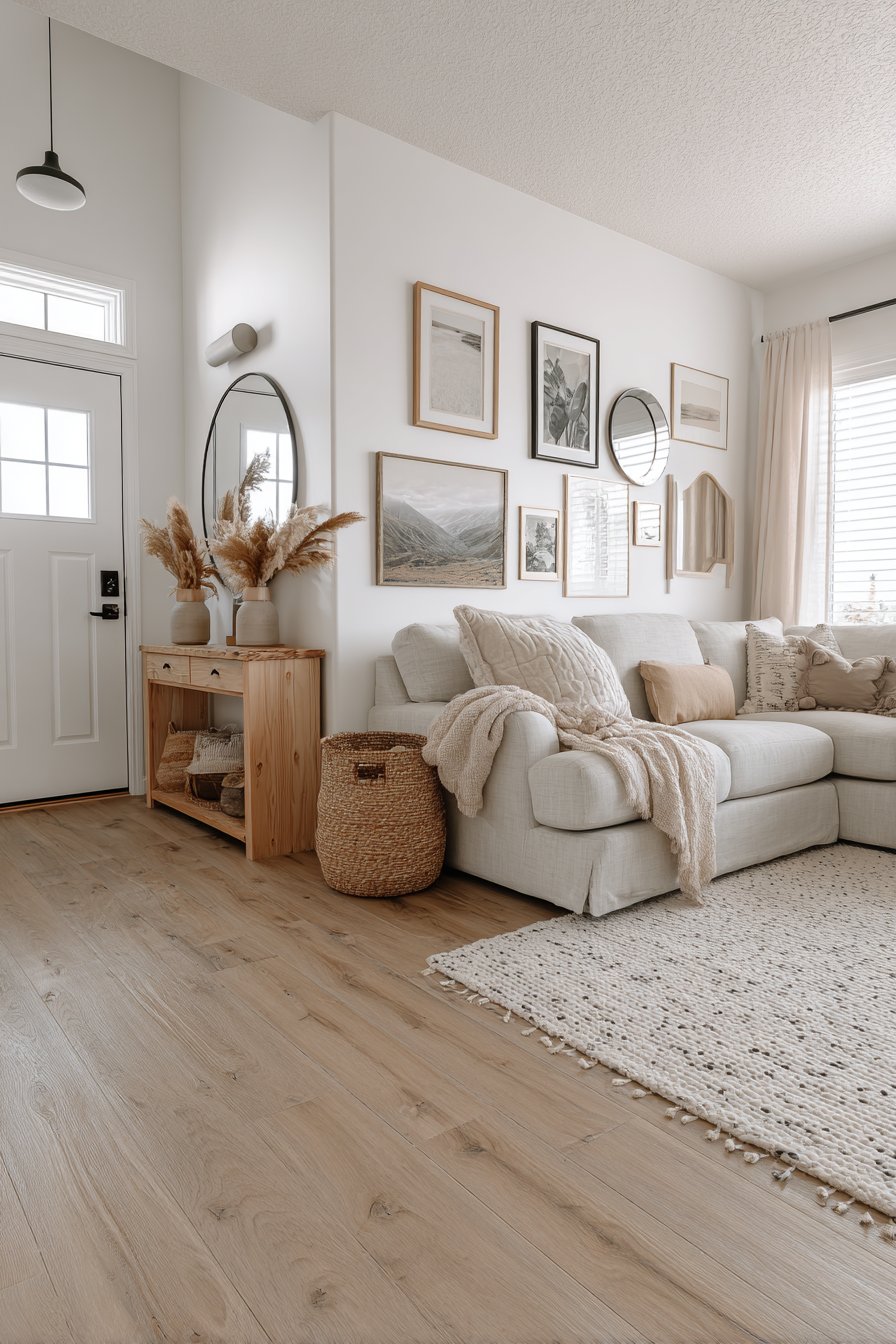
The varied frames tell different stories, from ornate baroque-inspired borders to simple art deco circles. This diversity creates depth through layering, with some mirrors protruding slightly forward while others sit flush against the wall.
The console table below serves as a launching point for the arrangement, grounding the visual weight of multiple reflective surfaces. Decorative accessories on the console create a styled vignette that the mirrors reflect and multiply.
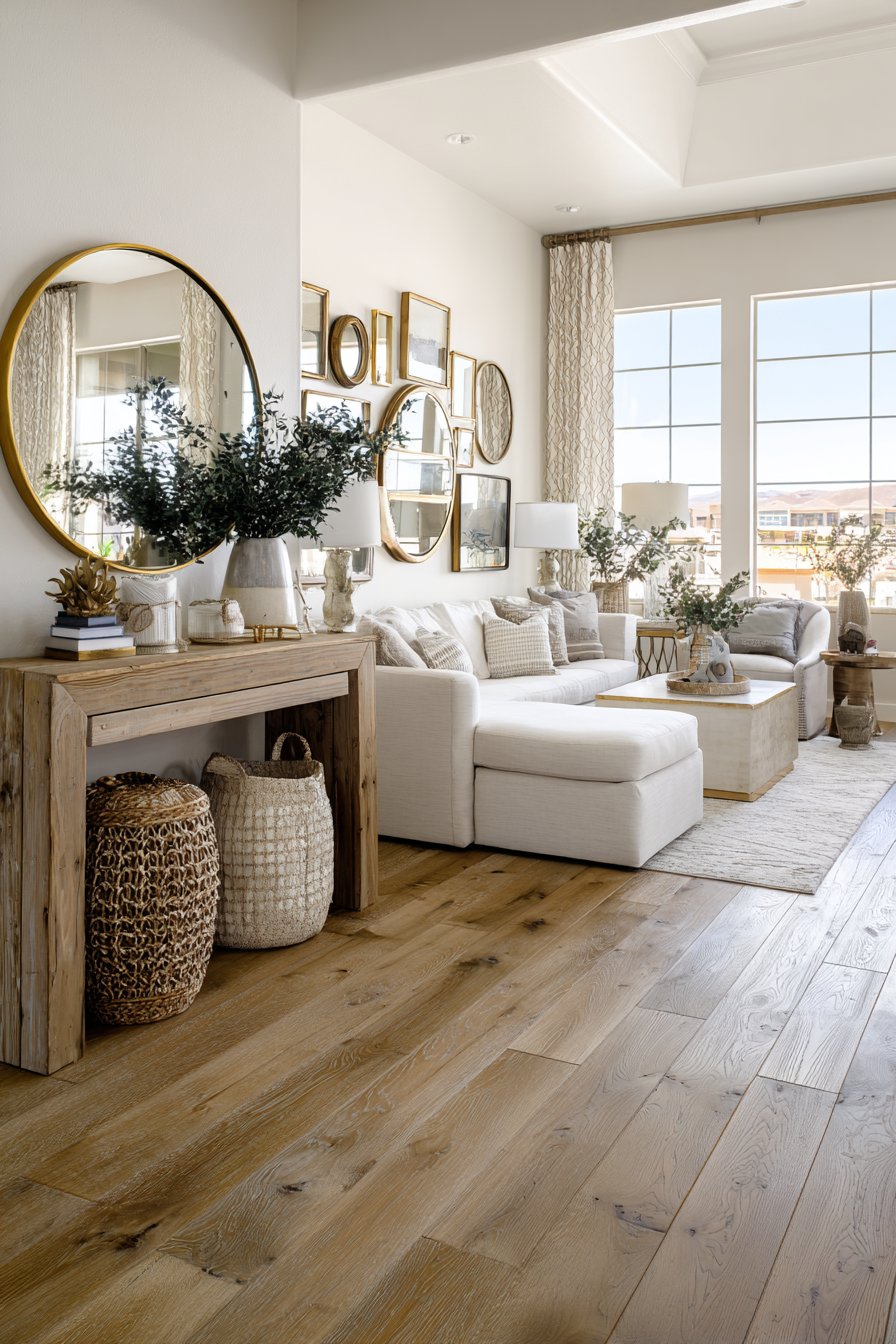
Natural oak flooring provides warm undertones that complement the mixed metallics. A plush neutral sectional offers comfortable seating without competing with the gallery wall’s drama. The mirrors collectively amplify available light, each reflective surface capturing and redistributing illumination from different angles. This creates a brighter, more dynamic space where light appears to dance across surfaces throughout the day.
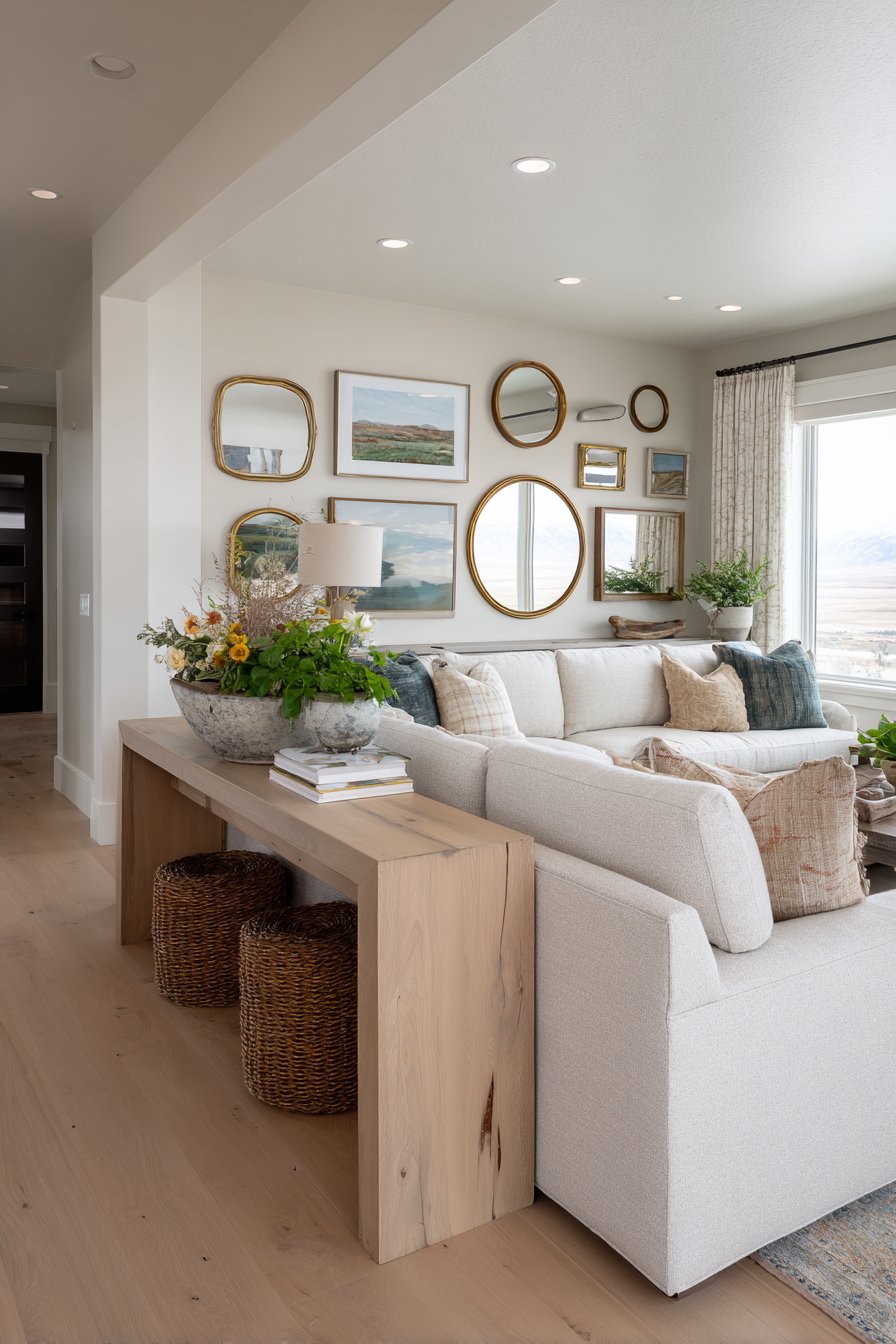
Professional styling of gallery walls requires careful planning despite their casual appearance. Start by arranging mirrors on the floor to experiment with composition before committing to wall placement
Essential design tips for mirror galleries:
- Maintain 2-3 inches of space between each mirror for visual breathing room.
- Vary sizes substantially, using at least three different scale categories for dynamic impact.
- Keep the overall arrangement roughly rectangular or oval to prevent visual chaos.
- Include at least three different frame finishes for eclectic richness.
- Use adhesive picture hanging strips for lighter mirrors to allow repositioning during the styling process.
3. Minimalist Scandinavian Circular Mirror
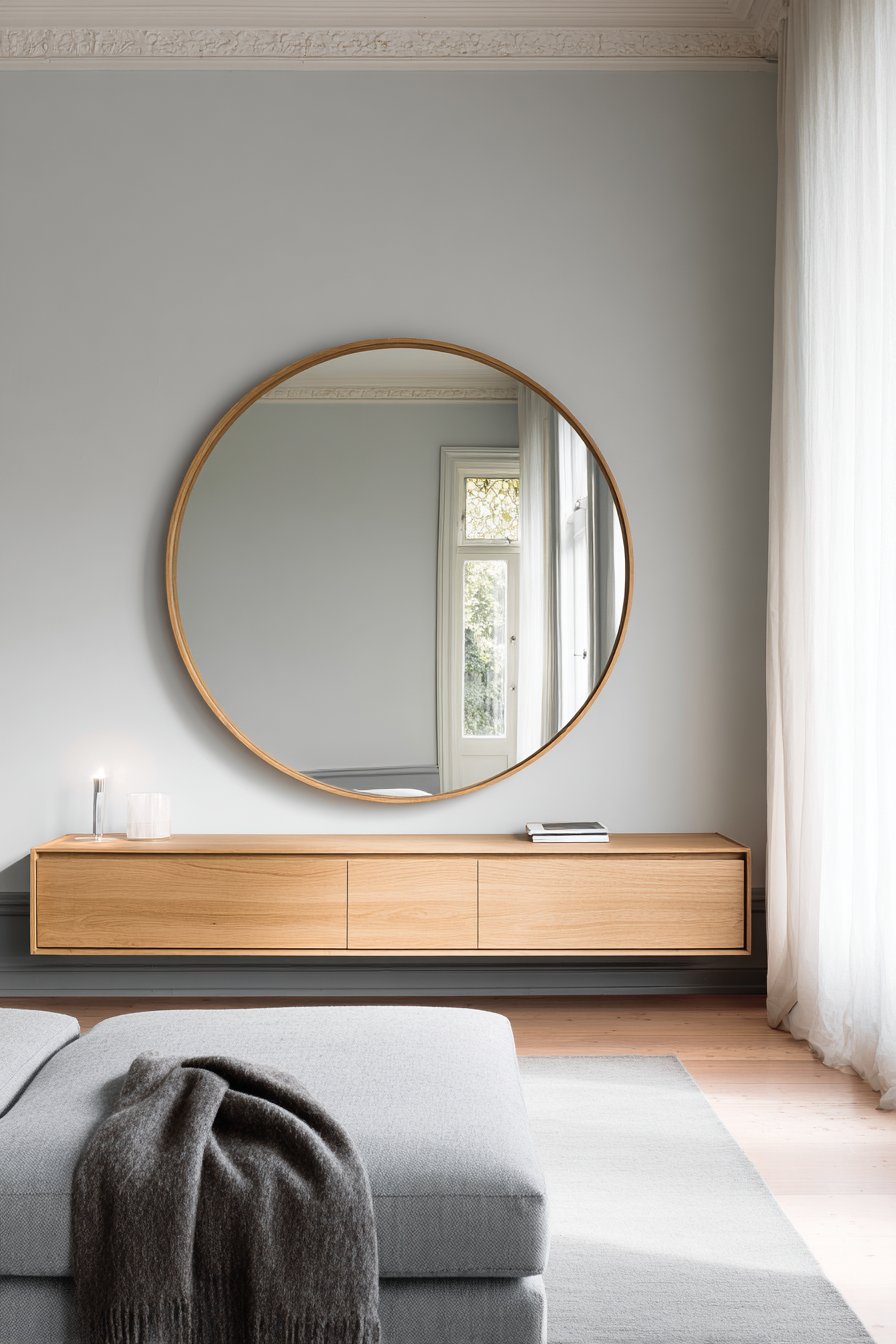
A large circular mirror with thin natural oak framing embodies Scandinavian simplicity and function. Positioned above a floating media console, this mirrors in living room ideas approach prioritizes clean lines and organic materials. The circular form softens the room’s angular architecture while the oak frame introduces warmth to the predominantly neutral palette.
Light grey walls create a serene backdrop that enhances the mirror’s natural wood tones. The floating console maximizes floor space visibility, contributing to the airy, uncluttered aesthetic central to Nordic design philosophy.
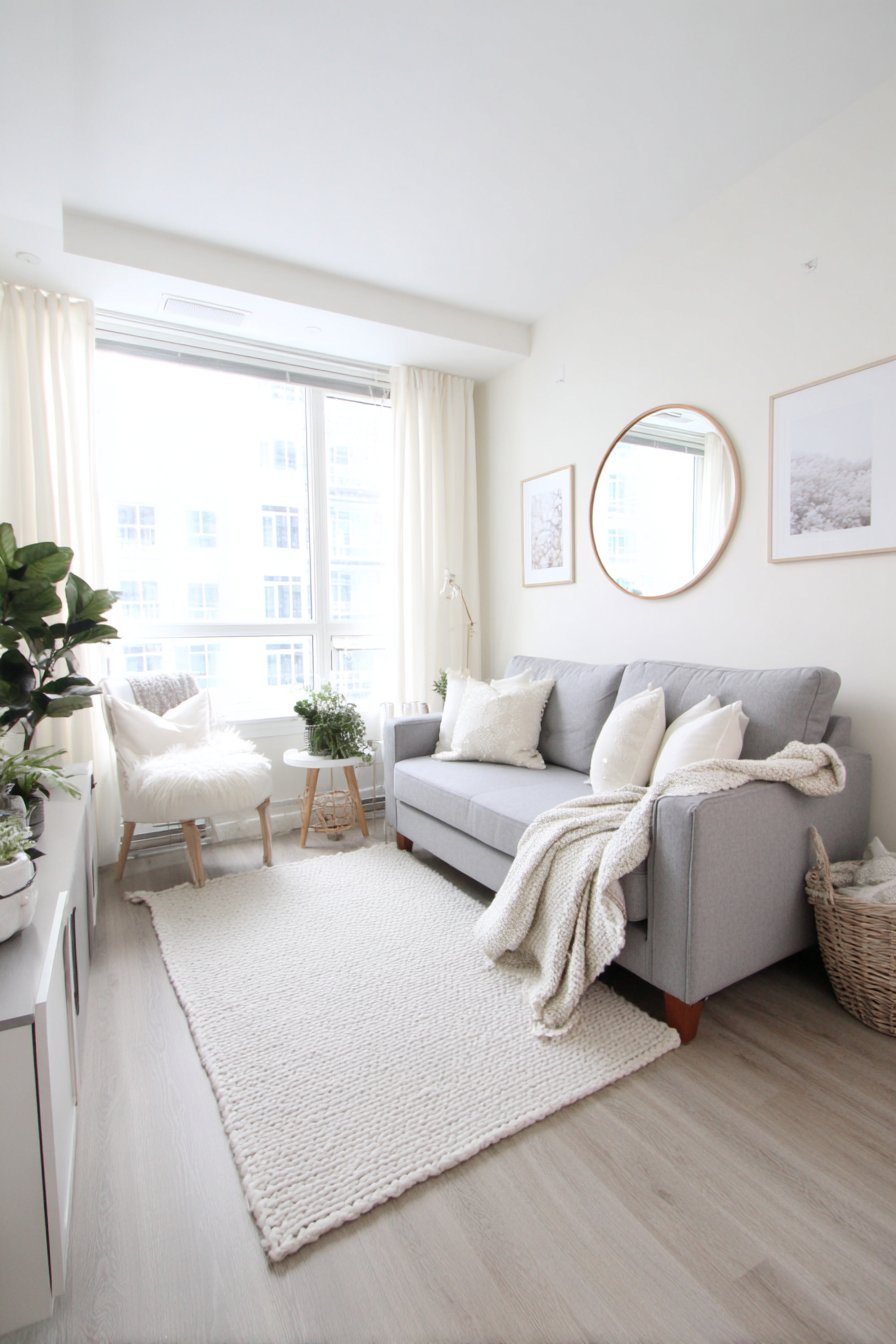
White oak flooring extends the natural material palette while reflecting ambient light. A low-profile grey fabric sofa faces the mirror wall, its simple silhouette maintaining visual quietness. A wool throw blanket in textured weave adds tactile interest without pattern complexity.
The absence of ornamental details allows each element to shine through purposeful selection and placement. Morning light streaming through sheer curtains creates gentle highlights on the mirror’s surface, its circular form capturing and redistributing illumination throughout the space.
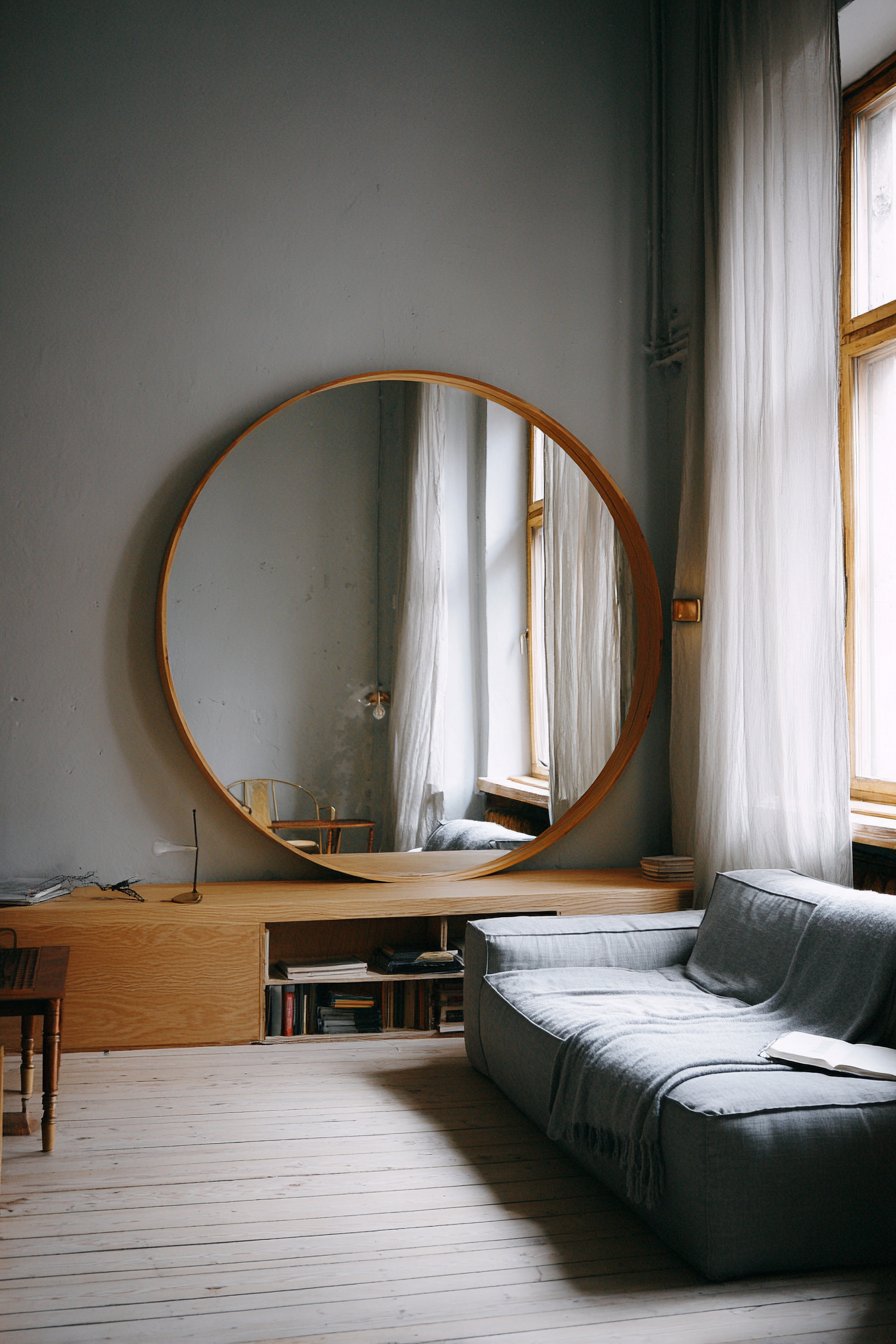
This minimalist approach proves that less truly can be more when each element serves a clear purpose. The mirror reflects the opposite wall’s window, effectively creating the illusion of an additional light source. This doubling effect brightens the space without additional fixtures or energy consumption. The circular shape provides visual softness that contrasts with rectangular furniture pieces and architectural elements.
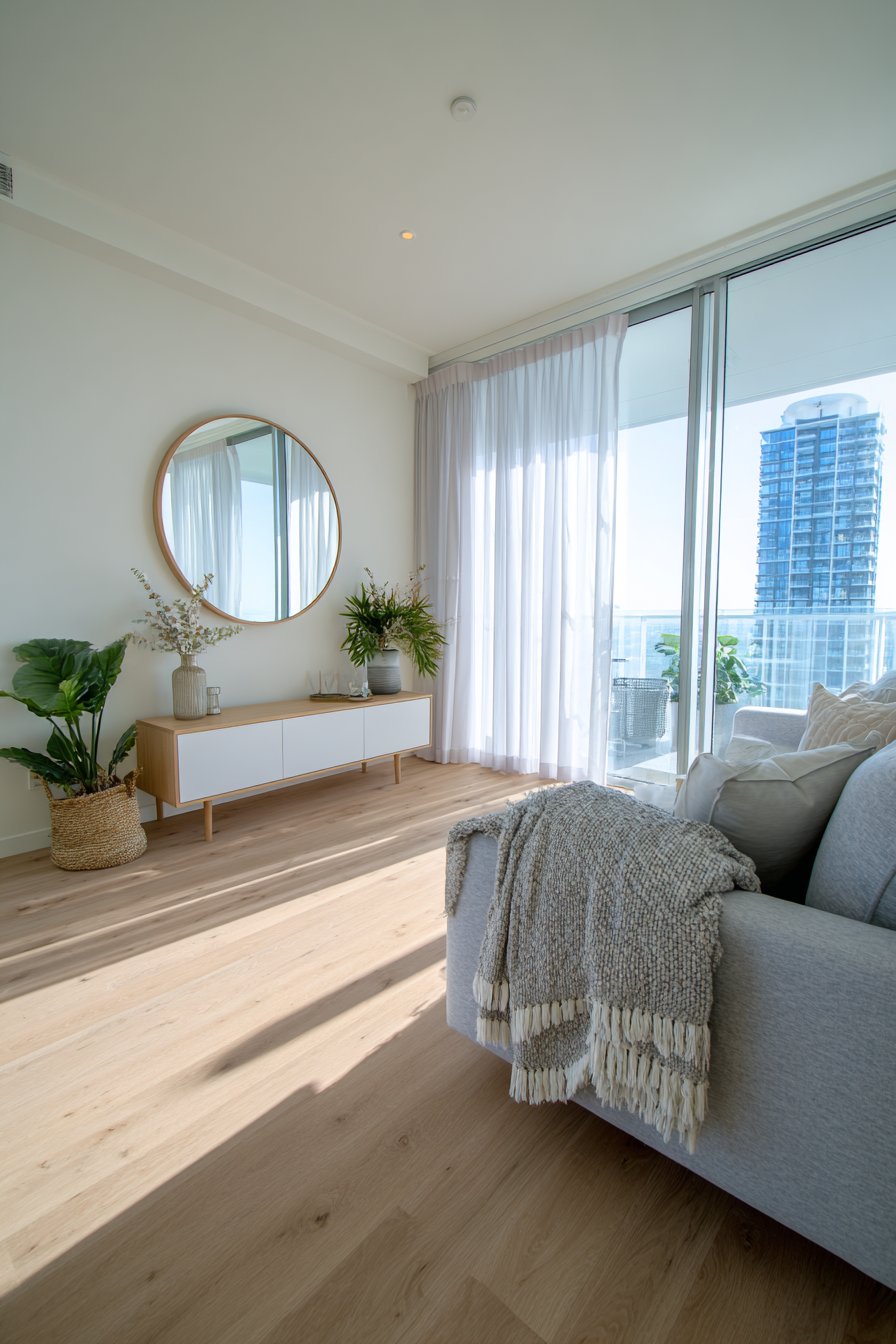
Scandinavian design succeeds through restraint, quality materials, and functional beauty. Key principles for this aesthetic: Select mirrors with frame thickness under one inch to maintain delicate proportions. Choose diameters between 30-40 inches for living rooms to create impact without overwhelming.
Position mirrors to reflect natural light sources or views rather than clutter. Limit color palette to 3-4 neutral tones with wood as the primary accent. Embrace negative space as a design element, allowing walls and surfaces to breathe.
4. Traditional Baroque Mirror Above the Fireplace
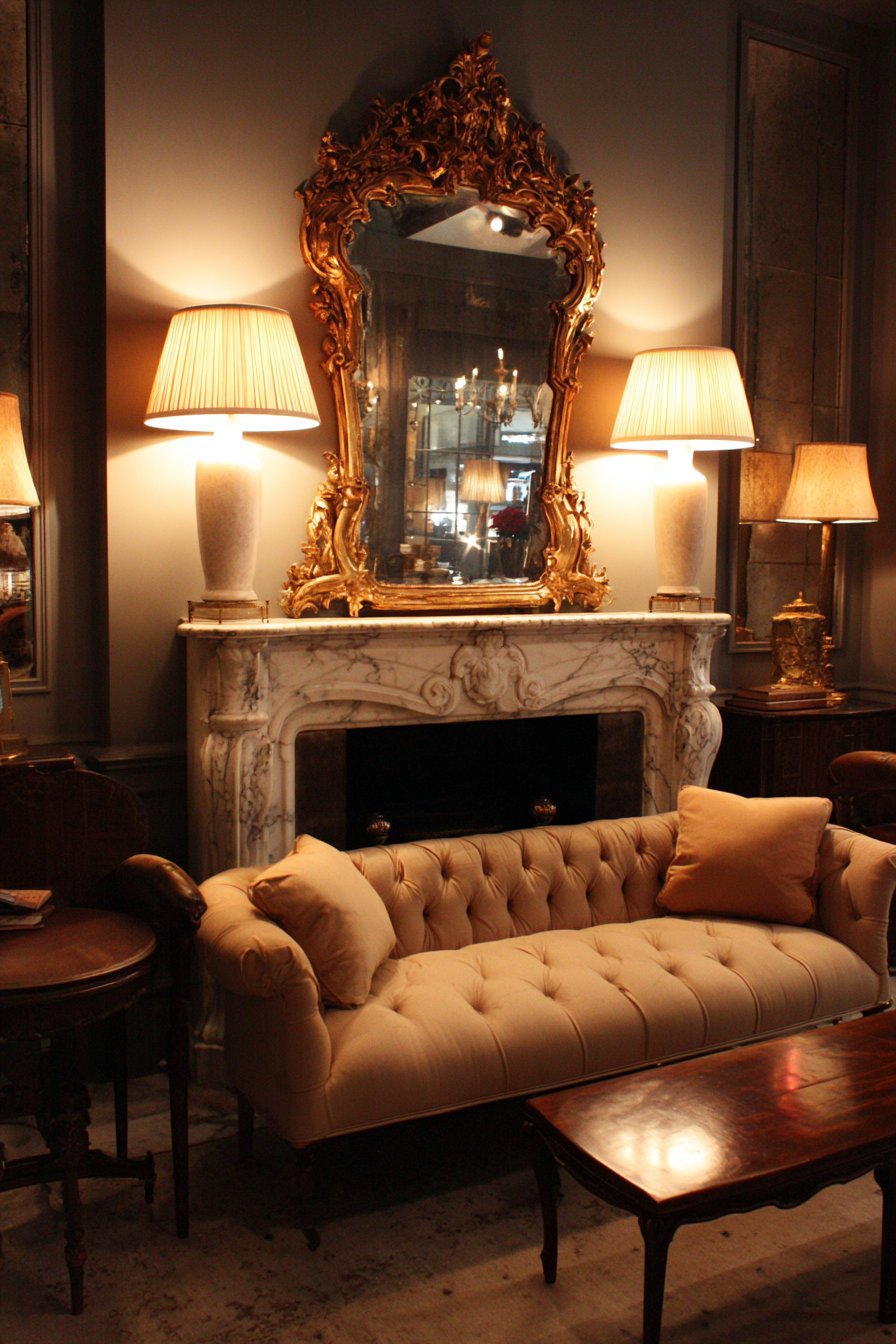
An ornate gold-leaf framed baroque-style mirror commands attention as the living room’s undisputed focal point. Positioned above a white marble fireplace mantel, this mirrors in living room ideas approach celebrates classical elegance and timeless sophistication.
The mirror’s detailed carved frame features acanthus leaves, scrollwork, and dimensional ornamentation that catches light from multiple angles. The gold-leaf finish radiates warmth, complementing the cool white marble below and creating luxurious contrast. This traditional pairing honors centuries of design precedent where mantels served as natural locations for prized mirrors.
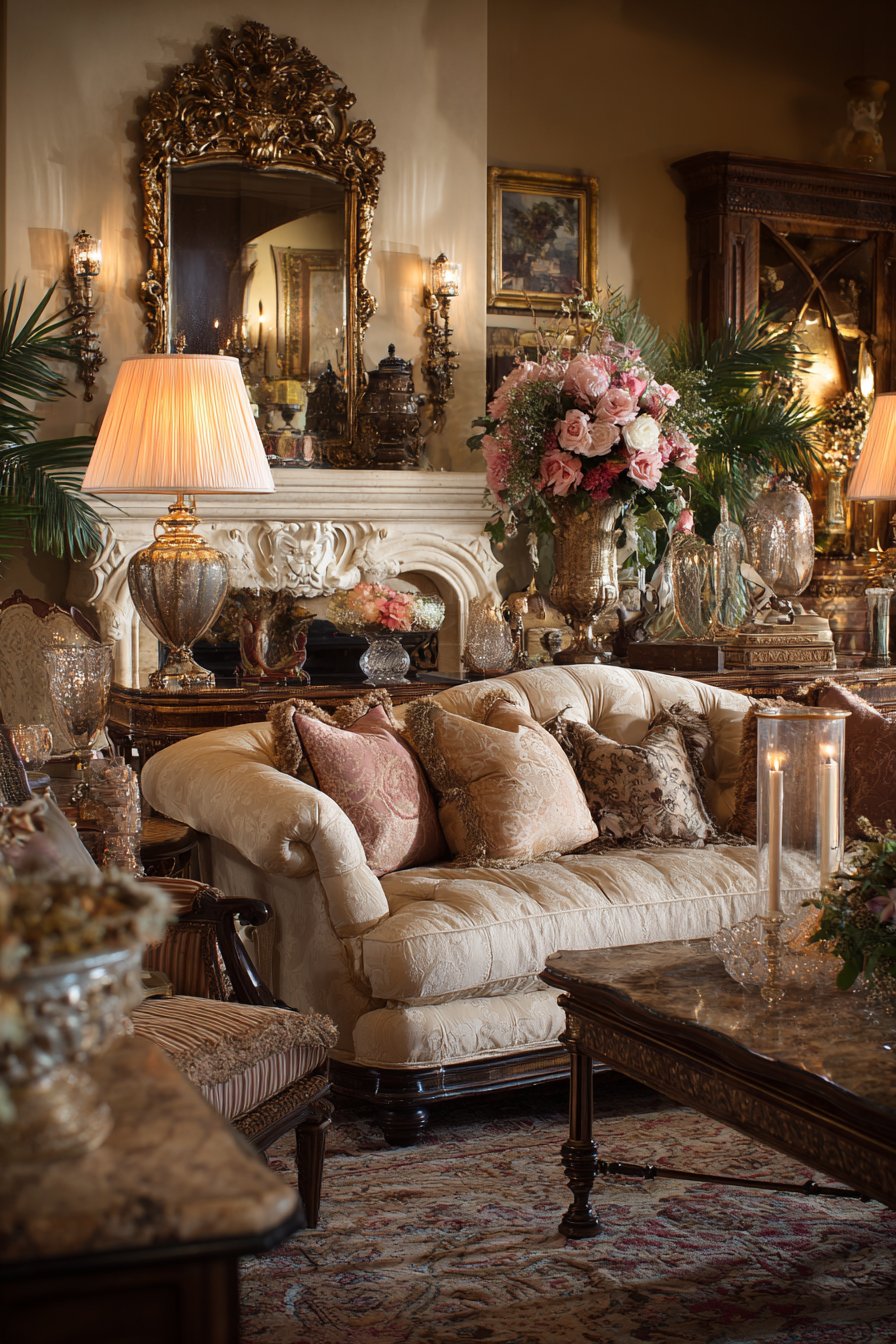
Classic furnishings including a tufted beige velvet sofa and mahogany side tables complete the refined aesthetic. The velvet’s subtle sheen echoes the mirror’s reflective surface while maintaining appropriate visual weight. Mahogany’s rich wood grain and deep tones ground the space, preventing the gold and white palette from feeling too light. Table lamps with traditional bases create warm ambient lighting that the beveled mirror glass captures and multiplies.
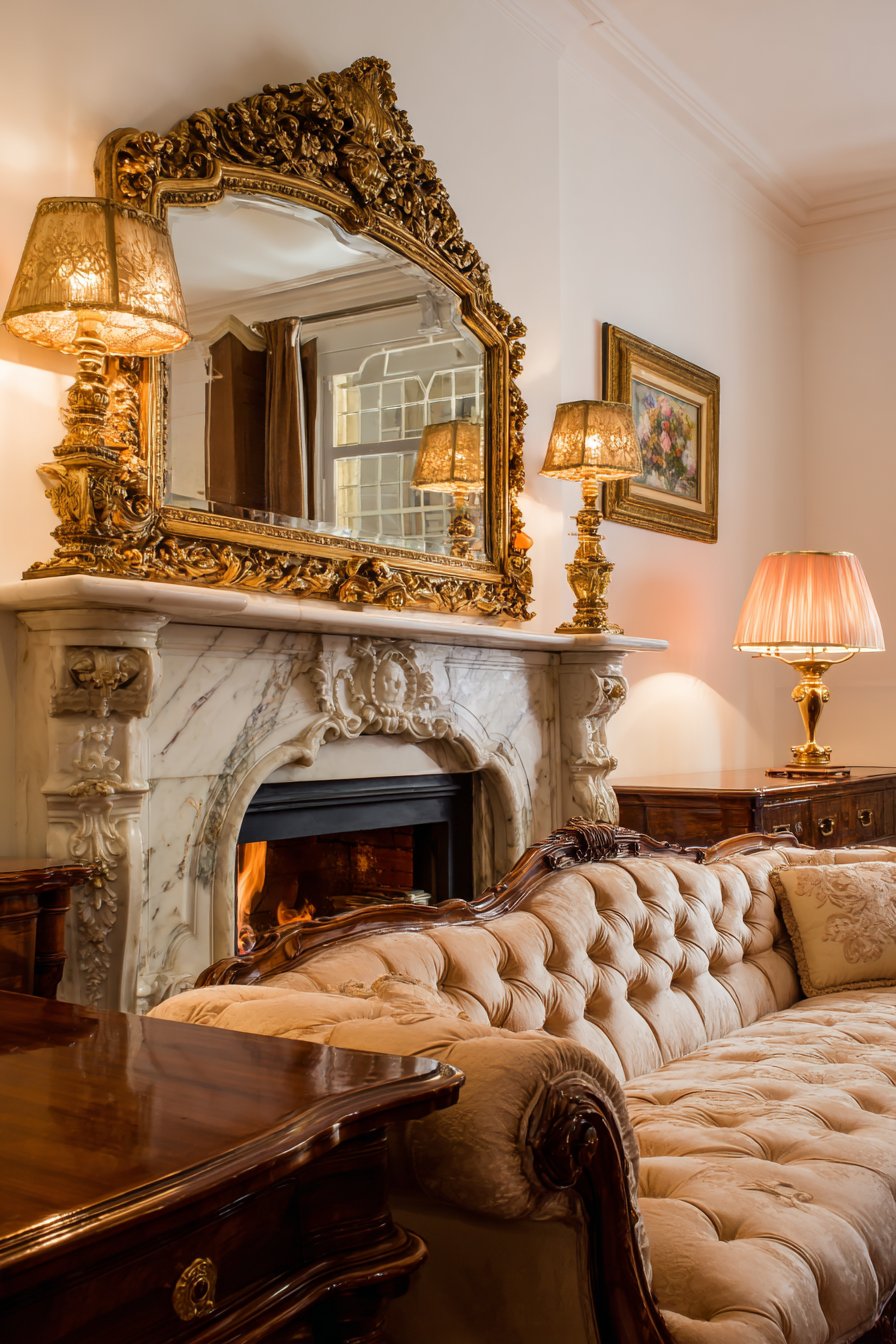
The beveled edge adds another layer of sophistication, refracting light into subtle rainbow prisms. This optical quality was historically a mark of fine craftsmanship and remains highly valued in traditional interiors. The mirror reflects the room’s architectural details, chandelier, and opposite windows, creating depth and dimensional interest. Its size and prominence establish the fireplace wall as the room’s anchor point.
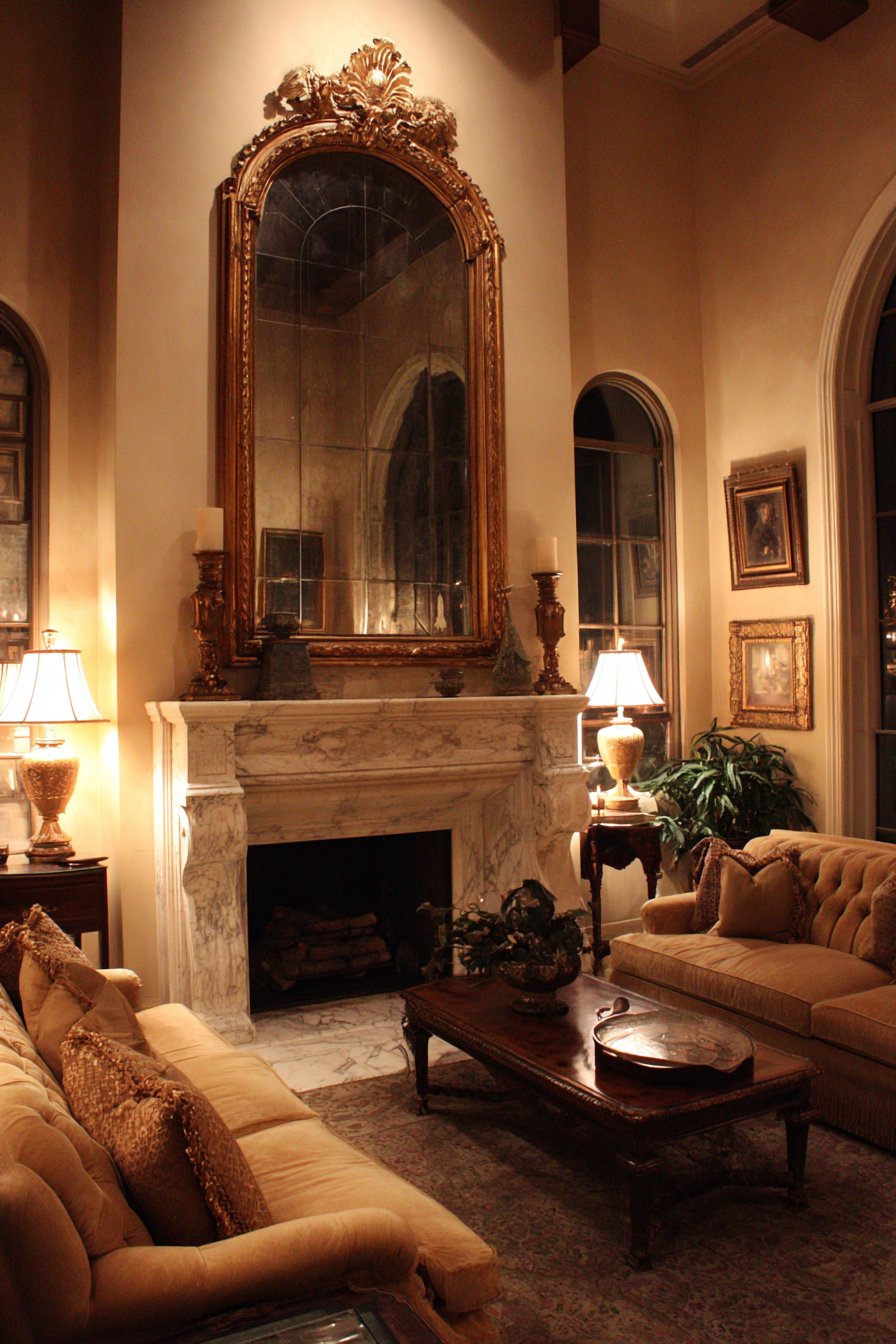
Essential guidelines for traditional elegance:
- Select mirror dimensions that match or exceed the fireplace opening width for proper scale.
- Maintain gold or gilt finishes in warm tones rather than brassy yellows for an authentic period feel.
- Include beveled glass edges to enhance light refraction and perceived value.
- Position the mirror bottom 4-6 inches above the mantel for proper proportion.
- Balance ornate frames with simpler surrounding décor to prevent visual overcrowding.
5. Modern Farmhouse Arched Leaning Mirror
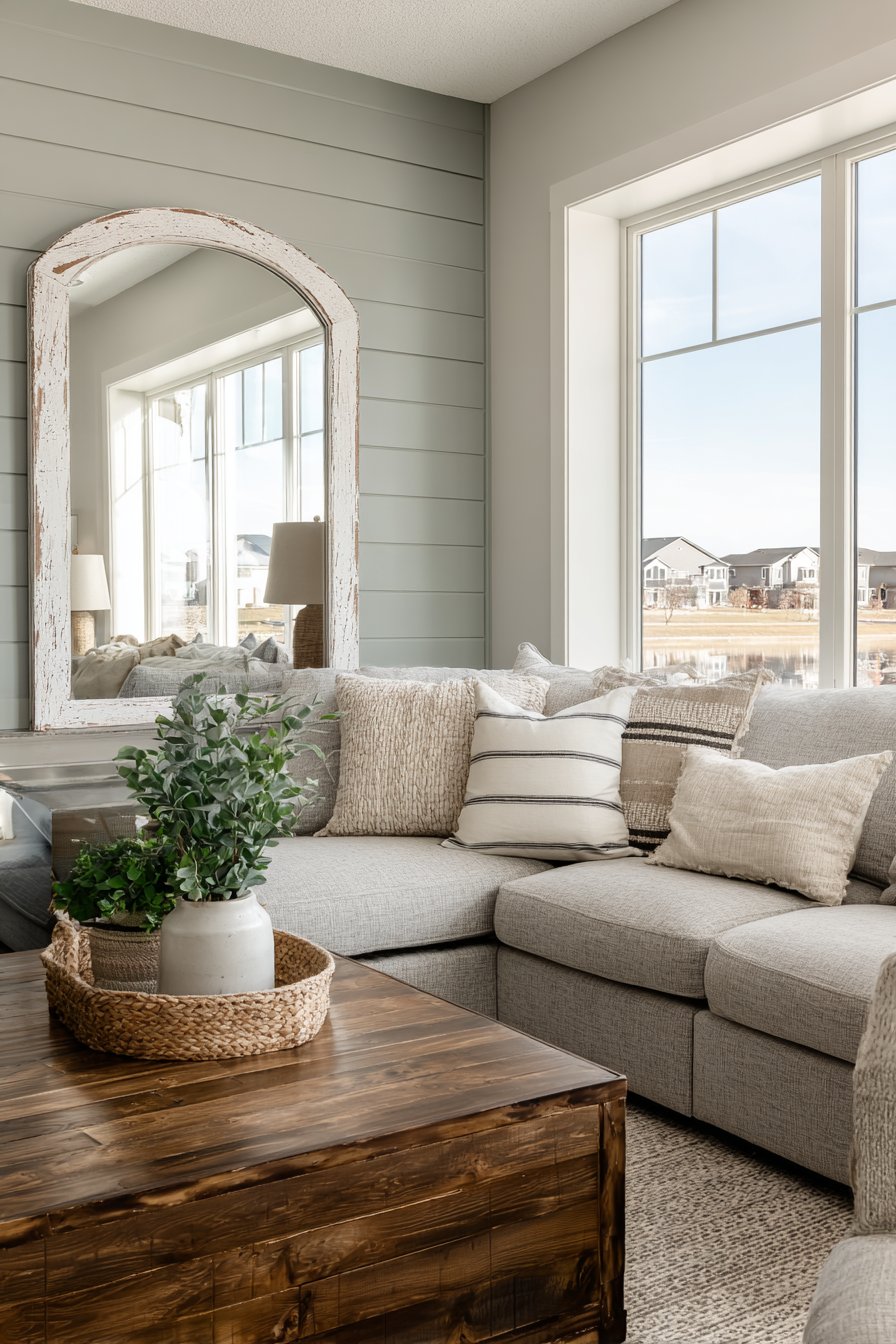
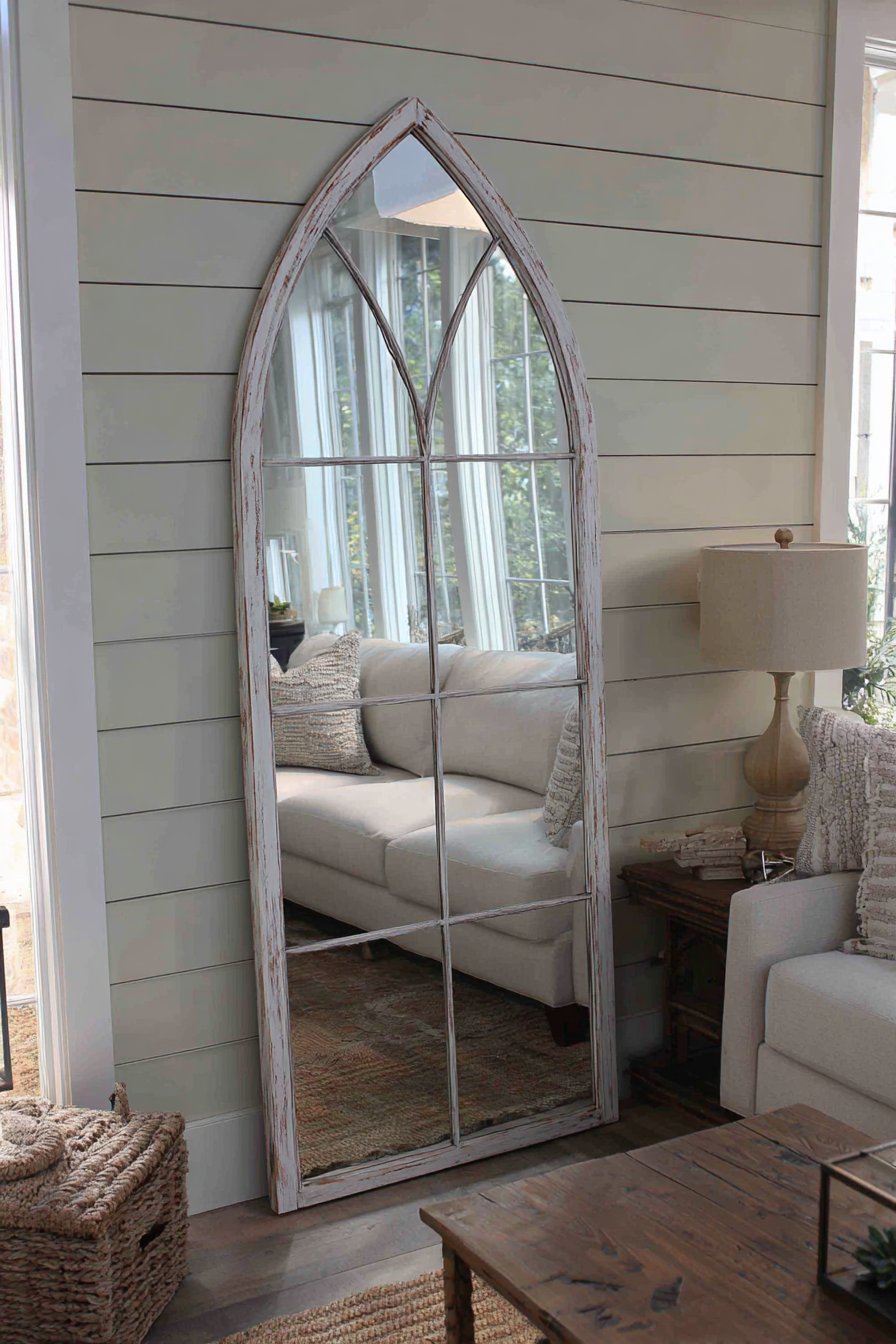
A substantial arched mirror with distressed white wooden frame leans casually against shiplap-clad walls painted soft sage green. This relaxed approach to mirrors in living room ideas blends rustic charm with modern sensibility. The arched top references architectural elements from historic farmhouses while the distressed finish suggests authenticity and age.
Leaning rather than hanging creates approachable, lived-in style that characterizes modern farmhouse aesthetics. The sage green wall color provides gentle contrast to the white frame while maintaining the palette’s overall softness.
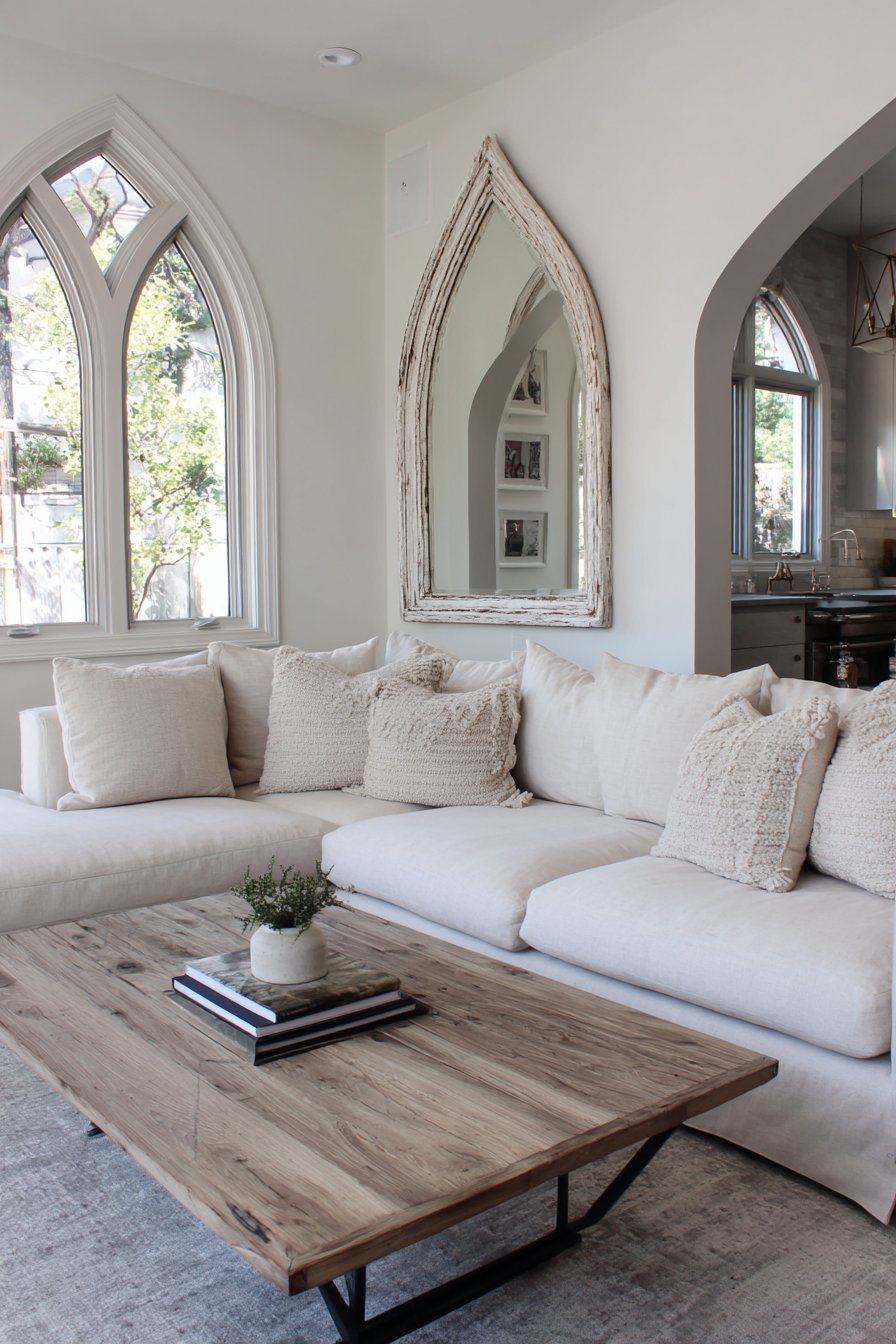
A neutral linen sectional with textured throw pillows offers comfortable, family-friendly seating. The sectional’s casual slipcover construction aligns with farmhouse practicality and relaxed elegance. A reclaimed wood coffee table introduces authentic patina and natural imperfection that machine-made furniture cannot replicate. These elements create cohesive storytelling about comfortable, unpretentious living spaces that prioritize function and warmth.
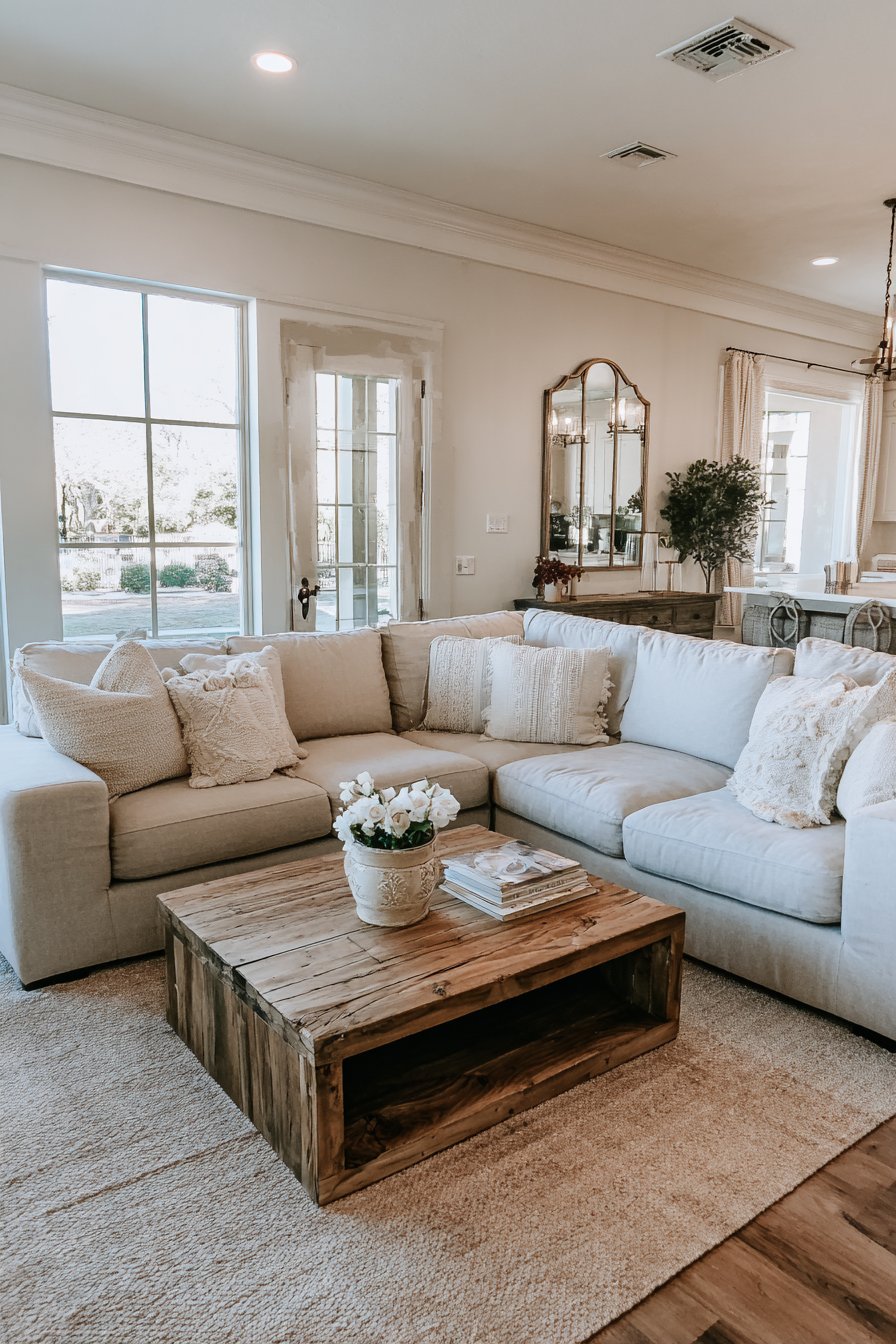
Natural light from nearby windows bounces off the mirror’s generous surface, illuminating the space with reflected daylight. The arched shape captures light from a wider angle than rectangular mirrors, distributing brightness more effectively throughout the room.
The leaning position creates visual softness, suggesting the mirror could be moved or repositioned according to changing needs or preferences. This flexibility appeals to modern sensibilities even within traditionally-inspired design frameworks. Modern farmhouse style succeeds through careful balance between rustic elements and contemporary comfort.
Key considerations for this aesthetic:
- Choose mirror heights between 5-7 feet for proper leaning angle and visual impact.
- Ensure frame distressing appears natural rather than artificially aged for authentic character.
- Position leaning mirrors against walls with proper backing support and secure with anti-tip hardware
- Coordinate frame colors with wall treatments for cohesive flow rather than stark contrast.
- Incorporate other arched elements in the room to create visual rhythm and intentional design repetition.
6. Industrial Loft Floor-to-Ceiling Mirror Panel
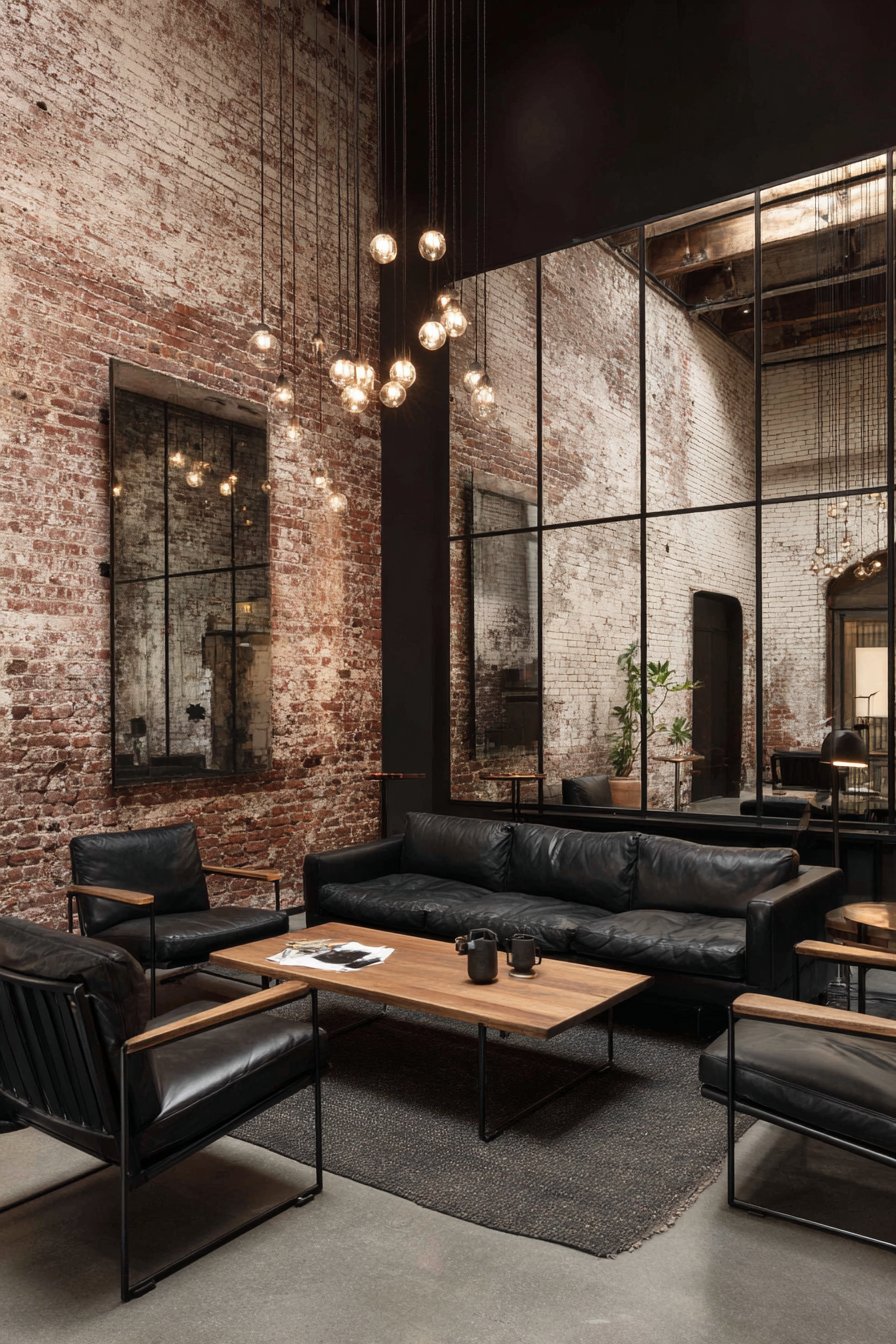
A frameless mirror panel stretching from floor to ceiling transforms an industrial loft’s proportions dramatically. Installed adjacent to exposed brick walls, this bold mirrors in living room ideas approach demonstrates how reflective surfaces can manipulate spatial perception.
The frameless design eliminates visual barriers between the mirror and surrounding architecture, allowing the reflection to integrate seamlessly with the room. Concrete floors and raw brick provide textural contrast to the mirror’s perfectly smooth, polished surface. This juxtaposition of refined and rough materials defines industrial aesthetic sensibilities.
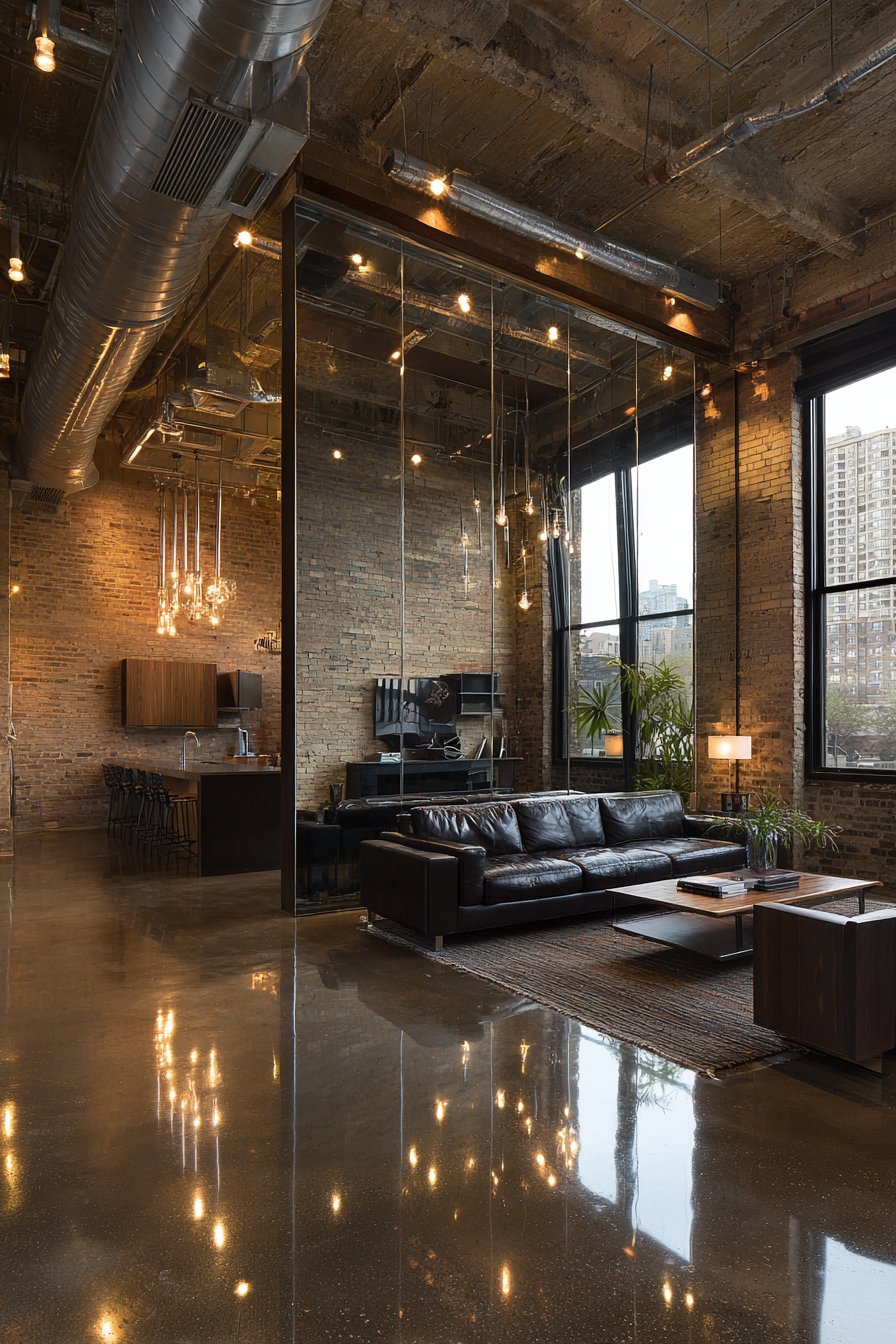
The mirror dramatically expands perceived space by reflecting the entire room height. It captures Edison bulb pendant lights and metal-framed furniture, multiplying the industrial elements while amplifying available light. Dark leather sofa maintains the space’s masculine edge while providing comfortable, durable seating. The sofa’s rich patina develops over time, adding character that complements the aged brick and weathered concrete.
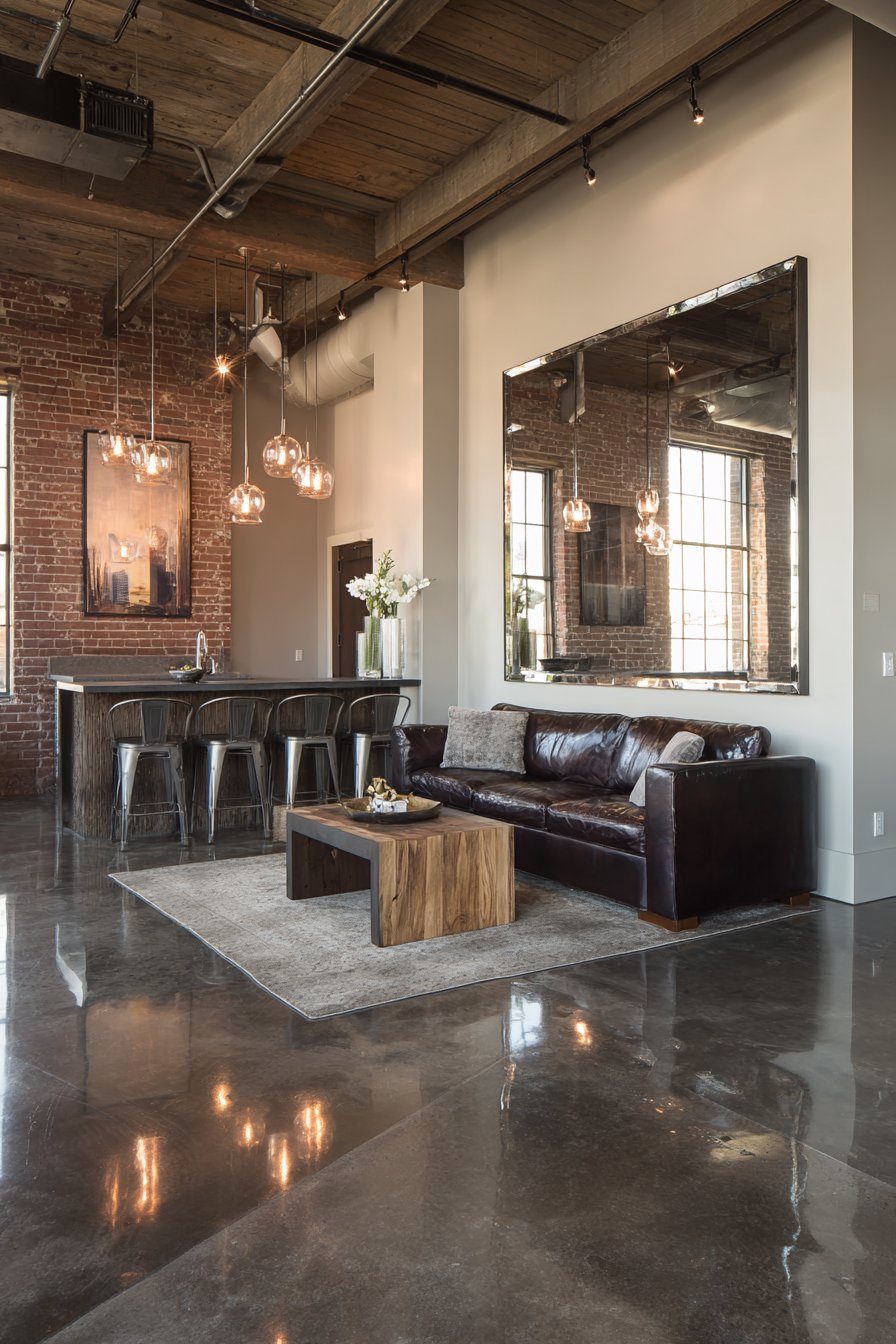
Floor-to-ceiling mirrors require professional installation and careful consideration of structural elements. The panel must be properly secured at multiple points to ensure safety and prevent movement. The frameless design demands precise cutting and polished edges to prevent injury and achieve seamless appearance.
When successfully executed, this treatment creates restaurant or gallery-quality sophistication within residential spaces. Industrial design celebrates honest materials and functional beauty without unnecessary embellishment.
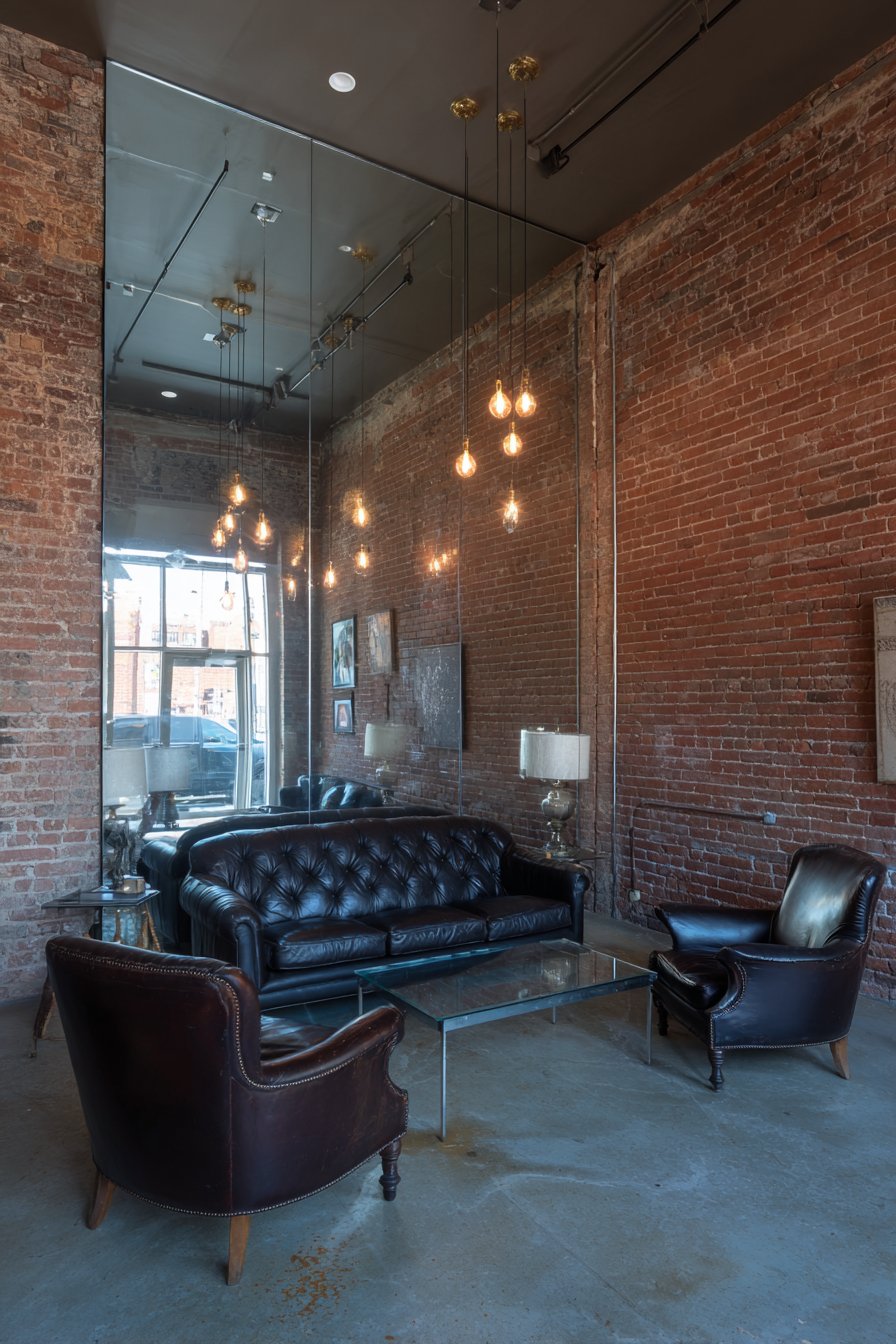
Critical installation and design notes:
- Hire professional installers for mirrors exceeding 4 feet in any dimension for safety assurance.
- Ensure mirror backing includes safety film to contain glass if breakage occurs.
- Position mirrors perpendicular to windows rather than directly opposite to avoid glare issues.
- Include proper wall anchoring into studs or concrete using appropriate mounting hardware.
- Clean frameless mirrors with microfiber cloths and ammonia-free cleaners to prevent streaking and maintain clarity.
7. Bohemian Sunburst Mirror Collection
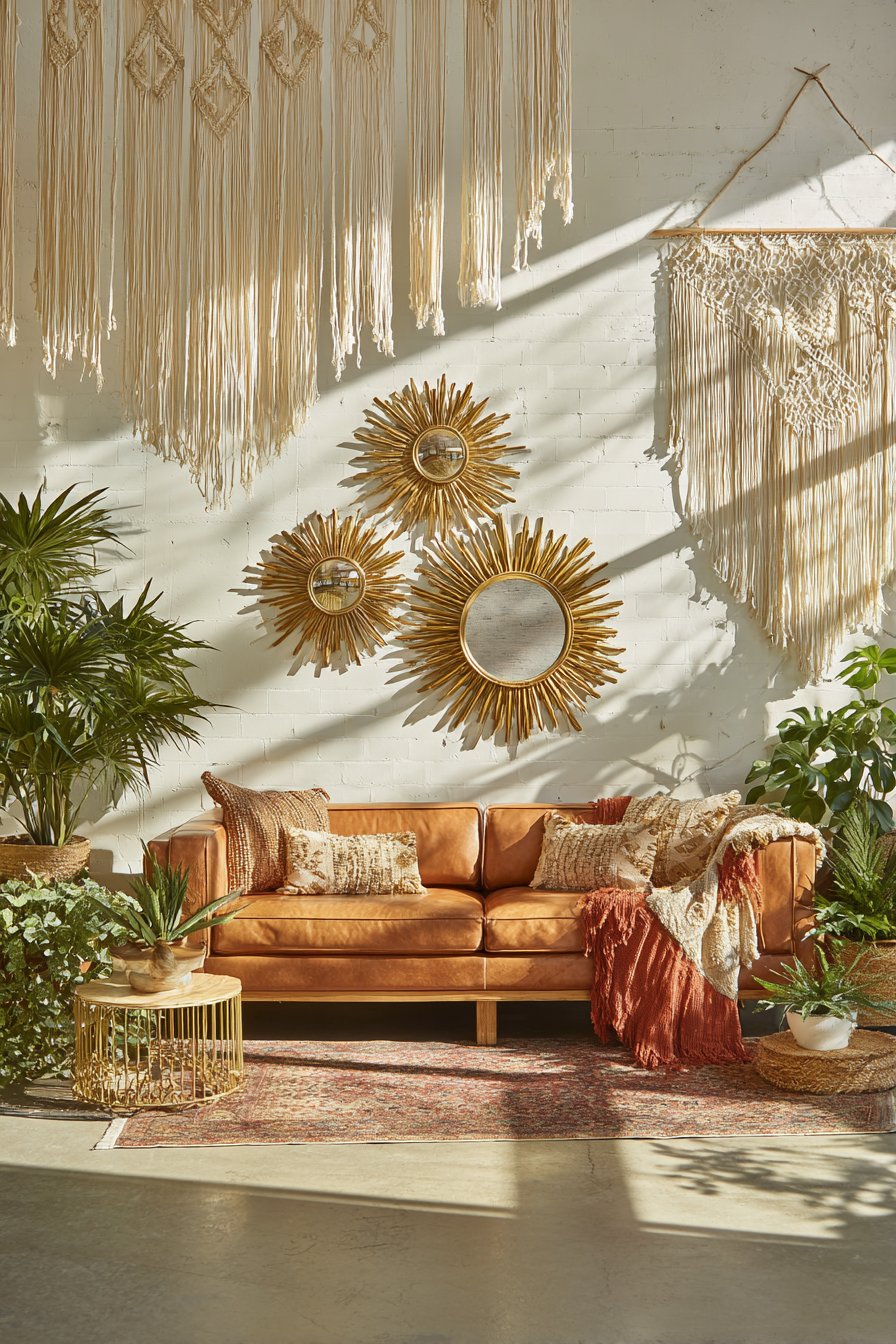
Three graduated-size gold sunburst mirrors cluster above a low-profile cognac leather sofa, creating dramatic focal point. This artistic approach to mirrors in living room ideas celebrates bohemian maximalism and organic metalwork.
The sunburst design features radiating metal spokes that catch light from countless angles, creating dynamic visual texture. Clustering multiple mirrors rather than using a single large piece adds dimension and personality that single mirrors cannot achieve. The gold finish brings warmth and richness that complements the cognac leather’s caramel tones.
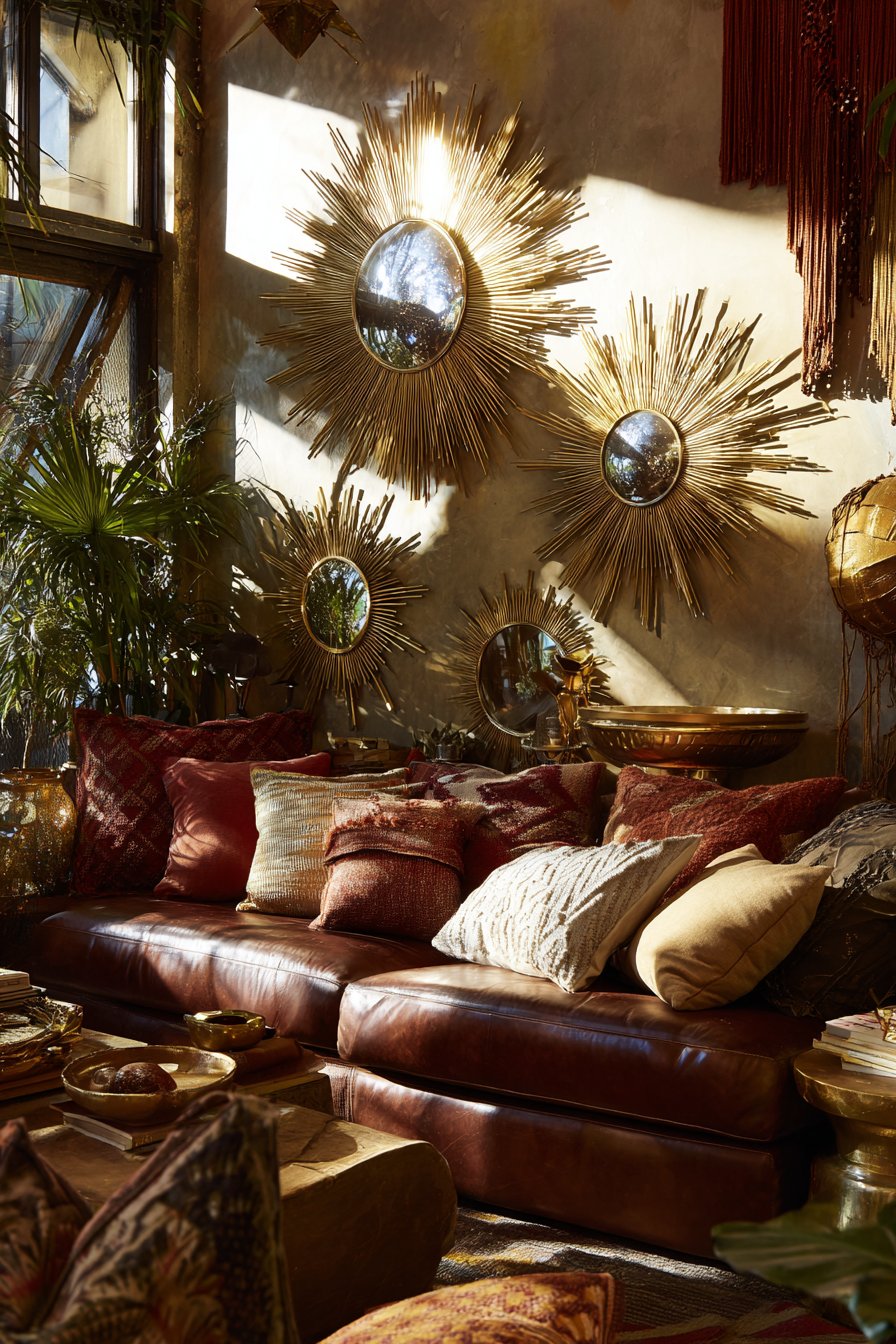
Macramé wall hangings and layered textiles in warm terracotta and cream tones extend the bohemian narrative throughout the space. These handcrafted elements contribute texture and visual interest while supporting the room’s artisanal, collected-over-time aesthetic.
Indoor plants in ceramic vessels add life and organic shapes that soften the room’s hard surfaces. The combination of natural fibers, living greenery, and metallic accents creates the layered complexity that defines successful bohemian interiors.
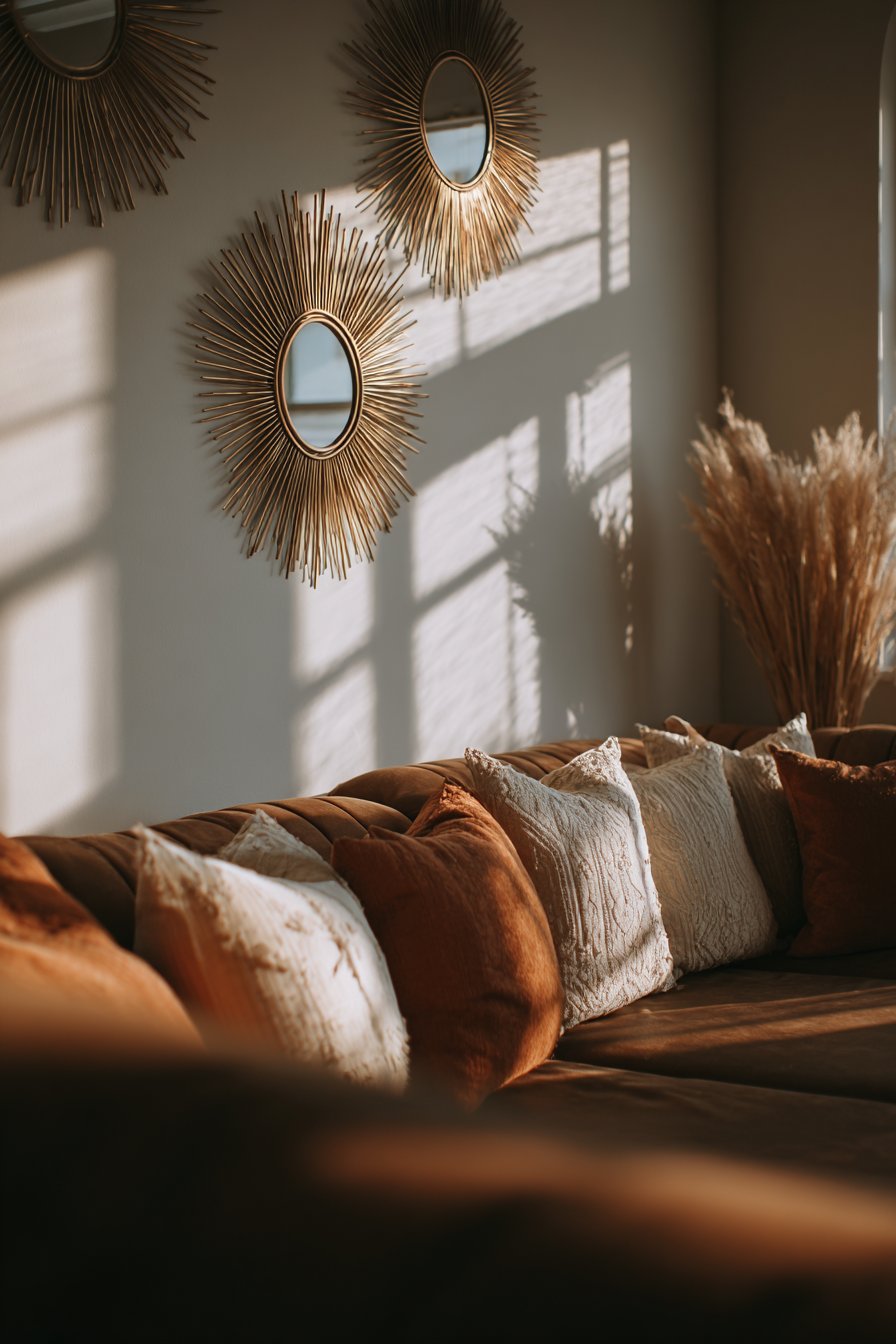
Golden hour sunlight creates magical moments in this space, casting dramatic shadows through the sunburst spokes. The mirrors’ reflective centers capture warm afternoon light while the radiating metal elements create intricate shadow patterns on surrounding walls.
This dynamic quality means the room constantly changes appearance throughout the day, revealing different dimensions of its character as light angles shift. Bohemian style thrives on personal expression and fearless combination of diverse elements.
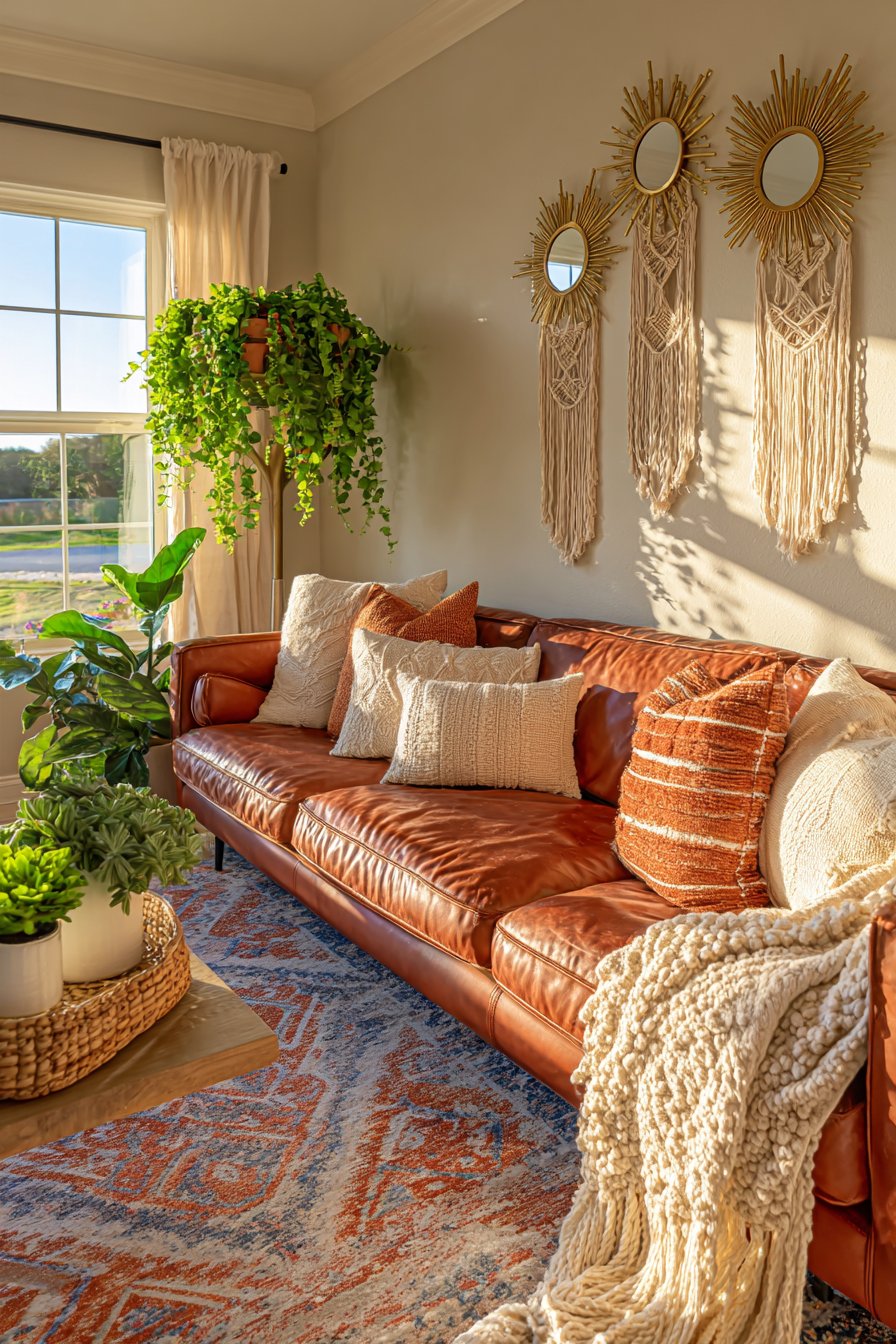
Guidelines for achieving bohemian mirror styling:
- Mix metallic finishes freely, combining brass, copper, and gold for dimensional richness.
- Vary mirror sizes substantially within collections, using pieces ranging from 18-36 inches in diameter.
- Offset centers rather than aligning them perfectly for organic, asymmetric appeal.
- Layer mirrors with other wall décor including textiles, plants, and artwork for maximal visual interest
- Choose sunburst designs with varying spoke patterns to prevent monotonous repetition even within collections.
8. Glamorous Antiqued Mirror Tile Wall
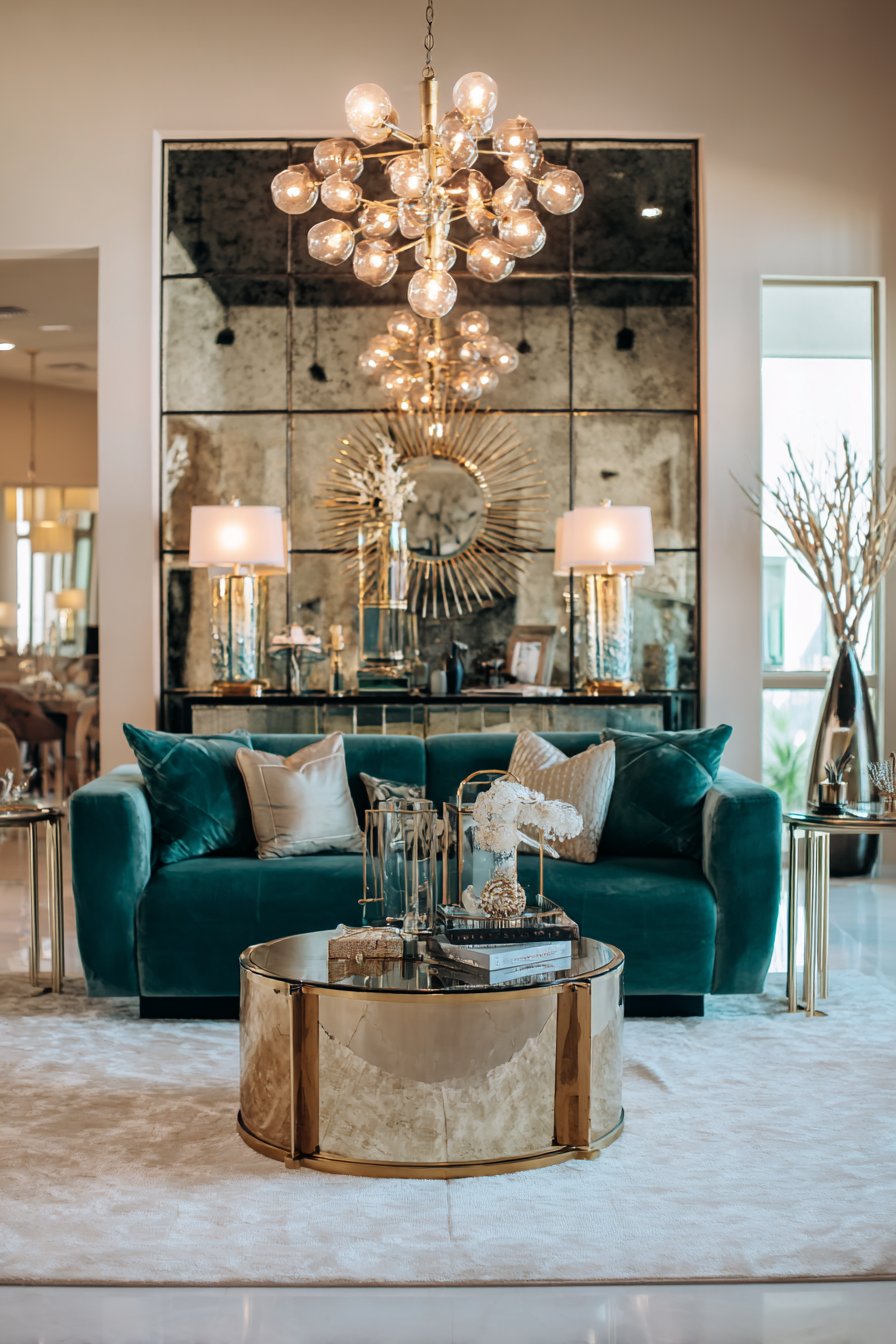
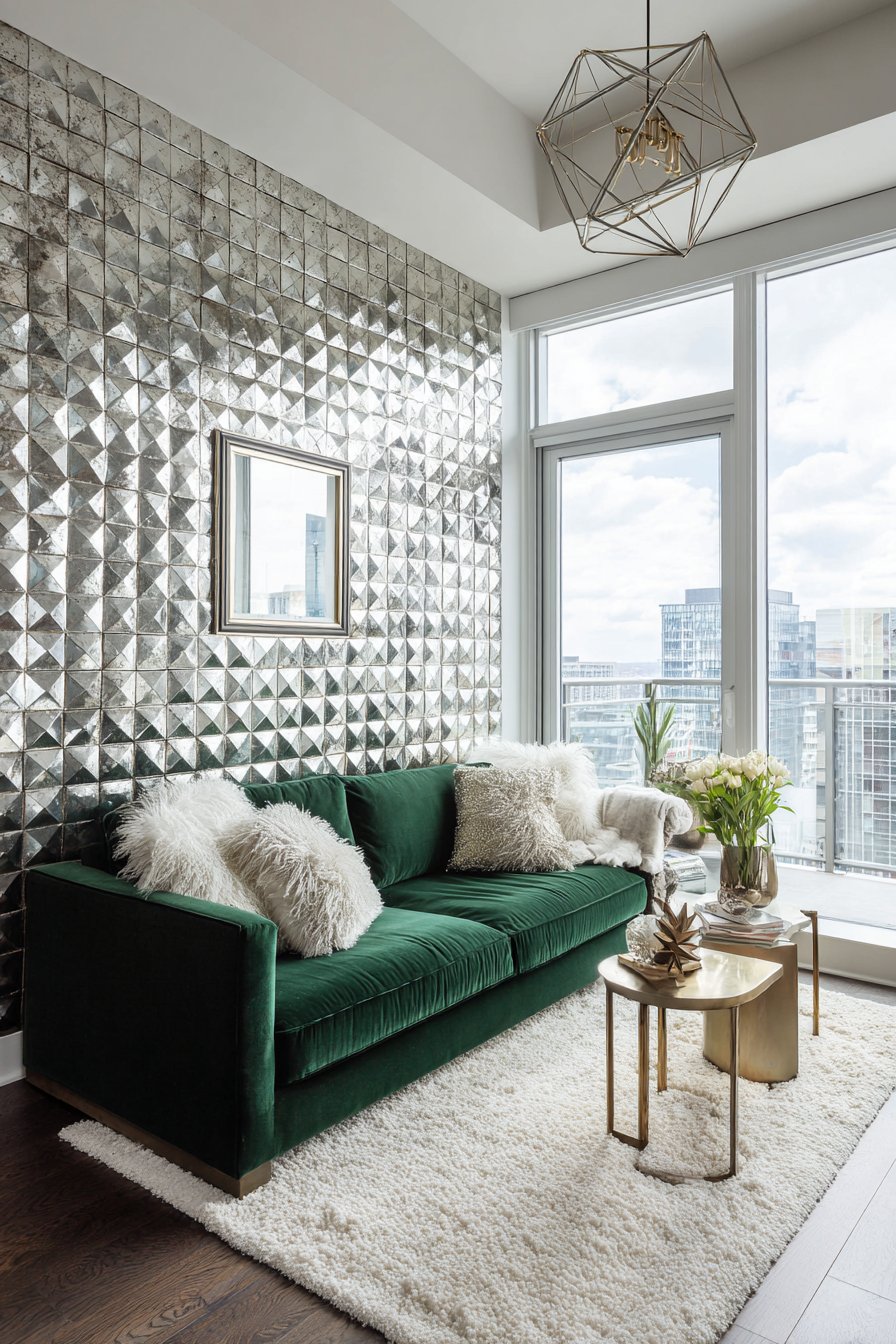
An entire accent wall covered in antiqued mirror tiles creates sophisticated dimension behind an emerald green velvet sofa. This luxurious approach to mirrors in living room ideas demonstrates how reflective surfaces can serve as architectural treatments rather than standalone décor.
The mirror tiles’ faceted surface creates subtle dimension through varied angles, each small section catching light differently. The antiqued finish adds depth and prevents the stark brightness of new mirrors, creating vintage glamour and lived-in elegance. The emerald sofa provides dramatic color contrast against the soft, muted reflection.
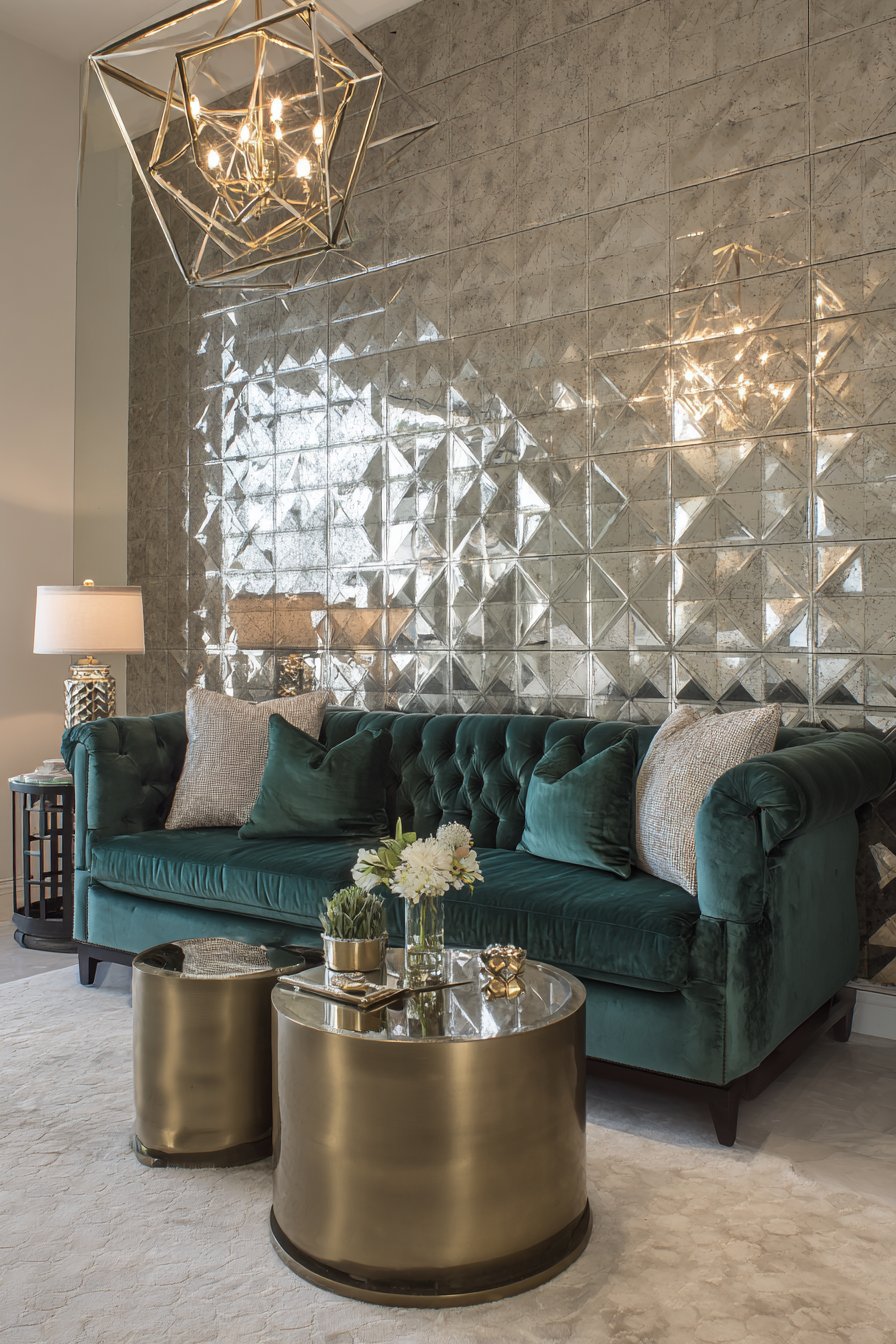
Modern geometric chandelier suspended above introduces contemporary elements that prevent the space from feeling overly traditional. Brass accent tables pick up warm tones from the antiqued mirror finish while adding another layer of metallic sophistication.
A plush ivory area rug grounds the seating area, its neutral tone balancing the emerald’s boldness and allowing the mirror wall to remain the focal point. These carefully curated luxury elements create cohesive glamorous aesthetic without feeling overdone.
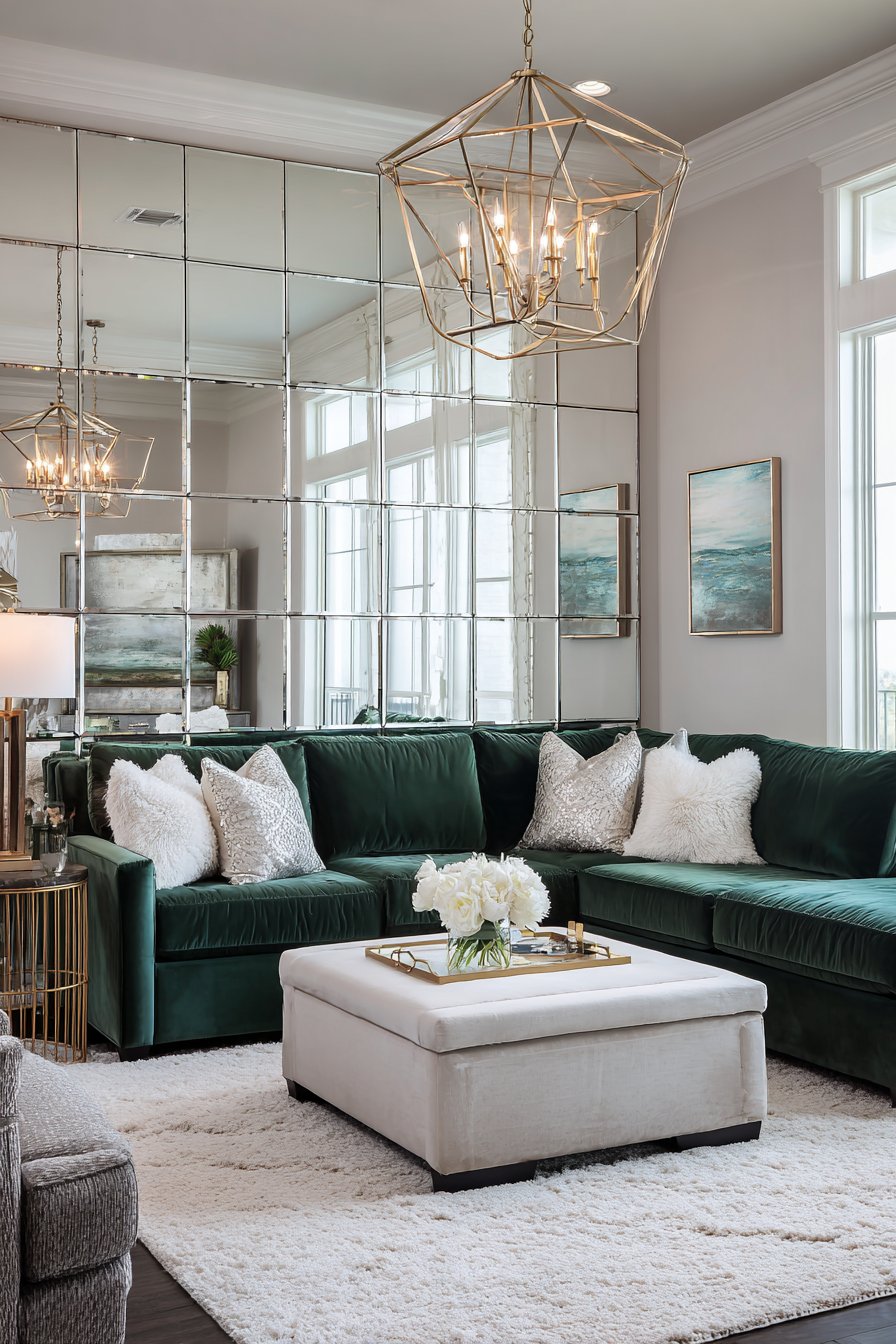
The mirror wall’s light-catching properties transform the room’s ambiance throughout the day and evening. During daylight hours, it reflects and distributes natural illumination, keeping the space bright despite the dark sofa color.
Evening artificial lighting creates warm, romantic glow as the chandelier and accent lighting reflect infinitely across the faceted surfaces. This atmospheric quality elevates everyday living into special occasion elegance. Creating mirror tile installations requires precision and professional expertise for seamless results.
Essential considerations for mirror tile walls:
- Use tiles measuring 12×12 inches or smaller for manageable installation and an authentic antique appearance.
- Apply adhesive specifically formulated for mirror applications to prevent chemical reactions with backing.
- Maintain consistent grout lines between tiles, typically 1/8 inch, for uniform appearance.
- Consider hiring professionals for installations exceeding 50 square feet to ensure proper technique and safety.
- Clean antiqued mirrors gently to preserve the vintage patina without removing the desired finish.
9. Transitional Symmetrical Mirror Flanking
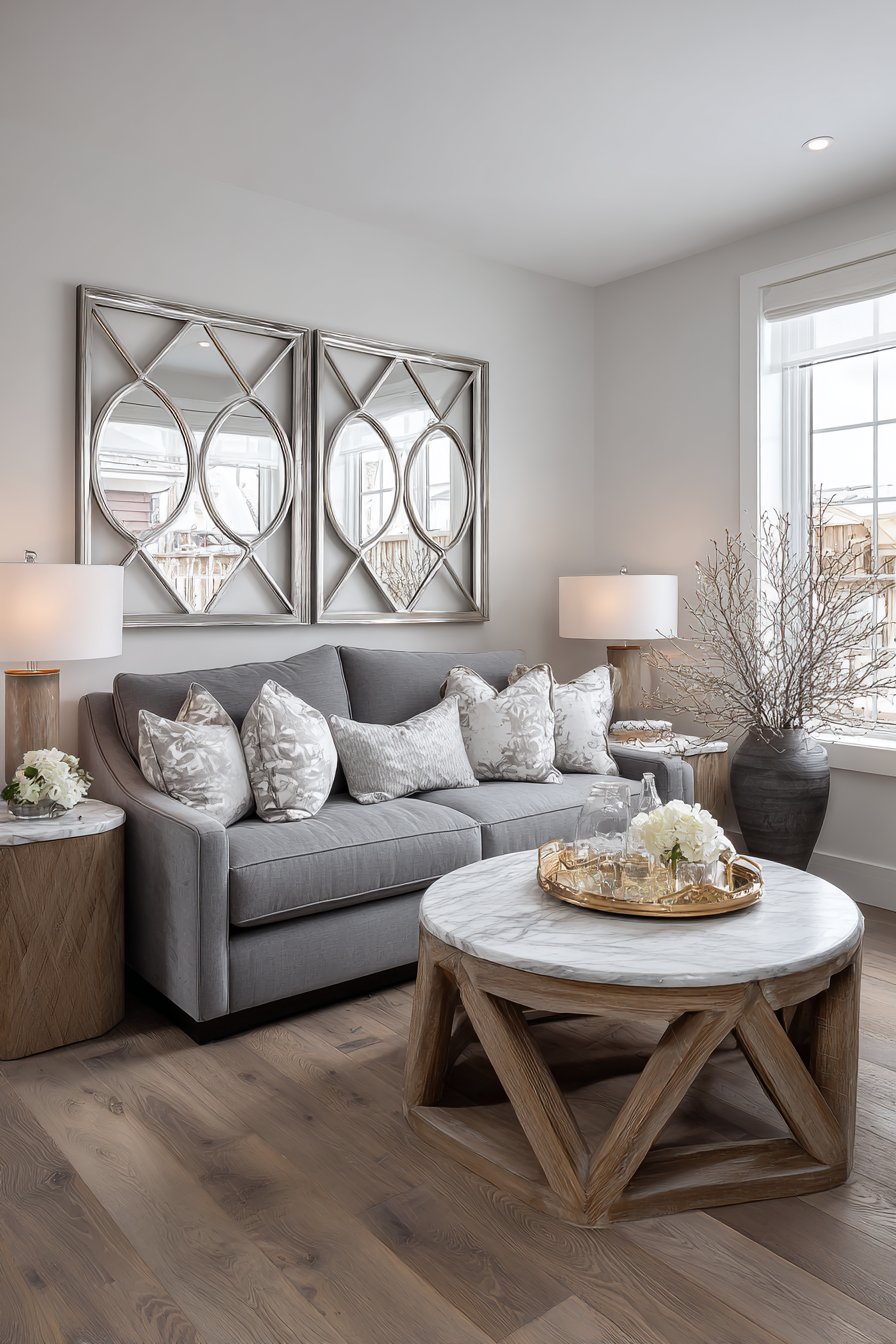
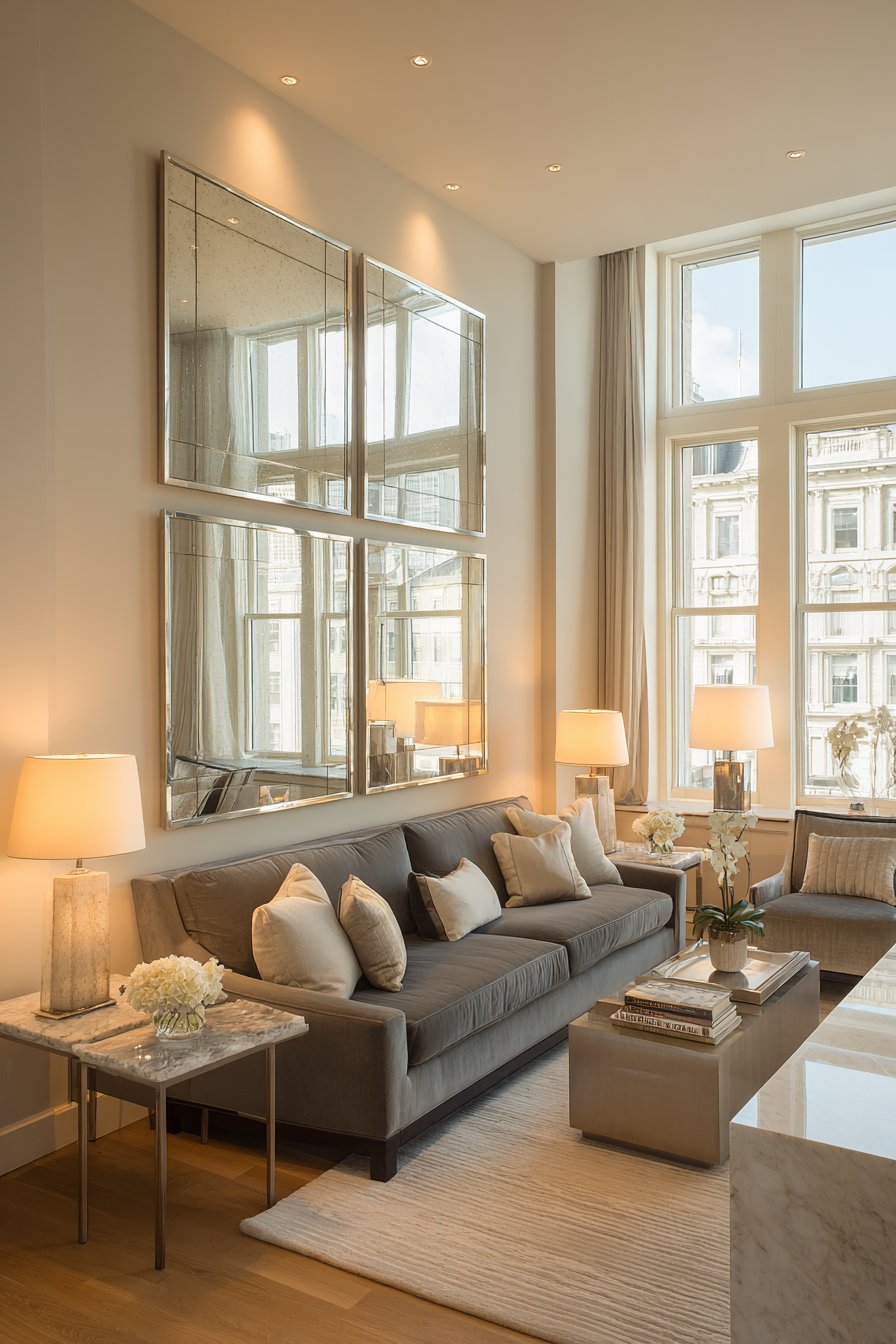
Matching rectangular mirrors in brushed nickel frames flank a central window above a grey upholstered sofa. This balanced approach to mirrors in living room ideas demonstrates how symmetry creates calm, orderly spaces. The twin mirrors establish visual bookends that frame the window as a triptych composition.
Coordinating table lamps on marble-top side tables reinforce the symmetrical arrangement, creating multiple reflection points and doubled light sources. The grey sofa provides neutral foundation that allows the architectural composition to command attention without color distraction.
Brushed nickel frames offer contemporary sophistication while maintaining enough warmth to prevent coldness. This metal finish bridges traditional silver and modern chrome, making it versatile across multiple design styles. Honey-toned hardwood floors introduce organic warmth that prevents the grey and nickel palette from feeling too cool. Neutral walls provide versatile backdrop that homeowners can easily update with changing textile colors and seasonal accessories.
Natural daylight from the central window combines with warm artificial lighting from the table lamps to create dimensional illumination. The flanking mirrors multiply this light, reflecting both natural and artificial sources while creating the impression of additional windows. This layered lighting strategy ensures the room remains bright and inviting throughout varying daylight conditions and evening hours. Symmetrical design follows classical principles that create inherently pleasing, balanced spaces.
Key guidelines for symmetrical mirror arrangements:
- Maintain identical mirror dimensions and frame styles for authentic symmetry rather than near-matches.
- Space mirrors equidistant from the central architectural feature with 6-12 inches between elements.
- Select mirror sizes that maintain 1:2 or 1:3 proportions with the central window for balanced visual weight.
- Mount mirrors at identical heights using a level and careful measurement for precise alignment.
- Pair mirrors with matching accent lighting and accessories to reinforce the symmetrical composition throughout the vignette.
10. Mid-Century Modern Oversized Round Mirror
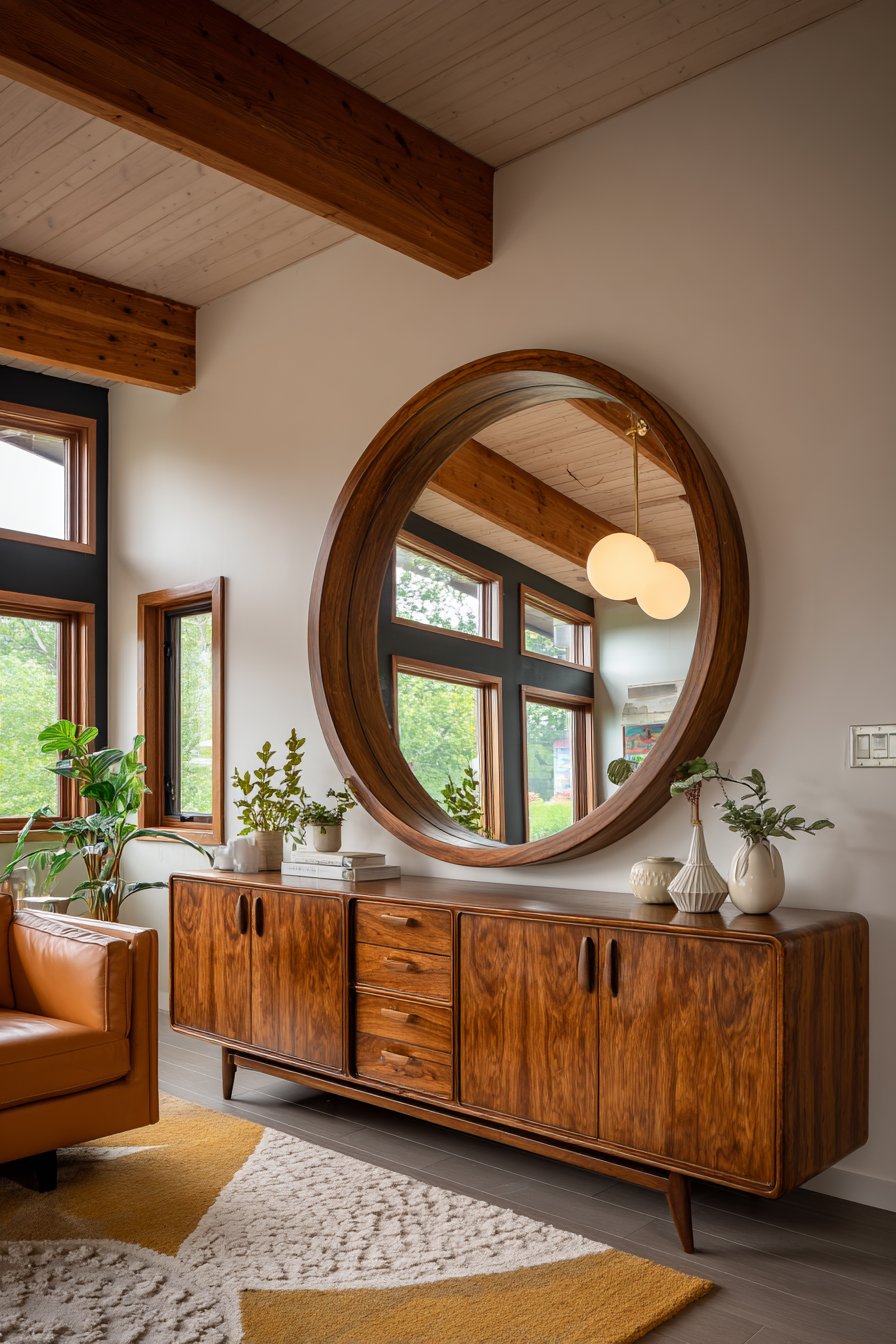
An oversized round mirror with walnut wood rim celebrates mid-century modern design principles above a teak credenza. This period-appropriate approach to mirrors in living room ideas honors authentic 1950s-60s aesthetics through material selection and form. The walnut rim’s warm wood grain and rich color complement the teak credenza perfectly, creating cohesive natural material palette.
The mirror’s generous size makes bold statement while the simple circular form maintains the clean lines central to mid-century philosophy. Ceramic vessels and small plants displayed on the credenza create styled vignette that the mirror reflects and amplifies.
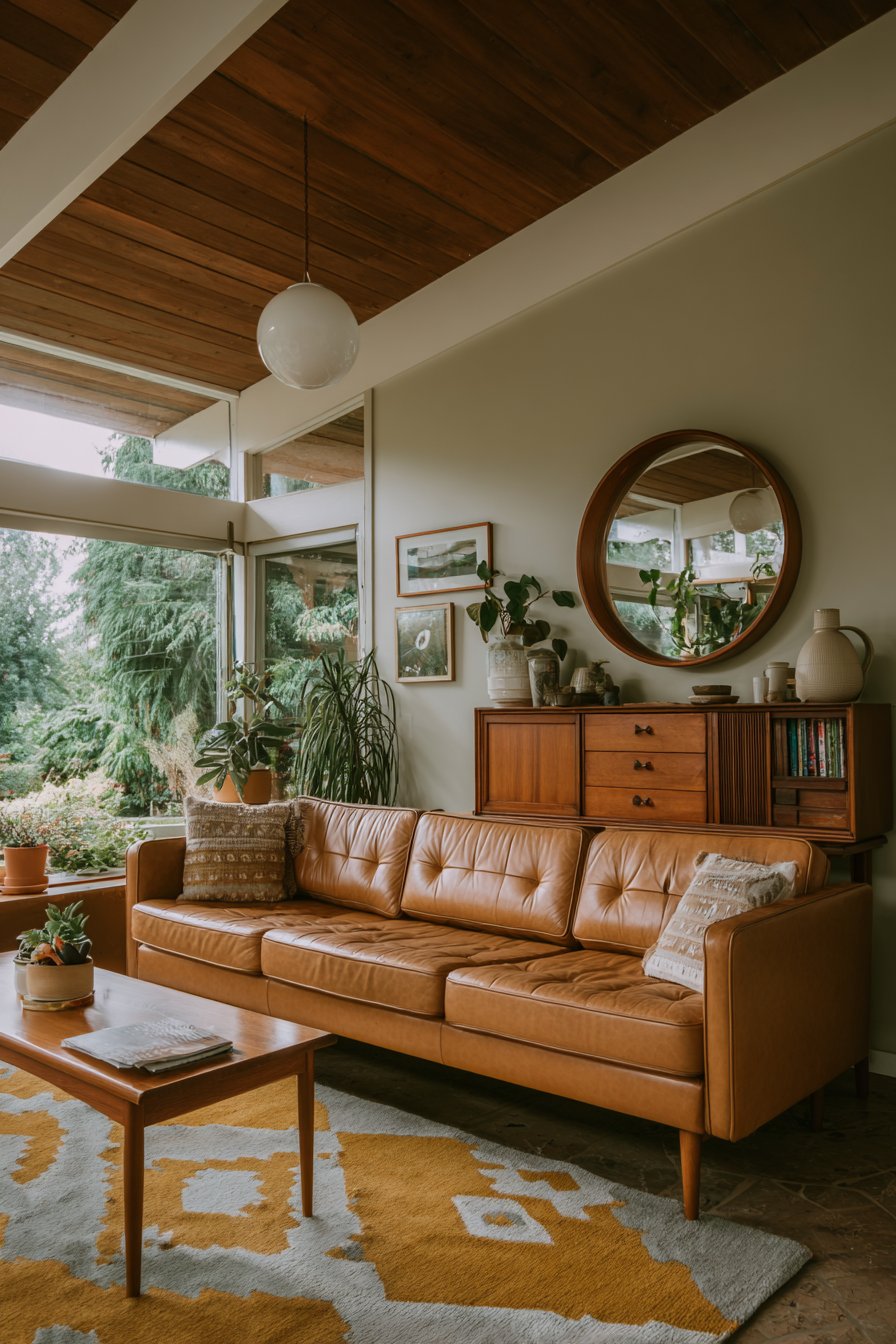
The mirror captures a vintage-inspired globe pendant light in its reflection, creating visual rhythm through repeated spherical forms. This geometric echo demonstrates the intentional design thinking that characterizes successful mid-century interiors.
Clerestory windows provide natural light that the mirror amplifies and redistributes throughout the space. A caramel leather sofa and geometric wool rug in mustard and grey tones complete the period-appropriate palette, each element contributing authentic mid-century character.
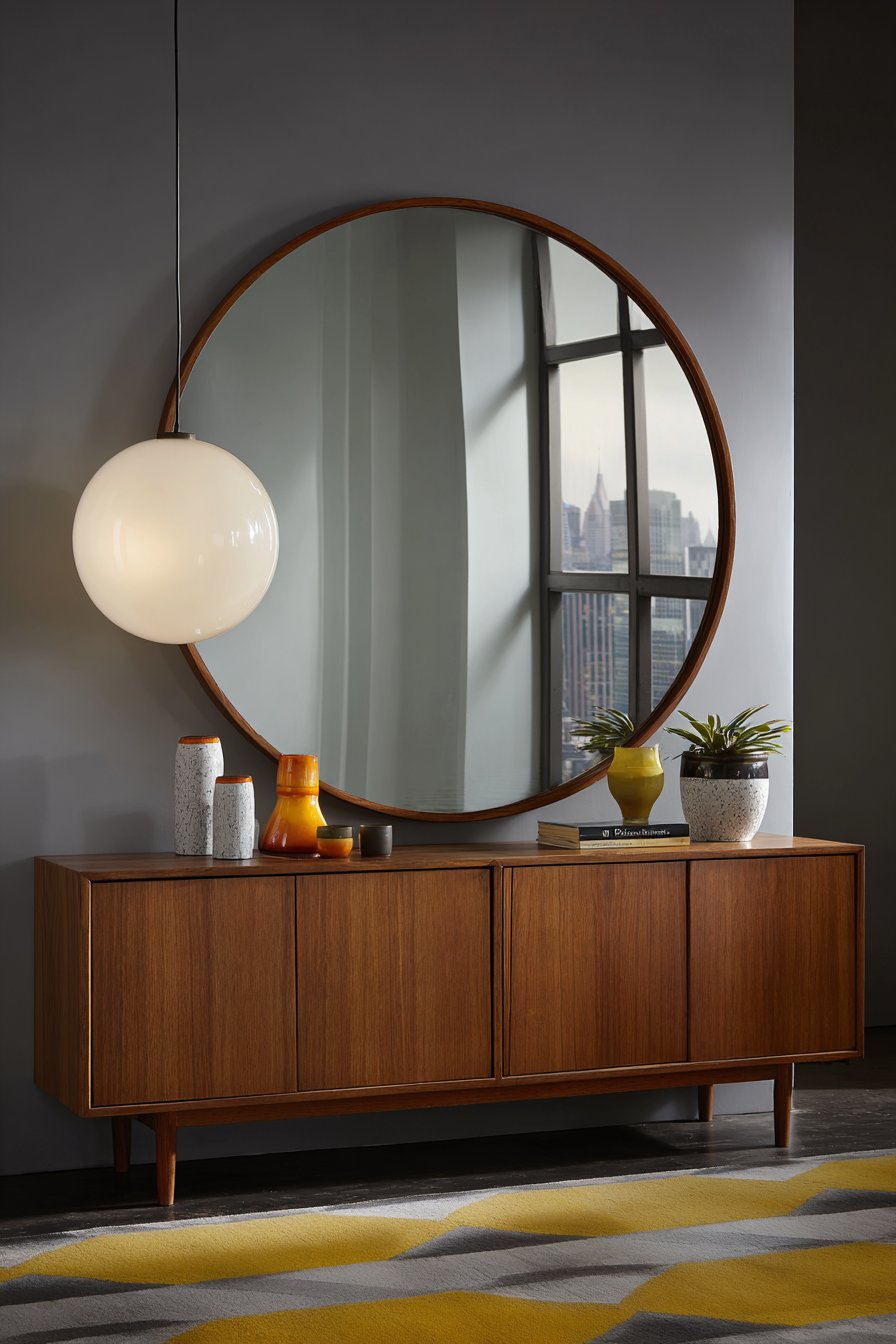
Wood grain textures play starring roles in mid-century design, and this arrangement showcases various species and finishes. The walnut mirror rim, teak credenza, and any additional wood accents create warmth and organic beauty that synthetic materials cannot replicate.
The circular mirror form softens the room’s rectangular architecture and linear furniture pieces, providing essential curved elements that prevent visual rigidity. Mid-century modern design remains timelessly popular due to its emphasis on function, clean lines, and quality materials.
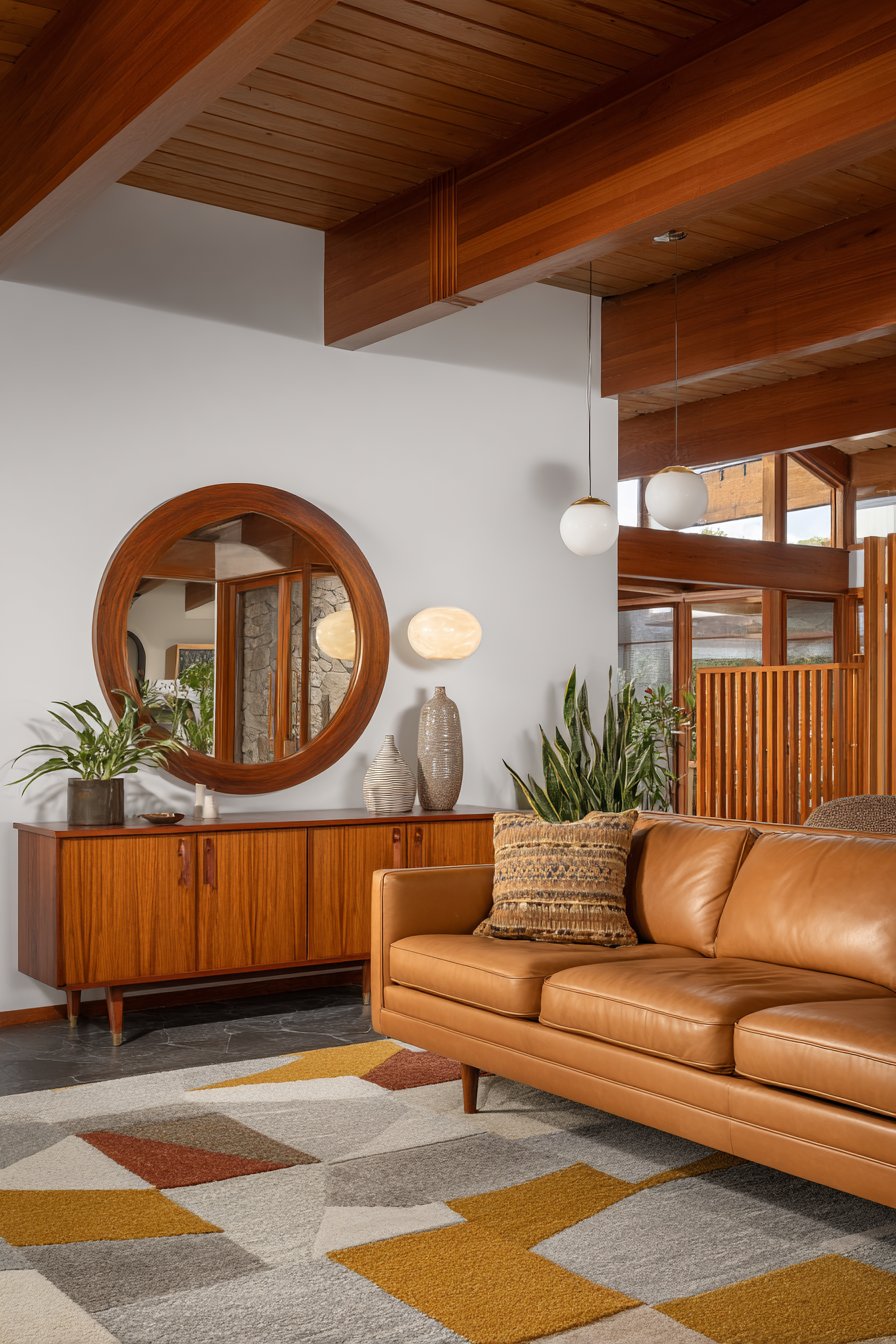
Essential principles for authentic mid-century styling:
- Choose mirrors with wood frames in walnut, teak, or rosewood for period authenticity.
- Select circular or oval forms over rectangular shapes to honor era preferences.
- Limit metal finishes to brass, bronze, or brushed gold rather than chrome or silver.
- Position mirrors to reflect iconic mid-century lighting fixtures for visual rhythm and interest.
- Maintain simplicity in frame design, avoiding ornamental carving or excessive detail that contradicts modernist principles.
Why These Mirror Designs Represent the Best Living Room Solutions
These ten mirrors in living room ideas represent the pinnacle of interior design thinking across multiple style categories. Each approach addresses specific design challenges while creating beautiful, functional spaces that enhance daily living. The contemporary slim-frame mirror maximizes light reflection and space enhancement without visual clutter, making it ideal for modern minimalist homes. Gallery wall arrangements provide personalized artistic expression while serving practical purposes, perfect for homeowners seeking unique, curated aesthetics.
Scandinavian circular mirrors demonstrate how restraint and quality materials create peaceful environments that reduce visual stress. Traditional baroque mirrors preserve historical design excellence and craftsmanship, connecting contemporary homes to centuries of artistic tradition. Modern farmhouse leaning mirrors blend accessibility with style, creating approachable elegance that families can live with comfortably. Industrial floor-to-ceiling panels showcase how bold architectural treatments transform spatial perception dramatically.
Bohemian sunburst collections celebrate artistic freedom and handcrafted beauty, ideal for creative personalities seeking self-expression. Glamorous antiqued mirror walls introduce luxury hotel aesthetics into residential settings, elevating everyday living into special experiences. Symmetrical flanking mirrors provide classical balance and order, creating calm environments that feel inherently harmonious. Mid-century modern oversized rounds honor design history while remaining completely relevant to contemporary tastes.
These living room mirror ideas succeed because they address fundamental design principles including light management, spatial perception, and aesthetic coherence. Reflective surfaces amplify natural and artificial lighting, reducing energy consumption while improving ambiance. Mirrors create illusions of expanded space, particularly valuable in compact urban residences. They serve as architectural features, artwork, and functional tools simultaneously, providing exceptional value in interior design investments.
The variety of frame materials, shapes, and installation methods ensures appropriate options for every budget, style preference, and architectural context. From affordable frameless panels to investment-worthy antiqued tiles, these approaches accommodate different financial resources. Traditional, contemporary, transitional, and eclectic styles all find representation, ensuring homeowners can identify personally relevant options. Wall-mounted, floor-to-ceiling, and leaning installation methods provide flexibility for renters and owners alike.
Strategic mirror placement improves room functionality beyond aesthetics. Positioning mirrors to reflect windows effectively doubles natural light sources without additional architectural investment. Reflecting architectural features like fireplaces, lighting fixtures, or attractive furniture creates visual rhythm and intentional design cohesion. Mirrors placed opposite seating areas enable subtle personal grooming checks and space monitoring during gatherings. These practical benefits complement the obvious visual improvements, making mirrors essential design elements.
Quality construction and appropriate sizing distinguish successful mirror installations from disappointing ones. Properly weighted frames prevent warping and maintain shape over decades. Beveled edges add refinement while serving safety functions through smoothed glass edges. Adequate sizing relative to furniture pieces creates balanced proportions rather than awkward scale mismatches. Professional installation ensures safety, particularly for large or heavy mirrors that could cause injury if improperly mounted.
These design ideas incorporate timeless principles that transcend temporary trends. While finishes and details may evolve, fundamental concepts like symmetry, light reflection, and spatial manipulation remain constant. Investing in quality mirrors using these proven approaches ensures long-term satisfaction rather than rapid obsolescence. The featured styles span traditional to contemporary, offering enduring appeal across changing personal tastes and design movements.
Conclusion
Mirrors in living room ideas offer transformative power that few other design elements can match. From expanding tight spaces to amplifying precious natural light, reflective surfaces provide both aesthetic beauty and practical functionality. The ten approaches explored here demonstrate the remarkable versatility of mirrors across different design styles, from minimalist Scandinavian circles to glamorous antiqued tile walls. Each concept provides actionable inspiration for homeowners seeking to elevate their living spaces.
Successful mirror integration requires thoughtful consideration of size, placement, frame style, and intended purpose. Consider your room’s natural light sources, architectural features, and existing color palette when selecting mirrors. Don’t hesitate to experiment with unconventional approaches like leaning oversized mirrors or creating gallery wall collections. Remember that mirrors should enhance your space’s best features rather than highlighting problem areas.
The investment in quality mirrors yields dividends for years through improved ambiance, perceived spaciousness, and timeless style. Whether you choose contemporary slim frames, vintage gallery walls, or traditional baroque elegance, thoughtful mirror selection transforms ordinary rooms into extraordinary spaces. Begin with one of these proven concepts and adapt it to your unique needs, preferences, and budget. Your living room deserves the light-enhancing, space-expanding, beauty-creating power that only carefully chosen mirrors can provide. Start planning your mirror transformation today and experience how reflective design can revolutionize your home’s most important gathering space.
