


The kitchen has long been considered the heart of the home—a place where meals are prepared, memories are made, and families gather to share in the rhythm of daily life. As interior design trends continue to evolve, homeowners are increasingly seeking ways to infuse personality and warmth into their culinary spaces while maintaining functionality and timeless appeal. The color palette chosen for a kitchen plays a pivotal role in establishing its mood, and few colors offer the refreshing versatility of mint green. This soft, soothing hue bridges the gap between bold statement-making and subtle elegance, creating kitchens that feel both contemporary and classic.
Mint green kitchens have experienced a remarkable resurgence in recent years, moving beyond nostalgic mid-century associations to become a sophisticated choice for modern homes. This delicate shade brings the calming essence of nature indoors, evoking feelings of freshness, renewal, and tranquility—qualities that transform routine cooking into a more pleasant experience. Whether applied to cabinetry, accent pieces, or architectural details, mint green possesses a unique ability to complement various design styles, from farmhouse charm to sleek minimalism. Its soft undertones work harmoniously with natural materials like wood and stone while also providing an unexpected yet balanced contrast with metals and contemporary finishes.
In this comprehensive exploration of mint green kitchen design, we’ll journey through ten distinctive interpretations of this versatile color. Each design showcases different applications—from full cabinet treatments to strategic accent use—demonstrating how mint green can adapt to diverse aesthetic preferences and functional requirements. Whether you’re planning a complete kitchen renovation or simply seeking inspiration for a refresh, these carefully curated designs offer practical insights into materials, layout considerations, lighting strategies, and styling approaches that will help you create a kitchen that’s both beautiful and supremely functional.
1. Classic Shaker-Style Mint Green Kitchen with Brass Accents
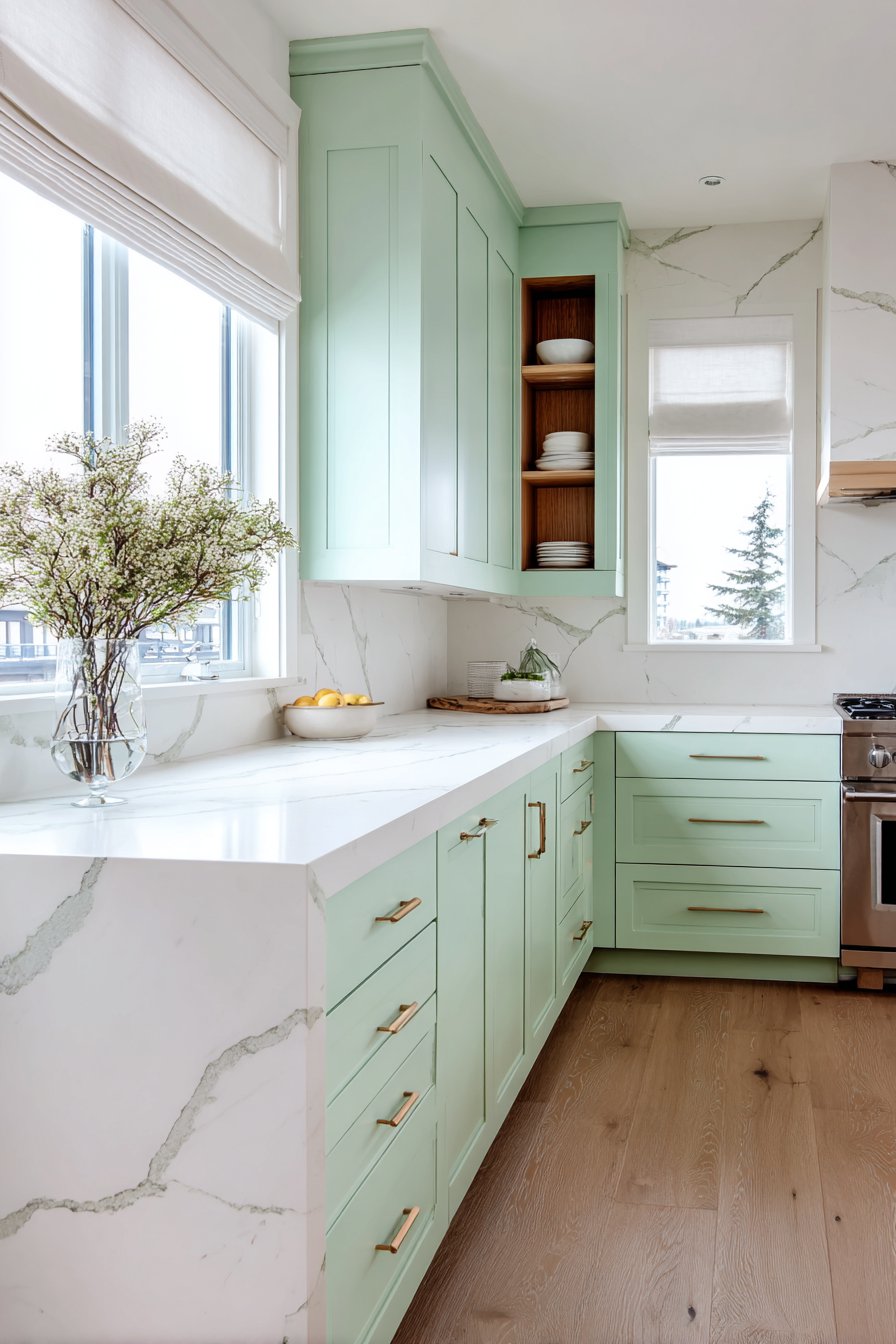
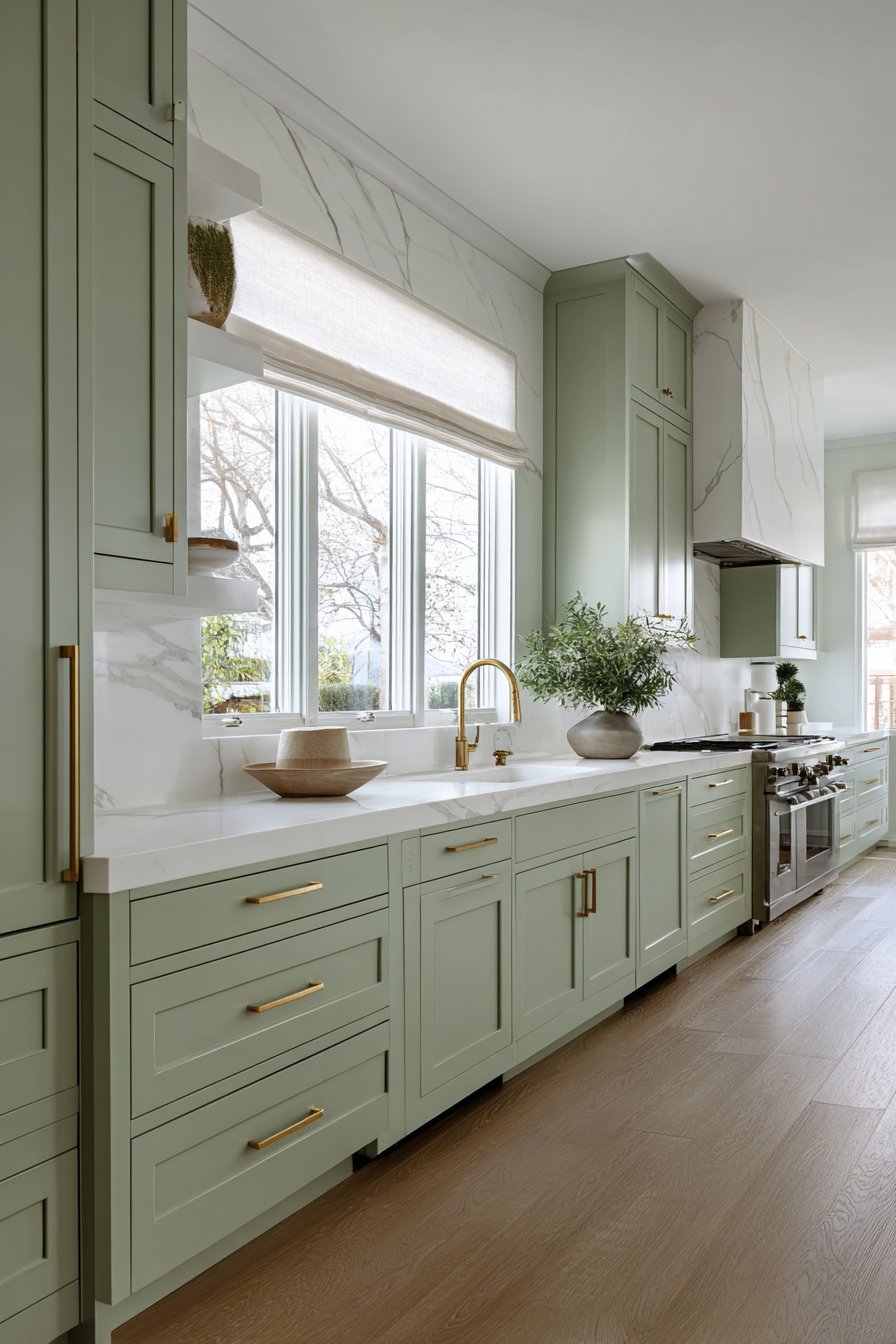
The timeless elegance of shaker-style cabinetry finds new expression when rendered in a soft mint green finish. This design approach centers on custom-built cabinets featuring the characteristic recessed panel doors and clean lines that define the shaker aesthetic. The gentle mint green hue breathes contemporary life into this traditional style, creating a kitchen that honors craftsmanship while embracing modern sensibilities. Brushed brass hardware punctuates each cabinet door and drawer, introducing warm metallic notes that elevate the overall sophistication of the space.
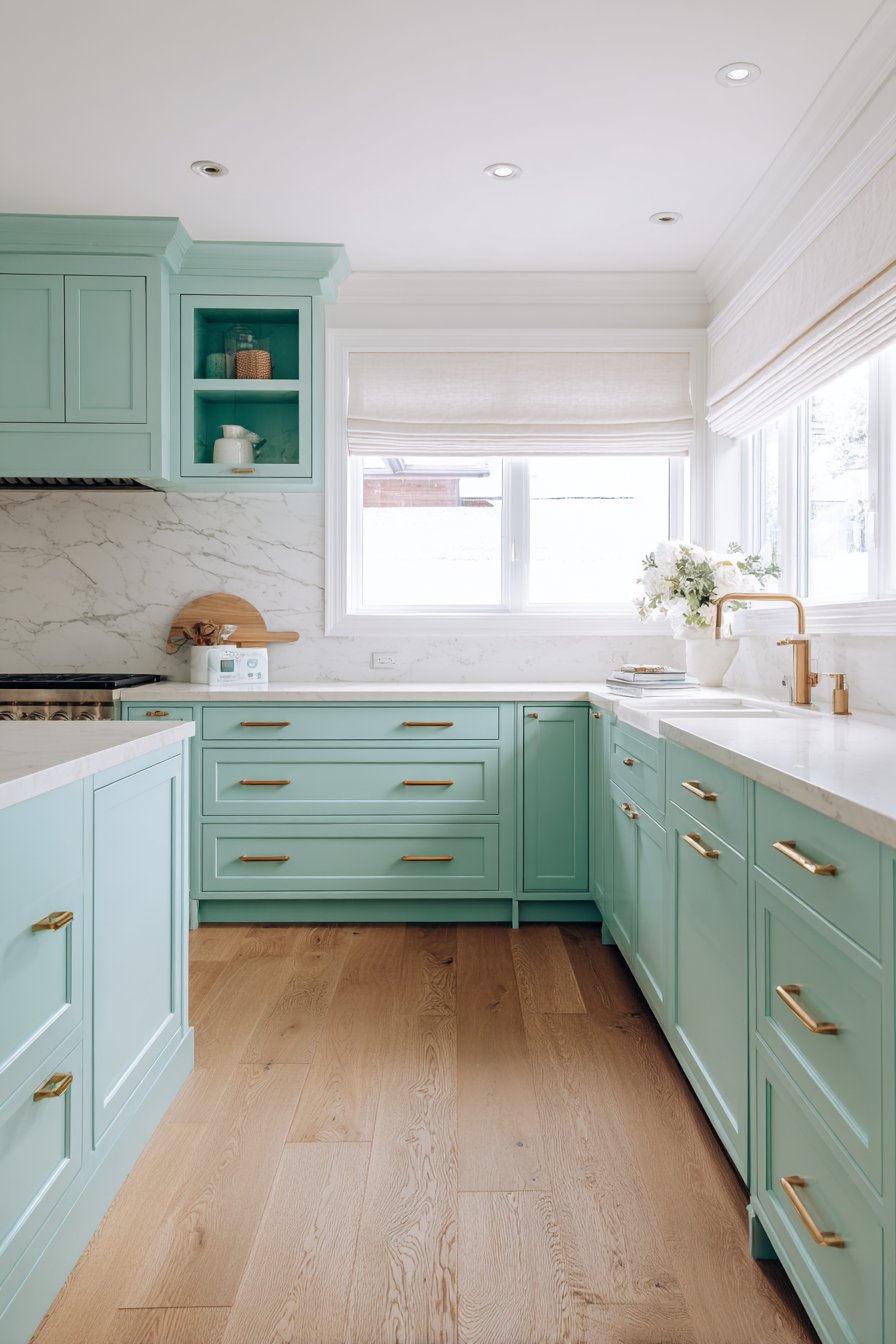
White quartz countertops provide a luminous contrast to the mint green cabinetry, their subtle grey veining adding depth and visual interest without overwhelming the serene color palette. The countertops’ non-porous surface offers practical benefits for busy kitchens while maintaining a refined appearance that complements the painted cabinets. A classic white subway tile backsplash extends from counter to ceiling, creating vertical visual interest and reflecting light throughout the space. This floor-to-ceiling application amplifies the sense of height and airiness, making the kitchen feel more expansive than its actual dimensions might suggest.
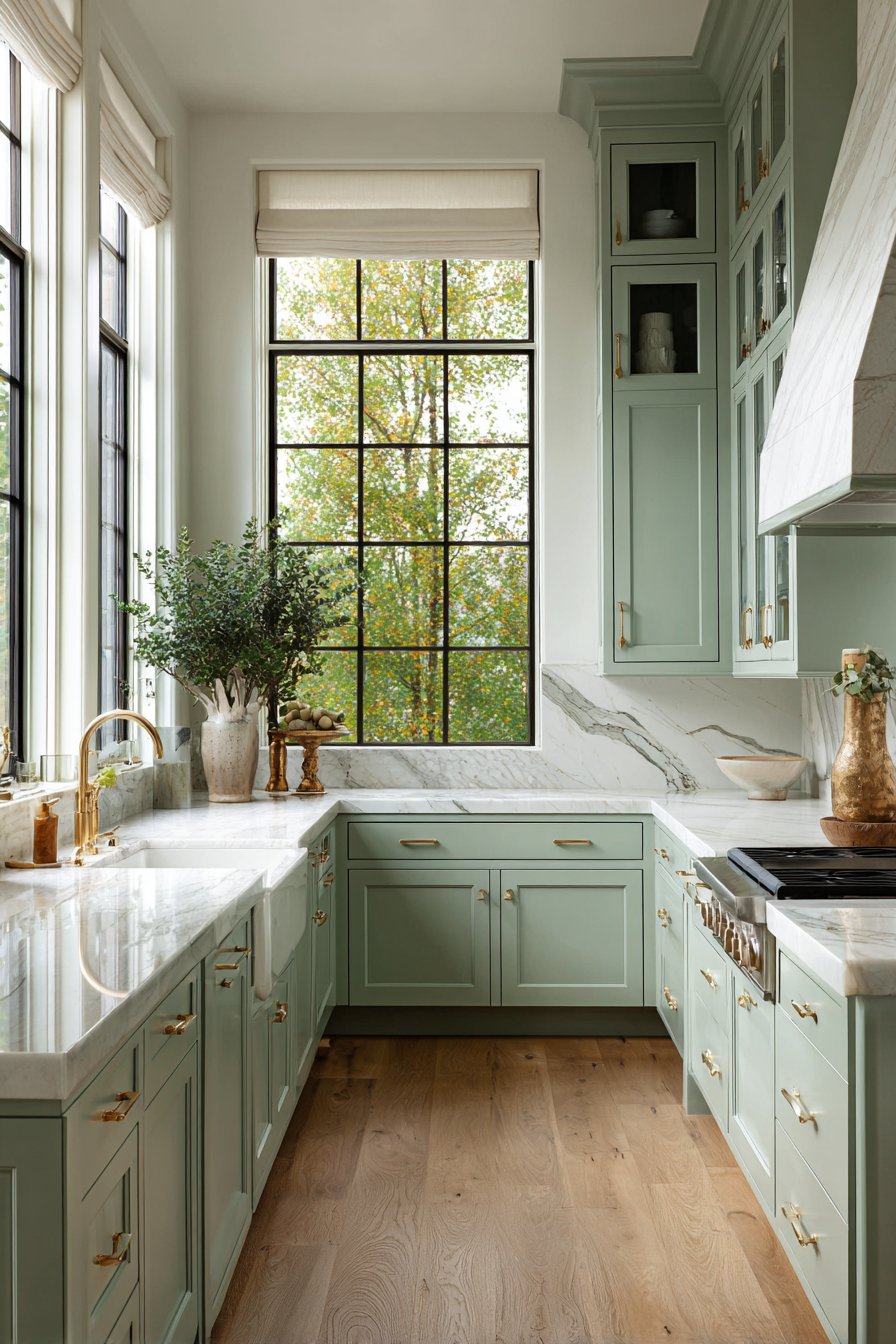
Natural oak hardwood flooring grounds the design with warm, honey-toned planks that introduce organic texture and depth. The wood’s natural grain patterns create visual movement beneath the feet while providing a neutral foundation that allows the mint green cabinetry to command attention. Large windows dressed with simple white Roman shades invite soft, diffused daylight to flood the interior, illuminating the space with natural brightness that changes beautifully throughout the day. The interplay between natural and artificial light sources creates dimensional depth, with shadows and highlights that emphasize the quality of materials and careful attention to craftsmanship.
Key Design Tips:
- Select a soft mint green with grey undertones to ensure longevity and versatility in your kitchen design, avoiding shades that skew too bright or juvenile.
- Invest in quality brushed brass hardware that will develop a natural patina over time, adding character and depth to your cabinetry.
- Extend your backsplash to the ceiling to create a cohesive, finished look that makes the space feel taller and more intentional.
- Choose wide-plank oak flooring in natural or light stains to warm the cool tones of mint green and create balanced visual temperature.
- Maximize natural light with generous windows and minimal window treatments to showcase the subtle beauty of mint green throughout the day.
2. Statement Mint Green Kitchen Island in Neutral Space
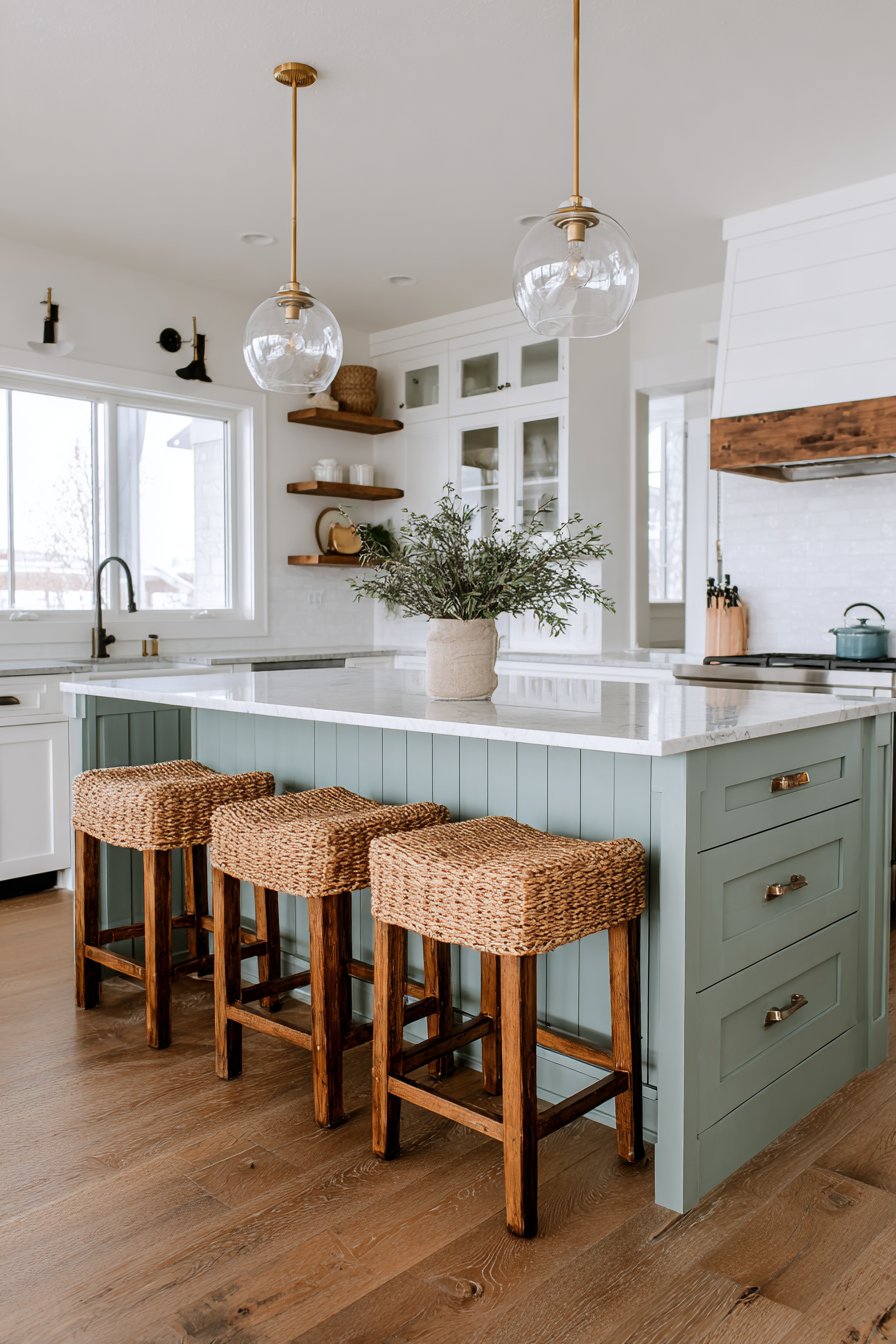
A strategically painted kitchen island offers an accessible entry point for homeowners hesitant to commit to full mint green cabinetry. This design features a substantial island positioned as the commanding centerpiece within a neutral kitchen environment, where surrounding white or cream cabinets provide a calming backdrop. The island itself showcases a matte mint green finish with handsome paneled sides that create visual texture and architectural interest. This approach allows the mint green element to function as a focal point without overwhelming the space, making it ideal for those who appreciate color but prefer measured application.
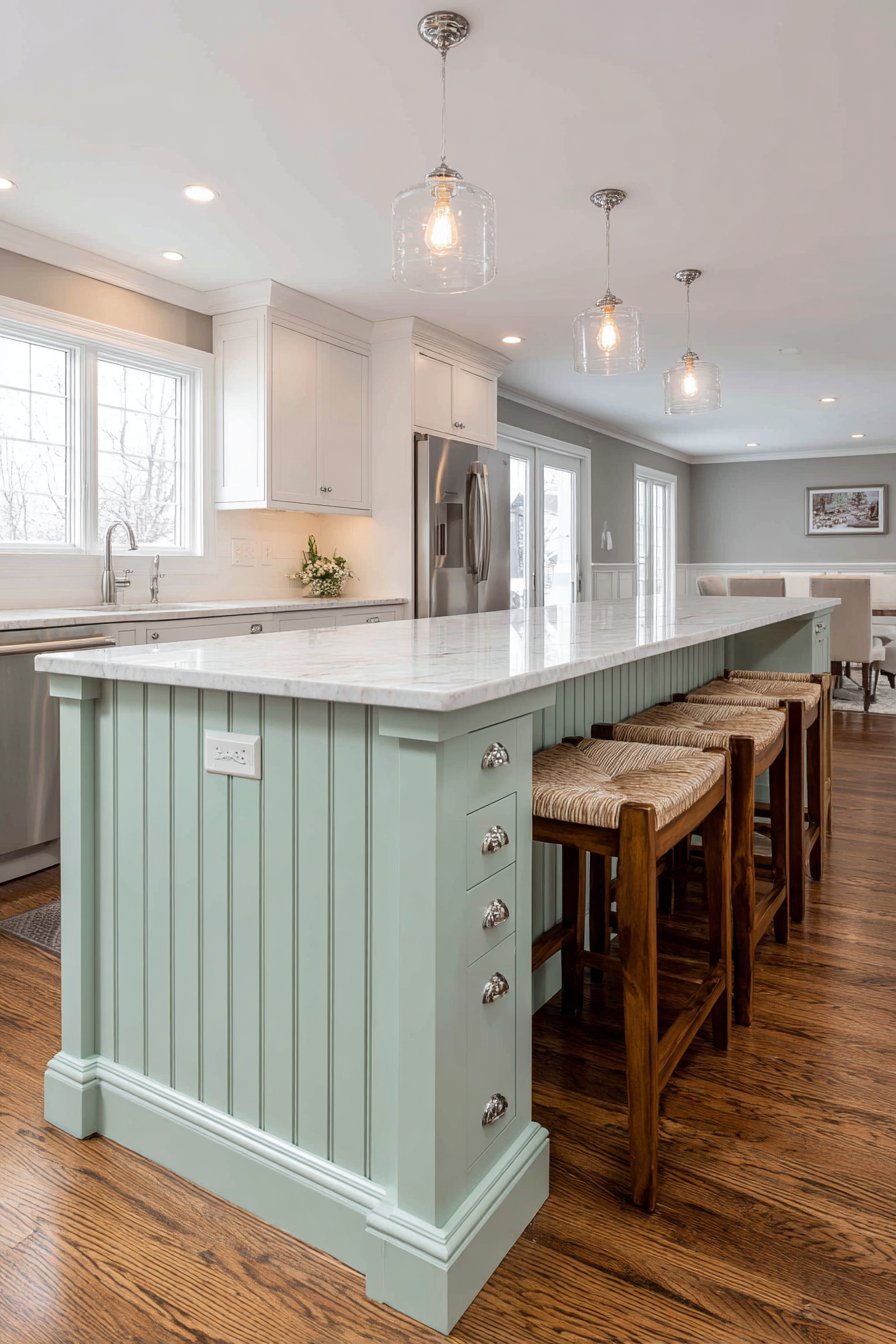
The island’s design emphasizes both beauty and functionality, incorporating built-in storage drawers fitted with antique brass pulls that echo vintage charm while offering thoroughly modern convenience. These deep drawers accommodate everything from cookware and utensils to linens and small appliances, maximizing the island’s utility. An extended countertop section creates comfortable seating for three wooden bar stools with woven seats, establishing an informal gathering spot where family members can keep the cook company or guests can enjoy appetizers during entertaining. This integration of dining and food preparation reflects contemporary open-concept living preferences.
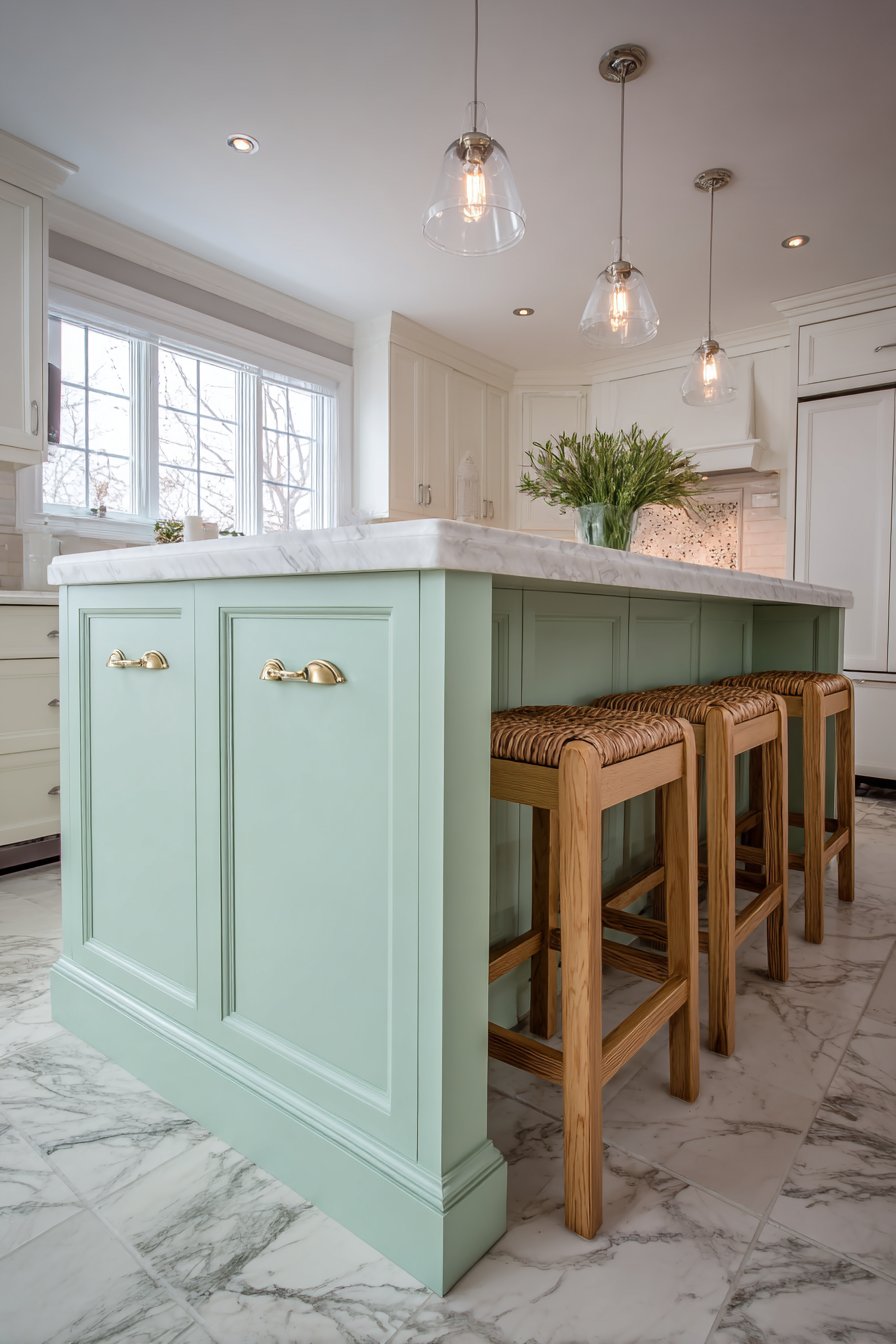
White marble countertops crown the mint green base with elegant natural stone featuring distinctive grey veining that adds organic movement and visual sophistication. The cool white surface provides essential contrast against the soft green cabinetry while offering generous workspace for meal preparation, baking projects, or casual dining. Above the island, pendant lights suspended at carefully considered heights feature clear glass shades that reveal vintage-style bulbs, creating pools of warm ambient light that define the island as its own zone within the larger kitchen. The transparent quality of the glass ensures the fixtures don’t visually compete with the mint green island below.
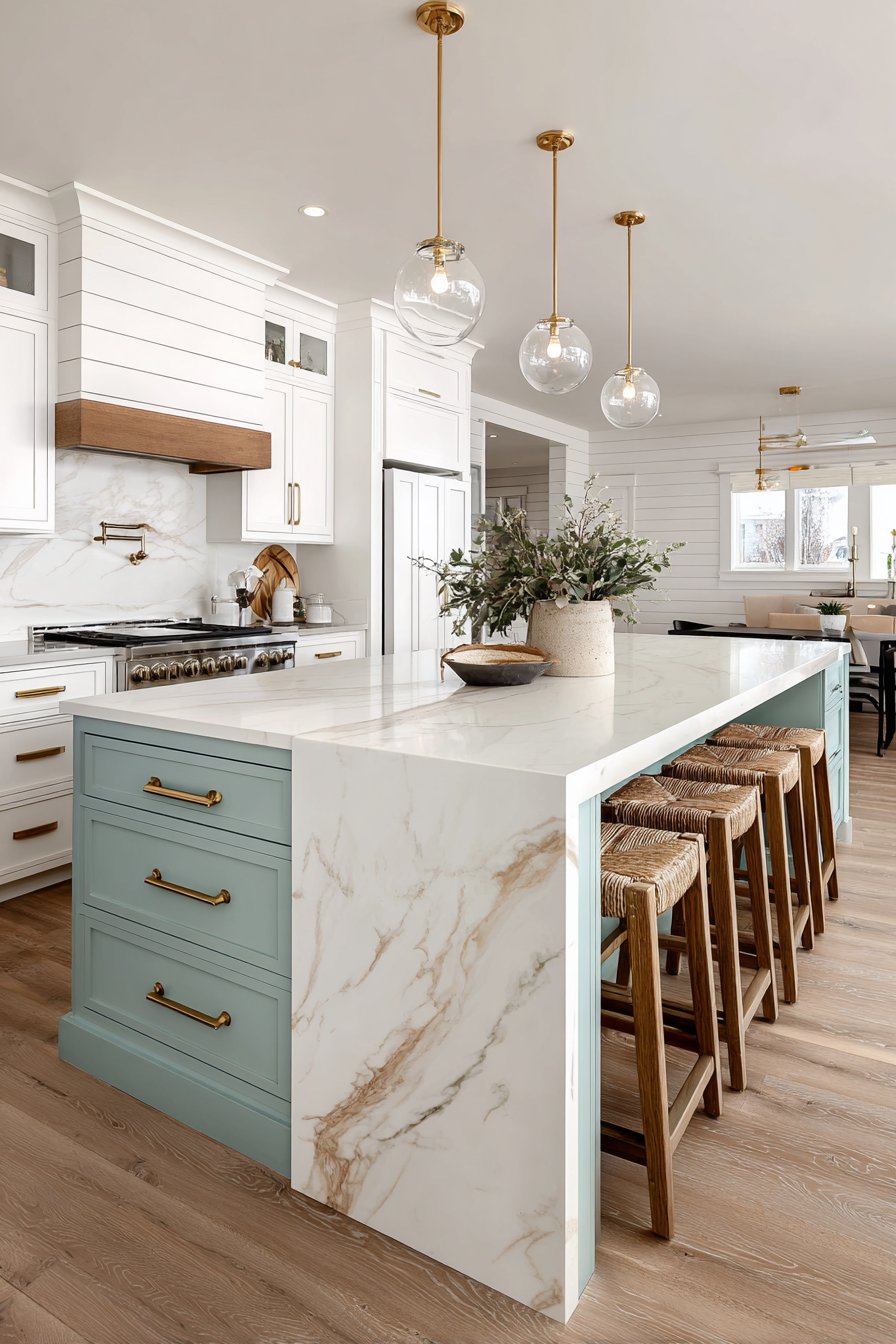
The surrounding white cabinetry creates breathing room around the colored island, preventing the space from feeling too saturated while allowing the mint green to truly shine. This two-tone approach offers practical advantages as well—white cabinetry maintains its fresh appearance with less visible wear, while the painted island can be easily refreshed or even repainted in the future as tastes evolve. The neutral foundation also provides flexibility for seasonal décor changes and styling variations, as the white background adapts to different accent colors and decorative objects throughout the year.
Key Design Tips:
- Paint only your island in mint green if you’re uncertain about committing to the color throughout the entire kitchen space.
- Choose a matte finish for cabinetry to create a sophisticated, contemporary look that minimizes fingerprints and wear patterns.
- Install extended countertops on islands to accommodate seating, creating multifunctional spaces that serve both preparation and social needs.
- Select antique brass hardware to add warmth and vintage character that complements mint green’s retro-inspired aesthetic.
- Hang pendant lights 30-36 inches above the island countertop to provide adequate task lighting without obstructing sightlines across the kitchen.
3. Floor-to-Ceiling Mint Green Storage Solutions
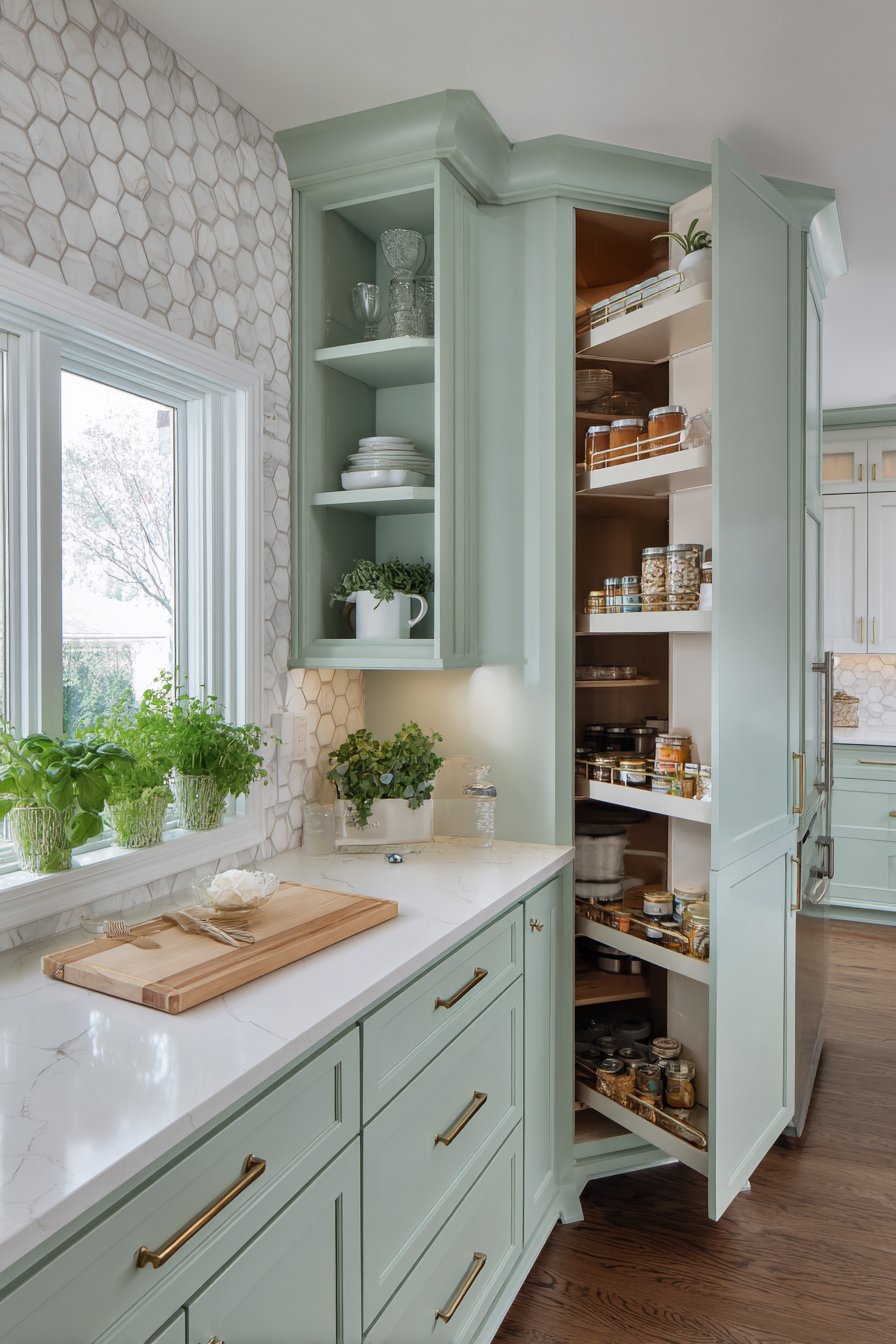
Maximizing vertical space transforms kitchen functionality while creating an impressive visual impact. This design showcases floor-to-ceiling cabinetry painted in soft mint green, demonstrating how color application across full wall expanses creates cohesive, immersive environments. The comprehensive cabinet system incorporates clever storage solutions that address common kitchen organization challenges—pull-out spice racks that bring small containers into easy view, corner lazy susans that eliminate dead space in tricky angles, and adjustable shelving that adapts to changing storage needs over time.
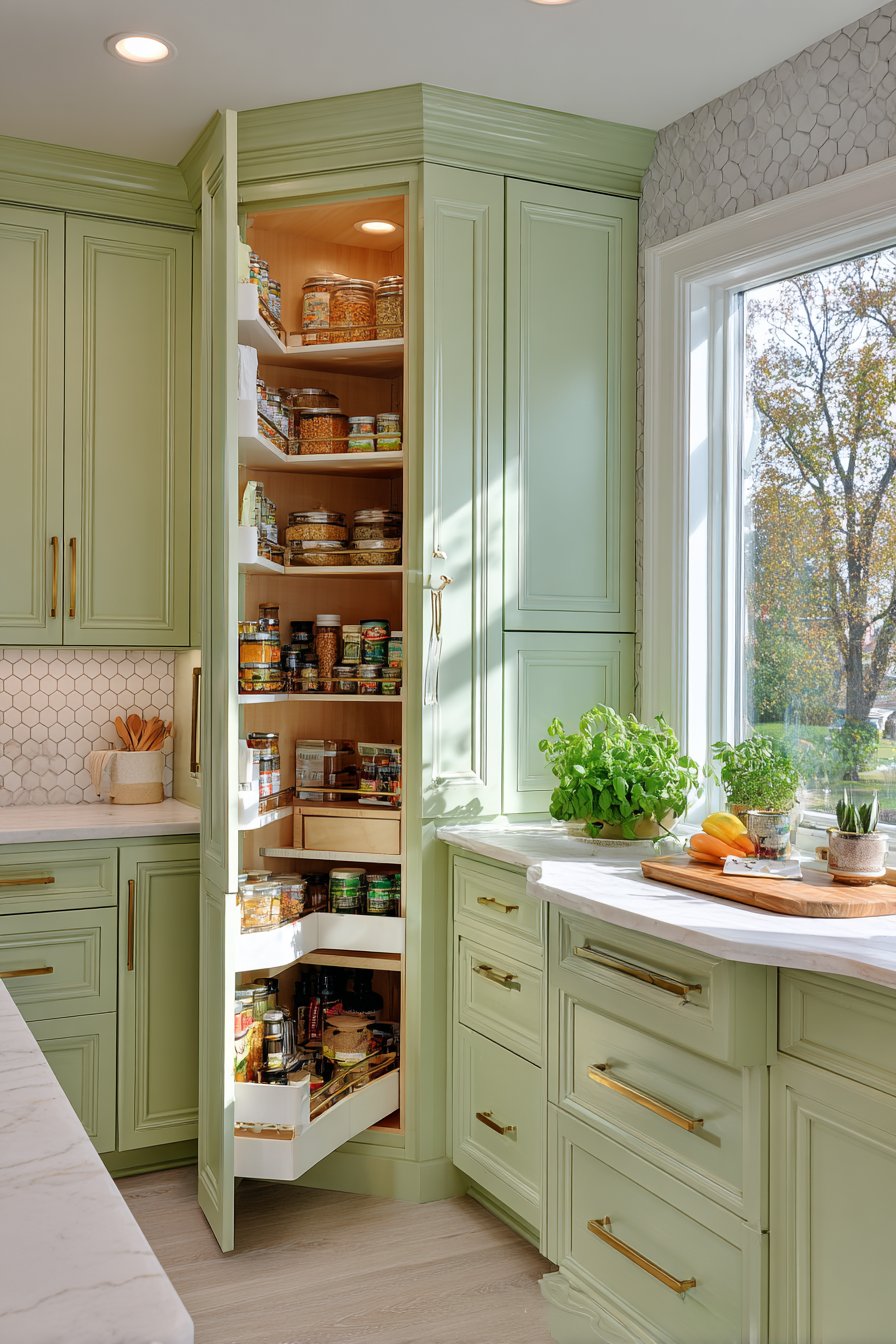
Open shelving integrated within the mint green cabinet system provides display opportunities for beautiful dishware, glassware, or decorative objects that personalize the space. These open sections break up solid cabinet runs, preventing the wall-to-wall cabinetry from feeling heavy or imposing. The exposed shelving also offers easy access to frequently used items, improving kitchen workflow efficiency. Brass cup pulls and bin pulls adorn the cabinet doors and drawers, their warm metallic finish creating jewel-like accents throughout the vertical expanse of mint green. The varied hardware styles add visual interest while maintaining cohesive metallic tones.
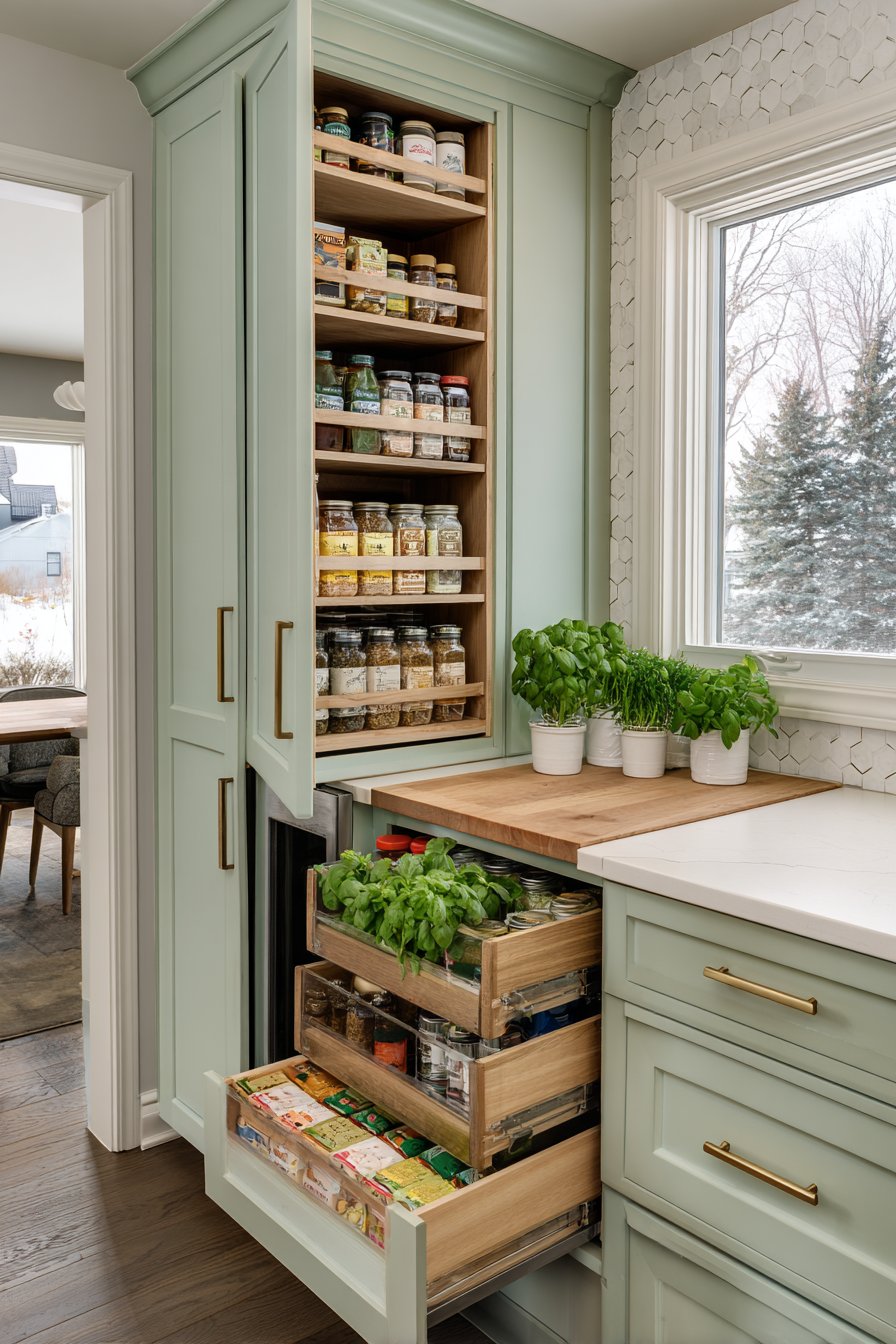
White butcher block countertops introduce natural wood warmth through their visible grain patterns and honey-colored tones. Unlike sealed stone countertops, butcher block develops character over time through minor cuts, stains, and patina that tell the story of meals prepared and memories made. The organic quality of wood provides essential textural contrast against painted cabinetry, grounding the design with natural materiality. The backsplash features white hexagonal tiles arranged in a honeycomb pattern with light grey grout, adding geometric visual interest while maintaining the overall light, airy feel of the space.
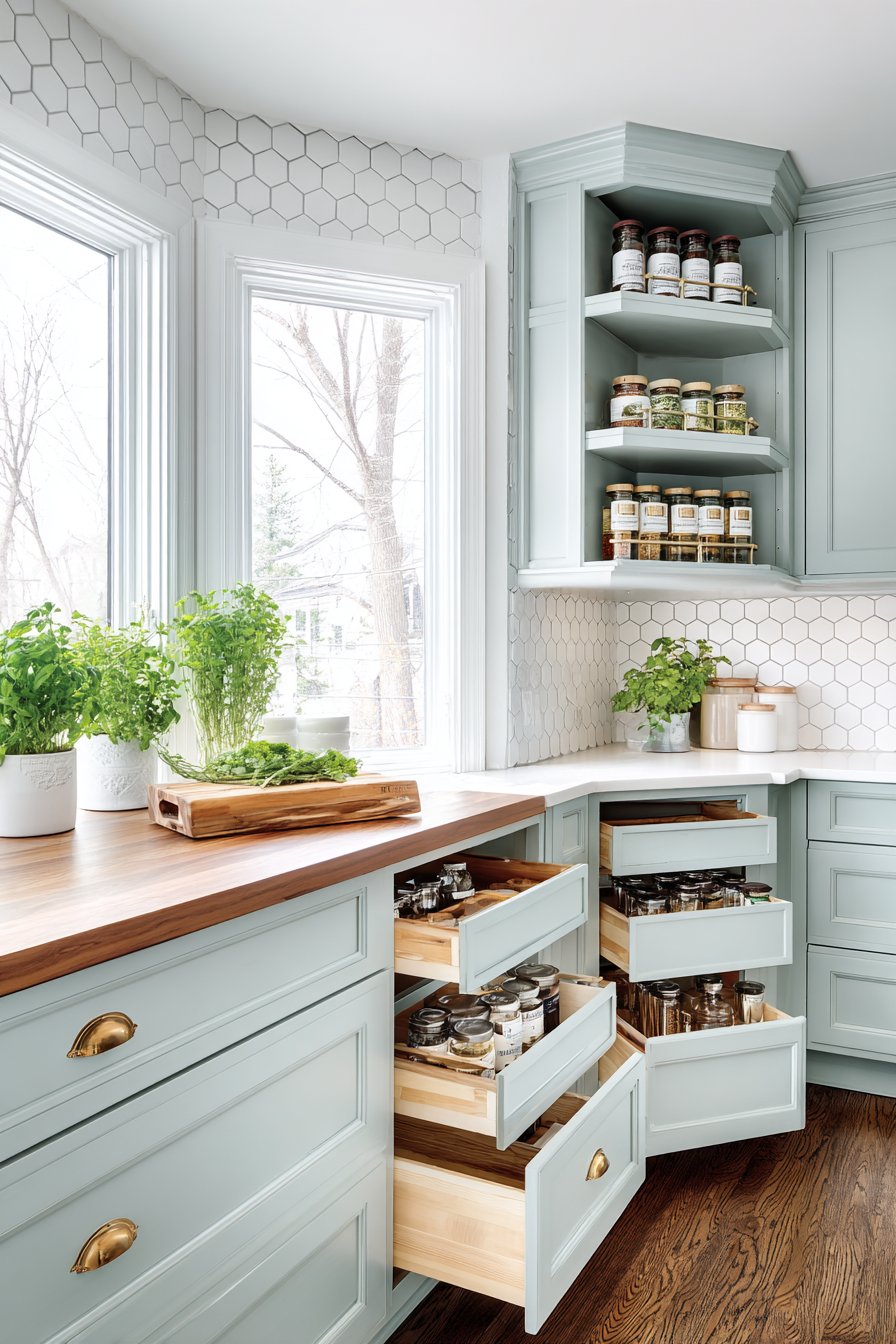
A garden window positioned above the sink area serves multiple purposes—it extends outward to capture maximum natural light, provides a greenhouse-like environment for fresh herbs, and creates a charming architectural detail that enhances the kitchen’s character. The window’s glass shelves display small potted plants including basil, rosemint, thyme, and parsley, bringing living greenery into the kitchen while offering fresh ingredients mere steps from the preparation area. Sunlight streaming through the garden window illuminates the herbs’ vibrant green leaves, creating a living artwork that complements the mint green cabinetry while providing functional benefits.
Key Design Tips:
- Extend cabinetry to the ceiling to maximize storage capacity and create a custom, built-in appearance that eliminates dust-catching gaps.
- Incorporate pull-out organizers and lazy susans in base cabinets to improve accessibility and make full use of deep cabinet interiors.
- Mix closed cabinets with open shelving at a ratio of approximately 80/20 to maintain visual balance and prevent the space from feeling cluttered.
- Choose butcher block countertops in lighter wood tones to warm mint green cabinetry without creating excessive visual weight.
- Install a garden window above the sink to grow fresh herbs while adding architectural interest and capturing additional natural light.
4. Charming Mint Green Breakfast Nook Integration
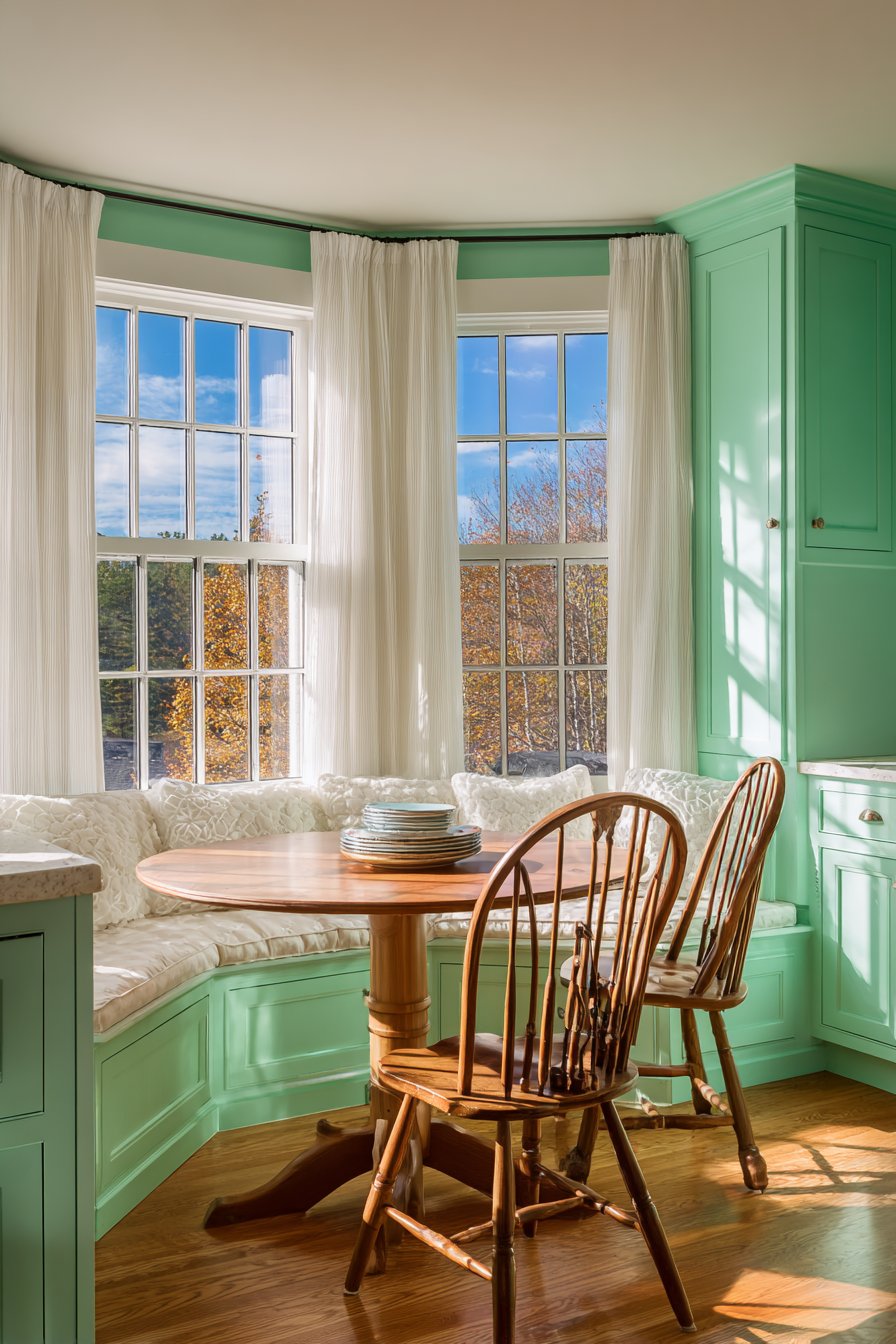
The breakfast nook represents one of the most beloved kitchen features, offering an intimate setting for morning coffee, casual meals, and family conversations. This design integrates a built-in banquette featuring mint green painted base cabinets that provide hidden storage beneath the seating area. The storage compartments accommodate everything from table linens and seasonal serving pieces to children’s art supplies and board games, maximizing functionality in a space that might otherwise remain unutilized. Crisp white cushions with subtle linen texture top the mint green base, providing comfortable seating while maintaining visual lightness.
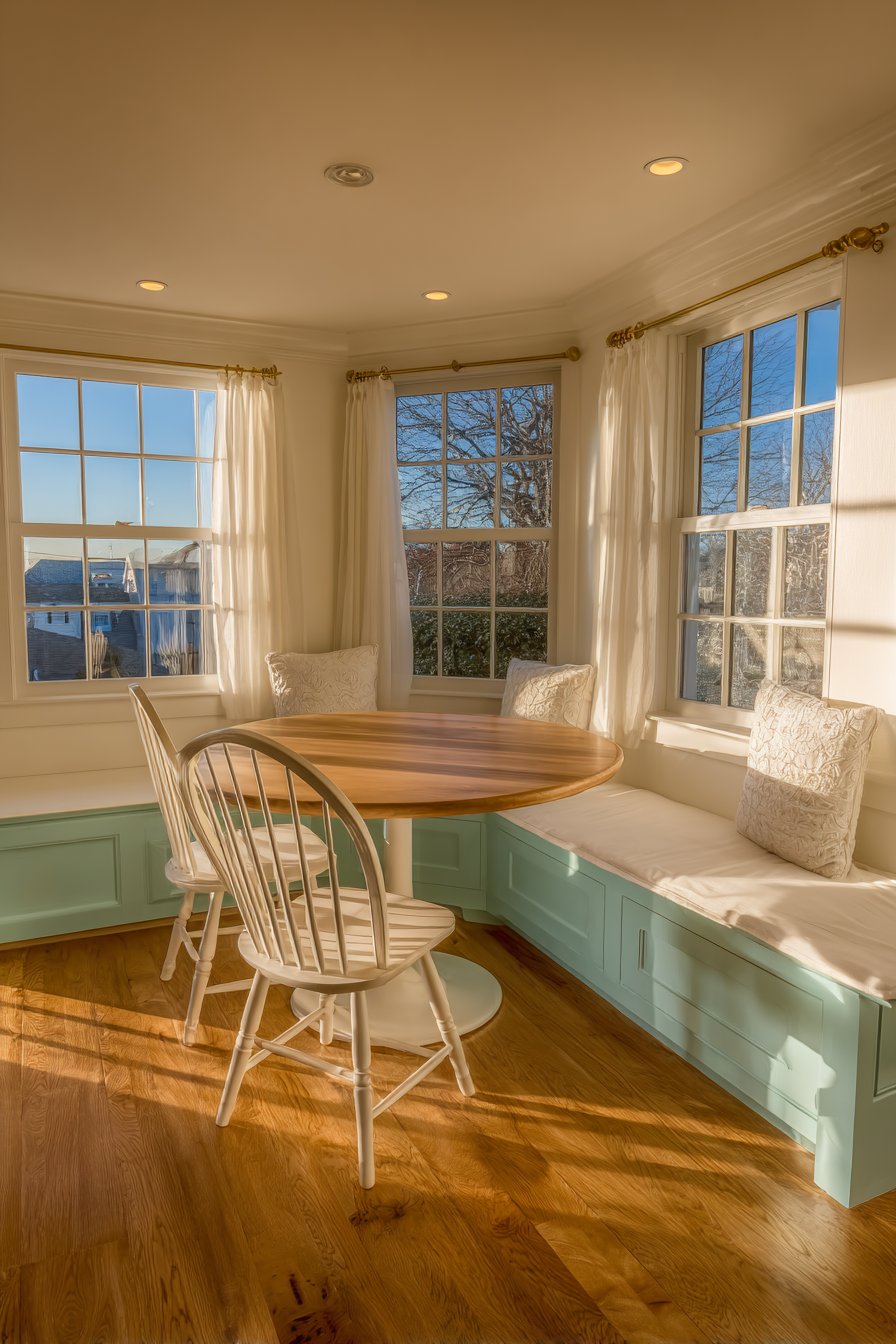
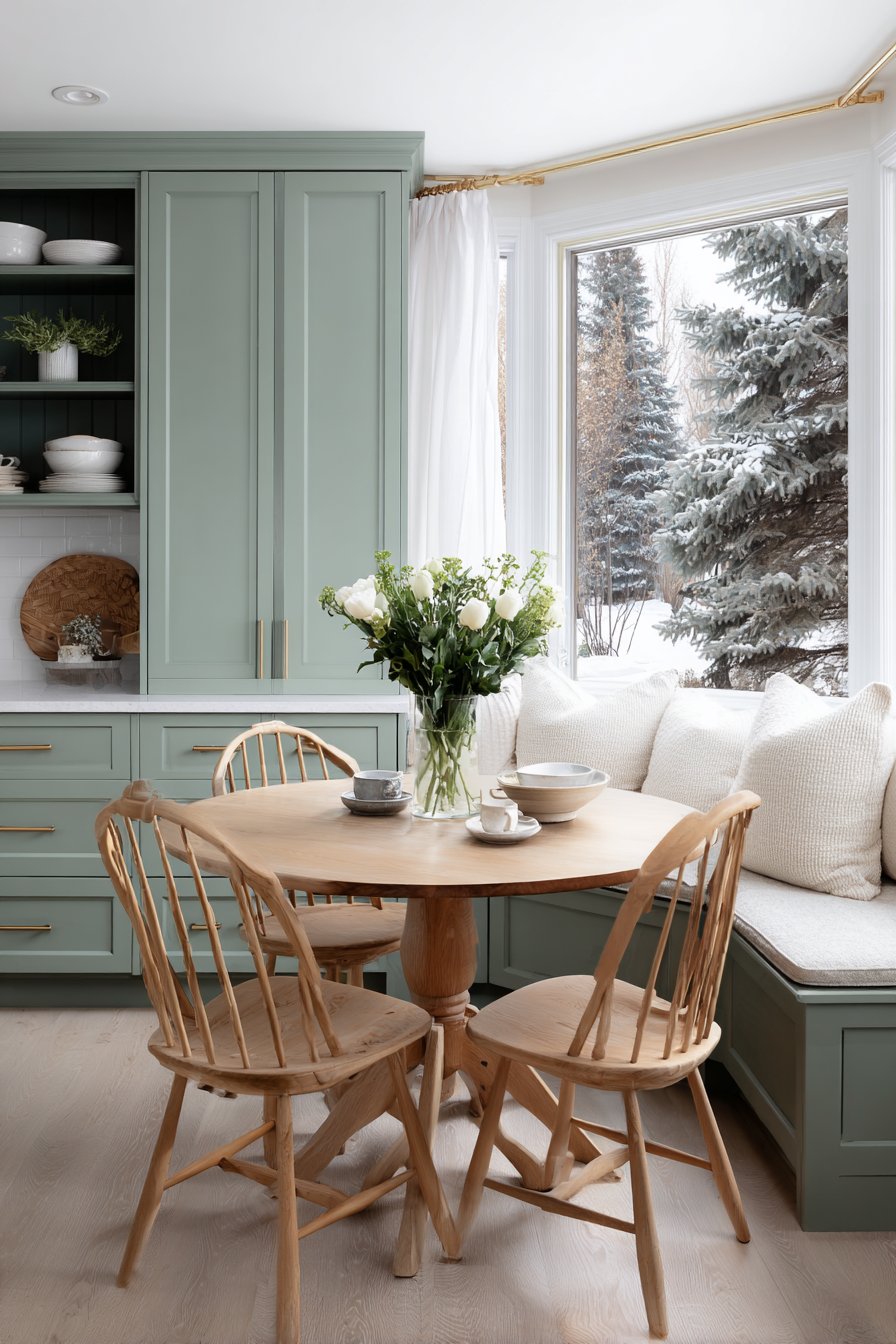
A round pedestal table crafted from natural oak centers the breakfast nook, its circular shape encouraging conversation and creating better flow in the compact space compared to rectangular alternatives. The pedestal base eliminates corner table legs that can impede seating access, allowing diners to slide in and out of the banquette with ease. Windsor-style chairs with spindle backs and contoured seats provide additional seating opposite the built-in bench, their traditional design echoing the classic sensibility of the mint green woodwork while introducing subtle visual variation through their organic forms.
Windows on three sides of the breakfast nook create a sun-drenched environment that feels almost like an enclosed porch, blurring the boundaries between interior and exterior spaces. This generous fenestration floods the area with natural light throughout the day, with golden hour sunlight casting particularly beautiful effects across the mint green painted surfaces. The warm, low-angle light emphasizes the texture of the painted finish and creates gentle shadows that add dimensional depth. Sheer white curtains mounted on simple rods provide privacy when desired while maintaining the light, airy atmosphere even when drawn.
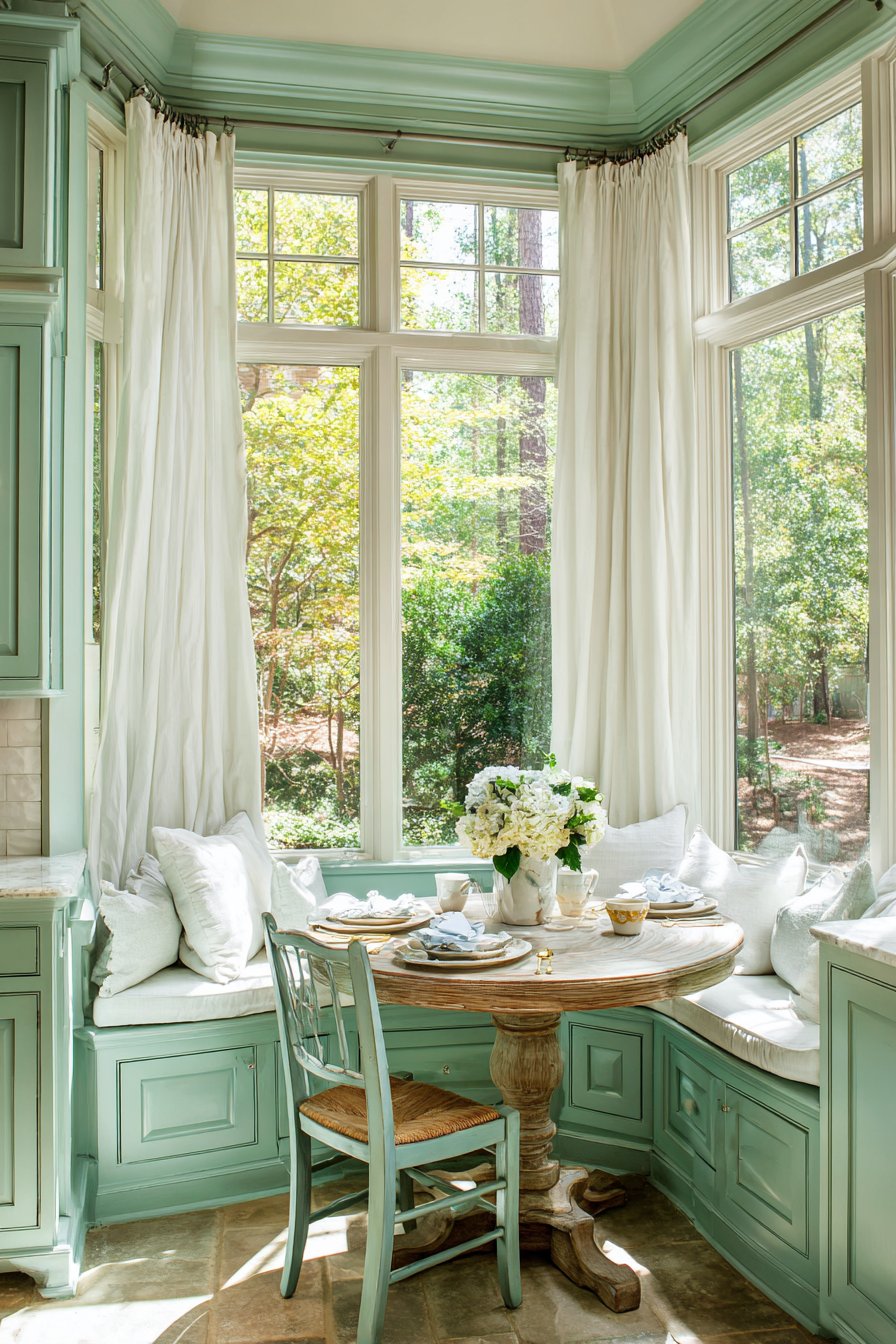
The breakfast nook’s integration within the larger mint green kitchen creates visual continuity while defining a distinct zone for dining. The transition between cooking and eating areas feels natural and intentional, with the mint green woodwork serving as a unifying element that ties the spaces together. This approach works particularly well in open-plan homes where delineating different functional areas without erecting walls maintains the desirable sense of openness while providing psychological separation between activities.
Key Design Tips:
- Build storage into banquette bases to maximize functionality in breakfast nooks, using lift-up seats or pull-out drawers for easy access.
- Choose round tables for breakfast nooks to improve traffic flow and create a more intimate, conversation-friendly seating arrangement.
- Position breakfast nooks near windows to capitalize on natural light and create connections with outdoor views.
- Use Windsor-style chairs for flexible seating that can be easily moved and rearranged as needs change.
- Install sheer curtains that filter light without blocking it completely, maintaining brightness while providing privacy options.
5. Sleek Modern Mint Green Kitchen with Contemporary Edge
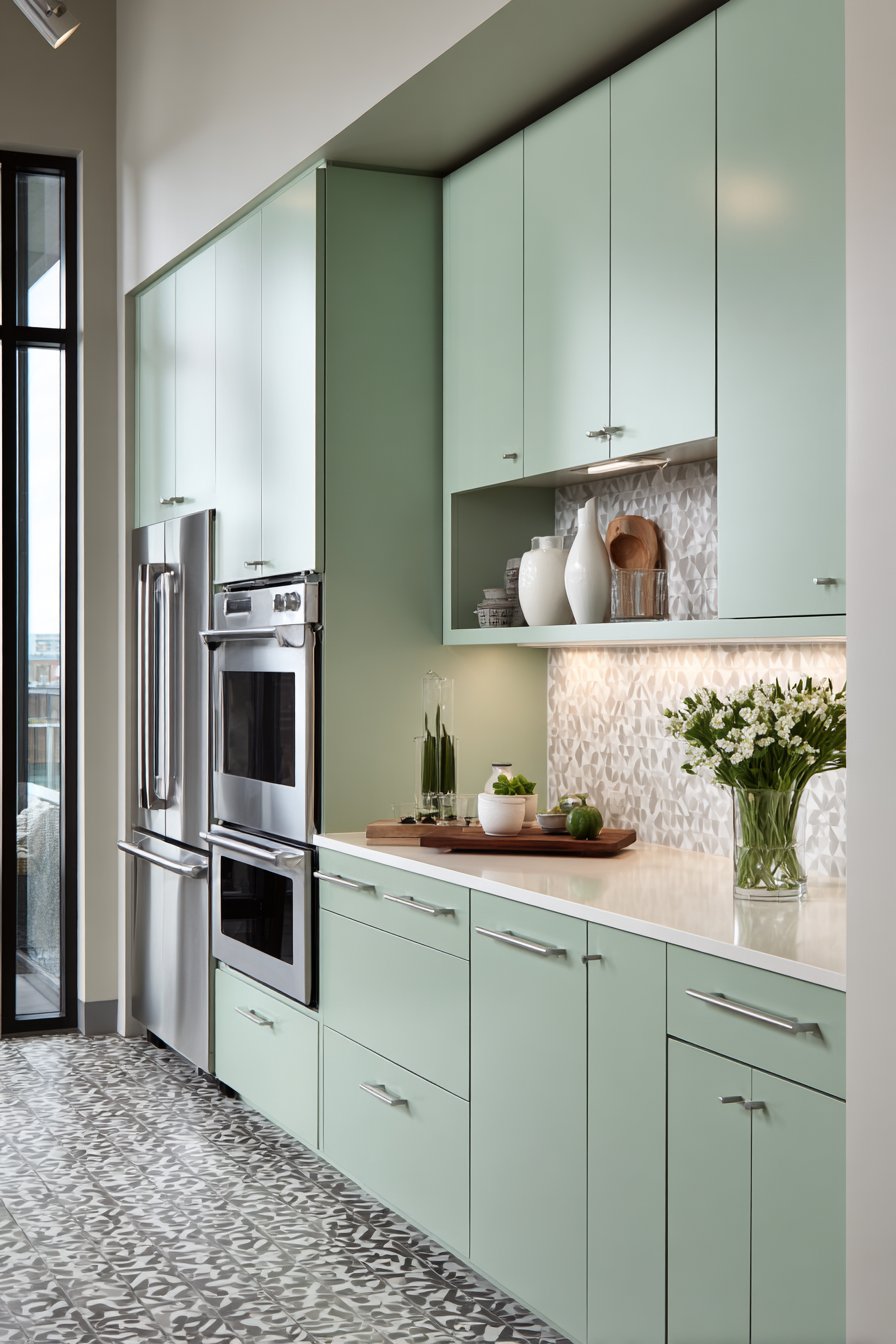
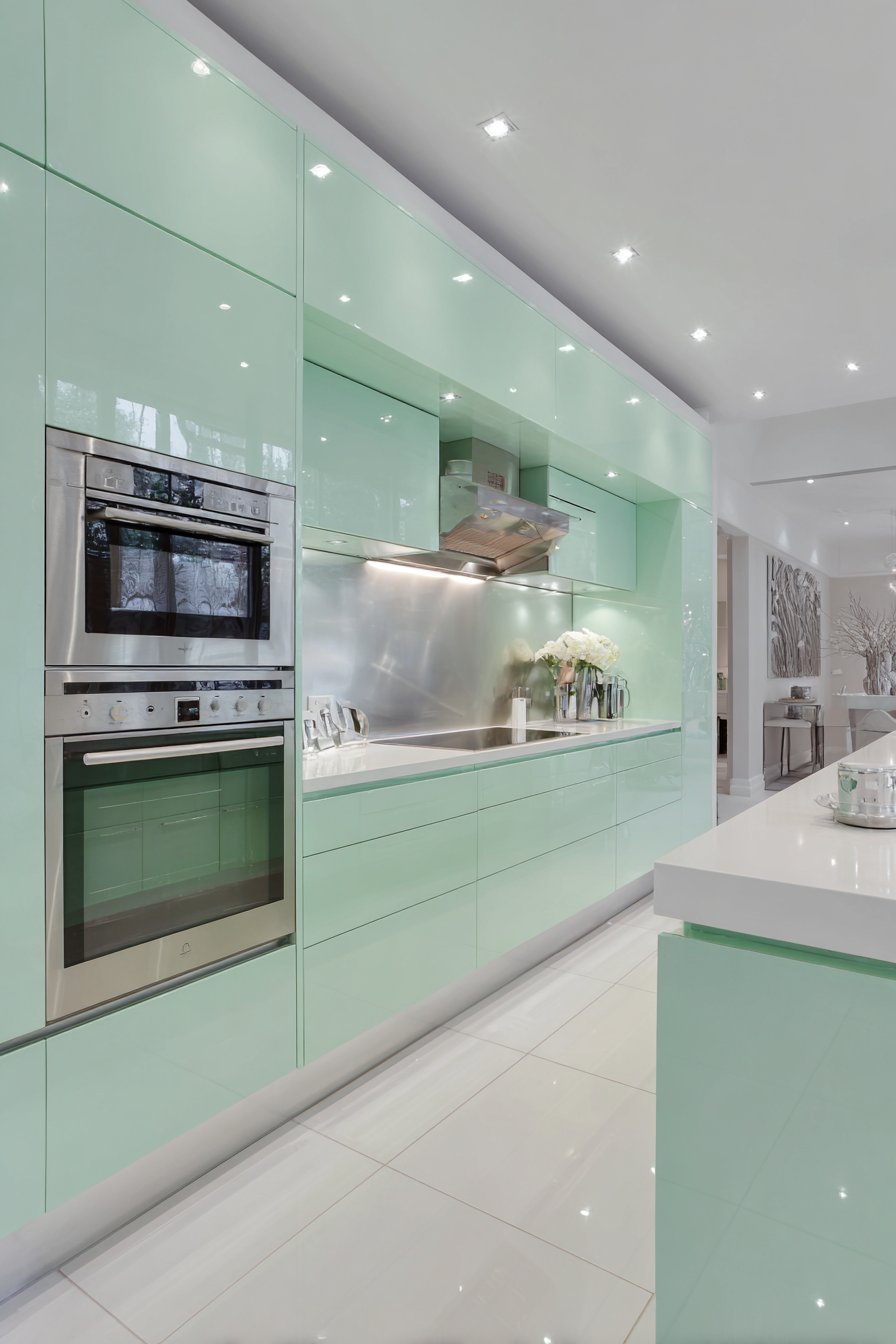
Modern design sensibilities find fresh expression through mint green cabinetry that challenges traditional associations with the color. This contemporary kitchen features sleek flat-panel cabinets finished in matte mint green lacquer, their smooth, unadorned surfaces creating clean horizontal lines throughout the space. The integrated handleless design employs push-to-open mechanisms or recessed finger pulls, eliminating visible hardware for an ultra-minimalist appearance. This approach creates seamless cabinet runs where color and form take precedence over decorative details, resulting in a sophisticated aesthetic that feels current and forward-thinking.
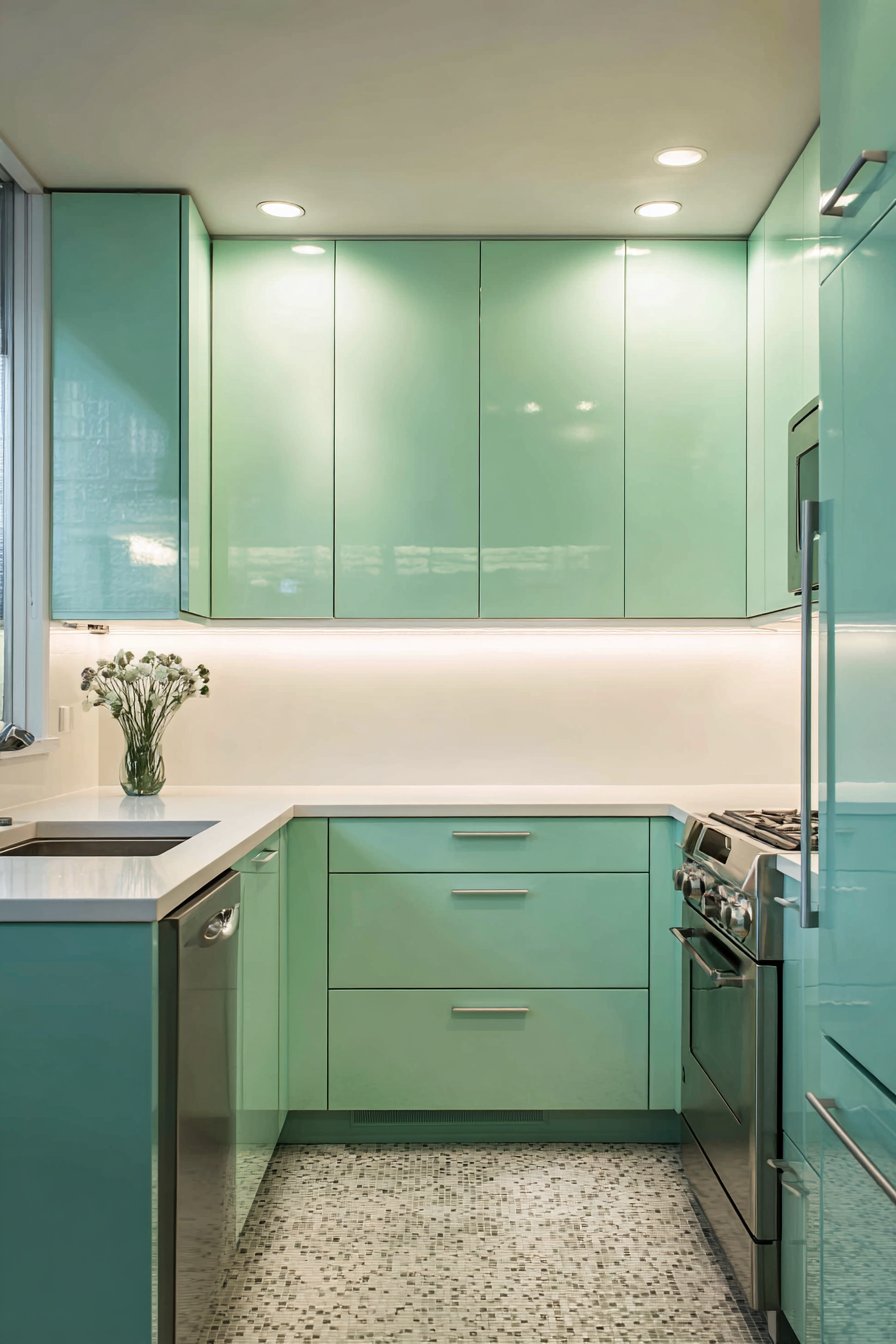
Stainless steel appliances provide deliberate contrast against the soft mint green cabinetry, their industrial character and reflective surfaces introducing a contemporary edge. The juxtaposition of warm, vintage-inspired mint green with cool, modern stainless steel creates visual tension that energizes the space, preventing it from feeling too sweet or nostalgic. White quartz waterfall countertops add sculptural interest through their continuous surface treatment, where the countertop material flows seamlessly over the edge and down the side of the island or peninsula. This detail-oriented approach creates a furniture-like quality that elevates the design.
A geometric patterned cement tile floor provides visual grounding in white and grey tones, introducing pattern and texture at the foot level without competing with the mint green cabinetry for attention. The cement tiles’ matte finish and handcrafted quality soften the sleek upper elements, creating balance between industrial and organic influences. Under-cabinet LED lighting strips illuminate the work surface while highlighting the white glass tile backsplash, which reflects and multiplies the light throughout the kitchen. This layered lighting strategy ensures the space functions beautifully both day and night while emphasizing the smooth surfaces of the modern cabinetry.
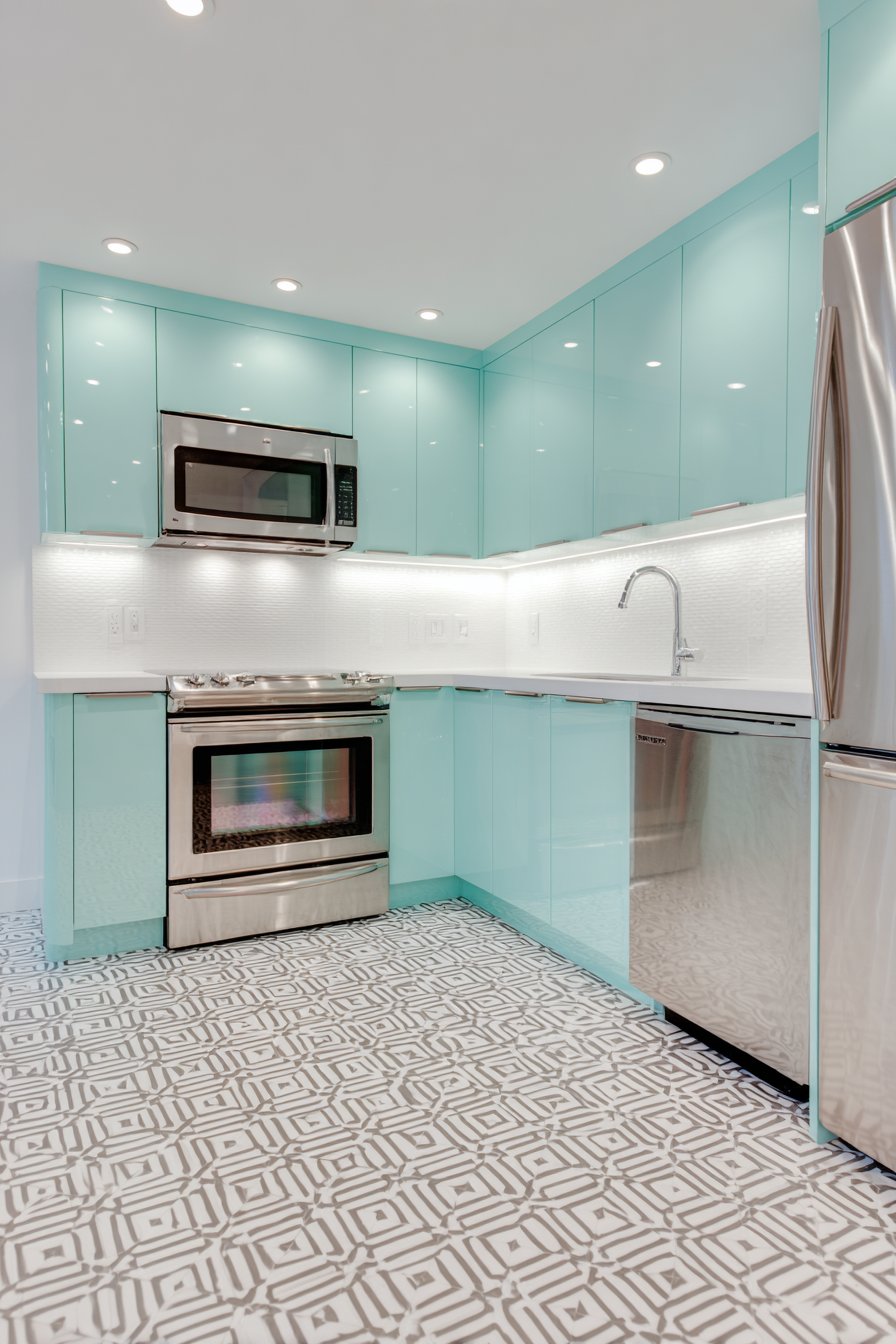
The modern mint green kitchen demonstrates how color traditionally associated with vintage or cottage aesthetics can successfully translate into contemporary design. The key lies in surrounding the mint green with decidedly modern elements—flat-panel doors, handleless design, waterfall edges, geometric patterns, and industrial materials. This unexpected combination creates a kitchen that feels both familiar and fresh, honoring color heritage while pushing boundaries in terms of application and context.
Key Design Tips:
- Choose flat-panel cabinet doors in matte finishes for a thoroughly modern aesthetic that showcases color without decorative distraction.
- Implement handleless cabinet design using push-to-open systems or integrated finger pulls to maintain clean lines and minimal visual interruption.
- Install waterfall edge countertops on islands or peninsulas to create sculptural focal points that elevate contemporary design.
- Select geometric or patterned floor tiles in neutral tones to add visual interest without overwhelming mint green cabinetry.
- Layer LED under-cabinet lighting with overhead fixtures to create flexible illumination that adapts to different tasks and times of day.
6. Vintage-Inspired Mint Green Range Wall
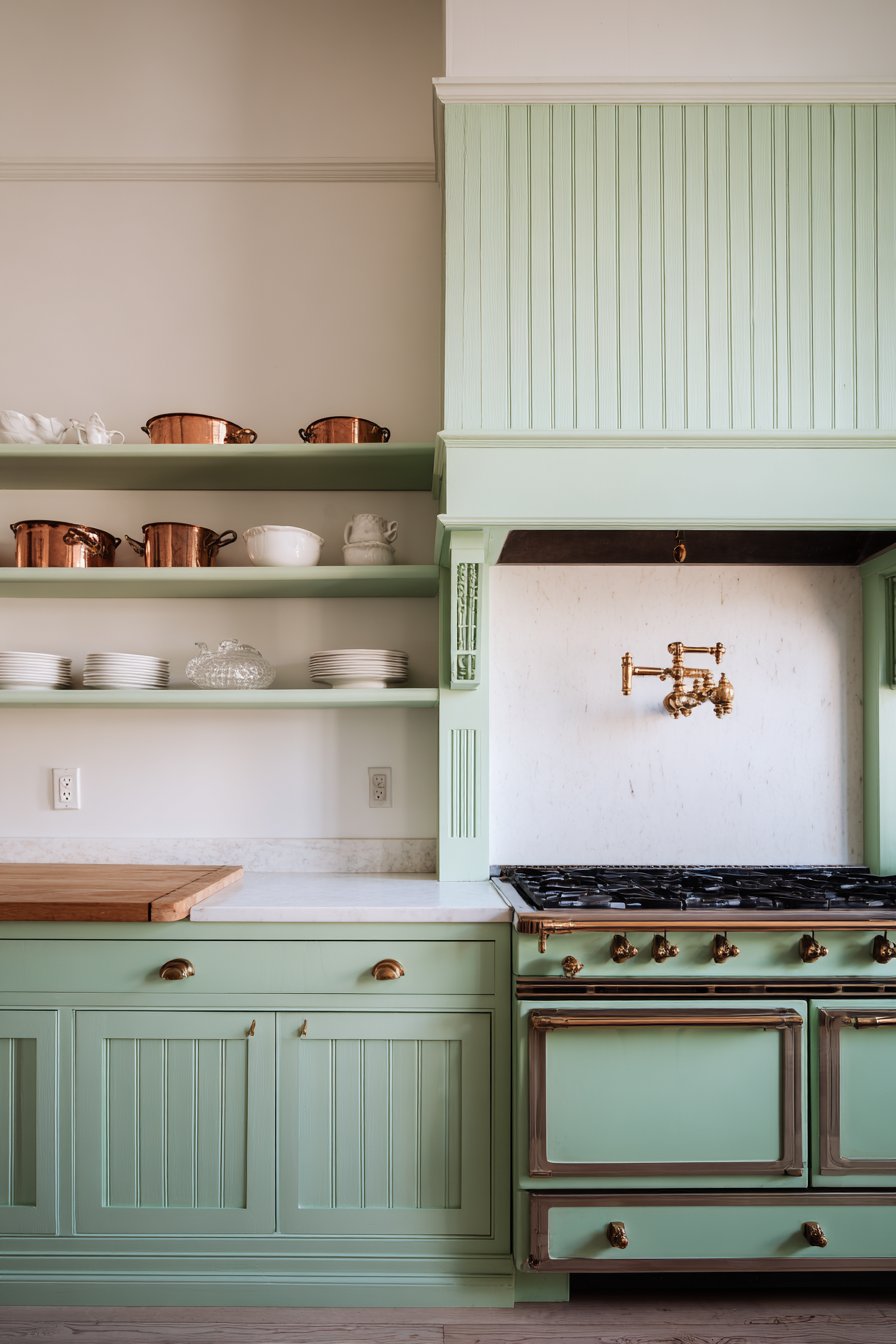
The range wall traditionally serves as the kitchen’s focal point, and this design maximizes its impact through thoughtful material selection and color application. Mint green beadboard paneling extends from floor to ceiling behind a classic white range, creating a dramatic backdrop that frames the cooking area. The beadboard’s vertical grooves add textural richness and visual movement, catching light and creating subtle shadows that emphasize the three-dimensional quality of the wall treatment. This traditional material choice reinforces the vintage-inspired aesthetic while providing a durable, easy-to-clean surface behind the cooking zone.
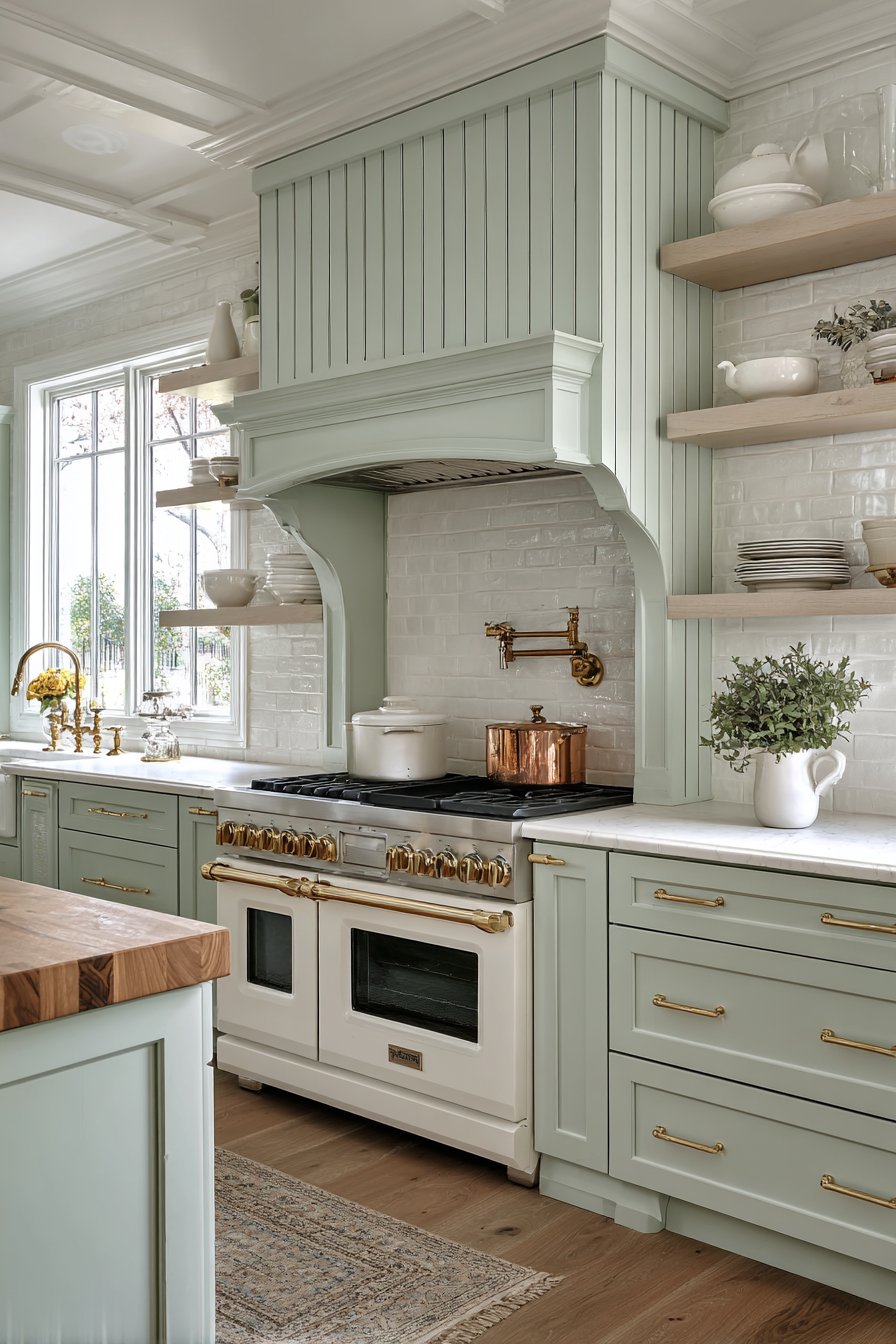
Open shelving flanking the range continues the mint green treatment, displaying white dishware and gleaming copper cookware that creates a warm metallic contrast against the painted surfaces. The open storage keeps frequently used items within easy reach while creating vignettes that add personality and charm. The careful curation of displayed objects—white plates in graduating sizes, copper pots with aged patina, vintage canisters with handwritten labels—transforms functional storage into decorative elements that enhance the kitchen’s character.
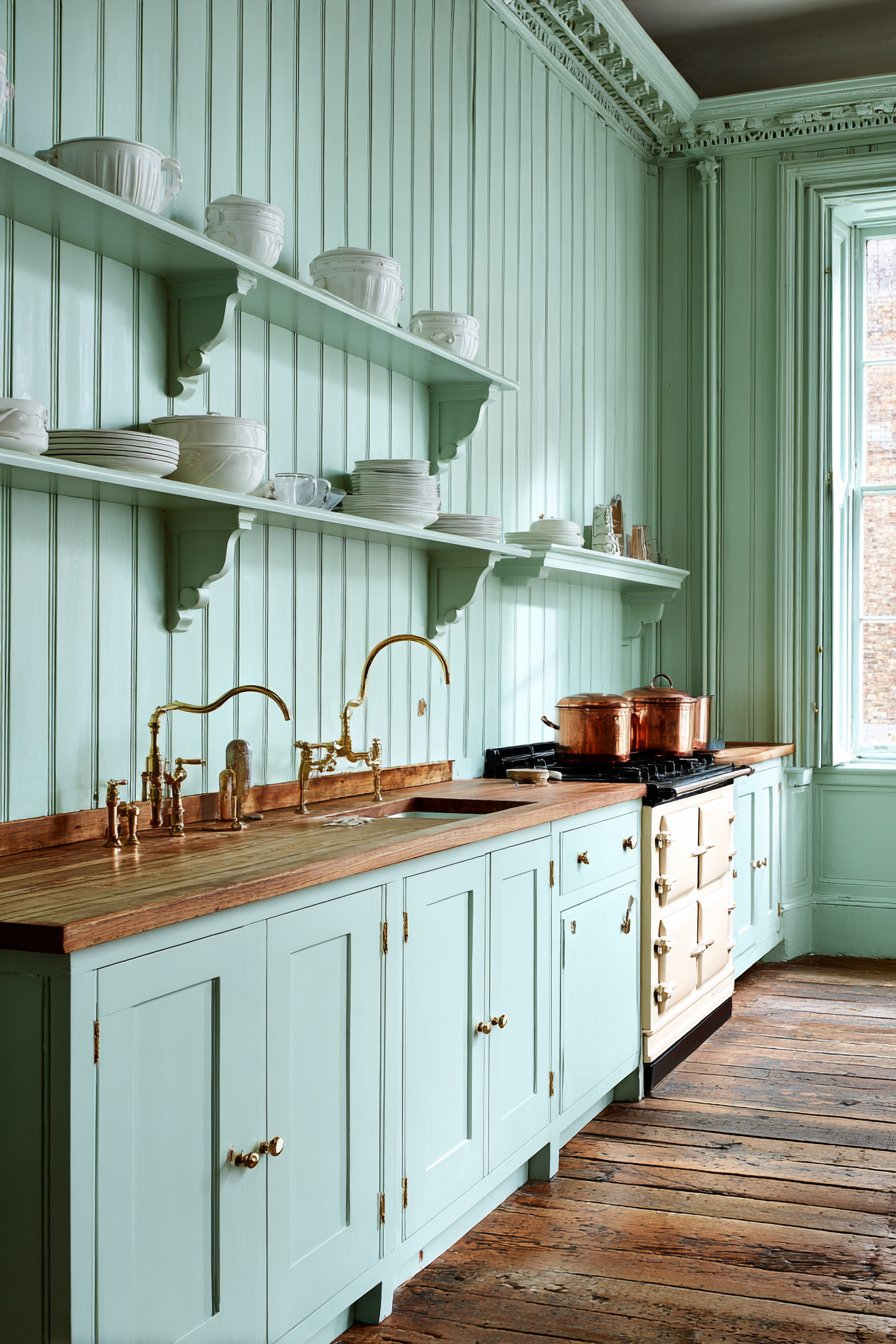
Butcher block countertops show natural wood grain patterns and subtle wear that adds authenticity to the vintage-inspired design. Unlike pristine stone surfaces, these wooden counters embrace imperfection, developing character through daily use. Small cuts from knife work, slight discoloration from moisture exposure, and the gentle burnishing that comes from repeated cleaning all contribute to the lived-in quality that makes vintage-inspired spaces feel genuine rather than contrived. A brass faucet with traditional cross handles provides period-appropriate detail at the sink, its warm metallic finish coordinating with the copper cookware displayed on open shelves.
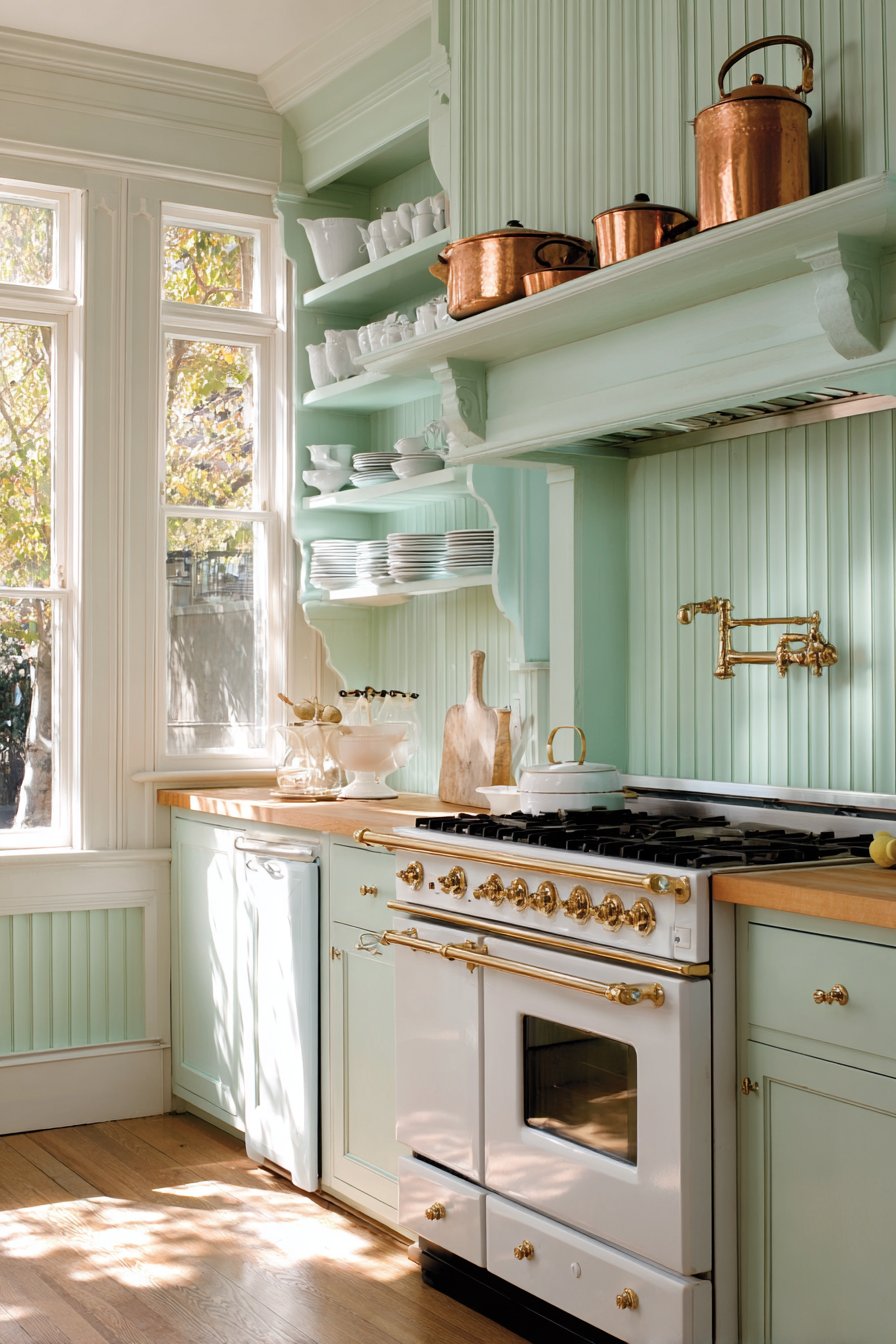
Natural daylight from adjacent windows creates soft shadows that highlight the beadboard’s texture and the dimensional quality of the displayed objects. The interplay of light and shadow changes throughout the day, creating a dynamic visual experience that rewards attention. Morning light might catch the rim of a copper pot, creating a brilliant highlight, while afternoon sun casts longer shadows that emphasize the depth of the beadboard grooves. This natural lighting variation adds life to the space, ensuring it never feels static or staged.
Key Design Tips:
- Install beadboard paneling behind ranges to create vintage character while providing a protective, easy-to-clean surface.
- Paint beadboard in mint green for maximum impact on feature walls, using semi-gloss or high-gloss finishes for durability and light reflection.
- Display copper cookware on open shelving to introduce warm metallic tones that complement mint green’s cool undertones.
- Choose butcher block countertops that embrace patina and wear patterns as desirable characteristics rather than flaws.
- Install period-appropriate fixtures, including bridge faucets and cross-handle designs to reinforce vintage authenticity.
7. Mint Green Farmhouse Sink as Kitchen Centerpiece
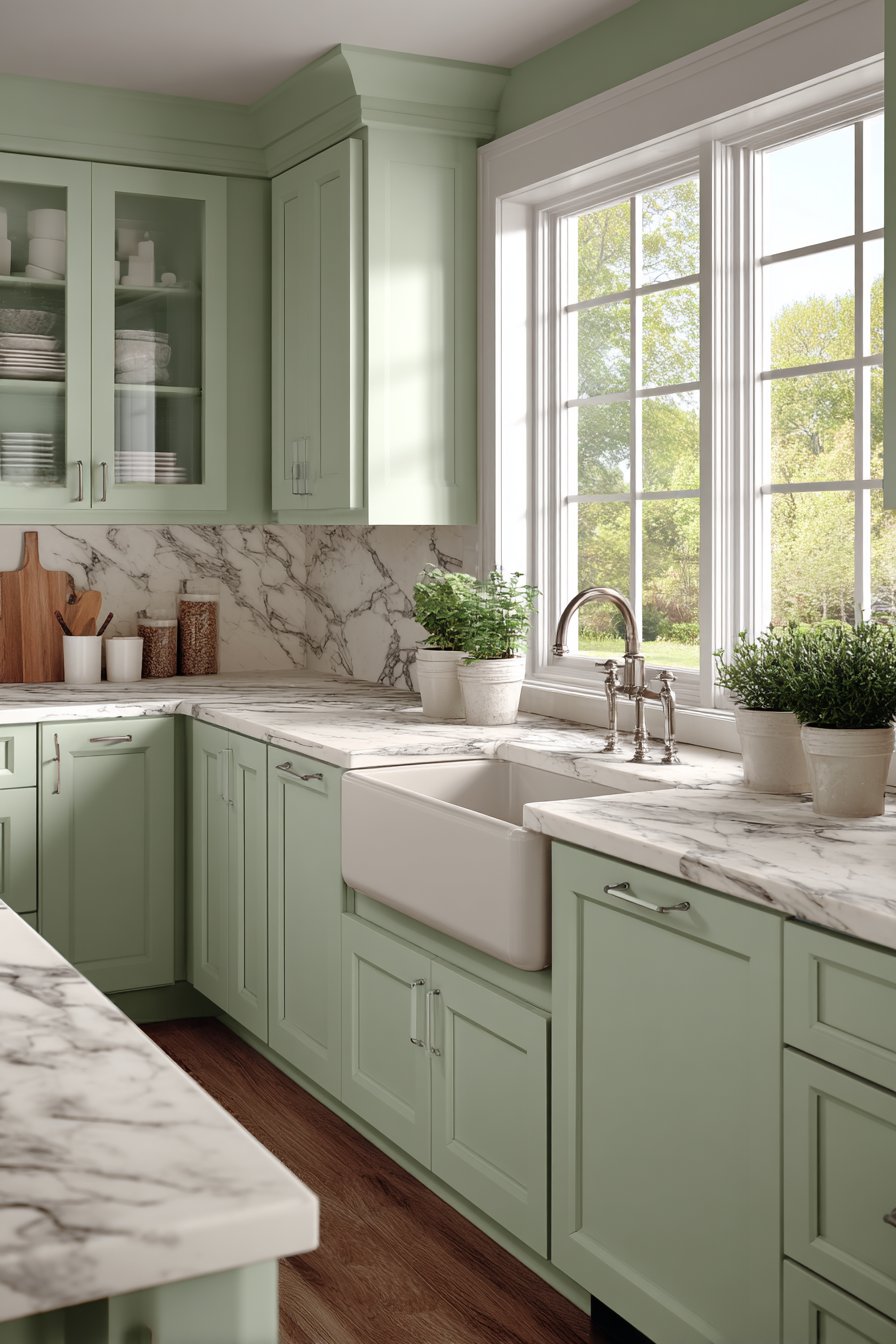
The farmhouse sink represents a beloved kitchen element that combines aesthetic appeal with practical functionality, and positioning it within mint green cabinetry creates a charming focal point. This design features a deep apron-front sink installed beneath a generous window that frames views of outdoor greenery. The sink’s prominent front panel extends beyond the cabinet face, creating a furniture-like detail that references traditional farmhouse work sinks. The substantial basin depth accommodates large pots, baking sheets, and roasting pans while the front-facing installation eliminates the need to lean over countertops, reducing back strain during extended washing sessions.
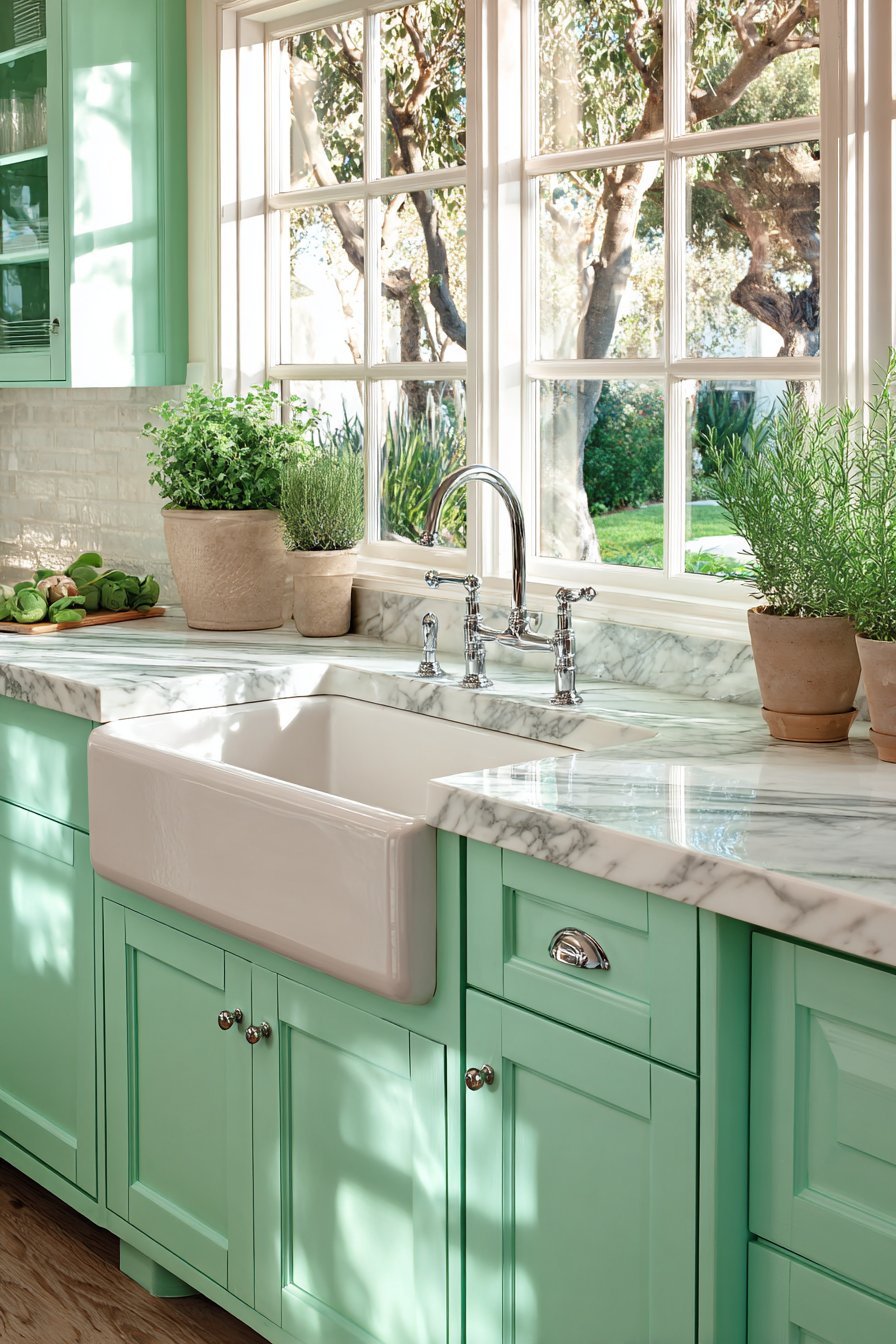
Mint green painted base cabinets with simple shaker-style doors surround the sink area, their clean lines and recessed panels providing visual interest without unnecessary ornamentation. Brushed nickel knobs offer a subtle metallic accent that complements the sink’s plumbing fixtures without overwhelming the soft color palette. The cabinet doors flanking the sink likely house cleaning supplies, garbage and recycling bins, and undersink storage, making efficient use of the space while maintaining the seamless appearance of the cabinet run.
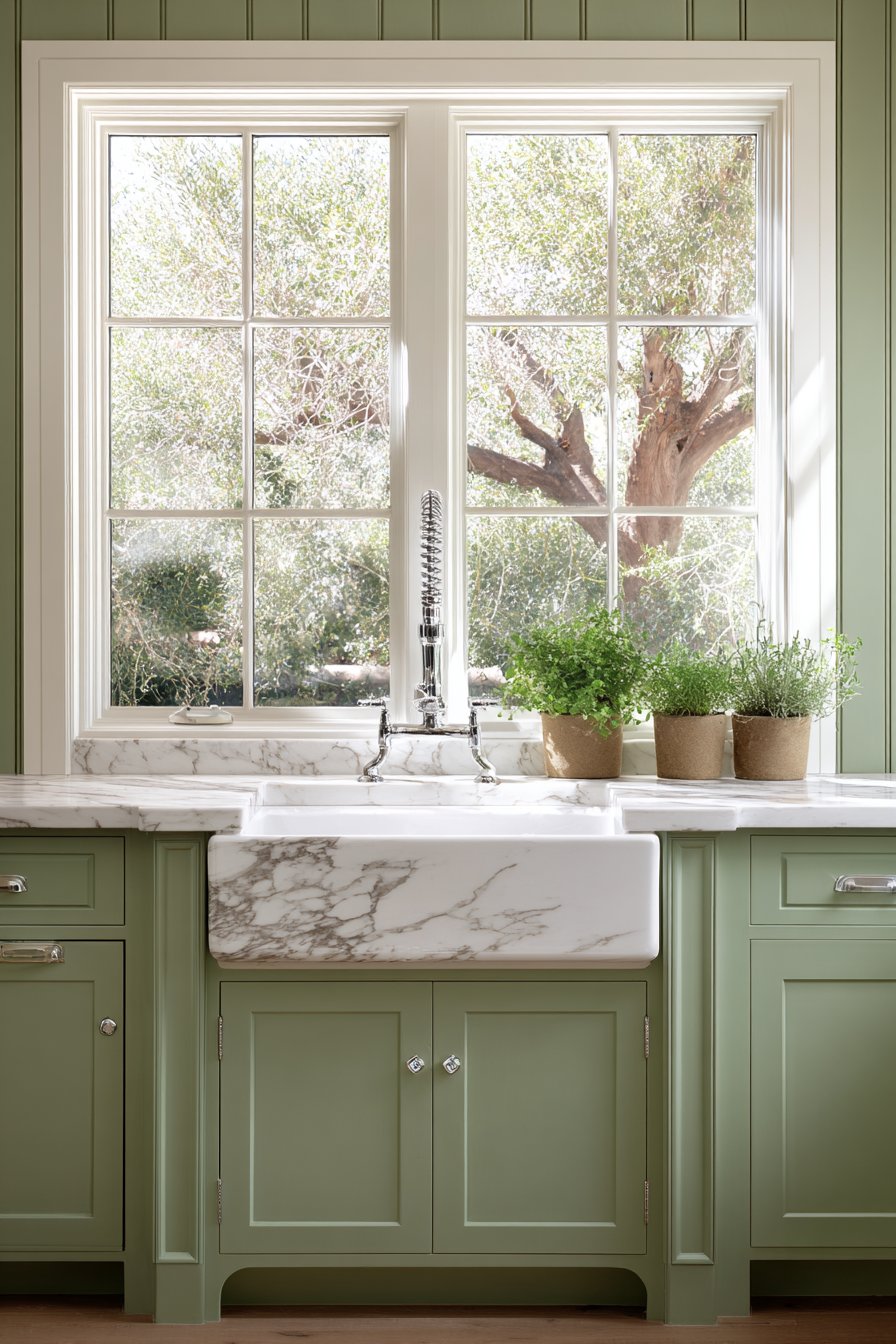
White marble countertops show natural grey veining that radiates organically across the surface, creating one-of-a-kind patterns that ensure no two installations look identical. Around the sink area, these veining patterns become focal points, drawing the eye and adding visual complexity. The cool white stone contrasts beautifully with the mint green base cabinets while coordinating with the white farmhouse sink, creating a cohesive color story. A vintage-style bridge faucet in polished nickel spans the distance between hot and cold handles, its traditional design and elevated spout providing both practical reach and period-appropriate charm.
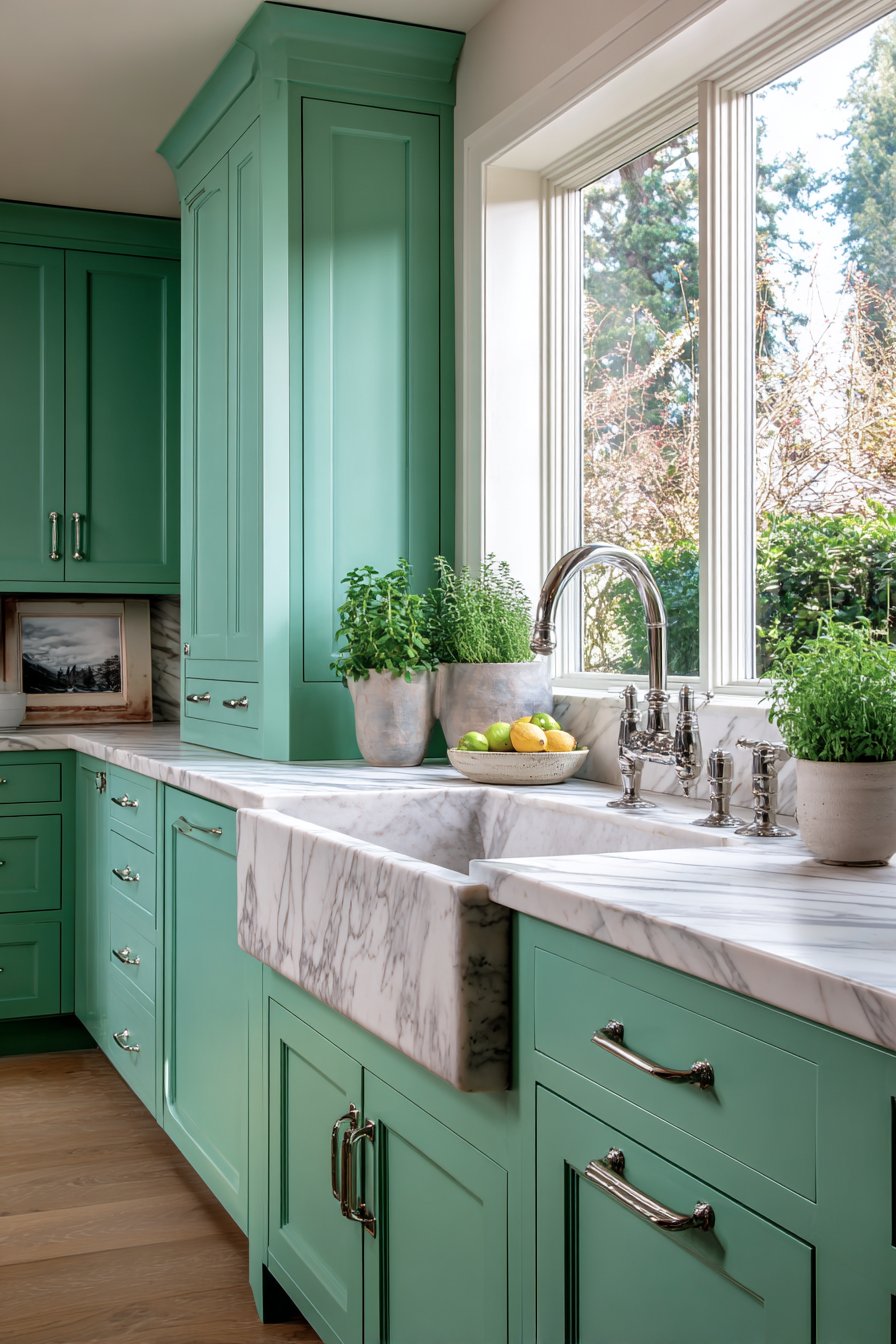
Potted herbs arranged on the windowsill catch morning light, their green leaves creating a living connection between the mint green cabinetry and the natural world visible through the window. Fresh basil, rosemary, mint, and thyme provide both visual interest and culinary utility, offering fresh seasonings within arm’s reach during meal preparation. The herbs’ varying leaf shapes and shades of green create textural contrast while reinforcing the fresh, natural feeling that mint green inherently evokes. This integration of living plants enhances the kitchen’s connection to nature and gardens, embodying farm-to-table ideals.
Key Design Tips:
- Install farmhouse sinks beneath windows to create pleasant washing experiences with natural light and outdoor views.
- Choose apron-front sinks in white or cream to create classic contrast against mint green base cabinets.
- Select bridge faucets with elevated spouts to provide practical reach across large farmhouse sink basins.
- Position potted herbs on windowsills above sinks where they’ll receive adequate light while remaining accessible during cooking.
- Use marble countertops with visible veining to add natural pattern and organic movement to the color palette.
8. Organized Mint Green Kitchen Pantry
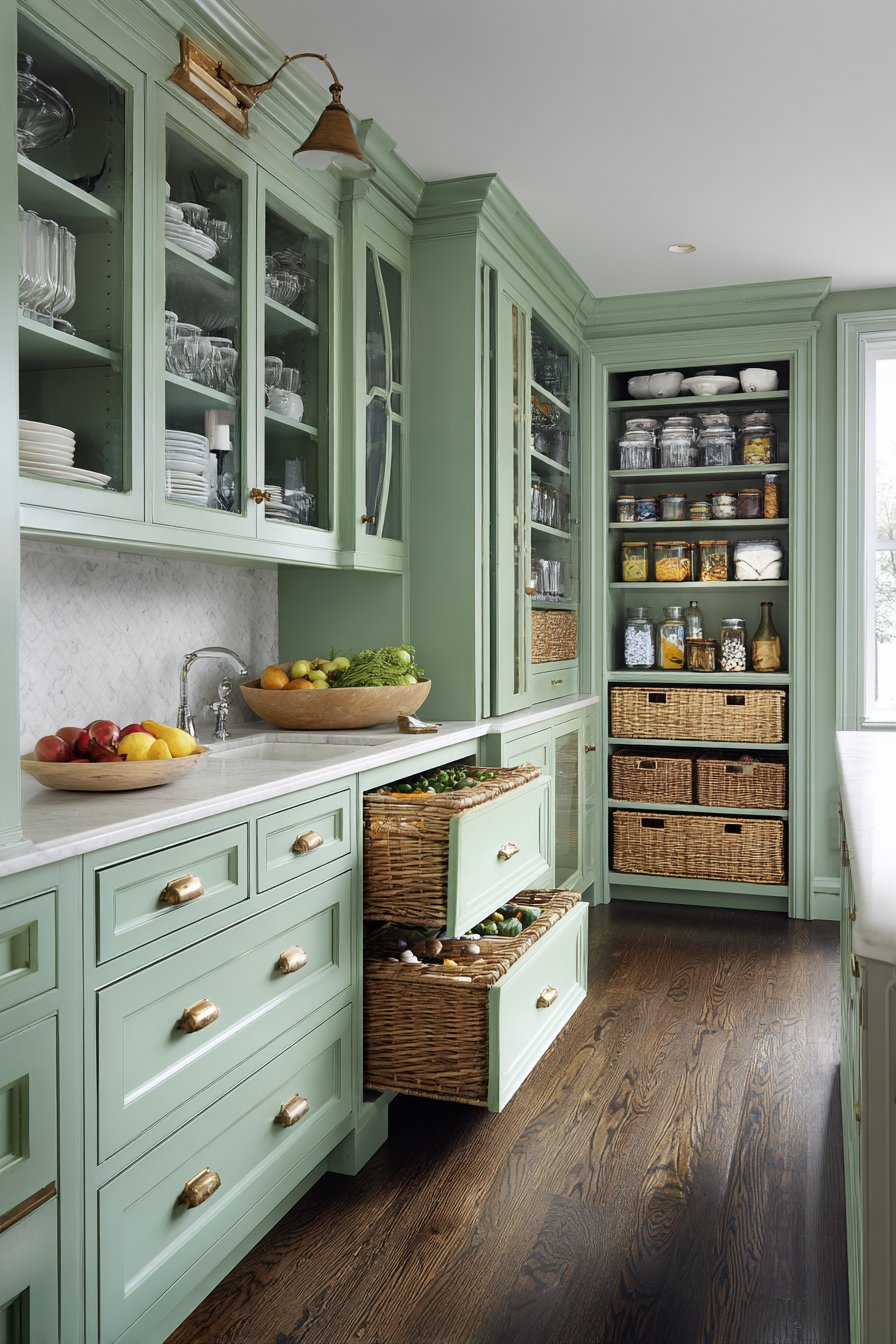
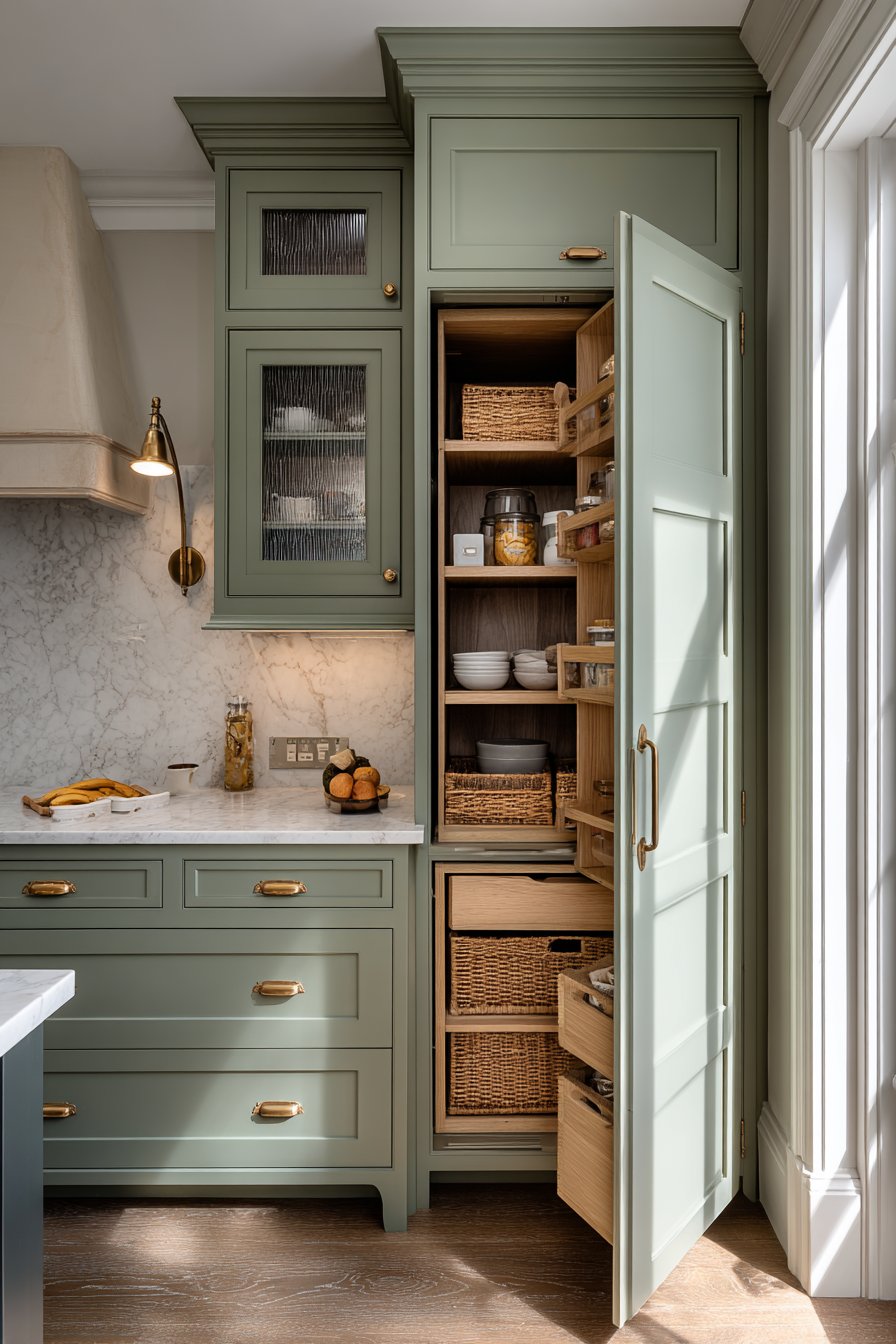
A well-designed pantry transforms kitchen functionality by providing dedicated storage that eliminates counter clutter and streamlines food preparation. This pantry concept features floor-to-ceiling mint green painted built-in cabinetry that creates an immersive, color-wrapped environment. The comprehensive storage system includes glass-front upper cabinets that display organized dishware, serving pieces, and specialty items while protecting them from dust. The transparent doors allow visual inventory of contents without opening cabinets, improving efficiency while creating attractive displays that add to the pantry’s charm.
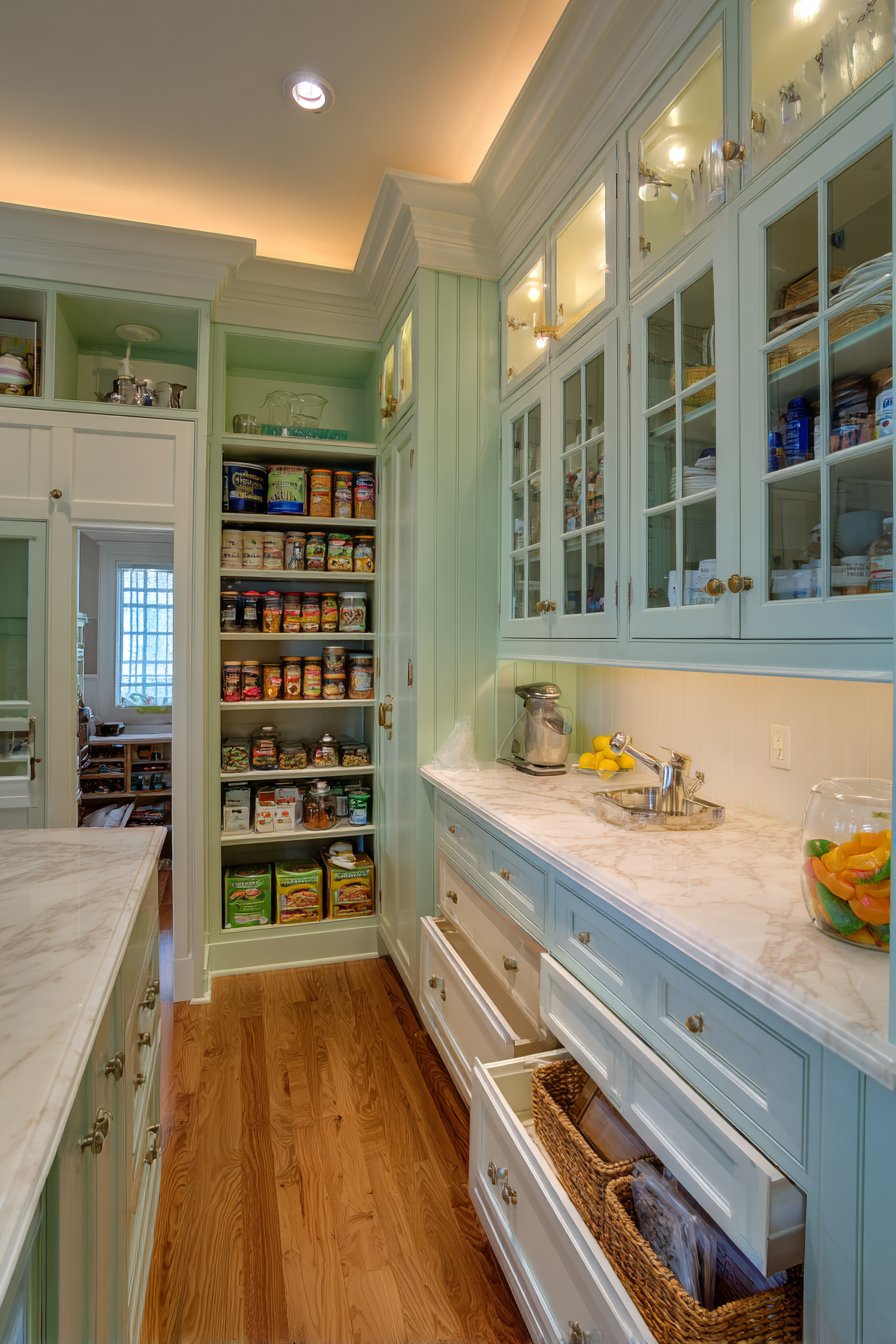
Lower cabinet sections incorporate pull-out drawers fitted with wicker basket inserts, providing practical storage solutions for produce and dry goods. The baskets’ natural texture introduces organic warmth against the painted cabinetry while allowing air circulation around stored vegetables like potatoes, onions, and garlic. Deep drawers accommodate bulk items, small appliances used seasonally, and pantry staples, with organizational inserts that keep items separated and easily accessible. The drawer configuration eliminates the need to reach into deep cabinet recesses, bringing contents forward for convenient selection.
A white marble countertop section offers valuable prep space within the pantry itself, complete with a small sink for washing produce, filling pots, or arranging flowers away from the main kitchen work zone. This secondary prep area proves particularly valuable during holiday cooking when multiple cooks share the space, or when entertaining requires additional workspace for assembling appetizers or desserts. The marble surface coordinates with the main kitchen’s materials while providing an easy-to-clean work surface suitable for various tasks.
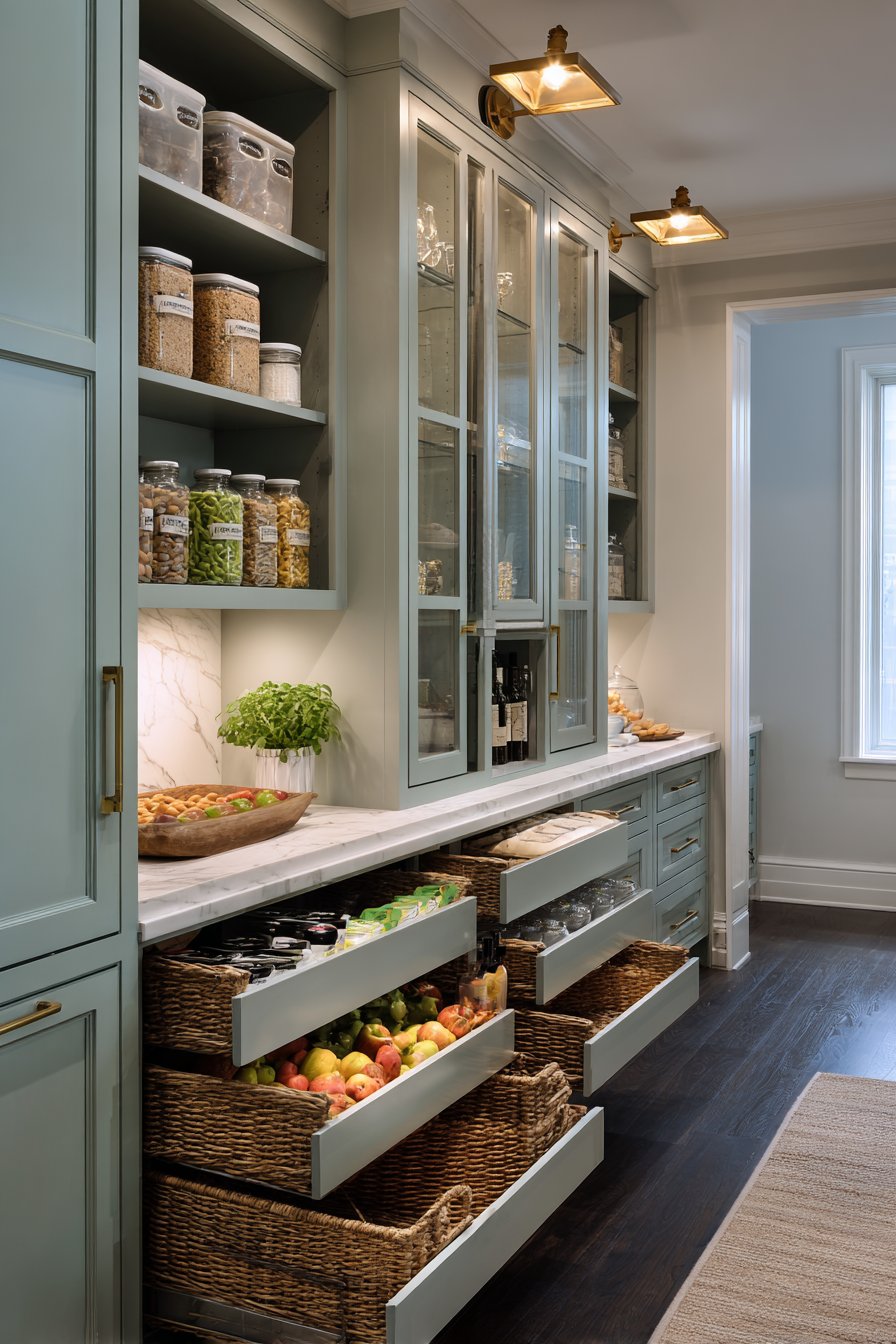
Brass library light fixtures illuminate the pantry with warm, directed light that makes reading labels and finding items effortless regardless of time of day. These fixtures’ traditional design references old-world libraries and studies, adding a scholarly, refined character to the utilitarian space. The brass finish coordinates with hardware throughout the mint green cabinetry, creating visual continuity. Proper lighting transforms the pantry from a dark storage closet into a pleasant environment where organization feels rewarding rather than tedious.
Key Design Tips:
- Install glass-front upper cabinets in pantries to create attractive displays while allowing visual inventory of stored items.
- Incorporate pull-out drawers with wicker or wire basket inserts for produce storage that allows air circulation and easy access.
- Add a small prep sink and countertop section in larger pantries to create secondary workspaces that relieve congestion in main kitchens.
- Mount library-style light fixtures with adjustable arms to direct illumination exactly where needed for reading labels and finding items.
- Paint pantry interiors in mint green to create cohesive transitions from main kitchen spaces while adding unexpected color moments.
9. Dramatic Two-Tone Mint Green and White Kitchen
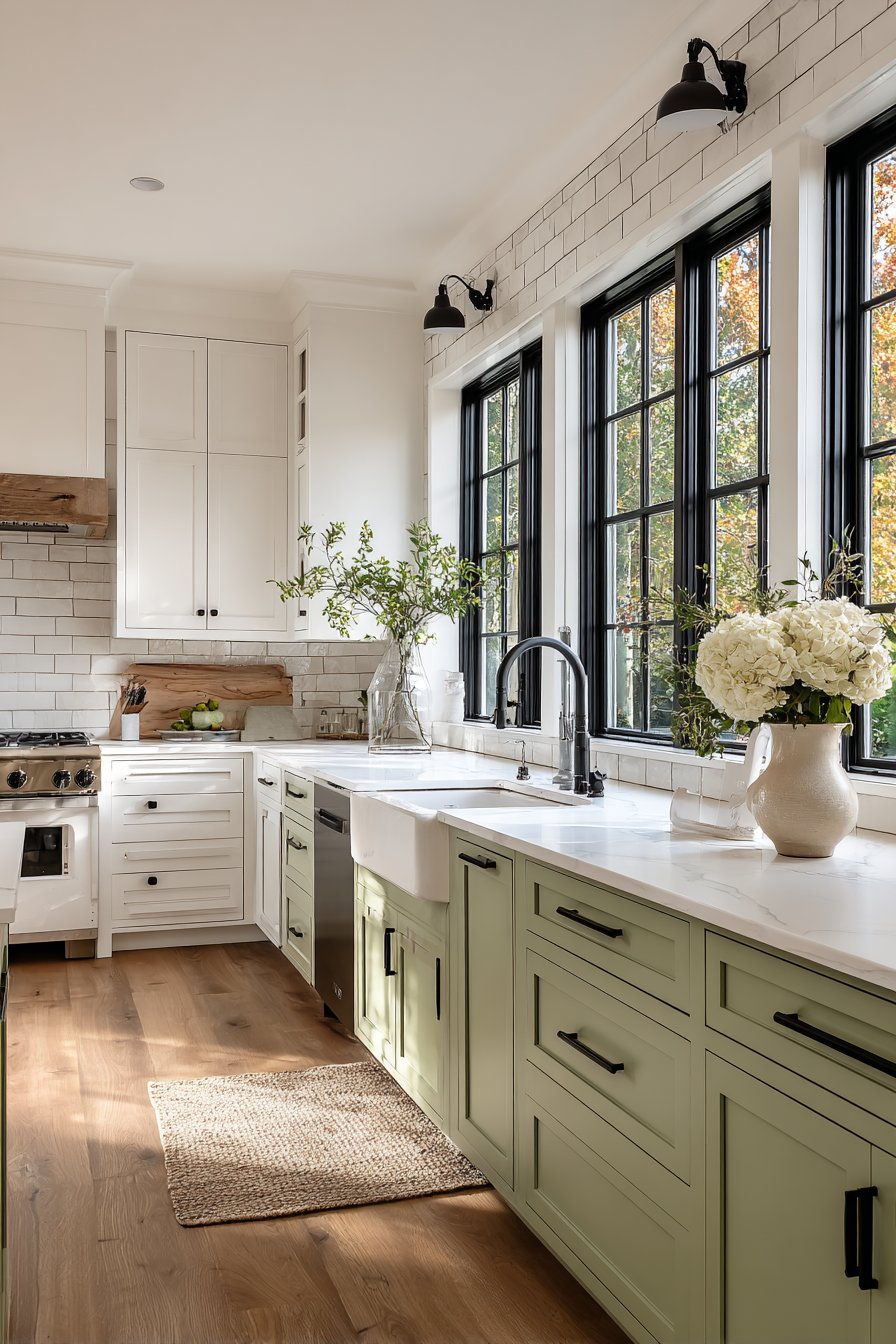
Two-tone kitchen designs offer sophisticated visual interest by combining different cabinet colors within a single space. This approach features mint green lower cabinets paired with crisp white upper cabinets, creating vertical color division that grounds the space while maintaining airiness above. The mint green base cabinets anchor the design and hide the wear patterns that naturally occur near floor level, while white uppers reflect ceiling light downward and prevent the space from feeling too saturated with color. This balanced distribution ensures the mint green makes strong impact without overwhelming the senses.
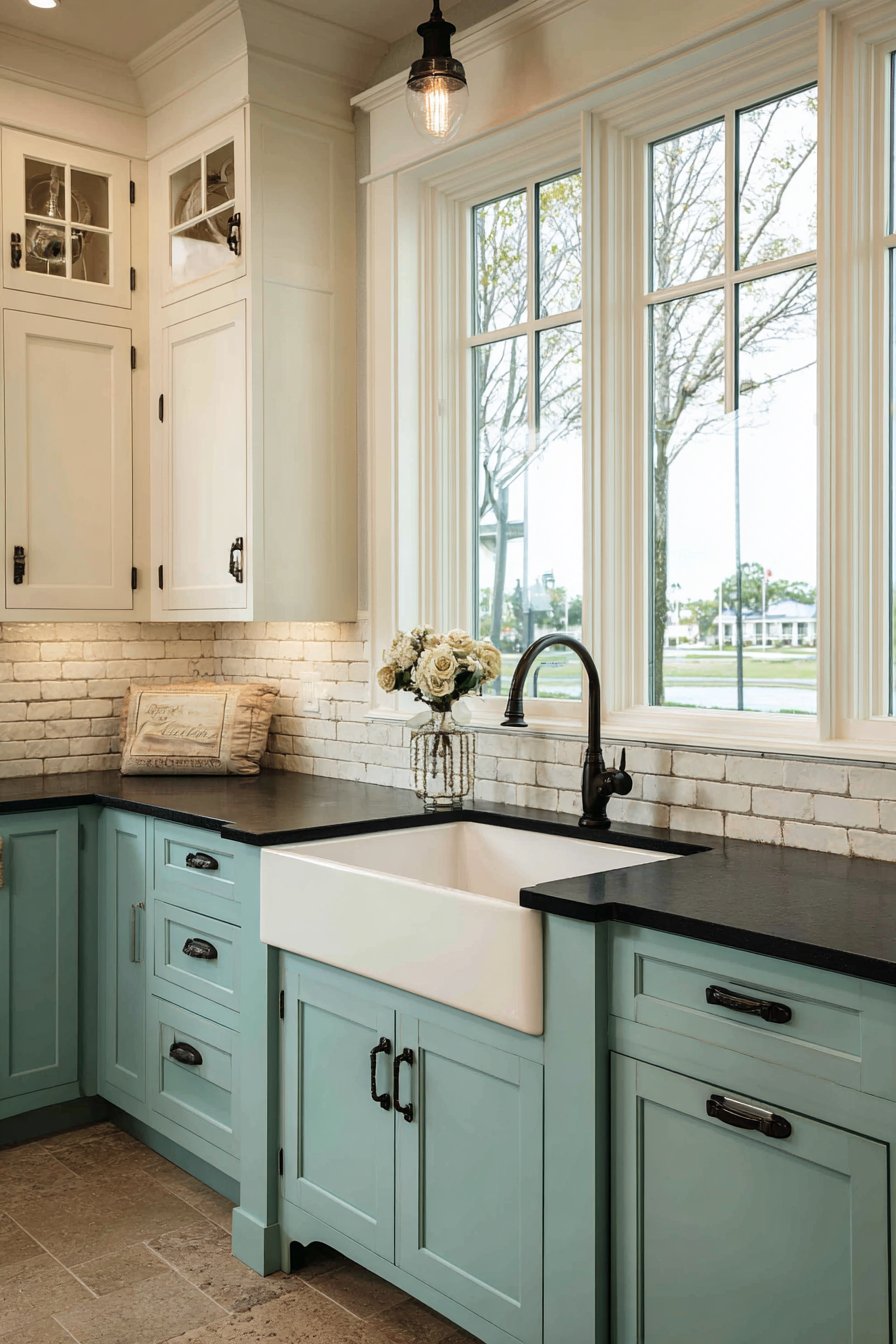
Black soapstone countertops provide dramatic contrast that elevates the entire color scheme from sweet to sophisticated. The dark stone’s matte surface shows natural mineral patterns and white veining that becomes more pronounced over time as the stone develops patina. Unlike granite or marble, soapstone feels soft and almost velvety to the touch, its tactile quality adding sensory richness. The bold color choice creates clear definition between the upper and lower cabinets while introducing a grounding element that prevents the mint green and white combination from feeling too light or ethereal.
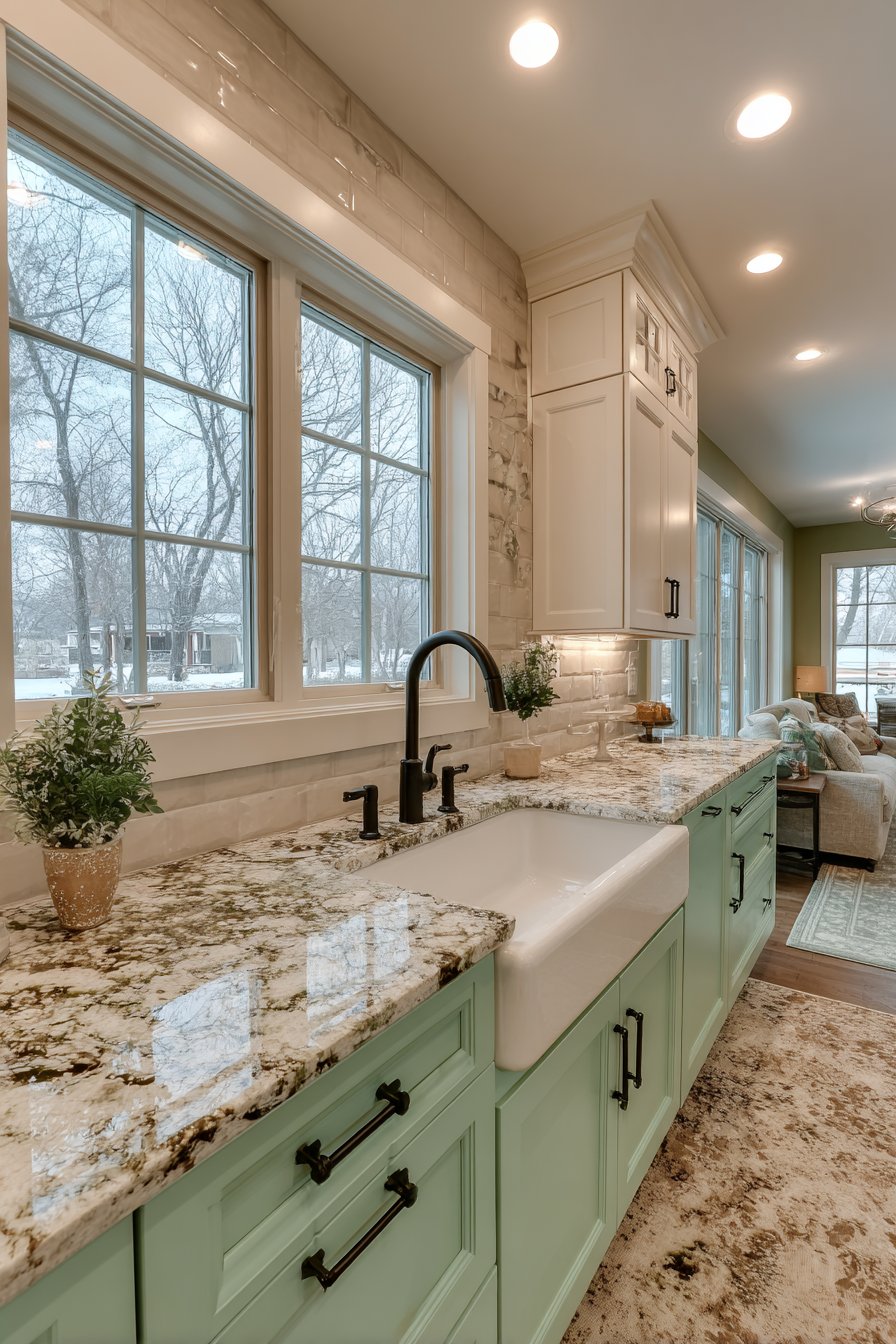
A white ceramic farmhouse-style tile backsplash arranged in classic brick pattern extends between the contrasting cabinetry zones, providing visual transition while maintaining overall brightness. The rectangular tiles’ beveled edges catch light along their perimeter, creating subtle dimensional effects that add interest to the expansive white surface. Light grey grout lines prevent the stark appearance of white-on-white while adding barely perceptible pattern that rewards close attention. Black iron hardware and fixtures tie directly to the soapstone countertops, creating cohesive visual connections throughout the space. Matte black cabinet knobs and pulls, faucets, lighting fixtures, and possibly even range hoods reinforce the sophisticated color palette.
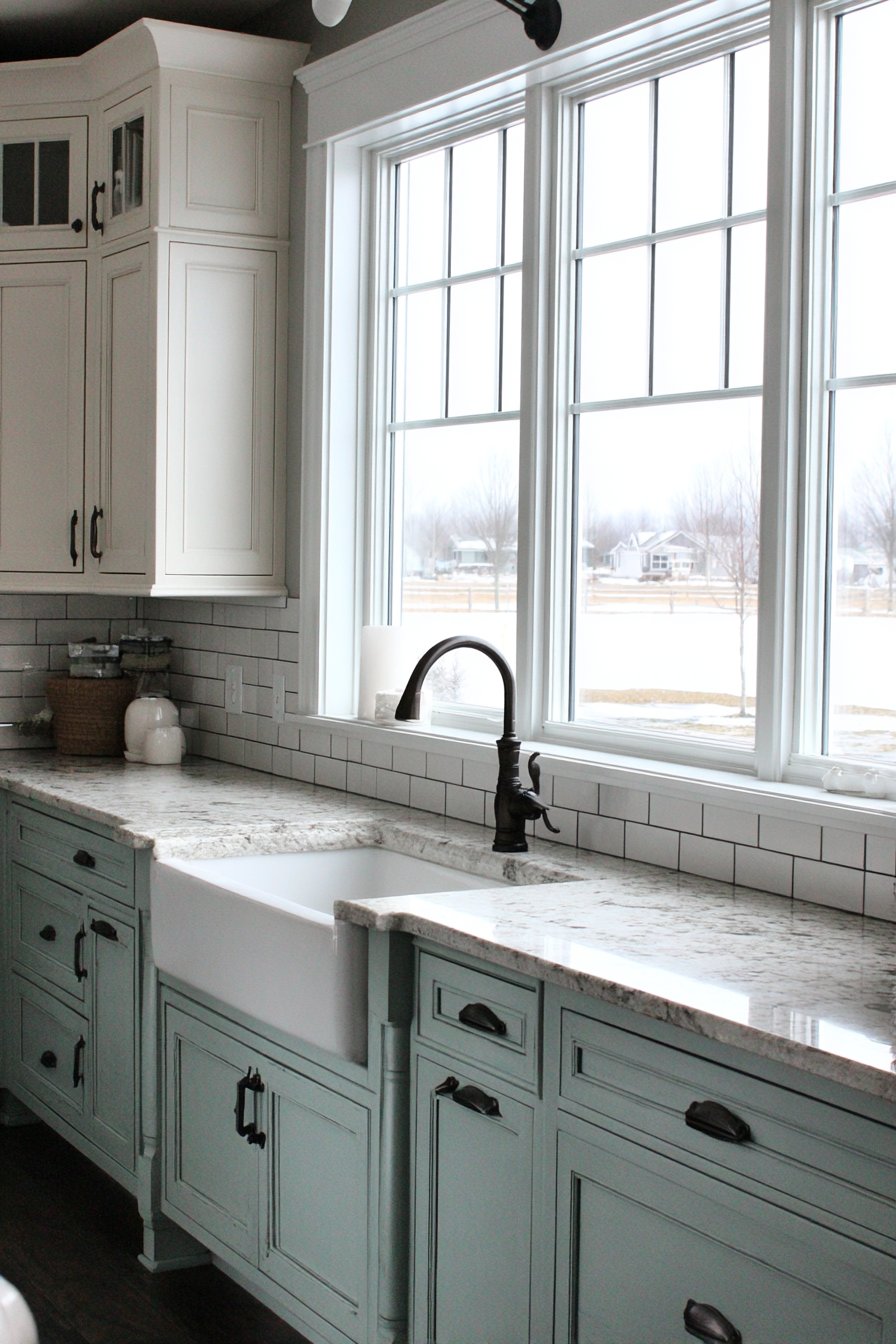
Large windows with white trim frame outdoor views and flood the space with natural light that showcases the careful color relationships. The abundance of natural light ensures the black countertops and hardware don’t darken the space, while the mint green cabinetry appears fresh and vibrant rather than dull or muddy. The white upper cabinets and trim work together to reflect and bounce light throughout the kitchen, creating a bright environment suitable for detailed cooking tasks. This carefully balanced light distribution allows the bold color choices to succeed without creating oppressive or gloomy atmospheres.
Key Design Tips:
- Combine mint green lower cabinets with white uppers to create visual grounding while maintaining overall brightness and airiness.
- Choose black soapstone countertops to introduce dramatic contrast and sophisticated edge that balances the mint green’s sweetness.
- Install white tile backsplashes in brick patterns to provide visual transition between two-tone cabinetry while adding subtle texture.
- Select matte black hardware and fixtures to create cohesive visual connections with dark countertops throughout the space.
- Maximize window size and minimize treatments to ensure adequate natural light for bold color schemes to succeed without feeling heavy.
10. Cozy Mint Green Kitchen Dining Area with Banquette
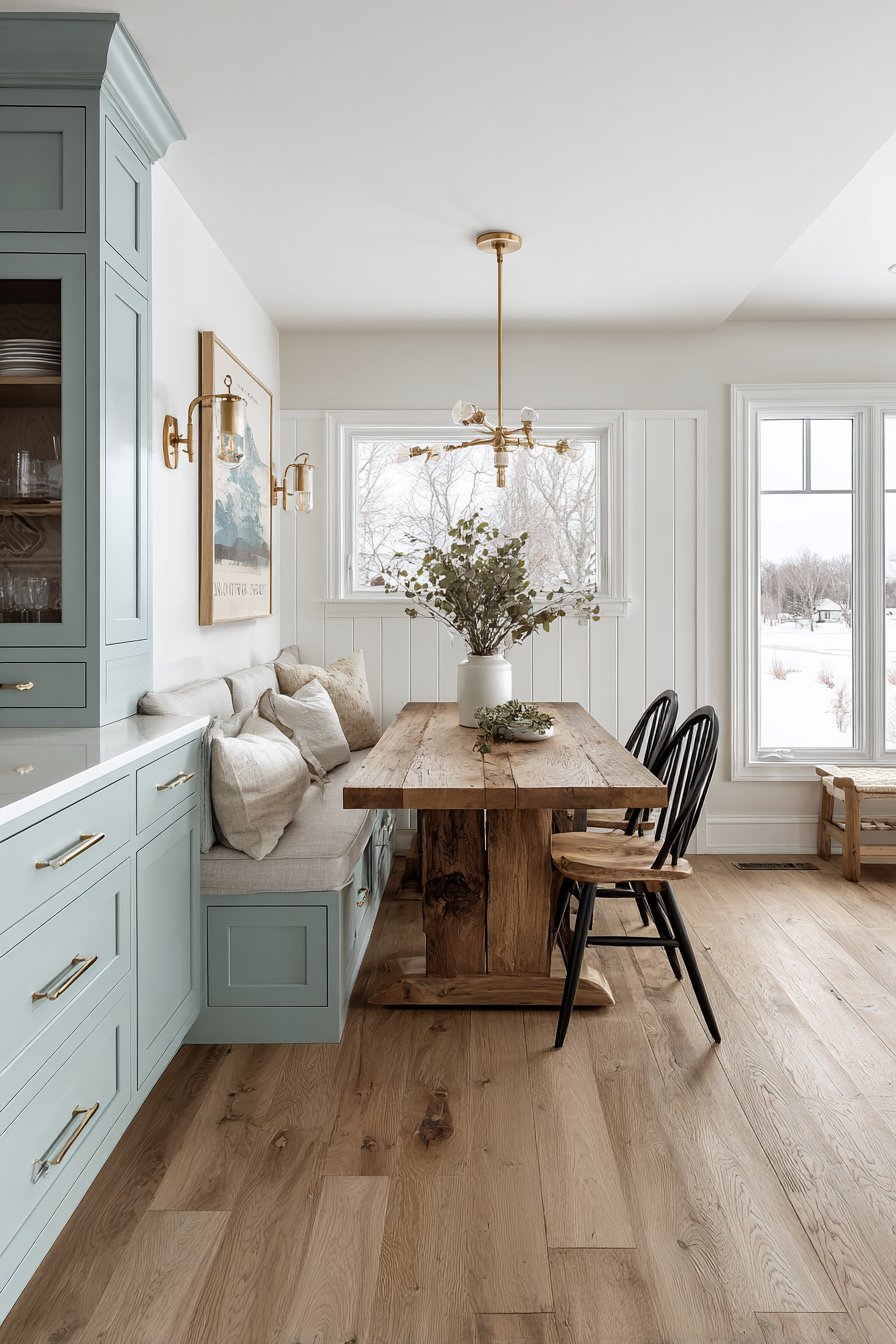
Integrated dining areas within kitchens facilitate casual meals and create gathering spaces that keep family members connected during food preparation. This design features a built-in banquette with mint green painted lower storage cabinets that maximize functional use of the dining zone. The storage compartments beneath the seating accommodate table linens, serving pieces, or seasonal décor, eliminating the need for separate dining room storage furniture. A cushioned bench seat upholstered in natural linen fabric tops the mint green base, its neutral tone and subtle texture providing comfortable seating that coordinates with the color scheme without competing visually.
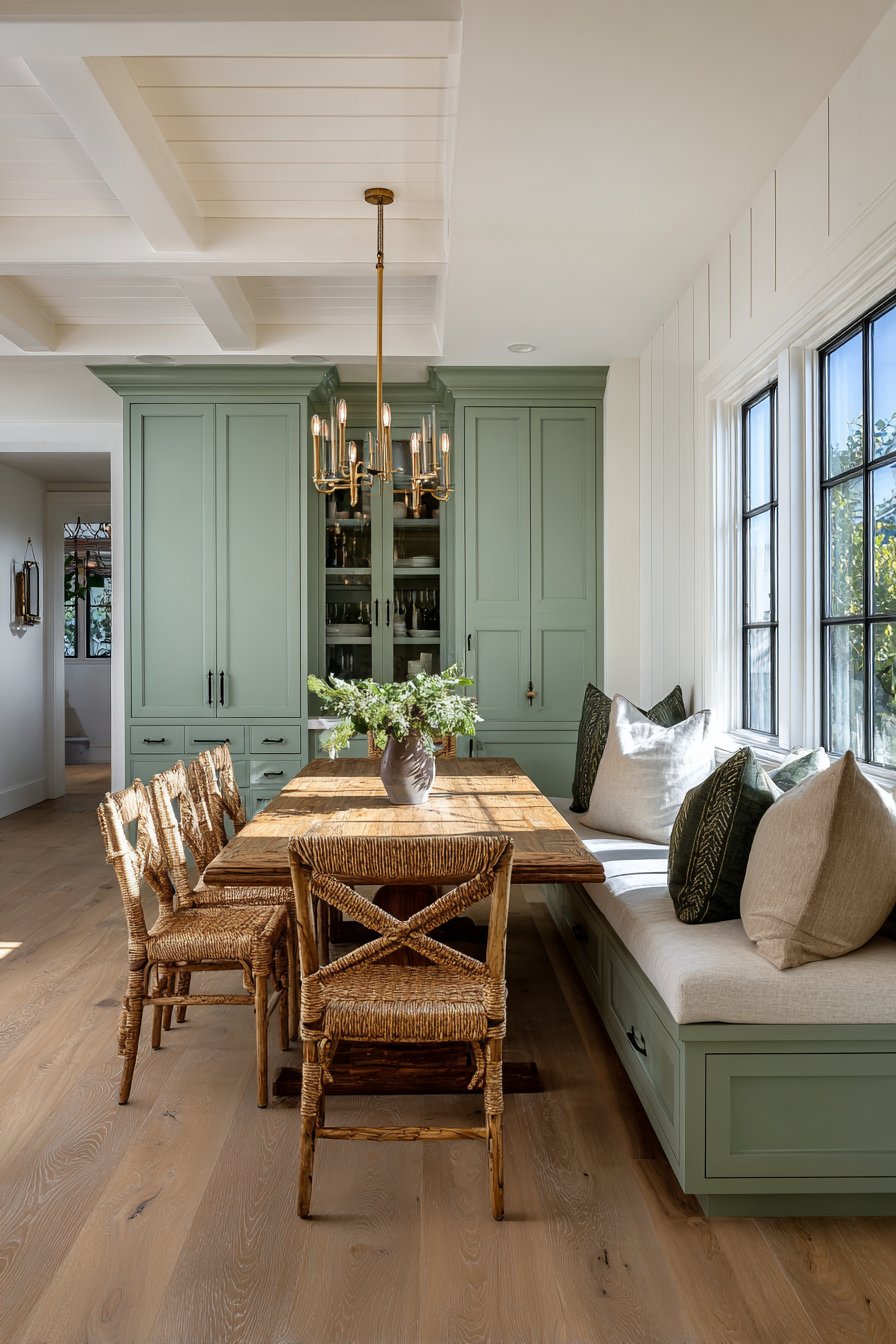
A rustic wooden farmhouse table centers the dining area, its substantial presence and visible wood grain adding organic warmth and textural contrast. The table’s weathered surface shows character marks—minor dings, slight discoloration, natural wood movement—that contribute to the space’s lived-in charm. Mismatched vintage chairs in complementary colors surround the table, their varied styles and finishes creating an collected-over-time appearance that feels authentic rather than overly coordinated. This eclectic approach introduces personality while offering comfortable seating options that accommodate different body types and preferences.
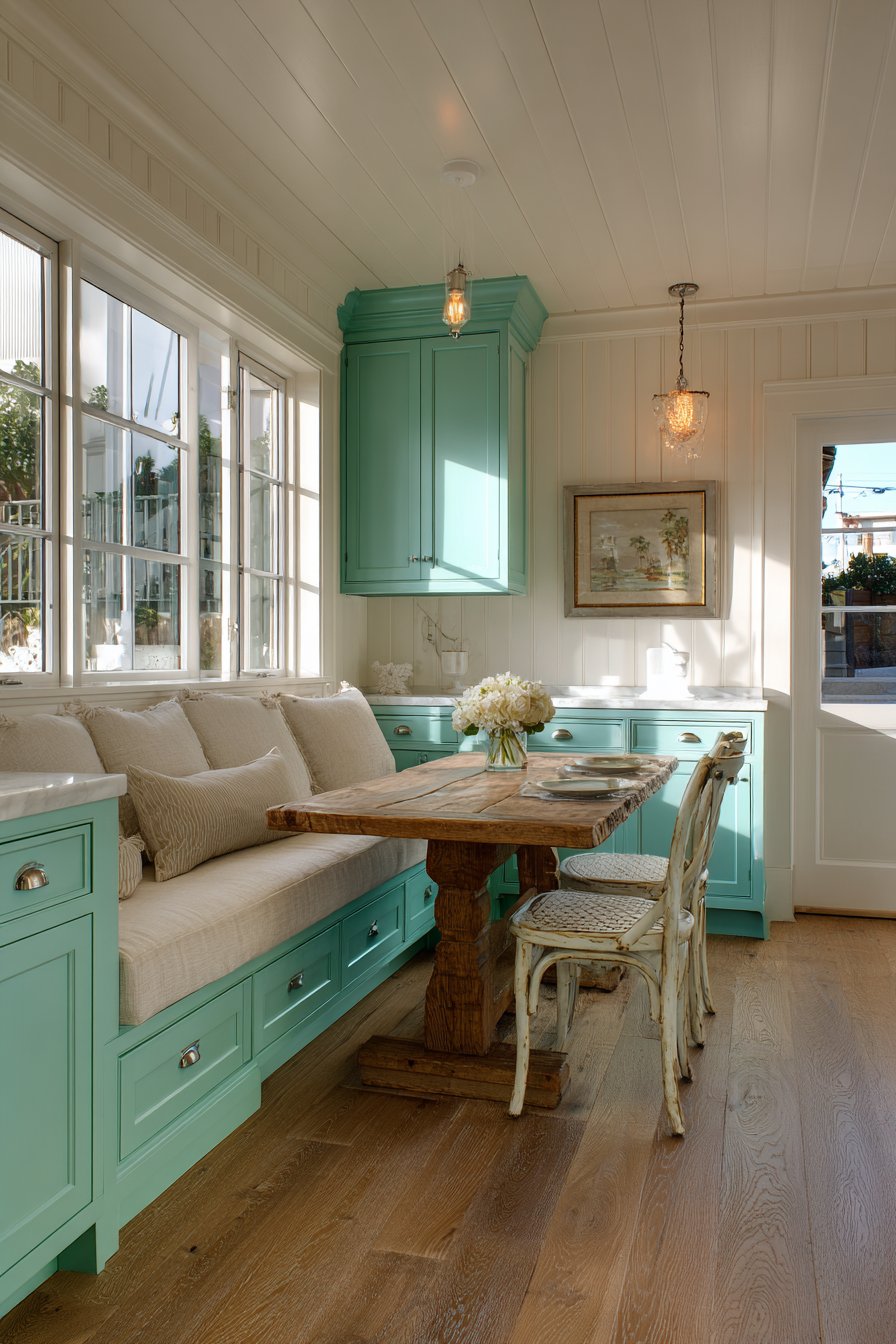
White wainscoting on the dining area walls provides architectural detail and visual interest while protecting wall surfaces from chair backs and general wear. The horizontal division created by wainscoting creates comfortable human scale in the space, preventing walls from feeling too tall or imposing. Above the wainscoting, soft cream paint transitions from the bright white trim, introducing subtle warmth that coordinates with the natural linen bench cushions and rustic wood table. This layered approach to wall treatment adds sophistication and depth compared to single-color walls.
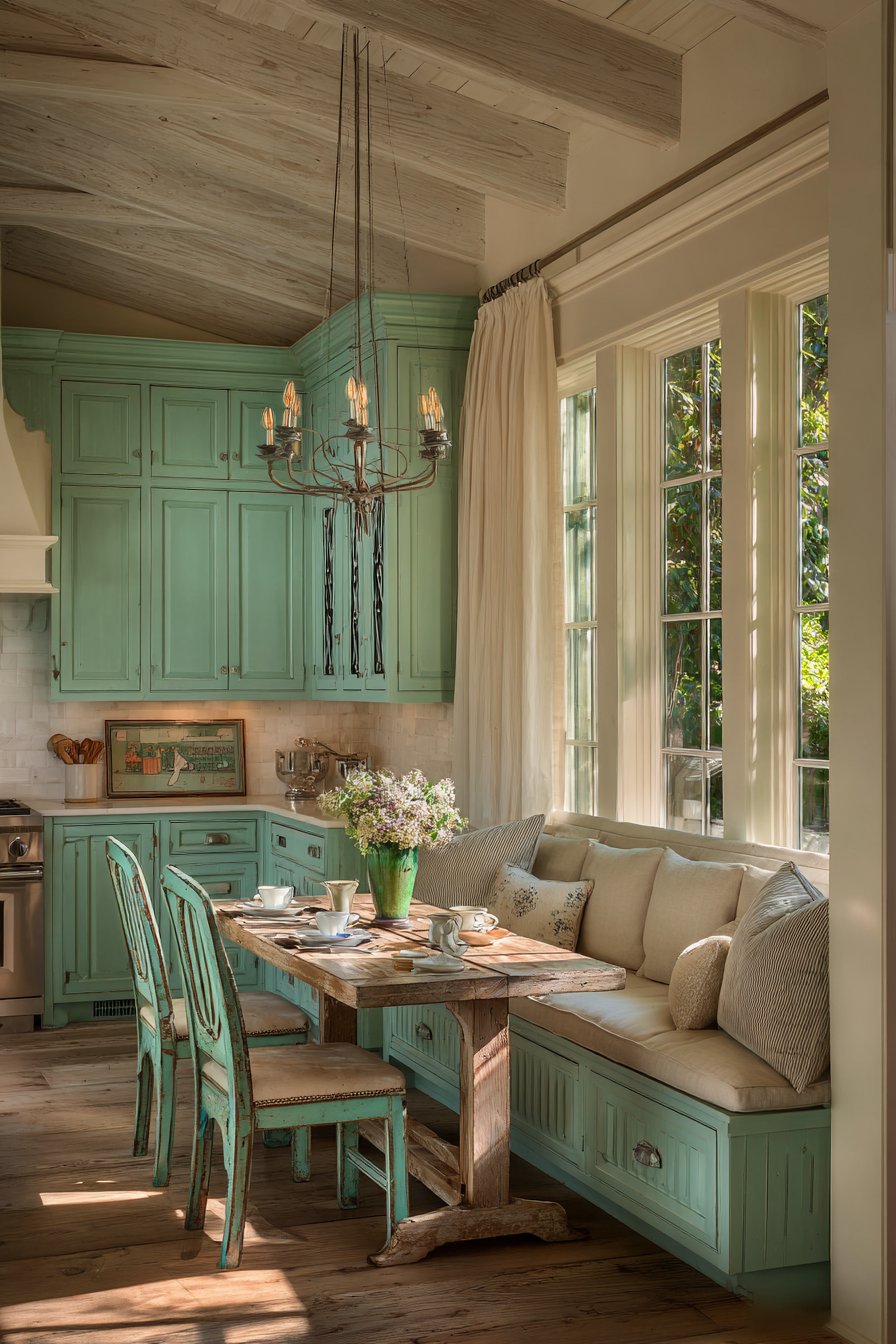
A vintage-inspired chandelier with Edison bulbs provides warm ambient lighting that defines the dining area as its own zone within the larger kitchen. The exposed filament bulbs create nostalgic character while providing flattering, warm-toned illumination perfect for dining. The fixture’s scale and positioning directly above the table create intimacy without obstructing views across the space. Natural light streaming through nearby windows creates soft highlights on the mint green cabinetry and illuminates the dining table with beautiful daytime brightness. The combination of natural and artificial light sources ensures the space functions beautifully throughout the day, adapting to changing needs from breakfast through dinner.
Key Design Tips:
- Build storage into dining banquettes to maximize functionality and eliminate the need for additional furniture pieces.
- Upholster banquette seats in durable natural fabrics like linen or cotton that coordinate with kitchen color schemes while providing comfort.
- Choose farmhouse tables with visible wear and character to create authentic vintage charm rather than pristine reproduction appearances.
- Mix mismatched vintage chairs around dining tables to create collected, personal aesthetics that tell stories and reflect individual taste.
- Install statement chandeliers with warm-toned bulbs above dining tables to create ambient lighting and define dining zones within open kitchens.
Why These Mint Green Kitchen Designs Stand Out
The mint green kitchen designs showcased throughout this article represent the best contemporary interpretations of this versatile color because they demonstrate how a single hue can adapt to remarkably diverse aesthetic preferences, functional requirements, and spatial configurations. Each design succeeds by respecting fundamental principles of interior design—proportion, balance, harmony, and contrast—while applying them in fresh, inspiring ways that feel both timeless and current. The mint green color palette itself offers inherent advantages that make these kitchens particularly successful in creating pleasant, functional cooking environments.
From a color theory perspective, mint green occupies a unique position on the color wheel as a cool tone with warm undertones, allowing it to bridge traditionally opposed color families. This characteristic explains why mint green coordinates beautifully with both warm materials like brass hardware, copper cookware, and natural wood, and cool elements like stainless steel appliances, white marble, and chrome fixtures. The shaker-style kitchen with brushed brass accents demonstrates this versatility perfectly, as does the modern flat-panel kitchen with stainless steel appliances—the same mint green succeeds in both contexts because of its balanced color temperature.
The psychological effects of mint green make it particularly well-suited for kitchen applications. Color psychology research indicates that green tones reduce stress, promote feelings of calm and renewal, and create connections with nature and growth. In the kitchen context, where meal preparation can feel rushed or stressful, these calming properties create more pleasant cooking experiences. The breakfast nook design and farmhouse sink installation particularly capitalize on mint green’s ability to create serene, restorative environments where slowing down and enjoying processes—morning coffee, washing vegetables, arranging herbs—becomes more appealing.
Material pairing strategies across these designs reveal sophisticated understanding of how textures, finishes, and natural variations enhance mint green installations. The consistent appearance of natural materials—oak flooring, butcher block countertops, marble surfaces, linen fabrics, wicker baskets—demonstrates that mint green requires grounding through organic elements. Without these natural materials providing textural contrast and visual warmth, mint green risks appearing cold or institutional. The storage-focused kitchen and pantry design showcase how even in highly functional, organizational spaces, incorporating wood tones and natural fibers prevents clinical appearances.
The lighting strategies employed across these designs reveal another key factor in their success. Mint green responds dramatically to light quality and quantity, appearing fresh and vibrant in abundant natural light while risking dullness in poorly lit spaces. Every featured design emphasizes generous windows, thoughtful artificial lighting, or both. The modern kitchen’s under-cabinet LED strips, the pantry’s brass library lights, and the dining area’s vintage chandelier all demonstrate how layered lighting approaches ensure mint green appears beautiful throughout the day and night. The breakfast nook’s three-sided window configuration represents perhaps the ultimate expression of this principle, flooding the mint green woodwork with changing natural light that creates dynamic visual experiences.
Storage innovation appears throughout these designs because mint green kitchens must balance aesthetic beauty with rigorous functionality. The floor-to-ceiling storage system, organized pantry, and banquette with hidden compartments prove that colored cabinetry can accommodate serious organizational needs without sacrificing style. This practicality ensures mint green kitchens serve real families with actual storage requirements rather than existing merely as beautiful magazine spreads. The integration of pull-out organizers, lazy susans, drawer dividers, and open shelving demonstrates comprehensive thinking about how kitchen storage should adapt to users rather than forcing users to adapt to storage.
The vintage-inspired range wall and farmhouse sink designs reveal how mint green carries historical associations that can be leveraged for authentic period character. Mid-century kitchens frequently featured mint green appliances and cabinetry, creating nostalgic connections for many homeowners. Rather than appearing dated, these designs reinterpret vintage elements through contemporary lenses—pairing beadboard with copper cookware, combining apron-front sinks with modern storage solutions. This balance between historical reference and current functionality creates kitchens that honor the past while serving present needs.
The two-tone approach featured in the ninth design represents sophisticated color application that maximizes visual interest while managing color saturation. By restricting mint green to lower cabinets and introducing white uppers, this strategy prevents color overload while maintaining strong mint green presence. The dramatic black soapstone countertops demonstrate how bold contrast elements can elevate gentle colors from sweet to sophisticated, expanding mint green’s stylistic range beyond cottage charm into more refined territories. This lesson applies broadly—mint green kitchens succeed when they include elements that provide visual tension and prevent monochromatic monotony.
Scale variation across these designs—from full kitchen installations to accent islands to focused feature walls—proves mint green’s flexibility for different commitment levels and budget scenarios. Homeowners uncertain about extensive color commitment can begin with a painted island or breakfast nook built-in, experiencing how mint green functions in their space before potentially expanding application. This graduated approach makes mint green accessible to cautious renovators while offering comprehensive solutions for bold color enthusiasts. The island design particularly excels at demonstrating how strategic color placement creates maximum impact with minimum investment.
The integration of dining spaces within several designs—breakfast nooks, banquette seating, adjacent dining areas—reflects current preferences for open-concept living where kitchens extend beyond food preparation to encompass gathering and social interaction. Mint green’s friendly, approachable character supports these social functions, creating environments where people genuinely want to linger. The color’s association with freshness and renewal makes it particularly appropriate for morning dining spaces like breakfast nooks, where the day begins and cheerful, energizing atmospheres prove most valuable.
Contemporary relevance distinguishes these designs from dated mint green applications. Modern mint green kitchens succeed by avoiding overly matchy-matchy coordination, excessive pattern, or childish color choices. Instead, they embrace sophisticated color relationships, high-quality materials, thoughtful lighting, and excellent craftsmanship. The flat-panel modern kitchen demonstrates that mint green transcends stylistic boundaries when executed with attention to form, proportion, and detail. This sophisticated approach ensures mint green kitchens remain beautiful and relevant for decades rather than quickly appearing dated or trendy.
These ten mint green kitchen designs ultimately succeed because they transform a simple color choice into comprehensive design thinking that addresses aesthetics, functionality, material selection, lighting strategy, storage innovation, and lifestyle accommodation. They prove that mint green kitchens can be traditional or contemporary, minimal or detailed, bold or subtle—adapting to diverse preferences while maintaining the fresh, revitalizing quality that makes this color so appealing for spaces dedicated to nourishment, creativity, and connection.
Conclusion
Mint green proves its remarkable versatility, effortlessly enhancing traditional, transitional, and contemporary kitchen styles. This soothing hue evokes nature, promoting calm and renewal, making it ideal for the heart of the home. Its success is rooted in thoughtful material contrast: grounding it with natural textures like wood and marble, and elevating it with sophisticated metallic accents (brass, nickel, copper).
Successful design requires balancing the color with light elements (white trim, subway tile) for breathing room, or dramatic contrast (black accents) for sophistication. Crucially, lighting—both natural and layered artificial—must be optimized to reveal the color’s subtle complexity and prevent flatness.
Investing in quality cabinetry materials, durable finishes, and strategic storage solutions ensures longevity and practical utility. Whether you opt for a bold, comprehensive application or a low-commitment accent island, let your unique personality guide your choice. The mint green kitchen, when executed thoughtfully, transcends temporary trends, transforming your culinary space into a fresh, inviting, and enduring sanctuary for daily nourishment and connection.
