


Minimalist living rooms often carry the misconception of being cold and unwelcoming. However, when designed thoughtfully, these spaces can radiate warmth and comfort while maintaining their clean aesthetic. The key lies in understanding that minimalism isn’t about stark emptiness, but rather about intentional design choices that create harmony and peace.
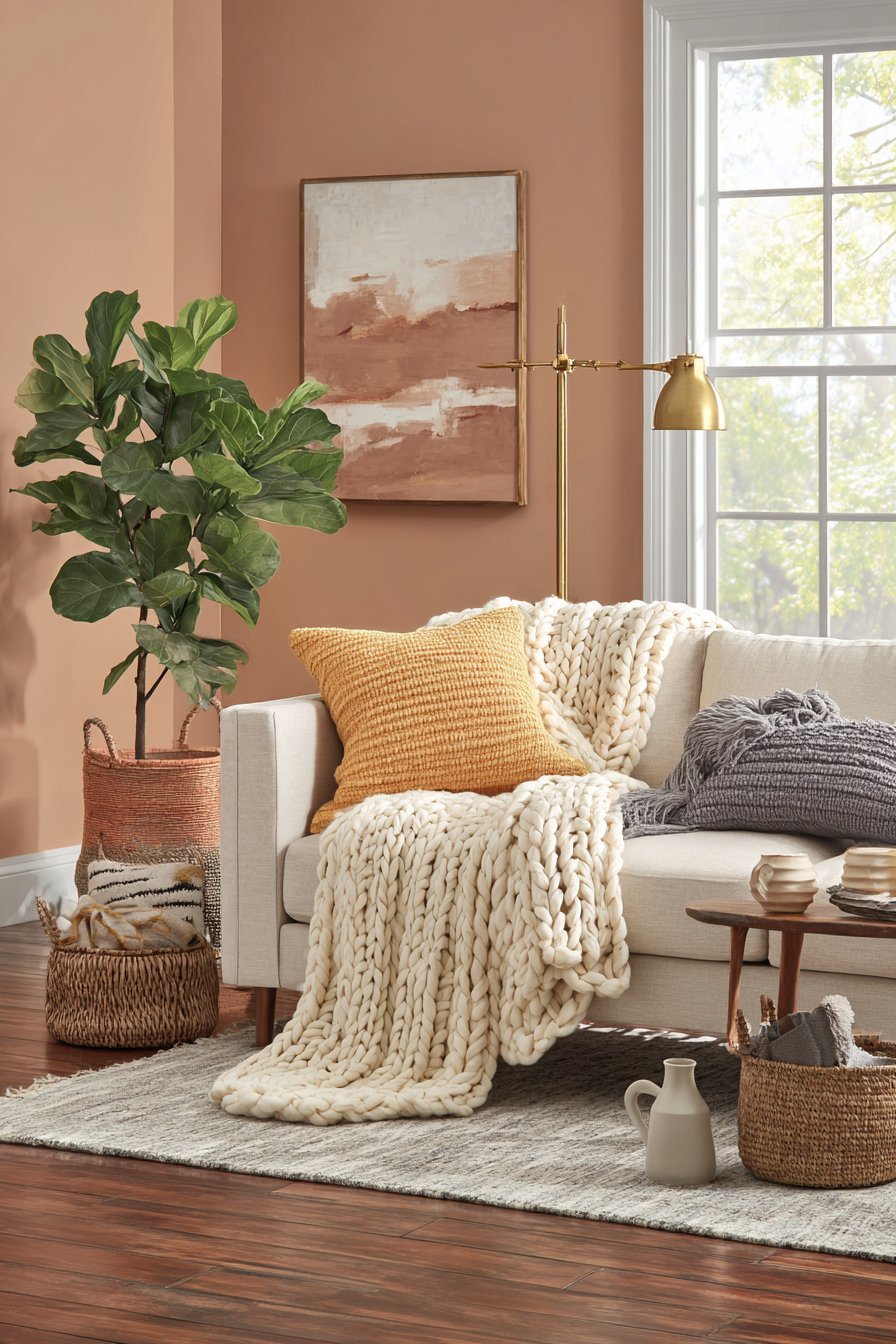
Creating a warm minimalist living room requires a delicate balance between simplicity and comfort. The challenge is to strip away the unnecessary while retaining elements that make a space feel inviting and lived-in. This approach to interior design celebrates quality over quantity, where each piece serves a purpose and contributes to the overall atmosphere. The beauty of warm minimalism is that it works for various lifestyles, from busy families to design enthusiasts seeking tranquility.
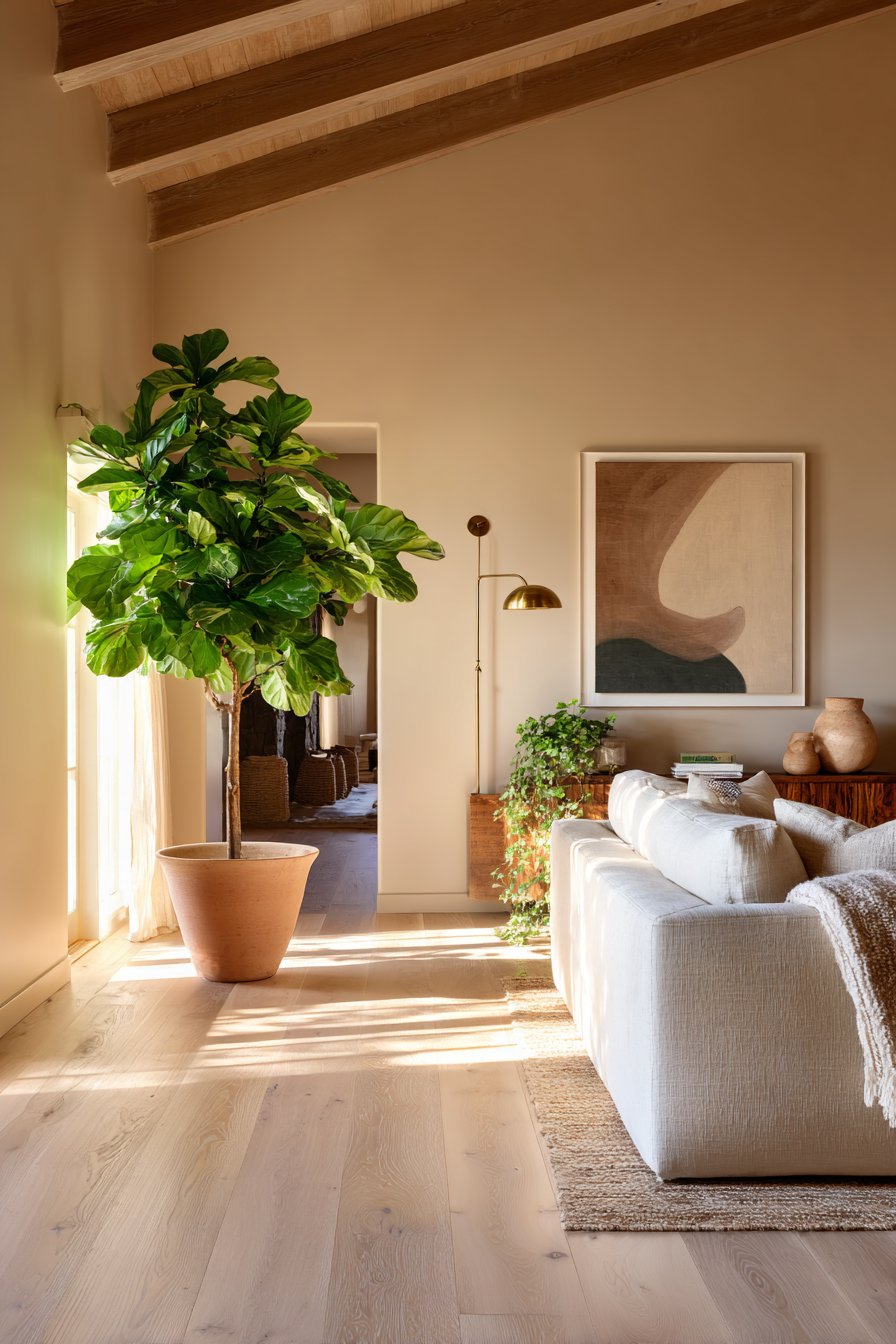
Throughout this article, we’ll explore six essential elements that transform minimalist living rooms from sterile to inviting. These strategies combine functional design with emotional warmth, proving that minimalist spaces can be both beautiful and comfortable. Whether you’re starting fresh or updating your current space, these ideas will help you create a living room that feels welcoming without compromising on minimalist principles.
1. Natural Materials and Textures
The foundation of a warm minimalist living room lies in incorporating natural materials that add depth and character. Wood, stone, wool, and linen bring organic warmth that synthetic materials simply cannot replicate. These elements create tactile interest while maintaining the clean lines essential to minimalist design. The grain of wooden furniture or the weave of a natural fiber rug adds subtle complexity without visual clutter.
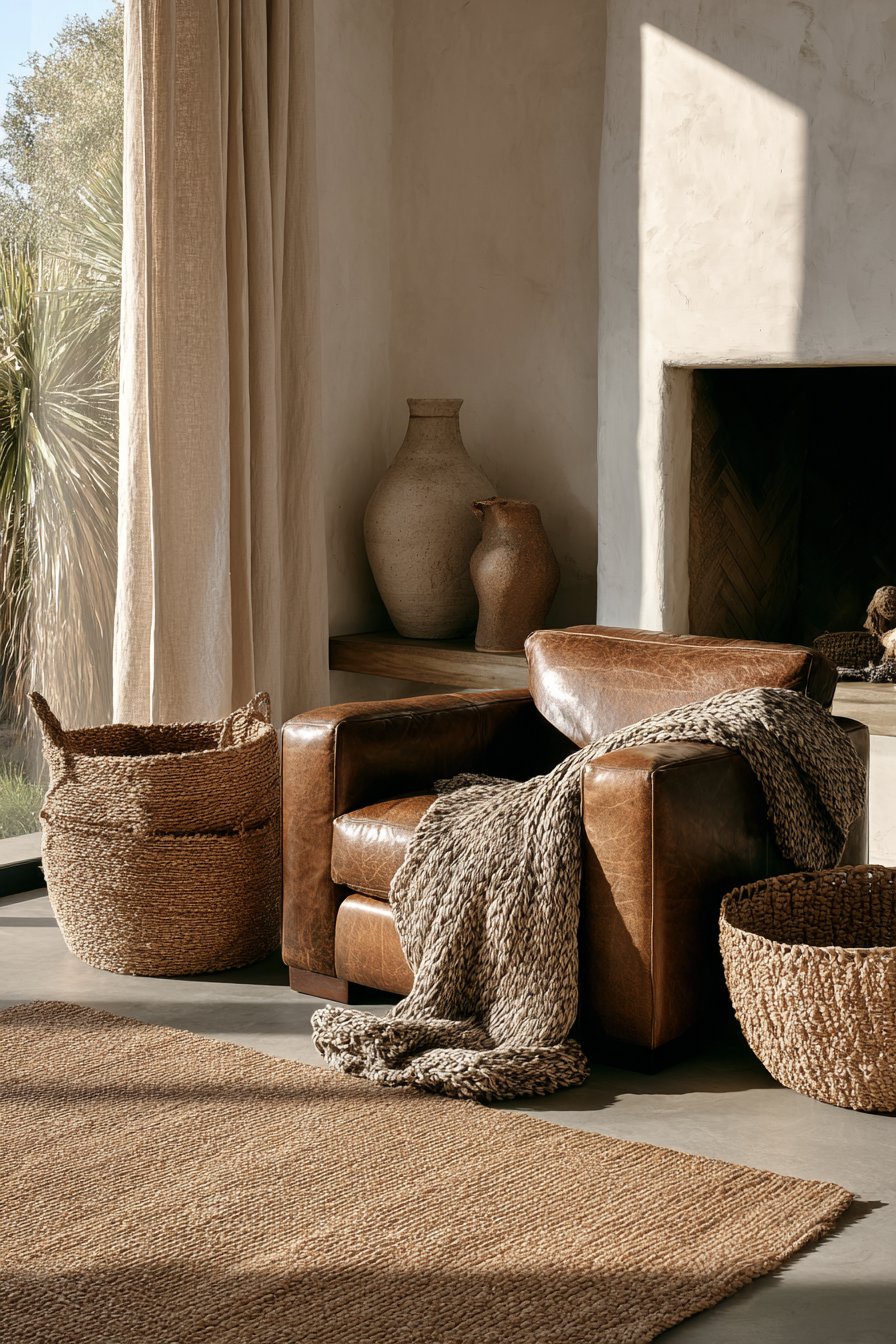
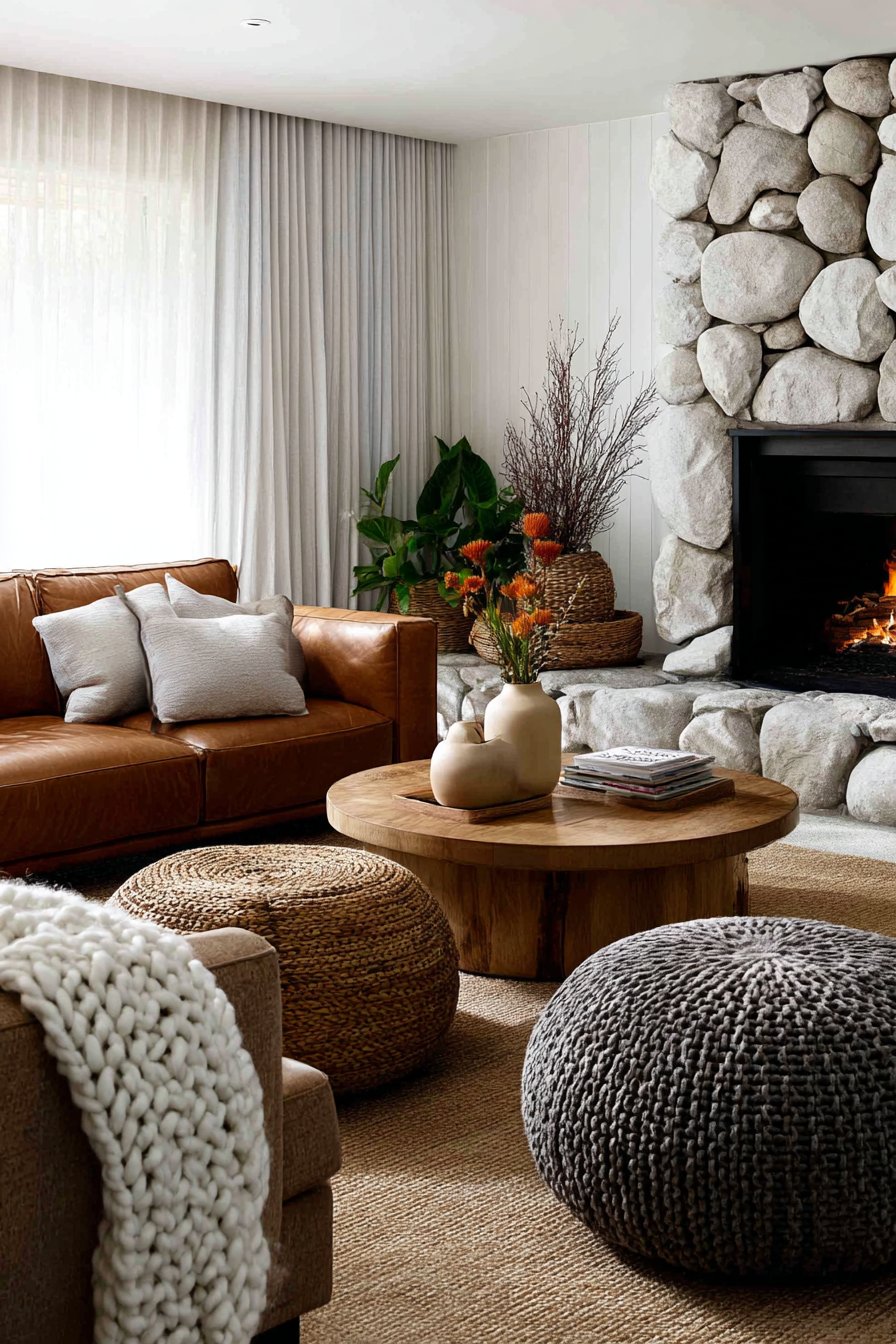
Layering different textures prevents minimalist spaces from feeling flat or one-dimensional. A leather sofa paired with chunky knit throws and smooth ceramic vases creates sensory richness. The interplay between rough and smooth, soft and hard surfaces adds dimensional warmth that makes the room feel complete. Natural materials also age beautifully, developing patinas that tell stories and add character over time.
Consider how light interacts with these materials throughout the day. Oak flooring reflects golden undertones in afternoon sun, while linen curtains filter light softly. These natural elements create an ever-changing ambiance that keeps the space feeling alive and dynamic.
- Choose solid wood furniture in warm tones like oak, walnut, or teak
- Layer natural textiles such as wool, cotton, and linen for depth
- Incorporate stone elements through fireplace surrounds or accent tables
- Add woven baskets for storage that doubles as decorative texture
- Select furniture with visible wood grain rather than painted finishes
- Use natural fiber rugs to anchor the seating area warmly
2. Warm Color Palettes
Color selection dramatically impacts how inviting a minimalist space feels. While stark white rooms epitomize traditional minimalism, warm neutrals create a more welcoming atmosphere. Shades like cream, beige, taupe, and warm gray provide the perfect backdrop for minimalist design while radiating subtle warmth. These colors reflect light beautifully without the coldness of pure white.
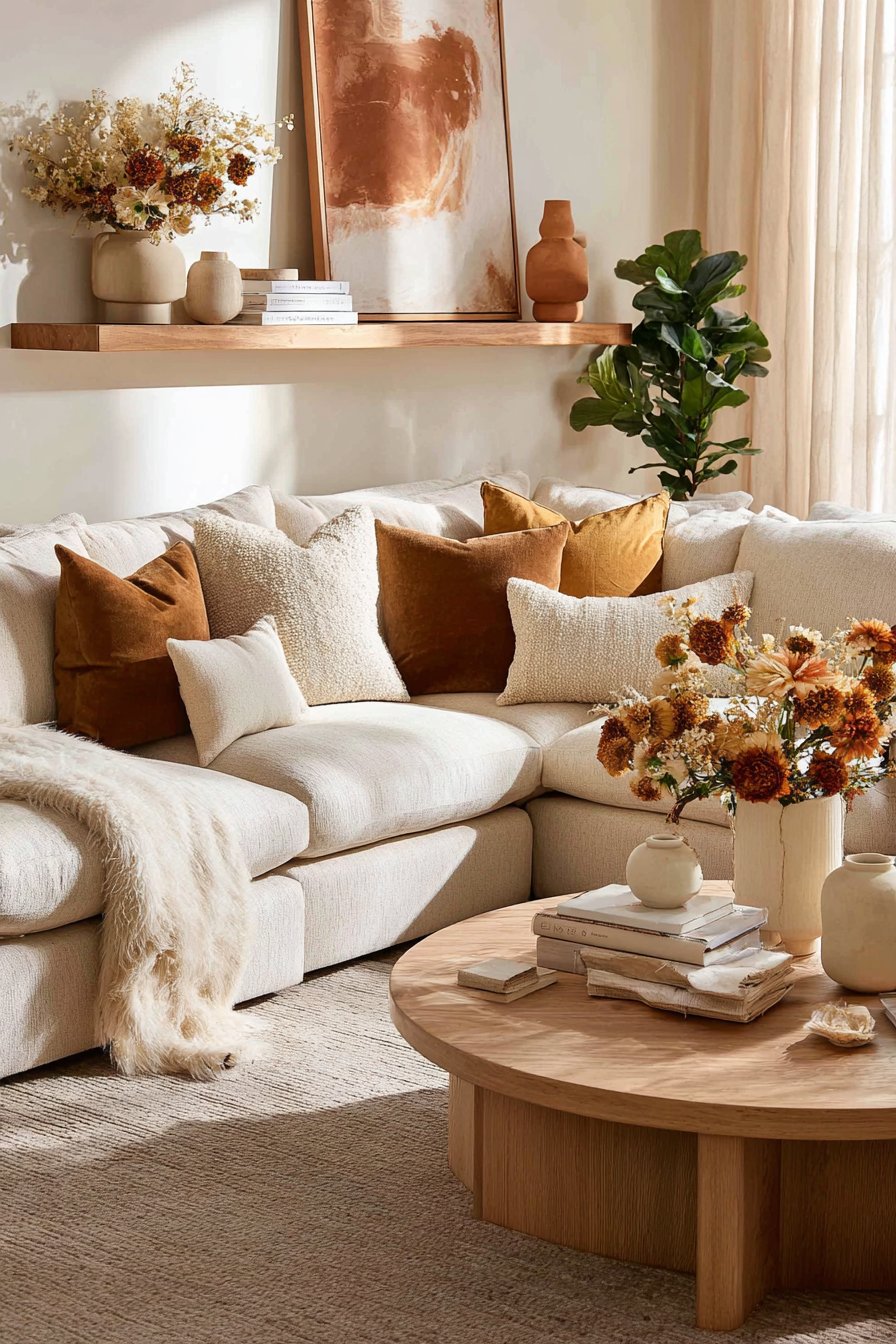
Incorporating earth tones adds richness without overwhelming the minimalist aesthetic. Terracotta accents, ochre pillows, or sage green plants introduce color in measured doses. The key is maintaining a cohesive color story with variations in tone rather than contrasting hues. This creates visual harmony while preventing the space from feeling too monotonous or clinical.
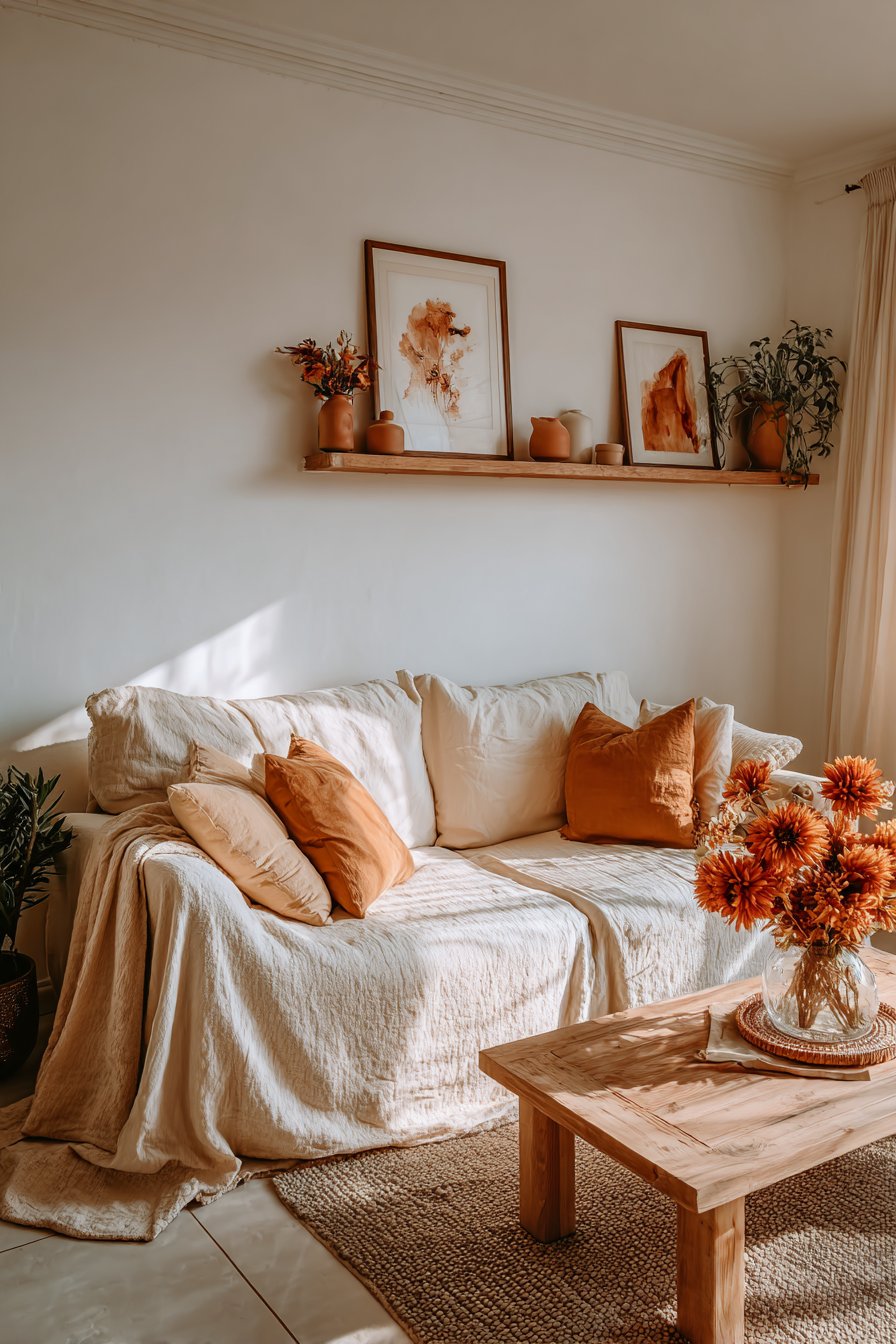
Layering different shades of the same color family adds sophistication and depth. A beige sofa with caramel throw pillows against cream walls creates tonal variation that feels intentional. This approach maintains minimalist simplicity while adding the warmth that makes rooms feel inhabited and comfortable.
- Build your palette around warm whites like ivory or cream
- Incorporate earth tones through accessories and textiles
- Use different shades of the same color for subtle variation
- Add warmth with rust, terracotta, or burnt orange accents
- Consider warm wood tones as part of your color scheme
- Avoid stark white in favor of warmer neutral alternatives
3. Strategic Lighting Design
Lighting transforms minimalist spaces from stark to inviting. Layered lighting is essential, combining ambient, task, and accent sources to create warmth and flexibility. Overhead fixtures alone create harsh shadows and cold atmospheres, while multiple light sources at different heights add dimension and coziness. The right lighting plan makes minimalist rooms feel welcoming at any time of day.
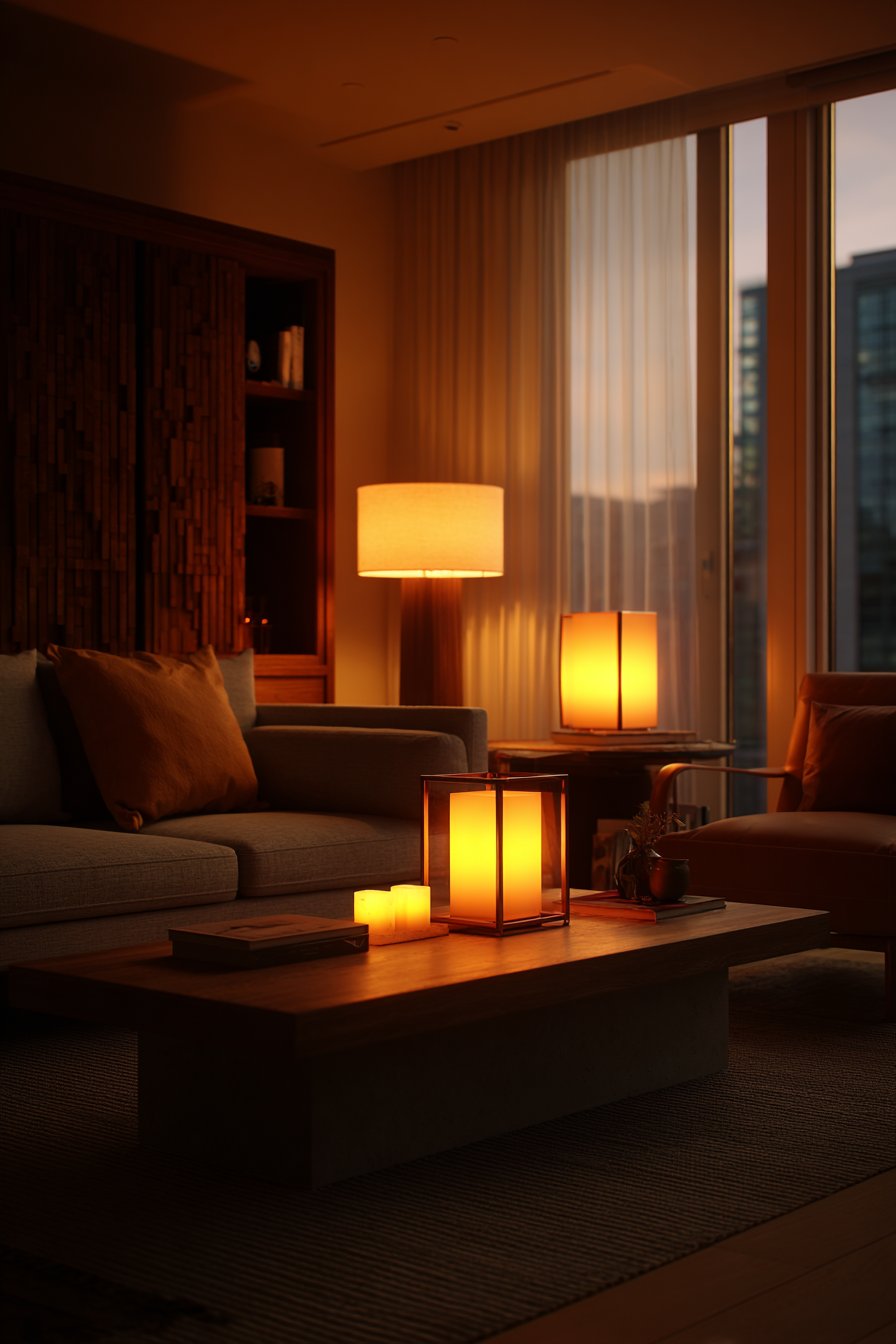
Warm light temperature is crucial for creating inviting atmospheres. Choose bulbs with 2700K to 3000K color temperature for a soft, golden glow. This mimics natural candlelight and creates intimate ambiance that cold LED lights cannot achieve. Dimmable fixtures offer flexibility to adjust brightness based on mood and activity, essential for maintaining warmth in the evening hours.
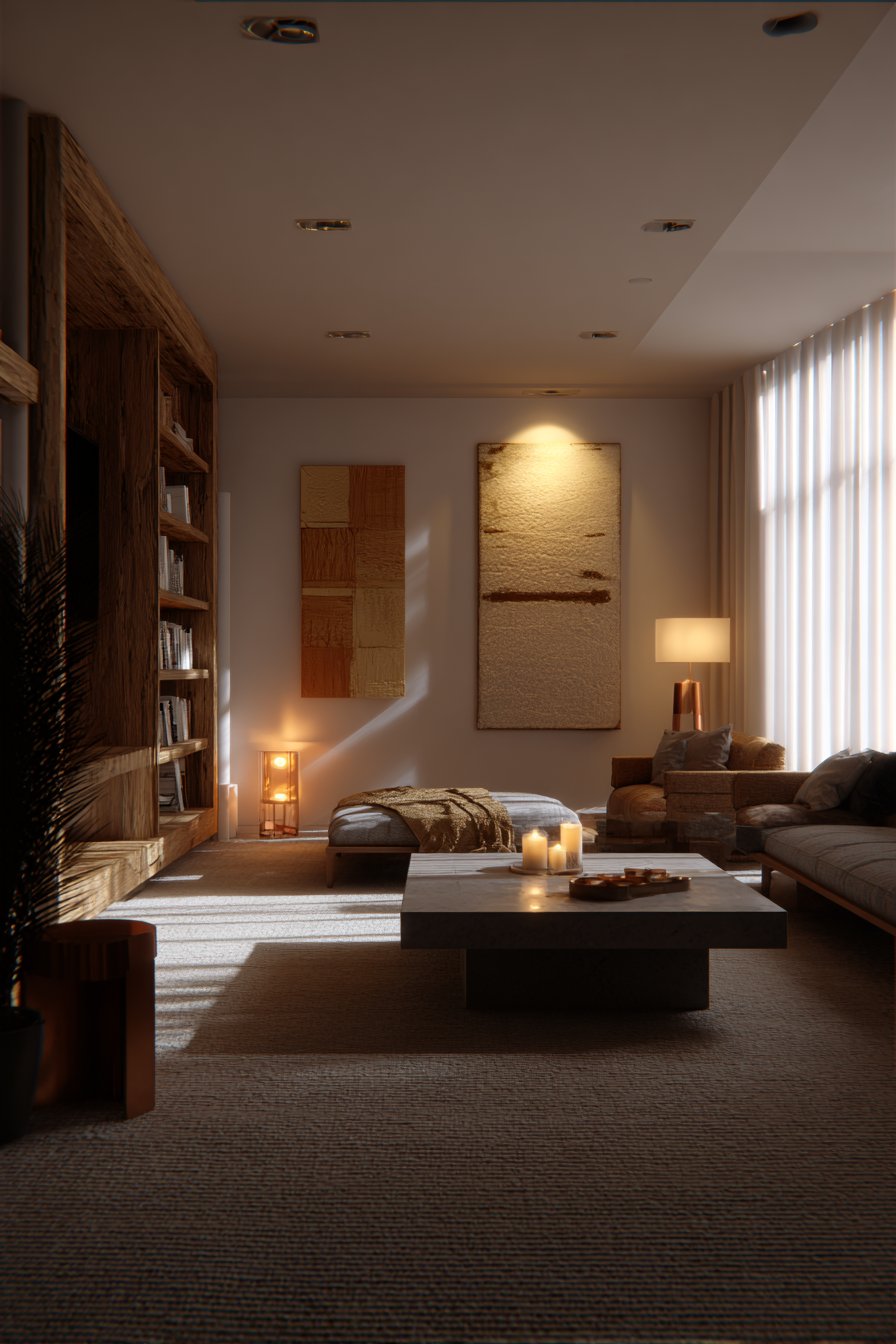
Consider how lighting highlights your minimalist pieces. Accent lighting draws attention to texture in natural materials and creates visual interest through shadow play. Floor lamps with warm shades, table lamps with fabric diffusers, and recessed lighting with warm bulbs work together to create enveloping warmth throughout the space.
- Install dimmer switches on all lighting fixtures for flexibility
- Use warm-toned bulbs between 2700K and 3000K exclusively
- Combine floor lamps, table lamps, and overhead lighting
- Position lights at different heights to eliminate harsh shadows
- Choose fixtures with warm metal finishes like brass or copper
- Add candles for instant warmth and ambiance during evenings
4. Thoughtful Furniture Placement
How you arrange furniture significantly impacts the warmth of your minimalist living room. Creating conversation zones encourages connection and makes the space feel inviting. Rather than pushing furniture against walls, floating arrangements create intimate groupings that feel purposeful and welcoming. This approach maximizes both functionality and the sense of warmth in the room.
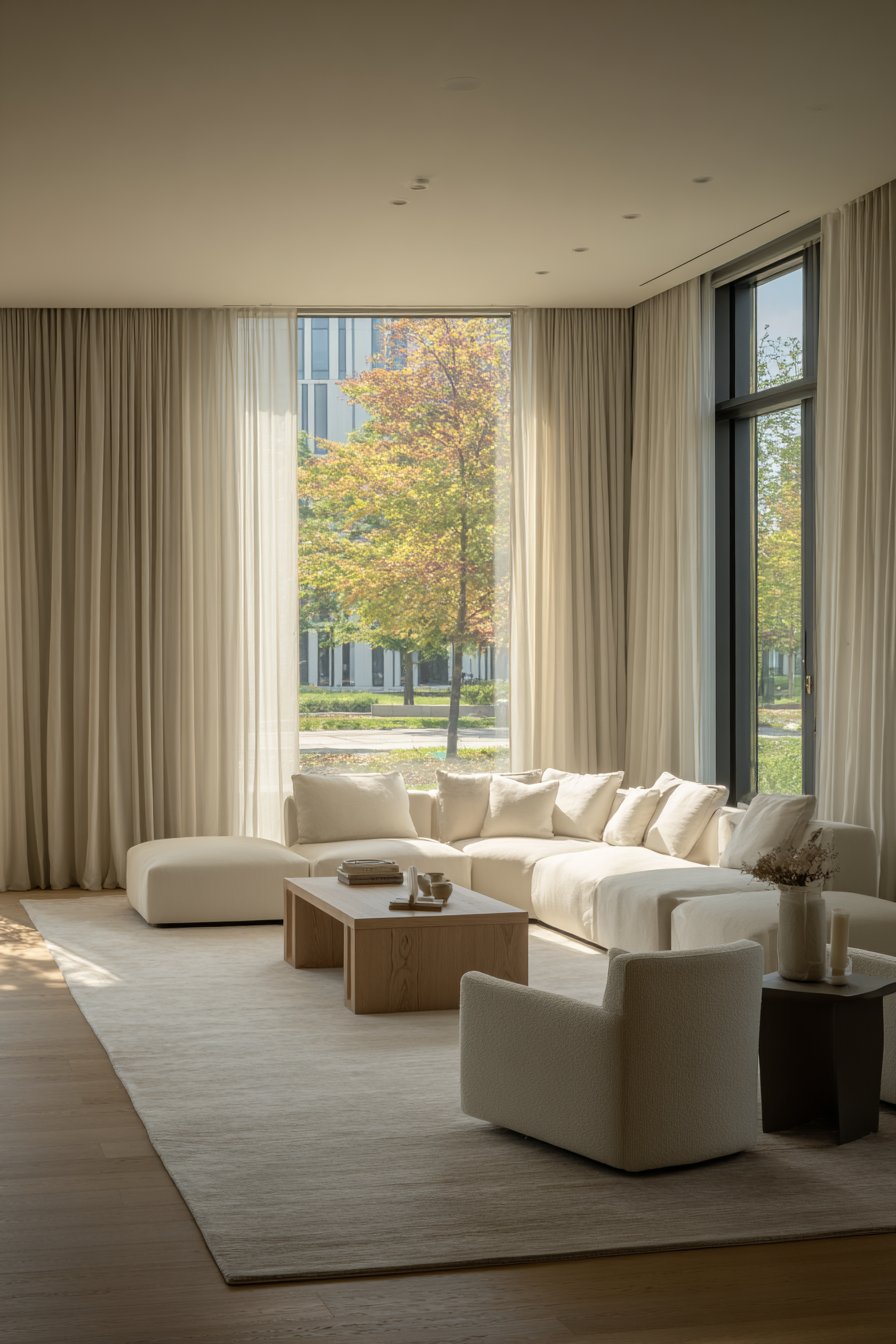
Scale matters tremendously in minimalist design. Appropriately sized furniture prevents rooms from feeling empty or cold while maintaining clean lines. A substantial sofa with comfortable proportions anchors the space and invites relaxation, while oversized pieces in small rooms create cramped discomfort. Balance is key to achieving that perfect minimalist warmth.
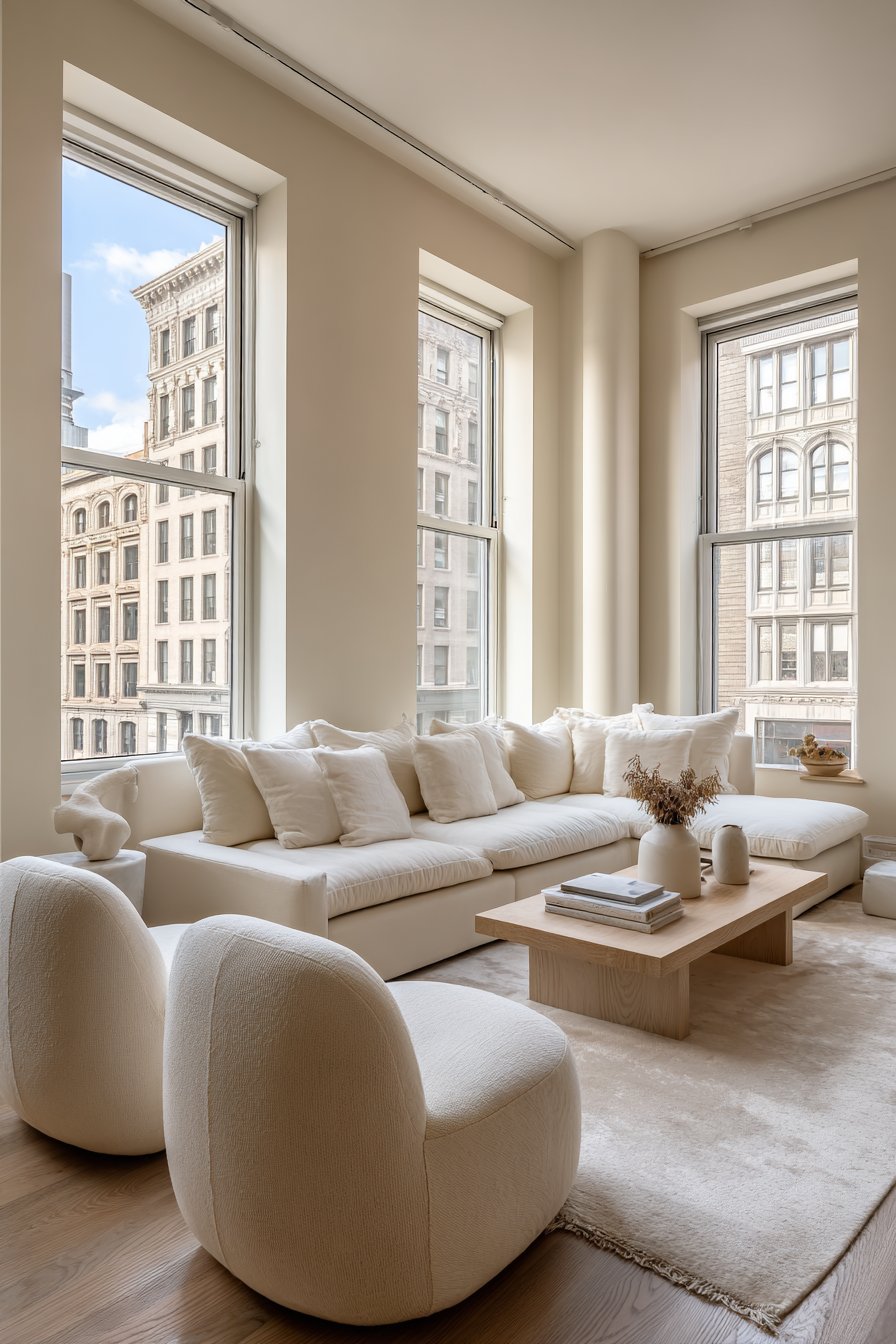
Leave breathing room around each piece to maintain minimalist principles while creating flow. Strategic spacing prevents crowding but shouldn’t result in isolated furniture islands. Aim for arrangements that feel intentional and connected, where each piece relates to others in the grouping while maintaining adequate negative space.
- Arrange seating to face each other for conversation
- Float furniture away from walls to create intimate zones
- Choose substantial pieces that don’t overwhelm the space
- Maintain clear pathways with at least 30 inches of width
- Anchor arrangements with appropriately sized area rugs
- Ensure furniture scale matches room proportions perfectly
5. Living Elements and Greenery
Plants breathe life into minimalist spaces and add organic warmth that’s irreplaceable. The natural curves of leaves and branches soften the angular geometry typical of minimalist design. Even a single statement plant like a fiddle leaf fig or monstera can transform a room’s atmosphere, adding vitality and visual interest without clutter.
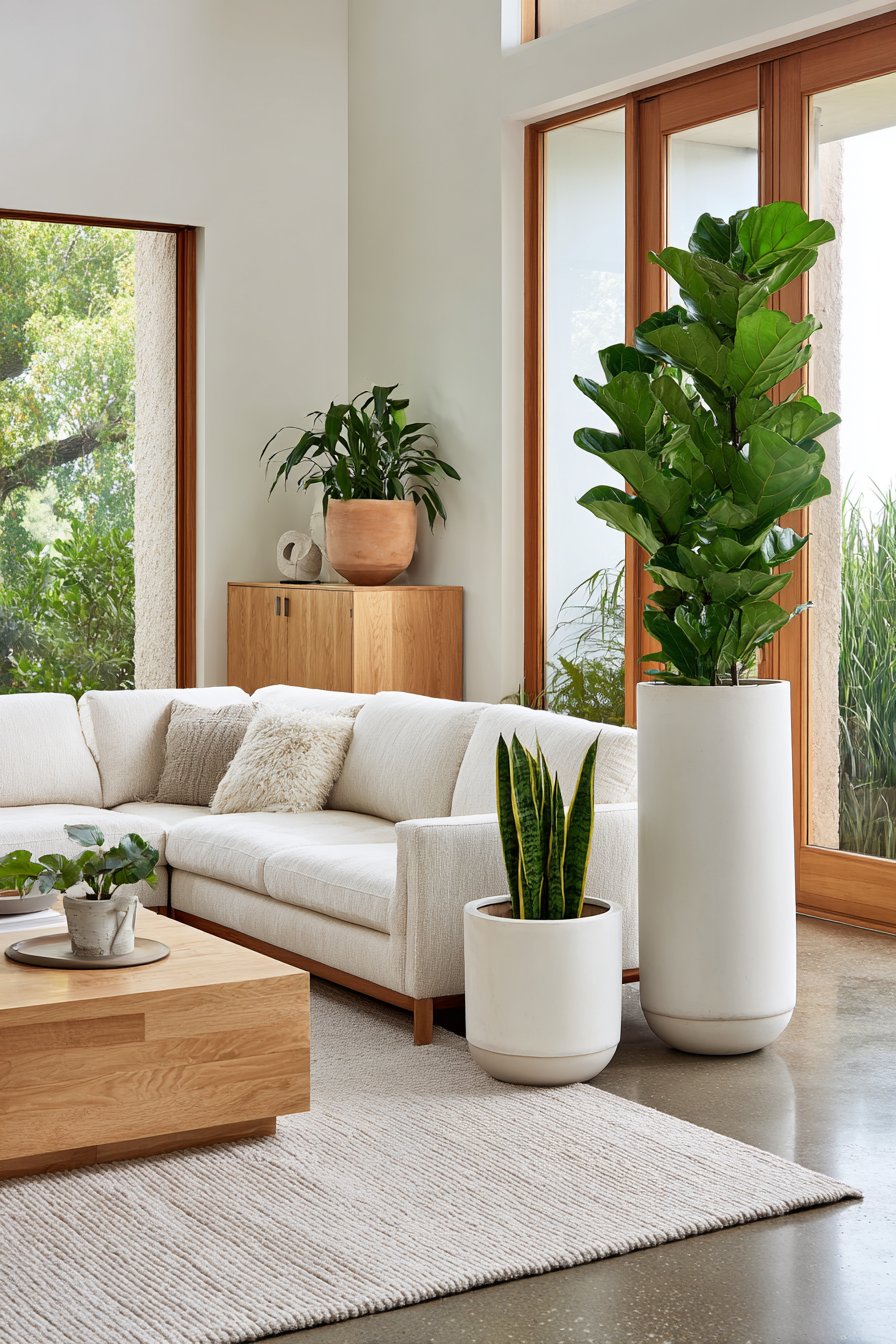
Greenery improves air quality while creating psychological warmth through biophilic connection. This innate human attraction to nature makes spaces with plants feel inherently more welcoming. Choose plants with sculptural qualities that complement minimalist aesthetics—think architectural forms rather than busy, overgrown varieties. Simple ceramic or terracotta planters maintain the clean aesthetic while allowing plants to shine.
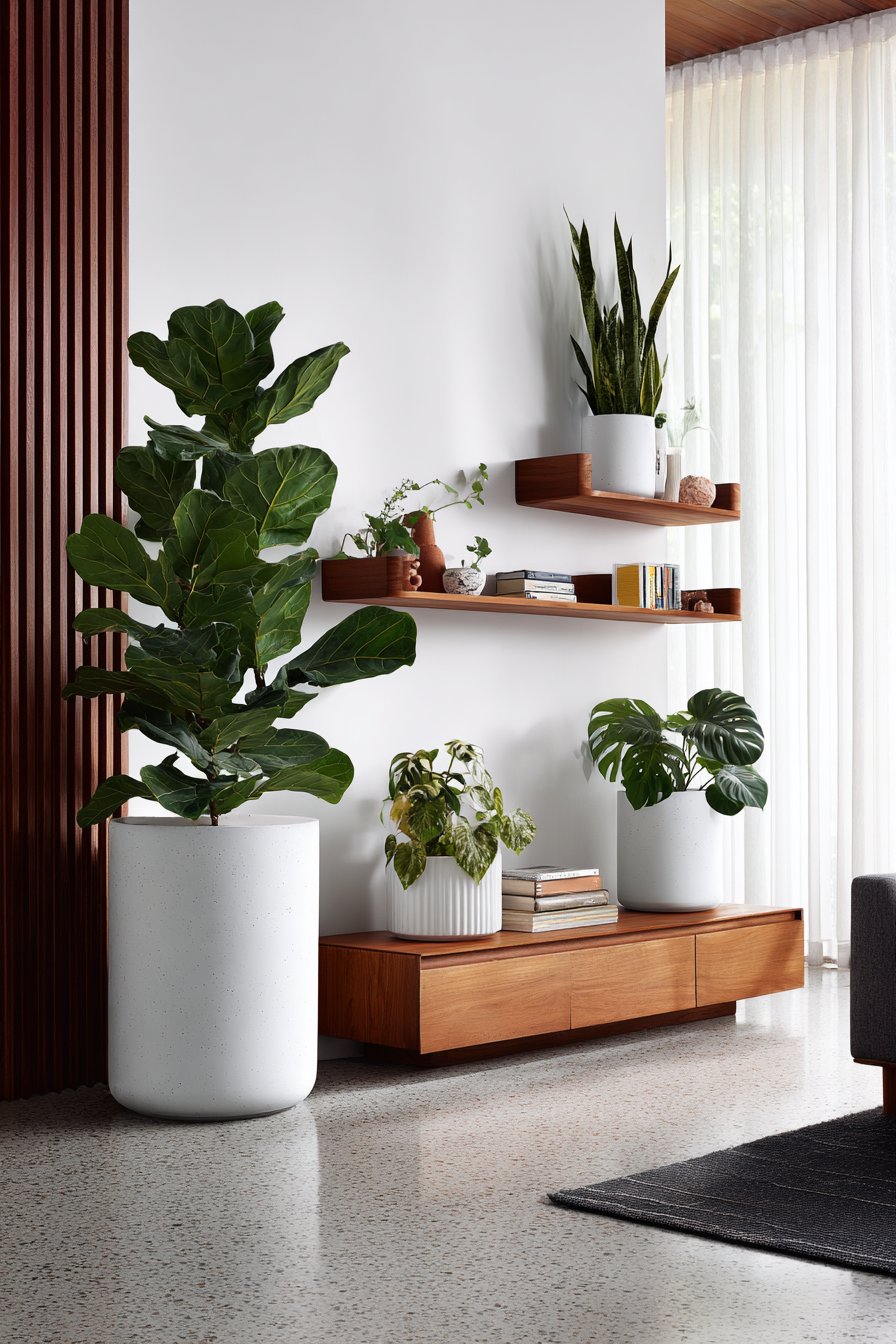
Consider plant placement at varying heights to create visual layers. Floor plants anchor corners, while smaller plants on shelves or side tables add life throughout the room. This vertical distribution of greenery makes spaces feel more dynamic and inhabited without requiring numerous pieces.
- Select 3-5 well-placed plants rather than many small ones
- Choose plants with architectural forms like snake plants or palms
- Use simple planters in natural materials like ceramic or concrete
- Position plants near windows for health and visual appeal
- Consider air-purifying varieties for added functional benefits
- Vary plant heights to create visual interest vertically
6. Personal Touches and Curated Displays
The warmest minimalist living rooms include carefully curated personal items that tell your story. Rather than displaying every possession, select meaningful pieces that spark joy and conversation. A single piece of art, a collection of books, or a cherished sculpture adds personality while maintaining minimalist discipline. These elements prevent the space from feeling like a showroom.
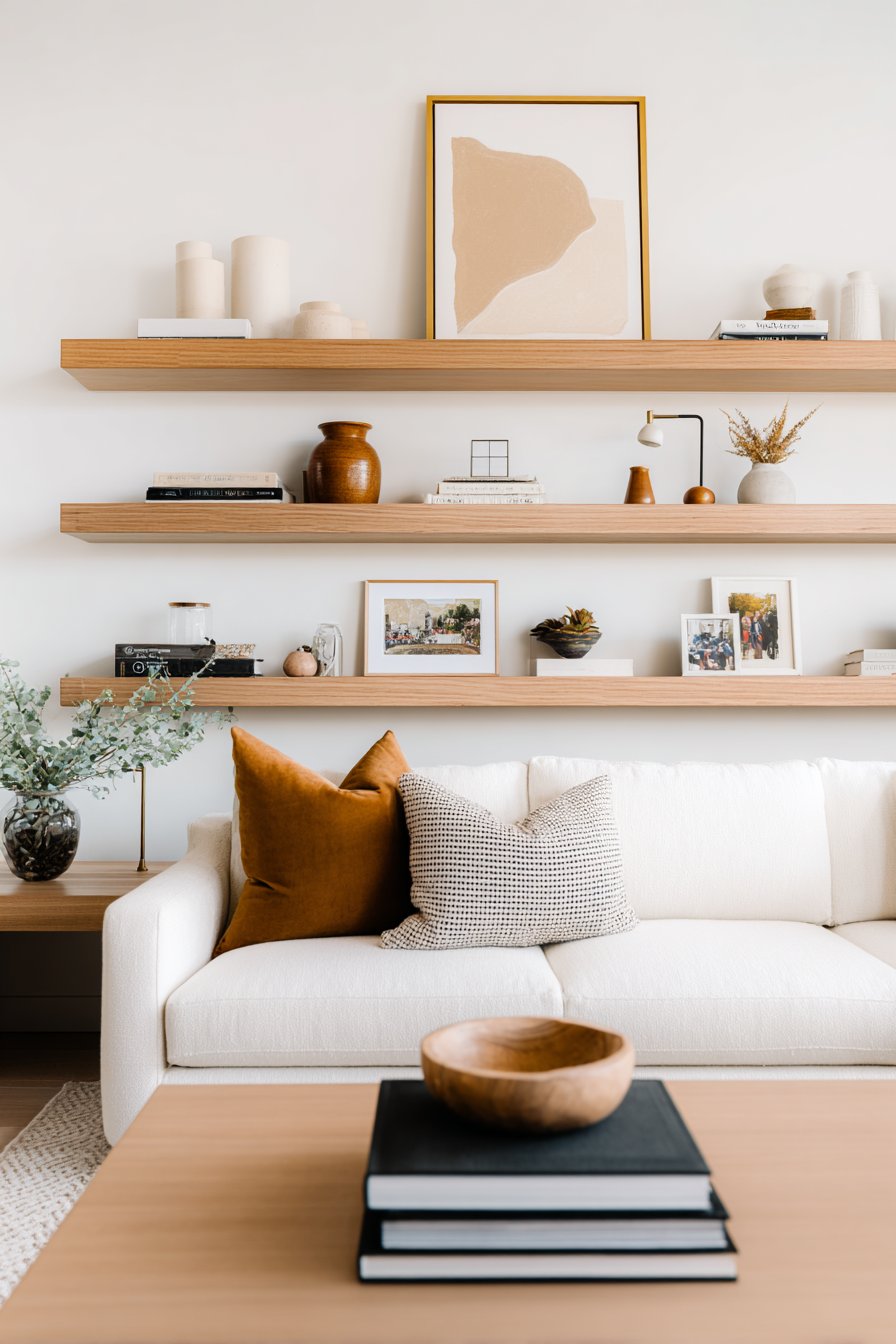
Quality matters more than quantity in minimalist displays. One statement artwork creates more impact than a gallery wall of mediocre prints. Choose pieces that resonate deeply with you, whether handcrafted ceramics, family photographs in simple frames, or a beautiful coffee table book. These personal touches inject warmth through the stories and memories they represent.
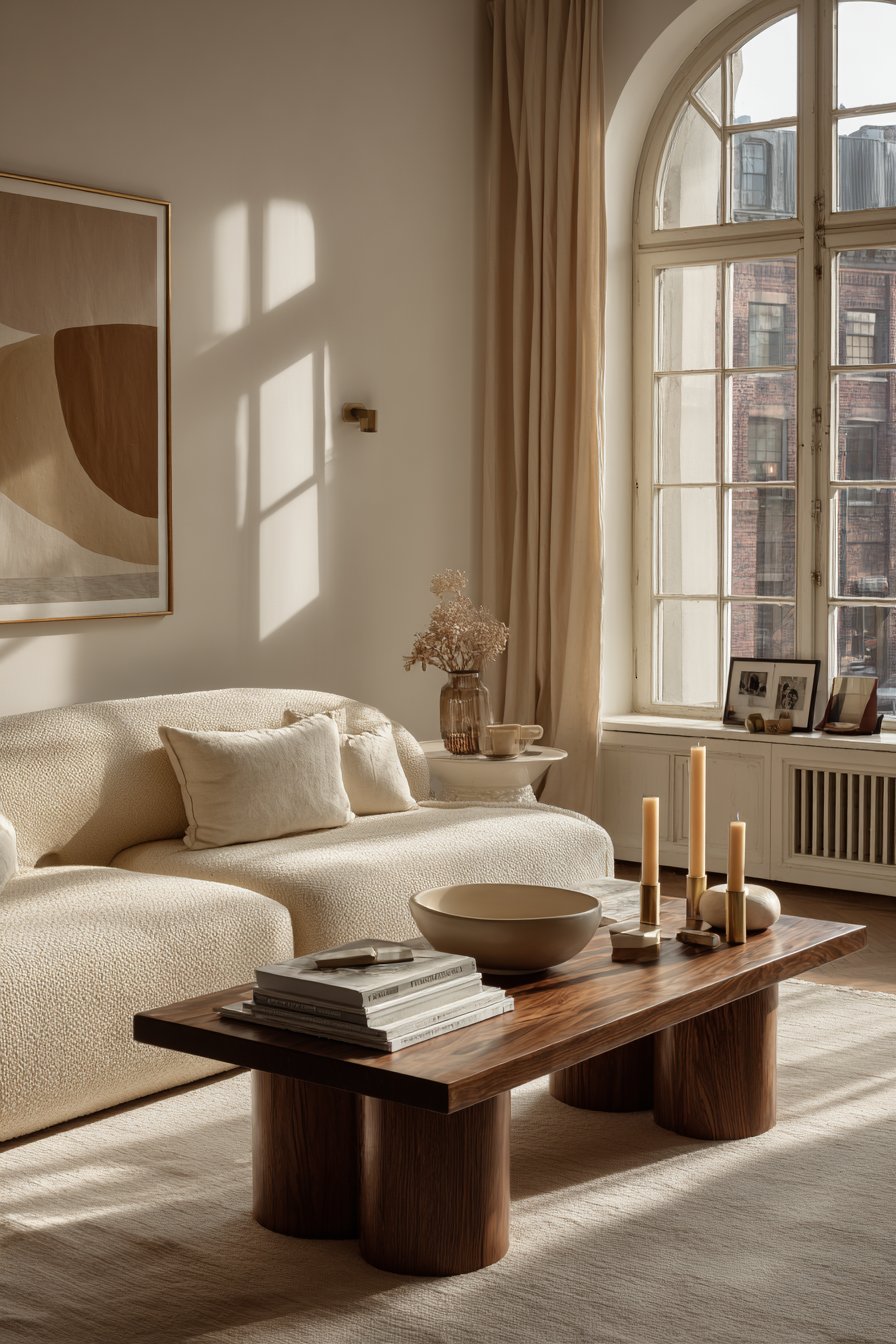
Rotation keeps minimalist spaces fresh without adding clutter. Display seasonal items or rotate artwork to maintain interest and connection to your space. This practice ensures your living room evolves with you while staying true to minimalist principles of intentionality and purpose.
- Display only items that hold genuine meaning or beauty
- Choose one statement piece over multiple small decorations
- Rotate seasonal items to keep the space feeling fresh
- Use floating shelves for clean, intentional displays
- Select artwork that incorporates warm colors or natural themes
- Keep surfaces mostly clear with just 1-2 carefully chosen items
Conclusion
Creating a warm minimalist living room is entirely achievable when you focus on intentional design choices that balance simplicity with comfort. By incorporating natural materials, warm color palettes, strategic lighting, thoughtful furniture arrangement, living elements, and personal touches, you transform minimalist spaces into welcoming sanctuaries. These elements work together to prove that minimalism doesn’t mean sacrificing warmth or personality.
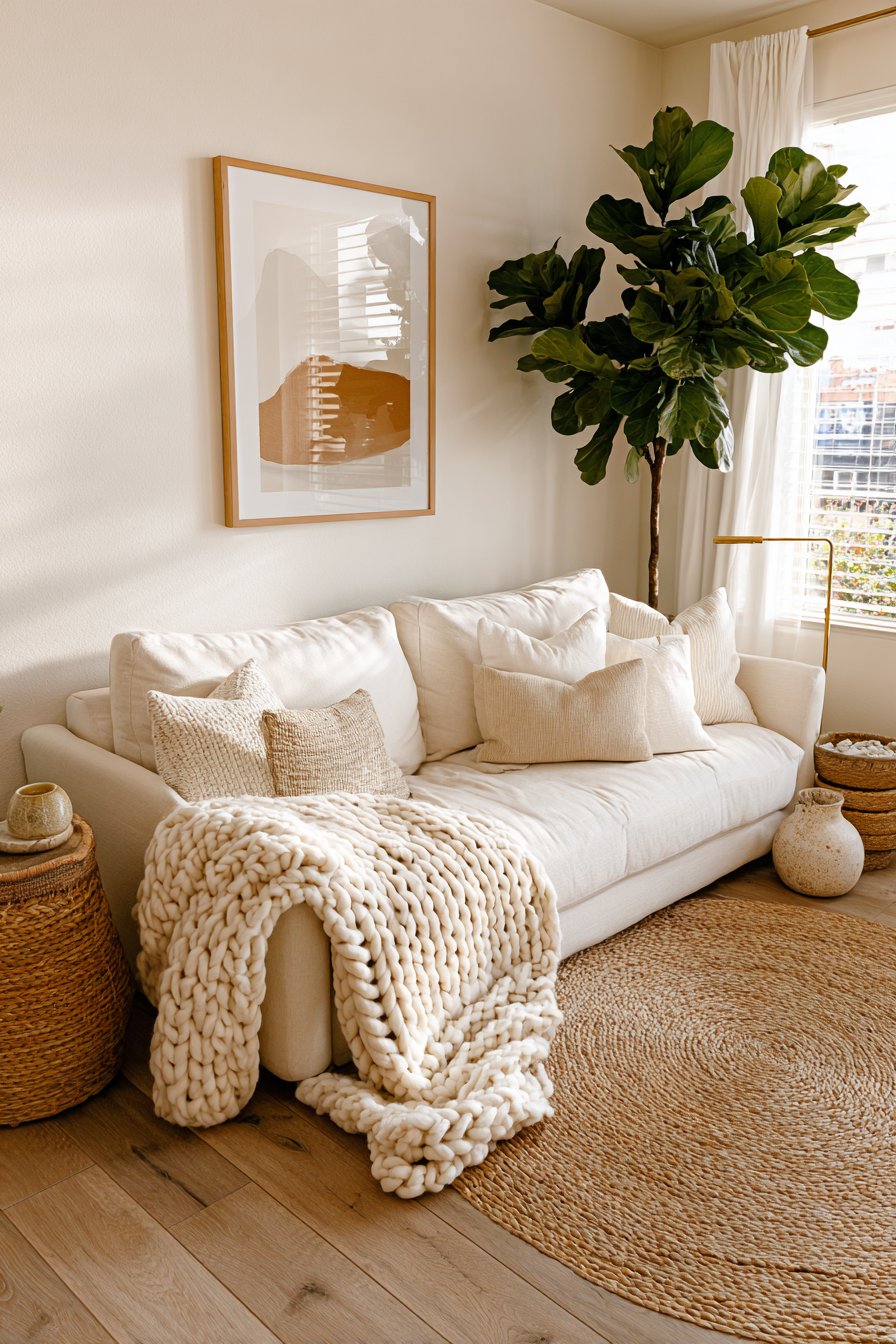
The beauty of warm minimalism lies in its flexibility and sustainability. Each choice becomes more meaningful when you’re selective about what enters your space. Start with one or two elements from this guide and gradually build your warm minimalist living room. Remember that less is more, but the less you choose should be exceptional, comfortable, and uniquely yours. Your minimalist living room can absolutely feel like home.
